A weight-loss and type-2 diabetes pill made by U.S. pharmaceutical company Eli Lilly could be available in China as soon as later next year, according to a company executive who spoke with Reuters.
The drug, called orforglipron, belongs to a class of medications known as GLP-1 treatments, which have dramatically changed how obesity is treated worldwide and reshaped the global pharmaceutical industry. Eli Lilly and Danish competitor Novo Nordisk are both betting that pill-based versions of these drugs will draw in patients who are unwilling to use injectable options.
Lilly Executive Vice President Patrik Jonsson said in a Tuesday interview that the Chinese launch window for orforglipron could fall “anything from late 2026 to early 2027.”
Lilly has an early advantage in China. The company announced in March that it had already filed a marketing application with Chinese regulators for the once-daily pill at the end of 2025. Reuters was not able to get a response from China’s National Medical Products Administration regarding approval timelines.
Novo Nordisk is not far behind. The Danish company’s CEO, Mike Doustdar, told reporters in Beijing last week that Novo plans to seek Chinese regulatory approval for its own weight-loss pill, Wegovy, “very soon.”
Both companies have already secured approvals in the United States. Novo Nordisk received early approval for Wegovy in pill form in the U.S. and Britain and launched it in the American market this year. Lilly followed with U.S. approval for orforglipron in April.
Jonsson said Lilly does not anticipate any supply shortages in China for orforglipron and intends to distribute the drug through existing partnerships with Chinese e-commerce and healthcare companies Alibaba and JD Health International.
The overall size of the weight-loss drug market in China is difficult to measure, as companies including Innovent Biologics, Pfizer, and Lilly do not publicly report their sales figures in the country. However, data from Jefferies shows that GLP-1 drug sales through major Chinese e-commerce platforms Alibaba and JD.com reached approximately 1.4 billion yuan — about $207 million — during the first quarter of this year.
SYDNEY — A top official at Australia’s central bank said Wednesday that the institution still has more to do to bring inflation down, describing current price pressures as “far too high” — though he noted that falling global oil prices tied to a possible end to the Middle East conflict could offer some relief.
Reserve Bank of Australia Deputy Governor Andrew Hauser delivered a speech focused on the Phillips curve, an economic framework that describes how inflation and unemployment tend to move in opposite directions. He explained how that framework has shaped the bank’s decisions to raise interest rates this year.
Hauser said the board chose to begin lifting rates back in February out of concern that consumer demand was outpacing the economy’s ability to supply goods and services by a greater margin than anticipated. That imbalance was pushing inflation higher, and officials determined that tightening monetary policy was necessary to bring prices back under control over time.
“But this is where being on the steeper part of the Phillips curve has a potential silver lining,” Hauser said. “It also implies that timely policy steps to reduce inflationary pressures, of the kind we have taken, should also have a proportionally smaller unemployment cost.”
The Reserve Bank of Australia has now raised interest rates three times in 2025, completely reversing the easing measures it had put in place the prior year. Those rate hikes came in response to an energy price shock driven by the ongoing war. While headline inflation slowed to 4.0% in May, a more closely watched measure known as trimmed mean inflation actually moved higher, reaching 3.6% — well above the bank’s target range of 2% to 3%.
There are also signs that Australia’s job market is beginning to soften. The unemployment rate climbed to 4.5% in April, marking a four-and-a-half-year high.
Hauser pointed to several notable economic shifts since May, including the possibility that the conflict in the Middle East could be moving toward a resolution. He said lower oil prices resulting from such a development would be a positive sign for inflation.
“By itself, lower global oil prices would be a welcome development, helping to lower and flatten the Phillips curve somewhat,” he said. “But a full resolution is not yet assured and we still have work to do to reduce inflation here in Australia, which remains far too high.”
BEIJING — China’s government is asserting its right to hold people living outside the country legally responsible under a sweeping new ethnic unity law, with a top official defending the measure as both lawful and in keeping with global standards.
The law, which was passed in March and takes effect July 1, was designed to forge a unified national identity among China’s 55 ethnic minority groups — including Tibetans and Uyghurs, communities that have historically pushed back against Chinese authority and, at times, staged protests that turned violent.
A key clause in the legislation states that individuals and organizations operating outside the People’s Republic of China can be held legally accountable if they are found to be undermining “ethnic unity and progress or inciting ethnic separatism.”
The provision has triggered significant concern, especially in Taiwan — which Beijing considers part of China — over fears it could give the Chinese government yet another legal tool to go after Taiwanese citizens it labels as separatists. Human rights organizations have also raised alarms, pointing to China’s past use of Interpol “red notices” as a means of pressuring foreign governments to detain individuals abroad for what critics describe as political offenses.
At a press conference in Beijing focused on the new law, Vice Justice Minister Hu Weilie dismissed what he called distortions of the overseas clause by certain unnamed Western media outlets.
“This provision is based on China’s national conditions, conforms to legal principles, and is consistent with international practice. It is a legitimate, lawful, necessary, and feasible legal provision,” Hu stated.
He further argued that governments around the world routinely use domestic legislation to guard against separatist activity and maintain social order, saying, “Countries around the world all have the right to prevent separatist and destructive activities, and to maintain social solidarity and normal order, through domestic legislation.”
Hu described the overseas provision as targeting illegal conduct through rule-of-law methods, meant to “guard against various unlawful acts involving ethnic affairs from outside the country.”
He added that enforcing the clause would protect China’s sovereignty, national security, and development interests, while also safeguarding the rights of people across all of China’s ethnic groups.
“It will not affect normal people-to-people exchanges between China and other countries, academic discussions, economic and trade cooperation, or other activities,” Hu said.
SAN FRANCISCO — A promising hitting streak for Oakland Athletics second baseman Zack Gelof came to an abrupt and painful conclusion Tuesday evening in San Francisco.
Gelof started the game as the leadoff batter and flew out to right field in the Athletics’ 3-1 defeat against the Giants. The trouble came in the second inning when San Francisco’s Matt Chapman laced a ball off the left-field wall, scoring Willy Adames and putting the Giants ahead 2-0.
Chapman attempted to stretch the hit into a double, but a relay throw from left fielder Tyler Soderstrom reached Gelof at second base in time. As Gelof applied the tag with his glove hand, Chapman’s foot came down on Gelof’s right hand — an accidental collision that would end Gelof’s night entirely.
Gelof walked off the field in clear discomfort, bringing both his evening and his hitting streak to a close. He was not available to speak with reporters following the game, but manager Mark Kotsay confirmed that X-rays showed no break and that stitches were not needed.
The 24-game streak tied the longest hitting streak in the major leagues over the past two seasons, matching a mark set by Arizona’s Ildemaro Vargas. It also ranks as the seventh longest in Athletics franchise history and the second longest since the team relocated to California in 1968 — Jason Giambi holds the top spot with a 25-game streak back in 1997.
Along with the hitting streak, Gelof also saw his 27-game on-base streak and a run of scoring in 13 straight games both come to an end Tuesday night.
Gelof was drafted by the Athletics out of the University of Virginia in the second round of the 2021 draft. He showed early promise in his 2023 rookie campaign, hitting .267 with 14 home runs across 69 games. The following two seasons proved more difficult — he batted just .211 with 188 strikeouts in 2024, then hit .174 last year while injuries held him to only 30 games.
This season, Gelof is batting .282. Before Tuesday’s contest, Kotsay pointed to an adjustment in Gelof’s bat-angle approach as a key factor in his turnaround.
“We’re seeing a player that resembles the guy that came up and really excited us about (his) future,” Kotsay said. “The confidence that he has continues to grow and you see it out there on the baseball field.”
In other Athletics news from Tuesday, first baseman Nick Kurtz went hitless in four at-bats with three strikeouts, snapping his own 22-game on-base streak.
CAIRO — Concern is mounting across the international community over a potential large-scale attack on civilians in central Sudan, where a paramilitary force is gathering around a strategically vital city of approximately 500,000 people as the country’s ongoing war enters its fourth year.
A spokesman for United Nations Secretary-General António Guterres issued a stark warning, saying: “We must not allow the horrors of El Fasher to be repeated in El Obeid.”
That warning references a devastating assault last year in which the Rapid Support Forces, or RSF, seized el-Fasher, resulting in more than 6,000 deaths over just three days — an attack that U.N. experts said carried the “hallmarks of genocide.”
The U.N. Security Council has expressed alarm over reports of “substantial” RSF reinforcements building up around el-Obeid in North Kordofan. The United States, Britain, and several other European nations have also issued warnings about “escalating atrocity risks” in the region. The RSF did not respond to requests for comment.
El-Obeid sits along Sudan’s main east-west road connecting to the Nile Valley and the capital, Khartoum, making it a critical asset for Sudan’s military as it continues battling the RSF. The army broke a siege on the city that had lasted more than a year, doing so early last year. The city is also home to a large air base and an infantry division.
Nathaniel Raymond, executive director of the Humanitarian Research Lab at the Yale School of Public Health, explained the broader significance of the situation. “El Obeid is important beyond even the strategic implications because it shows what happens when you have two forces that are highly depleted attempting to gain advantage on the other in high proximity,” he said.
Raymond noted that the RSF is seeking to control the road to Khartoum — which Sudan’s military recaptured last year — along with the neighboring city of Omdurman. Regaining that territory would create “havoc for civilians” and severely complicate the work of humanitarian organizations trying to return to the capital area, he said.
Experts say a potential assault on el-Obeid would differ from the attack on el-Fasher, which followed an 18-month siege and involved widespread ethnically motivated killings. “This is not a genocidal move, it’s a tactical one,” Raymond said, though he cautioned that those perceived as aligned with the military could face reprisal killings if the RSF were to take the city.
Ali Mahmoud Ali, a Sudan researcher with the Armed Conflict Location and Event Data project, known as ACLED, said the RSF has the ability to cut off el-Obeid from multiple directions, but maintaining a prolonged siege would drain the paramilitary group of significant manpower, vehicles, and equipment. If the RSF does manage to capture and hold the city, he warned the situation there “could deteriorate rapidly.”
In recent months, el-Obeid has been subjected to repeated RSF drone strikes that have destroyed civilian infrastructure, including power facilities and residential neighborhoods. The U.N. reports that bridges and key supply routes into the city have also been targeted.
Taghreed al-Rashid, a 35-year-old resident reached by phone, said she takes some comfort in the presence of army forces but is increasingly frightened by drone attacks hitting homes and markets. A recent strike on a power facility triggered a water shortage so severe that she now pays $5 per barrel of water. “We’re committed to staying in the city despite our ongoing hardships because forced displacement is a bigger struggle,” she said.
The toll from these drone attacks has been severe across the broader Kordofan region. According to ACLED, at least 2,670 people — both civilians and combatants — were killed in 2025, representing a 600% increase in drone-related deaths and an 81% rise in drone attacks compared to the previous year.
Another el-Obeid resident, Magdy Abdou, said daily life — including visits to mosques and markets — remains manageable for now, but he is deeply worried about further strikes on critical infrastructure.
Capturing the city would give the RSF a base from which to launch drone attacks at a much closer range. Ravina Shamdasani, a spokesperson for the U.N. human rights office, described the humanitarian conditions as dire. “Many civilians are trapped. Those who are able to flee are doing so. The imminent offensive must be halted, and civilians enabled to safely leave the city,” she said, adding that recent infrastructure attacks have left residents with scarce food, fuel, water, health services, and transportation.
Raymond said the RSF’s “force strength is significantly reduced due to defenses and intertribal fighting” and that it lacks the personnel needed to withstand an expected military counterattack. Nevertheless, Ali noted that the RSF has deployed air defense systems in Abu Zabad, West Kordofan, which could serve as a logistical hub for operations targeting el-Obeid and the nearby city of Dilling, potentially intensifying the conflict.
Since the army broke the siege on el-Obeid last year, the RSF has launched multiple offensives trying to reestablish control from various directions. Sudan’s army, which also operates drones, said recent strikes destroyed an RSF battalion and more than 50 armored vehicles in West Kordofan, blocking advances toward North Kordofan and el-Obeid. An army official, speaking on condition of anonymity because he was not authorized to speak to the media, said the military has a plan in place to protect the city’s airspace from RSF drone attacks.
Federico Donelli, an associate professor of international relations at the University of Trieste, said the army has made defending el-Obeid and the east-west corridor to the Nile Valley a priority since last year. “Overall, the SAF appears capable of mounting an organized initial defense, but the key open question is whether it can sustain it against a faster, better-equipped RSF push,” Donelli said.
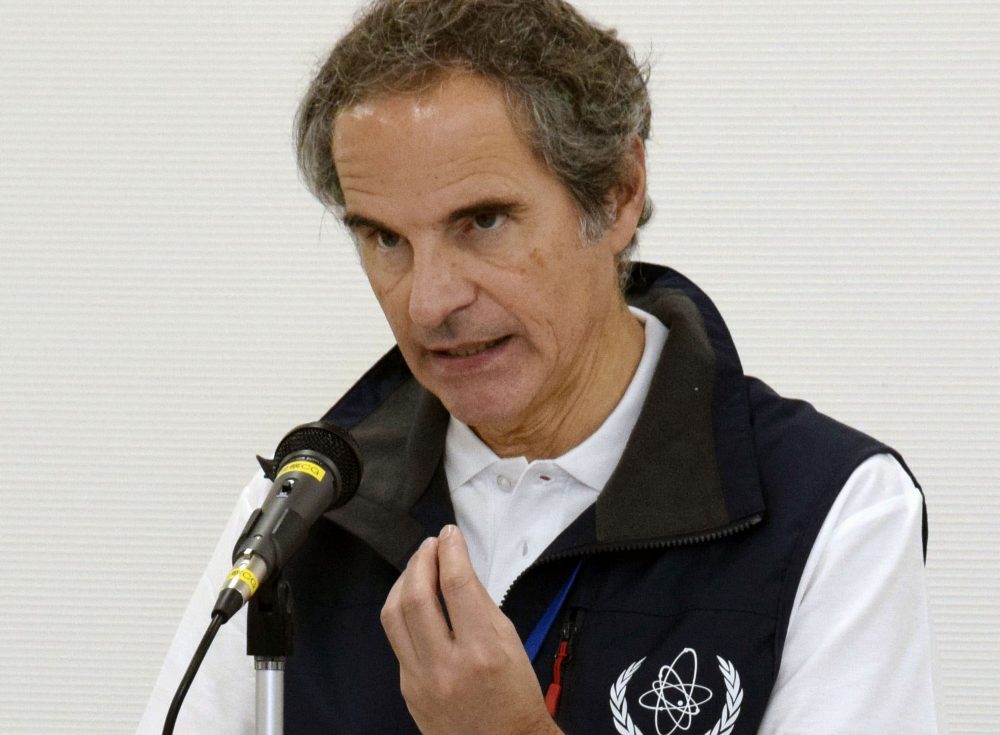
The leader of the United Nations’ nuclear watchdog agency made his strongest statement yet Wednesday, confirming that his inspectors would be visiting Iranian nuclear enrichment sites — a central piece of the interim agreement struck between the United States and Iran.
International Atomic Energy Agency Director General Rafael Mariano Grossi made the remarks at a news conference held at the tsunami-damaged Fukushima Daiichi nuclear power plant, signaling that the IAEA’s role in the deal is non-negotiable.
Ever since Israel launched a 12-day war against Iran in 2025, Tehran has blocked IAEA inspectors from accessing enrichment sites where the Islamic Republic is believed to have stockpiled enough highly enriched uranium to potentially construct as many as 10 nuclear weapons, if it chose to pursue them. Iran has consistently maintained that its nuclear program is for peaceful purposes, though it remains the only nation on Earth to have enriched uranium to 60% purity without having a weapons program.
On Tuesday, the U.S. and Iran offered conflicting accounts of whether those enrichment sites would be subject to inspections under the new deal.
Grossi addressed that tension directly, telling reporters: “I can understand political statements, they are part of the reality, but the fundamental thing I would like to remind you and draw your attention to is that there has been a Memorandum of Understanding, signed by both presidents.”
He said the agreement “says explicitly that the nuclear activities that are going to be carried out with the regards to the nuclear material facilities will be supervised by the IAEA — in all letters.”
Grossi left no room for ambiguity about what comes next: “Obviously, to do that, we will have to inspect. Whether this happens the day after tomorrow or in one week or in 10 days, it’s important, but not essential. This is going to happen.”
Those inspections are a critical element of the deal, which requires Iran’s uranium stockpile to be “downblended” — reduced from its current highly enriched state.
Iran did not immediately respond to Grossi’s comments. A day earlier, Iran’s Foreign Ministry spokesperson Esmail Baghaei told reporters in Tehran that U.N. inspectors were not on schedule to examine nuclear facilities that were bombed by the United States last year. Those remarks came in direct contrast to statements made by U.S. Vice President JD Vance.
While the IAEA has been permitted to visit some Iranian nuclear facilities since the 12-day war — including the Bushehr nuclear power plant — it has been shut out of the enrichment sites. Without that access, the agency says it cannot confirm the current status of Iran’s uranium stockpile or assess the centrifuge systems used for enrichment. Both Iran and the IAEA say Tehran has not been actively enriching uranium, but experts in nuclear nonproliferation have raised concerns that Iran may be relocating its stockpile to undisclosed locations.
The U.S. and Iran reached their agreement last week, under which Tehran would dilute its enriched uranium stockpile. In return, U.S.-backed sanctions on Iran would be waived, and both sides would have 60 days to work toward a broader, more comprehensive agreement.
The fragile ceasefire has already faced strain, however, with Iran announcing it closed a key strait again following renewed fighting between Israel and the Iranian-backed militia Hezbollah in Lebanon. Violence flared again in Lebanon on Tuesday, though it did not escalate further.
A federal appeals court issued a ruling on Tuesday giving the Trump administration the green light to carry out rapid deportations of undocumented migrants anywhere in the United States — not just in areas close to the border.
The decision allows federal authorities to move forward with what are known as expedited removals on a nationwide scale, significantly broadening the reach of the administration’s immigration enforcement efforts.
Two days after a tense on-field confrontation, San Francisco Giants first baseman Rafael Devers stepped forward Tuesday to address the moment when he tried to refuse being replaced by a pinch runner — calling the whole episode a simple mix-up.
Speaking to reporters ahead of the Giants’ home game against the Athletics, Devers explained what was going through his mind during Sunday’s game against the host Miami Marlins.
“Two days before that, I had told (Vitello) that I had a hamstring issue,” Devers said. “I thought that was why he was taking me out of the game. That’s why I was trying to signal to him that I was fine. I think it was a misunderstanding.”
“I apologized, which was the right thing for me to do,” he added.
The incident unfolded in the ninth inning on Sunday, with Miami holding a 2-1 lead and Devers drawing a leadoff walk. When teammate Jonah Cox came in to run for him, Devers attempted to wave Cox off. Umpires ultimately stepped in and placed Cox on base, while Devers stormed off the field visibly upset.
The contrast between the two players was notable — Cox, 24, is considered one of the faster rookies in the game, while Devers, 29, ranks among the slowest baserunners in the majors. Despite the substitution, Cox never attempted to steal, and the inning ended on a flyout followed by a ground-ball double play.
Manager Tony Vitello downplayed the situation, calling it a “non-issue” and describing a productive conversation he had with Devers during the flight from Miami back to San Francisco.
“He came to me,” Vitello said. “We sat next to each other on the plane, had a good conversation. … It was a good chat we had. I went through all the stuff postgame, the baserunning stuff, the hamstring, how well he’s done for us.”
Vitello made clear he has no reservations about Devers going forward. “As a player or the type of teammate he is and the type of competitor, how bad he wants to win, I’m good to go into battle with him anytime,” he said.
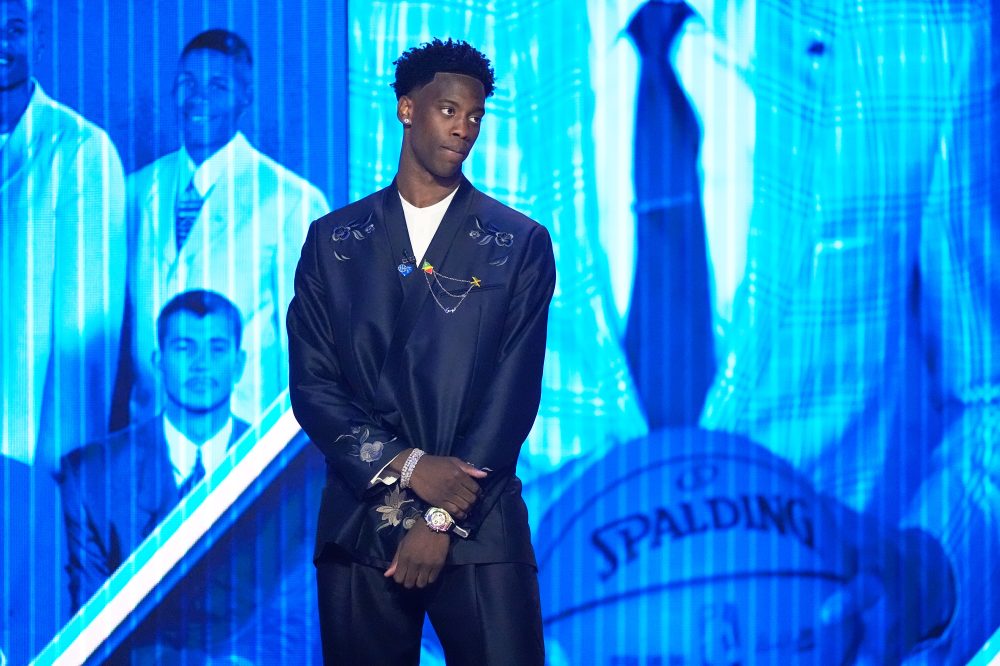
The first 30 selections of the 2026 NBA Draft are done, and the action picks back up Wednesday evening when the second round begins.
The NBA’s decision to spread the draft across two primetime nights has meant a longer wait for a number of players still hoping to land a spot on an NBA roster.
Here is a look at the top prospects still available as the second round gets underway:
ByteDance, the Chinese technology company that created TikTok, is in early-stage talks with banks about securing an offshore loan of roughly $20 billion — the largest such borrowing in the company’s history, according to a Bloomberg News report published Wednesday citing sources with knowledge of the discussions.
According to the report, ByteDance has reached out to banks about a loan that could have a three-year term, with the possibility of extending it to as long as five years.
ByteDance had not responded to a request for comment at the time of the report.
The company has been positioning itself as a significant investor in artificial intelligence infrastructure, increasing its spending and forming partnerships to acquire chips and chip design services.
JDEIDAT MARJAYOUN, Lebanon — Standing on a friend’s balcony, Milia el-Cheikh strained to make out what remained of her home village among the rubble below — its entrances now sealed off with coils of barbed wire.
Her village, Dibbine, is among several communities in southern Lebanon with Shiite majorities that have been destroyed by Israeli forces engaged in combat against the Iran-backed militant group Hezbollah. Israel has taken control of large swaths of territory, and fighting has continued even through declared ceasefires. The most recent truce — established as part of an interim peace agreement between the United States and Iran — appears to be holding for now.
El-Cheikh, one of the few Christians who called Dibbine home, found temporary shelter in a nearby village. She regularly makes her way to Jdeidat Marjayoun — a predominantly Christian village adjacent to her hometown — to share coffee with a church friend. What was once a comforting routine now unfolds against a landscape of destruction and dread.
“I don’t know anything about my house,” she said. “Nothing is more agonizing than not being able to get to your home.”
Jdeidat Marjayoun is one of several towns and villages that the Associated Press visited along the uncertain boundary of Israel’s occupied zone in southern Lebanon. Israeli forces have pushed out the largely Shiite population from many areas, believing those communities shelter Hezbollah fighters, and numerous towns have been leveled.
Residents of neighboring Christian, Sunni, and Druze communities have been permitted to remain, but the conflict has upended their lives. Their homes have been struck, road closures have cut them off from the rest of Lebanon, and Israeli military raids in the night have left residents shaken.
Israeli warnings against sheltering Hezbollah fighters have effectively prevented these communities from taking in displaced Shiite neighbors, creating a rift between people who have lived side by side for generations and inflaming political and sectarian tensions.
The current round of fighting began when Hezbollah launched rockets into Israel in the days following an Israeli and U.S. military campaign against Iran that started on February 28. Israel subsequently invaded Lebanon and has extended its zone of control as deep as 12 kilometers — roughly 7 miles — in some areas.
As Israeli forces moved forward, they warned civilians to evacuate large portions of southern Lebanon. In April, Israel released a list of 53 towns and villages — the majority of them Shiite — where residents are prohibited from returning. On Thursday, eight additional predominantly Shiite villages were added to that list.
Israel maintains that its troops are stationed in southern Lebanon for defensive purposes, asserting that Hezbollah was deeply embedded in the region. The military has released videos it says show tunnels and military infrastructure hidden within civilian neighborhoods.
Iran has stated that any broader ceasefire agreement must include Lebanon and that Israel must pull back its forces. Hezbollah has declared it will resist the occupation, and Lebanon’s government has also demanded an Israeli withdrawal.
Mixed communities perched on hills and nestled in valleys among orchards and olive groves sit within view of the devastation that has befallen their neighbors. Residents there have pledged to stay put.
The Shiite town of Khiam — now a flattened white expanse of destroyed buildings under Israeli control — is visible from the Christian village of Qlayaa.
Qlayaa’s residents are essentially cut off from their olive groves in the valley below. “Now another season is lost,” said Hanna Daher, the mayor of Qlayaa.
A priest in Qlayaa was killed by shelling while he was inspecting the site of an earlier strike. A father and his two children were killed in a drone attack while driving toward the village. Israel says it targets only militants.
In Jdeidat Marjayoun, a house was bombed on the suspicion that militants were using it. Rockets — believed to have been fired by Hezbollah — damaged the dome of a church. In other locations, solar panels, electrical transmitters, and water facilities have been struck.
El-Cheikh fled Dibbine with her neighbors in early March after Israel issued warnings to evacuate. In late May, after weeks of sustained fighting, Israeli forces raided Dibbine before pulling out in early June.
While the fighting raged, el-Cheikh’s friend Lolitta Costantine sheltered with her husband in their home in Jdeidat Marjayoun, at one point moving in with neighbors. The walls of her home now bear cracks from nearby explosions. Windows were blown out and doors knocked off their frames. She has kept a piece of shrapnel as a reminder of what she endured.
“We didn’t know where the danger was coming from,” Costantine said.
Shiites seeking refuge from the fighting have been turned away by residents who fear Israeli airstrikes or forced evacuation, worsening tensions that had largely been dormant since Lebanon’s civil war, which lasted from 1975 to 1990.
When one Qlayaa resident allowed a friend from a Shiite village to stay on his orchard property, his house was bombed, according to Mayor Daher. Other residents have asked Shiites seeking safety to move on.
“We told them, we don’t want problems for you or for us,” Daher said.
Israel has warned the municipality of Jdeidat Marjayoun not to allow displaced people from neighboring villages to enter, saying doing so could endanger the town or lead to a forced evacuation, according to a post from the municipality on social media.
“We were forced to ask some to leave the town,” said the parish priest, Father Philip Habib Okla. “It caused many disagreements and tension. We are counting on faith to remain united.”
The Israeli military said it has cautioned people in parts of southern Lebanon not to allow Hezbollah to operate within their villages, saying the militant group uses civilian areas as cover, putting residents in danger.
During Israel’s occupation of southern Lebanon from 1982 to 2000, the area was a stronghold for the South Lebanon Army, a mostly Christian militia that cooperated with Israeli forces. When Israel withdrew, some militia members fled to Israel while others faced prosecution in Lebanon, where they were broadly regarded as collaborators.
Some current residents worry they will be unfairly labeled as collaborators simply for remaining in their homes. Few are willing to speak openly about the tensions, afraid of retaliation from either Israel or Hezbollah.
At a church visited by the AP, a man cried out in frustration that suspicion had spread throughout the community — even among Christians themselves. He placed blame on Hezbollah for drawing Lebanon into the conflict, saying the group had made a grave error.
Late one night in March, Israeli forces surrounded a building in the predominantly Sunni village of Halta. They broke in and arrested a man named Chadi Abdel-Al, who cried out “my heart” as he was beaten and dragged into a vehicle, according to his mother, Ayesha al-Qaderi, who lives in the same building.
In the chaos, a 15-year-old relative named Mohammad Abdel-Al ran through the darkness in his pajamas toward the house, according to his grandfather, Hatem. Israeli soldiers shot and killed him. A neighbor who had stepped out onto his balcony was wounded in the incident.
The Israeli military said it had detained the leader of a local militant organization.
In a separate incident, Israeli soldiers detained three farmers from Halta during a raid on a nearby village.
They are among at least eight people detained by Israeli troops since March, according to Lebanese media reports. The Israeli military has said those detained were suspected of involvement in militant activities and in plots targeting its forces.
“We still don’t know why they kidnapped them. Maybe to instill fear in the village and to send a message that they see everyone,” said Issa Abdel-Al, the community’s leader. “It has become like the West Bank here,” he added, drawing a comparison to the occupied Palestinian territory.
Al-Qaderi, who has received no information about her son since he was taken away, said simply: “I just want to know his fate.”
ARILJE, Serbia — Tucked into the hills of Serbia, the town of Arilje has built a remarkable identity around a single fruit: the raspberry. Known throughout the Balkan nation as its “raspberry capital,” Arilje’s reputation has spread well beyond its borders, with berries shipped to buyers as far away as the United States and Japan.
Serbia ranks among the top three raspberry-exporting nations in the world, and Arilje plays a central role in that standing. The municipality, home to roughly 17,000 residents and located about 170 kilometers — or around 100 miles — from the capital city of Belgrade, is responsible for approximately one-fifth of all raspberry exports from the country.
“We are born, we live and we die with raspberries,” said Mileta Pilcevic, who leads a local association of raspberry producers. “Arilje is unique in the world. You can’t find a smaller place with such big concentration of raspberry production.”
The region’s rolling, hilly terrain provides a naturally ideal climate for growing the fruit. What sets Arilje’s raspberries apart is the commitment to quality: no chemicals are used, and every berry is picked by hand.
Pilcevic explained that a raspberry field requires at least two years before it can produce a harvest. The fruit demands constant attention to develop the distinctive smell, taste, and aroma that have made it recognized around the globe. “Nothing must be done with machines or chemicals,” he said.
The raspberry fields have been passed down through generations, operating mostly as family businesses. On average, the fields surrounding Arilje produce between 15,000 and 20,000 tons of raspberries each year.
Early summer marks the harvest season, drawing seasonal workers from across Serbia and beyond — including, according to Pilcevic, workers from India and other parts of South Asia. Local resident Nada Marinkovic described the labor involved, noting that everything must be cleared of weeds and grass by hand. As for the picking itself, she said, “is only hard because of the sun.”
About 90% of Serbian raspberries are exported in frozen form, while the remainder are sold within the country. Some growers also sell fresh fruit and natural juices directly to consumers online. In Europe, the frozen berries are widely used in food processing, appearing in retail fruit products, jams, yogurt, and baked goods.
Despite the town’s proud legacy, producers are navigating a difficult period. This year’s harvest is expected to come in 20 to 30 percent below normal levels, largely due to a drought that struck last year. Extreme weather events — which experts suggest may be connected to climate change — have become a growing concern for growers.
Producers say the best way to manage that uncertainty is through more stable purchase prices. Pilcevic noted that the prices offered for raspberries too frequently leave farmers with little or no profit, making it impossible to absorb unexpected costs. The frustration has previously boiled over into public protests.
“It is not our job to be on the road but in the orchard,” Pilcevic said. “But, believe me when I say that we will be on the road if we have to.”
HONG KONG (AP) — Stock markets across Asia turned in a mixed performance Wednesday, coming on the heels of a broad selloff that hammered technology shares from Asian exchanges to Wall Street.
U.S. stock futures were also trading unevenly as global investors kept a close eye on market activity in Japan and South Korea. Both countries had posted substantial gains in recent months fueled by worldwide enthusiasm for artificial intelligence, but each saw steep declines on Tuesday.
South Korea’s benchmark Kospi index climbed 0.5% to 8,241.23, partially bouncing back after a 10% drop the day before. Memory chip manufacturer SK Hynix, one of the most valuable companies in the country, saw its shares slide 3.6%. Meanwhile, Samsung Electronics gained 3.7% after plunging 12.3% on Tuesday.
Tokyo’s Nikkei 225 dropped 1.1% to 68,991.77, following Tuesday’s 3.6% decline.
Taiwan’s Taiex, which is heavily weighted toward technology companies, fell 2.5%.
Hong Kong’s Hang Seng index edged up 0.1% to 23,364.72. China’s Shanghai Composite index dipped 0.3% to 4,096.14, while Australia’s S&P/ASX 200 inched up 0.1% to 8,797.00.
The losses across Asian markets followed Tuesday’s 1.4% decline in Wall Street’s benchmark S&P 500 index. The Nasdaq composite, which is heavily concentrated in technology stocks, fell 2.2%, and the Dow Jones Industrial Average finished 0.1% lower.
In the U.S. on Tuesday, tech and semiconductor stocks were hit hard. Micron Technology tumbled 13.2%, while Nvidia shed more than 4.1%.
James Reilly, a senior markets economist at Capital Economics, described the sharp drops in tech shares as an “illustration of rising volatility” in those stocks. “This is particularly true in Korea where domestic retail buyers are taking on an increasing role,” he added.
Oil prices also declined early Wednesday, as more vessels traveled through the Strait of Hormuz while talks between the U.S. and Iran on ending the Iran war showed signs of progress.
ING commodities strategists Warren Patterson and Ewa Manthey wrote in a commentary that “price movements suggest the market expects a fairly rapid recovery in Persian Gulf oil supplies.”
However, they noted that while ship traffic through the strait had picked up in recent days, it remained well below the levels seen before the war started.
Brent crude, the international benchmark, fell 0.7% to $76.30 per barrel. It has been trading under $80 recently but remains elevated compared to the roughly $70 per barrel seen in late February before the war began. U.S. benchmark crude was also down 0.7%, settling at $72.70 a barrel.
Back in the United States, investors are waiting on a report due out Thursday covering May’s personal consumption expenditures price index — known as the PCE — which serves as the Federal Reserve’s preferred measure of inflation.
Some economists believe the Fed may keep its key interest rate steady this year and is unlikely to raise rates. Bond yields have stayed elevated as inflation concerns have grown in the wake of global energy disruptions.
In currency markets, the U.S. dollar was unchanged at 161.55 Japanese yen, and the euro was trading at $1.1364, down slightly from $1.1382.
BOWIE, Md. (AP) — Two of the most powerful Democrats on Capitol Hill, U.S. Reps. Steny Hoyer and Jerrold Nadler, are set to leave Congress when their terms end in January. But before they go, both managed to leave their mark on who comes next.
On Tuesday night, former staffers to each of the retiring lawmakers claimed victory in Democratic primaries to take over their seats. Since both congressional districts lean heavily Democratic, the winners are widely expected to cruise to victory in November and eventually be sworn in to fill the roles once held by their former employers.
Hoyer and Nadler join a growing list of long-serving lawmakers who have successfully guided their chosen successors toward Capitol Hill. Of the 68 House and Senate members not seeking reelection this cycle, at least five have thrown their support behind former staff members, while more than a dozen others have taken steps — to varying degrees — to ease the way for their preferred candidates.
The practice isn’t without controversy, especially when a lawmaker times their retirement announcement in a way that gives an insider candidate a strategic advantage.
Still, even as Congress continues to suffer from low public approval, voters often remain willing to trust the recommendation of the representative they’ve known for years.
That dynamic played out in Maryland’s Democratic primary Tuesday. Natasha Greensword, 45, said she supported Adrian Boafo partly because he had the blessing of Hoyer, who has held the district’s seat since 1981.
A federal judge on Tuesday issued a nationwide order prohibiting immigration arrests inside U.S. courthouses, putting a stop to a practice that began shortly after President Donald Trump returned to the White House.
U.S. District Judge Casey Pitts of San Francisco ruled that the Trump administration’s decision to reverse decades of policy banning courthouse arrests came not from poor reasoning, but from a total absence of reasoning altogether. In his written opinion, Pitts noted that federal authorities never adequately considered the “chilling effect” such arrests could have on whether individuals choose to show up for their scheduled court hearings.
Pitts pointed to the Administrative Procedure Act, a 1946 federal law requiring government agencies to explain and justify their actions. “For 80 years, Congress has commanded federal agencies to think before they act,” he wrote. He added that while the law doesn’t require agencies to make the choice a court would prefer, “it demands that an agency at least provide sound reasons for following its chosen course.”
This marks the second time courthouse immigration arrests have been blocked by a judge. Back in May, a federal judge in New York issued a similar order, though that ruling only covered New York. Tuesday’s decision applies across the entire country.
James Percival, the general counsel for the U.S. Department of Homeland Security, pushed back sharply against the ruling, calling it an example of judicial overreach. “When a judge sentences a defendant, the defendant is taken into custody. If an alien is ordered removed by an immigration judge, the same should happen. A district judge ordering otherwise is naked judicial activism in service of an anti-American, open borders agenda,” Percival wrote in an online post.
Following Trump’s return to office, immigration hearings around the country frequently ended with the government dismissing cases, which officials then used as an opportunity to have plainclothes agents arrest individuals in courthouse hallways — often working in coordination with attorneys from the Department of Homeland Security.
Judge Pitts, who was nominated to the bench by President Joe Biden, also criticized the administration for detaining individuals in nearby holding cells beyond the legally allowed 12-hour limit.
NATO Secretary-General Mark Rutte is heading to the White House this Wednesday for a face-to-face meeting with President Donald Trump, looking to cool rising tensions between the U.S. and its allies before a high-stakes NATO summit next month in Ankara.
Trump, who has long been critical of NATO — at one point calling it a “paper tiger” — has grown increasingly frustrated with the alliance’s refusal to back American military action in the Middle East. He has also been angered by NATO’s failure to help reopen the Strait of Hormuz, a crucial oil shipping route that was disrupted following a U.S.-Israeli strike on Iran on February 28.
Last week, Defense Secretary Pete Hegseth sharply criticized what he called “free-riding” allies during a NATO gathering and announced a six-month review of U.S. troop deployments across Europe — a process that could lead to reductions in American forces stationed there. That came on the heels of a U.S. decision to scale back the military resources it makes available to the alliance during crises, leaving NATO members scrambling to cover the shortfall.
Managing Trump’s rocky relationship with NATO has been a central part of Rutte’s job since Trump’s election in November 2024. He has repeatedly worked to prevent flashpoints — including Trump’s push to take control of Greenland, a territory belonging to fellow NATO member Denmark — from turning into full-blown crises, earning him a reputation as a so-called “Trump whisperer.”
Wednesday’s meeting is expected to follow that same careful diplomatic approach.
Stephen Wertheim, a senior fellow at the Carnegie Endowment for International Peace, a Washington-based think tank, offered his take on what Rutte is trying to accomplish. “I expect he is trying to get on the same page with Trump to make sure that the NATO summit is a success or not a wipeout,” Wertheim said.
Wertheim also cautioned that the summit itself carries real dangers. “The NATO summit carries a potential for significant risk because Trump is upset and erratic, and even if Rutte comes and thinks he has an understanding with Trump, who knows what two weeks later will bring,” he said.
The relationship between Trump and NATO allies has deteriorated in recent months. After the alliance declined to support Trump’s Iran military campaign — which he launched without first consulting allies — Trump publicly questioned whether the U.S. should remain bound by NATO’s mutual defense commitment and suggested he might pull out of the alliance altogether.
In a Tuesday interview on Fox News, Rutte pushed back on the idea that NATO members broadly blocked U.S. military operations, calling such incidents “isolated.” He noted that hundreds of American aircraft flew out of U.S. bases across Europe in support of Washington’s military campaign — a point he said he plans to bring up with Trump on Wednesday.
“We will also zoom out from this to this bigger picture of what he is doing for NATO,” Rutte said, adding that member nations have been boosting their defense budgets and that he would be unveiling what he described as “huge” spending figures during Wednesday’s meeting.
NATO spokesperson Allison Hart confirmed that Rutte’s White House visit is part of the final preparations for the July 7-8 Ankara summit. Hart said the gathering “will focus on how Allies are delivering on the commitments made last year at the NATO Summit in The Hague, including on increasing defense investment, expanding defense industrial production, and continuing support for Ukraine.”
The NATO alliance is under extraordinary pressure, with several European nations worried that Washington could withdraw entirely — a move that would fundamentally reshape the future of the alliance. Trump has previously threatened to do exactly that.
During Rutte’s visit, he is also expected to meet with members of Congress. The trip comes as U.S. officials have expressed concern about what they see as an “unhealthy co-dependence” by European nations on American military forces.
Despite the tensions, Rutte has maintained solid working relationships with Pentagon leadership. Hegseth spoke positively about Rutte’s leadership during last week’s NATO meeting in Brussels.
At last year’s summit in The Hague, NATO leaders agreed to Trump’s demand for a major boost in defense spending, pledging to dedicate 5% of their GDP to defense and defense-related measures within a decade. However, while some European countries have significantly ramped up their military budgets, others have been slow to follow through.
Agility Robotics, the Oregon-based maker of humanoid robots, is planning to enter the public market through a merger with Churchill Capital Corp XI in a deal worth roughly $2.5 billion, according to a Wednesday report from the Wall Street Journal, which cited company executives.
According to the report, the two companies anticipate generating more than $600 million in gross proceeds from the transaction. That figure includes $420 million in cash from Churchill XI, along with more than $200 million raised through a common-stock private investment in public equity — an arrangement led by Taiwan-based Foxconn.
Once the deal closes, the newly public company is expected to trade on the stock market under the ticker symbol AGLT.
Agility Robotics is best known for its commercially deployable humanoid robot called Digit. The company has already received orders for an upgraded version of Digit currently in development. That next-generation model is designed to handle smaller objects with greater precision and will meet higher safety standards.
Reuters, which first reported the story, noted it was unable to independently confirm the details at the time of publication. Neither Agility Robotics nor Churchill Capital Corp XI responded to requests for comment made outside of normal business hours.
When most people imagine a prison, they think of metal bars, locked doors and stripped-away freedom. But visitors to a correctional facility in Johannesburg — South Africa’s largest city — are met with something far different: an art gallery.
The display of work created by incarcerated individuals is part of a broader national push to lower reoffending rates through rehabilitation efforts inside the country’s prisons. Since 2023, the Department of Correctional Services has launched nine arts-and-crafts galleries at facilities across the country, with the goal of helping inmates build skills, generate income and prepare themselves for life once they’re released.
At Leeuwkop Correctional Facility, artwork made by 34 inmates is on view for the public, offering a window into stories of culture, personal memory and transformation — all within a country that struggles with one of the highest crime rates in the world. Inmates also have the opportunity to view one another’s creations.
“I get a peaceful and healed mindset when I do my art,” inmate Freddy Mongkoai told the Associated Press. “It encourages me to be strong and present. I can focus, so it gives me peace of mind.”
Mongkoai, 51, has been serving nearly two years of a 12-year murder sentence connected to an act described as vigilante justice. He joined the prison’s art program in October and has since explored both painting and papier-mâché sculpture. His most recent creation is a replica of the FIFA World Cup trophy.
Estimates of how often released offenders return to crime in South Africa vary widely depending on how recidivism is measured, with some figures reaching as high as 95%.
South African prisons are well known for serious violence problems tied to overcrowding, gang activity, underfunding and administrative shortcomings. Correctional officials say repeat offenders are a major driver of that overcrowding.
With that reality in mind, the correctional department argues that initiatives like the arts program can play a meaningful role in breaking the cycle of reoffending.
“As they leave here to serve parole and finish their sentences, this is the most effective way of making it a point that they don’t do crime again,” said Makgothi Thobakgale, national commissioner of the Department of Correctional Services.
The gallery at Leeuwkop reflects a wide range of artistic experience and personal backgrounds. Works on display include Mongkoai’s detailed grayscale portrait of a woman balancing firewood on her head while carrying a baby on her back, as well as a simple pencil sketch bearing the words “STOP GBV” — a reference to South Africa’s deeply troubling levels of gender-based violence.
Mongkoai said the portrait is among his favorites because it draws from a childhood story he grew up hearing in Limpopo province — a piece of folklore about a woman said to live on the moon.
“The elders would tell us that there is a woman carrying firewood on her head and a baby on her back, while being followed by a dog, on the moon,” he said. “That is my favorite because it reminds me of my childhood.”
According to Unathi Mahlati, a senior program officer at Just Detention International-South Africa — which has partnered with the correctional department on the program since 2024 — inmates frequently gravitate toward themes of home and family in their work.
Mahlati explained that the program is designed to be therapeutic in nature, though it differs from formal art therapy, which is clinical and led by a licensed physician. Participation is entirely voluntary, and the emphasis is on helping inmates process their thoughts, feelings and personal needs — not on developing artistic talent.
“A lot of them have experienced a lot of trauma before coming into the facilities, but there’s not a lot of services for them to process and metabolize that trauma,” Mahlati said. “We emphasize that it’s not about skill. It’s a creative expression to process trauma.”
She also noted that correctional environments tend to be “very rigid and very dogmatic,” adding, “So we give people a chance to just be.”
Artwork created through the program is made available for public purchase, with prices ranging from roughly 50 rand (about $3) to more than 2,000 rand (over $120), depending on the size and complexity of each piece.
Officials say the money raised goes back into restocking art supplies and providing small stipends to participating inmates, who traditionally earn money through work in places like orchards and dairy farms, or through training programs that produce furniture, uniforms and baked goods.
Inmate artwork is also regularly featured at major South African events, including the Comrades Marathon Expo and the National Arts Festival in Makhanda, broadening the reach of the inmates’ creative work.
“For them to also see that this can be a way of living, it helps because now they are able to manage their own finances, albeit at a small scale,” Commissioner Thobakgale said.
For Mongkoai, the vision extends well beyond his time behind bars.
A remarkable archaeological find in Denmark is shedding new light on just how advanced Viking society really was. Experts from the Moesgaard Museum announced this week the discovery of a massive textile production site from the Viking Age, covering more than 100,000 square meters — equivalent to over one million square feet.
The site is located in Søften, about 10 kilometers, or roughly 6 miles, north of Aarhus — Denmark’s second-largest city — on the Jutland peninsula. Based on its features, researchers believe it was active sometime between A.D. 600 and 950, placing it in the late Iron Age through the early Viking Age.
Archaeologist Liv Stidsing Reher-Langberg, who led the 10-month excavation, described what sets this location apart from others of the same period. “We have a clear focus on textile production, which makes this settlement different from other kinds of settlements of this period,” she said.
Among the artifacts uncovered were spindle whorls and weight looms — tools that point directly to weaving and fabric-making activities. Reher-Langberg noted that researchers also turned up silver coins, glass beads, and pottery at the site. More than 80 pit houses — partially underground structures used during Viking times as both workshops and living quarters — were found across the sprawling location, along with a dedicated flax processing area.
The layout of the site is also telling. Separate zones for crafts and production were identified, along with a single residential home. Archaeologists believe this arrangement suggests the operation was run by a powerful individual who controlled both the resources and the production process.
Reher-Langberg explained that interest in the area had been building for some time. Over the past 30 years, hobbyists using metal detectors had been finding silver coins nearby. A smaller trial excavation conducted about a year and a half ago — ahead of planned road and industrial construction — gave archaeologists reason to dig deeper.
“We could see in the trenches that it just keeps on going, with these houses and pit houses and textile production features,” she said.
Moesgaard Museum historian Kasper Andersen called the Søften discovery “another piece in the puzzle” for understanding the economic, cultural, and political landscape of the time. He noted that during the Viking era, the nearby city of Aarhus — then called Aros — served as a hub for royalty and international commerce. Just last year, a separate Viking site was found in Lisbjerg, only about 4 kilometers, or 2.5 miles, away, believed to have been home to members of the nobility.
Andersen suggested that goods produced at places like Søften were likely funneled into a broad international trade network. “When you have a production site of this scale, it cannot be only because of the local area. It needs to be understood as part of a greater network, a much bigger international perspective,” he said.
Reher-Langberg said future carbon dating and pollen analysis could help answer remaining questions, including details about the specific types of textiles made at the site.
The Viking Age is generally recognized as spanning from A.D. 793 to 1066, a period during which Norse peoples carried out widespread exploration, raiding, trade, and settlement across Europe and even into North America.
For Andersen, the Søften site challenges outdated stereotypes about Viking culture. He said the discovery shows Vikings were “not just simple, uncivilized, barbaric hordes, rambling about Europe.” He added: “To have a place like Søften, you need a very well-organized society with a production line, and you also need a market to have the production. The textiles from Søften go into a market that’s much bigger than just the local area.”
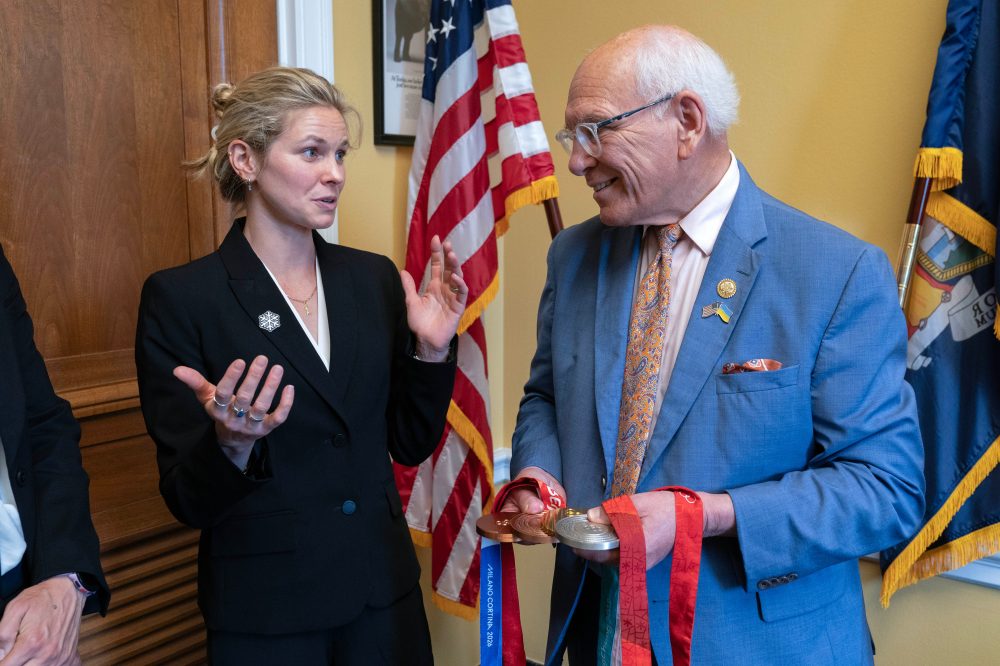
Olympic gold medalist Jessie Diggins carried her four medals into the halls of Congress this week, using her athletic platform to call for stronger environmental protections and climate action.
Diggins, the most decorated cross-country skier in American history, is part of an athlete-driven environmental advocacy group called Protect Our Winters. The organization sent a delegation to Washington on Tuesday and Wednesday to meet with lawmakers and raise concerns about recent changes at the Environmental Protection Agency since President Donald Trump returned to office.
“I don’t want to stick my head in the sand and ignore the world burning,” Diggins said. “I feel like I have a responsibility to use my voice to advocate for change. And so that’s why it’s so important to me, because I want my great-grandkids to be able to build a snowman and try cross-country skiing someday, and be able go hiking and fishing and camping in the summer, and breathe clean air. I want that for them very badly.”
Diggins stepped away from professional ski racing this year following a bronze medal finish in the women’s 10-kilometer interval start at the 2026 Milan Cortina Winter Olympics. Throughout those Games, many skiers voiced alarm about climate change and the rapid melting of glaciers around the world — a trend that threatens the very future of winter sports.
She described bringing her medals to Washington as a “beautiful, full circle moment.” Diggins said she would view the trip as a success if it helps open the door to bipartisan conversations that could eventually strengthen the EPA. Republicans who currently control Congress have largely backed the Trump administration’s approach to the agency.
“We’re trying to advocate for solutions that are going to protect us long term, and training and racing through four Olympics, that was a very long-term thing, you know? It’s not quick, immediate gratification, you work and you work and you work,” Diggins said. “I think it’s a nice reminder of like, it’s OK that we are looking for solutions for the future.”
The coalition is far from a typical lobbying group. Professional ski mountaineer Brody Leven said he only owns a suit for his trips to Washington with Protect Our Winters. Still, he believes athletes are uniquely positioned to bring people together around climate policy.
“We’re good at looking at adversity in the face and still moving forward,” Leven said. “And we’re good at knowing something is going to be hard and trying to do it anyways.”
The group planned meetings with members of both parties in the House and Senate. Olympians Jaelin Kauf, Gus Schumacher, Bea Kim, Julia Kern, and Olivia Giaccio were also part of the effort, according to Protect Our Winters.
Under the current administration, the EPA has revoked a key scientific determination that had been central to climate change policy, moved to roll back restrictions on toxic wastewater from coal-fired power plants, and announced additional cuts to federal air and water pollution standards while promoting fossil fuel use. Critics say these moves conflict with the agency’s core mission of protecting public health and the environment.
EPA Administrator Lee Zeldin has described the agency’s direction as “driving a dagger through the heart of climate-change religion and ushering in America’s Golden Age.” He has argued that reducing regulatory burdens will save trillions of dollars, lower the cost of living, and help revive American manufacturing.
Environmental advocates counter that the EPA under Zeldin has walked away from its duty to shield the public from harmful greenhouse gas pollution at a moment when climate change is fueling more frequent and severe weather events, including stronger hurricanes, deadlier floods, and more destructive wildfires. States, cities, and public health organizations have filed legal challenges against a range of the agency’s recent rule changes.
Ben Gubits, vice president of campaigns and advocacy for Protect Our Winters, said the group expects the federal government to safeguard the health of both Americans and the planet. The organization has lobbied Congress for roughly a decade, including visits in 2021 and 2022 when it pushed for passage of a major climate bill. President Joe Biden signed that legislation — known as the Inflation Reduction Act — in 2022.
“We are really thinking about a long-term and positive vision for the future, and how do we rebuild these critical institutions beyond the Trump years,” Gubits said.
Also part of the coalition is Stuart Nissenbaum, who began working at the EPA early in the Biden administration and departed about a year ago. Nissenbaum said having Olympians alongside him in Washington helps amplify the message. These athletes are the best in the world at what they do, and they competed while wearing the American flag — a combination he believes will resonate with members of Congress.
Nissenbaum said his message to legislators is straightforward: clean air and clean water are not partisan issues, and policies protecting the environment should be rooted in science.
“Clean air and clean water isn’t something that we should take for granted,” he said. “It affects every single person.”
SAN FRANCISCO (AP) — In China, Xiangqi Chen risks punishment for her LGBTQ+ activism. But thousands of miles away in San Francisco’s Chinatown — the oldest in the United States — she has found both freedom and recognition as the founder of the first Chinese queer art museum in the world.
The contrast between her two worlds is something Chen fully recognizes.
“Here in San Francisco Chinatown, I still continued my journey and met so many like-minded community members and friends,” Chen said through an interpreter in an interview with The Associated Press. “It kind of actually encouraged me and gave me lots of strength to do what I know is my mission, my calling.”
The OUT Museum made its debut with a rainbow-ribbon cutting ceremony at the end of May, timed to fall between Asian American Pacific Islander Heritage Month and Pride Month. Located directly across from the Chinese Historical Society of America Museum, the bilingual institution aims to bring visibility to a group that has historically been overlooked. Its arrival comes at a time when LGBTQ+ rights face growing restrictions at the local, state, and federal levels across the country.
For now, the museum operates only on Saturdays and consists of a single room displaying fewer than a dozen works by artists from China and the broader Chinese diaspora. Still, organizers hope to expand both the number of exhibits and the days the museum is open to visitors.
Chen’s vision for the museum dates back six years, when she was still living in China and launched a Kickstarter campaign for the concept — drawing donations from more than 2,000 people. She always understood, however, that building it in China was unlikely. In 2022, she came to the United States on a J-1 visa as a visiting scholar at Georgetown University. By 2024, her involvement in an exhibition at the Asian Art Museum in San Francisco brought her wider attention, which led to a residency with the Chinese Culture Center of San Francisco.
The organization’s executive director, Jenny Leung, said in an email that the group was “proud to be the incubating space for the OUT Museum prototype.”
The outpouring of community support that followed left Chen genuinely surprised.
“I got so many chances to connect with the local Asian American queer community and even the Chinatown community in general,” she said.
Word spread to longtime collaborators and younger artists who reached out through Instagram. Their work is featured in the museum’s opening exhibition, which includes photography, zines, and an interactive installation that invites visitors to use thread to map their personal journey of self-discovery related to gender and sexuality.
For Dixon Ngai, an artist born in Hong Kong, the museum fills a gap that mainstream media has long left open by largely ignoring the Chinese LGBTQ+ community. His contribution to the exhibition is a hand-painted Chinese porcelain wine pot inspired by the Cantonese opera “Di Nü Hua,” also known as “The Flower Princess.”
Ngai noted that the OUT Museum stands apart from other exhibitions because it speaks directly to the experience of the Chinese queer community, allowing “more people to see our voice.”
Since the museum opened, Chen said she has been “one hundred percent moved” by an unexpected group of visitors: Chinese immigrants — both queer and straight — who have lived in California for decades.
One visitor, a 60-year-old transgender man, shared how he came to the United States in the 1970s specifically to access gender-affirming care. Another visitor was a mother hoping to rebuild her relationship with her gay adult son.
“She later emailed me saying that she’s so grateful for all the events the art museum has organized,” Chen said. “Her son came out to her, and she’s very proud of her son and she wants to express gratitude.”
Author and activist Helen Zia, who serves on the museum’s advisory board, said these responses confirm that the museum is successfully raising the visibility of Chinese, Chinese American, and Asian American LGBTQ+ people. She also pointed out how dramatically public attitudes have shifted, noting that an institution like this would have been nearly impossible to establish even two decades ago.
“There were Asian churches who would have demonstrations week after week with thousands of people just condemning same-sex couples,” Zia said, recalling a moment in 2008 when she distributed pro-gay marriage flyers in Oakland’s Chinatown. “We got people yelling at us, spitting.”
Later that same year, Zia and her wife were among the many couples who married after the California Supreme Court struck down a ban on same-sex marriage. Even now, she believes the museum’s existence carries an important message.
“See our humanity,” Zia said. “Here’s the beautiful art that we create and imagine and contribute to the world.”
Life for LGBTQ+ individuals in China remains largely hidden, shaped by discriminatory policies. Although the Chinese Psychiatric Association removed homosexuality from its list of mental disorders in 2001, same-sex couples still cannot legally marry or adopt, and their ability to publicly advocate for their rights remains severely limited. When Chen was living in Shanghai, she ran a grassroots center for lesbians. One of the factors that pushed her to leave was the government’s crackdown on LGBTQ+ spaces during the pandemic.
She likely would not have been able to mount an art show there, let alone establish a museum.
“From 2013 to 2015, that kind of art exhibition by queer artists (could) exist, but only if you don’t explicitly show or tell the audience that your work or yourself identify as queer or LGBTQ,” Chen said. “But not nowadays.”
Zia first encountered Chen about a decade ago through that very Shanghai center, while conducting research for a book.
“She’s been just incredibly brave in China, creating a center that attracted a lot of state attention,” Zia said.
One key difference Chen has observed between American-born Chinese LGBTQ+ individuals and those living in China is greater access to education about gender and sexual identity, as well as more robust support systems.
Meanwhile, LGBTQ+ rights face mounting pressure under the current federal administration. President Donald Trump’s administration has moved against gender-affirming care and sought to ban transgender individuals from military service. Some lawmakers have also proposed designating a “Nuclear Family Month.”
San Francisco itself recently navigated a cultural flashpoint when players for the Giants baseball team wrote Bible verses on their hats during a Pride Night event.
Despite these tensions, the Chinese artists behind the OUT Museum say the atmosphere in San Francisco feels liberating by comparison.
“Here in San Francisco, in California, we enjoy the air of freedom, there is equal human rights, there is security,” Ngai said. “So, we are very proud to be ourselves.”
This Sunday, Chen plans to march in her first San Francisco Pride Parade, promoting the museum while dressed as a woman warrior from a Cantonese opera.
“I think completing this opening will be a start for me. It’s not the end,” Chen said. “We still have a long way to go.”
WASHINGTON (AP) — President Donald Trump made his way to Capitol Hill on Wednesday to sit down with Republican senators who have become increasingly fed up with his push to redirect their legislative priorities.
It marked Trump’s first appearance at a closed-door Senate GOP luncheon in over a year. For months, he has pressured senators to prioritize his proof-of-citizenship voting legislation — despite the fact that it lacks the votes needed to pass. At the same time, he has prevented them from confirming one of his own nominees, asked them to help pay for renovations to a White House ballroom even though many oppose it, and put them in the position of defending his Iran war while they privately question where it’s headed.
Trump has also chipped away at his own Senate support by backing primary challengers against two previously loyal Republican incumbents — Texas Sen. John Cornyn and Louisiana Sen. Bill Cassidy. Both lost their primaries and have since become more openly critical of the president.
Even so, senators said before the meeting that they wanted to focus on finding common ground rather than airing grievances.
“If we’re going to win the midterm elections, we need to get on the same page,” Cornyn said Tuesday. “We’re not on the same page now, and that I think is dangerous.”
It remained unclear whether Trump’s visit could iron out the differences — or whether senators who have been speaking out more frequently would raise their concerns face to face.
Republican Sen. Thom Tillis of North Carolina said he has already made many of his complaints known to the administration, and said he was hoping Wednesday’s meeting would be “conciliatory.”
“That would be a big win for us tomorrow,” Tillis said Tuesday.
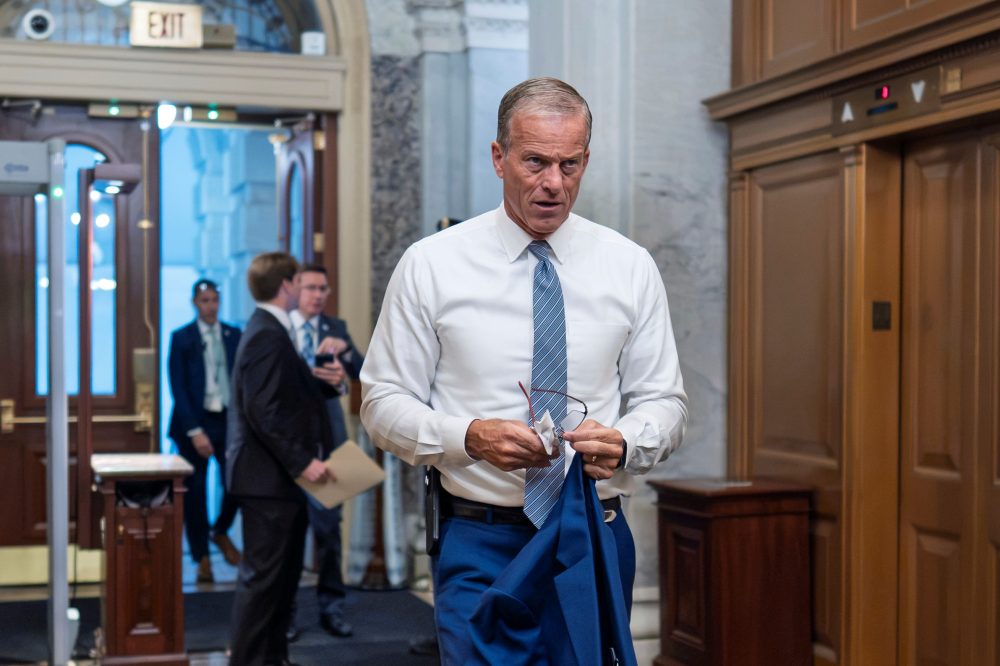
Adding another layer of friction is the increasingly strained relationship between Trump and Senate Majority Leader John Thune of South Dakota. While Thune remains well-regarded within his conference and maintains a civil relationship with the president, he has frequently been the one delivering unwelcome news to Trump.
Thune said Tuesday that while Trump and some senators want to see the voting bill move forward, “it’s just not realistic.”
Trump has been pushing the Senate to get rid of the filibuster — a procedural rule that requires 60 votes to advance most legislation — and pass the bill known as the SAVE America Act. The measure would impose strict new requirements for voters to prove citizenship and present voter ID at the polls. Trump has also called on senators to add a ban on mail-in ballots, along with unrelated provisions addressing sex reassignment surgeries on certain minors and barring people born as men from competing in women’s sports.
“John is a leader and hopefully he can get the votes,” Trump said Tuesday during a trip to Pennsylvania, putting fresh pressure on Thune.
Thune has spent weeks bringing the voting bill to the Senate floor and says he supports it. But he has consistently maintained that there are not enough votes to eliminate the filibuster in a chamber where Republicans hold a 53-47 majority — and where Democrats are unanimously opposed to the bill.
“Those are just hard realities,” Thune said. “And I think people at some point have to come to grips with that.”
Thune said he hopes the gathering serves as a chance for Republicans to “sit down as a family” and map out their priorities before the next election.
He also revealed that he only learned Trump was attending the luncheon after Florida Sen. Rick Scott extended the invitation without informing him first — an unusual move that some see as a sign of internal tension. Scott, a close Trump ally, hosts the Wednesday Senate Republican lunch each week.
Scott, who ran against Thune for the leadership position two years ago, said Trump agreed to come “on the spot” when invited.
“He’s going to be very positive,” Scott said. “There’s a lot that we can brag about that we’ve accomplished, and he wants to figure out how we can win November and continue to fulfill his agenda.”
On Monday, Scott sent a letter to his Republican colleagues urging the Senate to hold weekly votes on the SAVE America Act and other GOP priorities that Democrats oppose.
“We need to show voters that we are listening to them and will fight for their priorities whether any Democrats vote with us or not,” Scott wrote.
Utah Sen. Mike Lee has also been pressing Thune on the issue, posting daily on the social media platform X about why Republicans should eliminate the filibuster and pass the bill. Several Republican senators, including Cornyn, confronted Lee at a private lunch last week, saying his posts are splitting the party and setting expectations that can’t be met.
Lee has also repeated Trump’s assertion that Republicans cannot win elections without the bill passing — even though the party achieved broad victories in 2024. Trump has continued to falsely claim that the 2020 election, which he lost, was stolen.
“The push to pass the SAVE America Act is not a ‘fantasy,’” Lee posted over the weekend. “It’s a plan to avoid a nightmare — one that’s coming soon unless we act.”
Thune said Tuesday that Lee is free to post on social media, but added, “at the end of the day, I have a different reality. And sometimes the alternative universe that is X doesn’t reflect the facts on the ground.”
Trump may also face questions about his decision last week to delay the nomination of Jay Clayton to serve as national intelligence director. Republican leaders had hoped to move quickly to confirm Clayton and sidestep Trump’s controversial interim pick, Bill Pulte, who has no publicly known background in intelligence.
In that same social media post, Trump said he would refuse to sign a renewal of a key surveillance law unless Senate Republicans attach the SAVE America Act to it. That stance has found some support in the House, where 25 Republicans have pledged to vote against all legislation until the voting bill advances.
Senators may also use the meeting to press Trump on the war with Iran and the agreement reached to end it — details that most lawmakers have still not been briefed on.
Sen. Mike Rounds of South Dakota said there are many unanswered questions about the Iran deal, but acknowledged that Trump may not be able to speak openly about ongoing negotiations.
“We’re there to listen” and to help make sure the rest of Trump’s term is a success, Rounds said — but that requires “a united team.”
WASHINGTON — NATO Secretary-General Mark Rutte is sitting down face-to-face with President Donald Trump at the White House on Wednesday, arriving just two weeks before the military alliance’s annual summit in Turkey at a critical moment when the Pentagon is weighing cuts to the American military presence in Europe.
Trump has long taken issue with NATO, insisting that the United States shoulders too large a portion of the alliance’s military spending. Those complaints have grown louder in the wake of the Iran war, with Trump expressing anger that some member nations ignored his call to help reopen oil trade through the closed Strait of Hormuz.
The president has once again raised the possibility of pulling the U.S. out of the 77-year-old alliance, heightening the pressure heading into next month’s NATO leaders’ summit in Turkey. Rutte, who has earned a reputation as a skilled handler of Trump’s moods, is expected to use Wednesday’s meeting to calm the president’s frustrations.
The White House visit follows a contentious appearance last week by U.S. Defense Secretary Pete Hegseth at NATO headquarters in Brussels, where he sharply criticized allied nations and announced a six-month review of American forces stationed in Europe.
Hegseth echoed Trump’s complaints, faulting European allies for refusing to allow the U.S. to use European bases to carry out strikes against Iran. NATO allies were not brought into discussions before the U.S. and Israel launched the war on February 28, and several member countries have openly questioned Trump’s approach.
Trump has accused NATO allies of abandoning the United States and floated the idea of leaving the alliance, which was established in 1949 to defend European security against Soviet threats during the Cold War. The foundation of the NATO treaty is a mutual defense clause stating that an attack on one member is treated as an attack on all. That clause has only been triggered once — following the September 11, 2001 attacks on New York and Washington, when allies rallied behind the United States.
The Pentagon’s signal that it may scale back its European military footprint to redirect attention to other global threats is the latest disruption for the 32-member alliance since Trump returned to the White House.
European allies were caught off guard last year when Trump threatened to annex Greenland, a semiautonomous island belonging to fellow NATO member Denmark.
A central part of Rutte’s role has become keeping the United States inside NATO, and he has shown a knack for defusing Trump’s anger.
Rutte regularly heaps praise on the president, giving him credit for pushing NATO members to boost their defense budgets. Trump pressured alliance leaders last year to commit to spending 5% of their gross domestic product on defense annually by 2035.
On Tuesday evening, Rutte sat for an interview on Fox News Channel, a network Trump is known to watch closely.
During the interview, Rutte lavished praise on Trump, describing him as the driving force behind the NATO alliance and expressing full support for his Iran policy, saying:
PROVIDENCE, R.I. — Computer scientist Louis Castricato spent eight years studying the AI technology that powers chatbots like ChatGPT and Claude before concluding that the field had largely run its course as a research discipline.
“We basically have passed the point of doing real fundamental LLM research,” Castricato said. “Now it’s just applications.”
He walked away from his studies at Brown University and launched a startup called Overworld — a name that reflects his new mission: building AI that can understand and navigate the physical world, not just process language.
Chatbot-based AI still represents enormous business opportunity, with investors committing trillions of dollars to companies like Anthropic and OpenAI. But a rising number of AI entrepreneurs are setting their sights on what they consider the next major breakthrough: “world models” — systems designed to teach AI, and sometimes robots, how to function in real physical environments.
Among those leading this charge is Fei-Fei Li, widely known as the “Godmother of AI,” who describes the world model concept as “one of the most important and most overloaded terms in AI today.”
The core idea behind world model research is that true intelligence requires more than reading text. An AI system also needs to understand the environment around it.
“Where language models learn the statistical structure of text, world models learn the statistical structure of space and time: how light falls on a surface, how a garden looks from an angle no camera has captured, how objects respond to force and follow the laws of physics,” wrote Li, who founded the San Francisco startup World Labs, in a recently published essay.
AI pioneer Yann LeCun is another major voice in this space. He stepped down last year from his role as Meta’s chief AI scientist to launch Paris-based Advanced Machine Intelligence Labs.
“World model is quickly becoming a buzzword,” LeCun said on a recent episode of the “Unsupervised Learning” podcast, describing it as something that allows an AI agent “to predict the consequences of its own actions.”
Definitions of world models vary widely, often shaped by what a researcher or entrepreneur hopes to build — whether that’s a more capable robot or a more dynamic video game.
Current AI language models were trained on vast amounts of human-generated text and visual content, producing assistants that are transforming office work and creative industries. But some experts see fundamental limits in generative AI systems that work by predicting the next word or pixel.
Martin Hebert, dean of computer science at Carnegie Mellon University, points out that chatbots can’t pick up a coffee mug.
“There’s all the geometry of the world, the dynamic of how I move my hand, the physical interaction of the contact with the cup,” Hebert said. “This is much more complex than just predicting the next word in a sentence.”
For Hebert, who has spent more than four decades in robotics research, world models represent a faster and more affordable path to what the tech industry calls “physical AI.”
“Some people may have different definitions, but physical and embodied AI are kind of the evolution of what we used to call robotics,” he said. He compared the concept to the way the human nervous system operates — allowing the body to adapt instinctively without conscious thought.
“In your body and spinal cord you have a very general model of how to balance, how to walk around, and you can adapt to your knee hurting in the morning, so you now walk a little differently,” Hebert said. “You don’t need to think about that. You have a general model somewhere in your nervous system and brain that allows your body to adapt very quickly.”
Robots aren’t the only destination for this technology. Castricato founded Overworld last year, and his small Rhode Island-based startup is currently developing video game environments where scenes — like a creepy forest — shift and respond as a virtual character moves through and interacts with them.
“There’s no other world model where you can just walk through doors or where you can interact with a detailed environment like this,” he said. “We optimize for interaction above anything else.”
While practical applications aren’t as immediately obvious as AI coding tools, world model companies are drawing significant interest from investors. Venture capitalist Steve Jang, co-founder and managing partner at Kindred Ventures, is backing Overworld along with other world model startups, including Causal Labs, which is developing AI for weather forecasting, and Extropic, which is building specialized computer chips designed for world model applications.
“I think that the future is many different types of models with many different philosophies and architectures,” Jang said. “I don’t think that it’ll be one large, dense model to rule them all.”
In her recent essay, Li attempted to establish a framework for understanding the competing visions in this field. She noted the confusion that comes from using the same term to describe very different technologies.
“A video model that produces gorgeous but physically impossible flames, a language model improvising a playable game, and a physics engine that faithfully simulates combustion all go by the same name,” she wrote.
Li sorted world models into three categories: “renderers,” which focus on visual realism but aren’t reliable for teaching robots; “simulators,” which create training environments that accurately mirror physical reality; and “planners,” which try to determine what an AI agent or robot should do when placed in an unpredictable setting.
“A robot that can plan is a robot that can work, and the entire industry is racing to be the one that gets there first,” she wrote.
WASHINGTON — The Army general who made history as the final American soldier to walk off Afghan soil is now walking away from his current command under unexpected circumstances, the Army confirmed late Tuesday.
Gen. Christopher Donahue, who serves as the commanding general of U.S. Army Europe and Africa and also leads NATO’s Allied Land Command, will step down from his position on July 2, according to an Army statement provided to The Associated Press. He becomes the latest in a string of nearly two dozen senior military leaders who have either retired or left their roles ahead of schedule since Defense Secretary Pete Hegseth took charge, driven by his push to reduce the number of generals in favor of more frontline troops — a philosophy he has summed up as “less generals, more GIs.”
Until a permanent replacement is named, Donahue’s deputy, Maj. Gen. Christopher Norrie, will take over his responsibilities, the Army statement said.
Donahue is a graduate of West Point and spent his career in special operations, commanding Delta Force units in both Iraq and Afghanistan before taking charge of the 82nd Airborne Division from July 2020 through March 2022.
It was during that assignment that he oversaw security operations at Hamid Karzai International Airport amid the turbulent American withdrawal from Afghanistan in 2021. On August 30, 2021, Donahue stepped onto the final C-17 cargo aircraft departing the country, making him the last U.S. service member to leave after nearly two decades of war that began following the September 11, 2001 attacks. A now-iconic photograph captured through night vision equipment documented that historic moment.
Both Hegseth and President Donald Trump had repeatedly criticized the Afghanistan withdrawal — a pullout that originated from a deal the Trump administration itself negotiated with the Taliban during its first term — and made it a recurring political talking point. The Pentagon has since launched yet another review of the withdrawal, ordered by Hegseth last May, despite the fact that multiple prior investigations had already been conducted by the Pentagon, U.S. Central Command, the State Department, and Congress, involving hundreds of interviews and extensive review of photos, videos, and other data. What new information this latest review aims to uncover remains unclear.
Despite the political controversy surrounding the withdrawal, Donahue’s handling of the evacuation earned him praise from both sides of the political aisle. Within Army circles, he was widely regarded as someone with the potential to lead the entire service or even become chairman of the Joint Chiefs of Staff.
An Army official, speaking anonymously to discuss internal deliberations, told The Associated Press that Donahue’s exit is connected to ongoing talks about downgrading U.S. Army Europe and Africa from a four-star command to a three-star command.
That potential restructuring fits within a broader context of tensions between Hegseth and European allies. Just last week, Hegseth informed NATO partners that he would be conducting a six-month Pentagon review of American military forces stationed in Europe, saying it was “designed to ensure that NATO is moving fast and irreversibly toward Europe leading, stepping up to take primary responsibility for the defense of Europe.”
“It’s a review that some countries will fail and others will pass with flying colors,” Hegseth added.
The Pentagon had not issued a response to news of Donahue’s departure as of Tuesday evening. The story was first reported by The Atlantic.
TAIPEI — Taiwan’s top defense official says the island’s military must be prepared to respond instantly to an outbreak of war, as the amount of advance warning before a potential Chinese attack continues to shrink.
This week, Taiwan is carrying out five days of “immediate combat readiness” drills. The military has begun structuring some exercises around a scenario in which China abruptly converts one of its routine operations near the island into an actual assault.
Defense Minister Wellington Koo addressed reporters in parliament on Wednesday, explaining that the drills place a heavier focus on speed and the ability to quickly shift into a wartime footing.
“It is intended to build the speed we believe is necessary for converting from peacetime to wartime status,” Koo said.
He continued: “In other words, given the current threat situation from the enemy, and as we believe the warning time is shortening, we need to verify that we can respond immediately.”
Koo also noted that the exercises are testing whether Taiwan’s armed forces can operate effectively under a decentralized regional command structure.
China considers Taiwan, which is democratically governed, to be part of its own territory. Chinese military forces conduct operations near the island on a near-daily basis. On Tuesday, China’s newest aircraft carrier passed through the Taiwan Strait.
Taiwan has held several military drills this month, including tests of its U.S.-manufactured HIMARS rocket system — the same system widely used in Ukraine — firing into the Taiwan Strait. The island’s major annual military exercises, known as Han Kuang, are scheduled for August.
From Beijing, Zhang Han, a spokesperson for China’s Taiwan Affairs Office, condemned the drills on Wednesday, saying they revealed the ruling Democratic Progressive Party’s “malicious intent to seek independence by force.”
“In the face of the powerful people’s army, the DPP authorities’ posturing is completely futile; it will only harm and destroy Taiwan and bring about their own destruction,” Zhang said.
Zhang also reiterated Beijing’s stated preference for “peaceful reunification” while drawing a firm line: “However, we will never pledge to renounce the use of force, and we will never leave any room for separatist activities seeking Taiwan independence in any form.”
China last conducted large-scale war games around Taiwan in late December.
Qatar’s sports minister and national team player Assim Madibo made a personal visit to Canadian midfielder Ismael Kone to check on his condition following an injury suffered during their World Cup matchup, according to the Qatar Football Association, which announced the visit on Wednesday.
Qatar fell to a lopsided 6-0 loss against Canada in Group B play. During that match, Kone broke his leg after a second-half tackle by Madibo. The Canadian player has since gone through surgery to address the injury.
The Qatar Football Association noted on Facebook that the visitors “were received by the President of the Canadian Soccer Association.”
The association added that “this visit reflects the spirit of sportsmanship and the strong relationships on and off the field,” and extended well wishes to Kone, saying they hope for “a speedy recovery and a quick return to the pitch.”
The Qatar Football Association shared photographs from the hospital visit on social media. One of the images captured the two players sharing a hug, with Kone seen seated in a wheelchair.
Looking ahead in the tournament, Qatar is scheduled to face Bosnia and Herzegovina in their final group stage game, while tournament co-hosts Canada are set to take on Switzerland.
The Chicago Blackhawks made a significant move to strengthen their blue line on Tuesday, landing defenseman Bowen Byram and forward Jordan Greenway from the Buffalo Sabres. In exchange, Buffalo walked away with defenseman Louis Crevier and two notable selections — the No. 4 overall pick and the No. 45 pick — heading into an NHL draft the Sabres are hosting this week.
With those additions, Buffalo now holds two first-round picks in this draft, having already owned the No. 20 selection. The haul gives the Sabres a pair of premium assets to work with on home ice.
Byram is the headline acquisition for Chicago. The 25-year-old defenseman just wrapped up the strongest offensive campaign of his NHL career, recording 11 goals and 31 assists across all 82 games for Buffalo this past season. He ranked second among Sabres defensemen in both assists and total points, while also blocking 93 shots on the defensive end.
Byram also made his mark in the postseason, contributing seven points — including four goals — in 13 playoff games. He was part of the Buffalo squad that captured the Atlantic Division title and snapped a 14-year playoff absence, which stood as the longest drought in NHL history.
Over his career, Byram has tallied 44 goals and 108 assists in 328 regular-season games, split between the Colorado Avalanche from 2020 to 2024 and the Sabres from 2024 to 2026. He has also chipped in four goals and 15 assists in 40 career playoff appearances.
For the Blackhawks, this trade signals an attempt to speed up a rebuild that has struggled to gain traction. Chicago has missed the playoffs in six consecutive seasons and finished at the bottom of the Central Division for the fourth year in a row — despite selecting seventh or higher in each of the last four drafts.
Byram will slot into a young Chicago defensive group that already features Artyom Levshunov and Kevin Korchinski. He fills a void left after the team moved Connor Murphy to the Edmonton Oilers shortly before last season’s trade deadline. Byram also brings championship pedigree, having been part of the Colorado Avalanche team that hoisted the Stanley Cup in 2022.
Greenway adds veteran presence up front for the Blackhawks. The 29-year-old forward, who brings size and a checking-line style of play, put up one goal and five assists in 40 games last season. Over his NHL career, he has accumulated 165 points in 475 games, including stints with the Minnesota Wild from 2017 to 2023 and Buffalo from 2023 to 2026.
Heading to Buffalo is Crevier, also 25, who just set career bests across the board with seven goals, 18 assists, and 78 games played for Chicago last season. The towering 6-foot-8 defenseman finished second on the Blackhawks in both hits with 124 and blocked shots with 95.
SEOUL — It took 14 years of risky bets, plenty of skepticism, and more than a few close calls, but SK Hynix has emerged as South Korea’s most valuable publicly traded company — surpassing the long-dominant Samsung Electronics and landing at the heart of the global artificial intelligence frenzy.
When conglomerate SK Group purchased Hynix Semiconductor back in 2012, many observers called the acquisition financially reckless. At that time, Samsung was worth more than ten times SK Hynix and held the top spot globally in Dynamic Random-Access Memory — the type of memory chip that powers everyday devices like laptops and smartphones.
Looking for a competitive advantage, SK Hynix chose to pursue a different and largely overlooked type of chip: high-bandwidth memory, or HBM. These chips could move data at high speeds but had limited use among data center operators at the time.
The company partnered with Advanced Micro Devices to release the world’s first HBM product in 2014. However, problems with the chip’s second generation caused SK Hynix to fall behind Samsung in the late 2010s. According to two former company executives, that setback sparked internal debate about whether to abandon HBM development altogether.
Leadership ultimately chose to press forward, overhauling their technology and committing to major production investments. A key factor in that decision was anticipated demand from Nvidia — a company that was then primarily recognized as a maker of 3D graphics chips for computers and video games. That account comes from Shim Dae-yong, who headed HBM development at SK Hynix during that period.
The decision came with a hefty price tag: an 880 billion won investment — roughly $640 million — directed toward a packaging facility in Icheon and other infrastructure. The bet initially looked like a mistake. In 2019, the facility sat largely idle as demand from both Nvidia and cryptocurrency miners dried up.
Australian authorities have intensified surveillance efforts and expanded testing after two confirmed cases of the highly pathogenic H5N1 strain of bird flu were detected in migratory seabirds, according to a Reuters report from Sydney on June 24.
Testing is now underway in South Australia following the discovery of two dead sub-Antarctic seabirds and a pelican on Monday near Fowlers Bay — located more than 1,200 kilometers (about 746 miles) east of Esperance in Western Australia, where the first two confirmed cases had been identified. The Australian Broadcasting Corporation reported the findings.
South Australia’s Primary Industries Minister Claire Scriven spoke with ABC Radio about the timeline for test results, saying it could be several days before answers are available. “In terms of the turnaround times, it sort of depends on the outcomes … we hope this doesn’t get to South Australia, but we know, of course, that it may,” Scriven said.
A spokesperson for the South Australia Primary Industries Department confirmed there are currently no verified bird flu cases in the state, but officials pledged to investigate any reports of sick or dead birds and to notify the public if a positive result is found.
Authorities are conducting ground-based surveillance as well as drone surveys at sea lion breeding locations along South Australia’s western and far western coastlines, and testing has been increased in areas considered high-risk.
In Western Australia, two additional birds — located far from where the initial cases were found — are also being tested, though officials say there is no evidence the virus has spread more widely. The ABC reported that a total of 11 samples have been sent for testing in Western Australia, drawn from 94 reports of dead or sick birds over the past three days.
Prior to these detections, Australia had been the only continent without a confirmed mainland bird flu case. The virus had previously been detected in late 2025 on Heard Island, a sub-Antarctic territory belonging to Australia.
While human infections from avian influenza remain uncommon, the global spread of the disease has caused significant damage to poultry flocks and disrupted the supply and pricing of chicken meat and eggs in numerous countries. Australia has responded by tightening biosecurity measures on farms, increasing testing among shorebirds, vaccinating at-risk species, and running emergency response drills.
Army veteran and national security expert Cait Conley has claimed the Democratic nomination in New York’s 17th Congressional District, setting up a high-stakes November showdown against Republican incumbent Mike Lawler, a two-term congressman widely regarded as one of the most at-risk House members in the upcoming midterm elections, according to projections from U.S. media outlets.
Lawler’s district covers New York City’s northern suburbs in Westchester County and extends into the Lower Hudson Valley. Democratic presidential nominee Kamala Harris carried the district by a slim margin in 2024, putting it squarely on Democrats’ target list as the party works to flip the three seats needed to regain control of the House of Representatives for the final two years of Donald Trump’s presidency.
Conley beat out Rockland County Legislator Beth Davidson and three additional Democratic challengers in Tuesday’s primary. She held a significant financial advantage heading in, outraising Davidson by over $1 million, reporting twice as much cash available, and leading in two recent polls.
Although the national political climate poses challenges for Republicans, Lawler has proven himself a capable competitor in difficult races. In 2022, he unseated Representative Sean Patrick Maloney, who led House Democrats’ campaign efforts, and in 2024 he turned back former Representative Mondaire Jones by more than six percentage points — even as Harris carried his district by 0.6 percentage points that same year.
Lawler had explored a run for governor this cycle before announcing last July that he would seek another congressional term instead, saying on Fox News that holding the House was a critical priority for Republicans.
On the fundraising front, Lawler holds a substantial edge. The incumbent has brought in $7.4 million — more than double Conley’s $3.3 million — and as of June 3 had $4.4 million cash on hand compared to Conley’s $941,000.
Conley’s biography includes graduation from West Point and combat deployments to both Iraq and Afghanistan. After her military service, she went on to serve as the counterterrorism director on the White House National Security Council and contributed to election security efforts at the Cybersecurity and Infrastructure Security Agency.
She is part of a group of female military veterans seeking congressional seats who call themselves the “Hell Cats.” One member of the group, Navy veteran Rebecca Bennett, won her Democratic primary for a competitive New Jersey seat on June 2. The remaining two members are running in states where primaries have not yet taken place.
Meanwhile, New York Democrats are also working to protect as many as three of their own seats that could become competitive this fall. Representatives Tom Suozzi, Laura Gillen, and Josh Riley each hold battleground districts. Riley will face state Senator Peter Oberacker, Gillen will run against either Hempstead Town Tax Receiver Jeanine Driscoll or retired Air Force veteran Marvin Williams, and Suozzi’s opponent will be either former Assemblyman Mike LiPetri or personal injury attorney Gregory Hach.
Chicago Cubs right-hander Edward Cabrera left Tuesday night’s road contest against the New York Mets on a cart after sustaining a left hamstring and adductor strain during the fifth inning.
The play that caused the injury unfolded with two runners on base, two outs, and the Cubs ahead 7-2. Jared Young hit a ground ball that slipped past first baseman Michael Busch, and second baseman Nico Hoerner tracked it down on the right field grass. Cabrera sprinted over to cover first base, dropping into a split to receive the throw and complete the out — but immediately felt sharp pain in his leg upon landing.
Unable to put any weight on the injured limb, Cabrera was helped onto the medical cart by a trainer and manager Craig Counsell and was taken off the field.
Before the injury ended his night, Cabrera had pitched five innings, surrendering two runs on three hits. He came into Tuesday’s start with a 4-4 record and a 5.21 ERA over 13 outings in his first season with Chicago, having been acquired from the Miami Marlins during the offseason.
It was a rough night for Cabrera even before the hamstring issue. Earlier in the game, Young hit a comebacker off the mound that struck Cabrera in the leg. The injury trouble is not entirely new — just last week, Cabrera exited a start against the Colorado Rockies due to cramping in his right, or pitching, hand.
New York Mets outfielder Juan Soto cut his night short Tuesday, leaving the game against the visiting Chicago Cubs following the fourth inning because of tightness in the left side of his back.
Before exiting, Soto was spotted in the dugout with what appeared to be a heating pad strapped to him. He went 0-for-2 at the plate before calling it a night. Once he left the field, Jared Young shifted from first base to left field to cover the vacancy, while Mark Vientos stepped in at first base.
Through 61 games this season, Soto is batting .299 with 17 home runs and 38 RBIs. He had previously missed 15 games in April due to a strained right calf — the same stretch during which the Mets dropped 12 consecutive games and fell into an early season hole.
Soto’s early exit came while teammate Francisco Lindor was playing in his third minor league rehab game. Lindor has been sidelined since April 22 with a strained right calf and could potentially be reinstated to the active roster later this week.
The Pittsburgh Penguins are on the verge of a new ownership era after the NHL Board of Governors voted unanimously Tuesday to approve the team’s sale to the Hoffmann Family of Companies.
The deal is expected to wrap up shortly, bringing Fenway Sports Group’s tenure as controlling owner to a close. The Hoffmann family will take over one of hockey’s most well-known franchises. While exact financial terms were not made public, earlier reports had suggested the sale price was around $1.7 billion.
Geoff Hoffmann, who serves as CEO of the company’s private equity division, will take on the role of the Penguins’ governor. Greg Hoffmann, David Hoffmann, and Penguins president of hockey operations and general manager Kyle Dubas will each serve as alternate governors.
“This is a defining moment for our family,” Geoff Hoffmann said in a statement. “The Penguins represent everything Hoffmann Family of Companies stands for — community, excellence and long-term thinking. We look forward to building on the team’s success by providing support and resources to both Kyle Dubas and the hockey operations team, as well as the established leadership group on the business side. We’re proud to represent this storied franchise and are eager to become an active, invested part of the Pittsburgh community.”
Fenway Sports Group originally acquired the Penguins back in 2021 for a reported $900 million from an ownership group that included Mario Lemieux and Ron Burkle. The franchise boasts five Stanley Cup championships, three of which came under that previous ownership group, with Sidney Crosby, Evgeni Malkin, and Kris Letang leading the charge.
The Penguins’ performance under Fenway Sports Group was less impressive, with the team missing the playoffs three times and suffering two first-round exits during that stretch. This past season, Pittsburgh finished 41-25-16 before being eliminated by the Philadelphia Flyers in six games in the opening round.
The Hoffmann family is no stranger to hockey ownership. The group has owned the Florida Everblades, an ECHL team, since 2019. The Everblades have claimed multiple Kelly Cup championships under the Hoffmanns, including a title this season.
New York City Mayor Zohran Mamdani demonstrated his growing political influence Tuesday as every candidate he endorsed walked away with a primary victory — including two challengers who defeated Democratic incumbents currently holding their seats.
All three of the mayor’s endorsed candidates won their respective primaries in districts considered safe seats, meaning their paths to victory in the November general election are all but secured.
The sweep is being viewed as a significant display of Mamdani’s clout within progressive political circles, showing his ability to move voters and reshape the Democratic landscape in New York.
Sevastopol, the largest city in Russian-annexed Crimea, lost power Wednesday after Ukraine carried out strikes targeting energy facilities in the area, according to Mikhail Razvozhayev, the governor installed by Russia to lead the city.
Razvozhayev announced on Telegram that defense systems had intercepted and shot down nine drones over Sevastopol earlier in the day.
In a separate development, Russian forces shelled the eastern Ukrainian city of Balakliia on Wednesday, and local officials reported via Telegram that the attack claimed one life.
Reuters was unable to independently confirm the details surrounding these latest military strikes.
Tuesday’s primary elections unfolded across four states, with New York drawing the most scrutiny as congressional races put the political clout of New York City Mayor Zohran Mamdani under the microscope.
While New York’s contests commanded national attention, voters in Maryland, South Carolina, and Utah also made their way to the polls to weigh in on their own competitive races.
The day’s events were documented in a photo gallery assembled by AP photo editors.
The U.S. dollar pushed higher Wednesday, reaching a fresh 13-month peak against a basket of major world currencies as investors fled a sharp downturn in technology and semiconductor stocks and braced for possible Federal Reserve interest rate increases.
A sweeping sell-off across the tech sector dragged global stock markets lower, as traders locked in profits following a prolonged rally. The turbulence sent investors toward traditional safe-haven assets like the dollar and government bonds.
At the same time, expectations for a Fed rate hike continued to grow, with central bank officials adopting an increasingly hawkish tone in light of the U.S. economy’s continued strength. According to CME FedWatch data, markets are now pricing in a 37% probability of a 25-basis-point rate increase at the July meeting — up sharply from 8.5% just one week ago. The odds for a September hike have also risen, climbing from 29.1% to 70%.
The dollar index, which tracks the greenback against currencies including the Japanese yen and the euro, reached an intraday high of 101.44 — its strongest reading since May 13, 2025.
Ray Attrill, head of FX strategy at National Australia Bank, noted the dollar’s continued appeal. “The U.S. dollar is still the preferred safe-haven,” he said.
Attrill added a note of caution, however. “Obviously the momentum is on its side at the moment, but I think there is a lot priced in,” he said. “We’ll have to see a correction in risk sentiment, one that’s broader rather than just the tech sector, or the market further ratcheting up its expectations for hikes, before the dollar can go very much higher from here.”
The euro was last trading near a one-year low at $1.1375. The British pound slipped slightly to $1.3199 after a Bank of England policymaker, Alan Taylor, indicated that an “extended hold” on interest rates was the appropriate response to ongoing inflation pressure.
The Australian dollar, which tends to reflect investor appetite for risk, held steady at $0.6918 ahead of a key inflation report due later in the day. The New Zealand dollar edged down 0.05% to $0.5665, hitting a fresh seven-month low.
Adding to safe-haven demand, tensions between the United States and Iran emerged over key elements of their fragile framework agreement, including disputes over nuclear matters and control of the Strait of Hormuz — raising doubts about whether the deal can hold.
The Japanese yen remained under significant pressure, last trading at 161.57 after briefly falling to a two-year low of 161.93 late Monday. A move above 161.96 would push the yen to its weakest level since 1986.
Verbal warnings from Japanese government officials have done little to ease the strain on the currency, given the wide gap between U.S. and Japanese interest rates and skepticism about whether Tokyo would actually intervene in currency markets.
Former Bank of Japan policymaker Sayuri Shirai warned that the yen could weaken further to 165 per dollar if the Fed proceeds with rate hikes this year.
Meanwhile, a summary of opinions from the Bank of Japan’s June policy meeting, released Wednesday, revealed that some board members called for additional rate hikes to move the central bank’s policy rate closer to what would be considered a neutral level for the economy.
Asian financial markets were unsteady on Wednesday, one day after a worldwide selloff hit technology and semiconductor stocks hard, with market watchers raising red flags about the potential for more turbulence ahead.
The MSCI index tracking Asia-Pacific shares outside of Japan dipped 0.02%. South Korean stocks, which had crashed 10% on Tuesday in their worst single-day decline since March, bounced back with a 2.2% gain. Japan’s Nikkei index swung back and forth between positive and negative territory, ultimately sitting 0.8% lower.
Michael McCarthy, a market analyst at Moomoo Securities Australia, described the recent trading environment as deeply concerning. “Price action in markets over the last seven trading days has been alarming, not just when it falls, but also when it rises,” he said. “When markets move so rapidly, in either direction, it’s a sign of instability.”
That cautious mood also gripped Wall Street overnight, following similar trends across Europe and Asia. U.S. stocks fell amid concerns over growing debt-financed spending on artificial intelligence and speculation that the Federal Reserve might take a more aggressive approach to interest rates. At the same time, investors moved toward the safety of government bonds, pushing Treasury yields lower.
The Dow Jones Industrial Average slipped 0.09%, the S&P 500 dropped 1.4%, and the Nasdaq Composite fell 2.2%. The yield on the benchmark 10-year U.S. Treasury note declined 1.41 basis points to 4.493%.
Oil prices continued their slide, trading near four-month lows reached in the previous session. The decline came as signs emerged that oil tankers stuck in the Gulf since the beginning of the Iran war are preparing to pass through the Strait of Hormuz.
Despite that development, questions remain about whether the peace arrangement will hold. The United States and Iran have offered contradictory accounts of what was agreed upon in their deal, including critical matters such as nuclear inspections and control of the Strait of Hormuz.
The strength of the U.S. dollar has put significant pressure on the Japanese yen, which hovered near 40-year lows at 161.57 per dollar. That situation has kept traders on alert for a possible government intervention to support the weakened currency.
A summary of opinions released Wednesday from the Bank of Japan’s meeting this month — in which the central bank raised interest rates to a 31-year high of 1.00% — showed that some board members are pushing for additional rate increases to bring the policy rate closer to what is considered a neutral level for the economy.
The dollar index, which tracks the greenback against a group of major currencies including the yen and euro, edged up 0.02% to 101.43, near its highest point in a year. The euro slipped 0.06% to $1.1375, while the British pound fell 0.08% to $1.3192.
Gold prices also retreated, falling 0.48% to $4,088.71 per ounce, as expectations of higher interest rates reduced demand for assets that don’t generate income.
In digital currency markets, Bitcoin climbed 0.84% to $62,914.94, while Ethereum gained 0.43% to reach $1,669.35.
Samsung Electronics is gearing up to launch a massive share repurchase program worth 90 trillion won — approximately $58.61 billion — according to a report from South Korea’s Yonhap News Agency published Wednesday.
The memory-chip giant is expected to formally unveil the specifics of the buyback in the near future, Yonhap reported, citing unnamed sources within the industry.
The announcement comes on the heels of a pay agreement reached last month between Samsung’s management and its union. Under that deal, Samsung is expected to allocate roughly 10.5% of its operating profit toward special bonuses for workers in its chip division, with those bonuses paid out in the form of company stock. The arrangement has raised concerns about potential inequality within the broader workforce.
Yonhap estimates Samsung will need to spend around 154 trillion won to cover the bonus program in total, a figure that accounts for a 40% tax obligation.
Workers who receive treasury shares as part of their bonus will have some flexibility in how they cash out. One-third of the shares can be sold right away, while another third must be held for at least one year before selling. The remaining third requires an additional year of waiting beyond that.
Abbisko Cayman announced Wednesday that its Shanghai-based subsidiary, Abbisko Therapeutics, has formed a strategic research collaboration and licensing agreement with pharmaceutical giant Eli Lilly.
Under the terms of the deal, both companies will work together on the discovery and development of new treatments across a range of targets. As part of the arrangement, Abbisko Therapeutics could receive milestone payments totaling as much as $1.9 billion, tied to development, regulatory, and commercial achievements.
SEOUL — The South Korean government is holding discussions with Samsung Electronics and SK Hynix about the next wave of large-scale semiconductor facility investments, according to a government official who spoke Wednesday. An announcement regarding a new chip manufacturing cluster is expected in the near future.
A presidential policy adviser, Kim Yong-beom, told a discussion panel that demand for chips fueled by the artificial intelligence industry has been nothing short of “exponential and explosive.” He said that surge in demand could force both companies to accelerate their current chip facility construction timelines by more than 10 years, potentially completing projects by 2034 to 2035.
“The question is how we will support the AI revolution. Looking ahead to the next stage after seven or eight years, we are faced with the challenge of finding a massive new site for a second cluster,” Kim said.
Drivers in the area should be aware that the traffic signal at the intersection of Savannah Road and Wescoats Road is currently operating in flash mode while maintenance work is being performed.
The signal is expected to remain on flash until 5 a.m. Motorists are advised to treat the intersection with caution, as flashing signals typically require drivers to treat the intersection as a stop or yield situation depending on the signal color.
Travelers in the area are encouraged to plan accordingly and remain alert while passing through the intersection until the signal returns to normal operation.
WASHINGTON — For the first time in decades, the Washington Wizards may have reason for genuine optimism heading into a new era of basketball.
That renewed hope arrived Tuesday night in the form of AJ Dybantsa, whom Washington selected with the first overall pick in the NBA draft. The 6-foot-9 forward put up 25.5 points per game during his lone college season at BYU. Originally from Boston, Dybantsa attended Utah Prep before choosing to stay in the state for his one year of college ball. Once Washington secured the lottery’s top spot, there was talk that the Utah Jazz might attempt to move up from the No. 2 position to grab Dybantsa — but the Wizards held firm and made the pick.
Washington’s championship history is a distant memory. The franchise — then known as the Bullets — won an NBA title back in 1978. Since 1979, the team has never won 50 games in a season, and that was also the last time they reached the conference finals. The decades in between have featured occasional flashes of entertaining basketball, but never the kind of true superstar capable of delivering a title.
The organization’s struggles with top picks are well documented. Washington famously whiffed on the No. 1 selection in 2001, choosing Kwame Brown. Things went better in 2010 when they drafted John Wall first overall — he at least helped the team advance past the first round of the playoffs at times.
That chapter eventually closed, and even a short stint from Russell Westbrook during the 2020-21 season failed to make Washington relevant on a national stage. The Wizards then committed to a full rebuild, a painful stretch that produced a combined record of 50-196 across the last three seasons.
Still, the pieces have been accumulating. Washington took big man Alex Sarr with the second overall pick in 2024, and the roster also features recent first-round selections Tre Johnson, Bub Carrington, Bilal Coulibaly, Kyshawn George, Will Riley, and Cam Whitmore. The team also made moves to acquire Trae Young and Anthony Davis last season — though Davis never played for Washington and Young saw very limited action. Even so, Dybantsa steps into a situation with more surrounding talent than the franchise has had in years.
Dybantsa has been compared to his favorite player, Kevin Durant — a fitting parallel given that Durant is a D.C. native who has never suited up for Washington at the college or professional level, making him something of an elusive dream for the city’s basketball fans.
North Korea has officially added a 5,000-ton warship to its naval fleet, with leader Kim Jong Un using the occasion to boast about the country’s expanding nuclear and maritime military power, according to state media reports released Wednesday.
The country’s official Korean Central News Agency reported that Kim attended a commissioning ceremony on Tuesday at the western port of Nampo, where the destroyer — named the Choe Hyon — was formally inducted into service. Kim told those gathered that vessels like the Choe Hyon are evidence that his plan to arm the navy with nuclear weapons is moving forward on schedule.
According to KCNA, the Choe Hyon will be responsible for protecting North Korea’s western coastline. State media has previously reported that the ship carries a variety of weapons systems, including anti-aircraft and anti-ship armaments, along with ballistic and cruise missiles capable of delivering nuclear warheads.
Kim first revealed the ship in April 2025, presenting it as a significant advancement in his military’s ability to strike targets at range and take preemptive action. North Korea has conducted several tests with the vessel in the months leading up to its commissioning, including test launches of what it described as nuclear-capable cruise missiles fired from the ship.
Speaking at Tuesday’s ceremony, Kim declared that his navy’s role has fundamentally changed. “It has clearly become a thing of the past when our navy existed as a force for defending the sea off our land,” he said. “It is rising into a full-fledged service equipped with strategic means as the program of equipping the Navy with nuclear weapons is following its planned course unerringly.”
Officials and analysts in South Korea believe the Choe Hyon was likely constructed with help from Russia, reflecting the growing military relationship between Pyongyang and Moscow. However, some experts have questioned whether the destroyer is genuinely ready for active combat operations.
Kim’s attention has increasingly turned to naval power in recent years, following years of prioritizing ballistic missile development. He also highlighted naval goals — including the development of intercontinental ballistic missiles capable of being launched from underwater — at a Workers’ Party congress held in February. North Korea is also in the process of building a nuclear-powered submarine.
Following a missile test conducted aboard the Choe Hyon back in March, Kim claimed that arming his navy with nuclear weapons would “constitute a radical change in defending our maritime sovereignty, something that we have not achieved for half a century.” State media offered no further explanation of the remark, though some analysts believe North Korea may be laying the groundwork to formally declare a maritime boundary that could overlap with waters currently under South Korean control.
Kim has repeatedly stated that he does not recognize the Northern Limit Line — the sea boundary established by the U.S.-led U.N. Command following the 1950-53 Korean War — as inter-Korean tensions continue to escalate. That contested boundary has been the scene of multiple deadly confrontations over the years.
A second destroyer of the same class as the Choe Hyon, named the Kang Kon, was unveiled in May 2025 but suffered damage during a failed launch at the northern port of Chongjin, drawing a sharp and angry reaction from Kim. North Korea later announced the ship had been relaunched in June following repairs, though outside experts remain skeptical about its operational status. During Tuesday’s ceremony, Kim indicated the Kang Kon would also be entering service in the near future. Separately, North Korea has announced plans to construct an even larger 10,000-ton destroyer.
Since the breakdown of nuclear negotiations with U.S. President Donald Trump in 2019, Kim has moved aggressively to grow his nuclear stockpile and strengthen ties with both Moscow and Beijing. While taking a hardline approach toward South Korea, he has indicated a willingness to return to talks with Washington — provided the United States abandons its insistence on denuclearization as a starting condition for any new negotiations.
Voting wrapped up Tuesday in a high-profile Democratic primary in Manhattan, where Jack Schlossberg — the grandson of the late President John F. Kennedy and a first-time political candidate — squared off against a field of contenders that included two state legislators and a well-known former Republican, all competing for an open seat in Congress.
The winner of this competitive primary enters the November general election as a strong favorite to replace longtime Democratic Rep. Jerry Nadler, who is stepping down. Democrats account for roughly two-thirds of registered voters in the district.
The race drew considerable buzz, driven in part by Schlossberg’s celebrity status as a Kennedy family member with a knack for social media, and in part by the enormous amounts of money that poured in as artificial intelligence companies turned the contest into a proxy battle over tech regulation.
Schlossberg leaned into his family legacy while also pushing his own platform, describing his message as “progressive and aggressive” through social media posts that were widely shared — and sometimes unconventional.
“Supporters don’t just like me because I’m a Kennedy,” Schlossberg told The Associated Press earlier this year. “They like me because of my experience, my ideas, and they trust me because they see what’s going on with their very own eyes.”
Still, questions followed Schlossberg throughout the campaign about his thin professional background. The 33-year-old holds a combined law and business degree and had a brief stint at the State Department’s environmental office, along with writing political opinion pieces for Vogue. He maintained that his family’s wealth gave him freedom from the pressures of political fundraising.
The AI industry’s money flowed heavily into the race, largely in opposition to candidate Alex Bores, a state Assembly member and former tech engineer who had authored legislation that many in the tech sector found objectionable. However, some AI companies more open to regulation pushed back by backing Bores.
Voters in the district were flooded with campaign mailers and advertisements, particularly targeting Bores and fellow Assembly member Micah Lasher, a former aide to Rep. Nadler. Lasher ran on his deep experience in government, while Bores presented himself as a newer voice willing to take on powerful special interests.
“The battle lines, in this race in particular, are whether we can regulate AI at all,” Bores said during a CNN interview Tuesday evening.
Beyond the AI money fight, the race also featured dueling endorsements from Nadler and fellow Congress member Carolyn Maloney — whom Nadler had defeated in a 2022 primary after their neighboring districts were merged through redistricting. This time around, Maloney threw her support behind Bores, while Nadler backed Lasher.
Another notable contender was George Conway, a veteran attorney and former Republican who co-founded the anti-Trump group known as The Lincoln Project. Conway was previously married to Kellyanne Conway, who served as an adviser to Republican President Donald Trump, though George Conway has since distanced himself from both her and the former president.
A number of additional candidates also competed in the primary.
Westbound travelers on Savannah Road are facing a lane restriction overnight, according to Delaware Department of Transportation traffic information.
The right lane on Savannah Road westbound, between Wescoats Road and DE-1, is currently closed. The closure is expected to remain in effect until 5:00 AM.
Drivers in the area are encouraged to use caution, allow extra travel time, or consider using an alternate route until the lane reopens.
An artificial intelligence model called Mythos, developed by the company Anthropic, successfully detected security weaknesses in some of the most sensitive computer systems operated by the U.S. government, according to a Tuesday report from the Associated Press citing an official familiar with the matter.
Anthropic had joined forces with Washington’s intelligence community to run a series of tests using the Mythos model. During those tests, the AI was able to pinpoint certain vulnerabilities in a matter of hours. However, officials noted that identifying those flaws does not necessarily mean the model had the ability to take advantage of them within that same window of time.
Reuters, which first reported on the AP story, noted that it was unable to independently confirm the details of the report.
The Washington Wizards made their selection at the top of the NBA draft Tuesday evening, choosing BYU forward AJ Dybantsa with the first overall pick.
Washington passed on Kansas guard Darryn Peterson, who had a turbulent college season with the Jayhawks, opting instead for Dybantsa. Peterson didn’t wait long to hear his name called — the Utah Jazz grabbed him with the very next pick at No. 2 overall.
Standing 6-foot-9, Dybantsa dominated college basketball in his lone season, finishing as the nation’s top scorer at 25.5 points per game. Analysts expect him to contribute right away at the professional level.
Speaking on ESPN after being selected, Dybantsa expressed what the moment meant to him. “This means a lot,” he said. “It’s a stepping stone. Obviously, I have a lot more work to do.”
Tuesday’s selection marked the third time in franchise history that Washington has held the No. 1 overall pick. The team previously used that slot to draft Kwame Brown in 2001 and John Wall in 2010.
Dybantsa also made history for his program, becoming the first player from BYU ever to be taken first overall in the NBA draft.
Dye & Durham, a Canadian company that develops software for the legal industry, announced Tuesday that its chief executive officer, George Tsivin, has departed the role effective immediately.
Tsivin had only been in the position for about a year, having been appointed CEO in 2025. Along with leaving the top executive post, he has also been removed from the company’s board of directors.
The company offered no explanation for his sudden exit.
In the meantime, a sub-committee made up of board members will take over the duties of the CEO’s office and manage day-to-day operations. That arrangement will remain in place while the company conducts a search for a permanent chief executive to fill the vacancy.
Israel’s ambassador to the United States delivered a sharp warning Tuesday as Israeli and Lebanese officials sat down in Washington for a fifth round of negotiations, saying the talks have veered away from the principles that brought both sides to the table in the first place.
Ambassador Yechiel Leiter voiced serious concern that discussions once centered on eliminating Hezbollah as a military force and driving out Iranian influence from Lebanon have grown increasingly murky in recent weeks.
Speaking directly to reporters at the start of Tuesday’s session, Leiter pulled no punches in describing where things stand.
“We are in a train wreck,” he said.
The ambassador recalled that the first four rounds of talks had been grounded in a shared vision among Israel, Lebanon, and the United States, with Washington taking the lead in pushing toward concrete security arrangements and a broader peace framework between the two neighboring nations.
“Before four rounds, we all boarded the same train, with the United States serving as the locomotive,” Leiter said. “The train was heading toward a very clear destination: full peace and security between the countries; the removal of Iran and its malicious influence from Lebanon; the dismantling of Hezbollah.”
Leiter said recent shifts in the tone and focus of the negotiations have cast doubt on whether those goals are still firmly on the table.
“The basic assumption was that Iran was out, and that the central discussion concerned Lebanon and Hezbollah — not the question of how much Iran can restrain Hezbollah,” he said.
In Leiter’s view, the talks should be about building up Lebanese sovereignty, not handing Tehran any role in determining what happens inside Lebanon.
“It is not Iran’s role. Its role is to leave Lebanon. The role of the Lebanese government is to exercise its sovereignty,” he said. “Sovereignty means that Iran will no longer be involved in activity or malicious influence in Lebanon.”
The ambassador also pushed back on the growing use of the term “deconfliction” — a concept being discussed between the United States and Iran as it relates to Lebanon — suggesting it signals a troubling shift in priorities.
Leiter said Israel urgently needs a clearer picture of where the negotiations are actually headed and whether dismantling Hezbollah is still at the heart of the discussions.
“Is the dismantling of Hezbollah still the basis of these discussions? Because from our perspective it must remain so,” he said.
Motorists traveling eastbound on US Route 40 are facing a lane restriction overnight. The right lane between Glasgow Drive and Brookmont Drive is currently closed, with the closure expected to remain in place until 6 AM.
Drivers in the area are encouraged to allow extra travel time or consider alternate routes until the lane reopens.
The latest edition of Facing the Middle East, hosted by Felice Friedson, takes a three-part look at Israel — examining efforts in higher education, faith-based diplomacy, and transportation innovation.
The episode opens with a conversation with Fleur Hassan-Nahoum, Israel’s special envoy for trade and innovation and a former deputy mayor of Jerusalem. She discusses Campus Israel, a newly launched initiative designed to make Israeli universities more accessible to Jewish students living outside the country. Hassan-Nahoum explains that the program grew directly from growing concern about antisemitism and hostility toward Israel on college campuses following October 7.
She makes the case that Israeli universities offer more than English-language academic programs — they also give students a firsthand look at the country’s culture of entrepreneurship and creative problem-solving. In her view, even a relatively small number of Jewish students choosing to study in Israel could produce lasting results, helping to shape a future generation of diaspora leaders with deeper ties to the country.
The discussion also covers the ongoing Iran conflict, the possibility of a US-Iran agreement, and the broader landscape of regional diplomacy. Hassan-Nahoum describes the Islamic Revolutionary Guard Corps as a significant barrier to any real or lasting change, and she stresses that the Iranian people deserve the chance to reclaim their freedom. She also speaks to the durability of Israel’s trade relationships with the United Arab Emirates and Bahrain, noting that commerce with the UAE actually grew during the war. She adds that Saudi Arabia’s path toward normalizing relations with Israel remains closely tied to how the situation with Iran and regional alliances develops.
Friedson then speaks with Albert Veksler, the global director of the Jerusalem Prayer Breakfast, as the organization celebrates its 10th anniversary with a three-day event in Jerusalem. Veksler addresses the rise of antisemitism, the role of Christian communities in supporting Israel, the place of prayer in public life, and why he believes allies must remain visible and vocal even in times of conflict and instability.
The episode also includes a report by Gabriel Colodro from the Samson International Smart Mobility Summit 2026, held in Tel Aviv. Elon Musk joined the event via video call, offering praise for Israel’s track record of innovation and speaking about Tesla’s self-driving technology. Israeli Transportation Minister Miri Regev joined industry leaders in presenting the latest developments in autonomous vehicles, drone technology, elevated transit systems, child safety tools, and smart infrastructure. The central question driving the summit was whether these emerging mobility technologies can move beyond test programs and become regulated, trusted parts of everyday life.
Taken together, the episode presents a portrait of Israel confronting war, campus hostility, and an uncertain regional environment — while simultaneously investing in education, international partnerships, faith-based support networks, and technologies aimed at shaping what comes next.
The first round of the 2026 NBA Draft wrapped up Tuesday night in New York, with all 30 teams making their selections. Here is a look at how the first round unfolded, including scouting breakdowns on two of the top prospects taken.
One of the early picks was a first-team Associated Press All-American who led the nation in scoring as a freshman, averaging 25.5 points per game. Built with a sturdy frame, he was especially effective creating his own shot and drawing fouls — he topped the entire country in free throws both made (229) and attempted (296). According to Synergy Sports data, he ranked in the 87th percentile as a ball-handler in pick-and-roll situations, which accounted for 27% of his possessions, and in the 94th percentile in post-up situations. He also averaged 6.8 rebounds and 3.7 assists per game while shooting 51% from the field. He set a program freshman record at BYU with 43 points in a game against Utah. His three-point shooting (33.1%) remains an area for development.
Another early selection was a freshman scoring playmaker who excelled both in the half-court and in transition. He averaged 20.2 points, 4.2 rebounds, and 1.6 assists per game, while connecting on 38.2% of his three-point attempts — including a game where he drained six threes in a win at Oklahoma State. He made 82.6% of his free throws and logged six games with at least eight free throw attempts. However, availability was a major concern throughout the season. He was hospitalized during the preseason due to a full-body cramping issue and went on to miss 11 games because of injury or illness, frequently dealing with day-to-day uncertainty that limited his minutes.
Below is the complete list of first-round picks from the 2026 NBA Draft:
3. Memphis Grizzlies 4. Chicago Bulls 5. Los Angeles Clippers (from Indiana) 6. Brooklyn Nets 7. Sacramento Kings 8. Atlanta Hawks (from New Orleans) 9. Dallas Mavericks 10. Milwaukee Bucks 11. Golden State Warriors 12. Oklahoma City Thunder (from Los Angeles Clippers) 13. Miami Heat (traded to Milwaukee) 14. Charlotte Hornets 15. Chicago Bulls (from Portland) 16. Memphis Grizzlies (from Phoenix via Orlando) 17. Oklahoma City Thunder (from Philadelphia) 18. Charlotte Hornets (from Orlando via Phoenix) 19. Toronto Raptors 20. San Antonio Spurs (from Atlanta) 21. Detroit Pistons (from Minnesota) 22. Philadelphia 76ers (from Houston via Oklahoma City) 23. Atlanta Hawks (from Cleveland) 24. New York Knicks 25. Los Angeles Lakers 26. Denver Nuggets 27. Boston Celtics 28. Minnesota Timberwolves (from Detroit, traded to Brooklyn) 29. Cleveland Cavaliers (from San Antonio via Atlanta) 30. Dallas Mavericks (from Oklahoma City via Washington and Philadelphia)
WASHINGTON — In a rare display of bipartisan cooperation, the U.S. House of Representatives voted overwhelmingly Tuesday to pass a sweeping housing bill designed to bring down the cost of buying and renting a home across the country.
The 358-32 vote sends the measure to President Donald Trump, who is expected to put his signature on it Wednesday at the Capitol. The Senate had already approved the bill 85-5 on Monday.
The legislation takes aim at the nation’s housing affordability crisis on multiple fronts — cutting federal red tape, speeding up environmental reviews, accelerating construction timelines, and reining in corporate landlords by restricting their ability to buy single-family homes. Lawmakers from both parties described it as one of the most far-reaching attempts in decades to grow the housing supply and ease costs for everyday Americans.
Democratic Rep. Maxine Waters of California, one of the bill’s key negotiators, pointed to troubling statistics driving the push for action. She noted that the median age of a first-time homebuyer has climbed to 40, and that rents have jumped roughly 47% since the COVID-19 pandemic began.
“Our country must do better and today we will,” she said.
The final package was assembled from dozens of separate bills following months of negotiations — a striking contrast to the partisan gridlock that has defined much of the current congressional session.
House Financial Services Chairman French Hill, an Arkansas Republican who collaborated with Waters and Senate colleagues to craft the bill, called it the first time in years that Congress has united to make “measurable, accountable changes” to the country’s housing laws.
He said the bill will “help build more homes to meet that growing demand and keep the American dream within reach.”
Among its many provisions, the legislation would broaden access to financing, promote the development of non-traditional housing options such as modular homes, establish new protections for renters, and strengthen programs focused on reducing homelessness.
The bill would also direct funding to local governments that exceed the median rate of homebuilding, including through Community Development Block Grant dollars. It sets aside money to help communities convert abandoned infrastructure into housing and provides a framework for reforming outdated zoning rules that have long blocked larger housing developments.
Additionally, the legislation raises caps on the number of public housing units eligible for renovation financing and formally establishes a recovery program to help get funds to communities rebuilding after natural disasters.
One provision that did not make the final cut was a Senate measure that would have required investors to sell newly built homes within seven years of purchase.
Both parties have rallied around the bill as evidence they are tackling the affordability crisis head-on. The U.S. housing market has struggled since 2022, when mortgage rates began rising sharply from their pandemic-era lows. Sales of previously owned homes have been hovering near a 4-million annual pace since 2023 — well below the historical norm of 5.2 million per year. Sales hit a 30-year low last year and have remained weak in early 2025, falling in both January and February compared to the same period a year ago.
A report released by the Economic Report of the President in April identified a shortage of 10 million homes nationwide. Separately, a recent report from the Joint Center for Housing Studies at Harvard University found existing home sales at three-decade lows and rising inventory due to steep buying costs. “Cost burdens for both renters and owners continue to climb, while assistance remains profoundly underfunded,” that report stated.
Although the median U.S. monthly rent has been edging lower for nearly three years, it was still 17.2% above pre-pandemic levels as of May, according to data from Realtor.com.
The bill earned broad support across the housing industry, drawing backing from groups representing landlords and large property owners as well as organizations that advocate for tenants and low-income renters.
Rep. Jim Himes, D-Conn., summed up the mood on the House floor ahead of the vote: “In this polarized and angry Congress, we are actually getting something done.”
A U.S. government official has revealed that an artificial intelligence model built by the company Anthropic managed to locate security flaws in some of the most sensitive and protected computer systems in the country — and it did so in a matter of hours.
The official, who agreed to speak with The Associated Press only under the condition that their identity not be disclosed, said Anthropic partnered with U.S. intelligence agencies to run tests using the company’s AI model known as Mythos. While the model pinpointed certain vulnerabilities within hours, the official was careful to note that finding those weaknesses is not the same as being able to take advantage of them in that same timeframe.
According to the official, the testing took place under an Anthropic program called Project Glasswing, which brought together major technology companies and other businesses. The goal was to help protect critical software around the world from what officials described as “severe” risks that the Mythos model could pose to public safety, national security, and the economy.
The testing had already been briefly referenced publicly during a June 11 hearing before the Senate Committee on Banking, Housing, and Urban Affairs. Democratic Sen. Mark Warner of Virginia mentioned it at the time, stating, “This tool broke into almost all of our classified systems, not in weeks but in hours.” Warner attributed that information to Gen. Joshua Rudd, who leads both the National Security Agency and U.S. Cyber Command.
When reached for comment, the NSA declined to respond. A spokesperson for Anthropic also chose not to comment.
Even as Anthropic has been working alongside U.S. agencies on security testing, its relationship with the Trump administration has grown increasingly strained. The California-based company has raised concerns about how the U.S. military intends to use its AI technology, while the administration has moved to limit access to certain Anthropic models.
Earlier this month, the administration issued a directive requiring Anthropic to block foreign nationals from using its newest AI models, referred to as Fable 5 and Mythos 5. Anthropic had recently released Fable to the general public — a scaled-back version of the more powerful Mythos, which the company has kept under tight restrictions because of cybersecurity concerns.
That directive came just ten days after President Donald Trump signed an executive order establishing a process for the federal government to evaluate national security risks tied to the most advanced AI systems — giving officials up to a month to review them before public release. The order specified that participation by AI developers would be voluntary.
To comply with the administration’s directive, Anthropic said it shut off access to those models for all of its customers. The company also stated that it did not believe the government’s concerns justified the actions that were taken.
A group of cybersecurity executives has since urged the Trump administration to reverse the directive, warning that it could end up benefiting America’s adversaries more than harming them. More than 100 cybersecurity professionals and leaders from companies including Adobe and Nvidia signed a letter to the government stating that Anthropic’s Mythos models are “quite good” at uncovering software flaws and turning them into weapons — but are “not uniquely good at these tasks.”
Many of those who signed the letter said they routinely rely on other AI models, including open-source options, for security audits and training purposes. The letter warned that stripping away top-tier cyber defense tools “without a good reason” is dangerous at a time when the United States’ adversaries are rapidly building up their own capabilities.
Olympic gold medalist Bode Miller has entered a not guilty plea to two misdemeanor drug charges following his arrest in eastern Idaho on suspicion of possessing psilocybin mushrooms.
Court records show Miller was arrested on June 6 in eastern Idaho and entered his not guilty plea to charges of controlled substance possession and drug paraphernalia possession the following week. His attorney, Jeromy Stafford, and his longtime representative, Lowell Taub, did not respond to messages seeking comment. It remains unclear whether Taub still serves as Miller’s representative.
The court documents provide no details about what led to Miller’s arrest. However, a probable cause statement from Fremont County Sheriff’s Deputy Jacob Hurt indicates the deputy found Miller carrying a white dispensary bag that contained 4.1 grams of the psychedelic mushrooms.
Idaho is known for having some of the toughest drug laws in the country. By contrast, states like Colorado and Oregon have legalized psilocybin for therapeutic purposes. The substance has gained growing attention among certain health advocates who believe it can help treat anxiety, depression, and post-traumatic stress disorder when used in controlled settings or in small doses.
In April, President Donald Trump signed an executive order directing the Food and Drug Administration and other federal agencies to accelerate research into psychedelics and ease restrictions on their use. In response, the FDA announced it would offer an expedited review process for three psychedelic drugs currently being developed to treat mental health conditions.
Miller, now 48, built his legendary career on an aggressive, all-or-nothing approach to ski racing. That style earned him six Olympic medals, highlighted by a gold in the super-combined event at the 2010 Vancouver Winter Games, along with a long list of spectacular crashes.
His final major competition came at the 2015 world championships in Beaver Creek, Colorado, where a severe crash during the super-G ended his run. He clipped a gate too closely, catching his left arm and sending him tumbling violently down the slope. His skis flew off as he somersaulted before regaining his footing. He stood up slowly, waited for his skis to be returned, clicked back in, and glided the rest of the way down, waving to the crowd. Miller later had surgery to repair a torn right hamstring tendon that occurred when his ski struck him during the fall.
Over the course of his career, Miller won 33 World Cup races, claimed two World Cup overall titles, and took home four gold medals at world championships.
Nearly 1,500 journalists representing at least 65 nations have required emergency assistance after being driven from their home countries since 2021, according to figures released June 19 by the press freedom organization Reporters Without Borders — known internationally by its French acronym RSF — ahead of World Refugee Day.
RSF reported that it provided support to 1,468 journalists between 2021 and 2025 who escaped threats, imprisonment, or dangers to their lives. During that same timeframe, the number of countries from which journalists fled more than doubled, rising from 19 to 40. In 20 of those nations, at least 10 journalists were compelled to leave.
Afghanistan stood out as the single largest source of displaced journalists, with 677 individuals supported by RSF following the Taliban’s return to power in August 2021. Russia ranked second, with 160 journalists aided by the organization, while 101 journalists from Myanmar received RSF support after the military took control of that country in 2021.
RSF noted that the trend has spread significantly across Sub-Saharan Africa — particularly in the Sahel region and eastern Democratic Republic of the Congo — as well as in parts of Latin America, where political violence and organized criminal networks have made independent journalism increasingly life-threatening.
The organization cautioned that when journalists are forced out of their home countries, it weakens the public’s access to credible information and creates fertile ground for disinformation — a concern RSF specifically linked to Russia’s ongoing war against Ukraine.
Vianney Loriquet, a data journalist and head of the World Press Freedom Index at RSF, said the numbers reflect a troubling and expanding global pattern. “The exile journeys of journalists supported by RSF paint a global picture of repression year after year,” he said. Referring to the total number of reporters driven out over the past five years, Loriquet added, “This is a staggering figure, yet it represents only a fraction of a much larger phenomenon.”
Loriquet also emphasized that the dangers journalists face do not end when they cross a border, pointing to ongoing risks such as extortion, deportation, and administrative abuse. He called on governments to strengthen protections for journalists in exile through emergency visa programs, residency permits, resettlement pathways, and safeguards against refoulement — the practice of forcibly returning individuals to countries where they may face persecution.
Victoria Lavenue, who heads RSF’s Assistance Office, echoed those concerns. “When a journalist is forced to flee his or her country, exile does not put an end to the threats,” she said. “Precarious living conditions, isolation and transnational repression often compound administrative and linguistic difficulties in host countries.”
Lavenue argued that protecting journalists in exile is essential to preserving access to reliable information and sustaining democratic discourse. She urged governments to put stronger reception and integration measures in place, including improved legal protections, financial assistance, and support for exiled journalists to continue their professional work.
Celia Mercier, head of RSF’s South Asia Desk, told The Media Line that Afghan journalists have been fleeing their country since the Taliban takeover due to severe restrictions on press freedom, censorship, arrests, detention, torture, and persecution. She said exile has not ensured safety for many of them, with ongoing insecurity, legal uncertainty, harassment, financial hardship, and transnational repression remaining serious concerns. Approximately 200 Afghan journalists currently in Pakistan face risks of arrest, extortion, and forced deportation, she said.
Mercier described the mass exile of journalists as a global threat to democracy and the right to information, arguing that it strips societies of independent coverage of corruption, conflict, and human rights violations. RSF supports displaced journalists through emergency relocation grants, administrative help, advocacy against forced returns, and limited financial and capacity-building assistance for media organizations operating from abroad, she said.
Iqbal Khattak, RSF’s representative in Pakistan, told The Media Line that the situation facing exiled journalists is nearing a breaking point. “If this trend continues, it will have disastrous consequences for journalists and citizens who will be deprived of independent and reliable information,” he warned.
Khattak said that in some countries, criticizing those in power is increasingly being treated as a criminal act, while restrictions on public information deny citizens fundamental rights. He called for Pakistan to significantly improve working conditions for journalists and urged coordinated international action and stronger support systems for media workers at risk.
“RSF is doing its part by highlighting unsafe countries and supporting those in exile. We advocate for safe relocation with governments and provide training to help them continue their journalism from abroad,” Khattak said, stressing that meaningful political will is essential to keeping independent journalism alive.
For Afghan journalists, the dangers are especially severe. Azita Nazimi, a veteran Afghan journalist and former television presenter for TOLOnews and other major outlets, was among the female journalists who confronted Taliban chief spokesman Zabihullah Mujahid following the group’s seizure of power in 2021.
“That interview exposed the group’s true mentality,” Nazimi told The Media Line. “I saw first-hand that they were systematically oppressive toward women’s inclusion in society.”
“As the regime cracked down, female journalists became primary targets. My home was raided multiple times, but I managed to escape,” she recalled. “Because I was a recognizable face on television, concealing my identity was impossible. Fear and absolute uncertainty forced me to flee to Pakistan.”
Nazimi said Afghan journalists in exile in Pakistan and Iran continue to face grave security threats, including persistent deportation risks. “They remain deeply vulnerable, knowing the Taliban commands significant local support in both host countries,” she said. She also noted that the practical hardships of exile are made worse by the psychological weight of being separated from home and family.
Abdul Haq Hamidi, a former Afghan journalist now living in Nice, France, previously served as editor-in-chief of the Gardish-e-Etilaat news agency and worked with multiple media organizations in Kabul. He told The Media Line that conditions in Afghanistan following the Taliban takeover made his journalism increasingly dangerous.
In January 2024, he said, he was detained for three days, beaten, tortured, and humiliated. The ordeal left him feeling frightened and powerless, while ongoing surveillance and pressure continued to threaten both his professional freedom and personal safety.
“The threats ultimately forced me to leave Afghanistan to protect my life and family. I sought refuge in Pakistan, where I lived for nearly two years in uncertain and exhausting conditions under fear of deportation,” he explained, noting that with RSF’s support and financial assistance, he was able to relocate to France in February 2026.
Hamidi said arriving safely in France has not erased the trauma of exile. “It is not easy,” he said, “to escape the shadow of fear, memories of torture, psychological pressure, and the sorrow of losing one’s homeland.” He said exiled journalists carry a daily burden of professional displacement, instability, and the loss of a life built over many years — and that even in safer countries, many do not feel fully secure.
Selsela, an exiled Afghan female journalist identified only by her first name for security reasons, said she was targeted by Taliban officials because of her critical reporting. After narrowly avoiding multiple arrest attempts, she fled Afghanistan, only to face deportation threats in her host country.
“In exile, we face multiple hardships, including uncertain legal status, the threat of deportation, economic difficulties, limited employment opportunities, and the psychological burden of separation from family and an uncertain future,” Selsela said.
She noted that anxiety among exiled Afghan journalists has intensified following the recent deportation of a senior Afghan journalist from Turkey. “For journalists in limbo, safety requires more than surviving the initial escape. True security exists when a person has legal residency, the ability to continue their professional work, and confidence that they will not be sent back to a place where their life may be at risk,” she said.
The Washington Capitals bolstered their offense Tuesday by landing established goal-scorer Jordan Kyrou from the St. Louis Blues in a multi-piece deal that included center Connor McMichael, draft prospect Milton Gastrin, and the No. 16 overall pick in the upcoming NHL draft starting Friday.
Kyrou, 28, spent eight seasons in St. Louis, where he racked up 168 goals — highlighted by three consecutive 30-plus-goal campaigns between the 2022-23 and 2024-25 seasons. The Toronto native saw a dip in production during the 2025-26 season, finishing with 18 goals in 72 games.
McMichael, who spent parts of six seasons in Washington including four full years, leaves with a career total of 67 goals and 87 assists across 315 games. He won 43 percent of his career faceoffs during his time with the Capitals.
Gastrin was selected in the second round of the 2025 draft and remained in Sweden following his selection. He got his first taste of North American hockey during the 2026 AHL playoffs, suiting up for one game with the Hershey Bears.
With the addition of the No. 16 pick, the Blues now hold four first-round selections heading into Friday’s draft — the 11th, 15th, 16th, and 29th overall picks.
Yankees manager Aaron Boone never thought he’d be having a conversation with a professional baseball player about keeping lollipops off the field — but that’s exactly what happened Monday night.
Second baseman Jazz Chisholm jogged out to his position between innings for the second time this season with a green Charms Blow Pop in his mouth, completely without his manager’s knowledge. When Boone learned about it, he made no secret of his embarrassment over the situation.
“I just don’t think he should’ve had a lollipop out on the field. Nothing more, less. It just wasn’t a good look to me,” Boone told reporters during pregame media availability Tuesday. “I mean, listen, I was annoyed by it, I addressed it and let’s move on from it. At the end of the day it wasn’t that big of a deal.”
He added simply: “Just … shouldn’t do that.”
Chisholm had the lollipop in his mouth when the opposing Tigers stepped up to bat in the bottom of the fifth inning. He was not called upon to make any defensive plays during that half-inning. This comes just days after Chisholm made headlines for declaring he still refuses to wear a protective cup, even after taking a foul ball to the groin during Thursday’s loss to the Chicago White Sox.
Earlier Tuesday, Boone expressed himself even more bluntly on the Talkin’ Yankees podcast. “That pisses me off,” he said.
WASHINGTON — Congress has given final approval to a sweeping bipartisan bill designed to tackle the nation’s ongoing affordable housing shortage, with the measure now on its way to President Donald Trump to be signed into law.
The U.S. House of Representatives voted 358-32 in favor of the legislation on Tuesday, one day after the Senate approved it by an overwhelming 85-5 margin.
House Financial Services Committee Chairman French Hill of Arkansas, a Republican, spoke in favor of the bill during floor debate, stating that “America is facing a housing supply shortage that’s been years in the making.”
Hill added that the bill would “cut unnecessary barriers to new home construction” and update what he described as outdated banking regulations, making it easier for lower-income Americans to qualify for home loans.
Democratic Representative Jim Himes of Connecticut praised the rare show of cooperation across party lines, calling the bill’s passage “a remarkable thing” given how seldom major legislation clears the deeply divided Congress.
A new survey released Tuesday found that, for the first time since 2023, a majority of American consumers said they would rather purchase a home than rent or move in with family members — a sign of the pent-up demand facing the housing market.
Housing industry groups estimate there is a shortage of millions of affordable homes nationwide. That crunch has been driven by a combination of elevated mortgage rates, climbing home prices, and supply chain disruptions that have persisted over recent years.
The bill has gone through multiple rounds of revisions by House and Senate negotiators over the past year. Its passage gives both Republicans and Democrats a legislative win to highlight as they head into November congressional elections.
Concerns about the high cost of living rank among the top issues for voters in public opinion polls, with inflation rising noticeably during Trump’s second term in office.
Beyond easing construction barriers, the bill includes provisions to waive or accelerate environmental reviews for new home building projects. It would also place a limit on how many existing single-family homes large Wall Street investment firms are permitted to own.
LAS VEGAS — Rio Tinto, the world’s second-largest mining company, anticipates its lithium division will become its fastest-growing business segment, outpacing even its copper and iron ore operations, according to a company executive who spoke Tuesday at an industry conference in Las Vegas.
The mining giant entered the lithium sector last year by acquiring U.S.-based Arcadium, a purchase that gave the company access to mines, processing operations, and mineral deposits spread across four continents. The deal also brought with it an established customer list that includes electric vehicle maker Tesla.
Since completing that acquisition, Rio Tinto has been working to absorb those new assets during a difficult period for the lithium market. A flood of supply from China drove prices sharply lower, triggering widespread layoffs across the industry. Market conditions have only recently begun to stabilize.
Jérôme Pécresse, who leads Rio Tinto’s aluminum and lithium business unit, spoke with Reuters on the sidelines of the Fastmarkets Global Lithium, Battery and Critical Materials Conference. He said the company is moving ahead with plans to open mines in Argentina and Canada — operations it believes will remain financially viable even if lithium prices fall again.
Rio Tinto is targeting production of at least 61,000 metric tons of lithium this year, with a goal of reaching the capacity to produce 200,000 metric tons annually by 2028, if market demand supports that level of output.
Motorists traveling along Valley Road between Emandan Lane and Fitness Way should be aware of intermittent lane closures currently in effect.
According to traffic officials, the lane restrictions are expected to remain in place until 6 a.m. Drivers in the area are encouraged to use caution and allow extra travel time if passing through the affected stretch of road.
No additional details regarding the cause of the closures were immediately available. Updates will be provided as more information becomes available.
ATLANTA — The Atlanta Falcons are investing heavily in their offensive core, reaching a three-year agreement worth $54 million with tight end Kyle Pitts Sr. that will keep him in Atlanta through the 2028 season.
The contract was announced Tuesday by Pitts’ representation, Athletes First, via social media. According to the agency, the deal stands as the largest three-year contract ever handed to a tight end in NFL history.
The Pitts signing follows closely behind the Falcons’ recent agreement with wide receiver Drake London, who inked a four-year, $141 million deal just three weeks prior.
Pitts, 25 years old, was selected by Atlanta with the eighth overall pick in the 2021 NFL Draft. Last season, he turned in the best statistical performance of his career, hauling in 88 catches for 928 yards and five touchdowns. Those numbers placed him second among all NFL tight ends in both receptions and receiving yards.
The deal includes $36 million in guaranteed money and was first reported by ESPN. While the Falcons organization has not made a formal announcement, the team did celebrate the news by sharing a video of Pitts on their social media channels.
One of the highlights of Pitts’ standout season came on December 11, when he scored three touchdowns in Atlanta’s 29-28 road victory over Tampa Bay. Kirk Cousins was under center for that game. Looking ahead, the Falcons will head into training camp with Tua Tagovailoa expected to battle Michael Penix Jr. for the starting quarterback role.
Falcons head coach Kevin Stefanski noted that Penix, who is recovering from knee surgery, is progressing on schedule. Penix was not yet cleared for full team drills during a recent minicamp, but he showed well in seven-on-seven sessions.
Tagovailoa, formerly the starting quarterback for the Miami Dolphins, was signed by Atlanta to a one-year contract in March. That move came after the team released Cousins with a post-June 1 designation.
Pitts had been playing under a franchise tag worth $15.045 million, but beginning in the 2026 season he will operate under his new long-term deal. At an average annual value of $18 million, Pitts ranks third among the NFL’s highest-paid tight ends, trailing only San Francisco’s George Kittle at $19.1 million per year and Arizona’s Trey McBride at $19 million.
PARIS — Pharrell Williams brought a surf fantasy to life at Paris Fashion Week on Tuesday, closing out the first day of menswear presentations with a Louis Vuitton show that placed the clothes front and center — even as a massive wave loomed overhead.
The outdoor setting featured a moonlit sky with visible stars and a towering barrel wave rising from a sandy landscape, spraying mist into the warm evening air. A glass-walled camper, styled as a sleek habitat nestled among dunes, anchored the scene and nodded to one of Vuitton’s oldest themes: travel.
The celebrity turnout was considerable. Jeremy Allen White, Charles Melton, Future, Missy Elliott, Lola Young, Coco Jones, Quavo, Victor Wembanyama, Jackson Wang, BamBam, and Finn Bennett were all spotted in the front row.
Williams’ vision for the Louis Vuitton spring-summer 2027 men’s collection drew heavily from surf culture — but filtered through a lens of luxury and refinement. Wetsuit-inspired textures, patched outerwear, sun-faded hoodies with gilded LV drawstrings, weathered denim, beaded bomber jackets, and logoed surfboards all made appearances on the runway.
Since taking the creative helm at Vuitton, Williams has consistently returned to the idea of the well-dressed gentleman — polished yet relaxed. This season, that figure found himself at the beach, arriving with cashmere and luggage in hand.
The collection shone brightest when the surf influences were kept subtle. Technical diving pieces carried the house’s Monogram branding. Jackets had a worn-in quality. Coats took on a robe-like ease, evoking the feeling of wrapping up after a swim. Denim and outerwear featured shibori-style indigo patterns, while bomber jackets were adorned with thick layers of beadwork.
Williams’ signature trompe l’oeil technique also reappeared, with materials designed to look like something else entirely, and casual-looking pieces that revealed intricate handwork on closer inspection.
A new flat-soled skate shoe rounded out the collection, connecting the surf theme back to Williams’ roots in skateboarding and streetwear culture — and providing a clear commercial anchor for the line.
The production surrounding the show was elaborate. A cinematic opening sequence featured surfers Mikey February and Julian Wilson, and the soundtrack included contributions from Quavo, Williams, and Angélique Kidjo. Live performances came from L’Orchestre du Pont Neuf and the Voices of Fire choir.
Still, the spectacle did not overshadow the garments themselves — a balance Williams has not always struck in previous seasons, where massive sets sometimes commanded more attention than the clothes.
Vuitton also announced a conservation commitment tied to the collection’s ocean theme, pledging to support Coral Gardeners with plans to plant 1,000 corals and restore 250 square meters of reef habitat in French Polynesia in 2026.
Williams took his final bow with the enormous wave still rising behind him — a fitting image for a collection that managed to hold its own against the tide.
A COVID-19 vaccine study that was kept out of a government health journal has found a new home — and its findings are now available to the public.
The research, published Tuesday by JAMA Network Open, found that COVID-19 vaccines are approximately 55% effective at preventing hospitalizations related to the virus. The study also showed that vaccinated individuals were 50% less likely to visit an emergency department or urgent care clinic for COVID-19-related illness.
While the results themselves aren’t groundbreaking — scientists have consistently shown that COVID-19 vaccines provide protection — the study attracted widespread attention after Trump administration political appointees blocked it from being published in a Centers for Disease Control and Prevention journal.
Those officials raised concerns that the study’s methodology was too susceptible to flawed assumptions that could skew the results. However, many researchers in the public health field argue the approach is a well-established and dependable method that has been in use for decades, and that it remains the most effective tool for measuring how well vaccines are performing in real time.
Natalie Dean, a biostatistics expert at Emory University, wrote a commentary published alongside the study Tuesday, stating: “It is critical that we continue to characterize and publish estimates of vaccine effectiveness in populations with changing immunity against evolving viral strains.”
The paper had originally been slated for publication this spring in the Morbidity and Mortality Weekly Report, the CDC’s primary publication. Although it cleared the agency’s Office of Science, it was flagged by acting agency Director Jay Bhattacharya, according to Althea Grant-Lenzy, the CDC’s chief science officer, who spoke about the matter in a recent interview.
Grant-Lenzy clarified that Bhattacharya’s decision wasn’t a permanent ban on publication, but rather a requirement that the study’s authors address his concerns. She noted that the authors were free to submit the research to journals outside the CDC.
The methodology at the center of the controversy is known as “test-negative design.” It examines patients who were admitted to hospitals or visited emergency rooms with respiratory symptoms, then compares the rate of positive COVID-19 tests between vaccinated and unvaccinated patients.
This type of study has appeared in respected publications such as Pediatrics and the New England Journal of Medicine, following peer review by field experts.
Bhattacharya has maintained that the methodology leans too heavily on assumptions and could be distorted by variables such as prior coronavirus infections and behavioral differences among patient groups.
Supporters of the approach counter that the design is specifically built to account for differences in who seeks medical care, and that prior infection is less of a concern given how widespread coronavirus exposure has been in the United States. They also point out that officials at the U.S. Department of Health and Human Services have not put forward a practical alternative for tracking real-time vaccine performance.
Earlier this month, the CDC hosted a forum to examine the strengths and weaknesses of this type of research. A panel assembled in a CDC auditorium featured Dean and two others who largely defended the methodology, as well as one critic: Martin Kulldorff, a Swedish-born biostatistician who co-authored the Great Barrington Declaration alongside Bhattacharya. That October 2020 letter argued that pandemic-era shutdowns were causing lasting harm.
U.S. Health Secretary Robert F. Kennedy Jr. previously appointed Kulldorff to lead a federal vaccine advisory committee. Kulldorff later stepped down from that role to become chief science officer at the HHS planning and evaluation office.
During the forum, Kulldorff questioned why the study design included patients with varying illnesses and why longer-term research wasn’t used to evaluate COVID-19 vaccines. His remarks drew a sharp response from the audience — someone called out, “We were in a pandemic! That’s why!”
FOXBOROUGH, Massachusetts — England walked away with just a point Tuesday after a disciplined Ghana squad held them scoreless in their second World Cup Group L contest, finishing in a 0-0 draw that left both teams well positioned to advance — but disappointed manager Thomas Tuchel’s squad following their opening 4-2 triumph over Croatia.
Ghana entered the match fresh off a dramatic last-second 1-0 win over Panama and made their defensive intentions obvious from the opening whistle, setting up to neutralize England’s attacking game.
Playing through steady rain, England controlled possession for nearly 80% of the first half but could rarely generate quality chances. Ghana players crowded England captain Harry Kane and his teammates whenever they threatened near goal.
The first 45 minutes were historic for the wrong reasons — it marked the first half in any match at this World Cup where neither team registered a single shot on target. One of the loudest crowd reactions came when former England captain David Beckham appeared on the stadium’s giant screens, watching the match from the stands in a suit at the New England Patriots’ NFL home near Boston.
Tuchel had anticipated Ghana’s organized defensive approach, noting beforehand that coach Carlos Queiroz — now at his fifth World Cup as a head coach — had deep familiarity with English football from two stints as assistant manager at Manchester United.
England assistant coach Anthony Barry described Ghana’s defensive setup at halftime as defending “deep, deep, deep, probably deeper than we expected,” urging his side to remain patient.
In search of a breakthrough, Tuchel sent on Bukayo Saka and Nico O’Reilly in the 65th minute, then brought in Morgan Rogers and Eberechi Eze shortly after, and eventually introduced Marcus Rashford as well.
Ghana kept England honest on the counter, with the speed of Antoine Semenyo and substitute Prince Kwabena Adu posing a threat on the break.
England’s clearest opportunity came in the 86th minute when O’Reilly’s header struck the crossbar and Kane drove the rebound over the net.
“I just couldn’t quite get over the ball,” Kane said afterward. “But, yeah, I’m backing myself to score that more often than not. So, it is what it is. I’ve been a striker long enough to know they don’t always go in, so I have to accept it.”
Ghana coach Queiroz expressed pride in how his players executed the game plan against a formidable opponent.
“I am so proud, the way our players they fought during the game, how much they stand behind the game plan,” the Portuguese veteran said.
The draw extended a notable pattern for England — it was the fourth consecutive time at a major tournament, spanning two European Championships and now two World Cups, that they have drawn their second group stage match.
Croatia and Panama, both still without a point, were set to face each other later Tuesday.
The Dallas Mavericks made it official on Tuesday, announcing the hiring of Dusty May as the franchise’s next head coach — one day after initial reports surfaced that the Michigan head coach was set to take the position.
May, 49, wrapped up a standout college career that included leading the Wolverines to a 37-3 record and an NCAA Tournament championship during the 2025-26 season, his second year in Ann Arbor.
“I am honored to join the Dallas Mavericks organization,” May said in the team’s official announcement. “This is one of the most respected franchises in professional sports, with passionate fans, a talented roster, and a clear commitment to building a championship organization. I am grateful to Patrick Dumont, Masai Ujiri, and the Mavericks organization for this opportunity, and I look forward to helping bring another championship to the city of Dallas.”
May steps into the role vacated by Jason Kidd, who and the Mavericks mutually agreed to part ways on May 19 following five seasons as head coach. Dallas struggled last season, finishing 26-56 — the franchise’s worst record since the 2017-18 campaign.
While May has never coached at the professional level, his track record in college basketball speaks for itself. In two seasons leading Michigan, he went 64-13. When he arrived, the program was coming off an 8-24 season.
Before joining the Wolverines, May replaced Juwan Howard at Michigan after building a remarkable résumé at Florida Atlantic, where he spent six seasons from 2018 to 2024 and compiled a 126-69 record. His most memorable moment there came in 2023, when he guided the Owls on a surprise run to the Final Four — a run that ended when San Diego State knocked them out on a buzzer-beating shot.
Dallas Mavericks president of basketball operations Masai Ujiri praised the hire in the team’s announcement. “We set out to find a leader who embodies the values we want to define our organization,” Ujiri said. “Dusty has won at every stage of his career because of his ability to build. He develops players, creates accountability, and brings people together around a shared standard of excellence. His work ethic is extraordinary, and his teams consistently reflect his values.”
Ujiri continued: “When you study his journey, you see someone who has earned every opportunity through preparation, discipline, humility, and an unwavering commitment to improvement. We believe those qualities make him the right leader for the Dallas Mavericks.”
Mavericks governor Patrick Dumont also weighed in, saying, “Dusty represents the type of leader we want guiding this franchise. He has demonstrated throughout his career that success is built through preparation, character, accountability, and an unwavering commitment to excellence. His leadership style, ability to develop people, and championship mindset align with the vision we have for the Dallas Mavericks. We are thrilled to welcome Dusty, his wife Anna, and their sons Jack, Charlie, and Eli to the Mavericks family.”
A formal introductory press conference will be held at a later date, according to the team. In the meantime, May’s attention turns immediately to the NBA Draft, which got underway Tuesday night. Dallas holds the ninth and 30th picks in the first round.
MEXICO CITY — Czech Republic head coach Miroslav Koubek is urging his players to set aside the weight of history and keep believing they can advance to the knockout round when they face Mexico in a critical Group A contest on Wednesday.
Mexico has already locked up first place in the group and a spot in the next round, following wins over South Africa and South Korea. The Czechs, on the other hand, have managed just one point through their first two games and are in desperate need of a strong result to stay alive in the tournament.
As co-hosts, Mexico has yet to allow a goal and is expected to enjoy a massive home crowd advantage at the Azteca Stadium — a venue where they have never lost a World Cup match, going six wins and two draws across the 1970, 1986, and 2026 tournaments.
Koubek recognized the enormous task in front of his team but made clear his players cannot afford to be intimidated by Mexico’s track record.
“We know their successes are really fascinating. It’s a great success and we really do respect that. We have great respect for Mexican football and also for Mexican fans,” Koubek told reporters Tuesday.
“However, we need to focus on what we need to do. We have to get the necessary points, otherwise we will drop out of the World Cup.”
Even so, the Czech coach expressed belief that his squad had not given up hope.
“Miracles do happen and nothing is impossible in football. That’s our approach,” he said. “We can’t think about these facts right now and we have to follow our dream as best as we can.”
Czech captain Ladislav Krejci pointed to the team’s playoff run back in March — when they defeated Ireland and Denmark to earn their spot in the tournament — as proof they can rise to the occasion against a stronger opponent.
“This is our last chance,” Krejci said. “The experience from March is very important for us. Back then we proved that we were able to succeed against stronger teams, so we can succeed now against Mexico as well.”
Koubek also acknowledged that his team must play better than they have so far, having blown leads in both previous matches against South Korea and South Africa.
“We have to score, that’s clear,” he said. “We need to be stronger in the game, stronger in the combinations and have bigger possession of the ball. We are not very happy about what happened so far and we want to improve.”
WASHINGTON — The U.S. Senate cast a historic vote Tuesday, backing legislation that would order President Donald Trump to bring American military action against Iran to a stop — the latest sign that some members of his own party are growing increasingly uncomfortable with his leadership.
Senators approved the war powers resolution by a 50-48 margin. The measure had already cleared the House of Representatives earlier this month, driven by rising unease — even within Trump’s own Republican Party — over a conflict that began on February 28 and has grown deeply unpopular.
This marks the first occasion in American history that both chambers of Congress have simultaneously passed a resolution ordering a president to pull U.S. forces out of an active conflict since the War Powers Resolution — more widely known as the War Powers Act — became law back in 1973.
Though the resolution is widely expected to be largely symbolic in its effect, it still represents a notable blow to Trump, who had until recently enjoyed nearly unanimous backing from Republican lawmakers on Capitol Hill.
The vote also comes at a particularly sensitive moment, as the administration is expected to soon ask Congress to approve tens of billions of dollars in funding to cover the costs of the war.
Republicans currently hold narrow majorities in both the Senate and the House, but a handful have begun breaking ranks with the president on select issues as November’s mid-term elections approach — elections that will decide whether the GOP keeps control of Congress.
Some Republicans have already pushed back on other Trump priorities, including his $1.8 billion “antiweaponization” fund intended to compensate political allies he claims were targeted by federal authorities, and they have also stalled a $70 billion bill aimed at funding his immigration enforcement efforts.
A Reuters/Ipsos poll released the same day as the Senate vote found that only one in four Americans feel the war with Iran has been worth the price, and that most Americans are skeptical a ceasefire with Tehran will hold over time.
The Senate tally broke largely along party lines. Four Republicans crossed the aisle to vote with Democrats in favor of the resolution, while all but one Democrat voted yes. Two Republican senators were absent and did not cast votes.
Legal Questions Remain Unresolved
The Trump administration is currently engaged in efforts to negotiate a peace agreement with Iran. Congressional support for the resolution is expected to increase pressure on Trump not to restart military operations — something he has hinted he may do if peace talks break down.
Under the terms of the 1973 War Powers Act, a concurrent resolution passed by both chambers does not require the president’s signature. Congress designed such resolutions as a tool to end military engagements without needing White House approval.
However, legal experts caution that the matter is far from settled. No war powers resolution had ever previously passed both chambers, and a Supreme Court ruling from 1983 stated that such a measure must be sent to the president for signature or veto in order to carry legal weight.
The White House has taken the position that the War Powers Act itself is unconstitutional and therefore not binding on the executive branch.
A White House official said Tuesday that the Senate vote carries no real significance, arguing that because the resolution does not go to the president, it has no force of law — and pointing out that the measure only passed because two Republican senators were not present to vote.
The official also argued that the resolution is moot because U.S. forces were already removed from hostilities when a ceasefire took effect on April 7.
Experts believe the constitutional questions surrounding the War Powers Act will ultimately need to be resolved by the courts.
Scott Anderson, a senior fellow at the Brookings Institution and senior editor of the legal publication Lawfare, offered this assessment: “The executive branch will likely ignore it on constitutional grounds, and it’s not clear who might have standing to sue to enforce it.”
Representative Gregory Meeks of New York, who introduced the resolution in the House, said he considers the measure legally binding and pledged to pursue every available legal avenue to compel the administration to comply with it.
Democrats also pointed to the U.S. Constitution’s language giving Congress — not the president — the authority to take the nation to war. “Congress has to own this responsibility,” said Democratic Senator Tim Kaine of Virginia in remarks on the Senate floor urging his colleagues to support the measure.
A Small But Meaningful Coalition
The resolution had also cleared the House with limited Republican support, passing 215-208 with four Republicans and all Democrats voting in favor.
The four Republican senators who voted for the measure were Susan Collins of Maine, Rand Paul of Kentucky, Bill Cassidy of Louisiana, and Lisa Murkowski of Alaska. Democratic Senator John Fetterman of Pennsylvania was the lone Democrat to vote against it.
Republicans Mitch McConnell of Kentucky and David McCormick of Pennsylvania were absent and did not vote.
Democratic lawmakers have pledged to bring additional war powers measures to the floor, saying they intend to keep forcing Republicans to take public positions on the conflict.
Separately, under a 2015 law passed when then-President Barack Obama was negotiating a nuclear deal with Iran and other world powers, Congress retains the right to review and vote on any peace agreement with Tehran that touches on Iran’s nuclear program.
Senate Republican Majority Leader John Thune of South Dakota said Tuesday that he anticipates Congress will indeed review and vote on whatever peace deal is eventually reached with Iran.
Mari Group, a live events company founded by TKO CEO Ari Emanuel, is in advanced discussions to acquire British West End theater operator ATG Entertainment for £4.5 billion — roughly $5.94 billion — according to a report published Tuesday by the Financial Times. The outlet cited four individuals with knowledge of the situation.
According to the Financial Times, U.S.-based investment firm Providence, which currently owns ATG, has entered into exclusive negotiations with Emanuel’s Mari Group. Sources told the publication that both sides are hopeful a deal can be finalized within the coming month.
However, the report cautioned that the timeline could shift and that no agreement has been confirmed at this point.
Emanuel is also the chief executive of TKO, the parent company of the Ultimate Fighting Championship, a major mixed martial arts promotion organization.
Reuters had previously reported last month that ATG Entertainment was in the early stages of being considered for a potential sale by its private equity owner Providence, also based on information from four people familiar with the matter.
Should the sale go through, it would represent a significant moment for the live theater industry. ATG Entertainment, formerly known as Ambassador Theatre Group, was among the sectors hit hard by pandemic-era lockdowns and closures.
Providence and ATG did not respond to requests for comment from Reuters. A representative for Mari declined to offer any statement.
The University of Delaware men’s tennis team is set to welcome five new faces to its program, with interim head coach Nathan Perrone making the announcement on Tuesday.
The five signees will join the Blue Hens for the 2026-27 season, adding depth and new talent to the Newark-based program.
The United States Supreme Court has handed down a ruling that blocks a Louisiana prisoner from suing the prison guards who forcibly shaved off his dreadlocks.
The case raised significant questions about the religious rights of incarcerated individuals. The prisoner, a Rastafarian whose faith holds dreadlocks as sacred, argued that guards violated his religious freedoms when they forcibly removed them.
However, the Court determined that the federal law designed to protect the religious rights of prisoners does not allow the inmate to pursue a lawsuit directly against the guards responsible for the act.
Imagine racing a boat 750 miles through open water — without ever firing up an engine. That’s exactly what a bold group of competitors is doing in the “Race to Alaska,” a grueling non-motorized boat race that stretches from Washington state all the way up to Alaska.
Participants in the race must rely entirely on wind, muscle power, or other non-engine means to propel themselves through hundreds of miles of challenging Pacific Northwest waters. There are no motors allowed — just determination and seamanship.
The race is considered one of the most demanding human-powered maritime competitions around, testing both the physical endurance and navigational skills of everyone who dares to enter.
BERLIN (AP) — A failure in a critical communications system brought Germany’s entire rail network to a standstill late Tuesday evening, leaving passengers stuck at stations throughout the country.
The nation’s primary rail operator, Deutsche Bahn, announced that all trains were being held in place due to a nationwide outage affecting the GSM-R digital communications system — a network used for internal coordination across the railway.
About an hour and a half after first reporting the issue, Deutsche Bahn released a statement at midnight saying the root cause had been pinpointed, though the company did not reveal what had gone wrong. The statement noted that technicians “are working intensively on a solution.”
The company did not indicate how long repairs might take, nor did it provide figures on how many trains or travelers were impacted.
According to the Bild newspaper, Deutsche Bahn CEO Evelyn Palla stated that “we are now trying to get the trains into stations so that travelers can disembark.”
Deutsche Bahn said it would provide affected passengers with taxi and hotel vouchers and, when possible, allow travelers to wait inside trains parked at stations. The company issued an apology for the disruption.
GSM-R — which stands for Global System for Mobile Communications–Railway — provides the voice and data services essential to running a rail network, including direct communication between train operators and control centers.
The European Union Agency for Railways notes that the system has been rolled out across Europe since 2000 as a unified standard for rail operations.
While Germany’s rail network has occasionally suspended all or most service in the past, those instances were typically caused by severe storms rather than technical failures.
SAN JUAN, Puerto Rico — The private company responsible for managing the transmission and distribution of electricity across Puerto Rico has turned the tables on the territory’s government, filing a countersuit on Tuesday.
Luma Energy leveled serious accusations against the government, claiming officials acted “in bad faith and with intentional malice to the detriment of the public interest.” The company also charged that the government was abusing its authority “to illegally try to fulfill a campaign promise.”
This legal countermove comes six months after Puerto Rico’s government took Luma to court in an effort to void the company’s multimillion-dollar contract — a cancellation that Gov. Jenniffer González has made a repeated public pledge to pursue. González previously stated that the island’s power system had failed to improve with the speed, consistency, or effectiveness that had been promised.
The courtroom battle is just the latest complication for an island long plagued by persistent blackouts and an aging power infrastructure that was devastated when Hurricane Maria struck in September 2017. Adding to the crisis, Puerto Rico’s Electric Power Authority continues to be stuck in bankruptcy proceedings, unable to work through more than $9 billion in public debt.
Luma made clear it expects significant financial compensation if its contract is ultimately terminated, stating it would be entitled to at least $4.5 billion in damages, along with additional billions.
A representative from Puerto Rico’s Justice Department had not responded to requests for comment as of Tuesday.
Luma Energy is a joint venture between Atco, headquartered in Calgary, Alberta, and Houston-based Quanta Services Inc. The consortium assumed control of Puerto Rico’s power transmission and distribution network in June 2021, stepping into a system already weakened by decades of neglect and poor management under the island’s own power authority.
A Manhattan federal judge handed down a sentence of five and a half years in prison Tuesday to a 19-year-old high school senior who admitted to setting a homeless man on fire while the victim slept on a New York City subway car.
Judge Lewis J. Liman sentenced Hiram Carrero to a term exceeding the legally required minimum for arson. Carrero had entered a guilty plea to the arson charge back in March.
The attack took place in the early morning hours of December 1, 2024, and was part of a troubling wave of incidents involving people being set on fire on public transit systems throughout the United States.
Before sentencing, prosecutors asked the court to impose up to eight years behind bars. They described Carrero’s actions as “heinous,” pointing out that the sleeping victim suffered life-threatening injuries and was left with extensive permanent scarring and disfigurement.
When Carrero entered his guilty plea, he acknowledged that he deliberately lit a piece of paper on fire, which caused the man’s injuries.
Court documents filed by prosecutors painted a chilling picture of the attack, stating that Carrero attempted to kill “a sleeping, homeless man by burning him alive and leaving him trapped on a moving subway car.”
Prosecutors noted that the victim survived only because emergency responders reached him quickly during what they called a “mercifully short trip” between Penn Station at 34th Street and Times Square. They described the crime as “separated from murder by mere chance” and rejected Carrero’s claim that he had been drinking and using marijuana that day as a meaningful explanation.
Defense attorney Jennifer Brown argued for a lighter sentence, citing her client’s deeply troubled background. According to court papers, Carrero was born prematurely with drugs in his system and was abandoned by his biological parents at the hospital. Brown noted that he is intellectually challenged and that the COVID-19 pandemic in 2020 worsened his situation by cutting off his access to school.
“Words are inadequate to express the profound shame and remorse that Hiram feels,” Brown wrote in court documents.
California is preparing to take the Trump administration to court over its move to buy out and cancel an offshore wind energy project planned along the state’s central coast.
State officials announced Tuesday that they have sent a formal notice of intent to sue to the Department of the Interior. The legal challenge centers on the administration’s decision to purchase back the lease for Golden State Wind, a floating offshore wind project off California’s central coast.
Offshore wind is a cornerstone of California’s clean energy strategy. The state has set a goal of developing 25 gigawatts of offshore wind power by 2045 — enough electricity to serve roughly 25 million homes and account for about 13% of the state’s total energy supply.
California Energy Commission Chair David Hochschild said those energy and climate goals are now under threat, and the state intends to fight back hard. He described the administration’s approach of repurchasing offshore wind leases as “a strategic mistake of colossal proportions,” calling it particularly alarming at a time when fossil fuel prices have been climbing due to the Iran war.
“Countries that thrive around the world are those that lean into innovation, into the energy sources of the future,” Hochschild said in a Tuesday interview. “And so to turn away from this, and turn back the clock, and really engage in what I consider to be a war on innovation, is really ill-considered. And I think it’s a decision that’s not just bad for California, it’s bad for the nation.”
President Donald Trump has championed increased fossil fuel production as a way to deliver affordable and reliable energy to Americans, and he has repeatedly expressed his opposition to wind power. After federal courts blocked his attempts to halt offshore wind development through executive orders, the Interior Department shifted to a new approach: buying back the leases directly.
In these buyback arrangements, companies receive reimbursements for their lease fees in exchange for redirecting that money into fossil fuel and geothermal energy projects. Interior Secretary Doug Burgum said last week that “under President Trump, companies are shifting investment back toward dependable, secure energy infrastructure that can power our economy and lower utility costs.”
California currently has five federal offshore wind leases along its coastline. Two of those are being terminated through agreements with the Interior Department: Golden State Wind and a separate floating wind project developed by Chicago-based Invenergy. On Tuesday, the state also issued an administrative investigative subpoena to Invenergy, which last week accepted a $765 million agreement to walk away from its offshore wind leases.
California Attorney General Rob Bonta issued a statement saying the state will not sit back while the Trump administration “illegally strikes deals to kill offshore wind projects and replace them with more windfalls for his fossil fuel friends.”
The total cost of all these lease buyback agreements has reached nearly $2.6 billion. The first deal, announced in March, involves French company TotalEnergies receiving close to $1 billion — essentially a full refund on two offshore wind leases off the coasts of North Carolina and New York — on the condition that the money be reinvested in fossil fuels. New York is leading a legal challenge to that agreement, and congressional Democrats are investigating it.
Golden State Wind and Bluepoint Wind both agreed in April to terminate their leases. Bluepoint Wind had been in the early stages of developing an offshore wind farm off the coasts of New Jersey and New York.
Golden State Wind is a joint venture between Ocean Winds and the Canada Pension Plan Investment Board. Under the terms of its agreement, Golden State Wind can recoup approximately $120 million in lease fees, provided the same amount is invested in oil and gas assets, infrastructure, or projects along the Gulf Coast, according to the Interior Department. Michael Brown, CEO of Ocean Winds North America, said in April that the deal offered “clarity” for the company and its investors.
Hochschild and Bonta contend that the Interior Department illegally used federal taxpayer funds to pay Golden State Wind to abandon its offshore wind lease and invest an equivalent sum in out-of-state fossil fuel projects — moves they say provide no benefit to California’s energy economy.
The two officials also noted that California has invested more than $100 million over the past decade preparing its ports, transmission systems, and industries to support offshore wind development. They warned those investments could be wasted if the Trump administration successfully shuts down offshore wind in the state.
If the matter is not resolved, California intends to file its lawsuit within 60 days.
WASHINGTON (AP) — Republican senators who have found themselves at odds with President Donald Trump lately will get a chance to speak with him directly when he joins them for a party luncheon at the Capitol on Wednesday.
Ahead of that gathering, senators said Tuesday they are hoping the private meeting will be focused on bringing the party together rather than airing grievances. But the timing is complicated — Trump appears to have stepped back from much of the Senate’s legislative agenda as the November midterm elections approach, instead pushing a proof-of-citizenship voting bill that currently lacks the support needed to pass.
Earlier Tuesday, the President traveled to a Mack Trucks facility in Macungie, located in the suburbs of Allentown, Pennsylvania. The visit marked his first significant public appearance outside the nation’s capital since he signed an interim agreement bringing the Iran war to a close.
The Pennsylvania stop was seen as an effort to redirect the national conversation toward the U.S. economy, as Trump looks to move past the conflict and the spike in gasoline prices it triggered — all with the midterm elections drawing nearer.
Trump took a private tour of the facility before delivering remarks that observers noted carried the energy of a reelection rally from two years ago, while also highlighting what he described as accomplishments during his second term in office.
The Atlanta Falcons have agreed to a new contract with tight end Kyle Pitts, locking him in for three years at $54 million, according to Pitts’ agents, who shared the news with ESPN on Tuesday. The deal includes a reported $36 million in fully guaranteed money.
The agreement makes Pitts the third-highest-paid tight end in NFL history by average annual value, at $18 million per year. Only San Francisco 49ers star George Kittle, at $19.1 million per year, and Arizona Cardinals standout Trey McBride, at $19 million per year, rank above him.
The new contract extends through the 2028 season and takes the place of the $15.045 million franchise tag Atlanta had applied to Pitts earlier in the offseason. Both sides faced a July 15 deadline to finalize a long-term arrangement.
Pitts, who is 25 years old, earned second-team All-Pro honors last season after posting 928 receiving yards along with career-best marks of 88 receptions and five touchdown catches across 17 games.
The tight end first made his mark on the league as a rookie in 2021, earning a Pro Bowl selection after hauling in 68 catches for a career-high 1,026 yards and one touchdown.
Over five seasons in Atlanta, Pitts has accumulated 284 receptions for 3,579 yards and 15 touchdowns in 78 games, with 72 starts.
Pitts was selected fourth overall in the 2021 NFL Draft out of the University of Florida.
The Falcons have been busy securing their offensive weapons. Earlier this month, the team also signed receiver Drake London to a four-year, $141 million extension that runs through the 2030 season.
Google’s YouTube has reached a settlement with a minor plaintiff who claimed the video-sharing platform’s design contributed to mental health harm, according to attorneys representing the plaintiff.
The settlement was announced Tuesday, just before the start of the second California state-court trial focused on allegations that the way social media platforms are built has helped trigger a widespread mental health crisis affecting children.
Westbound travelers on Old Beach Road at Clapham Road are facing a right lane closure as construction crews work in the area.
A flagging operation is currently active between Sophers Row and Thorn Street, meaning drivers should expect brief stops and possible delays as they pass through the work zone.
The lane restriction is expected to remain in effect until 3 PM. Motorists are encouraged to allow extra travel time or consider an alternate route if possible.
A sweeping celebration of American history and culture has arrived in the nation’s capital, as the Great American State Fair officially opens its doors on the National Mall in Washington, D.C.
The event is part of the broader series of festivities marking the United States’ 250th anniversary. Hundreds of exhibits have been set up along the Mall, giving visitors a chance to explore what different states have to offer.
However, the fair has not been without controversy — not every state has chosen to participate, leaving some notable gaps in the national showcase.
The opening of the fair represents one of the more visible events tied to the country’s semiquincentennial celebrations, drawing attention both for what it includes and for the states that have opted to sit it out.
ARLINGTON, Va. — The National Grain and Feed Association (NGFA) is applauding a newly released Farm Bill proposal from Senate Agriculture Committee Chairman John Boozman (R-Ark.), saying the legislation addresses several priorities important to the grain, feed, and processing industries.
The proposal includes provisions to reauthorize the U.S. Grain Standards Act, preserve the current Conservation Reserve Program acreage cap, and maintain support for export market development efforts such as the Market Access Program and the Foreign Market Development Program.
According to the NGFA, reauthorizing the U.S. Grain Standards Act is essential to keeping the federal grain inspection and weighing system intact — a system that supports both domestic and international trust in U.S. grain and oilseed markets. The association says these authorities help protect the reliability and competitiveness of the U.S. grain marketing system and prevent disruptions to official inspection services.
The NGFA also praised the proposal’s inclusion of core elements from the Innovative FEED Act, known as IFEED. The bipartisan legislation aims to modernize and simplify the regulatory process for non-nutritive animal food ingredients that offer public and animal health benefits, including reducing the risk of human foodborne illness and improving animal production outcomes.
The association said it looks forward to examining the full legislation and working alongside Chairman Boozman, Ranking Member Amy Klobuchar (D-Minn.), House and Senate leadership, and the administration to push the Farm Bill across the finish line in 2026. The NGFA emphasized that farmers, agricultural businesses, and the broader agricultural supply chain are in need of a long-term Farm Bill that provides stability and certainty.
DALLAS — The Dallas Mavericks wasted no time introducing their new head coach, formally announcing Dusty May in the role just hours before the team stepped to the podium at the NBA draft Tuesday night with the ninth overall pick.
May is transitioning from college basketball to the professional level fewer than three months after guiding Michigan to its first NCAA national title since 1989. In two seasons with the Wolverines, he compiled a 64-13 record, capping it with a dominant 34-3 campaign that concluded in a 69-63 championship game win over UConn.
The announcement made it official that May would replace Jason Kidd on the Dallas bench — and it came on a significant night for the franchise, as the team also looked to select a young talent to help build alongside 2025 No. 1 overall pick and reigning Rookie of the Year Cooper Flagg, who will turn 20 this December.
In addition to the ninth pick, Dallas also holds the 30th selection at the end of the first round and the 48th pick in the second round, which is scheduled for Wednesday.
New president of basketball operations Masai Ujiri — who let Kidd go roughly two weeks after being brought on board himself — spoke highly of the hire. “Dusty has won at every stage of his career because of his ability to build,” Ujiri said. “He develops players, creates accountability and brings people together around a shared standard of excellence. His work ethic is extraordinary, and his teams consistently reflect his values.”
May’s championship run at Michigan came three years after he guided Florida Atlantic to its only Final Four appearance. When he took over the Wolverines, he inherited a program that had gone just 8-24 under the previous coach — the lowest win total for the school since a 7-20 season in 1981-82. In his first year, he led Michigan to a Big Ten Tournament title.
The 49-year-old coach put together a 124-26 record over his last four college seasons, an .827 winning percentage that ranked third among all major college men’s basketball coaches over that stretch, trailing only Houston’s Kelvin Sampson (.861) and Duke’s Jon Scheyer (.832). His full college coaching record stands at 190-82.
May spent 21 years working in the college game. The Indiana native got his start as a student manager for the Hoosiers under coach Bob Knight from 1996 to 2000, then worked as an assistant at several programs including Florida, UAB, and Murray State before becoming a head coach at Florida Atlantic in 2018-19.
May expressed enthusiasm about joining the organization. “This is one of the most respected franchises in professional sports, with passionate fans, a talented roster, and a clear commitment to building a championship organization,” he said.
The hiring closes a difficult chapter for Dallas that began with the trade of Luka Doncic. General manager Nico Harrison, who orchestrated the deal that brought the frequently injured Anthony Davis over from the Los Angeles Lakers, was let go in November after the team got off to a slow start in the 2025-26 season. Dallas missed the playoffs for the second year in a row, following a run that had taken them all the way to the NBA Finals before losing to Boston in five games.
That deep playoff run in 2024 featured both Doncic and Kyrie Irving, and Doncic had also carried the team to the Western Conference finals two years prior with a largely different supporting cast around him.
Irving is still on the roster, though questions about his future persist after he missed the entire last season due to a torn ACL in his left knee, an injury he suffered in March — just one month after the Doncic trade went through.
Mavericks governor Patrick Dumont also weighed in on the decision. “Dusty represents the type of leader we want guiding this franchise,” Dumont said. “He has demonstrated throughout his career that success is built through preparation, character, accountability, and an unwavering commitment to excellence.”
GÖDÖLLŐ, Hungary — The heads of government of four Central European nations came together Tuesday in Hungary, signaling a fresh start for their regional alliance after years of tension stemming from the pro-Russian stance of Hungary’s former prime minister.
The leaders of the Czech Republic, Hungary, Poland, and Slovakia convened for the first Visegrád Four — or V4 — summit in more than two years. The informal regional bloc had been strained by Hungary’s previous leadership and its approach to the war in Ukraine, which put it at odds with the group’s other members, especially Poland.
The gathering took place at Grassalkovich Castle in Gödöllő, a suburb of Budapest. Hungarian Prime Minister Péter Magyar served as host. Since taking over from his predecessor in May, Magyar has repeatedly stressed the need to reinvigorate the alliance.
Speaking to reporters after a one-hour meeting with his fellow prime ministers, Magyar said he put forward a proposal to develop a high-speed rail corridor connecting the four countries’ capital cities. The leaders also discussed shared priorities including energy security, agricultural policy, and illegal immigration.
BUENOS AIRES (AP) — Argentina’s love for Lionel Messi has reached new heights during the 2026 World Cup, with a towering steel statue rising over a remote Patagonian town and a fan-signed mural in the suburbs of Buenos Aires drawing attention from the soccer legend himself.
Standing 26 meters tall — roughly 85 feet — the massive figure constructed from 70 tons of steel and iron looms over the edge of Cutral Co, a southern oil-producing town in Patagonia. The sculpture shows Messi on one knee, the 2022 World Cup trophy resting between his legs and one arm lifted skyward, as though welcoming drivers passing along Route 22.
The monument was unveiled on June 16, coinciding with Argentina’s World Cup opener, in which Messi scored three goals to help defeat Algeria. Local officials and the artist behind the work say it is the largest tribute ever built in honor of the team captain, who celebrates his 39th birthday this Wednesday.
Sculptor Aldo Beroisa, 61, spoke about what the project meant to him personally. “He is Argentina’s natural ambassador. For me, it was very important, not only as an artist but as an Argentine,” Beroisa told the Associated Press.
Beroisa has previously crafted oversized dinosaur sculptures and monuments honoring Argentina’s independence heroes in Cutral Co — a town that typically draws far less tourism than other Patagonian destinations known for their scenic lakes and mountains. That is changing now, as visitors pour in to see the statue of the player who has scored 18 goals since his World Cup debut back in 2006. He claimed the record as the tournament’s all-time leading scorer this week, after finding the net twice in Argentina’s 2-0 win over Austria.
The statue, which required 18 months to build, captures the emotional moment from the 2022 World Cup final at Lusail Stadium in Qatar, when Messi dropped to his knees on the field after Gonzalo Montiel’s decisive penalty kick gave Argentina a 4-2 shootout victory over France. The sculpture also shows Messi gripping Argentina’s jersey in one hand while pointing one finger toward the sky — a signature celebration he performs in memory of his late grandmother.
Meanwhile, in the Buenos Aires suburb of Berazategui, a different kind of tribute has been turning heads. A mural approximately six meters wide and 5.5 meters tall — about 20 by 18 feet — features a hyperrealistic portrait of Messi’s smiling face surrounded by the handwritten names of hundreds of his supporters.
The artwork caught Messi’s attention, prompting him to send a video message to its creators. “Crazy … thank you very much to all of you, to the people who supported it, who came by, and who keep coming by,” Messi said in the recording.
Mural creator Leonel García, 32, was quick to share the credit. “This is a mural that I didn’t make by myself. Beyond the fact that I painted it, it was made by more than 1,300 people,” García said, referring to the fans who traveled from various towns to personally sign their names on the wall.
The work took 18 days to complete. García worked alongside Federico Merodo, who owns the parking lot where the wall used as the canvas is located. Painting a hyperrealistic likeness of one of the world’s most recognizable faces presented an enormous challenge. The image draws inspiration from a moment during a friendly match following Argentina’s 2022 World Cup triumph, when Messi appeared relaxed and genuinely joyful on the field.
“Messi brings joy to the country. The times we’re living through in Argentina may not be very good for some people, but Messi unites everyone … and the mural does that too, because people from everywhere come together here, from every social class and every political sector,” García said.
U.S. Immigration and Customs Enforcement is stepping back from a sweeping plan to convert large warehouses into mass immigrant detention centers, abandoning a central piece of a $38-billion initiative that former Homeland Security Secretary Kristi Noem championed to dramatically grow detention capacity this year.
The federal government, which faced a lawsuit from Michigan and a Detroit-area suburb, told a judge Monday that a warehouse it purchased in Romulus, Michigan, will be put up for sale. Similar plans are also falling apart in Social Circle, Georgia, and Socorro, a suburb of El Paso, Texas, according to local officials in those communities.
Those three cities are part of a group of 11 locations where the federal government collectively spent $1.074 billion purchasing warehouse properties.
The New York Times reported last week, citing internal documents it obtained, that federal immigration officials now intend to unload seven of those 11 warehouses — either by transferring them to other federal agencies or selling them on the open market.
The Department of Homeland Security did not directly confirm those reports, but released a statement saying the agency is “moving swiftly to utilize EXISTING detention space with our state and county partners.”
Claire Trickler-McNulty, a former ICE official who served under the Obama, Trump, and Biden administrations, had sharp words for the warehouse conversion idea, calling it “wildly foolhardy.”
Part of the backlash stemmed from how the purchases were handled. Noem’s team largely carried out the acquisitions away from public scrutiny, blindsiding many communities. In some cases, local leaders only found out about ICE’s intentions after the agency had already bought or leased space in their area.
After Noem was removed from her position, her successor, Markwayne Mullin, quickly put the brakes on any additional warehouse purchases.
Opposition came from multiple directions — some residents and officials objected on moral grounds to having an ICE detention facility in their neighborhoods, while others raised practical concerns about whether the facilities would strain local infrastructure like water and sewer systems.
Seven federal lawsuits were filed against the plans, and regulatory obstacles created additional headaches in other locations.
Financial questions also arose about how much the government paid. In one case, the agency paid double what a New Jersey warehouse was valued at in tax records. For the Social Circle, Georgia, property, the government paid nearly five times its assessed value. Those discrepancies triggered an internal audit.
Trickler-McNulty noted that while ICE does own a handful of facilities it inherited from its predecessor agency, the Immigration and Naturalization Service, the agency has historically contracted out its detention needs rather than owning and operating large facilities itself.
“Facilities over 2,000 people just break down. It’s very hard to run a very big facility, to keep it staffed, to keep all of it moving,” she said.
Mullin, who took over and expanded his family’s plumbing business before serving Oklahoma in both the U.S. House and Senate, acknowledged during his confirmation hearing that there had been problems with the warehouse plan. He pointed out that most municipalities simply don’t have the water and sewer infrastructure to support facilities housing thousands of people.
Water supply challenges proved particularly severe at the Salt Lake City warehouse — the most expensive of the bunch at $145.4 million. A federal lawsuit over that property revealed that ICE officials told the city’s mayor that trucking water and sewage to and from the facility might be needed as a temporary fix.
According to the New York Times report, the Salt Lake City warehouse is among those slated to be handed off or sold. Others on the list include the Romulus facility, one in New Jersey, two in Georgia, and two in Pennsylvania.
Michigan Attorney General Dana Nessel, a Democrat, said it would have been an “abomination” if the 249,000-square-foot Romulus warehouse had been converted into an immigrant detention center as originally planned when it was purchased for $34.7 million.
“The ICE warehouse proposal was every bit as ill-conceived as it was cruel and unnecessary, and I am relieved that this chapter is coming to a close,” Nessel said.
Social Circle, Georgia, announced last week that it received word from U.S. Rep. Mike Collins, a Republican, that the Department of Homeland Security has dropped its plans to build an ICE detention facility there.
In the El Paso region, acting ICE Director David Venturella visited the area earlier this month and informed local officials that the agency has revised its plans for three warehouses it purchased in nearby Socorro for $122 million, according to U.S. Rep. Veronica Escobar, who was present during the visit.
Escobar, a Democrat representing El Paso, said at a news conference that ICE is no longer planning to detain up to 8,500 immigrants at those facilities as originally envisioned. Instead, the property will be converted into an ICE campus that includes offices and training space, along with a smaller — though unspecified — number of detainees.
Despite some progress, many communities remain frustrated by a lack of communication from federal officials about what happens next.
In Pennsylvania, state and local officials said Tuesday they had not received any updated information from DHS regarding two warehouses purchased earlier this year. Both projects have been held up after the state denied permits, citing concerns that drinking water and sewer capacity would be insufficient for thousands of residents.
U.S. Rep. Dan Meuser, whose district covers both Pennsylvania warehouses, said he met with DHS personnel on Friday but that the agency had not yet decided whether to use the properties as detention centers or sell them.
In Oakwood, Georgia, the city manager said Tuesday he is reaching out to his congressional delegation trying to confirm rumors that a warehouse in his city will be sold. “I have not heard anything yet,” said B.R. White.
In Maryland, a judge has extended a halt on converting a large warehouse into an immigrant processing facility, while ICE continues to gather public comments about the environmental impact of the project. An announcement earlier this month provided additional details about the planned facility, including six secure outdoor recreation areas.
Patrick Dattilio, founder of Hagerstown Rapid Response — a group formed specifically to oppose housing ICE detainees in that warehouse — said there has been little communication beyond what has come out through the lawsuit. He said his group remains committed to preventing the facility from ever opening.
“It’s a big warehouse,” Dattilio said. “It’s not meant for people.”
WASHINGTON (AP) — President Trump and Vice President Vance are billing their interim agreement to end hostilities with Iran as a major windfall for American agriculture — but Iranian officials are pushing back hard on that claim, and sanctions experts say they’re left scratching their heads over the specifics.
A preliminary agreement reached last week would reopen the Strait of Hormuz, a critical waterway through which roughly one-fifth of the world’s oil and natural gas once flowed. The deal would allow Iran to resume selling its oil freely during a 60-day window while the two nations continue negotiating unresolved issues. The memorandum of understanding also included provisions to unfreeze Iranian assets.
The agreement has drawn criticism for not directly addressing the issues Trump cited when the U.S. went to war with Iran on Feb. 28 — including reining in Iran’s nuclear program, its missile capabilities, and its backing of militant organizations like Hezbollah in Lebanon and Hamas in Gaza.
Firing back at his critics Tuesday on Truth Social, Trump insisted American farmers would benefit directly. He wrote that the U.S. Treasury Department would move Iranian assets “into escrow, controlled by the U.S.A., and will be used for the purchase of food and medical supplies, exclusively from the United States, including Corn, Wheat, and Soybeans from our great American farmers. These are things that are desperately needed by Iran.”
Vance, who discussed the proposal following high-level negotiations held in Switzerland, echoed Trump’s position that any frozen funds held outside Iran would go toward purchasing American crops.
Iran’s Foreign Ministry spokesperson, Esmail Baghaei, rejected that framing entirely, saying any agricultural purchases would be driven by “prices and quality” — not conditions set by Washington. “It is interesting that the philosophy and goal of the war, which was the destruction of the Iranian civilization and the collapse of Iran, has become enriching American farmers,” Baghaei said.
Iran’s ambassador in Geneva, Ali Bahreini, also pushed back against Vance’s suggestion that the U.S. and Qatar would have a say in how Iran spends its unfrozen money. “Iran is the only country who decides what to do with those assets,” he told reporters.
Joseph Glauber, a research fellow emeritus at the International Food Policy Research Institute, said it’s unlikely Iran would walk away from its existing food trade partners just because Washington demands it. He noted that Iran’s main agricultural suppliers include Brazil, India, Turkey, the European Union, Canada, Australia, and Argentina. Forcing Iran to buy exclusively from the U.S. would “create some hard feelings with some of our competitors,” he said.
Under previous sanctions frameworks, money that foreign nations paid Iran for imports — such as South Korean oil purchases or Iraqi payments for Iranian electricity — was typically locked in escrow accounts and only released with Treasury approval, and only for “non-sanctionable” goods like food and medicine.
On Monday, the U.S. Treasury approved the sale of Iranian oil, petrochemicals, and petroleum products through Aug. 21. The announcement made no mention of escrow accounts.
Richard Goldberg of the Foundation for Defense of Democracies, who worked to build diplomatic pressure on Iran during the first Trump administration, posted on X that he would welcome “a clarification that Iran is actually restricted to only buying U.S. agricultural products.”
Richard Nephew, a senior research scholar at Columbia University’s Center on Global Energy Policy, said the agreement’s actual implications for releasing restricted Iranian assets remain unclear. Nephew, who helped construct Iran sanctions during the Obama and Biden administrations, said via email that the U.S. could attempt to direct the funds: “Well, we can try! All you really need to do is to tell a foreign bank that they can move the money but only to a U.S. bank to buy soybeans or whatever.”
He noted, however, that foreign banks aren’t required to comply — and if they refuse, the U.S. could respond with additional sanctions. Still, Nephew said such an approach is unusual, “in part because we don’t usually like to give the impression that we treat national security issues as a cash grab.”
A group of 17 states, led by Nebraska, along with a national trade association representing wholesalers and distributors, have filed a federal lawsuit seeking to block California from enforcing a tough new law aimed at reducing plastic packaging waste.
The suit was filed Monday in federal court and targets California’s recently finalized rules, which would gradually require businesses to cut back on single-use plastics and ensure that all packaging is either recyclable or compostable. The plaintiffs described the regulations as “onerous mandates” that would lead to significant price hikes on everyday necessities — costs they say would ultimately be passed along to consumers.
Nebraska Attorney General Mike Hilgers, who spearheaded the coalition, criticized California’s reach in a news release. “Once again, California is trying to enact a policy that negatively impacts the rest of the country. If California goes unchecked, consumers will be forced to pay more for basic necessities,” he said.
The law at the center of the dispute — the Plastic Pollution Prevention and Packaging Producer Responsibility Act — was signed into law in 2022. According to the lawsuit, it has an extraordinarily broad reach: “Virtually every product packaged or shipped in plastic containers, as well as a significant number of other types of packaging materials that merely incorporate plastics, fall into the Act’s remarkable sweep.”
The National Association of Wholesaler-Distributors, which represents businesses that import and distribute goods in California, is also a plaintiff in the case. The group’s president and CEO, Eric Hoplin, argued that California is overstepping its authority. “California is not entitled to pronounce nationwide policies,” Hoplin said. “Because the Act extends California’s regulatory reach far beyond its borders and brings within its sweep conduct wholly unconnected to California, the Act violates principles of federalism, the horizontal separation of powers, and due process.”
The lawsuit contends the law runs afoul of both the U.S. Constitution and California’s own constitution. The plaintiffs are asking the court to declare the law invalid and unenforceable and to stop it from being put into effect.
Named as defendants in the suit are Zoe Heller, the director of California’s recycling agency CalRecycle, and the Circular Action Alliance, a nonprofit organization involved in carrying out the law.
A CalRecycle spokesperson, Melanie Turner, said in an emailed statement that the agency does not comment on active litigation and that it remains focused on moving forward with the law’s implementation.
The Circular Action Alliance said it is aware of the lawsuit and is keeping a close watch on how things develop, while continuing its work to achieve the law’s “ambitious goals.”
California officials have defended the law, saying it shifts the responsibility for managing single-use plastic and packaging waste away from taxpayers and local governments and onto the companies that produce it. Environmental Protection Secretary Yana Garcia said in a statement issued in May: “California is shifting the responsibility of managing single-use plastic and packaging onto the producers. New packaging reforms lower waste costs for communities and decrease garbage and pollution across the state. This approach pushes producers to innovate and design packaging that truly supports a circular economy.”
Joining Nebraska in the lawsuit are 16 other states whose attorneys general are Republican: Alabama, Florida, Georgia, Idaho, Indiana, Iowa, Louisiana, Missouri, Montana, North Dakota, Oklahoma, South Carolina, South Dakota, Texas, Utah, and West Virginia.
Notably, environmental advocates have also taken legal action over the same law, but from the opposite direction. A coalition that included the Natural Resources Defense Council recently filed its own complaint, arguing that the final regulations were “weakened” versions of what the “landmark” law was intended to achieve.
A Minnesota county prosecutor announced Tuesday that six separate murder convictions held up as fair and just, even though they involved a former medical examiner whose professional work came under serious scrutiny after a federal judge called his courtroom testimony “unreliable, misleading and inaccurate.”
The announcement wraps up most of a lengthy review into cases handled by Dr. Michael McGee, who formerly served as a Ramsey County medical examiner. Ramsey County Attorney John Choi said the findings cover seven murder convictions in total. In one of those seven cases — involving a more recent plea agreement — the results are still being shared with the defense team and the legal proceedings are ongoing.
To conduct the review, the county brought in three outside medical experts to examine McGee’s reports and courtroom testimony. Choi said those experts mostly flagged troubling word choices in McGee’s work rather than finding fundamental problems with his actual conclusions.
In a handful of cases, the criticisms of McGee’s work were more significant. Even so, Choi said the review “ultimately determined that while the criticisms were valid, they did not go to the aspects of the case that were key to determining the defendant’s guilt.”
Choi concluded that the convictions in six cases were “fair and just” and that there was no legal basis to overturn or change them. Attempts to reach McGee by phone were not returned.
The Ramsey County Attorney’s Office launched its review of McGee’s work — spanning more than 30 years — after a federal judge overturned a death sentence in connection with the 2003 killing of Dru Sjodin, a college student from North Dakota.
District Judge Ralph Erickson determined that McGee appeared to be “guessing” while on the witness stand during the murder trial of Alfonso Rodriguez Jr., and that McGee offered opinions in court that were never included in his autopsy reports. Rodriguez was later resentenced to life in prison.
The review was carried out with assistance from attorneys at the nonprofit Prosecutors’ Center for Excellence, and the office also consulted with the Great North Innocence Project. The entire process cost Ramsey County $380,000.
The three outside medical experts — who Choi said had no ties to Minnesota or any of the cases — described McGee’s language as sometimes going too far or being misleading. As one example, McGee at times attributed a victim’s injuries to assault, a term the experts said they would not use because it carries a legal meaning rather than a medical one.
Choi said the review pointed to opportunities for his office to better train prosecutors on how medical experts should function in a courtroom. He stressed that medical examiners should help guide a jury’s understanding without steering them toward legal conclusions. “They should not be advocates for one side or the other,” he said.
Global stock markets took a significant beating on Tuesday, driven by a sharp selloff in technology shares that left investors on edge. A combination of worries — including heavy debt-funded spending on artificial intelligence, the possibility of a more restrictive U.S. interest rate policy, and tightening financial conditions tied to a stronger dollar and elevated U.S. bond yields — all contributed to the downturn.
One financial analyst noted that investors may face challenges ahead when it comes to understanding Federal Reserve communications if the new Fed chair, Kevin Warsh, opts for the kind of vague, hard-to-read messaging that characterized the Alan Greenspan era. Notably, the wide gap between two major banks’ predictions for Fed policy suggests that unclear signaling may already be taking hold.
Tech Stocks Take the Hardest Hit
The global technology shakeout grew more severe on Tuesday. South Korea’s KOSPI stock index plunged 10%, the U.S. “SOX” chip index dropped 8%, and the S&P 500’s technology sub-index shed 4%. The Nasdaq fell roughly 2%, a decline that wiped out nearly $1 trillion in market value.
Analysts noted that some of this pullback may have been overdue — the SOX chip index had actually hit a record high just the day before, having more than doubled in under two months. Still, the losses raised concerns about potential market bubbles, and fears could grow if similar selloffs continue.
Key Market Moves for Tuesday
Stock indexes in Japan and China each fell about 3%, while South Korea’s market dropped 10%. European stocks slipped 0.7%. In the U.S., the Nasdaq fell 2.2% and the S&P 500 declined 1.4%.
Among sectors, technology dropped 3.7% and industrials fell 2%, while consumer staples bucked the trend with a 1.8% gain. Nvidia shares slid 4%, while IBM rose 5%.
The U.S. dollar index climbed 0.4% to its highest level in more than a year. The euro fell to $1.1375, its lowest point in a year. The Australian dollar, Swedish krona, and Norwegian krone each dropped about 1%.
In bond markets, Germany’s 10-year yield hit its lowest closing level in three months. The U.S. 2-year yield fell 4 basis points from the previous day’s 16-month high.
Gold prices fell 2% and silver dropped 5% to its lowest close of the year. Oil prices also declined, with Brent crude falling 1% and WTI dropping 2%.
Oil Continues to Slide
Crude oil prices are now down 40% from the peak reached at the start of the Iran war, with Brent crude futures on Tuesday posting their lowest closing price since that conflict began in late February. Brent has dropped below $80 per barrel, and WTI futures could soon approach $70 per barrel.
That’s a dramatic reversal from levels well above $100 per barrel. For policymakers, the decline is welcome news, as it helps ease inflationary pressure. Oil is now close to acting as a deflationary force — similar to its role throughout the year before the war began. As of Monday, the year-over-year change in WTI oil prices had fallen to zero.
Brexit Turns 10
Tuesday also marked the 10th anniversary of the Brexit referendum, when British voters chose in 2016 to leave the European Union. The country has been dealing with the economic and political fallout ever since.
The anniversary comes at yet another moment of political transition, following Prime Minister Keir Starmer’s announcement on Monday that he plans to step down. Deep divisions persist in the country, and uncertainty — both political and economic — remains elevated, which analysts say could mean a higher risk premium for UK-based investments.
What to Watch Wednesday
Markets will be keeping an eye on developments in the Middle East, inflation data from Australia, and statements from central bank officials in Australia and Japan. Other items on the radar include industrial production figures from Taiwan, an interest rate decision in Thailand, Germany’s Ifo business climate index, U.S. current account data for the first quarter, and two U.S. Treasury note auctions totaling $98 billion.
The Minnesota Twins made a roster move Tuesday, selecting the contract of veteran right-hander Austin Voth from their Triple-A affiliate in St. Paul.
To clear a spot on the roster, the Twins sent fellow right-hander Cody Lawyerson down to St. Paul in a corresponding move.
Voth, 33, posted a 0-1 record with a 5.40 ERA across three starts for St. Paul, fanning 17 hitters over 13 and one-third innings. He had signed a minor league deal on June 4.
Prior to joining the Twins organization, Voth had appeared in two relief outings for the Toronto Blue Jays earlier this season, going 0-0 with a 9.00 ERA, five walks, and one strikeout across six innings. Toronto released him on June 1.
Over parts of eight major league seasons, Voth has compiled a 17-19 record with a 4.77 ERA in 209 games, including 39 starts. His career stops include the Washington Nationals (2018-22), Baltimore Orioles (2022-23), Seattle Mariners (2024), and Blue Jays (2026). Last season, he pitched in Japan for Chiba Lotte.
Lawyerson, 28, finishes his time with the big league club having gone 1-0 with one save, a 5.06 ERA, and 18 strikeouts in 16 innings across 14 relief appearances this season.
FedEx reported better-than-expected quarterly profits on Tuesday and projected around 11% revenue growth for 2026 — but that wasn’t enough to satisfy investors, as shares slid 5.7% in after-hours trading following a margin decline in its main express division.
The shipping company also issued an earnings-per-share forecast of $16.90 to $18.10 for the year. The company is in the process of shifting its fiscal year to align with the standard calendar year, moving away from its previous May year-end. Analysts have not yet developed financial models that allow for direct comparisons with the new projection.
The announcement comes on the heels of the June 1 spinoff of its freight trucking division, FedEx Freight — a move that is part of a longer-term strategy to simplify operations and reduce costs.
FedEx and competitor UPS are both dealing with the shifting landscape of U.S. trade policy, including the elimination of duty-free treatment for low-value e-commerce packages — known as “de minimis” shipments — from China-linked discount retailers such as Shein and Temu. That change has put downward pressure on overall shipping volumes.
The company’s fourth-quarter adjusted profit came in at $6.31 per share, topping the analyst consensus estimate of $5.96, according to data from LSEG. However, the operating margin at its core Federal Express segment slipped to 7.7%, down from 8.4% in the same period a year ago, as costs related to employees, outsourced transportation, and fuel all increased.
Quarterly revenue climbed 12.6% to $25 billion, surpassing analyst expectations of $24.04 billion, driven largely by solid domestic demand.
FedEx also said it plans to repurchase up to $1 billion worth of its own shares in 2026.
While the quarterly results still include figures from the freight trucking business that was recently spun off, Wall Street’s attention is primarily on the package delivery side of the business. That segment is seeing continued softness in standard e-commerce shipping, even as demand grows in the premium, overnight delivery market.
FedEx’s core express segment posted a 14% increase in revenue during the quarter, while the freight trucking unit recorded 5% revenue growth.
“Federal Express segment operating results improved during the quarter, driven by higher U.S. domestic and International Priority package yields,” the company stated in an official release.
Cerebras Systems released its first financial results since becoming a publicly traded company on Tuesday, revealing that first-quarter revenue nearly doubled compared to the same time last year.
The AI chip designer is well-positioned to capitalize on the surging demand for high-speed processing power used to train artificial intelligence models, as well as AI inference — the technology that allows AI systems to respond to user questions in real time.
Cerebras has built its business strategy around inference technology and has closely linked its growth to a partnership with OpenAI. That relationship includes a $20 billion multi-year agreement under which the creator of ChatGPT will deploy 750 megawatts worth of Cerebras chips.
For the first quarter, the company posted revenue of $193.4 million, a significant jump from the $99.5 million it recorded during the same quarter one year earlier.
NEW YORK — The 2026 FIFA World Cup is heading toward record-breaking attendance figures, and experts say it has less to do with American passion for soccer and more to do with the nation’s hunger for once-in-a-generation events.
Through the first 44 matches of the tournament, total attendance surpassed 2.85 million fans, with stadiums running at an average of 99.6% capacity, according to a Reuters analysis of FIFA data.
“Americans like big events,” said Dan Rascher, a sports economics expert at the University of San Francisco. “They want to be there for the big moments.”
This year’s tournament is significantly larger than previous editions — featuring 104 total matches compared to 64 in prior cups — but attendance is already on pace to shatter the all-time record before even reaching the 64th game. That existing record of approximately 3.5 million spectators was established in 1994, the last time the United States served as host.
“Part of it is that we have these gigantic stadiums,” noted Victor Matheson, an economist and sports business expert at the College of the Holy Cross.
Beyond sheer size, the 2026 venues are also running fuller on a percentage basis than nearly any World Cup this century, with the possible exception of Germany’s 2006 tournament, according to FIFA annual reports and Reuters data.
Steep Prices Haven’t Scared Anyone Off
Soccer doesn’t hold the same cultural grip in the U.S. as it does in recent host countries like Brazil and Germany, and ticket prices have reached historic highs — yet fans are still coming.
FIFA introduced dynamic pricing for the first time this year, adjusting costs based on demand. A last-minute ticket to Thursday’s match between Paraguay and Australia, for instance, ran $450.
On the resale market, prices climbed even higher. TicketData, which monitors secondary market activity, reported average “get-in” prices of $798 — meaning that was the cheapest available resale ticket for any given game.
FIFA has drawn criticism over its pricing approach, but a spokesperson said Tuesday that the model reflects market demand and “aligns with industry trends … where the price is adapted to optimise sales and attendance.” The spokesperson also noted that FIFA made 130,000 tickets available at $60 apiece.
The organization also faced backlash for its December decision to award a peace prize to U.S. President Donald Trump, whose immigration policies have made it harder for fans from Haiti, Iran, Senegal, and other countries to enter the United States for the tournament.
If any resentment exists among fans, it hasn’t translated into empty seats. “The American consumer is willing to pay for what they perceive to be a premium sporting event,” said John Grady, a sport management professor at the University of South Carolina.
Americans Spend Big When It Counts
This pattern fits a wider consumer trend. Despite persistently low consumer confidence, Americans haven’t stopped spending on high-end experiences — they’ve simply become more selective, researchers at Nielsen IQ noted in a May report, increasingly balancing splurges with savings on everyday purchases.
“Americans want the best, and the World Cup is the cream of the crop,” Rascher said.
Interestingly, more Americans tune in to watch Mexico’s Liga MX — widely regarded as a high-talent league — than the U.S.’s own Major League Soccer, according to a June Nielsen report.
“We always think the World Cup will lead to a boost in MLS ratings, but so far, it hasn’t,” Rascher added.
Star athletes with worldwide name recognition, such as Argentina’s Lionel Messi and France’s Kylian Mbappe, can draw enormous crowds on their own — a relatively new phenomenon driven by the influencer era, according to Grady.
FIFA has projected more than $3 billion in revenue from ticket sales and hospitality rights, and some experts believe that figure may actually be too conservative. Matheson estimates the total could reach as high as $4 billion — a dramatic jump from approximately $949 million generated in 2022 and $712 million in 2018, per FIFA annual reports.
Immigration Policies Cast a Shadow
Some analysts believe fan turnout — particularly at surrounding events like FIFA fan festivals — could have been even greater without the Trump administration’s travel restrictions and rising anti-American sentiment in some parts of the world.
International tourism to the U.S. dropped 5.7% last year, driven in part by what consulting firm Oxford Economics described in a January report as “sentiment and policy headwinds.” Early World Cup tourism was slow to pick up as well.
“Under a different administration, we almost certainly would’ve had more international interest in coming,” Matheson said.
The White House did not respond when asked for comment.
FIFA fan festivals — large-scale watch parties featuring food, entertainment, and merchandise — drew 7.7 million visits during the 2018 World Cup in Russia and 5.5 million during the 2014 tournament in Brazil, according to FIFA. This year’s festivals have shown strong performance.
Beyond official FIFA events, companies and cities have launched their own gatherings. Walmart’s Kickoff event held in Dallas on June 20 attracted roughly 800 attendees, a spokesperson confirmed. Goya is backing what it calls Flag Cities events, complete with food trucks and live music. San Jose and its MLS club, the Earthquakes, have hosted a daily watch party running throughout the entire tournament.
Experts say the success could be a promising sign for the next major U.S. sports event on the horizon — the 2028 Summer Olympics in Los Angeles.
The World Cup has been “a nice precursor,” Grady said. “It shows global fans the United States can throw a good party.”
Drivers heading out on Interstate 495 should be prepared for slower speeds as the roadway’s speed limit has been temporarily reduced to 55 miles per hour in response to current weather conditions.
The reduction is in effect due to weather-related concerns along the corridor. Travelers are encouraged to allow extra time, increase following distances, and remain alert while navigating the affected stretch of highway.
No specific end time for the reduced speed limit has been announced. Motorists should continue to monitor conditions and watch for any additional guidance from transportation officials.