
COLUMBIA, S.C. — South Carolina Republicans are casting ballots Tuesday in a heated runoff election to settle who will carry the party’s banner in the governor’s race — and the contest has turned into an all-out political brawl between two of the state’s most prominent figures.
President Donald Trump originally threw his support behind Lt. Gov. Pamela Evette over state Attorney General Alan Wilson ahead of the June 9 primary, but neither candidate managed to secure the outright majority required to clinch the nomination. Then, as Wilson appeared to gain traction heading into the runoff, Trump announced Friday that he was endorsing both candidates — leaving voters who had been looking to the president for direction without a clear signal.
Trump’s endorsements have proven decisive in many primary contests this year, though not always in gubernatorial races. His picks in Iowa and Georgia both came up short earlier this month.
For months, South Carolina voters have been bombarded with television commercials, direct mail pieces, and billboards as the race got underway more than a year ago. The contest attracted significant attention as the state’s first truly open governor’s race in over a decade. With Trump remaining a popular figure in South Carolina — despite some national softening on issues such as the economy — candidates across the Republican field made their closeness to the president a central part of their campaigns.
Just one week before the runoff, the two finalists squared off in their only scheduled debate. The event quickly spiraled into chaos.
Because the debate format allowed each candidate to respond any time their name was mentioned, the opening thirty minutes became a rapid-fire back-and-forth of accusations involving mudslinging and taxpayer-funded pay raises. The crowd responded with loud jeers and shouts throughout.
Reporters covering the debate at Coastal Carolina University observed audience members walking out as the noise level continued to rise — at times completely drowning out what the candidates were saying — with moderators and organizers doing nothing to restore order.
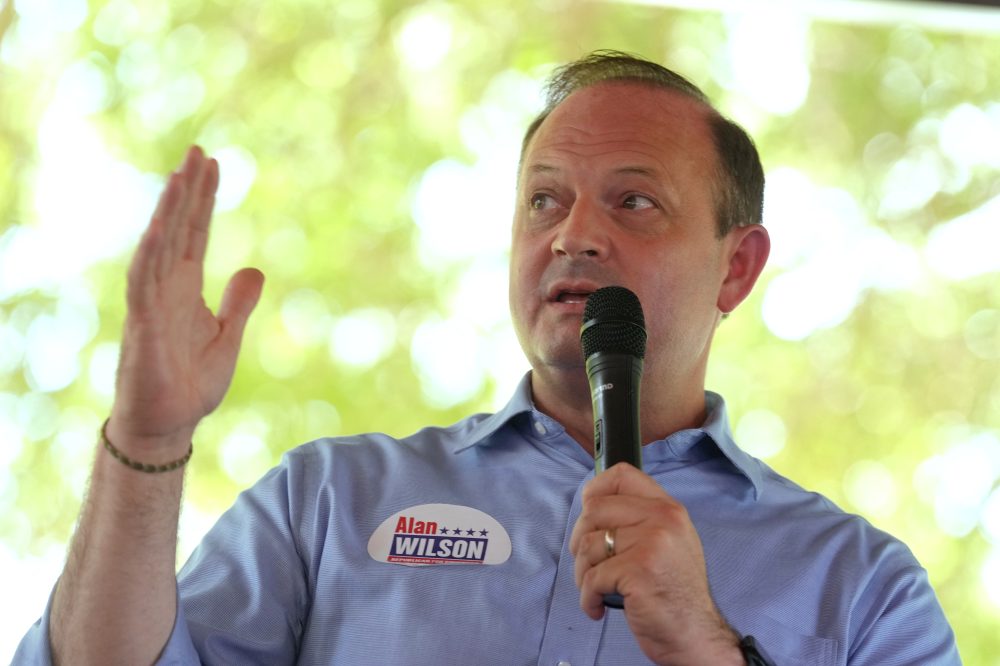
Wilson attacked Evette for skipping earlier debates and accused her of falsely claiming credit for signing legislation that Gov. Henry McMaster had actually signed. Evette fired back by labeling the longtime prosecutor a “career politician” and reminding the audience that Trump had endorsed her — not Wilson — going into the primary.
Throughout the campaign, in advertisements and mailers alike, Evette has consistently highlighted the fact that Trump singled her out from the Republican field as his preferred candidate for governor. She has also received the backing of McMaster, who selected her as his running mate in both the 2018 and 2022 governor’s races.
After Trump’s Friday announcement that he was supporting both candidates, Wilson wasted no time claiming the endorsement as his own. Shortly after Trump posted about the race on social media, Sen. Tim Scott announced his support for Wilson. A person familiar with Scott’s thinking, who was not authorized to speak publicly, said the South Carolina Republican had been making phone calls on Wilson’s behalf, helping with fundraising, and working to persuade Trump to back him.
Wilson has also picked up support from several candidates who didn’t make the runoff, including U.S. Reps. Ralph Norman and Nancy Mace, along with state Sen. Josh Kimbrell, who dropped out just before the primary. On Monday, Sen. Ted Cruz traveled to South Carolina to campaign for Wilson.
The competition to win Trump’s favor has overshadowed nearly every other aspect of the primary campaign.
Even before Evette received Trump’s endorsement ahead of the primary, she regularly used photos and videos of herself alongside the president in her campaign materials. Mace and Norman also leaned heavily into their support for Trump’s policies and legislative agenda.
Wilson, who has served as South Carolina’s top law enforcement officer since 2011, has frequently pointed to the legal briefs he has filed in support of the Trump administration. He also made a trip to New York City to show support for Trump during his criminal trial over hush money payments, which ended in a conviction.