MIAMI — Federal investigators have concluded that the catastrophic failure of a Florida beachfront condominium did not happen all at once — it was a slow-motion disaster that began unfolding weeks before the building crumbled into rubble in the middle of the night, claiming 98 lives in 2021.
The National Institute of Standards and Technology released its final report Monday, revealing that two connections between garage columns and the pool deck began giving way around early June. The building’s design failed to meet required codes, and changes made to the structure during its 40-year lifespan left other parts of the pool deck too weak to handle the added stress — setting the stage for the gradual collapse that followed.
“When building structures are designed and built to required codes and standards, they have margins against failure, meaning they should be able to support much more load than they are expected to bear,” said Judith Mitrani-Reiser, who co-led the investigation. “In the case of Champlain Towers South, these margins against failure were too narrow from the start.”
The findings add detail to a picture that has been emerging since the collapse — one that reveals weeks of warning signs and long-standing structural problems within the building.
Most of the residents inside were asleep when the Surfside, Florida building — located a few miles north of Miami — came down at 1:22 a.m. on June 24, 2021. A Miami judge later approved a settlement exceeding $1 billion to address personal injury and wrongful death claims tied to the disaster.
Harley Tropin, the attorney who represented victims’ families and survivors in a class-action lawsuit, declined to offer any comment on the newly released report.
Investigators found that the building did not conform to the building codes that were in effect at the time it was constructed, and the actual construction deviated from the original design. Later modifications around the pool area — including the addition of heavy planters, sand, and pavers — “further diminished the margins against failure, as did long-term degradation from corrosion,” according to the report.
Photographs taken by people at the building in the weeks leading up to the collapse captured a lengthy crack in a planter wall on the pool deck, along with additional cracks at the corner where the planter wall and a planter box met, the NIST report states.
One witness told investigators that about three weeks before the collapse, part of a gate near the planter wall had shifted slightly downward, causing it to jam — another early sign of structural distress.
The original firms responsible for designing and constructing the building in the late 1970s are no longer in business.
Following the disaster, Florida state lawmakers passed a law in 2022 requiring condominium associations to maintain adequate financial reserves for major repairs. Many residents were blindsided by large fees needed to cover years of neglected maintenance in order to comply with the new law. A subsequent law was then passed giving condo associations and residents greater flexibility in managing those costs.
TUCSON, Ariz. — A ransom note tied to the disappearance of Nancy Guthrie, the mother of ‘Today’ show host Savannah Guthrie, reportedly indicates that the 84-year-old woman has died, according to CNN and other news organizations citing law enforcement sources.
In the days following Nancy Guthrie’s disappearance in early February from her home just outside Tucson, several media outlets reported receiving ransom notes connected to the case.
On Monday, CNN reported that the contents of one of those notes revealed Nancy Guthrie was no longer alive — and that those responsible for taking her said her death was unintentional, occurring shortly after she was abducted. CNN indicated it had knowledge of one note’s contents, and that a Tucson television station had received two separate notes.
Both CNN and that station chose to withhold the contents of the notes from public disclosure, so that any future communications from the kidnapper or kidnappers could be verified as authentic, CNN reported.
The Pima County Sheriff’s Department declined to speak to the note’s contents. The FBI did not respond when asked for comment. The Guthrie family also made no public statements or social media posts regarding the notes on Monday.
Investigators believe Nancy Guthrie was kidnapped or taken against her will after blood was discovered near the entrance to her home in the foothills outside Tucson. The FBI subsequently released surveillance footage showing a masked individual on the porch of her home on the night she vanished.
In the weeks that followed her disappearance, volunteers and search teams combed the surrounding desert landscape — an area dotted with cacti, shrubs, and large boulders. A volunteer organization recently carried out a search for her remains near the Arizona-Mexico border, but reported no findings.
Field Level Media analyst Ethan Ward takes a closer look at one of the more intriguing prospects ahead of the 2026 NBA Draft: Illinois freshman Keaton Wagler.
Wagler came into the season flying under the radar but quickly made believers out of scouts and front offices alike. During the first three months of the year, he shot a blistering 43.7 percent from three-point range, only to cool off considerably down the stretch — connecting on just 30.9 percent from deep over Illinois’ final 12 games. Still, the 6-foot-6 off-guard’s broad skill set could be enough to overshadow questions about his physical profile.
What He Does Well: Wagler is a high-volume, high-efficiency perimeter shooter who knocked down 39.7 percent of his 5.9 three-point attempts per game. His shot chart reflects a 60/40 split between pull-up jumpers and catch-and-shoot opportunities, highlighting his versatility as a scorer. Though his shooting mechanics are unconventional — featuring a chin-level release — the shot is quick and high-arcing, and he rarely backs down when defenders crowd him. He uses reset dribbles and dribble handoffs effectively to create separation, and he’s a capable pick-and-roll ball handler who can threaten the rim without elite athleticism. His footwork and body control allow him to finish in creative ways — jump stops, spins, and shoulder-driven drives — supported by a toolkit of hesitations, wide crossovers, hang dribbles, and step-backs. He’s particularly effective finishing off two feet inside the arc. As a passer, he shows solid court awareness, reading the floor calmly and making decisions without forcing the action. His size and slightly above-average wingspan give him a workable defensive foundation, and he has room to add strength to his frame.
Areas of Concern: At approximately 190 pounds, Wagler’s lean build limits his ability to hold his ground against physical defenders when attacking off the dribble. He lacks elite burst and vertical explosiveness, and while his coordination is impressive, it only compensates so much for those athletic limitations. His finishing inside 10 feet has been inconsistent, with a 51.3 percent conversion rate within that range according to Hoop Explorer. He also tends to turn his back to defenders or lead with his shoulder on drives, which can result in poor shot selection at the rim. Despite being right-handed, he shows a preference for attacking with his left hand. Defensively, he struggles to stay in front of quicker guards laterally and doesn’t generate many disruptions — he’s a reliable team defender but not someone who will consistently impact possessions with energy or aggression.
Best Fit: Los Angeles Clippers
Ward identifies the Los Angeles Clippers, holding the No. 5 overall pick, as the ideal landing spot for Wagler. The Brooklyn Nets at No. 6 and the Milwaukee Bucks at No. 10 are also seen as strong organizational fits. There’s even a possibility Wagler goes earlier than expected — the Chicago Bulls at No. 4 are worth monitoring — depending on how the top of the draft unfolds. The Clippers are viewed as a natural match given the uncertainty surrounding Kawhi Leonard following the James Harden trade.
Russia’s Tu-160 missile-carrying strategic bombers completed a 16-hour flight over the neutral waters of the Barents Sea and the Norwegian Sea on Tuesday, according to a post from the country’s defense ministry on Telegram.
The mission included an air-to-air refueling test and was characterized by the ministry as a routine operation. Russian MiG-31 fighter jets flew alongside the bombers throughout the flight, and at various points along the route, foreign fighter jets joined as escorts — though the ministry did not identify which countries sent those aircraft.
Russia shares its northern border with NATO alliance members Norway and Finland, making the region a strategically sensitive area for both Russian and Western military forces.
Danish tennis player Clara Tauson made a statement at the Bad Homburg Open on Monday in Bad Homburg, Germany, taking down seventh-seeded Diana Shnaider of Russia in what turned out to be the most notable upset of the first round.
Ranked 25th in the world, Tauson wrapped up the victory in just one hour and 45 minutes, winning 6-4, 6-4. She converted four of her 10 break point opportunities and fired six aces compared to Shnaider’s two. The win was especially meaningful for Tauson, as it snapped a seven-match losing streak — her previous win dating back to March at the BNP Paribas Open.
For Shnaider, who claimed the Bad Homburg title back in 2024, it marked a second consecutive first-round loss on grass. She had previously been eliminated from the Berlin Tennis Open by Nikola Bartunkova of the Czech Republic.
Elsewhere in the draw, an ankle injury forced Iva Jovic to withdraw from her scheduled first-round match against China’s Xinyu Wang. Mexico’s Renata Zarazua stepped in as a replacement, but Wang dominated the match, winning 6-1, 6-2.
Japan’s Naomi Osaka, seeded sixth and a four-time Grand Slam champion, completed a rain-delayed match against Poland’s Magdalena Frech, rolling to a 6-4, 6-1 victory. Osaka was particularly strong on her second serve, winning 60 percent of those points — 21 of 35 — compared to just 21.4 percent for Frech, who converted only 6 of 28.
Also advancing to the second round on Monday were Russia’s Anna Kalinskaya, China’s Qinwen Zheng, Romania’s Irina-Camelia Begu, and Belgium’s Elise Mertens.
At the Lexus Eastbourne Open, held at the Devonshire Park Lawn Tennis Club, Australia’s Ajla Tomljanovic caused a stir by defeating eighth-seeded Elisabetta Cocciaretto of Italy 6-2, 6-7 (5), 7-5 in a match that stretched two hours and 45 minutes — even though Tomljanovic needed just 36 minutes to claim the opening set.
Tomljanovic held a commanding edge on her first-serve points, winning 72.1 percent — 44 of 61 — while Cocciaretto won just 58.5 percent of hers, converting 31 of 53.
Colombia’s Emiliana Arango, ranked No. 101, stepped into the draw as a late replacement after Switzerland’s Viktorija Golubic withdrew due to injury. Arango made the most of the opportunity, defeating Australia’s Maya Joint 7-6 (2), 6-4.
Other first-round winners at Eastbourne included Latvia’s Jelena Ostapenko, the third seed; seventh seed McCartney Kessler; Ukraine’s Anhelina Kalinina; the Czech Republic’s Tereza Valentova; and Croatia’s Petra Marcinko.
Oil prices edged higher on Tuesday, clawing back some ground after a sharp decline the previous session, as markets processed the latest developments in U.S.-Iran peace negotiations and kept a close eye on oil traffic through the Strait of Hormuz.
Brent crude futures climbed 24 cents, or 0.38%, to $78.15 per barrel, while U.S. West Texas Intermediate crude rose 33 cents, or 0.46%, reaching $74.19 per barrel as of 0026 GMT.
Monday’s decline of more than 3% came after the United States extended a 60-day sanctions waiver to Iran in the wake of early peace discussions, and as officials noted a pause in fighting in Lebanon connected to the broader agreement.
Those developments followed a tense weekend that had threatened to unravel the week-old deal. Tensions flared after U.S. President Donald Trump warned he would resume military action if Iran interfered with shipping in the Strait of Hormuz — a threat that came after Tehran declared the critical waterway closed.
Tim Waterer, chief market analyst at KCM Trade, noted that deep-rooted distrust between Washington and Tehran continues to weigh on market sentiment. “There remains a prevailing dose of market scepticism, rooted in deep-seated mistrust between Washington and Tehran, suggesting that any return to pre-war oil prices is likely to be delayed rather than immediate,” he said.
On Monday, Trump posted to Truth Social that Iran would agree to weapons inspections to ensure what he called “nuclear honesty.” He later told reporters, “If Iran doesn’t live up to their agreement, or if they’re not behaving, I will do what I have to do.”
Waterer also noted that while traders had initially priced in optimism about a potential reopening of the Strait of Hormuz, sentiment has shifted. “The market had priced in optimism around the roadmap and potential Strait of Hormuz reopening, but traders are now taking a more measured approach as they await concrete evidence that the deal will hold and traffic will normalise,” he said.
Ship-tracking data showed two oil tankers carrying just under 2 million barrels sailed through the Strait of Hormuz on Monday — an encouraging sign after weaker traffic on Sunday driven by safety concerns about the passage.
In a separate development, data from the Department of Energy released Monday revealed that U.S. crude stockpiles held in the Strategic Petroleum Reserve dropped to 331.2 million barrels last week — the lowest level recorded since June 1983 — as the U.S.-Iran conflict continued to strain supplies.
First baseman and outfielder Trey Mancini is a free agent once again after declining a minor league assignment from the Los Angeles Angels on Monday.
The Angels had designated Mancini for assignment last week, and after clearing waivers, he was sent back to Triple-A Salt Lake — the same place he started the season. Rather than accept that assignment, the veteran opted to pursue free agency.
Mancini had not appeared in a major league game since July 2023 until the Angels called him up from Salt Lake on June 8. He made an immediate impact in his first start, going 3-for-4 against Houston and driving in a run during his very first at-bat back in the big leagues.
Over five games and three starts with the injury-depleted Angels, Mancini went 4-for-13 with a triple and four RBIs. His final appearance came on June 14 before the team decided to designate him for assignment.
The 34-year-old has a remarkable story beyond baseball. He missed the entire 2020 season while successfully fighting Stage 3 colon cancer, then returned to the field in 2021. Across 836 career major league games, Mancini carries a .263 batting average along with 129 home runs and 404 RBIs, having played for the Baltimore Orioles from 2016 through 2022, the Houston Astros in 2022, the Chicago Cubs in 2023, and most recently the Angels.
In related roster moves, the Angels brought designated hitter and outfielder Jorge Soler back from the injured list. Soler had been sidelined with an oblique strain since June 3 and was hitting .220 with nine home runs and 33 RBIs in 58 games before going down.
To make room, the Angels designated infielder Nick Madrigal for assignment. Madrigal batted .273 in 15 appearances for Los Angeles this season. It marked his first time in the majors since playing with the Cubs in 2024.
The National Weather Service office out of Mount Holly, New Jersey has put a Severe Thunderstorm Warning into effect, issued at 8:46 PM EDT on June 22 and running through 9:30 PM EDT the same evening.
Residents in the affected area are urged to move indoors immediately, stay away from windows, and avoid any unnecessary travel until the warning expires. Severe thunderstorms can bring dangerous lightning, damaging winds, and large hail.
Stay tuned to TV Delmarva for any updates as this warning remains in effect.
The National Weather Service office in Mount Holly, New Jersey issued a Severe Thunderstorm Warning on June 22 at 8:34 PM EDT, set to remain in effect until 9:30 PM EDT that same evening.
Residents in the affected areas are urged to take cover immediately and remain indoors until the warning has expired. Severe thunderstorms can bring dangerous lightning, damaging winds, and heavy rainfall in a short period of time.
Stay tuned to TV Delmarva for the latest updates as this weather situation develops.
The National Weather Service office in Mount Holly, New Jersey has issued a Severe Thunderstorm Watch that went into effect at 8:13 PM EDT on June 22 and remains active until 10:00 PM EDT the same evening.
Residents are urged to stay weather-aware during this period. A Severe Thunderstorm Watch means conditions are favorable for the development of severe thunderstorms in and around the watch area. Damaging winds, large hail, and heavy rainfall are all possible with any storms that develop.
If a Severe Thunderstorm Warning is issued for your area, move indoors immediately and stay away from windows. Avoid using electrical equipment and unplug sensitive electronics if possible.
TV Delmarva will continue to monitor this situation and provide updates as conditions develop. Check back for the latest weather information from our team.
Field Level Media analyst Ethan Ward has taken a closer look at one of the most talked-about players heading into the 2026 NBA Draft — BYU freshman AJ Dybantsa.
Dybantsa has been a household name in basketball circles since his junior year of high school, and his college debut lived up to the hype. He finished the season as the nation’s leading scorer, putting up 25.5 points per game. Standing at a verified 6-foot-9 and 215 pounds — measurements confirmed at the NBA draft combine — he possesses the physical profile of a versatile inside-out swingman. His style of play blends power and finesse, with most of his production coming from within the arc.
What He Does Well: Dybantsa is a smooth wing scorer capable of exploiting weaknesses in halfcourt defenses on his own. He finishes at the rim with authority, converting at a 73.4 percent clip, and can elevate from well beyond the charge circle. He shows three-point range periodically, connecting on 34.7 percent of above-the-break attempts. His offensive approach centers on aggressive drives — either backing defenders down or attacking them face-up. He plays with patience and deliberateness, using ball fakes and shoulder movements to manufacture space rather than relying on pure straight-line speed. He’s comfortable operating in the corner or attacking closeouts on the weak side. As a secondary playmaker, he recognizes defensive attention and delivers the ball to open shooters or cutters. He draws fouls at an elite rate — 7.3 free throw attempts drawn per 36 minutes, which ranks in the 99th percentile among players at his position according to CBB Analytics. Defensively, his length helps him disrupt passing lanes, and he navigates screens reasonably well for someone his size. He’s also a strong long rebounder, often positioned to push in transition.
Areas That Need Work: Dybantsa leans too heavily on back-to-the-basket scoring, which reflects a handle that still needs refinement. His jump shot mechanics are inconsistent — he brings his knees together during his release, which throws off his rhythm and arc. He shot just 7-for-26 from the corner three (26.9 percent) and only 30 percent on catch-and-shoot opportunities overall. There are also concerns about his tendency to initiate contact rather than create clean looks. He can be steered in one direction by physical defenders, and his downhill attacks sometimes stall without a clear plan. According to Draft Ballr, he produced just 0.94 points per possession on post-ups, 0.98 on mid-range attempts, and 0.81 on dribble jumpers. When defenses key in on him, he can be contained. On the defensive end, he struggles in one-on-one coverage, can lose focus away from the ball, and his ability to switch assignments is sometimes slow to develop. Projecting him as a standout defender appears unlikely at this stage — a solid but unspectacular wing defender seems like the more realistic outcome.
Best NBA Fit: Washington Wizards
With Trae Young now committed to staying in Washington, Dybantsa would have the benefit of joining a team without being immediately thrust into a primary offensive role. Some evaluators view him as a polished prospect ready to contribute right away, and those expectations aren’t unreasonable. However, the Wizards understand better than most franchises that even highly touted teenagers face a learning curve when making the jump to professional basketball.
The National Weather Service out of Mount Holly, New Jersey issued a Tornado Warning on the evening of June 22, effective from 8:23 PM EDT through 8:45 PM EDT.
Residents in the areas covered by the warning were advised to take shelter immediately and stay away from windows. A Tornado Warning means that a tornado has either been spotted or indicated by weather radar, making the threat immediate and serious.
People in the warned area were encouraged to move to an interior room on the lowest floor of a sturdy building and to avoid mobile homes or vehicles during the warning period.
WASHINGTON — The Pentagon is asking Congress for around $80 billion, with the bulk of that money intended to pay for the ongoing U.S. war against Iran. The request adds to an already massive military spending push being sought by President Donald Trump.
While the White House Office of Management and Budget has not yet formally submitted the request to Congress, Defense Secretary Pete Hegseth has been meeting with lawmakers on Capitol Hill, including on Monday evening. A senior deputy defense secretary briefed senators on the Iran funding request last week, according to two individuals who were familiar with the matter but not authorized to speak publicly about it.
The Wall Street Journal was first to report on the developments.
The push for this level of war funding is unfolding at a politically sensitive time. Many lawmakers are skeptical of the deal Trump reached with Iran to end the conflict, and uncertain about what comes next. The White House has also put forward a sweeping $1.5 trillion Pentagon budget request — nearly 50% more than what is currently being spent in this fiscal year.
Senate Majority Leader John Thune said he anticipates a supplemental spending request from the administration related to the war, and when it comes, “we’ll work through it and see where the votes are.”
“We need to make sure we’re doing everything we can to replenish, resupply a lot our munitions that have been depleted — not only just with what’s happening with Iran, but prior to that,” said Thune, R-S.D.
Deputy Defense Secretary Stephen Feinberg spoke with multiple senators about the proposal through phone calls last week and notified congressional committees that the $80 billion request had been forwarded to the Office of Management and Budget. The Pentagon did not respond to requests for comment.
The funding package is expected to face significant resistance from lawmakers who opposed Trump’s decision to go to war in the first place and are reluctant to increase Pentagon spending while Americans continue to struggle with a high cost of living.
“You’re spending families’ hard-earned tax dollars on a war that many strongly oppose,” Democratic Sen. Patty Murray told Hegseth during a Senate hearing last month.
Beyond the Iran-related funding, Republicans are hoping to secure roughly $1.1 trillion through the standard appropriations process — which typically requires bipartisan support — and an additional $350 billion through a mostly party-line vote later this summer.
The $80 billion figure is significantly higher than the $29 billion war cost estimate Hegseth provided to Congress during his testimony last month. That earlier figure mostly covered replacing munitions and repairing equipment, along with operational costs for deployed forces, but did not account for repairing or rebuilding U.S. military facilities damaged in the region.
The figure is also well below the $200 billion the Pentagon initially floated as a cost estimate when the war began. An early projection put the price of just the first week of fighting at $11.3 billion.
Sen. Brian Schatz of Hawaii, a member of Democratic party leadership, said he believes the final price tag could end up being far greater than $80 billion. Schatz said he hasn’t polled fellow Democrats on whether there is appetite for an Iran-focused spending bill, “but I haven’t found anyone who wants to do this.”
Republican Sen. Jim Banks of Indiana took a different view, saying, “To me it’s less about the war, it’s more about the stockpiles.” Banks added, “I would sell it to my state as an investment in our defense industrial base, reshoring defense production to Indiana.”
Sen. Jack Reed, the leading Democrat on the Senate Armed Services Committee, argued that any Iran war supplemental funding cannot be handled on its own. He said it needs to come after lawmakers from both parties agree on an overall spending level for both defense and non-defense programs — “then the rest of this would follow pretty quickly,” Reed said.
Sen. John Hoeven of North Dakota, who serves on the Appropriations subcommittee on Defense, said he has been working with the administration to expand the spending package to include disaster relief funds for California, Hawaii, and other states hit hard by wildfires and severe weather, as well as agricultural assistance for farmers. “I think that’s the kind of combination that could pass,” Hoeven said.
Hegseth declined to answer questions from reporters late Monday as he walked through the Capitol. However, during a Senate hearing last month, he responded to questions about war costs by asking rhetorically, “What is the cost of Iran obtaining a nuclear weapon?” He acknowledged the president’s choice to confront the threat of a nuclear Iran “comes with cost — and we recognize that.”
Federal auto safety officials announced Monday they are launching a special investigation after a Tesla operating on an automated driving feature crashed at high speed into a Texas home, killing a 76-year-old woman who was inside at the time.
The National Highway Traffic Safety Administration, known as NHTSA, said it is investigating the Tesla Model 3 crash, which occurred Friday near Houston. The probe carries significant weight because the vehicle was using technology that Tesla CEO Elon Musk views as central to the company’s future.
Musk has been rolling out robotaxi services powered by automated software in multiple U.S. cities this year, with plans to allow Tesla owners nationwide to add their vehicles to the fleet using the same technology.
According to a police report, the driver told the Harris County Sheriff’s Office that the automated driving feature was active at the time of the crash. However, investigators have not yet determined what role, if any, the technology played in the incident. The report also noted the driver was not under the influence of alcohol and is cooperating with authorities. The victim was identified as Martha Avila.
Video footage obtained by KHOU-TV shows the vehicle racing across the front yard of a brick home in Katy before crashing through the front of the house. A follow-up shot captures the car buried inside the structure, surrounded by collapsed plaster, broken beams, and scattered furniture.
Tesla did not immediately respond to requests for comment on the crash.
NHTSA has a history of scrutinizing Tesla’s automated systems. Late last year, the agency launched an investigation into 58 reported instances where Teslas allegedly broke traffic laws while using self-driving technology, resulting in more than a dozen crashes and fires and nearly two dozen injuries. Months before that, the agency also opened a separate investigation into whether Tesla had been failing to report crashes in a timely manner as required by law.
In total, NHTSA has opened 46 special crash investigations involving Teslas equipped with self-driving or driver-assistance technology over the past ten years. In more than a dozen of those cases, at least one person — whether a driver, passenger, or pedestrian — lost their life.
Tesla’s stock took a steep dive early last year as vehicle sales dropped amid a consumer boycott of Musk following his involvement in politics, including his role leading President Donald Trump’s Department of Government Efficiency initiative and his public support of European extremist political candidates. Since then, Musk has steered the company’s narrative away from car sales and toward artificial intelligence and robotaxis — a shift that appears to have resonated with investors. Tesla’s stock has climbed 16% over the past year.
The National Weather Service out of Mount Holly, New Jersey issued a Severe Thunderstorm Warning on the evening of June 22, beginning at 8:06 PM EDT and set to expire at 8:45 PM EDT.
The warning was issued as part of an official weather alert through the NWS alert system. Residents in the warned area were advised to seek shelter immediately, stay away from windows, and monitor local weather updates for the latest information.
Severe thunderstorm warnings are issued when weather conditions are capable of producing damaging winds of 58 miles per hour or greater, or hail measuring at least one inch in diameter. Anyone outdoors during the warning period should move indoors to a sturdy structure without delay.
TV Delmarva will continue to monitor this and any additional weather alerts as conditions develop. Stay with us for the latest updates.
The National Weather Service office in Mount Holly, New Jersey issued a Severe Thunderstorm Warning on the evening of June 22, beginning at 8:02 PM EDT and remaining in effect until 8:30 PM EDT.
Residents in the areas covered by the warning were advised to seek shelter immediately and remain indoors until the warning expired. Severe thunderstorms can bring dangerous lightning, damaging winds, and heavy rainfall in a short period of time.
The public was encouraged to stay away from windows, avoid using electrical appliances, and refrain from outdoor activities for the duration of the warning. Anyone caught outside was urged to move to a sturdy building or vehicle as quickly as possible.
Viewers are reminded to monitor local forecasts and official weather alerts for the latest information as conditions can change rapidly during severe weather events.
Norway head coach Stale Solbakken has decided to go with an unchanged roster for Monday’s World Cup Group I showdown against Senegal in East Rutherford, N.J. The decision keeps intact the squad that delivered a dominant 4-1 victory over Iraq in Norway’s tournament opener.
Senegal’s coaching staff made the same call, rolling out the identical starting eleven that took the field in their 3-1 loss to France earlier in the competition.
For Norway, Solbakken is sticking with his preferred attacking trio, with Alexander Sorloth and Antonio Nusa flanking star striker Erling Haaland up front.
On the Senegal side, Ibrahim Mbaye will once again start the match from the bench — a decision that raised eyebrows given that Mbaye found the back of the net in the defeat to France.
Norway Starting Lineup: Orjan Haskjold Nyland; Julian Ryerson, Kristoffer Ajer, Torbjorn Heggem, David Moller Wolfe; Martin Odegaard, Sander Berge, Fredrik Aursnes; Alexander Sorloth, Erling Haaland, Antonio Nusa.
Senegal Starting Lineup: Edouard Mendy; Krepin Diatta, Kalidou Koulibaly, Moussa Niakhate, El Hadji Malick Diouf; Idrissa Gana Gueye, Lamine Camara, Pape Gueye; Ismaila Sarr, Sadio Mane, Nicolas Jackson.
Meta announced Monday it is putting the brakes on an internal employee monitoring program while the company looks into concerns about data security.
The program in question, called the Model Capability Initiative, or MCI, was launched in April. It works by capturing mouse movements, clicks, and keystrokes on computers used by U.S.-based employees, with the goal of using that data to train Meta’s artificial intelligence systems.
The decision to pause the program follows a Reuters review of internal documents showing that sensitive employee data — gathered to track digital activity within Meta’s own systems — was viewable by any Meta employee, not just those authorized to see it.
Business Insider was first to report the pause.
Meta confirmed it is investigating the situation, though the company would not say how long the program would remain on hold.
Company spokesperson Tracy Clayton addressed the matter, stating: “We have carefully designed this program with privacy safeguards and while we have no indication at this time that any data was improperly accessed by Meta employees, we’re pausing it while we investigate.”
Despite the announced pause, a source told Reuters the tool was still actively recording as of Monday afternoon. Clayton acknowledged the rollout of the pause would take time to fully reach all employees.
The halt came after a Meta employee filed what is known as an SEV — a high-priority internal security incident report — flagging concerns about the exposure of employee data.
Internal documents revealed that the exposed data included “full prompts and transcriptions, private conversations, people and performance data, DSS sensitivity ratings (1-4).”
Reuters had previously reported in May that the MCI program was collecting more information than employees had originally been told, and that the data was being stored without encryption — raising significant privacy concerns among staff.
According to internal documentation, an employee who weighed in on the security report called for a more thorough look into the problem, writing: “I have accessed both personal tax and medical information through my work computer, as have many thousands of employees. We were told this data would be protected and only used for valid business purposes after aggressive filtering.”
Drivers across the country are getting a break at the gas pump, with prices falling for the sixth week in a row and now sitting 15% below their peak from May, according to new data released Monday.
The national average dropped 14.1 cents per gallon over the past week, landing at $3.85 per gallon on Monday, based on figures from price-tracking service GasBuddy.
The declines were widespread across the country. Colorado saw one of the sharpest drops, with prices falling 25 cents per gallon in just one week. Arizona followed with a 22-cent drop, and Ohio saw a 21-cent decrease, GasBuddy reported.
The falling prices could take some political pressure off President Donald Trump and fellow Republicans, who are fighting to maintain slim majorities in Congress heading into November’s midterm elections. High consumer prices have been a source of criticism for the party.
StoneX analyst Alex Hodes said the price decline should help ease inflation. However, Hodes cautioned that expecting energy flow through the Strait of Hormuz off the coast of Iran to return to normal is a “large assumption,” and that setbacks could emerge in the months ahead.
While two smaller crude oil tankers did pass through the Strait of Hormuz on Monday, Iran claimed it had shut the waterway again over the weekend. Overall traffic through the strait remains well below what it was before the conflict began in late February.
Patrick De Haan, who leads petroleum analysis at GasBuddy, said gasoline prices are not at serious risk of a sudden spike as long as some vessels continue moving through the strait. However, he warned that a breakdown in U.S.-Iran relations could change that picture quickly.
Additional threats to the recent price relief include tightening fuel supplies from refinery shutdowns and the start of the Atlantic hurricane season. Last week, a lightning strike knocked out power at TotalEnergies’ 238,000-barrel-per-day refinery in Port Arthur, Texas, forcing it offline. A full restart is expected within seven days.
Adding to supply concerns, a fire broke out Sunday at Marathon Petroleum’s Galveston Bay Refinery in Texas City, Texas — a facility capable of processing 631,000 barrels per day.
A lane shift is currently in place on Rogers Road between New Castle Avenue and South Heald Street as a result of construction activity in the area.
The lane configuration change is expected to remain in effect until 4 p.m. Drivers passing through that stretch of road should slow down and be prepared for altered traffic patterns.
Motorists are encouraged to allow extra travel time or consider alternate routes if possible to avoid delays.
The National Weather Service office in Mount Holly, New Jersey issued a Severe Thunderstorm Warning on the evening of June 22, beginning at 7:49 PM EDT and remaining in effect until 8:30 PM EDT.
Residents in areas covered by the warning are urged to seek shelter immediately and remain indoors until the warning has expired. Severe thunderstorms can bring dangerous lightning, damaging winds, and heavy rainfall.
No additional details regarding the specific counties or communities included in the warning were provided in the alert. Residents should monitor local weather updates and follow guidance from the National Weather Service for the latest information.
Westbound travelers on Harrington Highway, also known as Route 14, in the Milford area are facing a right shoulder closure between Canterbury Road and Church Hill Road.
The closure is the result of construction work in the area and is expected to remain in effect until 5 p.m.
Drivers are encouraged to remain alert and use caution when passing through the affected stretch of roadway.
Motorists in the area should be aware that Navaho Court, between East Seneca Drive and the cul de sac, is experiencing intermittent lane closures due to construction activity.
The lane restrictions are expected to remain in place until 5:00 PM. Drivers are advised to plan accordingly and allow extra travel time or seek alternate routes if possible.
The New Castle County Division of Police has activated a Gold Alert in the search for a missing Wilmington man identified as 22-year-old Joseph Iubatti.
Joseph was last seen on Monday, June 22, 2026, at approximately 3:30 in the afternoon near the unit block of Solitude Way at the Walden Townhouses in Wilmington.
Authorities say that despite significant efforts to find him, officers have so far been unable to locate Joseph or establish any contact with him.
If you have any information about Joseph Iubatti’s whereabouts, please contact the New Castle County Division of Police immediately.
The Milwaukee Brewers made a roster move Monday, reinstating right-handed pitcher Brandon Woodruff from the injured list just in time for their series opener at Cincinnati. To make room, the team optioned left-hander Drew Rom.
Woodruff, 33, had been placed on the injured list due to right shoulder inflammation after making six starts this season. In those outings, he posted a 2-1 record with a 3.60 ERA across 30 innings. He is set to take the mound against the Reds on Monday.
The veteran pitcher missed the entire 2024 season following shoulder surgery and managed only 12 starts in his comeback last year. In nine years in the league, Woodruff has faced the Reds 15 times — including 13 starts — compiling a 7-4 record with a 3.48 ERA against them.
A two-time All-Star, Woodruff has been a consistent presence for Milwaukee since 2017, going 55-29 with a 3.12 ERA over 148 appearances, including 133 starts.
Rom, 26, posted a 3.38 ERA in four relief appearances during his return to the majors this season. His previous big-league stint came in 2023 with the St. Louis Cardinals, where he went 1-4 with an 8.02 ERA in eight starts.
The U.S. Forest Service is asserting that it enters this summer with a complete roster of seasonal firefighting personnel, even as wildfires have begun breaking out across the western United States.
Despite the agency’s assurances about staffing levels, lingering questions remain over whether the federal government has adequate resources and preparation in place should major wildfires grow beyond manageable levels.
WASHINGTON (AP) — Two additional suspects have been taken into custody in connection with an alleged scheme to attack President Donald Trump’s UFC cage-fighting event held at the White House earlier this month, federal authorities announced.
Court documents indicate that law enforcement officials uncovered and shut down the plan several days before the June 14 White House gathering.
William Lee Spartacus Falkner, of Belfair, Washington, was taken into custody on Friday and faces a charge of conspiracy to commit murder, according to court documents filed Monday in the Western District of Washington. Jordan W. Rincker, 28, was arrested Sunday and is also charged with conspiracy to commit murder in the Western District of Missouri. A defense attorney assigned to represent Falkner had not responded to a request for comment, and court records show no attorney on file for Rincker. Neither man has yet entered a plea.
Acting Attorney General Todd Blanche issued a statement saying, “Law enforcement continues to do what it does — move to disrupt and hold accountable those allegedly plotting to do harm on the White House Grounds on June 14.”
Authorities first learned of the potential threat on June 10 — four days before the mixed martial arts event on the White House’s South Lawn. Five individuals from Ohio, Missouri, Nebraska, and California were initially taken into federal custody, the Justice Department said. Officials say the group subscribed to fringe conspiracy theories and believed their attack would destabilize the U.S. government.
The investigation was set in motion after the mother of an Ohio man called police out of concern over her son’s recent gun purchases and online activity, according to an FBI affidavit filed in the case.
That man, 19-year-old Tycen Proper, told investigators he was part of a group seeking to spark a revolution and go after government officials. According to the affidavit, the group planned to fly drones loaded with explosives into the event and then shoot at crowd members as they ran in panic. Proper faces firearms charges as well as counts including attempted murder of a U.S. government officer or employee.
Proper’s attorney, Joe Patituce, commented Monday: “Mr. Proper appreciates the serious nature of the charges currently pending against him and will address them appropriately in court at the right time. For now, we are going to move the case forward one step at a time.”
Investigators seized high-powered weapons from several suspects and reviewed encrypted messages exchanged among roughly 20 participants. Those messages included detailed maps and aerial images of the area, along with discussions about securing a safe house and planning escape routes following the intended attack.
However, court records leave it unclear just how close the group may have come to actually carrying out the plan before it was disrupted.
Several of those questioned by investigators claimed they had no personal intention of committing violence and planned only to watch. One individual said he would have attended the UFC event as a protester but had to turn back when his vehicle broke down. Additionally, while the group discussed using explosive-equipped drones, charging documents indicate they had not yet acquired such equipment when the plot was uncovered.
Prosecutors allege that Rincker distributed cash to fellow conspirators and accepted items including weapons, a 3D printer, a computer, and other goods, agreeing to manufacture drone parts. In an FBI affidavit, Rincker reportedly told an investigator that he never truly intended to build drones with the printer and simply wanted it to make and sell crafts.
According to a separate FBI affidavit, Falkner communicated with other group members about his ability to obtain and operate drones, and discussed tactics and explosives for use in the attack. After news of the disrupted plot became public, Falkner reportedly texted another member saying, “Work trip is canceled. My boss got picked up,” and shared a link to a news article covering the initial arrests.
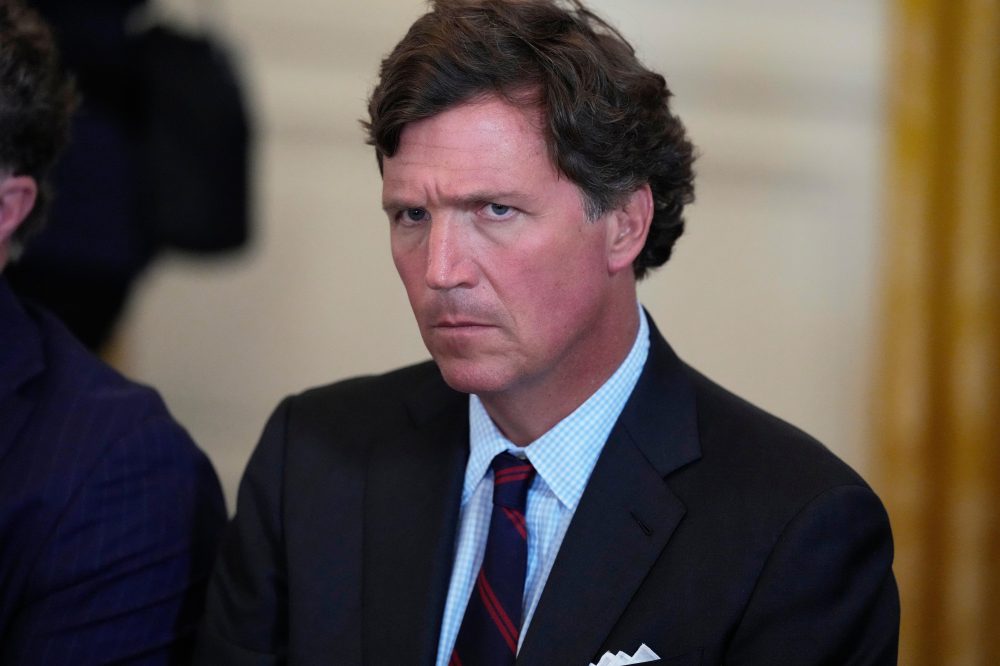
Veteran conservative media personality Tucker Carlson declared on a recent podcast appearance that he wants nothing to do with the Republican Party going into the November midterm elections — a dramatic break from a political affiliation he championed for decades, including during his long run as one of Fox News Channel’s top-rated hosts.
Speaking late last week on the podcast “Can’t Be Censored,” Carlson was equally clear that he has no interest in switching sides. “Not gonna support the Democratic Party,” he said. “I don’t know what I’m going to do.”
Since being let go by Fox News in 2023, Carlson has built a substantial audience through his own independent podcast. His break from the Republican Party has grown sharper in recent months, largely fueled by his opposition to President Donald Trump’s decision to launch military action against Iran in February.
Carlson had backed Trump during the 2024 presidential race, but after the war got underway, he publicly apologized for that support, saying he had been “misleading people” — though he insisted it was not intentional.
He has continued to hammer the party over what he sees as a failure to put American interests first, repeatedly arguing that the conflict with Iran serves Israel’s agenda rather than that of everyday Americans.
“They are making decisions on the basis of other criteria, what’s best for this company, what’s best for Israel, what’s best for our donors,” Carlson said. “That’s not just, like, they are off in the wrong direction, like, that is unacceptable, that’s treasonous, it’s immoral, it can’t continue.”
Carlson framed his departure as the end of a long and loyal relationship with the party. “I’ve been a consistent defender for 35 years of the Republican Party, I mean very consistent defender, but there’s no defending this,” he said. “So no, I’m out. And if I’m out, then I think a lot of other people are out.”
All 18 U.S.-resident passengers who were aboard the MV Hondius cruise ship during a hantavirus outbreak have now returned to their home states, the University of Nebraska Medical Center announced Monday.
The passengers completed their monitoring period at the center’s National Quarantine Unit. Sixteen of them arrived at the facility on May 11, following their voyage on the ship connected to the outbreak. Two additional former passengers checked into the National Quarantine Unit on May 15.
The U.S. Centers for Disease Control and Prevention confirmed that the outbreak did not lead to any hantavirus cases on American soil, stating, “No cases of hantavirus disease occurred in the United States as a result of this outbreak.”
Earlier this month, eight of the U.S. residents had already been cleared to go home after spending three weeks under observation at the National Quarantine Unit, while the remaining ten continued to be monitored.
The World Health Organization recommends that high-risk contacts be monitored and quarantined for 42 days following exposure to hantavirus. Those considered lower risk are advised to keep a close watch on their own health and seek medical attention if any symptoms appear.
WASHINGTON — The U.S. Senate gave its approval Monday to a bipartisan affordable housing bill, with congressional leaders pushing to wrap up the process by the end of this week so President Donald Trump can sign it into law.
The bill — officially titled the 21st Century ROAD to Housing Act — is aimed at increasing the number of affordable single-family homes available to buyers at a time when high prices remain the top concern for voters heading into November’s midterm elections. The legislation now moves to the House of Representatives for a final vote.
Addressing a Long-Standing Housing Shortage
The United States has faced a shortage of affordable housing for years, driven by outdated building regulations and the lingering effects of the 2008 financial crisis — particularly in southeastern states, the industrial Midwest, and parts of the Southwest. Estimates of how many new homes are needed vary widely, ranging from 1.5 million to as many as 7.3 million.
Limiting Wall Street’s Role in the Housing Market
One of the bill’s key provisions would cap the number of single-family homes that large Wall Street investment firms can hold at 350 per company. An earlier Senate version of the bill would have required those firms to sell off their holdings within seven years, but that provision was removed from the final legislation. Supporters of the cap say big institutional investors drive up home prices by outbidding everyday buyers.
Cutting Through Red Tape on Construction
The bill would waive or speed up environmental reviews tied to construction projects and would free up additional funding through federal block grants to states. A U.S. Department of Agriculture rural housing program would also be overhauled under the measure. In total, the legislation combines 36 housing proposals passed by the Senate in March with 11 approved by the House in May.
Political Stakes Heading Into Midterms
Republicans, including President Trump, made tackling inflation a central promise of their 2024 campaign — but prices have continued to climb. The annual inflation rate stood at 4.2% for the 12 months ending in May, the highest level in more than three years, largely driven by rising energy costs connected to the U.S. conflict with Iran. Even if a peace agreement is reached, analysts warn it could take time for energy prices to fall. Meanwhile, the average 30-year fixed-rate mortgage has risen to 6.47%, up from 6.11% in mid-March. With midterm campaigns intensifying, both Republicans and Democrats are eager to show voters they are taking concrete steps to address the housing crisis.
Helping First-Time and Younger Buyers
The average first-time homebuyer is now 40 years old, according to supporters of the bill. The legislation includes a pilot program designed to expand access to small-dollar mortgages — those with principal balances of $100,000 or less — in an effort to bring younger buyers into the market.
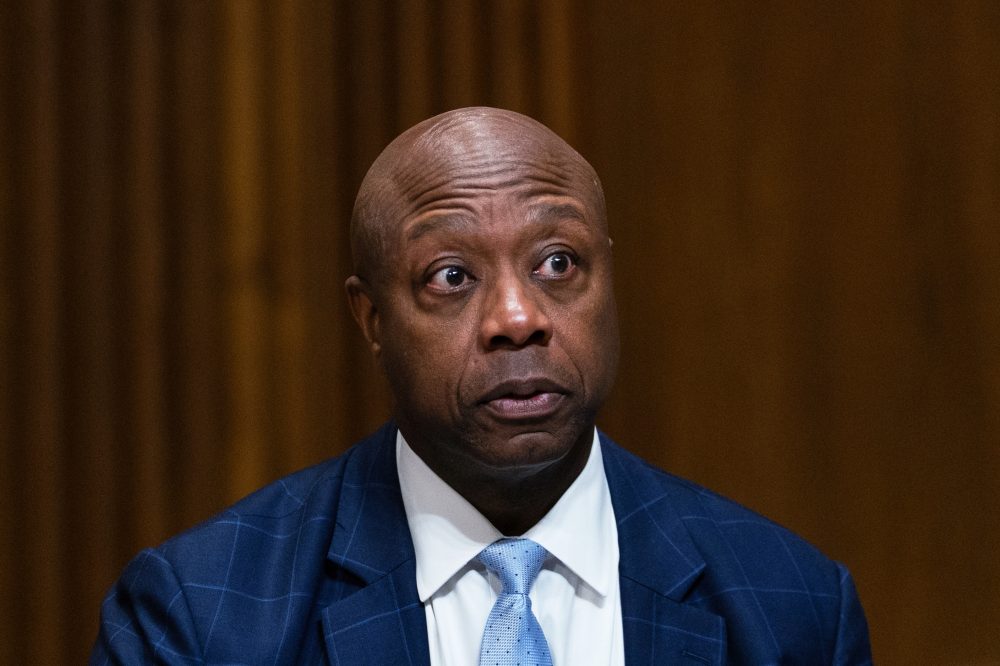
Senate Banking Committee Chairman Tim Scott, a Republican from South Carolina, said the bill would “lower costs, expand housing supply, cut red tape.” U.S. Senator Elizabeth Warren of Massachusetts, the committee’s senior Democrat, described it as “the biggest housing bill in more than 30 years.”
After more than three decades behind the desk, ESPN announced Monday that Linda Cohn — the network’s longest-serving SportsCenter anchor — will officially step away from the job on June 30.
At 66 years old, Cohn holds a record no one else at ESPN can claim: she has hosted more editions of SportsCenter than any anchor in the show’s history. The milestone was formally recognized back in 2016 when she anchored her 5,000th episode of the flagship program.
Her farewell broadcasts are set for Friday, with final appearances during the 6 p.m., 10 p.m., and 11 p.m. ET editions of the show.
Reflecting on her career, Cohn said, “I’ve always said I was a fan first and I’ve always tried to keep that top of mind when I was doing ‘SportsCenter’ or anything else. But what I’m most proud of is that my career lasted long enough for me to see little girls grow up watching ‘SportsCenter,’ enter this business, and succeed in it.”
Cohn’s broadcasting journey began in 1981, when she worked as a radio news anchor, writer, and sports reporter on her native Long Island, New York. She came aboard ESPN in July 1992, anchoring her very first SportsCenter on July 11 of that year. In recent years, she had been a regular presence on the late-night edition of the show.
Throughout her tenure, Cohn proved herself a versatile broadcaster — taking on roles as a reporter, commentator, interviewer, writer, play-by-play caller, and contributor to the network’s hockey coverage. She was also a familiar face in many of ESPN’s beloved “This is ‘SportsCenter’” advertising spots.
“I’m grateful for every moment I had at ESPN, but I’m inspired and energized by the opportunities that lie ahead,” Cohn said. “My story is still being written.”
In 2017, Cohn was inducted into the National Sports Media Association Hall of Fame, cementing her place among the most respected figures in sports broadcasting.
Burke Magnus, ESPN President of Content, praised her legacy in a statement: “Linda Cohn is a legend and a major part of the history of ESPN. She has brought enthusiasm, personality and her love of sports to our audience for more than 30 years and her contributions to ESPN both in front of and behind the camera would make a very long list. We wish her all the best in her retirement and sincerely thank her.”
An air raid alert was activated over Ukraine’s capital city of Kyiv in the early morning hours of Tuesday, with officials posting a warning on Telegram urging residents to immediately seek shelter. The alert came just days after President Volodymyr Zelenskiy cautioned that Russia was gearing up for a major assault.
In another part of the country, the city of Kharkiv — Ukraine’s second-largest — came under attack from drones and two missiles, according to Mayor Ihor Terekhov, who shared the information via Telegram. Terekhov reported that one woman was wounded in the strike.
Reuters was unable to independently confirm the specifics of either incident.
Field Level Media analyst Ethan Ward has released a detailed breakdown of top prospects heading into the 2026 NBA Draft, with Kansas guard Darryn Peterson among those in the spotlight.
Standing 6-foot-5 and weighing 200 pounds, Peterson brings a 6-foot-10 wingspan to the table and the ability to play both guard positions effectively. While his freshman year drew criticism regarding his perceived effort level, his actual on-court output — both statistically and visually — was difficult to overlook. His flexibility between running the offense as a lead guard and playing off the ball gives him an advantage over many top guard prospects in recent draft classes.
On the positive side of the ledger, Peterson is a fluid ball-handler capable of shifting speeds and attacking defenders in either direction. As a pick-and-roll scorer, he has a complete toolkit — pull-up jumpers from distance, a soft touch around the basket, and hesitation moves to create better angles. He is especially skilled at keeping defenders trailing him around screens. His floater is quick and difficult to block, connecting on 50 percent of those attempts in the upper paint area, according to CBB Analytics. His shooting form is compact with a fast release, and he buried 55.6 percent of his 27 corner three-point attempts during his freshman season.
Away from the ball, Peterson is constantly moving — using screens, cutting to the rim, and repositioning to create spacing for teammates. He passes with good timing when defenders converge, and as a pick-and-roll passer, he generated 1.18 points per possession according to Draft Ballr. Defensively, he shows solid instincts when switching assignments, particularly on help-side plays, and is active in disrupting passing lanes.
However, there are concerns. Peterson dealt with a recurring full-body cramping condition throughout the college season, and questions about his long-term durability could factor into how teams evaluate him. He shot just 34.8 percent on above-the-break three-pointers, which made up 84 percent of his total three-point attempts. While he is a smart passer, he relies more on his scoring reputation to create opportunities for teammates than on sharp decision-making. He has also not been tested as a primary ball-handler, and on defense, he can be overpowered by bigger players and struggles on the defensive glass against physical baseline crashers.
Analysts identify the Utah Jazz as the best NBA fit for Peterson. He had previously aimed to be the first overall pick, but has pulled back from pursuing a workout with the Washington Wizards as indications grow that BYU’s AJ Dybantsa is poised to go No. 1. Utah holds the second pick and is weighing trade offers, with the decision likely coming down to Peterson and Duke’s Cam Boozer.
All westbound lanes on US 40 at Glasgow Avenue are currently closed following a crash, according to traffic officials.
Motorists traveling westbound in the area should anticipate significant delays and are advised to use alternate routes until the roadway is cleared.
No additional information regarding the crash has been made available at this time. Drivers are urged to stay alert and monitor traffic updates as the situation develops.
BUCHAREST, Romania — Romania’s ongoing political crisis took a turn for the worse Monday night after Parliament voted down a new government put forward by Prime Minister-designate Adrian Vestea, who had been hoping to finally bring stability to the struggling nation.
The confidence vote fell well short of the required threshold, with 189 lawmakers voting in favor and only 23 opposed — but more than half of Parliament chose to abstain. At least 233 votes were needed for the government to be approved. The failure marks the latest chapter in a political standoff that began when a no-confidence vote brought down the previous government back in May.
Romanian President Nicusor Dan had tapped Vestea, a longtime member of the National Liberal Party, known as PNL, citing his background in public administration. Vestea was actually Dan’s second choice for the position — his first nominee, Eugen Tomac, had failed to put together a cabinet within the required 10-day window.
The collapse of Vestea’s cabinet bid is expected to further destabilize a country already struggling with one of the highest budget deficits among European Union member states.
Speaking to Parliament on Monday, Vestea painted a sobering picture of Romania’s condition, describing it as going through “a complex period” marked by “distrust between the citizen and the state.”
He went on to say the country is confronting “serious economic challenges, social tensions accumulated over years, an international context more unstable and risky than we have known for a long time. But beyond all this, I believe that our real problem is something else — a crisis of trust.”
Vestea had submitted his proposed cabinet lineup and governing agenda to Parliament on Sunday. However, a significant political problem emerged: President Dan had not consulted Vestea’s own party, PNL, before naming him as his pick. While Parliament’s largest party, the Social Democratic Party — or PSD — backed Vestea’s cabinet, his own party refused to support him.
Earlier Monday, Vestea met with the leader of the hard-right nationalist opposition group known as the Alliance for the Unity of Romanians, or AUR, calling it essential to address “an unprecedented crisis.” However, AUR leader George Simion announced after that meeting that his party would not support the proposed cabinet, and AUR lawmakers walked out of Parliament before the vote was held.
Simion delivered a sharp rebuke from the Parliament floor, saying, “For 35 years in Romania, betrayal has been the order of the day and has somehow become commonplace, part of everyday life. Those in this hall who are not traitors are leaving this hall synonymous with betrayal.”
PSD leader Sorin Grindeanu, speaking to reporters before the final tally was in, said his party was unlikely to back a minority government going forward. He offered Vestea a backhanded compliment, congratulating him for “accepting to enter this battle.” He also took a veiled shot at the lawmakers who skipped the vote, saying, “There are others who were not even present at the vote … acting like moralists, but it is not my job to judge them.”
Political consultant Cristian Andrei, based in Bucharest, said the outcome largely benefits AUR by demonstrating that “the mainstream parties are unable to govern.” He warned that the road to forming a stable government remains rocky.
“There is a tough road ahead for finding a majority because the pro-Western parties are in a perpetual conflict,” Andrei told The Associated Press. “Instability and populism win again. Trust in the mainstream politics is the victim again.”
With the vote failed, President Dan must now put forward yet another candidate for prime minister. If that person also fails to assemble a functioning government, the country could be forced into snap elections — something that would be unusual, as Romania’s next general election is not scheduled until 2028.
Romania continues to grapple with one of the EU’s highest budget deficits and widespread inflation. Reducing the deficit had been declared a top priority when the coalition took power in June 2025.
A federal judge has determined that a voter data verification system used by the Trump administration is unlawful, delivering a significant legal blow to the effort.
The tool in question is a revamped version of the SAVE system, which the administration had been using to run checks on voter information. According to reports, the data of tens of millions of voters had already been processed through the system before the ruling came down.
The judge found that the use of the system in this manner does not comply with the law, though the full details of the ruling were not elaborated upon in initial reports.
The decision adds to ongoing legal battles surrounding the Trump administration’s efforts to verify voter eligibility using federal data systems.
Motorists heading through the Newport Gap Pike and James Street corridor should plan for some slowdowns this afternoon.
A right lane closure is currently in place along Newport Gap Pike and James Street, between Boxwood Road and Liberty Road, due to ongoing construction activity in the area.
The lane restriction is expected to remain in effect until 3 p.m. Drivers are encouraged to allow extra travel time or consider an alternate route until the closure is lifted.
A man armed with a long gun opened fire Monday at a Montreal hotel, fatally shooting a police officer before police returned fire and killed him, according to authorities. A civilian also lost their life during the incident, though investigators have not yet determined who fired that fatal shot.
Police Chief Fady Dagher announced that a second officer suffered serious injuries in the attack, which took place in the city’s Côte-des-Neiges neighborhood, but said that officer is now in stable condition. The chief confirmed the gunman was killed by police at the scene.
Dagher noted that this marks the first time in 24 years that a Montreal police officer has been killed while on duty. “It’s a very, very sad day. It’s a nightmare,” he said when speaking to reporters.
According to the chief, emergency services received a call around 11:35 a.m. from someone reporting that a person was pointing a gun out of a window at the Hilton hotel. Officers responded to the location and were immediately met with gunfire. Video footage also showed the shooter had come outside the hotel at some point during the incident.
Investigators are still working to establish what motivated the attack, and Dagher said he does not yet know who fired the shot that killed the civilian.
Jacob Coutu, a construction worker at a nearby job site, said he heard “four or five gunshots” that morning. He said police began flooding the area shortly afterward, and additional shots rang out soon after.
“We saw cops getting in a gunfight, getting shot down,” Coutu said. He estimated that he heard as many as 30 to 40 gunshots in total.
Public safety officials sent out an emergency alert warning residents about an armed and dangerous suspect in the area and instructed people to shelter in place. The alert led to temporary closures on the Décarie expressway, a major highway, and caused significant portions of two subway lines to shut down temporarily.
Dagher later confirmed that the suspect had already been killed before authorities sent out the emergency alert. Officials lifted the alert shortly after 3 p.m.
Los Angeles firefighters are now in their sixth day of battling a stubborn blaze at a massive frozen food warehouse located near downtown, with no quick end in sight.
Thick smoke has been pouring from the roughly 500,000-square-foot facility, which is covered in solar panels and built with heavy insulation to keep its contents frozen. The building is located in the Boyle Heights neighborhood, east of downtown Los Angeles.
The fire broke out on Wednesday at the facility, known as Big Bear, which is operated by Michigan-based company Lineage. The unique construction of the building has made fighting the fire extremely difficult, and crews have not been able to go inside. Instead, they have been working entirely from the outside.
Los Angeles Fire Department Chief Jaime Moore noted that the warehouse holds roughly 85 million pounds — about 38.6 million kilograms — of frozen food, including seafood, pork, beef and poultry. According to Lineage, those products are typically shipped to grocery stores and restaurants along the U.S. West Coast.
While a standard large warehouse fire can usually be extinguished within a day, fire officials say a cold storage facility like this one can take weeks to fully put out. Fire Department spokesperson Jamie Stewart explained that the thick insulation in the walls, ceilings and roof traps the fire and makes it extremely hard to control.
Firefighters have also been unable to ventilate the roof — a standard tactic used to release gas and smoke and improve visibility inside a burning structure — because of that same insulation. Adding to the danger, floor-to-ceiling heavy-duty steel shelving racks inside the building make it unsafe for crews to enter.
Instead, crews have been tearing away exterior walls on certain sides of the structure and blasting it with heavy streams of water.
“It is to the point now, with this visibility and the smoke, you can’t really assess the safety as far as committing personnel,” Stewart said.
Stewart said it will likely take at least a few more days before the fire is fully extinguished.
As for the cause, Lineage said in a statement posted to its website that the origin has not yet been officially determined. However, the company believes the fire started while subcontractors were performing work on the solar panels on the roof. Lineage said it is cooperating with fire officials as the investigation continues.
The fire has also created a serious air quality crisis for the surrounding community. Officials with the South Coast Air Quality Management District said the air around Boyle Heights — a working-class neighborhood — remained very unhealthy as of Monday. The agency extended a poor air quality warning through Tuesday afternoon, noting that smoke is also drifting into the San Gabriel Valley.
The smoke contains microscopic particles called PM2.5, which are small enough to penetrate deep into the lungs. Light winds are expected to spread the smoke in multiple directions, potentially affecting other parts of the greater Los Angeles area.
Health officials urged residents in the most heavily impacted areas to avoid strenuous outdoor activity and to keep windows, doors and vents closed. They also advised turning off air conditioning and bringing both people and pets indoors. Anyone who must go outside is encouraged to wear an N95 or P100 mask.
Newly unsealed court documents show the U.S. government is opposing a proposal to put more than 100 artifacts recovered from the Titanic wreck up for auction — items that include personal belongings, currency, kitchen goods, and decorative pieces.
RMS Titanic Inc., a Georgia-based company that holds exclusive rights to salvage the famous North Atlantic wreck, is seeking to sell the items for the first time. This would mark a significant departure from prior agreements that limited the artifacts to museum displays and traveling exhibitions.
The company has proposed auctioning the pieces while also featuring them on a world tour across four cities, though those locations have not been made public. Court filings reference specific items slated for potential sale, including a bronze cherub, a necklace made of gold nuggets, and a heart-shaped pendant.
The National Oceanic and Atmospheric Administration, which oversees U.S. interests at the wreck site, argues that going through with the auction would put RMS Titanic in violation of its legal obligations. A judge ordered the relevant court documents unsealed earlier this month.
In its legal argument against the auction, the government stated that the company “does not seek the Court’s approval, does not believe that approval is required, and asserts that it is not restricted in its ability to sell” the artifacts.
RMS Titanic’s representatives did not respond to requests for comment. However, the company’s attorneys had previously stated in federal court filings that the proposed auction would not run afoul of existing court orders or agreements governing the artifacts.
Salvage operations at the Titanic wreck site have been ongoing since 1987, bringing up thousands of items and even sections of the ship’s hull. RMS Titanic has built its revenue model around exhibiting those recovered pieces.
Over the years, the company has made multiple attempts to sell artifacts — often citing the need to fund future exploration efforts or address financial difficulties. Each time, those efforts were blocked by U.S. courts, preservation organizations, and families of those who perished. Some of the recovered items once belonged to passengers on the doomed vessel.
There is an important distinction, however: items rescued by survivors or pulled from the water by rescue crews can legally be sold, and they regularly command enormous prices. A life jacket worn by a passenger sold for just over $900,000 in April, and a gold pocket watch that was given to the captain who rescued survivors fetched nearly $2 million in 2024.
Auction experts point to the enduring public fascination with the Titanic — which went down in 1912 after striking an iceberg during its maiden voyage from Europe to New York, claiming more than 1,500 lives — as a driver of intense demand and sky-high prices for related items.
RMS Titanic is specifically seeking to sell some of the earliest artifacts pulled from the wreck. Those items were initially taken to France, where a French authority granted ownership to the salvager. French oceanographic institute IFREMER had partnered with Woods Hole Oceanographic Institution on the original discovery of the wreck.
Artifacts recovered during later expeditions were the subject of a salvage claim filed in a U.S. District Court in Norfolk, Virginia.
NOAA’s position is that all roughly 5,000 recovered items — whether originally claimed in France or the United States — must be kept together as a single collection, as required by the U.S. court. NOAA also notes on its website that French court conditions similarly prohibited the individual sale of artifacts and required the collection remain intact.
RMS Titanic has countered, in part, that the U.S. court has no jurisdiction over the items originally claimed in France. Representatives for the French government did not respond to requests for comment.
Some ocean exploration professionals have voiced opposition to the idea of selling off Titanic artifacts, arguing they belong in the public sphere.
“I don’t have a problem with people recovering artifacts from the Titanic as long as it’s done careful, with proper archaeological techniques,” said Greg Stone, a veteran ocean explorer and ocean scientist. “I’d feel better if it was a nonprofit enterprise.”
Richard Daynard, a law professor at Northeastern University School of Law in Boston who focuses on public interest advocacy, said the rules governing Titanic artifacts exist to ensure the wreck benefits the public — not so the items can be “picked up by billionaires for further display of their wealth and power.”
“If it’s something where someone can walk through their house and say ‘Yes, I bought this for $5 million and it’s original from the Titanic,’ that’s not a good thing,” he said.
A crash on northbound Interstate 495 has forced the closure of two left lanes near the New Castle Avenue overpass, according to Delaware Department of Transportation officials.
Motorists traveling through that corridor should anticipate slowdowns and consider using an alternate route until the lanes are reopened. No additional details about the crash have been released at this time.
TV Delmarva will provide updates as more information becomes available.
Back in 1976, when the United States was celebrating its 200th birthday, the Environmental Protection Agency sealed away a time capsule with a commitment to open it exactly 50 years later — in 2026. That milestone has now arrived, but the agency may not follow through on that decades-old pledge.
The time capsule, buried at the Kennedy Space Center, has become something of a mystery as the anniversary year unfolds, with no clear indication that the EPA plans to honor the promise made half a century ago.
NBA point guard Trae Young has reached an agreement on a four-year contract extension with the Washington Wizards, a deal that could be worth around $212 million if he exercises the final-year option, according to a source familiar with the agreement who spoke with The Associated Press on Monday.
The source, who requested anonymity because the Wizards have not publicly disclosed the contract terms, confirmed that the fourth year of the extension is a player option. Young is set to earn approximately $49 million in the upcoming season alone.
The contract agreement is just one piece of what could be a landmark week for Washington. The Wizards hold the No. 1 overall pick heading into the NBA draft, which gets underway Tuesday night.
Young, a four-time All-Star, struggled through an injury-plagued 2024-25 season, appearing in only 15 games split between Atlanta and Washington. He averaged 17.9 points per game — a drop of more than seven points below his career average. After being traded from the Hawks, who had him for seven and a half seasons, Young made just five appearances in a Wizards uniform.
Financially, the extension is structured so that the total value closely mirrors the maximum Young could have earned by signing with another team on the open market, making Washington’s offer essentially as competitive as anything available to him elsewhere.
Over the course of his career, Young has averaged 25.1 points and 9.8 assists per game. The only other player in NBA history to maintain averages of at least 25 points and nine assists across an entire career is Oscar Robertson — a distinction that underscores Young’s elite playmaking ability.
Westbound Concord Road, also known as Route 20, is currently closed to traffic between Josephs Road and Fleetwood Pond Road as a result of ongoing construction work.
The closure is expected to remain in place until 7:00 PM. Motorists traveling in the area are advised to allow extra time and seek alternate routes to avoid delays.
No additional details regarding the nature of the construction have been provided at this time. Drivers are encouraged to stay alert for signage in the area and follow any instructions from crews on the ground.
WASHINGTON — The U.S. Senate is on track to pass a bipartisan housing bill Monday that seeks to lower costs and increase the number of available homes — marking one of the most significant efforts in recent memory to reduce federal regulations and shift more control to local governments.
The legislation has been the subject of intense back-and-forth negotiations between the House and Senate in recent weeks, as lawmakers from both parties look to tackle housing affordability heading into an election year. The final version of the bill prohibits corporate investors from purchasing single-family homes, though it dropped an earlier Senate provision that would have required those investors to sell newly built homes within seven years.
Senate Banking Committee Chairman Tim Scott, a Republican from South Carolina, worked alongside Democrats to advance the measure. He described it as the product of years of effort to “lower costs, expand housing supply, cut red tape, protect taxpayers, and help more Americans achieve the dream of homeownership.”
Massachusetts Sen. Elizabeth Warren, the top Democrat on the Banking Committee, told the Associated Press the bill carries real weight “because it acknowledges that the federal government has a role to play in lowering housing prices and because for the first time ever, private equity will be blocked from buying up single family homes and trying to turn housing into one more Wall Street investment.”
Senate approval of the bill would stand as a rare moment of bipartisan cooperation at a time when much of the Republican legislative agenda has hit roadblocks. The House is expected to give the bill its final stamp of approval later this week, after which it heads to President Donald Trump, who has signaled his backing.
Democratic Rep. Maxine Waters of California, who played a role in negotiating the bill, called it a “huge step toward finally addressing the affordable housing and homelessness crises in this country.”
Both parties have rallied behind the legislation as evidence they are taking the nation’s affordability problem seriously. Rising home prices, driven largely by a shortage of affordable housing, have weighed on American families. The housing market has been struggling since 2022, when mortgage rates began climbing from the historically low levels seen during the pandemic.
Sales of previously owned homes have hovered near a 4-million-unit annual pace since 2023 — well below the historical norm of around 5.2 million per year. Sales hit a 30-year low last year and have remained sluggish into this year, falling in both January and February compared to the same period a year ago.
The Economic Report of the President released in April identified a shortage of 10 million homes nationwide. A separate report this month from the Joint Center for Housing Studies at Harvard University found existing home sales at three-decade lows and rising inventories due to high buying costs. That report noted that “cost burdens for both renters and owners continue to climb, while assistance remains profoundly underfunded.”
While the median monthly rent across the country has been trending downward for nearly three years, it was still 17.2% higher in May than it was before the pandemic, according to data from Realtor.com.
To help grow the housing supply, the bill would simplify environmental review processes and speed up construction timelines. It would direct funding to local governments that are building more housing, including Community Development Block Grant dollars for communities that exceed the median rate of homebuilding. It would also set aside money to convert abandoned infrastructure into housing and provide a framework for communities looking to overhaul outdated zoning rules that often limit larger housing developments.
The legislation would also allow banks to put more money into affordable housing, raise caps on the number of public housing units eligible for private financing through Section 8 to help rehabilitate properties, and remove outdated restrictions to expand federal financing options for manufactured homes.
Warren highlighted the importance of manufactured housing, saying: “Manufactured housing produces some of the most cost-effective housing in America, but access to financing has been tightly restricted. This creates the opportunity for more manufactured housing and, at the same time, creates a structure for people living in manufactured housing communities to organize and protect their investment in their homes.”
One sticking point between the two chambers involved a federal disaster recovery program. An earlier Senate version had permanently authorized block grant recovery funds — a change designed to eliminate the need for new funding requests after every disaster. House members pushed back over concerns about how the program had been managed, and the two sides ultimately agreed on a three-year authorization instead.
The bill has drawn broad support from across the housing sector, including organizations that represent landlords and large property owners as well as advocacy groups for tenants and low-income renters.
David Dworkin, chief executive of the National Housing Conference — described as the nation’s oldest housing coalition — offered measured praise for the legislation. “There is no magic wand that will fix this crisis overnight, and no single piece of legislation is perfect,” he said. “Compromise demands that. But this bill is a significant down payment on a long-term effort to make housing more affordable for all Americans.”
DEIR AL-BALAH, Gaza (AP) — A 16-year-old Palestinian girl lost her life Monday morning when an Israeli airstrike hit a crowded street in Gaza City as she made her way to school to sit for an exam, according to family members.
The victim, identified by a relative as Raghad Hassan Ashour, 16, was on her way to take an 11th grade test when the strike hit the Rimal district, said relative Jameel Ashour.
The Israeli military confirmed the strike, stating it was aimed at a Hamas militant. However, the military also said it was aware of reports that an “uninvolved individual was harmed.”
Ashour’s body was transported to Shifa Hospital, where her mother and dozens of other Palestinians gathered to grieve. The Palestine Red Crescent Society reported that three additional people suffered injuries in strikes in the same area.
Footage from the scene and its aftermath showed crowds gathering near two vehicles that had been destroyed in the blast, with rescue workers present and blood visible on the ground.
Israel has pressed forward with military strikes in Gaza even after a ceasefire agreement was reached in October. The Israeli military maintains that its operations target Hamas and other armed groups that pose a security threat, and has accused Hamas of breaking the ceasefire terms. Nevertheless, civilian casualties have continued to mount.
According to the Gaza Health Ministry, more than 1,000 Palestinians have been killed by Israeli operations in the Gaza Strip since the ceasefire took effect. On the Israeli side, five soldiers have died since the truce began.
The conflict traces back to October 7, 2023, when Hamas-led militants launched an assault into southern Israel, killing 1,200 people and seizing 251 hostages. Israel’s military response in Gaza has since resulted in the deaths of 73,018 Palestinians, including those killed after the ceasefire, according to Gaza’s Health Ministry.
The ministry operates under the Hamas-led government and is run by medical professionals who maintain detailed casualty records. United Nations agencies and independent analysts generally regard its data as credible. The ministry does not separate civilian deaths from militant deaths, though it notes that women and children account for roughly half of all fatalities.
A man who shares the same name and political party as Alaska Republican U.S. Sen. Dan Sullivan filed a legal challenge Monday, contesting a state elections official’s decision to pull him from the August primary ballot.
Attorneys for the challenger Sullivan argue in the court filing that the ruling by Division of Elections Director Carol Beecher violates both state and federal law. They are asking that their client be restored to the ballot. The challenger has insisted all along that he is a legitimate candidate and that elections officials had no legal grounds to remove him.
His entry into the race — filed just days before the June 1 deadline — sparked sharp criticism from Sen. Sullivan and the National Republican Senatorial Committee. Both called him a sham candidate and accused him of working in concert with Democrats to improve the chances of Democratic former U.S. Rep. Mary Peltola. Peltola’s campaign, state Democrats, and the challenger himself all denied those accusations.
Sen. Sullivan and Peltola rank as the highest-profile candidates in a crowded field of more than a dozen contenders. The race is considered one of the most significant U.S. Senate contests in this year’s midterm elections, with both parties viewing it as critical to controlling the chamber.
On June 15 — one week after Republican Lt. Gov. Nancy Dahlstrom announced an investigation into the challenger’s candidacy — Beecher issued her disqualification ruling. She determined that his declaration of candidacy “was not filed in order to declare an actual good-faith candidacy for the office of United States Senator, but was instead filed with a purpose to confuse or mislead and to thereby compromise the ballot’s fairness or neutrality.”
When Dahlstrom launched the investigation, she pointed to what she described as “credible allegations” that the challenger filed his candidacy “in coordination with another candidate and campaign” with the goal of confusing and “manipulating” voters. However, when Beecher ultimately removed him from the ballot, she did not cite any evidence of coordination with Peltola or Democratic officials. The challenger himself, when asked directly whether he had been in contact with Peltola’s campaign, said “zero, none, zilch.”
Beecher said her decision rested on other grounds, including the fact that the challenger was registered to vote under the name Daniel J. Sullivan Jr. and changed his party affiliation to Republican only when he entered the race. She also pointed to similarities between his campaign website and the senator’s, as well as his use of a political consultant who has worked with Democratic clients.
Congressional candidates in Alaska fill out a form indicating how they want their name to appear on the ballot and their preferred party affiliation.
Beecher said she acted under a regulation stating that a candidate’s name cannot appear on a ballot “in a manner that is confusing or misleading to voters or compromises the fairness or neutrality of the ballot,” including restrictions on academic or professional titles.
Legislative attorney Andrew Dunmire, responding to questions from Democratic state Rep. Andrew Gray, said the regulation Beecher cited does not actually prohibit placing the challenger’s name on the ballot. He suggested the elections division could instead design the ballot in a way that helps voters tell the two Sullivans apart.
Initially, the challenger had been certified and listed on the state candidate roster as Dan J. Sullivan, while the sitting senator appeared as Dan S. Sullivan with an incumbent designation.
Dunmire further stated his view that the division can only disqualify a congressional candidate if they fail to meet one of the three constitutional requirements for the office — those being age, residency, and citizenship.
Alaska uses an open primary system in which the top four finishers, regardless of party, move on to a ranked choice general election.
All four crew members aboard a U.S. Coast Guard helicopter were injured Monday when the aircraft went down during a training mission in Alaska.
The MH-60 Jayhawk helicopter came down at Harbor Mountain near Sitka. While all four personnel were taken to a hospital, the extent of their injuries was not immediately known. No fatalities were reported.
The Coast Guard addressed the incident on X, stating: “First responders and search and rescue assets are currently responding. The safety, well-being, and rescue of our crew members is our absolute, immediate priority.”
Petty Officer Ashly Murphy confirmed the helicopter had been on a routine training flight at the time of the crash. The Coast Guard has launched an investigation, though the cause of the crash has not yet been determined.
The incident adds to a troubling stretch of aviation accidents this month. A business jet crashed on a highway in Laredo, Texas, on Tuesday night, claiming one life. On June 15, a B-52 went down during a test flight at Edwards Air Force Base in California, killing all eight people on board. And on June 14, twelve people lost their lives when a plane carrying skydivers crashed in Missouri.
The U.S. government is pushing back against a proposal to sell dozens of artifacts pulled from the sunken Titanic, adding yet another chapter to one of history’s most captivating maritime stories.
More than 100 years after the ship went down, the Titanic continues to capture the world’s imagination. Below is a look at the major milestones in the vessel’s history — from its first and only voyage to the ongoing legal battles over what remains on the ocean floor:
April 10, 1912 — After more than two years of being built, the Titanic sets sail from Southampton, England. The ship makes stops in France and Ireland before heading toward New York City with approximately 2,200 people aboard.
April 14, 1912 — Even after receiving multiple warnings about ice in the northern Atlantic Ocean, the Titanic collides with an iceberg just before midnight near the coast of Newfoundland, Canada.
April 15, 1912 — Within hours of striking the iceberg, the Titanic slips beneath the surface, claiming the lives of roughly 1,500 passengers and crew members.
September 1, 1985 — A joint team of French and American researchers locates the Titanic’s wreck site approximately 2.3 miles — or 3.7 kilometers — below the ocean’s surface. The team confirms the ship broke into two pieces when it sank.
July 1986 — For the first time since the disaster, researchers descend to the Titanic in a submarine, becoming the first humans to lay eyes on the wreck in 74 years. During 11 dives, they photograph and film the debris field. No items are taken from the site.
October 1986 — The United States passes legislation intended to regulate expeditions to the Titanic wreck and safeguard its artifacts. However, the law does little to prevent visits to the site or the removal of items.
July 1987 — An American company called Titanic Ventures teams up with a French research organization to pull the first objects from the wreck, including passenger dishware. Over the following months, the partnership recovers 1,800 artifacts in total. The group committed to keeping the collection together and not selling any of the items.
May 1993 — Titanic Ventures, which led the 1987 recovery effort, transfers its salvage rights to RMS Titanic Inc. Just one month later, RMS Titanic retrieves 800 more artifacts from the wreck. The recovered items include personal belongings such as a watch and suitcases, along with ship items like dishes — and some unexpected finds, including a set of bagpipes and sheet music.
June 1994 — A U.S. federal court grants RMS Titanic exclusive salvage rights to the wreck, though the ruling stops short of declaring the company the outright owner of the artifacts.
March 1999 — A U.S. appeals court determines that RMS Titanic does not have the authority to prevent other companies from visiting or taking photographs at the Titanic site.
February 2000 — The largest public exhibition of Titanic artifacts in the world opens in Chicago. Some museums refuse to participate, arguing that removing objects from archaeological sites amounts to looting.
August 2011 — A U.S. federal court awards RMS Titanic legal title to thousands of artifacts the company recovered between 1993 and 2004. As part of the agreement, the company must keep the collection whole and is prohibited from selling individual items.
May 2017 — The United States puts an international treaty into effect requiring anyone operating under U.S. jurisdiction to receive approval from the National Oceanic and Atmospheric Administration before conducting any research or salvage work that disturbs the wreck.
June 18, 2023 — A small experimental submersible called the Titan implodes while traveling to the Titanic, killing all five people on board. Among the victims was French underwater explorer Paul-Henri Nargeolet, who served as director of underwater research for RMS Titanic.
August 2023 — The U.S. government moves to block RMS Titanic from carrying out a planned expedition to retrieve historically significant items from the wreck, pointing to federal law and an international agreement.
July 2024 — RMS Titanic conducts its first visit to the wreck since 2010, traveling to the site to study the condition of the ship and the artifacts that remain.
January 2025 — The U.S. government drops its lawsuit against RMS Titanic, stating that the company no longer has any active dive plans that would violate federal law.
March 2026 — In documents filed with the court, RMS Titanic discloses a plan to auction off 100 lots of artifacts that were brought up from the wreck in 1987. Most specifics about the sale remain under seal, but the company indicates it intends to take the items on a worldwide tour before the auction.
June 2026 — A judge orders the unsealing of court documents revealing that both the U.S. government and the National Oceanic and Atmospheric Administration are formally opposing the proposed sale of the Titanic artifacts.
WASHINGTON — A federal judge has ruled that a recently overhauled government tool at the center of the Trump administration’s election integrity push is unlawful and cannot continue to be used.
U.S. District Court Judge Sparkle L. Sooknanan sided with advocacy groups who argued that recent upgrades to the program — known as Systematic Alien Verification for Entitlements, or SAVE — combined Americans’ sensitive personal data in a way that could lead to eligible voters being improperly removed from voter rolls.
“All in all, the federal government has knowingly trampled on the privacy rights of American citizens in a manner that threatens the sacred right to vote,” Sooknanan wrote in her order. “This Court cannot stand idly by while that happens.”
The judge stated that Congress had explicitly forbidden the government from centralizing Americans’ personal identifying information, and that the federal agencies behind the SAVE program “knew that the database violates those statutory protections.”
The ruling represents a significant legal blow to President Donald Trump’s efforts to use federal agencies to push states to remove noncitizens from voter rolls. The updated SAVE system — which critics had called an unlawful centralized federal voter database — had been a cornerstone of the second election-related executive order Trump signed this year. The court’s decision leaves the program’s future in doubt.
James Percival, general counsel at the Department of Homeland Security, responded to the ruling on social media, writing: “It’s amazing how hard the Left will fight to stop us from solving problems they insist do not exist.” The department pointed to his post as its official comment on the ruling. The Department of Justice did not respond to a request for comment.
The SAVE program was originally established under an immigration law requiring the Department of Homeland Security to assist federal, state, and local agencies in preventing government benefits from reaching noncitizens. After the Trump administration significantly expanded the program’s capabilities in April 2025, at least 25 states began using it to review their voter rolls. Since then, more than 67 million voter registrations have been run through the system. Critics have raised concerns that the program could end up stripping legitimate voters of their registration.
The plaintiffs in the case — which included the League of Women Voters, the Electronic Privacy Information Center, and five unnamed U.S. citizens — alleged that the updated SAVE program violated both privacy and voting rights. They also claimed the Trump administration broke federal privacy laws by failing to meet transparency requirements when making changes to the system.
In her written ruling, the judge noted that the agencies involved were “scrambling to comply with an Executive Order aimed at reshaping federal elections,” adding that “they haphazardly combined and repurposed the private information of millions of Americans, including citizenship data that they knew to be unreliable.”
During an October court hearing, plaintiffs attorney Nikhel Sus argued that naturalized citizens face a heightened risk of being wrongly removed from voter rolls. “They are uniquely vulnerable to errors in the database,” said Sus, who represents Citizens for Responsibility and Ethics in Washington.
Following Monday’s ruling, Sus called the decision an “across the board victory” and said the plaintiffs were pleased that the judge reinforced the argument that the federal government does not have implied authority to freely share sensitive personal data between agencies.
HOUSTON — World Cup excitement is taking on a truly international character in Houston, where an estimated one-third of residents were born outside the United States and approximately 145 languages are spoken throughout what is considered one of the most culturally diverse cities in the country.
As the fourth-largest city in the U.S., Houston has thrown itself into full celebration mode for this year’s tournament, with a sprawling downtown fan festival and packed bars and restaurants buzzing with passionate supporters cheering on their home nations.
“We’ve been to the fan festival in East Downtown and it’s been a fantastic experience to see all cultures kind of mesh and have a great time together and celebrate the sport and celebrate humanity as a whole,” said Frank Haces, 27, who watched a recent match alongside family members who traveled to visit him from Mexico.
The presence of Mexico’s national team — known as “El Tri” — is felt strongly across the city. Green jerseys have become a common sight at restaurants, bars, and supermarkets, reflecting the fact that people of Mexican heritage make up roughly a third of Houston’s population.
The downtown fan festival has embraced the city’s diversity with entertainment spanning everything from Tejano to Bollywood performers, according to festival director Patti Smith. She noted that local fans representing a wide range of countries gather to watch their teams compete on large screens. For a recent Egypt match, organizers even set up a prayer room and a foot-washing area to accommodate Muslim supporters. Smith estimated that as many as 20,000 people are attending the festival each day.
“The cultures are all coming out and it’s every single night,” Smith told Reuters. “We see when it’s the Turkish, the Iranians or whoever is playing. People from the community are coming out in droves.”
Houston’s appeal to international residents stems from several factors, including a strong job market driven by the energy and medical industries, relatively affordable living costs, and its geographic closeness to Latin America — all of which have contributed to its large Latino population and drawn people from around the world.
Sae Yang, a 35-year-old South Korean resident, said the opportunity to share different traditions and celebrations is what makes experiencing the World Cup in Houston so meaningful. Meanwhile, Canadian resident Saige Antoine said she enjoys the chance to connect with fellow transplants from other parts of the globe.
“I remember like the first few days of it was huge,” Antoine said. “It was going crazy. People just want to like show off the flags, their accessories, anything to support the culture and what we have here.”
Texas is also home to the largest Czech American population in the United States, and Houston residents Derrick Junek and his wife Jaylen said they plan to honor their heritage in a fitting way — given that the Czech Republic ranks as the top beer-consuming nation per capita in the world.
“I’ll drink some Pilsner beer to celebrate,” Derrick Junek said.
Best Buy announced Monday that its chief financial officer, Matt Bilunas, will be departing the role at the end of next month, with his last day set for July 31.
Bilunas first came aboard at Best Buy back in 2006 and was elevated to the top financial position in 2019, serving in that capacity for several years.
The leadership shake-up follows another recent change at the top of the company. Best Buy tapped Jason Bonfig to serve as its new CEO back in April, taking over from longtime executive Corie Barry.
The electronics retailer, which runs more than 1,000 store locations throughout North America, has been pushing to reignite its growth by leaning into online sales, expanded services, and advertising opportunities as rivalry in the retail space heats up.
Following the announcement, Best Buy’s stock slid roughly 3% during after-hours trading.
Domino’s Pizza announced Monday that Joe Jordan has been selected as its next chief executive officer, with the change set to take effect on October 1.
Jordan currently holds the titles of chief operating officer and president at the pizza giant. Over the course of his 15 years with the company, he has built experience across marketing as well as U.S. and international operations.
Outgoing CEO Russell Weiner will step down after serving as the company’s top executive for just over four years. Rather than leaving the company entirely, Weiner will assume the role of executive chairman designate beginning October 1.
The leadership transition comes as Domino’s faces some headwinds in the marketplace. Back in April, the company projected slower annual growth both domestically and abroad, citing reduced consumer spending and increasing competition in the pizza industry.
Oracle’s workforce shrank by roughly 13% during fiscal year 2026, with the cloud computing giant shedding approximately 21,000 employees as it continues to reshape its business operations.
According to the company’s annual report, released Monday, Oracle employed about 141,000 workers as of May this year — down from approximately 162,000 in May 2025.
The company cited ongoing restructuring efforts as a key driver of the workforce reduction, with the widespread adoption of artificial intelligence across its internal operations playing a significant role in the changes.
Oracle did not provide an immediate response when contacted for comment on the workforce figures.
The European Union’s top diplomat in Israel is openly conceding that the relationship between the EU and Israel has deteriorated significantly — and the situation grew even more tense just days after his candid remarks became public.
EU Ambassador to Israel Michael Mann described the relationship as “a bit challenging at the moment” in comments made to The Media Line. Shortly after, Israeli Foreign Minister Gideon Sa’ar announced he was cutting off all communication with EU foreign policy chief Kaja Kallas, following reports that during a visit to Mexico, Kallas compared Israel to the apartheid regime that once governed South Africa.
“I am grateful to the many European elected representatives who condemned this grave statement,” Sa’ar said in a statement issued Thursday. “However, to date, no denial, clarification, or response has been issued by her regarding this severe statement.” Sa’ar added that ties would remain severed “until [Kallas] retracts the blood libel she directed at the world’s only Jewish state, which is also the only democracy in the Middle East.”
Mann, who spoke with The Media Line the previous Tuesday, was clear that the EU’s official position does not characterize Israel as an apartheid state.
Mann arrived in Israel in September 2025, shortly following the first Iran war in June of that year, and was present to experience the ballistic missile attacks that came during a second clash in the spring of 2026. Speaking through a Zoom call, he acknowledged that “a problem really has developed” between Israel and the EU since October 7, 2023, during which Israel has been engaged in a two-and-a-half-year, seven-front conflict that includes fighting Hamas in Gaza.
“There was growing public and political concern in European countries about the way the war was being waged in Gaza,” Mann said. “We were of the belief that, as time went on, there was too much collateral damage, too many civilian victims … The relationship has become rather strained as a result of that.”
Around the time Mann — who previously served as ambassador to Iceland — took his post in Israel, the president of the European Commission put forward a series of measures intended to pressure Israel to scale back its Gaza campaign and limit civilian casualties. Many of those proposals have remained on the EU foreign ministers’ agenda ever since but have not been formally adopted.
“We have had a problem in Europe actually agreeing to those measures, but the fact that those measures are on the table has upset the Israeli government,” Mann explained. “There’s a lot of rhetoric flying backward and forward. We see messages coming out from the Israeli government that are extremely critical of certain European countries and of the actions of the European Union.”
Among the proposed measures were recommendations to partially suspend trade-related provisions of the EU-Israel Association Agreement and calls to impose sanctions on specific Israeli ministers described as “extremist.”
Mann noted that as Israel heads toward its October 2026 election period, the language being used by both sides has grown increasingly sharp. He pointed specifically to recent allegations from Israel’s Foreign Ministry claiming the EU is directly funding terrorism — a charge Mann flatly denies.
“We need to try to tone down the rhetoric a little bit and try to find a way out of the impasse,” Mann told The Media Line. “We have so much in common, and we have so many shared interests.”
The EU is Israel’s largest trading partner and second-largest investor. Israel also participates in several EU programs, including Horizon 2020 and Erasmus+, which give Israeli students access to study opportunities in Europe. Deep cultural and family ties further connect Israelis and Europeans.
Mann was careful to point out that the EU is made up of 27 countries, and opinions vary widely among them.
“The situations are very different from country to country,” Mann stressed. “There’s a little bit of misunderstanding on both sides. Maybe my job is to try to overcome some of that.”
Even as cooperation continues, new friction points keep emerging. Several EU member states have recently renewed calls to restrict imports of goods produced in Israeli settlements in the West Bank. The EU’s executive body has faced months of pressure to put forward a formal proposal, but has been deadlocked. Just last week, the European Commission announced it would present options ahead of the next ministerial meeting scheduled for July 13, according to European media reports.
Mann explained that passing such sanctions would require approval from at least 55% of EU member states representing at least 65% of the bloc’s total population.
The Commission has moved slowly on trade-restriction recommendations in part because the Council has been unable to achieve the qualified majority needed to suspend the EU-Israel Association Agreement.
Despite that, the EU last month did move forward with sanctions against a small number of individuals and groups it deemed to be extremist settlers, including the settler think tank and advocacy organization Regavim and its director-general, Meir Deutsch. Canada enacted similar sanctions the following week.
Mann told The Media Line that the sanctions were mischaracterized as an attack on Israel as a whole.
“It’s not an attack on Israel,” Mann said. “They’re not sanctions on Israel. They are sanctions on individuals and organizations that we believe have been responsible for sponsoring unjustified, illegal, violent attacks on Palestinians in the West Bank. We have a very thorough system for deciding how sanctions are imposed.”
He went on to describe the process: “First, you have to get data from open sources. There’s no intelligence data. It’s all information that is available from open sources. It goes to the lawyers in the European Council of Ministers, who examine whether it is legally watertight, and then, of course, it has to be agreed unanimously by all 27 countries. So there are many checks and balances. Anyone who is subject to sanctions also has the right to challenge them in court.”
Mann also pointed out that the number of Israeli organizations sanctioned is considerably smaller than the EU’s list of Palestinian groups and other terrorist organizations that have faced similar measures.
The ambassador also addressed the EU’s practice of holding Israel to a higher standard than some neighboring countries. He explained that when the EU and Israel signed an association agreement 25 years ago, Article 2 specifically established that respect for human rights and democratic principles is a core element of their partnership.
Because of that framework, Mann said, “there is a framework for our relationship with Israel that you don’t have with countries like Syria, or whatever … We always say that Israel is a country that shares our values, and sometimes … we fear that that is not the case anymore.”
He pushed back on the idea that Israel is unfairly singled out, calling that characterization “not entirely true.”
A recent report from the Jewish People Policy Institute, however, offered a different perspective. An analysis published by Euractiv by JPPI Senior Fellow Sharon Pardo examined more than 24,000 official statements, press releases, and diplomatic communications issued by the European External Action Service between 2017 and April 2026. The analysis found that 4% of those documents concerned Israel — a disproportionately high share.
The JPPI report also found that 38% of EEAS statements about Israel were negative, while only 13% were positive and 49% were neutral. After the October 7 massacre, the share of negative statements climbed from 29% to nearly 46%.
Pardo noted that more than half of all EEAS statements about Israel referenced the two-state solution or the creation of a Palestinian state. Mann confirmed this remains a core disagreement between Israel and the EU. “We are very passionate believers in the two-state solution,” Mann insisted, even as Israel’s Knesset has “firmly rejected” Palestinian statehood and many surveys suggest Palestinians themselves oppose the concept.
“We believe that the only way to ensure peace and security for Israel and also for the Palestinians is to find, in the long term, some sort of solution where there are two states that can live side by side in peace and security,” he said.
Mann acknowledged that while the Israeli-Palestinian conflict was once viewed as a self-contained issue, there is growing recognition that any lasting resolution will need to be embedded within a broader regional framework. He pointed to the Abraham Accords between Israel, the United Arab Emirates, Morocco, and Bahrain — signed nearly six years ago — as an example of agreements that have held up despite regional turmoil. He also noted that just before October 7, Israel and Saudi Arabia had been exploring normalization, and he believes that possibility is back on the table.
“There is hope and optimism that the two-state solution … can become a reality as part of a kind of regional security arrangement,” Mann told The Media Line.
On the topic of the memorandum of understanding signed between the United States and Iran, Mann said the EU has long been “very concerned” about Iran’s treatment of its own people, as well as its nuclear and ballistic missile programs. Mann previously served as chief spokesperson for the EU’s High Representative for Foreign Affairs and Security Policy, Catherine Ashton, during the negotiations that produced the Joint Comprehensive Plan of Action. He said he continues to believe a negotiated agreement is necessary.
“Obviously, the blocking of the Strait of Hormuz had a very damaging effect on the European economy,” Mann said. “So, we are very happy that there has now been an agreement, an initial agreement. We are happy that the war is over, and we just hope that this will lead to an agreement in the end that will tick the boxes.”
He added, however, that the ayatollahs and the Islamic Revolutionary Guard Corps still “very much run” Iran, meaning serious challenges remain on that front as well.
With three years remaining in his posting, Mann said he is committed to making headway in rebuilding the relationship between Jerusalem and Brussels.
“I would like to see progress over the next three years,” Mann concluded. “I’m trying to reach out to as much of Israeli society as I possibly can while I’m here, and I’m finding it very fascinating. What an amazing, diverse country you have here, and I’m thoroughly enjoying my job here, despite all the challenges.”
A right lane closure is in effect for southbound Pennsylvania Avenue between Alders Lane and Green Hill Avenue, according to traffic officials.
The lane restriction is expected to remain in place until 5 p.m. Drivers in the area are encouraged to allow extra travel time or consider alternate routes to avoid potential delays.
No additional details regarding the cause of the closure were provided. Motorists should remain alert and follow any posted signs or traffic control instructions in the work zone.
Two Maryland state agencies are teaming up to address a black fly problem along the Potomac River, with a treatment operation planned for later this week.
The Maryland Department of Agriculture, working alongside the Department of Natural Resources, has announced plans to apply treatment to a designated stretch of the Potomac River near Harpers Ferry, West Virginia.
The treatment is scheduled to take place on Wednesday, June 24, 2026, with the operation set to begin at 8:00 a.m. The effort is aimed at reducing and controlling black fly populations in that part of the river.
The United States Supreme Court has turned down a request to review the case of a Texas man on death row, a move that clears the way for his execution even though experts on both sides of the case agreed he should not be put to death.
Victor Saldaño had sought the court’s intervention, arguing that he should be protected from execution under laws that prohibit putting individuals with intellectual disabilities to death. However, the justices declined to hear his appeal.
What makes the case particularly striking is that both the defense team and state-appointed experts reached the same conclusion — that Saldaño’s intellectual disability made him ineligible for execution under existing law. Despite that rare agreement between opposing sides, the Supreme Court chose not to step in.
With the high court’s refusal to act, Saldaño now faces the likelihood of being executed, even as legal advocates continue to raise concerns about whether his execution would be lawful given the findings of both sets of experts in the case.
Drivers heading westbound on Commerce Street should be aware of a right lane closure currently in effect between Brown Street and Elizabeth Avenue.
The lane restriction is the result of construction activity in the area and is scheduled to remain in place until 5 PM.
Motorists traveling through the affected stretch are advised to use caution and allow extra travel time. Alternate routes may help avoid potential delays in the construction zone.
Drivers heading eastbound on Commerce Street should be aware of an active lane restriction currently in place due to construction activity in the area.
The right lane on Commerce Street eastbound, between Brown Street and Elizabeth Avenue, is closed. The closure is expected to last until 6 PM.
Motorists are encouraged to allow extra travel time or consider alternate routes to avoid potential delays in the affected stretch of road.
Keith Tkachuk spent more than 15 years after hanging up his skates waiting for the Hockey Hall of Fame to come calling — and when the moment finally arrived, his family had even more reason to raise a glass.
The announcement of Tkachuk’s election to the Hall of Fame came on Monday, barely a day after his two sons found themselves on the same NHL roster. Brady Tkachuk was dealt from Ottawa to Florida, where he now plays alongside his older brother Matthew.
Known by the nickname “Walt,” Tkachuk is joining a Hall of Fame class that features center Patrice Bergeron, a six-time Selke Trophy winner who captured the Stanley Cup with Boston in 2011, along with goalies Carey Price from Montreal and Pekka Rinne from Nashville.
Also set to be inducted at the November 9 ceremony in Toronto are U.S. women’s hockey trailblazer Cindy Curley and hockey executive Brian Burke.
Tkachuk was widely considered one of the most dominant power forwards of his generation, competing throughout the 1990s and 2000s as part of the first wave of elite American-born NHL players. Across his career with Winnipeg, Phoenix, St. Louis, and Atlanta, he tallied 1,121 points in 1,290 games including playoff action, and was a member of the U.S. squad that claimed the 1996 World Cup of Hockey.
“I was blessed to play in the greatest sports league in the world,” Tkachuk said. “Through good times and bad times, it was always the best experience imaginable.”
Bergeron, who played his entire career in Boston, earned his spot in the first year he was eligible. Price and Rinne were selected in their second year of eligibility, while Henrik Zetterberg and Rod Brind’Amour were once again passed over.
Price and Bergeron were both part of Canada’s gold medal-winning team at the 2014 Winter Olympics. Bergeron also won gold at the 2010 Games.
Curley made history by competing in the very first IIHF Women’s World Championship in 1990, where she set single-tournament records that still stand — 11 goals, 12 assists, and 23 points across five games.
Burke earned a Stanley Cup ring as general manager of Anaheim in 2007 and has held numerous front-office roles throughout his career, including serving as the NHL’s director of hockey operations. He has also been a prominent advocate for the women’s game and played a leading role in hockey’s Pride initiatives, including a tenure as executive director of the Professional Women’s Hockey League Players Association.
NEW YORK (AP) — With the NBA draft just hours away, basketball fans were searching for any hint about where top prospect AJ Dybantsa might land — but his Father’s Day social media post turned out to be no clue at all.
Dybantsa posted a tribute to his father, Anicet Dybantsa Sr., known as “Ace,” on X, and one of the photos showed a young AJ being held by his dad in front of the White House. Since Washington holds the No. 1 overall pick in Tuesday night’s draft, many wondered if the image was a subtle hint about his destination.
It wasn’t. Dybantsa explained Monday that the photo choice came down to something much simpler — modesty.
“Actually, it was just a random photo that I found,” Dybantsa said. “I was going to do one and I was a baby, but I was naked, so I didn’t want to do that one. So the next one to the right just happened to be in front of the White House.”
Still, there’s a solid chance Dybantsa is indeed Washington-bound. The 6-foot-9 forward from Boston dominated college basketball in his single season at BYU, leading the entire country with 25.5 points per game. Scouts have compared his combination of size and skill to Kevin Durant — who also happens to be Dybantsa’s favorite player.
Washington could also look at other top-tier one-and-done prospects, including Darryn Peterson of Kansas, college player of the year Cameron Boozer of Duke, or North Carolina forward Caleb Wilson. A talented group of scoring guards rounds out the rest of the top of the draft.
“I think this draft top to bottom is elite. I think you look at guys even outside of the top group, guys in the 16-to-20 range, those are all great players,” Boozer said. “I think our draft is really strong, stronger than a lot of classes that came before us. I guess we’ll see how strong we really are in a couple of years from now, but I am super excited for sure.”
The Utah Jazz hold the second overall pick, followed by the Memphis Grizzlies and Chicago Bulls. If all four top forwards are off the board by then, the Los Angeles Clippers at No. 5 would be the first team to choose from a group of guards and other prospects that includes Keaton Wagler of Illinois, Darius Acuff Jr. of Arkansas, Kingston Flemings of Houston, and Mikel Brown Jr. of Louisville.
While Dybantsa’s impressive track record against elite competition makes him a difficult player to pass up, Washington must also weigh the upside of Peterson against what he was actually able to show during his time at Kansas.
A McDonald’s All-American coming out of high school, Peterson averaged 20.2 points per game last season and was one of the highest-profile recruits the Jayhawks have ever signed. However, questions linger about his health. He dealt with full-body cramping before the season that led to a brief hospital stay, and a series of injuries and illnesses caused him to miss 11 games while limiting his performance in several others.
The 6-foot-5 guard said NBA teams have not raised any red flags about his physical condition.
“Not at all,” Peterson said. “Every team’s got my medicals and I’m cleared, so there’s no issues.”
Peterson also says the uncertainty of not knowing his draft destination isn’t rattling him heading into draft night at Barclays Center in Brooklyn.
“Oh, it’s been my life for a while now,” Peterson said. “I went to three different high schools. I’ve been on the move my entire life, so no problem at all. That’s part of the process and I’m embracing it.”
The Brooklyn Nets, who are hosting the draft as the No. 6 pick holders, are hoping to generate some excitement in a city where they’ve felt increasingly overshadowed — especially after the Knicks captured their first NBA championship since 1973.
Dybantsa was actually in the building for Game 4 at Madison Square Garden — the other photo in his Father’s Day post was taken at the NBA Finals — when the Knicks pulled off the largest comeback in Finals history by overcoming a 29-point deficit.
“Craziest game I’ve ever watched in real life,” he said. “Like, it was so loud in there.”
Now Dybantsa is focused on being the one who gets the crowd on its feet. Washington’s championship drought nearly matches the one the Knicks just ended — the franchise last won a title in 1978, when the team was still called the Bullets.
If Washington selects Dybantsa to help rebuild the franchise, he says he’s more than prepared for the weight of those expectations.
“Obviously, it’s going to be a little bit more pressure probably, target on my back,” Dybantsa said. “I mean, I’ve been No. 1 my whole life and people gunning after me, so it’d be a bigger motivation for me going into the league.”
BOGOTA, Colombia — A Trump-endorsed political outsider named Abelardo de la Espriella appears to have captured the Colombian presidency, making that nation the newest addition to a growing list of Latin American countries that have shifted toward conservative leadership.
With nearly all ballots counted as of Monday, de la Espriella held a lead of roughly one percentage point — approximately 251,000 votes — over his opponent Iván Cepeda. No official winner has been declared yet. Cepeda has disputed the results, though a review of the vote is not expected to reverse the outcome.
De la Espriella ran on a law-and-order platform that included scrapping peace negotiations with Colombian rebel factions and constructing large-scale prisons similar to those built in El Salvador. U.S. President Donald Trump backed the lawyer and business owner, who goes by the nickname “The Tiger,” calling him the right person to bring security and order back to Colombia.
Here is a look at other Latin American nations that have recently elected conservative presidents:
Argentina: Javier Milei, an economist and TV personality known as “The Lion,” captured Argentina’s presidency in November 2023 after pledging to dramatically reduce government spending and bring under control the country’s long-running inflation crisis. The libertarian candidate defeated the incumbent Peronist movement. Since taking office, Milei has halted the central bank’s practice of printing money to cover the government’s budget gap, dismissed civil servants, paused public infrastructure investment, and reduced subsidies on utility bills. Argentina’s inflation rate has dropped from 211% in 2023 to 32% in 2025, though critics argue his austerity measures have lowered the quality of life for many Argentines, particularly those working in the public sector.
Ecuador: Daniel Noboa, a member of one of Ecuador’s most prominent wealthy families, was reelected to a four-year term in April 2025 with 56% of the vote. The conservative president has deployed the military to help restore order in coastal cities where drug gangs are battling for control of ports and trafficking routes. Despite this approach, homicide rates have not seen significant improvement, and the government has faced criticism over alleged human rights violations, including extrajudicial killings. Under Noboa, Ecuador’s military has launched joint anti-drug operations with the United States. Noboa also pushed to reopen a U.S. military base in the country, but voters rejected that proposal in a referendum last year.
Honduras: Nasry Asfura, a real estate investor and former city mayor representing the National Party, narrowly won Honduras’s presidential election in November, edging out his closest competitor by less than a percentage point. Asfura belongs to the same political party as former President Juan Orlando Hernández, who was pardoned by Trump following a drug trafficking conviction. Trump endorsed Asfura and threatened to withhold aid from Honduras if he was not elected. Since taking office, Asfura’s administration has accepted dozens of deportees from third countries under an agreement signed with the U.S. in early 2025, the majority of whom were Guatemalan nationals.
Chile: In December, José Antonio Kast, a conservative and devout Catholic, won Chile’s presidential election with 58% of the vote, ousting a progressive government that had held power for the previous four years. Kast’s campaign focused heavily on rising crime and a promise to expel migrants from countries such as Venezuela and Haiti who were living in Chile without proper residency documentation. Shortly after taking office, his government extended a trench system along Chile’s borders with Peru and Bolivia, citing efforts to curb drug smuggling and unauthorized migration. His administration has more recently faced public protests over growing unemployment and spending cuts affecting government workers.
Costa Rica: Laura Fernández, who previously served as economy minister under conservative former President Rodrigo Chaves, won Costa Rica’s presidential election in February with 48% of the vote — enough to avoid a runoff by surpassing the required 40% threshold. She defeated her nearest opponent by 15 percentage points. Her campaign included tough crime-fighting proposals such as allowing police to make arrests without warrants and building a large prison modeled after El Salvador’s CECOT facility. Fernández’s government has also accepted multiple flights carrying migrants from third countries deported by the United States, fulfilling an agreement her predecessor signed. In June, one such flight included migrants from China, Vietnam, Colombia, and Azerbaijan.
Millions of honeybees flooded a rural neighborhood in Texas on Sunday after a semitrailer transporting approximately 400 hives overturned, according to emergency officials.
Authorities in Orange County, Texas — a county situated east of Houston along the Louisiana border — closed off roads near the crash site and urged residents to remain inside their homes while workers unloaded the truck and attempted to rescue as many hives as they could.
No bee stings or serious injuries were reported in the immediate aftermath of the incident. Officials have not yet identified who owns the hives.
Christie Ray, owner of the nearby Queen Bee Supply, said volunteers from three or four beekeeping operations in the surrounding area showed up at the crash scene to lend a hand.
“They just help each other, that’s what they do,” Ray said. “The beekeeping community is a great community.”
Chris Moore, who runs Moore Honey, arrived at the scene alongside his son and several of his workers to assist with the recovery effort. However, Moore estimated that only roughly one out of every four of the 408 hives will make it — an outcome that largely hinges on how many queen bees survived the crash.
Moore noted that the financial blow to a beekeeping business depends on its overall size, but the losses go beyond just the hives themselves — the owner is also losing the income those hives would have generated.
“It’s a big loss,” Moore said. “Any time you lose that many in one shot, it’s a big loss.”
Large-scale beekeeping operations routinely transport hives across the country, Moore explained, both to support commercial crop pollination in states like California and to follow blooming seasons through the South and Midwest for honey production.
The hives involved in Sunday’s crash had barely begun their journey — headed for North Dakota — when the truck driver made a wrong turn and ended up on narrow residential roads, Moore said. The trailer toppled over as the driver attempted to navigate a tight corner.
Other beekeepers in the area have set out catch boxes to gather stray bees, but Moore said it will likely be some time before the insects fully disperse from the neighborhood.
This is not the first such incident in recent months. Back in April, a truck loaded with bees was involved in a crash that backed up interstate traffic near Knoxville, Tennessee.
ATLANTA — A bill meant to preserve Georgia’s current ballot-counting system through the upcoming midterm elections is running into fierce opposition from state Democrats, following a weekend move by Republican state senators to add a hand recount requirement to the legislation.
Georgia’s governor, Republican Brian Kemp, called lawmakers into a special session partly to deal with a July 1 deadline that would have banned the QR codes currently used to tally official vote totals. Legislators had set that deadline two years ago but never settled on an alternative vote-counting method.
Some voting rights advocates had already raised concerns that making changes this close to the midterms could cause confusion at the polls. Georgia is considered a political battleground state, with major races for both U.S. Senate and governor on the November ballot.
Last week, state lawmakers appeared close to agreeing on a bill that would push the July 1 deadline back to 2028. However, over the weekend, Republican senators passed an amendment requiring a complete hand recount of the top two races on the ballot — which in November would be the governor’s race and the U.S. Senate contest.
The amended bill cleared the Senate along party lines, but the House did not move to schedule a vote on it Monday.
Georgia Democrats argue that conducting a hand recount in November would create widespread disorder and fuel doubts about the legitimacy of the results. Studies have found that hand-counting ballots is more likely to produce errors, costs more money, and tends to slow down the reporting of results. Despite this, hand counting has gained support among Republican lawmakers in several states, driven in part by President Donald Trump’s repeated and unsubstantiated claims that the 2020 presidential election was stolen.
“What we are experiencing is a Republican Senate who’s acting extraordinarily irresponsibly with Georgia’s elections and people’s votes,” said state Rep. Saira Draper, a Democrat, on Monday.
Republican state Sen. Max Burns stood behind the Senate’s version of the bill, arguing that manual and machine counts are compatible. “This amendment to a good bill is to strengthen it so that the voters have confidence in election security,” he said, adding that hand counts and machine counts can “coexist and confirm each other’s ultimate results.”
Georgia’s existing election setup prints QR codes on ballots, which machines then scan to record votes. The system has been a target of criticism from Trump, who alleged without evidence that voting machines in Georgia manipulated or erased votes during the 2020 election — a race he narrowly lost to Democrat Joe Biden.
Georgia’s voting machines have also been at the center of various conspiracy theories, which manufacturer Dominion Voting Systems has contested in court. At the same time, some election integrity advocates have raised separate concerns, arguing that the machines could be vulnerable to hacking and that voters have no way to verify their choices since QR codes are not human-readable.
If passed, the Senate bill would extend the current deadline to January 1, 2028, and establish a committee tasked with recommending standards for a new voting system. That committee would have until January 31, 2027, to deliver its findings, with state lawmakers responsible for funding, purchasing, and putting the new system in place in time for the 2028 election cycle.
The special session had also been intended to redraw Georgia’s congressional and legislative district maps ahead of 2028, but those plans were set aside by state lawmakers.
Panama will head into Tuesday’s World Cup Group L showdown against Croatia short-handed, as coach Thomas Christiansen confirmed that midfielder Adalberto Carrasquilla will not be available for the critical match.
The 27-year-old has been working his way back from a muscle injury and was limited to bench duty during Panama’s 1-0 defeat to Ghana last week. Although he had been making strides in his recovery, Christiansen said Carrasquilla felt ill during a training session ahead of the Croatia clash.
“It’s a pity not to have (Carrasquilla) with us for such an important match against Croatia,” Christiansen told reporters. “But we have shown that the group is ready to compete.”
Both Panama and Croatia enter Tuesday’s match looking to bounce back after suffering losses in their opening group stage games. For Panama, the stakes are especially high — if they fall to Croatia and England avoid defeat against Ghana, Panama’s tournament will be over.
“This is the most important one,” Christiansen said. “The group (squad) is very excited. They want to remove the thorn from Ghana, where we deserved a lot more.”
Panama’s loss to Ghana was particularly painful, as the African side didn’t break through until the 95th minute. Despite showing promise going forward, Panama left empty-handed and now must tighten up defensively against a seasoned Croatian squad.
Croatia presents a formidable challenge, boasting 40-year-old veteran midfielder Luka Modric alongside Manchester City pair Mateo Kovacic and Josko Gvardiol. The Balkan nation finished third at the 2022 World Cup in Qatar and brings a wealth of international experience to the pitch.
“They have top qualities on the flanks, their physical condition is really good,” Christiansen acknowledged, noting that Croatia will be eager to prove their 4-2 loss to England was just a stumble.
Still, Panama’s coach hasn’t given up on the idea of pulling off an upset and claiming the country’s first-ever World Cup victory.
“I am ambitious, but I’m also realistic,” Christiansen said. “Because in this World Cup, we’ve seen interesting results where people did not expect these results. So why couldn’t we be one of those teams that surprises in a positive way?”
The U.S. Department of Agriculture’s National Agricultural Statistics Service, known as NASS, has released its latest crop progress and condition estimates.
The report, published by NASS, offers a snapshot of how crops are faring across the nation. These weekly updates are a key resource for farmers, agricultural analysts, and others who follow the growing season closely.
Crop progress and condition reports are issued regularly throughout the growing season to help track developments in the field.
A Notre Dame football legacy is being carried forward by not one, but two sons of a former Fighting Irish star. Both Julius Jones Jr., a 4-star wide receiver, and his brother Andre, a 4-star safety, announced on Monday that they will play college football at Notre Dame.
The brothers made their announcements together during a live appearance on “The Pat McAfee Show,” creating a memorable moment for the Jones family.
Julius Jones Jr., who stands 5-foot-10 and weighs 170 pounds, is ranked No. 75 overall and No. 12 among wide receivers in the 247Sports composite rankings for the Class of 2027. He picked Notre Dame after narrowing his choices to Miami and Oregon as finalists, ultimately selecting the Irish from a pool of roughly 44 reported scholarship offers.
His younger brother Andre, listed at 5-foot-11 and 175 pounds, plays cornerback and is ranked No. 315 overall and No. 29 among safeties in the 247Sports composite for the Class of 2028.
Both brothers currently play together at St. Thomas Aquinas High School in Fort Lauderdale, Florida. Their father, Julius Jones Sr., was a standout running back who led Notre Dame in rushing three times between 1999 and 2003.
Julius Jr. explained what drew him to South Bend. “It’s just the mystique of Notre Dame — there’s only one in the world,” he said on the show. “When I was up there, I felt it, and it felt different from what they can do for me now to when I’m done with football.”
The younger Jones had a standout junior season in 2025, hauling in 58 catches for 876 yards and 14 touchdowns. He is also a three-time state champion at the high school level.
His father built an impressive resume at Notre Dame as well, totaling 3,018 rushing yards over four seasons in South Bend. His best campaign came in 2003, when he rushed for 1,268 yards, and he currently ranks sixth all-time in school history in rushing yards. The elder Jones went on to play seven seasons in the NFL with the Dallas Cowboys, Seattle Seahawks, and New Orleans Saints.
Federal safety officials announced Monday they are launching a new special crash investigation into a deadly June 19 incident involving a Tesla Model 3 that drove into a residential home in Katy, Texas, killing a 76-year-old woman. Investigators believe the vehicle’s advanced driver assistance system may have been engaged at the time of the crash.
The National Highway Traffic Safety Administration has been scrutinizing Tesla’s driver assistance technology for years. Since 2016, the agency has opened more than three dozen special crash investigations involving Tesla vehicles where systems like Autopilot were suspected of being in use. Across those cases, 20 deaths have been reported.
ARLINGTON, Texas — Lionel Messi is now the most prolific goal scorer in World Cup history, but when asked to reflect on the milestone after Monday night’s match, the 38-year-old kept it simple: “I’m very tired.”
Despite his exhaustion, Messi delivered a memorable performance, netting two goals in Argentina’s hard-fought 2-0 win over Austria — though he did miss a penalty kick in the first half. The victory secured Argentina’s place in the tournament’s knockout stage, giving the team six points through two Group J contests.
His first goal came off a low cross from Facundo Medina, which Messi finished cleanly on the first touch. That strike pulled him even with Brazilian legend Marta at 17 World Cup goals, a combined total spanning both the men’s and women’s competitions. A second goal deep in stoppage time pushed him past Marta and gave him sole possession of the all-time record.
“I’m very happy with the win,” Messi said after the match. “It was a hugely important victory, a tough one, and one we worked hard for. It gives us calm for what’s coming.”
Austria made things more difficult after halftime, and Messi acknowledged that his missed penalty could have made the game more manageable. Still, he expressed satisfaction with how the night unfolded.
“The truth is that the way it turned out today was spectacular,” he said. “I had the penalty that could have increased the lead, but I’m happy with the result and with the team’s work.”
Messi, who is set to turn 39 later this week, now has five goals at this World Cup. Argentina advances to the round of 32 with one group stage match still remaining.
A crash at the intersection of US-40 and Delaware Route 72 has forced the closure of eastbound lanes on US-40 and northbound lanes on DE-72, according to Delaware Department of Transportation officials.
Motorists traveling through the area should anticipate significant delays and are encouraged to find alternate routes until the roadway is cleared and lanes are reopened.
No additional details regarding the cause of the crash or any injuries have been released at this time. TV Delmarva will provide updates as more information becomes available.
The National Weather Service office in Mount Holly, New Jersey has issued a Flood Watch for the region, effective from the afternoon of June 22 through 6:00 AM EDT on June 23.
The watch means that conditions are favorable for flooding to develop in the affected area. Residents should remain alert and take precautions, as flooding can occur quickly and pose serious risks to life and property.
A Flood Watch differs from a Flood Warning — a watch means flooding is possible, while a warning means flooding is already occurring or is imminent. People in low-lying areas or near bodies of water should be especially cautious.
Authorities recommend that residents avoid driving through flooded roadways, as even shallow water can be dangerous for vehicles. The phrase “turn around, don’t drown” is a key reminder during any flood event.
TV Delmarva will continue to monitor this situation and provide updates as conditions develop. Residents are encouraged to check the National Weather Service for the latest information.
The most recent government report on the nation’s poultry industry shows egg production rose 5 percent in May compared to the same period last year.
At the same time, hatchery figures showed a split trend. The number of egg-type chicks hatched fell by 1 percent, while broiler-type chicks — the kind raised for meat — were up 3 percent during the same reporting period.
The data was released by federal agriculture officials as part of their ongoing tracking of the U.S. poultry and egg sector.
A construction project is causing an intermittent lane closure on Frederica Street between Market Street and East David Street.
The lane restriction is expected to remain in place until 4 PM. Drivers in the area should anticipate possible delays and consider using alternate routes to avoid the construction zone.
No additional details about the nature of the construction work were provided. Motorists are encouraged to use caution when traveling through the affected stretch of roadway.
British Prime Minister Keir Starmer has declared his intention to step down as the head of the governing Labour Party, citing mounting internal pressure and eroding political support. He made clear he will continue serving as prime minister until a new leader is selected.
Starmer pledged to manage a smooth handover of power after acknowledging that members of his own parliamentary party had raised serious doubts about his ability to carry Labour into the next general election.
Speaking about his decision, Starmer said: “I have heard the answer from my parliamentary party. I accept that answer with good grace. I will resign as leader of the Labour Party.”
The departure caps a difficult stretch for Starmer and Labour, marked by falling poll numbers, policy reversals, and underwhelming electoral results. Members of his own parliamentary caucus had become increasingly vocal in their criticism of both his leadership style and his policy direction.
The race to replace him is set to formally kick off next month. Candidate nominations are scheduled to open on July 9, 2026, and close on July 16, 2026, ahead of Parliament’s summer recess. Labour is aiming to have a new leader in place by September 2026, before lawmakers return to Parliament.
The announcement is a striking turn of events, coming just two years after Starmer guided Labour to a sweeping election victory in July 2024 that returned the party to power.
In an emotional address, Starmer looked back on his time in office and called becoming prime minister the “proudest moment of my life.”
He also stood by his record, arguing that Britain’s standing on the world stage had improved under his watch, that new investment had been brought in, and that the rights of workers had been expanded.
At the same time, Starmer conceded that doubts had grown within Labour over whether he was the right person to lead the party into the next national vote.
The leadership contest takes shape in the wake of a special election held on June 18, in which Labour’s former Greater Manchester mayor, Andy Burnham, claimed a commanding win. That result has elevated Burnham as a leading candidate for the party leadership and, potentially, the role of prime minister.
Labour officials are expected to launch the formal succession process when nominations open on July 9, with the party anticipating a new leader will be in place by September.
Delaware State Police have released the names of two teenagers killed in a deadly hit-and-run crash in Townsend early Saturday morning. The victims have been identified as 17-year-olds Nathan Sinex and Cara Feeley, both residents of Townsend, Delaware.
A man from New Jersey has been arrested in connection with the fatal collision, according to state police. The Delaware State Police Collision Reconstruction Unit is continuing its investigation into the circumstances surrounding the crash.
Investigators are asking anyone who may have witnessed the crash or who has video footage of the incident to reach out to Corporal K. Oakes at (302) 365-8483. Tips can also be submitted by sending a private Facebook message to the Delaware State Police or by contacting Delaware Crime Stoppers at 1-800-847-3333.
Anyone affected by this tragedy who needs support can contact the Delaware State Police Victim Services Unit and Delaware Victim Center, which operates around the clock via a toll-free hotline at 1-800-VICTIM-1 (1-800-842-8461). The unit can also be reached by email at [email protected].
Lionel Messi cemented his legendary status Monday night, breaking the all-time World Cup scoring record during Argentina’s group stage showdown with Austria in Arlington, Texas.
The Argentine superstar found the back of the net for the 17th time in World Cup competition, surpassing the previous record for goals scored by a man in the tournament’s history. The milestone goal sent the crowd into a frenzy — but Messi wasn’t finished.
He went on to score a second goal in the same match, pushing his World Cup total to 18 and making him the all-time leading scorer in World Cup history, a distinction that now spans both the men’s and women’s game.
The record-breaking performance came during the 2026 FIFA World Cup group stage, with Argentina facing Austria on Monday.
Governor Matt Meyer has officially declared June 22 through June 28 as Delaware Pollinator Week, shining a spotlight on the critical role that pollinators play in both farming and the natural environment.
In the official proclamation, Gov. Meyer emphasized just how important these species are to everyday life. “Pollinator species such as birds and insects are essential partners of farmers and ranchers in producing much of our food supply. … Pollinator species provide significant environmental benefits that are necessary for maintaining healthy, biodiverse ecosystems,” he stated.
The designation draws attention to the connection between pollinated crops and the broader food supply, underscoring why protecting pollinators matters for Delaware’s agricultural community and the environment alike.
A new nationwide poll reveals that most Israelis want to hold onto military buffer zones in key border regions and are firmly against giving up territory unless Israel retains control over its own security arrangements.
The survey was conducted by Lazar Research under Dr. Menachem Lazar on behalf of the Jerusalem Center for Security and Foreign Affairs (JCFA). It included a representative sample of 503 Jewish and Arab Israeli adults and reflects broad concern about the country’s security following the October 7 attack.
When it comes to border safety, 54% of those polled said they believe Israel’s borders are still not secure, while 42% felt current protections are sufficient. A majority — 56% — said the security breakdown on October 7 resulted from a combination of factors rather than any single cause.
Support for maintaining defensive zones was especially strong along the Gaza and Lebanon borders. Sixty-four percent of respondents favored a permanent military buffer zone in Gaza, with another 11% backing a temporary one. On the northern border, 73% supported an Israeli military presence and security zone in southern Lebanon stretching to the Litani River, compared to just 14% who were opposed.
Regarding Syria, 60% of respondents said Israel should either hold onto positions secured after the fall of the Assad regime or expand the existing buffer zone to guard against future threats.
In the West Bank, 57% said Israel’s military should maintain a permanent presence in the Jordan Valley no matter what any future political deal might look like. Only 11% said that presence could be given up.
The poll also revealed low confidence in the ability of international forces to take over border security responsibilities. Sixty-five percent said they do not trust international troops to replace Israeli forces along the country’s borders. Among those skeptics, 40% said only Israel itself can provide adequate defense, while 25% pointed to past failures by international forces as their reason for doubt.
On the question of a West Bank peace deal, 61% said they would oppose any agreement requiring a full Israeli withdrawal if it did not include Israeli-controlled buffer zones or security measures. Just 27% expressed support for such an arrangement.
Dr. Dan Diker, president of JCFA, offered this assessment of what the results reveal: “The Israeli public has drawn a clear lesson from October 7 and the security developments of recent years: national security cannot be based on hopes, international guarantees, or assumptions that have proven inadequate.”
Since October 7, 2023, people in Israel have experienced a significant increase in mental health struggles — and alongside that, a rise in addiction, according to several studies published in recent months.
Now, a research team from the Hebrew University of Jerusalem and the Israel Center for Addiction and Mental Health says the issue extends well beyond Israel’s borders. Their latest study examines how news media reminders of collective traumatic events can influence addictive behavior — even long after the event itself has passed.
The researchers point out that people around the world are grappling with ongoing stressors including war, political polarization, terrorism, displacement, and widespread uncertainty. These conditions, they argue, can heighten existential fears that in turn shape patterns of substance use.
According to the study, exposure to collective trauma through news coverage can produce an immediate spike in cravings among people who regularly use cannabis or tobacco. The findings suggest that simply encountering reminders of a traumatic event in the media may be enough to trigger those urges.
Abelardo de la Espriella has claimed victory in Colombia’s presidential runoff election, edging out left-wing rival Iván Cepeda in a close contest. The 47-year-old defense attorney ran on a platform centered on fighting crime, cutting bureaucracy, and strengthening Colombia’s economy.
According to figures released by Colombia’s National Registry, with 99.99% of polling stations reporting, De la Espriella captured 49.66% of the vote, while Cepeda, 63, received 48.7%. Out of more than 41 million eligible voters, roughly 26.3 million ballots were cast in the runoff, with De la Espriella pulling in approximately 12.9 million of those votes.
President Donald Trump had thrown his support behind De la Espriella during the campaign. After the results came in, Trump took to Truth Social to comment on the outcome, writing: “He Won, BIG.”
Celebrations broke out among De la Espriella’s supporters, with some wearing hats styled after those popular at Trump rallies, emblazoned with the phrase “Make Colombia Great Again!”
De la Espriella, who branded himself as the law-and-order candidate and goes by the nickname “El Tigre” — meaning “The Tiger” — marked his victory in Barranquilla alongside vice president-elect José Manuel Restrepo, a former finance minister.
Speaking to a crowd of supporters, De la Espriella declared, “Tonight marks the beginning of a new story for the nation, tonight a new era begins, a change of order.”
He also made a point of pledging unity, saying, “I’m going to govern for all Colombians. For those who voted for me, and for those who chose the other candidate.”
In a written statement, De la Espriella added that “today begins a new stage for our country, a stage built on the free and democratic will of millions of citizens who chose to believe in a great, safe, prosperous Colombia full of opportunities.”
Cepeda, a close ally of current President Gustavo Petro, had not formally conceded as of Sunday night. While acknowledging the preliminary vote count, he indicated his team was waiting for the process to be completed, stating: “Once the official canvass takes place and its final result is produced, and the corresponding verifications have been carried out, we will recognize the official result that emerges from that structure.”
The official certification of the results was still pending following the release of the preliminary figures.
OMAHA, Nebraska — The final group of eight American passengers held in a specialized quarantine unit in Nebraska has been released, bringing an end to a 42-day isolation period following a deadly hantavirus outbreak aboard a cruise ship.
The U.S. Department of Health and Human Services confirmed Monday that the quarantine had officially concluded.
“Through close collaboration among federal, state, and local partners, HHS helped protect the American people, contain potential risks, and bring this response effort to a successful conclusion,” HHS spokesperson Emily Hilliard stated in an email.
More than 120 people were evacuated from the MV Hondius in Spain’s Canary Islands early last month, including 18 Americans who were brought to the National Quarantine Unit in Omaha. The majority of those evacuated were from other countries.
Beyond those removed by health workers in full protective gear, at least 30 additional passengers had already departed the ship before the outbreak was officially documented — among them seven Americans who were permitted to monitor themselves for symptoms at home. When the vessel eventually arrived in the Netherlands, 25 crew members and two medical staff members on board were also required to quarantine.
The World Health Organization did not immediately respond Monday to inquiries about the status of other individuals quarantined around the world. In total, 13 cases of the virus were identified among people who had been on the ship, including the three who died.
One of the American passengers, Angela Perryman, had been held against her wishes and contrary to the recommendation of a government medical expert. Speaking from her Florida home Monday, she said passengers were informed that the quarantine monitoring period ended Sunday at 2 p.m., and she caught a flight out that same evening.
“We were locked in our rooms until 1:55. And at 2 o’clock, ‘OK, well, everybody walk out and go home,’” Perryman said.
Some passengers stayed the night in Omaha before departing Monday, but Perryman pushed to leave Sunday evening. She noted the government covered the cost of flights home.
Seven of the final eight passengers remained at the facility voluntarily, but Perryman was compelled to stay due to a controversial quarantine order that even some health officials considered unnecessary.
Perryman and seven others spent six weeks at the National Quarantine Unit at the University of Nebraska Medical Center. The 42-day monitoring window was established because hantavirus symptoms have taken up to that long to appear in previous outbreaks. None of the passengers were reported to have developed the illness.
Ten other passengers who had been at the facility were permitted to leave earlier under an agreement requiring close monitoring in their home states.
The MV Hondius, a Dutch cruise ship, was traveling through the South Atlantic when the hantavirus outbreak occurred. Three people died, including a Dutch couple who health officials believe were the first to contract the virus after visiting South America.
Hantaviruses typically spread when people breathe in contaminated particles from rodent droppings. However, the specific strain involved in this outbreak — known as the Andes virus — may in rare instances spread from person to person, according to health officials.
About 25 Americans were aboard the ship. Roughly seven disembarked in April, while 18 remained on board. Sixteen were transported to the Nebraska quarantine unit on May 11, with two more Americans arriving a few days later.
During their stay, Omaha restaurants and food trucks delivered special meals to the passengers nearly every day. Nurses also made Starbucks runs to bring passengers their favorite drinks.
The quarantine rooms were described as resembling hotel accommodations, complete with desks, televisions, internet access, and exercise equipment to help pass the time.
Passenger Jake Rosmarin, a travel blogger, posted a video Monday morning showing him leaving his room, hauling two suitcases and a backpack, and switching off the lights on his way out. Later that day, he shared footage of the Omaha skyline from his plane window as he headed home to his fiancée in Boston.
On Sunday, Rosmarin posted an emotional video thanking the quarantine unit staff and the broader Omaha community while wearing a Nebraska Huskers sweatshirt someone had sent him.
“I want to thank the Omaha, Nebraska, community for welcoming us with open arms and showing us complete kindness and generosity. And a big thanks to all of you who have helped me get through this because I really don’t know if it would have been as easy without the support from strangers,” he said.
Perryman’s perspective was far less positive. She was forced to remain after Florida officials declined a federal request to provide around-the-clock monitoring of her if she returned home — even as travel arrangements for the passengers had reportedly been in the works for weeks.
“Nobody actually expected anybody to get sick at that point,” she said. “Everybody was well aware that we were all going home on commercial flights.”
She described the six-week quarantine as “a political stunt.”
WASHINGTON — Armed with a self-imposed deadline and a troubled renovation project, the Trump administration deployed National Guard service members and U.S. Park Police to patrol the deck surrounding the Lincoln Memorial Reflecting Pool on Monday. The move comes as officials work to address the fallout from a botched cleaning and renovation effort ahead of the country’s 250th anniversary celebration.
The increased security presence followed the president’s claim, made two days earlier, that authorities had made “multiple arrests” of individuals he blamed for damage to the pool’s peeling coating. The coating was installed as part of a $14 million-plus renovation project. An algae bloom has since overtaken the water, clouding the newly applied liner.
Trump has acknowledged that the pool will likely need to be drained again for liner repairs and promised the situation would be resolved quickly. However, no clear timeline was available Monday, and the administration did not answer questions about plans for a new round of repair work. In recent days, contractors and federal workers have been deploying chemicals and ozone nanobubbles in an effort to beat back the algae.
The president originally promoted the renovation project as a way to clean up and restore a landmark he claimed had been neglected and left in poor condition by previous administrations. He personally selected the “American flag blue” color for the new pool coating, envisioning a gleaming centerpiece along the National Mall. Algae has been a persistent problem at the pool for roughly a century.
Within weeks of Trump declaring the project complete in time for Independence Day, a vivid green algae bloom clouded the water. Last Friday, an approximately four-foot-square section of the liner was observed partially floating in the pool. The Associated Press reported seeing additional loose pieces in the water on Monday.
On social media, the president has pointed the finger at what he called “SICK, DERANGED PEOPLE!” In a Monday post on Truth Social, Trump claimed the damage includes a “300 foot long gash” and alleged that “chemicals have been illegally placed in the water.” The day before, he posted that work to fix the “seriously vandalized Reflecting Pool” would begin right away.
Trump has not provided evidence to back up those claims. Experts note that even if someone deliberately peeled portions of the liner, that would not account for the algae bloom, which appeared more severe than what the pool experienced before the renovation took place.
Images of the struggling project spread rapidly across social media last week, drawing curious crowds to the site. An unknown number of visitors were detained by federal authorities. Among those arrested was David Hearn, 67, of Bethesda, Maryland — a former Olympic canoe racer.
Hearn told the Associated Press that he reached into the pool to get a closer look at the peeling coating. He said he briefly touched a piece that was still connected to the pool’s side, then pulled back shortly after a park worker told him to stop. Despite that, he said he was held by National Guard troops and Park Police for five hours before being released Friday night.
“I’m a curious citizen,” Hearn said in a phone interview. “I reached down to see what it felt like. It was very rubbery.”
The Park Police did not respond Monday to questions from the AP about the total number of arrests or whether any formal charges had been filed. Washington’s Metropolitan Police Department confirmed Monday that it has no involvement in the matter.
It remains unclear what specific criminal or civil law someone would be breaking by reaching into the pool. In one of his Truth Social posts, Trump threatened prison time for those he blamed, citing laws that prohibit defacing federal monuments.
Scientists examining the interstellar comet known as 3I/ATLAS say this cosmic traveler is extraordinarily old — likely formed somewhere between 10 and 12 billion years ago in an ancient planetary system far from our own.
The comet, which measures roughly 1.6 miles (2.6 km) across, is believed to be the oldest known object ever to pass through our solar system. That conclusion comes from Martin Cordiner, a planetary scientist and astrochemist at NASA’s Goddard Space Flight Center in Greenbelt, Maryland, who led the research. The study was published Monday in the journal Nature.
3I/ATLAS is only the third interstellar object ever observed traveling through our solar system. By studying its chemical composition, researchers were able to piece together clues about the physical and chemical environment where it originally formed.
According to the research team, the comet appears to have originated in a far colder environment — approximately minus-405 degrees Fahrenheit (minus-243 degrees Celsius) — compared to the conditions that gave rise to Earth and other bodies in our solar system about 4.5 billion years ago. The comet has since traveled an enormous distance after being somehow ejected from its original planetary system.
“We have never before seen an object like 3I/ATLAS,” Cordiner said.
Researchers used the James Webb Space Telescope to measure isotope ratios — essentially different versions of chemical elements like hydrogen and carbon — present on the comet. The hydrogen isotopes shed light on the temperature and radiation levels where 3I/ATLAS formed, while the carbon isotopes offered insight into the interstellar gas cloud that gave birth to it and its home planetary system.
One striking finding: the comet’s water contained roughly 30 times more deuterium — a type of hydrogen isotope — than comets found within our own solar system. Its carbon isotope ratios also differed significantly from anything observed in solar system objects or in nearby interstellar clouds and planet-forming disks around young stars.
Cordiner described 3I/ATLAS as most likely a leftover fragment from the process of planet formation around a distant star.
“Our James Webb Space Telescope observations tell us that the planet-forming environment of 3I/ATLAS’s host system was distinct from our own solar system. It was likely colder, and less metal rich, while being more heavily irradiated by UV and cosmic rays,” Cordiner said.
Despite its cold and distant origins, the comet is loaded with organic molecules containing carbon, hydrogen, nitrogen, oxygen, and sulfur. Cordiner said this “shows that despite a cold and distant origin, the volatile elements for life as we know it were abundant in this distant planet-forming disk.”
The carbon composition suggests 3I/ATLAS may have formed as far back as 12 billion years ago, during a period of intense star formation in its region of space. Given that the universe is estimated to have begun with the Big Bang roughly 13.8 billion years ago, 3I/ATLAS would have formed when the cosmos was only about 13% of its current age.
While researchers believe the comet originated within the Milky Way, its age means they cannot entirely rule out that it came from another galaxy. Cordiner noted that “it could take as little as a billion years for a fast interstellar object to get here from our nearest galactic neighbors, the Magellanic Clouds.”
The comet was likely flung out of its home system through gravitational interactions with planets, though some kind of collision has not been ruled out either.
The two previously observed interstellar objects were comets 1I/’Oumuamua, detected in 2017, and 2I/Borisov, discovered in 2019. 3I/ATLAS is now approaching Saturn’s orbit, with scientists expecting it to pass beyond Pluto’s orbit in 2029 and exit the outer boundary of our solar system around 2035.
Despite some earlier speculation that the object could be an alien spacecraft, researchers are confident it is a naturally occurring comet. “While good scientists always remain open to updating their understanding, we take great care to weigh the evidence for each hypothesis,” Cordiner said. “In this case, the evidence was clear from a very early stage that we were looking at a comet-like object, and over time that interpretation has been confirmed by subsequent observations.”
AI startup Reflection AI announced Monday it has reached an agreement with SpaceX for access to expanded computing resources at the Elon Musk-led company’s Colossus 2 data center.
According to a CNBC report citing materials it reviewed, the open-source AI startup will receive immediate access to Nvidia GB300 chips — advanced processors used to develop and operate AI models. Under the terms of the deal, Reflection has agreed to pay SpaceX $150 million each month starting July 1, 2026, with payments continuing through 2029.
CNBC reported the total payments could reach approximately $6.3 billion if the contract runs its full course. Either party has the option to exit the agreement with 90 days’ notice, but only after the first three months of the deal.
Neither SpaceX nor Reflection responded to requests for comment from Reuters regarding the agreement. However, the Nvidia-backed startup posted a brief statement on LinkedIn, saying: “More compute gives us more room to push the frontier on open models,” without elaborating further.
The Reflection agreement is one of several recent commercial deals for SpaceX. The company has also secured contracts with technology giant Google and AI startup Anthropic. Earlier this month, SpaceX announced that Google would pay the company $920 million per month from October of this year through June 2029, with a reduced fee during a ramp-up period running through September.
SpaceX shares fell roughly 10.6% in afternoon trading on Monday.
Clive Davis, a former corporate attorney who transformed himself into one of the most powerful forces in American music — helping launch and shape the careers of Bob Dylan, Whitney Houston, Bruce Springsteen, and dozens of other iconic artists — has passed away at 94, according to a statement from his family released Monday.
Davis, widely known throughout the industry as “the man with the golden ear” for his remarkable ability to spot a hit song, died at his home in Manhattan. The New York Times reported he had recently been hospitalized due to respiratory problems.
His family shared a heartfelt tribute on Facebook. “To the world, our father was the iconic music legend whose vision, instincts, and relentless pursuit of excellence shaped the soundtrack of countless lives,” the statement read. “To his family, Clive was Dad and Granddaddy, the steady presence at the center of our lives, the source of wisdom, strength, encouragement, and unconditional love.”
Throughout his career, Davis proved himself uniquely capable of crossing musical genres and generational boundaries well into his 80s. He discovered Janis Joplin during the 1960s rock era, mentored Sean “P. Diddy” Combs in the hip-hop world of the 1990s, and guided Kelly Clarkson through the pop landscape of the 2000s.
Davis earned four Grammy Awards for producing recordings by Clarkson, Carlos Santana, and Jennifer Hudson, along with a fifth Grammy recognizing his overall contributions to music. His work with Santana produced an album that swept the 2000 Grammy Awards with nine wins. He also helped revive the careers of Rod Stewart, Aretha Franklin, and Dionne Warwick.
Davis was born in the Brooklyn borough of New York City on April 4, 1932. As a child, he listened to the radio but felt no particular passion for music and didn’t even collect records the way his friends did.
After earning degrees from New York University and Harvard Law School, Davis worked at private law practices before joining the legal department at Columbia Records — a division of CBS — in the early 1960s. He made an immediate impact by successfully arguing to keep Dylan under contract when the singer’s management attempted to void the deal.
In 1966, Davis was elevated to head of the record label, which had largely been overlooking the growing rock music market, with only a handful of acts like Dylan, Simon and Garfunkel, and the Byrds catering to younger audiences.
His career took a decisive turn when record producer Lou Adler brought him to the Monterey Pop Festival in California in 1967. Davis later described the experience as “the creative turning point in my life.” Captivated by Janis Joplin’s performance, he immediately signed her and her band, Big Brother and the Holding Company.
In the years that followed, Davis built Columbia’s roster into a powerhouse by signing Chicago, Aerosmith, Pink Floyd, Blood Sweat and Tears, Springsteen, Santana, Billy Joel, Sly and the Family Stone, and Boz Scaggs — all of whom went on to become major stars.
Davis was deeply involved in every aspect of his artists’ work, from studio production to marketing strategy and song selection. When he suggested that Springsteen’s debut album “Greetings From Asbury Park, N.J.” needed a radio-friendly track, Springsteen responded by writing “Spirit in the Night” and “Blinded by the Light,” both of which became signatures of his live performances.
“Talent comes to me because they believe I’ve established a creative haven in which they can flourish,” Davis told Newsweek in an interview. “And talent attracts talent.”
Davis embraced the spotlight that came with his success, and even acknowledged it fed his ego. A well-known joke in music circles held that Davis believed the “CD” format was named after his own initials.
By 1973, however, trouble was brewing at CBS’s record division. According to the book “Hit Men: Power Brokers and Fast Money Inside the Music Business,” reports surfaced of inappropriate conduct at company gatherings, payments to secure radio airplay, and a Davis subordinate linked to fraud involving a heroin trafficker. Davis himself faced scrutiny over the use of company funds to pay for his son’s bar mitzvah. CBS fired him that year and pursued a $94,000 expense-account lawsuit, which was eventually settled out of court. Davis later pleaded guilty to failing to pay taxes on work-related expenses and was ordered to pay a $10,000 fine.
The setback did little to slow him down. By 1974, he had secured funding to launch his own label, which he called Arista. Barry Manilow was among the first artists signed, delivering a run of hit records for the new venture.
At Arista, Davis built a specialty in reviving the careers of artists like Franklin, Warwick, Lou Reed, and the Kinks, who had seen their commercial momentum stall. New talent and comeback acts alike generated strong revenues, Grammy Awards, and gold records for the label.
Not every decision was driven by commercial potential. He signed Patti Smith — widely regarded as the godmother of punk rock — despite her limited mainstream appeal. Smith, who inducted Davis into the Rock and Roll Hall of Fame in 2000, later told the Associated Press: “I really felt Clive, whatever his mainstream reputation … does love artists.”
Perhaps his most celebrated move at Arista came in 1983, when he discovered a teenage Whitney Houston and guided her to record-shattering success with a series of No. 1 hits. Davis played a hands-on producer role in Houston’s recording of “I Will Always Love You” — featured in her film “The Bodyguard” with Kevin Costner — which spent 14 weeks at No. 1 and became one of the best-selling singles in history.
Davis and Houston developed a deep personal bond, and she considered him family. Her descent into drug addiction and her fatal overdose in 2012 left him devastated.
“It rips your heart out, is what it does,” Davis said in a 2013 interview with CNN. “We knew there was no one like her and it is very, very painful that this tragic, tragic talent so prematurely came to an early demise, really.”
Davis also signed saxophonist Kenny G at Arista, helping him become one of the top-selling instrumental artists in music history. He expanded the label’s reach by launching a Nashville division that became home to country music stars Alan Jackson, Brooks and Dunn, and Brad Paisley.
Additionally, Davis helped proteges L.A. Reid and Kenneth “Babyface” Edmonds establish a label that produced R&B stars including Usher, TLC, and Outkast, and he brought future music mogul Combs in as a partner on a rap label.
Despite all of that success, Arista’s parent company, BMG Entertainment, pushed Davis out in 2000. Undaunted, he founded J Records, where he achieved major success with Alicia Keys, Luther Vandross, and an “American Songbook” series of classic 1930s and 1940s pop standards that helped reignite Rod Stewart’s career.
J Records was eventually absorbed through a series of corporate mergers, and in 2008 Davis was appointed chief creative officer of Sony Music Entertainment.
In his 2013 memoir, “The Soundtrack of My Life,” Davis — who had been married and divorced twice and had four children — publicly revealed that he was bisexual. He disclosed that he had maintained a 13-year relationship with a male doctor and was, at the time of writing, in another long-term relationship with a man.
The Trump administration rolled out a set of proposed rule changes on Monday that would significantly loosen requirements for oil and gas companies operating on federal lands, including a sharp reduction in the financial guarantees drillers must set aside for abandoned wells.
The proposals align with President Donald Trump’s broader push to scale back business regulations and boost domestic fossil fuel production.
Interior Secretary Doug Burgum defended the changes in an official statement, saying, “These targeted updates cut through the red tape that has historically deterred investment, ensuring our public lands remain a reliable engine for economic growth and innovation.”
One of the most significant changes involves statewide bonding requirements — financial guarantees used to cover the cost of sealing off abandoned oil and gas wells if a company goes under. The Department of the Interior is proposing to drop that bond amount from $500,000, a figure set during the Biden administration, down to just $25,000 per state.
To put that in perspective, a 2021 analysis by the non-profit organization Resources for the Future estimated that plugging a single abandoned well costs roughly $20,000.
The agency is also proposing to dramatically shorten the public comment period for oil and gas drilling permits — cutting it from 90 days down to just 10 days.
Additionally, the Interior Department wants to walk back certain regulations designed to limit methane leaks from drilling sites and pipelines. Methane is a powerful greenhouse gas that commonly escapes from those locations. The agency says rolling back those rules would reduce compliance costs for the industry by nearly $17 million annually.
GAZA CITY — As temperatures climb across the Gaza Strip, displaced Palestinians are abandoning their stifling tents and heading to the Mediterranean shoreline to bathe and wash their clothing — even though the water is thick with sewage and waste.
Nearly the entire population of Gaza has been uprooted over two years of fighting between Israel and Hamas. Most people are now packed into a narrow coastal corridor, living in makeshift tents or damaged buildings with little access to basic necessities.
“The only outlet in the Gaza Strip, from north to south, is the sea,” said Wadie al-Ras, a 36-year-old displaced Palestinian standing along the Gaza City shoreline. “The tents we have been staying in since the war are a torment.”
Before the war erupted in October 2023, Gaza City’s sandy beach was a popular gathering place for residents. Today, it serves as the only escape from cramped, bug-infested shelters where disease runs rampant.
Morning temperatures in Gaza hover between 28 and 31 degrees Celsius, and inside the tents, conditions feel far more extreme.
But the sea provides little real relief. The water is heavily contaminated with sewage and garbage, a direct consequence of the collapse of the infrastructure that once supported a population of more than two million people.
“The seawater is not clean. There’s sewage in it, filled with dirt,” said Shehab al-Suwaireki, a 36-year-old displaced father of six.
With no reliable access to fresh water, however, families feel they have no real alternative.
“We go in and wash (clothes) and bathe then we get out,” Suwaireki added. “In any case, germs are getting to our bodies.”
Husni Muhanna, a spokesperson for the Gaza municipality, explained that Israeli bombardment has knocked out many water pumps, while sewage stations, pumping facilities, and water treatment plants have all sustained severe damage.
“Residents resort to the beach despite all the dangers,” Muhanna said.
The conflict began when Hamas-led militants launched an attack on Israel from Gaza on October 7, killing 1,200 people and taking 251 hostages. Israel responded with a sweeping military offensive that has killed at least 73,000 Palestinians, according to health officials in the Hamas-governed territory.
Despite a truce reached in October 2025, Israel has continued conducting deadly strikes in Gaza, saying the operations are aimed at preventing imminent attacks by Hamas and other armed groups. Hamas has so far rejected demands to disarm in exchange for an Israeli troop withdrawal.
Aid and basic supplies remain critically scarce throughout the territory.
Nahed Hamouda, a 56-year-old father of four who was displaced from Jabalia, north of Gaza City, described the tents as feeling “like an oven.”
“There’s no electricity, no fan, no water, even the food is inedible,” he said, fanning himself with a piece of cardboard as he spoke.
Drivers traveling along Cherry Road between Ivy Lane and Airport Road should be aware of intermittent lane closures currently in effect.
According to traffic officials, the lane restrictions are expected to remain in place until 5:30 PM. The cause of the closures was not specified in the notice.
Motorists in the area are encouraged to allow extra travel time or consider using alternate routes until the closures are lifted.
The National Weather Service office in Mount Holly, New Jersey has issued a Severe Thunderstorm Watch that went into effect at 2:09 PM EDT on June 22 and is set to expire at 9:00 PM EDT the same evening.
A Severe Thunderstorm Watch means that conditions are favorable for severe thunderstorms to develop in and around the watch area. Residents should remain alert and be ready to take shelter quickly if a Severe Thunderstorm Warning is issued for their location.
Meteorologists urge people to stay tuned to local weather updates throughout the afternoon and evening hours as the situation continues to develop. Have a safety plan ready and avoid unnecessary outdoor activities until the watch has expired or been cancelled.
Micron Technology announced Monday that it has reached an agreement with Anthropic covering the supply of memory and storage products, along with a strategic investment in the AI company’s most recent funding round.
AI developers are in a race to lock down essential hardware components as the cost of building out data centers continues to climb. Meanwhile, memory manufacturers are eager to capitalize on surging demand for high-bandwidth memory and storage products used in developing and operating advanced AI systems.
Tom Brown, Anthropic’s co-founder and chief compute officer, explained the importance of the partnership: “Our compute strategy depends on getting every layer of the stack right, and memory and storage are central to how efficiently we can train and serve Claude.”
Anthropic has been busy over recent months securing computing capacity through a series of major partnerships, including agreements with CoreWeave, Broadcom, and SpaceX.
As part of the new deal, Micron said it will collaborate with Anthropic to evaluate how memory and storage systems perform across various AI workloads and how they interact with the broader technology infrastructure.
Micron noted that it has already put Anthropic’s Claude models to work internally, using them for coding and automated task applications across engineering, manufacturing, and enterprise operations, with plans to broaden those deployments going forward.
The financial details of both the supply agreement and Micron’s Series H investment in Anthropic were not made public.
Anthropic, the company behind the widely used coding assistant Claude Code, announced on June 1 that it had confidentially filed for a U.S. initial public offering. That filing came after the company raised $65 billion in its Series H funding round, which placed its valuation at $965 billion.
A 32-year-old Wilmington man is now in custody after Smyrna police wrapped up an armed robbery investigation tied to a local smoke shop.
The Smyrna Police Department arrested Isaiah Council, of Wilmington, Delaware, in connection with a robbery that took place on Friday, May 22, 2026, at around 3:05 in the afternoon.
Officers were called to Smokiez Smoke Shop, located at 239 N. Dupont Highway, after receiving a report that an armed robbery had just occurred at the business.
According to investigators, Council entered the store wearing a disguise and walked up to an employee to request cigars. The investigation continued from that point, ultimately leading authorities to identify and arrest Council as the suspect responsible for the incident.
Milford police are investigating a fatal single-vehicle crash that took place in the early morning hours of Saturday, June 20, 2026.
According to authorities, at approximately 2:14 a.m., a 2010 Toyota Tacoma was traveling eastbound on Shawn when the crash occurred. The incident proved fatal, and investigators are working to determine the full circumstances of what happened.
The Milford Police Department has not released additional details at this time. The investigation remains ongoing.
It weighs more than 50 tons and is recognized by the Library of Congress as the single largest communal art project ever created — and it was sewn together from grief, love, and the urgent need to be seen.
The AIDS Memorial Quilt grew out of one of the darkest chapters in modern American history. As an epidemic spread and claimed lives, fear and misunderstanding gripped both the public and the government. The communities hit hardest in those early years — men who had sex with men, Haitians, and people living with hemophilia, a rare blood disorder — faced deep stigma and were largely ignored.
The virus did not stay contained. It reached wives and children, crossing every boundary that people imagined might protect them.
As advocates demanded action and patients deteriorated in hospital rooms from infections their weakened immune systems could not fight off, a new kind of memorial took shape. Panel by panel, stitched by hand in the hundreds and eventually the thousands, the quilt began to record the names and lives of those who had been lost.
Activist Cleve Jones came up with the idea, though not everyone was supportive at first. As he once told the BBC, “Everybody told me it was the stupidest thing they’d ever heard of, but I ignored them and kept going and found people who shared the vision.” Jones drew on the tradition of quilts as objects made from scraps and leftovers, transformed into something warm and meaningful. He saw an AIDS quilt as a form of healing.
The dimensions of each panel were deliberate. At three feet by six feet, Jones noted, each one is “the approximate size of a grave.”
The panels are deeply personal. They carry portraits, nicknames, military titles, scraps of clothing, and handwritten words of love and loss: “Friends for life.” “I miss you constantly.” “Brothers. Beloved sons.” Many are decorated with hearts, rainbows, and flowers.
The quilt first appeared publicly on the National Mall in Washington in 1987, six years after AIDS was formally identified. At that point it included nearly 2,000 panels and stretched beyond the length of a football field. People walked through it quietly, many rendered speechless by what they saw.
The mid-1980s were a time of large-scale collective action — “We Are the World,” Hands Across America, “Do They Know It’s Christmas?”, Farm Aid, and a wave of benefit concerts. The quilt offered a quieter but equally powerful statement.
Its last full display on the National Mall came in 1996. According to the Smithsonian, the quilt stretched an entire mile — from the Capitol building to the Washington Monument — across a lawn that has witnessed generations of American activism. At that time, the quilt held 40,000 panels. Today, that number has grown to nearly 50,000.
The National AIDS Memorial continues to encourage people to create new panels. The effort is also a reminder of an unfinished fight: there is still no cure for AIDS, and recent reductions in U.S. foreign aid have raised new fears about the return of AIDS wards in vulnerable regions such as southern Africa.
Mexican President Claudia Sheinbaum announced Monday that her country intends to resume oil shipments to Cuba in the near future, a development that could offer significant relief to the island nation as its ongoing crises worsen due to a severe shortage of petroleum.
Sheinbaum said her administration plans to route the oil through commercial and privately owned companies, departing from the previous approach of using state-owned enterprises to handle such shipments.
Mexico had stepped up as a critical fuel supplier to Cuba after the United States took action against Venezuela in early January, cutting off vital oil shipments to the island. Those shipments had already been scaled back before being halted entirely after U.S. President Donald Trump threatened tariffs against any nation that supplies or sells oil to Cuba.
In the wake of the disruption involving Venezuela, only a single oil delivery has made it to Cuba — a Russian tanker carrying 730,000 barrels of oil, a supply that lasted just one month.
The fuel shortage has intensified an already serious energy crisis on the island. Cuba produces only 40% of the petroleum it requires, and the shortfall has triggered widespread power outages, shortened work schedules, water supply problems, canceled surgeries, and food spoilage.
Sheinbaum said she hopes to take advantage of a set of free-market reforms recently approved by the Cuban government, working through Mexican business owners who are already operating on the island.
“The mechanism would be through private companies that have permits to transport fuel to Cuba,” she said, though she offered no additional specifics. “We hope that commercial transport can resume soon,” she added, without giving a timeline for when that might occur.
The Mexican president also confirmed that her country would continue providing humanitarian assistance to Cuba alongside any resumed fuel deliveries.
The family of a 1-year-old boy who was killed when police opened fire on a moving vehicle in a Mississippi Walmart parking lot is calling on authorities to make all video footage of the incident public. They want the recordings to show whether officers were actually at risk of being struck before one of them pulled the trigger.
Kohen Wiley was in the car with his mother and another woman on June 14 when Senatobia police arrived to respond to a shoplifting call. The family contends they were simply driving away from the scene, while officers claim the vehicle was moving directly toward them.
“I watched my baby take his first breath, and I watched my baby take his last breath,” Kohen’s mother, Vellesiya Wiley, said at a news conference Monday.
The shooting has ignited anger throughout the small city of Senatobia, where residents say it reflects a troubling pattern of encounters between police and Black community members. The Mississippi Bureau of Investigation has taken over the inquiry into the child’s death.
Civil rights attorney Ben Crump appeared alongside Kohen’s parents and grandparents at a local church Monday, telling reporters that releasing body camera footage, dash camera recordings, and Walmart security video is the only way to establish the truth about whether officers faced any real danger.
“If that is the truth, then show us that,” Crump said. “The longer you delay releasing the video, the more distrustful we become.”
The Mississippi Bureau of Investigation declined to say what video evidence investigators have obtained or whether any of it would be made public. Agency spokesperson Bailey Martin said Monday in an emailed statement: “This case has been made a top priority, and we currently have multiple agents working tirelessly to ensure every aspect of the investigation is thoroughly examined.”
Senatobia Police Chief Harold Vanderford did not respond to a phone message left seeking comment Monday.
State investigators released an initial account of the shooting last week, saying officers arrived at the Walmart to find two women and a child getting into a car and leaving. According to the bureau’s statement, “Officers attempted to stop the vehicle, but the driver drove in the direction of the officers, almost striking one. An officer then discharged their weapon and the vehicle fled the scene.”
Kohen’s mother has said the shoplifting call stemmed from a box of diapers that her friend had been carrying — and that she believes her friend had actually paid for them. State investigators declined to address those details.
Crump challenged why officers did not simply let the car leave and record the license plate number instead of escalating the situation.
“They were called over a box of diapers and a family now has to bury their baby,” Crump said. “You cannot put those two things next to each other and call it reasonable policing.”
Crump also announced that the family intends to have an independent autopsy conducted. He noted that while it is not disputed that Kohen was struck by a police bullet, details about the trajectory of the shot could help determine whether the officer fired from directly in front of the vehicle or from the side — which would be key in assessing whether that officer was genuinely in harm’s way.
Policing expert Ian Adams, who teaches criminal justice at the University of South Carolina, told the Associated Press last week that officers need to understand that “shooting into a moving vehicle is a very bad idea and one to be avoided at almost all costs,” pointing to the serious risk posed to passengers and bystanders.
A federal judge has put a stop to the Trump administration’s push to subpoena Minnesota Gov. Tim Walz and several other state officials, determining that the Justice Department was abusing its investigative authority to punish those who refused to help crack down on illegal immigration.
In a ruling made public Monday, U.S. District Judge Patrick Schiltz concluded that the primary purpose of the subpoenas was to pressure Minnesota officials into helping enforce federal immigration law and to punish them for declining to do so. The judge found the connection between the information being sought and any actual criminal activity to be “extremely weak to nonexistent.”
Tensions between the Trump administration and Minnesota’s Democratic leadership had been building since January, when federal immigration officers clashed with protesters in the Minneapolis-St. Paul area — particularly following the fatal shootings of Renee Good and Alex Pretti by federal officers.
President Donald Trump had threatened to invoke the Insurrection Act to suppress the protests and accused Walz — who served as Democratic presidential nominee Kamala Harris’ running mate in 2024 — along with other officials, of encouraging demonstrators to interfere with Immigration and Customs Enforcement operations.
The subpoenas, issued in January, were part of a probe into whether Walz and other officials had obstructed or interfered with law enforcement. They were directed at the offices of Walz, Attorney General Keith Ellison, Minneapolis Mayor Jacob Frey, St. Paul Mayor Kaohly Her, and officials in Ramsey and Hennepin counties.
Judge Schiltz wrote that the materials sought in the subpoenas “largely if not entirely relate to constitutionally protected conduct,” and noted that Minnesota has every legal right to decline using its resources to enforce federal immigration law. He concluded that the Justice Department “is not conducting a criminal investigation” but is instead misusing the grand jury process for unlawful purposes.
The judge added that the evidence pointing to an unlawful motive was overwhelming, saying the Justice Department “has struggled — without success — to identify a single plausible investigatory justification” for the subpoenas. The Justice Department did not respond to a request for comment.
In a statement following the ruling, Walz called it “a victory for the rule of law and our democracy.” He went on to say, “The U.S. Justice Department is pursuing criminal investigations into the President’s political opponents. This case was just one example of that, but we are seeing daily reminders of this administration’s lawlessness — in Minnesota and around the country. We all must continue to seek justice and uphold the rule of law.”
Attorney General Ellison said “it should disturb every American that Donald Trump is weaponizing the criminal justice system against people he disagrees with.”
Mayor Her described the subpoenas as “a politically motivated retaliation against our city for lawfully standing up to ICE and fighting for our residents.”
Mayor Frey said the investigation was “never about justice, law, and order, but the absence of it,” adding that “subpoenaing political opponents because they spoke on behalf of their constituents violates the core tenets of our democracy and human decency.” He also pointed out that criticizing government action is not a crime, saying, “One of the defining strengths of our democracy is the ability to challenge those in power without fear of retribution. Elected officials have both the right and the responsibility to speak honestly about how government decisions affect the people they serve.”
This ruling is part of a broader pattern of federal courts pushing back against the Justice Department’s efforts to aggressively advance the Trump administration’s agenda. Over the past year, judges have dismissed indictments against two high-profile Trump critics — former FBI Director James Comey and New York Attorney General Letitia James — and grand juries have repeatedly declined to return indictments the Justice Department sought.
Critics argue these developments reflect growing concerns that the Justice Department, which is supposed to operate independently of the White House, has been politicized under the current administration.
Separately, Vice President JD Vance has called on the Justice Department to investigate Walz and Ellison over allegations that they failed to prevent widespread social services fraud. The department has not indicated whether it will open such an investigation. Both Walz and Ellison have dismissed those allegations as politically motivated and defended their anti-fraud efforts in Minnesota.
Legal battles connected to the immigration surge continue on other fronts as well. The federal government has argued that Minnesota prosecutors lack jurisdiction to investigate federal officers. Hennepin County Attorney Mary Moriarty filed a lawsuit in March seeking access to evidence in the Good and Pretti killings, accusing the administration of withholding materials from state investigators. Moriarty has also pursued criminal charges against ICE officers in two other incidents, including the nonfatal shooting of a Venezuelan man, and has indicated her office is looking into several additional cases.