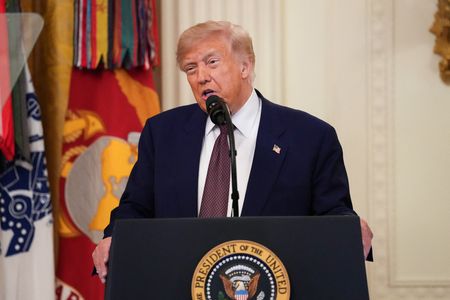

President Donald Trump is hitting the campaign trail again for the first time in two weeks, heading to politically contested Pennsylvania on Tuesday to make the case for American manufacturing and economic revival to voters who are feeling the pressure of rising prices.
Trump is scheduled to tour a Mack Trucks assembly facility in Macungie, Pennsylvania. There, he plans to step away from the ongoing foreign policy focus on Iran and instead spotlight his agenda centered on job creation and bringing industry back to the United States — a message that has long resonated with factory workers who make up the backbone of his political movement.
Trump’s Republican Party is fighting to keep its majority in Congress heading into November’s midterm elections. That effort has been complicated by a nearly four-month military conflict involving the U.S. and Israel against Iran, which has driven consumer costs to their steepest rise in three years. Negotiations toward a possible peace agreement in that conflict are currently underway.
Despite those headwinds, Trump is expected to highlight the brighter side of the economic picture, including steady growth, a strong job market, and the potential for prices to come down if the war reaches a resolution.
White House spokeswoman Liz Huston offered a preview of that message, stating: “Under the President’s leadership, key domestic industries are being revitalized, historic investments are pouring back into communities like Macungie, and families across the country are securing new, high-paying jobs.”
The stop is no accident geographically. Pennsylvania’s 7th congressional district, which covers the Lehigh Valley region of the state, is considered a competitive toss-up. The area includes Allentown — the city immortalized in a Billy Joel song about blue-collar struggle — and still maintains a significant manufacturing economy. Pennsylvania is also expected to be a major battleground in the 2028 presidential race.
The district is currently represented by first-term Republican Congressman Ryan Mackenzie. Voters there chose former President Joe Biden over Trump in 2020, but then swung to support Trump over Democrat Kamala Harris in 2024.
State Democratic Party chair Eugene DePasquale pushed back in an emailed statement, connecting local Republican candidates — including Mackenzie — to what he described as a “costly war of choice that caused gas prices to skyrocket” and “cruel healthcare cuts” championed by Trump.