
A top World Health Organization official delivered a sobering assessment Tuesday, stating that the current Ebola outbreak in the Democratic Republic of Congo has surpassed every previous African outbreak in terms of confirmed cases recorded within the first month.
The outbreak, which is centered in the Bundibugyo area of eastern Congo, has now infected more than 1,000 people and resulted in 267 deaths. Health experts believe the virus had already been circulating for an extended period before authorities officially declared the outbreak on May 15 — meaning the true timeline of spread is longer than the official record reflects.
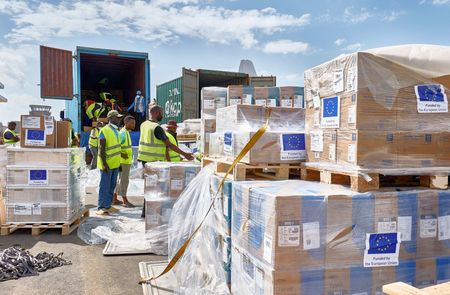
WHO’s Abdirahman Mahamud, speaking at a press briefing in Geneva after a visit to Bunia — the epicenter of the outbreak — last week, stressed the urgency of scaling up the response. “The response needs to expand to keep pace with the expanding outbreak — this is beginning to happen,” he said.
The disease has now reached at least three overcrowded displacement camps in eastern Congo. The International Organization for Migration’s Abdoulaye Wone, speaking at the same briefing, confirmed that at least 25 cases have been documented in those camps, with 14 of those individuals dying from the illness.
For historical context, the two deadliest Ebola outbreaks prior to this one occurred in West Africa — specifically in Guinea, Sierra Leone, and Liberia — where the disease killed approximately 11,000 people between 2014 and 2016. A separate, less deadly outbreak struck Congo itself in 2018.
The U.S. Centers for Disease Control and Prevention notes that sub-Saharan Africa has experienced more than 20 Ebola outbreaks over the years.