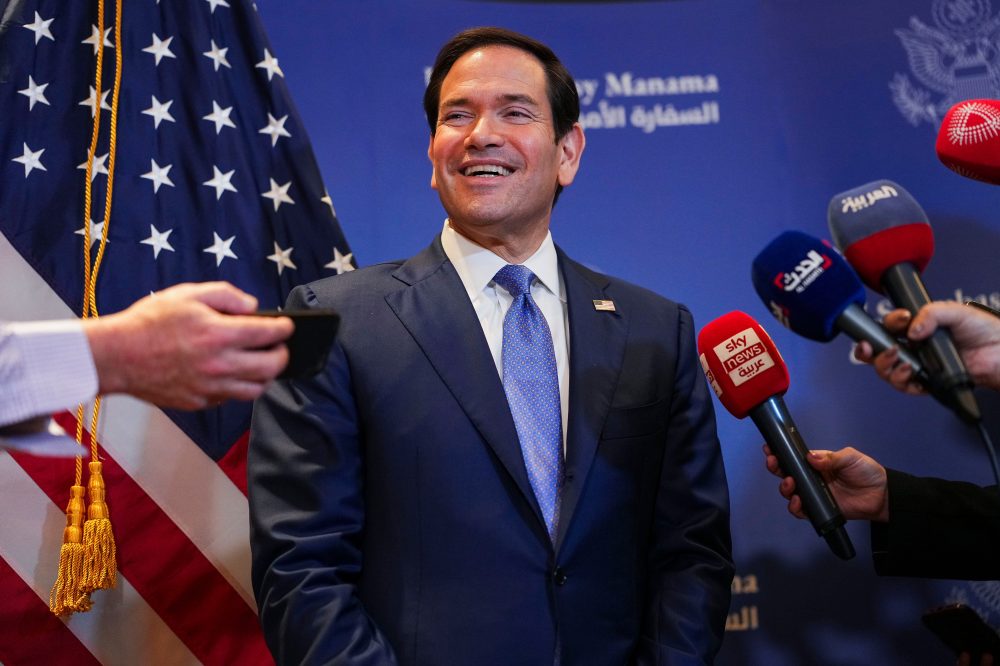
WASHINGTON — U.S. Secretary of State Marco Rubio announced Friday that a newly reached framework agreement between Israel and Lebanon establishes a defined path toward restoring Lebanon’s sovereignty, dismantling Hezbollah’s infrastructure, and fully disarming the militant group.
In an official statement, Rubio said the agreement also paves the way for Israel to withdraw to its own borders once the threat posed to its citizens has been eliminated. As part of the deal, a trilateral Military Coordination Group for Lebanon will be created, with the United States serving as a facilitator.
The UFC has updated its viewership figures for this month’s Freedom 250 event, now estimating that approximately 34 million people around the world watched the fight card held at the White House.
That revised total is nearly twice the number that was initially announced on June 19 — five days after the event took place on the South Lawn on President Donald Trump’s 80th birthday.
The new figures account for international audiences from countries including Australia, China, India, South Korea, New Zealand, and the United Kingdom. With those numbers included, the UFC says the event ranks among the most-watched in the organization’s history.
The UFC also noted that not all countries have submitted their viewership data yet. Spain and France — both of which had fighters competing on the card — are not expected to report their numbers until mid-July, meaning the final total could climb even higher.
The event itself made history inside the Octagon. For the first time ever in UFC competition, every single fight on the card ended by knockout or technical knockout.
In the main event, Justin Gaethje defeated Ilia Topuria by corner stoppage after the fourth round, claiming the undisputed UFC lightweight championship.
Within the United States, 17 million viewers watched the event, setting a new record for a live event on Paramount+. Those domestic numbers were tracked by Nielsen for U.S. markets and Adobe Analytics for Latin America.
Back in January, a Minneapolis woman named Paigelynne Gonyea took to social media to share posts about a surge in immigration enforcement activity happening in her city.
Five months later, that decision caught up with her in a way she likely did not expect. ICE officials showed up at her door this week, telling her that one of her posts had revealed the personal identity of one of their agents — a practice commonly known as doxxing.
The agents reportedly pressured her to remove the posts in question from her social media accounts.
DAR ES SALAAM, Tanzania — The Tanzanian government moved Friday to ban all political rallies as the country braces for planned demonstrations against last year’s contested election and the imprisonment of a prominent opposition figure.
Internal Affairs Minister Patrobas Katambi issued a directive to Police Inspector General Camillus Wambura, ordering him to halt the issuance of permits for political gatherings throughout the East African nation.
The move comes after Tanzania experienced its first postelection protests in 2025. The ruling party claimed an overwhelming victory in last year’s general election after the country’s largest opposition party chose to boycott the vote and the presidential candidate from the second-largest opposition party was blocked from participating.
Young Tanzanians have announced plans to take to the streets on July 7, protesting the reelection of President Samia Suluhu Hassan and demanding that a new constitution be drafted. Authorities have already arrested individuals connected to the protest organizers, who have been coordinating the demonstrations through social media platforms.
Demonstrators are also demanding freedom for opposition leader Tundu Lissu, who faces treason charges stemming from his calls for political reforms before last year’s elections. Protesters are additionally seeking accountability for the widespread violence that followed the election, during which more than 500 people lost their lives.
Tanzania Law Society President Boniface Mwabukusi pushed back strongly against the ban, saying the government had “no authority whatsoever to prohibit or permit meetings that are legally allowed.”
“We will convene to determine the legal measures we will take, both domestically and internationally, against anyone who attempts to enforce this unlawful and invalid directive in violation of the Constitution and the laws of the country,” Mwabukusi added.
The ban is particularly notable given that President Hassan herself lifted a six-year prohibition on opposition rallies back in 2023 — a restriction that had been put in place by her predecessor, John Magufuli.
Opposition parties have labeled the new ban politically driven and a breach of constitutional rights, arguing that political parties are guaranteed the legal right to hold public gatherings.
Rugemeleza Nshala, chief legal counsel for opposition party Chadema, said the ban was designed to “muzzle political freedom” and that the party was “contemplating other legal actions locally and internationally to challenge the decision.”
Rashid Ali, the shadow minister for Defense, Internal Affairs and Security for the main opposition party ACT Wazalendo, characterized the directive as yet another attempt to undermine the country’s constitution.
After nearly two weeks on the loose in the Texas Hill Country, a giraffe named Gracie has been found alive and well — and by all accounts, she enjoyed her time in the wild.
Gracie was located on Friday, approximately 4 miles south of her enclosure, during a helicopter search of the area. Real County Sheriff Nathan Johnson confirmed the discovery, noting that Gracie’s owner, Vick Jones, immediately reached out to a veterinarian and began assembling a team to safely return her to the ranch.
“She’s in good shape,” Jones said. “She’s standing there, swishing her tail.”
The roughly 3-year-old giraffe, who tips the scales at no less than 1,200 pounds, was found within half a mile of both a pond and a creek, with plenty of surrounding plant life to graze on. Jones estimated she had likely been in that particular spot for about a week.
Returning the 10-foot-tall animal to Cedar Hollow Ranch — located roughly 100 miles west of San Antonio — required careful planning. Veterinarians needed to sedate Gracie and place a hood over her eyes before she could be moved. The transport plan called for first loading her onto an open-pasture trailer, then transferring her to a taller, enclosed trailer specifically built to accommodate giraffes.
Much of the remote terrain where Gracie was found is inaccessible by vehicle, which is why a helicopter was used in the search. While the roughly 2,700 residents of Real County had been asked to watch for her, Gracie was ultimately discovered on uninhabited private property.
“We didn’t bother her,” Jones said of the moment she was spotted. “She’s got water. She looked in really good shape.”
The Texas Hill Country is home to one of the highest concentrations of exotic captive animals anywhere in the United States. Sheriff Johnson noted that reports of missing animals in the area are not uncommon — he said he’s received calls about missing wildebeests, water buffalo, zebras, and monkeys — though a missing giraffe was a first for him.
The region’s mild climate, rugged landscape, and abundant vegetation made it a manageable environment for Gracie. In her native Africa, giraffes typically do best in dry and semi-dry savannahs and open grasslands.
Jones believes Gracie never intended to leave the ranch. She had arrived at Cedar Hollow Ranch back in May and had developed a habit of wandering up to a rocky area to feed on trees growing from the rock face, always returning to her enclosure afterward.
On the day she went missing, Jones said, Gracie wandered into that rocky area to feed and came back down on the wrong side of a gate. At that point, continuing forward was simply easier than turning back.
The rocky terrain had not been fenced because giraffes had never ventured there before Gracie did — and installing fence posts in solid rock requires jackhammering. Jones said he now plans to have that fence built, and Gracie will remain in her enclosure at the ranch until the work is complete.
Despite her impressive size, Jones said Gracie posed no danger to anyone who might have crossed her path during her time on the loose.
“If you move toward her, she’s taking off,” he said.
Former Transportation Secretary Pete Buttigieg found himself at the center of a disturbing incident when an anonymous report — later determined to be false — prompted Michigan State Police and child protective services to respond to his home, temporarily separating him from his four-year-old twins.
Buttigieg detailed the experience in a post on Substack, writing that a Michigan State Police officer informed him they found no evidence to support the anonymous allegation and believed it was driven by political motives. He described the roughly 24-hour ordeal as being “among the darkest hours of my life.”
Michigan State Police confirmed in a statement that they received an “anonymous report” and that both their agency and child protective services “responded and determined the report was false.”
According to Buttigieg, an officer and a child protective services worker arrived at his home after someone anonymously claimed he was a danger to his children. Authorities arranged forensic interviews for the twins and told Buttigieg he was not permitted to be alone with them until those interviews were finished.
The next day, Buttigieg said investigators revealed that the anonymous caller had claimed he confessed to violent crimes years ago during an unplanned encounter in Alabama. Buttigieg stated he had never visited the town where that supposed meeting took place. Police told him the allegation would not be forwarded to prosecutors, and child protective services found nothing to back up the report.
“I cannot describe the mix of rage and sadness that I feel at the idea that someone brought our children into this,” Buttigieg wrote. “They are four years old. Four. They do not know or care what a Democrat or a Republican is.”
Buttigieg, who is widely considered a potential Democratic presidential contender in 2028, has long been a target of anti-LGBTQ attacks. He noted that the incident happened shortly after he posted photos of his family online in recognition of Father’s Day.
He previously faced criticism from some Republicans when he took paternity leave after he and his husband, Chasten, adopted their twins while he was serving in the Biden administration. Buttigieg also noted in his post that he has received death threats throughout his career.
“But this is the ugliest thing that has happened to me since my career in service began,” he wrote.
The incident appears to be an example of what law enforcement calls “swatting” — the act of making a false report to emergency services in order to trigger a police response at someone’s home or location. Officials have warned that such incidents waste critical resources and create dangerous situations for both responding officers and the people targeted.
Buttigieg said the episode is part of a larger pattern of escalating political attacks in the current environment.
“Everyone knows politics is ugly these days,” he wrote. “It’s always been ugly, but now it feels more and more like bloodsport. Even so, this is different.”
The Colorado Avalanche made back-to-back roster moves on Friday, announcing that the organization has re-signed defensemen Brett Kulak and Brent Burns to new contracts.
Kulak, who turns 32, inked a five-year extension that will carry him through the 2030-31 season. The deal is reported to be worth $22.5 million, averaging $4.5 million per season.
The veteran blueliner appeared in 83 games last season, splitting time across three different teams — the Edmonton Oilers, Pittsburgh Penguins, and the Avalanche — tallying one goal and 11 assists along the way.
Since being selected by the Calgary Flames in the fourth round of the 2012 draft, Kulak has skated in 663 career games with five franchises, accumulating 137 points on 29 goals and 108 assists.
Burns, 41, agreed to a one-year contract covering the 2026-27 season, reportedly worth $850,000 with performance bonuses that could push the total to $3 million.
The deal brings Burns back after a strong debut with Colorado in 2025-26, during which he posted 35 points — 12 goals and 23 assists — across 82 games.
Burns is no stranger to hardware, having earned six All-Star selections and the Norris Trophy in 2016-17, awarded annually to the NHL’s top defenseman. When the upcoming season begins, he will be entering his 23rd year in the league and currently holds the distinction of being the active leader in games played with 1,579.
Over his career with the Minnesota Wild, San Jose Sharks, Carolina Hurricanes, and the Avalanche, Burns has compiled 945 points — 273 goals and 672 assists — along with 887 penalty minutes.
Quarterback Brendan Sorsby’s search for a professional football home has hit another wall. The Canadian Football League confirmed late Thursday that all nine of its teams are barred from signing the 22-year-old signal-caller, who was suspended by the NCAA following a gambling investigation and was turned away from the NFL’s supplemental draft earlier this week.
The league made its position clear in an official statement released Friday. “Upholding the integrity of the league and ensuring fair competition are paramount to the CFL. The allegations involving Brendan Sorsby are serious and concerning,” the statement read. “At this time, the CFL will not register a contract for him, and no team will be permitted to add him to its negotiation list.”
The NCAA declared Sorsby ineligible after investigators found he had allegedly placed thousands of bets — many using accounts registered under other people’s names — totaling more than $90,000 over the course of his college career. Among those bets were wagers placed on Indiana football games while he was playing for the Hoosiers. He later transferred to Cincinnati, where last season he threw for 2,800 yards, 27 touchdowns, and five interceptions, while also rushing for nine scores. Sorsby subsequently spent several weeks in a treatment facility, citing a gambling addiction.
After his time with Cincinnati, Sorsby moved on to Texas Tech, but his off-field troubles caught up with him before he could take the field there.
When the NFL rejected his supplemental draft application this week — the league hasn’t held one since 2023 — it also sent Sorsby a letter criticizing him for not taking “responsibility for your actions” and for attempting to sidestep consequences through lawsuits and the draft application. The NFL’s recommendation was for Sorsby to focus on preparing for the 2027 NFL Draft.
Despite the setbacks, Sorsby still has legal options available. He is represented by former NFLPA attorney Jeffrey Kessler, who has a long track record of success in high-profile cases against the NFL. Kessler has won favorable outcomes for players including Tom Brady in the Deflategate case, Jonathan Vilma and other New Orleans Saints players in the Bountygate matter involving then-defensive coordinator Gregg Williams, as well as arbitration cases on behalf of Michael Vick and Plaxico Burress.
The Toronto Maple Leafs shipped goaltender Samuel Ersson to the Ottawa Senators on Friday, receiving a 2027 fifth-round draft selection in return.
The transaction represents a rapid turnaround for Toronto. The Leafs had only brought Ersson into the fold on June 16, when they obtained him from the Philadelphia Flyers alongside defenseman Emil Andrae and a 2026 third-round pick. In that earlier deal, Philadelphia received goaltender Joseph Woll and defenseman Simon Benoit.
Ersson, 26, wrapped up the 2025-26 season with a 14-11-5 record, a 3.12 goals-against average, and an .870 save percentage. Over four years in Philadelphia, he compiled a 65-50-17 record with seven shutouts, a 3.01 GAA, and an .884 save percentage. His standout early career earned him recognition in the 2023-24 season, when he finished 10th in voting for the Calder Trophy, the NHL’s award for Rookie of the Year.
Swedish pharmaceutical company Sobi announced Friday that the U.S. Food and Drug Administration has declined to give the green light to its new treatment for uncontrolled gout, a severe form of inflammatory arthritis.
The FDA issued what is known as a complete response letter, asking Sobi to submit additional data — primarily focused on manufacturing controls and problems identified at the contract facilities that produce the drug.
Importantly, the agency did not raise any concerns about whether the treatment is safe or effective.
Sobi, which is headquartered in Stockholm, Sweden, said it plans to request a meeting with the FDA to talk through what would be needed for resubmission. The company also said it will work alongside its contract manufacturers to correct the identified deficiencies.
Gout is a well-known form of arthritis that causes sudden, intense pain, swelling, and tenderness in the joints. The condition develops when uric acid builds up at high levels around joints and other body tissues. In cases of uncontrolled gout, those uric acid levels stay elevated and symptoms persist even with treatment.
Sobi’s drug — chemically referred to as nanoencapsulated sirolimus plus pegadricase, or NASP — works as a four-week infusion therapy aimed at lowering uric acid levels in the bloodstream.
Data from late-stage clinical trials showed the treatment was able to keep uric acid below 6 milligrams per deciliter — considered a safe threshold for preventing gout flare-ups — for at least 80% of the sixth month of treatment.
The company estimates roughly 200,000 people across the United States live with uncontrolled gout.
Currently, the only FDA-approved medication specifically for uncontrolled gout is Amgen’s Krystexxa, an infusion administered every two weeks. Other general gout treatments include nonsteroidal anti-inflammatory drugs, colchicine, and corticosteroids.
The lithium industry is feeling considerably more upbeat about its future, with growing demand for battery storage systems helping to make up for a slowdown in electric vehicle sales in certain markets, according to top producers who spoke at a major industry conference in Las Vegas this week.
For years, electric vehicles were the primary force driving demand for lithium. But regulatory shifts in the United States and other countries have dampened EV sales in some important markets. That cooling came at the same time the industry was producing too much lithium, sending prices tumbling.
Now, a rising need for stationary battery storage systems — fueled by the rapid growth of artificial intelligence and efforts to modernize power grids — is changing the industry’s outlook for the better.
“The period of market overcorrection is over,” said Raju Daswani, CEO of consultancy Fastmarkets. “Energy storage has become a primary driver of growth in this market.”
Daswani said Fastmarkets estimates that lithium demand for battery storage systems is expanding at a rate of 40% per year. “This is a fundamental change and it adds a robust foundation if you compare it to a far-more volatile consumer-driven electric vehicle demand picture,” he said at the Fastmarkets Global Lithium, Battery and Critical Materials Conference in Las Vegas.
Attendance at the conference — considered the world’s largest annual gathering of lithium investors, executives, and consumers — climbed 10% this year to approximately 1,100 people, according to organizers.
The overall atmosphere at this year’s event was noticeably more positive compared to last year’s gathering. Lithium prices have more than tripled in the time since.
“Lithium demand in the next two years is going to be much more balanced between EVs and energy storage,” said Jérôme Pécresse, who leads Rio Tinto’s aluminum and lithium business unit. The company has plans to increase its lithium production capacity by 2028.
Albemarle, identified as the world’s largest lithium producer, reported that it is seeing consistent growth in the battery storage sector, which it contrasted with the more unpredictable nature of EV demand. “Grid storage is much more evenly distributed around the world,” said Eric Norris, the company’s chief commercial officer, speaking to reporters on the sidelines of the conference. “It’s an interesting demand driver.”
In another sign of market confidence, ioneer announced Monday that it had signed a letter of intent with Hyundai Engineering and an arm of the South Korean government to provide support for its lithium project in Nevada.
Despite the improving conditions, industry executives called on governments to do more to financially support lithium processing — a segment currently dominated by low-cost Chinese companies. G7 leaders last week agreed to better coordinate efforts aimed at strengthening Western lithium and nickel markets.
“What are governments willing to pay for security of supply? There’s a tax to be paid for that, and it hasn’t been paid yet,” said Dale Henderson, CEO of PLS, described as Australia’s largest independent lithium producer.
The U.S. assistant energy secretary, Audrey Robertson, encouraged industry players to pursue technological innovations that could transform how lithium and other critical minerals are processed and traded. “The way that we’re processing lithium today is not the way we’re going to process it in five years,” Robertson told reporters at the conference.
A new state fair set up on the National Mall is billing itself as a celebration for every American — but not everyone is buying that message.
The Great American State Fair opened its gates and ran for 16 days, featuring a Ferris wheel and pavilions representing individual states. However, the event got off to a controversial start when it kicked off with a Trump rally, raising questions about its stated nonpartisan nature.
Adding to the debate, not all 50 states agreed to take part in the fair, leaving some notable gaps in the state-themed displays.
Despite the criticism, organizers are pushing back on the idea that the event carries a political slant. They argue that marking America’s 250th birthday is something all citizens can get behind, regardless of political affiliation.
The fair is open on the National Mall through July 10.
BRUSSELS — The European Commission fired back Friday against threats from U.S. President Donald Trump regarding digital taxes, asserting that the European Union and its member countries have every right to regulate economic activity within their borders.
A spokesperson for the Commission made clear that the EU’s tax policies are fair across the board. “Any taxes are non-discriminatory by design and apply equally to all large companies, regardless of their origin,” the spokesperson said.
The Commission added that while the bloc stands ready to respond quickly to any unjustified unilateral actions taken by the United States, it remains open to reaching a broader global agreement in keeping with commitments made under G7 accords.
Farmers saw a bump in what they were paid for peanuts during the most recent reporting period, according to newly released federal data.
The average price received by farmers for all farmer stock peanuts came in at 24.4 cents per pound for the week ending June 20. That figure represents an increase of 1.9 cents compared to the previous reporting period.
The data was published by the U.S. Department of Agriculture’s National Agricultural Statistics Service as part of its regular peanut price tracking series.
The Federal Communications Commission announced Friday that Verizon Communications placed the winning bid of nearly $3.2 billion for wireless licenses in its latest mid-band spectrum auction.
Three other major companies also secured licenses in the same auction. AT&T successfully bid $278 million, T-Mobile came in at $121 million, and SpaceX rounded out the group with a bid of $8.5 million. Combined, the auction brought in approximately $3.5 billion in total bids, according to the FCC.
A massive space rock is set to cruise past Earth this weekend, though scientists say there is nothing to worry about.
The asteroid, known as 1997 NC1, will make its nearest pass to our planet Saturday morning, approaching within 1.6 million miles — or about 2.6 million kilometers — according to the European Space Agency.
First spotted nearly 30 years ago by an asteroid-detection program based in Hawaii, the rock measures somewhere between 2,461 feet and 5,413 feet across — roughly equivalent to the height of two to four Empire State Buildings stacked side by side.
Amateur astronomers armed with binoculars or a small telescope may be able to see it as a faint dot of light drifting across the sky. According to NASA, Earth won’t see this asteroid pass from such a close range again until the year 2133.
The last comparable flyby occurred in 2022, when a similarly sized asteroid called 1994 PC1 made a safe pass near Earth at an even closer distance.
Space agencies including NASA and the European Space Agency continuously monitor the orbits of asteroids and other debris in space to guard against any potential impact with Earth. Last year, scientists tracked a smaller, hockey puck-shaped asteroid and confirmed it had no chance of striking Earth or the moon.
CARACAS, Venezuela — The Quintero family found themselves gathered around an unlikely new home this week after two deadly earthquakes forced them out of their apartment building in Caracas.
Francisco Quintero gave up the seats of his small, worn-down car to his children. The trunk became the new living space for Paquito, the family’s green-and-red parakeet, along with a few pet turtles.
Quintero, who works as a musician, said he and the other adults in his family spend each night searching for somewhere to sleep near the vehicle “until we get an answer about what they might do with us.”
Two earthquakes — measuring 7.2 and 7.5 in magnitude — struck Venezuela on Wednesday evening just 39 seconds apart, toppling buildings in Caracas and surrounding areas and damaging hundreds of homes. The confirmed death toll, already in the hundreds, is expected to climb as search-and-rescue teams continue their desperate work.
Thousands of people left without a place to live have flooded into parks, public plazas, and even the sides of blocked highways in search of somewhere to sleep. The disaster is the latest hardship for a country of roughly 30 million people that has endured decades of economic hardship. More than half the population lives in extreme poverty, and nearly 8 million people were already in need of humanitarian assistance before the quakes hit.
In Guaira — the hardest-hit state, located just north of Caracas — families spread sheets across a dusty baseball field to stake out their spots, their belongings crammed into plastic bags. Others took shelter beneath palm trees. Among them was 35-year-old Alexandra Martínez, who was there with her two children.
“The apartment is completely wrecked,” she said, wiping tears from her face. “The walls, the kitchen, everything, are destroyed. It split right down the middle.”
The same heartbreaking scenes unfolded throughout Caracas.
“We have nowhere to live,” said Desiré Gil. “This is the only option we have for the moment.”
The 37-year-old mother of four, including one daughter who is six months pregnant, is now living with her family on a small grassy plaza. Nearby, people used backpacks as makeshift pillows and propped up colorful beach umbrellas for shade as helicopters circled overhead.
Gil’s home did not collapse, but parts of it are crumbling, and she refuses to return. “Our fear is that the building might collapse on top of us,” she said.
Like many displaced residents, she is waiting for Venezuela’s civil protection agency to assess cracked and deteriorating buildings and determine whether they are safe to inhabit.
But it remains unclear when those inspections will begin. The government is still focused on saving lives, with thousands of people believed missing across Venezuela’s northern region. The quakes killed at least 920 people and left more than 3,300 others injured.
Gil, who earns a living selling mangos and other goods, said her pregnant daughter experienced contractions and went to the hospital Thursday, only to be turned away. Part of the maternity ward had collapsed, and the facility was already overwhelmed with patients transferred from other institutions.
The Ministry of Education announced that some school buildings would be opened as shelters, though the exact number was not specified. In the meantime, Gil said her family plans to remain on the grassy plaza “until the government gives us an answer.”
Experts say the widespread building damage comes as no surprise.
José Rangel, a civil engineer and university professor, pointed out that more than 50% of Caracas was constructed before 1982 — the year the government adopted an updated construction code for earthquake-prone areas.
“Everything that we’ve built before that year is seismically vulnerable,” he told the state television station Venezolana de Televisión.
Rangel said he and fellow engineers had already been working on seismic retrofitting plans and prioritizing evaluations of schools, hospitals, bridges, and other critical infrastructure before the earthquakes occurred.
He urged the government to rebuild using stronger standards and to implement existing safety recommendations, cautioning that assessing the buildings could take weeks.
“It’s a process that lies ahead,” Rangel said. “Right now, the most important issue is rescuing people.”
He also called on engineers, architects, and other professionals to take part in upcoming inspection efforts. “The causes of the collapse must be determined,” he said. “It’s how we learn lessons after an earthquake.”
Magaly Noguera and her family are among those waiting for an inspection. They live in a high-rise that sustained damage. Noguera recalled how she, her son, his wife, and their 3-year-old child huddled together under a kitchen door frame before making their way downstairs to safety.
“That day, the descent seemed endless to me,” she said. “I don’t want to be in my house.”
Her family now sleeps outside near a government building, surrounded by others facing the same uncertain situation.
Across the street, a man carried a mattress over his left shoulder while his partner tucked several pillows under her right arm. A small child walked between them as the family made their way to an unknown destination.
A Trump administration advisory panel is recommending that the United States move away from the concept of separating church and state — and toward building what the commission calls “bridges” between them.
The proposal, which challenges a deeply rooted principle in American law, is among dozens of recommendations contained in a 224-page draft report released Friday by the Religious Liberty Commission.
President Donald Trump established the commission last year, and its membership consists almost entirely of conservative Christians. The document functions both as a policy proposal and a philosophical argument, reflecting members’ belief that religion and religious expression should play a stronger role in government, schools, and public life.
The report praises recent Supreme Court rulings that have expanded religious expression in public settings — including decisions that allow parents to opt their children out of school lessons based on religious objections.
Among its specific recommendations, the report calls for eliminating the “Johnson Amendment,” which currently prohibits tax-exempt religious organizations from engaging in political activities. Removing that restriction has been a long-held goal of Trump. The report also recommends that military service members who were discharged for refusing COVID-19 vaccines receive financial compensation.
More broadly, the commission is calling for greater religious expression in public spaces, expanded access to public funding for faith-based organizations, and wider exemptions for people who cite conscientious objections to policies — including vaccine requirements, pronoun usage, and certain classroom content.
The report also recommends that federal agencies post “Know Your Rights” materials in various settings and set up hotlines where people can report violations of religious liberty.
Additional proposals include creating new honors — a Presidential Medal of Religious Liberty and First Freedom Hero Awards — as well as exhibits and historical markers at significant sites highlighting religion’s role in American history.
The draft is now open for public comment over the next 15 days and is widely expected to draw strong opposition.
A coalition of organizations — including one that has filed a lawsuit over the commission’s alleged lack of ideological diversity, as required of federal advisory panels — released a preemptive report earlier in June defending church-state separation.
“Religious liberty belongs to all people, not to any single tradition, political party, or administration,” stated that report, published by the Center for American Progress and other groups.
Critics argue the commission’s viewpoint is skewed toward perspectives favored by Trump and his supporters, and that it heard almost exclusively from scholars and activists who share those views. They also say the commission gave inadequate attention to issues such as anti-Muslim efforts in Texas and other states, as well as the rise of antisemitism on the political right, not just the left.
The report arrives as several conservative-led states, including Texas, have moved to bring more religion into public institutions like classrooms — through measures such as Bible lessons and displays of the Ten Commandments.
Speaking Friday to supporters at a Faith & Freedom Coalition event in Washington, Trump promoted the newly released document.
“We saved religion, it was going down,” he told the crowd.
Trump also claimed that his predecessor, Democrat Joe Biden, had carried out a “reign of persecution” against religious Americans.
While the commission’s report steps back from the idea of church-state separation, it stopped short of calling that concept a “lie” — a characterization the commission’s chairman, Texas Lt. Gov. Dan Patrick, made in April. Instead, the report largely argues that the idea has been misapplied over time.
“To be clear, this does not involve or require advocating ‘theocracy’ or even the total elimination of any separation between church and state,” the report states. It instead calls for respecting a “tension between the relevant clauses of the First Amendment” — clauses that both protect religious freedom and prohibit the government from establishing an official church.
The phrase “a wall of separation between church and state” does not appear in the U.S. Constitution, though it has been embedded in Supreme Court precedent. Thomas Jefferson coined the expression in a letter to a Baptist congregation, expressing support for their opposition to government-sponsored churches — a practice that soon disappeared from American life.
During the 20th century, the Supreme Court used the “separation” concept to apply the First Amendment’s restrictions on establishing a national church to state and local governments as well, drawing on the 14th Amendment’s protections of citizens’ rights. That legal framework led to rulings banning official prayers and Ten Commandments displays in public schools. In recent years, however, the Court has shifted direction — allowing things like a public school coach praying on the field after games and permitting parents to remove their children from a lesson on transgender issues for religious reasons.
The draft report argues that even Jefferson did not intend to completely remove religion from public life, but rather sought a kind of balance between church and state.
“In reality, the church and state strengthen and support one another,” the report asserts.
The document highlights religion’s contributions to society, including humanitarian work, family stability, and serving as a moral check on government.
“In many cases the law protects the religious expression of Americans, but government officials and employers often use fear tactics to silence individuals into believing that they don’t have the right to publicly express their faith,” the report argues.
The report also draws on the views of one of its own members — a Catholic media figure and bishop — to argue that the idea of strict church-state separation can be traced to a European “God is dead” ideology that viewed traditional religion as a threat to individual freedom. “This way of thinking made its way … into the American culture and courtroom,” the report states.
Notably, the report gives little attention to the significant portion of Americans who have no religious affiliation. Many atheists and secular humanists argue that people can live ethically without religious belief, and that religion does not hold exclusive claim to virtue.
A lawsuit filed against the commission by the Interfaith Alliance and other religious organizations contends that the panel lacks ideological balance, pointing to the fact that commissioners have described the United States as specifically a Judeo-Christian or Christian nation, and that most of the commission’s meetings were held at the Museum of the Bible in Washington — an institution with Christian leadership.
The Trump administration is seeking to have the lawsuit dismissed, arguing on legal grounds that the law does not specify how a commission must be balanced or which viewpoints must be represented.
This latest draft report follows another document released two months ago by the Task Force to Eradicate Anti-Christian Bias — a separate body also created by Trump. That report claimed Christians faced discrimination under the Biden administration in areas including education, tax law, and the prosecution of anti-abortion demonstrators. Progressive critics argued that report failed to substantiate its claims and read more like advocacy than a genuine investigation.
According to the most recent poultry slaughter report released by the U.S. Department of Agriculture’s National Agricultural Statistics Service, the ready-to-cook weight of slaughtered poultry has increased by one percent compared to the same time last year.
The report, which tracks poultry processing data across the country, offered limited additional detail beyond the year-over-year weight comparison.
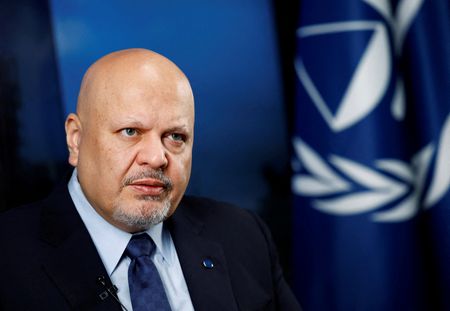
Karim Khan, the British barrister who serves as chief prosecutor of the International Criminal Court, broke his public silence on Friday, telling Saudi Arabia’s Al Arabiya TV that the move to remove him from his position was improper and without legal basis.
“Unfortunately, the court’s bureau violated procedures, and what happened was astonishing, unjustified and unlawful,” Khan said through an interpreter. The remarks marked his first public statements since diplomats overseeing the ICC’s governing body voted to suspend him.
According to documents reviewed by Reuters, the executive bureau of the ICC’s oversight body concluded that Khan had engaged in an inappropriate sexual relationship with a junior member of his staff.
Khan also repeated arguments previously made by his legal team, stating that an independent review conducted by outside judges found the evidence against him fell short of proving the allegations “beyond a reasonable doubt.” He noted that the bureau chose to disregard those findings.
The executive bureau’s decision will now be used to guide a formal vote on Khan’s future, set to take place on July 24 in New York before the ICC’s Assembly of States Parties, which is made up of 125 member nations.
The nation’s peanut supply chain is showing signs of increased demand, according to the latest government figures on peanut stocks and processing activity.
Commercial storage facilities across the country are currently holding 4.07 billion pounds of peanuts, the report indicates.
On the demand side, shelled edible grade peanuts — the type destined for consumer food products — have seen season-to-date utilization climb 6 percent compared to the same period a year ago, signaling stronger-than-usual movement through the supply chain.
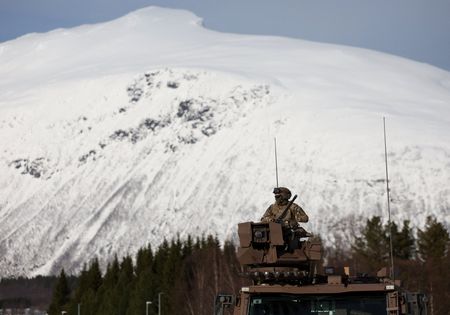
On a frigid morning in Arctic Norway, British and Norwegian soldiers moved quietly through a snow-covered birch forest, taking part in a simulated NATO reconnaissance mission. They were among roughly 30,000 troops rehearsing a counter-attack against a fictional “enemy to the east” — widely understood to mean Russia — during large-scale military exercises held in March.
Over the past decade, Russia has surged ahead in Arctic military capability, modernizing the world’s largest icebreaking fleet as melting ice opens new shipping routes, and reopening dozens of Soviet-era military bases in a region that offers the shortest path for its nuclear missiles to reach the United States.
Those March exercises were part of a broader initiative called Arctic Sentry, designed to demonstrate to Washington that Europe and Canada are capable of protecting NATO’s northern flank. NATO Secretary General Mark Rutte launched Arctic Sentry in February as part of his effort to convince U.S. President Donald Trump to abandon his push to acquire Greenland.
Rutte succeeded on that front, but meaningfully strengthening NATO’s Arctic position is a far more difficult task, according to interviews with dozens of current and former NATO officials and Arctic security experts.
Doing so requires sustained, large-scale investment across many areas — including icebreakers, submarines, drones, and satellites — placing heavy demands on allies’ budgets and militaries at a time when Trump has threatened to pull the United States out of NATO entirely, while Washington simultaneously pulls back troops, aircraft, ships, and weapons from Europe.
For most of NATO’s eight decades, the harsh and remote High North was treated as a low priority. But melting sea ice, Russia’s expanding footprint in a mineral-rich region larger than the entire United States, and growing Chinese interest in the area have forced a strategic rethink.
“No major power in the 21st century will be able to maintain its position on the global scene without, in one way or another, having a strong presence in the Arctic,” said Olafur Ragnar Grimsson, a former Icelandic president who now chairs the Arctic Circle forum, sometimes called the ‘Davos of the Arctic.’
Reuters was unable to determine whether the United States is contributing more or less to collective Arctic defense under the Arctic Sentry program, which is led by Joint Force Command Norfolk, Virginia — a command established in 2019 specifically to address Russia’s growing capabilities in the north. A NATO official responded to questions by stating that the U.S. remains a key contributor to Arctic defense and that this commitment was reaffirmed in a joint statement among Arctic allies in June.
The Pentagon and White House did not respond to questions about whether U.S. forces involved in Arctic defense could be affected by an ongoing American review of troop deployments in Europe. That review, along with continuing concerns about Trump’s ambitions regarding Greenland, is expected to loom over an upcoming NATO summit in Ankara in July.
The White House has previously stated that Trump has pushed allies “to recognize the need to meaningfully contribute to their own defense,” and has described the Arctic as critical to U.S. national security and economic interests.
Russia’s Ministry of Defence did not respond to a request for comment. The Kremlin has previously accused the United States of inflaming tensions in the Arctic.
THE KOLA PENINSULA THREAT
One of the most pressing challenges for European NATO members is keeping tabs on military activity on Russia’s Kola Peninsula, which borders both Finland and Norway. The peninsula is home to roughly two-thirds of Russia’s second-strike nuclear capabilities, including the Northern Fleet, which operates six of Russia’s 12 nuclear-armed submarines.
From the Kola Peninsula, Russia could launch hypersonic missiles toward the United States, making early warning systems essential. It could also deploy submarines toward the U.S. East Coast via the Bear Gap in the Barents Sea and the GIUK Gap — the strategic waterway between Greenland, Iceland, and Britain.
Norway and other NATO allies currently monitor Russian naval activity in both the GIUK Gap and the Barents Sea, where undersea cables have been damaged in incidents that some officials attribute to Russia. Norway also conducts surveillance of Kola Peninsula installations and shares that intelligence with the Americans.
But NATO needs to significantly improve its intelligence, surveillance, and reconnaissance capabilities, according to Mauro Gilli, a professor of military strategy at the Berlin-based Hertie School.
None of this comes cheaply in the Arctic, where standard military equipment frequently fails. Parts of northern Norway can experience temperatures as low as -45 degrees Celsius (-49 degrees Fahrenheit) in winter, not accounting for wind chill.
Because much of the Arctic is ocean — stretching across Greenland, Iceland, northern Norway, and the Barents Sea — any meaningful security presence must be primarily naval, which is inherently expensive, Grimsson noted. The United States currently operates only two icebreakers. Russia, which controls by far the largest share of Arctic territory, has 42, some of them nuclear-powered.
Satellite systems capable of operating at high latitudes are critical for real-time monitoring, Gilli said, as are long-range drones engineered to function in extreme cold, expanded underwater surveillance networks, and various types of ground-based radar systems. He estimated the total investment needed could reach hundreds of billions of dollars.
Climate change is also complicating submarine detection, as warming oceans alter salinity levels and currents in ways that affect how sound travels underwater — shrinking the range at which submarines can be tracked. Research from the NATO Defence College published in 2025 highlighted the North Atlantic as warming particularly rapidly.
“At the moment we can listen to and track submarines in the Barents Sea and follow them. If we are not doing that and we lose control of the submarines, then we have a problem,” Norwegian Defence Minister Tore Sandvik told reporters in January.
In June, the Icelandic government reported that a Russian intelligence vessel had been spotted monitoring NATO exercises in the North Atlantic and was tracked moving between Iceland and Greenland — a reminder that Moscow is actively watching the region’s strategic waterways.
IS NATO PREPARED?
There are indications that NATO is taking the challenge seriously. Nordic nations rank among the alliance’s top defense spenders and are on pace to reach NATO’s target of spending 5% of GDP on defense by 2035. The U.S. and Finland are jointly working to build up to six new icebreakers, with the first expected next year. Norway is purchasing frigates and submarines. The Nordic countries have also combined their air forces into a fleet comparable in size to Britain’s.
Canada, rattled by Trump’s suggestions that it could become a U.S. state and eager to reduce its long reliance on American defense support, announced a major C$35 billion ($25.7 billion) Arctic defense plan in March. The plan covers military infrastructure including airfields in the region. Canada is also working more closely with Nordic countries and, alongside Denmark, investing in ice-capable vessels. Prime Minister Mark Carney told Reuters during a March visit to Oslo that NATO’s renewed focus on Arctic security was long overdue but welcome.
British officer Vice-Admiral James Morley, deputy commander of JFC Norfolk, said Arctic Sentry will help more NATO personnel gain experience operating in harsh polar environments. “It provides a much more realistic environment,” Morley told Reuters at the Bardufoss air base in northern Norway, where British Royal Marines train on snowmobiles, skis, and helicopters.
The United Kingdom is doubling its permanent Royal Marines deployment in Norway to 2,000 troops. In June, NATO activated a new military grouping of 600 soldiers based in the Lapland regions of Sweden and Finland.
Still, former U.S. deputy assistant secretary of defense for Arctic and global resilience Iris Ferguson, who held that role from 2022 to 2025, cautioned that keeping the Arctic a priority is difficult. “When you have a hot war burning in the East, it’s hard to direct investment into a region that doesn’t feel as hot,” Ferguson told Reuters, referring to Russia’s ongoing war in Ukraine.
KEEPING THE U.S. ENGAGED
American military leaders participating in the Arctic Sentry exercise, known as Cold Response, sought to reassure their European counterparts. “Our commitment is to defend every last inch of NATO territory,” said Major General Daniel Shipley, commander of U.S. Marine Corps Forces for Europe and Africa, speaking in Bardufoss, Arctic Norway.
But anxiety among European leaders remains elevated following Trump’s Greenland threats and his talk of withdrawing from NATO. Last month, the U.S. announced reductions to its contributions to NATO’s crisis response force, including cuts to fighter jets, drones, and ships.
Norway, which has historically maintained close ties with Washington, joined France’s nuclear deterrence initiative in June. Norwegian officials now find themselves making the case that it is in America’s own interest to remain engaged in the Arctic — an argument they never previously felt compelled to make.
“100 kilometres from my border is the world’s largest nuclear arsenal. And it is not directed against me, Mr. President, but against you,” Norwegian Prime Minister Jonas Gahr Stoere said in a speech in February, recounting a conversation he had with Trump at the White House.
Burkina Faso has announced it is ending its diplomatic relationship with France, accusing the European nation of failing to uphold the principles of mutual respect and non-interference.
Communications minister Gilbert Ouedraogo delivered the announcement on state television on Friday, making clear that Burkina Faso views France as having violated the terms of a respectful bilateral relationship.
Drivers traveling eastbound on Foulk Road faced a right lane closure due to construction activity between Chatham Drive and Stones Throw Road.
The lane restriction was scheduled to remain in place until 3 PM, according to traffic incident information. Motorists in the area were encouraged to allow extra travel time or consider alternate routes during the closure.
LA GUAIRA, Venezuela — In the aftermath of two devastating earthquakes, rescue teams fanned out across Venezuela as the death toll climbed to at least 920 people, with thousands more reported injured and an unknown number still missing.
As recovery operations continued, humanitarian aid began reaching affected areas to support those displaced and impacted by the disaster.
Images captured by photo editors document the ongoing search and rescue efforts taking place throughout the earthquake-stricken country.
WASHINGTON — U.S. Secretary of State Marco Rubio stood alongside ambassadors from Israel and Lebanon on Friday to announce a framework agreement that officials are calling a first step toward ending months of conflict between Israel and the Lebanese militant group Hezbollah.
The agreement was signed by Yechiel Leiter, Israel’s ambassador to the United States, and Nada Hamadeh, Lebanon’s ambassador to the United States. However, officials did not disclose the specific details of what the framework contains.
MIAMI — A 35-year-old nurse living in Kentucky has drafted her will, designated a legal guardian for her four children, and transferred her property into their names. She says she felt compelled to prepare as though she might not survive — because if she is deported back to Haiti, a country she left at the age of 9, she fears for her life.
Her anxiety intensified after the Supreme Court ruled Thursday to allow the Trump administration to strip legal protections from migrants who fled violence and natural disasters in Haiti and Syria. The decision sent waves of panic through those communities nationwide, leaving hundreds of thousands of people facing potential deportation.
“I have been living with this internal fear, it’s like preparing for a funeral, just in case I die when going to another country,” said the nurse, who asked to remain anonymous out of fear of being targeted for deportation.
She is one of approximately 350,000 Haitians who hold Temporary Protected Status, a designation that has allowed many of them to live and work legally in the United States for decades — many with children who are U.S. citizens. The ruling, set to take effect July 27, also affects around 6,000 Syrians and could open the door to ending protections for as many as 1.3 million people from 17 different countries.
Congress established Temporary Protected Status in 1990 as a way to halt deportations to countries considered too dangerous due to natural disasters, civil conflict, or widespread instability. The program allows recipients to work legally in the U.S. but does not offer a route to citizenship. It can be renewed in up to 18-month intervals if the homeland security secretary determines conditions in the home country remain unsafe.
The Biden administration roughly doubled the number of people covered under TPS. The Trump administration moved to end those protections, arguing the program was designed to be short-term, that the affected countries are now safe, and that the previous administration expanded it too broadly without properly screening recipients.
For TPS holders, life has long been uncertain — but Thursday’s Supreme Court decision may represent the most serious threat yet to their ability to legally live and work in the United States.
The Haitian community in Springfield, Ohio, was thrust into the national spotlight during the 2024 presidential campaign when Trump repeated unfounded claims that Haitians in that city were eating residents’ pets. Those claims have no basis in fact.
Even so, that community has been under relentless pressure since those remarks, according to Viles Dorsainvil, executive director of the Haitian Community Help and Support Center in Springfield.
Thursday’s ruling only deepened the anxiety. Dorsainvil said people are unsure whether to pull their money out of the bank, whether they can legally work, or whether their children can continue attending school. Many are already making contingency plans to leave behind their U.S. citizen children if they are forced out of the country.
“As a Haitian, I always say that life has not been easy for us, nothing has been easy for us and this is another chapter in our life. And we’ve been in that type of situation since after the presidential campaign when they came up with that type of conspiracy theory of us eating cats and dogs,” Dorsainvil said. “We’ve been targeted. We’ve been in the spotlight for their political agenda.”
Dorsainvil said his primary focus right now is keeping people calm and urging them not to make desperate decisions that could put them or their children in greater danger.
A Haitian mother in Florida — a 37-year-old with a 17-month-old son — woke up Thursday morning to the news of the ruling.
“I was reading it and I just for a moment there I just felt like I couldn’t breathe, like as if something was just sitting on my chest, like my lungs couldn’t extend,” she said, her voice breaking.
She also asked not to be named, fearing detention and deportation.
“I did not expect this. It is so hard to accept. Maybe I am in denial but I think this can’t be real,” she said. “I had so much hope.”
She came to the United States in 1995 at age 7 and completed high school here, but was unable to pursue a college degree due to her lack of legal status. That changed in 2010, when the U.S. extended TPS protections to Haitians following a devastating earthquake. With repeated renewals amid the gang violence that has since overtaken the country and displaced more than a million people, she was eventually able to apply, attend school, and become a nurse. She was scheduled to begin a new job in just two weeks — but now she is uncertain whether she is even authorized to work.
Industry groups warn that the long-term care sector — including nursing homes and facilities serving people with disabilities — could be especially hard hit, since TPS holders are heavily represented in caregiving roles.
The Kentucky nurse said she is trying to stay focused on her job caring for people with disabilities, but she cannot stop imagining the worst: being separated from her children, who are 13, 12, 8, and 2 years old, and being sent to a country she left more than two decades ago — one she now reads about only in terms of gang warfare, kidnappings, and killings.
“I don’t want to go there. I am very Americanized,” she said. “It’s like someone saying, hey, do you want to go live in a horror movie? Like, you know, no, I don’t.”
Dozens of community organizations across the American South are set to receive a financial boost this summer, as a nonprofit dedicated to Black women and girls announces a new round of grant funding.
The Southern Black Girls and Women’s Consortium will distribute $350,000 among 24 Southern community groups operating across thirteen states. The money is intended to support organizations tackling pressing issues affecting underserved Black women and girls, including maternal health, prevention of gender-based violence, and educational assistance.
The announcement arrives at a challenging time for organizations focused on underserved communities, many of which are feeling the financial squeeze following the Trump administration’s efforts to dismantle diversity, equity and inclusion programs. The administration has used civil rights laws — historically seen as protections for marginalized groups — to pursue investigations into what it describes as “anti-white racism” and “illegal DEI” practices within corporations, nonprofits, and government agencies.
“We’ve seen this retrenchment in philanthropy, and people are not putting resources on the ground,” said Chanceé Lundy, the organization’s executive director. “Organizations are struggling, and we want to make sure that people know that we see them. We value the work that we’re doing, and we want to be able to help fill some of the gaps that they are experiencing.”
Alongside the grant announcement, the consortium is launching its summer “Joy and Justice” tour, a series of community-building events, resource drives, and festivals planned for nine cities. The majority of tour stops will be held at schools and community centers located in predominantly Black neighborhoods. One event is planned at the Virginia Capitol, where agency leaders advocating for diversity in state government are expected to participate.
Southern Black Girls has managed to hold on to support from some major corporations and foundations, but Lundy described maintaining those relationships as “extremely difficult” for most organizations right now, given that backing race- and gender-conscious groups could draw scrutiny from the federal government.
LaTosha Brown, a voting rights activist and co-founder of the organization, put it bluntly: “We’re being punished for who we are.”
President Donald Trump defeated former Vice President Kamala Harris — the first Black woman nominated for president by a major political party — in the last election. According to an AP VoteCast survey, roughly nine out of ten Black women supported Harris. Brown said Black women’s long history of involvement in progressive politics has made them a “target” in the current political environment.
“We have always been anchored, particularly in the social justice movements of this country, and I don’t think that that’s any different now. I think in many ways it has been exacerbated, just given the environment,” Brown said.
Both Brown and Lundy pointed out that Black women have historically faced discrimination and exclusion across the South, even as they remained essential contributors to the region’s economy and culture. Lundy reflected on stories of earlier generations of Black women who cared for white families that supported Jim Crow-era policies — laws that underfunded Black schools, suppressed voting rights, and allowed political violence against Black communities.
“You have to have a deep, deep sense of humanity to be able to do that,” Lundy said. She added that the tour is also about honoring Black women’s role in American history as the nation approaches its 250th anniversary. “We’ve kept our humanity intact through it all, and I think this moment requires that.”
Lundy said her ultimate hope is that the tour and grants will help young Black girls realize their full potential. Her message to them, she said, is a joyful one: “You matter now in this moment. And you’re not a victim. You are actually the solution, that you are the antidote to what is happening right now.”
With the Fourth of July approaching and America preparing to mark its 250th birthday, Utah’s governor declared a state of emergency Friday and placed temporary restrictions on fireworks — a response to the nation’s largest wildfire, which continues to burn completely out of control.
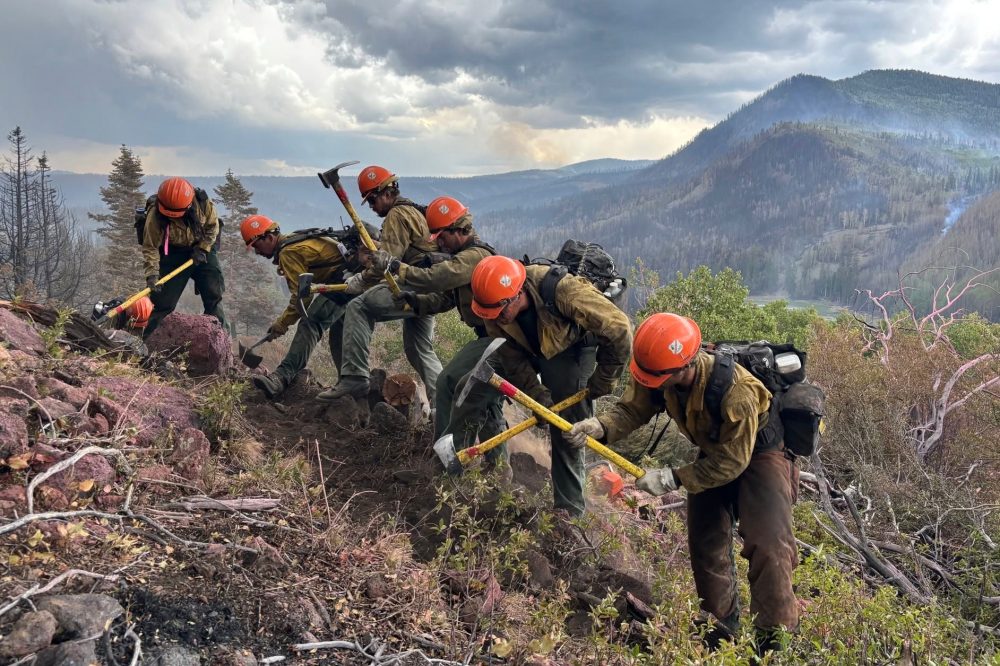
The Cottonwood Fire, which ignited Monday in a lightly populated stretch of southern Utah, had grown to nearly 111 square miles (287 square kilometers) by Friday with zero containment reported by forestry officials. It is one of six major wildfires currently burning across Utah. The blaze has caused serious damage to the Eagle Point ski resort in Beaver County and triggered mandatory evacuation orders for nearby residents.
Bruce Brown, 76, joined the local sheriff on Thursday to survey the damage, only to discover that his cabin — which he had owned for 31 years — and others nearby had been completely destroyed.
“It looks a lot like the moon,” he said. “Just burned out. Power poles tipped over all up the canyon.”
Alyssa Olsen, 27, also lost her family’s cabin in the fire. The structure held a room full of keepsakes from her grandfather’s days on the ski patrol. It was also the last place her family had gathered for photos with her grandmother before she passed away from cancer — and her brother had planned to get married there in just two months.
“That stuff you can’t just build back,” Olsen said.
Smoke from the fire has been drifting east and northeast, leaving popular tourist destinations like Zion and Bryce Canyon national parks — located well south of the fire — largely unaffected beyond some haze near the Bryce area. Even so, visitors have shared videos on social media capturing the massive smoke plume visible in the distance. The smoke has traveled hundreds of miles, reaching as far as Colorado.
“This is unlike anything we’ve seen in recent memory,” state forester Jamie Barnes said in a statement Thursday. “We’re seeing fires spread farther and faster under conditions that defy historical expectations. Some of the fires we’ve responded to this year are behaving in ways veteran firefighters simply haven’t seen before.”
Much of Utah is gripped by severe to extreme drought conditions, and parts of Arizona and Colorado are also experiencing severe drought, according to the U.S. Drought Monitor.
Gov. Spencer Cox put the fireworks restrictions in place through July 5, saying “this year is different.” His order gives state forester Barnes the authority to restrict or ban fireworks displays in Utah cities and towns, rather than leaving those calls to local communities.
The National Weather Service office in Salt Lake City issued a “Particularly Dangerous Situation” warning — the first time in the office’s history it has done so — covering five Utah counties, including the area where the Cottonwood Fire is burning. That designation was originally created to alert the public to tornado conditions. A red flag warning was also issued for most of the state, with the service urging residents to “prepare now for rapid fire growth.”
A similar warning had been issued ahead of the 2025 Palisades Fire in Los Angeles, which killed 12 people and destroyed thousands of homes across Pacific Palisades and Malibu. In a related development Friday, a federal judge declared a mistrial in the arson case against Jonathan Rinderknecht, the man accused of starting that fire, after the jury was unable to reach a verdict.
Extreme fire weather was forecast for Utah on Friday, with wind gusts reaching up to 50 mph (80 kph) and very low humidity levels across the southwest desert and central and southern mountain areas, including the Cottonwood Fire zone.
Rocky Mountain Power issued a public safety power shut-off watch and warning for parts of central, southern, and eastern Utah from Friday through the weekend.
Beaver County, where the Cottonwood Fire is burning, is home to roughly 7,400 people, according to the U.S. Census.
Separately, the Iron Fire — located about 70 miles (113 kilometers) southwest of Salt Lake City — had burned through 63 square miles (163 square kilometers) by Friday and was 26% contained. That fire had forced the evacuation of Eureka, a town of about 1,000 residents, along with people at a nearby ranch. Those residents were allowed to return Thursday.
While investigators have not determined what started the Cottonwood Fire, Gov. Cox’s emergency order noted that more than 75% of Utah’s wildfires this season have been caused by human activity.
Red flag warnings stretched across a wide portion of the western United States on Friday — from Idaho down through southern Arizona and New Mexico — indicating that low humidity, warm temperatures, and strong winds were creating extreme wildfire risk. Those warnings were expected to continue into Saturday, with winds of 25 to 35 mph (40 to 56 km/h) and very low humidity. The most dangerous conditions were forecast from northern Arizona into central and southern Utah.
In New Mexico, firefighters were working to contain a wildfire that forced evacuations at campgrounds and a YMCA camp in the Jemez Mountains. In Arizona, a separate fire near Sedona prompted evacuations last weekend, burning several hundred acres of steep, rugged terrain near Oak Creek Canyon.
Motorists traveling on Levels Road over Route 301 should plan for slowdowns as construction crews have closed left lanes in both directions.
According to traffic officials, the eastbound and westbound left lanes on Levels Road over Route 301 are currently shut down due to construction activity. The lane restrictions are scheduled to be lifted by 3:00 PM.
Drivers are encouraged to allow extra travel time or seek alternate routes until the work is completed and the lanes reopen.
Undefeated heavyweight boxing champion Oleksandr Usyk made a major announcement Friday, revealing he has stepped down from his WBC, WBA, and IBF heavyweight titles in order to pursue one final bout.
The 39-year-old Ukrainian fighter boasts a flawless professional record of 25 wins and zero losses. He cemented his place in boxing history in 2024 when he handed British fighter Tyson Fury the first defeat of his career, claiming undisputed heavyweight champion status in the process.
Usyk, who also won Olympic gold in 2012, had already given up his WBO belt last year. Most recently, he picked up a TKO victory over Rico Verhoeven just last month.
In a video posted to Instagram, Usyk explained his decision: “Today is a good day to announce that I want to give up all the titles that I now hold. To leave them free so that all the guys that are standing in line behind me can box for them.”
Despite walking away from his championships, Usyk made clear his career is not over. “My friends, I am giving up my titles, but I am not leaving sport because I have a last dance… there is more to come. Glory to God, Glory to Ukraine,” he added.
As peace talks between Islamic Republic officials and the United States continue in Switzerland, more than 75 million internet users inside Iran are still struggling with heavily restricted online access.
Although connectivity has been slowly returning over the past four weeks following an 88-day nationwide blackout — described by outside monitors as one of the longest ever recorded — users say the current internet environment looks nothing like what it was before the January 8 shutdown and the violent crackdown on protesters that came with it.
Users report that internet speeds have dropped even further, and reaching popular platforms like Instagram and TikTok remains nearly impossible, even when using various VPN services to try to get around the restrictions.
A source with knowledge of Iran’s communications sector told The Media Line that the government has restored internet access under conditions set by the Supreme National Security Council on the Supreme Council of Cyberspace.
“One of the main conditions was that the quality of access to, and control over, the global internet be altered in such a way that it becomes far more manageable and controllable,” the source said. “VPNs are also being heavily monitored and tracked, and in practice, bypassing censorship has become considerably more difficult than before.”
The source added that surveillance aimed at updating blocklists has intensified on an hour-by-hour basis, and that virtually all workarounds proposed by internet platforms and activists are monitored continuously in real time, drastically shortening how long any such solution remains effective.
According to the source, the only truly effective solution would be widespread access to Starlink for millions of people. If house-to-house networks were established at that scale, it would make government tracking of Starlink usage far more difficult. Currently, an estimated half a million people — mostly in northern Tehran — have access to Starlink, but users risk being identified if they access domestic websites while connected. Security agencies have also set traps targeting those seeking Starlink equipment, fueling distrust among potential users.
In recent weeks, raids by members of the Islamic Revolutionary Guard Corps, police, and the Ministry of Intelligence on private homes to seize Starlink equipment have increased, with some confrontations resulting in injuries or even deaths.
The restoration of internet access has allowed new images and testimony from the January crackdown to surface online, including some deeply disturbing videos. However, the Islamic Republic’s security agencies have also used the reconnection to hunt down opponents and those communicating with journalists abroad or sending information to foreign media outlets.
Niko, a young protester in Tehran, told The Media Line that the Islamic regime has imposed sweeping controls that have made online content and social media far less accessible than before the blackout. Despite the risks of contacting foreign journalists, she said that while the government claims it has restored internet access, speeds have been throttled to the point that VPNs that worked reasonably well just months ago are now practically useless.
“At the same time, if you used government-approved applications while your VPN was active, you could be immediately identified, and they could cut off your access. The money you paid for the VPN would effectively be wasted,” she said.
In her most recent message — sent while the Islamic Republic and the United States were again engaged in hostilities despite a ceasefire — Niko expressed deep concern about another potential shutdown. “If they cut the internet again, our situation will become even worse. The next step for the Islamic Republic will probably be to take away our mobile phones,” she said.
While Iranian officials have acknowledged the economic toll of internet restrictions, communication with human rights and civil society activists inside the country remains severely limited. Many have faced threats and intimidation intended to silence them. Although the internet has not been officially shut down again, sources say the level of repression has grown even more severe than it was before the January crackdown.
Tara Dachek, a human rights activist based in Canada, told The Media Line that the situation in Iran has moved beyond simple censorship. “The scope of filtering has expanded to such an extent that communications that were previously possible can no longer be achieved,” she said.
Dachek noted that many people cannot afford Starlink due to its rising cost, and that smuggling the equipment into the country has become harder and now carries stiffer penalties.
She also described Iran’s so-called tiered internet system, in which users are divided into categories with vastly different levels of access. At the top are individuals — typically affiliated with intelligence institutions — who enjoy completely unrestricted access and use it to monitor activists, build fake networks, infiltrate opposition groups, and sow divisions among critics of the government. The next tier consists of regime agents and officials who can access most internet content, with the exception of certain blacklisted sites, and are tasked with propaganda and routine government operations. A third group, described as insiders benefiting from a form of “white internet,” faces more restrictions but can still reach platforms such as X.
At the bottom of this hierarchy are ordinary citizens, who make up the overwhelming majority of users. They can access almost nothing beyond government-approved content and Islamic Republic applications, where monitoring can be carried out with relative ease.
Dachek said this classification system is the core of the problem — it determines which voices inside Iran are allowed to be heard and which are silenced.
High-profile figures including rapper Toomaj Salehi, Iranian Nobel Peace Prize laureate Narges Mohammadi, and civil rights activists such as Sepideh Qolian have faced extensive threats. Some users who posted content on Instagram that could be read as criticism of the war have shared images of judicial summonses ordering them to appear before Revolutionary Prosecutors’ Offices.
Meanwhile, CITNA, a website focused on information technology news in Iran, has reported that 68% of active Instagram users have still not returned to the platform since internet access was restored. Users say commonly available VPN services still fail to provide reliable access to Instagram, which has been restricted since the Woman, Life, Freedom uprising in 2022.
Beyond political repression, internet shutdowns in Iran have been linked to rising levels of depression among young people. Research presented at the Global Communication Association conference in Casablanca last year found that internet filtering in Iran contributes to increased depression and hopelessness among young Iranians.
While digital freedom remains a core demand for many Iranians, shutdowns also carry risks for the authorities themselves — by stoking public anger and driving political frustration from online spaces into street protests. That concern was echoed on Sunday by President Masoud Pezeshkian, who warned that if people reach the limits of their endurance, they will once again flood the streets.
Maryland state parks are rolling out a full slate of activities this week to honor America’s 250th anniversary, with events including a historic tree planting, a Fourth of July bike parade, historical reenactments, and hands-on crafts for children.
Parks will remain open on Independence Day, giving families the chance to start a new holiday tradition — whether that’s hitting the trails, exploring park exhibits about American history, or enjoying a patriotic picnic in the great outdoors.
Visitors should be aware that reservations are required on July 4th at several parks to prevent overcrowding and traffic delays. Those parks include: Gunpowder Falls State Park (Hammerman Area), Greenbrier State Park, Point Lookout State Park, Newtowne Neck State Park, North Point State Park, Rocks State Park’s Kilgore Falls area, Rocky Gap State Park, Sandy Point Park, and Swallow Falls State Park. Reservations can be made at parkdayuse.maryland.gov.
Liberty Tree Planting — Janes Island State Park, Crisfield July 1 at 11 a.m. As part of the statewide Maryland Liberty Tree Project, a tulip poplar tree descended from Maryland’s original 1775 Liberty Tree will be planted at the park to commemorate the nation’s 250th anniversary.
Foraging 101: Eating Maryland State Parks — Bill Burton Fishing Pier State Park, Cambridge July 3 at 6 p.m. This beginner-friendly program offers an introduction to wild foods found in Maryland state parks. Attendees can learn how Indigenous peoples and freedom-seekers gathered food from the land, and discover what edible plants may already be growing in their own backyards.
Fourth of July Festival — Assateague Island State Park, Berlin July 4 from 10:30 a.m. to 2 p.m. Campers and beachgoers are invited to join the annual Independence Day bike parade through the state campground. Registration runs from 10 to 10:30 a.m. in the ranger station parking lot, with the parade heading to the Nature Center. Prizes will be given out, and all participants must wear helmets. The Nature Center will also host raffles, games, food, drinks, crafts, and tie-dye activities.
A Miller’s Life for Me — Freedman’s State Park, Brookeville July 4 from 10 a.m. to 3 p.m. Visitors can try their hand at thrashing, winnowing, and hand-grinding wheat. The program explores the history of mills in the Patuxent River Valley and their importance to local farmers, including the Howard family.
Traditional Children’s Games and Crafts — Harriet Tubman Underground Railroad State Park, Church Creek July 4 and July 5 from 11 a.m. to 3 p.m. Families can stop by the visitor’s center to play classic games like jacks, mancala, and marbles, and learn how to make traditional crafts including yarn dolls.
… And Zeal for Liberty… — Fort Frederick State Park, Big Pool July 4 and 5 from 10 a.m. to 5 p.m. Through historical interpretation, visitors can learn about the men and women who lived at Fort Frederick during the American Revolution. The fort served as a holding site for British prisoners of war. Scheduled activities include musket-firing demonstrations, military drills, and children’s drills.
Exhibit Hall Tour — Harriet Tubman Underground Railroad State Park, Church Creek July 5 at 2 p.m. A park ranger will lead a guided tour through the exhibit hall at Harriet Tubman Underground Railroad State Park.
Miles for Maryland — All State Parks, Year-Round There’s still time to join the Maryland Park Service’s Miles for Maryland challenge. The goal is to hike 250 miles within Maryland state parks over the course of the year — one mile for each year since the United States was founded. Participants can submit photos from their hikes for a chance to win prizes.
America in Miniature — All State Parks, Through November 15 A photographic scavenger hunt organized by the Maryland Park Service is also underway through November 15. More details are available on the Maryland Department of Natural Resources website.
Celebrate All Year Long The America 250 celebration continues through the end of 2026. Upcoming highlights include a U.S. trivia trail walk at Assateague State Park in August and a program at Fort Frederick exploring American military gear from 1753 to 1953. A full calendar of events is available on the Maryland Department of Natural Resources website.
Russian President Vladimir Putin and Belarusian President Alexander Lukashenko gathered for talks on Friday, according to the Kremlin, with the war in Ukraine expected to dominate the agenda.
The two leaders convened at Putin’s Valdai residence in northwestern Russia, where they covered topics including trade and economic cooperation, joint projects, and regional security concerns.
Kremlin spokesman Dmitry Peskov had told state news agency TASS ahead of the meeting that no press statements or document signings were planned once the talks concluded.
The meeting comes as tensions between Belarus and Ukraine have been escalating. Ukrainian President Volodymyr Zelenskiy has said he believes Putin is pressuring Lukashenko to increase his country’s involvement in the conflict on Russia’s side.
Both Moscow and Minsk have rejected that characterization, with Belarus instead pointing the finger at Ukraine and Western nations for stoking tensions. Lukashenko said on Thursday that he had met with representatives of Zelenskiy and cautioned them against attempting to pull Belarus into the war.
Putin and Lukashenko are considered close political allies and meet on a regular basis. The Kremlin accused Ukraine of threatening Belarusian sovereignty after Zelenskiy, the previous Friday, gave Minsk one week to shut down signal relay stations he claimed were being used to help direct Russian military strikes.
The Kremlin had signaled on Monday that the two leaders were expected to address Zelenskiy’s comments “in the foreseeable future.”
By Wednesday, Zelenskiy announced that the relay stations had gone offline, though no independent sources were able to verify that claim.
While Lukashenko has stopped short of sending Belarusian soldiers to fight alongside Russian forces, he did allow Putin to use Belarusian territory as a staging ground for the initial assault on Ukraine in February 2022. He later agreed to host Russian tactical nuclear missiles on Belarusian soil.
OpenAI, the company behind ChatGPT, announced Friday that it is holding back its newest artificial intelligence model at the request of the Trump administration — marking the latest step in an unprecedented government review of AI technology over potential cybersecurity threats.
The new AI product, called GPT-5.6 Sol, will be made available only to a “small group of trusted partners” that have received approval from the Trump administration, OpenAI said.
In a statement, OpenAI made clear it has reservations about the arrangement going forward: “We don’t believe this kind of government access process should become the long-term default.” The company described the restricted rollout as a temporary measure on the “path to broader availability in the coming weeks.”
This cautious, phased launch comes on the heels of government action earlier this month against Anthropic, a competing AI company and maker of the Claude chatbot. Anthropic was forced to pull two of its newly released models — known as Fable 5 and Mythos 5 — offline just days after their public debut, in response to a Trump directive that blocked foreign nationals from accessing them.
Government officials have been on high alert since Anthropic flagged earlier this year that its Mythos model showed an unusual ability to identify weaknesses in software — a capability that could potentially be exploited by malicious hackers to attack critical computer systems worldwide.
President Trump signed an executive order on AI oversight in June, creating a framework that allows the federal government to evaluate the national security risks of the most powerful AI systems for up to 30 days before they become publicly available. While the order describes AI developer participation as voluntary, the full framework has not yet been put in place.
OpenAI said its Sol model “is better at helping people find and fix vulnerabilities” than it is at enabling cyberattacks, and that it does not exceed the company’s own internal risk limits. However, OpenAI acknowledged that unexpected risks could still emerge, particularly if the model is used alongside other tools.
“That uncertainty, along with the model’s broader step change in capabilities, is why we are pairing the model’s increased capabilities with stronger safeguards and a phased release,” the company said Friday.
KHIRBET AL-GHAZAL, Syria — One of the biggest surprises at this year’s World Cup is Deniz Undav, a striker playing for Germany who carries with him the pride of two communities that have no national team of their own. The 29-year-old, who identifies as a Kurdish Yazidi and is the son of Yazidi refugees, has become a symbol of hope for people who have endured generations of hardship and violence.
Coming off the bench as a substitute, Undav has scored three goals and set up two more during the tournament, placing him in elite company on the scoring charts alongside global superstars like Argentina’s Lionel Messi, France’s Kylian Mbappé, and Brazil’s Vinicius Jr.
At a news conference Wednesday, Undav was asked about the impact of his performance on the Yazidi community. He said he hopes his play inspires fans everywhere, and particularly those within his own heritage community.
“I always get the news from my parents how they view me, how they see me and it’s making me proud, you know, that we finally have somebody,” he said.
In the village of Khirbet al-Ghazal in northeastern Syria, a small group of Yazidis gathered Thursday evening at the home of community leader Ismail Dalaf to watch Germany face Ecuador. Many of the people there share family ties with Undav’s mother, who originally came from a nearby village that has since been abandoned — its residents either leaving for economic reasons or fleeing during Syria’s civil war, which began in 2011.
Dalaf described Undav’s World Cup run as something that has made him “a symbol that shows Yazidis can reach a higher position and be seen with respect.”
“When people see a Yazidi entering the field, scoring goals and changing the result of matches, it changes public perception,” Dalaf said. “It tells the world that Yazidis have a role in the world.”
The Kurdish people are among the world’s largest stateless ethnic groups, with approximately 30 million living as minorities across Turkey, Iraq, Iran, and Syria. Yazidis are a Kurdish-speaking religious minority found primarily in Syria, Iraq, and Turkey. According to Irfan Ortac, chair of the Central Council of Yazidis in Germany, around 235,000 Yazidis now live in Germany — many of whom arrived following a brutal 2014 attack in Iraq’s Sinjar region, in which thousands of Yazidis were killed or taken captive by Islamic State militants who labeled them heretics.
“Until now, we have mostly been known as victims of violence,” Ortac said. “Whenever we spoke about Yazidis, we always had to talk about genocide, discrimination, and displacement. It makes us very proud and happy to be able to talk about something positive.”
Iraq is home to the world’s largest concentration of Yazidis and the site of their most sacred place of worship, the Lalish temple. There, too, Undav’s accomplishments have drawn celebration.
“It makes me very happy to see a Yazidi bringing our name to the World Cup and playing in front of the whole world,” said Luqman Sleiman, a spokesperson for the temple.
Diyar Bakir, a 29-year-old Yazidi from Sinjar, said he dreams of one day traveling to Germany to watch Undav play in person. He reflected on the journey Undav’s family has taken.
His family “came from a place where his ethnicity and religion were not appreciated, yet he is now recognized and valued by a great team like Germany,” Bakir said. “He emerged from the womb of suffering, and we wish him every success.”
Undav’s path has not been without difficulty. He has faced abuse tied to his heritage, both from spectators in the stands and on social media. When his club team Stuttgart traveled to Turkey to play Fenerbahce last year, German media outlets reported offensive chants directed at him. Two Kurdish anti-discrimination organizations characterized the social media attacks against him as part of a broader pattern of “racist and ethnically motivated hostility.”
His choice to represent Germany rather than Turkey — a decision other German-born players with similar eligibility have made differently — also drew backlash from some Turkish fans online. Despite that, his popularity has grown significantly during the tournament.
Düzen Tekkal, a documentary filmmaker and author of Kurdish Yazidi heritage from northwestern Germany — the same region where Undav grew up — is the co-founder of Scoring Girls(asterisk), a nonprofit that provides free soccer instruction to girls from a variety of backgrounds. She spoke about what she sees as a cultural moment.
“There definitely is a Deniz Undav effect and it’s very important,” she said, noting that children can now celebrate their heritage and feel a sense of belonging in Germany at a time when immigration is frequently framed as a political issue.
“It is no coincidence that he plays with this lightness and freedom,” Tekkal added. “People are asking how come he’s so good under pressure or he can cope with so much pressure? Because he doesn’t know it any other way. That is the DNA, that is the resilience. … That’s how he scores these goals because what is that pressure compared to being Kurdish or Yazidi?”
After scoring against Curacao, Undav celebrated with a traditional Yazidi-inspired dance, hands clasped behind his back. He was joined in the celebration by Antonio Rüdiger, a Black German soccer star who has himself endured racist and anti-Muslim abuse throughout his career. Tekkal called the moment “one of the highlights, no matter how this World Cup goes from here.”
“Dancing is a form of expressing resistance for us,” Tekkal said. “We dance on the graves of our dead. Our mantra is that resistance is life. He’s dancing there for his forefathers who were oppressed.”
Mahmoud Kanabi, a Kurd from Irbil who relocated to Berlin in 2020 and works at a Kurdish restaurant, said Undav’s presence in the tournament inspired him to buy a Germany jersey — something he would not have considered otherwise.
“Unfortunately, for us Kurds, we don’t have a team because we don’t have a country,” he said. “Now, when a Kurdish player is in a team, we have to be fans of it. It doesn’t matter what team it is.”
The Utah judge overseeing the murder case connected to the killing of Charlie Kirk found prosecutors in contempt of court Friday, citing public statements they made to media outlets regarding the guilt of the accused, Tyler Robinson.
Judge Tony Graf determined that those statements crossed the line established by his own restrictions on what either side in the case is permitted to say publicly. However, Graf turned down a request from the defense to remove the death penalty from consideration as a consequence for the violation. He concluded that the issue could be better addressed through the jury selection process, which is designed to identify and exclude potentially biased jurors.
Robinson has not yet entered a plea in the case. The 23-year-old, who is from southwestern Utah, faces a charge of aggravated murder in connection with the September 10 assassination of Kirk, a political ally of President Donald Trump. Kirk was shot in the neck while speaking before a crowd of thousands at Utah Valley University.
Defense attorneys had argued that Deputy Utah County Attorney Christopher Ballard went on what they described as a “media tour,” discussing ballistics evidence in the case and stating that prosecutors had sufficient evidence to prove Robinson committed the murder.
Judge Graf acknowledged that the comments were not made with any intention of tainting the jury pool, but he still characterized the statements about Robinson’s guilt as “unreasonable” given the court’s existing restrictions on public commentary about the case.
Legal experts had previously noted that eliminating the death penalty as an option would have been a highly unusual and extreme remedy for such a violation.
Twenty-seven incarcerated individuals in Delaware took a major step forward Thursday, walking across a stage in cap and gown to receive their high school diplomas during commencement ceremonies held inside two state prisons.
The Delaware Department of Correction and the Delaware Department of Education partnered to host the graduation events, which took place in the chapels of Baylor Women’s Correctional Institution and Sussex Correctional Institution.
The ceremonies were held to recognize and celebrate the academic accomplishments of students who completed their high school education while serving time behind bars, marking the close of the academic year.
Graduates were joined by others to observe the milestone occasion at each of the two correctional facilities.
Washington, D.C. has reached a financial settlement with a local resident who claims he was illegally detained by police while using Darth Vader’s theme music as a form of protest against the presence of National Guard troops patrolling the city’s streets.
A court document filed late Thursday confirms that the plaintiff, Sam O’Hara, has agreed to drop his legal claims against the district and four Metropolitan Police Department officers within three business days of receiving payment. The exact dollar amount was not disclosed in the filing. O’Hara is represented by the American Civil Liberties Union of the District of Columbia.
In a Friday email, an ACLU spokesperson described the financial terms as “a significant amount” that O’Hara “is pleased with,” but said the specific figure would not be released in order to protect his privacy. A spokesperson for D.C. Attorney General Brian Schwalb’s office declined to offer any comment on the matter.
While O’Hara’s dispute with the district has been resolved, his legal claims against an Ohio National Guard member remain active. Attorneys for that Guard member, Sgt. Devon Beck, have asked a judge to throw out O’Hara’s claims against him.
“He was there because that was his assigned duty,” Beck’s lawyers wrote in court documents. “This was not an accidental encounter or a one-time disagreement on a public sidewalk.”
A February court filing had previously indicated that O’Hara and the district had reached a settlement “in principle,” prompting a judge to pause the case while the two sides worked out the details.
O’Hara originally filed suit against the district last October, alleging that officers violated his First Amendment right to free speech and his Fourth Amendment protection against unreasonable detention and excessive force.
The music O’Hara played — “The Imperial March,” the iconic and foreboding theme associated with Darth Vader in the Star Wars film series — served as the backdrop for his ongoing protests against the deployment of Guard members in Washington under President Donald Trump. According to his lawsuit, millions of TikTok users have watched his videos documenting his interactions with the troops.
O’Hara, an artist who also works in the hospitality industry, maintains that he did nothing to interfere with the Guard patrol during their September 11, 2025, encounter on a public street. After one of the troops called in Metropolitan Police Department officers, O’Hara was stopped and kept in handcuffs for 15 to 20 minutes before being let go without any charges filed, according to the lawsuit.
The lawsuit included a pointed Star Wars-themed line: “The law might have tolerated government conduct of this sort a long time ago in a galaxy far, far away. But in the here and now, the First Amendment bars government officials from shutting down peaceful protests.”
The Guard presence in Washington stems from an executive order Trump signed last August declaring a crime emergency in the city. In the weeks that followed, hundreds of Guard troops and federal agents joined local police in patrolling Washington’s streets — a move that sparked significant tension with residents of the heavily Democratic district.
A man who authorities say faked his own death and fled to Europe to escape rape charges in the United States has died after being transported from a Utah prison to a hospital, officials announced Friday.
Nicholas Rossi, 38, had been serving a sentence of at least 10 years following his 2025 convictions on two separate sexual assault charges.
Rossi passed away Thursday night due to “complications of an existing medical condition after choosing to discontinue medical treatment,” according to Richard Piatt, a spokesperson for the Utah Department of Corrections.
Piatt confirmed that Rossi’s victims and family members had been informed of his death. He declined to provide specifics about the nature of Rossi’s health issues, though Rossi had appeared in a wheelchair and relied on supplemental oxygen during court proceedings.
Also known by the name Nicholas Alahverdian, Rossi was brought back to the United States from Scotland in 2024 after being extradited to face charges in Utah.
Utah investigators had been searching for Rossi after a DNA match from a rape kit collected more than a decade earlier identified him in 2018. Shortly after charges were filed, an online obituary surfaced claiming he had died on February 29, 2020, from non-Hodgkin lymphoma. However, Rhode Island police, a former attorney, and a former foster family all raised serious doubts about whether he had actually died.
He was taken into custody in Scotland the following year while being treated for COVID-19. Hospital workers recognized him by his distinctive tattoos, including a Brown University crest tattooed on his shoulder — despite the fact that he never attended the school.
Throughout the legal proceedings, Rossi maintained that he was an Irish orphan named Arthur Knight who was being wrongfully accused. Investigators say they uncovered at least a dozen different aliases he had used over the years in an effort to avoid being caught.
WASHINGTON — President Donald Trump issued a stark warning Friday, threatening to impose a 100% tax on imports from any nation that levies a digital services tax on American companies.
Trump made the announcement via social media, calling out European countries he said are moving toward “imminent” implementation of taxes targeting U.S. tech firms. Many countries have been seeking new revenue streams as their economies shift increasingly toward digital commerce — a space largely dominated by American businesses.
“Please let this statement serve to represent that any Country that imposes such a Tax will immediately be met with a 100% TARIFF on any and all Goods sent to the United States of America,” Trump wrote in his post.
Trump also stated that the new tariff would override any previously established trade agreements. While the warning applies to any country that moves forward with a digital services tax, Trump’s post specifically called out European nations.
This is not the first time Trump has pushed back against foreign efforts to tax or regulate American technology companies. Last August, he warned of new tariffs on any nation taking such steps, writing that digital taxes and regulations “are all designed to harm, or discriminate against, American Technology.”
The latest threat comes just ahead of a July 4 deadline for the European Union and the United States to begin carrying out a tariff agreement that caps most EU export tariffs at 15%. That deal was finalized in May, following months of internal EU debate after European Commission chief Ursula von der Leyen tentatively reached the agreement last year during a visit to Trump’s golf course in Scotland.
Digital services taxes were not included in that agreement and have continued to be a point of contention between Washington and the European bloc.
The U.S. government has previously launched tariff investigations into digital services taxes under Section 301 of the Trade Act of 1974. However, it remains unclear exactly how Trump would carry out his latest threat or whether tariffs would be applied broadly or targeted at specific countries first.
Britain, which is no longer a member of the EU, has collected a 2% digital services tax since 2020. The tax applies to revenues earned by search engines, social media platforms, and online marketplaces that “derive value” from users in the United Kingdom.
When the tax was introduced, the British government said in a policy document that existing corporate tax rules for digital businesses had “led to a misalignment between the place where profits are taxed and the place where value is created.” The tax was designed to apply mainly to large international companies and was meant to “ensure the large multinational businesses in-scope make a fair contribution to supporting vital public services.”
LOS ANGELES — A federal judge brought the arson trial of the man accused of igniting the catastrophic 2025 Palisades Fire to an abrupt halt Friday, declaring a mistrial after jurors announced they were hopelessly deadlocked. Federal prosecutors wasted no time signaling their intention to bring the case back to court.
The jury in the trial of 29-year-old Jonathan Rinderknecht had informed the court a day earlier that deliberations had reached a complete standstill. Rinderknecht faced three federal charges: arson, malicious destruction by means of a fire, and timber set aflame.
Judge Anne Hwang formally ended the proceedings, stating, “The court finds there is a manifest necessity to declare a mistrial because the jury is deadlocked.” The split stood at 10 jurors favoring not guilty and two pushing for conviction.
In a note submitted to the court Thursday, jurors described the situation plainly: “We have people on both sides that are dead set, unwavering and unwilling to change their opinion.” The jury also indicated there was nothing the court could do to break the impasse and confirmed they were divided on every single charge.
Prosecutors had asked Judge Hwang to instruct the jury to continue deliberating, but she declined, citing a “risk of coercion” given how firmly entrenched both sides appeared to be.
Defense attorney Steve Haney characterized the vote tally as a “pretty resounding indication” that his client did not commit the crime.
U.S. Attorney Bill Essayli pushed back strongly, declaring that prosecutors “fully intend to retry this case before a new jury and obtain guilty verdicts on all charged counts.” He added, “The evidence is strong that Jonathan Rinderknecht is responsible for igniting the fire on January 1, 2025, which eventually became the Palisades fire.”
Rinderknecht has maintained his innocence throughout the proceedings. The fire he is accused of starting became one of the most destructive wildfires in the history of California. Prosecutors contend he lit a fire on January 1, 2025, which smoldered undetected in underground root systems before erupting again on January 7. The Palisades Fire ultimately claimed 12 lives and leveled thousands of homes across the hillside communities of Pacific Palisades and Malibu. Recovery has been painfully slow — only 17 homes have been cleared for occupancy.
The trial got underway on June 8 and included eight days of detailed testimony from investigators, expert witnesses, and people who lived in the surrounding area. Jurors spent a total of 13 hours deliberating over two days before concluding they could not reach a unanimous decision.
Prosecutors used security camera footage to argue the fire originated at a location known as the Hidden Buddha clearing, a hillside spot accessible via a neighborhood trail. Rinderknecht, who was working as an Uber driver that evening, dropped off his final passenger in the same neighborhood shortly before midnight.
He called 911 more than a dozen times that night, and cell phone location data placed him at the clearing. Records showed him walking down the trail while making those calls. Prosecutors also noted that Rinderknecht told investigators he had not seen or heard anyone else at the location.
To establish motive and state of mind, prosecutors introduced a wide range of digital records pulled from his phone, email, Uber account, OpenAI account, and various social media platforms. Investigators reviewed thousands of exchanges between Rinderknecht and the AI chatbot ChatGPT, which he regularly used as a personal journal several times a week.
In one entry, he wrote: “Why am I so angry all the time?” He also expressed frustration over wealth inequality and climate change, feeling powerless to make any difference.
Digital records also showed he had searched for information about Luigi Mangione, who is charged with murdering United Healthcare CEO Brian Thompson. On Reddit, he searched the phrase “lets kill all the billionaires.” He also looked up the home address of DoorDash CEO Tony Xu, including whether Xu had children or security cameras at his residence.
Prosecutors also highlighted his romantic frustrations. He had reached out to a woman earlier on New Year’s Eve asking about her plans, and after she turned him down, he sent her angry and offensive messages from a separate phone.
After firefighters arrived to battle the blaze, Rinderknecht followed them and recorded video of the fire. While doing so, he also asked ChatGPT whether a person could be held responsible for a fire accidentally started by a cigarette. He screen-recorded both his 911 calls and that ChatGPT exchange — something prosecutors presented as an attempt to mislead investigators.
On January 6 — the day before powerful Santa Ana winds fanned the smoldering roots back into a full-scale inferno — Rinderknecht recorded a selfie video in which he said he was experiencing a mental breakdown.
Prosecutors also referenced a recorded interview Rinderknecht gave to agents from the Bureau of Alcohol, Tobacco, Firearms and Explosives in late January, before he was considered a suspect. ATF agent Matthew Beals spoke with him for approximately eight hours, at one point driving with him to the fire site so Rinderknecht could walk through his movements during the timeframe when the fire began.
Agent Beals testified that Rinderknecht’s account of events conflicted with the geolocation data from his phone and the timestamps on his 911 calls. Beals also said Rinderknecht grew “agitated” during questioning, at one point accusing the agent of treating him like a suspect, and repeatedly brought up his frustrations with politics when asked about the fire.
In one recorded moment, Rinderknecht speculated about why someone might hypothetically set a fire in Pacific Palisades: “If people are specifically targeting this area, I’m thinking it’s probably because they’re like, ‘Oh, do people think they can have their own little road up here in paradise and just, you know, be here with their money while we’re basically being slaves for them?’”
Arson behavioral expert Kevin Kelm testified that Rinderknecht’s conduct was consistent with what he described as a “revenge, or societal revenge motivated” arsonist.
The defense, meanwhile, argued that fireworks — not Rinderknecht — were the most probable cause of the fire. One firefighter testified to hearing fireworks in the area around midnight on New Year’s Eve. Three additional witnesses called by the defense — two Pacific Palisades residents and a neighborhood security guard — said they either saw flashes of light or heard fireworks, and two of them reported seeing a group of teenagers running down the trail afterward.
Two defense expert witnesses also cast doubt on the federal investigation, pointing out that the scene of the January 1 fire was left unsecured for 13 days, leaving it potentially compromised. Both concluded fireworks were the most likely cause.
Former Los Angeles fire investigator Ed Nordskog testified that he had responded to dozens of fires on both the Fourth of July and New Year’s Eve, the majority of which were caused by fireworks. He accused government investigators of falling victim to confirmation bias in their pursuit of Rinderknecht. “They’re choosing to look at information in a very sinister way when they should be a little more open about it,” he said.
Defense attorney Haney also noted that a search of Rinderknecht’s entire digital history turned up no searches related to arson, fire-starting techniques, or purchases of fire-starting materials. While investigators found his DNA on a barbecue lighter in his vehicle, they could not prove that lighter caused the fire — only that it was started with an “open flame,” Haney said.
Haney argued that calling 911 repeatedly and remaining on scene while firefighters worked was itself evidence of innocence. “No arsonist sets a fire and calls 911 for them to put it out … and then waits around to be arrested,” he said.
LOS ANGELES — Ann Blyth, a gifted actress and singer who earned an Academy Award nomination at just 17 years old for her unforgettable performance in “Mildred Pierce” alongside Joan Crawford, has passed away. She was 98 years old.
Her daughter, Eileen McNulty, confirmed that Blyth died Wednesday from natural causes at her residence in Rancho Santa Fe, California. Her family was gathered around her at the time of her passing.
Considered one of the final living links to Hollywood’s golden studio era, Blyth built a remarkable career that spanned youth pictures, dramatic films, and big-screen musicals. She shared the screen with some of cinema’s biggest names, including Bing Crosby, Gregory Peck, and Robert Mitchum. By the close of the 1950s, she had stepped away from film to focus on raising her children, though she continued performing in television productions, concert tours, and stage musicals ranging from “Show Boat” to “The Sound of Music.”
Her path to stardom began early. At 13, she landed her first major role as Paul Lukas’s daughter in Lillian Hellman’s anti-Nazi stage play “Watch on the Rhine,” which also featured Bette Davis. She spent nearly a year performing the show on Broadway, followed by another year on a national tour.
When the production traveled to Los Angeles, Universal Studio took notice and signed her to a contract at $175 per week. The dark-haired young actress with a naturally melodic singing voice went on to appear alongside a young Donald O’Connor in modest musical productions such as “Chip Off the Old Block” and “Bowery to Broadway.” It was a loan-out to Warner Bros. for “Mildred Pierce” that truly launched her career into a higher orbit and opened the door to more mature roles.
Much like “Double Indemnity,” which Billy Wilder adapted for the screen in 1944, “Mildred Pierce” was rooted in a James M. Cain thriller built around themes of revenge and scheming. Crawford took home the 1945 Oscar for Best Actress, playing a waitress who climbs her way to restaurant ownership. Blyth received a supporting actress nomination for her portrayal of Mildred’s spoiled and calculating daughter, Veda, who seduces her mother’s second husband — played by Zachary Scott — and then shoots him in a fit of jealous fury.
The film was directed by Michael Curtiz, the same filmmaker behind “Casablanca,” and stands as a celebrated example of film noir, set largely in shadowy nighttime scenes. For Blyth, the role was a sharp departure from the lighthearted musicals that had defined her early work — especially striking given that magazine profiles of her had carried titles like “Incorruptible!”, “Angelic Annie,” and “Ann Blyth: Success Without an Enemy.”
In 1946, her career was nearly derailed when she broke her back in a toboggan accident. She endured seven months confined to a body cast and another seven months in a wheelchair. During that difficult stretch, she leaned heavily on her Roman Catholic faith.
“The busy, exciting world I had known faded away, and my life slowed down to little things,” she once told The Associated Press. “But even here I found myself blessed, for a new sense of prayer began to unfold to me.”
After her recovery, she returned to the screen in a series of films, including roles opposite Sonny Tufts in “Swell Guy,” Howard Duff in “Brute Force,” and Mickey Rooney in the boxing picture “Killer McCoy.” She also demonstrated her dramatic range playing a young woman in love with a man suspected of murdering his wife — portrayed by Charles Boyer — in “A Woman’s Vengeance.”
Her most compelling post-“Mildred Pierce” dramatic work came in “Another Part of the Forest,” Lillian Hellman’s prequel to her celebrated drama “The Little Foxes.” Blyth took on the role of a young Regina Hubbard, a character previously brought to life on Broadway by Tallulah Bankhead and on film by Bette Davis.
Her career shifted direction again in 1951 when she starred opposite Mario Lanza in “The Great Caruso.” Her bright soprano voice proved a natural complement to his powerful tenor, and the two were set to reunite for “The Student Prince.” However, the notoriously difficult Lanza withdrew from the project after recording his musical numbers, leaving British actor Edmund Purdom to appear on screen while lip-syncing to Lanza’s recordings. Blyth also co-starred with Howard Keel in “Rose Marie” and “Kismet.”
Among her other notable films were “Top o’ the Morning” with Bing Crosby, “The World in His Arms” with Gregory Peck, and a reunion with Donald O’Connor in “The Buster Keaton Story.” Her final film appearance came in 1957 with “The Helen Morgan Story,” which starred Paul Newman alongside her.
Blyth was born in 1928 in Mount Kisco, New York, to an Irish mother and an English father who worked as a valet. She grew up in New York City. After her father left the family, her mother — known as Nan Blyth — supported herself and her two daughters by taking in laundry and working in beauty parlors.
Nan Blyth had high aspirations for her daughter’s future in entertainment, and by age 5, young Ann was already performing on a New York radio program. She continued as a radio performer and spent three years studying and performing with the San Carlo Opera Company.
Reflecting on those early years after achieving fame, Blyth once said: “I’d become blue and despondent when I failed to get a job, and my mother’s encouraging words made me want to try again.” Tragically, her mother died of cancer before she witnessed her daughter’s breakthrough in “Mildred Pierce.”
In 1953, Blyth married Dr. James McNulty, the brother of tenor and comedian Dennis Day. The couple had five children and remained together until Dr. McNulty’s death in 2007. In a memorable moment in television history, Blyth performed the song “Secret Love” at the Academy Awards ceremony just weeks before the birth of her son Timothy in 1954 — visibly pregnant as she sang the lyrics, “Once I had a secret love … and my secret love’s no secret anymore.”
Even with a preliminary deal in place to end the Iran war and reopen a critical Middle Eastern shipping lane, profits for diesel fuel producers remain stubbornly strong — a sign that traders aren’t yet convinced the crisis is over.
The U.S. diesel futures crack spread — a key measurement of how profitable it is to refine diesel fuel — reached its highest point in three weeks on Thursday, settling at $62.84 per barrel, according to LSEG data. That marks the highest level since June 3. The crack spread is calculated by looking at the gap between the price of ultra-low sulfur diesel futures and the U.S. crude oil benchmark known as West Texas Intermediate.
Analysts say the strength in diesel refining margins reflects a cautious mindset among fuel traders, who are hesitant to bet against prices in case tensions in the Middle East reignite. The diesel market has been among the hardest hit by the blockade of the Strait of Hormuz — a vital waterway for global fuel supplies and for Middle Eastern crude oil grades that are particularly well-suited for diesel production.
Rory Johnston, founder of the Commodity Context newsletter, explained the current dynamic this way: “It is pretty clear at the moment that oil market tightness is concentrated in products rather than crude, so it is probably a safer way to play upside.”
Johnston also noted that Russian fuel exports have dropped sharply due to damage caused by Ukrainian drone strikes on refineries inside Russia, adding further strain to global diesel supplies.
The diesel crack spread, along with the broader oil market, has fallen significantly in recent weeks as U.S. negotiations with Iran made progress toward ending the conflict and reopening the Strait of Hormuz. At its peak back in March — the first month of the Iran war — the U.S. diesel futures crack spread topped $90 per barrel, and climbed even higher in physical markets.
Still, diesel prices have held up far better than crude oil during the recent retreat. Since the beginning of this month, West Texas Intermediate crude futures have tumbled roughly 22%, while ultra-low sulfur diesel futures have declined just over 9%.
Uncertainty in the region persists. Although some vessels that had been stranded have recently passed through the Strait of Hormuz, a container ship was struck near Oman on Thursday, and the United Nations temporarily halted its efforts to guide ships and sailors through the waterway.
Brokerage StoneX told clients Thursday that diesel inventories are the tightest of all refined fuel products, making diesel especially vulnerable to any new developments in the Middle East.
The most recent government data paints a clear picture of that tightness. U.S. distillate fuel inventories — made up mostly of diesel along with smaller amounts of heating oil — stood at 106 million barrels as of June 19, roughly 12 million barrels below the five-year average, according to the Energy Information Administration.
OpenAI announced Friday that it is holding off on a full public release of its latest artificial intelligence model, GPT-5.6, after the U.S. government requested early access to the technology before it becomes widely available.
Rather than launching to the general public, the company is initially making the model accessible only to a limited group of vetted partners, whose identities have been shared with federal authorities.
The move reflects increasing concern in Washington about the national security implications of powerful AI systems. Policymakers have been pushing tech companies to put stronger safeguards in place around their most advanced tools.
By gaining early access to these so-called frontier AI models, U.S. officials hope to spot potential threats — from cyberattacks to military misuse — before the technology is broadly deployed.
In a blog post, OpenAI described the restricted release as a short-term measure while the company collaborates with the federal government on a wider framework for how future AI models will be launched. The company also noted that it briefed the government on its plans and the model’s capabilities ahead of the release.
President Donald Trump signed an executive order earlier this month creating a voluntary framework that allows AI developers to give the U.S. government access to advanced “covered frontier models” for up to 30 days before sharing them with trusted partners.
“We are taking this short-term step because we believe it is the strongest path to broader availability in the coming weeks, while we work with the Administration to develop the cyber Executive Order framework and a repeatable process for future model releases,” OpenAI stated.
The company said it will continue thorough testing and close coordination with partners as it prepares for a broader release. However, OpenAI also warned that this level of government oversight should not become a permanent standard, and it did not disclose the names of its partner organizations.
OpenAI expressed concern that ongoing government restrictions could limit access to advanced AI tools for developers, businesses, cybersecurity professionals, and international partners who stand to benefit from them.
The centerpiece of the new model lineup is GPT-5.6 Sol, described as the company’s most capable model to date. It is accompanied by a mid-range option called Terra and a lower-cost version called Luna.
The Montreal Canadiens made a roster move Friday, obtaining forward Brett Berard from the New York Rangers in exchange for defensive prospect William Trudeau.
Berard, 23, was unable to register a point in 13 appearances last season. Over 48 career games with New York — dating back to when the Rangers selected him in the fifth round of the 2020 draft — he has tallied 10 points, made up of six goals and four assists.
Trudeau, also 23, was originally chosen by Montreal in the fourth round of the 2021 draft. He spent the last four seasons playing for the Laval Rocket in the American Hockey League, where he put up 20 points — eight goals and 12 assists — across 62 games during the 2025-26 season.
WASHINGTON — President Donald Trump issued a sharp warning Friday, threatening to hit any country that taxes American technology companies with a sweeping 100% tariff on all goods entering the United States.
Trump made the announcement through a social media post, noting that several European nations have been moving toward implementing digital services taxes aimed at U.S. companies.
“Numerous European Countries have been discussing the imminent implementation of a Digital Services Tax on American Companies,” Trump wrote. “Some of these Countries are close to actually doing this.”
“Please let this statement serve to represent that any Country that imposes such a Tax will immediately be met with a 100% TARIFF on any and all Goods sent to the United States of America,” he added.
Trump further stated that the threatened tariff would take precedence over any trade agreements with the United States, “whether implemented, signed or not.”
The announcement comes just days after French President Emmanuel Macron publicly declared that France would not back down from its digital tax on U.S. tech giants, even under pressure from Trump. The two leaders made those remarks ahead of their meeting at the G7 summit.
Prior to traveling to the summit in France, Trump had already warned that the U.S. would “have no choice” but to impose 100% tariffs on French wine if Paris refused to drop its digital tax.
France has had a 3% levy in place since 2019 on revenue generated through digital services by companies earning more than €25 million within France and more than €750 million globally.
The International Monetary Fund’s chief economist has given his stamp of approval to Federal Reserve Chair Kevin Warsh’s decision to pull back on forward rate guidance, describing the move as “entirely appropriate” — though he cautioned that central banks will always need to offer some degree of long-term direction for financial markets.
Pierre-Olivier Gourinchas, who is stepping away from his role next week to return to academia, said that strong forward guidance has earned “really bad press” because it locks central banks into future actions regardless of how economic conditions change.
“That is something that is not tenable, of course,” Gourinchas said in an interview, explaining that rigid commitments proved particularly damaging when U.S. inflation spiked in 2021 and 2022 but the Fed was slow to respond because it had previously pledged to hold rates steady.
“So I think moving away from these strong forms of forward guidance is entirely appropriate. Saying there is no forward guidance, I don’t think that is actually the case ever. You do it explicitly, or implicitly, the market is going to form a view,” he said.
Warsh, who took the helm of the Fed last month, has launched a sweeping review aimed at reshaping how the central bank operates and communicates with the public. During his first policy meeting as chair, he guided a unanimous agreement around a simplified policy statement that removed any near-term guidance on potential rate actions.
Gourinchas’ remarks represent the first public comments from a senior IMF official regarding the Fed’s new communication strategy. They come after years in which the global lending institution urged central banks to be open about their monetary policy intentions in order to keep inflation expectations stable.
Gourinchas said the IMF has observed other central banks moving in a similar direction, though many continue to operate under inflation-targeting frameworks designed to manage inflation over a one-to-two-year horizon.
“You need to provide some amount of guidance, so that the market will form some views about what the long-term rates are going to be, and that actually is what’s going to have an influence on the conditions,” he said.
He added that even without explicit statements, central banks would step in to correct market expectations if they drifted too far off course. “If that view somehow is not the one that you want to communicate, central banks will communicate differently, and they will try to guide where they want it to be,” Gourinchas said.
He also pointed out that markets, businesses, and banks are constantly seeking signals to guide investment decisions, set mortgage rates, and plan ahead — a demand that extends well beyond the scheduled meetings of the Federal Open Market Committee, where interest rates are formally set.
The 2026 Wimbledon Championships are officially underway, and Reuters has pulled together a fascinating collection of facts and figures that tell the story of tennis’s most storied event.
1 — Only one woman in the Open Era has won a Wimbledon singles final with a “double bagel” — a 6-0, 6-0 shutout. That distinction belongs to Iga Swiatek, who achieved the feat against Amanda Anisimova in 2025.
5 — Both Roger Federer and Bjorn Borg share the record for the most consecutive men’s singles titles at Wimbledon, each winning five in a row.
7 — Serena Williams has claimed seven Wimbledon women’s singles titles in the Open Era. She returns to the tournament’s women’s singles draw this year for the first time since 2022, having been awarded a wildcard into the main draw.
8 — During the tournament, the grass at the All England Lawn Tennis and Croquet Club is maintained at a precise height of eight millimetres.
8 — Roger Federer also holds the all-time record for the most men’s singles titles at Wimbledon, with eight championships to his name.
9 — Martina Navratilova holds the Open Era record for women’s singles titles at Wimbledon, having won nine times.
9 — In a remarkable stretch of variety at the top of the women’s game, the last nine Wimbledon ladies’ singles titles have been won by nine different players.
11 — The longest match in Wimbledon history lasted 11 hours and five minutes, with John Isner defeating Nicolas Mahut in 2010. That record is now considered virtually unbreakable after Wimbledon introduced a final-set tie-break in 2019, later updated to a 10-point tie-break at 6-6 in 2022.
15 — Lottie Dod became the youngest women’s singles champion in Wimbledon history when she won the title at just 15 years old back in 1887.
17 — Boris Becker holds the equivalent record on the men’s side, having won Wimbledon at the age of 17 in 1985.
20% — Prize money at Wimbledon received its largest single-year increase in 2026, jumping 20% to a total purse of £64.2 million (approximately $84.85 million). Both the men’s and women’s singles champions will each take home £3.6 million.
23 — Since the Open Era began in 1968, 23 different men have won the Wimbledon singles title.
26 — On the women’s side, 26 different players have claimed the singles crown during the Open Era.
37 — Charlotte Cooper Sterry is the oldest women’s singles champion in tournament history, winning her title at age 37 in 1908.
41 — Arthur Gore is the oldest men’s singles champion ever at Wimbledon, having taken the title at 41 years old in 1909.
125 — Croatia’s Goran Ivanisevic holds the record as the lowest-ranked singles champion in Wimbledon history. He was ranked 125th in the world when he won the men’s title in 2001. On the women’s side, Marketa Vondrousova claimed that distinction in 2023, winning the championship while ranked 42nd in the world.
129 mph — The fastest serve ever recorded in the women’s competition at Wimbledon was struck by Venus Williams in 2008, clocking in at 129 miles per hour.
153 mph — The outright fastest serve in Wimbledon history was recorded last year by Giovanni Mpetshi Perricard, who topped the previous record of 148 mph set by American Taylor Dent in 2010.
2,000,000 — Tournament organizers say up to two million strawberries are eaten across the Wimbledon venues during the two-week event.
The City of Rehoboth Beach has issued its latest edition of “Lines in the Sand,” dated June 26, 2026.
“Lines in the Sand” is a regular publication from the City of Rehoboth Beach used to share official updates, announcements, and information relevant to residents and visitors of the coastal community.
The full contents of this particular edition were not available for review at the time of this report. For complete details, residents are encouraged to visit the City of Rehoboth Beach’s official website.
Northbound Route 13 at the St. Georges Bridge is currently closed following a crash, according to Delaware transportation officials.
Motorists traveling through the area are advised to allow extra time or find an alternate route while crews work at the scene. The closure is in effect as of the time of this report.
No further details regarding the crash, including the number of vehicles involved or any injuries, have been made available. TV Delmarva will provide updates as more information becomes available.
For many soccer fans, attending a World Cup match is a dream come true — but for some ticket holders, that dream has turned into a nightmare.
Fans who purchased resale tickets for World Cup matches have been left scrambling after those tickets fell through, leaving them unable to get into games they had planned and paid for.
The situation has put supporters in a difficult position: either accept missing out on what many consider a once-in-a-lifetime sporting event, or race to find replacement tickets — a process that often means spending even more money for seats that are far less desirable than what they originally purchased.
Outside one stadium in the Dallas area, fans were spotted holding signs reading “World Cup tickets wanted” as a match between the Netherlands and Japan got underway on June 14 in Arlington, a scene that illustrated just how desperate the situation had become for some attendees.
BUFFALO, N.Y. — The Toronto Maple Leafs and their new general manager, John Chayka, hold the top spot in Friday night’s NHL draft, with Penn State forward Gavin McKenna widely considered the best player available.
For Chayka, who was recently brought on board, the first overall pick represents another chance to help revamp one of hockey’s most storied franchises. Toronto finished last in the Atlantic Division, signaling a period of change for the organization. Chayka has already brought in Jim Hiller as the team’s new head coach and last week added defenseman Darren Raddysh through a sign-and-trade agreement with Tampa Bay.
The focus now turns to adding young talent — fittingly in the same downtown Buffalo arena where Toronto used the first pick in the 2016 draft to select star forward Auston Matthews.
McKenna, a right winger known for his playmaking ability, hails from Whitehorse, Yukon. Other highly regarded prospects in this year’s class include Swedish left winger Ivar Stenberg, center Caleb Malhotra, and a group of defensemen: Latvia’s Alberts Smits, North Dakota’s Keaton Verhoeff, and Chase Reid, who is considered the top American-born prospect in the draft.
Assuming no trades shake things up, the next four selections are expected to go to San Jose at No. 2, followed by Vancouver, Buffalo, and the New York Rangers rounding out the top five.
KINSHASA, Congo — Congo announced Friday that it has brought a formal legal case against Rwanda at the International Court of Justice, charging its neighbor with legal responsibility for more than three decades of brutal violence that has torn apart the eastern part of the country.
In the filing, Congo accused Rwanda of violating international agreements covering genocide, racial discrimination, discrimination against women, and torture. According to Congo, civilians in the eastern region have endured massacres, unlawful killings, torture, sexual violence, forced displacement, and ethnic and gender-based persecution dating back to the 1990s.
Eastern Congo, a region abundant in mineral resources, has been caught in a cycle of conflict for decades. Government forces and allied militias have been battling more than 100 armed groups, with the most powerful being the M23 rebel group, which has received backing from Rwanda. M23 fighters made significant territorial gains early last year, capturing the city of Goma and other important areas as they rapidly expanded their control.
The United Nations has described the situation in eastern Congo as “one of the most protracted, complex, serious humanitarian crises on Earth.”
The roots of the conflict stretch back to the 1994 Rwandan genocide, when Hutu fighters who carried out mass killings fled into eastern Congo. In the years that followed, Rwanda repeatedly sent soldiers or provided support to armed groups in the region, claiming it was working to neutralize those Hutu fighters and protect its own national security. Both Congo and the U.S. government have accused Rwanda of using those rebel groups as cover to gain access to the region’s vast mineral wealth.
Congo’s filing named several Rwandan-backed rebel groups it holds responsible for the violence over the years, including M23. Congo is asking the ICJ to declare Rwanda internationally responsible for the conflict, order it to stop its activities inside Congo, require guarantees that such actions will not happen again, and award financial reparations to both Congo and the civilian victims.
The court confirmed in a statement that Congo had submitted the application to open proceedings but did not indicate whether it had yet determined it holds jurisdiction to hear the case.
Rwanda’s government did not publicly respond to the filing. Rwanda has consistently denied that it supports armed groups in Congo, though United Nations experts have reported finding evidence that Rwandan troops have fought alongside and provided direction to M23 fighters.
This is the third time Congo has attempted to bring Rwanda before the ICJ. An earlier case was withdrawn by Congolese authorities in 2001, and a second case was thrown out in 2006 due to lack of jurisdiction — the court found Rwanda had not signed, or had placed reservations on, some of the treaties Congo referenced, or that other legal requirements had not been satisfied.
The new legal action comes as separate peace talks between Congo and Rwanda — mediated by the United States and Qatar — have so far failed to produce a lasting agreement.
Just one day before the ICJ filing, on Thursday, the U.S. imposed sanctions on a Rwanda-based gold refinery, describing it as part of “a network working in coordination” with M23 in eastern Congo. The U.S. said the sanctions against Gasabo Gold Refinery were intended to support ongoing American and Qatari peace efforts in the region.
WASHINGTON — The U.S. Supreme Court has been issuing significant rulings at a fast pace, but even with some of its most consequential decisions still ahead, visible friction among the justices is becoming hard to ignore.
A particularly unusual moment unfolded Thursday as the justices took their seats to deliver brief summaries of their latest decisions — among them two major immigration victories for President Donald Trump.
After conservative Justice Samuel Alito finished presenting the majority’s ruling that limits how individuals can seek asylum at the southern border, liberal Justice Sonia Sotomayor rose to read aloud from her strongly worded dissent.
Sotomayor recounted the hardships many asylum seekers endure and invoked a painful episode from history: the 1939 turning away of a ship carrying Jewish refugees fleeing Nazi Germany by the United States and other nations. Roughly 250 of those passengers would later perish in the Holocaust.
In her dissent, Sotomayor argued the majority’s ruling would enable the Trump administration to prevent people from applying for asylum at the border, leading to more deaths. She said the decision “regrettably and tragically extinguishes the light of the torch of the Statue of Liberty.”
Justice Brett Kavanaugh watched Sotomayor closely as she spoke, while Justice Ketanji Brown Jackson kept her gaze fixed straight ahead.
While majority opinions are always delivered from the bench, dissenting justices may also speak up to emphasize their objections — though this typically occurs in only a handful of cases each term. Additional rulings are expected Monday.
Sotomayor’s decision to speak appeared to catch Alito off guard. In a highly unusual move, he responded off the cuff, sounding visibly irritated. He said he had no idea she planned to speak and would have elaborated more in his own summary had he known.
From the conservative majority’s perspective, the case centered on whether border officials have the authority to delay asylum seekers’ entry into the country “until they can be processed in a safe and orderly way.”
Alito defended the ruling by pointing out that the policy in question had been used under both the Obama and Trump administrations. “I won’t add anything more to that,” he said.
The public dispute comes as the court prepares to issue rulings next week on some of the most significant questions of the term, including Trump’s effort to limit birthright citizenship and his push to expand presidential authority to remove members of independent federal agencies.
This is not the first sign of unusual tension this term. In April, Sotomayor issued a rare public apology to Justice Kavanaugh for what she described as “hurtful comments” made during a law school appearance, where she suggested a colleague “probably doesn’t really know any person who works by the hour.”
Earlier, in March, Kavanaugh and Justice Ketanji Brown Jackson publicly clashed over the numerous emergency orders the court had issued allowing the Trump administration to move forward with key elements of its agenda.
Billionaire investor Leon Black sat before a U.S. House committee Friday and made a firm declaration: he had no part in — and no knowledge of — the late convicted sex offender Jeffrey Epstein’s “heinous conduct.”
“Let me state unequivocally that I have never abused a woman. I have never been with an underage woman,” Black said in his opening statement to the House Oversight and Government Reform Committee.
He continued: “I have never engaged in sex trafficking. I have never paid Epstein for access to women. I was never blackmailed by Epstein.”
Black is among several individuals with ties to Epstein who have been called in for private interviews with the panel, which is examining the federal government’s handling of the Epstein case. Epstein, a well-known financier with connections to powerful figures in politics and business, pleaded guilty in 2008 to state prostitution charges and spent 13 months behind bars.
He was taken into custody again in 2019 on federal sex trafficking charges involving minors. His death later that year in a Manhattan jail cell was officially ruled a suicide.
Black stepped away from his role leading private equity firm Apollo Global Management in 2021, following an independent law firm review that revealed he had paid Epstein $158 million for tax and estate planning services. In 2023, he also agreed to pay $62.5 million to the U.S. Virgin Islands to settle potential legal claims stemming from an Epstein-related investigation.
Several women have filed lawsuits against Black alleging sexual abuse. Two of those cases have been dismissed, while a third remains active. Black has denied all allegations and has not faced any criminal charges.
Oversight Committee Chairman James Comer, a Kentucky Republican, said the panel has hundreds of questions ready for Black — covering financial dealings and communications with survivors.
“Of all the witnesses that have come thus far, this one has the potential to be the most groundbreaking deposition, in my opinion,” Comer told reporters.
Black told the committee he would voluntarily answer questions related to his payments to Epstein and the services provided, but said he would not speak about his personal life.
In his testimony, Black noted that he had known Epstein for 18 years before ever paying him anything. He said Epstein helped him resolve what he described as a “massive estate problem.”
Black acknowledged he was aware of Epstein’s 2008 guilty plea, but said he was told at the time “it was an isolated incident resulting from a fake ID.” He said he now regrets giving Epstein another chance in 2013, and that he cut off the professional relationship in 2018 “after more than a year of increasing turmoil in our professional arrangements.”
U.S. health officials announced Friday that the country is sending doses of an experimental Ebola treatment to Africa, along with 2,500 diagnostic tests, as an ongoing Bundibugyo ebolavirus outbreak continues to worsen.
The response effort is being led by the Administration for Strategic Preparedness and Response through its Biomedical Advanced Research and Development Authority, known as BARDA. The agencies are coordinating support for the Democratic Republic of the Congo and Uganda, where the outbreak is active.
Unlike some other Ebola strains, the Bundibugyo strain currently has no approved vaccines or treatments available, making experimental options a critical part of the response.
At the center of the treatment effort is MBP134, an experimental monoclonal antibody therapy developed in partnership with Mapp Biopharmaceutical. Doses are being transferred to the affected countries for compassionate use — meaning it can be given to patients outside of a formal clinical trial setting due to the severity of the situation.
Additional doses are also being provided for a randomized clinical trial being conducted by the University of Oxford to formally evaluate how well the drug works.
Officials noted that MBP134 has demonstrated activity against multiple Ebola species in early laboratory studies and has already completed an initial safety trial. Data gathered from its use during the current outbreak could play a role in future regulatory decisions about the therapy.
On the testing front, BARDA has pre-positioned 2,500 rapid diagnostic tests for potential deployment to Africa to help identify infections and guide public health decision-making.
At the same time, BARDA is moving forward with efforts to develop a vaccine specifically targeting the Bundibugyo strain. The agency has issued a request for proposals seeking vaccine candidates built on the same platform used to create Merck’s Ervebo — the first Ebola vaccine approved in the United States, which targets a different strain known as Zaire.
Volkswagen is weighing a dramatic restructuring plan that could involve shutting down four of its German manufacturing facilities and eliminating as many as 100,000 positions — a move that would potentially go down as the most sweeping overhaul the auto industry has ever seen.
The automaker is under growing strain from aggressive competition out of China, steep tariffs on vehicles entering the U.S. market, and a sharp drop in consumer demand across Europe. Volkswagen has stated that these pressures have made its current business model impossible to sustain.
To put the potential scale of Volkswagen’s cuts in context, here is a look at some of the largest workforce reductions ever announced in the global auto industry:
General Motors — December 1991 Jobs cut: 74,000 General Motors announced it would eliminate 74,000 positions and shut down 21 production plants as the auto sector grappled with massive financial losses driven by sluggish sales and growing competition from Japanese manufacturers.
General Motors — 2006 to 2009 Jobs cut: 60,500 Over a three-year span, General Motors eliminated 60,500 factory jobs, which represented half of its entire manufacturing workforce. The company also announced plans to reduce its white-collar staff by 20%, though no exact number was given. Its salaried employee count had been 110,000 as of December 2005.
General Motors — February 2009 Jobs cut: 47,000 As part of a broader restructuring effort, General Motors announced it would eliminate 47,000 jobs over the course of the year. The company also revealed it would require $30 billion in government funding from taxpayers in order to remain viable.
Ford Motor — January 2002 Jobs cut: 35,000 Ford announced it would cut 35,000 jobs across its global operations, close five plants in North America, and reduce its production capacity by 16% as part of a wide-ranging restructuring initiative.
Volkswagen — January 1993 Jobs cut: 30,000 Volkswagen previously announced a plan to eliminate 30,000 jobs at plants around the world by the end of 1994. The cuts were part of a plan developed across its four brands at the time: VW, Audi, SEAT SA, and Skoda.
The Detroit Pistons are on the verge of landing guard Isaiah Joe from the Oklahoma City Thunder, with ESPN reporting the deal on Friday. Detroit will send two future second-round draft picks to Oklahoma City to complete the transaction.
Joe, who will celebrate his 27th birthday next week, put together the finest scoring season of his career in 2024-25, averaging 11.1 points per game. He connected on 45.5% of his field goal attempts and knocked down 42.3% of his three-point shots across 71 appearances, including nine starts.
Over the course of his professional career, Joe has appeared in 392 games — with 38 starts — for the Philadelphia 76ers and the Thunder, averaging 8.2 points and 2.1 rebounds per contest.
Joe entered the NBA when the 76ers selected him in the second round of the 2020 NBA Draft after his college career at Arkansas. Most recently, he added an NBA championship ring to his resume after the Thunder won the title in the 2024-25 season.
As the United States men’s national soccer team makes its run through the 2026 World Cup, fans may be surprised to learn that a prominent Wall Street billionaire played a key behind-the-scenes role in putting the team in a position to succeed.
Ken Griffin, the 57-year-old billionaire who founded and runs the hedge fund Citadel, made the single largest financial contribution toward hiring Argentine coach Mauricio Pochettino to lead the U.S. men’s national team — a fact confirmed by a Citadel spokesman. The deal was struck nearly two years ago.
Pochettino brings a wealth of high-level coaching experience, having previously led major European clubs including Tottenham Hotspur, Paris Saint-Germain, and Chelsea. He was brought on to revitalize a U.S. squad that had been knocked out of the Copa America in 2024. The team has since turned things around, reaching the knockout stage of the current World Cup.
Next up for the Americans is a round of 32 matchup against Bosnia and Herzegovina on July 1. The team’s strong showing has generated enormous excitement, with Wall Street portfolio managers, bankers, and lawyers reportedly flying across the country to attend matches and telling colleagues not to disturb them during the three hours of game play.
Griffin was approached by fellow hedge fund manager Scott Goodwin, who asked him to help fund Pochettino’s two-year contract. According to a Citadel spokesman, Griffin didn’t hesitate — consistent with his well-established reputation for paying top dollar to attract elite talent, whether in finance or elsewhere. The exact dollar amount Griffin contributed was not disclosed.
Griffin’s passion for soccer runs deep. A Citadel spokesman said he began playing the sport at age 6, competed on a high school team that finished second in the state, and continued both playing and coaching into adulthood.
His Miami-based firm, Citadel, manages $68 billion in assets and was recognized as the most profitable hedge fund of all time for the fourth straight year in 2025, according to LCH Investments. The firm’s flagship Wellington multi-strategy fund is up 5% through June 22 of this year, according to a fund investor.
Griffin has given away more than $2.5 billion over the years to a wide range of causes, from medical research to political campaigns. He made national headlines for donating more than half a billion dollars to his alma mater, Harvard University, where he first began trading stocks from his college dormitory room.
Soccer has long been a beneficiary of his generosity. In 2017, Griffin donated $3 million to the U.S. Soccer Foundation to build 50 mini-pitches throughout Chicago, where Citadel was headquartered at the time. Six years later, he gave $5 million to fund 50 more mini-pitches in Miami-Dade County, Florida — where both he and Citadel are now based. Griffin also founded Citadel Securities, a market-making firm also headquartered in Miami. He has spoken about soccer as a vehicle for teaching young players teamwork, discipline, and the joy of competition.
For the 2026 World Cup, Griffin teamed up with real estate developer Stephen Ross to donate more than 1,200 tickets to Miami residents for games held in Miami, one of the tournament’s official host cities.
Griffin shared his personal enthusiasm for the event with Reuters. “It’s been a special experience to have the World Cup in America,” he said, adding that “my children and I enjoyed the match in Miami on Father’s Day” — referring to the game in which Uruguay and Cape Verde tied 2-2.
The New Castle County Division of Police has announced the passing of retired K9 Ax, expressing deep sorrow over the loss of a canine who gave years of service to the community.
Ax was born on September 1, 2013, in Slovakia, and came to the United States to join the Division in 2015. He was paired with Master Corporal Chad Carter, and the two worked side by side protecting and serving the residents of New Castle County.
After years of dedicated work, Ax officially retired on November 14, 2023, closing out a career that spanned nearly a decade from his birthplace in Slovakia to the streets of New Castle County.
Bear Stewart LLC, based in Chicago, Illinois, has announced a voluntary recall of a single lot of Bakr Brown Butter Chocolate Chunk Ready To Bake Cookie Dough pouches due to the possible presence of undeclared soy.
The concern is significant for anyone with a soy allergy or severe sensitivity to the ingredient. According to the company, consuming the affected product could trigger a serious or potentially life-threatening allergic reaction.
Shoppers who have purchased this cookie dough are encouraged to check whether their product is part of the recalled lot. Anyone with a soy allergy should not consume the product and should follow guidance from the U.S. Food and Drug Administration regarding next steps.
JERUSALEM — Israel has declassified a large collection of previously secret government documents offering a detailed look at the decision-making process behind one of history’s most celebrated hostage rescue missions — the 1976 raid on Entebbe Airport in Uganda.
The operation involved dozens of Israeli commandos who stormed the airport where Palestinian and German militants, supported by Ugandan forces, were holding 106 passengers from a hijacked Air France flight that had originated in Tel Aviv and was bound for Paris. The entire rescue was completed in under an hour, with few casualties among the soldiers and hostages — the majority of whom were Israeli or Jewish — cementing its place as one of the most daring military operations ever carried out.
The documents were made public ahead of the raid’s 50th anniversary on July 3, and come at a time when Israel continues to deal with the fallout from the hostage situation that began after Hamas-led militants attacked the country on October 7, 2023. That attack claimed roughly 1,200 lives and resulted in 251 people being taken to Gaza as hostages.
The newly released files add depth to what was already known about the crisis team assembled by then-Prime Minister Yitzhak Rabin and reveal how Israeli officials wrestled with the choice between negotiating with the hostage-takers and launching a high-risk long-distance military strike requiring commandos to fly thousands of miles over multiple unfriendly nations.
At first, Rabin’s team took a firm stance against any negotiations with the two groups responsible for the hijacking — the Popular Front for the Liberation of Palestine and West Germany’s Revolutionäre Zellen. The hijackers had seized the Air France aircraft when it made a stopover in Athens, and demanded the release of prisoners held in several countries. They also threatened to begin killing hostages if their deadline passed without results.
However, as the standoff stretched across six days and pressure from hostages’ families intensified, Israeli officials gradually softened their position on talks, according to a summary provided by the Israel State Archives.
One internal memo from Rabin’s crisis team captured the urgency of the moment: “The zero hour is approaching … We believe that a supreme effort must be made and break the ultimatum,” the team wrote, giving the go-ahead to negotiate on certain terms.
While the Entebbe raid has long been viewed as a turning point in which Israel chose military force over diplomacy, the newly released files paint a more nuanced picture. Officials only moved toward a military solution after diplomatic efforts hit a dead end and confidence in the planned operation increased.
The documents show Israel pursued a dual strategy — supporting France-led negotiations with Ugandan President Idi Amin while simultaneously constructing scale models of the airport and preparing transport aircraft to fly to Kenya and then on to Uganda for a nighttime assault.
When the commandos struck, they rescued all but three hostages who were killed in the crossfire. Every hijacker and dozens of Ugandan soldiers were killed in the battle. The sole Israeli commando lost in the operation was Yonatan Netanyahu, the older brother of future Prime Minister Benjamin Netanyahu.
The raid drew sharp condemnation from Idi Amin and the Organization of African Unity — the predecessor to today’s African Union — who argued that Israel had violated Uganda’s sovereignty at a time when Uganda claimed to be actively working toward a peaceful resolution.
For Israel, the mission was widely regarded as a triumph, particularly coming just four years after all nine Israeli athletes taken hostage at the 1972 Summer Olympics in Munich died during a German-led rescue attempt. Even so, Israeli leadership recognized that military victories alone could not resolve the broader conflict.
Rabin himself reflected on this in one of the memos made public Friday. “Let us not deceive ourselves,” he wrote. “It was an extraordinary operation and achievement. However, the problem is not over. Terrorism continues to operate. What other problems terrorism will pose to us and what lessons we must learn from this matter, it is too early to say. We have finished one battle, but the war continues.”
ATHENS, Greece — Greek fishermen are now being paid by their government to pull a dangerous invasive fish out of the Mediterranean Sea, as warming ocean temperatures drive the species northward into unfamiliar waters.
The silver-cheeked toadfish is a torpedo-shaped creature with distinctive teeth that closely resemble human teeth. Both its skin and internal organs carry a potent neurotoxin capable of triggering fatal heart failure if a person eats the fish.
Officials say the fish have not been spotted near swimming beaches at Greek island resorts. However, in recent weeks, the creatures have caused serious problems for fishermen working off the coast of Crete and several other Greek islands, tearing through their fishing nets.
Giorgos Kyriakakis, a member of a Cretan fishermen’s association, described the toll to Greek public broadcaster ERT on Friday. “It’s got to the point where we might go out fishing one day and then spend the next three days fixing our nets,” he said. “They eat our catch and damage our nets — that’s very costly.”
Scientists believe the fish made their way into the Mediterranean by traveling through the Suez Canal, drawn by the region’s increasingly warm waters. The problem prompted Cyprus to roll out a similar bounty program earlier this year.
Beginning Friday, the Greek government began offering fishermen 5.33 euros per kilogram — roughly $2.75 per pound — for every silver-cheeked toadfish they bring in. The species is typically found in tropical waters.
Agriculture Minister Margaritis Schinas, a former European Commission vice president, announced the initiative ahead of its launch. “It’s the first time that such a measure has been taken in Greece,” he said.
Schinas explained that the collected fish — a relative of the puffer fish — would be frozen and then incinerated at local government facilities. He also indicated the program would likely be extended beyond the currently impacted islands to cover all Greek waters.
Public alarm has grown in Greece following the spread of videos online, posted by Greek fishing crews, that show the fish biting down on soda cans and pieces of wood with their powerful jaws.
The Greek Red Cross has issued a public health advisory about the species, detailing first-aid steps for bite-related bleeding injuries and highlighting the lethal neurotoxin found in the fish’s organs.
Despite the concern, authorities and business groups on Crete urged residents and visitors not to panic. A joint statement released Friday by 16 medical and tourism associations on the island pushed back on the alarm. “The presence of these fish in the Mediterranean has been known for years,” the statement read. “There is, however, no ‘invisible’ or imminent danger to bathers. Marine predators do not threaten the safety of visitors and residents. Exaggeration is often a feature of public debate.”
A prosecutor in eastern Idaho has announced that misdemeanor drug charges against Olympic skiing champion Bode Miller will be thrown out, even though authorities say there was enough evidence to justify his arrest.
Miller, 48, was taken into custody on June 6 in Fremont County — a rural area bordering both Montana and Wyoming — and faced charges of possessing psilocybin mushrooms. He entered a not guilty plea last week, maintaining that a friend traveling with him had a small quantity of drugs that Miller had no knowledge of.
County Prosecutor Lindsey Blake released a statement to The Associated Press on Friday confirming her office intends to drop both the drug possession and drug paraphernalia charges against the skiing star.
“Although the deputy had sufficient probable cause to arrest Mr. Miller at the beginning of June, we recently received information which resulted in our office determining it is in the interest of justice to dismiss Mr. Miller’s misdemeanor charges,” Blake stated. “I will not be discussing the specifics of this recent information due to it being related to another active case.”
Blake offered no further details about the other case in question. However, court records available online connected to Miller’s case show that another individual was charged with the same offenses.
Miller’s attorney, Jeromy Stafford, had not responded to phone or email messages by Friday. Earlier in the week, Stafford told reporters that Miller did not have any drugs on him at the time of his arrest.
On Wednesday, Miller took to Instagram to share his account of events, saying he was pulled over after speeding up to pass another vehicle on a highway. He explained that his companion had a small amount of cannabis and a cannabis pipe — items Miller said he was unaware of.
“We fully cooperated with the officer,” Miller wrote. “I am hopeful the misdemeanor charges will be dropped once the facts are reviewed.”
According to a probable cause statement, Fremont County Sheriff’s Deputy Jacob Hurt reported discovering a white dispensary bag in Miller’s possession containing 4.1 grams of psychedelic mushrooms.
Throughout his athletic career, Miller was known for his daring, all-or-nothing approach to ski racing. That fearless style earned him six Olympic medals — including a gold in the super-combined at the 2010 Vancouver Games — along with a number of spectacular crashes along the way.
His final major competition came at the 2015 world championships in Beaver Creek, Colorado, where a serious fall ended his super-G run. He later had surgery to repair a torn right hamstring tendon caused when his ski cut into him during the crash. By late 2017, Miller announced he was permanently retired from the sport.
Over the course of his career, Miller claimed 33 World Cup victories and two World Cup overall championships, while also taking home four gold medals at world championships.
The Bureau of Alcohol, Tobacco, Firearms and Explosives has terminated its contract for a mobile device surveillance tool that allowed federal agents to track people’s locations without a warrant, following pressure from members of Congress, a prosecutor, and a judge who questioned whether the practice was legal.
ATF, the federal agency charged with enforcing the country’s gun laws, told The Associated Press it shut down what it described as a “pilot” program using a product called Webloc. The move came after Rep. Michael Cloud, a Republican from Texas, and Sen. Ron Wyden, a Democrat from Oregon, raised alarms about the agency’s use of bulk commercial location data.
Webloc is manufactured by a company called Penlink and pulls location information from consumer apps and advertising networks. Those networks gather data from mobile devices when users download apps or browse the internet. This type of information is often referred to as “ad tech” data, and its use in law enforcement has sparked controversy because it allows agencies to pinpoint which mobile devices were in a specific area at a specific time — without obtaining a warrant.
The U.S. Supreme Court ruled back in 2018 that law enforcement must obtain a warrant to access historic movement data from cellphone carriers when investigating a suspect. However, the high court has not yet weighed in on the growing use of commercially purchased location data.
Webloc is also used by the U.S. military, U.S. Immigration and Customs Enforcement, and various local police departments, including agencies in Elk Grove, Calif. and Durham, N.C. The technology has also spread internationally — the national police in El Salvador and intelligence agencies in Hungary are among its customers, according to a report from Citizen Lab, a research group at the University of Toronto that studies digital threats to civil society.
In a statement, ATF said the tool “does not meet our needs” and confirmed it is not currently using any other services that rely on ad tech data.
“ATF continually evaluates tools and techniques to enhance our investigations and ultimately reduce violent crime in American communities. We did conduct a pilot with Webloc to determine if it could improve our investigative capabilities,” an ATF spokesperson said.
Sen. Wyden praised the agency’s decision, calling it “a victory for Americans’ constitutional rights.”
“For years, I have warned that the government’s purchase of Americans’ location data from shady data brokers is an unacceptable end-run around the Fourth Amendment,” Wyden said. “After Rep. Cloud and my staff informed the ATF about the legal and privacy quagmire surrounding adtech data, the agency did the right thing.”
The issue first came to light publicly during a congressional hearing in May, when ATF Director Robert Cekada acknowledged under questioning from Rep. Cloud that the agency had been purchasing geolocation data tied to American cell phones.
Following that hearing, both lawmakers were briefed by ATF officials. In a joint statement, Wyden and Cloud revealed that ATF had carried out more than 300 warrantless searches using the tool — over 200 of which were connected to active ATF investigations.
In one case involving suspected arson at a facility owned by a U.S. defense contractor, both a prosecutor and a judge raised objections to the use of Webloc data. The agency “was ultimately forced to backtrack and obtain a traditional court order for bulk cellphone tower data” from wireless carriers instead, according to the two lawmakers.
Webloc was originally developed by an Israeli company called Cobwebs before being acquired and merged with a U.S.-based firm, Penlink. The company issued a statement saying it is “proud to have a long-standing relationship with ATF” and expressed hope for a continued partnership.
Other federal agencies continue to use commercially purchased location data. The FBI and the Department of Homeland Security both buy such information. DHS put out a request to private industry in January exploring how advertising data could support its deportation and law enforcement efforts. Earlier this year, FBI Director Kash Patel told the Senate that the bureau purchases “commercially available information that’s consistent with the constitution and the laws under the Electronic Communications Privacy Act.”
A bipartisan group of lawmakers — including Wyden, Republican Sen. Mike Lee of Utah, Republican Rep. Warren Davidson of Ohio, and Democratic Rep. Zoe Lofgren of California — has introduced legislation that would prohibit government agencies from purchasing location data without first obtaining a court order.
John Bolton, who served as national security adviser during President Trump’s first term, has pleaded guilty to a federal charge related to the improper retention of classified materials.
Bolton entered a guilty plea to one count of retaining national defense information, a charge stemming from his time in the Trump administration. The case was heard at federal court in Greenbelt, Maryland.
In accepting responsibility for his actions, Bolton stated, “And I am sorry for it.”
NEWARK, Del. — The Delaware Department of Transportation (DelDOT) is warning drivers about upcoming lane restrictions at the Interstate 95 and Route 896 interchange in Newark.
Starting Monday, June 29th and running through Thursday, July 2nd, the northbound Route 896 on-ramp to northbound I-95 will be narrowed during daytime hours. Drivers should expect the restriction to be in place Monday through Wednesday from 7 a.m. to 5 p.m., and on Thursday from 7 a.m. until noon.
According to DelDOT, there are no impacts expected on Route 896 itself or on Route 72 during this period.
For more details on the I-95/Route 896 Interchange Project, visit 95896improvements.com.
Mets Part Ways With Manager, Bring In Andy Green The New York Mets have dismissed Carlos Mendoza as their field manager and tabbed Andy Green as his replacement. The move comes as New York sits in last place with a 34-47 record after dropping six consecutive games. The club trails first-place Atlanta in the NL East by 15 games and sits 9.5 games out of the final NL wild-card spot. Team owner Steve Cohen had lofty expectations heading into the season, which opened with the sport’s largest payroll at $358 million — with an additional $124 million projected in luxury tax payments. The Mets have not won a World Series since 1986.
Pulisic Back on Field in US World Cup Tune-Up Loss to Turkey Christian Pulisic made his return to action for the United States national soccer team in a 3-2 World Cup group stage loss to Turkey in Inglewood, California. Pulisic came on as a substitute early in the second half, showing several strong moments in his first game appearance in nearly two weeks — his last action had come in the Americans’ opening tournament win over Paraguay. However, the match also included a tough moment for Pulisic when rising Turkish star Arda Güler nutmegged him, setting off the sequence that ended with Kaan Ayhan’s match-winning goal on the final kick of the game.
US Coach Frustrated by Reaction to Turkey Loss Turkey claimed its only victory of the World Cup with a 3-2 win over the United States, with Kaan Ayhan netting the winner on the final play of the match. Auston Trusty opened the scoring for the Americans in the third minute, and Sebastian Berhalter equalized early in the second half. The US had already secured the group with earlier wins over Paraguay and Australia, prompting coach Pochettino to start nine new players. Pulisic entered in the 58th minute. Turkey’s winning goal came in the eighth minute of stoppage time when Can Uzun found space at the back post and set up Ayhan for the finish.
Serena Williams Set to Face 20-Year-Old Australian at Wimbledon Tennis legend Serena Williams will open her Wimbledon campaign against 20-year-old Australian Maya Joint in the first round — her first singles match at any tournament in nearly four years. The 44-year-old seven-time Wimbledon champion received a wild-card entry into the grass-court Grand Slam and will also team up with her older sister Venus in the doubles draw. Joint, ranked No. 53 in the world, made her Wimbledon debut last year and lost in the first round to Liudmila Samsonova 6-3, 6-2. Though born in the United States, Joint competes for Australia through her father. Elsewhere in the draw, defending women’s champion Iga Swiatek opens against Taylor Townsend, while men’s defending champion Jannik Sinner begins his title defense against Miomir Kecmanovic.
MLB Proposes Capping Free Agent Deals at 5 Years Major League Baseball has put forward a proposal that would cap most free agent contracts at five years and limit them to 15% of a team’s salary cap, while also moving to eliminate deferred compensation. The proposal was presented during a bargaining session Thursday at the players’ union office and is expected to trigger significant pushback — potentially leading to the first loss of regular-season games since 1995. MLB also indicated it would accept the union’s proposal to grant free agency one year earlier to players who have turned 30. Additionally, the league proposed raising the minimum salary from $780,000 to $1 million for players with at least two years of major league service.
MLB Considers Banning High Schoolers From Signing Pro Contracts MLB owners have recently floated a proposal that would prohibit high school players from signing with major league organizations directly out of high school — a dramatic shift for a sport that has long relied on teenage talent. Many current MLB stars launched their professional careers immediately after high school, including Pete Crow-Armstrong, Mike Trout, and Bobby Witt Jr. Most recently, Pirates prospect Konnor Griffin made his MLB debut at just 19 years old. The growing strength of college baseball as a development pipeline has made restructuring the minor leagues more feasible. In the 2025 MLB Draft, 56 of the top 90 picks came from college programs.
Marina Mabrey Ties WNBA Scoring Record With 53-Point Night Toronto Tempo guard Marina Mabrey put on a historic performance Thursday night, matching the all-time WNBA single-game scoring record with 53 points as Toronto routed the Los Angeles Sparks 125-97. Mabrey tied the record originally set by Liz Cambage for Dallas against New York on July 17, 2018, and later matched by A’ja Wilson for Las Vegas at Atlanta on August 22, 2023. The 29-year-old former Notre Dame standout finished 17-of-28 from the field, drained nine three-pointers in 18 attempts — tying another WNBA record — and converted 10 of 12 free throw attempts. When she came off the court with a minute remaining, the crowd briefly booed before breaking into cheers, and the final seconds ticked away to chants of “We Want Mabrey!”
WNBA Suspends Phoenix’s Alyssa Thomas One Game for Hit on Caitlin Clark The WNBA has handed Phoenix’s Alyssa Thomas a one-game suspension after she made contact with her fist to Indiana’s Caitlin Clark’s throat during Wednesday night’s game. The incident occurred with 6:52 remaining in the second quarter and was classified by the league as a non-basketball act. Officials did not call a foul during the game, but the league reviewed the play and issued a Flagrant Foul 2 penalty after the fact — a review process the WNBA is permitted to use to reclassify or newly designate flagrant fouls. Thomas will serve the suspension Saturday when Phoenix visits the Toronto Tempo.
AC Milan Names New CEO in Push to Rebuild Winning Culture Italian soccer club AC Milan has appointed Massimo Calvelli as its new chief executive officer as the organization looks to recapture a winning identity. Calvelli replaces Giorgio Furlani, who was dismissed by U.S. owner RedBird Capital Partners following a disappointing season that saw Milan miss out on Champions League qualification. RedBird managing partner Gerry Cardinale has made clear that a winning mentality — both on and off the pitch — is the top priority. Calvelli will retain his existing responsibilities at RedBird while taking on the CEO role at Milan.
Hornets Trade LaMelo Ball to Minnesota in Blockbuster Deal The Charlotte Hornets have agreed to send point guard LaMelo Ball and Josh Green to the Minnesota Timberwolves in exchange for Naz Reid, an unprotected 2033 first-round draft pick, three first-round pick swaps in 2028, 2029, and 2030, and three future second-round picks in 2029, 2032, and 2033, according to a person familiar with the deal who spoke to the Associated Press on the condition of anonymity because the trade has not yet received league approval. ESPN was first to break the news. To fill Ball’s spot, Charlotte also reached an agreement on a three-year, $74 million contract with point guard Coby White, who backed up Ball last season and was set to become an unrestricted free agent.
The Trump administration has formally informed Congress that it intends to move forward with a roughly $700 million sale of jet engines to Turkey, according to Reuters, which cited two sources familiar with the matter.
The proposed arms deal has already drawn criticism from certain members of Congress, largely due to Turkey’s ongoing possession of Russian defense systems it acquired back in 2019.
Should the sale receive final approval, it would serve as a meaningful show of goodwill toward Turkish President Recep Tayyip Erdoğan, whom President Trump regards as one of his key international allies. The timing is notable, coming just ahead of next month’s NATO summit.
In its official notification to Congress, dated June 24 and delivered late Wednesday, the State Department stated, “The US government is prepared to license the export of these items having taken into account political, military, economic, human rights, and arms control considerations.”
Under the law, Congress has a 15-day window to introduce a joint resolution of disapproval if it wishes to halt the transaction. However, any such measure would need to clear both chambers and could ultimately be vetoed by President Trump.
Meanwhile, Vice President JD Vance indicated that the administration is also examining whether Turkey satisfies US legal requirements before pursuing further defense agreements — including the possibility of bringing Turkey back into the F-35 fighter jet program, from which it was previously removed.
Speaking from the Oval Office, President Trump suggested that Erdoğan had been on the verge of entering the conflict involving Iran. “He was a prime candidate to go into the war with Iran — maybe on the Iran side, because he’s not a big fan of Israel,” Trump claimed, despite Turkey showing no signs of preparing to join the US-Israel military campaign against Iran. Turkey itself came under Iranian fire at one point during the conflict.
“I asked him to stay out. He stayed out,” Trump told reporters.
Trump went on to praise the Turkish leader, saying, “Erdogan is a great leader, a very strong person … Everything I’ve ever asked from him, he’s done. I’m going to probably do something that’s going to make him very happy.”
The relationship between Turkey and Israel has been strained since the Hamas attack on Israel on October 7, 2023. In July 2024, Erdoğan floated the idea of potential military action against Israel to stop the fighting in Gaza. Earlier this month, Turkey’s interior minister publicly called for the “liberation” of Jerusalem.
Four Israeli Defense Forces soldiers were injured in southern Lebanon on Thursday when a member of an armed group hurled a grenade at them in the town of Beit Yahoun. One combat officer suffered moderate injuries, while a second combat officer and two other soldiers were lightly wounded. All four were evacuated for medical care, and their families were informed, according to the IDF Spokesperson.
The attacker was killed following the grenade assault. The incident unfolded against the backdrop of ongoing US-brokered diplomatic talks between Israel and Lebanon in Washington, which concluded their third day Thursday without producing an agreement.
An Israeli embassy spokesperson told The Times of Israel that both delegations agreed to return to the negotiating table for a fourth day, with talks scheduled to resume Friday at the US State Department. The central sticking point is a proposed partial Israeli pullback from parts of its buffer zone in southern Lebanon — areas US officials had hoped to designate as so-called ‘pilot zones,’ where Lebanese army forces would replace Israeli troops.
An Israeli source told The Times of Israel that any withdrawal would be limited to locations where Hezbollah infrastructure has already been dismantled, and would not affect Israel’s broader six-mile-deep security zone in the region.
Earlier Thursday, both Israeli and Lebanese officials pushed back against a US claim that Israel had already started pulling back from certain positions in southern Lebanon. A US official had reportedly described any such movement as a goodwill gesture toward the Lebanese government during the negotiations.
Adding to the diplomatic tension, both sides have voiced frustration over the US decision to fold the Hezbollah conflict into a memorandum of understanding signed last week with Iran, rather than handling Lebanon as its own separate diplomatic issue.
US Secretary of State Marco Rubio addressed the negotiations Thursday, saying Israel and Lebanon are nearing a ‘commitment of intent,’ though he declined to offer additional specifics about the state of the talks.
Former Meta Executive Sues Company Over Memoir Restrictions
A one-time Meta executive has taken the tech company to court, claiming it tried to silence her over her memoir titled “Careless People,” which offers a behind-the-scenes look at her time working at the social media firm. The lawsuit was filed Thursday in federal court in Northern California. She argues that a private arbitration order barring her from discussing the company or promoting her bestselling book should be thrown out. The suit also contends that the severance agreement she signed upon leaving Meta was made under duress.
Supreme Court Shields Roundup Maker from Cancer Lawsuits
The nation’s highest court ruled Thursday in favor of the manufacturer of Roundup weedkiller, effectively blocking thousands of lawsuits that claimed the product caused cancer without adequate warning to consumers. The ruling is considered a win for the Trump administration, though it may strain relationships with foreign allies pushing to reduce pesticide use. The court found that federal regulations — which concluded a cancer connection was unlikely — shield the company from lawsuits filed under state law. Roundup’s maker, Bayer, contests the cancer allegations but has set aside billions of dollars to resolve existing cases. Bayer called the ruling a positive development for science and agriculture. Attorneys representing affected individuals said the decision “wrongly slams the courthouse door on Americans sickened by pesticides.”
Apple Raises Prices on Macs and iPads
Apple announced Thursday that it is raising the cost of its Mac computers and iPad tablets, pointing to a shortage of memory chips driven by surging demand related to artificial intelligence. The company, headquartered in Cupertino, California, described the demand surge as an “unprecedented challenge” for the consumer electronics sector. Among the new prices: the entry-level MacBook Neo will now start at $699, up from $599; the 512-gigabyte MacBook Air climbs to $1,299 from $1,099; and the one-terabyte MacBook Pro rises to $1,999 from $1,699. On the tablet side, the 128-gigabyte iPad Air now costs $749, up from $599, and the 256-gigabyte iPad Pro Wi-Fi model jumps to $1,199 from $999. Industry analysts expect iPhone prices to follow suit later this year.
Billionaire Leon Black to Face Congressional Questions on Epstein Payments
Billionaire investor Leon Black is scheduled to answer questions from House lawmakers as part of their ongoing probe into Jeffrey Epstein and his influential associates. Black, who previously served as chief executive of Apollo Global Management, paid Epstein $158 million between 2012 and 2017 for tax and estate planning work, according to a 2021 internal review commissioned by Apollo. Black stepped away from the firm in 2021 following scrutiny over his relationship with Epstein. His closed-door testimony Friday before the House Oversight Committee makes him the latest prominent figure to appear in the investigation.
JPMorgan Chase Elevates Two Executives as Potential Successors to Dimon
JPMorgan Chase has promoted Doug Petno and Troy Rohrbaugh to the role of co-presidents, positioning both men as possible future replacements for longtime CEO Jamie Dimon. Meanwhile, Marianne Lake, who had previously been seen as a contender for the top job, announced she will retire at year’s end. The bank’s board appears to be directing its succession focus toward its commercial and investment banking divisions. Petno has served in advisory roles while Rohrbaugh’s background is in trading. Dimon, who has led the country’s largest bank since 2006, has dealt with some health concerns but has indicated he intends to remain in his position.
California Governor Pushes National Billionaires’ Tax While Opposing State Version
California Gov. Gavin Newsom is advocating for a nationwide tax on billionaires and has suggested the federal government should hold an ownership stake in artificial intelligence companies. He warns that without swift reform, the growing concentration of wealth could threaten democratic institutions. Newsom’s stance puts him in line with the populist left wing of his party as he weighs a potential 2028 presidential campaign. His proposal would establish a minimum tax on individuals with a net worth exceeding $100 million and would close a loophole allowing wealthy individuals to borrow against stock portfolios without paying taxes. Notably, Newsom is opposing a similar measure being considered within California, arguing the matter should be handled at the federal level to keep wealthy residents from simply moving to other states.
Supreme Court Strikes Down Hawaii Gun Carry Restrictions
The Supreme Court ruled Thursday that a Hawaii law requiring individuals to obtain permission before bringing firearms into places like stores and hotels is unconstitutional. The decision marks the court’s most recent move to expand Second Amendment protections. The Trump administration had argued against the law, saying Hawaii had essentially banned guns from a broad range of public spaces. Hawaii defended its 2023 law as a measure intended to protect property owners’ rights. The ruling does not prevent private businesses from independently choosing to prohibit guns on their premises.
World Cup Uniforms Balance National Pride and Performance
As the World Cup gets underway in North America, apparel companies including Nike set out to design jerseys that reflect national identity while keeping athletes cool in the heat. With temperatures reaching around 90 degrees Fahrenheit at some venues, breathable materials were a central concern. The Associated Press toured Nike’s headquarters near Portland, Oregon, where designers work in a facility equipped with motion-capture cameras and temperature-controlled chambers to test their products.
Inflation Gauge Reaches Three-Year High
The Federal Reserve’s go-to measure of inflation climbed to its highest point in three years during May, driven largely by rising gas prices along with increased costs for semiconductors and other computer components in demand for AI infrastructure. The increase signals potential political headaches for President Trump as midterm elections approach. In response to persistent inflation, the Fed has held its benchmark interest rate steady this year — a shift from earlier expectations of two rate cuts. Some economic analysts now believe the central bank may actually raise rates before the year is out.
As Greece prepares for another dangerous wildfire season, a new defense strategy is being developed from space. A fleet of small, suitcase-sized satellites will be deployed to detect the earliest signs of fire — a groundbreaking system that officials hope will protect lives and communities. European planners also see potential for the same satellite technology to be used for border monitoring, heat-wave preparedness, and continental defense, particularly as tensions grow from Russia’s ongoing war in Ukraine and shifting relationships across the Atlantic.
ATF scraps phone-tracking program amid legal concerns
The Bureau of Alcohol, Tobacco, Firearms and Explosives has ended its contract for a surveillance tool that allowed government agencies to track mobile devices without a warrant. The tool, known as Webloc, pulls location data from consumer apps and advertising networks. Lawmakers, a prosecutor, and a judge all raised red flags about whether using it was legal. The ATF said it concluded the pilot program simply didn’t meet its needs. However, other federal agencies — including the FBI and the Department of Homeland Security — reportedly continue purchasing commercial location data without warrants.
Former Meta executive takes company to court over memoir
A former high-ranking Meta employee has filed a federal lawsuit against the social media company, accusing it of trying to muzzle her bestselling book, “Careless People,” which offers a detailed insider look at her time at the tech giant. Filed Thursday in federal court in Northern California, the suit argues that a private arbitration order barring her from discussing the company or promoting her book is not legally valid. She also claims the severance agreement she signed upon leaving Meta was made under pressure.
Apple raises prices on Macs and iPads
Apple announced Thursday that it is raising the prices on several Mac and iPad models, pointing to a shortage of memory chips driven by surging demand from the artificial intelligence industry. The Cupertino, California company described the situation as an “unprecedented challenge” for the consumer electronics sector. Under the new pricing, the entry-level MacBook Neo will run $699, up from $599. The 512 gigabyte MacBook Air climbs to $1,299 from $1,099, and the one terabyte MacBook Pro rises to $1,999 from $1,699. On the tablet side, the 128 gigabyte iPad Air now costs $749, up from $599, while the 256 gigabyte iPad Pro Wi-Fi jumps to $1,199 from $999. Analysts anticipate iPhone prices could follow suit later this year.
Australia moves to tighten social media ban for children
Australian Prime Minister Anthony Albanese announced that his government is prioritizing efforts to strengthen what is considered the world’s first law banning children under the age of 16 from social media platforms. Observers noted Friday that the push comes after evidence emerged that the ban — which took effect in December and applies to platforms such as Facebook, Instagram, and YouTube — has not been working as intended. Addressing Parliament on Thursday, Albanese said his government is exploring ways to make the restrictions more effective, adding: “We’re working on that as a priority because this is something that other generations didn’t have to deal with.”
New nonprofit launches to help workers displaced by AI
A newly formed bipartisan nonprofit organization is stepping up to assist Americans who have lost jobs due to artificial intelligence. Called RAISE US, the group is launching with more than $500 million earmarked for education and job training programs at the state level. Research from the Boston Consulting Group suggests that more than half of all U.S. jobs will be significantly changed by AI in the coming years. The organization was co-founded by former Commerce Secretary Gina Raimondo and former Indiana Governor Eric Holcomb. Initial programs are planned for Arkansas, Maryland, Utah, and Connecticut, with the idea that successful approaches can eventually be adopted as national policy by Congress.
Poll: Most Americans hit by scams, but few report them
A new survey from the AP-NORC Center finds that the majority of Americans are bombarded with scam attempts on a daily basis, and roughly three in ten say they have personally lost money or had their personal information stolen by scammers. A separate Gallup poll conducted with the Stop Scams Alliance between January and February found that in just the past year, about one in ten U.S. adults — or someone in their household — was tricked by a scammer into losing money or handing over access to a financial account. Nearly half of those victims reported losses exceeding $500. Despite the widespread impact, both surveys found that very few victims actually reported the scam to federal authorities or local law enforcement.
Experts offer tips to reduce AI’s environmental toll
Artificial intelligence is consuming enormous amounts of energy and water, and every online search adds to the environmental burden. While it may feel like individuals have little power to change that, sustainability experts say there are steps people can take. One key piece of advice: be brief when using AI tools. Experts point out that AI has genuine practical uses, but it’s not necessary for simple tasks like finding a cookie recipe, getting directions, or checking business hours. They also warn that the tech industry is pushing consumers to rely on AI for everyday tasks while remaining secretive about the true scale of its energy and water consumption.
Humanoid robot company heads to Wall Street
Oregon-based Agility Robotics, which builds human-like robots, is preparing to become a publicly traded company. The firm announced a planned merger with an investment company that values Agility at $2.5 billion, which would make it the first publicly traded business focused specifically on humanoid robots. Its flagship product, called Digit, is built to move heavy bins and containers in warehouse settings. Unlike many humanoid robots, Digit’s legs are designed more like a bird’s than a human’s. The company’s CEO says the robots are meant to take on repetitive, injury-prone jobs. Agility has received backing from Amazon, Nvidia, and other investors, with early customers that include Toyota and Mercado Libre. A fifth generation of the Digit robot is expected to be unveiled later this year.
Scientists shift focus from chatbots to AI that understands the physical world
A growing number of artificial intelligence researchers are moving beyond chatbot technology toward what are being called AI “world models” — systems designed to understand how the physical world works, not just how language is structured. Prominent scientists, including those dubbed the “Godmother of AI” Fei-Fei Li and researcher Yann LeCun, are leading the charge. They argue that true AI advancement requires machines to grasp the structure of space and time. While chatbots continue to attract massive investment — with trillions of dollars flowing to companies like Anthropic and OpenAI — a rising number of AI entrepreneurs are focusing on building systems that can respond intelligently to real-world physical environments.
NEW YORK (AP) — The New York Mets made a major shakeup in their dugout Friday, dismissing manager Carlos Mendoza and tapping Andy Green to take over the struggling ballclub.
The Mets are mired in last place with a 34-47 record after dropping six games in a row. They trail the Atlanta Braves — who lead the NL East — by 15 games, and sit 9.5 games out of the final National League wild-card spot.
Team owner Steve Cohen had set lofty goals for a roster that entered the season carrying baseball’s highest payroll at $358 million, with an additional $124 million projected in luxury tax payments. The Mets last won a World Series title in 1986.
“Our commitment to bringing our fans a championship-caliber team has not changed,” Cohen said in a statement. “There is no sugar-coating it: This season has been a disappointment and our fans deserve better than what we’ve delivered.”
Mendoza, a former Yankees assistant coach, took over the managerial role from Buck Showalter after the 2023 season. During his tenure, he compiled a 206-199 overall record. The Mets reached the NL Championship Series in 2024, but failed to qualify for the postseason last year and have been one of the sport’s biggest letdowns in 2025.
David Stearns, the team’s president of baseball operations, praised Mendoza while acknowledging the need for change. “Carlos has led the organization with passion and grace and is beloved by everyone who works with him on a daily basis,” Stearns said. “Carlos’ impact on our players, staff, and culture over the last three seasons has been transformative. Unfortunately, we know we are falling short and change is necessary to move forward.”
Green brings both front office and on-field experience to the role. A former major league infielder, he joined the Mets organization in 2023 as senior vice president of baseball development. He previously managed the San Diego Padres from 2016 through 2019, posting a 274-366 record during that stretch.
MOSCOW — Sergei Ivanov, a one-time Russian defense minister who was widely regarded as President Vladimir Putin’s most probable successor, has passed away at the age of 73.
The Kremlin confirmed his death occurred on Friday, though officials did not disclose a cause or share any further information. Putin offered his condolences to Ivanov’s family following the announcement.
Back in 2001, Putin — who shares a KGB background with Ivanov — appointed him to lead Russia’s defense ministry. Ivanov held that post through 2007, during which time he oversaw the second war in Chechnya, a conflict that ultimately defeated the region’s push for independence.
As Putin prepared to vacate the presidency in 2008 due to term limits and transition into the role of prime minister, Ivanov was broadly considered the frontrunner to take over the top office. Instead, Putin tapped another long-trusted associate, Dmitry Medvedev, to hold the presidency until Putin could reclaim it in 2012. Political analysts at the time suggested Putin may have passed over Ivanov because he viewed him as too ambitious and worried he might not willingly give up the presidency.
Ivanov continued to serve in Putin’s inner circle, holding the position of deputy prime minister from 2007 to 2011, followed by a stint as Kremlin chief of staff from 2011 to 2016.
In 2016, he was appointed as a presidential envoy focused on environmental protection and transportation — a largely ceremonial role with little political influence that was widely interpreted as a comfortable exit from active politics. He stepped away from that position earlier this year.
Like several other senior Russian officials, Ivanov had been placed under sanctions by both the United States and the European Union in response to Russia’s military actions in Ukraine.
Beijing’s tallest skyscraper showed clear signs of damage Friday, with images and videos circulating on social media appearing to show aircraft debris near the massive high-rise.
The Hong Kong-based South China Morning Post reported that a small airplane struck the CITIC Tower — also called China Zun — located in Beijing’s Central Business District.
Photographs that surfaced online showed what looked like a hole or shattered glass on one side of the structure. While the images appeared consistent with the building’s location, their authenticity could not be independently verified, and they were swiftly removed from the internet.
The CITIC Tower rises 528 meters — roughly 1,732 feet — making it the tallest building in the Chinese capital.
A heavy law enforcement presence was visible outside the skyscraper, along with fire trucks and ambulances responding to the scene.
As of Friday, the exact cause of the incident remained unknown, and no official statement had been issued by authorities.
WASHINGTON (AP) — The Democratic National Committee is organizing hundreds of grassroots events nationwide this weekend, hoping to channel widespread frustration over the cost of living — the same issue that helped carry President Donald Trump back into the White House.
The planned activities span a wide range, including school supply giveaways, food bank drives, neighborhood canvassing, and training sessions for organizers.
“Everything costs too damn much under Donald Trump and the Republicans,” said Democratic National Committee Chair Ken Martin in a written statement.
Martin added that party members intend “to reach, engage, register, and mobilize voters who will make the difference in races up and down the ballot.”
Just two years ago, it was Democrats who faced criticism for being out of touch with Americans’ anger over climbing prices. Now the party is turning that argument around, pointing to Trump, who has played down the ongoing effects of inflation.
Trump has called affordability worries a “hoax” and recently stated, “I love the inflation,” suggesting he expects prices to fall as he works to resolve tensions with Iran.
The weekend’s events differ depending on the part of the country. In New Mexico, the governor will host a training session for roughly 150 prospective campaign workers. In Nevada, statewide campaigns will knock on doors in rural and working-class communities. Volunteers in other areas will call voters in competitive U.S. House districts to discuss rising gas prices.
Some events are designed to provide direct assistance to voters while making the case that Democrats genuinely care about everyday costs. In Kenosha County, Wisconsin, for example, the local Democratic Party plans to gather and hand out school supplies to families in need. Canvassers will also spread out across Arizona, Pennsylvania, and Wisconsin to talk with residents about affordability.
Party leaders hope the weekend’s activities will demonstrate that time out of power has sharpened their focus on the bread-and-butter issues that matter most to voters. However, some within the party worry their message may struggle to cut through in a deeply fragmented media landscape.
“One of Donald Trump’s greatest strengths is that he’s so loud,” said Democratic strategist Brian Derrick. He argued that events like those planned this weekend help Democrats zero in on what he called an “Achilles’ heel” for Trump — specifically, “his lack of interest in addressing everyday costs for people.”
Residents across Dubai were briefly alarmed Friday when the United Arab Emirates government sent out an incoming missile alert — only to follow up moments later telling the public to “disregard the previous warning,” suggesting the alert was sent out by mistake.
The text message, which was pushed to mobile phones throughout the city, marked the first such alert since the United States and Iran reached an interim ceasefire agreement the previous week. It was also the first alert of its kind to go out during the ongoing Iran war. What triggered the warning remained unclear.
The incident highlighted the fragile state of affairs across the Middle East, coming on the heels of an attack on a cargo ship in the Strait of Hormuz and Israeli military strikes in Lebanon in recent days.
Iran is believed to be behind a drone strike targeting a tanker off the coast of Oman on Thursday. The attack reflected Tehran’s growing assertiveness over control of the strait, even as the interim ceasefire deal with the U.S. remains in place.
The alert had been sent by the UAE’s Interior Ministry on Friday afternoon. Shortly after it was retracted, UAE officials announced that the country’s Foreign Minister, Sheikh Abdullah bin Zayed Al Nahyan, had spoken by phone with Iranian Foreign Minister Abbas Araghchi. According to the UAE, Sheikh Abdullah stressed that the UAE “emphasized the importance of full commitment” to the interim agreement between Iran and the United States.
“Serious diplomacy and responsible dialogue are the optimal path for addressing all regional and international crises,” the statement read.
Negotiations between Washington and Tehran are still ongoing as both sides work to finalize the terms of the interim peace deal. Key issues under discussion include ensuring safe passage of ships through the Strait of Hormuz and determining the future of Iran’s stockpile of highly enriched uranium. The two countries have a 60-day window under the interim agreement to settle those details.
For the first time since President Trump sent National Guard troops to Washington, D.C., several Democratic governors are now doing the same.
The deployments are being made in advance of America 250, a major national event, and come alongside President Trump’s continued — and widely debated — military presence in the capital city.
The Democratic Republic of Congo has taken its long-standing dispute with Rwanda to the world’s highest court, filing a formal case at the International Court of Justice over Rwanda’s alleged role in the ongoing conflict in eastern Congo, the Congolese government announced Friday.
In an official statement, Congo accused Rwanda of violating multiple international conventions, including those covering genocide, racial discrimination, and torture.
According to Congo, the alleged crimes committed against civilians over the past three decades include massacres, extrajudicial killings, torture, sexual violence, forced displacement, and discrimination.
Congo further alleges that Rwanda deployed its own forces and provided backing or direction to armed groups carrying out unlawful military operations on Congolese soil — actions Congo says stem from the aftermath of the 1994 Rwandan genocide, when remnants of forces connected to that genocide fled across the border into eastern Congo.
Through the ICJ filing, Congo is seeking a court order requiring Rwanda to stop the alleged violations, as well as financial reparations for Congo and those affected by the conflict.
Rwanda did not immediately respond to the filing. The Rwandan government has repeatedly denied any involvement in supporting rebel groups operating inside Congo.
United Nations experts and several Western governments have concluded that Rwanda has provided support to M23, a significant armed group active in eastern Congo — a finding that aligns with Congo’s position.
This is not the first time Congo has pursued legal action against Rwanda at the ICJ. An earlier case was withdrawn by Congolese authorities in 2001. A second attempt was thrown out by the court in 2006, when judges determined they lacked jurisdiction because Rwanda had either not signed the relevant treaties, entered reservations, or failed to meet other required conditions cited in Congo’s complaint.
The ICJ serves as the United Nations’ principal court for resolving disputes between countries and addressing alleged violations of international treaties.
John Bolton, who once served as national security adviser to President Donald Trump and has since emerged as one of his most vocal critics, is expected to appear in federal court Friday to enter a guilty plea on charges related to the mishandling of classified information.
According to sources who previously spoke with Reuters, Bolton reached a plea agreement with federal prosecutors that sets his potential sentence anywhere from no jail time to a maximum of five years in prison, with a judge making the final determination. The deal also requires Bolton to pay a fine of $2.25 million.
Prosecutors allege that Bolton passed along sensitive government information to two family members, potentially for use in a book he was working on. The information reportedly included notes from intelligence briefings and details from meetings with top government officials and foreign heads of state. Bolton had previously pleaded not guilty to 18 criminal counts filed against him last year.
Bolton held the national security adviser position during Trump’s first term in the White House. His case is among a number of prosecutions brought by Trump’s Justice Department against notable political opponents — a pattern that critics say has blurred the traditionally firm line between law enforcement and partisan politics.
Notably, the investigation into Bolton differs from some other cases targeting Trump critics in that it was launched before Trump returned to power in 2025 and carried the support of career federal prosecutors, rather than being initiated by political appointees.
A deadly building collapse in Lagos claimed the lives of at least nine people and left many others hurt on Thursday, according to the state’s commissioner for information, who confirmed the toll on Friday.
The Lagos State Emergency Management Agency — commonly referred to as LASEMA — took charge of the rescue effort, coordinating multiple agencies and bringing in heavy machinery to dig through the debris in search of survivors.
Emergency workers managed to pull people from the rubble and provide medical care at the scene before sending the injured to nearby hospitals for further treatment. In total, 27 people were rescued with injuries ranging in severity.
At the time the structure gave way, both residents and office workers were inside the building.
Lagos Governor Babajide Sanwo-Olu responded to the disaster by directing officials to conduct structural inspections on surrounding buildings and called on property owners to follow established safety regulations.
The collapse has once again brought attention to a troubling pattern in Lagos, where building failures occur with troubling regularity, frequently blamed on substandard construction practices and a lack of consistent enforcement of building codes.
Germany entered the World Cup knockout stage with something to think about after falling 2-1 to Ecuador on Thursday. While the loss had no impact on their position at the top of Group E, it served as a sharp reminder that the four-time world champions have significant issues to clean up before their round-of-32 match in Boston this Monday. Their next opponent has not yet been decided.
It was Germany’s first time advancing out of the group stage in 12 years, but the performance raised concerns. The defense looked disorganized, mistakes were scattered throughout the lineup, and even 40-year-old goalkeeper Manuel Neuer was not immune to the sloppiness.
Midfielder Jamal Musiala acknowledged the team must do better. “We have to learn from this defeat and prepare ourselves for the important phase of this tournament,” he said. “We can no longer afford to make mistakes like we did and we have to win the next game.”
Musiala himself struggled on Thursday, showing little of the creativity and pace that defines his usual game. He has been working to regain his form following a broken leg suffered 12 months ago that kept him off the pitch for more than six months.
Coach Julian Nagelsmann is expected to continue playing Musiala to give him valuable minutes, but holding midfielder Aleksandar Pavlovic may find his starting role in question after turning in his weakest showing of the tournament.
Germany’s defensive unit is under growing pressure. The team has given up at least one goal in each of their three World Cup matches. That problem has been made worse by the loss of central defender Nico Schlotterbeck, who suffered an ankle ligament injury in the second group stage game against Ivory Coast and has been ruled out for the rest of the tournament.
Captain Joshua Kimmich was blunt about what needs to change. “We keep inviting the opposition in with turnovers, effectively making them stronger,” he said. “Fortunately, nothing is lost yet. But it’s clear we can’t afford another defeat. We can’t keep conceding one or two goals every game. We have to minimise our turnover rate. Then we can beat anyone.”
Despite the criticism coming from back home in Germany, Nagelsmann pushed back against panic, calling for his squad to stay disciplined and composed heading into the elimination rounds.
“We need more patience and not to leave our positions so much. We trust all the players in the squad,” the coach said. “We don’t have to see everything bad now. The key is to have more patience and we will now go to Boston on Monday to win.”
In celebration of America’s 250th birthday, SRN News has launched a special series titled Faith and Freedom.
The series, which has now reached its 12th installment, takes an in-depth look at the role that faith has played throughout the history of the United States.
The Faith and Freedom series is available in audio format through SRN News.
PHOENIX — Eighteen-year-old shortstop James Clark had a strong showing at the MLB draft combine at Chase Field on Tuesday, smoothly fielding ground balls and throwing to first base with ease. The California native has a realistic shot at being taken in the first round of next month’s draft.
If he’s not ready to turn pro, though, Clark has a fallback plan — a commitment to play baseball at Duke, a program with both athletic success and a strong academic standing.
“It’s going to be a difficult decision,” Clark said. “But it’s a good one to have.”
That kind of choice, however, may not exist for future high school prospects if MLB gets what it wants.
Team owners have recently put forward a proposal as part of collective bargaining negotiations that would bar high school players from signing with major league organizations. The plan would also raise the minimum age for international amateur players and significantly reduce signing bonus pools.
Under the proposal, starting in 2028, any player eligible for the amateur draft would need to be at least 20 years old by September 1 of his signing year and at least two years out from his high school graduating class. That rule would also exclude players who had only completed one year of junior college.
Many of today’s biggest MLB names signed as teenagers, including Pete Crow-Armstrong, Mike Trout, and Bobby Witt Jr. More recently, Pirates phenom Konnor Griffin made his MLB debut at just 19 years old.
Crow-Armstrong was 18 when he was selected 19th overall in the 2020 draft out of Harvard-Westlake High School in Los Angeles. He had been committed to Vanderbilt but chose to launch his professional career instead. The All-Star center fielder hopes young players will continue to have that same opportunity.
“I got an opportunity to grow up in a really real-life setting and I was really grateful for it,” Crow-Armstrong said earlier this week. “I think if there’s any sport you can go straight from high school, it’s this one. You’re afforded a lot of time in the minor leagues to develop, and that’s kind of the point.”
Cubs pitcher Ben Brown knows that experience firsthand. He was drafted by the Philadelphia Phillies as a 17-year-old in the 33rd round in 2017 — a round that no longer exists after MLB trimmed the draft to 20 rounds in 2021. The owners’ latest proposal would cut the draft even further, down to just 12 rounds beginning in 2027.
Brown looks back fondly on his early days in the minor leagues — sharing hotel rooms with teammates, managing money on a tight budget, and figuring out life on his own.
“It was the greatest blessing in the world for me to go into pro ball at a young age,” Brown said. “I had to work in the offseasons. I did plenty of things just to show up to spring training early. And the Phillies took amazing care of me as a young kid.”
Of course, for every success story like Brown or Crow-Armstrong, there are countless high school draftees who never made it to the big leagues. And many players genuinely prefer going to college first, earning a degree, and pursuing a professional career afterward if the opportunity comes.
Shortstop Roch Cholowsky was a highly regarded prospect out of an Arizona high school in 2023, but chose to attend UCLA instead. After three standout seasons with the Bruins, he’s now considered a potential No. 1 overall pick in next month’s draft.
“It’s different for everybody — whatever is best for you,” Cholowsky said. “A guy like myself needed to go to college. I got to play three years of unbelievable baseball at UCLA, learn a lot and really grow up.”
College baseball has seen significant growth in recent years. NCAA programs can now offer up to 34 scholarships, a major jump from the old limit of 11.7. Some name, image, and likeness money is also available at top programs, though generally not at the levels seen in football or basketball.
The Mississippi baseball coach, who has led the program for 26 years and guided it to a national championship in 2022, said the college game has become increasingly attractive to young prospects. He believes an MLB ban on high school signings would only strengthen the college game further. All four of his sons played college baseball.
“Even if they had been potential first-round draft picks, I would have made them go to college,” the coach said. “At the major college level, you’re playing the best amateur baseball in the world. You’ve got a support system that’s different than the minor leagues and you’re getting educated in lots of different ways.”
In the 2025 MLB draft, 56 of the top 90 picks came from college programs.
The gap between college and professional baseball has narrowed considerably, driven by money and technology. That convergence is part of why the San Francisco Giants recently hired a manager who had never worked or played in a professional organization before — a first in MLB history.
Recent college standouts have also proven they can reach the majors quickly. The Athletics’ Nick Kurtz, who played at Wake Forest, won last year’s AL Rookie of the Year award after needing just 210 minor league plate appearances before putting up 36 home runs, 86 RBIs, and a dominant debut in 117 games.
Pittsburgh Pirates right-hander Paul Skenes starred at LSU before being drafted in 2023, needing only 34 minor league innings before reaching the majors. He went on to win NL Rookie of the Year in 2024 and the Cy Young Award in 2025.
From MLB’s standpoint, allowing prospects to develop in college before drafting them reduces the cost and risk of signing teenagers to large bonuses and waiting years to see how they develop. Each team currently operates five levels of domestic minor league affiliates, which carries substantial expense. MLB already cut 40 minor league affiliates in 2020, and while the league has said it won’t reduce the current 120 teams in the top four levels when new agreements are negotiated in 2030, the makeup of those rosters would look very different without any high school signees.
“These guys trust (college) programs,” Arizona State’s coach said earlier this spring. “They say, ‘We’ll just watch them in college in three years at a Power 4 program, see how they develop and then we’ll go get them.’”
KHARTOUM, Sudan — The conflict that has torn through Sudan for three years has left its mark not only on the landscape, but on the bodies and minds of those who survived it. Thousands have been killed. Millions more have been forced from their homes.
Associated Press reporters spent over a week in and around the capital city of Khartoum following the army’s recapture of the city last year. Fighting continues in other parts of the country as the military battles the paramilitary Rapid Support Forces. A member of the military media was present during the AP’s visit, including during interviews, though the AP maintained full editorial control over its reporting.
These are some of the people they met, and the stories those survivors shared.
Omer al-Toum once held onto a dream of representing Sudan on the national soccer field. That dream was shattered in October when an unexploded weapon detonated inside his home while he was attempting to use it to drive a nail. The blast took part of his right leg and left arm, and his remaining leg was severely damaged.
Despite everything, the 33-year-old remains calm and warm-spirited, finding joy in his 8-month-old daughter and working to maintain a positive outlook.
“When I knew that my leg had been amputated, my family expected more of a reaction from me but I didn’t show them how affected I was,” he said.
Today, al-Toum cannot bathe or leave his bed without assistance, and some doorways in his home are too narrow for his wheelchair. He hopes to obtain prosthetic limbs, but getting quality ones requires traveling outside the country.
He has found a new sense of purpose coaching young soccer players, encouraging them to stay in school so they always have other paths available to them.
“As long as you are still breathing, you are still capable of doing many things. And when God takes something away from you, he will surely compensate you with other things,” he said.
Noon Madani had not wanted to leave home that August day nearly three years ago, but her older sister urged her to go. Paramilitary forces had taken control of their neighborhood outside Khartoum, yet an overdue bill needed to be handled.
On the way back, a missile struck, killing her 18-year-old sister and crushing the legs of 16-year-old Madani.
Speaking quietly from her wheelchair, her legs still in casts, she described lying motionless next to her sister, looking at missile fragments embedded in her sibling’s head.
“You can’t imagine when someone suddenly tells you that your daughters were hit by an artillery shell. You enter a phase of breakdown,” said their father, Omer Bakar.
Madani spent six months in a hospital undergoing surgeries, fighting infections, and sometimes waiting for medical care as doctors fled the area. Physicians now believe she will eventually be able to walk again. Her younger brothers push her wheelchair to school each day, where she studies science and hopes one day to become a doctor.
“We are trying to forget the war,” her father said, “the nightmare we finally woke up from.”
Fatma Ageb, 38, recalls the morning of February 2025 when her home was hit by shelling. Her husband had been sleeping. Her older daughters had just been talking about what to get their baby sister as a birthday gift. That is the last thing she remembers from that day.
The attack killed her husband and their two older daughters, aged 10 and 12. Shrapnel tore through Ageb’s body, and their 8-year-old daughter was seriously hurt as well.
“If it wasn’t for Zeinab I wouldn’t want to live. She’s always calling for her sisters and father,” Ageb said, wiping tears from her face.
The young girl’s face was scarred in the attack, and she lost her right eye, now replaced with a glass one. At the hospital, Zeinab sat beside her mother wearing a necklace featuring a character from the movie “Frozen,” shyly holding up a drawing she had made while wincing as a doctor tended to her injuries.
Friends and family have pooled together money to help cover the cost of the girl’s surgeries, but more procedures are needed and her mother has no idea how she will pay for them. While Ageb tries to stay strong for her daughter, Zeinab’s scars serve as a constant reminder of all they have lost.
Tariq Abuzeid had devoted years to helping people in need — running soup kitchens from his home, raising funds, and delivering medicine to the sick. When the war reached Khartoum, the construction worker continued his efforts to assist others.
In December 2023, while returning from distributing food during heavy shelling, he lost his right leg.
Now 52 and surrounded by family, he tries to stay composed, but breaks down when he reflects on how drastically his life has changed.
“I used to serve people. … Now I feel like I am a burden,” he said.
The attack caused severe blood loss, which he says has weakened his immune system. He takes dozens of medications daily but remains in constant pain. Finding a quality prosthetic leg and a wheelchair has proven difficult in Khartoum.
Even so, his volunteer efforts have not stopped. Large metal bowls were stacked in his yard as he prepared to serve others their next meal.
By July, the hunger inside the besieged town of Dilling in South Kordofan had become unbearable. A 50-year-old woman fled with her two daughters, only to be abducted by members of the paramilitary RSF.
With their hands bound and faces covered, they said they were transported for hours to a makeshift camp in the desert, where more than a dozen other women were also being held. The woman said she was gang-raped there until she bled and was beaten repeatedly over the course of months.
The AP does not identify individuals who have been sexually assaulted. The United Nations has described sexual violence as one of the defining features of the Sudan conflict.
Each night, she said she would tense up at the sound of fighters’ footsteps approaching the room where the women were held. The men would select a woman and take her away.
When they came for her daughters — aged 25 and 20 — she pleaded for them to take her instead.
One night while the fighters were away, she and her daughters slipped out and fled into the desert. Frightened and physically depleted, they walked for days before reaching another town where they found help.
The RSF did not respond to a request for comment.
The woman and her daughters are now staying at a center for women in Khartoum. In tears, she said a doctor told her that the injuries she sustained from the sexual assaults were so severe that her uterus may need to be removed.
CASABLANCA, Morocco — A Moroccan court has sentenced 29 people to prison, among them prominent politicians, business leaders, and sports figures, in a wide-ranging international drug trafficking and corruption case that sent shockwaves through the country.
Late Thursday, the court also ordered the defendants to pay hundreds of millions of dollars in fines, wrapping up a trial that stretched over more than two years.
The case traces back to an imprisoned drug kingpin who had been nicknamed “Sahara’s Pablo Escobar” — a nod to the infamous Colombian trafficker. While behind bars, the man alleged that some of his business partners, including high-ranking Moroccan politicians, had been involved in drug trafficking and had taken control of his assets. All of those accused have denied any wrongdoing.
The allegations triggered a wave of arrests and a lengthy legal process involving 30 defendants, 18 witnesses, and two civil parties. The scandal reignited long-standing concerns about corruption within Moroccan political circles. It also moved King Mohammed VI — Morocco’s highest authority, a figure officially above politics who rarely makes public statements — to call for the creation of a legally binding code of ethics to, in his words, “moralize” life in parliament.
Abdennebi Bioui, a construction tycoon, former lawmaker with the co-governing Authenticity and Modernity Party (PAM), and head of a Regional Council, received the harshest sentence: 12 years in prison and a fine of $15,989.
Said Naciri, a former PAM lawmaker who also previously served as president of Wydad AC — one of Morocco’s most recognized soccer clubs — was sentenced to 10 years in prison. Belkacem Mir, another former PAM lawmaker and former president of a soccer club, also received a 10-year sentence.
Other defendants were handed sentences of up to nine years and fines reaching as high as $26,649. One defendant was acquitted. Charges in the case included drug and gold trafficking, corruption, forgery, and violations of financial exchange regulations. Defense attorneys have the option to appeal.
The court ordered the seizure of assets belonging to several defendants — including Bioui, Naciri, and Mir — capped at $1 million. It also directed that hundreds of millions of dollars in financial penalties be paid to customs authorities, with the three men bearing the bulk of that responsibility jointly.
Local media reported that prosecutors had pushed for convictions across the board and called for asset seizures.
As the judge read through the sentences, the courtroom erupted. Defendants shouted from their box, with some crying out, “I am innocent. I haven’t done anything.” The tension quickly spread through the packed courtroom No. 8, turning into scenes of panic and grief. Family members screamed, some collapsed to the floor, and others broke down in tears as police officers worked to push through the crowd and restore order.
Court documents show that Hadj Ahmed Ben Brahim, a jailed Malian drug lord, accused his partners of participating in an international gold trafficking network and of seizing his personal assets — including a luxury villa, high-end apartments, and dozens of vehicles.
The Paris-based magazine Jeune Afrique has reported that Ben Brahim worked alongside Moroccan politicians to transport cannabis resin to Libya, Egypt, and Mauritania.
Morocco ranks among the world’s largest producers and exporters of hashish. While the country has legalized cannabis cultivation for medical and industrial uses, illegal drug trafficking remains deeply rooted. Its geographic closeness to Europe has made it a key route for moving narcotics across the Mediterranean.
The court also ordered Bioui, Naciri, and Mir to jointly pay Ben Brahim $106,599.
California Gov. Gavin Newsom, a Democrat who is weighing a presidential run as he nears the end of his time in office, is pushing for a nationwide tax on billionaires — even as he works to block a similar measure back home in California.
In a post published on Substack, Newsom laid out a sweeping economic agenda that also calls for the federal government to hold an ownership stake in artificial intelligence companies. His proposals put him squarely in line with the populist left wing of the Democratic Party, and he argued that dramatic action is needed to stop an extreme concentration of wealth and power from weakening American democracy.
“It’s time for an economic reset for America,” Newsom wrote.
The governor unveiled his plan just one day after a powerful health care union in California announced it would move ahead with a ballot initiative that would impose a one-time 5% tax on the total assets of billionaires living in the state as of January 1, 2026.
Newsom is against that state-level measure, and so are many liberal advocacy groups that typically support higher taxes on the wealthy. The concern is that such a tax would push billionaires to leave California, shrinking the state’s long-term tax base in exchange for a single influx of money. California, a hub for the technology industry, is home to more billionaires than any other state — with estimates putting the number at several hundred.
“You may not be able to pick up and move to Texas or Florida to shelter your income from taxation, but I promise you that billionaires can, and do,” Newsom wrote. “Wealth is movable, and it shops for the state with the lowest taxes. The fight belongs at the federal level, where this broken system was created in the first place.”
Rather than a patchwork of state tax policies, Newsom is calling for a unified national approach. His plan includes a minimum tax on individuals whose net worth exceeds $100 million. He also wants to ban a common practice among the wealthy — borrowing against stock portfolios to finance lavish lifestyles without paying taxes on those funds.
Newsom also called for reforms to inheritance taxes, cautioning that “the transfer of wealth among the ultra-wealthy will lock in a permanent American aristocracy of inherited wealth.” Additionally, he wants corporate tax rates restored to the levels that existed before President Donald Trump’s first-term tax cuts.
He said the urgency of these changes is heightened by the rise of artificial intelligence, which he warned could displace workers and funnel even more wealth to those already at the top.
“We need to ensure every American owns a stake in the future being built by AI through a national public equity fund that takes a major stake in the new economy,” he wrote. “Simply, as artificial intelligence reshapes the country, every American should own a piece of the future it builds.”
Newsom suggested that money raised through his proposed policies could be directed toward worker retraining programs, universal child care, tuition-free college, and expanded health care funding.
Newsom has become one of Trump’s most prominent political critics, and his early push to define a policy platform comes well ahead of the midterm elections — the traditional unofficial starting gun for presidential campaigning.
His embrace of a wealth tax marks a significant shift for a governor who has generally been considered moderate on tax issues, despite his liberal image. It also reflects a broader change in the political climate since Massachusetts Sen. Elizabeth Warren made a wealth tax — specifically a 2% levy — a centerpiece of her 2020 presidential campaign, which failed to gain momentum.
Newsom framed the current tax system as one that is rigged to benefit a privileged few at everyone else’s expense.
“Money buys influence, and influence rewrites the rules,” he wrote. “Those rewritten rules funnel even more wealth to the few. Under this weight, democracy itself starts to buckle.”
ISLAMABAD (AP) — While the United States and Iran were exchanging military strikes on June 11, a plane carrying Qatari diplomats sat grounded on a runway in Tehran, unable to leave.
Those mediators had been working through the night in urgent talks aimed at preventing the conflict from escalating into an all-out war, according to a diplomat who was briefed on the negotiations.
That moment on the tarmac captured the chaotic nature of the diplomatic effort — led by Pakistan and Qatar — that ultimately produced last week’s agreement to end a war that had thrown the Middle East into turmoil and taken a toll on the global economy.
It was just one of several flashpoints during which social media threats or actual military action nearly derailed the process. Efforts to implement the deal now face similar obstacles, including continued fighting in Lebanon and threats involving the Strait of Hormuz.
This behind-the-scenes account of the diplomacy that led to the interim agreement is drawn from AP interviews with three Pakistani officials, two regional officials, and the diplomat. All spoke anonymously given the sensitivity of the closed-door discussions.
Pakistan’s Ministry of Foreign Affairs, when asked for comment, pointed to previous public statements and confirmed the country will continue its mediating role. The White House declined to respond. Representatives for Qatar and Iran did not reply to requests for comment.
On the same day the Qatari plane was stuck on the runway, U.S. President Donald Trump again threatened military action, warning that the U.S. would strike Iran
Volkswagen’s announcement that it may shut down factories in Germany and cut roughly 100,000 jobs — nearly double its earlier target — has renewed scrutiny of the 89-year-old automaker’s distinctive ownership arrangement and governing rules that shareholders have questioned for years.
The company, which has grown through decades of acquisitions and strategic moves, now controls a wide range of brands ranging from budget-friendly SEATs to high-end Lamborghinis. It also holds ownership stakes in sports car manufacturer Porsche AG and commercial truck producer Traton.
Where Did the ‘Volkswagen Law’ Come From?
The roots of worker influence at Volkswagen stretch back to before World War Two, when the Nazi regime constructed the company’s primary manufacturing facility in Wolfsburg using funds that were partly derived from assets seized from trade unions. Forced labor was also used in building the company’s financial foundation.
Following the war, British authorities, who held responsibility for the plant at that time, placed the company under public trusteeship. The German state of Lower Saxony, where Volkswagen is headquartered and where five of its six western German assembly plants operate, continues to hold a 20% voting stake to this day.
When Volkswagen was converted into a joint-stock corporation in 1960, lawmakers passed what became known as the Volkswagen Law, granting significant power to both Lower Saxony and workers as a shield against outside takeover attempts.
What Does the Law Actually Require?
The legislation contains two key provisions. First, decisions that typically need a three-quarters shareholder majority at an annual general meeting instead require approval from more than four-fifths of Volkswagen shareholders — a threshold that gives Lower Saxony an effective veto.
Second, any decision to build or relocate a production facility must receive approval from at least two-thirds of the 20-member supervisory board. Although the law does not explicitly address plant closures, this provision effectively allows the board’s 10 labor representatives to block sweeping decisions affecting factories.
Who Actually Owns Volkswagen?
The ownership picture is layered, largely because Volkswagen issues two types of shares: preferred stock, which is listed on Germany’s main DAX index, and common stock, which carries voting rights.
Porsche SE — the investment entity controlled by the Porsche and Piech families — holds the largest combined stake in the company at 31.9%, covering both share classes. The state of Lower Saxony owns 11.8% of total equity, while Qatar holds 10%.
Voting power tells a different story, however. Porsche SE commands a 53.3% voting majority, while Lower Saxony controls 20% of votes and Qatar holds 17%.
How Does This Shape the Way Volkswagen Is Run?
Investors have repeatedly criticized Volkswagen’s governance, arguing that its ownership arrangement gives Porsche SE disproportionate control over the company despite not owning a majority of all shares.
Volkswagen’s CEO Oliver Blume stepped down from his concurrent role as CEO of Porsche at the start of this year, following sustained criticism from some shareholders who objected to him simultaneously leading two large, closely related automotive groups.
Beyond market headwinds, governance concerns have weighed on Volkswagen’s stock price, which has fallen to around 16-year lows. Adding to investor uncertainty is the question of who will eventually take over leadership of the Porsche and Piech families, currently headed by Wolfgang Porsche, 83, and Hans Michel Piech, 84.
WASHINGTON — America’s trade deficit in goods took a dramatic turn upward in May, as businesses scrambled to bring in more imported products in an effort to get ahead of potential supply shortages and rising prices connected to the ongoing conflict in the Middle East.
According to data released Friday by the Commerce Department’s Census Bureau, the goods trade gap grew by 27.4%, reaching $105.8 billion for the month. That figure caught many analysts off guard — economists surveyed by Reuters had projected the deficit would come in around $85.0 billion.
Imports of goods climbed $10.9 billion to a total of $313.4 billion, while exports moved in the opposite direction, dropping $11.8 billion to $207.7 billion.
The widening deficit is significant because trade has already weighed on gross domestic product for two consecutive quarters. Current forecasts for second-quarter economic growth are clustering around a 2.5% annualized rate, though the new trade figures could push those estimates lower.
For context, the U.S. economy expanded at a 2.1% annualized pace in the most recent quarter, following a much slower 0.5% growth rate during the October through December period.
Ukraine has brought 160 of its military personnel home after securing their release from Russian captivity, President Volodymyr Zelenskiy announced on Friday.
Zelenskiy shared the news through a post on the Telegram messaging app, noting that every one of the returned servicemen had been held prisoner since 2022.
Motorists heading along Vance Neck Road between Apple Tree Lane and Marathon Drive should plan for delays as intermittent lane closures are in effect due to construction activity in the area.
The lane restrictions are expected to remain in place until 6 p.m. Drivers are encouraged to allow extra travel time or consider alternate routes until the work is completed.
LA GUAIRA, Venezuela — Ordinary citizens worked side by side to claw through collapsed buildings in search of missing family members across northern Venezuela Friday, following two devastating earthquakes that have now claimed at least 589 lives and left thousands more hurt.
Acting President Delcy Rodríguez announced the updated death toll early Friday morning, speaking alongside government and military officials as she greeted international rescue teams arriving from around the globe.
“We are going to rescue the people who are trapped,” she said. “We are working tirelessly on this task.”
Rodríguez said the state of La Guaira has suffered the worst damage from the 7.2 and 7.5 magnitude earthquakes that struck Wednesday evening. She noted the area has been placed under military control as crews continue searching for survivors and distributing food and water to those in need.
The death toll is expected to rise further, with thousands of people still reported missing and rescue efforts ongoing around the clock.
The International Organization for Migration estimates that as many as 6.76 million people across Venezuela may be affected by the quakes, including roughly 2 million in the capital city of Caracas alone. Loyce Pace, the International Red Cross’ regional director for the Americas, noted that “people are still terrified to reenter what were their homes.”
Survivors were pulled from wreckage covered in dust and blood — among them children. Venezuelan state television broadcast dramatic footage of rescues, including one woman who had been pinned beneath a concrete slab with only her bare foot visible before crews managed to pull her out alive. However, government-organized search teams were largely absent outside of Caracas in the early hours following the disaster.
Many residents woke Thursday morning to a shocking scene — buildings reduced to bare frames, furniture dangling from broken windows, and helicopters circling overhead. Entire structures had been flattened and roads split open.
Families posted flyers with photographs of missing loved ones, while others passed around handwritten lists of names. Venezuelans living abroad struggled to reach relatives as phone service across the country was disrupted.
In downtown Caracas, hundreds of people spent the night gathered in parks, parking lots, and other open areas rather than risk returning to damaged buildings.
Dayana Delgado, a mother of three, demanded to know where the heavy machinery that government officials had promised was located, saying it was ordinary residents doing the digging through collapsed structures.
“I want to know where my child is, if he’s trapped or in a shelter,” she said, referring to her missing 8-year-old son.
One mother broke down and collapsed in grief as the bodies of her 3- and 10-year-old children were wrapped in blankets and carried away. Others cried out the names of those they were searching for. Some stood in complete silence, too shocked to react.
Venezuelan authorities said they were redirecting rescue teams from other parts of the country to La Guaira — a region no stranger to tragedy. A devastating mudslide in 1999 killed thousands there and remains one of the country’s worst natural disasters on record.
In La Guaira, resident Cristian Carreño stood staring at his scorched apartment building, which was leaning dangerously to one side.
“I lost everything,” he said. “There are people still inside, I imagine, that couldn’t get out. It’s incredibly devastating.”
Retired schoolteacher Juan Alberto Mendaño made his way through the wreckage in La Guaira, stepping past a body, when he spotted a woman who was trapped and waving her hand for help.
“May God rescue her as quickly as possible,” Mendaño said. “When we heard the scream, there was nothing we could do.”
Among the stories of hope emerging from the destruction, a young man was carried out on a stretcher in the San Bernardino neighborhood of Caracas to applause from bystanders, while his tearful mother cried out, “Leandro, I love you.”
Venezuelan public television also showed video of a young girl, covered in dust and wrapped in a dark sweatshirt, emerging from the rubble with the help of rescuers. Caracas metropolitan rescue team head José Luis Núñez said she was found inside a 10-story building in La Guaira that had collapsed and been crushed “like a pancake.”
“We want to highlight this girl’s strength, determination and will to live,” Núñez said.
The disaster presents a major challenge for Acting President Rodríguez, the former vice president who took office in January following the capture and removal of then-President Nicolás Maduro by the United States. Venezuela has been mired in economic turmoil for more than a decade, and many citizens do not recognize the legitimacy of the political movement Rodríguez leads.
Rodríguez declared a state of emergency in a national address late Wednesday and announced the creation of a $200 million reconstruction fund to help rebuild damaged hospitals and homes. On Thursday, she urged businesses to make heavy construction equipment available to support rescue operations.
“We hope to rescue as many living people as possible,” Rodríguez said.
While Venezuela lies near several fault lines, its location along the boundary of the South American and Caribbean tectonic plates makes major earthquakes relatively rare compared to other parts of Latin America.
The U.S. Geological Survey reported that both earthquakes were centered near Moron on the Caribbean coast, approximately 170 kilometers — or 105 miles — west of Caracas.
The combination of two back-to-back quakes and the shallow depth of the seismic activity intensified the destruction, according to Marcos Ferreira, a geophysicist and researcher at the Geological Survey of Brazil.
“It is as if I am screaming and then someone starts screaming, too. That amplifies the vibration and adds to the potential hazard,” Ferreira explained.
Shortly after United Nations officials in Venezuela urged the government to lift restrictions on social media so that survivors could access potentially life-saving information, Venezuelans found they were able to log onto X. The platform had been blocked since August 2024 under the Maduro government in an effort to limit the spread of information among those who disputed his claimed victory in the July presidential election.
Around 1,000 emergency responders organized into 25 search-and-rescue teams from countries around the world are being deployed to Venezuela, according to Jens Laerke, a spokesperson for the U.N. Office for the Coordination of Humanitarian Affairs.
U.S. Secretary of State Marco Rubio, who spoke directly with Rodríguez after the quakes struck, confirmed that the United States was moving quickly to send assistance.
“We have a whole-of-government response. It’ll be big; it’ll be fast; and it’ll be effective,” Rubio said, while acknowledging that the closure of Venezuela’s main airport near Caracas was creating logistical hurdles.
Venezuelan public television broadcast footage Friday showing the arrival of rescue workers with dogs and specialized equipment — including cameras and ground-penetrating radar — from Spain. Teams from Germany, Chile, and Switzerland also landed in the country. Turkey announced two flights would depart Istanbul on Friday carrying rescuers and search dogs. China said it would also provide assistance, and leaders from Qatar, Brazil, Portugal, and Canada pledged to send help as well.
Rescue teams from El Salvador and the Dominican Republic touched down in Venezuela on Thursday, along with rescuers and material aid from Mexico.
“No country is prepared to provide the response that’s needed. That’s what neighboring countries are there for,” said Dominican air force Maj. Carlos Olivares.
Venezuela’s most powerful earthquake in more than 100 years is presenting interim president Delcy Rodriguez with the toughest test of her young leadership — but political analysts say it could also give her a chance to assert control over a divided government and help put a battered nation back on its feet.
Two earthquakes, measuring magnitudes 7.2 and 7.5, struck Venezuela on Wednesday evening. The full scale of destruction may not be known for weeks, but data models from the U.S. government indicate the death toll could eventually climb above 10,000.
What is already apparent: a massive effort will be needed to rescue survivors, care for the injured, and rebuild homes and damaged infrastructure across the country.
That effort, analysts say, could shape Rodriguez’s entire political trajectory.
She has positioned herself as a force for change in Venezuela, despite having served as vice president under her predecessor, socialist Nicolas Maduro, who was removed from power by Washington in January. She has cultivated a close relationship with U.S. President Donald Trump.
Tony Frangie Mawad, a political scientist based in Caracas, noted the irony of the moment. “The narrative of a new Venezuela is based on reconstruction,” he said. “It ends up being somewhat ironic that the country now has to face, with great difficulty, a very literal reconstruction of its infrastructure.”
Frangie warned that the recovery will face enormous obstacles given Venezuela’s prolonged economic crisis and its weakened public institutions — and that failure remains a real possibility.
But he also outlined a path to political gain. “However, if the government manages a recovery strategy well — especially with the international aid that is arriving — and handles the narrative effectively, it could use this moment to build a sense of national unity, a kind of ‘rally around the flag’ in the face of a natural disaster,” he said.
Rodriguez appears to be pursuing that very approach. In the immediate aftermath of the disaster, she declared, “In unity, we will overcome this situation.”
HISTORY SHOWS EARTHQUAKES CAN RESHAPE POLITICS
Significant U.S. involvement could prove decisive. In 1999, the late leader Hugo Chavez turned away American assistance after deadly landslides killed at least 10,000 people — an early indicator of the anti-U.S. stance that eventually deepened Venezuela’s international isolation. Rodriguez is taking a different approach.
Secretary of State Marco Rubio pledged on Thursday that the American response would be substantial. “It’ll be big. It’ll be fast, and it’ll be effective,” he said.
Analysts suggest that Trump administration aid could expand the U.S. footprint in Venezuela while also increasing the new government’s dependence on Washington.
Ricardo Rios, who leads the Caracas-based consultancy Poder & Estrategia, put it plainly: “It’s a situation that is going to be very well exploited to increase the presence of the United States and its control over Venezuela. And also, for Rodriguez to lean on the United States as her primary ally.”
Earthquakes have altered the course of Latin American politics before. In 1972, a devastating quake leveled much of Managua, killing between 5,000 and 10,000 people. The corrupt handling of the aftermath contributed to the downfall of President Anastasio Somoza, who was ultimately overthrown by the Sandinista revolution in 1979.
In 1985, a catastrophic earthquake struck Mexico City, killing at least 5,000 people and leaving roughly 100,000 homeless. The government’s bungled rescue response is widely seen as a turning point that eventually ended seven decades of one-party rule by the PRI.
In Venezuela’s case, Rodriguez stands to bear the political consequences of any missteps in the recovery effort.
Paul Angelo, a Latin America expert with the Washington-based consultancy McLarty Associates, was in Caracas when the quake struck. He described the scale of the challenge ahead.
“Venezuela’s capacity to handle emergency response has been hollowed out over 10 to 15 years of economic turmoil and displacement of 8 million people beyond Venezuelan borders,” he said. “Without major international assistance, and without a consolidated plan and lots of money infused into a country that is purportedly $240 billion in debt, this will be a long road to recovery.”
Travelers heading along Pulaski Highway, also known as Route 40, should be aware of shoulder closures currently in place in both directions between the Maryland state line and Christiana Road, which is Route 273.
According to DelDOT, the closures are due to a trash operation taking place along that stretch of roadway. Both directions are affected, and the restrictions are expected to be lifted by 4:00 PM.
Drivers passing through the area are encouraged to remain alert and allow extra space as crews work along the shoulder. No lane closures have been reported, but conditions may cause slowdowns near the work zone.
A school board director in Bellingham, Washington is facing significant public backlash over her dual role as an elected education official and owner of a local adult novelty shop called “Wink, Wink.”
The store offers sex education classes targeting children as young as nine years old. According to promotional materials, the sessions run longer than four hours and carry a price tag of up to $50 per child.
Advertisements for the classes describe the curriculum as covering “gender and sexual identities, defining sexuality and the many ways to have a baby.”
The store has also recently held an event billed as a “Queer Youth Open Mic Night,” adding further fuel to the controversy surrounding the school board director’s outside business activities.
New Hampshire Governor Kelly Ayotte, a Republican, has struck down transgender bathroom legislation for the third time, continuing a pattern of executive vetoes on this issue in the state.
The bill in question would have prohibited males from entering female restrooms, locker rooms, and changing rooms. It also included a provision that would have kept boys from participating in girls’ athletic competitions at the school level.
This latest veto marks the fourth time the New Hampshire legislature has attempted to pass such a measure, only to be blocked by the governor. Ayotte’s predecessor, Chris Sununu, also vetoed a transgender-related bill during his tenure, establishing a consistent executive response to this type of legislation in the state.