It turns out the youngest generation of adults may be more religiously active than many people assume. A new survey from LifeWay Research found that Americans between the ages of 18 and 28 — known as Generation Z — attend worship services an average of six times each month.
That figure outpaces every other age group. Millennials and Generation X both average five worship service visits per month, while Baby Boomers come in at 4.5 times per month.
The research also shows that young adults are more likely than any other generation to take part in small group activities through their church.
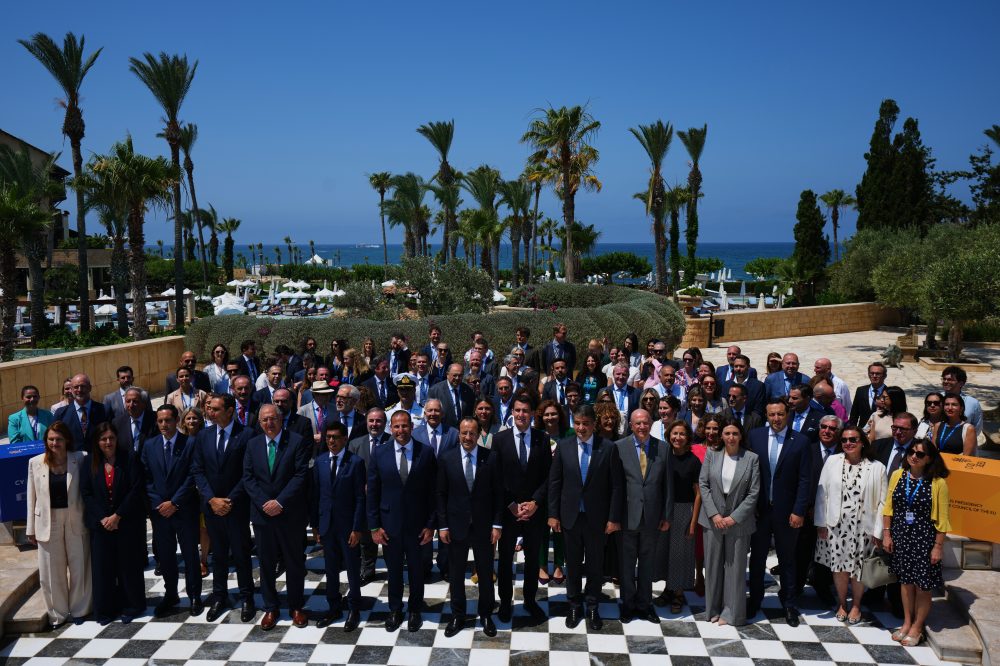
PAPHOS, Cyprus — European Union officials announced Friday a pair of groundbreaking strategies designed to help the bloc’s island and coastal communities thrive — the first time the EU has taken such a comprehensive approach to addressing the unique challenges these regions face.
More than 17 million people reside on over 4,000 islands throughout the EU, including three member nations that are islands themselves — Ireland, Malta, and Cyprus. An additional 95 million people live along the coastlines of 22 EU member countries.
Speaking at a conference focused on strengthening island and coastal communities, European Parliament Vice President Younous Omarjee declared, “Islands have been overlooked in the past, but now that comes to an end.”
Raffaele Fitto, the European Commission’s executive vice president for cohesion and reforms, said the new strategies replace scattered, one-off approaches with a unified framework for tackling the distinctive hardships these communities endure.
Because islands are far from mainland markets and depend heavily on air and sea travel, residents and businesses there face significantly higher costs for transportation, housing, and public services compared to those on the mainland.
“This is what we call the cost of insularity — a cost that millions of EU citizens and businesses pay every day, simply because of where they live and work,” Fitto said.
The island-focused strategy rests on four main pillars: upgrading transportation links and digital infrastructure, addressing climate change impacts and energy needs, tackling shrinking populations and housing shortages, and strengthening security and emergency preparedness.
“From the Baltic to the Mediterranean, islands are on the front line of geopolitical challenges,” Fitto added.
At this stage, no specific projects have been identified for funding. Member nations will submit proposals once the EU’s next budget is released. Fitto indicated that desalination plants and housing construction would be among the top priorities considered.
Fisheries and Oceans Commissioner Costas Kadis noted that EU coastal communities contribute approximately 265 billion euros — roughly $302 billion — to the bloc’s economy each year. However, he said those same communities are under growing pressure from climate change, declining populations, a lack of affordable housing, and limited access to essential services.
The coastal strategy seeks to reduce these communities’ dependence on a single income source by broadening economic activity and generating new employment opportunities. Among the proposals Kadis highlighted is a blue carbon credit program that would provide funding for carbon-absorbing coastal wetlands, marshes, and mangroves.
Additional proposals include the OceanEye initiative, which would position the EU as a global leader in ocean monitoring and research, as well as efforts to promote dual-use technologies and vessels capable of serving both fishing and tourism industries.
The strategy also calls for making coastal areas more resistant to climate change and severe weather events through investments carried out in partnership with the European Investment Bank.
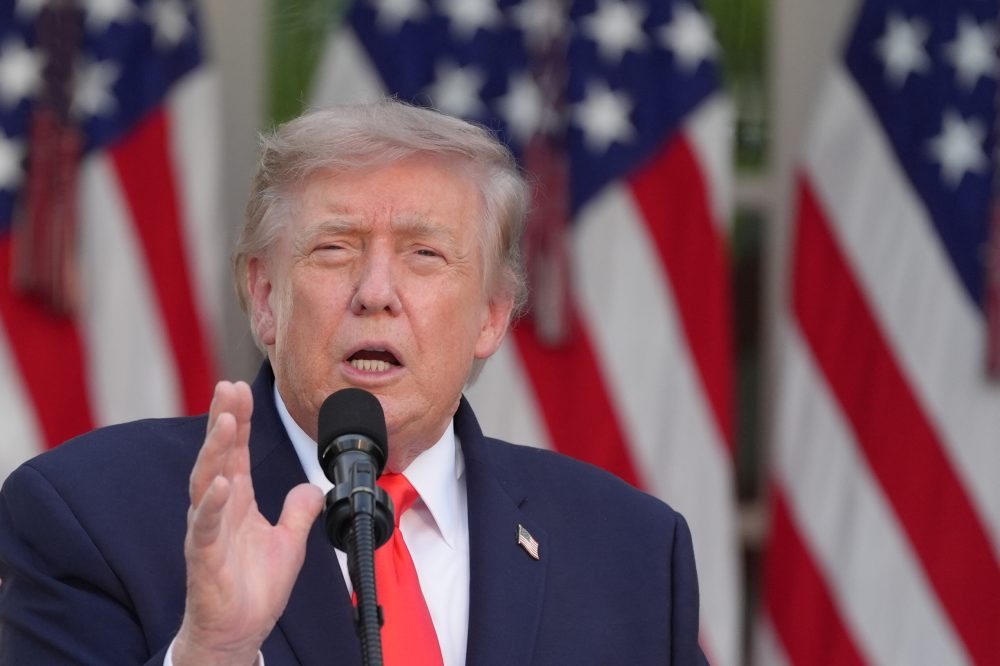
A federal judge has blocked President Donald Trump’s executive order that sought to establish a federal voter list and place restrictions on who would be eligible to receive a mail ballot.
U.S. District Court Judge Indira Talwani ruled in favor of a coalition of nearly two dozen states that challenged the order, issuing a summary judgment. The ruling covers the current midterm election cycle.
The two lawsuits, both brought before federal court in Boston, argued that Trump’s executive order was unconstitutional because the authority to set election rules belongs to the states and Congress — not the president.
This marks the second consecutive day that a court has struck down one of Trump’s election-related executive orders. On Wednesday, a separate ruling blocked an order Trump signed last year that would have required proof of citizenship when registering to vote.
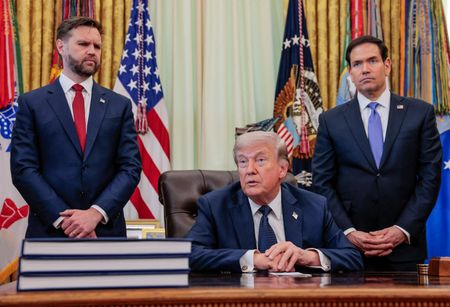
In other news, Vice President JD Vance appeared Thursday at the Richard Nixon Presidential Library in Yorba Linda, California, where he spoke about his new book, “Communion,” and shared his admiration for the 37th president. Vance, widely considered a likely presidential contender in 2028, suggested Nixon’s legacy is experiencing a revival.
Vance drew comparisons between Nixon and Trump, claiming both were targeted by “deep state” forces. “If Watergate happened tomorrow, it would be like a 12-hour news story. The idea that it would have taken down a presidency is crazy,” Vance said.
He continued: “If you look at the story of how the deep state took down Richard Nixon, it’s not all that different from what the same groups of people, the same institutions tried to do to Donald Trump in the first Trump administration.”
Separately, the Supreme Court’s recent decision allowing the Trump administration to end temporary legal protections for Haitian and Syrian immigrants could have far-reaching consequences. The ruling directly affects approximately 350,000 Haitians and 6,000 Syrians, but legal experts say it may signal what lies ahead for nearly 1.3 million people from 17 countries currently holding Temporary Protected Status. Many of those individuals have lived and worked in the U.S. for decades and have American-born children.
The decision opens TPS holders from Haiti and Syria to potential detention and deportation and could force hundreds of thousands of others with pending immigration relief claims to leave the country. Dozens of lawsuits filed by people of various nationalities whose TPS was revoked by the Trump administration remain ongoing.
Also this week, a top National Park Service official says a liner at the bottom of the Lincoln Memorial Reflecting Pool was deliberately cut with a sharp knife or razor blade this month, damaging foam sealant that was installed as part of a $16 million restoration project. Deputy Director of Operations Frank Lands disclosed the damage in a court document filed Wednesday as part of a lawsuit by a nonprofit group seeking to halt the administration’s work on the project. Lands’ statement did not specify exactly when the damage occurred, whether it is being treated as vandalism, or identify any suspects.
WASHINGTON — Billionaire investor Leon Black sat before the House Oversight Committee on Friday as part of a sweeping congressional effort to understand how Jeffrey Epstein’s vast network of power and money allowed decades of sexual abuse to continue.
Black is the latest in a series of prominent individuals called to give a closed-door deposition before the committee. Microsoft co-founder Bill Gates appeared earlier this month, telling lawmakers he had made a “grave error in judgment” by associating with Epstein.
Black co-founded the private equity firm Apollo Global Management and previously served as its chief executive. He stepped away from that role in 2021 following backlash over his connections to Epstein.
An internal review commissioned by Apollo in 2021 revealed that Black had paid Epstein a total of $158 million between 2012 and 2017 — payments that came after Epstein had already pleaded guilty in 2008 to soliciting prostitution from a minor. According to the review, those payments were made for “bona fide tax, estate planning and other related services.”
Black’s name comes up frequently in documents released by the Department of Justice connected to the Epstein investigation. He also appeared in a set of birthday messages sent to Epstein that the House committee made public last year. Among those messages was a poem attributed to Black that referenced “Blond, Red or Brunette, spread out geographically.”
Epstein was indicted in July 2019 on federal charges of sex trafficking of minors and conspiracy to commit sex trafficking. Prosecutors alleged he built an extensive network of girls — some as young as 14 — whom he sexually abused between 2002 and 2005. Epstein died by suicide in a New York jail cell in 2019 while awaiting trial on those charges.
The committee’s chairman, Rep. James Comer, R-Ky., noted earlier this year that Epstein’s former accountant, Richard Kahn, told lawmakers during his own testimony that Epstein received large sums from several high-profile individuals, Black among them.
Sen. Ron Wyden, D-Ore., this month forwarded findings from a nearly four-year investigation into Black to the House committee. In a statement, Wyden said, “Epstein even appears to have acted as a middleman for Black to pay women on Black’s behalf.”
Wyden added, “While I have offered Black ample opportunities to address outstanding irregularities regarding his arrangement with Epstein, he has refused.”
Others who have already appeared before the committee include former Democratic President Bill Clinton, former Secretary of State Hillary Clinton, Commerce Secretary Howard Lutnick, former Attorney General Pam Bondi, and Gates.
Democratic members of the committee have pushed their Republican counterparts to call President Donald Trump to testify, noting his well-documented past friendship with Epstein. Republicans have declined, stating they have found no evidence that Trump engaged in any wrongdoing.
Committee Chairman Comer has indicated he is in discussions with the Justice Department about scheduling testimony from acting Attorney General Todd Blanche. Bondi, during her own testimony, highlighted that Blanche had overseen the troubled release of federal Epstein files, which included the accidental disclosure of victim information.
Delaware is taking a homegrown approach to building its teacher workforce, supporting 67 school-based professionals who are working toward becoming certified educators.
The group, which spans 12 Delaware school districts and charter schools, recently signed formal commitments to begin their teacher apprenticeship programs in Fall 2026.
The initiative is designed to strengthen the state’s educator pipeline by investing in adults who are already embedded in local schools and communities, allowing them to grow into teaching roles while remaining connected to the students they serve.
LONDON — Britain’s financial regulator unveiled proposed changes on Friday to the rules governing investment trust listings, with the goal of strengthening protections for shareholders following a wave of campaigns by U.S. activist investor Saba Capital.
The Financial Conduct Authority said the proposed reforms are designed to better manage conflicts of interest involving activist investors, a group that has ramped up its involvement in investment trusts over the past two years.
Saba’s activity in the sector has been significant — the firm successfully pushed out the board of Edinburgh Worldwide Investment Trust in April, installing its own chosen directors as replacements.
The FCA’s Friday statement did not mention Saba by name. The firm was not immediately available to respond to requests for comment.
Earlier this year, the then-chairman of Edinburgh Worldwide, Jonathan Simpson-Dent, publicly criticized the current regulatory framework. He argued it deserved a closer look, pointing out that holding just a 30% stake could be sufficient to remove an entire board.
Saba has defended its actions in the past, contending that they are necessary to address what it describes as underperformance among British investment trusts.
Back in March, the FCA acknowledged the ongoing debate about its role regarding investment trusts — without naming Saba directly — and indicated it would move up a planned review of the listing rules.
The regulator said its proposals are open for public feedback through August 16. Among the key changes, the FCA said the reforms would tackle conflicts of interest that arise when directors are put forward by a major shareholder, and would also ensure that minority shareholders are shielded in situations where large shareholders who also serve as managers get to vote on significant changes to investment policies.
“Strong shareholder rights and minimal conflicts of interest are crucial to well-functioning markets, including for investment trusts,” said Jon Relleen, the FCA’s director of infrastructure and exchanges.
The Association of Investment Companies, which represents investment trusts, expressed support for the FCA’s direction.
“These proposals would strengthen investor protection, particularly when a substantial shareholder like Saba Capital seeks to replace the board and become the manager,” said Richard Stone, the organization’s chief executive.
BUCHAREST — Three centre-right parties that made up Romania’s outgoing ruling coalition have put forward European Parliament member Siegfried Muresan as their pick for prime minister, though whether they can secure the votes needed to confirm him remains an open question.
The political turmoil began when the leftist Social Democrats — Romania’s largest political party — walked away from the coalition and joined hands with far-right opposition lawmakers to bring down Liberal Prime Minister Ilie Bolojan in early May.
The prolonged standoff raises the possibility of a snap election in Romania, where the hard-right Alliance for Uniting Romanians is currently ahead in opinion polls by double digits. That party opposes a European Union rearmament initiative and has been critical of providing aid to Ukraine.
The Social Democrats have nominated their own leader, Sorin Grindeanu, for the prime minister post and have made clear they will not support any government that does not include them. On the other side, the Liberals — who form the centre-right bloc alongside the Save Romania Union and the ethnic Hungarian UDMR party — have ruled out entering another coalition with the leftists.
Leaders from all four parties in the outgoing coalition were set to sit down with centrist President Nicusor Dan on Friday evening to discuss a possible path forward for a minority government.
The Alliance for Uniting Romanians, which holds the second-largest share of seats in parliament, recently voted against legislation that would have authorized the shooting down of Russian drones crossing into Romanian airspace near the Ukrainian border. The party has also been a consistent critic of the European Union.
Earlier this week, a Liberal politician designated by President Dan as prime minister — without prior consultation with the Liberal Party — was unable to win a parliamentary confidence vote.
Under Romanian law, the president has one remaining nomination he can make. If two prime ministerial candidates fail to win parliamentary approval within 60 days of a government collapse, the president is permitted to dissolve parliament and call an early election.
The political gridlock is also putting pressure on Romania’s broader economic goals, including efforts to reduce what is currently the largest budget deficit among EU member states, secure access to EU funding, and improve its sovereign credit rating, which sits at the lowest level of investment grade.
Romania’s next regularly scheduled parliamentary election is not due until 2028.
ZURICH — Financial institutions and their regulators must act swiftly to embrace new technology and close system vulnerabilities, as artificial intelligence continues to amplify cybersecurity threats across the globe. That warning came from a top Swiss financial watchdog in a recent interview.
Marlene Amstad, who serves as president of Swiss market regulator FINMA and chairs an international forum focused on supervisory technology, spoke with Reuters after an initial hackathon event designed to help market supervisors build new oversight tools.
Software vulnerability detection models have recently flagged a sharp rise in cyberattack and national security risks, with AI raising serious questions about safety and accountability within financial institutions.
“As hackers move faster, banks must adapt by patching vulnerabilities more rapidly,” Amstad said.
FINMA played a key role in establishing a forum within the International Organization of Securities Commissions — a global standard-setting body for market regulation — with the goal of encouraging watchdogs covering approximately 95% of worldwide financial markets to adopt AI tools.
Roughly 100 policy and technology specialists gathered this week for the hackathon, working together to develop tools specifically aimed at supervising cryptocurrency markets, Amstad noted. She added that regulators are also exploring the possibility of embedding safety measures directly into digital asset systems.
Amstad pointed to experience with models such as Anthropic’s Mythos as having revealed AI-related operational risks by exposing system vulnerabilities. This comes as the U.S. government this month ordered Anthropic to halt exports of its latest Mythos and Fable AI models, citing national security concerns.
Meanwhile, Chinese cybersecurity company 360 Security Technology announced this week that it has built a domestic alternative to Mythos.
“Switzerland must retain access to the most advanced AI models,” Amstad said, adding that AI will play a critical role in strengthening systems before they are put into use.
Europe’s leading medicines authority announced Friday that it is recommending the removal of Amgen’s drug Tavneos from the market, determining that the treatment’s potential benefits do not justify the risks it poses to patients.
The European Medicines Agency made the recommendation after concerns about the drug’s safety profile mounted. Earlier, in April, the U.S. Food and Drug Administration’s Center for Drug Evaluation and Research had already proposed pulling its own approval of Tavneos, following the identification of 76 cases of drug-induced liver injury — with evidence pointing to the drug as the likely cause.
Tavneos is used to treat anti-neutrophil cytoplasmic autoantibody-associated vasculitis, an uncommon category of autoimmune disorders that trigger dangerous inflammation in small- to medium-sized blood vessels throughout the body.
The EMA’s Committee for Medicinal Products for Human Use issued guidance stating that no new patients should begin taking Tavneos. For those already on the medication, the committee recommends transitioning to appropriate alternative therapies.
Drivers traveling along Cherry Road should be prepared for intermittent lane closures between Ivy Lane and Ridge Drive due to construction activity.
The lane restrictions are expected to remain in place until 5 PM, according to traffic officials. Motorists in the area are encouraged to allow extra travel time or consider using an alternate route to avoid potential delays.
Drivers in the area of Elderon Drive at the Elderon Drive loop should be prepared for intermittent lane closures due to ongoing construction activity.
The lane restrictions are expected to remain in place until 6 p.m., according to traffic officials. Motorists traveling through the area may experience delays during that time.
Drivers are encouraged to allow extra travel time or consider using alternate routes to avoid the construction zone.
Solar energy developers nationwide are racing against the clock, rushing to secure federal subsidies before a July 4 cutoff that could dramatically increase the cost of renewable power for years to come.
The urgency stems from the phaseout of clean energy tax credits under President Donald Trump’s 2025 tax law — subsidies that have been in place for two decades and cover at least 30% of project costs. Once those credits disappear, analysts expect contract prices for wind and solar power to jump between 40% and 50%. Early figures out of Texas are even more alarming, with some deals already showing price increases of 120%, according to an analysis by energy firm LevelTen Energy.
President Trump has long maintained that wind and solar power are overly expensive, benefit from unfair government support, and are less dependable than fossil fuels because they rely on natural conditions. The White House did not respond to a request for comment on the tax credit changes.
Despite the looming deadline, the rush to qualify for credits has created an enormous backlog. Energy research firm Wood Mackenzie reports that more than 200 gigawatts of solar capacity has effectively secured tax credit eligibility — a figure that represents nearly double the entire current U.S. solar fleet. Solar remains the fastest-growing source of electricity in the country.
Developers have been using a strategy called “safe harboring” to preserve their eligibility before the July 4 cutoff. This can involve beginning construction at a site, purchasing major equipment, logging worker hours, or spending a set portion of project costs. Once those steps are taken, developers have four years to finish building the facilities — though many are still looking for buyers for the power those projects will generate.
“It should give caution to folks that are waiting on the sideline,” said Connor Valaik, a senior manager at LevelTen, which connects renewable energy sellers and buyers. “The future is not the rosiest with this tax credit cliff.”
Even so, some developers are finding reasons for optimism. Because electricity prices are already climbing sharply — driven largely by surging demand from data centers and artificial intelligence — renewable energy may still be cost-competitive even without the subsidies.
“We can initiate projects… at the same level of profitability in three years that we can today, because the price of energy has already escalated so dramatically in the areas that we’re doing business in, with no sign of slowing down,” said John Witchel, CEO of Durango, Colorado-based commercial solar developer King Energy.
Revel Energy, a commercial solar developer based in Irvine, California, has secured tax credits for roughly 10 projects, though the company typically completes 15 per year. Tyler Crossno, the company’s digital marketing manager, noted that customers going solar without the tax credit will likely take five to six years to break even on their investment, compared to about three years under current conditions.
A 2025 analysis by investment firm Lazard found that even without subsidies, large-scale solar and onshore wind remain the least expensive forms of electricity generation. Community and industrial solar installations are also cost-competitive with natural gas and nuclear plants.
The large pipeline of already-approved projects is expected to keep U.S. solar installations strong through the end of the decade. However, energy policy research organization Energy Innovation forecasts that new large-scale capacity will begin to shrink in the early 2030s.
“That is inevitably going to drive prices up,” said Jake Schueller, a partner with Woven Energy, which helps tribes develop energy assets.
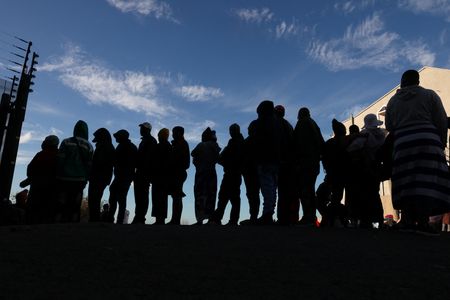
Tensions are running high in South Africa as an anti-immigrant movement has given undocumented foreigners until Tuesday to leave the country, with large-scale rallies expected that many worry could turn violent.
Thousands of African migrants have either begun making their way home or are sheltering together in makeshift camps out of fear of being attacked. The group organizing the demonstrations, called March and March, insists its actions are peaceful.
Here’s a closer look at what’s driving the protests, how widely shared these views are among South Africans, and whether the claims being made actually hold up to scrutiny.
What Are the Protesters Angry About?
Groups opposed to immigration argue that South Africa has been overwhelmed by undocumented foreigners who are stealing jobs, draining public resources, and driving up crime. On June 24, Musa Hlongwa, president of the anti-migrant civil group United South Africa, addressed reporters directly on the issue.
“South Africans are tired of standing in long queues in hospitals … competing for spaces in public schools with illegal immigrants … competing for jobs with foreign nationals … tired of Nigerians who are selling drugs to youth of this country,” Hlongwa said.
How Many South Africans Feel This Way?
Three separate surveys conducted last year all pointed to a growing wave of anti-immigrant feeling in the country. A Human Sciences Research Council poll found that hostility toward immigrants has reached record levels — only one in six adults said they would welcome all foreigners, while 42% said they would welcome none at all, a jump from one-third who held that view in 2021.
An Afrobarometer survey revealed that seven out of ten South Africans view immigrants’ economic impact as harmful, and a striking 85% believe authorities should reduce or completely halt the number of refugees entering the country. Meanwhile, an Ipsos poll found that nearly three-quarters of respondents said they did not trust African immigrants “at all.”
Do the Claims Hold Up?
Claim 1: South Africa Is Being Overrun With Illegal Immigrants
According to a 2023 national statistics office survey, there were 3.1 million migrants living in South Africa — roughly 4.1% of the total population, actually down from 5.6% a decade earlier. By international comparison, that figure is relatively low: the United Kingdom’s migrant share stands at 17%, Canada’s at 22%, and Australia’s at 30%, based on 2024 United Nations data.
While some campaigners argue the official numbers undercount undocumented arrivals, StatsSA uses census methods specifically designed to capture those individuals as well.
“The impression is that there are … hordes of people coming into the country, but the data points to the contrary,” said Anthony Kaziboni, a senior researcher at the University of Johannesburg’s Centre for Social Development in Africa.
Claim 2: Foreigners Are Behind South Africa’s High Crime Rate
Police in South Africa do not publish data on the nationalities of convicted criminals. However, justice department prison figures from 2017 showed that 11,842 foreign nationals were held in South African prisons — about 6% of the total prison population. Of those, 1,380 were incarcerated specifically for illegal entry into the country.
“All evidence suggests immigrants are disproportionately law abiding. Most of their crimes are immigration violations,” said Loren B. Landau, Professor of Migration and Development at the University of Oxford.
Claim 3: African Migrants Are Taking Jobs From Locals
A 2018 World Bank report found the opposite to be true — for every migrant who finds employment, approximately two jobs are created for South African workers through the resulting business activity. That’s because migrants earn wages and then spend most of that money locally on goods and services.
“If you own a restaurant in South Africa … (you) have more customers available to you,” said Lauren Gilbert, director of political science data at GeoQuant. “If migrants are living with dubious kitchen facilities (for example) because migrant housing is often bad … they’re more likely to eat street food.”
Claim 4: Undocumented Migrants Are Draining Public Services
Kaziboni noted that undocumented migrants are very unlikely to use public hospitals or schools — both of which require registration — out of fear of being identified and reported. Economists point to chronic underinvestment and widespread corruption as the real culprits behind the country’s struggling health and education systems.
“To squarely blame immigrants for a failed healthcare crisis is unjust and it’s unfounded. There is no evidence that supports that,” Kaziboni said. “We should blame poor governance, maladministration and corruption,” he added, pointing out that 1.5 trillion rand ($91.27 billion) was lost to corruption during former president Jacob Zuma’s time in office, with an additional 1 billion rand spent just to investigate it.
So Why the Deep-Rooted Hostility?
Historically, the apartheid government relied on migrant labor from across Africa to suppress wages in gold mines and weaken labor unions — a legacy that has left a lasting mark on the national consciousness. Today, one in three South Africans is unemployed, one of the highest rates anywhere in the world. Poor public service delivery contributed to the ruling African National Congress losing its parliamentary majority in 2024 elections, and inequality remains among the worst globally by some measures.
Those conditions create fertile ground for frustration that often gets redirected toward migrants. Politicians have also been known to fan those flames, particularly around election season — and local elections are expected by November of this year.
“Immigrants are by no means the reason why services and the economy have faltered, but people remember what confirms their biases,” Landau said. “What they don’t see is the foreigners investing, trading or providing skills the economy needs.”
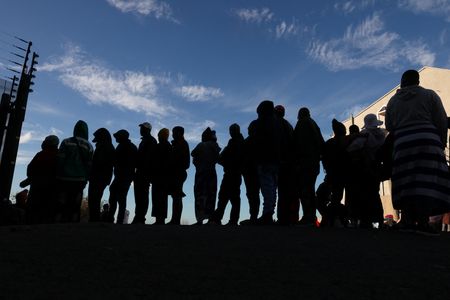
DURBAN, South Africa — Long lines of Malawian migrants gathered at a temporary processing camp in the South African city of Durban this week, while hundreds of Zimbabweans spent nights sleeping on the sidewalk outside their country’s consulate in Cape Town — all hoping to escape before planned anti-immigrant protests erupt into violence.
Ebrahim Moosa, 37, stood in a winding queue alongside his wife, some carrying babies on their backs, waiting to board a bus bound for Malawi. “We are scared because you never know what people are planning to do to you. It’s not right to wait and see what will happen,” he said.
South Africa has experienced a surge of xenophobic protests and sometimes deadly attacks in recent weeks, forcing many foreign nationals to flee their homes or be driven out by mobs. Anti-immigrant groups have set June 30 as a deadline for all undocumented migrants to leave the country, and several cities are preparing for potential unrest. The government has urged citizens not to take immigration enforcement into their own hands.
“We are appealing to all those who will be marching to respect the police,” said Phumelele Makoba, the acting police commissioner for KwaZulu-Natal province, considered one of the likely flashpoints for violence.
Law enforcement officials have pledged a major deployment across the country to keep the peace. President Cyril Ramaphosa stated Thursday: “Our security forces are ready.”
The primary organization behind the protests, March and March, has publicly stated it is not calling for violence — but has also said it will not be held responsible for any harm that occurs on June 30.
Neighboring countries including Malawi, Zimbabwe, and Mozambique have been working to bring their citizens home by bus, but have struggled to meet the overwhelming demand.
Mozambican national Antonio Njive, who had been doing odd jobs in South Africa since 2019, fled on June 1 after his home was burned down during a wave of violence that killed five of his fellow Mozambicans. Speaking by phone from Chibuto, Mozambique, he said: “I left home without clothes. Everything was burned.” Njive, along with his wife and 6-year-old daughter, were among hundreds of Mozambican citizens repatriated by bus.
Outside the Zimbabwean consulate in Cape Town, Amina Chiwoko, 30, described the desperate scene. “We are sleeping outside waiting for buses. Everyone just wants to go home,” she said.
For some, however, going home is not an option. Leanne Sefu, 25, is an asylum seeker from the Democratic Republic of Congo who arrived in South Africa at just three years old. “The entire world knows that there’s a war in Congo, so me going back, it feels like going back to death,” she said.
After being attacked at the nail salon where she worked in Durban and forced out of her home, Sefu is now camped outside the Home Affairs office. Sitting on a mattress on the pavement alongside dozens of others, she expressed hope that the government would step in. “What I’m hoping is that maybe the government can help us find a shelter. From yesterday we’ve been hearing people are being attacked and they’re coming here,” she said. “There’s no safety here.”
Xenophobic violence is a long-standing problem in South Africa, where some citizens blame immigrants — largely from other African nations — for crime, unemployment, and overcrowded public services. President Ramaphosa has cautioned against making foreigners scapegoats, attributing the country’s deep social and economic inequalities primarily to the legacy of apartheid. Despite years of sluggish economic growth, South Africa still holds the largest economy on the continent and continues to attract workers from neighboring countries.
A westbound lane on Janice Road at Nassau Commons Boulevard is temporarily closed as construction work is underway in the area.
Motorists traveling westbound through that intersection should be prepared for lane restrictions and potential slowdowns. The closure is scheduled to lift by 4:00 PM.
Drivers are encouraged to allow extra travel time or consider using alternate routes until the lane reopens.
Drivers traveling along Doc Frame Road should be prepared for potential delays due to an ongoing construction operation.
A mobile flagging crew is currently working on the roadway between Gravel Hill Road and Mt Joy Road. The flagging operation, which directs traffic through the work zone one direction at a time, is expected to remain in place until 5 PM.
Motorists in the area are encouraged to allow extra travel time or consider using an alternate route to avoid delays.
Motorists traveling eastbound on Rogers Road should plan for a lane restriction currently in effect due to construction activity.
The right lane is closed along the stretch between Oakmont Drive and Newcastle Avenue, also known as Route 9. Drivers in the area are advised to use caution and allow for extra travel time.
The lane closure is expected to remain in place until 5:00 PM. No detour information was provided, but travelers may want to consider alternate routes to avoid potential delays.
U.S. equity funds faced heavy selling pressure during the week ending June 24, as worries about debt-driven spending in the technology industry and the prospect of a more aggressive Federal Reserve interest rate policy led investors to pull back from riskier assets.
According to data from LSEG Lipper, investors withdrew $3.53 billion from U.S. equity funds over the course of the week. That marked a significant reversal from the prior week, when investors had poured a net $37.63 billion into those same funds.
A major factor weighing on investor confidence was concern that technology sector valuations have become stretched, with large tech companies increasingly turning to bond markets to finance their spending. Elon Musk’s SpaceX became the latest high-profile name to tap debt markets, adding to growing unease that the tech industry’s investment surge is being built on borrowed money.
Adding to the cautious mood, investors are bracing for the possibility that the Federal Reserve could raise interest rates by 25 basis points later this year, as inflationary pressures continue to build.
Technology sector funds bore the brunt of the selloff, recording nearly $20 billion in outflows for the week — completely reversing the $21.46 billion in inflows seen the week before. Financial sector funds lost $1.06 billion, industrial funds shed $830 million, and consumer discretionary funds saw $733 million in outflows.
On the bond side, inflows into U.S. bond funds dropped to an eight-week low of $7.33 billion. Short-to-intermediate investment-grade funds drew $2.95 billion, general domestic taxable fixed-income funds attracted $2.03 billion, and municipal debt funds pulled in $633 million — all down from the previous week’s figures of $3.09 billion, $3.39 billion, and $1.19 billion, respectively.
Money market funds recorded net outflows of $25.74 billion for the week, marking their largest single-week exodus since April 15.
WASHINGTON — Louisiana Republicans are heading to the polls Saturday to pick a U.S. Senate nominee in a primary runoff, roughly six weeks after voters shut the door on incumbent Sen. Bill Cassidy’s bid for a third term.
The runoff pits U.S. Rep. Julia Letlow against state Treasurer John Fleming, both Republicans competing for Cassidy’s soon-to-be-vacant seat. While President Donald Trump already scored a political win when Cassidy was ousted, Saturday’s contest may serve as another measure of just how much pull he still has over Republican voters as he works to fill Congress with allies during the final stretch of his time in office. Democrats have not identified the seat as a priority target in their push to regain control of the Senate in November.
Trump encouraged Letlow to take on Cassidy and endorsed her even before she formally entered the race in January. Letlow first came to Congress in 2021 through a special election, stepping in to fill the seat her husband, Luke Letlow, had won but never occupied — he died from COVID-19 in 2020 before being sworn in. Fleming, meanwhile, spent eight years in Congress before Trump’s first term and made a run at the Senate in 2016, though he fell short of making the runoff. Republican John Kennedy ultimately claimed that seat.
In the May 16 primary, Letlow finished on top with roughly 45% of the vote — not enough to cross the majority threshold needed to avoid a runoff. Fleming came in second with about 28%, narrowly edging out Cassidy, who pulled in around 25%.
Letlow’s support was concentrated in smaller, largely rural parishes throughout the state, including outright majorities in parishes in northeastern Louisiana and those bordering Mississippi. Fleming ran a distant second in most areas but showed his strongest numbers in northwestern Louisiana, carrying nine rural parishes there. He fell just short of Letlow in Caddo Parish, home to Shreveport.
Cassidy led the field in Louisiana’s three most heavily populated parishes. In Orleans Parish, he outpaced Letlow by nearly a three-to-one margin. His margins over Letlow were much slimmer in East Baton Rouge and Jefferson parishes.
Trump’s endorsed candidates have generally fared well at the polls, though his recent picks for governor in Iowa and Georgia both came up short. In South Carolina, he backed Lt. Gov. Pamela Evette for governor ahead of the primary, but after she was pushed into a runoff, Trump announced support for both her and her opponent, state Attorney General Alan Wilson — who went on to win the nomination Tuesday.
Trump has reissued his endorsement of Letlow multiple times since January, most recently in mid-June, and has not extended any backing to Fleming.
On the Democratic side, farmer Jamie Davis and Navy veteran Gary Crockett are also competing in a Senate runoff Saturday to determine their party’s nominee.
Additional runoffs on the ballot include Republican races for the Public Service Commission and a state board of education contest, where incumbent board member and former Republican U.S. Rep. Joseph Cao faces a challenge from educator and business owner Ellie Schroder.
U.S. House primaries were pushed back to November after the U.S. Supreme Court struck down the state’s existing congressional map, which featured a majority Black district that had been favorable to Democrats. Those postponed House races will revert to an “open” or “jungle” primary format, where all candidates regardless of party appear on the same ballot.
Polls are scheduled to close at 8 p.m. Central Time, or 9 p.m. Eastern Time. The Associated Press will report results and announce winners in the U.S. Senate, Public Service Commission, and state school board runoffs.
Under Louisiana’s rules, registered party members may only vote in their own party’s runoff. Independent or unaffiliated voters who participated in a partisan primary on May 16 must vote in that same party’s runoff. Those who sat out the May 16 primary may choose either party’s runoff.
As of June 1, Louisiana had approximately 3 million registered voters. Registered Democrats and Republicans each numbered around 1.1 million, with Democrats holding a slight edge. About 819,000 voters had no party affiliation, and the rest were registered with other parties.
Turnout in the May 16 primary reached roughly 832,000 voters, or about 28% of those registered. That included approximately 347,000 Democrats and 336,000 Republicans. For context, when Louisiana used an open primary system in 2022, turnout dropped from about 1.4 million in the November primary down to around 439,000 in the December runoff — falling from roughly 47% to just 14% of registered voters.
Early and absentee voting made up about 33% of Democratic primary ballots and around 31% of Republican ballots in the May 16 contests. As of Thursday, approximately 82,000 Republican ballots and 61,000 Democratic ballots had already been cast ahead of Saturday’s runoffs. Results from early and absentee voting are typically released by each parish in the first vote update of the night.
In the May 16 primary, the AP began reporting results at 9:02 p.m. ET — just two minutes after polls closed. More than 90% of the total vote had been counted by 10:46 p.m. ET, and the final update of the evening came at 1:30 a.m. ET with approximately 99.9% of votes tallied.
The AP does not make projections and will only declare a winner when it is clear no remaining votes could allow a trailing candidate to catch up. If a race remains uncalled, the AP will continue monitoring and reporting on significant developments, such as a candidate conceding or claiming victory, while making clear no official winner has been declared.
Louisiana does not have automatic recounts, but candidates may request and fund a recount of absentee and early ballots. The AP may still call a race subject to a recount if the margin is determined to be too large to be overturned.
As of Saturday, 129 days remain until the November 3 general election and Louisiana’s congressional primaries, with 168 days until the Louisiana congressional general election on December 12.
The Trump administration is planning to bring back a specialized crisis line for LGBTQ+ young people through the 988 mental health hotline — but the organization that helped build the service from the ground up may be locked out of the new program.
The Trevor Project, the nation’s foremost nonprofit focused on suicide prevention among LGBTQ+ youth, could be blocked from providing the very service it helped develop for the 988 Lifeline just a few years ago.
The 988 hotline, widely described as the mental health equivalent of 911, has been credited with lowering suicide rates among teenagers and young adults. It offers tailored options for specific groups, including veterans and Spanish speakers. However, in July, the Trump administration eliminated the “press 3” option for LGBTQ+ youth with only a month’s warning, citing expired funding.
Now, Congress has stepped in, directing officials to put $33 million toward LGBTQ+-specific youth crisis services, and the administration has committed to restoring the option before the end of the year.
Despite that progress, The Trevor Project may be shut out of the process. The nonprofit that runs the 988 service, Vibrant Emotional Health, has opened applications to manage the relaunched “Press 3” lines — but only to crisis centers that are currently active members of the 988 network. Because the administration canceled the service The Trevor Project specialized in, the organization is no longer active in that network.
The six other crisis centers that previously participated in the LGBTQ+ youth program remain active because they also serve the general population. Only The Trevor Project was exclusively dedicated to serving LGBTQ+ young people.
Dr. Christine Yu Moutier, chief medical officer for the American Foundation for Suicide Prevention, said keeping The Trevor Project on the sidelines “would not make sense,” describing it as a “long-standing, high-quality and trusted resource” for LGBTQ+ people.
Wisconsin Sen. Tammy Baldwin, who has led a bipartisan effort to restore the service, was direct in her criticism. “The Trump administration never should have shut down the ‘press 3’ option and put young Americans at further risk,” she said, calling on the president to bring it back “without needless limitations and with the most qualified, experienced people answering the phone calls and text messages from these vulnerable young people.”
The original specialized service allowed callers to press 3, text “PRIDE,” or use an online chat to connect with counselors specifically trained to support LGBTQ+ young people. According to data from the Substance Abuse and Mental Health Services Administration, the service fielded 1.6 million contacts during its operation. The Trevor Project alone handled roughly half of that volume.
When the “Press 3” option was canceled, federal officials maintained that LGBTQ+ youth could still access help through 988’s general services, saying the agency would “no longer silo” the services in order to serve all callers.
Jaymes Black, CEO of The Trevor Project, warned that the situation is heading in a troubling direction. “This troubling development indicates a dangerous step toward degrading the clinical standards to serve high risk groups that the ‘press 3’ specialized services were founded on,” Black said in a statement.
A spokesperson for the Department of Health and Human Services declined to directly address questions about The Trevor Project’s eligibility, stating only that the department is working with Vibrant to restore the service by year’s end as Congress directed.
Adding to the uncertainty, a leader at the Substance Abuse and Mental Health Services Administration wrote to an Illinois congressman this month saying the agency needed to evaluate the “most appropriate approach” to restarting the service while staying in compliance with a Trump executive order targeting transgender rights. That order claims “gender ideology extremism” is a threat to women and declares that only two sexes exist.
Black expressed concern that the next version of the LGBTQ+ youth crisis line “may exclude transgender and nonbinary youth entirely.” The Trevor Project continues to independently operate its own around-the-clock crisis line for LGBTQ+ young people.
Research has consistently shown that LGBTQ+ youth face a significantly higher risk of suicide. A 2024 analysis by the CDC found that 26% of transgender and gender-questioning students had attempted suicide in the past year, compared with 5% of cisgender male students and 11% of cisgender female students.
Moutier noted that other crisis centers are providing quality care for LGBTQ+ youth, but stressed that how the service is relaunched matters just as much as whether it is. She acknowledged the stakes are high. “I think there’s the potential for great good, and some harm as well,” she said.
Black put it plainly: “While anti-LGBTQ+ politics may be altering the very purpose of this lifeline created to help save young LGBTQ+ lives, it is critical to make clear that politics has no place in suicide prevention.”
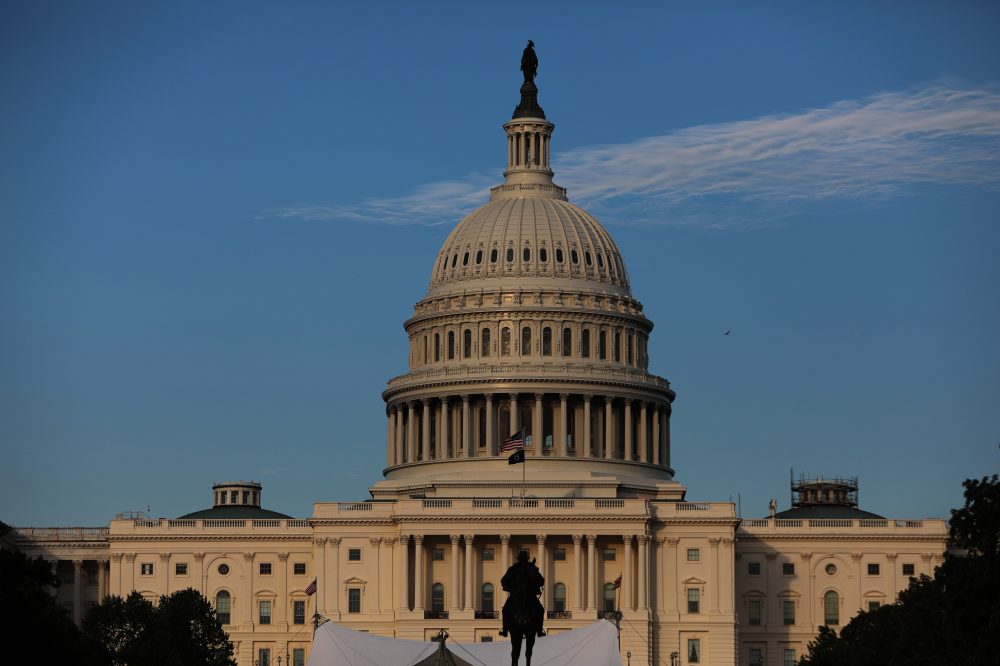
WASHINGTON (AP) — With the United States marking its 250th birthday, many Americans are planning the classic summer trip to Washington, D.C. But those who visit the nation’s capital this year will find a city in the middle of a dramatic transformation driven by President Donald Trump.
In the roughly 17 months since returning to the White House, Trump has placed his name and likeness on federal buildings, demolished historic structures, launched major construction projects, and stationed armed military personnel throughout the city.
The landmarks tourists have always known are still there. But a closer look — with a willingness to wander and observe — reveals just how aggressively the president has worked to put his stamp on the capital.
Any tour of the new Washington begins at Union Station and Metro Center, the city’s primary transit hubs. Alongside their distinctive architecture — Greco-Roman at the former, Brutalist at the latter — visitors will now notice something new: armed National Guard troops stationed at entrances and throughout the surrounding areas.
Guard members from Washington, D.C., and multiple states have been present since August 2025, deployed under an emergency order Trump signed, which he described as a measure to combat crime. The deployment is expected to continue through most or all of 2026, with troop numbers projected to reach 5,000 this summer.
Military deployments to the capital are not without precedent — troops were stationed in D.C. during the Civil War, following the 1968 assassination of Martin Luther King Jr., and briefly during the January 6, 2021, Capitol riot. But under Trump, soldiers at street corners and subway stations have become a routine feature of city life, with no clear end date in sight.
Heading down Pennsylvania Avenue from Union Station, visitors pass a building now closely associated with the Department of Government Efficiency — the Trump administration’s initiative to reduce the size of the federal government. The U.S. Agency for International Development, once headquartered there, was the first major federal agency targeted by then-DOGE leader Elon Musk. Tens of thousands of workers lost their jobs as cost-cutting measures swept through the agency.
USAID had previously distributed billions in humanitarian assistance around the world and was credited with saving millions of lives over its history. By cutting roughly 90% of foreign aid contracts, the Trump administration effectively eliminated around $60 billion in funding. After employees packed up last February, the Pennsylvania Avenue offices were converted to other government uses. The agency’s closure also contributed to a sharp rise in unemployment in the region, where approximately one-fifth of the workforce is employed by the federal government.
Heading south toward the National Mall along the numbered streets, visitors encounter another striking change: banners bearing Trump’s image on the facades of several government buildings. This kind of display is highly unusual for a sitting American president.
At the U.S. Department of the Interior, Trump’s image appears alongside that of George Washington on matching banners reading
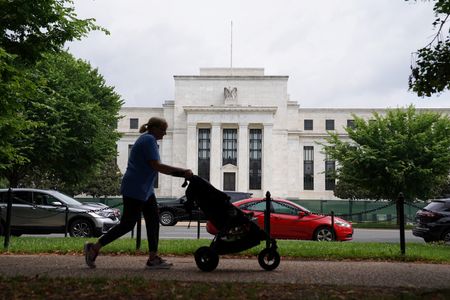
A growing majority of economists now believe the Federal Reserve will leave interest rates right where they are for the rest of this year, pushing back against financial market expectations for two rate increases, according to a new Reuters poll.
Inflation is currently running above 4% — the highest level in more than three years and twice the Fed’s stated target — even as the economy continues to grow and the job market shows improvement. However, oil prices have retreated to levels close to where they stood in February, before the U.S.-Israeli war with Iran got underway.
The central bank kept its benchmark rate steady at 3.50% to 3.75% at its most recent meeting, a move that was widely anticipated. Still, Fed Chair Kevin Warsh caught many observers off guard at his first press conference by making the return of inflation to the 2% target his central focus, with little attention given to employment conditions.
Despite that hawkish tone, most economists believe the Federal Open Market Committee will opt to leave rates unchanged in the months ahead.
“At the moment, holding rather than hiking is the most appropriate stance. The committee is effectively split right down the middle … there are a couple that would be swayed by this aggressive move in energy prices,” said Josh Hirt, senior U.S. economist at Vanguard, who had previously anticipated a rate cut.
Quarterly projections released last week by the Fed — not including Warsh, who abstained — showed that nine of the 19 policymakers now expect at least one rate hike before the end of 2026.
“If we continue to get data that moves in this direction, it’s going to be extremely difficult to justify not moving rates higher,” Hirt added.
For now, more than three-quarters of economists surveyed between June 23 and 25 expect the federal funds rate to stay put through the rest of 2026. That’s up from roughly 70% before the June meeting and just under half the month before. Survey medians now point to rates holding steady through the end of 2027, a reversal from expectations just weeks ago that called for cuts. Nearly 40% of respondents have raised their rate forecasts again after most had already done so earlier this month.
The recent spike in inflation is compounding existing price pressures tied to President Donald Trump’s broad import tariffs. The rising cost of living represents a political problem for Trump and his Republican Party heading into November’s midterm elections.
Trump made reducing inflation a central promise of his 2024 campaign and has repeatedly taken aim at Warsh’s predecessor, Jerome Powell, for not cutting rates.
“The public does not like higher interest rates but they dislike inflation even more,” said Alex Pelle, senior U.S. economist at Mizuho Securities USA. “There will always be politicians who have opinions on what the Fed should or should not be doing. But ultimately, the job is too big to let the political considerations dominate.”
Fifteen forecasters — including five primary dealers — now expect at least one rate hike this year, compared to nine who are forecasting cuts. It marks the first time since 2023 that the number of economists calling for hikes has exceeded those expecting cuts.
“We had expected only three people to write down hikes heading into the June meeting,” said Stephen Juneau, a U.S. economist at Bank of America, who now anticipates three rate hikes this year. “That’s a materially hawkish surprise and it does indicate the Fed’s reaction function has turned.”
Bank of America’s forecast was the most aggressive of any in the survey, while Citibank still projects two rate cuts this year.
A great deal will hinge on how the Fed communicates its decisions under Warsh, whose approach appears poised to become considerably more concise. At June’s meeting, the new Fed chief signaled a move away from forward guidance, releasing a streamlined policy statement that recalled the style used during former Chair Alan Greenspan’s tenure, and also announced a sweeping review of Fed operations.
Some economists are already expressing concern about such broad changes.
“The Fed still needs forward guidance to get its message across,” said Bank of America’s Juneau. “There are more pros than cons to maintaining some level of guidance and not going fully back to the early Greenspan years when it was much more opaque as to what the Fed was doing.”
Iran doubled down Friday on its claim to control maritime traffic through the Strait of Hormuz, while also issuing a warning to Gulf nations not to take sides with the United States — all of this coming just one day after a ship was struck near Oman, casting doubt on a shaky preliminary peace agreement.
Tehran was firing back at what it described as an “interventionist, irresponsible and provocative” joint statement issued by the U.S. and six Gulf nations, which rejected Iran’s position that it could collect tolls from vessels passing through the strait.
Iran’s Deputy Foreign Minister Kazem Gharibabadi took to X to make his country’s position clear: “Safe passage through the Strait of Hormuz cannot be guaranteed under ambiguous arrangements, parallel routes or decision-making that does not take Iran’s role as a coastal state into account.”
Oil prices slipped lower on Friday, even as conflicting interpretations of last week’s interim agreement between Iran and the U.S. circulated, and shipping traffic through the strait — a critical corridor through which roughly one-fifth of the world’s oil and liquefied natural gas typically flows — continued to slow.
Meanwhile, Saudi Aramco restarted crude oil loading operations Friday at the Ras Tanura terminal in the Gulf, the largest oil port on the planet, following a suspension that had lasted nearly four months, according to shipping data.
U.S. Secretary of State Marco Rubio, who was concluding a visit to Gulf nations aimed at easing regional concerns about the interim agreement, told reporters Thursday that any Iranian move to threaten or block ships in the strait would mean “we’re going to have a problem.”
In their joint statement, Rubio and the Gulf Cooperation Council called for “free, unconditional, and unrestricted navigation” through the Strait of Hormuz, rejecting any tolls or “attempts to assert control.” They also stated that a lasting peace agreement must address Iran’s ballistic missile program, drone capabilities, and backing of proxy forces in the region.
Iran’s foreign ministry responded Friday by pointing to the U.S. military presence in the Gulf as the root cause of regional instability and division, and argued that the strait should be governed jointly by Tehran and Oman under the terms of the interim deal.
“We warn against the continuation of hostile and interventionist policies in the region,” the ministry said in a statement.
Iran gained effective control over the waterway after U.S.-Israeli strikes on Iran on February 28 sparked the war, sending shockwaves through global energy markets and the broader economy.
Taiwan’s Evergreen Marine announced Friday that its Singapore-flagged vessel, the Ever Lovely, had been struck by an “unknown object” near Oman on Thursday while traveling a route recommended by the British navy agency UKMTO. No one aboard was injured, and the ship eventually continued on its way out of the strait.
Two U.S. officials told Reuters that Iran had fired on the vessel. Iran’s Persian Gulf Strait Authority — a body established by Tehran to oversee ship transit requests through the strait — responded by stating that travel through unauthorized routes would be “the responsibility of the owner, operator, and vessel commander.”
No immediate response came from the U.S. government. Earlier this month, U.S. President Donald Trump had warned that if Iran failed to honor the interim deal — including reopening the strait — the U.S. would likely resume bombing the country.
Beyond the dispute over the strait, other unresolved issues continue to cloud the framework ceasefire agreement, including disagreements over financial incentives for Iran, nuclear inspections, and Israel’s ongoing military campaign in Lebanon. The deal has established a 60-day window for negotiations on these more complex matters, including Iran’s nuclear program.
Back in the United States, the conflict is becoming an increasing political concern for President Trump as November midterm elections approach, with control of Congress at stake.
The International Maritime Organization, a United Nations agency, temporarily halted its ship escort operations through the Strait of Hormuz following the Oman incident. Earlier in the week, the IMO and Oman had unveiled a new southern transit route through the strait to help clear hundreds of vessels stranded by the conflict — a move that drew sharp criticism from Tehran.
South Korea’s President Lee Jae Myung announced Friday that three South Korean ships would depart the Strait of Hormuz over the weekend, after the country’s Oceans Ministry reported that eight additional South Korean vessels had already exited the waterway.
Shipping data showed two Very Large Crude Carriers operated by Saudi Arabia’s shipping arm Bahri loading crude at Ras Tanura, with a third vessel waiting nearby. Each of these massive tankers is capable of carrying 2 million barrels of oil. Ras Tanura, located on Saudi Arabia’s eastern coast and west of the Strait of Hormuz, previously exported more than 5 million barrels per day before the conflict began.
Lululemon shareholders have voted to seat three board directors backed by company management, bringing a bitter governance battle with the brand’s founder to a close and giving the company’s next chief executive a cleaner slate heading into her tenure.
The directors approved in Thursday’s vote include former Levi Strauss chief Chip Bergh, Unilever marketing executive Esi Eggleston Bracey, and experienced finance leader Teri List. The trio brings expertise in brand development and corporate oversight to the Vancouver-based company as it prepares for a significant reset.
On Friday, the company also announced that two nominees put forward by founder Chip Wilson — Marc Maurer and Laura Gentile — have been appointed as independent directors, bringing the total board size to 11. A third mutually agreed-upon director is expected to join by October 1, in line with the truce the two sides reached last month.
Wilson, who holds roughly 8.6% of the company’s shares, has been publicly at odds with Lululemon’s leadership since December, a conflict that weighed on the stock and laid bare deep disagreements over strategy, leadership, and the brand’s future direction. As part of the settlement, Wilson has agreed to hold off on public criticism for 18 months.
The resolution gives former Nike executive Heidi O’Neill more room to work with as she steps into the CEO role in September.
The yoga-and-athleisure giant, known for its high-end leggings and workout wear, is attempting a comeback at a time when newer rivals — including Alo Yoga and Vuori — are aggressively competing for the same customers. The company’s stock has lost roughly half its value over the past year.
Earlier this month, Lululemon projected its first quarterly sales decline since the pandemic, while also warning of tighter margins due to heavier discounting and cost pressures tied to tariffs.
Last year, activist investor Elliott Investment Management built a stake valued at approximately $1 billion and pushed for leadership and strategic changes, including backing a former Ralph Lauren executive named Jane Nielsen as a potential CEO candidate. Elliott has not publicly addressed Lululemon’s settlement with Wilson.
Industry analysts say the company needs to win back its most loyal shoppers by refreshing its product lineup and sharpening how it presents itself in a more crowded marketplace.
Eyes are also on Lululemon’s $1.8 billion cash reserve and what the company plans to do with it. Observers widely expect the funds could be directed toward entering new product categories, upgrading retail locations, or speeding up growth in international markets.
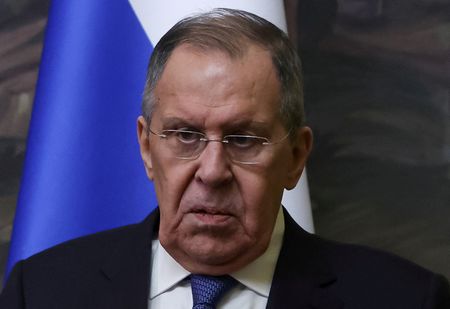
MOSCOW — Russian Foreign Minister Sergei Lavrov is pushing back against U.S. Secretary of State Marco Rubio, demanding that Washington clarify exactly what role it is playing in attempts to bring the war in Ukraine to an end.
In written responses to media questions released Friday, Lavrov intensified a public dispute with Rubio over whether Presidents Vladimir Putin and Donald Trump had reached some form of understanding during their meeting in Alaska last year — an encounter Russia has repeatedly referred to as “the spirit of Anchorage.”
Rubio told reporters Thursday that no deal was struck at that summit. “There was a proposal in Alaska, but there was no agreement in Alaska. If there had been an agreement, we would have had an end of the war,” he said.
Lavrov offered what he described as the most thorough account yet of what took place at the Alaska meeting last August. According to Lavrov, Putin went through a list of U.S. proposals that Trump’s envoy Steve Witkoff had brought to Moscow just days before the summit, going point by point and checking with Witkoff — who was present alongside Trump and Rubio — that he was accurately recalling each proposal. Lavrov, who was also at the meeting, said Witkoff confirmed each point.
“Therefore, when my colleague M. Rubio says that there were only proposals in Alaska but no agreement, it raises a question regarding what we actually mean by ‘agreement,’” Lavrov said.
He continued: “If one side — in this case, the U.S. — put on the table its proposals for a settlement and a way to approach this crisis, and the other side expressed its consent to those proposals, then claiming there was no agreement seems rather inelegant.”
Lavrov added that the “entire situation” surrounding the U.S. role in the peace process needed to be clarified.
The pointed remarks from Lavrov and other Russian officials this week suggest a shift in how Moscow views Washington’s peace efforts, which have stalled since the U.S. and Israel launched military action against Iran in February.
Ukrainian President Volodymyr Zelenskiy told Trump and other Western leaders last week that Ukraine was gaining the upper hand in the conflict, pointing to deep strikes inside Russian territory targeting oil refineries and industrial facilities.
Russia disputes that assessment, maintaining it will achieve battlefield victory if diplomatic efforts fail. Russian forces currently hold roughly one-fifth of Ukrainian territory after more than four years of fighting.
The Kremlin said Friday that it continues to value Trump’s mediation efforts and hopes they will resume. However, Kremlin spokesman Dmitry Peskov, when asked whether Russia views the U.S. as a neutral mediator, said true neutrality is impossible given that the U.S. is still supplying weapons and technical support to Ukraine.
Global technology stocks dominated financial headlines this week, with dramatic swings raising fresh questions about whether enthusiasm for artificial intelligence has gone too far — and whether markets could be heading for a larger correction.
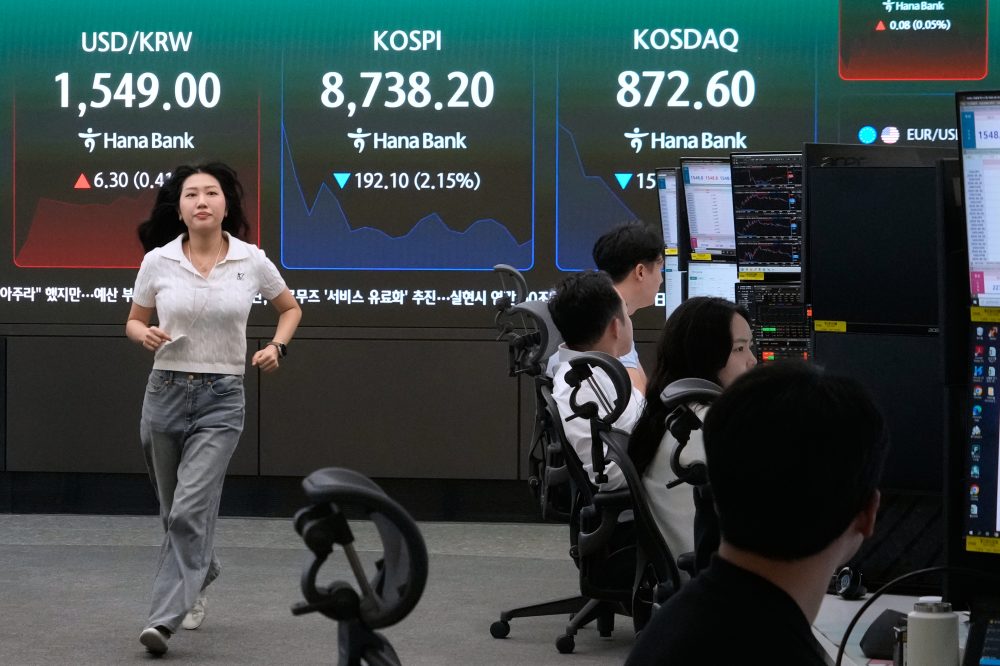
Early in the week, major U.S. stock indexes fell as the biggest technology companies dragged them lower. Initially, analysts pointed to concerns over the enormous amounts of money being poured into AI infrastructure. But by Tuesday, the selling had spread to semiconductor stocks, with South Korea’s KOSPI index dropping nearly 10% and the SOX chip index losing roughly 8%.
A strong earnings report from memory chipmaker Micron Technology on Wednesday briefly steadied things. However, calm was short-lived. Apple announced Thursday that it would be increasing the prices of iPads and MacBooks, citing rising costs for memory and storage chips — a direct consequence of the AI spending boom. Apple’s stock dropped more than 6% overnight, triggering another wave of selling across Asian markets on Friday.
The turbulence has renewed debate over whether AI-driven market enthusiasm has crossed into irrational territory. SoftBank’s Masayoshi Son weighed in this week, calling any talk of an AI bubble “blasphemy against AI.” At the same time, a number of major Wall Street firms raised their year-end forecasts for the S&P 500, arguing the current rally still has room to continue.
The late Federal Reserve Chair Alan Greenspan, who passed away at age 100 this week, famously warned about “irrational exuberance” in markets decades ago. His phrase feels newly relevant as investors grapple with the same question today.
As for the current Fed leadership, newly appointed Chair Kevin Warsh appears unlikely to take direct aim at rising asset prices. His push to reduce Fed communication — including ending forward guidance — has contributed to wide disagreements between major banks over where interest rates are headed, a situation that could itself fuel market volatility.
On Thursday, the government released the personal consumption expenditures index — the Federal Reserve’s preferred measure of inflation. The index climbed 4.1% in the year through May, topping 4% for the first time in three years. Core PCE, which strips out food and energy, rose 3.4%. Both figures matched what economists had expected. After the report, bets on a rate hike at the Fed’s very next meeting eased somewhat, though markets still see roughly an 80% chance of a hike by the September meeting.
Expectations for higher interest rates have helped push the U.S. dollar to one-year highs against major currencies in recent weeks, though it pulled back slightly following Thursday’s inflation data. The Japanese yen remains especially weak, hovering near a 40-year low past 160 yen per dollar.
Across the Atlantic, Britain grabbed attention with Prime Minister Keir Starmer announcing his resignation on Monday following months of mounting pressure and the dramatic return to parliament of key Labour party challenger Andy Burnham. UK financial markets showed little reaction on the day. Attention has now shifted to Burnham, who is seen as Starmer’s likely successor and could take office as early as next month if no other candidates step forward. Investors are eager for clarity on how he would approach economic policy and who he might select as finance minister.
Analysts caution, however, that simply swapping one leader for another won’t address Britain’s deeper challenges — sluggish productivity growth and a large welfare spending burden. With seven prime ministers in a decade, the revolving door at 10 Downing Street risks reinforcing a perception that the country has become difficult to govern, which could deter investment and deepen existing economic problems.
Energy policy is expected to be a top priority for whoever takes charge, particularly given how the recent Iran conflict underscored the risks of depending heavily on imported energy. There is speculation that this could prompt a shift in British policy on oil and gas development in the North Sea.
Adding to the region’s challenges, much of the UK and Europe has been dealing with a dangerous heatwave this week, placing strain on power systems across the continent.
On the global energy front, oil prices continued falling throughout the week, touching pre-war levels on Thursday. Crude shipments through the Strait of Hormuz reached their highest volumes since the conflict began, as traders grew more confident that a temporary U.S.-Iran peace agreement would lead to a lasting deal and a return to normal energy flows. This optimism persisted even after reports emerged Thursday that a Taiwanese ship transiting the strait had been attacked.
While cheaper oil is bringing down prices at U.S. gas stations, it may also give consumers more money to spend — potentially heating up an already warm economy and complicating the Federal Reserve’s decisions on interest rates going forward.
Next week will be shortened due to Independence Day, but investors will still have significant economic data to digest, including the June nonfarm payrolls report, as the United States marks its 250th birthday.
A crash on Delaware Route 1 near Wrangle Hill Road has caused significant traffic disruptions in both directions.
The southbound side of DE 1 is fully closed at the Wrangle Hill Road intersection, also known as DE 72. Meanwhile, northbound traffic on DE 1 is down to a single lane due to a left lane closure at the same location.
Motorists traveling through the area are urged to allow extra time or find an alternate route until the roadway is cleared.
Wall Street is heading into a critical week as investors await key jobs data that could shake up expectations for interest rate hikes — and add more turbulence to a stock market already rattled by wild swings in technology shares.
Major U.S. stock indexes are on track to finish out a strong first half of 2026, with the benchmark S&P 500 having gained more than 7% so far this year. June, however, has been a bumpier ride. Shares of semiconductor companies have seen dramatic price swings this week as investors try to gauge how much optimism over AI-driven profits is actually justified.
A Federal Reserve meeting earlier this month made clear that policymakers are laser-focused on keeping inflation in check. Investors say the monthly jobs report, due out Thursday, could intensify expectations for rate hikes if it points to a still-hot economy. U.S. financial markets will be closed Friday in observance of the Independence Day holiday.
“If we do get a really good jobs number, my guess is the market’s not going to treat that as good news,” said Doug Huber, deputy chief investment officer at Wealth Enhancement. “It’s going to treat it as the economy’s hot and it’s going to start to probably price in even higher risks of potentially a hike.”
The performance of technology stocks — and chip companies in particular — is expected to remain the dominant story on Wall Street. The Philadelphia SE Semiconductor Index has surged more than 90% since the market’s late-March low for the year, though it has pulled back this week as investors question whether the rally has gone too far.
Strong earnings results from memory chipmaker Micron Technology, released late Wednesday, offered some reassurance to the sector. Still, the tech-heavy Nasdaq Composite was on pace to finish the week in the red.
“The flavor of tech leadership for the last two months has been semiconductor-related names…concentrated in memory-related equities,” said Julia Hermann, global market strategist at New York Life Investment Management. “The live question is, are higher interest rates going to threaten the more cyclical and volatile component of market leadership at play?”
On the jobs front, the U.S. economy has now posted three consecutive months of solid employment growth, with payrolls climbing by 172,000 in May. Economists at Jefferies are forecasting that June will bring an additional 135,000 jobs.
At the same time, inflation has stayed well above the Federal Reserve’s 2% annual target. The central bank’s most recent meeting was viewed by investors as surprisingly aggressive in its stance. Data released Thursday showed inflation climbing past 4% for the first time in three years, driven in part by rising energy costs tied to the ongoing conflict in the Middle East.
“The Fed is very finely balanced,” said Brad Conger, chief investment officer at Hirtle & Co. Even without a dramatic surprise in the jobs numbers, he noted, the data “can tilt the Fed in one direction or the other… If jobs are strong, interest rates could go back up, and that challenges the market.”
According to LSEG data from Thursday, Fed funds futures are now showing better-than-even odds of a rate hike by the Fed’s September meeting — a stark reversal from the start of the year, when investors had been counting on rate cuts before year’s end.
“We’ve shifted from the sense that interest rate hikes were this less-than-ideal way to cope with a supply shock, energy specifically, to this sense that the Fed is now structurally engaging with its inflation mandate in a new way,” Hermann said.
Rising interest rates can create multiple challenges for stocks, including higher borrowing costs for businesses and consumers, which can slow overall economic growth.
Investors will also be watching earnings results from sportswear company Nike in the coming week. The broader second-quarter earnings reporting season kicks into higher gear later in July.
Developments in the Middle East are also being closely tracked on Wall Street. Oil prices have eased amid a ceasefire in the region, dropping to around $70 a barrel after sitting near $100 just a month ago.
“We are trying to evaluate: is there staying power to a truce in the Middle East and that impact on oil and the big knock-through effect on inflation,” Huber said.
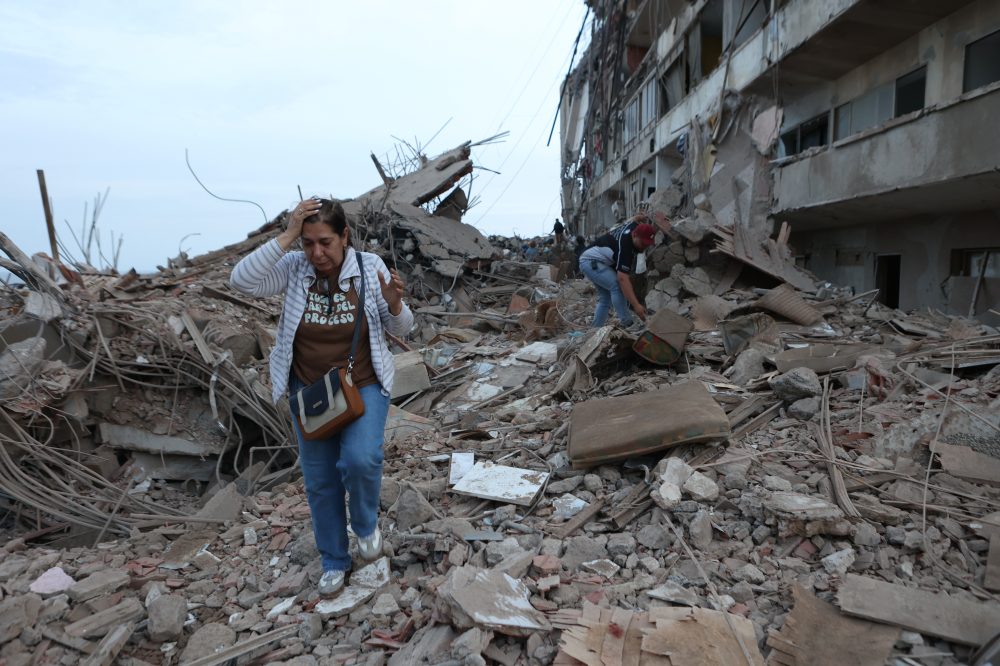
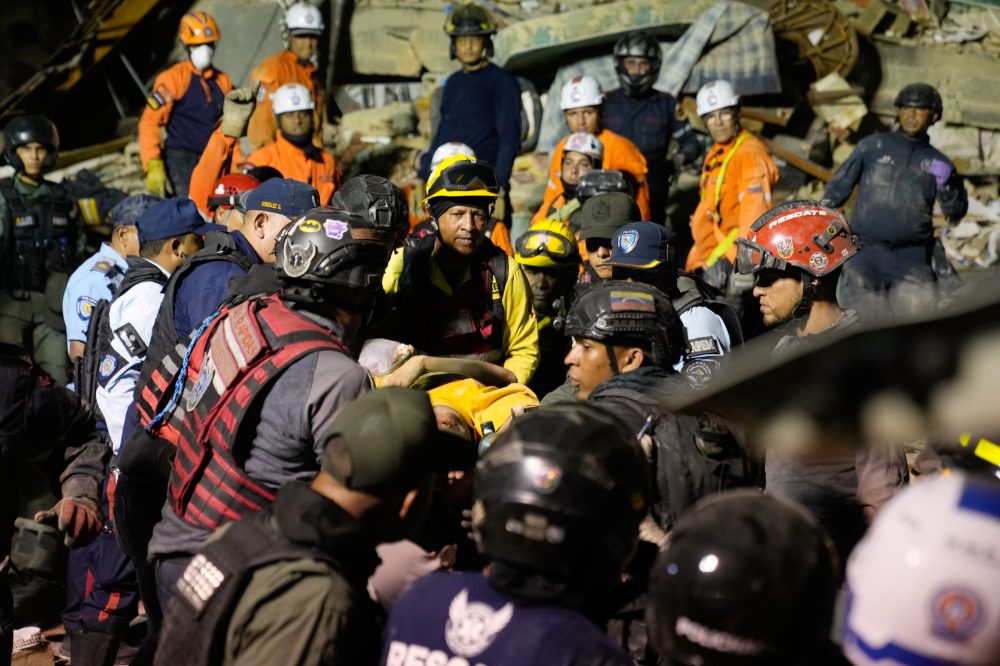
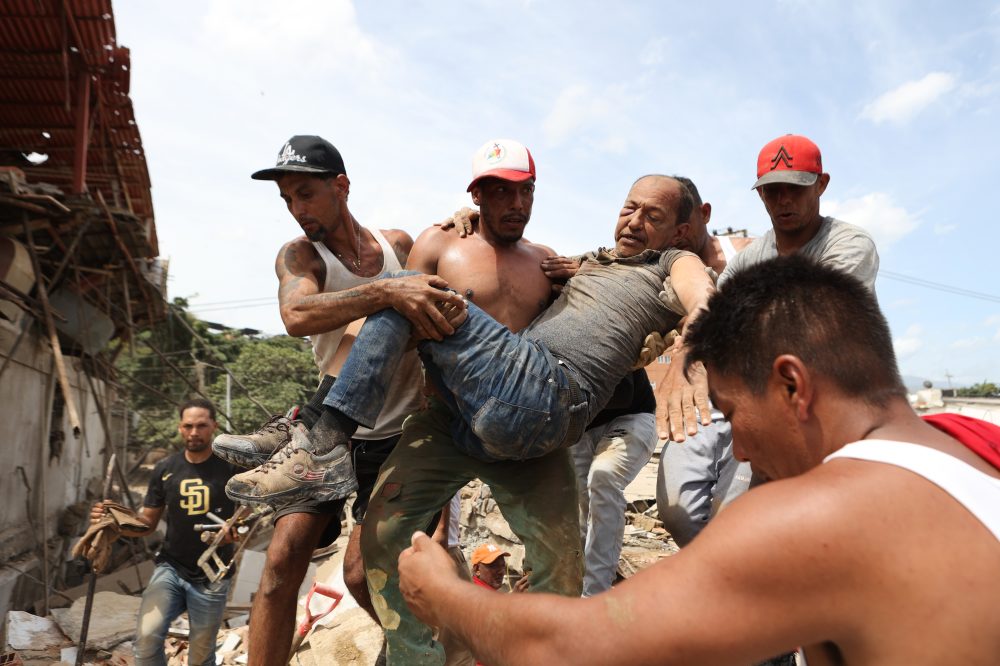
A pair of devastating earthquakes struck Venezuela back-to-back on Wednesday night, bringing down buildings, claiming hundreds of lives, and leaving thousands of people unaccounted for across the northern region of the country. Officials fear the death toll will climb even higher.
In response, governments, nonprofit organizations, and members of the Venezuelan diaspora worldwide have begun mobilizing relief efforts following the magnitude 7.2 and 7.5 quakes. Their focus is on locating the missing and delivering medical care and humanitarian assistance to the many thousands who have been injured or displaced.
According to the International Federation of Red Cross and Red Crescent Societies, the most urgent needs include search and rescue operations, emergency housing for displaced families, emergency medical attention, and eventually access to clean water and sanitation.
Michael Capponi, president of Global Empowerment Mission (GEM), noted that aid organizations will face significant hurdles, including airport closures and the need for expedited visas for relief workers. “No single organization can meet all the needs alone,” he said. “Collaboration across governments and NGOs is critical to ensuring we cover all ground efficiently and swiftly.”
The nonprofit evaluator Charity Navigator advises donors to protect themselves from fraudulent campaigns by confirming that any organization they support has a track record of working on this type of disaster and in this region, and that it holds 501(c)(3) nonprofit status. Charity Navigator has also released its own curated list of vetted organizations assisting Venezuela.
Below are several organizations currently responding that you can support:
Global Empowerment Mission: This humanitarian relief organization, based in Doral, Florida, is teaming up with its longtime nonprofit partner, the We Love Foundation. GEM began immediately packing food, water, hygiene products, medical supplies, and other emergency essentials for shipment Thursday to Caracas, where it has established a distribution hub. The organization has previously responded to crises in Venezuela, including in 2018 and 2019.
CORE: This humanitarian nonprofit is sending staff and partnering with The Wayuu Taya Foundation, which supports Indigenous Wayuu communities in Venezuela and Colombia and already has people on the ground in Caracas. Together, they plan to distribute cash assistance to affected families along with food, drinking water, hygiene kits, and other essential supplies. CORE was originally established following the 2010 earthquake in Haiti.
Direct Relief: Based in California, this medical humanitarian organization is funding the deployment of a team from Spanish Bomberos Unidos Sin Fronteras (BUSF) to support search-and-rescue operations. It is also prepared to ship medical supplies to local healthcare partners as the need arises. Direct Relief has responded to multiple earthquake disasters, including the 2023 disaster in Syria and Turkey.
International Red Cross: Although the Venezuelan Red Cross’ own national headquarters suffered damage, its countrywide network of hospitals and clinics remains operational and continues providing care. Rescue teams are supporting evacuation and search efforts and mobilizing pre-positioned relief supplies. Red Cross Societies in Ecuador, Colombia, Mexico, Costa Rica, Honduras, and Argentina — nations home to large Venezuelan communities — have activated services to help people reconnect with loved ones.
Airlink: This global humanitarian organization specializes in coordinating transportation and logistics for nonprofits sending relief and personnel to disaster zones worldwide. It is working to mobilize airlines and logistics companies to deliver search-and-rescue teams, medical responders, and supplies such as medicines, water filters, and food to Venezuela.
World Central Kitchen: The nonprofit founded by Chef José Andrés is mobilizing to provide hot meals to affected families and first responders as quickly as possible. The organization has led multiple relief efforts in Venezuela, most recently in 2024 when families in the state of Sucre were displaced by Hurricane Beryl.
Catholic Relief Services: The international aid arm of the U.S. Catholic Church is working alongside local partner Caritas Venezuela to provide emergency shelter, food, water, and medical care to impacted families.
Global Impact: This philanthropy adviser and intermediary has created a Venezuela Earthquakes Response fund that will channel donations to multiple vetted organizations, including UNICEF USA and Save the Children.
Friday could be one of the most action-packed trading sessions yet for SpaceX, as investment funds that follow Russell indexes gear up to pour billions of dollars into Elon Musk’s rocket and internet company as part of a scheduled index update.
SpaceX made its stock market debut earlier this month with a high-profile initial public offering, and the ride since then has been anything but smooth. Shares rocketed 67% to an intraday peak of $225.64 on June 16, only to fall back to a closing price of $153 by Thursday.
Even after that pullback, the stock sits well above its IPO price of $135. Investors continue to wrestle with how to put a value on a company that posted a $4.9 billion loss last year, yet has strong supporters who believe it will come to dominate satellite internet, artificial intelligence, and commercial space launch — markets they see as central to global infrastructure over the next decade.
FTSE Russell announced it will officially add SpaceX to its Russell U.S. indexes after the close of trading on Friday, as part of its twice-yearly index reconstitution process. That means passively managed funds — such as exchange-traded funds that mirror Russell indexes like the iShares Russell 1000 ETF — will be required to add SpaceX shares to their portfolios. Fund managers are expected to make their purchases in a tight window near the end of the trading day, hoping to avoid what is known as “tracking error” — a performance gap that can occur when a fund buys in at a price different from the index’s closing price.
One complicating factor: while SpaceX carries a market capitalization of roughly $2 trillion — putting it in the same league as Amazon — only around $100 billion worth of shares are actually available for public trading. The rest are held by Musk, company insiders, and employees. According to an estimate from Jefferies, passive funds will need to acquire close to $3 billion in SpaceX shares to properly align with the Russell indexes they track. That limited supply could create a squeeze as the closing auction approaches on Friday, though options market activity has remained relatively quiet. Options contracts expiring Friday are priced to reflect an expected price swing of about 3.6% in either direction, according to data from Trade Alert.
Looking further ahead, SpaceX is also expected to be added to the Nasdaq 100 index in July — a move that would compel major index funds, including the Invesco QQQ ETF, to purchase its shares as well.
Despite its recent losses on the market, SpaceX is currently trading at 107 times its projected 2025 sales — a staggering valuation by any measure. For context, AI chip giant Nvidia recently traded at 21 times its sales.
SpaceX will not, however, be joining the S&P 500. S&P Global said this month it would not adjust its index eligibility rules to make room for large IPOs like SpaceX’s. Under the existing rules, a company must show a profit in its most recent quarter and across its four most recent quarters combined — a bar SpaceX currently cannot clear.
The last time a major Musk company joined a major index, it made headlines: Tesla’s addition to the S&P 500 in 2020 triggered a closing-day surge that pushed its shares up 6%.
WASHINGTON — The U.S. Supreme Court has handed down two new rulings that further broaden the Second Amendment’s constitutional protection of the right “to keep and bear arms,” even as the justices weigh taking on more gun rights cases in their upcoming term.
In a 6-3 decision Thursday, the court’s conservative majority struck down a Hawaii law that required gun owners to obtain a property owner’s permission before bringing a handgun onto private property that is open to the general public, such as most businesses.
Just last week, the court ruled unanimously to narrow the reach of a long-standing federal law that prohibits certain drug users from possessing firearms. That ruling limited a law that had put the gun rights of millions of marijuana users at risk.
Together, the two decisions highlight the court’s consistent stance of broadly protecting Second Amendment rights — even as the country remains sharply divided over how to respond to ongoing gun violence and repeated mass shootings.
Legal scholars say the rulings have made an already demanding legal standard even harder for gun control laws to meet. That standard stems from the Second Amendment, ratified in 1791, which reads: “A well regulated militia, being necessary to the security of a free state, the right of the people to keep and bear arms, shall not be infringed.”
Jacob Charles, a law professor at Pepperdine University Caruso School of Law, said the decisions reflect a deep distrust of gun regulations at the highest court. “The two cases confirm the court’s extreme skepticism about all manner of gun regulations, especially new ones,” Charles said.
“It has created and elaborated a test that makes it exceedingly difficult for legislatures to create gun laws to protect their citizens,” he added.
The rulings came near the close of the court’s current term, which started last October. Gun rights advocates, buoyed by the wins, are now hoping the justices will agree to hear more Second Amendment cases when the new term opens in October.
During their private weekly conference Thursday, the justices reviewed a number of appeals, including legal challenges to state bans on assault-style rifles like AR-15s and restrictions on large-capacity ammunition magazines. Those cases could be accepted for review as early as Monday.
Stephen Stamboulieh, an attorney with the pro-Second Amendment organization Gun Owners of America, said “it’s past time for the court to enforce” its earlier rulings when it comes to those types of weapons restrictions.
“It is critical that the Supreme Court take an AR-15 and magazine case and end the lower courts’ rebellion against the court’s precedents,” Stamboulieh said.
The court last year declined to hear similar appeals, though three conservative justices dissented from that decision. A fourth conservative justice, Brett Kavanaugh, expressed agreement with challengers who argued that AR-15s are commonly used by “law-abiding citizens and therefore are protected by the Second Amendment.” Kavanaugh said the court “presumably will address the AR-15 issue soon.”
The justices are also considering a challenge to a federal rule barring licensed gun dealers from selling handguns to adults younger than 21, along with comparable state-level restrictions.
Both of the new rulings applied what is known as the “Bruen test,” a legal standard that came out of a landmark 2022 Supreme Court decision written by conservative Justice Clarence Thomas in the case New York State Rifle & Pistol Association v. Bruen. Under that test, gun regulations must be “consistent with this nation’s historical tradition of firearm regulation” — not just serve an important government interest — to hold up under the Second Amendment.
That same test was applied in the 2024 case U.S. v. Rahimi, where the court ruled 8-1 to uphold a federal law making it illegal for people under domestic violence restraining orders to possess firearms. That remains the only law to survive the Bruen test intact at the Supreme Court level.
David Kopel, a Second Amendment expert at the libertarian Independence Institute think tank, said the danger posed by domestic abusers is what distinguished the Rahimi ruling from the two recent decisions.
“Peaceable people who use marijuana, and persons with concealed-carry permits, are not dangerous,” Kopel said, referring to the individuals at the center of the recent gun rights cases. “The broad historic traditions invoked by Bruen point towards a dangerousness standard as the rule for when some Americans can be disarmed,” he added.
Hawaii officials had argued their law struck a reasonable balance between gun rights and the rights of property owners to keep firearms off their premises. But the court disagreed.
Liberal Justice Ketanji Brown Jackson, writing in dissent, accused the conservative majority of having “manipulated” the Bruen test “into a free-for-all that lets the judiciary thwart the will of legislatures by privileging access to firearms above all else.”
Pepperdine’s Charles pushed back on the idea, floated by some conservative justices, that gun rights are being treated as a lesser right. “The court’s doctrine has elevated the Second Amendment right far above a first-class right,” he said.
President Donald Trump is making his return Friday to a prominent Washington hotel that was the scene of a foiled assassination attempt just months ago.
Trump is scheduled to speak at the Washington Hilton as part of the Faith and Freedom Coalition’s yearly “Road to Majority” conference. The visit marks his first time back at the venue since the evening of April 25, when an armed man attempted to breach a Secret Service security checkpoint outside the hotel’s ballroom, forcing Trump to cut his appearance at the White House Correspondents’ Association dinner short.
The Faith and Freedom Coalition is an evangelical Christian organization that has been a strong supporter of Trump. The president has aligned himself with many of the group’s priorities, including efforts to prohibit transgender athletes from competing in women’s sports. However, Trump has also faced pushback from some Christian backers of Israel who oppose his ceasefire agreement with Iran, as well as from anti-abortion advocates who believe his administration has not taken a firm enough stance on the issue.
A White House official, speaking on condition of anonymity, offered strong praise for the president’s relationship with faith communities. “There has never been a bigger champion for families and people of faith than President Trump,” the official said.
Authorities have identified the man behind the April incident as Cole Tomas Allen, a 31-year-old resident of California. Allen has pleaded not guilty to charges alleging he attempted to assassinate Trump. Prosecutors say Allen fired a shotgun at a Secret Service agent and forced his way through a security checkpoint in what was described as a deliberate attack targeting Trump and other members of his administration. Both Trump and first lady Melania Trump were quickly escorted out of the dinner following the incident. In the aftermath, Trump remarked that the hotel was “not a particularly secure building.”
With Friday’s event approaching, security preparations are expected to be more extensive. A Secret Service official, also speaking anonymously, stated that presidential security “continuously evolves to meet today’s heightened security environment.”
“While the existing security plan at the April 2026 White House Correspondents Dinner was effective in interdicting an identified threat, the agency continually reviews our security posture and will make adjustments, as necessary,” the official added.
Friday’s appearance comes as Trump has now survived three separate threats on his life since 2024, a stretch marked by growing political division across the country.
The Washington Hilton has long been a fixture in presidential history, hosting the White House Correspondents’ Association dinner for decades. The hotel also holds a grim place in the history books — former President Ronald Reagan was shot outside the building in 1981 and survived.
As for the correspondents’ association, the group is planning a scaled-down version of its canceled dinner, set to take place in late July at a different location.
WASHINGTON — Since returning to the White House with a pledge to dramatically tighten immigration enforcement and pursue mass deportations, President Donald Trump has found a willing ally in the U.S. Supreme Court — at least most of the time.
The nation’s highest court, which holds a 6-3 conservative majority, has largely cleared the path for the Republican president’s immigration policies targeting both those in the country legally and those who are not. The court’s three liberal justices have opposed most of those moves.
Three more examples emerged this week, with the court handing the administration a trio of wins — each decided along ideological lines — that expand the government’s power to deport individuals or deny them entry, including some who hold legal status.
‘A RUBBER STAMP’
Elora Mukherjee, who directs the Immigrants’ Rights Clinic at Columbia Law School in New York, was blunt in her assessment: “The Trump administration has turned the immigration system into a deportation machine.”
“In most cases, the Supreme Court has been a rubber stamp for Trump’s mass deportation agenda,” Mukherjee added.
In a 6-3 ruling Thursday, the court allowed the administration to revoke Temporary Protected Status for hundreds of thousands of Haitian and Syrian immigrants. That humanitarian designation permits people from countries devastated by war or disaster to live and work in the United States while conditions at home remain dangerous.
Legal experts warned the real-world consequences are severe. Immigrants losing that protection now face a stark choice: remain in the U.S. and risk arrest, or return to countries the U.S. State Department advises against visiting due to widespread violence, crime, terrorism, and kidnapping.
Tirana Hassan, CEO of Doctors Without Borders USA, addressed the situation Thursday, saying, “These are not conditions to which people should be returned” — a reference to Haiti.
Ahilan Arulanantham, an immigration law expert at UCLA who also represented Syrian plaintiffs in the TPS case, said, “The Supreme Court has consistently ruled against the rights of immigrant communities in important cases in the last several years, and this case fits that pattern.”
He added that the ruling “hands to the administration, and to the far right wing of the anti-immigrant movement, an important victory that they have been unable to obtain through Congress for a number of years.”
Also on Thursday, the court ruled 6-3 to uphold the government’s authority to physically block asylum seekers from crossing the U.S.-Mexico border when officials determine border crossings are overwhelmed. This practice, known as “metering,” was discontinued under Trump’s Democratic predecessor Joe Biden. The Trump administration has indicated it may seek to bring the policy back.
Earlier in the week, on Tuesday, the court again split 6-3 to make it easier to remove lawful permanent residents — commonly known as green-card holders. The ruling determined that border agents do not need to meet the demanding “clear and convincing evidence” standard to prove a green-card holder committed a crime before blocking their re-entry into the country after traveling abroad.
‘THE RULE OF LAW’
Department of Homeland Security General Counsel James Percival praised the decisions, saying, “These three rulings are all victories for the rule of law and common sense.” He noted that Temporary Protected Status “was always supposed to be temporary.”
“Thanks to these decisions, we now have several more important tools to continue securing our borders,” Percival said.
Since Trump returned to office in January 2025, the Supreme Court has repeatedly stepped in to allow his immigration policies to move forward — often on an emergency basis — even while legal challenges work their way through the courts. These orders are issued through what is known as the court’s “shadow docket,” a process that allows justices to make significant decisions without the usual extensive legal briefings or oral arguments.
Among the policies the court has permitted: deporting migrants to countries where they have no connections, conducting aggressive immigration raids that may target individuals based on race or language, and eliminating humanitarian protections — including TPS and another form of protection called parole — for hundreds of thousands of immigrants.
Ashley Sanchez, who leads the Immigration Clinic at the University of Notre Dame’s law school, noted that immigration laws themselves haven’t changed dramatically. Rather, she said, the current administration is choosing to enforce them in ways designed to restrict both legal and illegal immigration as aggressively as possible.
The court’s current ideological balance has been in place since October 2020, when Trump appointed conservative Justice Amy Coney Barrett to fill the seat left vacant by the death of liberal Justice Ruth Bader Ginsburg. Sanchez said that conservative supermajority has been central to the direction of immigration rulings.
“This more conservative group appears much more willing to side with the president,” Sanchez said.
She pointed to a June 2020 decision, during Trump’s first term, in which the court blocked his effort to end a program shielding from deportation hundreds of thousands of migrants — often called “Dreamers” — who came to the U.S. illegally as children. At that time, the court had a 5-4 conservative majority, but conservative Chief Justice John Roberts joined the liberal justices to block Trump’s move.
“It’s hard to imagine this current court coming to that same decision,” Sanchez said.
The court has not sided entirely with the administration. In several instances, justices have ruled that migrants must be afforded basic fairness protections guaranteed under the Constitution’s due process clause. Last year, the court twice placed limits on the administration’s use of a 1798 law called the Alien Enemies Act — historically invoked only during wartime — which Trump had used to rapidly deport Venezuelan migrants accused of belonging to the Tren de Aragua gang.
BIRTHRIGHT CITIZENSHIP
As the court’s current term nears its end, one major immigration case remains unresolved. Based on questions the justices posed during oral arguments in April, the court may actually rule against Trump in a case involving his executive order that would deny birthright citizenship to hundreds of thousands of babies born in the United States each year.
Trump’s order directed federal agencies to refuse to recognize citizenship for children born on U.S. soil if neither parent is an American citizen or a lawful permanent resident. Lower courts found the order conflicts with the Constitution’s 14th Amendment, which has long been interpreted as granting citizenship to virtually all people born on U.S. soil, with limited exceptions such as children of foreign diplomats or members of an enemy occupying force.
The relevant section of the 14th Amendment, known as the Citizenship Clause, reads: “All persons born or naturalized in the United States, and subject to the jurisdiction thereof, are citizens of the United States.”
A ruling in that case could come as early as Monday.
Swiss watchmaker Swatch is pursuing $170 million in damages from Samsung, claiming the South Korean tech giant permitted third-party apps on its smartwatches that allowed users to create digital replicas of Swatch timepieces, according to a Financial Times report published Friday citing court documents.
London’s High Court ruled back in 2022 that Samsung was liable for trademark infringement after finding that apps available on Samsung smartwatches let users mimic popular watch designs from brands under the Swatch umbrella, including luxury names Omega and Tissot. A British judge is now expected to issue a ruling on the damages amount in the near future.
The legal dispute dates back to 2019, before the United Kingdom formally departed from the European Union, and the case also covers alleged infringement within the EU. The Financial Times also reported that the forthcoming damages decision is expected to pave the way for a separate Swatch legal claim against a Samsung subsidiary in the U.S.
In written statements submitted to the High Court as part of the damages proceedings, Swatch accused Samsung of conducting a “large-scale appropriation” of “valuable and carefully protected” trademarks. Samsung, for its part, pushed back, describing Swatch’s financial demands as “extravagant” and disproportionate.
A Swatch spokesperson declined to comment on the active legal proceedings, while Samsung had not responded to a request for comment at the time of the report.
The broader Swiss watchmaking industry has been feeling increasing pressure from the booming smartwatch market, with major technology companies including Samsung, Apple, and Huawei leading that segment. Swatch itself offers connected timepieces such as the SwatchPAY! but has not yet entered the smartwatch market. The company’s product lineup spans a wide range, from budget-friendly plastic watches to high-end luxury models that can cost tens of thousands of dollars.
Good morning, Delmarva! It’s going to be a hot one out there today, with temperatures climbing to a steamy high near 90 degrees under partly sunny skies. A southwest breeze of 5 to 10 mph will be blowing, but don’t expect much relief from the heat. The good news is that most of your Friday looks dry — however, keep an eye on the sky after 5 PM, as a slight chance of showers and thunderstorms moves in for the evening hours. Precipitation chances stay low at around 20%, but if you have outdoor plans tonight, it’s worth having a backup option ready.
Heading into tonight, storm chances increase, with showers and thunderstorms possible as we drop to a low near 70 degrees. Saturday looks unsettled as well — expect showers and thunderstorms throughout the day with a cooler high of 81 degrees. A stormy Saturday night is also on the table before we hopefully start to dry things out.
Stay weather-aware this weekend, Delmarva, and keep TV Delmarva close for the latest updates. Stay safe out there!
How closely have you been paying attention to the week’s biggest headlines? A new edition of the Reflecting Pool news quiz is here to find out.
This week’s quiz covers a range of topics, including the latest troubles facing the famous body of water, which has been dealing with a fresh set of problems. But that’s just the beginning.
Contestants will also be quizzed on developments in the world of soccer, the latest news surrounding gambling, and recent happenings in United Kingdom politics — all wrapped into one challenging trivia experience.
Whether you consider yourself a news junkie or just a casual headline-skimmer, the quiz is designed to put your current events knowledge to the test across a wide variety of subjects.
Think you know what’s been going on in the world this week? There’s only one way to find out.
Members of Venezuela’s diaspora living in the United States are coming together to help those affected by a series of deadly earthquakes that recently struck their home country.
In the Houston area, Venezuelan residents organized donation drives and gathered to express their solidarity with earthquake victims back in Venezuela.
At a cargo business in Katy, Texas, supporters covered a wall with messages of hope and encouragement, displayed alongside a Venezuelan flag, as part of the community’s response to the disaster.
The outpouring of support reflects the deep ties that Venezuelan expatriates maintain with their homeland, even from thousands of miles away.
As the nation gears up to mark 250 years of American history, a group of former national park rangers is pushing back against the removal of Black history from federal lands — by teaching it themselves.
The rangers have been organizing what they call teach-ins, bringing the public together to learn about history that the Trump administration has worked to eliminate from national park programming and exhibits.
One of those events took place on June 19 at Harpers Ferry National Historic Park, where former ranger Melissa Dalley, 49, addressed attendees as part of what organizers called the America 433+ teach-in.
The effort comes at a notable moment — with the country preparing to celebrate its 250th birthday, these former rangers say certain chapters of American history deserve to be told, even if the current federal government has chosen to remove them from public lands.
LONDON — The Wimbledon tennis tournament is set to kick off June 29 and run through July 12 at the All England Club. With a dramatic comeback, an injury-altered draw, and a record-breaking prize fund, here are the five biggest storylines to watch.
SERENA WILLIAMS MAKES HER RETURN
After four years away from professional tennis, Serena Williams is back — and she’s already the biggest topic at Wimbledon. The 23-time Grand Slam champion received a wildcard entry into both the singles and doubles draws, instantly generating buzz around the tournament.
The 44-year-old used doubles play to shake off the rust ahead of the grass-court major, first pairing with Canadian teenager Victoria Mboko at Queen’s Club, then teaming with Karolina Muchova in Berlin. At Wimbledon, she is expected to partner with her sister Venus in doubles.
Her singles run, however, will attract the most attention. Williams is stepping back into a tour that has been completely reshaped during her absence, now headlined by world number one Aryna Sabalenka, defending champion Iga Swiatek, and other established stars like Elena Rybakina and Coco Gauff. Questions remain about her fitness, sharpness, and stamina after such a lengthy layoff, but all eyes will be watching how far she can advance.
DJOKOVIC EYES HISTORIC 25TH MAJOR TITLE
Novak Djokovic arrives at Wimbledon with perhaps his clearest shot in recent memory at winning a record-setting 25th Grand Slam title. At 39 years old, the grass courts at the All England Club remain his most favorable surface, placing fewer physical demands on his body while highlighting his greatest strengths.
The draw has also broken in his direction. Carlos Alcaraz is out with a wrist injury, and Jannik Sinner heads into the tournament dealing with physical concerns after a grueling clay season and an early exit at the French Open. Djokovic showed he still has plenty left in the tank earlier this year, reaching the Australian Open final and defeating Sinner along the way.
Although a knee injury disrupted his clay swing and he bowed out early at Roland Garros, Djokovic remains a serious contender at a venue where he has claimed the title seven times.
ALCARAZ’S ABSENCE OPENS THE DOOR
The wrist injury that sidelined Alcaraz significantly changes the landscape of the men’s draw. Sinner now enters as the clear favorite, even after a disappointing French Open performance that followed an otherwise dominant clay season.
Alcaraz’s absence also eliminates any chance of another “Sincaraz” final — a rematch that fans had been anticipating. It potentially opens the door for the first new men’s finalist since Djokovic defeated Nick Kyrgios in 2022.
Alexander Zverev will be eager to add to his major tally after finally breaking through with a long-awaited title at the French Open, while several other players will look to take advantage of the more open field and make a surprise run at the title.
SWIATEK’S TITLE DEFENSE ON SHAKY GROUND
Defending champion Iga Swiatek heads into Wimbledon with her title defense looking anything but certain. Her form has been inconsistent since her dominant run last year, when she crushed Amanda Anisimova 6-0, 6-0 in the final.
Since that victory, Swiatek has struggled. She was eliminated in the quarterfinals at the Australian Open, in Qatar, and at Indian Wells. A shocking second-round loss to fellow Polish player Magda Linette in Miami followed, after which she parted ways with coach Wim Fissette and brought in Francisco Roig.
The most alarming result came in Paris, where the four-time Roland Garros champion was knocked out in the fourth round by Ukraine’s Marta Kostyuk. Swiatek later acknowledged that nerves and tension had simply gotten the better of her.
Now on grass, she faces a loaded field. Sabalenka is still hunting her first major of the year, French Open winner Mirra Andreeva continues to climb the rankings rapidly, and both Coco Gauff and Jessica Pegula add further competition at the top of the draw.
RECORD PRIZE MONEY — BUT PLAYERS WANT MORE
Wimbledon has announced a record prize fund of £64.2 million — roughly $84.7 million — representing a 20% increase over last year. Singles champions will each take home £3.6 million, marking the largest year-on-year prize increase in the tournament’s history.
Despite the bump, the debate over player pay is far from settled. Players have argued that Grand Slams distribute a smaller share of their revenue compared to ATP and WTA events. Several top players scaled back their media commitments at the French Open and threatened future boycotts to draw attention to the issue.
Leading players have pushed for a prize pool closer to £70 million, which would bring the majors closer to the roughly 22% revenue share seen on tour. Currently, the majors are estimated to return only about 15% of their revenue to players. Even with record numbers on the table, it appears the conversation over fair pay in tennis is far from over.
NABATIYEH, Lebanon — Shiite Muslims around the globe came together Friday in large numbers to observe Ashoura, one of the most significant days in their faith, with major gatherings taking place in Iran, Iraq, Lebanon, and other nations. The occasion honors the memory of Hussein, grandson of the Prophet Muhammad, who was killed in the seventh century.
Ashoura falls on the 10th day of the Islamic month of Muharram and serves as the final day of a 10-day mourning period. It commemorates the day Hussein was slain along with family members and companions while fighting against the forces of Caliph Yazid, a ruler to whom Hussein refused to submit.
Hussein’s death deepened the historic divide between Sunni and Shiite Islam and has long stood as a symbol of standing against tyranny and injustice.
This year’s observance took place in the aftermath of a war involving predominantly Shiite Iran and both the United States and Israel, which launched military strikes against the country on February 28. Those strikes resulted in the deaths of senior Iranian officials, including Supreme Leader Ayatollah Ali Khamenei. The 86-year-old Khamenei served not only as Iran’s highest political authority but also as the final voice on all religious matters, and was deeply venerated by Shiite communities worldwide. A funeral procession for Khamenei is set to be held in early July.
In the Iraqi Shiite holy city of Karbala, enormous crowds assembled Friday to mark the occasion. Hussein was buried there following the battle in 680 AD, and his shrine draws millions of Shiite pilgrims each year. In Baghdad, thousands took to the streets in procession, with some participants cutting their heads with razors and performing other acts of self-mortification as expressions of mourning — practices that are controversial and widely criticized within the broader Shiite community.
In Lebanon, where a fragile ceasefire between Israel and the Iran-backed Hezbollah group remains in effect, thousands of mourners dressed in black gathered in Beirut’s southern suburbs at a shrine dedicated to Hezbollah’s longtime former leader, Hassan Nasrallah, who was killed during a series of large-scale Israeli strikes in 2024.
Among those gathered, women held photographs of sons and brothers who had died in the war, many of them fighters for Hezbollah. Others carried images of Nasrallah or Iran’s Khamenei, who was killed in February in the U.S. and Israeli attack. Many wept openly. While expressions of grief for Imam Hussein are a traditional part of Ashoura, many in attendance were also mourning deeply personal losses.
One mourner, Nagham Jaber, said her fiance was killed in the war. “This war was truly harsh on all of us, and now we are feeling the meaning of Ashoura more than usual,” she said.
In the southern Lebanese city of Nabatiyeh — typically a central location for Ashoura observances — dozens gathered near the city’s main square, much of which has been left in ruins by Israeli airstrikes in recent weeks. Some participants inflicted head wounds on themselves as a form of mourning, a practice that is widely opposed within Shiite Islam, including by Hezbollah itself.
Earlier Friday, state media and journalists from The Associated Press on the ground reported two Israeli airstrikes on the nearby village of Nabatiyeh al-Fawqa. It was not immediately known whether the strikes caused any casualties.
“Despite all the hardships, everything happening to the Shiite Muslim community, and the wars we are facing, we came to reaffirm our loyalty, our love and our unwavering passion for Imam Hussein,” said Khader Kamal, one of those gathered at the event.
For Shiite Muslims, who represent the second-largest branch of Islam after the Sunni majority, the death of Hussein carries profound religious and historical weight and plays a central role in shaping community identity.
Hezbollah’s leader, Naim Kassem, addressed followers in a speech Friday, drawing a parallel between the historical events of Ashoura and what he described as current attacks by the U.S. and Israel. He said his movement and its supporters had been subjected to what he called a “war of elimination.”
“America and Israel also wanted to eliminate Iran by removing the regime and controlling the country,” Kassem said. He also commented on a recent agreement reached between Washington and Tehran, saying, “The memorandum of understanding is a declaration of defeat for America and Israel.”
VATICAN CITY (AP) — Pope Leo XIV launched a two-day gathering of the world’s cardinals on Friday with a firm declaration that war stands in opposition to God’s will, framing the Catholic Church as a voice of peace in a world torn apart by ongoing conflicts.
Leo called the cardinals together for the meeting partly in response to their calls to be consulted more regularly — a contrast to the 12-year papacy of Pope Francis, who tended to lead without frequent input from the church’s top advisors.
Cardinals, who wear distinctive red caps and are often referred to as the “princes of the church,” serve two primary roles: offering counsel to a sitting pope and, upon his death, gathering to choose his successor.
Following an initial gathering in January — formally called a consistory — the American pope brought the cardinals back together for a second round this weekend. The agenda for the private sessions includes a review of the current global situation, discussion of his recent encyclical addressing artificial intelligence, and the church’s ongoing efforts to better hear the concerns of everyday Catholics.
The original agenda had also included the contentious issue of the traditional Latin Mass, a long-standing source of division within the church. However, that topic was removed from the schedule, as the matter is expected to reach a critical point next week when a breakaway group of traditionalist Catholics plans to consecrate four new bishops against Leo’s wishes.
As he opened the session, Leo made a direct appeal for solidarity from the assembled cardinals.
“I need your strong, explicit and public support,” he told them. “I need to feel myself supported by you as brothers.”
Cardinals attending the Rome meetings have been instructed to refrain from speaking with reporters, and only the pope’s opening and closing remarks are being released publicly.
At a Mass that kicked off Friday’s proceedings, Leo spoke about what he described as God’s commitment to upholding human dignity, justice, and the rule of law.
“Therefore, war is never worthy of humanity, and it is never blessed by God,” Leo declared. “Because, even if we are equipped with high-tech weapons, the Creator has endowed us with intelligence and free will to resolve conflicts as human beings and not as beasts.”
Throughout Russia’s war in Ukraine and the U.S.-Israel war in Iran, Leo has maintained a steady call for peace — a stance that has at times put him at odds with U.S. President Donald Trump.
BERLIN — A 51-year-old Saudi doctor has been convicted of murder and handed a life prison sentence for carrying out a deadly vehicle attack on a Christmas market in the German city of Magdeburg in 2024 that claimed six lives.
The defendant, identified as Taleb al-Abdulmohsen, stood trial at the state court in the eastern German city beginning in November. According to German news agency dpa, the court determined that he bears “particularly serious” guilt — a designation that bars him from being considered for release after 15 years, which is the standard provision under German law.
The attack took place on December 20, 2024, and lasted just over one minute. Six people died — five women and one boy — while many others suffered injuries.
Investigators determined that al-Abdulmohsen used a rented BMW X3 to carry out the attack, reaching speeds of up to 48 kilometers per hour, or roughly 30 miles per hour, as he drove through the crowded market. Authorities stated at the time of the indictment that he was not under the influence of alcohol. They believe he acted alone and was motivated by frustration over the outcome of a legal dispute and the failure of various criminal complaints he had filed.
Officials noted that the suspect does not match the typical profile seen in extremist attacks. Al-Abdulmohsen described himself as a former Muslim who was sharply critical of Islam, and his social media activity showed support for far-right views. He had previously drawn attention from authorities due to threatening behavior, but had no known history of physical violence.
The Magdeburg attack was among several incidents involving immigrants that elevated migration as a central issue heading into Germany’s national election in February 2025. Al-Abdulmohsen had come to Germany in 2006 and had been granted permanent residency.
SEOUL, South Korea — A South Korean court sentenced the wife of ousted former President Yoon Suk Yeol to seven years behind bars on Friday, finding her guilty of accepting high-end luxury items from business figures and others who were seeking political and business favors in return.
The Seoul Central District Court issued the ruling, which comes on the heels of a separate appeals court decision that sentenced Kim Keon Hee to four years in prison on charges related to accepting gifts from the Unification Church and profiting from a stock price manipulation scheme.
Judge Jo Soon-pyo delivered a pointed rebuke of Kim’s conduct in announcing the verdict. “Given the nature of the position, a president’s spouse must exercise the highest degree of self-restraint and vigilance,” the judge said. “Nevertheless, defendant Kim Keon Hee neglected that social responsibility and repeatedly accepted valuables by exploiting her influence as a means of brokering favors.”
As part of the ruling, the court ordered the seizure of luxury items Kim had received, among them a Van Cleef & Arpels diamond necklace, a Tiffany brooch, a Dior handbag, a storage case for a gold turtle figurine, and a painting by well-known Korean artist Lee Ufan.
Kim, dressed in a gray suit and wearing a white face mask, sat quietly with her head lowered as the verdict was read. While she has acknowledged receiving the gifts, she has maintained they were not connected to any exchange of favors. Her legal team did not immediately indicate whether they plan to appeal Friday’s decision. She has been facing trial in several cases since her arrest last August.
Her husband, former President Yoon, was removed from office in April 2025 following his impeachment, which stemmed from his brief declaration of martial law in December 2024. That move came after a clash with the liberal opposition, which held a majority in the legislature and had repeatedly blocked his policy agenda. Yoon was arrested in July 2025 and is currently standing trial in multiple cases. He has appealed a life sentence for rebellion as well as a separate 30-year prison term connected to charges that he ordered drone flights over North Korea’s capital in an effort to stoke tensions and provide justification for imposing martial law.
Liberal President Lee Jae Myung, who won a special presidential election to succeed Yoon, has authorized numerous investigations into the former president’s martial law declaration and other allegations involving his administration and his wife.
A special prosecutor brought bribery charges against Kim in December. Among the allegations was that in 2022 she received the Van Cleef & Arpels necklace and additional jewelry totaling 138 million won — roughly $90,000 — from Seohee Construction Chairman Lee Bong-kwan, in return for helping secure a government position for his son-in-law. The court found Kim guilty on that count and also sentenced Lee Bong-kwan to one year in prison, suspended for two years.
Kim was additionally convicted of accepting a luxury watch from businessman Seo Seong-bin, who was seeking government backing for his robotic dog business; a Dior handbag and other gifts from Pastor Choi Jae-yong, who hoped to participate in a civilian diplomatic delegation and other government-funded programs; a gold turtle and a traditional painting from former National Education Commission chief Lee Bae-yong, who had lobbied for her appointment; and a painting by Lee Ufan valued at 140 million won (approximately $90,900) from former senior prosecutor Kim Sang-min, who was seeking the conservative party’s nomination ahead of the 2024 legislative elections.
The court handed Seo and Lee Bae-yong suspended prison sentences, while Choi was fined 8 million won, equivalent to about $5,200.
Defending Wimbledon champion Jannik Sinner arrives at the All England Club this week with something to prove, after a string of physical problems derailed what had been a remarkable run of dominance heading into the French Open last month.
The world number one had been virtually unstoppable, racking up 30 consecutive victories dating back to February, before that streak came to an abrupt end in the second round at Roland Garros. Now, at 24 years old, Sinner skipped warm-up tournaments leading into Wimbledon, which begins Monday, leaving rivals and analysts wondering what to expect from him on the grass.
Seven-time Grand Slam champion Mats Wilander offered some reassurance, pointing to fatigue rather than a deeper problem as the cause of Sinner’s Paris collapse. Speaking to La Gazzetta dello Sport, Wilander said, “It’s just a physical issue. He played a lot in the two months leading up to Roland Garros with little recovery and little opportunity to train hard, so he found himself without energy.”
Wilander added that he expects Sinner to return refreshed, though he acknowledged the surface itself introduces uncertainty. “Now I see he is rested, so we will see him in great shape when he returns … but at Roland Garros, I think that he had a better chance. Grass can always be tricky,” Wilander said.
Even with those concerns, Wilander maintained that Sinner remains the favorite — particularly with Spanish star Carlos Alcaraz, who won Wimbledon in both 2023 and 2024, sitting out this year’s tournament due to injury.
Looming large in the challenger’s corner is Novak Djokovic, the 39-year-old Serbian great who is chasing his eighth Wimbledon title — a feat that would tie him with Swiss legend Roger Federer’s record at the tournament. Djokovic is also still pursuing his 25th Grand Slam title overall, a milestone that would give him sole possession of the all-time record.
Like Sinner, Djokovic also exited the French Open early. But three-time Wimbledon finalist Andy Roddick argued on his podcast that the Serb’s struggles on clay should not overshadow what could be a serious run at the All England Club, where he last lifted the trophy four years ago.
“This is a real shot. I don’t hate that he didn’t make the semi-finals of Roland Garros. I guarantee you, he knows this is his shot,” Roddick said. “He’s taken a picture of the landscape of tennis. Obviously, Sinner is still going to be Sinner, but Djokovic’s going ‘Hmmm, I could be the best grasscourt player at this tournament. Am I in my prime? Probably not. Am I good enough?’ I don’t know, if I’m in Team Novak, I can convince myself of that reality pretty easily.”
Meanwhile, 29-year-old Alexander Zverev enters Wimbledon riding a wave of momentum after finally breaking through for his first Grand Slam title at the French Open. Fellow German and six-time major champion Boris Becker said on Eurosport that the victory could make Zverev the man to beat on grass as well.
“Is he suddenly the favourite at Wimbledon? For me, yes,” Becker said. “Alcaraz is injured, and with Sinner, no one knows how he’ll return. Sascha has the serve for grasscourt tennis and with that you’re already in the semi-finals. Of course, he has to adapt … but he has what it takes to triumph at Wimbledon.”
With Alcaraz’s absence creating a more open field than usual, a broader group of contenders sees opportunity. Americans Ben Shelton, Taylor Fritz, and Frances Tiafoe all possess the firepower to challenge the top seeds, while French Open runner-up Flavio Cobolli leads a next wave of players looking to make their mark on the sport’s most storied grass court stage.
KUALA LUMPUR — Malaysian customs authorities announced Friday that they had stopped an attempt to smuggle advanced artificial intelligence chips worth 52.9 million ringgit — approximately $12.93 million — through the nation’s primary international airport earlier this month.
The seizure comes after Malaysia put export controls in place last year on high-performance chips of U.S. origin. That move came after pressure from the United States, which has been working to prevent advanced chips critical to AI development from reaching China.
On June 5, inspectors at Kuala Lumpur International Airport discovered 72 server units packed with advanced AI chips that had been flown into the airport’s free trade zone. The airport’s customs director, Zulkifli Muhammad, shared the details with reporters.
According to Zulkifli, early investigation results indicated the servers were destined to be re-exported to another country in Asia — a transaction that would have required a permit under Malaysia’s Strategic Trade Act.
The shipment had been falsely labeled as “computer components” in an apparent effort to avoid scrutiny, Zulkifli explained. Malaysia was listed as a transit point as a way to work around export restrictions before the goods reached their final destination. He declined to provide additional specifics, noting that an investigation is still underway.
The servers have been confiscated, and a Malaysian company that was involved in arranging the shipment has been asked to cooperate with investigators, Zulkifli added.
This is not the first time Malaysia has been linked to potential chip smuggling activity. Last year, the country investigated reports that a Chinese company operating within Malaysia was using servers equipped with Nvidia chips for AI-related work, though no evidence of illegal semiconductor trading was found.
In a related development from last August, the United States charged two Chinese nationals with illegally shipping tens of millions of dollars’ worth of AI chips from their El Monte-based company to China, allegedly using shipping and freight forwarding companies in Malaysia and Singapore as intermediaries.
In an unrelated case at the same airport, Zulkifli said customs officers on June 10 also seized six boxes containing 4,760 cartridges of vape liquid valued at 1.19 million ringgit (approximately $290,953). The cartridges were hidden inside the casings of central processing units.
Testing revealed the vape liquid had been laced with methamphetamine. The shipment was reportedly bound for export to a neighboring country, though Zulkifli did not identify which one.
PARIS — France’s national statistics agency, Insee, has confirmed that a cyberattack resulted in a breach of personal data from its internal directory, impacting approximately 12,800 current and former employees, as well as members of civil service corps connected to the organization.
According to officials, the information exposed during the breach was limited to names and professional contact details. Insee stated that no sensitive data — including passwords, personal contact information, banking details, social security numbers, or health records — was accessed during the attack.
Paris police on Friday gave organizers of the city’s Pride March an ultimatum: voluntarily cancel Saturday’s event because of an extreme heatwave, or face an outright ban.
The warning came as the exceptional heat has pushed emergency services and hospitals in the French capital to their limits. The Pride March typically brings tens of thousands of participants into the streets of Paris each year.
Authorities extended the same cancellation request to two other large gatherings expected to draw similar crowds — a music festival known as Solidays and an athletics competition scheduled at Stade Charlety.
Global stock fund investments slowed dramatically in the week ending June 24, as unease over debt-driven technology spending and a tough stance from the U.S. Federal Reserve took the wind out of investor confidence.
According to data from LSEG Lipper, investors put a net $7.51 billion into global equity funds during the week — a steep drop of roughly 86% compared to the $55.53 billion in net purchases recorded the week before.
The pullback was driven in part by growing concern over inflated technology stock values, with major tech companies coming under increased scrutiny for relying on borrowed money to fund their operations. Elon Musk’s SpaceX was among the high-profile names turning to the bond market for financing, adding to fears that the sector’s spending boom is becoming overly dependent on debt.
Investor confidence was further shaken by inflation data released Thursday by the Commerce Department, which showed the Personal Consumption Expenditures price index — a closely watched inflation measure — rose to 4.1% in May, its highest level since April 2023. That reading strengthened expectations that the Federal Reserve could raise interest rates by another 25 basis points later this year.
European equity funds attracted $6.28 billion in inflows during the week, down from $11.71 billion the previous week, while Asian equity funds drew $2.95 billion, compared to $3.82 billion the week before. U.S. equity funds, meanwhile, saw $3.53 billion flow out.
Technology sector funds recorded net outflows of $17.83 billion for the week, nearly wiping out the $21.5 billion in inflows seen the prior week. Financial sector funds and industrial sector funds also saw net outflows of $750 million and $1.04 billion, respectively.
On the bond side, investors added a net $10.85 billion to bond funds, marking the 12th consecutive week of net purchases. Global hard-currency bond funds, short-term bond funds, and dollar-denominated medium-term bond funds saw notable inflows of $3.1 billion, $2.42 billion, and $1.87 billion, respectively.
Money market funds experienced outflows of $42.8 billion during the week — the largest single-week withdrawal since April 15.
In the commodities space, gold and other precious metal funds posted a sixth straight week of outflows, with net sales totaling $545 million. Energy funds also recorded net sales of $81.9 million, ending a two-week stretch of inflows.
In emerging markets, equity funds continued a selling trend that has now stretched nine consecutive weeks, with $3.39 billion in net outflows. Emerging market bond funds, however, attracted $132 million — their first inflow in three weeks — based on data covering 28,875 funds.
A large state fair has opened on the National Mall, but the debut of the event has not been without controversy.
The fair got underway with a rally that drew comparisons to a Trump campaign-style event, setting a tone that left some observers questioning the nature of the gathering.
Adding to the debate, not every state in the country chose to take part in the event, raising broader questions about whether the so-called Great American State Fair truly lives up to its name as an inclusive, nationwide celebration.
The mixed reactions surrounding the fair’s opening have sparked conversation about who the event is really meant to represent — and whether it can claim to speak for all 50 states when some have declined to join in.
The United States Supreme Court has given President Trump the green light to end legal protections for thousands of Haitian and Syrian refugees currently living in the country.
The ruling affects individuals who have been living in the U.S. under what is known as Temporary Protected Status, a program that shields people from deportation when their home countries are considered too dangerous or unstable for return.
In Springfield, Ohio, a pastor is raising concerns about what this decision means for the Haitian community in his city. He spoke with journalist Michel Martin about the real-world impact the ruling could have on families and individuals who have built their lives there.
National Guard troops have taken on an increasingly visible — and contentious — role in Washington, D.C., and the situation is growing ahead of upcoming America 250 events.
A number of Democratic governors have made the decision to send additional National Guard members to the nation’s capital in preparation for the milestone celebrations. The deployments have drawn significant attention and stirred debate across the country.
A man is sharing his deeply personal memories of growing up with gay parents during one of the most devastating periods of the AIDS epidemic, in a story featured on this week’s edition of StoryCorps.
Looking back on his upbringing, the man reflects on a childhood shaped by love — even as the AIDS crisis claimed the lives of both of his parents.
His story, captured as part of the ongoing StoryCorps series, offers a window into a family experience that was both unique and profoundly human, reminding listeners that even in the darkest of times, love can define a home.
President Trump is taking steps to smooth things over with American farmers who are feeling the financial pinch from the Iran war’s impact on fuel and fertilizer costs.
The president has been actively working to maintain support among the agricultural community, whose profit margins have been squeezed by the price increases that followed the conflict with Iran.
In a notable gesture, Trump went so far as to host a group of farmers for dinner at the White House’s Rose Garden, signaling how seriously the administration is taking the concerns of those in the farming industry.
The spike in fuel and fertilizer prices tied to the Iran war has directly affected farmers’ bottom lines, fueling frustration within a community that has traditionally been a key part of Trump’s political base.
BEIJING — Chinese President Xi Jinping announced Friday that his country is ready to forge a security partnership with Cambodia, making the declaration during a face-to-face meeting in Beijing with Hun Sen, who serves as president of Cambodia’s Senate.
According to China’s state-run news agency Xinhua, Xi described the current international and regional climate as going through “complex and profound changes,” and said the two nations should join forces to bring greater stability to peace and development across the region.
Several key points emerged from the meeting:
Xi stated that China has consistently treated Cambodia as a top priority in its relationships with neighboring countries, and that Beijing stands firmly behind Cambodia’s right to protect its own sovereignty and national security.
The Chinese president urged both sides to elevate their foundation of strategic trust “to a new height.”
Xi also commended Cambodia for its efforts to combat telecommunications and online fraud, pledging that China would partner with Cambodia to wipe out what he referred to as the “tumour” of such criminal activity.
Hun Sen’s trip to China, which Beijing had previously characterized as an official “goodwill” visit, is scheduled to last from June 25 through June 27.
The two countries held their first-ever meeting under a “2+2” Strategic Dialogue Mechanism back in April, bringing together foreign and defense ministers from both nations to address political and security matters.
A court in Magdeburg, Germany, handed down a life sentence on Friday to a Saudi doctor convicted of killing six people and injuring hundreds of others after he drove a rented BMW into a crowd at a historic Christmas market in the eastern German city in late 2024.
The attack, which occurred just days before Christmas, rattled the entire nation and inflamed an already heated national debate over immigration — coming just months before a general election that took place in February 2025.
The convicted man, identified under German privacy laws only as Taleb A., was a psychiatrist originally from Saudi Arabia. Officials described him as someone with a documented history of anti-Islamic rhetoric and far-right sympathies.
Prosecutors charged him with the murder of six individuals and the attempted murder of hundreds more. According to the prosecution, the attack was carefully planned over several weeks and lasted one minute and four seconds. Among those killed were five women between the ages of 45 and 75, as well as a nine-year-old boy.
Investigators believe the attacker acted alone, driven by deep frustration over the outcome of a civil legal dispute and his repeated failures in pursuing various criminal complaints, prosecutors said.
Russia’s Defense Ministry announced Friday that its air defense systems intercepted 660 Ukrainian drones during a large-scale overnight attack targeting 12 Russian regions, the Russian-controlled Crimean peninsula, and the waters of the Black Sea and the Azov Sea.
The strike is believed to be among the largest drone attacks Ukraine has launched against Russian territory and illegally annexed Crimea since Russia launched its full-scale invasion of Ukraine more than four years ago.
For months, Ukraine has been deploying long-range drones to strike targets well behind the front lines — including oil production sites and energy infrastructure — deep inside Russia. Western officials and analysts say the campaign has constricted Russian fuel supplies and disrupted military logistics, slowing Russian battlefield operations and putting increased pressure on Russian President Vladimir Putin.
The massive drone barrage was launched just hours after Ukrainian President Volodymyr Zelenskyy posted on X that he had ordered what he called “a 40-day influence operation” — widely interpreted as a significant escalation of strikes — with the goal of “compelling (Russia) to end the war,” following more than a year of U.S.-led peace efforts that produced no meaningful results.
In the Tula region, located just south of Moscow, Tula Gov. Dmitry Milyaev reported in an online post that a private residence was damaged and a woman was injured in the attack. He also noted that a power line was knocked out along with an unidentified industrial facility in the city of Novomoskovsk.
Russian independent news outlet Astra reported that a chemical plant and a hydroelectric facility in Novomoskovsk were hit and caught fire, though The Associated Press was unable to independently confirm those claims and no official acknowledgment was issued.
Moscow Mayor Sergei Sobyanin reported that 47 Ukrainian drones were intercepted as they approached the Russian capital. He did not report any injuries or structural damage in the city.
Meanwhile, in northeastern Ukraine, two people lost their lives and seven others were wounded in Russian attacks on the Kharkiv region over the previous 24-hour period, according to regional head Oleh Syniehubov. Russian forces struck the city of Kharkiv and 16 surrounding communities using guided aerial bombs and multiple types of drones, he said.
Ukraine’s air force reported that its defense forces overnight intercepted 174 out of 189 Russian drones. However, four of the seven Iskander-M ballistic missiles fired by Russia managed to break through Ukrainian air defenses and hit various locations.
A father gently holding his daughter’s hand as she wore a fairy costume. A 24-year-old man dressed in a pilot’s uniform, gazing confidently at the camera. A family wrapped in each other’s arms on a soccer field.
These are just some of the photos being shared online by relatives — both inside Venezuela and living abroad — who are desperately trying to locate family members who have gone silent following two devastating earthquakes that struck the country Wednesday night.
Health Minister Carlos Alvarado announced late Thursday that the death toll had climbed to approximately 235, with more than 4,300 people reported injured. The number of victims is expected to continue rising after the two quakes, measuring 7.2 and 7.5 in magnitude, caused widespread destruction — making them among the most powerful earthquakes to hit Venezuela in over a century.
Because communication networks have been severely disrupted, many Venezuelans are relying on social media platforms and online registries to gather information that the government has not provided. Independent registries tracking the missing have documented as many as 40,000 people — a number that dwarfs the official government count.
While some survivors rushed to dig through the wreckage of collapsed buildings, others turned to digital tools, creating flyers on WhatsApp, Facebook, and X listing the names and faces of their missing relatives.
One of those people is Vanesa Marcano, 31, who posted photos from Madrid of her uncle and aunt, who reside in La Guaira state, north of the capital Caracas — an area that suffered some of the worst damage and loss of life. Marcano shared the images hoping the couple was simply unreachable because of downed communication lines. Her uncle’s daughter and his 7-year-old grandson, who were visiting from the United States, are also among the missing.
MELBOURNE, Australia — Australia’s government is working to beef up a law that prohibits children younger than 16 from using social media, Prime Minister Anthony Albanese announced to Parliament.
Observers noted on Friday that the government’s push came in response to growing evidence that the ban — which took effect on December 10 of last year — has not been working. Australia was the first nation in the world to pass such legislation, though several other countries have since moved in the same direction.
Speaking to Parliament on Thursday, Albanese said his government was actively looking at ways to make the ban more effective.
“We’re working on that as a priority because this is something that other generations didn’t have to deal with, which is why it’s complex,” Albanese said.
On Friday, Albanese told the Australian Broadcasting Corp. that the government is asking whether the current laws are as strong as they can be, and whether eSafety Commissioner Julie Inman Grant — Australia’s top online safety official — has all the tools she needs to do her job.
The announcement follows Britain’s declaration last week of plans to prohibit children under 16 from accessing a range of social media platforms, citing concerns about harmful content and too much screen time. Canada, Brazil, and Indonesia have also introduced legislation or announced age-based limits on children’s social media use. France, Spain, Denmark, Thailand, and South Korea are among the nations studying or developing their own approaches.
Back in April, Inman Grant said she was weighing potential court action against Facebook, Instagram, Snapchat, TikTok, and YouTube, claiming those platforms were not doing enough to keep young Australian children off their services.
Those platforms, along with X, Kick, Reddit, Threads, and Twitch, could face fines of up to 49.5 million Australian dollars — roughly $34 million U.S. — if they fail to take reasonable steps to remove accounts belonging to underage users.
Lisa Given, an information sciences expert at Melbourne’s RMIT University, said the government’s proposed changes are a direct response to evidence that the current law is falling short. She pointed to data released by eSafety in March showing that seven out of ten underage children still had active accounts on Facebook, Instagram, Snapchat, and TikTok after the ban went into effect in December.
Given also cited a study published Wednesday in the British Medical Journal, which found that 85% of a group of Australian 12-to-17-year-olds were still using the restricted platforms.
“I do think it’s failing,” Given said. “Many kids in the media have reported that they also think that this is really a failed exercise.”
The Sydney Morning Herald reported that Inman Grant said in an interview from early June: “I don’t have potent powers.” She was also quoted as saying, “What I would say is a regulator is only as good as the tools and the resources that they’re given.”
The Associated Press reached out to Inman Grant’s office on Friday to verify the accuracy of those reported comments, but did not receive an immediate response.
Given said Inman Grant faces a difficult challenge in enforcing a law that the platforms themselves are pushing back against.
“Either the eSafety Commissioner needs more powers or we’ve got to have some other approach to enforcement,” Given said.
Given also expects the courts will ultimately need to weigh in on what counts as the “reasonable steps” platforms are legally required to take to keep children off their services.
Albanese said his government will also move forward with what he called digital duty of care legislation, which would hold social media platforms responsible for foreseeable harms caused by their content and algorithms — part of a broader effort to enforce the social media ban.
LITTLE BIGHORN BATTLEFIELD NATIONAL MONUMENT, Mont. — Native American tribes came together to commemorate the 150th anniversary of the Battle of Greasy Grass, a historic clash more commonly recognized as the Battle of Little Bighorn.
The battle holds deep significance as an enduring symbol of resistance and resilience for Indigenous peoples across the country.
The Associated Press assembled a photo gallery documenting the commemorative events, curated by AP photo editors.
Volkswagen CEO Oliver Blume is targeting a reduction of as many as 100,000 positions from the automaker’s global workforce over the next several years, according to a report published Friday by Manager Magazin.
The German business publication also reported that Blume plans to trim investment spending by roughly 15%, bringing the total down to just over €130 billion — approximately $148 billion — across the next five years.
According to the magazine, which cited unnamed sources, Blume and Chief Financial Officer Arno Antlitz are working toward a complete overhaul of the company’s structure.
As part of that restructuring, the report indicates that Volkswagen’s core VW brand and its parts manufacturing operations would be separated from the existing group framework and reorganized into independent entities.
Looking further ahead, the magazine reported that Volkswagen is considering shutting down production facilities in the German cities of Hanover, Zwickau, and Emden, along with a plant belonging to sister brand Audi located in Neckarsulm. All four facilities are in Germany. The closures would take effect once the vehicle models currently being built at those locations are phased out of production.
Volkswagen had not responded to a request for comment at the time of the report.
Hyundai Motor has announced a recall of approximately 96,300 vehicles across the United States after federal safety officials identified a software problem that could cause the dashboard display to stop working properly.
The U.S. National Highway Traffic Safety Administration announced the recall on Friday, warning that a failed instrument panel display could prevent drivers from seeing critical safety information — including the speedometer and warning lights — potentially increasing the likelihood of a crash.
The recall applies to select 2025 and 2026 model year Tucson, Tucson Hybrid, and Tucson Plug-In Hybrid Electric vehicles.
According to the auto safety regulator, the software issue will be corrected either through an over-the-air update or by visiting a dealership. Either way, the repair will be performed at no cost to the vehicle owner.
ROME — Italy has confirmed it will participate in the U.S.-led Pax Silica initiative focused on artificial intelligence supply chains, even as tensions linger between Prime Minister Giorgia Meloni and U.S. President Donald Trump, according to an Italian foreign ministry official.
Ambassador Armando Varricchio, speaking to the Italian newspaper Corriere della Sera on Friday, said that Italian Foreign Minister Antonio Tajani and U.S. Secretary of State Marco Rubio are expected to sign a memorandum of understanding “at the first available opportunity.”
“This provides a political basis that demonstrates the willingness to resume from where we had temporarily left off,” Varricchio said.
Pax Silica is a U.S. State Department program that brings allied nations together to protect and strengthen supply chains tied to artificial intelligence. The initiative spans a wide range of sectors, including energy, critical minerals, advanced manufacturing, and AI development. The European Commission formally joined the effort on Thursday, while the Netherlands signed on earlier in the week.
Varricchio, who serves as Italy’s special envoy for innovation, attended a Washington summit on the initiative Thursday in an observer capacity. He also put his name to a joint declaration on AI opportunities alongside representatives from countries including Britain, Germany, Japan, India, and South Korea.
Italy had originally been scheduled to officially join Pax Silica on Monday in Miami. However, Foreign Minister Tajani canceled that trip after Meloni and Trump had a very public disagreement, stemming from the U.S. president’s complaints that Italy had not sufficiently supported the war against Iran.
TOKYO — The head of the United Nations’ nuclear watchdog agency declared Friday that the recently signed interim agreement between the United States and Iran requires international inspectors to be granted access to Iranian nuclear sites.
The U.S. and Iran signed a memorandum of understanding last week, setting the stage for 60 days of negotiations aimed at resolving more complicated sticking points, including questions surrounding Iran’s nuclear program. However, Iran’s deputy foreign minister, Kazem Gharibabadi, stated Wednesday that there were no current plans to allow inspectors into those facilities.
International Atomic Energy Agency Director General Rafael Grossi pushed back on that position during a press conference in Japan on Friday, making clear that inspections are required under the agreement.
“There is an agreement and to comply with that agreement, the IAEA will have to have access and inspect,” Grossi said. “We hope to be there soon.”
Grossi confirmed that IAEA inspectors have already conducted an initial meeting with Iranian officials to work through technical details. He said the first priority of any site visit would be verifying that IAEA seals on previously inspected nuclear material are still intact and confirming that no material has gone missing.
“Intentions are not enough. We have to have a very strong verification system in place,” he added.
Iran has not disclosed to the IAEA how much of its enriched uranium survived recent U.S. and Israeli military strikes, nor has it revealed where that material is currently located.
Before the conflict began, the IAEA estimated Iran held approximately 440.9 kilograms of uranium enriched to up to 60 percent purity. If enriched to a higher level, that quantity would be sufficient to produce roughly 10 nuclear weapons, according to IAEA benchmarks.
Belgian police announced Friday that they have pinpointed the suspects believed to be responsible for a March attack on a synagogue in the city of Liege — an incident that authorities have classified as an antisemitic act.
Despite the announcement, officials declined to release any information about the suspects, and a spokesperson for the agency refused to elaborate further.
The attack occurred in the early morning hours of March 9, when an explosion rocked the synagogue at approximately 4 a.m. The blast shattered windows at the synagogue and also blew out windows in a building directly across the street. Fortunately, no one was injured.
JAKARTA — Social media giants TikTok and YouTube have together shut down approximately 4.7 million accounts belonging to children under the age of 16 in Indonesia, the nation’s communications minister announced, as the country’s new social media restrictions begin to show results.
TikTok, owned by Chinese tech firm ByteDance, removed roughly 4.1 million accounts, while YouTube — operated by Alphabet’s Google — deactivated an additional 600,000. Communications and Digital Minister Meutya Hafid made the announcement late Thursday, expressing hope that other platforms would take similar action. Neither company immediately responded to requests for comment.
The closures stem from a regulation Indonesia put in place in March, which mandates that social media platforms classified as high-risk must deactivate any accounts held by users younger than 16. Platforms already brought under the rule include X, Meta’s Instagram, and the videogame platform Roblox.
“We’re not just delaying a child’s access, but we want behaviours from platforms to change, too,” Minister Meutya said Thursday. She added that the ministry is currently reviewing self-assessment reports submitted by the companies involved.
Indonesian officials say the restrictions are designed to reduce the risks of cyberbullying and addictive platform use among young people. The policy draws comparisons to a landmark ban enacted in Australia last year, which was driven by concerns over social media’s impact on the mental health of minors.
Australia’s approach has drawn international attention, with multiple countries exploring similar measures as worries grow about the physical and mental well-being of children online. Most recently, Britain announced plans this month to expand restrictions even further, targeting gaming and live-streaming platforms in addition to traditional social media.
Italy’s competition watchdog announced Friday that it has opened a formal probe into Microsoft, targeting what it describes as potentially unfair business practices surrounding a price increase for the company’s Microsoft 365 subscription service.
According to the regulator, Microsoft failed to properly notify customers that its Microsoft 365 platform had been bundled with artificial intelligence features, specifically tools known as Copilot and Designer.
The authority said that rather than giving consumers a clear choice, Microsoft automatically shifted users to higher-priced subscription tiers. Customers who did not want the upgrade were required to actively opt out — and the watchdog said they were not given enough information to make an informed decision about whether to renew their subscriptions.
The regulator went further, stating that Microsoft’s approach could be classified as aggressive, arguing that it unfairly restricted consumers’ ability to freely choose their own plan.
Requests for comment directed to Microsoft were not returned before the time of publication.
A crash on Interstate 95 southbound has resulted in the closure of two left lanes near the Churchmans Marsh area, according to Delaware transportation officials.
The lane closures are causing disruptions for drivers traveling southbound through that stretch of highway. Motorists in the area are advised to slow down, proceed with caution, and allow extra travel time.
Drivers are encouraged to check for updates on road conditions before heading out and to consider alternate routes if possible to avoid delays in the affected area.
A top official with the National Park Service has confirmed that the liner running along the bottom of the Lincoln Memorial Reflecting Pool was deliberately cut with a sharp knife or razor blade this month.
The damage struck the foam sealant that had been installed as part of an ongoing $16 million rehabilitation effort at the historic Washington landmark.
The cutting of the liner raises serious concerns about intentional vandalism at one of the nation’s most visited and recognizable monuments.
Massive plumes of dark smoke rose above the outskirts of Myanmar’s largest city Friday as government authorities incinerated over 50 tons of illegal substances — including heroin, opium, ketamine, methamphetamine, marijuana and crystal meth — representing roughly $600 million in confiscated narcotics destroyed across the country.
Myanmar, also referred to as Burma, has struggled for decades with drug production tied to political instability and economic hardship stemming from years of armed conflict.
Despite ongoing efforts to suppress the illegal drug trade, the country has long ranked among the world’s top producers of heroin and methamphetamine, serving as a primary supplier of illicit substances flowing into East and Southeast Asia.
Experts say that the violent political turmoil that followed the military’s seizure of power in 2021 — which sparked a civil war between the military government, pro-democracy forces, and various ethnic armed groups — has driven drug production even higher.
Back in January, the military government announced what it described as the country’s largest-ever seizures of illegal drugs and drug-manufacturing equipment, recovered from 12 production sites during raids conducted in the northern region of Shan state.
The street value of this year’s drug destruction was more than twice the total from last year, according to Police Lt. Col. Aung Myat Soe of Yangon’s Anti-Narcotics Police Force, who spoke with reporters at a bus station compound on the city’s outskirts where the burning took place.
In Yangon alone, authorities destroyed approximately $321 million worth of 31 different types of drugs, Aung Myat Soe said.
Similar destruction events were held in Mandalay and in Taunggyi, the capital of eastern Myanmar’s Shan state — regions closer to the drug production zones — in observance of the United Nations’ International Day Against Drug Abuse and Illicit Trafficking.
Large portions of Myanmar remain under the control of long-standing militias representing the country’s many ethnic groups. Several of these groups are engaged in fighting against the military-led government in a bloody civil war, alongside pro-democracy movements that emerged after the military ousted democratically elected Aung San Suu Kyi in 2021.
Earlier this year, elections took place that international observers described as neither free nor fair, with major opposition groups barred from participating. The military government won by a wide margin.
The government has argued that the country’s militias rely on drug profits to fund their armed campaigns and have little incentive to pursue peace because they benefit financially from the narcotics trade.
While some armed groups are known to be involved in drug trafficking — both now and historically — others have actually moved to suppress drug activity in areas they control.
One such group, the Ta’ang National Liberation Army, which seized large portions of northern Shan state during the civil war before agreeing to a ceasefire with the military in October, announced Thursday that it plans to destroy approximately $5.5 million worth of confiscated drugs within its own controlled territory.
A newly released United Nations report is sounding the alarm on the rapidly expanding global illegal drug trade, revealing that cocaine production and methamphetamine seizures have both reached record levels.
According to the United Nations Office on Drugs and Crime’s annual World Drug Report, cocaine production climbed to approximately 4,100 metric tons of pure product in 2024 — the most recent year with available data. That figure represents a fourfold increase over the past decade. Meanwhile, methamphetamine seizures point to production growing at a rate of about 13% per year.
The agency’s executive director, Monica Juma, expressed serious concern about the changing drug landscape. “We have seen an unprecedented spike in new types of drugs on the market, and worryingly, some are more potent or dangerous than before,” she said in an official statement.
Part of what’s driving the shift is a dramatic drop in heroin availability. After the Taliban returned to power in Afghanistan — historically the world’s dominant opium supplier — and banned opium production in 2023, the supply of heroin, which is made from opium, fell sharply and has not recovered.
That void appears to be getting filled, at least in part, by powerful synthetic opioids. The UNODC noted a significant rise in reports of new synthetic opioids in 2024, including fentanyls and even more dangerous substances known as nitazenes, particularly in Europe.
“Instances of new psychoactive substance synthetic opioids reported in early warning systems increased in 2023 and 2024 across most regions, but most prominently in Europe, Oceania and Africa, suggesting a recent diversification by market actors,” the report stated.
The report also highlighted regional differences in how the fentanyl crisis is evolving. “North America, where fentanyl has largely displaced heroin, reported around a 10% increase in the number of new psychoactive substance synthetic opioids identified in 2024 from the previous year, while that number rose by more than 80% in Europe and by 150% in Oceania,” it noted.
On the cocaine front, both supply and demand continued to climb, while the drug’s purity increased and its street price dropped. Researchers also found shifts in how and where cocaine is being used.
“Qualitative research conducted in 2024 indicates an expansion of cocaine use to social settings beyond the nightlife scene and its integration into daily routines, together with an upsurge in ‘crack’ cocaine use among socioeconomically disadvantaged groups and a shift from heroin use to ‘crack’ cocaine use,” the report said.
Data tracking individuals seeking treatment for drug dependency strongly points to a rise in crack cocaine use across Western and Central Europe that began as far back as 2015, the report added.
Taiwanese shipping company Evergreen Marine announced Friday that one of its cargo vessels was struck by an unknown object in waters off Oman, though the ship has since safely cleared the Strait of Hormuz.
In a filing with the Taiwan stock exchange, the company disclosed that the starboard side of the bridge aboard the Ever Lovely — a vessel owned by its Singapore-based subsidiary — was hit by an unidentified object approximately 3.6 nautical miles off Oman’s Khawr Naiwah. The incident occurred a day before Friday’s announcement.
A crew inspection following the strike revealed damage in the area surrounding the bridge windows. However, the company confirmed that all crew members, the vessel itself, and its cargo are unharmed.
Evergreen Marine stated that the ship’s main engine and navigation systems are functioning normally and that there are no concerns about the vessel’s ability to remain seaworthy. The Ever Lovely has since exited the Strait of Hormuz without further incident.
The company also noted that the ship had been traveling along the recommended route provided by the British navy agency UKMTO while transiting the strait.
UKMTO had previously reported on Thursday that a cargo vessel had indicated a suspected attack as it passed through the Strait of Hormuz near the Omani coastline.
Shares of Japanese memory chipmaker Kioxia tumbled 12% on Friday after a report surfaced that OpenAI — the company behind ChatGPT — is weighing a delay to its planned initial public offering, sending AI-linked stocks into a broad decline.
Kioxia, which was formerly known as Toshiba Memory and separated from Toshiba in 2018, is one of the world’s leading producers of memory chips. The company’s stock had been on a strong upward run fueled by surging investment in artificial intelligence, earning it the distinction of being the most valuable company on the Nikkei 225 index.
Friday’s sharp drop came after the New York Times reported that OpenAI is considering pushing back its IPO to next year, as CEO Sam Altman pursues a valuation of $1 trillion for the company.
Just a day earlier, on Thursday, Kioxia had announced it is exploring a stock split and intends to list American depositary shares on a U.S. exchange at the start of its next financial year, which runs through March 2028.
Speaking at Kioxia’s annual general meeting, Chief Financial Officer Yoshihiko Kawamura offered some insight into the timeline, saying: “Whether it’s April, May, or June is not yet clear, but we’re hoping to list… around that time.”
Kioxia is not alone in its push to tap U.S. investors. Chipmaker SK Hynix also announced this week that it plans to raise as much as $29.4 billion through a U.S. stock listing, reflecting a broader trend of Asian tech companies seeking to expand their American investor base.
One market analyst offered an optimistic read on Kioxia’s U.S. listing plans. “The timeframe to complete this offering suggests that (Kioxia) is highly confident of its ability to continue to produce outstanding results in the next 9-12 months,” wrote analyst Douglas Kim on the Smartkarma platform.
Montenegrin police, working alongside the U.S. Federal Bureau of Investigation, have arrested an Iranian national suspected of carrying out cyberattacks that caused an estimated $3.4 billion in damage to U.S. infrastructure, according to officials in Montenegro.
The suspect, a 39-year-old man holding both Iranian and Turkish citizenship, is being sought by the Southern District Court in New York. He faces charges that include conspiracy to commit computer fraud, hacking, and identity theft.
Authorities say he was taken into custody in Kotor, a coastal resort town along the Adriatic Sea. Montenegro’s police directorate confirmed the arrest on Thursday.
In an official statement, police said that “from 2013 onward, … he carried out massive hacking attacks … targeting more than 150 universities in the United States, causing damage estimated at over $3.4 billion.”
The stolen data and access to compromised university accounts were reportedly used for the benefit of Iran’s Islamic Revolutionary Guard Corps, as well as other Iranian institutions, including universities, police said.
The case is now expected to go before a High Court judge in Montenegro’s capital city of Podgorica, where extradition proceedings will take place.
The FBI had not responded to requests for comment at the time of this report.
Iran and the IRGC have a well-documented history of state-sponsored cyber operations aimed at the United States. In April, U.S. cybersecurity, law enforcement, and intelligence agencies issued a warning about a growing wave of Iranian hacking campaigns targeting critical American infrastructure.
High in the Swiss Alps at the Great St. Bernard Pass, the iconic dogs that share its name still roam the same rugged mountain terrain their ancestors walked for centuries — once searching for travelers trapped under heavy snowfall.
Meanwhile, down in the valley below, a one-of-a-kind living museum dedicated to Switzerland’s national dog has just celebrated its first anniversary.
Barryland, located in Martigny, Switzerland, is the only museum in the world devoted exclusively to St. Bernard dogs. Since opening last summer after outgrowing a much smaller facility, it has drawn more than 130,000 visitors. Guests can observe live grooming and physical therapy sessions, experience the historic mountain pass through augmented reality, and dive deep into the breed’s remarkable story.
“We have a lot of demand and interest for this breed and this whole history and patrimony,” said Barryland director Mélanie Glassey-Roth. “So we decided to create a new park, a big one.”
Perched at 2,469 meters — roughly 8,100 feet — above sea level along the border between Switzerland and Italy, the Great St. Bernard Pass ranks among the country’s highest and most dangerous mountain crossings.
Large mountain dogs have called the pass home since the mid-1600s. They originally served as guard dogs, then became companions, and eventually developed a remarkable natural ability to locate hikers lost in snow and dense fog — a talent unlike anything the Alpine region had ever seen.
The breed takes its name from the Great St. Bernard Hospice, established in 1050 by Bernard de Montjoux — the archdeacon of Aosta and a future saint — as a safe haven for pilgrims and merchants braving the perilous crossing. The dogs became essential to that mission, and by the early 1800s, soldiers who traveled with Napoleon Bonaparte’s army through the pass helped spread the breed’s legendary reputation across Europe.
The most celebrated of all the St. Bernards was Barry the First, who is traditionally credited with rescuing more than 40 people during his time at the hospice between 1800 and 1812. In honor of his legacy, the Barry Foundation — which oversees the breeding program — always keeps a male dog named Barry.
Today, the foundation employs 21 keepers who look after 32 dogs, with approximately 20 purebred puppies born each year. Because modern St. Bernards have grown too large to be airlifted by helicopter, they no longer participate in mountain rescues. Smaller breeds like Australian shepherds have taken over that role, though some St. Bernards remain on the pass to carry on the tradition.
The foundation’s dogs consume roughly 10 metric tons — about 22,046 pounds — of dry food annually. Each summer, they roam the mountain snowfields before making the 40-kilometer (25-mile) journey back down winding roads to their kennels at Barryland.
“We get to see them born, and we get to see them grow up, and then become mothers, and we get to accompany them through all those different challenges in life,” said keeper Alexandra Piatti. “We are their guide, so we can help them with socialization and educate them, and really be by their side for their whole lives.”
So far in 2025, the foundation reports that its dogs have completed 609 community visits to hospitals, care homes, schools, and prisons throughout Switzerland.
Keeper Déborah Dini sums up the responsibility of caring for such historically significant animals simply and warmly.
“We perpetuate the tradition,” she said. “We take care of them. We love them.”
LONDON — NATO’s number two military leader is calling on member nations to use an upcoming summit in Turkey as an opportunity to demonstrate unity, pledge stronger defense spending, and reaffirm the alliance’s backing of Ukraine.
Air Chief Marshal Sir John Stringer, NATO’s deputy supreme allied commander in Europe, sat down with The Associated Press in London less than two weeks ahead of the high-stakes Ankara summit scheduled for July 7-8. The gathering will serve as a major test of cohesion for the 77-year-old alliance.
The run-up to the summit has been marked by mixed signals from U.S. President Donald Trump, who has at times threatened to withdraw from NATO, pushed to annex Greenland, and offered flattering remarks toward Russian President Vladimir Putin. U.S. Defense Secretary Pete Hegseth added to the tension last week by criticizing NATO allies for not allowing the use of their bases to strike Iran, while also announcing an unexpected six-month review of American military forces stationed in Europe.
Adding to the turbulence, government ministers in the United Kingdom have stepped down, citing concerns that the country’s military spending plans are insufficient to keep Britain secure.
Stringer, a senior British air force officer, acknowledged the alliance is going through a difficult stretch. “Are we in one of those moments at the moment? Yes, we are,” he said during an interview at a military conference in London, where AP also spoke with other senior European military leaders about their expectations for the summit.
He described summits as “highly political events” that serve as a demonstration of an organization’s unity, noting it would be unusual if decades of NATO expansion hadn’t produced some turbulence along the way.
Trump has long pushed European allies to take greater responsibility for their own defense, and with the notable exception of Spain, most member nations have responded with an unprecedented increase in military spending.
Maj. Gen. Indrek Sirel, a commander in Estonia’s armed forces, said Europe must strengthen its own militaries while also helping Ukraine chip away at Russia’s military capabilities, given Russia’s growing threat to the continent.
Brig. Gen. Jyri Raitasalo of Finland — which shares NATO’s longest border with Russia — put it bluntly: “Europe as a whole has a lot to do in order to be credible against Russia.”
Stringer said European nations are making investments to build a “really credible force,” pointing to examples like some countries quadrupling their production of 155 mm artillery shells. He said the summit will address ramping up production at a scale the alliance hasn’t seen in decades.
The results of Hegseth’s six-month force review will largely determine how quickly European nations must take over their own security responsibilities. Earlier this month, the U.S. military in Europe indicated that Washington would be pulling back some capabilities and expecting allies to fill those gaps.
While the Trump administration has maintained that troop reductions were long planned and coordinated with allies, Sirel said it remains unclear exactly how U.S. forces will be positioned in the Baltic states, including their role in deterring Russia along NATO’s eastern flank.
Sirel said he remained “confident” in a continued U.S. presence, while acknowledging that Estonia’s military is preparing to adapt quickly to sudden changes.
Stringer said replacing U.S. long-range strike and surveillance capabilities would be difficult, but expressed confidence that allies could bridge the gap — not necessarily with identical equipment, but through a “cocktail” of mixed capabilities. He noted that while only the U.S. operates B1 and B52 bombers, the loss of those assets could theoretically be offset by missiles fired from ground, sea, and smaller aircraft platforms.
NATO allies were caught off guard in May when Trump announced plans to send 5,000 U.S. troops to Poland just weeks after ordering a similar number withdrawn from Europe.
Raitasalo, who serves as Finland’s military logistics chief, said such abrupt shifts are problematic because military planning depends on long-term strategy. “If you change your mind, or change your plan, every week or every month or even every year, you will not get very good results,” he said. He added that allies need to make firm commitments of actual capabilities rather than simply promising spending targets.
Sweden’s army chief, Maj. Gen. Jonny Lindfors, said a successful summit outcome would be “a common picture of how to realign when it comes to deterrence and defense.” He said he hopes for at least an outline — if not a clear vision — of how defense responsibilities should be redistributed, so that he can understand what “NATO 3.0 is starting to look like.”
British Defense Secretary John Healey resigned earlier this month alongside another minister, stating that the government was neither willing nor able to commit the resources Britain needs to “defend the country at this time of rising threats.” At last year’s NATO summit, members agreed to spend 3.5% of their gross domestic product on core defense, and the U.K. committed to hitting that target by 2035. However, Healey said the proposed defense investment plan would only bring spending to 2.68% of GDP by 2030.
The new defense secretary, Dan Jarvis, has pledged that Britain will honor its commitments, and the British government has agreed to publish its spending plan.
Stringer said the U.K. is “as beholden” as any other member to having a credible path to the 3.5% target by the time of the summit. He warned that Britain cannot rely on its reputation for strategic leadership within NATO alone, and must back that up with actual “forces and resources.”
At last year’s summit, NATO Secretary General Mark Rutte managed to keep Trump engaged by framing the meeting as a major win for his push to get allies to spend more. Stringer said this year’s summit must demonstrate “cohesion and unity” among all 32 members, while also featuring honest conversations and credible action plans.
Raitasalo said the meeting must go beyond the usual “communiques, roadmaps and action plans” and show deterrence through real action. He warned that if NATO members fail to turn promises into deeds, the “credibility” of the entire alliance is on the line.
PARIS (AP) — A record-breaking heat wave descended on Paris this week, forcing the city’s elite fashion houses into a frantic scramble to keep guests comfortable — handing out ice packs, deploying mist machines, and serving chilled water on silver trays.
Despite those efforts, many venues remained stifling. Water supplies ran low, and air conditioning was either nonexistent or simply not up to the task.
And yet, the models kept walking — wearing leather, neoprene, and wool.
That striking contradiction defined Paris Fashion Week Men’s, where an extreme heat wave transformed a spring-summer showcase into a real-world question: Can the luxury fashion world dress — or even behave — in ways appropriate for the warming planet it often claims to care about?
“I honestly thought I was going to pass out,” said Ben Freeman, a London-based fashion critic originally from Australia.
Several attendees seated in the front row suggested that Paris may need to rethink the timing of fashion week altogether if climate change continues to produce more frequent and severe heat waves.
“I don’t know how the models did it this week in some of the leather and knit coats,” said Thomas Levy, a 24-year-old fashion student who spoke outside one of the shows. “The heat rarely seems to make it into the clothes. It shows up in the sets like at waterfalls and mist machines and ice packs.”
Throughout the week, designers largely treated the heat as a problem of hospitality, staging, or scheduling — almost never as a challenge for the clothing itself.
Attendees received cold towels, ice packs, and bottled water. Stage sets featured waves, fog, and cooling mist. Show times were pushed earlier in the day, with punctuality reframed as a safety measure against the heat.
Dior shifted its Wednesday show from 2:30 in the afternoon to 9 in the morning, but the heat still took its toll. Water was in short supply, there was no air conditioning, and some guests appeared to be feeling unwell.
Jonathan Anderson offered one of the more climate-conscious design responses with sheer silk-chiffon tailoring — but other collections leaned into heavy knits that seemed better suited for cooler climates than a Paris June.
“The calendar does not make any sense,” Anderson told reporters, pointing to disrupted delivery schedules and a shifting business model that has left the fashion calendar out of step with both actual weather patterns and the way luxury clothing is now sold.
These shows are labeled spring-summer, but the collections are far more complex than simple warm-weather wear.
Luxury lines are designed for worldwide markets, with deliveries staggered across months and customers who often spend the hottest parts of the year in air-conditioned environments. For many buyers, a wool coat purchased in June is not a seasonal oddity — it’s a deliberate choice.
At Saint Laurent, models moved through billowing clouds of vapor produced by a fog installation by artist Fujiko Nakaya inside the Bourse de Commerce, transforming heat into a visual experience rather than a problem to escape. Designer Anthony Vaccarello stripped down his tailoring to unlined jackets and soft, pale looks — lighter, he told reporters, because of the heat — before dialing the temperature back up with leather briefs, choker scarves, bare legs, and transparent shoes fogged with condensation.
The collection wasn’t a concession to summer — it was Saint Laurent’s own interpretation of it: cooler in construction, bolder in attitude.
At Louis Vuitton, designer Pharrell Williams sent models emerging from a massive artificial wave onto sand. Even so, the wetsuits were neoprene and the coats were cashmere and fur.
Issey Miyake’s IM Men label offered one of the week’s most practical responses. The show, titled “In Praise of Bamboo Shadows,” greeted guests with ice packs at the entrance, then showcased garments made from bamboo-thread fabrics blended with organic cotton and light nylon, featuring shadowy prints. The silhouettes were designed to hang away from the body, treating circulating air as part of the design concept rather than something the venue alone had to provide.
At Ami, designer Alexandre Mattiussi stated the obvious while standing next to an industrial fan — “Paris is burning” — and dressed the moment like a Parisian simply living through it: loose shorts, relaxed washed trench coats, and “I Love Paris” T-shirts.
Rick Owens came perhaps closest to making heat itself the central theme. He moved his Thursday show to an earlier time slot due to the heat, then sent models through mist at the Palais de Tokyo wearing garments with small fans built inside them. One prominent fashion critic described the show as “a metaphor for climate catastrophe.”
Pascal Morand, who leads France’s Haute Couture and Fashion Federation, said organizers were adhering to the French government’s official heat-wave response plan.
“We are conscious of the challenges and very attentive to preserving the Fashion Week experience in this context of structural change,” he told the Associated Press.
Fashion wasn’t the only Paris institution feeling the strain. The Louvre museum cut its operating hours during the heat wave, acknowledging that its historic building “remains vulnerable and is not sufficiently adapted to climate change.”
That vulnerability feeds into a broader French debate over air conditioning, which remains widely viewed with suspicion across much of Europe — seen by many as wasteful or environmentally irresponsible.
Fashion week became a glamorous version of the same challenge facing France as a whole: how to keep public events, workplaces, and cultural spectacles functioning in heat the country was never designed to handle — without simply filling every building with air conditioning.
President Emmanuel Macron’s government has leaned, as much of France has, toward solutions like shade, better insulation, and urban tree planting.
Europe is warming faster than any other continent, with cities built largely of stone and largely without air conditioning.
“Paris Fashion Week is the canary in the mine,” Freeman said.
From sports to tourism to construction, industries built around fixed schedules and outdoor audiences are being forced to adapt to heat that arrives earlier, lingers longer, and reaches higher temperatures than before.
Paris Fashion Week — outdoor, fixed in time, and watched by the world — became one of the most visible tests yet of that new reality.
ATHENS, Greece — When wildfires break out across the Mediterranean in summer, they can turn deadly within minutes. Greece knows this all too well.
In 2018, a fast-moving blaze east of Athens killed more than 100 people. Five years after that tragedy, an enormous fire swept through a remote nature reserve, becoming the largest wildfire ever recorded in the European Union.
Now Greece is turning to space for answers. The country has deployed a dedicated constellation of satellites to monitor for fires — a first for any nation on Earth.
Four satellites, each smaller than a piece of carry-on luggage, were launched into low Earth orbit in May. The move made Greece the first country in the world to fully incorporate a dedicated satellite network into its national firefighting operations.
The satellites were built by German company OroraTech and are equipped with thermal sensors capable of detecting new fires as small as four meters — about 13 feet — across. That’s a major improvement over traditional satellites, which can only pick up fires roughly the size of a cruise ship.
As Europe endures another brutal heatwave, the risk of wildfires looms large. Greece faces a particularly difficult challenge, with its dry, mountainous terrain and more than 100 inhabited islands.
When a fire is detected, artificial intelligence processes the satellite data and sends an alert to fire commanders that already includes the fire’s location, size, and intensity. When multiple fires are burning simultaneously, that real-time information becomes critical for deciding where to send resources first.
Fire Service Col. Zisoula Ntasiou, who also serves as vice president of the International Association of Fire and Rescue Services, explained the system’s value to the Associated Press: “For example, if you have 10 fires all over Greece and the fire radiative power is lower in some cases, you will not give priority to those ignitions; you will give priority to other ones.”
The thermal sensors can also pick up heat from solar panels, factory rooftops, and sun-baked rock surfaces. However, AI models are designed to filter out those false signals before any alerts reach emergency responders, according to officials involved in the program.
Greece experienced its hottest summer on record in 2024, followed by its third-hottest last year.
Ioannis Lantouris, who heads OroraTech’s Greek operations, spoke with the AP from his Athens office, where engineers were actively working on fire behavior models and kept a full-scale replica of the satellite near their workstations. “The global temperature is going up. That causes fires to change in intensity and ferocity,” he said. “Our models have to change and adjust to that. They have to be faster. They have to be more precise.”
The satellite system adds another layer of detection on top of existing drones and ground sensors, which Greece expanded significantly following the 2018 disaster that prompted a complete overhaul of how the country handles wildfires. The constellation helps close coverage gaps left by international satellites, spots fires in hard-to-reach areas, and builds more detailed models of how fires spread.
While several countries use thermal satellites, Greece is the first to fully weave them into its firefighting infrastructure. And the current system is just the beginning of a larger effort backed by Europe.
Greece is now developing a broader observation network with three European companies. That network will combine thermal satellites, radar satellites that can see through clouds and smoke, and optical satellites that capture highly detailed ground imagery. The total cost is 200 million euros — roughly $227 million — funded by the European Union. Declining costs for satellite launches and manufacturing have made the expansion financially viable, and additional satellites are expected to be deployed before the end of the year.
Planners in Athens and across Europe are already looking ahead to applying similar networks for purposes far beyond fire detection — including border surveillance, crop monitoring, disaster response, and heat wave planning.
One key priority is identifying urban “heat islands,” which would allow authorities to better direct cooling centers and emergency services to the areas that need them most.
These ambitions are part of a broader strategic shift by European governments to reduce reliance on foreign technology. Unsettled by Russia’s war in Ukraine and growing strains in trans-Atlantic relations, Europe is pushing for greater independence in critical technologies, and space infrastructure has become a central piece of that effort.
Greece’s satellite network fits into a continent-wide initiative that links launch vehicles, navigation systems, Earth observation tools, and secure communications into a more self-sufficient technological framework.
The ultimate goal, officials say, is to move past using satellite imagery as a passive tool and instead develop near-real-time decision-making systems that help governments respond to crises as they unfold.
The coming Greek summer will serve as the system’s first real-world test.
In cities across northern Venezuela, desperate residents worked side by side Thursday to dig through collapsed buildings in search of missing family members and neighbors, one day after two powerful earthquakes struck the region and left a trail of death and destruction.
The official death toll climbed to approximately 235 by late Thursday, with at least 4,300 people reported injured, according to Venezuela’s Health Minister Carlos Alvarado, who spoke to state media. Authorities expect those numbers to rise, as thousands of people remain unaccounted for and rescue operations continue around the clock.
The two earthquakes — measuring 7.2 and 7.5 in magnitude — hit Wednesday evening and rank among the most powerful to strike Venezuela in over a century. The tremors were felt across a wide stretch of the region.
Rescuers pulled survivors from the wreckage covered in dust and blood, including children and animals. Venezuelan state television broadcast dramatic footage of the rescue efforts, including one scene where a woman was pinned beneath a concrete slab with only her bare foot visible before rescuers were able to pull her out alive. However, government-organized search teams were largely absent from areas outside the capital Caracas in the early hours following the disaster.
The coastal area of La Guaira, located north of Caracas, bore some of the worst damage and the highest casualty counts. Venezuela’s primary international airport, situated in that region, was forced to close because of structural damage, making it harder to bring in outside assistance.
By Thursday morning, stunned residents surveyed a landscape of gutted buildings, furniture dangling from broken windows, and helicopters sweeping overhead. Entire structures had been flattened and roads split open by the force of the quakes.
Families plastered walls with missing-person flyers bearing photographs of loved ones, while others passed around handwritten lists of names. Venezuelans living abroad struggled to reach relatives back home as phone service across the country was severely disrupted.
In central Caracas, hundreds of people spent the night in parks, parking lots, and other open areas, too afraid to return to their homes.
Dayana Delgado, a mother of three, demanded to know where the heavy machinery that government officials had promised was, saying it was ordinary residents who were doing the digging through collapsed structures.
Stock markets across Asia fell sharply on Friday, with Japan and South Korea suffering the heaviest losses as investors moved to cash out on recent gains tied to the artificial intelligence boom.
U.S. futures also dropped during the session, and oil prices moved lower as well.
Tokyo’s Nikkei 225 dropped 5%, settling at 68,783.50, while Seoul’s Kospi tumbled a dramatic 8.4% to close at 8,182.54. Both indexes had reached all-time highs earlier in the week before Friday’s steep reversal.
Elsewhere in the region, Hong Kong’s Hang Seng index fell 1.9% to 22,644.49, and China’s Shanghai Composite slid 2.1% to 4,032.30. Australia’s S&P/ASX 200 held relatively steady, finishing nearly flat at 8,745.80, while Taiwan’s Taiex gave back 3.3%.
The dramatic swings are consistent with the kind of turbulence markets have been experiencing lately, as investors respond to the enormous flow of money pouring into AI data centers and related ventures.
On Thursday, U.S. markets ended with a mixed result after a rollercoaster session involving several AI-related stocks. Apple shares dropped 6.1% after the company announced higher prices on many of its products.
The S&P 500 closed virtually flat, slipping less than 0.1% after bouncing between gains and losses throughout the trading day. The Dow Jones Industrial Average added 71 points, a gain of 0.1%, while the Nasdaq composite dipped 0.5%.
One bright spot was Micron Technology, whose shares surged 15.7% after the computer memory manufacturer reported quarterly profits and revenues that far exceeded analyst expectations. The company also issued a stronger growth outlook for the current quarter than Wall Street had anticipated, helping ease concerns that its stock — which had already climbed 267% on the year heading into Thursday — had become overvalued.
Micron and other AI-related stocks have faced intermittent pressure in recent weeks over fears that their earnings growth cannot keep up with the massive run-ups in their share prices. Separately, chipmaker Qualcomm announced late Wednesday that the rapid advancement of the AI era is pushing the company to raise its own growth projections for the coming years.
SpaceX shares, meanwhile, slipped 1%, dropping below $153 to mark their lowest closing price since the company made its much-anticipated debut on the Nasdaq earlier this month.
A new inflation report showed price increases are tracking roughly in line with what economists had predicted, with inflation rising to 4.1% last month compared to 3.8% in April. Analysts are hopeful that a recent decline in oil prices could help bring inflation down further.
The international oil benchmark, Brent crude, fell 1.8% to $74.13 per barrel in early Friday trading. Prices have retreated from highs above $100 that were driven by the closure of the Strait of Hormuz during the Iran war, which disrupted the global flow of oil. U.S. benchmark crude dropped 2% to $70.46 per barrel.
In currency markets, the U.S. dollar eased to 161.64 Japanese yen from 161.80 yen, while the euro climbed slightly to $1.1376 from $1.1371.
The Trump administration has made a point of projecting a unified message on the ongoing Iran situation, but statements from Vice President JD Vance and Secretary of State Marco Rubio over the past week have told a somewhat different story — particularly when it comes to Israel.
Speaking at the White House last week, Vance took aim at Israeli critics of the preliminary U.S.-Iran agreement. He also suggested that Israeli airstrikes on civilian infrastructure in Beirut — carried out in an effort to weaken Hezbollah, which has been launching attacks against Israel — were getting in the way of U.S.-led peace efforts.
Rubio, who spent the week traveling through the Gulf region, took the opposite stance. He repeatedly defended Israel’s military campaign in Lebanon, framing its actions as a legitimate response to Hezbollah aggression. When reporters pressed him on Vance’s criticism, Rubio sidestepped the question before pointing to a recent Hezbollah assault on an Israeli checkpoint.
The gap between the two officials suggests that even with the administration’s emphasis on unity, competing worldviews are occasionally breaking through — a potential headache for a White House whose political base is sharply divided on foreign policy. It also provides an early preview of the Republican Party’s future, as both Rubio and Vance are widely considered possible 2028 presidential candidates.
Both men were sent on separate high-profile international trips over the past week to make the case for the preliminary peace agreement signed between Washington and Tehran on June 17.
Vance traveled to Switzerland for direct talks with Iranian officials. Speaking to reporters on Sunday, he struck an upbeat tone about the state of negotiations. He has also repeatedly floated the idea that Gulf nations could help finance Iran’s reconstruction, and in an interview released Thursday, he revealed that the U.S. had invited an Iranian intelligence official to serve as a deconfliction liaison with the Pentagon in Qatar.
Rubio’s itinerary took him to the United Arab Emirates, Kuwait, and Bahrain, where he worked to reassure regional allies worried that the interim agreement was too favorable to Tehran. On Tuesday, he said he would not ask Gulf partners to fund Iran’s rebuilding efforts during his trip, calling that prospect “far down the road.” At a meeting with regional officials Thursday, he stressed that any final deal must firmly protect U.S. interests and those of its allies.
“While we want a deal, we don’t want a deal at any price,” Rubio said.
The White House pushed back firmly against any suggestion of a rift between the two officials.
“There is one camp – President Trump’s camp – and the entire administration is fully behind the President’s efforts to ensure Iran can never possess a nuclear weapon,” said White House spokeswoman Anna Kelly.
State Department spokesman Tommy Pigott dismissed talk of a foreign policy divide between Rubio and Vance as a “tired and fake” narrative, adding, “The entire administration is 100% in lockstep behind President Trump.” A separate State Department spokesperson also argued the two men were aligned on Lebanon, saying the administration’s shared goal was restoring the Lebanese government’s sovereignty over its full territory.
Not everyone is buying that explanation. Michael Rubin, a senior fellow at the American Enterprise Institute think tank, said the two officials clearly hold different views. “At their core they represent different strains,” he said.
Their foreign policy backgrounds are strikingly different. Before taking office, Vance was a vocal critic of foreign military engagements, often calling them costly and unnecessary. Rubio built his Senate reputation as a foreign policy “hawk” who pushed for a harder line against Iran, Russia, and Cuba.
Both are seen as potential heirs to Trump’s political legacy and represent competing wings of the Republican Party — one more inclined toward foreign intervention, the other skeptical of overseas military commitments. A Reuters/Ipsos poll that closed Monday found that only 52% of Republicans believe the current conflict has left the U.S. in a stronger position, reflecting that internal divide.
Despite their differences in style and background, both Rubio and Vance have backed all of Trump’s major foreign policy moves, including the capture of Venezuelan leader Nicolas Maduro, the U.S. attack on Iran in February, and the subsequent push for a peace agreement. Both have also used similar language in recent weeks, saying they will judge Iran by its actions rather than its words as talks continue.
When a reporter asked Rubio Thursday how much his views on Iran actually differed from Vance’s, he pointed back to Trump as the common denominator.
“Everyone here is aligned behind the president,” he said.
Junior Caminero turned in the best offensive performance of his career Thursday afternoon, slugging three home runs to lead the Tampa Bay Rays to a lopsided 13-2 victory over the Kansas City Royals in St. Petersburg, Fla. — a game that nearly featured a combined no-hitter.
Opener Casey Legumina got things started by handling the first 1 1/3 innings before Ian Seymour took over and dominated, striking out seven and walking just one across 6 2/3 innings. Seymour improved to 4-1 on the season. The no-hit bid remained intact heading into the ninth, but Craig Kimbrel surrendered a two-run home run to Carter Jensen with one out, ending the drama.
Caminero launched home runs in the first, fifth, and eighth innings, driving in six runs total as Tampa Bay racked up 15 hits and split the four-game series. Seth Lugo took the loss for Kansas City, dropping to 3-5 after giving up seven runs on seven hits in five innings. Jonathan Aranda contributed three hits and scored twice for the Rays. The franchise still has just one official no-hitter in its history — thrown by Matt Garza in a 5-0 win over the Detroit Tigers on July 26, 2010.
Phillies 10, Nationals 5
Bryce Harper delivered a go-ahead two-run home run to spark a five-run ninth inning as Philadelphia came from behind for the third consecutive day to defeat Washington. J.T. Realmuto added an RBI double during the surge, and Derek Hill capped the rally with a two-run shot into the left field seats. Orion Kerkering earned the win, improving to 5-0 after throwing a scoreless eighth inning in relief of Cristopher Sanchez, who had allowed five runs and seven hits across five innings. Curtis Mead homered for Washington, and Jacob Young drove in two runs for the Nationals.
Pirates 5, Mariners 1
Henry Davis and Brandon Lowe each went deep and finished with two hits and two RBIs as Pittsburgh beat Seattle at home. Bubba Chandler started strong for the Pirates, going 5 1/3 innings while allowing just one run on five hits with four strikeouts. Pittsburgh’s bullpen then combined for 3 2/3 scoreless frames to close it out. Seattle starter Bryce Miller struck out 11 without issuing a walk but still took the loss, falling to 3-2 after giving up three runs on five hits in 5 2/3 innings. J.P. Crawford accounted for the Mariners’ only run.
Athletics 9, Giants 6
Oakland overcame a four-run deficit by scoring the game’s final seven runs, capped by a four-run ninth inning that lifted the visiting Athletics past San Francisco and avoided a three-game sweep. Jonah Heim tied the game with a single, Lawrence Butler drove in the go-ahead run with a hit, and Max Muncy added a two-run single for insurance. San Francisco had built a 6-2 advantage in the sixth thanks to a bases-clearing triple by Jung Hoo Lee and a two-run homer by Victor Bericoto. Oakland chipped away with a two-run single from Shea Langeliers in the seventh and an RBI single by Jeff McNeil in the eighth to pull within 6-5. Henry Bolte started the ninth-inning comeback with an infield single off Giants right-hander Caleb Kilian, who dropped to 2-4. Geoff Hartlieb earned the victory, tossing two scoreless innings — his first major league decision since 2020 with the Pittsburgh Pirates.
Astros 2, Tigers 1
Tatsuya Imai was brilliant in the series opener, shutting out Detroit across six innings as Houston edged the host Tigers. Imai, now 5-3, allowed just two hits, struck out 10, and walked one, improving to 3-0 for the month. AJ Blubaugh followed with two scoreless innings before Enyel De Los Santos closed out the ninth for his fifth save of the season, though he allowed one run. Taylor Trammell homered and Jeremy Pena had two of Houston’s 10 hits and scored a run. The Astros have now won three straight. Detroit’s Troy Melton took the loss despite a strong outing, falling to 4-1 after allowing just one run and one hit over six innings with six strikeouts and no walks on 88 pitches.
Rangers 6, Blue Jays 5
Wyatt Langford crushed a three-run home run, MacKenzie Gore worked seven solid innings, and Texas built a 6-0 lead before holding on to beat Toronto at home. Gore improved to 5-6, giving up three runs, four hits, and one walk while striking out five. Jacob Latz earned his 15th save despite a shaky ninth in which he allowed two runs. Jake Burger and Joc Pederson also went deep for Texas. Kazuma Okamoto had two hits for Toronto, including a two-run homer in the ninth. The Blue Jays have now dropped three in a row. Kevin Gausman fell to 4-6 after surrendering six runs on 10 hits over six innings.
Red Sox 6, Yankees 3
Caleb Durbin launched a two-run home run and Connelly Early fanned nine batters across six innings as Boston capitalized on four New York errors to score six unearned runs and beat the Yankees at home. Durbin’s blast came against Yankees starter Cam Schlittler in the fifth inning, snapping a 2-2 tie and igniting a four-run frame. Early improved to 7-5, allowing two runs on five hits with one walk. Jose Caballero hit a solo home run for New York, which had the bases loaded with two outs in the ninth before Aroldis Chapman retired Ben Rice on a groundball back to the mound for his 15th save. Schlittler dropped to 8-4 despite striking out nine in five innings.
Cubs 4, Mets 3 (10 innings)
Pete Crow-Armstrong delivered the decisive hit in the 10th inning to complete a four-game sweep of New York as Chicago visited Citi Field. Crow-Armstrong, who went 2-for-5 on the day, doubled home automatic runner Matt Shaw in the 10th to break the tie. The outfielder now has a 14-game hitting streak and has reached base safely in 27 straight games — both career bests. Michael Conforto, Alex Bregman, and Ian Happ each had run-scoring hits in the sixth inning for the Cubs, who have won six of their last seven. For the Mets, Eric Wagaman delivered a pinch-hit two-run homer in the sixth and Jared Young went deep to lead off the seventh. New York has now lost six straight and stands at 8-14 this month.
A global market overview from analyst Ankur Banerjee paints a complicated picture for investors who thought the artificial intelligence rally still had plenty of room to run — Apple just delivered a sobering reminder that someone has to pay for it all.
iPhone prices are staying put for now, but expect to pay more for iPads and MacBooks. Apple says it can no longer absorb the rapidly climbing cost of memory and storage, costs being driven higher by the explosive demand from AI data centers. The situation was further highlighted by Micron’s strong earnings results this week, with customers committing to $22 billion worth of memory chip supply — a clear signal that markets are tightening and chip makers are gaining pricing power.
If Apple — the most valuable consumer electronics company in the world, with supply chain connections the rest of the industry envies — cannot escape a memory price surge, it raises a serious question about who can.
And it is not just Apple. Reports this week that Microsoft is considering raising Xbox prices added to the sense that tech consumers broadly are facing higher costs ahead.
Asian stock markets fell sharply on Friday, partly due to reports that OpenAI may delay its planned public stock offering until next year. South Korea’s KOSPI index, widely watched as a gauge of AI industry health, dropped 8% on Friday alone and fell 9% for the week — its steepest decline since early March when conflict first broke out involving Iran.
On the energy front, oil prices are easing but remain a concern. More tankers that had been stranded are now moving through the Strait of Hormuz, though a cargo vessel was struck near Oman, keeping the situation unsettled. Brent and WTI crude prices have given back nearly all the gains they saw following the outbreak of Middle East hostilities in late February. However, analysts suggest a recovery in demand and a gradual return to normal shipping could tighten oil markets again next year.
That modest relief in oil prices has not been enough to calm broader economic worries. U.S. inflation climbed above 4% in May for the first time in three years, keeping the possibility of another Federal Reserve interest rate hike very much alive.
The strength of the U.S. dollar continues to grow as a result, while Japan’s yen is struggling near a 40-year low as concerns about government intervention mount. The dollar index is on pace for a 2.6% gain this month, its best monthly performance in a year.
Finally, a deadly early summer heatwave has settled over much of Western Europe, with record-high temperatures for June recorded in Britain and Switzerland. The extreme heat is creating a surge in demand for air conditioning units, benefiting Asian manufacturers. Health officials are warning about the serious risks posed by prolonged exposure to extreme heat.
Key economic event to watch Friday: France releases its unemployment figures for May.
BEIJING — Bangladeshi Prime Minister Tarique Rahman sat down with Chinese President Xi Jinping in the Chinese capital on Friday, making a direct appeal for China to help shrink the trade gap between the two countries, broaden the range of Bangladeshi goods exported to China, and back key development initiatives in Bangladesh.
The meeting came during a three-day visit to China that began Wednesday — Rahman’s first trip to the country since he took office as prime minister in February.
Bangladesh has been working to strengthen its relationship with China, one of its biggest trading partners and a major source of development funding.
The trip also carries significant diplomatic weight. Rahman is working to maintain balanced relationships with both Beijing and New Delhi. His predecessor, Sheikh Hasina, was widely regarded as having closer ties to India. While relations between Dhaka and New Delhi have improved under Rahman’s leadership, tensions remain, including disagreements over border issues.
During his meeting with Xi, Rahman made the case that China could help reduce Bangladesh’s trade deficit by allowing more Bangladeshi products into its market.
“We request China to consider import our fresh mangoes, jackfruit, guava, aquatic products, raw leather, jute products and pharmaceutical products,” Rahman said, according to a media pool report.
He also stressed that Bangladesh needs China’s assistance in “implementing our major signature projects and upgrading and modernisation of our existing industrial units.”
Bangladesh became part of China’s Belt and Road Initiative in 2016, a large-scale infrastructure and development program championed by Xi that aims to link Asia, Africa, and Europe.
In response, China indicated it is prepared to work with Bangladesh on importing more quality Bangladeshi products, encouraging Chinese companies to invest there, and growing cooperation in areas like new energy, the digital economy, and artificial intelligence, according to a statement from the Chinese government.
Earlier in the visit, Rahman met with Premier Li Qiang on Thursday, where the two sides signed several cooperation agreements aimed at strengthening bilateral ties, state media reported.
Bangladesh currently owes China $6.2 billion, according to World Bank figures. The Beijing-based Asian Infrastructure Investment Bank has provided an additional $2.3 billion in loans. By comparison, India has lent its neighbor $1.6 billion.
Chinese companies have also invested $7.7 billion in Bangladesh, roughly half of it in the country’s energy sector, according to data from the American Enterprise Institute think tank.
However, China has grown more selective about where it puts its financing dollars, said Chim Lee, a senior analyst at the Economist Intelligence Unit in Beijing.
“Not least because it tends to be looking for key logistics corridors these days that can be scaled up, and Bangladesh is a bit tricky because it just doesn’t provide the same kind of corridor as say Central Asia or Myanmar,” Lee said.
BEAVERTON, Ore. — Heat, moisture, and national pride were the driving forces behind the design of this year’s World Cup soccer uniforms, including kits for powerhouse nations like France and Brazil, as well as host countries the U.S. and Canada.
With storm delays and temperatures reaching around 90 degrees Fahrenheit (32 Celsius) at some venues, player comfort and performance were the first priorities for designers.
Phil McCartney, Nike’s chief innovation, design and product officer, said the company collaborated with athletes, coaches, and national football federations to better understand how a uniform can actually impact how the game is played.
“We also talk to fans — so what does it mean to wear a Uruguay jersey, what does it mean to represent France, what does it mean to play for Canada?” McCartney told the Associated Press. “We take that and we merge that with all the science and the innovation to make sure that we have beautiful designs.”
Adidas, which created jerseys for defending champion Argentina, host nation Mexico, and Colombia, also introduced cooling technology for the tournament. Puma handled the kits for Portugal, Morocco, and Senegal — the two finalists at the most recent African Cup of Nations. A handful of other teams are wearing uniforms from additional apparel brands not among the big three.
McCartney spoke with the AP from Nike’s sports research lab at the company’s headquarters just outside Portland, Oregon, where much of the experimentation behind the kits took place.
The indoor facility is equipped with a 200-meter (219-yard) track, a small soccer field, and a basketball court, with hundreds of motion-capture cameras positioned throughout. Thermal chambers inside the lab are used to simulate the effects of heat and humidity on clothing worn by both athletes and robotic mannequins.
“We take motion-capture to see how they’re moving in the kit, how the kits are responding,” McCartney said. “We also use the thermal chambers that we have to test the kit’s breathability, to test wicking and moisture management.”
For this year’s tournament, Nike developed a new fabric it describes as more breathable and constructed entirely from recycled materials. Strategic mesh stitching throughout the jerseys allows increased airflow, helping to deliver what McCartney called “that thermal regulation that all the players have been asking for.”
Even with extensive testing, the launch of the kits hit a few snags. Earlier this year, visible bulges appeared along the shoulder seams of jerseys worn by teams including France and Uruguay, according to the Guardian. Nike told the AP it identified the problem before the World Cup kicked off and worked with the relevant federations “to ensure kits show up as intended.”
Beyond performance, the look of a jersey matters deeply — not just to players, but to the millions of fans who wear them and want to feel a genuine connection to their country.
“We take inspiration from lots of different places, from the past, from art, from music, from culture, so anything that gets us connected to the country we really want to harness,” McCartney said.
France’s away jersey, for instance, is a light shade of green meant to evoke the color of the Statue of Liberty — a monument France gave to the United States in the late 1800s. The inside tag carries the word “Liberté” printed inside an outline of the statue’s crown. The front of the jersey displays a rooster, a longstanding symbol of both the French national team and the country itself, along with two stars marking France’s previous World Cup championship wins.
France’s home jersey includes a collar, as does Uruguay’s. Nike said those decisions came from the national federations themselves — France drawing on its reputation as a global fashion hub, while Uruguay sought a more traditional soccer aesthetic reminiscent of earlier eras when collared jerseys were the norm.
National symbols played a central role in designing the U.S. and Canadian kits as well. The American home jersey features horizontal red and white stripes meant to recall a waving American flag, while Canada’s kit prominently displays a maple leaf.
“Especially in an event like the World Cup, we really play into national pride,” McCartney said.
LOS ANGELES (AP) — While the entertainment industry was focused on the streaming wars, Emmy-nominated actor and producer Issa Rae was paying close attention to a completely different kind of storytelling format: microdramas.
Already familiar with building an audience online, Rae became fascinated by China’s rapidly expanding market for short, phone-first soap operas, recognizing the potential to cultivate new audiences and develop intellectual property.
This past May, Rae’s production company Hoorae Media released the thriller “Screen Time,” widely considered one of the first studio-caliber microdrama projects from an established Hollywood company. The TikTok-backed series racked up close to 75 million views within its opening week.
Rae sees the format as offering opportunities that traditional media simply cannot match. “Because the price point is lower than TV and film, there’s an opportunity to take risks,” she told The Associated Press. “The turnaround time is also a lot quicker than TV and film, which allows us the opportunity to be more topical and relevant.”
Microdramas — vertically filmed episodes that typically run between one and three minutes — have become one of the fastest-growing segments in all of entertainment. That growth is catching the attention of celebrities, independent creators, and major media companies eager to connect with viewers who increasingly turn to their smartphones for stories.
Rae also pointed to the interactive nature of the format as a major draw. “The communal experience is also amazing,” said Rae, whose web series “The Misadventures of Awkward Black Girl” helped launch her career. “You can see what other viewers think and engage with their commentary in real time.”
On the surface, the formula appears straightforward: bite-sized, bingeable episodes built around themes of romance, betrayal, and redemption — with titles like “The Double Life of My Billionaire Husband.” The first several episodes are typically free, with viewers paying to unlock additional content.
The model first took hold in China during the pandemic and has since exploded globally. Technology research and advisory group Omdia estimates worldwide microdrama revenues will reach $14 billion by the close of 2026 — and the American entertainment industry is taking notice.
Peacock has launched a dedicated microdrama hub. Fox Entertainment has invested in microdrama producer Holywater and pledged to produce hundreds of vertical titles. TelevisaUnivision is producing serialized short-form dramas for its ViX platform.
Kevin Hart’s HartBeat has moved into vertical comedy, Kim Kardashian is backing scripted mobile-first content through an investment in microdrama platform ReelShort, actor Taye Diggs has appeared in vertical series targeting smartphone viewers, and filmmaker Deon Taylor is developing the sports-focused vertical series “I Am Hoop.”
At this year’s MIP London television market, executives revealed that some of the largest microdrama platforms are channeling as much as 90% of their budgets into marketing as competition for viewers heats up.
Hoorae Media spent more than two years studying the format before launching “Screen Time,” ultimately concluding that microdramas represented a lasting shift rather than a fleeting trend.
“The connective tissue being the phone, and how much time people are already spending on their phone,” said Dzifa Yador, head of digital at Hoorae Media. “We’re meeting audiences where they are.”
Yador said the format also gives creators something increasingly hard to find in traditional Hollywood — the ability to test ideas, grow an audience, and hold onto ownership without waiting years for a studio to greenlight a project. “You definitely get rid of the gatekeepers,” she said. “You can greenlight your own show.”
Long before Hollywood took interest, independent creators were already demonstrating that audiences would spend hours following serialized stories on their phones. Among the most successful is Kountry Wayne, a Georgia native who pivoted from comedy sketches to an interconnected universe of relationship dramas after observing that the drama content had longer staying power.
Wayne, whose Amazon Prime Video stand-up special “Kountry Wayne: Nostalgia” debuted this year, said he now puts out 50 episodes per day. He recently shared that his content generated approximately 1.4 billion views on Facebook and another 100 million on YouTube over the course of a single month, though Meta and YouTube both declined to independently confirm those numbers.
As Hollywood’s appetite for vertical storytelling grew, Wayne said he turned down eight-figure deals to license or acquire his content, choosing to retain ownership instead. “If they get in, they’re going to try to control it,” he said. “I knew it was growing.”
The American Black Film Festival, one of the country’s leading showcases for Black film and television, has opened a door for emerging storytellers through the format. The festival launched its first-ever microdrama showcase this year, narrowing hundreds of submissions down to eight finalists.
Festival programmer Bobbi Broome said the overwhelming response showed just how quickly creators are embracing microdramas. “At least two or three of them said that they decided to try doing a microdrama because they saw the ABFF competition start,” Broome told AP.
For many of those filmmakers, Broome said, the showcase was about more than producing short content — it was a chance to test concepts that might eventually grow into larger projects. “I spoke with a couple of filmmakers who said that this was kind of like their proof of concept for a feature,” she said. “The industry is changing day in and day out.”
Rae remains confident the format has only begun to show what it can do. “We knew audiences will appreciate premium content that is free and easily accessible,” she said. “If the story is engaging, the acting is good and it generally feels made with them in mind, they will engage.”
For Wayne, the future of microdramas comes down to the same device that built his following. His videos are filmed on cellphones with minimal traditional editing, allowing his team to move fast while still delivering high-quality visuals. “The eyeballs are on the phone,” he said. “We still go to the theater. We still watch TV. But we’re on this phone.”
INGLEWOOD, Calif. — A dramatic final kick of the match from Kaan Ayhan handed Turkey a 3-2 victory over the United States on Thursday night, giving the Turkish side their only win of this World Cup tournament.
The Americans were not without their bright moments. Auston Trusty opened the scoring just three minutes in, and Sebastian Berhalter equalized early in the second half. However, the result ultimately did not affect the U.S. standing — Coach Mauricio Pochettino’s squad had already clinched the top spot in Group D following earlier wins over Paraguay and Australia. The team will now turn its attention to Wednesday’s Round of 32 matchup against Bosnia-Herzegovina.
With little on the line, Pochettino made sweeping changes to his lineup, starting nine different players from previous matches. One familiar face did make an appearance — Christian Pulisic came on in the 58th minute. It marked his first action since leaving the Americans’ opening match at halftime with a calf injury.
Turkey, already eliminated from the tournament before Thursday’s game, showed plenty of fight. Arda Güler and Orkun Kökçü both found the net in the first half to give Turkey the lead heading into halftime.
The decisive moment came deep into stoppage time, in the eighth added minute. Can Uzun collected the ball near the back post and pushed it past a diving goalkeeper Matt Turner. Ayhan was there to slide it home and seal the stunning late victory for Turkey.
NASHVILLE, Tenn. — For a brief but memorable stretch around the turn of the century, Nashville was home to one of the most unusual carousels ever built.
Artist Red Grooms, who called his creation a “sculpto-pictorama,” designed 36 imaginative figures tied to Tennessee’s culture and history. Legendary country guitarist Chet Atkins appeared riding the neck of a guitar. Frontier hero Davy Crockett was shown wrestling a bear. Riders could even climb aboard a chigger — the tiny summer mite infamous for latching onto ankles and causing a maddening itch.
The Tennessee Fox Trot Carousel was a one-of-a-kind attraction, but it struggled to find its footing financially. Positioned along the Nashville riverfront at the edge of downtown during a time when the area hadn’t yet become the tourist destination it is today, the carousel eventually could not sustain itself. It was taken apart and handed over to the Tennessee State Museum, which has kept it in a storage facility ever since.
Now, more than two decades later, there are growing efforts to bring the carousel back to life.
Tennessee State Museum Executive Director Ashley Howell says the single most common question she receives from the public is: “What about the Red Grooms carousel?”
When the museum took possession of the ride, it was in the process of planning a major new building. However, funding limitations meant no space was designated for the carousel. The new museum opened in downtown Nashville in 2018 and even featured a retrospective of Grooms’ work — but the carousel was not part of it.
In November, the museum reached out to gauge interest from private parties willing to partner with the institution on “the restoration, placement, and operation of the Red Grooms Fox Trot Carousel.”
Howell, who took over as the museum’s top executive in 2017, said she had intended to focus on the carousel earlier, but back-to-back crises in 2020 derailed those plans. A tornado struck the new museum and destroyed a storage building — and then, just days later, the COVID-19 pandemic brought everything to a halt.
Still, the ongoing public interest in the carousel’s return reflects “how beloved this work of art is to the community,” she said.
“It was only on the riverfront for a short time, but it has sort of lived in memory much longer than it was in operation,” Howell said. “We’re excited to think about next steps.”
Grooms was born in Nashville in 1937, but left after high school and built most of his career in New York. His art is known for its bold colors and playful spirit, and he frequently creates large-scale installations that visitors can actually walk through and touch.
Among his most celebrated works is Ruckus Manhattan, created in 1976. The New York Times once described it as “a walk-in carnival reconstruction of Manhattan landmarks and the sometimes bizarre fauna that inhabit them,” complete with a subway car that served as “a form of participation theater.”
Marina Pacini, who organized a Grooms exhibition for the Memphis Brooks Museum of Art in 2016, described him as fundamentally a storyteller whose work is packed with “absolutely riveting” details.
“They operate on multiple levels, but you do not have to be an art expert in order to enjoy unpacking what’s going on in them,” she said. “People adore his work.”
While selecting pieces for that exhibition, Pacini visited the carousel in storage and said it was difficult to choose favorites among the figures.
“The generosity of him making something like a carousel — that he put that much thought and effort into the individual characters and into how he defined them — and then to create them into something that you can actually climb on! I mean, most people go to museums and you’re not allowed to touch anything,” she said. “Here you are, you’re actually getting to climb onto a work of art. How much more fun could it possibly be?”
Grooms, now 89 years old, did not respond to requests for comment about the carousel.
Some of his most devoted fans and collectors are based in Nashville, and when his Manhattan gallery closed a few years ago, he moved his representation to David Lusk, who runs galleries in both Nashville and Memphis.
An exhibition held last year featuring drawings and behind-the-scenes materials from the making of the Fox Trot Carousel reignited public interest in the ride, Lusk said.
He noted that a key question still hangs over the project — “whether it’s an artwork or whether it’s meant for people to be straddling and riding it.” If it requires the painstaking restoration of a fine art masterpiece, the costs could be prohibitive. But if the goal is simply to get it spinning again for the public, museum-quality perfection may not be necessary.
“He’s pretty assured that it is in good shape and ready to go again. So it’s just frustrating that it’s not out there for people to enjoy,” Lusk said. “Red wants it used — looked at, used, loved.”
Big sporting events like the World Cup have a way of lighting a fire in young people — inspiring some to try a brand-new sport and others to dream about competing on a world stage one day. Researchers have even given this motivating power a name: the “demonstration effect.” The same thing has been observed with the Winter Olympics, the Masters Tournament, and Formula 1 racing.
But for many families, that burst of enthusiasm comes with real-world questions. How much time and money should you invest in a sport your child might abandon after one season? How do you know if the passion will last? And where’s the line between encouragement and too much pressure?
Experts and parents who’ve been through it have some answers — and they center on keeping kids healthy, happy, and in the driver’s seat of their own athletic journey.
When a child catches the sports bug after watching a big event, the natural instinct for many adults is to dive in headfirst — buying gear, signing up for lessons, and registering for competitions. But specialists say pumping the brakes a little gives families a chance to see whether the interest is genuine or just a passing phase, since children tend to cycle through hobbies as they develop.
Rather than locking in full seasons or ongoing lessons from the start, parents might consider lower-cost, lower-commitment ways for kids to explore — like pickup games with friends, one-time camps, or short clinics.
Travis Dorsch, the founding director of the Families in Sport Lab at Utah State University, said talking to other families about local coaches, programs, and leagues can be a big help. He also stressed the importance of learning about the sport alongside your child and letting the child take the lead.
“If it is soccer, parents should go down to the park, take a ball and kick it around with their kids, show them that you care about what they care about,” Dorsch said.
One of the trickiest pitfalls for some parents is the temptation to live out their own unfinished athletic dreams through their children. JJ Rauchwarger, 39, a youth baseball and basketball coach in Oregon who played collegiate basketball in Arizona, says some parents hold their kids to standards shaped by their own past ambitions — and that mindset can quietly affect how children see themselves as athletes.
Rauchwarger recommends keeping things in perspective by focusing on the value of staying active and healthy rather than chasing glory.
“I already had my career. It was 20 years ago. What matters is my little one scored his first basketball this year in little tiny top basketball, and he was stoked beyond measure,” Rauchwarger said. “My oldest one figured out how to one-up a layup and hit the free throw. That is way cooler than anything I ever did.”
She encourages parents to treat youth sports as a tool for building well-rounded kids — whether or not those kids ever become the next Lionel Messi, LeBron James, Simone Biles, or Shohei Ohtani.
“When we specialize early, we, as parents and coaches, put too much pressure on it,” she said. “I’m all for accountability and expectations. But that means are you being a good teammate? Are you putting forth your best effort? Are you showing up with a positive attitude?”
Dorsch said some parents fear their children will fall behind if athletic development doesn’t start early. With college scholarships, name, image and likeness deals, and million-dollar professional contracts in the picture, it can be easy to lose sight of the fact that youth sports are supposed to be fun.
“Most parents want what’s best for their kids and are just trying to operate as best as they can within the system,” he said.
Nick Asinjo, 14, is a defender for Cincinnati United Premiere, a travel soccer club that competes year-round, requires tryouts, and places a strong emphasis on achievement. Nick, who lives in Dayton, Ohio, said he made the decision in sixth grade to zero in on soccer after encouragement from coaches, teammates, and family — and after recognizing his own potential in the game.
“I want to get better. I see the pros, I see how they live and how they play, and it motivates me to go out there and be better,” he said.
While parents handle the logistics — driving to practices, paying fees, and juggling schedules — experts say children should ultimately be the ones deciding how much of themselves they want to give to a sport. Dorsch said healthy motivation grows from environments where young athletes feel a sense of independence, confidence in their abilities, and a real bond with their teammates.
Nick’s mother, Tess Mitchner Asinjo, 51, said it became clear over years of participation that her two children were genuinely committed to sports. When they started asking for extra training and actively seeking ways to improve, she took that as a signal they were ready for a bigger commitment.
Tamara McLeod, chair of the Department of Athletic Training at A.T. Still University in Mesa, Arizona, said that kind of internal drive is a key indicator. Specializing in one sport and traveling to compete year-round can be both expensive and time-consuming, and the demands can wear on athletes and their families alike.
Some kids do thrive under that level of intensity — especially when the push comes from within, McLeod said. But as families sink more time and money into a sport, some may feel trapped into continuing to pursue higher levels of competition even when a child’s interest starts to fade.
Outside pressure without genuine enthusiasm can also take a physical and emotional toll. Early signs of overuse injuries are often easy to miss but can escalate to the point of needing long recovery periods or even surgery.
No matter how talented a young athlete appears, experts say it’s important to help children keep sports in the right perspective. The vast majority of teenagers will not build careers around athletics, so focusing on personal growth and enjoyment — rather than elite outcomes — is both realistic and constructive.
Of the nearly 8 million students playing high school sports, only around 560,000 will go on to compete at NCAA member schools, according to data from the governing body for college athletics and the National Federation of State High School Associations. Of those, only a small fraction will ever reach the professional or Olympic level.
The U.S. Olympic and Paralympic Committee’s American Development Model urges parents and coaches to prioritize long-term development over early competitive wins. The framework, used by many national sport governing bodies, recommends children try multiple sports — especially before age 12 — with an emphasis on skill-building and enjoyment over winning. It also encourages adults to keep an eye on training loads and make sure young athletes get enough rest.
“We want our kids to be healthy. We want them to learn to respect authority figures. We want to learn how to win and lose with grace. We want them to become resilient and have grit,” Dorsch said. “But it’s incumbent upon the coaches and parents to actually deliver on that promise and not just assume that sport is going to do it automatically.”
AUSTIN, Texas — The Texas State Board of Education is scheduled to vote Friday on a sweeping mandatory reading list for more than 5 million public school students — one that includes passages from the Bible alongside classic works of literature, marking what education experts say is an unprecedented move in American public education.
The proposal would require students to read literary works such as Charles Dickens’ “Great Expectations” as well as parables drawn from the New Testament. Education watchers across the country have been closely monitoring the situation, noting it appears to be the first mandatory reading list of its kind anywhere in the nation.
Should the Republican-controlled board give it the green light, the new reading requirements would not take effect until 2030.
Texas, which accounts for roughly one out of every ten public school students in the entire country, has increasingly moved to bring religion into its classrooms. The state already permits public schools to bring on chaplains to counsel students, requires the Ten Commandments to be posted in classrooms, and has approved an optional curriculum with strong ties to the Bible.
The proposal has drawn sharp criticism for months, with opponents taking issue both with the inclusion of religious texts and with the idea of the state dictating what books students must read — a decision traditionally left to individual teachers. Under the plan, teachers would still be free to assign additional reading beyond the required list.
Opponents argue the list fails to represent a diversity of voices, undermines the constitutional separation of church and state, and strips teachers and students of meaningful choice in their reading.
“Kids of all faith backgrounds and no faith are served by Texas schools and they should all feel welcome in Texas schools,” said Elva Mendoza, legislative communications associate for the progressive Texas Freedom Network. “But this is sending the message to children that one and only one religious text — a Christian one — is worthy of making this required reading list.”
On the other side, some community members have welcomed the prospect of mandated religious reading in public schools. Brooke Mazel, a retiree from Lubbock, urged the board to adopt the biblical materials, pointing to her own family’s upbringing with “strong faith and family values.”
“America should celebrate our 250 years that started as a nation of unwavering Christian values,” Mazel said.
The board is also expected to vote Friday on a social studies curriculum that connects Bible stories to American history.
A state law enacted in 2023 required that at least one literary work be mandated per grade level. The proposed reading list goes far beyond that minimum, containing roughly 200 texts — including Bible passages, essays, and books.
Antero Garcia, president of the National Council of Teachers of English and a professor at Stanford University, said he is unaware of any other state with a required reading list that incorporates religious texts. Garcia noted that educators at the district and school level typically make those selections themselves.
Kasey Meehan, director of PEN America’s Freedom to Read program, also described the move as “unique” to Texas.
The list starts early: elementary school students would be required to read picture-book stories including “David and Goliath” and “Daniel and the Lion’s Den.” By fourth grade, students would begin encountering passages about Jesus from the New Testament.
Middle school students would be expected to read multiple passages about Jesus, including portions of his most well-known sermon and a passage in which he urges people to let go of worldly worries and pursue the kingdom of God.
At the high school level, specific Bible passages are listed as supplementary materials tied to works such as Dickens and Jane Austen’s “Pride and Prejudice.”
Meehan compared the strict requirements to book bans, calling them “almost de facto censorship.”
“It certainly leans ideologically more conservative,” she said. “It excludes a lot of diverse voices from the reading list.”
The list also requires that students reading Shakespeare’s “The Tragedy of Julius Caesar” read a eulogy for President Ronald Reagan written by former British Prime Minister Margaret Thatcher, described as a staunch conservative.
Frank Strong, an English and journalism teacher and co-founder of the student advocacy group Texas Freedom to Read, emphasized that diversity in reading materials matters not only so students can see themselves reflected in the texts, but also as a way to expose them to different cultures.
While many titles on the list are not considered controversial, Mendoza questioned why certain books need to be mandated at all — pointing to titles like “Chicka Chicka Boom Boom” as an example.
“Can’t our kindergarten teachers be trusted to choose board books?” Mendoza asked.
The U.S. dollar is entering the back half of 2026 on a remarkable upswing, buoyed by growing expectations for higher American interest rates and an insatiable global appetite for U.S. investments — a trend that analysts warn could put serious pressure on currencies around the world.
At the halfway mark of the year, the dollar has climbed 3%, making it the strongest-performing currency globally. That stands in stark contrast to the same point last year, when it had dropped more than 10% — its steepest first-half decline since the early 1970s — largely due to concerns over U.S. tariff policy.
Even as a potential ceasefire in the Iran conflict has helped bring energy prices and inflation fears down a notch, the U.S. economy continues to roar ahead, powered significantly by an artificial intelligence boom. As a result, investors are now betting that the next move in interest rates will be upward, not downward — a shift that continues to push the dollar higher.
Geopolitical tensions have added further fuel to the dollar’s rise. New Federal Reserve Chair Kevin Warsh has struck a hawkish tone, keeping attention squarely on inflation, which remains well above the Fed’s 2% target. Traders now anticipate at least one rate increase this year, with a 50-50 chance of a second hike — a significant change from expectations just weeks ago that called for no movement at all.
The dollar has climbed to 40-year highs against the Japanese yen, rattling officials in Tokyo, and is trading near yearly highs against the euro.
Stephen Jen, chief executive and chief investment officer of Eurizon SLJ Asset Management, acknowledged that while American goods are becoming pricier for foreign buyers, that may not be enough to slow the trend.
“The strong dollar is not welcomed by anyone in the world, including the United States,” Jen said. “But U.S. companies, and being in the U.S., are just too valuable (or) attractive. Foreign companies are investing heavily in the U.S. to have a foothold and that is also holding up the dollar.”
From Auckland to Zurich, policymakers are grappling with weakening local currencies that are driving up the cost of imports. While energy prices have eased, the price of food, travel, and other goods and services has climbed sharply. South Korea’s won has sunk to record lows, stoking a frothy stock market and worrying regulators. Meanwhile, emerging economies like India have been intervening to support their currencies or raising interest rates to defend against dollar strength.
INVESTORS PILE IN AT RECORD PACE
Market participants have been building up bets on a continued dollar rally faster than at any other first-half period on record, according to data from the Commodity Futures Trading Commission. Speculators currently hold a net long position worth roughly $30 billion — the largest since the beginning of Donald Trump’s second presidency. The net increase of $37 billion in those holdings is the fastest pace for any first half of the year since CFTC records began in 2012.
Joseph Purtell, a portfolio manager at Neuberger, said the near-term risk clearly points toward a stronger dollar. “I certainly think in the near term, the risk is that you get a stronger dollar because of this increase to real rates in the U.S.,” he said. “Can we break out of this range that we sort of held over (the last) six- to nine-month period? I think it’s likely.”
Purtell added, however, that his firm’s longer-term outlook calls for dollar weakness, citing structural concerns including the sustainability of U.S. government finances.
RECORD CASH FLOWING INTO U.S. MARKETS
U.S. economic data has delivered nearly continuous positive surprises since April, and corporate earnings growth has outpaced forecasts. Morgan Stanley flagged in a recent note that the euro could slip toward $1.10 in the near term if markets keep pricing in a more aggressive Federal Reserve. The euro is currently trading around $1.135.
The artificial intelligence frenzy — along with trillion-dollar initial public offerings, beginning with SpaceX — has drawn in record sums of money. Bank of America estimates that an unprecedented $341 billion has poured into U.S. equities so far this year, compared with $134 billion at the same point last year.
The United States is home to the major technology companies racing to construct data centers for the AI expansion, as well as leading quantum computing firms, giving some investors additional reasons to favor the dollar.
Mabrouk Chetouane, global head of market strategy at Natixis Investment Management, summed up the dynamic simply: a strong economy produces a strong currency. “If we think that growth tomorrow is a combination of calculation capacities, energy, and to some extent, labour, which country and which geography is in the best position to benefit from this environment?” he said. “It’s the United States — the winner takes it all.”
TOKYO — Honda Motor’s chief executive, Toshihiro Mibe, received shareholder support to remain on the company’s board at its annual meeting Friday, following a formal apology for the automaker’s troubled financial results.
The Japanese automaker has been working to rebound after reporting its first full-year loss in seven decades last month. The company took a hit of more than $9 billion in restructuring costs related to its electric vehicle operations, compounded by fierce competition from Chinese rivals.
At the opening of the meeting, Mibe addressed investors directly, saying: “I would like to express my deepest apologies to our shareholders for the significant concern and inconvenience caused by the net loss recorded in the previous fiscal year’s financial results.”
In addition to reappointing Mibe, shareholders gave their approval to Honda’s 10 other board nominees — nine of whom were seeking reappointment and one who was newly nominated to the board.
Major League Baseball team owners are pushing for sweeping changes to how player contracts work, submitting a new labor proposal Thursday to the MLB Players Association that would dramatically limit the size and length of deals like those recently signed by Juan Soto with the New York Mets and Shohei Ohtani with the Los Angeles Dodgers.
Under the owners’ proposal, free agents who leave their current team would be limited to five-year contracts, while players who re-sign with their existing team could receive up to six years. The plan would also ban contract deferrals — a structure used in Ohtani’s 10-year, $700 million deal signed in late 2023, which deferred $680 million of the total value.
The proposal also includes a $202 million ceiling on contracts for free agents signing with a new team. Currently, more than 20 active players have deals exceeding that figure, with four of them earning more than double the proposed limit. Under existing rules, a free agent who stays with his team can receive up to six years and $265 million.
On the topic of minimum salaries, the league proposed raising the floor to $1 million — up from $780,000 — for players with at least two years of service time. Players with at least one full year of service would also reach $1 million, made up of a $900,000 base salary plus a $100,000 automatic bonus drawn from the Pre-Arbitration Bonus Pool. League figures indicate this would represent the largest year-over-year minimum salary increase in baseball history.
The proposal also includes an earlier path to free agency. Players who accumulate five years of service time by age 30 would qualify for free agency — one year sooner than the current standard. Since free agency was established in 1976, reaching it has required six full years of service.
While the league did not seek changes to the arbitration process, it did call for eliminating both qualifying offers and deferred contracts. Under the proposal, a player with less than one year of service could re-sign with his own team for as long as 12 years — six before free agency and six after — potentially worth up to $500 million if the contract begins next season.
MLB spokesperson Glen Caplin framed the proposal as a significant step forward. “Today, in addition to proposing the largest-ever increase in the minimum salary, earned by over half of MLB players, we accepted two landmark changes to free agency that have been in place for 50 years,” Caplin said. “We agreed to both the MLBPA’s proposal to provide earlier access to free agency, and their proposal to eliminate the qualifying offer system, a provision players view as a drag on free agency.”
However, the entire package is tied to the union accepting management’s proposed salary cap — something the players’ association has firmly opposed. The union wasted little time rejecting Thursday’s offer.
MLBPA interim executive director Bruce Meyer was direct in his criticism. “The overall drag on player compensation here dramatically outweighs the benefits suggested here,” Meyer said. “Some of the suggested benefits are of no benefit or value at all in a cap system. … In a cap system, it’s a zero-sum game, and it’s just moving money around.”
With the current collective bargaining agreement not set to expire until December 1, both sides still have a window to reach a deal before any games are at risk. For now, each side continues to lay out its vision for the sport’s future without moving toward a middle ground.
“What’s being proposed now is really illusory given it’s all in the context of a cap,” Meyer added.
The 2026 FIFA World Cup has officially become the highest-scoring tournament in the competition’s history, reaching the milestone during Thursday’s Group D showdown between the United States and Turkey in Inglewood, California.
It was an early goal by Auston Trusty that did it — his opener became the record-breaking 173rd goal of the tournament, topping the previous all-time high of 172 goals set during the 2022 World Cup in Qatar.
Turkey then added two more goals in the first half, pushing the tournament’s running total to 175 goals by the end of that match.
What makes the record especially remarkable is when it happened: the milestone was reached in just the 59th match of the 2026 tournament. By contrast, Qatar 2022 needed all 64 of its matches to accumulate that previous record of 172 goals.
The 2026 World Cup features a significantly expanded format, with 104 total matches scheduled — 40 more than Qatar 2022 — after FIFA grew the field from 32 to 48 national teams.
FIFA president Gianni Infantino celebrated the achievement on Instagram, writing: “Surpassing the previous highest of 172 goals from Qatar underscores the excitement and attacking prowess that have already made the 2026 @fifaworldcup so unforgettable.”
Payments technology company Airwallex announced Friday that it has raised $320 million in a new funding round, valuing the firm at $11 billion. That figure represents a nearly 38% increase over its valuation from a financing round conducted late last year.
With the latest infusion of capital, Airwallex’s total funding has reached $1.8 billion as of June, according to the company’s website.
The company said the money will be put to work quickly. “The investment will help Airwallex accelerate product development across autonomous finance and agentic commerce,” the firm stated.
Along with the funding announcement, Airwallex unveiled two new products: a platform designed to automate bookkeeping and compliance tasks for businesses, and a consumer-facing digital wallet.
The company has also been active on the acquisition front. Earlier this year, Airwallex purchased South Korea’s Paynuri, a move that gave the company local payments licenses and a foreign-exchange business registration, allowing it to operate directly within the country.
Airwallex reported strong financial momentum heading into this round. As of March, the company had reached $1.3 billion in annualized revenue — a 74% increase — along with $287 billion in annualized transaction volume, more than double the figure from the prior year.
Founded in Melbourne in 2015, Airwallex now maintains co-headquarters in San Francisco and Singapore. The company holds more than 85 licenses across multiple continents and serves more than 676,000 businesses worldwide.
The funding round was anchored by New York-based venture capital firms Addition, T. Rowe Price, and Hummingbird, among other investors.
A ramp closure is currently in effect for drivers traveling from Edgemoor Road to Interstate 495 southbound, according to Delaware transportation officials.
The closure is the result of ongoing construction in the area and is expected to remain in place until 12:30 a.m.
Drivers are encouraged to plan ahead and use alternate routes to avoid delays during the closure period.
A multi-lane closure is in effect on northbound Interstate 95 in Pennsylvania near Exit 5 following a crash, according to traffic officials.
Motorists traveling through the affected stretch should anticipate delays and are encouraged to allow extra travel time or seek an alternate route until the roadway is cleared.
No further details about the crash, including the number of vehicles involved or any injuries, were immediately available. Drivers are urged to stay alert and follow any instructions from emergency personnel on scene.
Saudi Aramco has restarted oil loading operations at its Ras Tanura terminal along the Gulf coast, ending a near four-month shutdown, according to shipping data from LSEG released Friday.
The data indicates two Very Large Crude Carriers — each with a capacity of 2 million barrels of oil — were actively taking on crude at the terminal, with a third vessel waiting in the area.
Attempts to reach Saudi Aramco for comment outside of business hours were unsuccessful.
According to the shipping data, the last time the company loaded a cargo from the Ras Tanura port was March 8, when a shipment was sent to China. After that, Saudi Aramco was forced to redirect all of its exports through the Red Sea port of Yanbu, after Iran’s blockade of the Strait of Hormuz — during its war with the U.S. and Israel — cut off access to the Gulf for shipping vessels.
With the United States and Iran having reached an interim agreement to bring the war to a halt, energy producers across the Middle East have been increasing both their output and their export activity.
Australia’s prime minister said Friday he wants to ensure the nation’s ban on social media for children is as robust as possible, following a new study showing the world’s first such law has done little to curb teen use in its first six months.
The government intends to put the legislation through rigorous testing. The law prohibits platforms such as Meta’s Instagram and Google’s YouTube from creating accounts for anyone under the age of 16.
“What we want to do is to make sure that the laws are as strong as possible and that they will withstand any legal challenges which are made,” Prime Minister Anthony Albanese told the Australian Broadcasting Corp.
Albanese added that a major priority would be ensuring the eSafety Commission — the country’s internet watchdog — has enough authority to carry out its responsibilities. He did not elaborate on what specific actions the government plans to take, and the regulator declined to offer any comment.
The Australian experiment is being closely followed by nations around the world that are grappling with concerns about the mental and physical wellbeing of young people. Britain, for instance, announced this month that it plans to go even further, extending similar restrictions to gaming and live-streaming platforms as well.
The eSafety Commission and Communications Minister Anika Wells have indicated they are preparing legal action against several platforms. Companies found to have systematically failed to enforce the ban could face fines of up to A$49.5 million, or roughly $34 million U.S.
Reddit has filed a High Court challenge against the ban, with preliminary hearings still underway. The company was not immediately reachable for comment Friday.
When the ban took effect last December, early reports suggested millions of accounts had been shut down. However, parents and researchers have since noted that teen social media habits appear largely unchanged.
A study published this week in the British Medical Journal found that 85% of Australians between the ages of 12 and 15 were still active on social media three months after the ban went into effect. The research was based on a study of 408 adolescents.
According to the paper, two-thirds of underage users got around the restrictions by either claiming to be older than 16 or submitting a selfie that the platform accepted as proof of being over the age limit.
“Despite the intent of the (ban) to delay access to social media platforms and reduce the potential for online harms, little evidence was found of immediate substantive reductions in reported social media use by adolescents,” the study concluded.