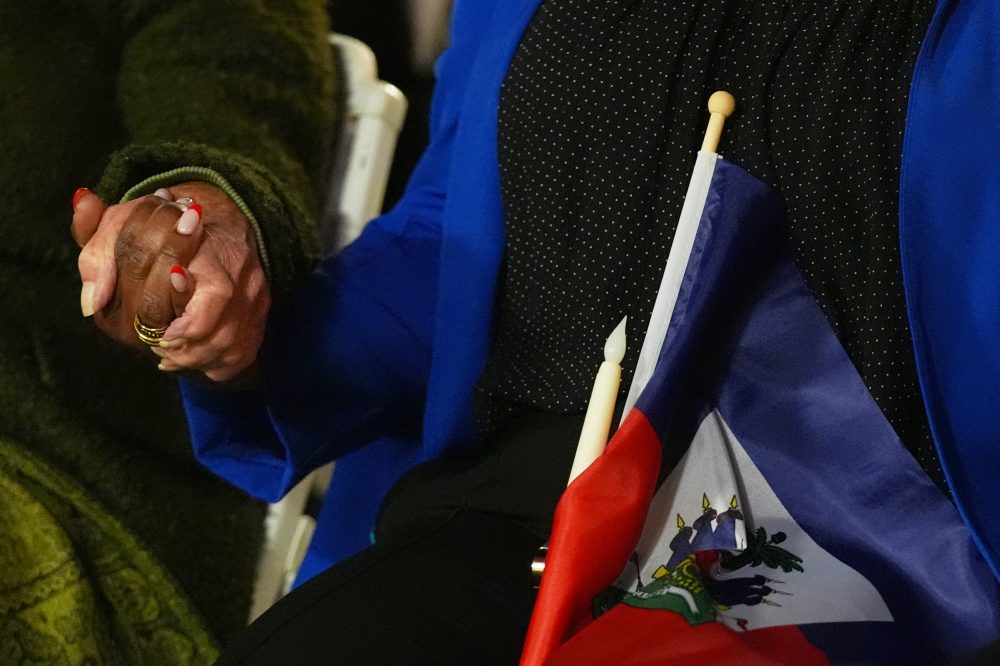

MIAMI — A 35-year-old nurse living in Kentucky has drafted her will, designated a legal guardian for her four children, and transferred her property into their names. She says she felt compelled to prepare as though she might not survive — because if she is deported back to Haiti, a country she left at the age of 9, she fears for her life.
Her anxiety intensified after the Supreme Court ruled Thursday to allow the Trump administration to strip legal protections from migrants who fled violence and natural disasters in Haiti and Syria. The decision sent waves of panic through those communities nationwide, leaving hundreds of thousands of people facing potential deportation.
“I have been living with this internal fear, it’s like preparing for a funeral, just in case I die when going to another country,” said the nurse, who asked to remain anonymous out of fear of being targeted for deportation.
She is one of approximately 350,000 Haitians who hold Temporary Protected Status, a designation that has allowed many of them to live and work legally in the United States for decades — many with children who are U.S. citizens. The ruling, set to take effect July 27, also affects around 6,000 Syrians and could open the door to ending protections for as many as 1.3 million people from 17 different countries.
Congress established Temporary Protected Status in 1990 as a way to halt deportations to countries considered too dangerous due to natural disasters, civil conflict, or widespread instability. The program allows recipients to work legally in the U.S. but does not offer a route to citizenship. It can be renewed in up to 18-month intervals if the homeland security secretary determines conditions in the home country remain unsafe.
The Biden administration roughly doubled the number of people covered under TPS. The Trump administration moved to end those protections, arguing the program was designed to be short-term, that the affected countries are now safe, and that the previous administration expanded it too broadly without properly screening recipients.
For TPS holders, life has long been uncertain — but Thursday’s Supreme Court decision may represent the most serious threat yet to their ability to legally live and work in the United States.
The Haitian community in Springfield, Ohio, was thrust into the national spotlight during the 2024 presidential campaign when Trump repeated unfounded claims that Haitians in that city were eating residents’ pets. Those claims have no basis in fact.
Even so, that community has been under relentless pressure since those remarks, according to Viles Dorsainvil, executive director of the Haitian Community Help and Support Center in Springfield.
Thursday’s ruling only deepened the anxiety. Dorsainvil said people are unsure whether to pull their money out of the bank, whether they can legally work, or whether their children can continue attending school. Many are already making contingency plans to leave behind their U.S. citizen children if they are forced out of the country.
“As a Haitian, I always say that life has not been easy for us, nothing has been easy for us and this is another chapter in our life. And we’ve been in that type of situation since after the presidential campaign when they came up with that type of conspiracy theory of us eating cats and dogs,” Dorsainvil said. “We’ve been targeted. We’ve been in the spotlight for their political agenda.”
Dorsainvil said his primary focus right now is keeping people calm and urging them not to make desperate decisions that could put them or their children in greater danger.
A Haitian mother in Florida — a 37-year-old with a 17-month-old son — woke up Thursday morning to the news of the ruling.
“I was reading it and I just for a moment there I just felt like I couldn’t breathe, like as if something was just sitting on my chest, like my lungs couldn’t extend,” she said, her voice breaking.
She also asked not to be named, fearing detention and deportation.
“I did not expect this. It is so hard to accept. Maybe I am in denial but I think this can’t be real,” she said. “I had so much hope.”
She came to the United States in 1995 at age 7 and completed high school here, but was unable to pursue a college degree due to her lack of legal status. That changed in 2010, when the U.S. extended TPS protections to Haitians following a devastating earthquake. With repeated renewals amid the gang violence that has since overtaken the country and displaced more than a million people, she was eventually able to apply, attend school, and become a nurse. She was scheduled to begin a new job in just two weeks — but now she is uncertain whether she is even authorized to work.
Industry groups warn that the long-term care sector — including nursing homes and facilities serving people with disabilities — could be especially hard hit, since TPS holders are heavily represented in caregiving roles.
The Kentucky nurse said she is trying to stay focused on her job caring for people with disabilities, but she cannot stop imagining the worst: being separated from her children, who are 13, 12, 8, and 2 years old, and being sent to a country she left more than two decades ago — one she now reads about only in terms of gang warfare, kidnappings, and killings.
“I don’t want to go there. I am very Americanized,” she said. “It’s like someone saying, hey, do you want to go live in a horror movie? Like, you know, no, I don’t.”