CHICAGO (AP) — While the White Sox were busy piling up runs in a lopsided 22-1 win over Kansas City on Friday night, a wedding was quietly taking place in a ballpark suite. Former Chicago slugger Ron Kittle exchanged vows with his girlfriend, Barbara, as team chairman Jerry Reinsdorf served as the officiant.
The ceremony unfolded in Reinsdorf’s suite right in the middle of a 10-run third inning. Chicago’s run total that night was the highest for the franchise since a 22-13 win at Boston on May 31, 1970.
Kittle, who won the American League Rookie of the Year award in 1983, joked the next day about Reinsdorf’s habits. “He’s so superstitious he might marry somebody today in the bottom of the third,” Kittle said.
Two of Kittle’s former teammates from the 1983 White Sox squad — Harold Baines and Greg Walker — attended the ceremony along with their spouses.
Kittle described keeping the event low-key out of respect for his new wife. “My better half doesn’t want any notoriety, recognition. She wants to keep it to herself,” he said. “But I invited Harold Baines and his wife and Greg Walker and his wife, and we did it and I was pretty excited. I think Jerry is excited. We’ve become a family over the years.”
The wedding came on the same weekend the 1983 White Sox — who captured the AL West title that year — were honored in a pregame ceremony before Saturday’s matchup between Chicago and Kansas City.
Kittle also revealed a unique distinction: he is himself an ordained officiant and performed a wedding ceremony in the outfield last season during Bill Veeck Day. “Now I’m the only player to marry someone at the park and get married at the park,” Kittle said. “And I’m good.”
Other members of the 1983 team who took part in the pregame reunion at Rate Field included Hall of Famer Tony La Russa, who currently serves as a White Sox special adviser, along with Richard Dotson and Greg Luzinski.
With America on the verge of its 250th birthday, demonstrators took to the streets in cities across the country Saturday, pushing back against the Trump administration’s official Freedom 250 celebrations with a message of their own.
The rallies offered what protesters described as a different vision for the nation — one that stands in contrast to the administration’s commemorative events marking the historic milestone.
A reporter visited one of the demonstrations held near the White House, where participants gathered to make their voices heard ahead of the landmark anniversary.
A steelworkers strike that erupted in Homestead, Pennsylvania back in 1892 may be more than 130 years old, but its lessons are still being felt in today’s economy.
NPR’s Don Gonyea traveled to Homestead to take a closer look at one of the most consequential labor battles in American history — and to ask what it can tell us about the state of workers and the economy right now.
The Homestead strike stands as one of the defining moments in the story of organized labor in the United States, and the community where it all unfolded remains a touchstone for understanding how workers have fought for their rights over the decades.
Alejandro Davidovich Fokina finally broke through for his first ATP Tour championship on Saturday, taking down Ethan Quinn 7-6 (4), 6-3 at the Mallorca Championships.
The second-seeded Spaniard made history in the process, becoming the first Spanish player to win the grass-court event in its six-year existence. The 27-year-old had reached tour-level finals five times before without capturing a title — Saturday marked his sixth attempt and his first victory.
Davidovich Fokina wrapped up the match in 1 hour and 44 minutes, closing it out with his sixth ace of the day against the unseeded American. He successfully defended three of four break point opportunities while benefiting from seven double faults committed by Quinn, who fell short in his own bid for a maiden tour title.
At the Lexus Eastbourne Open in England, rain brought the final to a halt Saturday before it could be completed. Sixth-seeded Ugo Humbert and Zizou Bergs were only into the first set when players were pulled from the court. At the time of the suspension, Humbert held a 2-1 lead in the opening set after saving a break point in the third game. Bergs had been serving at 15/30 in the fourth game when the delay began. After waiting more than three and a half hours, officials decided to push the conclusion to Sunday, with play set to restart at 11 a.m. local time from where it left off.
Both players have extra motivation heading into the final — Bergs is still chasing his first-ever ATP Tour title, while Humbert is looking to add his first championship of this season. The two are also scheduled to meet again in the opening round at Wimbledon next week.
The New York Rangers made a roster move Saturday, trading center Adam Edstrom to the Nashville Predators in return for prospect Massimo Rizzo and the 148th overall selection in the NHL Draft. The announcement came on the second day of the draft, which is being held at KeyBank Center in Buffalo.
Edstrom’s time with the Rangers spanned three seasons, during which he recorded 10 goals, six assists, and 189 hits. However, his 2025-26 campaign was cut short by injuries, limiting him to just 35 appearances.
The 25-year-old was originally selected 161st overall back in 2019.
As for Rizzo, also 25, the Rangers were not anticipated to extend him a qualifying offer, meaning he is expected to become a free agent later this week.
This deal follows another trade the Rangers completed on Friday, when they swapped prospects with the Montreal Canadiens — sending Brett Berard to Montreal in exchange for William Trudeau.
The move to trade Edstrom comes as players like Jaroslav Chmelar and Adam Sykora have stepped up within the organization, leaving little room on the roster. By moving Edstrom, New York opens the door for other up-and-coming players to compete for a spot.
LOS ANGELES — In a city built around the car, something unusual is happening: soccer fans are willingly hopping on buses and trains to get to World Cup matches.
On every match day, tens of thousands of fans — both American and international — are flooding into Union Station in downtown Los Angeles to board special buses headed directly to the Inglewood stadium. Thousands more are gathering in the Fan Zone set up inside and outside the station’s historic Art Deco building to watch games on big screens.
The moment fans step inside, they’re greeted by “ambassadors” ready to point them toward the buses, the Fan Zone, or — if the heat and noise become too much — toward “calming pods” and hydration stations.
“We’ve had folks come in who are overwhelmed by all the sounds and the activity happening at the station,” said Armando Roman, a manager in LA Metro’s civil rights, racial equity and inclusion and accessibility group. “We’ve also had folks who have come in and used it to pray, we’ve also had folks come in and breast-feed, all types of different reasons.”
LA Metro, the region’s public transit authority, isn’t exactly cashing in on the World Cup. A round trip to the stadium runs just $3.50, and the agency has spent heavily — hiring hundreds of extra staff, wrapping buses in World Cup branding, and managing the complicated traffic and security situation around the stadium. But the agency sees its investment as part of a larger goal of building what it calls “the most ambitious transportation infrastructure program in the United States.”
For fans who’ve done their homework, choosing transit over driving in car-obsessed Los Angeles was an easy call.
“We didn’t want to sit in traffic and this was a lot less expensive,” said Crystal Gristina, 46, from New Orleans, who was heading to Thursday’s U.S.-Turkey match along with her children, husband, and friends. Renting a car and shelling out around $200 for stadium parking was simply not something they were willing to do.
Brandon Luna, 29, of San Diego, and his uncle Brian Stanton, 51, from Maryland, showed up draped in American flags, stars-and-stripes bandanas, and U.S. soccer shirts. The two had just stepped off an Amtrak train from San Diego and were waiting in line for a World Cup bus.
“On the Amtrak you chill, you just sit, you can have a drink, watch the ocean go by,” Luna said. “I saw all the World Cup buses around the county and said ‘Yup, that’s what I’m going to do.’”
Stanton admitted he had doubts about riding public transit in Southern California, but came around quickly. “The train was fun,” he said, noting that some U.S. fans aboard were dressed as historical figures like George Washington.
The numbers back up the enthusiasm. More than 20,000 people have ridden the special World Cup buses to each match, with many thousands more arriving via regular bus and train routes. The June 18 Switzerland-Bosnia and Herzegovina match drew more than 52,000 transit riders — exceeding half the stadium’s capacity. LA Metro reports that ridership has continued to grow as the tournament progresses.
Back inside Union Station, hundreds of Colombia and Germany supporters were cheering loudly in front of a giant TV screen in the Fan Zone, even though they weren’t heading to the stadium that day. For many, the communal experience was the whole point.
“We just wanted the World Cup feeling, the fan-fest, to be part of it, and just feel the excitement,” said Jorge Yunda, 45, an Ecuadorean American who brought his wife, sons, a grandson, his sister-in-law, and her family to the station. “We love it. As South Americans we feel the passion.”
BELGRADE, Serbia — Serbian President Aleksandar Vucic announced Saturday that he intends to leave office within the coming weeks, opening the door to early elections after prolonged youth-driven demonstrations rattled his long-standing control over the country.
Vucic stopped short of naming a specific date for his departure or clarifying whether the upcoming vote would be for a new parliament, a new president, or both. He has previously hinted at the possibility of stepping down from the presidency, with speculation that he may attempt to shift into the role of prime minister — a position that carries more formal authority in Serbia.
Under Serbia’s election rules, Vucic is barred from seeking a third presidential term, as he is currently finishing his second. Both presidential and parliamentary elections are already scheduled for next year.
Speaking to thousands of his supporters gathered in the heart of Belgrade, Vucic declared, “I will be president for several weeks more and then I will submit my resignation.” He added that he plans to support his right-wing Serbian Progressive Party in the elections ahead, telling the crowd, “We will win more convincingly than ever before.” He acknowledged that the rally was likely the final time he would speak to supporters in his capacity as president.
University students have been at the forefront of more than a year of demonstrations against what they describe as Vucic’s increasingly authoritarian style of governing. Protesters have been pushing for early parliamentary elections for over a year, though Vucic had repeatedly avoided committing to a timeline.
Vucic and his populist party have steadily consolidated power over Serbia during the past 14 years. A deadly accident at a train station in northern Serbia in November 2024 — in which a collapsing concrete canopy killed 16 people — ignited months of large-scale public protests calling for accountability. Demonstrators have pointed to what they say is corruption-driven negligence in major government infrastructure projects as the root cause of the Novi Sad railway station tragedy.
Vucic has responded aggressively to the protest movement, and Serbia has also drawn criticism from the European Union over what officials describe as a retreat from democratic standards, including restrictions placed on the media. Hundreds of demonstrators have been taken into custody, and Serbia’s police force has faced accusations of using excessive force and making arbitrary arrests.
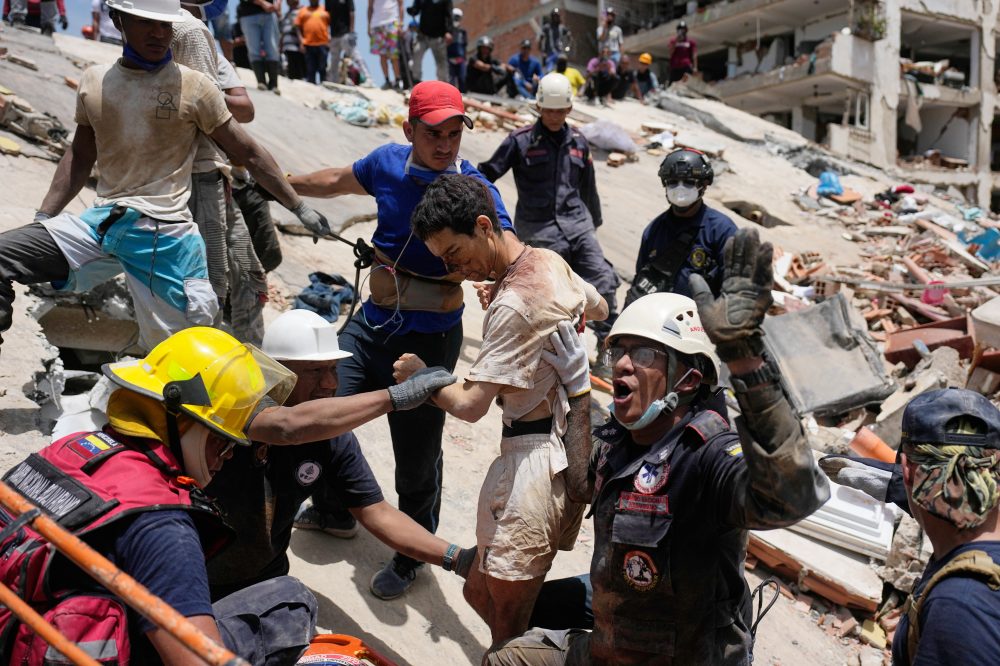
LA GUAIRA, Venezuela — When Daniel Cordero was pulled from the wreckage of a collapsed building in Catia La Mar, his face covered in blood, rescue workers carefully lifted him onto a stretcher while onlookers recorded the moment on their phones.
Three days after a pair of devastating earthquakes struck Venezuela, Friday’s rescue of Cordero and others is giving a glimmer of hope to families still desperately searching for missing loved ones.
The earthquakes — measuring 7.2 and 7.5 in magnitude — struck on Wednesday, and the death toll has been rising ever since. Government officials confirmed Saturday that at least 1,430 people have lost their lives, a number authorities expect to keep climbing. Thousands more have been wounded, and tens of thousands remain unaccounted for.
Search efforts pressed on through Saturday, driven largely by ordinary citizens, while an increasing number of international rescue teams have arrived to assist. Emergency aid organizations typically consider the first 48 to 72 hours the most critical window for finding people alive, though survivors can endure longer if they have access to food and water.
As volunteers and family members labored beneath a blazing sun, some of their efforts drew cheers from onlookers. A 4-year-old child was rescued alive. An elderly man, his eye blackened from the ordeal, was greeted with applause when he was brought out safely.
But for many others, the outcome has been devastating.
In La Guaira — one of the hardest-hit areas — Daritza Polo received the crushing news Friday that her mother had not survived. “I have no words,” she said.
The grief in La Guaira has been overwhelming. Siblings Leyder Rojas and Leymar Rojas, ages 3 and 10, were recovered from the debris wrapped in a sheet. Their mother collapsed in anguish as two women tried to support her, and she fainted to the ground. Rescue operations continued even as she lay there.
The children’s uncle, Ramón Eduardo, struggled to hold back tears as he described the scene. “It’s horrible, we have seen way too much,” he said. “We got one alive, thank God” — referring to the siblings’ 4-year-old brother Adrián — “but not all of them, we could not get them.”
For some families, the absence of any news at all is what they are clinging to.
The apartment building in La Guaira where Noribel Mendoza lived with her two sons — Andrés David Molina Mendoza, 21, and Ángel Eduardo Molina Mendoza, 19 — came down Wednesday, and no one has heard from either young man since.
“We don’t know if they were there, they weren’t there, if they’re in the hospital or a clinic, still nothing,” said the boys’ aunt, Ángela Molina Castro, 30, speaking by phone from Puerto Píritu in Anzoátegui State.
Molina Castro said another aunt has been standing outside the collapsed building waiting for any update, but no official rescue teams have appeared. Neighbors and friends have been attempting to move the debris by hand, though much of it is too heavy to shift.
On Friday, a friend and his pregnant wife were confirmed among the dead. Molina Castro said she hopes she does not receive similar news about her nephews.
“Even if they are not family, friends or acquaintances, they are still human beings like us,” she said of all the victims. “It’s a tragedy that I’m living for the first time in my life.”
Flor María González has been waiting since Wednesday for any word about her daughter, Dilinyer Caroley Rada González, 33, and three grandchildren — Jonas, 10, Ashley, 8, and Angely, 6 — after the apartment building where they lived in La Guaira came down.
González had just returned to the western city of Maracaibo after a visit with her two daughters near Caracas when she learned of the earthquake. She has been watching from a distance as neighbors and rescue teams comb through the wreckage.
Her other daughter has kept a vigil outside Rada González’s building, holding onto the hope that her sister and the children will be found alive.
President Donald Trump announced Saturday that he plans to nominate Lance Schroyer, a former Oklahoma state trooper, to take over as the director of Immigration and Customs Enforcement.
Trump made the announcement on his Truth Social platform, describing Schroyer as a “PATRIOT with real operational experience, and proven leader with DECADES of experience locking up the worst of the worst.”
The move comes following the resignation of former ICE director Todd Lyons, who stepped down at the end of May. Since then, David Venturella, who previously worked as an executive at a private prison company, has been filling the role as acting head of the agency.
Department of Homeland Security Secretary Markwayne Mullin, a former congressman who also hails from Oklahoma, is still getting settled into his position leading the Cabinet department that oversees ICE. Mullin has pledged to keep his agency out of the spotlight and has signaled a more measured approach to immigration, though he is expected to support the president’s push for mass deportations.
Mullin wasted no time praising the nomination on X, writing: “With over 29 years of law enforcement experience, Lance will play a vital role in helping deliver on the President’s mandate from the American people to target, arrest, and deport illegal aliens.”
WASHINGTON — President Donald Trump announced Saturday that he plans to nominate Lance Schroyer to serve as the next director of U.S. Immigration and Customs Enforcement.
Taking to social media, Trump highlighted Schroyer’s background, writing, “Lance has over 29 YEARS of Law Enforcement experience in Oklahoma.” The president also urged lawmakers to act quickly, adding, “The Senate must CONFIRM Lance, IMMEDIATELY — Do not delay.”
The nomination comes after years of ICE operating under leaders serving in a temporary “acting” capacity. The last time the agency had a director formally confirmed by the Senate was in early 2017.
Since returning to office last year, Trump has placed immigration enforcement at the top of his agenda. However, civil rights organizations have pushed back, arguing that the administration’s enforcement tactics infringe on civil liberties and have created a climate of fear — particularly for ethnic minority communities.
ICE has played a central role in that enforcement push, carrying out immigration detentions and deportation efforts across the country. The agency drew intense national scrutiny in January after ICE agents fatally shot two American citizens in Minnesota — Alex Pretti and Renee Good — an incident that triggered widespread protests.
The president has defended the immigration crackdown, stating its goal is to reduce illegal immigration and strengthen national security.
Senior officials from both Mexico and the United States came together Saturday to open a sterile fly production facility in Metapa de Dominguez, a town in the southern Mexican state of Chiapas near the Guatemalan border — marking a significant step in the ongoing battle against the New World screwworm.
Mexican President Claudia Sheinbaum and U.S. Agriculture Secretary Brooke Rollins were both present at the opening of the plant, which was built as a joint project between the two nations at a cost of more than $50 million. Once fully operational, the facility is expected to produce as many as 100 million sterile flies per week, which will be released to reduce the population of wild screwworm.
The screwworm is a parasite that burrows into the flesh of warm-blooded animals and can prove deadly if left untreated.
Experts have cautioned that even with the new plant running at full capacity, the total number of sterile flies available will still fall short of what would be needed to fully wipe out the pest.
The plant’s opening comes more than 18 months after Mexico recorded its first confirmed screwworm case back in November 2024. The infestation gradually moved northward through Mexico before crossing into the United States, where the first cases in several decades were confirmed in Texas in early June. Those U.S. cases have raised serious alarms about the potential impact on the American cattle industry.
“Our countries have beaten this before, 40, 50 years ago. We will beat the New World screwworm again sooner than anyone would have thought because of the extraordinary work that is going to happen at this facility,” Rollins said at the event.
Warning signs had actually emerged as far back as 2023, when the Panama-United States Commission for the Eradication and Prevention of Screwworm — known as COPEG — flagged that the parasite was moving northward. Despite those early alerts, officials were unable to stop its spread. By the time action was taken, the screwworm had already infected more than 30,000 animals across Mexico. Plans for the new plants in both Chiapas and Texas were not announced until 2025.
In response to the outbreak, the U.S. has kept its border largely closed to live cattle from Mexico since May 2025. That closure has disrupted a trade relationship that previously brought more than one million animals annually into U.S. feedlots. The shortage has hit Texas particularly hard, with some feedlots sitting nearly empty and cattle inventories reaching historically tight levels.
The trade disruption has also changed how Mexican ranchers operate. Many who previously exported live cattle to the north have instead begun fattening and processing animals within Mexico, spurring investment in domestic feedlots and slaughter facilities. As a result, Mexican beef shipments to the U.S. rose sharply in 2026.
President Sheinbaum addressed the importance of cross-border cooperation at the ceremony. “Animal diseases, pests and the challenges of food safety aren’t limited by borders,” she said. “In the face of those challenges, the best response is to team up, share our experiences and build solutions together.”
The new Chiapas facility is projected to roughly double the number of sterile insects available for release beyond what COPEG’s existing plant in Panama currently provides. That Panama plant has been running at full capacity, producing around 100 million flies weekly. Most recently, those sterile flies have been deployed along the U.S.-Mexico border near Texas.
Crews battling what is currently the largest active wildfire in the country are facing an uphill battle as historic weather conditions fuel dangerous fire behavior in southern Utah.
The blaze, which is burning near Marysvale in southern Utah, has been driven by extreme weather, and conditions are not expected to improve anytime soon. Officials say the fire is likely to continue behaving erratically through the weekend.
Firefighters are working under what experts are calling critical fire weather — a combination of factors including dry conditions that make containing the massive blaze significantly more challenging.
The British government has announced a two-pronged immigration approach: opening new legal pathways for eligible refugees while simultaneously making it easier to remove those who are in the country without authorization.
Under the new plan, community organizations, universities, and businesses would be able to sponsor refugees to relocate to the United Kingdom. Officials said the initiative draws inspiration from a comparable program in Canada that has successfully resettled approximately 400,000 people since 1979.
Home Secretary Shabana Mahmood outlined the approach on Friday, stating, “I will open new legal routes for genuine refugees, while closing loopholes that have been too often abused.”
Mahmood also announced that upcoming immigration legislation would target what she described as “abuse” of existing human rights laws and crack down on “vexatious claims.” The bill would also narrow the legal definition of family to include only immediate relatives.
Some critics have long argued that the European Convention on Human Rights is frequently used as a legal shield to block the deportation of individuals who have no lawful right to remain in the UK.
The policy announcement came as Mahmood faces uncertainty about her future in the role, following Prime Minister Keir Starmer’s announcement Monday that he intends to resign. Starmer, who has been in office for two years, saw his standing with both his party and the public diminish due to a series of missteps and poor judgments. He is expected to leave office within weeks once the governing Labour Party selects a new leader.
Former Greater Manchester mayor Andy Burnham is widely anticipated to succeed Starmer as Britain’s next prime minister, likely without a formal party contest.
Immigration has emerged as a deeply divisive political issue across Britain and many other Western nations, as large numbers of migrants flee conflict, poverty, climate-related hardships, and political persecution in search of better lives.
In the UK specifically, public debate has centered on migrants making dangerous crossings of the English Channel in overcrowded boats operated by smugglers, as well as growing frustration over the cost of housing tens of thousands of asylum seekers at taxpayer expense.
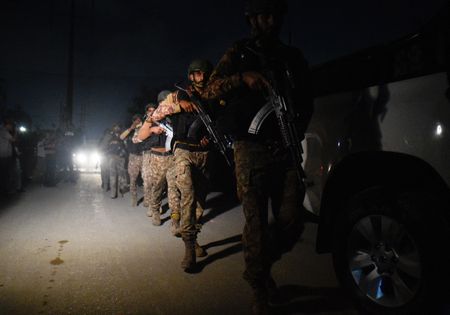
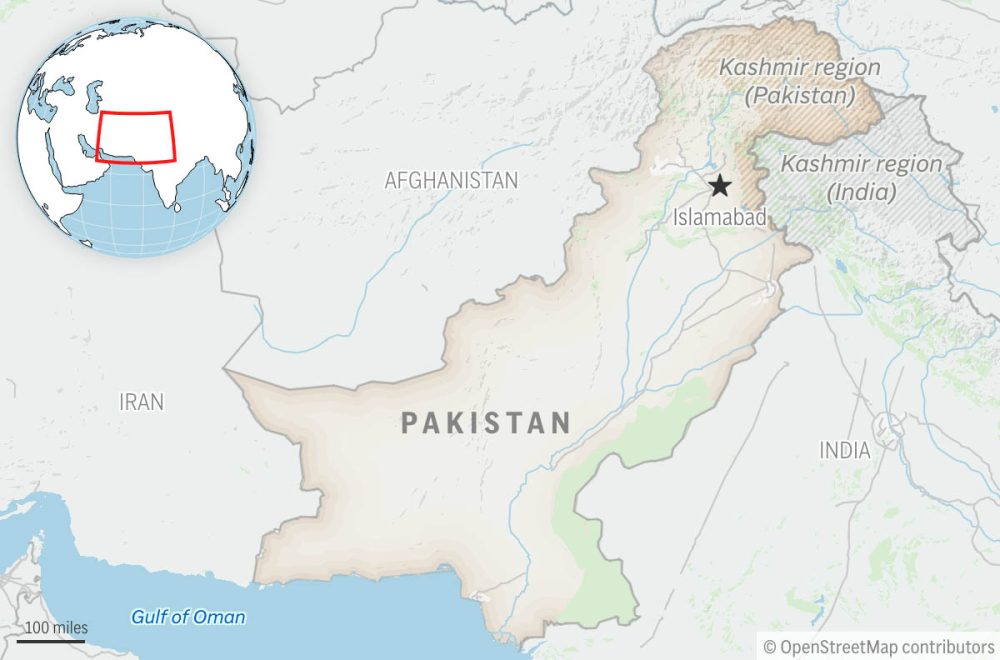
At least three members of Pakistan’s Sindh Rangers paramilitary force lost their lives Saturday following an attack on the force’s headquarters in Karachi, the Dawn newspaper reported.
The assault involved both an explosion and gunfire along a major road in the city, situated near multiple universities and Pakistan’s meteorological department, according to Pakistani media outlets.
Sindh Inspector General Javed Alam Odho confirmed to Dawn that three militants were also killed during the attack on the Sindh Rangers’ local headquarters.
A Reuters journalist who was at the scene reported that the shooting had stopped and the area had returned to calm. Authorities are describing this as the most significant attack in Karachi since an October 2024 explosion that targeted a Chinese convoy and claimed the lives of two Chinese nationals.
While large-scale attacks in Pakistan’s major urban areas have grown increasingly uncommon in recent years, a rise in militant activity along the country’s border with Afghanistan has sparked fears that violence could once again spread into the nation’s cities.
Civilian lives were lost on both sides of the Russia-Ukraine border Saturday as drone strikes and artillery fire struck multiple areas, according to local officials.
In Russia’s Bryansk border region, two people were killed when a Ukrainian drone hit their vehicle in a village close to the border. The region’s acting Governor Yegor Kovalchuk shared the news on Telegram.
Russia’s Defence Ministry, as cited by Russian news agencies, reported that 124 Ukrainian drones were shot down over Russian territory during a 12-hour window between 8 a.m. and 8 p.m. local time (0500-1700 GMT).
Moscow Mayor Sergei Sobyanin released a series of updates throughout the day reporting that Ukrainian drones headed toward the Russian capital had been intercepted. Russian news agencies tracking the situation tallied approximately 21 drones intercepted over the course of the day.
On the Ukrainian side, Oleksandr Ganzha, the governor of the southeastern Dnipropetrovsk Region, reported that a combination of more than 40 drone strikes and artillery attacks near the city of Nikopol resulted in one fatality and one injury.
Nikopol sits across the Dnipro River from the Russian-controlled Zaporizhzhia nuclear power plant and has been a repeated target of Russian attacks.
The Toronto Blue Jays have landed outfielder Jesus Sanchez on the 10-day injured list following a right ankle sprain he suffered during Saturday’s game.
Along with that move, the club promoted infield prospect Sean Keys and outfielder Yohendrick Pinango from Triple-A Buffalo. To make room on the roster, outfielder Davis Schneider was optioned back down to Buffalo.
Sanchez went down with the injury during Friday’s 5-4 home loss to the Texas Rangers, rolling his ankle while hauling in a catch during the top of the seventh inning. X-rays taken after the game came back negative.
The 28-year-old Sanchez has been a solid contributor in his first year with Toronto, hitting .274 with seven home runs and 29 RBIs across 73 games. He came to the Blue Jays via a February 13 trade that sent outfielder Joey Loperfido to the Houston Astros.
Keys, 23, wasted no time making his presence felt, stepping right into the starting lineup for his major league debut Saturday against the Rangers. He started at first base and batted sixth in the order.
Rated the No. 14 prospect in the Toronto organization by MLB Pipeline, Keys was a fourth-round draft selection in 2024 out of Bucknell. Between stops at Double-A New Hampshire and Triple-A Buffalo this season, he has put up strong numbers — batting .284 with 21 home runs and 54 RBIs in just 67 games.
Pinango, 24, is no stranger to the big league roster, having made his MLB debut on April 26. In 43 games with the Blue Jays this season, he is hitting .283 with four home runs and 18 RBIs.
Schneider, 27, struggled at the plate during his time in Toronto, batting .153 with three home runs and 12 RBIs in 49 games before being sent back to Buffalo.
According to a report from ESPN published Saturday, the Boston Celtics plan to bring back forward Ron Harper Jr. on a fresh three-year contract worth $9 million.
Rather than exercise the existing $2.6 million team option they held for the 2026-27 season, the Celtics are choosing to let it lapse and instead lock Harper into the longer-term agreement.
The 26-year-old appeared in 29 games during his debut season with Boston in 2025-26, including three starts, and put up averages of 4.2 points and 11.0 minutes per outing.
Across parts of four NBA seasons — with stints on the Toronto Raptors, Detroit Pistons, and Celtics — Harper has averaged 3.7 points per game over 40 appearances, with three starts to his name.
Harper went undrafted out of Rutgers in 2022. He comes from an NBA family: his father, Ron Harper, won five NBA championships during his playing career, and his younger brother, Dylan Harper, currently plays guard for the San Antonio Spurs.
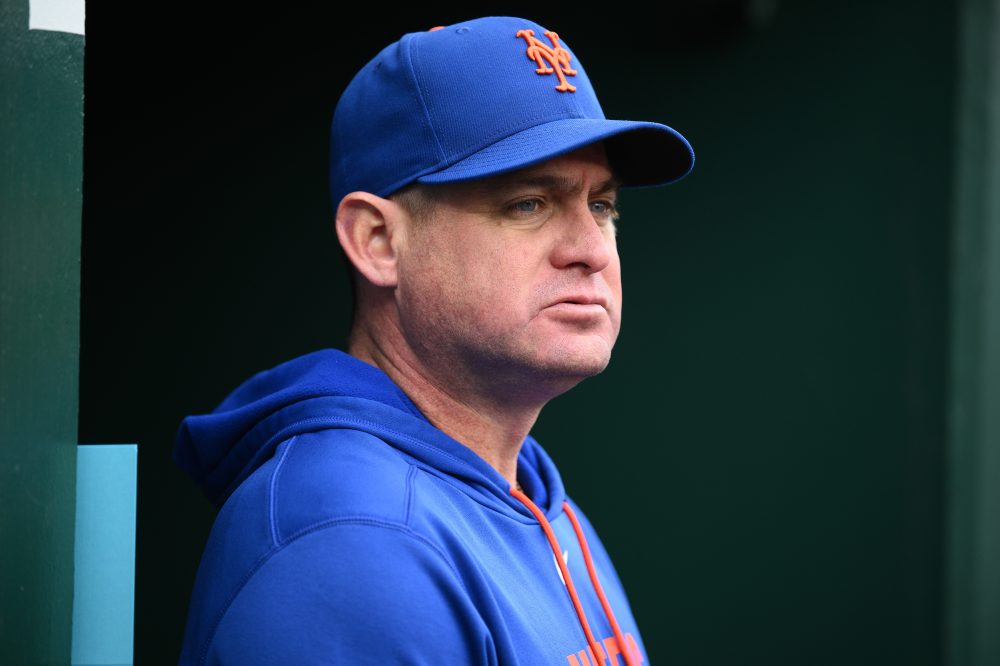
The New York Mets have shown the door to manager Carlos Mendoza — and he’s far from the only one who’s been let go this year.
Pete Alonso, Edwin Diaz, Brandon Nimmo, and Jeff McNeil are all gone. Last year’s entire coaching staff was replaced. And more roster moves could be coming before the Aug. 3 trade deadline, with pitchers Freddy Peralta and Clay Holmes potentially on the block.
Over the past eight months, president of baseball operations David Stearns has overhauled a franchise that, not long ago, looked like a World Series contender. On June 12, 2025, the Mets had the best record in all of Major League Baseball. Things have gone sideways in a big way since then.
The most recent major shake-up came Friday — exactly the midpoint of the season — when Mendoza was dismissed and replaced by Andy Green, a former San Diego Padres manager who had already been working within the Mets organization. Green was given the interim manager title for the remainder of the season.
“In my estimation, our estimation, change is needed right now,” Stearns told reporters. “Clearly, we’ve fallen short.”
At the halfway mark, the Mets stood at 34-47, sitting 15 games behind the NL East-leading Atlanta Braves and 9.5 games out of the final wild-card spot. Then they went out Friday night and dropped their seventh game in a row, falling 2-1 to the rival Philadelphia Phillies. During that seven-game skid, New York has been outscored 56-23.
“For whatever reason, we haven’t come together and found, I guess, what our identity is,” said infielder Bo Bichette.
Mets owner Steve Cohen had set high expectations for a club that hasn’t won a World Series since 1986. The team entered this season carrying baseball’s largest payroll at $358 million, with an additional $124 million projected in luxury tax payments.
“There is no sugar-coating it: This season has been a disappointment and our fans deserve better than what we’ve delivered,” Cohen said in a written statement.
With Stearns having cut loose so many players and now a manager, the question looming over the organization is how much longer he has to turn things around before Cohen decides a front-office change is also needed.
Stearns, who grew up a Mets fan in Manhattan, partnered with Mendoza in their first season together to lead the club on a surprising run to the 2024 National League Championship Series. The following offseason, the team signed slugger Juan Soto to a record-breaking $765 million, 15-year deal, and the Mets raced to a 45-24 record through June 12 of that year — the best mark in the majors.
Since that high point, however, the Mets have gone 72-103 and missed the playoffs last season entirely. This year, injuries to Soto, Holmes, Francisco Lindor, and others have hampered the club. Stearns drew the ire of fans by allowing beloved players Alonso and Diaz to leave as free agents last offseason. Nimmo and McNeil were traded away, and the players brought in to replace them — including Bichette, Marcus Semien, Jorge Polanco, and Luis Robert Jr. — have either spent significant time on the injured list or failed to live up to expectations.
“I understand fans’ skepticism. If I were sitting in the fans’ seat, I would share that,” Stearns said. “This is never on one person. It’s certainly not all on Carlos. As I said, I take responsibility for our record on the field. I take responsibility for the entirety of our baseball operations department.”
When asked directly at a Citi Field press conference whether he had thought about stepping down, Stearns — currently in the third year of a five-year contract — was unequivocal.
“I have not,” he said. “I believe that we are building the foundation of an organization that can deliver what we all want. I don’t believe that our record on the field this year is indicative of some of the advancements that we’ve made as an organization. But clearly, our record is nowhere near good enough.”
Stearns also indicated that ownership remains in his corner, saying that he and Cohen speak regularly and that Cohen has expressed continued support.
Looking ahead, the organization may pivot toward a sell-off approach at the trade deadline. Peralta, a two-time All-Star pitcher acquired from Milwaukee in exchange for two highly regarded prospects, is set to become a free agent after the World Series. Holmes, who could return from a broken leg in August, also has the ability to opt out of his $12 million player option next offseason — a move that appears likely. That reality makes both players potential trade candidates before Aug. 3.
The Mets already moved struggling pitcher David Peterson — the team’s longest-tenured player — to the Chicago Cubs on Thursday in exchange for a minor leaguer. Peterson is also eligible for free agency this fall.
“I understand we have an uphill battle ahead of us this year, but we’re not turning the page,” Stearns said. “I think sometimes a new voice, a new perspective, a new view, helps. And sometimes it’s really difficult to explain why or how. But at this point, it was time to try.”
Green, 48, is a former major league infielder who joined the Mets in 2023 as senior vice president of baseball development and had been overseeing their farm system. After the season ends, Stearns said Green will return to a front-office role, and the team will conduct a full search for a permanent manager. Alex Cora, who was let go by the Boston Red Sox in April, is expected to be a sought-after candidate for multiple teams, including potentially New York.
The Mets are also reportedly considering bringing in an experienced general manager to work alongside Stearns and provide additional front-office support.
“I understand our fans’ frustration and anger. I think I share that. And we will do everything we can to improve,” Stearns said.
ABUJA, Nigeria — Armed gunmen stormed a farming community in northwestern Nigeria on Friday, leaving at least 15 people dead, according to an official statement released Saturday.
The deadly raid occurred in the Talata Mafara area of Zamfara state, a region that has endured persistent and deadly violence over the years. No group has stepped forward to claim responsibility for the attack.
Abdullaziz Yari, a national lawmaker representing the district, took to social media to condemn the assault, calling it a “terrorist attack” against the community.
The elected local government chairman overseeing the area, Yahaya Yari — no relation to the lawmaker — was captured on video at the victims’ funeral Friday evening. In an emotional appeal, he urged President Bola Tinubu and the junior defense minister, who comes from the same region, to take action and put an end to the ongoing killings.
This latest attack follows a similar incident earlier this month, when gunmen killed 17 farmers and injured at least 13 others while they were working in their fields in Goron Namaye, another part of Zamfara state.
According to the United Nations, an ongoing insurgency in northern Nigeria has claimed thousands of lives and forced millions of people from their homes. Armed criminal groups operating in the north-central and northwestern parts of the country are known to kidnap people for ransom, extort farming communities, and carry out illegal mining operations.
Despite pledges from the Tinubu administration to bring the crisis under control, the violence has continued unabated.
Last year, Nigeria signed a military cooperation agreement with the United States after a diplomatic dispute in which U.S. officials claimed a “Christian genocide” was underway in the country. Nigeria’s government denied the characterization, and analysts noted that the situation is far more complex — with victims often targeted regardless of their religious background. Nigeria is broadly divided between a Christian-majority south and a Muslim-majority north.
New federal data shows that approximately 3 million fewer Americans were enrolled in Affordable Care Act health insurance plans this past February compared to the same month in 2025.
The U.S. Department of Health and Human Services released the report on Friday, noting that enrollment fell 13% — dropping from 22.1 million people in 2025 down to 19.2 million this year. The agency suggested the decline may be tied to a federal crackdown on fraudulent or so-called “phantom” enrollments. However, health policy analysts believe the more likely cause is the January 1st expiration of federal subsidies, which triggered steep premium increases that many enrollees simply could not afford.
Cynthia Cox, a vice president and director of the ACA program at the healthcare research nonprofit KFF, said the impact on real people is undeniable. “We know that real people lost their health insurance coverage,” she said, pointing to survey data from people who had dropped their plans. “This coverage loss happened at the same time millions of people faced double or even triple digit increases in their premium payments.”
The newly released figures were compiled in April but reflect coverage as of February — making this the federal government’s first official snapshot of how unpaid first-of-the-year bills affected total plan enrollment, following the close of a nonpayment grace period.
An earlier federal estimate from January had already shown about 800,000 fewer sign-ups compared to the prior year, marking the first enrollment decline in four years during that stage of the open enrollment window.
Cox said KFF anticipates enrollment will keep sliding throughout the year, potentially bottoming out at around 17.5 million people. That would represent a significant setback for the government’s primary subsidized health insurance program for working-age adults who don’t qualify for Medicaid. In recent years, ACA plans have become a go-to option for gig workers, farmers, ranchers, hairstylists, and others who don’t receive health benefits through an employer.
The subsidies that lapsed this year had been at the heart of a contentious congressional debate last fall, with Democrats and a number of Republicans pushing for their extension. The rising cost of health coverage — across ACA and other insurance programs — is emerging as a major issue heading into the November elections, with voters consistently ranking affordability among their biggest concerns.
American consumers turned to Amazon’s annual Prime Day sales event in force, snapping up deals on electronics, appliances, children’s products and everyday household items. According to data firm Adobe Analytics, shoppers spent more than $26.4 billion between June 23 and June 26 — a 9.3% increase compared to the same event last year.
Retail experts say the jump in spending doesn’t necessarily mean consumers are feeling flush. Instead, they point to a combination of persistent inflation and shoppers taking advantage of steep markdowns to finally purchase higher-priced items they had been putting off — things like electronics, toys, appliances and personal care products.
Adobe noted that the strong discounts during the four-day event pushed many buyers toward those pricier purchases, and warned that retailers may need to keep offering significant price cuts to move products during the upcoming holiday shopping season.
CFRA Research analyst Arun Sundaram pointed to another factor that may have fueled spending: tax refunds. He said those refunds “could have provided a sizable tailwind to a lot of these discretionary categories.” He cautioned, however, that tax refunds won’t be a factor for most shoppers heading into the fall and winter months.
According to data from the U.S. Internal Revenue Service, tax refund amounts climbed 11.1% to $3,462 in 2026, giving many households extra cash to spend on purchases they had been holding back on.
Shoppers also loaded up on back-to-school items, kids’ clothing, personal hygiene products and home goods. Sonia Lapinsky, managing director of retail at consultancy Alix Partners, said the buying patterns suggest Prime Day customers were stocking up on “things that they were going to buy anyway.”
“It’s really pointing to that fatigued consumer. They’re not necessarily spending more — they’re just trying to spread what they have over better deals and discounts,” Lapinsky said.
Discount levels during this year’s Prime Day were roughly in line with last year’s event, Adobe reported. Electronics averaged a 24% discount compared to 23% last year, apparel was also discounted at 24% versus 23% previously, and toys were marked down 20% compared to 19% a year ago.
A separate analysis by data firm Numerator, which tracked more than 178,000 Prime Day orders, found that the average order size dropped to $47.66, down from $53.34 last year. Some analysts say that decline is a sign that consumer spending power is weakening.
HOUSTON — World Cup fever may be sweeping the nation, but in Houston, Texas, there’s another sport quietly making serious noise. Across the city, the sound of leather ball striking willow bat is becoming more familiar as baseball fields make room for cricket pitches and the centuries-old game gains a foothold in the Lone Star State.
Much of the sport’s momentum in Houston comes from communities with deep ties to cricket-playing nations — immigrants and their children from India, England, the West Indies, Australia, and South Africa. But organizers have bigger ambitions, hoping to bring the game into communities where it hasn’t yet caught on, using soccer’s American success story as their roadmap.
Surya Saladi founded what is now known as the Triggers Cricket Consortium, or TCC, back in 2004. The organization has become a major engine for growing cricket throughout Harris County and the surrounding region. What began as an adult club evolved 12 years ago to include youth teams, and the response has been remarkable.
“We started with 30 kids but now have over 1,000 players between the ages of seven and 17 playing youth cricket in Houston,” Saladi told Reuters. “We have adult teams that compete in the Houston Cricket League, our own tapedball league with around 45 youth teams and we also run high-performance courses for youth cricketers.”
Tapedball cricket is a modified version of the sport that uses a tennis ball wrapped in tape, producing a smoother, heavier ball that works on virtually any playing surface.
TCC currently has access to 35 cricket grounds across the Houston area, ranging from traditional grass wickets to astroturf facilities. Still, Saladi sees room for much more growth.
“Cricket is a foreign sport in this country and getting the community backing is very important,” he said. “Slowly we are building an eco-system where cricket will be an affordable sport and gets the attention it deserves. For us to make this a mainstream sport, getting into schools is important. If you go back to the 1980s, soccer was in a similar situation, it never got the attention it deserved. But what worked for soccer was that at a grassroots level it grew, even if the commercial appeal wasn’t there at the time.”
A Dutch coach who runs an Atlanta-based academy team regularly brings his players to Houston for tournaments and has been struck by how much the sport has expanded across the country.
“There is so much cricket being played, it is unreal,” said Job van Bunge. “When I came out here for the first time it was all baseball diamonds and now it is cricket pitches and indoor centres with 10 lanes. The participation rates are growing and I don’t think it is stopping anytime soon.”
Gholam Nousher, a former Bangladesh international cricketer, also sees the quality of play improving alongside the numbers.
“The standard is growing. Players are starting to understand the game because professional coaches are here,” he said. “Even with women’s cricket. We have a girls’ team starting from the age of seven. Houston’s cricket is growing.”
The sport has also become a viable professional pursuit in the United States, giving young players something to aim for beyond just recreational competition.
Fifteen-year-old Ishaan Malpani, an all-rounder in Houston’s youth club system, already has his sights set on an international career.
“I have been playing for almost 10 years,” he said. “My Dad introduced me to the game and I loved it. My ambition is to play all over the world. I play games on Saturday and Sunday and train almost every day of the week.”
Dipak Singh, a committee member with the Houston Youth Cricket Consortium, says those kinds of dreams are no longer out of reach.
“Five kids out of Houston have recently made the United States Under-19 team,” Singh said. “One of the biggest tournaments in the country happens in Houston each year, the National Youth Cricket Tournament. Fifty-six teams come and play over four days. Parents and kids are now thinking about professional cricket, so the mindset is changing.”
BELGRADE — Serbian President Aleksandar Vucic declared Saturday that he intends to leave office within weeks, triggering early presidential and parliamentary elections in the country.
The populist leader made his announcement against the backdrop of approximately a year and a half of widespread anti-corruption protests led by students. Those demonstrations were sparked by the collapse of an awning at a railway station in Novi Sad, a city in northern Serbia, which claimed the lives of 16 people.
Just days before Vucic’s announcement, students gathered in Novi Sad to mark the 2024 deaths and call for snap general elections.
Speaking to supporters at a pro-government rally in the capital city of Belgrade, Vucic stated, “I will be president for only a couple of weeks, and then I will resign.” His second and final term in office was not set to expire until mid-2027.
Vucic indicated he intends to assist his Serbian Progressive Party in winning the upcoming elections, which include the early parliamentary vote that had originally been scheduled for 2027. However, he stopped short of providing a specific date for his resignation or clarifying when he might dissolve parliament — a necessary step before early parliamentary elections can be held.
Opposition groups, protesters, and human rights organizations have argued that the railway station disaster was evidence of widespread government mismanagement of construction projects and deep-rooted corruption. Activists from the student-led movement say they plan to challenge Vucic and his party in both the upcoming presidential and parliamentary races.
Defending Wimbledon champion Iga Swiatek says she is not putting pressure on herself as she gears up to defend her title, pointing to a well-established pattern of women’s singles winners failing to claim back-to-back crowns at the All England Club.
Over the past 10 editions of the tournament, nine different players have walked away with the women’s title — a trend that has not escaped the notice of the six-time Grand Slam champion.
“For sure it’s a tournament that creates maybe different challenges when you come back as the defending champion because of the whole thing that is happening around it,” Swiatek told reporters on Saturday. “I think there were players that won this tournament that already have won many tournaments and Grand Slams. Why particularly it’s hard to repeat that, I have no idea.”
The Polish player won last year’s Wimbledon title in dominant fashion, defeating American Amanda Anisimova 6-0 6-0 in the final. But this season has been a different story, marked by a string of early exits and inconsistent performances.
Swiatek reached only the quarterfinals at the Australian Open, Qatar, and Indian Wells, before suffering a shocking second-round defeat to fellow Polish player Magda Linette in Miami. That loss led to a coaching change, with Swiatek parting ways with Wim Fissette and bringing in Francisco Roig.
Her most painful result came at Roland Garros, where the four-time champion was eliminated in the fourth round by Ukraine’s Marta Kostyuk — a result few saw coming.
Her grass-court tune-up events did little to inspire confidence either, as she fell to Emma Navarro in the last 16 at Bad Homburg despite being the top seed heading into that event.
“I feel like I’m starting from a totally different position and I’m really in a place that I’m keeping my expectations low,” the 25-year-old said. “Even though everybody is talking about this (being the defending champion), I feel like I need to play matches and I need to adjust. It’s not going to be smooth because of last year.”
Seeded third this year, Swiatek opens her Wimbledon campaign against American Taylor Townsend on Tuesday, and she says her goal is simply to find her footing early and build from there.
“When I watch myself from last year, I remember that I was just so focused on the goal, didn’t have many doubts,” she said. “At the beginning of the tournament, obviously you don’t know what your level is. You need to figure it out in the early matches. I could progress match by match.”
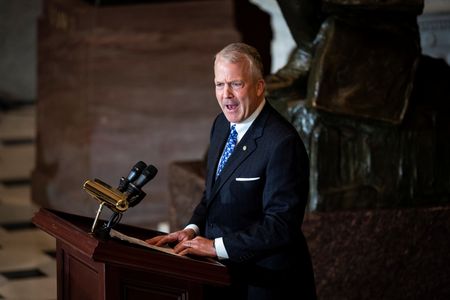
An Alaska judge has ordered that a challenger sharing the name of a sitting U.S. senator must be placed back on the state’s August 18 Republican primary ballot, overturning a decision by a state election official who had removed him.
Dan J. Sullivan, a former U.S. Forest Service worker and retired teacher, was pulled from the ballot last week by Carol Beecher, director of the Alaska Division of Elections. Republican Party officials had argued his presence on the ballot would confuse voters.
Senator Dan Sullivan and other Republicans have also claimed that Democrats deliberately recruited the challenger to create voter confusion and boost Democratic Senate candidate Mary Peltola, a former U.S. representative.
Superior Court Judge Thomas Matthews issued his ruling late Friday, finding that the removal of the challenger had been based on criteria described as “good-faith” but which do not appear in either the Alaska Constitution or the state’s election laws. “Mr. Dan Sullivan is declared to be an eligible candidate,” the judge wrote in his conclusion.
According to local media reports, Judge Matthews’ ruling is expected to be appealed to the Alaska Supreme Court before a Tuesday deadline, when state election officials are scheduled to begin printing ballots.
Alaska uses a nonpartisan primary system in which all candidates, regardless of party, appear together on a single ballot. The top four vote-getters then move on to the November general election.
A spokesperson for the Peltola campaign, Harry Child, issued a statement saying the campaign has no involvement with either Sullivan’s campaign.
Senator Sullivan’s campaign did not respond to a request for comment, nor did the Alaska Democratic Party. A representative for Dan J. Sullivan’s campaign was also unavailable for comment.
The National Weather Service out of Mount Holly, New Jersey issued a Severe Thunderstorm Warning on June 27, effective from 1:57 PM EDT through 2:30 PM EDT.
Residents in the affected area were advised to remain alert and take appropriate safety measures during the warning period. Severe thunderstorms can bring dangerous lightning, strong winds, and heavy rainfall in a short amount of time.
As always, people are encouraged to stay indoors, away from windows, and avoid travel during severe weather events. Monitor local forecasts for any updates or extensions to the warning.
The National Weather Service out of Mount Holly, New Jersey issued a Severe Thunderstorm Warning on June 27, beginning at 1:44 PM EDT and remaining in effect until 2:30 PM EDT.
Residents in the warned area are urged to seek shelter immediately, stay away from windows, and avoid outdoor activities until the warning has expired.
No additional details regarding storm location, movement, or specific hazards were included in the alert text. Check back for updates as conditions develop.
The National Weather Service office in Mount Holly, New Jersey issued a Severe Thunderstorm Warning on June 27, effective from 1:34 PM EDT through 2:00 PM EDT.
The warning was issued to alert residents in the affected area of dangerous thunderstorm conditions. Severe thunderstorms can bring damaging winds, large hail, and heavy rainfall in a short period of time.
Residents were advised to move indoors, stay away from windows, and avoid using electrical equipment during the storm. Those outdoors were urged to seek sturdy shelter immediately until the warning expired.
No additional details regarding specific storm impacts or damage reports were included in the original alert.
The National Weather Service office based in Mount Holly, New Jersey issued a Severe Thunderstorm Warning on June 27, effective from 1:10 PM EDT through 2:00 PM EDT.
The warning was put in place to alert residents in the covered area of dangerous thunderstorm conditions. Severe thunderstorms can bring damaging winds, large hail, and heavy rainfall in a short period of time.
Residents are always encouraged to stay indoors during severe thunderstorm warnings, avoid windows, and stay away from flood-prone areas. If driving, pull over safely and avoid flooded roadways.
The New York Mets have reinstated right-handed pitcher Christian Scott from the 15-day injured list, bringing him back just in time to take the mound against the Philadelphia Phillies on Saturday.
The 27-year-old Scott had been out of action since June 11, when a right hip impingement forced him to the sidelines.
To clear a spot on the active roster, left-hander Zach Thornton was sent down to Triple-A Syracuse late Friday night.
Through nine starts this season, Scott has put together a strong 2-0 record with a 3.10 ERA — a notable improvement over his rookie campaign in 2024, when he went 0-3 with a 4.56 ERA across nine appearances. He missed all of 2025 recovering from Tommy John surgery.
Thornton, 24, made his big league debut on May 20 and finished with a 0-1 record and a 4.35 ERA over two starts before being optioned back down.
HOUSTON — Cape Verde goalkeeper Vozinha says his teammates have proven they belong among the world’s elite after the small African nation pulled off a stunning run to the knockout stage of the World Cup, setting up a second-round clash with world champions Argentina.
The 40-year-old vice-captain recorded his second shutout of the tournament on Friday against Saudi Arabia, as Cape Verde completed an unlikely third straight draw to advance from Group H as runners-up — an extraordinary achievement on their very first World Cup appearance.
Vozinha’s first clean sheet came against European champions Spain, a result that put him in front of cameras around the globe. But the veteran goalkeeper has been consistent in pointing out that this remarkable journey belongs to the entire squad, not just one player.
“We know we come from a small country, but we also know we came here to compete,” he told reporters following the Saudi Arabia match.
“There is a lot of quality in our national team. Maybe many of you think Cape Verdeans are not good enough, but we came here to show that we have real quality and that we are here to compete.”
“Our players can play anywhere — in major competitions and in the biggest leagues,” he added.
Cape Verde, an archipelago of 10 volcanic islands home to roughly 500,000 people, has now become the least populous country in history to reach the World Cup’s knockout rounds. Vozinha said the message to other small nations is to develop a strong, clear identity.
“I think we showed the resilience of the Cape Verdean people,” he said. “We showed the passion we have for our country, and we also showed that we are here to represent not just the players, but all Cape Verdeans.”
“We may be small, but we have big hearts, and we are fighters. We are fighters,” he declared.
Vozinha had special support in the stands Friday — his mother was in Houston to watch him play for the second time at this World Cup, after U.S. officials stepped in to help facilitate her entry into the country.
Ana Candida Evora will next watch her son play in Miami, where Cape Verde will put their six-match unbeaten streak on the line against Argentina in the round of 32 on Friday.
“I don’t think any of us really dreamed this would happen, even though we knew we had a lot of quality,” Vozinha said. “Qualifying for the next round is incredibly rewarding for us. For any player, facing Argentina and Lionel Messi is a dream.”
Despite his impressive performances on the world stage, Vozinha currently has no club to return to. His contract with Portuguese second-division side Chaves ran out at the end of last season, leaving him a free agent.
“I’m currently a free agent. I hope something comes up soon,” he said.
Motorists traveling southbound on US-13 should be prepared for delays after a crash forced the closure of the right lane at the DE-71 intersection.
The lane closure is currently in effect as crews respond to the scene. Drivers in the area are advised to use caution and allow extra travel time.
No further details regarding the crash, including the number of vehicles involved or any injuries, have been made available at this time. Updates are expected as the situation develops.
The National Weather Service office in Mount Holly, New Jersey issued a Severe Thunderstorm Warning on June 27, beginning at 1:22 PM EDT and remaining in effect until 2:00 PM EDT.
Residents in the warned area are urged to move indoors, stay away from windows, and avoid unnecessary travel until the warning has expired. Severe thunderstorms can bring dangerous lightning, damaging winds, and heavy rain.
No additional details regarding the specific affected counties or storm characteristics were included in the original alert. Viewers should monitor local forecasts and official weather sources for the latest updates.
The St. Louis Blues bolstered their defensive corps Saturday by landing veteran blue-liner Brandon Carlo from the Toronto Maple Leafs, giving up a pair of third-round picks in the deal.
Toronto walked away with the 73rd and 76th overall selections in the draft. With the 73rd pick, the Maple Leafs chose forward Zach Olsen from the Saskatoon Blades of the WHL, and at No. 76, they selected Swedish defenseman Mans Gudmundsson.
Carlo, who turns 29, spent his first full season in Toronto during 2025-26, putting up seven assists across 55 games. An ankle injury that required surgery kept him sidelined for 23 games during that stretch.
Over the course of his NHL career, Carlo has appeared in 692 games — first with the Boston Bruins from 2016 to 2025, then with the Maple Leafs in 2025-26. He has accumulated 119 career points on 29 goals and 90 assists, a plus-137 rating, and 381 penalty minutes. Boston originally drafted him in the second round back in 2015.
As for the players Toronto selected with the acquired picks, 18-year-old Olsen put together a solid 2025-26 season with Saskatoon, recording 34 points on 18 goals and 16 assists in 57 games. Gudmundsson, also 18, contributed two goals and 29 assists in 40 games playing for Farjestad Jr. in Sweden.
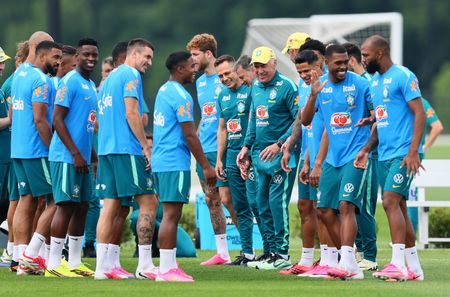
Brazil’s World Cup Round of 32 clash with Japan on Monday in Houston offers Carlo Ancelotti’s squad an opportunity to settle the score from a painful defeat earlier in his tenure — and a chance to prove just how much the team has grown under his leadership.
The five-time world champions suffered a 3-2 defeat to Japan in October 2025, despite jumping out to a 2-0 advantage. Japan rallied with three goals in under 20 minutes, claiming their first-ever victory over Brazil in 14 all-time meetings between the two nations.
That result underscored the challenge Ancelotti took on when he stepped away from Real Madrid with just one year to transform a struggling Brazilian side into a legitimate World Cup contender.
Brazil were in rough shape when the Italian manager came aboard. The team had just wrapped up their worst-ever South American qualifying campaign, finishing fifth after cycling through four different head coaches.
With only five international windows available before finalizing his 26-man roster, Ancelotti used the final three to expose his squad to a variety of competition — scheduling matches against opponents from Asia, Europe, and Africa.
The Asian portion of that tour started on a high note. Brazil dismantled South Korea 5-0 in Seoul and appeared headed for another easy result in Tokyo after storming to a 2-0 lead in the first 30-plus minutes. But Japan came roaring back in the second half, leaving Brazil with an uncomfortable memory.
Monday’s meeting, however, figures to be a very different kind of contest.
Japan manager Hajime Moriyasu acknowledged the stakes after his team drew 1-1 with Sweden to clinch second place in Group F behind the Netherlands. “Perhaps… they will be even more motivated,” Moriyasu said of Brazil. “We will be playing against a Brazil side that is very keen to win. I’m looking forward to it.”
Japan will look considerably different from the team that pulled off that upset. Injuries have sidelined captain Wataru Endo, wingers Kaoru Mitoma and Takefusa Kubo, and forward Takumi Minamino — who found the net in the October win over Brazil.
Brazil has also undergone significant changes. The entire defensive unit that started in Tokyo is gone from Ancelotti’s World Cup roster, and the squad has gained momentum after an opening 1-1 draw with Morocco. Consecutive wins have lifted the team’s confidence, Vinicius Jr. has tallied four goals, and Neymar has rejoined the national team following a three-year absence due to recurring injuries.
“We’re not perfect. We can improve. For example, our pace on the ball. We can be quicker,” Ancelotti said following Brazil’s 3-0 win over Scotland. “But I’m pleased because the team has improved a lot since the first match. Now it’s a knockout competition. We need to show real grit.”
The matchup also carries a rich historical backdrop. Brazil has long served as a model and inspiration for Japanese football, a connection deeply tied to the legendary Zico.
After a celebrated career with Flamengo, Udinese, and the Brazilian national team, Zico came out of retirement to play for Sumitomo Metal — later known as Kashima Antlers — from 1991 to 1994, playing a significant role in shaping Japan’s emerging professional soccer scene. He went on to manage Kashima and currently serves the club as a technical adviser.
Zico also took charge of the Japanese national team from 2002 to 2006, leading them to the 2004 Asian Cup title and guiding them to the 2006 World Cup. In that tournament, Brazil defeated Japan 4-1 in the group stage, ending Japan’s run. With history on both sides, Monday’s match in Houston carries plenty of weight for each team.
San Francisco 49ers tight end George Kittle is using the World Cup as ammunition in the ongoing debate over playing surfaces in the NFL.
After watching soccer’s biggest tournament played on natural grass at NFL stadiums across the country, Kittle is asking a simple question: if it can be done for the World Cup, why can’t the NFL make it happen full-time?
“We’ve made it clear that we prefer grass fields. We know it’s better on our bodies. And clearly, we know it’s possible based on everything that went into putting down grass fields for the World Cup in each stadium,” Kittle said, through the NFL Players Association.
For the tournament, multiple NFL venues made the switch from artificial turf to natural grass, including SoFi Stadium in Inglewood, California; Lumen Field in Seattle; AT&T Stadium in Arlington, Texas; MetLife Stadium in East Rutherford, New Jersey; Gillette Stadium in Foxborough, Massachusetts; NRG Stadium in Houston; and Mercedes-Benz Stadium in Atlanta.
“At this point, it comes down to the NFL making it a priority and choosing to invest in us as players, because our bodies are our business, which they get to capitalize on,” Kittle added.
Worth noting: Kittle himself suffered an Achilles tendon tear on January 11 during an NFC wild-card game — and that injury actually occurred on a grass field, hosted by the Philadelphia Eagles.
The 32-year-old had a productive 2024 season, hauling in 57 catches for 628 yards and seven touchdowns across 11 games.
A seven-time Pro Bowl selection, Kittle has accumulated 595 career receptions for 8,008 yards and 52 touchdowns over 124 games with San Francisco, including four seasons where he surpassed 1,000 receiving yards.
LONDON — Novak Djokovic says he has never seen Serena Williams working harder in the gym than she is right now, as excitement continues to build around the 44-year-old American’s return to Wimbledon after a four-year absence.
Williams’ comeback has generated enormous buzz at the All England Club, with players across the draw expressing admiration for the 23-time Grand Slam singles champion ahead of her highly anticipated return to competitive tennis.
“I see her in the gym more than I have, I think, seen her when she was at her prime,” Djokovic told reporters. “It tells me that she really wants this to work out the best way possible.”
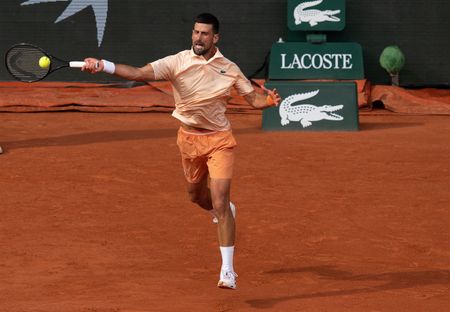
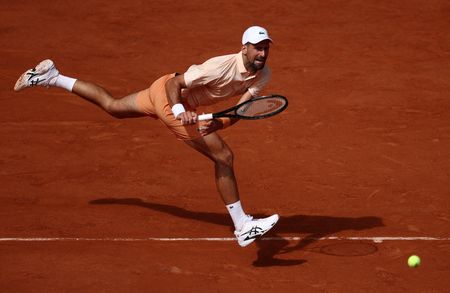
Djokovic himself is no stranger to chasing history. The seventh seed, who is 39 years old, is pursuing a record-breaking 25th Grand Slam singles title and an eighth Wimbledon crown during the tournament.
Williams last competed in a singles match at the 2022 U.S. Open. If she were to claim an eighth Wimbledon singles title, it would be considered one of the most extraordinary comebacks in the history of sport.
When asked what he said to Williams after crossing paths with her at the All England Club this week, Djokovic did not hold back.
“First and foremost, what she’s doing is inspirational and it’s epic. That’s what I told her. I always admired her career, her journey, her story. Of course, Venus’ as well,” said Djokovic, who opens his tournament against China’s Wu Yibing.
“It’s admirable, honestly, the effort she’s putting in. Of course, all eyes are on her, her comeback. I just hope she will enjoy because she really deserves. She created something historical, legendary in her career.”
Djokovic went on to highlight just how significant the moment is, saying: “For her to come back after years of being absent from the tour, two children later, and to give so much effort to, not just for her own satisfaction or coming back on the tour, but also to give all of us a pleasure of seeing her back on the court — in singles as well as doubles — is remarkable.”
“I told her that whatever happens, what she’s doing is truly inspirational for me personally, and I’m sure for millions around the world,” he added.
Fellow American Ben Shelton also weighed in on Williams’ return, calling it a standout moment in the sport.
“Seeing her out here, as focused as she is, really going for it at 44 years old is insanely impressive, obviously one of the biggest icons in sports history, not just tennis,” Shelton said.
Newly crowned French Open champion Mirra Andreeva, who is 19 years old and competing in her first Grand Slam alongside Williams, admitted she was relieved not to have been drawn against the American legend in the first round. That task falls to Australia’s Maya Joint on Tuesday.
“I would never think I would actually play the same tournament as her,” the Russian player said. “When I arrived on site and I was warming up for my practice, they were doing the draw ceremony, I was watching like this (nervously) because I don’t think anyone in the draw would have wanted to play against Serena.”
“I’m going to speak for myself. I wouldn’t want to play against Serena. I would be just very nervous. I just think that it’s amazing that she came back,” Andreeva added.
Emma Raducanu’s preparations for Wimbledon have once again been disrupted by injury concerns, and former British top player Johanna Konta says the 23-year-old needs to work on handling adversity better if she wants to reach her potential.
Raducanu’s career since her remarkable 2021 U.S. Open victory — achieved as a teenage qualifier — has been marked by a string of physical setbacks and illnesses, along with a revolving door of coaching staff.
Recently reunited with coach Andrew Richardson, the same coach she parted ways with shortly after her stunning Flushing Meadows win, Raducanu showed renewed form by reaching the Queen’s Club final two weeks ago. She enters Wimbledon as the 30th seed.
However, fresh concerns have emerged after Raducanu withdrew from the Nottingham Open. On Saturday, she was spotted with her lower leg wrapped due to shin discomfort and ended her practice session early. She also called off her pre-tournament media appearance, fueling anxiety ahead of her Monday first-round match against Croatia’s Antonia Ruzic on Court One.
Konta, who advanced to the Wimbledon semi-finals in 2017 and climbed as high as number four in the world rankings, suggested that some of Raducanu’s physical troubles may be connected to the weight of expectation placed on her shoulders. Konta will be part of Eurosport’s commentary team during the tournament.
“My opinion on Emma… it’s her building, her continuing to build up her tolerance to adversity,” Konta told Reuters. “Not in the sense that she can’t handle tough times but I think when it comes to, on a day-to-day, week-to-week, month-to-month basis, when things aren’t going well, you feel pain much more, it’s much easier to feel injured.”
Konta went on to explain that injury perception can be heavily influenced by how a player is performing mentally and emotionally. “And it’s not because you are necessarily looking for an excuse or you are necessarily looking for an easy, quote unquote, an easy way out. When you are on a match court, and things aren’t going well, if you have a niggle, an injury that you’re going into that match with, you will definitely feel it a lot more than if things are going well,” she said.
“So I think for her, I’ve been really keen to see her really make peace with the difficulty of it,” Konta added.
Konta described Raducanu’s U.S. Open triumph as “insane” and noted that winning a Grand Slam so early has essentially put her career in reverse order. “Since then, it’s been a bit of a catch-up. She’s been trying to gain experience, trying to gain match fitness, trying to gain years on tour being a Grand Slam champion,” Konta said.
Konta also addressed the pressure Raducanu faces to constantly explain her results. “I think for me, I’m really willing and hoping for her to not get the monkey off her back or make peace with the monkey. I feel like there’s pressure to explain away why things aren’t going well, the pressure to feel like she has to have a reason why things aren’t (going well). A lot of these injuries, I think, will be rooted in stress more than anything as well.”
Raducanu’s recent history has been difficult. This year she dealt with a post-viral illness and a back problem before losing in the first round of the French Open. In 2023, she missed both the French Open and Wimbledon after undergoing procedures on both hands and an ankle. She also cut her 2023 season short due to illness.
Delaware State Police are investigating a deadly two-vehicle crash that took place Friday evening in Milford, leaving two people dead and one seriously injured.
The collision happened on June 26, 2026, at around 9:15 p.m. on Milford Harrington Highway near the intersection of Church Hill Road. Investigators say a Ford Mustang was heading westbound at a high rate of speed when it struck the rear of a Nissan Rogue that had just turned right onto the highway from Church Hill Road. The force of the impact caused the Nissan to spin out, flip over into a utility pole, and burst into flames.
Both the driver and passenger of the Nissan were pronounced dead at the scene. Their identities have not yet been determined.
The driver of the Ford Mustang, a 36-year-old man from Harrington, Delaware, was transported to a nearby hospital with life-threatening injuries.
The highway remained closed for roughly four hours while troopers worked to investigate and clear the scene.
The Delaware State Police Collision Reconstruction Unit is continuing its investigation into the cause of the crash. Anyone who witnessed the incident or has video footage is urged to reach out to Master Corporal J. Lane at (302) 698-8457. Tips can also be submitted through a private Facebook message to the Delaware State Police or by contacting Delaware Crime Stoppers at 1-800-847-3333.
Those who have been affected by this incident or any violent crime can reach the Delaware State Police Victim Services Unit and Delaware Victim Center around the clock by calling the toll-free hotline at 1-800-VICTIM-1 (1-800-842-8461). You may also contact the Victim Services Unit by email at [email protected].
Motorists in the area should plan for a detour as St. Augustine Road is currently shut down between Farm Lane and West Market Street due to a tree that has fallen across the roadway.
The closure remains in effect while crews work to remove the downed tree and restore normal traffic flow. No timeline for reopening has been announced at this time.
Drivers are encouraged to use alternate routes and allow extra travel time until the road is cleared and reopened.
WASHINGTON — Senior U.S. officials are growing frustrated with Venezuelan opposition leader Maria Corina Machado over her renewed efforts to secure American assistance in returning to her home country in the aftermath of devastating earthquakes, according to a White House official.
Machado has contacted multiple U.S. administration figures in recent days, including officials at the White House, the State Department, and several members of Congress, requesting help arranging her return to Venezuela, the official told Reuters while speaking on condition of anonymity.
The urgency of her outreach comes after twin earthquakes struck Venezuela this week, leaving more than 900 people dead. Machado, 58, departed Venezuela back in December, defying a travel ban that had been in place for a decade in order to accept the Nobel Peace Prize. Prior to leaving, she had spent more than a year largely living in hiding following disputed elections in 2024.
The White House official expressed clear irritation with the timing of her request. “We support her returning to Venezuela, but does it have to be 24 hours after a massive humanitarian catastrophe where the death toll continues to climb?” the official said.
A representative for Machado did not respond to a request for comment.
The political backdrop to Machado’s push is complicated. The U.S. took former President Nicolas Maduro into custody in January, which had raised expectations among some of his opponents that Machado would step into a leading role in governing the country. However, U.S. President Donald Trump instead threw his support behind Delcy Rodriguez, Maduro’s former deputy, stating that Machado lacked the backing necessary to lead Venezuela in the near term.
Machado has continued to advocate for free and fair elections in Venezuela. Before this week’s earthquakes, she had publicly stated her intention to return to her homeland before the end of this year. Since departing Venezuela, she has been living primarily in the United States.
In response to the disaster, Washington has launched a significant relief operation. A State Department spokesperson confirmed that the U.S. has deployed search and rescue teams, is coordinating the delivery of medical supplies, and has released $150 million in humanitarian assistance for Venezuela.
BUDAPEST, Hungary — Enormous crowds filled the streets of the Hungarian capital on Saturday to mark the 31st Budapest Pride celebration, a milestone event made especially significant by the recent political shift that removed former Prime Minister Viktor Orbán from power.
The march got underway Saturday afternoon under extreme heat, with temperatures climbing to at least 38 degrees Celsius — roughly 100 degrees Fahrenheit — as a record-setting heat wave continued to bake much of Europe. To help marchers cope with the conditions, organizers handed out water bottles, and the city’s public water utility opened fountains at points along the parade route.
The procession started at Budapest’s famous Opera house, moved through the heart of the city, and eventually crossed the Erzsébet Bridge spanning the Danube River. Members of Hungary’s LGBTQ+ community and a large number of allies danced to music and waved rainbow flags throughout the route.
Luca Új, attending her third Pride event, said the atmosphere felt noticeably different now that Orbán’s government — which spent 16 years enacting policies hostile to LGBTQ+ people — had been turned out of office.
“There used to be a lot of tension. But now I see people as being somehow happier, and there are more older people, too,” she said.
Saturday’s celebration came just over a year after Orbán’s nationalist-populist government passed a law and a constitutional amendment specifically designed to prohibit the event, moves that drew sharp condemnation from human rights organizations and elected officials throughout the European Union.
Despite that ban, last year’s Pride proceeded as scheduled and became the largest in Hungary’s history, with organizers putting attendance at more than 350,000 people. That massive showing — coming after months of government insistence that the march would not be allowed — was widely viewed as a serious blow to Orbán’s standing.
Orbán was decisively defeated in the April election by center-right challenger Prime Minister Péter Magyar and his Tisza party. While Hungary’s new government has not yet overturned the Orbán-era legislation banning Pride, police this year approved the event and stationed officers along the route to ensure security.
Kristóf Györgyi, who was attending Pride for the first time and had traveled to Budapest from the southern city of Szeged, said he is hopeful the new government will move to extend rights to LGBTQ+ people that are already standard in many other European nations.
“The fact that there’s already a debate in Parliament about whether an orphaned child is better off with a same-sex couple or in an orphanage is a positive sign,” he said, referencing the Orbán-era prohibitions on same-sex adoption and same-sex marriage.
“Obviously, the laws haven’t changed yet, but there are already many signs of hope for our community,” he added.
Hungary’s former government had long argued that Pride events violated children’s rights to moral and spiritual development — a claim widely rejected by rights organizations and experts.
In April, the European Union’s top court ruled that Orbán-era legislation from 2021 — which restricted LGBTQ+ content from being available to minors — violates EU law and conflicts with a foundational treaty that guarantees human rights and equality protections.
Back in 1978, two Scottish soccer fans with nearly empty wallets managed to hitch a ride on a ship bound for Argentina, earning their passage by painting the vessel along the way — a story so remarkable it ended up in a BBC documentary.
For generations, working-class fans found creative ways to follow their national teams — hopping on buses, trains, or hitchhiking to reach distant stadiums. When Brazil hosted the tournament in 2014, thousands of South American supporters made the journey affordable by traveling and bunking in camper vans.
But this year’s World Cup is a different story entirely. Skyrocketing ticket and lodging costs have transformed the tournament into an event increasingly accessible only to those with deep pockets.
“You’ve got to pay to play,” said Mike Gill, a British real estate developer based in Canada who was cheering on England against Ghana near Boston on Tuesday. “It’s extortionate but people are paying the prices, so what are you going to do?”
Greg Connor, who runs an automotive repair shop in Oklahoma, shelled out $9,600 for four tickets so his family could watch France take on Norway on Friday. “It’s insane,” Connor said. “We were considering going to five or six games, but we’re just going to the one.”
DYNAMIC PRICING DRIVES COSTS THROUGH THE ROOF
When tickets for group-stage matches first went on sale this year, the top official price was $575 per seat. Compare that to the 2022 World Cup, where the priciest group-stage ticket was $220.
FIFA adopted a dynamic pricing model for this tournament — one that allows ticket prices to rise and fall based on demand. The result: first-round resale tickets have climbed past $1,000, with prices for later rounds going even higher.
As of Friday, the average lowest available price for upcoming matches on secondary resale platforms was $1,600, according to Ticketdata, a price-tracking service.
Renato Perez, a resident of the Galapagos Islands in Ecuador, said his family of five spent roughly $22,000 on tickets, travel, lodging, and other costs to watch Ecuador defeat Germany in New Jersey on Thursday. “But it’s worth every cent,” Perez said. “I would do it all over again.”
The dramatic price jump is changing the makeup of who fills the seats at World Cup venues.
Reuters spoke with more than 50 fans at various stadiums during the group stage. About 30 were employed in higher-paying fields, with sales, finance, and real estate well represented. Four were business owners, three were engineers, and two were doctors. Among lower-wage professions, two electricians and two nurses were also in attendance.
For American fans used to dynamic pricing at concerts and sporting events, the high costs weren’t entirely shocking.
Colleen Cheesman, a partner at a consulting firm who attended England’s match against Ghana, said she had been prepared to spend up to $3,000 on a ticket — only to be offered seats at $420 apiece from friends who had purchased them through an early FIFA lottery. “We got six and brought our friends,” she said. “They’re so cheap. You can’t even see a concert for that these days.”
For others, the expense was a real strain. Caroline Dowie, an Australian who owns a house-clearing business in Adelaide, said she and her husband paid $4,000 for four tickets — not counting travel or accommodation.
Some in the soccer world are troubled by the shift in who shows up to games, both at the World Cup and in domestic leagues.
“The World Cups are blown out of proportion — the costs, everything else,” said Paraguay coach Gustavo Alfaro. “The essence of football is lost. And football can’t be a business, it has to be football.”
A FIFA spokesperson defended the organization’s approach, noting that 130,000 tickets across the tournament were made available at just $60 each. The spokesperson said the broader pricing strategy mirrors standard market practices for major sporting and entertainment events in the host countries, and that revenue generated would be reinvested into soccer development.
However, that discounted ticket offering — announced in December after public backlash over pricing plans — represents only a small fraction of the approximately 7 million total tickets available. It’s also well below the 400,000 reduced-price tickets offered at the 2014 Brazil World Cup, where students could get in for as little as $15.
Despite the steep costs, demand remains strong. Total ticket sales for the tournament hit a record 3.6 million as of Thursday.
MILLION-DOLLAR EXPERIENCES FOR THE ULTRA-WEALTHY
For those at the very top of the income scale, cost appears to be no barrier at all.
Luxury concierge company Knightsbridge Circle offered a $4 million hospitality package that included six front-row seats on the halfway line at the World Cup final, along with access to the pitch during the trophy ceremony. That package sold within 24 hours. Two additional seats, also with pitchside access for the ceremony, remain on sale at $1.5 million each.
Stefan Szymanski, a professor of sport management at the University of Michigan, said the surge in World Cup ticket prices reflects soccer’s unmatched global appeal and its expansion into newer markets like the United States.
“Although this was already the world’s most popular sport 30-40 years ago, that popularity has actually grown even further, and particularly amongst affluent people,” Szymanski said.
“We will watch this, we will be glued to it (and) people will pay huge prices to go to the games,” he added. “And then once it’s over, Americans will forget about it immediately and get into the NFL and all the other things with the World Series coming up.”
The Chicago Bulls are holding on to forward Leonard Miller, exercising a $2.4 million team option to keep him on the roster for the 2026-27 season, according to a Saturday report from Spotrac.
Miller’s deal is expected to become fully guaranteed come Tuesday, per the same report.
The 22-year-old made a solid impression after joining Chicago in a Feb. 5 trade with Minnesota, putting up averages of 11.7 points and 5.8 rebounds across 27 games, including 12 starts.
Originally selected by the San Antonio Spurs in the second round of the 2023 NBA Draft, the 6-foot-10 Canadian has compiled career averages of 5.4 points and 2.8 rebounds over 76 games — 12 as a starter — split between his time with the Timberwolves from 2023 to 2026 and his more recent stint with the Bulls.
World number seven Coco Gauff is heading into Wimbledon with a candid admission — grass courts and she haven’t exactly been the best of friends.
The 22-year-old American, a two-time Grand Slam champion, is still searching for her first deep run at the All England Club. In six previous appearances at Wimbledon, she has never advanced past the fourth round — making it the only major tournament where she has yet to break through.
Her recent results on grass haven’t helped build confidence. At this year’s Berlin Open grasscourt event, she was eliminated in the round of 16 by Paula Badosa. And her 2025 Wimbledon campaign got off to a rough start when she fell in a stunning first-round upset to Ukraine’s Dayana Yastremska.
Speaking to reporters on Saturday, Gauff was straightforward about her complicated relationship with the surface. “Yeah, we don’t have the best relationship,” she said.
“I always have, like, fond memories on the grass,” she added. “I obviously had a couple (of) fourth rounds here. I definitely think that I have the ability to play on it. I think it’s more about the confidence.”
Her draw at this year’s tournament isn’t making things easier. Gauff opens against world number 79 Tamara Korpatsch, but a potential path through the bracket could bring her face-to-face with fourth seed Jessica Pegula and top-ranked Aryna Sabalenka in the later stages.
“Also, I’m not going to lie, I haven’t (had) about the best draws here at Wimbledon,” Gauff said. “I think that’s also been tough. Yeah, something that I’m learning to play on. I don’t think it’s a natural surface for me but we’re going to make it natural.”
Away from the court, Gauff also weighed in on the ongoing player-led prize money protests. Even though Wimbledon announced a record 20% increase in its total prize purse for this year, she said the boost still falls short of what players are looking for.
“I think people have to remember there are a lot of players below the rankings who are very good, top 100, top 200 in the world of their sport,” Gauff said. “They come back from injury and are not necessarily getting that support. Also we ask some of the slams to participate in the welfare programmes that we want just to help the quality of our sport as a whole.”
“I definitely think the increase is good but it’s quite not where we would like it to be. That’s why my stance has still kind of been the same,” she added.
Gauff kicks off her quest for a first Wimbledon title when play begins Monday at the All England Club.
George Russell delivered a standout qualifying performance Saturday in Spielberg, Austria, putting Mercedes at the top of the grid for the Formula One Austrian Grand Prix.
The British driver edged out Ferrari’s Charles Leclerc and Lewis Hamilton, who claimed second and third on the starting grid respectively. The result extended Mercedes’ remarkable run, marking the eighth straight race in which the team has claimed pole position.
Championship leader Kimi Antonelli, also driving for Mercedes, will start Sunday’s race from fourth place.
Russell had previously taken pole at the Barcelona-Catalunya Grand Prix two weeks earlier. His final qualifying lap — the one that ultimately put him ahead of Leclerc — came under scrutiny after Max Verstappen crashed out during that same lap, raising questions about a possible double-yellow flag violation.
Officials launched an investigation into the matter, but it was later closed without any penalty.
Speaking after qualifying, Russell addressed the situation directly. “It was a single yellow and should be okay,” he said.
Los Angeles Angels outfielder Mike Trout says don’t expect to see him swinging for the fences in the Home Run Derby this year. A strained right hamstring is expected to keep the star player on the sidelines for the event, which is set to take place in Philadelphia.
Despite sitting out the derby, Trout is hopeful he will be healthy enough to suit up for the All-Star Game on July 14, the evening following the home run competition. The event holds special meaning for Trout, who was raised in Millville, N.J., roughly an hour from Philadelphia.
When asked about the derby, Trout was candid about his decision. “They asked me when we were in Sacramento last weekend, but I probably won’t do it,” he said on Friday. “It would have been cool to do it, but the injury kind of threw things off.”
The 34-year-old had been on quite a roll before the injury, appearing in 74 of the team’s first 75 games this season while posting a .234 batting average with 17 home runs and 36 RBIs.
A three-time American League MVP and 11-time All-Star selection, Trout had managed to stay largely healthy over the past two seasons after a stretch of injury-plagued campaigns. He played in 130 games in 2025, a sharp contrast to the prior four seasons when he surpassed 82 games just once due to various injuries. During the COVID-shortened 2020 season, he appeared in only 53 games.
Over the course of his 16-season career with the Angels, Trout has accumulated 421 home runs, 1,054 RBIs, and 221 stolen bases across 1,722 games. His career slash line stands at .291/.406/.566.
BEIRUT — Just one day after Israel and Lebanon signed a framework agreement in Washington aimed at ending months of conflict, Hezbollah’s leader came out strongly against it Saturday, casting serious doubt on whether the deal can hold.
The agreement, reached Friday without Hezbollah at the table, ties Israel’s military withdrawal from Lebanon directly to the disarmament of the Iran-backed militant group — a condition Hezbollah has flatly refused. It wouldn’t be the first time a ceasefire deal involving Lebanon and Israel has failed to take effect; several previous agreements have collapsed before being implemented.
Hezbollah leader Naim Kassem declared Saturday that his group would continue fighting until Israel is forced out of Lebanon. Supporters of the group took to the streets of Beirut in protest following the announcement. Kassem went further, saying from his perspective the deal simply does not exist.
He labeled the agreement a “humiliation” and described the condition linking Israel’s withdrawal to Hezbollah’s disarmament as a “very dangerous suggestion.”
One of the group’s officials, Hassan Fadlallah, issued a stark warning that the deal could spark civil war, saying Hezbollah will not surrender its weapons and will resist any attempt by the Lebanese army to enforce the agreement.
Despite the signing of the deal, violence continued. Lebanon’s state news agency reported an Israeli drone strike near the southern city of Nabatiyeh on Saturday. The agency also reported that three Lebanese and three Syrian workers, detained near the southern village of Ain Arab on Friday, were released by the Israeli military.
Details released Saturday by the U.S. State Department reveal that both countries aim to ultimately end the state of war between them — a conflict that dates back to Israel’s founding in 1948. Under the agreement, Israel would begin by withdrawing from two small designated areas, referred to as pilot zones, though the specific locations were not disclosed. The Lebanese army would gradually take over full security responsibility in those areas, with additional withdrawal zones to be agreed upon later.
A security annex outlining the specifics of Lebanese army deployment and Israeli troop movements was included in the deal but was not released to the public.
The agreement also emphasizes that Hezbollah’s disarmament across all of Lebanon, along with additional security measures to be negotiated, would eliminate any future need for Israeli military action or presence in Lebanese territory.
The Lebanon-Israel negotiations were conducted separately from an interim agreement reached earlier this month between the U.S. and Iran regarding the fighting in that country.
In an effort to cut off Hezbollah’s financial lifeline — in what appeared to be a reference to Iran, which has provided the group with billions of dollars over four decades — the deal commits both Lebanon and the United States to blocking funds from reaching non-state armed groups. The Lebanese government also explicitly pledged to ensure reconstruction money does not flow to such organizations.
Lebanon’s top public prosecutor, Judge Ahmed Rami al-Hajj, responded to the unrest by ordering the heads of the country’s security agencies Saturday to take steps to prevent rioting.
Reactions among ordinary people were sharply divided. At the border town of Metula in Israel, citizen Ronit Belson expressed skepticism about the deal’s staying power. “Personally, I don’t think it will be lasting because the Lebanese military cannot really stand a chance against Hezbollah,” she said.
In the southern Lebanese city of Sidon, opinions were split. Resident Rabie Sammour voiced support, saying: “People just want to rest for good. I support the Lebanese authorities in the decision” taken. But fellow Sidon resident Khaled Ghannoum took a very different view, saying the deal “legitimized Israel’s occupation.”
An Israeli drone strike on Saturday left two Palestinian siblings dead and at least seven others wounded in southern Gaza, according to Nasser hospital, where the victims were brought for treatment.
The attack struck tents housing displaced Palestinians at the large camp of Muwasi, claiming the lives of 15-year-old Islam Moussa and her 30-year-old brother, Abdullah Moussa.
The Israeli military confirmed it had carried out a strike in the Muwasi area, stating it had targeted a Hamas militant, though no additional details were immediately released.
At the hospital, grieving family members gathered in the courtyard, weeping over the bodies wrapped in white burial shrouds.
Separately on Saturday, a loud explosion was reported by Palestinians in Gaza City. According to Shifa hospital, an Israeli strike hit a tent sheltering displaced people in western Gaza City, injuring at least 12 individuals. The Palestinian Red Crescent Society’s ambulance service reported that two of those hurt were in critical condition and that most of the wounded were women. The Israeli military did not respond to a request for comment on that strike, and the intended target was not immediately known.
Even with a fragile ceasefire reached in October that slowed the most intense fighting between Israel and Hamas, Israel has continued to conduct near-daily strikes and shelling throughout the coastal territory. Both Israel and Hamas have accused each other of breaching the ceasefire agreement. Israel maintains its strikes are aimed at Hamas fighters and other armed groups posing a threat, carried out in response to ceasefire violations.
Since the ceasefire took effect, Gaza’s Health Ministry — part of the Hamas-led government — reports that Israeli strikes have killed more than 1,030 people in Gaza. The ministry’s casualty figures are considered broadly reliable by United Nations agencies and independent analysts, though they do not distinguish between civilians and combatants.
Last week, the ministry reported that more than 250 children have been killed in Gaza since the ceasefire began.
A panel of independent experts appointed by the United Nations has accused Israel of deliberately targeting children in Gaza and has repeated allegations that Israel has committed genocide in the territory. Israel firmly denies the genocide accusation.
The conflict began on October 7, 2023, when a Hamas-led attack on southern Israel killed approximately 1,200 people and resulted in 251 individuals being taken hostage. Israel’s military response in Gaza has since killed more than 73,050 Palestinians, including those killed after the ceasefire went into effect, according to Gaza’s Health Ministry.
PESHAWAR, Pakistan — A 5.9 magnitude earthquake shook portions of Pakistan and the neighboring country of Afghanistan on Saturday, causing alarmed residents throughout Pakistan to rush outside their homes in a panic, according to officials. No damage or casualties were reported in the immediate aftermath.
Pakistan’s Meteorological Department identified the epicenter as being located in Afghanistan’s Hindu Kush region. The U.S. Geological Survey placed the earthquake’s strength slightly higher, at magnitude 6.1.
The shaking was felt in the capital city of Islamabad, as well as in Punjab province to the east and the northwestern province of Khyber Pakhtunkhwa, which shares a border with Afghanistan. Residents in Pakistan-administered Kashmir also reported feeling the tremors.
Emergency services in Khyber Pakhtunkhwa confirmed that local district administrations had been placed on high alert following the quake.
Anwar Shahzad, a spokesperson for the Provincial Disaster Management Authority, stated that early assessments turned up no reports of deaths, injuries, or structural damage.
Pakistan sits within an active seismic zone and regularly experiences earthquakes. The country suffered one of its deadliest disasters in 2005 when a magnitude 7.6 earthquake killed tens of thousands of people in Pakistan and Kashmir — the disputed Himalayan territory that is divided between Pakistan and India, with both nations claiming it as their own.
As of Saturday, no Afghan officials had issued a statement about the earthquake. Afghanistan has also endured a series of devastating earthquakes in recent years, with several events claiming thousands of lives.
Motorists making their way northbound on Delaware Route 1 between Dewey Beach and Lewes should expect significant delays this afternoon.
According to traffic reports, heavy congestion along that corridor is causing backups of approximately 20 to 30 minutes for drivers traveling in that direction.
No specific cause beyond general traffic congestion has been cited for the delays. Drivers are advised to allow extra travel time or consider using alternate routes to avoid the slowdown.
Madison Keys etched her name further into tennis history on Saturday, beating Germany’s Tatjana Maria 7-5, 6-4 to secure her third Eastbourne Open title in the United Kingdom.
The second-seeded American previously won the grass-court tournament in 2014 and 2023, and now stands alongside two of the sport’s all-time greats — Chris Evert and Martina Navratilova — as the only players to have claimed the Wimbledon tune-up event three or more times.
Keys wrapped up her 11th career WTA Tour title in one hour and 33 minutes. While she connected on just 58% of her first serves, she made them count — winning 88% of those points, going 29 for 33 — and was tested by only a single break point throughout the match.
Bad Homburg Open
In Germany, fourth-seeded Karolina Muchova of the Czech Republic claimed her first-ever grass-court title after sixth-seeded Naomi Osaka of Japan was forced to retire in the second set due to a foot injury.
Muchova held a commanding 6-1, 1-0 lead when the match came to a halt after just 46 minutes of play. She had converted three of four break point opportunities against the four-time Grand Slam champion, earning her third WTA Tour title overall.
Osaka, who had been chasing her first championship since taking the 2021 Australian Open, addressed the crowd after the match. “I just want to say thank you to everyone who came to watch the match,” she said. “I apologize for not being able to finish, but this atmosphere was incredible throughout the week.”
A powerful earthquake rocked Afghanistan’s Hindu Kush region on Saturday, according to the European Mediterranean Seismological Centre, with shaking felt across Kabul and into neighboring Pakistan.
In Pakistan’s northern Khyber Pakhtunkhwa province, residents in the Swat district rushed out of their homes in a panic. Local resident Daniyal Ahmad described the scene to Reuters, saying the quake was intense and went on for an unusually long time.
“It was very huge here in Swat and it lasted for quite a long time,” Ahmad said. “People came out of their houses and women and children were seen crying in panic.”
The Afghanistan National Disaster Management Authority released a statement saying there were no confirmed reports of casualties or damage at that time, but that assessments were still being conducted across affected areas.
The European Mediterranean Seismological Centre measured the quake at magnitude 6, placing its depth at approximately 100 kilometers — or about 62 miles — below the surface.
Earlier that same Saturday, a separate earthquake measuring magnitude 5.4 had already struck Pakistan, also according to the European Mediterranean Seismological Centre.
LONDON — Novak Djokovic has offered a glowing endorsement of Serena Williams as the American tennis legend gears up for her highly anticipated return to Wimbledon, with the Serbian champion revealing she is working harder in the gym now than she ever did during her peak years.
Speaking to reporters on Saturday, Djokovic said, “I see her in the gym more than I have, I think, seen her when she was at her prime. It tells me that she really wants this to work out the best way possible.”
Djokovic, who enters the tournament as the seventh seed at age 39, is himself chasing history — a record-breaking 25th Grand Slam singles title and a potential eighth Wimbledon crown. Still, much of the spotlight has shifted to Williams, who has been away from competitive singles play for four years.
Should Williams claim an eighth Wimbledon singles title, many believe it would stand as the greatest sporting comeback ever witnessed.
When asked what he said after crossing paths with Williams at the All England Club this week, Djokovic did not hold back. “First and foremost, what she’s doing is inspirational and it’s epic. That’s what I told her. I always admired her career, her journey, her story. Of course, Venus’ as well,” said Djokovic, who opens his tournament against China’s Wu Yibing.
Djokovic continued: “It’s admirable, honestly, the effort she’s putting in. Of course, all eyes are on her, her comeback. I just hope she will enjoy because she really deserves. She created something historical, legendary in her career.”
He went on to highlight the extraordinary circumstances surrounding her return. “For her to come back after years of being absent from the tour, two children later, and to give so much effort to, not just for her own satisfaction or coming back on the tour, but also to give all of us a pleasure of seeing her back on the court — in singles as well as doubles — is remarkable.”
Djokovic closed his remarks by saying, “I told her that whatever happens, what she’s doing is truly inspirational for me personally, and I’m sure for millions around the world.”
American player Ben Shelton added his voice to the chorus of admiration. “Seeing her out here, as focused as she is, really going for it at 44 years old is insanely impressive, obviously one of the biggest icons in sports history, not just tennis,” Shelton said.
Wimbledon’s first round gets underway Monday with a packed schedule headlined by the sport’s biggest stars, including top seeds Jannik Sinner and Aryna Sabalenka — both of whom happen to be drawn against Serbian opponents in their opening matches.
Sinner, representing Italy, will face Serbia’s Miomir Kecmanovic on Centre Court, while Sabalenka of Belarus takes on fellow Serbian Teodora Kostovic. Later on the same court, Serbia’s Novak Djokovic — seeded seventh — will face China’s Wu Yibing as he chases his 25th Grand Slam championship title.
On Court Number One, play begins at 12:00 PM GMT with British contender Emma Raducanu, seeded 30th, squaring off against Croatia’s Antonia Ruzic. That same court will also feature eighth-seeded Daniil Medvedev of Russia against Croatia’s Marin Cilic, followed by fifth-seeded Mirra Andreeva — fresh off her French Open victory — taking on Poland’s Magda Linette.
Court Number Two gets an early start at 10:00 AM GMT. American fourth seed Jessica Pegula opens against Czech Republic’s Darja Vidmanova. Also on that court, seventh-seeded Coco Gauff of the U.S., a two-time Grand Slam champion, will battle Germany’s Tamara Korpatsch. Canada’s Felix Auger-Aliassime, seeded third, meets Kazakhstan’s Aleksandr Shevchenko, and Britain’s 26th-seeded Cameron Norrie faces American Michael Zheng.
Economic pressures were a major focus over the past week, with new data showing that trips to the grocery store and gas station are costing Americans more than they did a year ago — and those rising costs are shaping decisions for both families and businesses alike.
The Federal Reserve’s go-to measure of inflation jumped to a three-year high in May, fueled in part by a spike in gas prices. The development could create political headaches for President Donald Trump and his party as midterm elections approach.
According to the Commerce Department, consumer prices in May were 4.1% higher than the same month a year ago — the steepest annual jump since April 2023. Month-over-month, prices rose 0.4%, matching April’s pace but lower than the 0.7% increase seen in March.
Much of the increase came from pricier gasoline, along with higher costs for semiconductors and computer hardware driven by surging demand related to the artificial intelligence boom.
Apple announced it is raising prices on its Mac computers and iPad tablets, pointing to a shortage of memory chips caused by that same AI-driven demand surge. The company described the situation as an “unprecedented challenge” for the consumer electronics sector.
“We have never seen a component price increase this much, this quickly,” Apple said in a written statement.
The new entry-level MacBook Neo now carries a price tag of $699, up from $599. The 512-gigabyte MacBook Air has risen to $1,299 from $1,099. The one-terabyte MacBook Pro now costs $1,999, compared to its previous price of $1,699. On the iPad side, the 128-gigabyte iPad Air is now $749, up from $599, and the 256-gigabyte iPad Pro Wi-Fi model has climbed to $1,199 from $999.
In a separate report, the Commerce Department said the U.S. economy grew at a stronger-than-anticipated annual rate of 2.1% during the first three months of the year — a final estimate that topped an earlier projection of 1.6% growth. That marked a significant rebound from the sluggish 0.5% pace recorded in the final quarter of 2025, a period weighed down by a 43-day federal government shutdown.
Business investment climbed sharply, likely tied to the AI investment wave, but consumer spending — which makes up roughly 70% of all U.S. economic activity — declined notably from the previous quarter. Analysts believe higher gasoline prices stemming from the war with Iran are prompting consumers to pull back.
Home borrowing costs edged up slightly this week. The benchmark 30-year fixed mortgage rate rose to 6.49% from 6.47% the prior week, according to mortgage buyer Freddie Mac. That rate has hovered near 6.5% for the past six weeks. A year ago at this time, the rate stood at 6.77%.
When mortgage rates increase, monthly payments for homebuyers can rise by hundreds of dollars, cutting into how much house they can afford.
The 15-year fixed mortgage rate, commonly used by homeowners looking to refinance, also ticked upward — moving to 5.84% from 5.81% last week. One year ago, that rate was 5.89%, Freddie Mac reported.
On the employment front, fewer Americans filed for unemployment benefits last week, a sign that layoffs are staying low even as economic uncertainty lingers. For the week ending June 20, jobless claims fell by 12,000 to 215,000, the Labor Department reported. That came in well below the 225,000 applications that analysts surveyed by data firm FactSet had predicted.
Weekly unemployment filings are widely viewed as a close-to-real-time indicator of how healthy the job market is.
U.S. stock markets finished the final trading session of the week on a positive note after oil prices retreated to pre-war levels, though a pullback in artificial intelligence-related stocks limited the gains. The S&P 500 recorded its second losing week out of the past 13, largely due to a retreat in the technology sector — particularly among AI companies and related tech firms.
A Chinese political dissident who made a daring escape attempt by inflatable dinghy has finally reached Canada, according to a social media post made by his friend on Saturday.
Dong Guangping was found in May aboard a small 3.3-meter (10.8-foot) inflatable boat in the waters near a western South Korean island, where he was taken into custody by South Korea’s coast guard on suspicion of violating the country’s immigration laws. It marked his fourth known attempt to leave China.
When he appeared before a South Korean court, Dong told reporters he was hoping to make it to Canada to be reunited with his wife and daughters, who had already been resettled there, according to reports from South Korean media.
Sheng Xue, a Chinese Canadian activist and friend of Dong’s, announced on the social media platform X on Saturday that Dong had touched down in Toronto following an Air Canada flight the previous day.
“He just had a big bowl of noodles with eggs, tomatoes and shrimps,” she wrote, noting that she had spent more than a decade working to help him get out of China.
She also shared two photographs — one showing Dong riding in a car alongside her, and another of him holding a bowl of food.
Before becoming a dissident, Dong worked as a police officer in China. He was imprisoned for three years in 2001 after being convicted of “inciting subversion of state power.” He was later arrested again in 2014 and spent more than eight months incarcerated for participating in a memorial honoring victims of the 1989 Tiananmen Square crackdown, according to past statements from Amnesty International.
Dong had previously fled to Thailand and Vietnam in earlier escape attempts, but was deported back to China by authorities in both countries. He also made an unsuccessful attempt to swim to a Taiwanese island.
Canada’s Immigration, Refugees and Citizenship department had not yet responded to requests for comment at the time of this report.
Top-ranked tennis player Aryna Sabalenka is standing behind a prize money protest at Wimbledon, even after the prestigious grass court Grand Slam announced the biggest increase in its payout history — a 20% boost this year.
Sabalenka, the world number one, is part of a group represented by former WTA chief executive Larry Scott. The group is pushing for a greater percentage of Grand Slam revenue to go toward players, along with better player welfare conditions.
Wimbledon’s prize pool this year stands at £64.2 million, which amounts to roughly 15% of the tournament’s total revenue. Players had been seeking 16% — approximately £70 million — leaving a gap between what was offered and what was requested.
Just as she did at the French Open, where Sabalenka and fellow players scaled back their pre-tournament media commitments in protest, the Belarusian held a shortened press conference at Wimbledon.
“It’s a great start they raise the prize money. It’s an amazing start. If you look over the last 10 years, if you compare the prize money to 2016, it’s kind of like the same (as a percentage) because it went down,” she told reporters.
“I really hope we can finally get to the table and really get it done, come to a conclusion that everyone’s going to be happy with. Hopefully we’ll never have to do it again,” she added.
Should Sabalenka win her first Wimbledon title, she would take home £3.6 million — an increase from the £3 million awarded to the 2025 champions Iga Swiatek and Jannik Sinner. Players eliminated in the first round will now receive £80,000, up from £66,000.
When asked whether wealthy top players making such demands might seem tone-deaf to a public already dealing with rising costs for tickets and food, the four-time Grand Slam singles champion pushed back.
“We do it for the tour, we don’t do it for ourselves,” she said. “We do it for the rest of the players who are suffering to even hire a coach. It’s not an easy life for lower-ranked players.”
“I’m more than sure the crowd understand. I mean, we’re playing matches, we’re there, we’re competing, we’re bringing the show. Now we are just limiting our media. We’re just trying to get to something that everyone is happy with,” Sabalenka continued.
The All England Club responded to the protest this week, saying it was “surprised and disappointed” by the action and noting that a proposed player council it offered as a way to work through concerns had been turned down by the players.
“This year’s total prize money is the largest increase in our event’s history. This is alongside investing hundreds of millions of pounds in upgrades to our player facilities as part of a three-year transformation to create a world class player performance environment,” the club said in a statement.
Sabalenka, 28, arrives at Wimbledon having struggled late in the French Open, where she collapsed and lost the final 10 games of her quarter-final match against Russian player Diana Shnaider. She said she has worked through that difficult experience with the support of her psychologist.
“Overall I feel like things are clicking back together,” she said.
Venezuela’s government announced Saturday that 1,600 rescue personnel from foreign nations have arrived to assist in the search for survivors following two devastating earthquakes that claimed more than 900 lives earlier this week. At the same time, officials moved to restrict access to the most severely damaged parts of the country.
La Guaira, a well-known beach destination where at least 100 structures — including numerous residential high-rise buildings — were either destroyed or heavily damaged, has been at the center of the crisis. For days, local residents and volunteers there have complained about a lack of heavy machinery and an insufficient official response.
In an overnight address broadcast on state television, Venezuela’s interim President Delcy Rodriguez announced that 10 additional countries were still preparing to join the rescue mission. She also said 14,000 military and police personnel had been deployed to La Guaira to maintain order and carry out sanitary measures.
Foreign ministry official Oliver Blanco shared details of the international response early Saturday morning on X. “In recent hours, Venezuela has received 17 flights carrying more than 1,600 members of rescue teams, and over the next 24 hours, the arrival of 25 additional flights is expected,” Blanco stated. He added, “We thank the international community for its support and solidarity during these moments of uncertainty for Venezuelans.”
Rescue teams have been fanning out across La Guaira state and the capital city of Caracas. However, as of Friday, some areas were still largely without any official assistance, leaving families and neighbors to search through rubble on their own — in some cases using nothing but their bare hands — hoping to find missing loved ones.
On Friday evening, authorities shut down the main road connecting La Guaira and Caracas, citing heavy civilian traffic that was slowing emergency vehicles and official rescue crews. As of Saturday morning, anyone without an official credential was being turned away at police checkpoints. Reuters journalists reported being blocked from using the main road, while a secondary older route was severely congested.
The government had previously expressed gratitude to civilians who delivered supplies — often by motorcycle — to people in desperate need. Venezuelan state television aired footage showing thousands of pairs of shoes, clothing items, and other donated goods being gathered by authorities.
Power remained completely out near the earthquakes’ epicenter in Moron and throughout La Guaira as of Friday, though Rodriguez said electricity had been restored to about 60% of other affected areas. Venezuela’s electrical grid has long struggled due to years of underinvestment and economic sanctions, resulting in regular multi-hour blackouts across various regions.
While the government has acknowledged that hundreds of people are missing or trapped, an opposition-run website lists more than 54,000 individuals as unaccounted for. The U.S. Geological Survey has estimated that the magnitude 7.2 and 7.5 earthquakes could ultimately result in more than 10,000 deaths — a toll that would rank them among the deadliest earthquakes in Latin America over the past century.
The United Nations estimated that nearly 7 million people could be affected by the disaster, with direct damage projected at approximately $6.7 billion.
The catastrophe may also carry political implications for Rodriguez, who has sought to position herself as a reformer despite having served as vice president under Nicolas Maduro, who was removed from power and taken into U.S. custody in January. On Friday, Rodriguez spoke by phone with President Donald Trump and Secretary of State Marco Rubio, following a meeting with the U.S. military’s Northern Command and disaster relief specialists.
The United States announced it was releasing $150 million in humanitarian aid, easing certain sanctions, and deploying two naval vessels, with helicopters and aircraft also committed to supporting rescue operations.
Among the international teams on the ground in La Guaira is a group from El Salvador. That country’s president, Nayib Bukele, has been posting updates on X celebrating successful rescues, including the recovery of a 15-year-old girl.
Reuters journalists on the scene also reported instances of looting at multiple locations throughout La Guaira.
Venezuela’s Oil Minister Paula Henao said Friday that the country’s oil production was not disrupted by the earthquakes and that fuel distribution would continue without interruption. Executives and workers in the oil sector confirmed that critical infrastructure had largely been spared from major damage.
European authorities are scrambling to respond to a powerful heat wave that has caused significant damage to transportation infrastructure, overwhelmed hospitals, and claimed lives across the continent.
In Germany, officials reported damage to major roadways and disruptions to rail service on Saturday as the intense heat — expected to peak at 40 degrees Celsius (104 degrees Fahrenheit) — pushed infrastructure to its limits. In two locations outside Berlin, sections of the concrete on the A2 highway cracked and buckled under the extreme temperatures, forcing authorities to close the road. Additional highway damage was reported elsewhere throughout the country, according to German daily Bild.
In the western city of Dormagen, dozens of nursing home residents had to be evacuated for medical treatment after temperatures inside the facility climbed to 35 degrees Celsius (95 degrees Fahrenheit). A resident at the home passed away overnight, though a city spokesperson told German news agency dpa that it remained unclear whether the heat was responsible.
Air conditioning is not common in Germany or much of Europe, as the region has historically not experienced such extreme summer heat.
Train operator Deutsche Bahn and other rail companies urged travelers to avoid all nonessential trips on long-distance and regional trains this weekend. “Germany’s transportation infrastructure is being severely affected by the record-breaking heat this weekend,” Deutsche Bahn said in a statement. The company added that passengers could return their tickets for a full refund if they chose not to travel.
Meanwhile, in France, the worst of the heat appeared to be easing in some areas, but hospitals continued to face enormous strain. In the capital, the Paris public hospital authority activated its emergency response plan across all 38 hospitals to manage a sharp rise in patients.
According to a statement released Friday evening, the hospital authority’s emergency departments treated nearly 3,000 patients in a single 24-hour period — more than a third above normal levels. A large share of those patients were over the age of 75 and required hospitalization. Calls to medical dispatch centers surged nearly 80% compared to the same period in 2025.
Three-quarters of France, home to tens of millions of people, were placed under a red alert for extreme heat on Thursday and Friday as temperatures topped 40 degrees Celsius (104 degrees Fahrenheit) in some areas, including Paris. The country also logged its hottest average day ever recorded on Wednesday, when the average temperature measured across 30 French weather stations hit 30 degrees Celsius (86 degrees Fahrenheit).
In the United Kingdom, the extreme heat was expected to gradually subside over the weekend, though an amber warning — one level below the most severe red alert — remained active through Saturday night. The country broke its June heat record three consecutive days in a row this week. Friday was confirmed as the hottest June day ever recorded in the UK, with a provisional high of 37.3 degrees Celsius (99 degrees Fahrenheit) measured in eastern England — more than one degree hotter than the previous June record set in the summer of 1976.
On Saturday, police reported that the body of a 22-year-old man was pulled from a river after he reportedly got into trouble in the water during the heat wave. Authorities across the region have cautioned people to use extra care when swimming in unsupervised locations such as rivers and lakes, following the deaths of approximately 40 people in France over the past week.
WASHINGTON — A towering dinosaur rib cage. A sandcastle built from 7,000 pounds of sand hauled in from the Jersey Shore. Two rocking chairs sitting in an unstaffed booth. These are among the sights greeting visitors at the Great American State Fair, now open on the National Mall in Washington, D.C.
The fair is organized by Freedom 250, a group established by President Donald Trump to oversee his administration’s official celebratory events. Its formation created friction with America 250, a separate organization created by Congress to plan the country’s 250th anniversary festivities. The National Mall event is scheduled to run through July.
Early crowds on Friday were light, with little wait at security checkpoints. Once inside, visitors were greeted by a 110-foot Ferris wheel — the only ride at the fair — and a decorative arch similar to those the president has featured at other events.
Talking with attendees, a common thread emerged: the fair was a worthwhile concept, but one that didn’t quite live up to its potential.
A familiar fair atmosphere was provided by goats, sheep, and a calf — courtesy of the Washington High School Future Farmers of America chapter from Jefferson County, West Virginia — whose sounds echoed across the Mall. Baby chicks drew enthusiastic crowds, and a cowboy performance featuring bucking broncos was also on the schedule.
Visitors said they were drawn by a desire to see states celebrate their individual identities and by hopes for a nonpartisan moment of American togetherness.
Sharyn Bovat, who said she lives in Florida but has been staying in the Washington area after suffering a heart attack this year, offered a nuanced take. “There’s nice people, nice events, nice family events,” she said. “Half the country is divided with the other half. I wish they would create a USA 250 for all the people. I’m tired of the politics.”
Bovat pointed to the decorative arch as the element that gave the event a political feel. “It makes me think of Germany,” she said.
The state exhibit booths were housed in structures designed to echo the neoclassical style of the nearby National Gallery of Art. Inside, visitors found a range of Americana on display.
Montana’s booth featured a massive replica rib cage from an apatosaurus — a close relative of the more widely recognized brontosaurus. Virginia took visitors through the state’s contributions to American history, while Washington, D.C. displayed a large banner for visitors to sign and a tree decorated with cherry blossoms. South Carolina offered a putting green, and Texas went big with a space capsule, an Alamo facade, and a statue of Big Tex.
Arizona drew the longest line, thanks to an interactive display that placed visitors virtually into the state’s landscape. New Jersey’s booth featured the elaborate sandcastle crafted from Jersey Shore sand over four days by a local artist.
Andy Walters and his wife Kirsten made the trip from Wapakoneta, Ohio — the hometown of Apollo 11 astronaut Neil Armstrong — with their three children. “I think it’s nice. I wish all the states were participating,” Andy said. “It’s a little underwhelming but it’s a great idea.”
Kirsten Walters said she’d love to see similar events held more regularly, without the political undertones. “We’re excited to be here and participate,” she said.
While most states did participate — treating the fair largely as a tourism showcase — the event did not achieve full representation. Maine, Massachusetts, and Pennsylvania all declined to send delegations, citing concerns over cost, scheduling conflicts, or the event’s perceived politicization.
Several booths, including those for Hawaii and Alaska, were left unstaffed. Hawaii’s booth did feature a pair of rocking chairs, which weary visitors were happy to use.
Alonzo Lewis Jr. and Kelly Domizio, visiting from Rome, New York, took a seat in those chairs and shared their impressions. “This was really pretty cool,” Domizio said. “Been going to all the different states.”
But Lewis saw it differently. “Was it necessary, I don’t think so,” he said. “It feels forced. There’s so much separation.”
Domizio recalled the nation’s bicentennial celebration in 1976. “There was a sense of pride” and togetherness back then, she said. “We are enjoying the day but it feels forced.”
The Trump administration may be on the verge of permitting AI company Anthropic to bring back its Fable 5 model, according to a Saturday report from Axios that cited a source with knowledge of the situation.
Reuters, which originally picked up the story, noted that it was unable to immediately verify the report independently.
Just one day after Israel and Lebanon signed a U.S.-brokered security arrangement meant to ease months of border tensions, Israel launched a drone strike into southern Lebanon on Saturday, June 27.
According to Lebanon’s state news agency, the drone hit the town of Nabatieh al-Fawqa — a location that falls outside the boundaries of the expanded security zone that Israel had previously outlined on a publicly released map of the area its forces control in southern Lebanon.
The Israeli military confirmed to Reuters that it conducted the strike, explaining that a drone was used because no Israeli ground troops were present in the immediate vicinity. Officials stated the strike was directed at an individual who was considered a threat to Israeli forces, though no additional details or supporting evidence were provided.
Defending Wimbledon champion and world number one Jannik Sinner says he is feeling much better heading into this year’s tournament after a difficult stretch that included a shocking early departure from the French Open.
The Italian top seed lost in the second round at Roland Garros to Juan Manuel Cerundolo. Sinner had built a two-set advantage before cramping up during a Paris heatwave — an outcome that sparked renewed debate about player health and safety on the tour.
Britain has been dealing with its own record-breaking heat over the past week, though temperatures are expected to ease somewhat before Wimbledon gets underway on Monday.
Speaking to reporters Saturday, Sinner said his recent testing has gone well and that he and his team are focused on training in hotter conditions to better prepare for what lies ahead.
“All tests were really good, even though we are very sure we need to practise in hotter conditions,” he said. “I feel like everywhere where we’re playing, it’s going to be very hot. Every year it’s getting warmer and warmer. So it’s a very important topic, but at the same time I’m happy with the work we’re doing. We try to improve in the best possible way and then we’ll see how it goes in the future.”
Sinner kept his pre-tournament press conference brief — just over 10 minutes — amid reports that players are considering limiting post-match media availability to 15 minutes during the first week of the event. That move is said to represent the roughly 15% share of Wimbledon’s revenues that currently goes toward prize money. Players took a similar stand at the French Open, with some even threatening a wider boycott.
Rather than weigh in on the prize money dispute, Sinner chose to focus on the steps he has taken since Paris to reset his game ahead of the grass-court Grand Slam.
“You cannot simulate 100% what you feel in a match because of tension, of everything going around before and after the match. But we did some changes,” the 24-year-old said. “It’s a long process. There’s no magic behind. But yeah, we are doing as much as we can. I’m very happy with the work we did in the last 2-1/2 weeks.”
Sinner, a four-time Grand Slam champion, will kick off his quest for back-to-back Wimbledon titles when he faces Serbia’s Miomir Kecmanovic on opening day at the All England Club.
Australia announced Saturday it will double the maximum fines that can be levied against technology companies that fail to enforce the country’s landmark social media ban for children, as growing evidence suggests the law has done little to keep young people off those platforms.
Under the updated rules, tech firms found to have systematically failed to comply with the ban could face penalties of up to A$99 million — roughly $68 million U.S. — compared to the previous ceiling of A$49.5 million.
The government also plans to expand the authority of its internet watchdog, the eSafety Commissioner, giving it the power to require social media companies to hand over evidence showing what steps they have taken to prevent children under 16 from creating accounts.
Officials confirmed that eSafety is currently investigating five platforms for potential non-compliance: Meta’s Instagram and Facebook, Google’s YouTube, Snap’s Snapchat, and TikTok.
The ban, which has now been in place for six months, is being watched closely by governments around the world that are considering similar measures due to concerns about social media’s effects on the mental and physical health of young people. Britain announced this month that it plans to go even further, extending restrictions to gaming and live-streaming platforms as well.
“I’m heartened by the shift in conversation and the global momentum we’ve seen since introducing the social media minimum age, but it’s clear big tech are not doing enough to comply with the law – there are still too many children on social media,” Prime Minister Anthony Albanese said in a statement.
Officials noted that more than 5 million accounts belonging to users under 16 have been deactivated or restricted since the ban went into effect.
However, multiple studies indicate that age-verification methods put in place by tech companies — such as submitting a selfie — are easily bypassed by children. In many instances, young users were never even asked to confirm their age.
A study published this week in the British Medical Journal, which examined 408 teenagers, found that 85% of Australians between the ages of 12 and 15 were still active on social media three months after the ban began. About two-thirds of underage users remained online by either claiming to be older than 16 or submitting a selfie that the platform accepted as proof of age.
An industry group representing technology suppliers said in April that the enforcement problems stem from social media platforms making weak use of available age-checking tools, rather than any shortcoming in the technology itself.
“Based on the regular updates I receive from the eSafety Commissioner, it is clear to me that social media platforms are adopting tricks straight out of the big tech playbook and doing the bare minimum to get by,” said the Minister for Communications in the government’s statement.
The planned legal updates would also allow the regulator to seek information from outside parties — such as age-verification services or app store providers — to help evaluate claims made by the social media platforms themselves.
A spokesperson for the prime minister said no decision has been made yet on when the proposed changes will be brought before parliament, but indicated the government would provide further details soon.
Separately, the message board platform Reddit is challenging the ban in Australia’s highest court, arguing it violates free speech protections. The government has said it intends to defend the case.
Drivers heading along Christiana Road (Route 273) where it crosses over Interstate 95 should be prepared for some delays today.
A painting operation currently underway in the area is causing intermittent lane closures on the roadway. The closures are expected to remain in effect until 5 p.m.
Motorists are encouraged to use caution when passing through the area and to budget extra time for their commute if their route takes them through that stretch of road.
You’ve probably been told since you were a kid: leave that bug bite alone, or you’ll make it worse. But if scratching feels so satisfying, why is it such a bad idea? Scientists now have a much clearer answer.
Itchiness can stem from many causes, including some serious medical conditions. Doctors have long cautioned that excessive scratching damages skin, but researchers have now uncovered exactly why even a minor itch can trap you in a frustrating cycle — one that gets worse the more you scratch.
To figure this out, scientists turned to an unlikely tool: tiny versions of the cone-shaped collars that veterinarians put on dogs and cats after surgery. By fitting mice with these miniature “cones of shame,” researchers could observe what happens at the cellular level when an itch is scratched versus when it’s left alone.
The study was led by Dr. Daniel Kaplan, a dermatologist at the University of Pittsburgh whose laboratory focuses on how the immune system responds in the skin. His team was investigating a common type of itch known as allergic contact dermatitis — the kind triggered by things like poison ivy or the nickel found in jewelry.
Researchers applied a rash-causing irritant to the ears of mice. The normal mice scratched, and inflammatory immune cells flooded to the area, causing increased swelling. Mice that had been bred with faulty itch-sensing nerve cells, however, developed far milder rashes. But researchers needed to confirm it was the scratching — not something else — driving the difference.
That’s where the tiny collars came in. Normal mice fitted with the cones could still feel the itch but were physically unable to scratch. Those mice also showed significantly less swelling and fewer inflammatory cells — confirming that the act of scratching itself was making things worse.
Kaplan said the findings align with what most people have experienced firsthand. Leave a mosquito bite alone and the itch typically fades within five or ten minutes, he said. “But if you start scratching it, it’s your friend for a week,” he added, getting itchier and more inflamed as time goes on.
To understand the underlying biology, Kaplan’s team examined immune cells called mast cells, which are among the body’s first responders. When activated, mast cells release various compounds — some that battle germs or toxins, and others, like histamine, that set off itchy allergic reactions.
It’s been known for some time that allergens can activate mast cells. But pain can also trigger them. And as Kaplan pointed out, when people scratch, “we tend to scratch until it starts to hurt.” Pain-sensing nerve cells release a chemical signal called substance P. In research published last year, Kaplan’s team found that substance P activates mast cells through a completely different molecular pathway than allergens do — creating a double effect that explains why scratching inflames itchy skin even further.
So why does scratching feel good at all? One longstanding theory is that it helps animals rid themselves of parasites like fleas or mites. Kaplan’s team also explored findings from other labs suggesting mast cells can fight off a common skin bacterium called Staphylococcus aureus. When they repeated the cone experiment on mice infected with that germ, the mice that scratched did show lower levels of the bacteria on their ears — possibly due to the extra inflammation or another mast cell compound.
Even so, that small potential upside doesn’t change the medical advice.
“Ultimately, scratching is deleterious,” Kaplan emphasized. “You should avoid scratching” — though he acknowledged that’s “easier said than done.”
Treatment for an itch depends on its cause, and researchers say better options are still needed. Currently, antihistamines and certain medications for hives can reduce mast cell-related itching. Pharmaceutical companies are also testing a new class of drugs called MRGPRX2 blockers that target the same pathway Kaplan’s team connected to scratching. He hopes a deeper understanding of that pathway could eventually lead to better treatments for conditions like chronic eczema.
For the summertime itches that come with bug bites, poison ivy, and other forms of contact dermatitis, dermatologists suggest anti-itch products such as hydrocortisone cream, calamine lotion, or oatmeal baths.
Kaplan also offered one clever trick: creams containing menthol can temporarily trick the skin into feeling cold rather than itchy. If you can hold off long enough without scratching, he said, “you break that itch-scratch cycle.” He called it “a cheat code.”
Motorists traveling along Summit Bridge Road (Route 896) should be aware of an active trash operation affecting both the northbound and southbound shoulders and median.
The work is taking place between Red Lion Road (Route 71) and Pulaski Highway (Route 40), with crews occupying the shoulder and median areas during the operation.
The activity is expected to continue until 4 p.m. Drivers are encouraged to use caution when passing through the area and allow extra time if traveling this route.
Japan was hit hard Saturday as two powerful tropical storm systems struck at the same time, bringing deadly landslides, rising floodwaters, and widespread damage, according to media reports and government officials.
The two storms, named Mekkhala and Higos, unleashed heavy rainfall across the country during Japan’s typical rainy season, washing out roads and creating hazardous conditions throughout the region.
In Yamaguchi Prefecture, a man in his 70s lost his life after a landslide caused a house to collapse on Friday. Three additional people sustained injuries in the same incident, according to Japan’s Kyodo News Agency.
News footage out of Kyoto captured the Kamo River surging with fast-moving, muddy water. Authorities issued flooding alerts for portions of Kyoto, Osaka, and several other communities across western Japan.
The country’s Fire and Disaster Management Agency reported that more than 30 homes were flooded in the Nara and Hiroshima areas on Friday. The severe weather also caused disruptions to train service and airline flights throughout the affected region.
WASHINGTON (AP) — For decades, holiday gatherings and milestone moments have carried the weight of an empty chair. Certain days on the calendar meant visits to gravesites, standing before stone markers that bore the names of people who gave their lives for a cause.
They are a scattered few, living in different corners of the country, yet connected by a shared and painful history: each lost a family member to violence during the fight for voting and civil rights. Their loved ones fell along a long, bloody road that seemed to reach its destination when the nation appeared to finally live up to its founding ideals.
Now, 61 years later — as the United States nears its 250th birthday — those sacrifices are being called into question. Through a series of rulings over the past 12 years, including one handed down this past April, the Supreme Court has effectively gutted the Voting Rights Act of 1965, the very law those family members died trying to bring into existence.
“My mother’s blood is on that bill. We were always proud of that, and now it’s gone,” said Anthony Liuzzo, whose mother, Viola Liuzzo, was killed on an Alabama highway between Selma and Montgomery in 1965 while transporting civil rights marchers.
Those who have criticized the law argue that the country has moved forward — a point the Chief Justice made in a 2013 ruling that marked the first significant rollback of the law’s protections.
But the families of those who died see things differently. They point to how quickly Republican-controlled state legislatures moved to eliminate majority-Black congressional districts following the court’s April ruling, which severely weakened the section of the law that had shielded minority communities’ voting rights. Though filled with sorrow and fury, these survivors say they have no intention of giving up the fight.
Lisa McNair entered the world on September 19, 1964 — born just days after the death of her older sister, Denise, who was killed in the September 15, 1963, bombing of the 16th Street Baptist Church in Birmingham, Alabama. That church had served as a key gathering place for civil rights organizing.
The explosion took the lives of Denise McNair, age 11; Addie Mae Collins, 14; Carole Robertson, 14; and Cynthia Morris Wesley, 14. Close to two dozen other people were wounded. Three members of the Ku Klux Klan were eventually convicted for the crime.
One of Lisa McNair’s earliest memories connected to her sister involves a box their grandmother kept from the funeral home — inside were Denise’s shoes, a purse, and a chunk of concrete the size of a rock that had been lodged in Denise’s skull.
The attack thrust the civil rights movement into the national spotlight and drew outrage from Democratic President John F. Kennedy.
The era was turbulent, McNair recalled, but it felt as though the country was moving toward something better. For most of her life, she said, “I’ve seen advances” — on television, in advertising, in interracial marriages, and in civil rights and voting rights — “a plethora of rights that we got over the greater part of my lifetime.” That sense of progress, she said, has now reversed.
McNair, 61, described feeling “physically sick” over the Supreme Court’s ruling and the actions that followed from lower courts and state legislatures.
“I am constantly working to pray my way through it, so I can get up and go to work in the morning and do what I need to do. But I just want to ask every white person I see, What more do you want?” she said. “Why do you hate us so?”
Michael Schwerner — known as Mickey — grew up in a family where standing up for human rights and pushing back against social injustice were simply expected. In 1964, he traveled to Mississippi as part of Freedom Summer. That June, he disappeared along with Andrew Goodman and James Chaney while the three were looking into a bombing at a Black church.
Their remains were discovered weeks later, buried inside an earthen dam in a remote part of Neshoba County. Schwerner was 24 and Goodman was 20; both were white. Chaney, who was Black, was 21.
Stephen Schwerner, who passed away earlier this year and had been a social activist in his own right, told The Associated Press in a 2023 interview that from the moment the family learned his younger brother and the others had gone missing, they knew the men were dead.
“Our family was very out front in the media that the only reason there was international attention was two of the young men were white,” said Stephen’s daughter, Cassie Schwerner. “Had all three of those young men been Black, they would have ended up absent from our history and our narrative.”
Cassie Schwerner, who serves as executive director of Morningside Center for Teaching Social Responsibility, said her family has tracked the voting rights struggle through its highs and lows — including the 2013 Supreme Court decision that allowed states and counties with histories of discriminatory voting practices to change their election rules without first obtaining approval from the Department of Justice.
The court’s ruling this past April, she said, stirred rage “and a good deal of sadness — not for me and my family, but for this country.” There remains, she added, much work to be done across many areas.
Tamara Orange said that when she heard about the Supreme Court’s latest Voting Rights Act decision, one of her reactions was unexpected: relief. “Relief that my dad is not here to see that; that Jimmie Lee Jackson is not here to see it; that Viola Liuzzo is not here to see it,” she said. “I’m relieved for them because to me, it’s as though the sacrifices that were made were done in vain.”
Her father, James Orange, had been working with the Southern Christian Leadership Conference to organize voting rights demonstrations in Marion and Perry County, Alabama, in 1965. After young people joined the effort, he was arrested on a charge of contributing to the delinquency of minors. Word spread that he might be taken from the jail and lynched.
A protest aimed at preventing that outcome ended with Jackson — a 26-year-old Black church deacon — being shot in the stomach by a state trooper as he tried to protect his mother and grandfather.
Jackson’s death became the spark that ignited what would become the Selma to Montgomery march and the events of “Bloody Sunday.”
James Orange remained active in the movement throughout his life and died in 2008, his daughter said. Even after the Voting Rights Act was signed into law, she recalled him warning: “Be careful or we’re going to lose it.”
Anthony Liuzzo had just celebrated his 10th birthday when his mother, then 39, left their middle-class Michigan neighborhood and made her way to Selma, Alabama. She had been moved to tears watching footage from “Bloody Sunday” on television.
Viola Liuzzo took part in a portion of the second march and then spent time ferrying other civil rights workers through the Black Belt region of the state. On March 25, 1965, while transporting one protester along the highway between Selma and Montgomery, a car pulled up beside her and shots were fired into the vehicle.
The call came close to midnight. Anthony Liuzzo recalls the person on the line asking his father whether his wife was Viola, then saying, “We got bad news for you. She’s been shot.” When his father asked if she was okay, the caller replied, “No, she’s dead” — and hung up.
An FBI informant quickly identified members of the Ku Klux Klan as the killers. The three men charged avoided conviction in state court but were later found guilty in federal court.
Anthony Liuzzo and his siblings grew up carrying the absence of missed birthdays and life events that their mother never got to share. His solace had been knowing that the voting rights she died for had become the law of the land. But the Supreme Court’s April ruling — and the rapid response from Republican-led legislatures in several Southern states to eliminate congressional districts represented by Black lawmakers — left him furious and heartbroken.
Still, he said, he remains proud that his mother had the courage to go to Selma “when others sat in their pretty little houses.”
The inscription carved at the base of Vernon Dahmer Sr.’s tombstone says it plainly: “If you don’t vote, you don’t count.”
Those words capture both the mission of his life and the circumstances of his death.
Even after Democratic President Lyndon Johnson signed the Voting Rights Act into law, not every state rushed to put it into practice. In Mississippi, the law came paired with a poll tax set at $2. That may sound small, but as Dahmer’s son, Dennis Dahmer Sr., explained, when a farmworker might earn only $5 a day, it was a meaningful barrier.
The elder Dahmer, who was 57 at the time of his death, had built a successful business — owning a store, a sawmill, and a farm near Hattiesburg. He was also a civil rights leader and served as NAACP president in Ford County. He offered to cover the $2 poll tax for Black residents who wished to register to vote.
He had long been a target of the local Ku Klux Klan. There was harassment, threatening phone calls, and the windows of his store were shot out — but no one confronted him directly, because his sons were always nearby and armed.
That intimidation seemed to fade after Johnson signed the law into effect.
“The Klan quit calling,” Dennis Dahmer said. “They quit shooting out the windows, so my family thought that all of this was behind us.”
That sense of safety shattered in the early morning hours of January 10, 1966, when two carloads of Klan members arrived. They firebombed the house and the neighboring grocery store and opened fire on the home. The elder Dahmer fought back, drawing on his substantial supply of weapons to hold off the attackers.
His wife and the three children who were home that night survived, but he suffered devastating injuries from breathing in smoke and toxic fumes from the fire. He died later that same day.
Dennis Dahmer, then 12 years old, stood at his father’s hospital bedside wondering why anyone would want his father dead simply for helping Black people exercise their right to vote.
A former Imperial Wizard of the Ku Klux Klan, Sam Bowers, was convicted in 1998 for ordering the attack and received a life sentence.
Like the other families in this story, Dennis Dahmer’s family has watched the Voting Rights Act be taken apart piece by piece over the years.
“Finally, they basically turned it into a relic,” he said.
His response now is to speak out, push for massive voter participation, and make sure people understand the cost that certain families paid so that all Americans could have the right to vote and be represented by someone of their own choosing.
“We’re living in a time when America has a lot of the same characteristics of the 1960s that I grew up in,” he said. “People say, are we going back? Hell, we’re already there.”
WASHINGTON (AP) — The Lincoln Memorial Reflecting Pool has always been many things to many people: murky and peaceful, occasionally smelly, a gathering spot for protests and celebrations, a favorite backdrop for sunrise photography, and a setting made famous by the film “Forrest Gump.”
What it has rarely been, however, is a tightly policed area with strict enforcement.
While wading into the pool has technically been against the rules all along, the typical response from law enforcement was simply asking someone to step out of the water. That relaxed approach has now given way to something far more serious.
The shift followed President Donald Trump’s claim last weekend — made without supporting evidence — that vandals had deliberately damaged the pool’s liner, which he connected to his broader renovation efforts. Trump had previously blamed past presidents for allowing the pool to fall into disrepair. Court documents filed this week reveal that the National Park Service reported to the U.S. Park Police a June 9 incident in which the pool’s new liner appeared to have been sliced with a sharp knife or razor blade.
In response, National Guard members and Park Police officers have been stationed around the pool’s perimeter. The Associated Press confirmed that one individual was arrested after making contact with paint that was already peeling from a surface. The man said he simply wanted to get a closer look at the new coating, briefly touching a loose piece before letting go — and did so shortly after a park worker told him to stop. Earlier this week, crews were also observed installing fencing near the site, which the administration said was related to preparations for July Fourth festivities.
The increased security stands in contrast to the pool’s long history as an irresistible attraction. During the Poor People’s Campaign of 1968, visitors waded in to escape the oppressive summer heat. In colder months, the frozen pool has occasionally transformed into an impromptu ice skating rink.
Today, the scene looks very different. Mobile surveillance towers now stand watch over the area, law enforcement officers patrol on foot in greater numbers, and the sound of nanobubblers fills the June air.
Drivers heading southbound on Interstate 95 near Newark should use caution as a trash removal operation is currently active along the shoulder of the highway.
The work is taking place between Mile Marker 5 and the Newark Toll Plaza. Crews are expected to remain on the shoulder until 4 p.m.
Motorists are advised to slow down and move over when approaching the work area, as required by Delaware’s Move Over law.
WASHINGTON — Federal Reserve Chairman Kevin Warsh is facing a defining stretch early in his tenure, with a high-stakes Supreme Court decision expected and an upcoming appearance at a prestigious international economic gathering in Portugal both set to influence how his leadership of the U.S. central bank takes shape.
The Supreme Court, now in the final week of its current term, could rule as soon as Monday on whether Fed Governor Lisa Cook can keep her position. President Donald Trump announced last August that he was dismissing Cook, but she has remained on the Fed’s Board of Governors while lower courts — which found she was likely to prevail — allowed her legal challenge to proceed all the way to the nation’s highest court.
Federal Reserve governors are protected from dismissal except “for cause,” a standard that has never been clearly defined or tested through the judicial system. Trump became the first president to attempt to remove a sitting Fed governor, claiming that what he described as inaccuracies on Cook’s home mortgage application warranted her removal.
The move was widely interpreted as an attempt to undermine the Fed’s independence from political influence, with Trump reportedly seeking to place his own picks on the board after growing frustrated that current Fed officials refused to meet his calls for significant interest rate reductions.
During earlier hearings, Supreme Court justices appeared doubtful of the Trump administration’s legal arguments. While the court has permitted the administration to remove officials from other independent agencies, prior rulings suggested the Fed holds a unique legal standing — a signal that legal experts read as an indication the court may move to shield the central bank’s policymakers from being fired without cause.
A ruling that allows Cook to stay in her position would relieve a significant burden for Warsh, eliminating the possibility that his time leading the Fed could be marked by a series of politically motivated dismissals — including potentially his own removal. At the same time, such a ruling would also highlight the limits of Trump’s ability to steer Fed policy, including on interest rates, by protecting Warsh and his colleagues from the threat of being fired.
Recent economic data has complicated the picture further. A key inflation measure for May came in at more than double the Fed’s 2% target, leading investors to increasingly expect the central bank may raise rates in the months ahead — the opposite of what Trump has publicly called for.
Despite that tension, both Trump and Treasury Secretary Scott Bessent have been notably less combative toward Warsh than they were toward his predecessor, former Fed Chair Jerome Powell. Powell’s refusal to cut rates earned him a mocking nickname from Trump, along with what was later dropped as a criminal investigation and repeated calls for his ouster. Powell continues to serve on the Fed’s board.
“Kevin is fantastic, and I want him to do whatever he wants,” Trump said during an appearance on NBC News’ “Meet the Press” earlier this month. “I don’t want to have a big influence on him.”
Warsh’s own style may be helping to manage expectations. The new Fed chairman has indicated he intends to avoid as much as possible any public “forward guidance” — statements hinting at whether interest rates will go up or down on a particular schedule — keeping his personal outlook away from both public view and the president’s attention.
This preference is not new for Warsh. He has long been critical of central banks steering financial markets through guidance during ordinary economic times, arguing that investors should be reacting to actual economic conditions rather than central bank signals.
He moved quickly to put that philosophy into action, overseeing a new policy statement that stripped out forward guidance language and reinforcing the point during his first press conference as Fed chairman following the central bank’s June 16-17 meeting.
“Your question sounded like an encouragement for me to give forward guidance. We’ve dropped forward guidance,” Warsh said when asked about the conditions that might prompt a rate increase. “I can’t give any forward guidance about what we’re going to do next. The good news is, we’ll be meeting in six weeks” and releasing an updated policy statement.
On Wednesday, Warsh is scheduled to appear at the European Central Bank’s annual forum held at a hilltop resort in Sintra, Portugal. It will be his first opportunity to test his low-guidance approach before an audience of global central banking leaders, including ECB President Christine Lagarde, Bank of England Governor Andrew Bailey, and Bank of Canada Governor Tiff Macklem. The four will participate together in a question-and-answer panel.
While Lagarde has also stepped back from forward guidance, the Bank of England continues to offer fairly detailed assessments of how the economy may evolve under various scenarios. Because the U.S. dollar serves as the world’s primary reserve and trading currency, unexpected shifts in American interest rates can send ripples through global markets — making the Fed’s communication approach a matter of international concern.
Pierre-Olivier Gourinchas, who is stepping down as the International Monetary Fund’s chief economist next week to return to academia, offered his perspective in an exit interview with Reuters on Friday. He said strong forward guidance had received “really bad press” because it locked central banks into future actions regardless of how the economy actually developed — pointing to how it slowed the Fed’s response to the inflation surge following the COVID-19 pandemic.
“So I think moving away from these strong forms of forward guidance is entirely appropriate. Saying there is no forward guidance, I don’t think that is actually the case ever. You do it explicitly, or implicitly, the market is going to form a view,” Gourinchas said.
Rome is rolling out the red carpet this week for one of Italy’s most iconic inventions — the Vespa scooter — as it marks 80 years since its debut.
The Italian capital is hosting “Vespa Roma 2026 – 80 Years of an Icon” from June 25 through June 28. The four-day celebration is centered at the Foro Italico and the Stadio dei Marmi, which has been transformed into a “Vespa Village” featuring exhibitions, racing events, parades, and club gatherings.
The Vespa was introduced in 1946 by Piaggio and quickly became a powerful symbol of Italy’s recovery following World War Two. Affordable enough for a country still rebuilding from the war, yet stylish enough to capture the world’s imagination, the scooter became a fixture on the narrow streets of Naples, Milan, and Rome.
The scooter’s cultural reach extended well beyond Italy’s borders. It gained international fame through appearances in films, advertisements, and travel brochures — perhaps most memorably in the classic film “Roman Holiday,” in which Gregory Peck and Audrey Hepburn rode through the streets of Rome together.
Over the past eight decades, the Vespa has never stopped rolling off production lines. The design has gone through approximately 160 updates, and close to 20 million units have been sold globally — with just over two million of those sold in the last ten years alone.
Today, the scooter is available in around 100 countries, with its strongest markets in Europe and Southeast Asia. It is currently manufactured at three facilities located in Italy, Vietnam, and India.
Students attending public schools in Texas will be required to read passages from the Bible and study how Christianity shaped the state’s history, under newly developed reading lists and social studies curriculum set for approval on Friday.
The updated educational standards represent a notable change in the approach Texas takes toward religion in its public school classrooms, weaving biblical texts and Christian history directly into required coursework.
One hundred and fifty years after the Battle of Little Bighorn, Native American youth converged on the site of the famous conflict to commemorate the anniversary of what stands as a landmark victory in their history.
The gathering served as both a remembrance of the battle and a celebration of the lasting resilience of Native American cultures, as the next generation honored the significance of the moment at the very ground where it unfolded.
A lawsuit targeting pollution in an Oklahoma watershed has been grinding through the courts for nearly two decades, with no resolution in sight.
The case centers on contamination in the Illinois River Watershed, which Oklahoma has attributed to the poultry industry. Legal experts say the outcome of this prolonged battle could have far-reaching consequences, potentially setting a precedent that other states might look to when dealing with their own agricultural pollution cases.
Ukrainian President Volodymyr Zelenskyy announced Saturday that Ukraine carried out a strike on a large industrial facility in the Russian city of Volgograd, even as a Russian drone attack claimed the life of a man in Ukraine’s northeastern Sumy region overnight.
The attack is part of a broader Ukrainian effort to intensify long-range strikes against Russian military production sites and energy infrastructure. The strategy is designed to cut into Moscow’s war funding and bring the reality of the conflict home to Russian citizens. The war is now entering its fifth year.
In a post on X, Zelenskyy stated that FP-5 Flamingo missiles struck the Titan-Barrikady facility in Volgograd, located in southwestern Russia. He described the site as a “major industrial complex” where Russia “produces artillery systems and specialized military equipment, including components for missile launch systems.”
Ukraine’s General Staff added that the facility is responsible for manufacturing equipment tied to missile systems, including self-propelled launchers and transport-loading vehicles used with the Iskander-M missile system — which they described as “the same system Russia regularly uses to strike Ukrainian cities.”
The regional governor of Volgograd, Andrei Bocharov, acknowledged that a business in the Krasnooktyabrsky district had been hit, reporting that 10 people were injured and transported to the hospital. He noted that production areas at the site sustained damage but declined to name the company involved.
The Volgograd strike followed what appeared to be one of Ukraine’s largest drone offensives since Russia launched its full-scale invasion more than four years ago. That major overnight assault targeted approximately a dozen Russian regions, Russian-held Crimea, and nearby waters. Russia’s Defense Ministry said Friday that its air defenses shot down 660 Ukrainian drones during the attack.
Earlier in the week, Zelenskyy said Thursday that he had ordered “a 40-day influence operation” — widely interpreted as a planned escalation of attacks — with the goal of “compelling (Russia) to end the war” following a year of U.S.-led peace efforts that produced no significant results.
On the Ukrainian side, regional head Oleh Hryhorov reported Saturday that a 66-year-old man was killed overnight when a Russian drone struck a private home in the Sumy region.
ROME — The streets around the Colosseum and Roman Forum were filled with the familiar putt-putt of more than 10,000 Vespas on Saturday as riders from around the world gathered to mark eight decades of the legendary Italian scooter.
Riders made their way to Rome from all corners of the globe. The Associated Press spoke with attendees from countries across continental Europe, northern England, San Francisco, Australia’s Gold Coast, the Philippines, and beyond. For one day, the mighty Ferrari and Ducati took a back seat as the humble little Vespa stole the spotlight on Rome’s ancient cobblestone streets.
“The passion for Vespa is for the Italian style, freedom, the ’60s,” said Natalie Dunand, a retired woman from France who was also celebrating her own 61st birthday that day. “I love it.”
The scooter first captured the world’s imagination through the 1953 film “Roman Holiday,” in which Gregory Peck gave Audrey Hepburn a romantic ride through the city. Since then, Vespas have appeared in other well-known films, including “The Talented Mr. Ripley” and the more recent animated feature “Luca.”
With its graceful curves that evoke a simpler time and its uncanny ability to make passersby smile, the Vespa — whose name means “wasp” in Italian — holds a place in two-wheeled transportation similar to what the Volkswagen Beetle holds in the car world.
The scooter’s birth was something of a happy accident. After World War II, as Italy worked to rebuild itself from the destruction, aircraft manufacturer Piaggio found its Pontedera factory in ruins from wartime bombings. Forced to reinvent itself, the company shifted its focus dramatically and began producing scooters instead.
According to Davide Zanolini, Piaggio’s executive vice president of marketing, women were among the first target customers, since the scooter’s design allowed them to ride while wearing long skirts without exposing their legs.
“The shape, the elegance. This very charming attitude of Vespa is much more of a lady than a man,” Zanolini told the Associated Press.
The little scooter helped breathe life back into Italy’s recovering economy, and before long Vespas were everywhere. A 1950 AP article described the sound of Rome’s downtown streets as resembling the Indy 500 due to the scooters’ constant “staccato exhaust racket.”
“There probably isn’t a noisier scooter in all the world,” the article noted. “Scooters darting loudly around Rome are said to impress motor-minded Americans as strongly as St. Peter’s or the Colosseum. The scooter quickly teaches visitors to look four ways at once at street crossings.”
Those kinds of scenes returned to Rome starting Thursday, as Vespa fans began flooding the city’s streets, many traveling in groups and wearing matching T-shirts to show their club colors.
Outside Rome’s Stadium of the Marbles, row after row of Vespas spanning eight decades were on display — like a motorcycle rally, but with considerably more charm. Some of the scooters were decorated with flowers and stuffed animals.
Dunand’s West Highland terrier rode along behind her, its fur trimmed short to handle the heat. A man who had traveled from Tokyo brought his 8-year-old daughter along for the ride and exchanged his hometown club’s banner with an Italian one. Riders swapped stickers with one another. And one German man had the Vespa logo tattooed on his left calf, alongside three words in flowing cursive: “La Dolce Vita” — The Sweet Life.
Many riders talked about the nostalgia the brand stirs up, even among those who weren’t around during the Vespa’s heyday. A number of them also mentioned trading in larger, heavier motorcycles for the lighter, automatic Vespa, which features an accelerator on the hand grip.
“You get on, twist, go. Doddle. Easy,” said Andrew Walton, a 59-year-old truck driver who purchased his first Vespa nearly 20 years ago and never looked back. He had just completed an eight-day journey from Newcastle, taking a ferry to Rotterdam and then following the Rhine River through Germany to Austria’s “Romantic Road” before heading down along Italy’s coastline to reach Rome.
Once Rome’s mayor cut the ribbon at the Stadium of the Marbles, the crowd poured in — singing, chanting, and waving flags. Many rushed straight to the gift shop, which offered everything from Vespa jackets and hats to blankets, water bottles, and umbrellas. The hottest item, though, was a limited-edition helmet with “80 Years of an Icon” printed on the side.
A photo exhibit showcased the Vespa through the decades — couples enjoying picnics in flower-filled fields, seaside getaways, and sun-drenched road trips — as well as some surprising moments, like explorer Soren Nielsen’s 1963 journey to the Arctic Circle on a Vespa.
Piaggio also displayed an immaculate collection of vintage Vespas, which drew nearly as much admiration as the classical sculptures housed nearby.
Since the Vespa first rolled off the production line in 1946, Piaggio has sold roughly 20 million of them worldwide. Today the scooter is available in 110 countries, Zanolini said. In the United States, it’s most popular in Florida and California and is gaining ground in cities like Austin — though it remains a niche product overall.
Burke Sandman, whose family runs a 108-year-old car dealership in Indiana, told the AP he fell for Vespas about two decades ago after spotting one with a sidecar. Realizing there were no local dealers nearby, he reached out to Vespa directly and got into the business. He has since sold around 1,000 Vespas across the country — and kept 15 for himself.
“No one ever says anything bad about a Vespa. You know, it’s crazy,” Sandman said from inside the Vespa Village. “Everyone that trades other brands for a Vespa, they never go back. It’s just something about it. And everyone likes Italian stuff. I get a lot of people that come back from Europe, and they’ve got the bug.”
BEIJING — Witnesses described a startling scene on Friday when a small aircraft, roughly the size of a car, collided with the tallest building in Beijing — an unusual event in China’s capital, where the airspace is subject to strict controls.
The following is a timeline of notable small aircraft and helicopter crashes in Beijing over the past two decades, drawn from aviation authority records and Chinese state media reports.
On July 6, 2022, a tourist helicopter went down during a flight between Beijing’s Changping and Fangshan districts, claiming the lives of both pilots aboard.
On July 30, 2018, a civilian helicopter came down in a parking lot in a village located in Beijing’s Chaoyang district. Investigators attributed the crash to pilot error, and four people on board were injured.
On June 6, 2015, a small training helicopter plunged into Miyun Reservoir, resulting in the deaths of two people.
On April 10, 2014, another small training aircraft went down into a river near Miyun Reservoir. One pilot was killed and the other was injured in the crash.
On August 17, 2011, a police helicopter crashed into Miyun Reservoir while making its way back from a search-and-rescue training exercise. Four of the five crew members on board lost their lives.
On July 12, 2008, a helicopter operating in the remote Pinggu district struck a high-voltage power line while spraying pesticides, causing the aircraft to crash and catch fire. The pilot was killed.
President Donald Trump’s temporary agreement to halt the conflict with Iran is taking a toll on his approval numbers and drawing fire from across the political aisle — including from many of his own supporters.
Reuters conducted interviews with 18 Americans who cast their ballots for Trump in 2024 — a group the outlet has checked in with each month since he returned to the White House — and found that most have serious reservations about the deal. The agreement has reopened the Strait of Hormuz, temporarily removed U.S. oil sanctions on Iran, and established a $300 billion fund designated for Iran’s reconstruction.
“We need to truly weaken the Iranian regime instead of this, ‘beat them up a little bit and then step back and let them rebuild,’” said Terry Alberta, 65, a pilot from Michigan.
Nationally, just one in four Americans believes the war with Iran was worth the price paid, and most are doubtful that the ceasefire with Tehran will hold, according to the most recent Reuters/Ipsos poll.
Several members of the group worried that Trump’s unpopular concessions to Iran could jeopardize Republican control of Congress in November’s midterm elections. However, those most sharply critical of the deal had already begun losing confidence in the president before the war started. Six members of the group still believe Trump has undisclosed plans to topple the Iranian government.
In the early stages of the conflict, the group largely backed the military campaign, viewing U.S. strikes as necessary to deplete Iran’s long-range missile stockpile and cripple its nuclear capabilities.
Now, nearly four months later, with Iran appearing politically strengthened and much of its military capacity still in place, 14 of the 18 voters took issue with various elements of the memorandum of understanding announced on June 14. Most expressed doubt that Tehran would follow through on any agreement, and many were troubled by the idea of providing billions of dollars for Iran’s rebuilding efforts.
The $300 billion reconstruction fund is structured as a private investment vehicle rather than a government-funded program, though the full details have yet to be made public.
Juan Rivera, 26, said Trump “criticized his predecessors about negotiating with terrorists, and he’s basically done the same exact thing.”
Rivera said he still plans to vote for mostly Republican candidates in the midterms. But he noted that while volunteering to canvass Latino voters near his community in the San Diego area, he found many fellow Trump supporters so let down by the president’s handling of the war — among other grievances — that they had little motivation to turn out for his party in November.
“A lot of people say: ‘Why should I vote when the president’s not doing what he promised?’” Rivera recalled.
When asked to respond, a White House spokesperson told Reuters that Trump’s achievement “on the battlefield and at the negotiating table is nothing short of remarkable and will strengthen American security for many years.”
Steve Egan, 65, a promotional product distributor based in Tampa, had already turned against Trump in early 2025 after tariff-driven price increases hurt his business. He was skeptical of the war’s justification from the beginning and frustrated that it drove up the cost of gasoline and other goods.
“Right now it doesn’t seem like it’s been worth it to go through all that,” he said, pointing out that the stated objective of regime change “didn’t happen.” His view of the president has dropped so low that Egan said Trump’s endorsement would be “the kiss of death” for any candidate he’s considering in the midterms.
Brandon Neumeister, 37, a Pennsylvania state corrections worker and former National Guardsman, said the conflict appeared to have done little more than benefit oil companies. Even before the war broke out, he said, he was unlikely to vote in November due to his deep frustration with politics in general.
Robert Billups, 35, of Washington state, said he was cautiously hopeful the peace agreement would hold, but felt the war had generated more resentment toward the United States rather than making the country more secure. His confidence in Vice President JD Vance — who led U.S. negotiations with Iran — has declined, and Billups said he no longer feels a strong pull toward Republican candidates. In November, he said, “whoever has a better strategy this time, I’m gonna vote for them regardless of their party.”
Despite Trump’s stated commitment to ending the war, six of his more loyal supporters said they still hope he has secret plans to bring Iran under control.
Kate Mottl, 63, a secretary at a municipal office in the Chicago suburbs, said that “destroying” the regime in Tehran seemed like the only way to prevent future conflict. She said it would be “very disappointing” if Trump chose not to pursue further military action, adding that she believes “there’s a bigger plan here.”
Rich Somora, 62, an engineer in North Carolina, agreed that Trump likely has more aggressive moves in mind. “I can’t imagine that he would have gone through all this and not found out a way to get rid of those mullahs,” he said. Diplomats and analysts, however, say the war has actually tightened the grip of Iran’s clerical leadership. If they remain in power for another month, Somora said, he’ll start to grow concerned.
Joyce Kenney, a 74-year-old retiree in Prescott, Arizona, said she supports lifting the sanctions and believes restoring Iran’s access to international trade would give its leaders reason to honor the ceasefire. But she drew the line at the reconstruction fund: “That’s not our responsibility,” she said.
The United States was already facing a demographic challenge — an aging population gradually trending toward decline. Now, following a Supreme Court ruling that expanded President Trump’s authority to deport hundreds of thousands of foreign migrants, experts are warning that population decline in the country could speed up significantly.
The high court’s decision confirms the administration’s power to carry out large-scale deportations, a move that analysts say could have long-term consequences for the country’s population numbers and overall workforce.
Demographers and other experts had already been sounding the alarm about the direction of U.S. population trends before this ruling. With immigration serving as a key driver of population growth in recent decades, a major reduction in the number of migrants living in the country could push those trends in a more dramatic direction.
When Mauricio Pochettino took over as head coach of the U.S. men’s national soccer team, he arrived with more name recognition than any coach the program had ever brought on board. The transition wasn’t without its rough patches, but the results are now speaking for themselves.
The U.S. squad topped Group D in the 2026 FIFA World Cup and now finds itself in an enviable position heading into the knockout rounds. The team’s path forward gives them a real shot at a deep run in the tournament.
Up next for the Americans is a Round of 16 matchup against Bosnia and Herzegovina, set to take place Wednesday in Santa Clara, California. The players, who weren’t always fully on board during the rebuilding process, appear to have completely rallied behind their coach heading into the high-stakes elimination phase of the competition.
KANSAS CITY, Mo. — Adam Martin hauled a box of Panini stickers and World Cup albums to a Formula 1 race back in May, not long after his shop had received a fresh shipment and well before the tournament kicked off. His original plan was simple — hand them out to friends who had kids.
What happened instead caught him completely off guard.
“When I walked in with this box of cards,” Martin recalled, “hundreds of people of all creeds and cultures said something: ‘Where did you get those? How can I get some?’ Those Panini stickers are just that iconic collectible that goes beyond sports collectors.”
Panini World Cup stickers have been a global tradition since 1970, when four Italian brothers spent $1,000 to secure the rights to produce the images. More than half a century later, fans everywhere — young and old — are not only buying the packs but trading duplicates with one another to fill their keepsake albums.
This year’s album is the biggest in the product’s history, driven in part by an expanded 48-team tournament field. It contains 980 unique stickers. Demand has been so intense that store shelves are bare across the country, and backorders may not be fulfilled until after the tournament has already declared a winner.
“We’ve sold an unbelievable amount of the stickers,” said Martin, one of the owners of Dave and Adam’s Card World, which operates shops in New York and Europe.
“We thought the order we placed months ago would be enough to tide us over,” Martin added. “We’ve had to reorder twice.”
Panini had manufactured more than 2 billion packs — each holding seven stickers — before the tournament even began, according to Jason Howarth, the company’s senior vice president of marketing and athlete relations for Panini America. That’s a remarkable output given that the full tournament field wasn’t finalized until April 1.
Most individual stickers carry little monetary value on their own, though older editions — including the debut stickers of Lionel Messi and Cristiano Ronaldo — can sell for hundreds of dollars. The real draw is the challenge of completing the entire album.
“In European and South American culture, completing the sticker album is something almost every child does at some point,” said Matt Blazey, from Milton Keynes, England, whose YouTube channel covering cards and collectibles has drawn more than 62,000 subscribers.
“Most rediscover it in adulthood,” Blazey said, “when they realize they have adult money, which brings back all of those memories of bringing stickers into school, showing them off to your mates and swapping them to complete the album.”
Accessibility is a big part of the appeal — each pack runs just about $2, or roughly 1.50 euros.
Starting with the last World Cup held in Qatar, Panini introduced limited-edition variations featuring special colored borders that are far harder to come by. Stickers with red, purple, or orange edges quickly became highly sought after. The rarest of all — black-bordered, one-of-a-kind stickers featuring stars like Messi, Ronaldo, and Lamine Yamal — have collectors offering enormous sums to track them down.
Some industry insiders believe the black Messi sticker alone could bring in $200,000 at auction.
“We’re tracking and following through social media who pulls the black 1-of-1s,” Howarth said. “Neymar, Leo, Ronaldo — this is probably their last World Cup. What do those stickers sell for? That’s going to be a new high mark for the category.”
For Sammi Kaewsawang, a content creator from Long Beach, California, this was his first time experiencing the World Cup album tradition. He set out to see just how long it would take to peel and place all 980 stickers into the album by hand.
By the time he finished with Panama — the last of the 48 teams — he had spent roughly 7 hours and 47 minutes on the task.
“Now I’m on my second one, helping my fiance’s nephew complete his,” Kaewsawang said. “What made the experience so memorable was the people I met along the way. Trading stickers brought me together with fans of all ages.”
That sense of community is a major part of what makes Panini stickers special. Even though a digital version of the collection exists, there’s something uniquely nostalgic about swapping duplicate stickers with strangers — not unlike the way American kids have traded baseball cards for generations.
Many retailers host swap meets to bring collectors together. Panini itself has a truck stationed at Rockefeller Center in New York, where thousands of fans have gathered in the evenings to trade. Online message boards connect collectors from around the world, and approximately 8,000 fans recently turned out at a stadium in Santiago, Chile, for a large-scale swap event.
“I’ve made genuine new friends through this hobby,” Kaewsawang said, “and that means more than completing the collection itself.”
Despite the stickers being more popular than ever — a partnership with Coca-Cola even places them under certain bottle labels — the Panini era is drawing to a close. After the 2030 World Cup, set to be held in Morocco, Portugal, and Spain, the rights to produce World Cup cards, stickers, and other FIFA collectibles will transfer to the Fanatics brand Topps. Whether the U.S.-based company will offer a similar sticker album experience remains uncertain.
“It is a real bittersweet moment,” Blazey said. “From my side, and for probably 90% of collectors at the moment — more so outside the U.S., where Panini is a household name — it’s a very sad moment for this to be the end. So many people grew up collecting them, and it’s synonymous with their childhood, so the loss of the license is very much seen as sacrilege.”
Still, some collectors hold out hope that Fanatics — which recently took over the license for the Premier League as well — can bring fresh ideas to a sticker product for the 2034 World Cup, making it less of an ending and more of a reinvention.
“We’re very privileged to be a significant partner with both Panini and Fanatics. We try not to pick sides,” Martin said. “I think Fanatics will do an amazing job with World Cup products, but I’m not sure they’ll be able to capture the cultural impact.”
Chinese officials announced Saturday that a small aircraft that struck a building in Beijing the previous day had claimed the life of the pilot and left 13 people injured.
Authorities in the Chaoyang district — a bustling commercial hub in the city — said the two-seat light sport plane hit a high-rise at 5:55 p.m. Friday, resulting in the casualties.
A brief statement posted on WeChat by local authorities did not name the building or the pilot involved. However, the global flight tracking service Flightradar24 reported Friday that the aircraft struck the CITIC Tower, also referred to as China Zun. The tower stands more than 1,700 feet — or 528 meters — tall and is located just east of a major ring road amid a cluster of skyscrapers.
The 108-story CITIC Tower, which is designed in the shape of an ancient Chinese wine vessel, is widely considered one of Beijing’s most iconic skyscrapers and holds the distinction of being the tallest building in the city.
What caused the crash remains unclear, particularly given that Beijing enforces strict controls over its airspace, including a recently implemented ban on drones. Authorities confirmed that an investigation into the incident has been launched.
DUBAI, United Arab Emirates — A naval maritime authority overseen by the U.S. Navy announced Saturday that a shipping lane running through the Strait of Hormuz, near the coast of Oman, is being widened to accommodate vessels traveling in both directions.
The declaration by the Joint Maritime Information Center adds to growing pressure on Iran, signaling that the United States is actively working to restore full access through the strategically vital waterway.
Iran has taken an aggressive stance, demanding that ships comply with its instructions and threatening to impose transit fees on vessels passing through the strait — a passage that once carried one-fifth of the world’s oil and natural gas supply.
The United States and Gulf Arab nations have flatly rejected Iran’s demands. While the strait runs through the territorial waters of both Iran and Oman, it is widely recognized internationally as a global waterway open to all nations.
The maritime developments unfolded on the same day Iran launched a drone assault against Bahrain, while a separate vessel in the Strait of Hormuz came under attack — moves widely viewed as Tehran’s retaliation for overnight U.S. airstrikes.
The flare-up across the Persian Gulf underscores the fragile and dangerous nature of the ongoing conflict, even as Iran and the U.S. have reached a temporary agreement intended to pave the way for a permanent resolution.
The U.S. airstrikes were themselves a response to an Iranian drone attack Thursday on a ship attempting to exit the strait — the latest in a series of incidents that have strained an already shaky ceasefire.
Iran’s choice to target Bahrain appeared deliberate. The small Gulf kingdom has been among Iran’s most vocal critics and serves as the home base for the U.S. Navy’s 5th Fleet. Bahrain had just hosted U.S. Secretary of State Marco Rubio for a gathering of Gulf Cooperation Council foreign ministers, which concluded with a unified call for Iran to halt its attacks and allow unrestricted passage through the strait.
Bahrain’s Foreign Ministry issued a statement confirming that “a number of Iranian drones” had struck the country, describing the assault as “a flagrant threat to the security of citizens and residents.”
Iran’s paramilitary Revolutionary Guard released a statement earlier Saturday through the state-run IRNA news agency, claiming it had struck multiple locations belonging to “the U.S. terrorist army in the region,” though it did not specify which sites were hit.
Separately, the British military’s United Kingdom Maritime Trade Operations center reported that a tanker was struck Saturday while in the strait. Officials said the crew was unharmed and no environmental damage occurred. No group immediately claimed responsibility for the tanker attack, though suspicion quickly turned toward Iran.
NOGALES, Arizona — More than 100 Catholic bishops, nuns, priests, and churchgoers took part in a border procession Friday evening, calling on the U.S. government to treat migrants with dignity and respect.
The march began in Nogales, Arizona, and crossed into its sister city in the Mexican state of Sonora. Organizers timed the event to coincide with celebrations marking the 250th anniversary of American independence.
Tucson Bishop James Misko led a Mass at Sacred Heart Church in Nogales, which sits overlooking the U.S.-Mexico border fence. “We want to be well together. This is what the Church is all about,” he said during the service.
After Mass concluded, clergy and parishioners formed a line and prayed the rosary together as they walked across the border, where they were met by their Mexican counterparts.
Sister Eileen McKenzie, a Franciscan nun who works with migrants in the Ambos Nogales area, described the extreme conditions. “The heat is terrible, the heat is actually deadly,” she said, as temperatures climbed to 96 degrees Fahrenheit.
She called the procession a powerful moment of solidarity, adding: “We realized, there are people crossing the desert right now, and they don’t have any (respite). It puts perspective on it. There are more and more people who are going farther and farther out. They are more desperate and they are still crossing.”
Catholic leaders across the United States, along with Pope Leo, have spoken out against Trump-era immigration policies, specifically criticizing mass deportations, conditions inside detention facilities, and enforcement raids — actions they say are causing fear and suffering among migrant communities.
The criticism comes as the Supreme Court issued two rulings Thursday allowing the Trump administration to turn away asylum seekers at the border and remove deportation protections from hundreds of thousands of Haitian and Syrian immigrants.
In November, the United States Conference of Catholic Bishops released a statement expressing sadness over what it called “the vilification of immigrants,” while also raising concerns about conditions in detention centers and limited access to pastoral care.
Bishop Mark Seitz, who leads the Diocese of El Paso, Texas, said he has been closely monitoring the situation at the Camp East Montana detention center at nearby Fort Bliss. He said religious chaplains have sometimes been turned away from visiting detainees there.
“Most of these people that are being detained right now, they’re not elderly people. They’re not generally sick people. And yet they’re dying. And, there are many emergency calls from there to people who are suffering mightily,” Seitz said.
He added that Catholic priests have only been permitted to celebrate one Mass per week — on Sundays — with space for roughly 100 worshippers, a small fraction of the more than 1,000 people being held at the facility.
“These are people, 80% of which are probably Catholic and, and many of which, because of their circumstances, are even more needing God in their lives. It’s so unfortunate that we can’t serve them,” Seitz said.
A spokesperson for the U.S. Department of Homeland Security previously told Reuters that “ICE is always looking at ways to improve (its) detention facilities,” pointing to a change in how the facility’s contract is managed following three deaths there between December and January.
Federal officials waved the bishops and faithful across the border into Mexico, where they continued praying the rosary and followed a banner of the Virgin of Guadalupe. Bystanders smiled as the procession made its way to the Church of the Immaculate Conception, where the local Nogales bishop welcomed the group.
Dylan Corbett, executive director of the HOPE Border Institute in El Paso and a member of a Vatican group that advocates for migrant rights, said Friday’s Mass was part of a broader, ongoing effort by Catholics worldwide.
“In Central America, the exodus that we’ve seen from Venezuela, and (in) Haiti, the Church is there providing humanitarian support, standing up structures to be able to reintegrate those who have been deported, providing witness and also advocacy to advance policies that are more humane and will result in a more human and compassionate treatment of migrants,” he said.
On July 4th — the 250th anniversary of U.S. independence — Pope Leo is scheduled to celebrate Mass in Lampedusa, an Italian island where hundreds of thousands of migrants have arrived over the years after fleeing war and poverty in parts of Africa and the Middle East.
PARIS — France announced Saturday that it is weighing potential reciprocal actions following Burkina Faso’s decision to cut all diplomatic ties with the country.
On Friday, the West African nation officially ended its relationship with its former colonial ruler, a move that came after years of deteriorating relations stemming from disagreements over security, national sovereignty, and accusations of foreign meddling.
The French foreign ministry issued a sharp response, stating: “France regrets this hostile and unfounded decision, which illustrates the worrying drift of the Burkinabe authorities.”
French officials also issued a warning to their citizens currently living in Burkina Faso, calling on them “to exercise heightened vigilance” amid the diplomatic fallout.
Burkina Faso has spent years struggling against a violent Islamist insurgency that originally spread from neighboring Mali. The conflict has claimed thousands of lives and forced millions of people to flee their homes across the region over the past decade.
Burkina Faso’s Communications Minister Gilbert Ouedraogo confirmed the break in relations took effect Friday. He accused France of backing “subversive networks” and “terrorists” — allegations that France has repeatedly and firmly denied.
Cruising along the coastlines of France and Italy, Orient Express has unveiled its first large-scale luxury yacht — and the target clientele is a new generation of billionaires minted by the tech industry.
Orient Express, now operated as a joint venture between French hotel company Accor and LVMH, the parent company of Louis Vuitton, was created to breathe new life into the storied 19th century travel brand. The newly launched yacht is the first of two planned vessels aimed at the ultra-wealthy. The venture also includes a collection of upscale hotels and a historic art deco train that has yet to begin service.
Accor serves as the operational head of Orient Express, and its Chief Executive Sebastien Bazin told Reuters the company is counting on a fresh wave of billionaires emerging from the artificial intelligence industry to help push the brand further into the luxury experience market.
“When you are getting rich, very rich, money hasn’t got the same meaning,” Bazin said. “The only thing that has a meaning is recognition. Have you become someone?”
According to a Bain study released this week, spending on premium experiences is projected to grow between 9% and 11% this year — far exceeding the 1% to 4% growth expected for traditional luxury goods.
That surge is being driven in part by a technology boom in the United States and beyond, swelling the ranks of so-called ultra-high net worth individuals who are turning to private jets, yachts, and high-profile events like Formula One racing as ways to display their status.
“When people are very rich and they have seven homes, and 12 cars, and 17 watches… they still have a bucket list of things they promised themselves to do before dying. It’s not to have an 18th watch,” Bazin said in a recent interview with Reuters.
Bazin also confirmed that Accor and LVMH hold mutual options to purchase each other’s stake in the venture in the years ahead — offering the clearest picture yet of a partnership designed to capitalize on growing appetite for experiences at a time when the broader luxury goods sector is struggling with sluggish demand for items like handbags, clothing, and watches.
Neither company has publicly disclosed the joint venture’s operating profit or overall value, though Orient Express’s high-end assets are estimated to be worth approximately 1 billion euros, or about $1.07 billion.
Should either partner choose to exercise its buyout option, analysts suggest an acquisition by LVMH would be the more probable outcome. Accor faces pressure from investors to improve returns, as its core hotel chains have seen flat performance for several years. LVMH, by contrast, is a far larger luxury powerhouse with more than ten times Accor’s sales and significant resources available for acquisitions.
The Orient Express yacht has already been making appearances at high-profile gatherings, including the Cannes film festival and the Formula One race in Monaco, venues where social status is on full display.
“If you’ve been to a Monaco Formula One, if you want to go around, you need badges everywhere. Certain people would have certain badges,” said Estelle Dinh, a professor at Switzerland-based hospitality school Gilon and an industry advisor.
Guests booking a four-day cruise can expect to pay approximately €25,000 for a suite. Throughout the vessel, LVMH brands are prominently featured — from a Guerlain beauty salon to bottles of Hennessy cognac placed on display in the most expensive penthouse suites.
Ukrainian President Volodymyr Zelenskiy announced Saturday that Ukrainian-made Flamingo missiles struck a defense manufacturing facility in Russia’s Volgograd region during an overnight attack.
The targeted facility, known as the Titan-Barrikady plant, produces artillery systems and components used in missile launch systems. Zelenskiy reported on the Telegram messaging app that the strikes ignited a fire at the plant’s premises.
Separately, Ukraine’s SBU security service announced that its drones carried out an attack on the “Vtorovo” oil pumping station located in Russia’s Vladimir region — the second such strike on that facility this month. According to the SBU’s Telegram post, the station serves as a critical logistics hub used to transport petroleum products to Russian consumers at home and abroad.
Zelenskiy framed the strikes as part of Ukraine’s broader strategy of applying sustained pressure deep inside Russian territory. “The reach of Ukraine’s long-range sanctions continues to expand,” he said. “It is precisely our pressure, day after day, that lays the groundwork for a dignified peace in the end.”
In recent months, Ukraine has stepped up mid- and long-range drone attacks targeting Russian oil infrastructure and weapons production, a response to Russia’s devastating strikes on Kyiv and other Ukrainian cities.
The conflict, now in its fifth year, continues along more than 1,200 kilometers of frontline territory, with Russia launching hundreds of drones in near-nightly attacks against Ukrainian cities and infrastructure.
Ukraine’s energy company Naftogaz reported that its production facilities in the northeastern Poltava and Kharkiv regions sustained damage following Russian missile and drone attacks over the previous two days.
Zelenskiy also disclosed that Russia launched nearly 1,400 drones and 19 missiles during attacks last week that targeted 15 Ukrainian regions. He emphasized that securing air defense supplies and strengthening drone cooperation with allied nations remain top priorities for Kyiv.
Tensions between the United States and Iran escalated sharply on Saturday as Iran announced it had struck targets connected to American forces, calling the action a response to what it described as U.S. airstrikes on its southern coastline. Both countries continue to blame each other for breaking a ceasefire agreement that was reached just last week, aimed at ending a four-month conflict.
Iran’s foreign ministry declined to reveal the specific locations of what it called “defensive” strikes, but said the attacks were a direct answer to what it characterized as “the barbaric air strikes” carried out by the U.S. against coastal surveillance facilities. Iran also claimed the American strikes violated the United Nations Charter.
Shortly after, Bahrain — which serves as the home base for the U.S. Navy’s Fifth Fleet — announced it had been targeted by an Iranian drone attack. Bahraini officials called the incident a blatant violation of the country’s sovereignty and a direct threat to its security, stating the nation reserves the right to protect itself.
The White House did not immediately issue a response to Iran’s claims of hitting American-linked targets — a strategy Iran has used during the conflict in an effort to weaken U.S. allies across the region.
U.S. military officials said their Friday airstrikes were carried out in response to an Iranian drone attack on a cargo vessel traveling through the Strait of Hormuz, a waterway that plays a critical role in global energy supplies.
In a separate but related development, Israel and Lebanon reached an agreement to halt fighting between Israel and the Iran-backed militant group Hezbollah. Both parties described the deal as a first step, which would require Hezbollah to disarm and Israel to pull its troops out of Lebanon. However, questions remain about how the agreement would be enforced, and Hezbollah stated it would not cooperate.
Iranian state television reported that the country’s Revolutionary Guards delivered what it called “a decisive response” after U.S. forces struck a communications tower in the port city of Sirik. Iran’s Mehr news agency reported the port was functioning normally, with no damage to facilities or equipment.
Bahrain said Iran’s ongoing attacks, despite efforts by regional and international parties to reduce tensions, were threatening peace and stability in the area. Officials also accused Tehran of violating U.N. Security Council Resolution 2817 and the June 17 Islamabad memorandum of understanding.
Following a Thursday strike on a cargo ship near Oman’s coast — which Iran did not claim responsibility for — Tehran asserted its authority over shipping through the Strait of Hormuz. Iran stated that vessels must follow routes designated by Tehran, warned Gulf nations against aligning with Washington, and claimed that a recent interim agreement with the U.S. granted it control over ship traffic through the strategically vital waterway.
Ebrahim Azizi, who leads the Iranian parliament’s national security committee, said Saturday that any ship failing to follow Iran’s directions through the strait would face a decisive reaction.
U.S. Central Command called Iran’s Thursday strike “unwarranted aggression against commercial shipping” and said the U.S. would continue providing “safe passage coordination and support” to commercial vessels moving through the strait — which serves as the conduit for one-fifth of the world’s oil and liquefied natural gas supplies, before the U.S. and Israel launched the war on February 28.
Vice President JD Vance, who was once considered skeptical of U.S. military involvement in Iran but has since become a key point of contact for President Donald Trump on the conflict, insisted that the United States has upheld its side of the ceasefire deal.
“Iran signed a ceasefire agreement. We have honored it. If they have disagreements about how the MOU is being applied, they can pick up the phone. But violence will be met with violence,” Vance posted on X.
Before the latest round of violence broke out, oil prices dropped roughly 3% on Friday, putting them on pace for significant weekly losses as oil tankers have been leaving the Strait of Hormuz. However, Saudi Aramco resumed crude oil loading at its Ras Tanura terminal — the world’s largest oil port — after a nearly four-month stoppage, according to shipping data. Fertilizer shipments through the strait have also picked back up, helping to ease fears of a spike in global food prices.
U.S. Secretary of State Marco Rubio, wrapping up a tour of Gulf nations to reassure regional partners about the interim agreement, joined with the Gulf Cooperation Council in issuing a statement calling for “free, unconditional, and unrestricted navigation” through the strait, with no tolls or efforts to assert control over it.
Iran’s foreign ministry countered that the strait should be governed jointly by Iran and Oman. Meanwhile, Ali Akbar Velayati, a top adviser to Iran’s supreme leader, warned U.S. allies in the Gulf that their continued survival depended on Tehran’s goodwill.
Good morning, Delmarva! It’s a stormy start to your Saturday, so keep that umbrella handy. Showers and thunderstorms are likely through much of the afternoon, with our best chance of storms arriving before 2 PM and again between 3 and 4 PM. We’ll see a few brief breaks in between, but don’t count on staying dry for long. Highs will top out near 80°F under mostly cloudy skies, with a light southeast breeze keeping things relatively calm wind-wise. Expect rainfall totals between a tenth and a quarter of an inch. Tonight, storm chances linger as temperatures settle around a warm 70°F, so keep an eye on those evening plans. Heading into Sunday, scattered rain showers remain possible with a high near 81°F — another unsettled day across the peninsula. Sunday night brings a few more storm chances before clouds gradually clear. Stay weather-aware this weekend, Delmarva, and we’ll get through it together. Stay safe out there!
Whether you embrace or resist generative AI chatbots, they are increasingly showing up in people’s romantic lives.
It’s no surprise that many people are skeptical about technology’s role in dating. Even so, a rising number of individuals are treating AI as an informal dating coach or relationship advisor. People are using these tools to get help crafting dating app profiles, figure out what messages from potential partners mean, write responses, and get general advice about romance.
The results, however, can be hit or miss. Knowing how to use a chatbot effectively — and where its limits are — can make a real difference. Here’s what experts have to say.
Logan Ury, the director of relationship science at the dating app Hinge, said she understands why people feel uneasy about AI in dating, but no matter how we go about finding love, “what we’re searching for stays the same.” Hinge offers AI-powered tools to help users build their profiles and keep conversations flowing more naturally.
Ury said AI is best used as a wingman rather than a ghostwriter, because “when you show up on that date, it’s very important that who your match meets is the person who they’ve been talking to online.”
In her view, good uses of AI include getting feedback on your profile or brainstorming first date ideas based on your match’s interests. What she doesn’t recommend: copying and pasting chatbot-written messages or using AI to alter or generate photos of yourself.
Dating coach Erika Ettin takes an even more cautious approach. She advises limiting chatbot use to tasks like proofreading your profile or messages. Ettin encourages people seeking relationships to aim for authenticity rather than a polished, AI-crafted image.
“All I ask is for people to put their own thought and critical thinking in first, and then if they’re going to use AI to check something, it’s after they have already formulated an opinion,” Ettin said.
Jules White, director of Vanderbilt University’s initiative on the future of learning and generative AI, pointed out that many users give chatbots “way too little and then expecting it to read their minds.”
The usefulness of the advice you get depends heavily on how you phrase your questions. Vague prompts tend to produce generic answers, while specific, well-structured questions lead to more personalized responses. But White noted that effective prompting isn’t just about choosing the right words — it’s about learning how to “yield this computational thought effectively to solve problems.”
One method White recommends is asking the chatbot to interview you before giving advice. You might say something like, “Here’s what I’m trying to do. I want you to ask me questions one at a time until you have enough information to do that thing,” White explained. This allows the chatbot to refine its questions based on your answers, producing more relevant guidance.
Matt Shumer, a general partner at investment firm Shumer Capital and a well-known figure in the AI world, said the most useful prompts are ones that push you to think more deeply. He advises telling a chatbot not to hand you an answer outright, but instead to “help me get there on my own.” In a dating context, that might mean sharing messages from someone you’re trying to understand and asking the chatbot to help you think through the situation the way a dating coach might.
“Help me understand the nuance, how they might be thinking about it, what the right way to respond is, but don’t give me the answer,” Shumer said.
While many people turn to AI expecting a neutral, unbiased take, the advice a chatbot gives is only as reliable as the information you provide. And many chatbots are designed to be agreeable — meaning they’re more likely to side with you when you’re describing a conflict or disagreement.
If you only share your own perspective during an argument, the chatbot won’t be able to offer a truly balanced view.
Liesel Sharabi, director of the Relationships and Technology Lab at Arizona State University, said sharing information from both sides of a situation can help, but it still won’t fully overcome a chatbot’s tendency to flatter the user.
“Hopefully, if you were having a problem in your relationship you wouldn’t make all of your decisions based on what one friend told you, right? Don’t do that with AI either — use it as one data point among many,” she said.
America’s 250th birthday celebration is keeping George Washington reenactors and historical interpreters busier than they have been in years, with events drawing new and larger audiences eager to connect with the nation’s founding era.
Revolutionary War encampments and historical demonstrations have been popping up across the country as part of the milestone anniversary, giving performers who portray the first president a packed schedule of appearances.
At one recent event, a reenactor playing George Washington greeted attendees at the Thomas Baird Homestead in Millstone Township, New Jersey, on May 30. The gathering recreated a Revolutionary War encampment as part of the America 250 celebrations.
Beyond the pageantry, those who bring Washington to life say there is a deeper message worth sharing. They believe Washington’s experiences and leadership offer valuable lessons that speak directly to the political divisions Americans are grappling with today.
A light aircraft collided with a high-rise building in the Chaoyang district of Beijing on Friday, resulting in one fatality and 13 injuries, according to a statement released by the district government on Saturday.
The announcement was posted to the district government’s official social media account, which noted that all injured individuals are currently receiving comprehensive medical attention. Authorities are actively working to determine the cause of the crash.
No additional details about the circumstances of the incident were immediately available as the investigation remains ongoing.
PARIS — A devastating heatwave has gripped France this week, described as one of the worst ever recorded, pushing city residents to abandon their sweltering apartments and check into hotels in search of air conditioning and cooling pools.
On Wednesday, temperatures in Paris climbed to 40.9 degrees Celsius — that’s nearly 106 degrees Fahrenheit — setting a new record for the month of June. This came just one day after France logged its hottest day since weather records began nearly 80 years ago.
The crisis has been made worse by the fact that very few private apartments in France are equipped with air conditioning, especially in the densely packed capital. Adding to the problem, roughly three-quarters of Paris rooftops are covered in zinc, a metal known for absorbing and retaining heat.
The result has been a surge in hotel bookings, both in major cities and in surrounding rural areas.
In the historic western French city of Tours, air-conditioned hotels were nearly completely booked earlier this week. Resident Veronique Savoye, who said the heat in her own home left her unable to think clearly, decided to check into a local hotel for a four-night stay running through Friday.
“It’s about being more comfortable, and — above all — being able to sleep,” she said.
Matthieu Evrard, CEO of hotel group Les Hotels (tres) Particuliers, described the demand as unlike anything he had seen before. “It is a quite extraordinary phenomenon. Every day, I have between five and ten people contacting me personally through various connections to get rooms in our hotels,” he said. “With the heatwave, everything has filled up in just two weeks.”
His group runs Les Maisons de Campagne, a countryside hotel brand with two properties located in the Yvelines department, about 45 minutes outside of Paris — the Chateau de Villiers-le-Mahieu, which sits within a 12-hectare park, and the Maison du Val in Saint-Germain-en-Laye.
Both properties are now completely booked, despite the fact that neither offers air conditioning. Instead, they rely on ceiling fans and the natural cooling effect of their thick stone walls. The appeal for Parisians, many of whom have children whose schools closed due to the heat, also includes outdoor pools and access to the surrounding countryside.
Savoye acknowledged that not everyone has the financial flexibility to book a hotel stay, but said she made the decision to put part of her vacation budget toward the room. “It was what you’d call a staycation. For me, it was worth it,” she said.
Federal highway safety regulators announced Saturday that they have officially closed their investigation into power steering failures in certain Tesla electric vehicles, citing a recall the automaker completed earlier this year.
The National Highway Traffic Safety Administration said the probe covered approximately 376,241 Tesla Model 3 and Model Y vehicles from the 2023 model year. The investigation had been classified as an engineering analysis at the time it was closed.
The agency first opened a preliminary evaluation back in July 2023 after Tesla owners reported trouble turning their steering wheels or noticed that significantly more effort was required to steer their vehicles.
By early 2024, regulators had elevated the investigation to a more detailed engineering analysis to dig deeper into the reported steering defect.
Tesla then moved to recall approximately 376,000 of its U.S. vehicles in early 2025, citing a failure of the power steering assist system that made the cars more difficult to control — especially at lower speeds — and increased the risk of a crash. The company, however, stated that the recall was not a direct response to the federal investigation, which was still open at that point.
As part of the recall, Tesla deployed an over-the-air software update intended to stop overvoltage breakdown and reduce stress on motor drive components located on the vehicle’s printed circuit board — the root cause of the increased steering effort.
With the recall now in place, the NHTSA’s Office of Defects Investigation determined there was no longer a need to continue its engineering analysis and formally closed the case.
A drone loaded with explosives struck a camp belonging to an Iranian Kurdish opposition group in northern Iraq, just outside the city of Erbil, security sources reported to Reuters on Saturday.
Fortunately, no one was hurt in the attack. Security sources indicated the camp had been cleared out prior to the drone strike, preventing any casualties.
All southbound lanes on Route 141 at Faulkland Road are currently closed following a crash, according to traffic officials.
Motorists traveling through the area are advised to avoid the location and plan for alternate routes until the roadway is cleared. The closure is in effect while crews work at the scene.
No further details regarding the crash, including the number of vehicles involved or any injuries, have been made available at this time. Drivers should monitor traffic updates for the latest information on when lanes are expected to reopen.