
A massive space rock is set to cruise past Earth this weekend, though scientists say there is nothing to worry about.
The asteroid, known as 1997 NC1, will make its nearest pass to our planet Saturday morning, approaching within 1.6 million miles — or about 2.6 million kilometers — according to the European Space Agency.
First spotted nearly 30 years ago by an asteroid-detection program based in Hawaii, the rock measures somewhere between 2,461 feet and 5,413 feet across — roughly equivalent to the height of two to four Empire State Buildings stacked side by side.
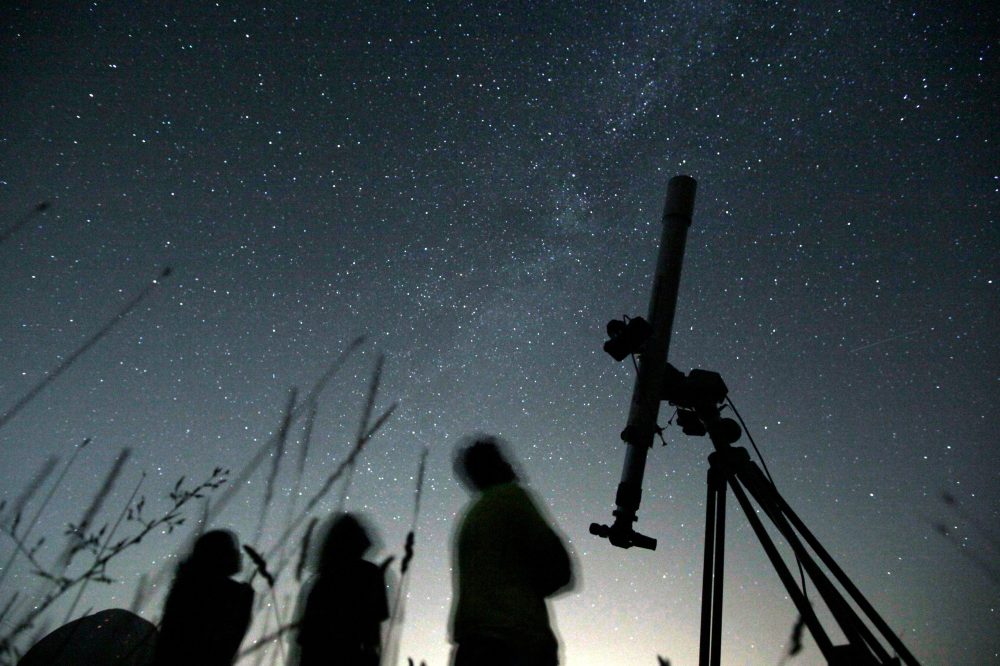
Amateur astronomers armed with binoculars or a small telescope may be able to see it as a faint dot of light drifting across the sky. According to NASA, Earth won’t see this asteroid pass from such a close range again until the year 2133.
The last comparable flyby occurred in 2022, when a similarly sized asteroid called 1994 PC1 made a safe pass near Earth at an even closer distance.
Space agencies including NASA and the European Space Agency continuously monitor the orbits of asteroids and other debris in space to guard against any potential impact with Earth. Last year, scientists tracked a smaller, hockey puck-shaped asteroid and confirmed it had no chance of striking Earth or the moon.