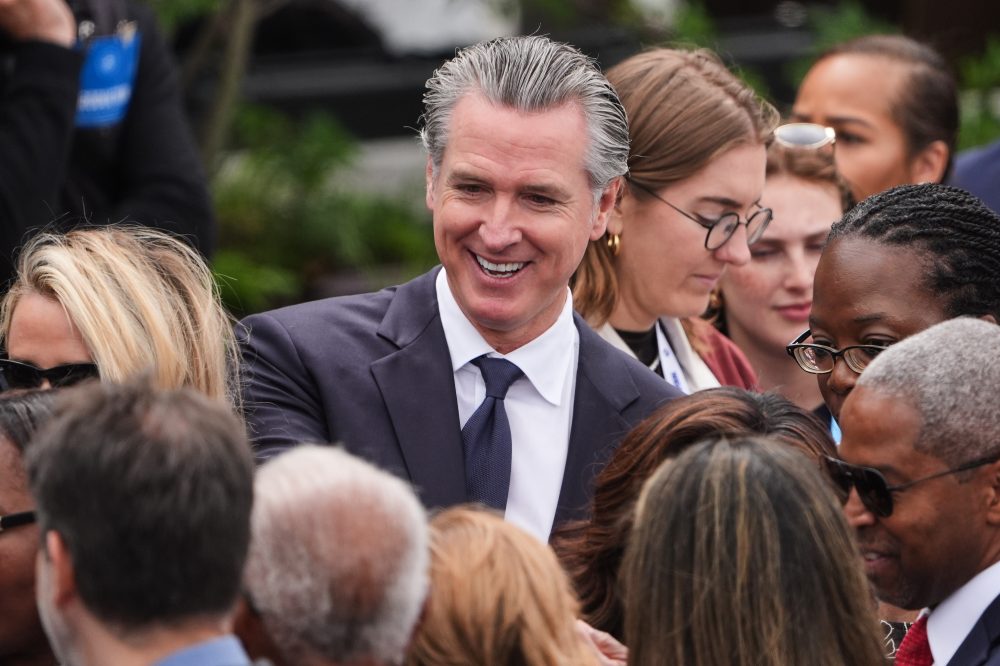

California Gov. Gavin Newsom, a Democrat who is weighing a presidential run as he nears the end of his time in office, is pushing for a nationwide tax on billionaires — even as he works to block a similar measure back home in California.
In a post published on Substack, Newsom laid out a sweeping economic agenda that also calls for the federal government to hold an ownership stake in artificial intelligence companies. His proposals put him squarely in line with the populist left wing of the Democratic Party, and he argued that dramatic action is needed to stop an extreme concentration of wealth and power from weakening American democracy.
“It’s time for an economic reset for America,” Newsom wrote.
The governor unveiled his plan just one day after a powerful health care union in California announced it would move ahead with a ballot initiative that would impose a one-time 5% tax on the total assets of billionaires living in the state as of January 1, 2026.
Newsom is against that state-level measure, and so are many liberal advocacy groups that typically support higher taxes on the wealthy. The concern is that such a tax would push billionaires to leave California, shrinking the state’s long-term tax base in exchange for a single influx of money. California, a hub for the technology industry, is home to more billionaires than any other state — with estimates putting the number at several hundred.
“You may not be able to pick up and move to Texas or Florida to shelter your income from taxation, but I promise you that billionaires can, and do,” Newsom wrote. “Wealth is movable, and it shops for the state with the lowest taxes. The fight belongs at the federal level, where this broken system was created in the first place.”
Rather than a patchwork of state tax policies, Newsom is calling for a unified national approach. His plan includes a minimum tax on individuals whose net worth exceeds $100 million. He also wants to ban a common practice among the wealthy — borrowing against stock portfolios to finance lavish lifestyles without paying taxes on those funds.
Newsom also called for reforms to inheritance taxes, cautioning that “the transfer of wealth among the ultra-wealthy will lock in a permanent American aristocracy of inherited wealth.” Additionally, he wants corporate tax rates restored to the levels that existed before President Donald Trump’s first-term tax cuts.
He said the urgency of these changes is heightened by the rise of artificial intelligence, which he warned could displace workers and funnel even more wealth to those already at the top.
“We need to ensure every American owns a stake in the future being built by AI through a national public equity fund that takes a major stake in the new economy,” he wrote. “Simply, as artificial intelligence reshapes the country, every American should own a piece of the future it builds.”
Newsom suggested that money raised through his proposed policies could be directed toward worker retraining programs, universal child care, tuition-free college, and expanded health care funding.
Newsom has become one of Trump’s most prominent political critics, and his early push to define a policy platform comes well ahead of the midterm elections — the traditional unofficial starting gun for presidential campaigning.
His embrace of a wealth tax marks a significant shift for a governor who has generally been considered moderate on tax issues, despite his liberal image. It also reflects a broader change in the political climate since Massachusetts Sen. Elizabeth Warren made a wealth tax — specifically a 2% levy — a centerpiece of her 2020 presidential campaign, which failed to gain momentum.
Newsom framed the current tax system as one that is rigged to benefit a privileged few at everyone else’s expense.
“Money buys influence, and influence rewrites the rules,” he wrote. “Those rewritten rules funnel even more wealth to the few. Under this weight, democracy itself starts to buckle.”