
LOS ANGELES — A federal judge brought the arson trial of the man accused of igniting the catastrophic 2025 Palisades Fire to an abrupt halt Friday, declaring a mistrial after jurors announced they were hopelessly deadlocked. Federal prosecutors wasted no time signaling their intention to bring the case back to court.
The jury in the trial of 29-year-old Jonathan Rinderknecht had informed the court a day earlier that deliberations had reached a complete standstill. Rinderknecht faced three federal charges: arson, malicious destruction by means of a fire, and timber set aflame.
Judge Anne Hwang formally ended the proceedings, stating, “The court finds there is a manifest necessity to declare a mistrial because the jury is deadlocked.” The split stood at 10 jurors favoring not guilty and two pushing for conviction.
In a note submitted to the court Thursday, jurors described the situation plainly: “We have people on both sides that are dead set, unwavering and unwilling to change their opinion.” The jury also indicated there was nothing the court could do to break the impasse and confirmed they were divided on every single charge.
Prosecutors had asked Judge Hwang to instruct the jury to continue deliberating, but she declined, citing a “risk of coercion” given how firmly entrenched both sides appeared to be.
Defense attorney Steve Haney characterized the vote tally as a “pretty resounding indication” that his client did not commit the crime.
U.S. Attorney Bill Essayli pushed back strongly, declaring that prosecutors “fully intend to retry this case before a new jury and obtain guilty verdicts on all charged counts.” He added, “The evidence is strong that Jonathan Rinderknecht is responsible for igniting the fire on January 1, 2025, which eventually became the Palisades fire.”
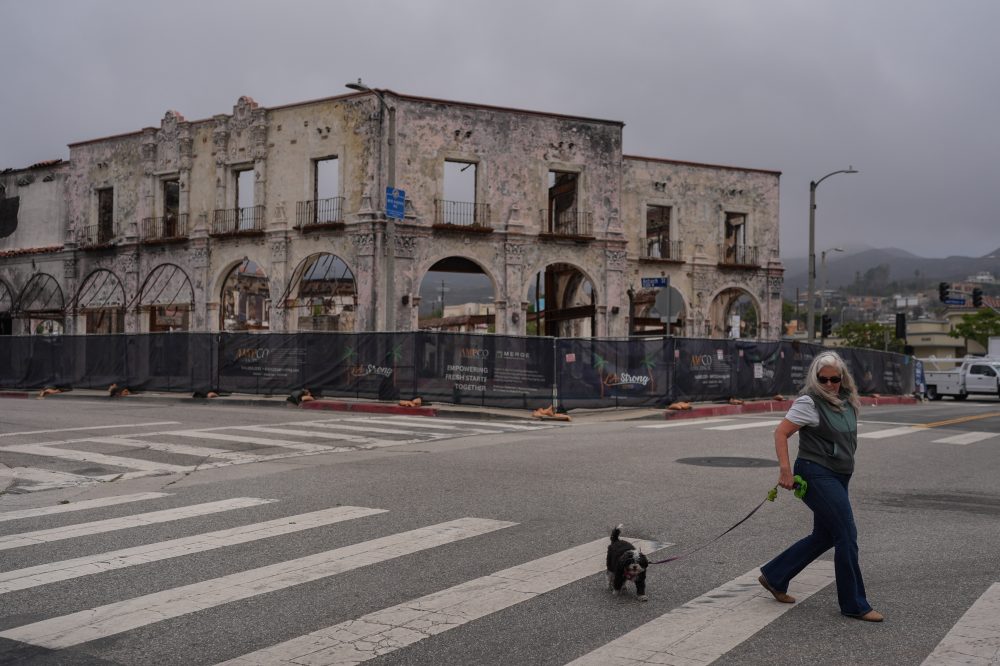
Rinderknecht has maintained his innocence throughout the proceedings. The fire he is accused of starting became one of the most destructive wildfires in the history of California. Prosecutors contend he lit a fire on January 1, 2025, which smoldered undetected in underground root systems before erupting again on January 7. The Palisades Fire ultimately claimed 12 lives and leveled thousands of homes across the hillside communities of Pacific Palisades and Malibu. Recovery has been painfully slow — only 17 homes have been cleared for occupancy.
The trial got underway on June 8 and included eight days of detailed testimony from investigators, expert witnesses, and people who lived in the surrounding area. Jurors spent a total of 13 hours deliberating over two days before concluding they could not reach a unanimous decision.
Prosecutors used security camera footage to argue the fire originated at a location known as the Hidden Buddha clearing, a hillside spot accessible via a neighborhood trail. Rinderknecht, who was working as an Uber driver that evening, dropped off his final passenger in the same neighborhood shortly before midnight.
He called 911 more than a dozen times that night, and cell phone location data placed him at the clearing. Records showed him walking down the trail while making those calls. Prosecutors also noted that Rinderknecht told investigators he had not seen or heard anyone else at the location.
To establish motive and state of mind, prosecutors introduced a wide range of digital records pulled from his phone, email, Uber account, OpenAI account, and various social media platforms. Investigators reviewed thousands of exchanges between Rinderknecht and the AI chatbot ChatGPT, which he regularly used as a personal journal several times a week.
In one entry, he wrote: “Why am I so angry all the time?” He also expressed frustration over wealth inequality and climate change, feeling powerless to make any difference.
Digital records also showed he had searched for information about Luigi Mangione, who is charged with murdering United Healthcare CEO Brian Thompson. On Reddit, he searched the phrase “lets kill all the billionaires.” He also looked up the home address of DoorDash CEO Tony Xu, including whether Xu had children or security cameras at his residence.
Prosecutors also highlighted his romantic frustrations. He had reached out to a woman earlier on New Year’s Eve asking about her plans, and after she turned him down, he sent her angry and offensive messages from a separate phone.
After firefighters arrived to battle the blaze, Rinderknecht followed them and recorded video of the fire. While doing so, he also asked ChatGPT whether a person could be held responsible for a fire accidentally started by a cigarette. He screen-recorded both his 911 calls and that ChatGPT exchange — something prosecutors presented as an attempt to mislead investigators.
On January 6 — the day before powerful Santa Ana winds fanned the smoldering roots back into a full-scale inferno — Rinderknecht recorded a selfie video in which he said he was experiencing a mental breakdown.
Prosecutors also referenced a recorded interview Rinderknecht gave to agents from the Bureau of Alcohol, Tobacco, Firearms and Explosives in late January, before he was considered a suspect. ATF agent Matthew Beals spoke with him for approximately eight hours, at one point driving with him to the fire site so Rinderknecht could walk through his movements during the timeframe when the fire began.
Agent Beals testified that Rinderknecht’s account of events conflicted with the geolocation data from his phone and the timestamps on his 911 calls. Beals also said Rinderknecht grew “agitated” during questioning, at one point accusing the agent of treating him like a suspect, and repeatedly brought up his frustrations with politics when asked about the fire.
In one recorded moment, Rinderknecht speculated about why someone might hypothetically set a fire in Pacific Palisades: “If people are specifically targeting this area, I’m thinking it’s probably because they’re like, ‘Oh, do people think they can have their own little road up here in paradise and just, you know, be here with their money while we’re basically being slaves for them?’”
Arson behavioral expert Kevin Kelm testified that Rinderknecht’s conduct was consistent with what he described as a “revenge, or societal revenge motivated” arsonist.
The defense, meanwhile, argued that fireworks — not Rinderknecht — were the most probable cause of the fire. One firefighter testified to hearing fireworks in the area around midnight on New Year’s Eve. Three additional witnesses called by the defense — two Pacific Palisades residents and a neighborhood security guard — said they either saw flashes of light or heard fireworks, and two of them reported seeing a group of teenagers running down the trail afterward.
Two defense expert witnesses also cast doubt on the federal investigation, pointing out that the scene of the January 1 fire was left unsecured for 13 days, leaving it potentially compromised. Both concluded fireworks were the most likely cause.
Former Los Angeles fire investigator Ed Nordskog testified that he had responded to dozens of fires on both the Fourth of July and New Year’s Eve, the majority of which were caused by fireworks. He accused government investigators of falling victim to confirmation bias in their pursuit of Rinderknecht. “They’re choosing to look at information in a very sinister way when they should be a little more open about it,” he said.
Defense attorney Haney also noted that a search of Rinderknecht’s entire digital history turned up no searches related to arson, fire-starting techniques, or purchases of fire-starting materials. While investigators found his DNA on a barbecue lighter in his vehicle, they could not prove that lighter caused the fire — only that it was started with an “open flame,” Haney said.
Haney argued that calling 911 repeatedly and remaining on scene while firefighters worked was itself evidence of innocence. “No arsonist sets a fire and calls 911 for them to put it out … and then waits around to be arrested,” he said.