The White House confirmed late Thursday that Vice President JD Vance has scrapped his scheduled trip to Switzerland, where he was expected to attend a formal signing ceremony for a memorandum of understanding (MoU) designed to bring an end to the conflict with Iran.
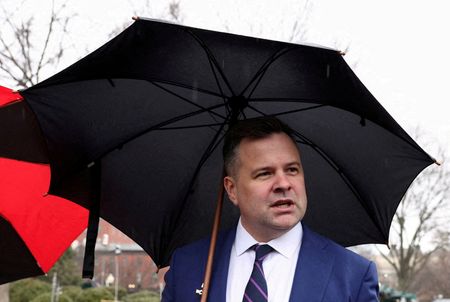
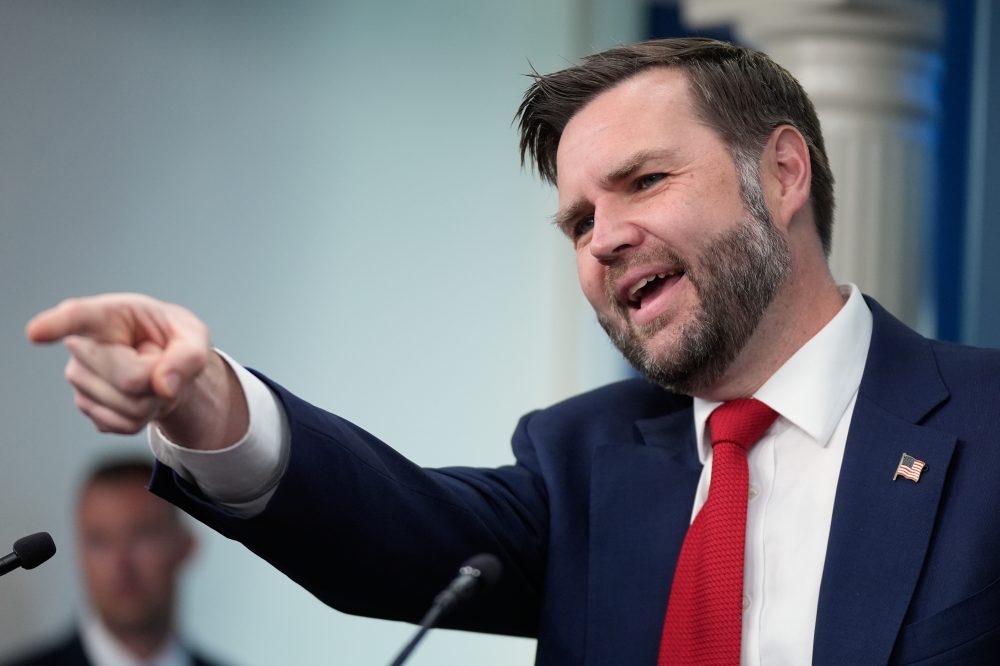
The decision came just hours after Vance appeared at a White House press conference and left the door open on his travel plans. Despite earlier reports that a ceremony had been set for Friday in Geneva, Vance told reporters Thursday, “My plan is to go to Switzerland,” while acknowledging he did not know “exactly when.”
He also indicated that technical-level negotiations were expected to begin over the weekend, saying, “We think these technical negotiations are going to start sometime this weekend — that’s still the plan — but that could change.”
Earlier in the week, Pakistani Prime Minister Shehbaz Sharif had announced that Pakistan would host the Switzerland ceremony to mark the agreement and formally launch those negotiations. Friday’s planned event was meant to serve as a ceremonial signing and the official kickoff of the talks.
President Donald Trump had already digitally signed the MoU on Wednesday in Versailles. Iranian President Masoud Pezeshkian also signed the document. Whether Vance’s trip will be rescheduled remains unclear.
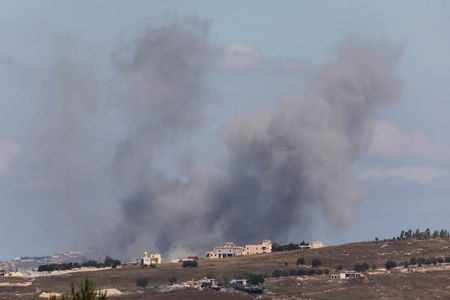
The White House announcement came as violence continued in Lebanon. The Israel Defense Forces reported that four of its soldiers, including a battalion commander, were killed by a Hezbollah drone in southern Lebanon. The military said it then carried out retaliatory strikes against Hezbollah targets.
At Thursday’s press conference, Vance took aim at Israel’s military strategy and its resistance to the MoU, which includes provisions that would restrict Israel’s ability to strike Hezbollah and respond to attacks.
“It’s clear that large segments of the Israeli political system and population are very sensitive about this deal,” Vance said. “But I also think they’re picking up on some misinformation about the deal and running with it and sort of panicking about it.”
Directing his remarks at Israeli critics of the agreement, Vance added: “I guess my response to them would be: What is your exact proposal? You’re a country of nine million people. You can’t just kill your way out of solving every single national security problem that you have.” Notably, Vance misstated Israel’s population — the actual figure is approximately 10 million.
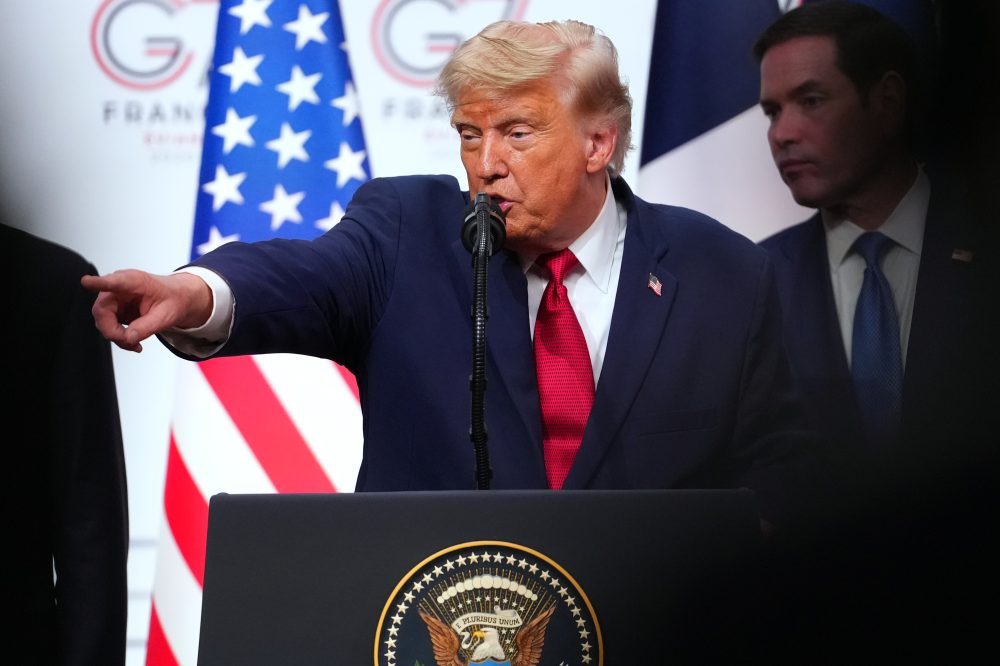
President Trump also weighed in on Israel’s military actions in Lebanon during the G7 conference, telling reporters: “We have a little dispute over Lebanon. I say, ‘You can do a little softer touch, Bibi. You don’t have to knock down a building every time somebody walks into it that’s from Hezbollah.’”
A top World Health Organization official announced Friday that 75 healthcare workers in the Democratic Republic of Congo have been infected with Ebola since the current outbreak began, and 17 of those workers have died from the disease.
The virus is believed to have been spreading for months before Congolese officials formally declared the outbreak on May 15, leaving many medical workers unknowingly exposed long before they could take precautions. Even now that the outbreak is known, health officials report that basic protective equipment such as gloves and masks is in short supply.
WHO emergency director Marie Roseline Belizaire addressed reporters via video link from eastern Democratic Republic of Congo, describing the toll on an already strained healthcare system. “It is a really high price that the system, the healthcare system, is paying, because we don’t have enough of healthcare workers in DRC,” she said.
WHO data shows that Congo has one of the lowest ratios of healthcare workers to population in the world, with roughly 11 workers for every 10,000 people. Belizaire noted that China and Uganda are dispatching medical teams to the country to help address the shortage.
The WHO is also providing psychological support to some medical workers who have become too frightened to treat Ebola patients after watching colleagues become sick and die. Belizaire described the emotional weight of hearing their stories firsthand: “When they are explaining to you how they live it, how they were infected … (it) can break your heart.”
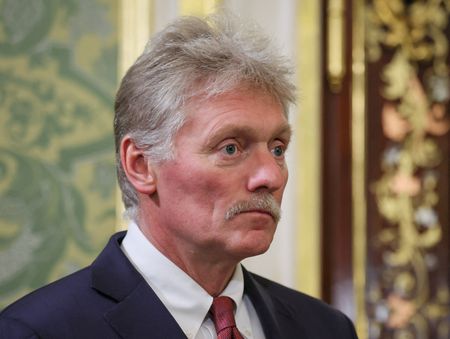
MOSCOW — Russia signaled Friday that it is prepared to engage in conversations with European nations, but made clear it will not be pressured into negotiations on anyone else’s terms.
Kremlin spokesman Dmitry Peskov said practical reasoning alone demands such dialogue, given what he described as an “enormous number” of complicated matters that need to be addressed. However, he stressed that Europe must rethink how it approaches Russia before any meaningful exchange can happen.
“The Europeans have a very serious misconception: They assume that negotiations with Russia must be conducted from a position of strength and based on Russia’s weakness. This is the biggest mistake… Such talk will lead nowhere,” Peskov told reporters.
He went further, adding: “Does this stem from European incompetence, misinformation, or stupidity? We don’t know for sure, but it’s a fact.”
Russian President Vladimir Putin has previously indicated a willingness to speak with European governments, but has insisted they must initiate contact, since it was they who severed ties. The EU has now imposed 20 separate rounds of sanctions on Russia in response to its invasion of Ukraine.
EUROPE SHIFTS ITS POSITION
For more than a year, European nations largely stepped back from direct engagement with Russia, leaving U.S. President Donald Trump to take the lead in attempting to negotiate a resolution to the conflict. That posture appears to be changing.
The office of European Council President Antonio Costa made “brief contacts at diplomatic level” with the Kremlin over recent weeks in order to “open communication channels,” according to an EU official who spoke Wednesday.
Austrian Chancellor Christian Stocker told the Financial Times in an interview released Thursday that the EU should capitalize on the current “momentum” surrounding Ukraine peace discussions to push forward with efforts to restart direct talks with Putin.
Peskov echoed Russia’s conditional willingness, saying Moscow would engage if the other side came ready for genuine conversation — “not to engage in moralising or, especially, to issue ultimatums.”
Costa’s outreach, however, exposed fault lines within the EU. At a summit of EU leaders held in Brussels, some member states said the initiative had not been coordinated with them and argued the bloc should instead focus on increasing pressure on Russia.
UKRAINE DRONE STRIKES HIT MOSCOW AREA
Ukraine has claimed it is gaining the upper hand in the war through an intensified wave of drone strikes targeting locations deep within Russia, including ports, oil refineries, and other critical infrastructure. Russia disputes this characterization and says it will continue fighting until its goals are met — with or without a diplomatic resolution.
The governor of the Moscow region announced Friday that an eight-year-old girl had been killed in a large-scale Ukrainian drone attack that struck the capital and surrounding areas the previous day. The assault, involving hundreds of drones, ignited a major oil refinery in southeast Moscow for the second time in just three days.
“Indeed, drone attacks continue. Appropriate measures are being taken to mitigate the consequences,” Peskov acknowledged.
When asked whether Putin had watched footage of the burning refinery, Peskov deflected, telling reporters they should instead look at images from Ukrainian cities struck by Russian forces.
Canadian space technology company MDA Space announced Friday that it plans to purchase Blue Canyon Technologies, a U.S.-based spacecraft manufacturer, from RTX’s Raytheon division in an all-cash deal worth $620 million. The move is designed to grow MDA Space’s presence in the American defense space industry.
The deal arrives at a time when governments around the world are ramping up investment in defense and space programs, creating new business opportunities for companies that make satellites, spacecraft, and related technologies.
The announcement also comes on the heels of SpaceX’s debut on the Nasdaq stock exchange last week, during which the company raised $75 billion through its initial public offering.
As part of the transaction, MDA Space would gain Blue Canyon’s spacecraft production capabilities, two manufacturing facilities located in Denver, Colorado, and a workforce of more than 400 employees.
Blue Canyon Technologies was established in 2008 and is headquartered in Colorado. The company specializes in designing and building small satellites, spacecraft buses, and mission systems for commercial, civil, and defense clients. RTX acquired the company in 2020.
MDA Space said the addition of Blue Canyon would expand its business opportunity pipeline by approximately $3.5 billion. The company also expects the acquisition to contribute positively to its adjusted earnings before interest, taxes, depreciation, and amortization, as well as adjusted earnings per share, starting in 2027.
The transaction is expected to close by the end of 2026, subject to regulatory approvals and standard closing conditions.
BERLIN — BMW and its employee representatives are getting ready to sit down for talks after the German luxury automaker dramatically lowered its profit expectations and committed to stepping up efforts to cut costs, according to a spokesperson for the company’s general works council.
“We are initially working on viable solutions — through dialogue and with a sense of responsibility toward our employees,” the works council spokesperson said in an emailed statement to Reuters, offering no additional specifics.
Earlier this week, BMW issued a formal profit warning, pointing to persistent sluggishness in the Chinese automobile market — the largest in the world — as well as financial pressures stemming from the ongoing conflict in the Middle East.
The automaker also announced plans to intensify structural cost reductions, noting that these measures would likely produce a one-time financial impact during the second half of the year.
While competitors Volkswagen and Mercedes-Benz have already unveiled broad job-cut programs, BMW has stopped short of similar announcements. However, the company’s overall headcount did dip slightly in 2025, and that downward trend is expected to carry into the current year.
The man tapped to lead the United States intelligence community is wasting no time making his mark — and his plans could mean pink slips for hundreds of workers, CNN reported Friday.
Acting Director of National Intelligence Bill Pulte is pushing to eliminate a large number of positions at the Office of the Director of National Intelligence, according to two sources familiar with the situation who spoke to CNN. Pulte reportedly arrived at his new workplace a day earlier than expected on Thursday, after requesting a complete employee roster so he could evaluate who might be let go.
President Donald Trump appointed Pulte — a federal housing regulator — to the acting director role earlier this month. The appointment placed a political loyalist with no prior national security experience at the helm of the country’s intelligence apparatus during a period marked by ongoing conflicts and rising global tensions.
In his new role, Pulte would oversee major agencies including the Central Intelligence Agency and the National Security Agency, the latter of which monitors foreign communications and works to defend the country against cyberattacks.
During his Thursday visit, Pulte met with attorneys and staff members, CNN noted. The Office of the Director of National Intelligence did not respond to a request for comment from Reuters.
Pulte steps into the role left by Tulsi Gabbard, who announced her resignation last month. Her final day leading the agency is June 19.
Pulte’s early arrival caught many staffers off guard. Even Gabbard herself was only given a brief warning ahead of the visit, according to CNN’s reporting.
Reuters had previously reported earlier this month that agency managers had warned employees to brace for significant workforce reductions in the months ahead, following public statements from Trump expressing his desire for the new interim leader to downsize the agency.
Gabbard had already overseen a roughly 40% reduction in the agency’s workforce since she took over the position last year.
Motorists traveling northbound on US-301 should plan for delays as construction crews have closed the left lane between Jamison Corner Road and the Route 1 on-ramp.
The lane restriction is expected to remain in effect until 3:00 PM. Drivers in the area are advised to allow extra travel time or consider alternate routes if possible.
No additional details about the nature of the construction work have been provided at this time.
Old Furnace Road is closed in both directions between Cokesbury Road and Rementer Road following a crash, according to Delaware transportation officials.
Motorists traveling through the area are urged to plan ahead and use alternate routes to avoid delays. The closure is in effect while crews work at the scene.
No further information regarding the crash, including the number of vehicles involved or any injuries, has been made available at this time. TV Delmarva will provide updates as more details are released.
Old Furnace Road is closed in both directions between Cokesbury Road and Rementer Road following a crash, according to transportation officials.
Motorists traveling through the affected area are advised to seek alternate routes until the roadway is reopened. The closure is in effect while crews work at the scene.
No additional details regarding the crash have been made available at this time. Drivers should use caution near the area and allow extra travel time. Updates will be provided as more information becomes available.
Travelers on Star Road between Neptune Drive and Cox Road should expect intermittent lane restrictions due to active construction in the area.
The lane closure is scheduled to remain in place until 6 PM, according to traffic officials. Drivers are encouraged to use caution when passing through the construction zone.
No detour information was provided, but motorists may want to consider alternate routes to avoid potential delays during the closure period.
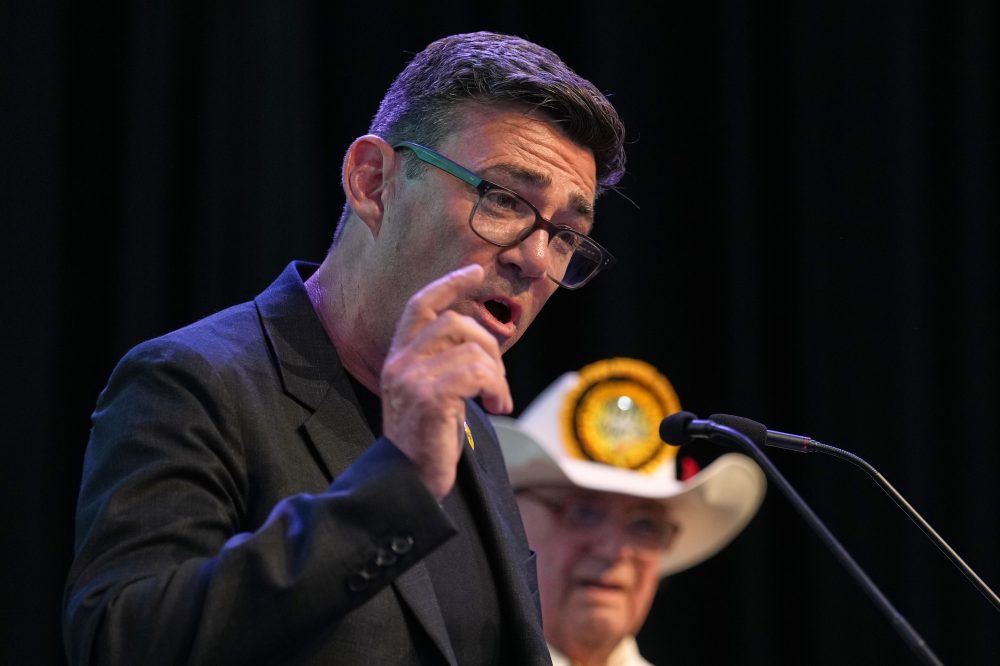
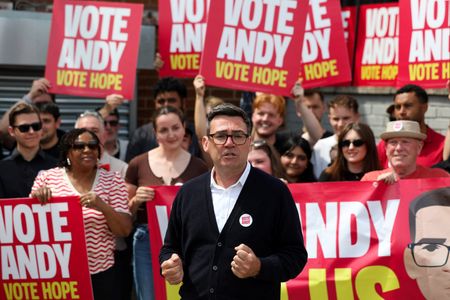
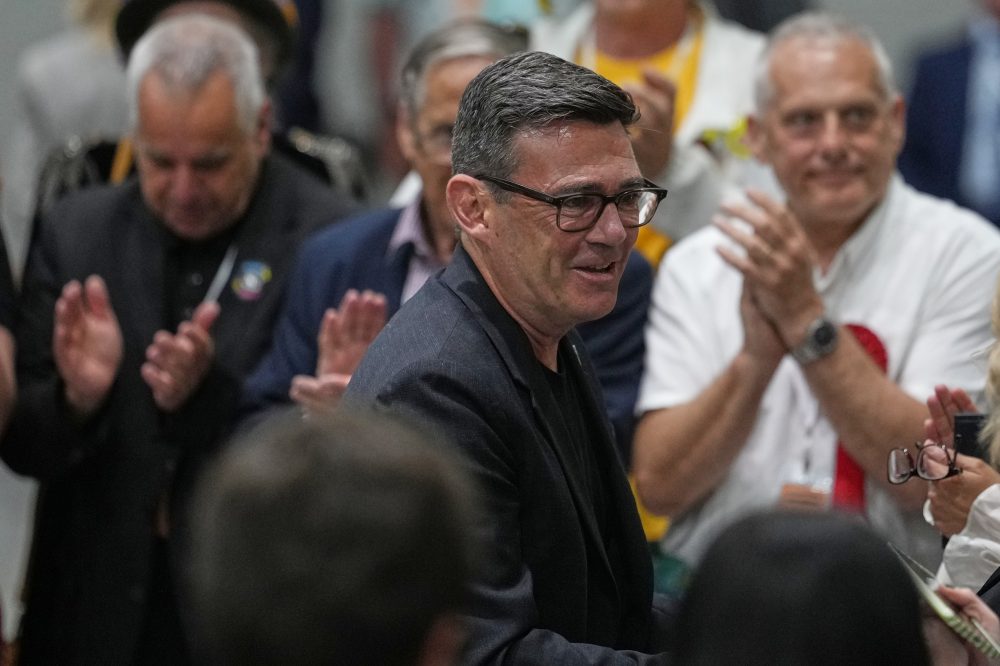
LONDON — A commanding special election win by Andy Burnham on Friday has triggered a political chain reaction that could soon bring down Prime Minister Keir Starmer, the man who led the Labour Party back to power less than two years ago after a 14-year absence from government.
Burnham is widely considered the top contender to succeed Starmer, particularly after his overwhelming performance in the Makerfield seat in northwest England. Even as Labour has struggled with poor poll numbers and significant losses in recent local elections, Burnham managed to defy the political odds in a major way.
The 56-year-old not only fended off the challenge from the anti-immigration Reform UK party, but he dramatically boosted Labour’s vote share to nearly 55%. That’s especially striking given that at local elections just last month, Reform UK captured virtually every seat within the Makerfield constituency.
With his return to Parliament after nearly a decade away — during which he served as the widely popular mayor of Greater Manchester — Burnham is now positioned to mount a direct challenge to the struggling Starmer for both the Labour leadership and the country’s top office. While he has stopped short of formally declaring his intentions, his words leave little doubt about where his ambitions lie.
Burnham framed his win as “the change moment” and said he and his supporters hoped to “lay out a new path” for Britain.
“I think we need in this country right now for people to feel a sense of hope that there is something better to work towards on the horizon,” he said.
The next scheduled national election in the UK isn’t required until 2029, but British political rules allow a party to swap out its leader — and therefore its prime minister — without triggering a nationwide vote.
Here’s how a leadership change could unfold:
Despite Starmer’s repeated insistence that he would fight any challenge to his position, he may soon conclude that he would lose a leadership vote — a deeply humbling outcome for a man who delivered a landslide Labour victory in July 2024. Starmer now ranks among the most unpopular prime ministers in modern British history, battered by a series of policy stumbles and controversies. Chief among them was his widely criticized decision to appoint Peter Mandelson as the UK’s ambassador to Washington, despite Mandelson’s connections to convicted pedophile Jeffrey Epstein.
Reports suggest that members of his own Cabinet may inform him this weekend that his position is no longer tenable and that resigning would be better both for him and for the Labour Party.
If Starmer chose to leave office right away, the Cabinet and Labour’s governing body would likely select a temporary leader to serve as prime minister — someone not expected to compete in the full leadership race. Deputy Prime Minister David Lammy has been mentioned as someone who could fill that role.
Another option would be for Starmer to announce he plans to step down at a future point, such as the party’s annual conference scheduled for September.
Burnham is expected to enter any leadership contest that follows. The bigger question is who else might join the race. Wes Streeting, who stepped down as health secretary last month, has signaled he intends to run. Other names being floated include Starmer’s former deputy Angela Rayner, who resigned last year over an unpaid property tax matter, and Al Carns, who left his post as armed forces minister last week over disagreements with Starmer’s defense spending plans.
A significant faction within Labour is pushing for no one to challenge Burnham at all, hoping he could walk into 10 Downing Street this summer, ahead of the party conference.
On Friday, Starmer found himself in the awkward position of publicly congratulating Burnham — knowing full well the victory only intensifies scrutiny of his own leadership.
The prime minister confirmed he had not yet spoken with Burnham but made clear he has no intention of stepping aside.
“Yes, I will run, I will stand,” Starmer said when asked whether he would contest a leadership challenge. “I’ve said repeatedly I’m not going to walk away from that.”
Under Labour’s rules, if a formal challenge is mounted, Starmer would automatically appear on the ballot. Any challenger would need to secure the support of at least one-fifth of Labour’s House of Commons lawmakers — that’s 81 members. Candidates who clear that bar would then need backing from either 5% of local party branches or at least three affiliated organizations, such as trade unions or cooperative societies.
Eligible party members and affiliates would then vote using a ranked-choice system, with the winner being the first candidate to surpass 50% of the vote. King Charles III would then formally invite that person to become prime minister and build a new government.
If a full contest takes place, the process could take three to four months, with the party holding town hall events before ballots are opened to its membership.
BRUSSELS — Just hours after U.S. Defense Secretary Pete Hegseth publicly criticized NATO allies and announced a Pentagon review of their performance, leaders of numerous European nations were already going through their own checklist of security progress — covering many of the same issues Hegseth raised.
In many ways, Hegseth was telling the Europeans what they already know.
The European agenda included increased defense spending, investment in military production industries, lessons drawn from the ongoing war in Ukraine, and the development or purchase of drones, air defense systems, and long-range weapons.
At a summit that wrapped up Friday, European leaders discussed how to best deploy joint European Union funding, eliminate bureaucratic obstacles to speed up procurement, improve “military mobility” for faster troop and equipment deployment, and upgrade ports and airports.
“Europe’s defense readiness must be decisively ramped up by 2030,” they reaffirmed — a goal they have been working toward since Russia launched its full-scale invasion of Ukraine in 2022.
Intelligence agencies have cautioned that Russian President Vladimir Putin could order military action elsewhere in Europe before the decade is out, particularly if he manages to defeat Ukraine. European nations have also accused Russia of carrying out acts of sabotage and spreading disinformation across the continent.
Roughly two-thirds of European Union member countries are also NATO members, and the unpredictability of the Trump administration has pushed them to accelerate their own independent efforts. Hegseth’s announced review was simply the most recent unexpected development.
Hegseth does not regularly attend NATO meetings, and he departed Thursday’s gathering of defense ministers before it concluded. Still, his first major address to the alliance in February 2025 and his follow-up appearance this week left a strong impression.
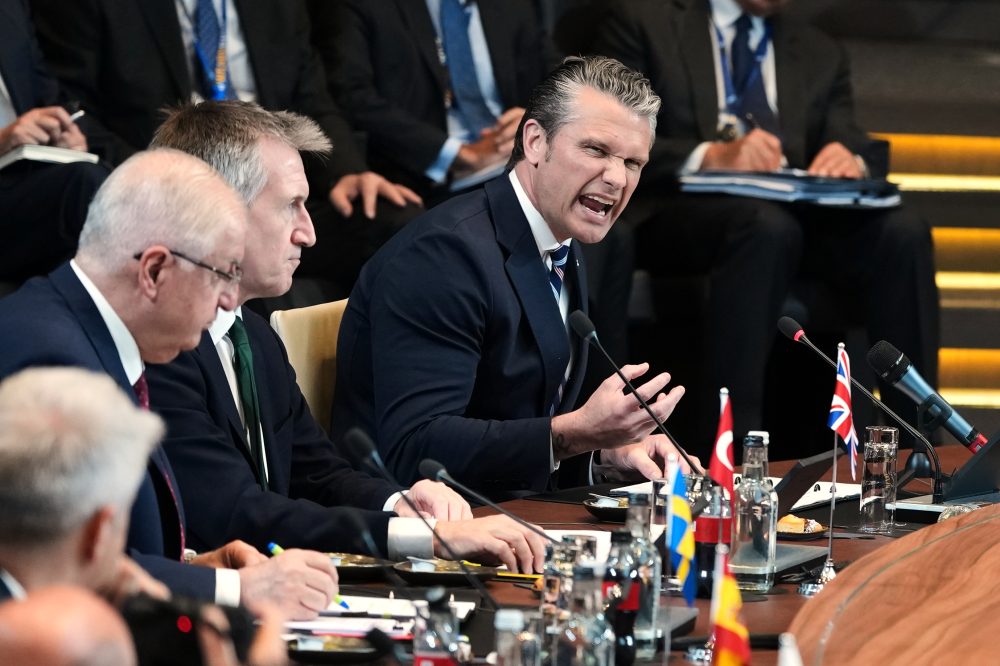
On Thursday, he branded NATO a “paper-tiger,” called allies “shameful,” and declared that “too many failed” a test set by President Donald Trump — who had sought use of European bases to launch strikes against Iran.
He also criticized allies for emphasizing “gender equity and climate change” and attacked their immigration policies.
Hegseth then gave NATO members six months to demonstrate improvement before a Pentagon performance review that would tie the continued presence of American forces in Europe — and U.S. financial contributions to NATO — to whether he judges them to be doing enough.
“It’s protection racket framing that undermines NATO solidarity, trust in the U.S. commitment to NATO, and, ultimately, U.S. security interests,” said Rachel Ellehuus, Director-General of the Royal United Services Institute think-tank.
The specifics of what the review will actually examine remain unclear.
“It will be designed to ensure that NATO is moving fast and irreversibly toward Europe leading, stepping up to take primary responsibility for the defense of Europe,” Hegseth said. “Some countries will fail and others will pass with flying colors.”
He said the process might last “up to six months, could be less,” and would involve U.S. military commanders, members of Congress, and the allies themselves.
Hegseth also said that American contributions to the shared NATO budget — which funds its headquarters and other facilities — would be tied to ally performance. “Where other allies do not spend with urgency, our dues contributions will go down,” he said.
Speaking to reporters at Brussels airport before departing, he added that the review would also look at “where is the right place for basing. Where can we make sure we have access and overflight when we need it, so that America is properly postured on the continent.”
NATO itself played no direct role in the Iran conflict, though it did work to protect alliance territory from potential attack.
NATO Secretary-General Mark Rutte said he could not yet explain what Hegseth’s review would involve.
“There’s still no clarity on exactly what the outcome will be, because that will depend on the review. So, we’ll see what happens,” Rutte said, adding that “wherever we can be helpful, we will be helpful.” Rutte is expected to travel to Washington next week, where he may learn more.
From Rutte’s perspective, European allies and Canada are making solid progress, even if more can always be done.
“What we are seeing is staggering amounts of money coming in,” he told reporters. “Europe and Canada are spending in 2025 more than $90 billion extra compared to 2024, which is almost a 20% increase in defense spending.”
That additional funding must now be converted into actual military equipment, weapons, and ammunition.
At last year’s summit, allies agreed to raise their defense budgets to match the United States as a share of gross domestic product. President Trump left that meeting satisfied, describing his NATO counterparts as a “nice group of people.” But the new review casts a shadow over the alliance’s next summit, scheduled for July 7-8 in Turkey.
Despite the tension, senior European military officers have taken on more command roles within NATO, and U.S. allies have stepped up to lead the effort to channel arms and money into Ukraine as the Trump administration has pulled back.
Some European nations and Canada are also spending billions to purchase critical air defense systems from the United States, which they then donate to Ukraine — a conflict they view as an existential threat to Europe as a whole.
By most measures, it is difficult to identify what more the allies could be doing or doing faster — unless the expectation is that they provide unrestricted access to their airspace and military bases for American military operations beyond Europe.
Ellehuus, a former senior U.S. advisor at NATO, argued that decisions about troop positioning “should be driven by detailed threat assessments, operational requirements, and military planning – not used as a form of reward, punishment or revenge.”
“Such framing undermines allies while they’re actively trying to solve the problem and telegraphs to adversaries that U.S. security commitments have a price tag,” she said.
Motorists traveling southbound on DuPont Parkway, also known as Route 13, are facing a right lane closure this afternoon due to ongoing construction work.
The lane restriction is located between Wilton Boulevard and 2nd Avenue. Drivers in the area should plan for potential delays and allow extra travel time until the closure is lifted.
The construction-related lane closure is expected to remain in effect until 3 PM. Travelers are encouraged to use caution when passing through the work zone.
An experimental drug designed to help heart tissue recover from damage may have an unexpected benefit — it could also help heal injured kidneys, according to new laboratory research.
The drug, known as AD-NP1, is being developed at UCLA and recently received approval to begin early human trials focused on heart treatment. It works by blocking a protein called ENPP1, which interferes with the body’s natural healing process and can prevent full recovery after a heart attack.
Curious whether the same protein played a role in kidney disease, UCLA researchers examined kidney tissue samples from patients with chronic kidney disease. They discovered that ENPP1 was present at higher concentrations in diseased kidney tissue compared to healthy tissue.
To test their theory further, the team induced kidney injuries in two groups of mice — normal mice and mice genetically engineered to lack the ENPP1 protein. Both groups showed initial damage, but after several weeks, the mice without ENPP1 demonstrated noticeably better kidney repair, less scarring, and improved overall kidney function. The findings were published in the journal Cell Stem Cell.
In a follow-up experiment, researchers gave AD-NP1 to normal mice after inducing kidney damage. Just one week later, those mice showed measurable improvements in kidney function and healing.
Study leader Arjun Deb of UCLA explained the underlying science in a statement, noting that the ENPP1 protein disrupts key pathways cells rely on to produce energy.
TUBARA/JUAN DE ACOSTA, COLOMBIA — At first look, these two side-by-side towns along Colombia’s hot and humid Caribbean coast seem nearly identical. Single-story houses with rocking chairs on their porches surround town plazas, and locals plan their errands to dodge the brutal midday sun. Mango trees shade the streets where children meander home from school.
Yet Tubara and Juan de Acosta — both located near the port city of Barranquilla — are sharply split when it comes to Sunday’s presidential election, which places two very different visions for Colombia’s future head to head.
In Juan de Acosta, where murders and extortion have surged alongside rising drug trafficking activity along its coastline, right-wing candidate Abelardo De La Espriella earned 55% of the vote in the first round. He has promised a firm hand against armed groups and criminal organizations.
Just next door, Tubara threw its support behind leftist senator Ivan Cepeda, giving him just under 60% of their votes. His message centered on expanding social programs, including reforms to healthcare, pensions, and education.
De La Espriella, a 47-year-old lawyer and businessman with no prior experience in politics, has leaned heavily into military-style imagery and language throughout his campaign. He calls himself “the Tiger,” labels his political movement “Defenders of the Homeland,” and salutes at campaign rallies and in promotional materials — despite never having served in the armed forces.
His tough-on-crime stance gave him a lead of several percentage points over Cepeda in the first round, and more recent polling shows him eight points ahead heading into the runoff.
For residents of Juan de Acosta, the rise in violence feels foreign to their community. Nicanor Alba, who was trimming and bagging pork ribs for customers at his butcher stand near the town plaza, described the toll extortion has taken.
“You set up your business and tomorrow they come and say ‘if you don’t give us 50,000, 30,000 or 40,000 (pesos), it’s over,’” said Alba, whose own brother was killed five years ago.
He said multiple friends and neighbors have been targeted by extortion on more than one occasion, and that recent homicide numbers left him stunned.
“That had never been seen before in Juan de Acosta, it’s a bunch of people,” said the butcher, who intends to cast his vote for De La Espriella.
The town’s location — with road access to Colombia’s interior and a stretch of coastline — has turned it into what authorities describe as a “strategic point” for drug smugglers, according to Colonel Eddy Sanchez, the police commander for Atlantico province.
Two criminal organizations — Los Pepes and Los Costenos — have long been active in the area, including in drug sales, Sanchez said. More recently, the country’s largest criminal gang, the Clan del Golfo, has also moved in.
“The Clan del Golfo uses this municipality as a platform to reach maritime areas and, using speedboats, ship drugs abroad,” Sanchez said.
“Of course, that leads to issues of violence,” he added, though he noted that murders have dropped from 15 in 2025 to just 2 so far in 2026, returning to the town’s historical average. Police have classified 14 of last year’s killings as contract murders.
Tubara, meanwhile, recorded no murders in 2025 and only one so far in 2026, Sanchez said.
“It’s a territorial dispute, where some gangs are trying to enter the municipality while others are trying to push them out to fully control local drug trafficking,” said Oscar Andres Arteta, Juan de Acosta’s interior secretary, adding that local government and police are working together to combat extortion.
Juan Gabriel Coronel, 42, who sells meat, ice cream, and dry goods at a small shop in Juan de Acosta, also plans to vote for De La Espriella in hopes of curbing crime — but he has personal health concerns weighing on him as well.
“I had a liver transplant 17 years ago and have never been denied my medication in that time,” said Coronel, who is a client of a healthcare provider the government took over in 2024 due to alleged care failures. For the past six months, he said, he has been paying for his medication out of his own pocket.
On the other side of the ballot, Cepeda, 63 and the son of a murdered communist leader, swept all but one Caribbean province in the first round among a field of 13 candidates.
To win the runoff, he will need to grow his numbers in those coastal provinces and in the capital, Bogota, according to Luis Fernando Trejos, a political science professor at the Universidad del Norte. Trejos estimates Cepeda needs between 2.5 million and 3 million additional votes to pull off a victory.
De La Espriella, who outpaced Cepeda by roughly 700,000 votes in the first round, will also need to expand his support. More than 41 million Colombians are eligible to cast ballots, but fewer than 24 million participated in the first round.
Both candidates have lined up backing from influential political figures along the coast, Trejos noted. De La Espriella has made a point of highlighting that he grew up in the inland Caribbean city of Monteria. His campaign billboards show his tiger persona wearing a Barranquilla soccer jersey with the message: “Abelardo is coastal like you. … Coastal votes coastal.”
He has also accused Cepeda’s campaign of planning a large-scale vote-buying effort on the coast — a claim Cepeda’s team has firmly rejected.
In Tubara, Cepeda supporters have been actively working to drive up voter turnout. Clara Algarin, a clinical psychologist and former city councilor, told Reuters she has been coordinating transportation for voters who were unable to reach polling stations during the first round.
Algarin expressed admiration for the current leftist president’s expansion of free public university education and a 230,000 peso (about $66) monthly state pension he created for people who were unable to save for retirement — including her own mother.
“My mother worked as a domestic servant from the age of 16. She never had the possibility of being paid a pension before,” Algarin said.
Her husband, Javier Gomez, operates a bakery — its porch decorated with a bright Cepeda campaign banner. He said he was glad to pay his employee the 23% minimum wage increase for this year that the current president put in place.
“The work that (the employee) does deserves the payment of a living wage,” Gomez said while taking a break from packaging fresh bread.
Seashore Highway is closed in both directions between Vaughn Road and Piglet Path following a downed pole in the roadway.
Motorists traveling through the area are advised to find an alternate route and allow extra time for their commute until the road is back open.
No information was immediately available regarding the cause of the downed pole or when crews expect to reopen the roadway. Drivers should stay alert for updates as conditions change.
Seashore Highway is closed in both directions between Vaughn Road and Piglet Path after a utility pole came down in the roadway.
Motorists traveling through the affected stretch are urged to find an alternate route until the road is cleared and reopened. The closure is expected to remain in place until crews can safely address the downed pole.
No information was immediately available regarding what caused the pole to fall or when the highway is expected to reopen. Drivers should use caution in the surrounding area and allow extra travel time.
SRN News brings listeners a brief but informative audio feature called “Global Landscape,” a two-minute segment designed to keep audiences up to date on the most important religion-focused news stories happening around the world.
The feature covers a wide range of topics, from significant faith-based developments to cultural shifts and major events where religion and global affairs come together. Each edition is crafted to give listeners a timely and accessible overview of what is happening at the intersection of faith and world news.
“Global Landscape” is available through SRN News and airs as a regular feature for those looking to stay informed on religious developments shaping communities worldwide.
Several Christian athletes are using the World Cup stage to share their beliefs openly. Among them are players from Iraq — a country where the Christian population has dropped dramatically, from an estimated 1.5 million in 2003 to roughly 150,000 today. Iraqi midfielder Aimar Sher has been vocal about his faith, posting photos to social media showing him in an “I Belong to Jesus” T-shirt. U.S. forward Christian Pulisic has also been open about his Christian faith, frequently wearing a cross necklace his mother gave him. Pulisic has led Bible study sessions with teammates and has shared photos on Instagram of scripture passages he has personally underlined.
The Federal Trade Commission, along with the states of Alaska, Iowa, Nebraska, and Texas, has filed a lawsuit against the World Professional Association for Transgender Health. The suit alleges the organization made misleading claims about puberty-blocking drugs and gender transition surgeries for minors, and that its members financially benefited from those claims. FTC Chairman Andrew Ferguson posted on X: “Parents have a right to make informed decisions about their children’s health. This department will not allow parents and children to be deceived by medical organizations and providers who are prioritizing profit over children’s health and safety.”
Missouri Republican Senator Josh Hawley has written a formal letter to Major League Baseball Commissioner Rob Manfred regarding an incident earlier this month in San Francisco. Manfred issued a reprimand to several members of the Giants after they wrote Bible verses on their uniforms as a protest against the team’s Gay Pride Night festivities. In the letter, Hawley states he has “grave concern” about the league’s warning to those players, arguing that MLB is compelling players to show support for the LGBT agenda through Pride-themed uniforms. Hawley’s letter requests answers to several questions, including a full accounting of all uniform violation fines issued over the past five years.
Clergy members and other Evangelical Christian leaders are sounding the alarm over a fast-growing form of gambling known as prediction markets. Platforms such as Kalshi and Polymarket allow users to place bets on real-world events, including political and news-related outcomes. Critics argue this type of wagering could potentially sway events like elections. There have already been documented cases of campaign staffers admitting to using insider knowledge about polling results to place bets on their own candidates before favorable data became public. Some candidates have also faced criticism for placing wagers on the outcomes of their own campaigns.
A preliminary agreement between the United States and Iran has been signed, marking a potential step toward ending hostilities and beginning talks on a more comprehensive deal.
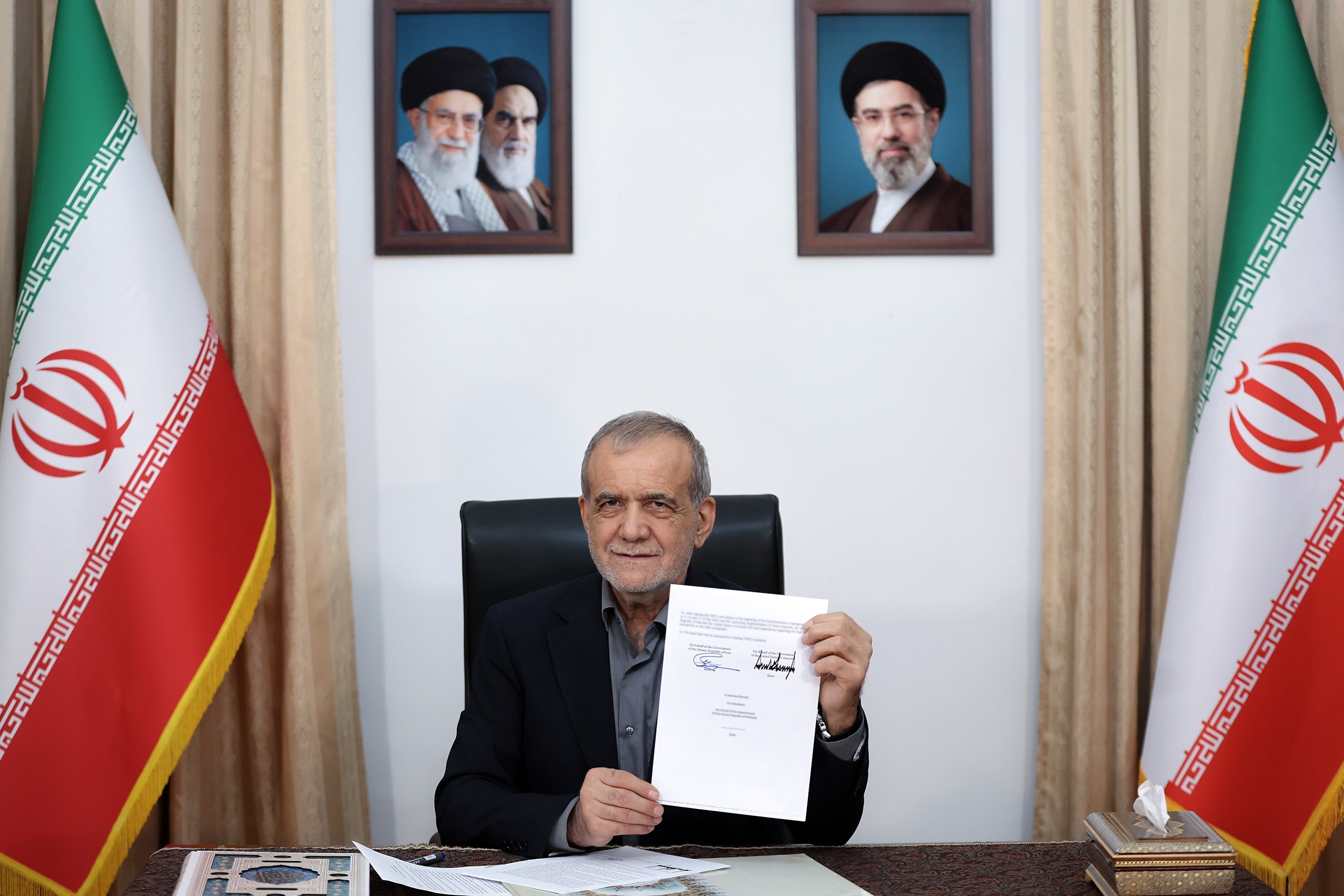
Iranian President Masoud Pezeshkian was photographed holding the memorandum of understanding shortly after it was signed, with the image released by the Islamic Republic News Agency. The signing took place in Tehran in the early hours of Thursday.
The agreement was signed by President Trump and represents an early-stage framework intended to lay the groundwork for broader negotiations between the two countries.
While the signing signals a diplomatic opening, officials and analysts note that considerable obstacles remain before any permanent or wide-ranging peace arrangement can be finalized between Washington and Tehran.
A newly released study from the Marriage Foundation in the United Kingdom is shedding light on how marriage affects family stability. According to the findings, men and women who are married before welcoming their first child are 50% more likely to remain together as a couple compared to those who have children outside of marriage.
Harry Benson, a spokesman for the Marriage Foundation, weighed in on what the data means. “These findings are consistent with well-established psychological theories that have been largely neglected in sociological research,” he said.
A new hate crimes law in Canada has cleared its final legislative hurdle and is now set to become official law — and it’s drawing sharp criticism from faith communities.
The measure eliminates what was known as the good faith religious expression defence, which had previously shielded individuals from criminal hate speech convictions when expressing sincerely held religious beliefs. With that protection removed, someone in Canada who quotes Biblical passages regarding homosexuality could now face imprisonment.
Conservative Member of Parliament Brad Redekopp took to the social media platform X to voice his opposition after the bill passed. In his statement, he described the moment as “a dark day for Canada and an assault on faith.”
Drivers passing through the intersection of Jupiter Drive and Venus Drive should be aware of an intermittent lane closure currently in effect due to construction work in the area.
The lane restriction is expected to remain active until 4 PM, and conditions may vary as work crews operate in the zone. Travelers are encouraged to use caution when passing through and to expect possible delays.
No additional detour information was provided, but motorists should remain alert to traffic control signage in the area and allow extra time if their route takes them through this location.
NEW YORK (AP) — The vast majority of parents who work full time say they regularly find themselves doing both jobs at once — handling work tasks while with their kids, and dealing with family matters while on the clock. They also share a deep frustration about missing important moments in their children’s lives. But when it comes to who handles the housework and how parenthood affects career growth, mothers and fathers often tell very different stories.
These findings come from a newly published Pew Research Center study that surveyed 2,242 working parents between March 2 and March 15.
According to a Pew Research Center analysis of U.S. Census Bureau data, the share of two-parent households where both partners work full time has been climbing steadily. A decade ago, 46% of married or cohabiting families with children under 18 had both parents working full time. Back in 1975, that figure was just 31%.
Much of that growth has been fueled by mothers who hold bachelor’s or postgraduate degrees, during a period when women have surpassed men in earning college credentials. In 2025, about 56% of mothers with bachelor’s degrees and 69% of mothers with postgraduate degrees worked full time — up from 50% and 59%, respectively, in 2000. Meanwhile, the share of mothers without college degrees working full time has remained relatively flat at 43%, compared to 46% in 2000.
Across all family types — including single, divorced, and same-sex partner households — 89% of fathers and 59% of mothers with children under 18 are employed full time.
The survey found that 81% of full-time working mothers said they handle parenting tasks while at work at least sometimes, compared to 62% of fathers who said the same. Meanwhile, 63% of moms and 57% of dads reported taking care of work responsibilities while spending time with their children.
Luona Lin, a research associate at the Pew Research Center who co-authored the study, described one of the report’s central takeaways: “One of the major findings we have from this study is just a large share of parents who experience these blurred boundaries between family and work. And we find that moms often carry more of the mental load that comes with trying to balance what their family needs with what their work demands.”
Nearly all full-time working parents — about 9 in 10 — said they felt upset when their job caused them to miss a child’s concert, game, or other event. That included 55% who described themselves as “extremely” or “very” upset. However, the emotional impact hit mothers harder: 65% of full-time working moms said they were “extremely” or “very” upset in those situations, compared to 45% of fathers. About 31% of mothers said they were “somewhat upset,” while 42% of dads used that description.
Lin noted, “It’s not to say dads aren’t experiencing any of the challenges in balancing work and family lives. It’s just that moms are experiencing more of it.”
Finding time for personal wellness is also a bigger challenge for working mothers. While 65% of full-time working moms said they lacked enough time to exercise, 52% of dads reported the same. Mothers were also more likely than fathers to say they had too little time for hobbies, socializing with friends, relaxing, and spending quality time with their spouse or partner.
One of the sharpest divides in the survey involves household chores. Among full-time working mothers, 63% said they personally handle most of the housework. But among working fathers, 50% said chores were split equally, and only 25% acknowledged that mothers take on most of the burden.
A similar disconnect showed up around daily parenting duties. About 63% of moms said they handle the majority of day-to-day parenting tasks, but only 41% of fathers agreed with that assessment. Instead, 47% of dads believed those responsibilities were divided equally.
Career advancement is another area where perceptions diverge. About 52% of full-time working mothers said parenthood made it “a lot” or “somewhat” harder to move up in their jobs or careers, while only 38% of fathers felt the same way. And 61% of mothers said their jobs made it harder to be a good parent, compared to 45% of fathers who shared that view.
Feelings of not being fully present — either at work or at home — were also more common among mothers. About 52% of full-time working moms said they felt they couldn’t give 100% at work due to the demands of balancing family and career, compared to 38% of fathers. At home, 67% of mothers said they felt they couldn’t give their full effort, while 50% of dads said the same.
Despite higher rates of workforce participation and college education among women, they continue to lag behind men in wages and career advancement. Researchers have long pointed to the so-called “motherhood penalty” as a key driver of the ongoing wage gap between men and women.
When asked about the overall trade-offs of having both parents work full time, opinions were mixed. About 83% of parents in that situation said it had a “somewhat” or “very” positive effect on the family’s finances. About half — 49% — said it had a positive impact on their children’s well-being. Still, only around 22% said it had a negative effect on their kids, while about 29% said it had neither a positive nor negative impact.
BEIJING (AP) — Vibrant dragon boat races, lion dances, and festive gatherings filled communities across mainland China, Hong Kong, and Taiwan on Friday as people celebrated the Dragon Boat Festival.
The holiday stretches back more than 2,000 years and, while best known for its athletic competitions, has deep roots in Chinese history and ancient beliefs surrounding health, protection, and living in harmony with nature.
“The Dragon Boat Festival is probably the richest and most diverse of all traditional Chinese festivals,” said Liu Xiaofeng, a history professor at Tsinghua University. “Across different regions, people developed a wide variety of traditions based on ideas connected to the summer solstice and the balance of yin and yang.”
Central to the festival’s story is the ancient poet Qu Yuan, who according to legend took his own life by drowning more than two millennia ago. The tradition of dragon boat racing grew from tales of people rushing out onto the water to search for him and tossing rice into the river to keep fish from consuming his body.
In Beijing, a three-day competition features men’s, women’s, and mixed-team races at distances of 100, 200, and 500 meters. Competitors from Beijing, Tianjin, Hebei, Shanxi, and Guangdong are taking part in the weekend-long event.
Crews moved their paddles in perfect unison, guided by the thundering beat of onboard drummers, as each boat drove hard toward the finish line while crowds of spectators cheered from the banks.
Many others followed the action from home, enjoying the holiday with family over “zongzi” — a traditional sticky rice dish prepared for the occasion.
The 2026 Beijing festivities are scheduled to run through June 21 at the city’s Grand Canal.
“The competition helped strengthen our team spirit,” said Li Maoshan, one of Friday’s race participants. “It also gave us an opportunity to demonstrate the spirit of perseverance and hard work.”
In Hong Kong, participants added a playful touch to the races by wearing costumes, including a cartoon depiction of Ne Zha, a figure from Chinese Taoist tradition.
The city of Annapolis, Maryland is facing a wave of raised eyebrows and social media ridicule after its Office of Emergency Management released a preparedness guide designed specifically for LGBT residents.
The guide argues that natural disasters and emergencies present “unique challenges” for members of the LGBT community that differ from those faced by the general public.
Among the more attention-grabbing recommendations in the guide is advice directed at transgender individuals, encouraging them to keep a supply of hormones on hand — medications used as part of gender transition. The guide also suggests stockpiling items such as “chest binders and wigs” as part of an emergency kit.
The release of the guide has sparked significant online reaction, with many social media users expressing surprise or mockery at the nature of the recommendations coming from a government emergency management office.
A new report from the Pew Research Center is shedding light on just how difficult it is to get an accurate count of abortions performed in the United States — and researchers are upfront about the gaps in their own data.
According to the most recent complete figures available, roughly 613,000 abortions were recorded in 2022. However, Pew acknowledges that number likely falls short of the true total for two key reasons.
First, four states do not report their abortion statistics, leaving a significant hole in the national picture. Second, there is no reliable way to track how many women ended pregnancies using abortion pills obtained through the mail without ever seeing a doctor in person.
Because of these blind spots, researchers believe the actual number of abortions that took place in 2022 is probably greater than what the official data reflects.
Two years after catastrophic flooding devastated southern Brazil, communities still picking up the pieces are now facing a new threat — forecasters warn that a strong El Niño could unleash extreme rainfall on the region before the year is out.
In Porto Alegre, the capital of Rio Grande do Sul state, the scars of the disaster remain visible. Piles of rubble and the ruins of demolished homes stand as grim reminders of the worst flooding ever recorded in Brazil’s history, a disaster that claimed at least 181 lives in May 2024.
“People are afraid,” said Marilian Fontoura, speaking from her home in Porto Alegre’s Sarandi neighborhood, where water stains stretch all the way to her ceiling — a stark mark of how high the floodwaters rose. “If the rain comes again, another downpour, another flood, then what? You’ll lose everything all over again.”
Sarandi has become a symbol of the city’s ongoing vulnerability, even as money has been poured into new infrastructure, early warning systems, and monitoring improvements.
Mayor Sebastiao Melo has said the city is now safer than it was in 2024 and is working “intensely” to repair pumping stations, rebuild dikes, and upgrade floodgates. This week, Porto Alegre’s water and sewage utility awarded a contract to a consortium to carry out state-funded flood protection work valued at approximately 24.2 million reais — roughly $4.7 million.
“Specifically for El Niño, we are expediting some immediate projects that would have been built later on,” Mayor Melo said.
But resident Fontoura says she has seen too many projects stall. A nearby levee construction effort has ground to a halt due to ongoing disputes over property expropriation between residents and city officials.
At the state level, authorities are also stepping up preparations, committing 38 million reais to build a logistics hub for disaster response operations and another 33 million reais toward an El Niño readiness program aimed at protecting vulnerable communities across the region.
Time may be running short. Global weather forecasters say there is a growing likelihood that a powerful El Niño — the periodic warming of eastern Pacific waters that disrupts precipitation patterns worldwide — will take shape during the second half of this year.
“What has drawn a great deal of attention is the projected intensity,” said meteorologist Estael Sias, noting that forecast models indicate this year’s El Niño event could rank among the strongest ever recorded since satellite weather monitoring began.
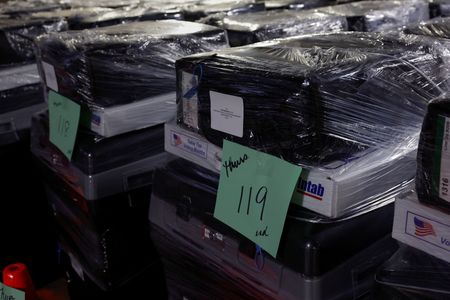
WASHINGTON — A government report identifying serious security weaknesses in American voting machines has been sitting unreleased for months, held back by White House officials as the November midterm elections draw closer, according to three sources with knowledge of the matter.
The report was produced by the Office of the Director of National Intelligence and concludes that voting machines could be better protected through measures such as software updates. While the document does not claim that any votes were actually changed, it does identify security gaps in how the machines are used during elections, the sources said.
Inside the White House, the report has sparked debate. Some officials have argued that releasing it could damage voter confidence, particularly among Republican voters. Others have taken issue with the report for a different reason — they feel it does not adequately support President Donald Trump’s repeatedly debunked claims that the 2020 presidential election was stolen. Several court cases brought by Trump’s legal team failed to establish any evidence of voter fraud in that race.
Some Democrats privately expressed concern that the investigation into voting machines could be used by the administration to pressure states into switching to paper ballots.
The sources spoke on condition of anonymity to discuss internal administration deliberations.
Director of National Intelligence Tulsi Gabbard, who launched the investigation into voting machines and sought evidence to back Trump’s false election fraud claims, is stepping down on Friday. Federal housing regulator Bill Pulte will take over as interim director. Trump has publicly stated he wants Pulte to look into what he calls “rigged elections” during his time leading the agency.
What Pulte intends to do with the unreleased report remains unknown. Two of the sources said he has been briefed on the agency’s work examining voting machine flaws, including the existence of the unpublished report.
Democrats and some analysts have raised alarms about potential interference by the Trump administration in the upcoming midterm elections, which analysts widely expect will result in Republican losses.
Officials within ODNI and outside experts who advised the agency pushed in meetings with White House staff late last year to begin addressing the identified flaws. They warned that the remediation process — which requires significant coordination with individual states — needed to start promptly to be completed before the midterms.
When asked about the delay, White House spokesperson Davis Ingle issued a statement saying the administration “continues to offer assistance to state and local election officials, including through the FBI and CISA, to ensure the security and integrity of all machines used in American elections.” CISA refers to the Cybersecurity and Infrastructure Security Agency.
ODNI spokesperson Olivia Coleman said Gabbard has taken “actions within her authorities” to “support the President’s directive to secure our elections — which includes identifying vulnerabilities in our critical infrastructure.”
Pulte did not respond to a request for comment.
Some of the vulnerabilities described in the ODNI report are not new — one former senior Biden administration official and two other sources said previous administrations were aware of similar issues. Those weaknesses include voting machines running outdated software and machines that can connect to the internet, creating potential entry points for hackers.
All of the sources said they were not aware of any evidence that votes had been manipulated in U.S. elections.
The report is connected to the administration’s wider push to investigate potential election fraud, which gained momentum after Trump signed an executive order in February 2025 aimed at expanding federal oversight of U.S. elections. Under the Constitution, states hold the primary authority over how their elections are run.
Senior officials at the FBI and Justice Department have spoken publicly about their own investigations into possible voter fraud. The ODNI report, which draws on both open-source and classified intelligence, would mark the first time the administration has publicly detailed its work specifically focused on voting machines.
It is one of two reports ODNI commissioned on the subject. The second report, also unpublished, was written by a government contractor called Mojave Research, which examined voting machines that had been seized from Puerto Rico. That report found no evidence the machines had been hacked, according to two sources.
Both reports have come up in White House discussions where officials debated whether sufficient evidence existed to support Trump’s claim that the 2020 election was taken from him.
Over the past six months, ODNI has briefed the White House on its findings, but has never received the go-ahead to publish the report, two sources said. The report concludes that many states are relying on outdated election systems.
The intelligence agency drew on previous reports from CISA that referenced hacking conferences where researchers found some voting machines could be compromised through insecure hardware. CISA itself has said it found no evidence of foreign interference in the 2020 election and, along with other federal, state, and local officials, declared that vote “the most secure in American history.”
The Mojave Research contract was terminated in October. The software and coding vulnerabilities that contractor identified led to a recommendation that the administration launch an emergency remediation plan requiring states to immediately update their systems. Two sources confirmed that plan has not been put into action.
Investors are closely watching Micron Technology’s upcoming earnings report as a way to measure whether the artificial intelligence boom driving U.S. stock markets higher still has momentum behind it.
Even after a significant mid-week drop, major U.S. stock indexes remain near record territory, buoyed by strong corporate profits tied to AI investment and easing concerns about the Iran conflict.
Micron’s stock has climbed 298% so far this year. When the company releases its quarterly financial results on Wednesday, June 24, investors will be looking for clues about whether the massive wave of spending on data centers — and the profits flowing to chipmakers as a result — can keep outperforming expectations.
“There’s been a lot of momentum here recently,” said Andy Pratt, director of investment strategy at Burney Company. “This AI trend is something that’s continued, and honestly, what we see with this revenue surprise signal that we monitor is there’s still a lot of juice.”
Adding to the positive sentiment, Apple has agreed to team up with Intel to design and produce chips domestically, a move that could meaningfully accelerate Intel’s recovery. That news helped push the S&P 500 up nearly 1% for the week, putting it on track for a second straight weekly gain. The Philadelphia SE Semiconductor index also hit a record high, rising about 7% for the week.
The pressure surrounding Micron’s report is significant. Stock valuations are stretched, and some investors are questioning whether the rally has gone too far. A strong showing from Micron could give markets the confidence to push higher.
Steve Kolano, chief investment officer at Integrated Partners, described Micron’s earnings as “setting up as a classic positive feedback loop.” He added: “That really seems to be kind of the only game in town. … If you look at the book to bill of semiconductor companies right now and the backlog, the demand is just through the roof in relation to chip capacity.”
Major technology companies have signaled that AI-related spending is not cooling off, with projections showing it could surpass $700 billion this year, up from $400 billion in 2025.
Still, the broader economic picture continues to loom over markets. The Federal Reserve’s preferred measure of inflation is scheduled for release next week, along with a final reading on first-quarter economic growth. Both reports will offer a clearer picture of consumer health and overall economic momentum.
Earnings growth for S&P 500 companies in the second quarter is projected at 22.9%, a step down from the 29.3% growth recorded in the first quarter, according to data from Tajinder Dhillon, head of earnings research at LSEG.
Drew Matus, chief market strategist at MetLife Investment Management, noted that rising stock markets have been a key pillar of support for American consumers. He said any threat to the AI trade or the ongoing stock market climb is being watched carefully.
“It has not just been market effects but macroeconomic effects at this point,” Matus said. “We’re definitely worried about the wealth effect going away and what that might mean.”
For now, most analysts believe the AI investment story remains on solid footing. The recent public debut of SpaceX has added to that momentum, and Nasdaq’s decision to include additional AI and chip infrastructure companies such as Astera Labs and CoreWeave will require index funds to purchase those stocks, further supporting the sector.
“The way I would view this is,” said Burney’s Pratt, “you could continue betting on these companies kind of until proven otherwise.”
Happy Juneteenth, Delmarva! We’re kicking off this historic holiday with a few morning rain showers possible before 11 a.m., so keep that umbrella handy if you’re heading out early. Rainfall amounts should stay light — less than a tenth of an inch — so no washouts are expected for any outdoor celebrations. After those showers clear out, we’ll settle into a mostly cloudy afternoon with a pleasant high near 83°F. A northwest breeze of 5 to 15 mph will keep things comfortable. Overall, precipitation chances are just 30%, so the better part of the day stays dry.
Tonight looks lovely with mostly clear skies and a refreshing low of 64°F — perfect sleeping weather with the windows open.
Looking ahead to Saturday, get ready for a gorgeous summer day! Sunny skies and another high of 83°F make it an ideal weekend day to get outside and enjoy the Peninsula. Saturday night stays clear with another comfortable low around 64°F.
Enjoy the holiday and the weekend, Delmarva — you’ve earned it! 🌤️
A lane closure is currently in place on Polly Drummond Hill Road at the intersection of Linden Hill Road and Old Coach Road as construction work continues in the area.
The closure is expected to remain in effect until 6 a.m. Motorists traveling through that corridor are advised to use caution and anticipate delays.
Drivers are encouraged to consider alternate routes if possible until the construction work is complete and the lane reopens.
Former President Barack Obama is looking to cement his historical legacy through his newly established presidential center, a project designed to reflect how he hopes to be remembered by history.
The Obama Presidential Center represents an opportunity for the former commander-in-chief to frame his years in the White House on his own terms, preserving the ideals and vision that guided his time in office.
As the nation marks Juneteenth, it’s worth looking back at how one of the most important announcements in American history actually reached the people it was meant to free.
News of President Lincoln’s Emancipation Proclamation did not spread quickly or evenly across the South. While some enslaved people remained unaware of the order for an extended period, many others found out about it while the Civil War was still underway.
The information moved through a variety of channels — informal networks passed word from person to person, rumors circulated quietly, and in some cases, the news came from slaveholders themselves.
The story of how freedom’s message traveled through the South remains a central part of the Juneteenth observance, reminding the country of both the promise of emancipation and the long, uneven road it took to reach those it was meant to liberate.
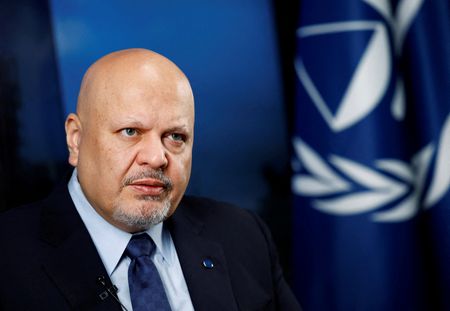
The British Bar Standards Board announced Friday that it has placed an interim suspension on Karim Khan, the International Criminal Court’s chief prosecutor who was already suspended by the court itself on June 8 following sexual misconduct allegations.
The British legal regulatory body stated that under its Enforcement Regulations, the interim suspension must be reviewed by an Interim Suspension Panel at a formal hearing within the next four weeks. The board confirmed the suspension took effect immediately upon the announcement.
Khan, who is 56 years old, has denied the allegations that have been brought against him.
A group of law students at Emory Law School is asking the nation’s highest court to take a closer look at how the federal judiciary handles misconduct among its own members.
The student-led organization has filed a petition with the U.S. Supreme Court, urging the justices to examine the system federal courts currently use to police bad behavior within their own ranks.
At the heart of the effort is a push to bring stronger workplace protections into the federal court system — standards that many other workplaces are already required to follow.
The move puts a spotlight on questions of accountability and fairness within an institution that itself serves as the final arbiter of justice for millions of Americans.
TOKYO — Japan’s Ministry of Foreign Affairs announced Friday that a vessel owned by a Japanese company, with three Japanese crew members aboard, has safely made its way through the Strait of Hormuz and out of the Gulf region.
The ship had been stranded in the Gulf as a result of the Iran war. According to the ministry, Japanese officials worked directly with Iran to arrange the vessel’s safe passage. The tanker is now headed back to Japan.
The vessel is identified as a Liberian-flagged crude oil tanker belonging to Japan’s Kyoei Tanker company.
With this ship’s departure, Japan’s Foreign Ministry confirmed that all Japan-linked vessels with Japanese crew members on board have now successfully left the Gulf.
Japanese Prime Minister Sanae Takaichi addressed the situation on social media platform X, stating: “Following the recent signing of a memorandum of understanding between the United States and Iran, the government will continue making every diplomatic effort to ensure that free and safe navigation of vessels in the Strait of Hormuz resumes promptly.”
Despite this development, Prime Minister Takaichi noted that 37 vessels with ties to Japan are still waiting for clearance to pass through the Strait of Hormuz.
LONDON (AP) — Andy Burnham has spent his career navigating the corridors of British political power, and now he has his sights set on the very top — the prime minister’s office at 10 Downing Street.
The 56-year-old presents himself as a down-to-earth northerner who favors T-shirts over suits, enjoys a game of soccer in his free time, and has been known to take the decks at DJ competitions spinning tracks from the 1990s. But beneath that casual image lies a seasoned political operator with decades of experience at the highest levels of British government.
Burnham is widely expected to mount a challenge against Prime Minister Keir Starmer following his victory in a special parliamentary election — a result he described as a “turning point” for politics in the United Kingdom.
He grew up in a part of northwest England situated between Liverpool and Manchester, the son of a British Telecom engineer and a receptionist. He joined the Labour Party during his teenage years, went on to study at Cambridge University, and first entered Parliament in 2001.
Over the next fifteen years as a lawmaker, he climbed the political ladder under Prime Minister Tony Blair and later served in Prime Minister Gordon Brown’s Cabinet from 2007 to 2010.
He made two unsuccessful bids for the Labour Party leadership — in 2010 and again in 2015 — before stepping away from Westminster entirely to pursue the mayoralty of Manchester.
It was in that role that he earned the nickname “King of the North,” a reference inspired by the television series “Game of Thrones” that reflects both his fierce advocacy for his home region and his openly ambitious political outlook.
The title gained traction during the COVID-19 pandemic, when Burnham publicly clashed with Conservative Prime Minister Boris Johnson over what he characterized as a “London-centric” response to the health crisis.
Since taking charge of Greater Manchester in 2017, Burnham has overseen a dramatic transformation of the region — a city historically tied to the Industrial Revolution. The city center has experienced a building boom, with skyscrapers rising on former industrial land. He also unified a fragmented public transit system under public ownership, rebranding it as the Bee Network and expanding its services.
Within the Labour Party, he is seen as sitting to the left of Starmer, which plays well with party members. He is also regarded as one of the party’s most effective communicators — a stark contrast to the more rigid public speaking style he displayed during his earlier leadership campaigns. Today he comes across as relaxed and approachable.
Three successive mayoral election wins, combined with his strong showing in the Makerfield by-election — where he soundly defeated the candidate from the anti-immigration party Reform UK — have reinforced his reputation as someone who can win. Many within Labour are hoping he can help reverse the sharp drop in the party’s popularity that has occurred in the two years since Starmer led them to a landslide general election victory.
Burnham is now promising to take what he calls “Manchesterism” to a national level — a governing philosophy centered on investing in communities that have long been overlooked by decision-makers in London, and prioritizing people and place over party politics.
“What we’ve built in Greater Manchester needs to go national,” he said during the campaign. “I know what it is to turn places around.”
Not everyone is convinced. Critics argue that his policy platform lacks specifics and sidesteps difficult questions — particularly around how his proposals would be funded. They also point out that governing an entire nation of 70 million people is a fundamentally different challenge from leading a city region of 3 million.
Even so, Burnham enters this next chapter with considerable momentum behind him as he positions himself for a potential run at Britain’s highest office.
WASHINGTON — A new national poll shows that most Americans are not satisfied with how President Donald Trump has handled the conflict with Iran, even as a tentative agreement to end the fighting came together. His overall approval rating, meanwhile, has remained flat, according to the AP-NORC survey conducted as Trump announced a deal had been reached.
The poll underscores just how unpopular the three-month war with Iran has been across the country, even as Trump shifted sharply from threatening further escalation to pursuing negotiations. About 65% of U.S. adults — roughly two-thirds — said they disapprove of Trump’s approach to Iran. The disapproval is heavily split along party lines: the vast majority of Democrats and independents view his actions negatively, but only 28% of Republicans share that view.
Trump’s Iran numbers closely mirror his broader job approval, which sits at 37% — identical to where it stood in an AP-NORC poll taken in May.
The survey was carried out June 11-17, shortly after Trump pulled back from threats to intensify the war. It wrapped up just before the final deal was signed on Wednesday, during which Trump announced an agreement with Iran and authorized lifting the U.S. naval blockade in the Strait of Hormuz.
Even among Republicans, some expressed dissatisfaction with the terms of the agreement. The deal allows Iran to resume selling its oil on the open market immediately, reopens the Strait of Hormuz without tolls for two months, restarts diplomatic talks over Iran’s nuclear program, and requires Tehran to dilute its stockpile of highly enriched uranium.
David Farrington, a 79-year-old Republican-leaning independent from Fort Worth, Texas, said he has no sympathy for Iran — but he’s disappointed the deal centered on the strait rather than delivering meaningful progress on the country’s nuclear weapons program.
One week into the World Cup, international visitors are flooding social media with wide-eyed reactions to the quirks of everyday American life — and the posts are going viral.
From free soda refills to oversized dogs and the ongoing debate over what truly counts as great barbecue, tourists from around the globe are sharing their genuine surprise and delight at experiences that most Americans take for granted.
One visitor from Japan described bread at a Texas Roadhouse restaurant in Dallas as “insanely good,” capturing the kind of unexpected enthusiasm that has characterized many of these social media moments.
The cultural discovery happening at gas stations, chain restaurants, and roadside stops across the country has provided a lighthearted backdrop to what is otherwise a tense moment in U.S. foreign relations, with Washington currently navigating strained ties with a number of its longtime allies.
Massive travel destinations like Buc-ee’s — the sprawling Texas-based travel center chain — have become unlikely tourist attractions for World Cup visitors experiencing American road culture for the first time.
Social media posts from fans visiting for the tournament reflect a genuine curiosity about American daily life, with many expressing that the country surprised them in ways they did not anticipate before arriving.
Australian authorities announced Friday that the country has found its first suspected case of H5N1 bird flu on the mainland, discovered in a remote corner of the nation’s southwest.
A brown skua — a type of migratory seabird — was discovered in Western Australia’s Cape Le Grand National Park and tested positive for avian influenza. Additional testing is underway to identify the exact strain, according to state Agriculture Minister Jackie Jarvis.
“We are taking the suspected case of H5 bird flu seriously,” Jarvis said. “If this is confirmed H5 bird incursion, there will be a rapid and coordinated national response.”
The highly aggressive H5 strain of bird flu has been spreading through wild bird and mammal populations since 2021, resulting in the deaths of millions of animals. It has also made its way into poultry and dairy farm operations and has infected some agricultural workers.
Until now, Australia stood alone as the only continent without a confirmed mainland case of the deadly strain. H5 was previously confirmed on Heard Island, an Australian sub-Antarctic territory, in late 2025.
In anticipation of the virus potentially reaching its shores, Australia has spent recent years strengthening biosecurity measures at farms, monitoring shorebirds for signs of disease, vaccinating at-risk species, and running response simulations.
“While, if confirmed, this would obviously be a very concerning development, Australia has spent the past few years preparing for this likelihood,” Environment Minister Murray Watt said in a statement.
Jarvis said results confirming whether the deceased brown skua was infected with H5 bird flu are expected by Saturday. She also noted that a second sick bird — a giant petrel — was found in the same location and is also being tested for influenza.
Wayne Boardman, a wildlife veterinarian and associate professor at Adelaide University, expressed deep concern about the potential impact on Australia’s native animals.
“This strain of bird flu has caused huge die-offs of birds and sea mammals,” he said.
“My concerns are that if the H5N1 avian flu virus is confirmed, it will pose a huge risk to some of our more endangered shorebirds, some of our coastal raptors, and our precious, unique, endemic and endangered Australian sea lions, whose population is precarious,” Boardman added.
A newly surfaced Department of Homeland Security document reveals federal plans to arm local police departments with facial recognition technology that immigration agents currently use — a development that would dramatically expand the surveillance reach of Immigration and Customs Enforcement.
According to the document, the technology used by federal immigration agents would be made available to local law enforcement, extending the scope of ICE’s ability to identify and track individuals at the local level.
The plan represents a significant shift in how immigration enforcement tools could be deployed across the country, putting powerful identification technology in the hands of local police agencies that have not previously had access to it.
The United States men’s national soccer team may have to take the field against Australia in their upcoming World Cup match without one of their most important offensive weapons.
Left winger Christian Pulisic played a central role in the Americans’ strong and effective attack during their opening match last week, a convincing 4-1 win over Paraguay. However, Pulisic suffered a kick to the calf during that game and departed at halftime.
Since leaving that match, Pulisic has not returned to practice with the rest of the squad, raising serious questions about whether he will be available when the U.S. faces Australia on Friday.
Think you kept up with the news this week? A new quiz is putting that to the test — and one of the standout questions involves something a lot of people noticed but few could explain: why did a recently refurbished Reflecting Pool suddenly turn green?
That head-scratching question is just one of several covered in this week’s news quiz, which spans a wide range of current events. From the buzz surrounding the World Cup — complete with at least one groan-worthy pun — to behind-the-scenes intrigue involving a mysterious tarp, the quiz covers the kind of stories that had people talking throughout the week.
The Obama Presidential Center also makes an appearance among the questions, adding another high-profile topic to the mix.
Whether you followed every headline or just caught bits and pieces, the quiz offers a chance to see how much of the week’s news actually stuck — and maybe learn something new along the way.
A federal judge in Ohio has extended a legal block preventing the state from enforcing a law that would require children under 16 to obtain parental permission before using social media apps. U.S. District Court Judge Algenon Marbley issued the preliminary injunction Monday as part of an ongoing lawsuit brought by NetChoice, a trade organization that represents major tech platforms including TikTok, Snapchat, and Meta. NetChoice argues the law violates free speech protections and is too broad and unclear. Ohio officials maintain the law is necessary to shield young people from the dangers of social media.
Kansas City Faces Pushback Over Facial Recognition on Public Buses
Kansas City, Missouri, is moving ahead with plans to install facial recognition cameras on its public bus system, though the rollout has hit delays due to technical problems, funding setbacks, and privacy concerns. City officials had hoped the cameras would be operational in time for World Cup matches that began being hosted there this week. The state withdrew its financial support, but the project is continuing with federal and local funding. SafeSpace Global, the company behind the technology, says it will improve passenger safety. Critics, however, are raising alarms about privacy rights and the potential for misuse. Extra law enforcement officers have been deployed during the World Cup to maintain security in the meantime.
Federal Regulators Push Grid Operators to Accommodate AI Data Centers
Federal energy regulators have directed regional electric grid operators to speed up the process of connecting large power consumers to the country’s aging and overburdened transmission network. The Federal Energy Regulatory Commission says the move is necessary to keep pace with the rapidly growing electricity demands of artificial intelligence data centers. The commission noted that states will retain control over retail electric rates and related conditions. The order comes as public frustration mounts over data centers’ enormous consumption of energy and water, as well as concerns about noise, air pollution, and the loss of open land and farmland.
World Cup Fans Frustrated by Ticket Failures Through Resale Sites
While excitement has been high on the soccer field at the World Cup, many fans have taken to social media to express anger over tickets that never showed up, orders canceled without warning, and lengthy attempts to resolve issues between FIFA’s ticketing system and third-party resale platforms. A large portion of complaints have been directed at industry leader StubHub, though buyers have also reported problems with competitors SeatGeek and Vivid Seats. Experts and fans say some issues stem from technical glitches, while others may involve sellers who never actually had tickets to sell. FIFA has stated that purchases made through its official website are guaranteed.
Sanders Proposes Public Ownership Stake in Major AI Companies
Senator Bernie Sanders has introduced a proposal that would give American citizens a direct ownership interest in the nation’s largest artificial intelligence companies. The legislation, first shared with The Associated Press, calls for a one-time 50% tax on the stock of top AI firms, with those shares placed into a sovereign wealth fund managed by an independent commission. Sanders estimates the fund could reach approximately $7 trillion in value and generate annual payments to the American public. While the concept of public AI ownership has received backing from President Donald Trump and some AI industry leaders, Sanders’ version would go further by giving the public actual decision-making authority within those companies.
AI Industry Money Floods New York Congressional Race
A New York Democratic state assemblyman named Alex Bores is running for a seat in Congress, and the race has turned into a multimillion-dollar battleground over artificial intelligence policy. A political group funded by investors in OpenAI has spent more than $7 million on advertisements opposing Bores, targeting his push for AI regulation. On the other side, a group backed by Anthropic has poured more than $10 million into supporting his campaign. The central issue is Bores’ RAISE Act, a proposed AI safety law. The Manhattan-based district leans liberal, making the heavy involvement of the tech industry all the more notable.
Nvidia CEO Calls for New Social Norms in the Age of AI
The head of Nvidia, Jensen Huang, whose company’s work has been central to the rise of artificial intelligence, says society must adapt to a world shaped by AI. Speaking in an interview with The Associated Press in Sherman, Texas, Huang expressed optimism about AI’s potential to accelerate economic growth and scientific discovery, while also acknowledging criticism about job losses and broader risks to humanity. “We need to create new social norms,” Huang said. “I would advocate that everybody use AI. Just go engage it.”
Nvidia Bets AI Will Create Manufacturing Jobs in Texas
Nvidia is positioning artificial intelligence as a driver of American manufacturing growth, announcing a major AI infrastructure expansion as part of a $2 billion partnership with Coherent. The effort centers on a Texas factory that produces materials used in lasers that improve chip performance. CEO Jensen Huang argues that AI will generate jobs rather than eliminate them. Nvidia is shifting its focus from chip development alone to building complete AI systems, with production based in the United States. The Texas factory is projected to create 1,000 jobs, and the AI sector has garnered support from both political parties as a priority for economic growth and national security.
Tech Entrepreneur Killed in Texas Plane Crash
A well-known technology entrepreneur named Joshua Baer died this week when a small business jet crashed on a highway in Laredo, Texas. Baer was the founder of an Austin-based venture capital firm that backed a wide range of tech startups, from robotics to autonomous ships, and was widely credited with helping fuel Austin’s technology scene. His LinkedIn profile featured him wearing a black T-shirt with the message, “I help people quit jobs.” The aircraft went down after the pilots reported mechanical trouble and requested an emergency landing at a nearby airport.
French President Calls for Global AI Cooperation
French President Emmanuel Macron is urging the United States to share access to advanced artificial intelligence technology rather than limiting it to American interests, and is calling on democratic nations to work together on AI regulation. Speaking at a high-level gathering in France, Macron criticized U.S. restrictions on foreign access to cutting-edge AI systems. OpenAI CEO Sam Altman, speaking at the G7 summit, also called for an international body to set AI safety standards. A recent White House directive involving Anthropic’s AI models has deepened European concerns about U.S. dominance in the tech sector. Macron warned that restricting access could ultimately hurt American companies and pledged to increase investment in France’s own AI industry.
Close to a year after catastrophic flooding tore through the Texas Hill Country, state lawmakers have officially adopted a report laying out recommendations aimed at strengthening how the state predicts and responds to natural disasters.
Among the most significant findings in the report is that Camp Mystic, which became a focal point of the flooding disaster, had no emergency plan in place at the time of the deadly event.
State legislators approved the report’s recommendations as part of a broader effort to address the gaps in preparedness and response that were exposed by the disaster.
The flooding, which caused widespread devastation across the region, prompted scrutiny of how facilities and emergency management officials handle extreme weather events and whether adequate systems exist to protect lives when disaster strikes.
A touching new segment from StoryCorps shines a light on a family’s deep connection to Juneteenth history in Kansas City, Missouri.
The feature follows a woman who is the descendant of the man credited with organizing the first-ever Juneteenth celebrations in that city. Now, she has taken it upon herself to continue the tradition her father built from the ground up.
The StoryCorps piece explores how his legacy has shaped both his family and the broader community, and how one person’s commitment to commemorating this important moment in American history can echo across generations.
Barack and Michelle Obama stood at the heart of a high-profile ceremony marking the official dedication of the Obama Presidential Center in Chicago, delivering remarks that blended optimism with quiet commentary on the state of democracy and the ideals that define the United States.
The star-studded event brought the former first couple back into the spotlight as they presided over the opening of the long-anticipated center, which has been years in the making. Both Obamas used the occasion to share personal messages of hope with those gathered for the milestone celebration.
Woven into their remarks were subtle references to the future of American democracy, offering what observers noted as understated but pointed reflections on the current direction of the country and its core values.
Wyndham Clark Grabs Early US Open Lead at Shinnecock Hills
SOUTHAMPTON, N.Y. — The USGA adjusted the setup at Shinnecock Hills to account for fierce winds on Thursday, but when those gusts calmed down later in the day, Wyndham Clark made the most of the easier conditions. Clark surged to 6-under par through 16 holes before darkness halted play, giving him a four-shot advantage over a group of seven players that includes Ryder Cowan and Dustin Johnson. Rory McIlroy was satisfied with his round of 69 after battling winds exceeding 30 mph, while Scottie Scheffler leaned heavily on his short game to post a 72. Clark will head back out Friday morning to wrap up his opening round.
Mexico First Team to Reach World Cup Knockout Stage After 1-0 Win Over South Korea
GUADALAJARA, Mexico — Mexico capitalized on a costly mistake by South Korea’s goalkeeper to claim a 1-0 victory and become the first nation to advance to the World Cup knockout round. The win is a significant turnaround for Mexico after the team was eliminated in the group stage back in 2022. Luis Romo put the ball in the net in the 50th minute after South Korea goalkeeper Kim Seung-gyu collided with teammate Lee Gi-hyuk and fumbled the ball inside the penalty area. Romo had little trouble finishing with an open net in front of him. South Korea nearly tied it up in the 87th minute, but Mexican goalkeeper Raúl Rangel came up with a spectacular stop to preserve the win.
MLB Owners Propose Major Changes to Amateur Signing Rules
NEW YORK — During collective bargaining talks Thursday, baseball’s team owners put forward a proposal that would prohibit high school players from signing directly with major league organizations, raise the minimum age for international amateur signings, and sharply reduce signing bonus pools. Under the proposal, the amateur draft covering players from the U.S., Canada, and Puerto Rico would be trimmed from 20 rounds down to 12 rounds starting in 2027. Owners also proposed creating a matching 12-round draft for international prospects — a concept the players’ union has previously turned down.
Knicks Celebrate First NBA Title in 53 Years With Manhattan Parade
NEW YORK — The New York Knicks threw a massive celebration Thursday as thousands of fans dressed in blue and orange lined Manhattan’s “Canyon of Heroes” for a ticker-tape parade marking the franchise’s first NBA championship in more than five decades. Finals MVP Jalen Brunson lifted the trophy toward the crowd and let fans reach out and touch it, while other players rode on floats or stepped off to celebrate with cheering supporters. Mayor Zohran Mamdani, a noted Knicks fan, along with celebrities including Spike Lee and Alicia Keys, joined the festivities. It was a historic moment for the city, which notably did not hold championship parades after the Knicks’ title victories in the 1970s.
College Sports Bill Clears Senate Committee Despite Opposition From SEC and Big Ten
WASHINGTON — A bipartisan piece of legislation that top lawmakers and athletic leaders have called the best opportunity to bring stability to college sports has passed an important Senate test. The Senate Commerce Committee voted 19-9 to send the bill forward on Thursday. The Protect College Sports Act would regulate how athletes are compensated, limit players to a single unrestricted transfer, and prevent coaches from switching jobs mid-season. Several athletic conferences, along with the NFL, the NFL Players Association, and the U.S. Olympic and Paralympic Committee, back the bill. However, the SEC and the Big Ten have withheld their support. Backing and opposition for the measure cuts across party lines.
Jonathan David Hat Trick Powers Canada to Historic 6-0 World Cup Win Over Qatar
VANCOUVER, British Columbia — Jonathan David netted three goals to lead Canada to its first-ever World Cup victory, a commanding 6-0 rout of Qatar that also put the team on the verge of advancing to the knockout round. The match turned chaotic after Qatar was reduced to nine players due to red cards. Homan Ahmed was ejected in the first half for a foul on Tajon Buchanan, and Assim Madibo received a second red card early in the second half for a tackle on Ismaël Koné, who was carried off the field on a stretcher with a broken left leg. With the lopsided victory, Canada tripled its all-time World Cup goal total.
Switzerland Storms Back for 4-1 World Cup Victory Over Bosnia-Herzegovina
INGLEWOOD, Calif. — Substitute Johan Manzambi announced himself on the World Cup stage with a stunning volley in the 74th minute, sparking a late flurry of goals as Switzerland rolled past Bosnia-Herzegovina 4-1 to take control of its group. Rubén Vargas added a goal in the 84th minute shortly after Bosnia’s Tarik Muharemovic was sent off for a dangerous foul, leaving the team shorthanded. Manzambi struck again in the 90th minute off a pass from Vargas, and captain Granit Xhaka converted a penalty on the final kick of the match. Bosnia’s Ermin Mahmic had scored in the fourth minute of second-half stoppage time.
Canada’s Koné to Have Surgery Following Serious Injury Against Qatar
VANCOUVER, British Columbia — Canada’s landmark first World Cup win was tempered by a frightening injury to midfielder Ismaël Koné. He suffered a broken left leg after a tackle by Qatar’s Assim Madibo, who was immediately sent off. Koné was stretchered off the field and transported to a hospital for surgery. Canada coach Jesse Marsch confirmed that Koné had family by his side. Nathan Saliba, who came on to replace Koné, went on to score Canada’s fourth goal in the 6-0 victory. Striker Jonathan David spoke out about the tackle, calling it reckless and questioning why it was necessary. The full extent of Koné’s injury has not been officially disclosed.
Angels Star Mike Trout Lands on Injured List With Hamstring Problem
WEST SACRAMENTO, Calif. — Los Angeles Angels outfielder Mike Trout is heading back to the injured list. The team announced before Thursday night’s game against the Athletics that the 11-time All-Star was placed on the 10-day IL with a right hamstring strain. The Angels brought up infielder Christian Moore from Triple-A Salt Lake as part of a series of roster moves. The 34-year-old Trout had appeared in 74 of the team’s 75 games this season. He is hitting .234 with a .394 on-base percentage, 17 home runs, 36 RBIs, and seven stolen bases.
Big Ten and SEC Push Back on College Sports Legislation — Could a Super League Follow?
The Protect College Sports Act advanced out of a Senate committee, but the Big Ten and Southeastern Conference are not on board and are calling for changes to the bill. Their opposition has sparked talk about whether those powerful conferences might eventually break away from the NCAA to form their own super league. U.S. Sen. Maria Cantwell has stressed that any solution must deliver economic benefits across the board. The financial and athletic dominance of the Big Ten and SEC has raised concerns about competitive balance throughout college sports. A Texas Tech regent named Cody Campbell dismissed the super league concept as unworkable. The bill still needs 60 Senate votes to move forward, plus approval from the House, and legal challenges are expected even if it is ultimately signed into law.
Listen to the Morning Delmarva Farm Report Update — June 19, 2026
DELMARVA — Grain and livestock futures closed mostly lower Thursday as markets wrapped up ahead of the long Juneteenth weekend, with profit-taking weighing on soybean and wheat contracts.
Markets
July soybeans settled at $11.22¾/bu, pressured by profit-taking. July corn fell $0.03½ to close at $4.17½/bu. July Chicago wheat dropped $0.07 to finish at $6.05¾/bu.
In livestock, August live cattle fell $2.22 to close at $246.62. August feeder cattle slipped $0.82 to $366.60. July lean hogs bucked the trend, finishing up $0.37 at $95.02.
The USDA announced 2 flash sales Thursday — 1 to China and 1 to an undisclosed buyer — both under the 2026/2027 marketing year, offering some underlying market support.
Locally, corn at Laurel Grain Company in Laurel is bringing $4.63/bu for July delivery. Soybeans at Laurel are at $10.63/bu for July.
Livestock Health
With warm weather across Delmarva, veterinarians are flagging summer pneumonia as a real risk for young nursing calves. Producers are urged to monitor herds closely and not be misled by otherwise pleasant conditions.
Forecast
Friday’s high will reach 83°F with a chance of morning rain showers, followed by mostly cloudy skies. Tonight’s low drops to 64°F with clearing conditions. Saturday looks sunny and dry with another high of 83°F, offering favorable conditions for field work.
This article is based on the Delmarva Farm Report Update Morning Edition, June 19, 2026. Hosted by Tom Bradley.
South Korean President Lee Jae Myung announced Friday that U.S. President Donald Trump has agreed to give serious thought to a gradual, phased strategy for addressing North Korea’s nuclear and missile programs — one that focuses on immediate containment while keeping complete denuclearization as the ultimate long-term goal.
Lee made the announcement at a press briefing after returning home from France, where he spoke with Trump on the sidelines of the G7 summit. According to Lee, Trump indicated it was “time to pay attention” to North Korea and seemed eager to restart direct dialogue with North Korean leader Kim Jong Un, though he expressed frustration about how to move forward.
“Without giving up on denuclearisation, I explained that we should go step by step — short term, medium term and long term — rather than immediately,” Lee told reporters.
Lee described the short-term priorities as preventing North Korea from producing additional nuclear material, transferring weapons or materials to other countries, and advancing its intercontinental ballistic missile capabilities further.
In response, Trump said the approach “could be one way” and indicated he would think carefully about it, according to Lee.
Lee also conveyed to Trump that relying solely on sanctions and pressure would not be enough to resolve the standoff, noting that North Korea already appears to possess a significant number of nuclear weapons and is continuing to produce enough nuclear material to build roughly 10 to 20 more each year.
Lee added that North Korea’s ICBM technology is approaching its final stage of development, including the ability to re-enter the atmosphere, and that military cooperation between North Korea and Russia in the Ukraine war has significantly weakened the impact of international sanctions.
Trump held historic face-to-face meetings with Kim Jong Un during his first term in office, but their second summit — held in Hanoi in 2019 — fell apart over disagreements on denuclearization steps and the easing of sanctions. Since then, North Korea has taken a more hardened stance, declaring its nuclear status permanent and non-negotiable.
Shipbuilding also came up during the conversation. Lee said Trump asked whether South Korea could quickly construct 10 U.S. warships. “I said of course it was possible and that we would do our best,” Lee said. South Korea has already committed to $150 billion in shipbuilding investments in the United States, led by South Korean companies, as part of a trade agreement with Washington.
Lee noted that he sat beside Trump for roughly 90 minutes during a G7 dinner, which he said allowed for more in-depth conversation than a formal summit setting typically permits.
Over the course of his 10-day European trip, Lee attended the G7 summit and held both formal and informal meetings with multiple world leaders, including Trump, German Chancellor Friedrich Merz, Italian Prime Minister Giorgia Meloni, and Canadian Prime Minister Mark Carney.
In a separate development, Lee said that during a visit to the Vatican, he asked Pope Leo to consider traveling to the Demilitarized Zone — the buffer strip separating North and South Korea — and, if circumstances allowed, to North Korea itself. Lee said the pontiff responded that he would actively consider and pursue the idea.
The owner of the well-known Ladbrokes and Coral betting brands has started looking at what to do with its Central and Eastern European joint venture, and a sale is one of the possibilities on the table, according to three sources with knowledge of the situation.
The company, which also runs the BetMGM gambling operation in the United States, has been feeling the financial squeeze after the United Kingdom raised taxes on online gambling — bumping the rate on casino games and slots from 21% to 40%, and the rate on sports betting from 15% to 25%, effective in April.
Since those tax increases were announced in November, the company’s share price has dropped roughly 30%, according to financial data from LSEG.
Among the options being weighed is selling the company’s stake in the joint venture to its partner, Czech investment firm EMMA Capital. Two sources indicated this is one scenario under active consideration, with one adding that any money raised from such a deal could be used to pay down the company’s debt. The London-listed firm currently carries a market value of £3.5 billion, or approximately $4.63 billion.
The conversations are still in their early phases, and the sources — who spoke anonymously because the discussions are confidential — cautioned that there is no guarantee any agreement will be reached.
A company spokesperson declined to offer any comment on the matter. EMMA Capital said it would neither confirm nor deny that any discussions are taking place. Following the Reuters report on Thursday, the company’s shares climbed 0.8% on Friday.
The joint venture was established in 2022 after the two companies jointly acquired Croatian sportsbook operator SuperSport. As part of that arrangement, a call-and-put option was built in over EMMA Capital’s stake, which either side can exercise starting from the third anniversary of the deal’s completion — giving the company a potential path to taking full ownership.
The venture grew further in 2023 when it acquired Polish betting operator STS for approximately £750 million.
The Central and Eastern European division generated £183.7 million in earnings before interest, taxes, depreciation, and amortization in 2025, an increase from £170 million the year before, based on the company’s full-year financial results.
The broader company posted better-than-anticipated annual profit of £1.16 billion, while adjusted net debt reached £3.64 billion by the end of 2025.
The company has estimated that the UK tax hikes will add around £200 million in costs each year. It plans to offset roughly 25% of that burden this year and more than half by 2027.
Following the government’s tax announcement, the company recorded a £488 million non-cash impairment charge against its UK operations, which contributed to a loss after tax of £680.5 million for the year ending in December.
JERUSALEM — A young Israeli man who endured sexual abuse during two years of captivity in Gaza is now speaking out, hoping his story will give strength to other survivors of similar trauma — including those in active conflict zones — ahead of the International Day for the Elimination of Sexual Violence in Conflict.
Guy Gilboa-Dalal, 25, was among the approximately 250 people taken hostage when Palestinian militants carried out the Hamas-led attacks on Israel on Oct. 7, 2023. He remained in captivity for two years before being released.
During a conversation Sunday in Jerusalem with Israel’s first lady Michal Herzog, Gilboa-Dalal explained his motivation for going public. “I feel like I have a mission to spread to the world, to use my voice and empower other victims of sexual assaults,” he said. “I want people who have been through those experiences to know that they’re not alone.”
The Associated Press notes that it does not typically name individuals who report sexual assault unless they have chosen to come forward on their own.
The United Nations reports that sexual violence tied to armed conflict is increasing globally, with documented cases more than doubling in 2025. Both state and non-state actors are increasingly using it as a weapon of war, a means of torture, and a tool of political repression.
The issue has become deeply politicized in Israel and the Palestinian territories since the Oct. 7 attacks. Human rights organizations and the U.N. have investigated allegations of widespread rape during the initial Hamas assault. More recently, the U.N. said it has verified multiple incidents of conflict-related sexual violence — “including as a form of torture” — carried out by Israeli military and security forces against Palestinian men and women in Gaza and the West Bank, allegations Israel denies.
For the first time this year, the U.N. added Israel’s armed and security forces to a list of parties “credibly suspected of committing or being responsible for patterns of rape or other forms of sexual violence in situations of armed conflict.” Hamas had already appeared on that list.
In 2024, the U.N.’s special representative on sexual violence in conflict, Pramila Patten, stated she “found clear and convincing information” that some hostages were subjected to rape and “sexualized torture.” However, a more recent U.N. report said it was “not able to verify” public claims made by former hostages about abuse by their Palestinian captors, citing what it described as Israel’s refusal to allow U.N. investigators access to conduct their own inquiries.
Gilboa-Dalal addressed that finding directly during Sunday’s conversation, expressing frustration with the U.N. “They have no right to say what happened or what didn’t happen, I was there, not them,” he said.
He is among at least six released hostages who have publicly described experiencing sexual assault while held captive. Gilboa-Dalal first went public with his account in an interview with Israeli media last November, roughly a month after his release.
He described two separate incidents of abuse that occurred more than a year into his captivity. At the time, he said he was physically depleted — having spent most of his imprisonment in a cramped underground cell shared with three other hostages, where they were either starved or given spoiled food and denied the ability to move freely or bathe. He said he was naked and blindfolded during both assaults, and that his captor threatened to kill him if he ever disclosed what had happened, beating him and pressing a knife to his throat and a gun to his head.
“He could do whatever he wanted. I was so weak, and he was so strong,” Gilboa-Dalal said. He added that because the hostages were under constant watch, he did not tell his fellow captives what had happened until just before one of them was released during a temporary ceasefire in February 2025.
Today, Gilboa-Dalal says he is focused on healing and reconnecting with his family. He is also working on a book and an anime script based on his experiences.
He expressed concern that other survivors of sexual violence may be struggling in silence, burdened by self-blame. “They may think, ‘maybe it’s my fault maybe I could have done something different,’” he said. “But it wasn’t my fault and it wasn’t any of the victims’ fault.”
TOKYO — The Bank of Japan announced Friday that its governor, Kazuo Ueda, has been released from the hospital after a two-week medical stay.
According to a statement from the central bank, Ueda plans to return to the office on Tuesday and will continue receiving treatment for roughly two additional weeks.
The 74-year-old had been hospitalized for treatment of an infected liver cyst. His absence caused him to miss the Bank of Japan’s policy meeting on Tuesday, during which the central bank voted to raise interest rates to their highest level in 31 years.
PARIS — France’s foreign minister made clear Friday that his country intends to have a say in any nuclear agreement reached with Iran, warning that Paris will not sign off on lifting United Nations sanctions unless it is satisfied with the final terms.
Foreign Minister Jean-Noel Barrot, speaking to broadcaster franceinfo, noted that France holds veto power as a permanent member of the UN Security Council. He stressed that regional stability cannot be achieved unless ongoing U.S. talks with Iran also address the country’s ballistic missile program and its backing of proxy forces in the region.
“The return for major concessions that will be asked of Iran is the lifting of sanctions, sanctions that were taken at the United Nations,” Barrot said. “France is a permanent member of the United Nations (Security Council) so as was the case 10 years ago, France will have to give its approval for the sanctions to be lifted.”
Earlier this week, the United States and Iran agreed to enter a 60-day negotiating period focused on Iran’s nuclear program, with the understanding that any final deal would need to be approved by the Security Council.
European nations have expressed concern that the current U.S. negotiating team may lack the experience needed to lock down a strong nuclear agreement or tackle Iran’s missile activities during the next phase of talks — potentially leading to a prolonged diplomatic standoff.
France, Britain, and Germany are seeking a seat at the table as negotiations move forward, having been largely excluded from recent diplomatic efforts. The three countries first became involved in Iran’s nuclear issue back in 2003 and later partnered with then-U.S. President Barack Obama to craft a 2015 agreement that curbed Iran’s nuclear activities in exchange for sanctions relief.
U.S. President Donald Trump has been openly critical of that earlier accord, which he withdrew the United States from during his first term in office.
Barrot reinforced France’s position, saying: “Our objective is to get major concessions from the Iranian regime, a radical change in posture. And we will have our word to say, because as a member of the UNSC it will be necessarily linked to the resolution of this crisis.”
At least 18 people lost their lives in Israeli airstrikes targeting southern Lebanon on Friday, Lebanon’s health ministry reported, while Israel’s military announced that four of its soldiers were also killed — marking one of the most deadly single incidents since the current wave of fighting escalated.
Lebanon’s health ministry said that heavy airstrikes beginning around midnight severely hampered rescue and evacuation operations in the region. Officials reported a preliminary count of 18 dead and 33 wounded, with that number expected to climb as the situation developed.
Residents and Lebanese media outlets reported that airstrikes and shelling struck multiple towns in the Nabatieh district throughout the night and into the early morning hours of Friday. Lebanon’s state news agency NNA described the bombardment as among the heaviest seen in the area in recent weeks.
The Israeli military said its strikes were aimed at what it characterized as Hezbollah operatives and infrastructure spread across several parts of southern Lebanon. Israel said the attacks were carried out in response to what it called repeated ceasefire violations by the Iran-backed group.
Hezbollah claimed its fighters ambushed an Israeli force near Ali al-Taher hill in southern Lebanon, saying they destroyed three Merkava tanks using guided missiles and struck troops with rocket and artillery fire. The group indicated that fighting was still ongoing at the time of the report.
The surge in violence came one day after Israel released a map showing an expanded military control zone in southern Lebanon. Israel also indicated it would not rule out conducting operations beyond that zone, raising fresh concerns about a U.S.-brokered agreement reached on Wednesday intended to bring an end to the conflict between the U.S., Israel, and Iran.
That agreement calls for a halt to hostilities on all fronts, including Lebanon, and requires all parties to respect Lebanon’s territorial integrity and sovereignty.
A senior Israeli official said Israel is engaged in what he described as “stubborn negotiations” with U.S. President Donald Trump’s administration over keeping Israeli troops positioned up to 10 kilometers — roughly 6.2 miles — inside southern Lebanon as the country continues its pursuit of Hezbollah.
Israel has refused calls to pull its forces out of southern Lebanon, while Hezbollah has continued launching attacks on Israeli positions, including strikes using explosive drones that have resulted in both deaths and injuries among Israeli troops this week.
A former Bank of Japan board member is signaling that Japan’s central bank could lift interest rates as many as two additional times before the close of the current fiscal year in March, following what he called a landmark shift in how the bank approaches monetary policy.
Makoto Sakurai, a former BOJ board member who says he remains in close contact with current policymakers, made the comments in an interview on Friday. He said Tuesday’s decision to push the bank’s short-term policy rate up to 1% — its highest level in 31 years — represented something fundamentally different from previous rate increases.
In the past, the Bank of Japan framed its rate hikes as a sign of growing confidence that inflation was on track to stay durably at its 2% target. This time, however, the bank justified the move as a way to get ahead of the risk that underlying inflation could overshoot that target.
Hopes for a lasting peace agreement between the United States and Iran took a hit Friday after Switzerland announced that scheduled talks between the two nations would not go forward as planned, and Vice President JD Vance canceled his trip to the Swiss resort of Burgenstock where the negotiations were to be held.
“The logistics of these negotiations have never been simple or predictable,” a White House spokesperson said in a statement Thursday.
Vance and the American delegation had been prepared to leave for Switzerland as soon as final arrangements were confirmed. The Swiss foreign ministry confirmed the postponement in a statement, adding that Switzerland remains willing to host the discussions and that preparatory work at Burgenstock is ongoing.
Iran, which had signaled its readiness to begin technical discussions following Wednesday’s 14-point accord that extended a shaky ceasefire by at least 60 days, did not immediately respond to the news. Before the U.S. announcement, Iran’s semi-official Tasnim news agency reported that Iranian negotiators first needed to see evidence that the U.S. was following through on the interim deal before any delegation would head to Switzerland.
U.S. officials had spoken of holding a formal signing ceremony for the agreement in Switzerland, but Iran’s foreign ministry pushed back on that idea, calling it unnecessary since both nations’ presidents had already signed the pact.
The conflict, which erupted on February 28 when the U.S. and Israel launched air strikes against Iran, has now claimed at least 7,000 lives, driven energy prices sharply higher, and rattled financial markets worldwide.
Israel, which was not included in the peace negotiations, has kept its distance from the U.S.-Iran agreement and continued its military operations against the Iranian-backed Hezbollah militant group in Lebanon — adding further uncertainty about whether the deal will hold.
Back in Washington, some Republican allies of President Donald Trump in Congress have raised concerns that he gave away too much to bring the conflict to a close, particularly with mid-term elections approaching in November and the war broadly unpopular among Americans.
Trump had vowed as recently as March to end the war only through Iran’s “UNCONDITIONAL SURRENDER.” However, the memorandum ultimately signed with Iran offers sanctions relief, unfreezes tens of billions of dollars in Iranian assets, and grants immediate U.S. waivers allowing Iran to export oil.
Iran’s Supreme Leader Ayatollah Mojtaba Khamenei said Trump had agreed to the deal “out of desperation” and warned that upcoming talks over Iran’s nuclear program — one of Trump’s stated justifications for the war — would not be straightforward. “If the American side wants to be too demanding, we will not accept it,” Khamenei said.
Iran’s Supreme National Security Council also pledged to respond in kind to any violation by what it called the “untrustworthy” American side, saying it would show “no leniency” until Iran’s full rights were secured.
The agreement gives negotiators 60 days to reach a decision on Iran’s nuclear program, with the possibility of an extension, and establishes a $300 billion reconstruction fund for Iran along with other financial incentives. Vance indicated the U.S. would also push to place limits on Iran’s long-range missile capabilities.
The mounting financial toll of the war also drew attention this week, with the U.S. defense department reportedly telling lawmakers it needed $80 billion to cover war costs and other expenses, according to the Wall Street Journal.
When the U.S. and Israel launched the war nearly four months ago, Trump stated his goals included dismantling Iran’s nuclear capabilities to prevent it from ever building such weapons. He also aimed to eliminate Tehran’s ability to threaten neighboring countries, cut off its support for anti-Israel militant groups in the region, and create conditions for Iranians to overthrow their theocratic government.
None of those objectives had been achieved when Trump put his signature on the agreement. In the deal, Iran restated its long-standing position — held for decades — that it does not seek to build or acquire nuclear weapons, a claim that multiple U.S. administrations have doubted. Iran also agreed to on-site “down blending” of its highly enriched uranium and inspections by the International Atomic Energy Agency as a member of the Non-Proliferation Treaty, but rejected Trump’s demand that the material be removed from the country.
U.S. officials maintain that ongoing negotiations could still produce a strong agreement on Iran’s nuclear program, potentially surpassing a 2015 deal between Iran, the U.S., and other nations that Trump abandoned during his first term in office. Critics, however, argue that Iran now holds a stronger hand — having survived an attack by a superpower, demonstrated its control over the Strait of Hormuz, and secured valuable financial concessions.
Iran has stated it will continue to exercise control over the Strait of Hormuz in partnership with neighboring Oman, and plans to charge ships service fees that did not exist before the war — though not during the 60-day negotiating period. Oil prices edged lower Friday as tankers began moving again through the reopening strait, which before the war had carried nearly one-fifth of the world’s crude oil and liquefied natural gas supplies.
In Lebanon, where more than a million people have been displaced by the ongoing conflict, fresh Israeli airstrikes on Friday killed at least 18 people, according to the state news agency NNA. Israel said the strikes were aimed at Hezbollah targets. The continued fighting raised questions about how far Trump is willing to go to pressure his wartime ally to stand down from an offensive he has now pledged to end.
While the agreement calls for the “permanent termination” of the war in Lebanon, Israel has said it has no plans to withdraw, and has instead released a new map depicting an expanded occupation zone. Trump has grown increasingly critical of Israel’s operations in Lebanon, creating one of the most significant rifts between the two countries in decades.
MEXICO CITY — While World Cup excitement has taken over Mexico City, one of the tournament’s most beloved figures isn’t kicking a ball or coaching a team. Alongside Merlin the duck in the ranks of crowd favorites, an 8-year-old rescue poodle mix named Osito has captured the world’s attention after showing up to Mexico’s opening match riding in the back of a cargo bicycle — complete with a national team jersey, a pair of sunglasses, and a cap.
As thousands of fans made their way to the stadium last week for the opening game, many paused to take pictures, give Osito a pat, and share videos across social platforms. Within just a few hours, the pint-sized pup was appearing on international broadcasts and spreading rapidly online, quickly becoming one of the tournament’s most charming viral moments.
For his owner, Jorge Rangel, the sudden spotlight isn’t really about internet fame. It’s about the deep companionship he shares with the dog who has been by his side almost constantly. For the last two years, Osito has tagged along with Rangel as he makes his daily deliveries of household goods across Mexico City.
“More than a dog, he’s my daily companion,” said Rangel, 50.
The two travel together on a specially modified cargo bicycle, with Osito sitting calmly in a rear compartment, watching the world go by and drawing smiles from everyone they pass.
It all started by accident. Rangel placed the dog in a delivery box on his bicycle one day and took him for a brief ride. Osito appeared to love it. Over time, Rangel added padding, made adjustments to the setup, and began taking him on longer routes through the city. Eventually, the duo became a well-known sight on the streets.
These days, children run up to say hello, strangers stop for photos, and some people initially think Osito is a stuffed toy because he sits so quietly — often decked out in one of his many outfits.
“He has a very gentle temperament. Everybody wants to meet him,” Rangel said.
When the World Cup came to town, Rangel recognized a chance to introduce Osito — whose name translates to “little bear” — to a much bigger audience. A passionate soccer fan, he spent weeks getting ready for the tournament, collecting accessories and even customizing a pair of sunglasses to fit the dog’s face. He dressed Osito in a national team jersey and decorated the bicycle, hoping to catch the eye of fans heading to the games.
“It exceeded all my expectations,” Rangel said of the overwhelming response.
What seems to connect most deeply with people isn’t the costume or the online fame — it’s the bond between the man and his dog. Rangel adopted Osito years ago during a tough stretch in his life, and he describes the dog as an emotional anchor.
“I didn’t know what it meant to love an animal until Osito came into my life,” Rangel said.
The two are now nearly inseparable. On the rare occasion Rangel heads out without him, Osito makes his feelings known with something he almost never does: barking.
Strangers who cross paths with them on the streets can clearly sense the connection. Rangel says people regularly approach him to share that spotting Osito turned around an otherwise difficult day. Some have simply stopped to thank the pair for making them smile.
As World Cup festivities roll on, videos of Osito continue to circulate and photo requests show no signs of slowing down. But every morning, Rangel and Osito hop on their bicycle and head back out into Mexico City, working, waving at strangers, and spreading a little joy along the way.
For Rangel, that’s what the story is really about. The TV appearances and viral fame feel good, he says, but what truly matters is that people witness the love between a man and his dog — a bond that has unexpectedly become one of the most touching images of this World Cup.
As communities across the country come together Friday to mark Juneteenth, former President Barack Obama’s presidential center is welcoming its first public visitors in Chicago.
Situated on a sprawling campus on Chicago’s South Side, the center dedicated to the nation’s first Black president was built with a mission to inspire visitors to drive change in their own communities — a theme that resonates deeply with the spirit of Juneteenth, which commemorates the end of slavery in America.
Juneteenth honors June 19, 1865, the day Union troops arrived in Texas at the close of the Civil War carrying an order declaring that enslaved people in the state were free with “absolute equality” — a full two and a half years after the Emancipation Proclamation had freed enslaved people in the Confederate South.
“Juneteenth represents not just a commemoration of the end of slavery but it’s also part of the ongoing struggle for absolute equality and that ideal in American life,” said W. Caleb McDaniel, a Rice University professor and author of the Pulitzer Prize-winning book “Sweet Taste of Liberty.”
The grand opening of the Obama Presidential Center has been marked by several days of festivities, including a dedication ceremony held Thursday. The public opening arrives at what many see as a symbolic moment — a meeting point of legacy and liberation — as the country wrestles with deepening political divisions and renewed debates over racial progress, particularly following Supreme Court decisions that have weakened the Voting Rights Act and threatened Black political representation in Congress.
The campus spans nearly 20 acres and includes a museum with a life-sized replica of the Oval Office, a garden designed by former first lady Michelle Obama that features lettuce and strawberry plants, a professional basketball court, a picnic area equipped with grills, and a new branch of the Chicago Public Library.
Beyond spaces meant to bring people together, the campus — which organizers expect to attract up to one million visitors each year — is also designed to encourage personal reflection. Louise Bernard, the museum’s director, has described the experience as “inviting people to bring change home, however change may be defined, both small or large.”
Visitors can explore high-tech and hands-on exhibits tracing Obama’s campaigns, significant moments from his presidency, and everyday life inside the White House.
This year marks the fifth Juneteenth since former President Joe Biden, who served as Obama’s vice president, signed legislation designating the day as a federal holiday. The celebration, however, has deep roots in Black American culture, with origins in Texas before spreading nationwide. Traditionally, the day is spent with family and friends at picnics and cookouts.
The holiday’s name blends “June” and “nineteenth,” marking the day U.S. Maj. Gen. Gordon Granger and his soldiers arrived in the Texas port city of Galveston carrying General Order No. 3, which declared freedom for enslaved people.
As the Civil War entered its third year, President Abraham Lincoln had issued the Emancipation Proclamation declaring freedom for “all persons held as slaves” in Confederate states still in rebellion. For many, however, that proclamation did not bring immediate freedom — it was a promise that depended on a Union victory.
“It really required the force of arms and the success of U.S. armies to enforce the Emancipation Proclamation,” McDaniel said.
Roughly six months after Granger’s troops reached Galveston, the 13th Amendment, which formally abolished slavery, was ratified.
Galveston, recognized as the birthplace of Juneteenth, is holding a full day of festivities at a local park, including music, fireworks, a parade, and a worship service at a historic Black church. Nearby Houston is hosting a lineup of musical performers and a domino tournament at Emancipation Park, which was established in 1872 by a group of formerly enslaved men.
Celebrations across the country over the long weekend include a parade in Atlanta, a bike ride in Los Angeles, and a festival on Martha’s Vineyard.
A number of cities will also host walks named in honor of Opal Lee, the Texas woman who campaigned for years to make Juneteenth a federal holiday. Walkers will cover 2.5 miles, symbolizing the two and a half years it took for the Emancipation Proclamation to be enforced in Texas. Lee, widely known as the “grandmother of Juneteenth,” is turning 100 this year.
Black Texans embraced the anniversary of Granger’s arrival as a day of celebration, and by the 1880s, McDaniel noted, “it was difficult to find a significant community in Texas where it wasn’t being marked by African Americans.”
“They made it a community celebration, they made it a celebration of not only freedom but also a demonstration of community empowerment and institution-building,” he added.
Corey D. B. Walker, dean of Wake Forest University’s divinity school, said Juneteenth gives Americans an opportunity to acknowledge the country’s “complex history” and reflect on the meaning of citizenship — particularly as President Donald Trump’s administration has moved to challenge how Black history is taught and remembered.
“I think it really reminds people the importance of understanding a fuller, more robust portrait of our nation’s history and the many contributions of many individuals who have contributed to America’s experiment with democracy,” Walker said.
Legislators representing more than a dozen African nations have pledged to introduce new bills targeting LGBT rights, following a conference held in Accra, Ghana that drew together self-described “pro-family” advocates from both Africa and Europe.
The African Inter-Parliamentary Conference on Family Values and Sovereignty convened in Accra from June 3 through June 6 — just one week after Ghana’s parliament approved one of Africa’s strictest anti-LGBT measures, a bill that criminalizes the promotion of LGBT identity.
The conference reflects a growing movement toward more restrictive laws affecting LGBT people across parts of Africa. Participants noted that conservative figures in the United States and Europe have been encouraging this trend, and that it has gained new energy since Donald Trump returned to the White House.
Several attendees said they viewed Trump’s presidency as an opening to advance their goals, noting that his administration — unlike those of Barack Obama and Joe Biden — does not include LGBT rights as a component of its foreign policy agenda.
Ghana’s Parliament Speaker Alban Bagbin addressed the gathering in his opening remarks, urging attendees to take action when they returned home. “When you return to your respective capitals, let the resolutions we adopt here not gather dust in the archives of our secretariats. Let them be translated into active bills, robust budgetary allocations, and rigorous oversight,” he said.
He continued: “Go home and tell your people that their representatives have resolved to protect the sanctuaries of their homes, the heritage of their ancestors, and the sovereignty of their nations.”
Currently, more than half of Africa’s 54 countries have laws criminalizing same-sex sexual acts. Nations including Uganda and Senegal have gone further in recent years by passing laws that also criminalize the “promotion” of LGBT identity — the same step Ghana’s lawmakers took in late May.
Conference organizers said representatives from 20 countries attended the event, which was held at Ghana’s parliament building. It remains unclear how many of those attendees plan to introduce new legislation based on what was discussed.
Reuters spoke with five participants and reviewed more than 100 pages of conference presentations. The news agency was unable to determine the extent to which foreign activists shaped the conference agenda, nor did it find evidence of foreign funding.
Sharon Slater, president of the U.S.-based conservative organization Family Watch International, has participated in previous versions of the conference held in Uganda. She told Reuters she was invited to this year’s event but chose not to attend.
Among the speakers was Henk Jan van Schothorst, the Dutch executive director of the advocacy group Christian Council International, who urged African governments to resist pressure to prohibit so-called conversion therapy — a practice aimed at changing gay people’s sexual orientation. “These policies are not only reserved for the Netherlands and for Europe. They are coming to Africa,” he said of such bans, characterizing them as “ideological colonisation” by Western nations.
In a separate presentation, Kenyan doctor Wahome Ngare offered definitions that described homosexuality and transgender identity in terms of childhood sexual abuse.
The conference wrapped up with lawmakers approving an “African Charter on Family, Sovereignty and Values,” a document that had been drafted during earlier meetings held in Uganda. The 32-page charter calls on governments to withdraw from international treaties or agreements — including those at the United Nations and with foreign donors — that are viewed as promoting “the LGBT agenda,” abortion, or sex education that does not focus on abstinence.
The charter also calls on signatory nations to pass domestic laws that “safeguard African culture and cultural values.” Lawmakers from 18 of the 20 represented countries voted to approve it.
Public health officials have raised concerns about the consequences of anti-LGBT legislation, warning that such laws can drive LGBT individuals underground. This is particularly concerning for men who have sex with men, a group that already faces higher HIV rates than the general population. Reuters reported in April that HIV patients in Senegal were visiting treatment centers less frequently amid a surge in arrests tied to that country’s new law.
In Ghana, the ongoing legislative debate has already created a climate of fear among LGBT residents. “I constantly self-censor, hide, watch my back. That’s not safety, that’s survival,” said an African photographer who has long lived in Accra. “So yes, leaving has crossed my mind. That breaks my heart because Ghana is my home.”
Reuters reported in March that the U.S. “pro-family” group MassResistance had been in communication with activists in Ghana who supported the bill, as well as those backing Senegal’s new law.
Ghana’s bill is currently awaiting approval from President John Dramani Mahama, who had previously indicated he would sign such legislation but has more recently cited procedural concerns. A coalition of more than 100 African civil society organizations has called on Mahama to reject the bill, warning that the government risked allowing “external actors with resources and reach to shape its domestic legislation.”
The U.S. State Department has stated that Trump’s approach to foreign aid ensures taxpayer money is not “wasted on divisive social and gender issues.”
At the Accra conference, Ugandan former lawmaker Sarah Opendi welcomed the change in direction from Washington. “Let us first thank the American people for voting for President Trump. The conversation in America today is different,” she said.
Afghan forces conducted air strikes against Islamist militant hideouts situated in two provinces of Pakistan, according to Afghanistan’s Taliban-led defense ministry, which announced the action in a post on X on Friday.
The ministry stated that the targeted locations had been used to plan and organize attacks directed at Afghan territory.
Greater Manchester Mayor Andy Burnham took a significant step toward his goal of replacing fellow Labour member Keir Starmer as Britain’s prime minister after winning a parliamentary seat on Friday.
His commanding victory — capturing 54.8% of the vote — has reinforced the belief among some members of the ruling Labour Party that Burnham is the only figure capable of defeating Nigel Farage’s populist Reform UK party in a future national election.
That sentiment has led some within the party to discuss the possibility of a smooth, uncontested transition, in which Starmer would step aside voluntarily rather than face a drawn-out leadership battle.
Roughly a quarter of Starmer’s fellow lawmakers have called on the prime minister to step down following Labour’s worst local election performance by a governing party in more than 30 years — a defeat largely attributed to a wave of support for Farage’s anti-immigration movement.
Burnham has publicly stated he intends to enter any leadership race and is currently considered the leading candidate to succeed Starmer. However, his supporters are still working through the details of when and how to mount a formal challenge.
Former health minister Wes Streeting has also indicated he has sufficient lawmaker support to enter a leadership contest.
Here is a look at the possible routes Burnham could take to replace Starmer:
Starmer Agrees to a Peaceful Transfer of Power
One scenario involves Burnham simply inheriting the leadership without a fight. A number of Labour politicians have encouraged Starmer to publicly outline a timeline for his exit rather than waiting for — and then competing in — a formal leadership election. A contested race, they warn, could harm the party if candidates resort to personal attacks.
If Starmer chose not to run, and Burnham secured enough parliamentary backing while other potential candidates fell short, Burnham would ascend to the prime ministership. Some lawmakers have also floated the idea that Streeting could be offered a high-ranking position — such as finance minister — in a future Burnham government, in exchange for staying out of the race.
Burnham Moves Quickly to Formally Challenge Starmer
Burnham is set to be sworn into parliament next week, which would allow him to officially challenge Starmer. Under Labour Party rules, only members of parliament are eligible to lead the government.
The party’s rules for removing a sitting leader are strict. Rather than simply expressing a lack of confidence in the current leader, challengers must rally behind specific candidates. Any contender must gather support from at least 20% of the party’s lawmakers in the House of Commons — currently equivalent to 81 members, including the challenger.
If Burnham opts to act quickly, he would likely need to declare his challenge before parliament enters its summer recess on July 16, when lawmakers return to their home constituencies for work and holidays.
Starmer holds the automatic right to compete in any leadership contest and has said he plans to do so. Once candidates collect backing from local party branches and trade unions, party members would cast the deciding votes. The entire process could span two to three months.
Burnham Holds Off Until After Summer
Alternatively, Burnham could wait until after the summer recess before making his move. That delay would allow him to focus on supporting the Labour candidate in the upcoming Greater Manchester mayoral election, expected around the end of July.
The extra time would also give Burnham an opportunity to strengthen ties with Labour lawmakers — particularly those who entered parliament after he departed in 2017. A Starmer ally, housing minister Steve Reed, suggested in the wake of the by-election that Labour’s immediate priority should be winning the Greater Manchester mayoralty.
A Different Politician Kicks Off the Contest
There is also the possibility that someone other than Burnham triggers a leadership challenge, with Burnham then choosing to enter the race.
Streeting, who resigned from his role as health minister in May, has suggested Starmer should reflect on his future over the coming weekend. If the prime minister fails to lay out a plan for his exit, Streeting has signaled he is ready to mount a challenge in the near term.
Should Starmer and Streeting both run against Burnham in a vote among Labour members, current polling indicates Burnham would come out on top.
A super El Niño is expected to shake up global weather patterns and put pressure on food production worldwide, but near-record grain stockpiles, favorable conditions in some major growing regions, and proactive planning may help reduce the damage.
El Niño typically brings heat and dry conditions to much of Asia while delivering heavy rainfall to the Americas. Meteorologists warn the current event is expected to intensify, potentially rivaling past record occurrences that wiped out crops, sparked social unrest, and caused tens of billions of dollars in economic losses globally.
Shirley Mustafa, an economist with the United Nations’ Food and Agriculture Organisation, offered some cautious optimism: “There is a bit of silver lining as far as global stocks and recent harvests of rice and other cereals is concerned,” she said, noting that world inventories are positioned to absorb some of the blow.
The last super El Niño, which struck in 2015–16, brought droughts, floods, and record-breaking temperatures that disrupted farming from Asia to Africa. The one before that, in 1997–98, triggered devastating floods, wildfires, and widespread crop failures.
However, the 2026/27 event may play out differently. Back-to-back years of record harvests have built up global food reserves, particularly in major consuming and exporting nations.
According to USDA data, global wheat stockpiles are projected to hit 279.95 million metric tons at the start of the crop year on July 1 — the highest level in five years.
Russia, the world’s largest wheat exporter, is currently bringing in a bumper crop, along with other major producers in the Northern Hemisphere. Some concern remains over the U.S. wheat harvest, which has been hurt by drought conditions.
A trader based in Singapore said wheat buyers in importing countries aren’t alarmed at this point. “Wheat millers in importing countries are not worried about supplies at this stage,” the trader said. “There are no issues with supplies over the next four to six months, given the Black Sea harvest.”
Global milled rice reserves hit an all-time high of 196.16 million tons at the start of 2026. India, which is responsible for roughly 40% of global rice exports, is holding stocks at approximately five times its government’s target.
A New Delhi-based dealer with a global trading firm, who asked not to be identified because they were not authorized to speak with media, pointed to India’s history of restricting exports during previous El Niño years when production came under strain. “But with record wheat and rice inventories this year, the government is unlikely to restrict rice exports,” the dealer added.
Indonesia, one of the world’s biggest rice importers, is also sitting on a record stockpile. Farmers there are rushing to plant rice early in hopes of getting ahead of any El Niño disruption, officials said.
Sutarto Alimoeso, head of Indonesia’s Rice Millers and Rice Entrepreneurs Association, said the country’s ability to weather the storm will hinge on how well it prepares, including upgrades to irrigation and water pump infrastructure.
In Thailand, the world’s third-largest rice exporter, reservoir levels are at their highest point in a decade — a development analysts say should benefit newly planted crops.
On the corn and soybean front, the USDA projects global corn inventories will reach 303.4 million tons by September 1, the highest in three years. Soybean stockpiles are forecast at 125.5 million tons, just shy of last year’s record of 126 million tons.
Tobin Gorey, founder of commodities consultancy Cornucopia in Sydney, said the current supply situation changes how markets are reacting. “A strong El Niño forecast would have had a different impact on prices if the world supply was tight,” he said.
Commodity prices reflected the ample supply picture this week, with Chicago corn falling to a nine-month low, soybeans sliding to a four-month low, and wheat hitting its weakest point in two months, driven by favorable U.S. weather and softer oil prices.
While Australia, Southeast Asia, and India face the greatest risks from El Niño, China, the Black Sea region, and Europe are expected to see less severe weather impacts. A research paper published by Britain’s parliament this week noted that “the European weather system is geographically far away from El Niño, and although there are sometimes links between El Niño conditions and European weather patterns, these can be hard to predict.”
In Indonesia and Malaysia — the world’s top palm oil producers — most areas are still receiving rainfall. Gulat Manurung, chairman of Indonesia’s smallholders group APKASINDO, said conditions remain generally suitable for palm oil growth, though the frequency of rain has decreased. “Looking broadly across Kalimantan and Sumatra, sunshine is still accompanied by rainfall, with conditions remaining suitable for palm oil growth,” he said.
Analysts also noted that newer palm oil tree varieties planted in recent years are more resistant to drought, and that the trees have gradually adapted to higher temperatures since the 1997–98 El Niño event.
Despite the relatively comfortable supply picture, experts caution that panic-driven government reactions and export restrictions could still tighten grain availability for buyers worldwide.
FAO’s Mustafa warned that history has shown how quickly governments can move to protect domestic supplies. “We have seen it in the past how governments react to supply risks and take measures to ensure sufficient local supplies,” she said. “Much of that will depend how importers take decisions on purchases and exporters keep the supply pipeline running.”
China is ramping up oversight of indium shipments, and buyers around the world are growing worried that the obscure but important metal could soon be added to Beijing’s growing list of export restrictions.
Indium is a byproduct of zinc refining that is widely used in displays and solder. More critically, it serves as the raw material for indium phosphide, which is used to manufacture high-speed optical chips that power next-generation AI data centers. China accounts for nearly 70% of global indium production, giving it enormous influence over the supply of the material.
Beijing already placed indium phosphide on its export control list in February 2025. Those restrictions have created enough of an obstacle for data center development that the CEO of an Nvidia-backed chipmaker called Coherent traveled to Beijing alongside President Donald Trump in May specifically to address the issue.
While indium metal itself has not yet been added to the export control list, two buyers told Reuters they have experienced heightened scrutiny from Chinese customs officials. A European buyer said that, for the first time this year, they were asked to provide information about end users — including where those customers were located.
A major buyer based in North America described the situation as “tense,” saying that approvals that once came through the same day now take several days. That buyer attributed the delays to increased examination of paperwork, though they had not been asked to provide additional end-user information.
China’s Ministry of Commerce did not respond to a request for comment, as the inquiry came during a public holiday. All buyers who spoke with Reuters asked not to be identified, citing the sensitivity of the matter.
The increased scrutiny is not being experienced uniformly. Two additional buyers told Reuters they had heard about the tighter checks but had not encountered them personally. As of now, no shipments have been confirmed as blocked.
Still, there is growing unease within the small indium industry that these developments may signal tighter controls ahead. End-user disclosure requirements, used by China and other countries with export control systems, help governments map global supply chains and identify potential pressure points.
Indium has already been flagged as a potential vulnerability for the United States. The U.S. Defense Logistics Agency issued a request for proposals earlier this year to stockpile as much as 403 tons of the material over a three-year period.
One North American buyer said they believed the new reporting requirements were “a precursor to restrictions or outright bans on exports.”
Iran’s Islamic Revolutionary Guard Corps has quietly built a network of secret cells inside Iraq, designed to launch attacks against Gulf nations that host American military forces — and to do so without being traced back to established Iranian-backed militia groups, according to eight Iraqi sources who spoke with Reuters.
Between April 20 and May 17, three or four of these cells — each made up of roughly 10 highly trained Iraqi Shi’ite fighters — carried out at least seven drone strikes launched from remote desert areas near the southern Iraqi cities of Basra and Samawa. The targets included sites in Kuwait, Saudi Arabia, and the United Arab Emirates, according to three of those sources.
Some members of these new cells were recruited from the Islamic Resistance in Iraq, a broad coalition of hardline Shi’ite factions with thousands of fighters. However, the newly formed groups operate completely outside that coalition’s chain of command, answering directly to the IRGC instead. That information came from a group of sources that included two Iraqi military officials, one security official, and five local militia commanders.
The creation of these cells — which had not been publicly reported before — signals a change in how the IRGC operates. The five militia commanders said the shift reflects Iran’s effort to maintain its regional influence at a time when its network of armed proxy groups has been significantly weakened and its own military and financial resources are stretched thin.
Iraq, a country with a Shi’ite Muslim majority, is home to numerous militias, many of which have strong ties to Tehran. These groups have long been central to Iran’s regional “Axis of Resistance,” a network that extends from Gaza and Lebanon to Yemen and Iraq.
Factions operating under the Islamic Resistance in Iraq banner have claimed credit for dozens of drone and rocket attacks on American assets in the country since the U.S. and Israel struck Iran on February 28, drawing deadly retaliatory airstrikes in response. But there has been no large-scale mobilization of Iran’s proxy forces within Iraq’s borders.
Several influential Shi’ite factions have been signaling since last year that they are prepared to lay down their weapons and shift their focus to domestic politics, in part to avoid a deepening confrontation with U.S. President Donald Trump’s administration. According to retired Iraqi army general Jasim al-Bahadli and two lawmakers from the Shi’ite governing alliance, that trend may have pushed the IRGC to form groups it could control directly.
Two of those factions — Asaib Ahl al-Haq and the Imam Ali Brigades — announced this month that they would begin turning over their weapons to Iraqi state authorities, following repeated warnings from the U.S. to Baghdad to dismantle armed groups operating on its soil.
“The newer groups established by the IRGC appear smaller, more ideologically hardened and more tightly controlled, reflecting Iran’s need to conserve resources amid economic strain,” said Bahadli, who is recognized as an expert on Shi’ite armed groups.
The revelations come as the U.S. and Iranian presidents signed an interim agreement Wednesday to halt the ongoing war, with further negotiations planned on thorny issues including the future of Tehran’s nuclear program. However, Iranian officials have made clear that their support for what they call “resistance groups” is not on the table, and the agreement does not address that issue.
Iran’s foreign ministry and its missions to the United Nations in New York and Geneva did not respond to detailed questions submitted for this story.
The U.S. State Department repeated its call for Iraq’s government to take immediate steps to “dismantle all the tools of Iran’s destabilizing activities in Iraq,” specifically naming the IRGC and Iran-aligned militias.
At a meeting held Monday, Iraq’s new prime minister, Ali al-Zaidi, and U.S. envoy Tom Barrack discussed Iraqi plans to pursue “the complete disarmament and disbandment of all armed groups” outside Iraqi state control and to guarantee that “Iraqi territory cannot be used by any side to threaten regional peace,” according to a joint statement released following the meeting.
Zaidi’s military spokesman, Sabah al-Numan, declined to comment on the story. Kuwait’s information ministry, the Saudi government communications office, and the UAE foreign ministry also did not respond to requests for comment.
The broader conflict has taken a heavy toll on the world’s most vital energy-producing region, disrupting oil supplies and fueling inflation. Tehran responded to U.S.-Israeli bombing campaigns by effectively shutting down the Strait of Hormuz — a critical waterway through which approximately one-fifth of global oil and liquefied natural gas trade flows — and unleashing a widespread campaign of drone and missile attacks against neighboring Gulf states.
The newly emerged Iraqi groups, often operating under unfamiliar names with little public presence, were responsible for at least three drone attacks targeting Kuwait, two aimed at Saudi Arabia, and two directed at the UAE, according to three Iraqi security sources. Their information came from human intelligence, intercepted communications, and physical evidence recovered from launch sites.
Among the targets were Kuwait’s Ali Al Salem Air Base, where U.S. forces are stationed, and a military terminal at Kuwait’s international airport, the sources said, though they offered no further details. The strikes aimed at Saudi Arabia and the UAE were intercepted before reaching their targets, the sources said, though they could not confirm what the intended targets were.
Reuters was unable to independently confirm these accounts.
Iraqi officials said the IRGC deliberately turned to these new cells to maintain plausible deniability, shield the country’s main Iran-backed groups from scrutiny, and reduce American pressure on Baghdad to disarm them.
Iraqi security forces have limited knowledge of these groups but are actively working to map out their command structures in an effort to prevent future attacks. The groups are said to include elite fighters with specialized skills in drone operations and communications.
Iran invested decades and billions of dollars building its regional alliance network, which has been badly damaged since the Hamas attacks on Israel on October 7, 2023. Israel has conducted sustained military operations against Hamas in Gaza and Hezbollah in Lebanon, while the Houthi movement in Yemen has faced U.S. and British airstrikes. The fall of Syrian President Bashar al-Assad in December 2024 cut off a key supply route for Iraqi militias and further isolated Tehran.
Rather than maintaining a large, well-funded network of militia groups in Iraq, Iran now appears to be betting on a smaller number of “more radicalized cadres willing to operate with leaner financial support, prioritising loyalty, deniability and operational impact over mass recruitment,” Bahadli said.
The situation represents an early and significant test for Prime Minister Zaidi, who took office last month after U.S. pressure on the dominant Shi’ite political alliance to block the return of former Prime Minister Nouri al-Maliki, who has close ties to Iran. Baghdad has long tried to balance its relationships with both Washington and Tehran — a difficult act that became even harder during the war.
Attacks launched from Iraqi soil also threaten to unravel Baghdad’s careful efforts to repair ties with wealthy Gulf neighbors, relationships that were badly damaged when Saddam Hussein invaded Kuwait in 1990 but had begun to improve in recent years. Kuwait, Saudi Arabia, and the UAE all summoned Iraq’s ambassadors in April to formally protest the strikes.
Iraqi authorities are also investigating whether a new group was behind a May 17 drone attack that sparked a fire at the Barakah Nuclear Power Plant. Saudi Arabia reported intercepting three drones that entered its airspace from Iraq that same day — an attack Iraqi officials attributed to one of the newly formed cells.
Zaidi publicly condemned both attacks, calling them criminal acts, and pledged to conduct a joint investigation with both Gulf countries to determine whether Iraqi territory was used to carry them out. His spokesman, Numan, did not respond to questions about where that investigation currently stands.
MELBOURNE, Australia — A third person has been charged in connection with the arson attack on a Melbourne synagogue that Australian officials allege was orchestrated by Iran.
According to a police statement, the newly charged suspect is a 20-year-old man who was among three masked individuals who broke into the Adass Israel Synagogue in the early morning hours of December 6, 2024. The group reportedly soaked the inside of the building with flammable liquid before setting it on fire. The blaze caused extensive damage to the synagogue, and one worshipper suffered minor injuries.
The Victorian Joint Counter Terrorism Team — a combined force of federal and state police working alongside an intelligence agency — filed the charges against the man, whose identity has not been released. He was charged while already being held in a Melbourne jail on separate, unrelated offenses, which police declined to specify.
His two co-defendants were arrested last year. Giovanni Laulu, 21, was taken into custody in July, followed by Younes Ali Younes, 20, who was arrested the following month.
Australia’s Prime Minister last year publicly accused Iran’s Revolutionary Guard of being behind both the synagogue fire and a separate arson attack on a Sydney kosher restaurant called Lewis’ Continental Kitchen, which occurred roughly two months earlier.
The director-general of the Australian Security Intelligence Organisation, the country’s primary domestic intelligence agency, stated that the Revolutionary Guard relied on a “complex web of proxies to hide its involvement” in both antisemitic attacks.
In response, Iran’s ambassador to Australia and three other Iranian diplomats were expelled from the country. Iran has denied the allegations made by Australian officials.
Australian Federal Police Assistant Commissioner Peter Crozier told reporters Friday that investigators are continuing to work with international partners as the probe moves forward. Authorities are also looking into whether the three alleged arsonists had any knowledge of who ordered the attack.
“They may not actually be aware of the people who are directing or the principals of these investigations. That remains a key line of inquiry for us,” Crozier said.
Victoria Police Acting Assistant Commissioner Paul O’Halloran said the local Jewish community was notified of the third arrest before it was announced publicly.
“Our heart goes out to them. Again, this brings back this terrible incident,” O’Halloran said. “People deserve the right to feel safe and be safe in their community and particularly at their place of worship. Today’s charges are a strong testament to this,” he added.
The latest suspect is expected to make his first court appearance on the new charges next week.
Separately, the Australian government has launched a public inquiry into a growing wave of antisemitism across the country, which includes the fatal shooting of 15 people when two gunmen opened fire on a Sydney Hanukkah gathering in December.
PORTLAND, Maine — Maine’s ranked choice voting process has wrapped up, setting the stage for a competitive fall election season. Democrat Hannah Pingree and Republican Bobby Charles emerged as their parties’ nominees for governor, following a June 9 primary that required a ranked choice runoff to determine winners.
In the state’s 2nd Congressional District, Democrat Matt Dunlap claimed his party’s nomination. He will now face former Republican Gov. Paul LePage — a close ally of President Donald Trump — in what is expected to be one of the most hotly contested House races this November. Democrats are fighting to hold the seat as part of the broader battle for control of the U.S. House of Representatives.
Maine’s primary season also saw Democratic voters select oyster farmer Graham Platner to challenge longtime Republican Sen. Susan Collins. Platner’s win was decisive enough that it did not require a ranked choice runoff.
The governor’s race is an open contest because Democratic Gov. Janet Mills, who has been in office since 2018, is term-limited and cannot seek re-election. That opened the door for five Democrats and seven Republicans to actively campaign in the June 9 primary. With such large fields in both parties, no candidate crossed the 50% threshold needed to avoid ranked choice tabulation. The Democratic contest was especially tight, with the top four candidates separated by only a few percentage points.
Democratic primary voters considered several candidates for governor: Pingree, the former speaker of the Maine House of Representatives; Maine Secretary of State Shenna Bellows; former Maine Senate President Troy Jackson; energy executive Angus King III; and former director of the Maine Center for Disease Control and Prevention Nirav Shah.
The Republican field was even larger. GOP voters chose among Charles, a former U.S. assistant secretary of state; healthcare executive Jonathan Bush; former Maine Senate Majority Leader Garrett Mason; former Paris, Maine, selectman Robert Wessels; and businessmen Owen McCarthy, David Jones, and Ben Midgley.
Gov. Mills had entered the U.S. Senate primary but suspended that campaign in April. On election night, she reflected on her time on the campaign trail, saying: “Throughout my two campaigns for governor and this one for Senate, what I have always loved the most is traveling across our beautiful state and getting to talk to Maine people.”
In the 2nd Congressional District Democratic primary, voters chose from former Maine Secretary of State Dunlap, state Sen. Joe Baldacci, former U.S. Senate candidate Jordan Wood, and social worker Paige Loud. LePage, meanwhile, ran unopposed on the Republican side. He served as governor from 2010 to 2018, during which time he built a reputation as a vocal critic of liberalism and a strong supporter of Trump.
The 2nd District seat is open because Democratic Rep. Jared Golden, who has held it since 2018, announced he is stepping down. Golden, known as a moderate who occasionally broke with his party, explained last year that he has “grown tired of the increasing incivility and plain nastiness that are now common from some elements of our American community.”
Though Golden won the district multiple times, it has also shown strong backing for Trump, who captured an electoral vote there in three straight presidential elections. The district covers a large geographic area, encompassing much of Maine’s rural land, logging country, and key fishing ports.
Maine has used ranked choice voting for a decade, after voters approved the system. Under the process, voters rank candidates in order of preference. If no one tops 50% of the vote, the last-place candidate is eliminated and those voters’ second choices are redistributed. The process continues until one candidate achieves a majority.
Indian real estate and investment company RMZ has set its sights on dramatically growing its data center footprint, with plans to reach 2 to 3 gigawatts of capacity within five years as part of a sweeping $35 billion investment strategy, according to a top company official.
The Bengaluru-based firm currently operates 250 megawatts of data center capacity. Deepak Chhabria, president of RMZ Infrastructure, told Reuters in an interview on Thursday that the company is in the final stages of negotiations on three separate data center projects that would collectively push its total capacity beyond 1 gigawatt.
Chhabria added that RMZ also intends to purchase land before the end of this year that could accommodate an additional 2 gigawatts of data center capacity.
Back in April, RMZ unveiled its plan to pour more than $35 billion into building co-location data centers and AI factories over the next five years, along with the possibility of an initial public offering.
India has become one of the most competitive battlegrounds for computing infrastructure, with global technology companies and major Indian conglomerates pouring billions into AI and data center development. The country’s digital infrastructure sector is expected to draw more than $50 billion in planned spending across data centers, cloud platforms, and AI ecosystems.
“We are seeing only positive signs from some of the hyperscalers, and I think by the middle of this year, we will start ramping up capacity as we get clients signed up,” Chhabria said, declining to identify specific customers.
RMZ operates across several major Indian cities, including Bengaluru, Mumbai, and Hyderabad. Chhabria said the data center expansion is also meant to serve as a gateway into related business areas such as graphics processing units, power infrastructure, and software development.
“Now we will use that as a stepping stone eventually to go up the food chain and build the bottom layer of power,” he said, describing the company’s ambitions to deepen its role in the infrastructure that underpins AI and cloud computing.
RMZ developed its current 250-megawatt capacity through a joint venture with UK-based Colt Data Centre Services, and Chhabria noted the two companies are continuing to explore further growth opportunities together.
Hopes for a durable end to the Middle East conflict dimmed Thursday when Switzerland confirmed that planned peace negotiations between U.S. and Iranian officials would not go forward, after Vice President JD Vance canceled his trip to Geneva.
“The logistics of these negotiations have never been simple or predictable,” a White House spokesperson said in a statement Thursday night, noting that Vance and the U.S. delegation had been prepared to leave as soon as final arrangements were confirmed.
Switzerland’s foreign ministry confirmed the talks — which had been scheduled to take place at the mountaintop resort of Burgenstock — would not happen, though officials offered no explanation for the cancellation.
Iran had not immediately responded to the development. Earlier, Tehran had signaled it was prepared to begin technical discussions following Wednesday’s 14-point accord, which extended a fragile ceasefire by a minimum of 60 days.
Before Vance made his Thursday announcement, Iran’s semi-official Tasnim news agency reported that Iranian negotiators wanted to first see evidence that the U.S. was following through on the interim agreement before committing to send a delegation to Geneva.
U.S. officials had planned to hold a formal signing ceremony in Switzerland for the agreement, but Iran’s foreign ministry dismissed the idea as unnecessary, pointing out that both nations’ presidents had already signed the pact.
The war, which began February 28 with U.S. and Israeli air strikes against Iran, has now claimed at least 7,000 lives, driven energy prices sharply higher, and rattled financial markets around the world.
Israel Keeps Fighting
Israel, which was excluded from the peace negotiations, has kept its distance from the U.S.-Iran agreement and continued its military campaign against Hezbollah, the Iranian-backed militant group operating in Lebanon — raising further questions about whether the deal will hold.
Back in Washington, some Republican allies of President Donald Trump in Congress questioned whether he gave away too much to bring the conflict to a close, particularly with midterm elections approaching in November and the war widely unpopular among Americans.
Trump had previously vowed he would only end the war with Iran’s “UNCONDITIONAL SURRENDER.”
However, the memorandum he signed with Iran instead offers the country relief from economic sanctions, unfreezes tens of billions of dollars in assets, and grants immediate U.S. waivers allowing Iran to export oil.
Iran’s Supreme Leader Ayatollah Mojtaba Khamenei claimed Trump had signed the agreement “out of desperation” and suggested that upcoming discussions over Iran’s nuclear program — one of Trump’s stated justifications for going to war — would be far from straightforward.
“If the American side wants to be too demanding, we will not accept it,” Khamenei said in a statement.
The agreement gives negotiators 60 days to reach a resolution on Iran’s nuclear program, with the possibility of an extension, and establishes a $300 billion reconstruction fund for Iran along with additional financial incentives. Vance indicated Washington would also push to place limits on Iran’s long-range missile capabilities.
The financial toll of the war also drew renewed attention, as the U.S. defense department informed lawmakers it required $80 billion to cover war-related costs and certain other expenses, according to the Wall Street Journal.
When the U.S. and Israel launched the conflict nearly four months ago, Trump stated his goal was to destroy Iran’s nuclear capabilities so the country could never develop such weapons. He also sought to eliminate Tehran’s ability to strike neighboring nations, cut off its support for anti-Israel militant groups in the region, and create conditions for Iranians to overthrow their government.
None of those goals had been achieved when Trump signed the agreement. In it, Iran reiterated its longstanding claim — one doubted by multiple U.S. administrations — that it does not seek to acquire or build nuclear weapons.
Iran also agreed to on-site “down blending” of its highly enriched uranium stockpile and to International Atomic Energy Agency inspections as a Non-Proliferation Treaty member, though it rejected Trump’s demand that the material be removed from Iranian soil.
U.S. officials maintain the ongoing negotiations could still produce a strong agreement on Iran’s nuclear program, potentially surpassing a 2015 deal between Iran, the United States, and other nations that Trump abandoned during his first term. Critics, however, argue Iran now holds a stronger hand — having survived an attack by a superpower, demonstrated its grip on the Strait of Hormuz, and secured valuable financial sanctions waivers.
Iran has stated it will continue to exercise control over the Strait of Hormuz in partnership with neighboring Oman, and intends to charge ships service fees that did not exist before the war — though not during the 60-day negotiating window.
Oil prices edged lower Friday as the prospect of increased supply improved after tankers began moving again through the reopening Strait, which had carried nearly one-fifth of the world’s crude oil and liquefied natural gas before the war began.
In Lebanon, where more than one million people have been displaced by the fighting, fresh Israeli strikes on Friday killed at least 15 people, according to the state news agency NNA. Israel said the strikes targeted Hezbollah positions.
The continued fighting raised questions about how far Trump would go to pressure his wartime ally to stand down from an offensive he has pledged to end. The agreement calls for the “permanent termination” of the war in Lebanon, but Israel has said it has no plans to withdraw, and has released a new map depicting an expanded occupation zone.
Trump has grown openly critical of Israel’s military operations in Lebanon, creating one of the most significant rifts between the two countries in decades.
Turkey’s competition watchdog announced Friday that it has cleared the way for Uber Technologies Inc. to take over the delivery business belonging to Turkish company Getir, with the transaction coming from Emirati controlling shareholder Mubadala.
The Turkish Competition Board highlighted the broader economic benefits tied to the deal, stating: “The commitment by Uber Technologies Inc. to invest a total of US$500 million in Turkey is expected to support high-quality employment, strengthen local engineering capabilities, and positively contribute to the development of Turkey’s digital and technology infrastructure.”
The deal was first announced back in February, when Uber said it had reached an agreement to purchase Getir’s delivery arm as part of an effort to grow its presence in Turkey.
The transport workshop at the Zaporizhzhia nuclear power plant in eastern Ukraine was struck by a wave of drone attacks late on June 18 and continuing into the overnight hours, according to the Russian-installed management overseeing the facility.
Officials said at least 14 separate drone strikes were recorded during the assault. The attack ignited a fire in one portion of the facility, and several buildings sustained damage as a result.
Despite the scale of the attack, no casualties were reported. However, management cautioned that a complete picture of the destruction has not yet been possible to determine, citing the ongoing risk of additional strikes in the area.
MANCHESTER, England — Greater Manchester Mayor Andy Burnham made a name for himself in 2020 when he publicly clashed with the Conservative government over what he called inadequate compensation tied to strict COVID-19 restrictions in his region. That standoff not only earned him widespread admiration across northern England but also restored his standing on the national political stage.
Now, at age 56, Burnham has secured a seat in parliament representing the Makerfield area and is hoping to leverage his unusual level of public popularity into becoming Britain’s seventh prime minister in just ten years.
However, political insiders warn that the bold, confrontational style he used so effectively against the central government in London would collide with a harsh reality if he actually took the top job. Britain’s finances are stretched thin, and the money needed to support his still-developing policy agenda may be just as hard to come by now as it was six years ago.
Four senior members of the governing Labour Party say Burnham would inherit the same difficult landscape facing current Prime Minister Keir Starmer — sluggish economic growth, the rise of populist political movements, a continuing cost-of-living squeeze, and budget constraints that leave little flexibility.
Tom Watson, a former deputy leader of Labour, made the point plainly in a recent Substack post, urging the party to pause before launching a leadership race. He wrote that the party should “acknowledge the structural problems” any incoming leader would face.
“Changing leader will not magic away low growth, the cost of Brexit, higher defence spending, rising welfare costs, broken public services, the politics of migration, the cost of net zero or the tax choices now closing in on the government,” Watson wrote.
One senior Labour lawmaker cautioned this week that without a sharp and well-defined agenda focused on boosting growth, along with the courage to follow through, Burnham risks stumbling just as Starmer has — a leader whose approval numbers rank among the lowest of any British prime minister.
Burnham, who has spent his career in politics, has so far offered only glimpses of what his leadership platform might look like. He could potentially become prime minister either through a formal Labour leadership contest or through direct endorsement by Labour lawmakers — a path many in the party seem to prefer.
After winning his parliamentary seat and fending off a challenge from the populist Reform UK party, led by veteran Brexit campaigner Nigel Farage, Burnham declared it was time to steer the country back onto the “right path” and transform the way politics is done.
“Everyone can feel that the country isn’t where it should be,” he said in a victory speech that was briefly interrupted by other candidates from Makerfield. “Tonight could just could be the turning point.”
During his Makerfield campaign, Burnham walked a careful line — staying connected to local concerns in the former coal-mining community while avoiding the appearance of being more interested in national ambitions than in the people he was asking to represent.
Having spent time living near the area, Burnham spoke with detailed knowledge of a region he says has been neglected since the decline of its industrial base some 40 years ago. Official figures, however, place the area in the middle of national rankings when it comes to income deprivation, though it does lag behind on employment and health measures.
His tenure as Greater Manchester mayor — a role he took on in 2017 after growing frustrated with what he described as London-dominated politics, and following two unsuccessful bids for the Labour leadership in 2010 and 2015 — gives the clearest picture of what kind of leader he might be.
The moment that truly elevated his national profile came during his 2020 dispute with then-Prime Minister Boris Johnson over pandemic restrictions. When television cameras captured Burnham publicly rejecting Johnson’s offer of £22 million in compensation — just a third of what Burnham called the “bare minimum” needed — it cemented his image as a “King of the North” willing to stand up to an overreaching central government.
Burnham describes his political philosophy today as “more ‘place first’ rather than ‘party first’” and is a vocal advocate for shifting power away from London to local communities. He argues that giving regions direct control over things like utilities and transportation would allow people to shape their own futures.
But some of his statements on financial policy have unsettled observers. Labour has committed to balancing day-to-day spending with tax revenues by the 2029-30 fiscal year. Yet last September, Burnham said Britain needed to move “beyond this thing of being in hock to the bond markets” — a remark that briefly pushed up government borrowing costs as markets interpreted it as a signal he would increase spending and debt. He has since said his words were taken out of context.
Investors were also rattled when Burnham floated the idea of compensating women who received lower pension payments after the retirement age was raised — a move that could cost billions — and suggested reducing student loan repayments.
He has since backed away from those positions, but has pledged to maintain the triple lock, a policy guaranteeing annual state pension increases tied to the highest of inflation, wage growth, or 2.5% — a commitment that costs the government treasury billions each year. He has also promised to raise defence spending without hiking taxes, and says he will reform the welfare system to get more people into employment rather than cutting benefits directly.
Some in the financial world are skeptical that the numbers work.
“I think he’ll just spend more, and I think he’ll do some tax increases,” said David Zahn, head of European fixed income at Franklin Templeton. “I am concerned (the fiscal rules) won’t be adhered to. It’s very clear the UK needs to spend a lot more on defence, but it’s not clear where that money will come from.”
For now, investors are taking a wait-and-see approach. Gordon Shannon, a partner at bond investment firm TwentyFour, said Burnham is currently “demonstrating that he gets … that his behaviour is going to be constrained by the bond markets.”
Whether that restraint holds — and who Burnham surrounds himself with — will only become clear if and when he walks through the door of 10 Downing Street.
During the week of June 12-18, 2026, Mexico etched its name in World Cup history by becoming the first team to punch a ticket to the tournament’s knockout round, defeating South Korea by a score of 1-0. Adding a bit of charm to the celebration, a duck named Merlín has been embraced as the squad’s beloved team mascot.
On the political front in South America, Peru’s presidential runoff election results are slowly trickling in. Conservative candidate Keiko Fujimori currently holds the lead over progressive challenger Roberto Sánchez as vote counting continues.
Neighboring Colombia is also bracing for a high-stakes presidential runoff of its own. The deeply divided nation is preparing to head to the polls in a tight contest pitting a progressive against a conservative outsider for the country’s top office.
The photo gallery highlighting these events was put together by photo editor Anita Baca, who is based in Mexico City.
Israel’s military announced Friday that its forces launched strikes on targets across southern Lebanon overnight, while Hezbollah described the fighting in the region as intense.
Lebanon’s government-run National News Agency reported that at least 16 people lost their lives in the Israeli airstrikes.
The military action unfolded as scheduled negotiations in Switzerland between the United States and Iran — aimed at reaching a lasting end to the Iran war — were put on hold.
A central point of contention in those talks has been Israel’s continued occupation of southern Lebanon and its ongoing military pressure against Hezbollah, the Iranian-backed Shiite militia.
Israel has maintained that it must keep its hold on the territory and retain the ability to freely engage Hezbollah, citing the group’s repeated attacks launched into northern Israel.
The postponement followed a report from Al-Mayadeen, a pan-Arab satellite network with political ties to Hezbollah, that Iran had chosen to delay dispatching its delegation to Switzerland in response to Israel’s continued military operations in Lebanon.
BANGKOK — Asian stock markets slipped Friday as trading volumes remained light, with exchanges in Greater China shuttered for holiday celebrations.
U.S. futures moved lower as the initial enthusiasm surrounding a U.S.-Iran deal to end their conflict began to fade. That optimism took a hit after high-level talks aimed at reviving negotiations over Iran’s nuclear program — and restoring oil shipments through the Strait of Hormuz — were pushed back to a later date.
U.S. markets will remain closed Friday in observance of Juneteenth.
Investor confidence has also been rattled by growing expectations that central banks, including the Federal Reserve, will move to raise interest rates in an effort to bring inflation under control.
Japan’s Nikkei 225 index hovered near the flat line, ending little changed at 71,082.81. Government data showed that consumer prices, excluding volatile fresh food items, were flat, though analysts warned that inflation could pick up in the months ahead despite elevated fuel costs.
Inflation concerns were already a driving force behind the Bank of Japan’s decision earlier this week to lift its benchmark interest rate to 1% — a three-decade high — as the central bank continues to gradually shift away from its long-standing policy of near-zero or negative rates.
South Korea’s Kospi index dropped 0.5% to finish at 9,019.22, while Australia’s S&P/ASX 200 fell 1.1% to 8,818.40. India’s Sensex also declined, shedding 1%.
Stock exchanges in Hong Kong, Shanghai, and Taiwan were all closed for the Dragon Boat Festival.
The previous session on Wall Street told a very different story. Stocks climbed Thursday, recovering the bulk of losses suffered the day before and locking in weekly gains, thanks largely to strong performances from major technology companies. Wednesday’s selloff had been fueled by concerns that the Federal Reserve would likely hike interest rates later this year to combat rising inflation.
The S&P 500 gained 1.1%, closing at 7,500.58. The Dow Jones Industrial Average edged up 0.1% to 51,564.70, while the Nasdaq composite jumped 1.9% to reach 26,517.93.
Technology stocks were among the biggest winners and had the greatest influence on the market’s overall rise. Intel soared 10.6% after U.S. President Donald Trump announced the semiconductor company would manufacture chips for Apple domestically. Other chipmakers also saw gains — Nvidia climbed 3% and Micron Technology surged 8.7%.
Not everyone fared as well. SpaceX dropped for the second consecutive session following its high-profile debut on U.S. stock markets last week. The rocket and artificial intelligence company led by Elon Musk fell 3.6%, coming on the heels of a 4.9% loss on Wednesday.
Oil prices were mixed after the United States and Iran signed an agreement to end their conflict and reopen the Strait of Hormuz to oil tanker traffic. Brent crude, the international benchmark, spent most of Thursday in negative territory before finishing the day up 0.4% at $79.85 a barrel. The U.S. benchmark crude slipped 0.2% to $75.85 per barrel.
By early Friday, Brent crude had dipped 0.5% to $79.34 per barrel, while U.S. benchmark crude was down 0.5% at $75.37 per barrel.
Airline stocks posted notable gains. American Airlines climbed 3.7% and United Airlines rose 2.1%. Cruise operator Carnival jumped 3.2%.
Energy companies, however, moved in the opposite direction. Exxon Mobil fell 2.1% and Chevron dropped 2.2%.
While crude oil prices remain higher than the roughly $70 per barrel seen before the war, they have come well down from the $100-plus levels recorded just a few weeks ago.
Elevated oil prices have been a persistent drag on markets throughout the U.S.-Iran conflict. The newly signed agreement between the two nations lifts sanctions on Iran, allowing it to freely sell its oil on global markets, and reopens the Strait of Hormuz — a critical waterway through which approximately one-fifth of the world’s oil supply passes.
Rising energy costs have added further pressure to an already strained inflation environment. The national average price of gasoline has dipped back below $4 per gallon, but still sits about 25% above where it was a year ago. Costs for a broad range of goods have also risen due to higher shipping expenses.
The Federal Reserve held its key interest rate steady this week, but with inflation running hotter than expected, analysts anticipate the central bank will move to raise rates before the year is out. While lower interest rates make it easier for businesses and consumers to borrow and spend — boosting economic growth — they can also fuel inflation over time.
In currency markets early Friday, the U.S. dollar edged up to 161.39 Japanese yen from 161.38 yen. The euro dipped to $1.1441 from $1.1458.
Bina Ramroop was in tears outside Atlanta’s Mercedes-Benz Stadium on Monday, realizing the World Cup tickets she had purchased as a 13th birthday gift for her grandson were not going to work out.
While thousands of fans streamed into the venue to watch Spain take on Cape Verde in a match that ended in a scoreless draw, Ramroop spent hours bouncing between StubHub customer service representatives on the phone and FIFA staff at the ticket window. Neither side could offer a solution, and each pointed the finger at the other.
The tickets — purchased months in advance through StubHub at $485 each — could not be transferred from the original seller into FIFA’s ticketing app. As the roar of the crowd signaled the start of the match, StubHub offered her a refund. With no other options, she accepted.
“I didn’t want a refund, I didn’t want my money back,” Ramroop said. “I wanted to go to the game.”
On the long train ride back to the Atlanta suburbs, Ramroop’s grandson Elijah Gomes tracked the final score on his phone. When the match ended goalless, he tried to comfort his heartbroken grandmother by suggesting they hadn’t missed much — a sentiment Cape Verde fans would likely dispute.
“He’s telling me, ‘Grandma, it’s OK, Grandma.’ And he’s trying to console me,” Ramroop recalled the following day.
Her story is far from unique. An Associated Press journalist at the match observed more than a dozen other fans dealing with similar ticket failures. Across social media, complaints have flooded in from buyers who say their tickets never showed up, orders were scrapped at the last minute, or they spent hours trying to resolve conflicts between FIFA’s ticketing system and outside resale platforms. While most complaints center on industry giant StubHub, buyers from competing platforms such as SeatGeek and Vivid Seats have reported problems as well.
Experts who spoke with the AP say the issues appear to have more than one root cause. Some cases involve technical glitches in the ticket transfer process — something StubHub describes as “very, very rare” and says it is actively working to fix. Other cases may involve a more longstanding problem in the ticketing world: speculative sellers.
Scott Friedman, an industry veteran and co-founder of a consultancy called the Ticket Talk Network, explained that some sellers list tickets for events before they actually possess them, gambling that prices will drop closer to the event date so they can buy the tickets at a lower cost. But because World Cup ticket prices have climbed since the tournament began, those sellers have been forced to either purchase expensive tickets to fulfill their commitments or cancel and absorb penalties from resale platforms. StubHub’s standard penalty for such cancellations is typically 200% of the ticket price, Friedman said.
“This is not new at all,” Friedman said, pointing to other major events — including Taylor Swift’s Eras tour — where fans were similarly left empty-handed. “This has been going on, but it’s making global news because it’s the World Cup.”
StubHub maintains that it requires sellers to verify they have tickets before listing them. But Friedman argued that regardless of the cause, “StubHub should fill every single order to make sure fans get in the biggest global sporting event that happens every four years.”
StubHub, for its part, placed the blame squarely on FIFA, saying in a statement that the governing body has “poor technology infrastructure,” imposed last-minute transfer restrictions, and didn’t roll out its new ticketing app until just weeks before the tournament started. The company also criticized organizers for taking what it called “anti-competitive actions” that restrict where fans can buy and sell tickets.
When asked about the technical problems, FIFA responded Wednesday by reiterating that tickets purchased through its official marketplace are guaranteed to be delivered.
FIFA has encouraged fans to use its own resale platform, which adds a 30% surcharge to every resold ticket — split evenly at 15% each between buyer and seller. Many fans, however, turned to outside resale sites out of familiarity, lower prices, or ease of use.
StubHub’s FanProtect Guarantee promises replacement tickets or a refund when tickets fail to arrive. However, the policy states repeatedly that these remedies are offered at StubHub’s “sole discretion,” giving the company the authority to issue a refund rather than find replacement seats.
“That is pretty explicit language,” said Michael McCann, a sports law expert at the University of New Hampshire. He noted that buyers could attempt to challenge the policy under state consumer protection laws, but said it would be an uphill legal battle.
Pape Ndaw purchased tickets in December as a high school graduation gift for his son — seats to see the Netherlands face Japan near their home city of Dallas. The tickets cost roughly $550 each. Two days before the June 14 match, he received an email from StubHub informing him that “the seller can’t deliver your original tickets.”
Ndaw chose store credit over a refund, thinking he could quickly use the funds toward replacement tickets. He then discovered the cheapest last-minute options were going for more than $1,500 per ticket. To make matters worse, he said StubHub denied his later request to convert the store credit back into a cash refund.
Telling his soccer-obsessed son was devastating.
“It was a disastrous thing,” Ndaw said. “He had told all his friends that he was going to that game. He literally cried. I mean, he is a 17-year-old kid, but he cried.”
Some buyers had a slightly better experience. Patrick O’Neil of Pittsboro, North Carolina, traveled to Atlanta with his wife, son, and other family members after buying five StubHub tickets to the Spain-Cape Verde match. Two of the five tickets transferred without a problem, but three never came through.
O’Neil’s 15-year-old son and his uncle used the two working tickets to attend the game, while O’Neil, his wife, and another relative watched from a nearby bar.
After local media reported on their situation, O’Neil said StubHub reached out and offered the family tickets to another match. Since they had already purchased tickets to a different game, O’Neil and his wife asked the company to instead donate the seats to a local nonprofit called Soccer in the Streets, so they could go to fans who might not otherwise have the chance to attend.
“StubHub is not evil, but they’re part of the whole system that makes it really hard for just normal kids and people who might want to see a match get to go,” O’Neil said.
A StubHub representative confirmed to the AP on Thursday that the company would honor the family’s request and send the tickets to the nonprofit.
TURRE, Spain — This month marks ten years since Britain held its historic referendum on leaving the European Union, and for one Liverpool man, that anniversary came with a life-changing decision. Daniel Northover, 53, packed up his life and moved to Turre, a small Andalusian town of about 4,500 people in southern Spain, to live full-time with his 80-year-old mother Carole.
After Carole’s husband passed away last summer, Northover and his sister had been taking turns flying back and forth to Spain to look after her. Carole suffered multiple strokes and is no longer able to cook, clean, or dress herself without assistance.
The back-and-forth arrangement eventually became impossible to maintain. Under current rules, non-EU citizens are only permitted to stay within the EU for 90 days out of every 180 without a visa. Northover, who works as a project manager for local councils and charities, did not qualify for a work visa. And visas designed to allow someone to care for a dependent family member are only available when it is the British citizen themselves who requires the care — not the other way around.
A senior official with the European Commission told Reuters that cases where the absence of a family caregiver would force an elderly Withdrawal Agreement beneficiary out of their host country are reviewed individually. In all other situations, standard immigration rules apply.
Northover’s sister applied for a family reunification visa and was turned down. With no other options available, Northover and his partner sold their home to fund a so-called “non-lucrative” visa — a permit that allows them to live in Spain but prohibits them from holding a job. They are now Carole’s full-time caregivers.
“The way the withdrawal agreement was written means we’ve had to give up our lives and careers,” Northover said.
Carole, sitting in her wheelchair in the Spanish sunshine beside her son, expressed her frustration directly. “The agreement was terrible. They didn’t think it through,” she said, shaking her fist. “I’m so ashamed I’ve caused [my children] this stress.”
The Northover family’s experience is far from unique. Tens of thousands of British retirees living in Spain have aging or ill parents, and their families are scrambling to figure out how to provide care across international borders.
Britain voted 52% to 48% on June 23, 2016, to exit the EU after more than 40 years of membership. That decision ended the automatic right of British citizens to live and work freely across EU member states.
Spain is home to the largest British population in the EU — approximately 266,000 people according to official figures — and that community is growing older rapidly. Spanish data shows the number of British residents over the age of 75 climbed from 36,000 in July 2016 to more than 51,000 at the beginning of last year.
Sally Myburgh, a British resident of Malaga who runs a Facebook group helping people navigate life in Spain after Brexit, said she regularly sees families dealing with exactly this kind of situation. “This is a recurring problem that isn’t going to go away,” she said.
She noted that the common response — that these retirees should simply return to England — ignores a painful reality. “The attitude is they should just go back to England… but these people are at the end of their lives,” Myburgh said. “This is their home.”
The number of British residents in Spain has stayed relatively steady since the Brexit vote, with roughly a third of them being pensioners. Many are settled in towns along the Costa Blanca and Costa del Sol coastlines. Spain’s social care system does offer in-home assistance to qualifying residents, but even for those with the most severe needs — classified as having a “total loss of autonomy” — support is capped at 94 hours per month, or roughly three hours per day.
Neal Anderson, a welfare officer with the charity Help at Home Costa Blanca, which supports elderly British residents in the region, said returning to the UK is an unrealistic option for people who have spent decades building a life in Spain and have no community or property waiting for them back home.
Northover echoed that concern for his mother’s wellbeing. “My mum is 80. A major upheaval is distressing. Uprooting her to a place she doesn’t know with people she doesn’t know… it could kill her,” he said, adding that even if she made it through the move, getting her registered in Britain’s already-strained social care system could take months.
Carole, who voted to remain in the EU, put it simply: “I can’t imagine living [in the UK] now… I love Spain… This is home. Everyone knows me here.”
European Union leaders are bracing for a heated showdown on Friday over the bloc’s next long-term spending plan, after an initial compromise proposal drew fire from both the countries that fund the budget and those that rely on it most.
The EU budget serves as the financial backbone for a wide range of programs across the 27-member bloc — from agricultural support and efforts to raise living standards in poorer regions, to research initiatives and student exchange programs. The European Commission has put forward a proposal calling for a €2 trillion ($2.3 trillion) budget covering the years 2028 through 2034.
The structure of the EU budget means wealthier member nations contribute more than they receive, while lower-income countries get back more than they put in. Every seven years, these two camps engage in intense negotiations to reach the unanimous agreement required to pass a budget.
A first compromise attempt, drafted last week by the Cypriot EU presidency, trimmed the Commission’s original proposal by 2% — a cut that proved too deep for some nations and not nearly deep enough for others.
The compromise also shifted funding within the budget toward agriculture and programs aimed at equalizing living standards across the bloc, while pulling back support for research and innovation. That shift frustrated countries working to keep pace with the industrial sectors of China and the United States.
The Netherlands, which pays more into the EU budget than it receives, pushed back on the proposal, saying it leaned too heavily on traditional spending areas like farming and regional development rather than addressing newer priorities such as defense and modernization.
Dutch Prime Minister Rob Jetten made the country’s position clear on Thursday, stating: “The proposal currently on the table is really not good enough for the Netherlands.”
Spain, which receives slightly more from the budget than it contributes, took the opposite stance — arguing the budget was too small and that spending on farmers and regional development needed to be increased to account for inflation.
Spanish Prime Minister Pedro Sanchez was equally blunt, saying: “The proposal … is even more inadequate than the one initially proposed by the European Commission, and we therefore certainly do not agree with it at all.”
Time is becoming a factor. While EU governments are legally required to finalize the 2028-2034 budget by the end of 2027, upcoming elections in France, Italy, Poland, Spain, Greece, Estonia, Finland, and Slovakia next year have created pressure to reach a deal by the close of 2026 — before those campaigns can complicate the negotiations.
One key piece of the puzzle involves finding new sources of revenue for the EU that wouldn’t come directly from member countries’ national budgets. This could help ease the financial burden on net contributors while still meeting the spending expectations of net beneficiaries.
Several options are being floated, though each faces support from some countries and opposition from others. These include directing a portion of the revenue that EU governments earn from selling carbon emissions permits to companies, as well as a share of taxes on imported goods made in countries with weaker climate policies than the EU.
Additional ideas on the table include a tax on uncollected electronic waste, a portion of tobacco excise duties, and a yearly flat-rate contribution from large corporations that operate and sell within the EU.
Further proposals under consideration include levies on extreme wealth, digital services, online gambling, and capital gains from cryptocurrency assets.
Leaders are not expected to make final decisions on these revenue options at Friday’s meeting, but their expressed preferences will guide the incoming Irish EU presidency as it prepares a new compromise proposal ahead of October.
Gulf airlines are quietly making a comeback, with flight numbers across the region climbing back toward where they were before the Iran conflict began earlier this year.
Data from Flightradar24.com shows that major Gulf carriers have collectively recovered to roughly 82% of the flight volume they operated on February 27 — the day before the war started. Gulf Air and Kuwait Airways have actually surpassed that pre-war benchmark in recent days, topping 100% of their earlier levels.
The three largest carriers — Emirates, Qatar Airways, and Etihad — are now operating at or near 90% of their pre-conflict flight totals. That marks a dramatic turnaround for Etihad and Qatar Airways, which had both dropped to just 40-50% of normal operations only a month ago. Emirates has maintained comparatively stronger numbers throughout the conflict.
The outlook for the industry brightened further after the United States and Iran signed an interim agreement on Wednesday to end the nearly four-month conflict. The two sides are expected to meet again Friday to work out the details of implementing the ceasefire deal.
James Halstead, managing partner at Aviation Strategy, said a full end to hostilities would allow the region’s airspace to reopen entirely, letting carriers resume normal operations. “If it gets back to normal, I just see them acting as normal, coming back in full force,” Halstead said.
Throughout the conflict, drone attacks repeatedly forced Gulf-bound flights to reroute, creating serious safety concerns for passengers and crew and funneling air traffic through only a small number of approved corridors. European and Asian carriers have largely suspended service to the region, with many travel warnings still in effect.
Australia did ease its travel advisory for several Middle Eastern countries this week, a positive sign for the region’s major transit hubs. The European Union Aviation Safety Agency (EASA), however, has kept its warning in place. EASA told Reuters it will factor in the latest developments when it reviews its conflict-zone advisory, which runs through June 24, but noted it was still “too early to determine whether the observed de-escalation will result in a sustained reduction of risks to civil aviation.”
The Gulf region has invested heavily in recent years to build itself into a global hub for travel and tourism, pouring money into hotels, airports, and major events. A full reopening of its skies would give a significant boost to those economies.
Emirates CEO Tim Clark told Reuters last week that the airline’s priority is reassuring travelers about safety and reliability. Flightradar24.com data places the Dubai-based carrier at 86% of its pre-conflict flight volume. Etihad is also trying to attract visitors by offering complimentary medical travel insurance for trips to Abu Dhabi from July through December.
Breaking down individual airline recovery figures: Gulf Air and Etihad are both at 93% of their February levels, Kuwait Airways is at 86%, and Qatar Airways has reached 87%. Air Arabia and Flydubai are lagging behind, at 75% and 57% of pre-war levels, respectively.
The ripple effects of the conflict have spread far beyond the Gulf. Jet fuel prices spiked significantly — though they are now declining — squeezing airlines that did not have fuel cost protections in place. Flight schedules across Europe and Asia were thrown into disarray, and airlines were forced to store aircraft or operate lengthy repositioning flights just to move planes where they were needed.
The International Air Transport Association, which represents more than 370 airlines responsible for about 85% of all global air traffic, slashed its profit forecast for the industry this month. The group now projects a combined net profit of $23 billion for 2026 — far below its earlier estimate of roughly $41 billion and a sharp drop from the $45 billion earned in 2025.
Andrew Benintendi stepped in as a pinch hitter and delivered a go-ahead grand slam in the eighth inning, powering the visiting Chicago White Sox to a 5-1 victory over the New York Yankees on Thursday. The triumph marked Chicago’s first win at Yankee Stadium since June 8, 2023, snapping a nine-game road skid against New York.
In the final game of a three-game series, Chicago put together its winning rally in the eighth inning against Fernando Cruz (4-2), Tim Hill, and Camilo Doval. Benintendi, a former Yankee himself, batted in place of Randal Grichuk and broke a 1-1 deadlock by launching Doval’s first-pitch sinker into the right-center-field seats.
The American League Central-leading White Sox used a Sam Antonacci double and two hit batters to load the bases for Benintendi’s blast. Opener Bryan Hudson allowed just one hit over 1 2/3 scoreless innings, while bulk reliever Sean Burke (4-4) was dominant — striking out eight batters while surrendering one run on five hits across 7 1/3 innings.
Ryan McMahon hit a home run for New York, whose four-game winning streak came to an end. It was just the sixth loss for the Yankees in their last 21 games.
Royals 14, Cardinals 6
Bobby Witt Jr. homered and was among seven Kansas City hitters to record at least two hits, though he later left the game with right knee discomfort. Salvador Perez hit a solo home run that made him the all-time home run leader at Kauffman Stadium as the host Royals defeated St. Louis.
Witt hurt his knee while diving to field Jordan Walker’s RBI infield single in the fourth inning. He finished out the inning but was replaced in the batting order in the bottom half. Despite his exit, Kansas City had a big night — setting season highs in both runs and hits (17), while also smacking eight doubles, including a club-record five during a six-run second inning.
Perez went 3-for-the-night and his 137th career home run at the ballpark — a 385-foot shot to left field in the sixth — broke George Brett’s record and pushed Kansas City’s lead to 12-4. For St. Louis, Masyn Winn and JJ Wetherholt each had three hits, while Jose Fermin added two hits and two RBIs. The Cardinals totaled 13 hits but left 15 runners stranded.
Blue Jays 4, Red Sox 3
Brandon Valenzuela laced a two-out double off Aroldis Chapman in the ninth inning, scoring Ernie Clement with the go-ahead run as visiting Toronto completed a three-game sweep of Boston.
Valenzuela’s decisive hit came after Boston had tied the game on back-to-back home runs by Isiah Kiner-Falefa and Caleb Durbin in the eighth — both off Blue Jays starter Trey Yesavage. Yesavage had otherwise been sharp, allowing three runs on four hits over 7 1/3 innings with six strikeouts and no walks.
Vladimir Guerrero Jr. and Nathan Lukes each hit solo home runs against Boston starter Sonny Gray, who gave up three runs on six hits over seven innings, striking out four and walking one.
Mets 6, Phillies 4
Juan Soto slugged two home runs and Marcus Semien drove in a pair of insurance runs as the visiting New York Mets defeated Philadelphia in the first meeting between the rivals this season.
New York also got strong contributions from Carson Benge (3-for-5) and A.J. Ewing (2-for-3, RBI). Huascar Brazoban (4-1) tossed a scoreless inning in relief to earn the win, while Devin Williams allowed a two-out run in the ninth before locking down his 11th save.
Alec Bohm had two hits and two RBIs for Philadelphia. Jose Alvarado (3-2) gave up three runs in his only inning of work. Trea Turner exited after being hit by a pitch, suffering a right calf contusion.
Guardians 4, Brewers 2
Cleveland rallied to break a tie in the seventh inning and defeat host Milwaukee, picking up just their third win in the last nine games.
Starting pitcher Parker Messick (7-3) held Milwaukee to two runs on four hits with three walks and nine strikeouts over six innings. Brewers starter Shane Drohan went five innings, giving up one run on three hits and three walks. Milwaukee had won three straight heading into the game.
Cleveland took its first lead in the seventh off reliever Grant Anderson (1-3), when Travis Bazzana drove a fastball into the right-field seats to put the Guardians ahead 3-2.
Twins 9, Rangers 3
Trevor Larnach went 3-for-5 with a home run and three RBIs as Minnesota cruised past host Texas to complete a three-game sweep.
Brooks Lee added a three-run home run for the Twins. Ryan Kreidler contributed a two-run shot, and Victor Caratini went 3-for-4. For Texas, Wyatt Langford, Ezequiel Duran, and Justin Foscue each hit solo home runs, while Josh Smith had the Rangers’ only other extra-base hit with a double.
Mariners 3, Orioles 0
Bryan Woo (6-5) delivered more than seven scoreless innings as host Seattle shut out Baltimore. Woo surrendered just three hits, walked one, and struck out nine.
Seattle scored all three of its runs on a two-out rally in the first inning against Orioles starter Shane Baz (4-7). Cole Young hit a run-scoring double and Colt Emerson followed with a two-run single to give the Mariners an early 3-0 advantage. Baz recovered to pitch seven innings overall, allowing three runs on five hits with two walks and nine strikeouts.
NEW YORK (AP) — Earlier this month, Illumination founder and chief executive Chris Meledandri was honored with a star on the Hollywood Walk of Fame — and he greeted the milestone with characteristic self-deprecating humor.
“In years to come, as people walk down Hollywood Boulevard, they’ll come across my star,” he told the crowd gathered for the ceremony. “And unless they’re related to me, they’ll ask: ‘Who the hell was that guy?’”
Despite keeping a low profile in an industry full of big personalities, Meledandri has built one of the most dependable hit-making machines in Hollywood. At a time when the entertainment business seems to be in constant turmoil, his studio has thrived by focusing on family-friendly animated fare that keeps audiences coming back.
Since its debut film in 2010, “Despicable Me,” Illumination has racked up more than $11 billion in worldwide ticket sales. Its most recent release, “The Super Mario Galaxy Movie,” is the only film of 2026 so far to cross the $1 billion mark. The studio’s next project, “Minions & Monsters,” had its world premiere Sunday at the Annecy Film Festival in France and looks poised to match that performance.
The Minions — Illumination’s version of iconic cartoon characters like Mickey Mouse or Bugs Bunny — have been central to that success. But the studio, which operates as a division of Universal Pictures, has grown well beyond its original franchise. It now partners with Nintendo on the “Mario” films, has an animated “Barbie” movie in the works with Mattel, and continues to develop earlier series like “Sing” and “The Secret Lives of Pets.” If there’s one thing Illumination is known for, it’s lighthearted, cartoonish entertainment.
“From the outset, we really wanted to make films that would be joyous above everything else,” Meledandri said in a recent interview. “I found myself working with filmmakers who appreciated that Looney Tunes style of cartooning integrated into the creation of these animated films today.”
“Minions & Monsters,” set to hit theaters on July 1, may be the studio’s most playfully absurd adventure yet. The seventh entry in the “Despicable Me” series and the third standalone Minions film, it hands those lovable chaos agents a movie camera. The plot drops the Minions into the 1920s Golden Age of Hollywood, drawing comparisons to silent slapstick classics like Charlie Chaplin’s “Modern Times” and Harold Lloyd’s “Safety Last!” Jeff Bridges provides the voice of a studio boss, and the film has been described as the Minions’ take on “The Muppet Movie.” James, the most artistically inclined Minion, is even credited as director — at least in a first draft of the end credits.
The film’s actual director is Illumination veteran Pierre Coffin, who has helmed many of the studio’s productions and is also the well-known voice behind the Minions themselves. Coffin had a complicated history with the franchise’s ever-growing reach, and Meledandri knew convincing him to return would take some doing — the same executive who, as a producer, managed to reassemble the cast of DreamWorks’ “Shrek” for a fifth installment due next year.
“He called me one weekend and he said, ‘You’re going to say no but I’ve got to ask,’” Coffin recalled from Paris. “He said: ‘It’s Minions wanting to make a monster movie. They conjure monsters but then that creation turns on them and the Earth.’”
“He got me at ‘Minions making movies,’” Coffin added. “From that moment, I just had questions.”
The film arrives in theaters two weeks after Pixar’s “Toy Story 5” and will serve as a fresh gauge of just how powerful Illumination has become. Meledandri’s path to building the studio began after a stint overseeing Fox’s animation unit and producing the “Ice Age” series. He founded Illumination by leaning heavily on a group of artists at a Paris-based animation company then known as Mac Guff. While the studio’s headquarters are in Santa Monica, California, most of its film production work is done in Paris.
With partnerships now extending to Japan through Nintendo, Illumination has taken on a distinctly global character — something Meledandri says was always part of the plan.
“An objective from day one, when I started the company, was to have the complexion of creative leadership reflect our desire to make films for the entire world, as opposed to being so American-centric,” he said.
Meledandri never aimed to go head-to-head with Disney or Pixar. “Those goals just felt unrealistically ambitious,” he said. Instead, he gave filmmakers room to tell stories about mischievous antiheroes and leaned into subversive comedy rather than emotional storytelling. Audiences are far more likely to laugh at an Illumination film than cry.
That formula has turned Illumination into a box-office powerhouse. Universal’s output arrangement with Netflix — after films first stream on Peacock — has also helped expand the studio’s reach. But awards recognition has been another story. Illumination has never taken home an Oscar, a fact the new film cheekily acknowledges. Only one of its releases, “Despicable Me 2,” has ever received a best animated feature nomination.
“Minions & Monsters” may have a shot at broader industry appreciation, though, thanks to its love letter to filmmaking. Even filmmaker George Lucas lends his voice to the movie.
Whatever happens at awards season, the film is nearly guaranteed to turn a profit — something Meledandri has made a point of ensuring throughout his career. Ever since producing the 2000 box-office flop “Titan A.E.” at Fox, he has treated financial discipline as a core value. “Everyone’s expectation was that I would be fired,” he said of that experience. “I probably should have been fired.”
While many studio blockbusters carry budgets north of $200 million, “Minions & Monsters” was made for a comparatively modest $85 million. Illumination’s priciest production to date, “The Super Mario Galaxy Movie,” cost $110 million — still well below the $250 million budget attached to “Toy Story 5.”
“In 19 years, I cannot remember a single conversation where a director came back and said: We need more money. It’s just not part of our ethos,” Meledandri said. “It may be: How are we going to solve this problem? Or: We can’t get this done by this date. But it’s never: We need more money.”
On the subject of artificial intelligence, Meledandri is notably cautious. While some in Hollywood see generative AI as a tool for cutting costs, he’s not rushing to embrace it.
“My main focus right now is the preservation of jobs and at the expense of being the most technologically advanced,” he said. “It always feels better to be part of a front of a wave as opposed to a Luddite. But in this case, we’re not pushing AI into our pipeline.”
He also pushed back on the argument that past technological shifts should reassure workers about AI. “I do not believe that a sufficient answer is, ‘Well, we’ve had technological advances before and people were worried yet it all was fine and things kept surging forward,’” he said. “None of those other technologies had agency.”
Animation has seen its share of larger-than-life executives come and go. Neither Jeffrey Katzenberg of DreamWorks nor John Lasseter of Pixar still leads the studios they once defined. The 67-year-old Meledandri, who grew up on Manhattan’s Upper East Side, has emerged as an unlikely giant in the field — the self-described “big boss” of the Minion empire.
His road into the film industry began when a customer of his father’s men’s clothing store brought him on as an assistant on the film “Footloose.” His next major opportunity came when he produced the 1993 Disney hit “Cool Runnings.” Today he runs an animation studio that was once considered an underdog but now boasts a nearly spotless track record.
The competitive threat that keeps him up at night isn’t Disney or Pixar — it’s short-form content competing for audiences’ attention.
“It’s got to force us to be more imaginative and more surprising and to reach further than storytelling that could feel safe because it’s worked before,” he said. “In ‘Minions & Monsters,’ what Pierre Coffin has done is made a movie that is so wildly imaginative and unexpected that it’s exactly where I would wish Illumination to be in this moment in time.”
BOGOTA, Colombia — Approximately 100 Colombian guerrilla dissidents laid down their weapons Thursday in a formal ceremony, marking a significant step in their gradual transition back to civilian life under an ongoing peace process with President Gustavo Petro’s government.
Wearing military-style camouflage uniforms, members of the National Coordinating Committee of the Bolivarian Army placed their arms on a table during the ceremony held in the department of Putumayo, a region that shares a border with Ecuador. The group is a breakaway faction of the now-defunct Revolutionary Armed Forces of Colombia, commonly known as FARC.
With their weapons surrendered, the former fighters will move into a temporary resettlement zone where authorities plan to help them gradually reintegrate into civilian society. According to a government statement, the dissidents “will have their freedom restricted and will be under the control and supervision” of officials during this period.
The group’s leader, Geovany Andrés Rojas, addressed the ceremony remotely from jail, where he has been held since being captured last year while the group was already engaged in peace negotiations. “We laid down the iron rifle because we understand that words are a more powerful weapon,” he said.
Rojas was arrested in connection with an Interpol Red Notice related to drug trafficking charges in the United States. He acknowledged Thursday that his capture shook the confidence of rank-and-file members but said it did not derail the broader peace dialogue.
President Petro, himself a former rebel and Colombia’s first progressive president, has been pursuing negotiations with various dissident factions as part of his flagship “total peace” initiative, which runs simultaneous peace talks with multiple armed groups. That broader effort has largely fallen short of its goals.
The dissident groups are made up of factions that rejected the landmark peace agreement signed a decade ago between the Colombian government and FARC, which was once considered Latin America’s oldest guerrilla organization. A 2025 report by the Ideas for Peace Foundation, a think tank focused on Colombia’s internal conflict, estimates the country still has approximately 27,000 illegally armed group members.
Just last week, President Petro put a monitoring system in place for the temporary relocation zone and ordered a halt to offensive military and special police operations so the dissidents could safely enter the designated area.
A fire broke out Friday morning at an elementary school in central Tokyo, but all approximately 300 students and teachers inside were either evacuated or rescued, according to officials.
The Tokyo Fire Department reported that the blaze started near a music room on the top floor of the four-story Takinogawa No. 3 Elementary School, igniting late in the morning hours.
Rescue crews pulled one teacher and a number of students from the building. Those individuals sustained injuries that were not considered life-threatening, fire department officials confirmed.
News cameras captured thick black smoke pouring from windows on the building’s fourth floor as firefighters worked to bring the fire under control. Dozens of fire trucks were sent to the scene to assist with the response.
Everyone else who had been inside the school at the time of the fire made it out on their own, gathering at a nearby park. Officials confirmed that no one remained trapped inside the building.
Investigators have not yet determined what sparked the fire, and the cause remains under investigation.
PHNOM PENH, Cambodia — Cambodia’s highest court ruled Friday to confirm the incitement conviction of a well-known opposition figure, while suspending the remaining portion of his prison sentence — a decision that keeps him out of jail but effectively sidelines him from politics for years to come.
The ruling targeted Rong Chhun, a senior adviser to the Nation Power Party, and drew an angry response from supporters who had gathered outside the Supreme Court building in the capital, Phnom Penh.
Rong Chhun, who is 56 years old, was convicted last year of stirring up social unrest following meetings he held with villagers who had been displaced by government construction projects. Many observers viewed the case as part of a broader pattern of legal actions used by the government of Prime Minister Hun Manet to silence dissent and criticism.
According to his attorney, Em Chantha, who spoke with reporters after the ruling, Rong Chhun will be prohibited from participating in politics in any capacity for the next five years — including being barred from voting or running for office. He will also be forbidden from leaving the country for three years, which represents the remaining time on his original four-year sentence. He had remained free throughout the appeals process.
Because rulings from Cambodia’s Supreme Court are considered final, Rong Chhun indicated he and his legal team would carefully review the verdict to determine whether there might be grounds to seek a pardon from Cambodia’s King Norodom Sihamoni.
As Janeese Lewis George charts her course toward the mayor’s office in Washington, D.C., she’s been telling voters they don’t have to settle for less. Her boldly left-wing platform includes subsidized or free childcare, expanded down payment help for first-time homebuyers, community-based crime prevention resources, and a firm commitment to push back against President Donald Trump’s efforts to reshape the nation’s capital.
“People are tired of hearing what government can’t do. They want to hear what government can do,” Lewis George said in an interview ahead of the city’s primary election, where she defeated her Democratic rivals and put herself in a strong position to win the November general election in a city where Democrats hold a commanding majority.
Her primary win marks a clear departure from roughly 25 years of centrist leadership in Washington, D.C., and places her among a growing group of democratic socialists making gains in urban politics. Zohran Mamdani defeated Andrew Cuomo — son of a well-known political family — on his way to the New York City mayor’s race. Katie Wilson pulled off an upset win to lead Seattle last fall. And earlier this month, Nithya Raman secured a spot in the November runoff against Los Angeles Mayor Karen Bass.
All four candidates are members of the Democratic Socialists of America, known as the DSA. Over the past decade, the organization’s membership has exploded from a few thousand people to more than 100,000 nationally, driven largely by younger Americans who were energized by Vermont Sen. Bernie Sanders’ presidential campaigns. Sanders has also described himself as a democratic socialist.
There’s no clear evidence of coordination among these candidates at the national level, and it remains uncertain whether voters are drawn more to their promises of better public services, their willingness to challenge the Trump administration, or their broader critiques of capitalism.
Still, across the country, aggressively progressive candidates are advancing in races for city hall. Mayors tend to be held closely accountable by residents, and democratic socialists will face real pressure to follow through on their pledges for a new style of governance. Whether any of this reshapes national Democratic politics is the next test for the movement.
“They are all channeling a displeasure with a status quo and a serious desire for economic populism that the establishment Democratic Party hasn’t been preaching,” said Eric Stern, a Democratic strategist with Fight Agency, a political consulting firm that helped shape Mamdani’s mayoral campaign.
Stern also noted that Democratic voters seem more open to backing the most progressive option in mayoral contests than in races for U.S. House seats. Candidates like Mamdani and Raman, he said, are “daring voters to dream and fall in love not just with the individual candidates but also the political process as a whole.”
However, the reach of this progressive surge may have limits when it comes to broader Democratic politics. Mayors in cities such as Atlanta, Houston, Miami, and San Francisco have each won in recent years on comparatively moderate platforms.
Progressives have also run into significant headwinds in some places. Chicago’s mayor was endorsed by the city’s DSA chapter during his 2023 campaign but has since drawn criticism from both moderate and liberal local officials over immigration, the city budget, and public safety concerns. Elsewhere, progressive district attorneys in several jurisdictions were removed from office — through recalls or public pressure — over the past five years, as criminal justice reform efforts clashed with growing unease over public disorder in the aftermath of the COVID-19 pandemic.
Trump’s aggressive stances on immigration and law enforcement have also created complications for liberal-leaning cities. The situation is especially acute for Washington, D.C., given its unique status as a federal territory. When asked this month about the possibility of a democratic socialist becoming D.C.’s mayor, Trump told reporters: “Maybe we take back Washington and run it on a federal basis. We won’t put up with it.”
But progressive advocates are counting on widespread anti-Trump sentiment in heavily Democratic cities to lift hard-left candidates in the months ahead.
“It’s not folks looking for the leftmost option so much as looking for a candidate who’s gonna be on their side,” said Ravi Mangla, speaking on behalf of the left-leaning Working Families Party. The party frequently backs the same candidates as the DSA and is preparing to pursue more mayoral offices in the country’s largest cities this fall and in 2028. “It’s less about whether you are on the right or on the left so much as whether you are willing to punch up at the powerful,” Mangla added.
Both Mamdani and Lewis George describe themselves as “sewer socialists” — a term that emphasizes responsive, practical government services over ideological attacks on market economics. The phrase is a callback to socialist mayors of the Gilded Age era who were mocked by critics for being more focused on public works than political theory.
Reviving the term is partly a deliberate strategy to connect left-wing ideas with everyday concerns about affordability and the economy — issues that ranked as top priorities for voters in the midterm elections — and to reframe democratic socialists as pragmatic public servants rather than radical ideologues.
“This is absolutely a change election and I’m excited to bring the change that people want, which is really putting people first in the city and having the moral clarity and courage to stand up to Trump,” Lewis George said.
While conservatives have long used the word “socialist” to paint Democrats as extreme or out of touch, some D.C. voters expressed mixed feelings ahead of Tuesday’s primary. Several longtime residents said they viewed Lewis George as a “fighter” but weren’t convinced she could make a significant difference in the local economy, given the city’s federal district status.
“I go back and forth on my own labels and whether I am supportive of that movement or not, but I am supportive of making D.C. more affordable,” said Owen Fitzgerald, a University of Maryland graduate student, explaining why he backed democratic socialism in general terms.
Fitzgerald voted for Lewis George because of her willingness to stand up to Trump, and said he first heard about her campaign through friends in his neighborhood. He admitted he didn’t know she was a democratic socialist until he read news reports that described her that way.
“It sends a cultural message to this administration that the people who are surrounding them in the capital are opposed to their platform, opposed to their political agenda, and I think that it will send a message, both nationally and internationally,” Fitzgerald said.
Efforts to quickly launch high-level talks between the United States and Iran ran into trouble just two days after a landmark agreement was signed — a deal that opens a 60-day window to negotiate a lasting understanding on Iran’s nuclear program and restore oil traffic through the Strait of Hormuz to prewar levels.
Vice President JD Vance had been set to board an overnight flight Friday to travel to a mountainside resort in the small Swiss village of Obbürgen, where he was expected to begin technical negotiations with Iranian counterparts.
His staff and a group of journalists had already assembled at Joint Base Andrews near Washington in preparation for the departure. Dozens of White House officials, advance team members, and additional media personnel were also on the ground in Switzerland awaiting Vance’s arrival.
Then, without warning, the trip was scrapped Thursday evening — at least for now.
The White House released a statement saying Vance — who was chosen by President Donald Trump to lead the negotiations — and his team were ready to talk, but that final arrangements could not be completed, and the vice president would be staying in Washington.
“The logistics of these negotiations have never been simple or predictable,” the statement read.
The cancellation came after Al-Mayadeen, a Pan-Arab satellite network politically aligned with the Iranian-backed Lebanese militant group Hezbollah, reported that Iran was postponing the arrival of its delegation to Switzerland in response to Israel’s continuing military campaign in Lebanon.
Earlier Thursday, Vance had hinted at the uncertain situation when he told reporters at a White House briefing that he wasn’t sure whether the talks would happen that weekend.
“Our plan is to go to Switzerland, I don’t know exactly when,” Vance told reporters. “We think these technical negotiations start sometime this weekend. That’s still the plan. But that could change.”
Shortly after Vance addressed reporters, Iran’s Supreme Leader Ayatollah Mojtaba Khamenei publicly backed direct negotiations with the U.S. in a brief statement delivered through state media. The move appeared to signal to Iran’s leadership that it was acceptable to proceed with an initial round of talks.
“It is obvious that the face-to-face negotiations that will be held in the future will not mean accepting the enemy’s opinion,” Khamenei said in the statement.
The message seemed designed to give Khamenei — who was seriously injured in the February 28 U.S. strike that killed his father — some political flexibility. Hard-line factions within the Iranian government, including Khamenei’s father, have long resisted direct dialogue with Washington, particularly after Trump withdrew from the 2015 nuclear agreement during his first term — a deal that had been negotiated under Democratic President Barack Obama’s administration.
For the White House, the statement appeared to open a path for the negotiations to begin.
Vance had originally been expected to travel to Switzerland to sign the agreement at an official ceremony. Instead, Trump signed the document Wednesday at a high-profile dinner at the Palace of Versailles with French President Emmanuel Macron, while Iranian President Masoud Pezeshkian signed it separately.
The agreement specifies that Iran’s stockpile of highly enriched uranium — believed to be buried beneath the rubble created by U.S. military strikes last year that targeted key Iranian nuclear facilities — must at minimum be diluted under international oversight. The deal also states that Iran shall not acquire or develop nuclear weapons, a commitment Iran has made before. However, a number of other obligations still need to be negotiated.
Rosemary Kelanic, director of the Middle East Program at Defense Priorities in Washington, said Iran would be entering the talks with a degree of confidence, having effectively shut down the Strait of Hormuz and triggered significant global economic consequences. She said the U.S. is now “essentially trying to negotiate our way back to the prewar status quo.”
Neil Quilliam, an associate fellow with the Middle East and North Africa Program at the Chatham House think tank, said Iran’s leadership feels “buoyant” and believes it holds the upper hand. He said the supreme leader’s endorsement of the talks “sends a very strong signal domestically: ‘We’re now on an equal footing with the U.S.’”
“‘Trump has gone from calling for regime change on Feb. 28 to this: Now they’re going to sit down with us directly and talk about these big issues,’” Quilliam said, describing how Iranian leaders view the situation. “So it’s intended more for the domestic audience, and telling them: ‘We are firmly in control of this. There can be no protests, no revolution: We are a new regime and we’re staying put.’”
President Trump’s own tone has also shifted noticeably in recent weeks.
For much of the conflict, Trump insisted that the financial burden on Americans mattered less to him than eliminating Iran’s nuclear threat. He drew criticism from some fellow Republicans when he suggested that the war’s potential effect on November’s midterm elections was not a concern of his.
But this week, at the G7 summit in Evian-Les-Bains, France, Trump acknowledged for the first time that continuing the war could have produced “economic catastrophe” and revealed that oil reserves were projected to run out in roughly four weeks.
“And the one president I did not want to be was the late, great Herbert Hoover,” Trump said, invoking the 31st president whose tenure became synonymous with the Great Depression.
For Vance, widely considered a likely contender for the 2028 presidential race, the outcome of these negotiations could carry major consequences for his political future.
Skepticism toward foreign military entanglements has been a defining feature of Vance’s political identity. Yet he now finds himself as the primary advocate for brokering an end to Trump’s conflict — one that Democrats have broadly dismissed as a misguided venture. Some hawkish Republicans are also alarmed that Trump is supporting a settlement that could funnel billions of dollars into Iran’s hands.
Sen. Roger Wicker, the Republican chairman of the Senate Armed Services Committee, said Thursday he is worried the deal “negotiates away the victories” achieved through the U.S. air campaign against Iran, and that parts of it are “completely out of step” with Trump’s stated objectives.
Trump previously attacked Obama harshly over the 2015 nuclear agreement, arguing it failed to prevent Iran from moving closer to building a weapon and directed billions of dollars to the Islamic Republic. In 2018, Trump exited that deal, known as the Joint Comprehensive Plan of Action, which had also been signed by Britain, China, France, Germany, Russia, and the European Union.
Trump has pushed back on comparisons to that earlier agreement, saying he “negotiated from strength” following a major military campaign, and arguing that Obama had essentially paid Iran without receiving meaningful concessions.
Wicker expressed particular concern over a $300 billion reconstruction and economic development fund for Iran referenced in the 14-point agreement, saying it “would make Iran’s payoff under Obama’s 2015 deal look like a pittance by comparison.” Trump and Vance have both stated that no American taxpayer funds would be directed to such a fund, and that any money would be contingent on concessions and reforms from Tehran.
Ukrainian drone manufacturers are setting their sights on Asia, pursuing new defense partnerships with Japan, Taiwan, and the Philippines as tensions over China’s posture toward Taiwan continue to drive up military spending across the region.
The CEO of UFORCE, a Ukrainian company that produces attack drones, traveled to Tokyo in April to present a proposal to Japanese officials and defense industry representatives. His pitch: manufacture thousands of Ukrainian-designed drones to protect Japan and its allies.
Just days before that visit, American forces had used UFORCE waterborne drones to destroy a vessel during a classified military exercise conducted where the South China Sea meets the Pacific Ocean. The company’s Magura surface drone has also spent years effectively blocking portions of the Black Sea from Russian naval activity.
Although East Asia’s maritime landscape differs significantly from the Black Sea, UFORCE CEO Oleg Rogynskyy told Reuters that “the impact is extremely similar.”
The details of those Tokyo meetings had not been previously made public. They represent part of a broader campaign by Ukrainian defense firms to capitalize on a wave of military investment by U.S. allies in Asia who are looking to counter an increasingly bold China and prevent a military conflict over Taiwan. Reuters gathered information from 20 individuals, including defense industry figures and officials from both Ukraine and Japan.
Ukraine’s reputation as a leader in drone warfare — a capability that has helped the country hold its own against Russia for more than four years despite being outmatched in conventional military power — has become a major selling point. Kyiv has already translated that battlefield experience into diplomatic and defense agreements in Europe and the Middle East. President Volodymyr Zelenskiy stated in February that Ukraine was “ready to open up our technologies” — including sea drones — to Japan.
Former Japanese defense minister Itsunori Onodera, who continues to hold significant influence as a lawmaker, said he welcomed Ukraine’s outreach. Japan needs equipment “that is actually demonstrating effective power,” he told Reuters.
Ukrainian firms including UFORCE, Skyeton, and General Cherry are looking for manufacturing partners in Japan, which recently lifted longstanding restrictions on arms exports. Japan’s military has hosted at least one previously undisclosed demonstration of drone technology from Ukrainian firm Swarmer. However, three people involved in broader discussions between Japanese officials and Ukrainian companies described those conversations as still in early, exploratory stages.
Japan’s defense ministry declined to discuss its interactions with Ukrainian drone producers but said Tokyo was “examining all possible options to ensure acquisition of equipment needed for Japan’s ‘new way of warfare.’”
Japanese Prime Minister Sanae Takaichi has cautioned that Tokyo could find itself drawn into a conflict involving Taiwan. China has refused to rule out using military force to bring Taiwan under its control and routinely conducts military exercises near the self-governing island.
Executives from three Ukrainian companies and a drone industry association said they are also exploring potential business with Taiwan, though they acknowledged being careful given that Ukraine does not maintain formal diplomatic relations with the island, which China claims as part of its territory.
The United States is legally obligated to help Taiwan defend itself. Admiral Samuel Paparo, the top American military commander in the region, said in 2024 that drones would be central to any military response in a conflict scenario, describing how they could generate an “unmanned hellscape” that would give the U.S. and its partners time to respond.
Naval analyst Bryan Clark of the Hudson Institute, a Washington-based think tank, said drones will also be essential to fill defensive gaps along the chain of islands stretching from Japan through Taiwan to the Philippines. The U.S. drone exercise in April was conducted near Itbayat, a Philippine island located roughly 100 miles south of Taiwan, according to UFORCE and U.S. military sources.
A spokesperson for U.S. Pacific Command did not directly address questions about Ukraine’s efforts to build drone partnerships in Asia but confirmed it had met with Ukrainian drone manufacturers “to discuss how Black Sea operations could apply to the Indo-Pacific.”
Japan launched a major defense expansion in 2022, motivated in part by fears that the war in Ukraine could serve as a blueprint for conflict in East Asia. That buildup gained momentum when the hawkish Takaichi took office late last year, pushing Japanese companies to increase weapons production, including unmanned systems. Many of Japan’s defense manufacturers have historically been reluctant to enter the arms trade due to concerns about their reputations, particularly given their commercial ties to China.
Tokyo has set aside nearly $2 billion for drone systems in this year’s defense budget and aims to produce 80,000 drones annually by the end of the decade — a massive jump from the roughly 1,000 manufactured in 2024, according to the Japan UAV Association. Still, that figure falls well short of the 7 million drones Ukraine is targeting for production this year.
General Cherry, a Ukrainian company specializing in kamikaze drones, is among those seeking Japanese manufacturing partners. Co-founder Stanislav Gryshyn told Reuters during a recent Tokyo trip — where he attended a drone exhibition, held meetings with potential partners, and networked with Japanese government officials at a Ukrainian embassy event — that “Japan is the best way to the Asian market.”
Skyeton, whose long-range surveillance drones it says could help monitor Japan’s more than 14,000 islands, also conducted meetings in Japan last year.
Ukraine’s ambassador to the Philippines, Yuliia Fediv, told Reuters that Kyiv has been in discussions with Manila about drone technology cooperation. Ukrainian drone executives said any drones sold to the Philippines would likely be produced in Japan due to its stronger manufacturing capabilities. The Philippines, which has been involved in a series of escalating maritime standoffs with China, is already a significant customer of Japanese defense equipment. Fediv declined to provide further details, and the Philippines defense ministry did not respond to a request for comment.
Swarmer president Alex Fink told Reuters that his company — a U.S.-listed Ukrainian drone software firm — has conducted demonstrations for a unit of Japan’s military. A late April test involved using Swarmer’s artificial intelligence software to coordinate a group of drones on a seek-and-destroy mission in Japan. Fink said the demonstration was arranged through Japanese e-commerce company Rakuten, whose billionaire founder Hiroshi ‘Mickey’ Mikitani has been one of Japan’s most outspoken advocates for Ukraine. Rakuten declined to comment on the demonstration but confirmed it is supporting Swarmer’s expansion in Japan.
Ukrainian companies are also working to reduce their reliance on Chinese-made drone components by sourcing parts from friendlier markets in East Asia. China manufactures many drone components and has placed some limits on their export, but similar parts are also produced in Japan and Taiwan, both of which host numerous suppliers of cameras, microelectronics, and related technology.
In May, the Ukrainian drone industry association IRON brought a delegation of roughly a dozen members to Taichung, a major industrial center in Taiwan, to connect with local suppliers. IRON chief executive Volodymyr Cherniuk said the primary goal was to help Ukrainian firms identify component suppliers. Reuters is the first to report the details of that gathering.
In at least one case, the relationship goes further: Elson Zhang of Jiin Ming Industry, one of the participating Taiwanese companies, told Reuters his firm is involved in an early-stage project with a Ukrainian partner to develop a drone that could potentially be sold back to Taiwan. He declined to identify the Ukrainian company.
Cherniuk said he plans to lead a delegation of IRON members to Tokyo later this year to seek Japanese production partners. “We would be happy for our drones to protect any country from invasion,” he said. “We know the best how it feels.”
Shares of BHP Group took a significant hit on Friday after the world’s largest publicly listed mining company revealed substantial cost overruns at its Jansen Stage 2 potash project located in Canada, along with a $2.3 billion financial charge.
The Melbourne-based miner’s stock dropped as much as 4.4%, falling to A$62.21 — putting the company on pace for its worst trading day since March 9. The share price also touched its lowest point since June 12.
In a statement released late Thursday, BHP announced it was raising the estimated cost for the second stage of the Jansen project to $6.9 billion, up from the previous estimate of $4.9 billion — a $2 billion increase.
This latest cost revision is the third time BHP has surpassed both cost and timeline projections across the project’s two stages, dealing another blow to the company’s long-running strategy to expand its operations beyond copper and iron ore.
BHP also confirmed that the revised project costs would result in an impairment charge of approximately $2.3 billion tied to the potash development.
The U.S. Department of Defense is seeking $80 billion from Congress to pay for costs stemming from the Iran war along with other unrelated expenses, the Wall Street Journal reported Thursday, citing sources with knowledge of the discussions.
Deputy Defense Secretary Stephen Feinberg made the request known to lawmakers during phone calls earlier this week, according to the newspaper’s sources.
A broader supplemental funding request — one that would include not just Pentagon needs but also priorities like farm assistance and disaster relief — could be submitted to Congress within the next few days, the Journal added.
Reuters, which first reported on the story, was unable to independently confirm the details. Neither the White House nor the Pentagon responded to requests for comment outside of normal business hours.
Back in April, a Pentagon official gave Reuters the first official estimate of what the Iran war has cost so far — approximately $25 billion. That conflict, which began on February 28 when Trump launched military action alongside Israel, has left Congress wrestling with questions about its total price tag.
An earlier White House request for $200 billion in additional war funding ran into significant pushback from lawmakers. At an April hearing before the House of Representatives Budget Committee, White House budget director Russell Vought said he had no cost estimate for the war while defending Trump’s proposed $1.5 trillion annual military budget.
The budget proposal reflects Republican priorities as the party looks to hold onto its congressional majority in the upcoming November midterm elections. Republicans are navigating growing public concern over rising living costs, high energy prices, and the financial strain of the ongoing Iran conflict.
A fire broke out at an elementary school in northern Tokyo on Friday, prompting a full evacuation of the building, according to Japanese media reports.
The fire ignited in the music room on the fourth floor of Takinogawa Daisan Elementary School. At the time, approximately 300 students and staff members were inside the building, according to Japan’s public broadcaster NHK.
NHK reported that several students suffered injuries due to smoke inhalation as a result of the blaze.
GUADALAJARA, Mexico — Mexico has become the first team to advance to the World Cup knockout stage, claiming the top spot in Group A with a narrow 1-0 victory over South Korea on Thursday in Guadalajara.
The win gave Javier Aguirre’s squad six points through two matches and locked in a home Round of 32 appearance in Mexico City on June 30, where they will face a third-place finisher.
The only goal of the match came just three minutes into the second half, courtesy of a costly blunder by South Korea goalkeeper Kim Seung-Gyu. The keeper collided with one of his own teammates while trying to handle a cross, spilling the ball and leaving midfielder Luis Romo with an open net to finish from the center of the penalty area.
“It was a very close game; we didn’t give up a single centimetre and fought for every ball as if it were our last,” Aguirre said in an interview with Mexican broadcaster TV Azteca. “It was a game where whoever made a mistake would lose, and it was them… It was a game to forget, but the result is one to remember.”
The goal was a welcome relief after a flat opening half that left portions of the home crowd booing Mexico off the field at halftime. The co-hosts had controlled early possession but were unable to create meaningful scoring opportunities, and South Korea gradually took over as the half wore on.
Captain Edson Alvarez, filling in at center back due to Cesar Montes’ suspension, made a stunning goal-line clearance to deny South Korea’s Son Heung-min — though Son was later ruled offside on the play.
Once Romo’s goal hit the net, the atmosphere inside Guadalajara Stadium shifted dramatically. Fans began singing the traditional Mexican folk song “Cielito Lindo” — translated as “Lovely Sweetheart” — as Mexico regained control of the contest.
Mexico nearly extended their lead midway through the second half when Raul Jimenez brought down a pass from Julian Quinones and struck a half-volley from close in, but Kim responded with a brilliant save to keep it a one-goal game. The South Korean goalkeeper also turned away a long-range shot from substitute Obed Vargas with a diving stop.
South Korea pushed hard for an equalizer in the closing minutes and came within inches of leveling the score, but Mexico goalkeeper Raul Rangel came up with a stunning double save at point-blank range — first stopping a close-range shot with his foot, then diving across to smother the rebound.
Mexico held on through wave after wave of South Korean pressure to seal the victory and their place in the next round.
“We were patient, not passive. It’s not easy, we’re seeing some very close matches,” Aguirre said. “We’ll see how the last match plays out and wait for our opponent. I’m leaving happy because it means we’re not leaving home, our beloved Mexico.”
Mexico will wrap up group play against Czech Republic, while South Korea still has a chance to advance when they take on South Africa on Wednesday.
TOULOUSE, France — Qantas Airways is placing a major wager on science to make the world’s longest commercial flights more endurable, revealing detailed plans for nonstop Sydney-to-London service set to begin next October. The Australian airline’s ambitious initiative — dubbed “Project Sunrise” — includes a specially designed wellness area, strategic meal scheduling, extra legroom options, and custom animated cabin lighting.
The carrier also has plans to eventually offer nonstop flights between Sydney and New York, and this week provided in-depth briefings on the science of operating roughly 20-hour journeys as it works to persuade travelers to pay more for skipping a layover.
“It’s a major biological challenge crossing all these time zones — seven to nine for London and 14 to 16 for New York,” said Peter Cistulli, a professor of sleep medicine at the University of Sydney who contributed to the scientific research behind Project Sunrise.
Frequent Australian long-haul travelers surveyed by Reuters said their top concerns when considering these ultra-long flights were seat comfort, the freedom to move around the cabin, and ticket prices.
Qantas has gone further than those basics, examining every aspect of the passenger experience on the specially modified Airbus A350-1000ULR aircraft since the project began nearly ten years ago. That research has covered everything from nutrition and ergonomics to movement patterns — and most critically, lighting, which plays a key role in regulating the human body clock.
By carefully scheduling meals — including avoiding food immediately after takeoff — and using lighting to establish a “protective sleep window,” passengers in tests showed sharper alertness compared to those on a conventional flight service, Cistulli noted.
Cabin designer David Caon said he was tasked with approaching the interior as both a health and scientific challenge, not just a visual one.
“When you have a passenger for essentially a whole day, it really does drive a whole set of new decisions,” he said.
Caon explored unconventional concepts during the design process, including exercise bikes and yoga mats. Neither made the final version, but a dedicated wellness zone did — featuring soft, diffused, shimmering light throughout the space.
“I wanted to recreate the sense of lying by the swimming pool,” Caon told reporters.
Throughout the rest of the cabin, custom mood lighting will mimic sunrises and sunsets, gradually shifting from the front of the plane to the back. Programming the 14 distinct lighting “scenarios,” each inspired by Australian landscapes, took several weeks to complete.
All of these features are designed to reduce the strain of flights that could stretch as long as 22 hours on these specially outfitted aircraft.
Beyond passenger comfort, the spacious cabin design also serves a financial purpose — transforming Australia’s geographic isolation into a travel experience competitors cannot easily replicate, with the goal of generating 20% more revenue per flight.
Qantas CEO Vanessa Hudson said the anticipated price premium over one-stop flights is based on results already seen on routes between Perth and Europe. Most industry analysts say the performance of the airline’s 17-hour Perth-to-London service is a promising sign for the Project Sunrise business model.
The plane has been configured with a heavy emphasis on premium seating, as the airline must maximize profit from just 238 passengers due to weight limitations. In some weather conditions, the airline may need to leave certain seats empty to conserve fuel.
A senior airline industry executive noted that other operational risks would include the high cost of emergency diversions given the extreme length of the routes.
Sam Davies, who works in drinks marketing and travels between his home in Paris and Sydney using the existing Perth route, said he would consider the nonstop option.
“There is something wonderful about waking up in Australia and not having to get off anywhere and go through security and kill three hours, so I am all up for it,” he said.
However, Davies added that seat comfort would ultimately be the deciding factor. “I am six-foot-four (193 cm) so the economy seat is too small… I would have to ask for some more details on the seats,” he said.
Qantas confirmed that standard economy seat pitch — the distance between rows — would be 33 inches (84 cm), though some rows would be slightly tighter at 32 inches, with that information disclosed at the time of booking. A portion of the cabin will be marketed as “Economy Plus,” offering 34 inches of legroom. At the front of the plane, Qantas is joining other carriers in offering enclosed first-class suites with a fixed bed.
Melbourne-based business executive Ian Morden said ultra-long flights don’t discourage him, since he uses the time to work and think. Still, he questioned whether the four hours saved by avoiding a stopover would justify the ticket prices the airline’s financial model requires.
“A slight premium would be justifiable but… I probably wouldn’t choose it for a 20% premium on an already much more expensive business-class flight,” he said.
London-based Nathalie Curtis, who travels frequently for her work in the international cultural sector, said she would book the flight if it delivered on the airline’s promises — though she raised concerns about how quickly cabin conditions can deteriorate on very long flights.
“If it allows you to move around, reduce jet lag with lighting adjustment and is hygienic and saves… four hours then I would go for it and pay a 20% premium,” she said.
Mark Levine, an Australian strategic adviser based in New York, said nonstop flights from Sydney would eliminate the logistical headaches that come with living across multiple continents.
“The distance doesn’t change but the journey feels a little smaller,” he said.
Stock markets in Japan and South Korea soared to all-time highs on Friday, fueled by a sharp drop in oil prices after the Strait of Hormuz reopened to shipping traffic. An interim agreement to end a three-month conflict brought peace to the region and helped ease concerns about inflation.
The U.S. dollar surged close to its highest level in 13 months against major currencies after the Federal Reserve took a more aggressive stance on interest rates. Nine of 19 Fed officials indicated they expect borrowing costs to rise further this year, even as the central bank held rates steady at its Wednesday meeting. New Fed Chair Kevin Warsh pledged to keep inflation under control.
Oil tankers began moving through the Strait of Hormuz on Thursday after the United States lifted its blockade on Iran as part of the interim deal. Brent crude futures fell 1% on Friday to $79.03 per barrel, putting the commodity down 9.5% for the week.
It was a remarkable week for global share markets. Japan’s Nikkei index rose 0.8% to set a new record for the fifth consecutive session, bringing its weekly gain to 8.5%. South Korea’s market surged 3.1% on Friday, adding to a weekly increase of 15.3%. Stock markets in mainland China, Hong Kong, and Taiwan were closed for holiday observances.
Despite the optimism surrounding the reopening of the strait, some analysts warned that the situation remains fragile. Madison Cartwright, a senior geo-economics analyst at the Commonwealth Bank of Australia, noted that Iran and Oman will oversee future governance of the waterway, which could allow Iran to impose a so-called maritime service fee. She also pointed out that toll-free passage is only guaranteed for 60 days.
“It undermines international norms on free navigation and sets a precedent that could be followed by others,” Cartwright added.
On Wall Street, futures edged down 0.2% after overnight gains. Intel shares jumped 10% to a record high after U.S. President Donald Trump announced that Apple had agreed to partner with Intel to design and produce chips domestically.
The U.S. dollar index was on pace for a weekly gain of 1%, sitting at 100.78 on Friday. The stronger dollar pushed the Japanese yen to 161.26 per dollar — its weakest point since July 2024 — well past the 160 level that many analysts consider a threshold for potential Japanese government intervention in currency markets.
The British pound slipped 0.1% to $1.3195 after falling 0.7% overnight. The Bank of England voted 7-2 to hold interest rates steady. Separately, Greater Manchester mayor Andy Burnham won an election in northern England on Friday, removing a significant obstacle to a potential leadership challenge against Prime Minister Keir Starmer.
The Fed’s hawkish signals hit short-term bond markets hard. Two-year U.S. Treasury yields climbed 9 basis points this week to 4.1790%. Longer-dated bonds, however, benefited from falling oil prices and confidence that the Fed won’t bow to political pressure to cut rates. Ten-year yields dropped 3 basis points to 4.4510%, while 30-year yields fell 7 basis points to 4.9010% — near their lowest level in two months.
“The curve remained notably flatter than before the meeting, reflecting the combination of higher expected policy rates and firmer confidence in the Fed’s inflation-fighting credibility,” said Molly Nickolin, a strategist at Morgan Stanley.
Trading in U.S. Treasury markets in Asia was paused due to the Juneteenth holiday back home.
Precious metals took a hit from the dollar’s strength. Spot gold fell 0.5% to $4,188 per ounce, while spot silver dropped 0.8% to $65.30 per ounce.
Kansas City Royals shortstop Bobby Witt Jr. had to leave Thursday night’s home game against the St. Louis Cardinals in the fourth inning after experiencing discomfort in his right knee.
Witt had been productive at the plate before the injury, connecting for a home run and driving in a run with a single during his first two trips to the plate. The trouble came while he was chasing down a ground ball hit into the hole by Cardinals outfielder Jordan Walker in the top of the fourth inning. Witt struggled to get back on his feet but managed to finish out the inning defensively.
When the Royals came up to bat in the bottom of the fourth, Tyler Tolbert stepped in as a pinch hitter for Witt, signaling he was done for the evening. This isn’t the first time knee soreness has cut Witt’s night short — he also left a game early on June 7 against the Minnesota Twins, though he returned to the starting lineup the very next game after a scheduled day off. Witt is hitting .294 on the season with 10 home runs and has appeared in all 76 of Kansas City’s games this year.
The Royals are already navigating a crowded injury report. The team is currently without Vinnie Pasquantino due to a right hand injury, Kyle Isbel with plantar fasciitis, Jonathan India with a left shoulder injury, and pitchers Cole Ragans and Kris Bubic, both sidelined with left elbow problems. All-Star Maikel Garcia is listed as day-to-day with a left hand issue. On a more positive note, veteran right-hander Seth Lugo is expected to take the mound Friday for the first time since being struck in the forehead by a line drive on June 10.
LONDON (AP) — Andy Burnham, the widely popular Greater Manchester mayor representing the Labour Party, has secured victory in a special parliamentary election — a win that places him in direct position to challenge Prime Minister Keir Starmer for control of the party.
Burnham defeated Rob Kenyon, a candidate from the anti-immigration party Reform UK, in the Makerfield constituency in northwest England.
The win solidifies Burnham’s standing as the frontrunner to succeed Starmer at the helm of both the Labour Party and the country. Burnham has earned strong support not only from within Labour’s ranks but also from the broader voting public.
WASHINGTON — The White House announced Thursday night that Vice President JD Vance has postponed a scheduled trip to Switzerland, where he was expected to lead another round of negotiations with Iran over its nuclear program. The delay has raised fresh questions about the future of the tentative peace agreement.
Officials said Vance’s team had been prepared to depart but held back, citing difficult logistics surrounding the talks. The announcement came after Al-Mayadeen, a pan-Arab satellite channel with political ties to the Iranian-backed Lebanese militant group Hezbollah, reported that Iran was pulling back its own delegation from Switzerland due to Israel’s continued military campaign in Lebanon.
The postponement followed news that the U.S. had lifted its blockade of the Strait of Hormuz, allowing oil tankers to once again move freely through the critical waterway after months of being shut out. However, the initial agreement has faced sharp backlash from some corners of the U.S., including a handful of congressional Republicans who believe Washington gave up too much — pointing to sanctions relief and a potential $300 billion rebuilding fund as major concessions to Iran.
Earlier Thursday, Vance made the relatively uncommon move of appearing at the White House to publicly defend the deal. He argued that while the agreement does include concessions, Iran must first meet U.S. demands before receiving any economic benefits.
“As they dial up their good behavior, we can dial up the economic relief,” Vance said. “If they dial down their good behavior, we can turn it off.”
Vance had already acknowledged during those remarks that the timing of his Switzerland trip was uncertain — and the postponement has made that timeline even murkier.
A top Trump administration envoy separately briefed U.S. lawmakers in a closed session, telling them that Iran plans to invite the United Nations’ nuclear watchdog agency to inspect its nuclear facilities. Iranian Supreme Leader Ayatollah Mojtaba Khamenei also appeared to give his blessing to direct negotiations going forward.
“It is obvious that the face-to-face negotiations that will be held in the future will not mean accepting the enemy’s opinion,” Khamenei said in a statement distributed through state media.
The statement marked Khamenei’s first public response to the agreement and was seen as a notable shift in Iran’s position. Hard-liners, particularly Khamenei’s father — the previous supreme leader — have long resisted direct talks, especially since the U.S. withdrew from the 2015 nuclear deal between Iran and world powers. The current supreme leader has not appeared publicly since sustaining injuries in a strike at the outset of the war.
Lawmakers Briefed on UN Inspections
Under the terms of the agreement, Iran’s stockpile of highly enriched uranium must be diluted under international oversight at minimum. The deal also states that Iran shall not acquire or develop nuclear weapons — a pledge it has made in the past.
Trump envoy Steve Witkoff briefed congressional leaders and members of national security committees, telling them Iran will invite the International Atomic Energy Agency to inspect its nuclear sites and begin identifying the locations of its enriched uranium, which is believed to be buried under rubble.
Details from Witkoff’s private briefing were shared with The Associated Press by two people with knowledge of the conversation, who requested anonymity in order to discuss the closed-door meeting.
White House spokeswoman Olivia Wales said the agreement requires Iran to “commit to renounce their nuclear ambitions in writing.” The IAEA did not respond when asked for comment.
Witkoff told lawmakers the deal with Iran did not include any hidden side agreements, though he acknowledged a side letter was drafted between Tehran and the IAEA formally extending the inspection invitation. He said the letter to IAEA Director-General Rafael Mariano Grossi would allow him to bring U.S. nuclear inspectors into Tehran.
Vance Defends Deal, Issues Warning to Israel
Earlier in the day, Pakistani Prime Minister Shehbaz Sharif also postponed a planned visit to Switzerland, where Pakistani officials had originally intended to host a ceremonial signing event. Two senior officials, speaking anonymously due to the sensitivity of the situation, said that visit was called off because both Iran and the U.S. had already signed the agreement.
President Donald Trump signed the initial agreement with Iran on Wednesday during a dinner with French President Emmanuel Macron at the Palace of Versailles. The deal is designed to take effect immediately and extends a ceasefire while giving both sides 60 days to work out broader terms on more complex issues.
Vance, who was initially personally skeptical about the U.S. going to war with Iran, has become an increasingly prominent face of the administration’s handling of the conflict and has been vocal in defending the deal.
At Thursday’s White House appearance, he brushed off criticism about the confusing rollout of the initial agreement. “I don’t think our public messaging has been chaotic,” he said.
He also issued a pointed warning to Israel, which has been pushing the U.S. to take a tougher line against Iran and carried out attacks on the Iranian-backed Hezbollah militia in Lebanon throughout the war — including just before the ceasefire extension deal was finalized. Those strikes complicated peace efforts.
Trump “is the only head of state in the entire world who is sympathetic to the nation of Israel at this moment in time,” Vance said. “And he happens to be the head of state of the world’s superpower.”
Shipping Begins to Resume
Trump said he signed the agreement to prevent what he called “economic catastrophe” for the United States, after the war sent oil prices soaring, rattled financial markets, and stoked inflation. The deal helped push gas prices down and lifted stock markets — though those gains could be at risk depending on how the next phase of U.S.-Iran negotiations unfolds.
Vance said more than 12.5 million barrels of oil moved through the Strait of Hormuz on Wednesday night, adding that the U.S. easing its blockade of Iran represents “honoring our end of the early part of the agreement on the military side.”
U.S. Central Command said American warships “will remain in the general area to make sure that all aspects of the agreement are adhered to, obeyed and in full force and effect.”
Iranian state media reported that shipping had “normalized” at Iran’s southern ports, though it noted the strait remains under Iranian military supervision and ships still need to coordinate before passing through.
According to maritime data firm Lloyd’s List Intelligence, major shipping companies began moving vessels through the strait after the agreement was signed. Lloyd’s List editor-in-chief Richard Meade said it was the first time in 110 days that ships owned by large companies were transiting the strait, after effectively being stuck since February.
Oil prices dropped Friday as the prospect of increased global supply grew, with tankers resuming movement through the Strait of Hormuz in the wake of a newly signed U.S.-Iran interim peace agreement.
Brent crude futures declined 54 cents, or 0.68%, to $78.31 per barrel as of 0146 GMT. U.S. West Texas Intermediate crude also slid 46 cents, or 0.60%, settling at $76.14 per barrel. The front-month July contract is set to expire Monday, while the more heavily traded August contract sat at $75.06 per barrel, down 79 cents.
Both major benchmarks hit their lowest levels since early March on Thursday, after several tankers — including three Saudi-flagged vessels carrying a combined 6 million barrels of crude — passed through the strait just hours after U.S. President Donald Trump signed the deal with Iran to bring their war to an end.
Market analysts anticipate the agreement will push more than 85 million barrels of oil that had been stranded in the Middle East Gulf back into worldwide circulation. The deal also calls for the removal of U.S. sanctions on Iranian oil, which would further boost available supply.
KCM Chief Market Analyst Tim Waterer noted that markets are still waiting for confirmation that shipping traffic through the strait has truly returned to normal. “Traders are still waiting for hard evidence that tanker traffic through the Strait of Hormuz is actually normalising before committing to the next leg lower,” Waterer said. “Until those ships start moving consistently again, scepticism lingers and keeps a lid on the downside.”
Before the war broke out, approximately one-fifth of the world’s oil and liquefied natural gas passed through the strait. Analysts have suggested that trade volumes could return to pre-war levels over the coming months, provided the U.S.-Iran agreement remains intact.
Oil-producing nations in the Middle East are also preparing to resume exports. Kuwait Petroleum Corp announced Thursday that all force majeure notices issued during the conflict have been lifted with immediate effect. Iraq’s Oil Minister Basim Mohammed stated that the country’s oil fields are prepared to restart production, with output expected to climb back gradually to previous levels.
Despite the positive developments, concerns linger. Israel has continued its military campaign against Hezbollah in Lebanon, prompting questions about the long-term stability of the U.S.-Iran peace deal.
Hyundai Motor Group is reportedly preparing to purchase the last remaining slice of Boston Dynamics that it doesn’t already own, according to South Korea’s Maeil Business Newspaper, which published the report on Friday.
The South Korean automaker and conglomerate plans to buy SoftBank Group’s 9.65% stake in the U.S.-based robotics company for $325 million, a move that would give Hyundai complete ownership of Boston Dynamics as a wholly owned subsidiary.
According to the newspaper, which cited unnamed industry sources, Hyundai Motor is expected to hold a board meeting on June 22 to formally approve the acquisition.
The report indicates that SoftBank notified Hyundai of its intention to sell off its remaining interest in Boston Dynamics by exercising a put option — a contractual right to sell — that was established when SoftBank originally sold Boston Dynamics to Hyundai.
Hyundai Motor Group, which includes Group Executive Chair Euisun Chung along with affiliates Hyundai Motor, Kia, Hyundai Mobis, and Hyundai Glovis, already holds just over 90% of the robotics firm, the newspaper reported.
Neither Hyundai Motor nor SoftBank responded to requests for comment at the time of the report.
Israeli Defense Forces reservist Master Sgt. Alexander Filin, 29, from Haifa, lost his life Wednesday during combat operations in southern Lebanon, according to a military announcement. In the same area, two senior officers — the deputy commander of the IDF’s 36th Division and a reserve battalion commander — were moderately wounded when an explosive device struck their unit.
Filin was assigned as a fighter within the headquarters of the 36th Division and fell during fighting close to the border. The two wounded officers included a colonel serving as the division’s deputy commander and a lieutenant colonel commanding a reserve battalion in Transportation Unit 556. Families of those involved were notified.
The attack took place around 5 p.m. as a foot patrol accompanying the deputy division commander was operating in the Litani region. A preliminary investigation indicated the group was most likely hit by an enemy-planted explosive device, though the full investigation is ongoing. Following the attack, the Israeli military responded by targeting terrorist infrastructure in the vicinity with artillery strikes.
Filin had previously come to public attention in 2016 when he stopped a stabbing attack shortly after finishing basic training. In an interview with Walla at the time, he recounted how a terrorist targeted him and a fellow soldier at a checkpoint near the entrance to Nablus in the West Bank.