NEW DELHI — Hundreds of students and young activists affiliated with India’s rapidly growing Cockroach Janta Party gathered near Parliament in New Delhi on Saturday, clanging steel plates with spoons in a demonstration calling for the ouster of Education Minister Dharmendra Pradhan.
The protest added to mounting pressure on Prime Minister Narendra Modi’s government, with demonstrators citing a pattern of examination irregularities and repeated leaks of test papers. Authorities responded by deploying heavy security personnel, while police used cameras and drones to keep watch over the crowd.
Protesters held up signs and made their voices heard through the noise of banging cookware, all united behind a single demand: Pradhan’s resignation.
“This is just the beginning. If Dharmendra Pradhan doesn’t resign or if no action is taken regarding this issue, this protest will not end here,” said CJP supporter Deepak Kumar.
At the heart of the demonstrations is outrage over a leaked exam paper for a major nationwide medical program. The test paper was distributed last month through the social media messaging platform Telegram. In response, authorities postponed the exam and temporarily blocked access to Telegram across India. The exam is now set to take place on Sunday, and the government has stated the leak is currently under investigation.
For many students, the issue is deeply personal. “We study in poverty, live in poverty for 24 hours everyday, for years at length, and after that our (exam) papers get leaked. Will I not get angry at this?” said student Vicky Kumar.
The Cockroach Janta Party itself was born out of controversy in May, when a Supreme Court judge named Surya Kant sparked widespread anger by comparing unemployed young people to “cockroaches.” Rather than taking offense, supporters reclaimed the insult as a badge of toughness and resilience. That decision helped the group build an audience of more than 22 million followers on Instagram.
Since then, the movement’s focus has broadened beyond the original remarks, now encompassing concerns about joblessness, the rising cost of living, and holding the government accountable. The CJP blends sharp political criticism with self-deprecating humor, with members jokingly describing themselves as unemployed and perpetually online. Videos and memes poking fun at corruption, unemployment, and political dysfunction have racked up millions of views, and numerous parody accounts have also adopted the cockroach as a satirical symbol of political commentary.
WASHINGTON — A pointed question is echoing through the halls of the U.S. Capitol in the aftermath of the conflict with Iran: Was it worth it?
Congress, which neither formally authorized the war nor mounted a successful effort to stop it, is now confronting the aftermath of President Donald Trump’s nearly four-month military campaign — the human toll, the enormous financial cost, and the shifting security landscape across the Middle East.
When asked about the agreement Trump reached to bring the fighting to a close, senators didn’t mince words.
Delaware Senator Chris Coons, a Democrat who sits on the Senate Foreign Relations Committee, offered a blunt assessment: “Pathetic. Failure. Inevitable conclusion of a combination of never making the case to the American people, flawed strategic vision, lack of grasp of the regional dynamics.” He added, “How many ways, can I say, bad, bad, bad?”
But not everyone on Capitol Hill shares that view. Republican Senator Ron Johnson of Wisconsin, a former chairman of the Senate Homeland Security and Governmental Affairs Committee, argued that the president’s actions have made the country more secure. “We are safer today,” Johnson said, acknowledging that critics exist but pushing back: “You can criticize — Oh, he didn’t totally win. Well, that was always going to be very difficult.”
With Trump now turning his attention to what comes next, Congress is left to handle the fallout — explaining the conflict to voters, replenishing a military arsenal depleted by months of bombing campaigns, and working to ensure a fragile ceasefire remains intact as the U.S. pursues an end to Iran’s nuclear ambitions.
Defense Secretary Pete Hegseth visited Capitol Hill this past week as lawmakers debate Pentagon funding as part of a larger Republican budget proposal. The White House has requested a staggering $1.5 trillion for the Defense Department this year, layered on top of additional military funding included in the Trump administration’s tax cuts package from last year.
Republicans are weighing a substantial increase of more than $350 billion for Hegseth — an amount in line with the White House’s budget request — which the GOP could potentially pass through the reconciliation process, bypassing Democratic opposition.
Meanwhile, senators are pushing for oversight measures, including a provision that would withhold a portion of Hegseth’s travel budget until the Pentagon submits a series of required reports. Among those reports is one addressing an investigation into a U.S. airstrike on an elementary school in Iran that killed more than 165 people — a deeply controversial moment at the war’s outset. Officials have acknowledged that the U.S. was likely responsible for the strike and that it was carried out based on flawed intelligence.
Lawmakers are still absorbing the rapid sequence of events that followed Trump signing a memorandum of understanding with Iran and launching a 60-day window for negotiations aimed at dismantling Tehran’s nuclear program.
“I understand the president’s trying to find a peaceful solution to this,” said Senator Mike Rounds, a Republican from South Dakota who serves on the Senate Armed Services and Intelligence committees. “I commend him for that. But we’ve got a lot of questions.”
One aspect of the tentative agreement drawing particular scrutiny is a provision that would establish a potential $300 billion fund for the “reconstruction and economic development” of Iran. For many skeptical Republicans, that figure draws uncomfortable comparisons to the Obama-era Iran nuclear deal, which involved a far smaller sum — roughly $1.7 billion total — that Trump has long mischaracterized in exaggerated terms on the campaign trail and beyond.
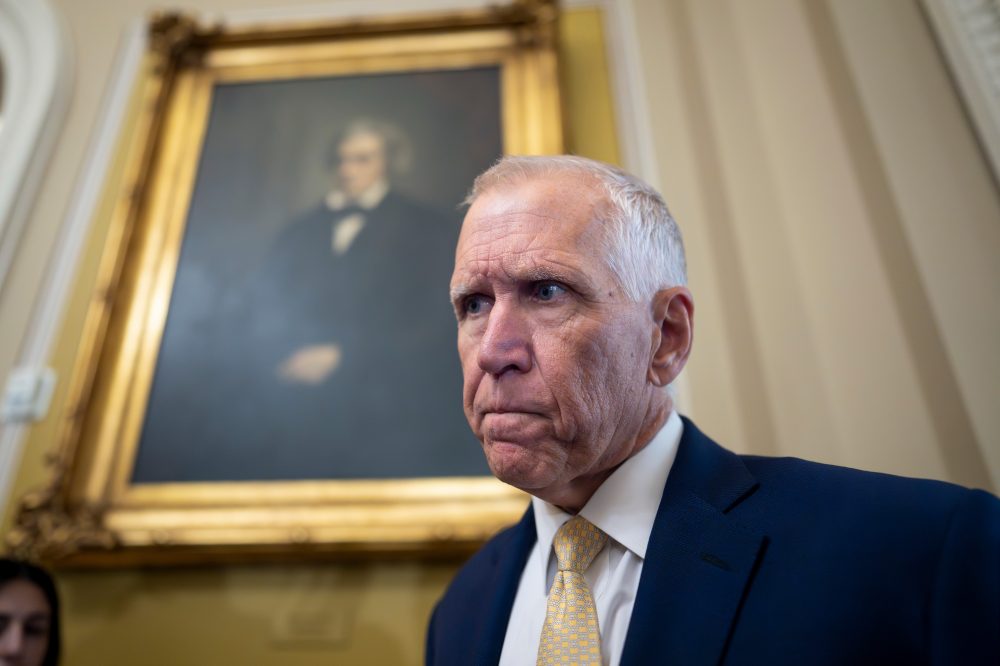
“The only concerns I have are the money and the conditions,” said Senator Thom Tillis, a Republican from North Carolina. “If we send a trainload, a shipload, it’s gonna age as well as that,” he added.
Throughout the conflict, Congress repeatedly attempted and failed to invoke the War Powers Act to halt U.S. military operations. The House eventually passed a war powers resolution — with a small number of Republicans crossing party lines to support it — seeking to force an end to the fighting. The Senate voted nine times on similar measures, including as recently as this past week, but never secured the majority required to succeed. At the same time, lawmakers never passed a formal authorization for the use of military force, as has been done in prior conflicts including the Iraq War.
Senator Jeanne Shaheen of New Hampshire, the top Democrat on the Senate Foreign Relations Committee, said in a statement that while she is relieved the conflict has ended, the country must face some hard truths. “I’m glad that the conflict has finally ended and hope the ceasefire holds,” she said. Shaheen argued that none of the president’s stated objectives were met and that Iran walked away with meaningful concessions. “The American people are paying the price with higher costs in every aspect of life and tens of billions in tax dollars spent,” she said.
Republican Senator Lisa Murkowski of Alaska said she struggles to identify what strategic advantage the U.S. gained through the war. “You want to be able to give the benefit of the doubt,” she said, but added: “I think we’re in a place where there is a deal that has been signed, but it doesn’t appear to me that it puts us in that much of a different position than prior to the beginning of the war.”
At least 15 migrants, among them a young girl, have been found dead along Libya’s eastern Mediterranean coastline over the course of the past week, following what is believed to have been a boat capsizing. Security, navy, and medical sources shared the information with Reuters on Saturday.
According to a navy source, 10 survivors reported that the vessel had approximately 61 people aboard when it went down.
The bodies were discovered at multiple locations along the shoreline near Tobruk, a city situated close to the Egyptian border. Two security officials noted that the remains were in an advanced state of decomposition and cautioned that additional victims may still be found along the coast.
The Tobruk Red Crescent posted images on Facebook showing volunteers dressed in white hazmat suits carefully retrieving bodies from rocky stretches of shoreline and placing them into white plastic bags.
Libya has served as a major transit point for migrants attempting to reach Europe ever since the fall of Muammar Gaddafi during a NATO-backed uprising in 2011. Desperate individuals fleeing poverty and conflict have since risked their lives crossing vast desert terrain and the treacherous waters of the Mediterranean.
Libya’s oil-dependent economy also draws migrants from impoverished regions who are searching for employment opportunities.
In a separate incident, the Emergency Medicine and Support Centre in Khumas city — which operates under the health ministry based in the capital, Tripoli — reported that its medical staff treated 13 migrants following another boat capsizing off the coast.
Switzerland’s foreign ministry announced Saturday that negotiations between the United States and Iran are continuing at the Bürgenstock resort, with Swiss officials describing the venue as a “discreet and reliable setting” for the sensitive diplomatic talks.
The ministry confirmed it is playing a facilitating role in efforts to implement a memorandum of understanding between the two nations, but stopped short of providing any additional details about who is at the table or what specific issues are being addressed.
In a formal statement, Swiss officials cited confidentiality as the reason for withholding information about the participants and the substance of the ongoing discussions.
A brutal heatwave is bearing down on much of Europe, forcing emergency government action in France, near-nationwide weather alerts in Germany, and turning everyday life upside down for residents and tourists in Italy as temperatures inch toward historic highs.
French Prime Minister Sebastien Lecornu was scheduled to chair a crisis meeting Saturday after the country’s national weather agency, Meteo France, warned the scorching conditions would linger into next week. Officials described the event as comparable to the severe heat episodes Europe experienced in 2003 and 2019.
By Sunday, forecasters were predicting temperatures between 39 and 40 degrees Celsius stretching from southwestern France through the Paris region and into Burgundy, with isolated areas possibly topping 41 degrees. The heat is expected to reach its worst on Monday, potentially tying all-time records.
Germany was also in the grip of the heat, with temperatures approaching 38 degrees Celsius and near-nationwide alerts in effect. The DWD weather service warned that a dangerous combination of heat and humidity could also set off powerful thunderstorms.
In Italy, the sweltering conditions were reshaping daily routines and making tourism a physical challenge. Outside Rome’s Colosseum, visitors stood in long lines under a relentless sun, turning a sightseeing trip into a test of endurance. Some found a bit of relief in the cooler underground spaces beneath the partially buried remains of the Temple of Claudius.
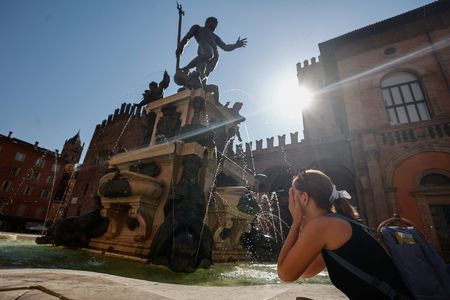
In the northern city of Bologna — one of the hottest cities on the Italian peninsula — people splashed water on their faces at the historic 16th-century Fountain of Neptune and took shelter under the shade of the city’s signature porticoes.
Meanwhile, residents of Warsaw, Poland, flocked to popular spots along the Vistula River in search of some escape from the heat.
Climate scientists have long warned that global warming is making heatwaves more common and more intense across Europe, raising the risk of health crises and economic disruption each summer.
In Paris, city officials moved to help residents cope, with Deputy Mayor Emmanuel Gregoire ordering all parks to stay open 24 hours a day.
The financial impact of extreme heat is also drawing scrutiny. Bank of France Governor Emmanuel Moulin described the short-term effects on economic growth as “somewhat ambiguous,” pointing to both lower worker productivity and higher energy consumption. However, he cautioned that over the longer term, heatwaves put a real drag on economic activity.
SAO PAULO — The Brazilian government believes a hacking attack was responsible for an unauthorized emergency alert that was pushed to cell phones across several parts of the country in the early hours of Saturday morning.
According to a statement from the National Protection and Civil Defense Secretariat, the nation’s citizen notification system was taken offline at approximately 1:30 a.m. local time — 4:30 a.m. GMT — after a message containing the word “misanthropy,” which means hatred of humanity, was delivered to users across multiple states.
Officials said the alert was triggered remotely without authorization. The case has been turned over to Brazil’s Federal Police for a full investigation, and authorities say the notification system will be brought back online as soon as it is safe to do so.
Russian air defense systems successfully intercepted a drone targeting an oil refinery in the Western Siberian region of Tyumen on Saturday, the area’s top official announced.
Governor Alexander Moor shared the update via Telegram, stating: “A drone attack on the Tyumen oil refinery has been repelled. Emergency services are working at the site where the debris fell. According to preliminary information, the refinery has not been damaged and staff have been evacuated.”
The Tyumen region lies more than 2,500 kilometers — roughly 1,550 miles — from the Ukrainian border, making it one of the most distant Russian energy hubs to face such an incident. The area ranks among Russia’s most vital oil and natural gas producing zones.
The targeted facility is considered one of the most advanced and complex refineries in the country, with a processing capacity of approximately 8 million metric tons per year. In practice, it handles around 6 million tons of crude oil annually, yielding roughly 0.5 million tons of gasoline and 2.5 million tons of diesel fuel, based on industry estimates.
Anyone who has spent time at an indoor swimming pool knows that distinctive smell — but it turns out that odor isn’t actually from chlorine itself. It comes from chloramines, which are chemical compounds that form when chlorine binds with body waste in the water.
Now, a high school swimmer from Minneapolis, Minnesota has developed a portable device designed to measure chloramine levels. The student’s invention could offer a practical new way to monitor the chemical environment inside indoor pool facilities.
DEIR AL-BALAH, Gaza — Two children lost their lives in an Israeli strike on a Gaza City apartment early Saturday morning, Palestinian health officials reported.
Even with a ceasefire in place between Israel and the militant group Hamas, the Gaza Strip has experienced near-daily Israeli attacks that have collectively killed more than 1,007 Palestinians, according to the Gaza Health Ministry.
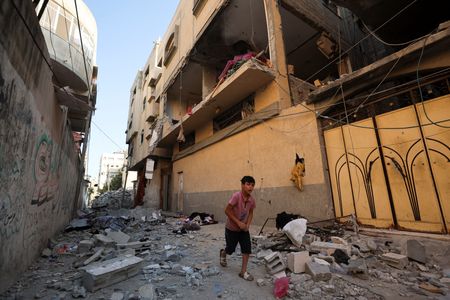
The strike hit a residential apartment in Gaza City at approximately 2 a.m. local time, the ministry said. Rescue crews were still working to recover additional bodies, and the death toll was expected to increase. No immediate figures were available for the number of injured.
An Associated Press reporter who visited the scene observed broken rubble and large pieces of concrete covered in blood.
The two victims were identified as sisters — 4-year-old Zina and 14-year-old Lana. Their bodies were taken to the morgue at Shifa Hospital, where they were wrapped in white hospital bags as family members gathered around them.
Their cousin, Mohammad Safadi, who suffered a wound to his forehead, described the moment of the attack. “I was sitting at home. The rocket fell on us without a warning,” he said, adding that both he and his wife were also injured.
Safadi questioned the validity of the ongoing ceasefire. “This ceasefire the occupation and the negotiation team speak of … is this really a ceasefire? We are civilians. I never held a weapon,” he said.
The Israeli military did not immediately release a statement but indicated it was looking into the matter. Israel has maintained that its operations target Hamas and other armed groups that pose a security threat.
Five Israeli soldiers have died since the truce went into effect.
The conflict began when Hamas-led militants launched an attack into southern Israel on October 7, 2023, killing 1,200 people and taking 251 others hostage. Israel’s military response in Gaza has since resulted in the deaths of 73,018 Palestinians, including those killed after the ceasefire began, the Gaza Health Ministry reported Saturday.
The Health Ministry operates under the Hamas-led government but is staffed by medical professionals who maintain detailed casualty records. United Nations agencies and independent analysts generally regard its data as reliable. The ministry does not separate civilian deaths from militant deaths, though it notes that women and children account for roughly half of all fatalities.
CAIRO — At least five people lost their lives in the Gaza Strip on Saturday as a result of Israeli strikes and gunfire, according to health officials.
An Israeli airstrike targeted an apartment building in the Sabra neighborhood of Gaza City, killing four Palestinians — among them two women and a child. Medics reported that the unit was completely destroyed and that several additional people suffered injuries in the attack.
In a separate incident further to the north, Israeli forces fatally shot a woman in the town of Beit Lahiya, according to medics.
The Israeli military had not issued any response to either incident at the time of reporting.
Although a ceasefire reached in October was intended to bring major hostilities between Hamas and Israel to a halt, deadly attacks have continued in the region. Gaza’s health ministry reported that more than 1,010 Palestinians have died from Israeli fire since that ceasefire took effect. During the same timeframe, four Israeli soldiers were killed by militants operating in Gaza.
Israeli officials maintain that their military operations are designed to prevent imminent threats posed by Hamas and other armed groups. Hamas, for its part, seldom releases information regarding casualties among its own fighters.
Negotiations between Israel and Hamas remain at a standstill over the next phase of a Gaza plan put forward by Trump, which calls for Hamas to disarm and for Israel to carry out military withdrawals.
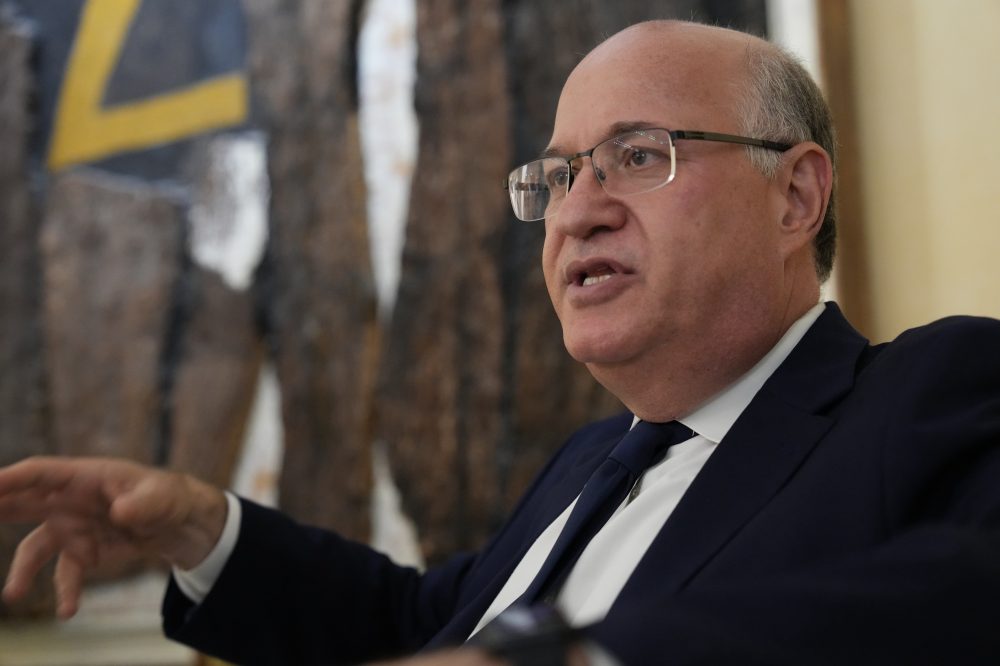
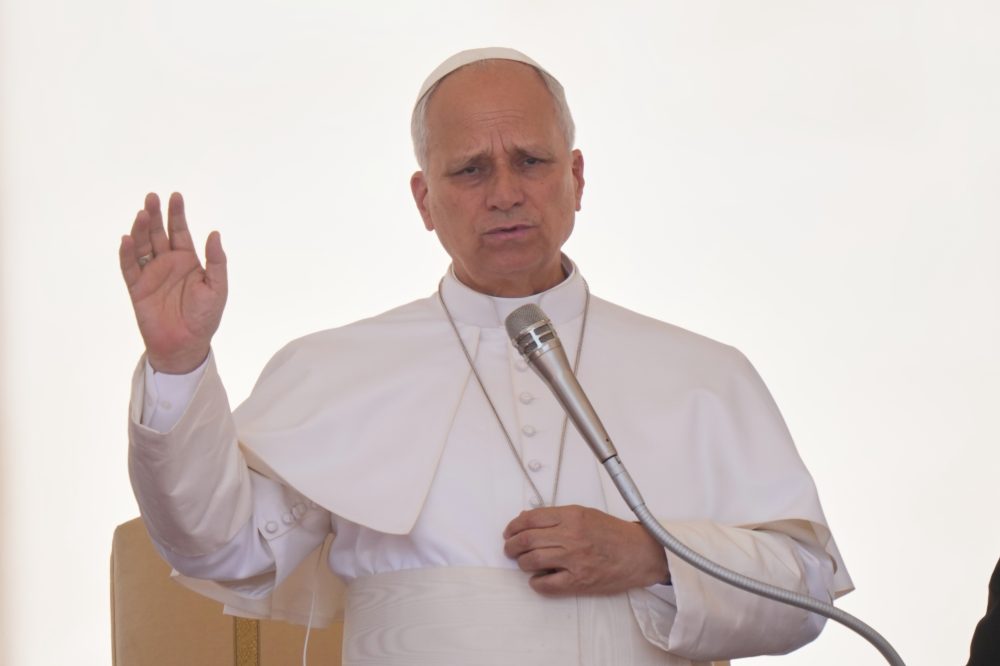
ROME — The leader of Latin America’s foremost development bank sat down with Pope Leo XIV this week to make a case for responsible rare earth mining, pushing back against the Vatican’s growing campaign to pull investment from the mining sector.
Ilan Goldfajn, who heads the Inter-American Development Bank, held a private meeting with the pope on Friday. He argued that extracting rare earth minerals could bring significant economic benefits to Latin America — as long as proper protections are in place and the wealth generated stays in local communities.
It’s a tough argument to make. For years, the Vatican has stood firmly against large multinational mining operations, particularly in Latin America, siding with Indigenous communities whose lands and ways of life are frequently devastated when mining companies move in.
Goldfajn’s visit came on the heels of a similar meeting earlier this year involving mining industry executives, signaling that he understands how much influence the pope’s voice carries in a region that is overwhelmingly Catholic. His goal appears to be convincing Leo that a cleaner, fairer approach to mining is achievable. Whether that message will land is unclear, given Leo’s personal history in the region and his vocal criticism of the backroom deals mining companies often strike with governments in the developing world.
Governments around the world have flagged dozens of minerals — among them copper, cobalt, lithium, and nickel — as critical to modern technology. The 17 rare earth elements fall within that group and are found in everything from smartphones and semiconductors to electric vehicles and jet engines.
“It’s a unique opportunity for the region, but you need to do it in the right way with the standards, the labor conditions, with the environmental conditions, the governance,” Goldfajn said in a Rome interview on June 18, the day before his papal meeting.
He went on to say, “We have exactly the tools to do that,” pointing out that the Inter-American Development Bank has roughly $4 billion worth of critical mineral projects in the pipeline across the region — primarily in Chile, Argentina, and Brazil — with about three-quarters of that funding tied to private companies. He had just wrapped up a presentation on rare earth minerals at a finance conference aimed at attracting European investors.
Mining carries a long and troubled history across Latin America, stretching back centuries to forced labor, the displacement of Indigenous peoples, widespread deforestation, contaminated waterways, and catastrophic dam failures. Foreign corporations drained enormous wealth from the earth while leaving local populations with little to show for it. During the colonial era, silver and gold were shipped across the Atlantic to decorate Catholic churches in Europe.
Pope Leo spent roughly twenty years working as a missionary in Peru, giving him a firsthand look at what mining does to Indigenous communities and the surrounding environment. He served in Chulucanas, within the archdiocese of Piura — an area with major copper mining operations — and in Trujillo, a region known for its gold deposits. His last assignment in Peru was in Chiclayo, which serves as a major logistics center for the extraction industries of northern Peru.
“He must have seen both sides: the promise, the future, but also the challenges,” Goldfajn said, reflecting on Leo’s years in Peru. He also noted that Leo had welcomed a group of senior mining executives for a private audience in January, and that he had been told by those executives the meeting was “very constructive.”
Just two months after that meeting, however, the Vatican launched a formal campaign urging divestment from mining companies. At a Vatican press conference, senior officials spotlighted an ecumenical Christian network called the Church and Mining Network, which is particularly active in Latin America. The campaign calls on local churches to examine their investment portfolios and divest where necessary, while also helping Indigenous communities understand what kinds of extraction are happening on their lands.
Leo is expected to travel to Peru in November, including to areas where he once served as a missionary. During his April visit to Africa — where he stopped in Cameroon, Angola, and Equatorial Guinea — he sharply condemned what he described as the “colonization” of Africa’s mineral wealth by mining corporations.
Even so, engaging the pope directly makes strategic sense, according to Bryan Harris, managing partner at Sabio, a strategic advisory firm focused on Latin America, who shared his thoughts via email. Harris, who advises international mining companies operating in the region, noted that while the pope alone won’t dictate investment decisions, his influence is significant.
“The decades he spent in Peru give him personal credibility and his messaging on mining sets the tone for how dioceses and parishes across the continent will engage with mining companies and projects,” Harris wrote. “These groups are often the basis of local opposition movements to mining, so the Pope has considerable sway on whether relations are confrontational or conciliatory.”
Harris also cautioned that processing rare earth minerals can be an extremely dirty process, relying heavily on chemicals that can contaminate water supplies if companies’ environmental commitments aren’t closely tracked and enforced by regulators.
Leo’s predecessor, Pope Francis — who was born in Argentina — addressed the damage caused by mining in his landmark 2015 environmental encyclical titled “Praised Be.” Francis highlighted the pollution of underground water from runoff, mercury contamination from gold mining, and sulfur dioxide emissions from copper extraction. He called it “essential” that Indigenous communities serve as the primary voices in any conversation about major projects affecting their territories.
The Vatican released no details about what was discussed in Leo’s private session with Goldfajn. In a separate meeting held the same Friday, Leo addressed participants at a conference held at the Vatican’s environmental education center — named after Francis’ 2015 encyclical. There, he condemned the mentality of prioritizing profit above all else, calling out those who seek to strip the earth of its resources “at the expense of the most vulnerable” in ways that risk the loss of human dignity.
According to the most recent estimates from the U.S. Geological Survey, the world holds approximately 75 million metric tons — or 82.7 million U.S. tons — of rare earth oxides. More than half of those reserves are located in China, while Brazil holds the second-largest supply.
WARSAW, Poland — Ukrainian officials are pushing back hard after Polish President Karol Nawrocki declared he would take back the highest honor Poland can bestow upon a foreign leader — stripping Ukrainian President Volodymyr Zelenskyy of the Order of the White Eagle.
Nawrocki made the announcement Friday, citing Zelenskyy’s decision to name a Ukrainian military unit after a paramilitary organization that has been accused of massacring Polish civilians during World War II.
The honor had originally been awarded to Zelenskyy in 2023 by former Polish President Andrzej Duda, recognizing his contributions to security, resilience, and the defense of human rights.
The controversy stems from a decree Zelenskyy signed on May 26, which officially named a unit within Ukraine’s Special Operations Forces after the Ukrainian Insurgent Army — known by its Ukrainian acronym UPA. The UPA was active during the 1940s and 1950s and has long been a source of tension between Poland and Ukraine due to accusations of large-scale killings of Polish civilians.
In a 13-minute video address posted to social media, Nawrocki explained his reasoning. “For the majority of Polish society, the Ukrainian Insurgent Army remains above all a formation responsible for cruel crimes against the citizens of the Polish Republic during World War II,” he said. He also stressed that revoking the award would not reduce Poland’s support for Ukraine in its ongoing war against Russia.
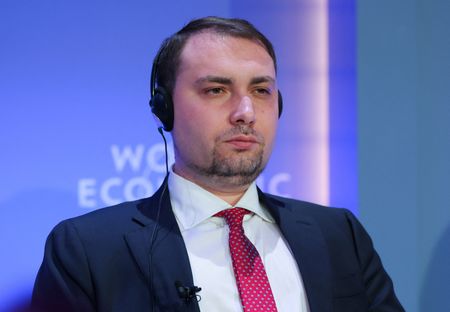
Ukrainian officials responded sharply. Kyrylo Budanov, chief of the Ukrainian Presidential Office, wrote on Telegram that Nawrocki’s move was “an unfriendly act toward our people” and called it “a gift to the Moscow aggressor, which will certainly use it against both of our countries.”
Ukraine’s Foreign Minister Andrii Sybiha described the decision as “a strategic mistake by the President of Poland, one that benefits only Moscow.”
Ukraine’s ambassador to Poland, Vasyl Bodnar, said the timing made the decision “especially painful,” given that Ukrainians are actively defending against Russian missile and drone attacks.
All three Ukrainian officials announced they would return any honors they had received from the Polish government.
Polish Prime Minister Donald Tusk, who is a political rival of Nawrocki, called on both leaders to ease tensions rather than inflame them. “The front line runs elsewhere,” Tusk wrote on social media Friday night, warning that the dispute between Poland and Ukraine “delights Putin and shocks our allies.”
Zelenskyy’s May decree framed the naming decision as a way to honor military tradition and recognize the unit’s role in defending Ukraine’s independence and territorial integrity.
Historically, the UPA fought against both Nazi German and Soviet forces in pursuit of Ukrainian independence. However, the group has also been accused of killing tens of thousands of Polish civilians, primarily in the Nazi-occupied regions of Volhynia and Eastern Galicia. Poland’s parliament formally recognized those killings as genocide in 2016.
Ukraine’s position is that armed groups on multiple sides — including the UPA and Polish underground forces — were responsible for violence that resulted in significant civilian casualties among both Poles and Ukrainians.
The dispute comes despite recent signs of progress between the two countries. A December meeting between the two presidents in Warsaw had been seen as a step forward on historical reconciliation, including movement on the issue of exhuming Polish victims.
Poland is set to host a major international event focused on Ukraine’s postwar reconstruction next week, and Zelenskyy is expected to attend.
Just twelve miles from the World Cup matches being played at New York/New Jersey Stadium, a group of Palestinian-American children are finding something powerful in the game of soccer — a sense of escape from the harsh realities of war.
For these young players, the soccer pitch offers more than just athletic competition. It provides a space where they can step away from the weight of conflict and find inspiration through the sport.
The connection between their heritage and the beautiful game has given these Palestinian-American kids a meaningful outlet as violence continues to impact communities tied to their roots.
One person is dead following a collision between two freight trains on a bridge in Munich, Germany, early Saturday morning, according to local police.
The crash caused two of the rail cars to derail and fall onto the street below the bridge. A police spokesperson in the southern German city confirmed to Reuters that investigators are still working to determine what caused the incident.
Emergency crews were called to the scene in Munich’s northern Milbertshofen district at 1:40 a.m. local time — 11:40 p.m. Friday GMT — with approximately 60 first responders sent to assist, according to a fire department spokesperson.
Good morning, Delmarva! We’re kicking off the weekend with a gorgeous summer day. Expect plenty of sunshine and a high near 85°F — perfect for outdoor plans! Just keep in mind that westerly winds will be breezy today, running 10 to 15 mph with gusts up to 30 mph, so hold onto your hats at the beach or on the bay.
Tonight looks lovely as skies stay mostly clear with a comfortable low around 65°F — great sleeping weather with the windows open.
Sunday brings more of the same summer goodness, with sunny skies and a slightly warmer high of 87°F. Enjoy it while it lasts! However, clouds will begin to creep in Sunday night, and we’re watching a slight chance of showers and thunderstorms after midnight as lows settle near 69°F. Nothing alarming, but worth keeping an eye on if you have early Monday morning plans.
Overall, a fantastic weekend shaping up for the Delmarva Peninsula! Stay cool, stay safe, and enjoy every moment of it. We’ll see you back here for your next update!
Interstate 95 southbound is currently closed at Exit 5A following a crash, according to traffic incident information from Delaware transportation officials.
Motorists traveling southbound on I-95 in the area should expect delays and are advised to use alternate routes until the roadway is cleared and reopened.
No additional details regarding injuries, the number of vehicles involved, or an estimated time for the highway to reopen have been made available at this time. Drivers should monitor traffic conditions closely and allow extra travel time.
ROME — Pope Leo XIV is making a Saturday journey to northern Italy to honor two towering figures of Christian faith: St. Augustine, the foundational inspiration for his religious order, and Mother Frances Cabrini, a champion of migrants who became the first American-born saint.
The visit falls at the halfway mark of what Leo has planned as a summer 2026 grand tour of Italy — a series of Saturday excursions across the Italian peninsula and its islands designed to help the American pope connect with his new flock.
His first destination Saturday is the Lombardy city of Pavia, where he will pray at the tomb of St. Augustine. Augustine, a fifth-century giant of early Christianity, later became the guiding inspiration for the formation of Leo’s Augustinian religious order.
On the night of his election as pope, Leo declared himself a “son of St. Augustine,” and throughout his first year in the role, he has drawn heavily on Augustine’s writings and teachings, signaling that the ancient saint is central to his papacy.
Augustine was born in the year 354 in what is now Algeria. He spent five years in and around Milan, where he converted to Christianity, before going on to become a bishop. He authored some of the most influential works in Western intellectual history, including “Confessions” and “The City of God,” and developed a rule for monastic life. This past April, Leo traveled to Annaba, Algeria — the modern-day location of ancient Hippo — where Augustine lived, preached, and ultimately died.
Later in the day, Leo is scheduled to visit Sant’Angelo Lodigiano, the birthplace of Mother Cabrini. Cabrini is widely recognized for her tireless work caring for Italian immigrants in the United States around the turn of the 20th century. She died in 1917 as a naturalized U.S. citizen in Leo’s hometown of Chicago. She was later beatified and then declared a saint in 1946 by Pope Pius XII, who described her in a radio address that year as a “heroine of modern times.”
Just last year, Leo’s alma mater, Villanova University, located outside Philadelphia, opened a new campus named in Cabrini’s honor, along with a special Institute on Immigration inspired by her legacy of service to migrants.
Like his predecessor, the late Pope Francis, Leo has embraced the Catholic Church’s Gospel-based call to “welcome the stranger” in his outreach to migrants. Just last week, he spent two days in Spain’s Canary Islands — a key arrival point for migrants crossing from West Africa — where he urged welcoming and integrating those fleeing violence and hardship.
His next planned day trip falls on July 4, when he will travel to Lampedusa, a Sicilian island that serves as a major entry point for migrants crossing from North Africa into Italy.
As the first U.S.-born pope in history, Leo has found himself at odds with the Trump administration over its aggressive crackdown on immigration and mass deportation efforts. That backdrop gives added symbolic weight to his choice to spend U.S. Independence Day on an island synonymous with the migrant crisis.
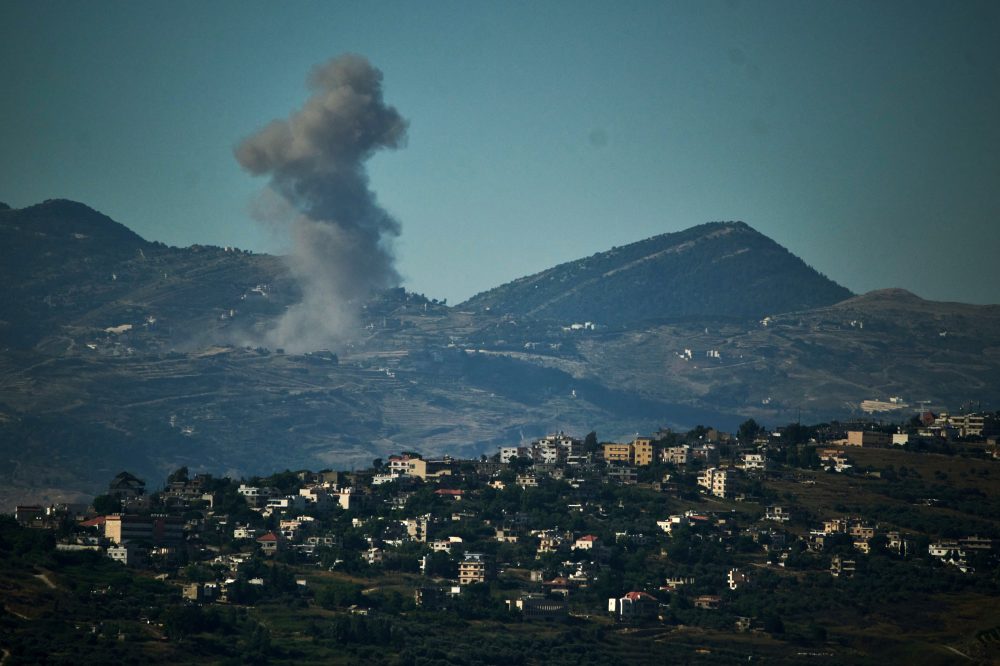
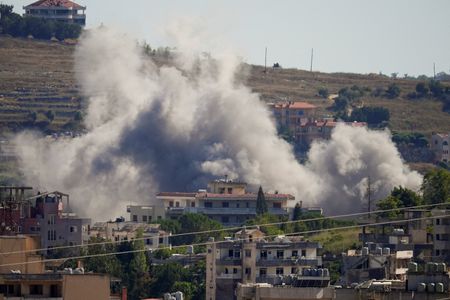
TYRE, Lebanon — Israeli airstrikes struck southern Lebanon on Saturday, killing at least seven people — among them two children — just hours after reports surfaced of a ceasefire agreement. The continued violence is now threatening an interim accord between the United States and Iran aimed at ending the broader Middle East conflict.
Lebanon’s National News Agency reported that the strikes hit the southern town of Nabatiyeh and surrounding villages, with at least seven more people still trapped beneath rubble in the aftermath.
Mediators have been working frantically to stop the fighting between Israel and the Lebanese militant group Hezbollah. The situation escalated sharply on Friday, when clashes left at least 47 people dead in Lebanon and four Israeli soldiers killed.
An Israeli military official, speaking anonymously in accordance with regulations, said Hezbollah fired more than 50 projectiles at Israeli forces in southern Lebanon overnight, prompting Israel to begin targeting the group there.
Israel’s ambassador to Washington, Yechiel Leiter, wrote on X Friday that Israel “remains firmly committed to an immediate ceasefire” — but only if Hezbollah honors the agreement and stops its attacks.
Hezbollah has publicly stated it will observe a ceasefire if Israel does the same, but has stopped short of confirming that any ceasefire is actually in effect. A Hezbollah official, speaking anonymously because he was not authorized to comment publicly, said Friday that Qatar, the U.S., and Iran were all working to broker a ceasefire between Israel and Hezbollah — but declined to say a deal had been finalized.
The conflict between Hezbollah and Israel erupted just days after the U.S. and Israel launched strikes on Iran on February 28. Hezbollah responded by firing rockets and drones at civilian areas in northern Israel, while Israel moved to seize large portions of southern Lebanon.
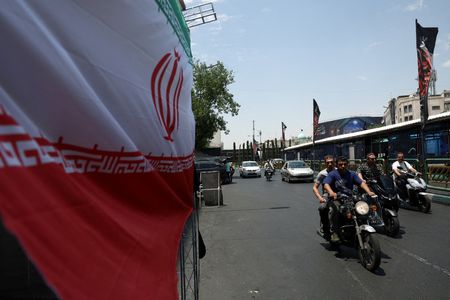
An interim agreement between the U.S. and Iran, signed digitally earlier this week, has already produced one tangible result: the reopening of the Strait of Hormuz, which Iran had closed during the conflict — a move that had cut off major global supplies of oil and natural gas. The deal also calls for renewed talks on Iran’s nuclear program, which is at the heart of the wider conflict.
Neither Israel nor Hezbollah signed the deal. It calls for a halt to military operations in Lebanon and for Lebanon’s sovereignty to be respected. With fighting still ongoing, the agreement is now in jeopardy. U.S.-Iran talks scheduled to begin Friday in Switzerland have been postponed with no new date set.
Israeli Prime Minister Benjamin Netanyahu has pledged to keep Israeli forces in southern Lebanon until all threats to Israel are eliminated. Hezbollah has refused to stand down unless Israel commits to withdrawing from Lebanon — a condition Iran says is also part of the deal.
Smoke could be seen rising over southern Lebanon on Saturday, and Israeli jets flew low over the coastal city of Tyre. A strike on the village of Barish killed four family members — two parents and their two children. In the village of Arab Salim, a body was recovered from a destroyed home. Drone strikes in the villages of Doueir and Kfar Rumman killed a person on a motorcycle and a Lebanese soldier.
Netanyahu’s office offered no immediate response to questions about the ceasefire efforts. On Friday, Netanyahu posted on X that, on his orders, the Israeli military had “struck powerfully” at 150 Hezbollah targets, killing dozens of militants. Military spokesman Brig. Gen. Effie Defrin said Israeli forces were operating in a “forward defense zone” and would continue to do so.
Iranian officials canceled their planned travel to Switzerland, saying the fighting in Lebanon must stop before negotiations can proceed. U.S. Vice President JD Vance also postponed his trip to Switzerland.
On Saturday, Iran’s Foreign Ministry spokesman Esmail Baghaei told the semi-official ISNA news agency that Pakistan’s interior minister would travel to Iran as part of continuing diplomatic efforts. Baghaei said earlier that consultations through intermediaries were ongoing regarding the next phase of negotiations toward a final U.S.-Iran agreement. He noted that because the initial deal was signed digitally, the Switzerland meeting was not considered urgent, and plans were being made to hold talks in the coming days.
The Switzerland talks were expected to center on Iran’s nuclear program. Tehran insists the program is for peaceful purposes only, though it holds a large stockpile of uranium enriched to levels just below weapons-grade — enough to build multiple atomic bombs if it chose to, according to the International Atomic Energy Agency, the United Nations nuclear watchdog.
The negotiations are expected to be challenging. The 2015 nuclear deal — which U.S. President Donald Trump abandoned during his first term — took more than 18 months to complete. The current interim agreement gives negotiators 60 days to reach a nuclear deal, with the possibility of an extension. It also offers significant incentives for Iran, including the eventual removal of all international sanctions and a $300 billion fund for postwar rebuilding.
Iran has already gained some concessions. Following the signing of the interim deal, the U.S. lifted its blockade of Iranian ports and is now allowing Iran to sell its oil on the open market. The agreement also calls for Iran’s frozen assets to be released, though the timeline for that remains unclear.
Two Syrian soldiers were killed Saturday when unidentified attackers struck near the city of Manbij in the northeastern Aleppo region, according to Syria’s Defence Ministry.
The ministry confirmed the deaths in a statement but did not release any additional information regarding the circumstances of the attack or the identity of those responsible.
At least seven people lost their lives and three others were hurt after two roadside bombs exploded in northwest Pakistan on Saturday, according to the Associated Press, which cited local police.
The first bomb struck a vehicle in the Bannu district of Khyber Pakhtunkhwa province. A second device then detonated shortly after, targeting the rescuers who had rushed to help victims of the initial blast, according to senior police officer Yasir Afridi.
Afridi reported that five people were killed in the first explosion and two more died in the second, with three individuals sustaining injuries.
No group or individual has stepped forward to claim responsibility for the attacks. Authorities have launched a search operation to track down those responsible. The district administration and the office of the Bannu divisional commissioner had not responded to requests for comment at the time of reporting.
Pakistan’s President Asif Ali Zardari publicly condemned the bombings on the social media platform X, issuing a stern warning to what he called “internal and external handlers of terrorism” against offering safe havens, logistical support, or financial backing to terrorist networks.
Iran’s soccer federation is moving forward with a formal complaint to FIFA, the sport’s global governing body, over the travel limitations its national team has encountered while competing at the World Cup in the United States.
Because of ongoing visa uncertainty and tensions between the two countries, Iran’s players and staff have been traveling back and forth from their tournament base in co-host Mexico for each of their three group stage matches held on U.S. soil.
American authorities have required the Iranian delegation to enter the country no earlier than 24 hours before each game and to depart the same day the match concludes. The restrictions prompted Iran’s head coach, Amir Ghalenoei, to describe his team as the “most oppressed” in the entire tournament.
Iran’s Football Federation released a statement Friday formally announcing its intention to protest to FIFA. “The Football Federation of Iran believes these restrictions are inconsistent with the principles of providing equal conditions for participating teams and may affect their technical preparation,” the statement read.
FIFA had not responded to requests for comment at the time of reporting.
Andrew Giuliani, director of the White House World Cup Task Force, told British newspaper The Telegraph that he would be open to renegotiating the conditions surrounding Iran’s entry into the United States. He indicated Washington could potentially allow the Iranian team to remain in the country for a longer period around their matches.
Speaking in Seattle ahead of the United States’ match against Australia, Giuliani said, “Look, everything is dynamic, things can be discussed on this and we certainly want to create competitive fair play on the field, that’s why every coach on the team has got their visa, has the opportunity to come in.”
He added, “The president wants to make sure this tournament strikes a competitive balance, while also making sure bad actors don’t get into the country. We’ve done that, with a month to go.”
Coach Ghalenoei said the disruption had already taken a toll on his squad, pointing to it as a factor in their 2-2 draw with New Zealand. The federation explained that under the coaching staff’s plan, the team had intended to arrive in the host city two days before each match to properly prepare both physically and technically, then return to their base the day after the game. “However, for the opening match against New Zealand, this request was not approved,” the federation stated.
The U.S. Department of Homeland Security characterized the measures as safety precautions that had been agreed upon with Iran. The Iranian team is scheduled to face Belgium on June 21 in Los Angeles, and will wrap up their Group G schedule against Egypt on June 27 in Seattle.
A department spokesperson clarified the arrangement in response to a media inquiry: “The team will be allowed to come in match day minus one, so the day before the match. They’ll be asked to leave the day that the match wraps up, so the evening of the match.”
The spokesperson added, “Again, the President wants to make sure that we’re talking about what actually happens on the pitch. A lot of that is making sure that things are safe and secure, not just around the stadiums, but around base camps and training sites.”
Listen to the Morning Delmarva Farm Report Update — June 20, 2026
DELMARVA — Virginia Gov. Abigail Spanberger signed legislation Tuesday formally defining agrivoltaics — the practice of running solar energy generation and agricultural production on the same piece of land simultaneously. The signing took place at a working agrivoltaics demonstration farm in Warrenton.
Under the new law, qualifying projects must prioritize farm productivity, allow crops or livestock to be sold throughout the life of the solar array, and operate as part of an existing farm business. Supporters say clear definitions protect the concept from being used as a greenwash for projects with only token agricultural activity.
Cattle Markets
The USDA’s latest Cattle on Feed report showed steep year-over-year declines. A University of Tennessee agricultural economist says May placements dropped 10% from 2025, and marketings of fed cattle came in 12% below last year — the second lowest May total on record.
On cash cattle, live deals wrapped up the week at $256 per hundredweight, roughly a dollar above the prior week’s weighted average. Dressed cattle in Nebraska traded at $405, steady with the week before. Cash hog prices finished sharply lower to close the week.
Markets
At Laurel Grain Company in Laurel, Delaware, corn for July delivery is bidding $4.63/bu. November soybeans are at $10.93/bu.
Forecast
Saturday brings sunshine and a high of 85°F with westerly winds of 10-15 mph — good fieldwork conditions. Sunday stays sunny with a high of 87°F.
This article is based on the Delmarva Farm Report Update Morning Edition, June 20, 2026. Hosted by Tom Bradley.
Before the 2026 World Cup kicked off, plenty of international soccer fans had serious reservations about the United States serving as a co-host for the sport’s biggest event. Concerns ranged from visa complications and steep costs to gun violence and a perceived lack of enthusiasm for the game among Americans.
Those concerns haven’t completely faded — but as matches get underway, a wave of upbeat posts has taken over social media. Fans visiting the country for the very first time are sharing their surprise at finding a culture full of round-the-clock shopping, unlimited soda refills, chicken wings with ranch dressing, and genuinely warm locals eager to make them feel at home.
Scottish fan Gail Nicholl, who follows her national team as part of the “Tartan Army” supporter group, described a memorable encounter at a Boston pub before Scotland’s opening match against Haiti. “I met these two gorgeous girls from Boston. It was her birthday, she was having cocktails. I bought her another one and they kept saying ‘welcome to Boston, Massachusetts!’” she said. “They loved us, we loved them … Everyone is so friendly, so nice.”
A Swiss fan from Zurich echoed that sentiment on a Reddit thread filled with glowing reviews from visiting tourists. “Something new for me is how friendly and outgoing everyone is,” the fan wrote.
Whether this goodwill can help repair America’s global image — strained by years of an “America First” approach that has put it at odds with allies including Canada, Britain, and Germany — is still an open question. But sports analytics professionals say these experiences carry real weight.
“The front porch of your house is the first thing a visitor experiences before they ever step inside,” said Darin White, founder of Samford University’s Sports Industry Program in Alabama and a former soccer coach. “Sports serves that same function for cities, states, and countries. It is often the first meaningful, emotionally charged encounter someone has with a place they might otherwise never have thought much about.”
White added that research consistently shows hosting a major sporting event can genuinely change deeply held stereotypes about a place.
One of the more notable aspects of this World Cup is that it’s drawing international visitors to cities well beyond the usual tourist destinations. While New York, Los Angeles, and Orlando are familiar stops, this tournament is also bringing fans to Kansas City, Atlanta, and Houston.
In Kansas City, Argentine fans — for whom grilling “asado” barbecue is nearly as culturally significant as soccer itself — gathered to sample the local “dry rub” style of smoked meat. “The Argentinean barbecue is my favourite. But this one is really good,” said Argentina supporter Cristian Gastes.
Over in Dallas, Germany fan Maximilian Kirch, who hails from Duesseldorf, also gave barbecue a try and topped off the experience by showing off a newly acquired Texan cowboy hat. “Of course I’m wanting to experience more of it,” he said.
“There is something distinct about the warmth you encounter when you get off the beaten path,” White said. “The fan from Morocco who got help finding their gate in Dallas, or the family from Germany who got directions from a stranger in Seattle, those moments do not make headlines. But they are doing real work on Brand USA.”
Still, some of the pre-tournament worries remain. Extreme heat — especially in cities like Miami — is taking a toll on both players and fans, and the final is still a month away, pushing deeper into summer. Soccer’s global governing body FIFA reports strong attendance at matches, but high ticket and travel prices have kept many would-be visitors at home.
Visa restrictions have also played a significant role. Citizens from four of the participating nations — Iran, Haiti, Ivory Coast, and Senegal — have faced partial or complete bans on entering the United States. Iran and Haiti both have sizable American diaspora communities to root for their teams, though some within those communities have expressed mixed feelings. Ivory Coast and Senegal, however, have only small U.S.-based fan bases.
That’s where American fans have stepped in. Brooklyn resident Jessica Ambres attended the France versus Senegal match this week in New Jersey, seated high in the upper deck and wearing a Senegal jersey. “I’m in the bloodiest of the nosebleeds but I hope they can hear me down there on the pitch,” she said. As a Black American, she said she felt a personal connection to the African diaspora.
Across stadiums throughout the country, American fans have been showing up not only to back the U.S. team or their own ancestral homelands, but also to rally behind underdogs and teams with thin fan representation.
Politicians and business owners are hopeful that this spirit of welcome will leave a lasting impression long after the tournament ends. Boston Mayor Michelle Wu expressed her hopes for the Scottish supporters who visited her city. “I hope that the Tartan Army will keep coming back to Boston,” she said. “Of course, have a wonderful time during the games now, but we’d love to see you any season, any year. This is your home.”
It was a wild Friday night in baseball, headlined by one of the most stunning comebacks of the season. The Athletics trailed the Los Angeles Angels by seven runs before rallying for a 12-11 victory in West Sacramento, Calif., with the winning run coming on a bases-loaded walk in the 10th inning.
Pinch hitter Jonah Heim sparked the comeback with a two-run home run off Sam Bachman with two outs in the bottom of the ninth, knotting the score. Jacob Wilson also homered and drove in three runs for the Athletics, with Lawrence Butler and Max Muncy adding home runs as well.
The Angels had built their big lead with power of their own, as Jose Siri and Logan O’Hoppe each launched three-run homers. Denzer Guzman hit a two-run shot, while Zach Neto and Nolan Schanuel added solo blasts — giving Los Angeles five home runs, tying their season best. Despite the offensive outburst, the Angels dropped their fifth loss in six games.
In the 10th, Butler began the inning as the automatic runner at second base. Henry Bolte drew a walk off Kirby Yates (0-3), and the two then combined on a double steal. After one out, Yates hit Zack Gelof in the helmet to load the bases. Reliever Samy Natera Jr. came on to face Nick Kurtz and walked him on five pitches to end the game.
Cubs 16, Blue Jays 2
Carson Kelly put together a six-RBI night, highlighted by his second career grand slam, as Chicago battered visiting Toronto. Kelly’s grand slam came during a seven-run first inning for the Cubs. He later drew a bases-loaded walk in the sixth and added an RBI infield single in the seventh. Pete Crow-Armstrong reached base in all five of his plate appearances, collecting three hits including an RBI single.
Chicago right-hander Ben Brown improved to 4-2 overall and 3-0 in his last four starts after allowing just two runs on four hits across six innings. Toronto starter Kevin Gausman fell to 4-5, lasting only two innings while giving up seven runs on seven hits and four walks.
Royals 6, Cardinals 5
Seth Lugo made a successful return from injury, allowing just one earned run over six innings, as Kansas City topped visiting St. Louis for its third consecutive victory. Lugo, who was hit in the forehead by a line drive on June 10 against Texas, improved to 3-4 in his first start back. He surrendered five hits and two runs, only one of which was earned. Jac Caglianone homered and drove in two for the Royals, while Isaac Collins contributed two doubles and two RBIs. Kansas City also secured its first winning home series against the Cardinals since 2020.
St. Louis starter Michael McGreevy dropped to 3-6 after allowing five runs and eight hits in five innings. The Cardinals mounted a three-run ninth inning, with Blaze Jordan’s two-RBI single leading the charge, but Alex Lange induced Jose Fermin to ground into a fielder’s choice to close it out and earn his fifth save.
Rangers 9, Padres 7
Wyatt Langford went 3-for-5 with a homer and two RBIs as Texas rallied from five runs down to defeat visiting San Diego in Arlington. Alejandro Osuna and Jake Burger each drove in two runs, while Jacob deGrom (6-4) threw six innings, giving up six runs on six hits while striking out nine. Jacob Latz earned a four-out save — his 13th in 15 opportunities — for Texas, which had lost five of its previous six games.
Ty France belted two home runs and drove in five for San Diego, which has now dropped three of its last four. Starter Randy Vasquez fell to 6-5 after lasting just 3 1/3 innings, surrendering seven runs — six earned — on eight hits.
Dodgers 6, Orioles 5
Los Angeles came from behind to edge visiting Baltimore in the opener of a three-game series, with Dalton Rushing delivering a game-tying RBI single with two outs in the ninth and Ryan Ward scoring the winning run on a throwing error by right fielder Tyler O’Neill. Baltimore had taken a lead on back-to-back home runs by Gunnar Henderson and Pete Alonso in the sixth, followed by a go-ahead two-RBI single from Jeremiah Jackson in the seventh. Orioles closer Ryan Helsley, making just his second appearance after missing seven weeks with a right elbow injury, took the loss and fell to 0-3. Mookie Betts hit a homer off Helsley to pull the Dodgers within one before the final rally. Los Angeles starter Roki Sasaki allowed three runs on four hits in 5 2/3 innings. The Orioles have now lost five of six.
Red Sox 6, Mariners 2
Ranger Suarez was dominant, allowing just one hit over 6 2/3 scoreless innings as Boston snapped a four-game losing streak with a win at Seattle. Suarez (3-3) carried a no-hit bid into the seventh before Josh Naylor broke it up with a one-out double. Caleb Durbin went 3-for-4 with a double and a home run for the Red Sox. Julio Rodriguez hit a two-run homer in the ninth for Seattle, spoiling the shutout. Seattle’s Bryce Miller (3-1) allowed one run on three hits over five innings.
Braves 3, Brewers 2
Martin Perez outpitched Jacob Misiorowski to lift Atlanta over visiting Milwaukee in a matchup between two division leaders. Perez (6-3) went six innings, surrendering one run on six hits. Atlanta grabbed a 2-1 lead in the sixth on Mauricio Dubon’s two-out single and added insurance on a Mike Yastrzemski home run. Raisel Iglesias allowed a run but converted his 33rd consecutive save opportunity — a streak stretching back to last season — with help from an outfield assist by Eli White that cut down the potential tying run.
Misiorowski (8-3), who had tossed a complete-game shutout just days earlier on June 12 against Philadelphia, went six innings and gave up two runs on five hits. It was the first time he had allowed more than one run since April 25. He is now 0-6 with three no-decisions over his last nine outings. Brice Turang drove in both runs for Milwaukee.
Yankees 5, Reds 0
Cam Schlittler set a career high with 13 strikeouts across six dominant innings as New York blanked visiting Cincinnati. Schlittler (8-3), who had been winless in his three previous starts, allowed four hits and issued no walks, throwing 66 of 96 pitches for strikes. The Yankees have now won 16 of their last 22 games and are 10-5 since losing Aaron Judge to a fractured right rib. The Reds have lost 11 of 16 games without Elly De La Cruz, who is sidelined with a strained right hamstring and began a rehab assignment with Triple-A Louisville on Friday.
Tigers 4, White Sox 3
Kerry Carpenter delivered a go-ahead two-run double in the sixth inning to lift host Detroit past Chicago. Matt Vierling hit a two-run home run and Dillon Dingler had three hits and scored twice for the Tigers. Detroit ace Tarik Skubal allowed three runs and seven hits in 5 2/3 innings with eight strikeouts in his second start back following elbow surgery. For Chicago, Junior Perez collected the first two hits of his major league career, including a solo homer, and Randal Grichuk also went deep.
Marlins 4, Giants 3
Rookie Owen Caissie went 3-for-3 with three RBIs to lead host Miami past San Francisco. The Marlins improved to 12-4 in June — the best record in baseball this month — and reached .500 overall at 38-38. Miami used eight pitchers in a bullpen game, with Cade Gibson (1-0) earning the win after retiring all five batters he faced. Rafael Devers hit his 11th home run of the season for San Francisco. Giants starter Landen Roupp struck out seven in six innings and allowed just two runs, but has gone 0-6 with three no-decisions over his last nine starts.
Rays 5, Nationals 2
Jonathan Aranda launched a three-run home run off the left field foul pole to give Tampa Bay the lead as the Rays opened a season-long 10-game home stand with a comeback win over Washington. Jonny Deluca returned from a nearly month-long absence and added a solo homer for Tampa Bay, which ended a three-game skid. Griffin Jax (2-5) threw five innings, allowing two runs on four hits. Closer Bryan Baker recorded his 19th save with a perfect ninth. For Washington, Luis Garcia Jr. went 2-for-3 with a homer and CJ Abrams also went deep. Miles Mikolas (2-6) served as the bulk reliever after projected starter Cade Cavalli was scratched due to illness, giving up five runs on nine hits.
Astros 9, Guardians 3
Jose Altuve hit a pivotal three-run homer and Jeremy Pena delivered a multi-homer game as Houston topped visiting Cleveland. Altuve and Pena combined to go 5-for-9 with seven RBIs. The win moved the Astros to 16-10 since May 22 and brought them within five games of .500 for the first time since April 17. Right-hander Tatsuya Imai (4-3) worked six innings, allowing three runs on six hits and recording a career-high 11 strikeouts. Cleveland starter Tanner Bibee (2-8) was charged with four runs — three earned — on four hits in 5 1/3 innings.
Rockies 4, Pirates 3
Pinch hitter Braxton Fulford came through with a go-ahead two-run double in the eighth inning to carry host Colorado past Pittsburgh in Denver. Kyle Freeland struck out eight to become just the second Rockies pitcher to reach 1,000 career strikeouts, joining German Marquez (1,069). Freeland had held Pittsburgh to just two hits through seven scoreless innings before the milestone moment. TJ Rumfield homered among his two hits and Ezequiel Tovar also had two hits for Colorado. Jared Triolo had two hits and an RBI for the Pirates.
Diamondbacks 9, Twins 5
Corbin Carroll racked up three hits — including his league-leading ninth triple — and drove in four runs as Arizona took the opener of a three-game series against Minnesota in Phoenix. Ketel Marte homered, Nolan Arenado had two hits and scored, and Ildemaro Vargas drove in two for the Diamondbacks, who have won four of five. Starter Michael Soroka exited after just one inning due to posterior left hip discomfort. Victor Caratini, Josh Bell, and Royce Lewis all homered for the Twins, who were seeking their first five-game winning streak of the season. Minnesota rookie left-hander Connor Prielipp (2-5) allowed six runs — three earned — and nine hits in six innings.
KYIV — A growing diplomatic dispute between Ukraine and Poland escalated Saturday when President Volodymyr Zelenskiy’s chief of staff announced he was giving back a Polish state honor in protest of actions taken by Polish President Karol Nawrocki.
Kyrylo Budanov said he was returning the Golden Officer’s Cross of the Order of Merit of the Republic of Poland — an award he received last year — calling Nawrocki’s recent decision a “gift” for Russia. The move threatens to strain relations between two nations that have been close strategic partners as Ukraine seeks international support in its ongoing war with Russia.
The dispute began Friday when Nawrocki announced he was revoking the Order of the White Eagle — Poland’s highest honor — from Zelenskiy. The Polish president cited Zelenskiy’s decision to rename a military unit after World War Two-era Ukrainian insurgents who have been blamed for the massacre of Polish civilians.
Budanov took to social media to express his objection, writing: “Our nations have long-standing relations and different pages of history — both heroic and tragic. However, this should be an occasion for deep reflection, not crude political speculation.”
Ukraine’s Foreign Minister Andrii Sybiha had already weighed in before Budanov’s announcement, calling Nawrocki’s decision a “strategic error.” Meanwhile, Polish Prime Minister Donald Tusk — a political opponent of Nawrocki — appealed to both leaders to keep a level head amid the escalating tensions.
A crash on Interstate 95 southbound has resulted in the closure of the two right lanes at the Delaware Avenue overpass, according to transportation officials.
Motorists traveling southbound on I-95 in that area should be prepared for slowdowns and potential backups as emergency personnel respond to the scene.
Drivers are encouraged to allow extra travel time or seek alternate routes until the lanes are reopened and the scene is cleared.
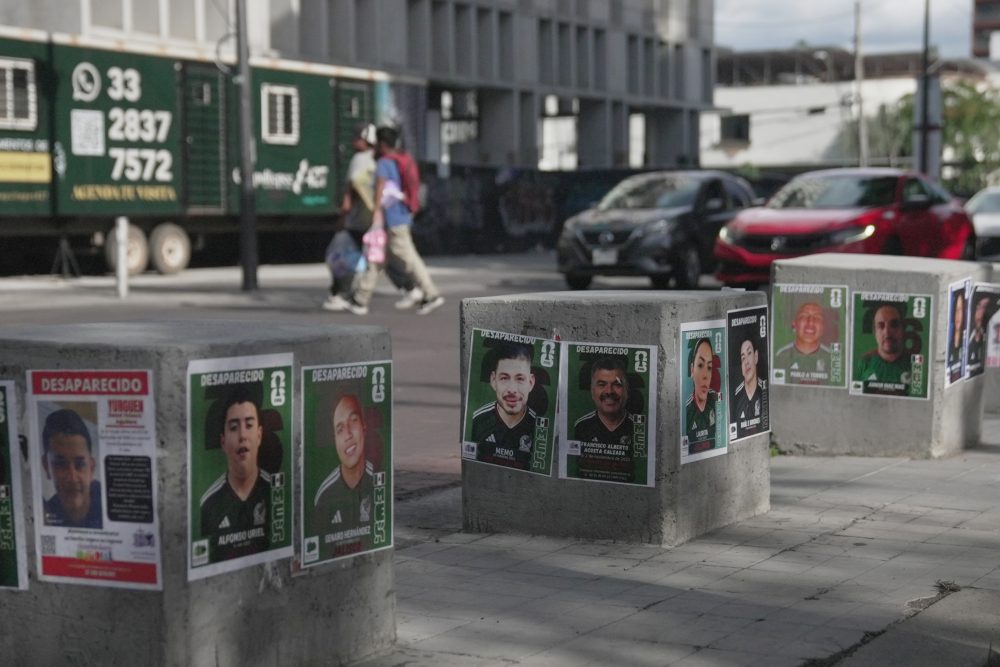
GUADALAJARA, Mexico — The images look familiar at first glance: young men dressed in Mexico’s green national team jersey, a FIFA-style logo in the corner, the layout mimicking the collectible Panini stickers that soccer fans around the world trade during every World Cup tournament.
But posted across downtown Guadalajara — taped to concrete benches, utility poles, and walls — each face carries a single word above it:
“DESAPARECIDO.”
Missing.
One poster features Christian Emmanuel Rivera, who disappeared in August 2023. Another shows Jaime Adrián Ramírez, gone since September 2020.
While Guadalajara serves as a host city for the 2026 World Cup, families desperately searching for missing relatives have turned one of soccer’s most recognizable images into a powerful awareness campaign. Their goal: to make Mexico’s 135,000 missing people visible to the enormous number of international visitors now filling the city’s streets.
The effort was organized by Luz de Esperanza, a search collective operating in the western state of Jalisco — the state with the highest number of disappearances in all of Mexico, with more than 16,000 people listed as missing in its official registry. Members of the collective say other groups have already reached out, interested in using the same approach.
“This is our way of drawing attention to the fact that we miss our children, that they are absent from our lives,” said María de Jesús Solís, 57, whose son Jaime Adrián vanished nearly six years ago.
Solís wears a pendant with her son’s photograph around her neck every day.
“This is my boy,” she said. “The difference is that now he’s wearing the World Cup shirt.”
Throughout Mexico, relatives of the missing have banded together into search collectives that comb through fields, ravines, abandoned buildings, and hidden graves — conducting investigations that families say the government has repeatedly failed to carry out on its own.
Members of Luz de Esperanza have fanned out across Guadalajara nearly every Sunday since 2021, distributing stacks of missing-person flyers in the hope that someone will recognize a face or offer a useful tip. The group refers to this ongoing effort as a “search for the living.”
This month, the collective swapped many of those standard flyers for hundreds of the new World Cup-inspired posters.
For Solís, the campaign reflects deep frustration over what she sees as misplaced priorities.
“We’re not against the World Cup,” she said. “But we’re against the excessive spending.”
She noted that authorities poured millions of dollars into preparing the city for the tournament, while search collectives frequently pay out of their own pockets for water, food, and transportation during their searches.
“The government is showing a beautiful face to the world,” Solís said. “But if you look around, the city is full of posters of our children.”
On a recent morning, Solís and Guadalupe Rivera joined fellow members of Luz de Esperanza at an abandoned property on the edge of the city. The women moved through darkened rooms and into a cluttered backyard filled with garbage, some carrying metal probes used to test the ground for signs of hidden graves.
Rivera pushed a steel rod into the soil as others combed through the property. Her son, Christian Emmanuel, disappeared nearly three years ago. She joined the collective almost right away.
“I thought that if I joined a group, the search would move faster,” she said. “Time keeps passing, and I’m still searching.”
Rivera takes part in searches for human remains to support other grieving families — but she holds onto the hope that she will never find her own son that way.
“I want to find him alive,” she said. “I want him to show up at my front door.”
The idea for the World Cup campaign, Rivera explained, came from a straightforward observation: if soccer is dominating every conversation in the city, perhaps it could also create an opening for people to notice those who are no longer there.
The members of the collective are sports fans themselves, Rivera said.
“When it’s the World Cup, even if you’re not really a fan, you sit down at home and watch it with your family,” she said. “But our family isn’t whole anymore.”
Some residents have welcomed the posters, Rivera said, while others have pushed back, arguing that the World Cup should be a time for celebration rather than a reminder of violence and grief.
But the families say they have no choice but to keep finding new ways to make their missing loved ones visible to the world.
“The government never pays attention to us,” Rivera said. “So we want to see whether, this way, the world will.”
Despite a difficult season cut short by injury, Kentavious Caldwell-Pope is choosing to stick with Memphis for another year.
According to a Friday ESPN report, the two-time NBA champion will exercise his $21.6 million player option, keeping him with the Grizzlies heading into next season.
The 33-year-old had a rough go of it last season, sitting out 31 games total — including the final 29 after undergoing surgery on his right pinky finger in February. Before being shut down, he was putting up averages of 8.4 points, 2.7 assists, and 2.5 rebounds per game.
Caldwell-Pope came to Memphis last offseason as part of the trade that sent Desmond Bane to Orlando. Prior to that, he had signed a three-year, $66 million contract before the 2024-25 season and played one year with the Magic.
Originally drafted eighth overall by Detroit in 2013 out of Georgia, Caldwell-Pope has suited up for six different teams across his 13 NBA seasons. He spent four years with the Pistons before heading to the Los Angeles Lakers for another four seasons, where he captured his first championship ring during the 2019-20 campaign. A one-year stop in Washington with the Wizards followed, and then he won his second title in 2023 during a two-season run with the Denver Nuggets before joining Orlando.
Known as a reliable three-point shooter throughout his career — hitting 36.5% from beyond the arc overall — Caldwell-Pope has seen his long-range accuracy slip in recent years. After shooting 40.6% from three in his second season with Denver, that number dropped to 34.2% in 2024-25 and fell further to 31.6% last season. For his career, he has averaged 11 points, 2.9 rebounds, and 1.9 assists per game.
For the second consecutive Friday, Shohei Ohtani was absent from the Los Angeles Dodgers’ starting lineup — but this time, it had nothing to do with the knee inflammation that kept him out previously.
Before their home matchup against Baltimore, the Dodgers revealed that their superstar is away from the club on paternity leave as he and his wife prepare for the arrival of their second child.
The team said Ohtani “is expected to be back at some point this weekend,” and he was not placed on the official paternity list. Under Major League Baseball rules, being placed on the paternity list requires a player to sit out a minimum of one game and a maximum of three before returning.
The Dodgers went on to defeat Baltimore 6-5 in walk-off fashion, even without their star in the lineup.
Ohtani’s most recent appearance came Wednesday, when he took the mound as the starting pitcher and earned the win in a 5-4 victory over Tampa Bay. He is not anticipated to pitch again until the middle of next week.
With Ohtani out, Kyle Tucker slid into the leadoff spot that Ohtani typically occupies, while rookie Ryan Ward handled designated hitter duties. Tucker finished 1-for-4 with a run scored. Ward went 0-for-3 but drew two walks and ultimately crossed the plate with the winning run.
Shawnee Road is currently closed in both directions as a result of a crash, according to traffic officials.
The closure affects the stretch of Shawnee Road between Connecting Road and U.S. Route 113. Travelers in the area are advised to seek alternate routes until the road reopens.
No further details regarding the crash have been made available at this time. Drivers should use caution and allow for extra travel time in the affected area.
SANTA CLARA, California — Paraguay refused to go quietly at the World Cup on Friday, beating Turkey 1-0 in a thrilling Group D showdown despite playing a man short for the entire second half — and doing it with the tournament’s quickest goal to date.
Coming off a crushing 4-1 opening loss to the United States, Paraguay came out with something to prove. Just 64 seconds into the match, Matias Galarza unleashed a powerful long-range strike to put his side ahead — and that single goal would be all Paraguay needed.
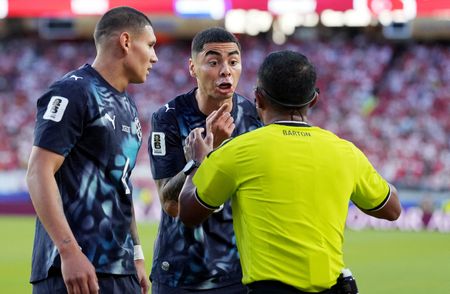
Energized by the rhythmic sound of drums echoing through the San Francisco Bay Area, Paraguay’s defense held firm against relentless Turkish pressure. The situation grew even more difficult when midfielder Miguel Almiron was sent off after making remarks to Mert Muldur — with his hand covering his mouth — leaving Paraguay to fight with 10 men for the entire second half.
Turkey controlled the ball for long stretches, at one point holding 79% possession, and launched 32 shots on goal. But their finishing was dismal, and they were unable to convert a single attempt — a painful echo of their opening match loss to Australia. Juventus forward Kenan Yildiz and Real Madrid’s Arda Guler both had opportunities but couldn’t find the net.
With the victory, Paraguay breathes new life into their campaign, while Turkey is eliminated from the tournament. The result also officially confirmed the United States as Group D winners following their earlier 2-0 defeat of Australia in Seattle.
Paraguay, nicknamed “La Albirroja,” last appeared in the World Cup back in 2010, when they reached the quarter-finals before falling to eventual champions Spain — the deepest run in the nation’s tournament history.
Goalscorer Galarza described the win as one of the greatest moments of his life. “We showed our quality fighting spirits even with one player down. God wanted this to happen for Paraguay more than ever before,” he said.
Turkey head coach Vincenzo Montella acknowledged the painful result but praised his players’ effort. “I’m sad but I’m also very proud of my players. They gave everything right up until the final whistle. That’s what football’s like,” he said.
LA PAZ — Bolivian President Rodrigo Paz took dramatic action early Saturday, announcing a state of emergency as the nation struggles under the weight of a blockade crisis that has brought its economy to a standstill for the past 50 days.
Speaking directly to the nation in a formal address, Paz outlined the measure, which now allows for the deployment of military forces throughout Bolivia in an effort to reestablish order.
At least five people were killed in Israeli airstrikes and drone attacks across southern Lebanon on Saturday, according to Lebanese state media — just hours after a ceasefire between Israel and the Iran-backed Hezbollah militant group officially took hold.
Lebanon’s state news agency NNA reported that Israeli warplanes and drones launched multiple strikes throughout the Nabatieh region, hitting residential buildings and homes during the overnight hours and into Saturday morning. Israeli artillery also bombarded Nabatieh and surrounding areas before dawn.
The ceasefire between Israel and Hezbollah was reached on Friday following a sharp escalation in violence in Lebanon, a U.S. official confirmed. A senior Israeli official and two Hezbollah sources separately verified the agreement to Reuters. According to the U.S. official, the truce was set to take effect at 4 p.m. local time — 1300 GMT — on Friday.
Porsche CEO Michael Leiters is pushing to quickly wrap up negotiations on a second cost-cutting package at the German sports car manufacturer, according to an interview published Saturday in Frankfurter Allgemeine Sonntagszeitung.
“We want to reach an agreement with the employees before the factory holidays in July. Porsche employees need clarity,” Leiters said.
The company has already announced plans to eliminate 1,900 positions over the coming years, following the layoff of 2,000 temporary workers last year. Leiters also indicated that Porsche intends to scale back production to levels below the roughly 280,000 vehicles it sold in the previous year.
“Porsche has to make money with fewer cars,” Leiters told the publication.
As part of its restructuring strategy, Porsche is also looking to work more closely with its sister company Audi. The company confirmed that its entry-level 718 model series will remain in production.
The automaker’s financial troubles have continued to deepen, with profits declining further in the first quarter of 2026 as the company grapples with tariff pressures, geopolitical uncertainty, and weaknesses in its current vehicle lineup.
SANTA CLARA, California — Paraguay advanced in the World Cup with one of the tournament’s most dramatic performances, beating Turkey 1-0 on Friday despite being reduced to ten men before halftime.
The match’s decisive moment came just 64 seconds in, when midfielder Matias Galarza unleashed a low, powerful shot from 25 metres out that found the back of the net. The goal became the fastest of the entire World Cup, edging out a 71-second strike by Ismael Saibari in Morocco’s 1-0 win over Scotland earlier that same day.
Paraguay’s chances took a serious hit in first-half stoppage time when midfielder Miguel Almiron was shown a straight red card. The dismissal came after Almiron placed his hand over his mouth during a confrontation with Turkey’s Mert Muldur — making him the first player at this tournament to be sent off under that newly enforced rule.
Despite being outmanned, Paraguay’s defense held firm through relentless pressure from Turkey, repelling attack after attack to protect their slim lead until the final whistle.
The victory is a remarkable bounce-back for Paraguay, who had been routed 4-1 by the United States in their opening match of the tournament.
U.S. Route 13 is closed in both directions at Pine Tree Road due to a crash, according to traffic officials.
Motorists traveling through the area are advised to avoid the roadway and find an alternate route until the road is reopened. No additional information about the crash has been made available at this time.
Drivers should use caution and stay alert for updates as conditions change.
LAGOS, Nigeria — When a plane carrying hundreds of Nigerian nationals escaping South Africa touched down in Lagos last week, passenger Iniebong James felt an immediate wave of relief. That feeling quickly gave way to anxiety.
Nearly two weeks after arriving back in his home country, James, 52, is working to rebuild a life he walked away from a decade ago. In 2016, he packed his belongings and traveled to South Africa on a six-month visitor’s visa — and never left. Without legal permission to remain, he established himself as a car mechanic in the country’s Eastern Cape Province.
Things were manageable until May, when anti-immigrant demonstrators attacked him, leaving him with a head injury, he told The Associated Press.
That attack unfolded against a backdrop of rapidly intensifying hostility toward migrants in South Africa. In recent months, the country has seen marches demanding that undocumented immigrants leave, along with reports of violence directed at foreign nationals.
Governments across Africa have responded by flying their citizens home. Hundreds of migrants from Nigeria and other African nations have been repatriated, with officials pointing to threats of violence and an increasingly dangerous atmosphere.
South Africa has long drawn people from across the continent, including large numbers of Nigerians, because of its comparatively strong economy and greater opportunities. However, that attraction has periodically been met with outbursts of xenophobic hostility. Some South Africans blame foreign nationals for high unemployment, strained public services, and crime.
Before heading to South Africa, James had worked as a truck driver for a haulage company in Lagos. That company shut down in 2016 when Nigeria’s economy slipped into its first recession in roughly twenty years. Unemployment was a concern, but it was the days-long blackouts that ultimately pushed him to go.
To get by on an expired visa, James said he paid community police officers 200 rands — about $12.14 — each week to allow him to keep his shop running. On two separate occasions, he said he paid immigration officers after being arrested. The AP was unable to independently confirm those claims.
James said he is glad to be home and to have his freedom back, but he acknowledges that the economy that once drove him away is now significantly worse, and he fears finding work will be even harder than before.
Federal agriculture and plant health officials have given the green light to release a natural predator insect as a way to combat several invasive knotweed species spreading across the lower 48 states.
The Animal and Plant Health Inspection Service has completed a final supplemental environmental assessment, along with a finding of no significant impact, related to a 2020 environmental assessment. The review covers the planned field release of the knotweed psyllid Aphalara itadori, an insect originating from Murakami, Japan, that belongs to the Hemiptera order and Psyllidae family.
The targeted plants — Japanese knotweed, giant knotweed, and Bohemian knotweed, known scientifically as Fallopia japonica, F. sachalinensis, and F. x bohemica — are classified as significant invasive weeds within the United States.
This approach is known as classical biological control, which involves introducing a natural enemy of an invasive species from its native region to help manage its spread in a new environment.
Because officials concluded there would be no significant environmental impact, they determined that a more extensive environmental impact statement does not need to be prepared.
A new World Cup rule made its debut in dramatic fashion Friday in Santa Clara, California, when Paraguay midfielder Miguel Almiron was ejected from a Group D match against Turkey after covering his mouth during a confrontation with Turkish player Mert Muldur.
Almiron received a straight red card in first-half stoppage time, marking the first time the regulation has been enforced at the current World Cup. At the moment of his dismissal, Paraguay was ahead 1-0. Video review technology confirmed the call stood.
Under the rule, any player who uses their hand, arm, or shirt to cover their mouth during a confrontational situation on the field is subject to an automatic red card. The regulation was introduced following an incident involving Benfica’s Gianluca Prestianni, who was accused of directing discriminatory remarks at Real Madrid’s Vinicius Jr. while concealing his mouth.
SEATTLE — Boston Red Sox left-hander Ranger Suarez was on the verge of a no-hitter Friday night against the Seattle Mariners, but the dream ended when Josh Naylor lined a double into the right-center gap with one out in the seventh inning, giving Seattle its first hit of the game.
The trouble began when Suarez opened the seventh by walking Cal Raleigh to lead off the inning. Julio Rodríguez then flew out, but Naylor followed with the double that ended any hopes of the historic outing.
Despite the setback, Boston held a commanding 5-0 lead after plating four runs in the top of the seventh inning.
Suarez had been dominant early, retiring the first 10 batters he faced before issuing a walk to Raleigh in the fourth inning. He responded to that threat by striking out Rodríguez and getting Naylor to line out to second base.
The 30-year-old southpaw is in his first year with Boston, having spent the previous eight seasons with Philadelphia. In each of his final two years with the Phillies, he posted a 12-8 record.
DUBAI — A potential agreement between Washington and Tehran to wind down their conflict carries a sharp contradiction at its core: the economic incentives designed to bring Iran to the table may end up empowering a force that the United States and its Western allies have designated as a terrorist organization.
Iran’s Revolutionary Guards have spent years building a vast commercial empire under the cover of international sanctions, with business interests spanning oil production, construction, shipping, telecommunications, and port operations.
Now, as both governments prepare for negotiations that could unlock billions of dollars for Iran and throw open its economy to global investment, the elite military force stands to be among the biggest winners of any deal reached.
Four senior Iranian sources told Reuters that the Islamic Revolutionary Guard Corps is uniquely positioned to capture a significant share of whatever financial benefits flow from sanctions relief, expanded oil exports, and incoming foreign investment.
But that same deep entrenchment in Iran’s commercial landscape could become one of the most serious barriers to a final agreement. Because the Guards are so thoroughly woven into Iranian business, their terrorism designation may make it extremely difficult to fully free the country’s economy from sanctions restrictions.
The Guards were established by Iran’s late revolutionary leader Ayatollah Ruhollah Khomeini and grew considerably more powerful under his successor, Ayatollah Ali Khamenei, gaining political influence while leading efforts to extend Iran’s reach across the Middle East and crush internal opposition.
Since the war broke out on February 28 — triggered by strikes that killed Khamenei — the Guards have only tightened their grip on power within the country, playing a key role in installing Khamenei’s son, Mojtaba Khamenei, as the new supreme leader. The Guards have indicated they support the effort to reach a deal ending the conflict.
One senior source described the Guards as the true victors of the war, noting that having protected the survival of Iran’s Islamic system, they are better positioned than anyone to benefit from sanctions being lifted — particularly given their decades of experience running Iran’s sanctions-evasion operations.
A spokesperson for the Guards declined to offer any comment.
An interim agreement announced this week would allow waivers permitting sanctioned Iranian oil sales, while a more sweeping deal in the coming months could eliminate all remaining sanctions and give Iran access to a $300 billion reconstruction fund.
The Guards do not release financial information publicly, but a second senior source said that any economic recovery effort would naturally expand the organization’s already considerable financial reach — pointing to existing multibillion-dollar trade networks, oil activities, shipping operations, and construction enterprises.
The Guards’ engineering division, Khatam al-Anbia, oversees hundreds of affiliated companies involved in major infrastructure and energy projects, with additional involvement in telecommunications, automobile manufacturing, tourism, and logistics, according to official statements and public records.
The White House did not respond to a request for comment.
Iranian investment law requires foreign companies to partner with local firms, and the sheer volume of companies linked to the Guards means the organization effectively controls access to Iran’s most profitable sectors for any outside investor.
That reality puts Western companies returning to the Iranian market in a difficult position — they could find themselves doing business alongside or through entities connected to the Guards even without any direct dealings, while still risking exposure to sanctions that specifically target the organization.
Jeremy Paner, a former Treasury Department sanctions investigator now serving as a partner at the law firm Hughes Hubbard and Reed, put it plainly: “The IRGC is the entity pulling all the strings behind the oil sector, so you can’t ignore all of the legal effects of doing business with them.”
Even with the interim deal authorizing Iranian oil exports, Paner warned that “there’s still legal exposure for U.S. companies because of the IRGC lurking in the background.” He noted that the Justice Against Sponsors of Terrorism Act, passed in 2016, allows victims of terrorist attacks to pursue legal action against U.S. companies that assist groups accused of terrorism, including the Guards.
If broader negotiations fail and sanctions remain largely in place, the Guards would still benefit from the interim oil export waivers and retain their firm hold on the economy through their long-established expertise in evading sanctions, the senior Iranian sources said.
The Guards’ economic expansion was actually accelerated by the sanctions imposed over Iran’s nuclear program starting in the early 2000s, as the organization built networks to move oil, manage shipping, and conduct trade through middlemen and shell companies.
That model became increasingly difficult to sustain after U.S. President Donald Trump withdrew from a 2015 nuclear agreement between major world powers in 2018 and launched a “maximum pressure” campaign — measures he has since expanded further during his current term in office.
A third senior Iranian source said those steps narrowed the space available for sanctions evasion and drove up the cost of maintaining illicit financial networks.
American swimmer Kate Douglass shattered the women’s 50-meter freestyle world record on Friday during a U.S. Pro Swim Series competition held in Indianapolis.
Douglass, 24, who claimed gold in the 200-meter breaststroke at the 2024 Paris Olympics, touched the wall at 23.59 seconds — besting the previous world record of 23.61 set by Swedish Olympic champion Sarah Sjostrom at the 2023 world championships in Fukuoka, Japan.
Speaking to broadcaster Peacock shortly after her swim, Douglass could barely contain her disbelief. “I mean wow, that’s crazy, I think I’m still in shock, I don’t even know what to say,” she said.
“I was really just hoping to go a best time, break the American record. That’s a lot faster than I ever thought I would go tonight, or ever,” Douglass added.
She touched out Gretchen Walsh, who finished in 23.78 seconds. The two had previously shared the U.S. record at 23.91.
MEXICO CITY — Following a massive street celebration that drew more than 700,000 fans to the city’s downtown, Mexico City’s government announced Friday it is weighing new steps to limit alcohol sales in public areas during World Cup events.
The celebration erupted after Mexico defeated South Korea, with supporters flooding the streets in green Tri jerseys and colorful Lucha Libre masks. Fans danced in the rain, waved flags, sang team anthems, and blew on vuvuzelas throughout the night.
The morning after told a different story. Reforma Avenue, one of the city’s busiest main roads, was blanketed in garbage, and many of the yellow cempasuchil flowers lining the boulevard had been crushed underfoot. Cleanup crews hauled away roughly 40 tons of waste from around the historic city center.
Mexico City’s government secretary Cesar Cravioto addressed the situation at a press conference, saying that managing a soccer event of this scale requires a focus on prevention — including cracking down on illegal street alcohol sales.
Cravioto said officials plan to ask nearby restaurants and bars to stop allowing customers to carry drinks outside, and that convenience stores in the area could be required to halt alcohol sales in the hours leading up to major matches.
The city also announced plans to install seven additional large viewing screens around the center, supplementing the 12 already in place, in an effort to spread crowds more evenly. More staff would also be deployed to reduce beer sales by street vendors.
“We will keep insisting that fans have fun but without excessive alcohol consumption,” Cravioto said.
Meanwhile, in Boston — another World Cup host city — fans of Scotland’s national team, known as the “Tartan Army,” consumed so much beer following Scotland’s 1-0 victory over Haiti at the city stadium that multiple bars reportedly ran out of stock.
Mexico is scheduled to face the Czech Republic in their next group stage match on Wednesday.
TORONTO — German soccer fans traveling to Canada for the World Cup are discovering that their tradition of careful spending — known in Germany as Sparsamkeit — is getting a serious workout when it comes to buying a round of drinks.
Hundreds of supporters arrived in Toronto on Friday, flying in through Houston to join pre-game celebrations ahead of Saturday’s Group E matchup between Germany and Ivory Coast. Fans were spotted lining up outside downtown pubs, some still hauling luggage fresh off their flights, while others had stopped at Niagara Falls along the way.
Despite the festive atmosphere, the topic of beer prices quickly dampened spirits when fans were asked about the cost of a pint in the city.
“I have to tell you the beer prices in Canada and the U.S. are much more expensive than in Germany,” said Mats Kauer, 47. “In Germany, we pay about $6-$7 for a pint, but there it is about $10 to $14, and in the stadium, it is $17. That is ridiculous. You have to make it cheaper because beer is essential to life.”
Anne-Marie Seessle, who serves as president of Toronto’s Bayern Munich Fan Club, acknowledged that elevated prices come with the territory when traveling abroad for a World Cup. However, she drew the line at ticket costs, calling them “insane.” “Here in the city, the ticket prices have been crazy. I myself paid C$1,000 ($705.99) for my ticket,” she said.
Canada ranks among the highest in food inflation across G7 nations. While the exchange rate against the U.S. dollar and euro offers some relief, that advantage can quickly disappear once taxes and tips are factored in. Toronto restaurants and bars typically tack on a 13% tax, and servers expect gratuities ranging from 12% to 20%.
Heiner, a 61-year-old from Berlin who plans to attend every one of Germany’s World Cup matches, said he has enjoyed Toronto as a destination — but not the drink prices. “But the beer prices here is what we pay in Munich during Oktoberfest,” he said, noting that a litre costs about 50% more than back home.
Bar owners in Toronto pushed back on the criticism, arguing their prices are in line with what you’d find in Europe. The bigger concern for them, they say, is simply keeping up with the demand.
Cesar Mesen, 44, owner of Pint Public House, said he’s taken steps to ensure his taps stay flowing throughout the match. “We have right now 16 kegs getting nice and cold,” Mesen said. “Each keg is 30 litres, so that makes 500 litres of beer and that is about 1,200 pints. So we are expecting a little bit more activity tomorrow, but we are ready for it.”
PHILADELPHIA — Brazil made quick work of Haiti at the World Cup on Friday, rolling to a 3-0 victory that vaulted the five-time champions to the top of Group C with four points and officially ended Haiti’s tournament hopes.
The result makes Haiti the first team eliminated from knockout stage contention at this year’s tournament. Morocco is tied with Brazil on four points after defeating Scotland 1-0 in an earlier match. Scotland sits at three points, while Haiti is left with none.
Brazil took the lead in the 23rd minute in somewhat fortunate fashion. Vinicius Jr. fired a shot that goalkeeper Johny Placide pushed away, but Hannes Delcroix’s attempt to clear the loose ball deflected off Matheus Cunha and into the net.
Cunha then made it 2-0 in the 36th minute with a much more deliberate finish — sprinting onto a perfectly weighted through ball from Vinicius and burying it in the top corner of the net.
Vinicius Jr. completed the first-half scoring in stoppage time, collecting a long pass from Lucas Paqueta and finishing with composure to make it 3-0 before the break.
After halftime, Brazil had little reason to push the pace. Goalkeeper Alisson was rarely called into action as the squad managed by Carlo Ancelotti coasted to a comfortable win.
TOKYO — Japan is setting its sights on a sweeping economic growth plan that would mobilize approximately $2.3 trillion in combined government and private investment across 17 key industries by the year 2040, according to a report published Friday by the Nikkei business newspaper.
The initiative, valued at 370 trillion yen, is tied to Prime Minister Sanae Takaichi’s emerging growth strategy and is expected to be formally announced as soon as next week. Priority sectors under the plan include artificial intelligence, semiconductor chips, and space development, the Nikkei reported. The newspaper did not identify a source for the information.
The strategy reflects Takaichi’s approach of using government expenditures as a catalyst to draw in greater spending from the private sector. Reuters attempted to reach the Prime Minister’s Office for comment on Saturday, but no one was available outside of normal business hours.
As part of the broader effort, officials are weighing the creation of a long-term budget structure designed to provide steady funding for investments considered vital to the country’s economic security. Some of those investments could be financed through what are known as bridging bonds.
Bridging bonds are short-term financial instruments used to address temporary funding gaps. They are backed by guarantees on specific repayment sources, which allows the Japanese government — already carrying a heavy debt load — to maintain that it remains committed to fiscal responsibility even while increasing overall spending.
(Exchange rate: $1 = 161.28 yen at time of reporting)
U.S. envoy Steve Witkoff and Iranian Foreign Minister Abbas Araqchi are both making their way to Switzerland for diplomatic talks, according to a report from Axios on Friday. The development comes as a newly established ceasefire in Lebanon appears to have reinvigorated efforts to transform a short-term Iran war agreement into a more permanent regional settlement.
Israel and Hezbollah reached a ceasefire agreement in Lebanon on Friday, following a surge in fighting that had thrown doubt over ongoing U.S.-Iran negotiations — talks considered essential to reopening the Strait of Hormuz and stabilizing global oil supplies.
Earlier this week, the two sides put their signatures on a 14-point memorandum of understanding, pausing hostilities and creating a 60-day period to work through disagreements over Iran’s nuclear program and other complex issues standing in the way of a more durable agreement.
U.S. Vice President JD Vance had scrapped plans on Thursday to travel to Switzerland for the negotiations, citing the escalating tensions in Lebanon between Israel and Hezbollah, the Iran-backed militant organization.
With the ceasefire now in effect, Witkoff is en route to Switzerland to meet up with Jared Kushner, President Donald Trump’s son-in-law, who is already on the ground there, Axios reported. Araqchi is expected to arrive Saturday.
The move may be an indication that both parties are prepared to begin detailed technical negotiations toward a permanent ceasefire arrangement. The White House did not respond when asked about Witkoff’s travel plans.
A senior U.S. official confirmed that the Lebanon ceasefire took hold around 4 p.m. local time (1300 GMT), following an exchange of fire, and noted that American and Qatari negotiators had brokered the agreement with assistance from Iran.
Two Hezbollah sources and a senior Israeli official separately confirmed the ceasefire to Reuters. “If Hezbollah does not attack us, then for us it is not a time of war,” the Israeli official said, while noting that Israeli forces would remain in southern Lebanon, where they have occupied territory along the country’s northern border.
Two Lebanese security sources reported that Israel carried out roughly a dozen airstrikes during the first hour after the ceasefire took effect, though no further strikes were recorded after 5 p.m. Lebanon’s health ministry said Israeli strikes after midnight into Friday had left 47 people dead and 97 wounded. The Israeli military separately reported that four of its soldiers were killed in an incident in Lebanon, without providing additional details.
The ongoing conflict in Lebanon has complicated the broader negotiations, since halting the fighting there is listed as a condition of the wider U.S.-Iran accord.
UNRESOLVED ISSUES REMAIN
Following Wednesday’s signing of the memorandum of understanding, preparations for technical talks at the Swiss mountaintop resort of Buergenstock were moving forward when the White House announced Thursday that Vance would not be attending. Switzerland’s foreign ministry said the talks had been delayed but that the country remained ready to host them and that preparatory work was ongoing.
The broader interim agreement calls for the United States, Iran, and their respective allies to declare an immediate and permanent end to military operations across all fronts, including Lebanon. Israel, which was excluded from the negotiations, has stated it is not bound by the deal.
Araqchi, speaking by phone with his Pakistani counterpart on Friday, said the United States would bear responsibility for any failure to uphold its commitments under the deal — including bringing an end to the fighting in Lebanon — according to his ministry.
ISRAEL-LEBANON TALKS ON THE HORIZON
Lebanon was drawn into the regional conflict when Hezbollah began firing at Israel on March 2, prompting Israel to launch a military offensive against the group and push into southern Lebanon.
Lebanese President Joseph Aoun condemned the most recent Israeli strikes but said the escalation would not derail efforts to reach a comprehensive ceasefire. The U.S. State Department said Secretary of State Marco Rubio spoke with Aoun, reiterating the importance of disarming Hezbollah while reaffirming American support for a “fully sovereign” Lebanese state.
Rubio and Aoun also discussed the possibility of holding a new round of Israel-Lebanon negotiations in Washington from June 23 to June 25. The Lebanese presidency stated that a comprehensive ceasefire would be a foundational requirement for those discussions.
TRUMP STANDS BEHIND THE DEAL
The Iran war, which began on February 28 with air attacks by the U.S. and Israel on Iran, has claimed at least 7,000 lives, predominantly in Iran and Lebanon. The conflict has also driven up energy prices, fueling inflation across the globe.
Brent crude oil prices edged upward on Friday but were still on track for a weekly decline of roughly 8% following the Lebanon ceasefire. Oil shipments through the Strait of Hormuz had also picked up following the signing of this week’s memorandum. Before Iran blockaded the strait during the war, it had carried nearly one-fifth of the world’s crude oil and liquefied natural gas supplies. The body Iran set up to oversee the strait announced Friday it would waive planned fees during the interim deal’s negotiation window.
The memorandum of understanding includes provisions for easing economic sanctions on Iran, unfreezing tens of billions of dollars in Iranian assets, and immediate U.S. waivers on Iranian oil exports. It also calls for a $300-billion reconstruction fund for Iran along with other financial incentives.
President Trump again defended the agreement in the face of criticism from Washington, including from some Republican allies in Congress who have questioned whether he gave up too much to end a war that is unpopular with most Americans ahead of November’s midterm elections.
“The War has diminished Iran!” Trump wrote on social media Friday, adding, “We didn’t meet out of desperation, Iran did. They are FINISHED! We’ll play out the 60 days. They get no money, not 10 cents!”
The Big 12 Conference is not ready to walk away from its legal battle involving Texas Tech quarterback Brendan Sorsby, even as the player has taken steps to leave college football for the professional ranks.
According to a Big 12 source who spoke with ESPN, the conference’s presidents and chancellors have not pulled back the federal lawsuit that was filed earlier this week. Lingering uncertainty about Sorsby’s NFL future and whether Texas Tech could still face fallout from the legal dispute are keeping the case open. The league’s board of directors is expected to gather early next week to go over its available options.
“We don’t know the answer to those questions,” the source said. “We haven’t done anything different at this point. We’re going to reconvene next week to run through all the options. Right now that case is still active.”
The Big 12 filed suit on Monday in the Northern District of Texas, seeking a declaratory judgment and injunctive relief that would give the conference the authority to potentially discipline Sorsby under its own bylaws. Just hours after that filing, Sorsby moved toward entering the NFL supplemental draft and dropped his own lawsuit against the NCAA — a necessary step for him to be declared ineligible at the college level by Monday’s deadline.
Sorsby has admitted to breaking NCAA rules by placing thousands of sports bets, including 40 wagers on Indiana football games during the time he was a member of that program’s roster. The NFL has yet to approve his application for the supplemental draft, a process that has not resulted in a selected player since 2019.
The conference is also weighing whether Texas Tech should be held responsible for the legal expenses tied to the case. One Big 12 athletic director indicated the concern is less about penalizing the school and more about whether the entire conference should be on the hook for costs from a dispute that other member schools had no part in starting.
Three people have died from what appears to be heat-related illness while hiking at Grand Canyon National Park in Arizona, federal officials announced Friday — two separate incidents occurring within the same week as temperatures in the inner canyon soared to dangerous levels.
The first death happened on June 12, when a 72-year-old man became ill from the heat while hiking the South Kaibab Trail. Rescue crews were unable to reach him in time, and he died before help arrived. Then, just four days later, a 67-year-old man and a 68-year-old woman were hiking the North Kaibab Trail when both appeared to suffer from heat-related illness. They, too, died before first responders could get to them, according to the U.S. National Park Service.
The park service noted that despite a quick response that included aerial support, all three hikers had already passed away by the time rescue teams reached them.
Temperatures in the inner canyon can climb above 109 degrees Fahrenheit — or 43 degrees Celsius — in shaded areas during midday hours, making conditions extremely dangerous for hikers. Officials say the park has experienced a recent increase in heat-related emergencies and are strongly advising anyone hiking in the inner canyon to stay off trails between 10 a.m. and 4 p.m.
The remains of all three hikers were transported to the Coconino County Medical Examiner’s office. The National Park Service says investigations into each of the deaths are continuing.
WASHINGTON — Even as the Kennedy Center explores alternatives to a full two-year shutdown that a federal judge stopped last month, its management is not committing to scheduling new performances or rebuilding its staff.
In a court filing submitted Friday, attorneys for the Kennedy Center stated that the institution intends to “maintain an operational model” following July 5 — the date originally set for the venue to close for renovations. Under that arrangement, the public areas of the building would remain open, but the performance stages could go largely unused.
“The Court’s order did not affirmatively require the Board to reschedule programming that had previously been cancelled or to seek new programming,” the attorneys wrote in the filing.
The Kennedy Center was pushed to reconsider its plans after a May ruling by U.S. District Judge Christopher Cooper struck down several significant changes made by a board dominated by allies of President Donald Trump. Cooper ruled that Trump’s name had been illegally added to the building and ordered its removal. He also blocked the closure and gave the institution’s leadership — along with Rep. Joyce Beatty, D-Ohio, an ex-officio board member who brought the lawsuit — until Friday to submit a status update.
The venue indicated that management would present the board with multiple renovation scenarios to vote on. Those options include a complete closure, a partial closure allowing “some continued public access and limited programming in spaces unaffected” by construction work, or a third approach that would “consider a highly limited series of phased closures to address only the Center’s most serious infrastructure needs while scheduling and maintaining a full slate of programming.”
Attorneys for the Kennedy Center noted that the final recommendations have not yet been determined and that a board vote is expected sometime in mid-July.
Attorneys representing Beatty pushed back, arguing the Kennedy Center has not fully followed through on Judge Cooper’s order. While Trump’s name has been taken off the building, they raised concerns about a tarp that was placed over the areas where the lettering had been installed — with no apparent plans to remove it anytime soon.
Beatty’s legal team also contended that without taking steps to restore some level of programming, the Kennedy Center is essentially carrying out its planned shutdown in defiance of the court’s ruling.
“Having gutted staff and programming, Defendants believe they can sit back and allow their pre-planned shutdown to commence,” Beatty’s attorneys wrote in the filing.
Panama’s Maritime Authority (AMP) announced late Friday that a drone strike targeting a Panama-flagged cargo ship in the Black Sea left one crew member dead and two others wounded, with one of the injured sailors reported to be in serious condition.
According to the AMP, the attack took place on Thursday. Despite the violence, the vessel was able to remain operational and continue along its planned route.
In a statement, the authority said it has “activated the relevant protocols to gather official information on the incident and maintains communication with the parties involved.”
The AMP did not identify the origin of the drone strike. However, the agency issued a warning advising all ships to avoid navigating through waters belonging to Ukraine and Russia in both the Black Sea and the Sea of Azov, located to the north.
Panama oversees the largest ship registry in the world, with approximately 16% of all merchant vessels worldwide sailing under its flag.
The Qatar Football Association has extended its well-wishes to Canadian midfielder Ismael Kone following an injury he sustained during the two nations’ World Cup Group B showdown on Thursday.
Qatar fell to a lopsided 6-0 loss against Canada in the match, which was also marred by a rough second-half tackle from Qatar’s Assim Madibo that left Kone with a broken leg. Kone was subsequently taken into surgery to address the injury.
In a show of sportsmanship, the Qatar Football Association shared a photo on its social media platforms capturing Kone waving to supporters as he was carried off the field on a stretcher. The post included a message expressing hope for his swift and full recovery.
Qatar still has one more Group B contest remaining, set to take place against Bosnia and Herzegovina on June 24, to close out their World Cup group stage campaign.
Costa Rican authorities made an arrest Friday in connection with a suspected death threat directed at President Laura Fernandez, according to the country’s security ministry.
While no actual attack on the president was carried out, Fernandez had already been removed from the area earlier that day following an unexplained detonation heard near her location. She had been visiting the northern part of the country to observe the impact of illegal gold mining operations in the region.
The Central American nation’s security ministry confirmed the arrest without providing additional details about the suspect.
Alexander Zverev proved to be the lone survivor among the top four seeds on Friday at the Terra Wortmann Open in Halle, Germany, as several high-profile players were sent packing in the quarterfinals.
The tournament’s top seed, Zverev of Germany, needed every bit of two hours to get past Belgium’s Raphael Collignon, winning 7-6 (10), 7-6 (2). Both players served brilliantly — each firing 14 aces without dropping a single service game throughout the match.
The second seed, Canada’s Felix Auger-Aliassime, had three match points in his grasp against American Frances Tiafoe, but Tiafoe refused to go quietly. The American came back to claim a 3-6, 6-3, 7-6 (12) victory.
Third-seeded Ben Shelton also came agonizingly close to victory, reaching match point against fifth-seeded Taylor Fritz — but Fritz turned the tables and rallied for a 6-7 (5), 7-6 (8), 7-6 (3) win. Fritz was dominant on serve, blasting 24 aces and successfully defending all four break point chances Shelton had against him.
Saturday’s semifinals will feature Zverev against Fritz in one match, while unseeded Frances Tiafoe takes on unseeded German wild card Daniel Altmaier in the other. Altmaier secured his spot with a 6-4, 6-7 (6), 6-4 win over fourth-seeded Daniil Medvedev of Russia.
At the HSBC Championships in London, unseeded American Brandon Nakashima turned in an impressive performance, dispatching top-seeded Alex de Minaur of Australia 7-5, 6-3 in just 93 minutes. Nakashima was especially effective on returns, winning 30.8 percent — 16 of 52 points — on de Minaur’s serve, posting a return rating of 184.
Nakashima advances to face seventh-seeded Francisco Cerundolo of Argentina on Saturday. Cerundolo earned his semifinal berth by defeating Great Britain’s Arthur Fery 7-6 (1), 3-6, 6-4.
In the other London semifinal, eighth-seeded Tommy Paul knocked off fourth-seeded Alejandro Davidovich Fokina of Spain 6-3, 7-6 (4), never losing his serve during the match. Paul will face unseeded Ugo Humbert, a left-handed Frenchman who cruised past Australia’s Rinky Hijikata 6-1, 6-2.
SYDNEY — Australian officials have confirmed the country’s first mainland case of H5N1 bird flu, discovered in a remote corner of the nation’s southwest, Agriculture Minister Julie Collins announced Saturday.
Collins stated that laboratory testing verified the presence of the virus in a bird that was discovered on a beach located roughly 700 kilometers — about 430 miles — southeast of Perth, the capital city of Western Australia state.
Officials had announced Friday that the bird in question, a migratory seabird called a brown skua, was found within Cape Le Grand National Park and had initially tested positive for avian influenza, with full confirmation still pending at that time.
In anticipation of H5N1’s potential spread to Australian shores, the country had already implemented a series of precautionary measures, including strengthening biosecurity protocols at farms, conducting disease testing on shorebirds, vaccinating at-risk species, and running practice drills to rehearse outbreak response strategies.
ATLANTA — This year’s World Cup features a larger field than ever before, with 48 teams split into 12 first-round groups. While the top two teams from each group automatically move on, there’s also a lifeline for the eight best third-place finishers — meaning more teams than in previous years have a shot at reaching the last 32.
As matches get underway across Canada, Mexico, and the United States, fans and analysts alike are starting to crunch the numbers: just how many points does a team need to survive the group stage?
This is only the second time FIFA has run a World Cup with this many teams. The first was last November’s U-17 World Cup held in Qatar, so there isn’t much historical precedent to draw from at this specific scale.
However, the concept of third-place teams advancing is nothing new. It dates back to the 1986 World Cup in Mexico, when the four best third-place finishers from six groups were allowed to move into the knockout rounds alongside the top two from each group.
A review of 38 FIFA tournaments and continental championships that used a 24-team format — where four spots were available for the top third-place finishers — sheds some light on what point totals have historically been enough to advance.
BREAKING DOWN THE POINT THRESHOLDS
Five points: No team that has earned five points from three group games has ever finished outside the top two in their group. Five points is essentially a guarantee of advancement.
Four points: Only twice has a team with four points in third place failed to advance, and both of those cases came at the U-20 World Cup. Interestingly, Norway finished last in their 1994 World Cup group despite collecting four points, and Ukraine experienced the same fate at the most recent European Championship in Germany two years ago.
Three points: Teams finishing with three points have a slightly less than 50% chance of advancing, and almost all of those who do make it carry a positive goal difference. A negative goal difference alongside three points drops the odds to below one in three. One notable exception came at the 2019 U-20 World Cup, when Norway was eliminated despite a goal difference of plus-eight — a tally that included a 12-0 win over Honduras in which Erling Haaland scored nine goals. At last year’s 48-team U-17 World Cup in Qatar, four of the six third-place teams with three points did advance.
Two points: Across the tournaments reviewed that used three points for a win, only two teams ever advanced as one of the best third-place finishers with just two points. The most recent example was Tanzania at the Africa Cup of Nations held in Morocco late last year.
A massive fire at a resort hotel in the Dominican Republic left one person dead and forced close to 1,700 tourists to evacuate, according to local authorities.
The blaze broke out at the Viva Wyndham Dominicus Beach Hotel in Bayahibe, a community situated on the southeastern coast of the Dominican Republic. Officials announced the details of the incident on Friday, June 19.
Authorities confirmed the large-scale evacuation was carried out as the fire swept through the property, displacing hundreds of guests staying at the resort.
A federal appeals court stepped in Friday to halt the Trump administration’s newest attempt to sharply reduce the workforce at the U.S. Consumer Financial Protection Bureau, dealing another blow to the White House’s ongoing push to shrink the agency.
The ruling came from the U.S. Court of Appeals for the District of Columbia Circuit, which was examining the administration’s challenge to a March 2025 injunction issued by a federal district court judge. That injunction had temporarily blocked the mass layoffs from moving forward.
The latest plan, submitted by the Justice Department in late March, called for cutting roughly two-thirds of the agency’s employees. This followed earlier proposals that sought to eliminate up to 90% of the bureau’s staff — plans that had already been turned back in court multiple times.
The Justice Department had urged the appeals court to allow the new round of cuts to proceed right away. It also asked that the case be returned to the district court judge with a 45-day window to revisit the original injunction.
The appeals court agreed to send the case back to the district court, but refused to allow the staff reductions to resume in the meantime and declined to impose any deadline on the lower court judge.
The CFPB was established by Congress in the wake of the 2008 financial crisis to serve as a watchdog over consumer financial products and services.
President Trump and other top administration officials have pushed to abolish the agency entirely, arguing it places an unnecessary and politically motivated burden on businesses. Supporters of the bureau, including Democrats and consumer advocates, counter that undermining it would benefit financial industry players at the cost of everyday consumers.
With the most aggressive moves blocked by the courts, the administration has pursued other avenues to weaken the agency. In May, the CFPB announced it would require all employees to relocate to its Washington headquarters — a step widely seen as a way to encourage resignations. Earlier this month, Trump put forward a prominent critic of the bureau to serve as its next director.
LA PAZ — Bolivian President Rodrigo Paz reached an agreement Friday with the Bolivian Workers’ Confederation, known as the COB, in what could be a turning point in a standoff that has brought the country to a near standstill over the past 50 days.
The ongoing unrest has had a severe impact on everyday life in Bolivia, with citizens facing lengthy lines at fuel stations and struggling to obtain basic necessities like food and medical supplies due to widespread roadblocks set up by protesters.
The head of the COB’s executive leadership, Mario Argollo, expressed cautious optimism about the agreement. “There is a country waiting for white smoke to appear today,” Argollo said. “We believe we must begin to iron out our differences; we must start building a country based on consensus, with workers participating in the decisions.”
Justin Verlander’s anticipated return to the Detroit Tigers mound has been pushed back significantly after the veteran right-hander strained his left hamstring during a bullpen workout in Houston on Wednesday.
The 43-year-old had already been sidelined on the 15-day injured list since April 4 with left hip inflammation after making just one appearance this season. He had been moved to the 60-day IL and was on the verge of being activated when the new injury struck during a scheduled throwing session.
Tigers manager A.J. Hinch had been planning to send Verlander — who carries a 0-1 record and 12.27 ERA — to the mound against the Chicago White Sox on Sunday. That start would have been his first in Detroit since August 20, 2017. Instead, Hinch told reporters the timeline has been pushed back considerably.
“This is not a matter of days,” Hinch said Friday. “It’s a matter of weeks. We’re going to need a full rehab process to get him back to throwing again. Obviously, frustrating news for him and for us, given the excitement that was building around his start on Sunday.”
Verlander, who holds the distinction of being the oldest active player in the major leagues, acknowledged the situation is deeply discouraging.
“My hip actually feels fairly good,” Verlander said Friday. “All of a sudden, my hamstring was bugging me and I had to cut my bullpen short. Any time I’m not able to get my work in, it means something’s definitely off, so we decided to get it looked at, and there’s a strain.”
“Just really unfortunate, man. It just sucks. I don’t know how else to say it.”
The decorated pitcher — a nine-time All-Star, two-time World Series champion, and 2011 American League MVP — has built a career record of 266 wins, 159 losses, a 3.33 ERA, and 3,554 strikeouts across 556 starts with four teams dating back to 2005.
Despite the setback, Verlander tried to find a silver lining. “Glass half full, I get back to throwing and this thing heals up, and it’s like, ‘Oh, wow, this was something that also was kind of lingering, and now I’m better than I was before,’” he said. “But it still doesn’t take the sting away from being tantalizingly close to finally being back on the mound here at home and having it pulled out from under me.”
Verlander signed a one-year, $13 million deal to come back to Detroit, the city where he played from 2005 before being traded to the Houston Astros at the 2017 trade deadline. Though the season has not gone as hoped, he said his goal remains to “give everything until the season’s over.”
After the season concludes, Verlander said he will weigh his future carefully, taking into account both his health and personal life.
“There’s a lot of things that are also going on in my life that are a draw away from the game,” Verlander said. “But I’ve always said I want to play until the wheels fall off. I don’t know, maybe they are falling off. I hope not.”
SEATTLE — U.S. men’s soccer midfielder Weston McKennie had plenty of praise for the fans who packed Seattle Stadium on Friday night, as the World Cup co-hosts rolled past Australia 2-0 to advance to the Round of 32.
The energy inside the stadium didn’t stop when the final whistle blew. Supporters kept up chants of “U.S.A.” and broke out into a chorus of John Denver’s “Take Me Home, Country Roads” in celebration of the victory.
“The fans were amazing, amazing,” McKennie said after the match.
The 27-year-old said the crowd’s energy had him fired up even before kickoff, particularly when fans sang the national anthem together.
“(It) really woke me up, hearing everyone sing the national anthem, and it just makes you proud to be from this country, in my opinion the greatest country in the world,” he said.
McKennie also touched on the broader significance of hosting the World Cup during a time when the U.S. has frequently clashed with foreign allies under President Donald Trump’s second term. He said the tournament gives international visitors a chance to see “why we love this country so much and experiencing it firsthand.” He added, “I think they’re getting a little taste of it.”
“The fans were amazing, and Seattle was amazing,” McKennie said.
Head coach Mauricio Pochettino, who is Argentinian, said the atmosphere moved him personally. “Today, even if I am not American, after the game I was emotional … the fans were amazing,” he said.
Pochettino continued: “The warm reception in the way that they support us and the way they celebrate the victory. They make it feel very emotional and the players, they are very emotional too.”
“I think it was an amazing and a perfect connection in between the energy from the stands and the team … if we want to achieve good things we need the support of our fans,” the coach added.
With two wins, the U.S. now sits at the top of Group D. The group’s other two teams, Paraguay and Turkey, were set to face off later Friday.
The United States proved Friday night that they can get the job done even without their biggest offensive weapon, defeating Australia 2-0 in Seattle to punch their ticket to the World Cup round of 32.
Christian Pulisic, the Americans’ most dangerous attacking player, sat out the Group D matchup due to a calf injury he suffered during the U.S. opening victory over Paraguay. Despite his absence, the co-hosts found a way to get the win.
The scoring began early, with Australia’s Cameron Burgess accidentally putting the ball into his own net in the 11th minute. Then, just before the halftime break, Alex Freeman headed in a second goal — a score that was initially waved off for offside before a VAR review reversed the call.
Head coach Mauricio Pochettino acknowledged how important Pulisic is to the squad but said the injury left no choice. “It’s always difficult because we want to have all the players,” Pochettino said. “Christian is an important player for us, but… it was impossible today for him to play. We hope that next game he will be available.”
With six points now in hand and one group-stage game remaining, the U.S. is safely through to the knockout stage. Pochettino made clear, however, that Pulisic remains a key part of his plans going forward.
“If we want to win the competition, we need the whole team,” the coach said. “All the players need to be important. Of course, Christian is one of the best players in the world. I hope that he can recover as soon as possible and can enjoy being on the pitch and helping the team.”
Midfielder Weston McKennie highlighted the squad’s versatility following the win, saying the team demonstrated Friday that they have multiple ways to compete. “We can play the physical game because we have guys on the field who are ready to step up for that, and we have guys with quality who can play possession-based football,” McKennie said.
The United States will wrap up Group D play against Turkey on Thursday at Los Angeles Stadium.
SEATTLE — The United States punched their ticket to the World Cup’s round of 32 on Friday after defeating Australia 2-0, but coach Mauricio Pochettino is urging his squad not to let up.
Speaking after the match, Pochettino said the key going forward is “believing that we can win (and) knowing that we need to go really hard” in every game.
The Americans thoroughly controlled the contest, dominating possession throughout a physical affair that saw seven yellow cards handed out — three to the U.S. and four to Australia.
With star forward Christian Pulisic sidelined by injury, 23-year-old Ricardo Pepi stepped into the starting lineup and made his mark. Pochettino had high praise for the young striker, saying, “(Pepi) is for me one of the greatest strikers. He’s getting better every day.”
The U.S. got on the board when Australian defender Cameron Burgess deflected a cross into his own net, giving the Americans a 1-0 lead. U.S. defender Alex Freeman then put the match away late in the first half with a header, pushing the score to 2-0.
Australia made multiple substitutions in the second half in an attempt to mount a comeback, but could not break through the American defensive line. It was the U.S. team’s first clean sheet in nine matches.
The win was historically significant as well — it marked only the second time the United States have won two games in the World Cup group stage. The first came all the way back in 1930, when the U.S. defeated Belgium and Paraguay.
The two other teams in Group D, Paraguay and Turkey, were set to face each other later Friday in San Francisco.
World No. 1 Aryna Sabalenka had to dig deep on Friday, spending more than two hours on the court before finally putting away unseeded Nikola Bartunkova to secure her place in the Berlin Tennis Open semifinals.
Bartunkova, a Czech player currently ranked 62nd in the world, grabbed the opening set and gave Sabalenka plenty of trouble throughout the match. In the end, however, the top-seeded Belarusian prevailed 2-6, 7-6 (2), 6-4 in a contest that stretched two hours and 23 minutes. Bartunkova had numerous chances to break serve, converting just six of 17 opportunities, while Sabalenka was far more efficient, capitalizing on five of her eight break-point chances.
Sabalenka’s next opponent will be third-seeded Jessica Pegula, who earned her semifinal berth with a tightly contested 7-6 (5), 7-6 (8) win over Madison Keys. Keys held a significant edge in aces at 10-5, but managed to convert only two of seven break-point chances, which ultimately cost her the match.
In the other semifinal matchup, Czech player Linda Noskova, seeded eighth, cruised past Spain’s Paula Badosa 6-1, 6-3 and will take on unseeded Alexandra Eala on Saturday. Eala, a native of the Philippines, continued her impressive run at the tournament by defeating sixth-seeded Elina Svitolina of Ukraine 6-3, 6-4, following her earlier upset win over No. 2 seed Elena Rybakina.
Lexus Nottingham Open
At the WTA 250 event in Nottingham, United Kingdom, Switzerland’s Viktorija Golubic kept her surprising tournament run alive with a 6-3, 2-6, 6-3 victory over fifth-seeded Ann Li.
Golubic, 33 years old and ranked 76th in the world, proved especially effective against Li’s second serve in the deciding set, winning eight of 12 points on those deliveries.
She will face third-seeded Emma Navarro in Saturday’s semifinal. Navarro reached that round by dispatching Spain’s Jessica Bouzas Maneiro 7-6 (6), 6-2.
The other semifinal is an all-Czech affair, pitting fourth-seeded Marie Bouzkova against unseeded Karolina Pliskova. Bouzkova moved on with a dominant 7-5, 6-0 win over Germany’s Tatjana Maria, while Pliskova eliminated Australia’s Talia Gibson 7-5, 6-4.
The debate over how many road courses belong on the NASCAR schedule has sparked plenty of arguments among fans. Some think there are too many, while others believe a handful is just right.
Few topics stir up more online debate than the appearance of winding, technical tracks on the racing calendar — especially as the 36-race season winds down.
But as things stand right now, NASCAR’s schedule features just four road course events: Circuit of the Americas, Watkins Glen, this Sunday’s inaugural race in San Diego, and next weekend’s stop in Sonoma.
Just four. That’s the entire list.
Gone are the road races at the Roval, Mexico City, Elkhart Lake, Indianapolis, Chicago, and Daytona.
In 2025 — what appears to be the final season of NASCAR’s road course-heavy era — the series visited six such layouts, matching the number it ran in 2023 when the Chicago Street Course wound through Grant Park. Five road courses hosted races in 2024.
Racing down Michigan Avenue, making a trip to Mexico City, and battling the widely unpopular Roval at Charlotte are chapters that likely won’t be revisited — and many fans would say good riddance.
Most drivers are perfectly comfortable with that direction.
Then again, most drivers aren’t Shane van Gisbergen.
This weekend at the Naval Base Coronado layout in San Diego, the conversation will revolve heavily around the New Zealander, who enters as the clear odds-on favorite to claim his eighth career NASCAR win — every single one of them coming on road courses.
Van Gisbergen, piloting the No. 97 Trackhouse Racing Chevrolet, carries betting odds of minus-160. His 7-for-14 road course record speaks for itself, and fans tuning in will be watching to see whether any of the other roughly 37 drivers can find a way to beat the self-proclaimed King of the Road.
His 19-year-old teammate Connor Zilisch holds the second-best odds at plus-650, though his rookie season has been a rough one — he sits 34th in points, has five DNFs, and has yet to crack the top 10. His strongest result was a 14th-place finish at COTA, followed by a 20th at Watkins Glen. Road courses are considered his strength, so this weekend could offer a chance for a much-needed breakout performance.
Further down the odds board, Daniel Suarez sits at plus-5500. The Mexican driver says he’s been drawing lessons from Spire Motorsports teammate Michael McDowell, who carries odds of plus-1400. Suarez compared the challenge of racing on a brand-new street circuit to his experience at Chicago several years ago.
“It kind of reminds me of three years ago (at) Chicago for the first time. A lot of new things, a lot of new challenges,” Suarez said at Nashville Superspeedway last month. “I believe that our road course program on the (No. 7) team is getting much better, especially because we are leaning more on (McDowell’s) 71 team.”
Suarez has been on a roll lately, climbing to eighth in the standings. He already has one of Spire’s two wins this season, and notably, he captured his first career victory at Sonoma — next week’s race — back in 2022, the first of his three Cup wins.
McDowell, meanwhile, has two career victories, including one on the Indianapolis Grand Prix Circuit three years ago.
The unique dynamic this weekend is that van Gisbergen will be racing on a brand-new track where no Cup Series driver has any prior experience — a factor that could easily produce yet another familiar result. Can anyone find a way to dethrone the King of the Road?
HAVANA (AP) — Analysts are describing Cuba’s newly announced economic reforms as the most dramatic transformation of the island’s communist economy since the Cuban revolution, as the grandson of former President Raúl Castro declared in a published interview that Cuba must chart a new path forward economically.
The sweeping package of 176 measures is designed to loosen the grip of Cuba’s centrally controlled economy, which has been severely strained by a tightened U.S. embargo under President Donald Trump. Under the current system, the Cuban government controls what gets produced, who produces it, the prices goods are sold at, and how national resources are distributed.
Among the proposed changes are greater opportunities for private businesses to operate, the ability to import and export goods without going through government intermediaries, the freedom to hire workers directly, the authorization of private banks, and the ability for Cubans living abroad to invest back home. The reforms would even allow fast-food chains to open on the island.
“Elements that for decades were listed as pillars of the revolutionary economy, such as the state monopoly on foreign trade and the centralization of productive forces, have been dismantled,” said Luis Carlos Battista, a Cuban-American political scientist and lawyer who is a doctoral candidate at the University of Salamanca.
Former President Raúl Castro — who continues to hold considerable influence in Cuba — has previously attempted more modest economic reforms, but those efforts were repeatedly slowed by bureaucratic obstacles. Cuban authorities acknowledged when announcing the current reforms that implementation may proceed slowly, and they stressed the measures will not be fully effective unless the U.S. lifts its energy and financial embargo against the island.
Since January, Cuba has faced a severe U.S. energy and financial embargo that has effectively cut the island off from fuel — its primary energy source — worsening a crisis that had already been building for five years. Power outages have stretched as long as 20 hours per day, limiting access to healthcare, transportation, and education.
President Donald Trump and Secretary of State Marco Rubio have both acknowledged they are pursuing a maximum pressure campaign aimed at changing Cuba’s political and economic system, which has persisted for six decades in the face of U.S. pressure. Neither has ruled out the use of military force.
In a video interview published Friday by the United Arab Emirates-based outlet The National, Raul Guillermo Rodriguez Castro — the grandson of the revolutionary leader — stated that Cuba “doesn’t even slightly represent a threat” to the United States.
Rodriguez Castro added that Cuba’s government is pursuing what he described as a “very Cuban” approach to its economy.
“Our country must seek a path to economic development where we must inevitably diversify our economy, diversify the way we do business and diversify the way we do investments,” he said.
Cuban President Miguel Díaz-Canel indicated the proposed measures were modeled in part on the economic approaches of Vietnam and China — communist nations that have incorporated market-based elements into their economies.
Lee Schlenker, a research associate at the Quincy Institute in Washington, said ongoing U.S. sanctions are likely to present a major stumbling block to the reforms.
“With these new measures, along with others that are likely on the table, they will only have a true effect if complemented with the gradual lifting of U.S. prohibitions and sanctions more broadly,” Schlenker said.
Schlenker and other analysts noted that without sanctions relief, many of the announced measures will be difficult or impossible to implement — particularly because potential investors face penalties within the U.S. financial system if they conduct business with Cuba.
Additional challenges include a lack of trust from potential investors and what Battista described as a “slow and inefficient” bureaucracy that could hinder meaningful progress.
Despite those hurdles, Paolo Spadoni, an associate professor in the Department of Social Sciences at Augusta University in Georgia, said Cuba’s government has only a narrow window to produce real results.
“If Cuban leaders hope to survive this unprecedented crisis and the pressure from the United States, they must move quickly with the implementation of reform and the achievement of tangible results,” Spadoni said.
Diplomatic decorum collapsed at the United Nations on Friday when Israel’s ambassador and a senior UN official became embroiled in a loud, public argument during an official hearing in New York.
The confrontation took place at a meeting commemorating the International Day for the Elimination of Sexual Violence in Conflict. Israeli Ambassador Danny Danon directed his anger at Pramila Patten, the U.N. secretary-general’s special representative for children and armed conflict, calling on her to step down and accusing her of bias after her report placed Israel on a blacklist for alleged abuses for the first time.
“You caved to the secretary-general’s obsession with targeting Israel,” Danon said, referring to U.N. chief Antonio Guterres.
Another UN official, Vanessa Frazier — Guterres’ representative for children and armed conflict — interrupted the exchange by shouting a point of order. She urged Danon to stop making “personal attacks” and stated that she had “verified evidence.”
Danon responded by telling Frazier to be silent.
“We are a member state, and you work for the U.N., and you will be quiet now. You will be quiet … you and your shameful report,” he said.
Frazier, who previously served as Malta’s ambassador to the United Nations, released her own report this week on behalf of Guterres. That report warned that Israeli settler groups could be added to a global blacklist for violations against children, with Guterres describing a “staggering” rise in such violations against Palestinian children.
Israel already appears in the annexes of that report — often referred to as the “list of shame” — for alleged violations.
When Patten’s report was released last month, Danon called it “a new low,” and Israel’s foreign ministry announced it would cut all ties with Guterres, who is set to leave his position after 10 years when his term ends at year’s end.
Both reports also include Israel’s adversary Hamas on their blacklists.
An emergency road closure is currently in place on Woodland Road, blocking all traffic between Lonesome Road and Woodland Ferry Road.
The closure is described as a full road closure, meaning no vehicles are able to pass through the affected stretch at this time. Authorities have not released details regarding the cause of the emergency closure.
Motorists traveling in the area are urged to plan ahead and use alternate routes to avoid delays. Drivers should use caution near the closure zone and follow any posted detour signs.
Updates on when the road is expected to reopen have not yet been announced. TV Delmarva will provide more information as it becomes available.
Former NBA player Kendrick Perkins, who won a championship with the Boston Celtics during the 2007-08 season, has agreed to take on the role of general manager for the men’s basketball program at Jackson State University in Mississippi.
ESPN.com broke the story on Friday, reporting that Perkins — who currently serves as an analyst for the network — plans to hold onto his television position while also building ties with the university’s broadcast and journalism program.
Jackson State has not yet issued an official statement about the hire. In his new role, Perkins will work alongside newly appointed head coach Trey Johnson and athletic director Ashley Robinson. The Tigers struggled last season, finishing with a 12-21 record, and the program has not appeared in the NCAA Tournament since 2007.
Perkins had a lengthy professional career spanning 14 seasons in the NBA, suiting up for the Boston Celtics, Oklahoma City Thunder, New Orleans Pelicans, and Cleveland Cavaliers. He captured his championship ring with the Celtics and transitioned into broadcasting when he joined ESPN in 2019.
FREETOWN, Sierra Leone — Asylum seekers who were deported by the United States to Sierra Leone now face the possibility of being transferred to their home countries — the same places where they fear persecution — even though U.S. courts had previously ordered that they could not be sent there, according to an attorney involved in the case and documents reviewed by The Associated Press.
Roughly a dozen people arrived in Sierra Leone on Thursday following a deportation flight from the U.S. — the second such flight to the country. A previous flight brought nine West African migrants there last month. Attorney Erica Reilly, who represents one of the migrants, shared these details on Friday.
Sierra Leone is among at least nine African nations that have entered into third-country deportation arrangements with the United States. Officials have indicated that only citizens of West African countries are being accepted. A number of Latin American and Caribbean nations have entered into similar agreements.
A pamphlet distributed to migrants when they arrived in the capital city of Freetown stated that the government and its contractors were working to “return you home as quickly and safely as possible.” The document described Sierra Leone as a “temporary transit location” and made clear that “no long-term settlement is provided for or permitted.”
The pamphlet was distributed by Kenvah Solutions, a private contractor hired by the Sierra Leone government to manage housing, meals, medical care, and transportation for the deportees. A copy was reviewed by the AP. Neither Kenvah Solutions nor Sierra Leonean authorities responded to requests for comment.
Advocates say the Trump administration has used a series of often-secret agreements to deport thousands of people to nearly two dozen countries that are not their own — a key part of the administration’s aggressive immigration enforcement strategy. Immigration attorneys argue that these third-country deportations serve as a legal workaround to push asylum seekers back toward their home countries indirectly.
Sierra Leone’s foreign minister, Timothy Kabba, stated last month that the country’s agreement with the Trump administration comes with a $1.5 million grant from the U.S. government. The program allows up to 25 deportees per month and 300 per year, though the length of the arrangement has not been disclosed.
Reilly, who is representing a Nigerian man among those deported Thursday, said her client and others like him had legal protections from U.S. courts — judges had determined they faced credible fears of persecution if returned to their home countries. Now, she says, those individuals have almost no way to stop that from happening.
“They’re put in a position where they just don’t have a say at all,” Reilly said.
Earlier this month, human rights attorneys filed a case against Equatorial Guinea before Africa’s top human rights body, alleging that the central African nation has been forcing U.S. deportees back to their countries of origin in violation of their rights.
“The U.S. government knows exactly what’s going to happen in the vast majority of these situations,” Reilly said. “Our government is just saying, ‘What happens to them after they leave the United States is not our problem.’”
COLUMBIA, S.C. — President Donald Trump reversed course Friday ahead of next week’s South Carolina Republican governor runoff, declaring that both candidates in the race — not solely Lt. Gov. Pamela Evette, who received his endorsement before the June 9th primary — would make a solid pick.
Taking to his Truth Social platform, Trump offered praise for both Evette and state Attorney General Alan Wilson, writing: “Both have had amazing careers, and have been with me from the beginning. They are MAGA and America First all the way!”
The shift signals a strategic hedge by Trump during a primary season in which several of his handpicked candidates have come up short — a pattern of rare losses that has raised questions about his political influence as he moves into the latter half of his second term.
Trump had previously given Evette his “Complete and Total Endorsement.” He had also highlighted what he called a “BIG added plus” for her campaign — the possibility that Henry McMaster Jr., son of the current governor and a close Trump ally, might serve as her running mate. However, the 38-year-old attorney later announced he would not be seeking the position.
Evette responded to Friday’s development on social media, posting: “I was proud to come in first as President @realDonaldTrump’s endorsed candidate for Governor on June 9th. Looking forward to doing it again on June 23rd.”
Wilson also took to social media, writing: “I am honored to have the endorsement of President Donald J. Trump.” Shortly after, his campaign issued a news release listing the legal briefs he has filed in support of Trump’s policy positions, including on restricting birthright citizenship — an issue the U.S. Supreme Court has yet to rule on.
Almost immediately following Trump’s dual-endorsement post, South Carolina Sen. Tim Scott announced on social media that he was throwing his support behind Wilson, predicting the attorney general “will lead with humility, courage, and an optimistic vision for our state.”
A source familiar with Scott’s thinking, who was not authorized to speak on the record, told The Associated Press that the senator had been making calls on Wilson’s behalf, helping with fundraising efforts, and encouraging Trump to endorse Wilson’s candidacy.
Evette has described Trump’s backing as a “golden ticket” for Republicans running in South Carolina, though the results across other states have been uneven. Trump’s picks in both Iowa and Georgia lost their races this month.
This isn’t the first time Trump has taken a broad approach to endorsements. Just before a 2022 U.S. Senate primary in Missouri featuring former Gov. Eric Greitens and Attorney General Eric Schmitt, Trump simply endorsed “ERIC” — leaving both candidates to claim the nod. Schmitt ultimately won both the nomination and the Senate seat.
Arizona’s primary is still a month away, but Trump has been weighing in on that governor’s race for two years. In late 2024, he endorsed housing developer Karrin Taylor Robson, a move that upset several key allies in the state who distrust her deep ties to the party’s business wing. Then in April 2025, Trump added U.S. Rep. Andy Biggs to his list of endorsements — alongside Robson.
Trump’s 2026 primary endorsements have produced a mixed record overall. Biotech entrepreneur Vivek Ramaswamy in Ohio and U.S. Sen. Tommy Tuberville in Alabama both received early Trump backing and went on to dominate their primaries. Similarly, former state Sen. Mike Mazzei, Trump’s pick in Oklahoma’s crowded governor race, advanced to an Aug. 25 runoff.
On the other hand, Trump’s preferred candidates have stumbled in several contests. In Georgia, billionaire healthcare executive Rick Jackson — backed by more than $100 million, much of it from his own personal wealth — defeated Trump’s endorsed candidate, Lt. Gov. Burt Jones, to claim the Republican nomination.
In Iowa, U.S. Rep. Randy Feenstra, whom Trump endorsed on the same day as Evette, lost his governor’s race to businessman Zach Lahn.
U.S. Secretary of State Marco Rubio is reportedly planning a visit to the Middle East next week, according to a Friday report from Axios citing two sources familiar with the matter.
The planned itinerary is said to include stops in Kuwait, the United Arab Emirates, and Bahrain. A subsequent Axios report, drawing on a third unnamed source, indicated that Rubio is expected to host a summit with foreign ministers from the Gulf Cooperation Council during his time in Bahrain.
As of Friday, the State Department had not responded to requests seeking confirmation of the trip.
Officials in the Democratic Republic of Congo are reporting a significant rise in Ebola infections, with the country’s health minister announcing Friday that confirmed cases have now reached 933, along with 245 deaths linked to the outbreak.
Health Minister Samuel Roger Kamba delivered the update while speaking with journalists in Ituri province — the region where the first cases of this current outbreak were identified. He also noted that 80 patients who had contracted the virus have since recovered and been released from Ebola treatment centers.
Two head coaches who each took the long road to the top of college baseball will face off starting Saturday, when North Carolina and Oklahoma meet in the Men’s College World Series Championship Series in Omaha, Nebraska.
North Carolina’s Scott Forbes and Oklahoma’s Skip Johnson both spent many years as assistants before earning their head coaching roles, and now their programs will square off in a best-of-three series for the national title.
Forbes spent years building his resume at North Carolina — serving as an assistant from 1999 to 2002, then as pitching coach from 2006 to 2016, and later as hitting coach beginning in 2017. He was part of the program during its championship series appearances in 2006 and 2007 before taking over as head coach following the 2020 season, replacing longtime coach Mike Fox.
Johnson, meanwhile, worked as pitching coach under legendary Texas head coach Augie Garrido from 2007 to 2016, then held the same role at Oklahoma for one season before being elevated to head coach.
Johnson said he recognizes a lot of common ground between his program and Forbes’ Tar Heels when it comes to team culture.
“Our culture is just trying to get everybody to buy into your culture,” Johnson said. “That’s the similarities I see in Scott and our program. You see it and you see the players when they regurgitate what our culture’s about.”
North Carolina is still searching for its first national championship. The Tar Heels have reached the championship series twice before — in 2006 and 2007 — but lost to Oregon State both times.
Oklahoma, on the other hand, is chasing its third title. The Sooners previously won the MCWS in 1951 and 1994. They also appeared in the 2022 championship series but were swept by Ole Miss.
North Carolina will send All-American pitcher Jason DeCaro to the mound for Game 1. The junior right-hander turned in a strong performance in the Tar Heels’ MCWS opener, going 6 2/3 innings and giving up just two runs on five hits in a 6-2 win over Ole Miss.
DeCaro said the team has been mentally preparing for the heightened intensity of a championship stage.
“Coach Forbes talked about it with us a little bit this week, about how there’s going to be some extra nerves,” DeCaro said. “You’re going to be a little bit more excited. This is the biggest game that we’ve all ever played in, so just accepting that and using that to your advantage.
“You’re going to go out there and you’re going to have some extra adrenaline,” he continued, “so just trying to do a good job of slowing yourself down, taking a deep breath, and just at the end of the day, focusing on each pitch.”
Oklahoma’s offense has been on fire throughout the postseason. The Sooners entered the NCAA Tournament with just 65 home runs on the season, but have slugged 26 more across their 10 tournament games — including five in Wednesday’s 11-4 victory over Georgia that punched their ticket to the championship series.
On the mound, Oklahoma is expected to start freshman left-hander Cord Rager. While Rager never pitched more than five innings in any of his 12 regular-season outings, he has gone at least six innings in each of his last three postseason starts. His best performance came in the Sooners’ MCWS opener on June 13, when he threw a season-high seven innings against Alabama, surrendering just three hits and no runs.
Rager’s rise has closely tracked his team’s remarkable late-season turnaround. Oklahoma dropped each of its final four Southeastern Conference series and was eliminated in the first round of the conference tournament, falling to LSU 6-2 on May 19.
But the unseeded Sooners turned things around in dramatic fashion — upsetting No. 2 seed Georgia Tech in regionals, sweeping Kansas in the super regionals, and reeling off eight straight wins heading into the championship series. The Sooners carry a 41-22 record and have used three different freshmen starters on the mound in Omaha.
“We’ve been through a lot,” Johnson said. “I think Trey (Gambill, a senior outfielder) said it best yesterday — we’ve been hit in the mouth. Played really good early in our year, and then we went through the SEC, and I think the SEC really molded us to be prepared to (be) where we’re at.”
North Carolina enters Saturday’s opener as the fifth seed with a 53-12-1 record and a five-game winning streak. The Tar Heels also boast one of the top freshman pitching arms in the country in right-hander Caden Glauber.
Forbes summed up his team’s mindset heading into the series: “You’ve got to go for it. You’ve got to live in the moment. You’ve got to go after every single pitch and not think about the end goal, just think about that current game and then Nick Saban process of just trying to dominate every play and every pitch.”
Toronto-Dominion Bank has notified a group of workers in its financial crimes and risk management division that it plans to deploy tracking software to observe their on-the-job activity, according to a recording of an internal team call reviewed by Reuters along with a document the bank distributed to staff.
The software in question will record how much time employees spend using internet browsers and internal chat and meeting platforms, the recording revealed.
TD Bank defended the move in a statement to Reuters, calling it “standard practice across the industry.” The bank added: “In various parts of our business, we use automated solutions to improve insights and better allocate resources. This is not AI and not specific to any business or matter, the tool allows managers to more accurately manage workflows, team capacity and performance. Where deployed, colleagues are informed about where they are used and for what purpose.”
The bank also stated that safeguards are in place to protect employee privacy.
The software is supplied by a company called ActiveOps, which markets the product — named WorkiQ — as a tool for “employee and wellbeing intelligence” on its website. ActiveOps did not respond to a request for comment.
During the internal call, Deanna Pacitti, TD’s associate vice president of high-risk investigations, explained the purpose of the tool to her team. “The idea is it’s going to show pain points, where do we spend too much time … We know we have a lot of pain points across our systems,” she said.
Pacitti also addressed employee concerns about privacy, noting that “it is running in the background and it did go through privacy review.” She clarified that while the tool would not listen in on meetings, it would register whether an employee was active — meaning present in a meeting. She also explained that while the software would detect that an employee was working in a spreadsheet application like Excel, it would not capture what they were actually doing within that program.
TD has been growing its financial crimes and compliance operations in recent years following a record-setting penalty for money laundering violations in the United States, as well as the largest such fine ever paid by a major bank in Canada.
Like many companies since the pandemic, TD has operated on a hybrid work model, with employees splitting time between home and the office.
In a Frequently Asked Questions document shared with employees — and later obtained by Reuters — TD explained that WorkiQ would help managers recover visibility into employee work habits that was lost during the shift to remote work. The document addressed questions including “Can I use the Internet during my lunch hour?” and “How much time is a colleague expected to have accounted for during the day?” TD indicated in the document that some unaccounted-for time is acceptable and that the company is still working out those specific expectations.
Reuters was unable to confirm exactly how many employees would be subject to the monitoring or whether those affected are based only in Canada. An anonymous source familiar with the situation said between 90 and 100 employees were present on the call, though Reuters could not independently verify that figure.
On the call, employees raised a range of concerns — including what data would be collected, whether the tool could factor into performance reviews, and whether workers would be asked to give their consent. Some staff also questioned how the collected data would ultimately be used.
One worker suggested that the resources being used to monitor employee time would be better spent reducing the volume of manual tasks. Pacitti acknowledged the frustration, responding: “I totally agree with you. We have way too much manual stuff. We’re spending way too much time on that manual effort. I can only hope that this will further prove that point.”
TD’s move comes amid a broader trend of companies increasing digital oversight of their workers. The Financial Times reported in March that JPMorgan, the largest bank in the United States, began tracking the hours of its junior investment bankers, framing the monitoring as a measure for employee well-being.
Separately, Meta has been scaling back parts of a plan to collect employee mouse movements, keystrokes, and other computer activity for use as artificial intelligence training data, following significant internal pushback from staff, according to an internal memo seen by Reuters this month.
Travelers heading northbound on I-95 near the Maryland state line should be aware of a litter crew operating in the area.
According to traffic officials, the crew is expected to remain on site until 4 p.m. Drivers are urged to slow down and stay alert when passing through the work zone.
Opal Lee has earned a special title among those who cherish the history and meaning of Juneteenth — she is called the Grandmother of Juneteenth.
In 2024, Lee sat down with NPR’s Mary Louise Kelly to discuss her lifelong commitment to activism surrounding the holiday and to share what she hopes lies ahead for the celebration of freedom it represents.
Juneteenth marks the day in 1865 when enslaved people in Texas learned they had been freed, more than two years after the Emancipation Proclamation. Lee has long championed the holiday’s recognition and has become one of its most beloved and recognizable advocates.
Listen to the Evening Delmarva Farm Report Update — June 19, 2026
DELMARVA — The Department of Homeland Security has issued a memo clarifying that dairy farms may be eligible to bring in H-2A guest workers, as long as specific duties qualify as temporary or seasonal. The guidance, released Wednesday, notes that federal law already includes dairying in its definition of agricultural labor covered by H-2A.
Under the new guidance, the key test is not the type of work performed but whether the position itself is genuinely temporary or seasonal. The memo also states that consecutive petitions are permitted if duties differ meaningfully between periods.
Cattle Markets
USDA’s latest Cattle on Feed report shows steep declines across key metrics. University of Tennessee agricultural economist Charley Martinez noted that May placements were down 10% compared to 2025, and marketings of fed cattle came in 12% below last year — the second lowest May total on record.
Markets
At Thursday’s close, July corn settled at $4.17½/bu, down 3½ cents. July soybeans fell 9¼ cents to close at $11.22¾/bu. July Chicago wheat dropped 7 cents to $6.05¾/bu.
At Laurel Grain Company in Laurel, Delaware, December corn is bid at $4.59/bu and November soybeans at $10.93/bu.
Forecast
Skies are partly sunny Friday with a high of 83°F. Saturday brings sunshine and a high of 84°F, favorable conditions for fieldwork.
This article is based on the Delmarva Farm Report Update Evening Edition, June 19, 2026. Hosted by Tom Bradley.
Chicago is welcoming the opening of the Obama Presidential Center, but not everyone in the surrounding community is celebrating without reservation.
For many supporters, the new center represents a meaningful investment in a neighborhood that has long been overlooked and underserved. They see the development as an opportunity to bring resources and attention to an area that has historically struggled to attract them.
However, not all reactions have been positive. Long-time residents and community members have raised concerns that the center’s arrival could fuel gentrification — a process in which rising property values and outside investment push out the people who have lived in a neighborhood for years.
The tension reflects a broader debate that often surrounds major development projects in urban areas: how to balance economic growth and revitalization with protecting the communities that already call those neighborhoods home.
New Castle County Division of Police have put out a Gold Alert for Dana Parker, a 40-year-old man from Wilmington, Delaware.
Parker was last seen leaving his residence located in the 100 block of Governor House Circle at around 6:00 a.m. on Friday, June 19, 2026.
He is described as a Black male standing approximately 5 feet 10 inches tall. Anyone with information on his whereabouts is urged to contact authorities immediately.
In the battered southern Lebanese city of Tyre, a grieving mother clutched a yellow scarf bearing the image of her son — a fighter killed serving Hezbollah — as she wept through a religious sermon on Friday. Iman Dilbani was among hundreds who gathered to observe Muharram, one of the holiest months in the Islamic calendar.
Tyre, Lebanon’s fourth largest city, has been left in ruins by the war between Israel and Hezbollah. Damaged buildings and piles of rubble line nearly every street following intense Israeli airstrikes.
Muharram holds deep significance for Shiite Muslims, commemorating the martyrdom of Imam Hussein — the Prophet Muhammad’s grandson — and his 72 companions who fell in the seventh-century Battle of Karbala, in what is now Iraq.
The ceremony took place in an open lot in the coastal city, with attendees dressed in black as if attending a funeral. Many wore scarves or held photographs of relatives who had died. Portraits of Hezbollah leader Sheikh Naim Kassem and Iranian Supreme Leader Ayatollah Mojtaba Khamenei were displayed above the podium. Red and black banners bearing Hussein’s name surrounded the gathering. A young girl held up a portrait of Khamenei as she stood beside her weeping father.
For Shiite Muslims in Lebanon, the ongoing destruction has made the meaning of Muharram even more profound. Some residents have placed banners with Hussein’s name on the wreckage of their homes. The mourning period reaches its highest point on Ashoura, the tenth day of Muharram, which is observed by millions of people around the world.
The conflict began escalating after Hezbollah launched rockets toward northern Israel on March 2 in a show of solidarity with Iran. Israel responded with sweeping aerial bombardments that repeatedly struck Beirut and leveled large portions of southern and eastern Lebanon. According to Lebanon’s Health Ministry, nearly 4,000 people have been killed in Israeli strikes. More than one million Lebanese citizens remain displaced, and Israeli ground troops have pushed into the country, holding significant portions of southern Lebanon. Hezbollah, in turn, fired rockets and sent drone attacks into northern Israel.
One of the event’s organizers, Sheikh Abdulkareem al-Rahi, reflected on the weight of the moment. “Given what has been happening in our world today, and seeing the martyrs and the destruction, no human mind can bear all of that unless they are a believer in the teachings of Imam Hussein,” he said.
Shiite Muslims draw from Hussein’s example a message of endurance and resistance against oppression, regardless of the odds.
Dilbani echoed that sentiment, speaking about the sacrifice she has already made and what she is prepared to give. “We learned from Imam Hussein’s teachings the struggle and martyrdom, and to stay on his path and to offer our youth,” she said. “I have three more sons, and I am willing to offer more of them if there is a need.”
Lebanon has been urgently seeking a ceasefire, and a U.S.-brokered agreement with Iran includes provisions to end the fighting in the country. However, hostilities had not fully stopped at the time of the ceremony. Hezbollah has said it will keep fighting for as long as Israel continues to strike and occupy parts of southern Lebanon.
Israel and Hezbollah did agree to halt fighting on Friday, though the memory of previous failed ceasefires has made many Lebanese deeply cautious about whether this one will hold.
A cleric speaking at the ceremony pushed back against critics who claim Hezbollah lost the war, despite the enormous toll it has taken. He drew a parallel between their current struggle and Imam Hussein’s stand at Karbala.
Sheikh Ibrahim Qassir, the imam of the town of Deir Qanoun En Nahr near Tyre — a community that suffered widespread damage during the conflict — offered a defiant message rooted in faith. Imam Hussein’s teachings “are an institution, in every way, in their values and their pride,” he said. “And that is why we are still here, and we will be victorious, and victorious, and victorious.”
SEATTLE — The United States men’s national soccer team moved on to the World Cup knockout round Friday evening, topping Australia 2-0 in Seattle — and doing so without one of their biggest stars.
Forward Christian Pulisic, who plays for AC Milan and has tallied 33 goals across 87 international appearances, sat out the match due to a calf injury. Despite his absence, a deep American roster stepped up to secure the victory and clinch a knockout berth after just two games — the earliest the team has ever done so.
It marks a notable improvement from the last time the U.S. hosted the World Cup in 1994, when the Americans had to advance as one of the top third-place finishers. That run ended in the round of 16 with a loss to eventual champion Brazil.
The U.S. drew first blood in the 11th minute thanks to a strong run down the left side by Folarin Balogun, who had scored twice in a 4-1 win over Paraguay on June 12. Balogun sent a centering pass toward striker Ricardo Pepi — who was starting in Pulisic’s place — but the ball never found its target. Instead, it deflected off Australian defender Cameron Burgess and into his own net, giving the Americans a 1-0 advantage.
The lead doubled just before halftime when Alex Freeman, the youngest player on the U.S. roster at 21 years old, headed in a deflected shot from Sergiño Dest in the 43rd minute. The goal, Freeman’s first in World Cup play, was upheld after a video review. Freeman is the son of Super Bowl champion Antonio Freeman.
A lavish Boeing 747 jet, donated to President Trump by the nation of Qatar, made its arrival at Joint Base Andrews on Friday — coming in ahead of the expected timeline.
The aircraft, which carries an initial estimated value of $400 million, has stirred considerable debate since news of the gift became public. Critics have called it one of the most substantial foreign gifts the United States government has ever received.
The plane’s arrival marks a significant moment in what has been an ongoing controversy surrounding the appropriateness and legality of accepting such a high-value gift from a foreign government.
Jonathan Toews, one of hockey’s most decorated players, officially stepped away from the game on Friday, announcing his retirement at the age of 38 during a news conference held at a Winnipeg sportsplex that carries his name.
The Canadian center had just wrapped up a season with the Winnipeg Jets — his hometown team in the NHL — after sitting out two full years due to illness.
Speaking at the announcement, Toews reflected on what the moment meant to him. “It’s a privilege to be standing up here to say goodbye to the game of hockey and the NHL,” he said. “It’s just come to the point where it’s taken such a toll, I’m just kind of ready to let the stress level down.”
Toews spent 15 seasons with the Chicago Blackhawks, serving as the team’s captain for 14 of those years. During that stretch, he guided Chicago to Stanley Cup championships in 2010, 2013, and 2015. That first title in 2010 ended a 49-year championship drought for the franchise.
That same postseason run earned him the Conn Smythe Trophy as playoff MVP, after he put up 29 points across 22 playoff games.
On the international stage, Toews was equally dominant. He was a key figure in Canada’s back-to-back Olympic gold medal victories at the 2010 Vancouver Games and the 2014 Sochi Games. In the 2010 gold-medal final against the United States, he scored the opening goal and was honored as the tournament’s top forward. He then scored the first goal in the 2014 gold-medal game against Sweden. He also helped Canada claim a World Championship title in 2007.
His combination of achievements — an Olympic gold, a World Championship, and a Stanley Cup — earned Toews membership in the prestigious “Triple Gold Club.” He became the youngest player ever to accomplish that feat, achieving it at just 22 years old.
Nobel Prize-winning researcher John Jumper announced Friday that he is walking away from Google DeepMind after nearly a decade to take a position at AI startup Anthropic.
Jumper, who shared the Nobel Prize with Google’s Demis Hassabis in 2024, built his reputation as a co-creator of AlphaFold — an artificial intelligence system that has mapped out more than 200 million protein structures, shaving years off the timeline for biological and medical discoveries.
“After nearly nine years, I have decided to leave Google DeepMind and join Anthropic,” Jumper wrote in a post on X.
His departure is the latest sign of an escalating battle for elite AI researchers among major technology companies. Giants like Meta and Alphabet, as well as AI startups including Anthropic and OpenAI, are all competing aggressively to attract the brightest minds in the field as they push to develop next-generation AI systems.
Jumper’s exit follows closely on the heels of another notable Google departure. Just days earlier, Noam Shazeer — a vice president of engineering at Google and co-lead of its Gemini AI models — announced he would be leaving to join OpenAI, which is preparing for an initial public offering.
Hassabis responded to Jumper’s announcement on X, saying: “What we achieved with AlphaFold changed the world, and showed the field what was possible with AI for science and medicine, lighting the way for how AI can benefit humanity.”
According to his LinkedIn profile, Jumper holds the title of VP, Engineering Fellow, at Google DeepMind. He is heading to Anthropic at a particularly turbulent moment for the startup, which is currently involved in a significant legal and regulatory dispute with the U.S. government.
Anthropic has a science-focused event scheduled for June 30. The company did not respond to a request for comment about what role Jumper will take on.
In his farewell post, Jumper called Google DeepMind a “special place” and expressed ongoing interest in the work the organization will continue to do.
A Google DeepMind spokesperson offered this response by email: “We are grateful for John’s significant contributions to Google DeepMind’s work in advancing science and AI. We wish him well in his next chapter.”
Five-star cornerback John Meredith III made his college decision official on Friday, announcing his commitment to the University of Texas.
The Fort Worth, Texas, prospect is considered the No. 2 overall recruit in the Class of 2027, according to the 247Sports composite rankings. After taking official visits to both Texas and Texas A&M, Meredith chose the Longhorns.
With Meredith now on board, the Texas recruiting class under coach Steve Sarkisian also features five-star wide receiver Easton Royal along with eight four-star prospects, according to 247Sports.
Standing 6-foot-2 and weighing 180 pounds, Meredith is currently facing an eligibility challenge at the high school level. A district athletic committee determined that his move from Euless Trinity High School to North Crowley during the offseason was motivated by athletics rather than personal reasons, the Dallas Morning News reported, ruling him ineligible for his senior season.
ESPN reported that Meredith intends to appeal that decision.
Wyndham Clark is on a mission at Shinnecock Hills Golf Club in Southampton, New York — not just to capture his second U.S. Open championship, but to rebuild his reputation after a notorious locker room incident last year left many fans questioning his character.
The 2023 U.S. Open champion destroyed a locker after missing the cut at last year’s tournament, a meltdown that resulted in Oakmont Country Club banning him from the property entirely.
Speaking to reporters in Southampton on Friday, Clark acknowledged the fallout from that moment. “I’ve gotten a lot of grief since last year, rightfully so. The thing that’s unfortunate is that’s not who I am, what happened last year,” he said.
Clark is putting together an impressive performance at the demanding Shinnecock course, carding a seven-under par through two rounds. He credited work with a swing coach for helping him regain his confidence and form.
“I’m hoping I can win back the fans that I had or some new fans because it was a terrible incident. I really feel like I can show people that I’m fun and outgoing, I’m fierce, competitive, love the game, respect the game, and I just had a bad moment. Hopefully I can win those people back,” Clark said.
The American golfer has shown steady results on the PGA Tour this season, recording two top-five finishes including a victory at the CJ Cup Byron Nelson.
Reflecting on the highs and lows of his career, Clark put it in perspective. “I was on top of the world in my game at least when I won the U.S. Open and then had some good years. Then next thing you know, I’m apologising for breaking a locker,” he told reporters.
“With the mental game there’s ebbs and flows. If you think of it as climbing Everest, sometimes you go up, sometimes you have to go down to go back up,” he added.
The New Castle County Division of Police is asking for the public’s help in locating a missing Bear man through a Gold Alert issued Friday.
Daniel Battinieri, 29, was last seen departing his home in the unit block of Croyden Court at around 10:00 a.m. on Friday, June 19, 2026. Battinieri is described as a white male standing approximately 5 feet, 1 inch tall.
Anyone with information on Battinieri’s whereabouts is urged to contact New Castle County police as soon as possible.
Drivers heading southbound on Wrangle Hill Road should be aware of an active lane restriction currently in place due to construction activity in the area.
The right lane on Wrangle Hill Road southbound, between Wilson Boulevard and McCoy Road, is closed. The closure is expected to remain in effect until 1:00 PM.
Motorists traveling through this stretch are advised to allow extra travel time or consider using an alternate route to avoid potential delays.
CF Montreal has locked up goalkeeper Thomas Gillier for the foreseeable future, announcing Friday that his loan from Bologna FC has been extended through December 2026.
The agreement also carries an option that would allow the club to keep Gillier through June 2027 if they choose to exercise it.
The 22-year-old has made a strong impression between the posts this season, posting three clean sheets across 14 starts for Montreal.
Managing director Luca Saputo praised the young goalkeeper’s impact both on and off the field. “Since his arrival, he stood out not only for his skills on the field but also for the very positive attitude he brings to the team,” Saputo said. “Thomas is deeply committed to our project and feels completely fulfilled in Montreal. This extension allows us to benefit from his contributions on a daily basis while supporting him in his development.”
Gillier, who hails from Chile, appeared in eight starts for Montreal during the 2025 season before becoming a more regular fixture in the lineup.
FIFA has announced that Saturday’s World Cup Group F match between Japan and Tunisia will be the 1,000th game ever played in tournament history, with the contest set to take place at Monterrey Stadium.
It will be the second group stage appearance for both nations in the expanded 48-team tournament. Japan opened their campaign with a 2-2 tie against the Netherlands in Dallas, while Tunisia fell to Sweden 5-1 in a match also held in Monterrey.
The milestone comes at a tournament that has already broken records. A total of 209 teams entered qualifying for this World Cup — a dramatic increase from the 13 nations that participated in the very first World Cup back in 1930.
African and Asian nations combined received 17 direct qualifying berths along with two additional playoff spots. In another first, FIFA awarded Oceania a direct qualifying place in the tournament for the first time ever.
Off the field, FIFA’s Forward programme has directed more than $5 billion toward football development at the domestic and regional levels since it was launched in 2016.
For Tunisia, the occasion carries extra meaning. The team is making their third straight World Cup appearance, and captain and midfielder Ellyes Skhiri reflected on what the game represents. “Being able to take part in the 1,000th World Cup match is truly symbolic,” he said.
Speaking from Addis Ababa, Ethiopia, the head of Africa’s top health agency issued a strong call Friday for African governments to put more of their own money into fighting the Ebola outbreak spreading through Congo and Uganda — and into developing vaccines to combat it.
The Africa Centers for Disease Control and Prevention reported that the outbreak has killed more than 200 people among 894 confirmed cases since May 15. Officials are still working to trace more than 35,000 people who may have been exposed to the virus. The true number of cases is thought to be even higher, since the outbreak wasn’t officially confirmed until weeks after it began.
Africa CDC Director-General Dr. Jean Kaseya spoke with The Associated Press and made clear that this crisis — described as the worst Ebola outbreak at this stage ever recorded — should serve as a wake-up call for the continent to build up its own health infrastructure.
“If this outbreak was in Europe, the United States or other continents, they would already have developed a vaccine and medicine,” Kaseya said.
He added: “We don’t want to be a continent begging every day. We want to be a continent of people who know what they are doing and who are respected because they are doing the right thing.”
A major obstacle to containing the current outbreak is the absence of any approved vaccine or treatment for the Bundibugyo strain of the virus. Unlike the more common Zaire strain — which has an approved vaccine and was responsible for most of Congo’s 16 previous outbreaks — the Bundibugyo virus currently has no proven medical countermeasures.
At the heart of the outbreak in Congo’s eastern Ituri province, health workers are stretched thin, dealing not only with a relentless caseload but also with attacks from frustrated residents and widespread distrust of the response effort. Burials, including those of infants, have become a grim daily occurrence.
Africa has long struggled with limited vaccine production capacity. The continent currently manufactures less than 1% of the vaccines it needs and only 3% of its medicines, leaving hundreds of millions of people exposed when outbreaks occur. While the COVID-19 pandemic and other health emergencies have sparked efforts to grow local manufacturing, progress has been slow.
Kaseya said he is uncertain whether a vaccine against this strain of Ebola will be ready before the end of the year, even as work to speed up development continues. He also cautioned that the outbreak has not yet reached its peak, largely because contact tracing has been slow and officials have not yet identified the original patient who started the chain of transmission.
“This is why we are accelerating our fundraising to put on the ground so many teams to look for any contact, direct or indirect, and to start following them,” Kaseya said.
To push African nations to contribute financially, Kaseya said South Africa’s President Cyril Ramaphosa plans to travel to Ituri Province in Congo and to Uganda next week to help rally funding commitments. A newly created African Epidemic Fund has already received about $80 million in pledges from African governments, and a broader donor conference held this week brought in pledges totaling around $910 million.
“We need to take care of ourselves,” Kaseya said. “We need to say, ‘It’s time for us to really think strongly about how we can manufacture medicines and vaccines to meet our own needs.’”
A popular NPR podcast is diving into a complex and long-debated question: when the government harms people, who actually gets compensated?
NPR’s Code Switch is examining the issue of government-caused harm and the financial remedies — or lack thereof — that follow. The episode touches on the long-stalled effort to pass legislation that would study reparations for slavery, a bill that has failed to move forward in Congress for many years.
At the same time, the program points out a notable connection: the Trump administration’s so-called ‘anti-weaponization fund’ could potentially have drawn from a financial source that itself exists because of other reparations-related efforts — raising questions about how the government decides who deserves to be made whole after suffering at its hands.
The episode invites listeners to consider the broader principles at play when it comes to government accountability and who ultimately benefits from compensation programs rooted in past wrongs.
ACCRA, Ghana — Leaders from Africa and the Caribbean gathered in Ghana on Friday, calling on nations that once participated in the slave trade to issue formal apologies and provide reparations for the trafficking of millions of enslaved Africans.
The gathering, dubbed the “Next Steps” conference and held in the Ghanaian capital of Accra, produced a declaration demanding that countries involved in the Atlantic slave trade “offer full, formal and unconditional apologies as a foundational step towards reconciliation, trust-building and reparatory justice.”
The push comes on the heels of a United Nations resolution passed in March that described the transatlantic slave trade as “the gravest crime against humanity.” While the resolution is not legally binding, it carries significant moral weight on the world stage. Conference organizers said their goal was to shift the reparations conversation from symbolic acknowledgment to real, enforceable action — potentially requiring compensation under international law.
Historians estimate that roughly 12 million Africans were forcibly taken by European traders between the 16th and 19th centuries and enslaved on plantations, generating enormous wealth at an immeasurable human cost.
Ghana’s President John Dramani Mahama told delegates that the U.N. resolution had opened a new door for serious dialogue on the issue. He stressed that the lasting damage caused by slavery continues to affect people across Africa, the Caribbean, and the broader African diaspora.
“We’re here because recognition creates responsibility, and because the enduring consequences of this history continue to demand thoughtful, coordinated, and sustained international engagement,” Mahama said, addressing representatives from more than 80 nations.
This is not the first time Ghana has hosted such discussions. At a reparations summit there in 2023, participants floated the idea of creating a Global Reparation Fund, though the details of how it would function were never fully spelled out.
Support for reparations is far from universal in the countries that would be expected to contribute. In the United States, for instance, public opinion leans heavily against the idea. A 2021 Pew Research Center survey found that only about three in ten American adults believed that descendants of enslaved people in the U.S. should receive some form of repayment, whether in the form of land, money, or other means.
Activists supporting reparations argue the effort should go beyond direct cash payments to individuals, and also include development assistance for affected nations and the return of resources taken during the colonial era.
WARSAW, Poland — Polish President Karol Nawrocki announced Friday that he intends to revoke Ukrainian President Volodymyr Zelenskyy’s Order of the White Eagle — Poland’s most prestigious state honor — following a controversial decision by the Ukrainian leader to name a military unit after a group accused of killing Poles during World War II.
Zelenskyy had received the Order of the White Eagle back in 2023, awarded by Poland’s then-President Andrzej Duda in recognition of Zelenskyy’s contributions to security, resilience, and the defense of human rights.
The honor will now be taken away after Zelenskyy signed a decree on May 26 designating a unit within Ukraine’s Special Operations Forces after the UPA — known as the Ukrainian Insurgent Army — a paramilitary organization that was active during the 1940s and 1950s and is accused by Poland of carrying out mass killings of Polish civilians.
In a 13-minute video address posted to social media, Nawrocki explained his reasoning: “For the majority of Polish society, the Ukrainian Insurgent Army remains above all a formation responsible for cruel crimes against the citizens of the Polish Republic during World War II.”
Despite revoking the honor, Nawrocki made clear that Poland’s backing of Ukraine in its defense against Russian aggression would not waver as a result of this decision.
The timing is notable — Poland is set to host a major international conference next week focused on Ukraine’s postwar reconstruction, and Zelenskyy is expected to be in attendance.
According to Zelenskyy’s decree, naming the military unit after the UPA was intended to honor the unit’s battlefield performance in defending Ukraine’s territorial integrity and independence, while also restoring historical military traditions.
The UPA was a military organization that fought for Ukrainian independence, battling both Nazi German and Soviet forces during the war. However, Poland holds the group responsible for the wartime slaughter of tens of thousands of Polish civilians, primarily in the Nazi-occupied regions of Volhynia and Eastern Galicia. In 2016, the Polish parliament formally recognized those killings as genocide.
Ukraine’s position is that armed groups on multiple sides — including both the Ukrainian Insurgent Army and Polish underground forces — carried out attacks and reprisals that resulted in large numbers of civilian deaths among both Poles and Ukrainians.
Poland’s liberal Prime Minister Donald Tusk also voiced criticism of Zelenskyy’s decree, though he cautioned that Russian President Vladimir Putin could stand to gain from any deepening rift between Poland and Ukraine over historical grievances.
Ukraine’s Foreign Minister Andrii Sybiha issued a statement on June 3 calling on both nations to dial back the tension, saying the escalation was not in the interest of either Ukrainians or Poles. He urged both sides to let professional historians handle the more sensitive chapters of their shared past.
The dispute comes despite recent signs of progress between the two countries. A presidential meeting held in December in Warsaw had suggested momentum toward historical reconciliation, including advances on the question of exhuming Polish victims.
Emergency crews responded quickly Friday evening after two trains slammed into each other on rail lines north of London, with disturbing images circulating on social media showing passengers with bandaged head wounds.
The crash took place south of the town of Bedfordshire, along routes that link St. Pancras station in central London to towns throughout central England. Crews from Bedfordshire Fire and Rescue were dispatched after the incident was reported at 6:45 p.m. As of early reports, emergency officials had not yet released any figures on the number of people hurt.
One passenger who was riding in the front carriage of one of the trains described the terrifying moment of impact. “I felt like I’d been in a bomb explosion,” witness Peter Knapp told the BBC.
Knapp went on to paint a grim picture of the aftermath, describing “bloodied faces,” passengers who appeared to have suffered broken legs, and “smoke everywhere.” He also noted the presence of ambulances, fire engines, and police officers who had arrived at the scene.
Photographs taken after the collision appeared to show both trains still sitting on the tracks, with visible damage to the cars. According to The Times of London, staff at Bedford hospital were put on standby and warned to prepare for the possible arrival of as many as 50 injured individuals.
A Missouri judge this week struck down dozens of state laws limiting abortion access, determining that those laws conflict with a constitutional amendment that state voters approved in 2024.
Many of the restrictions had already been put on hold following an earlier preliminary court decision. But the latest ruling carries a significant new consequence: the two Planned Parenthood affiliates operating in Missouri announced they will begin prescribing abortion pills to patients in the state for the first time since 2018.
While the decision marks a clear win for abortion rights supporters, it is not the final chapter. Both an appeal and another ballot measure are expected to follow.
Jackson County Circuit Judge Jerri Zhang issued the ruling Thursday, several months after presiding over a 10-day trial on the matter earlier this year. She reviewed 40 separate state laws to determine whether they conflicted with the 2024 constitutional amendment, and in the majority of cases, she sided with abortion rights groups over the state government, which had argued the laws should remain in force.
Among the provisions she struck down was a rule requiring women seeking an abortion to visit a doctor in person on two separate occasions at least 72 hours apart. She also eliminated a requirement that the first dose of abortion pills — the most common method of obtaining an abortion — be taken in the presence of the prescribing physician.
However, the judge did uphold a requirement that patients visit a doctor in person to confirm how far along the pregnancy is and to rule out an ectopic pregnancy.
Missouri became the first state in the country to enforce a complete ban on abortions at all stages of pregnancy following the U.S. Supreme Court’s 2022 decision overturning Roe v. Wade. Even before that ban took effect, existing laws had already made abortion largely inaccessible for many women in the state.
In 2024, Missouri voters made the state the first to pass a constitutional amendment reversing such a ban, permitting abortions up until fetal viability — generally considered to be sometime after 21 weeks of pregnancy, though no fixed point is defined. The two Planned Parenthood affiliates in the state filed a lawsuit to dismantle remaining abortion restrictions shortly after voters approved that amendment.
Following this week’s ruling, Planned Parenthood said it would begin offering medication abortion appointments starting next week.