ANDREWS AIR FORCE BASE, Md. — President Donald Trump pulled back the curtain Friday on a revamped Air Force One — a massive Boeing 747 jet formerly belonging to Qatar that has been transformed into the official aircraft of the U.S. president.
The plane sports a dramatically different appearance compared to its predecessor. Gone is the pale blue exterior that has been associated with the presidential aircraft since the Kennedy administration. In its place, the belly of the aircraft is painted a deep navy blue, topped by a bold red stripe. The presidential seal is displayed on the left side of the plane — the side used for boarding — while a large American flag dominates the tail.
Standing inside a packed hangar at Andrews Air Force Base before a crowd of several hundred Air Force personnel, Trump praised the craftsmanship of the aircraft after stepping off the plane to the sounds of his signature song, “God Bless the USA.” “The workmanship of this plane is, when you see it, you won’t believe it,” Trump said.
The Qatar-gifted jet is being used as a so-called “bridge” aircraft — a temporary solution to transport the president while a brand-new fleet ordered directly from Boeing is completed. That delivery is currently expected in 2028.
The administration officially accepted the luxury jet from Qatar last year to serve as the presidential plane, though the move sparked ethical and legal questions about receiving such a high-value gift from a foreign government. Trump has previously stated he does not intend to use the Qatari jet after leaving office, saying it would eventually be donated to a future presidential library.
The Air Force has previously indicated that security upgrades to the aircraft would run under $400 million.
Trump’s push to redesign the presidential plane goes back to his first term in office, when he directed that an incoming fleet of jets adopt a color scheme closely resembling that of his personal aircraft. That plan was reversed in March 2023 by then-President Joe Biden, after an Air Force review found that the darker paint could drive up costs and slow down delivery of the new planes. When Trump returned to office, he reinstated his preferred design.
The Air Force announced earlier this year that other government jets used by top administration officials would also adopt the red, white, and navy color scheme.
An Air Force spokesperson, speaking anonymously to discuss sensitive planning details, told the Associated Press that the two existing presidential aircraft — known as VC-25As — will not be retired. They will remain active until the new Boeing jets, designated VC-25Bs, enter service. How the older planes will be used going forward remains unclear, but the spokesperson noted that both the Qatari aircraft and the VC-25As will remain available, with the Presidential Airlift Group choosing “the appropriate aircraft for each mission based on operational requirements.”
HAVANA — Cuba’s government has given the green light to its most sweeping market-oriented economic reforms in decades, but residents of the capital city are greeting the news with a complicated blend of hope, doubt, and sheer exhaustion.
Lawmakers approved a package of 176 measures following the Communist Party’s endorsement of the plan earlier in the week. The reforms include expanding opportunities for private enterprise, drawing in more foreign investment, allowing private involvement in banking, and opening certain state-owned companies to private shareholders. Government officials have emphasized that the changes are designed to preserve socialism — not dismantle it.
For many Cubans, the announcement signals something larger: that one of the world’s few remaining Soviet-style economies may be gradually shifting toward a model more like China or Vietnam, as a worsening crisis continues to take a toll on everyday life.
But on the streets of Havana, the mood was far from celebratory.
Olian Valdes, a 50-year-old resident, said he didn’t even hear about the announcement until hours after it was made — because power outages had left his home without electricity. “First, let’s see whether these measures are actually implemented,” he said. He added, “I don’t think it will make much difference for ordinary Cubans because they have nothing to invest. The gap between salaries and prices will remain the same.”
Cuba has been grappling with chronic shortages of food, fuel, and medicine for years. Conditions have deteriorated sharply in 2026 as fuel supplies have tightened and widespread blackouts have become increasingly common.
Not everyone was dismissive of the changes. Omara Oliva, 53, acknowledged that the current system has reached a breaking point. “We’re at a point where the current system simply isn’t working,” she said. “If new measures — even capitalist ones — help people eat better and improve their lives, then they are welcome.”
Despite the scale of the announcement, authorities have offered little clarity on how quickly the measures will go into effect, how they will be regulated, or who stands to benefit first. That lack of detail is particularly unsettling in a country where inflation has gutted wages and many households depend on money sent from abroad or income earned through the informal economy.
Leonardo Benitez, 61, summed up the cautious sentiment shared by many. “For now, we have to wait and see,” he said, noting that the reforms would only matter if they were applied fairly.
MIAMI — A heartwarming World Cup story got even better on Friday when Cape Verde goalkeeper Vozinha’s mother touched down in Miami, ready to cheer on her son in person.
Ana Candida Evora made the journey from Praia, the capital city of Cape Verde, after the U.S. State Department stepped in and issued her a visa. Her arrival came just days after Vozinha made an emotional plea following his team’s stunning 0-0 draw against Spain — a result that shocked the soccer world and earned the 40-year-old goalkeeper the Player of the Match honor in what was Cape Verde’s debut at the World Cup.
Vozinha expressed his joy at having his mother in the stands but was quick to shift attention back to the game ahead. Cape Verde is set to face Uruguay on Sunday in a match that could bring the team one step closer to advancing to the knockout rounds of the tournament.
President Donald Trump says he has changed his view of artificial intelligence company Anthropic, telling “The Axios Show” in an interview published Friday that he may have considered the firm a national security threat a week ago — but does not anymore.
The dispute between the Trump administration and Anthropic involved foreign access to the company’s two most advanced AI models, Fable 5 and Mythos 5. After Trump directed Anthropic to block foreign nationals from using those models, the company shut down access to them for all users. Senior technical staff from Anthropic had been scheduled to meet with administration officials earlier this week to work through the issue.
Several key points emerged from the Axios interview:
When asked whether he considered Anthropic or its CEO, Dario Amodei, a threat to national security, Trump replied: “Well, not now, but a week ago, maybe.”
Trump told Axios that Amodei had responded to the administration’s export control directive “very quickly” and “responsibly.”
Trump and other G7 leaders also met with technology executives, including Amodei, during a summit held in France this week.
On the question of whether he might invoke emergency authority under the Defense Production Act against Anthropic, Trump did not rule it out. “I have the power to use a lot of things,” he said of the DPA. “But I’m not sure I have to do that.”
An Anthropic spokesperson responded to Trump’s comments, stating: “We are grateful to the administration for their ongoing partnership in working to get this matter resolved as quickly as possible. We remain committed to working alongside them towards our shared goals of protecting critical infrastructure and making sure the U.S. leads in AI.”
African and Caribbean nations gathered in Ghana this week to endorse a comprehensive reparations plan, demanding formal apologies, debt cancellation, and financial compensation from countries that benefited from the transatlantic slave trade.
The 19-point plan was adopted at the close of a three-day conference and represents a joint effort by the African Union and the Caribbean Community (CARICOM) Commission on Reparatory Justice. The document does not specify which individual countries should issue apologies.
Among its key provisions, the plan calls for the creation of a Global Reparations Fund, broad debt relief and cancellation for affected nations, and reforms to international financial institutions aimed at giving countries in the Global South a greater voice. It also demands the return of looted cultural artifacts and ancestral remains, climate justice funding, and targeted measures to address the specific suffering endured by African women and girls during slavery.
Additionally, the plan urges African nations to offer diaspora Africans pathways to citizenship and the right of return, while committing to preserving historic coastal forts and castles as memorials to the slave trade.
The conference builds on momentum from a United Nations resolution passed in March, which recognized transatlantic slavery as the “gravest crime against humanity.” That resolution passed with 123 votes in favor, though the United States, Israel, and 52 other nations — including European Union members and Britain — either voted against it or abstained. Both the EU and the U.S. expressed concern that the resolution could create a ranking system among crimes against humanity.
Historians estimate that at least 12.5 million Africans were kidnapped and forcibly transported aboard European ships between the 15th and 19th centuries. Advocates argue that the lasting effects of that era — including systemic racism and economic inequality — demand a formal, coordinated response.
Previously, CARICOM and the African Union had each been developing their own separate reparations frameworks. The Ghana conference allowed both organizations to combine their work into a single unified document, which will now be presented at the next U.N. General Assembly.
Several heads of state addressed the conference, many striking a tone that distinguished between personal guilt and collective responsibility. Ghana’s President John Dramani Mahama told delegates: “None of us gathered in this hall today can be held personally responsible for the atrocities of the transatlantic slave trade. History does not ask us to inherit guilt, but it asks us to inherit responsibility.”
Leaders from Namibia, Liberia, Senegal, Barbados, and Sao Tome and Principe attended in person, along with the vice president of Equatorial Guinea.
French President Emmanuel Macron participated virtually from the Elysee Palace, saying that enslaved people “were torn from their homelands, deported, dehumanised, and treated as goods.” He cautioned that reparations should not be viewed “as an end point, or a cheque written to bring the story to a close.”
Last month, French lawmakers voted to formally repeal slavery-era laws that had classified enslaved people as “movable property” and permitted abuse and corporal punishment — though the legislation stopped short of including any reparations demands.
VANCOUVER — The FIFA World Cup has arrived in Vancouver, but not every local business is celebrating. For small shops near BC Place stadium, the tournament is telling two very different stories — one of unexpected windfall, and another of financial strain.
Coast Crafts, located close to the stadium, has been overwhelmed with customers since the games began. Owner Kingsley Bailey, originally from Wolverhampton in Britain, described the scene as nothing short of “pandemonium” as soccer fans from across the globe pour in looking for souvenirs.
“Absolutely amazing. I couldn’t think of it being any worse than what it is now. It’s craziness,” Bailey told Reuters. “The customers are from everywhere. They’re from around the world.”
Bailey said the tournament has also opened the eyes of Canadians to just how passionate international soccer fans can be. “I don’t think the Canadians really knew how big soccer was until they saw Australia v Turkey, with no skin in the game, not from this country, how crazy they went. The fans, it was just pandemonium,” he said.
One of the shop’s surprise bestsellers has been Bailey’s own handmade “Vancouver BC 2026” fridge magnets — an item his son initially dismissed. “My son said, Dad, that’s a loser. You’re not going to make any money on this,” Bailey recalled. “And then when he realised what the prices of licensed merchandise were, he came around really quickly because the value was definitely there. Unbelievable. I can’t keep enough of them.”
However, FIFA’s tight grip on licensing has caused headaches for other business owners. Dawn Moulton, who operates Cascadia Natural Pet Supply on Main Street, ran into trouble after advertising football-themed stuffed bears online using FIFA-related language.
“About a year ago, there were many suppliers that contacted the store about FIFA-related materials. There were balls, bears, stuffies, and I chose one (bears) of them, with the wording saying ‘get them in time for FIFA (World Cup)’,” Moulton explained. “Then I posted them on my website as FIFA bears and I was told I needed to change that wording.”
Moulton said the financial impact on her store was minimal. “Not really. I didn’t buy many of these bears. I bought 30. So my profit would be like 100 dollars. I didn’t really care about these bears. That’s why I was surprised that anybody else really cared about these bears. There’s no impact to me now. It’s just business as usual. I’m not going to see any more business,” she said. She eventually donated the leftover bears to a dog rescue organization.
For other businesses, the situation is far more serious. Aquariums West, a tropical fish store situated near the stadium, has decided to shut its doors for all seven World Cup game days, citing access difficulties and a sharp drop in regular customer traffic.
“If customers can’t get here or are unwilling to come, and the soccer fans aren’t going to come in and probably spend any money with us, so that was a hard decision but we had to make it,” said manager and partner Kreig LeBlanc.
LeBlanc expressed concern about the long-term financial toll of losing seven days of business. “It makes us nervous, losing seven days of income. We are hoping that people support us in between those days. It’s going to be a huge hit, and it’s going to affect our months going forward. Hopefully we can recoup those losses,” he said.
He added that there has been little meaningful assistance offered to businesses dealing with the disruption. “There hasn’t really been any meaningful conversation about how it impacts us. We just have to do the best we can and get through it,” LeBlanc said.
Delaware State Police are investigating a fatal three-vehicle crash that took place Friday morning in the Georgetown area.
At around 7:20 a.m. on June 19, 2026, a Chevrolet Silverado was heading east on Old Furnace Road, west of Rementer Road. Traveling in the opposite direction on the same road were a Toyota Sienna and a Nissan Rogue following behind it. For reasons still under investigation, the Chevrolet drifted across the center lane markings and struck the side of the Toyota. The Chevrolet then continued moving east before colliding head-on with the front of the Nissan.
The man behind the wheel of the Chevrolet, a 52-year-old resident of Lincoln, Delaware, was pronounced dead at the scene. His identity is being withheld until his next of kin can be reached.
The driver of the Toyota, a 50-year-old woman from Georgetown, was transported to a nearby hospital. Her injuries are not considered life-threatening.
The Nissan’s driver, a 33-year-old man from Seaford, sustained serious injuries and was airlifted by the Delaware State Police Aviation Section to an area hospital for treatment.
Old Furnace Road remained closed for roughly four hours while troopers processed and cleared the crash scene.
The Delaware State Police Collision Reconstruction Unit is continuing its investigation into the cause of the crash. Anyone who witnessed the collision is asked to reach out to Master Corporal R. Albert at (302) 703-3266. Tips can also be submitted through a private Facebook message to the Delaware State Police or by contacting Delaware Crime Stoppers at 1-800-847-3333.
Anyone who has been affected by a crime or the sudden loss of a loved one can contact the Delaware State Police Victim Services Unit and the Delaware Victim Center around the clock. Their toll-free hotline is available 24 hours a day at 1-800-VICTIM-1 (1-800-842-8461), and they can also be reached by email at [email protected].
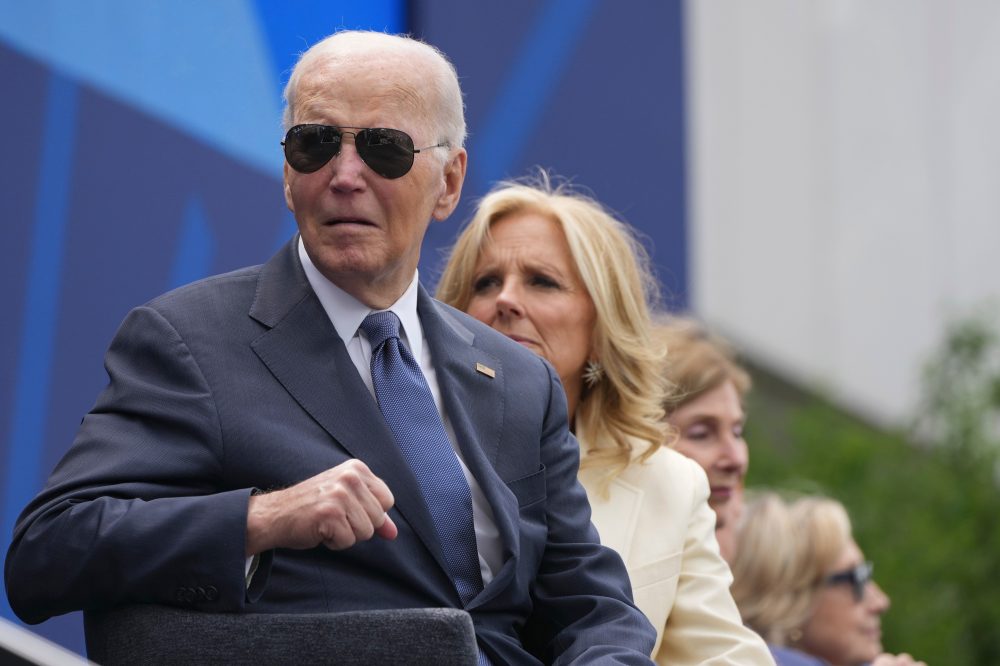
A federal judge on Friday turned down former President Joe Biden’s legal effort to stop the Trump administration from handing over audio recordings — made between Biden and a ghostwriter — to a conservative organization.
U.S. District Judge Dabney Friedrich ruled that the public’s interest in accessing the material was greater than any privacy rights Biden could claim.
The recordings were gathered by special counsel Robert Hur during his investigation into whether Biden had improperly held onto classified documents from his time as a senator and vice president. After Hur chose not to bring charges against Biden, congressional Republicans pushed hard for access to the recordings.
During Biden’s time in office, his Democratic administration refused to hand over the 2017 recordings and their transcripts. That refusal led congressional Republicans to hold his attorney general, Merrick Garland, in contempt of Congress.
The current administration under President Donald Trump later authorized the release of those materials. In response, Biden filed a lawsuit last month to prevent the records from being turned over to a staffer at the conservative Heritage Foundation, who had formally submitted a request for them.
Biden argued the release would be a violation of his privacy, saying the recordings contained discussions of deeply personal subjects — including the death of his older son, Beau Biden. However, Judge Friedrich found that the administration had already redacted that sensitive content.
In her written ruling, Friedrich stated that the materials “contain no mention of highly sensitive topics like illness or death, nor do they mention any non-public persons, including members of Biden’s family.”
Representatives for Biden did not immediately offer a public response, but they did ask Friedrich to put the release on hold while they pursue an appeal. The Justice Department also did not respond to a request for comment by press time.
Judge Friedrich was originally nominated to the federal bench by Trump, a Republican, in 2017.
Abu Dhabi-backed artificial intelligence investment firm MGX has been quietly looking into purchasing Singapore-based data centre company DayOne, according to three people familiar with the matter, in what could represent a significant milestone in its worldwide technology expansion.
Two of those sources, who requested anonymity due to the sensitive nature of the discussions, said MGX has enlisted an investment bank to help prepare for a possible transaction.
Reuters has previously reported that DayOne has been eyeing a U.S. initial public offering with a target valuation of around $20 billion — a figure that MGX may be reluctant to meet, according to two of the sources. All three cautioned that negotiations could fall apart and that DayOne may ultimately choose to go the IPO route instead.
A spokesperson for MGX declined to offer any comment on the matter. DayOne did not respond to requests for comment.
DayOne is affiliated with China’s GDS Holdings and runs data centre operations across Southeast Asia, as well as in Hong Kong, Japan, and Finland. Last month, Reuters reported the company was weighing a dual stock listing in both Singapore and the United States, though the Singapore portion of those plans remains uncertain.
Among DayOne’s notable investors are U.S. investment firm Coatue Management, SoftBank Vision Fund, and Citadel Securities founder Ken Griffin.
If completed, an acquisition of DayOne would mark MGX’s first deal in Asia as the firm pursues a rapid global expansion. MGX was established just over two years ago, with the $385 billion sovereign wealth fund Mubadala and AI company G42 as its founding partners.
MGX operates under the authority of Sheikh Tahnoon bin Zayed Al Nahyan, the United Arab Emirates’ national security adviser and brother of the country’s president.
The firm has set its sights on accumulating more than $100 billion in assets spread across the full artificial intelligence supply chain — from data centres to the advanced chips that power them — as the UAE channels billions of dollars into the sector to diversify its economy.
MGX has already placed investments in some of the world’s most prominent AI companies, including SpaceX’s xAI, OpenAI, and Anthropic. It has also participated in Aligned Data Centers through a $30 billion AI infrastructure fund that counts BlackRock and Nvidia among its participants.
In separate moves, MGX has acquired a 15% stake in TikTok’s U.S. operations and committed $2 billion for a minority ownership position in Binance, the world’s largest cryptocurrency exchange.
TORONTO — A pint-sized oranda goldfish is turning heads in downtown Toronto, drawing soccer fans and curious passersby alike with his daily World Cup match forecasts delivered straight from a custom-built underwater soccer pitch.
The fish, dubbed Swimbappe — a nod to French national team captain Kylian Mbappe — lives in a tank styled to look like a soccer field, displayed prominently outside an office building in the heart of the city.
Each day, the bright orange fish positions himself at center field and then swims either left or right to indicate which team he thinks will win that day’s match. Flags representing competing nations hang above the tank, and a small but enthusiastic crowd typically counts down before Swimbappe delivers his underwater verdict.
So far, the little oracle has gotten it right 14 times, been wrong just four times, and recorded 10 draws.
Tim Glenn, creative director at OneMethod and one of the people who came up with the concept, acknowledged that the draws present a unique communication challenge. “The draws are a little bit difficult for him to communicate to us with his fish body,” Glenn said.
Swimbappe joins a long line of animal sports predictors. Perhaps the most famous was Paul the Octopus, who became an international sensation during the 2010 World Cup for his seemingly uncanny ability to forecast outcomes of Germany’s matches. Orangutans and elephants have also taken turns in the prediction spotlight over the years.
Glenn, a soccer enthusiast, said he wanted to create something fun and engaging for the public during this year’s tournament. His team worked through nearly 100 potential names — including Finaldo — before settling on Swimbappe. “This is kind of our way of participating in this big cultural moment that’s happening for our city here in Toronto and also for our country here in Canada,” Glenn said.
Animals have been leaving their mark on this summer’s tournament in other ways too. In Mexico City, a white-feathered duck named Merlin caused a stir after being spotted wandering city streets dressed in a tiny Mexico jersey. Meanwhile, a duck named Dawn joined Scotland’s Tartan Army during a pre-match bagpipe procession in Providence, Rhode Island.
Back in Toronto, Swimbappe continues to reel in admirers. “Everyone’s excited to see him in the window on their way to work or on their way to a game,” Glenn said, adding that the warm reception has exceeded his expectations.
On Friday, a group of schoolchildren marched past chanting “Swimbappe! Swimbappe!” Just moments before, a small cluster of onlookers had gathered to watch the fish weigh in on the Group C clash between Brazil and Haiti scheduled for later that day. Swimbappe swam to his right, backing heavy underdogs Haiti to pull off the upset.
“There’s a method to his madness,” Glenn said. “We just have to trust his process and believe in Swimbappe.”
British Transport Police announced Friday they were responding to a two-train collision approximately 60 miles north of London, with multiple people reported injured in what authorities described as a major incident.
Video footage circulating on social media appeared to show the front end of one train tangled with the rear of another, with both trains remaining on the tracks following the crash.
The East of England Ambulance Service confirmed it dispatched several emergency resources to the scene, including an air ambulance, and asked members of the public to stay away from the area. The collision occurred on the railway line just south of Bedford.
Transport minister Heidi Alexander took to X to express her reaction, writing that she was “deeply concerned” by what was being reported about the collision.
Bedfordshire Fire and Rescue Service also confirmed its crews were on scene at the railway south of Bedford, echoing the call for the public to avoid the area.
Train operator East Midlands Railway announced it would be unable to operate any trains into or out of London for the rest of the day as a result of the crash. Thameslink also reported that all rail lines running between Luton and Bedford were blocked while the situation was being investigated.
WARSAW — Polish President Karol Nawrocki announced Friday that he has made the decision to revoke Ukrainian President Volodymyr Zelenskiy’s Order of the White Eagle, the highest honor Poland can bestow upon an individual.
The move comes after Zelenskiy drew sharp condemnation from Poland when he renamed a Ukrainian army unit after nationalist insurgents who carried out massacres of Polish civilians during World War Two. The decision triggered widespread outrage across Poland.
From a concealed location somewhere in Bolivia’s Chapare forest region, former president Evo Morales is biding his time — and keeping a close eye on the chaos unfolding across the country.
For 50 days, highway blockades organized by labor unions and indigenous groups have brought Bolivia to a standstill. The disruptions have left at least 14 people dead and pushed the center-right government of Rodrigo Paz dangerously close to collapse.
In an exclusive video interview with Reuters, Morales said he has maintained regular communication with protesters. He acknowledged that the wave of public anger in the streets has “made him think” about re-entering politics — though he insisted he is not actively running for anything.
The blockades have severed critical roadways, leaving trucks stranded and cutting off supplies of fuel, food, and medicine to communities across the country.
The crisis began after Paz made a sudden decision to eliminate long-standing fuel subsidies in an effort to reduce Bolivia’s budget deficit. The country, a major lithium producer, has been struggling with a deepening dollar shortage and is in ongoing negotiations with the International Monetary Fund over a potential rescue package.
Paz later adjusted fuel prices and reversed some unpopular land reform policies, but the blockades continued to grow as frustration expanded beyond fuel costs. Unions are now demanding wage increases, an end to fuel and dollar shortages, and Paz’s resignation.
Paz took office in November 2025 with the support of President Donald Trump, as part of a broader U.S. effort to expand its influence in the region. He has pointed the finger at Morales — who ruled Bolivia for nearly 14 years and remains a towering figure on the political left — for fanning the flames of the unrest.
Andres Arauz of the Center for Economic and Policy Research told Reuters that the government has leaned heavily on casting Morales as the villain in order to shift attention away from the underlying social problems. He said Paz is “trying to spin this and frame it as political confrontation, and thus basically wait it out.”
Morales is currently the subject of an arrest warrant on charges of trafficking a minor, tied to allegations that he fathered a child with a teenager in 2016 while serving as president. Morales denies any wrongdoing, calling the charges “fabricated” and driven by political motives.
In his Reuters interview, Morales rejected any suggestion that he is behind the protests, saying the “indigenous rebellion” is rooted in economic suffering.
“In my experience as a former president, if there is a conflict, it is the fault of the state if it is a social demand,” Morales said, adding that Paz had made “unfulfilled commitments.”
As Paz attempts to negotiate an end to the blockades, Morales’ presence looms large over the talks. On Wednesday, Paz opened dialogue with union leaders in La Paz, striking a conciliatory tone.
“We must build the nation, but we have to build it by accepting diverse ways of thinking,” Paz said, urging both sides to move past mutual distrust.
A Capital Under Siege
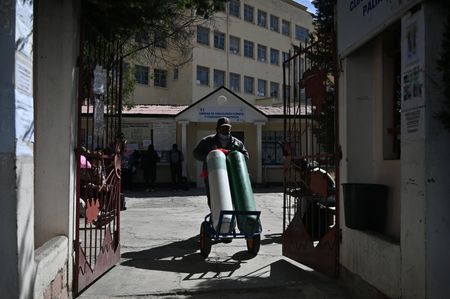
In La Paz, the high-altitude capital, daily life has taken on a grim character. Restaurants sit nearly empty, hospitals are running short on medications, and grocery store shelves in the meat section have gone dark after selling out.
“We feel deeply suffocated,” said Pamela Espada, a regional supermarket manager, explaining that she has resorted to flying meat in from Santa Cruz and waking at 2 a.m. to track down eggs.
The cost of basic foods has skyrocketed since the blockades began — tomato prices have doubled, and chicken has become 70% more expensive.
The economic ripple effects have been severe. Ernesto Olivares, who leads the Gastronomic Association of La Paz, said 42% of the city’s restaurants have been forced to shut down. “The exhaustion has reached its limits,” he said. “La Paz is being held hostage by politics.”
Hospitals have also been pushed to a breaking point. The blockades have made transferring patients between facilities nearly impossible.
Outside La Paz’s main public hospital, cancer patients and their families gathered to chant, “We want to live!”
Erika Alvarez, whose brother is fighting cancer in the mining city of Oruro — roughly 140 miles, or 225 kilometers, south of La Paz — was brought to tears. “They tell me he needs chemo, but in Oruro there is nothing, there are no medicines. With these political problems, with these blockades, I cannot bring my brother here,” she said.
Rosario Calle, president of the Association of Cancer Patients and Families, said she is aware of patients — particularly those in rural areas — who have already died after being unable to receive care in time.
Inside the capital, critical pain medications including morphine and tramadol are in short supply.
“They cry out and they don’t know how to soothe the pain,” Calle said. “What we want are solutions. Enough already.”
Morales has called on Paz to step down and allow new elections to be held. He warned that the standoff could reach a breaking point if his movement is shut out of any future vote — though he said he does not support such an escalation.
“If they don’t want it with votes, it’s with bullets,” he said.
Drivers traveling southbound on Coastal Highway should expect some extra time behind the wheel this afternoon. A congestion-related delay of five to ten minutes has been reported on the roadway between the Route 1A junction at Rehoboth Beach and the Route 1A junction at Dewey Beach.
No specific incident has been identified as the cause — the slowdown appears to be the result of general traffic congestion along that popular coastal corridor.
Motorists in the area are encouraged to allow additional travel time or look for an alternate route to avoid the backup.
SEATTLE — American soccer standout Christian Pulisic has been ruled out of Friday’s World Cup Group D showdown against Australia, sidelined by an injury that kept him training separately from his teammates throughout the week.
Pulisic, who holds 83 international caps for the United States, was pulled from the field at halftime during the team’s opening World Cup match against Paraguay. Ricardo Pepi, who entered that game as a substitute, will now step into the starting lineup as the only roster change for the Americans.
On the Australian side, Socceroos head coach Tony Popovic is making two changes from the starting eleven that knocked off Turkey 2-0 in their first match. Both of Australia’s goalscorers from that game — Nestory Irankunda and Connor Metcalfe — have been moved to the bench.
Twenty-two-year-old goalkeeper Patrick Beach will once again start between the posts for Australia in place of Mat Ryan, while defender Harry Souttar has been named team captain.
Starting Lineups:
United States: Matt Freese; Alex Freeman, Chris Richards, Tim Ream, Antonee Robinson; Tyler Adams, Malik Tillman; Sergino Dest, Weston McKennie, Ricardo Pepi; Folarin Balogun
Australia: Patrick Beach; Jacob Italiano, Alessandro Circati, Harry Souttar, Cameron Burgess, Jordan Bos; Mathew Leckie, Aiden O’Neill, Paul Okon-Engstler, Nishan Velupillay; Mohamed Toure
Southbound travelers on Route 1 should expect some extra time behind the wheel this afternoon. DelDOT is reporting a traffic delay between Pole Bridge Road and Delaware Route 299 caused by congestion in the area.
The slowdown is expected to add approximately five to ten minutes to travel times along that stretch of roadway. Drivers are encouraged to plan ahead and consider alternate routes to avoid the backup.
The Maryland Department of Natural Resources has awarded competitive grants to nine communities across the state to help them plan and design solutions for managing flooding and other weather-related challenges.
The selected projects are aimed at reducing risk for vulnerable communities, accounting for shifting environmental conditions in local plans and policies, and developing nature-based approaches to address flooding and erosion.
Money for the grants comes from the state’s Resilience Through Restoration Initiative and the National Oceanic and Atmospheric Administration. After operating as a pilot program for eight years, the Resilience Through Restoration Initiative was made permanent through 2026 legislation, securing its role in protecting communities from flooding, erosion, and storm damage.
The following local governments and community partners have been awarded Fiscal Year 2027 grant funding, pending final approval from federal partners:
The Resilience Authority of Annapolis and Anne Arundel County will design a living shoreline in Crownsville to protect a nearby tidal marsh and flood-prone River Road while also preserving and improving bird habitat.
The Reverend Samuel Green Sr. Foundation will design a living shoreline in Annapolis along Martins Cove to protect existing and planned trails that reconnect two historically significant African American communities.
Cecil County will launch a public outreach effort focused on flooding, which includes educating property owners, boosting flood reporting through MyCoast Maryland, and collecting data needed to earn credits under the National Flood Insurance Program’s Community Rating System.
Dorchester County will design a living shoreline to protect nearby wetlands and maintain access to a county marina and public boat ramp on Elliott Island.
The City of Havre de Grace will design a submerged gravel wetland and an offline wetland along Lilly Run to reduce nuisance stormwater overflow and flooding in the area.
Howard County will design a stormwater detention pond retrofit featuring bioswales and the removal of a concrete channel at St. Peter’s Episcopal Church in Old Ellicott City, reducing flood risk from storm system overflows.
The City of Hyattsville will design innovative green infrastructure stormwater practices along Kennedy Street to cut down on neighborhood flooding and test hybrid approaches to localized flood mitigation.
The Town of Berwyn Heights will develop a flood preparedness and mitigation plan addressing vulnerable properties, critical assets, and infrastructure, while recommending green infrastructure solutions and laying out a framework for future investments.
The City of Crisfield will design a tidal wetland restoration project in southern Crisfield to reduce tidal and stormwater flooding along South Somerset Avenue and Woodson School Road.
Starting in mid-July, the Department of Natural Resources will begin accepting applications for the next fiscal year through its online Grants Gateway.
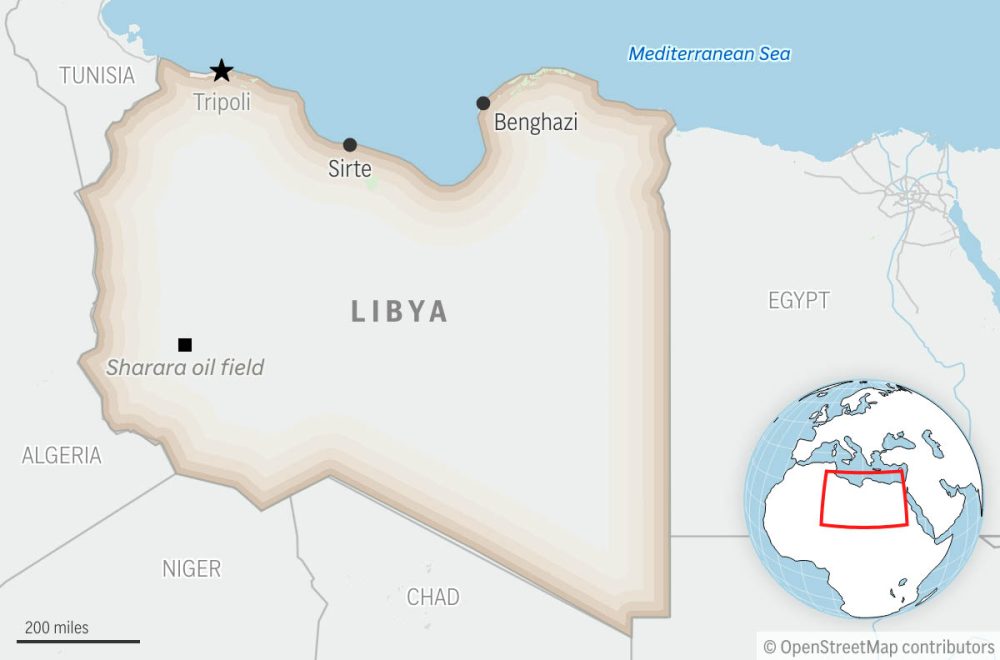
CAIRO — A vessel packed with migrants attempting to reach European shores capsized in the Mediterranean Sea off the coast of Libya last week, killing or leaving missing 51 people, according to a monitoring organization that announced the findings on Friday.
The shipwreck took place on June 12 in waters off the eastern portion of the North African country. Ten migrants managed to survive, according to the Abreen group, which monitors migrant activity in eastern Libya. Eleven bodies have been pulled from the water, while 40 additional people remain unaccounted for.
The Libyan coast guard and the Red Crescent, operating out of the eastern city of Tobruk, reported recovering bodies that began washing ashore over the previous 24 hours. Video shared by the coast guard showed rescue personnel carrying remains in white body bags to shore.
This disaster is the most recent in a string of deadly incidents along this stretch of the Mediterranean. The Libyan coastline serves as one of the primary launching points for migrants from North Africa who are attempting to reach Europe in search of a better life. Smugglers routinely pack these individuals onto small, dangerous watercraft, and thousands have lost their lives making the treacherous crossing.
Between January 1 and May 16 of this year, more than 800 migrants were reported dead or missing along the central Mediterranean route, according to the International Organization for Migration. The previous year saw that number exceed 1,300 along the same path.
Libya has become the primary transit hub for people fleeing conflict and poverty across Africa and the Middle East in recent years. The country descended into widespread instability following a NATO-backed revolt that overthrew and killed its longtime ruler, Moammar Gadhafi, in 2011.
Human traffickers have exploited that instability, moving migrants across Libya’s extensive borders — borders it shares with six different nations. These migrants are typically forced onto dangerously overcrowded boats, including inflatable rubber vessels, to make the sea crossing.
Those who are caught at sea and returned to Libya face detention in government-run facilities where abuse is rampant. According to investigators commissioned by the United Nations, conditions in these centers include forced labor, beatings, sexual violence, and torture — treatment that rises to the level of crimes against humanity.
In Bunia, Congo, mourners came together Friday to say goodbye to a 6-month-old girl who lost her life to Ebola earlier this week — the third child from an orphanage in eastern Congo to die as authorities work to bring the latest outbreak under control.
Attendees kept their distance and carried a cross as masked and gloved health workers lowered the small coffin into the ground. A Catholic priest offered prayers over the infant’s body.
“It’s a feeling of sadness because we have lost one of our own, a daughter of the church,” said Father Innocent Ndogo. “As we have always said, the Lord gives, and the Lord takes away.”
The Ituri region has been the epicenter of the current outbreak, accounting for more than 90% of all reported cases. Efforts to control the spread have been hampered by tensions between residents and healthcare workers, with conflicts arising over burial practices and what has at times become a militarized response.
Friday’s burial made clear just how impersonal safe burial procedures can feel — only health workers in full protective equipment were permitted to touch the coffin or participate in the burial process.
The strain behind this outbreak, known as Bundibugyo, currently has no approved treatment or vaccine. Even healthcare workers on the front lines have reported shortages of basic protective equipment such as masks and gloves.
Africa’s Centres for Disease Control and Prevention reported Thursday that the outbreak has now reached 894 confirmed cases and has claimed more than 200 lives. That makes it three times more severe than a previous outbreak in Uganda in 2000. Officials estimate up to 35,000 people may have had potential contact with infected individuals. Still, the outbreak remains far smaller than the 2014 epidemic that killed more than 11,000 people.
Because the Bundibugyo strain was not screened for early in the outbreak — unlike the more common Zaire virus, which has an approved vaccine and was responsible for most of Congo’s previous 16 Ebola outbreaks — the disease was able to spread further before being identified.
Alex Lock, a Communications Officer at the International Federation of Red Cross and Red Crescent Societies, urged the public not to become numb to the tragedy.
“She was a baby. She had her whole life ahead of her. Unfortunately, she was taken by the disease, a disease that, as you know, is transmitted from one person to another,” Lock said.
While Ituri remains the primary hotspot, cases have also been confirmed in the North Kivu and South Kivu provinces. The outbreak has additionally crossed into Uganda, where 19 confirmed cases have been recorded and two people have died.
Horse-drawn carriage rides through Central Park have been temporarily suspended, at least until Tuesday, while officials and industry leaders review safety procedures following the tragic death of a teenage tourist who leaped from a runaway carriage.
Alexander Kemp, administrative vice president of Transport Workers Union Local 100, released a statement Friday expressing grief over the loss of Romanch Mahajan, an 18-year-old visitor who died after jumping from a four-wheeled carriage as the horse galloped through the park uncontrolled and without its driver.
“Words can’t express the enormity of this tragedy,” Kemp said. “We are taking the first steps towards addressing safety issues.”
Kemp added that the review would include examining how drivers can better maintain control of their horses at all times.
According to both the labor union representing the carriage industry and the Central Park Conservancy, which oversees the 843-acre (341-hectare) park, Mahajan is believed to be the first person ever killed in a horse carriage accident since the rides were introduced to Central Park more than 150 years ago.
Mahajan had come to the United States from India with his family to mark his recent high school graduation. The family chose to take a ride on one of the park’s well-known decorated carriages — a decision that ended in disaster. According to his father, who spoke with The New York Times, the carriage driver stepped off the vehicle to photograph the family near a fountain when the horse suddenly took off at a sprint. Romanch’s mother fell from the carriage, and the teenager jumped out in an effort to help her.
The Central Park Conservancy had called for a suspension of the carriage industry as early as Thursday, arguing that stronger protections must be put in place before rides resume. The group noted that Mahajan’s death was the eighth horse-related incident in the park over the past 13 months.
The conservancy contends that horses can no longer safely navigate park roads that are crowded with joggers, cyclists, pedestrians, and motorized scooters. They also pointed out that other U.S. cities — including Chicago and San Antonio — have recently eliminated similar carriage ride programs.
Carriage industry leaders pushed back, arguing the fatal incident highlights the need for stronger safety measures rather than a complete ban on the beloved attraction, which many see as a connection to New York’s storied past.
Mayor Zohran Mamdani reaffirmed his desire to end the industry altogether, pledging to work alongside the city council, carriage operators, and animal welfare advocates to “deliver a just transition that protects workers while ending horse-drawn carriages in Central Park once and for all.”
This is not the first time a New York mayor has taken this position. Mayor Bill de Blasio famously promised to shut down the carriage industry on his very first day in office, but faced years of opposition from the city council. Mayor Eric Adams, who preceded Mamdani, also came out against the industry near the end of his term.
The union said Friday it was committed to working with the city to improve safety and prevent future incidents. It expressed support for increased oversight of drivers, including regular checks within the park and enforcement of rules requiring drivers to remain seated while passengers board, ride, and exit. The union also said idle horses should be kept tethered.
Animal welfare advocates have long raised concerns that carriage horses are overworked, prone to being startled in busy city environments, and housed in substandard stables — and that drivers frequently ignore city regulations. The carriage and horse owners have consistently denied these claims, maintaining that their animals receive proper care and that the stables meet appropriate standards.
SEATTLE — American soccer standout Christian Pulisic has been ruled out of Friday’s World Cup showdown against Australia after suffering a calf injury, with Ricardo Pepi stepping into his spot in the starting lineup.
U.S. head coach Mauricio Pochettino broke the news during a Fox interview roughly 90 minutes before kickoff at Lumen Field in Seattle.
The absence is a blow to the American squad, which is coming off a strong 4-1 opening win over Paraguay on June 12. A victory Friday would secure the team’s spot in the round of 32.
Pulisic played only the first half of the Paraguay match before exiting at halftime. During his time on the field, he was instrumental in the team’s early success — splitting two defenders to set up the first goal with a pass to Weston McKennie, then creating the second goal for Folarin Balogun.
Pochettino explained that the 27-year-old forward was struck in the back of his left calf during a training session before the Australia game and began feeling tightness during the Paraguay match.
In the days leading up to Friday’s contest, Pulisic worked out separately from the rest of the team.
The veteran attacker has recorded 33 goals across 87 appearances for the national team throughout his international career.
Pepi was the sole change made to the U.S. starting lineup for the Australia match.
CHICAGO — Former President Barack Obama and former First Lady Michelle Obama made an unexpected appearance Friday, personally welcoming the very first 100 people to walk through the doors of the newly opened Obama Presidential Center in Chicago.
Joining the Obamas was former “Reading Rainbow” host LeVar Burton, and together the three read Maurice Sendak’s classic “Where the Wild Things Are” to a group of 25 schoolchildren at the Chicago Public Library branch located inside the center. When Barack Obama read Sendak’s line about being “king of all the wild things,” Michelle Obama drew applause by chiming in with, “Although there were no kings.”
Guests were then treated to an unforgettable moment, shaking hands with the former president and first lady in front of a stunning 38-foot-tall mural depicting a colorful map of Chicago stretching from floor to ceiling. The artwork draws inspiration from Carl Sandburg’s 1914 poem about the city, which describes Chicago as “stormy, husky, brawling, City of the Big Shoulders.”
Once the last of the initial group of visitors had passed through, the Obamas slipped away and the center opened its doors to the remaining guests.
The center’s debut fell on Juneteenth, coming on the heels of a high-profile dedication ceremony where the Obamas delivered passionate speeches before an audience that included three former presidents, their former first ladies, and a wide array of politicians, celebrities, musicians, and athletes. Thousands of additional supporters watched the event via livestream from a nearby park.
A full weekend of activities is planned at the expansive campus, which sits on Chicago’s South Side near the neighborhood where the Obamas once lived and where Barack Obama launched his political career. The grounds are adjacent to the Griffin Museum of Science and Industry in a lakefront park and are located not far from the University of Chicago.
Tickets for the general public are already sold out through the end of November, but those who managed to secure passes for opening day received an unexpected bonus — a face-to-face meeting with the Obamas themselves.
The campus is home to a soaring museum chronicling both the political legacy and personal lives of the nation’s first Black president and first lady. Public amenities on the grounds include a Chicago Public Library branch, a playground, an athletic center, basketball courts, and a picnic area complete with grills.
The museum tower’s architectural design is intended to represent four hands joining together in solidarity. Wrapped along one side of the structure are 5-foot-tall concrete letters spelling out an excerpt from Barack Obama’s 2015 speech marking the 50th anniversary of the Selma-to-Montgomery march. The passage begins with the words, “You are America.”
Charles Schwab is joining forces with Cboe Global Markets to bring a new type of investment product to its customers — all-or-nothing options contracts that let investors make simple yes-or-no bets on the performance of the S&P 500, according to a Wall Street Journal report published Friday, citing sources with knowledge of the situation.
These so-called binary options will either pay out a fixed cash amount or nothing at all, depending on whether the index hits the predicted level. Schwab plans to make these contracts available to its customers sometime in the coming months, the Journal reported.
Schwab did not respond to a request for comment. However, a source familiar with the arrangement confirmed that Cboe is indeed working with Schwab to bring these products to market, though no additional details were provided.
The broader prediction market space has exploded in popularity since the 2024 U.S. presidential election, growing into a recognized asset class where investors can wager on everything from Federal Reserve interest rate decisions to the outcomes of sports championships. Other trading platforms, including Robinhood and Interactive Brokers, have already launched similar event-based contracts in recent months.
Beyond the binary options, the Wall Street Journal also reported that Schwab is rolling out a separate options feature through Cboe that would allow traders to collect a partial payout even if they don’t get the closing price exactly right — rewarding investors who come close to the mark.
Jonathan Toews, the celebrated three-time Stanley Cup champion and former Chicago Blackhawks captain, made his retirement official on Friday, closing the book on a remarkable 16-year professional hockey career.
The 38-year-old wrapped up his playing days by suiting up for all 82 games with his hometown Winnipeg Jets during the 2025-26 season — his first full season played since 2018-19. Toews finishes with a career total of 912 points, made up of 383 goals and 529 assists across 1,149 regular season games.
Blackhawks chairman and CEO Danny Wirtz paid tribute to Toews in an official statement, saying: “While his playing career has come to a close, Jonathan’s place in Blackhawks history — in hockey history — will be talked about for as long as this game is played. Jonathan, on behalf of all of us here at the Chicago Blackhawks, our fans and the city of Chicago you gave so much to: congratulations on an extraordinary journey and a truly remarkable career. Thank you. Seriously.”
Toews made history on July 18, 2008, when he was named the youngest captain in NHL history at just 20 years and 79 days old. Known by the nickname “Captain Serious,” he led Chicago alongside teammates Patrick Kane and Duncan Keith to three Stanley Cup championships — in 2009-10, 2012-13, and 2014-15.
His individual honors were equally impressive. Toews captured the Conn Smythe Trophy following Chicago’s first of those three Cup victories, the Selke Trophy in 2012-13, and the Mark Messier Leadership Award in 2014-15.
His career was not without health challenges. Toews sat out the entire 2020-21 season battling Chronic Inflammatory Response Syndrome, and was sidelined again from February 21 through April 1, 2023, dealing with the lingering effects of long COVID-19.
His return to the ice with Winnipeg proved meaningful, as he chipped in 11 goals and 18 assists for the Jets. The team offered their congratulations on social media, posting: “Tazer, congratulations on a remarkable hockey career. Your love for the game, and your passion for this city has forever left a mark on our community.”
Originally selected third overall by Chicago in the 2006 NHL Draft, Toews also shined in the postseason, tallying 119 points — 45 goals and 74 assists — across 137 playoff games. He ranks sixth in franchise history for both goals (372) and points (883) as a Blackhawk.
Beyond the NHL, Toews represented Canada on the international stage, earning two Olympic gold medals in 2010 and 2014.
Chile’s foreign ministry announced Friday that it is working alongside prosecutors investigating how Haitian children and teenagers entered the country through a family reunification program — after officials discovered that a number of those minors could not be found at the addresses listed for them.
The situation has attracted significant attention in Chile due to a dramatic increase in arrivals from Haiti in the early months of 2025, many of which took place on charter flights. The case has raised broader concerns about how immigration controls were applied within a program designed to bring families back together.
Earlier this week, Chile’s prosecutor’s office confirmed it had launched a formal investigation into the large-scale entry of Haitian minors that occurred last year.
The foreign ministry stated it has been turning over all documents requested by investigators. Foreign Minister Francisco Perez also dispatched a team to Haiti to examine how Chile’s consulate there was handling the reunification process.
According to local media reports, approximately 2,800 Haitians entered Chile under family reunification between January 1 and April 30 of last year. That figure represents the majority of the more than 3,200 Haitian arrivals who came in on temporary residence permits during that same window. Reports indicate that roughly half of those who entered under the family reunification category arrived on charter flights, most of which were linked to small Caribbean airlines.
Haitian migrants have been settling in Chile in growing numbers over the past decade, making Haitians one of the largest immigrant communities in the South American nation. In recent years, Chile has tightened its entry requirements, and President Jose Antonio Kast — who assumed office in March — has pledged to take a firm stance against unauthorized migration.
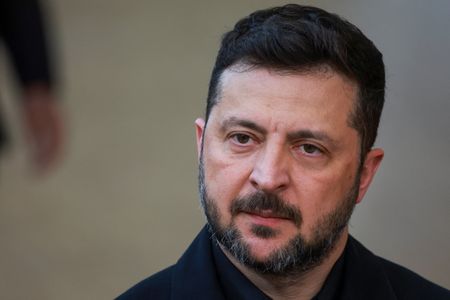
Ukrainian President Volodymyr Zelenskiy issued a stark warning Friday, giving Belarusian leader Alexander Lukashenko one week to remove equipment stationed in Belarus that Russia has been using to carry out attacks on Ukraine — and threatening Ukrainian action if the deadline is not met.
Zelenskiy stated that signal relay stations are positioned in two Belarusian regions along the Ukrainian border, and that Russian forces have been using them to help guide strikes against Ukrainian civilians. Reuters was unable to independently confirm those claims.
Speaking at a press conference in Kyiv, Zelenskiy challenged Lukashenko’s insistence that Belarus does not want to be part of the conflict. “What’s the point of saying he doesn’t want to be in the war? Let him remove this equipment, let him switch it off. I think a week will be enough for him to do that,” Zelenskiy said.
He then added a pointed warning: “If he doesn’t do it, we’ll do it” — offering no further details on what that would mean.
Over recent months, Zelenskiy has repeatedly cautioned that Russia intends to pull Belarus deeper into the ongoing war. Russian troops used Belarusian soil as a launching point when they first invaded Ukraine back in February 2022.
Last month, Lukashenko brushed aside suggestions that his country would become more deeply entangled in the conflict, though he did say Belarus and Russia would jointly defend themselves if faced with aggression. Earlier this week, in an interview with Al Arabiya television, Lukashenko said Ukraine had nothing to fear from Belarus and called on both sides to make compromises to bring the war to an end.
Meanwhile, Russia accused Ukraine this week of carrying out a fatal drone strike on a bus transporting Belarusian children through Russian territory. Ukraine denied any involvement. One woman accompanying the children was killed, and eight people were injured in the incident — among them six children. Belarus’ Foreign Ministry responded by demanding “complete explanations” from Ukraine.
Belarus has been Russia’s most steadfast ally throughout the war. Russian drones have been documented crossing Belarusian airspace while targeting Ukraine, and Belarus has announced the deployment of Russia’s Oreshnik intermediate-range hypersonic ballistic missile system. The two countries also conducted joint nuclear drills in May.
WASHINGTON — President Donald Trump is heading to Camp David this weekend for a rare visit to the presidential retreat, marking only the second time he has returned to the Maryland getaway since taking office again last year.
A White House official confirmed that Trump will conduct both policy and political meetings during the stay. His family will be joining him for the weekend, which wraps up with Father’s Day on Sunday.
The visit comes at a tense moment in foreign policy. Trump is working to finalize a peace agreement to bring the war with Iran to a close, but the effort is facing pushback from critics who argue the preliminary deal is too generous toward Tehran.
Talks between the U.S. and Iran that had been scheduled to take place in Switzerland on Friday were called off after fighting flared up in Lebanon, throwing the timeline of negotiations into question. Those talks are considered critical to reopening the Strait of Hormuz to international shipping and bringing stability back to the Middle East.
Despite the setbacks, Trump took to Truth Social on Friday to stand by his approach, insisting that Iran came to the table from a weakened position.
“We didn’t meet out of desperation, Iran did. They are FINISHED!” Trump wrote. “We’ll play out the 60 days. They get no money, not ten cents!”
Trump’s last trip to Camp David was in June 2025, when he gathered top military and foreign policy advisers to talk through immigration protests in California, the situation with Iran, and the ongoing war in Gaza.
The wooded retreat, nestled in Maryland’s Catoctin Mountains, has not been a frequent stop for Trump. He has typically chosen to spend his weekends at properties he personally owns, such as Mar-a-Lago in Florida or his golf club in Bedminster, New Jersey.
A Cabinet meeting that had been planned at Camp David in May was relocated to the White House after forecasters predicted poor weather.
The government-owned compound sits roughly 70 miles from Washington and has historically seen much heavier use from other presidents, who have relied on it both for rest and for high-level diplomatic and policy gatherings.
YEREVAN, Armenia — Multiple members of Armenia’s opposition were taken into custody on Friday, as a prominent pro-Russia political party asked the country’s Constitutional Court to nullify Prime Minister Nikol Pashinyan’s recent election victory, claiming the vote was marred by violations and efforts to suppress opposition voices.
The opposition Strong Armenia party filed an appeal with the Constitutional Court seeking either to void the election results entirely or to require a second round of voting. The party also condemned the arrests of opposition figures, calling them an attack on democratic principles. Several additional opposition parties joined the effort, each accusing the ruling party of pressuring government workers to cast ballots in its favor and paying other voters for their support.
Armenian authorities have flatly denied any wrongdoing related to the election and have instead pointed the finger at the opposition, accusing them of being the ones who bribed voters.
The Constitutional Court is expected to decide within two days whether it will take up the case.
According to final tallies released by the Central Election Commission, the June 7 election saw Pashinyan’s Civil Contract party capture 49.7% of the vote — enough to form a new government as it continues efforts to pull Armenia away from Moscow’s orbit and build stronger relationships with Western nations.
International observers offered a mixed assessment of the vote. The Organization for Security and Cooperation in Europe (OSCE) acknowledged that Armenian voters had a “genuine choice” at the ballot box, but also pointed out that the campaign was “highly confrontational” and plagued by allegations of violations that spawned numerous criminal cases against opposition candidates — creating a perception of “selective justice.”
Strong Armenia is headed by Armenian-Russian billionaire Samvel Karapetyan, a businessman who built his wealth in Russia and is currently under house arrest on charges of calling for the government to be overthrown — allegations he has dismissed as politically motivated. Armenian investigators had already issued six arrest warrants targeting Strong Armenia members the day before the election, accusing them of purchasing votes.
On Friday, additional opposition members were arrested on comparable voter bribery charges. Ruslan Barsegyan and Ashot Egiazaryan, both of whom ran for parliament under the Strong Armenia banner, were remanded into custody for two months while an official investigation proceeds. Asatur Kocharyan, affiliated with the opposition Armenia bloc, was placed under house arrest.
Former lawmaker and government critic Ruben Akopyan was also arrested Friday, and another opposition politician, David Kazinyan, had been jailed the day before on Thursday.
Strong Armenia characterized the wave of arrests as an “attempt to completely destroy democracy in the country.” In a formal statement, the party declared: “Investigative bodies, the prosecutor’s office, and the courts have been turned by this government into instruments for punishing and suppressing the opposition. We will not tolerate this and will fight to the end with the full force of the law and with determination.”
Analyst and former lawmaker Mikayel Zolyan offered a different interpretation, suggesting the arrests reflect the government’s determination to prevent the opposition from stirring up instability. “Pashinyan is showing pro-Russian forces that if they think they can manage to incite unrest and thereby achieve certain goals … then they shouldn’t even try,” Zolyan said.
Russia, which maintains a military base on Armenian soil, has cautioned that Yerevan’s pivot toward the West could bring serious political and economic fallout. President Vladimir Putin has drawn comparisons between Armenia’s direction and Ukraine’s path, in what many viewed as thinly veiled threats, suggesting that Russia’s conflict with Ukraine stemmed from Ukraine’s pursuit of an association agreement with the European Union.
In the weeks leading up to the election, Moscow imposed a series of trade restrictions on Armenia — including import bans on flowers, brandy, wine, and various fruits. OSCE election monitors described these measures as “direct pressure” on the Armenian vote, while Russia maintained the bans were tied to agricultural import rule violations.
NEWARK, Del. — University of Delaware men’s soccer fans now know what to expect for the 2026 campaign, as head coach Tommy McMenemy announced the full schedule on Friday.
The Fightin’ Blue Hens are set to take the field for 16 total matches during the upcoming season. McMenemy, who is entering his fifth year leading the program, will guide the team through a slate that includes eight home contests at Stuart and Suzanne Grant Stadium.
The University of Delaware softball team has added a new piece to its roster, announcing the arrival of transfer infielder Takyla Davis ahead of the 2027 season.
Davis comes to Newark from Arizona State, where she previously played, and will bring her infield experience to the Blue Hens program.
Hockey Hall of Famer Ron Francis is returning to the Pittsburgh Penguins — not as a player, but as a key voice in the front office. The two-time Stanley Cup champion was announced Friday as a special advisor for hockey operations.
Francis spent eight of his 23 NHL seasons wearing a Penguins jersey, helping the team capture back-to-back championships in the 1990-91 and 1991-92 seasons.
General manager Kyle Dubas welcomed the move enthusiastically. “Ron has a deep affinity for the city of Pittsburgh and the Penguins. He cherishes his time spent here as a player where he had tremendous success and is an outstanding ambassador for the Penguins and the city of Pittsburgh,” Dubas said. “Ron’s playing experience, management experience, and familiarity with the Penguins and Pittsburgh will be a great benefit to our organization and all members of our management team. We look forward to having a person of Ron’s experience and character in our front office as we continue to work to build the Penguins back into a perennial Stanley Cup contender.”
At 63 years old, Francis will take on responsibilities that include strategic planning and roster construction. The team says he will also offer guidance during major hockey events including training camp, the NHL draft, the trade deadline, and free agency.
Before rejoining Pittsburgh, Francis spent seven seasons with the Seattle Kraken. He served as their inaugural general manager starting in 2019 and was later elevated to president of hockey operations in 2025.
Prior to his time in Seattle, Francis worked in the Carolina Hurricanes front office for 12 years, including a stint as executive vice president and general manager from 2014 to 2018.
Inducted into the Hockey Hall of Fame in 2017, Francis was a four-time All-Star who earned the Lady Byng Trophy three times along with the Selke Trophy and King Clancy Memorial Trophy once each.
Over the course of his playing career, Francis scored 549 goals across 1,731 games. He ranks second all-time in assists with 1,249 and fifth in career points with 1,798. In addition to Pittsburgh, he suited up for the Hartford Whalers/Hurricanes and the Toronto Maple Leafs.
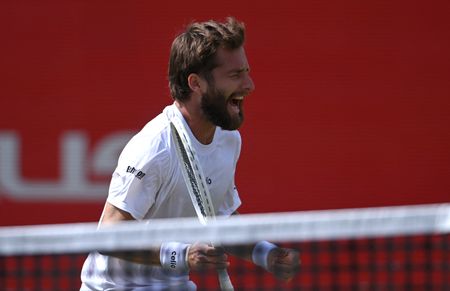
French tennis player Corentin Moutet is walking away from the Queen’s Club tournament with almost nothing in his pocket after a fine nearly erased his entire earnings from the event.
The ATP handed Moutet a $40,000 fine for unsportsmanlike conduct after he dropped expletives seven times during a live on-court interview with the BBC. The interview took place following his first-round victory over fellow French player Giovanni Mpetshi Perricard.
The 27-year-old had earned $43,000 for advancing to the second round — meaning the fine consumed virtually all of his winnings. Moutet went on to lose his next match to Spain’s Alejandro Davidovich Fokina.
During the interview, Moutet used a swear word to describe the moment he was aced on match point by a 142-mile-per-hour second serve. The interviewer asked him not to repeat the word, but Moutet said it three more times before the broadcast was cut short. Apologies were then made to the crowd and television viewers.
Following the incident, Moutet took to Instagram, writing that he was “just joking.” He has since filed an appeal of the fine.
This is not the first time the world number 36 has faced discipline on the tennis circuit. Back in 2022, he was disqualified from the Adelaide International for directing profanity at an umpire during a match against Serbia’s Laslo Djere. That same year, the French Tennis Federation cut ties with him over concerns about his conduct.
The Atlanta Braves wasted no time putting their newest catcher to work, activating Joey Bart from the 10-day injured list on Friday — just 24 hours after completing a trade to bring him over from the Pittsburgh Pirates.
Pittsburgh received right-handed relief pitcher Hunter Stratton as part of Thursday’s transaction.
Bart, 29, has deep roots in the Peach State, having grown up in Georgia and played college ball at Georgia Tech. Before his season was interrupted, he posted a .259 batting average with two home runs and six RBIs across 21 games for Pittsburgh this year. His time on the injured list came after he developed a left foot infection in mid-May.
To get back into game shape, Bart spent the past week playing in five minor league rehab games with Triple-A Indianapolis, going 4-for-16 with one home run and two RBIs for a .250 average during that stretch.
Over the course of his major league career, Bart has appeared in 356 games split between the San Francisco Giants from 2020 to 2023 and the Pirates from 2024 to 2026. He carries a lifetime .240 batting average, a .319 on-base percentage, a .369 slugging percentage, 30 home runs, and 119 RBIs. Bart was selected with the second overall pick in the 2018 MLB Draft.
Maine Democrats have selected state auditor Matthew Dunlap as their candidate for the 2nd Congressional District, a closely contested race that could play a significant role in determining which party controls the U.S. House of Representatives come November, according to U.S. media projections released Friday.
The district, which is largely rural, is among a handful of competitive congressional seats expected to influence the balance of power in Washington. Democrats face a challenging landscape there, as the district has historically leaned toward Republican presidential candidates.
The seat became available after centrist Democrat Jared Golden announced he would not run for reelection. Golden had managed to hold the district multiple times despite its conservative-leaning voters.
Dunlap emerged from a Democratic primary field that also included state Senator Joe Baldacci, considered the most moderate of the group, along with former congressional aide Jordan Wood and social worker Paige Loud.
The Associated Press called the race 10 days after the June 9 Democratic primary — a timeline that reflects how Maine’s ranked-choice voting system can require additional time to determine a final outcome. Dunlap, who campaigned as a progressive, took to social media to celebrate the result.
“Today’s results tell us that people want real change and a better future,” Dunlap wrote.
In the general election, Dunlap will go up against Republican former Governor Paul LePage in what is shaping up to be a high-profile contest.
“Together, we’re going to defeat Paul LePage one more time and make sure he’s never on the ballot again. While we’re at it, we’re going to fight to advance policies that will actually help Mainers — like Medicare for All, affordable childcare, a lower cost of living, and stopping this illegal war in Iran,” Dunlap said.
DURHAM, N.C. — The Intercollegiate Men’s Lacrosse Coaches Association, known as the IMLCA, has honored three Salisbury University men’s lacrosse players with 2026 All-American recognition.
Blake Malamphy, Connor Herraiz, and Riley Strub all earned spots on the All-American list, the organization announced this week.
The Sea Gulls’ success didn’t stop there — six Salisbury players in total were selected to the All-Region 3 team as part of the same round of honors from the IMLCA.
The 2026 FIFA World Cup delivered a memorable opening week, with the tournament making history on multiple fronts as matches kicked off across three host nations.
This marks the first time the world’s premier soccer tournament has been spread across three countries. Mexico got things started on June 11 at the Estadio Azteca in Mexico City — a stadium that made its own history by becoming the first venue to host three World Cup opening matches.
The tournament also broke new ground by expanding its field to 48 teams, a significant jump from the 32 that competed in 2022. The addition of 16 more nations drew criticism ahead of the event, with skeptics questioning whether smaller soccer nations truly belonged on the world stage.
Those smaller nations answered their critics emphatically. Cape Verde stunned powerhouse Spain to a scoreless draw, largely thanks to the extraordinary play of goalkeeper Vozinha. His saves spread rapidly across social media, turning him into an overnight sensation.
The sport’s elite players also made their presence felt. France’s Kylian Mbappe netted two goals against Senegal on June 16, surpassing Olivier Giroud to become France’s all-time leading scorer. His achievement briefly moved him ahead of Argentina’s Lionel Messi on the all-time World Cup goals list — but Messi responded hours later by scoring a hat-trick against Algeria, reminding the world why, even at 38 years old, he remains the greatest of all time.
Here is a look at some of the standout moments from the opening round of group play.
Mexico vs. South Africa
Co-host Mexico opened the tournament with a 2-0 victory over South Africa in a fiery match that set a festive tone despite featuring three red cards.
South Korea vs. Czech Republic
In Guadalajara, South Korea’s fluid style of play outshone the Czech Republic’s more physical approach. South Korea benefited from a partisan crowd, though noticeable gaps in the stadium seating were visible throughout the match.
Canada vs. Bosnia and Herzegovina
Canada’s opening ceremony featured dancers in the national colors of red and white, a performance by Michael Bublé, and what appeared to be a wardrobe malfunction involving a figure on a giant inflatable World Cup trophy. On the field, a late equalizer gave Canada their first-ever point at a World Cup, sending fans across the country into celebration.
USA vs. Paraguay
The United States opened their tournament in style, defeating Paraguay 4-1 in Los Angeles — the highest scoring margin ever recorded by the U.S. in a World Cup match. Fans celebrated from coast to coast.
Qatar vs. Switzerland
A goal deep into stoppage time from Boualem Khoukhi earned Qatar, who hosted the 2022 World Cup, their first-ever World Cup point. Fans in maroon filled the stands, matching the seat colors of the Santa Clara venue.
Brazil vs. Morocco
Morocco, who reached the semifinals in 2022, continued to challenge soccer’s traditional elite, holding five-time champions Brazil to a draw. Brazil’s performance left their supporters uneasy.
Haiti vs. Scotland
Scotland’s famously enthusiastic Tartan Army charmed the city of Boston with their humor, spirit, and bagpipes. A 1-0 win over Haiti — competing in their first World Cup since 1974 — brought cheers, though fans acknowledged more difficult tests lay ahead.
Australia vs. Turkey
Turkey’s dismissive comments ahead of the match only seemed to fuel Australia’s determination. The Australians made the most of their opportunities, spoiling Turkey’s return to World Cup competition after a 24-year absence.
Germany vs. Curaçao
Germany won convincingly, but the real joy for Curaçao fans came when their team scored its first-ever World Cup goal. Curaçao holds the distinction of being the smallest nation ever to qualify for the tournament, with a population barely twice the seating capacity of the Houston stadium where the match was held.
Netherlands vs. Japan
The Netherlands, dressed in their signature orange, created a striking visual contrast in the Arlington, Texas stadium. Japan’s supporters, meanwhile, drew widespread admiration for their tradition of cleaning up the stands after the match, using their blue trash bags as balloons to cheer on their team.
Ivory Coast vs. Ecuador
Ecuador supporters flooded Philadelphia for their team’s opener against Ivory Coast. Many Ivory Coast fans were unable to make the trip due to U.S. visa restrictions. Despite the crowd disadvantage, Ivory Coast claimed a 1-0 victory, ending Ecuador’s 19-game unbeaten run.
Sweden vs. Tunisia
Sweden rolled past Tunisia 5-1 in a high-scoring match held in Monterrey, Mexico.
Spain vs. Cape Verde
Goalkeeper Josimar Jose Evora Dias — known as Vozinha — put on a breathtaking performance, repeatedly denying one of the tournament’s top-ranked teams. The 40-year-old keeper’s heroics went viral, and he was moved to tears as teammates swarmed him at the final whistle.
Belgium vs. Egypt
Egypt, whose squad includes high-profile players Mohamed Salah and Omar Marmoush, came out determined to prove their worth. They took an early lead against Belgium in a match that ultimately finished as a draw.
Saudi Arabia vs. Uruguay
Uruguay, the first-ever World Cup champion back in 1930, could only manage a draw against Saudi Arabia, thanks in large part to a standout performance from Saudi goalkeeper Mohammed Alowais.
Iran vs. New Zealand
Iran’s opener in Los Angeles carried significant off-field drama. The city is home to the largest Iranian community outside of Iran, and Iranian Americans were divided — some choosing to support their national team, others using the occasion to protest the government in Tehran by displaying the flag of pre-revolutionary Iran.
France vs. Senegal
Kylian Mbappe delivered a second-half turnaround as France overcame a flat first half to beat Senegal. His two goals moved him past Olivier Giroud as France’s all-time top scorer in international play.
Iraq vs. Norway
Erling Haaland, appearing in his first-ever World Cup, scored twice as Norway defeated Iraq 4-1. He celebrated with his well-known yoga pose, which he has said brings him a sense of calm.
Argentina vs. Algeria
Lionel Messi, who lifted the World Cup trophy in 2022 in what many believed would be his final chance, returned four years later and showed no signs of slowing down. He scored a hat-trick in Argentina’s opening match against Algeria before an ecstatic crowd.
Jordan vs. Austria
Fans in Vienna gathered in a coffee house to watch Austria defeat Jordan 3-1. It was Jordan’s debut appearance at the World Cup.
Portugal vs. Congo
The Democratic Republic of Congo turned heads even before kickoff, arriving at Houston’s airport in sharp suits adorned with leopard print details. On the pitch, they held Portugal to a 1-1 draw. Portugal’s Cristiano Ronaldo, meanwhile, made his own fashion statement, wearing a shiny earring during the pre-match warm-up.
England vs. Croatia
Harry Kane added two more goals to his World Cup total in England’s opening match. The game featured a missed penalty, a retaken spot kick after the Croatian goalkeeper was found to have moved off his line, and two Croatian equalizers before England pulled away for a 4-2 victory.
Ghana vs. Panama
Rain fell steadily in Toronto, but it did nothing to dampen the enthusiasm of fans watching Ghana edge Panama 1-0 on a late goal.
Uzbekistan vs. Colombia
Colombia closed out the first round of group stage matches as heavy favorites, playing before a largely Colombian crowd at the Azteca. They delivered despite some nervy moments, beating debut side Uzbekistan 3-1.
Drivers heading northbound on E. Camden Wyoming Road should be aware of a right shoulder closure currently in effect due to construction activity in the area.
The closure affects the stretch of roadway between S. DuPont Highway, also known as Route 113, and Willow Grove Road. Motorists are advised to use caution while traveling through the work zone.
The right shoulder is expected to remain closed until 3 PM. Drivers are encouraged to allow extra time or consider alternate routes if possible.
Green Bay’s men’s basketball program is committing to head coach Doug Gottlieb for the long haul, announcing a contract extension that will keep him on the sidelines through the 2030-31 season.
The extension reflects a remarkable one-year turnaround for the program. In Gottlieb’s first season in 2024-25, the Phoenix struggled to a 4-28 record. His second year told a very different story — the team finished 18-15 overall, including a strong 17-10 mark over its final 27 games.
The improvement was equally striking in conference play. After going just 2-18 in the Horizon League during his debut campaign, Gottlieb guided the Phoenix to a 12-8 conference record in year two. The 50-year-old coach and his staff were credited with engineering the program’s resurgence.
Athletic director Josh Moon expressed strong confidence in Gottlieb’s direction for the program. “Doug is building a program that this entire region can be proud of year in and year out,” Moon said. “He is recruiting the right kind of guys that put in the work to excel in the classroom and on the court, while positively impacting this community. We are excited to watch the continued growth of this program under Doug’s leadership.”
Gottlieb’s extension comes alongside a separate extension for Moon himself, announced earlier this week. Moon’s new deal also runs through 2031.
The university did not release any financial terms connected to Gottlieb’s new contract.
Gottlieb, who played college basketball at Notre Dame and Oklahoma State, expressed gratitude for the vote of confidence. “I am supremely appreciative of Chancellor Mike Alexander and Josh Moon in awarding me this contract extension,” he said. “Green Bay is just an incredible place to live, work, and grow, and the next five years our goal is to return the Phoenix to our rightful spot at or near the top of the Horizon League every single year.”
Allies of a Belarusian opposition figure who went missing last year are calling on the U.S., Poland, the EU, and the U.N. to open investigations into his case, following a newly published report pointing to Russian involvement in his disappearance.
Anatol Kotau, 46, was last seen in August after traveling from his home in Poland to Turkey. Shortly after arriving, he went silent — no longer responding to messages from his wife.
A joint investigative report released this week by Deutsche Welle, the Belarusian Investigative Center, and the Organized Crime and Corruption Reporting Project found that Kotau boarded a yacht departing from the Turkish city of Trabzon. Also on board were two Russian men, a woman from Azerbaijan, and four crew members.
According to the report, the yacht was stopped in the Black Sea by the Russian coast guard, and Kotau was taken off the vessel. What led him to travel to Turkey — and why he would have gotten on a boat heading toward Russia, given his status as a Belarusian dissident — remains unknown.
Kotau has already been convicted in absentia in Belarus, a close Russian ally, and sentenced to 12 years in prison on charges of extremist activity and conspiracy to seize power — charges he denied.
Reuters has reached out to the Russian embassy in London for a response to the allegations of Moscow’s involvement.
Dmitry Bolkunets, an exiled activist who heads a group known as the Belarus Democratic Forum, sent a letter to U.S. National Security Adviser Andy Baker requesting help in locating Kotau. Reuters obtained a copy of the letter.
“The facts presented indicate that this was not a random event, but the result of a meticulously planned special operation,” Bolkunets wrote, characterizing it as a kidnapping carried out by Russia’s FSB security service.
Bolkunets also reached out to John Coale, an envoy for President Donald Trump who has been involved in negotiations with Belarusian President Alexander Lukashenko over the release of political prisoners. Coale replied that he would bring up the matter with authorities in Minsk.
Additional appeals were directed to Poland’s prime minister and president, EU foreign policy chief Kaja Kallas, and the U.N. Working Group on Enforced or Involuntary Disappearances.
Kotau’s wife, Anastasia, told Reuters she is hopeful the appeals will lead to a serious investigation by both the U.S. and Poland, where her husband had been living under refugee status.
Westbound travelers on Seashore Highway, also known as Route 18/404, are encountering a flagging operation near the intersection of Vaughn Road.
The traffic control crew is working in the area and is expected to remain on site until 1:00 PM. Drivers should anticipate potential slowdowns and allow extra travel time when passing through the area.
Motorists are encouraged to stay alert, follow the directions of flaggers on the ground, and consider alternate routes to avoid delays.
The University of Maryland Eastern Shore has appointed Imanol Davila-Morales to lead its men’s volleyball program, the school announced.
Davila-Morales steps into the head coaching role at an exciting moment for the Hawks, taking over a program that has just completed its inaugural season of competition.
In that first year on the court, UMES showed strong promise, posting an overall record of 17 wins and 11 losses. The team also performed well within conference play, going 7-5 in the Northeast Conference (NEC).
The Toronto Maple Leafs made a major push to strengthen their defense corps before free agency opened, trading for the rights to defenseman Darren Raddysh from the Tampa Bay Lightning and then signing him to an eight-year contract worth $68 million.
A source with knowledge of the agreement shared the financial details with The Associated Press on Friday, speaking anonymously because the team had not publicly released the terms of the deal. Raddysh will carry a $8.5 million salary cap figure each year through the 2033-34 season — a dramatic leap for a player who had never earned more than $1 million annually before this contract.
The 30-year-old had a career-defining season, setting personal bests across the board with 22 goals, 48 assists, and 70 total points in 73 games. To put that in perspective, he recorded that same point total over the entire previous two seasons combined since becoming a regular NHL player as recently as 2023.
The acquisition gives Toronto an immediate boost on the blue line. The Leafs are entering a new era with head coach Jim Hiller behind the bench and a revamped front office headed by general manager John Chayka, with franchise legend Mats Sundin serving in an advisory role. Securing Raddysh’s rights from Tampa Bay in exchange for a fifth-round draft pick — before he could become a free agent — marks Chayka’s second trade of the week. Earlier, he moved goaltender Joseph Woll and defenseman Simon Benoit to Philadelphia to free up cap space.
“We are thrilled to add a defenseman of Darren’s caliber to our organization,” Chayka said. “Darren has emerged as one of the NHL’s premier two-way defensemen, combining elite puck-moving ability with poise, competitiveness and strong play in all three zones. He strengthens our blue line in every situation and is exactly the type of player we want helping lead this team.”
Raddysh’s path to this moment was anything but straightforward. He went undrafted despite being part of the Erie Otters squad that captured the Ontario Hockey League title at the junior level in 2016-17. He later signed with Chicago, was traded to the New York Rangers, and then inked a free agent deal with the Lightning in 2021.
For much of that stretch, Raddysh played in the minor leagues, earning American Hockey League All-Star recognition before finally securing a full-time spot with Tampa Bay. This past season, he rose to the occasion as the Lightning dealt with a wave of injuries, and he finished as the top defenseman in the entire league with 10 power-play goals.
DAKAR, Senegal — Gunfire and explosions tore through Niger’s primary international airport recently, serving as the latest indicator that armed extremist groups are shifting their focus toward cities and urban areas across Africa’s Sahel region as they battle for territory and influence, according to analysts.
The jihadi organization JNIM, which has ties to al-Qaeda and is considered the most powerful militant group operating in the Sahel — the vast stretch of land just south of the Sahara desert — has claimed responsibility for Thursday’s assault on Diori Hamani International Airport in Niamey. The attack resulted in the deaths of 11 soldiers and two civilians.
This was actually the second time this year that the airport has come under attack. The facility is considered a critical strategic location, functioning as the command center for Niger’s ruling military government and housing the majority of the country’s air force, drones, and aircraft. It also serves as headquarters for a regional military alliance uniting forces from Niger, Mali, and Burkina Faso.
Back in January, the Islamic State group’s Sahel Province, known as ISSP, claimed credit for a similar strike in which gunmen on motorcycles stormed the airport, targeting high-value drone equipment. These attacks on Niger, unprecedented at this scale in recent memory, come alongside a major raid and an ongoing fuel blockade carried out by al-Qaeda in and around Mali’s capital city of Bamako.
Both al-Qaeda-affiliated fighters and those backed by the Islamic State group — rival factions with competing visions for the region — began ramping up their operations last year as they each seek to expand their foothold in what has become one of the world’s most active terrorism hotspots.
Ibrahim Yahaya Ibrahim, who serves as deputy project director for the International Crisis Group think tank, noted that the recent wave of attacks signals a broader strategic shift. Militant groups are no longer limiting themselves to isolated, under-policed rural communities — they are now increasingly setting their sights on urban areas.
The three neighboring countries of Niger, Burkina Faso, and Mali sit at the center of this militant activity. All three are currently governed by military juntas that took power through coups, driven in large part by frustration with Western partners and elected governments.
All three nations have since pivoted away from Western allies and toward Russia as their primary security partner. French and American military forces have pulled out of the region, while Russian military personnel have taken their place.
Ibrahim noted that while Thursday’s attack was less significant in scale than the January strike, it still carries weight for JNIM’s broader strategy. “JNIM in Niger is trying to mark its territory. This is a message to the government but also to IS,” he said, referring to the Islamic State group.
Niger’s geographic position makes it especially valuable to these competing factions. The country shares borders with Mali and Burkina Faso to the west — where JNIM holds its strongest presence — and with Nigeria and Chad to the south and east, where groups like Boko Haram and the Islamic State West Africa Province, or ISWAP, are active. To the north, Niger extends deep into the Sahara toward Libya and Algeria.
Analysts are raising alarms that ISSP and ISWAP are working to use the border between Niger and Nigeria as a bridge to link the two organizations, potentially creating a connected extremist corridor across a massive stretch of African territory — something JNIM is actively working to prevent.
Wassim Nasr, a senior research fellow at the Soufan Center, described the situation bluntly. “Niger is a territory of competition between them,” he said. “If JNIM loses the upper hand in Niger against the Islamic State, it will jeopardize its upper hand in Mali and Burkina Faso. … You have an open space like the Wild West, where each is looking to mark its territory.”
A Toronto court delivered a guilty verdict Friday against Frank Stronach, the 93-year-old Austrian-Canadian billionaire who founded one of the world’s largest auto parts companies, convicting him of sexual assault and indecent assault against two women in incidents that took place decades ago.
Stronach had originally faced 12 charges stemming from allegations made by seven different complainants, and he entered a not guilty plea to all of them.
Ontario Superior Court Justice Anne Molloy handed down the guilty findings on two of those charges, each related to a separate complainant.
Stronach built his fortune by launching auto parts giant Magna out of his garage in 1957, eventually becoming one of Canada’s wealthiest individuals. He later founded The Stronach Group, a business focused on horse racing.
He stepped down as Magna’s chairman in 2011, and the following year launched a political party in his home country of Austria.
The trial got underway in February. By the time closing arguments concluded in April, prosecutors had dropped one charge entirely and agreed Stronach should be acquitted on four others. Friday’s verdict found him guilty on two of the charges that remained.
NEW YORK (AP) — Actress Anne Hathaway is expecting her third child, and she made the announcement in a characteristically charming way.
The 43-year-old Oscar winner took to Instagram on Friday, posting a video in which she flashes a smile while showing off a visible baby bump before darting off screen. She paired the clip with the caption “Baby, I’m yours” and set it to the Barbara Lewis song of the same name.
When a reporter reached out for official confirmation, a spokesperson for Hathaway kept it simple: “I think the video is pretty obvious.”
Hathaway and her husband, Adam Shulman, are already parents to two boys — Jonathan Shulman and Jack Shulman. The baby news comes at a particularly hectic stretch for the actress, who has three films releasing this year: “The Devil Wears Prada 2,” “Mother Mary,” and “The Odyssey.”
DUBAI, United Arab Emirates — Iranian state media are celebrating what they call a “magnificent defeat” of the United States, and Tehran is wasting no time capitalizing on the moment — rushing to get oil flowing again under this week’s interim peace agreement and working to bring an end to Israeli military action in Lebanon.
But the Islamic Republic has taken serious hits of its own and faces a difficult road ahead. The country’s economy has been devastated by the conflict, mass protests shook the nation in January, and its supreme leader has not been seen publicly. Iran is now heading into nuclear negotiations with the U.S. after having been struck during two previous rounds of talks.
The agreement offers badly needed relief from international sanctions, though much of that relief depends on Iran scaling back its nuclear program — at the very least by diluting its stockpile of highly enriched uranium. That requirement has drawn sharp criticism from hard-line factions within Iran. Meanwhile, the U.S. is insisting Iran stop uranium enrichment altogether, a demand Tehran has rejected for decades.
Iran’s leadership is putting on a confident front, having held onto power through weeks of intense American and Israeli airstrikes. Officials also believe U.S. President Donald Trump is unlikely to restart the war, given Iran’s demonstrated capability to shut down the Strait of Hormuz and send shockwaves through the global economy.
“It’s too much to say that Iran has emerged a victor, but it could have been much worse,” said Farzan Sabet, an Iran expert at the Geneva Graduate Institute think tank. “I think that the real victory for Iran was … survival.”
As part of the interim agreement, the U.S. has agreed to issue waivers permitting Iranian crude oil exports. According to Lloyd’s List Intelligence, at least three state-owned Iranian oil tankers have already departed as the U.S. naval blockade was lifted.
Tracking firm TankerTrackers.com reported Friday that Iran has shipped nearly 18 million barrels of oil over the past five days, worth an estimated $1.44 billion.
Dozens of additional tankers carrying oil could soon leave from Kharg Island, Iran’s primary export hub on the Persian Gulf, which would put further downward pressure on global oil prices.
Benchmark Brent crude, which was trading above $110 per barrel last month, has dropped to around $80 since the agreement was reached. The average price of a gallon of gasoline in the United States has also fallen below $4 — a closely watched figure as midterm congressional elections approach.
Before the deal, international sanctions had forced Iran to move its oil through a so-called “shadow fleet,” selling primarily to China at discounted prices. The new arrangement allows Iran to pursue more buyers and command better rates.
That revenue will be critically important as Iran confronts the economic wreckage left by the war.
Since authorities lifted a months-long internet blackout, many Iranians have been sharing photos online of their bare refrigerators.
Basic food items like meat have become unaffordable for many families. The Iranian rial, which exchanged at 32,000 to the dollar at the time of the 2015 nuclear agreement with world powers, has now collapsed to more than 1.5 million to the dollar.
“The conflict is estimated to have cost at least one million Iranian jobs, with 20% of workforce losses tied to the state-imposed internet shutdown,” said Holly Dagres, a senior fellow at the Washington Institute for Near East Policy.
“Ordinary Iranians, already struggling under systemic mismanagement and corruption as well as U.S. sanctions, have felt those burdens compounded by hyperinflation that has rendered the Iranian rial effectively worthless,” Dagres added.
The collapse of the rial triggered the nationwide demonstrations that spread across Iran in January, threatening the rule of then-Supreme Leader Ayatollah Ali Khamenei. Iran’s security forces responded with the deadliest crackdown in the country’s history, killing thousands.
The 86-year-old Khamenei and other senior leaders were killed in Israel’s opening strikes on February 28. State funeral ceremonies are scheduled for July 4 through 9, timed to coincide with the six-month mark of the protest crackdown. The government has organized continuous rallies since the war began as a show of strength.
More moderate voices inside Iran are urging the country to pursue the economic opportunities that negotiations could bring. In addition to a full lifting of sanctions, the agreement promises a $300 billion investment fund for Iran if a final deal with the U.S. is reached — though the source of that funding has not been made clear.
The key question is how far Iran’s new Supreme Leader Ayatollah Mojtaba Khamenei — the son of the late leader — and establishment hard-liners are willing to compromise. In a statement carried by state media, he expressed support for the interim deal, saying the talks “will not mean accepting the enemy’s opinion,” while also acknowledging he held a “different viewpoint” without providing specifics.
The ongoing conflict in Lebanon has already put the broader agreement in jeopardy. Negotiations that were set to take place Friday in Switzerland were called off as fighting between Israel and Iran-backed Hezbollah militants escalated — though the two sides did agree to halt hostilities by Friday.
Israel has stated it will maintain its military presence across large portions of southern Lebanon and continue operations against Hezbollah until the group no longer presents a threat. Hezbollah has refused to stop its attacks unless Israel withdraws its forces.
The interim U.S.-Iran deal — which neither Israel nor Hezbollah is party to — calls for an end to military operations on all sides and for Lebanon’s sovereignty and territorial integrity to be respected.
“The end of the war in Lebanon is an inseparable part of (the) complete end of the war,” Iranian Foreign Minister Abbas Araghchi said Tuesday. “And the end of the war also includes the end of the occupation.”
That stance leaves American negotiators with little room to maneuver, and Vice President JD Vance’s planned trip to Switzerland was subsequently postponed.
Looking at the broader negotiations, Iran appears to have succeeded in keeping two long-standing U.S. and Israeli demands off the table: discussions about its missile program and its backing of Hezbollah and other militant organizations.
On the nuclear front, Iran agreed to “downblend” its highly enriched uranium stockpile, addressing one of Washington’s primary concerns.
However, Raja News, a media outlet aligned with ultra-conservative hard-line factions, slammed that concession, claiming Iran had “given up its most important levers” — reflecting the intense internal pressure not to yield on other nuclear issues, particularly the broader enrichment program.
“I’m not very optimistic about the kind of second round of discussions that are going to focus on the nuclear issue,” Sabet said. “It’s not actually clear to me yet that those will go anywhere, at least this year.”
Speaking at the conclusion of a two-day European Union summit in Brussels, French President Emmanuel Macron declared Friday that France will not support the establishment of so-called “return hubs” — offshore detention facilities for migrants — in third countries.
Macron expressed doubt about whether such facilities have ever proven effective. “We are in favour of a more effective return policy, but … I have never seen a return centre in a third country that actually works,” he told reporters.
The French leader also raised concerns about whether these hubs are consistent with the values Europe was founded on. “I’m not sure that’s what our Europe is about. I’m not sure that these are the fundamental principles on which our Europe was built, and I don’t believe it’s effective either,” Macron said.
His comments came just days after the European Parliament approved a sweeping migration reform package aimed at speeding up deportations and permitting offshore detention centers. Critics of the measure argue it takes a harsh approach and undermines protections for those seeking asylum.
Spanish Prime Minister Pedro Sanchez also voiced opposition to the return hubs during a press briefing Friday following the summit. However, he acknowledged that Spain’s position puts it in the minority among European nations. Sanchez argued the hubs would amount to a financial drain, saying they are “simply going to waste economic resources, and Europe doesn’t have many of those.”
What was once seen as one of the closest relationships between a European leader and U.S. President Donald Trump has taken a dramatic turn, with Italian Prime Minister Giorgia Meloni publicly calling out the American president over remarks she says were simply made up.
When Trump was inaugurated for his second term in 2025, Meloni stood out as the only European leader invited to attend the ceremony — a sign, many believed, of a special bond between Washington and Rome. A year and a half later, that relationship appears to have collapsed, leaving Meloni in a difficult position on the world stage, according to political analysts.
The friction between the two right-leaning leaders began building with the outbreak of the U.S.-Israeli war on Iran, a conflict that hurt Europe’s economy and stirred strong anti-war feelings among the Italian public.
Footage from this week’s G7 summit in France seemed to suggest the pair had patched things up. But any hope of reconciliation was dashed on Friday when Trump told an Italian television channel that Meloni had “begged” him to take a photograph with her.
Meloni responded sharply, saying Trump had invented the story. She went even further, accusing him of showing more respect toward the West’s adversaries than toward its longtime allies.
“There is one thing he should remember: neither I nor Italy ever beg,” she said.
Her forceful response on social media drew praise from across Italy’s political spectrum, with most parties viewing Trump’s comments as a direct insult to the country. However, analysts cautioned that Meloni would now face pressure to take a firmer and more consistent stance toward Washington, rather than continuing to seek goodwill from an unpredictable president who has repeatedly broken with traditional diplomatic norms.
“Meloni cannot keep changing her approach depending on Trump’s unpleasant remarks. She must decide whether to adopt a less accommodating stance or, like other countries such as Canada, a firmer approach,” said Piero Ignazi, a political analyst at the University of Bologna.
Opposition figures wasted no time pointing out that the extraordinary public dispute exposed the failure of Meloni’s original plan to win Trump over through flattery and friendship.
“Have you finally understood that allying with those people means going against Italy? Enough with MAGA caps and enough with building bridges with Trump,” said former Prime Minister Matteo Renzi, who leads a centrist opposition group.
Trump’s 2024 election victory had initially seemed to open the door for Meloni to cultivate a unique relationship with a political ally who shared her ideological outlook, positioning herself as a go-between for Washington and a largely skeptical Europe. Trump had heaped praise on her at various points in 2024 and 2025, describing her at different times as “a fantastic leader and person,” “a beautiful young woman,” “a very successful politician,” and “an inspiration to all.”
When Trump rolled out sweeping tariffs against the European Union, Meloni stood apart from other European leaders by keeping her tone measured, arguing that preserving Western unity against shared threats was more important. She also refrained from publicly criticizing Trump even as fellow European leaders voiced frustration over his handling of the Ukraine-Russia war and his reluctance to press Israel on the Gaza conflict.
But the Iran war backed Meloni into a corner. Things deteriorated sharply in April when Trump lashed out at Pope Leo for criticizing the conflict. Meloni came to the pope’s defense, which prompted Trump to accuse her of lacking courage. She also refused U.S. military planes carrying weapons for the Iran war access to an airbase in Sicily, saying the Americans had not followed the required procedures.
“This was the original sin, in Trump’s eyes,” said Francesco Galietti of political risk consultancy Policy Sonar.
In the near term, Galietti noted that standing up to Trump — who polls very poorly in Italy — could give Meloni a boost at home. But he warned that the falling out threatens a key part of her political identity heading into elections scheduled for next year.
“This is like a horrible slap in the face,” Galietti said. “It completely jeopardizes her strategy that when we hold elections, the Italians will eventually choose her because she is the safest pair of hands.”
Ukrainian President Volodymyr Zelenskiy has agreed to work with Brazilian President Luiz Inacio Lula da Silva on a new push for peace in the ongoing war with Russia, according to a Ukrainian presidential adviser who spoke to reporters on Friday.
The two leaders crossed paths on the sidelines of the Group of Seven summit held at the French resort of Evian-les-Bains on Wednesday. At the gathering, Zelenskiy called on allied nations to ramp up pressure on Russia to bring the more than four-year-old conflict to an end.
During their meeting, the two presidents explored what steps might breathe new life into diplomatic efforts. Lula put forward several ideas, including reaching out to the permanent members of the United Nations Security Council. Presidential communications adviser Dmytro Lytvyn shared details of the conversation with the press.
“They agreed that, in particular, based on such ideas and contacts, they would try to achieve something and later they would discuss it based on the results,” Lytvyn said.
Beyond the United States, France, and Britain — nations with which Ukraine already maintains close diplomatic ties — the permanent Security Council members also include Russia and China.
An earlier U.S.-backed mediation effort fell apart earlier this year after Russia demanded additional territorial concessions from Ukraine, a condition Kyiv has firmly rejected.
Zelenskiy has also called on U.S. President Donald Trump to re-engage in peace mediation and arrange a direct meeting between him and Russian leader Vladimir Putin — something Putin has said he is not willing to do at this time.
Speaking after the G7 meeting in Brazil, Lula noted that Zelenskiy had previously shown little interest in his diplomatic overtures, but that his stance had now changed. Lula told reporters at a news conference that he had already been in contact with all five permanent Security Council leaders and planned to reach out to them again.
Ukraine has been stepping up its diplomatic activity in recent weeks as the U.S.-led peace process stalled, partly due to the conflict involving Iran.
Elena Rybakina’s preparations for Wimbledon have hit another snag after the world’s second-ranked tennis player pulled out of the Bad Homburg Open on Friday due to a right hip problem, according to tournament organizers.
The withdrawal came just one day after Rybakina suffered a stunning round-of-16 loss at the Berlin Open, falling 7-5, 6-4 to Alexandra Eala, who is ranked 35th in the world.
Rybakina, 27, addressed the situation through the tournament’s official Instagram page. “Unfortunately, I have to withdraw from Bad Homburg due to some discomfort in my right hip,” she said. “I need to consult with my medical team and undergo further assessment before making any decisions about the next steps. Thank you for your understanding and support.”
The setback is part of a difficult recent stretch for the 2022 Wimbledon champion, who has now dropped three of her last four matches. That skid started with a second-round exit at the French Open at the hands of Yaroslava Starodubtseva.
On grass courts this season, Rybakina managed to win her first match at Queen’s Club but was eliminated in the quarter-finals by Katie Boulter, before the loss to Eala in Berlin on Thursday.
Despite the recent struggles, Rybakina has had a strong overall season, going 32-10 and capturing titles at the Australian Open and in Stuttgart. Her attention will now shift to getting healthy in time for Wimbledon, which kicks off June 29. She is chasing a second championship title at the All England Club.
The Toronto Tempo revealed Friday that two of their key guards, Brittney Sykes and Kiki Rice, will be out of action for an undetermined stretch of time as both players recover from injuries.
Rice, a first-year player, suffered a Grade 3 ankle sprain on June 3. Sykes went down with a plantar fascia injury during Tuesday’s contest. The expansion franchise said both players will be assessed again in the weeks ahead, and the expectation remains that each will suit up again before the season ends.
Sykes, 32, had to be helped off the floor during the third quarter of Toronto’s 131-91 defeat to the Indiana Fever on Tuesday. She leads the team in scoring with an average of 20.1 points per game, adding 3.8 rebounds and 3.5 assists across 15 appearances this season.
Rice, 22, has put up 12.7 points, 4.7 rebounds, and 2.6 assists per game over 10 contests this year. A product of national champion UCLA, she was selected sixth overall in the 2026 WNBA Draft.
Despite the setbacks, the Tempo are scheduled to face the Connecticut Sun on the road Friday evening.
The Lincoln Memorial Reflecting Pool was supposed to gleam with a crisp, patriotic blue following a recent renovation — but nature had other plans. Instead of the “American flag blue” President Trump envisioned, the iconic Washington, D.C. landmark has turned a murky shade of green, thanks to a surge of algae growth.
The shallow pool, which sits in full sunlight for much of the day, creates nearly perfect conditions for algae to flourish during the warm summer months. Scientists and experts say the combination of still, sun-warmed water and abundant nutrients makes the pool a natural breeding ground for the microscopic organisms.
Making matters worse, experts suggest the recent renovation work on the pool may have actually accelerated the algae growth rather than helping to prevent it. National Park Service workers were spotted using a vacuum pump to scrub algae from the freshly repainted pool bottom in an effort to restore its appearance.
The situation highlights the ongoing challenge of maintaining one of the country’s most recognizable landmarks, where environmental factors can quickly undo cosmetic improvements — no matter how ambitious the vision behind them.
Dairy farms may be eligible to bring in guest workers through the H-2A visa program — as long as they can show the work in question is temporary or seasonal, according to guidance released June 17 by the Department of Homeland Security and the Labor Department.
A DHS policy memo clarifies that while caring for dairy cows is generally a year-round responsibility, there are specific duties within dairy operations that are temporary or seasonal by nature, making those positions potentially eligible for H-2A workers.
The memo points out that federal law already includes dairying in its definition of “agricultural labor or services” that H-2A workers are permitted to perform, indicating that Congress considered the dairy industry eligible for the program. The key factor in determining eligibility, the document explains, is not the type of agricultural work being done, but whether the position itself is genuinely temporary or seasonal.
Under current regulations, dairy employers seeking H-2A workers would need to demonstrate that the employment need would typically last no more than one year, or that it is tied to a specific time of year based on a recurring event or pattern.
The memo also addresses the possibility of consecutive H-2A petitions. DHS says dairy employers may file back-to-back petitions — for the same workers or different ones — for subsequent jobs, but only if they can show either that the duties are meaningfully different from the previous position, or that the work is tied to a distinct, subsequent season.
As an example, the memo describes a dairy owner with separate breeding and calving seasons who files individual H-2A petitions for dairy herdsmen for each of those periods.
Petitions may also be approved when an employer can show that workers’ responsibilities differ between spring and summer versus fall and winter — even if certain tasks, such as milking, remain constant throughout the year.
However, the memo warns that requesting H-2A workers for the same position with the same duties over a continuous period, without a meaningful break, would suggest a permanent ongoing need rather than a temporary one — and would generally result in the petition being denied.
American Farm Bureau Federation President Zippy Duvall expressed gratitude to the Trump administration for issuing the guidance and expanding access to the H-2A program for dairy producers, while also calling for a more lasting legislative solution to address farm labor needs.
The University of Maryland Eastern Shore has announced the hiring of Chelsea Holliday as the program’s new head softball coach.
Holliday steps into the role as the Hawks’ top leader for the softball program, bringing new leadership to the Princess Anne-based university’s athletic department.
Further details about Holliday’s coaching background and her vision for the UMES softball program are expected to be shared by the university in the coming days.
A westbound right lane closure is in effect on Red Mill Road between Mary Ella Drive and Old Red Mill Road due to ongoing construction work.
The closure is expected to remain in place until noon. Drivers traveling in that direction should anticipate potential slowdowns and consider using alternate routes to avoid delays.
No further details about the nature of the construction project were provided. Motorists are encouraged to stay alert and follow any posted signage in the area.
The University of Maryland Eastern Shore has tapped LaMonte Vaughn Jr. to take the helm of its track and field and cross country programs, the school announced.
Vaughn has been chosen to guide both programs at the UMES campus located on the Eastern Shore of Maryland. The university made the selection official, bringing new leadership to the Hawks athletics department.
No additional details about Vaughn’s background or previous coaching experience were provided in the announcement at this time.
Detroit Tigers starting pitcher Tarik Skubal, who has won the American League Cy Young Award two years in a row, didn’t mince words when addressing his team’s recent struggles with the trade deadline fast approaching.
Speaking to The Detroit News earlier this week in a story that ran Thursday, Skubal laid out the stakes plainly: “The reality is we need to play better baseball or else, come the deadline, you give the front office an option to reassess where this team is. And if they don’t think what we have is a World Series — or playoff-caliber — team, then the whole team is going to look different. That’s just the nature of the beast.”
The 29-year-old lefty is scheduled to take the mound Friday for his second appearance since having surgery on May 6 to clear bone fragments from his pitching elbow. Detroit and the Chicago White Sox are kicking off a three-game series that day.
Skubal’s first outing back didn’t go as planned — the Cleveland Guardians handed him a loss last Saturday, 3-1. He surrendered three runs, two of which were earned, on five hits across 4 2/3 innings.
The Tigers have dropped four of their last five games and find themselves 9.5 games behind the White Sox and Guardians, who are currently deadlocked atop the American League Central standings.
Skubal made clear the urgency extends beyond just himself, telling The Detroit News: “The future for a lot of people in this room — not just myself — the outlook could look very much different in two months and it all comes to an abrupt end. We still control our destiny a little bit. We still do.”
He continued: “We play the team this weekend that’s winning our division. It’s another big series. You don’t want to be playing playoff baseball in June, but it feels like we’re playing playoff baseball. We don’t have very much room for error, and everyone understands that. Everyone understands there has to be a sense of urgency. There has to be. Not panic. But there has to be a sense of urgency to try to win every game we play.”
On the season, Skubal carries a 3-3 record with a 2.81 ERA over eight starts. He has racked up 49 strikeouts while issuing just seven walks in 48 innings of work.
Over his seven-year career with Detroit dating back to 2020, Skubal has gone 57-40 with a 3.06 ERA across 145 games, including 142 starts. In 814 2/3 career innings, he has struck out 938 batters and walked only 179.
OSLO — Norway is cracking down on artificial intelligence in the classroom, announcing a near-total prohibition on the use of generative AI tools for young students while also placing tight limits on how older children can use the technology.
Prime Minister Jonas Gahr Stoere made the announcement at a press conference Friday, saying that relying on AI puts younger children at risk of bypassing critical stages of their education.
“The most important thing in school is that our children learn to read, write and do mathematics,” Stoere said. He confirmed the new standards will go into effect when the school year begins in late August.
Under the new guidelines, students in first through seventh grade — ranging from ages 6 to 13 — should generally not be using AI at all. Teenagers in lower secondary school, between the ages of 14 and 16, may use AI tools carefully and only under the direct supervision of a teacher.
For students in upper secondary education, ages 17 to 19, the government says learning to use AI appropriately is encouraged so they are ready for higher education and the workforce.
The announcement comes as Norway has been grappling with a widespread drop in student test scores. In 2024, the government already banned smartphones from schools and restored greater authority to teachers to maintain classroom discipline.
Norway first began bringing computers into classrooms during the 1990s and later embraced tablets following the launch of the iPad in 2010, gradually moving away from traditional books and handwriting instruction.
On Friday, the government also said it plans to introduce legislation that would fund a return to printed books in classrooms, signaling a deliberate reversal of the shift toward digital tablets.
In April, Norway also announced plans to prohibit children from using social media until they reach age 16, joining a growing movement led by Australia and other countries aimed at limiting young people’s use of electronic devices.
KOHIMA, India — Thousands of people from the Naga community walked through driving rain on Friday, rallying together to demand justice for survivors of sexual violence following a wave of reported cases across the state.
Demonstrators gathered in Kohima, the capital of Nagaland, where speakers urged their community to stop staying quiet about sexual violence out of fear of social backlash and judgment.
Rosemary Dzuvichu, an adviser for the Naga Mother’s Association and a leading voice for women’s rights in the region, described the barriers survivors face: “Victims and victim families have faced doubts cast on victims, character assassination and often pressures and compromises on the victim to marry the rapist or perpetrator. Many cases have therefore remained unreported.”
Nagaland is a small, mountainous state that has long been regarded as one of the safest places for women anywhere in India. However, a string of sexual assaults over recent months has deeply unsettled that reputation.
Independent researcher Sophy Lasuh, who attended the rally alongside her sister, shared her thoughts on what the moment revealed about her community: “We need to reflect and ask ourselves what it means to be a close knit society when we mourn and grieve together without question, yet abandon survivors of sexual assault to fight alone, carrying a shame that actually belongs to the perpetrator.”
Sexual assault against women remains a widespread problem across India. According to the country’s National Crime Records Bureau, police logged 29,536 rape cases in 2024 — a number experts believe vastly understates the true scale of the problem, given the stigma attached to sexual violence and many victims’ distrust of law enforcement.
Standing in the rain with an umbrella, surrounded by fellow members of her tribe, Sanglishe Yimkhiumg, 45, made her feelings clear: “We do not want Nagaland to be this way.”
When Abed Hachem’s home was damaged during a 2024 conflict between Israel and Hezbollah, he rebuilt it from scratch. Now, returning to his village of Qlaileh in southern Lebanon, he faces something far worse — almost nothing is left to rebuild.
Where his house once stood, there is only rubble. His garden is gone, replaced by dust and debris. Scattered among the ruins of what used to be his living room are children’s toys and broken furniture.
“Oh dear… Oh God. There was a building here… here… there was a building here,” said the 46-year-old father of three, gesturing toward the skeletal remains of his neighbors’ homes.
Among the few structures still standing in the village is the spire of the local mosque.
The current round of violence between Israel and Hezbollah began on March 2, when Hezbollah launched attacks on Israel in solidarity with its ally Iran, pulling Lebanon into the broader regional conflict. Israel answered with airstrikes and a ground invasion that took control of portions of southern Lebanon.
The toll has been devastating: more than 3,900 people have been killed, and roughly 1.2 million have been forced from their homes as Israeli evacuation orders emptied village after village across southern Lebanon. Israel has maintained that its military campaign targeted Hezbollah’s fighters and military infrastructure.
Now, as residents like Hachem make their way back, they are confronting the painful reality of communities that no longer exist.
“The whole village is destroyed. My house is destroyed. The village is destroyed. Where are we supposed to go now?” he said. “There is nothing left. A lifetime’s work is all gone.”
Among those killed was a neighbor Hachem considered a brother — a man he shared tea with every morning. That neighbor’s son also died in the violence.
“They have nothing to do with political parties, nothing to do with weapons, nothing to do with wars,” Hachem said, his voice filled with frustration. “The man was just trying to support his family, and he and his son died for nothing.”
An interim agreement announced between the United States and Iran brought a brief pause to the fighting earlier this week, giving displaced residents a window to return home. Hostilities flared once more before a new ceasefire took hold Friday afternoon.
For Hachem, the agreement came too late to save what mattered most.
“This agreement they reached, they should have made it from the very beginning,” he said. “Not after people were destroyed.”
The Toronto Maple Leafs made a major offseason move on Friday, acquiring defenseman Darren Raddysh from the Tampa Bay Lightning through a sign-and-trade agreement that kept the 30-year-old off the open free agent market.
Before the trade was completed, Raddysh — a native of Toronto — first signed an eight-year contract with Tampa Bay. While neither team officially announced the financial details, TSN reported the deal carries an average annual value of $8.5 million, totaling $68 million over its full term.
The new deal marks a dramatic increase from Raddysh’s previous contract, a two-year agreement worth $1.95 million that he signed back in August 2023.
In exchange for Raddysh, who would have been eligible to become an unrestricted free agent on July 1, the Lightning received a fifth-round selection in the 2026 NHL Draft.
This past season was the best of Raddysh’s career across the board. He set personal bests in goals (22), assists (48), points (70), plus/minus rating (plus-21), power-play goals (10), power-play points (26), game-winning goals (six), and average ice time per game (22:42). Remarkably, his 70-point season nearly equaled the combined total of his previous four seasons, during which he accumulated 73 points.
Maple Leafs general manager John Chayka expressed enthusiasm about the acquisition. “We are thrilled to add a defenseman of Darren’s caliber to our organization,” Chayka said. “Darren has emerged as one of the NHL’s premier two-way defensemen, combining elite puck-moving ability with poise, competitiveness, and strong play in all three zones. He strengthens our blue line in every situation and is exactly the type of player we want helping lead this team.”
During his time with Tampa Bay, Raddysh appeared in 249 regular-season games, posting 143 points on 35 goals and 108 assists.
At least 30 people have died since the beginning of May at a camp for displaced civilians in northeastern Democratic Republic of Congo — a death toll that camp officials describe as unlike anything they have seen before, and one that raises serious concerns that Ebola may be spreading rapidly and going undetected.
The deaths occurred at Kigonze camp in Bunia, which sits at the center of Congo’s current Ebola outbreak and is home to more than 15,000 residents. Confirming the exact cause of death proved difficult because camp residents — both the sick and the families of those who died — refused testing until Thursday, according to a camp spokesperson and Catholic aid organization Caritas.
Despite the lack of confirmed test results, all of those who died displayed symptoms commonly linked to Ebola, including headaches, fever, and vomiting. That information came from a camp spokesperson, a grieving father, three aid organization sources, and a civil society leader who all spoke with Reuters.
“People didn’t just die like this before,” said camp spokesperson Desire Grodya Bapi.
Camp President Dz’djo Ndrutsi Etienne said 10 people were buried in just one week. Grodya noted that under normal circumstances, the camp sees between one and three deaths per month.
Justin Zanamuzi, director of Caritas — a Catholic aid group that serves Kigonze’s residents — said his team observed several bodies covered in sheets on Wednesday, including those of a pregnant woman and children. Video footage from Thursday, shared by a civil society leader and confirmed as authentic by Reuters, showed health workers dressed in hazmat suits disinfecting bodies and preparing small coffins beside a crucifix while mourners grieved nearby.
“Our team tried to persuade people to accept doctors to inspect the bodies. They completely refused,” Zanamuzi said.
Congolese authorities first announced the outbreak on May 15, though officials indicated deaths had been occurring earlier in the month. Grodya said health workers have since collected samples from five victims and are waiting for the results. Officials noted that cholera, which produces symptoms similar to Ebola, can also spread rapidly in overcrowded communities, though it generally does not pass directly from person to person.
Camp resident Kato Lonu, 47, lost two of his children, including a 6-month-old infant. “These are conditions that no human being should have to live in. If you look around, people are dying one after another,” he said.
Four aid workers said the surge in deaths reflects how cuts to funding for water, hygiene, and sanitation services have left communities more vulnerable to diseases like Ebola, which spreads through bodily fluids including human waste. They pointed to reductions by donors including the United States under President Donald Trump as a key factor.
United Nations data showed that funding for toilets and handwashing stations in Congo fell by more than half between 2024 and 2025, dropping to roughly $38 million. This year’s appeal for $80 million has received only 21% of the needed funding.
Congo has hundreds of camps sheltering civilians displaced by war, some housing as many as 100,000 people. Ebola deaths have already been confirmed in another camp in the same Ituri province, which accounts for more than 90% of the nearly 900 confirmed cases.
In Kigonze, large families share plastic tents positioned less than a meter apart, and children walk barefoot through dirt pathways. Toilets bearing USAID markings — referring to the U.S. international aid agency that was dismantled under Trump — are present in the camp, and an aid source confirmed the agency helped fund their construction. However, both Grodya and the aid source said there are too few toilets and they frequently overflow.
“The latrines, they fill up very quickly, and people have to empty them themselves, with their bare hands,” Grodya said.
Washington had been the leading contributor to water, sanitation, and hygiene services in Congo, providing more than $60 million in such support in 2024, according to a summary shared by a former USAID official. The Trump administration has defended the funding reductions, saying the focus is on what it calls “hyper-prioritised life-saving humanitarian assistance.” Washington has also committed more than $375 million in direct Ebola funding.
The U.S. State Department did not immediately respond to a request for comment, and Reuters was unable to determine exactly how much U.S. funding, if any, currently flows to Kigonze.
Four aid organizations — Mercy Corps, Danish Refugee Council, CARE International, and Oxfam — said their U.S.-funded sanitation projects for displaced people across the three Ebola-affected provinces were either scaled back or eliminated following last year’s funding cuts. Mercy Corps reported that in 2024 it built 82 water taps and more than 400 public toilets serving over 125,000 displaced people. This year, due to funding reductions, just six taps and no public toilets are serving fewer than 19,000 people.
LONDON — Australian tennis star Alex de Minaur, the top seed at the Queen’s Club Championships, saw his bid for the title come to an abrupt end Friday when American Brandon Nakashima defeated him in the quarterfinals.
De Minaur, ranked sixth in the world and widely considered one of the finest players on grass courts, could not find an answer for Nakashima’s relentless attacking style, falling 7-5, 6-3 in the match played on Andy Murray Arena.
The opening set was a tightly contested affair with both players holding serve comfortably until Nakashima, the world number 32, seized the only break point opportunity of the set in the 12th game to claim it.
De Minaur had a golden opportunity to apply pressure in the second set when he had a chance to break Nakashima’s serve at 1-1, but he was unable to convert. The Australian then lost his own serve at 3-4, and Nakashima closed out the match without looking back.
The victory marked Nakashima’s first triumph over a top-10 ranked opponent in two years.
SOUTHAMPTON, New York — Wyndham Clark carried a commanding three-shot lead into the early stages of Friday’s second round at the U.S. Open, held at Shinnecock Hills Golf Club. Pre-tournament favorites Scottie Scheffler and Rory McIlroy, both scheduled as late starters, have significant ground to make up if they hope to contend for the title.
Clark, the 2023 U.S. Open champion, had been sitting at six-under with just two holes remaining in his first round when play was called due to darkness Thursday evening. He returned Friday morning to complete those holes with back-to-back pars, then launched his second round two strokes ahead of the pack. Through his first five holes of round two, Clark was even par.
Playing alongside Clark, former major champion Dustin Johnson of LIV Golf dropped a shot on the third hole and found himself three strokes behind, tied for second place. He shared that spot with 2022 U.S. Open winner Matt Fitzpatrick, who was even par through six holes, and Max McGreevy, sitting one under through nine holes.
Spanish golfer Jon Rahm had been in a share of fifth place entering round two, four shots off the lead, after completing the first bogey-free round of his 33-round U.S. Open career. However, an early bogey in the second round pushed him further down the leaderboard.
World number one Scheffler, who is pursuing his first career Grand Slam — a feat requiring wins in all four of golf’s major championships — sits eight shots behind Clark. He was set to begin his round at 2:24 p.m. Eastern time from the 10th tee.
Reigning Masters champion McIlroy, who finished the first round five strokes off the pace, was scheduled to tee off from the first hole at 2:02 p.m. Eastern time.
The tournament’s opening round was disrupted by a two-hour fog delay early Thursday, and play was eventually halted by darkness with 50 competitors still unable to finish their rounds.
THE HAGUE, Netherlands — The British bar association has placed the International Criminal Court’s chief prosecutor on temporary suspension, as disciplinary proceedings against him move forward.
Karim Khan, a 56-year-old British barrister, was stripped of his ICC duties last week after the court’s oversight body determined he had engaged in “serious misconduct” related to allegations of an inappropriate relationship with a female staff member. Khan has firmly denied all allegations.
The Bar Standards Board, which oversees attorneys who practice law in England and Wales, announced Friday that Khan has been suspended from legal practice. The board said a disciplinary hearing would take place within four weeks but declined to specify what information formed the basis of its decision.
Attorneys representing Khan said the British regulator’s suspension was rooted in the Bureau of the Assembly of States Parties’ finding of serious misconduct. In a statement, his legal team said Khan “unequivocally denies all allegations of impropriety” and pledged to take “all necessary steps to challenge the decision of the Bureau.”
The Bureau of the Assembly of States Parties — the executive committee of the ICC’s oversight body — concluded last week that Khan had committed a “serious misconduct” and a “serious breach of duty,” recommending he be removed from his position. A formal vote on whether to permanently oust him is set for next month.
The misconduct allegations against Khan have been swirling around the court in The Hague for more than two years. He is accused of sexual misconduct involving a female aide.
An investigation by The Associated Press in 2024 revealed, through whistleblower documents, that Khan allegedly noticed the woman working in a different ICC department and had her transferred to his office. In 2025, Khan had temporarily stepped away from his duties while a United Nations investigation was conducted.
A report released in April by the United Nations Office of Internal Oversight Services concluded there was evidence of “nonconsensual sexual contact” between Khan and his aide — occurring “in his office, at his private residence” and during an official mission, according to a copy reviewed by the AP. However, a three-judge panel tasked with legally evaluating those findings determined the investigation was not conclusive enough.
The ultimate decision about Khan’s future now rests with the 125-member Assembly of States Parties, the body that oversees the ICC. A diplomatic official, speaking without authorization to discuss the matter publicly, told the AP that several countries believe the misconduct allegations are politically motivated — an effort to derail the court’s investigation into Israel. “This is what happens when you go after friends of the U.S.,” the official said.
The ICC issued arrest warrants in 2024 for Israeli Prime Minister Benjamin Netanyahu and his former defense minister. In that ruling, judges stated there was reason to believe the two men used “starvation as a method of warfare” by limiting humanitarian aid and deliberately targeted civilians during Israel’s military campaign against Hamas in Gaza — allegations Israeli officials have rejected.
The Trump administration has imposed sanctions on Khan and roughly a dozen other court staff members connected to the Israel warrants and to investigations involving American personnel in Afghanistan. Those sanctions have disrupted a wide range of ongoing investigations at the court.
On Thursday, the ICC announced that a special session will be convened on July 24 in New York to hold the removal vote. Three senior officials familiar with the process, who were not authorized to speak on the record, said New York was chosen for logistical reasons — every member nation already has representation at the United Nations there.
For Khan to be removed, 63 countries would need to vote in favor. It remains uncertain who might take over the role. Two deputy prosecutors have been handling his responsibilities for the past year.
WASHINGTON/LUCERNE, Switzerland — Vice President JD Vance is stepping into the most prominent international role of his career, serving as President Donald Trump’s lead negotiator in efforts to bring a lasting end to the three-month war with Iran — a position that could significantly influence his chances of one day occupying the Oval Office.
The United States and Iran reached a provisional peace agreement on Wednesday, halting active fighting but leaving several critical issues unresolved. Key questions surrounding Iran’s nuclear program, its backing of regional militant groups, and the strategically important Strait of Hormuz have been pushed to a 60-day negotiating window.
The stakes are enormous — for both sides in the conflict, for the wider Middle East, and for Vance’s own political future. Adding to the uncertainty, Vance cancelled a scheduled Thursday evening flight to Switzerland, where talks were set to begin. The White House said the U.S. delegation remains “prepared to depart at the first available opportunity.”
These rapidly unfolding events are happening at the same time Vance is promoting his new book, “Communion,” about his conversion to Catholicism. During his media appearances to discuss the book, he has also been positioning himself as the strongest advocate for the Iran agreement.
That push reached a high point Thursday at a White House news conference, where Vance outlined American hopes for a permanent peace deal and delivered what some observers described as one of the most pointed criticisms of Israel ever made by a senior U.S. official. He also brushed aside a question about whether he intends to run for president.
“If the Iranians don’t change their behavior, their military and their nuclear program is still destroyed,” Vance said. “If they do change their behavior, then they are going to have a transformative relationship with the Middle East, and the Middle East will have a transformative relationship with the people of Iran.”
Other Republicans have taken note of Vance’s elevated profile in the negotiations. Senator Lindsey Graham of South Carolina, a prominent voice on foreign policy within the party, referred to Vance as the “architect” of the peace agreement and said the vice president should bring any final deal before the Senate for a vote.
President Trump made light of the situation Wednesday, suggesting the arrangement put Vance in a tough spot politically.
“If it works out, I’m going to take the credit. If it doesn’t work out, I’m blaming JD!” Trump said with a laugh during a news conference at the G7 summit in Evian-les-Bains, France.
Representatives from Vance’s office declined to comment for this report.
Trump came into office promising to bring down costs for Americans and avoid prolonged military engagements in the Middle East. However, inflation has picked up pace, and he ordered strikes against Iran on February 28. Some of his Republican allies have accused Trump of making too many concessions to Iran in order to ease the economic strain caused by the conflict.
While Trump has characterized the provisional ceasefire as a complete military and diplomatic win, the current situation appears to fall short of his stated goals at the start of the war. Iran’s government remains in power, the country still holds ballistic missiles and a supply of highly enriched uranium, and it continues to support anti-Israel armed groups including Hezbollah in Lebanon.
Vance has found himself in the delicate position of defending the president’s choices while also trying to avoid being dragged down by Trump’s declining approval numbers. He has pointed to modest economic progress while acknowledging that “there’s a lot more work to do.”
“Have a little bit of faith in the president of the United States. The idea that he is going to strike a deal that’s bad for the American people, it’s preposterous,” Vance said Thursday.
Earlier in the week, speaking with conservative media host Megyn Kelly, Vance said stepping away from the Iran effort would be “a very immature way to approach the political process.” He also took aim at hawkish conservatives, accusing them of wanting to continue U.S. military strikes “until every bomb has been dropped, or until every Iranian is dead.”
Vance has consistently urged restraint and pushed for a diplomatic resolution, and he has emerged as a leading figure in a growing wing of the Republican Party that wants to pull back from large-scale U.S. military operations abroad.
Not everyone is supportive of his approach. Right-wing media figure Ben Shapiro said Thursday on Fox News: “In my opinion, the vice president — the chief negotiator on this project — has not well served the president.”
Trump’s decision to make Vance the public face of the agreement — rather than Secretary of State Marco Rubio, who traditionally serves as the nation’s top diplomat — has raised questions among administration allies about Rubio’s role in the process. A White House official, speaking anonymously to discuss internal conversations, said no one on Trump’s team objected to the provisional peace deal.
Rubio is also considered a potential candidate for the 2028 Republican presidential nomination, though neither he nor Vance has publicly stated plans to seek the presidency.
One person close to the White House, speaking on condition of anonymity, said Trump’s approach of rotating the spotlight among cabinet members is consistent with how he has managed his team throughout his second term.
“This back and forth is throwing people off, but Trump knows what he’s doing,” the person said. “He is literally conducting a tryout in real time.”
Throughout all of this, Vance has found ways to weave promotion of his book into nearly every media appearance, often with a sense of humor about it. When pressed on topics ranging from Iran to immigration to civil rights during an appearance on ABC’s “The View” on Tuesday, he quipped: “Let’s talk about the book — I’m here to sell books.”
UK-based private equity firm Pollen Street Capital announced Friday that it has agreed to purchase the Universal Banking division, the global core banking software business belonging to financial software company Finastra. Neither company disclosed the financial terms of the transaction.
The Universal Banking unit offers a range of services to financial institutions, including account and deposit management, payments, lending, and treasury operations. Following the completion of the deal, the division will function as a standalone business and continue to be led by its current management team.
Reuters had previously reported in September that Finastra was looking into selling its Middle Eastern and Asian core banking operations in a deal that analysts suggested could exceed $1 billion in value.
In a separate transaction, Finastra sold its Treasury and Capital Markets division to Apax Partners last year. According to rating agency Fitch, the proceeds from that sale were used to fully pay off the company’s debt and speed up dividend payments.
Finastra itself was formed in 2017 after U.S. private equity firm Vista Equity Partners took Canadian payments technology provider D+H Corp private in a C$4.8 billion ($3.5 billion) deal and combined it with Misys, a banking software company Vista already had in its portfolio.
The purchase aligns with Pollen Street’s focus on investing in specialized financial services and technology companies. The deal also reflects a broader trend of private equity firms targeting UK-based businesses, which have attracted increased interest due to their comparatively lower market valuations.
Chilean golfer Joaquin Niemann found himself in hot water at the U.S. Open on Friday after tournament officials handed him a two-stroke penalty for hurling his club during his first-round play at Shinnecock Hills in Southampton, New York.
The LIV Golf competitor had a disastrous time on the par-four sixth hole during Thursday’s opening round at the notoriously challenging Southampton course. After sending two consecutive drives out of bounds, Niemann lost his composure and flung his club after failing to hit the green on an approach shot, with blustery wind conditions making things even tougher for players on the course.
Tournament organizers determined that the outburst amounted to “serious misconduct” under the rules of golf. Niemann ended up carding a septuple bogey on the hole — one of the worst possible scores a golfer can record.
The first round had already been interrupted the evening before, when play was halted due to fading daylight. When action resumed early Friday morning, a dense fog rolled in and pushed the restart back by an additional two hours.
By the time Niemann had played through the first three holes of his second round, he sat a staggering 14 strokes behind leader Wyndham Clark.
Drivers traveling westbound on Red Mill Road should be aware of an ongoing lane restriction in the area.
The right lane on Red Mill Road between Mary Ella Drive and Old Red Mill Road is currently closed due to construction activity. The closure is expected to remain in effect until 12:00 p.m.
Motorists in the area are encouraged to allow extra travel time or consider using alternate routes until the lane reopens.
BRUSSELS (AP) — After a two-day summit, European Union leaders have left Brussels without reaching an agreement on whether to establish an informal communication line with the Kremlin, several of them acknowledged on Friday.
European Council President António Costa, who led the summit, had already taken steps through his office to make contact with Russia. He proposed sending a senior official to initiate that connection. Costa was clear that his intention was not to act as a mediator or to create a separate negotiating process running alongside the one currently being led by the United States — a process that itself has shown little sign of progress.
For months, European capitals have been debating whether to appoint someone to facilitate talks with Russia in hopes of jumpstarting a peace process. That idea has largely been dismissed, however, with many EU members skeptical that Russian President Vladimir Putin would come to the table regardless.
Rather than pursuing direct talks, the bloc’s 27 member nations have shifted their focus toward defining what concessions Russia must offer in exchange for any lasting peace agreement.
Czech Prime Minister Andrej Babiš told reporters after the overnight session that the leaders had not resolved their disagreements. “Europe is unable to agree even on whether there will be negotiations or who will lead them,” he said.
Irish Prime Minister Micheál Martin took a more supportive stance toward Costa’s outreach effort. “Opening up a channel is not a mistake in our view, and I trust António Costa,” he said. Martin also stressed that any formal negotiations would need to center on Ukraine and Russia directly, adding, “there are no indications that Russia is coming to the table at all.”
Putin has been working to sideline both Europe and Ukraine from discussions about the conflict’s future, preferring to engage directly with the United States. However, the Kremlin said Friday it would welcome dialogue with European leaders — provided Europe drops what it described as a confrontational posture.
Kremlin spokesperson Dmitry Peskov said, “We are ready for contact, we were not the ones who initiated cutting such contacts, terminating them completely. If forces emerge that realize the need to resume dialogue with Russia, not to lecturing it or, worse, to issue ultimatums … then President Putin and the Russian side would certainly be open to it.”
As leaders departed the summit, Belgian Prime Minister Bart De Wever made light of the situation, joking that Costa himself should be sent to Moscow. “I was just talking about you, António,” De Wever said with a laugh while shaking Costa’s hand. “I was full of praise, saying you are the only one who can represent us and that we will send you to Moscow.”
Not everyone was amused by the idea of Europe playing a neutral role. Margus Tsahkna, the foreign minister of Estonia — a country on the EU’s eastern border that has experienced drone incursions and was once under Soviet occupation — argued that “Europe must not assume the role of a neutral mediator.” Instead, he said, the EU should be strengthening Ukraine’s hand in order to “force the Kremlin into serious negotiations.”
FORMOSO DO ARAGUAIA, Brazil (AP) — A remarkable dispute over livestock and land conservation is unfolding on a massive island in northern Brazil, raising difficult questions about the rights of Indigenous communities and the pressures of the cattle industry.
Last year, federal authorities ordered all cattle herds removed from Bananal Island — the world’s largest river island — which is designated as protected Indigenous territory. Officials argued that the ranchers keeping livestock there were operating illegally and that the herds were causing environmental damage to the land.
When river levels dropped low enough, wranglers moved more than 100,000 head of cattle off the island. But the removal has triggered fresh hardships for Indigenous residents who had grown dependent on income earned by leasing their land to outside ranchers.
The situation puts a spotlight on the difficult task of balancing environmental conservation, the needs of Indigenous communities, and the enormous influence of Brazil’s agribusiness sector. Brazil leads the world in beef production, responsible for roughly 20% of global output and about 6% of the country’s gross domestic product.
Preserving Indigenous territories is broadly regarded as one of the most powerful tools for slowing deforestation in the Amazon, the planet’s largest rainforest and a critical stabilizer of the world’s climate.
While Brazil has made strides in cutting deforestation rates, cattle ranching continues to be the primary cause. Ranchers routinely clear large areas of forest to create grazing land for their herds.
Tocantins state, where Bananal Island is located, was among the Brazilian states with the highest deforestation levels in 2025, according to MapBiomas, a nonprofit organization that monitors land use. As trees that absorb pollution are replaced by cattle that release methane — a greenhouse gas — biodiversity suffers and global warming accelerates.
Under Brazilian law, commercial activity on Indigenous lands is prohibited. Cattle raising is only permitted for subsistence purposes.
In reality, however, portions of Bananal Island had been leased to ranchers for decades. Through an informal arrangement, ranchers paid village leaders a monthly fee of about 15 reais — roughly $3 — per animal, well below the approximately 60 reais ($12) charged for land outside the island.
When more than 100,000 cattle were present on the island, monthly lease payments could total as much as 1.5 million reais, or about $290,000. Chiefs received those payments and distributed a portion to local associations.
Police on the Indonesian tourist island of Bali have broken up an illegal wildlife operation involving 21 live green sea turtles, authorities announced Friday.
Officers conducted a raid on June 10 along the island’s Pegametan coast after local residents tipped off police about suspected illegal turtle trading in the area. The raid resulted in the seizure of all 21 living animals. Nanang Pri Hasmojo, who heads law enforcement for the Bali police force, confirmed the details of the operation.
A 67-year-old man, identified only by his initials KS, was taken into custody. Investigators believe he was responsible for holding the turtles before they could be distributed and sold.
During early questioning, the suspect reportedly told police that the turtles had been sent to him by an associate from waters near Madura, an island located in East Java province. He allegedly received the animals directly on the beach, where another individual was supposed to pick them up for resale.
“We are continuing to investigate the case and pursuing other suspects involved in the network,” Hasmojo stated. The suspect has been charged under Indonesia’s wildlife protection laws and could face up to 15 years behind bars along with substantial fines if convicted.
Indonesia has legally protected turtle species since 1990 through conservation and fisheries legislation. A regulation issued by the Environment Ministry in 2018 further strengthened protections for the six species of sea turtles found in Indonesian waters, and additional government rules ban their trade entirely.
Sea turtle poaching — carried out by both local communities and organized criminal operations — is considered a major factor in a global conservation crisis. The International Union for Conservation of Nature reports that six of the world’s seven sea turtle species are now classified as threatened.
A 2022 study conducted by researchers at Arizona State University and published in the journal Global Change Biology found that more than 1.1 million sea turtles were killed between 1990 and 2020. The killings were largely driven by demand for meat, alleged aphrodisiacs, and use in traditional and spiritual practices.
According to that same study, the green turtle — scientifically called Chelonia Mydas — made up 56% of all sea turtle killings over that 30-year span.
Bali was historically one of the biggest hubs for green turtle trafficking. That trade was fueled in part by the traditional use of turtle meat in religious offerings tied to Balinese Hinduism, the dominant faith on the island, which is home to roughly 4.5 million people.
WASHINGTON (AP) — The bond between President Donald Trump and Senate Republicans came dangerously close to breaking this week, as the president disrupted their efforts to confirm one of his own nominees and threatened to withhold his signature from a key surveillance law unless lawmakers agree to new conditions.
A late-night social media post from Trump on Wednesday announced he was putting the brakes on Jay Clayton’s nomination for national intelligence director — a bombshell that landed just hours before Clayton’s confirmation hearing was set to begin. The move deepened an already-fraying relationship between the White House and the Senate. Later that same day, Republican senators who had largely stayed quiet about the president’s handling of the Iran conflict broke their silence with pointed criticism of the deal he struck to end it.
“This is the worst foreign policy blunder in decades,” Sen. Bill Cassidy, R-La., wrote in a post on X.
The open hostility marks a dramatic shift from just a year ago, when Senate Republicans and Trump worked hand-in-hand to push through his sweeping package of tax and spending cuts. Back then, Republican lawmakers on Capitol Hill rarely — if ever — spoke a word against the president, and they were counting on that legislative victory to fuel their midterm campaigns.
Now, with November drawing closer and Republicans scrambling to hold onto their congressional majorities, Trump has been throwing curveballs at Congress with unexpected demands and reversals, pushing several Republican senators to publicly rebuke him for the first time.
“I think somebody’s not dialing the president into the complexities of what he’s done here,” Sen. Thom Tillis, R-N.C., said Wednesday following the postponement of Clayton’s confirmation. “I mean, my God.”
The unraveling of what once appeared to be a rock-solid alliance between the executive and legislative branches also extends to policy. Trump seems to have largely set aside the broader Republican legislative agenda, instead zeroing in almost exclusively on his push for voting legislation that would require proof of citizenship — a measure that has virtually no path to passage. Meanwhile, he has asked Congress to fund portions of a White House ballroom renovation, accept a temporary intelligence director that few of them support, and hand over their authority on matters related to the Iran conflict.
The widening divide has brought much of the Senate’s work to a standstill and put Republican incumbents on the defensive heading into the election. It has also placed significant pressure on Senate Majority Leader John Thune, who has been candid with Trump about the limits of what he can accomplish in the Senate.
Trump has leaned hard on Thune to eliminate the filibuster and force through the proof-of-citizenship bill, known as the SAVE America Act. Thune, R-S.D., has told the president both publicly and behind closed doors that the votes simply aren’t there for either move. Trump has continued pushing anyway.
In a social media post Thursday, Trump warned he would be “the last Republican president” if the voting bill fails to pass.
“Senate Majority Leader John Thune, and the Republican Senate, must not let this ‘carnage’ happen,” Trump wrote. “They will go down on the wrong side of History, as will all Republicans who just stood by and watched.”
Despite the pressure, Trump has stopped short of attacking Thune personally — a contrast to his treatment of Thune’s predecessor, Sen. Mitch McConnell, R-Ky., whom Trump once called a “dour, sullen, and unsmiling political hack.”
The two men speak regularly, even when Thune is delivering news the president doesn’t want to hear. As Trump continued pushing for the voting bill, Thune carved out weeks of Senate floor time to consider it — a gesture meant to signal the chamber’s support even in the absence of the necessary votes.
Missouri Sen. Eric Schmitt, one of Trump’s closest allies in the Senate, said he has never heard the president say anything critical about Thune.
“It’s a difficult position,” Schmitt said of Thune’s role. “I think they have a good working relationship.”
One of Thune’s closest allies, Republican Sen. Mike Rounds of South Dakota, described the majority leader as the “right person at the right time.”
“In the Capitol today, he is the stable force,” Rounds said. “In Washington, D.C., today, he is the stable force.”
Despite the friction, there were no clear signs of an outright rebellion within the Republican conference.
Thune “has managed it better than anyone else could manage it,” said Cassidy, who has grown into a more frequent Trump critic after losing a primary to a Trump-endorsed challenger.
Criticism of the president has occasionally come even from some of his closest Senate supporters — particularly over his proposed $1.776 billion settlement fund for political allies and his selection of Bill Pulte, who has no known background in intelligence, as acting intelligence director.
But the tensions with Trump have also stirred new friction within the Republican caucus itself. Several senators used a private conference lunch this week to call out Sen. Mike Lee, R-Utah, for running an online campaign to abolish the filibuster and pass the SAVE America Act, arguing he was sowing division within the party during an election year.
Some Senate Republicans, however, have made clear they have no intention of distancing themselves from the president. As colleagues criticized Trump’s Iran agreement this week, first-term Sen. Bernie Moreno, R-Ohio, took to social media in vigorous defense of it.
“Let’s get the Nobel Peace Prize ready!” Moreno posted on X.
Still, Trump has far fewer loyal Senate allies now than he did when the tax and spending package narrowly cleared Congress a year ago — partly because he helped eliminate some of his most dependable supporters himself.
Both Cassidy and Texas Sen. John Cornyn lost their primaries last month after Trump threw his support behind their opponents. Tillis had already announced he wouldn’t seek reelection after Trump repeatedly targeted him on social media. All three have since become regular critics of the president.
Shortly after his primary defeat, Cornyn shared a fable on social media about a frog and a scorpion. In the story, the scorpion convinces the frog to carry it across a river, then stings the frog mid-crossing, sealing both their fates.
“The dying frog asks the scorpion why it stung despite knowing the consequence,” Cornyn’s post read. “To which the scorpion replies: ‘I am sorry, but I couldn’t help myself. It’s my character.’”
One of the very few Black-owned banks in the country is unveiling a new debit card with a mission: helping single mothers who rely on government-subsidized housing find a path out of poverty.
Redemption Bank is launching the Bank King Card beginning Friday, timed to coincide with Juneteenth. For every new account opened, the Utah-based bank will donate to nonprofits that channel funds directly to families struggling to make ends meet.
Ashley Bell, chair and Chief Executive of Redemption Holding Co., described the vision behind the card: “Bank King Card represents a new regenerative banking model that starts with investing in mothers who are a few hopeful dollars away from breaking out of poverty, and opening up America’s vaults of opportunity that have been closed to too many for too long.”
A 2026 report from the Urban Institute and the Jeremiah Program found that households headed by single mothers face widespread economic and caregiving challenges.
Redemption Bank says it will make fixed-amount contributions based on the number of new Bank King Card accounts opened. The specific donation amount will be set each year by the bank’s board of directors and will not be tied to how much cardholders spend. Nonprofits offering direct cash services would apply for grants through a specially created foundation designed to ensure the money reaches those most in need.
Bell pointed to the power of guaranteed income programs: “What we’ve seen is these guaranteed income programs have been a jolt out of poverty for women around the country, including many women of color.”
Chastity Lord, president and chief executive of the Jeremiah Program — an organization focused on improving economic mobility for single mothers — said that cash given directly to mothers and children is overwhelmingly used for essential goods and services. But she said the impact goes well beyond basic necessities.
“It provides dignity,” Lord said. “It ensures summer learning, not leaving kids at home. It increases nutrition. It allows the mom to make powerful decisions that benefit their children and their families instead of making decisions to just get by.”
A pilot program through the Ohio Mother’s Trust provided $500 per month for one year to 32 single mothers in the Columbus, Ohio area. For Juanita Amakor of Columbus, that money helped her catch up on bills and keep up with rent.
“It’s the breathing room it gives you, knowing there is something extra coming in. It relieves a lot of anxiety,” said Amakor, 36, who has a 7-year-old daughter. “This help goes a long way, even if it was for something as little as being able to take my child to the grocery store, to the clothing store.”
In Michigan, a program called Rx Kids gives pregnant women a one-time payment of $1,500, followed by $500 each month during the child’s first months of life. The initial $1,500 can go toward food, prenatal care, rent, cribs, or other necessities, while the monthly $500 can be used for formula, diapers, or childcare.
Kinea Wright and her family in Flint benefited from Rx Kids, using the funds to cover bills, diapers for her newborn daughter, and other expenses — particularly after her husband was hurt in a forklift accident at work.
“Initially, (the money) was put up for a rainy day,” said Wright, 46. “I didn’t know the rainy day would come sooner than we thought. It was a blessing in disguise.”
Redemption Holding Co. completed its purchase of Utah-based Holladay Bank & Trust one year ago, becoming the first bank in the Western United States to be owned by a Black-led investment group. At that time, Redemption Bank held roughly $65 million in assets, with a primary focus on commercial lending and small business loans.
Bernice A. King, the youngest child of the Rev. Martin Luther King Jr., is a co-founder and senior vice president of the bank. She offered her perspective on the new card’s purpose.
“Economic opportunity must be practical, accessible and rooted in the needs of families,” King said. “Bank King Card is an innovative way to support that work. It creates a practical opportunity for people to align their financial choices with their values while supporting mothers, children and families working toward long-term stability.”
A Bank King Card credit card is also expected to be introduced at a later date, with interest rates capped at 12%.
The Bank King Card launch falls on Juneteenth, which also marks the one-year anniversary of Redemption’s acquisition of Holladay Bank & Trust. Juneteenth — a combination of “June” and “nineteenth” — marks the day in 1865 when enslaved people in Galveston, Texas, learned of their freedom, two years after President Abraham Lincoln issued the Emancipation Proclamation. In 2021, President Joe Biden signed legislation making Juneteenth a federal holiday.
SOUTHAMPTON, N.Y. — Wyndham Clark came close to making history twice Friday morning, but ultimately walked away with something impressive in its own right — the lowest opening round ever recorded at a U.S. Open held at Shinnecock Hills. His 6-under 64 put him two shots clear of the field after a first round that stretched across roughly 26 hours to complete.
Dustin Johnson, playing in what is the final year of his U.S. Open exemption earned by winning at Oakmont back in 2016, bounced back from a late double bogey on Thursday by making birdies on two of his final three holes and a clutch par save to finish at 66, keeping him within striking distance of Clark.
Gary Woodland — who was grouped with both Clark and Johnson — and Matt Fitzpatrick each carded 67s. Jon Rahm sits one further back at 68, despite missing two strong birdie opportunities Friday morning. Rahm’s round was notable for having no bogeys on his scorecard.
The low scoring came as a surprise at Shinnecock Hills, a course where only three players across the previous four U.S. Opens held there had managed to finish under par over the last 40 years. What made the opening even more unusual was a thick fog that rolled in before play could begin, forcing a two-hour delay to start the championship.
That delay actually worked in favor of Clark and Johnson, who had already been out on the course Thursday evening when the wind was far calmer. The USGA had adjusted course conditions to account for gusts that were regularly topping 30 mph, and with those winds absent late in the day, players were able to take full advantage of the setup.
Clark put together a stretch of birdie-birdie-eagle late Thursday to reach 6 under. Johnson, meanwhile, reeled off four consecutive birdies before a costly mistake on the sixth hole, where he three-putted from just 6 feet away and walked off with a double bogey.
When the two returned Friday morning to wrap up the first round alongside 48 other players, Clark faced the eighth and ninth holes with a favorable wind at his back. He narrowly missed an 18-foot birdie attempt on No. 8 and came up short on a 30-foot try on No. 9, leaving his two shots at history unrealized.
The course record at Shinnecock Hills stands at 63, a mark set by Tommy Fleetwood in the final round of the 2018 U.S. Open after the USGA heavily watered the course to correct for conditions that had gotten out of hand in the third round. The overall U.S. Open record of 62 was set by Xander Schauffele and Rickie Fowler at Los Angeles Country Club in 2023.
Clark expressed satisfaction with his 64. The previous best opening round at Shinnecock had been a 66, accomplished by three players in 2004 and one in 1995.
Rory McIlroy dealt with the worst of Thursday’s wind and felt a 69 was a solid result given the conditions. Scottie Scheffler was caught in the same difficult wave and leaned heavily on his short game to salvage a 72 — his tenth straight U.S. Open round without breaking par. Scheffler is chasing the one major championship that stands between him and a career Grand Slam.
Sam Stevens posted the best score among those who faced the toughest wind Thursday, coming in at 68. He was later joined at that number by Rahm as well as a group that included Ryder Cowan, who just completed his junior year at Oklahoma, and fellow Sooner alum Max McGreevy.
Clark and Johnson had just enough time to hit some warm-up shots on the driving range before heading back out for the second round. Also on the line Friday was the 36-hole cut, with the top 60 players and ties advancing. Scheffler found himself just barely inside that number as the day continued.
JUBA, South Sudan — A Vietnamese national who was deported to South Sudan as part of the Trump administration’s controversial third-country deportation program has been sent back to Vietnam, following more than a year spent in detention.
South Sudan’s Ministry of Foreign Affairs announced the return of 44-year-old Tuan Phan during a press briefing on Friday.
Ministry spokesperson Agok Anyar offered a positive assessment of Phan’s time in their custody, saying: “We are grateful that while in our custody Mr. Phan was very disciplined, joyful, and importantly, he remained healthy.”
Phan was among eight men sent to Africa in May 2025. Their deportation was briefly halted midflight when a federal judge blocked their removal to South Sudan, citing procedural problems. The men were first diverted to a U.S. military base in Djibouti before ultimately arriving in Juba, South Sudan’s capital, aboard a military aircraft in July 2025 — after the Supreme Court cleared the way for their removal.
All eight men had criminal convictions in the United States, though each had already completed their prison sentences before being taken into immigration custody.
Phan is the second of the eight men to be repatriated. Jesus Munõz-Gutierrez was previously flown back to Mexico in September. Dian Peter Domach, the only South Sudanese citizen among the group, was released upon arrival. The remaining men in the group are nationals of Cuba, Myanmar, and Laos.
Court records show Phan came to the United States as a child in 1991. In 2000, shortly after turning 18, he was sentenced to 25 years in prison after fatally shooting someone during a gang-related confrontation. A deportation order was issued against him in 2009, and Immigration and Customs Enforcement took him into custody immediately after he finished his sentence in March 2025.
While detained in Juba, the men were held in a gated residence under armed guard, according to a U.S. Senate report. A congressional aide who visited Juba last year became the first non-South Sudanese official to check on the men, the report noted.
Michael Bochenek, a senior counsel for Human Rights Watch, raised concerns about the lack of outside access to the detainees, saying it meant “there’s been no independent check on people’s treatment and conditions of confinement and raises serious questions about South Sudan’s compliance with human rights norms and essential safeguards against abuses in detention.”
The choice of South Sudan as a receiving country drew particular criticism given the nation’s poor human rights record, widespread corruption, and ongoing political instability. Armed conflict displaced more than half a million people there in 2025, according to the United Nations.
At least seven African nations have agreed to accept deportees who are not their own citizens as part of deals with the U.S. government, which has in turn agreed to pay those governments millions of dollars. The monitoring group Third Country Deportation Watch reports that more than 180 people have been sent to these countries under such arrangements.
While the terms of many of these agreements have been disclosed publicly, the specifics of the South Sudan deal remain unclear. State Department documents that have been made public show South Sudan made requests to the U.S. after agreeing to accept the men — including sanctions relief for a former top official and assistance with the prosecution of a prominent opposition figure. What South Sudan ultimately received in return has not been confirmed.
Ten New Castle County Police Officers have earned a new credential aimed at keeping young passengers safer on Delaware roads.
Working in collaboration with the Delaware Office of Highway Safety, the officers completed the requirements to become certified Child Passenger Safety Technicians. The newly certified officers come from two units within the department — detectives assigned to the Traffic Services Unit and officers serving in the Community Services Unit.
The additional certifications expand the department’s ability to assist families in properly securing children while traveling by vehicle.
A litter cleanup operation is currently taking place along Interstate 495 between Newport and Claymont, affecting both northbound and southbound lanes.
The work is being conducted in the median and is expected to continue until 4 p.m. today.
Drivers traveling through that stretch of I-495 are encouraged to slow down and remain alert for workers and equipment near the roadway.
A litter operation is currently underway along Interstate 495 in the median between Newport and Claymont, affecting both northbound and southbound lanes.
The work is scheduled to last until 4 p.m. Drivers passing through that stretch of highway in either direction should remain alert and watch for crew members and equipment in the area.
The Israel Defense Forces confirmed Friday that four of its soldiers were killed during a combat incident in southern Lebanon, including Lt. Col. Dor Ben Shimhon, the commander of Battalion 52. Investigators are working to determine whether the tank carrying the soldiers was struck by a planted explosive device or an explosive drone deployed by Hezbollah terrorists.
IDF Spokesman Brig. Gen. Effie Defrin stated that the battalion commander’s tank was hit at around 12:30 a.m. The cause of the strike has not yet been officially determined, and the investigation remains ongoing. The identities of the three other soldiers who died in the incident have not been cleared for public release.
Ben Shimhon had taken command of Battalion 52 on April 20, 2026, roughly a week after the unit’s previous commander was seriously injured in combat. He had led the battalion through two months of active fighting before his death.
Ben Shimhon was married and the father of two daughters. He came from a family deeply rooted in military service — he and four of his brothers served in the 401st Brigade, while another brother served in the Golani Brigade. His wife is also an active-duty combat officer serving in the Combat Intelligence Collection and Border Defense Corps.
Defrin also disclosed that at approximately 4 a.m., an explosive drone struck a Commando Brigade task force, wounding five soldiers, including an officer.
The IDF spokesman noted that Hezbollah continues to violate the existing agreement, and that Israeli forces are maintaining freedom of action in the Yellow Line area. He added that the military stands ready at any moment to resume intensive operations in both Lebanon and Iran.
According to Defrin, Israeli forces struck 30 targets prior to the battalion commander’s death, and an additional 70 targets were hit by air and ground forces in the aftermath.
Sunday is a big day for the sun — it’s the longest day of the year across the Northern Hemisphere.
This Sunday marks the summer solstice, the official beginning of astronomical summer for those of us north of the equator. On the other side of the world, it’s the opposite: the Southern Hemisphere will experience its shortest day of the year, and winter will begin there.
The word “solstice” traces back to Latin roots — “sol,” meaning sun, and “stitium,” which translates roughly to “pause” or “stop.” The summer solstice represents the peak of the sun’s climb higher across the sky throughout the year, when it travels its longest and highest path from horizon to horizon. For those who love the long days, here’s the catch: starting after Sunday, the sun will begin retreating, and each day will grow slightly shorter until late December.
Cultures around the world have recognized the solstice for thousands of years. Sweden holds its traditional midsummer eve celebrations around this time, and the ancient monument Stonehenge was deliberately constructed to line up with the sun’s position at both the summer and winter solstices.
To understand why the solstice happens, it helps to know a little about how Earth moves. As our planet orbits the sun, it does so on a tilt, which causes sunlight and warmth to be distributed unevenly between the northern and southern halves of the globe for most of the year.
The solstices occur at the two moments when Earth’s tilt is at its most extreme — either leaning toward the sun or away from it. During these times, the two hemispheres receive very different amounts of daylight, making days and nights as unequal as they get all year.
At the Northern Hemisphere’s summer solstice, Earth’s upper half is angled toward the sun, producing the year’s longest stretch of daylight and shortest night. The summer solstice typically falls somewhere between June 20 and 22. This year, it lands on June 21.
The flip side occurs at the Northern Hemisphere’s winter solstice, when Earth’s upper half tilts farthest away from the sun. That produces the shortest day and longest night of the year, and it falls between December 20 and 23.
In between the solstices are the equinoxes, when Earth’s tilt is neither toward nor away from the sun. During an equinox, both hemispheres receive roughly equal amounts of sunlight, and the sun rises almost exactly due east while setting almost exactly due west.
The word “equinox” comes from Latin words meaning “equal” and “night” — because on that day, daylight and darkness last nearly the same amount of time, though the exact split can vary by a few minutes depending on your location.
The Northern Hemisphere’s fall, or autumnal, equinox can occur anywhere from September 21 to 24, depending on the year. The spring, or vernal, equinox falls between March 19 and 21. The precise moment of an equinox is when the sun is directly overhead at the equator.
It’s also worth noting that there are two different ways people define the seasons. Astronomical seasons are based on Earth’s movement around the sun — which is what the solstices and equinoxes mark. Meteorological seasons, on the other hand, are based on temperature patterns. Meteorologists divide the year into four three-month periods: spring begins March 1, summer on June 1, fall on September 1, and winter on December 1.
In honor of America’s 250th birthday, a special series called “Faith and Freedom” has been produced to explore the relationship between faith and the freedoms that define the United States.
This installment marks Part 9 of the ongoing audio series, which continues to examine themes of religion and liberty as the nation reflects on two and a half centuries of history.
Northbound travelers on Peachtree Run are facing a lane closure between Millchop Lane and Fox Hollow Drive as construction crews work in the area.
The lane restriction is expected to remain in place until 6 p.m., according to traffic officials. Drivers in the area should anticipate possible delays and allow extra travel time.
Motorists are encouraged to use alternate routes if possible to avoid congestion in the construction zone.
The University of Maryland Eastern Shore has announced the selection of Christopher Puzzo as its new head strength and conditioning coach, the athletic program confirmed.
Puzzo joins the Hawks athletics staff in Princess Anne, Maryland, taking on the top role in the program’s strength and conditioning department.
UMES officials welcomed Puzzo to the team as the university looks to continue building its athletic programs on the Eastern Shore.
A court in the United Kingdom sentenced two men to prison on Friday after they were found guilty of carrying out a coordinated arson campaign targeting property belonging to British Prime Minister Keir Starmer.
Roman Lavrynovych, a 22-year-old Ukrainian national, received a seven-year prison sentence, while Stanislav Carpiuc, a 27-year-old Romanian citizen, was sentenced to two years behind bars. Both were convicted of conspiracy to damage property through fire.
According to prosecutors, the two men targeted a vehicle and two separate properties connected to Starmer across three consecutive nights in May 2025. They allegedly carried out the attacks under the direction of a Russian-speaking individual who used the alias “El Money.” That person communicated with Lavrynovych through the messaging platform Telegram. The true identity of “El Money” was never uncovered, and no charges were filed against them.
The Italian government pushed back hard on Friday against U.S. President Donald Trump after he claimed that Premier Giorgia Meloni had “begged” him for a photo opportunity during the recently concluded G7 summit — a rebuke that signaled Italy’s patience with Trump’s bragging had run out.
Italian Foreign Minister Antonio Tajani scrapped a scheduled visit to the United States this weekend in response, describing Trump’s remarks as “serious and offensive” to both Meloni personally and to Italy as a nation.
Meloni herself took to video to fire back, calling Trump’s account “completely fabricated” and closing with a pointed declaration: “Italy and I do not beg.”
Trump made the comments during an interview that aired Friday morning on the Italian La7 television network. A La7 correspondent had originally asked Trump about the situation in Ukraine, but Trump brought up Meloni and the discussion shifted to their encounter — captured on video — at the G7 gathering in Evian-les-Bains, France. The two leaders were seen speaking together at various moments during the summit, including a one-on-one conversation on a small sofa.
According to La7, Trump said Meloni had pleaded with him for a photo, adding that he felt sorry for her and went along with it even though he wasn’t required to. The network has posted a dubbed version of the exchange online, as the original English audio was not made available.
In her video response, Meloni said she felt compelled to speak up because “certain things deserve an immediate response.”
“Donald Trump’s statements are completely fabricated. I am frankly stunned,” she said. “I don’t know why the president of the United States behaves this way toward his own allies. After all, this isn’t the first time this has happened.”
That last line appeared to be a reference to an April interview Trump gave to Italian newspaper Corriere della Sera, in which he criticized Meloni for refusing to support the U.S.-Israel war against Iran. Meloni had stayed silent at the time, but on Friday she made clear she was done holding back.
“I can only say that it’s a shame he doesn’t show the same resolve toward the enemies of the West, toward the enemies of the United States — toward leaders with whom he, on the other hand, is much more accommodating,” Meloni said. “But there’s one thing he must remember: Italy and I do not beg.”
Meloni had initially worked to strengthen the long-standing relationship between Italy and the United States when Trump began his second term, positioning herself as a go-between for Washington and the European Union. She was the only EU head of state to attend his inauguration.
However, the relationship has become strained over several issues, including the U.S. military action against Iran — which Meloni has called illegal — as well as Trump’s stance on Ukraine, which Italy strongly backs. Trump’s tariffs and the strong U.S. support for Israel in the Gaza conflict have added further tension.
Italy’s Defense Minister Guido Crosetto also weighed in, rejecting Trump’s version of events and saying he could not imagine Meloni ever begging anyone for a photo, “not even under threat.”
“I can, however, imagine how much it cost her to set aside what Trump had said weeks ago, to serve the interests of Italy, of Europe, and of the West,” Crosetto wrote on X. “Jokes of this kind do no good to anyone: neither to the USA, nor to Italy, nor to the alliance.”
CHICAGO (AP) — Former President Barack Obama commemorated the opening of his presidential center with a major celebration in Chicago, drawing an impressive lineup of notable guests from across the country and around the world.
The event brought together former presidents, international leaders, well-known celebrities, and prominent athletes to mark the milestone occasion.
The following images, selected by AP photo editors, capture the highlights of opening day at the Obama Presidential Center.
The November midterm elections haven’t happened yet, but politicians in several states are already plotting their next move — redrawing congressional maps to gain an advantage heading into the 2028 elections.
This new wave of redistricting efforts represents the second phase of a mid-decade boundary battle that already touches 10 states, which together are home to two out of every five people living in the United States.
The first phase got underway last summer, when President Donald Trump called on Republican-controlled states to redraw U.S. House district lines in an effort to limit losses in the midterms. Democratic-led states responded by pursuing their own partisan remapping. Then, in late April, a U.S. Supreme Court ruling weakened the federal Voting Rights Act, giving Southern Republicans new legal footing to restructure districts with large minority populations that have historically elected Democrats.
The midterm results will serve as a report card on those changes. Republicans believe they could pick up as many as 10 additional House seats under the redrawn maps. Democrats, however, point to historical trends — the president’s party typically loses seats in midterm elections — and argue that Trump’s low approval ratings could work in their favor.
If November produces another razor-thin majority for either party, the incentive to redraw maps before 2028 could intensify significantly.
Here’s a breakdown of where things stand in key states:
New York has already taken an early step toward 2028 redistricting. The state legislature recently passed a proposed constitutional amendment that would permit mid-decade redistricting, remove existing bans on partisan gerrymandering, and make it easier for lawmakers to sidestep an independent redistricting commission down the road. The measure must clear another legislative vote next year before it can be placed before voters statewide.
In Maryland, the state House speaker has asked members to block off time in July for a possible special session focused on redistricting. One proposal would put a constitutional amendment before voters that would change the requirement for compact districts — a standard that was cited in a 2022 court ruling that threw out a previous map as “a product of extreme partisan gerrymandering.”
In Colorado, supporters of an initiative petition are working to get a constitutional amendment on the November ballot that would set aside congressional maps drawn by an independent commission and allow new ones to be created.
New Jersey lawmakers face a higher bar — any constitutional amendment to bypass a bipartisan redistricting commission would require either a three-fifths vote in each chamber or simple majority approval in two consecutive years before it could go to voters.
Virginia could make another attempt at a redistricting amendment that bypasses its bipartisan commission. Under state rules, amendments must pass the legislature in two separate sessions with an election in between. The state Supreme Court ruled in May that lawmakers had missed their opportunity to act before the 2025 elections, but they could restart the process with an eye toward the state’s 2027 elections.
Georgia’s legislative leaders on Wednesday chose not to pursue redistricting for 2028 during a special session called by Gov. Brian Kemp. While they expressed reluctance to act hastily, they left the door open for revisiting the issue at a later date.
Kansas Republicans fell short last year of the two-thirds support needed to call themselves into a special session on redistricting and override a potential veto from the Democratic governor. However, if Republicans capture the governor’s office in November, the path to redistricting next year could become much smoother.
The Indiana Senate rejected a Trump-backed congressional redistricting plan last year. But in this year’s Republican primaries, several senators who had opposed redistricting were defeated by Trump-endorsed challengers, potentially clearing the way for another attempt next year.
South Carolina’s Senate also turned down congressional redistricting ahead of the midterms in May, though the issue could come back before the next election cycle.
Minnesota has the most evenly split legislature in the country, with a tied House and a one-seat Democratic Senate majority. If Democrats win control of both chambers in November and hold the governorship currently held by Democratic Gov. Tim Walz, they would have the power to redraw congressional lines. Republicans, if they win the governorship and legislative races, would have the same opportunity.
Pennsylvania is in a comparable position. Democrats hold a slim House majority while Republicans have a narrow Senate edge. If Democrats win both chambers and Democratic Gov. Josh Shapiro wins reelection, they could redraw the state’s congressional map. Republicans also have a path to full control. For either party, a 2018 state Supreme Court decision that struck down a Republican-drawn map as unconstitutionally gerrymandered serves as a warning against overreach.
Wisconsin faces a competitive race to fill the seat of outgoing Democratic Gov. Tony Evers. Legislative candidates will run this November under new district lines that give Democrats better odds. If Democrats gain full control, they could reconfigure the state’s Republican-leaning congressional districts — though Republicans are also in contention for the governor’s office and could hold at least one legislative chamber. Two active lawsuits challenging the current congressional map could also force redistricting regardless of election outcomes.
Republican Mississippi Gov. Tate Reeves has said he anticipates state lawmakers will redraw congressional districts before the state’s 2027 elections, though no specific plan has been introduced yet.
In Illinois, Democratic state lawmakers dismissed a national party suggestion last year to redistrict congressional seats before the midterms, citing concerns that doing so could reduce representation for Black voters. Still, Democrats left open the possibility of revisiting redistricting at a later point.
The White House confirmed late Thursday that Vice President JD Vance has scrapped his scheduled trip to Switzerland, where he was expected to attend a formal signing ceremony for a memorandum of understanding (MoU) designed to bring an end to the conflict with Iran.
The decision came just hours after Vance appeared at a White House press conference and left the door open on his travel plans. Despite earlier reports that a ceremony had been set for Friday in Geneva, Vance told reporters Thursday, “My plan is to go to Switzerland,” while acknowledging he did not know “exactly when.”
He also indicated that technical-level negotiations were expected to begin over the weekend, saying, “We think these technical negotiations are going to start sometime this weekend — that’s still the plan — but that could change.”
Earlier in the week, Pakistani Prime Minister Shehbaz Sharif had announced that Pakistan would host the Switzerland ceremony to mark the agreement and formally launch those negotiations. Friday’s planned event was meant to serve as a ceremonial signing and the official kickoff of the talks.
President Donald Trump had already digitally signed the MoU on Wednesday in Versailles. Iranian President Masoud Pezeshkian also signed the document. Whether Vance’s trip will be rescheduled remains unclear.
The White House announcement came as violence continued in Lebanon. The Israel Defense Forces reported that four of its soldiers, including a battalion commander, were killed by a Hezbollah drone in southern Lebanon. The military said it then carried out retaliatory strikes against Hezbollah targets.
At Thursday’s press conference, Vance took aim at Israel’s military strategy and its resistance to the MoU, which includes provisions that would restrict Israel’s ability to strike Hezbollah and respond to attacks.
“It’s clear that large segments of the Israeli political system and population are very sensitive about this deal,” Vance said. “But I also think they’re picking up on some misinformation about the deal and running with it and sort of panicking about it.”
Directing his remarks at Israeli critics of the agreement, Vance added: “I guess my response to them would be: What is your exact proposal? You’re a country of nine million people. You can’t just kill your way out of solving every single national security problem that you have.” Notably, Vance misstated Israel’s population — the actual figure is approximately 10 million.
President Trump also weighed in on Israel’s military actions in Lebanon during the G7 conference, telling reporters: “We have a little dispute over Lebanon. I say, ‘You can do a little softer touch, Bibi. You don’t have to knock down a building every time somebody walks into it that’s from Hezbollah.’”
A top World Health Organization official announced Friday that 75 healthcare workers in the Democratic Republic of Congo have been infected with Ebola since the current outbreak began, and 17 of those workers have died from the disease.
The virus is believed to have been spreading for months before Congolese officials formally declared the outbreak on May 15, leaving many medical workers unknowingly exposed long before they could take precautions. Even now that the outbreak is known, health officials report that basic protective equipment such as gloves and masks is in short supply.
WHO emergency director Marie Roseline Belizaire addressed reporters via video link from eastern Democratic Republic of Congo, describing the toll on an already strained healthcare system. “It is a really high price that the system, the healthcare system, is paying, because we don’t have enough of healthcare workers in DRC,” she said.
WHO data shows that Congo has one of the lowest ratios of healthcare workers to population in the world, with roughly 11 workers for every 10,000 people. Belizaire noted that China and Uganda are dispatching medical teams to the country to help address the shortage.
The WHO is also providing psychological support to some medical workers who have become too frightened to treat Ebola patients after watching colleagues become sick and die. Belizaire described the emotional weight of hearing their stories firsthand: “When they are explaining to you how they live it, how they were infected … (it) can break your heart.”
MOSCOW — Russia signaled Friday that it is prepared to engage in conversations with European nations, but made clear it will not be pressured into negotiations on anyone else’s terms.
Kremlin spokesman Dmitry Peskov said practical reasoning alone demands such dialogue, given what he described as an “enormous number” of complicated matters that need to be addressed. However, he stressed that Europe must rethink how it approaches Russia before any meaningful exchange can happen.
“The Europeans have a very serious misconception: They assume that negotiations with Russia must be conducted from a position of strength and based on Russia’s weakness. This is the biggest mistake… Such talk will lead nowhere,” Peskov told reporters.
He went further, adding: “Does this stem from European incompetence, misinformation, or stupidity? We don’t know for sure, but it’s a fact.”
Russian President Vladimir Putin has previously indicated a willingness to speak with European governments, but has insisted they must initiate contact, since it was they who severed ties. The EU has now imposed 20 separate rounds of sanctions on Russia in response to its invasion of Ukraine.
EUROPE SHIFTS ITS POSITION
For more than a year, European nations largely stepped back from direct engagement with Russia, leaving U.S. President Donald Trump to take the lead in attempting to negotiate a resolution to the conflict. That posture appears to be changing.
The office of European Council President Antonio Costa made “brief contacts at diplomatic level” with the Kremlin over recent weeks in order to “open communication channels,” according to an EU official who spoke Wednesday.
Austrian Chancellor Christian Stocker told the Financial Times in an interview released Thursday that the EU should capitalize on the current “momentum” surrounding Ukraine peace discussions to push forward with efforts to restart direct talks with Putin.
Peskov echoed Russia’s conditional willingness, saying Moscow would engage if the other side came ready for genuine conversation — “not to engage in moralising or, especially, to issue ultimatums.”
Costa’s outreach, however, exposed fault lines within the EU. At a summit of EU leaders held in Brussels, some member states said the initiative had not been coordinated with them and argued the bloc should instead focus on increasing pressure on Russia.
UKRAINE DRONE STRIKES HIT MOSCOW AREA
Ukraine has claimed it is gaining the upper hand in the war through an intensified wave of drone strikes targeting locations deep within Russia, including ports, oil refineries, and other critical infrastructure. Russia disputes this characterization and says it will continue fighting until its goals are met — with or without a diplomatic resolution.
The governor of the Moscow region announced Friday that an eight-year-old girl had been killed in a large-scale Ukrainian drone attack that struck the capital and surrounding areas the previous day. The assault, involving hundreds of drones, ignited a major oil refinery in southeast Moscow for the second time in just three days.
“Indeed, drone attacks continue. Appropriate measures are being taken to mitigate the consequences,” Peskov acknowledged.
When asked whether Putin had watched footage of the burning refinery, Peskov deflected, telling reporters they should instead look at images from Ukrainian cities struck by Russian forces.
Canadian space technology company MDA Space announced Friday that it plans to purchase Blue Canyon Technologies, a U.S.-based spacecraft manufacturer, from RTX’s Raytheon division in an all-cash deal worth $620 million. The move is designed to grow MDA Space’s presence in the American defense space industry.
The deal arrives at a time when governments around the world are ramping up investment in defense and space programs, creating new business opportunities for companies that make satellites, spacecraft, and related technologies.
The announcement also comes on the heels of SpaceX’s debut on the Nasdaq stock exchange last week, during which the company raised $75 billion through its initial public offering.
As part of the transaction, MDA Space would gain Blue Canyon’s spacecraft production capabilities, two manufacturing facilities located in Denver, Colorado, and a workforce of more than 400 employees.
Blue Canyon Technologies was established in 2008 and is headquartered in Colorado. The company specializes in designing and building small satellites, spacecraft buses, and mission systems for commercial, civil, and defense clients. RTX acquired the company in 2020.
MDA Space said the addition of Blue Canyon would expand its business opportunity pipeline by approximately $3.5 billion. The company also expects the acquisition to contribute positively to its adjusted earnings before interest, taxes, depreciation, and amortization, as well as adjusted earnings per share, starting in 2027.
The transaction is expected to close by the end of 2026, subject to regulatory approvals and standard closing conditions.
BERLIN — BMW and its employee representatives are getting ready to sit down for talks after the German luxury automaker dramatically lowered its profit expectations and committed to stepping up efforts to cut costs, according to a spokesperson for the company’s general works council.
“We are initially working on viable solutions — through dialogue and with a sense of responsibility toward our employees,” the works council spokesperson said in an emailed statement to Reuters, offering no additional specifics.
Earlier this week, BMW issued a formal profit warning, pointing to persistent sluggishness in the Chinese automobile market — the largest in the world — as well as financial pressures stemming from the ongoing conflict in the Middle East.
The automaker also announced plans to intensify structural cost reductions, noting that these measures would likely produce a one-time financial impact during the second half of the year.
While competitors Volkswagen and Mercedes-Benz have already unveiled broad job-cut programs, BMW has stopped short of similar announcements. However, the company’s overall headcount did dip slightly in 2025, and that downward trend is expected to carry into the current year.
The man tapped to lead the United States intelligence community is wasting no time making his mark — and his plans could mean pink slips for hundreds of workers, CNN reported Friday.
Acting Director of National Intelligence Bill Pulte is pushing to eliminate a large number of positions at the Office of the Director of National Intelligence, according to two sources familiar with the situation who spoke to CNN. Pulte reportedly arrived at his new workplace a day earlier than expected on Thursday, after requesting a complete employee roster so he could evaluate who might be let go.
President Donald Trump appointed Pulte — a federal housing regulator — to the acting director role earlier this month. The appointment placed a political loyalist with no prior national security experience at the helm of the country’s intelligence apparatus during a period marked by ongoing conflicts and rising global tensions.
In his new role, Pulte would oversee major agencies including the Central Intelligence Agency and the National Security Agency, the latter of which monitors foreign communications and works to defend the country against cyberattacks.
During his Thursday visit, Pulte met with attorneys and staff members, CNN noted. The Office of the Director of National Intelligence did not respond to a request for comment from Reuters.
Pulte steps into the role left by Tulsi Gabbard, who announced her resignation last month. Her final day leading the agency is June 19.
Pulte’s early arrival caught many staffers off guard. Even Gabbard herself was only given a brief warning ahead of the visit, according to CNN’s reporting.
Reuters had previously reported earlier this month that agency managers had warned employees to brace for significant workforce reductions in the months ahead, following public statements from Trump expressing his desire for the new interim leader to downsize the agency.
Gabbard had already overseen a roughly 40% reduction in the agency’s workforce since she took over the position last year.
Motorists traveling northbound on US-301 should plan for delays as construction crews have closed the left lane between Jamison Corner Road and the Route 1 on-ramp.
The lane restriction is expected to remain in effect until 3:00 PM. Drivers in the area are advised to allow extra travel time or consider alternate routes if possible.
No additional details about the nature of the construction work have been provided at this time.
Old Furnace Road is closed in both directions between Cokesbury Road and Rementer Road following a crash, according to Delaware transportation officials.
Motorists traveling through the area are urged to plan ahead and use alternate routes to avoid delays. The closure is in effect while crews work at the scene.
No further information regarding the crash, including the number of vehicles involved or any injuries, has been made available at this time. TV Delmarva will provide updates as more details are released.
Old Furnace Road is closed in both directions between Cokesbury Road and Rementer Road following a crash, according to transportation officials.
Motorists traveling through the affected area are advised to seek alternate routes until the roadway is reopened. The closure is in effect while crews work at the scene.
No additional details regarding the crash have been made available at this time. Drivers should use caution near the area and allow extra travel time. Updates will be provided as more information becomes available.
Travelers on Star Road between Neptune Drive and Cox Road should expect intermittent lane restrictions due to active construction in the area.
The lane closure is scheduled to remain in place until 6 PM, according to traffic officials. Drivers are encouraged to use caution when passing through the construction zone.
No detour information was provided, but motorists may want to consider alternate routes to avoid potential delays during the closure period.
LONDON — A commanding special election win by Andy Burnham on Friday has triggered a political chain reaction that could soon bring down Prime Minister Keir Starmer, the man who led the Labour Party back to power less than two years ago after a 14-year absence from government.
Burnham is widely considered the top contender to succeed Starmer, particularly after his overwhelming performance in the Makerfield seat in northwest England. Even as Labour has struggled with poor poll numbers and significant losses in recent local elections, Burnham managed to defy the political odds in a major way.
The 56-year-old not only fended off the challenge from the anti-immigration Reform UK party, but he dramatically boosted Labour’s vote share to nearly 55%. That’s especially striking given that at local elections just last month, Reform UK captured virtually every seat within the Makerfield constituency.
With his return to Parliament after nearly a decade away — during which he served as the widely popular mayor of Greater Manchester — Burnham is now positioned to mount a direct challenge to the struggling Starmer for both the Labour leadership and the country’s top office. While he has stopped short of formally declaring his intentions, his words leave little doubt about where his ambitions lie.
Burnham framed his win as “the change moment” and said he and his supporters hoped to “lay out a new path” for Britain.
“I think we need in this country right now for people to feel a sense of hope that there is something better to work towards on the horizon,” he said.
The next scheduled national election in the UK isn’t required until 2029, but British political rules allow a party to swap out its leader — and therefore its prime minister — without triggering a nationwide vote.
Here’s how a leadership change could unfold:
Despite Starmer’s repeated insistence that he would fight any challenge to his position, he may soon conclude that he would lose a leadership vote — a deeply humbling outcome for a man who delivered a landslide Labour victory in July 2024. Starmer now ranks among the most unpopular prime ministers in modern British history, battered by a series of policy stumbles and controversies. Chief among them was his widely criticized decision to appoint Peter Mandelson as the UK’s ambassador to Washington, despite Mandelson’s connections to convicted pedophile Jeffrey Epstein.
Reports suggest that members of his own Cabinet may inform him this weekend that his position is no longer tenable and that resigning would be better both for him and for the Labour Party.
If Starmer chose to leave office right away, the Cabinet and Labour’s governing body would likely select a temporary leader to serve as prime minister — someone not expected to compete in the full leadership race. Deputy Prime Minister David Lammy has been mentioned as someone who could fill that role.
Another option would be for Starmer to announce he plans to step down at a future point, such as the party’s annual conference scheduled for September.
Burnham is expected to enter any leadership contest that follows. The bigger question is who else might join the race. Wes Streeting, who stepped down as health secretary last month, has signaled he intends to run. Other names being floated include Starmer’s former deputy Angela Rayner, who resigned last year over an unpaid property tax matter, and Al Carns, who left his post as armed forces minister last week over disagreements with Starmer’s defense spending plans.
A significant faction within Labour is pushing for no one to challenge Burnham at all, hoping he could walk into 10 Downing Street this summer, ahead of the party conference.
On Friday, Starmer found himself in the awkward position of publicly congratulating Burnham — knowing full well the victory only intensifies scrutiny of his own leadership.
The prime minister confirmed he had not yet spoken with Burnham but made clear he has no intention of stepping aside.
“Yes, I will run, I will stand,” Starmer said when asked whether he would contest a leadership challenge. “I’ve said repeatedly I’m not going to walk away from that.”
Under Labour’s rules, if a formal challenge is mounted, Starmer would automatically appear on the ballot. Any challenger would need to secure the support of at least one-fifth of Labour’s House of Commons lawmakers — that’s 81 members. Candidates who clear that bar would then need backing from either 5% of local party branches or at least three affiliated organizations, such as trade unions or cooperative societies.
Eligible party members and affiliates would then vote using a ranked-choice system, with the winner being the first candidate to surpass 50% of the vote. King Charles III would then formally invite that person to become prime minister and build a new government.
If a full contest takes place, the process could take three to four months, with the party holding town hall events before ballots are opened to its membership.