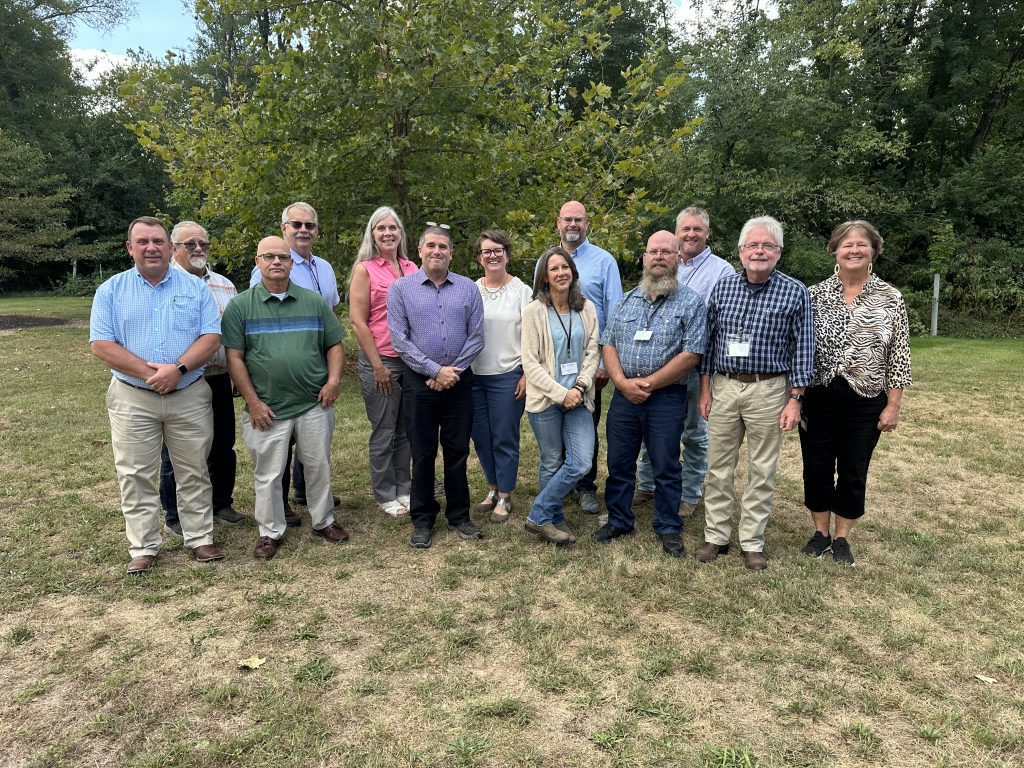

A new committee designed to give farmers throughout the Chesapeake Bay watershed a stronger voice in environmental restoration efforts has completed its first year of operations, with two Delaware representatives playing key roles.
The Chesapeake Bay Program’s Agricultural Advisory Committee launched in March 2025 during a critical period as the bay restoration program moves “Beyond 2025.” The committee was established to provide those who farm the land with direct input into leadership decisions affecting the bay’s future.
Fourteen appointed members make up the committee, representing all states within the Chesapeake Bay watershed plus the District of Columbia. Delaware’s representatives include Bill Powers and Will Carlisle, who joined farmers, agricultural business leaders, and technical specialists from across the region. This mix of practical farming experience aims to give the agricultural sector formal representation in restoration planning.
“For too long, agricultural policy was often seen as something happening to farmers rather than with them. The AAC has fundamentally changed that dynamic,” the committee stated in reviewing its first year.
The advisory group serves as an official liaison to the Chesapeake Executive Council and the Principals’ Staff Committee, working to ensure policy decisions reflect actual farming conditions and challenges.
During its first year, the committee achieved several significant milestones. Members helped shape revisions to the “Beyond 2025” Framework and the Chesapeake Bay Watershed Agreement, successfully ensuring agriculture received explicit representation in the updated agreement. This inclusion is considered crucial since farming operations must deliver a substantial portion of the remaining nutrient reduction targets needed to meet bay restoration goals.
The committee’s initial formal recommendations emphasized that economic sustainability must come first for conservation efforts to succeed. “You can’t ask a farmer to invest in the future of the Bay if they can’t stay in business today,” the group noted.
Other priorities established during the first year included promoting soil health as fundamental to restoration success and pushing for more transparent data systems that properly recognize conservation work already being performed by farmers.
Committee members believe their approach represents a fundamental shift from previous restoration efforts. “We are no longer just reacting to implementation goals; we are helping to write the playbook,” they stated.
Looking ahead to year two, the advisory committee plans to continue advocating for producer interests while maintaining focus on farm viability as essential for achieving water quality and habitat improvements. The group sees farmers as leaders in the next phase of bay restoration rather than simply contributors to pollution problems.
“The message from the first year is clear: when farmers engage as partners rather than just ‘sources’ of runoff, we see record reductions in pollution and stronger rural economies,” the committee concluded.