
BUENOS AIRES, Argentina — Court proceedings have restarted in Argentina against seven medical workers facing charges of negligent care in the 2020 death of soccer legend Diego Maradona, nearly twelve months after the initial trial fell apart when a judge resigned following her appearance in a documentary about the proceedings.
The case focuses on allegations that seven healthcare workers failed to deliver proper medical attention during the final weeks before Maradona’s passing five years ago at a residence near Buenos Aires. The soccer icon, considered among history’s finest players, passed away at 60 from heart failure while recuperating from surgery to address a brain blood clot.
All seven face charges of culpable homicide, comparable to involuntary manslaughter, which claims the defendants knew their negligent actions created danger but did nothing to stop it. Conviction could bring prison terms between eight and 25 years.
Legal representatives for the defense maintain that the leader of Argentina’s 1986 World Cup championship squad battled numerous severe health issues and assert no criminal wrongdoing occurred.
Maradona experienced various health crises throughout his life, many linked to excessive drug and alcohol use. Reports indicate he nearly died in both 2000 and 2004.
The defendants include doctor Leopoldo Luque, who served as Maradona’s primary physician in his final years, along with psychiatrist Agustina Cosachov and psychologist Carlos Díaz.
Court sessions are scheduled twice weekly on Tuesdays and Thursdays. Nearly 100 witnesses are anticipated to provide testimony, including relatives, close associates of the former athlete, medical experts and law enforcement officials.
Judges Alberto Gaig, Alberto Ortolani and Pablo Rolón are anticipated to announce their decision in early June.
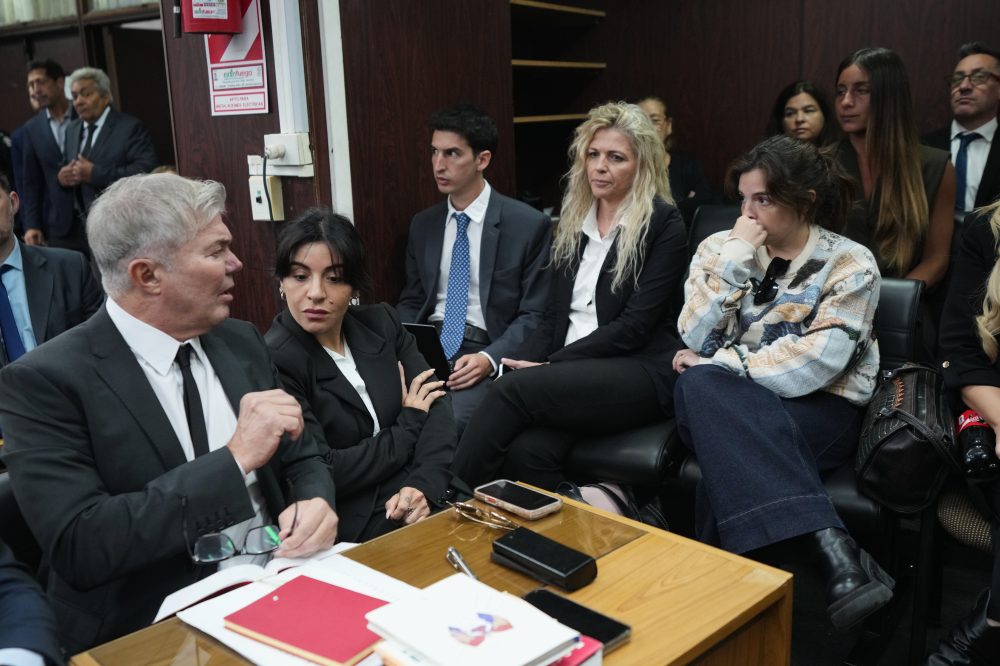
Fernando Burlando, legal counsel for Maradona’s eldest daughters Dalma and Giannina who are plaintiffs in the lawsuit, spoke to media before Tuesday’s session expressing faith in the new judicial panel.
“We place enormous trust in them,” Burlando stated. “They are judges with extensive experience and backgrounds.”
He noted that Maradona’s daughters continue to feel “very exhausted.”
“It is very difficult,” Burlando explained. “They are Maradona’s daughters, and that alone is not easy, and the fact that they cannot even have a moment of relief to know what happened to their father … although we are convinced of what happened.”
The original proceedings ended in mistrial last May when Judge Julieta Makintach, one of three presiding judges, resigned amid controversy over her participation in a documentary covering the case.
Makintach stepped down after prosecutors revealed video evidence of her prominent role in the documentary “Divine Justice,” which examined events following Maradona’s death when accusations and suspicions of misconduct first surfaced through the trial’s beginning.
“I present my resignation with serenity, without renouncing the right to exercise my defense in the appropriate arenas,” Makintach wrote in her resignation letter to court officials in June.
Maradona passed away on November 25, 2020, weeks following brain surgery for a subdural hematoma. He had been hospitalized earlier that month at a La Plata medical facility for anemia and dehydration before transfer to Clínica Olivos for the operation. Following his November 11 discharge, he relocated to a Buenos Aires area residence where he remained under medical care.
A 20-member medical investigation team appointed to examine Maradona’s death issued a 2021 report accusing his healthcare team of operating in an “inappropriate, deficient and reckless manner,” leaving him suffering and without assistance for over 12 hours prior to his death.