
Ireland’s ruling coalition confronts a potential no-confidence motion in Parliament Tuesday following its handling of widespread fuel demonstrations that disrupted oil deliveries and created severe traffic disruptions across the country.
The crisis emerged after Middle East conflict involving the U.S., Israel and Iran resulted in the shutdown of the Strait of Hormuz, a crucial global oil shipping route. Prime Minister Micheál Martin has announced additional tax relief measures in an attempt to resolve the situation, though opposition lawmakers have sharply criticized the government’s delayed response and inadequate assistance.
The largest opposition party, Sinn Fein, has called for Tuesday evening’s no-confidence motion. However, Martin’s coalition plans to hold an earlier confidence vote that could potentially nullify the opposition’s effort if successful.
Should the no-confidence measure pass, the current government would be forced to step down, leading either to Parliament selecting a new prime minister or calling fresh elections. Multiple parties including the Social Democrats, Labour, People Before Profit, Aontu, The Green Party and Independent Ireland have announced their support for removing the government.
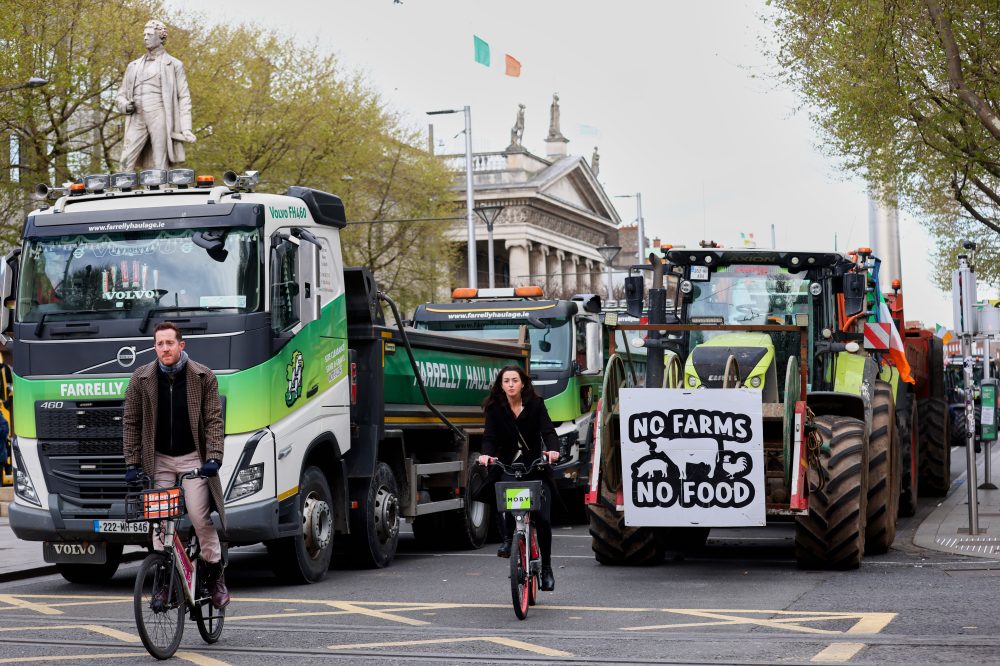
The demonstrations started April 7 with slow-moving vehicle convoys that jammed highways. Social media helped spread the movement as truckers, agricultural workers, taxi drivers and bus operators shut down critical infrastructure and major routes through Dublin, the capital city.
Protesters demanded government action through either price controls or tax reductions to address skyrocketing fuel expenses they warned would force businesses to close.
While acknowledging lessons could be learned from the protests, Martin defended law enforcement and military actions to remove roadblocks at Whitegate oil refinery in County Cork and various fuel depots. The blockades caused over one-third of gas stations to run out of fuel.
“We had to clear Whitegate and the ports because we export about 90% of everything we make in this country,” Martin said. “The ports are the lifeblood of economy, and if the ports were blockaded for any length of time, people would have lost jobs, part-time production would have ceased, and it would have been very, very serious.”
Authorities initially allowed the demonstrations to continue until weekend confrontations saw police deploy pepper spray against some protesters and military vehicles remove log barriers at Galway port. Many demonstrators claimed success in forcing government concessions.
Parliament is also set to vote Tuesday on Martin’s 505 million euro ($595 million) fuel assistance package designed to reduce cost-of-living pressures.
The relief plan includes direct payments to truckers and school bus drivers along with fuel subsidies for farming and fishing sectors. This assistance would supplement a 250 million euro tax reduction enacted three weeks earlier.
Sinn Fein has attacked the Fianna Fáil and Fine Gael coalition for failing to shield citizens from fuel price increases, refusing to reconvene Parliament during a holiday period to address the crisis, and offering what the party characterized as insufficient solutions.