
A Catholic priest who has survived three kidnappings during Cameroon’s brutal civil war is placing his hopes in Pope Leo’s upcoming visit to help bring peace to the war-torn nation.
Rev. Killian Ndonui Nshamikara, 40, was most recently taken hostage in January when armed rebels carrying pistols and an AK-47 stopped his vehicle in a western Cameroon village, demanding more than $25,000 for his release. Like his previous two abductions, he successfully negotiated his freedom.
The Pope’s journey to Cameroon’s English-speaking regions represents part of an extensive 10-day African tour that officials hope will draw international attention to a conflict often overshadowed by other regional crises, including jihadist violence in the Sahel and rebel activity in eastern Congo.
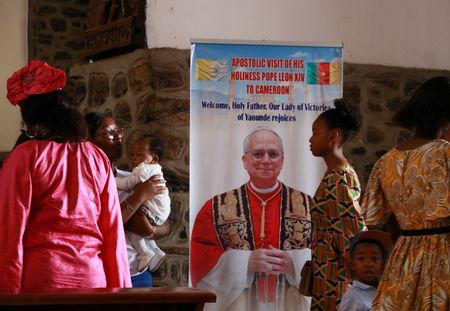
Pope Leo is set to arrive in the Central African country on Wednesday, with plans to spend Thursday in Bamenda, the largest English-speaking city, where he will conduct Mass and participate in a peace gathering at a local cathedral.
The Catholic Church serves as the primary Christian faith in the English-speaking areas. In recognition of the papal visit, a separatist coalition announced a three-day ceasefire to ensure safe movement for civilians and visitors.
Father Ndonui is among those who believe Leo’s presence could reinvigorate dormant peace negotiations, despite significant obstacles rooted in the nation’s complicated colonial past.
“Cameroon is a nation in need of healing,” he said.
The country’s history traces back to German colonial rule before being divided between Britain and France following World War One. The French territory gained independence in 1960, with the smaller British-controlled English-speaking western region joining one year later.
Many residents of the British territory had desired their own independent nation, but this option was not provided during a United Nations-supervised referendum. These separatist feelings have persisted ever since.
The present-day violence began in 2016 when English-speaking lawyers and teachers organized protests against what they viewed as systematic discrimination. Demands for establishing a new nation called Ambazonia intensified, leading to the formation of the Ambazonia Defence Forces, which began targeting government forces. Numerous additional armed groups subsequently emerged to attack both military personnel and civilians.
Nearly ten years into the fighting, the situation has deteriorated into a vicious stalemate. The International Crisis Group reports that over 6,500 people have lost their lives, with more than half a million forced from their homes.
Religious institutions have not escaped the violence. Father Ndonui reports that hundreds of clergy members have been abducted and at least five murdered, including a missionary from Kenya.
In August 2018, armed attackers killed Akiata Gerald, a 22-year-old seminary student who shared living quarters with Ndonui. The gunmen invaded the parish and shot him at point-blank range.
“His life, full of promise and dedication to God, was cut short in a senseless act of violence,” Ndonui said.
While he attributes the killing to rebel forces, he acknowledged not knowing which particular group carried out the attack.
Previous attempts to negotiate peace agreements have largely failed. Key separatist leaders were absent from a government-organized national dialogue in 2019, and mediation efforts involving Switzerland and Canada have reached deadlock.
The impact is visible throughout Bamenda, a formerly thriving regional hub now transformed by years of fighting, with military checkpoints and general strikes disrupting everyday activities.
Political analyst Enowbachem Agbortanyi, based in Yaounde, expressed skepticism about the Pope’s ability to single-handedly generate meaningful peace progress.
“The pope can propose, but he cannot enforce,” he said.
“That responsibility lies primarily with the government, which holds legitimate authority.”
Government officials have characterized the violence in English-speaking Cameroon as a “socio-political crisis” that remains largely controlled. A government representative did not provide comment regarding the potential impact of the papal visit.
Lucas Asu, speaking for the Ambazonia Governing Council, a major separatist organization, told Reuters he expects President Paul Biya’s administration will “try to spin the pope’s visit as an indication of the end of the conflict and a return to normalcy.”
Although he emphasized the visit would not influence the ongoing fighting, he noted it would provide an opportunity for local Catholics to celebrate.
“The Ambazonia Governing Council calls on the Ambazonian Christians, and especially the Catholics, to turn up in the millions and joyfully welcome their pope,” he said.