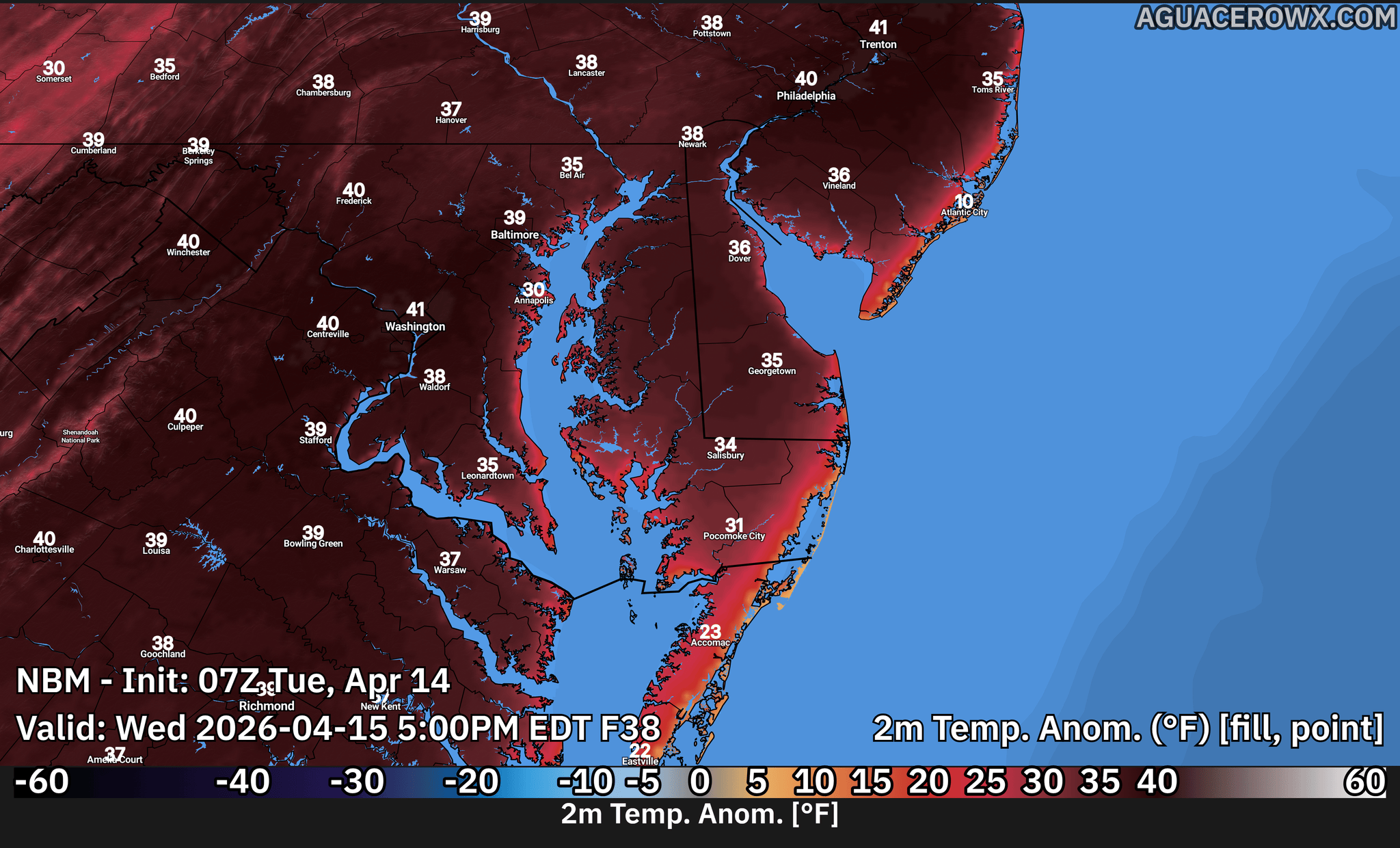
A significant early-season warm-up is underway across the Delmarva region, with temperatures to surge well above normal through the middle of the week and into the upcoming weekend. Forecast confidence continues to increase that some locations to challenge or even break daily temperature records.

High pressure anchored over the Atlantic Ocean, combined with a warm front positioned well north of the region, is allowing a strong southwest flow to transport unusually warm air into the Delmarva Peninsula. Both surface and upper-level conditions are aligning to support temperatures running 20 to 40 degrees above average for this time of year.

By Tuesday, inland areas across Delaware and Maryland’s Eastern Shore are expected to climb into the low to mid 80s. The peak of the heat arrives Wednesday and Thursday, when many inland communities, including areas around Salisbury, Cambridge, and Dover, could reach the upper 80s to near 90 degrees. If temperatures hit 90°, it would mark the first 90-degree day of the year and the first since early September.
Coastal communities, such as Ocean City and Rehoboth Beach, will once again see a noticeable difference. Cooler ocean temperatures will promote a daily sea breeze, keeping highs closer to the 70s, especially during the afternoon hours.
A weak front is expected to pass through late Thursday night into early Friday, but it will do little to disrupt the overall warm pattern. Temperatures will remain well above normal heading into the weekend, generally ranging from the mid 70s to mid 80s across the region.

Despite the heat, conditions will remain largely dry. Only a very limited chance exists for an isolated shower or thunderstorm, mainly well north of the Delmarva region. This lack of rainfall is a growing concern, as ongoing abnormally dry to drought conditions across portions of the peninsula may worsen through the week.
While warm and dry weather can sometimes elevate fire risk, that threat remains relatively low for now. Light winds and a modest increase in low-level moisture from the southwest flow should help limit more critical fire weather concerns.