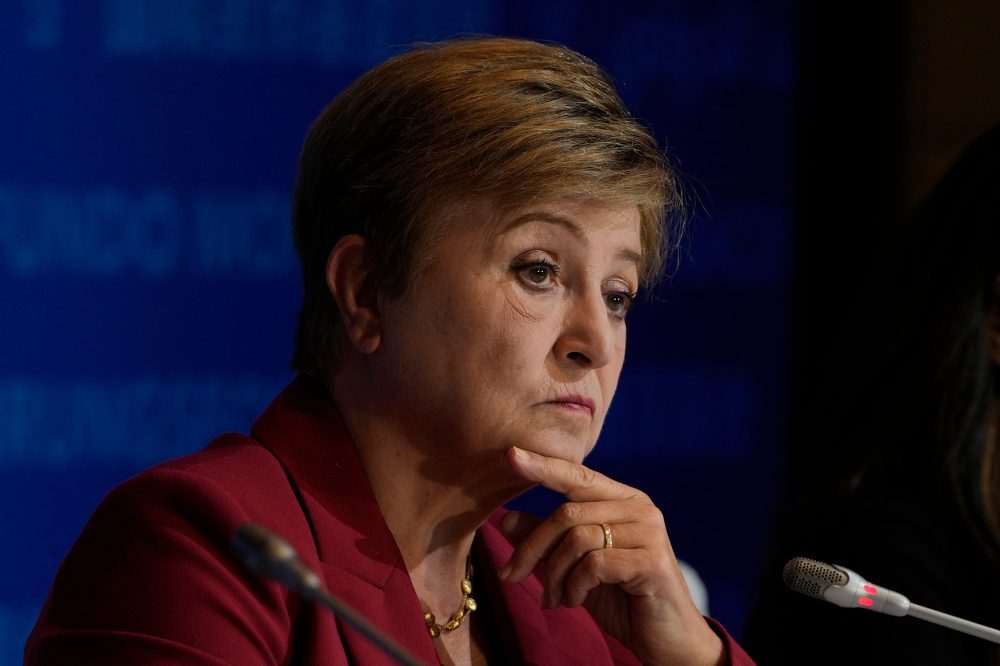

WASHINGTON — Global economic progress has been disrupted by the ongoing conflict in Iran, prompting the International Monetary Fund to lower its worldwide growth projections for the coming year.
On Tuesday, the IMF revised its global economic expansion forecast downward to 3.1% for 2026, a reduction from its January prediction of 3.3%. This represents a slowdown from the 3.4% growth experienced in 2025.
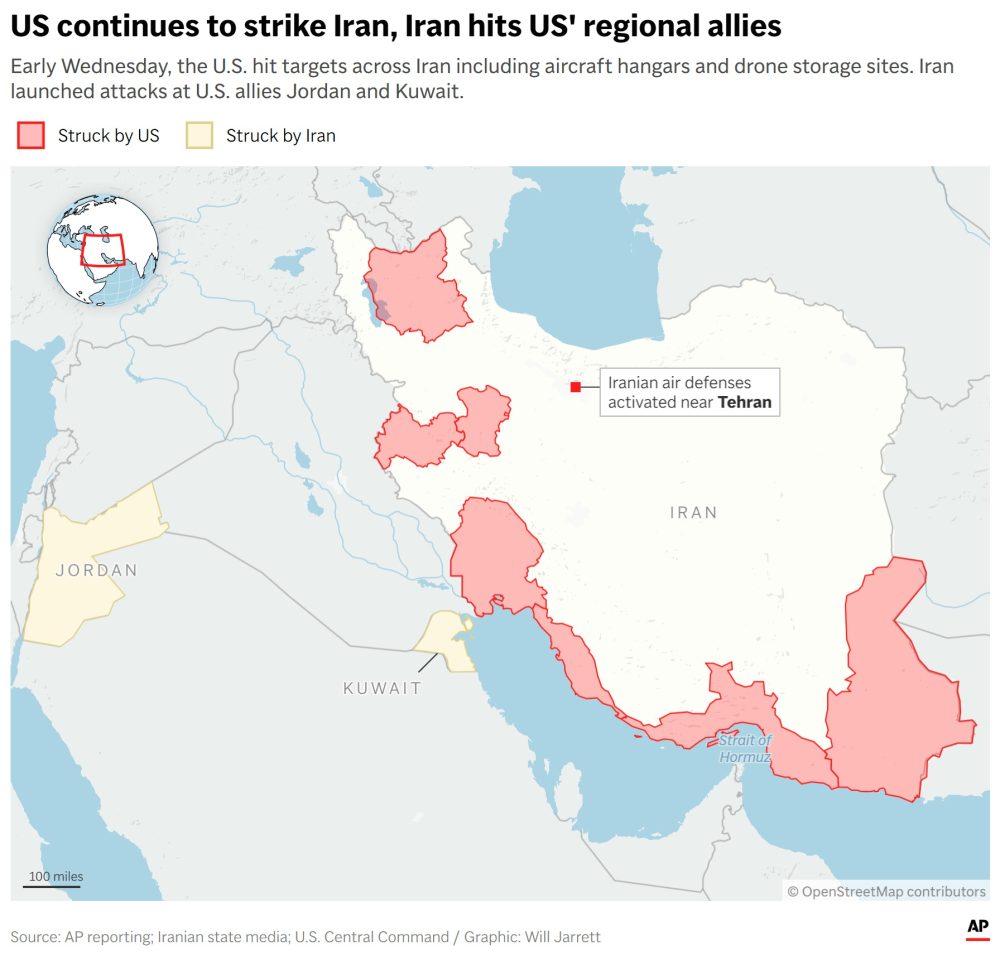
Military actions by the United States and Israel against Iran, combined with Tehran’s decision to block the Strait of Hormuz and launch counterattacks on energy facilities in surrounding nations, have caused petroleum and natural gas costs to surge internationally.
Consequently, the IMF increased its global inflation projection for this year to 4.4%, up from 4.1% in 2025 and higher than the 3.8% rate it had anticipated for this year in its January report.
Before the conflict erupted, the global economy had demonstrated remarkable strength despite President Donald Trump’s trade protection measures, which established significant import duties around America, the planet’s largest economy that was previously highly accessible to foreign goods. The economic impact proved less severe than anticipated, partially because Trump’s actual tariff implementations last year fell short of his initial proposals.
Additionally, a technology surge characterized by substantial investments in data infrastructure and artificial intelligence, along with increased productivity, helped bolster the world economy.
“War in the Middle East has halted this momentum,” IMF chief economist Pierre-Olivier Gourinchas wrote in a blog post accompanying the fund’s latest World Economic Outlook.
The IMF’s projections are based on the assumption that Persian Gulf hostilities will be brief and energy costs will climb by “a moderate 19%” this year. However, the situation could deteriorate significantly. Under a “severe scenario” where energy disruptions extend into the following year and central banks must increase interest rates to fight inflation, worldwide growth could fall to 2% in both 2026 and 2027. “Despite the recent news of a temporary ceasefire, some damage is already done, and the downside risks remain elevated,” Gourinchas wrote.
The organization marginally reduced its U.S. growth estimate for this year to 2.3%. The 21 European nations using the euro currency, severely affected by escalating natural gas costs, are projected to collectively expand by 1.1% this year, down from 1.4% in 2025.
The most severe impact is expected on heavily indebted developing nations that rely on energy imports and lack the financial resources to cushion their economies through increased government expenditure and tax breaks. The IMF significantly reduced projections for Sub-Saharan Africa, lowering expectations to 4.3% this year from the 4.6% predicted in January.
Russia emerges as a beneficiary of the crisis, being an energy supplier positioned to profit from elevated prices. The IMF improved its forecast for the Russian economy, which has been severely affected by sanctions following the 2022 Ukraine invasion, to a still-modest 1.1%.
In related developments, Ukraine’s central bank governor has worked to maintain focus on Russia’s war in his nation during discussions among global economic officials. However, in a Monday press interview, Andriy Pyshnyy acknowledged how increased oil prices from the Iranian conflict are damaging his country.
Speaking through an interpreter, he reported that Ukraine’s annual inflation reached 7.9% in March, significantly exceeding the 7% forecast primarily due to elevated fuel expenses. He calculated that fuel price increases could drive annual inflation up by 1.5 to 2.8 percentage points.
Pyshnyy observed that fertilizer and production expenses could also rise in an economy seeking price stability amid ongoing conflict with Russia, which launches aerial attacks on Ukraine approximately every 3 to 4 minutes.
“We are trying to walk on a razor blade,” he said of a mission complicated by external factors.
The IMF serves as a 191-member lending institution dedicated to fostering economic expansion, financial stability, and global poverty reduction.