
Mexico’s leadership is adopting a more confrontational approach toward the Trump administration following a series of deaths involving Mexican citizens held in U.S. immigration facilities.
President Claudia Sheinbaum’s government issued strong condemnation Tuesday after the death of 49-year-old Mexican national Alejandro Cabrera Clemente at an ICE detention facility in Louisiana, marking the 15th fatality of a Mexican citizen in American custody over the past year.
For over a year, the progressive Mexican president has maintained a cautious diplomatic approach with Trump, responding to provocations with restraint while increasing cooperation on cartel enforcement beyond what previous administrations provided, hoping to avoid threatened tariffs and potential military intervention against criminal organizations.
However, the escalating number of Mexican deaths in immigration custody, combined with Trump’s energy embargo against Cuba—a crucial Mexican partner—has prompted Sheinbaum to adopt a more assertive position.
“We’ve seen the president raise her tone,” said Palmira Tapia, an analyst for Mexico’s Center for Economic Research and Teaching. “There’s been a shift, and we’ve seen Sheinbaum be more vocal than before.”
Mexico’s administration swiftly denounced the fatalities as “unacceptable” and characterized ICE detention facilities as “incompatible with human rights standards and the protection of life.”
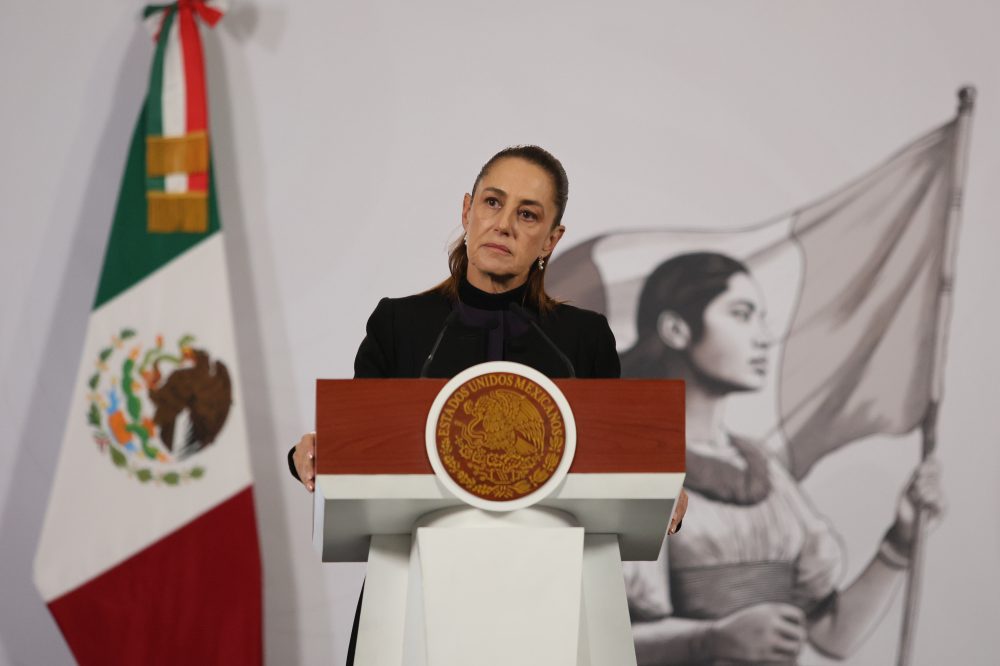
During a morning press conference, Sheinbaum revealed she had requested investigations into all 15 migrant deaths without receiving any response, and has directed Mexican diplomatic officials to conduct daily visits to detention facilities.
“We are going to defend Mexicans at every level,” Sheinbaum said, adding that “there are many Mexicans whose only crime is not having papers.”
Mexico has announced plans to submit a legal brief supporting a lawsuit filed by detainees challenging poor detention conditions and will bring the custody deaths before the Inter-American Commission on Human Rights. Sheinbaum indicated Tuesday her administration is also exploring an appeal to the United Nations.
These actions coincide with growing criticism within the United States regarding Trump’s immigration enforcement tactics. An AP-NORC poll from February shows approximately 60% of American adults believe Trump has “gone too far” in deploying federal immigration agents throughout U.S. cities.
“Growing dissatisfaction around ICE activities in the United States creates a more comfortable platform for members of the Mexican government to raise concerns about the fate of Mexican citizens,” said Carin Zissis, Washington interim director of the Council of the Americas.
Sheinbaum has previously maintained what she calls a “cool head” when responding to Trump’s provocations, despite facing more pressure from the U.S. than Latin America has experienced from any American president in decades. Within months, the Trump administration removed Venezuela’s president, established an oil embargo against Cuba, and threatened military action against Mexican cartels.
The Mexican leader must balance preserving strong U.S. relations while consistently emphasizing Mexico’s sovereignty to satisfy her domestic supporters. Her careful responses mirror those of a legal professional rather than the leader of Mexico’s dominant populist political organization.
Her administration has intensified cartel enforcement beyond her predecessor’s efforts and extradited numerous cartel figures to the United States. Mexican economic representatives have regularly visited Washington to strengthen diplomatic ties before upcoming renegotiations of the USMCA trade agreement.
Although Trump has publicly criticized Sheinbaum—once claiming cartels exercise more control over Mexico than her government—he has also frequently acknowledged their positive working relationship.
“She is really a nice person, I like her a lot,” he said last month, proceeding to imitate the Mexican leader in a high voice.
Changing regional dynamics and increasing ICE facility deaths have created opportunities for Sheinbaum to adopt a stronger position.
Cuba represents the primary source of tension between both governments. Supporting the U.S. adversary has remained fundamental to Mexico’s political identity since the Cuban revolution, which Fidel Castro, Ernesto “Ché” Guevara and fellow exiles famously organized while in Mexico City. This issue particularly resonates with her progressive Morena party, whose founder brought Sheinbaum to power.
Relations encountered obstacles in late January when Trump announced tariffs on any nation shipping oil to Cuba. This policy directly affected Mexico, which has supplied oil to Cuba for years.
While Sheinbaum reluctantly suspended Cuban oil shipments, she continues challenging the Trump administration’s regime change efforts.
“Mexico has every right to send fuel, whether for humanitarian or commercial reasons,” Sheinbaum stated earlier this week, noting her government proceeds carefully to avoid tariffs that could damage Mexico.
She has labeled Trump’s Cuban energy embargo as “unjust” and accused the American government of “suffocating” Cubans through sanctions. The Mexican president has dispatched food and additional aid shipments, even contributing $1,000 of personal funds to relief efforts as a symbolic gesture.
“For her, the defense of Cuba also means the defense of Mexico,” Tapia said.
Nevertheless, the Mexican leader’s actions have drawn concern from Washington.
Sheinbaum recently declared her nation would maintain Cuban medical personnel programs, departing from other Central American and Caribbean countries that terminated theirs under U.S. pressure.
This decision prompted implied threats from the Trump administration, which referenced visa restrictions imposed on Central American officials connected to what Secretary of State Marco Rubio called a “forced labor scheme.”
The White House declined to comment Tuesday regarding Sheinbaum’s increasingly firm positions or the rising deaths of Mexican citizens in ICE custody.
Sheinbaum’s recent bold approach suggests her administration believes it can resist on certain politically significant issues while simultaneously advancing trade relations and fulfilling Trump administration security and migration demands, according to Zissis.
Meanwhile, rising energy costs due to the Iran conflict have increased American dependence on Mexican allies, prompting Washington to retreat from dramatic actions against Mexican cartels or Cuba, at least temporarily, she and other experts noted.
“We’re at a moment where, due to global events, we’re facing different economic uncertainties. That gives the U.S. and Mexico more reason to work together,” she said.