WASHINGTON — The International Monetary Fund issued a downgraded outlook for the global economy on Wednesday, pointing to the energy shock triggered by the ongoing conflict involving Iran as a major drag on growth. However, a wave of investment in artificial intelligence and other technologies is helping to cushion some of that economic pain.
The IMF now projects the world economy will grow at a modest 3% pace in 2026 — a step back from 3.5% growth recorded last year and below the 3.1% the organization had predicted back in April.
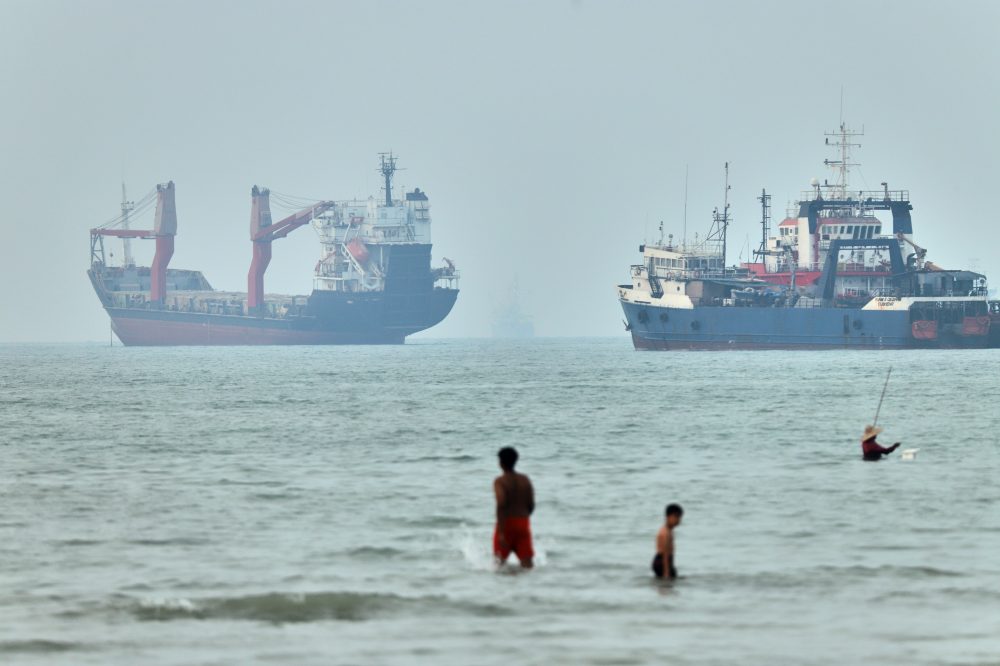
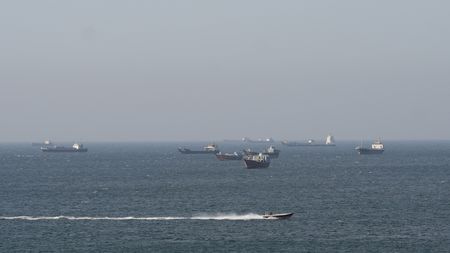
The trouble began when Iran responded to U.S. and Israeli military strikes on February 28 by closing off the Strait of Hormuz, a critical shipping passage through which roughly one-fifth of the world’s crude oil and natural gas travels. The move sent energy prices sharply higher, putting pressure on both businesses and consumers around the world. The IMF now anticipates oil prices will climb nearly 32% this year, and that global consumer prices will rise 4.7% in 2026 — up from 4.1% in 2025. That would mean two years of hard-won progress against inflation has effectively stalled.
Nations that produce and export their own energy and are benefiting from the AI investment boom are largely shielded from the worst of the war’s economic fallout. The United States is one of those countries. The IMF expects the American economy — still the largest in the world — to grow a healthy 2.3% this year, an improvement over the 2.1% recorded in 2025 and in line with what the IMF had forecast in April. President Donald Trump’s 2025 tax cuts, productivity gains, and a strong stock market are all contributing to the U.S. economy’s resilience.
In contrast, the 21 European nations that share the euro currency are feeling the pinch of higher energy costs. Those countries combined are expected to grow just 0.9% this year, compared to 1.4% in 2025.
China, the second-largest economy in the world, is forecast to expand 4.6% this year — slower than the 5% seen in 2026 but slightly ahead of what the IMF had anticipated in April. While China is being weighed down by elevated energy prices and a collapse in its property market, government infrastructure spending, a rise in high-tech manufacturing, and strong export activity are helping to offset those headwinds.
India is once again on track to be the fastest-growing major economy in the world, with projected growth of 6.4% this year. That figure is down from a remarkable 7.7% last year but is still being driven by robust consumer spending.
The IMF is a 191-member lending institution focused on encouraging economic growth, maintaining financial stability, and reducing poverty worldwide.
LONDON (AP) — Nigel Farage has long claimed the political establishment is working against him. His latest effort to prove that point, however, has not unfolded as he may have hoped.
Facing mounting scrutiny over his personal finances, the anti-immigration Reform UK leader made a dramatic announcement: he is stepping down from his parliamentary seat to force a special election, then immediately declared his intention to run for that same seat again. Critics wasted no time calling it a calculated maneuver to escape a parliamentary ethics investigation. Farage framed the upcoming vote as a battle of “people versus the establishment.”
His political rivals, though, have refused to cooperate with the narrative. Every major political party has announced it will not put forward a candidate to run against Farage, meaning he will face little real opposition at the ballot box.
The strategy carries significant risk. If the parliamentary standards inquiry into his finances continues after he wins — which appears likely — and concludes he broke the rules, a second special election for his seat could be required within months.
Farage only entered Parliament two years ago after seven previous failed attempts to win a seat. Despite that rocky road, he is widely considered one of the most consequential British politicians of the past several decades. His relentless push to remove the United Kingdom from the European Union helped transform Brexit from a fringe idea into reality. More recently, he has channeled public anxiety about immigration and social change in ways that mirror the approach of his ally, U.S. President Donald Trump, and various European populist figures.
Farage has made political hay — his critics say he has deliberately inflamed tensions — over migrants crossing the English Channel in small boats, referring to the phenomenon as an invasion. He has also claimed that white people face discrimination at the hands of police.
Reform UK holds just eight of the 650 seats in the House of Commons, yet the party consistently tops opinion polls and scored major victories in local and regional elections in May. Those results contributed to Prime Minister Keir Starmer being pushed out by members of his own Labour Party. If the current political trajectory continues, Farage could find himself in position to become prime minister following the next general election, which must be held by 2029.
Beyond his lawmaker’s salary, Farage draws income from a variety of sources, including selling gold bullion, hosting a television current affairs program, delivering paid public speeches, and recording personalized video messages through the Cameo platform.
Parliament’s standards watchdog is currently examining a donation of 5 million pounds — roughly $6.7 million — from Christopher Harborne, a cryptocurrency billionaire based in Thailand. Farage maintains the money was a personal gift used to cover the cost of his private security, and that it was given before he was elected to the House of Commons. Under parliamentary rules, newly elected members must disclose gifts exceeding 300 pounds (about $400) received in the prior 12 months if those gifts are connected to political activities.
Farage is also under scrutiny for his financial ties to George Cottrell, an aristocratic entrepreneur in the crypto-gambling space who previously served a U.S. prison sentence for fraud.
A finding that Farage violated parliamentary rules could result in his suspension, which would itself trigger a special election for his seat — the coastal constituency of Clacton in eastern England.
Rather than wait for the investigation to run its course, Farage chose to force that election himself.
But political observers note that if he wins — as most expect — the standards inquiry will likely pick up where it left off. A finding of wrongdoing could then set off a second Clacton election in short order.
Farage has publicly expressed frustration and exhaustion with political life, and he has a track record of walking away from parties he once led. He previously stepped down from both the UK Independence Party and its successor, the Brexit Party, over the past decade.
Tim Bale, a professor of politics at Queen Mary University of London, believes Farage will ultimately stay in the fight to lead Reform into the next general election.
“Fighting and winning a by-election is perhaps his best hope of suggesting to people that he is still very much a man alone, fighting the establishment,” Bale said.
Farage insists he has “done nothing wrong” and portrays himself as the target of dirty tricks by political enemies and “constant demonization” by media outlets. He says his need for substantial funds is partly driven by serious threats to his personal safety that require private security.
Bale acknowledged the strategy offers Farage some cover, saying it “allows him to distract from the details of that story and those allegations.” But he cautioned that Farage risks coming across “as a self-pitying, angry guy on an ego trip who is determined to distract people from some awkward facts.”
Political opponents called the resignation a stunt and a sign that Farage is struggling. Reform UK has dropped three consecutive special elections it had hoped to win, raising questions about whether the party’s support is beginning to soften. The most recent defeat came against Labour’s Andy Burnham, who is widely expected to succeed Starmer as prime minister within weeks.
With Labour, the Conservatives, the Liberal Democrats, and the Green Party all declining to run candidates against Farage, the field is essentially open to single-issue campaigners and novelty candidates — including a comedian known as Count Binface, who campaigns with a trash can over his head.
The person behind the costume is Jon Harvey, who describes himself as a 5,000-year-old intergalactic space warrior. Harvey is a recurring presence in high-profile British elections, with no serious expectation of winning. His past opponents have included former Conservative Prime Ministers Boris Johnson and Rishi Sunak, London Mayor Sadiq Khan, and most recently, Burnham.
Dressed in the style of a low-budget science fiction film, Binface mixes absurdist humor with hyper-local policy proposals, such as synchronizing traffic lights on a congested street or relocating the hand dryer in the Crown & Treaty Pub in Uxbridge “to a more sensible location.”
In his most recent race against Burnham, his top campaign promise was to “cut your taxes, and raise everyone else’s.” He also maintains a standing pledge to cap the price of croissants at 1.10 pounds, or about $1.47.
Speaking to the BBC on Wednesday, Binface said his central pitch to Clacton voters would be simple: “I’m not Nigel Farage.” He suggested that the absence of mainstream candidates said more about those parties than about him.
“Are they running scared from old Binny, or do they think that Nigel’s running a cunning stunt?” he said.
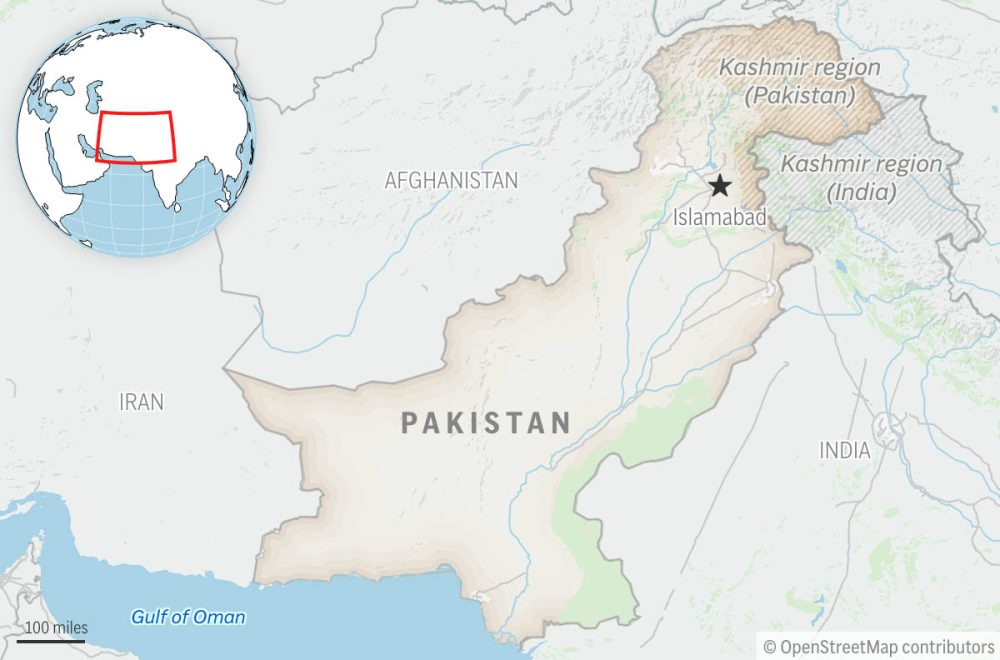
ISLAMABAD (AP) — The Pakistani military announced Wednesday that insurgents killed 18 police officers who had been held captive since earlier in the week, along with 11 soldiers who died in a separate attack in the troubled southwestern part of the country.
The bloodshed represents the latest flare-up in a region where armed groups have been intensifying their assaults on both security forces and civilians.
Military spokesperson Lt. Gen. Ahmad Sharif Chaudhry stated at a televised press conference that the combined death toll since Monday has reached 42 people, with most of the victims being soldiers and police officers. He added that security forces had killed 54 insurgents across multiple operations during that same timeframe.
According to Chaudhry, the 18 officers had been in captivity since late Monday, when dozens of militants stormed a police post in Ziarat district in Balochistan province, killing nine additional officers in that initial assault. He identified the attackers as members of what the Pakistani government refers to as “Fitna al-Khawarij” — a label the government applies to the outlawed Balochistan Liberation Army, or BLA, which Pakistan claims receives backing from India. India has denied any support for insurgent organizations operating inside Pakistan.
The 11 soldiers who died Wednesday were killed when insurgents ambushed the vehicle they were traveling in along a highway in Balochistan, Chaudhry said, adding that armed groups have struck at civilians and security personnel across several areas since Monday.
His statements came shortly after the BLA claimed credit for a series of recent attacks on security forces in Balochistan, a province where the Pakistani Taliban — known as Tehrik-e-Taliban Pakistan — also holds a significant presence.
Balochistan is Pakistan’s largest province by land area but its least populated. It has been the site of a long-running separatist insurgency as well as repeated attacks by the Pakistani Taliban. The BLA, which was designated a foreign terrorist organization by the United States in 2019, has taken responsibility for a large number of attacks targeting both security forces and civilians in the province over recent years.
BROOKSVILLE, Ky. — Even as the sun began to dip toward the horizon, the heat of the day still hung heavy in the air as Annie Woods headed back out to gather squash and zucchini from her 50-acre farm.
Prolonged, intense heat — part of a broader pattern of climate change-driven weather extremes that also includes severe flooding and extended drought — is creating real challenges for farmers. Shorter planting windows and the risk of crop loss from early-season heat followed by a sudden freeze are becoming more common concerns.
“I think it’s pretty safe to assume these kind of heat waves aren’t going away or they’re not freak occurrences,” Woods said.
A recent heat dome — a high-pressure weather system that traps heat and humidity over a large area — took a toll on specialty farmers who grow fruits and vegetables. Scientists link these increasingly intense heat events to human-driven climate change.
Many specialty farmers have found ways to cope, largely by rescheduling their work to avoid the most dangerous parts of the day. However, experts point out that these growers don’t have access to the same financial safety nets available to farmers who grow traditional commodity crops like corn and soybeans.
The combination of heat and humidity that accompanies a heat dome is dangerous for farmworkers and represents a “serious threat to human health,” according to Melissa Widhalm, the associate director at the Midwest Regional Climate Center in West Lafayette, Indiana.
Woods now limits her fieldwork to the cooler morning and evening hours, taking frequent water breaks throughout. She plants and harvests everything by hand — unlike larger operations that depend on machinery. When the heat forces her to work in the fields during peak temperatures, she sets up the same tent she uses at farmer’s markets to create a patch of shade.
Extreme heat combined with rain and high humidity can also invite crop diseases and pests that devastate harvests. Her current focus is getting the most vulnerable crops — like delicate salad greens — out of the fields quickly. Woods supplies vegetables and culinary herbs to area restaurants and runs a community supported agriculture program. She noted that harvesting in excessive heat can damage the quality of the produce.
She’s also worried about the health of seedlings that will eventually become her fall crops. To protect them, she currently keeps the seedlings inside an enclosed cabinet in a barn where temperatures stay cooler. Once they sprout, she moves them to a greenhouse equipped with fans to keep conditions manageable.
“We have to do a lot checking on the greenhouse and watering frequently to keep those teeny tiny plants alive,” Woods said.
For some growers, the recent heat has dramatically shrunk the window for harvesting certain specialty crops.
Paul Rasch, who owns and runs several fruit orchards in central Iowa, said the heat has pushed his crew of eight to rush through the raspberry harvest. Under normal conditions, they’d have roughly three weeks to pick the perishable fruit, but “we’re scrambling to pick as many as we can,” he said.
His team has been starting as early as 6 a.m. some days to wrap up before noon, when temperatures become too dangerous to keep working. Rasch has also added air conditioning inside his farm buildings and is planting trees and installing covered pavilions outdoors so customers who come to pick their own fruit have somewhere cool to rest. He’s also experimenting with high tunnels to better control growing conditions for select crops.
Rasch said these extreme heat events seem to be growing more frequent, more intense, and longer-lasting. Combined with flooding, drought, and late-spring frosts, these weather patterns can cause damage throughout the entire growing season.
“We don’t ever seem to have a typical year anymore,” he said.
Smaller operations like those run by Woods and Rasch typically grow a wide variety of crops year-round. That’s partly a business strategy — but it also serves as a buffer, so that a loss in one crop doesn’t wipe out the whole farm.
“You’re always gonna have something that will thrive while other things might be more challenged,” Woods said.
Rasch also pointed out that crop insurance for specialty farmers works very differently than it does for commodity farmers. Specialty growers face greater exposure to extreme weather but have far less protection, he said. Woods, who also works with the Organic Association of Kentucky, agrees — and said she knows farmers in similar situations who struggle to get coverage because they grow so many different crops across small acreage.
The reason, according to Duncan Orlander, a policy specialist with the National Sustainable Agriculture Coalition, is that federal crop insurance programs are built around single crops with a single growing season — like corn, soybeans, and wheat.
For smaller specialty growers, the paperwork required to insure a wide range of crops on limited acreage can be overwhelming, and coverage for certain specialty crops may not even be offered in some areas. Insurance companies are also discouraged from selling policies with small premiums and limited potential payouts, Orlander added.
While some federal programs cover a farm’s overall revenue rather than individual crops, Orlander said those policies are complex and rarely used.
“We’re not keeping up with the losses and the extreme weather that we’re seeing,” he said. “And we have to think a little bit differently about how we are going to mitigate risk and cover losses into the future when these things occur.”
For Woods, the community supported agriculture program she operates provides a financial cushion if a crop fails — her customers commit to supporting the farm for the whole season, no matter what ends up in their weekly boxes. That program, combined with the variety of crops she grows, is how she “hedges our bets” against heat, flooding, and drought.
“It’s something you have to be aware of and plan for and have a plan to be resilient in the face of these kind of events,” Woods said.
Jeff Bezos’ rocket company Blue Origin is seeking to raise $10 billion from outside investors for the very first time, according to a Wednesday report from the New York Times DealBook. The fundraising effort values the company at $130 billion before the new funds are counted.
The move comes at a time when investor enthusiasm for space companies has spiked, largely driven by the recent initial public offering from rival SpaceX, which reignited excitement across the aerospace sector and pushed up expectations for what privately held space firms are worth.
According to the report, major asset manager Coatue Management is expected to lead the investment round with a $4 billion commitment. Bezos himself is also expected to chip in an additional $2 billion of his own money.
Blue Origin did not respond to a request for comment on the report.
For context, SpaceX made its public market debut at a valuation of roughly $1.75 trillion after raising approximately $86 billion — a figure that made it the largest IPO in the world. That fundraising was used to advance Elon Musk’s ambitions in artificial intelligence and space exploration.
Blue Origin was founded by Bezos in September 2000, about a year and a half before Musk launched SpaceX in 2002. Until now, the company has been funded almost entirely by Bezos, who is also the founder of Amazon.
The company has secured multibillion-dollar contracts with NASA and the U.S. Space Force, including work tied to the Artemis lunar program and national security launch missions. Despite those wins, Blue Origin still lags significantly behind SpaceX in both launch frequency and revenue.
While SpaceX has built a major revenue stream through its Starlink satellite internet service, Blue Origin’s business is focused primarily on launch services, rocket engines, and government space contracts.
The company did face a significant setback earlier this year — its New Glenn rocket, which is comparable in size to SpaceX’s Starship, blew up during a ground test in May. Blue Origin has said it expects to return to launching rockets before the end of the year.
Chinese semiconductor company Nexchip Semiconductor announced Wednesday that it intends to raise roughly HK$6.98 billion — equivalent to about $890.37 million — through a share sale in Hong Kong, pricing the offering at the highest point of its range to take advantage of the city’s strengthening financial market.
According to the company’s prospectus, Nexchip is putting 216.2 million shares on the market at a price of HK$32.30 per share.
Of the money raised, the chipmaker plans to direct more than HK$3.5 billion toward research and development efforts. An additional HK$1.5 billion is earmarked for building out artificial intelligence-powered systems designed to connect and streamline the company’s research, development, and manufacturing operations.
The move is part of a broader push among Chinese chipmakers to boost investment in both manufacturing technology and AI, as China’s government works to reduce its reliance on foreign-made semiconductors.
Hong Kong’s stock market has seen a major surge in new listings, with data from LSEG showing that initial public offerings in the first half of 2026 jumped nearly 57% compared to the same period a year ago, reaching roughly $22.45 billion — the strongest start to a year the city has seen in five years.
Nexchip is among a wave of Chinese technology companies taking advantage of Hong Kong’s booming capital markets. Just one day earlier, Luxshare Precision Industry, a supplier to Apple, set the price on its own $3 billion Hong Kong share offering.
Nexchip, which is partially owned by the Chinese government, said it expects to release information on investor demand for its international offering on Thursday. Shares are scheduled to begin trading the following day.
DHAKA, Bangladesh — Eight children lost their lives and five others were hurt Wednesday when torrential monsoon rains caused a landslide that buried a madrassa at a Rohingya refugee camp in southeastern Bangladesh, according to officials.
Rescuers pulled 13 children from beneath the mud and debris that had engulfed the religious school. Eight of those children did not survive, while the remaining five were taken to medical facilities within the camp for treatment.
The tragedy follows a series of deadly weather events in the same area earlier this week. Separate rain-triggered landslides had already claimed the lives of eight Rohingya refugees — including women and children — in the camps just days before Wednesday’s disaster.
More than 1.2 million Rohingya refugees are crowded into camps in Cox’s Bazar, which is recognized as the world’s largest refugee settlement. The population fled to Bangladesh after a military crackdown in neighboring Buddhist-majority Myanmar in 2017.
The vast majority of families there live in temporary shelters constructed from bamboo and tarpaulins, perched on steep, deforested hillsides that offer little protection against the landslides that threaten the region each monsoon season.
Authorities have been working to move families away from the most dangerous areas as rainfall continues to intensify the risk. The Bangladesh Meteorological Department has predicted additional rain in the days ahead, and officials say they are remaining on high alert for further landslides and flash flooding.
SAO PAULO — Brazilian federal police descended on the home of former President Jair Bolsonaro on Wednesday, conducting a search for weapons and ammunition that ultimately turned up nothing, according to one of his attorneys.
Lawyer Joao Henrique de Freitas shared the outcome in a post on X, writing: “The defense had already previously informed the whereabouts of all the weapons. Result: Nothing was found.”
The Brazilian newspaper Estadao first broke the story, reporting that Supreme Court Justice Alexandre de Moraes had authorized the search.
Bolsonaro, who is 71 years old, has been behind bars since November, serving a 27-year prison sentence after being convicted of plotting to overthrow the government following his loss to President Luiz Inacio Lula da Silva in the 2022 election.
Just last Friday, Justice Moraes granted Bolsonaro permission to serve his sentence under house arrest, citing health concerns. The former president has dealt with significant medical issues in recent years stemming from a stabbing he suffered while campaigning back in 2018.
Adding to the legal complications, a gun belonging to Bolsonaro was confiscated from one of his security team members at a police checkpoint last month. Despite that incident, Prosecutor General Paulo Gonet — in an opinion sought by Moraes — recommended that Bolsonaro be allowed to remain under house arrest.
Egypt’s football federation is speaking out against what it calls unfair and inconsistent use of the Video Assistant Referee system following a heartbreaking 3-2 World Cup round-of-16 elimination at the hands of defending champions Argentina on Tuesday.
The Egyptian Football Association released a statement Wednesday saying it refuses to stay silent about refereeing decisions it believes directly changed the outcome of the match. Egypt had appeared on the verge of a massive upset, holding a 2-0 lead with just 11 minutes to play, before Argentina rallied with three late goals to advance.
“Several key incidents raised serious concerns and left profound questions about the consistency and fairness of decisions that directly influenced the course of the game,” the federation wrote in a statement shared on social media.
The EFA added that football experts and analysts from around the world had identified controversial officiating moments during the contest, calling for the highest standards of integrity and transparency in a competition of the FIFA World Cup 2026’s magnitude.
At the center of the dispute was a goal by Egypt’s Mostafa Zico in the 62nd minute that would have put his team ahead 3-0. Officials disallowed the score following a VAR review that found a foul by an Egyptian player earlier in the buildup play.
Egypt’s frustration grew further late in the game when a penalty appeal for Hamdy Fathy — who went down under a challenge — was rejected. Argentina then moved up the field and scored the match-winner in the 92nd minute.
Coach Hossam Hassan and captain Mohamed Salah both voiced their disappointment after the final whistle, and former players and television analysts joined in questioning the officiating.
Former England goalkeeper Rob Green, commenting during Fox’s broadcast, questioned whether VAR should have even been involved in reviewing the play that led to Zico’s goal being wiped out. “Surely, this is not within VAR’s [realm] to review this,” Green said. “It’s a full length of the pitch away.”
Former England captain Alan Shearer, the Premier League’s all-time leading scorer, also took issue with the decision-making. “Either both are fouls or neither is. But they told us they won’t re-referee,” he wrote on social media.
Former Arsenal striker Ian Wright pointed to a separate incident involving Salah. “If you’re going to pull it back for Argentina on the edge of the box to disallow a goal, you have to pull it back for this one with Mo Salah. He’s been caught. Whatever we say, it might be minimal, he’s been caught and then they go up the other end,” Wright said on ITV.
Former Liverpool defender Jamie Carragher also raised questions about VAR consistency. “If that was in the Premier League, LaLiga or Serie A, it would have been a goal even after VAR review,” he said.
According to media reports, EFA President Hany Abo Rida has filed an official complaint against French referee Francois Letexier and his officiating crew. FIFA had not yet responded to a request for comment at the time of publication.
Drivers traveling eastbound on Fieldsboro Road should be aware of a right lane closure currently in effect between Case Road and North Odessa Boulevard.
The closure is the result of ongoing construction activity in the area. Motorists are advised to use caution and allow extra travel time when passing through the affected stretch of roadway.
The lane is expected to reopen by 5 PM. Drivers may want to consider alternate routes to avoid potential slowdowns in the area.
A fish kill hit the Potomac River over the July 4th holiday weekend, impacting multiple fish species, according to social media posts from the Maryland Department of the Environment (MDE).
MDE scientists launched an investigation after receiving reports of dead fish scattered along a stretch of the Potomac River several miles upstream of Little Falls. The event took place on an extremely hot day that also brought powerful thunderstorms.
During early field work, investigators found affected fish near Sycamore Island along the Virginia shoreline. Water assessments revealed the kill was concentrated mainly in one species — golden redhorse suckers. Water temperatures in the impacted area registered in the mid-90s°F, conditions scientists described as highly stressful for fish.
Based on those initial findings, investigators determined the fish kill had likely come to an end or had significantly slowed, and that extreme heat was the most probable cause.
The next day, MDE crews returned to the river for a second round of fieldwork to gather more data and verify their early conclusions. Teams took additional water quality readings, mapped the full extent of the kill, identified the affected species, and collected fish samples for laboratory testing.
On July 6th, MDE announced that the fish kill covered approximately 13.7 river miles, stretching between White’s Ferry and Violette’s Lock (lock 23), located several miles upstream of Sycamore Island.
MDE said the initial investigation turned up no signs of a chemical spill or any other pollution-related event. Further lab analysis and continued field observations are expected to confirm the cause and rule out any other contributing factors.
A Qatari tanker carrying liquefied natural gas, known as LNG, faced the possibility of an explosion after sustaining serious damage during an attack on the Omani side of the Strait of Hormuz on Tuesday, according to one source.
Although the LNG industry has seen accidents at land-based facilities over the years, a catastrophic explosion of an LNG cargo tank aboard a commercial vessel at sea has never occurred. Still, growing concerns have emerged as warring parties in both the Ukraine and Iran conflicts have increasingly targeted energy shipping vessels.
Tuesday’s attack on the tanker Al Rekayyat is the second time this year an LNG ship has been drawn into a war-related incident. Back in March, a Russian LNG tanker called the Arctic Metagaz caught fire in the Mediterranean Sea after being struck by Ukrainian naval drones, forcing its crew to abandon ship — an account provided by Russia’s transport ministry.
What exactly is LNG, and how is it transported?
LNG is natural gas that has been chilled to approximately minus 162 degrees Celsius, or minus 260 degrees Fahrenheit. That extreme cooling converts the gas into liquid form and reduces its volume by roughly 600 times, which makes it far more practical and cost-effective to ship across oceans.
The liquid is held in heavily insulated cryogenic tanks that maintain those extremely cold temperatures. At export terminals, the LNG is loaded onto specialized carrier ships built with double hulls and insulated cargo tanks engineered to keep the gas cold for the entire journey.
During transport, a small portion of the LNG naturally evaporates. If not managed, this so-called boil-off gas builds up pressure inside the tanks. Ships typically capture this gas and use it as fuel for their engines.
What dangers does LNG pose?
In its liquid state, LNG does not burn. The danger emerges if LNG leaks, warms up and converts back to gas, blends with air at the right ratio, and then encounters an ignition source.
To guard against these risks, LNG vessels are equipped with double-hull construction, multiple containment barriers, gas detection systems, pressure-relief equipment, emergency shutdown systems, firefighting tools, and strict operational protocols backed by thorough crew training.
Could the Al Rekayyat actually explode?
The Al Rekayyat reported a fire in its engine room, and a source indicated the ship was at risk of exploding — though there was no sign that the LNG cargo tanks had been breached. All crew members were evacuated without injury.
In theory, any LNG carrier could face catastrophic risk if damage causes a large LNG release, forms a flammable gas cloud, and that cloud reaches an ignition source. However, modern LNG vessels are built with multiple layers of protection specifically designed to stop any ignition from reaching the cargo tanks. Industry experts emphasize that an engine room fire does not automatically lead to an explosion.
The danger would grow significantly if the fire were to spread to the cargo systems, damage the containment tanks, or trigger a major LNG leak.
One industry source said Wednesday that as long as the Al Rekayyat does not come under any additional attack, the vessel would likely remain in its current condition and not explode.
Chevron announced Wednesday that it will allow competing oil producers to purchase a specialized chemical technology the company developed to squeeze more oil out of shale wells, framing the decision as part of a larger effort to grow U.S. energy output.
The announcement arrives at a challenging moment for the American shale industry, which upended global energy markets roughly two decades ago through the fracking revolution. Today, that industry faces shrinking well productivity, a problem experts say is forcing companies to either drill more wells or embrace new technologies just to keep production steady.
Under the arrangement, Chevron will license its chemical surfactants technology to chemicals manufacturer ZL Chemicals, which will handle the sales process to other oil producers.
According to Chevron, the licensed chemicals have increased output from newly drilled shale wells by as much as 20% during the first year of production. They have also slowed the rate of decline in existing wells by between 5% and 8%.
Chevron’s Chief Technology and Engineering Officer Ryder Booth explained the reasoning behind the decision. “With constraints on energy in the world today, there’s a call on oil and gas companies to get more energy to market,” Booth said. “This is a way that we can answer the call to help boost production.”
The move follows recent pressure from U.S. President Donald Trump, who called on oil companies — including Chevron and ExxonMobil — to increase production and help drive down gasoline prices during the U.S.-Israeli war with Iran.
Chemical surfactants work by limiting damage to shale formations caused by the fracturing process. Acting much like soap, they flush out particles that become trapped in cracks within the rock and block oil flow. The chemicals then help separate oil from the surrounding underground rock, making it easier for the oil to travel to the surface.
During a recent tour of a Chevron technology lab in Houston, Reuters reporters watched researchers demonstrate the process using glass vials. In one vial of plain crude oil, the oil clung to the sides of the bottle when shaken. In a second vial containing both crude oil and the chemical surfactants, the oil moved freely without sticking and eventually separated cleanly from the chemicals — a visual illustration of how the technology helps oil break free from shale rock.
Industry experts point out that shale oil recovery rates currently sit at just 10%, meaning roughly 90% of the oil remains trapped underground because existing technology cannot yet extract it from the dense, compacted rock.
Improving that recovery rate has become increasingly urgent as the most productive drilling areas have been depleted over time.
“We’re at the point where big gains are not there anymore,” said Bob Fryklund, chief upstream strategist at S&P Global Energy. He did note, however, that ongoing technological advances have helped the oil industry regularly outperform projections.
Beyond its own drilling operations, Chevron also holds royalty interests in certain wells in the Permian Basin that are run by other companies. By licensing what was previously proprietary technology, Chevron stands to benefit financially from increased production across the country’s leading oilfield.
“This helps unlock production at a bigger scale beyond just the Chevron-operated areas,” Booth said.
Booth added that the company plans to begin testing a newer version of the chemical technology during the third quarter of this year.
Brazilian cosmetics manufacturer Natura disclosed on Wednesday that its preliminary consolidated net revenue for the second quarter came in between 5.1 billion reais and 5.2 billion reais — approximately $1.01 billion — marking a decline of 9% to 10% compared to the same quarter a year ago.
Even with sales falling, the company expressed optimism about its profitability outlook, stating that it anticipates its reported EBITDA margin to climb higher than it was in the first quarter. The company credited the expected improvement to reduced severance costs and gains in efficiency stemming from a newly adopted operating model.
Natura noted that a more comprehensive breakdown of its quarterly financial performance will be made available on August 10.
Pakistan’s military announced Wednesday that 42 members of its security forces — including both police and army personnel — have been killed following three separate militant attacks in Balochistan, a troubled province in the country’s southwestern region.
The attacks took place beginning July 6, according to military officials. In addition to the security personnel who died, the military reported that 54 militants were also killed during the course of the three incidents.
Balochistan has long been a region of unrest, and the latest wave of violence marks a significant loss for Pakistani security forces in a short period of time.
(Note: The views expressed in this analysis are those of the author, Reuters Breakingviews columnist Pierre Briancon.)
French courts have already sent a former president to prison. Now they have handed down a detention sentence to a potential future one — far-right leader Marine Le Pen. Unlike that former president, who actually served prison time, the most Le Pen can expect is home confinement with an electronic ankle bracelet, a situation she is hoping to overturn through an appeal.
Regardless of her legal troubles, Le Pen announced Tuesday that she plans to enter the presidential race scheduled for April 2027. This time, she stands a genuine chance of reaching the Élysée Palace. Bond markets appear largely unconcerned about the populist economic proposals her party is advancing, or her capacity to handle the country’s finances. That calm may be misplaced.
Whoever steps into the presidency after Emmanuel Macron will face a country in deep financial difficulty. Recent French governments have repeatedly failed to rein in out-of-control budget deficits. The national public debt has now climbed to €3.6 trillion — a 60% jump since Macron took office more than nine years ago. According to the IMF, that debt is on pace to hit 120% of GDP next year. Budget deficits have exceeded 5% of economic output for three straight years and are unlikely to shrink significantly in the near term. The 2027 budget debate is expected to be a fierce battle, given a fragmented parliament and a crowded field of nearly 20 declared presidential candidates so far.
Over the years, Le Pen has pulled back from some of her more extreme earlier positions. She has abandoned her push to exit the euro, softened her pro-Russia stance on Ukraine, and even took aim at U.S. President Donald Trump, calling his approach to Iran “erratic.” Still, core elements of her economic agenda have stayed in place. She has consistently opposed government efforts to raise the retirement age to shore up the pension system. Her central argument — that reducing immigration will generate enough savings to pay for tax cuts for both households and businesses — is widely viewed as unrealistic.
Le Pen and her protégé Jordan Bardella, the 29-year-old she elevated to party leader while dealing with her legal battles, have been making overtures to the business community. In April, they sent a letter to business leaders saying they wanted to “listen” to them and identify what was holding back economic growth. This has fueled speculation that Le Pen might follow the example of Italy’s right-wing prime minister, who surprised many in Europe by managing her country’s finances with unexpected restraint over the past four years — even with a debt load of 140% of GDP. Italy’s borrowing costs have gradually moved closer to France’s, with both countries’ 10-year bond yields now within a percentage point of Germany’s.
While nothing is off the table, Le Pen remains committed to an interventionist economic approach centered on government benefits aimed at her core supporters in France’s struggling industrial regions. She has a long way to go before she can offer a convincing roadmap for addressing France’s serious fiscal challenges.
BACKGROUND: A French appeals court on July 7 upheld Le Pen’s conviction for misappropriating European funds but reduced the length of her ban from holding elected office, potentially reopening the door for her 2027 presidential run. The court imposed a three-year jail sentence, suspending two years of it, and ordered her to wear an electronic ankle tag for one year — a condition that could make running a presidential campaign both politically and practically difficult.
Eastbound travelers on West Newport Pike should plan for delays this afternoon as construction crews have closed the right lane between MacArthur Drive and Kentucky Avenue.
The lane restriction is expected to remain in effect until 4 PM. Drivers in the area are encouraged to allow extra travel time or consider an alternate route to avoid potential slowdowns.
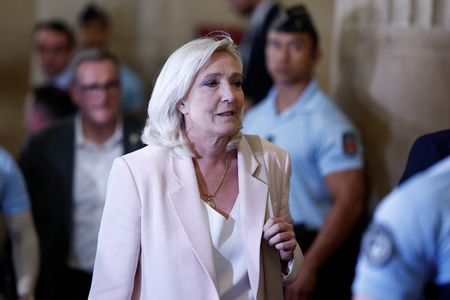
Marine Le Pen, the leader of France’s far-right movement, received a mixed welcome Wednesday as she took her presidential campaign to the streets of La Fleche, a small town in western France’s Loire Valley — just one day after an appeals court ruled she could still run despite confirming her criminal conviction.
As Le Pen worked the crowd at a local street market, some bystanders shouted “Give the money back!” and “Go to jail!” while others rallied behind her with chants of “Marine, President!” — a vivid snapshot of the deep divisions her candidacy is stirring across the country.
On Tuesday, the Paris appeals court upheld Le Pen’s March 2025 conviction for misappropriating European Parliament funds to pay staff members of her party. However, the court reduced the length of her ban from seeking public office, clearing the path for her campaign.
At 57, Le Pen has made three previous bids for the French presidency. Her anti-immigrant party, the National Rally, currently leads opinion polls, giving her a renewed push toward what would be a historic win as France’s first far-right president in modern times.
The appeals court had also ordered Le Pen to wear an electronic ankle tag for one year — a requirement that would have forced her to return home each night during the campaign. However, Le Pen announced she is taking the case to France’s highest court, and that appeal has temporarily suspended the ankle tag requirement.
Le Pen’s political protégé, 30-year-old Jordan Bardella, had been prepared by the National Rally to serve as the party’s candidate in her place. Now that Le Pen is back in the race, she has said that if she wins the presidency, Bardella will serve as her prime minister.
Bardella joined Le Pen in La Fleche on Wednesday — a town that has traditionally leaned left but elected a 25-year-old National Rally mayor, Romain Lemoigne, back in March. Supporters eagerly sought photos with Le Pen, with one exclaiming, “Marine, you’re the best!”
Le Pen appears to be drawing a parallel to former U.S. President Donald Trump, banking on voters setting aside her legal troubles and focusing instead on her promise to strengthen French sovereignty.
Her campaign team had already unveiled a new website earlier in the day, featuring an image of Le Pen with arms outstretched on a stage and the slogan: “For France, Revival.”
Speaking to reporters in La Fleche, Le Pen explained the meaning behind that message, saying it stood for “the revival of education, the revival of the justice system, the revival of security for our fellow citizens, the revival of control over our borders, and the revival of our sovereignty.”
Polling analyst Adélaïde Zulfikapasic of BVA pollsters said she believes Le Pen will likely advance to the second-round runoff of the presidential election, scheduled for May 2, due to her strong and loyal voter base.
“There is a degree of ambivalence among French voters: when asked which qualities they most want in a president, they point to honesty and probity. In practice, however, they tend to be less demanding,” Zulfikapasic said.
Still, the analyst noted that Le Pen’s bigger challenge will be expanding beyond her existing supporters, and that the guilty verdict could make winning over new voters more difficult.
Officials at France’s highest court, known as the Cour de Cassation, have previously indicated they aim to issue a ruling in early 2027, ahead of the election. If that court upholds Tuesday’s judgment, Le Pen could be required to wear the electronic monitoring device during the final stretch of her campaign.
The travel insurance arm of Allianz is preparing to eliminate as many as 1,800 jobs as the company leans further into artificial intelligence technology.
Tomas Kunzmann, CEO of Allianz Partners, confirmed the planned workforce reduction on Tuesday evening, backing up an earlier report on the matter.
The cuts reflect a broader trend of major corporations reducing headcount as AI tools take on tasks previously handled by human workers.
Southbound travelers on Atlanta Road (Road 30) are facing intermittent lane restrictions between Tull Drive and Oak Street due to ongoing construction work.
The lane closure is expected to remain in effect until 3:30 PM. Drivers in the area should anticipate possible delays and consider using an alternate route if possible.
No additional details about the nature of the construction work were provided. Motorists are encouraged to stay alert and follow any posted signage in the work zone.
As artificial intelligence becomes more widely used in political campaigns, questions are mounting about whether AI-generated parodies cross the line from harmless satire into something far more troubling.
States like Michigan have moved to put regulations in place governing how AI can be used in political content, but there are growing concerns that those rules may not have much real-world impact on what voters actually encounter.
The debate centers on a difficult question: when does an AI-created campaign parody count as protected political satire, and when does it become something darker and potentially misleading to the public?
As technology continues to outpace lawmaking, officials and observers are wrestling with how — or whether — existing and proposed rules can keep up with the rapidly evolving capabilities of artificial intelligence in the political arena.
A lane shift is currently in place on the southbound South College Road (DE 896) on-ramp to Interstate 95 northbound as construction work continues in the area.
The lane adjustment is expected to remain in effect until 5 p.m. Drivers using this route should slow down and be prepared for changed traffic patterns as they approach the ramp.
Motorists are encouraged to allow extra travel time and stay alert for construction crews and equipment near the roadway.
If you’re shopping for a used vehicle, the average price of a three-year-old car now tops $30,000 — a significant savings compared to buying new, but still a stretch for many budgets. The good news is that spending around half that amount can still land you a car with a solid mix of comfort, dependability, fuel efficiency, and up-to-date technology.
Automotive experts at Edmunds have put together a list of four compact sedans and one midsize sedan worth your attention. Each vehicle earned competitive scores from Edmunds, is widely available on the used car market, and holds a reliability rating of at least 4 out of 5 stars from RepairPal, an independent automotive reliability research service. The list also notes the most recent model years you can expect to find at national used car retailers like Carvana and CarMax while staying within the $15,000 budget.
Honda Civic
The Civic has long been a top pick in the compact sedan segment, and for good reason. It delivers strong fuel economy and lively acceleration, and its suspension finds an impressive sweet spot between smooth ride quality and sporty handling. The center touchscreen can be sluggish and frustrating at times, but the Civic more than makes up for it with a spacious rear seat and solid overall build quality.
What to look for: Older Civic models are easy to find within the $15,000 limit, but try to target a 2016 model if possible. That year marked a complete redesign, bringing updated styling, a larger interior, and an available turbocharged engine that balances power with strong fuel economy.
Kia Forte
The Forte was Kia’s compact sedan offering before the brand replaced it with the K4 a few years back. Despite its affordable price point, the Forte feels more upscale than expected, thanks to its sleek styling, hushed cabin, and generous list of available features. Fuel economy is solid, and the trunk is roomy and easy to load. The ride can feel stiff on rough roads, but it remains a smart used car buy overall.
What to look for: The Forte’s most recent generation launched with the 2019 model year. Models from 2019 through roughly 2021 should be readily available for under $15,000. Among the available trim levels, the EX stands out for its premium touches, including synthetic leather seats and heated and ventilated front seats.
Mazda 3
While many compact sedans either skip sporty performance altogether or simply look the part, the Mazda 3 actually delivers genuine driving fun. Even for buyers who aren’t focused on performance, that responsiveness can prove valuable in emergency situations on the road. The Mazda 3 also turns heads with its sharp exterior design, offers an interior that punches above its class, and earns high marks in crash safety testing.
What to look for: The third generation of the Mazda 3 ran from 2014 through 2018. Later model years from that production run are plentiful on the used market. The 2018 Touring trim is especially worth seeking out, as it includes a longer list of standard features and a more powerful engine compared to lower trim levels.
Toyota Corolla
A fixture in the compact sedan class for decades, the Toyota Corolla has built its reputation on no-frills, dependable transportation with low ownership costs. It earns high praise for ride comfort and a solid lineup of driver assistance technology. The interior isn’t the most spacious in its class, and acceleration is on the slower side, but the Corolla remains a sensible, reliable choice for budget-conscious shoppers.
What to look for: Toyota rolled out the 11th-generation Corolla in 2013. Models from 2015 to 2017 should be attainable for under $15,000. The 2017 edition is particularly notable for its refreshed front-end appearance, new LED headlights, and improved interior materials.
Chevrolet Malibu
Tracking down a used midsize sedan that’s less than a decade old and priced under $15,000 can be tough when it comes to popular options like the Honda Accord or Toyota Camry. That’s exactly where the Chevrolet Malibu steps in. As the only midsize on this list, it gives drivers more passenger room and cargo space than the compact options, while still offering proven reliability and strong value for the money.
What to look for: The current Malibu generation arrived for the 2016 model year, and any version from 2016 onward is a solid pick. If you can track one down, the 2019 Malibu is especially appealing thanks to a styling refresh and updated infotainment system.
These five vehicles prove that a tight budget doesn’t mean you have to sacrifice reliability or features. Whether your priorities are driving excitement, fuel savings, cargo space, or advanced safety tech, there’s a used sedan on this list that fits the bill — all for under $15,000.
Eastbound Crest Road is currently closed to traffic between Lakewood Drive and Marsh Road due to construction activity, according to transportation officials.
The closure is expected to remain in effect until 5:00 PM. Drivers in the area should plan ahead and seek an alternate route to avoid delays.
No additional details regarding the nature of the construction work were provided. Motorists are encouraged to allow extra travel time until the road reopens.
Motorists traveling southbound on Interstate 95 should be aware of an active lane restriction currently in place on the bridge over the Christiana River.
Construction activity has prompted a closure of the right shoulder in that area. The restriction is expected to remain in effect until 5 p.m.
Drivers are encouraged to use caution when passing through the work zone and to allow extra travel time if using this stretch of I-95.
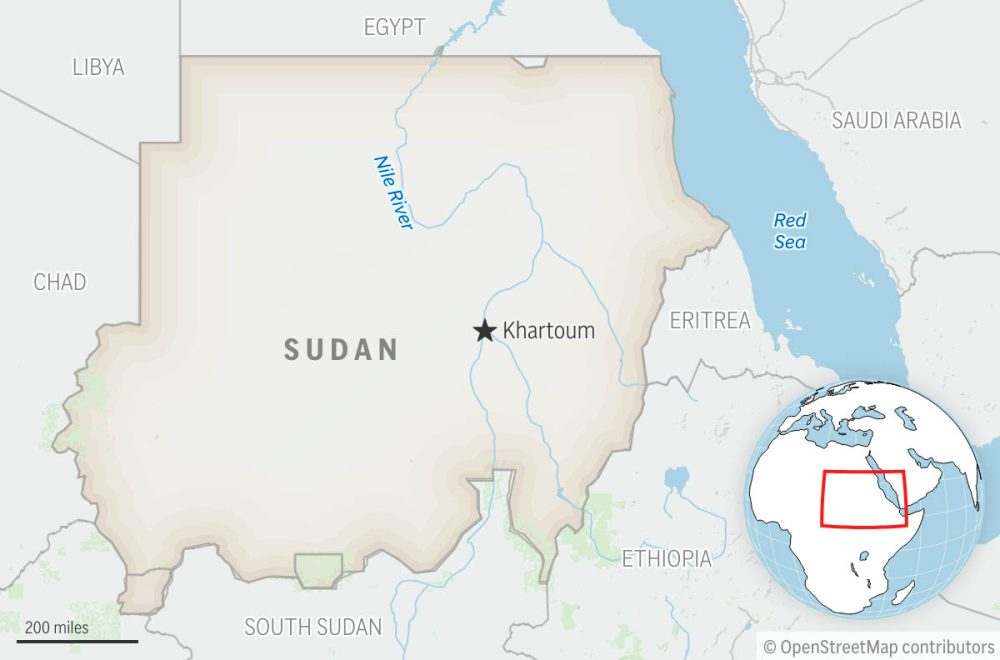
CAIRO — More than 20 civilians have been killed in a series of drone strikes on civilian vehicles in Sudan over recent days, according to human rights organizations, as the use of unmanned aircraft grows increasingly widespread in the war-torn nation.
The Sudan Doctors Network reported Wednesday that a drone struck the outskirts of Khartoum, killing 10 civilians — among them five women from the same family — who were on their way to a wedding. The medical aid organization, which has been documenting violence between Sudan’s military and the paramilitary Rapid Support Forces throughout the conflict’s four-year span, attributed Tuesday’s attack to the RSF. The strike occurred on a road west of Omdurman, a city neighboring the capital, Khartoum. Everyone aboard the vehicle, which burst into flames, died.
The group described the strike as “deliberate and carried out using a guided drone” and urged the international community to put pressure on RSF leadership to end attacks on civilians.
A separate incident on Tuesday saw a drone hit a transport vehicle near a water facility in the province, claiming two more lives, according to Emergency Lawyers, a group that monitors violence across Sudan. The day before, 13 civilians — including five women — were killed when a drone struck their vehicle as they traveled to a wedding in the town of al-Shaatout in North Kordofan province, the same group reported.
Emergency Lawyers described the violence as part of a troubling trend, stating: “This attack is part of an escalating pattern of drone attacks on civilians as drones continue to fly over the northern parts of the province…monitoring residents’ movements.”
North Kordofan province has experienced a significant increase in drone strikes, amid repeated warnings from international observers about RSF forces advancing on the strategically important city of el-Obeid, which is home to the army’s 5th Infantry Division. According to the United Nations, drone attacks on the city have damaged civilian infrastructure, including power facilities and residential neighborhoods, as well as bridges and critical supply routes.
The war in Sudan erupted in April 2023 following long-standing tensions between the national army and the RSF. Since then, the conflict has claimed the lives of at least 59,000 people, forced roughly 13 million from their homes, and driven large portions of the country into famine. More than 30 million people are currently in need of humanitarian aid.
Americans who are already feeling the pinch of Affordable Care Act health insurance costs are unlikely to catch a break next year. A new analysis reveals that insurers participating in the ACA marketplace are pushing for a second consecutive year of double-digit premium increases.
The healthcare research nonprofit KFF released its findings Wednesday, examining rate filings submitted by 77 insurers in the ACA program that are currently available to the public. The data shows a median proposed premium increase of 14% for 2027. Insurers pointed to climbing healthcare costs, changes in federal regulations, and the recent end of pandemic-era enhanced subsidies as the primary reasons behind the proposed hikes.
These proposed increases build on what was already a major jump in 2026, when the median rate increase hit 20%, according to KFF. While many ACA enrollees still receive subsidies that shield them from paying full premium costs, middle-class Americans earning 400% of the federal poverty level or above are expected to feel the sharpest financial impact.
The premium increases are unfolding as federal lawmakers debate various proposals to reshape the nation’s costly healthcare system, though no sweeping legislation has gathered enough support to move forward. Rising healthcare costs are adding fuel to broader concerns Americans already have about affordability — an issue that many voters say is top of mind as November’s midterm elections approach.
Each year, health insurers are required to submit filings to regulators outlining anticipated premium changes for individual market plans in the coming year. Final rates for 2027 will be set later this summer, but KFF’s analysis examined publicly available filings across 16 states and Washington, D.C., to offer an early look at the direction premiums are heading. The review covered all plan tiers — bronze, silver, gold, and platinum.
According to the analysis, insurers identified rising costs throughout the healthcare sector — including hospital care, prescription medications, staffing, and a sicker patient population — as the leading drivers of premium growth. Broad economic inflation also contributed, pushing prices upward across the board.
Insurers also cited the January expiration of federal tax credits that had previously helped offset costs for many enrollees and fueled significant growth in ACA participation in recent years. When those enhanced subsidies ended, plan costs shot up for many people, prompting a large number of enrollees to leave the marketplace. That exodus left behind a higher-risk, sicker patient pool, which in turn pushed premiums even higher.
New data released by the Trump administration shows the overall ACA marketplace lost more than 2.5 million enrollees over the past year, with certain states experiencing drops of nearly one-third of their enrolled population.
Some insurers also noted that new enrollment and eligibility rules put in place by the Trump administration played a role in their requests for higher premiums, as those changes could affect the makeup of the ACA enrollee population going forward.
Although ACA enrollees represent less than 10% of the overall population, KFF’s analysis noted that similar cost pressures are likely to make other types of private insurance — including employer-sponsored coverage — more expensive as well.
Georgetown University’s Center on Health Insurance Reforms also released its own review of early ACA insurer rate filings last month, similarly projecting double-digit premium increases in the marketplace for next year.
Stacey Pogue, a senior research fellow at the center and author of that report, said the people hit hardest by rising premiums will be those who don’t qualify for financial assistance. She noted that those individuals already experienced the most dramatic cost increases in 2026, with some premiums doubling or even tripling.
“Those are the folks who kind of got a double whammy” this year, she said.
Pogue said the rate filings are confirming what many analysts had anticipated — that the end of enhanced tax credits would push healthier Americans out of the marketplace, leaving behind a population with greater healthcare needs.
“When the healthy people leave, the prices go up,” she said. “The analysts all predicted that, and now that’s what we’re seeing.”
Airbus has trimmed its industry-wide outlook for passenger jet demand over the next two decades, citing the ongoing Iran war and global trade tensions as forces that have stalled what had been a strong aviation rebound following the COVID-19 pandemic.
The world’s largest aircraft manufacturer, releasing its updated forecast on Wednesday, said it still anticipates solid demand for new jets — with Asia leading the way and expected to account for roughly half of all deliveries — but acknowledged that a series of crises have dampened earlier projections.
“That post-COVID recovery has effectively flattened,” said Antonio Da Costa, the company’s head of market analysis, speaking to reporters.
The revised forecast covers the entire commercial aviation industry, including aircraft produced by rival Boeing as well as China’s emerging manufacturers. Airbus now projects 42,060 total passenger jet deliveries between 2026 and 2045 — a 1% reduction from its previous rolling 20-year estimate.
Within that total, the forecast calls for 33,920 single-aisle jets — a category that includes the Airbus A320neo family and Boeing’s 737 MAX — along with 8,140 wide-body, long-haul aircraft. Both segments are down 1% compared to the prior forecast.
The numbers suggest that production plans already announced by Airbus and Boeing would largely fill projected demand, while still leaving room for China’s C919 jet to carve out a share of the market in the coming years. Industry analysts say this points to a gradual easing of the widespread aircraft shortages that have plagued airlines in recent years.
Airbus also updated its projections on fleet replacement, now expecting 47% of total deliveries to go toward swapping out older jets rather than growing fleet sizes — up from the previous estimate of 45%.
On passenger traffic growth, the European planemaker revised its headline annual growth figure upward to 3.9% from 3.6%. However, company executives noted that on a comparable basis, this actually represents a downgrade from a prior estimate of 4.1%. Airbus did not release any updated projections for cargo aircraft demand.
The lowered long-term growth outlook reflects a more cautious view of aviation’s future, as airlines pull back on capacity expansion plans in response to higher fuel costs driven by the Iran conflict.
One bright spot in the forecast is the Middle East. Despite an ongoing fragile ceasefire in the Iran conflict, Gulf aviation hubs have largely returned to normal traffic volumes, Airbus said.
India remains the world’s fastest-growing air travel market, with Airbus raising its annual domestic traffic growth forecast for the country to 9.1%, up from 8.9%. Meanwhile, the company lowered its growth projection for China’s domestic market to 4.7%, down from 5.4%.
Both Airbus and Boeing have long pointed to aviation’s resilience in the face of major disruptions — from the September 11 attacks to the global financial crisis and the COVID-19 pandemic. But Da Costa noted that as the industry matures, long-term growth rates are beginning to slow. Airlines are also extending the operational life of their existing jets, fitting more passengers into each flight, and could see further efficiency gains from artificial intelligence.
In its latest forecast edition, Airbus drew attention to the growing role of smaller cities as a driver of future demand, highlighting aircraft such as the A220 and the narrow-body A321XLR, which are capable of connecting passengers without routing them through major hub airports.
The shift marks a notable change in strategy. A decade ago, the company was emphasizing the importance of serving large “megacities” with its A380 superjumbo — the world’s biggest commercial airliner — a program that has since been discontinued due to insufficient demand.
CLACTON, England — Nigel Farage, the 62-year-old leader of Britain’s populist Reform UK party, has made a bold political wager by triggering a special election for his own parliamentary seat. The unusual move could result in his only competition coming from Count Binface — a satirical character who wears a silver trash can as a helmet.
Farage, currently under investigation by parliament over millions of pounds in gifts from wealthy supporters, announced Tuesday that he wanted voters in his Clacton district in southeast England to weigh in on his conduct themselves. He described the parliamentary standards committee examining him as a “political tool” wielded by those threatened by his electoral rise, and characterized the scrutiny as coming from a liberal “establishment” determined to bring him down. He has denied any wrongdoing.
However, within hours of his announcement, every major political party declared they would sit out the Clacton vote, calling it a “stunt” meant to shift focus away from questions about his personal finances.
That decision left the field open for Count Binface — the creation of comedian Jonathan Harvey — who announced his candidacy on X. The character, who previously went by the name Lord Buckethead, has run against three prime ministers over the past decade as a way of poking fun at politics while, he says, honoring democracy.
“I will be a unity candidate and pledge to build at least one affordable house,” Count Binface posted on X.
Dressed in a silver outfit with a matching cape and his signature trash can helmet, Binface called on Clacton residents to give “your friendly neighbourhood intergalactic space warrior” the 10 nominations required to appear on the ballot.
Reactions from Clacton residents on Wednesday were varied. While some expressed confusion over the move, and a few said it confirmed their belief that Farage makes everything about himself, the majority said they still supported the longtime Brexit campaigner on issues they care most about, including immigration.
Zoe Banks, a 53-year-old office worker who did not vote for Farage in 2024 — saying she felt no politician could truly change things — told reporters she had no issue with the money in question as long as it was obtained legally, and that she believed he was being targeted by the political establishment.
“He’ll walk it,” she said of the upcoming vote. “This time I might actually vote for him, because if he’s not broken any rule … then, yeah, he’s got a right to complain.”
Bus driver Ray Lynaugh, 54, took a sharply different view.
“I dislike the man immensely,” he told Reuters. “What he stands for, what he’s done to the country. He is self-serving, self-centred. He’s an abysmal human being. Why people vote for him, I don’t know.”
For members of the governing Labour Party, the opposition Conservatives, and other parties, the prospect of Count Binface being Farage’s lone challenger underscores what they view as the ridiculousness of the whole situation.
“Nigel Farage vs Count Binface neatly illustrates the farce that is the Clacton by-election,” said Conservative lawmaker Ben Obese-Jecty.
Reform UK, however, sees the mainstream parties’ boycott as proof of their fear of facing Farage directly. Zia Yusuf, Reform’s home affairs policy chief, argued on BBC News that established parties believe it is “their birthright to have a stranglehold over British politics, and that is why Nigel Farage is so threatening to that.”
ROME — A new legislative proposal introduced Wednesday by Italian Prime Minister Giorgia Meloni’s Brothers of Italy party would fast-track the removal of foreign nationals convicted of crimes and expand the government’s ability to strip them of Italian citizenship.
Under the draft bill, any non-EU citizen sentenced to more than one year behind bars would be sent back to their home country, whether or not they agree to go. Party members unveiled the measure at a parliamentary press conference.
The deportations would be carried out through bilateral agreements that Italy would negotiate with the offenders’ home nations. Those facing removal would have very few options to fight deportation — limited mainly to cases where they could face inhumane treatment or the death penalty upon return. Anyone sent back under the program would be permanently banned from re-entering Italy.
Brothers of Italy lawmaker Sara Kelany said the bill would also widen the list of crimes that could result in the loss of Italian citizenship for those born outside the country.
Separately, Italy’s parliament is already debating a related measure put forward by coalition partner the League, which would tighten the rules around obtaining citizenship and make it easier to strip people of Italian nationality.
Both Brothers of Italy and the League are facing electoral pressure heading into next year’s parliamentary vote. An emerging far-right anti-immigration movement called Futuro Nazionale is gaining traction in polls, reportedly pulling support away from both established parties.
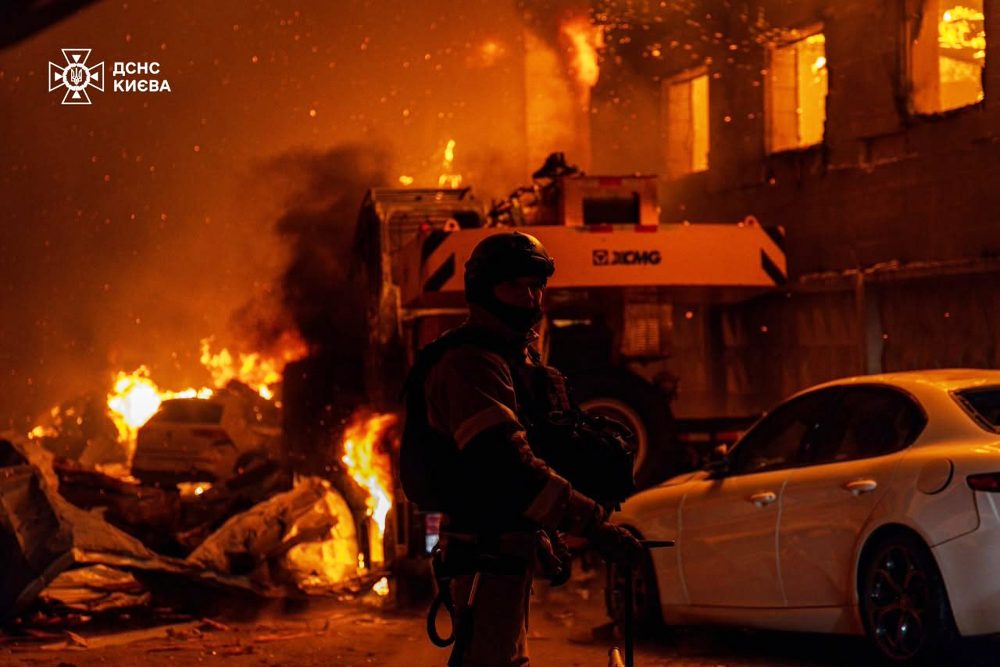
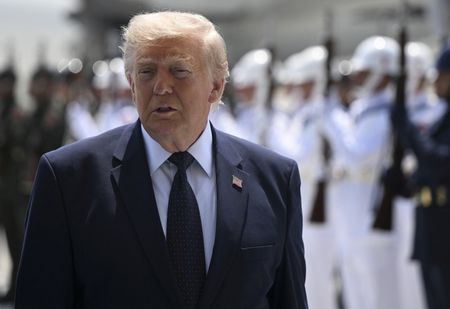
Oil prices surged Wednesday following a new round of military strikes exchanged between the United States and Iran, representing the most significant flare-up in tensions since the two countries agreed to a ceasefire just last month. President Donald Trump declared that their memorandum of understanding was now “over.”
The U.S. launched strikes against Iranian targets on Tuesday in response to several oil tankers being struck by projectiles in the Strait of Hormuz over recent days. Iran responded with attacks on American military bases in the region.
Oil settled about 3% higher on Tuesday following the exchanges and after Washington announced it would revoke a sanctions waiver on Iranian oil, set to take effect July 17. By early Wednesday, Brent crude was trading above $78 per barrel following Trump’s comments about the MoU. Market analysts suggest traders may be unsettled, but many will likely interpret the situation as a temporary flare-up rather than a full-scale return to hostilities — and view the president’s statements as largely posturing.
Adding to the turbulence, a selloff in semiconductor stocks continued on Tuesday. The SOX chip index dropped nearly 5%, while the Nasdaq fell more than 1%. Elon Musk’s SpaceX was swept up in the downturn as well, losing nearly 7% on its first day as a member of the Nasdaq 100 index.
In Asia on Wednesday, South Korean chipmakers Samsung and SK Hynix saw their shares close lower again, even though Samsung had reported impressive earnings results the day before. European markets opened in negative territory, and Wall Street futures were pointing sharply downward ahead of the opening bell.
South Korea’s chip-heavy KOSPI stock index dropped more than 5% on Wednesday, putting it roughly 20% below a record closing high set in late June — officially placing it in bear market territory. Despite this, the index remains up more than 70% for the year.
In currency markets, New Zealand’s dollar strengthened after that country’s central bank raised interest rates by a quarter-point to 2.5%, citing the need to fight inflation, with policymakers signaling further tightening is “likely to be required.”
The rate hike serves as a reminder of the persistent threat of inflation worldwide — a concern that is only intensified by the renewed uncertainty hanging over energy supplies in the Middle East. Bond prices declined broadly on Wednesday.
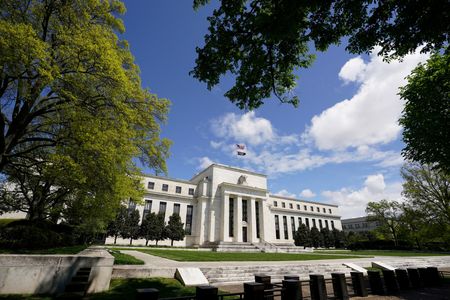
On the domestic monetary policy front, the Federal Reserve is set to release minutes from its June policy meeting Wednesday, which may offer additional insight into how policymakers are thinking about the economy. Those minutes were written before the recent developments in the Strait of Hormuz, underscoring how quickly economic conditions can shift.
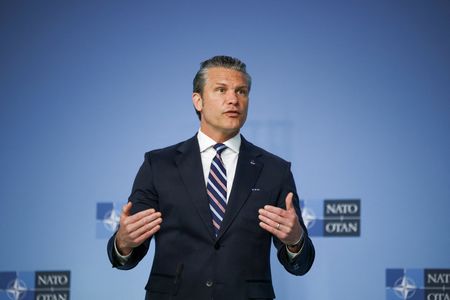
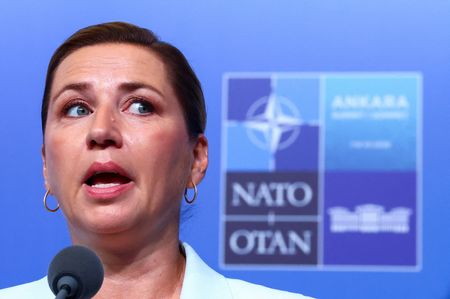
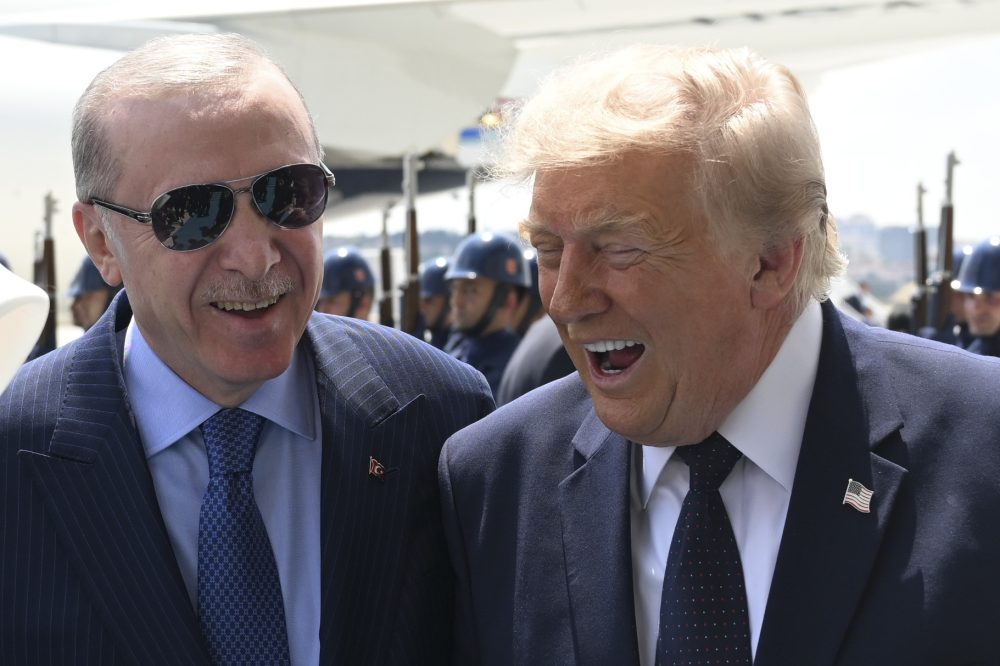
Key events to watch Wednesday include the release of the Fed’s June meeting minutes, a U.S. 10-year note auction scheduled for 6 p.m. EDT, and the second day of the NATO summit taking place in Ankara, Turkey.
AI chip startup SambaNova announced Wednesday that it has completed a late-stage fundraising round totaling $1 billion, with General Atlantic leading the effort. The deal places the company’s post-money valuation at $11 billion.
SambaNova develops custom chips, hardware systems, and cloud-based services designed specifically for inference — the technical process through which AI models generate responses to questions and requests from users.
The funding came through a Series F round that drew significant contributions from Seligman Ventures, T. Rowe Price Associates, and Capital Group. Additional participants — both new and returning investors — included A&E Investment, Assam Ventures, funds and accounts managed by BlackRock, Intel Capital, and the Qatar Investment Authority.
According to the company, the newly raised capital will be directed toward expanding capacity, scaling deployments on a global level, and continuing investment in chips, systems, software, and full-stack AI infrastructure for its customers.
SambaNova also disclosed that JPMorgan Chase has chosen the company as an inference infrastructure partner, deploying its SN40 and SN50 systems for AI inference operations.
Earlier this year in February, SambaNova raised $350 million to support expansion of its SN50 AI chip and entered into a partnership with Intel aimed at delivering cost-effective inference solutions for AI-focused companies. That partnership included a $35 million investment from Intel, which received U.S. antitrust clearance in May after discussions about a potential acquisition between the two companies fell through.
A Reuters review of corporate records from April revealed that Intel had also planned to invest an additional $15 million in SambaNova, a move that would bring Intel’s ownership stake in the company to 9%. SambaNova did not respond in time to a request for comment regarding the current size of Intel’s stake or its specific contribution to the Series F round.
The company’s most recent valuation marks a significant jump from April 2021, when SambaNova raised $676 million in a round led by SoftBank Group’s Vision Fund 2, which valued the company at more than $5 billion at that time.
Duck Creek Road is closed in both directions at DuPont Parkway, also known as US Route 13, following a crash at that intersection.
Travelers in the area are advised to avoid the roadway and plan for alternate routes until the road is reopened. The closure affects traffic moving through the intersection in both directions.
No further details regarding the crash have been made available at this time. Drivers should use caution and allow for extra travel time in the surrounding area.
A section of Millsboro Highway is currently closed to traffic as crews work to complete emergency repairs on the roadway.
The closure affects the stretch of Millsboro Highway running from Laurel Road to Conaway Road. The road is expected to remain shut down until 3 p.m. on July 8, 2026.
Motorists traveling through that area are advised to allow extra time and seek alternate routes until the repairs are finished.
A former data scientist who worked at Elon Musk’s aerospace company is sitting on roughly $3.5 million in SpaceX shares — and he’s been spending some of that windfall in unexpected ways.
The man, who goes by Chip and asked that only his first name be used when discussing his finances, recently purchased meteorites valued at $10,000 and a $5,000 fire truck. The 50-year-old space enthusiast isn’t entirely sure what he’ll do with the truck — perhaps use it as a novelty attraction at his 3-year-old child’s birthday party. His new wealth, tied to SpaceX’s initial public offering in June, has given him the freedom to splurge on what he calls “silly” things.
Chip has also been eyeing a TAG Heuer Carrera Calibre 1887 SpaceX Chronograph watch priced around $8,000. The timepiece draws inspiration from NASA astronaut John Glenn’s 1962 orbital mission.
Stories like Chip’s are becoming more common as an estimated 440,000 Americans became millionaires last year through stock market gains and, more recently, through public offerings from artificial intelligence companies. But whether that wealth will breathe new life into the struggling global luxury goods sector remains an open question.
“This industry is competing more and more with other industries and with other buckets of possible expenditures and purchases,” said Federica Levato, a partner at the consulting firm Bain & Company.
High-end fashion brands are hoping this tech millionaire surge can serve as a lifeline at a time when they’re dealing with ongoing weakness in China and shaky consumer confidence worldwide. The personal luxury goods market, valued at €358 billion (approximately $406 billion) in 2025, has actually shrunk over the past two years, according to a Bain study released last month.
Still, North America stood out as one of the fastest-growing regions for major luxury groups including LVMH, Richemont, Hermès, and Kering’s Gucci during the quarter ending March 31. Richemont’s CEO told analysts in May that a “high level of consumer confidence in America” was driving strong sales.
The challenge for luxury brands is that tech millionaires don’t always share the same tastes as traditional wealthy consumers. AI strategist Zack Kass, who ran the go-to-market division at ChatGPT creator OpenAI until 2023 and holds an undisclosed stake in SpaceX, put it bluntly: “I played volleyball in high school and college. I literally took my OpenAI winnings and bought a professional sports team” — referring to a volleyball franchise.
Tech workers tend to gravitate toward experiences and wellness, including smartwatches that monitor steps and calorie intake, according to Harrison Colcord, founder of Harrison Lifestyle Concierge.
A former SpaceX engineer named Robert — who also requested that only his first name be used — said his SpaceX shares are worth roughly $4 million. He and his wife recently upgraded to new Apple Watches as part of a renewed focus on fitness, while planning to reinvest most of their newfound wealth. The couple recently took a cruise around Alaska.
That said, traditional luxury watches from top names like Rolex and Richemont’s Cartier still hold appeal, partly because they can function as investments — their resale value often exceeds the original retail price. “You’re not wearing your smartwatch with your tux or your suit,” Colcord noted.
The United States was the top destination for Swiss watch exports in 2025, capturing 17% of global shipments despite disruptions caused by import tariffs, according to the Federation of the Swiss Watch Industry. Rolex declined to comment on the trend, and Richemont did not respond to a request for comment.
When it comes to clothing, newly wealthy tech workers spend about one-third less on upscale outfits and leather goods compared to those who inherited generational wealth, said Filippo Bianchi, who heads the global luxury team at Boston Consulting Group. Their top priorities tend to be durable assets like real estate, yachts, and cars.
Some brands do still resonate with affluent tech clients. A California-based stylist who works with tech executives said labels like Chanel and Hermès carry logos that wealthy clients are often happy to wear.
But Chip isn’t among them. He says he has no plans to revamp his wardrobe — unless he upgrades his outdoor gear. The last jacket he bought came from the thrift store Goodwill. “I’ve been in T-shirts and shorts for years,” he said. “That’s what I’m comfortable in — I don’t see that changing.”
Bayer appeared before a federal judge Thursday in an effort to dismantle a large block of consolidated lawsuits claiming its Roundup weedkiller causes cancer — a move the company says is justified by a recent win at the U.S. Supreme Court.
U.S. District Judge Vincent Chhabria held a status conference in San Francisco to decide how to move forward with nearly 4,000 cases after the Supreme Court ruled last month that plaintiffs cannot sue Bayer on the grounds that Roundup’s warning label failed to alert users to cancer risks. Bayer contends that ruling should result in the entire consolidated federal case being thrown out.
The company has also noted that the Supreme Court decision is unlikely to impact more than 60,000 similar lawsuits currently pending in state courts. Bayer is working to resolve most of those cases through a proposed $7.25 billion settlement that a Missouri judge is set to review in August.
Bayer acquired Roundup as part of its purchase of Monsanto in 2018. The company maintains that decades of scientific research have shown that glyphosate, Roundup’s primary active ingredient, is safe and does not cause cancer.
The status conference had originally been set for Tuesday, but Judge Chhabria pushed it back two days so both sides could provide more detailed information about how the Supreme Court ruling affects the pending cases.
The Supreme Court’s decision centered on the idea that plaintiffs cannot argue Roundup’s label was inadequate under state laws because the U.S. Environmental Protection Agency has already determined the label does not need to include a cancer warning.
In court filings, Bayer argued that so-called “failure to warn” claims are the foundation of the lawsuits, and that the consolidated federal litigation has “no reason to exist” in the wake of the ruling. Bayer further argued that other claims raised by plaintiffs — including negligence and design defect — are simply variations of the same core argument that Roundup was sold without proper warning.
Attorneys representing the plaintiffs pushed back, saying the Supreme Court’s ruling only addressed Roundup’s label and does not eliminate other types of claims commonly brought in Roundup personal injury cases, such as design defect and negligence.
Bayer’s Monsanto unit did not respond to requests for comment. Plaintiff attorney Robin Greenwald stated that the consolidated litigation should not be shut down.
In an order issued Monday, Judge Chhabria said both sides had given “unsatisfying” initial answers to his questions about how the cases should proceed. He indicated that both parties “should be prepared to plow ahead” on difficult legal questions, rather than assuming all cases would either be dismissed or allowed to continue.
The case is titled In Re: Roundup Products Liability Litigation, filed in the U.S. District Court for the Northern District of California, case number 16-md-02741. Plaintiffs are represented by Robin Greenwald and Robert Quigley of Weitz & Luxenberg, and David Dickens of The Miller Firm. Monsanto is represented by Brian Stekloff and Rakesh Kilaru of Wilkinson Stekloff.
NEW YORK (AP) — After spending four years locked out of the American market, the prediction market platform Polymarket has launched a well-funded effort to reintroduce itself to U.S. customers — and to convince them it’s a fundamentally different company than the one they may have heard about before.
The company is working on multiple fronts to win over policymakers, regulators, and everyday Americans. It has brought on social media influencers to generate viral content on TikTok and other platforms. Its account on X, formerly known as Twitter, now boasts millions of followers and posts regularly about current events. The company has also struck partnership deals with major sports teams, Major League Baseball, and news outlets including CNBC and CNN — all in support of its argument that its real-time markets offer a more accurate glimpse into the future than traditional polls or political commentary.
The campaign is essentially designed to reposition Polymarket as something different from what most people currently associate with the brand.
What Americans know as Polymarket has, technically speaking, been off-limits to them. In 2022, the company was forced to move its operations offshore after settling federal charges that it had run an unregistered derivatives market. Despite the prohibition, many Americans found workarounds to continue using the platform. That offshore operation drew criticism over allegations of insider trading and allowing bets connected to war and other acts of violence.
Polymarket re-entered the U.S. market at the end of 2025 by purchasing the derivatives exchange QCEX, which gave it the regulatory license needed to operate domestically. Company executives say the U.S. exchange is kept entirely separate from the international platform, and they have brought on a number of compliance, surveillance, and regulatory specialists in recent weeks to maintain that separation.
“Trust is the product we are building here,” said Dan Lee, head of U.S. operations at Polymarket, in an interview. Lee joined Polymarket in February, coming from Coinbase.
Among the new additions, the company brought on Megan McGrath from Robinhood to serve as its chief compliance officer. Lee and another executive, Natalie Oblazny, were both recruited from Coinbase. The company has also hired former officials from the Department of Justice and FBI to lead its enforcement and surveillance efforts. Lee said Polymarket’s ability to successfully reestablish itself in the U.S. depends almost entirely on whether it can persuade people that its American platform can be a trustworthy prediction market, and the new hires are central to making that case.
Both Polymarket International and Polymarket U.S. offer the same basic service — letting users trade on the probability of future events, from weather and sports to politics and breaking news. However, the two operate very differently under the hood. The international platform runs on blockchain technology and requires users to trade using cryptocurrency, while the U.S. version uses a more traditional, centralized structure regulated by the CFTC and funded with U.S. dollars.
For most users, the experience on either platform will feel similar, with the main difference being how they fund their accounts. Polymarket U.S. will also offer a much smaller selection of contracts and operate under stricter rules than the international version.
“Polymarket U.S. is supposed to comply with U.S. law and regulations. Polymarket international is where anything goes,” said Todd Phillips, who has written extensively on prediction markets at the Roosevelt Institute.
The stakes are enormous for Polymarket. In the years since it left the U.S. market and its return six months ago, the prediction market industry has expanded significantly in both size and popularity. Combined trading volume across Polymarket and its main competitor Kalshi now stands at $26.6 billion, according to blockchain analytics firm Dune — up from $9.75 billion in October of last year. Kalshi accounts for roughly two-thirds of that activity, driven largely by sports wagering, and was valued at $22 billion in its most recent funding round.
Both companies are also operating in a more favorable regulatory environment in Washington. The Trump Administration has generally been supportive of prediction markets, and the CFTC has gone to court against states to argue that federal law should override state-level regulations on the industry. Additionally, Donald Trump Jr., the president’s son, has invested in Polymarket through his venture capital firm, 1789 Capital.
Despite the momentum, Polymarket’s comeback has not been without stumbles. The Wall Street Journal uncovered evidence suggesting the company’s marketing campaigns used deceptive tactics, including hired influencers who appeared to be making real money on the platform when the trades shown were actually fake. Politico reported in June that a Polymarket executive paid at least 20 political content creators, many of whom never disclosed those financial relationships to their audiences. Both campaigns were part of Polymarket’s broader reintroduction effort in the U.S. The company says it is now investigating those marketing and promotional activities.
Questions also remain about whether Polymarket U.S. can truly distance itself from the controversies surrounding its international counterpart. Earlier this year, a U.S. Army sergeant was indicted in connection with bets placed on the capture of Venezuelan President Nicolás Maduro — bets made on Polymarket’s international platform. The Associated Press also reported in April that 50 brand-new accounts on the international platform placed significant bets on a U.S.-Iran ceasefire in the hours and even minutes before President Donald Trump announced the ceasefire on social media, raising serious concerns about insider trading.
Lee acknowledged those issues but expressed confidence that the steps being taken on the U.S. side will help establish its credibility over time.
“I think having the international business being the bulk of the volume, it often sorts of masks the progress we are making here in the U.S. to broaden Polymarket’s acceptance,” Lee said.
DEIR AL-BALAH, Gaza Strip (AP) — Four people, including a prominent Palestinian aid official who played a key role in setting up public World Cup viewing events throughout Gaza, were killed in an Israeli airstrike moments before the Egypt-Argentina match got underway Tuesday, local health officials report.
The explosion transformed what many Gazans had hoped would be a joyful, communal moment — watching a possible upset of Argentina by an Arab team — into yet another grim reminder that deadly Israeli strikes continue to claim civilian lives despite a ceasefire that was reached in October.
The bomb struck a vehicle in the Sabra neighborhood of Gaza City at dusk Tuesday. Among those killed were Mohamed al-Wahidi, director of public relations for the Egyptian Committee in Gaza; 10-year-old Hamza al-Deri and his 8-year-old brother Fari; and the car’s driver, Ahmed Daghmush, 33. Dr. Mohamed Abu Selmiya, director of Shifa Hospital, which received all four bodies, confirmed the deaths.
The Israeli military stated that al-Wahidi, who was involved in coordinating the soccer screenings, was not the intended target. According to the military, the strike was aimed at a Hamas militant, and it said it was investigating whether Daghmush was the person they were targeting.
Abu Selmiya said Daghmush was a taxi driver with no known ties to any militant organization.
A separate Israeli strike had hit the same street about 30 minutes earlier, resulting in no casualties.
The Egyptian Committee, where al-Wahidi served, functions as the humanitarian arm of the Egyptian government, delivering food, shelter, and other aid to Palestinians in Gaza. The committee also spearheaded the effort to set up large screens across the territory for residents to watch World Cup matches together.
A large portion of the Palestinian diaspora lives just across the border in Egypt, which played a central role in brokering the Israel-Hamas ceasefire. Support for Team Egypt among Gaza residents has surged throughout the tournament, largely because coach Hossam Hassan has repeatedly used press conferences and on-field moments to draw attention to the suffering of the Palestinian people. After his team’s win over Australia on Friday, he dedicated the victory to both Egyptians and Palestinians and waved a Palestinian flag on the pitch.
During a Monday press briefing ahead of the Argentina match, Hassan called on the global community to take greater action on behalf of Palestinians.
When it comes to Greenland, President Donald Trump keeps returning to the same argument: the United States needs to control it. Rising international tensions, a warming planet, and shifting global trade patterns have thrust this remote Arctic island into the center of a major geopolitical debate — and Trump wants America to come out on top.
Greenland’s position above the Arctic Circle has long made it a cornerstone of North American defense strategy. About 80% of the island lies within the Arctic Circle, and roughly 56,000 people — most of them Inuit — call it home. Until recently, the island received little global attention. That has changed dramatically.
Greenland is a self-governing territory belonging to Denmark, a longstanding U.S. ally. Both Denmark and Greenland’s own government have pushed back firmly against Trump’s advances, with Greenland’s leaders insisting that the island’s people will determine their own future.
Trump’s persistent calls for U.S. ownership of Greenland — including earlier suggestions that taking it by military force was not off the table — have unsettled NATO allies and raised alarms among European partners who have long counted on the U.S. for their defense. He has since said military options are no longer being considered.
At a recent NATO summit, Trump made his position clear: “Greenland is very important to the United States, but it’s not important to Denmark. We need it for protection of the world, not just the United States.”
Trump has also claimed, without evidence, that Russian and Chinese military forces are operating near Greenland’s shores. He argues that controlling the island is essential to countering threats from both nations.
Greenland’s strategic value stretches back to World War II, when the U.S. moved to occupy the island to prevent Nazi Germany from seizing it and to protect vital North Atlantic shipping routes. During the Cold War, the Arctic was largely a zone of international cooperation. But melting sea ice is now opening up potential new trade routes — including a northwest passage — and reigniting competition over the region’s vast natural resources.
China declared itself a “near-Arctic state” in 2018 in a bid for greater regional influence, and has announced plans to develop what it calls a “Polar Silk Road” as part of its broader global infrastructure initiative. Then-U.S. Secretary of State Mike Pompeo pushed back sharply, asking: “Do we want the Arctic Ocean to transform into a new South China Sea, fraught with militarization and competing territorial claims?”
Russia, meanwhile, has been asserting dominance over large swaths of the Arctic, rebuilding old Soviet-era military infrastructure and constructing new facilities. Since 2014, Moscow has opened several Arctic military bases and worked to restore airfields in the region. Russia’s Northern Fleet is based there, and Russian military officials have indicated the area could once again be used for nuclear weapons testing if deemed necessary.
European anxiety deepened after Russia launched its war against Ukraine on February 24, 2022. Russian President Vladimir Putin has acknowledged concern over NATO’s Arctic activities and pledged to bolster Russian military capabilities in the region — while also saying Moscow remains open to broader international cooperation there.
The U.S. already has a significant military footprint in Greenland. The Department of Defense operates Pituffik Space Base in the island’s northwest, established after the U.S. and Denmark signed the Defense of Greenland Treaty in 1951. The base supports missile warning systems, missile defense operations, and space surveillance for both the U.S. and NATO.
Greenland also plays a key role in monitoring what is known as the GIUK Gap — named for Greenland, Iceland, and the United Kingdom — a stretch of ocean where NATO tracks Russian naval movements in the North Atlantic.
Despite all this, at least one defense expert argues that outright U.S. ownership of Greenland would offer no real security benefit. Thomas Crosbie, an associate professor of military operations at the Royal Danish Defense College, told The Associated Press: “The United States will gain no advantage if its flag is flying in Nuuk versus the Greenlandic flag. There’s no benefits to them because they already enjoy all of the advantages they want.”
Crosbie added: “If there’s any specific security access that they want to improve American security, they’ll be given it as a matter of course, as a trusted ally. So this has nothing to do with improving national security for the United States.”
Denmark’s parliament passed a bill last year allowing U.S. military bases on Danish soil, expanding a 2023 agreement with the Biden administration that gave American troops broad access to Danish air bases. Danish Foreign Minister Lars Løkke Rasmussen also noted last summer that Denmark would have the right to end the agreement if the U.S. attempts to annex all or part of Greenland.
Beyond security, Greenland holds enormous economic appeal. The island is home to significant deposits of rare earth minerals — essential ingredients in cellphones, computers, batteries, and other high-tech products expected to drive the global economy for decades to come. Western nations are eager to reduce their dependence on China, which currently dominates the rare earth market.
However, developing those resources is no easy task. Greenland’s extreme climate makes extraction difficult, and strict environmental regulations have added further obstacles for potential investors.
On Wednesday, the Federal Reserve is scheduled to release detailed notes from its first policy meeting under new Chairman Kevin Warsh — a document that could shed new light on what Warsh himself described as a “family fight” that played out over two days last month as officials debated the direction of interest rates.
One of the key questions surrounding the release of the minutes from the June 16-17 Federal Open Market Committee meeting is whether Warsh will reshape them the same way he overhauled the committee’s post-meeting statement — a document that was stripped of forward-looking guidance and trimmed down in its description of current economic conditions.
Fed policymakers voted unanimously at that meeting to keep the central bank’s benchmark interest rate unchanged, holding it in a range of 3.50% to 3.75%. Updated economic forecasts submitted by all members except Warsh revealed a committee that has moved away from the rate cuts it previously anticipated. Officials are now split between those who believe keeping rates where they are is the right move for the rest of the year and those who think at least one rate increase may be necessary, given that inflation has been pushed higher by the U.S.-Israeli war with Iran.
Inflation is currently running at approximately twice the Fed’s 2% target. Meanwhile, the labor market appears to have leveled off after showing signs of weakness through much of last year.
Warsh was chosen for the role by President Donald Trump, who has pushed for lower interest rates and publicly criticized the previous Fed chair for not cutting them quickly enough. However, Warsh took a notably hawkish stance at his first press conference, repeatedly stressing the Fed’s responsibility to bring inflation under control while giving little attention to its goal of maximizing employment. Financial markets now widely anticipate at least one rate increase before the year is out.
Since taking the helm, Warsh has pledged sweeping changes at the central bank. Following the June meeting, he announced the creation of five task forces charged with reviewing how the Fed operates — examining everything from how it communicates with the public to what economic data it relies on to gauge the health of the economy.
Given the changes already made to the post-meeting statement, the minutes could carry even more weight than usual for investors and analysts trying to understand where the Fed is headed — unless Warsh decides to limit how much detail about internal deliberations and economic data is made available.
Traditionally, the minutes describe the range of views expressed by officials and give a general sense of how many agreed or disagreed on key points. That kind of information can signal how likely future rate moves might be, or even lay the groundwork for eventual policy changes — which is precisely the type of forward guidance Warsh has said he wants to move away from.
That reality has led some analysts to predict the minutes will be shorter and more bare-bones than in the past. “Warsh explicitly avoided policy guidance in the statement and press conference, so it seems unlikely that he would permit such guidance via the minutes,” said Steve Englander, head of North American macro strategy at Standard Chartered. “His image of a ‘family fight’ to characterize vigorous policy discussion may also carry the connotation of secrecy that is often associated with family fights.”
MILWAUKEE, Wisconsin — A former Wisconsin judge is set to learn her fate Wednesday, when a federal court hands down a sentence in a case that put a spotlight on tensions between local courts and the Trump administration’s aggressive immigration enforcement efforts.
Hannah Dugan, 67, who previously served as an elected judge on the Milwaukee County Circuit Court, was convicted of obstructing a federal proceeding. She was acquitted on a separate, lesser charge of concealing a person from arrest. The federal trial took place in December and brought national attention to the administration’s practice of staging immigration arrests at courthouses.
According to prosecutors, Dugan directed a Mexican migrant — who had been scheduled to appear before her on misdemeanor assault charges — out through a restricted “jury door” in an effort to help him slip past federal agents waiting in a hallway just outside the courtroom.
The migrant, identified as Eduardo Flores-Ruiz, ultimately walked through a public hallway alongside his attorney and was taken into custody outside the courthouse after a brief foot chase.
U.S. District Judge Lynn Adelman is scheduled to preside over the sentencing hearing, set to begin at 11:15 a.m. CST at the federal courthouse in Milwaukee.
Federal prosecutors did not specify a recommended sentence but argued that sentencing guidelines point to a range of 15 to 21 months behind bars. In a sentencing memorandum, they wrote that Dugan “used the power and prestige of judicial office to obstruct federal agents carrying out their lawful duties in order to help an individual evade arrest,” rather than uphold the rule of law.
Prosecutors also argued the sentence should reflect the “serious nature of her conduct and its broader impact on the justice system.”
Dugan’s legal team pushed back, disputing that the guidelines require a 15-to-21-month term. Her attorneys asked the court to sentence her to time already served, which would mean no additional prison time.
In a court filing, her defense described the incident as “isolated and unique” and argued there was “no possibility of her repeating it.” Her lawyers also noted that Dugan lost her judgeship following her conviction and contended she had been “intentionally shamed” by senior officials at the Justice Department and FBI after her arrest in April 2025.
FBI Director Kash Patel drew criticism after posting a photo on social media in April 2025 showing a handcuffed Dugan being escorted into a police vehicle, accompanied by the caption, “no one is above the law.”
WASHINGTON — President Donald Trump has dramatically stepped up his warnings about what he calls a communist takeover of the Democratic Party, as his political team quietly tests whether that message can win over voters beyond his loyal supporters ahead of November’s midterm elections.
Early results from internal focus groups suggest the anti-communist rhetoric strongly energizes Trump’s base and could push infrequent Republican voters to the polls, according to two people with knowledge of the testing. However, the message appears to have less impact on independent voters — who often decide close races — and on younger Americans who grew up after the Cold War ended.
Recent primary victories by democratic socialist and progressive candidates in Colorado, Kentucky, New York, Ohio, Texas, and other states have handed Trump and fellow Republicans a new line of attack: painting the Democratic Party as extreme rather than defending the administration’s own record on the rising cost of living.
A Reuters review of Trump’s public statements between June 23 and July 6 — a stretch during which a wave of left-leaning Democratic candidates won primaries in New York — found he used the word communism 81 times. Among those comments, he described some of the winning candidates as “hardcore, godless communists.”
Many of the progressive candidates in question have called for taxing the wealthy, reducing military spending, opposing U.S. financial support for Israel, expanding government programs, and eliminating U.S. Immigration and Customs Enforcement.
Trump, who has long favored blunt political labels, has been quick to brand supporters of those positions as communists. The candidates themselves, however, largely identify as democratic socialists — a movement that pursues progressive change through elections — which is distinct from communism, an ideology that calls for abolishing private property and eliminating class distinctions.
White House spokeswoman Olivia Wales defended the president’s language, saying “Democrats’ embrace of socialism and communism” represents an “existential threat to our country” and that Trump will “keep calling out their radicalism and drawing a sharp contrast with his commonsense, America First agenda.”
During his July Fourth address marking the 250th anniversary of American independence, Trump compared the rise of communism to a cancer. “You’ve got to cut it out, and you got to cut it out fast,” he told a crowd gathered on the National Mall in Washington.
By reaching for the communist label, Trump is reviving one of the oldest attack strategies in American politics — one previously used by Republicans Richard Nixon and Ronald Reagan during the Cold War era. Still, his choice to use a traditionally unifying Independence Day celebration as a venue for partisan attacks was seen as an unusual move.
Behind closed doors, Trump’s aides are refining the message through focus group testing as Republicans gear up for the final push toward November elections that will determine which party controls Congress.
Early focus group data suggests the word “communism” can pack more punch than “socialism” in certain races, while “socialism” may work better in paid advertising and local district messaging, according to one of the people familiar with the findings.
The message is seen as particularly effective with Hispanic voters in Florida and Texas, where appeals against socialist ideology have historically resonated with families who fled left-wing governments in Latin America.
“It’s an appealing message to voters and will help draw the contrast in November,” said Alex Pfeiffer, a spokesman for Trump’s super PAC MAGA Inc.
A 2025 Gallup poll found that Americans still view socialism more negatively than positively, with 57% holding an unfavorable opinion and 39% a favorable one. Democrats, however, were found to be more supportive of socialism than capitalism.
Republican strategist Amy Koch expressed doubt that the communist label would bring in younger voters or independents. “I just don’t think that communism means the same for anybody under 55,” she said.
U.S. Representative Suzan DelBene, who leads the House Democratic campaign committee, pushed back in a statement, saying Republicans were “resorting to desperate attacks that aren’t actually about the pocketbook issues.”
Over the past week, Trump has brought up communism during an Oval Office exchange with reporters, at the opening of the Theodore Roosevelt Presidential Library in North Dakota, and at Independence Day events at Mount Rushmore and on the National Mall. He has described it as “the most serious threat to our country since its existence,” suggested it may be a greater danger than World War One, World War Two, or the September 11, 2001 attacks, and labeled it “a mortal threat to American liberty.”
The strategy gives Republicans a way to go on offense after months spent defending Trump’s economic record — a task made harder by the president’s own mixed signals. Trump has said he loves inflation, dismissed rising gas prices tied to conflict with Iran as “peanuts,” and called a bipartisan housing bill aimed at lowering home costs “a big yawn.”
Republican leaders, including House Speaker Mike Johnson and Republican National Committee Chairman Joe Gruters, have moved quickly to amplify Trump’s message, framing the upcoming midterms as a choice between “common sense and extremism.”
The cryptocurrency world is taking a hard look at one of its most serious long-term threats: quantum computing. As advances in the technology accelerate, concerns are mounting that quantum machines could one day break the encryption systems that keep digital transactions and wallets secure.
Unlike today’s conventional computers, quantum computers are capable of solving extraordinarily complex mathematical problems at much greater speeds. That capability could potentially be used to unravel the cryptographic methods that protect the $2 trillion global cryptocurrency market — a market that already has a troubled history with major hacks.
While quantum computing is still largely in the experimental phase, alarm bells have grown louder since March, when research from Alphabet’s Google suggested the technology could break existing encryption sooner than anyone had anticipated. Google has indicated that quantum computers powerful enough to crack encryption could emerge as early as 2029 — a timeline far shorter than the decade-plus window that had previously been assumed.
Research from Citigroup and other institutions has reached similar conclusions, finding that quantum computing advances — combined with breakthroughs in artificial intelligence — have dramatically shortened the window before cryptocurrencies become broadly vulnerable to hackers.
Recognizing the risks to both the public and private sectors, U.S. President Donald Trump last month signed executive orders aimed at strengthening America’s quantum computing capabilities.
Some crypto companies and blockchain developers are already working on plans to upgrade their networks with quantum-resistant encryption — a process that experts say could take years and require sweeping changes to the entire digital asset infrastructure.
“It’s the most direct and existential threat towards cryptocurrencies and crypto networks,” said Chris Tam, head of quantum innovation at BTQ Technologies, a firm focused on quantum security.
At the heart of the vulnerability is the cryptography that most blockchains rely on. The majority use decades-old elliptic-curve cryptography to generate the public and private keys and digital signatures that verify ownership of crypto assets and authorize transactions. Public keys are mathematically derived from private keys and, in many blockchain networks, become visible to the public once assets are used or transferred.
While today’s computers cannot realistically reverse-engineer a private key from a public one, a sufficiently powerful quantum computer could — potentially allowing hackers to forge digital signatures and push through fraudulent transactions.
The risk is especially serious for public crypto networks, where transactions — unlike traditional bank payments — cannot be reversed.
“Crypto especially is uniquely exposed because blockchains are transparent and permanent,” said Utkarsh Ahuja, managing partner at Moon Pursuit Capital, a crypto investment firm.
Bitcoin, the world’s largest cryptocurrency, is considered especially at risk. Its 17-year transaction history has created a large pool of publicly visible keys. According to an unpublished June 2026 working paper by independent researcher Ahmed Raza Muhammad Umer, roughly 35% of Bitcoin’s circulating supply could be exposed to a quantum attack. Other research from last year put that figure as high as 50%.
Even a single incident in which a hacker steals and offloads a large amount of a token could devastate its price, warned Cristiano Ventricelli, vice president and senior analyst of digital assets at Moody’s Ratings. “Everyone will feel the impact,” he said.
That concern has already influenced some investment decisions. Christopher Wood, the widely followed global head of equity strategy at Jefferies, removed a 10% Bitcoin allocation from his model portfolio in his January newsletter, citing the long-term “existential” threat posed by quantum computing.
Despite the warnings, many in the industry believe there is still time to act. Ahuja and others said they expect it will be a few more years before quantum computing can actually crack blockchain encryption, and that the industry can transition to new “post-quantum” cryptography in the meantime.
However, crypto executives caution that moving too quickly carries its own risks, since post-quantum cryptography is still evolving rapidly. Post-quantum digital signatures are generally much larger than traditional ones, which increases storage and bandwidth demands. That could drive up costs and hurt the user experience — particularly on blockchains with fixed block-size limits, such as Bitcoin, according to Zach Pandl, head of research at crypto asset manager Grayscale. Still, Pandl expressed confidence that the industry would ultimately find solutions.
“There is an engineering challenge ahead, but there are engineering solutions already on the table,” he said.
One senior cybersecurity executive at a major crypto company said he expects it will take his firm two years to become fully quantum-resistant. Several people in the industry compared the scope of the effort to the Y2K overhaul, during which more than $300 billion was spent worldwide to fix the so-called “millennium bug.”
The challenge is particularly complicated for blockchains, which are mostly decentralized and governed by broad communities that may struggle to reach consensus on a course of action, said Tam of BTQ Technologies.
As of now, none of the top 20 blockchains have put a post-quantum signature algorithm in place, according to people interviewed for this story. In Bitcoin’s case, developers and market participants remain divided on which solution to adopt and when. The Ethereum Foundation, which backs the blockchain underlying ether — the second-largest cryptocurrency — has set a target of 2029 to achieve full protection against quantum threats.
“The sort of disaster scenario is that it happens way sooner than we think,” said Christopher Smith, CEO of Quantus, a blockchain that has already adopted post-quantum cryptography.
Among the early movers is the Algorand Foundation, which supports the Algorand blockchain. The foundation’s native token carries a market capitalization of around $780 million. Last month, the foundation published a post-quantum roadmap and announced plans to begin supporting post-quantum accounts later this year, said Bruno Martins, the foundation’s chief technology officer.
“It felt right to start doing (something) now, because it’s responsible to have a plan,” Martins said.
Apple and Broadcom have finalized a major chip-supply agreement worth more than $30 billion, with both companies confirming the details on Wednesday.
Broadcom first announced Monday that it had locked in a long-term supply contract with the iPhone maker, set to run through 2031. Apple followed up Wednesday with specifics, revealing the deal centers on a type of radiofrequency component known as FBAR filters — specialized chips that allow Apple devices to connect wirelessly. The two companies have reportedly been collaborating on this technology since at least 2023.
Under the terms of the agreement, Broadcom will invest $1.5 billion to expand its manufacturing facility located in Fort Collins, Colorado. Apple noted the deal is expected to result in the production of at least 15 billion chips total, and that it fits into the company’s ongoing effort to increase domestic chip sourcing in line with priorities set by President Donald Trump’s administration.
Apple CEO Tim Cook issued a statement praising the partnership: “The cutting-edge components built in Fort Collins are essential to delivering the incredible performance and connectivity our customers expect, and we’re proud to deepen our investments in U.S.-based suppliers that share our commitment to excellence and innovation.”
Cook also extended thanks to the White House, adding, “We’re grateful to the president and his administration for supporting important projects like this.”
A crash on U.S. 13 southbound at Route 8 has resulted in the closure of two right lanes, according to traffic officials.
Motorists traveling through that area should be prepared for slowdowns and consider using an alternate route until the scene is cleared. No further details about the incident have been released at this time.
Drivers are urged to use caution in the area and allow extra travel time.
Good morning, Delmarva! We’re starting off Wednesday on a beautiful note. Expect mostly sunny skies today with a pleasant high near 81°F. A light east breeze around 5 mph will keep things comfortable — a great day to spend some time outdoors!
Tonight, clouds will begin to increase as we stay partly cloudy with a mild overnight low of 69°F. Enjoy the comfortable sleeping weather while you can!
Here’s where we need to pay attention: Thursday brings a notable change to our weather pattern. The day starts with a slight chance of rain showers, but by the afternoon and evening, showers and thunderstorms become likely as a frontal system moves through the region. Highs will climb to around 85°F before the storms arrive. Thursday night continues unsettled with thunderstorms likely and a low near 72°F.
If you have outdoor plans Thursday, keep a close eye on the forecast and have a backup plan ready. Stay weather-aware, Delmarva — and enjoy this gorgeous Wednesday! I’ll see you on TV Delmarva with updates throughout the day.
A GE Appliances manufacturing facility located in rural northwest Georgia found itself hundreds of workers short during the COVID-19 pandemic — but a creative staffing solution has helped turn things around.
The plant, which produces ovens and ranges, introduced a flexible work option that lets certain employees browse available shifts and sign up for the ones they want through a mobile app. The program gave workers more control over their schedules, something that proved attractive to people who may not have been able to commit to a traditional full-time manufacturing schedule.
The approach has helped ease what had been a serious labor shortage at the facility, offering a potential model for other manufacturers facing similar hiring challenges in the post-pandemic workforce landscape.
Health insurance companies that offer Obamacare coverage are asking regulators for a 14% median premium increase for the 2027 plan year — the second-largest requested hike in nearly a decade, according to data compiled by health policy research organization KFF.
Insurers are required to submit their proposed rate changes to regulators by July 15, outlining anticipated costs and pricing adjustments for the coming year. The 14% figure represents a significant jump, though it falls short of last year’s requested median increase of 18%.
When companies sought that 18% hike for 2026, they cited an expected surge in higher-risk, sicker patients enrolling in the plans without enough healthier members to balance out costs. That same trend is expected to continue pushing premiums up by roughly 4% in 2027, KFF said. Additional factors contributing to the increase include widespread economic inflation, climbing medication prices, and growing consolidation among medical providers.
Obamacare enrollment dropped 13% in 2026 compared to 2025, falling from 22.1 million people after pandemic-era subsidies that helped Americans keep their coverage expired. The Department of Health and Human Services now puts current enrollment at approximately 19.2 million Americans in plans established under President Barack Obama’s Affordable Care Act.
The loss of those subsidies hit consumers hard — KFF data shows premiums climbed 58% in 2026, and deductibles rose by roughly $1,000 per person. Looking at the full picture from 2025 to 2027, total premium increases are on track to exceed 33% based on the latest proposed rates.
Despite the steep increases, most marketplace enrollees who earn less than 400% of the federal poverty level still qualify for some form of subsidy assistance.
To arrive at its 2027 projections, KFF reviewed rate filings submitted by 77 insurers across 16 states and Washington, D.C. Major insurers including Centene and UnitedHealth have both flagged rising medical costs within their Obamacare businesses this year. CVS Health announced last year that its Aetna insurance division would stop offering Obamacare plans in 2026 altogether, citing unsustainable cost increases.
Mercedes-Benz reported Wednesday that its core vehicle sales continued a downward trend in the second quarter, dropping 8% compared to the same period a year ago, largely driven by fierce competition in the Chinese market.
The German automaker delivered 417,800 cars during the April through June period, according to a company statement released July 8.
China proved to be the biggest drag on performance, where sales plummeted 30% year-over-year. The company attributed the steep decline to “an intensifying competitive environment and the timing of the company’s current product ramp-ups.”
Not all regions struggled, however. Mercedes-Benz posted a 10% sales increase in the United States and a 4% gain across Europe during the same timeframe.
One bright spot in the report was battery-electric vehicles, which saw sales jump 50% to 63,000 units — a figure that includes both cars and vans.
The challenges Mercedes-Benz faces in China are not unique. European automakers broadly are caught in an aggressive price war with homegrown Chinese brands in what is considered the world’s largest automobile market.
The pressure in China has hit others in the industry as well. Rival automaker BMW recently slashed its 2026 core profit margin forecast to as low as 1%, also pointing to difficulties in the Chinese market.
KYIV, Ukraine — Three people were killed across Ukraine during overnight Russian attacks on Wednesday, including one fatality in Kyiv, where powerful blasts rocked the capital for the second consecutive night.
Multiple explosions were heard shortly after midnight — before officials had even issued an air raid warning. That unusual sequence raised concerns, as alerts are normally sent out ahead of strikes so that residents have time to seek shelter.
In the city of Kharkiv, two people were killed and 20 others were wounded in a string of overnight strikes, according to Mayor Ihor Terekhov.
Ukraine’s Air Force reported that Russia launched 169 long-range strike drones and seven missiles — including five ballistic missiles — at the country overnight. Air defenses managed to shoot down or electronically jam 139 of the drones, and two anti-radar missiles failed to reach their intended targets. However, all five ballistic missiles and 20 drones successfully hit targets at 15 different locations, highlighting the ongoing pressure on Ukraine’s air defense network.
Russia’s Defense Ministry claimed its military struck arms production sites in Kyiv, saying it hit a factory manufacturing components for Flamingo cruise missiles and another facility that assembles medium- and long-range drones.
Russia’s Defense Ministry also reported that its air defenses brought down 415 Ukrainian drones between late Tuesday and early Wednesday. Saratov Governor Roman Busargin said a Ukrainian drone strike killed one person, injured several others, and caused damage to unspecified industrial facilities in the region.
Nizhnekamsk Mayor Radmir Belyayev reported that Ukrainian drones damaged industrial sites in his city and left several people injured, though he did not identify which facilities were affected.
Yuri Slyusar, the governor of Russia’s Rostov region, said Ukrainian drones struck and damaged two oil tankers in Taganrog Bay, injuring two crew members. One of the vessels had to be evacuated. Slyusar noted there was no oil spill, as both tankers were empty and heading toward the port of Rostov-on-Don.
Back in Kyiv, one woman was killed and two others were injured in the Russian assault, according to city administration head Tymur Tkachenko. Ukraine’s State Emergency Service said the attack damaged several administrative buildings, warehouses, a garage complex, and multiple city trams.
In the Zaporizhzhia region, a Russian guided bomb injured an elderly man and a woman overnight, according to regional head Ivan Fedorov.
Rescue crews in the southern Indian state of Kerala are in a race against time to find five people still unaccounted for, one day after powerful monsoon rains triggered a deadly landslide, according to officials.
The disaster struck near a tunnel construction site in Wayanad district — a hilly area recognized for its dense forests and sweeping green terrain — claiming the lives of at least three workers. Seven additional workers sustained injuries and are currently receiving hospital care.
Search teams, including disaster response units and sniffer dogs, fanned out across the area, which authorities divided into search zones. A local police official named Devamanohar told reporters that ongoing heavy rainfall has made the search effort significantly more difficult.
Video footage captured the moment a massive wall of mud collapsed during the downpour, tearing trees from the ground and demolishing metal and fabric barriers surrounding the construction site.
Kerala’s home minister T. Siddique spoke with reporters and characterized the event as something other than a natural disaster. According to the Press Trust of India news agency, he stated it was “not a natural landslide but a man-made one caused by the unscientific dumping of earth,” and alleged that construction debris had not been removed despite warnings from officials.
The construction company involved pushed back against those claims, asserting that the slide began well above the area where workers were operating, according to the same news agency.
Authorities have opened a formal investigation into the incident.
This latest disaster follows a pattern seen across India in recent years, with cloudbursts, floods, and landslides causing widespread loss of life and property damage.
Climate scientists warn that human-driven climate change is making South Asia’s monsoon seasons increasingly unpredictable. The monsoons, which traditionally occur from June through September and again from October through December, are now arriving in sudden, intense bursts that drop extreme amounts of rainfall in brief windows — followed by periods of little to no rain.
Nearly three years into the ongoing war in Gaza, a new national poll is shedding light on deep divisions within America’s Jewish community — and the biggest gaps appear between those who practice Judaism as a religion and those who identify as Jewish through culture, ethnicity, or family background.
The survey, conducted by The Associated Press-NORC Center for Public Affairs Research, found that for many American Jews, standing with Israel is inseparable from their religious identity, rooted in the belief that Israel represents Jewish safety and self-determination. But others — especially those who don’t identify religiously — feel far less connected to Israel and view its conduct in the war much more critically.
Roughly 7 in 10 Jewish adults identify as Jewish when asked about their religion. The remaining 3 in 10 describe themselves as atheist, agnostic, or without a specific religious affiliation, yet still consider themselves Jewish in a cultural or personal sense.
The conflict traces back to the October 7, 2023 Hamas-led attack on Israel, which killed approximately 1,200 people. In response, Israel launched military operations in Gaza that have since resulted in more than 73,000 Palestinian deaths, according to the Hamas-run Gaza Health Ministry, which does not separate civilian from militant casualties. The war has become a divisive issue across the United States, fueling protests, heightening fears of antisemitism, and prompting debate over the U.S.-Israel relationship.
Among religiously affiliated Jews, views on Israel’s military campaign are mixed. Only about half consider Israel’s operations in Gaza to be justified. Roughly one-quarter believe Israel has committed genocide against Palestinians in Gaza — a charge leveled by some human rights organizations but firmly rejected by both Israel and the U.S. government.
Secular Jews hold even more critical views. About 4 in 10 religiously unaffiliated Jewish adults believe Israel has committed genocide, while only about 2 in 10 see its military operations as justified. A striking 74% of secular Jews say they feel little or no emotional attachment to Israel — a stark contrast to their religiously affiliated counterparts.
Anna Constant, 56, of Seattle, who identifies as culturally Jewish, says she doesn’t feel a strong bond with Israel. “I kind of think of myself as an American version of a Jew. I do have a homeland,” she said, referring to the United States. At the same time, she expressed empathy for those caught in the conflict: “My heart is broken for everything everyone is navigating over there. … We have bad governments happening not just in Israel but in the United States. I’m trying to hold on to the reality that the people are not the governments.”
The survey also found that Jews who regularly attend religious services are more likely to feel connected to Israel and to view its military actions as justified. About 3 in 10 Jewish adults never attend services, though that figure climbs to roughly two-thirds among religiously unaffiliated Jews. About half of all Jewish adults attend services a few times a year or less. Roughly 2 in 10 attend at least once a month, including about 1 in 10 who go weekly.
Politically, Jewish adults lean Democratic, with about 3 in 10 identifying as Republicans. Religiously unaffiliated Jews are somewhat more likely to identify as Democrats and less likely to call themselves Republicans compared to Jewish adults overall.
Jacqueline Rothstein, 35, who divides her time between a Long Island suburb and Brooklyn, is Modern Orthodox and attends worship services about once a month. A political independent, she views Republican President Donald Trump favorably and holds an unfavorable view of New York City Mayor Zohran Mamdani, a Muslim Democrat who supports Palestinian rights. Rothstein says her Jewish identity and her support for Israel are “extremely important” to her.
She points to family history as a key factor shaping how Jews view Israel. Two of her grandparents were Sephardic Jews expelled from Egypt in the 1960s; the other two were Holocaust survivors. “There are plenty of American Jews whose grandparents didn’t have that trauma,” she said. “If you have no connection to Israel, if your grandparents were safe in America, … then you don’t know the struggle.”
The term “Zionist” also divides Jewish Americans along religious lines. About 3 in 10 religiously affiliated Jews say the label describes them “extremely” or “very” well, compared to just 6% of religiously unaffiliated Jews. Nearly half of secular Jews — 45% — say the word does not describe them well at all.
While supporting Israel remains fundamental to many Jewish adults’ sense of identity, its relative importance varies. About half of religiously affiliated Jews say it is “extremely” or “very” important to their Jewish identity, compared to roughly 1 in 10 secular Jews.
Rabbi Seth Adelson, who leads Congregation Beth Shalom in Pittsburgh — a Conservative synagogue with close ties to the three congregations targeted in the 2018 massacre at the nearby Tree of Life synagogue, where 11 worshippers were killed in the deadliest antisemitic attack in U.S. history — noted that Israel was originally founded largely by secular Jews. He suggested that today, religiously observant American Jews tend to feel a stronger pull toward Israel. “In recent years, perhaps due to the complexity of that region, due to the challenges faced by modern states, religious Jews have been more likely to hold on to our ancient stories, and Jews of no religion have been less likely to hold on to those stories,” he said.
A generational divide also exists. Younger Jewish adults, regardless of religious affiliation, are less likely to view Israel as central to their Jewish identity. Still, there are shared values across age groups — majorities of both younger and older Jewish adults say that remembering the Holocaust is important to their Jewish identity.
Bonnie Brody, 78, grew up in Queens, New York, surrounded by Holocaust survivors. Now a Florida resident, she sees Israel as an essential refuge for Jewish people, even when she disagrees with its government’s decisions. “I heard the stories of the concentration camps and how even (the U.S.) turned back a ship full of Jews,” she said, referencing the ocean liner St. Louis, which left Germany in 1939 carrying hundreds of Jewish refugees and was denied entry to the United States. “Many of them had nowhere to go.”
The survey also captured the personal toll the conflict has taken. More than half of Jewish adults — 55% — say they have been offended by someone else’s comments about Israel since the October 7 attack. About 4 in 10 say they’ve had disagreements with family members over Israel-related issues, and roughly 3 in 10 say they have cut off contact with someone entirely because of what that person said about Israel.
Shainah Horowitz, 45, a Democrat from Portland, Oregon, says her city’s Jewish community is fractured. She described tension between politically conservative Orthodox Jews and more left-leaning congregations, including her own Conservative synagogue, which is openly LGBTQ+-inclusive. She also noted that secular, anti-Zionist Jews in Portland are often sharply critical of Jews like herself who identify as Zionists and support Israel’s existence as a Jewish state. “I cannot have conversations with certain friends — non-Jews and some very secular Jews who buy into the anti-Israel slant,” she said.
The AP-NORC poll surveyed 3,040 adults between June 11 and 17, using a sample drawn from NORC’s probability-based AmeriSpeak Panel, which is designed to represent the broader U.S. population. The poll included interviews with 1,022 Jewish adults. The margin of sampling error is plus or minus 2.8 percentage points for adults overall and plus or minus 5.0 percentage points for Jewish adults.
At the opening of a NATO summit held in Ankara, President Donald Trump announced Wednesday that he has instructed Treasury Secretary Scott Bessent to completely cut off all trade between the United States and Spain, labeling the country a “terrible partner” within the alliance.
Standing next to NATO Secretary General Mark Rutte as the summit got underway, Trump made clear he wants no further business dealings with Spain whatsoever.
Trump has long voiced frustration with Spain, which has declined to commit to NATO’s new defense spending benchmark of 5% of GDP. Adding to the tension, Spain’s Socialist-led government refused to allow the U.S. to use Spanish airspace or military bases during the Iran war.
“Spain doesn’t agree to anything, and you shouldn’t carry them,” Trump told Rutte directly.
Turning his attention to Bessent, Trump said, “I don’t want to do any trade with them, alright?” — to which Bessent responded simply, “Yes, sir.”
Trump continued: “Take it immediately. Don’t even talk to them. They’re hopeless. They’re bad people. They make so much money with us, and we’re going to see that they make a lot less. I want no business with them.”
The stakes are significant. The United States currently operates two major military installations in Spain — Naval Station Rota and Moron Air Base.
The announcement comes months after a Pentagon internal email, revealed by a U.S. official to Reuters in April, outlined possible measures to penalize NATO allies believed to have withheld support during U.S. operations in the Iran war. Among the options listed was suspending Spain from the alliance altogether.
U.S. Defense Secretary Pete Hegseth is scheduled to sit down with Israeli Prime Minister Benjamin Netanyahu on Wednesday to talk through a controversial proposal to sell F-35 fighter jets to Turkey, according to a source familiar with the discussions who spoke to Reuters.
The source, who requested anonymity given the sensitivity of the topic, also said Hegseth is expected to meet with Israeli Defense Minister Israel Katz during the visit, with Iran anticipated to be a key subject in those talks.
Netanyahu made his position on the F-35 sale clear in a CNN interview on Tuesday, saying he had already communicated his opposition directly to President Trump. “It would destroy the power balance in the Middle East because Turkey has aggressive aspirations,” Netanyahu said.
Turkey, which is a NATO member, has been a vocal critic of Israeli military operations in Gaza, Lebanon, and Syria. The country has also repeatedly accused Israel of working to undermine a U.S.-Iran ceasefire agreement brokered by Pakistan.
President Donald Trump, who traveled to Turkey to attend a NATO summit, announced Tuesday that he intends to lift U.S. sanctions that had been placed on Ankara following its 2019 purchase of Russian air defense missiles. Trump also signaled he was open to selling Turkey F-35 jets — a move that is expected to face significant pushback both in Congress and from Israel.
The relationship between the U.S. and Turkey had soured considerably after Ankara acquired the Russian S-400 missile defense system, which led Washington to impose sanctions on a major Turkish defense contractor and remove Turkey from the F-35 program entirely. Relations between the two countries have improved noticeably since Trump returned to the White House in January 2025, though current U.S. law still blocks the jet sales.
Speaking ahead of a NATO summit in the Turkish capital of Ankara, U.S. President Donald Trump declared Wednesday that the memorandum of understanding reached with Iran to end the ongoing conflict is finished.
“To me, I think it’s over. I don’t want to deal with them,” Trump said at the gathering.
The temporary ceasefire agreement, which had been brokered through Pakistan’s mediation between Washington and Tehran, was designed to open a 60-day window for both sides to work toward a permanent resolution. However, indirect negotiations held in Qatar wrapped up last week without any meaningful progress, and the U.S. military launched a new round of strikes against Iran on Tuesday.
Standing alongside NATO Secretary General Mark Rutte, Trump went further in his criticism of Iranian leadership. “They’re scum. They’re sick people. They’re led by sick people,” he said. “As far as I’m concerned, it’s just a waste of time dealing with them.”
Adding to the escalating tensions, the United States also moved Tuesday to cancel a license that had allowed Iran to sell oil on the international market. That action came after three oil tankers were struck by projectiles in the Strait of Hormuz.
The license in question had been issued by the U.S. Treasury on June 22 as part of the interim agreement, permitting the sale of Iranian crude oil and petrochemical and petroleum products through August 21. By revoking it Tuesday, the Treasury gave Iran a deadline of July 17 to complete or wind down any existing transactions under that authorization.
Honda Motor America is pulling back more than 325,000 minivans from U.S. roads after federal safety regulators identified a problem with the rearview camera display system.
The National Highway Traffic Safety Administration announced Wednesday that 325,588 Odyssey vehicles are included in the recall, specifically those from the 2018, 2019, and 2020 model years.
According to the NHTSA, moisture can seep into the rearview camera, causing it to stop working properly. When that happens, drivers backing up may not see any image on the display screen — a situation that raises the risk of a collision.
To fix the problem, Honda dealerships will swap out the rearview camera at no charge to vehicle owners. Affected owners should contact their local Honda dealer to schedule the repair.
Daimler Truck, among the largest truck manufacturers on the planet, announced Wednesday that its group vehicle sales for the second quarter rose 8%, fueled largely by a rebound in demand from its North American business segment.
The company reported selling 86,707 vehicles during the second quarter, up from 80,607 units sold during the same period one year ago.
Its Trucks North America division led the charge, posting an 8% sales increase to reach 41,687 units for the quarter.
The positive results come on the heels of comments from rival Volvo, which said in June that customer demand across North America had been strong throughout the quarter.
Efforts by Michigan and other states to regulate artificial intelligence may not be doing much to change the content that everyday people come across, raising fresh concerns about how AI is being used in the political arena.
At the heart of the debate is a question that has proven difficult to answer: when AI-generated campaign content mocks or parodies a political figure, is it simply satire — or does it cross into something more troubling?
As AI tools become more sophisticated and widely available, the line between harmless political humor and potentially misleading content has become increasingly blurry. State-level regulations have been introduced in an attempt to address the issue, but critics question whether those laws are actually making a difference in what voters see.
The situation reflects a broader challenge facing policymakers across the country as they try to craft rules that can keep pace with technology that is evolving faster than legislation can move.
The farm-to-table movement has been a growing force in the food industry for many years, encouraging consumers to think about where their meals come from. Now, one Ohio entrepreneur is hoping to take that same idea and apply it to the clothes on your back.
The businessperson is working to establish a regional textile economy — a system that would connect clothing production to local and regional sources, much the way farm-to-table restaurants link diners directly to nearby farms and food producers.
If successful, the effort could reshape how people think about the origins of their clothing, bringing a new level of transparency and local investment to an industry that has long relied on distant, global supply chains.
Every summer, beach towns along the Atlantic coast brace themselves for an unwelcome visitor — massive quantities of sargassum seaweed that washes ashore in large, smelly mats.
Coastal communities are now spending millions of dollars to manage the seasonal seaweed surge, as the annual sargassum season has become an increasingly significant challenge for towns that rely on clean, attractive beaches to draw visitors.
The seaweed, which floats in from the ocean, has forced beach towns to adapt their operations and budgets to deal with the ongoing onslaught each year.
When it comes to tracking climate change, scientists are turning to some surprising sources of data — including the humble blueberry.
Located in Milton, Massachusetts, the nation’s oldest continuously operating weather observatory has been keeping careful records for generations. Among the many things its scientists monitor is an unusual climate indicator: the date on which the very first blueberry of the season reaches ripeness.
That single piece of information, tracked year after year, helps researchers identify patterns and measure how the climate has changed over time.
Listen to the Morning Delmarva Farm Report Update — July 8, 2026
DELMARVA — Slow-moving storms rolled through Sussex County overnight, striking Bridgeville and Greenwood with dangerous flooding conditions. Officials issued a flash flood warning covering the Milford area and extending north into Kent County. Farmers heading out Wednesday morning are advised to watch for ponding on low-lying farm roads.
Markets
Tuesday’s closing futures posted broad gains across major commodities. September corn settled at $4.43¾/bu, up 5½ cents. August soybeans closed at $11.93¾/bu, up 9¾ cents. September Chicago wheat finished at $6.18½/bu, up 4½ cents. August live cattle closed at $238.42, and August lean hogs settled at $96.92.
At Laurel Grain Company in Laurel, Delaware, corn for September delivery is bringing $4.90/bu, and November soybeans are at $11.52/bu.
Policy
The National Corn Growers Association reports that U.S. farmers are paying considerably more for seeds and pesticides than their Brazilian competitors, raising serious concerns for corn producers competing in global markets.
With tight margins squeezing operations, grain storage specialists are urging growers not to overlook post-harvest pest management. John Mays with Central Life Sciences warns that insects and other pests can devastate stored grain supplies if left unchecked.
Forecast
Wednesday’s high is expected to reach 82°F, with patchy fog clearing to mostly sunny skies and light easterly winds. Showers and thunderstorms are forecast to move in Thursday afternoon, with a high of 86°F. Farmers are encouraged to complete field work Wednesday morning ahead of the incoming weather.
This article is based on the Delmarva Farm Report Update Morning Edition, July 8, 2026. Hosted by Tom Bradley.
KANSAS CITY, Missouri — When a World Cup match comes down to a split-second call in the final moments, the referee has to be in exactly the right spot — no easy feat when conditions range from sweltering Miami humidity to the thin air of Mexico City, sitting more than 2,200 meters above sea level.
While the crowd watches strikers and defenders chase the ball, referees are running just as hard. According to FIFA, officials typically cover between 12 and 13 kilometers during a single match — a distance comparable to many outfield players.
That reality has completely changed how soccer’s governing body gets its officials ready for the sport’s biggest stage.
“Referee preparation for the 2026 World Cup began almost four years ago,” FIFA told Reuters.
The preparation has mirrored what elite athletes go through. Officials have completed multiple rounds of physical testing, with training intensity ramping up significantly in the six months leading into the tournament.
The physical demands go well beyond just logging miles. A referee might battle oppressive heat and humidity in one match, then find themselves gasping for breath at high altitude in the next — all while managing long flights, shifting time zones, and extreme temperatures. FIFA noted that experience gained during the 2025 Club World Cup held in the United States was especially valuable in preparing officials for “heat, humidity and also different time zones.”
Officials work on endurance, strength, speed, agility, and acceleration — often through drills designed to mimic real game situations. Performance specialists watch every sprint, monitor heart rates, and analyze recovery patterns.
The goal is straightforward: make sure the referee arrives at every key moment before controversy does.
Studies have shown that fatigue leads to worse positioning, narrower sightlines, and slower reaction times — exactly the conditions that can produce the kind of officiating error that gets replayed for decades.
That is why FIFA now treats its referees much the way clubs treat their players.
The officiating team for this World Cup includes 52 referees, 88 assistant referees, and 30 video match officials drawn from 50 member associations. They are based in Miami, living in a structured environment centered on training, nutrition, recovery, and technical development. Supporting them are 12 medical specialists, 10 physiotherapists, and a chef with a background in sports nutrition.
GPS devices track workload, heart-rate monitors measure physical exertion, and blood-lactate testing helps staff understand how each official’s body is holding up. Training programs are then fine-tuned using that data.
“We use data trackers at the same level as players,” FIFA said.
In the three days before a match, officials take part in simulated game sessions along with short bursts of explosive speed work. Once a match is over, the focus shifts entirely to recovery.
“(The two days following games) are dedicated to active recovery training, along with massages and cryotherapy, which help achieve a faster and more effective recovery,” FIFA said.
FIFA has also introduced hydration supplements and reworked training schedules to reduce officials’ exposure to direct sunlight.
It is easy to overlook all of this because referees almost never appear on highlight reels. Yet research shows that high-intensity running can make up more than a third of their total movement during top-level matches, with heart rates frequently reaching between 80% and 100% of maximum levels.
All the while, officials are tracking player positions, identifying potential fouls, reading tactical patterns, and constantly searching for the best angle to make the right call — often while running at full speed.
Even with all that preparation, injuries can still happen. During the United States’ 2-0 group stage win over Australia, German referee Felix Zwayer went down with cramps in stoppage time. Players from both teams, along with an assistant referee, had to help stretch his leg so he could finish the match.
As the tournament moves into the quarterfinal round, the spotlight will stay on the players — but behind every defining moment is a referee pushing hard to keep pace, knowing a single whistle can change everything.
Health workers at the heart of Congo’s deadly Ebola outbreak have begun leaving their posts in protest, demanding wages they say have gone unpaid — a development that threatens to derail an already struggling response effort.
In Ituri province, the hardest-hit of three eastern Congo provinces dealing with the outbreak, front-line workers told The Associated Press they have received neither their regular wages nor their bonuses since authorities declared the outbreak on May 15. Workers also reported shortages of protective equipment and said they felt they were being treated unfairly by both officials and response teams.
“Since the Ebola virus disease outbreak was declared, we’ve been demanding payment for our work,” said Dr. Biensi Kano, a member of the epidemiological surveillance committee in Bunia, the capital of Ituri province.
The most recent government figures show 1,708 confirmed cases and 580 deaths. Health authorities noted that the first month of this outbreak was already the worst ever recorded. The labor unrest is occurring just as clinical trials begin for treatments targeting the Bundibugyo virus, which is responsible for this particular outbreak.
The World Health Organization’s representative in Congo, Dr. Anne Ancia, said Tuesday that the virus continues to move through the population, driven by the movement of people and ongoing insecurity in the region, while some treatment facilities are running close to capacity.
Dr. Kano said the lack of pay “exposes us and our families to significant socio-economic difficulties and seriously undermines our living conditions.”
Over the weekend, front-line workers in Ituri issued an official notice to national and provincial authorities, warning they would strike within 24 hours if their wages were not paid. By Tuesday, some workers had already stopped reporting for duty, even though no formal strike had been officially declared.
Those participating in the work stoppage include not only medical professionals but also safety and security personnel, community outreach workers, and teams responsible for burying Ebola victims.
Congo’s national government did not respond to a request for comment. Officials in Ituri said they have met with the workers and are working to address their concerns.
Akilimali Pierre, the incident manager at Congo’s National Institute of Public Health, pointed to logistical obstacles as a contributing factor. “The fact that Bunia airport is closed is hampering the very implementation of the response, particularly certain aspects of the flow of funds. This is one of the reasons that may account for the delay in payment,” he told The Associated Press.
On Monday, a group of workers organized a demonstration outside the Rwampara Ebola treatment center. Protesters set tires on fire, briefly causing panic in the surrounding area before police stepped in to restore calm.
Beyond the pay dispute, health workers also face physical danger on the job. Dr. Ben Bakule, a community investigator, said he barely escaped serious harm in late May when a group of angry young men attacked him and his colleagues while they were tracking contacts of a confirmed Ebola case in the village of Tutu, in Djugu territory.
“We spend money on transport to get to work. We thought we’d be rewarded. At the moment, nothing is going right because we’re not being paid. We don’t deserve this sort of treatment,” Bakule told The Associated Press.
He added with clear frustration: “We might have to give up our jobs. These are risks we’re taking. We risk dying for nothing. This government wants this epidemic to continue.”
During a visit last month to Mongbwalu — a mining town considered the disease’s hot spot — Congo’s Minister of Health Roger Kamba assured response teams that the government was making their working conditions a priority. “All doctors, all nurses and all staff working on the response will be fully supported. We have the money for that,” Kamba said at the time.
Front-line workers say that promise has not translated into reality.
“We are doing everything we can to make the public understand how dangerous this disease is. I came here to save people’s lives, but this is how I am being thanked. We are working day and night without being paid,” said Dr. Ghislain Maneba, an epidemiologist and community investigator in the Rwampara health zone.
Residents of Ituri are watching the situation with growing anxiety. Bunia resident Anifa Kito, speaking from her tomato stand, expressed concern that the strike could cause the response effort to collapse. “I would ask the authorities to resolve this situation before things get any worse,” she said.
A major European court dealt Apple a significant legal blow on Wednesday, dismissing the tech giant’s attempt to fight back against EU regulations that place tight restrictions on how it operates its digital platforms.
The Luxembourg-based General Court issued a clear ruling: “The General Court dismisses Apple’s actions regarding its designation as a gatekeeper in relation to the App Store and iOS.”
The court also determined that Apple’s legal challenge concerning its iMessage service could not be heard, declaring those claims inadmissible.
The dispute dates back to 2024, when the European Commission classified Apple’s five App Stores — available across iPhones, iPads, Mac computers, Apple TVs, and Apple Watches — as a single core platform service under the Digital Markets Act. That designation subjects Apple to a demanding set of obligations under the sweeping tech regulation.
Apple had also pushed back against the EU’s classification of its iOS operating system as a critical gateway through which businesses reach consumers. That designation requires Apple to allow competing services to work alongside its system.
Additionally, Apple had challenged the labeling of iMessage as a number-independent interpersonal communications service, a classification that could bring it under European telecommunications regulations.
The three cases before the court were identified as T-1079/23 Apple v Commission, T-1080/23 Apple v Commission, and T-214/24 Apple and Apple Distribution International v Commission.
South Korean semiconductor giant SK Hynix is set to wrap up the bookbuilding process for its $28 billion American depositary receipt offering on Wednesday U.S. time, after demand from investors far exceeded the available shares, according to a source familiar with the situation.
Underwriters handling the massive deal informed investors that the order books would officially close at 4 p.m. Eastern Time. Pricing guidance is expected to follow the Thursday close of the South Korean market, with final allocations confirmed later that same Thursday, the source said.
SK Hynix had previously disclosed in regulatory filings that it planned to set the final ADR price on Thursday, with shares beginning to trade on the Nasdaq on July 10.
The level of investor enthusiasm was striking — U.S.-based buyers came in with individual orders starting around $200 million, while some of the larger commitments topped $1 billion, according to the source.
SK Hynix declined to offer any comment on the offering.
Earlier in the week, the company announced that Baillie Gifford Overseas Limited, along with investment funds managed by Coatue Management and Situational Awareness Partners, had each separately indicated interest in purchasing up to a combined $7 billion worth of the U.S. ADRs.
IFR was first to report Tuesday that the SK Hynix ADR offering had been covered multiple times over by investor orders.
The strong response comes even as global technology stocks took a hit amid renewed conflict in the Middle East. SK Hynix shares themselves dropped as much as 3.59% on Wednesday, yet investor appetite for the offering remained robust.
The company launched the share sale on Monday, putting 17.79 million new shares on the market — a move that places it among the most valuable technology companies in the world.
The transaction is expected to rank as the second-largest share sale on record, trailing only SpaceX’s record-setting $85.7 billion initial public offering last month. It would surpass Saudi Aramco’s $25.6 billion IPO in 2019 and Alibaba’s similarly sized offering in 2014.
SK Hynix is a major supplier of high-bandwidth memory chips that power artificial intelligence systems for companies including Nvidia and Alphabet Inc.’s Google.
Under the terms of the offering, ten ADRs will represent one common share. A filing from Monday listed a reference price of 242,500 won per ADR, based on SK Hynix’s closing share price in Seoul on July 3.
A South Korean startup focused on artificial intelligence chips is setting its sights on a stock market debut, with plans to list shares on the Korean market in the first half of next year — and potentially on US exchanges after that.
Rebellions co-founder and chief executive Park Sunghyun spoke with Reuters on Wednesday, outlining the company’s step-by-step approach to going public.
“Our priority right now is Korea market,” Park said.
He added that a US listing could follow using American Depositary Receipts, known as ADRs — financial instruments that allow American investors to purchase shares of foreign companies directly on US stock exchanges. “Then you can go to U.S. market using the ADR just as how SK Hynix is planning,” he said.
South Korean chipmaker SK Hynix recently launched a US share sale aimed at raising 43 trillion won, equivalent to roughly $28.07 billion, as the company looks to capitalize on the worldwide surge in demand for AI technology — one of the largest new share sales of its kind globally.
Park said Rebellions plans to have all required documentation ready before the close of this year. Whether the company goes public in the first quarter or second quarter of 2026 will depend on how markets are behaving at that time.
“We see the market volatility,” he said.
Park confirmed that JP Morgan has been selected as the underwriter for the offering.
Tens of thousands of mourners lined the streets of Najaf, one of Iraq’s holiest cities, on Wednesday to witness the funeral procession of slain Iranian Supreme Leader Ayatollah Ali Khamenei, whose coffin has crossed the border from Iran as part of a six-day ceremony.
Crowds carrying large images of the deceased leader gathered along the procession route, chanting “Death to America” and “Death to Israel” as Khamenei’s coffin was transported through the city streets atop a large truck.
Both Iraqi and Iranian flags were visible throughout the crowd, along with banners representing powerful Iran-backed Iraqi militia groups, whose members joined the procession in large numbers.
Najaf carries deep religious importance for Shi’ite Muslims around the world, as it is the burial site of Imam Ali, who was both the cousin and son-in-law of the Prophet Mohammad.
The coffin had arrived the previous evening at Najaf’s international airport, where Iraqi Prime Minister Ali al-Zaidi, along with senior government officials and religious figures, took part in a formal reception ceremony.
Iranian President Masoud Pezeshkian and commanders from the Islamic Revolutionary Guard Corps also traveled to Iraq to participate in the procession. The coffin is expected to continue on to the Iraqi shrine city of Karbala before ultimately being returned to Iran, where Khamenei will be laid to rest.
SEOUL — Dollar-selling activity tied to a U.S. share offering by South Korean chipmaker SK Hynix emerged in currency markets Wednesday, boosting the South Korean won to its highest point in more than a month, according to a source with knowledge of the situation who spoke to Reuters.
“There is forward selling related to SK Hynix American depository receipts (ADR) today,” the source said, choosing to remain anonymous given the sensitivity of the information.
Earlier this week, SK Hynix launched a U.S. share sale aimed at raising 43 trillion won — approximately $28.66 billion — attracting interest worth up to $7 billion from major investors. The offering is riding a wave of enthusiasm around artificial intelligence and ranks among the largest equity deals in the world.
Reuters reported Tuesday that SK Hynix is expected to bring U.S. dollars back into South Korea by around July 15, converting a portion of the funds raised through its ADR offering into the local currency.
The South Korean won climbed 1% against the dollar, breaking past the 1,500 mark and reaching 1,498.1 per dollar — its strongest level since May 29.
Brent Donnelly, president of market analytics firm Spectra Markets, explained the currency dynamics at play. “It is fresh USD equity proceeds to fund won-denominated capex… that is a giant USD receivable with a KRW use of funds,” he said.
Donnelly added that the bottom line for currency traders is straightforward: “FX traders will argue about timing, hedging, swaps, settlement, etc., but the first-order sign is: this is a dollar-selling, won-buying event.” He noted that even a small fraction of $29 billion would represent a significant flow in the dollar-won market.
South Korea’s Deputy Finance Minister Moon Ji-sung told Reuters on Wednesday that supply and demand conditions in the dollar-won market are expected to shift during the second half of the year, pointing to anticipated won demand tied to the SK Hynix share offering.
A legal fight that has stretched nearly a decade may be reaching its conclusion Wednesday, as a top English court prepares to hear the final appeal in a case challenging Trinidad and Tobago’s ban on gay sex.
Supreme Court judges in London are set to consider a significant human rights case that, if decided in favor of the challenger, could make same-sex relations legal in the eastern Caribbean nation — and potentially influence how other Caribbean countries handle similar laws.
The case was originally brought in February 2017 by Jason Jones, who contends that his country’s so-called “buggery” laws — holdovers from the colonial era that criminalize gay sex — are unconstitutional. Anyone convicted under those laws faces up to five years behind bars.
Standing against Jones is the government of Trinidad and Tobago, which has the support of the country’s Council of Evangelical Churches and its largest Hindu organization, Sanatan Dharma Maha Sabha.
The legal journey has passed through multiple courts over the years. Trinidad’s High Court ruled the laws unconstitutional back in April 2018, but a local appeals court partially overturned that decision in March 2025. That July, Trinidad’s Court of Appeals gave Jones the green light to bring the matter before England’s final appeals court.
The case is now in the hands of the Judicial Committee of the Privy Council, and LGBTQ advocates throughout the Caribbean are watching closely to see how it unfolds.
The region has seen a mixed record on the issue. The Bahamas decriminalized homosexuality in 1991, and the U.K. government struck down similar laws in 2001 across Anguilla, the British Virgin Islands, the Cayman Islands, Montserrat, and the Turks and Caicos Islands. More recently, courts in Barbados, Dominica, St. Lucia, and Antigua and Barbuda have also thrown out comparable laws. However, gay sex remains a criminal offense in Grenada, Jamaica, Trinidad and Tobago, and St. Vincent and the Grenadines.
Jones, now 61, has been openly gay since age 16 and left Trinidad and Tobago in 1996, citing what he described as homophobic violence and discrimination he experienced there.
LGBTQ organizations backing Jones noted in a recent court filing that his story reflects a broader reality, stating that he “is unable to fully express his sexuality without being branded a criminal.”
Jones himself has framed the issue as one of secular values, arguing that “Trinidad and Tobago is a secular society and a multi-racial one. Christian morality is neither universal nor superior.”
Attorneys and advocates point out that even though the buggery laws have not been actively enforced in recent times, their existence still carries real consequences. As one written argument recently submitted in Jones’s favor put it, “A law of this kind operates not only through arrest and conviction, but through the stigma, fear, concealment and exclusion.”
That same filing argued that criminalizing gay sex “compounds stigma at precisely the stage at which young people may be forming identity, seeking support, accessing education and healthcare, and deciding whether it is safe to disclose abuse, bullying or self-harm risks.”
The five-judge panel of the Judicial Committee of the Privy Council could announce a decision as soon as the Wednesday hearing concludes, though there is no set deadline for them to do so.
Singapore’s government-owned investment firm Temasek announced Wednesday that it plans to dramatically scale up its exposure to artificial intelligence companies, with a goal of raising its AI holdings from the current 6% to as much as 15% of its total portfolio over the next five years.
The announcement came alongside news that Temasek’s net portfolio value reached S$518 billion — roughly $400 billion U.S. — during the last financial year, marking the second straight year the firm has set a record high. That figure represents growth of 10.5% measured in Singapore dollars, or 14.8% in U.S. dollar terms.
For comparison, MSCI’s global stock market index rose 17% over the same period, though Temasek’s holdings differ from standard public market benchmarks in how they are structured and what types of assets they include.
Temasek currently holds ownership stakes in AI firms Anthropic and OpenAI. The company declined to reveal the size of those stakes or how they may have influenced overall performance.
Chief Executive Dilhan Pillay addressed reporters at a briefing, saying that the rapid pace of AI development represented “a pivotal phase that will create vast new opportunities.”
Pillay outlined five key areas where Temasek plans to direct investment: energy infrastructure and data centers, semiconductors, cloud service providers, foundational AI models, and AI applications and software systems.
He also emphasized that the firm’s entire existing portfolio would be evaluated through the lens of AI adoption. “The rubber hits the road in AI adoption,” Pillay said. “The remaining 85% of our portfolio must be focused on AI adoption for competitiveness. That is where the rest of our portfolio will see value capture.”
Temasek credited last year’s strong results in part to profits from selling off certain assets and the solid performance of local companies within its holdings.
BEIJING — A cybersecurity platform run by China’s industry ministry issued a warning Wednesday that it had found a serious security vulnerability — described as a “backdoor” — lurking inside Anthropic’s artificial intelligence coding tool, Claude Code.
The National Vulnerability Database, known as NVDB, published the alert through its official WeChat account, stating that Claude Code contains a built-in surveillance mechanism able to quietly transmit sensitive user data — including geographic location and identity-related identifiers — to remote servers, all without the user’s knowledge or approval.
According to the warning, the vulnerability affects Claude Code versions 2.1.91 through 2.1.196.
NVDB recommended that businesses and individual users take immediate action by reviewing any affected systems and either removing the compromised versions entirely or upgrading to the most recent release, which the database claims no longer contains the problematic code.
The agency also called on organizations to strengthen controls over external network access for development software and to boost monitoring of data traffic on core business networks in order to block any unauthorized movement of sensitive information.
The alert comes after Reuters reported last week that China’s Alibaba had prohibited its employees from using Claude Code on the job, following scrutiny of features within the tool that can reportedly help identify users with connections to China.
Anthropic had not responded to a request for comment at the time of publication.
Japanese moon transport company ispace announced Wednesday that it is entering a new lower-cost lunar cargo business, partnering with Elon Musk’s SpaceX and its powerful Starship rocket and moon lander.
The Tokyo-based company has secured 500 kilograms — roughly 1,102 pounds — of payload capacity aboard a Starship vehicle set to touch down on the moon as early as 2030. ispace plans to construct a lunar surface vehicle capable of carrying payloads for clients around the globe, essentially offering a ride-share service to the moon’s surface.
TAIPEI — A top Taiwan official issued a stark warning Wednesday that China’s slow but steady escalation of pressure tactics could fundamentally change the situation in the Taiwan Strait — and the rest of the world might not realize it until it’s already too late.
Kuan Bi-ling, who leads Taiwan’s Ocean Affairs Council and oversees the island’s coast guard, made the remarks during a forum held in Taipei. She pointed out that China’s aggressive maritime behavior is not aimed at Taiwan alone — Japan and the Philippines are also feeling the pressure, particularly in the disputed South China Sea.
At the heart of her concern are so-called “grey zone” tactics — actions that fall short of open warfare but are designed to intimidate and coerce. Kuan warned that as these actions build on one another, the overall situation can shift dramatically without any single moment triggering alarm bells.
“Each individual action may not appear to trigger an international crisis. Each escalation of pressure may still be judged as not constituting war. But when a series of actions accumulates, it may create an entirely new status quo,” she said.
China, which considers Taiwan part of its own territory despite the island’s democratic self-governance, sends military aircraft and naval vessels into the airspace and waters around Taiwan on a daily basis. Regular Chinese Coast Guard patrols near Taiwan’s eastern coastline have also drawn sharp objections from Taipei, which insists Beijing has no legal claim to maritime jurisdiction in those waters. China, for its part, does not recognize any sovereignty claims made by Taiwan.
Kuan also cautioned that the long-term consequences of this pressure could ripple through international commerce and security — potentially causing shipping lanes to be rerouted, insurance companies to reassess their risk calculations, and frontline personnel to face mounting strain.
“And the international community, through repeated judgements that each incident is ‘not yet a crisis,’ may gradually become accustomed to things that should never be regarded as normal,” she warned.
“In the end, we may suddenly discover that no decisive war ever occurred on any particular day, yet the original status quo no longer exists,” Kuan added.
China’s Taiwan Affairs Office had not responded to requests for comment at the time of the forum. Beijing has blamed Taiwan for the current tensions, particularly targeting Taiwan’s President Lai Ching-te, whom it labels a “separatist.” Lai has maintained that only the people of Taiwan have the right to determine the island’s future.
Last month, the United States, Britain, France, and Germany all voiced concern over the new Chinese Coast Guard patrols operating off Taiwan’s eastern coast.
Also present at the forum was U.S. Democratic Senator Tammy Duckworth, who became the first U.S. senator to travel to Taiwan since U.S. President Donald Trump held talks with China’s Xi Jinping in Beijing back in May.
ZAPORIZHZHIA REGION, Ukraine — Russian military forces are working to neutralize a powerful Ukrainian drone strategy by hiding military cargo in civilian vehicles and deploying advanced electronic jamming equipment designed to knock out Elon Musk’s Starlink satellite internet service, according to Ukrainian drone commanders and pilots who spoke with Reuters.
Ukraine’s so-called “mid-strike” drones — capable of accurately hitting targets dozens of kilometers behind the front lines at relatively low cost — have fundamentally changed the nature of the conflict. These drones are frequently operated through Starlink connections, which had long been considered resistant to jamming attempts.
Throughout this year, Ukraine has used mid-strike drone campaigns to hammer Russian supply lines, fuel storage sites, air defense systems, and command centers. The effort has disrupted Russian logistics and created fuel shortages in Russian-occupied Crimea.
A Reuters crew that visited Ukraine’s 422nd Unmanned Systems Regiment in the southern Zaporizhzhia region heard from four drone commanders and pilots about the growing list of Russian countermeasures.
JAMMING SYSTEMS
An advisor to Ukraine’s defense ministry, Serhii Beskrestnov, identified one specific Russian jamming system called the Volna Kupol Garant. He said the device emits a signal powerful enough to destabilize Starlink connections across an area of roughly 20 square kilometers — about 7.7 square miles. Approximately 10 of these systems have been detected so far, he said.
However, the jamming units have themselves become targets. The 422nd regiment has participated in strikes against two of these systems. One was destroyed just hours after being located, in a joint operation with Ukraine’s SBU security service. Video of one such attack showed a massive explosion as a drone struck a site containing six large trailer-like boxes.
“As soon as we struck that installation, our Starlink-equipped (drones) flew without problems,” said a crew commander who goes by the callsign ‘Dyryhent.’
Meanwhile, Musk has blocked Russian forces from accessing Starlink to prevent Moscow from using it to guide its own drone attacks.
SpaceX did not respond to a request for comment, and neither did Russia’s defense ministry. Reuters was unable to independently confirm the specific tactics Russia is employing.
HIDING SUPPLIES IN CIVILIAN VEHICLES
During the Reuters visit to the 422nd regiment, soldiers working under the dim red glow of headlamps loaded a high-explosive warhead into a winged drone. The propeller engine coughed to life, and the craft — called the “Zozulya,” or “Cuckoo” — was launched by catapult into the darkness, heading southeast toward Crimea to strike a base used by Russian drone operators.
Drone commanders described how Russian forces have adapted their supply logistics to avoid Ukrainian strikes. Fuel and other materials are now being concealed in everyday civilian vehicles.
“We hit water tankers and the tankers were burning because there was gasoline inside,” said Kolesnyk, one of the commanders. “We’ve hit painted-up milk trucks that had diesel fuel in them.”
Russian forces have also begun running small fuel convoys escorted by pickup trucks armed with machine guns, taking back roads to stay off surveillance radar, and using civilian cars, quadbikes, and motorcycles to move fuel, ammunition, and supplies to the front, according to Ukrainian military intelligence.
Russia is also using camouflaged underground shelters, abandoned structures, agricultural buildings, and civilian gas stations to store military fuel and supplies, intelligence officials said.
Rob Lee, a senior fellow at the U.S.-based Foreign Policy Research Institute, called Ukraine’s mid-strike campaign perhaps the most significant battlefield development of the year — but acknowledged that Russia is beginning to find ways to push back.
“If they scale production of the jammers, they could make it more difficult to conduct the middle-strike campaign,” he said.
Still, the campaign has not halted deadly Russian attacks on Ukraine. Russia continues to hold roughly one-fifth of Ukrainian territory, four years after launching its full-scale invasion, and not every Ukrainian drone strike finds its mark.
During the Reuters visit, the 422nd regiment fired a RAM-2X drone at a fuel tanker — and missed. The surveillance drone tracking the truck was then shot down by a Russian Tor surface-to-air missile system.
“At least we know it’s there now,” said one crew member, who logged the Tor missile system into Ukraine’s digital battlefield targeting database — marking it for a future strike.
Speaking in Ankara on Wednesday, Danish Prime Minister Mette Frederiksen made a firm declaration that Denmark would stand behind every part of the NATO alliance — including its own territory — just one day after U.S. President Donald Trump once again pushed for American control over Greenland.
Trump has repeatedly insisted that the United States must acquire or take control of Greenland, which operates as a semi-autonomous territory under Danish rule. Those claims have created lasting tension between Washington and Copenhagen, both of which are founding members of NATO, and have more broadly strained U.S. relationships across Europe. The dispute has since shifted into diplomatic channels.
“We are ready to defend every inch of NATO, including our own territory … Of course we will defend the kingdom of Denmark,” Frederiksen said, making it clear once again that Greenland is not on the table for purchase or transfer.
The Danish leader also reflected on the founding purpose of the alliance itself. “One of the reasons why we have built NATO many, many years ago, is if anything happens to one of us, then everybody should stand up for each other,” she said.
NAJAF, Iraq — Funeral processions for Iran’s late Supreme Leader Ayatollah Ali Khamenei got underway Wednesday in the Iraqi city of Najaf, drawing thousands of mourners into the streets.
The multi-day funeral began Saturday in Tehran, where Iranian authorities shut down roads, airspace, and much of daily life as crowds gathered to honor the man who ruled Iran for decades with a firm grip while repeatedly clashing with Western nations. Following ceremonies in Najaf, Khamenei’s body will be transported to the city of Karbala before making its final journey back to Iran.
Diplomatic talks between the United States and Iran appear to be paused until after the burial concludes. Meanwhile, military exchanges between both countries in the Persian Gulf on Tuesday and into Wednesday have raised concerns that a fragile interim agreement — meant to halt the monthslong regional war — could collapse. The U.S. military carried out strikes on Iran early Wednesday, saying Tehran had first targeted three vessels in the Strait of Hormuz. Iran then launched retaliatory strikes on Kuwait and Bahrain.
Khamenei’s remains arrived in Najaf — one of the most sacred cities for Shiite Muslims worldwide — on Tuesday. Iranian President Masoud Pezeshkian, Foreign Minister Abbas Araghchi, and other top officials accompanied the body. Crowds lined the streets holding portraits of the late leader, while some mourners performed acts of self-flagellation as a sign of grief.
The casket carrying Khamenei was draped in Iran’s national flag and enclosed in glass. Mourners in the streets waved Iranian flags alongside red and black banners representing mourning and a desire for revenge.
One attendee, Jaafar Jawad, expressed his feelings about the occasion. “We the people of Iraq will remain a thorn in the eyes of the enemies,” he said. “His arrival to us is the greatest possible honor, and God willing we will be loyal, and repay a little of his due in the holy city of Najaf.”
Funeral prayers in Najaf are scheduled to take place at the Shrine of Imam Ali, the cousin and son-in-law of the Prophet Muhammad. The ceremony will be led by Muhammad Taqi al-Hakim, a senior religious scholar at the Najaf seminary.
In Karbala — another city of deep significance to Shiite Muslims, where Imam Hussein, the Prophet’s grandson, was killed in 680 AD — prayers will be held at the Imam Hussein Shrine. Abdul Mahdi al-Karbalaei, a representative of Iraq’s top Shiite religious authority, will lead those services.
Khamenei was killed in late February during large-scale strikes carried out by the United States and Israel against Iran. He was one of several high-ranking Iranian leaders who died during the conflict. He was 86 years old.
Iran’s newly designated supreme leader, Ayatollah Mojtaba Khamenei, has not appeared at any of the funeral events so far. He is believed to be in hiding after reportedly sustaining injuries in the same airstrike that killed his father.
American military forces carried out a series of strikes on Iranian targets in the early hours of Wednesday morning, following attacks on three merchant vessels in waters off the coast of Oman. The action brought the Strait of Hormuz back into the global spotlight as NATO leaders gathered for the second day of their summit in Ankara, Turkey.
U.S. Central Command announced through a social media post that the strikes were launched “to impose heavy costs for targeting and attacking commercial shipping crewed by innocent civilians in an international waterway.”
The NATO summit is centered around demonstrating the alliance’s growing military strength at a time when U.S. attention is shifting away from European defense. Leaders are presenting military initiatives worth billions of dollars, with the goal of convincing President Trump that Europe is building a stronger defense posture within the alliance.
As Wednesday’s summit sessions got underway, NATO Secretary-General Mark Rutte declared that the overnight U.S. strikes on Iran were justified, stating that Iran had broken the terms of the ceasefire. “I think it is totally crucial that the U.S. forcefully reacts,” Rutte said. He also called on NATO members to reaffirm that Iran must never obtain nuclear capabilities and to stand behind the principle of free navigation through the Strait of Hormuz.
On Tuesday, President Trump met with Turkish leader Recep Tayyip Erdoğan ahead of the summit and announced plans to lift sanctions against Turkey, which could open the door to selling F-35 fighter jets to the country — a move that faces opposition from Israel.
Trump also took aim at NATO’s ability to operate without U.S. leadership, expressing frustration that some alliance members declined to participate in the military campaign against Iran — a war he launched alongside Israel without first consulting NATO partners.
The president once again pushed his position that Greenland should be “controlled by the United States, not by Denmark,” a stance that has been described as the single greatest threat Trump has posed to the NATO alliance.
Responding directly to Trump’s comments at the summit, Danish Prime Minister Mette Frederiksen was unequivocal: “Greenland is of course not for sale.” She added, “We hope that all, including all allies, will respect the Greenland people right for self-determination. And we are sovereign states and we need everybody to respect our territorial integrity and our sovereignty.” Frederiksen also affirmed that Denmark stands ready to defend every corner of NATO territory, including its own, and expects fellow alliance members to honor their mutual defense commitments.
Overnight drone strikes launched by Ukraine against Russian territory have left one person dead, injured several others, and caused damage to industrial facilities and two oil tankers, according to local Russian officials speaking Wednesday.
The governor of Russia’s Saratov region, Roman Busargin, announced via Telegram that a Ukrainian drone attack in his region resulted in one fatality, injuries to multiple people, and damage to civilian industrial sites.
In Russia’s southern Rostov region, Governor Yury Slyusar reported on Telegram that two tankers were struck in the Taganrog Bay area of the Sea of Azov. He noted that both vessels were empty at the time and had been traveling toward Rostov-on-Don. Two people in the area suffered minor injuries, he added.
According to Ukraine’s military, Ukrainian drones have targeted roughly a dozen tankers belonging to Russia’s so-called “shadow fleet” over the past several days — vessels that had been transporting fuel to Crimea. The Sea of Azov serves as a critical supply corridor for Russian forces operating in Crimea and other Russian-held areas of southern Ukraine.
The mayor of Nizhnekamsk, a city in the central Russian region of Tatarstan, Radmir Belyayev, described a “massive” drone assault on his city in a post on the Telegram messaging platform.
Russia’s defense ministry reported that its forces intercepted and destroyed 415 Ukrainian drones over a 12-hour span.
These attacks are part of an intensifying Ukrainian campaign targeting Russian oil refineries, which has escalated in recent weeks. Throughout the ongoing conflict — now entering its fifth year — Russia has repeatedly struck Ukraine’s energy infrastructure, resulting in widespread power outages and shortages of heating fuel during the winter months.
Russia fired ballistic missiles at Ukraine’s capital city of Kyiv overnight, officials confirmed Wednesday — the third such strike on the city in fewer than seven days, as Ukraine continues to struggle with a critical lack of U.S.-made air defense interceptors.
The latest assault unfolded as the NATO summit was getting underway in Ankara, where U.S. President Donald Trump was scheduled to sit down with Ukrainian President Volodymyr Zelenskiy for face-to-face talks.
According to air force data, Ukrainian air defenses managed to intercept more than 80% of the 169 drones deployed in the overnight strikes across the country. However, none of the five ballistic missiles Russia fired were brought down — a recurring problem for Ukraine’s defense capabilities.
Russia has intensified its air campaign against Ukraine in recent months, as its ground forces have seen their advances largely grind to a halt. Ukrainian strikes targeting Russian military supply lines and oil infrastructure have also triggered widespread fuel shortages inside Russia.
The human toll from Russian strikes on Kyiv and the surrounding region has been severe this month alone — 60 people have lost their lives in July.
In the overnight attack on Kyiv, one woman was killed and two others were injured, according to Tymur Tkachenko, the head of the city’s military administration. Kyiv Mayor Vitali Klitschko reported that the strikes ignited fires in a storage facility and a non-residential structure in two separate districts on opposite sides of the Dnipro River.
Ukraine’s second-largest city, Kharkiv, was also targeted in missile strikes, with local officials saying private homes and a church sustained damage.
Zelenskiy has made repeated appeals for U.S.-made interceptors, which remain the only weapons in Ukraine’s military inventory capable of shooting down ballistic missiles. The missiles’ extreme speed and sharp downward flight path make them nearly impossible to intercept with other systems.
The Ukrainian president was expected to press the issue directly with Trump during their meeting at the Ankara summit on Wednesday.
Trump, who had spoken with both Zelenskiy and Russian President Vladimir Putin in the lead-up to the summit, said Tuesday in Ankara that he believed the war could be “settled, hopefully soon.”
Putin, meanwhile, has vowed to continue the war despite the growing challenges facing Russian forces. Moscow has demanded that Ukraine surrender the remainder of the eastern Donetsk region — territory Russia has been unable to fully seize after more than four years of fighting.
Germany may stand to gain from a new U.S. policy that would impose port fees on merchant vessels constructed in China, according to fresh research from the German Institute for Economic Research, known as DIW. The study, reviewed by Reuters on Wednesday, estimates that German exports to the United States could climb by roughly 2% compared to a situation where no such fees exist.
The key factor behind this potential gain is that German shipping fleets depend less on Chinese-built vessels than those operated by some of Germany’s competitors. That distinction could allow German exporters to capture a larger slice of the U.S. market once the fees go into effect.
The U.S. government is planning to roll out these port charges starting in November, framing the move as a way to reduce China’s outsized influence in the global shipbuilding sector. Officials have pointed to national security as a driving concern. Notably, the fees would be calculated based on where a ship was built — not on the origin of the goods being transported.
Despite the potential upside for some trading partners, DIW researchers warn that the policy would do the most damage to the United States itself. The institute projects that U.S. imports would drop by 0.2%, while U.S. exports could fall by 0.3%.
DIW economist Sonali Chowdhry explained the ripple effect in straightforward terms: “The mechanism is simple. The fees raise the cost of intermediate inputs, U.S. manufacturers lose competitiveness, and weaker economic activity also weighs on demand for foreign goods.”
Among European Union member nations, Finland, Denmark, and Poland are expected to absorb the biggest blows. Their exports to the U.S. could decline by 5.0%, 4.4%, and 3.0%, respectively. Meanwhile, developing economies including Costa Rica, Vietnam, and Pakistan could see their U.S.-bound shipments fall by nearly 9%. South Korea, like Germany, could come out ahead — potentially gaining around 2%.
Ship-tracking data reveals that at least four oil and gas tankers have reversed course rather than pass through the Strait of Hormuz, as a fresh wave of attacks on vessels in the critical waterway has raised serious safety and security alarms.
The turnarounds follow an incident Tuesday in which a Qatari liquefied natural gas tanker and a Saudi-flagged crude oil tanker were damaged near the strait. Reports indicate Iran fired missiles at ships in the waterway, prompting maritime authorities to elevate the threat level for vessels attempting to transit the area to “severe.”
Three LNG tankers — the Al Ghariya, Duhail, and Al Ruwais — had been slowly making their way westward toward the strait before each changed direction late Tuesday, according to data from analytics companies Kpler and LSEG. All three vessels, operated by QatarEnergy, were traveling empty and bound for Qatar’s Ras Laffan export facility to pick up cargo.
A fourth vessel, an Indian-flagged tanker hauling 2 million barrels of Kuwaiti crude loaded late last week, also made a U-turn near the tip of Oman at the entrance to the Strait of Hormuz on Wednesday, according to data from LSEG and Kpler.
Since the conflict began in late February, at least 16 LNG cargoes from Ras Laffan and 10 from ADNOC’s Das Island terminal in the United Arab Emirates have successfully passed through the strait. However, those numbers represent only a small portion of the roughly 7 million metric tons that are typically shipped from both export hubs each month.
A backlog of empty vessels waiting to load at Ras Laffan has been growing, with more than 10 ships in the queue as of early July, according to analysts at Vortexa. The firm also noted that more than 50 vessels controlled by QatarEnergy and ADNOC are currently positioned across the Middle East Gulf, India, and the Malacca Strait, with some having switched off their Automatic Identification System tracking signals for more than 10 days.
Despite the turmoil, at least two crude oil tankers did manage to exit the strait. The supertanker Tenjun, managed by Nippon Yusen KK and carrying 2 million barrels of Qatari crude loaded in late February, passed through the Strait of Hormuz late Tuesday. Another supertanker, the Pertamina Pride — managed by Indonesia’s state energy company Pertamina — also exited the strait Tuesday with its transponder switched off, according to shipping data. That vessel is transporting 2 million barrels of Saudi crude loaded in early March.
Nippon Yusen declined to offer any comment regarding the Tenjun. Pertamina had not responded to a request for comment at the time of publication.
A sweeping six-team NBA trade is reshuffling multiple rosters, with ESPN reporting Tuesday that veteran guard Caris LeVert is headed from the Detroit Pistons to the Milwaukee Bucks in exchange for Taurean Prince and Gary Harris, along with two second-round draft picks going to Milwaukee.
The deal is connected to a broader multi-team arrangement that also sees veteran guard Khris Middleton heading back to the Washington Wizards. Middleton is returning to Washington through a three-year, $17.6 million sign-and-trade with the Dallas Mavericks.
LeVert, 31, is midway through a two-year, $29 million deal he signed with Detroit last offseason. This past season he posted career-low numbers, averaging just 7.4 points, 2.0 rebounds and 19.2 minutes per game. Those figures fall well short of his career marks of 13.2 points, 3.6 rebounds and 26.9 minutes across 10 NBA seasons and 584 games — including stints with the Brooklyn Nets (2016-21), Indiana Pacers (2021-22), Cleveland Cavaliers (2022-24), Atlanta Hawks (2024-25) and the Pistons.
By moving LeVert to Milwaukee, Detroit gains a trade exception in addition to receiving Prince and Harris.
Prince, 32, put up 9.2 points, 3.1 rebounds and 1.8 assists per game last season with the Bucks while connecting on 43.6% of his three-point attempts. His season was cut short to just 26 games due to a herniated disk in his neck. Across his 10-year career and 608 games, he has averaged 9.8 points, 3.6 rebounds and 1.7 assists with stops in Atlanta (2016-2019), Brooklyn (2019-21), Cleveland (2021), Minnesota (2021-23), Los Angeles (2023-24) and Milwaukee (2024-26).
Harris, 31, played 48 games in his lone Milwaukee season, averaging 2.7 points, 1.3 rebounds and 1.1 assists. While his recent production has declined, his career averages stand at 9.9 points, 2.2 rebounds and 1.8 assists over 666 games with the Denver Nuggets (2014-21), Orlando Magic (2021-25) and the Bucks.
Middleton, 34, is making his return to Washington after being shipped to Dallas at the trade deadline in the deal that helped the Wizards land Anthony Davis. During his time in Washington, he averaged 10.4 points, 3.9 rebounds and 3.3 assists while shooting 31.5% from three-point range.
Over his 14-year career spanning 839 games, Middleton has averaged 16.1 points, 4.7 rebounds and 3.9 assists while knocking down 38.5% of his three-point attempts. His 1,476 made three-pointers rank 62nd in NBA history.
Additional moves tied to this multi-team deal include John Collins joining the Pistons, the Memphis Grizzlies acquiring Isaiah Stewart, and Dallas landing Santi Aldama.
BEIJING (AP) — The Guangxi region of southern China is struggling to recover from devastating floods and destruction brought on by record rainfall tied to the remnants of Tropical Storm Maysak.
By Tuesday evening, officials confirmed that six people had lost their lives and 11 others remained unaccounted for in the region. The dangerous conditions forced approximately 130,000 residents to leave their homes, according to the regional propaganda office.
Some residents were still waiting to be rescued as of Wednesday. Lu Xiaofei, who works in Shenzhen — a technology hub located near Hong Kong — told the Associated Press that her brother’s family was trapped inside their home in Lu village in Qintang district. Stuck in the house were her brother, his wife, their 9-month-old baby, along with the family’s parents and grandfather.
“The water in the house is over one person’s height. They have to all move to the second floor. The power has been out since yesterday morning, and now they don’t have running water, either,” Lu said in a phone interview with the AP.
Lu added that her brother reported the water level rising overnight, with drinkable water nearly exhausted and no contact from local authorities. She noted that many other villagers in the surrounding area were facing the same desperate circumstances.
Elsewhere, residents turned to social media to call for help, sharing videos of their flooded surroundings and describing their lack of basic supplies.
Local outlet Litchi News reported that snakes from breeding facilities had been swept away by floodwaters and were roaming free in Hengzhou city, with some attempting to enter homes. The outlet cited a villager who said more than a dozen people had been bitten.
China’s national meteorological center reported that heavy rain had been pounding the central-eastern and southern portions of Guangxi since last Saturday. Cumulative rainfall totals ranged from 100 mm to 400 mm — roughly 4 to 16 inches — in many areas, while some of the hardest-hit locations recorded more than 900 mm, or about 35 inches. The agency warned that heavy rain would continue to impact the region through Wednesday.
Rail service in parts of the region was also suspended as a safety precaution.
As Guangxi deals with the ongoing flood crisis, Super Typhoon Bavi is forecast to make landfall in parts of southeastern China this weekend.
The severe weather was not limited to China. In southeastern Bangladesh, landslides set off by heavy monsoon rains killed several Rohingya refugees, among them five children. Across the border in neighboring India, relentless monsoon rains claimed the lives of more than a dozen people over the past several days.
Asian stock markets delivered a mixed performance on Wednesday as oil prices shot up more than 2% following U.S. military strikes against Iran. The U.S. said Iran had attacked three vessels in the Strait of Hormuz, prompting the military response.
U.S. futures showed little movement in early trading.
Brent crude, the global oil benchmark, climbed 2.6% to reach $76.09 per barrel early Wednesday. U.S. benchmark crude also rose 2.6%, reaching $72.25 per barrel. Both had recently fallen back to levels seen before the conflict with Iran started in late February.
Markets across Greater China moved higher, while most other Asian markets declined.
In Japan, the Nikkei 225 slipped 0.3% to close at 68,077.96. South Korea’s Kospi fell sharply, dropping 2.9% to 7,429.13. The South Korean index had previously surged past the 9,000 mark last month before retreating amid heavy selling of major AI-related technology stocks including Samsung Electronics and SK Hynix. Samsung dropped an additional 2.9% Wednesday after falling roughly 7% the previous day, while SK Hynix gained 2.4%.
Taiwan’s Taiex edged down 0.2%.
Hong Kong’s Hang Seng rose 2.4% to 24,057.24, and the Shanghai Composite index added 0.5% to reach 4,011.05. While Chinese markets have largely missed out on the broader global AI stock boom, investors appear to be turning their attention to China’s domestic push to develop its own artificial intelligence capabilities.
Technology stocks led the rally in China, with Tencent Holdings climbing 3.1%, e-commerce and financial giant Alibaba Group Holding surging 8.1%, and Baidu advancing 4.7%.
Elsewhere across Asia, Australia’s S&P/ASX 200 fell 0.7% to 8,738.90, and India’s Sensex also declined 0.7%.
On Tuesday, the volatile ride for AI-related stocks turned downward again, pulling U.S. markets lower. The S&P 500 dropped 0.4% to 7,503.85, even though most individual stocks within the index finished higher.
The Nasdaq composite fell 1.2% to 25,818.69, weighed down by losses in artificial intelligence stocks. The Dow Jones Industrial Average declined 0.2% from its record high, closing at 52,925.15.
Investors continue to grapple with concerns that AI stock valuations have climbed too fast and that massive spending on computer chips and data centers may not generate enough returns to justify the investment.
Among individual stocks, Advanced Micro Devices dropped 6.5%, Intel fell 9.7%, and Micron Technology lost 4.7%.
SpaceX, which operates the xAI business, declined 6.8% on its first day of trading following its inclusion in the Nasdaq 100 index. Rivian Automotive plunged 18.1% after the electric vehicle maker announced plans to sell 75 million new shares of stock, a move that reduces the ownership percentage of existing shareholders.
In currency markets early Wednesday, the U.S. dollar rose to 162.38 Japanese yen from 162.11 yen. The euro held steady at $1.1414.
Two senior United Nations officials are sounding the alarm, urging Western countries to re-engage with Afghanistan before the nation slips deeper into instability — with consequences that could ripple across the globe.
“The lesson of (the) recent past is that ignoring Afghanistan is not a good thing to do,” said the United Nations High Commissioner for Refugees, Barham Salih, speaking to The Associated Press during a joint visit to the country alongside the head of the United Nations Development Program, Alexander De Croo.
Salih, speaking via video link, said it is wiser “to engage, to support and promote the right type of policies to making sure that Afghanistan remains safe and secure.” He warned that without such engagement, “we may well risk instability, with all the implications of that instability” — including drug trafficking, extremism, criminal activity, and refugee flows.
Afghanistan, a country battered by four decades of conflict, is now facing a convergence of crises — natural disasters, climate change, and one of the largest waves of returning refugees seen anywhere in decades.
“In Afghanistan, there is never a crisis just on its own. It’s always crisis on top of crisis,” De Croo told the AP. “And that you see here.”
Nearly 6 million people have returned to Afghanistan since 2023, most of them from neighboring Pakistan and Iran after those countries launched crackdowns on migrants. Another roughly 2 million are expected to arrive back this year, according to the U.N. officials.
These returnees are putting enormous pressure on local communities that already have very limited resources in a country where poverty is widespread and malnutrition threatens the most vulnerable residents.
The situation has been made worse by steep cuts in international aid and a Taliban government that has excluded women and girls from education beyond primary school and barred them from most jobs.
Afghanistan also remains cut off diplomatically. No Western nation has formally recognized the Taliban government since it took power following the chaotic withdrawal of U.S.-led forces in August 2021. Russia became the first country to officially extend recognition, doing so in 2025.
Last month, a Taliban government delegation traveled to Brussels to meet with European Union staff for discussions on diplomatic services and the return of Afghan nationals from European countries — a small but symbolic step toward breaking Afghanistan’s international isolation.
Despite the daunting challenges, U.N. officials noted that Afghanistan has made meaningful gains in certain areas, particularly in security, fighting corruption, and reducing drug production.
“I wouldn’t close my eyes to the fact that there is progress, and maybe progress that no one would have expected five years ago,” De Croo said. He pointed out that drug production has fallen by 95% in a country that was once one of the world’s leading producers of opium and heroin.
“If now the international community turns its back to Afghanistan, the consequences will not only be in Afghanistan. The consequences will be much, much broader,” De Croo warned.
He added: “The message to Western countries is: if you want to have a stable and peaceful society, you are not only achieving that with domestic policy. If you want to live in peace and stability, your neighborhood also needs to be at peace and stability.”
The Taliban’s severe restrictions on women and girls remain a major sticking point between Afghanistan’s government and the international community. Both De Croo and Salih said they raised the issue directly with Afghan officials during their visit, and both believe that continued engagement — not isolation — is the path to progress.
“We hope that constructive engagement will show the way forward in that regard,” Salih said. “It’s important that there is progress, there is tangible reforms that will allow for an inclusive system in this country.”
The cuts in international aid have had “a very tangible impact” on the Afghan people, De Croo said. He noted that 422 medical centers shut down in Afghanistan in just one year due to a loss of funding. “Closed because the funding just disappeared. That is more than 3 million people that are impacted, that just lose their access to basic medical services,” he said.
Earlier this year, the World Food Program revealed that funding shortfalls had forced it to turn away three out of every four severely malnourished children seeking help because it no longer had the resources to feed them.
The Taliban launched a poppy eradication campaign after taking power, but De Croo noted that the dramatic drop in drug production was also tied to programs that gave farmers alternative crops to grow. Funding for those programs, he said, has been sharply reduced — raising the risk that drug cultivation could return if support disappears.
“If we cannot continue working together with farmers in giving them an alternative for producing drugs,” drug cultivation could come back, he said.
Salih acknowledged that global attention has largely shifted away from Afghanistan, but said the current moment presents a real opportunity for the world to step back in.
“It is vital to remind the world that the price of inaction far outweighs action,” Salih said. “You cannot ignore Afghanistan, and what happens in Afghanistan does not necessarily stay in Afghanistan.”
PARIS — Marine Le Pen wasted no time declaring her fourth run for the French presidency, making the announcement within hours of a Paris appeals court ruling that cleared her path to the 2027 election.
Speaking during a prime time appearance on TF1, Le Pen framed her candidacy as the story of a fighter who had pushed through a lengthy legal battle that many thought would finish her political career for good.
“There are many French people who are going through hardships, and we too are going through hardships,” she said. “These trials, I believe, have strengthened us.”
Until Tuesday’s ruling, Le Pen’s chances of ever reaching the Élysée Palace had appeared finished. A court had previously handed her a five-year ban from holding office back in March 2025 after finding her guilty of embezzling European Parliament funds to pay staff at her anti-immigrant National Rally party in France. The appeals court on Tuesday reduced that ban, allowing her to run — though it did not overturn the underlying conviction.
Le Pen confirmed she intends to pursue a final appeal against the guilty verdict at the same time she campaigns for the presidency, a bold and risky dual strategy.
The move is a significant gamble. She must hope that France’s highest court sides with her in that last-resort appeal, and she must also convince voters to elect someone two separate courts have now found guilty of embezzlement. Le Pen appears to believe French voters will look past her legal troubles to make her the country’s first far-right leader in modern times.
“I think you should never impose anything on the French people; they must have the final say, and now the French people will have the final say,” she said.
Brigitte Barèges, a former lawmaker from a right-wing party aligned with the National Rally, said she understood Le Pen’s decision to press forward.
“I know her character and I’m a bit like that,” Barèges said. “You want to show those who caused you this setback that you are not dead because of it, that you are still there.”
The announcement comes at a moment when the National Rally has never been closer to wielding real power in France. Polling data indicates Le Pen should comfortably advance to the second-round runoff in next year’s election, though winning the final vote is considered less certain.
Le Pen told TF1 she is confident she will be able to campaign without the restrictions of an electronic monitoring tag, which had been a condition attached to her release. She also confirmed that Jordan Bardella, the 30-year-old party president she has mentored, will run alongside her as a candidate for prime minister should she win.
Bardella had previously been positioned to run for the presidency himself if Le Pen remained barred, and current polling actually shows him performing more strongly than Le Pen for the top job. Le Pen dismissed any suggestion that this arrangement might breed resentment between them.
“Jordan Bardella and I are fighting for France. We are fighting for the French people. This cause clearly goes beyond us,” she said. “And therefore our personal ambitions do not come into consideration at all.”
Barèges agreed that the National Rally’s chances are stronger with both figures running together, noting that over recent years the pair have built a powerful political partnership that blends fresh energy with seasoned experience, helping transform a once-fringe movement into a party that could realistically form a government.
“We have offered the French people a partnership, a partnership that I believe is complementary, balanced, coherent, and solid,” Le Pen said.
Challenges remain, however — particularly on economic policy. Critics have long accused the National Rally of lacking a credible plan to address France’s significant public debt and sluggish economic growth. While Le Pen dealt with her court battles, Bardella began moving toward a more free-market economic stance than his mentor on issues such as pension reform.
Among the unresolved questions is whether the party will hold to its pledge to lower the retirement age back to 62, a promise that some insiders within the party now view as financially unsustainable.
A senior party official acknowledged that several major policy questions remain unanswered, with tough decisions still ahead on issues including pensions and taxation.
Gilles Ivaldi, a political scientist at Sciences Po, said resolving the party’s internal tensions over economic policy will be critical to its prospects going forward.
“To govern and secure a parliamentary majority, the RN ultimately needs to win over right-wing voters and, at some point, reach accommodations with the mainstream right,” he said. “A broad alliance of right-wing forces is a prerequisite for the RN to take power.”
Sino Biopharmaceutical, a drugmaker listed on the Hong Kong stock exchange, announced Wednesday that its mainland China subsidiary has obtained the rights to sell two respiratory medications developed by British company GSK.
The subsidiary, Chia Tai Tianqing Pharmaceutical (CTTQ), will take on the responsibility of bringing GSK’s triple therapy inhaler Trelegy Ellipta and dual therapy inhaler Anoro Ellipta to the Chinese market.
Anoro Ellipta is designed for the ongoing treatment of chronic obstructive pulmonary disease, commonly known as COPD. Trelegy Ellipta carries approval for the maintenance treatment of both COPD and asthma.
Under the terms of the arrangement, CTTQ will handle the importing, distribution, and promotion of both products throughout mainland China, with any sales revenue expected to be recorded under CTTQ.
The new agreement represents a broadening of the two companies’ working relationship, which had previously been centered on liver disease. It comes on the heels of a deal announced in May, in which CTTQ agreed to support the rollout of a GSK hepatitis B drug candidate in mainland China.
TAINAN, Taiwan — A creative conservation effort in southern Taiwan is paying off for the island’s largest land-dwelling crab species, with observed populations more than doubling thanks to road closures and specially constructed bamboo bridges.
Taijiang National Park, located in the city of Tainan, serves as the most critical habitat for the mangrove land crab and holds the biggest population of the species anywhere on the island.
Every year between July and September, female crabs make their way down to the ocean to release their eggs. The problem is that their migration path crosses roadways, putting them at serious risk of being struck by vehicles.
To address this danger, park officials implemented road closures and erected bamboo bridges to give the crabs a safer path. The results have been remarkable. Taijiang National Park Director Chen Jun-shan said the measures have cut down on crab deaths on roadways and helped push the number of crabs spotted annually from more than 5,000 in previous years to over 10,000 last year.
Director Chen emphasized the broader environmental importance of the species. “As for the mangrove land crab, it can return all of these nutrient sources back into the land, allowing the coastal forest to become more abundant,” he said. “So if you protect the land crabs, the entire coastal forest belt can be protected.”
Taiwan’s environmental priorities have shifted significantly since the country’s rapid industrial growth period spanning the 1960s through the 1980s, when ecological concerns often took a back seat. Today, a system of protected areas and national parks draws visitors from across the region.
Taijiang National Park is also a refuge for the black-faced spoonbill, a bird classified as “vulnerable” by the International Union for Conservation of Nature and Natural Resources. That species has also made a significant recovery after once teetering on the edge of extinction.
Japan’s ruling party is preparing to put forward a plan calling for tougher enforcement of rules requiring activist investors to disclose their shareholdings, according to a senior lawmaker who spoke with Reuters.
The push comes as Japan has grown into one of the most active markets globally for activist investing outside the United States, drawing in hedge funds that have pressured corporations to boost returns, unwind cross-shareholdings, and strengthen governance practices.
Fumiaki Kobayashi, who leads a group of Liberal Democratic Party lawmakers reviewing corporate governance, acknowledged that activist investors have had a positive impact. “The presence of activists has created healthy tension for management and helped drive positive change,” he said.
However, Kobayashi also raised concerns. “But there are cases where short-term demands by some activist shareholders may discourage growth investment, and there are concerns about those who may be disregarding rules,” he said.
Kobayashi stopped short of naming any specific activist shareholders who may have broken disclosure rules. He did point to recent updates to disclosure regulations that clarified the scope of so-called deemed joint holdings — changes aimed at curbing “wolfpack” behavior, in which investors are suspected of coordinating their actions while sidestepping disclosure requirements.
“The challenge now is ensuring effective enforcement,” Kobayashi said. He added that the Securities and Exchange Surveillance Commission — Japan’s securities watchdog — should receive additional resources to investigate potential violations, including more staff and expanded use of digital tools.
When asked about situations where activist funds and private equity firms might coordinate around a corporate takeover, Kobayashi said any arrangement involving a future share transfer with a private equity firm should be included in shareholding filings. “If such arrangements were not disclosed, it would warrant stricter regulatory enforcement,” he said.
Kobayashi’s working group is expected to wrap up its proposals before the end of the month. The group is also likely to recommend changes to the framework governing shareholder proposals, including stricter requirements for submitting them and the creation of a formal mechanism allowing shareholders to introduce non-binding advisory resolutions at annual meetings.
The recommendations reflect wider concerns within the Liberal Democratic Party that while corporate profits and shareholder returns have climbed sharply in recent years, spending on capital investment, research and development, and workforce development has not kept pace.
Japanese companies faced a record number of activist proposals at this year’s general shareholders meetings. Among them was a call by Hong Kong-based Oasis Management for a vote against the leadership of publisher and gaming company Kadokawa.
Kobayashi pushed back against the idea that his group’s work represents an anti-activist agenda. He described it instead as an effort to bring Japan’s rules in line with global standards, crack down on rule-breakers, and help companies do a better job of communicating their long-term growth plans to shareholders.
Iran’s Revolutionary Guards announced Wednesday that they carried out missile and drone attacks against U.S. military facilities in Bahrain and Kuwait, responding to a fresh round of American military strikes on Iran tied to attacks on tankers in the Strait of Hormuz.
The Islamic Revolutionary Guard Corps said the joint operation targeted key U.S. military sites, including Bandar Salman, Bahrain’s Fifth Naval District, and Ali Al Salem Air Base in Kuwait. Iran also claimed it shot down a U.S. MQ9 drone it said was attempting to interfere with the operation.
Air raid sirens blared across Bahrain and Kuwait following the strikes. Kuwait’s military confirmed its air defenses were actively responding to what it described as “hostile” missile and drone attacks.
Earlier in the day, the U.S. launched its own round of military strikes against Iran and revoked a license that had permitted Iran to sell oil on international markets — a response to attacks on three tankers in the strait.
U.S. Central Command reported that more than 60 small boats belonging to Iran’s Revolutionary Guards were among the targets struck, calling the action a response to Iranian shipping attacks that violated the ceasefire agreement.
“The unwarranted aggression by Iranian forces is a clear and dangerous violation of the ceasefire and undermines freedom of navigation,” CENTCOM stated.
Iran’s top military command, Khatam al-Anbiya Central Headquarters, fired back, calling the U.S. strikes a “blatant act of aggression” and warning of a “crushing response.” The command also declared that Tehran would not tolerate American interference in control of the strait.
Iranian parliament speaker and top negotiator Mohammad Baqer Qalibaf accused Washington of breaking the ceasefire, pointing to the military strikes, renewed oil sanctions, alleged violations of Iranian adjustments in the Strait of Hormuz, and Israeli attacks against Lebanon.
“The era of bullying and extortion is over,” Qalibaf wrote on X. “We don’t fold.”
Iranian media reported explosions at Iran’s main oil hub on Kharg Island, as well as on Qeshm Island and in the southern port cities of Sirik and Bandar Abbas. Iran’s Press TV said multiple blasts were heard in southern Kharg Island, which serves as the export point for 90% of Iran’s crude oil. CENTCOM made no mention of Kharg Island in its statements.
A U.S. official told Reuters that American strikes focused on Iranian air defense systems, coastal surveillance systems, surface-to-air missiles, anti-ship cruise missiles, and drone launch sites.
No civilian deaths were reported in Iran, though several people were injured by shrapnel from what Iranian state TV described as an “enemy projectile” striking a commercial pier in Sirik. Reports also indicated strikes hit fishing piers in both Sirik and Bandar Abbas.
The escalating clashes represent the latest blow to a fragile ceasefire agreement reached last month between the U.S. and Iran, which was intended to pause a conflict that began with U.S. and Israeli strikes on Iran.
On Tuesday, Washington revoked a key concession that had allowed Iran to sell oil on global markets — a move that sent oil prices surging more than 3%. Under the interim agreement, the U.S. Treasury had issued a June 22 license permitting the sale of Iranian crude oil and petroleum products through August 21. With the license now revoked, Iran has until July 17 to wind down related transactions.
A U.S. official said negotiators were still working in good faith toward a final agreement, but analysts note that Iran’s control over the Strait of Hormuz has given Tehran significant leverage in talks, effectively allowing it to hold its ground against the world’s most powerful military.
Iran’s foreign ministry condemned the oil license revocation as a breach of the framework agreement and warned that Washington would bear responsibility for any consequences. The ministry said Iran would take whatever steps it deemed necessary to protect its interests and national security.
While Iran denied responsibility for the latest tanker attacks, Qatar blamed Iran for striking three vessels, including the large Qatari liquefied natural gas tanker Al Rekayyat, which was hit by a drone that sparked a fire in its engine room. The crew was reported safe and was being evacuated. A Saudi-flagged crude oil tanker believed to be the supertanker Wedyan was also reported damaged off Oman, though the cause was not immediately confirmed.
Iran’s foreign ministry called Qatar’s accusations puzzling, insisting Tehran was honoring its commitments. However, the ministry also warned that commercial vessels face risks when using routes not coordinated with Iran.
A second U.S. official, speaking anonymously, said early indications suggested Iran had fired on three commercial ships.
Iran’s leadership has been pushing to establish a permanent system for collecting fees from vessels passing through the strait — a move that would represent a significant shift in regional power dynamics in an area where the U.S. has long served as a security guarantor.
The latest U.S. strikes came as large crowds gathered to mourn Iran’s Supreme Leader Ayatollah Ali Khamenei in the holy city of Qom. Khamenei was killed alongside his daughter, granddaughter, son-in-law, and daughter-in-law on the first day of the conflict.
The ceasefire was designed to allow 60 days of negotiations toward a permanent deal, but indirect talks held in Qatar ended last week without any apparent progress. U.S. President Donald Trump has repeatedly threatened to resume bombing unless Iran agrees to “make a deal.” Iran’s Foreign Minister Abbas Araqchi warned that under the terms of the interim ceasefire memorandum, negotiations on a final deal would “not commence if threats continue.”
They gave themselves the name the “German driving school for experts,” but according to German prosecutors, the real purpose of their Telegram chat groups was far more sinister — bragging about sexual assaults on women and exchanging advice on how to sedate them.
Court documents reveal that members of these online groups used coded language to disguise their crimes: women were referred to as “cars,” sedatives were called “fuel,” and rape was described as “driving.” Victims were referred to in posts as “dead pigs.”
Investigators have spent years combing through posts across approximately two dozen group chats on the widely used messaging platform. Authorities believe the chats served as an online predator network made up primarily of Chinese men who targeted mostly Chinese women living in Germany. The investigation has already resulted in convictions for three alleged core members on rape and related charges, with a fourth man currently standing trial in Berlin.
EDITOR’S NOTE: This story contains discussion of sexual violence. If you or someone you know needs help, please call 1-800-656-4673 in the U.S., 116 016 in Germany, or 15117905157 in China.
Frankfurt chief prosecutor Dominik Mies spoke with The Associated Press about the case, saying, “The perpetrators were characterized by a particular ruthlessness, an objectification of the victims, and the perfidious planning of their crimes.”
Many key details about the investigation remain out of public view, including the total number of attacks and suspects connected to the Telegram chats, and how the groups — some of which reportedly had tens of thousands of members — were able to operate for so long without being shut down. It also remains unclear whether these chats are connected to a growing investigation in Europe and the Americas into sexual assaults facilitated by drugs within misogynist online communities.
Germany’s strict privacy laws limit what prosecutors can discuss outside the courtroom, restrict access to documents, and have resulted in members of the public being removed from the Berlin courtroom during certain portions of the ongoing trial.
These restrictions may explain why the case has attracted less public attention in Germany than might be expected. Still, members of Germany’s Chinese community — mostly women — have been showing up to court proceedings to stand in solidarity with the victims, even when they have no personal connection to them.
Fu Xiao, who traveled roughly 500 kilometers — about 310 miles — to attend the Berlin trial, expressed her frustration: “What makes one really angry is to see that such groups hate women, they have no respect. Women aren’t seen as people.”
In China, state-run media has provided extensive coverage of the prosecutions, but broader conversation on Chinese-language social media platforms like Rednote has faced partial censorship. Screenshots and searches show that certain tags have made posts more likely to be deleted or banned on Rednote. However, posts using less direct language — such as references to “date rape” or the vague phrase “students studying abroad in Germany” — have managed to avoid removal. China’s Ministry of Public Security and Rednote did not respond to requests for comment.
The German cases have been compared to the high-profile case involving Gisèle Pelicot, a French woman who was repeatedly drugged and raped by her then-husband and men he invited to their home over nearly a decade. That trial, and Pelicot’s choice to waive her anonymity, ignited a broader conversation about rape culture in France and internationally.
During a hearing in Munich for one of the Chinese men convicted in the German investigation, Judge Markus Koppenleitner addressed the wider significance of the case: “Pelicot is not an isolated case. This is not a Chinese or French phenomenon, but one that also exists in Germany and, ultimately, worldwide.”
Similar cases have been emerging around the world. While authorities have not publicly connected them to the German prosecutions, some investigators have said that tips from German law enforcement and journalists were critical to advancing their own cases.
In Los Angeles, German investigators reached out to police last year regarding a potential suspect in drug-facilitated sexual assaults. The defendant — a graduate student from China — is accused of drugging and sexually assaulting three women in LA after allegedly obtaining drugs from a Chinese national in Germany.
Last month in the Netherlands, police arrested four men suspected of drugging and sexually abusing women following information shared by authorities in Germany and the United Kingdom. Dutch police said the suspects used social media chat groups to spread videos of the abuse and discuss methods for drugging victims.
And just last week, Europol — the European Union’s police agency — announced “Project Medusa,” an international law enforcement operation aimed at dismantling online networks that promote drug-facilitated sexual assault. Germany and the U.K. are leading the effort, which has already resulted in 57 arrests.
The predator network in Germany was able to operate despite clearly violating Telegram’s terms of service, once again raising concerns about how the platform has been exploited for criminal purposes. In 2024, the app’s founder was arrested in Paris amid allegations that the platform was being used for illegal activity, including drug trafficking and the sharing of child sexual abuse images. He denied any wrongdoing, attributing the problem to a rapid growth in users that he said “caused growing pains that made it easier for criminals to abuse our platform.” That investigation remains ongoing.
In a statement, Telegram said, “Sexual violence is explicitly forbidden by Telegram’s terms of service and such content is routinely removed,” adding that the company “fulfils all of its legal obligations in relation to such harmful content, including everything set out by” the European Union’s Digital Services Act. The company did not respond to questions about the German cases specifically, including how images, videos, and commentary about sexual crimes could have been posted for years on the platform, or whether Telegram had alerted authorities.
Court documents indicate that some of the German Telegram chats date back to at least 2020. Attorney Magdalena Gebhard, who represented a victim in a prior Berlin trial that ended in a conviction, said there was an inner circle of eight perpetrators and that some of the chat groups had as many as 50,000 members.
According to prosecutors, police only became aware of the network in 2024 after a man in Frankfurt — identified in German court proceedings as Dapeng Z. — shifted from drugging and assaulting female acquaintances to targeting women he met online. German and Chinese media have identified Dapeng Z. as the group’s alleged ringleader. German police arrested him in 2024 with assistance from Chinese law enforcement, according to the Chinese consulate in Frankfurt and the Beijing News, a state-run outlet. He was sentenced in February to 14 years in prison for aggravated rape, attempted murder, and other offenses, though he has appealed. His attorneys did not respond to a request for comment.
Authorities have not publicly stated how many women were victimized by the “driving school” network, but have confirmed the investigation is continuing, meaning additional arrests and newly identified victims remain possible. Gebhard’s client, for instance, only discovered she had been sexually assaulted after investigators found video evidence of the attack.
On Wednesday, a verdict and potential sentence is expected in Berlin for defendant Zhiting S., believed to be part of the group’s inner circle according to German and Chinese state media reports. He faces charges of sexual assault, possession of child sexual abuse images, and other counts. Prosecutors say he used prior medical knowledge to instruct a Telegram group on which drugs could be used to sedate women before assaulting them, and that at least one person acted on his guidance before an attack in Frankfurt. German authorities also accused Zhiting S. of repeatedly sexually abusing a woman in China and distributing images of that assault online. His attorney did not respond to questions from the AP. In Germany, defendants are not required to formally enter a plea.
KOHIMA, India — Tovi Murru can’t pinpoint the exact date his family gave up cooking with gas. “It was sometime in April,” he recalls.
Since making that switch, the workload around his home has roughly doubled. Murru heads into the forest to collect wood from fallen trees, hauls it back, and splits it himself. He has also taken over most of the cooking duties. When the family still relied on liquefied petroleum gas, his 27-year-old wife Atoshi Ayemi handled the kitchen. But managing an open fire is simply too demanding for her, he says.
“The common person is really suffering with the rise of fuel prices. And LPG cylinders are no longer available. The few that are available are unaffordable,” Murru said.
Murru, 32, works as a driver and shares a company-provided home with his wife, their daughter, and two dogs. He acknowledges that if he had to pay rent on top of everything else, getting by would be nearly impossible right now. His monthly income is $125. When he can track down an LPG cylinder — which is increasingly rare — it costs close to a quarter of his paycheck on the black market, more than twice what it sold for before the Iran war began.
Murru proved to be a quick study at building a hearth, completing the project in under a day. He lights the fire with practiced ease and uses it to boil eggs and prepare a broth to be served alongside rice. “Azatina loves eggs,” he says, nodding toward his 3-year-old daughter.
Though Kohima sits more than 4,000 kilometers — roughly 2,500 miles — from Tehran, this small city is still feeling the consequences of the Iran war. Like many others, Murru struggles to understand why a distant conflict is disrupting daily life in his community. He is a Naga, a member of an Indigenous group with roots in northeastern India and parts of Myanmar.
Because India relies on imports for nearly 90% of its crude oil, the war has created hardships for drivers who need gasoline and for the millions of households and restaurants that depend on LPG.
Smoke from the fire irritates Atoshi’s eyes, and young Azatina’s as well. Tovi says the smoke is unpleasant, but adds, “it’s the heat from the fire that gets me,” wiping his forehead as he speaks. In a striking bit of irony, the family sets their meal out beside an empty gas cylinder.
Power outages have become a regular occurrence most evenings, leaving the couple to navigate their home using the flashlights on their mobile phones. Tovi dishes out the food, and the two dogs wait patiently nearby — their turn to eat comes next.
This report is based on a photo gallery assembled by AP photo editors.
PROVO, Utah — Defense attorneys for the man accused of killing conservative activist Charlie Kirk are continuing to challenge the reliability of DNA testing that prosecutors say ties the defendant to the suspected murder weapon, as a weeklong preliminary hearing resumed Wednesday.
On Tuesday, a member of Tyler Robinson’s legal team questioned an FBI DNA analyst about the methods she used to link Robinson to a bolt-action rifle discovered wrapped in a towel in a wooded area near Utah Valley University, where Kirk was fatally shot in September during a speaking event.
Defense lawyer Michael Burt cast doubt on the analyst’s findings, stating bluntly: “She can’t match Mr. Robinson to the questioned samples.”
Deputy Utah County Attorney Ryan McBride pushed back, arguing that the preliminary hearing was not the appropriate venue to debate the reliability of DNA testing. “The point is there are explanations that are susceptible to different interpretations and arguments,” McBride said. “The court is going to determine if it meets the threshold of reliability at trial.”
FBI analyst Amanda Bakker testified that after Robinson’s roommate provided a DNA sample for comparison, she was able to rerun her analysis and attribute all DNA found to two individuals.
Jennifer Faumuina with the State Bureau of Investigation testified that DNA on the towel matched two people — Robinson’s roommate, Lance Twiggs, and someone very likely to be Robinson himself.
Surveillance footage shown in court from the day of the shooting depicted Robinson climbing over a railing onto a rooftop, crouching down, and moving to a position overlooking the area where Kirk was speaking, according to testimony from Utah State Bureau of Investigation Agent David Hull.
Hull testified that following the shooting, Robinson ran back across the rooftop, dropped to the ground, and fled on foot. Robinson later turned himself in to authorities.
Defense attorney Kathryn Nester questioned Hull’s handling of the crime scene and raised questions about a bullet found on campus in a location separate from the alleged shooting site. Hull explained that bullet was traced to a law enforcement officer who had “cleared” his weapon, ejecting an unused round.
Prosecutors contend the shooting put others at Kirk’s campus event in danger — an aggravating factor that could make the crime eligible for the death penalty under Utah law. Robinson also faces potential sentence enhancements based on the prosecution’s claim that he targeted Kirk because of his political beliefs.
Investigators say that on September 10, during one of several visits Robinson made to campus, he went to the amphitheater where Kirk was later shot and made contact with representatives of Turning Point USA, a conservative organization co-founded by Kirk.
Prosecutors allege Robinson left a written note for Twiggs — who was also his romantic partner — that read: “I had the opportunity to take out Charlie Kirk and I’m going to take it.” He also allegedly sent a text message saying he targeted Kirk because he “had enough of his hatred.”
Robinson’s defense team pushed back against the notion that he harbored hostility toward Kirk’s political views. Defense attorney Richard Novak sought to block prosecutors from introducing a statement describing the traditional Christian values of Turning Point USA. “This doesn’t say anything about Mr. Robinson’s state of mind,” Novak argued. “I don’t think that this court should be deciding — based on the record before it — where, if at all, politics and religion intersect.”
Judge Tony Graf ruled the Turning Point USA statement was relevant and would be “provisionally admitted,” with a final decision to come at a later date. Robinson has not yet entered a plea, and his attorneys have not addressed his guilt or innocence. Efforts by the defense to remove the death penalty as a possible punishment have so far been unsuccessful.
A former Wisconsin judge convicted of a felony for helping an immigrant slip past federal officers is scheduled to learn her fate Wednesday when a federal judge hands down her sentence in a case that became a national symbol of the clash between the courts and President Donald Trump’s immigration enforcement efforts.
Hannah Dugan, 67, could face up to five years behind bars after a jury found her guilty on December 19 of felony obstruction. She stepped down from her seat as a Milwaukee County circuit judge two weeks after the verdict, as Republican state lawmakers were pushing to have her removed through impeachment. She had served on the bench for nine years.
The Trump administration pursued the case against Dugan as part of the president’s aggressive immigration crackdown. Administration officials and Trump’s allies characterized Dugan as a judge who had gone beyond her role, while her defense team argued during the trial that the administration was using her as a target to send a message — in their words, to “crush her.”
Supporters of immigrant rights and other allies of Dugan contended the administration was using her prosecution to discourage judges from pushing back against Trump’s immigration policies. The case drew widespread national attention as a test of the tension between the judiciary and executive immigration enforcement.
Republican U.S. Rep. Tom Tiffany, a strong Trump supporter who is running for governor of Wisconsin, called for Dugan to be locked up in a post on social media following her conviction.
Dugan’s legal team declined to speak to reporters ahead of Wednesday’s sentencing. Although Dugan did not take the stand during her trial, her attorneys said she plans to address the court directly Wednesday — marking her first public statement on the case in over a year.
Her defense argued that her status as a sitting judge shielded her from prosecution. U.S. District Judge Lynn Adelman, who will impose the sentence, has previously turned down efforts by Dugan’s team to throw out her obstruction conviction.
In a sentencing memo filed last week, prosecutors contended that Dugan broke her oath of office and endangered both law enforcement officers and the public.
“Judges are entrusted with tremendous discretion, but there is a line they cannot cross,” wrote Executive Assistant U.S. Attorney Richard Frohling. “The defendant crossed that line.”
Dugan’s attorneys countered that she has already suffered significant consequences, including giving up her judgeship and enduring threats of violence. They argued in their own sentencing memo that she should serve no additional jail time beyond the portion of a single day she has already spent in federal custody.
Federal sentencing guidelines outlined in the presentence report call for a term of 15 to 21 months in prison, though the judge has discretion to depart from those guidelines. Prosecutors noted that the average sentence in obstruction cases is 16 months but stopped short of recommending a specific term.
“This was a serious offense, and it warrants a correspondingly serious sentence,” Frohling wrote.
Regardless of the sentence imposed, Dugan’s attorneys have indicated they intend to appeal.
The case marked the first time a Wisconsin state judge has gone to trial on charges of obstructing immigration agents. Jurors found her not guilty on a separate misdemeanor charge of concealing a person to prevent their arrest.
The events leading to the charges unfolded on April 18, 2025, when immigration officers arrived at the Milwaukee County courthouse. They had learned that 31-year-old Eduardo Flores-Ruiz, who had allegedly reentered the country illegally, was due to appear before Dugan for a hearing related to a state battery case.
Dugan confronted the agents in the hallway outside her courtroom and directed them to the chief judge’s office, telling them their administrative warrant did not give them sufficient authority to take Flores-Ruiz into custody.
Once the agents stepped away, Dugan escorted Flores-Ruiz and his attorney out through a private door typically used by jurors. Officers spotted Flores-Ruiz in a corridor, pursued him outside the building, and arrested him following a foot chase. One week later, FBI agents arrested Dugan inside the courthouse and walked her out in handcuffs.
The U.S. Department of Commerce has approved a wide-scale launch of OpenAI’s latest artificial intelligence model, GPT-5.6, according to a Tuesday report from Axios, which cited a source with knowledge of the situation.
According to the report, OpenAI plans to release GPT-5.6 broadly to the public this week, following further testing and a series of meetings between company representatives and federal officials.
Reuters, which first covered the Axios report, noted it was unable to independently confirm the information. OpenAI, the White House, and the U.S. Department of Commerce had not responded to requests for comment at the time of the report.
The development comes after OpenAI announced last month that it was putting the brakes on a full public release of GPT-5.6 at the request of the U.S. government. During that delay, access to the AI model was restricted to a limited group of pre-approved partners whose identities were provided to federal authorities.
The Senate Select Committee on Intelligence has officially set July 15 as the date for the confirmation hearing of Jay Clayton, President Donald Trump’s nominee to serve as the next U.S. director of national intelligence, according to a committee notice.
Trump nominated Clayton last month to take the helm of the country’s 18 intelligence agencies. The nomination came after significant political pushback over the loyalist Trump had chosen to temporarily fill the position.
That temporary appointee — Federal Housing Finance Agency director Bill Pulte — had no background in national security, which sparked concern even among some Republican lawmakers who feared he could be used to “weaponize” intelligence against those Trump views as political opponents.
At the beginning of July, Trump told reporters that a hearing for Clayton’s confirmation would take place within two weeks — a timeline that aligns with the July 15 date now confirmed by the committee.
The path to this hearing has not been straightforward. In mid-June, Trump called for an abrupt delay of the confirmation process, using it as leverage to pressure Congress into passing the Safeguard American Voter Eligibility Act — commonly referred to as the SAVE Act — a strict voter identification measure.
Trump, who won a second presidential term in the 2024 election after losing in 2020, has repeatedly and falsely claimed that widespread fraud has tainted U.S. elections. He has continued pushing those debunked claims as November’s midterm elections approach, as part of his effort to get the SAVE Act through Congress.
Trump has argued that passing the legislation would give fellow Republicans a “guaranteed” victory in November as the party works to hold onto its congressional majority.
Since returning to the White House earlier last year, Trump has moved aggressively to reshape federal agencies and institutions, placing loyalists in key roles and taking a hard line against internal dissent.
Shohei Ohtani added another milestone to his already remarkable career on Tuesday night, smashing his 300th career home run off Colorado Rockies pitcher Michael Lorenzen.
The Los Angeles Dodgers superstar sent a 409-foot line drive soaring to center field on a 2-0 count, giving him his 20th home run of the current season. Rockies center fielder Cole Carrigg had no chance to make a play, watching helplessly as the ball sailed over the wall.
The blast was Ohtani’s 31st career leadoff home run overall and his seventh leading off a game this season. The milestone shot came just a day after Ohtani also went deep during a dramatic 8-7 eleven-inning Dodgers victory on Monday, capping a strong 3-for-4 night at the plate.
As Ohtani made his way back to the dugout following the historic swing, teammate Freddie Freeman greeted him with a bow in a show of respect for the achievement.
ANKARA, Turkey — President Donald Trump blindsided NATO leaders gathered in Turkey when he ordered a wave of strikes against Iran late Tuesday night and canceled the license that had permitted Tehran to trade its oil on the global market. The dramatic move reshaped a summit that had been carefully planned to highlight how alliance members were ramping up their defense budgets and rallying behind Ukraine in its ongoing war with Russia.
The military action came in response to attacks on three merchant vessels in the Strait of Hormuz, and it exposed just how fragile the temporary ceasefire between the two nations really is. Trump gave the order shortly after stepping away from a dinner hosted by Turkish President Recep Tayyip Erdogan, where all 32 NATO member nations had gathered ahead of Wednesday’s formal talks on defense spending progress.
Trump made no direct public statement about the strikes Tuesday night. It is uncommon for a sitting U.S. president to order military action while traveling abroad, though in 2011 former President Barack Obama did authorize strikes against Libya while visiting Brazil.
European allies and Canada had already been on edge, worried Trump might air new grievances about the U.S.-Israeli war on Iran — a conflict they were never consulted about. Trump had called for “loyalty” from allies and labeled NATO a “paper tiger” after several member nations refused to open their military bases for U.S. forces to use in attacks on Iran.
During a Tuesday meeting with Erdogan, Trump revealed he had essentially been testing NATO allies when he asked for their support in the Iran conflict. “Italy turned us down and Germany turned us down and France turned us down,” Trump said. “And that’s OK. But, you know, why are we spending hundreds of billions of dollars and they’re not there for us?”
NATO summits are traditionally meant to project a united front — a signal of strength intended to discourage potential adversaries. That unity is considered more critical than ever as Russia presses on with its war against Ukraine and fears grow that other European nations could eventually be targeted.
Last month, in an effort to keep Trump satisfied, NATO Secretary-General Mark Rutte traveled to Washington to celebrate what he called the “Trump Trillion” — the $1.2 trillion that European allies and Canada have added to their defense budgets since Trump first took office in 2017.
As world leaders arrived in Ankara, Rutte hosted a special event to highlight the major contracts tied to that spending — a large portion of which is expected to flow to American companies and generate thousands of U.S. jobs.
NATO officials had hoped Trump would embrace the moment as a victory, but based on comments he has made since arriving in Turkey, the alliance appears headed for another round of criticism from the U.S. president.
Trump also stirred up a familiar controversy on the eve of the summit, once again insisting the United States should control Greenland rather than NATO ally Denmark. That stance directly contradicts one of NATO’s founding principles — that member nations defend one another’s territory rather than threaten to take it.
Trump has long maintained that the U.S. shoulders a disproportionate share of NATO’s defense costs. At last year’s summit, alliance members agreed to invest 5% of their gross domestic product on defense — 3.5% on military budgets and 1.5% on infrastructure like roads, bridges, and ports to allow faster movement of troops and equipment during a crisis.
Ahead of this year’s gathering, Rutte called on member nations to present “clear, concrete and credible plans” for reaching the alliance’s spending benchmarks.
New data released by NATO on Tuesday showed that Slovenia, Belgium, Spain, and the Czech Republic may face scrutiny from the Trump administration, as all four countries are struggling to even meet the older, lower target of spending 2% of their GDP on defense.
The Trump administration has been pushing for a leaner, more capable “NATO 3.0” model in which Europe takes primary responsibility for its own security — including Ukraine — using conventional weapons, while the United States maintains its nuclear deterrent.
Despite that vision, European allies and Canada are still waiting for a clear answer on how significantly Trump plans to reduce the number of U.S. troops stationed in Europe.
The Pentagon has launched a six-month review of that troop presence, and any reductions could hinge on how quickly European nations increase their defense spending and whether they are willing to allow greater access to their military bases.
Ukrainian President Volodymyr Zelenskyy used the occasion to again push for Ukraine’s admission into NATO, arguing that his country’s battle-hardened military would strengthen the alliance’s overall capabilities. Zelenskyy, who is scheduled to meet with Trump in Ankara on Wednesday, pointed to Ukraine’s ability to strike deep inside Russian territory, hit oil refineries, and attack other energy infrastructure. He said Ukrainian forces are eliminating an average of 30,000 Russian troops every month.
Anxiety is also rising among northern, central, and eastern European nations over the possibility that Russia may be planning a hybrid assault on the continent — blending traditional military tactics with tools like cyberattacks — as Russian President Vladimir Putin struggles to achieve a clear win in Ukraine.
Trump is also set to meet with Syrian President Ahmad al-Sharaa, a former insurgent who led the military campaign that removed longtime autocrat Bashar Assad from power in December 2024. Al-Sharaa, despite his past as an al-Qaida fighter, has gained Trump’s support as Syria works to rebuild and restore its relationships with Western nations.
Trump has repeatedly suggested al-Sharaa would be more effective than the Israeli military at rooting out Hezbollah in Lebanon — a claim that has raised alarm in both Lebanon and Israel. Al-Sharaa himself has stated he has no interest in taking on that role.