A right lane closure is currently in effect for southbound traffic on South Dupont Highway (US 13) between Pulaski Highway (US 40) and Schafer Boulevard.
The lane restriction is the result of active construction in the area and is scheduled to remain in place until 6 AM.
Drivers traveling southbound in that corridor should allow for extra travel time or consider using an alternate route until the closure is lifted.
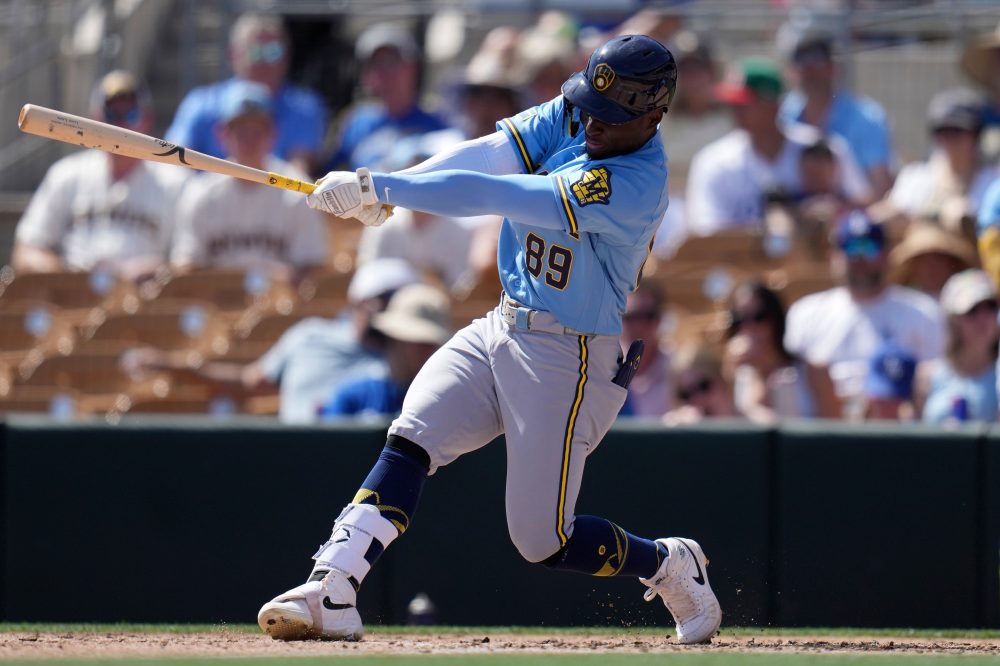
PITTSBURGH (AP) — Pittsburgh Pirates first baseman Ryan O’Hearn turned in one of the most remarkable individual performances in franchise history Tuesday night, driving in 10 runs on three home runs against the Atlanta Braves.
O’Hearn got things started with a grand slam off Atlanta starter Hurston Waldrep in the first inning. He followed that up with a three-run home run, also off Waldrep, in the third inning. Then in the sixth, he connected off Braves reliever Connor Thomas for yet another three-run blast.
The record-breaking night surpassed a franchise mark that had been on the books for more than eight decades. The previous Pittsburgh club record of nine RBIs in a single game was set by Johnny Rizzo against St. Louis on May 30, 1939. O’Hearn’s 10 RBIs also led all major league players for the current season.
O’Hearn, who joined Pittsburgh on a multi-year free agent deal during the offseason, was named an All-Star last season while splitting time between Baltimore and San Diego. With Tuesday’s performance, he also became just the 16th player in the Pirates’ 145-year history to hit three home runs in a single game.
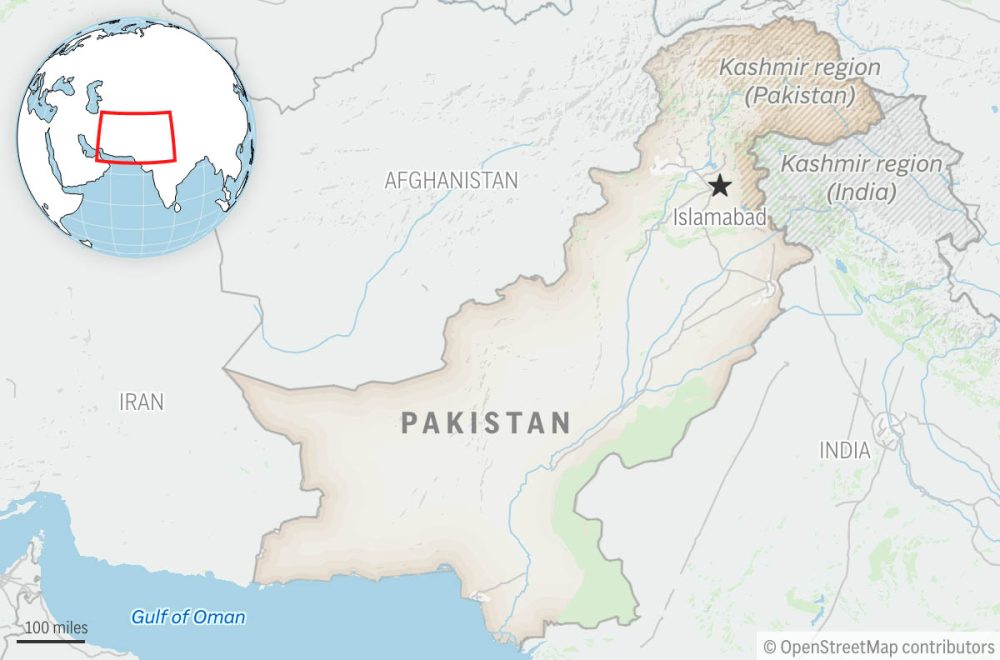
A cargo plane carrying five crew members vanished off the coast of Karachi, Pakistan, late Tuesday evening after plummeting rapidly and losing contact with air traffic controllers while on a flight from the United Arab Emirates, officials reported.
Pakistan’s airport authority announced on X that search and rescue teams had been mobilized in the Arabian Sea. The reason behind the aircraft’s disappearance has not yet been determined.
The Boeing 737, operated by Karachi-based K2 Airways, was making a cargo run from Sharjah in the UAE to Karachi when the crew reported a problem with the navigation system at 9:18 p.m. local time, according to the airport authority.
Radar tracking showed the plane dropping sharply and making a sudden change in direction around 9:21 p.m., after which both radar and radio communication were lost approximately 155 nautical miles — or about 178 miles — west of Karachi, the authority said.
In response, officials activated the Rescue Coordination Center and launched a multi-agency search and rescue effort across the sea to find the missing aircraft.
Aviation expert Imran Aslam, speaking to local ARY News, said the cause of the disappearance remains a mystery. He noted that even in cases of engine failure, a plane would typically continue gliding rather than drop so suddenly. “I still cannot understand how the plane went down so abruptly instead of gliding,” he said.
According to its website, K2 Airways is a private cargo airline headquartered in Karachi that was founded in May 2018.
Officials confirmed that both Pakistan’s military and civilian agencies deployed numerous air and sea resources for the search effort. The Pakistan Navy frigate PNS Zulfiqar was quickly redirected to the area where the aircraft disappeared. The Pakistan Air Force also sent planes to assist, and a Pakistan Navy ATR aircraft departed from Turbat to join the operation.
Additionally, a merchant vessel operated by the Pakistan National Shipping Corp. was sent to the area and is taking part in the search.
This incident comes years after a devastating crash in May 2020, when a Pakistani passenger jet carrying 98 people went down in a densely populated neighborhood near the Karachi airport following what appeared to be an engine failure during its approach to land. Nearly everyone on board perished, with only one passenger surviving. A subsequent government investigation concluded that human error by the pilot, co-pilot, and air traffic control caused that Pakistan International Airlines disaster.
MELBOURNE, Australia — A Google executive appeared before an Australian government inquiry Tuesday, defending YouTube’s decision to keep online a video that falsely portrays a wounded survivor of a deadly antisemitic attack in Sydney as a staged performer wearing theatrical makeup.
Google Australia manager Rachel Lord was called to testify as part of a government investigation into the rise of antisemitism across Australia, which includes scrutiny of a December shooting at a Sydney Hanukkah gathering that claimed 15 lives. Two gunmen — a father and son identified as Sajid and Naveed Akram — are alleged by police to have been motivated by the Islamic State group.
Inquiry officials questioned Lord about a specific complaint filed by shooting survivor Arsen Ostrovsky. In the hours after Ostrovsky was shot on December 14, a photo showing blood flowing from a wound on his head was shared on the platform X. The image quickly became the target of online attacks against him.
Lord confirmed that the decision to leave the video on YouTube had been reviewed at, in her words, “quite senior levels.”
“We have spent a lot of time thinking about where we draw the line and we continue to re-evaluate where we are doing that,” Lord said during her testimony.
To avoid displaying disturbing images publicly, inquiry lawyer Richard Lancaster read from a transcript of the video instead. According to the transcript, four men appear in a split-screen format, describing Ostrovsky’s bleeding head as looking “very crisis actor-ish” and referencing “makeup.” The men also label him an “intelligence asset” who holds a “degree in theater.”
The video further identifies Ostrovsky as a Zionist and asserts that the massacre itself was a “false flag operation” — a claim with no factual basis.
Lancaster pressed Lord on the matter, telling her that YouTube’s choice to leave the video up revealed a “really serious deficiency” in the platform’s hate speech policies. Lord responded by saying she appreciated Lancaster’s “feedback.”
Lord also noted that YouTube had communicated with Australia’s online safety regulator just three days after the massacre, stating the platform was “focused on ensuring Australians and all users around the world have access to high quality information about the tragic events.”
Ostrovsky himself testified before the inquiry last month, describing a sustained campaign of online hate, abuse, vilification, and AI-generated manipulation he has endured since sustaining the minor head wound. The inquiry was also shown an AI-created image depicting Ostrovsky appearing to laugh while someone applied fake blood to his head.
ABC is mounting an aggressive defense against federal regulators who want to revisit whether its popular morning talk show “The View” must comply with equal time broadcasting rules.
In a new filing made public Tuesday with the Federal Communications Commission, the network argued that the agency itself had already settled the matter more than 20 years ago. The filing came as part of the ongoing FCC review process and included what are known as “reply comments” in support of ABC’s request for an official ruling that “The View” qualifies as a legitimate news program.
ABC pointed to a 2002 FCC decision that previously recognized “The View” — the long-running morning program that blends entertainment with political discussions and frequently features commentary critical of President Donald Trump — as a bona fide news program. That designation would exempt the show from equal time requirements, which obligate broadcasters to give competing political candidates equal access to airtime.
The network had made similar accusations in a May filing, charging that the Trump administration was attempting to suppress constitutionally protected free speech and interfere with open political debate by reopening the question of the show’s status.
The dispute is part of a wider clash between the U.S. media and the Trump White House, as journalists push back against what they see as the president’s efforts to undermine press freedom. Trump has been openly critical of news organizations whose reporting conflicts with his agenda.
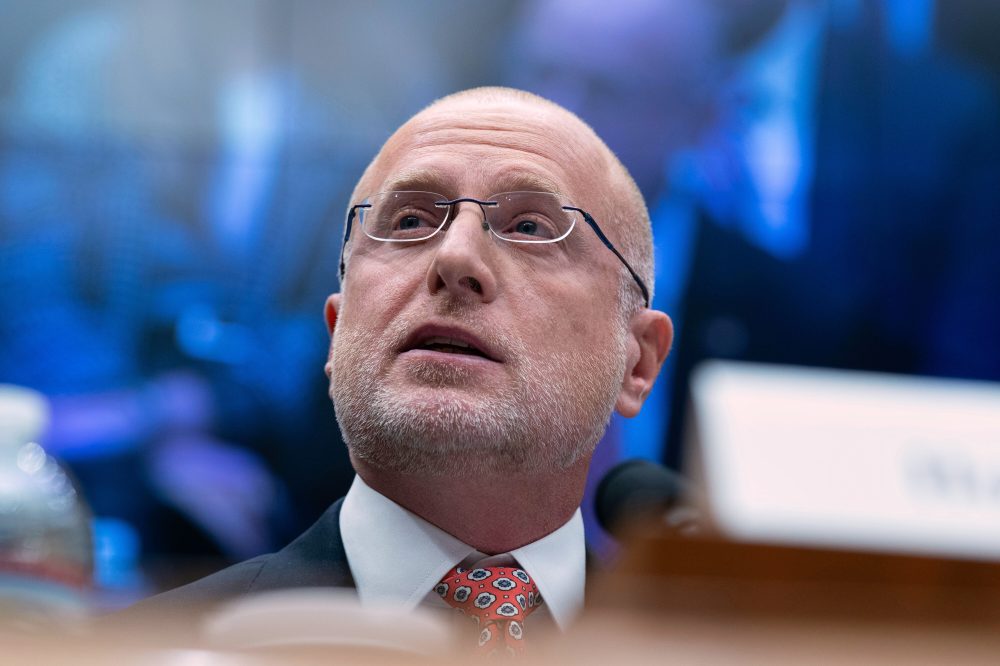
The FCC chairman appointed by Trump has signaled his intention to argue that “The View” does not qualify as a legitimate news program — a determination that could have implications for other programs that mix entertainment with political content.
After ABC’s May filing, the FCC launched a public comment period. ABC noted in Tuesday’s filing that more than 77,000 responses have poured in, with what it described as “an undeniable majority” of commenters siding with the show and with free speech principles.
“The commenters are right to be concerned,” the filing stated. “The First Amendment does not permit the government to sit in an editor’s chair. Yet that is the seat the Commission now proposes to take … deciding which broadcast programs qualify as legitimate news and, for those it finds wanting, compelling them to surrender their airtime to guests they never chose to feature.”
ABC further argued that the core question at stake is “whether a federal regulator may override a broadcaster’s editorial judgment about whom to interview — a judgment the Constitution commits to broadcasters and their audiences, not to the state.”
The network also contended that “nothing about ‘The View’ that the law cares about has changed since the Commission last answered that question more than two decades ago. … What has changed is not the program but the political climate around it.”
ABC additionally accused the FCC under its current chairman of selectively targeting daytime and late-night programs “perceived as unfriendly to the current administration — while leaving untouched the vast landscape of talk radio, where candidates routinely appear without their opponents.” The network called that approach “not evenhanded regulation.”
An FCC spokesperson responded to the filing in an email, suggesting ABC was misleading the public. “While ABC insists that ‘The View’ is a ‘bona fide news program’ under the law,” the spokesperson said, “ABC should focus on complying with its public interest obligations, rather than misleading the public about them.”
The conflict over “The View” mirrors the administration’s frustration with late-night hosts who regularly criticize Trump, particularly ABC’s Jimmy Kimmel. Both Donald and Melania Trump have publicly called for ABC to terminate Kimmel following a joke in which he described the first lady as having “the glow of an expectant widow.” Kimmel maintained the joke was a lighthearted comment about the age gap between the couple.
In an unusual move for the middle of a baseball season, the Detroit Tigers and third base coach Joey Cora have mutually agreed to go their separate ways, manager A.J. Hinch announced Tuesday.
The separation is effective immediately. First-year quality control coach Billy Boyer will take over the third base coaching duties for the remainder of the season.
Cora, 61, was partway through his third season with Detroit and his tenth overall as a third base coach in the major leagues. Before joining the Tigers, he spent two seasons with the New York Mets and five with the Pittsburgh Pirates.
A former infielder who spent 11 seasons across four different major league organizations, Cora was widely recognized for his aggressive style of waving runners toward extra bases.
Data from Baseball Reference shows the 2025 Tigers successfully took extra bases at a 54.1% clip — the second-best rate recorded since 1969. The only team to top that mark was the 1975 Oakland Athletics, who posted a 55.1% rate.
Hinch addressed the move with reporters, acknowledging it would come as a shock to many. “I know that news is going to be surprising to a lot of people,” he said. “I love Joey. Joey loved being a Tiger. He’s been instrumental in his time here. But similar to a family, sometimes it doesn’t last forever. We had some philosophical differences, and we both just agreed it’s probably best for the players and everybody to separate.”
The manager said Cora reached out to request a meeting on Monday, though the two did not actually sit down together until Tuesday. Hinch emphasized that the parting was entirely baseball-related.
Tigers players found out about the coaching change through a text message. Catcher Jake Rogers said the news hit him hard. “He wants to win, and he brings that aggressiveness every day. I can’t speak for the other guys, but it hit me kind of hard. He’s part of the fam.”
Antoine Griezmann made his long-awaited arrival in Major League Soccer official on Tuesday, joining Orlando City and calling it the realization of a dream he has carried since his teenage years.
The 35-year-old former France forward signed with the club through 2028, coming off a historic run at Atletico Madrid where he finished as the club’s all-time leading scorer. Griezmann said timing was everything in his decision, wanting to make the leap while he still had plenty left in the tank.
“Since I was 18, it was my dream to come to MLS,” Griezmann told reporters at his official introduction with the team. “It was very important for me to arrive in good physical and mental condition, and that’s why I took this step.”
Griezmann also expressed how quickly he fell in love with the city and how his family embraced the change. “I connected very well with the club, I loved the city and my children are delighted,” he said. “It has been incredible and unexpected for my family and me, and hopefully we can give that affection back.”
A personal touch from Orlando sporting director Ricardo Moreira played a key role in sealing the deal. Griezmann said Moreira’s trip to visit him at his home in Madrid “touched my heart” and helped make Orlando the clear choice.
The World Cup champion said he was pleasantly surprised by the quality of his new teammates after his first training sessions and made clear he arrived with championship ambitions. “I haven’t noticed much difference between the level here and in Europe,” he said. “I’m here to win trophies, build a connection with the fans and help my teammates grow, both professionally and personally.”
One of the most anticipated moments of Griezmann’s MLS tenure will be the Florida derby against Inter Miami, where he will once again go head-to-head with Lionel Messi. The two spent two seasons as teammates at Barcelona after years as fierce rivals in Spain. Griezmann said he has already been hearing plenty about the matchup. “They’ve told me a lot about the derby. I watched the last one. It’ll be a joy to face Messi again, and also Rodrigo (De Paul), who I have a very good relationship with,” he said, referencing his former Atletico Madrid teammate.
The WNBA revealed its 12 reserve selections for this month’s All-Star Game on Monday, with Marina Mabrey earning her first-ever All-Star nod and Nneka Ogwumike picking up an impressive 11th appearance in the showcase.
Angel Reese, Kelsey Plum, and Jonquel Jones are among the well-known names who will make their way to Chicago for the July 25 contest. The starting lineup had already been announced prior to Monday’s reserve announcement.
As part of the league’s 30th anniversary festivities, WNBA legends Cynthia Cooper and Teresa Weatherspoon will take on the role of honorary general managers, drafting the teams for this year’s game.
While starters were determined through a combination of fan, player, and media voting, the 12 reserves were selected by the league’s 15 head coaches — with the rule that no coach could vote for their own players. Selections were made without regard to conference affiliation.
Mabrey, 29, is making her All-Star debut in her eighth WNBA season. She joined the expansion Toronto Tempo during the offseason and last month tied the league’s single-game records with 53 points and nine three-pointers against the Los Angeles Sparks. This season she is averaging a career-best 21.1 points per game, along with 3.6 rebounds and 3.7 assists. Her 67 three-pointers tie her for the league lead, shooting 39.9% from beyond the arc.
The other first-time All-Star among the reserves is Seattle’s Dominique Malonga. The 20-year-old is leading the Storm with 15.9 points and 7.4 rebounds per game in just her second WNBA season.
Ogwumike, who celebrated her 36th birthday this month, earned her 11th All-Star selection — tying Diana Taurasi for second-most in league history, trailing only Sue Bird’s 13. In the opening year of her second stint with the Los Angeles Sparks, she is posting 16.1 points, 8.7 rebounds, and 2.3 assists per game.
Reese has now been selected to the All-Star Game in each of her three seasons in the league, though this marks her first selection as a member of the Atlanta Dream. Through 21 games, she is averaging a career-high 14.9 points per game and leads the entire league with 11.8 rebounds per game.
Reese was one of three Atlanta Dream players named as reserves, joined by teammates Allisha Gray and Rhyne Howard. The backcourt reserves also include Sonia Citron of Washington, Plum from Los Angeles, Courtney Williams of Minnesota, and Jackie Young of Las Vegas. Kiki Iriafen of Washington and Jones of New York round out the frontcourt reserve spots.
Shares of South Korean memory chipmakers Samsung Electronics and SK Hynix dropped by as much as 4.4% and 5%, respectively, during early Wednesday trading, mirroring a sweeping decline in U.S. semiconductor stocks driven by growing doubts about how long the artificial intelligence chip boom can last.
Overnight, major chip-related stocks took a significant hit on Wall Street. Intel closed down 9.7%, while AMD fell 6.5% and Micron dropped 4.7%. The Philadelphia Semiconductor Index, a key measure of the chip sector’s performance, also declined 4.7% as investors grew increasingly skeptical about the staying power of AI-related spending.
The wave of selling started after Samsung released its preliminary second-quarter earnings on Tuesday. Although the company reported an estimated 19-fold increase in quarterly operating profit — largely fueled by strong demand for AI memory chips — the results still fell short of the high expectations investors had set. That disappointment sent Samsung’s stock tumbling, which then rippled out into a broader retreat from AI-related investments that eventually reached U.S. markets.
By early Wednesday morning, however, the situation had begun to stabilize. Samsung had trimmed its losses to a decline of about 2.3%, while SK Hynix had actually reversed course and edged up 0.2%. Both companies outperformed South Korea’s benchmark KOSPI index, which was still down 1.4% at that point.
The U.S. dollar held firm at its highest point this week against most major currencies as Asian markets opened Wednesday, following a fresh round of American military strikes against Iran that reignited geopolitical concerns and pushed oil prices upward.
The dollar index, which tracks the greenback’s performance against a basket of six currencies, was trading at 101.18 — its strongest reading since July 2.
The surge in demand for the dollar as a safe-haven currency followed the United States launching a new wave of strikes against Iran on Tuesday. Washington also revoked a license that had permitted Iran to sell oil, a move that came after three tankers were attacked in the Strait of Hormuz.
Analysts at Westpac noted in a research report that worries about the durability of any peace agreement resurfaced following Iran’s attacks on vessels transiting the Strait of Hormuz. “Concerns over the inflation outlook were in focus, seeing yields jump higher across the globe,” the analysts wrote.
Brent crude oil rose 2.6% to $76.12 per barrel at the opening of the Asian trading session Wednesday, marking the second consecutive day of gains.
The New Zealand dollar edged up 0.1% to $0.5681 ahead of an anticipated interest rate decision by the Reserve Bank of New Zealand, which is expected by a narrow margin to raise rates for the first time in over three years.
The U.S. dollar gained 0.1% against the Japanese yen, rising to 162.28 yen. Bank of Japan board member Toichiro Asada, who was the only dissenting vote against the BOJ’s June decision to raise interest rates, told Reuters on Monday that he would need to see evidence of demand-driven inflation before he could back additional rate increases.
The euro dipped 0.1% to $1.1405, while the British pound slipped 0.1% to $1.3353. The Australian dollar held steady at $0.6926.
In cryptocurrency markets, Bitcoin fell 0.2% to $63,518.35, while Ether dropped 0.5% to $1,774.45.
Drivers heading westbound on Delaware Route 2 should plan for a lane restriction currently in place between Milltown Road and Pike Creek Road.
According to Delaware Department of Transportation, the left lane in that stretch is closed due to ongoing construction activity. The closure is expected to lift at 6 a.m.
Motorists traveling through that corridor are advised to use caution, allow extra travel time, and follow any posted signage in the work zone.
Federal prosecutors announced charges Tuesday against the head of an Indian criminal organization in connection with a high-profile political assassination in Canada — a killing that previously threw the diplomatic relationship between Canada and India into turmoil.
The announcement came as part of a sweeping law enforcement crackdown involving agencies from the United States, Canada, and Europe. In total, 37 individuals have been charged in connection with three separate Indian international crime syndicates accused of involvement in kidnappings, racketeering, extortion, illegal firearms sales, drug trafficking, and murder. U.S. Attorney Bill Essayli made the announcement at a press conference Tuesday, joined by representatives from the Los Angeles Police Department, the FBI, and the Royal Canadian Mounted Police. Investigators are still searching for seven fugitives believed to be in the U.S., two in India, and one in Europe.
Patrick Grandy, assistant director in charge of the FBI’s Los Angeles field office, said the criminal groups have “fueled violence, fear and instability within the East Indian communities throughout California and abroad.”
Lawrence Bishnoi, 33, and his longtime friend Satinderjeet Singh are accused of planning and directing the murder of Hardeep Singh Nijjar, a well-known Sikh independence advocate who was shot and killed outside a temple where he served as president in 2023. The slaying ignited a diplomatic firestorm after then-Canadian Prime Minister Justin Trudeau stated there were “credible allegations” pointing to the Indian government’s involvement in Nijjar’s death. Bishnoi is currently in custody, while Singh remains at large.
Prosecutors say Bishnoi’s organization “routinely targeted prominent religious, social and political leaders with violence” in exchange for significant sums of money.
Nijjar was 45 years old at the time of his death. He was a leading figure in a movement seeking to establish an independent Sikh homeland called Khalistan, and had been organizing an unofficial vote among Sikhs living outside India through the group Sikhs For Justice. Born in India and a Canadian citizen, Nijjar was wanted by Indian authorities at the time of his killing, with a reward offered for information leading to his capture.
Tensions between Canada and India over Sikh diaspora activism are not new. Canada is home to the largest Sikh population outside of India, and India has long accused Canada of allowing what it calls “terrorists and extremists” to operate freely. The dispute escalated to the point where both nations expelled each other’s diplomats.
Tuesday’s announcement also identified two additional criminal organizations swept up in the same two-year investigation on similar charges. These transnational groups have members operating in the United States, New Zealand, Australia, Portugal, and the United Kingdom. Some members are also accused of stealing large amounts of drugs from rival criminal operations in California and then distributing those drugs across the country and into Canada.
Court documents allege that some defendants used corrupt connections with local officials in India to go after rivals or individuals suspected of cooperating with law enforcement. At least one defendant is accused of directing criminal activity while being held at an Immigration and Customs Enforcement facility — though authorities have not yet explained how he managed to communicate without detection.
No attorney for Bishnoi had been listed as of Tuesday afternoon.
U.S. Attorney Essayli framed the operation as a testament to international cooperation, stating: “Working together, law enforcement in the U.S., Canada, Europe, and Asia are determined to target and dismantle these criminal organizations wherever they operate.”
The Los Angeles Lakers continued their offseason roster overhaul on Tuesday, reaching a one-year agreement with veteran center Kevon Looney worth $3.9 million, according to Looney’s agent, who spoke with ESPN.
The 30-year-old is expected to serve as a backup to Walker Kessler, whom the Lakers recently acquired after sending Deandre Ayton to the Washington Wizards last week. Looney brings seasoned frontcourt experience to Los Angeles after spending last season with the New Orleans Pelicans.
Prior to his time in New Orleans, Looney spent his first 10 NBA seasons with the Golden State Warriors, where he earned three championship rings and developed a reputation for toughness on the boards, setting screens, and defending inside. In 21 appearances with the Pelicans, he put up averages of 2.8 points, 5.6 rebounds, and 1.6 assists in just under 15 minutes per night.
The UCLA product carries career averages of 4.9 points, 5.7 rebounds, and 1.6 assists. His contributions have often shown up most during playoff competition, when he gave Golden State reliable rebounding and defensive flexibility in the frontcourt.
Los Angeles has been actively building around Luka Doncic this offseason, bringing in Kessler, Sandro Mamukelashvili, Quentin Grimes, and Collin Sexton before finalizing the Looney agreement.
The Lakers are also keeping the lines open with unrestricted free-agent forward Jonathan Kuminga, who was Looney’s former teammate in Golden State. General manager Rob Pelinka and head coach JJ Redick held a virtual meeting with Kuminga and laid out a potential significant role alongside Doncic, ESPN reported. The team has maintained contact with Kuminga’s representatives since that meeting.
With one roster spot left following the Looney signing, the Lakers face financial constraints that could complicate a straight free-agent deal for Kuminga. A sign-and-trade arrangement may be necessary. Kuminga, who averaged 12.2 points, 5.6 rebounds, and 2.3 assists between the Warriors and Atlanta Hawks last season, became available after Atlanta declined his $24.3 million team option last month.
Eastbound travelers on Kirkwood Highway, also known as Delaware Route 2, are facing a right lane closure between South Dillwyn Road and Possum Park Road.
The lane restriction is the result of construction activity in the area. Drivers are advised to plan accordingly and allow for extra travel time while the work is underway.
The closure is expected to remain in place until 6 a.m., at which point the lane should reopen to traffic.
History buffs and curious Delawareans will have a chance to step back in time next month when the Delaware Public Archives hosts its First Saturday Program on July 11, 2026, beginning at 10:30 a.m.
The special event will feature two components: a condensed presentation of Independence or the Bayonet, which takes a close look at the dramatic days that led up to America declaring its independence, followed by a screening of a brand-new documentary that shines a spotlight on Delaware’s significant contribution to the nation’s founding story.
The program offers residents a unique opportunity to learn more about the First State’s place in American Revolutionary history through both live presentation and film.
Messi Leads Argentina’s Stunning Comeback Over Egypt to Reach World Cup Quarterfinals
ATLANTA (AP) — Lionel Messi delivered once again on the World Cup stage. The Argentine superstar scored a crucial goal and helped orchestrate a remarkable two-goal comeback as Argentina defeated Egypt 3-2, despite being down by two with just 11 minutes remaining in regulation. The defending champions will face Switzerland in the quarterfinals this Saturday at Arrowhead Stadium in Kansas City, Missouri. Messi was visibly emotional at the final whistle, with tears streaming down his face. His goal in the 83rd minute — his eighth of the tournament and a record-extending 21st in World Cup history — tied the match at 2-2. Midfielder Enzo Fernandez then delivered the winning strike in stoppage time. Messi had also assisted on Cristian Romero’s header in the 79th minute, directly contributing to two of Argentina’s three goals.
Djokovic Survives Five-Hour Wimbledon Epic to Reach Semifinals
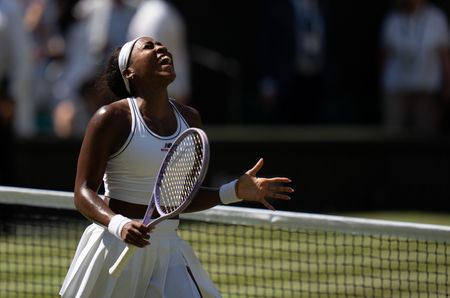
LONDON (AP) — Novak Djokovic dug deep over more than five grueling hours at Wimbledon, outlasting Felix Auger-Aliassime in a five-set battle, winning 7-6 (10), 3-6, 6-3, 6-7 (4), 7-6 (4) to book a semifinal spot against defending champion Jannik Sinner. The two have history — Sinner beat Djokovic in straight sets in last year’s Wimbledon semifinals, while Djokovic edged the Italian over five sets in this year’s Australian Open quarterfinals. At 39 years old, Djokovic continues to rewrite the record books in pursuit of a 25th Grand Slam title. He has now reached a record eighth consecutive Wimbledon semifinal, surpassing Roger Federer for the most consecutive men’s singles semifinal appearances at the grass-court major.
Switzerland Advances to World Cup Quarterfinals in Shootout Over Colombia
VANCOUVER, British Columbia (AP) — Ruben Vargas converted his penalty kick as Switzerland edged Colombia 4-3 in a shootout to advance to the World Cup quarterfinals following a scoreless draw. Colombia’s Davinson Sanchez saw his attempt strike the crossbar, and goalkeeper Gregor Kobel denied Cucho Hernandez to seal the win for Switzerland. The Swiss will now face defending champion Argentina on Saturday at Arrowhead Stadium in Kansas City, Missouri. It marks Switzerland’s first appearance in the World Cup quarterfinals since they hosted the tournament back in 1954.
Former Cowboys Defensive End Found to Have Early-Stage CTE at Time of Death
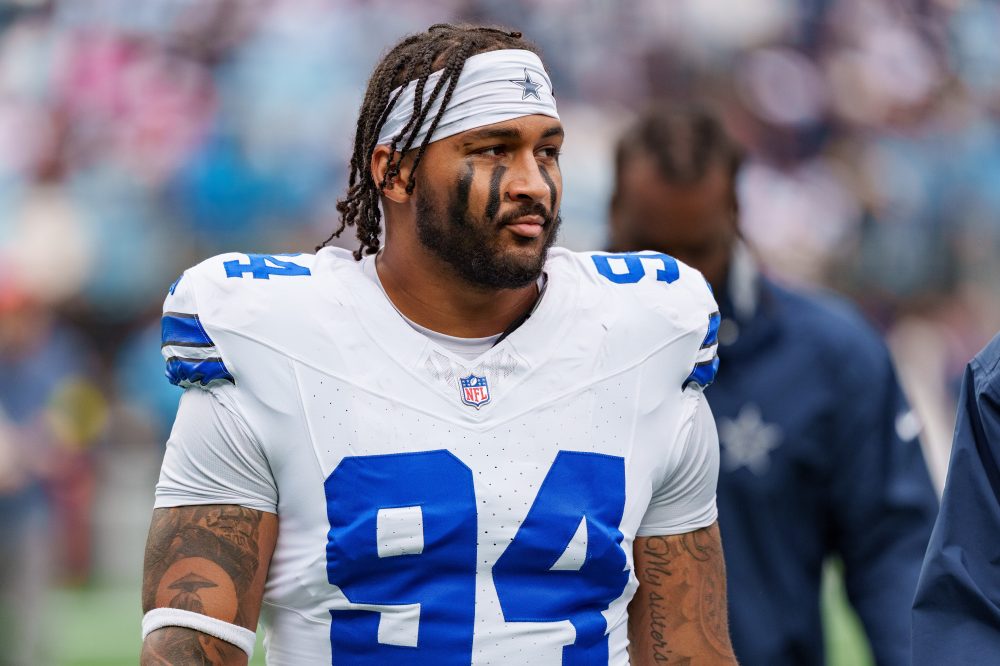
AUSTIN, Texas (AP) — Former Dallas Cowboys defensive end Marshawn Kneeland was suffering from early-stage chronic traumatic encephalopathy when he took his own life following a high-speed police chase in November 2025. His family released the findings of a postmortem brain analysis through the Concussion and CTE Foundation. Researchers at the Boston University CTE Center determined Kneeland had reached stage one of four of the degenerative brain disease. Kneeland was 24 years old. He had played college football at Western Michigan University before being selected by Dallas in the second round of the 2024 NFL Draft.
US Men’s Soccer Team Remains Stuck in Place Despite Growing Investment
SEATTLE (AP) — Despite significant growth in American soccer, the U.S. men’s national team continues to fall short of expectations. Christian Pulisic and his teammates once again failed to advance past the round of 16 at the World Cup, losing to Belgium 4-1 on Monday — a result consistent with the team’s struggles over the past quarter century. Billions of dollars have been poured into developing the program, yet it remains far from world-class. Head coach Mauricio Pochettino is expected to discuss his future with the U.S. Soccer Federation. Goalkeeping has emerged as a significant weakness, though the expansion to a 48-team World Cup format should ease future qualifying challenges. Young players Folarin Balogun and Malik Tillman have been bright spots going forward.
Caitlin Clark Eyes Return Against Sparks, May Sit Out Back-to-Back
LOS ANGELES (AP) — Three-time WNBA All-Star Caitlin Clark is hopeful she can return from a back injury Wednesday night when the Indiana Fever visit the Los Angeles Sparks, but she may have to sit out Thursday’s highly anticipated rematch at Phoenix. Clark has missed Indiana’s last two games since leaving a June 24 contest in Phoenix with the injury. The following day, league officials handed down a one-game suspension to Mercury forward Alyssa Thomas for what they described as “recklessly making contact with her fist to the throat area” of Clark. Clark said she anticipates playing on a minutes restriction Wednesday, targeting just over 20 minutes of action.
Serena Williams Reportedly Eyeing US Open Return in Summer of New York
LONDON (AP) — New York City is having quite a summer — and Serena Williams may be about to add to it. Following the Knicks’ first NBA championship in more than 50 years, Taylor Swift’s wedding at Madison Square Garden, and the World Cup final played just across the Hudson River, all signs point to the 44-year-old Williams making her return to the U.S. Open next month for the first time in four years. Her coach, Rennae Stubbs, confirmed that Williams’ “intention is to keep playing; the U.S. Open as well.”
Naomi Osaka Exits Wimbledon Quarterfinals, Cites Foot Pain and Aging
LONDON (AP) — Naomi Osaka may be a four-time Grand Slam champion known for her style on and off the court, but after Tuesday’s quarterfinal exit at Wimbledon, she sounded like someone who had simply had enough. Osaka fell to Karolina Muchova 7-6 (4), 6-4, ending both her tournament run and her much-talked-about fashion showcase at the grass-court Grand Slam. The 28-year-old had knocked out top-ranked Aryna Sabalenka in the fourth round but couldn’t find her footing against her Czech opponent. Osaka cited plantar fasciitis and fatigue as factors, saying “I’m just getting old” and adding that she “didn’t have any energy” and has “plantar fasciitis on my feet.”
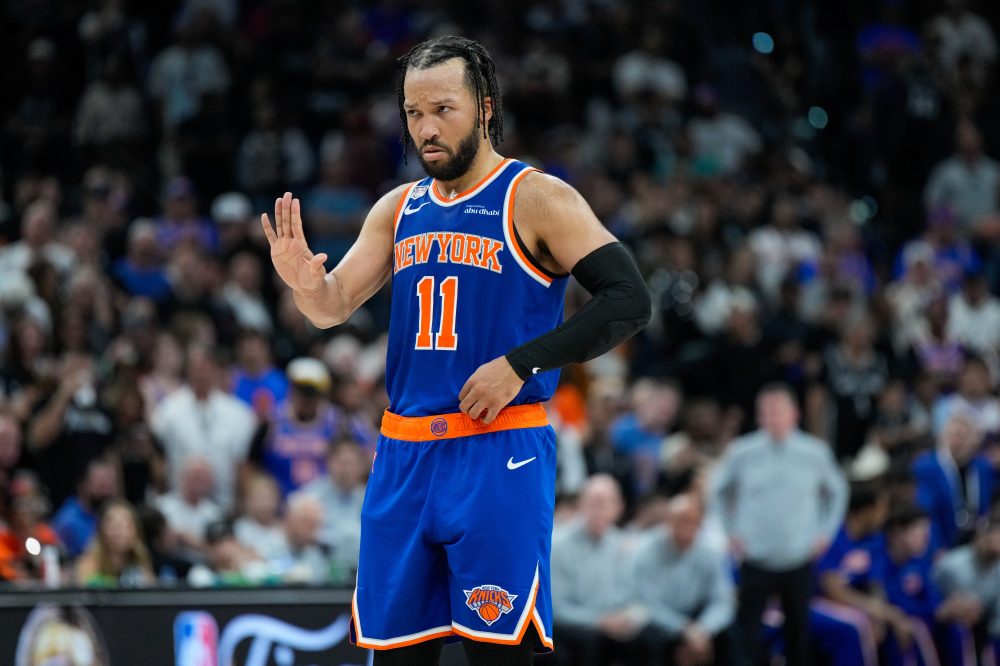
Knicks Star Jalen Brunson Undergoes Left Wrist Surgery, Expected Back This Summer
NEW YORK (AP) — NBA Finals MVP Jalen Brunson has had surgery on his left wrist and is expected to return to the court in time for the New York Knicks to begin defending their championship, according to a person familiar with the matter who spoke to the Associated Press on condition of anonymity Tuesday. No official announcement has been made about the procedure. Brunson, who is left-handed, played through the wrist issue during New York’s run to their first title since 1973, including a 45-point performance in the championship-clinching Game 5 win in San Antonio.
A man was shot and killed by a U.S. Immigration and Customs Enforcement officer in Houston on Tuesday after he allegedly tried to escape arrest using his vehicle during an enforcement operation, according to the agency.
The Department of Homeland Security released a statement saying the man disregarded orders to stop and attempted to use his car to ram one of the agents. The agent opened fire in self-defense, and the man’s vehicle collided with an ICE vehicle. DHS, which oversees ICE, confirmed the details in its statement.
The man was identified in the statement as Lorenzo Salgado Araujo, a Mexican national who was living in the United States without legal authorization. Federal agents had specifically targeted Araujo in the operation. He was transported to a hospital, where he later died.
The FBI’s Houston field office has opened an investigation into a potential assault on a federal law enforcement officer, according to spokesperson Connor Hagan. He also noted that the office’s evidence response team went to the scene at DHS’s request to collect and process evidence.
Democratic U.S. Rep. Sylvia Garcia stated that the shooting took place within her Texas congressional district during what she described as an “ICE enforcement operation.” In a post on the social media platform X, she acknowledged that ICE had released an initial account of events but stressed that the information must be independently confirmed and thoroughly investigated.
“All available footage, communications, and other evidence should be preserved and reviewed as part of a full and impartial investigation,” she wrote.
This incident marks at least the sixth deadly shooting involving federal officers since the start of the current administration’s aggressive immigration enforcement push.
In a prior incident, a federal immigration agent shot and killed a 23-year-old U.S. citizen named Ruben Ray Martinez during a late-night traffic stop. A grand jury chose not to bring criminal charges against the agent. DHS stated the agent fired after the driver “intentionally ran over” a fellow agent, though video released by authorities does not clearly show the vehicle making contact with the agent.
Earlier this year in January, a 37-year-old U.S. citizen named Renee Good was shot in the head by a federal immigration agent during an enforcement action in Minneapolis. DHS claimed Good had attempted to strike the agent with her vehicle, but local officials and witnesses disputed that account, saying she was simply trying to drive away.
American airlines paid a combined $6.66 billion for jet fuel during the month of May, government figures released Tuesday show — the second month in a row that fuel spending has crossed the $6 billion threshold.
Compared to the same month a year ago, that figure represents an 84% jump. In April, carriers had already spent $6.47 billion on fuel, according to the Bureau of Transportation Statistics.
The dramatic year-over-year increase has less to do with airlines flying more and more to do with the soaring cost of fuel itself. U.S. carriers actually consumed 1.627 billion gallons in May — a slight dip of 0.6% compared to May 2025. Consumption in April was also marginally lower than the prior year.
Airlines paid an average of $4.09 per gallon in May, a hair below the $4.11 average recorded in April, but a staggering 85% above the $2.21 per gallon they paid in May 2025, according to the agency.
Across the globe, airlines have been working to offset the surge in fuel expenses by hiking ticket prices, adding fees, and scaling back the number of flights they offer. Fuel consistently ranks among the industry’s biggest operating costs, making carriers especially sensitive to energy price fluctuations.
The data reflects the ongoing ripple effects of a sharp rise in energy prices that followed the outbreak of conflict in the Middle East earlier this year, which disrupted shipping traffic through the Strait of Hormuz — a critical corridor for global crude oil and fuel supplies.
Prices have retreated somewhat from their spring peaks after the U.S. and Iran reached a temporary ceasefire agreement, giving airlines a measure of relief. However, the situation remains unstable.
On Tuesday, the British military reported that three tankers were struck by projectiles in the Strait of Hormuz, and the U.S. moved to revoke a license that had permitted Iranian oil sales under the terms of the agreement.
Delta Air Lines is scheduled to release its second-quarter earnings results on Friday, kicking off a series of financial reports from major U.S. carriers. Industry executives are expected to address how the recent easing of fuel prices may shape the financial outlook for airlines in the months ahead.
As of Monday, the average price of jet fuel in Chicago, Houston, Los Angeles, and New York stood at $2.90 per gallon, according to the Argus U.S. Jet Fuel Index, which monitors daily average prices across those major aviation hubs.
Motorists in the area should be aware of intermittent lane closures at the intersection of DuPont Boulevard (Delaware Route 113) and Buccaneer Street due to construction activity.
The lane restrictions are expected to remain in place until 6 a.m. Drivers are encouraged to use caution when passing through the area or consider alternate routes if possible.
Iran launched missile attacks against commercial ships passing through the Strait of Hormuz, targeting at least one Qatari-owned liquefied natural gas tanker as diplomatic talks between Tehran and Washington remained at a standstill and regional tensions continued to climb.
Iranian state television, citing sources, confirmed that Tehran had struck at least one LNG tanker, claiming the vessel had disregarded warnings issued by Iranian forces. A U.S. official separately told Axios that two merchant ships had been hit by Iranian missiles.
One of the targeted ships was identified as the Al Rekayyat, an LNG tanker belonging to Qatar. According to The Wall Street Journal, the missile hit the vessel’s engine room, sparking a fire. No crew casualties were reported.
The United Kingdom Maritime Trade Operations agency confirmed early Tuesday that the tanker was struck on its port side while heading southbound, approximately 8 nautical miles — about 15 kilometers — east of Limah. The agency noted the strike caused a fire but reported no casualties and no environmental damage.
The strike came after Iran’s Islamic Revolutionary Guard Corps had issued maritime warnings, announcing that its missiles and drones were ready to fire.
The attack unfolded against the backdrop of stalled U.S.-Iran negotiations, which have been paused during the funeral week for late Supreme Leader Ali Khamenei. The talks have yet to produce any concrete agreement.
On Monday, President Trump stated he still favored reaching a diplomatic deal with Iran but made clear that military force remained an option if talks broke down. “Either we’ll make a deal or we’ll finish the job, and it won’t be that hard to finish the job there. But I prefer a deal,” President Trump said.
Iranian Foreign Minister Abbas Araghchi pushed back against Washington’s warnings, posting on X that “millions of proud Iranians gathered to pay tribute to Khamenei and his legacy. Neither they nor our forces are intimidated by threats.”
Araghchi also directed a pointed message at the United States regarding the ongoing negotiations: “Article 13 of the Memorandum of Understanding is clear: negotiations on the final agreement will not begin if threats continue. Honor your signature.”
Israel’s parliament, the Knesset, took a major step Monday toward establishing a commission to investigate the security and intelligence failures behind the October 7, 2023 Hamas-led massacre — but the path forward is already deeply divided along political lines.
The bill cleared its first reading by a vote of 59 to 0 in the 120-seat legislative body. No lawmakers abstained. Opposition members refused to participate in the vote, staging a boycott in protest of the proposal’s structure.
The legislation will now be sent back to the Knesset Constitution Committee for additional work before returning for its second and third readings, which are expected to occur next week. That timeline is tight, as the Knesset is scheduled to dissolve ahead of elections on July 17.
As written, the bill calls for a six-member commission. Members would ideally be chosen by a two-thirds majority vote of Knesset lawmakers. If that threshold cannot be reached, the governing coalition and the opposition would each appoint three commissioners. Final authority over the appointment process would rest with the speaker of parliament — effectively giving the ruling coalition control over who sits on the commission.
The bill also includes provisions allowing former hostages or family members who lost loved ones in the attack to attend proceedings as observers. Commission hearings would also be broadcast publicly.
Opposition parties have made clear they will not cooperate with any inquiry in which politicians select the investigators. They are pushing instead for a formal state commission of inquiry — one where members would be appointed by the president of the Supreme Court rather than by lawmakers. That court has been in ongoing conflict with Prime Minister Benjamin Netanyahu’s government on a number of fronts.
The parliamentary vote came just days after large demonstrations were held Thursday in Tel Aviv and elsewhere across Israel. Thousands of people gathered to mark 1,000 days since the October 7 attack and to demand the creation of a state-led, independent commission of inquiry.
On October 7, 2023, Hamas-led terrorists stormed southern Israel, killing approximately 1,200 people and taking 251 others hostage. The attack set off the ongoing war in Gaza.
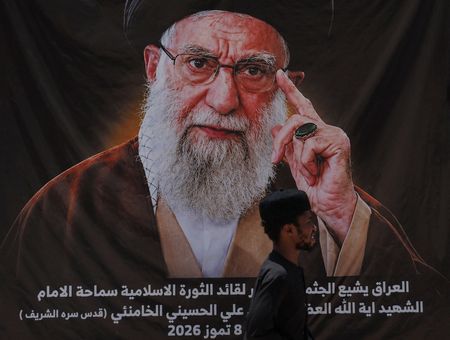
The funeral of former Iranian Supreme Leader Ali Khamenei was far more than a religious ceremony — it was a calculated political performance designed to show the world that the Islamic Republic remains a force to be reckoned with, even after war and the death of the man who led it for more than three decades.
According to Reuters, Khamenei, 86, was killed on February 28 in strikes carried out by the United States and Israel, which also claimed the lives of several of his family members, including his daughter, son-in-law, daughter-in-law, and granddaughter. The ceremonies began in Tehran before moving to the city of Qom on Tuesday, with additional stages planned in Najaf and Karbala in Iraq, ahead of a scheduled burial Thursday in Mashhad — Khamenei’s birthplace.
His coffin, along with those of his relatives, was first placed at Tehran’s Grand Mosalla, one of Iran’s largest religious complexes, before being carried through Tehran and then through Qom. Iranian President Masoud Pezeshkian and Parliament Speaker Mohammad Bagher Ghalibaf both prayed behind the coffins in Tehran, while crowds in attendance waved flags bearing messages of revenge directed at the United States and Israel.
In Qom, hundreds of thousands of mourners turned out to attend prayers, carrying banners that drew comparisons between Khamenei and foundational figures in Shia Islamic history. Iranian authorities worked to bring millions of people to the multi-city procession, providing transportation, meals, and lodging to attendees.
A researcher based in Tehran, speaking anonymously, told The Media Line that the estimated crowd reached 4.5 million people and argued that “most people are totally backing up the regime.”
However, analysts noted that crowd size alone could not be taken as a straightforward measure of public support, given that the government declared public holidays, offered logistical incentives, and applied political pressure to encourage attendance.
Dr. Tallha Abdulrazaq, a Middle East political analyst, told The Media Line that the funeral fit into a long-established pattern of political theater by the Islamic Republic — similar to past events like Quds Day commemorations and mass mourning ceremonies for senior commanders, including Qassem Soleimani.
“The point of all this is to use Shia Islamist symbolism to energize conservative constituencies and draw parallels between modern events and formative historical episodes such as the Battle of Karbala,” Abdulrazaq said.
He described the event as “a kind of loyalty test,” intended to compel public alignment with the regime following the war.
The funeral route itself carried symbolic weight. Moving through Tehran and Qom in Iran, then to Najaf and Karbala in Iraq, and finally back to Mashhad, the procession traced a geography of Shia religious authority — making the ceremony not just an Iranian affair, but one with transnational Shia significance.
Foreign attendance added another layer of diplomatic meaning. Pakistan sent Prime Minister Shehbaz Sharif, along with Pakistani army chief Field Marshal Asim Munir and Interior Minister Mohsin Naqvi. Turkey was represented by Vice President Cevdet Yilmaz, China by senior lawmaker He Wei, Russia by former President Dmitry Medvedev, and Taliban officials from Afghanistan were also reported among the attendees.
India’s official delegation included Bihar Governor Syed Ata Hasnain — described as the most senior Shia holding public office in India — alongside Deputy Foreign Minister Pabitra Margherita. Indian opposition figures Salman Khurshid and Mehbooba Mufti were also reported as part of the delegation.
Nudrat Naheed, an independent researcher and communications strategist specializing in international relations and geopolitical affairs, told The Media Line that the composition of foreign attendance was central to understanding the event’s significance.
“The funeral ceremonies in Tehran should be understood not only as a moment of national mourning but also as an important diplomatic event,” Naheed said. “State funerals often serve as informal arenas where regional and international actors signal political priorities through their level of representation and participation.”
On Pakistan’s participation specifically, Naheed said: “Pakistan’s attendance carries particular diplomatic significance given the longstanding relationship between Islamabad and Tehran. At a time of regional uncertainty, the decision to participate reflects an effort to maintain diplomatic engagement with a neighboring state while reinforcing channels of communication on shared security and regional issues.”
Abdulrazaq noted, however, that most foreign delegations were relatively low- or mid-ranking officials, with Pakistan’s prime minister appearing to be among the most senior foreign officials present.
The Gulf region’s response was more nuanced. Saudi Arabia dispatched a delegation led by Deputy Foreign Minister Waleed bin Abdulkarim al-Khuraiji, while Qatar and Oman also sent representatives. The United Arab Emirates and Bahrain were not among the publicly confirmed Gulf delegations.
Saudi political analyst Abdulaziz Alshaabani told The Media Line that Riyadh’s attendance should be viewed through the lens of diplomacy rather than any endorsement of Tehran’s ideology.
“The attendance of an official delegation at the funeral should be understood as a diplomatic gesture rather than an ideological or political endorsement,” Alshaabani said. “It reflects Riyadh’s commitment to maintaining state-to-state communication, particularly during a period of heightened regional uncertainty.”
Alshaabani also noted a shift in how regional rivalries are now framed. “Compared to the past, the Sunni and Shia division is less marked,” he said. “Today, regional politics is driven more by national interests and pragmatism than by sectarian divisions. While religious differences remain, they are no longer the primary factor shaping state relations. This war put the interests more in alignment between the two, but differences still remain.”
Among the most discussed elements of the ceremonies was the reported use of specific Qur’anic verses recited as different foreign delegations approached the coffins. Iran International identified the verse recited as the Saudi delegation came forward as Verse 13 of Surah Al Imran, which recalls the Battle of Badr. An anonymous Tehran-based researcher told The Media Line the selections appeared to be “targeted verses for each delegation” — for the Saudis, a verse about “the disbelievers and the believers”; for Turkey, one about “those who remain idle”; for Lebanon, one about those “unwilling to make sacrifices”; and for Qatar, a verse about “repentance and forgiveness.”
Geopolitical analyst Massimiliano d’Amore, founder of The Red Zone, told The Media Line that the entire staging appeared carefully calculated. “The Tehran ceremonies function as a legitimacy operation layered onto a religious rite, and the signaling is deliberate at the level of architecture even where individual elements remain ambiguous,” he said.
D’Amore argued that holding the funeral during the first 10 days of Muharram placed Khamenei’s death within the Shia martyrdom tradition, while visual elements — including a clenched fist emblem, multilingual slogans, and the black platform used for the coffins — suggested Tehran was sending a message to a broader Islamic and anti-Western audience, not just its own citizens. “The choreography is the clearest layer,” he said, adding that the staging recast “a head of state killed in wartime as an heir to the Karbala tradition.”
Irina Tsukerman, president of Scarab Rising, Inc. and board member of The Washington Outsider Center for Information Warfare, told The Media Line that the verse selections effectively divided foreign guests into separate political categories. “The choice of verses carried the main political burden of the funeral, because Tehran assigned Arab states language of judgment, confrontation, and spiritual suspicion, then assigned its armed clients language of loyalty, sacrifice, and divine favor,” she said.
The presence of Hezbollah, Hamas, the Houthis, and other Iran-aligned movements reinforced that hierarchy. Abdulrazaq said Tehran’s relationship with Hamas and Hezbollah should not be treated as equivalent. He argued that Iran’s strategic confidence in Hamas has weakened since October 7, 2023, when Iran was drawn into a wider confrontation with Israel that it had long sought to avoid. “Hezbollah, on the other hand, has been shown far more grace from Iran,” he said, describing it as a more direct extension of the Islamic Revolutionary Guard Corps.
He suggested Iran is likely to focus on consolidating its network around Shia factions it more directly controls in Lebanon and Iraq, while also emphasizing the Houthis due to their ability to threaten shipping near the Bab el Mandeb. Hamas, he warned, “may find itself left out in the cold despite the public posturing from Tehran.”
Senior Iranian officials also made a point of appearing publicly. D’Amore noted that the presence of figures including Islamic Revolutionary Guard Corps commander-in-chief Ahmad Vahidi, Quds Force commander Esmail Qaani, President Pezeshkian, and Parliament Speaker Ghalibaf signaled that a reconstituted command structure was willing to assemble in the open after the war — though Vahidi’s appearance under visible security suggested ongoing vulnerability rather than full confidence.
The most striking absence, however, was domestic. Mojtaba Khamenei — Ali Khamenei’s son and Iran’s current supreme leader — did not appear publicly at the Tehran funeral prayers. Reuters reported that as the ceremonies moved to Qom on Tuesday, there was still no public sign of him and no released image since the war began. Three of Khamenei’s other sons — Mostafa, Meysam, and Masoud — prayed beside the coffins at Tehran’s Grand Mosalla, but Mojtaba was nowhere to be seen.
D’Amore called this the ceremony’s most defining signal. “Supreme Leader Mojtaba Khamenei did not attend the prayers for his own father and his wife,” he said, noting that it remains unclear whether his absence was due to injury, a security decision, or deliberate concealment by the regime.
Abdulrazaq was equally pointed: “If he was as victorious as the Iranian state claims, and if he was in such good health, then he would have made an appearance in public, even through a prerecorded message broadcast on big screens. Instead, he was totally absent from his own father’s funeral.”
In the end, Khamenei’s funeral served as both a demonstration of the Islamic Republic’s remaining capacity and a revealing map of its limitations — a regime still capable of staging massive public events and drawing foreign delegations, but also one managing succession under threat, projecting legitimacy without its current leader in view, and using the language of martyrdom to navigate a moment of deep strategic uncertainty.
Egyptian President Abdel Fattah el-Sisi officially opened Egypt’s new State Strategic Command Headquarters on Saturday, a sprawling facility nicknamed the “Octagon” situated in the country’s New Administrative Capital, located east of Cairo. The opening ceremony featured the formal signing of the complex’s founding charter and the ceremonial raising of the Armed Forces flag over what has become one of the most ambitious military command centers in the entire Middle East.
The Octagon is far more than a single headquarters building. It functions as a fortified military and administrative city, constructed on a scale designed to signal Egypt’s regional aspirations through its sheer size and advanced secure communications infrastructure. According to Egyptian state information, the complex covers approximately 22,000 acres and is divided into 13 strategic and logistical zones.
The facility’s distinctive design features eight interconnected octagonal outer structures arranged around two central command buildings — a layout intended to represent the unified integration of Egypt’s armed forces and government institutions.
While the massive new complex has drawn scrutiny from Israel, analysts point out that ongoing security coordination between the two countries, their mutual interest in stability along the Gaza border, and the enduring 1979 peace treaty all provide powerful reasons for both nations to avoid any serious breakdown in their relationship.
Motorists traveling eastbound on Kirkwood Highway, also known as Delaware Route 2, are facing a left lane closure due to ongoing construction activity.
The closure affects the stretch of roadway between Pike Creek Road and Milltown Road. Drivers in the area should plan accordingly and allow extra travel time.
The lane restriction is expected to be lifted by 6 a.m. Travelers are encouraged to use caution when passing through the construction zone.
Pakistan has opened two new overland trade routes — one through Iran and one through China — giving landlocked Central Asian countries a way to reach Pakistani seaports without passing through Afghanistan. The move comes after Islamabad indefinitely shut down its Torkham and Chaman border crossings with Afghanistan in October 2025, citing persistent cross-border militant threats.
Both corridors became active in April 2026. One runs through Iran’s Gabd-Rimdan border crossing, while the other passes through China’s Sost Dry Port. Combined, the two routes have already carried more than 14,000 metric tons of cargo.
The launch of one corridor was marked by a formal ceremony in Karachi, where senior officials from Uzbekistan, Kyrgyzstan, and Tajikistan were present. Pakistan positioned the new routes as a long-term solution for Central Asian nations looking to reach global markets without depending on Afghan transit. The inaugural convoy transported frozen meat and other goods to Tashkent and Bishkek by way of Iran.
Pakistan also sent its first export shipment from the Karachi Export Processing Zone to Kyrgyzstan through the Sost Dry Port, operating under the TIR — or Transports Internationaux Routiers — international transit system. The 3,300-kilometer corridor between Bishkek and Karachi, which functions under the Quadrilateral Traffic in Transit Agreement, has already seen its first two-way commercial exchanges, with Kyrgyz transport fleets bringing minerals and textiles into Pakistan.
In a separate development, the Hemani Group used Pakistan’s electronic customs platform, known as the Pakistan Single Window, to ship a 23.9-tonne load to Kyrgyzstan.
The new corridors give Central Asian nations, including Uzbekistan and Kyrgyzstan, overland access to the Arabian Sea through Pakistan. Uzbekistan has already started using the Gabd-Rimdan route to move agricultural equipment and industrial raw materials.
Pakistan is also working to expand the role of Gwadar Port as part of Phase 2 of the China-Pakistan Economic Corridor. Situated roughly 400 kilometers east of the Strait of Hormuz, the port is expected to handle growing cargo volumes as the new land routes attract more regional trade.
The expanded network also broadens the use of both the TIR transit framework and the Pakistan Single Window system, which handles customs paperwork electronically for shipments crossing international borders.
Leaders representing all 32 NATO member nations have descended on Ankara for the 2026 NATO Summit, with President Trump among those in attendance. The central issues on the table include raising defense budgets, growing defense manufacturing capacity, and shifting more of the responsibility for European security away from the United States.
A high-profile dinner Tuesday evening is expected to bring together additional world figures, including Ukrainian President Volodymyr Zelenskyy, South Korean President Lee Jae Myung, European Council President Antonio Costa, and European Commission President Ursula von der Leyen.
President Trump has long been vocal in his criticism of NATO, contending that European nations lean too heavily on American military resources. His administration has pushed those countries to spend more on their own defense and take on a larger share of the continent’s security obligations.
European leaders are set to highlight the progress they have made toward a pledge struck at last year’s summit in The Hague — a commitment to direct 5% of gross domestic product toward defense and defense-related spending by the year 2035.
According to a draft of the summit declaration reviewed by Reuters, leaders are expected to announce: “In 2025, European Allies and Canada increased their investments in core defense requirements by more than $139bn.”
The draft declaration is also expected to include the statement: “We are building the future: a stronger Europe in a stronger NATO — a modernized Alliance. European Allies and Canada, working with the United States, are assuming greater responsibility for the Alliance’s defense.”
Adding another layer of tension to the gathering, European officials are worried that the ongoing war with Iran — and President Trump’s frustration with European governments over how they have handled it — could cast a shadow over the summit proceedings.
The draft declaration is expected to take a firm stance on Iran, reaffirming that “allies reiterate that Iran must never have a nuclear weapon and call on Iran to fully respect freedom of navigation in the Strait of Hormuz.”
The summit’s schedule includes private morning sessions, public afternoon meetings featuring NATO officials and industry representatives, and a series of announcements covering areas such as space defense, surveillance systems, air and missile defense, strike capabilities, transatlantic joint production, and defense innovation.
The United States is moving to restore sanctions on Iranian oil exports after three commercial ships were attacked in the Strait of Hormuz on Monday and Tuesday. The action reverses a temporary suspension of sanctions that had been put in place during a 60-day ceasefire connected to broader regional conflict negotiations.
Those peace talks have been put on hold for one week as Iran conducts funeral ceremonies for the late Supreme Leader Ali Khamenei.
A US official confirmed that the Treasury Department’s Office of Foreign Assets Control will be pulling the sanctions waivers in the wake of the attacks.
“As President Trump and the administration have repeatedly affirmed, the MoU in effect with Iran is entirely performance-based. Iran will only reap benefits if they exhibit good behavior,” the official stated.
The official went on to say: “Iran’s actions in the Strait were wholly unacceptable to the United States and will be met with consequences. Our negotiators continue to work in good faith towards a final deal.”
Iranian state television, citing unnamed sources, reported that Tehran had targeted at least one liquefied natural gas tanker after it allegedly failed to heed Iranian warnings. Earlier, a separate US official told Axios that two merchant vessels had been struck by Iranian missiles.
One of the ships hit was the Al Rekayyat, a Qatari-owned LNG tanker. According to The Wall Street Journal, a missile struck the vessel’s engine room and ignited a fire. No injuries or deaths were reported.
The United Kingdom Maritime Trade Operations agency reported that the tanker was struck on its port side while heading southbound, approximately 8 nautical miles — or about 15 kilometers — east of Limah early Tuesday morning. The agency confirmed the strike caused a fire but said there were no casualties or environmental damage.
The attacks followed an announcement by Iran’s Islamic Revolutionary Guard Corps that it had issued maritime warnings declaring its missiles and drones were prepared to launch.
The Federal Communications Commission announced Tuesday that it is placing a California-based technology company called Digitalsystem Technology on its list of firms considered threats to U.S. national security.
The Los Angeles-based IT company has been denied permission to provide international telecommunications services, with the FCC pointing to the company’s connections to Chinese telecom firms and the fact that it is owned by a Chinese national.
“There is significant risk that the government of China and other threat actors could exploit any vulnerabilities to the detriment of U.S. national security and law enforcement interests,” the FCC stated, raising alarms about the potential collection, disruption, or misrouting of American communications.
Neither Digitalsystem Technology nor the Chinese Embassy in Washington responded to requests for comment.
Among the concerns raised by the FCC were the company’s business partnerships with Hong Kong-based PCCW, as well as China Unicom and China Mobile — two carriers that the FCC had previously barred from providing international telecom services to the United States on national security grounds.
On October 15, the FCC also moved to revoke the ability of HKT, a major Hong Kong telecom carrier and subsidiary of PCCW, to continue operating in the United States.
The Trump administration has taken an aggressive stance toward Chinese telecommunications companies overall. The FCC has put forward a proposal that would prohibit U.S. telecom carriers from connecting their networks with Chinese firms flagged as national security risks — a move Chinese companies have warned could cause serious disruptions to global communications.
Last month, the FCC announced a ban on importing additional equipment from several Chinese manufacturers, including Huawei, Dahua, ZTE, and Hikvision. New models of Chinese-made drones and routers were also prohibited from being imported into the country.
Regulators also noted that Digitalsystem Technology’s website had previously listed Huawei, Dahua, Hikvision, ZTE, and others as company partners. The site was later changed to refer to those companies as clients instead.
NEW YORK (AP) — New York Knicks star Jalen Brunson has had surgery on his left wrist and is anticipated to be ready when the team begins defending its NBA championship, according to a person familiar with the matter who spoke to the Associated Press on Tuesday.
The source, who requested anonymity due to the lack of any official announcement regarding the procedure, indicated that Brunson is expected to get back to basketball activities at some point later this summer.
The surgery was initially reported by SNY.
Brunson, who shoots and plays left-handed, refused to let the wrist issue hold him back as the Knicks captured their first NBA title since 1973. In the championship-clinching Game 5 in San Antonio, the point guard poured in 45 points. That came on the heels of a 36-point performance in Game 4, during which New York mounted a historic comeback from a 29-point deficit. Over the course of the Finals, Brunson averaged an impressive 32.6 points per game.
A judge in California has dismissed all charges against a radiologist who was accused of trying to kill his family in 2023 by deliberately driving off a cliff along the Northern California coastline, after the man completed a court-ordered mental health treatment program.
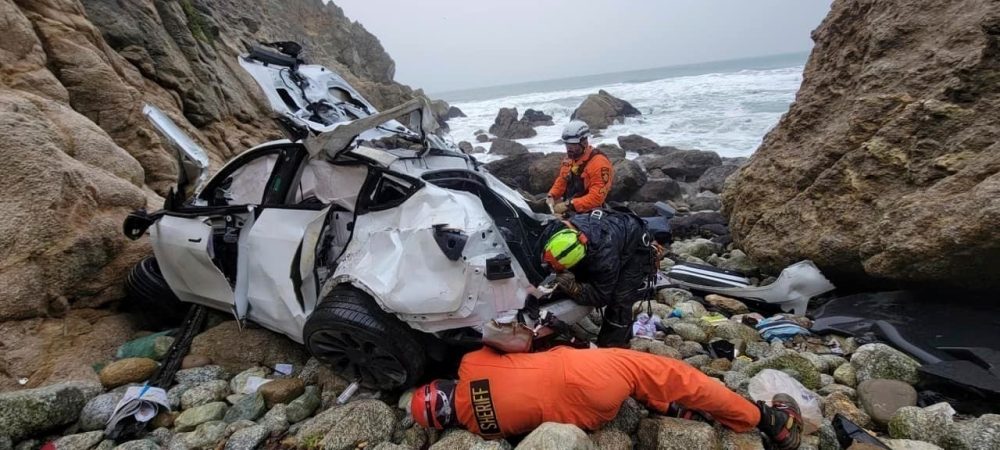
Dharmesh Patel, 45, faced attempted murder charges after steering his Tesla off a 250-foot drop along the Pacific Coast Highway at a location known as “Devil’s Slide,” injuring his wife and their two young children. Remarkably, all four family members survived the January 2, 2023 crash — something one official described as an “absolute miracle.”
A San Mateo County judge tossed the charges on Monday following Patel’s successful completion of a two-year mental health diversion program that included work with a Stanford University psychiatrist and a family therapist. San Mateo County District Attorney Steve Wagstaffe confirmed the dismissal, noting that the judge had no choice under the law.
“The judge was required by the law to dismiss the charges,” Wagstaffe said.
A separate judge had ruled in 2024 that Patel would undergo mental health treatment rather than face trial. His defense attorneys argued that at the time of the crash, Patel was experiencing episodes of severe depression accompanied by hallucinations, and that he qualified for mental health diversion under a California law that took effect in 2023.
“If the person who’s given mental health diversion follows the treatment plan, there’s nothing that can be done and at the end of the two years he gets it wiped out of his record,” Wagstaffe said.
Prosecutors in San Mateo County had fought against allowing Patel to enter the diversion program but were unsuccessful. Wagstaffe and fellow California district attorneys have been pushing state lawmakers to change the law so that attempted murder charges would no longer be eligible for mental health diversion.
“We’ll try again in the future,” Wagstaffe said. “We’re not giving up.”
Patel’s attorney, Joshua Bentley, had not responded to a request for comment as of Tuesday.
A Pasadena resident, Patel was on a family road trip in the Bay Area when the crash occurred. According to Wagstaffe, Patel told a psychiatrist after his arrest that he had been suffering from depression and had developed delusions that kidnappers would traffic his children, who were 4 and 7 years old at the time.
Patel remained behind bars without bail until 2024, when he was released to participate in an outpatient mental health treatment program. He then moved in with his parents in San Mateo County and was monitored with a GPS ankle bracelet. He was also required to give up his driver’s license and passport, and had to check in with the court on a weekly basis.
Wagstaffe said Patel’s wife and children also relocated to the San Francisco Bay Area, and the court eventually permitted him to spend time with his family and take them on drives.
Patel’s wife took the stand to say she had forgiven her husband and opposed his prosecution. She told the court that her children missed their father and wanted him back at home.
After Monday’s dismissal, Patel walked from the courtroom to the gallery where his wife was waiting, and the two departed the building together, according to the Mercury News.
Following his arrest, the Medical Board of California had prohibited Patel from practicing medicine while the attempted murder charges were pending. The board announced Tuesday that Patel surrendered his California medical license in December.
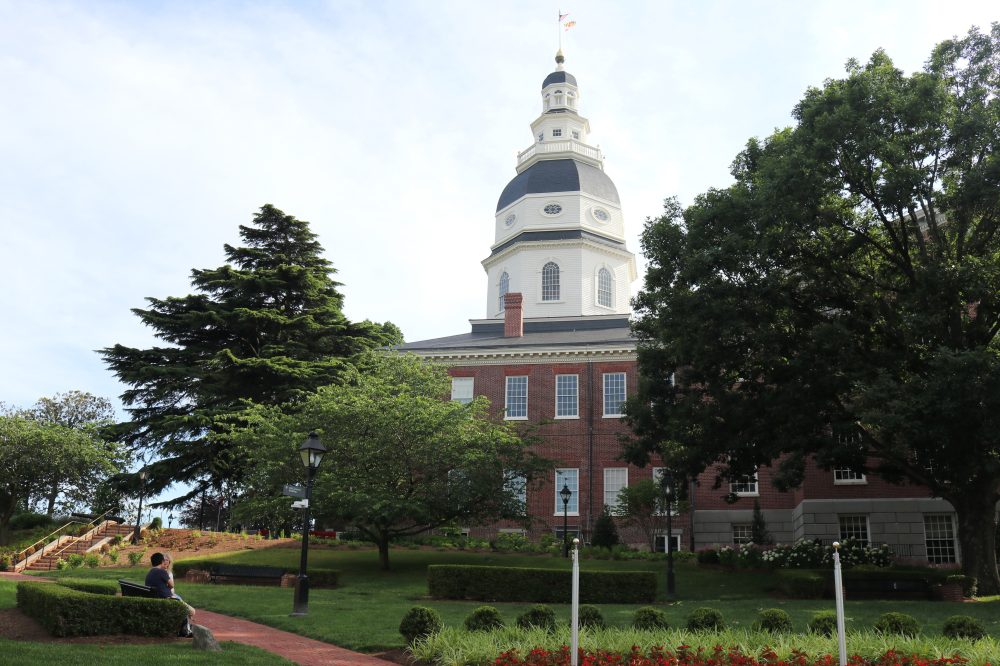
Maryland’s legislative leaders announced Tuesday that state lawmakers will gather for a special session next month to take up a proposed constitutional amendment aimed at shaping how congressional districts are drawn in the future — the latest move in a nationwide fight over partisan redistricting.
The Democratic-controlled Maryland General Assembly is set to convene on August 3, according to legislative leaders. The goal is to consider placing a constitutional amendment before voters this coming November — one that could eventually clear the path for a congressional map giving Democrats all eight of the state’s U.S. House seats. Currently, Democrats hold seven of those seats, with Rep. Andy Harris serving as the lone Republican in the delegation.
Legislative leaders did not release the specific wording of the proposed amendment in their announcement, but said it would “clarify” the state constitution in light of a 2022 court ruling. That ruling previously struck down a redistricting map that also would have made Harris’s district more competitive for a Democratic challenger.
For the amendment to reach voters, it must first pass both legislative chambers by a three-fifths margin. If voters then approve it in the November 3 general election, lawmakers could later revisit the congressional district maps under the revised constitutional guidelines.
House Speaker Joseline Peña-Melnyk issued a statement supporting the session, saying: “Maryland needs a durable, transparent constitutional framework for congressional redistricting that reflects the evolving legal landscape. This special session gives the General Assembly the opportunity to respond thoughtfully to recent court decisions while ensuring that Maryland voters have the final say on any proposed constitutional changes.”
Maryland Republicans fired back, calling the special session a blatant attempt to consolidate political power. Senate Minority Whip Justin Ready said in a statement: “One Republican Congressman represents hundreds of thousands of Marylanders who deserve a voice in Washington. This special session is designed to erase that voice and hand national Democrats another seat in the U.S. House.”
Congressional district boundaries are normally redrawn every ten years following a census to reflect population shifts. However, Trump pushed Republicans last year to redraw maps mid-decade in an effort to limit midterm losses, prompting Democrats to pursue their own redistricting strategies in response.
A U.S. Supreme Court ruling in late April further complicated the landscape by weakening the Voting Rights Act, giving Republicans new legal footing to reshape districts in Southern states with large minority populations that have historically supported Democrats. Republicans believe the new maps could yield as many as 10 additional House seats for their party this year.
Maryland had already attempted to address redistricting earlier this year. The state House passed a new map that would have made Democratic victories across all eight congressional seats more likely. However, the plan stalled in the state Senate, where Senate President Bill Ferguson expressed concern that the effort could be overturned in court.
Democratic Gov. Wes Moore voiced his backing for the renewed push, saying Tuesday in a statement that he was grateful for lawmakers’ “agreement to come back to finish the work.”
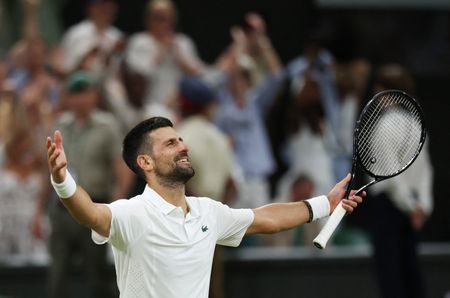
LONDON — Novak Djokovic punched his ticket to a record eighth straight Wimbledon semifinal on Tuesday, outlasting Canadian Felix Auger-Aliassime in a marathon five-set thriller, 7-6(10) 3-6 6-3 6-7(4) 7-6(10-4), setting the stage for a highly anticipated matchup against defending champion Jannik Sinner.
The seventh-seeded Djokovic found himself in trouble during a lengthy opening-set tiebreak, smiling through several missed opportunities — only to get the final laugh when Auger-Aliassime sent a volley sailing long, handing Djokovic a set that had appeared destined to go the other way.
In the second set, a double fault from Djokovic gave Auger-Aliassime the break he needed to take a 5-3 lead, and the Canadian kept his composure to level the match. Shortly after, the Centre Court roof was closed at approximately 7:40 p.m. local time, a decision that did not sit well with Djokovic.
Despite his frustration over the roof closure, Djokovic regrouped once the third set began, tightening up his ball-striking and breaking Auger-Aliassime in the sixth game to seize control of the match.
Auger-Aliassime dropped his opening service game of the fourth set and, visibly frustrated, slammed his racket against his chair. However, the Canadian dug deep and forced a deciding fifth set by claiming the fourth-set tiebreak.
The two players remained locked together through all 12 games of the final set before Djokovic leaned on his vast experience to pull away in the match tiebreak, closing out the win to a thunderous ovation from a crowd that had been thoroughly entertained throughout the evening.
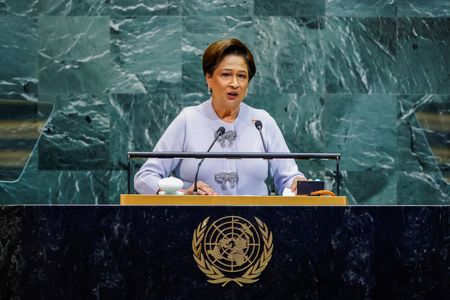
Dominic Hadeed, the owner of Blue Waters, a bottled water company based in Trinidad and Tobago, along with his wife Genevieve, filed an appeal on Tuesday challenging their ongoing detention. The couple is accused of being part of a conspiracy to assassinate Prime Minister Kamla Persad-Bissessar, the attorney general, and other senior government figures.
Both Hadeed and his wife have flatly denied the allegations. Their legal team argues that the detentions amount to political retaliation targeting members of an ethnic minority community believed to be aligned with the opposition.
Hadeed is of Syrian origin and is a member of Trinidad’s Syrian-Lebanese community. According to the appeal, authorities reportedly used the derogatory term “1%” when referring to that community.
The couple was taken into custody in late June under emergency powers provisions. Hadeed has since been held at the Port of Spain Remand Yard, while his wife was transferred to the Maximum Security Women’s Prison. Both remain detained as they await a scheduled hearing on July 27.
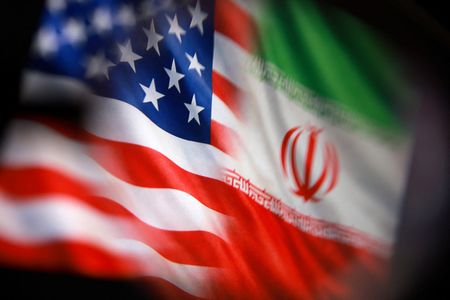
WASHINGTON — The U.S. military has launched multiple strikes against Iran, U.S. Central Command announced Tuesday, saying the action was a direct response to Iranian attacks on three commercial ships traveling through the Strait of Hormuz.
In an official statement, U.S. Central Command declared: “U.S. Central Command forces have begun launching a series of powerful strikes against Iran to impose heavy costs for targeting and attacking commercial shipping.”
The statement went on to say, “Iran’s demonstrated aggression was unwarranted, dangerous, and a clear violation of the ceasefire.”
The specific targets of the U.S. strikes were not immediately confirmed, though Iranian media reported that six projectiles struck the area of Taheroui pier in Sirik, located in southern Iran.
Tuesday’s action represents the first confirmed U.S. military strikes against Iran since late last month, when the two nations engaged in several days of back-and-forth strikes and counterstrikes.
A federal immigration agent fatally shot a man in Houston on Tuesday while officers attempted to stop his vehicle, according to a statement from U.S. Immigration and Customs Enforcement.
ICE identified the man killed as Lorenzo Salgado Araujo, describing him as a Mexican national and an “illegal alien” who tried to flee during what the agency called a “targeted enforcement operation.”
However, a man named Ronaldo Salgado, who told Spanish-language television station Telemundo Houston that he is the victim’s son, offered a different account. He said his father was in the area looking to hire workers at the time of the shooting.
ICE’s version of events states that Salgado “rammed an ICE law enforcement vehicle, refused to follow multiple verbal commands, and weaponized his vehicle in an attempt to run over an ICE law enforcement officer.” The agency said the confrontation led to “our officer firing his weapon in self-defense,” striking the driver. Salgado was taken to a hospital, where he later died from his wounds.
Reuters was unable to independently confirm the man’s immigration status or the exact circumstances surrounding the shooting.
This incident comes amid a pattern over the past year in which initial statements from immigration enforcement agencies have been called into question by video recordings or other evidence, sometimes in legal proceedings.
In one notable case from October, a woman from the Chicago area named Marimar Martinez was accused of ramming law enforcement officers with her vehicle. She was shot five times but survived. The charges against her were eventually dropped, and video evidence raised questions about whether agents may have struck her vehicle themselves.
As of Tuesday, neither the FBI nor ICE’s parent agency, the Department of Homeland Security, had responded to requests for comment on the Houston shooting.
A lawsuit filed Tuesday in federal court accuses the Trump administration of secretly handing over confidential immigration records belonging to Iranian asylum seekers directly to the Iranian government — a charge the administration is calling completely false.
Attorneys from the left-leaning Public Citizen Litigation Group brought the case on behalf of the Iranian American Legal Defense Fund, filing it in the U.S. District Court for the District of Columbia.
According to the lawsuit, the Trump administration began a policy last year of supplying Iran with “confidential information from the immigration files of Iranians seeking asylum in the United States.”
The filing described many of those asylum seekers as vulnerable individuals, stating: “Many of the asylum seekers are pro-democracy protestors, members of religious minorities such as Evangelical Christians, or members of the LGBTQ community who seek refuge in the United States because of the grave dangers they face in Iran.”
The lawsuit further alleged that this practice continued even after last year’s U.S. military strikes against Iran during the Israel-Iran war, Iran’s crackdown on protesters, and the U.S.-Israeli war on Iran that began on February 28.
The Department of Homeland Security, which oversees Immigration and Customs Enforcement, pushed back hard against the accusations. “These allegations that ICE shared asylum application records with the Iranian government are FALSE,” the agency said in a statement, adding: “ICE is committed to ensuring that illegal aliens are informed of their right to communicate with their consular representatives.”
The lawsuit alleged that Iranian detainees who met with an “Iranian Interest Section official” reported that the official appeared to already know the details of their individual immigration cases, including the specifics of their asylum applications. Because Iran does not maintain a consulate in the United States, the lawsuit noted that consular functions for Iran “were handled by the Iranian Interest Section housed within the Embassy of Pakistan.”
ICE has been at the center of the Trump administration’s aggressive immigration enforcement and deportation efforts. Human rights organizations have widely criticized those efforts as violations of free speech and due process, and have raised concerns about racial profiling, particularly affecting ethnic minorities. The Trump administration has defended the policies as necessary to curb illegal immigration and strengthen national security.
The lawsuit is asking the court to appoint an independent monitor to prevent any further disclosures to Iran and to stop the alleged information sharing with the Iranian government.
Motorists traveling northbound on Bridgeville Highway in Sussex County should plan for slower travel conditions this afternoon.
A flagging operation is currently underway in the area between Sussex Highway, also known as Route 13, and Concord Road, also known as Route 20. Workers are directing traffic through the area as the operation takes place.
The flagging activity is expected to remain in place until 5 p.m. Drivers are encouraged to allow extra travel time or consider an alternate route if possible.
DUBAI, United Arab Emirates — American military forces launched a series of strikes against Iran in the early morning hours Wednesday, coming just hours after three commercial ships were attacked in the Strait of Hormuz off the coast of Oman.
The renewed hostilities from both sides are putting the interim agreement reached last month in serious jeopardy. Both the U.S. and Iran have accused the other of violating that initial deal. The latest round of fighting also makes it harder to continue negotiations aimed at fully reopening the strait, curbing Tehran’s disputed nuclear program, and achieving a permanent end to the war that began on Feb. 28.
U.S. Central Command released a statement on social media explaining that American forces carried out the strikes “to impose heavy costs for targeting and attacking commercial shipping crewed by innocent civilians in an international waterway.”
“Iran’s demonstrated aggression was unwarranted, dangerous, and a clear violation of the ceasefire,” the command added.
The latest flare-up follows a comparable wave of Iranian attacks on shipping and subsequent U.S. retaliation that took place late last month.
Shortly after the three tankers were struck by projectiles, the United States pulled a license it had granted that allowed for the sale of Iranian oil — a key component of the interim agreement meant to halt the fighting.
According to the U.N. International Maritime Organization, the number of attacks on ships in the fuel-shipping waterway on that day was the highest since late April. The fresh wave of assaults threatened to once again disrupt the flow of vessels through the strait, just as nations were hoping to restore normal shipping and ease the global economic burden caused by the war.
A U.S. official, speaking with The Associated Press under the condition of anonymity, said the oil license was revoked because Iran’s behavior in the strait was unacceptable and had to carry real consequences. The Iranian mission to the United Nations did not respond to a request for comment.
One tanker caught fire after being struck
The United Kingdom Maritime Trade Operations center reported that one tanker was traveling off the Omani coast when it was hit and erupted in flames. Iranian state television reported that the liquefied natural gas tanker was struck after disregarding warnings, though it stopped short of claiming direct responsibility for the attack.
The other two vessels suffered some damage but were not seriously disabled, and no injuries were reported. Both ships continued on their way, according to the U.K. maritime agency.
Iran has repeatedly declared that only its designated route through the strait is considered safe, and Tehran is suspected of targeting vessels that have chosen an alternate route running closer to the Omani shoreline. Location data from the U.K. agency confirmed that all three attacks took place off the coasts of Oman or the neighboring United Arab Emirates, suggesting the targeted ships were using that Omani-adjacent route.
Specifically, a Qatari tanker named Al Rekayyat was traveling south through the strait near Limah, Oman, when a projectile struck its left-side engine room and ignited a fire. Majed Al-Ansari, a spokesperson for the Qatari Foreign Ministry, described the incident as an “unacceptable attack” on international navigation and global energy security, calling it a “serious and explicit violation” of international law. In a post on X, he stated that Qatar holds Iran “fully legally responsible.”
Later that same day, the U.K. maritime agency reported a second oil tanker was hit on its left side while exiting the strait near the Omani-Emirati border. A third vessel was struck by a drone off the coast of Oman.
Negotiations between the US and Iran are stalled
The United States remains committed to pushing forward with diplomatic talks with Iran, with goals that include fully reopening the strait, scaling back Tehran’s disputed nuclear activities, and securing a lasting end to the war that began Feb. 28.
The Joint Maritime Information Center, a multinational body operating under U.S. Navy oversight, had told shipping companies Monday that the route around Oman “has been expanded and remains available for all traffic.” Ships traveling north use the Iranian-designated route and must register with Tehran, while those heading south coordinate with Oman and the U.S.
As part of the interim agreement, Iran and the United States had agreed to allow ships to pass through the strait without fees for 60 days. However, Tehran has insisted it must control vessel routing and eventually collect transit fees — a demand that would overturn longstanding international practice in the waterway. The U.S. and many Gulf Arab states have rejected any arrangement that would allow Iran to charge for passage.
The license the U.S. had issued permitted the production, delivery, and sale of Iranian oil through Aug. 21. U.S. Vice President JD Vance had said at the time that extended talks with senior Iranian officials held in Switzerland had laid a “good foundation for a successful final deal” to end the war.
U.S. sanctions on Iranian oil purchases had been in place since the 1979 Iranian Revolution. After the U.S. and Israel launched the war and the strait was closed, the U.S. had authorized temporary Iranian oil sales at least twice as a way to encourage progress toward a deal.
Diplomatic talks between Iran and the U.S. appeared to be on pause pending the burial of Iran’s Supreme Leader Ayatollah Ali Khamenei, who was killed at the outset of the war. Data firm Kpler reported that at least 108 ships crossed through the strait last weekend using various routes. In peacetime, roughly one-fifth of all globally traded oil and natural gas passed through the channel.
Mourners gather in Qom for Khamenei’s funeral
Iranian authorities transported Khamenei’s remains to Qom, a city known as a center of Shiite Islamic scholarship, where large crowds gathered Tuesday to pay their respects.
Iranian state television broadcast live footage showing hundreds of thousands of mourners making their way toward Jamkaran Mosque, located just south of Qom, for the funeral service. Shiites regard the mosque as a sacred site, believing it once hosted Muhammad al-Mahdi — the 12th and final Shiite imam, who vanished in the 9th century and is expected to one day return to bring justice to the world.
Iran’s new Supreme Leader, Ayatollah Mojtaba Khamenei — the son of the late leader — had not appeared at any of the ceremonies, which began Saturday in Tehran. He is believed to be in hiding after reportedly sustaining wounds in the same airstrike that killed his father.
Khamenei’s body arrived in Najaf, Iraq, late Tuesday, where it was received by senior officials from both nations. Processions are scheduled for Wednesday in both Najaf and Karbala, the two most sacred cities of Iraqi Shiism. Iraq has a large Shiite population and is home to significant religious sites and centers of Shiite learning.
Khamenei, who was 86 years old, is to be returned to Iran and buried Thursday at the Imam Reza shrine in Mashhad, the city where he was born.
NEWARK, Del. — A familiar name is back atop the leaderboard in Delaware golf. Roberto Nieves, a 2022 graduate of the University of Delaware and widely regarded as the most decorated men’s golfer in state history, has returned to the region and is picking up right where he left off.
Just four years after walking across the graduation stage with a degree in psychology and a minor in health and wellness, Nieves showed he still has what it takes on the course. In May, he claimed victory in two separate amateur golf tournaments within a two-week period, signaling a strong return to competitive play.
Listen to the Evening Delmarva Farm Report Update — July 7, 2026
DELMARVA — Weather concerns drove grain prices higher Tuesday, with traders citing stress on crops at critical development stages. Short covering and technical buying pushed soybeans up sharply, and a midday forecast update added fuel to the rally.
Growing trade chatter about China purchasing roughly 300,000 tons of U.S. soybeans also circulated through markets, though the U.S. Department of Agriculture had not confirmed any deal as of Tuesday.
Markets
September corn closed up 5.5 cents at $4.43¾. August soybeans finished at $11.93¾, up 9¾ cents. September Chicago wheat settled at $6.18½, up 4.5 cents. August live cattle slipped 67 cents to $238.42.
At Laurel Grain Company in Laurel, Delaware, September corn is bidding $4.89/bu and November soybeans are at $11.48.
Policy
Virginia Eastern Shore farmers can sign up beginning July 15 for cover crop cost-share funding through the Eastern Shore Soil and Water Conservation District. Appointments run through August 21 on a first-come, first-served basis. Interested producers can contact District Manager Carmie Ross at 757-302-4431 to schedule.
Forecast
Scattered showers and thunderstorms are possible across Delmarva through Tuesday night, with a low near 69°F. Wednesday brings mostly sunny skies and a high of 82°F, offering good drying conditions.
This article is based on the Delmarva Farm Report Update Evening Edition, July 7, 2026. Hosted by Tom Bradley.
A multi-lane closure is in effect on US Route 202 southbound at Powder Mill Road following a crash, according to transportation officials.
Three right lanes on that stretch of roadway have been shut down as crews respond to the incident. Motorists traveling in the area are advised to allow extra time or seek an alternate route to avoid significant delays.
No additional details about the crash, including the number of vehicles involved or any injuries, were immediately available. Drivers should remain alert and follow the guidance of any traffic control personnel on scene.
Farmers are pushing back against workforce reductions at a federal agency that has played a central role in helping them care for their soil for nearly a century.
The agency, which has been supporting agricultural land conservation efforts since the 1930s, is now facing job cuts that have left many in the farming community concerned about the future of those services.
Growers who have relied on the agency’s guidance and resources say the reductions could have serious consequences for their operations and for the health of farmland across the country.
The International Monetary Fund announced Tuesday that Silvana Tenreyro will serve as its next chief economist, stepping into the role vacated by Pierre-Olivier Gourinchas, who has returned to the academic world. IMF Managing Director Kristalina Georgieva made the announcement in an official statement.
Tenreyro holds citizenship in Argentina, Italy, and Britain and has spent many years as an economics professor at the London School of Economics. She is scheduled to assume the position of economic counselor and director of the IMF’s research department beginning August 10.
Her career spans a wide range of high-level economic institutions. From 2017 to 2023, she served as an external member of the Bank of England’s Monetary Policy Committee. Earlier in her professional life, she worked as an economist at the Federal Reserve Bank of Boston and also held a seat on the Monetary Policy Committee of the Bank of Mauritius. She is a widely published scholar in the field of economics.
At present, Tenreyro is a member of Georgieva’s external advisory group and provides guidance to prominent public and private institutions on economic and financial matters.
Georgieva highlighted the significance of the appointment given current global conditions, saying: “At a time of profound transformation and heightened uncertainty in the global economy, Silvana’s mix of intellectual leadership and policy experience will help ensure that the Fund’s analytical work and multilateral surveillance and policy advice will remain at the cutting edge in support of our membership.”
The IMF’s chief economist plays a central role in producing the organization’s regular economic assessments and acts as one of the fund’s leading voices on the state of the global economy. In recent years, that responsibility has grown increasingly complex due to challenges including the COVID pandemic, changes in U.S. tariff policy, and ongoing conflict in the Middle East.
Tenreyro completed her Ph.D. and Master of Arts in economics at Harvard University, having previously earned an undergraduate degree in Argentina.
A tug-of-war has emerged over control of the United States’ long-standing international food aid initiative known as Food for Peace, following a dramatic shakeup that left the program’s future uncertain.
The Department of Government Efficiency, known as DOGE, effectively gutted US international food aid operations, prompting lawmakers from agricultural states to step in and fight for the program’s survival. Their efforts resulted in Food for Peace being moved under the authority of the US Department of Agriculture.
But the move has not satisfied everyone. Specialists who focus on global hunger and food security are raising serious concerns, arguing that the USDA is steering the program away from its original purpose as a humanitarian tool and toward priorities that don’t align with the needs of the world’s most vulnerable populations.
The debate highlights a fundamental tension between agricultural and trade interests on one side, and the urgent need to deliver food aid to people facing starvation on the other. Critics worry that placing the program under an agency focused largely on domestic farming and trade could reshape how — and to whom — aid is delivered.
The outcome of this dispute could have significant consequences for millions of people around the world who depend on US food assistance programs.
A portion of Route 20, commonly referred to as Concord Road, is currently shut down due to ongoing construction work.
The closure covers the segment of roadway running between Honeysuckle Drive and Church Road. Motorists traveling through the area will need to find an alternate route while construction is underway.
According to transportation officials, the road is expected to remain closed until 6 p.m. on September 21, 2026. Drivers are encouraged to plan ahead and allow extra travel time when navigating around the affected area.
PITTSBURGH — The Pittsburgh Pirates are facing a tough stretch ahead as they attempt to stay in postseason contention without one of their brightest young stars.
The team placed 20-year-old rookie shortstop Konnor Griffin on the 10-day injured list Tuesday after he hurt the knuckle on the ring finger of his left hand. Pirates director of sports medicine Todd Tomczyk told reporters Griffin is expected to be sidelined for 8-10 weeks.
The injury happened early in Sunday’s win over Washington, though Griffin stayed in the game and finished with two hits. A medical exam after the game revealed how serious the damage was.
Tomczyk explained that Griffin damaged the sagittal band, a structure that helps stabilize the ring finger. The young shortstop will wear a splint on the hand for roughly six weeks before he can begin baseball activities again.
This is the second major injury to slow Griffin’s rookie campaign. He also missed most of June dealing with a strained right forearm.
Despite the setbacks, Pirates manager Don Kelly expressed confidence in his young player’s resilience. “He’s really been a big part of our success,” Kelly said. “I think for him to learn through this, too, every single player goes through injuries. He’s just had a couple tough ones at the beginning. I know he’ll be stronger after going through it.”
When on the field, Griffin has looked like exactly the kind of cornerstone player Pittsburgh envisioned when they selected him in the first round of the 2024 draft. In 59 games this season, he is batting .276 with five home runs, 25 RBIs, and 20 stolen bases.
Infielder Jared Triolo is expected to step in as the primary shortstop while Griffin recovers. Pittsburgh entered Tuesday with a 46-45 record, sitting in the middle of a crowded group of National League teams competing for a postseason spot.
Griffin joins center fielder Oneil Cruz and first baseman Spencer Horwitz on an already lengthy injured list for the Pirates. To fill Griffin’s roster spot, the club called up infielder Jack Brannigan from Triple-A Indianapolis.
The explosive growth of data centers is leaving state and local officials scrambling to put guardrails in place before the industry expands even further.
Lawmakers are rushing to draft and pass new regulations as mounting concerns over water usage, energy demands, and noise pollution tied to data center operations continue to grow. The rapid pace at which these facilities are being built has outstripped the ability of governments to respond with meaningful oversight.
Both state and local legislators are now putting forward a range of proposals aimed at bringing the data center industry under greater regulatory control and addressing the impact these facilities have on surrounding communities.
Wall Street stocks closed lower Tuesday, following European markets downward as a wave of selling hit technology shares — particularly chipmakers — while fresh unrest in the Middle East sent crude oil prices climbing.
Here is a look at the major stories shaping markets on Tuesday:
1. The U.S. trade deficit grew by 42.1% in May, reaching $77.6 billion — just $900,000 less than what analysts had forecast.
2. New York Federal Reserve President John Williams said he is less concerned about inflation than he once was, pointing to recent declines in energy prices as a reason for his eased worry.
3. Two oil tankers were struck in the Strait of Hormuz as large crowds gathered in the Iranian city of Qom on the fifth day of mourning following the death of Iran’s Supreme Leader, Ayatollah Ali Khamenei.
4. Meta Platforms announced the launch of Muse Image, its first artificial intelligence image generation model, as the company behind Facebook continues expanding its generative AI offerings across its platforms.
5. Nigel Farage, the leader of the populist Reform UK Party in Britain, announced he was stepping aside to address accusations that he failed to report millions of pounds worth of gifts.
Key Market Moves for Tuesday:
Stocks: All three major U.S. indexes finished in negative territory, with the Nasdaq leading losses. Europe’s STOXX 600 index was also pulled lower by the tech sector selloff.
Sectors: Industrial and technology stocks posted the largest percentage declines. Energy shares were the day’s top performers. Semiconductor stocks fell 4.7%.
Currency: The U.S. dollar edged slightly higher while the Japanese yen hovered near a 40-year low, keeping traders on alert for possible government intervention.
Bonds: The yield on the benchmark U.S. Treasury note climbed to a four-week high as investors tracked escalating geopolitical tensions.
Commodities: Front-month futures for both West Texas Intermediate and Brent crude oil settled higher — up 2.8% and 3.0% respectively. Gold prices fell despite the rise in Middle East tensions.
Other Stories in Focus:
A French appeals court upheld the conviction of far-right leader Marine Le Pen for misuse of public funds, but reduced the length of her ban from seeking public office. Although Le Pen will be required to wear an electronic ankle bracelet — which could complicate her ability to campaign — her National Rally party is currently leading in polls with less than a year before centrist President Emmanuel Macron is expected to leave office.
SpaceX officially joined the Nasdaq 100 index Tuesday, a move analysts expect will trigger billions of dollars in automatic buying by index-tracking funds. Brokers have largely issued bullish outlooks on the rocket and satellite company, which is valued at more than $2 trillion. SpaceX made its stock market debut on June 12, and while its share price is up 10.7% from its initial offering price of $135, it has dropped 7.7% so far this week.
The United States was knocked out of the World Cup following a painful 4-1 loss to Belgium — a match that was overshadowed by controversy surrounding alleged political interference by President Donald Trump. The allegations stem from Trump’s reported pressure on FIFA President Gianni Infantino to reconsider a red-card suspension handed to Folarin Balogun, the top goal scorer for the U.S. team. Infantino stated that FIFA’s decision-making process was “independent.”
What Could Influence Markets Wednesday:
Traders will be watching for new developments in the Middle East, shifts in energy markets, social media posts from President Trump, and the release of minutes from the Federal Reserve’s June meeting. Currency traders will also monitor the possibility of yen intervention. Economic data releases from the Netherlands, Sweden, and Norway are also on the calendar, along with U.S. consumer credit figures for May.
SpaceXAI and Cursor are gearing up to release their first jointly built artificial intelligence model, with a launch potentially happening as early as Wednesday, according to a report from The Information.
The publication, citing a memo distributed to employees, said the two companies had pushed back an earlier planned release date in order to work on improving the model’s performance and efficiency.
Reuters, which first carried the story on July 7, was unable to independently confirm the details of the report.
Infrastructure engineering and construction company MasTec announced Tuesday that it plans to purchase electrical contractor Superior Group in a deal worth $1.65 billion, combining cash and stock. The move is aimed at broadening MasTec’s footprint in the data center infrastructure market.
Currently, MasTec focuses mainly on serving data centers’ power generation and energy transmission requirements. By bringing Superior Group into the fold, the company said it will also be able to provide the electrical systems that data centers rely on.
The acquisition comes as businesses across multiple industries are aggressively working to expand their data center capabilities, driven by surging global demand for artificial intelligence services.
MasTec said it anticipates the transaction will be completed sometime between mid- and late-July.
St. Louis Cardinals reliever Ryne Stanek had to be pulled from Tuesday’s game against the Milwaukee Brewers in the seventh inning after suffering what appeared to be a foot or ankle injury at first base.
The right-hander seemed to jam his foot into the bag while rushing to cover on a bunt single hit by Joey Ortiz. Stanek had just entered the game after newcomer Bruce Zimmerman had worked five innings of relief during the first contest of a doubleheader.
The timing of the injury is particularly unfortunate for St. Louis, coming less than a day after Justin Bruihl exited Monday’s game with a sprained right ankle — adding to what is becoming a growing list of pitching concerns for the club.
The 34-year-old Stanek is expected to take the loss after giving up a walk and the bunt single. Later in the same inning, Christian Yelich delivered a double that handed Milwaukee a 4-3 lead.
Before Tuesday’s game, Stanek had posted a 2-1 record with a 4.67 ERA across 38 appearances on the season. He also threw an inning in Monday’s 4-3 defeat.
S. DuPont Road at its intersection with Faulkland Road is currently closed following a crash, according to traffic officials.
Motorists traveling through the area are advised to avoid the intersection and plan for alternate routes until the roadway is reopened. No further details regarding the crash have been made available at this time.
Drivers should use caution and allow for extra travel time as crews work to clear the scene.
Delaware Governor Matt Meyer made a significant budget decision Tuesday, using his constitutional line-item veto authority to cut a $35 million appropriation tied to a proposed expansion of Legislative Hall.
The governor removed the funding from House Bill 500, the state’s fiscal year budget bill, pointing to affordability concerns as the driving force behind his decision.
The announcement was made public on July 7, 2026, through a press release from the governor’s office, with media contact listed as Jonah Anderson.
The proposed project would have funded an expansion of Legislative Hall, the historic building in Dover that serves as home to Delaware’s General Assembly. By exercising the line-item veto, Governor Meyer was able to target and remove that specific spending item without rejecting the broader budget legislation.
State health officials and hospital leaders from across Delaware came together in Dover on Monday to unveil a new set of statewide guidelines aimed at improving how emergency departments handle opioid use disorder.
The Delaware Department of Health and Social Services, working through its Division of Substance Abuse and Mental Health, joined hospital representatives at Bayhealth in Dover to formally announce the adoption of the new Emergency Department Opioid Use Disorder Treatment Guidance.
The guidance was developed as part of Delaware’s Overdose System of Care, reflecting a unified, statewide approach to addressing opioid addiction when patients arrive at emergency rooms seeking help.
The announcement signals a significant step toward standardizing how Delaware hospitals respond to one of the state’s most pressing public health challenges.
A lane on South Heald Street southbound has been closed between A Street and B Street due to ongoing construction work.
The closure is expected to remain in effect until 6 p.m., according to traffic officials. Drivers traveling through that stretch should anticipate potential delays and consider using alternate routes until the lane reopens.
WASHINGTON — The Democratic Socialists of America, a left-leaning political organization, has moved from the margins of American politics to a position of growing influence within the Democratic Party. But what exactly does the group believe, and can it sustain a foothold in mainstream politics?
Here is a look at the organization, based on information from its national website.
A GROWING FORCE IN DEMOCRATIC POLITICS
The DSA was formed in 1982 through the merger of two separate organizations, but it remained largely unknown for decades. That changed in 2016, when independent Senator Bernie Sanders mounted an unsuccessful campaign for the Democratic presidential nomination. His run brought widespread attention to frustrations with the party’s mainstream direction and helped energize its left wing.
Sanders describes himself as a democratic socialist but has no formal ties to the DSA.
The organization gained significant momentum in 2018 when DSA member Alexandria Ocasio-Cortez pulled off a major upset in a Democratic House primary in New York. She has since become a prominent figure in the party and is considered a potential 2028 presidential contender.
DSA members have continued to rack up notable victories, including New York Mayor Zohran Mamdani. This year, DSA-backed candidates have won Democratic House primaries in New York City and Colorado. DSA member Nithya Raman advanced to the final two candidates in the Los Angeles mayoral race, and DSA member Janeese Lewis George won the Democratic primary for mayor of Washington, D.C., with a full-term election expected in November.
The organization now describes itself as the largest socialist group in American history, claiming a membership of more than 100,000 people. So far this year, DSA or its local chapters have backed 150 candidates across various levels of government, recording 38 wins and 38 losses.
WHAT SEPARATES SOCIALISTS, DEMOCRATIC SOCIALISTS, AND COMMUNISTS?
President Donald Trump has labeled Mamdani and other DSA-supported candidates as “communist,” attempting to draw comparisons to adversaries of the United States such as the former Soviet Union.
Communism, by definition, seeks to eliminate private property and create a society without class distinctions — goals that real-world communist governments have largely failed to achieve.
In Europe, parties that call themselves democratic socialist have used electoral politics to build strong social safety nets and establish public oversight of major industries, while still permitting private property and free markets.
The DSA says it wants to go further than the European model but without adopting the authoritarian tactics associated with communist regimes. The group advocates for government control of major industries and wants to replace capitalism with a system where, in their words, “ordinary people have a voice.”
WHERE DSA STANDS ON ISRAEL
The DSA has pushed to move the Democratic Party away from its historically strong support for Israel, and the issue has become a flashpoint in this year’s primary contests.
The organization characterizes Israel as an apartheid state carrying out a genocide in Gaza and accuses it of having “fascist” ambitions. DSA calls for an end to all U.S. military and economic assistance and weapons sales to Israel, and it supports student campaigns urging universities to pull their investments from the country.
The group has also called for a full Israeli withdrawal from Arab territories, a “right of return” for displaced Palestinians, and a “right to resist” Israeli occupation — though it stops short of explicitly endorsing militant organizations like Hamas. Following the October 7, 2023 Hamas attack that killed 1,200 Israelis, DSA described the assault as “not unprovoked” and said it was “a direct result of Israel’s apartheid regime.”
OTHER POLICY POSITIONS
The DSA’s national website outlines the organization’s stances on a wide range of issues, including the following:
• Expanding Medicare to cover all Americans, a proposal commonly known as “Medicare for All”
• Free college and early childhood education
• Nationwide rent control and a major expansion of public housing
• Higher taxes on wealthy individuals, corporations, large inheritances, and private universities
• A 32-hour workweek with no cuts to pay or benefits, along with stronger protections for labor unions
• Large-scale infrastructure and jobs programs, along with a “Green New Deal” to boost investment in renewable energy and phase out fossil fuels
• Public ownership of major transportation networks, energy systems, and natural resources
• A significantly more open immigration system that would allow workers to move freely between countries and eliminate deportation
• Lifting sanctions on Cuba, Venezuela, Iran, and other nations described as acting “independently of the United States”
• Deep cuts to the U.S. military budget and the closure of all American military bases abroad
• Abolishing the Electoral College in favor of a national popular vote for president
• Adding seats to the U.S. House of Representatives and eliminating supermajority requirements in the Senate
Hundreds of teenagers from across the country converge on Oklahoma each year for a national competition with an unusual focus — judging soil.
The contest gives young participants a chance to demonstrate their ability to assess dirt, a skill that plays a critical role in growing crops, constructing buildings, and managing land effectively.
CAIRO (AP) — A small Cairo coffee house was transformed Tuesday into something resembling a miniature stadium, packed with several hundred people — mostly men and boys as young as 7 — all eyes fixed on wall-mounted screens before kickoff.
That same electric atmosphere repeated itself across the soccer-obsessed nation as Egypt squared off against the reigning World Cup champion in a round-of-16 matchup held in Atlanta.
For millions of Egyptians, it was a landmark occasion — even as their team’s remarkable journey came to a close with a 2-3 defeat to Argentina on Tuesday.
“It’s a brutal scenario,” said Ahmed Saadany, a teacher, reflecting on the outcome. “The journey shouldn’t have ended that way.”
Led by star player Mohamed Salah, Egypt had punched its ticket to the round of 16 by defeating Australia 4-2 on penalty kicks following a 1-1 draw in the round of 32 on Friday. The Pharaohs had secured second place in Group G, behind Belgium, to advance to the knockout stages for the first time in their history.
Anticipation for Tuesday’s match began building well before the 7 p.m. local kickoff. Rows of plastic and wooden chairs were arranged in front of TV screens as fans poured into hundreds of thousands of coffee houses and fan zones throughout Egypt. Street vendors hawked Egyptian flags, whistles, and team merchandise in squares and along major roads.
All day long, Egyptian flags flew from cars and balconies, and conversations in coffee houses, markets, and on television revolved around the national team’s performance and the high-stakes showdown with Argentina.
“Overall, the performance was excellent,” said Hassan Shehata, settling into a seat at a packed Cairo coffee house before the game. “We’re developing. We play and compete.”
This was Egypt’s fourth World Cup appearance, and it marked the best run ever for the most populous Arab nation — a country that has claimed seven Africa Cup of Nations titles. The 2026 tournament saw the Pharaohs break their long-standing curse of never winning a World Cup match, starting with a 3-1 victory over New Zealand and culminating in their first-ever knockout stage appearance.
“It was a dream,” said Rami Saeed, a 23-year-old university student. “(Coach) Hossam Hassan and his team have beaten our expectations.”
At a packed coffee house in Giza, fans draped themselves in Egyptian flags and chanted “Masr, Masr, Masr!” — the Arabic word for Egypt — while others banged on drums. The crowd erupted when Egypt found the net and again when the Egyptian goalkeeper stopped a penalty kick from Messi. But each time Argentina scored, a heavy silence fell over the room.
Though disappointed by the final result, fans were quick to point to the team’s historic achievement with a sense of pride.
“It’s injustice,” cried Haitham Raafat, a 13-year-old boy, breaking into tears after the final whistle. “The referee wasn’t fair.”
President Abdel-Fattah el-Sissi praised the squad’s “unprecedented accomplishment in the history of Egyptian football.” In a social media post, he wrote: “Thank you to the heroes of the national football team. We are proud of you, and your achievement.”
Shaban Youssef, a 45-year-old mechanical engineer, said he too felt proud of the team. “They held our heads high, especially Hossam Hassan’s support of the Palestinian people,” he said.
Egypt’s head coach Hassan used the World Cup stage to publicly advocate for Palestinians during an impassioned pregame news conference. When asked about his feelings after wrapping a Palestinian flag around himself following Egypt’s win over Australia, Hassan delivered a more than four-minute response to applause from the gathered media.
“If there is anyone in the world who does not feel for the Palestinian people, then they are not human — whether they are Arab, European, or American,” Hassan said.
His remarks drew widespread praise from Egyptians on social media. Prominent novelist Ezzat el-Kamhawi captured the sentiment in a Facebook post ahead of Tuesday’s game: “Whatever the result, our team plays tonight, and the championship is already in their pocket, thanks to Hossam Hassan’s goal against Zionism.”
During Egypt’s World Cup matches, hundreds of war-weary Palestinians crowded around TV screens in makeshift shelters throughout the Gaza Strip to cheer on the Pharaohs. They gathered outside their shelters, chanting, clapping, and waving Egyptian flags as patriotic Egyptian songs played in the background.
“It’s a duty to support Egypt,” said Soliman Salem, a young Palestinian man, speaking by phone from his shelter in Gaza after Tuesday’s match. “We’re very sad, but proud of the Egyptians.”
Another Gaza resident, Abdel-Rahman Baroud, said they had hoped Egypt would advance further, but “luck wasn’t on their side in the second half.” “We all return home, disappointed,” he said.
WASHINGTON — Kentucky Sen. Mitch McConnell continues to recover in a hospital more than three weeks after being admitted for health issues that his staff has declined to identify, even as the Senate’s top two Republicans have each spoken with him individually by phone, according to aides.
The lack of any detailed information from McConnell’s team has fueled growing speculation about his condition and whether the 84-year-old senator will be well enough to return to Capitol Hill when the Senate comes back from a two-week recess next week. McConnell is set to retire at the end of his current term in January.
A spokesperson for Senate Majority Leader John Thune, R-S.D., confirmed that Thune spoke with McConnell by phone on Monday. The two had what was described as a “lengthy and substantive conversation that covered a variety of topics, including national security.” As majority leader, Thune regularly tracks the health and availability of members of his conference as he manages vote counts within his narrow 53-47 majority.
Wyoming Sen. John Barrasso, who holds the No. 2 position among Senate Republicans, also had a conversation with McConnell on Tuesday that lasted approximately 20 minutes, according to a spokeswoman. Their discussion touched on upcoming Senate races ahead of the midterm elections, the Supreme Court, and other subjects.
Barrasso spokeswoman Kate Noyes said, “Senator McConnell was fully engaged and is eager to get back to the Senate.”
Republican strategist Scott Jennings, a McConnell ally, also shared on X that he spoke with McConnell for about 20 minutes on Tuesday, writing that “he’s still recovering in the hospital.” Jennings said the conversation ranged from politics and foreign policy to “even a little bit of Senate history.”
McConnell’s office confirmed he was admitted to the hospital on June 14, stating only that he was “receiving excellent care.” A follow-up statement about a week later indicated he would not be casting votes that week. A more recent statement said McConnell “appreciates the outpouring of support he’s receiving while he continues his recovery in the hospital.”
“The Senator continues to improve, and is working closely with his staff on Kentucky and Senate matters while the Senate is out of session,” that statement read. A spokesman repeated the same statement again on Tuesday, offering no new details.
This latest hospitalization is not McConnell’s first in recent years. In March 2023, while still serving as Republican leader, he suffered a concussion after falling at a Washington hotel and was away from work for several weeks. After returning, he twice appeared to freeze during news conferences, staring blankly ahead before colleagues and staff — including Barrasso, who is a physician — stepped in to help him.
The following year, McConnell fell and sprained his wrist while leaving a Republican luncheon. He also fell at his Kentucky home in 2019 and required surgery for a fractured shoulder.
McConnell has had physical challenges dating back to childhood, when he contracted polio. He has long acknowledged difficulty walking and climbing stairs as an adult. In recent months, he has frequently used a wheelchair to get around the Capitol.
First elected to the Senate in 1984, McConnell served as Republican leader from 2007 until last year, holding both the majority and minority leader roles during that span. He has continued showing up for Senate sessions as a rank-and-file member since stepping down from leadership.
WASHINGTON — The number of National Guard troops stationed in Washington, D.C. has grown significantly in recent weeks, swelling as part of security preparations for the nation’s 250th birthday celebrations. Part of that increase has come from states led by Democratic governors — and that involvement is now generating serious criticism.
Critics argue that troops sent by Democratic-led states for the anniversary festivities are being folded into a much broader, ongoing Guard deployment that the Trump administration launched in August 2025. That deployment began after President Donald Trump issued an emergency order, citing what he described as rampant crime in the nation’s capital.
On Tuesday, a coalition of think tanks along with civic, labor, and civil rights organizations sent a letter to Michigan Gov. Gretchen Whitmer, urging her to pull the state’s National Guard forces out of D.C., arguing they have been misused.
“Previous presidents have requested assistance from out-of-state Guard forces during major events in D.C., and such requests would normally give little cause for concern,” the groups wrote. “But there is nothing normal about the way President (Donald) Trump has used National Guard forces in the nation’s capital.”
The original August 2025 deployment involved the local National Guard, hundreds of federal law enforcement personnel, and Guard members from states with Republican governors. Over time, those troops have responded to medical emergencies, helped with arrests, assisted police in enforcing a juvenile curfew, carried out beautification work, and even helped clear snow during a major January storm.
The deployment had held steady between roughly 2,300 and 2,600 troops for months. In recent weeks, however, that number climbed to around 5,000 to support the Great American State Fair, July 4th fireworks, and other large public events tied to the 250th anniversary. Michigan contributed approximately 160 troops, while Minnesota sent just over 100. Both states have also joined other Democratic-led states in a legal challenge to the ongoing deployment.
Minnesota announced it will withdraw its Guard members this Saturday — ahead of the originally scheduled July 23 return date. Air Force Maj. Nathan Wallin, deputy state public affairs officer for the Minnesota National Guard, said the early departure was due to “the successful conclusion of festivities” and made no reference to the concerns raised by advocacy groups.
In Kentucky, one Guard member was brought home before the main events even began after being redirected to a law enforcement task force “without the knowledge or consent” of the state’s governor or its Guard command, according to Scottie Ellis, communications director for Democratic Gov. Andy Beshear.
Keya Chatterjee, executive director of Free DC — an organization working toward statehood for the District of Columbia and one of the groups behind Tuesday’s letter — said Michigan Guard members have been spotted near metro stations and in neighborhoods “far from the Mall,” even as Whitmer had threatened to withdraw them. Free DC has built a network of volunteers tracking Guard activities across the city and held a protest last week at an event hosted by Defense Secretary Pete Hegseth to honor the troops.
At that event, acting Attorney General Todd Blanche and senior White House adviser Stephen Miller both addressed the troops, speaking about crime in the city and the 250th anniversary security efforts. “It’s a righteous and beautiful mission,” Hegseth said.
The Pentagon directed questions to the Joint Task Force-District of Columbia, which did not respond to inquiries about the deployments.
Chatterjee told the Associated Press that Democratic governors who sent troops were “pretending they don’t know” their Guard members could be assigned to the Safe and Beautiful Task Force, created by a presidential executive order and focused on crime reduction in the city.
Michigan’s deployment is currently scheduled to run through August 31. Whitmer has threatened to end it early if additional reports surface of Michigan Guard members being used in the broader law enforcement mission. In a letter last week to the commanding general of the state’s National Guard, she requested that their duties be confined to the anniversary celebrations.
“I have not deployed — and will not deploy — the Michigan National Guard to support the D.C. Safe and Beautiful Mission,” she wrote.
Elizabeth Goitein, senior director of Liberty and National Security at the Brennan Center for Justice at New York University School of Law, also signed the letter to Whitmer. She said Democratic governors were essentially trusting the administration to keep their Guard forces in a limited role — a trust she believes is misplaced.
“They are trying to make a distinction here between what their Guard forces are doing in D.C.,” she said. “The problem is the administration is not making that distinction — and cannot be trusted.”
ATLANTA — A federal judge has blocked the U.S. Department of Justice from obtaining the names and personal contact information of every individual who worked during the 2020 presidential election in Georgia’s Fulton County, issuing his ruling on Tuesday.
The Justice Department had secured a grand jury subpoena back in April seeking identifying details for county employees as well as volunteer poll workers. President Donald Trump has repeatedly alleged, without providing evidence, that widespread voter fraud took place in Fulton County — Georgia’s most heavily populated county and a Democratic stronghold — and that it cost him the state in the 2020 election.
Fulton County pushed back against the subpoena in court, arguing the request was designed to “target, harass and punish the President’s perceived political opponents” and that it was “grossly over broad and untethered to any reasonable need.”
U.S. District Judge William Ray sided with the county, writing in his decision that “given the low need for the subpoenaed information and the highly burdensome nature of the disclosure of the same, the Subpoena is unreasonable and must be quashed.” He described the reach of the request as “staggering.”
Requests for comment sent to both the Justice Department and Fulton County were not immediately answered.
Judge Ray acknowledged that grand juries frequently assist federal prosecutors in criminal investigations, but stressed that “does not give the DOJ the right to use the Grand Jury to do whatever the DOJ wants.”
The judge further noted that even if the records could help identify county workers who believe the 2020 election was unfair, that information still could not be used to file charges against anyone. “That is because the statute of limitations for any possible crime arising from the 2020 Election has long expired,” he wrote.
This subpoena followed a January action in which the FBI executed a search warrant at the Fulton County election hub, seizing hundreds of boxes of ballots and other documents tied to the 2020 election. A separate federal judge in May turned down the county’s request to have those ballots returned.
In court filings, the Justice Department had characterized the subpoena as the “next step in the normal investigative process” and argued it was seeking “records identifying persons with relevant knowledge.”
Kamal Ghali, an attorney representing Fulton County, warned that the subpoena “will chill participation by election workers” and echoed the argument that any applicable statute of limitations had already run out.
Justice Department attorney William McComb countered that the statute of limitations question is not relevant at the investigative stage, explaining that the investigation’s purpose is to determine what charges, if any, can be pursued. “My point is, as we sit here now, we are not sure what charges can be brought. That’s the whole point of the investigation,” he said.
McComb described the contact information request as something that “would simply be a pathway to determine and speak with and interview certain individuals who worked at the polls who may have seen, heard or done something in and of themselves.”
Judge Ray acknowledged that the Justice Department had raised concerns about possible criminal conduct in the years following the election, including an alleged failure by the county to preserve electronic ballot images. However, he pointed out that the subpoena itself focuses on what occurred during the 2020 election and its immediate aftermath.
In his ruling, Ray addressed the politically charged nature of the case directly: “In these hyper-political times in which we currently live, there are sure to be some who disagree with this decision because they believe the allegations of fraud in the 2020 Election and believe that ‘light’ should be brought to those claims.”
He made clear that nothing in his ruling stops others — including Congress or even the Justice Department itself — from continuing to investigate those allegations. But he said the grand jury’s power, “which exists to investigate potential crimes and to bring viable indictments,” cannot be used for that purpose. To allow otherwise, he wrote, would let anyone in power use the grand jury process to subpoena private citizen information “with no legitimate law enforcement purpose.”
“Thus, everyone, whether you support the President or you do not, or whether you believe the 2020 Election was fair or believe that it was not, should be concerned about the DOJ’s ability to utilize the power of the Grand Jury to appropriate your private information without a legitimate purpose,” Ray wrote.
JACKSON, Miss. — Just one week before they were scheduled to stand trial, the former mayor of Mississippi’s capital city and the former city council president both entered guilty pleas in a bribery conspiracy case.
Former Jackson Mayor Chokwe Antar Lumumba and former Jackson City Council President Aaron Banks each pleaded guilty Monday to a single count of conspiracy. Their pleas followed those of Hinds County District Attorney Jody Owens, who pleaded guilty the previous week and subsequently resigned from office. All three individuals are Democrats.
Two additional defendants — Angelique Lee, the former Democratic vice president of the Jackson City Council, and Sherik Marve Smith, a businessman and relative of Owens — had already entered guilty pleas on bribery charges prior to Monday’s proceedings.
According to a November 2024 indictment, Owens accepted a minimum of $115,000 from two FBI agents who were undercover and posing as real estate developers. The indictment further alleged that Owens facilitated more than $80,000 in bribe payments to Banks, Lumumba, and Lee in return for their assistance in approving a development project.
Lumumba, Banks, and Owens each face a maximum sentence of five years in prison. All three are scheduled to be sentenced on October 15.
Lumumba, who had previously described the charges against him as a politically motivated prosecution, was defeated in his reelection campaign last year. His legal team did not respond to requests for comment.
The National Conference of Black Lawyers, which has stood by Lumumba throughout the legal proceedings, has questioned whether federal investigators and prosecutors unfairly targeted Black elected officials in this case.
Mawuli Davis, an attorney with the organization, expressed that skepticism directly: “Our history tells us that it is necessary for us to have a very healthy skepticism about who, how and why certain people, certain geographical areas are focused upon. We’ve never not been targeted.”
Davis added that the organization plans to be present at Lumumba’s sentencing hearing and will urge the judge to take into account the contributions Lumumba has made to his community. An attorney for Banks declined to offer any comment on the matter.
U.S. Soccer has announced it plans to resume conversations with head coach Mauricio Pochettino about his future with the program, following what the federation called a period of “rest and reflection” after the United States was knocked out of the World Cup with a stunning 4-1 loss to Belgium.
The 54-year-old Pochettino’s contract runs out at the end of the tournament, and questions about his future have taken center stage after the team’s disappointing exit — especially considering the U.S. had hoped to make a deep run while playing on home soil.
U.S. Soccer said the two sides had already been having “positive conversations” about the road ahead before the tournament began, and both agreed to take a break before picking those discussions back up.
“We have a great deal of respect and gratitude for Mauricio, his staff and everyone part of the program,” the federation said in a statement released Tuesday.
The lopsided defeat at the hands of Belgium deflated the growing excitement surrounding the national team and is expected to put the program’s direction under a microscope as U.S. Soccer weighs whether Pochettino is the right coach to lead the team into its next chapter.
Pochettino, who was seen kicking water bottles on the sideline in frustration during the round-of-16 match in Seattle, has not made any public statements about his coaching future with the team.
Following the loss, Pochettino reflected on his nearly two years at the helm, saying there had been “good things and not so good things” along the way, but called the overall journey “amazing.”
The federation did not shy away from acknowledging the challenges that still lie ahead.
“We have shared excitement about our potential and also shared clarity about the amount of work at all levels still required to achieve our ambition,” U.S. Soccer said.
Pochettino, who previously managed Tottenham Hotspur, Paris St Germain, and Chelsea, was brought on board in September 2024 with the goal of transforming the United States into a genuine World Cup contender. The manner of the team’s early exit, however, means the federation will be facing some hard questions in the coming weeks.
Big 12 Commissioner Brett Yormark put the brakes on any conversation about quarterback Brendan Sorsby and Texas Tech when reporters raised the topic as media days got underway Tuesday in Frisco, Texas.
“I appreciate the question,” Yormark said. “Today is not the time to address that issue. Today is about celebrating the upcoming football season and celebrating our 16 schools.”
The Sorsby situation has been a major storyline over the past seven months. After arriving at Texas Tech as one of the most sought-after quarterbacks in the transfer portal, Sorsby entered a rehabilitation program for gambling addiction, acknowledged making thousands of wagers, and was ultimately declared ineligible by the NCAA. Rather than pursue an appeal through the conference or seek entry into the NFL supplemental draft — which rejected his application — Sorsby chose to shift his focus toward the 2027 NFL Draft.
On the topic of sports wagering more broadly, Yormark said the Big 12 is strengthening its existing relationship with IC360, a global advisory and technology platform, to better monitor sports betting activity within college athletics.
Yormark also reaffirmed his vision of the Big 12 as the most internationally focused conference in college sports. He noted that six member schools have campuses abroad and that roughly 20% of student-athletes hail from outside the United States. Last season, the conference launched its schedule with a game between Iowa State and Kansas State held in Ireland.
“I’m convinced we can win globally,” Yormark said.
The commissioner additionally announced that the Big 12 will convene a league-wide meeting in August to confront anti-LDS chants that have been directed at BYU.
“We have a zero tolerance for that kind of behavior,” he said.
In a separate announcement, Yormark confirmed a multi-year deal with Monster Energy that will place the brand’s logo on fields, as part of uniform patches, and throughout multiple sports. The agreement, valued at more than $20 million per year, designates Monster Energy as the conference’s “entitlement partner” and could deliver over $1 million to each of the 16 member schools. Men’s and women’s basketball branding will be updated under the deal, and this season’s conference football matchups will be officially known as “Monster Energy Big XII Football.”
Oil prices surged sharply on Tuesday, climbing more than 3% after the United States pulled the general license that had permitted the sale of Iranian crude oil, sending markets into a frenzy.
Brent crude futures closed $2.17 higher, a gain of 3.01%, settling at $74.16 per barrel. U.S. West Texas Intermediate crude also rose, finishing up $1.89, or 2.76%, at $70.44 per barrel.
After the official market close, prices climbed even further. By 3:00 p.m. Eastern Time, the global benchmark had risen an additional 96 cents to $75.12, while WTI jumped another $1.05 to reach $71.49. At that point, both oil benchmarks were tracking gains of more than 4% compared to the previous day’s closing prices.
The price spike followed news that three tankers were struck in the Strait of Hormuz on Tuesday. Among the vessels hit was a Qatari liquefied natural gas carrier, which Qatar confirmed was struck by an Iranian drone. A Saudi-flagged supertanker, believed to be the Wedyan, also sustained damage off the coast of Oman, though the cause of that incident was not immediately determined.
In response, a U.S. official stated Tuesday that Iran’s behavior in the Strait of Hormuz was “wholly unacceptable” and warned of consequences.
Ajay Parmar, director of energy and refining at ICIS, said the situation exposed how unstable the current ceasefire really is. “This shows just how fragile the ceasefire actually is. Further attacks could sporadically appear in the coming months and this will further add to the volatility,” Parmar said. “Just one disagreeable message from one side could bring anger to the other, and remember if Iran merely threatens to close the Strait of Hormuz again, prices will spike considerably. As such, we firmly believe that volatility really is here to stay.”
UBS analyst Giovanni Staunovo also weighed in, noting that “renewed tensions in the Middle East and concerns over the vessel attacks could drag lower oil exports from the Middle East.”
Diplomatic efforts between Washington and Tehran remain strained. Iran’s foreign minister said Tuesday that final deal negotiations will not move forward if U.S. threats persist, following remarks by U.S. President Donald Trump threatening to “finish the job” if no agreement is reached.
Investors are keeping a close eye on the ongoing U.S.-Iran talks and what they could mean for shipping traffic through the Strait of Hormuz, a waterway that — before the start of the Iran war — carried roughly one-fifth of the world’s daily oil and liquefied natural gas supply.
Separately, Ukraine’s military reported overnight that Ukrainian drones hit eight tankers belonging to Russia’s so-called “shadow fleet” — a collection of older vessels used to move fuel to Crimea while circumventing international sanctions.
The Oakland Athletics made several roster moves Tuesday, bringing shortstop Jacob Wilson back from the injured list and adding left-handed pitcher Jacob Lopez to the active roster.
To make room on the roster, the team sent catcher Brian Serven and right-hander Kade Morris down to their Triple-A affiliate in Las Vegas.
Wilson, who is 24 years old, had been out of action since June 26 due to inflammation in his right thumb. The young infielder is coming off a standout campaign in which he earned an American League All-Star selection and finished as the runner-up in AL Rookie of the Year voting. This season, Wilson is hitting .277 with four home runs and 26 RBIs across 50 games. He has also dealt with a shoulder injury that cost him time earlier this year.
Lopez, 28, has gone 4-3 with a 6.75 ERA in 12 appearances this season, including 10 starts. Over parts of four major league seasons, the left-hander carries a 12-10 record with a 4.99 ERA in 41 appearances — 29 of them starts — split between the Tampa Bay Rays from 2023 to 2024 and the Athletics.
Serven, 31, appeared in just one game for the Athletics this season, marking his first major league action in two years. In parts of four seasons in the big leagues with the Colorado Rockies, Toronto Blue Jays, and Athletics, he is a career .188 hitter with six home runs and 20 RBIs in 102 games.
Morris, 24, made his major league debut on June 6 and posted an 0-1 record with an 11.70 ERA across three appearances, including one start.
WASHINGTON — The United States took a major step Tuesday, canceling a general license that had permitted the sale of Iranian oil, as a U.S. official declared that Iran’s conduct in the Strait of Hormuz was “wholly unacceptable” and would carry consequences following a series of attacks on tankers in the critical shipping lane.
Global oil prices surged more than 5% in the wake of the announcement. The U.S. Treasury Department said transactions involving Iranian oil that were previously permitted under the now-canceled license would be allowed to wind down through July 17.
Despite the escalating tensions, a U.S. official indicated that negotiators were still working in good faith toward a final agreement with Iran.
The American action followed reports from the British navy-affiliated agency UKMTO that three tankers had been struck by unknown projectiles in and around the Strait of Hormuz over recent days. Neither Tehran nor any other party issued an immediate comment or claimed responsibility for the attacks.
A second U.S. official, who requested anonymity, said early indications pointed to Iran having fired on the three commercial ships.
The attacks and Washington’s response now threaten to destabilize a delicate diplomatic understanding between the two countries, raising fears that further retaliation could derail ongoing negotiations aimed at reaching a broader agreement — one that had included potential limits on Iran’s nuclear program and partial relief from sanctions, including those targeting oil exports.
The Strait of Hormuz, a narrow passage between Iran and Oman, ranks among the most vital energy corridors on the planet. Approximately one-fifth of the world’s daily oil consumption, along with substantial volumes of liquefied natural gas, flows through the waterway each day.
Any extended disruption to that flow could drive energy prices higher, adding to the burden already felt by consumers and governments grappling with elevated fuel costs.
Oil revenue remains essential to Iran’s economy, generating billions of dollars in hard currency that helps sustain government operations and offset the impact of years of U.S. sanctions. In recent years, Iran has managed to grow its oil shipments — primarily to China — making petroleum exports a critical economic lifeline for the country.
A renewed push to restrict those exports could tighten Iran’s financial situation further, limiting its ability to fund domestic programs and activities across the region.
Motorists traveling westbound on Oakwood Road should plan for delays as construction crews have closed the left lane between Thomas Road and Bybrook Road.
The lane restriction is expected to remain in effect until 5 PM. Drivers in the area are advised to allow extra travel time or consider an alternate route until the work is completed.
Motorists traveling southbound on S Heald Street should be aware of an active lane closure between A Street and B Street due to ongoing construction work.
The lane restriction is currently in effect and is scheduled to be lifted by 4PM. Drivers in the area are encouraged to allow extra travel time or consider using an alternate route to avoid potential delays.
No further details about the nature of the construction work were provided. Updates on this and other traffic incidents in the area are available through DelDOT.
The World Cup matchup between the United States and Belgium has gone down in the record books — not just for the scoreline, but for the massive audience that watched it unfold.
Fox announced Tuesday, following the release of preliminary ratings, that the round-of-16 contest was the most-watched soccer broadcast ever aired in the United States. An estimated 30 million viewers across the country tuned in to watch the Monday night game.
Belgium handed the U.S. a 4-1 defeat in Seattle, punching their ticket to the quarterfinals and knocking out the last of the tournament’s three co-host nations in the process.
The viewership numbers didn’t just hold steady — they surged as the night went on. Fox reported the audience peaked at more than 36.8 million viewers during the 9:15 to 9:30 p.m. Eastern Time window.
The previous record had been set just days earlier. Fox said the U.S. match against Bosnia-Herzegovina drew 26.4 million viewers, a mark that has now been surpassed by Monday’s historic broadcast.
AI startup Perplexity announced Tuesday that it intends to adopt Nvidia’s newly developed central processing unit, as the chip giant makes a bold push to expand its market reach and challenge long-established competitors Intel and Advanced Micro Devices.
Nvidia has projected it will bring in $20 billion in revenue from its “Vera” CPU — a general-purpose computing chip distinct from its AI-specific products — before the close of its current fiscal year. The Vera chip is part of a broader strategy by Nvidia to diversify its business as major artificial intelligence companies like OpenAI and DeepSeek develop their own in-house AI chips.
The CPU market has historically been dominated by Intel and AMD, whose chips power everything from personal laptops to large-scale web servers. However, most of those chips were engineered before the emergence of AI “agents” — software systems capable of independently completing complex tasks based on instructions given by human users.
Unlike people, who naturally pause between tasks, AI agents operate continuously. Perplexity’s Vice President for Computer Enterprise and Infrastructure, Nate Kupp, noted that Nvidia’s CPU completed AI agent coding assignments roughly 1.5 times faster than conventional chips.
“Vera really stood out to us as just like a dead-on fit for a lot of the core workloads that we have,” Kupp said in an interview.
Perplexity did not reveal the number of Nvidia CPUs it intends to purchase. Nvidia has separately confirmed that OpenAI, Anthropic, and Oracle have also committed to using its new CPU.
Union Pacific and Norfolk Southern told a federal regulatory agency on Tuesday that they are prepared to sell off their ownership interests in certain smaller railroad companies as part of their proposed $85 billion merger deal.
If approved, the combination would establish the first freight rail network in the United States stretching from coast to coast.
The two companies said they would no longer hold controlling interests in the Terminal Railroad Association of St. Louis, the Kansas City Terminal Railway, or TTX Company following the merger. Those smaller railroads are jointly owned alongside other major carriers and are run by independent management teams.
Both railroads told the Surface Transportation Board they would divest their stakes in those lines if the agency required it. The companies also claimed that rival major carriers are using those smaller railroads — particularly the Terminal Railroad Association of St. Louis — as a tool to slow down or block the merger.
Union Pacific and Norfolk Southern said they plan to submit additional responses to Surface Transportation Board questions by July 27 and expect the deal to be finalized in the first half of 2027.
Supporters of the merger say it would save freight shippers an estimated $3.5 billion per year, improve the reliability of service, shift cargo from trucks to rail, preserve options for shippers, and protect union jobs while delivering broader benefits to the public.
However, opposition to the deal is significant. Freight shippers worried about rising costs, along with attorneys general from several states, have raised concerns about the proposed consolidation.
The railroads project that the combined network would remove approximately 2.1 million trucks from American roads, with cost savings potentially leading to lower prices for consumers.
The merger could fundamentally reshape the U.S. freight rail industry by streamlining operations and reducing interchange delays at major hubs such as Chicago.
Active lobbying against the deal continues from major competitors BNSF Railway and Canadian Pacific Kansas City.
President Donald Trump has publicly expressed support for the merger. He previously removed Democratic board member Robert Primus from the Surface Transportation Board — a member who could have opposed the deal — and named Republican Patrick Fuchs as the agency’s chairman, a move widely viewed as making the regulator more likely to approve the transaction.
NAJAF — The remains of Iran’s slain Supreme Leader, Ayatollah Ali Khamenei, reached the Iraqi holy city of Najaf on Tuesday, according to Iraqi state television. Iraqi Prime Minister Ali al-Zaidi, along with senior government officials, was on hand to receive the coffin as it arrived ahead of scheduled funeral ceremonies.
The formal reception took place at Najaf International Airport, where Iraqi political leaders and Shi’ite religious figures gathered to honor the fallen leader. The coffin is expected to be carried through the streets of Najaf in a public mourning procession on Wednesday, an event anticipated to attract massive crowds.
Iranian President Masoud Pezeshkian also traveled to Najaf to take part in the memorial ceremonies, joining the assembled Iraqi officials and religious leaders in paying their respects.
Wednesday’s Wimbledon quarter-final slate features some compelling matchups, headlined by French Open champion Alexander Zverev squaring off against sixth seed Taylor Fritz, Ukraine’s Marta Kostyuk chasing a spot in her first Wimbledon semi-final opposite former runner-up Jasmine Paolini, and British wildcard Arthur Fery continuing his remarkable run against ninth seed Flavio Cobolli.
Ninth seed Linda Noskova of the Czech Republic will also be in action, taking on Belgium’s Elise Mertens on Court Number One.
FRITZ VS. ZVEREV
Taylor Fritz is back in familiar territory at Wimbledon. The American dispatched 10th seed Alexander Bublik 7-6(1), 6-4, 6-4 on Monday to advance to the quarter-finals for the fourth time in five years. A semi-finalist at the tournament last year, Fritz has re-established himself as one of grasscourt tennis’s most reliable performers on the men’s tour, despite an injury-hampered clay season that saw him fall in both Geneva and at Roland Garros.
With a first Grand Slam title in his sights, Fritz is just one win away from matching his best-ever Wimbledon result. His opponent, Zverev, claimed his first-ever Wimbledon quarter-final berth after defeating Jiri Lehecka 6-4, 7-5, 3-6, 7-6(6). Fritz will draw confidence from a strong head-to-head record against the German, having won their last seven encounters to hold a 10-5 overall advantage.
KOSTYUK VS. PAOLINI
Marta Kostyuk is aiming for her second Grand Slam semi-final appearance when she meets Jasmine Paolini in the quarter-finals. The Ukrainian has translated her strong form onto the Wimbledon grass, booking her first last-eight appearance at the All England Club with a straight-sets win over Ashlyn Krueger. She has sharpened her serve and consistently manufactured break-point chances throughout the tournament.
“I think I adapt really well,” Kostyuk said. “I think just giving myself this freedom of trying different things is definitely helping.”
Paolini, who reached the Wimbledon final in 2024, earned her place in the quarter-finals by overcoming Alexandra Eala in three sets. The Italian has been dependable on serve, committing just five double faults across four matches, and has converted at least four break points in every round.
“She’s playing great tennis this year,” Paolini said of Kostyuk. “She’s improved a lot. She can be really aggressive. She’s a great athlete. She can move really well on court. It’s going to be a tough match.”
FERY CHASES SEMI-FINAL SPOT
British wildcard Arthur Fery will attempt to keep his dream Wimbledon run alive when he faces ninth seed Flavio Cobolli on Wednesday. Fery became just the fifth men’s wildcard in the Open Era to reach the Wimbledon quarter-finals after fighting past Grigor Dimitrov in a five-set thriller.
Now the last British singles player remaining in the draw, Fery has already surpassed expectations with four victories at the All England Club.
“What I experienced today, I’m really going to cherish it for the rest of my life. Who knows, maybe I will never, ever get to experience that ever again. It’s the first time I’m playing on this stage. Who knows, that might be the first and last time,” Fery said following Monday’s victory.
Cobolli arrives in the quarter-finals riding a wave of confidence after his breakthrough run to the French Open final. The Italian reinforced his credentials with a straight-sets win over fifth seed Alex de Minaur. While Fery does hold a previous victory over Cobolli — a straight-sets result at the Australian Open — Wednesday’s match poses a far sterner challenge, with the Italian currently playing some of the best tennis of his career.
WEDNESDAY ORDER OF PLAY
Centre Court (play begins 12:30 p.m. GMT): 12-Marta Kostyuk (Ukraine) vs. 13-Jasmine Paolini (Italy); 9-Flavio Cobolli (Italy) vs. Arthur Fery (United Kingdom)
Court Number One (play begins 12:00 p.m. GMT): 9-Linda Noskova (Czech Republic) vs. 25-Elise Mertens (Belgium); 6-Taylor Fritz (U.S.) vs. 2-Alexander Zverev (Germany)
LONDON — Wimbledon used to be the one tournament that gave Coco Gauff trouble. That may no longer be the case.
On Tuesday, Gauff knocked out fellow American Jessica Pegula 4-6, 6-3, 6-3 on Centre Court, punching her ticket to the semi-finals at Wimbledon for the very first time. The world number seven — now the highest-ranked player left in the women’s draw — called it a major turning point in her relationship with grass-court tennis.
Before this tournament, Gauff had never made it past the fourth round at Wimbledon. It was the only Grand Slam where the 2023 U.S. Open and 2025 French Open champion had not reached at least the quarter-finals. Her path to the semis was not easy either — she was pushed to three sets in four of her last four matches — but she proved she can compete on any surface.
“It feels really special considering the results I’ve had of late and just especially on this surface,” said Gauff, who will next face Karolina Muchova with a spot in Saturday’s final on the line.
“I’m able to relax a bit because, I feel regardless of how the rest of this tournament goes, I really think I’ve found a bit of a breakthrough on grass. Obviously I’m not satisfied. I want to go all the way.”
Gauff admitted she would have laughed off any suggestion she’d reach the semi-finals this year, especially given her recent struggles — including an early exit in Berlin — and back-to-back first-round losses at Wimbledon in 2023 and last year. She reached the fourth round in 2024, the third round in 2022, and the last 16 in both 2019 and 2021. Her 2019 run was particularly memorable, as she arrived as a 15-year-old qualifier and defeated Venus Williams in the opening round.
When the match ended Tuesday and Pegula’s final return hit the net, cameras caught Gauff turning to her team in the stands and mouthing in disbelief: “Oh my God, how?”
“In the past there’s commentary on my game, how maybe it doesn’t mesh with this surface, things like that,” she said. “I think just trusting myself, trusting that my groundstrokes are good enough to be with anyone on this surface. I think my last match against Belinda showed that. Obviously today against Jess I think showed that, as well.”
Gauff said the nerves settled after her match against Belinda Bencic, and she has carried that calm confidence forward. Known for her deep faith, Gauff was also asked whether she believes destiny plays a role in her Wimbledon journey.
“I do feel like in a way the story is already written. But is Wimbledon part of my story? I don’t know. I can’t tell you,” she said. “If you asked me seven days ago, the answer would have been no. Honestly, I was writing it off a little bit.”
“But I hope it is part of my destiny, whether it’s this year or in the future. I definitely would love to see my name on the champions wall, for sure.”
A Sacramento, California food company is voluntarily pulling one of its products from store shelves due to a potential allergen labeling problem.
Faysu Inc., which operates under the name Yusol International Foods, has announced a voluntary recall of OLA-OLA POUNDED YAM after discovering the product may contain milk in the form of sodium caseinate — an ingredient that does not appear anywhere on the product’s label.
The concern is particularly serious for consumers who have milk allergies or sensitivities, as they would have no way of knowing the ingredient is present based on the current packaging.
Shoppers who have purchased OLA-OLA POUNDED YAM and have a milk allergy are urged to stop using the product immediately and check with the retailer or the company for further guidance on the recall.
The Maryland Horse Industry Board has announced it will hold a meeting on Tuesday, July 21, 2026, beginning at 10:00 a.m. ET. The session will take place virtually through Google Meet.
Several topics are on the agenda for discussion, including current Horse Board initiatives, the Maryland Horse Strategic Plan, the issue of unlicensed stables, and legislative reports.
Both board members and stable inspectors are expected to take part in the meeting.
It looked like the defending World Cup champions were done. Argentina found themselves down 2-0 to Egypt late in the match, seemingly on the verge of a shocking early exit from the tournament.
But Argentina refused to accept defeat. The team clawed their way back into the contest, scoring one goal to cut the deficit, then finding the net again to level the score at 2-2.
With the match tied, Argentina kept pushing forward and eventually scored a third goal — the decisive strike that secured a stunning comeback win and punched their ticket to the quarterfinal round.
Lionel Messi, wearing number 10 for Argentina, was on the scoresheet during the match, celebrating after putting his team’s second goal past the Egyptian goalkeeper. The game was played in Atlanta on Tuesday.
The victory stands as one of the more dramatic results of this World Cup, with Argentina turning what appeared to be certain elimination into a quarterfinal berth through sheer determination and late-game heroics.
A bill moving through the Delaware General Assembly would completely overhaul the state’s rules governing money transmission services and introduce a brand-new regulatory structure for virtual currency businesses.
The legislation, if passed, would scrap the current Chapter 23 of Title 5 of the Delaware Code and replace it with what would be called the “Delaware Money Transmission and Virtual Currency Modernization Act.”
One of the key changes would allow the State Bank Commissioner to work alongside other states in licensing and overseeing money transmitters through the NMLS system — a shared, multi-state licensing platform. The bill also introduces updated financial safety standards, including a tiered net worth requirement based on total assets, and revises surety bond requirements tied to a licensee’s average daily money transmission activity.
On the consumer protection side, the bill would standardize receipt requirements for both traditional currency and virtual currency transactions, give customers a 10-day window to request refunds on certain transfers, and set clear disclosure rules for businesses that handle payroll processing.
For the first time, Delaware would have a dedicated regulatory framework specifically for virtual currency business activity. The bill defines what qualifies as virtual currency and what counts as virtual currency business activity. It also requires businesses to inform customers about the risks associated with virtual currency. Notably, any virtual currency held by a licensed business would be considered a proportional property interest belonging to customers — meaning it could not be claimed by the business’s creditors.
The State Bank Commissioner would be granted authority to create rules and regulations for carrying out the new law. Businesses would have six months to come into general compliance, while a one-year window would be provided for meeting the new net worth and investment standards.
The law would take effect either one year after it is signed or when the State Banking Commissioner announces that final regulations are in place — whichever comes first.
Because the bill touches on general corporation law, it requires more than a simple majority to pass — specifically, a two-thirds vote of all elected members in each chamber of the General Assembly, as required by the Delaware Constitution.
The Maryland Horse Industry Board has announced an upcoming virtual meeting set for Tuesday, July 21, 2026, beginning at 10:00 a.m. ET. The gathering will be held through Google Meet.
Attendees can expect the latest updates on a range of topics, including ongoing Horse Board initiatives and the Maryland Horse Strategic Plan. The agenda also calls for discussion of unlicensed stables and legislative reports.
Board members and stable inspectors are scheduled to take part in the meeting.
ST. LOUIS (AP) — Milwaukee Brewers outfield prospect Luis Lara has arrived in the big leagues, called up nearly one month after inking a seven-year, $31 million deal with the organization.
The Brewers, who currently lead the NL Central, revealed the roster move ahead of Tuesday’s doubleheader against the St. Louis Cardinals. Along with Lara’s promotion, the team sent outfielder Blake Perkins down to Triple-A Nashville.
Milwaukee also announced that infielder David Hamilton has been placed on the 10-day injured list with a strained left hamstring. Additionally, the club selected utilityman Greg Jones from Nashville and shifted outfielder Brandon Lockridge to the 60-day injured list.
At 21 years old, Lara was still playing for Nashville when he agreed to the long-term contract last month — a deal that extends through 2032 and includes club options covering 2033, 2034, and 2035.
Speaking through an interpreter in Spanish, Lara described how he stayed ready for this opportunity. “I just really was trying to stay prepared, you know, mentally knowing that this moment could come at any given time, and the moment came,” he said. “So now it’s just kind of doing what I was doing in Triple-A and just going out there and enjoying the game and having fun while playing it.”
Standing 5-foot-7, the Venezuelan-born outfielder has long drawn praise for his defensive abilities, but this season he has also made a major impact with his bat. In 78 games with Nashville, Lara posted a .321 batting average, a .432 on-base percentage, a .470 slugging percentage, nine home runs, 42 RBIs, and 24 stolen bases. By comparison, he hit .257 with a .369 on-base percentage and .343 slugging percentage across 136 games with Double-A Biloxi the previous season.
Reflecting on the pressures that come with a big contract at a young age, Lara shared his mindset. “I think any time you sign a contract at a young age, you think about just wanting to give the maximum potential you have, give everything you have for the team,” he said. “Really I just try to tell myself as much as possible to stay calm, to not get lost in my thoughts too much, just do what I always do.”
Brewers manager Pat Murphy noted that Lara is capable of handling all three outfield positions and brings value as a switch-hitter. “I think Luis can help us being a switch-hitter and equally good from both sides,” Murphy said. “Never touched the big leagues, but you know it’s time, and we’ve signed him to a long-term deal, obviously, that predicates that he’s going to be a Brewer, you know, and we’re excited.”
Lara’s call-up marks the second time this season that a Brewers prospect has made his major league debut following a long-term contract signing. Shortstop Cooper Pratt debuted on June 16, roughly two and a half months after agreeing to an eight-year, $50.75 million deal. Pratt, who turns 22 on August 18, entered Tuesday’s twin bill with a .204 batting average, .313 on-base percentage, no home runs, two RBIs, and six stolen bases across 18 games with Milwaukee.
Perkins, 29, was struggling at the plate before being optioned, hitting .157 with a .250 on-base percentage, one home run, 11 RBIs, and three stolen bases in 53 games with the Brewers.
Delaware’s General Assembly is considering updated legislation that would create a comprehensive regulatory framework for digital payment stablecoins — a type of cryptocurrency designed to maintain a stable value.
The measure, known as Senate Substitute No. 2 for Senate Bill No. 19, makes several changes from the original bill. Among the key updates, the legislation reorganizes the proposed “Delaware Payment Stablecoins Act” to fall under Chapter 35 of Title 5 of the Delaware Code, rather than Chapter 40 as the original bill proposed.
The revised bill also introduces new provisions not found in the earlier version. One section would prohibit non-financial public companies from issuing payment stablecoins. Another creates a voluntary registration pathway for digital asset service providers, replacing a licensing process that was part of the original proposal. A third new section lays out procedures to follow if a payment stablecoin issuer becomes insolvent.
Additional changes include a new definition of “control” tailored to fit the bill’s framework, and an expanded definition of “registered public accounting firm” that now includes certified public accounting firms meeting standards set by the Delaware Board of Accountancy.
The legislation draws its definitions from the federal Guiding and Establishing National Innovation for U.S. Stablecoins Act — known as the GENIUS Act — as well as from a proposed rule by the Office of the Comptroller of the Currency, where those definitions don’t overlap with existing Delaware law.
The bill would establish reserve requirements, mandatory redemption timing standards, capital standards, anti-money laundering obligations, data privacy protections, and safeguards related to custody of assets. It also includes procedures for when a company wants to change control and a pathway for converting from a federal to a state charter.
The State Bank Commissioner would be required to issue implementing regulations within set timeframes to keep Delaware’s rules in line with changing federal standards.
Because the bill amends Delaware’s general incorporation law, it requires more than a simple majority to pass — specifically, a two-thirds vote from members of each chamber of the General Assembly, as required by the state constitution.
PARIS (AP) — The Grand Palais in Paris was transformed Tuesday into something between a dream and a warning: giant beanstalks stretching toward the ceiling, oversized flowers blooming in colors just a little too vivid to feel entirely safe. It was the setting for Chanel’s latest couture show, and it set the tone perfectly.
Celebrities including Tilda Swinton, Michelle Yeoh, and Catherine Deneuve were seated among the audience — the kind of star-studded crowd that only a fashion house of Chanel’s stature can reliably attract.
The creative force behind it all was designer Matthieu Blazy, who drew his inspiration from an unlikely source: a small leather-bound book of fairy tales he discovered on a shelf in house founder Gabrielle Chanel’s former apartment.
“I started to wonder, was Gabrielle Chanel’s life a fairy tale?” Blazy reflected.
He concluded that it was — specifically a version of Jack and the Beanstalk. In his reading, Chanel was the unlikely climber who rose from a convent orphanage to the pinnacle of the fashion world, daring everything and returning with the prize.
Blazy came to Chanel from Bottega Veneta and is still relatively new to the role. The house was previously led by Karl Lagerfeld for 36 years until his death in 2019, followed by his longtime deputy Virginie Viard, who held the position until 2024. Tuesday’s presentation was only Blazy’s second couture show, yet the house already feels noticeably refreshed under his direction.
The clothing itself told the story. The first look featured a sheer Chanel suit with embroidery arranged to resemble tiny bean shoots. Vines wound their way up dresses and curled around the heels of shoes. Butterflies and blossoms appeared in unexpected places throughout the collection.
Small evening bags were crafted in the shapes of sleeping bears and plump chickens, while heels were sculpted into butterflies and golden eggs. Subtle references to Goldilocks, Puss in Boots, and the Ugly Duckling were woven throughout — though Blazy was careful never to make the references too obvious.
Much of the craftsmanship was hidden from plain sight. Jackets were lined with painted artwork and mock to-do lists stitched in sheer silk — the highest level of couture technique applied to something deliberately mundane. Deliberately frayed edges paid homage to Coco Chanel’s well-known habit of attacking her own garments with pins during fittings.
“Haute Couture at Chanel is not just a fairy tale; in essence it is for women, their realities and their adventures of the everyday,” Blazy said.
That grounded philosophy shaped the entire collection. Rather than leaning into extravagance, Blazy continually stripped pieces back, leaving clothes that felt genuinely livable: a precisely cut coat, a red sequined shift, an evening look reduced to a simple black tunic and trousers.
It is perhaps Chanel’s oldest and most enduring idea — to walk into a room in something simple and make everyone else appear overdressed — and Blazy has managed to make that idea feel fresh again.
He also cast models across a wide range of ages, letting the clothes make the argument without any words needed.
Following the traditional bridal finale gown came a closing look that departed from convention: a bare black off-the-shoulder dress that felt less like a wedding and more like a statement. The reminder was implicit — Chanel herself famously never married.
The audience that witnessed all of this included Swinton and Pedro Pascal, Yeoh and Lupita Nyong’o, Deneuve and Vanessa Paradis, boxer Imane Khelif, and skater Surya Bonaly. They arrived for a spectacle. Blazy sent them home thinking about their shopping lists.
Delaware’s banking laws could soon get their most significant overhaul in years under legislation known as the “Delaware Banking Modernization Act of 2026,” which aims to update and modernize numerous provisions of the Delaware Banking Code.
The bill, a substitute for an earlier version, differs from the original in two key ways: it requires a greater-than-majority vote for passage, and it sets a timeline for one of its sections to take effect — either one year after the law is enacted or when the State Banking Commissioner announces that final regulations have been published, whichever comes first.
One of the most notable changes in the legislation is its treatment of digital assets. The bill formally defines “Digital Asset” as any digital representation of value recorded on a cryptographically secured distributed ledger or similar technology, including virtual currency. It also defines “Virtual Currency” as a digital representation of value used as a medium of exchange, a unit of account, or a store of value — but not actual money. The definitions exclude loyalty or rewards program credits that cannot be converted to money or bank credit, as well as digital representations issued by publishers for use solely within online games or gaming platforms.
Under the legislation, Delaware-chartered banks with fiduciary powers would be explicitly permitted to hold and manage digital assets on behalf of customers. The same authority would be extended to savings banks.
The bill also expands the powers of the State Bank Commissioner in several ways. The Commissioner would be authorized to hire outside consultants, legal professionals, and technical experts as needed. The Commissioner would also gain new authority to approve the creation of banks and trust companies with limited powers, and could adopt different application requirements depending on the risk level of the proposed activities.
On the corporate governance side, the legislation updates address requirements in bank and savings bank organizational documents, replacing outdated language referencing “residence and post-office address” with “business, post office or mailing address.” It also adds flexibility in how banks and savings banks can set the size of their boards of directors — allowing the articles of association to specify a method for determining the number of directors, rather than requiring a fixed number, while still maintaining a minimum of five directors.
The bill streamlines what happens to fiduciary appointments — such as trustee, executor, administrator, custodian, and guardian positions — when banks merge or when national banks or federal savings associations convert into state banks. Under the new provisions, those appointments would automatically transfer to the resulting institution without requiring a court order, though interested parties could still seek a judicial review.
The legislation also makes it easier for out-of-state banks and trust companies to relocate to Delaware or merge with Delaware institutions. New definitions are established for various types of trust companies, and the State Bank Commissioner would be given authority to approve Delaware state trust companies opening offices in other states as part of interstate merger or conversion transactions.
Additionally, the bill extends fiduciary authority in Delaware to banks and trust companies organized under the laws of other states — but only if those states grant the same reciprocal powers to Delaware-chartered institutions.
A provision removing a restriction on limited purpose trust companies is also included. Previously, such entities were required to operate in a way that would not attract customers from the general public to the substantial detriment of existing Delaware banks or trust companies. The bill eliminates that requirement, with the stated goal of removing what lawmakers describe as a potentially anti-competitive barrier.
Most sections of the bill would take effect immediately upon enactment. Because the legislation touches on Delaware’s general corporation law, it requires the affirmative vote of two-thirds of the members elected to each chamber of the General Assembly under the Delaware Constitution.
A piece of legislation moving through Delaware’s General Assembly would redraw the boundaries of the Town of Cheswold by removing specific parcels of land located within the Nobles Pond development from the town’s official limits.
The bill targets real property currently inside Cheswold’s territorial boundaries and would effectively detach those parcels from the municipality.
Because the legislation involves changing a municipal charter, it faces a higher bar for approval than a typical bill. Under Article IX, Section 1 of the Delaware Constitution, any amendment to a municipal charter — whether it applies directly to a specific town or through a broader general law — must receive the affirmative vote of two-thirds of the elected members in each house of the General Assembly to become law.
CHICAGO (AP) — George E. Johnson Sr., a trailblazer in the Black hair care industry whose company became the first Black-owned business ever listed on the American Stock Exchange, has passed away at the age of 99, his family announced.
Johnson died Monday at his residence in downtown Chicago. No cause of death was provided.
Together with his late wife, Joan, Johnson launched Johnson Products in 1954 on Chicago’s South Side, starting with just a $250 loan. Over the decades, that small venture grew into a massive hair care empire serving a predominantly Black customer base, featuring well-known brands such as Afro Sheen and Ultra Sheen.
The company also gained widespread recognition as a national sponsor of the popular 1970s music and dance television program “Soul Train.”
“Johnson Products became a fixture in homes and salons around the world and a source of pride throughout Black America,” the family said in a written statement.
In 2024, Johnson published his memoir, titled “Afro Sheen: How I Revolutionized an Industry with the Golden Rule, from Soul Train to Wall Street.”
“I had an epiphany,” Johnson said in a statement released by the book’s publisher, Little, Brown and Company. “In that experience, I clearly heard five words: ‘You must tell your story.’ I believed it was the voice of the Lord. I made a 180 degree turn and immediately sought a writer.”
Born in 1927 in Richton, Mississippi, Johnson relocated to Chicago as a child alongside his family. Their journey north took place during what historians call the First Great Migration — a period between 1910 and 1940 when tens of thousands of Black Southerners moved to northern and midwestern cities seeking employment and relief from racial oppression.
As a young man, Johnson contributed to his family’s finances by shining shoes, busing tables at local eateries, and setting up pins at a bowling alley.
“Those early experiences shaped the values that guided him throughout his life: humility, determination, personal responsibility, and the golden rule: treating everyone the way he wished to be treated, with dignity and respect,” his family stated.
Beyond his hair care empire, Johnson went on to establish Independence Bank and made history as the first Black person to serve on the board of directors of Illinois electric utility Commonwealth Edison. Through the George E. Johnson Educational Fund, more than 1,000 college scholarships were awarded to students.
Andrew Gillum, the former Florida gubernatorial candidate who came close to making history as the state’s first Black governor, is facing new legal trouble after being arrested on drug possession charges in Alabama.
Gillum, 46, was taken into custody on July 2 in Daphne — a city located about 11 miles east of Mobile along Alabama’s Gulf Coast. The Daphne Police Department says officers pulled him over for erratic driving and, after spotting a glass pipe on the center console, conducted a probable cause search of his vehicle.
During that search, police say they found several rolled marijuana cigarettes along with three packages of a substance that tested positive for methamphetamine. Gillum now faces charges of marijuana possession and unlawful possession of a controlled substance. Jail records indicate he was released the following day, July 3.
Court records in the case were not yet available, according to the Baldwin County Clerk of Court’s office. Information on legal representation for Gillum was also not immediately available, and a message seeking comment was left with the local district attorney’s office.
The arrest occurred around 10:45 p.m., according to a Daphne Police Department news release.
Gillum currently co-hosts the politically focused Native Land Pod, which earned the NAACP Image Award for Outstanding News and Information Podcast in 2025. A message seeking comment was left with the podcast’s production company.
Gillum served as mayor of Florida’s capital city from 2014 to 2018 before launching his gubernatorial campaign. In the 2018 election, he fell short of defeating Republican Ron DeSantis by fewer than 34,000 votes — a margin of less than one percentage point.
This is not the first time Gillum has faced public scrutiny over personal conduct. In 2020, he was discovered in a Miami Beach hotel room alongside a man who had apparently overdosed on drugs. At the time, police said Gillum was too intoxicated to speak about what had happened. The man survived, and no criminal charges were filed related to the overdose.
Following that incident, Gillum stepped away from public life for several months while undergoing treatment for alcohol abuse and depression. He later opened up about his struggles in a television interview.
“So much of my recovery has been about trying to get over shame,” Gillum said during an appearance on the Tamron Hall talk show in September 2020.
In 2022, Gillum was indicted on federal conspiracy and wire fraud charges. Prosecutors alleged he funneled tens of thousands of dollars in campaign contributions through outside parties back to himself for personal expenses. A trial held in 2023 ended with a hung jury on those charges. He was acquitted on separate charges that he had lied to undercover FBI agents who were posing as real estate developers and had paid for a 2016 trip he took with his brother to New York — covering hotel stays, meals, a boat tour, and a ticket to the Broadway production of “Hamilton.”
A sexual assault allegation against Democratic Senate candidate Graham Platner has upended the race in Maine and raised serious new questions about whether Democrats can win enough seats to take control of the U.S. Senate.
Republicans currently hold a 53-47 edge in the chamber, and Democrats need to pick up at least four seats to flip the majority. Maine has been considered an essential piece of that puzzle — but the Platner allegation has thrown that calculation into doubt.
Platner, who has denied the accusation, now faces pressure from within his own party over whether he should stay in the race. If he withdraws before July 13, Maine Democrats would have the opportunity to place a replacement candidate on the ballot. If he stays in without national party backing, he would face a very difficult road against five-term Republican Sen. Susan Collins.
Should Platner step aside, his replacement would face a challenge similar to what presidential candidate Kamala Harris encountered in 2024 — entering a general election campaign late, without the benefit of a competitive primary to build name recognition and appeal to a broad electorate.
Collins, for her part, has won elections for 30 consecutive years, even as no Republican presidential nominee — including President Donald Trump — has carried Maine since 1988.
Here is a breakdown of the key Senate races Democrats are watching closely:
ALASKA: Former Democratic Rep. Mary Peltola is running against Republican incumbent Sen. Dan Sullivan, and her candidacy has given her party a boost. Peltola was the first Alaska Native to serve in Congress, having won both a special election and a regular election in 2022 for the state’s sole House seat — making her one of a small number of Democrats to win in a Republican-leaning state.
The state’s Aug. 18 primary has been complicated by a separate candidate who shares the same name and party affiliation as Sullivan. Alaska’s supreme court has ruled that this challenger is eligible to appear on the ballot. Peltola’s campaign and state Democrats have rejected Sullivan’s claim that they are coordinating with the challenger to create voter confusion.
MAINE: Platner secured the Democratic nomination despite earlier controversies. Senate Democratic Leader Chuck Schumer had initially supported sitting Gov. Janet Mills but ultimately lined up behind Platner — until Monday’s bombshell allegation changed the picture entirely. Schumer and a growing number of Democrats are now calling on Platner to step down.
NORTH CAROLINA: Democrats scored a major recruit in former Gov. Roy Cooper, who has never lost a statewide race across four terms as attorney general and two terms as governor. Republicans countered with Michael Whatley, Trump’s personally chosen candidate, who previously led both the state Republican Party and the Republican National Committee.
Whatley was seen as a strong fundraiser and a natural advocate for Trump in a state the president has won three times. History also favors Republicans — the party has won all but two U.S. Senate contests in North Carolina over the past 30 years, along with all but one presidential race.
Still, Cooper won governor’s races during two of Trump’s three presidential election cycles and is leaning into his moderate image at a moment when independent voters have grown skeptical of Trump. That puts Whatley in the difficult position of energizing Trump’s core base while also appealing to voters who have repeatedly supported Cooper.
OHIO: Democrats are relying on former Sen. Sherrod Brown to knock off Republican incumbent Jon Husted in what is shaping up to be yet another costly Ohio Senate battle — the third in four years. The Senate Leadership Fund, a GOP super PAC, has committed $79 million to protect Husted’s seat.
Brown served three terms in the Senate before losing a tough reelection fight in 2024. While Ohio has been shifting increasingly Republican, Brown built his career as a champion of unions and working-class voters, and Democrats believe he can win over some of the same voters who have backed Trump three times. Husted, a former lieutenant governor, was appointed to fill the seat after JD Vance became vice president.
IOWA: With two-term Republican Sen. Joni Ernst retiring, Democrats see a chance to flip a seat in a state Trump has won three times. Democratic state Rep. Josh Turek faces Republican U.S. Rep. Ashley Hinson, who carries Trump’s endorsement.
Turek is relatively new to elected office but has pointed to his success in a Trump-leaning state House district as evidence he can attract independent and moderate Republican voters statewide. Hinson, a three-term House incumbent from northeastern Iowa, has argued that Trump needs someone who will “always have his back.”
TEXAS: State Rep. James Talarico, a 37-year-old seminarian, has emerged as a national fundraising standout. He faces Republican nominee Ken Paxton, the state’s attorney general, who has survived an impeachment attempt by members of his own party, a lengthy corruption investigation, and the very public airing of his personal troubles — yet has continued winning elections.
Democrats were encouraged when their primary drew roughly 2.3 million voters, edging out Republicans’ 2.2 million — something that has not happened since Texas shifted to Republican dominance in the 1990s. The challenge for Talarico is converting that energy into a broad, diverse coalition come November.
GEORGIA: Sen. Jon Ossoff is the only Democratic senator seeking reelection this cycle in a state Trump carried in 2024. He ran unopposed in the primary and entered the general election with more than $30 million in cash on hand. Ossoff has drawn national attention for his pointed and direct criticism of Trump.
His Republican opponent, Rep. Mike Collins, is playing catch-up after a hard-fought primary runoff. Collins must win over skeptical Republicans who view him as too conservative or too controversial for a competitive state. He has repeated Trump’s false claims that the 2020 election was stolen, and he is also dealing with a House ethics inquiry into allegations that he misused taxpayer funds to pay the girlfriend of a former senior aide.
Collins’ most potent line of attack against Ossoff centers on immigration. Collins sponsored the Laken Riley Act — named after a Georgia nursing student killed by a Venezuelan man in the country illegally — which requires immigrants accused of certain crimes to be held without bond. Ossoff initially voted against the measure before switching his vote after Trump returned to the White House.
MICHIGAN: The retirement of Democratic Sen. Gary Peters opens up a seat the party must hold in a state that has been closely contested — Trump won it twice, while former President Joe Biden carried it in 2020.
The Aug. 4 Democratic primary is now a two-person contest between moderate Haley Stevens and progressive Abdul El-Sayed, after a third candidate, Mallory McMorrow, suspended her campaign. Stevens has the backing of Minority Leader Chuck Schumer, while El-Sayed has the support of Sen. Bernie Sanders and other progressives. Stevens has also benefited from significant outside spending, including nearly $8 million from a super PAC connected to the American Israel Public Affairs Committee.
El-Sayed, a former Wayne County health director, has campaigned on issues including Medicare for All and stopping all U.S. weapons transfers to Israel. He has appeared alongside online streamer Hasan Piker, who has millions of followers but has made controversial statements, including that “America deserved 9/11.”
The Democratic nominee is expected to face Republican Mike Rogers, who lost to now-Sen. Elissa Slotkin, a Democrat, in 2024.
Meta Platforms announced Tuesday that it is launching Muse Image, the first image-generation model to come out of its Meta Superintelligence Labs division, as the company behind Facebook continues to broaden its artificial intelligence offerings across its family of apps.
According to the company, Muse Image works within its existing Meta AI chatbot and is capable of understanding complex written prompts, accepting photos as starting points, and allowing users to make changes to generated images by drawing sketches or adding annotations directly.
Here is a breakdown of what the rollout includes:
The company said Muse Image will fuel more than 30 new AI-powered effects for Instagram Stories and bring image generation capabilities to direct message conversations with Meta AI on WhatsApp, though that feature will initially only be available in certain countries.
Meta also stated that it intends to bring Muse Image to additional countries over time and eventually incorporate it into both Facebook and Messenger.
While the core features of Muse Image through Meta AI will be available at no cost, users who want access to more advanced creation tools will need to sign up for one of Meta’s subscription plans.
The announcement follows Meta’s April launch of Muse Spark, the first text-and-reasoning AI model produced by the Meta Superintelligence Labs team, which the company assembled last year in an effort to keep pace with competitors in the rapidly growing AI industry.
Advanced AI models like these are central to the current technology boom, enabling automated tasks including writing software code, producing content, and managing customer service interactions.
Meta also gave an early preview of an upcoming product called Muse Video, a model designed to generate video content.
LONDON — Britain took direct diplomatic action Tuesday, summoning Iran’s Chargé d’Affaires — Tehran’s highest-ranking diplomatic representative in London — in the wake of prison sentences handed down against two men convicted in the stabbing of a journalist working for a Persian-language media outlet.
The two convicted men, identified as Nandito Badea, 21, and George Stana, 25, are Romanian nationals whom British prosecutors characterized as proxies acting on behalf of the Iranian government. Last week, a court sentenced Badea to eight years in prison and Stana to 12 years for their roles in the 2024 attack.
Both men had denied the charges of wounding with intent, but a jury at London’s Woolwich Crown Court found them guilty in June.
The victim, Pouria Zaratifoukolaei — better known by his professional name Pouria Zeraati — is a British journalist of Iranian descent who works for Iran International. He was stabbed three times in the leg near his home in southwest London in March 2024.
The British Foreign Office released a statement noting that the presiding judge had determined the assault “was carried out in the interests of, and on behalf of, the Iranian state.”
The statement went on to say the incident “follows a longstanding pattern of hostile activity by the Iranian intelligence services on UK soil,” adding that “Iran’s actions attempt to undermine UK sovereignty and security and are completely unacceptable – it must cease in these activities immediately.”
British lawmakers had previously warned that Iran represents a serious and broad threat to the United Kingdom. Iran’s embassy in London had previously dismissed what it called “unfounded, politically motivated and hostile allegations.” The embassy did not respond to a request for comment regarding Britain’s latest diplomatic move.
New York Yankees slugger Ben Rice made his Home Run Derby announcement in a personal way, sharing a video on Instagram Tuesday showing his father, Dan, throwing pitches to him during his childhood.
Rice captioned the post with: “Dad and I are heading to the HR Derby! Swipe to see our first practice round.”
The 27-year-old becomes one of the first two confirmed entrants in the Home Run Derby, alongside Tampa Bay Rays standout Junior Caminero. The competition is scheduled for Monday at Citizens Bank Park in Philadelphia.
Rice is chasing a piece of Yankees history. He would become the first New York player to claim the Home Run Derby title since Aaron Judge did it in 2017. Other Yankees to win the event include Tino Martinez in 1997, Jason Giambi in 2002, and Robinson Cano in 2011.
Through this season, Rice has been the Yankees’ most productive hitter, pacing the team with a .267 batting average, 25 home runs, and 57 RBIs.
WASHINGTON — Vermont Senator Bernie Sanders on Tuesday called on Maine Democratic Senate nominee Graham Platner to withdraw from the race, one day after a woman accused Platner of forcibly having sex with her nearly five years ago — an allegation he has denied.
Sanders, one of Platner’s most prominent national supporters and a key progressive backer of his campaign, issued a statement saying he had spoken directly with the candidate. “I have spoken with Graham Platner about the best path forward for Maine,” Sanders said. “In light of these very serious allegations, I have recommended that he step aside.”
Sanders, a Vermont independent who aligns with Senate Democrats, is among a growing number of Democratic figures turning away from Platner. Senate Democratic leadership and their affiliated super PAC have both announced they will not put money into Maine — a competitive battleground state that Democrat Kamala Harris carried in 2024 — as long as Platner remains the nominee.
The stakes for Democrats are significant. Republicans currently hold a 53-47 Senate majority, meaning Democrats would need to gain a net of four seats to take control. Losing Maine would make that task considerably more difficult, forcing the party to hold on in Georgia and Michigan — both won by President Donald Trump in 2024 — while also flipping four Republican-held seats in states such as North Carolina, Ohio, Alaska, Iowa, and Texas.
While Trump’s margin in North Carolina was relatively narrow at 3 percentage points, he won the remaining states by double digits, highlighting the steep climb Democrats face.
Platner has largely gone quiet since posting a social media video Monday in which he said he was taking time “to reflect on the best path forward.”
Under Maine election rules, Platner can be replaced on the ballot if he withdraws by July 13. The Maine Democratic Party would then have until July 27 to choose a new nominee.
Potential candidates wasted no time positioning themselves Tuesday. Former state Senate President Troy Jackson filed federal paperwork to establish an exploratory committee, allowing him to begin raising money, according to the Bangor Daily News.
Nirav Shah, the former director of the Maine Center for Disease Control and Prevention, also weighed in, calling for an open and transparent selection process. “Anyone running for this nomination should agree to at least one televised debate and hold multiple public town halls across every corner of the state,” Shah wrote on X, pointedly describing himself as “not an establishment politician” or “an insider.”
The United Kingdom and the Netherlands have entered into a sweeping maritime agreement worth £2.4 billion — roughly $3.2 billion — that will see both countries’ amphibious military forces outfitted with new transport vessels, the British government announced Tuesday.
The deal was unveiled as British Prime Minister Keir Starmer was present at the NATO summit being held in Turkey. In an official statement, Starmer said the partnership brings together the best of both nations. “Combining the UK’s industrial expertise with The Netherlands’ design and sea-faring experience to deliver first-rate platforms for our elite amphibious forces, this partnership will strengthen NATO,” he said.
Chris Gotterup was still catching up on his phone notifications when he landed in Scotland — barely pausing after stepping off the podium at the John Deere Classic on Sunday to collect his latest trophy.
The 26-year-old made a quick trip home to pack, then jumped on a plane headed back across the Atlantic to defend his title at the Scottish Open at Renaissance Club. It’s a whirlwind schedule that has left him little time to savor the moment.
“Getting straight back to the house, packing up and getting on a plane to Scotland, I didn’t really have time to catch up on all my stuff on my phone,” Gotterup said Tuesday in Scotland. “Yeah, over the next couple weeks when I have some time, I’ll get through it all. It’s weird, the last couple times — like every time I’ve won, I feel like I’ve been in a rush to get to like my next spot. So hopefully sometime I can win one and have a week off afterwards.”
Gotterup’s rise has been swift. His victory at the 2025 Scottish Open in North Berwick — a 15-under performance that topped Northern Ireland’s Rory McIlroy — is widely considered the most significant of his five career wins. That win earned him a spot at the Open Championship, where he made an immediate impression by tying for third place in his debut.
Now ranked No. 7 in the Official World Golf Ranking, Gotterup enters this week’s tournament as one of the favorites rather than a long shot.
On Thursday, he’ll tee off at 3:28 a.m. ET from the 10th hole alongside McIlroy, who won the Scottish Open in 2023, and Scotsman Robert McIntyre, the 2024 champion — a grouping that represents the last three tournament winners.
“There will be a bunch of people out there I would assume. Hopefully I feel a few more fans rooting for me than against me than last time. It will be fun,” Gotterup said Tuesday. “Obviously those two are beloved here, and I’m excited for the opportunity. It’s been nice to kind of get in the mix a little bit with these big groups and just get more comfortable in that scenario. Yeah, I think that’s kind of what you want when you are playing out here. You want to be in the big groups, and yeah, I’ll be looking forward to that on Thursday.”
Gotterup, who played collegiate golf at the University of Oklahoma — as did Norway’s Viktor Hovland — credits that experience with teaching him how to hit a low, penetrating tee shot in the wind and how to use the elements to his advantage on links-style courses.
Renaissance Club has undergone some reconfiguration since his victory last year, though Gotterup says the changes aren’t dramatic. The course’s hole sequence has been reshuffled — only the 8th, 9th, 17th, and 18th holes remain in the same order as 2025. What was formerly holes 1 through 7 now plays as holes 10 through 16, and vice versa. The adjustment was made largely to improve spectator viewing around the par-3 15th hole, which now features stadium-style seating.
“I don’t think it will change how you play the holes. More the flow is a little different of the course,” Gotterup said. “But at the end of the day, I don’t think it changes much other than you’ve just got to remember what hole you’re on. All of our notes are all mixed up, though.”
Despite not sleeping much on the flight over, Gotterup — who turns 27 in less than two weeks — says he hasn’t felt the physical strain of playing four consecutive weeks heading into this event.
He acknowledged there have been moments where the rapid rise has felt surreal, but says his experience competing in high-profile groupings last year at this very tournament helped prepare him for the pressure he now faces regularly.
“I don’t know about over my skis but definitely been moments where I’m like, ‘Wow, this is kind of crazy,’” he said. “But at the end of the day, you kind of take that. It’s there and you either stand up to it or … I think that’s why this tournament last year was so big to me. I played in groups and played well and kind of faded away on the weekends but without that experience, I don’t think I would have been able to stand up on the tee on Sunday and play well.”
His goal heading into this week is simple: return home with another trophy — or two.
American electricity consumption is on track to break new records for the next two years running, according to federal energy forecasters. The Energy Information Administration released its Short-Term Energy Outlook on Tuesday, projecting that power demand — which already set a record high in 2025 — will continue climbing through 2026 and 2027.
The agency reported that U.S. power use reached 4,195 billion kilowatt-hours in 2025, itself a record. That figure is expected to grow to 4,269 billion kilowatt-hours in 2026 and then jump again to 4,399 billion kilowatt-hours in 2027.
A major force behind the increase is the explosive growth of data centers built to support artificial intelligence and cryptocurrency operations. At the same time, homes and businesses are increasingly switching from fossil fuels to electricity for heating and transportation, further pushing up overall demand.
One notable milestone in the forecast: commercial electricity use is expected to surpass residential demand in 2026 — something that has never happened before in recorded history. The agency projects commercial customers will consume 1,550 billion kilowatt-hours that year, compared to 1,508 billion kilowatt-hours for residential users and 1,065 billion kilowatt-hours for industrial customers.
For comparison, residential consumers set an all-time high of 1,515 billion kilowatt-hours in 2025, while commercial customers peaked at 1,493 billion kilowatt-hours that same year. The industrial record of 1,064 billion kilowatt-hours dates all the way back to 2000.
On the generation side, the mix of energy sources is also shifting. Coal’s share of power production is expected to drop from 17% in 2025 to 15% in both 2026 and 2027. Natural gas will hold steady at 40% across the same period, while nuclear power will remain at 18%.
Renewable energy is projected to grow its share of the power supply from roughly 24% in 2025 to 25% in 2026 and 27% in 2027, reflecting continued expansion of wind and solar capacity.
The outlook also covers natural gas consumption. Residential gas use is expected to fall to 12.5 billion cubic feet per day in 2026, and commercial use to 9.5 billion cubic feet per day. Industrial gas demand is forecast to rise slightly to 24.0 billion cubic feet per day, while gas used for power generation is projected at 36.6 billion cubic feet per day.
Those numbers compare to historical highs that include 14.3 billion cubic feet per day for residential use set in 1996, a commercial peak of 9.9 billion cubic feet per day reached in 2025, an industrial record of 23.8 billion cubic feet per day from 1973, and a power generation high of 36.8 billion cubic feet per day set in 2024.
AUSTIN, Texas — Marshawn Kneeland, a defensive end who played for the Dallas Cowboys, had early-stage chronic traumatic encephalopathy — commonly known as CTE — at the time of his death, his family announced Tuesday. Kneeland, who was 24 years old, died by suicide in November 2025 following a high-speed chase with law enforcement.
Scientists at the Boston University CTE Center examined Kneeland’s brain tissue following his passing. Their analysis determined he was in stage one of four of CTE, a degenerative brain disease tied to repeated head trauma. The condition has been found in contact sport athletes, military combat veterans, and others who experience frequent blows to the head. It is known to contribute to severe mood swings, impulsive behavior, and depression — and can only be confirmed through examination after death.
Kneeland’s family, including his girlfriend Catalina Mancera, released a statement through the Concussion and CTE Foundation addressing the findings. “While this diagnosis does not change the tragedy of his passing, it provides important context about some of the struggles he may have been facing. We share this information to help people understand what NFL and other high contact sport athletes might be struggling with,” the statement read.
The family added: “Raising awareness is important to us. We continue to remember Marshawn with compassion for the person he was, rather than defining him by the final moments of his life. One Love.”
According to authorities, the chain of events leading to Kneeland’s death began when he failed to pull over for Texas Department of Public Safety troopers who attempted to stop him for a traffic violation. Officers temporarily lost track of his vehicle before finding it wrecked a short time later. Kneeland had fled the crash scene on foot. While officers searched for him, a dispatcher relayed word that people close to Kneeland had received a group text message from him “saying goodbye,” raising concerns he may have been suicidal. Kneeland ultimately shot himself.
CTE has been connected to deaths across multiple professional sports, including football, hockey, and soccer. A 2021 study conducted by Harvard Medical School and the Boston University CTE Center found that NFL players are more than four times as likely to develop ALS compared to other men.
Dr. Chris Nowinski, CEO of the Concussion & CTE Foundation, pointed out that Kneeland’s diagnosis occurred despite the modern era of concussion protocols and improved protective equipment in both professional and college sports.
Kneeland began playing tackle football at age 7 and went on to play college ball at Western Michigan University. The Cowboys selected him in the second round of the 2024 NFL Draft.
“We have no reason to believe the current generation is at a lower risk of CTE than previous generations. Concussion protocols do not prevent CTE, because CTE is caused by repeated head impacts, not just concussions,” Nowinski said. “If we want to reduce CTE risk, we must implement CTE prevention protocols and aggressively reduce the number and strength of head impacts at every level of the game.”
Editor’s Note: This story discusses suicide. If you or someone you know needs help, the national Suicide and Crisis Lifeline is available 24/7 by calling or texting 988. Online chat support is also available at 988lifeline.org.
NEW YORK (AP) — The biggest names on Wall Street are expressing strong confidence in SpaceX, yet shares of Elon Musk’s rocket company are struggling to gain altitude in the market.
Following SpaceX’s initial public offering, the major investment firms that helped bring the company public released their first formal research reports on Tuesday. Nearly every one of those firms advised clients to purchase the stock and projected the share price would climb past $200 within the next 12 to 18 months.
Despite briefly surpassing $200 during its opening week of trading, SpaceX shares have since drifted back to roughly $152 — barely above the price at which they debuted on June 12, the company’s IPO day. Many investors appear to be approaching the stock with caution, even while examining the same factors that have Wall Street analysts so energized.
Much of the enthusiasm centers on SpaceX’s position to dominate the space transportation and infrastructure market. The company uses reusable rockets to carry both people and cargo into Earth’s orbit and has set its sights on deeper exploration of the solar system. At present, the bulk of SpaceX’s income comes from its Starlink satellite network, and analysts expect advances in artificial intelligence to further strengthen that business.
Analysts at J.P. Morgan captured the broader sentiment in their research report, writing: “SpaceX’s ambitions, and potential impact on humanity, are bigger than any company’s we’ve ever seen.”
J.P. Morgan is forecasting the stock will hit $225 by the close of 2027. The bank pointed to SpaceX’s commanding edge in space transportation, noting approximately 670 orbital launches and a success rate of nearly 99% with its Falcon rockets. The company has handled the majority of all payloads sent into orbit since 2023.
SpaceX has already established itself as the dominant force in reusable rocket technology through its Falcon 9. Now, attention is turning to its massive Starship rocket, which is designed to carry larger payloads — potentially including data centers — into space.
Among the most optimistic voices is investment bank Raymond James, whose analysts believe the stock could eventually reach $800 per share. They view SpaceX as a foundational industrial company for the current century. “Just as railroads, electric grids, and the Internet reshaped prior economic eras, we believe SpaceX is building the foundational platform for the next generation of industrial capacity,” the analysts wrote.
SpaceX founder Elon Musk chose to take the company public in order to raise the capital needed to fund its sweeping ambitions — including deploying more satellites, eventually placing data centers in orbit, and, further down the road, establishing a human colony on Mars.
For now, the Starship rocket remains in the testing phase, and no technology currently exists to place data centers in space or transport humans to Mars. Analysts openly acknowledge that a setback or prolonged delay in establishing a consistent Starship launch schedule represents a serious risk that could undermine their projections.
SpaceX wrapped up its first day of public trading in June with a market valuation exceeding $2 trillion, a figure that remains roughly the same today. That milestone briefly made Musk the world’s first trillionaire, though his personal net worth has since slipped back below $1 trillion, according to Forbes.
Not everyone on Wall Street shares the same level of enthusiasm. Equity research firm MoffettNathanson acknowledged the company’s potential but assigned it a “neutral” rating, with a price target of $131 per share. The firm cited a range of unknowns, including regulatory hurdles, unproven technology, and uncertain demand. “It is, in short, a bet on any and all things made possible by a virtual lock on rocket manufacturing and launch,” MoffettNathanson wrote in its report.
PARIS — A Paris appeals court this week found far-right political leader Marine Le Pen guilty of embezzlement, handing her a fine of 100,000 euros — roughly $114,000 — and reducing her ban from holding elected office from five years down to 45 months, with two-thirds of that ban suspended.
The court also trimmed her prison sentence from four years to three, suspending two of those years. The remaining year is to be served under house arrest with an electronic ankle monitor — a common arrangement in France, where prison overcrowding has long been a serious concern.
The European Committee for the Prevention of Torture has documented persistent overcrowding and deteriorating conditions inside French prisons. Electronic monitoring programs help keep that problem from getting worse.
Under French law, a person placed on electronic home detention must wear an ankle monitor at all times and is forbidden from leaving their home — or another court-approved location — except during hours specifically authorized by a judge. Both the location and the permitted hours are set either by the court or by the judge overseeing the enforcement of the sentence.
While such restrictions make running a political campaign challenging, legal experts say it is not entirely out of the question.
A specialized judge will determine in the weeks or months ahead exactly how Le Pen’s monitoring will be carried out — including where she must serve the sentence and when she will be allowed to leave.
French law also allows for sentence reductions of up to six months per year during the monitoring period, and even the possibility of conditional release, as the appeals court noted in its ruling.
Depending on when the ankle monitor is actually fitted — a process that itself could take several months — Le Pen could potentially be free of the device before the final stretch of the presidential campaign. France is scheduled to hold the first round of its next presidential election on April 18, with a runoff set for May 2.
Céline Bertetto, president of the national association of sentence enforcement judges, weighed in on what the ruling means. “The appeals court has decided to make a (presidential) bid possible, so the decision must be respected,” she said. “Regarding sentence reductions: For a one-year sentence, there can be a six-month reduction, but she must comply with the permitted hours of movement and pay the criminal fine.”
Le Pen herself had previously stated she would not seek the presidency if the court required her to wear an electronic monitor. In a recent interview with LCI channel, she explained her position: “If I can be a candidate, I will be a candidate, provided that I am able to campaign. Because if I’m allowed to be a candidate but am effectively prevented from campaigning freely, then you understand that wouldn’t be possible.”
When asked directly whether the ankle monitor would be the primary obstacle, she was blunt: “Well, of course. I can’t be dependent on a judge to authorize me to go hold a campaign rally … or to visit a market.”
Le Pen, 57, walked out of the courthouse without making any public statement following the verdict, though she was expected to speak during a television interview later that evening.
This type of sentence is not without precedent among prominent French figures. Former French president Nicolas Sarkozy wore an electronic monitor last year after being convicted to a year in prison in a corruption case. He was photographed leaving his residence to go jogging while wearing the device. After just over three months, he was granted conditional release and allowed to remove the monitor. French media reported at the time that he had been authorized to leave home between 8 a.m. and 8 p.m., with that window reportedly extended to 9:30 p.m. on Mondays, Wednesdays, and Thursdays so he could attend a separate legal proceeding.
The owner of Washington’s NBA and NHL franchises has received a formal letter from the chair of a powerful congressional committee, urging him to end all business dealings with Alibaba — the Chinese technology giant now fighting a Pentagon label that brands it a military-linked company.
Rep. John Moolenaar, R-Mich., who chairs the U.S. House Select Committee on China, directed the letter to Ted Leonsis, head of Monumental Sports & Entertainment — the company behind the Washington Wizards and Washington Capitals. “I would appreciate your confirmation that MSE will discontinue or has already discontinued any ongoing business relationship with Alibaba and its affiliates,” Moolenaar wrote.
The Associated Press obtained a copy of the letter, which points to the U.S. Defense Department’s recent decision to place Alibaba on a list of companies designated as Chinese military entities. According to the Pentagon, Alibaba’s mission includes supporting China’s “military-civil fusion” strategy. Leonsis and his organization have until July 15 to respond to the request.
Alibaba has taken legal action to challenge its placement on the Pentagon’s list, which currently includes 188 entities — ranging from state-run defense contractors to private technology firms. The growing list reflects deepening concerns among U.S. officials about Beijing’s efforts to leverage private-sector companies for military advantage.
Representatives for Monumental Sports & Entertainment did not provide a response when contacted by the AP for comment.
MSE is not the only American professional sports organization with financial connections to Alibaba. Joseph Tsai, the owner of the NBA’s Brooklyn Nets and the WNBA’s New York Liberty, was one of the company’s co-founders when it launched in 1999.
The House committee, which was established in 2023, has previously weighed in on sports-related matters. In 2024, Moolenaar and the committee’s ranking Democratic member, Rep. Raja Krishnamoorthi, D-Ill., wrote to the International Olympic Committee expressing concern about how the World Anti-Doping Agency handled a case involving 23 Chinese swimmers who had tested positive for performance-enhancing substances.
The committee also sent a letter last year to the then-secretary of Homeland Security, Kristi Noem, raising alarms about Alibaba’s sponsorship arrangement with the IOC and whether it could lead Los Angeles Olympics organizers to enter into agreements with the tech company. That letter also noted that the Paris Olympics had moved to limit Alibaba’s involvement in those Games.
Shortly after the committee’s letter was sent, Los Angeles Olympic organizers revealed that Google — one of Alibaba’s major competitors — had been selected as the official cloud technology provider for the upcoming Games.
SEATTLE (AP) — Despite enormous growth in American soccer over the past 25 years, the U.S. men’s national team has failed to move the needle on the world stage.
Stars like Christian Pulisic, Tyler Adams, and Weston McKennie delivered results at the 2022 and 2026 World Cups that look remarkably similar to what Tim Howard, Michael Bradley, and Jozy Altidore produced back in 2010 and 2014.
“We want to be able to go and compete with some of the best in the world and we just still have that next step to come,” Pulisic said following Monday night’s error-filled 4-1 defeat to Belgium in the round of 16.
Billions of dollars have been poured into the program with the hope of lifting the Americans into soccer’s elite tier — yet the results tell a different story. After reaching the semifinals of the very first World Cup in 1930, the U.S. failed to even qualify from 1950 through 1990. Since returning to the tournament, the Americans have been eliminated in the round of 16 in 1994, 2010, 2014, 2022, and now 2026. They failed to advance from their group in 1990, 1998, and 2006, and missed qualifying altogether for 2018.
U.S. coach Mauricio Pochettino offered some perspective on the team’s slow progress. “It’s not like you are in a rocket and you improve and you grow. … It’s not linear,” he said.
On a positive note, the U.S. did win three World Cup games for the first time ever, defeating Paraguay, Australia, and Bosnia-Herzegovina, before losing to Turkey and Belgium. As a host nation, the Americans were seeded and avoided facing a top-10 ranked opponent until they ran into Belgium.
Looking ahead to the next World Cup — held in Spain, Portugal, and Morocco with three additional games in South America — Pulisic, McKennie, and Adams will all be 31 years old.
Folarin Balogun was the team’s top scorer with three goals, establishing himself as a legitimate striker on the world stage. The 25-year-old, a former Arsenal youth player now in the fourth year of a five-year deal with French club Monaco, also made international headlines when a red card suspension — issued after he awkwardly landed on an opponent’s ankle — was lifted following a phone call from U.S. President Donald Trump. A move to a bigger club could be on the horizon for him.
Midfielder Malik Tillman made history at this tournament, becoming the first player since France’s Bernard Genghini in 1982 to score two free kick goals in a single World Cup. The 24-year-old is heading into his second year of a five-year contract with German club Bayer Leverkusen, though he struggled for consistent playing time during the 2025-26 season, losing his starting spot between late March and the final match of the season.
Pochettino indicated he plans to sit down with the U.S. Soccer Federation after a rest period to determine whether the federation wants him to continue past his contract expiration this summer — and whether he’s willing to commit to a full four-year cycle.
The Argentine coach took over from Gregg Berhalter in late 2024, following the team’s first-round elimination at the Copa America. His debut year also included disappointing finishes in the CONCACAF Gold Cup and Nations League.
“We were in a mess,” Pochettino said. “I’ve seen this team show that we can play football. We can play soccer. We can compete. That we need keep improving — a lot of young players with a lot potential and future.”
The goalkeeper position, once considered the team’s greatest asset from 1990 through 2014, has become a glaring weakness over the past decade and may be at its lowest point since the 1980s. The era of reliable shot-stoppers like Tony Meola, Kasey Keller, Brad Friedel, Tim Howard, and Brad Guzan feels like a distant memory.
Both Zack Steffen and Matt Turner struggled to cement themselves at top European clubs. Matt Freese, who took over as the starting goalkeeper from Turner last year, handed Belgium a gift goal in Monday’s loss — a moment that will likely live on in blooper reels for years to come.
The next wave of goalkeepers — Gabriel Slonina, Chris Brady, Patrick Schulte, and Roman Celentano — will have the next four-year cycle to prove they can step into the No. 1 role.
With the World Cup field now expanded to 48 nations and North and Central America and the Caribbean receiving six spots, qualifying should remain manageable for the region’s powerhouses: Mexico, the U.S., and Canada. All three were bounced in the round of 16, while Curaçao, Haiti, and Panama each finished last in their respective groups.
If the Americans don’t show significant improvement before the 2030 World Cup, they are unlikely to be seeded — meaning they could face a top-tier nation right out of the gate in the first round.