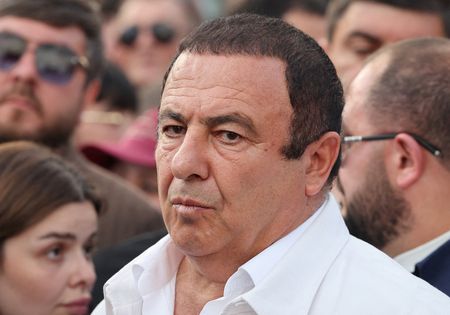
The leader of a pro-Russian Armenian opposition party has been ordered held in pre-trial detention for two months, following his arrest on suspicion of large-scale fraud and money laundering, according to the Armenpress news agency, which cited a court ruling issued Tuesday.
Gagik Tsarukyan, a billionaire businessman, was taken into custody Monday alongside an associate. Prosecutors allege he was involved in the fraudulent importation of vehicles, machinery, fuel, and other goods valued at approximately $21 million from Iran between 2022 and 2024.
The arrest comes shortly after Prime Minister Nikol Pashinyan secured re-election last month in a vote that saw him defeat a field of mostly pro-Russian opposition parties. Following his victory, Pashinyan vowed to take action against what he described as the “three-headed spy party of war” — a reference to three key opposition groups: Strong Armenia, the Armenia Alliance, and Tsarukyan’s Prosperous Armenia party.
Throughout the campaign, Pashinyan warned that opposition forces were attempting to pull Armenia back into armed conflict with Azerbaijan, a country with which Armenia has experienced intermittent hostilities dating back to the late 1980s.
On Monday, Armenian investigators conducted searches at Tsarukyan’s home and roughly 70 other locations connected to him and his wide-ranging business interests, which reportedly include a brandy factory, a cement plant, and a sports complex.
Tsarukyan’s legal team has indicated they plan to challenge any conviction, according to Russia’s state-run news agency TASS.
Eight opposition organizations, which had already alleged that last month’s election was fraudulent, condemned the arrests as politically motivated. The country’s Central Election Commission rejected a petition from opposition groups seeking to invalidate the election results on Saturday.
Tsarukyan, 69, is a former world arm wrestling champion who amassed his fortune in gambling, mining, and other industries during the turbulent years that followed the Soviet Union’s collapse in 1991, of which Armenia was a part.
Ghana has postponed high-level bilateral meetings with South Africa that had been scheduled for next month, pointing to a recent surge in anti-migrant violence as the reason for the delay, according to Ghana’s government spokesperson.
Spokesperson Felix Kwakye Ofosu made the announcement on local radio station Joy FM, explaining that the ongoing violence would likely have cast a shadow over the August meetings. Those sessions were set to be hosted by Ghana and co-chaired by South Africa’s President Cyril Ramaphosa and Ghana’s President John Dramani Mahama.
Kwakye Ofosu said it would be more appropriate for the two sides to come together “when matters settle.”
South Africa’s presidential spokesperson Vincent Magwenya told Reuters that the meetings of the South Africa-Ghana Bi-National Commission had been under discussion for months. He said Johannesburg only learned of Ghana’s intention to delay the meetings when it attempted to confirm the arrangements.
South Africa has experienced repeated waves of anti-migrant protests over the past several months. While most demonstrations have remained peaceful, some have turned violent, resulting in attacks on foreign nationals and the looting of businesses owned by immigrants.
Ghana had previously repatriated hundreds of its citizens ahead of a June 30 “deadline” issued by a South African anti-migrant movement demanding that undocumented foreigners leave the country.
Kwakye Ofosu emphasized that Ghana values its relationship with South Africa, but said it would be more fitting for Ramaphosa to make a visit “when the issue of xenophobic attacks no longer hangs over such discussions.”
Magwenya said both nations would “continue to engage through diplomatic channels to identify a mutually convenient date for the next session of the commission.”
Ghana’s foreign ministry stated last week that a Ghanaian citizen was shot and killed in Cape Town’s Khayelitsha township during anti-immigrant demonstrations on June 30.
South African police, however, said they had no record of any such incident occurring on that date. Authorities did confirm that a Ghanaian national was killed one day earlier in a separate Cape Town settlement, but said that incident was believed to be connected to extortion rather than anti-migrant violence.
The family of former Dallas Cowboys defensive end Marshawn Kneeland has revealed that he was posthumously diagnosed with Stage 1 chronic traumatic encephalopathy, commonly known as CTE.
Brain tissue analysis conducted by the Concussion & CTE Foundation led to the diagnosis, which was confirmed by Boston University’s CTE Center. Kneeland was 24 years old when he died by suicide on November 6, 2025. Stage 1 is the least severe of the four recognized stages of CTE — a progressive brain disease that can only be confirmed through examination of brain tissue after death.
Dr. Ann McKee, who serves as director of the Boston University CTE Center and chief of neuropathology for the VA Boston Healthcare System, commented on the findings. “Unfortunately, I was not surprised to find CTE in the brain of Mr. Kneeland, because we have found this progressive brain disease in nearly half of the athletes we’ve studied who have died before the age of 30,” she said.
Dr. McKee added, “Thanks to the generosity of our brain donor families, we now better understand the earliest stages of CTE, and it is bringing us closer than ever to diagnosing it during life. My team and I are fully dedicated to finding effective treatments and a cure for CTE.”
Kneeland’s family, including his girlfriend Catalina Mancera, issued a statement on Tuesday addressing the diagnosis. “While this diagnosis does not change the tragedy of his passing, it provides important context about some of the struggles he may have been facing. We share this information to help people understand what NFL and other high contact sport athletes might be struggling with. Raising awareness is important to us. We continue to remember Marshawn with compassion for the person he was, rather than defining him by the final moments of his life. One Love.”
Authorities say Texas police attempted to stop Kneeland’s vehicle, but he did not pull over, leading to a chase. He ultimately crashed the car, fled on foot, and was later found dead by suicide.
Kneeland was selected by the Cowboys in the second round of the 2024 NFL Draft and appeared in seven games during his rookie season. Just days before his death, on November 3, he recovered a fumble and scored the first touchdown of his career during Dallas’ 27-17 loss to the Arizona Cardinals.
A federal bankruptcy judge has given the green light to a $46.75 million settlement for victims of a data breach that hit genetic testing company 23andMe back in 2023.
U.S. Bankruptcy Judge Brian Walsh, presiding in St. Louis, determined that the settlement was fair, equitable, and in the best interest of a trust being managed by 23andMe’s bankruptcy administrator.
The ruling came Tuesday, providing some financial relief to those whose personal genetic data was compromised in the breach.
Two-time National Women’s Soccer League champions Gotham FC made a major announcement Tuesday, revealing plans to call Etihad Park home starting in 2028. The stadium, currently being built in Flushing, Queens — just across the street from the New York Mets’ Citi Field — will mark the first soccer-specific venue in New York City’s history. It will also serve as the home ground for MLS club NYCFC.
The relocation brings Gotham FC out of their former suburban New Jersey stadium and into the heart of the city. According to New York City Mayor Zohran Mamdani, the new location will be reachable within a 75-minute public transit ride for approximately three million people — a shift that is widely expected to draw larger crowds to games for the defending champions.
“It is high time that Gotham FC has a world-class soccer-specific stadium where they can play that world-class soccer right here in the city that they represent,” Mamdani said at Tuesday’s event.
The stadium news comes just days after Gotham FC announced the signing of Australian star Sam Kerr, who finished as runner-up for the 2023 Ballon d’Or and is regarded by many as one of the finest strikers of her era.
The announcement is the latest in a string of major sports developments for New York. The city recently secured the hosting rights for this month’s World Cup final, and the U.S. Open tennis facility — also located in Flushing — is currently undergoing an $800 million renovation. Additionally, New York state formed an exploratory committee last month to examine the possibility of Lake Placid and New York City jointly hosting the 2042 Winter Olympic and Paralympic Games.
LOUISVILLE, Ky. — Three players from the Salisbury University men’s lacrosse team have been named USILA Scholar All-Americans, according to an announcement made by the organization last week.
The recognition highlights the academic excellence of a trio of Sea Gulls athletes who have combined strong performance in the classroom with their contributions on the lacrosse field.
Delaware State Police are continuing their investigation into a deadly two-vehicle crash in Milford that occurred on June 26, 2026 — a collision that has now claimed the lives of three people.
With help from the Delaware Division of Forensic Science, authorities have identified two of the victims as 60-year-old Mark Yancey and 62-year-old Jana Yancey, a married couple from Yorktown, Virginia. Both were occupants of a Nissan Rogue involved in the crash.
The driver of the other vehicle, a Ford Mustang, has also since died. Eric Lynch, 36, of Harrington, Delaware, succumbed to injuries he suffered in the crash on July 1, 2026.
The Delaware State Police Collision Reconstruction Unit is actively working to piece together what happened. Troopers are asking anyone who saw the crash or may have recorded video of it to reach out to Master Corporal J. Lane at (302) 698-8457. Tips can also be submitted through a private Facebook message to the Delaware State Police or by calling Delaware Crime Stoppers at 1-800-847-3333.
Anyone who has been affected by this tragedy or needs support can contact the Delaware State Police Victim Services Unit and the Delaware Victim Center. That resource is available around the clock through a toll-free hotline at 1-800-VICTIM-1 (1-800-842-8461). You can also reach the Victim Services Unit by email at [email protected].
New Castle County police detectives recovered two firearms following a stolen gun investigation that began Monday, July 6, 2026, in the Clearview Manor community.
Officers initially responded to the neighborhood after receiving a report of a stolen firearm. In the course of their investigation, they identified a 17-year-old male from Wilmington as a possible suspect in the case.
Detectives assigned to the Active Crime Trends Team were then called in to assist with the investigation, ultimately leading to the recovery of two firearms.
BRUSSELS — A growing number of European Parliament members are rallying support for a formal investigation into FIFA president Gianni Infantino, targeting his role in allowing U.S. striker Folarin Balogun to take the field despite a red card suspension.
Balogun received the red card during the United States’ victory over Bosnia-Herzegovina on July 1. Under normal circumstances, that card would have kept him out of the team’s following match. However, FIFA lifted the suspension ahead of Monday’s game after U.S. President Donald Trump personally contacted Infantino to advocate for the 25-year-old player.
European Parliament members Barry Andrews, Lara Wolters, and Niels Fuglsang issued a joint statement condemning the move, calling FIFA’s decision to “change the rule on red card suspensions mid-tournament a disgrace and a perversion of justice.”
“Once again, we’ve seen Infantino and FIFA surrender to the demands of the Trump administration,” the statement read.
The lawmakers are urging national football associations across EU member countries to push the FIFA Ethics Committee to examine whether pressure from the Trump administration influenced the lifting of Balogun’s suspension. They are also asking the committee to look into “other potential breaches of political neutrality,” including the decision to award Trump the FIFA Peace Prize.
FIFA, for its part, has maintained that the suspension was lifted by a disciplinary committee — not by Infantino directly.
According to the lawmakers, 35 of their parliamentary colleagues have signed onto the letter so far.
“The beauty of sport is that it is based on impartial and transparent rules. When Infantino allows political pressure to determine who gets to play, this sense of fairness goes out the window,” the statement concluded.
DHAKA, Bangladesh — Heavy monsoon rains set off a series of deadly landslides in southeastern Bangladesh, claiming the lives of at least eight Rohingya refugees, five of them children, while the same seasonal weather system unleashed destruction across neighboring India, where 13 people have died in recent days.
Dollar Tripura, a Fire Service and Civil Defense official in Cox’s Bazar district, told the Associated Press that rescue teams pulled seven bodies from the debris, while an eighth victim was discovered by fellow refugees after multiple hillsides gave way between late Sunday night and Monday morning. All of the bodies have since been returned to their families, he said. Two additional children survived but sustained injuries.
Tripura said the slides struck at least four separate locations throughout the camps, burying makeshift shelters under mud and rubble while residents were sleeping.
Officials reported that persistent rainfall and water rushing down hillsides loosened the soil on the slopes, causing the temporary structures to collapse. Authorities have begun moving refugees away from high-risk hillside zones, and roughly 1,000 people have already been transferred to safer locations.
The weather office in the Bangladeshi capital of Dhaka has predicted additional rainfall in the days to come.
According to the United Nations refugee agency UNHCR, 36 refugees have died and at least 86 others were hurt in comparable landslide events at the refugee camps between 2021 and 2026.
More than one million Rohingya refugees who escaped from neighboring Myanmar currently live in camps throughout Bangladesh. Renewed clashes in Myanmar’s Rakhine state between the country’s military government and the Arakan Army have raised fears that another wave of refugees could soon cross the border.
Meanwhile, in India’s western Maharashtra state — which includes the city of Mumbai — at least 13 people have lost their lives in rain-related incidents over the past several days as monsoon conditions grew more severe. In Pune district, landslides forced officials to temporarily shut down portions of the Mumbai-Pune Expressway, snarling traffic between the two major cities.
India’s Meteorological Department has forecast continued heavy rainfall across Maharashtra in the coming days and cautioned that low-lying areas face ongoing flood risks.
In the northern Himalayan regions of Jammu and Kashmir and Himachal Pradesh, powerful rains set off flash floods and landslides that damaged roads, disrupted transportation, and left several villages cut off. Emergency response teams were sent in to evacuate residents who were stranded.
India’s annual southwest monsoon season, which spans from June through September, plays a vital role in supporting agriculture and refilling water supplies. However, it also brings widespread flooding and landslides each year, especially in the Himalayan region and in heavily populated cities where drainage systems struggle to keep up.
NEW YORK (AP) — Falling bricks and buckling columns at a Midtown Manhattan high-rise sent emergency crews scrambling Tuesday, forcing evacuations of the surrounding area around a towering office building currently being transformed into luxury apartments, fire officials confirmed.
New York City Mayor Zohran Mamdani said a nearby school housing roughly 400 children was among the buildings that had to be cleared out. No one was hurt, and every worker inside the high-rise was accounted for, the mayor said. Streets in the vicinity were shut down to both pedestrians and vehicles.
The building dates back to the 1970s and once served as the worldwide headquarters for pharmaceutical giant Pfizer. It sits in a heavily trafficked part of the city, approximately one block from the historic Chrysler Building and positioned between Grand Central Terminal and the United Nations headquarters.
The New York Fire Department reported receiving calls about falling bricks at roughly 8 a.m. from the 38-story structure. Upon investigation, officials discovered that two columns on the 21st and 22nd floors had buckled, and that floors between the 21st and 26th floors were showing signs of sagging.
The conversion of the office building into residential units has been described as the largest project of its kind in the city’s history, according to Gensler, the architectural firm overseeing the work. The planned development would include more than 1,600 residential units and calls for adding over a dozen new floors on top of the existing tower, along with a redesign of an adjoining tower. A Gensler spokesperson did not respond to requests for comment.
When asked directly whether the building was in danger of collapsing, Mayor Mamdani said first responders had identified “structural issues with the building” and urged those nearby to “follow the instructions of those on the ground.”
The city’s building department confirmed that its inspectors and engineers had been dispatched to the site at 235 East 42nd Street.
“Our top priority right now,” the mayor stated, “is the safety of those who live in this area and the safety of those who work in this area.”
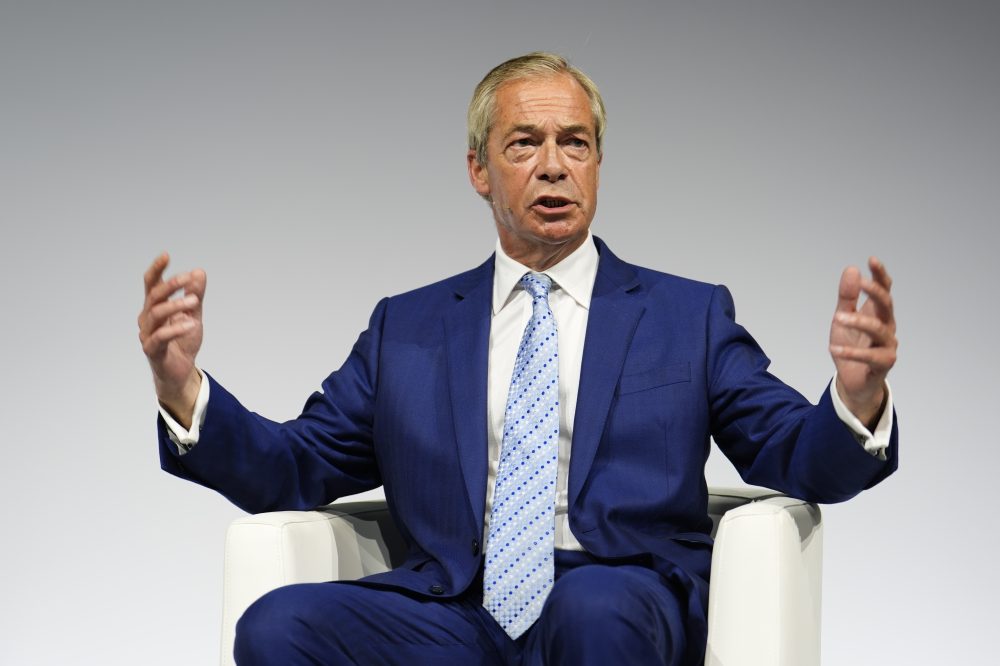
LONDON — Nigel Farage, who has long cast himself as a thorn in the side of Britain’s political elite, made another dramatic move Tuesday, announcing he would step down from his parliamentary seat and immediately campaign to win it back — a direct response to mounting questions about his personal finances.
The surprise announcement follows recent reports that Farage accepted a £5 million (roughly $6.7 million) gift from a Thailand-based billionaire who invests in cryptocurrency, a transaction critics say was not properly disclosed and is now under investigation by a parliamentary standards watchdog. Questions have also been raised about financial support he received from a political ally who was previously convicted of wire fraud in the United States.
Farage described the decision to force a by-election as part of his strategy of “sticking two fingers up at the establishment,” saying he expected voters in his constituency to reaffirm their support for him as their representative in parliament.
The gamble carries real risk. Opposition parties could flood resources into the race, coordinate their efforts to back whoever has the best chance of defeating him, or dismiss the whole exercise as a publicity stunt. Regardless of how rival parties respond, the resulting vote would effectively become a referendum on Farage’s political future — well ahead of the next scheduled national election in 2029.
Farage, 62, has been one of the most polarizing and influential figures in British politics for more than two decades. As the leading public voice for Brexit, he spent years pressuring successive prime ministers to take a harder line on immigration and ultimately helped force the 2016 referendum in which British voters chose to leave the European Union by a margin of 52% to 48%.
His Reform UK party has topped nearly every national opinion poll for more than a year and has scored wins in local elections, putting serious pressure on both the Labour and Conservative parties, which have dominated British politics for a century.
Despite never serving in government and only winning a seat in the national parliament on his eighth attempt — in 2024 — Farage is widely seen as having reshaped British political debate more than many prime ministers who actually held power.
His career has been anything but straightforward. He has resigned four times from two separate political parties and has had very public falling-outs with numerous colleagues. Yet his everyman image — often photographed holding a cigarette in one hand and a pint of beer in the other — has kept him a constant presence in British media.
After the Brexit referendum victory, Farage abruptly quit as leader of the United Kingdom Independence Party just eight days later, saying he wanted his “life back.” He returned two years later when Brexit negotiations stalled in parliament. His newly formed Brexit Party won the European Parliament elections in 2019, rattling Conservative lawmakers enough that they moved to oust then-Prime Minister Theresa May.
He stepped back again to pursue a media career and cultivated a close relationship with U.S. President Donald Trump. Eventually, he re-entered politics under the Reform UK banner, and his party’s strong showing is widely credited with contributing to the Conservative Party’s worst-ever electoral defeat.
Over the past year, Reform UK has worked to build a more professional political operation, bringing in major donors and relocating to a new headquarters near parliament. Pollsters now suggest the party could win the most seats in the 2029 general election — a result that would put Farage in position to become prime minister.
But reaching that goal would require him to withstand the kind of intense scrutiny that comes with being a genuine contender for government leadership, not simply a critic from the outside.
University of Delaware women’s lacrosse graduate Morgan Gore is still making headlines even after her playing days are over. The organization College Sports Communicators announced Tuesday that Gore has been selected as a 2025-26 CSC Second Team Academic All-American.
The honor places Gore in rare company within the Blue Hens program. She becomes only the third player in the history of Delaware women’s lacrosse to earn academic All-American recognition, joining Karen Emas, who received the distinction in 1984, and Sarah Edwards, who was honored in 2000.
New estimates released by NATO on Tuesday reveal that five member nations are already projected to reach — and surpass — the alliance’s core defense spending benchmark of 3.5% of gross domestic product in 2026. The data was published ahead of a leaders’ summit taking place in Ankara.
The 3.5% target was established at a summit in The Hague last year, raising the bar from a previous goal of 2%. NATO leaders at that gathering also committed to directing an additional 1.5% of GDP toward broader defense-related priorities, including cybersecurity improvements.
The push for higher defense budgets comes as alliance members have faced increasing pressure from U.S. President Donald Trump to show they are doing more to fund their own security.
According to Tuesday’s figures, Lithuania tops the list among NATO members when measuring core defense spending as a share of economic output, coming in at an estimated 5.33% of GDP this year. Estonia follows at 5.1%, with Latvia at 4.92%, Poland at 4.68%, and Greece at 3.65%.
The data also looked back at last year’s performance, showing that three NATO members fell short of the previous 2% target: Albania at 1.48%, Slovenia at 1.57%, and the Czech Republic at 1.86%.
However, both Albania and the Czech Republic are expected to surpass the 2% threshold this year. A note included in the report indicates that Slovenia’s new government has plans to push spending above 2% as well.
Several other nations are projected to land right at or just above the 2% mark, including Belgium at 2%, Portugal at 2.1%, and Italy at 2.1%.
For major Western powers, the United States is estimated at 3.17% of GDP, Germany at 2.69%, the United Kingdom at 2.56%, and France at 2.22%.
Taken together, European NATO members and Canada are projected to spend a combined 2.53% of GDP on core defense this year.
Fiat has entered the U.S. market with its miniature electric vehicle, the Topolino, priced starting at $13,995. The Stellantis-owned brand announced Tuesday that the two-seat, fully electric compact car offers a driving range of up to 46 miles on a single charge.
At just over 1,000 pounds and roughly 8 feet in length, the Topolino is a small but nimble vehicle. In its current form, it is intended for use within private communities, resorts, and golf courses, with a top speed of 19 mph.
Fiat says that beginning in late summer, owners will have the option to purchase an upgrade kit that converts the Topolino into a federally regulated Low-Speed Vehicle (LSV). That upgrade would boost the top speed to 25 mph and open up access to certain public roads.
“Fiat continues to stand apart by embracing its legacy in small cars,” said the brand’s CEO Olivier Francois.
The Topolino was first introduced in Europe in 2023, bringing back a name with deep roots in Fiat’s history. The original Topolino was a beloved model from the 1930s — the name translates from Italian as “Mickey Mouse,” a nod to Walt Disney’s iconic cartoon character.
The new U.S. launch expands Fiat’s North American electric lineup, which already includes the 500e city car. Under the hood — or rather, in the floor — the Topolino runs on a 5.4-kilowatt-hour lithium-ion battery that takes approximately five hours to fully charge.
History will come alive on the Eastern Shore of Virginia this summer as organizers prepare to mark a significant moment in American heritage at one of the region’s most storied landmarks.
A commemoration honoring the reading of the Declaration of Independence is planned for the historic Eastville Courthouse Green in Northampton County, Virginia. The event is scheduled for August 15, 2026, and will run from 10:00 in the morning until 2:00 in the afternoon.
The Eastville Courthouse Green is one of the oldest continuously used courthouse sites in the United States, making it a fitting backdrop for a celebration of American independence and history.
CLEVELAND (AP) — Donovan Mitchell is staying in Cleveland for the long haul. A source with knowledge of the situation told the Associated Press on Tuesday that the star guard has agreed to a four-year, $273 million contract extension with the Cavaliers.
The source requested anonymity because the deal had not yet been officially announced. Tuesday marked the earliest date the Cavaliers were permitted to offer Mitchell an extension. The seven-time All-Star still had two years left on his existing contract and could have held off on signing until next summer, when he would have been eligible for a five-year supermax deal valued at $350 million.
According to the source, the extension includes a player option worth $76 million for the 2030-31 season, along with a full trade kicker.
Mitchell had already made his feelings about Cleveland clear. Speaking on May 25 following the Cavaliers’ sweep at the hands of the New York Knicks in the Eastern Conference finals, he said: “I love it here. I don’t know how else to say it. I have no doubt these guys can get there. We have unfinished business.”
Assuming Mitchell exercises his player option for 2030-31, the deal currently ranks as the fourth-largest contract by total value in NBA history. It trails the $314 million deal Boston gave to Jayson Tatum, the $285 million agreement the Celtics made with Jaylen Brown — who now suits up for Philadelphia — and the $276 million contract Nikola Jokic holds with Denver.
The average annual value of Mitchell’s extension comes in at just over $68 million, which stands as an NBA record, narrowly topping the $67.9 million average annual value of the contract Shai Gilgeous-Alexander holds with Oklahoma City.
Cavaliers president of basketball operations Koby Altman spoke glowingly about Mitchell on May 29, hinting at the extension discussions. “When we have a superstar of his caliber that wants to be in Cleveland, that’s our best ambassador, that’s our best recruiter. There’s guys that are here that wouldn’t be here without him, quite frankly,” Altman said. “So I think the bigger question is, the one that’s been answered is, does he want to be here and does he want to be here long term? And I think he’s answered that.”
The 29-year-old Mitchell guided Cleveland to its first conference finals appearance since 2018 this past season. During the regular season, he averaged 27.9 points, 5.7 assists, and 4.5 rebounds per game, and added 26 points per game in the postseason.
Since arriving in Cleveland after being traded by the Utah Jazz in 2022, Mitchell has averaged 26.7 points per game across four seasons with the Cavaliers.
This extension is expected to be just the first in a series of roster moves for Cleveland. The franchise is also exploring the possibility that LeBron James could return to the team he led to its first-ever championship in 2016. Additionally, James Harden — acquired by the Cavaliers at the trade deadline — is weighing whether to sign a new deal with Cleveland after declining his player option for the 2026-27 season.
Health officials in New York City are looking into a cluster of Legionnaires’ disease cases centered in two neighborhoods on the Upper East Side. As of July 6, 23 people have been diagnosed, 17 have required hospitalization, and no fatalities have been reported.
Investigators believe the likely source of the bacteria is one or more cooling towers located in the area. These large water systems are typically mounted on top of buildings and help regulate the temperature of refrigeration and other mechanical systems. The city’s health department is currently testing all such towers in the affected zones, which include the Carnegie Hill and Yorkville neighborhoods — specifically ZIP codes 10028, 10128, and 10075.
Officials stressed that the outbreak does not appear to involve any building’s plumbing, meaning residents can safely drink tap water, bathe, shower, cook, and use air conditioners. Standard air conditioning units do not use water to cool the air. Additionally, the bacteria cannot pass from person to person.
Anyone who lives in or has recently visited the affected neighborhoods and is experiencing flu-like symptoms is urged to reach out to a health care provider right away.
What is Legionnaires’ disease?
Legionnaires’ disease is a form of pneumonia triggered by Legionella bacteria. These bacteria thrive in warm water and can build up in building water systems, including showerheads, hot tubs, and cooling towers.
Most people contract the illness by inhaling tiny water droplets that contain the bacteria. Vulnerable patients in hospital settings can also be exposed through contaminated water or ice, and infants can be at risk during water births, according to health officials.
What are the symptoms?
Symptoms typically appear anywhere from two days to two weeks after a person is exposed. According to the U.S. Centers for Disease Control and Prevention, those symptoms can include coughing, fever, headaches, muscle aches, and difficulty breathing.
Certain groups face a higher risk of getting sick, including people aged 50 and older, those who smoke or vape, individuals with chronic lung conditions, and people with weakened immune systems.
The disease got its name from a 1976 outbreak that struck people attending an American Legion convention in Philadelphia.
How serious is it?
Legionnaires’ disease can be deadly. The CDC estimates that one out of every ten people who become ill will die from complications related to the disease.
That is why early diagnosis and prompt treatment with the right antibiotics are so important, health officials emphasized.
Without treatment, the World Health Organization says the illness typically gets worse during the first week. Serious complications can include respiratory failure, shock, and kidney or multi-organ failure.
How can it be prevented?
Those responsible for maintaining buildings and water systems can take steps to limit bacterial growth. The WHO recommends regularly cleaning and disinfecting cooling towers, keeping adequate chlorine levels in spa pools, and flushing unused taps in buildings on a weekly basis.
There are also precautions individuals can take at home. New York health officials recommend draining garden hoses when not in use, following manufacturer guidelines for cleaning and replacing water filters, regularly checking chlorine levels in pools and hot tubs, and flushing hot water heaters twice per year.
Getty Images formally notified Shutterstock on Tuesday that it is abandoning the proposed $3.7 billion merger between the two companies, citing its unwillingness to meet a condition set by the United Kingdom’s antitrust authority.
In an official filing, Getty confirmed it had “delivered a written notice to Shutterstock terminating the Merger Agreement,” a deal that had been unveiled last year with the goal of forming a major powerhouse in the visual content industry.
Britain’s Competition and Markets Authority had given the merger its approval following a review, but only under the condition that Shutterstock’s editorial division be offloaded to an approved third-party buyer. The regulator expressed concern that allowing the two companies to combine without that requirement would significantly reduce competition, ultimately leaving UK media outlets with fewer options and higher costs.
Getty’s board took a unanimous vote last week to walk away from the transaction entirely rather than agree to divest Shutterstock’s editorial operations.
According to the CMA, both companies provide licensing for a wide range of content — including photographs, illustrations, music, and video footage — to major British media organizations, advertisers, publishers, designers, and small and medium-sized businesses in the creative sector.
Following the news, Getty Images shares dropped 6.8% in morning trading, while Shutterstock shares declined 2.4%.
NAIROBI, Kenya — Large-scale police and military deployments in the capital cities of Kenya and Tanzania brought planned protests to a halt on Tuesday, as both East African nations observed July 7, a date that carries significant historical weight for each country.
For Kenya, July 7 is a day that honors the struggle for multiparty democracy that took place in the 1990s. For Tanzania, the date marks the 72nd anniversary of the founding of what has since become the country’s ruling political party.
Protesters in Tanzania had intended to use the day to demand democratic reforms in the wake of October’s disputed election, and to call for the release of opposition leader Tundu Lissu, who remains behind bars facing treason charges.
In Dar es Salaam, Tanzania’s main commercial city, both police and military personnel were stationed throughout the area, and no protesters were seen gathering. An annual trade fair that was already underway continued under a heavy security presence.
On Monday evening, Tanzania’s Home Affairs Minister, Patrobas Katambi, addressed journalists and made clear that Tanzania was not a place where outside forces could dictate when protests would occur. He stated that the government stood ready to defend public order against any threat.
Political analysts note that the Tanzanian government has been on heightened alert ever since the October election and the violent crackdown that followed, during which hundreds of people lost their lives.
Wade Green, an analyst with Aldebaran Threat Consultants, said that for protesters to succeed in Tanzania, they would need to “catch the security forces off-guard because their guard is so up right now.”
Green went on to say: “Unless the protesters were really strong and organized, there would be no way to overcome the lethality that the Tanzanian security forces unleashed last year and are willing to unleash again.”
Meanwhile, in Kenya’s capital city of Nairobi, police surrounded parliament buildings with barbed wire and shut down major roadways. Several businesses in the area also closed their doors. A small number of people were taken into custody.
Kenyan opposition politician James Orengo criticized the overwhelming police presence in Nairobi, calling it an attempt to intimidate ordinary citizens.
“These are the characteristics of a police state. You find police deployed even when there is no fracas, there is no march, there is no demonstration, there are no vehicles on the road, and even holding a press conference becomes difficult, but we are undeterred,” Orengo said.
BOGOTA, Colombia — Colombia’s president-elect Abelardo de la Espriella announced Tuesday that he is halting the formal transition process with the current administration of President Gustavo Petro.
The decision came one day after Petro refused to acknowledge de la Espriella’s victory in the June 21 runoff election, claiming the vote was fraudulent — a charge he made without presenting any supporting evidence.
De la Espriella, a conservative businessman and lawyer who received an endorsement from U.S. President Donald Trump, posted on X that the transition would be stopped “immediately” with what he described as the “corrupt” outgoing government, which has less than a month left in power. He further accused Petro’s administration of attempting to “destroy Colombia” through its “decisions and conduct.”
In Colombia, the transition period — known locally as “empalme” — is a structured process in which the departing administration shares the information a president-elect needs to prepare for taking office. However, the handover between the politically opposed Petro and de la Espriella has been defined by back-and-forth accusations from the start.
Colombia’s finance minister, Germán Ávila, who also serves as the Petro administration’s transition coordinator, responded by directing his own team to pause their participation in the handover. Speaking in a televised address, Ávila pushed back against comments made by members of de la Espriella’s transition team, stating: “The transition process is not a criminal investigation; it is not a trial. We have absolutely nothing to hide.”
De la Espriella indicated he would soon address the public to elaborate on his decision and outline what actions he intends to take in the near future.
The president-elect’s background is in business and law, with interests that span a clothing line, wine and rum brands, and a restaurant. He secured Trump’s endorsement despite having no prior experience as an elected official. In the June 21 runoff, he defeated progressive lawmaker Iván Cepeda by a margin of just one percentage point — a difference of more than 251,000 votes.
The outcome was widely seen as a rejection of Petro’s governing approach, which Cepeda had pledged to carry forward, including a largely unsuccessful initiative to open peace negotiations with various armed groups operating in the country.
Following the runoff, a European Union election observer mission commended the vote-counting process for its transparency and efficiency. The Carter Center separately concluded that the results management system was “reliable, transparent and fully traceable.”
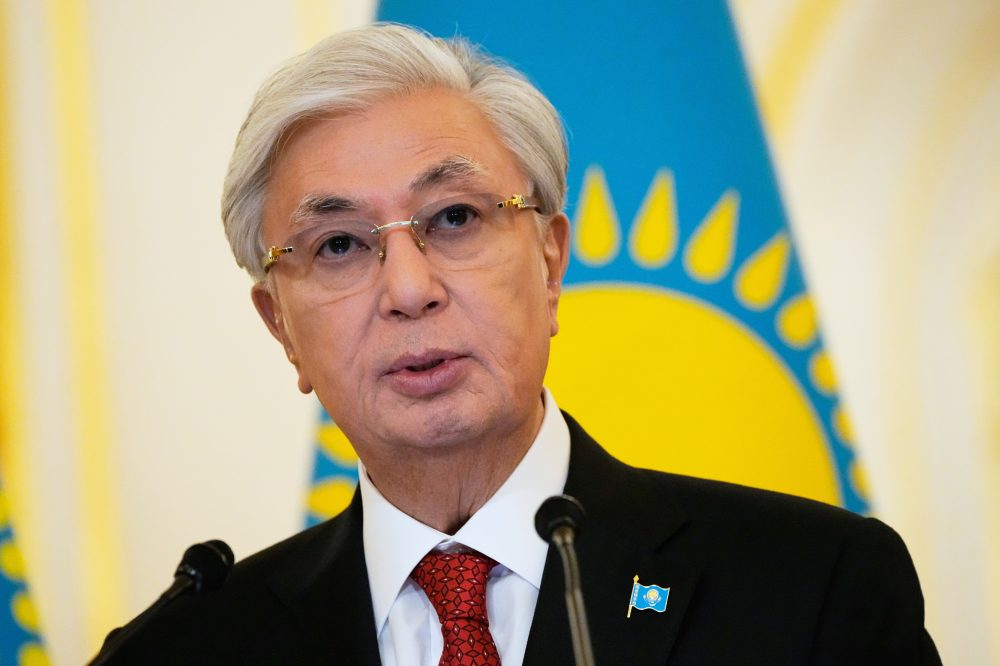
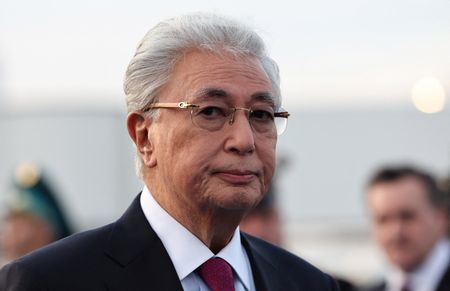
Kazakhstan’s highest court issued a ruling Tuesday clearing the way for President Kassym-Jomart Tokayev to remain in power for another seven years beyond his current term, which ends in 2029.
The Constitutional Court determined that Tokayev’s existing time in office does not count toward term limits under newly approved changes to the country’s constitution. Those amendments were passed by voters in a nationwide referendum held in March and officially took effect this month.
Kazakhstan joins a growing list of former Soviet republics — including Russia, Belarus, Uzbekistan, and Tajikistan — whose leaders have rewritten or replaced their constitutions in ways that bolster executive authority and allow them to hold onto power longer.
Tokayev, who is 73 years old, has governed the oil-rich Central Asian nation of 20 million people since 2019. Before becoming president, he served as a Soviet official, diplomat, and worked at the United Nations.
The constitutional amendments received overwhelming support in the March referendum and have further solidified Tokayev’s hold on the country. Tokayev has argued the changes were necessary to allow for faster decision-making in an increasingly unpredictable global environment.
The revisions also restructured Kazakhstan’s parliament by combining its two chambers into a single body and granted the president authority to appoint key government officials — with legislative approval — including restoring the position of vice president.
Additionally, the amendments established a new body called the People’s Council, which operates alongside parliament and has the ability to introduce legislation and call for referendums. The president appoints the members of this council.
Political opposition in Kazakhstan holds no seats in government and has had little success in shaping public opinion within the country.
Tokayev first assumed the presidency in 2019 following the resignation of Nursultan Nazarbayev, who had ruled Kazakhstan for nearly 30 years and guided the country through its transition to independence after the Soviet Union dissolved in 1991. Tokayev was widely regarded as Nazarbayev’s chosen successor.
In 2022, Tokayev ordered a crackdown on nationwide protests that resulted in 238 deaths and thousands of injuries — a period that some Kazakhs have called “Bloody January.” Following the unrest, he sought to reposition himself as a reformer and called a snap presidential election, which he won by a wide margin later that same year.
PORTLAND, Maine — Democratic leaders across the country are in crisis mode after Maine Senate nominee Graham Platner was hit with a sexual assault allegation, leaving the party scrambling Tuesday to figure out how to salvage a critical race against Republican Sen. Susan Collins.
Platner, who is contesting the allegation, has so far refused to step down despite a mounting chorus of calls from fellow Democrats to exit the race. On Monday, he released a video saying he is weighing his options while pulling back from scheduled town hall appearances.
The video came after reports emerged that a woman who had previously been in a relationship with Platner claimed he forced her to have sex while intoxicated in 2021, despite her telling him to stop.
Jenny Racicot, who lives in Maine, spoke to Politico and CNN about the alleged 2021 incident. She said she had been in an on-and-off relationship with Platner at the time, but cut off all contact with him following that night and made clear to him that what happened was not consensual. In a CNN interview Monday evening, Racicot explained that she chose not to physically resist because she feared Platner — a former Marine — might become more violent.
The allegation is just the latest in a series of controversies that Platner, an oyster farmer and Marine veteran, has faced since entering the race. However, the gravity of this latest claim has put the entire Maine Senate contest — and Democrats’ broader effort to take control of the Senate — in serious jeopardy, with even some of his most dedicated backers now questioning whether he should continue.
Joanie Monteith, a devoted Platner supporter from the southern Maine community of York who organized a trivia event about him back in March, said Tuesday that she was left emotionally devastated by the news.
Americans are growing more anxious about inflation in the short term, even as they see some relief ahead on gas prices and feel better about their own financial health, according to a Federal Reserve Bank of New York report released Tuesday.
The bank’s Survey of Consumer Expectations found that respondents in June anticipated inflation one year from now would reach 3.7%, up from 3.5% in May. That marks the highest level recorded since September 2023.
Looking further out, three-year inflation expectations rose to 3.3% from 3.1% in May — the highest that reading has been since June 2022. The five-year inflation outlook, which central bank officials pay the closest attention to, stayed flat at 3%.
The uptick in near-term concerns comes against a backdrop of elevated inflation driven in large part by a surge in energy costs tied to the ongoing Middle East conflict. The overall personal consumption expenditures price index rose 4.1% in May compared to the same month a year earlier, accelerating from April’s 4.8% gain. The conflict disrupted the movement of key energy supplies and other goods, pushing up prices for gasoline and diesel on top of inflation that was already running above the Federal Reserve’s 2% target.
However, there are signs that the worst may be over. The most intense phase of the conflict appears to have subsided, and energy prices have begun to pull back. Speaking in a television interview Tuesday, New York Fed President John Williams acknowledged that “inflation is still too high,” but added, “I do feel a little bit more positive about the near-term inflation outlook because of the energy price declines that we’re going to see.”
Fed officials pay close attention to public inflation expectations because they believe consumer sentiment about future prices has a direct influence on where prices actually go. Officials have taken some comfort in the stability of longer-term expectations, which suggests most Americans still believe inflation will eventually return to the Fed’s target.
At his first press conference as Fed Chairman, Kevin Warsh said last month, “I am pleased to report that members of the [Federal Open Market Committee] are unambiguous and unanimous: This Committee will deliver price stability.”
The Fed held its benchmark interest rate target steady at its June meeting, keeping it in a range between 3.5% and 3.75%. Still, several central bank officials indicated they may support rate increases later in the year if inflation pressures persist.
On a more encouraging note, the New York Fed survey found that consumers’ expectations for gasoline price increases have eased, falling to a level not seen since August 2022. Respondents also reported improved views on the job market and expressed greater optimism about both their current and future personal finances, though opinions on credit availability were more mixed.
A Bank of Japan board member who cast the only dissenting vote against the central bank’s June interest rate increase says he wants clear evidence of demand-driven inflation before he will back any future rate hikes — though he acknowledged that rising costs are spreading through the economy faster than expected.
Toichiro Asada, speaking to Reuters on Monday in his first interview since joining the BOJ board, said he opposed the June decision to lift rates to 1% — a 31-year high — partly because of uncertainty surrounding Middle East developments and their potential effect on output and employment.
Asada was appointed to the board by Prime Minister Sanae Takaichi, who is regarded as a supporter of loose monetary policy. Analysts have interpreted both Asada’s appointment and that of another new dovish board member, Ayano Sato, as an effort by the Takaichi administration to encourage the BOJ to keep rates low in support of its large spending agenda.
For Asada to back a rate increase in the future, he said Japan would need to be on a sustainable path toward the BOJ’s 2% inflation target. Crucially, he wants that progress to be powered by the economy itself — not just external cost pressures.
“Moreover, I believe it is necessary to confirm that such achievement is being supported by endogenous economic forces, such as rising wages and demand,” he said, noting those forces are not yet strong enough to justify tightening.
Still, Asada made clear he is not categorically against rate increases. “I am not always opposed to rate hikes. I voted against one this time, but I intend to make decisions based on an assessment of prevailing conditions at each point in time,” he said.
He noted that while crude oil prices are declining and consumer inflation is easing somewhat, the pass-through of higher oil prices to a broad range of goods has been occurring at a “relatively rapid pace” — a development that could eventually push prices higher across the economy.
On the question of how the BOJ should approach future decisions, Asada emphasized flexibility over any fixed schedule. “The BOJ should respond flexibly to changes in economic, price and financial conditions and conduct monetary policy appropriately,” he said. “The pace of any tightening should likewise be determined after carefully assessing domestic and overseas economic, price, and financial developments.”
The BOJ raised rates in June and has signaled it is prepared to continue hiking as inflation has remained near its 2% target for four consecutive years. A Reuters poll of analysts found that most expect another rate increase sometime between October and December.
Asada also weighed in on Japan’s so-called neutral interest rate — the level at which monetary policy neither stimulates nor restrains the economy. He described it as “rather low” but said pinpointing an exact figure is difficult. BOJ staff estimates place Japan’s nominal neutral rate somewhere between 1.1% and 2.5%.
“The neutral rate should not become an objective in itself. Policy should remain anchored to the goal of price stability,” he said.
Asada called for closer coordination between fiscal and monetary policy, arguing that monetary tools alone have limits when it comes to addressing weak demand or supply-side constraints. He pointed out that many businesses cite labor shortages and rising material costs as barriers to investment, even as the government pushes efforts to encourage it.
Wholesale inflation in Japan accelerated in May at its fastest pace in three years, driven largely by a weak yen that has pushed up import costs, compounded by rising fuel prices tied to the ongoing Middle East conflict.
“Given these circumstances, achieving price stability through appropriate monetary policy is important as a foundation for expanding growth-oriented investment,” Asada said. He also noted that while monetary policy does not directly target currency exchange rates, it “does take inflation and employment into account.”
On the subject of the BOJ’s bond-buying program, Asada said the central bank’s recent decision to pause its gradual reduction of bond purchases — a move analysts viewed as an attempt to keep bond yields from rising too sharply — could help protect investment by limiting the negative effects of excessive yield increases.
Looking further ahead, Asada said the BOJ will eventually need to have a broader conversation about the ideal size and makeup of its balance sheet, which is currently shrinking as bond redemptions outpace monthly purchases. He suggested the BOJ should focus on how far the ratio of its government bond holdings to nominal gross domestic product should fall from its current level of around 80%.
“Once the ratio has fallen to a level considered appropriate, I believe the size of the BOJ’s balance sheet should thereafter grow broadly in line with nominal GDP growth,” he said.
Russia’s largest oil refinery has gone offline following a Ukrainian drone attack, according to two industry insiders who spoke on Tuesday.
The strike, which took place Monday at the Omsk refinery deep in Siberia, ranks among the farthest-reaching attacks Ukraine has carried out since the conflict began — a war now entering its fifth year.
The shutdown of the facility, which leads all Russian refineries in gasoline production, is expected to make fuel shortages worse throughout the country.
Anatoly Seryshev, President Vladimir Putin’s representative in Siberia, confirmed the damage in an official statement Tuesday. “Facilities at the Omsk oil refinery were damaged as a result of (Monday’s) attack. No plant personnel were injured,” he said. Seryshev added that “damage assessment is currently under way, and competent services have organized restoration work,” though he offered no specifics about how operations had been affected.
Gazprom Neft, the company that owns the refinery, had not responded to a request for comment as of the time of reporting.
Industry sources said a crude distillation unit known as CDU-10 caught fire and sustained damage during the attack. That unit is responsible for roughly 38% of the plant’s total output, with a daily processing capacity of 24,580 metric tons.
Since Tuesday, the Omsk refinery has stopped listing gasoline and diesel for sale on the Saint Petersburg International Mercantile Exchange, according to exchange data.
A second major processing unit, CDU-11, was also taken offline, the sources said. That unit handles 37% of the refinery’s capacity and can process 24,000 tons of oil each day. While CDU-11 was not directly hit, critical network connections needed to run it were damaged. The sources noted that CDU-11, which began operations in 2023, may be able to restart in the near term.
The refinery also has two mothballed processing units — CDU-7 and CDU-8 — each capable of handling 10,000 tons per day, which could theoretically be brought back online.
In 2024, the Omsk refinery processed approximately 22 million tons of oil, equivalent to around 440,000 barrels per day, producing 5 million tons of gasoline and 8 million tons of diesel, according to the sources.
Italian top seed Jannik Sinner brought an end to one of the most heartwarming storylines at this year’s Wimbledon, defeating German veteran Jan-Lennard Struff 7-5, 7-6(4), 6-3 on Tuesday to book his place in the semifinals.
Struff had made history in his 47th Grand Slam appearance by becoming the oldest man in the professional era to reach a first major quarter-final, accomplishing the feat at 36 years old. However, any hopes the world number 74 had of pushing further into the tournament were quickly extinguished by the defending champion.
Struff had blasted 100 aces on his way to the quarterfinals and added 12 more during Tuesday’s match, but his powerful serve was not enough to disrupt Sinner’s rhythm. The Italian broke serve to go up 6-5 in the opening set and closed it out from there.
When Struff earned a set point in the 10th game of the second set, Sinner responded with an unreturnable serve to neutralize the threat. He then cruised through the tiebreak and punched his ticket to a 10th Grand Slam semifinal when Struff sent a service return long.
Sinner, who has not added to his Grand Slam title count since winning at the All England Club a year ago, will now face either Novak Djokovic or Felix Auger-Aliassime for a chance to reach the final.
ARLINGTON, Va. — The National Grain and Feed Association (NGFA) announced on July 7, 2026, that Evan Dean will be joining the organization as its new vice president of government and legislative affairs, with his start date set for July 13. In this position, Dean will take the lead on NGFA’s federal advocacy work and push forward the association’s policy goals on behalf of the grain, feed, processing, and export industries.
Dean comes to NGFA from the office of U.S. Representative Mike Flood (R-Neb.), where he held the position of legislative director. In that capacity, he guided Congressman Flood on legislative strategy and policy questions, managing a wide-ranging portfolio that included agriculture, trade, energy, transportation, and telecommunications. He also oversaw the congressman’s legislative team and built working relationships with congressional offices, federal agencies, industry groups, and agricultural organizations.
His familiarity with the grain and feed industry was developed in part through his work on behalf of Nebraska’s First Congressional District. According to NGFA’s Harvest Economy report, the industry supports more than 15,000 jobs and generates nearly $5.5 billion in economic activity across that district.
NGFA President and CEO Mike Seyfert spoke highly of the new hire. “Evan Dean brings valuable Capitol Hill experience and a strong understanding of the policy issues that matter most to NGFA members,” Seyfert said. “Having represented a district where our industry has a significant economic impact, Evan understands firsthand the important role grain and feed businesses play in local economies and throughout the agricultural supply chain. His work on agriculture, trade, renewable fuels, and appropriations issues, combined with his ability to build relationships across government and industry, will strengthen NGFA’s advocacy efforts as we continue advancing policies that support the grain, feed, and processing industry.”
Before becoming legislative director, Dean worked as a legislative assistant in Congressman Flood’s office, where he handled agriculture, trade, appropriations, energy, telecommunications, and natural resources policy. During that time, he helped move sustainable aviation fuel initiatives forward, secured federal backing for agricultural research, and engaged broadly with agricultural stakeholders throughout Nebraska. He also worked on local transportation priorities, focusing on improving access and reducing barriers to moving goods across the country — an area of significant concern for NGFA members.
Earlier in his career, Dean served as a legislative correspondent for Congressman Greg Pence (R-Ind.) and also worked in the office of Senator Thom Tillis (R-N.C.).
Dean holds a bachelor’s degree in public policy leadership from the University of Mississippi, where he graduated magna cum laude.
Delaware State Police have released the identities of the two people involved in a deadly murder-suicide that took place in Milford on Sunday. The victim has been named as 38-year-old Jessica Bradley, a Milford resident. The suspect, 43-year-old Brooks Bradley, also of Milford, died by suicide during the same incident.
The Delaware State Police Homicide Unit continues to actively investigate the case. Detectives are urging anyone who may have information to reach out to Detective Z. Spudis directly at (302) 752-3795. Tips can also be submitted by sending a private message to the Delaware State Police on Facebook, or by contacting Delaware Crime Stoppers at 1-800-847-3333.
Anyone who has been affected by this incident — whether as a witness, victim, or someone who has lost a loved one to a sudden death — can reach the Delaware State Police Victim Services Unit and the Delaware Victim Center around the clock. Their toll-free hotline is available 24 hours a day at 1-800-VICTIM-1 (1-800-842-8461). The Victim Services Unit can also be contacted by email at [email protected].
Kyle Lowry kept his word. The veteran NBA point guard had long promised that when his playing days were over, he would return to the Toronto Raptors to hang up his jersey — and on Tuesday, that promise became reality.
Lowry announced via social media that he has signed with the Raptors and will officially retire, closing out a storied career with the franchise he helped guide to the 2019 NBA title. The signing is a ceremonial one-day deal, and Lowry confirmed the arrangement ahead of a scheduled news conference in Toronto later that day.
The timing of the announcement was no coincidence. The date — July 7, written as 7/7 — was a clear tribute to the No. 7 jersey Lowry wore throughout his time in Toronto.
“Thank you to my family, my friends, my teammates, my coaches, my opponents, the staff, the media and especially the fans,” Lowry said in his announcement. “It’s all about you. I appreciate you. Thank you. Thank you, Toronto. Thank you, Canada. And as I always told y’all, it’s officially happening. I’m retiring as a Toronto Raptor — 20 years and one day.”
The tribute messages came flooding in almost immediately. Toronto fans have long referred to Lowry as the GROAT — the Greatest Raptor of All-Time — and that sentiment was on full display following his announcement.
At 40 years old, Lowry is a native of Philadelphia who played college basketball at Villanova before being selected with the 24th overall pick in the 2006 NBA Draft by Memphis. He is one of just two point guards in NBA history to play 20 seasons, alongside Chris Paul. Mike Conley Jr. is expected to join that exclusive group during the upcoming season.
Lowry wrapped up his final playing season with the 76ers, appearing in 14 games. But it was in Toronto where he truly made his mark — becoming a six-time All-Star, earning an All-NBA selection in the 2015-16 season, and winning an Olympic gold medal with the United States at the 2016 Rio de Janeiro Games.
Over the course of his career, Lowry also suited up for Houston and Miami in addition to Memphis, Toronto, and Philadelphia. He averaged 13.8 points and six assists per game, and his 2,209 career three-pointers rank 14th in NBA history.
Even before his retirement became official, Lowry had already lined up his next chapter. He was announced last year as an analyst for Prime Video.
A lawsuit filed Tuesday in U.S. District Court in Washington, D.C., accuses the Trump administration’s immigration agencies of illegally turning over confidential details about Iranian asylum seekers to the Iranian government — a move the plaintiffs say violates federal law and puts lives in serious danger.
The complaint, brought by the Iranian American Legal Defense Fund and the Public Citizen Litigation Group, describes a coordinated effort between U.S. and Iranian officials to identify Iranians held in Immigration and Customs Enforcement custody and pressure them to return to Iran. Legal observers note this represents a dramatic break from the decades of diplomatic hostility between the two nations, especially given an ongoing war between them.
Public records obtained by the National Iranian American Council show that roughly 600 Iranians were placed in immigration detention last year. In June, one Iranian woman was among approximately two dozen migrants the U.S. sent to the Central African Republic — a sharp departure from a longstanding American tradition of welcoming Iranian dissidents, exiles, and refugees that dates back to the 1979 Islamic Revolution.
While U.S. law does permit the government to coordinate with foreign officials on deportation logistics, federal regulations enacted in the late 1990s specifically bar the government from sharing any information that could reveal whether a person being deported had applied for asylum.
“Congress made these confidentiality protections mandatory precisely because lives depend on them, and no agency and no administration, of either party, may set them aside,” said Ali Rahnama, the interim executive director of the Iranian American Legal Defense Fund.
According to the lawsuit, beginning in March 2025, the U.S. State Department arranged monthly meetings with Iranian officials through the Pakistani embassy, which served as an intermediary. During those meetings, U.S. officials reportedly handed over detailed, sensitive information about detained Iranian immigrants they were seeking to deport.
The shared information reportedly included details from asylum applications filed by individuals who said they had been persecuted for converting to Christianity, for their sexual orientation, or for participating in the Women, Life, Freedom protests against the Iranian government in 2022. The lawsuit states that ICE compelled Iranian asylum applicants held at various detention facilities — primarily in southern states — to meet face-to-face with an Iranian government official who already had extensive, specific knowledge of their applications. The complaint notes this continued even after joint U.S.-Israeli strikes on Iran triggered the Iran war in February 2026.
“Despite the U.S.’s ongoing war with Iran, the administration seems more committed to mass deportation than protecting human lives,” said Michael Kirkpatrick, an attorney at the Public Citizen Litigation Group.
The lawsuit names the Department of Homeland Security, Secretary of State Marco Rubio, Secretary of Homeland Security Markwayne Mullin, and the Department of State as defendants. Neither the Department of Homeland Security nor the State Department responded to requests for comment by Tuesday morning.
The filing comes as the Trump administration has pursued an aggressive immigration enforcement campaign that, according to a DHS announcement, resulted in more than 600,000 deportations and prompted roughly 1.9 million immigrants to voluntarily leave the country in 2025 alone.
Iranian officials acknowledged in September 2025 that as many as 400 Iranians could be returned to Iran under an agreement with the Trump administration. That same month, the first of three deportation flights carried dozens of Iranians back to the country. A second flight followed in December 2025, and a third departed at the end of January 2026 — about a month before the war with Iran began and just weeks after the Iranian government killed thousands of its own citizens during a violent crackdown on protests. The New York Times reported at the time that some of those deported on those flights were asylum seekers.
The lawsuit is asking the court to halt any further sharing of asylum seekers’ information with the Iranian government and to appoint an independent monitor to ensure the practice does not continue.
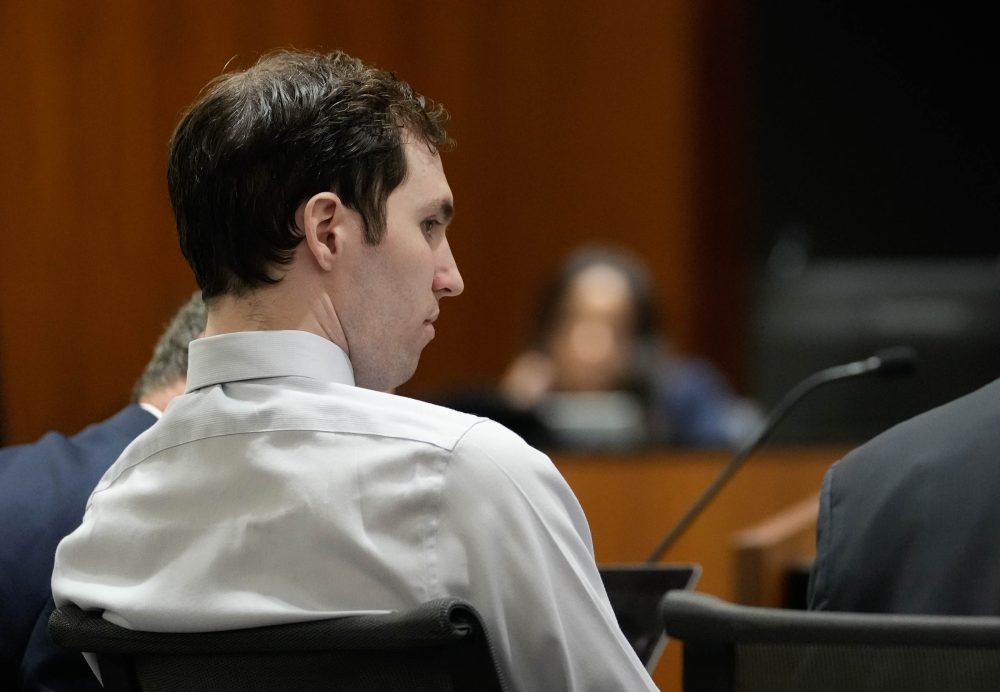
A weeklong preliminary hearing for the man accused of assassinating conservative activist Charlie Kirk is now in its second day, with prosecutors in Utah pushing to demonstrate they have sufficient evidence to bring the case to trial.
Tyler Robinson, 23, faces an aggravated murder charge in connection with the September 10th shooting of Kirk on the Utah Valley University campus. Prosecutors are seeking the death penalty. Robinson’s defense attorneys have made no statements regarding his guilt or innocence.
Tuesday’s proceedings are expected to include video footage from the Washington County sheriff’s office recorded on September 11th — the day Robinson turned himself in — along with a recorded statement from Robinson’s roommate, who was also his romantic partner.
Prosecutors allege Robinson left a note for his roommate that read: “I had the opportunity to take out Charlie Kirk and I’m going to take it.” Robinson also reportedly sent a text message saying he targeted Kirk because he “had enough of his hatred,” according to prosecutors.
Monday’s session produced no major revelations, but it was the most substantial presentation of evidence in the case so far. Former Utah Valley University Officer Christopher Bagley testified that he witnessed the shooting while Kirk was addressing a campus crowd of thousands. After the shooting, Bagley said he went to a nearby gravel rooftop and found what appeared to be a position where someone had been lying flat with a direct line of sight to where Kirk was standing.
“It looks like a sniper pad,” Bagley told the court.
Defense attorney Kathryn Nester’s objections were largely overruled by state District Judge Tony Graf on Monday. However, Graf did side with the defense in blocking the introduction of a compilation of surveillance videos from Utah Valley University, ruling that some had been altered — either zoomed in or marked with circles drawn around individuals. Prosecutors said they would attempt to reintroduce the footage Tuesday with those alterations removed.
During cross-examination, Nester questioned Bagley about an empty pistol holster found on the ground after the crowd dispersed. Bagley acknowledged he never took possession of the holster and was unsure whether it had been fingerprinted. Notably, Utah is an open carry state, allowing residents to carry firearms openly or concealed without a permit.
Legal experts say the prosecution faces a relatively low bar at this stage. Mark Kouris, a former prosecutor and state judge in Salt Lake City, explained that prosecutors only need to show reasonable grounds to believe Robinson committed the crime — a much lower standard than the “beyond a reasonable doubt” requirement at trial.
“This standard is extremely low, and the chances of them not getting through it are, quite frankly, almost nothing,” said Kouris, who now serves as an adjunct professor at the University of Utah’s S.J. Quinney College of Law.
Throughout Monday’s hearing, Robinson sat quietly between his attorneys, reviewing prosecution exhibits on a monitor and occasionally writing notes. His wrists were shackled to a chain around his waist.
Monday also marked the first time Kirk’s parents, Kathryn and Robert, and his widow, Erika, attended the courtroom proceedings since the case began. Robinson’s parents were also present, seated a few rows behind the Kirk family. Kirk’s family briefly stepped out of the courtroom twice — once when the officer began testifying about Kirk’s arrival on campus, and again when prosecutors played graphic videos of the shooting, including the moment Kirk was struck and the response from security personnel. Both times, they returned to their seats.
In addition to the video evidence, prosecutors have said they plan to present DNA evidence tying Robinson to the suspected murder weapon, autopsy findings, and witness statements. They are also expected to argue that the shooting endangered others at the campus event — an aggravating factor that could make the crime eligible for the death penalty under Utah law.
After the hearing concludes, Judge Graf will decide whether the case should move forward to trial, a step legal experts say is very likely.
Cool and cloudy conditions will remain locked in across much of Delmarva today as a stubborn marine layer continues to sit over the region. While shower and thunderstorm chances remain in the forecast, most areas are expected to stay mainly dry through the day.
A stationary front remains positioned just south of the region, and that boundary will continue to act as a focus for showers and storms. However, persistent low clouds and an onshore flow have helped reinforce a cooler, more stable marine air mass across the area. That setup will likely limit widespread thunderstorm development for much of Delmarva.
Some drizzle or light rain will be possible at times, especially where the low clouds are deepest. The best chance for more persistent showers will be across southern Delaware, along with Talbot and Caroline counties in Maryland, where the stationary front will remain close enough to support better shower development through the day.
The front is expected to finally begin making more meaningful progress southward tonight into Wednesday, allowing conditions to slowly improve. Temperatures Wednesday and Thursday should climb back into the 80s, but the region will not see a quick return to the extreme heat that impacted the area late last week.
The next more organized chance for showers and thunderstorms will arrive Thursday through Saturday as a cold front approaches and eventually crosses the region. Dewpoints may climb back into the 70s by Thursday, allowing humidity to increase, but the overall setup looks less favorable for widespread severe weather or flooding compared to the active stretch Delmarva just experienced.
Unlike the previous several days, this upcoming pattern appears more progressive. That means weather systems should keep moving rather than stalling over the region. A small disturbance may move through Thursday, followed by a stronger upper-level trough and cold front Friday into Saturday.
While a few stronger storms or pockets of heavy rain cannot be ruled out late this week, the overall risk for severe weather and flash flooding appears lower than what the region dealt with over the past four days.
Missouri’s Republican governor has put his signature on a new law that prevents state prison inmates from receiving sex-change operations paid for by taxpayers.
Alliance Defending Freedom, a Christian legal advocacy group, voiced strong support for the new legislation. The organization stated, “Growing medical evidence demonstrates that these procedures are neither safe nor effective in treating gender dysphoria. And no amount of drugs or surgeries can change a person’s sex.”
The new law marks Missouri’s latest policy action on transgender-related issues within its state correctional system.
The Department of Health and Human Services has notified Planned Parenthood and more than a dozen other organizations that they will no longer qualify for federal grant funding. The reason cited: these groups have been distributing sexually explicit materials to teenagers — content that promotes promiscuity rather than encouraging abstinence.
The funding cut is projected to save taxpayers more than 60 million dollars. Notably, concerns about these explicit materials being handed to teens are not new — complaints date back to the Obama administration.
British Prime Minister Keir Starmer, who is set to leave office later this month, delivered a speech last week highlighting what he considers his key achievements in office. Among those accomplishments, the Labour Party leader pointed to the makeup of the current Parliament.
Speaking before an LGBT gathering, Starmer proudly declared that he had the privilege of working alongside what he called “the gayest Parliament ever.” He went on to say, “I don’t think there’s any Parliament that is gayer than this Parliament and that is fantastic.”
The remarks drew attention given their unusual phrasing. Of the 650 seats in the House of Commons, 76 members currently identify as LGBT.
New research published Tuesday by the New York Federal Reserve suggests that the underlying financial health of a bank is the critical factor that determines whether a bank run spirals into a serious crisis.
Researchers at the New York Fed wrote in a blog post that available data provide “little support” for the notion that small shocks are capable of triggering “widespread” banking panics on their own.
“Poor bank fundamentals are necessary for bank runs to translate into failure and for bank distress to generate severe economic distress,” the researchers stated. They added that “although runs can occur in both weak and strong banks, poor fundamentals are necessary for runs to result in bank failures.”
The study draws on a newly developed database built using artificial intelligence tools. “We use large language models … to extract information on bank runs from millions of digitized historical newspaper pages, creating the most comprehensive database of bank runs in U.S. history,” the researchers explained.
The blog post also highlighted why it matters to correctly understand how bank runs work. A bank run occurs when falling confidence in a financial institution causes depositors to rush to withdraw their money all at once. “Runs should thus be seen as a trigger for bank failures and crises, but insolvent banks are necessary for this trigger to devastate the banking system and the economy,” the researchers wrote.
When Abraham Lincoln won the presidency in 1860, the United States was teetering on the brink of collapse.
The Civil War that followed over the next four years took more than 700,000 lives and put the very survival of the American Republic to the test. Yet as that devastating conflict neared its end, Lincoln’s focus shifted — not just to winning, but to healing.
In his second inaugural address, Lincoln issued a challenge to the country: “Let us strive on to bind up the nation’s wounds to achieve and cherish a just and lasting peace.”
Lincoln recognized that protecting what he saw as history’s greatest experiment in self-government demanded something beyond military triumph. It called for the strength of character needed to rebuild what the war had torn apart.
Now, more than 160 years later, the latest Foundations of Freedom commentary — produced weekly by Salem Media — draws a direct line from that moment in history to the divisions Americans face today.
The commentary poses a pointed question: while disagreement among Americans is inevitable, do we still possess the wisdom and moral character necessary to heal as one nation?
UnitedHealth announced Tuesday that an audit conducted by an outside consulting firm found that roughly 97% of diagnoses generated through its HouseCalls home-health program in 2025 were backed up by patients’ existing medical records.
Wyatt Decker, an executive vice president at UnitedHealth, responded to the findings by saying, “We look at this with both a sense of pride, but also humility,” and noted the company wants to ensure that nurse practitioners are documenting diagnoses in a way that more accurately reflects what patients are actually experiencing.
According to the Wall Street Journal, the Department of Health and Human Services has been examining diagnoses that show up only in UnitedHealth’s home-visit assessments and nowhere else in a patient’s medical file. Diagnoses submitted through the HouseCalls program play a role in determining how much the federal government pays UnitedHealth’s insurance division, UnitedHealthcare, through Medicare Advantage.
The audit revealed that 3.4% of diagnoses made by HouseCalls clinicians this year were not supported by medical records. HouseCalls operates under UnitedHealth’s Optum primary care division and dispatches clinicians to patients’ homes each year to conduct physical exams and review medical histories. UnitedHealthcare manages Medicare Advantage plans for Americans aged 65 and older, as well as individuals with disabilities.
In a letter addressed to company stakeholders, CEO Stephen Hemsley pledged that UnitedHealth would work to do better and argued that home visits help elderly patients avoid costly medical emergencies down the road.
Hemsley had promised a thorough review of the company’s operations last year after UnitedHealth fell short of its own profit forecasts for the first time since 2008. The company hired business consulting firm FTI Consulting to carry out the analysis.
FTI had previously flagged that UnitedHealth sometimes lacked consistent documentation standards within the HouseCalls program. The latest report examined 200 home visits, covering a total of 494 diagnoses. Decker noted that the report has not yet led to any changes in company policy.
A deadly riot at a prison in Sri Lanka was triggered by a conflict between two groups of inmates over drug smuggling inside the facility, a senior government official confirmed Tuesday.
The violence unfolded over two days at the prison located in Negombo, a coastal town roughly 35 kilometers — about 20 miles — north of the commercial capital, Colombo. When the fighting finally ended, 26 people were dead, including seven prison officials, and dozens more had been injured.
Minister of Justice and National Integration Harshana Nanayakkara told parliament that early investigations indicate the conflict began after a small number of prisoners informed authorities about an attempt to smuggle drugs into the prison.
“This had angered a second group of inmates who were supporting the smuggling. This was what started the clash,” Nanayakkara told lawmakers.
He went on to describe how the situation rapidly worsened once prison staff tried to step in. “When prison officials attempted to intervene it had escalated. Prisoners attacked prison officials with bricks and poles. Prison officials fired in self-defence. At the moment we are unaware of how prisoners got possession of weapons. Investigations into these details are ongoing,” he said.
Nanayakkara also noted that a small number of inmates had managed to knock out the prison’s CCTV camera system during the unrest.
To help address severe overcrowding in the aftermath, 734 prisoners were transferred to four other facilities on Tuesday morning, according to the Department of Prisons. The Negombo prison was housing approximately 2,400 inmates at the time of the riot, far exceeding its intended capacity of around 650, according to the Committee for Protecting Rights of Prisoners.
Dozens of police officers and special forces units were deployed to restore order on Monday, and around 100 people — both inmates and prison staff — received hospital treatment for their injuries. Military personnel with armored vehicles remained stationed outside the prison as of Tuesday.
Sri Lanka has seen deadly prison unrest before. A riot in November 2020 left 11 inmates dead, and a separate incident in Colombo in 2012 resulted in 27 fatalities.
WASHINGTON — The gap between what the United States imports and exports grew dramatically in May, fueled in large part by a boom in artificial intelligence spending that pushed capital goods imports to their highest level ever recorded.
According to figures released Tuesday by the Commerce Department’s Bureau of Economic Analysis and Census Bureau, the trade deficit surged 42.2% to reach $77.6 billion. Economists surveyed by Reuters had projected the deficit would come in at $78.5 billion.
Total imports climbed 3.3% to $395.3 billion for the month. Within that figure, imports of capital goods — things like machinery and equipment — soared to a record $128.0 billion, driven heavily by business investment in artificial intelligence infrastructure, which depends significantly on imported components.
On the other side of the ledger, exports fell 3.2% to $317.7 billion. One bright spot was petroleum shipments, which hit their highest level on record, partly due to the ongoing conflict in the Middle East. The United States is currently a net exporter of oil.
The trade data adds to a pattern that has weighed on the country’s gross domestic product. Trade has now subtracted from GDP for two consecutive quarters. The Atlanta Federal Reserve’s economic forecasting model currently projects GDP will grow at an annualized rate of 1.2% in the second quarter — a slowdown from the 2.1% pace recorded in the January through March period.
At least three Palestinians lost their lives Tuesday as Israeli airstrikes struck multiple locations across the Gaza Strip, according to the territory’s health officials.
In the first incident, a man was killed and two children were injured when an Israeli airstrike hit the Mawasi area of Khan Younis in southern Gaza, according to medics on the ground. The Israeli military confirmed to Reuters that the strike had targeted a Hamas militant.
Later that same day, a second Israeli airstrike landed near a tent encampment sheltering displaced families in western Gaza City, claiming one life and leaving five others wounded. A third strike in Khan Younis also killed one person and injured three more, medics reported. The Israeli military offered no immediate response regarding either of those two incidents.
Israel has conducted repeated strikes throughout Gaza since a ceasefire brokered by the United States with Hamas was reached last October. Israeli officials have stated the strikes are aimed at militants who pose a threat to Israeli forces or who participated in the October 2023 attack on Israel.
Hamas has charged Israel with breaking the terms of the ceasefire agreement. Nikolay Mladenov, appointed by U.S. President Donald Trump as the Board of Peace envoy to Gaza, has stated that both parties have committed violations of the agreement.
In the eight months since the ceasefire took effect, more than 1,070 Palestinians — a significant number of them civilians — and four Israeli soldiers have been killed in Gaza, based on figures provided by both sides. Hamas has not disclosed how many of its own fighters have died.
Israeli forces currently control more than 60% of Gaza, patrolling what Prime Minister Benjamin Netanyahu refers to as a buffer zone designed to prevent Hamas attacks. Netanyahu has made clear that Israel has no plans to withdraw from the territory.
Israel’s extensive aerial and ground campaign in Gaza has displaced nearly the entire population of roughly 2 million people. Most residents are now living in tents or partially destroyed buildings within a narrow coastal strip of land under Hamas governance.
JUBA, South Sudan — The government of South Sudan confirmed late Monday that a government-appointed county commissioner serving in an opposition stronghold within the oil-rich Jonglei State was “assassinated” by opposition forces, marking a dangerous escalation in renewed fighting across the region.
The violence in Jonglei has been intensifying over recent days, with the full number of casualties still unknown. The strategically important county of Akobo has become a flashpoint, with both the government and the opposition having appointed their own rival county commissioners to the area.
James Kueth Makuach, who held the government-appointed commissioner role, was killed on Sunday when opposition fighters launched an attack on Walgak, a remote location in Akobo West. Officials from both sides confirmed the details of the assault.
Makuach had switched allegiance to President Salva Kiir’s ruling party in April, following his removal by the opposition’s acting leadership earlier in the year. The government subsequently named him county commissioner, a move that bypassed the terms of a 2018 peace agreement, which designated that position in Akobo County to the opposition party led by Riek Machar. Machar is currently imprisoned and faces treason charges.
In a formal statement, the ruling party said it “strongly condemns the brutal killing” of the commissioner and announced it would convene an emergency session to address the matter.
The opposition-appointed governor, John Wiyual Lul, stated that opposition fighters briefly took control of the area before pulling back when government reinforcements arrived. He noted that senior military officers were among the fatalities.
Jonglei State government spokesperson Nyamar Lony Thichiot told The Associated Press late Monday that the exact number of casualties had not yet been determined.
The Reconstituted Joint Monitoring and Evaluation Commission, which was established to oversee South Sudan’s peace process, issued a statement Monday warning that the renewed fighting is undermining the implementation of the 2018 peace deal that ended the country’s civil war and is putting civilian lives at risk.
Clashes in Akobo County first broke out in March when opposition forces targeted a government installation. In June, the United Nations pulled its peacekeepers from a base that had been set up to help shield civilians from harm.
Leaders from civil society groups cautioned that political tensions are increasingly translating into armed conflict once again.
Juba-based civil society activist Bol Deng Bol described the situation as “an unfortunate relapse into violence and a clear threat to civilians, their property and humanitarian operations.” Fellow activist Edmond Yakani called on both the opposition and the government to fully honor the permanent ceasefire agreement.
South Sudan is set to hold long-delayed elections on December 22 — its first since gaining independence from Sudan in 2011.
LONDON (AP) — Reform UK leader Nigel Farage has announced he will deliver a public statement Tuesday about his political future, as scrutiny intensifies over financial donations connected to a cryptocurrency billionaire and a man convicted of fraud.
Farage, who is known as a close British ally of U.S. President Donald Trump, posted on X that he would address his future in public life at 2 p.m., though he offered no additional details ahead of the announcement.
The Reform UK leader is currently the subject of a parliamentary standards investigation involving a 5 million pound — roughly $6.7 million — gift from a cryptocurrency billionaire based in Thailand. Separately, opposition lawmakers are pushing for a second inquiry into donations received from George Cottrell, a crypto-gambling entrepreneur with an aristocratic background who previously served time in a U.S. prison for fraud.
Farage has denied any wrongdoing, but the financial scrutiny has fueled widespread speculation about his political future. He had been viewed by some as a front-runner to become prime minister following the next national election.
His anti-immigration party holds only eight of the 650 seats in the House of Commons, yet Reform UK consistently outperforms both the ruling Labour Party and the main opposition Conservatives in opinion polls.
The party scored a major victory in local and regional elections in May, a result that contributed to the removal of Prime Minister Keir Starmer by members of his own Labour Party.
However, Reform UK has now lost three back-to-back special elections it had hoped to win, which may signal a softening in the party’s support. The most recent defeat came at the hands of Labour’s Andy Burnham, who is expected to succeed Starmer as prime minister within the coming weeks.
Parliamentary standards commissioner Daniel Greenberg is leading the investigation into the donation Farage received from Christopher Harborne, a British businessman who lives in Thailand. Farage has said the money was a personal gift used to cover security costs and that it was given before he was elected to the House of Commons.
Should investigators find that Farage violated parliamentary rules, he could face suspension. A suspension lasting 10 or more days would give voters in his Clacton constituency in eastern England the ability to call for a special election to fill his seat.
Such an outcome would deal a significant blow to a party whose rapid rise mirrors the nationalist and anti-immigration political style associated with Trump. Farage has made the issue of migrants crossing the English Channel in small boats a centerpiece of his message — describing the situation as an invasion — though critics accuse him of inflaming public fears rather than addressing the issue constructively.
KYIV, Ukraine — Ukraine’s Security Service announced Tuesday that the body of Ukrainian citizen Anastasiia Berezovska has been found. Berezovska had been sought by authorities in Monaco in connection with a bombing that targeted Ukrainian business tycoon Vadym Yermolaiev.
The Security Service, known by its Ukrainian abbreviation SBU, revealed that an officer from Ukraine’s military intelligence agency admitted to killing Berezovska with the assistance of a former law enforcement officer. The suspect claimed he acted on his own, without the knowledge or approval of his superiors.
The original bombing occurred on June 29 and reportedly targeted Yermolaiev, who has ties to Russia, along with members of his family. Three people were hurt in the blast, among them a child. The explosion sent shockwaves through Monaco — the glamorous coastal enclave known for its wealthy residents, tax advantages, royal family, and Formula 1 Grand Prix race. Monaco’s head of state, Prince Albert II, called the explosion “an odious act” and confirmed that all public services had been deployed to maintain security.
Interpol had previously identified 39-year-old Berezovska as the primary suspect in the bombing, issuing a Red Notice requesting her arrest on charges of attempted murder, placing an explosive device in a public area with criminal intent, and criminal conspiracy. On Tuesday, Interpol said it had no immediate statement to offer and noted that the Red Notice would remain active on its website until Monaco formally requested its removal.
SBU investigators zeroed in on the two suspects after uncovering evidence that they had repeatedly sent cryptocurrency and bank transfers to Berezovska. During searches of the former law enforcement officer’s home, authorities also discovered what the SBU described as a basement that resembled a torture chamber.
Berezovska’s body was located during a crime scene reconstruction based on one of the suspect’s accounts. She had suffered gunshot wounds to the head, and investigators recovered spent pistol casings at the location, according to the SBU.
Both men are now in custody, facing suspicion of premeditated murder.
The SBU said it has provided all relevant information to investigators in Monaco and is continuing efforts to identify who ordered and organized the original assassination attempt.
MADISON, Wis. — Wisconsin’s highest court has shut down a conservative activist’s effort to gain access to guardianship records that he claimed could reveal ineligible voters on the state’s registration rolls.
The case has been moving through the court system for several years and traces its origins to efforts by conservatives to challenge President Joe Biden’s 2020 victory over President Donald Trump in Wisconsin.
The dispute centered on a fundamental tension between protecting individuals’ privacy rights and ensuring that people who are legally ineligible to vote are not casting ballots.
Former travel executive Ron Heuer and his organization, the Wisconsin Voter Alliance, filed the lawsuit in 2022. They alleged that the number of voters who should be disqualified does not line up with Wisconsin’s official voter registration list. The lawsuit does not identify how many voters could potentially be affected.
Heuer asked the state’s Supreme Court to require counties to hand over records created when a judge rules that a person lacks the mental capacity to vote. He wanted those records compared against the voter registration list.
His attorney, Erick Kaardal, argued that privacy concerns and public records access could both be honored by blacking out sensitive personal details on the documents before releasing them.
However, the attorney representing Walworth County — which was fighting to keep the records sealed — pushed back on that argument. Attorney Sam Hall said at oral arguments that the whole point of obtaining the records was to match names against the voter rolls, which would require releasing the individuals’ names and addresses. Neither Hall nor Kaardal responded to requests for comment following the ruling.
Under Wisconsin law, a guardianship order is a court-issued arrangement that grants one person legal authority over another who has been found incapable of making decisions for themselves. A judge can strip someone under such an order of their right to vote if they are deemed unable to understand what an election is meant to accomplish.
In a 5-2 decision handed down Tuesday, the court’s liberal majority — joined by conservative Justice Brian Hagedorn — determined that the records in question are not available to the public, rejecting Heuer’s argument.
The case reached the Supreme Court after two lower appeals courts reached opposite conclusions. An appeals court in Madison had denied access to the records, while a separate appeals court in Waukesha ruled in 2023 that the records should be released — with birth dates and case numbers removed. The Supreme Court reversed that Waukesha ruling.
The legal battle was part of a broader campaign by those who disputed the 2020 presidential race results to raise questions about election integrity in the swing state. Heuer and the Wisconsin Voter Alliance filed similar lawsuits in 13 Wisconsin counties in 2022 seeking the same type of records.
Heuer and the organization have promoted conspiracy theories about the 2020 election in unsuccessful attempts to undo Biden’s Wisconsin win. Heuer was also hired as an investigator in a since-discredited election review led by former Wisconsin Supreme Court Justice Michael Gableman. That investigation found no evidence of fraud or misconduct that would have changed the election outcome.
The Wisconsin Voter Alliance also filed two separate lawsuits attempting to overturn Biden’s Wisconsin victory, both of which failed.
Biden beat Trump by nearly 21,000 votes in Wisconsin in 2020 — a margin that survived independent and partisan audits, multiple reviews, legal challenges, and recounts requested by Trump. In the 2024 election, Trump carried Wisconsin by roughly 29,000 votes.
No lawsuits are currently pending to challenge the 2024 Wisconsin election results, and no calls for an investigation into that outcome have been made.
The state of Utah has pulled the operating license from a boarding school where media personality and hotel heiress Paris Hilton says she suffered abuse as a teenager, with officials determining the facility “failed to provide applicable health and safety services for clients.”
The license revocation took effect Monday and targets the Provo Canyon School campus located in Springville. Under the action, the school has a 15-day window to request a formal hearing before the Department of Health & Human Services.
A broad list of violations dating back to 2025 prompted the state’s decision. Among the cited issues: insufficient staff-to-client ratios, unnecessary physical restraint and aggressive contact with a student, neglect of care, and failure to verify employee credentials or submit background checks on time. State health officials had already stepped in with temporary restrictions back in May after staff failed to get immediate medical attention for a student who had sustained serious injuries.
Hilton, 45, issued a statement Tuesday responding to the news. “For more than fifty years, children came forward with stories of abuse, neglect, and trauma,” she said. “Today, the state confirmed what survivors have known all along: Provo Canyon School failed the children in its care.”
She continued: “I was one of those children. I know what it feels like to cry for help and believe no one is coming. Today, children still inside that facility know someone is finally coming to protect them.”
Hilton spent nearly a year at the school during the late 1990s. She has alleged that staff members physically beat her, watched her shower, gave her unidentified pills, and confined her alone in a room without clothing.
Hilton had been publicly calling on Utah officials to shut the school down. She has taken her story to Capitol Hill and state legislatures across the country, and her advocacy has contributed to the passage of laws protecting teenagers in Utah and 15 other states. Utah has historically been a major hub of the so-called troubled teen industry — a network of private, for-profit residential facilities serving youth with behavioral challenges.
As of Tuesday, Provo Canyon School had not responded to a request for comment. The state’s letter indicated that all operations at the campus must cease by August 6.
This past June, Hilton visited the school to show support for two families who have filed lawsuits claiming their children were mistreated there.
The school is currently under different ownership than when Hilton attended, and the current administration has stated it is unable to address anything that occurred prior to the ownership change, including the period when Hilton was a student.
ANKARA — NATO will establish a shared fleet of Airbus A400M military transport planes and expand its existing tanker aircraft program, Secretary General Mark Rutte announced Tuesday on the sidelines of a NATO summit in Ankara.
Rutte made the announcement at a defense industry event where allied nations unveiled arms agreements worth billions of dollars — a show of force meant to demonstrate that European members are taking seriously U.S. calls to increase defense spending ahead of the summit, which began Tuesday evening with President Donald Trump in attendance.
“It is about air power, which is essential to strengthen our deterrence and defence,” Rutte said.
The existing tanker program, known as the MRTT project, currently operates nine A330 aircraft — planes that can also serve as troop or passenger transports — based out of Eindhoven in the Netherlands. Adding a tenth aircraft moves the alliance closer to filling gaps created after the United States reduced its contributions to NATO. The alliance is working toward eventually growing that fleet to 12 aircraft. Belgium, Czechia, Denmark, Finland, Germany, Luxembourg, the Netherlands, Norway, and Sweden all take part in the program.
While the U.S. has not publicly detailed the extent of its cutbacks, a military source indicated the reductions span refueling planes, fighter jets, drones, and naval vessels. Trump has repeatedly criticized European nations for depending too heavily on American military support through NATO.
Airbus, the manufacturer behind both the A400M airlifter and the A330 jet that serves as the basis for the tanker, said the new shared A400M fleet would include Belgium, Britain, France, Spain, Turkey, Croatia, and Poland.
The news is a welcome development for the A400M program, which was originally designed to address Europe’s shortfall in military cargo and troop transport capabilities to difficult terrain. The aircraft has struggled to attract export customers, raising questions about its long-term viability. Airbus had previously issued warnings to investors about the program’s future, though the company softened that language earlier this year.
According to a spokesperson, the new shared pool would initially draw from aircraft already in service, followed by planes currently in production. The spokesperson added that the arrangement could eventually lead to new aircraft orders, though it was too early to predict how many planes might be ordered or when.
A Paris appeals court issued its ruling on Tuesday, upholding the embezzlement conviction of National Rally leader Marine Le Pen while reducing her ban on seeking elected office — a decision that could allow her to compete in France’s 2027 presidential race.
Under the court’s ruling, Le Pen will serve a three-year prison sentence, with two of those years suspended. She will also be required to wear an electronic ankle monitoring device for one year.
The decision also opens the door for her political protégé, 30-year-old Jordan Bardella, who would likely become the anti-immigrant National Rally’s top presidential contender if Le Pen ultimately chooses not to run.
Le Pen’s path to the presidency had been blocked since March 2025, when she was handed a five-year ban from public office along with a four-year prison sentence. That original verdict came after she was found guilty of embezzling more than 4 million euros — roughly $4.6 million — from the European Parliament.
The court determined she had participated in a scheme that diverted EU funds intended to pay parliamentary staff, channeling that money instead to employees of the National Rally party. Le Pen denied any wrongdoing and pursued an appeal.
Her attorney, Rodolphe Bosselut, responded cautiously to Tuesday’s ruling. “We are considering the decision as a whole, we will issue a further statement. We are partially satisfied,” he said.
Critics on the political left were quick to condemn the situation. Left-wing Ensemble deputy Clementine Autain pointed to what she called hypocrisy within the National Rally. “Whilst the RN blames immigrants for all society’s ills and dreams of imposing ever-harsher penalties for petty crime, it is fleecing taxpayers… The RN leader has vowed that she will not be able to campaign under these conditions. Will she keep her word?” she said.
Benjamin Lucas-Lundy, coordinator of the left-wing political group Generation.s, went further, arguing Le Pen should no longer hold her current legislative seat. “She has been found guilty by the courts of theft… I don’t think she should even be sitting as a Member of Parliament here in the National Assembly any longer,” he stated.
A biotechnology company targeting obesity and related metabolic conditions has made a move toward listing on U.S. public markets. Kalohexis, which focuses on clinical-stage drug development, submitted a confidential filing on Tuesday for an initial public offering, contributing to a growing surge of activity in the IPO space.
The company has not yet disclosed the financial terms of its planned offering.
Here is what is known about Kalohexis and its work:
The company was spun out of Endevica Bio in March and is led by the same leadership team that ran Endevica Bio. Its mission is to push forward the clinical development of its portfolio of drug candidates.
Kalohexis is working to treat metabolic disorders by focusing on the body’s melanocortin system — a natural mechanism that helps regulate metabolic balance. The company is building a pipeline of specialized peptides designed to safely interact with these key regulatory receptors in the body.
Its primary drug candidate, known as 710GO, is taken orally and is designed to activate both MC3 and MC4 receptors. The goal is to produce lasting weight loss in people living with general obesity.
The company is also developing a drug called mifomelatide, which works differently by blocking MC3R and MC4R receptors. This treatment is aimed at combating cachexia — a dangerous and potentially life-threatening wasting condition that can affect patients battling advanced cancers.
Canada is holding off on naming the founding members of its proposed global defence bank until more countries agree to come on board, the country’s foreign minister said Tuesday.
Foreign minister Anita Anand spoke with reporters on the sidelines of the NATO leaders’ summit in Ankara, Turkey, where she said negotiations are continuing with multiple nations over the Defence, Security and Resilience Bank, known as the DSRB.
The initiative, backed by Mark Carney’s government, had originally been targeting roughly 10 founding national supporters to be revealed at the NATO gathering. However, Anand signaled that Canada wants a broader coalition before making any official announcement.
“We want more and more countries to come on board before we put something out,” Anand said, adding that the project still enjoys a “critical mass” of support — a phrase that echoes earlier statements made by Carney himself.
The DSRB is designed to raise as much as £100 billion — approximately $134 billion U.S. — in affordable financing to strengthen the defence capabilities of allied nations. The bank is pursuing a triple-A credit rating, which would allow it to offer low-interest loans for defence projects, especially for countries and companies that currently have difficulty accessing cheaper funding.
The bank also intends to provide loan guarantees to private financial institutions to help scale up the defence industry.
The future of the project remains uncertain without wider national participation, as countries are being asked to contribute startup capital. Anand declined to identify which nations are currently in talks, but she did highlight Luxembourg as having made considerable effort — noting it is currently the only other publicly confirmed supporter of the initiative.
“We’re still in discussions with many of these countries. Of course, we have a critical mass of countries now, but the more the merrier as it is in terms of ensuring that SMEs (small and medium-sized enterprises) have the capabilities to ramp up,” Anand said.
The NATO summit, which Carney is attending, runs through Wednesday.
Amazon is looking to pull in at least $25 billion through a bond sale in U.S. dollars, Bloomberg News reported Tuesday, as the company continues pouring money into artificial intelligence development.
Across the tech industry, major companies have been turning to debt markets and stock sales to pay for the enormous cost of building out AI infrastructure. Amazon, along with Alphabet, Microsoft, and Meta, are among the Big Tech firms collectively expected to pour more than $700 billion into AI spending this year.
Bloomberg, citing sources with knowledge of the situation, noted that the final size of Amazon’s bond offering could climb higher based on investor interest. Amazon had not responded to a request for comment at the time of the report.
An earlier regulatory filing from the company revealed that Amazon has submitted paperwork for an eight-part offering consisting of both floating-rate and fixed-rate notes.
This turn toward bond and equity markets represents a notable change for Silicon Valley’s biggest players, who have historically relied on their own cash reserves to bankroll major investments. Recent debt offerings from tech companies have attracted strong demand from investors.
Last month, Alphabet — the parent company of Google — announced it would raise approximately $85 billion through an expanded equity sale. Earlier this year, Meta, which owns Facebook, sold $25 billion in investment-grade bonds. That followed a $30 billion bond sale Meta completed in October, which stood as the company’s largest ever.
According to Amazon’s exchange filing, Barclays, Goldman Sachs, J.P. Morgan, and Morgan Stanley are serving as the joint book-running managers for the new offering.
Back in March, Amazon completed an 11-part bond sale targeting $37 billion that was heavily oversubscribed by investors.
Drivers traveling through Sussex County this Friday may encounter a sobriety checkpoint as part of a statewide effort to crack down on impaired driving.
The Delaware Office of Highway Safety, working alongside Delaware State Police and local law enforcement agencies from across the state, announced plans to conduct a Driving Under the Influence checkpoint on Friday, July 10, 2026, in Sussex County.
The checkpoint is part of Delaware’s ongoing efforts to reduce impaired driving and improve road safety throughout the state.
Delaware Governor Matt Meyer has put his signature on a trio of banking bills that represent the most sweeping update to the state’s financial regulations in more than 40 years.
The legislation, made up of Senate Bills 16, 18, and 19, is designed to modernize Delaware’s banking laws and strengthen the state’s position as a leader in financial services going forward.
The bills were sponsored by Senator Spiros Mantzavinos and Representative Bill Bush.
State officials say the package is intended to set Delaware up to lead the next generation of financial innovation, building on the state’s long-standing reputation as a hub for the banking and financial services industry.
Westbound travelers on Churchill Drive are facing a left lane closure between Marsh Road (Route 3) and North Hillside Boulevard as a result of ongoing construction activity.
The lane restriction is expected to remain in effect until 5 PM. Drivers in the area should anticipate potential slowdowns and allow extra travel time.
Authorities recommend that motorists consider alternate routes if possible to avoid delays in the affected stretch of roadway.
Motorists traveling on Route 1 between Middletown and Dover should be aware of an ongoing trash operation affecting ramps in both the northbound and southbound directions.
The work is taking place on the ramps along that corridor and is expected to continue until 3 p.m. Drivers are encouraged to plan accordingly and allow extra time if traveling through that area.
PARIS — A French appeals court issued a mixed ruling Tuesday in the case of Marine Le Pen, upholding her conviction on charges of misusing European Union funds while at the same time reducing the duration of her ban from holding elected office.
The decision could potentially reopen the door for the far-right political figure to pursue the French presidency in 2027 — but significant hurdles remain.
While the court shortened the office ban, it also handed down a three-year jail sentence. Two of those years were suspended, but Le Pen was ordered to wear an electronic ankle monitoring device for one full year — a condition that would make running a presidential campaign both politically and logistically challenging.
The ruling leaves considerable uncertainty about whether Le Pen will ultimately seek France’s top political office in the upcoming election cycle.
Chinese state media reported Tuesday that at least 11 people lost their lives and hundreds more were hurt after tornadoes tore through a central province in China.
The eastern Hubei province bore the brunt of powerful thunderstorms Monday night, with the severe weather impacting an estimated 14,600 people, according to the official state news agency Xinhua. More than 330 individuals were injured and one person remained unaccounted for. The destruction was extensive — over 20 homes completely collapsed and more than 4,800 additional structures sustained damage.
An EF2 tornado, considered rare for the region, cut through Huanggang city, causing significant damage to buildings. Among the hardest-hit locations were a logistics company and a warehouse construction site, where powerful winds hurled multiple trucks as far as 30 meters — roughly 98 feet — from their original positions, Xinhua reported.
Video shared by Shanghai Daily on the social media platform X appeared to capture the terrifying moment when strong winds forced open glass doors on the ground floor of a building, shattering one of them as people inside screamed.
According to China Weather News, which is operated by the China Meteorological Administration, tornadoes in China are typically documented in southern and coastal provinces such as Guangdong and Jiangsu — making Monday night’s event in Hubei highly unusual.
Meteorological expert Wang Xiaoling explained to the Hubei Daily newspaper that several contributing factors led to the tornadoes, including the remnants of Tropical Storm Maysak, which played a role in the unusual weather that swept through the area.
The destruction did not stop there. In southern China, officials confirmed that four people died in Hengzhou city, with eight others still missing, after Maysak brought record-setting rainfall that caused widespread flooding across the Guangxi region, Xinhua reported.
Authorities evacuated more than 53,000 residents from Hengzhou, while an additional 8,000 people were moved out of Binyang county as floodwaters surged. On Tuesday, Guangxi issued a red alert — the highest level of flood warning available — as river levels climbed up to 7.5 meters, or approximately 24 feet, above established warning thresholds, according to Xinhua.
Virginia’s wildlife management agency has put forward a draft plan aimed at guiding how stocked trout are managed throughout the state.
The draft document outlines the agency’s proposed approach to trout stocking programs, which are popular among anglers who fish Virginia’s rivers, streams, and lakes each year.
Officials are expected to seek feedback from the public as part of the review process before the plan is finalized.
Stocked trout programs are a significant part of recreational fishing in Virginia, drawing anglers of all experience levels to waterways across the commonwealth.
Further details about how to review the draft plan and submit comments were made available through the agency’s official channels.
MANILA — Philippine Vice President Sara Duterte showed no signs of backing down Tuesday as she briefly appeared at the Senate ahead of the second day of her impeachment trial, telling reporters she would emerge from the proceedings beaten but unbroken.
“In this bloodbath and bludgeoning, I will be bloodied but unbowed,” Duterte said to reporters before meeting with her legal team. She wore a green polo shirt, a color widely associated with her political identity.
The high-profile trial carries enormous stakes — its outcome could determine whether Duterte is eligible to seek the presidency in 2028. Rather than attend the proceedings herself, she allowed her attorneys to represent her inside the Senate chamber.
Duterte is the daughter of former President Rodrigo Duterte, who is currently being held in The Hague where he faces a separate trial related to his administration’s deadly anti-drug campaign.
On Tuesday, prosecutors shifted their focus to allegations that the vice president made violent threats against President Ferdinand Marcos Jr., the first lady, and a former House Speaker. Prosecutor Lorenz Defensor argued that these statements went far beyond ordinary criminal behavior and rose to the level of a constitutional violation.
To support their case, prosecutors called a National Bureau of Investigation official as their first witness to verify the authenticity of video recordings capturing Duterte making the alleged remarks.
One video from October 2024 showed Duterte expressing a desire to behead Marcos. A second clip, recorded at a November 2024 press conference, showed her claiming she had arranged for an assassin to kill Marcos, the first lady, and a former House Speaker if anything were to happen to her.
In the video, Duterte is heard saying: “I have talked to a person. I said, ‘if I get killed, go kill BBM (Marcos), (First Lady) Liza Araneta and (House Speaker) Martin Romualdez.’ No joke, no joke. I said, ‘do not stop until you kill them.’”
Defensor stressed to the senator-judges that the alleged threats carried special significance given who made them. “What makes these threats especially sinister is that they do not come from an ordinary citizen, but from the vice president herself,” he said. “Her words were neither accidental nor taken out of context. They were uttered publicly with the intention to be taken seriously.”
The charges related to the alleged threats are just one part of a broader impeachment complaint against Duterte. She also faces accusations of misusing public funds, accumulating unexplained wealth, bribery, and corruption. Duterte has denied all wrongdoing and characterized the impeachment proceedings as politically driven.
Marcos and Duterte — both members of two of the Philippines’ most prominent political families — ran together and won the 2022 election, but their once-united alliance eventually fractured into a deep and public rivalry.
Duterte’s defense team has argued that the impeachment effort is an attempt to undo the will of more than 32 million Filipino voters who elected her to the vice presidency.
Nuclear fuel manufacturer Standard Nuclear has announced plans for a U.S. initial public offering, with the company seeking a valuation of as much as $3.55 billion.
The company announced Tuesday that it hopes to generate up to $383.25 million through the offering, which involves 18.25 million shares priced in the range of $18 to $21 per share.
The move comes as the broader IPO market finds its footing again, driven by easing geopolitical tensions, steady equity markets, and growing appetite from investors — all of which are encouraging more companies to move forward with their listing plans.
Standard Nuclear specializes in producing advanced nuclear fuel and radioisotope power systems. The company has placed particular emphasis on expanding domestic manufacturing to strengthen U.S. energy security.
Standard Nuclear plans to trade on the New York Stock Exchange under the ticker symbol “STDN”. BofA Securities, Goldman Sachs, Barclays, and UBS Investment Bank are listed among the underwriters for the offering.
NATO has unveiled a roughly $4.5 billion plan to acquire up to 10 Saab GlobalEye surveillance aircraft, choosing the Swedish option over a competing offering from American aviation giant Boeing to replace its fleet of aging early warning planes.
The announcement came Tuesday during a NATO summit in Ankara, where Secretary-General Mark Rutte explained that swapping out the alliance’s Cold War-era Airborne Warning and Control System — commonly known as AWACS — for a newer platform built on smaller business jets would better address modern threats, including drone swarms.
“This will ensure we keep NATO’s… surveillance and early warning capability strong and credible for decades to come,” Rutte said at the summit event.
With U.S. President Donald Trump having repeatedly pushed NATO allies to increase defense spending and purchase more American-made equipment, Rutte was careful to highlight the program’s international roots. The GlobalEye system is installed aboard Bombardier Global 6500 business jets.
“Like its predecessor, GlobalEye is a transatlantic programme, delivered by European and Canadian industries with essential contributions from US industries. It is a real success story, again, made in NATO,” Rutte told those gathered.
Trump has frequently criticized European allies for depending too heavily on the United States for their defense needs while pushing them to buy more U.S. military hardware. He has also, at various points, threatened to withdraw from the alliance altogether.
The GlobalEye goes up against Boeing’s E-7 Wedgetail, an aircraft built on the 737 platform that is designed for early warning and battlefield command-and-control functions.
NATO described the GlobalEye as a mission-proven system, though it offered no further details on that characterization.
Reuters had reported last Thursday that NATO was set to replace its Boeing E-3 Sentry AWACS jets with Saab’s GlobalEye. The alliance is now entering formal contract negotiations with Saab following the public announcement of its preliminary selection.
Saab’s chief executive, Micael Johansson, put the total value of the deal at up to $4.5 billion and said the company could begin delivering aircraft in 2030, provided an agreement is reached in the near term. He noted that a final price has not yet been set, but estimated each aircraft would cost somewhere between approximately $400 million and $450 million.
The total number of planes to be ordered had been a point of debate, with planners weighing whether to pursue a more costly version of the aircraft capable of being refueled while airborne. A source with knowledge of the situation said the GlobalEyes would not initially include that feature, though it is expected to be incorporated through a future upgrade.
NATO’s current AWACS fleet does have in-flight refueling capability — a feature that has proven particularly useful during operations near Ukraine.
Amazon’s speedy delivery service is gaining traction in Brazil, and fresh food is largely driving that momentum, according to a company executive.
The service, called Amazon Now, originally launched in the United States with a promise of delivering orders within 30 minutes in select major cities. Amazon has since taken the concept international, rolling it out in markets including Mexico, India, Japan, and Britain, focusing on everyday essentials and groceries.
In Brazil, the service operates with an even faster 15-minute delivery window, and the reception has exceeded expectations — particularly when it comes to fresh and frozen food, which Amazon had never offered Brazilian customers before.
“We are very positively surprised by fresh food acceptance, which we hadn’t sold before,” said Fernanda Grumach, the shopping experience director at Amazon’s Brazilian operations, in an interview with Reuters.
Amazon initially rolled out Amazon Now with grocery deliveries in portions of eight Brazilian cities and has continued expanding its reach, including into Osasco, located in the greater Sao Paulo metropolitan area, Grumach noted. Since the Brazilian launch, the product selection available through the service has grown by 15%, with a notable increase in fruits and vegetables. Amazon declined to share specific sales figures.
The company faces stiff competition in Brazil from Uruguay-based e-commerce platform MercadoLibre and Shopee, which is owned by Singapore’s Sea. Amazon may also find itself going head-to-head with iFood — a meal delivery app owned by Dutch investment group Prosus that holds a dominant position in Brazil’s food delivery market.
For its Amazon Now operations in both Brazil and Mexico, Amazon has teamed up with Colombian delivery app Rappi, sharing logistics hubs as part of the partnership. The service launched in Mexico late last year.
Grumach also noted that the ongoing World Cup has given demand a boost in Brazil, with customers ordering items like soccer stickers, snacks, and beverages. That observation came before Brazil’s five-time soccer champions suffered a shocking loss to Norway on Sunday.
According to Grumach, there is no universal strategy for Amazon Now since what drives demand can differ significantly by market. However, some markets can serve as useful previews for others.
“For example, Mexico debuted in the World Cup earlier than Brazil, so we closely monitored demand for Amazon Now there and thought, ‘Well, we better be prepared for that here,’” she said.
BlackRock announced Tuesday that it plans to introduce a new exchange-traded fund tied to the technology-heavy Nasdaq-100 index, aiming to capture growing investor interest fueled by the artificial intelligence-driven surge in stock markets.
The new fund, called the iShares Nasdaq 100 ETF, comes from the world’s largest asset manager and will begin trading under its ticker symbol on Thursday. The launch comes just months after the Nasdaq updated its eligibility rules to speed up the addition of newly listed companies, including SpaceX.
The new offering puts BlackRock in direct competition with Invesco, whose Nasdaq-100 products — the QQQ Trust Series 1 and Nasdaq 100 ETFs — have long been the go-to options for investors looking for exposure to large-cap, technology-focused stocks. Last month, State Street also entered the space with its own Nasdaq 100 ETF.
Elise Terry, U.S. head of iShares at BlackRock, explained the rationale behind the launch: “IQQ enhances our ability to offer investors access to the Nasdaq-100 with iShares ETFs — providing complementary strategies that allow them to align their portfolios with their objectives.”
Investor appetite for large-cap and tech-focused stocks has been strong, helping the Nasdaq 100 post its best quarterly performance since April 2020 during the three months ending in June. The index follows the top 100 non-financial companies listed on the Nasdaq stock exchange.
BlackRock’s new fund will open with an initial net asset value of $24 per share — a significant contrast to Invesco’s competing funds, which carry net asset values of $722.45 and $297.45, respectively.
BlackRock already manages more than $41 billion in assets through its existing Nasdaq 100-related strategies, which include the iShares Nasdaq Top 30 Stocks ETF and the iShares Nasdaq Premium Income Active ETF.
CHISINAU — Moldovan President Maia Sandu has tapped Deputy Prime Minister Eugeniu Osmochescu, a former international financial official, to serve as the country’s acting prime minister. The appointment, formalized through a presidential decree, takes effect Wednesday.
Osmochescu steps into the role following the sudden departure of Alexandru Munteanu, who resigned last Friday. Munteanu stated that he was no longer able to perform his duties in a manner consistent with his personal convictions.
In addition to serving as deputy prime minister, Osmochescu currently holds the position of minister of economic development and digitalization. Before entering government service, he worked at the International Finance Corporation, the private sector division of the World Bank.
Munteanu offered his support for his successor in a Facebook post, writing: “I would like to thank him for taking on this responsibility and wish him every success in this mission.”
President Sandu had told reporters on Friday that she planned to consult with parliamentary factions during the week to identify a replacement for Munteanu. Her pro-European Party of Action and Solidarity holds a majority in the country’s 101-seat parliament.
Munteanu had originally been appointed following September’s parliamentary election, in which the party decisively defeated a Russia-leaning rival to secure a new governing mandate.
On Wednesday, Osmochescu will preside over a government meeting. The current cabinet is continuing to function in a caretaker capacity until parliament formally appoints a new government.
Motorists heading along North Star Road are being advised to plan for delays this afternoon as construction work is causing intermittent lane closures in the area.
The lane restrictions are in place along the section of North Star Road between Alton Wood Drive and Neptune Drive. Drivers should expect periodic interruptions to traffic flow as crews work in the area.
The closures are scheduled to remain in effect until 6:00 PM. Travelers are encouraged to allow extra time or consider alternate routes to avoid potential delays.
A traffic stop involving an electric scooter turned into a significant arrest Monday evening in Wilmington, according to New Castle County Division of Police.
At around 5:50 p.m. on Monday, July 6, 2026, officers on patrol in the area of Governor Printz Boulevard and East Lea Boulevard spotted a person riding an electric scooter and committing a traffic violation.
Police pulled the rider over and, during the course of the stop, the situation led to charges related to both a firearm and illegal drugs. Additional details about the suspect and the specific charges were not included in the initial report.
A public comment period is currently underway for a set of proposed regulations, giving members of the public an opportunity to weigh in before any final decisions are made.
Residents interested in reviewing the proposed changes and submitting their comments are encouraged to do so before the comment period closes. Public input plays an important role in the regulatory process, and officials are inviting feedback from those who may be affected by the proposed rules.
Further details regarding the specific regulations under consideration, as well as instructions on how to submit comments, can be found through the agency overseeing the proposal.
Motorists heading along Willow Grove Road, also known as Route 10, should plan for possible slowdowns as construction crews work in the area.
An intermittent lane closure is currently in place along the stretch of roadway between Cow Marsh Creek and Ironmine Road. The closure is expected to continue until 6 PM.
Drivers are encouraged to allow extra travel time or consider alternate routes until construction activity wraps up for the day.
Ukrainian drone forces carried out overnight strikes against eight tankers belonging to Russia’s so-called “shadow fleet,” hitting the vessels as they transported fuel to Crimea, Kyiv’s military announced on Tuesday.
In a statement posted to Telegram, Ukraine’s drone forces said each of the targeted ships was operating under international sanctions and had a deadweight capacity of approximately 7,000 tons. The strikes took place in the Sea of Azov.
The attack followed a similar operation just one day earlier, when the same Ukrainian forces reported striking two additional shadow-fleet vessels in the same general area.
Ukraine has intensified its campaign against Crimea’s logistics and energy infrastructure over recent weeks, contributing to fuel shortages and a declared state of emergency in the territory. Crimea is considered vital to Russia’s ongoing war effort against its smaller neighbor — a conflict now entering its fifth year.
Russia seized Crimea in 2014 and later launched a full-scale invasion of Ukraine in 2022.
“Striking the enemy’s naval logistics complicates the supply of fuel and ammunition necessary to support the activities of Russian troops, primarily in the temporarily occupied territory of Crimea,” the drone forces said in their statement.
The unit also released black-and-white drone footage appearing to show ships being struck and catching fire. Reuters was unable to independently confirm the claims.
Ukraine has long pressed its international allies to take stronger action against vessels that circumvent sanctions by carrying Russian oil to global markets.
Ukrainian forces have previously used sea drones to disable tankers hauling Russian oil through the Black Sea, as part of a broader strategy to cut into Moscow’s revenue. A separate series of unexplained explosions has also occurred aboard tankers that docked at Russian ports. Ukraine has neither confirmed nor denied involvement in those incidents, though maritime security sources believe Ukraine is responsible.
Northbound travelers on Interstate 95 should be aware of an ongoing lane restriction near the Salem Church overpass.
According to Delaware Department of Transportation, the right shoulder on northbound I-95 beneath the Salem Church overpass is currently closed. The closure is expected to remain in effect until 3:00 PM.
Drivers are encouraged to stay alert and allow extra time when passing through the area.
The Dover Police Department is working to identify those responsible for a shooting that struck homes and vehicles in the Village of Westover community on Monday afternoon.
Officers were called to the East Broadstairs Place area at around 5:11 p.m. on July 6th, 2026 after residents reported hearing multiple gunshots. When officers arrived on scene, they discovered approximately 40 spent shell casings scattered across the roadway.
The gunfire struck 10 unoccupied vehicles and five residences in the area. Despite the widespread damage, no one was reported injured.
Early investigation results and video surveillance footage revealed that a maroon SUV was driving through East Broadstairs Place when several suspects stepped out of a dark-colored sedan and began shooting at the SUV. After the gunfire, both vehicles left the scene before police arrived. Neither vehicle has been found as of this report.
The investigation remains active and ongoing. Anyone with information about this incident is encouraged to contact the Dover Police Department at (302) 736-7145. Callers can remain anonymous. Tips can also be submitted through Delaware Crime Stoppers by calling 800-TIP-3333 or visiting www.delaware.crimestoppersweb.com. A cash reward may be offered for information that leads to an arrest.
Drivers heading northbound on Newcastle Avenue should be aware of an active lane restriction currently in effect between D Street and C Street.
A left lane closure is in place due to ongoing construction work in the area. The closure is expected to remain until 4 PM.
Motorists traveling through that stretch are encouraged to use caution and allow extra travel time, or consider an alternate route to avoid potential delays.
Drivers heading northbound on Edgemoor Street should be aware of a lane restriction currently in effect due to construction activity in the area.
The right lane is closed along the stretch of Edgemoor Street between Philadelphia Pike Road and Governors Printz Boulevard, also known as Route 13. The closure is expected to remain in place until 5 PM.
Motorists traveling through this corridor are encouraged to allow extra travel time or consider an alternate route to avoid potential delays.
BOSTON (AP) — The popular idea that weight loss simply comes down to burning more calories than you consume turns out to be a significant oversimplification.
Trendy diets rise and fall, but nearly all of them share the same basic premise: eat less, burn more, lose weight. In theory, that logic holds. Tracking calories can even be a helpful strategy. The trouble is, the numbers themselves are far less reliable than most people realize — and the math gets complicated fast.
A tangle of biological and dietary factors determines how — and whether — our bodies actually process the calories we take in. Experts say the type of food you eat is every bit as important as how much of it you consume.
“Different foods have very different effects on the brain, liver, fat cells, muscle function, pancreas and all organs related to metabolism and body weight,” said Dr. Dariush Mozaffarian, a cardiologist and director of the Food is Medicine Institute at Tufts University.
A calorie is defined as the unit of energy the body can extract from carbohydrates, proteins, and fats. That definition sounds clean and simple, but the issue of calorie accuracy recently made headlines when a lawsuit alleged that the maker of David protein bars had placed misleading labels on its products, overstating calorie and fat content. That lawsuit has since been withdrawn.
The claims were grounded in a method called bomb calorimetry, which determines calorie content by literally burning food and measuring the heat produced. This approach counts every possible calorie. But the human body is not a furnace — it doesn’t extract energy the same way. Most food labels, including those on the David bars, report only the calories the body can realistically absorb. Technically, neither figure is wrong, but for the purpose of dieting, only the latter is relevant.
“You could put sawdust into a bomb calorimeter and you would get basically 4 calories per gram,” said Dr. David Ludwig, an endocrinologist and researcher at Boston Children’s Hospital. “If you’re a termite, yes, you’ll get calories from it. But humans won’t.”
Even the calorie counts printed on standard nutrition labels — which reflect what the body is likely to metabolize — can be off by as much as 20% due to rounding rules. Beyond that, how digestible an ingredient is, whether it has been cooked, how heavily it was processed, variations in manufacturing, and even a person’s individual genetic makeup all play a role in how many calories the body actually takes in. And that’s just the beginning.
The body decides whether to burn or store calories based partly on energy demands — but food quality plays a major role too. High-glycemic foods like white bread, pasta, and sugar are quickly converted into usable energy and signal the body to store calories, according to Ludwig.
Foods containing resistant starches — found in some beans, whole grains, and seeds — are harder for the body to convert and don’t trigger that same fat-storage response. They’re also more difficult to digest, meaning fewer of their total calories are absorbed.
“Having a snack of 8 ounces of sugary beverage, 100 calories, should be better for your weight than 1 ounce of nuts at 200 calories, right?” Ludwig said. “That’s the opposite of what actually happens because those 100 calories, even if they’re fewer at that moment, they shift your body toward storing fat and leave you hungrier sooner.”
That hunger, of course, leads to eating more — and more calories.
Even ripeness and cooking methods factor into the equation. Calories from cooked foods are absorbed more readily than from raw versions of the same food, while unripe produce — like a green banana — yields fewer absorbed calories than a ripe one. A medium banana is listed at 105 calories, but how many of those your body actually uses depends on how ripe it is when you eat it.
Processing foods, even in simple ways, also changes caloric impact. “One classic example is that the calories in whole almonds are absorbed substantially less well than the calories in almond butter,” Ludwig said. “Just processing the almonds into almond butter causes a change in how much they will be absorbed.”
Ultra-processed foods bring yet another wrinkle. Diets heavy in these products have been shown to reduce the number of calories the body burns while at rest, Mozaffarian said — meaning a greater share of what you eat ends up being stored rather than burned.
Individual differences add another layer of complexity. Genetics influence how our bodies handle calories, said Dr. Fatima Cody Stanford, an obesity specialist at Harvard Medical School. Even something as routine as a poor night’s sleep can alter how the body processes food, meaning you might absorb more or fewer calories from the exact same meal on different days.
So what should people actually do? Ludwig said calorie counts can serve as a rough reference point, and many people benefit from having some structure to guide portion sizes and food choices. But the research points clearly toward prioritizing the quality of what you eat, not just the quantity. Experts recommend steering clear of ultra-processed foods — especially refined starches — and centering your diet on whole, minimally processed foods, with a strong emphasis on fiber-rich, plant-based options.
“We need to think about calories in a much more sophisticated fashion than the number on the package,” Ludwig said. “The number on the package can do more harm than good by misleading people into thinking that it’s simply an accounting problem.”
WASHINGTON (AP) — Rahm Emanuel, a longtime Israel supporter who is weighing a run for the Democratic presidential nomination, is preparing to deliver a pointed condemnation of Israeli Prime Minister Benjamin Netanyahu during a speech in Tel Aviv this week — warning that the bond between the United States and Israel stands at a critical turning point.
“It cannot stand or survive as it has been,” Emanuel is set to say at Tel Aviv University on Wednesday, according to remarks obtained by The Associated Press. “To maintain the strength of our ties, we need significant changes and a new direction.”
The address, coming from a prominent figure in the centrist wing of the Democratic Party, underscores just how dramatically the party has moved away from its historically strong backing of Israel.
A new survey from The Associated Press-NORC Center for Public Affairs Research found that roughly 58% of Democrats now believe the United States is “too supportive” of Israel — a notable jump from 45% in January 2024. About half of Democrats also believe Israel has committed genocide against Palestinians during the Gaza conflict, a charge that some human rights groups have made but that Israel and the U.S. government have firmly rejected.
Among Emanuel’s planned proposals: imposing sanctions on Israelis who target Palestinian civilians and property, as well as on companies and financial institutions that support settlements that most of the international community considers illegal. He also intends to push for ending U.S. subsidies to Israel’s defense budget, arguing that Israel “should be able to buy American arms under the same financial terms, the same restrictions, and the same requirements as every other trusted ally that abides by our laws.”
Emanuel will also lay blame squarely on Netanyahu for steering Israel toward what he calls a “dead end,” a situation he says was made worse by poor choices from American leaders over the years.
“For too long, American policy toward Israel operated under the assumption that the best thing Washington could do for Jerusalem was to blindly and silently stand behind your government, without conditions, without demands, and without consequences when we disagreed,” he plans to say. “That has been our mistake. Unconditional support has produced a prime minister who has presumed that his strategic interests would incur no cost if he ignored America’s concerns.”
It is highly unusual for an American with presidential aspirations to travel abroad — especially to a country as politically charged as Israel — to deliver such a direct attack on its leadership. Centrist Democrats like Emanuel have historically been more cautious than the party’s progressive wing when it comes to questioning U.S. support for Israel.
Netanyahu, who once referred to Emanuel — who had aspirations to become the first Jewish speaker of the U.S. House — as a “self-hating Jew,” could respond forcefully to the remarks. With Netanyahu facing his own reelection battle in October, he may attempt to use the confrontation to his political advantage by casting himself as standing firm against outside pressure.
For Democrats who may enter the 2028 presidential race, the speech signals an aggressive approach to addressing the fallout from Israel’s war in Gaza and Netanyahu’s perceived alignment with the Republican Party under President Donald Trump. The conflict has reshaped political alliances within both major U.S. parties, with younger voters in particular pushing American leaders to take a harder line. The issue has already stirred tension in some Democratic congressional primaries this year and could remain a flashpoint heading into the 2028 nomination fight.
Taking Netanyahu to task for doing little to advance diplomatic efforts to end the war, Emanuel will observe that “support for Israel is plummeting around the world.”
“You’ve lost Europe,” he plans to say. “Your scientists face exclusion from international research networks. Your artists and academics are shut out of exhibits and conferences.”
While Netanyahu has cultivated close ties with Trump and the Republican Party, Israel’s standing among Democrats has steadily eroded. Interestingly, Emanuel’s portrayal of Israel as increasingly isolated echoes recent comments from Vice President JD Vance, illustrating how criticism of Israel is gaining traction across party lines. Speaking from the White House briefing room as the U.S. worked toward a deal to end the conflict with Iran, Vance said Trump was “the only head of state in the entire world who is sympathetic to the nation of Israel at this moment in time.”
Despite his harsh words, Emanuel — who is Jewish and whose father was born in Jerusalem — will also express empathy. He acknowledged the devastating impact of the October 7, 2023 attacks, in which Hamas-led militants carried out air and ground assaults on Israel, killing nearly 1,200 people and taking more than 250 hostages. He also noted the frustrations stemming from past rounds of failed peace negotiations with Palestinian leaders.
“But even while acknowledging that history, the path forward cannot be held hostage to a past defined exclusively by recriminations,” he will say.
Rather than endorsing the traditional two-state solution, which he will call “discredited,” Emanuel plans to advocate for what he terms a “23-state solution” — one that brings together Israel, the Palestinians, and the 21 other members of the Arab League in a comprehensive peace agreement.
“The 21 Arab nations that have exploited Palestinian rights as a slogan for decades now need to roll up their sleeves and stand up a governing authority capable of accepting the historic Jewish connection to this land,” he will say.
While no major Democrat has officially launched a 2028 presidential campaign, that could change following the November midterm elections, with a potentially large field expected to form. Emanuel, a former White House chief of staff, U.S. congressman, Chicago mayor, and U.S. ambassador, has been among the most transparent about his ambitions. Without a current public office, he has kept his name in the conversation by releasing a series of policy proposals, cycling through the early-voting state of New Hampshire, appearing on podcasts, and building his social media presence.
President Donald Trump arrived in Ankara, Turkey on Tuesday to join fellow NATO leaders at a high-stakes summit, where the alliance is working to convince him that member countries are genuinely stepping up their military capabilities — even as American attention increasingly shifts away from Europe and toward Asia.
Trump has been openly critical of NATO’s ability to operate without American leadership, has moved to pull U.S. troops out of Europe, and has raised questions about whether the United States would actually defend an ally if attacked. He has also expressed frustration that some NATO members refused to participate in the Iran war, which he launched alongside Israel without consulting the alliance, and have not helped to reopen the Strait of Hormuz.
The two-day gathering in Ankara is being built around the theme of a stronger Europe within a stronger NATO, featuring a showcase of military projects valued at billions of dollars designed to demonstrate that allies are turning their increased defense budgets into real military capability.
NATO Secretary-General Mark Rutte spoke with energy at a defense industry forum on the sidelines of the summit, calling the spending “money well spent.” The event, billed as NATO’s “big reveal,” featured a slick video presentation and techno music as officials made the case to government ministers and defense industry representatives.
Trump, who has called NATO a “paper tiger” that would fall apart without American arms and leadership, was scheduled to first meet with Turkish leader Recep Tayyip Erdoğan at the presidential compound. Erdoğan, a close ally of Trump, is hosting this year’s summit.
One major announcement came from Sweden, where Prime Minister Ulf Kristersson revealed that Swedish manufacturer Saab will supply up to 10 new GlobalEye surveillance aircraft to a ten-nation consortium. The deal replaces NATO’s fleet of 14 AWACS radar planes, which are roughly 50 years old. NATO itself does not own weapons — those belong to the 32 member nations — but it does operate that aging surveillance fleet along with some newer drones.
The Netherlands also announced new defense investments on the summit’s opening day. The Dutch defense ministry said it is partnering with the United Kingdom to purchase new amphibious transport vessels and working with other NATO allies to replace the old AWACS planes. The Netherlands is also taking a leading role in a European effort to jointly produce and maintain American-made weapons, including Stinger, Amraam, and PAC-3 missiles.
Dutch Defense Minister Dilan Yesilgöz-Zegerius said the Netherlands and its European partners “are investing much more in strengthening European defense” with additional funding “but also by working together smarter.”
German Chancellor Friedrich Merz emphasized before departing Berlin that his country has doubled its defense spending since 2022. He said the effort is not being made “to do anyone a favor” but because it is “necessary for our defense, for our security.” Merz described Russia as “a serious threat” that is “testing our determination every day,” and said the Ankara summit “should send the message that we are building a more European NATO so that NATO can remain trans-Atlantic.”
When asked last month what allies could do to get back in his good graces, Trump gave a simple answer: “Just be loyal.”
From Moscow, Kremlin spokesman Dmitry Peskov said Russia would be watching the NATO summit closely. He dismissed Ukraine’s calls for more air defense weapons, saying additional arms deliveries would not stop Russia from achieving what the Kremlin calls the goals of its “special military operation.” On the subject of a peace settlement, Peskov said Russia “maintains contact with the Americans via working-level channels” and expressed hope that American efforts to move toward peace “will ultimately succeed.” He added that hostilities could end once Kyiv “demonstrates goodwill and shows a readiness to make those important decisions that need to be made.”
In a sign of political tensions within some alliance members, the leaders of the Czech Republic traveled to Turkey separately. Prime Minister Andrej Babiš flew with his foreign and defense ministers, while President Petr Pavel departed on his own later. Babiš, whose ANO movement won big in an October election, leads a governing coalition that has moved away from strong support for Ukraine. The Czech defense budget currently falls below NATO’s target, coming in at under 1.8% of GDP. Babiš said Tuesday that the government plans to meet the minimum 2% target next year but does not plan to go beyond that.
President Pavel, a retired army general, is a strong supporter of Ukraine’s fight against the Russian invasion — a position at odds with his government. The government initially refused to include Pavel in the summit delegation, only relenting after the country’s Constitutional Court stepped in.
Turkish police detained more than 20 protesters near a demonstration in central Ankara against the NATO summit. Officers used riot shields to block journalists from filming and photographing the protest, which was organized by supporters of left-wing political parties. A legal association reported that 22 students affiliated with the Turkish Workers’ Party and three lawyers were taken into custody.
Turkish Foreign Minister Hakan Fidan used the summit’s opening day to warn against restrictions on defense industry cooperation among NATO members. In a social media post, he said trade barriers “undermine efficiency and slow response” and have become “strategic liabilities.” The United States and several European nations have imposed limits in recent years on selling military and dual-use goods to Turkey. “European defense initiatives must remain fully inclusive of all NATO Allies,” Fidan stated.
Kazakhstan’s constitutional court announced Tuesday that President Kassym-Jomart Tokayev is free to pursue another term leading the Central Asian nation, which is a major producer of energy and minerals, under a new constitution that officially took effect last week.
The decision essentially gives Tokayev a fresh start on term limits. He had previously been restricted to one seven-year term beginning in 2022, when he oversaw an earlier overhaul of the country’s constitution.
Notably, Tokayev himself asked the court to weigh in on the matter. He first came to power in 2019 as the chosen successor of Kazakhstan’s founding president, Nursultan Nazarbayev.
The new constitution was drafted and ratified within just a few weeks earlier this year, immediately fueling widespread speculation about what it could mean for Tokayev’s political future.
While the updated constitution still caps the presidency at a single seven-year term, the court determined that terms served under the previous constitution would not count toward that limit.
What remains unclear is whether Tokayev will be required to stand for election in a snap vote, or whether he will continue serving under the terms of the old constitution through 2029.
Among other changes, the new constitution establishes a vice-presidency and consolidates parliament into a smaller, single-chamber body. Snap parliamentary elections are already set for August 23.
Before becoming president, Tokayev had a long career as a Soviet diplomat and senior United Nations official, and also served as Kazakhstan’s prime minister and foreign minister prior to succeeding Nazarbayev in 2019.
Tokayev distanced himself from his former mentor in January 2022, following a wave of nationwide unrest that left hundreds of people dead. Tokayev characterized the violence as a coup attempt orchestrated by loyalists of Nazarbayev.
MOSCOW — The Kremlin announced Tuesday that Russia intends to keep a close watch on what comes out of the NATO summit taking place in Turkey, while noting that a string of hostile remarks about Russia had set the tone leading up to the event.
NATO leaders have convened in Ankara for a two-day gathering on Tuesday and Wednesday. The meetings come as U.S. President Donald Trump has pushed European allies to increase their defense spending, and following months of tension across the Atlantic stemming from disputes over the Iran war and Greenland.
“This is an event that is of great interest, including to us. Of course, we will be monitoring all the news and information coming out of Ankara,” Kremlin spokesman Dmitry Peskov told reporters.
Peskov noted that numerous statements about Russia had surfaced in the days before the summit. “To our regret, these were not statements about constructive engagement and dialogue, but rather statements of a confrontational nature,” he said, declining to offer specifics.
On Monday, President Trump said he planned to address the ongoing war in Ukraine during the summit, describing a resolution to the more than four-year conflict as “getting closer than people realise.”
Peskov expressed hope that U.S. “efforts to steer the entire situation onto a peaceful track (would) ultimately succeed,” adding, “At the very least, we, as the Russian President has repeatedly said, remain open to this.”
A rebound in U.S. semiconductor stocks on Monday quickly ran out of steam as Asian markets took a sharp turn lower on Tuesday, raising fresh doubts about whether the artificial intelligence chip boom can keep delivering gains for investors.
Samsung Electronics saw its shares plunge nearly 7% on Tuesday, a surprising reaction given the South Korean tech giant had just reported a staggering 19-fold increase in second-quarter operating profit. Rival chipmaker SK Hynix also fell sharply, pulling South Korea’s chip-heavy KOSPI stock index down roughly 5%.
The Monday rally in U.S. chip stocks appeared to be fueled by news that Broadcom had extended a deal with Apple to supply the iPhone maker with custom-built chips through 2031. That positive sentiment lifted both the S&P 500 and the Nasdaq to higher closes. By Tuesday morning, however, Nasdaq futures were down more than 1% ahead of the opening bell, reflecting the turbulence overseas.
Analysts note that the Tuesday selloff in Asian tech stocks could be a signal that investors already have the benefits of surging chip demand baked into current prices. It’s also worth noting the dramatic run-up these stocks have already seen — Samsung’s share price had more than doubled so far this year, while SK Hynix had more than tripled.
In other technology news, Microsoft shares slipped nearly 1% on Monday after the company announced it would be cutting approximately 4,800 jobs as part of a restructuring of its gaming division. The announcement came after the company’s stock had already fallen roughly 20% during the first six months of 2026.
On the currency front, Japan’s yen edged slightly stronger on Tuesday but remained near 40-year lows, hovering around 162 yen per dollar. Traders continued to watch closely for any sign that Japanese authorities might step in to support the currency.
Oil markets moved higher following reports that Iran launched missiles at commercial vessels in the Strait of Hormuz on Monday. Brent crude was trading at close to $73 per barrel in the wake of those reports.
On the diplomatic stage, the NATO summit opened Tuesday in Ankara, Turkey, with European defense spending expected to dominate discussions. Leaders are under pressure to show how they plan to meet higher NATO spending targets that President Donald Trump has been pushing for. Several NATO member nations began announcing multi-billion dollar arms agreements at the summit’s opening.
NATO Secretary General Mark Rutte said Monday that European nations had made what he called “staggering” increases in defense spending, driven both by fears of Russia following Moscow’s 2022 invasion of Ukraine and by what he described as President Trump’s “forceful” push for greater contributions.
Also drawing attention is a planned meeting on the sidelines of the summit Wednesday between President Trump and Ukrainian President Volodymyr Zelenskiy. Trump on Monday again suggested that a resolution to the war in Ukraine could be within reach.
Key events to watch Tuesday include the release of the U.S. May trade balance at 8:30 a.m. EDT, a 3-year Treasury note auction at 1 p.m. EDT, and SpaceX’s addition to the Nasdaq 100 index.
Chinese AI startup DeepSeek is working to design its own artificial intelligence chip, according to three individuals with knowledge of the project — a development that could reduce the company’s reliance on processors from Nvidia and Huawei, which it has used to build and operate its widely used AI models.
The chip being developed is intended for inference — the phase of AI computing where a trained model produces responses for users — rather than for the training of new models, the sources indicated.
Should the effort prove successful, DeepSeek’s move into chip design would represent a significant strategic change for a company celebrated in China as a national AI leader, and could add competitive pressure on tech giant Huawei.
DeepSeek gained worldwide attention more than a year ago after releasing two highly efficient AI models that spread rapidly across the globe, catching many in Silicon Valley and Washington off guard.
The company has historically focused on advancing AI model development rather than commercializing its technology.
While Huawei’s chips still fall considerably short of Nvidia’s most advanced offerings, U.S. restrictions on exporting those Nvidia chips to China have allowed Huawei to capture roughly half of China’s $50 billion domestic AI chip market, with DeepSeek and several other major players among its customers.
That dominance is already being tested, however, as tech rivals Alibaba and Baidu develop their own chips and claim a growing share of the market.
DeepSeek’s push into chip development is still in its early stages. The company has been reaching out to outside partners and holding talks with chip-design, foundry, and memory companies, the three sources said. One of the individuals noted the effort started roughly a year ago.
The Hangzhou-based firm has also been quietly bringing on chip-design engineers in recent months, though the hiring has been conducted without any public job postings, two of the sources said.
All three sources asked not to be named because the matter has not been made public. DeepSeek, which has maintained a low profile despite its prominence in China’s AI sector, did not respond to a request for comment.
By pursuing an in-house chip, DeepSeek would be following a broader trend among global AI companies seeking greater control over the hardware powering their systems and less dependency on Nvidia.
OpenAI last month unveiled its first custom inference chip, called Jalapeno, developed in partnership with Broadcom. Separately, Anthropic has been exploring the possibility of building its own AI chips, according to a Reuters report from April.
For DeepSeek, the move carries additional strategic weight. U.S. export controls prevent Chinese companies from purchasing Nvidia’s most advanced chips, and Beijing has been pushing its technology companies to develop homegrown alternatives.
DeepSeek founder Liang Wenfeng acknowledged in a rare 2024 interview with a Chinese media outlet that chip export restrictions posed a challenge for the company.
DeepSeek has relied on both Nvidia and Huawei chips over time. The company has stated that the underlying model powering R1 — its reasoning model whose low-cost performance rattled U.S. tech stocks in January 2025 — was trained using Nvidia’s H800, a chip made for the Chinese market that Washington banned in late 2023.
More recently, DeepSeek has leaned more heavily on Huawei. In April, it released its V4 model adapted to run on Huawei’s Ascend chips, and Huawei confirmed its processors played a role in training V4-Flash, a lighter version of the model. Orders for Huawei’s Ascend 950 chips from major Chinese tech companies surged following that launch, Reuters has reported.
A DeepSeek inference chip would enter the fastest-growing area of AI computing. As AI applications become more widespread, the industry is shifting more of its computing workload from training models to running them — a task that relies on specialized chips that can be less expensive and more energy-efficient than general-purpose processors.
Still, success is far from certain. Designing a competitive AI chip typically takes years and requires substantial investment. Manufacturing presents additional obstacles, as U.S. restrictions block Chinese chip designers from using the most advanced overseas production facilities, while separate controls have limited China’s access to high-bandwidth memory — a key component for AI inference chips.
DeepSeek’s chip ambitions come alongside the company’s first move toward accepting outside investment. The company was set to raise $7 billion in an initial funding round that would value it at between $52 billion and $59 billion, Reuters reported in June — a reversal of its longstanding policy of turning down external capital.
NEW DELHI — A court in India has ordered the country’s federal government to restore the X social media account belonging to the youth Cockroach Janta Party (CJP), more than a month after it was taken offline. The account had attracted approximately 200,000 followers in just a matter of days after its creation, according to the party’s founder and a lawyer connected to the case.
The government had defended its decision to block the account in court, arguing that content posted there could have sparked disorder during a national medical college entrance examination. That exam had to be held again after its question papers were leaked to the public.
The CJP has been staging sit-in demonstrations for the past two weeks, calling on the education minister to step down in response to the exam scandal. While its main account remained blocked, the party continued reaching its X audience through a secondary account.
The Delhi High Court issued its order after Prime Minister Narendra Modi’s government indicated it had no opposition to restoring the account, according to the lawyer who spoke with Reuters.
CJP founder Abhijeet Dipke celebrated the development on X, calling it a “big win” for the party, the movement, and for “free speech and digital rights.”
However, as of Tuesday evening, the account was still showing as restricted within India, with its page displaying a message stating it had been withheld “in response to a legal demand.”
The CJP, which describes its membership as representing “the lazy, the unemployed, and the chronically correct,” boasts close to 22 million followers on Instagram. By comparison, Modi’s Bharatiya Janata Party — which has labeled the CJP part of “an anti-India gang” — has just over 9 million followers on the platform.
Livestock owners are being advised to familiarize themselves with a serious animal health threat known as the New World Screwworm, a parasitic fly whose larvae can burrow into the living tissue of warm-blooded animals and cause severe, potentially fatal wounds.
The New World Screwworm, caused by the fly species Cochliomyia hominivorax, gets its name from the way its larvae screw themselves into open wounds on livestock and other animals. Unlike ordinary flies, these larvae do not feed on dead tissue — they feed on living flesh, which makes infestations especially dangerous and fast-moving.
Animals most at risk include cattle, sheep, goats, deer, and other warm-blooded creatures. Even small cuts, insect bites, or birthing wounds can serve as entry points for the fly to lay eggs. Once hatched, the larvae can rapidly enlarge a wound and cause serious damage within days if left untreated.
Livestock owners are encouraged to regularly inspect their animals for any signs of unusual wounds, foul odors coming from an animal, or behavioral changes that might indicate pain or distress. Early detection is considered critical to preventing the spread of an infestation and saving an affected animal.
The New World Screwworm was previously eradicated from the United States through a decades-long sterile insect program, but concerns have grown in recent years due to outbreaks in parts of Central America and the Caribbean. Animal health officials have warned that any reintroduction into the U.S. could pose a significant threat to the livestock industry.
Farmers who suspect they may have found a case are urged to contact their local veterinarian or state animal health officials immediately. Prompt reporting is considered essential to containing any potential spread.
Producers are also reminded to maintain good wound management practices, keep animals clean and monitored, and work closely with their veterinarians on prevention strategies during high-risk periods.
Motorists traveling westbound on Harrington Highway, also known as Route 14, in the Milford area should plan for slowdowns today due to an active construction zone.
According to DelDOT, the westbound shoulder is closed and lane shifts are in place along that stretch of roadway between Canterbury Road (Route 15) and Church Hill Road.
The lane restrictions are expected to remain in effect until 5 p.m. Drivers are encouraged to allow extra travel time or consider an alternate route if possible.
Westbound travelers on W. Newport Pike should be aware of a right lane closure currently in effect between W. Redmont Road and Petro Drive.
The lane restriction is the result of ongoing construction in the area. According to traffic officials, the closure is scheduled to remain in place until 4 p.m.
Drivers are encouraged to allow extra travel time or consider using an alternate route to avoid delays in the area.
For many years, electricity costs at the Belden Brick Company in Sugarcreek, Ohio, remained fairly predictable. Then last year, those bills shot up by 90% — a surge driven largely by the growing appetite for power from data centers moving into the region.
The brick manufacturer, which has been in business for 141 years and whose products appear in landmark structures including the Texas Alamo and Notre Dame University, has seen its monthly capacity charge balloon from $1,600 to $12,000.
Belden Brick is far from alone. Factories throughout America’s industrial heartland are grappling with climbing electricity costs as data centers built to support the artificial intelligence industry spread across the same regions where manufacturing has long been rooted.
A Reuters review of federal energy data and conversations with nearly a dozen manufacturers and industry advocates found that factory electricity bills — a fundamental operating expense — are climbing faster than those for most homes and other types of businesses.
Governments at the federal, state, and local levels, responding to both public frustration and concerns about grid stability, are pushing technology companies to shoulder more of the financial burden tied to their expected electricity demand. However, some of the proposals being considered would group smaller factories together with tech giants like Meta and Amazon, even though those companies’ power consumption can exceed that of even large manufacturers by a factor of 50. Meta declined to offer a comment, and Amazon did not respond to a request for one.
Capacity charges are fees designed to compensate power generators for maintaining enough electricity on the grid during periods of peak demand and to encourage the development of new energy supply. These charges typically make up about 10% of a residential electricity bill, but for manufacturers they can account for as much as three times that share, according to manufacturers, attorneys, and energy experts.
Those fees have climbed steeply in the 13-state territory managed by grid operator PJM Interconnection, where supply has stagnated while data centers — each of which can consume as much electricity as a mid-sized town — have multiplied.
MANILA, Philippines — Philippine Vice President Sara Duterte declared Tuesday that she will emerge battered but defiant as her high-profile impeachment trial gets underway before the country’s Senate.
Duterte, who has publicly stated her intention to run for president in mid-2028, was impeached by the House of Representatives in May. That legislative body is largely controlled by allies of President Ferdinand Marcos Jr. The 48-year-old lawyer and politician has called the charges against her politically motivated.
The trial, broadcast on television and conducted before the 24-member Senate serving as an impeachment court, began Monday.
On Tuesday, senators took up the first of four major charges against her. That charge accuses Duterte of threatening during an online news conference in November 2024 to arrange the killings of Marcos, his wife, and then-House Speaker Martin Romualdez through an unidentified individual — a threat she allegedly made as tensions between her and the president’s camp were intensifying.
Video evidence presented at the trial showed Duterte making the threat and emphasizing that she was serious. She also stated in the footage that the person she asked to carry out the killings had agreed to her plan.
A separate video shown during the proceedings captured the vice president saying she wanted to cut off the president’s head.
Duterte briefly appeared at the Senate building Tuesday in casual clothing and rubber shoes to meet with her legal team, but left before the trial resumed. Speaking to reporters outside, she declined to answer questions.
“In this bloodbath and bludgeoning, I will be bloodied but unbowed,” she told the gathered media.
In prior statements, Duterte has denied all allegations against her. The charges extend beyond the threat and include accumulating unexplained wealth, misappropriating confidential funds, corruption, bribery, and inciting sedition, though no specific details have been provided on those counts.
Duterte and Marcos ran together as a ticket in the 2022 elections, combining the political strength of two of the Philippines’ most powerful dynasties. That alliance, however, quickly unraveled after they took office.
Supporters of the vice president have accused Marcos and his inner circle of using the justice system to sideline her and her political allies in order to block her presidential ambitions.
Adding to the turmoil surrounding the trial, three senators who back Duterte have been removed from the political picture by separate legal troubles. Two were recently arrested and detained on alleged large-scale corruption charges, while a third went into hiding after the International Criminal Court issued a warrant for his arrest. That senator is accused of being a co-conspirator of former President Rodrigo Duterte — the vice president’s father — in alleged crimes against humanity.
Those charges relate to the killings of thousands of mostly low-income drug suspects during anti-narcotics crackdowns ordered by the former president between 2011 and 2019. Rodrigo Duterte, currently held by the ICC in The Hague, is scheduled to face trial on November 30.
Justice officials and state prosecutors have insisted the legal troubles facing the three senators are based on solid evidence and are entirely separate from the vice president’s impeachment proceedings.
Sara Duterte holds Marcos responsible for her father’s arrest last year and his subsequent transfer to ICC custody.
To secure a conviction, prosecutors must obtain at least 16 votes — two-thirds of the 24-member Senate. A guilty verdict would effectively end her presidential ambitions.
Even an acquittal would not guarantee her freedom from legal jeopardy. Anti-graft prosecutors are separately investigating criminal charges against her, including large-scale corruption, that mirror some of the impeachment allegations.
HONG KONG (AP) — A court ruling requiring a Chinese tea company to pay French luxury brand Louis Vuitton $1.5 million has set off a broader conversation about who truly owns traditional Chinese symbols and designs.
The controversy centers on a four-petal flower shape that appears in Louis Vuitton’s 130-year-old signature monogram. Chinese state media outlets and online commentators are now raising questions about whether that design was originally drawn from patterns that trace back to ancient China — and whether the company is effectively “monopolizing” those traditional motifs.
A court in Suzhou, a city in eastern China, recently sided with Louis Vuitton, finding that the logo used by Molly Tea — a chain known for jasmine and other floral-based drinks — was too similar to the French brand’s trademarked monogram. The court directed Molly Tea to pay 10.3 million yuan, equivalent to roughly $1.5 million, to Louis Vuitton. Local media reports carried copies or details of what they described as the official ruling.
Legal battles between international and Chinese brands over intellectual property are not unusual. Western companies, including American sneaker maker New Balance, have previously taken Chinese businesses to court over trademark and intellectual property disputes — and have sometimes won.
The Suzhou ruling quickly became a trending topic across Chinese social media platforms.
On Tuesday, the state-owned Beijing Daily posted a commentary on Weibo, a widely used Chinese social platform, suggesting the decision highlighted a failure to protect ancient Chinese heritage. “Why did a Chinese enterprise end up paying more than 10 million yuan in damages to a French company for using a design that resonated with the spirit of China’s centuries-old patterns?” the post read.
The Global Times, a state-run English-language publication, ran a headline stating: “Chinese netizens accuse LV of attempting to monopolize ancient motifs after lawsuit against tea brand.” The article described what it called “widespread frustration” among Chinese internet users who believe a foreign company now holds trademark rights over a design rooted in Chinese cultural history.
To illustrate the argument, the article included a photo comparing patterns found on a Tang Dynasty rosewood “pipa” — a type of traditional Chinese lute — placed side by side with Louis Vuitton’s monogram design.
Louis Vuitton is currently marking the 130th anniversary of its monogram, which was originally created in 1896. The brand has described it as a “universal symbol of creativity.” According to the website of its parent company LVMH, the monogram drew inspiration from neo-gothic ornamentation and the artistic movement known as Japonism.
Neither LVMH nor Molly Tea responded to requests for comment. As of Tuesday, Molly Tea — which was founded in 2021 — was still displaying the four-petal flower logo on its official website. The company has told local media that it intends to appeal the ruling.
BEIJING (AP) — A deadly landslide in northwestern China has killed five people and left 12 others still unaccounted for beneath the rubble, state media reported Tuesday.
The disaster struck just before 7 a.m., burying 33 people in Nanhe township, located in Longnan city within Gansu province, according to the official Xinhua News Agency.
The exact cause of the landslide has not been determined. Images and footage shared online by state broadcaster CCTV showed three excavators alongside rescue workers digging through large mounds of dirt in an area surrounded by dense green vegetation. Weather conditions at the scene appeared calm, with clear skies visible in the footage.
As rescue efforts continued, local authorities moved residents out of the area as a precaution.
A wave of trading activity, fueled in part by the massive SpaceX initial public offering, is expected to deliver impressive second-quarter results for the biggest names on Wall Street, according to analysts and data from LSEG.
Five of the six largest U.S. banks — JPMorgan Chase, Bank of America, Citigroup, Wells Fargo, and Goldman Sachs — are scheduled to release their quarterly earnings on July 14, with Morgan Stanley following a day later on July 15.
Trading has remained a reliable source of income throughout 2026, as ongoing geopolitical tensions and uncertainty tied to artificial intelligence disruption have kept market volatility elevated.
Angad Chhatwal, head of fixed income, currencies, and commodities at Coalition Greenwich, a global analytics and data provider for the financial services industry, said market revenue for the world’s largest banks is expected to climb at least 15% compared to the same period last year.
Jamie Vickers, head of equities at Coalition Greenwich, pointed to stocks as the key growth driver. “Equities is set to be the primary engine of growth across global markets. The SpaceX IPO will have generated significant revenues in banking but also for certain cash-equities desks during the quarter,” Vickers said.
Goldman Sachs and Morgan Stanley, both of which played major roles in the nearly $86 billion SpaceX IPO, are expected to lead the pack in equities performance, according to Morningstar analyst Sean Dunlop. Banks involved in the SpaceX deal reportedly collected around $500 million in fees combined.
Dunlop did offer a note of caution, however, saying that while second-quarter trading revenue remains solid, it may not match the exceptional pace of the first quarter. That earlier period was driven by unusually intense volatility stemming from the initial Iran war shock and related inflation and interest rate shifts.
Investment banking has also been a standout performer, with large-scale equity offerings and multibillion-dollar transactions pointing to the most active deal-making climate in years. Global investment banking revenue reached $61.4 billion in the first half of 2026, a 24% increase over the same stretch a year ago, according to Dealogic data. JPMorgan held the top spot globally for investment banking revenue, while Goldman Sachs led in merger and acquisition advisory work.
Among the quarter’s notable transactions were chip designer Cerebras’ $6.4 billion IPO and a massive $85 billion share sale by Alphabet, the parent company of Google.
LOAN GROWTH ADDS TO THE PICTURE
Banks are also expected to benefit from stronger loan activity and wider net interest margins — a measure of the difference between what banks earn on loans and what they pay out on deposits.
Federal Reserve data indicates that loan growth picked up speed in the second quarter, particularly in commercial and industrial lending, analysts noted.
Jefferies analyst David Chiaverini highlighted a shift in business sentiment: “While some uncertainty persists from geopolitical factors and market volatility, many banks are reporting that clients are increasingly viewing the current environment as the ‘new normal’ and continuing to move forward with investment plans.”
Investors are expected to closely watch executive commentary on the economic outlook for the remainder of 2026, especially as inflation continues to weigh on consumers. Morningstar analyst Austin Taggart noted that credit quality and overall loan demand will be critical factors in sustaining the recent rally in bank stocks through the second half of the year.
WHAT THE BANKS ARE SAYING
JPMorgan Chase CEO Jamie Dimon told investors at a conference in May that the bank’s investment banking fees could grow by 10% or more in the second quarter.
Bank of America Co-President Jim DeMare said in June that the bank may surpass an earlier projection of 15% growth in second-quarter markets revenue, driven by its equities business.
Citigroup Chief Financial Officer Gonzalo Luchetti said at an investor conference in June that trading revenue is expected to rise in the high-single to low-double digit range for the quarter, with investment banking revenue projected to climb by a mid-teen percentage.
Wells Fargo CFO Mike Santomassimo said in June that the bank’s net interest income is expected to “step up” in the second quarter.
Goldman Sachs announced in a LinkedIn post on June 16 that it has advised on more than $1 trillion in announced mergers and acquisitions so far in 2026, citing Dealogic data — a record pace for any investment bank within a half-year period.
Morgan Stanley CEO Ted Pick said last month that it was “a pretty good time to be in the capital markets business,” adding that there is a lot of core investment banking activity underway.
Below are second-quarter 2026 earnings-per-share estimates compared to the same quarter last year, based on LSEG data as of June 30:
JPMorgan Chase: estimated $5.70 vs. $5.24 in Q2 2025
Bank of America: estimated $1.11 vs. $0.89 in Q2 2025
Citigroup: estimated $2.68 vs. $1.96 in Q2 2025
Wells Fargo: estimated $1.71 vs. $1.60 in Q2 2025
Goldman Sachs: estimated $13.91 vs. $10.91 in Q2 2025
Morgan Stanley: estimated $2.84 vs. $2.13 in Q2 2025
Defence contractors from across NATO member countries convened in Ankara on Tuesday for an industry forum held in conjunction with the alliance’s yearly summit, where a series of major defence deals were unveiled.
Here is a breakdown of the agreements announced:
SAAB
Swedish defence manufacturer Saab announced that NATO has entered into formal negotiations to acquire as many as 10 GlobalEye airborne early warning and control aircraft. The company’s CEO, Micael Johansson, told reporters that deliveries could begin as early as 2030, with each aircraft expected to carry a price tag of roughly $400 million to $450 million.
LOCKHEED MARTIN AND RHEINMETALL
Lockheed Martin and Rheinmetall signed a memorandum of understanding to jointly manufacture ATACMS short-range ballistic missiles on German soil — a historic move that would mark the first time this type of missile has ever been produced outside the United States.
NORTHROP GRUMMAN
NATO Secretary General Mark Rutte announced that alliance members have agreed to purchase up to five MQ-4C Triton high-altitude surveillance drones from Northrop Grumman. Norway, Finland, Germany, and Denmark each signed a letter of intent for the acquisition.
AIRBUS
Secretary General Rutte also announced that NATO will establish a new strategic airlift fleet using Airbus A400M transport aircraft, while also adding one more plane to its current fleet of A330 MRTT tanker and transport aircraft.
ISAR AEROSPACE
German aerospace firm Isar Aerospace inked a deal with Canada’s Maritime Launch Services to secure access to launch facilities and services at Spaceport Nova Scotia, a move NATO says is aimed at strengthening the company’s readiness for orbital launches.
South African police are firmly denying any connection between the recent death of a Nigerian man in police custody and the ongoing surge of anti-migrant violence that has swept the country.
Authorities announced Tuesday that the man died late last month after collapsing while being taken into custody at a Pretoria police station — not as a result of any protest-related violence. He had been arrested on drug possession charges following an intelligence-led operation at his apartment, where drugs were reportedly found at the scene.
Nigeria’s foreign ministry raised alarms on Sunday, alleging the man had died during a police interrogation just two days before nationwide demonstrations against undocumented migrants took place. The ministry warned of unspecified consequences if attacks on Nigerian citizens were to continue.
South African police rejected those characterizations in a formal statement. “The South African Police Service strongly rejects attempts to link this incident to anti-illegal immigrant protests,” a police spokesperson said.
The spokesperson confirmed that paramedics were called to the scene but were unable to save the man. A police oversight watchdog has since been notified and is expected to launch a formal investigation into the circumstances of his death.
South Africa’s foreign ministry has called on Nigeria to submit any evidence it has regarding the man’s death, though officials have not directly addressed the specific allegations made by their Nigerian counterparts.
The anti-migrant protests, which have been ongoing for several months, have been largely peaceful but have at times turned violent, resulting in attacks on foreign nationals and the looting of shops owned by immigrants.
Human rights organizations argue that foreigners are being unfairly blamed for long-standing domestic issues such as high crime rates and widespread unemployment.
Luxshare Precision Industry, a China-headquartered manufacturer and major supplier to Apple, announced Tuesday that it has priced its Hong Kong stock listing at the highest point of its advertised range, bringing in roughly HK$24.27 billion — or about $3.09 billion in U.S. currency.
The company, which is already listed on the Shenzhen stock exchange, set its offer price at HK$63.28 per H-share and plans to sell 383.5 million shares in total.
According to its prospectus, Luxshare intends to put the funds raised toward several goals: growing its manufacturing operations in automotive and consumer electronics, upgrading its factories with artificial intelligence technology, making acquisitions, paying down debt, and covering general business expenses.
A notable share of the proceeds will go toward expanding the company’s automotive electronics division — a sign that Luxshare is pushing beyond its traditional consumer electronics roots and positioning itself more firmly within the rapidly expanding intelligent vehicle supply chain.
The company said it anticipates releasing information about investor demand for its international offering, along with allocation results, on July 8. Shares are then expected to begin trading on the Hong Kong Stock Exchange at 9:00 a.m. local time on July 9.
Luxshare was founded by Chinese billionaire Wang Laichun and has grown into one of Apple’s largest manufacturing partners. The company produces a range of electronic products, including routers, wireless charging modules, and video conferencing equipment.
(Exchange rate reference: $1 = 7.8425 Hong Kong dollars)
The World Health Organization issued a stark warning Tuesday that Europe may be heading into even more dangerous conditions, with a fresh and intense heatwave developing over the Atlantic Ocean.
Temperatures across Portugal and southern Spain are forecast to soar to 43 degrees Celsius — roughly 109 degrees Fahrenheit — within the next several days.
On Monday, WHO Regional Director for Europe Hans Kluge convened an emergency conference call with officials from 41 European nations, along with representatives from the European Commission and various civil society organizations. The purpose was to evaluate what was learned from the recent heatwave and how to prepare for the next one.
Kluge noted in an official statement that nations which already had heat-health action plans in place were able to respond more swiftly and protect their residents more effectively during the June heatwave. Despite this, he pointed out that fewer than half of WHO’s European member states currently have such a plan.
Climate scientists have described the June 20–28 heatwave as the worst on record for Europe. The extreme temperatures disrupted power generation, caused widespread infrastructure damage, and placed enormous strain on healthcare systems. Scientists added that climate change almost certainly played a role in driving that extreme heat.
Preliminary data from France, the Netherlands, and Belgium show a combined 3,700 deaths beyond normal levels during that period, though authorities cautioned those figures could climb higher as more data becomes available. Temperatures reached 40 degrees Celsius in some parts of Europe during the event.
Kluge also raised concerns that vulnerable populations — including nursing home residents, homeless individuals, and elderly people living in social isolation — were still not being consistently reached with assistance across the continent.
“The work now is on two fronts: fixing what failed in recent weeks before the next heatwave hits and building the kind of health systems that don’t just respond to extreme heat but are ready for it,” Kluge said.
Good morning, Delmarva! Start your Tuesday with some caution — patchy fog is lingering across the peninsula early this morning, so give yourself extra time on those morning commutes. Visibility should improve as we head toward mid-morning, but don’t put the umbrella away just yet. A 30% chance of showers and thunderstorms develops through the afternoon, with highs climbing to a warm 83°F under mostly cloudy skies. A light northeast breeze around 5 mph will offer a little relief. Any rainfall should stay minimal — less than a tenth of an inch expected.
Tonight, we’re holding onto that storm chance, so keep an eye on the sky if you have evening plans outdoors. Lows will settle comfortably around 68°F.
Looking ahead to Wednesday, we catch a nice break! Partly sunny skies return with a high near 82°F and partly cloudy conditions overnight. A much more pleasant midweek day is on the way!
Stay weather-aware today, Delmarva, and have a great Tuesday! 🌦️
Descendants of Dred Scott and the chief justice who authored the notorious Dred Scott opinion gathered at a church near the Supreme Court last week, speaking publicly about reconciliation at a moment when the nation’s highest court is once again confronting issues of race and who qualifies as an American.
The meeting brought together the great-great-granddaughter of Dred Scott and the great-great-grandnephew of the man who wrote the Dred Scott decision, according to reporting from the event held at St. Mark’s Church on Capitol Hill on June 30, 2026.
Their conversation unfolded against the backdrop of the Supreme Court wrestling with questions that many observers say carry echoes of one of the most condemned rulings in American legal history — a decision widely regarded as a moral and constitutional low point for the country.
The gathering underscores how the legacy of that 167-year-old ruling continues to resonate in modern legal and political debates surrounding race, identity, and the meaning of American citizenship.
FRANKFURT — Europe’s central banking authority has given financial institutions across the euro zone until October 31 to develop concrete plans for defending against cyber threats powered by artificial intelligence, warning that such attacks could seriously damage confidence in the financial system and disrupt payment operations.
The move comes as regulators grow increasingly concerned about highly advanced AI models — including Anthropic’s Mythos — whose cyber capabilities have grown so sophisticated that access to some of them has already been restricted. Euro zone banks are currently among those excluded from accessing these tools.
In a letter sent directly to bank chief executives, the European Central Bank warned that recent developments carry serious consequences for the security and stability of banking technology infrastructure. “These developments have potentially profound implications for the confidentiality, integrity and resilience of banks’ information and communication technology (ICT) systems,” the ECB wrote.
Banks were instructed to make protecting internet-connected systems a top priority, including third-party software and open-source components. The ECB also called on institutions to speed up fixes for known vulnerabilities and strengthen their monitoring capabilities.
Beyond immediate cyber defenses, the ECB urged banks to update outdated technology systems, improve basic cyber hygiene practices, and strengthen their ability to manage crises, recover from incidents, and share information with other institutions.
To help banks focus on meeting the October 31 deadline, the ECB said it would postpone a separate information technology survey and may also scale back certain inspections and other oversight activities.
Alongside the ECB’s letter, the European Systemic Risk Board — an EU body responsible for issuing recommendations to other authorities — released its own warning, cautioning that large-scale cyber disruptions could erode public trust in financial institutions and potentially trigger bank runs against companies or even countries seen as vulnerable.
“The ESRB considers these developments to be a source of systemic risks to the financial system,” the board stated.
To put the threat in concrete terms, the ESRB outlined a range of possible scenarios, from a slow erosion of confidence in smaller banks to state-sponsored espionage and coordinated attacks targeting payment, clearing, and settlement systems. Officials also warned that misinformation campaigns could amplify the damage caused by such incidents.
The board noted that disruptions could spread rapidly through the financial sector due to the widespread use of shared technology providers and common software platforms across institutions.