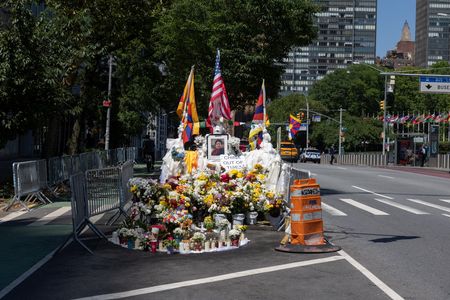
The U.S. State Department announced Wednesday that it will keep pressing China to resume talks with the Dalai Lama, following the death of a Tibetan man who set himself ablaze near the United Nations headquarters in New York last week.
The man succumbed to severe burns approximately one week after the incident near the UN building. Tibetan exile activists and a media organization called Voice of Tibet identified him as Lobga Rangzen. According to Voice of Tibet, he “self-immolated outside the U.N. headquarters in New York after a live appeal for Tibetan independence and unity.”
In an official statement, a State Department spokesperson declared: “The United States is committed to supporting the unalienable human rights and aspirations of Tibetans to celebrate and preserve their unique culture, language, and religion without fear of interference.”
The spokesperson went on to say, “The United States will continue to call on China to return to direct dialogue, without pre-conditions, with the Dalai Lama and his representatives, and with the democratically elected Tibetan leaders, to resolve differences and achieve meaningful autonomy for Tibetans.”
Support for Tibetan human rights has been a consistent position of the U.S. government, maintained through both Republican and Democratic administrations over the years.
China pushed back on the American statement. At a regular news conference on Thursday, Mao Ning, a spokesperson for China’s Foreign Ministry, said: “We urge the U.S. side to honor its commitments to recognize Tibet as a part of China and not support Tibet independence, and to stop using Tibet-related issues to interfere in China’s internal affairs.”
Following the man’s death, China reiterated that Tibet has been an inseparable part of its territory since ancient times and indicated that it expects “relevant countries will handle the matter in accordance with domestic laws.” Beijing has previously stated that Washington is in “no position” to criticize China on matters related to Tibet.
China, which is working to strengthen its grip on Tibet, considers the Dalai Lama a separatist figure and insists it holds the authority to choose his successor, pointing to a centuries-old tradition. The Dalai Lama — the spiritual leader of Tibetan Buddhists and a Nobel Peace Prize laureate — has told his followers to reject any successor selected by Beijing.
China took control of Tibet in 1950, describing the takeover as a “peaceful liberation” from feudalistic serfdom. Human rights organizations and Tibetan exiles have long condemned what they characterize as oppressive Chinese rule in Tibetan regions, a characterization China firmly denies.
Ethnic minority issues remain a deeply sensitive subject within China, where Tibetans and other minority groups face heavy surveillance over any perceived signs of “separatism.”
The International Campaign for Tibet reports that 159 Tibetans inside Tibet have set themselves on fire since 2009. The organization’s data also shows that 11 such incidents have taken place among Tibetans living in exile.
PAMPLONA, Spain — Every year, the northern Spanish city of Pamplona transforms into one of the world’s most electrifying party destinations as the San Fermín festival takes over the streets. The celebration, which centers around a daily running of the bulls, attracts hundreds of thousands of visitors from around the globe and stands as one of Spain’s most recognized cultural events.
Beyond the famous bull runs, the festival is packed with parades, live music, religious observances, and street festivities that continue around the clock throughout the event’s duration.
The celebration gained international recognition largely thanks to American author Ernest Hemingway, who depicted the festival in his 1926 novel “The Sun Also Rises.” That landmark work is celebrating its 100th anniversary this year, adding an extra layer of significance to this year’s festivities.
KYIV, Ukraine — Ukrainian drones carried out a new round of attacks Thursday, targeting oil infrastructure across Russia and igniting two oil tankers in the Sea of Azov — just one day after U.S. President Donald Trump announced plans to give Ukraine the rights to manufacture Patriot air defense systems.
Ukraine’s repeated strikes on Russian oil refineries and related infrastructure have sparked a serious fuel crisis inside Russia, with gasoline shortages and rationing reported across multiple regions. Drivers in some areas have reportedly waited hours just to fill their tanks.
Early Thursday morning, a Ukrainian drone strike set off a fire at an oil depot in the city of Tver in western Russia, according to acting regional Gov. Vitaly Korolyov.
In the southern Stavropol region, Gov. Vladimir Vladimirov reported that Ukrainian drones had set oil reservoirs on fire in Vyazniki. He said officials ordered the evacuation of residents from several nearby apartment buildings as the blaze grew larger.
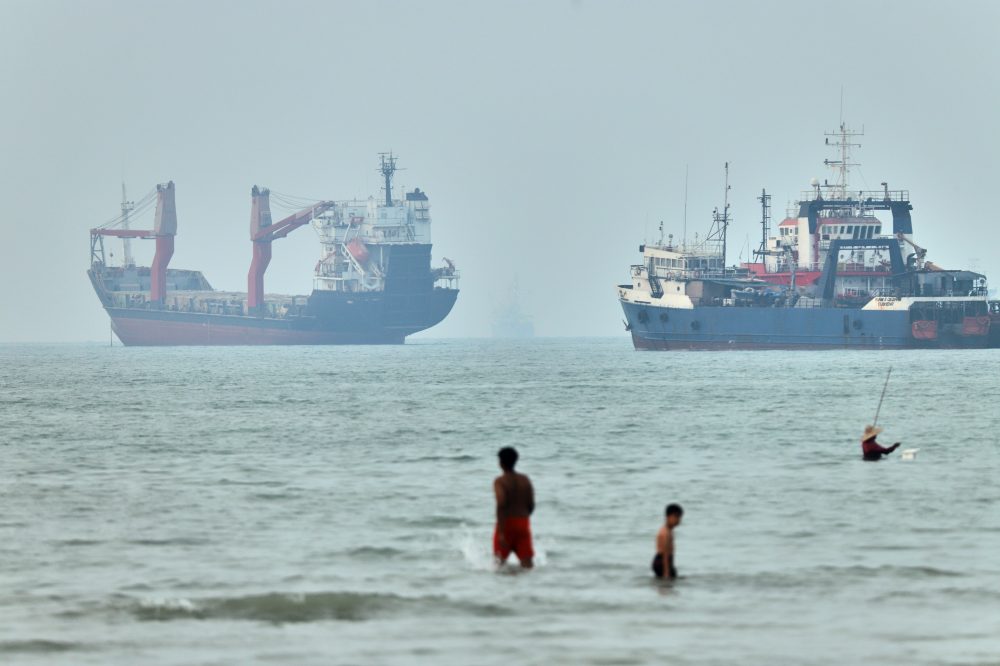
Out on the Sea of Azov, Ukrainian drones struck and set two oil tankers on fire, according to Rostov Gov. Yuri Slusar. He noted that one vessel was still burning and that crew members had been safely evacuated. The strike is the latest in a string of recent attacks on tankers in the region, which Ukraine says is aimed at cutting off fuel deliveries to Russian-occupied Crimea.
Russia’s Defense Ministry reported that its air defenses shot down 73 Ukrainian drones between late Wednesday night and early Thursday morning.
Ukraine’s Air Force, meanwhile, said Russia launched 94 long-range strike drones and two ballistic missiles at Ukraine overnight. Of those, 72 drones were either jammed or intercepted — but 19 drones and both missiles caused damage at 13 different locations.
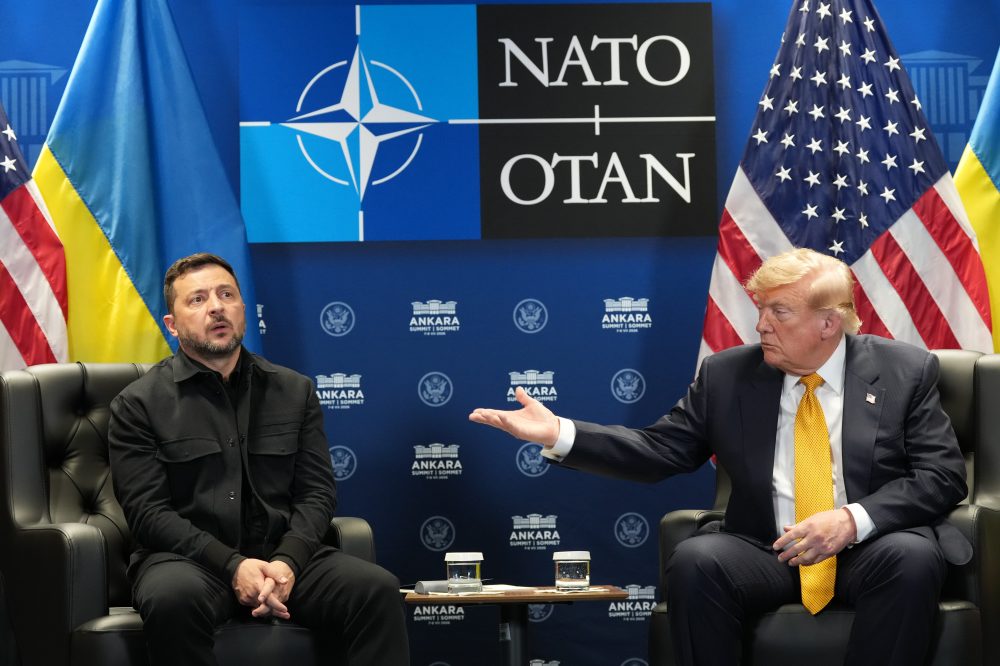
The drone exchanges came on the heels of a notable diplomatic moment. During Wednesday’s NATO summit in Turkey, President Trump met with Ukrainian President Volodymyr Zelenskyy and announced that the U.S. would license Ukraine to produce Patriot air defense systems — a major victory for Kyiv, which has long sought access to the technology to defend against Russian missile attacks in their more than four-year war.
The tone of Wednesday’s meeting stood in sharp contrast to a tense and widely-watched confrontation between the two leaders at the White House back in February 2025. This time, Trump spoke warmly of Zelenskyy, praising his willingness to pursue a peace deal and saying the Ukrainian leader has “done an amazing job” and “been very effective.”
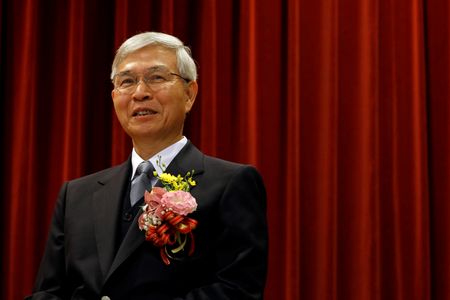
TAIPEI — The head of Taiwan’s central bank delivered a cautionary message Thursday, acknowledging that while the artificial intelligence boom is fueling genuine economic growth, it also carries serious bubble risks that must not be ignored.
Appearing before lawmakers at a parliamentary hearing, Governor Yang Chin-long described the AI surge as a significant engine for Taiwan’s economy — but stressed that regulators need to keep a close eye on speculative spending funded by heavy corporate debt in the technology sector.
“We do have concerns about the possibility of an AI bubble,” Yang told lawmakers. “AI is driven by real growth potential, but it’s the possibility of over-expansion via over-leveraging that concerns us.”
At the central bank’s quarterly board meeting in June, officials determined that inflation pressures tied to the AI boom were not strong enough to warrant raising interest rates, though the vote to keep rates unchanged was not unanimous. Governor Yang defended that call, noting that traditional industries have been lagging behind the high-flying tech sector, making a rate hike difficult to justify.
Taiwan occupies a critical position in the worldwide AI supply chain, serving major technology companies including Nvidia and Apple. That role is anchored largely by chipmaker Taiwan Semiconductor Manufacturing Co., known as TSMC, which has helped push Taiwanese stocks to record levels this year.
The outsized importance of Taiwan’s chip industry to AI development is underscored by the frequent high-profile visits to the island by Nvidia CEO Jensen Huang, including a major trip in June for events such as Computex and NVIDIA GTC Taipei.
TSMC, the world’s largest contract chip manufacturer producing the processors that power AI systems, reported last month that customer demand remains strong and that clients continue to hold an optimistic view of the AI market — even as the company keeps watch on the effects of rising component costs.
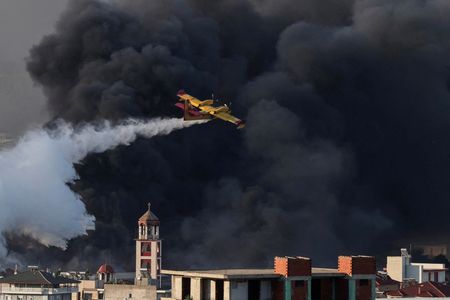
Firefighters in Greece were working to contain a fire Thursday morning that broke out at a business location roughly 15 kilometers — about 9 miles — northwest of Athens, leaving at least two people with serious injuries, according to the country’s fire brigade.
A large response was mounted at the scene, with approximately 75 firefighters, 20 vehicles and engines, and a helicopter all dispatched to fight the blaze. The fire ignited early in the morning and produced a heavy column of black smoke visible in the area.
Rescue crews pulled one severely injured man from the site, the fire brigade reported. A second man who sustained serious burns had already been transported to a hospital prior to that rescue.
Greece’s public broadcaster ERT reported that four additional individuals were receiving treatment for injuries connected to the fire.
Authorities called on people in the surrounding area to leave as a precaution. Officials noted that a fuel truck was located on the business property, though one fire brigade spokesperson indicated the truck was believed to be empty at the time.
A top official at the International Criminal Court says a major “breakthrough” has been achieved in the ongoing investigation into crimes committed during Sudan’s war in the Darfur region — evidence that could connect the atrocities directly to those in command.
The ICC has been investigating attacks on the cities of al-Geneina, which occurred in 2023, and al-Fashir, which was targeted last year. United Nations experts have determined that forces from the paramilitary Rapid Support Forces carried out crimes bearing the “hallmarks of genocide” against people from non-Arab tribes in those areas.
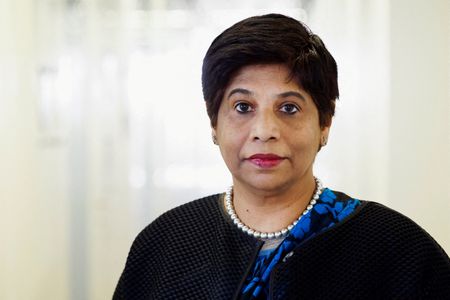
“We have got additional evidence, strong evidence, linking what is occurring in Darfur with leadership levels. And we are very, very pleased to say that this is a breakthrough for us,” said deputy prosecutor Nazhat Shameem Khan, speaking to Reuters after traveling to eastern Chad to meet with victims of the attacks.
Khan did not identify which forces the leadership belongs to, and under ICC rules, she was unable to confirm whether arrest warrants had been sought or were being pursued.
“We are confident that there are going to be results in at least a reasonable time,” she added, without specifying a timeline.
In international war crimes proceedings involving political figures, one of the biggest hurdles is establishing a direct connection between high-ranking leaders and the specific crimes carried out by those beneath them. Prosecutors must gather what is known as “linkage evidence” — typically insider testimonies or documented records showing that leadership was informed of operations and plans on the ground.
Al-Geneina and al-Fashir experienced the worst violence during the war between Sudan’s national army and the RSF, a conflict that has now stretched on for more than three years. The RSF currently controls both cities. In January, Khan told the UN Security Council that the paramilitary group had refused to cooperate with the investigation. The RSF has maintained that it did not deliberately target civilians and has pledged to hold individual wrongdoers accountable.
A Reuters documentary examining the fall of al-Fashir identified several RSF leaders who were either committing or present near attacks, based on interviews and analysis of videos shared online. Khan confirmed that ICC investigators have gathered similar testimony in their own probes.
Witnesses in those investigations described executions and acts of sexual violence. “We will ensure [their stories] are also told in the course of our proceedings,” Khan said.
Although Sudan has not signed the Rome Statute and is therefore not an ICC member, the UN Security Council granted the court authority to investigate atrocity crimes committed in Darfur starting in 2005. Sudan’s army-led government has cooperated with investigators regarding the most recent attacks, but has not surrendered several former senior officials who face accusations of genocide and other crimes from an earlier phase of the conflict. No public arrest warrants have been issued in connection with the current war, which began in April 2023.
When asked whether nations alleged to be supporting the commission of these crimes — including the United Arab Emirates, which has been named in expert filings to the court as backing the RSF — could face legal consequences, Khan explained that the court’s authority covers individuals who contribute to crimes, not nations themselves. She said the court’s current focus is on crimes committed within the two cities in order to produce concrete outcomes. The UAE has denied any involvement in the conflict.
Three nations in West Africa’s Sahel region — Niger, Mali, and Burkina Faso — announced last year their intention to withdraw from the Rome Statute. The ICC confirmed on July 1 that all three had submitted formal letters initiating that process, which takes one year to complete.
“I hope they change their minds because I see a great virtue in being part of the Rome Statute family. I think it protects the world,” Khan said.
Khan and other ICC staff are currently subject to U.S. sanctions, imposed after the court issued arrest warrants for Israeli leaders on charges of alleged war crimes and crimes against humanity in Gaza.
SINGAPORE — Top investment managers across Asia are proceeding with caution when it comes to artificial intelligence, increasingly placing their bets on businesses that can both profit from AI and survive the upheaval it brings to other industries.
While global markets have climbed to record levels on the strength of AI enthusiasm, some investors are now questioning whether the explosive profit growth can continue and whether the enormous sums being poured into AI infrastructure will deliver meaningful returns.
Those concerns were front and center at the Reuters NEXT Asia conference in Singapore, where executives overseeing large investment funds discussed the difficulties of building strong portfolios in an era defined by AI.
Rohit Sipahimalani, chief investment officer at Temasek, said the Singapore state investor wants to grow its AI holdings, but acknowledged the other side of that equation. “You want to ride that trend,” he said. “But the equally big issue is disruption because of AI to many other businesses… We’ve increased our exposure to businesses that are more around hard assets, which are likely to be less disrupted by AI.”
Temasek, which holds stakes in both Anthropic and OpenAI, announced Wednesday that it plans to significantly expand its AI investment — targeting an increase from 6% of its portfolio to as much as 15% over the next five years.
Sipahimalani stressed the importance of looking broadly at the investment landscape. “You’ve got to look at the entire value chain,” he said. “There are some areas where there’s froth, the other areas where there’s real cash flows. We try to play across the entire spectrum.”
Some investors are deliberately avoiding the flashier, higher-risk end of AI and instead focusing on the infrastructure that supports it. Stephanie Hui, who leads private and growth equity for the Asia-Pacific region at Goldman Sachs Asset Management, said her approach is more straightforward.
“I am not smart enough to tell you today which applications are going to be winning, it’s way too early,” Hui said during a panel discussion at the event. Her firm has invested in companies specializing in liquid cooling technology and data centers. “We are not going for the front end at this moment… We are going for the simple stuff that facilitates an end proxy for AI adoption,” she added.
Despite AI remaining the dominant theme in global markets, concern is growing about the sheer scale of investment and the risk of a bubble forming. Fred Hu, chairman of Primavera Capital Group in China, urged caution. “I’m a big believer in the AI revolution but as valuations keep going up, as more and more capital goes into AI… it begs the question, how much is enough,” he said.
Satoshi Ueyama of Bain Capital Japan acknowledged there are plenty of investment opportunities in the AI space, but warned that infrastructure spending only makes sense if there are enough end-users to justify it. His firm is focused on finding companies that are empowered by AI, particularly in services and consumer applications.
“AI is real but at the same time there’s no denying some parts of the markets are over-excited… Not all AI investment is going to be successful at this stage,” Ueyama said at the Singapore panel.
A clutch single from Mookie Betts in the eighth inning gave the Los Angeles Dodgers the lead they needed, and Kyle Tucker’s two-run hit earlier in the game helped seal a 4-3 win over the visiting Colorado Rockies on Wednesday.
Starting pitcher Roki Sasaki bounced back after a rough performance the week before, holding the Rockies to three runs across six innings. Despite surrendering early leads in all three games of the series, the Dodgers managed to take two out of three, pushing their home record against Colorado to an impressive 21-3 since 2023.
Edgardo Henriquez earned the victory after recording just one out, improving his record to 4-0. Tanner Scott then closed things out with a flawless ninth inning, earning his 13th save of the season.
Colorado starter Gabriel Hughes made his first career start — and only his second major league appearance — holding the Dodgers to three runs over six innings. Hughes was especially sharp late in the outing, retiring 16 of the final 17 batters he faced. Kyle Karros and Edouard Julien each hit home runs for the Rockies during what turned out to be a tight three-game set, with all three contests decided by a single run.
The Dodgers jumped on Hughes right from the start in the first inning. Tommy Edman singled with one out, Freddie Freeman doubled, and Betts drew a walk to load the bases. Edman came home on a wild pitch, and Tucker followed with a two-out, two-run single to give Los Angeles a 3-0 advantage.
Colorado answered in the second inning when both Karros and Julien went deep, trimming the deficit to 3-2. Karros’ blast was his eighth home run of the season and only his second ever at Dodger Stadium — a ballpark where his father, Eric Karros, holds the all-time record with 130 home runs.
The Rockies evened the score in the third inning when Brett Sullivan worked a walk and eventually came around to score on a sacrifice fly off the bat of Mickey Moniak, making it a 3-3 game.
Hughes finished his outing allowing four hits and two walks while striking out seven. Sasaki surrendered four hits and one walk, fanning five batters.
Colorado had a golden opportunity to grab the lead in the eighth inning, putting runners on second and third with nobody out and later loading the bases with one out. However, TJ Rumfield struck out against Alex Vesia, and Karros flied out against Henriquez to end the threat.
The Dodgers wasted no time responding. Edman and Freeman each hit one-out singles off Antonio Senzatela — who fell to 8-1 on the season — before Betts stepped up and delivered the go-ahead hit to put Los Angeles back in front for good.
President Trump made a surprise change in travel plans on his way home from a NATO summit, boarding an older version of Air Force One rather than the newer Qatar-gifted aircraft that had recently drawn widespread attention.
The switch was unexpected and came at a notable moment — the United States and Iran had once again begun exchanging military strikes as the president was in the air.
LONDON — American cybersecurity and data resilience firm Rubrik announced Thursday that it plans to pour more than $500 million into the United Kingdom over the coming five years, calling Britain one of its fastest-growing markets. As part of the commitment, the company will make London home to its European headquarters.
CEO and co-founder Bipul Sinha described the UK as a top-tier technology market with growing strategic value for the company. “The UK is one of the world’s leading technology markets, and has become increasingly important to Rubrik’s long-term growth,” Sinha said.
He added that the investment is designed to strengthen the company’s presence and help customers across Europe, the Middle East, and Africa address pressing concerns around data sovereignty, recovering from cyberattacks, and scaling artificial intelligence safely. “This investment strengthens our UK ecosystem, helping EMEA customers address the critical need for European data sovereignty, quickly recover from cyberattacks, and safely scale AI,” he said.
The day before the announcement, the New York-listed company revealed that its Rubrik Security Cloud platform would become available through AWS European Sovereign Cloud. The move is aimed at giving public sector agencies and heavily regulated private organizations access to cloud-based cyber resilience tools that meet European data standards.
Sinha, speaking in an interview, explained that Rubrik was founded 12 years ago with a specific mission: keeping businesses operational when hit by a cyberattack. The company went public in 2024 and now carries a market value of approximately $17.4 billion.
As more of Rubrik’s clients began using AI-powered agents to handle tasks like writing software code or managing customer service, Sinha said expanding into AI resilience became a logical next move for the company.
Rubrik rolled out its “Rubrik Agent Cloud” product in October and, just last month, extended its capabilities to work with Anthropic’s Claude Code and Claude Cowork platforms. The technology is designed to monitor AI agents, maintain control over their actions, and reverse any unintended outcomes.
“We are seeing significant interest and traction in this space,” Sinha said. “We not only are creating the real-time security guard rail for agents, we are also giving you agent rewind, so if the agent makes any mistake you can press the undo button, and that comes from our cyber recovery background.”
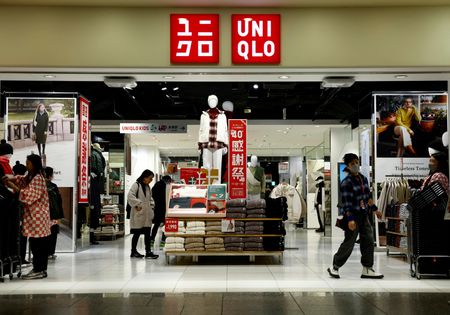
Fast Retailing, the Japanese parent company of clothing brand Uniqlo, announced Thursday that its third-quarter operating profit climbed 45.7%, even as the ongoing Iran war created headaches for its supply chains and shipping operations.
The company reported operating profit of 213.79 billion yen — roughly $1.32 billion — for the three-month period ending in May. That figure is up sharply from 146.74 billion yen during the same quarter a year ago, and it significantly exceeded the average analyst estimate of 177.73 billion yen, based on projections compiled by LSEG.
On the strength of those results, Fast Retailing boosted its full-year operating profit forecast to 730 billion yen, up from its previous target of 700 billion yen. The company is now on track for what would be its fifth consecutive year of record-breaking earnings.
Analysts closely watch Fast Retailing as an indicator of consumer spending trends in both Japan and mainland China, where the company operates nearly 900 stores.
The retailer traces its roots to a single shop in the western Japanese city of Hiroshima, which opened in 1984. Today, more than 2,500 Uniqlo locations operate around the world, offering affordable items like fleece jackets and cotton shirts manufactured primarily at factories across Asia.
In recent years, Fast Retailing has been pushing aggressively into European and North American markets as it seeks to diversify beyond China, which remains its biggest international market. Growth there has slowed as consumer confidence weakened, leading the company to close some stores and restructure operations.
Back home in Japan, sales have gotten a boost from a surge in tourism, fueled in part by a yen that has fallen to levels not seen in roughly 40 years.
Like other global fashion companies, Fast Retailing has had to navigate disruptions tied to the Middle East conflict, which has affected both supply lines and freight costs. The company’s CFO, Takeshi Okazaki, noted in April that the Iran war was making air freight from Southeast Asian production facilities more complicated, and that prolonged increases in oil prices could drive up the cost of synthetic fabrics.
Extreme heat has also been a factor for the industry more broadly. Intense heat waves across Europe and North America this year have prompted Swedish retailer H&M to announce changes to its product offerings and marketing schedule to better reflect longer, hotter summers.
CAIRO (AP) — He is the grandson of a prominent Shiite cleric, born in Qom — the center of religious scholarship in Iran — and raised in a devout family that embraced the country’s theocratic system. But by the time he reached his late 20s, he had abandoned prayer and lost faith in clerical rule. Today, he can barely hold a conversation about politics or religion with his own siblings and father.
The tech worker, now in his mid-30s, says Iranian society is fractured to its core — even among those who oppose the Islamic Republic — and he places the blame squarely on one person: Ayatollah Ali Khamenei. The supreme leader who governed Iran for more than three decades was laid to rest Thursday, following his death at the outset of the war.
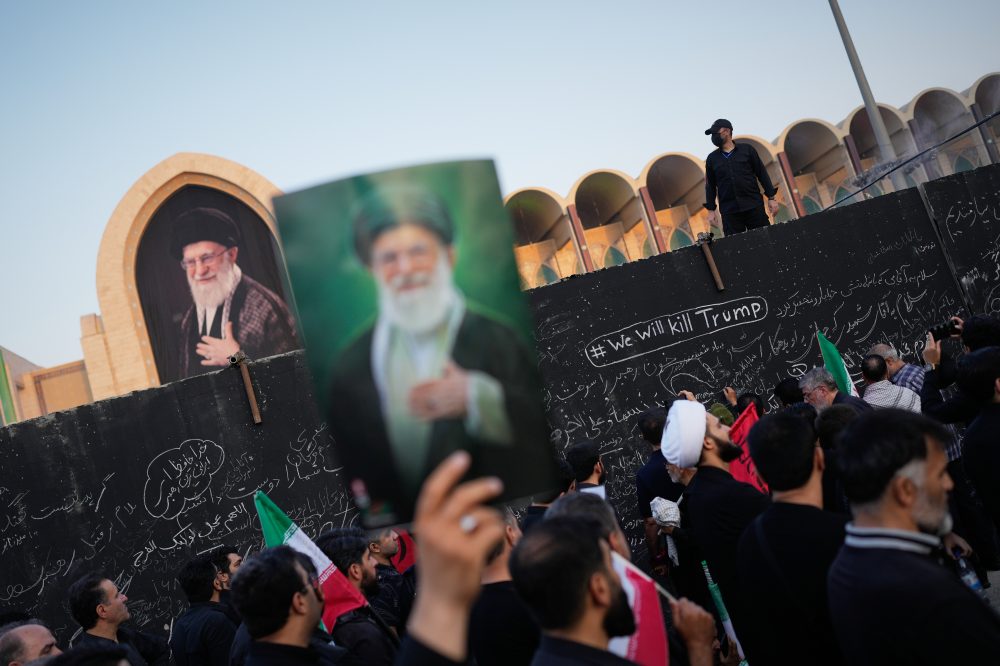
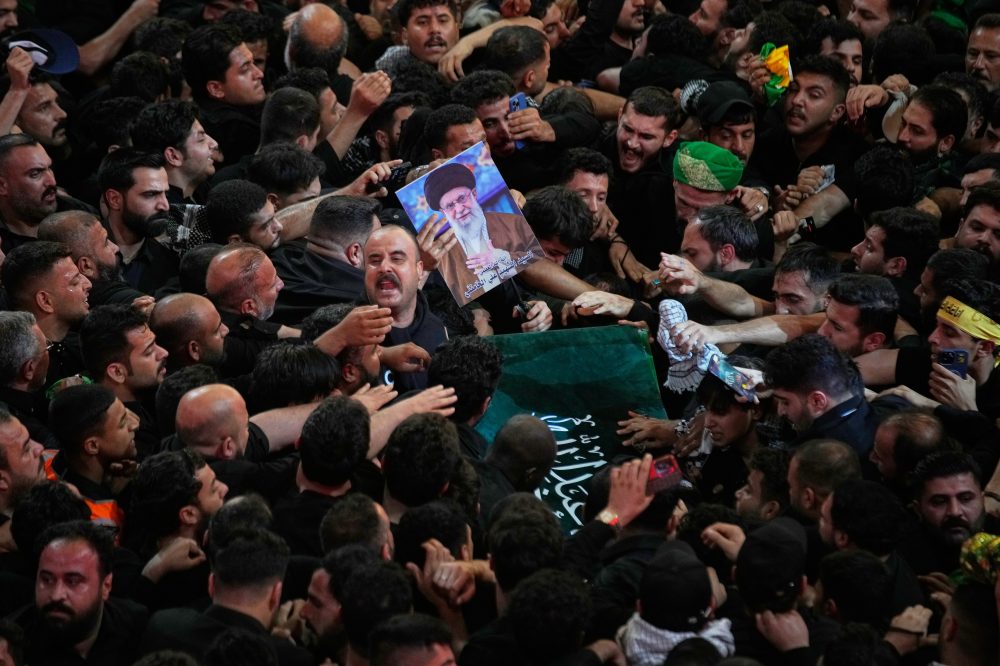
Massive funeral processions carrying his coffin through Tehran and other Iranian cities drew enormous crowds of loyalists, a show of force by hard-liners at the heart of the Islamic Republic, who celebrated him as a champion of clerical authority who had defied the West and Israel.
Yet beneath that display runs a deep current of resentment — built up over decades of violent crackdowns, international sanctions, and economic failures — that has intensified since authorities killed thousands of anti-government demonstrators in January.
“A gap has opened up in homes across the country that is really remarkable,” the tech worker said by phone from Tehran, where he currently lives. Like other Iranians who spoke with The Associated Press about Khamenei’s rule, he asked to remain anonymous due to fears for his safety.
Khamenei’s death, caused by Israeli strikes on February 28, has been framed by Iran’s leadership and his supporters as a martyrdom that crowns his legacy. Reflecting the rhetoric of ultra-hardliners who reject any negotiations with the United States, some funeral attendees called for the killing of U.S. President Donald Trump in retaliation.
“Our goal is to prove to the world that we will not submit to oppression and tyranny, and that we will avenge the blood of our leader,” said Hossein Akbari, a 60-year-old mourner attending the funeral in Tehran.
Khamenei assumed power in 1989 following the death of Ayatollah Ruhollah Khomeini — the commanding ideologue who had led the revolution that toppled the U.S.-backed shah a decade before and inspired a vast popular movement.
Under the banner of resistance to the West, Khamenei pushed forward Iran’s nuclear program, expanded its missile capabilities, and strengthened its network of militant allies across the Middle East — all while defying international sanctions.
Inside Iran, he cemented hard-line clerical authority by largely dismantling the reform movement. He granted the Revolutionary Guard sweeping military, political, and economic influence. As younger generations sought greater freedoms, he worked to maintain rigid control over personal behavior and dress codes.
A pivotal moment came in 2009, when protests erupted over allegations of vote-rigging in that year’s presidential election. Dozens were killed as authorities crushed what was then the largest protest movement the country had seen.
That crackdown produced a widespread sense of hopelessness, according to an Iranian activist and former political prisoner who contributes to a reformist-leaning publication in Tehran.
A senior aide to Iran’s reformist President Masoud Pezeshkian acknowledged last month that the country was “severely polarized” between die-hard supporters of the Islamic Republic and those seeking its complete collapse. But Ali Rabiei said a significant portion of society exists between those “two poles” — people the government could rely on to push for change within the existing system. His comments were reported by the state news agency IRNA.
Reliable polling does not exist in Iran, but election results offer some indication of public sentiment. Voter turnout in the country’s most recent presidential election fell to near-record lows, widely interpreted as a sign that millions who wanted change saw little point in participating. Even so, the hard-line candidate received 13.5 million votes, while Pezeshkian, the reformist, earned 16.3 million.
A string of protest movements since 2009 have each been met with brutal government crackdowns. January’s was the most deadly, when security forces killed thousands of people to suppress nationwide demonstrations that began over economic grievances and grew into calls for Khamenei’s removal from power.
The sister of a protester who was shot and killed on January 9 in Tehran summed up Khamenei’s legacy in a single word: injustice.
For working-class families, Iran’s already struggling economy has deteriorated further since the war began. “Workers can barely afford to buy bread, everything is so expensive,” she said.
“Since my sister died, mentally, financially, our life has fallen apart. All we do is look at photos and videos of my sister and cry. What do we have left?” she said from her home in eastern Iran.
A quiet form of resistance surfaced over the past month as Iranians observed the sacred period of Ashoura — marked by funeral-style marches honoring a martyred Shiite saint from the 7th century. Videos shared on social media showed some participants in the processions carrying photographs of family members who were killed during January’s crackdown.
One element of Khamenei’s legacy is the Islamic Republic’s demonstrated ability to endure both his death and a massive assault by the United States and Israel. The leadership came out of the conflict having reached an interim agreement with the U.S. that delivered some immediate benefits. That deal also holds out the prospect of a larger reward — the lifting of sanctions — should Iran and the U.S. finalize a nuclear agreement, though the outcome remains uncertain.
“It’s a victory for the Islamic Republic,” said a 35-year-old woman who took part in the January protests, referring to the deal. But “for Iran’s people, until we see the results, we won’t know if it is.”
She expressed concern about the deep divisions within Iranian society and the rifts among those who oppose the theocracy — some of whom hope for its rapid collapse, while others believe gradual reform from within is possible.
“The space for dialogue is very closed, and I don’t mean only the government, I mean the people,” she said.
A 33-year-old Tehran resident who also joined the January protests and has since lost his job at a technology company said his primary worry is the devastated economy, where both unemployment and prices have soared. Many of his friends are now out of work, and his wife’s employer drastically cut salaries.
“All of us, frankly, are just trying to stay alive and all of our struggle is taken up with meeting basic needs like rent and food,” he said.
Rebin Rahmani, a Kurdish activist who was once imprisoned in Iran and now lives in Paris, said the theocracy under Khamenei had no real solution to its mounting political and economic crises — only more repression.
“Its insistence on iron-fisted, security-driven approaches will only trigger further unrest,” said Rahmani, a director at the Kurdish Human Rights Network. Protests are “reigniting every few years with renewed force.”
Pezeshkian and other pragmatists within the Iranian system are hoping to use negotiations with the U.S. to lift sanctions and revive the economy. For now, they appear to have tentative backing from Khamenei’s son and successor, Ayatollah Mojtaba Khamenei, who remains in hiding but offered qualified support for the talks in a written statement.
The true test of the elder Khamenei’s legacy may come in peacetime, said Ali Vaez, Iran director at the International Crisis Group, as competing factions fight to shape the future direction of the Islamic Republic.
“Wartime gave the system a degree of cohesion under shared duress. But the governance challenges remain just as stark.”
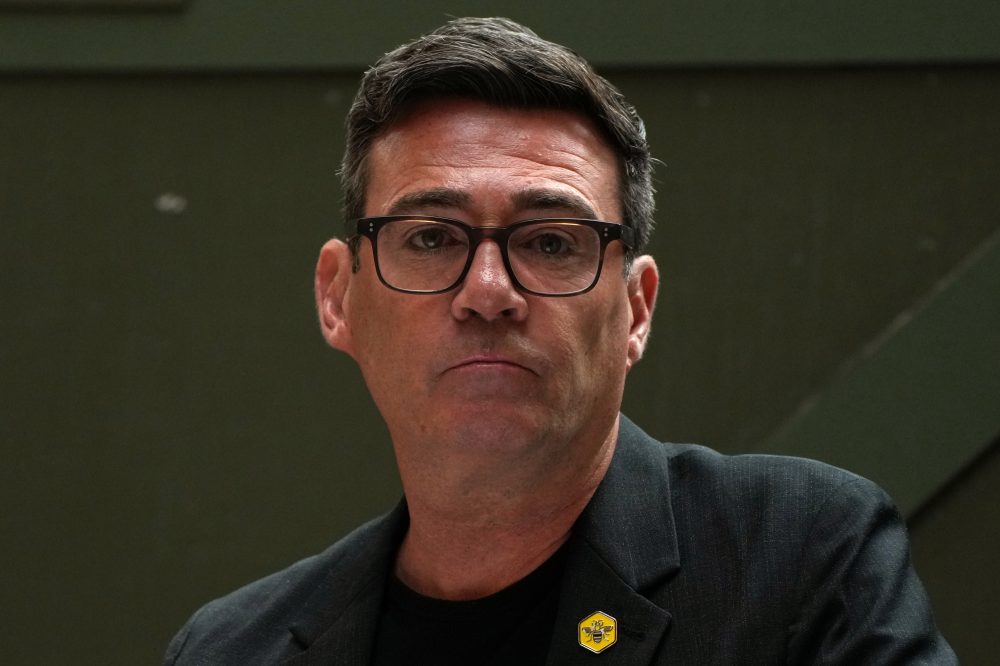
LONDON (AP) — The race to replace Keir Starmer as Britain’s prime minister got underway Thursday as the Labour Party officially opened nominations — and it appears there will be only one person in the running.
Former Greater Manchester Mayor Andy Burnham has begun gathering signatures from fellow Labour lawmakers. He needs a minimum of 80 to officially enter the contest, a threshold he is widely expected to surpass with ease.
Every other politician who had been considering a run has since stepped aside. Former Defense Minister Al Carns, who had been weighing whether to enter the race, announced late Wednesday that he would not stand against Burnham.
“I’d hoped a leadership contest would give us the opportunity for a proper debate,” Carns said in a statement. “But months of internal Labour politics isn’t what the country needs right now. We’ve got to get on with the job. Andy Burnham’s earned this and he’s got my full backing.”
The nomination window closes July 16. Burnham is expected to be declared the new Labour leader the very next day, and is set to officially become prime minister following an audience with King Charles III on July 20.
Starmer announced last month that he would step down once his center-left party selected a replacement. He won the prime ministership by a wide margin in July 2024, but chose to leave after two years in office that were clouded by missteps and poor judgment calls that damaged his reputation within his own party and among the broader public.
Burnham spent nearly ten years governing Manchester in northwest England before returning to Parliament last month after winning a special election. He has pledged bold change, promising to reverse nearly two decades of sluggish economic growth dating back to the 2008 financial crisis. His plan, which he calls “Manchesterism,” centers on combining private and public investment in areas such as transportation, housing, and infrastructure.
Still, Burnham will inherit many of the same difficult challenges that plagued Starmer — a slow-moving economy, struggling public services, and an ongoing cost-of-living crisis facing everyday citizens.
On foreign affairs, Burnham has pledged to stay the course, writing in The Times of London that the government’s “commitment to NATO and the U.K.’s nuclear deterrent will remain absolute.” He also stated that Britain will continue to stand firmly alongside the United States and remain a strong backer of Ukraine.
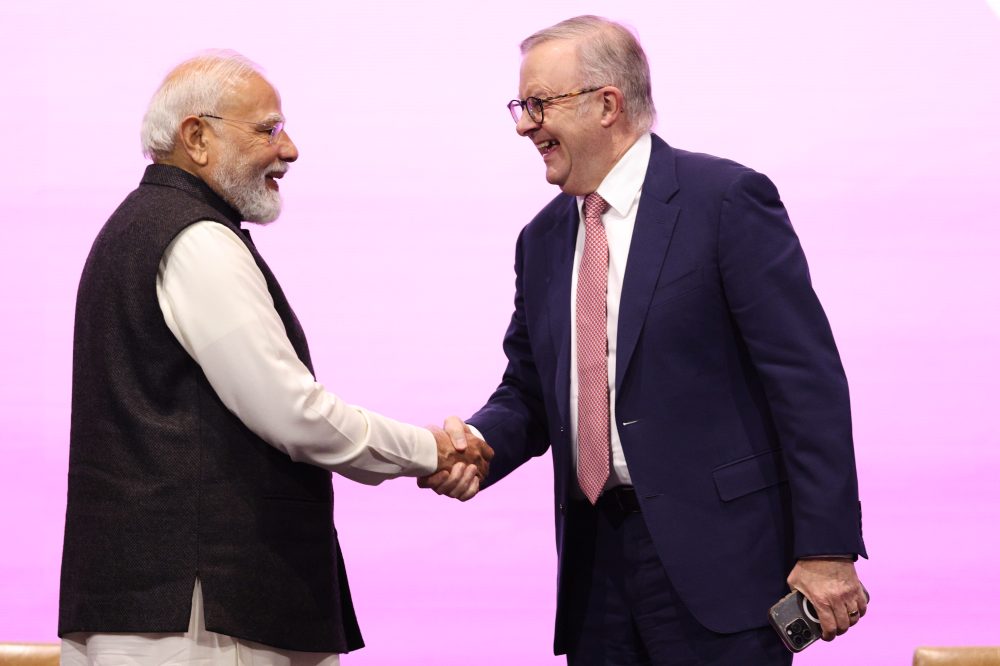
Australia and India have broken a long-standing deadlock, signing an administrative agreement Thursday that clears the path for Australia to supply uranium to India for peaceful energy use. The announcement came following a face-to-face meeting in Melbourne between Australian Prime Minister Anthony Albanese and Indian Prime Minister Narendra Modi.
While the two leaders confirmed the deal jointly, neither provided specifics on how much uranium would be exported or when shipments might begin. The move resolves a years-long impasse that had blocked a 2014 export agreement, which had been frozen due to fears the nuclear material could potentially be diverted for weapons development.
Australia sits on the world’s largest known uranium reserves, though the country itself uses no nuclear power and operates no nuclear weapons — meaning all uranium it mines is sold abroad. India, home to 1.4 billion people and a rapidly expanding middle class, has set an ambitious goal of reaching 100 gigawatts of nuclear power capacity by 2047, a level that would generate enough electricity to power roughly 60 million Indian homes annually. Despite doubling its nuclear power output over the past decade, nuclear energy still accounts for only 3% of India’s total electricity supply.
A key complication has been India’s status outside the Nuclear Non-Proliferation Treaty, which only recognizes the United States, China, Britain, France, and Russia as legitimate nuclear weapons states. Australia, as a treaty signatory, has traditionally refused to sell uranium to countries that haven’t signed on. India has argued the treaty is unfair because it only acknowledges nations that tested nuclear devices before January 1967, a cutoff that permanently excludes India. The country faced international sanctions and uranium trade restrictions following nuclear tests it conducted in 1998.
A turning point came in 2008, when the Nuclear Suppliers Group — which includes the U.S. — granted India a special waiver, allowing it to purchase uranium from member nations. Since then, India has worked to establish bilateral agreements with individual countries. It signed a similar deal with Canada in March.
Australia’s position on the matter gradually softened over the years. While Canberra had long insisted India must sign the Non-Proliferation Treaty before any uranium sales could happen, the country agreed in 2014 to allow exports under conditions including International Atomic Energy Agency safeguards and a clear separation between India’s civilian and military nuclear programs. Thursday’s administrative agreement was designed to remove the remaining barriers to putting that earlier deal into action.
Modi’s visit to Australia is part of an annual summit between the two nations’ leaders. In a joint statement, both Modi and Albanese committed to deeper defense and security cooperation throughout the Indo-Pacific region, describing it as representing “a step-change in the depth and ambition” of the bilateral relationship.
The announcement of stronger security ties came just days after Australia publicly criticized China for test-firing a long-range ballistic missile from a nuclear-powered submarine into the South Pacific Ocean — a region covered by an anti-nuclear treaty. However, neither leader mentioned China by name during Thursday’s statements, and both declined to take questions from reporters afterward. Thousands of people gathered in Melbourne hoping to catch a glimpse of the Indian prime minister during his visit.
India ranks as Australia’s fifth-largest trading partner. Two-way trade in goods and services between the two countries reached 54.4 billion Australian dollars — approximately $37.7 billion U.S. — during the 2024-2025 financial year, based on Australian government data.
Modi began the week with a stop in Indonesia and is scheduled to travel to New Zealand on Friday, marking his first visit to that country. India and New Zealand finalized a free trade agreement in April.
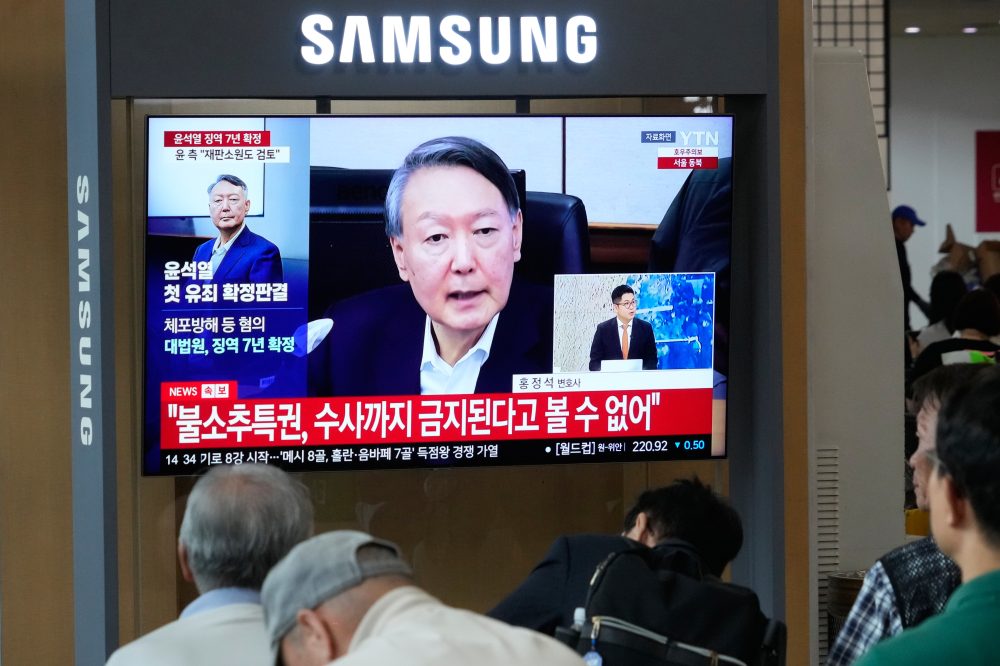
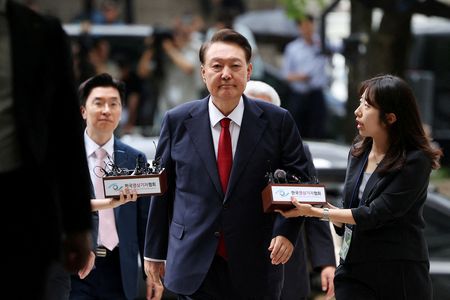
SEOUL, South Korea — South Korea’s Supreme Court has confirmed a seven-year prison sentence for former President Yoon Suk Yeol, marking the first of his several criminal cases tied to his short-lived martial law declaration in 2024 to reach the nation’s highest judicial body.
The court backed an April decision by the Seoul High Court, which had found Yoon guilty on several counts: violating Cabinet members’ right to participate in deliberations before the martial law declaration, falsifying the official proclamation to conceal that procedural failure and later destroying the document, and directing presidential security personnel to unlawfully obstruct law enforcement officers attempting to arrest him following his impeachment.
The martial law declaration lasted only a matter of hours. Lawmakers managed to push past a line of heavily armed soldiers and police stationed outside Seoul’s National Assembly, and once inside, voted to strike down the decree — forcing Yoon’s Cabinet to formally lift it.
Yoon was not present for Thursday’s ruling, which is final and carries no further avenue for appeal. He remains in detention and continues to face proceedings in separate cases. Among them, he has appealed a life sentence handed down on the most serious charge against him — rebellion.
Following the ruling, Yoon’s legal team issued a statement expressing “deep regret,” arguing that the justices had reached a conclusion in a significant case without conducting a thorough enough review.
The Supreme Court’s decision is consistent with the position taken by South Korea’s Constitutional Court, which removed Yoon from office in April 2025, determining that his martial law decree lacked legal justification and was not carried out according to required procedures.
Yoon summoned 11 Cabinet members to his office shortly before going on late-night television to announce the martial law declaration on December 3, 2024. However, several of those present — including then-Prime Minister Han Duck-soo — have testified that Yoon simply informed them of his decision rather than opening the floor for any discussion. The Seoul High Court also found that Yoon violated the rights of nine additional Cabinet members by either not calling them to the meeting at all or notifying them too late to participate.
Although the martial law period was brief, it sent South Korea into a serious political crisis, bringing high-level diplomacy to a standstill, freezing key political functions, and unsettling financial markets. The situation did not stabilize until Yoon’s liberal political rival, Lee Jae Myung, won a special presidential election held in June 2025.
Beyond his rebellion sentence appeal, Yoon is also contesting a separate 30-year prison term. That case centers on allegations that he ordered drone operations in 2024 with the deliberate intent of escalating tensions with North Korea, thereby manufacturing conditions that could justify imposing martial law domestically. His legal team has argued the drone flights were a direct response to North Korea sending thousands of balloons carrying trash across the border into South Korea.
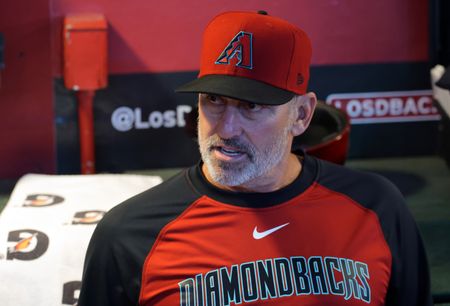
Arizona Diamondbacks skipper Torey Lovullo found himself ejected during Wednesday’s road matchup against the San Diego Padres after taking issue with a balk ruling against one of his pitchers.
The play occurred in the bottom of the fifth inning with runners standing at first and second base and one out on the board. Arizona rookie hurler Jose Cabrera attempted to spin away from the pitching rubber and fake a throw toward second base, where Fernando Tatis Jr. had positioned himself after drawing a walk and swiping the bag.
Plate umpire Willie Traynor determined that Cabrera failed to properly step toward second base and also noted that the pitcher’s knee buckled during the motion — both violations that qualify as balks under the rules of baseball. Lovullo stormed out to challenge the ruling, resulting in his first ejection of the current season.
With Lovullo sent to the clubhouse, bench coach Jeff Banister assumed the role of acting manager for the remainder of the game.
The controversy didn’t help Arizona’s cause on the field either. Just moments after the balk was called, Xander Bogaerts lined a two-run single into left field, pushing San Diego’s advantage to 4-1.
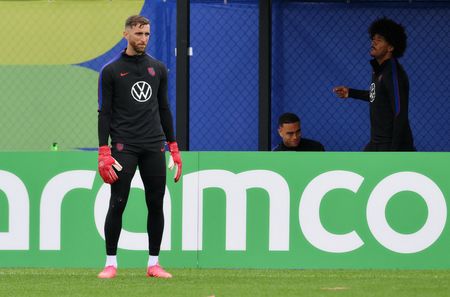
According to a report published Wednesday by The Athletic, the New England Revolution are set to bring back goalkeeper Matt Turner on a continued loan from French Ligue 1 club Olympique Lyonnais.
Turner, who is 32 years old, first joined New England to begin his Major League Soccer career back in 2018. He returned to the club last August on a loan agreement running through June 30, 2026.
During his time back with the Revolution, Turner has occupied the team’s designated player roster spot. The report indicates that a purchase option exists, and Turner would be eligible for targeted allocation money — meaning the club would not need to use a designated player slot to retain him.
So far this season, Turner has appeared in all 14 matches for the Revolution, who currently sit at 8-5-1 with 25 points. He has recorded three shutouts, allowed 18 goals, and made 61 saves. Among MLS goalkeepers, he ranks third in save percentage at 76.3%, tied for fourth in total saves, and seventh in goals-against average at 1.29.
A New Jersey native from Park Ridge, Turner holds the second spot in Revolution franchise history in wins (54), saves (455), and games started as a goalkeeper (126). In 2021, he earned MLS Goalkeeper of the Year honors and was recognized as both an MLS All-Star and a member of the MLS Best XI.
Turner departed New England in February 2022 when he joined English Premier League club Arsenal in a transfer reportedly worth $6 million. He later moved to Nottingham Forest in 2023, went on loan to Crystal Palace in 2024, and signed with Lyon in the summer of 2025 ahead of the 2025-26 season.
Turner was the starting goalkeeper for the United States throughout their entire run at the 2022 World Cup in Qatar and has earned 55 caps for the U.S. men’s national team. At the 2026 World Cup, he served as the backup behind starter Matt Freese, but took the net in the Americans’ 3-2 defeat to Turkey in their final group-stage match on June 25.
Collin Klein arrives at Kansas State this fall with a unique advantage — he already knows the place well. As a former Heisman Trophy candidate and Big 12 champion who played for the Wildcats, Klein is returning to familiar ground as a first-year head coach.
At Big 12 media days held Wednesday in Frisco, Texas, Klein acknowledged that his deep familiarity with the program gives him a head start — but he was careful to note that history alone won’t win games.
That message of earned success is central to what he tells prospective players. “I tell recruits it’s going to be hard,” Klein said. “I tell them it’s a badge of honor to wear that Powercat. I tell them that the most valuable things in life you’re going to have to pay the most for. We’re going to make that price really freaking high to play at Kansas State.”
Klein is one of four coaches making their Big 12 head coaching debuts this season. Joining him are Iowa State’s Jimmy Rogers, who previously coached at Washington State; Oklahoma State’s Eric Morris, who came from North Texas; and Utah’s Morgan Scalley.
Like Klein, Scalley is a first-time head coach taking over at his own alma mater — a situation Klein says is difficult to fully grasp until you’re actually living it. “I don’t think even as much as you walk yourself through it mentally, you really even understand until your boots are on the ground and you’re in it,” Klein said.
Klein also has an existing bond with returning Kansas State quarterback Avery Johnson. Klein had recruited Johnson during his time as an offensive assistant with the Wildcats before departing to serve as offensive coordinator at Texas A&M during the 2024 season. Johnson said the team is thrilled to have Klein back. “Everybody has a newfound energy,” Johnson said. “We’ve all been super grateful for Coach Klein to come back, and I think we’re all excited for the season.”
Meanwhile, Scalley shared an amusing story about once trying to recruit Klein when Scalley was a graduate assistant at Utah. Despite Klein arriving on campus dressed to impress, he left without an offer. “He showed up on campus in a suit and tie,” Scalley recalled, using the anecdote to speak to the caliber of people in the conference. “So much respect for the coaches in this league. Really good coaches, good men, and it is a competitive league.”
Scalley faces the challenge of following his predecessor, who posted 18 winning seasons across 22 years. “It is a responsibility I do not take lightly,” Scalley said. “There’s something to be said about continuity and believing in a staff and creating a culture.”
In other Big 12 news, Yahoo Sports reported that conference leadership recently met with Texas Tech officials following a heated dispute over quarterback Brendan Sorsby’s eligibility. Sorsby ultimately dropped his effort to play for the Red Raiders after controversy arose over his admission to wagering roughly $90,000 on college and professional sporting events.
Those talks were described as “productive, but not over,” with discussions centering on how Big 12 schools can remain competitive in today’s college football landscape. Texas Tech board chair Cody Campbell told Yahoo, “We want to find a way to get all other Big 12 schools to elevate themselves. Everybody needs to do some version of what we’ve done. That’s the path forward for this conference. A rising tide lifts all boats. People not on board with that and those that want everyone worse so they can be relatively better, we’ll have a problem with those institutions.”
Danish drugmaker Novo Nordisk officially brought its once-weekly basal insulin product, Awiqli, to India on Thursday — a country where diabetes rates rank among the highest anywhere on the planet.
The company describes Awiqli as the world’s first once-weekly basal insulin — a type of long-acting, background insulin — to receive approval for clinical use. It is prescribed for adults managing either type 1 or type 2 diabetes and is expected to go head-to-head with daily insulin options already on the market.
According to Novo Nordisk, more than 101 million people in India are currently living with diabetes, while an additional 136 million are considered prediabetic.
The company noted that insulin treatment in India is typically delayed by an average of seven to nine years, a trend driven in part by patients’ fear of needles, concerns about pain, and the cost of treatment.
Novo Nordisk India’s Managing Director Vikrant Shrotriya addressed those barriers directly, stating: “We believe Awiqli will reduce the psychological and physical barriers to insulin initiation.”
Standard daily basal insulin requires one injection every 24 hours, adding up to 365 injections annually. Awiqli, by contrast, is administered just once per week — cutting that total down to 52 injections per year. The product is delivered via a pen device and is known generically as insulin icodec.
The drug received approval in the United States earlier this year and has also been cleared for use in the European Union and a number of other countries.
In India, Awiqli will face competition from established basal insulin brands including Sanofi’s Lantus, as well as lower-priced insulin glargine products sold by domestic manufacturers including Biocon, Eris Lifesciences, and Lupin.
India’s insulin market is on a strong growth trajectory, with projections from IMARC showing an increase from $660.5 million in 2025 to $916.4 million by 2034. That growth is being fueled by rising diabetes rates tied to sedentary lifestyles, poor dietary habits, and genetic factors.
Beyond insulin, Novo Nordisk is also competing against Eli Lilly and a growing field of Indian generic drug manufacturers in India’s expanding market for obesity treatments.
Trading in U.S. stocks and exchange-traded funds on the Binance cryptocurrency platform has surpassed $3 billion since the feature was introduced approximately one month ago, according to the company’s co-chief executive.
Richard Teng, who serves as co-CEO of Binance, disclosed the figure during an interview at the Reuters NEXT Asia event held in Singapore on Thursday, July 9.
The milestone reflects strong early demand for the platform’s expansion into U.S.-listed assets, coming just weeks after the trading option became available to users.
A Rotterdam museum is paying tribute to a recently deceased Dutch artist in a most unusual way — by covering its floor with more than 800 pounds of peanut butter, enough to make roughly 15,000 sandwiches.
The installation honors conceptual artist Wim T. Schippers, who passed away last month at the age of 83. Schippers originally created the work, known as the Pindakaasvloer — or peanut butter floor — back in 1969. Starting Friday, visitors can view the recreation at Museum Boijmans Van Beuningen in the Dutch port city of Rotterdam, where it will remain on display for two months.
Beyond his visual art, Schippers was also known as the Dutch voice of both Ernie and Kermit the Frog on the Netherlands’ version of “Sesame Street.” His body of work was known for being absurd and playful, often poking fun at traditional notions of what art should be.
“Isn’t it fantastic that we are all standing here looking at peanut butter?” Schippers once said to reporters at the Central Museum in Utrecht in 1997, when the piece was shown there for the second time.
The peanut butter floor was part of a larger series Schippers called his Floor Covering Series, which also featured floors blanketed in glass shards and salt.
Food photographer and writer Mieke Weismann, who attended the 1997 exhibition as a teenager, recalled the experience vividly. “The thing I remember is the smell,” she told The Associated Press, describing how the sharp scent of peanut butter drifted through the entire museum.
To prepare the current installation, two museum workers spent several days using drywall trowels to spread 40 buckets of peanut butter across a hexagonal area measuring 25 square meters — about 270 square feet — applying it to a depth of roughly 2 centimeters, or about 0.8 of an inch.
Schippers never set strict guidelines for the work, leaving the size, shape, thickness, and type of peanut butter open to interpretation. For this version, Dutch peanut butter brand Calvé donated tubs of smooth peanut butter for the project.
The artwork has had its share of memorable moments over the years. During a 2011 showing, several visitors accidentally stepped into the sticky surface. And in 1997, a group of people placed 12 slices of bread along with several bags of hagelslag — the chocolate sprinkles commonly eaten on bread for breakfast in the Netherlands — directly onto the floor in what was considered an act of vandalism.
Schippers, however, seemed unbothered. “It doesn’t look bad,” he told Dutch newspaper Volkskrant at the time. “The sprinkles have been applied with a sense of proportion and a skillful hand.”
Authorities overseeing Rohingya refugee camps in Bangladesh launched a major relocation effort Thursday, using loudspeakers, volunteers, and community leaders to move residents out of dangerous areas after a series of landslides claimed at least 13 lives in recent days.
The deadliest single incident occurred Wednesday, when monsoon rains triggered a landslide that tore through an Islamic school at a camp in Cox’s Bazar — home to more than one million Rohingya refugees who fled neighboring Myanmar. At least five children perished in that collapse.
A Quran teacher at the school, Begum Jahan, described the moment the building gave way. Students had been getting ready for class when part of the structure suddenly caved in. “Those of us who were on the western side managed to get out, but everyone on the eastern side was buried under the debris,” she said. “Some suffered broken arms, and some of the girls lost their lives.”
Residents of the camp began pulling survivors from the rubble before emergency crews arrived on the scene. Dollar Tripura, who heads the local fire service and civil defense, confirmed Thursday that emergency personnel later took over rescue operations, treating the injured and recovering the bodies. The search was officially called off Wednesday evening.
Jamal Hossain, a Rohingya volunteer who participated in the rescue, said those pulled from the wreckage were transported to a hospital. He noted that all of the fatalities were women, but expressed concern that additional victims may still be buried. “We do not know whether there are any more bodies buried underneath,” he said.
Cox’s Bazar officials said they are moving refugees away from vulnerable hillside areas, with more than 1,000 people already relocated. Authorities acknowledged that many refugees are hesitant to abandon their makeshift shelters, even when warned of danger.
The Bangladesh weather office has warned that additional rainfall is expected in the coming days.
Earlier in the week, landslides struck the same camp area overnight Sunday into Monday, killing at least eight people. Local media, including the Bengali-language daily Prothom Alo, reported that at least 22 people across Bangladesh — a delta nation of 170 million — have died in landslides and wall collapses over the past three days, including the deaths at the Cox’s Bazar camps.
Bangladesh has long pressed the international community to support efforts to repatriate the Rohingya refugees to Myanmar, but those efforts remain at a standstill.
The National Weather Service office out of Mount Holly, New Jersey has put a Flood Watch into effect starting in the early morning hours of July 9th at 2:09 AM Eastern Time, with the watch set to expire at midnight on July 10th.
A Flood Watch means that conditions are favorable for flooding to develop in the watch area. Residents should monitor the latest forecasts and be ready to take action if a Flood Warning is issued.
Officials urge people to avoid driving through flooded roadways and to stay away from streams, drainage ditches, and other low-lying areas that can rise quickly during heavy rainfall. Remember — it only takes a small amount of moving water to sweep a vehicle off the road.
For the latest updates, residents should monitor official National Weather Service forecasts and local emergency management communications.
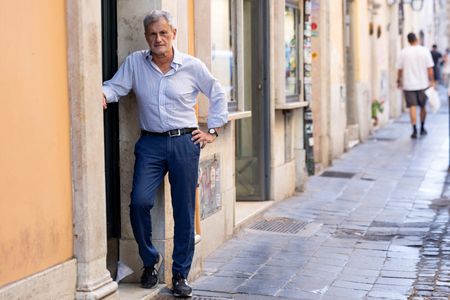
He’s far-right, freshly released from prison, and now partnering with a man who believes serious criminals should “rot” behind bars — yet Italy’s Gianni Alemanno has become one of the country’s most surprising advocates for prisoners’ rights, trying to strike a balance between a hard line on crime and a genuine concern for human dignity.
The 68-year-old has spent decades on the right side of Italian politics. He got his start in the youth wing of the post-fascist MSI party, later served as agriculture minister under the late Prime Minister Silvio Berlusconi, and held the office of Rome’s mayor from 2008 to 2013.
On June 24, Alemanno walked free from Rebibbia prison in Rome — one of Italy’s largest and most run-down facilities — after 18 months of incarceration following a conviction for influence-peddling and abuse of office, charges he had denied.
During his time inside, Alemanno kept a detailed social media diary of what he witnessed, shining new attention on Italy’s neglected prison system. The country’s prisons rank among the most crowded in all of Europe, with an occupancy rate approaching 140%.
“Only those who have spent time inside, or have relatives inside, understand the issue with prisons. Others do not understand it, they don’t see it at all,” Alemanno said in an interview with Reuters.
Alemanno also recalled a much earlier stay at Rebibbia — a 10-month sentence in 1982 for throwing a Molotov cocktail at the Soviet embassy during a far-right protest. Remarkably, he ended up in the very same cell when he returned on December 31, 2024. “From that cell, I watched Italy win the football World Cup in 1982,” he reflected.
Upon his release, Alemanno aligned himself politically with Roberto Vannacci, a former army general and vocal anti-woke campaigner whose new far-right party has been climbing in opinion polls. Vannacci, however, holds views on punishment that are anything but lenient.
On the night Alemanno was freed, Vannacci met him and made his position crystal clear, drawing on the Biblical story of Cain and Abel — in which Cain murders his brother. “Between Abel and Cain, I’m with Abel, and Cain should rot in prison,” Vannacci told reporters. “For serious crimes, people definitely deserve a rigorous, serious, and prolonged sentence.”
While locked up, Alemanno built a reputation by co-authoring a Facebook diary with a fellow inmate serving time for complicity in murder, documenting what he described as abuses and failures within the prison system. The two plan to turn those posts into a book.
Alemanno spoke out about filthy living conditions, understaffing in the judiciary, suffocating red tape, petty regulations, and the near-total absence of educational or vocational opportunities for inmates who genuinely want to change their lives. He argued the system is essentially designed to keep criminals criminal.
“Those who want to misbehave have a wide-open path and can do whatever they please; those trying to find a different way, on the other hand, face a multitude of difficulties,” he said.
Last July, Prime Minister Giorgia Meloni’s right-wing government promised to add up to 15,000 new prison spaces and make it easier to transfer inmates with addiction issues to treatment facilities in order to reduce overcrowding. So far, no new spaces have materialized, and a proposed law addressing inmate transfers remains stalled in parliament, at risk of dying if it isn’t passed before the current legislative term concludes in 2027.
With polling showing Meloni’s coalition running even with the center-left opposition, and facing pressure from Vannacci on crime and public safety, it remains unclear whether the prime minister will choose to spend political energy on prison reform.
Still, Alemanno expressed cautious optimism — even without Vannacci’s backing on this particular issue. “It is a bipartisan battle, which must bring together left and right,” he said.
Two major private equity firms — Blackstone and TPG — are reportedly seeking more than $4 billion for the surgical division of medical technology company Hologic, according to a report published Thursday by the Financial Times, which cited sources with knowledge of the situation.
According to the FT, the two firms have brought in advisers to help facilitate a sale of the division, which manufactures surgical tools used by gynecologists.
Blackstone and TPG previously announced the acquisition of Hologic for $18.3 billion, funded through a combination of cash and debt, in what ranked as one of the largest buyouts ever recorded for a medical device company. That deal officially closed in April 2026.
The Financial Times reported that the private equity firms are now looking to use proceeds from a potential sale to reduce the debt taken on during the Hologic acquisition and return capital to their investors.
The planned divestiture is unfolding at a time when stress in the private credit market is beginning to ripple into related private equity markets, pushing firms to find new ways to generate cash for investors.
Blackstone, which operates among the major private credit funds, has recently faced its own pressure from investors seeking to withdraw funds. The firm reportedly capped withdrawals at its flagship private credit fund last month after a surge in redemption requests.
Reuters was unable to independently confirm the Financial Times report. Blackstone, TPG, and Hologic did not provide comment to Reuters before business hours ended.
South Korea’s Supreme Court on Thursday confirmed a seven-year prison sentence for former President Yoon Suk Yeol, stemming from his efforts to prevent authorities from detaining him after his brief and controversial declaration of martial law in 2024.
The decision came after the Seoul High Court increased Yoon’s original five-year sentence to seven years back in April, following a determination that he was guilty of additional offenses beyond the original charges.
In issuing its ruling, the Supreme Court stated there were no errors in how the lower court interpreted the law.
The nation’s highest court also affirmed the appeals court’s conclusion that Yoon was guilty of forging official documents, failing to follow required legal procedures — which mandate that martial law be formally discussed in a cabinet meeting — and providing false information to foreign news organizations.
Following Thursday’s decision, attorneys representing Yoon announced their intention to pursue further legal action. “We will challenge the constitutionality of this ruling through constitutional review procedures, including a constitutional complaint,” one of Yoon’s lawyers stated.
Prosecutors, who had pushed for a 10-year sentence in the case, argued that Yoon abused his presidential authority and caused harm to the public.
The 65-year-old former leader is already facing a separate life sentence handed down in February, connected to charges that he orchestrated an insurrection related to the martial law declaration. Yoon has been held in custody since July 2025 and is currently facing seven additional trials.
EDMONTON, Alberta — The company that owns Facebook and Instagram, Meta, announced Wednesday that it intends to spend more than US$9.1 billion to construct its first artificial intelligence data center on Canadian soil — and the largest such facility it has ever built outside the United States.
The massive complex will be located in Sturgeon County, Alberta, and will draw its power from a natural gas-fired plant currently under development by a group of partners that includes Calgary-based Pembina Pipeline Ltd.
Alberta’s Technology and Innovation Minister Nate Glubish described the investment as “a big deal for Alberta,” pointing out that the province had deliberately crafted a regulatory environment designed to draw in data center development.
Alberta has been actively pursuing so-called hyperscale data centers as the worldwide appetite for artificial intelligence infrastructure continues to grow. However, the explosive expansion of AI technology has raised serious questions about the enormous quantities of electricity and water these facilities consume, along with the pressure they place on power grids and surrounding communities.
Because Alberta’s electrical grid lacks the capacity to support several large-scale AI data centers at once, provincial officials are focusing on projects that generate or secure their own power supply — which is exactly what Meta intends to do.
Meta stated that the data center will rely on a closed-loop cooling system, meaning it will not pull water from local sources. The company has also committed to spending US$42 million on nearby infrastructure improvements, covering items such as roads and water systems.
The power project behind the data center came into focus last week, when Pembina Pipeline, Morgan Stanley Infrastructure Partners, and Kineticor Asset Management announced they would move forward with the Greenlight Electricity Center in Sturgeon County. Meta was confirmed Wednesday as the end customer for that facility. The 932-megawatt plant is projected to come online during the second half of 2030.
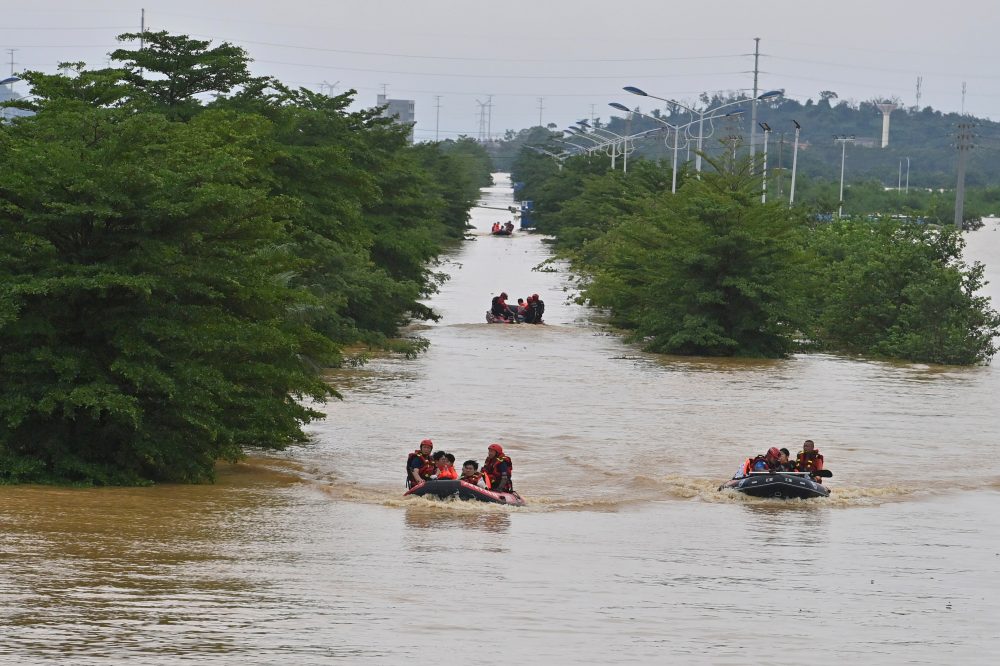
Chinese authorities announced Thursday that Tropical Storm Maysak has left 39 people dead after catastrophic flooding struck southern China.
The bulk of the fatalities — 26 in total — were the result of a dam breach in Nanning, a city in the Guangxi region. Ding Wei, the city’s vice mayor, shared those details during a news briefing.
Maysak delivered record-breaking rainfall to the region, overwhelming reservoirs and leaving residents stranded for days inside homes and other structures. Prior to Thursday’s update, officials had reported only six deaths.
A large-scale relief effort has been launched, with drones and thousands of boats deployed to reach those still trapped by floodwaters. Approximately 130,000 people have been evacuated from affected areas.
HONG KONG — Asian stock markets fell and oil prices surged Thursday as the conflict between the United States and Iran deepened, with both sides launching new attacks.
U.S. stock futures moved slightly higher.
The United States carried out additional airstrikes targeting Iran, and Iran retaliated by launching attacks against Bahrain, Kuwait, and Qatar. The escalation came one day after President Donald Trump announced that a temporary ceasefire between the two countries was “over.”
Japan’s Nikkei 225 recovered some ground lost earlier in the week, climbing 1.6% to close at 67,849.98. Technology stocks provided much of the lift, with chip equipment manufacturer Tokyo Electron jumping 5% and artificial intelligence-focused investment firm SoftBank Group adding 0.4%.
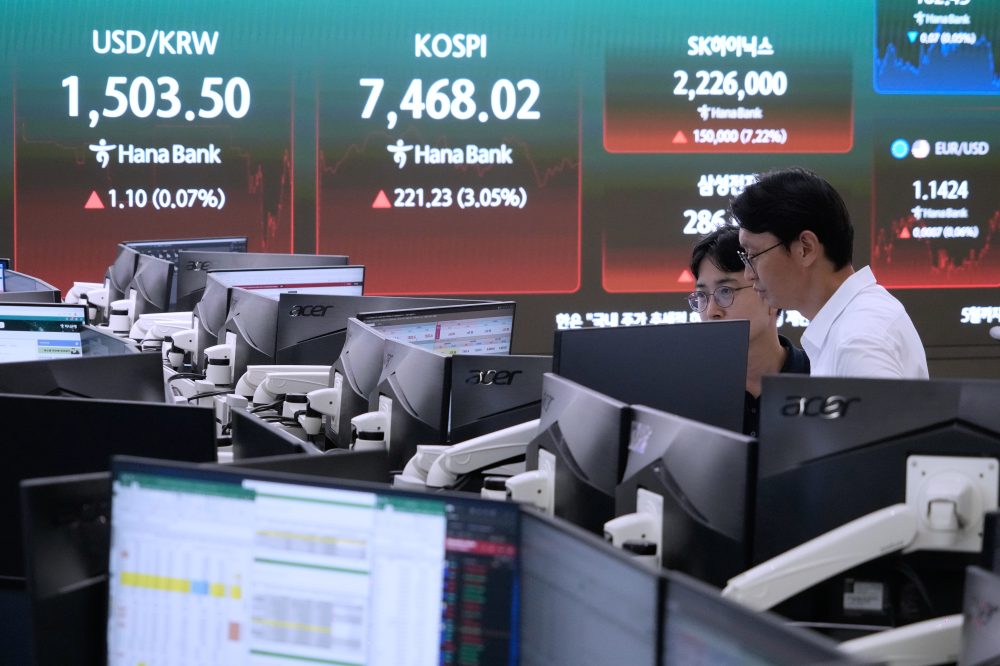
South Korea’s Kospi index ended 0.1% higher at 7,255.09, bouncing back after falling 5.4% on Wednesday. Samsung Electronics dropped 1.3% on Thursday, while memory chip manufacturer SK Hynix posted a 3.6% gain.
China’s Shanghai Composite index dipped 0.5% to 3,952.49. The decline followed a report showing China’s producer price index rose 4.1% in June compared to the same time last year, up from May’s 3.9% increase. Some economists are linking that accelerating inflation to rising costs tied to the ongoing Iran war.
Hong Kong’s Hang Seng index dropped 0.8% to 24,011.61. Shares of Apple supplier Luxshare fell 5% on its first day of trading in Hong Kong. Meanwhile, Chinese artificial intelligence company Zhipu, also known as Z.ai, surged 11.5% after announcing plans to raise approximately $4 billion through a share sale.
Australia’s S&P/ASX 200 fell 0.5% to 8,745.20. Taiwan’s Taiex finished flat, and India’s Sensex gained 0.7%.
Oil prices were on the rise early Thursday. Brent crude, the international benchmark, was up 1.1% at $78.88 per barrel. It briefly crossed $80 on Wednesday before giving back some of those gains. Before the Iran war started, Brent crude was trading near $72 a barrel. A period of optimism surrounding an interim peace agreement had recently pushed prices back down to pre-war levels.
U.S. benchmark crude was also up 1.1%, trading at $74.32 a barrel.
Commodities strategists Warren Patterson and Ewa Manthey of ING offered this assessment: “The oil market has continued to rally as the ceasefire between the U.S. and Iran appears to be on life support.”
The two analysts noted that vessel tracking data shows tanker traffic through the Strait of Hormuz — a critical passage for global oil shipments — has declined in recent days, rekindling investor worries about oil supply disruptions.
On Wednesday, Wall Street’s S&P 500 closed down 0.3% at 7,482.71, having fallen as much as 1.1% following Trump’s ceasefire comments. The Dow Jones Industrial Average lost 1.1%, settling at 52,348.39. The technology-focused Nasdaq composite edged up 0.2% to 25,870.65 after recovering from an earlier decline.
U.S. chipmaker Broadcom jumped 4.8% after Apple announced a multiyear partnership with the company.
In currency markets, the U.S. dollar slipped to 162.45 Japanese yen from 162.59 yen. The euro rose to $1.1430 from $1.1417.
SINJIL, West Bank — On a cool June evening, roughly 15 Palestinian men from the West Bank town of Sinjil stood watch on a hilltop, scanning darkened valleys below for any movement that could signal an incoming settler attack.
The men are part of a community-organized volunteer group — one of several like it across the West Bank — that has taken it upon themselves to shield their town from a surge in settler violence that Palestinians say neither the Israeli military nor their own governing authority has been willing or able to stop.
“We have been left on our own. You are facing settlers supported by their government,” said volunteer Fadi Alwan. “We have nobody. So we are forced to stay here and protect this town.”
Prime Minister Benjamin Netanyahu’s far-right government has approved hundreds of new settlements and settler outposts across the West Bank. The smaller outposts, officials note, have frequently served as launching points for violence that has driven thousands of Palestinians from their homes.
The Israeli government has stated that the strategic positioning of settlements is intended to prevent the establishment of a Palestinian state centered in the West Bank — an outcome central to the two-state solution that has long been supported by major world powers.
The vast majority of the international community views Israel’s settlement activity in the West Bank as a violation of international law. Israel rejects that position. The West Bank is a territory where the Palestinian Authority holds limited self-governing powers while the Israeli military operates without restriction.
Palestinians report that when they contact Israeli police or the military for help, responders either arrive too late or intervene on behalf of the settlers carrying out the attacks. The Israeli military denies those claims.
“The army protects them and doesn’t stop them. We call the army. We call the police. It’s useless,” Alwan said.
When asked specifically about Sinjil and the pattern of attacks described by residents, the Israeli military said soldiers are deployed to break up confrontations, but that responsibility for the conduct of Israeli civilians in the West Bank falls under the jurisdiction of the Israeli police. Israeli police did not respond to a request for comment.
Searchlights and WhatsApp
On the night of June 26, as volunteers gathered around a fire on a Sinjil hilltop, one member swept a searchlight across the surrounding hills looking for settlers. Others drove patrol routes through the town, all connected through community WhatsApp groups where residents can quickly alert one another to potential danger. Similar messaging networks exist in other West Bank communities, though the organized patrols in Sinjil appear to be more structured than most.
“If they get close to the houses, we go confront them, we send (messages out) on the WhatsApp groups,” Alwan said.
Just days before that night, Alwan said he was struck by a settler armed with a spiked club during a daytime assault while he was trying to harvest wheat. He pulled up his shirt to reveal a wound that had not yet healed.
He also recalled an incident from the previous year in which settlers fired live rounds at a tent the volunteers had set up as a watch post, narrowly missing the young men inside. He said Israeli troops arrived the following day and tore the tent down.
The Israeli military did not immediately respond to questions about allegations that soldiers dismantled the watch tent.
Alwan and other residents said they believe most of the settlers responsible for attacks on their town come from six outposts situated on the hills surrounding Sinjil. The Yesha Council, an organization representing settler communities, did not respond to a request for comment on the situation in Sinjil or what local regional councils are doing to address the violence.
A Town Increasingly Cut Off
Sinjil lies along the main road connecting the Palestinian population centers of Ramallah and Nablus, with settlements and outposts scattered across the hills to the north.
Local officials say the Israeli military has closed four of the town’s five entry points and erected a metal barrier around the community, cutting residents off from approximately 2,000 acres of privately owned land.
Moataz Tawafsha, the head of Sinjil’s municipality, said settler attacks intensified after the war in Gaza broke out in October 2023, forcing the town to find a way to protect itself on its own.
“We really feel as if we are living in a collective prison,” Tawafsha said. “As a result, the municipality has taken primary responsibility for providing protection.”
Since October 2023, settler violence has claimed two lives and forced more than 100 members of a Bedouin Palestinian community living on town land to flee, according to Tawafsha. An additional 20 families have been displaced from their homes within the town itself during the same period, he said.
Community Steps In
Some residents say the volunteer protection network has saved lives.
Abed Foqahaa reinforced his home with metal bars on the windows and erected a tall metal fence around his yard after settlers threw a Molotov cocktail through his window about two years ago while he and his family were inside.
“The fire broke out and we couldn’t control it. We tried to save the house, but all of us suffered from the smoke,” Foqahaa said.
He used the town’s WhatsApp group to call for help. Young men from the community — initially held back by the Israeli military — eventually reached the house and helped carry out Foqahaa’s father, who uses a wheelchair.
“God bless them, they really helped us,” Foqahaa said.
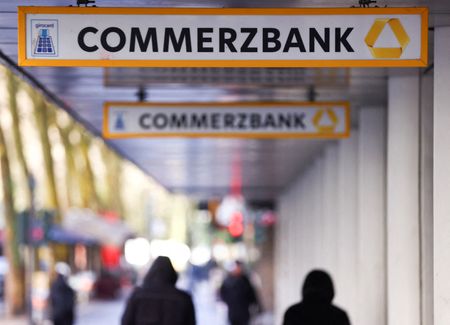
One of the most contentious banking takeover battles Europe has seen in years is moving closer to a resolution — and the outcome is looking increasingly like a win for Italy’s UniCredit.
The Milan-based bank, led by CEO Andrea Orcel since 2021, announced Wednesday that it now controls 48% of German lender Commerzbank’s shares. The disclosure came after UniCredit launched a below-market-value hostile takeover bid for Commerzbank in May, valuing the deal at roughly €45 billion — or about $51 billion.
UniCredit first acquired a stake in Commerzbank back in September 2024, setting off what has become nearly a two-year standoff between Italy’s and Germany’s second-largest banks.
Despite widespread German opposition to the deal, Orcel’s push appears to be gaining unstoppable momentum. Even critics are beginning to acknowledge that the question is no longer whether UniCredit will take control, but rather how and when it will happen.
Commerzbank fired back at Wednesday’s announcement, noting that fewer than 2% of retail and institutional investors had accepted the offer, with the majority of those coming from what it described as “banks and parties connected to UniCredit.” The German bank said this highlighted the deal’s “low attractiveness.”
Nevertheless, Boris Rhein, the premier of Hesse — the German state where Commerzbank is headquartered — called on both sides Wednesday to begin meaningful discussions.
“The priority now is to find common ground and engage in constructive dialogue at the highest levels of management,” Rhein said in an emailed statement.
So what does Orcel do next? His available moves include adjusting certain swap contracts UniCredit currently holds in order to push its ownership stake to 59%, purchasing additional shares on the open market once regulatory approvals are finalized next year, or entering direct negotiations with Commerzbank about a formal merger agreement.
Both banks say they are open to sitting down together, though they have yet to find any common ground. Orcel could potentially force a full merger if he secures 75% of shares, but with the German government still holding a 12% stake, he would face an uphill battle against Berlin and remaining minority shareholders.
Commerzbank’s leadership, which has spent months fighting to preserve the bank’s independence, is now shifting its message — pushing for a higher premium for shareholders. Some shareholders have indicated they would be willing to sell if the price were right.
Manfred Pointke, founder of investment firm MPPM and a Commerzbank investor, put it bluntly: “It’s inevitable that UniCredit will gain a majority stake here and that the whole thing will go through. It’s just a matter of time.”
Pointke said he has not yet sold his shares but would likely do so if the price reached €45 or €47, compared to UniCredit’s current offer of under €40 per share.
Orcel anticipates that the European Central Bank will soon determine that UniCredit effectively controls Commerzbank. Reaching that determination while UniCredit holds less than 50% would carry higher capital costs than if the bank had already crossed the majority threshold. Surpassing 50% ownership would also allow UniCredit to appoint half of Commerzbank’s supervisory board members, something Orcel has suggested the bank may pursue.
Analysts at Citi noted this week that “it is increasingly likely that UniCredit will now have to consolidate it post the tender offer and ECB approvals.”
Still, the path to the finish line is not without obstacles. One major complication is a wave of banking mergers and acquisitions happening in UniCredit’s home market of Italy, where competitors are combining forces. Committing fully to the Commerzbank deal could limit UniCredit’s ability to participate in those domestic deals, potentially weakening its standing at home.
German bureaucratic resistance also looms large. Former UniCredit employees who were involved in the bank’s acquisition of German lender HVB two decades ago warned that opposition from German authorities could bog the bank down in red tape.
Thorsten Beck, director of the Florence School of Banking and Finance, described Orcel’s aggressive approach as “a bit like the ‘elephant in the porcelain shop.’”
“Yes, there is indeed a big risk that this will not work out well for UniCredit. Then again, in finance, money often wins the day, and I can imagine senior management at Commerzbank falling in line once everything is done,” Beck said.
Sarah Storey, a 19-time Paralympic gold medalist, announced Thursday that she is stepping away from international competition — closing the door on what would have been a run at the 2028 Los Angeles Paralympics.
The 48-year-old retires as the most accomplished British Paralympian in history, having earned 30 medals across nine Paralympic Games. Her career began in the pool as a swimmer before she transitioned to cycling, where she continued to dominate on the world stage.
“I am so privileged to have spent 35 years as an international athlete,” Storey said in a prepared statement.
“I genuinely pinch myself that my childhood dream of being an athlete for as long as I possibly could has led to nine Paralympic Games and opportunities across so many sporting events,” she added.
Storey captured five Paralympic gold medals in swimming before going on to claim 14 additional golds in cycling, cementing her place among the all-time greats of Paralympic competition.
Notably, Storey made clear that her retirement is not the result of any physical decline. She expressed confidence that she could have competed — and won — in Los Angeles.
“Physically, I fully believe that I could be on that start line in Los Angeles, confident of defending my two titles from Paris,” she said.
Instead, she explained that she feels she can make a greater difference outside of competition. “However, I believe I can now be a more positive influence leveraging new roles and opportunities that allow me to fight for Para sport, and the coverage that it deserves,” Storey said.
Dr. Reddy’s Laboratories announced Thursday that it is putting commercial shipments of semaglutide on hold, citing a problem with the active pharmaceutical ingredient in the medication. The news sent the company’s stock price lower.
Semaglutide is the core ingredient found in Novo Nordisk’s widely used diabetes and obesity treatments. Dr. Reddy’s had also introduced its own semaglutide injection product, called Obeda, in India for the treatment of diabetes.
The India-based drug manufacturer disclosed that certain production batches of semaglutide were found not to meet required quality specifications. The company said it is currently investigating what caused the problem and is taking steps to make sure its products meet quality standards.
In an official statement, Dr. Reddy’s said, “There is no impact on patient safety or on the product’s existing global regulatory filings.”
The company did not provide a timeline for when the supply disruption would be resolved and offered no additional details on the matter.
Dr. Reddy’s shares fell 1.8% to 1,324 rupees as of 10:20 a.m. IST, even as the broader pharmaceutical index rose 1.8% and the Nifty 50 index climbed 0.6%.
More than half a dozen Indian pharmaceutical companies have introduced lower-priced versions of Novo Nordisk’s Ozempic and Wegovy drugs, all competing for a portion of the rapidly expanding global market for obesity treatments.
However, demand for these medications leveled off in June, according to data from research firm Pharmarack.
So your team didn’t make it. They’ve been sent home from the World Cup, and now you’re left wondering whether there’s any reason to keep watching. Good news — there absolutely is.
Sure, cheering for a team that isn’t your own might feel a little strange, but we’re not here to judge. Instead, we’ve put together a guide to all eight quarterfinalists so you can find a new squad to get behind. We’ve included the latest betting odds from U.S. sportsbooks as of Wednesday, along with the fan chants you’ll need to blend right in. Here are your eight choices, listed alphabetically.
ARGENTINA ODDS OF WINNING IT ALL: +400 (bet $10, win $40) STAR PLAYER: Lionel Messi — you may have heard of him. WHAT TO KNOW: Argentina is chasing history, aiming to become the first country to defend the men’s World Cup title since Brazil accomplished the feat back in 1962. Messi holds the record as the tournament’s all-time top scorer with 21 goals and has already found the net eight times in this year’s competition — the most of any player. FAN CHANT: “Vamos, vamos Argentina” (“Let’s go, Argentina”) PICK THIS TEAM IF YOU ENJOY: Safe bets, flavorful steak, and extraordinarily gifted No. 10s.
BELGIUM ODDS OF WINNING IT ALL: 30-1 (bet $10, win $300) STAR PLAYERS: Kevin De Bruyne, Thibaut Courtois WHAT TO KNOW: Belgium knocked the United States out in the round of 16 — a result that many felt carried extra weight given that President Donald Trump had stepped in to help get Folarin Balogun back into the U.S. lineup ahead of that match. Few expected much from Belgium coming into the tournament, given that so many of their longtime veterans were no longer on the squad. FAN CHANT: “Waar is dat feestje” (“Where is the party”) or “Tous ensemble” (“All together”) PICK THIS TEAM IF YOU ENJOY: Waffles, chocolate, memorable goal celebrations, and golden generations that never quite deliver.
ENGLAND ODDS OF WINNING IT ALL: +450 (bet $10, win $45) STAR PLAYERS: Harry Kane, Jude Bellingham WHAT TO KNOW: It doesn’t come up often, but England’s men’s national team has not claimed a major international title since the 1966 World Cup. The English may have invented the sport, but they’ve rarely been the ones setting the standard. FAN CHANT: “It’s coming home” PICK THIS TEAM IF YOU ENJOY: Oasis, lions, fish and chips, and decades of heartbreak.
FRANCE ODDS OF WINNING IT ALL: +180 (bet $10, win $18) STAR PLAYERS: Kylian Mbappé, Michael Olise WHAT TO KNOW: France took the title in 2018, came in second in 2022, and enters this year as many people’s top pick. Their outgoing coach, Didier Deschamps, already has a legendary résumé — he lifted the trophy as France’s captain in 1998 and then led the team to another championship two decades later. FAN CHANT: “Allez les bleus” (“Go Blues”) PICK THIS TEAM IF YOU ENJOY: Baguettes, iconic towers, Champagne, and a ferocious attacking style.
MOROCCO ODDS OF WINNING IT ALL: 27-1 (bet $10, win $270) STAR PLAYERS: Achraf Hakimi, Yassine Bounou WHAT TO KNOW: Morocco made history in 2022 by becoming the first African or Arab nation ever to reach the World Cup semifinals — a landmark moment for the sport. Now they have a chance to repeat that achievement, though they’ll have to get past France, the very team that ended their run four years ago. FAN CHANT: “Dima Maghrib” (“Morocco Forever”) PICK THIS TEAM IF YOU ENJOY: Deserts, open-air markets, and rooting for the underdog.
NORWAY ODDS OF WINNING IT ALL: 14-1 (bet $10, win $140) STAR PLAYERS: Erling Haaland, Martin Odegaard WHAT TO KNOW: Norway is competing in their first men’s World Cup since 1998 and has never advanced this deep into the tournament. Their supporters — both inside the stadiums and back home — have become well known for their energetic Viking Row routines. FAN CHANT: “Ro! Ro!” (“Row! Row!”) PICK THIS TEAM IF YOU ENJOY: Rowing, Snapchat, towering blond strikers, and upsets over Brazil.
SPAIN ODDS OF WINNING IT ALL: +360 (bet $10, win $36) STAR PLAYERS: Lamine Yamal, Rodri WHAT TO KNOW: Spain has not allowed a single goal through five matches in this tournament. Their standout winger, Yamal, was just 16 years old when he helped Spain win the European Championship in 2024. He turns 19 on Monday — practically a veteran by his standards. FAN CHANT: “Lolololo” PICK THIS TEAM IF YOU ENJOY: Tapas, shutouts, possession-based soccer, and gifted young wingers.
SWITZERLAND ODDS OF WINNING IT ALL: 30-1 or longer depending on the sportsbook — making them the longest shot of the group. STAR PLAYERS: Granit Xhaka, Johan Manzambi WHAT TO KNOW: Switzerland has long been a steady presence at the European Championship, and now they’re finally making their mark on the World Cup stage. This marks the first time in 72 years the Swiss have reached the quarterfinals. They are notoriously difficult to beat within 90 minutes. FAN CHANT: “Hopp Schwiiz” or “Hop Suisse” (“Go Switzerland”) PICK THIS TEAM IF YOU ENJOY: Roger Federer, countries with multiple official languages, cowbells, and reliable public transportation.
In the southern Italian region of Calabria, more than 200 Cuban medical professionals are keeping hospitals running — and the regional government is refusing U.S. demands to send them home.
Cuba has operated international medical missions for decades, deploying doctors to developing nations across the globe. Calabria, the poorest region in Italy, became one of the latest recipients of that program when Cuban physicians began arriving in January 2023. Their presence filled a critical void left by a severe shortage of locally trained healthcare workers that had forced some hospital departments to shut their doors entirely.
“It was a disaster. I was keeping the emergency room open all by myself,” said Francesco Moschella, the chief physician at Polistena hospital, describing the situation before the Cuban doctors arrived.
The arrangement caught the attention of U.S. officials, who visited the region this year. Washington has long taken aim at Cuba’s international medical missions, calling them a financial lifeline for the Cuban government — one the Trump administration has worked to cut off through sanctions and diplomatic pressure.
Several Caribbean and Central American countries have already canceled their agreements with Cuba under that pressure. Jamaica ended a 50-year medical cooperation agreement in March, displacing nearly 300 healthcare workers. Honduras expelled more than 150. But Calabria’s governor has held firm.
Calabria ranks last among Italy’s 20 regions in access to public healthcare, according to the country’s health ministry. For 17 years until April, the region operated under special government administration because of chronic budget deficits, corruption scandals, and organized crime infiltration — all of which hampered investment in healthcare. Many newly trained Italian doctors chose to build their careers in the wealthier north rather than stay.
During the COVID-19 pandemic, Cuba dispatched doctors to several parts of Italy. Calabria kept the arrangement going long after the pandemic ended.
Emergency medicine specialist Zoila Yakelin Arevalo Cruz is one of those doctors. She left her young son behind in Cuba in mid-2023 to work in Polistena. The emergency room where she works treats 30,000 patients each year, and six Cuban doctors make up half of its staff.
“For a first-world country, Europe, we had a completely different idea. We didn’t think that the shortage of doctors was so serious,” said Arevalo Cruz, 38. “In this hospital there were lines that lasted up to eight or 12 hours. Now, thanks to our work, in less than an hour a doctor visits you.”
During a recent visit by the Associated Press, Arevalo Cruz carried out her duties in fluent Italian — a language she says she even picked up traces of in the local dialect through conversations with grateful former patients who stop by just to say hello.
U.S. Secretary of State Marco Rubio has labeled the Cuban missions a “form of human trafficking,” pointing to the Cuban government’s practice of keeping a large portion of the doctors’ salaries and allegedly confiscating passports in some cases.
“Cuban medical brigades are a key source of hard cash for the failing regime,” the State Department told the AP, adding that it was sharing information with partner nations about “the sobering realities of Cuban medical brigades to which they might otherwise be unaware.”
Mexico’s President Claudia Sheinbaum pushed back in March, defending the program as essential care for underserved communities.
Cuba’s government has said it has 22,000 medical personnel working across 55 countries as part of what it describes as a “mission of solidarity.”
Calabria’s governor, Roberto Occhiuto, makes for an unlikely champion of the Cuban program. He is a senior figure in a political party with deep anti-Communist roots — yet he has embraced the Cuban doctors as a practical necessity.
The deal even earned coverage in Cuba’s Communist Party newspaper, Granma. “Can you imagine, I got my photo in Granma?” Occhiuto said with a smile.
The arrangement also drew a direct visit from U.S. officials. The charge d’affaires to Cuba, Mike Hammer, flew to Calabria in February along with the U.S. consul-general in Naples. While the talks were described as cordial, Hammer made it clear that Washington would prefer Calabria find alternative sources of international medical staff.
“I had some pressures also during the Biden administration. But pressure grew under Trump,” Occhiuto said. He told Hammer his government is working on incentives to bring Calabrian-born doctors back home.
“But at the same time, I have also reiterated to the U.S. Ambassador Hammer that I needed to keep hospitals open and that I intend to keep the Cuban doctors who are currently in Italy in their posts,” Occhiuto said.
He told the AP he would like to expand the Cuban medical workforce to around 1,000 but has held back on doing so to avoid further friction with Washington.
Rather than funneling payments through the Cuban government agency that oversees medical missions, Calabria structured individual contracts directly with the doctors and deposits their pay into Italian bank accounts. Even so, Cuban doctors told the AP they voluntarily send as much as half their earnings back to the Cuban government.
“We are all aware of the economic situation Cuba is going through. It’s a contribution that we make voluntarily because Cuba trained us, educated us and made us doctors,” Arevalo Cruz said.
Cuban cardiologist Daisy Luperon Loforte rejected the characterization of the doctors as victims: “We do not consider ourselves modern-day slaves at all, as somebody called it. We love our country, we give an economic contribution and we are happy to do so.”
Occhiuto also confirmed that 63 Cuban doctors — some of whom had previously participated in Cuba’s international mission — recently applied to work independently within Calabria’s healthcare system. The Cuban government declined to comment on those applications.
For local patients, the diplomatic tensions are largely invisible. “They’re smart, they have empathy and they’re also humble — something you don’t often see with Italian doctors,” said area resident Maria Morano. “We are lucky they came, otherwise our hospital would have been closed.”
A key federal agency is once again reviewing President Donald Trump’s proposal to construct a massive arch that would dramatically alter the Washington, D.C. skyline — but the agency’s own staff is calling for design changes before the project gets the green light.
The National Capital Planning Commission held a meeting Thursday, with Trump’s proposed 250-foot (76-meter) arch listed as one of the agenda items.
In a detailed report, the commission’s staff recommended that the preliminary site and building plans receive approval — but with a significant condition. The staff also called for the design to be adjusted to comply with a federal law that restricts building heights in downtown Washington, a rule intended to protect the city’s iconic skyline. The planning commission enforces that law as part of its approval process.
“Staff suggests the Commission request the applicant revise the project design to comply with the Height of Buildings Act and return to NCPC for final approval,” the 185-page report stated.
Applying the law “would require design revisions to redistribute the height between the main structure, habitable roof structure and statuary,” according to the report. Even so, the report noted that the arch, a public observation deck, and three gilded topper statues would still reach Trump’s desired 250-foot height after the recommended changes are made.
Staff members are also urging commissioners to request more details about vehicle traffic surrounding the arch, the proposed granite exterior, and other elements of the project before the Interior Department — which oversees the park service — comes back for a final decision. Trump’s vision calls for the arch to be built on a traffic circle on the Virginia side of the Memorial Bridge, across from the District of Columbia.
A separate federal body, the U.S. Commission of Fine Arts, gave its approval to the arch’s design back in May. The National Capital Planning Commission, which has authority over construction on federal land in the city, began its own review of the project in June.
Critics of the arch argue it is far too large for the surrounding landscape and would interfere with carefully planned views connecting the Lincoln Memorial and Arlington National Cemetery — sightlines that were deliberately designed to represent the reunification of the country following the Civil War.
Despite that opposition, neither commission has shown much responsiveness to the critics. Both bodies include some of Trump’s closest allies, and Trump himself appointed a top White House aide, Will Scharf, to head the planning commission.
A coalition of veterans and a historian have taken the matter to federal court, filing a lawsuit against the Trump administration in an effort to halt construction over concerns about the impact on that historic sightline.
To put the arch’s scale in perspective, it would stand more than double the height of the Lincoln Memorial, which rises 99 feet (30 meters). It would also be close to half the height of the Washington Monument, which stands approximately 555 feet (169 meters) tall.
Trump previously indicated that the arch could be funded using leftover money from the hundreds of millions of dollars he said he raised from corporations, donors, and other wealthy individuals to finance a new $400 million ballroom at the White House. However, it has since come to light that some public funds will go toward both the ballroom and the arch. The White House has not released any cost estimate for the arch project.
PROVO, Utah — Prosecutors in Utah intend to play audio recordings in open court Thursday of law enforcement officials questioning the roommate of the man accused of fatally shooting conservative activist Charlie Kirk.
Defense attorneys pushed back against releasing the statements made by Lance Twiggs, who was both the roommate and romantic partner of defendant Tyler Robinson. They argued that prosecutors would frame the statements as a confession, which could jeopardize Robinson’s right to a fair trial if the recordings were picked up by the media.
Robinson faces a charge of aggravated murder and has yet to enter a plea. He turned himself in to authorities one day after Kirk was shot and killed. Kirk was a close ally of President Donald Trump and was widely credited with helping energize young voters in support of Trump during the 2024 election.
According to prosecutors, Robinson left a note for Twiggs that read: “I had the opportunity to take out Charlie Kirk and I’m going to take it.” Robinson also allegedly sent Twiggs a text message stating he targeted Kirk because he “had enough of his hatred.”
Twiggs sat down with investigators on September 12 — two days after Kirk was shot and killed while addressing a crowd of thousands at Utah Valley University — and spoke with them again on April 20. In exchange for his cooperation, Twiggs was granted immunity, meaning his statements cannot be used against him in any potential criminal proceedings.
State District Judge Tony Graf will determine at the end of this week’s preliminary hearing whether prosecutors have presented sufficient evidence to move Robinson’s case forward to trial.
Robinson’s defense team has not addressed his guilt or innocence publicly but has made unsuccessful attempts to remove the death penalty as a possible punishment.
Attorneys representing Kirk’s family and members of the media urged the judge to allow Twiggs’ statements and other evidence to be made available to the public.
“To not be transparent, to not be open and let the world see what happened will create doubt and distrust in the judicial system,” Kirk family attorney Jeffrey Neiman told Judge Graf.
According to investigators, Robinson climbed to a rooftop near the venue where Kirk was speaking and fired a single shot that struck Kirk in the neck while the activist was fielding questions from the large crowd gathered below. Kirk was rushed to a hospital, where he was pronounced dead.
Authorities recovered what they believe to be the murder weapon — a bolt-action rifle with one spent casing — wrapped inside a towel and hidden in a wooded area close to the shooting scene.
Earlier this week, Robinson’s defense attorneys raised questions about the reliability of DNA analysis used to connect their client to the towel and the firearm. Defense lawyer Michael Burt challenged the conclusions drawn by an FBI DNA analyst, arguing that “she can’t match Mr. Robinson to the questioned samples.”
However, forensics expert Lawrence Quarino countered that law enforcement agencies rely on “extremely reliable” methods to assess the likelihood that a person’s DNA matches evidence collected at a crime scene. Quarino, a professor and director of the forensic science program at Cedar Crest College in Pennsylvania, stated that DNA testing “is the gold standard in forensic science.”
SOUTH HAVEN, Mich. (AP) — As Michigan’s Democratic Senate primary enters its final stretch, U.S. Rep. Haley Stevens is making one central argument to voters: she knows how to beat Republicans.
Stevens captured a Republican-held House seat in suburban Detroit back in 2018 and has won every race since — including a hard-fought primary against a fellow Democratic incumbent following redistricting in 2022. She says that record is what separates her from progressive challenger Abdul El-Sayed ahead of the August 4th primary.
“It is not a hypothetical that I beat Republicans,” Stevens told the Associated Press following a campaign stop in West Michigan. “I win tough races. I have had Republicans throw everything at me and still managed to win.”
Keeping Michigan’s Senate seat in Democratic hands is considered critical to the party’s chances of reclaiming a Senate majority this fall. That urgency intensified this week after Democrats’ nominee in Maine, Graham Platner, announced plans to withdraw from his race following sexual assault allegations — threatening yet another seat the party had hoped to keep competitive. While no Republican has claimed a Michigan U.S. Senate seat since 1994, former U.S. Rep. Mike Rogers came within 20,000 votes of breaking that streak in 2024.
Those stakes have prompted Senate Democratic leader Chuck Schumer and prominent Michigan Democrats — including former Sen. Debbie Stabenow — to throw their support behind Stevens, arguing she represents the party’s best shot at defeating Rogers, who is running again.
But whether Democratic primary voters share that electability-first mentality remains an open question.
“Democratic leadership should think more in terms of what we want to accomplish, and less about, ‘We’ve got to make it appeal to everybody,’” said Dave Burdick, 71, of Douglas, Michigan, who is supporting El-Sayed. The progressive challenger has gained momentum by arguing that Democrats can win without moving toward the political center.
El-Sayed has built his campaign on sweeping policy proposals, refusing corporate PAC money and positioning himself as a challenge to the Democratic Party’s current direction.
“People don’t want a moderate. They want somebody who’s going to come in and effect change,” Burdick added.
On a recent summer afternoon in the Lake Michigan community of South Haven, Stevens moved through a pet supply store with the confidence of a veteran politician. She quickly struck up conversations with the store’s owner, greeted reporters by name, and chatted easily with shoppers — shifting smoothly between casual conversation and campaign talk, weaving in mentions of legislation she’s supported and asking for votes.
“I thought she was great fun,” said store owner Roxanne Leder. “She was energetic and had a positive outlook.”
Stevens’ supporters say that kind of personal, ground-level campaigning has been the hallmark of her political career. They concede she hasn’t produced the viral progressive moments that have powered El-Sayed’s momentum, but argue she excels in the settings where elections are actually decided — small gatherings, union halls, and local businesses.
Stevens has drawn that contrast herself, including during a recent debate.
“Unlike my opponent, I’m not running at the first mic or camera I see,” she said. “We do not need a celebrity senator. We need a workhorse.”
That approach echoes a familiar pattern among successful Michigan Democrats. Both former Gov. Jennifer Granholm and current Gov. Gretchen Whitmer paired upbeat, approachable campaign styles with pragmatic, economy-focused messaging.
However, Stevens has not yet generated the kind of widespread grassroots enthusiasm that characterized those statewide campaigns. El-Sayed, by contrast, has drawn large crowds of progressive supporters and secured high-profile endorsements.
Stevens has instead relied heavily on outside spending — a factor that could become a significant vulnerability in the primary. Outside groups have poured more than $30 million into supporting her campaign, vastly outpacing spending on El-Sayed’s behalf. The biggest contributor, United Democracy Project — the super PAC connected to the American Israel Public Affairs Committee, known as AIPAC — has spent more than $13 million supporting Stevens and reserved an additional $7 million ahead of the primary.
For Burdick, that AIPAC backing is a dealbreaker. He said he would not cast a vote for Stevens even in the general election because of that support.
Leder, on the other hand, said she expects to vote for Stevens in August, largely because she knows the congresswoman far better than she knows El-Sayed — though she said she still plans to do more research before deciding.
“I’m just a Democrat,” Leder said. “Please, please no Mike Rogers.”
El-Sayed’s platform includes Medicare for All, campaign finance reform, abolishing U.S. Immigration and Customs Enforcement, and ending all U.S. weapons sales to Israel. He is also a Muslim who has never held elected office — factors that, to many Washington Democrats, make him a risky candidate in a battleground state long associated with manufacturing and moderate politics.
Yet Michigan has a history of rewarding candidates who position themselves as outsiders taking on the political establishment. In 2016, Sen. Bernie Sanders defeated Hillary Clinton in the state’s Democratic presidential primary by running against party leadership. Donald Trump later assembled his own anti-establishment coalition, winning Michigan in both 2016 and 2024.
Burdick, who describes himself as “an old white guy living in rural Michigan” and a democratic socialist, said both Trump and Sanders connected with voters because people were angry.
“Well, you know what? They’re still mad,” he said. “They portray people like Abdul as unrealistic, but I think it’s unrealistic to think that we can continue the way that we’re heading.”
The race shifted on Sunday when state Sen. Mallory McMorrow suspended her campaign, prompting several establishment Democrats to publicly back Stevens — including the Democratic group EMILY’s List and Attorney General Dana Nessel.
“Haley is wicked smart, has won multiple highly competitive races, and she connects with people on a level so sincere and genuine that everyone who meets her feels truly seen and heard,” Nessel said in a statement.
El-Sayed has also earned backing from influential labor organizations, including an endorsement from the United Auto Workers.
Fems for Dems, a prominent Democratic grassroots organization in Michigan, is not taking sides in the primary. But its founder, Lori Goldman, told the AP she personally plans to vote for El-Sayed.
“I personally am not going to have business as usual when I go to the ballot box. I want to vote for people, candidates that are going to go there and fight on our behalf,” she said.
Goldman, who launched the group a decade ago in politically significant Oakland County, acknowledged that the dynamics of Democratic primaries are shifting.
“Who would the natural choice be 10 years ago? Haley Stevens, right? Because we just followed the party line,” she said. “People are breaking away from the party line. People want change.”
DUBAI, United Arab Emirates — American forces carried out a sweeping new round of airstrikes against Iran in the early hours of Thursday, striking approximately 90 targets across the country. Iran wasted little time firing back, launching attacks against three Gulf Arab nations — Bahrain, Kuwait, and Qatar — in an escalation that put a fragile interim peace agreement in serious jeopardy.
The latest military exchange followed President Donald Trump’s declaration that recent Iranian attacks on shipping vessels in the Strait of Hormuz had effectively ended the ceasefire. Just a day earlier, U.S. forces had struck Iranian military sites and port facilities after Iran targeted multiple merchant ships off the coast of Oman, which also prompted Iranian retaliation at the time.
Thursday’s fighting appeared to be on a larger scale. Air raid sirens went off at least twice in Bahrain, which is home to the U.S. Navy’s 5th Fleet headquarters. No immediate reports of damage emerged from the three targeted Gulf nations. Kuwait’s military announced it was actively working to intercept incoming drones and missiles, while Iran’s Revolutionary Guard publicly claimed responsibility for the strikes on Bahrain and Kuwait.
The U.S. military’s Central Command released black-and-white video footage appearing to show strikes on an airport runway and missile launch sites. In a statement, Central Command declared: “U.S. forces remain vigilant, lethal, and prepared to execute operations directed by the Commander in Chief.”
American officials stated the strikes were designed to further weaken Iran’s capacity to disrupt shipping through the Strait of Hormuz — a waterway through which roughly one-fifth of the world’s oil and natural gas trade flowed before the war began with U.S. and Israeli strikes on February 28.
Iranian state media reported explosions at multiple locations, including Bushehr, where Iran’s nuclear power plant complex is located, as well as the southern port cities of Chabahar, Konarak, Bandar Abbas, and Sirik. In Iranshahr, local authorities said a firefighter at an airport was killed in a strike.
In what appeared to be the first such action since April, U.S. strikes also appeared to target Iranian bridges. State media reported a hit on a railway bridge in Iran’s northeastern Golestan province. The Revolutionary Guard separately said two bridges had been struck along the route to Mashhad, where officials were planning to bury the late Ayatollah Ali Khamenei on Thursday. It was unclear whether the Golestan strike and the Guard’s account referred to the same incident.
After departing a NATO summit in Turkey, Trump shared videos on his social media platform that he said showed explosions inside Iran, along with a stark warning to Tehran. “This is in retribution for yesterday’s bombing of ships by Iran. If it happens again, it will get much worse!” Trump wrote.
Earlier Thursday, Trump suggested the renewed fighting would not lead to prolonged military engagement. “Anything that happens is going to happen very fast,” he said, though he also hinted that the U.S. military might “just finish the job.” He also revived earlier threats to strike Iranian civilian infrastructure — including power plants and desalination facilities — and to seize Kharg Island, Iran’s primary oil export hub, through which about 90% of Iranian oil passes.
Iran’s Parliament Speaker Mohammad Bagher Qalibaf, a key figure in negotiations toward a permanent peace agreement, took a defiant tone on social media Thursday morning. “America still hasn’t learned that bullying and breaking promises are no longer cost-free. Let me put it plainly: if you strike, you’ll get hit,” he posted on X.
Trump openly cast doubt on the ceasefire’s survival. “For me, I think it’s over,” he said when pressed on the agreement’s status, though he added that U.S. negotiators could continue talks. “They can talk, but I think they’re wasting their time,” he added. Oil prices surged following his remarks, reflecting market fears that a full resumption of the conflict could shut down energy shipments through the strait once again.
Iranian Deputy Foreign Minister Kazem Gharibabadi, also a senior negotiator, pushed back on X, writing that Trump’s comments “are not a sign of power but an admission of the failure” of Washington’s approach toward Iran.
Analysts suggest the renewed attacks on shipping may reflect a split within Iran’s own leadership — with hard-liners seeking permanent control over the strait as leverage against the West, while pragmatists favor a lasting peace deal that would lift international sanctions and provide economic relief to a struggling Iranian economy.
Formal negotiations toward a final settlement had been scheduled to begin after the funeral for Ayatollah Khamenei, who was killed on February 28 at the outset of the war. The funeral period, which concludes Thursday, was supposed to be a time of reduced hostilities. The planned talks were expected to address the most difficult issues, including fully reopening the strait and reining in Iran’s contested nuclear program.
BEIJING — Chinese technology company Xiaomi has announced a new SUV lineup called Sky Nomad, marking its latest step in an expanding push into the automotive industry as growth in its core smartphone business continues to slow.
The new extended-range electric vehicle series, known in Chinese as Xiaomi Pengcheng, will feature SUVs described as “smart, versatile, spacious,” according to CEO Lei Jun, who shared the announcement along with a teaser image on his Weibo social media account.
Extended-range electric vehicles, or EREVs, occupy a middle ground between traditional gas-electric hybrids and fully battery-powered cars. They use a combustion engine strictly as a generator to give the battery additional driving range rather than directly powering the wheels.
The announcement marks a new chapter for Xiaomi’s vehicle lineup, which previously focused on battery-only sedans and crossovers. The EREV category has been popularized by other automakers, including Li Auto.
Over the past two years, Xiaomi’s electric vehicle division — anchored by its SU7 sedan and YU7 crossover — has grown into a significant source of revenue for the company. The firm originally entered the auto market looking for new income streams as global demand in the smartphone and home appliance sectors leveled off.
Despite its growth, the car business continues to be a financial challenge for Xiaomi due to the high costs of investment and thinner profit margins compared to electronics.
Xiaomi positions its vehicles as a high-tech Chinese alternative to Tesla, with its SU7 and YU7 models competing directly against Tesla’s Model 3 and Model Y.
According to data from auto information and trading platform DCar, Xiaomi had delivered 258,232 YU7 crossovers in China through the end of June, following the model’s launch earlier in June 2025. Over that same period, Tesla sold 471,207 Model Y vehicles in the country.
While Xiaomi has secured orders for its existing models, the company has not yet begun exporting vehicles, unlike many of its Chinese rivals. The company has announced plans to enter the European market next year.
Lei offered insight into the vision behind the new SUV series, saying car owners want more than transportation. “They want their car to be a second home. For them, a car is not merely a means of transport but another moving space,” he said.
WELLINGTON — New Zealand is weighing whether to become a member of a newly formed defence alliance between Australia and Fiji, Prime Minister Christopher Luxon announced Thursday.
Australia and Fiji formalized the agreement, known as the Ocean of Peace Alliance, on Monday. Under the treaty, each country pledges to assist the other if either faces an attack, as Australia seeks to push back against China’s expanding presence in the region.
The alliance is a historic first for Fiji, which has never before entered a formal military pact. For Australia, Fiji becomes its fourth official ally, joining the United States, New Zealand, and Papua New Guinea. The agreement also includes a provision allowing other Pacific nations to become members.
New Zealand Foreign Affairs Minister Winston Peters noted in a statement that Pacific leaders have long followed a principle of allowing Pacific nations to lead responses to regional security matters — and said this alliance reinforces that tradition.
“Elevating our long-standing relationship with Australia and Fiji — and other Pacific nations — to the next level through an alliance would mean we become even closer partners,” Peters said.
At present, New Zealand counts only Australia as a formal ally, though it participates in the Five Eyes intelligence-sharing network and maintains a close partnership with NATO.
According to the statement, the New Zealand government will now open discussions with Australia and Fiji about the possibility of joining, with any official decision ultimately resting with the cabinet.
The announcement comes in the wake of China’s military test-firing of a missile launched from a nuclear-powered submarine into the Pacific Ocean on Monday — a move that has drawn expressions of concern from leaders throughout the region.
ARLINGTON, Texas — Los Angeles Angels star Mike Trout wasted no time making his presence felt Wednesday, launching a home run in the eighth inning against the Texas Rangers in his first game back from the injured list.
Trout had been sidelined for 17 games after straining his right hamstring while running the bases on June 17. His return came at a perfect time — just one week before the All-Star Game, which will be held at Citizens Bank Park in his hometown area of Philadelphia. Trout grew up in Millville, New Jersey, roughly 40 miles from the ballpark.
Adding another layer of significance to Wednesday’s performance, the game marked the 15th anniversary of Trout’s major league debut with the Angels, which he made at just 19 years old.
Angels manager Kurt Suzuki slotted Trout into the second spot in the batting order as the designated hitter. Before the game, Suzuki was cautious about whether he would send Trout back out to play in the field.
“We’re going to obviously see how he feels. Maybe in the beginning, I take it out of his hands. Not really sure how I’m going to handle it yet, but he is ready to go,” Suzuki said.
Fans voted Trout in as a starter for the American League squad at next week’s All-Star Game. The 12-time All-Star had been unable to take part in the event since 2019, missing the 2021, 2022, and 2023 games due to injuries despite being selected each year.
The three-time AL Most Valuable Player and two-time All-Star Game MVP has put together a strong bounce-back season, clubbing 18 home runs across 75 games.
To open a roster spot for Trout’s return, the Angels designated infielder Donovan Walton for assignment.
The leader of the Smithsonian Institution is pushing back against a White House report that took sharp aim at the National Museum of American History, saying the document does not fairly represent what the museum does.
Smithsonian Secretary Lonnie Bunch addressed the controversy in a memo sent to staff on Tuesday. “While there will always be room for improvement, this report is not a fair characterization of the work and totality of the National Museum of American History,” Bunch wrote. The Smithsonian confirmed the memo to Reuters on Wednesday, after the Washington Post first reported on it that same day.
The 162-page report, released on July 4 by the White House’s Domestic Policy Council, is titled “SAVING AMERICA’S STORY: How Ideological Capture at the Smithsonian Institution’s National Museum of American History Erases Our Heritage.” It accused the museum of harboring a belief that America has been “a fundamentally oppressive nation” since Columbus arrived in the New World, calling that attitude “thinly veiled anti-Americanism.” The report also claimed the museum had drifted toward “extreme political activism.”
Bunch said the institution is still going through the document. “We continue to review the report and its findings carefully,” he said.
Earlier this week, the Organization of American Historians — the largest group of U.S. history scholars in the country — came out against the report’s conclusions. The group said the White House was attempting to pressure Smithsonian leadership into presenting American history in a way that benefits the current administration. “In another example of executive branch overreach, the White House is seeking to coerce Smithsonian leadership to shape its presentation of U.S. history so that it serves the administration’s political agenda — part of an ongoing and multi-pronged assault by the Trump administration against accurate and evidence-based history in American public life,” the organization said in a statement.
President Donald Trump has made reshaping how U.S. cultural and historical institutions tell America’s story a central focus, targeting museums, monuments, and national parks in an effort he says is aimed at eliminating what he calls “anti-American” ideology. His executive orders and declarations have led to the removal of slavery exhibits, the return of Confederate statues, and other changes that civil rights advocates warn could roll back decades of social progress and diminish recognition of significant chapters in American history.
Trump signed an executive order last year specifically targeting the Smithsonian, calling for the removal of “anti-American ideology” from the sprawling museum and research complex. The White House also launched an internal review of several Smithsonian museums last year, and Trump indicated the institution could face the same scrutiny as universities whose federal funding was threatened over policies his administration opposed.
The Smithsonian, which has been in existence for 180 years and encompasses 21 museums and galleries as well as the National Zoo, receives the bulk of its funding from Congress but operates independently when it comes to decision-making.
DUBAI, United Arab Emirates — American forces launched a fresh wave of airstrikes against Iran in the early hours of Thursday, prompting Tehran to strike back at three Gulf Arab nations — Bahrain, Kuwait, and Qatar — in a dangerous escalation that has thrown a fragile ceasefire into serious doubt.
The latest strikes came just hours after President Donald Trump declared that recent Iranian attacks on commercial ships in the Strait of Hormuz had effectively ended the shaky peace agreement that had been in place. Earlier in the week, U.S. forces had already struck Iranian military installations and port facilities following Iran’s targeting of multiple merchant vessels off the coast of Oman, which also triggered Iranian retaliation at the time.
Thursday’s round of fighting appeared to be larger in scale. Air raid sirens sounded at least twice in Bahrain, where the U.S. Navy’s 5th Fleet is headquartered. No immediate reports of damage emerged from the three Gulf nations, though Kuwait’s military announced it was actively working to intercept incoming drones and missiles.
U.S. military officials stated in a social media post that the goal of the strikes was to “further degrade” Iran’s capacity “to threaten freedom of navigation” through the strait. Before the war began on Feb. 28 with U.S. and Israeli attacks, roughly one-fifth of the world’s traded oil and natural gas moved through that waterway.
Iranian state media reported explosions at multiple locations, including Bushehr — where Iran’s nuclear power plant complex is located — as well as the southern port cities of Chabahar, Konarak, Bandar Abbas, and Sirik.
After departing a NATO summit in Turkey, Trump shared videos on his social media platform that he said showed explosions inside Iran and issued a stern warning to the country. “This is in retribution for yesterday’s bombing of ships by Iran. If it happens again, it will get much worse!” Trump wrote.
Earlier Thursday, Trump suggested the ongoing fighting would not lead to prolonged military involvement. “Anything that happens is going to happen very fast,” he said, while also hinting the U.S. military might “just finish the job.” He also repeated past threats to strike Iranian civilian infrastructure — including power plants and desalination facilities — and to seize Kharg Island, Iran’s primary oil export hub.
Trump cast serious doubt on the ceasefire’s survival, saying the interim agreement to pause the fighting was “over,” though he left the door open to continued diplomacy. “For me, I think it’s over,” Trump said when asked about the status of the deal. He added that U.S. negotiators could keep talking, but expressed skepticism: “They can talk, but I think they’re wasting their time.”
Trump has previously threatened to take Kharg Island, including last month when he questioned whether the U.S. “has the stomach for it.” Approximately 90% of Iran’s oil exports flow through the island.
Analysts suggest the renewed attacks on shipping — even amid ongoing negotiations — may point to a split within Iran’s leadership. Hard-line factions are believed to want permanent control over the strategically vital strait, while more pragmatic leaders are seeking a lasting peace agreement that would lift international sanctions and provide much-needed economic relief to the country.
Peace talks aimed at reaching a final settlement had been scheduled to begin following the funeral of Iran’s Supreme Leader Ayatollah Ali Khamenei, who was killed on Feb. 28 at the very start of the conflict. The funeral concludes Thursday and was supposed to mark a period of reduced hostilities. The planned negotiations were set to tackle the most difficult issues, including fully reopening the strait to international shipping and addressing Iran’s contested nuclear program.
World Cup Quarterfinals: The FIFA World Cup field has been trimmed to eight nations, and six of those teams hail from Europe. Morocco remains the lone hope for Africa and for a non-traditional champion. History backs the European and South American powers — European nations have claimed 12 World Cup titles and South American countries have won 10. This year’s tournament is being hosted by North America, where the United States, Mexico, and Canada all entered with high expectations, but each was eliminated before reaching the quarterfinal round. African teams also struggled to advance deep into the competition, leaving Morocco as the continent’s final representative.
Wimbledon Semifinals: A remarkable run continues at Wimbledon for British wild card Arthur Fery, who grew up just five minutes from the All England Club. The 23-year-old, ranked 114th in the world, needed a wild-card entry to compete in the tournament but has now punched his ticket to the semifinals. On Wednesday, Fery defeated ninth-seeded Flavio Cobolli 6-4, 7-6 (4), 6-0 on Centre Court, with Britain’s Queen Camilla watching from the Royal Box. He will take on Alexander Zverev in Friday’s semifinal. On the women’s side, Marta Kostyuk defeated Jasmine Paolini 6-3, 6-2 to reach her first-ever Wimbledon semifinal. Kostyuk is scheduled to face Linda Noskova on Thursday, after Noskova beat Elise Mertens 6-3, 7-5.
World Cup Game Balls: The soccer balls used in World Cup matches have drawn attention this tournament for their built-in technology — and for a question many fans are asking: why must the ball always be returned to the field when it goes out of play? Unlike baseball, where catching a ball in the stands is a beloved tradition fans get to keep as a souvenir, FIFA requires that any ball leaving the field be brought back immediately. Soccer historian Charles Cuttone notes this has long been standard practice, driven in part by the cost of the balls and the sophisticated technology embedded in them. Still, some fans — many of whom have spent significant money to attend — feel they should be allowed to keep a ball that comes their way.
Justin Verlander Retiring: Three-time Cy Young Award winner Justin Verlander has announced he will retire at the end of this season with the Detroit Tigers. The 43-year-old, who is also a two-time World Series champion and the 2011 American League MVP, made the announcement on Wednesday, the same day he was named a Legend Pick to the AL All-Star roster. Verlander is currently the oldest active player in Major League Baseball. He signed a one-year, $13 million contract this season but has appeared in only one game, back in March, before landing on the injured list with hip inflammation and a pulled hamstring.
Kostyuk Speaks Out: While Marta Kostyuk was competing in her first Wimbledon quarterfinal on Centre Court, Russian forces were carrying out another deadly attack on Kyiv back in her home country of Ukraine. The situation has been a constant backdrop throughout her run at the Grand Slam. After her victory over Jasmine Paolini, Kostyuk reflected on the difficulty of staying focused. “It’s not easy to disconnect entirely,” she said, adding that “I try for these things not to influence me too much.” Kostyuk also took aim at the International Olympic Committee for provisionally lifting its ban on Russian athletes, calling the decision “terrible.”
Connor Bedard Out After Surgery: Chicago Blackhawks center Connor Bedard will not be ready for the start of the upcoming NHL season after undergoing surgery on his left shoulder. Team physician Michael Terry said Bedard is expected “to make a full recovery in an approximate timeline of four months.” Bedard, who turns 21 on July 17, was injured while skating with a group of NHL players last week in his hometown of Vancouver. The NHL has not yet released its regular-season schedule, though Chicago opened play last season on October 7. The injury is a significant setback for a Blackhawks organization still working through a rebuilding phase.
Dylan Cease’s Near No-Hitter: Toronto Blue Jays pitcher Dylan Cease came within one out of a no-hitter on Wednesday before Giants outfielder Heliot Ramos broke it up with a line-drive single to center field in the ninth inning. Cease was removed from the game following Ramos’ hit and received a standing ovation from the San Francisco crowd. Reliever Tyler Rogers finished the game, retiring the final three batters on just four pitches, as the Blue Jays cruised to a 10-0 victory. The 30-year-old Cease threw a career-high 118 pitches and struck out 11 batters, pushing his American League-leading strikeout total to 148. It would have been his second career no-hitter and the first solo no-hitter in the majors since 2024.
Queen Camilla at Wimbledon: Britain’s Queen Camilla made her annual appearance at Wimbledon on Wednesday, marking the fourth consecutive year she has attended the tournament on Day 10. Dressed in a light blue gown, she watched the women’s quarterfinal between Jasmine Paolini and Marta Kostyuk from the Royal Box. Among the other notable guests in attendance was actor Dominic West, who earned an Emmy nomination for portraying King Charles III in the Netflix series “The Crown” — making for an unusual pairing, as the queen herself was also present. Actress Elle Fanning was also spotted in the Royal Box.
Tim Hardaway Jr. Joins Miami Heat: Tim Hardaway Jr. was officially introduced as a member of the Miami Heat on Wednesday, donning a No. 10 jersey with “Jr.” added — a nod to his father’s retired number with the franchise. Hardaway Jr. recalled visiting Miami as a child and running around the team’s practice facility while his father played for the Heat. Now he joins the organization as a shooting threat expected to support Giannis Antetokounmpo and Bam Adebayo.
Home Run Derby Field Taking Shape: Boston’s Willson Contreras and Kansas City’s Jac Caglianone have both committed to participating in the Home Run Derby, set for Monday in Philadelphia. The 34-year-old Contreras has slugged 20 home runs in 306 at-bats this season and is chasing the career-best 24 he hit for the Chicago Cubs in 2019. A win would make him the first Red Sox player to claim the Home Run Derby title since David Ortiz in 2010. The 23-year-old Caglianone joins Contreras along with Ben Rice of the New York Yankees and Tampa Bay’s Junior Caminero. Four additional participants have yet to be announced.
BEIJING — A powerful typhoon is spinning in the Pacific Ocean southeast of Taiwan, with forecasters warning it could rank as the most destructive storm to hit the region in years. Typhoon Bavi had winds approaching 200 kilometers per hour (124 mph) as of Thursday, though those winds eased slightly overnight.
China’s National Meteorological Centre says the storm, which spans roughly 1,000 kilometers (621 miles) at its widest — about the width of France — is expected to pass near northern Taiwan before making landfall along China’s eastern Fujian province Saturday evening.
Taiwan’s Central Weather Administration forecaster Jason Chang told Reuters that Bavi is on track to be the largest typhoon by size to hit Taiwan since 1987, calling storms of this scale “fairly rare in recent years.”
If the storm holds its current strength, commercial weather service AccuWeather says it would be the most intense typhoon — the term used for hurricanes in the Asia-Pacific region — since Super Typhoon Kong-rey in 2024.
AccuWeather international forecasting expert Jason Nicholls cautioned that while some weakening is expected beginning Thursday, the storm will remain a serious threat. “Some loss of wind intensity is anticipated starting Thursday, but Bavi will remain a dangerous storm as it impacts Taiwan and eastern China later Friday into Monday,” Nicholls said.
Taiwan’s President Lai Ching-te took to Facebook to urge residents to gather essential supplies, including food and flashlights. He also shared a video demonstrating how to assemble an emergency bag capable of sustaining a person for three days.
Japan’s weather agency issued warnings for Okinawa, the nation’s southernmost prefecture, alerting residents to stay on high alert Friday and Saturday for dangerous winds, flooding, landslides, and storm surges.
Scientists note that China, Japan, and Taiwan face growing exposure to extreme weather events tied to climate change. This year carries added concern because the anticipated arrival of El Niño could push temperatures higher and contribute to more frequent and stronger typhoons.
Xiangbo Feng, a tropical cyclone research scientist at Imperial College London, explained why Bavi is particularly worrying. “We should pay much attention to Bavi as it has spent a long time intensifying over the open Pacific, extracting energy from warm ocean and accumulating large amounts of moisture,” Feng said. He added, “When it would make landfall or get close to coastal regions, the damage could be catastrophic. A small change in Bavi’s track could have a significant influence.”
Asian stock markets posted gains on Thursday, lifted by a rebound in semiconductor shares, even as surging oil prices — driven by a fresh outbreak of hostilities in the Gulf region — raised inflation concerns and pressured bond markets worldwide.
Crude oil prices advanced for a third consecutive session after President Donald Trump declared that an interim agreement with Iran to end the conflict was “over.” U.S. forces carried out new strikes on Iran for the second day in a row in an effort to reopen the Strait of Hormuz. Trump later indicated he did not anticipate a return to all-out war, which helped ease some investor anxiety.
Brent crude futures climbed 0.8% to $78.65 per barrel, putting oil up 9% on the week and pushing it above $80 a barrel for the first time since June 22. The spike rattled global bond markets and increased expectations that the Federal Reserve may need to raise interest rates this year to keep inflation in check. Fed funds futures now point to roughly 38 basis points of tightening in 2025 — back to levels seen just a week ago.
U.S. stock markets initially dropped following Trump’s remarks but recovered somewhat, with the Nasdaq finishing with a modest 0.2% gain. Chip manufacturer Nvidia jumped 3.6% after reports emerged that China is considering allowing its leading artificial intelligence companies to purchase a limited quantity of the company’s H200 chips.
The MSCI index tracking Asia-Pacific markets outside Japan gained 0.8%, while Japan’s Nikkei rose 2.3%, snapping a three-session losing streak. South Korea’s KOSPI surged 3.8%, powered by a 3.6% rise in Samsung shares and a 7.5% jump in SK Hynix, as investors moved to capitalize on the recent selloff in chipmakers.
U.S. stock futures were little changed during Asian trading hours, while European stock futures gained 0.9%.
Chris Weston, head of research at Pepperstone, offered this take on market sentiment: “At this stage, the market still appears skewed towards the view that the conflict ultimately de-escalates, and negotiations resume around the Memorandum of Understanding.”
He added a note of caution: “Nevertheless, traders understand the need to remain open-minded. The situation remains highly fluid, and conviction around timing is exceptionally difficult.”
Newly released minutes from the Federal Reserve revealed that some policymakers had already been making the case for a rate increase, citing growing inflation concerns, before the group ultimately agreed to hold rates steady at last month’s meeting.
The global bond market selloff extended into Asian trading. The yield on Japan’s 10-year government bond climbed 1.5 basis points to 2.880%, its highest level since September 1996. Australia’s equivalent yield rose 4 basis points to 4.924%, the highest point since early June. The benchmark U.S. 10-year Treasury yield added another 2 basis points to reach 4.5852% on Thursday, following a 4-basis-point rise the previous night, putting it up 10 basis points for the week.
Currency markets showed a more restrained reaction. The U.S. dollar slipped 0.2% against the Japanese yen to 162.38, not far from a 40-year high of 162.84, as traders remain cautious about the possibility of Japanese intervention. The euro edged up 0.1% to $1.1428, and the British pound also gained 0.1% to $1.3401, just below a three-week peak of $1.341.
Paramount has pushed back the expected closing date for its $110 billion takeover of Warner Bros. to no earlier than July 22, according to the office of Oregon Attorney General Dan Rayfield, announced Wednesday.
Rayfield’s office filed a request in Multnomah County court Wednesday asking a judge to compel Paramount to turn over records and halt the deal for 60 days while the state conducts its review.
The company had previously committed to Oregon that it would not finalize the deal before July 16. However, during a preliminary court hearing on the state’s request Wednesday, Paramount extended that deadline by an additional week, according to Rayfield’s office.
On a separate front, Paramount has proposed concessions to resolve competition concerns raised by the European Union. Among those remedies, sources told Reuters last week, is a plan to exit its film distribution joint venture with Universal Pictures — a move intended to help the media company secure approval from the European Commission.
Following Paramount’s proposed remedies, the European Commission pushed its decision deadline from July 7 to July 22 to allow additional time to evaluate the offer.
SEOUL — Investor appetite for SK Hynix’s U.S. share offering has proven extraordinarily strong, with demand surpassing the number of available shares by more than seven times, according to a person with knowledge of the situation.
The South Korean semiconductor manufacturer is looking to raise 43 trillion won — roughly $28 billion — in what would be considered one of the biggest new share sales anywhere in the world.
The source declined to provide their name, citing the confidential nature of the share sale details. SK Hynix itself chose not to comment on the matter.
A separate source had previously indicated that underwriters informed investors that pricing guidance would be released after the South Korean stock market closed on Thursday, with share allocations expected to be finalized later that same day in U.S. time. That source had also noted the sale had been oversubscribed several times over.
Bloomberg was first to report the specific figure of how many times the offering was oversubscribed, publishing the details earlier on Thursday.
The U.S. dollar held its ground against most major world currencies on Thursday, as fresh tensions in the Gulf region pushed investors toward safer assets and rising oil prices intensified expectations that the Federal Reserve could raise interest rates.
Against the Japanese yen, the dollar traded at 162.41, hovering near its strongest point since July 1. The euro and British pound saw little movement, trading at $1.1426 and $1.3392, respectively. The U.S. dollar index, which tracks the dollar against six other major currencies, was nearly unchanged at 100.96.
The New Zealand dollar continued to climb following a rate hike by its central bank the day before, rising 0.5% to $0.5725. The Australian dollar edged up 0.1% to $0.6936.
Kyle Rodda, a senior financial market analyst at Capital.com, described the situation bluntly: “A flare-up of Middle East tensions has rattled global markets again and jammed a war risk premium back into asset prices.”
Rodda also noted that the ripple effects of rising oil prices are significant when it comes to inflation and interest rates globally, warning that “a jump in oil prices could bring forward the timing of a Fed hike.”
The tension escalated after the U.S. military launched new strikes on Iran, coming just hours after President Donald Trump declared that an interim agreement to end the war was “over.” That announcement sent oil prices sharply higher.
The development served as what analysts called a “wake-up call” for investors regarding how energy prices can fuel inflation. U.S. Treasury yields on 10-year and 30-year bonds climbed to seven-week highs as markets began pricing in a greater chance of rate increases. According to CME FedWatch data, markets now place the implied probability of a rate hike this year at roughly 87%.
Minutes from the June Federal Open Market Committee meeting — the first held under Chair Kevin Warsh — also reflected a hawkish divide among policymakers, with growing concern over persistently high inflation.
On the oil front, Brent crude futures rose to $79.28 per barrel on Thursday, following a more than 5% gain on Wednesday that brought prices to $78.02 — the highest level in over two weeks.
The Japanese yen continued to face significant pressure. After briefly touching 162.71 overnight — near a 40-year low — the currency has given back most of the gains it made in an unexpected surge last week. Many market observers believe that rebound was the result of quiet intervention by Japanese authorities, though Tony Sycamore, an analyst at IG, noted that confirmation is unlikely to come until the end of the month when the Ministry of Finance releases its official intervention data.
Sycamore added that “whether it becomes a more meaningful medium-term high will ultimately depend on incoming U.S. data and, to some degree, developments in the Japanese government bond market.”
Westbound travelers on Lighthouse Road are facing a temporary lane closure overnight due to construction activity in the area.
According to traffic officials, the right lane on Lighthouse Road westbound, between Madison Avenue and Dukes Avenue, is closed until 6 a.m. Drivers should expect possible delays in that stretch and plan accordingly.
Motorists are encouraged to allow extra travel time or consider an alternate route until the lane reopens.
Oil prices climbed on Thursday after the United States carried out additional military strikes against Iran, dimming hopes for a negotiated end to the conflict and casting doubt on whether the Strait of Hormuz — a vital passage for roughly one-fifth of global pre-war oil supplies — would fully reopen anytime soon.
Brent crude futures gained 78 cents, or about 1%, reaching $78.80 per barrel as of 0054 GMT. Meanwhile, U.S. West Texas Intermediate crude futures climbed 74 cents, or 1.01%, to $74.26 per barrel.
Both major oil benchmarks — WTI and Brent — had already jumped more than a dollar during after-hours trading on Wednesday, once the U.S. military began its latest round of strikes. Earlier that day, the benchmarks had closed at their highest levels in more than two weeks, following threats from President Donald Trump that new strikes could come as early as Wednesday night.
The U.S. military announced the new offensive was aimed at keeping the Strait of Hormuz open to commercial vessel traffic. The strikes came just hours after President Trump declared that a temporary agreement to end the war was effectively “over.”
IG analyst Tony Sycamore noted in a written assessment that the surge in oil shipments through the strait seen in recent weeks has now come to a halt, with vessel owners expected to adopt a more cautious approach going forward.
According to U.S. officials, the latest attacks were a direct response to Tuesday’s assault on three tankers that were passing through the strait. The strikes reverberated across multiple cities along Iran’s southern coastline, leaving some areas without electricity.
Iran, for its part, said Wednesday that it had struck U.S. military installations in Bahrain and Kuwait in retaliation for earlier American attacks on Iranian infrastructure.
Insurance industry sources confirmed Wednesday that some war risk underwriters have urged shipping companies to hold off on trips through the Strait of Hormuz, while others are re-examining their policy terms following Iran’s renewed attacks on vessels.
A major Chinese memory chip manufacturer is moving forward with a massive stock market debut in Shanghai, with plans to raise billions of dollars from investors.
Changxin Memory Technologies, known as CXMT, announced Thursday that it will kick off the book-building phase of its initial public offering on July 15. The company is targeting 29.5 billion yuan — the equivalent of approximately $4.34 billion — through the listing on the Shanghai exchange.
According to a filing with the exchange, CXMT will open investor subscriptions on July 16, the day after book-building begins.
The exchange rate used in the conversion was 6.8025 Chinese yuan per U.S. dollar.
NEW YORK — Free agent NBA guard Terry Rozier is eager to get back on the basketball court while he contests federal sports gambling charges that kept him out of the league last season. However, bail conditions restricting his contact with certain individuals and limiting where he can travel may stand in the way of any comeback.
On Wednesday, U.S. District Judge LaShann DeArcy Hall rejected a defense motion to loosen those bail restrictions, which would have allowed Rozier to practice and play alongside potential witnesses in his case, provided no one discussed the charges. The judge said monitoring what Rozier says during games would be practically impossible.
DeArcy Hall also rebuked Rozier for already crossing a line — sending a text message to someone he had been explicitly told not to contact. According to the judge, Rozier reached out to that person simply to inform them they were on his no-contact list.
“What that tells me is that he believes he knows better than the court,” DeArcy Hall said during a hearing at Brooklyn federal court. She added that Rozier “violated the court’s trust with that text message.”
Over his 10 NBA seasons, Rozier averaged 3.9 points, 3.9 rebounds, and 3.5 assists per game. He spent four and a half of those seasons with the Charlotte Hornets before being dealt to Miami in 2024. The Heat released him in April, leaving him a free agent. An arbitrator ruled in February that the Heat were still obligated to pay Rozier his $26.6 million salary for last season.
Rozier, 32, is set to face trial in February on bribery and conspiracy charges. Federal prosecutors allege he accepted a $70,000 payment to help gamblers profit by leaking that he intended to exit a March 2023 game early due to a nagging lower leg injury. Neither the public nor sportsbooks had been informed of that plan, and Rozier had not appeared on the team’s injury report, prosecutors said.
According to federal prosecutors, Rozier’s friend Deniro “Niro” Laster — who also faces charges — passed or sold that tip to others, who then placed more than $250,000 in wagers betting that Rozier’s point, assist, and other statistical totals would fall below the sportsbooks’ set lines.
Rozier has entered a not guilty plea. His legal team has asked DeArcy Hall to throw out the case entirely and has also sought to move the trial from New York to Miami. Rozier recently overhauled his defense, bringing on attorney David Markus — whose past clients have included Ghislaine Maxwell — as lead counsel, replacing former President Donald Trump’s one-time lawyer Jim Trusty.
“I wish we were starting trial in this case because Terry is innocent and we want to show the world that he had no involvement in this,” Markus told reporters following Wednesday’s hearing.
Rozier was taken into custody last October as part of a broad federal gambling probe that has resulted in more than three dozen arrests. Last week, former NBA player Malik Beasley pleaded not guilty to allegations that he deliberately altered his performance in certain 2024 games to benefit sports bettors and reduce his own debts.
Following his arrest, Rozier was initially prohibited from any contact with both the Heat and the Hornets. Prosecutors later removed the Heat from that restriction and, after objections from Rozier’s attorneys, agreed last month to narrow the contact ban to a specific list of people who were part of the Hornets organization when Rozier played there in 2023.
Markus argued that without further changes, NBA franchises could interpret the current bail terms as effectively banning Rozier from the league altogether.
“It is not a directive that he cannot play in the NBA,” DeArcy Hall responded, but added, “unfortunately there is a consequence of being under indictment. That’s the reality.”
Rozier is currently barred from contacting at least a dozen potential witnesses, including seven former Hornets teammates who now play for four different teams.
Markus floated a proposal to have an attorney present courtside to oversee any on-court interactions, but the judge quickly dismissed the idea, saying a lawyer watching from the bench would have no way of hearing what players say to each other.
“Unless you’re suiting up, it doesn’t help me,” DeArcy Hall said.
Markus also requested that the ban on Rozier leaving the United States be lifted so he could travel to Canada to play against the Toronto Raptors if he were to sign with an NBA team.
Assistant U.S. Attorney Kaitlin Farrell called that request premature and raised concerns that Rozier might attempt to flee prosecution if allowed to cross international borders. Markus pushed back, calling the suggestion “out of bounds” and insisting Rozier would never walk away from his career or his family.
After further debate, DeArcy Hall said she would hold off on ruling about international travel until Rozier actually signs an NBA contract. The judge also mentioned that another defendant had recently asked her permission to play basketball in Greece — a request she denied.
Two 15-year-olds were taken into custody in Northern California after a self-driving Waymo vehicle carried them to a parking lot — guided there remotely by the company — where police were waiting, authorities announced.
San Mateo police officers intercepted the vehicle on Monday afternoon following a tip from a Waymo company representative, according to department spokesperson Jeanine Luna.
Bystander photos shared with a local television station captured the teenagers hanging out of the moving car’s windows. Investigators determined the teens had been consuming alcohol inside the vehicle and firing Orbeez — small, soft water-absorbent polymer beads — out onto the roadway.
Waymo took control of the situation by steering the car into a parking lot and notifying officers as it did so.
“The occupants were not locked in and had every ability to exit the vehicle,” Luna stated in an email to reporters.
Throughout the traffic stop, officers were able to speak directly with a Waymo company representative using the car’s built-in communication system, Luna added.
The San Mateo Police Department shared details of the incident on social media, using the post as an opportunity to caution the public about underage drinking and the hazards associated with water bead projectile toys.
The department’s post drew more than 150 comments from the public, with several people raising questions about privacy and whether it was appropriate for Waymo to redirect the vehicle and hand the teenagers over to police.
Waymo did not answer emailed questions asking how the company became aware of the teens’ behavior or whether the passengers were told the car was being pulled over.
According to information on Waymo’s website, interior cameras in its vehicles are used to check that cars are clean, help locate items left behind by riders, and assist in emergency situations. The company states that facial recognition technology is not used to identify passengers.
“Our Support team may review video under certain circumstances, including after an issue is brought to our attention,” the company’s support page reads. “Occasionally, in more urgent circumstances, Support may access live video during a trip.”
This is not the first time a Waymo vehicle has found itself connected to a law enforcement matter. Last month in San Francisco, a burglar broke into a yoga studio, made off with athletic clothing, and then fled the scene in one of the company’s autonomous vehicles.
Maine Democratic Senate candidate Graham Platner announced Wednesday that he intends to drop out of the race after a woman accused him of sexual assault, collapsing a once-promising insurgent campaign that had survived months of controversy before unraveling at a critical moment for the Democratic Party.
Platner’s departure is expected to widen the rift between moderate and progressive wings of the Democratic Party as the party works to present a unified front heading into this year’s midterm elections.
Maine has been identified as a pivotal state in the battle for control of the narrowly divided Senate, and Democrats were counting on finding a candidate who could unseat Republican Sen. Susan Collins at a time when President Donald Trump’s approval ratings are low.
Platner posted an 11-minute video to social media in which he called for the process of replacing him to be “open, transparent and democratic” and said it should reflect the values of those who supported his campaign. He also directed sharp criticism at Democratic leadership in Washington.
“People in D.C. need to stay in D.C.,” Platner said. “Decisions should not be made by people in places of political power.”
In the video, Platner appeared emotional at times, sitting on what looked like a wooden deck with the sound of passing traffic in the background. He occasionally scratched his beard and glanced away from the camera. He also emphasized that stepping aside was not an admission of guilt.
Despite never having held elected office, Platner drew strong support from progressive leaders over Gov. Janet Mills, who was the preferred choice of the Democratic establishment. Mills exited the race in late April as Platner — a military veteran and oyster farmer — built momentum among primary voters looking for a more aggressive candidate. Many of those voters were willing to set aside his troubled background, which included a tattoo associated with a Nazi symbol and online posts that dismissed sexual assault.
Even before Platner secured the Democratic nomination in the June 9 primary, reports surfaced that he had sent sexually explicit messages to other women while married and had become physical with a former girlfriend during a dispute.
However, his support held until Monday, when Politico published a report in which a woman said Platner drunkenly forced her to have sex after she told him to stop.
Jenny Racicot, a Maine resident, told Politico she had been in an on-and-off relationship with Platner but cut off all contact after that night in 2021, having told him the encounter was not consensual. In a subsequent CNN interview, she said she had been raped “by definition.”
After Politico published the story, Platner released a video denying the allegation as “categorically false” but said he would be “taking the time to reflect on the best path forward” for his campaign. Key supporters quickly withdrew their backing, including Vermont Sen. Bernie Sanders, who said he spoke with Platner and that “in light of these very serious allegations, I have recommended that he step aside.”
Maine state law provides a mechanism for Democrats to replace Platner before the general election. The state Democratic Party held an emergency meeting Wednesday, where more than 100 state committee members voted to hold a nominating convention in the event of Platner’s withdrawal.
Less than an hour later, Platner made his announcement.
Under state law, party officials can name a new nominee if the primary winner withdraws by 5 p.m. on July 13. A replacement candidate must be chosen by July 27.
Democrats need to flip four Senate seats to take control of the 100-member chamber, and party leaders have identified Maine as a key target alongside Alaska, Ohio, and North Carolina.
Questions about Platner’s background emerged almost as soon as he launched his campaign last year. News organizations uncovered old Reddit comments that appeared to endorse political violence, dismiss rape in the military, criticize rural Americans, and use anti-gay slurs.
There was also significant controversy surrounding a skull-and-crossbones tattoo on his chest, which is widely recognized as a Nazi symbol. Platner said he had no knowledge of the tattoo’s history and got it while drunk and on military leave with fellow Marines in Croatia. He covered the tattoo after entering the race and said in an October 21 interview on the Pod Save America podcast that he was “not a secret Nazi.”
“Skulls and crossbones are a pretty standard military thing,” Platner added.
However, a former girlfriend told The New York Times that Platner used to joke about the tattoo being a Nazi symbol, calling it “my Totenkopf.”
The tattoo and the online comments raised alarms among Democrats who felt Platner had not been properly vetted and showed poor judgment. Some party leaders had already begun to doubt his electability before the allegations about his past relationships emerged.
Prior to Politico’s report, Platner had canceled several town hall events planned across the state — a signature element of his campaign, which had prided itself on reaching voters everywhere. Campaign volunteers had organized happy hours and trivia nights to build enthusiasm for Platner, 41, as a generational alternative to Collins, who is 73.
At a moment when many Democrats are frustrated with the party establishment, Platner had positioned himself as a compelling outsider. His commanding presence and populist focus on economic inequality resonated with voters who were also willing to give him the benefit of the doubt on past controversies, as he framed himself as someone who had made mistakes but was working to improve.
He sometimes spoke openly about his struggles with post-traumatic stress disorder and emphasized the importance of redemption. Before the sexual assault allegation became public, some supporters said they wouldn’t want to be judged solely on their own worst moments.
Among Platner’s progressive backers was Rep. Ro Khanna of California, whose support evaporated quickly after Racicot came forward.
“I’ve been very clear that sexual assault or violence against women is a red line,” Khanna said Monday. “These allegations are very serious and credible. Graham Platner should drop out from the race. I am withdrawing my endorsement.”
Sonja Birthisel, a Democrat and data analyst from Orono, Maine, voted for Platner in the primary but said he made the right call by withdrawing.
“My hope for the future of our democracy is that we can hold all of our elected officials to higher standards,” she said.
The 38-year-old also pushed back on the notion that the Maine race is simply a stand-in for a broader national fight between moderates and progressives.
“Maine is a big small town,” she said. “I’d really love to see out-of-state influence and out-of-state money keep out of our beeswax as much as possible.”
BOSTON — When France and Morocco take the field Thursday in a World Cup quarter-final, the stakes go far beyond the scoreboard. The two nations share a complex post-colonial history that runs through every aspect of this matchup — from Moroccan players who were born and raised in France, to the close bond between Kylian Mbappe and Achraf Hakimi, teammates who built their friendship during their time together at Paris St Germain.
The game is being played in Boston, a setting that may give the occasion a warmer, more communal atmosphere than it might have had elsewhere. Morocco was under French rule from 1912 until gaining independence in 1956, and the two countries have remained tightly linked ever since through education, business, and the movement of people between them. Football has become one of the most visible expressions of that enduring connection.
Six players on Morocco’s roster were born in France, and several more have either competed in France’s top professional league or spent time in the French youth development system before deciding to play internationally for Morocco. These overlapping paths reflect the deep sporting ties between the two nations and Morocco’s success in channeling its diaspora into a competitive advantage on the world stage.
Teenager Ayyoub Bouaddi stands out as a particularly striking example of this dual identity. Born in France, developed at Lille, and previously capped at the youth level by France, he ultimately chose to represent Morocco — a decision that captures the kind of layered footballing identity that makes this matchup so meaningful.
France, who claimed the World Cup title in 2018, enter as one of the sport’s most decorated programs, armed with tournament experience and an attacking lineup capable of challenging any opponent. Morocco, meanwhile, arrive with a confidence built over years of rising expectations. Four years ago, they became the first African nation ever to advance to a World Cup semi-final.
The two sides previously met at the 2022 tournament in Qatar, with France winning 2-0 in a match that was emotionally charged but also marked by a notable sense of mutual respect. Morocco’s run through that tournament captivated fans well beyond their home country, while France’s squad once again highlighted the multicultural identity that has long defined its football program.
BOSTON PROVIDES A UNIQUE BACKDROP
The city of Boston adds an interesting dimension to this rematch. While the Moroccan community there is smaller and less prominent than in major French cities, it is well-established across the greater metropolitan area, where Morocco-born residents have built a presence through family networks, academic institutions, professional careers, and local businesses.
For many supporters in Boston, this quarter-final won’t create a sharp divide. Mohammed Saadi, a 57-year-old taxi driver, described the mood among fans. “Some live in the same building and French and Moroccans will watch the game together and shake hands at the end,” he said. “There is no tension here. Soccer is a family thing and France v Morocco will be no different. Quite the opposite, even.”
At Boston Common, more than 1,000 fans gathered ahead of Thursday’s match, singing Dima l-Maghrib — meaning Always Morocco — and waving flags in a peaceful celebration. Among those in attendance was Youssef Bennani, a 36-year-old software engineer who traveled from Finland to be there. “I’ve come all the way from Finland,” he said. “I’ve been to all of Morocco’s games and here it’s the best place. I met a lot of Moroccans, also some French and it’s going to be a big party tomorrow.”
Morocco’s growth as a program has fundamentally changed how this fixture is perceived. They are no longer seen simply as the inspiring underdogs of 2022, but as a well-organized side with a clear player development strategy and the belief needed to compete with football’s traditional powerhouses. Their federation has successfully connected homegrown talent with players developed across Europe.
France, who defeated Paraguay to advance to the quarter-finals, have reason to approach the match with caution. While their attack has been among the most dangerous in the tournament, Morocco’s dominant 3-0 victory over Canada served as a reminder of the speed, discipline, and ambition that have carried them back to this stage.
Japan’s benchmark 10-year government bond yield surged to a three-decade high on Thursday, as climbing oil prices reignited worries about inflation and investors grew increasingly uneasy about the country’s fiscal condition.
The 10-year Japanese Government Bond (JGB) yield climbed 1.5 basis points to reach 2.880% — the highest it has been since September 1996. Bond yields and bond prices move in opposite directions.
The two-year yield, which is the most closely tied to Bank of Japan policy rates, edged up 1 basis point to 1.44%, while the five-year yield also rose 1 basis point to 1.995%.
Oil prices jumped after U.S. President Donald Trump stated he believed a tentative agreement to bring the war with Iran to an end had collapsed, sending U.S. Treasury yields to their highest point in several weeks.
Japan’s finance ministry is scheduled to auction approximately 2.5 trillion yen — roughly $15.38 billion — in five-year notes later Thursday. An analyst at SMBC Nikko Securities, Lisa Mochizuki, noted that elevated yields and indications of demand, evidenced by a sharp narrowing in the negative five-year swap spread since late last month, should help support the sale.
JGB yields have been on the rise since the Japanese government unveiled broad spending plans in its policy blueprint last month. That blueprint called on the Bank of Japan to bring its monetary policy in line with the government’s growth objectives, sparking fears that officials could pressure the central bank to hold interest rates down — potentially leaving it behind the curve as inflation pressures continue to build.
A draft document obtained by Reuters also showed the Japanese government is weighing changes to the language on monetary policy within that economic blueprint.
Ataru Okumura, chief rate strategist at SMBC Nikko Securities, addressed the situation in a written note: “In the recent JGB market, yields have been rising on fiscal factors, but one of the biggest problems with fiscal expansion is that it increases inflation risks.”
Maine Democratic Senate nominee Graham Platner announced on Wednesday that he is stepping back from his bid for office, suspending his campaign operations.
In a video shared on the social media platform X, Platner addressed his supporters directly, saying: “We believe that for the movement to continue, it can’t be me and for that reason, we are suspending campaign operations.”
The announcement came after Platner faced mounting pressure to drop out of the race following sexual assault allegations made against him. In that same video, he pushed back against those allegations, denying them outright.
Australian insurance broker Steadfast announced Thursday that US-based Amwins Group and Dragoneer Investment have stood behind their takeover proposal, placing the company’s value at A$7.7 billion, or approximately $5.34 billion US dollars. The reaffirmation has led to a four-week extension of the exclusivity window for the deal.
The consortium’s offer remains at A$6 per share, which reflects an enterprise value of A$7.7 billion for the Sydney-headquartered firm. That price tag represents a 52% premium above the closing share price recorded before the original proposal was first put forward.
This latest offer is the third time the consortium has come to the table — and the highest bid yet. Two previous attempts, at A$5.50 and A$5.83 per share respectively, were unable to produce an agreement.
If the transaction moves forward, the deal would be structured so that Amwins, an insurance distributor, would take over Steadfast’s underwriting agency operations. Meanwhile, US-based Dragoneer Investment would assume control of the retail brokerage side of the business.
Steadfast shares edged up 0.4% to A$5.17 in early trading Thursday, even as the broader ASX 200 index slipped 0.8%.
(At time of reporting: $1 US = 1.4426 Australian dollars)
The Democratic Republic of Congo announced Wednesday that suspected Ebola cases have emerged in a previously unaffected province, signaling further spread of an outbreak that has now claimed 600 lives.
According to a government situation report released Wednesday night, the outbreak — which was officially declared on May 15 — has infected 1,759 people across the eastern provinces of Ituri, North Kivu, and South Kivu.
However, that figure does not yet account for two additional suspected cases identified in Kisangani, the capital of Tshopo province and one of the country’s largest cities.
Authorities say one of those cases is connected to the Niania health zone in Ituri province, where the very first cases of this outbreak were recorded. The second case, however, “does not appear to have a geographic link” beyond Kisangani, according to the situation report.
Both positive test results are currently undergoing confirmatory testing before they will be officially added to the case count. In the meantime, response teams have already moved into Kisangani to bolster surveillance efforts, contact tracing, and other measures aimed at containing further spread.
Reuters had reported the previous week that Congolese health officials were already tracking individuals who may have been exposed to Ebola in two provinces not previously touched by the outbreak: Tshopo and Haut-Uele.
The Wednesday situation report also recorded 51 new cases and 20 new deaths within a single 24-hour period.
The World Health Organization stated this week that the outbreak remains unstable and continues to grow, with movement of people across the region driving transmission.
Westbound travelers on Pulaski Highway should be aware of an overnight lane closure in the area between Bear Corbitt Road and Walther Road.
The left lane in that stretch is shut down until 6AM as construction crews work in the area. Drivers are encouraged to use caution and allow extra time if traveling through that corridor overnight.
Northbound travelers on I-495 are facing a temporary lane restriction overnight due to ongoing construction activity.
The right lane between Exit 2 and Exit 3 is currently closed and is expected to remain shut down until 5 AM. Drivers in the area should anticipate potential slowdowns and consider alternate routes if possible.
No additional details about the nature of the construction work were provided. TV Delmarva will continue to monitor traffic conditions and provide updates as they become available.
Motorists traveling westbound on US 40 should be aware of a right lane closure currently in effect between Brookmont Drive and Salem Church Road.
The lane restriction is expected to remain in place until 6 AM. Drivers in the area are advised to use caution and allow extra travel time if heading through that stretch of roadway.
No additional details regarding the cause of the closure were provided. TV Delmarva will continue to monitor traffic conditions and provide updates as they become available.
At 6 a.m. on Wednesday, as the sun rose over the mountains of central Mexico, cartel drones began dropping bombs on a cluster of rural communities known as Guajes de Ayala.
For weeks, residents of those communities had been reaching out to law enforcement in the state of Guerrero, alerting them to growing threats from the advancing cartel La Nueva Familia Michoacana. But those warnings were ignored as World Cup celebrations dominated major cities including Mexico City, Guadalajara, and Monterrey.
Twenty-four-year-old Marilu Solorio found herself huddled inside a nearby abandoned medical clinic alongside 70 other women, children, and elderly residents, listening to the relentless sounds of drone explosions and gunfire as the cartel clashed with the community’s self-defense group.
“While some are celebrating goals, others are getting massacred by drones carrying bombs,” Solorio said by phone from her makeshift shelter. “Instead of protecting people in the places where they’ve been playing the World Cup, (Mexico’s government) should be protecting people like us, who have never done anything wrong.”
Mexican authorities quickly moved to deny the attacks were happening in the violence-plagued Guerrero region — even as locals livestreamed video showing gunfire and plumes of smoke rising from mountain lookout posts residents had established to watch for cartel movements.
The violence erupted amid months of effort by Mexican President Claudia Sheinbaum to confront widespread criminal violence across the country. While homicide rates have dropped under her leadership, pressure has intensified over the past year as Mexico worked to present an image of safety and stability ahead of the World Cup. That pressure was compounded by a wave of violence in February in the host city of Guadalajara, along with threats from U.S. President Donald Trump to take military action against cartels and various internal political tensions.
In response, Mexico deployed 100,000 security personnel primarily to the three World Cup host cities — Mexico City, Monterrey, and Guadalajara. The portion of the tournament held in Mexico concluded Sunday without any major security incidents.
But while soccer fans filled city streets and social media buzzed with celebration, cartel violence continued unabated in many other parts of the country.
Mexican security analyst David Saucedo connected the Guajes de Ayala attacks to the government’s World Cup security approach.
“There was heavy security in Mexico City, Guadalajara, Monterrey. Lots of military and National Guard officers from other states were transferred to fortify World Cup hosts,” Saucedo said. “But in doing that, they also left a number of regions that weren’t host cities unprotected.”
Violence elsewhere in the country underscored the point. In northern Sinaloa, weekend clashes between criminal organizations left one naval officer and 10 suspected gang members dead. The previous week, authorities in southern Veracruz announced the discovery of the body of a kidnapped journalist, believed to have been killed by criminal groups. On Wednesday in Chiapas — a southern state increasingly gripped by cartel power struggles — eight bodies were found together bearing cartel messages.
Residents of Guajes de Ayala had not only called authorities with their concerns but also posted videos online showing cartel drones flying over their community and tracking the movement of cartel fighters approaching their homes. They feared an attack was imminent. According to Solorio, no assistance ever came.
When the assault finally began Wednesday morning, Solorio and her group took cover in the abandoned clinic while others fled to local churches for shelter.
Local and federal officials did not immediately respond to requests for comment. However, after the Associated Press reached out for information, Mexico’s Security Cabinet posted on the social media platform X stating that “events described in news articles have been ruled out” by authorities. The post also said state security forces were heading to the area to assess conditions and bolster their presence.
Authorities had previously rejected claims that they abandoned the Guerrero communities, but a recent visit to the region by the AP found no state security presence anywhere near the affected communities.
La Nueva Familia Michoacana has been pushing deeper into Guerrero for years. The Trump administration designated the cartel — along with other Mexican cartels and several Central and South American gangs — as a foreign terrorist organization last year.
Faced with ongoing attacks and what residents described as an absence of government protection, hundreds of people have fled their homes in recent years. Men remaining in the community formed a vigilante group to defend against the cartel. That group was armed by rival cartels competing with La Nueva Familia Michoacana for territory, and carried military-grade weapons smuggled from the United States, grenades, and drones used to track the encroaching cartel’s movements.
For the people of Guerrero, a region long scarred by warring criminal factions, residents have said for years that another attack was never a matter of if — only when.
Motorists traveling westbound on US 40 should be aware of an active lane closure between Brookmont Drive and Salem Church Road.
The right lane in that stretch is currently shut down, which may cause slowdowns for early morning commuters. Drivers are encouraged to use caution and allow extra travel time if heading through that corridor.
The lane is expected to be back open by 6 AM. No additional details about the cause of the closure were provided.
Drivers heading out early should be aware of intermittent lane closures currently in effect on Valley Road, between Limestone Road and Lancaster Pike.
The closures are impacting traffic in both directions as construction crews work in the area. The lane restrictions are expected to remain in place until 6 a.m.
Motorists are encouraged to allow extra travel time or consider alternate routes until the construction work is completed.
Indian Prime Minister Narendra Modi touched down in Melbourne, Australia on Wednesday evening, receiving a red-carpet welcome ahead of a high-profile meeting with Australian Prime Minister Anthony Albanese scheduled for Thursday.
The two leaders are expected to cover a broad range of topics, including critical minerals, trade, defence cooperation, and security matters. Modi had previously made a visit to Australia in 2023.
According to a report published Wednesday by the Australian Financial Review, the two countries may finalize an agreement on uranium exports to India. While both nations reached a nuclear cooperation agreement back in 2014, actual uranium exports have remained limited due to concerns over ensuring the nuclear fuel is used exclusively for peaceful purposes, such as generating electricity.
When reporters asked Albanese about the possibility of a uranium export deal, he offered a measured response. “I’ll have more to say about that with Prime Minister Modi,” he said, adding, “But we’ve engaged constructively, and so I look forward to — there’ll be a range of announcements that we make together.”
India ranks as Australia’s fifth-largest trading partner, behind China, Japan, the United States, and South Korea. Approximately one million people living in Australia claim Indian heritage.
On Thursday evening, Modi is expected to attend an event at one of Melbourne’s largest sports stadiums, where thousands of expatriate Indians are anticipated to gather. Australian media reported that security has been increased near the venue following word of potential protests.
Modi has a well-established tradition of drawing massive crowds at overseas events, having addressed packed stadiums in the United Kingdom, the United States, and other countries home to large Indian diaspora communities. During his last Australian visit three years ago, thousands of supporters packed one of Sydney’s largest indoor arenas.
Before arriving in Australia, Modi made a stop in Indonesia, where he signed a series of agreements covering agriculture and defence, including a deal involving the BrahMos cruise missile system. He is scheduled to depart for New Zealand on Friday afternoon before heading back to India.
CARACAS — The death toll from a pair of earthquakes that struck Venezuela has climbed to 3,811, according to updated figures presented Wednesday by lawmaker Jorge Rodriguez.
The new numbers also show that at least 16,740 people sustained injuries in the disaster. Additionally, the count of those left without homes has grown to 17,907, underscoring the widespread destruction caused by the twin quakes.
A Utah judge has ordered cuts to a recorded interview with the roommate of Charlie Kirk’s alleged killer, ruling Wednesday that certain portions cannot be played in open court after the defense argued the clips could be presented as “confessions” and undermine the defendant’s right to a fair trial.
District Court Judge Tony Graf agreed to trim sections of the video that could be shown to the court, though he indicated he would still consider the full recording when deciding whether prosecutors have enough evidence to send Tyler Robinson, 23, to trial. Robinson faces seven criminal charges, including aggravated murder, and prosecutors are pursuing the death penalty.
Investigators say Robinson shot Kirk, 31, in front of thousands of onlookers as the well-known ally of President Donald Trump was engaged in a debate with students at Utah Valley University on September 10, 2025.
The ruling concerned an interview with Lance Twiggs, Kirk’s roommate, and was issued on the third day of a key preliminary hearing in Provo, Utah. Twiggs has not been charged in connection with the case. Prosecutor Lauren Hunt told the court that on April 20, Twiggs agreed to sit for an interview with prosecutors and law enforcement rather than testify at this week’s hearing.
Robinson’s defense attorney Richard Novak pushed unsuccessfully for the video to be shown only in a closed session, arguing that public viewing could taint the jury pool and infringe on his client’s rights. “We are very concerned that the publication of what the state will call confessions at trial violates Mr Robinson’s due process rights,” Novak told the court.
Erika Kirk, the victim’s widow, was present in the courtroom for the third consecutive day. Her attorney argued the footage should be played in its entirety. “To not be transparent here, to not be open, to not let the world see what happened will create doubt and distrust in the judicial system,” attorney Jeffrey Neiman stated.
Prosecutor Hunt said her team would make the judge’s requested edits to the video and intended to play the trimmed version in court on Thursday.
Judge Graf signaled that a ruling on whether the case will proceed to trial is unlikely to come this week. “After this hearing I’ll review everything again,” he said.
The preliminary hearing, expected to run the full week, marks the first public examination of prosecution evidence in Kirk’s killing — one of a string of incidents that have heightened concern about political violence in the United States.
Robinson, who was enrolled in an electrician training program at the time of the shooting, has not yet entered a plea. His legal team has suggested this week that investigators may have overlooked evidence pointing to another person’s involvement in the killing.
Prosecutors have indicated they plan to introduce text messages exchanged between Robinson and Twiggs, as well as messages from a Discord group chat, as evidence. Some of this material has already surfaced in court documents. According to those filings, Twiggs texted Robinson after the shooting asking if he had shot Kirk, and Robinson allegedly replied that he had. When asked why, Robinson reportedly responded: “I had enough of his hatred. Some hate can’t be negotiated out.”
Prosecutors argue the messages and other evidence show Robinson targeted Kirk because of his conservative political beliefs. The defense contests that characterization and has worked to limit the introduction of a political motive, which could factor into arguments for imposing the death penalty.
DOVER, Del. — Delaware State University has a new leader for its softball program. Director of Athletics Tony Tucker announced the appointment of Mike Shehorn as the Hornets’ new head softball coach.
Shehorn comes to DSU with an impressive résumé, holding the distinction of being the winningest coach in Wilmington University history. He brings more than two decades of coaching experience to Dover, along with a consistent record of championship-level success.
According to the university, the Hornets have their eyes set firmly on competing at the top of the Mid-Eastern Athletic Conference — known as the MEAC — and reaching even greater heights in the sport.
Travelers in the area of US-113 and Buccaneer Street should be aware of intermittent lane closures that are scheduled to remain in place until 6 AM.
Drivers passing through the area are encouraged to use caution and anticipate potential delays. No additional details regarding the cause of the closures were provided at this time.
Motorists are advised to stay alert, slow down near the work or incident zone, and consider alternate routes if possible.
NEW YORK (AP) — While Maine Democrats struggle to manage a deepening political crisis, Republicans working to preserve their U.S. Senate majority are feeling a wave of relief wash over them.
Throughout much of this year, GOP operatives had privately acknowledged the real possibility that they could lose control of the Senate. That concern is fading fast.
Although a lot can still change before November, Republicans have begun reshaping their national strategy to capitalize on a political landscape that has shifted dramatically in their favor — thanks largely to the mounting controversy surrounding Maine Democrat Graham Platner. Platner now faces a sexual assault allegation that even his closest allies have called credible.
Platner denies the accusation but is facing enormous pressure to drop out of the race. The list of potential candidates to replace him has done little to worry Republicans who are rallying behind incumbent Sen. Susan Collins, who is running for a sixth term this fall.
The extraordinary turmoil within Maine’s Democratic Party has flipped what many considered the party’s top Senate pickup opportunity into a chaotic situation where Democrats are divided and uncertain about who their nominee will be — just four months before Election Day.
“Obviously, expectations are that this certainly will be helpful overall,” said Joanna Rodriguez of the National Republican Senatorial Committee. She added that without Maine, “Democrats have no path to a majority.”
The numbers appear to back her up.
Democrats would need to flip four Senate seats to take control of the chamber for the final two years of President Donald Trump’s time in office.
Maine is the only 2026 Senate battleground where a Republican senator is up for reelection in a state that Democrat Kamala Harris carried in 2024. North Carolina — where Democrats have united behind popular former Gov. Roy Cooper — is likely the party’s next-best pickup chance. Democrats are also working to stay competitive in the Republican-leaning states of Iowa, Alaska, Ohio and Texas, while defending their own seats in Georgia, Michigan and New Hampshire.
Without a win in Maine, Democrats would need to hold every seat they currently have and capture four of five seats in states where Trump won by an average of more than 10 percentage points.
“I’m convinced Republicans are holding the Senate,” said New York-based Republican donor Eric Levine, who has hosted fundraising events for Collins and other at-risk GOP senators. He added that the situation in Maine “makes it easier.”
It’s difficult to overstate just how much attention Republicans have poured into protecting Collins, who is the last Republican senator representing any New England state.
During this election cycle alone, Republicans have already spent $108 million on her race — more than nearly every other Senate contest in the country, though just behind Texas’s record-setting Republican primary, according to data compiled by AdImpact.
And the party had been prepared to spend significantly more in Maine, according to Republican strategist Chris Hartline.
“Republicans were in a situation where we were going to have to go all in on Maine,” he said.
Hartline noted that Platner’s implosion doesn’t make Maine an automatic Republican win, but it does give the national party some “breathing room” to move money to other races.
On Wednesday, for instance, the Republican super PAC One Nation announced it would spend a combined $45 million across three Senate races in Ohio, Iowa and New Hampshire. Maine was left off that list — even though One Nation has already put $23.5 million into the state, according to AdImpact.
That said, Republicans are not pulling all of their Maine funding in the near term.
Working under the assumption that Platner will exit the race within days, Republicans are preparing a negative advertising campaign aimed at quickly defining whoever emerges as Collins’ next opponent.
“The candidate we’re running against is largely undefined,” Rodriguez said. “So there will have to be spending and a campaign on behalf of Collins to be sure that that person is defined early.”
Collins, who had already been gearing up for a tough reelection fight, had nearly $10 million in her campaign account as of late May.
“Fundraising continues on at a strong clip and we are heartened to see support from Mainers and Americans across the nation continue to grow,” said Collins’ campaign spokesperson Blake Kernen. “Our cash position remains very strong.”
Maine Democratic Party leaders are rushing to put together a contingency plan for if and when Platner announces his withdrawal from the race.
Nearly all of his prominent supporters this week called on Platner to step aside, including Vermont Sen. Bernie Sanders — who had previously stood by the oyster farmer even after reports surfaced about a tattoo recognized as a Nazi symbol, extramarital sexting, and controversial social media posts that would have derailed most political campaigns.
Everything shifted this week when a former girlfriend told reporters that Platner drunkenly entered her home and sexually assaulted her in 2021 — an allegation Platner has denied.
Under Maine law, Platner must voluntarily withdraw by 5 p.m. on July 13 in order for another candidate to take his place on the ballot. As of now, Platner has only said he is pausing his campaign.
If he does withdraw, Maine law gives the state Democratic Party the authority to select a replacement candidate — a decision that must be made by July 27, leaving just 99 days until Election Day.
“Democrats have taken their No. 1 pickup opportunity and completely fumbled it,” Rodriguez of the NRSC said. “This is the strongest Susan Collins has ever been.”
John Deere equipment owners are about to gain a significant new freedom — the ability to repair their own machines without being forced to go through an authorized dealer.
The Federal Trade Commission, along with attorneys general from Arizona, Illinois, Michigan, Minnesota, and Wisconsin, announced a right-to-repair settlement Wednesday with agriculture equipment giant Deere & Co., the company widely known as John Deere. The agreement requires the Illinois-based manufacturer to give farmers and independent repair shops access to the tools they need to service their own equipment.
The company had faced years of complaints for keeping its repair software locked away from customers and independent mechanics, essentially forcing equipment owners to rely on Deere’s network of authorized dealers for repairs.
This is actually the second right-to-repair agreement Deere has struck in 2025. Back in April, the company reached a separate $99 million class-action settlement with farmers that compensated consumers financially. The new FTC settlement takes a different approach — rather than paying money to customers, it mandates that Deere open up its repair services to equipment owners and independent shops going forward.
The antitrust lawsuit was originally filed in January 2025, with the FTC and state attorneys general arguing that Deere had illegally blocked farmers and independent mechanics from repairing farm equipment, including tractors. The company also manufactures engines and equipment used in forestry, landscaping, and construction.
Under the court order filed in Illinois, Deere must now make its diagnostic and repair tools available not just to its own authorized dealer network, but to equipment owners and independent repair shops as well. The order also prohibits Deere dealers from taking any retaliatory action against customers or shops that choose to fix equipment on their own rather than paying for Deere’s services. The order still needs approval from Judge Iain D. Johnston.
Arizona Attorney General Kris Mayes spoke out strongly in favor of the settlement. “For too long, Arizona farmers and independent mechanics have been at the mercy of Deere’s monopoly over repair tools, forced to wait — and pay — for authorized dealers just to fix broken tractors and other equipment,” Mayes said in a statement Wednesday.
As part of the agreement, Deere will pay a combined $1 million to the five participating states to cover antitrust enforcement costs. The company will also be subject to strict compliance monitoring for the next 10 years.
In the original complaint, the FTC alleged that while Deere provided a full version of its service software to authorized dealers, it withheld that complete tool from equipment owners and independent shops. Deere had previously denied the allegations, calling the lawsuit baseless and arguing that its distribution of service tools was not anticompetitive.
On Wednesday, Deere issued a statement expressing support for the outcome. Denver Caldwell, the company’s vice president of aftermarket and customer support, said, “This is good news for our customers and for the future of how Deere equipment is supported.”
The right-to-repair movement has gained momentum in recent years, particularly in the technology sector, where consumers have long complained that even minor fixes can only legally be performed by manufacturer-approved service providers.
FIFA President Gianni Infantino may soon face scrutiny from the International Olympic Committee after a human rights organization announced Wednesday it intends to file a formal complaint accusing him of violating political neutrality rules by publicly supporting U.S. President Donald Trump.
The group, FairSquare, said it plans to bring the complaint before the IOC, describing what it calls Infantino’s “repeated breach of political neutrality rules.” The move escalates an ongoing dispute that already led FairSquare to challenge FIFA’s internal ethics process.
Infantino has held IOC membership since 2020.
FairSquare first brought a complaint before FIFA’s Ethics Committee back in December 2025, pointing to several instances in which Infantino “expressed his public support for the actions and policies” of Trump.
The complaint also calls on the Ethics Committee to look into Infantino’s involvement in creating a FIFA Peace Prize and the decision to present that award to Trump at the World Cup draw. “It also requests that the Ethics Committee investigate Mr Infantino’s role in the decision to introduce a FIFA Peace Prize, the decision to award it to President Trump … and the conformity of these processes with FIFA’s procedural rules,” FairSquare stated.
Reuters has reached out to FIFA seeking a response.
At the heart of FairSquare’s complaint is Article 15 of the FIFA Code of Ethics, which requires those bound by the code to remain politically neutral in their official conduct. Violations can result in a fine of no less than 10,000 Swiss francs — equivalent to roughly $12,378 — and a ban of up to two years from any soccer-related activity.
The complaint further asks the Ethics Committee to determine whether the creation of the annual Peace Prize and its presentation to Trump were decisions made by the FIFA Council as a whole, or whether Infantino acted on his own. “If Mr Infantino acted unilaterally and without any statutory authority, this should be considered an egregious abuse of power,” FairSquare said.
IOC President Kirsty Coventry confirmed Tuesday that no complaint had yet been received by the ethics commission, but said: “Obviously, if they do, they would look into it.”
Although FIFA’s Secretariat of the Investigatory Chamber confirmed it received the original complaint in December, FairSquare says the organization has given “no indication” that a formal investigation has been launched. In correspondence reviewed by Reuters, FIFA informed FairSquare that its secretariat may begin preliminary investigations into a “potential breach of the FIFA Code of Ethics” when directed by the Chairperson of the Investigatory Chamber. However, submitting a complaint does not ensure that ethics proceedings will be opened, and complainants are not considered parties to any proceedings, meaning they receive no updates due to confidentiality rules.
FairSquare kicked off a public campaign called “Reboot” — aimed at pushing for major reforms within FIFA — just one week before the World Cup began. Last week, the group revealed that 50 members of the European Parliament had written to FIFA’s Ethics Committee expressing support for the complaint against Infantino.
Norway’s national football federation also formally backed the complaint, urging the committee to examine whether Infantino violated FIFA’s statutes on political neutrality through the Peace Prize award and related actions.
The controversy surrounding Infantino deepened during the World Cup when FIFA suspended a red-card ban against American striker Folarin Balogun, allowing him to take the field in a round-of-16 match against Belgium — a game the U.S. ultimately lost 4-1 — after Trump personally asked Infantino to reconsider the case. Infantino, however, denied playing a role in the final ruling.
Lebanese President Joseph Aoun announced Wednesday that his planned trip to Washington is designed to push forward efforts to end the ongoing conflict between Lebanon and Israel through diplomatic negotiations. He expressed optimism that discussions with President Donald Trump would lead to meaningful results.
In a statement released by the Lebanese presidency, Aoun said, “I expect that my upcoming visit to Washington and my meeting with US President Donald Trump will bring positive outcomes for Lebanon … to find a permanent solution to the cycle of wars and Israeli attacks on our country.”
Aoun described the goal of the negotiations as stopping Israeli military operations in Lebanon and bringing an end to what he referred to as the “Israeli occupation.” He also noted that most Lebanese citizens are in favor of pursuing a negotiated resolution.
American officials confirmed Tuesday that Aoun will travel to the White House on July 21. The visit will be his first official trip to Washington since he assumed the presidency.
The announcement comes as diplomatic activity between Israel and Lebanon continues to build. Israeli Foreign Minister Gideon Sa’ar stated Tuesday that the next round of talks between the two countries is set to be held in Rome next week.
The most recent round of negotiations took place in Washington in late June and wrapped up with a framework agreement aimed at reinforcing the ceasefire and easing tensions along the border shared by Lebanon and Israel.
A team that would have seemed almost unthinkable in Caracas just weeks ago has arrived in Venezuela: Israeli army officers, engineers, and Foreign Ministry staff from a nation that has had no formal diplomatic relationship with Venezuela since 2009.
Leading the delegation is Yoed Magen, Israel’s ambassador-designate to Mexico, who told The Media Line the group includes roughly 30 Israelis on the ground — most from the military and Foreign Ministry. An additional 20 specialists are working remotely from Israel, reviewing field data and helping develop recommendations for a national emergency response plan. The team is expected to remain in Venezuela for approximately 10 days.
Magen said the delegation’s role is not traditional search-and-rescue. Instead, their focus is on answering a critical question for local authorities and displaced residents: which buildings are still safe? Drawing on the Israel Defense Forces Home Front Command’s experience in disaster zones around the world, the team is conducting a structure-by-structure assessment — identifying which buildings can be re-entered, which pose a collapse risk, and which may be salvageable once engineers determine what repairs are needed.
Magen characterized the Israeli presence as humanitarian in nature and was careful not to frame the visit as a political gesture. He acknowledged that the two countries have no diplomatic ties, but said the scale of the disaster made some form of cooperation unavoidable.
Much of the team’s work has been concentrated in Caracas, but Magen said the coastal city of La Guaira, just north of the capital, presents a different and more severe picture. Entire neighborhoods show damage from one building to the next. Some structures have been completely destroyed, others remain standing but are severely compromised, and thousands of families are still waiting to learn the fate of missing loved ones. Magen said the number of missing could be in the thousands, possibly higher.
Venezuelan authorities have released sobering official figures: 3,535 people killed, 16,740 injured, and close to 18,000 left without homes. Officials have also recorded 855 damaged buildings and 189 total collapses.
Prof. Shmuel Marco, a geologist at Tel Aviv University, explained to The Media Line that the destruction stemmed from a combination of geological, structural, and human factors. He noted that what struck Venezuela was not a single earthquake but two, occurring roughly 40 seconds apart.
“This was a double earthquake, and that means the ground was hit twice in a very short period of time,” Marco said. “The second shock came before buildings, infrastructure and people had any real time to recover from the first.”
Marco added that Caracas sits in a valley that can amplify seismic waves, compounding the damage. He also pointed to the direction of the forces involved as a key factor.
“The most destructive waves are the horizontal ones,” Marco said. “Buildings are naturally designed to resist gravity, but earthquakes push them sideways. If a structure is not designed for that kind of force, it can fail very quickly.”
Looking at photographs and aerial images, Marco observed that many buildings appeared to have toppled in a single direction, similar to a collapsing stack of cards — a sign, he said, that they lacked reinforcement against strong lateral movement. He noted that Venezuelan geologists had long warned that a major earthquake near the Boconó fault system, north and west of Caracas, was a matter of when, not if. “This earthquake was expected and yet surprising,” Marco said. “Venezuelan geologists had warned for years that this kind of event was likely, but the country was not ready for it.”
Marco was quick to add that no nation could have easily managed a disaster of this magnitude. He drew a comparison to a much smaller building collapse in northern Tel Aviv years ago, where recovering just two bodies from a parking structure took roughly a week, about 100 workers, and heavy equipment. In Venezuela, that challenge is replicated across hundreds of buildings. “No country in the world can respond immediately and fully to hundreds of collapsed buildings,” Marco said. “Even wealthy and well-prepared countries would struggle with a disaster on that scale.”
The Israeli government delegation represents only one piece of a broader Israeli and Jewish humanitarian effort. Rabbi Yosef Garmon, former Chief Rabbi of Guatemala and CEO and President of the International Humanitarian Coalition, began mobilizing contacts as soon as the earthquakes struck — reaching out to the same networks he had activated after disasters in Nepal, Haiti, Turkey, Syria, Mexico, and Central America. Some volunteers were trained through ZAKA International; others came from Jewish volunteer networks in Guatemala, El Salvador, and Colombia.
The first contingent from Central America arrived in Venezuela just two days after the quake. Teams from Colombia followed, including physicians connected to the local Jewish community. From Colombia alone, Garmon said, volunteers brought more than a ton of supplies. They partnered with local organizations including the Central University of Venezuela.
By the time the volunteers arrived, Garmon said, the window for live rescues had largely closed. The focus shifted to providing food, tents, medicine, masks, gloves, and other essentials to people left without shelter — and in some cases, helping families with the painful task of recovering the remains of those who had died. “Sadly, by the time we arrived, we were no longer rescuing people alive,” Garmon said. “But families still needed help recovering the bodies of their loved ones. Some of them told us, with tears in their eyes, that they never imagined brothers from Israel would come to help them in that moment.”
Garmon described the response as operating on three levels: the Venezuelan government, which helped facilitate access and security; ordinary Venezuelan citizens, who greeted the Israeli and Jewish teams with unexpected warmth in the streets, at universities, and online; and the local Jewish community, which opened its institutions and became an active part of the relief operation.
Over one Shabbat, the Jewish community hosted Israeli state officials, uniformed IDF soldiers, and Jewish volunteers from multiple countries together — a gathering that Magen said carried special significance given how long such a meeting would have been unthinkable. Garmon noted that Club Hebraica opened its doors, community members organized a large donation collection center, and Venezuelan Jews of all ages pitched in to prepare supplies for earthquake-affected families.
Garmon was clear that the official Israeli government mission and the volunteer efforts serve different purposes. “The official Israeli delegation has a different mission,” he said. “They are looking toward Venezuela’s future reconstruction. Their work and ours are separate, but they complement each other.”
Other organizations have also been part of the response. IsraAID has concentrated on psychological support, children’s needs, and water and sanitation, while additional Israeli and Jewish groups have contributed supplies, expertise, and volunteers.
“For us, there is no difference between Jews and non-Jews,” Garmon said. “We help human beings. Wherever there is a need, that is where we try to be.”
The diplomatic backdrop makes this moment particularly striking. Venezuela severed ties with Israel in January 2009 under Hugo Chávez during Operation Cast Lead in Gaza, and that rupture continued under Nicolás Maduro. For years, Caracas maintained one of Latin America’s most openly hostile official positions toward Israel while strengthening its relationship with Iran. Against that history, a public statement from acting President Delcy Rodríguez drew considerable attention. She thanked the Israeli team, credited coordination to the local Jewish community and Chief Rabbi Yitzhak Cohen, and acknowledged the Israeli delegation’s role in launching the infrastructure assessment and rehabilitation process.
Magen said both Venezuelan authorities and the general public have been extremely welcoming. Even so, Israeli officials are not portraying the mission as a formal diplomatic turning point. The message from Jerusalem remains measured: cooperation is happening because the situation demands it, and Israel is there because Venezuela is facing a humanitarian emergency. Any deeper political significance, officials say, is premature to discuss.
The earthquake did not restore relations between Israel and Venezuela. It forced the two sides to work together amid the wreckage. For Venezuelan families still waiting for answers about their homes and their missing, that distinction may feel secondary. For Jerusalem and Caracas, it may carry far greater weight down the road. For now, the most honest description of what is happening is also the most restrained: a humanitarian mission, an uncommon public opening, and a moment of contact between two countries that had almost none.
U.S. Defense Secretary Pete Hegseth has scrapped a planned trip to Israel following a fresh outbreak of military hostilities between the United States and Iran, according to CNN.
Hegseth was attending the NATO summit in Ankara alongside President Donald Trump when the visit was called off. He had been scheduled to sit down with Israeli Prime Minister Benjamin Netanyahu and Defense Minister Israel Katz — meetings that would have marked his first trip to Israel since assuming his role.
One of the central topics on the agenda was Israel’s strong objection to a potential American sale of F-35 fighter jets to Turkey. In a CNN interview, Netanyahu said he had personally urged Washington to block the deal, warning that it would upset the balance of power across the region.
Netanyahu also used sharp language to describe Turkey, calling it “a regime that’s infected with the Muslim Brotherhood, which hates the United States.”
Relations between Israel and Turkey have been strained since the Hamas-led assault on Israel on October 7, 2023. In the aftermath, Turkey halted all trade with Israel, President Recep Tayyip Erdogan threatened military action, and Turkish Foreign Minister Hakan Fidan referred to Israel as a “burden humanity can no longer bear.”
At the NATO summit, President Trump signaled that the U.S. was open to revisiting the fighter jet sale, speaking warmly about Turkey’s relationship with Washington. Trump called Turkey “loyal” and said ties between the two nations were stronger than ever, hinting that the strong relationship could pave the way for the sale to move forward.
The cancellation of Hegseth’s Israel visit came as military tensions between Washington and Tehran escalated. The friction was triggered by the U.S. decision to reimpose sanctions on Iranian oil following Iranian attacks on commercial ships in the Strait of Hormuz. The standoff quickly turned into direct military exchanges, with U.S. Central Command announcing strikes against Iranian targets while Tehran claimed it had launched its own attacks on American military installations.
As of now, no new date has been announced for Hegseth’s visit to Israel.
Pakistani authorities launched a search operation Wednesday after a cargo aircraft carrying five crew members vanished off the coast of Karachi while traveling from the United Arab Emirates, officials confirmed.
According to Pakistan’s airport authority, the Boeing 737 lost contact with air traffic controllers at 9:21 p.m. local time (4:21 p.m. GMT) Tuesday, shortly after departing Sharjah bound for Karachi. Officials reported the plane dropped rapidly in altitude before all communication was cut off.
Just before the aircraft disappeared, a problem with its navigation system had been reported. Flight-tracking data from Flightradar24 showed the plane experiencing dramatic swings in altitude before entering a steep downward descent.
Pakistan’s navy and air force have both been deployed to search for the missing aircraft, officials said.
The plane was operated by K2 Airways, a private cargo carrier headquartered in Karachi. In a statement released Wednesday, the airline identified the five crew members on board and said it was cooperating with investigators.
“We continue to pray, earnestly, for the safety of our colleagues,” the airline said in its statement.
K2 Airways also said it was “fully cooperating with the Pakistan Civil Aviation Authority and other government agencies” as the search effort pressed on.
As of Wednesday, officials had not identified a cause for the disappearance, and no information was available about the status of the crew members.
The Boeing 737 joined K2 Airways’ fleet in 2024, though the aircraft itself has a long operational history spanning more than two decades. It first took to the skies with Russian airline Aeroflot in 1999, then flew for Garuda Indonesia starting in 2004. The plane was converted to a cargo aircraft in 2012 and later operated under TNT Airways and ASL Airlines before being transferred to the Pakistani carrier.
In its most recent role, the aircraft had been used to haul cargo across the Arabian Gulf and surrounding region.
The search was still ongoing Wednesday as Pakistan’s military and civil aviation officials worked to locate the aircraft and piece together what occurred in the plane’s final moments before radar contact and communications were lost.
SAN FRANCISCO — Toronto Blue Jays starting pitcher Dylan Cease put together one of the most dominant performances of the season Wednesday, retiring San Francisco Giants hitters without a hit through eight full innings.
Cease was nearly perfect from the start, getting through the first 14 Giants batters before issuing a walk to Willy Adames with two outs in the fifth inning. He also walked Drew Gilbert to lead off the sixth and walked Rafael Devers with one out in the seventh, but no San Francisco hitter could manage a base hit against him.
By the time he exited after eight innings, Cease had thrown a career-high 115 pitches, with 79 of them going for strikes. He also struck out 11 batters, continuing his dominant stretch that had him leading the American League in strikeouts heading into Wednesday’s game.
Toronto held a commanding 7-0 advantage through eight frames.
The Giants came closest to breaking up the no-hit bid on two consecutive at-bats. With two outs in the seventh, Willy Adames hit a sharp grounder up the middle, but second baseman Ernie Clement ranged to his left, made a clean pickup, and fired a throw to first in time to retire the runner.
Then, leading off the eighth, Bryce Eldridge launched a deep drive to left-center field. Center fielder Daulton Varsho sprinted back and made an outstanding catch just before colliding with the outfield wall.
Toronto’s big lead was built early. Kazuma Okamoto crushed an opposite-field grand slam off Giants starter Logan Webb, capping a five-run first inning for the Blue Jays.
The win continued a strong stretch for Toronto against San Francisco. In the previous night’s 9-3 victory, the Blue Jays had retired the final 15 Giants hitters in a row.
Cease previously accomplished a complete no-hitter on July 25, 2024, when he was pitching for the San Diego Padres against Washington.
Canadian Prime Minister Mark Carney touched down in Saudi Arabia on Wednesday, marking the first time a Canadian head of government has set foot in the kingdom in 26 years. The visit is part of Carney’s push to broaden his country’s economic relationships and reduce its heavy reliance on the United States as a trading partner.
During the trip, Carney is scheduled to meet with Saudi Crown Prince Mohammed bin Salman — the kingdom’s de facto ruler — on Thursday. He will also speak at the Saudi Arabia-Canada Investment Forum and take part in a signing ceremony.
The journey reflects Ottawa’s broader strategy to diversify trade and draw in new investment at a time when U.S. President Donald Trump’s tariffs and threats to the U.S.-Mexico-Canada trade agreement have put a spotlight on just how dependent Canada is on its southern neighbor.
Saudi Arabia, for its part, has been working to attract outside investment as Crown Prince Mohammed pursues a sweeping plan to shift the kingdom’s economy away from its reliance on oil revenue.
Nelson Wiseman, a professor emeritus at the University of Toronto, said that Trump’s unpredictable trade and foreign policies have pushed Carney to reach out “to others in a new and evolving world order.”
Canada and Saudi Arabia only recently repaired their diplomatic relationship, restoring full ties in 2023 after a years-long falling out. That dispute began in 2018 when Saudi Arabia expelled Canada’s ambassador and recalled its own after Canada’s Foreign Ministry publicly called for the release of imprisoned women’s rights activists. In response, Riyadh froze new trade and investment deals, sold off certain Canadian assets, and directed thousands of Saudi students studying in Canada to enroll elsewhere. Those activists have since been freed.
Also in 2018, Crown Prince Mohammed’s international standing took a serious hit following the killing of Washington Post columnist Jamal Khashoggi at the Saudi Consulate in Istanbul. A U.S. intelligence assessment that was declassified in 2021 concluded that the crown prince had likely approved the operation.
Daniel Béland, a political science professor at McGill University in Montreal, said the timing of Carney’s visit carries significance not only because of efforts to “diversify trade and help attract new foreign investments to Canada,” but also “because of the ongoing geopolitical uncertainty in the Middle East” and the war in Iran.
“It seems increasingly clear that, for Mark Carney, trade and security are much more pressing concerns than human rights,” Béland said.
Wiseman offered a different perspective, noting that “Carney says he is taking the world as it is.” He added: “It doesn’t mean looking beyond human rights; it means being realistic about what preaching about it to authoritarian leaders can accomplish.”
Actor Patrick Dempsey announced Wednesday that he has no intention of seeking a Maine U.S. Senate seat, putting an end to rumors that the “Grey’s Anatomy” star — and former People magazine Sexiest Man Alive — was being considered as a potential replacement for Democratic nominee Graham Platner.
Platner has temporarily suspended his campaign while he considers whether to withdraw from the competitive Senate race. A former girlfriend has accused him of sexual assault, an allegation he denies. The oyster farmer and Marine veteran earned the Democratic nomination in June to challenge longtime Republican Sen. Susan Collins in the November election.
Writing in an op-ed published in the Portland Press Herald, Dempsey acknowledged that Maine residents are confronting serious issues such as housing, healthcare, and education. He argued that whoever wins the Senate seat must be committed to delivering real, meaningful change for the state.
“As I reflected on all of this, I kept coming back to one question: Do I truly want to serve in Congress?” Dempsey wrote. “After a lot of thought, I realized the answer is no. Not because public service isn’t honorable — it absolutely is. But because I believe I can contribute more effectively through the life I’ve already built.”
Dempsey stopped short of throwing his support behind any of the individuals who have signaled interest in stepping into Platner’s place, and he did not mention Platner by name. He did say that the right candidate should bring “a new approach to how we govern ourselves.”
“Most of all, I want integrity. That may sound idealistic today, but it shouldn’t,” he added.
Dempsey was raised in the Lewiston-Auburn area of Maine and founded The Dempsey Center, a nonprofit that offers free services to individuals and families affected by cancer.
WASHINGTON (AP) — President Donald Trump is sending conflicting signals about the state of the U.S.-Iran conflict, declaring the ceasefire finished while simultaneously insisting that fresh military strikes don’t amount to a return to all-out war.
Trump publicly stated he believes the ceasefire agreement has collapsed and suggested he may no longer be interested in reaching a deal, saying American forces might “just finish the job.” Yet the back-to-back military strikes he has authorized are leaving major questions unanswered about where this conflict is heading — particularly given how difficult it was to reach even the initial agreement between the two longtime adversaries just weeks ago.
The rapidly shifting rhetoric could be a calculated pressure tactic aimed at forcing Tehran to stop targeting ships carrying oil and natural gas through the Strait of Hormuz and to comply with U.S. demands on its nuclear program — an approach Trump has employed before.
Whether the statements represent a negotiating strategy or a genuine escalation, mediators are scrambling to rescue the interim deal. The renewed tensions also carry political risks for Republicans, who face midterm elections in November and could be hurt if fuel prices remain elevated.
On Wednesday, Trump warned that another round of U.S. strikes was coming, even while brushing aside comparisons to a full-scale war. Shortly after, the military confirmed it had launched new strikes against Iran aimed at further reducing the country’s ability to threaten shipping through the Strait of Hormuz.
“Anything that happens is going to happen very fast,” Trump said. “We’re not looking for a long time.”
A regional intelligence official involved in the mediation process described the situation as having reached a critical turning point, with mistrust running high on both sides. Still, high-level communications are continuing around the clock in an effort to preserve the ceasefire, according to the official, who requested anonymity given the sensitivity of the behind-the-scenes efforts.
The foreign ministers of Pakistan and Qatar, along with Egypt’s intelligence chief, are spearheading those efforts. Turkish President Recep Tayyip Erdogan — whose country hosted the NATO summit that concluded Wednesday — and Saudi Arabian leaders are also participating, the official said.
According to the official, the U.S. is frustrated over the ongoing ship attacks in the Strait of Hormuz and accuses Iran of stalling on discussions about limiting its nuclear program, which was supposed to be a key next step toward converting the interim deal into a permanent end to the conflict.
Iran, for its part, accuses Washington of violating the agreement related to the strait and failing to ensure that a ceasefire in Lebanon — including an Israeli military withdrawal — is being honored, the official said.
Michael Eisenstadt, a former U.S. military analyst who now leads the Military and Security Studies Program at the Washington Institute for Near East Policy, suggested the situation remains in a negotiating phase despite Trump’s heated language.
“We’re still in negotiating mode, no matter what the president says,” Eisenstadt said. “This is part of negotiating, and declaring that the MOU is over is part of the negotiation as well,” he added, referring to the memorandum of understanding that formed the foundation of the ceasefire.
Trump, however, has been direct in his public statements, saying he has lost interest in keeping the ceasefire alive: “I think it’s over.”
“We can play games, but I’m not sure I want to make a deal,” he said at the NATO summit in Ankara, Turkey, adding that U.S. forces might “just finish the job.”
Iran’s Parliament Speaker Mohammad Bagher Qalibaf, who serves as the country’s lead negotiator, accused the Trump administration of repeatedly breaking the terms of the initial agreement, saying Iran had no choice but to respond accordingly.
“The era of bullying and extortion is over. It leads nowhere. We don’t fold,” Qalibaf wrote on X.
Pakistan, one of the countries that helped broker the ceasefire, called renewed conflict “no one’s interest” and urged both sides to honor their commitments. “There is no alternative to continued engagement, dialogue and diplomacy to achieve shared goal of peace in the region,” Pakistan’s foreign ministry said in a statement.
Trump, meanwhile, dismissed Iran’s leadership in sharp terms, calling them “scum” and “sick people” — a stark reversal from just last month, when he described the same leaders as “very rational” and “nice to deal with,” while also calling them “smart people.”
Vice President JD Vance, who played a central role in reaching the initial agreement with Tehran, spoke at an event in Milwaukee on Wednesday. He said Iran “was well behaved for about a week” before resuming attacks on shipping in the strait. “If they shoot at ships, we’re going to knock the hell out of them,” Vance said.
Before the U.S. and Iran reached their first two-week ceasefire in April, Trump had ratcheted up threats, vowing to bomb Iranian bridges, roads, and power plants. He even posted online, “A whole civilization will die tonight, never to be brought back again.” He repeated similarly stark warnings before a tentative 60-day deal to end the war was reached last month.
While Trump tends to seek leverage through a position of strength, openly declaring the ceasefire dead could also give Iran more military freedom — which in turn risks disrupting oil prices and rattling financial markets.
Ali Vaez, Iran director at the International Crisis Group, cautioned that escalating threats may carry greater risks this time given what’s at stake domestically and internationally for the U.S.
“It certainly looks like an effort to turn up the military heat without yet closing the diplomatic door. But coercive bargaining is a dangerous game: at some point, a pressure campaign can acquire a momentum of its own and become the war it was ostensibly meant to avoid,” Vaez said.
He noted, however, that Iran still has strong incentives to return to negotiations because the country badly needs the economic relief promised under the interim agreement.
Trump has also sent conflicting messages about the economic fallout. He long maintained that rising gas prices for American consumers had no bearing on his Iran decisions — but later acknowledged that avoiding an “economic catastrophe” was part of why he agreed to the interim deal in the first place. He has since highlighted the drop in oil prices that followed the deal’s announcement.
The president has also renewed his previous threats to strike Iranian civilian infrastructure, potentially including electrical plants and desalination facilities, and even to seize Kharg Island, Iran’s major oil production hub.
“We may take over Kharg Island,” Trump said. “There’s not a thing they could do about it.”
With midterm elections less than four months away — and Republicans hoping to hold onto control of both the House and Senate — renewed uncertainty about the war is likely to keep gas prices elevated for American consumers.
Trump tried to minimize those concerns, saying, “Any time we hit them, it goes up a little bit — $2.” In reality, U.S. oil futures jumped significantly higher and may continue to climb. Trump himself acknowledged, “As oil goes, so goes everything else.”
“If we hit Iran, oil goes up a little bit,” he said, arguing the trade-off was justified to prevent Iran from acquiring a nuclear weapon. “It’s all right.”
A member of a federal crime-fighting task force in Memphis, Tennessee shot and killed someone on Wednesday morning — the second time in four days that a task force member has been involved in a fatal shooting.
The incident took place around 8:30 a.m. while U.S. Drug Enforcement Administration agents were executing a drug warrant out of Shelby County. According to U.S. Marshals Service spokesman Brady McCarron, the suspect was inside a hotel room and refused to open the door, prompting agents to force their way in.
An initial statement from the Marshals Service indicated the man was killed after he pointed a handgun at task force members. However, a follow-up statement from the Tennessee Bureau of Investigation — which is now investigating the circumstances — offered fewer details, saying only that “for reasons still under investigation, the situation escalated, resulting in a DEA agent firing into a room, striking a man and killing him.”
No law enforcement officers were hurt in the incident. McCarron confirmed that the DEA team included at least one officer from the Memphis Police Department.
The Memphis Safe Task Force was established last year by President Donald Trump as part of an initiative to deploy National Guard troops and federal agents in Democratic-run cities he characterized as having serious crime problems. While courts blocked plans to send troops to other cities, Tennessee National Guard members have been working with the task force in Memphis since last fall.
The first of the two fatal shootings took place in the early morning hours of Sunday, when two Guardsmen shot and killed 20-year-old Tyrin Johnson. They reported that Johnson turned toward them with a gun during a pursuit in the downtown area.
The Tennessee Bureau of Investigation is responsible for looking into both shootings and will hand over its findings to the local district attorney general.
Phil Regan, a veteran of professional baseball who spent decades in the sport as a player, manager, and coach, died Wednesday according to ESPN. He was 89 years old.
The right-handed pitcher played 13 seasons in the major leagues with four different teams. He also managed the Baltimore Orioles during the strike-shortened 1995 season, finishing with a 71-73 record. Beyond managing, Regan worked as a pitching coach for four organizations and took on various other roles throughout his baseball career.
Regan’s most celebrated season came in 1966 while pitching for the Los Angeles Dodgers, when he was named an All-Star. That year, he posted a 14-1 record with a 1.62 ERA and led the National League with 21 saves across 65 relief appearances. It was Hall of Fame pitcher Sandy Koufax who gave Regan the nickname “The Vulture,” a nod to the way Regan was constantly picking up relief wins.
Regan’s big league journey began with the Detroit Tigers in 1960. Over six seasons with the club, he won 10 or more games three times before being dealt to the Dodgers prior to the 1966 season.
A trade to the Chicago Cubs early in the 1968 season marked another strong chapter in his career, as he led all of Major League Baseball with 25 saves that year. He wrapped up his playing days in 1972, splitting that final season between the Cubs and the Chicago White Sox.
Over the course of his career, Regan appeared in 551 games — including 105 starts — and compiled a 96-81 record with a 3.84 ERA and 92 saves.
His coaching career took him to the Seattle Mariners, Cleveland (on two separate occasions), the Cubs, and the New York Mets. He stepped away from the game in 2019 following an interim role with the Mets. However, four years later he filed a lawsuit against the organization, alleging age discrimination and wrongful termination.
Michael Burry, the investor who became famous for predicting and cashing in on the collapse of the U.S. housing market in 2008, has made new moves in the sports betting sector — purchasing shares of Flutter Entertainment and DraftKings.
Burry announced Wednesday that he acquired Flutter shares at around $107 each and picked up DraftKings shares “in the low $26s.” Combined, the two investments form a full-sized position in his portfolio, weighted approximately 60% toward Flutter and 40% toward DraftKings, though he noted he may expand each into a full standalone position down the road.
In a post on his website, Burry identified prediction markets as the primary threat hanging over both companies. He explained that these platforms can offer event contracts across the entire country under the oversight of the Commodity Futures Trading Commission, all while sidestepping the state gaming taxes that traditional sports betting operators must pay.
Prediction markets work by allowing traders to purchase and sell contracts based on the outcome of various events — ranging from sporting contests and elections to economic data releases.
Burry argued that these platforms are essentially operating through a loophole, existing alongside a gambling industry that faces heavy regulation and taxation. “I believe that the political climate will not tolerate this,” he wrote, expressing his expectation that prediction markets will ultimately be subjected to the same regulatory and tax framework as traditional gambling.
Despite Flutter’s stock falling roughly 50% this year through last close, Burry said the company remains an attractive investment due to its strong fundamentals and significant scale, even after what he described as past capital misallocation. As for DraftKings, whose shares are off about 21%, Burry said the company is showing signs of improvement as an operating business.
Burry also disclosed that he added to his holdings in JD.com, purchasing additional shares at $27.58 and calling it one of his three top positions. He further stated his belief that Hong Kong and Chinese stocks stand to benefit as enthusiasm around artificial intelligence and memory chips begins to cool in South Korea and Japan.
Paramount has agreed to hold off on finalizing its $110 billion takeover of Warner Bros. until at least July 22, according to the Oregon attorney general’s office — extending the expected closing date by one additional week.
The office of Oregon Attorney General Dan Rayfield filed a request in Multnomah County court on Wednesday, asking a judge to compel the company to turn over documents and pause the deal for 60 days while the state conducts its review.
Paramount had previously indicated to Oregon officials that it would not finalize the acquisition before July 16. However, during a preliminary hearing on Wednesday regarding the state’s request, the company pushed that date back further, according to Rayfield’s office.
WASHINGTON — A key U.S. Senate committee is set to hold a vote on July 15 on bipartisan legislation aimed at strengthening the American government’s ban on Chinese automakers entering the U.S. vehicle market.
A Republican senator from Ohio, Bernie Moreno, and a Democratic senator from Michigan, Elissa Slotkin, jointly introduced the bill back in April. The legislation is designed to formally write into law a regulation that was put in place by the Biden administration — one that effectively prevents all Chinese automakers from selling passenger cars in the United States.
Beyond locking in that existing ban, the bill would also take additional measures to keep Chinese manufacturers out of the broader U.S. light-duty vehicle market. The Senate Commerce Committee is scheduled to take up the measure on July 15.
WASHINGTON — President Donald Trump announced Wednesday that he plans to ask the U.S. Supreme Court to take another look at a case involving birthright citizenship, expressing sharp frustration over the court’s recent decision to reject one of his key policy goals.
Last month, the high court — which carries a 6-3 conservative majority that includes three justices appointed by Trump himself — turned down his bid to limit birthright citizenship in the United States.
Trump lashed out at the 6-3 decision, which was written by conservative Chief Justice John Roberts, labeling it a “miscarriage of justice.”
Taking to Truth Social, Trump wrote: “AMERICAN CITIZENSHIP IS NOT FOR SALE! In fact, that is a crime, and therefore, the Supreme Court’s ruling is wrong.”
He added: “I will be asking for a Rehearing by the United States Supreme Court, IMMEDIATELY.”
The president signed an executive order on his first day back in office last year, seeking to end birthright citizenship as part of a broader set of measures aimed at tightening restrictions on both legal and illegal immigration. Trump has repeatedly pushed the boundaries of presidential authority across both domestic and foreign policy matters.
Some of the biggest names in American technology have made their presence felt at the Calgary Stampede this year, reflecting a surge of interest in Alberta from major U.S. tech companies looking to build large-scale data centers in Canada.
While oil and gas firms have traditionally dominated the annual energy gathering held alongside Calgary’s well-known rodeo, U.S. tech giants have carved out a noticeable footprint at this year’s event, according to sources who attended various functions.
Among the most visible participants was Alphabet’s Google, which sponsored the Stampede for the second consecutive year. The company held a private gathering on Sunday at the Corona Skydeck, an upscale rooftop venue overlooking the rodeo grounds that can accommodate up to 300 people. Federal and provincial politicians, along with government staff, were among those who attended, a Reuters source said.
A Google spokeswoman confirmed the company has a larger presence at the Calgary Stampede this year than it has ever had before.
Two separate sources indicated that Meta and Amazon have also been participating in events and holding meetings at the Stampede. Neither company responded when asked for comment.
Meta made a major announcement Wednesday, revealing plans to construct a large data center in central Alberta — its first facility of this kind in Canada. The project, which will be located in Sturgeon County, is designed to deliver one gigawatt of power capacity and carries a total price tag of C$13 billion, or approximately $9.17 billion U.S., according to Meta. The move is part of the company’s push to rapidly expand computing infrastructure to support the worldwide artificial intelligence boom.
Alberta has set an ambitious goal of attracting C$100 billion worth of data center investment, promoting its plentiful and low-cost natural gas supply as a key selling point. The province’s combination of affordable energy and cold weather — which helps cool data center equipment — could make it appealing to U.S. tech companies that are running into power shortages and community pushback at home.
The province’s technology minister previously told Reuters that Alberta is actively in discussions with several tech companies searching for locations where they can connect to the electrical grid without lengthy delays.
Alberta is also giving developers the option to build their own power generation facilities, helping them sidestep constraints on available grid capacity.
Although Alberta does not yet have any data centers operating at the so-called hyperscale level — which requires at least 50 megawatts of power — nearly 100 such projects have been proposed, and at least one large-scale facility is already set to begin construction.
GSK has officially pulled out of its neuroscience research partnership with Alector, following the collapse of two experimental drug programs targeting serious brain diseases, the biotech company announced Wednesday.
The collaboration, established in 2021, centered on developing two monoclonal antibody drugs — latozinemab and nivisnebart — intended to combat dementia and Alzheimer’s disease. Both drugs encountered significant clinical failures that ultimately led to the breakdown of the agreement.
The first blow came when a late-stage clinical trial of latozinemab — tested against a rare inherited form of frontotemporal dementia — failed last year. Then in April, a mid-stage trial of nivisnebart for Alzheimer’s disease was discontinued after an interim analysis determined the study was unlikely to achieve its primary objective.
Under the original 2021 deal, Alector received $700 million upfront from GSK, with the potential to earn up to $1.5 billion more through milestone payments tied to drug development progress and royalties. That potential now appears lost.
The fallout from the latozinemab failure was severe enough that Alector cut nearly half of its workforce. GSK formally submitted written termination notice on July 6, triggering a 180-day notice period that will bring the partnership to a close on January 2 of next year.
Listen to the Evening Delmarva Farm Report Update — July 8, 2026
DELMARVA — China made its largest single-day purchase of U.S. soybeans since January on Wednesday, a signal that demand is strengthening as trade relations between Washington and Beijing appear to be improving. The move is considered a meaningful boost for Delmarva soybean growers heading into summer.
Policy
Livestock producers are also watching the fallout from a U.S. Supreme Court ruling that stripped Temporary Protected Status from hundreds of thousands of Haitian immigrants. Immigrant advocacy groups say the decision is expected to hit the agriculture and food industries hard, with ripple effects across sectors that rely heavily on immigrant labor.
The Delaware Department of Agriculture is tracking New World Screwworm after the USDA confirmed a detection in Texas on June 3. No cases have been found in Delaware or anywhere in the mid-Atlantic region, and officials say the national food supply is not at risk. Producers are advised to monitor livestock for open wounds and report anything unusual to authorities.
Markets
September corn settled at $4.35¾/bu, down $0.08¾. August soybeans closed at $11.93¼, off just a fraction. September Chicago wheat fell $0.10¾ to $6.07¾/bu.
At Laurel Grain Company in Laurel, Delaware, September corn is bidding $4.80/bu and November soybeans are at $11.43/bu.
Forecast
Wednesday evening is expected to stay mostly clear with patchy fog developing overnight and a low near 70°F. Thursday brings a chance of showers and thunderstorms with a high of 86°F. Producers should plan field work accordingly.
This article is based on the Delmarva Farm Report Update Evening Edition, July 8, 2026. Hosted by Tom Bradley.
The family of a Houston man and several immigration advocacy organizations are demanding a thorough, independent investigation after U.S. Immigration and Customs Enforcement agents shot and killed him during a traffic stop.
The fatal shooting has prompted calls from both loved ones and immigrant rights groups for a full accounting of what took place during the encounter with ICE agents.
Motorists traveling on Cherry Road should be prepared for intermittent lane closures between Ivy Lane and Ridge Drive, according to a traffic advisory.
The lane restrictions are the result of construction work in the area. Drivers are advised to use caution when passing through the affected stretch of roadway.
The closures are expected to remain in effect until 5:00 PM. No additional detour information was provided at this time.
CHICAGO — Connor Bedard, the star center for the Chicago Blackhawks, went under the knife Wednesday for surgery on his left shoulder, and he won’t be ready when the puck drops to open the new season.
Team physician Michael Terry indicated that Bedard is expected “to make a full recovery in an approximate timeline of four months.” While the NHL has yet to release its regular-season schedule, the Blackhawks opened play last year on October 7.
Bedard, who will turn 21 on July 17, suffered the injury while skating with a group of NHL players last week in western Canada. The setback is a tough blow for a Blackhawks organization that has been working hard to climb out of a difficult rebuilding stretch.
This past season, Bedard put up career-best numbers, recording 30 goals and 45 assists across 69 games. He had already missed 12 games earlier in the year after injuring his right shoulder during a faceoff in a 3-2 loss at St. Louis on December 12.
General manager Kyle Davidson spoke glowingly of Bedard back in April, saying, “He’s so important to our team. He took such a big step forward this year in every facet.”
Bedard currently holds restricted free agent status, and it’s unclear whether the injury will complicate ongoing contract negotiations. This isn’t his first major health scare — he also missed nearly six weeks of his rookie season after breaking his jaw.
Chicago finished last season with a 29-39-14 record, which represented an 11-point improvement over the prior year, though the team remained well out of playoff contention. The Blackhawks have landed at No. 31 in the NHL standings in each of the last three seasons.
The team has been active in adding new players, acquiring defenseman Bowen Byram from Buffalo in a trade on June 23, and signing forward Cole Smith and defenseman Ian Cole on the opening day of NHL free agency.
Despite his injury, Bedard personally reached out to welcome Byram, Smith, and Cole to the organization.
When asked Wednesday about the prospect of playing alongside Bedard, Ian Cole offered his thoughts: “Obviously a superb young talent. Unfortunately, yeah, it sounds like it’s going to be a little later than originally anticipated, but you know he seems like a great guy.”
Chicago has not appeared in the postseason since the NHL used an expanded playoff format following the COVID-19-shortened 2020 season.
Bedard has been the cornerstone of the franchise since being selected with the No. 1 overall pick in the 2023 draft. He made his highly anticipated NHL debut that October and went on to claim the Calder Trophy as the league’s top rookie. In his second season, he appeared in all 82 games, tallying 23 goals and 44 assists.
SpaceXAI rolled out its latest artificial intelligence model on Wednesday, introducing Grok 4.5 as the company’s most advanced product to date, built specifically for coding and so-called agentic tasks — work that AI can carry out with greater independence.
The company said Grok 4.5 was developed using tens of thousands of Nvidia GB300 graphics processing units, with heavy emphasis on careful data filtering, removing duplicate information, and evaluating the quality of training data.
The popular AI coding tool Cursor confirmed its involvement in the project, stating, “We’ve partnered with SpaceXAI to train Grok 4.5.” SpaceX announced last month that it plans to acquire Anysphere, the startup that created Cursor, through an all-stock deal valued at $60 billion, a move aimed at strengthening its foothold in the enterprise AI tools market.
Grok 4.5 is now accessible through SpaceXAI’s own AI coding agent called Grok Build, within Cursor, and via the SpaceXAI console — the company’s developer portal — using an API key. Availability in the European Union is expected to follow in mid-July.
In terms of pricing, SpaceXAI set Grok 4.5 at $2 per million input tokens and $6 per million output tokens. For context, input tokens refer to the text, code, or other data a user sends to an AI model, while output tokens are what the model produces in return.
SpaceX CEO Elon Musk weighed in on the release through a post on X, describing the model as “an Opus-class model, but faster, more token-efficient and lower cost.”
The launch comes after Musk’s AI startup xAI was acquired by SpaceX back in February. Musk announced in May that xAI would no longer operate as a standalone company and would be folded into what is now called SpaceXAI.
By comparison, rival Anthropic’s Claude Opus 4.8 is priced at $5 per million input tokens and $25 per million output tokens. OpenAI’s GPT-5.6 Luna, meanwhile, is priced at $1 per million input tokens and $6 per million output tokens.
OpenAI is set to publicly release its most powerful AI model, GPT-5.6, on Thursday. That launch had been delayed last month after the U.S. government raised national security concerns about the possible misuse of highly capable AI technologies.
A federal judge on Wednesday gave the green light to a settlement between Elon Musk and the U.S. Securities and Exchange Commission over his acquisition of Twitter shares — even as she voiced “significant misgivings” about the agreement and the “red flags” it presented.
U.S. District Judge Sparkle Sooknanan, sitting in Washington, D.C., acknowledged that her authority to evaluate the deal was narrow — confined to determining whether it cleared minimum thresholds of fairness and reasonableness. She added that it would ultimately fall to the public, through the ballot box, to decide whether the SEC had done enough to hold Musk accountable.
Under the terms of the settlement, a trust bearing Musk’s name must pay $1.5 million to settle SEC allegations that the world’s wealthiest individual waited 11 days longer than required — during March and April of 2022 — before disclosing his early share purchases in Twitter.
The SEC contends that the delayed disclosure allowed Musk to continue buying shares at lower prices before other investors became aware of his stake, resulting in approximately $150 million in improper gains.
Musk has maintained that the delay was unintentional. He went on to complete his full acquisition of Twitter for $44 billion in October 2022, later rebranding the platform as X.
The social media company is now part of his rocket and satellite enterprise SpaceX. Musk also serves as the head of electric vehicle manufacturer Tesla.