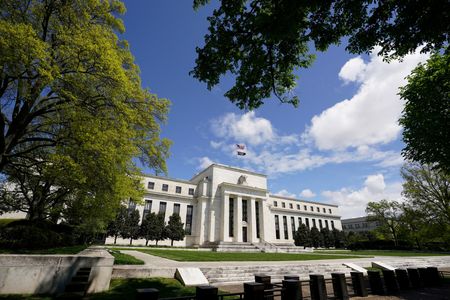

On Wednesday, the Federal Reserve is scheduled to release detailed notes from its first policy meeting under new Chairman Kevin Warsh — a document that could shed new light on what Warsh himself described as a “family fight” that played out over two days last month as officials debated the direction of interest rates.
One of the key questions surrounding the release of the minutes from the June 16-17 Federal Open Market Committee meeting is whether Warsh will reshape them the same way he overhauled the committee’s post-meeting statement — a document that was stripped of forward-looking guidance and trimmed down in its description of current economic conditions.
Fed policymakers voted unanimously at that meeting to keep the central bank’s benchmark interest rate unchanged, holding it in a range of 3.50% to 3.75%. Updated economic forecasts submitted by all members except Warsh revealed a committee that has moved away from the rate cuts it previously anticipated. Officials are now split between those who believe keeping rates where they are is the right move for the rest of the year and those who think at least one rate increase may be necessary, given that inflation has been pushed higher by the U.S.-Israeli war with Iran.
Inflation is currently running at approximately twice the Fed’s 2% target. Meanwhile, the labor market appears to have leveled off after showing signs of weakness through much of last year.
Warsh was chosen for the role by President Donald Trump, who has pushed for lower interest rates and publicly criticized the previous Fed chair for not cutting them quickly enough. However, Warsh took a notably hawkish stance at his first press conference, repeatedly stressing the Fed’s responsibility to bring inflation under control while giving little attention to its goal of maximizing employment. Financial markets now widely anticipate at least one rate increase before the year is out.
Since taking the helm, Warsh has pledged sweeping changes at the central bank. Following the June meeting, he announced the creation of five task forces charged with reviewing how the Fed operates — examining everything from how it communicates with the public to what economic data it relies on to gauge the health of the economy.
Given the changes already made to the post-meeting statement, the minutes could carry even more weight than usual for investors and analysts trying to understand where the Fed is headed — unless Warsh decides to limit how much detail about internal deliberations and economic data is made available.
Traditionally, the minutes describe the range of views expressed by officials and give a general sense of how many agreed or disagreed on key points. That kind of information can signal how likely future rate moves might be, or even lay the groundwork for eventual policy changes — which is precisely the type of forward guidance Warsh has said he wants to move away from.
That reality has led some analysts to predict the minutes will be shorter and more bare-bones than in the past. “Warsh explicitly avoided policy guidance in the statement and press conference, so it seems unlikely that he would permit such guidance via the minutes,” said Steve Englander, head of North American macro strategy at Standard Chartered. “His image of a ‘family fight’ to characterize vigorous policy discussion may also carry the connotation of secrecy that is often associated with family fights.”