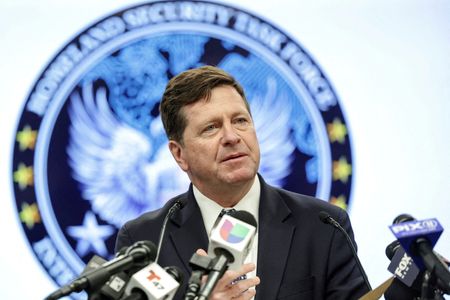

The Senate Select Committee on Intelligence has officially set July 15 as the date for the confirmation hearing of Jay Clayton, President Donald Trump’s nominee to serve as the next U.S. director of national intelligence, according to a committee notice.
Trump nominated Clayton last month to take the helm of the country’s 18 intelligence agencies. The nomination came after significant political pushback over the loyalist Trump had chosen to temporarily fill the position.
That temporary appointee — Federal Housing Finance Agency director Bill Pulte — had no background in national security, which sparked concern even among some Republican lawmakers who feared he could be used to “weaponize” intelligence against those Trump views as political opponents.
At the beginning of July, Trump told reporters that a hearing for Clayton’s confirmation would take place within two weeks — a timeline that aligns with the July 15 date now confirmed by the committee.
The path to this hearing has not been straightforward. In mid-June, Trump called for an abrupt delay of the confirmation process, using it as leverage to pressure Congress into passing the Safeguard American Voter Eligibility Act — commonly referred to as the SAVE Act — a strict voter identification measure.
Trump, who won a second presidential term in the 2024 election after losing in 2020, has repeatedly and falsely claimed that widespread fraud has tainted U.S. elections. He has continued pushing those debunked claims as November’s midterm elections approach, as part of his effort to get the SAVE Act through Congress.
Trump has argued that passing the legislation would give fellow Republicans a “guaranteed” victory in November as the party works to hold onto its congressional majority.
Since returning to the White House earlier last year, Trump has moved aggressively to reshape federal agencies and institutions, placing loyalists in key roles and taking a hard line against internal dissent.