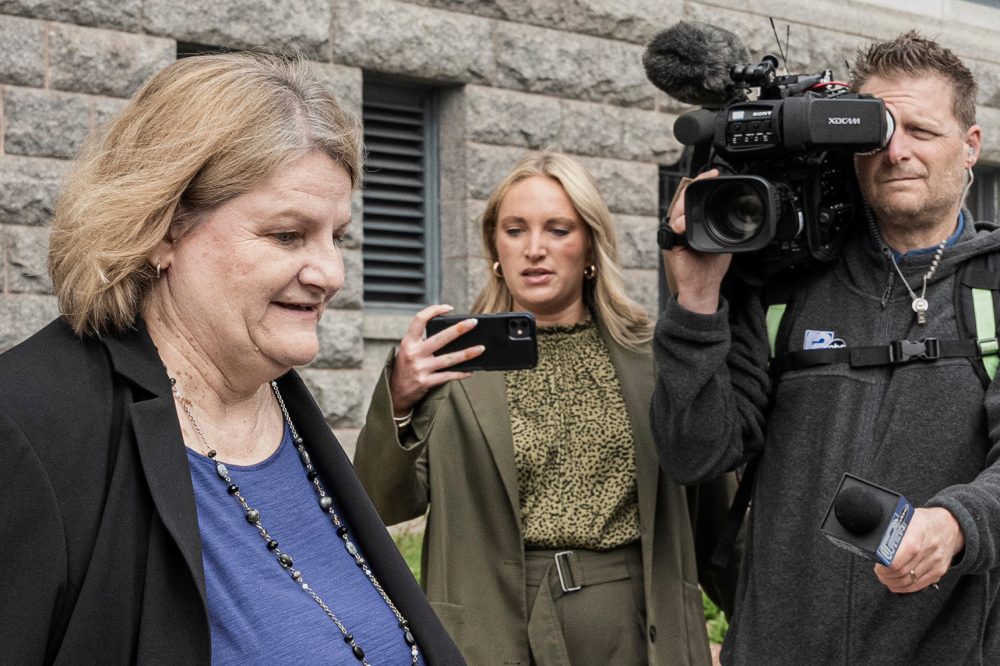

A former Wisconsin judge convicted of a felony for helping an immigrant slip past federal officers is scheduled to learn her fate Wednesday when a federal judge hands down her sentence in a case that became a national symbol of the clash between the courts and President Donald Trump’s immigration enforcement efforts.
Hannah Dugan, 67, could face up to five years behind bars after a jury found her guilty on December 19 of felony obstruction. She stepped down from her seat as a Milwaukee County circuit judge two weeks after the verdict, as Republican state lawmakers were pushing to have her removed through impeachment. She had served on the bench for nine years.
The Trump administration pursued the case against Dugan as part of the president’s aggressive immigration crackdown. Administration officials and Trump’s allies characterized Dugan as a judge who had gone beyond her role, while her defense team argued during the trial that the administration was using her as a target to send a message — in their words, to “crush her.”
Supporters of immigrant rights and other allies of Dugan contended the administration was using her prosecution to discourage judges from pushing back against Trump’s immigration policies. The case drew widespread national attention as a test of the tension between the judiciary and executive immigration enforcement.
Republican U.S. Rep. Tom Tiffany, a strong Trump supporter who is running for governor of Wisconsin, called for Dugan to be locked up in a post on social media following her conviction.
Dugan’s legal team declined to speak to reporters ahead of Wednesday’s sentencing. Although Dugan did not take the stand during her trial, her attorneys said she plans to address the court directly Wednesday — marking her first public statement on the case in over a year.
Her defense argued that her status as a sitting judge shielded her from prosecution. U.S. District Judge Lynn Adelman, who will impose the sentence, has previously turned down efforts by Dugan’s team to throw out her obstruction conviction.
In a sentencing memo filed last week, prosecutors contended that Dugan broke her oath of office and endangered both law enforcement officers and the public.
“Judges are entrusted with tremendous discretion, but there is a line they cannot cross,” wrote Executive Assistant U.S. Attorney Richard Frohling. “The defendant crossed that line.”
Dugan’s attorneys countered that she has already suffered significant consequences, including giving up her judgeship and enduring threats of violence. They argued in their own sentencing memo that she should serve no additional jail time beyond the portion of a single day she has already spent in federal custody.
Federal sentencing guidelines outlined in the presentence report call for a term of 15 to 21 months in prison, though the judge has discretion to depart from those guidelines. Prosecutors noted that the average sentence in obstruction cases is 16 months but stopped short of recommending a specific term.
“This was a serious offense, and it warrants a correspondingly serious sentence,” Frohling wrote.
Regardless of the sentence imposed, Dugan’s attorneys have indicated they intend to appeal.
The case marked the first time a Wisconsin state judge has gone to trial on charges of obstructing immigration agents. Jurors found her not guilty on a separate misdemeanor charge of concealing a person to prevent their arrest.
The events leading to the charges unfolded on April 18, 2025, when immigration officers arrived at the Milwaukee County courthouse. They had learned that 31-year-old Eduardo Flores-Ruiz, who had allegedly reentered the country illegally, was due to appear before Dugan for a hearing related to a state battery case.
Dugan confronted the agents in the hallway outside her courtroom and directed them to the chief judge’s office, telling them their administrative warrant did not give them sufficient authority to take Flores-Ruiz into custody.
Once the agents stepped away, Dugan escorted Flores-Ruiz and his attorney out through a private door typically used by jurors. Officers spotted Flores-Ruiz in a corridor, pursued him outside the building, and arrested him following a foot chase. One week later, FBI agents arrested Dugan inside the courthouse and walked her out in handcuffs.
Flores-Ruiz was deported in November.