
Asian allies of the United States are growing increasingly concerned that ongoing military operations against Iran could weaken America’s ability to counter China’s expanding influence in the Pacific region.
During a private meeting Monday at ruling party headquarters in Tokyo, Japanese legislators questioned government officials about various aspects of the Iran crisis, including evacuation procedures and energy supplies. However, one particularly pressing concern emerged from the closed-door session, according to a politician who was present: what would happen to regional security if the U.S. redirected military assets from Asia to the Middle East?
This worry is especially acute for nations like Japan and South Korea, which host significant American military installations designed to counter both Chinese military expansion and threats from nuclear-armed North Korea. Democratic Taiwan, which Beijing claims as its territory and which receives U.S. military support, faces similar concerns.
Chen Kuan-ting, a Taiwanese ruling party legislator who serves on parliament’s foreign affairs and defense committee, expressed hope for a swift resolution. “We hope this operation is fast, limited, and that resources can be promptly shifted back to Asia,” Chen stated.
Chen warned that an extended conflict could undermine “stability and peace in the Indo-Pacific” and suggested Taiwan should brace for Beijing to increase “coercion” while America’s attention remains focused elsewhere.
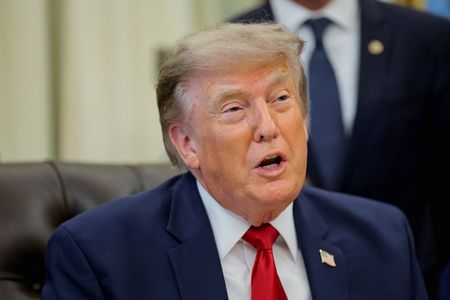
President Trump has indicated that U.S. Middle East operations might continue for four to five weeks, though they could extend much longer. He plans to meet with Chinese President Xi Jinping at the end of March, although Beijing has not yet confirmed this meeting.
Chinese foreign ministry spokesperson Mao Ning responded Tuesday by calling Taiwan an internal Chinese matter and stating Beijing “firmly opposes the use of force to infringe on the sovereignty and security of other countries.”
The U.S. State and Defense Departments have not yet responded to requests for comment on this report.
According to the Japanese politician who attended Monday’s meeting, a senior foreign ministry official indicated that Tokyo had requested guarantees from Washington that it would not relocate U.S. military resources from the region.
Current naval deployment statistics highlight the challenge: approximately 40% of operational U.S. Navy vessels are now positioned near the Middle East, according to a recent Center for Strategic and International Studies analysis. This includes the aircraft carrier Abraham Lincoln and at least six missile destroyers that were previously based at Pacific locations in California, Hawaii, and Japan, as reported by the U.S. Naval Institute.
Meanwhile, the George Washington, currently the sole U.S. carrier assigned to Asia, remains in maintenance at its Yokosuka base in Japan.
Bryan Clark, a former U.S. defense official who specializes in naval operations at the Hudson Institute, described the situation bluntly: “The U.S. Navy is stretched thin.” He added that if the conflict continues, there’s a genuine possibility America might reduce its Pacific naval presence to strengthen Iran operations, noting that “the fleet is not sufficient to keep a steady presence in every theatre.”
The Iran operations are also consuming U.S. ammunition stockpiles, a problem defense experts have long highlighted. While the Pentagon has requested increased production from defense contractors, ramping up manufacturing could require several years.
This munitions shortage particularly concerns U.S. officials because maintaining adequate weapons reserves in the Indo-Pacific region helps discourage Chinese military action against Taiwan, according to a U.S. official who requested anonymity due to the sensitive nature of the topic.
Japan has already experienced delays in receiving hundreds of Tomahawk missiles ordered from the United States and may face further postponements, said Jan van Tol, a senior fellow at the Center for Strategic and Budgetary Assessments.
The timing is particularly striking given that Washington released a new security strategy just three months ago, identifying the Indo-Pacific as the primary “geopolitical battleground” and making Taiwan conflict deterrence a top priority.
Since then, Trump has conducted a bold military operation to capture Venezuela’s leader, threatened to annex Greenland, and partnered with Israel in launching aerial attacks against Iran.
While Asian allies worry about America’s shifting focus, some analysts suggest Beijing may not benefit immediately. Trump’s actions against Venezuela and Iran have weakened two Chinese allies that provided Beijing with inexpensive oil, supporting China’s economy.
Some experts theorize that Trump’s military moves might be part of a broader strategy to eventually concentrate on containing China. However, the longer America remains engaged in Middle Eastern conflicts, the more opportunities Beijing might find to advance its interests.
“The grand strategy is supposed to be ‘contain Iran in the Middle East, then shift resources toward dealing with China,’” explained a Japanese ruling party lawmaker who spoke anonymously. “But the question is whether there will be enough resources left to shift.”
Jennifer Parker, a former Royal Australian Navy warfare officer and non-resident fellow at Sydney’s Lowy Institute, noted that China has previously capitalized on periods when U.S. attention was directed elsewhere. She pointed to Beijing’s rapid militarization of South China Sea islands while America was focused on the Afghanistan war.
“Beijing will be watching closely,” Parker observed.