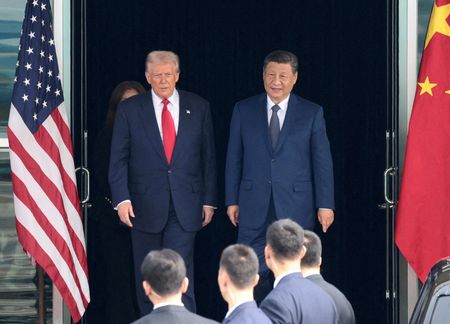

WASHINGTON/BEIJING – Recent American military operations targeting Iran have placed Chinese President Xi Jinping in a difficult position as he prepares for a scheduled summit with President Donald Trump, marking the second time in two months that Washington has taken military action against one of China’s key allies.
Trump plans to travel to Beijing by the end of March, following the January capture of Venezuelan leader Nicolas Maduro during a dangerous operation in Caracas and the ongoing U.S.-Israeli air campaign that resulted in the death of Iran’s Supreme Leader Ayatollah Ali Khamenei on Saturday. Both nations have served as significant oil providers for China.
The upcoming meeting, which Trump’s administration says will center on trade discussions, remains uncertain in both its outcome and whether it will proceed as planned.
A week ago, Trump appeared to be heading into the Beijing talks from a position of weakness after the Supreme Court struck down several of his tariff policies. However, the tables have turned, with Xi now appearing unsteady and struggling to formulate a strong response to America’s largest military engagement since the Iraq conflict.
Although Beijing has denounced the U.S.-led operations as “unacceptable” and urged restraint, analysts note that China’s cautious reaction demonstrates both its limited capacity to affect American military decisions and the transactional character of its diplomatic relationships.
Former U.S. ambassador to Beijing Nicholas Burns, who served under President Joe Biden, wrote on X that China is “proving to be a feckless friend for its authoritarian allies.”
Xi must now navigate the uncomfortable choice between welcoming Trump on the international stage or withdrawing from the proposed March 31 to April 2 summit. Chinese officials have not yet confirmed these meeting dates.
If Xi chooses to move forward, he may be calculating that Washington will ultimately suffer if it becomes mired in a prolonged Middle Eastern conflict.
Trump has indicated the Iranian operation could continue for approximately four weeks, potentially extending nearly to his China visit.
China’s Washington embassy did not respond to inquiries about whether the Iranian situation has affected plans to receive Trump. When asked about how the Iran strikes might influence discussions with Xi, a White House representative said Trump was “taking decisive action to eliminate major national security threats,” without referencing China specifically.
CHINA FACES UNIQUE VULNERABILITIES
The U.S. military campaign presents both immediate and symbolic risks for China.
As the globe’s top purchaser of Iranian petroleum, China imported 13.4% of its total seaborne oil from Iran last year. This creates exceptional vulnerability to supply interruptions as the conflict develops, especially if the Strait of Hormuz – the planet’s most critical oil shipping lane – becomes blocked.
Although China has options to diversify its oil sources, analysts explain that losing Iranian supplies in the near term would create substantial price pressures, squeezing profit margins for the manufacturing sector that forms the backbone of China’s economy.
The American assault on Iran also demonstrates to Beijing and its partners that U.S. military forces can operate effectively not just in their immediate region, but globally.
“The strikes on Iran and the potential regime change will severely impact China’s interests,” stated Zhao Minghao, an international relations specialist at Shanghai’s Fudan University.
Zhao added: “China is assessing the deeper intentions behind U.S. actions in Venezuela and Iran, as the U.S. may increase pressure on China by controlling the international energy market.”
The White House was certainly aware of these implications when it announced Trump’s China trip dates while preparing for the Iranian attack. A source with knowledge of U.S.-China communications told Reuters that the White House continues to wait for an official invitation from Chinese leadership.
BANKING ON RESTRAINED CHINESE REACTION
Currently, the United States is wagering that its Iranian operations will not provoke any Chinese military intervention.
A U.S. official informed Reuters that there is no expectation of China providing material assistance to Iran during American operations, nor that continued U.S. Middle East involvement would encourage Beijing to act more aggressively in the short term in the Indo-Pacific region, where China has undertaken an unprecedented military expansion.
The primary American worry is that challenges in quickly restocking ammunition supplies could diminish “medium-term deterrence” against potential Chinese military moves toward Taiwan, the official explained.
Limited in its capacity to challenge America’s global military presence, China will likely step back and allow the United States to bear responsibility for any resulting Middle Eastern instability, reinforcing Beijing’s message that Washington acts recklessly and creates instability, according to analysts.
Zha Daojiong, an energy security expert at China’s Peking University, told Reuters that Chinese leadership would not feel obligated to assist Iran in the conflict and would reject the “purely rhetorical construction” in Western discourse suggesting an alliance with Iran.
“The direct parties to the conflict make their own bed and get to sleep in it,” Zha stated.