
Middle Eastern warfare has reached a critical juncture, with President Donald Trump indicating American forces possess “the capability to go far longer” than the originally estimated four-to-five week duration for military action against Iran.
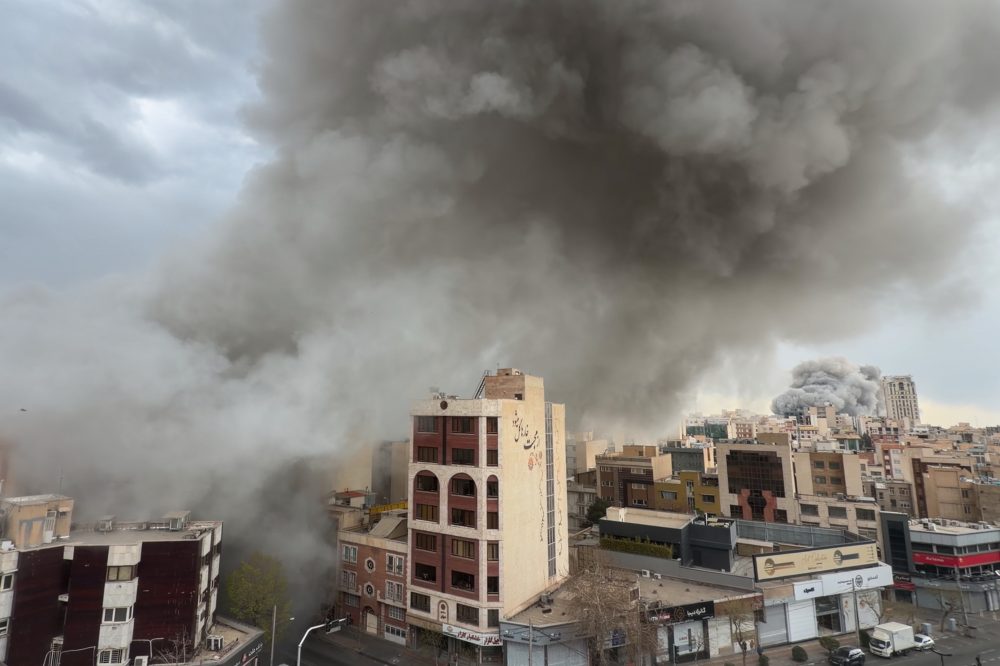
Throughout Tehran, explosive sounds echoed across the city during overnight hours and into Tuesday morning, as American and Israeli forces have maintained their assault on Iran following the death of Supreme Leader Ayatollah Ali Khamenei this past Saturday.
Iranian forces and their regional partners have retaliated with strikes against Israeli territory, Gulf nations in the vicinity, and infrastructure vital to global oil and gas supplies.
The ferocity of the combat and absence of a clear withdrawal strategy have created conditions for an extended confrontation with widespread ramifications. American and Israeli officials have offered inconsistent explanations regarding the conflict’s goals and potential resolution.
During a Monday evening appearance on Fox News Channel’s “Hannity” program, Israeli Prime Minister Benjamin Netanyahu justified the military action, claiming Iran was constructing “new sites, new places” that would render “their ballistic missile program and their atomic bomb program immune within months,” though he offered no supporting evidence.
Associated Press examination of satellite imagery revealed minimal operations at two Iranian nuclear facilities prior to hostilities, with experts suggesting Tehran was likely evaluating damage from American June strikes and attempting to recover remaining materials.
Recent developments include:
Iran’s capital experienced continuous explosive sounds throughout nighttime hours extending into early Tuesday morning.
Local residents reported observing aircraft flying overhead during the attacks.
The specific targets of these strikes remained unclear in immediate reports.
Iranian state broadcasting aired a Revolutionary Guard statement early Tuesday, announcing missile and drone strikes against a Bahraini air installation.
Israeli military operations struck Lebanon’s capital city Tuesday morning.
Israeli defense forces stated they were attacking “Hezbollah command centers and weapons storage facilities in Beirut.”
Hezbollah responded by launching drone attacks against an Israeli airfield.
Israeli military officials reported successfully intercepting two incoming drones.
Japan has instructed its shipping companies to keep vessels away from Persian Gulf waters to protect crew safety.
Chief Cabinet Secretary Minoru Kihara announced Tuesday that the Transport Ministry had contacted the Japanese Shipowners’ Association, urging maximum protection for personnel in the region.
Kihara stated that ships currently in Gulf waters should anchor in secure locations.
Monday saw Japanese Foreign Minister Toshimitsu Motegi meeting with Iranian ambassador Peiman Seadat, reiterating Japan’s position that Iran must cease attacks on neighboring nations and other destabilizing activities.
Motegi emphasized the critical importance of maintaining security in the Strait of Hormuz for Japan’s energy needs.
Iran’s Foreign Minister Abbas Araghchi attempted to shift blame to the United States early Tuesday, characterizing American involvement as entering “a war of choice on behalf of Israel.”
Following Trump’s call for Iranians to overthrow their government, Araghchi made a similar appeal to American citizens.
“Shedding of both American and Iranian blood is thus on Israel Firsters,” Araghchi posted on X. “American people deserve better and should take back their country.”