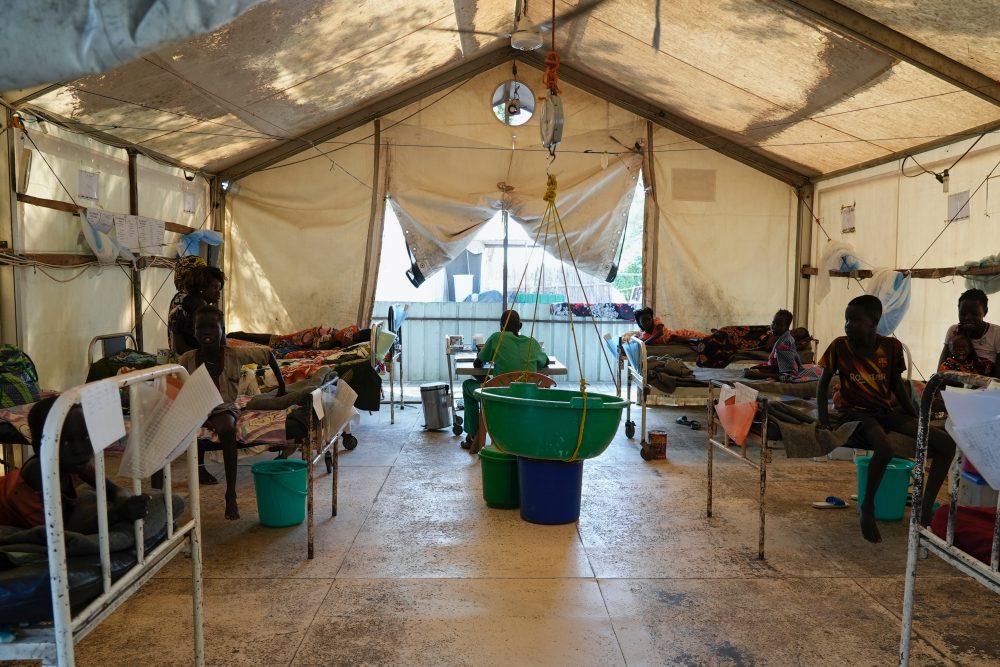

NAIROBI, Kenya — Twenty-six humanitarian medical workers with Doctors Without Borders have been missing for a month following violent attacks on two medical facilities in South Sudan, the international medical organization announced.
The medical charity, which operates under the French acronym MSF, reported that government forces bombed their hospital facility in Lankien on February 3rd, while unidentified attackers raided their medical center in Pieri the same day. Both locations are situated in Jonglei State, positioned northeast of South Sudan’s capital city Juba, in areas controlled by opposition forces.
Medical personnel at both locations evacuated alongside local residents into remote countryside regions where armed conflicts and aerial attacks continue. The violence has forced an estimated 280,000 people from their homes since December.
In a Monday statement, MSF revealed that “26 of 291 of our colleagues working in Lankien and Pieri remain unaccounted for.”
“We have lost contact with them amid ongoing insecurity,” the organization stated.
The humanitarian group indicated that communication difficulties may stem from poor network coverage throughout much of the region. Medical staff who have been reached reported “destruction, violence and extreme hardships.”
Military confrontations intensified dramatically in December when opposition fighters seized multiple government positions across north-central Jonglei. Government forces launched a January counterattack that regained most previously lost territory.
Civilians who fled to Akobo, an opposition-controlled community near Ethiopia’s border, recounted brutal violence committed by government troops. Many survivors reported going without food or water during multi-day journeys to reach safe areas.
The February assaults on MSF medical centers represent part of increased violence targeting humanitarian personnel, equipment and facilities, according to aid organizations. MSF facilities have suffered 10 separate attacks within the past year.
“This violence has taken an unbearable toll not only on health care services, but on the very people who kept them running,” stated Yashovardhan, MSF’s mission director in South Sudan, who uses only one name.
“Medical workers must never be targets,” he emphasized. “We are deeply concerned about what has happened to our colleagues and the communities we serve.”