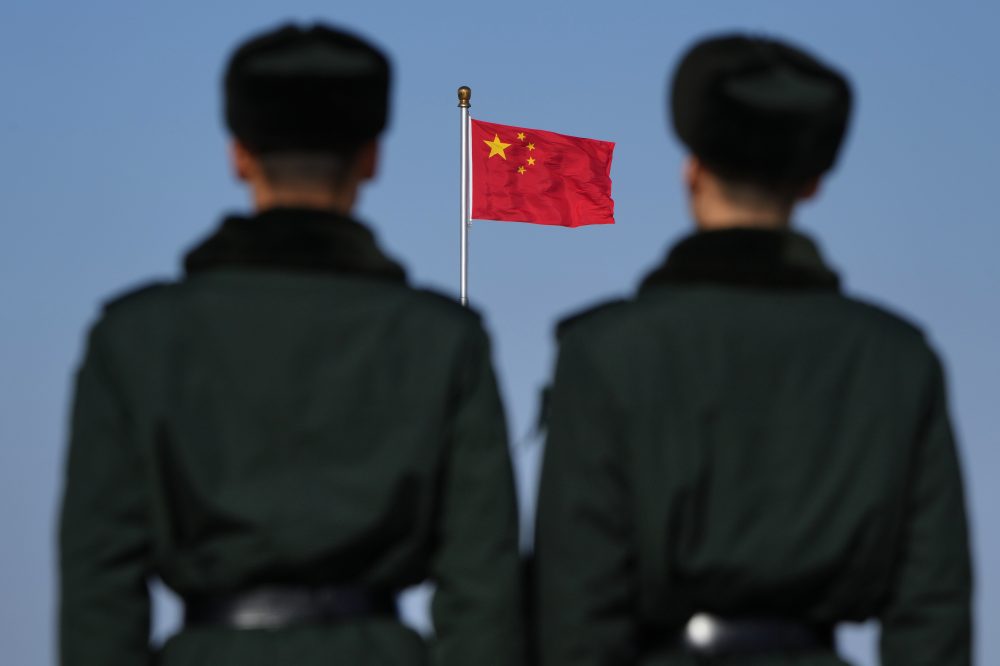

BEIJING (AP) — Following the U.S. and Israeli military strikes against Iran, Beijing took several hours before issuing its initial official statement. Chinese officials expressed being “highly concerned” and urged an immediate end to military actions while pushing for renewed diplomatic discussions.
The following day, China’s Foreign Minister Wang Yi denounced the attacks as unacceptable and reiterated calls for increased dialogue.
Beijing showed no signs of direct military involvement — though such action would be unrealistic. Consistent with its approach to other recent conflicts, including previous Iranian attacks, China has criticized military force while staying uninvolved, prioritizing its strategic long-term goals.
Among those priorities is an eagerly awaited visit from U.S. President Donald Trump to Beijing, scheduled for approximately early April.
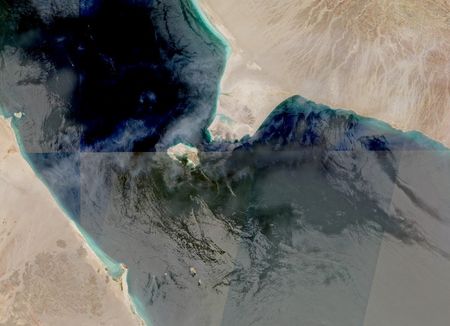
While China’s military capabilities have expanded significantly and the nation has participated in joint exercises with Iran and established a military installation in Djibouti, East Africa in 2017, Beijing’s primary military focus remains protecting Asian interests, particularly regarding Taiwan and the South China Sea.
China has engaged in Middle Eastern diplomacy when opportunities arise, notably facilitating improved relations between Iran and Saudi Arabia in 2023. However, Beijing views America’s military campaigns in Afghanistan and Iraq as warnings to avoid similar entanglements, according to William Yang, an International Crisis Group analyst.
“China is reluctant to project military power beyond its immediate periphery and it is also unwilling to play the role of security guarantor in unstable regions like the Middle East,” he said.
Similarly, Beijing has offered diplomatic and economic assistance to Russia and Venezuela while avoiding military involvement in Ukraine or Latin America.
China’s sideline position demonstrates the boundaries of its global political influence, according to Craig Singleton, a senior China fellow at the Foundation for Defense of Democracies, a Washington research organization.
“Beijing’s response has been predictably restrained, underscoring China’s limited ability to shape events once hard power is in motion,” he said. “Beijing can signal unease; however, it cannot meaningfully deter or influence U.S.-Israeli military action.”
China’s displeasure with the Iranian strikes is unlikely to derail U.S. relations or disrupt plans for Trump’s meeting with Chinese President Xi Jinping next month, experts believe.
For Chinese leadership, the American relationship holds far greater importance than Iranian ties across multiple areas, including trade, economics, and Taiwan policy.
While Beijing may engage in verbal disputes with Washington regarding Iran, the risks of creating additional conflict with Trump exceed any potential benefits, said George Chen, a partner at The Asia Group.
“U.S.-China relations are already complicated enough for President Trump and Xi to handle,” he said. Adding Iran to the mix “won’t be something that both sides are keen to do.”
Nevertheless, Beijing might delay Trump’s visit, he noted.
As Iran’s largest oil customer, China prioritizes energy security and has developed backup sources. The primary concerns involve rising fuel costs and potentially losing access to oil and natural gas from the broader Middle Eastern region.
China purchased approximately 1.4 million barrels daily — representing 13% of China’s total maritime oil imports — from Iran last year, data company Kpler reported. However, the firm calculates that sufficient oil is currently being shipped to sustain China for another four to five months. This timeframe would allow Chinese independent refineries to adapt and find alternatives, with discounted Russian oil being their main option, said Muyu Xu, a senior Kpler analyst.
China has invested years in supply diversification and reserve building, Singleton noted. “The loss of Iranian oil appears marginal, not material, at least in the short-term,” he said.
Iran’s potential closure of the Strait of Hormuz — the narrow Persian Gulf entrance — poses greater concern, as do possible attacks on Gulf state liquefied natural gas facilities.
QatarEnergy, a significant supplier, suspended liquefied natural gas production Monday following facility attacks.
China is unlikely to provide weapons to Iran for fighting the U.S. for multiple reasons, analysts indicate.
“Tangible military aid, if any, would be limited to existing long-term defense trade arrangements rather than rapid battlefield support, and it would be constrained by Beijing’s interest in avoiding direct confrontation with the U.S. and its allies,” said Muhammad Zulfikar Rakhmat, a researcher at Indonesia’s Center of Economic and Law Studies.
China has condemned American arms supplies to Ukraine, claiming they extend the conflict.
Iran’s missile capabilities rely on Chinese technology, said James M. Dorsey, an adjunct senior fellow at Singapore’s Nanyang Technological University. However, he predicted China would choose caution over selling missiles to Iran’s military.
“What China wants is this to end,” he said.