
Travelers trapped in Middle Eastern airports are making the best of a dire situation, sporting matching counterfeit athletic wear purchased from local shops and exchanging advice about finding basic necessities like clean underwear.
“It’s our uniform,” explained Erika Macikova, a 49-year-old winemaker from Slovakia who found herself stuck in Doha while returning from a wellness retreat in Sri Lanka. With her luggage locked away at the airport, she was relocated to a hotel with hundreds of other passengers and began hunting down open stores, then sharing their locations with fellow stranded travelers.
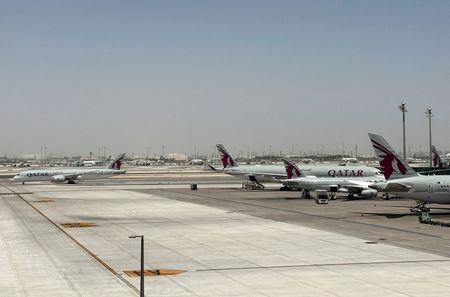
This marks the third consecutive day that tens of thousands of passengers throughout the Middle East have remained in travel limbo, as growing tensions between the United States, Israel and Iran have caused worldwide flight disruptions and shuttered key airports, including Dubai – the planet’s busiest international travel hub.
The situation represents the most significant disruption to worldwide aviation since the COVID-19 pandemic.
Most affected travelers, including Macikova, were simply making connecting flights through the region. Dubai processes over 1,000 daily flights, and together with neighboring Doha and Abu Dhabi, serves as a critical junction for east-west aviation, channeling long-distance flights between Europe and Asia through precisely timed connections.
The crisis extends well beyond Middle Eastern borders, with tens of thousands of passengers stuck in locations ranging from Bali to Kathmandu to Frankfurt.
According to the UAE’s aviation authority, approximately 20,200 travelers received assistance on Saturday alone. Flight tracking data reveals that no fewer than 4,000 flights were canceled over the three-day period.
In Dubai, James Gaskin spent Monday morning cleaning his undergarments and collection of decorative socks in his hotel bathroom sink. The 53-year-old purchasing manager from northern England had already depleted his supply of clean clothing during a business trip to India when his connecting flight to Britain was canceled. He joined hundreds of other passengers at a nearby hotel.
Gaskin, like many others, said he had minimal understanding of the unfolding situation when he arrived at Dubai airport.
“A lady came to the gate and just stood on a chair and made an announcement that everyone’s got to leave the airport. All very calm and orderly,” he recalled. “In a British way, I did six hours of queuing without any real drama.”
However, the luggage area became chaotic, he noted, as travelers frantically searched baggage carousels for their belongings.
“Even though it was pandemonium, I was pretty relaxed,” he said.
But then “there were quite a few bangs, the airport got hit,” he continued. “That brought it home.”
“The general feeling is, the longer it goes on, the more edgy people are getting.”
Throughout hotels across the region, strangers are exchanging information about locating laundry facilities, navigating airline customer service, retrieving baggage, and whether it’s practical to combine resources and attempt overland departure.
They congregate in hotel common areas for games or sports viewing, venture to shopping centers for snacks, and have established WhatsApp communication groups.
Many are attempting to avoid dwelling on their circumstances, despite overhead explosions that remind them of their predicament.
Macikova was spending maximum time indoors at the hotel where she felt safest. She had buried herself in a romance book, while Gaskin struggled with boredom. Though his spouse had provided him access credentials for various streaming platforms, he hadn’t been motivated to use them.
British companions Julie Hardy and Francis McKay, who had completed a two-week southern India tour, were accommodated at the same single-story hotel near the airport.
On Sunday, they hired a taxi to visit a nearby shopping center to purchase medicine, cheese and crackers, and enjoy a meal. They described it as enjoyable, though the evenings prove more challenging.
Saturday evening, two alerts sounded on Hardy’s mobile device and she hurried to the hotel lobby wearing her nightgown, which nobody appeared to find unusual.
“I’m very reluctant to go to bed up here,” she explained. “I would rather be downstairs for as long as possible… I can’t relax, because I think something’s going to happen in the night and I’m going to have to get up quickly and evacuate.”
McKay also felt anxious and, though it seemed overly dramatic, questioned whether she would reunite with her family:
“It’s the unknown, and I’ve never been in a war zone.”