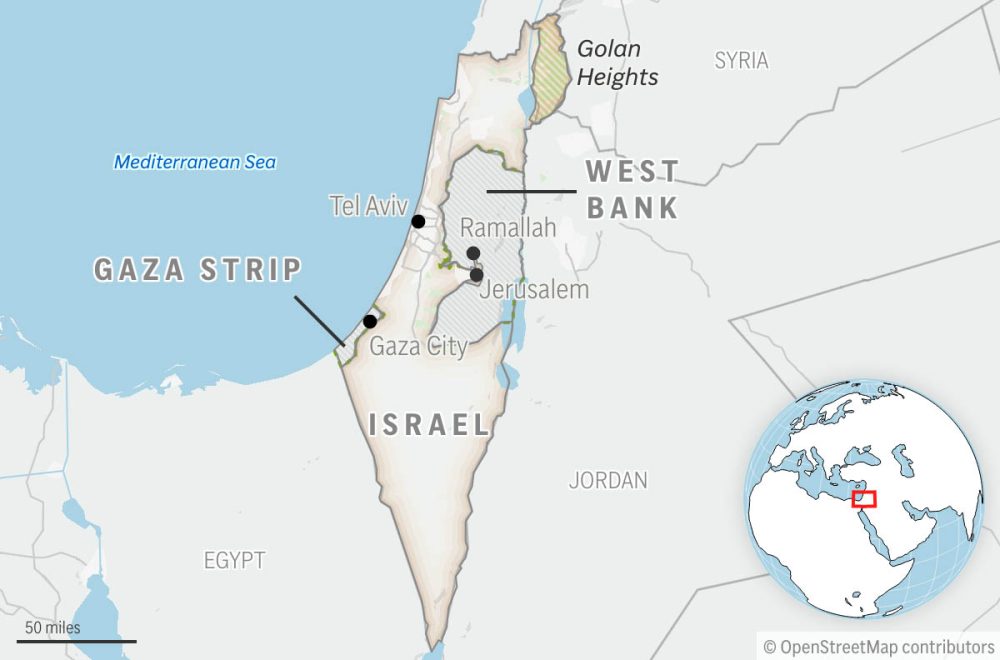

TEL AVIV, Israel (AP) — What typically brings vibrant street festivals and elaborate costume celebrations has moved underground this year, as Israeli families observed the Jewish holiday of Purim from the safety of reinforced bomb shelters while their nation remains at war with Iranian forces.
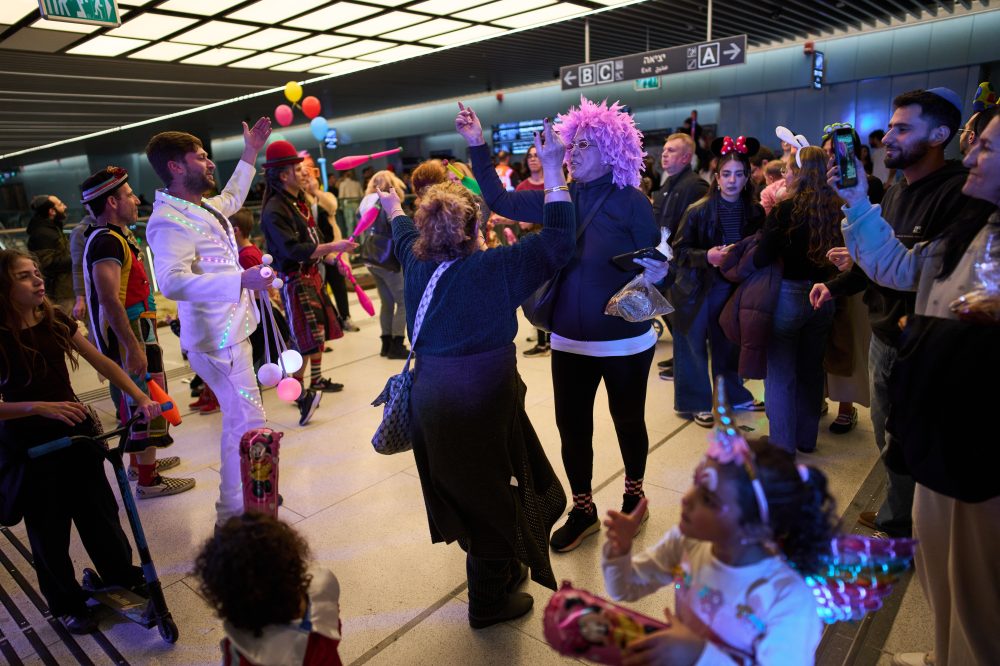
On Monday in Tel Aviv, residents dressed in glittering outfits, animal ears, swashbuckling attire, and colorful plumage gathered in a shopping center’s basement parking area that doubles as a protective shelter. They came together for the ceremonial Purim story reading, followed by live music and traditional dancing.
“It’s all about choosing happiness, choosing to be joyful, no matter what else is going on,” said Mariel Margulis, a Tel Aviv resident who had set up a tent in the parking garage and lived there for the past few days with her husband and 6-month old son. They dressed up as people having a bath, complete with bath robes, and their son, Amichai, as a rubber ducky, and created a bathtub play area for him next to their tent.
The ancient Purim narrative from the Book of Esther recounts how Haman, a royal advisor to King Ahashverosh, devised a scheme to eliminate all Jews throughout the empire. Queen Esther and her relative Mordechai ultimately prevented this genocide. These events unfolded in Shushan, located in ancient Persia—territory that encompasses present-day Iran.
“It feels biblical in proportions, what’s happening right now, and we’re doing the little bit we can, staying calm, staying joyful,” said Mariel. Nearby, Amichai slept through the loud “boos” from the crowd to drown out the name of Haman, the villain of the story, during a reading from the Book of Esther.
“It’s like the same plot of Purim with a different cast,” said Daniel Margulis, Mariel’s husband.
This cherished festival, embraced by observant and non-religious Jews alike, commenced Monday evening across most Jewish communities worldwide. In historically fortified cities like Jerusalem, the holiday begins one day later according to tradition.
During peaceful years, families in elaborate disguises fill city centers while children consume countless triangular pastries called hamantaschen. Custom dictates wearing costumes and consuming significant amounts of alcohol during the festivities.
Jerusalem typically sees performers positioned on balconies above busy streets, with neighborhood block parties continuing well into the night throughout the ancient stone walkways.
Organizers had scheduled large-scale celebrations this year following a two-year hiatus. Multiple municipalities had cancelled or reduced their Purim activities over the previous two years because of the Israel-Hamas conflict.
However, the recent military action by Israel and the United States against Iran on Saturday once again forced modifications to holiday plans.
“We came because the kids didn’t want to miss out on Purim, they were really excited to get dressed up,” said Elysa Rapoport, a Tel Aviv resident who works in investments. Her daughters dressed up as Barbie Cowgirl and Rumi from K-pop Demon Hunters.
With most traditional Purim events cancelled, the family carefully planned their route to ensure quick access to protective shelters along the way. Iranian rocket attacks have forced Israeli citizens to seek shelter repeatedly throughout both day and night hours.
“This just feels surreal,” Rapoport said, looking over the celebrations, as hundreds of people gathered and danced under the parking lot’s fluorescent lights. Nearby, people and their dogs who had moved into the shelter for the duration of the war lounged on air mattresses, scrolling through their phones.
“It’s not the most optimal conditions, we’re used to our synagogue, but we’re here together with all of the nation of Israel,” said Gabi Grinshtain, a 39-year-old environmental consultant. “These are important days, and the setting is less important.”