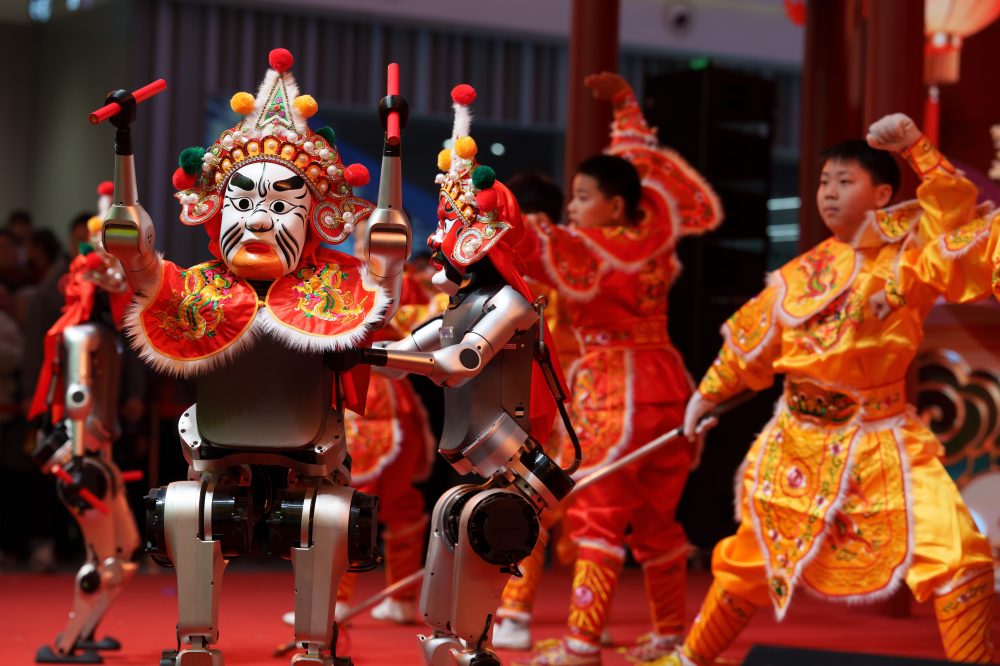

BEIJING — While China showcases impressive technological achievements including martial arts-performing robots and vehicles that park themselves, the nation’s economic modernization efforts are encountering significant obstacles as the property sector remains in decline, small enterprises face hardships, and young adults find employment increasingly scarce.
The contrast between President Xi Jinping’s vision of a high-technology, AI-powered future and the stark reality of decelerating economic expansion forms the setting for this week’s National People’s Congress gathering, China’s primarily ceremonial legislative body that convenes Thursday.
Approximately 3,000 representatives will travel to Beijing for the sessions, where senior officials will reveal China’s yearly economic growth objectives and legislators will approve a five-year policy roadmap extending through 2030.
“What we’ll see is the trade-off between whether it’s going to be industry and tech, or looking after domestic demand,” said Alexander Davey, an analyst at the Mercator Institute for China Studies. “These are the two priorities that are juggling for Xi Jinping right now.”
In Guangdong province’s southern region, households reduced major expenditures during February’s Lunar New Year celebration. Even traditional good-luck plants such as orchids, typically purchased as symbols of wealth and fortune, saw price reductions of up to 40% compared to the previous year.
This budget-conscious behavior has prompted small business operators to voice concerns about difficult economic conditions.
Chinese officials announced the country achieved “around 5%” economic expansion in 2025, though economists express skepticism regarding certain government statistics.
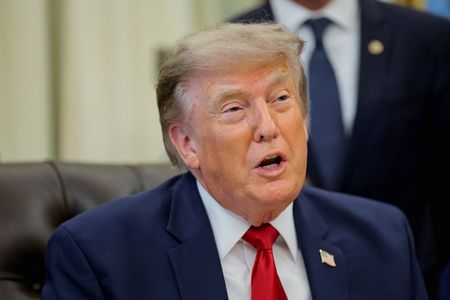
The moderately strong growth rate received support from robust industrial output as overseas sales increased, withstanding tariff increases imposed by U.S. President Donald Trump and additional trade disruptions.
“Hitting the 2025 growth target is hardly reassuring as the Chinese economy is losing growth momentum, with rising imbalances and enormous structural problems being papered over by a surge in export-driven growth,” Eswar Prasad, a professor of economics and trade policy at Cornell University, told The Associated Press in emailed comments.
China’s real estate sector downturn started multiple years ago, with fragmented recovery attempts showing only sporadic improvement. Numerous property companies failed to meet debt obligations as government officials restricted excessive lending practices. With home values declining 20% or more since 2021, market recovery remains distant.
The collapse of this major industry eliminated hundreds of thousands of positions, and with 12.7 million university graduates entering employment markets this year, over 16% of young Chinese remain jobless. Some are abandoning competitive pursuits entirely, choosing to “lie flat.”
Households whose primary wealth consists of property ownership have become hesitant about spending, undermining consumer demand and complicating long-term plans to transition the economy toward greater domestic consumption.
The congressional session may introduce new initiatives to strengthen social services and additional support measures, which economists describe as overdue and essential for sustained, stable growth.
Export dependency currently helps maintain China’s economic activity. The country generated a $1.2 trillion trade surplus in 2025, with overseas sales keeping manufacturing facilities operational. Despite ongoing U.S.-China trade tensions, shipments have increased to markets including Europe and Latin America, though trading partners are expressing resistance.
Under Xi’s leadership, China has emphasized developing cutting-edge technologies including artificial intelligence, robotics, semiconductors, electric vehicles, and clean energy. Extensive government backing has enabled companies to produce more EVs, televisions, solar panels, and other goods than China and its partners require.
“To achieve those goals, the government is going to have to continue to provide subsidies and preferential support for high-tech and strategic industries,” said Leah Fahy, a China economist at Capital Economics. “(That) will, in turn, continue to fuel overcapacity.”
The International Monetary Fund recently recommended China reduce extensive state subsidies and support for industries that numerous Western nations claim provide unfair competitive advantages over international competitors. Meanwhile, social welfare and other economic sectors remain underdeveloped.
The emphasis on what the governing Communist Party calls “high quality development” will likely persist under the 2026-2030 five-year plan that lawmakers are expected to approve during the congress.
Throughout recent decades, China’s evolution into a manufacturing powerhouse was supported by explosive construction of residential buildings, commercial structures, transportation networks, harbors, and rail systems. However, technology supply chains are more limited, generating fewer employment opportunities. The economic spillover effect is considerably weaker, according to Lynn Song, chief economist for Greater China at ING Bank.
“If anything, the more successful the so-called future industries become, the more they will draw resources away from the traditional sectors that still provide the bulk of employment and livelihoods for most people,” said Henry Gao, a professor of law at Singapore Management University.
The yearly congressional gathering presents an elaborate spectacle. Thousands of representatives occupy Beijing’s Great Hall of the People. Military musicians perform while delegates representing various ethnic communities attend wearing traditional attire.
Despite the ceremony, the meeting functions largely as political theater. The congress spans just one week, with nearly unanimous final-day voting that formalizes decisions previously made by party leadership. The event demonstrates unity while confirming established policies and direction.
This leadership has increasingly focused on Xi, who has concentrated authority since assuming control in 2012. Now 72, he ranks among modern China’s most influential leaders. Some observers believe Xi may follow Mao Zedong’s example, the revolutionary founder of communist China, and govern indefinitely.
Congressional reports contain numerous references to the party’s essential function, “with Comrade Xi Jinping at its core.”
Following his rise to power, Xi intensified existing anti-corruption efforts, compelling many officials to resign for investigation and prosecution, including senior military leadership.
Prior to the congress opening, the national legislature expelled nine military officers from membership, expanding a multi-year military cleanup. Last month, Gen. Zhang Youxia, the highest-ranking military official below Xi, was removed due to suspected disciplinary infractions.
Xi’s measures may diminish China’s military preparedness in the near term, but he is also ensuring the armed forces will demonstrate greater political loyalty over time, according to a Center for Strategic and International Studies analysis.
The anti-corruption campaigns have eliminated potential political opponents, and his firm control over power significantly reduces the likelihood that other officials will contest his vision of transforming China into a technologically self-reliant leader and 21st-century global superpower.