
United Nations officials announced Tuesday that roughly 30,000 Lebanese civilians have fled to emergency shelters as military confrontations between Israeli forces and Hezbollah militants intensified throughout the region this week.
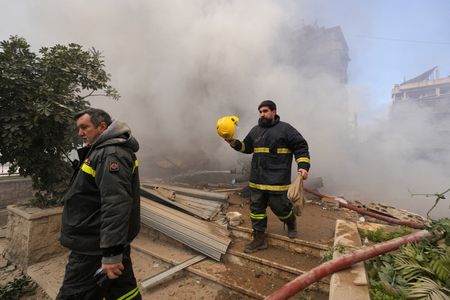
The escalation began when Hezbollah launched rocket attacks toward Israel on Sunday evening, responding to recent U.S. and Israeli military operations targeting Iran. Israeli military forces have since carried out widespread aerial bombardments across Lebanese territory starting Monday.
UNHCR spokesperson Babar Baloch provided details on the humanitarian crisis, stating that “Conservative estimates suggest that nearly 30,000 people were hosted and registered at collective shelters.”
Baloch further described the desperate conditions, explaining that “Many more slept in their cars on the side of roads or were still stuck in traffic jams.”
According to the U.N. World Food Programme, Lebanese authorities have established 21 emergency shelter facilities, though officials anticipate the number of displaced residents will continue climbing significantly.
The refugee crisis is compounded by Lebanon’s existing population challenges. The nation currently houses approximately 1.5 million Syrian refugees within its borders, representing the world’s highest refugee-to-population ratio among a total Lebanese population of roughly 4 million.
UNHCR officials noted an uptick in Syrian refugees departing Lebanon to return to Syria, prompting the agency to develop emergency response plans for potential additional population movements. The Syrian refugee population originated from the conflict that erupted in Syria in 2011, which ultimately forced more than 6 million Syrians to seek refuge primarily in Turkey, Lebanon, and Jordan.
UNICEF reported alarming casualties among Lebanese children, with seven deaths and 38 injuries recorded since Monday’s military operations began. The strikes have targeted civilian neighborhoods, putting young residents at immediate risk.
UNICEF spokesperson Ricardo Pires emphasized the expanding impact, stating that “Each new escalation expands the circle of harm. Residential areas, schools and critical infrastructure are being affected.”