
During his lengthy political tenure, Israeli Prime Minister Benjamin Netanyahu has built his nation’s foreign strategy on two fundamental principles: maintaining an unbreakable alliance with America and waging continuous diplomatic and secret warfare against Iran’s Islamic Republic leadership.
Currently, as Israel and America engage in combined military operations against Iranian leadership, these two strategic foundations may conflict with one another. By drawing the United States into what he considers Israel’s fight for survival against Iran, Netanyahu is making a risky bet that could strain this crucial relationship through a conflict with extensive ramifications.
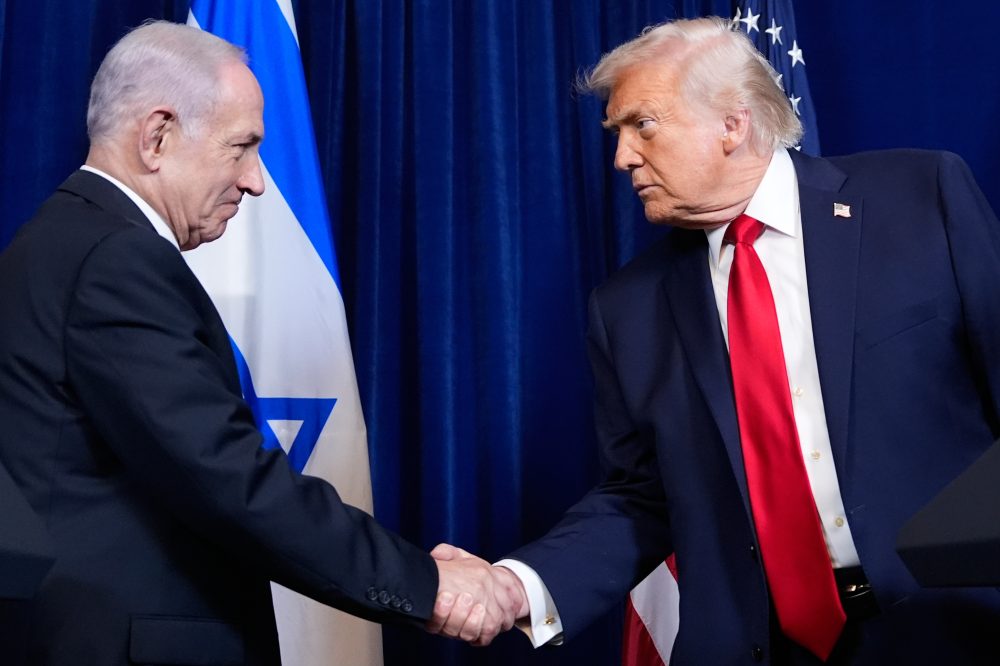
Certainly, convincing President Donald Trump to participate in this military campaign represents a major victory for Netanyahu and demonstrates the solid bond between these two leaders. Should they succeed, both nations could quickly achieve their mutual objective of removing Iran’s current government while avoiding a lengthy regional conflict.
However, should this military engagement become extended, the partnership between these allies may face significant challenges.
“A large part of the American public will view it as the Israeli tail wagging the American dog and that it is dragging the United States to a war in the Middle East that isn’t theirs,” said Ofer Shelah, a research fellow at the Institute for National Security Studies, a Tel Aviv, Israel-based think tank. The drop in public support that might unleash “will be very harmful for Israel in the medium and long term,” he said.
But, he added, in a nod to the Israeli leader’s political ambitions: “Netanyahu is not interested in the medium and long term.”
For Netanyahu, convincing Trump to launch coordinated strikes against Iran represents the pinnacle of his decades-long relationship with Washington. As Israel’s leader with the longest tenure, Netanyahu speaks perfect English following his American upbringing and has consistently presented himself as Israel’s connection to the United States.
While he frequently highlights his close connections with various American presidents and congressional members, Netanyahu has witnessed declining American public support for Israel over the last two years. Gallup surveys indicate that American Middle East sympathies have shifted significantly in favor of Palestinians.
This changing public opinion has been primarily influenced by Democratic voters. However, certain Republicans and even some Trump supporters have become increasingly vocal against the diplomatic and financial assistance America has maintained for Israel during the past two and a half years of multi-front warfare that began with Hamas’ October 7, 2023 assault. The horrific imagery from Gaza’s conflict has increased Israel’s global isolation.
Through this new Iranian conflict — the second within twelve months — Netanyahu confronts an adversary that he and numerous Israelis consider a threat to their existence, pointing to Iran’s backing of anti-Israeli militant groups throughout the region, its missile capabilities, and its nuclear ambitions. He has spearheaded the international campaign against Iran for most of his career.
Netanyahu said Sunday in a statement that the U.S. involvement “allows us to do what I have been hoping to do for 40 years — to deliver a crushing blow to the terror regime.” Netanyahu’s office did not immediately respond to an Associated Press request for comment.
Several days into this conflict, Israeli and American military forces appear to be operating in perfect coordination to attack targets — beginning with the opening strike that eliminated senior Iranian officials, including Supreme Leader Ayatollah Ali Khamenei, through subsequent operations that granted forces complete access to Iranian airspace.
Yet this conflict has already triggered consequences that may impact Americans domestically. At least six American service members have lost their lives. Regional transportation has been disrupted, stranding hundreds of thousands of passengers. Energy costs have increased, creating the possibility of higher gasoline prices for American consumers and elevated costs for additional products during a period when citizens are already struggling with rising living expenses.
Uncertainty surrounds the conflict’s trajectory and objectives. It remains unclear whether aerial campaigns alone can remove Iran’s leadership, who might replace that government, and what responsibilities Israel or America would assume in either scenario. Each day brings new potential complications.
“Many people will blame Israel if things go badly wrong,” wrote Nadav Eyal, a commentator with the Israeli Yediot Ahronoth daily newspaper. “Israel cannot afford to lose the American public’s support under any circumstances. That is more important than striking any individual military facility.”
Nevertheless, Aaron David Miller, who served as an adviser on Middle East issues to Democratic and Republican administrations over two decades, said that Netanyahu has little to lose from the war.
With elections scheduled for the fall, Netanyahu can use the war in Iran to divert attention away from the failures of the Oct. 7, 2023, attacks, the worst in Israel’s history. Instead, Netanyahu can set himself up as a brave wartime leader who fulfilled a pledge he has made much of his life to confront Iran.
He can say he did so with support from the American president, who Miller said can pull the breaks on the war whenever he pleases.
“If Trump feels as if it’s going south, he’ll find a way to de-escalate,” he said, “and his good friend Benjamin Netanyahu will follow.”