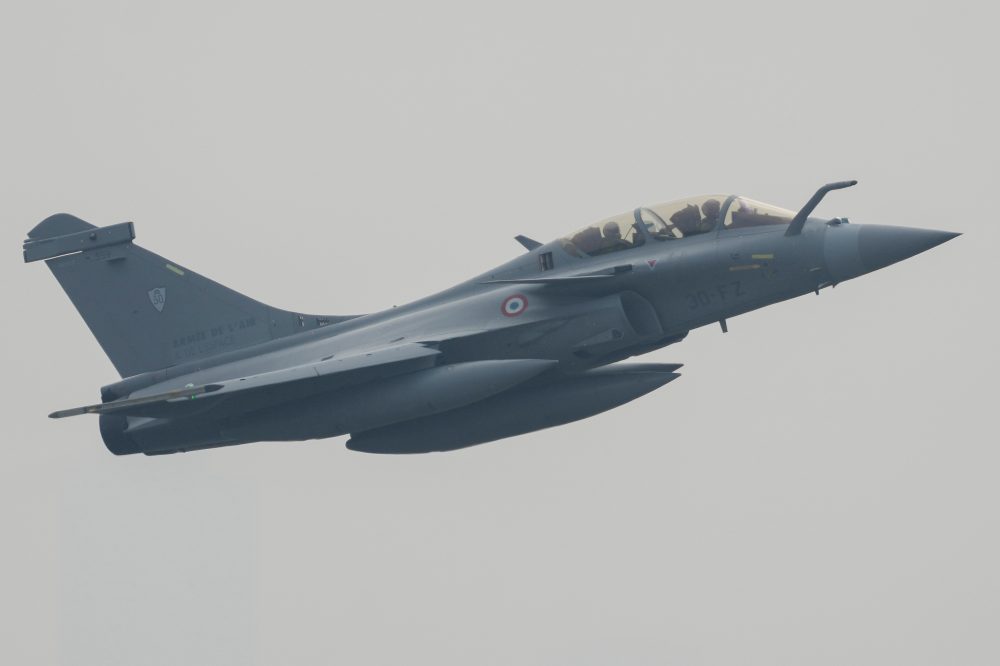
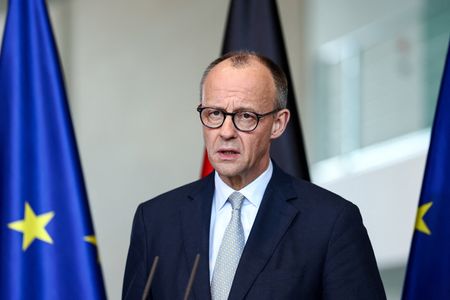
Two major European allies announced Monday they will deepen their collaboration on nuclear defense matters, creating a new coordination team to align their strategic approaches and military training exercises.
The partnership between France and Germany emerges as European nations grow increasingly worried about potential changes to America’s nuclear protection promises during Donald Trump’s presidency.
According to Monday’s joint announcement, the European collaboration seeks to boost the continent’s capabilities in managing conflicts before they reach nuclear levels, with particular focus on early detection systems, aerial defense networks, and long-range precision weaponry.
Both nations committed to launching concrete measures within the current year, including allowing German military personnel to participate in France’s nuclear training programs and conducting shared visits to critical defense installations.
The two countries emphasized that their enhanced cooperation would work alongside NATO’s existing nuclear deterrent framework rather than replacing it, while reaffirming their ongoing dependence on American deterrence capabilities and the independent nuclear arsenals maintained by France and Britain.
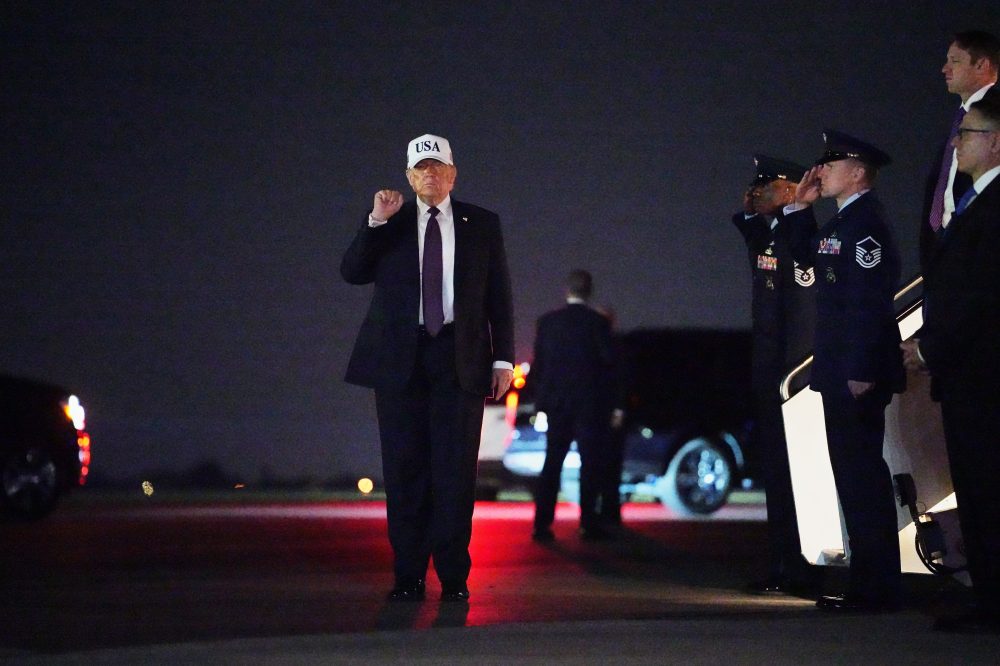
WASHINGTON – President Donald Trump indicated Monday that the United States plans to dramatically escalate its military actions against Iran, describing current operations as minimal compared to what lies ahead.
During an interview with CNN on Monday, Trump suggested that America’s military response has been restrained so far. “We haven’t even started hitting them hard. The big wave hasn’t even happened. The big one is coming soon,” the president stated.
The president’s remarks followed reports of the death of Iran’s Supreme Leader Ayatollah Ali Khamenei, creating questions about who will assume control of the Islamic Republic. Trump acknowledged the leadership vacuum, telling CNN that the administration remains uncertain about Iran’s current command structure.
“We don’t know who the leadership is. We don’t know who they’ll pick,” Trump explained during the interview.
According to Reuters reporting from Sunday, numerous high-ranking U.S. officials express doubt that the ongoing military campaign against Iran will result in immediate government change within the country.
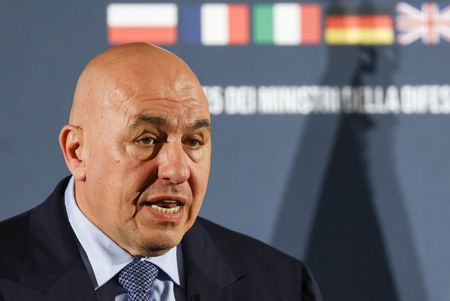
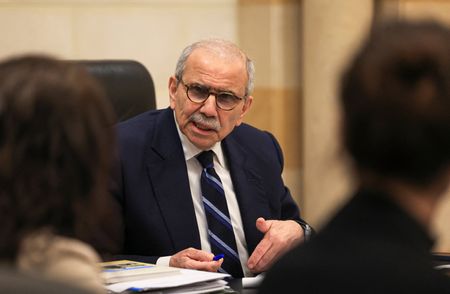
Multiple nations in the Persian Gulf region have approached Italy seeking advanced air defense technology as Middle Eastern conflicts continue to intensify, according to Italy’s defense minister who briefed lawmakers Monday.
Defense Minister Guido Crosetto explained that regional tensions involving Iran, Israel, and the United States have prompted these urgent requests from Gulf nations looking to bolster their defensive capabilities.
The escalating situation has seen Israel launch attacks into Lebanon following strikes from the militant organization Hezbollah, while Iran has targeted Gulf nations with missiles and unmanned aircraft. Additionally, a drone manufactured in Iran recently struck a British military installation in Cyprus.
“The Gulf countries are expressing strong concern about the evolution of the crisis and have indicated the urgent need to strengthen their defence capabilities, particularly air defence and anti-drone,” Crosetto told Italian parliament members.
Among the requested equipment is the SAMP/T system, a joint French-Italian defense platform also called MAMBA, which has the capability to monitor multiple dozens of aerial threats while simultaneously engaging up to ten targets. This represents Europe’s sole domestically-produced system capable of stopping ballistic missiles.
However, meeting these requests poses significant challenges since Italy is currently providing SAMP/T units to Ukraine for protection against Russian attacks, creating supply constraints.
“It is a very delicate issue, considering that these capabilities are already heavily strained and limited in light of European needs and the support provided so far to Ukraine,” the defense minister explained during his parliamentary testimony.
Crosetto had recently returned from Dubai on Sunday, where he and his family had been temporarily stuck following Iran’s recent military actions. He appeared alongside Foreign Minister Antonio Tajani, who characterized the regional conflict as presenting direct security risks to Italy itself.
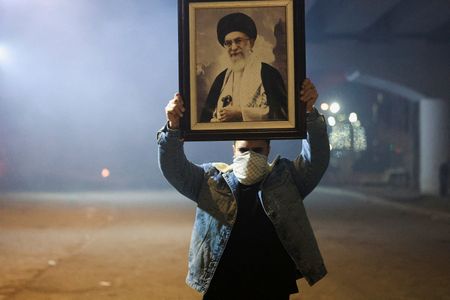
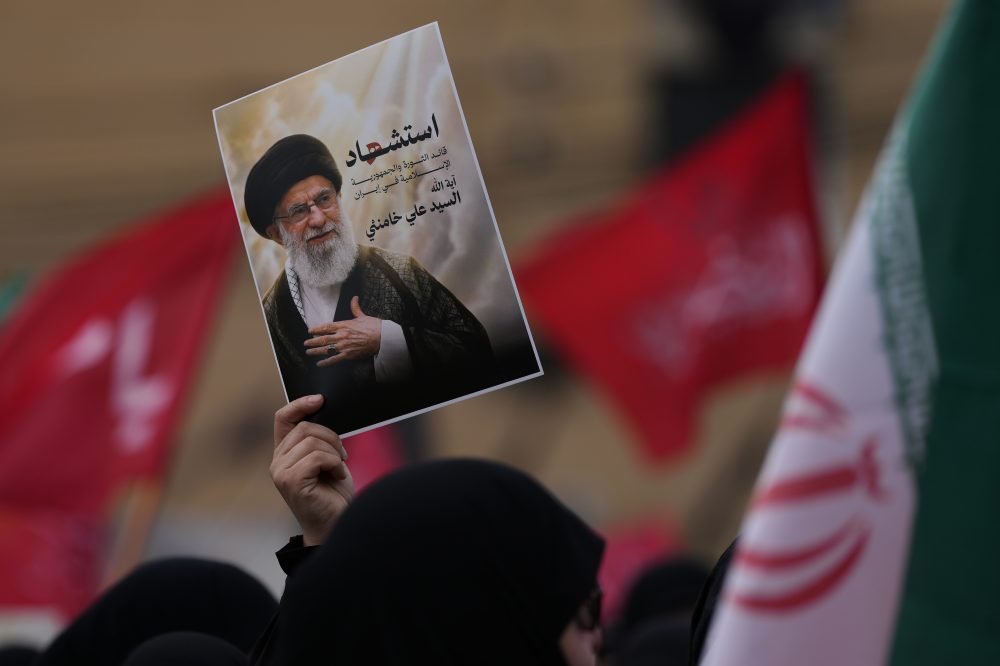
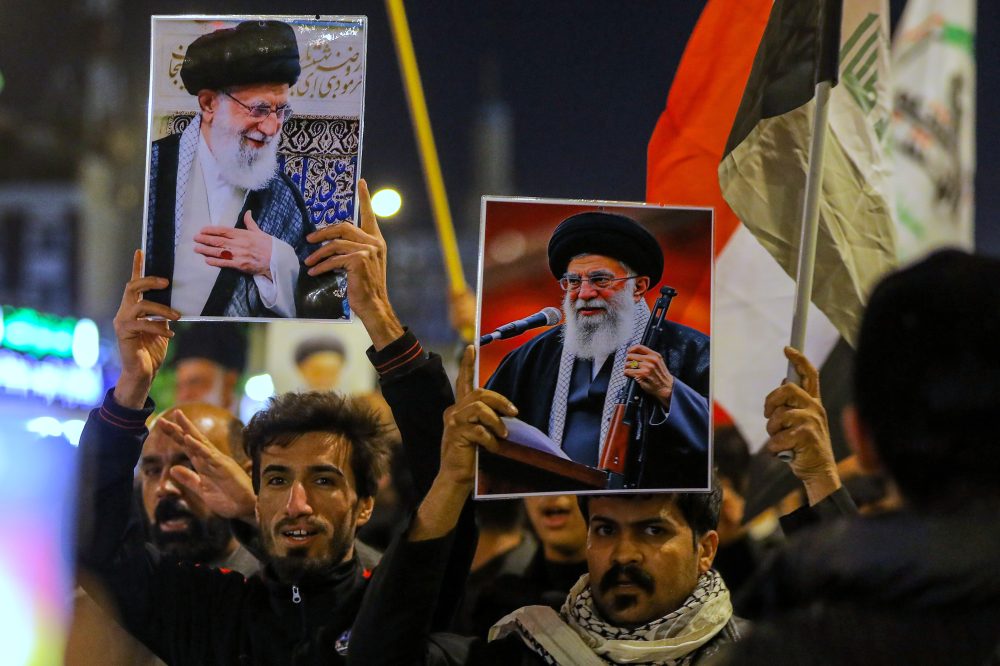
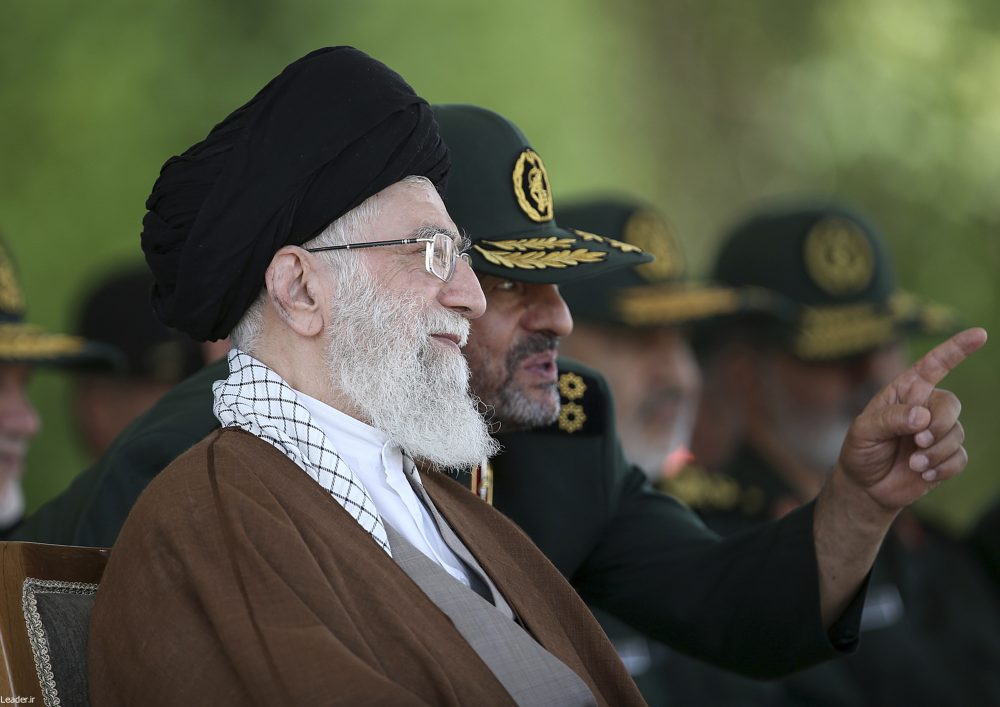
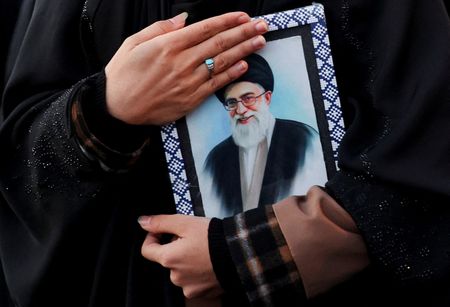
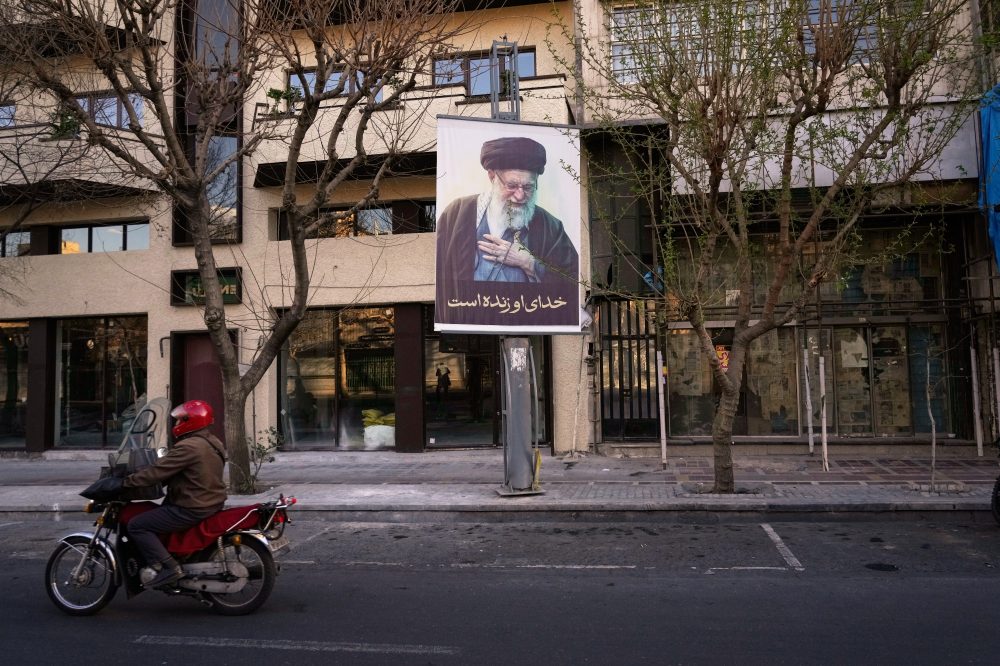
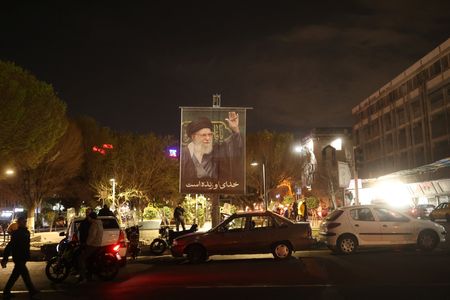
Iranian officials are working urgently to select a new Supreme Leader following the death of Ayatollah Ali Khamenei, who led the nation for nearly four decades before being killed in an unexpected joint U.S.-Israeli attack.
This marks just the second occasion since Iran’s 1979 Islamic Revolution that the country must choose a new supreme leader. Candidates being considered span from hardline figures favoring continued confrontation with Western nations to reform-minded individuals supporting diplomatic solutions.
The supreme leader holds ultimate authority over all critical decisions in Iran, including matters of war and peace, as well as the nation’s controversial nuclear activities.
Currently, a temporary leadership group consisting of President Masoud Pezeshkian, hardline judicial leader Gholamhossein Mohseni Ejei, and prominent Shiite religious figure Ayatollah Ali Reza Arafi is steering Iran through what many consider its most significant crisis in recent decades. Foreign Minister Abbas Araghchi announced Sunday that officials expect to name a new supreme leader within the coming days.
The selection process falls to the Assembly of Experts, an 88-member body required by law to promptly designate a replacement. This assembly comprises Shiite religious leaders who win public elections after the Guardian Council, Iran’s constitutional oversight body, approves their candidacy.
Given Khamenei’s substantial influence over both religious institutions, analysts believe the next leader is unlikely to represent a dramatic shift in direction.
Among the leading possibilities is Khamenei’s son, a mid-ranking Shiite cleric widely viewed as a potential heir. While he maintains strong connections to Iran’s paramilitary Revolutionary Guard, he has no governmental experience. His appointment could create complications, given the Islamic Republic’s historical opposition to inherited leadership and its claims of offering a more equitable system.
Arafi, who sits on the interim governing council, received Khamenei’s personal endorsement for Guardian Council membership in 2019 before winning election to the Assembly of Experts three years later. The senior religious leader oversees an extensive network of Islamic schools.
Former President Hassan Rouhani, considered a moderate voice, led Iran from 2013 through 2021 and negotiated the significant nuclear deal with President Obama’s administration that President Trump later abandoned. Rouhani maintained Assembly of Experts membership until 2024, when he claimed officials prevented his reelection bid. He condemned this action as limiting Iranian citizens’ political involvement.
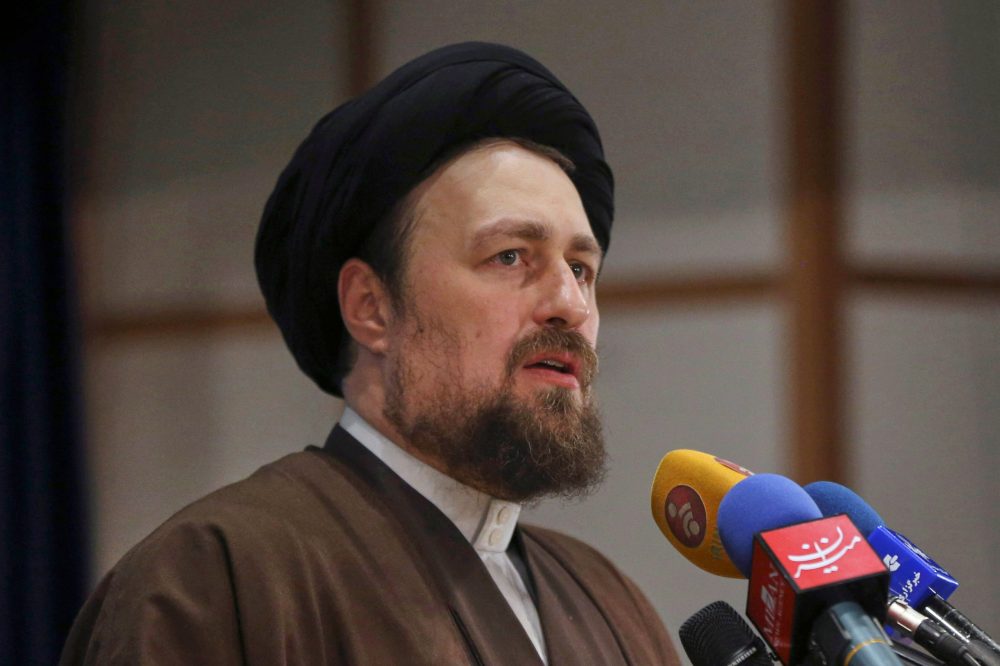
Hassan Khomeini represents the most notable descendant of Islamic Republic founder Ayatollah Ruhollah Khomeini. Though also viewed as relatively moderate, he lacks government experience and currently works at his grandfather’s memorial site in Tehran.
Senior cleric Mirbagheri enjoys support among hardline factions and serves on the Assembly of Experts. He maintained close relationships with the late Ayatollah Mohammad Taghi Mesbah Yazdi, another hardline figure who argued Iran should retain the option to develop “special weapons,” widely understood as nuclear weapons.
During the COVID-19 outbreak, Mirbagheri criticized school closures as part of a “conspiracy.” He currently directs the Islamic Cultural Center in Qom, Iran’s primary center for religious education.
BRUSSELS — European nations find themselves increasingly entangled in the escalating Middle East conflict between the U.S.-Israel alliance and Iran, scrambling to safeguard military installations and rescue thousands of citizens trapped in the expanding war zone.
The crisis has thrust European countries into emergency mode, despite having no voice in the initial U.S.-Israeli military operations against Tehran. Now they’re grappling with the consequences as Iranian retaliation spreads throughout the region that houses vital European trading partners and strategic commercial pathways.
Thousands of Europeans residing in major Middle Eastern cities like Beirut, Dubai, and Jerusalem now face uncertainty, while extensive immigrant communities from Turkey, Egypt, and Gulf nations living across Europe watch developments with growing concern.
Although European powers have declined direct military participation, Britain, France, and Germany announced their willingness to collaborate with Washington in countering Iranian attacks. The United Kingdom has granted American forces access to British military installations for strikes against Iranian missile facilities.
The conflict’s reach has already touched European soil. Cyprus, currently holding the EU’s rotating leadership, was forced to clarify its non-involvement after an Iranian-designed Shahed drone struck a British air facility on the island’s southern shoreline this past weekend. These same drone models have previously appeared in European skies during Russia’s assault on Ukraine.
Anticipating potential domestic threats, several European governments have enhanced security protocols at transportation hubs including train terminals and airports.
Notably, European leadership has largely avoided condemning the American-Israeli military campaign. Many officials welcome the potential collapse of Iran’s government, which has repeatedly detained European nationals and undermined continental economic interests over recent years.
Spain stands as a notable exception to this consensus. Prime Minister Pedro Sánchez declared Sunday, “One can be against a hateful regime, and at the same time, be against a military intervention that is unjustifiable, dangerous and outside of international law.”
European involvement remains essential given the region’s volatility and the continent’s need for Middle Eastern stability. Concerns about prolonged petroleum price increases and potential unpredictable migration waves ensure continued European engagement.
The immediate European focus centers on protecting thousands of nationals caught in the spreading conflict zone.
EU foreign ministers addressed evacuation concerns during weekend emergency discussions. While no coordinated rescue operation launched, officials acknowledged one might become necessary shortly.
German authorities report approximately 30,000 German travelers stranded aboard cruise vessels, in hotels, or at shuttered airports, unable to return due to the fighting. Most remain in Middle Eastern locations, though some are stuck elsewhere because their connecting flights route through Abu Dhabi, Qatar, or Dubai. Military extraction proved impossible due to closed airspace.
The Czech Republic has dispatched two aircraft to Egypt and Jordan for citizen retrieval, collecting dozens of Czech nationals who traveled overland from Israel. Four additional planes were scheduled for Oman to transport more of the estimated 6,700 Czechs throughout the region.
Iranian threats against vessels in the Strait of Hormuz—the narrow Persian Gulf passage handling one-fifth of global oil commerce—have prompted calls for enhanced EU merchant ship protection following actual attacks in those waters.
France responded by deploying two additional warships to strengthen Operation Aspides, the European naval mission in the area. However, these vessels will only patrol the distant Red Sea and Gulf of Aden—entry points to the Suez Canal connecting the Red Sea and Mediterranean—joining three ships already stationed there.
Operation Aspides launched two years ago to shield maritime commerce from potential Houthi rebel attacks originating in Yemen. While the Houthis have voiced support for Iran, they haven’t immediately declared military action on Tehran’s behalf.
Officials are reviewing the mission’s authorization and considering stricter engagement protocols, though immediate changes appear unlikely.
Preserving broader Middle Eastern stability remains a primary European objective. Iran’s retaliatory actions across multiple countries have drawn widespread condemnation.
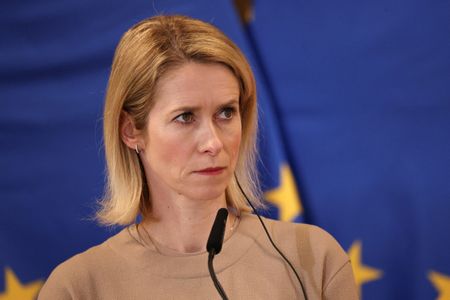
EU foreign policy chief Kaja Kallas plans to organize talks with Gulf Cooperation Council nations at the ministerial level this week, as the bloc works to reassure Iran’s neighbors and other regional countries facing potential threats.
“Iran’s attacks of a number of countries in the Middle East are inexcusable. The events must not lead to further escalation that could threaten the region, Europe and beyond, with unpredictable consequences,” Kallas stated following Sunday’s emergency discussions.
The European Union intends to spearhead diplomatic initiatives aimed at reducing regional tensions while maintaining efforts to prevent Iranian nuclear weapons acquisition, despite the collapsed nuclear agreement after the Trump administration’s withdrawal.
EU officials indicate no preferred successor for Tehran’s leadership, noting it’s premature to identify potential candidates for future support. Foreign ministers primarily expressed “solidarity with the Iranian people.”
They pledged assistance for “their fundamental aspirations for a future where their universal human rights and fundamental freedoms are fully respected.”
European leaders maintain that authentic popular opposition to the regime emerged recently but was crushed through unprecedented violence. Thousands died and tens of thousands faced detention.
One certainty remains: the EU will unlikely support any leadership promoted by Iran’s Revolutionary Guard. The IRGC’s addition to the bloc’s terrorism list last month makes European recognition of them as legitimate negotiating partners virtually impossible.
THE HAGUE, Netherlands — Recent military operations involving American and Israeli forces targeting Iran have intensified concerns about violations of international legal standards, as Tehran and allied groups responded with missile strikes throughout the Middle East region on Monday.
From United Nations headquarters in New York, the center of post-World War II international governance, Secretary-General António Guterres addressed the Security Council on Saturday, declaring that American and Israeli military strikes breached international law and UN Charter provisions. Guterres simultaneously criticized Iran’s counter-attacks as violations of Middle Eastern nations’ sovereignty and territorial boundaries.
Trump administration representatives maintain their military operations represent legitimate actions to prevent Tehran from developing nuclear capabilities. “It’s a matter of global security. And to that end, the United States is taking lawful actions,” stated Mike Waltz, Trump’s UN ambassador.
In a Sunday correspondence to the United Nations, Iranian Foreign Minister Abbas Araghchi described the death of Supreme Leader Ayatollah Ali Khamenei as “constitutes a grave and unprecedented breach of the most fundamental norms governing relations among States.”
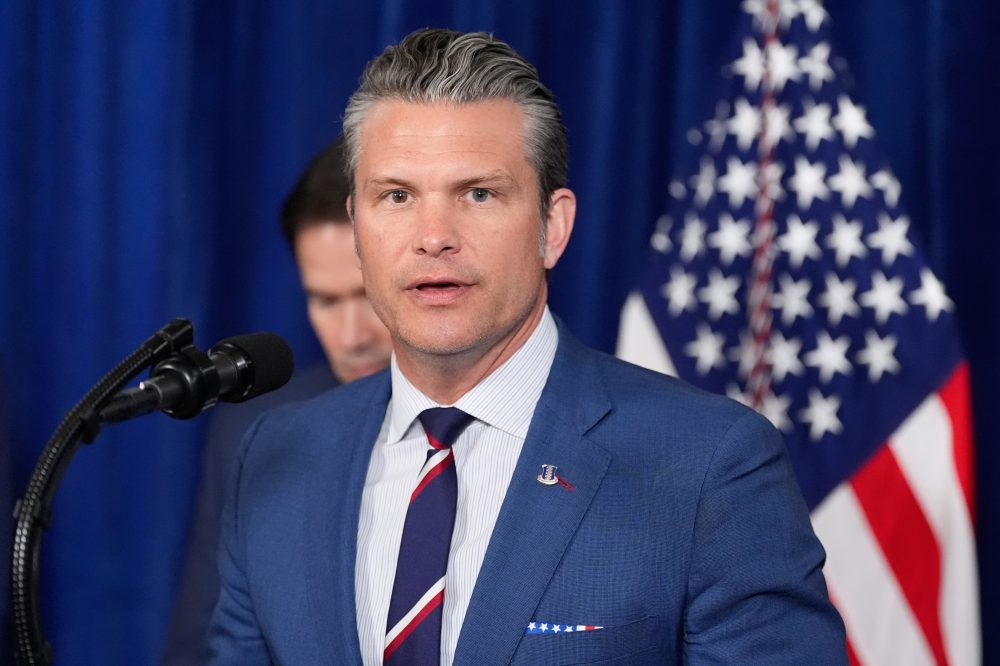
Defense Secretary Pete Hegseth offered a forceful defense of American military actions on Monday. “No stupid rules of engagement, no nation building quagmire, no democracy building exercise, no politically correct wars. We fight to win and we don’t waste time or lives,” Hegseth declared from Pentagon headquarters.
These Iranian operations follow by fewer than eight weeks the American military operation that resulted in the capture of former Venezuelan President Nicolás Maduro in Caracas, subsequently transporting him to New York for prosecution.
International law expert David Crane, who established and led a United Nations tribunal prosecuting Sierra Leone war crimes, authored an assessment stating that American operations in Iran and Venezuela “highlight a dangerous trend: the normalization of unilateral force as a tool of foreign policy. Even when the outcome is positive, the violation of international law and constitutional limits sets a precedent that threatens global stability and undermines America’s own legal foundations.”
Democratic lawmakers in Washington have characterized the military strikes as unlawful. Their position maintains that constitutional authority for war declarations rests exclusively with Congress. Critics argue the Trump administration has not provided adequate justification or strategic planning for the military operations and their consequences.
Congressional leadership rapidly organized a Monday debate regarding Trump’s constitutional authority for Iranian bombardment under war powers legislation.
The International Criminal Court’s founding treaty amendment defines aggression as “the use of armed force by a State against the sovereignty, territorial integrity or political independence of another State, or in any other manner inconsistent with the Charter of the United Nations.”
The court specifically identifies aggressive acts including: “Bombardment by the armed forces of a State against the territory of another State or the use of any weapons by a State against the territory of another State.”
Since the United States, Israel, and Iran maintain non-membership status with the court, ICC jurisdiction over the current conflict requires Security Council referral to court prosecutors.
UN Charter provisions restrict nations to using force against other countries only with Security Council authorization or for self-defense purposes, explained Marieke de Hoon, who teaches international criminal law at Amsterdam University.
De Hoon characterized the Iranian attacks as aggression crimes.
“It is a violation of the prohibition to use force, the cornerstone of the international legal order, and there is no legal justification for it: it is not a self-defense against an armed attack by Iran or an imminent threat” of attack, “nor is there a UNSC resolution to authorize use of force,” she explained to The Associated Press. “Regime change moreover violates the sovereignty of another state.”
Iranian leadership maintains an established record of violently suppressing opposition movements and supporting extremist activities that have created Middle Eastern instability. Trump administration forces targeted the nation’s nuclear facilities in previous military strikes last year.
However, De Hoon argued these factors cannot justify American and Israeli bombardments.
International law grants Tehran self-defense rights, she noted, while adding that “Iran is not allowed to attack civilian infrastructure in other countries. Its response needs to be proportionate to stop the aggression, without offering itself a legitimation toward, for instance, regime change in the aggressor country.”
Crane acknowledged that removing Maduro and Khamenei from power might enhance regional stability, decrease human suffering, and improve democratic and peaceful prospects, but “international law does not permit states to unilaterally decide which tyrants to remove by force.”
Reading University international law professor Marko Milanovic stated that during peacetime, “it is a clear violation of international law to assassinate the head of state or government of some other state.”
Government leaders “enjoy personal immunities and inviolability, and any attacks against them would also violate the sovereignty of their state,” he explained.
Wartime conditions alter these protections, he noted, explaining that when political leaders serve as armed forces members, “then they are combatants like any other members of the armed forces and are not immune from attack.”
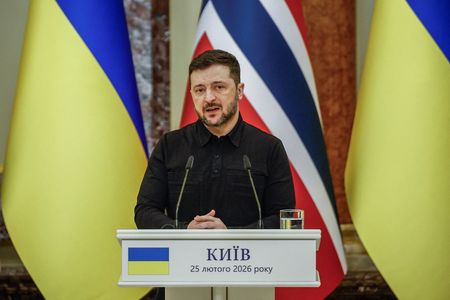
Ukrainian President Volodymyr Zelenskyy announced Monday that his nation will finish technical preparations needed to begin European Union membership negotiations within the coming days.
Speaking to reporters through a WhatsApp media session, Zelenskyy again urged EU partners to establish a concrete timeline for Ukraine’s admission to the bloc, arguing this would serve as a crucial security guarantee for his country as it works to negotiate an end to the conflict with Russia.
“We are ready, but not all leaders of the European Union are… I mean, not everyone is ready to give Ukraine this opportunity,” Zelenskyy stated.
Ukraine gained official EU candidate status shortly after Russia launched its invasion in February 2022.
However, Kiev’s advancement through the standard EU membership process has stalled due to Hungary’s opposition, which has prevented the required unanimous consent to formally begin discussions on the six main “clusters” of membership requirements.
Hungarian Prime Minister Viktor Orban, who maintains the strongest Russia ties within the EU and faces crucial elections in April, has also blocked the most recent EU aid package for Ukraine valued at 90 billion euros spanning this year and next.
Orban claims Ukraine has cut off Russian oil deliveries to Hungary through the historic Druzhba pipeline that runs through Ukrainian territory. Ukraine maintains the pipeline suffered damage from a Russian drone strike.
Kiev views EU membership as essential to its post-conflict reconstruction. Ukraine’s inclusion in the EU with a specific entry date appears in preliminary versions of a 20-point peace framework developed jointly by Ukraine and the United States, currently being discussed with Russia.
European Union officials have indicated that Ukraine, given its checkered history regarding government transparency, anti-corruption efforts, and legal system reforms, may require several years of institutional changes to satisfy EU entry standards.
Zelenskyy reiterated Monday that Ukraine would be technically prepared for EU membership by next year, emphasizing that the actual timing depends on political commitment from existing member nations.
“If they truly believe in Ukraine, if they want to see Ukraine in the EU, then this is the opportunity: at the end of the war, to give Ukraine a concrete date and not repeat the mistake they made with NATO,” he explained.
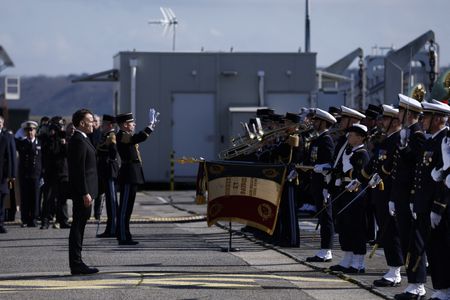
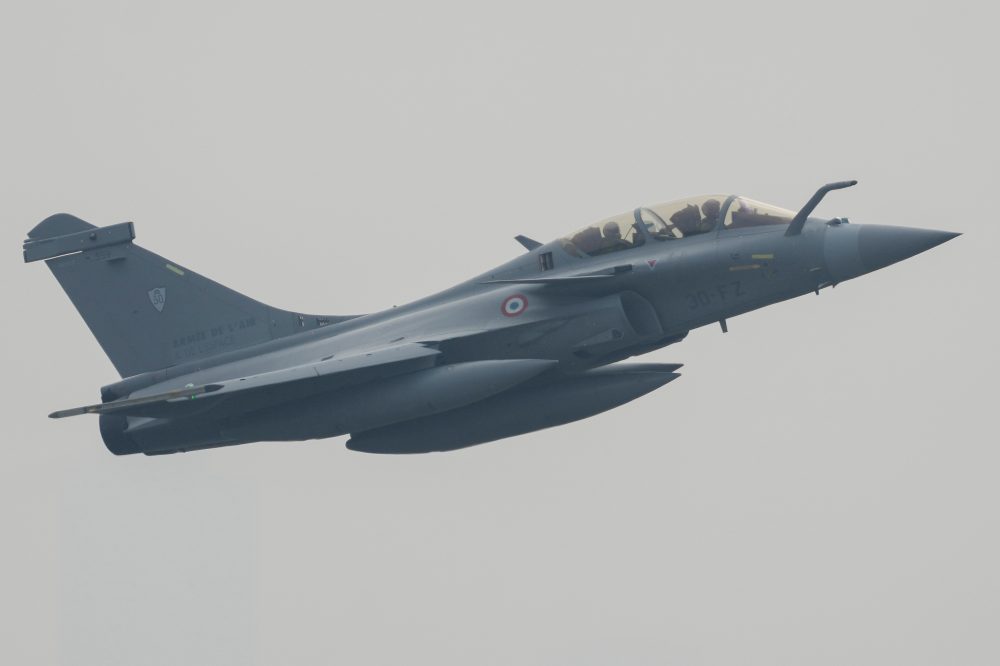
PARIS – French President Emmanuel Macron announced Monday that his nation will expand its nuclear weapons stockpile and bolster its defense capabilities, citing growing concerns about global conflicts potentially escalating to nuclear warfare.
Speaking from a naval submarine facility in Brittany on March 2nd, Macron warned of mounting international tensions that require France to strengthen its military deterrence strategy.
“We are currently experiencing a period of geopolitical upheaval fraught with risk,” Macron declared during his address, emphasizing that France needs a “hardening” of its nuclear deterrence approach to address these challenges.
The announcement comes as nations worldwide grapple with various regional conflicts and security threats that have raised concerns about potential nuclear escalation.
The head of the United Nations nuclear monitoring organization stated Monday that there’s no evidence recent strikes by Israel and the United States damaged Iran’s nuclear installations, contradicting Iranian officials who claim the Natanz facility was attacked.
Rafael Grossi, director general of the International Atomic Energy Agency, addressed the organization’s 35-member governing board, saying Iran’s nuclear program has been cited as justification for the military operations by Israel and the U.S., who contend Iran is advancing toward nuclear weapons capability.
However, Iran’s atomic installations appear to have avoided significant damage in the current round of attacks, unlike the June strikes that severely impacted nuclear facilities.
“We have no indication that any of the nuclear installations … have been damaged or hit,” Grossi told the Board of Governors meeting.
The IAEA chief revealed that his organization’s emergency response team has struggled to maintain contact with Iran’s nuclear oversight authorities, though some communication with Iranian officials continues.
“We are, of course, in conversation with Iran, but at the moment, it’s very limited. Until last Thursday, it was very intense,” Grossi explained during a news briefing, noting that while no IAEA personnel are currently stationed in Iran, the agency is monitoring developments through satellite surveillance.
Iran has prevented IAEA inspectors from returning to facilities damaged in the June bombardment.
Shortly after Grossi’s presentation, Iran’s IAEA representative Reza Najafi contradicted the assessment, telling journalists that strikes had targeted the Natanz nuclear site.
“Again they attacked Iran’s peaceful, safeguarded nuclear facilities yesterday,” Najafi declared. When asked by reporters to specify which installations were struck, he responded “Natanz” before departing.
The Natanz location previously contained two uranium processing facilities that sustained damage during June attacks – a surface-level plant that the IAEA determined was completely destroyed, and a subterranean facility that suffered extensive damage.
When questioned about the Iranian ambassador’s statements, Grossi maintained his position during the subsequent news conference.
“I will not get into a polemic on that. We stand by what I said before. We haven’t seen major military activity targeting the nuclear facilities. We have been looking at different satellite images,” he stated.
“There might be something there, but not significant or comparable in any way to what we saw last time.”
Grossi had participated in recent diplomatic discussions in Geneva, where Oman facilitated negotiations between Iranian and American representatives regarding nuclear issues.
“An understanding eluded the parties this time. I am sure we are, quite understandably, feeling a strong sense of frustration,” Grossi informed the governing board.
The IAEA director encouraged renewed diplomatic efforts while reaffirming the agency’s assessment that Iran shows no credible signs of operating a coordinated nuclear weapons development program. Iranian officials continue to deny any military objectives in their nuclear activities.
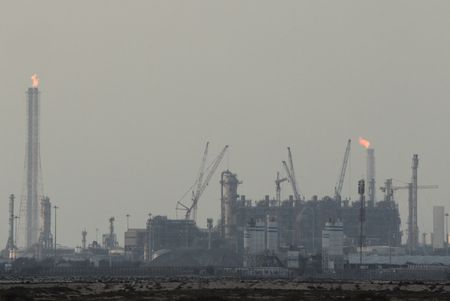
Energy facilities across the Middle East went offline Monday as escalating conflicts between Israel, the United States, and Iran triggered widespread precautionary shutdowns of oil and gas operations.
Qatar suspended its liquefied natural gas production, which accounts for roughly one-fifth of the world’s total supply. The nation ranks as the globe’s second-largest LNG exporter behind the United States and serves as a crucial supplier for balancing energy demands in Asia and Europe. QatarEnergy’s customer base is 82% Asian.
Saudi Arabia’s largest domestic oil refinery ceased operations after being targeted by a drone attack, according to a source familiar with the situation.
The military actions have extended into their third day, also forcing the halt of most oil production in Iraqi Kurdistan and shuttering several significant Israeli gas fields, which has disrupted exports to Egypt.
Energy markets reacted dramatically, with oil prices climbing as much as 13% during trading to exceed $82 per barrel – the highest level since January 2025. The price surge occurred as the conflict brought shipping through the Strait of Hormuz to a virtual standstill. This critical waterway handles one-fifth of the world’s oil supply.
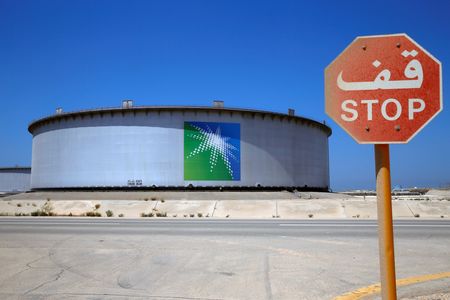
Saudi Aramco’s Ras Tanura refinery, which processes 550,000 barrels daily, was closed as a safety precaution. The facility sits within an energy complex along the kingdom’s Gulf coastline that also functions as a vital export terminal for Saudi crude oil.
Aramco has not yet responded to requests for comment.
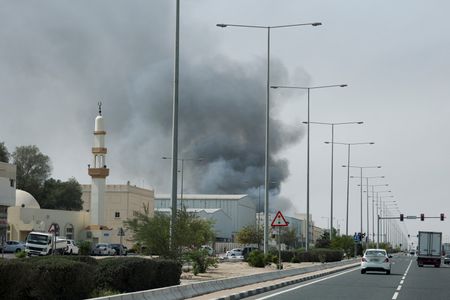
QatarEnergy announced it was also stopping production of LNG-related products. Earlier Monday, Qatar’s government reported that two Iranian drones struck a QatarEnergy facility, with officials currently evaluating the extent of damage.
In Iraqi Kurdistan, oil companies including DNO, Gulf Keystone Petroleum, Dana Gas and HKN Energy have suspended operations at their fields as a safety measure, though no damage has been reported. The region exported 200,000 barrels daily through a pipeline to Turkey’s Ceyhan port in February.
Off Israel’s coast, the government ordered Chevron to temporarily close the massive Leviathan gas field, where the company is working to increase capacity to approximately 21 billion cubic metres annually as part of a $35 billion export agreement with Egypt. A Chevron representative confirmed that its facilities, including the Tamar gas field, remain secure.
Energean also shut down its production vessel that services smaller gas fields in the area.
In Iran, explosions were reported Saturday at Kharg Island, which handles 90% of Iran’s crude exports, though the impact on facilities remains unclear.
Iran ranks as the third-largest producer within the Organization of the Petroleum Exporting Countries, contributing about 4.5% of global oil supplies. The country produces approximately 3.3 million barrels per day of crude oil, plus an additional 1.3 million barrels daily of condensate and other liquids.
Regarding the Saudi facility, the source indicated that conditions at Aramco’s Ras Tanura refinery are now stable. The Saudi defense ministry spokesperson told Al Arabiya TV that two drones were intercepted at the site, with debris sparking a contained fire but causing no injuries.
While some refinery units were shut down for safety reasons, an unnamed energy ministry official told Saudi state news agency SPA that petroleum product supplies to domestic markets remained unaffected.
However, the Ras Tanura closure will likely heighten supply concerns as shipping through the Strait of Hormuz has nearly stopped following attacks on vessels in the area Sunday.
“The attack on Saudi Arabia’s Ras Tanura refinery marks a significant escalation, with Gulf energy infrastructure now squarely in Iran’s sights,” said Torbjorn Soltvedt, principal Middle East analyst at risk intelligence firm Verisk Maplecroft.
“The attack is also likely to move Saudi Arabia and neighbouring Gulf states closer to joining U.S. and Israeli military operations against Iran.”
Saudi Arabia’s well-protected energy infrastructure has faced previous attacks, particularly in September 2019 when drone and missile strikes on the Abqaiq and Khurais facilities temporarily eliminated more than half of the kingdom’s crude production.
Yemen’s Iran-backed Houthis previously targeted Ras Tanura in 2021.
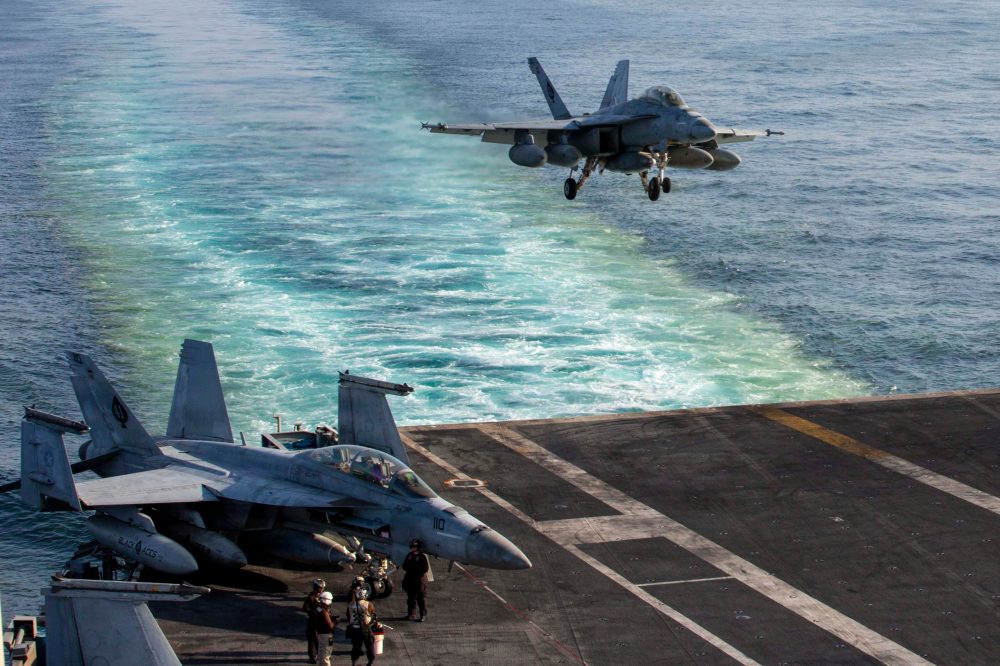
The nation’s highest-ranking military officer warned Monday that American military goals in Iran will require an extended timeline to accomplish, with more U.S. casualties anticipated as joint operations with Israel enter their third consecutive day.
General Dan Caine, who serves as chairman of the Joint Chiefs of Staff, addressed reporters about the expanding aerial campaign between the United States and Israel against Iranian forces, which shows no signs of concluding soon. During Monday’s operations, Kuwait’s air defense systems accidentally downed three U.S. F-15E fighter aircraft while responding to an Iranian assault, according to military officials.
“This is not a single overnight operation. The military objectives that CENTCOM and the Joint Force have been tasked with will take some time to achieve, and in some cases will be difficult and gritty work,” Caine explained to the media. He confirmed that America continues deploying additional military personnel to the Middle Eastern region, building upon an already substantial troop presence.
The general’s remarks followed President Donald Trump’s Sunday indication that Iranian strikes could continue for up to four weeks.
Military officials reported that a fourth American service member succumbed Monday to wounds received during the Iranian operation. U.S. forces have successfully intercepted numerous ballistic missiles aimed at American positions and regional allies.
At the same briefing, Defense Secretary Pete Hegseth assured that military actions against Iran would not result in an “endless war,” while recognizing the operation cannot be finished immediately. Hegseth outlined plans to eliminate Tehran’s missile capabilities, naval forces, and additional security infrastructure.
“This is not Iraq. This is not endless,” Hegseth stated.
President Trump initiated what military analysts consider the most significant U.S. foreign policy risk in recent decades, launching the coordinated campaign with Israel on Saturday against a longtime adversary that has challenged America and its allies for generations.
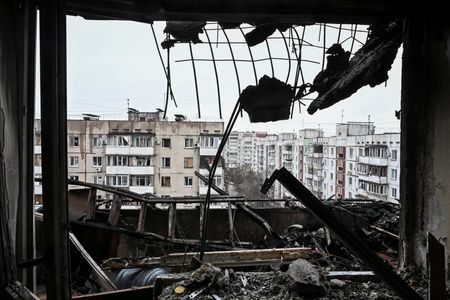
Despite the ongoing U.S.-Israeli attacks, Iran’s conservative religious leadership has demonstrated no indication of surrendering control. Defense experts suggest that American and Israeli air superiority, without ground troops, may prove insufficient to remove them from power. Reports indicate dozens of Iranian deaths from the strikes, including several that apparently struck civilian locations.
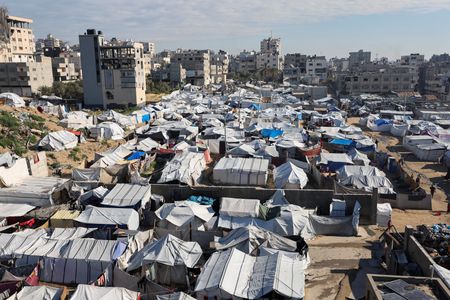
Officials in Gaza are warning of a critical shortage of fuel and essential supplies after Israel shut down all border crossings into the war-torn territory following military action against Iran.
The closure came Saturday after Israel announced coordinated airstrikes on Iran conducted alongside the United States. Israeli military officials have not provided a timeline for reopening the crossings, stating they cannot operate safely during active warfare.
The Palestinian territory relies entirely on fuel deliveries by truck from Israel and Egypt, and the supply shortage threatens to cripple hospitals and disrupt water and sewage systems. The majority of Gaza’s population has been forced from their homes during Israel’s ongoing two-year conflict with Hamas.
United Nations official Karuna Herrmann, who oversees fuel distribution in the region, warned of the dire situation ahead. “I expect we have maybe a couple of days’ running time,” Herrmann stated.
Palestinian aid coordinator Amjad Al-Shawa, who collaborates with UN agencies and non-governmental organizations, provided a similarly grim assessment. He projected fuel reserves might stretch three to four days, while supplies of produce, flour and other basic necessities could also be depleted if border operations remain suspended.
Reuters could not confirm these supply estimates independently.
COGAT, Israel’s military agency overseeing Gaza access, maintained that sufficient food had entered the territory since an October ceasefire began to meet population needs. “(The) existing stock is expected to suffice for an extended period,” COGAT stated without providing specifics. The agency did not address questions about potential fuel shortages.
The ceasefire is part of a broader American-supported initiative aimed at ending the conflict, which includes reopening Egypt’s Rafah border crossing, expanding humanitarian aid deliveries, and reconstruction efforts.
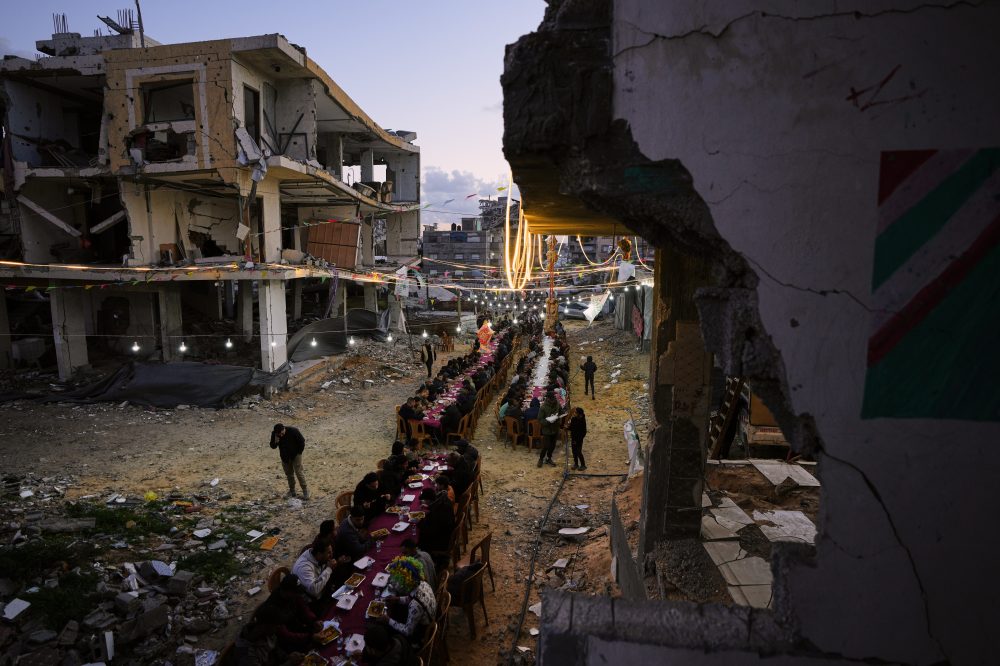
Hamada Abu Laila, among Gaza’s displaced residents, expressed concern that the border closures could trigger another humanitarian crisis similar to the famine that affected portions of the territory last year when Israel halted aid shipments for nearly three months.
“Why is it our fault, in Gaza, with regional wars between Israel, Iran, and America? It is not our fault,” Abu Laila said.
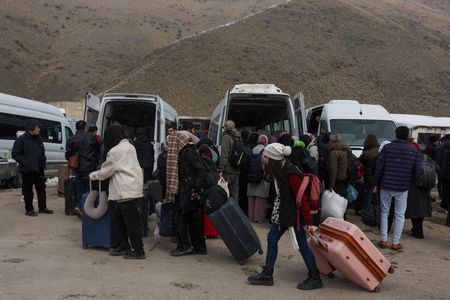
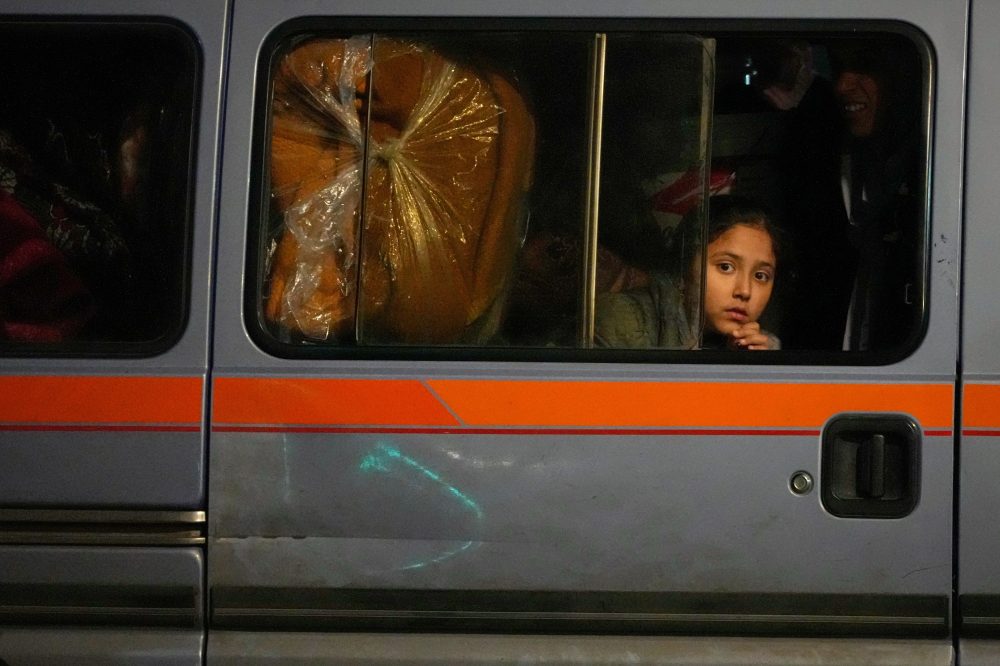
Large numbers of Iranian nationals made their way across the Turkish border on Monday as regional conflict intensified, according to eyewitness reports from the scene.
A Reuters correspondent observed the mass crossing at the Kapikoy border checkpoint, where new arrivals described a climate of anxiety in Iran’s capital and long lines forming at fuel stations throughout the country.
The border crossing came after Turkey announced earlier Monday that routine day-trip travel between the nations had been mutually halted at all three crossing points. Turkish officials stated they would only permit Turkish citizens and third-country nationals to enter, following reports Sunday that some Iranian travelers had been turned away.
Despite the restrictions, Iranian citizens began streaming through the Kapikoy gate by Monday afternoon, carrying luggage through light snowfall with snow-capped Iranian mountains visible in the distance.
One Tehran resident, who requested anonymity while explaining his family was waiting in Istanbul, described conditions in the capital. “The situation in Tehran is already difficult,” he stated. “There are difficult things in Tehran, bombings. Everyone is scared. But for example, normal people, nothing happened to them.”
The man explained he had purchased household supplies when the conflict began, noting that stores were packed with customers.
Binali Kilic, who identified himself as an Iranian of Azeri descent from the Qazvin region near the Turkish frontier, said daily life continued in his area but military targets were under constant attack, disrupting civilian routines.
“They’ve withdrawn into themselves. Everyone is in their homes,” Kilic explained as travelers pulled suitcases through the checkpoint toward waiting transport vehicles. “There were sounds of bombing coming from nearby areas that were hit.”
Regarding daily necessities, Kilic noted supplies remained available but fuel access had become problematic. “There are no food problems or anything like that. The only concern people have is getting fuel for their trips, near and far. There are queues at petrol stations,” he added.
Turkish Trade Minister Omer Bolat confirmed Iran was allowing its citizens to return home through Turkey, while commercial freight continued moving through all three border crossings under enhanced security measures.
“All our units continue to perform their duties on high alert to ensure the uninterrupted continuation of Turkey’s border crossing services and trade flows,” Bolat announced.
Defense Secretary Pete Hegseth delivered his first public statements to the press since U.S.-Israeli military actions against Iran commenced on Saturday, declaring that the Trump administration intends to conclude the escalating conflict.
“We didn’t start this war but under President Trump we’re finishing it,” Hegseth stated during the briefing.
The Defense Secretary appeared alongside Dan Caine, chair of the Joint Chiefs of Staff, as they provided details about the American operation targeting Iran. The military actions began despite several weeks of diplomatic efforts aimed at preventing the conflict from escalating further.
The weekend operations mark a significant development in tensions between the United States, Israel, and Iran, coming after extensive negotiations failed to prevent military engagement.
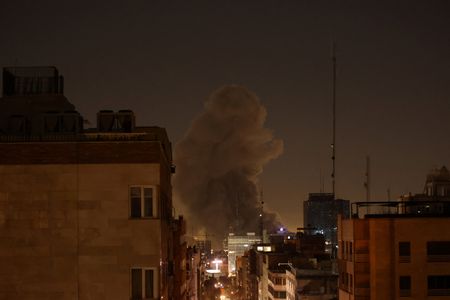
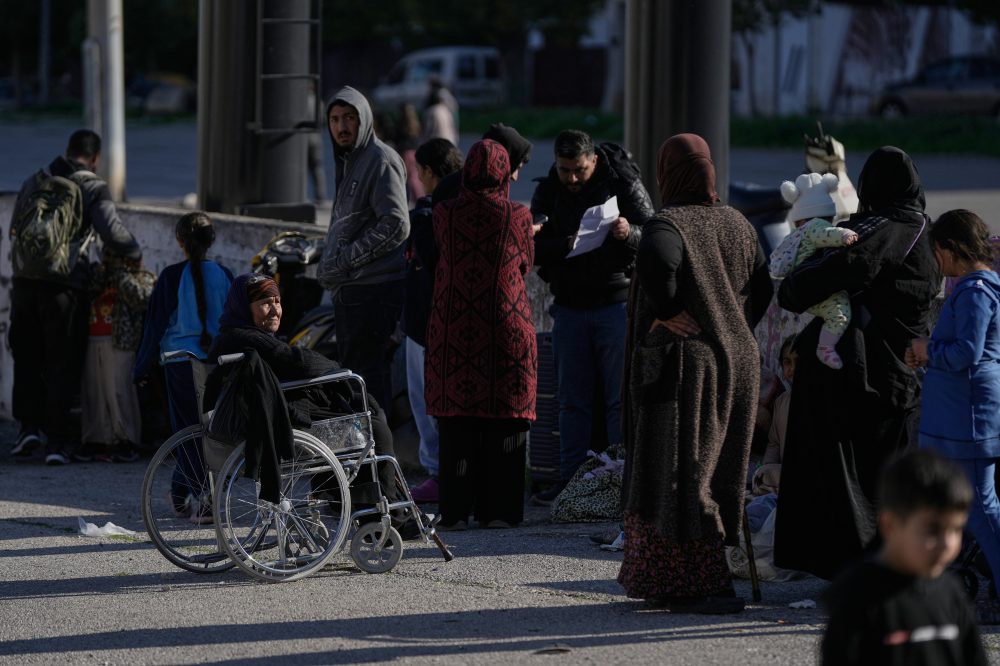
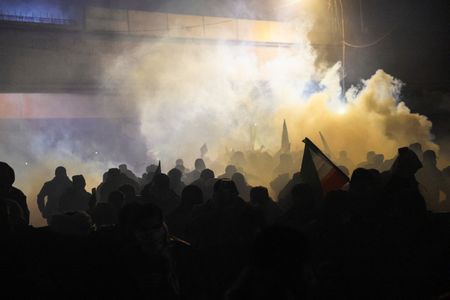
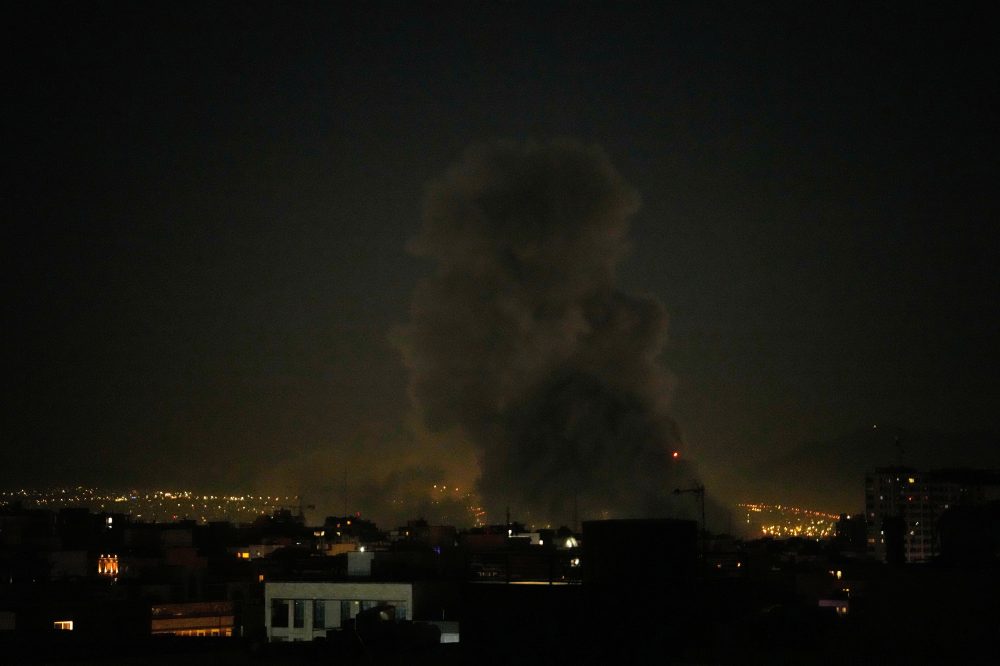
BEIRUT — Lebanese residents evacuated from southern regions and Beirut’s southern neighborhoods on Monday, finding safety in makeshift shelters at schools throughout the capital after renewed deadly violence between Israel and the Iranian-backed militant organization Hezbollah.
According to Lebanon’s Health Ministry, no fewer than 31 individuals lost their lives while 149 others sustained injuries during nighttime attacks across Beirut’s suburbs and southern Lebanese territories.
Lebanon’s administration on Monday harshly criticized Hezbollah’s choice to join Iran’s conflict against Israel and the United States, declaring the organization’s military operations unlawful and insisting it surrender its arsenal.
Traffic congestion plagued roadways through the night and into Monday as residents escaped what represented Israel’s most devastating bombardment of Lebanon in over twelve months, occurring just hours after Hezbollah launched cross-border missiles for the first time in more than a year.
Inside a public school quickly transformed into emergency housing, displaced families brought mattresses, plastic containers, and bundles of personal items. Additional families waited on sidewalks with their possessions, while some men smoked cigarettes as they anticipated available space indoors.
Community volunteers moved among the crowds, recording names as families occupied classrooms and assembled in the school’s outdoor areas.
Hussein Abu Ali, who escaped from a southern Beirut neighborhood with his spouse and kids, recounted when the attacks occurred.
“My son began shaking and crying,” he said. “Where are you supposed to go? I stepped outside, then back in because I was afraid of shooting in the air. I gathered my children and went down to the street.”
Nadia Al-Salman, forced to leave the southern community of Majdal Zoun, stated they “left our homes not out of fear or terror of the United States, but to fulfill our religious and legal duty to protect ourselves.”
“They do not intimidate or frighten us, and they will not make us retreat even an inch from the path of resistance,” she added.
Throughout the most recent Israel-Hezbollah conflict in 2024, over one million Lebanese citizens were forced from their homes at its peak. Many remain unable to return to southern residences, where border communities continue lying in devastation.
Hezbollah fired rockets toward Israel one day following the militant Palestinian organization Hamas’s assault on southern Israel on Oct. 7, 2023, which sparked the Gaza conflict. Following months of limited confrontations, the situation intensified into comprehensive warfare in September 2024 before a U.S.-mediated ceasefire temporarily ended hostilities two months afterward.
Following that truce, Israel has maintained almost daily bombardments in Lebanon, claiming its goal involves preventing Hezbollah’s reconstruction efforts.
Monday’s violence also represented the first occasion in over twelve months that Hezbollah acknowledged responsibility for attacking Israel. The organization released a statement claiming the bombardments occurred as retaliation for Iran’s Supreme Leader Ali Khamenei’s assassination and for “repeated Israeli aggressions,” characterizing it as “a legitimate defensive response.”
However, Lebanon’s administration declared Hezbollah’s military operations unlawful and insisted the organization surrender its weapons. Prime Minister Nawaf Salam announced following an urgent Cabinet session Monday that exclusively the state should determine war and peace matters.
He stated that Hezbollah’s military actions were prohibited moving forward and urged security forces to prevent missile or drone launches from Lebanon while detaining those responsible for the attacks. This represented the most severe position Lebanon’s government has adopted regarding Hezbollah, which maintains a political wing with parliamentary representation alongside its armed militants.
Israeli military officials overnight warned approximately 50 communities throughout southern and eastern Lebanon to evacuate. Military spokesperson Brig. Gen. Effie Defrin stated Israel maintains “all options on the table,” including possible ground operations in Lebanon and warned that “Hezbollah will pay a very heavy price.”
He reported Israel has mobilized more than 100,000 reserve forces since the conflict with Iran commenced Saturday.
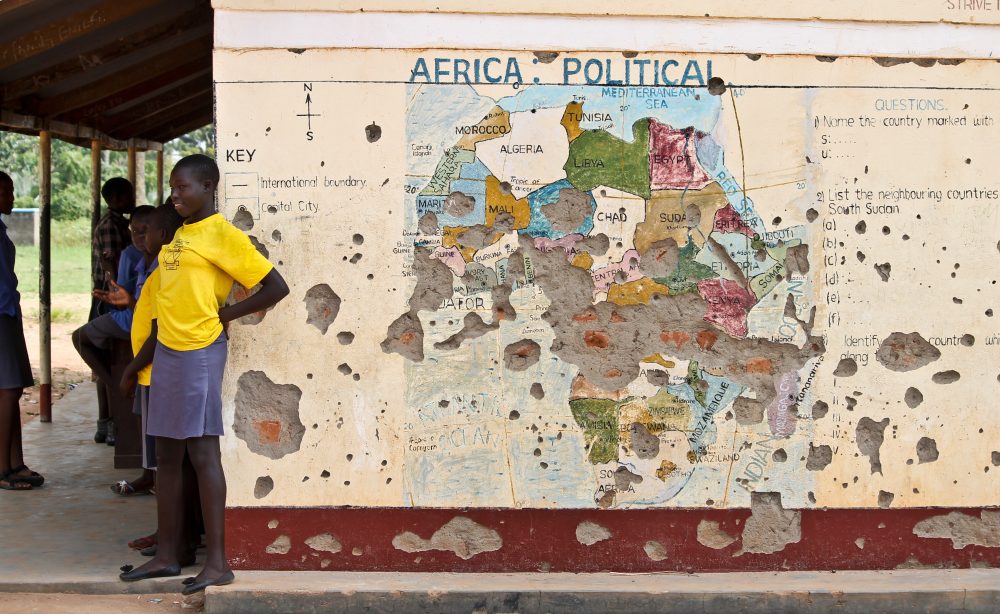
A deadly assault on a South Sudanese village has claimed the lives of at least 169 people, marking another devastating chapter in the nation’s escalating conflict that threatens to spiral into full-scale civil war.
The Sunday attack in Abiemnom county left 90 civilians dead, according to James Monyluak, information minister for the Ruweng administrative region. Among the casualties were women, children, and numerous fighters.
Following the massacre, approximately 1,000 terrified residents fled to a United Nations peacekeeping base seeking safety, according to the U.N. Mission in South Sudan (UNMISS).
“Such violence places civilians at grave risk and must stop immediately,” stated Anita Kiki Gbeho, a UNMISS official. “I urge all involved to cease hostilities without delay and engage in constructive dialogue to address their grievances.”
“Our peacekeepers will continue to do everything within their capabilities to protect civilians seeking refuge at our base,” she added.
UN officials reported 23 wounded in the assault and expressed alarm over “reports indicating that dozens of civilians and some local officials have lost their lives.”
The massacre represents part of intensifying hostilities across South Sudan, where forces supporting President Salva Kiir are clashing with militants believed connected to opposition leader Riek Machar.
Intelligence suggests the armed fighters responsible for Sunday’s attack maintain connections to Machar’s faction, the Sudan People’s Liberation Movement-In-Opposition.
Machar served as Kiir’s deputy until his September dismissal following criminal charges. He remains under house arrest in Juba, South Sudan’s capital, while his trial continues.
The United States has called for negotiations between Kiir and Machar to resolve the crisis.
The current violence jeopardizes a delicate 2018 peace accord that ended five years of civil warfare. Under that arrangement, Machar assumed the role of first vice president in a unity government. However, a UN investigation determined that South Sudan’s leadership is “systematically dismantling” the peace framework.
Machar’s allies contend the subversion charges against him are politically driven. Violence surged dramatically following his removal from office.
The crisis intensified in December when opposition fighters captured government positions in Jonglei county, an opposition stronghold that has become a focal point of renewed combat displacing an estimated 280,000 people, according to UN figures.
Humanitarian organizations have cautioned that restricted access to opposition-controlled territories is putting civilian lives in danger.
Since January, government forces have launched a counterattack involving air strikes and ground operations, despite official pledges to honor the peace agreement.
KYIV, Ukraine — Diplomatic negotiations between Ukraine and Russia set for this week could be moved from the United Arab Emirates to alternative locations due to escalating Middle East violence, Ukrainian President Volodymyr Zelenskyy announced Monday.
The Ukrainian leader indicated that Switzerland or Turkey might serve as backup venues if the originally planned Abu Dhabi meeting cannot proceed safely amid regional warfare.
Zelenskyy also confirmed that Western nations have not signaled any immediate disruption to crucial air defense missile shipments to Ukraine despite their Middle East defense obligations.
The U.S.-facilitated diplomatic initiative aims to resolve the conflict that started when Russia launched its invasion of Ukraine in February 2022. However, recent American and Israeli military actions against Iran, along with retaliatory missile strikes from Iran and its allied militias targeting Israel and Arab nations, threaten to shift global focus away from the nearly three-year European war.
“Because of the fighting, we cannot guarantee at this time that the meeting will happen in Abu Dhabi,” Zelenskyy stated during a WhatsApp conversation with journalists. He had announced the UAE capital as the chosen location just last week.
Past diplomatic sessions between the warring nations have taken place in Abu Dhabi, Istanbul, and Geneva, though none have achieved significant progress on major disputes.
The Ukrainian president reported no immediate reduction in American and European air defense weapon supplies, particularly the crucial American-manufactured Patriot missile systems. Nevertheless, he warned that delivery quantities might decrease if Middle Eastern hostilities persist.
According to Zelenskyy, Russia’s winter campaign to destroy Ukraine’s electrical infrastructure was unsuccessful, despite causing substantial damage. He noted that Russian air strikes have now shifted focus to other critical systems, including water supply networks.
British Prime Minister Keir Starmer announced Sunday that the UK plans to deploy Ukrainian specialists to assist Persian Gulf nations in intercepting Iranian drones. Ukraine has developed significant drone warfare capabilities throughout the conflict, as Russia conducts daily bombardments using Iranian-designed Shahed drones.
However, Zelenskyy said he has not been contacted directly by Britain or other nations regarding such assistance requests.
THE HAGUE, Netherlands (AP) — After more than six decades of doubt, a painting once dismissed as a fake has been verified as an authentic work by renowned Dutch artist Rembrandt van Rijn, according to an announcement Monday from a prominent Netherlands museum.
The Rijksmuseum, which serves as the country’s premier art and history institution, revealed that “Vision of Zacharias in the Temple” is indeed a genuine piece created by Rembrandt when he was 27 years old in Amsterdam during 1633. The confirmation came after two years of intensive examination and advanced technological analysis.
The artwork had disappeared from public view for decades following its purchase by an unnamed private collector in 1961. This acquisition occurred just one year after art experts had concluded the piece was not created by the famous Golden Age painter. Beginning Wednesday, visitors will be able to view the painting alongside other renowned works at the Rijksmuseum, where it will remain as part of a long-term lending arrangement.
Museum Director Taco Dibbits explained that the institution frequently receives inquiries from individuals wondering whether their paintings might be undiscovered Rembrandt works. “We always hope to find a new Rembrandt, but this happens rarely,” Dibbits told The Associated Press. He described making such a discovery as being “just like (finding) a needle in a haystack.”
The anonymous owner initially approached the museum with a simple question about whether the painting was of Dutch origin. “He really didn’t know what he had. And then to discover that it’s a Rembrandt is something that’s amazing to experience,” Dibbits explained.
The composition illustrates a religious narrative featuring high priest Zacharias receiving a divine visit from the Archangel Gabriel, who announces that Zacharias and his spouse will become parents to John the Baptist. According to the museum, the painting captures Zacharias’s astonished reaction through dramatic lighting that signals Gabriel’s celestial presence.
Jonathan Bikker, the museum’s specialist in 17th-century Dutch art, detailed the comprehensive research process that led to the authentication. The investigation included advanced macro X-ray fluorescence scanning technology and detailed comparisons with other confirmed Rembrandt pieces.
“So the wood that was used for the panel on which it’s painted, that is definitely from a tree that was cut down before 1633, the date on the painting,” Bikker explained.
“All the pigments, the paint in the painting were used by Rembrandt in other paintings. And the layers of paint and how he painted it, that is also precisely the same as in other works by Rembrandt,” he continued.
This authentication increases the catalog of known Rembrandt paintings to approximately 350 works and raises optimism about potential future discoveries.
“We’re not actively looking for new paintings by Rembrandt, but I think this gives us hope — not just us, but everyone who’s interested in Rembrandt,” Bikker stated.
WASHINGTON — Pentagon chief Pete Hegseth and the nation’s top military officer, Air Force Gen. Dan Caine of the Joint Chiefs of Staff, are scheduled to address reporters Monday regarding ongoing U.S.-Israeli military operations against Iran.
This will represent the administration’s first formal media briefing since Saturday concerning the strikes and developing Iranian situation. Although President Donald Trump has participated in several telephone interviews with individual news outlets, he has avoided on-camera questioning and has only issued two video statements since military operations commenced.
The scheduled briefing occurs amid an expanding regional conflict. Iranian forces and their proxy organizations have fired missiles targeting Israeli territory, Arab nations, and American military installations throughout the Middle East.
American military personnel have suffered four combat deaths. Trump indicated Sunday that additional U.S. casualties should be expected.
The escalating crisis was highlighted when Kuwait, a U.S. partner nation, accidentally destroyed three American warplanes during a combat operation while Iranian aircraft, missiles, and unmanned drones were conducting attacks. According to U.S. Central Command, all six crew members successfully ejected from their F-15E Strike Eagle aircraft and remain in stable medical condition.
American leadership has not presented any withdrawal strategy or indicated when the conflict might conclude, while the death of Iranian Supreme Leader Ayatollah Ali Khamenei has created uncertainty about the Islamic Republic’s future and pushed the region toward greater instability.
During a Sunday discussion with The New York Times, Trump indicated the military campaign might continue for “four to five weeks.”
The Republican commander-in-chief reported that American and Israeli forces have already hit hundreds of objectives. These operations included joint strikes on Iranian missile facilities and naval targets, with claims of destroying Iran’s naval command center and several warships.
Iran’s Red Crescent Society reports that U.S.-Israeli operations have resulted in at least 555 Iranian deaths. Regional authorities indicate 11 Israeli fatalities and 31 deaths in Lebanon.
TOKYO (AP) — Global tensions reached new heights Monday as international leaders grappled with the aftermath of coordinated US and Israeli military operations against Iran that resulted in the death of Supreme Leader Ali Khamenei.
President Donald Trump, confirming Khamenei’s death in the strikes, described the military action as “the single greatest chance for the Iranian people to take back their Country.”
The international response revealed deep divisions, with many nations carefully avoiding direct commentary on the weekend strikes while focusing criticism on Iran’s retaliatory attacks. Several governments condemned Tehran’s missile strikes against Arab nations while remaining silent about the American and Israeli military operations.
Clear divisions emerged among key allies: Australia and Canada voiced explicit backing for the US actions, while Russia, China and Spain issued sharp rebukes of the strikes.
Following Saturday’s major assault by US and Israeli forces, Trump urged Iranian citizens to “seize control of your destiny” and overthrow the Islamic government that has controlled Iran for over four decades. Tehran responded by launching missiles and unmanned aircraft at Israeli targets and American military installations throughout the Middle East.
European leaders Keir Starmer of Britain, Emmanuel Macron of France, and German Chancellor Friedrich Merz issued a joint declaration urging Washington and Tehran to restart diplomatic discussions, emphasizing their preference for a peaceful resolution.
These three nations have spearheaded international efforts to negotiate agreements regarding Iran’s nuclear capabilities.
Thailand’s Foreign Affairs Ministry appealed for peaceful dialogue, requesting “all the parties to prevent the conflict from further deterioration, thereby undermining international peace and security and affecting innocent civilians.”
Oman issued a declaration stating the American military action “constitutes a violation of the rules of international law and the principle of settling disputes through peaceful means, rather than through hostility and the shedding of blood.” However, Omani Foreign Minister Badr al-Busaidi, who previously facilitated nuclear discussions between Washington and Tehran, maintained after two days of fighting that “the door to diplomacy remains open.”
The Arab League, representing 22 member nations, characterized Iran’s attacks as “a blatant violation of the sovereignty of countries that advocate for peace and strive for stability.” This coalition has traditionally criticized both Israeli and Iranian actions that threaten regional stability.
Senior diplomats from six Persian Gulf nations demanded Iran immediately cease attacks on their soil, arguing these actions violated national sovereignty and jeopardized regional peace.
Foreign ministers from Qatar, Saudi Arabia, the United Arab Emirates, Kuwait, Oman and Bahrain conducted an emergency virtual conference Sunday after the US-Israeli strikes triggered Iranian missile barrages against American bases and civilian targets including airports, hotels and residential neighborhoods.
Syria, previously Iran’s strongest regional partner under former President Bashar Assad, issued a statement exclusively condemning Iranian actions, demonstrating the new government’s efforts to strengthen relationships with regional economic powers and the United States.
Saudi Arabia declared it “condemns and denounces in the strongest terms the treacherous Iranian aggression and the blatant violation of sovereignty.”
Several European and Middle Eastern nations chose diplomatic language, avoiding appearances of either endorsing unilateral American military action or directly criticizing the United States.
Other countries responded more forcefully.
Russia’s Foreign Ministry labeled the strikes “a pre-planned and unprovoked act of armed aggression against a sovereign and independent U.N. member state.” Moscow accused America and Israel of using nuclear concerns as cover while actually seeking government overthrow.
Kremlin representative Dmitry Peskov expressed Monday that Russia felt deeply disappointed seeing the US and Israel attack Iran despite recent diplomatic progress.
China’s leadership said it remained “highly concerned” about the American and Israeli strikes, demanding immediate cessation of military activities and renewed negotiations.
Spain’s prime minister criticized the US-Israeli operations, advocating for immediate tension reduction and peaceful talks.
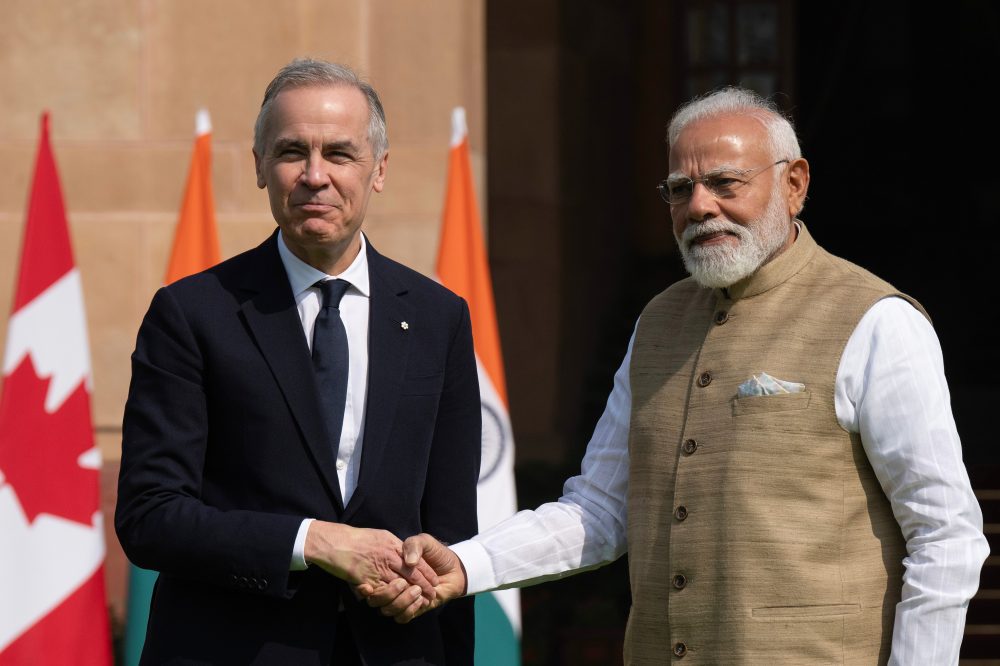
Canada, despite recent diplomatic friction with America, supported the military intervention. “The Islamic Republic of Iran is the principal source of instability and terror throughout the Middle East,” stated Prime Minister Mark Carney.
Australia’s Senate approved a resolution celebrating Khamenei’s death while rejecting provisions praising the United States and Israel.
Japanese Prime Minister Sanae Takaichi downplayed Monday concerns about economic impacts on Middle Eastern oil supplies following the strikes, noting Japan maintains domestic reserves lasting several months.
The Palestinian Authority condemned Iranian attacks on Arab states that have historically provided financial support, while making no reference to Israeli or American strikes.
Anxiety spread across multiple nations. Norwegian Foreign Minister Espen Barth Eide expressed to broadcaster NRK his worry that failed US-Iran negotiations could trigger “a new, extensive war in the Middle East.”
The Nobel Peace Prize-winning International Campaign to Abolish Nuclear Weapons criticized the US and Israeli military operations.
European Union leadership released a Saturday statement advocating restraint and diplomacy to guarantee “nuclear safety.”
Indian Prime Minister Narendra Modi said Monday that India remained troubled by the crisis and supported dialogue to reduce tensions.
Germany announced it would not participate in military operations against Iran but would consider protecting German troops at international bases in Jordan and Iraq if attacked, according to Foreign Minister Johann Wadephul.
British comedy legend John Cleese has announced he will avoid performing in British Columbia during his planned Canadian tour this year. The Monty Python co-creator made the decision following a substantial court ruling in the province.
A school official in British Columbia was recently ordered to pay $750,000 in damages after making public statements opposing transgender ideology. This legal outcome has prompted Cleese, known for his advocacy of free expression and his atheist beliefs, to reconsider performing in the region.
“What a pity. Now I won’t be able to risk doing any shows in British Columbia,” the veteran entertainer stated.
The decision means fans in that Canadian province will miss out on seeing the celebrated performer during his theatrical tour of the country.
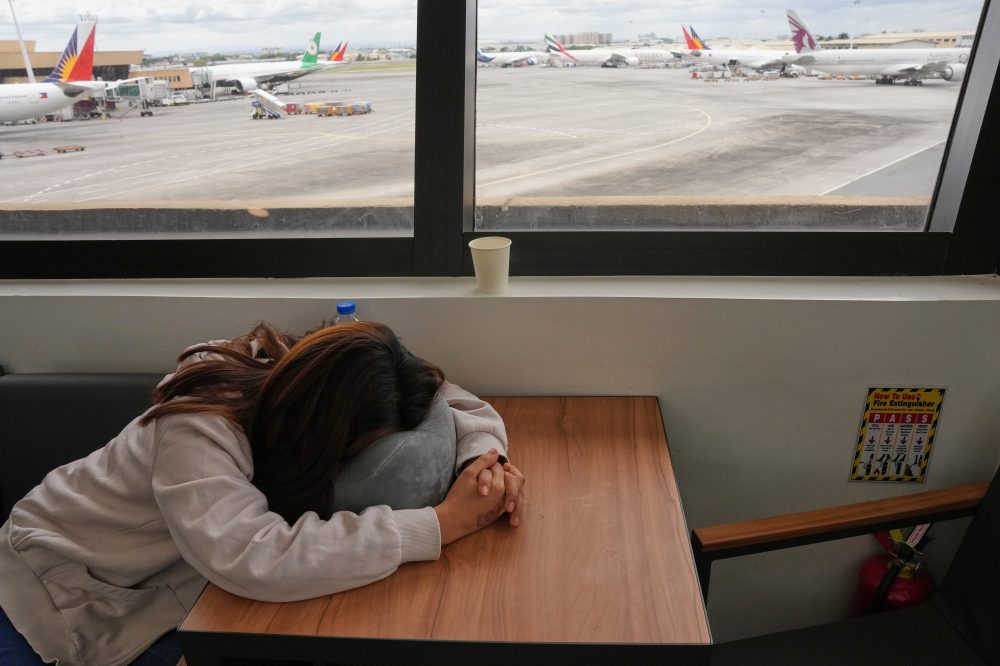
International travelers found themselves trapped Monday after military operations between the United States, Israel and Iran forced the closure of major aviation routes throughout the Middle East.
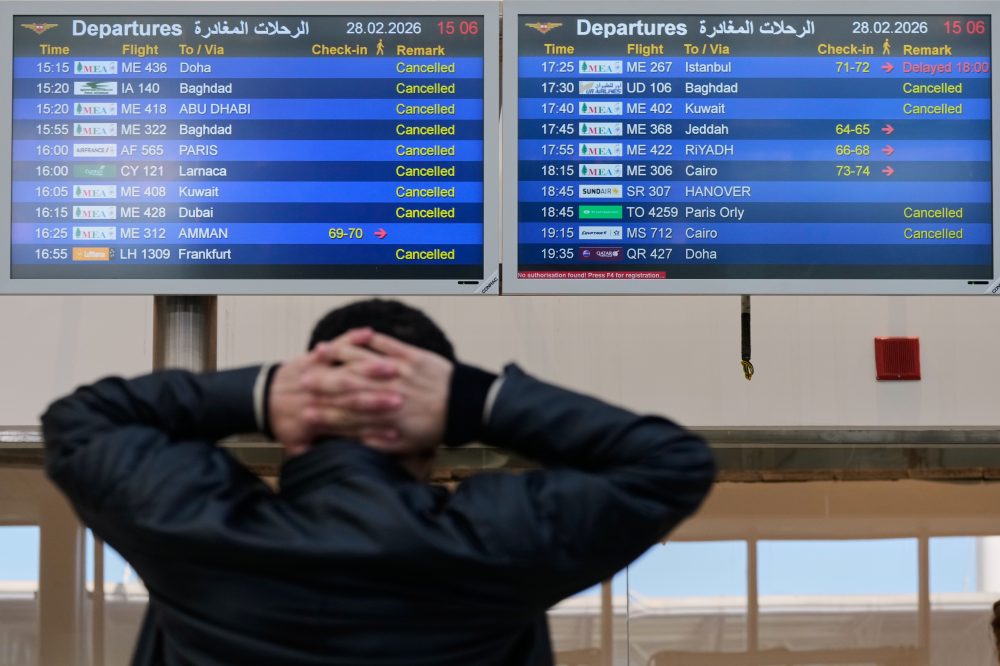
Vacationers and business people were left waiting in hotels, terminals and aboard cruise vessels with little information about when normal air travel might return. Officials advised citizens abroad to stay put while evacuation plans were developed.
Key transportation centers in Dubai, Abu Dhabi and Doha – including the world’s busiest Dubai International Airport – suspended operations after being directly impacted by the conflict. These facilities serve as crucial connection points linking Europe, Africa and Western nations with Asian destinations.
Qatar Airways announced Monday that all services remain halted, with the next status update scheduled for Tuesday morning. Jordan also implemented partial airspace restrictions.
Germany faces a particularly challenging situation with approximately 30,000 of its citizens currently unable to return home from the region.
German Foreign Minister Johann Wadephul stated late Sunday that military rescue operations were impossible due to the airspace closures.
He explained that officials were exploring alternative methods to assist stranded Germans and urged people to heed guidance from travel companies and local officials.
The German Travel Association issued an urgent advisory telling tourists to “remain at their booked hotels as a matter of urgency” and avoid “make their own way to the airport or to a neighboring country.”
Similar guidance came from other nations dealing with stranded citizens.
Czech Prime Minister Andrej Babiš announced plans to deploy two aircraft to Egypt and Jordan for citizen evacuation. One plane will collect 79 Czech nationals in Sharm El Sheikh who are traveling by bus from Israel to Egypt. The second aircraft will retrieve citizens from Amman, Jordan. Babiš reported approximately 6,700 Czech citizens are currently in the affected region.
An additional four Czech evacuation flights are departing for Muscat and Salalah in Oman to transport tourists home.
The disruption extended to Asia, where thousands became stranded on Indonesia’s popular Bali island following widespread flight cancellations.
Officials at Bali’s international airport reported at least 15 cancelled flights by Monday afternoon, including eight departures and seven arrivals on routes serving Dubai, Doha and Abu Dhabi.
Major carriers including Air France suspended service to Tel Aviv, Beirut, Dubai and Riyadh, while airlines from Air India to KLM issued travel warnings and halted operations.
Airport representative Gede Eka Sandi Asmadi confirmed that 3,197 departing passengers were impacted by the service interruptions.
American airlines issued travel alerts as the transportation chaos affected financial markets Monday morning, with travel sector stocks declining sharply. United, Delta and American Airlines each dropped 5% to 6%, while international hotel companies and cruise operators like Carnival experienced even steeper losses.
Lebanon’s Prime Minister Nawaf Salam announced on March 2nd that his government will prohibit Hezbollah’s armed operations throughout the country. The announcement comes after Israel conducted strikes against facilities connected to Hezbollah in response to the militant group’s recent missile and drone attacks.
The escalation follows unconfirmed reports regarding the death of Iran’s Supreme Leader Ali Khamenei, which appears to have triggered the series of retaliatory actions between the groups. Israel targeted what it described as Hezbollah-affiliated locations after the organization launched its attacks using missiles and unmanned aircraft.
PARIS — French President Emmanuel Macron will address European security concerns Monday when he delivers a closely anticipated speech updating his nation’s nuclear weapons strategy from a military submarine base.
The French leader plans to detail how his country’s nuclear arsenal factors into European defense planning as continental leaders express mounting anxiety about President Donald Trump’s stance on Ukraine, Greenland and NATO commitments.
Despite escalating Middle East tensions involving Iran, French officials decided to proceed with the previously scheduled address. A presidential aide, speaking on condition of anonymity per standard protocol, explained that current global violence demonstrates why France must maintain its strategic independence against emerging threats.
Across Europe, government leaders are questioning whether the United States will honor its traditional “nuclear umbrella” commitment — the longstanding promise that American nuclear capabilities would shield NATO allies from attack.
As the European Union’s sole nuclear-armed nation, France holds unique significance in continental defense discussions. Macron’s administration indicated the speech will expand upon his 2020 nuclear deterrence remarks, made before Russia’s comprehensive Ukraine invasion transformed European security calculations.
Presidential officials have not revealed specific details about Monday’s announcement.
Several European countries have already accepted Macron’s previous invitation to participate in discussions about French nuclear deterrence and potentially join nuclear training exercises.
German Chancellor Friedrich Merz disclosed earlier this month that he had conducted “preliminary discussions” with Macron regarding nuclear cooperation and publicly suggested German military aircraft might transport French nuclear weapons.
“We have to re-articulate nuclear deterrence,” Macron stated at this month’s Munich Security Council gathering. He described having “strategic conversations” with Merz and other European leaders “in order to see how we can articulate our national doctrine, which is guaranteed and controlled by the Constitution, with special cooperation, common exercises and common security interests.”
France and Britain established a joint agreement in July enabling their independent nuclear forces to operate in “coordinated” fashion. The United Kingdom, though no longer an EU member while remaining a NATO partner, represents Europe’s only other nuclear-capable nation.
Macron has repeatedly emphasized that authority over French nuclear weapons deployment remains exclusively with France’s president.
A disturbing situation is unfolding in Iran’s agricultural sector as chickens on multiple farms have begun turning on each other in acts of cannibalism, driven by severe feed shortages linked to the nation’s worsening economic crisis.
The alarming behavior stems from Iran’s inability to secure adequate foreign currency required to purchase corn and soybeans – two essential ingredients that form the foundation of poultry feed. This currency shortage has created a domino effect, leaving farm operators across the country struggling to properly nourish their flocks.
The crisis represents the latest blow to Iran’s already struggling poultry industry, which has faced mounting challenges in recent years. Without proper nutrition, the birds have resorted to aggressive behavior toward their fellow chickens, creating additional losses for farmers already dealing with economic hardship.
The situation highlights how Iran’s broader economic difficulties are rippling through various sectors, with the agricultural industry bearing significant consequences as import capabilities continue to decline.
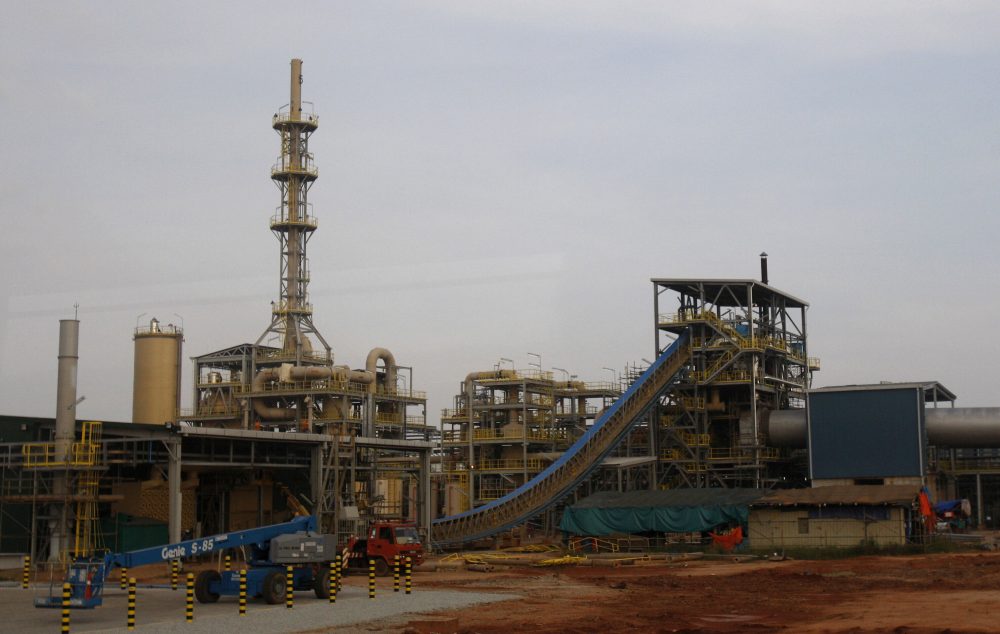
KUALA LUMPUR, Malaysia (AP) — Malaysian officials have granted Australian mining company Lynas Rare Earths a decade-long extension to operate its processing facility, while mandating the elimination of radioactive waste production by 2031.
The Lynas processing plant in Malaysia represents the first rare earth refinery established outside of China, producing essential materials for advanced technology manufacturing. Located in Pahang state’s central region, the facility has been operational since 2012 but has faced ongoing controversy regarding radiation concerns from accumulated waste materials.
Science Minister Chang Lih Kang announced Monday that radioactive waste produced over the next five years must undergo treatment and neutralization through thorium extraction or alternative approaches. He emphasized that no additional permanent storage facilities would be permitted.
The renewed operating permit extends through March 3, 2036, with a mandatory review scheduled after five years. Chang noted the license faces potential revocation if Lynas fails to meet established conditions.
Activist organizations have maintained sustained opposition to the Lynas facility, pushing for the company to remove its radioactive materials from the country. These groups argue that radioactive components, including thorium and uranium, become more dangerous following mechanical and chemical processing.
Lynas received a five-year window to upgrade its infrastructure and expand operations under what Chang characterized as an aggressive but definitive schedule. He reported that laboratory testing has demonstrated encouraging outcomes in waste radiation neutralization through thorium extraction, though implementing such technology on an industrial scale typically requires seven to 10 years.
“We have not gone against our promise to prevent the accumulation of radioactive waste in Malaysia. We remain committed to that position, and through this license renewal, we aim to fully achieve this goal by 2031,” Chang said in a statement.
Chang explained the license approval followed comprehensive technical assessment, considering Malaysia’s strategic priorities and commitments from Lynas. Current radioactive waste will be housed in a permanent storage facility currently under development, expected to be completed by year’s end.
Rare earth elements comprise 17 minerals essential for manufacturing electric and hybrid vehicles, defense systems, flat-screen televisions, mobile devices, mercury-vapor lighting and camera lenses. While China holds approximately one-third of global rare earth deposits, it maintains nearly complete control over supply chains. Lynas has indicated its refinery could supply almost one-third of worldwide rare earth demand, excluding China.
Malaysia’s only other rare earth processing facility — run by Japan’s Mitsubishi Group in northern Perak state — shuttered in 1992 after public demonstrations and allegations linking it to birth defects and leukemia among local residents. The site remains one of Asia’s most extensive radioactive contamination cleanup locations.
Thousands of Lebanese residents are abandoning their communities as deadly violence escalates along the Israeli-Lebanese border following Monday’s missile exchanges between the two nations.
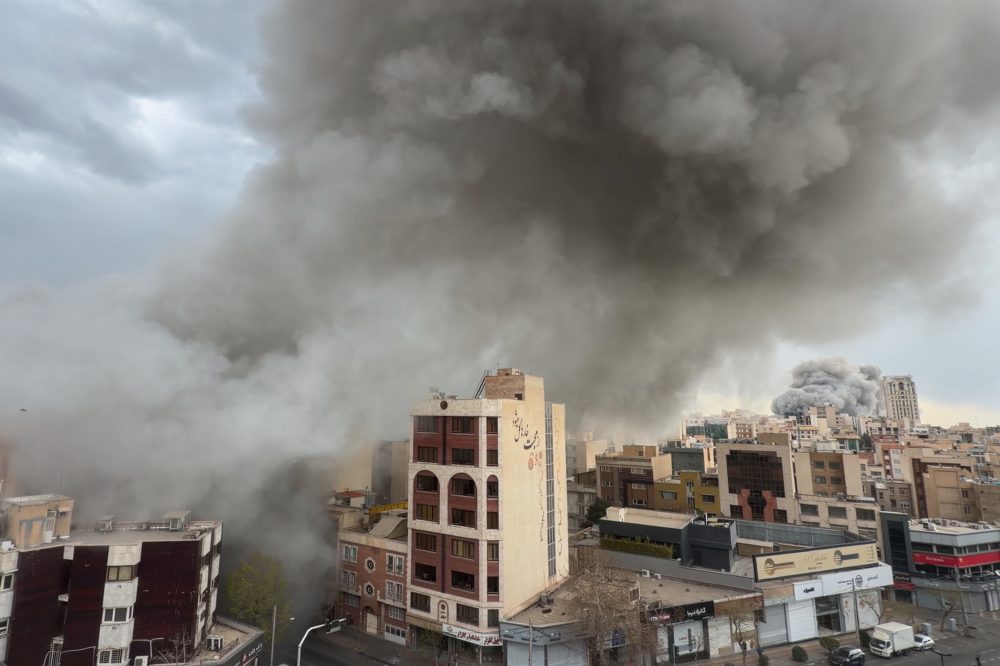
The violence began when Hezbollah fired rockets from Lebanese territory into Israel, responding to the death of Iranian Supreme Leader Ali Khamenei. Israeli forces answered with military strikes against Lebanese targets, resulting in at least 31 fatalities according to Lebanon’s Health Ministry.
Images captured by Associated Press photographers document the mass displacement as families pack belongings and flee areas near the conflict zone.
VIENNA (AP) — Iran’s representative to the International Atomic Energy Agency made accusations Monday that American and Israeli military strikes hit the country’s Natanz uranium enrichment complex.
However, this claim conflicts with statements from UN nuclear oversight director Rafael Grossi, who indicated the agency has found “no indication” that atomic facilities in Iran have been struck “up to now.”
“Again they attacked Iran’s peaceful safeguarded nuclear facilities yesterday. Their justification that Iran wants to develop nuclear weapons is simply a big lie,” Iranian Ambassador Reza Najafi stated to media at IAEA offices in Vienna during a special Board of Governors meeting requested by Russia.
When a journalist asked which atomic facility he meant, Najafi responded “Natanz.”
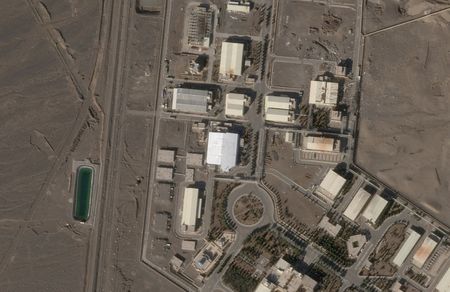
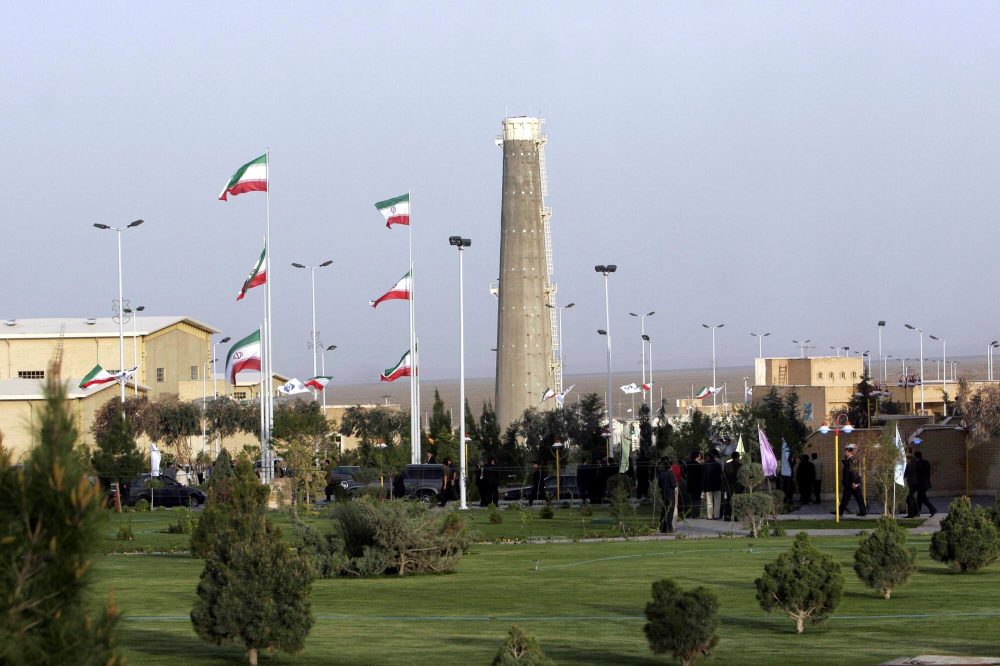
Located approximately 220 kilometers (135 miles) south of Tehran, the Natanz complex combines surface and underground laboratories that handled most of Iran’s uranium processing operations.
Prior to current hostilities, IAEA reports showed Iran operated sophisticated centrifuges at the site to process uranium to 60% purity — just one technical step away from the 90% weapons-grade threshold. Officials believe some of this material remained at the facility when the entire compound was struck last June.
The primary surface enrichment structure at Natanz was called the Pilot Fuel Enrichment Plant. Israeli forces struck this building on June 13, rendering it “functionally destroyed” and causing significant damage to subterranean chambers containing centrifuge arrays, according to IAEA Director-General Rafael Grossi’s assessment at that time. A subsequent U.S. operation on June 22 targeted Natanz’s underground sections with penetrating explosives, potentially destroying remaining equipment.
Speaking to the special Board of Governors session, IAEA Director Rafael Mariano Grossi stated the International Atomic Energy Agency currently has “no indication that any of the nuclear installations, including the Bushehr Nuclear Power Plant, the Tehran Research Reactor or other nuclear fuel cycle facilities” in Iran have sustained damage or been targeted.
Grossi noted the IAEA continues attempting to reach Iranian nuclear regulatory officials through the agency’s Incident and Emergency Center “with no response so far,” citing communication difficulties due to the ongoing conflict.
The IAEA chief called for military restraint, cautioning that Iran and numerous other regional nations facing military action operate “operational nuclear power plants and nuclear research reactors, as well as associated fuel storage sites, increasing the threat to nuclear safety.”
He reported that thus far “no elevation of radiation levels above the usual background levels has been detected in countries bordering Iran.”
Najafi further accused the United States of using “deception and disinformation to invade other countries.” He claimed the conflict was initiated by U.S. President Donald Trump, “who attempts to portray himself as a man of peace and asking for Nobel Peace Prize. Even when they talk about peace, it is a lie. And if they call for diplomacy, it’s about deception,” he stated.
The Iranian ambassador characterized the strikes on his nation as “unlawful, criminal and brutal” and urged the 35-member IAEA Board of Governors to “categorically condemn” the military actions.
A joint military operation conducted by the United States and Israel during the weekend has resulted in the death of Iran’s Supreme Leader Ayatollah Ali Khamenei and numerous other high-ranking officials, sparking intense Iranian retaliation that raises fears of expanded regional conflict.
U.S. allies have committed to assisting in defending against Iran’s missile and drone attacks. For the first time in over a year, the Lebanese militant organization Hezbollah has launched strikes against Israel, prompting Israeli counterattacks.
The conflict has resulted in the first reported American military casualties. Additional fatalities have been confirmed in Israel and Gulf region countries, while Iranian officials report hundreds of deaths within their borders.
Following Khamenei’s death, Iran faces the task of selecting a new supreme leader for the first time since 1989. President Donald Trump has called on Iranian citizens to take advantage of this opportunity to topple the theocratic government that suppressed nationwide demonstrations earlier this year. However, there are no indications of such an uprising occurring.
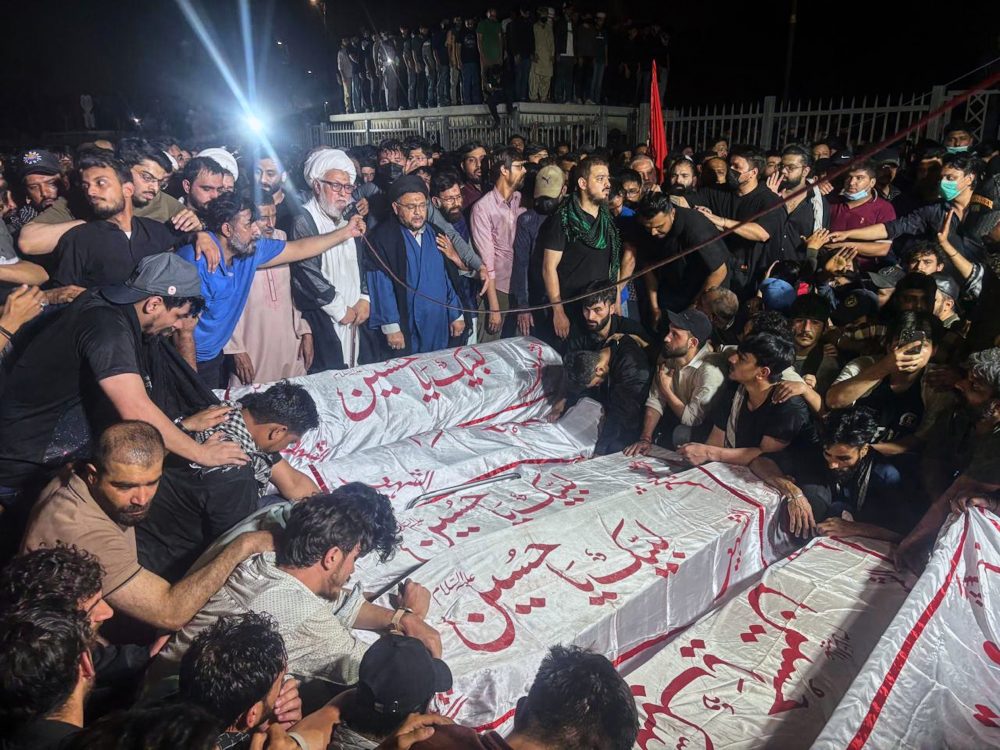
Global reactions have been mixed, with some demonstrations taking place while others have celebrated the developments.
These military actions occurred just two days following the most recent diplomatic discussions between the U.S. and Iran regarding restrictions on Tehran’s nuclear activities. The situation mirrors events from the previous year, when negotiations were interrupted by an Israeli assault that resulted in a 12-day conflict and American bombardment of Iranian nuclear facilities. Washington has maintained that Iran has been reconstructing its nuclear capabilities in recent months.
Iranian officials claim they have not conducted uranium enrichment since June, though they have prevented International Atomic Energy Agency inspectors from accessing the sites targeted by American forces.
The 86-year-old Khamenei died during Saturday morning’s bombing of his residential compound. Iranian ballistic missile installations, naval headquarters, and warships were also struck. Iran reports that attacks also hit the Natanz nuclear enrichment facility.
With no designated heir, Iran has established a three-person leadership council. Foreign Minister Abbas Araghchi has indicated that a new supreme leader will be selected within “one or two days.” Limited street celebrations following Khamenei’s death have been reported, though internet restrictions within Iran have made monitoring the situation difficult.
Iranian forces have responded with strikes against Israel, resulting in multiple casualties. Iran has also launched attacks on American military installations throughout the region. Military officials confirmed three service members were killed, marking the first known American losses. Additional Iranian attacks have caused several deaths in Gulf states including the United Arab Emirates and Kuwait, while hundreds of flights have been disrupted at major international airports.
The strikes followed a significant U.S. military buildup in the region, representing the largest American presence there in decades. Israeli and American intelligence agencies spent weeks monitoring the locations of senior Iranian leadership. Trump has stated that the “heavy and pinpoint bombing” operations in Iran will continue throughout the week or potentially longer.
American military installations across the region remain vulnerable to potential Iranian attacks.
Washington has indicated willingness to engage in future discussions with Iran’s incoming leadership. Meanwhile, certain congressional leaders have objected to launching the strikes without legislative approval.
Israel views Iran as a fundamental threat and has consistently worked to eliminate its nuclear and missile programs, while also targeting allied armed groups such as Hamas in Gaza and Hezbollah in Lebanon. Israeli operations have significantly weakened these organizations following Hamas’ October 7, 2023, attack on Israel that initiated the Gaza conflict.
Early Monday, Israel conducted strikes in Lebanon in response to missiles fired by Hezbollah across the border.
Israel has now committed to “nonstop” attacks and reported that 100 fighter aircraft simultaneously struck targets in Tehran at one point. During last year’s conflict, Israel presented Trump with a proposal to eliminate Khamenei, which has now been accomplished.
Israeli citizens sought shelter throughout the weekend, though most Iranian attacks have been successfully intercepted. Prime Minister Benjamin Netanyahu, facing international criticism over the Gaza war, is declaring the outcome a victory for Israeli security.
However, threats persist from Iranian-supported groups like Yemen’s Houthi rebels, who have promised to restart attacks on Red Sea shipping lanes and Israeli targets.
The current crisis has already exceeded the intensity of last year’s Israel-Iran conflict, where the United States became involved near the conclusion by bombing Iranian nuclear sites, leading to Iran’s calculated response against a U.S. military base in Qatar.
Currently, hundreds of Iranian missile and drone attacks have caused widespread alarm across Gulf nations that had previously remained relatively protected from regional instability.
The United Arab Emirates reported disruptions at Dubai’s primary airport, while tourists and residents reacted to the sounds of interceptor missiles. Saudi Arabia confirmed it intercepted attacks and summoned Iran’s diplomatic representative. Senior diplomats from six Gulf states declared their “right to self-defense.”
Oil markets experienced sharp price increases when trading resumed Sunday, as investors anticipated potential supply disruptions from this crucial region. Concerns about attacks near the Strait of Hormuz, the world’s most vital oil transit point, are also affecting supply considerations.
In response, eight nations within the OPEC+ oil alliance announced plans to increase crude oil production.
Monday may bring initial information about potential impacts on Iran’s nuclear program as the International Atomic Energy Agency’s Board of Governors convenes a meeting regarding the conflict.
PARIS – French officials declared Monday their willingness to provide military assistance to Gulf nations facing retaliatory attacks from Iran, while criticizing recent strikes against Iranian targets as lacking proper international authorization.
Foreign Minister Jean-Noel Barrot announced the pledge during a press conference following an emergency meeting at France’s Foreign Ministry in Paris.
“Regarding more specifically our partners in the region who have been targeted, deliberately aimed at by the Iranian regime, we stand ready to contribute to their defense,” Barrot stated to journalists.
The foreign minister clarified that any French assistance would come “based on their request, in a proportionate manner and in accordance with the principle of collective self-defence provided for under international law.”
Barrot also criticized Saturday’s military actions by Israel and the United States against Iran, arguing these “unilateral strikes” should have received authorization from the U.N. Security Council to gain proper legitimacy.
The French official urged Iran to cease its current offensive operations and make significant compromises to reach a diplomatic resolution that could bring stability to the Middle East.
According to Barrot, no French personnel were injured in Sunday’s drone strike on a French naval facility in Abu Dhabi, though the attack resulted in minor property damage.
Energy facilities across the Middle East came under attack Monday, forcing the temporary closure of Saudi Arabia’s largest domestic oil refinery following a drone strike, according to industry sources.
The escalating violence has now entered its third day, prompting energy companies to halt operations at facilities throughout the region as a safety precaution. Oil production in Iraqi Kurdistan has been largely suspended, while several major Israeli natural gas fields have also ceased operations, disrupting energy exports to Egypt.
Saudi Aramco’s Ras Tanura refinery, which processes 550,000 barrels daily, was temporarily shuttered after the attack. The facility sits within a crucial energy hub along Saudi Arabia’s Gulf coastline that also functions as a key export terminal for the kingdom’s crude oil.
In northern Iraq’s Kurdistan region, energy companies including DNO, Gulf Keystone Petroleum, Dana Gas and HKN Energy have halted production at their oil fields as a safety measure. The region had been exporting approximately 200,000 barrels per day through a pipeline to Turkey’s Ceyhan port in February. Officials report no damage to the facilities.
Off Israel’s coast, Chevron’s massive Leviathan natural gas field suspended operations Saturday, while Energean also shut down its production vessel that services smaller gas fields in the area.
Saudi defense officials confirmed that two drones were intercepted at the Ras Tanura facility, with falling debris sparking a small fire. The Saudi defense ministry spokesperson told Al Arabiya TV that no personnel were injured in the incident.
“The situation at Aramco’s Ras Tanura refinery is under control,” a source familiar with the matter reported. Saudi Arabia’s state news agency said some refinery units were shut down as a precaution, but emphasized that fuel supplies to domestic markets remained unaffected.
The facility closures are heightening concerns about global energy supplies, particularly as shipping traffic through the Strait of Hormuz has nearly stopped following attacks on vessels Sunday. About 20 percent of the world’s oil consumption passes through this critical waterway. Brent crude oil prices jumped approximately 10 percent Monday, climbing above $82 per barrel.
Energy analysts view the Saudi refinery attack as a major escalation in regional tensions. “The attack on Saudi Arabia’s Ras Tanura refinery marks a significant escalation, with Gulf energy infrastructure now squarely in Iran’s sights,” said Torbjorn Soltvedt, principal Middle East analyst at risk intelligence firm Verisk Maplecroft.
Soltvedt added, “The attack is also likely to move Saudi Arabia and neighbouring Gulf states closer to joining U.S. and Israeli military operations against Iran.”
This isn’t the first time Saudi Arabia’s heavily protected energy infrastructure has come under attack. In September 2019, drone and missile strikes on the Abqaiq and Khurais facilities temporarily eliminated more than half of the kingdom’s oil production. The Ras Tanura facility was previously targeted by Yemen’s Iran-backed Houthi forces in 2021.
Qatar successfully stopped Iranian strikes aimed at civilian targets, including the nation’s international airport, according to a foreign ministry spokesperson who spoke with CNN on Monday.
The spokesperson, Majed Al Ansari, warned that these types of aggressive actions “could not remain unanswered” and confirmed that Qatar is currently not maintaining diplomatic engagement with Iran.
The March 2nd statement highlights escalating tensions between the two Middle Eastern nations as Qatar takes a firm stance against what it describes as unprovoked attacks on non-military infrastructure.
Military forces have taken control of two northern Pakistani cities under emergency curfew orders following deadly weekend violence that claimed at least 23 lives, government officials announced Monday.
The lockdown affects Gilgit and Skardu, where thousands of Shiite protesters stormed United Nations facilities on Sunday in response to U.S.-Israeli military operations that killed Iran’s Supreme Leader Ayatollah Ali Khamenei. The demonstrations turned destructive as crowds targeted the UN Military Observer Group offices that oversee Kashmir ceasefire monitoring and attacked UN Development Programme facilities in Skardu. Violence also erupted in Gilgit, where demonstrators set fire to a police station and caused damage to a school and local charity buildings. Regional police report 12 fatalities and 80 wounded in the Gilgit-Baltistan area alone.
UN spokesperson Stephane Dujarric confirmed Monday that protesters vandalized the UNMOGIP Field Station during the violent confrontations. “The safety and security of U.N. personnel and premises throughout the region remain our top priority, and we continue to closely monitor the situation,” Dujarric stated.
Regional government representative Shabir Mir announced Monday that authorities have restored order, with the emergency curfew scheduled to continue through Wednesday. Police commander Akbar Nasir Khan instructed citizens to remain in their homes due to “deteriorating law and order conditions.”
Violence also erupted in Pakistan’s major southern port of Karachi, where angry crowds breached the U.S. Consulate grounds Sunday, shattering windows and attempting to ignite the structure. Law enforcement responded with riot control measures including batons, tear gas, and live ammunition, resulting in 10 deaths and over 50 injuries. Additional violence in the capital city of Islamabad claimed one life as Shiite protesters attempted to march toward the American Embassy.
American diplomatic facilities suspended normal operations Monday, with the U.S. Embassy and consulates in Karachi and Lahore canceling scheduled visa services and citizen assistance due to security threats. Pakistani security forces have increased protection around all U.S. diplomatic properties nationwide, including enhanced security perimeters around the Peshawar consulate facility.
Financial markets reflected the regional instability Monday as the Pakistan Stock Exchange experienced significant losses, with the primary KSE-100 Index dropping nearly 10 percent. Market analysts attributed the widespread selling across all sectors to increased uncertainty following the Iranian attacks and resulting geopolitical tensions.
The violent demonstrations reflect growing fury throughout Pakistan, especially within Shiite communities, following the U.S.-Israeli military operations that eliminated Khamenei and other high-ranking Iranian officials. Although Shiites represent a minority population nationally, they constitute majorities in certain northern districts and throughout Khyber Pakhtunkhwa province along the Afghan border.
These domestic disturbances occurred as Pakistan continues cross-border military confrontations with Afghanistan that began Thursday following Afghan retaliatory strikes responding to Pakistani air operations conducted the previous Sunday. Pakistani forces have maintained ongoing border operations since the conflict began.
MOSCOW – Russian officials announced Monday they are maintaining ongoing communications with Iran’s government following what Moscow describes as unprovoked attacks on the country, expressing significant disappointment over recent developments.
On Sunday, Russian President Vladimir Putin denounced the death of Iranian Supreme Leader Ayatollah Ali Khamenei as a calculated assassination. Russia’s Foreign Ministry has pointed fingers at the United States and Israel, claiming their actions are pushing the Middle East toward uncontrolled chaos.
Kremlin spokesperson Dmitry Peskov revealed Monday that Russian officials are examining the circumstances and forming their own assessment after Washington decided to conduct military operations against Iran, despite what appeared to be productive diplomatic discussions.
“Regarding the talks facilitated by Oman between America and Iran, we must voice our profound disappointment that despite reports of meaningful advancement in those discussions, circumstances have still descended into direct hostilities,” Peskov stated during a press briefing.
The spokesperson mentioned that Putin plans to conduct an international phone conversation about Iran later Monday, though he wouldn’t reveal the intended recipient.
“What I can share is that we maintain ongoing communication with Iran’s government and are examining developments affecting that nation. Meanwhile, we’re continuing discussions with leaders of countries impacted by this conflict, including nations in the Persian Gulf region,” Peskov explained.
NAIROBI – An assault by unknown gunmen in South Sudan’s Ruweng Administrative Area on Sunday resulted in the deaths of 122 individuals, with 82 of those being civilians, according to the region’s information minister who spoke Monday.
James Monyliak Majok confirmed the devastating toll to Reuters, stating: “I would like to sadly inform you that among those killed included the County Commissioner and the Executive Director. Eighty two were mostly children, women, and elderly.”
The identity of the attackers and their motives remain unclear as authorities continue investigating the incident that claimed the lives of numerous vulnerable residents along with key local government officials.
Iranian representatives accused the United States and Israel of launching military strikes against the country’s major nuclear facility at Natanz, according to statements made during a United Nations nuclear oversight meeting in Vienna on Monday.
Speaking to journalists at the International Atomic Energy Agency’s board meeting, Iran’s U.N. nuclear watchdog ambassador Reza Najafi claimed the attacks targeted peaceful nuclear operations under international supervision.
“Again they attacked Iran’s peaceful, safeguarded nuclear facilities yesterday,” Najafi stated to reporters gathered at the 35-nation governing board session. When pressed by Reuters about which specific installations were targeted, Najafi confirmed the strikes hit the Natanz complex.
The extensive nuclear installation at Natanz has been a focal point of international attention regarding Iran’s nuclear program activities.
Iranian Americans residing in the Los Angeles area are expressing their viewpoints regarding recent military operations conducted by the United States and Israel targeting Iran.
The Iranian diaspora community in Los Angeles has been sharing their reactions as tensions escalate in the ongoing Middle East conflict involving Iran, the United States, and Israel.
NEW DELHI (AP) — Canadian and Indian leaders announced Monday their commitment to enhancing economic cooperation, marking a significant effort to repair diplomatic relations that have been troubled for the past two years.
Following discussions with Canadian Prime Minister Mark Carney, Indian Prime Minister Narendra Modi announced that both nations would work toward completing a “comprehensive economic partnership” designed to boost bilateral trade to $50 billion by 2030.
The two countries resumed progress on trade agreement negotiations that had been stalled, as Carney has worked to rebuild diplomatic communication and stabilize the relationship between the nations.
According to Carney, both governments are targeting completion of the agreement before year’s end.
“This is not merely the renewal of a relationship. It is the expansion of a valued partnership with new ambition, focus, and foresight,” Carney said.
The relationship between the countries became strained when Canadian officials claimed India played a role in the death of a Canadian Sikh activist near Vancouver in June 2023. India strongly rejected these claims and criticized former Canadian Prime Minister Justin Trudeau’s administration for providing refuge to Sikh extremists associated with the Khalistan movement. India has prohibited this movement, which seeks to establish an independent Sikh state.
The diplomatic crisis resulted in both nations removing senior diplomatic personnel and temporarily halting certain visa operations.
The relationship began improving last June when Carney extended an invitation to Modi to attend the G7 summit in Alberta.
Following Monday’s discussions, Modi revealed that India and Canada had signed a nuclear cooperation agreement allowing Canada to provide uranium to India. He also noted that both countries would collaborate on strengthening defense industries and improving maritime domain awareness.
Representatives from both governments also signed multiple memoranda of understanding covering critical minerals, energy cooperation, and cultural exchange programs.
Carney plans to continue his trip to Australia and Japan later Monday as part of his strategy to expand Canada’s trade relationships beyond the United States. His administration has established an objective to double Canada’s non-U.S. exports within the next ten years, citing concerns that American tariffs are discouraging investment.
BEIJING – Chinese officials confirmed Monday that one of their citizens died in Tehran amid escalating Middle East violence, while Beijing has successfully evacuated over 3,000 nationals from Iran.
The fatality occurred as tensions exploded following weekend strikes by U.S. and Israeli forces that resulted in the death of Iran’s Supreme Leader Ali Khamenei. Iran responded with retaliatory attacks targeting Israel and Gulf nations where American military installations are located.
During a routine press conference, Chinese foreign ministry spokesperson Mao Ning explained that diplomatic missions in surrounding nations have established working committees to receive and support evacuated citizens, though she provided no details about plans for their return to China.
Ning revealed that Beijing received no advance warning about Washington’s military operations against Iran.
The spokesperson also pushed back against reports suggesting Iran and China were nearing an agreement for supersonic anti-ship missile purchases, stating China remains a responsible major power that “always fulfilled its international obligations.”
Ning repeated Beijing’s condemnation of the strikes and Khamenei’s killing, calling on all involved nations to halt military operations immediately to avoid further escalation.
The Chinese official emphasized that Gulf states’ sovereignty, security and territorial boundaries must be completely respected, adding that China supports enhanced dialogue between nations in the region.
Growing tensions in the Middle East involving Iran are creating significant disruptions to oil shipments destined for Asian markets, as shipping vessels remain stuck in the Persian Gulf while crude oil and transportation expenses climb, according to industry experts and analysts who spoke Monday.
These supply chain interruptions underscore the vulnerability of Asia, which represents the globe’s largest oil-consuming region and relies on Middle Eastern producers for 60% of its petroleum needs, amid ongoing hostilities between the United States and Israel against Iran.
President Donald Trump indicated that the U.S.-Israeli military operations could extend for several weeks, potentially causing extended interruptions to shipping traffic through the Strait of Hormuz, a critical waterway that handles approximately 20% of worldwide oil production and a comparable portion of liquefied natural gas shipments from Middle Eastern suppliers.
Weekend attacks resulted in damage to three oil tankers and claimed the life of one crew member, while earlier strikes prompted roughly 200 vessels to anchor near the Strait as a safety precaution. Insurance companies withdrew war risk coverage on Monday, and industry experts anticipate shipping rates will spike as operators keep their fleets away from the area.
Citi analysts noted in their report: “Iran has not officially shut the Strait of Hormuz but risk aversion from shippers is a real phenomenon. Transit volumes have already declined with vessels parking outside the Strait.”
International oil prices jumped approximately 9% on Monday following earlier increases of up to 13%.
Japan’s Chief Cabinet Secretary Minoru Kihara addressed the situation during a briefing, stating: “Some crude oil tankers bound for Japan from the Middle East are waiting in the Persian Gulf, avoiding passage through the Strait of Hormuz.”
Japanese trading company Itochu confirmed it is facing “some impact” on Gulf shipments of crude oil and petroleum products and plans to obtain supplies from non-Middle Eastern sources, according to an email statement.
Japan’s largest refiner, Eneos, indicated it would evaluate effects on future crude oil purchasing while keeping watch on developments.
A prolonged closure of the Strait would drive oil costs higher and potentially create supply shortfalls for China and India, the world’s first and third-largest oil importing nations, compelling these countries to use emergency reserves and reduce refinery activity.
The International Energy Agency, comprising primarily developed nations, mandates that member countries maintain oil reserves equal to no less than 90 days of net oil imports.
Kihara stated that Japan currently has no immediate intentions to release from its strategic petroleum reserves, among the world’s most substantial.
Indonesia’s state energy corporation Pertamina announced it has implemented risk management strategies and is optimizing refinery operations to maintain fuel and liquefied petroleum gas availability. The nation serves as Southeast Asia’s top gasoline importer.
Several Indian refineries have already informed Middle Eastern suppliers they cannot secure vessels to transport crude oil, according to sources from two companies.
India’s energy ministry and refiners conducted weekend meetings to explore options for reducing the crisis’s impact on the nation’s energy security, sources revealed.
The refiners plan to examine all alternatives, including Russian oil pending New Delhi’s approval, if the crisis extends beyond 10-15 days, sources indicated.
One source explained: “Alternative routes to get oil from the Middle East are costly and availability is not there as ships are not willing to go through that route.”
The interruption of LNG deliveries from Qatar, Oman and the United Arab Emirates would most severely affect Asian purchasers, particularly Pakistan, India and Bangladesh, analysts warned.
Rystad Energy analysts observed in their assessment: “Those countries face a choice between attracting LNG cargoes from other producers and reducing gas demand either by fuel switching or outright demand curtailment.”
China and Japan rank as the world’s top two LNG importing countries. However, Japan obtains most of its supply from Australia. Japanese utilities currently hold LNG inventory sufficient for approximately three weeks of domestic consumption, Kihara reported.
Recent military operations targeting Iran may influence North Korean leader Kim Jong Un to restart nuclear discussions with President Donald Trump, according to analysts and former government officials speaking from Seoul.
Previous diplomatic efforts aimed at addressing North Korea’s nuclear weapons program and missile development collapsed after high-level meetings between Kim and Trump during 2018 and 2019, despite initial optimism. However, the recent Iranian situation could change Pyongyang’s calculations.
The military action that resulted in the death of Iran’s Supreme Leader Ayatollah Ali Khamenei occurred two months following the capture of Venezuelan President Nicolas Maduro by American special operations forces under Trump’s direction.
“Kim must have thought Iran was attacked like that because it didn’t have nuclear weapons,” explained Song Seong-jong, who teaches at Daejeon University and previously worked for South Korea’s Defence Ministry.
North Korea’s foreign ministry described the military operation as unavoidable, characterizing the United States as “hegemonic and rogue” in a statement released through state-controlled media this past Sunday.
During a recent ruling party gathering, Kim announced plans to expand the country’s nuclear arsenal, though he suggested future discussions remained possible based on Washington’s approach.
“If the United States withdraws its policy of confrontation with North Korea by respecting our country’s current status … there is no reason why we cannot get along well with the U.S.,” Kim stated according to the KCNA news agency.
Trump has expressed interest in renewed discussions, leading to speculation about a potential meeting during his upcoming visit to China scheduled for March 31 through April 2.
“The lesson the Trump administration wants pariah states to take is clear; stop threatening America and its allies and make a deal before it is too late,” said Leif-Eric Easley, who teaches international studies at Ewha Womans University in Seoul.
Easley noted that North Korea has developed more sophisticated nuclear capabilities than Iran possessed, including advanced warhead technology and long-range missile systems.
North Korea formally adopted legislation in 2022 authorizing first-strike nuclear attacks, with Kim declaring this made the nation’s atomic status “irreversible.”
Sydney Seiler, currently a senior adviser at the Center for Strategic and International Studies and former U.S. representative in six-nation nuclear talks, believes renewed negotiations haven’t been Kim’s main focus.
“President Trump’s willingness to use military force and threats for negotiating leverage must make Kim nervous and less likely to hastily seek talks,” Seiler observed.
“Unlike Iran, it’s impossible to denuclearise North Korea,” said Cho Han-bum from the government-funded Korea Institute for National Unification, pointing to the widespread distribution of nuclear facilities throughout the isolated nation.
International estimates suggest North Korea has built approximately 50 nuclear warheads and maintains sufficient materials to construct up to 40 additional weapons, according to last year’s assessment by the Stockholm International Peace Research Institute.
Yang Moo-jin, a professor at Seoul’s University of North Korean Studies, sees potential for discussions if Kim attempts “to leverage his personal rapport with President Trump to explore Washington’s position on North Korea, while at the same time buying time to further advance the country’s nuclear capabilities.”
Nam Sung-wook, who teaches at Sookmyung Women’s University and formerly led a research organization connected to South Korea’s intelligence service, believes Kim might agree to conditional talks if America recognizes North Korea’s nuclear capabilities.
Nam also suggested the North Korean leader likely feels protected by relationships with China and Russia.
Kim traveled by armored train to Beijing last September, where he appeared alongside Chinese President Xi Jinping and Russian President Vladimir Putin at a significant military demonstration.
Despite these international partnerships, Ko Young-hwan, a former North Korean diplomat who defected and now advises the South Korean government, thinks Kim may want to reassure Trump about nuclear restraint.
“The incident in Iran must have made him think he should manage relations with the United States better,” Ko concluded.
The upcoming Danish parliamentary election on March 24 will provide crucial insight into whether Greenlanders are ready to pursue independence, as competing political visions for the Arctic territory’s relationship with Denmark create rifts that could benefit US interests.
The current ruling coalition, headed by the Demokraatit party, supports a measured approach to eventual independence while maintaining strong ties with Denmark. However, the opposition Naleraq party demands immediate separation, creating a political split that experts believe Washington may attempt to leverage.
“The American side has begun to look for areas where Greenland has real disagreements with Denmark,” explained Ulrik Pram Gad, who studies the region at the Danish Institute for International Studies. However, he noted that recent US pressure has actually brought Nuuk and Copenhagen closer together.
Danish Prime Minister Mette Frederiksen scheduled the election hoping to benefit from growing domestic approval of her strong resistance to American pressure regarding Greenland, a position that has earned widespread support across Denmark’s political landscape.
For Greenland, which transitioned from Danish colony status to become part of the Kingdom of Denmark in 1953, the election will determine whether US pressure has accelerated independence desires or increased frustration with both Denmark and the current island government. The territory’s independence movement, which started in the 1970s, has grown stronger in recent years.
Political tensions have intensified since Greenland held its own parliamentary election last March. Following Thursday’s announcement of the Danish election, Naleraq leader Pele Broberg criticized rival parties for “uncritically giving in to the wishes of Denmark and the Danish people for ownership of Greenland” and alleged some seek to “remove our right to independence.”
“As the only opposition party, Naleraq could well attract a lot of dissatisfied voters,” observed Rasmus Leander Nielsen, an associate professor at the University of Greenland.
Adding to the controversy, a Naleraq representative from Greenland’s parliament traveled to the United States over the past year, meeting with Trump administration officials without approval from Greenland’s government, further dividing public opinion among the territory’s 57,000 residents.
Experts suggest that growing frustration with Denmark and increasing demands for self-governance may weaken traditional support for coalition parties like Siumut and Inuit Ataqatigiit, making Greenland’s vote less predictable than in previous Danish elections.
Copenhagen has worked to mend its relationship with Greenland following several recent controversies involving alleged Danish authority misconduct.
Last year, Denmark issued a public apology to Greenlandic women who endured decades of forced birth control procedures. This contraception program was exposed in 2022 when documents revealed that thousands of women and girls as young as 13 received intrauterine devices without their knowledge or permission between 1966 and 1991, when Greenland took control of its healthcare system.
Siumut is demanding immediate publication of an expert report investigating whether this program constituted genocide, and wants voters to see the findings before the March 24 election.
Despite ongoing tensions, many Greenlanders appreciated Frederiksen’s success in securing support from important European allies when Trump renewed his interest in acquiring the island.
“Some have been very angry with Mette Frederiksen, but others have also pointed out that she has been quite good at defending Greenland,” Leander noted.
SINGAPORE – Online prediction markets are facing intense examination following millions of dollars in wagers placed on U.S. military strikes against Iran and bets regarding the removal of Ayatollah Ali Khamenei from his leadership position.
Khamenei died during Israeli military operations over the weekend.
Betting odds shifted dramatically as reports of his death spread, with analysts highlighting a surge of wagers placed on his removal both immediately prior to the strikes and earlier in January. Legal experts are now questioning whether these markets operate within the law.
Approximately $529 million was wagered across multiple Polymarket contracts related to attack timing, with successful bettors who predicted Saturday as the strike date receiving payouts. An additional $150 million was placed across two contested contracts concerning Khamenei’s removal as Iran’s supreme leader.
Data analysis company Bubblemaps reported on social media platform X that six user accounts generated $1.2 million in profits from Polymarket wagers funded just hours before Saturday’s military operations. Meanwhile, Polysights, a separate analytics company, had previously identified unusual purchasing activity in mid-January from newly created accounts with minimal transaction history, focusing on Iran-related contracts and specifically Polymarket bets predicting “Khamenei out” before March ended.
Polymarket did not respond to email requests for comment. The platform’s “Khamenei out” contracts are currently in a “debate period” following disputes from token holders regarding the outcome resolution.
Competing platform Kalshi also operated a “Khamenei out” market but ultimately refunded trader fees and returned payments based on the final trading price before his death, according to the company’s CEO who used social media to justify the firm’s approach to these wagers.
“When there are markets where potential outcomes involve death, we design the rules to prevent people from profiting from death. That is what we did here,” Kalshi CEO Tarek Mansour stated on X.
REGULATORY CONCERNS
Prediction markets provide tradeable contracts with yes-or-no outcomes, enabling users to place bets on various real-world events spanning sports, politics, and economic matters. Wager prices fluctuate between zero and 100 cents based on trading activity, typically paying $1 to winning bettors once results are verified.
Federal regulations prohibit betting that conflicts with public interest, potentially including warfare or political assassinations. Last month, six Democratic senators expressed concerns to the Commodity Futures Trading Commission (CFTC) that prediction markets may violate existing regulations.
“It’s insane this is legal… I’m introducing legislation ASAP to ban this,” Connecticut Democratic Senator Chris Murphy posted on X Sunday, responding to Bubblemaps’ analysis of Polymarket activity. Murphy was not among the six Democrats who signed the previous letter to regulators.
These betting platforms gained massive popularity following the 2024 U.S. presidential election, when their real-time probability calculations proved more reliable than traditional polling in forecasting Donald Trump’s electoral success.
Global prediction market trading volume reached $47 billion last year, according to Clear Street brokerage analysts, representing a betting surge that’s drawing both legal challenges and significant Wall Street interest.
ICE, which owns the New York Stock Exchange, has invested $2 billion in Polymarket, while trading platform Plus500 launched prediction markets on its U.S. consumer platform last month through a Kalshi partnership.
These platforms have also encountered insider trading allegations and operate in uncertain regulatory territory, with prediction market operators arguing they should fall under CFTC oversight rather than state gambling regulators.
In January, an unidentified trader earned approximately $410,000 in profits after betting on Venezuelan President Nicolas Maduro’s removal from office.
The Middle East conflict has reached a new level of intensity as Iran and militias aligned with the Islamic Republic launched missile strikes targeting Israel, prompting retaliatory attacks from Israeli forces and the United States against Iranian positions.
The exchange of fire represents a major escalation in the regional war, with the conflict now directly involving Iran in missile attacks against Israeli territory.
Associated Press photographers have documented the aftermath of these attacks through a collection of images showing the impact on Israeli communities following Iran’s missile barrage.
China’s leadership will reveal their strategy for the next phase of technological competition with the United States when parliament convenes this week, focusing on transforming recent advances in artificial intelligence, space exploration, and robotics into widespread industrial success.
The National People’s Congress will present the government’s annual work report and budget proposals on Thursday, along with the 15th Five-Year Plan covering 2026-2030. This comprehensive blueprint will establish priorities for industrial development and indicate which sectors will receive substantial government funding and support.
These documents reveal Beijing’s strategic focus areas and signal where generous financial backing will flow. In the previous year’s report, artificial intelligence models were mentioned for the first time, alongside embodied intelligence – the technology driving humanoid robots.
The parliamentary session occurs just weeks before a scheduled meeting between Chinese President Xi Jinping and U.S. President Donald Trump from March 31 to April 2, where technology restrictions and supply chain issues are anticipated to be major discussion points.
The timing also coincides with the one-year anniversary of Chinese AI companies capturing worldwide attention through dramatic capability improvements despite strict U.S. limitations on advanced semiconductor access and manufacturing equipment.
DeepSeek, the Chinese startup whose popular AI model release caused a global technology stock decline and changed perceptions about China’s technological competitiveness against America, is anticipated to launch an advanced model in the near future.
“The shock is over,” stated Alfredo Montufar-Helu, a managing director at Ankura Consulting in Beijing. “Now there is an expectation of what China can come up with next.”
Beijing faces the challenge of converting individual technological achievements into comprehensive, large-scale improvements across manufacturing, logistics, and energy sectors.
Shujing He, a senior analyst at advisory firm Plenum China, indicated that policymakers will likely promote “AI-plus manufacturing” by utilizing major state-owned enterprises as primary adopters, bringing startups and specialized suppliers into practical applications.
This approach is expected to transform China’s industrial landscape. Shin Nakamura, president of Japanese manufacturer Daiwa Steel Tube Industries, suggested China’s AI initiative will benefit large, capital-intensive producers capable of handling deployment costs, while smaller companies encounter structural limitations.
“The gap between large enterprises and SMEs in China will widen, and consolidation will accelerate,” he explained.
The five-year strategy is also expected to emphasize embodied intelligence development. China demonstrated its progress in this field last month by featuring Chinese-manufactured humanoid robots performing dance and martial arts on the country’s most popular television program, the annual CCTV Spring Festival celebration.
Significant hardware technology advances support China’s confidence in robotics capabilities.
“Mechatronics — especially balance, motor control and dynamic locomotion — has improved dramatically over the past 12 months,” said Mike Nielsen, an executive at computer vision firm RealSense, which has collaborated extensively with prominent Chinese robotics company Unitree. “China has shown major momentum, with early-stage platforms now demonstrating much higher agility and stability.”
However, Chinese regulators are expressing concern about limited differentiation among more than 150 domestic humanoid robot developers, and analysts predict consolidation will occur more rapidly than in previous strategic sectors like electric vehicles.
Space technology represents another opportunity for Beijing to demonstrate its ability to convert research into industrial capabilities. Private launch company LandSpace announced plans for another recovery attempt this year for its reusable Zhuque-3 rocket, following its achievement as the first Chinese company to complete a full test of an orbital-class reusable launcher in December.
Despite the enthusiasm, China’s emerging industries will not produce enough investment to sustain 5% GDP growth in upcoming years, according to a January report from U.S. research firm Rhodium Group, indicating Beijing will maintain its reliance on exports to support the economy.
This situation means Beijing will prioritize sectors with more immediate commercial potential like autonomous driving, according to Plenum’s He.
Analysts expect the five-year plan will be examined closely for Beijing’s intentions to safeguard the industrial foundations supporting its technology advancement, as supply chains increasingly become tools of geopolitical influence.
Throughout the past year, China has broadened its use of export restrictions to include rare earth materials and basic semiconductors, disrupting global supply chains and highlighting Beijing’s economic influence.
China’s State Council and industry ministry did not respond to requests for comment.
Additional supply chains essential to the global economy remain susceptible to Chinese dependencies, according to Doug Friedman, CEO of U.S. biomanufacturing institute BioMADE.
“What we see happening with rare earths is also happening in the industrial chemicals industry,” Friedman noted.
As Beijing prepares to announce its next five-year industrial strategy, Friedman emphasized the growing significance of the competition.
“Right now, we’re neck and neck,” he said, referring to the U.S. and China. “Whoever doubles down over the next three to five years is going to gain a real lead.”
SYDNEY – The Australian Senate delivered a formal rebuke Monday to controversial politician Pauline Hanson following divisive remarks she made about Muslims during a February television appearance.
The censure motion targeted statements Hanson made on Sky News while discussing potential repatriation of Australian family members connected to Islamic State fighters in Syria. During that interview, Hanson declared: “They hate Westerners, and that’s what it’s all about. You say there’s great Muslims out there, well I’m sorry, how can you tell me there are good Muslims?”
Senate Labor leader Penny Wong introduced the formal condemnation, which described Hanson’s remarks as “inflammatory and divisive comments seeking to vilify Muslim Australians, which do not reflect the opinions of the Australian Senate or the Australian people.”
The measure gained approval with backing from the Greens party and two members of the conservative Liberal party who broke ranks with their colleagues.
Wong explained the significance of the action, stating: “This censure motion is about drawing a line and sending a message to the people of faith in this country and sending a message to children in this country that your leaders believe that condemning an entire religion is not acceptable.”
Hanson dismissed the proceedings as a “stunt” and left the chamber in protest.
The Queensland representative, who heads the anti-immigration One Nation party, first gained national attention during the 1990s through her vocal opposition to Asian immigration and asylum seekers. She has made headlines for wearing a burqa in Parliament on two occasions, including as recently as November, as part of her campaign to prohibit public wearing of the Islamic garment.
Despite the controversy, polling data indicates Hanson’s One Nation party has gained ground against the country’s conservative opposition coalition, capturing 28% of primary voter support as anti-immigration sentiment grows.
Myanmar’s military leader has authorized the release of over 10,000 inmates while reducing sentences for additional prisoners in observance of a national holiday, according to state media reports released Monday.
However, there are no indications that former leader Aung San Suu Kyi, who was removed from power during the 2021 military coup and has remained in isolation since, will be among those freed.
This prisoner release occurs just two weeks prior to parliament’s scheduled reconvening for its initial session in over five years, following a recent election that opposition groups characterized as lacking freedom and fairness.
According to state broadcaster MRTV, Senior Gen. Min Aung Hlaing, who leads Myanmar’s military administration, freed 10,162 inmates on Peasants’ Day, a national celebration dedicated to agricultural workers. Among those released, 7,337 had been sentenced under anti-terrorism legislation.
An additional announcement revealed that 12,487 individuals who faced prosecution under the same law or had gone into hiding will also receive pardons and have their incitement charges dismissed.
This legislation includes possible death sentences and has been extensively employed to detain and convict political dissidents, media personnel, and other critics following the military’s 2021 seizure of power.
The statements also indicated that ten foreign nationals will be freed and expelled from Myanmar.
Holiday-related mass prisoner releases are common practice in Myanmar. While the releases started Monday, the process may continue for several days. Officials have not yet disclosed the names of those being freed.
The Assistance Association for Political Prisoners, an independent group that maintains comprehensive records of arrests and deaths related to the country’s political turmoil, reports that over 22,800 political prisoners remained in custody as of last Friday.
Among these detainees is the 80-year-old Suu Kyi, who is currently serving a 27-year prison term following convictions that her supporters describe as politically motivated legal proceedings.
Following Israel’s extensive military campaign in response to Hamas’s devastating October 7, 2023 attack, Tehran has watched its regional influence steadily crumble as Israeli forces systematically targeted Iran’s network of allied militant organizations throughout the Middle East.
This gradual erosion of Iranian power over the last two and a half years created the conditions for this weekend’s catastrophic strikes by the United States and Israel against Iran itself, marking a dramatic transformation in Middle Eastern geopolitics.
“Certainly the Oct. 7 events were a turning point in this long conflict between Iran and Israel,” explained Mehrzad Boroujerdi, who studies Iranian politics at Missouri University of Science and Technology. “I think it provided Israel with the argument or justification to deliver a strong blow.”
The most catastrophic blow occurred over the weekend when President Donald Trump and Israeli leadership coordinated a series of strikes against Iran, resulting in the death of Supreme Leader Ayatollah Ali Khamenei and causing extensive damage across the country. However, this current conflict represents the culmination of a prolonged series of events that have significantly diminished Iran’s strength along with Hezbollah and other allied militant organizations, fundamentally altering the region’s political equilibrium.
“It’s a very bloody, a very violent but transformative moment that the Middle East is going through,” observed Renad Mansour, who researches Middle Eastern affairs at Chatham House, a British policy institute. “We don’t know where this will end up.”
Iran’s declining influence stemmed from the Gaza conflict, where Israeli military units pursued Hamas militants following their attack that claimed 1,200 lives and resulted in 251 people being taken hostage on October 7. Israeli operations have subsequently resulted in over 72,000 Palestinian deaths in Gaza, with nearly half being women and children, based on figures from the Health Ministry operating under Hamas governance, which does not differentiate between combatants and non-combatants.
The fighting rapidly spread to encompass additional organizations within Iran’s sponsored network known as the Axis of Resistance.
Lebanon’s Hezbollah, a formidable militant organization, had traditionally served as Iran’s primary defensive force against potential Israeli aggression. The group reportedly possessed approximately 150,000 rockets and missiles, with its deceased leader Hassan Nasrallah previously claiming to command 100,000 combatants.
Following October 7, Hezbollah began launching rockets into Israel to support Hamas, prompting Israeli air attacks and artillery fire that eventually developed into comprehensive warfare during autumn 2024.
Israeli operations severely damaged Hezbollah’s capabilities, eliminating Nasrallah along with other senior commanders and destroying significant portions of the organization’s weaponry, until a U.S.-brokered ceasefire theoretically ended hostilities in November. Israeli forces continue maintaining positions in southern Lebanon while conducting almost daily aerial bombardments.
Hezbollah suffered additional setbacks when rebel forces toppled Syrian President Bashar Assad’s government, eliminating a crucial pathway for Iranian arms shipments.
Iran-backed Houthi fighters in Yemen entered the widening confrontation by launching missiles at Red Sea shipping and Israeli targets, drawing return fire from U.S. naval forces and Israeli military units.
As hostilities expanded, Iranian leadership and their allied groups failed to understand that Israel had rejected the previously maintained tense equilibrium and sought to create fundamental changes, according to Mansour.
Iran faced escalating consequences last June when Israel initiated an unexpected offensive designed to destroy Tehran’s rapidly progressing nuclear capabilities while Iran and the United States were conducting nuclear agreement discussions. The subsequent 12-day conflict included bombing campaigns against Iran’s energy sector and Defense Ministry facilities.
Iran’s weakened allied organizations largely remained uninvolved as their benefactor faced direct assault last year, and they have maintained similar positions in the current fighting.
“It’s very much about survival” for Hezbollah and other Iranian-supported organizations, Mansour noted. He explained that the Axis has gradually become less dependent on direct Iranian commands, with member groups developing greater independence. “And survival to them is based on calculations that aren’t necessarily about Iran’s survival.”
Since Israel and the United States began their coordinated assault on Iran Saturday, Tehran’s regional partners and allied groups have played minimal roles in responding.
Hezbollah appeared to alter this approach early Monday, despite significant pressure from Lebanese authorities to avoid entering the conflict in Iran’s defense due to concerns about another destructive war in Lebanon.
Hezbollah released statements denouncing the U.S.-Israeli operations against Iran and expressing grief over Supreme Leader Ayatollah Ali Khamenei’s death, then suggested possible involvement. Early Monday morning, the organization fired missiles across the border, prompting immediate Israeli retaliation against Beirut’s southern districts. This marked Hezbollah’s first claimed attack against Israel in over twelve months.
Hezbollah announced in their statement that these strikes were conducted as retaliation for Khamenei’s killing and in response to “repeated Israeli aggressions.”
The potential reactions of other allied groups to Khamenei’s death remain uncertain. Charles Lister, a senior analyst at the Middle East Institute, suggested that Israel’s actions since 2023 might make such organizations more cautious.
“Previous bouts of conflict since Oct. 7 appear to have underlined the existential risk associated with making yourself a target,” Lister stated in an email response to Associated Press inquiries.
In Iraq, a coalition of Iranian-backed militias identifying as the Islamic Resistance in Iraq has taken responsibility for multiple drone attacks against U.S. installations in Irbil, the capital of the semi-independent Kurdish region in northern Iraq. The full extent of damage from these operations remains unclear. However, the Kurdish area has experienced widespread electrical outages after a major gas facility supplying much of the region’s power ceased operations due to security considerations.
Two sources from different Iranian-allied Iraqi militias informed the AP that Iranian representatives met with allied Iraqi organizations two months ago to develop response plans if Iran came under attack, including assigning specific responsibilities to various Iraqi armed factions.
These sources requested anonymity as they lacked authorization for public statements. One source indicated the planned response would focus on U.S. personnel and assets in Iraq’s semi-autonomous Kurdish region and in nearby Jordan.
Many people incorrectly assume that Iran simply commands its allied militant organizations and they automatically comply, Boroujerdi explained. However, the independent choices these groups have made to avoid the current conflict demonstrate the overall deterioration of Iran’s network.
“The dominoes started to fall with the October 7 events,” Boroujerdi stated. “Just take note of everything that has changed since then in terms of the balance of power.”
Regional conflict expanded dramatically Monday as Tehran launched missile strikes against Israel and Arab nations, while Iranian-supported militias including Hezbollah escalated their involvement in the widening Middle Eastern warfare.
Following continued American and Israeli airstrikes on Iranian territory, senior Iranian security official Ali Larijani declared on social media platform X: “We will not negotiate with the United States.”
Former President Trump, who recently encouraged Iranian citizens to “take over” their government, indicated Sunday his willingness to engage in talks with Iran’s emerging leadership.
Iran’s foreign minister hinted that military forces may be operating without centralized government oversight when questioned about strikes on Gulf Arab countries that previously served as diplomatic intermediaries for Tehran.
Iranian officials report over 200 fatalities since the beginning of strikes that resulted in the death of Iran’s Supreme Leader Ayatollah Ali Khamenei and other high-ranking officials.
The United Arab Emirates announced the closure of its primary stock exchanges as regional warfare intensifies. The Capital Market Authority confirmed that both the Abu Dhabi Securities Exchange and Dubai Financial Market would remain shuttered Monday and Tuesday.
Officials stated they will continue monitoring regional developments and implement additional measures as needed. The Nasdaq Dubai exchange similarly suspended operations for both days.
Dubai serves as the Gulf’s primary commercial center, while Abu Dhabi functions as a crucial regional financial hub housing some of the world’s largest sovereign wealth funds. Saudi Arabia’s benchmark index, the region’s biggest stock market, dropped 2.2 percent Sunday.
As Kuwait experienced continued attacks, U.S. officials issued emergency advisories for American citizens to seek shelter and stay indoors. The warning stated: “Do not come to the Embassy,” without providing additional details.
Lebanon’s Health Ministry reported Monday that Israeli airstrikes following Hezbollah’s attack resulted in at least 31 deaths. The ministry indicated the strikes also injured 149 people, with approximately two-thirds of casualties occurring in southern Lebanon.
Cyprus President Nikos Christodoulides confirmed that a Shaheed-type drone caused “minor material damage” to military facilities at the U.K.’s RAF Akrotiri base on the island’s southern coastline. The president said the drone impact occurred shortly after midnight Monday.
Christodoulides announced all relevant agencies have been placed on high alert and called a national security council meeting to assess the situation. “I want to be clear: our homeland is not participating in any way, nor is its intention to take part in any military operation,” he stated during a national address.
He emphasized Cyprus remains committed to its humanitarian mission in the region and seeks to be “part of the solution and not the problem,” prioritizing citizen safety and national security.
Overnight strikes were documented throughout Iran, while explosions echoed through Dubai Monday. Bahrain’s Interior Ministry activated sirens nationwide, urging residents to “head to the nearest safe place.”
Kuwaiti authorities reported debris struck the Ahmadi oil refinery, causing minor injuries to two workers. The state-run KUNA news agency earlier confirmed that Kuwait’s forces successfully intercepted a drone attack early Monday.
Ali Larijani’s refusal to negotiate with the United States came in response to reporting by Qatar’s Al Jazeera news network, as American and Israeli bombing campaigns continue targeting Iran.
Tehran and its allied militias have intensified their attacks following Supreme Leader Ayatollah Ali Khamenei’s death.
Defense Secretary Pete Hegseth and Joint Chiefs Chairman Gen. Dan Caine are scheduled to conduct a Monday morning press conference regarding military operations against Iran. The Pentagon announced the 8 a.m. EST briefing Sunday evening on social media.
Tuesday will see Hegseth and Caine joining Secretary of State Marco Rubio and CIA Director John Ratcliffe in briefing the complete Congressional membership on the strikes, according to White House announcements. Rubio was also scheduled to brief Hill leadership Monday.
Lebanese President Joseph Aoun condemned Hezbollah’s rocket launches from Lebanon, stating they “target all the efforts and endeavors exerted by the Lebanese state to keep Lebanon away from the dangerous military confrontations taking place in the region.”
While condemning Israeli strikes on Lebanon, Aoun warned that “persisting in using Lebanon once again as a platform for proxy wars in which we have no involvement will expose our country to risks once more.”
Cyprus government spokesperson Constantinos Letymbiotis confirmed an “incident” at the British air base involved an “unmanned drone which caused limited damage.” He said the RAF Akrotiri incident occurred shortly after midnight Monday, with “information received through various channels” indicating a drone strike.
Letymbiotis did not specify the drone type, launch location, or damage extent. He confirmed Cypriot authorities activated security protocols and are monitoring developments in coordination with the U.K. and its two Cypriot military installations.
The suspected drone attack followed British Prime Minister Keir Starmer’s commitment to assist the U.S. in the conflict against Iran.
Kuwaiti defense forces successfully shot down multiple hostile drones on Monday, as Iran continued its third consecutive day of retaliatory attacks targeting Gulf region neighbors following weekend strikes by the United States and Israel.
According to the state news agency, Kuwait’s air defense systems intercepted most of the threatening drones near the Rumaithiya and Salwa neighborhoods, with the civil defense director-general confirming no casualties resulted from the incident.
Residents in Kuwait reported hearing loud explosions and warning sirens earlier in the day, according to witness accounts.
Iranian officials announced plans to strike American military installations throughout the region after the U.S. and Israel conducted attacks against Iran over the weekend.
The expanding conflict has also impacted civilian and commercial districts across multiple Gulf cities, creating broader disruptions to important regional aviation routes and trade centers.
Defense Department officials disclosed during private congressional briefings Sunday that intelligence showed no evidence Iran intended to launch initial attacks against American military personnel, according to two sources with knowledge of the discussions.
The weekend briefings appear to contradict justifications previously offered by the Trump administration for launching extensive military operations against Iran on Saturday. These strikes, conducted alongside Israeli forces, have targeted over 1,000 locations and resulted in the death of Supreme Leader Ayatollah Ali Khamenei and the destruction of Iranian naval vessels.
Administration representatives had told media outlets Friday that President Trump authorized the military action partly due to intelligence suggesting Iranian forces might conduct strikes against US personnel in the Middle East region.
One official stated Trump refused to “sit back and allow American forces in the region to absorb attacks.”
The Pentagon conducted briefings lasting more than 90 minutes with both Democratic and Republican committee staff from the Senate and House of Representatives, according to White House spokesperson Dylan Johnson.
During these sessions, defense officials stressed that Iran’s ballistic missile capabilities and regional proxy networks created immediate dangers to American interests, though they confirmed no intelligence existed showing Tehran would initiate hostilities against US forces, the anonymous sources revealed.
Trump has stated the ongoing military campaign, expected to continue for several weeks, seeks to prevent Iranian nuclear weapons development, limit their missile programs, and remove threats facing America and allied nations. The president has also called for Iranian citizens to overthrow their government.
Democratic lawmakers have criticized what they characterize as an unnecessary conflict, questioning Trump’s decision to abandon diplomatic negotiations that Oman, serving as mediator, indicated still showed potential for success.
The president has claimed, without providing supporting evidence, that Iran was close to developing intercontinental ballistic missile capabilities to strike American territory. Intelligence sources have told reporters this assertion lacks backing from official assessments and appears overstated.
These questions about military justification emerge as the Pentagon announced the conflict’s first American casualties Sunday.
US Central Command reported three service members killed and five seriously injured, with additional personnel suffering minor shrapnel wounds and concussions.
American aircraft and naval vessels have hit more than 1,000 Iranian targets since major combat operations began, military officials confirmed. The strikes included B-2 stealth bomber missions using 2,000-pound bombs against fortified underground missile installations.
A Sunday Reuters/Ipsos survey found 27% of Americans support the military strikes, while 43% oppose them and 29% remain undecided.
PARIS (AP) — President Emmanuel Macron delivered a major address Monday outlining France’s nuclear defense strategy, speaking as European nations grow increasingly worried about potential American withdrawal from regional security and escalating Russian aggression.
As the only nuclear-armed member of the European Union, France operates under a defensive deterrence strategy designed to protect the nation’s “vital interests.” Macron has consistently argued these “vital interests” extend beyond France’s borders to include a “European dimension.”
Though France participates in NATO, the country maintains complete control over its nuclear arsenal while supporting the alliance’s overall deterrence strategy. France’s constitution grants the president exclusive authority as military commander-in-chief to authorize nuclear weapon deployment.
An examination of France’s nuclear capabilities reveals the scope of its strategic power:
The aircraft carrier Charles de Gaulle stands as Europe’s sole surface vessel equipped to deploy nuclear weapons through Rafale fighter aircraft launched via catapult systems.
This naval flagship has recently conducted operations in North Atlantic and Baltic waters, including a recent port call in Malmo, Sweden.
Due to extensive maintenance periods required for the carrier, France lacks continuous sea-based nuclear air capabilities.
In December, Macron announced plans for constructing a replacement nuclear-powered aircraft carrier to succeed the Charles de Gaulle by 2038.
France operates four nuclear submarines: Le Triomphant, Le Téméraire, Le Vigilant and Le Terrible. These vessels operate from the highly classified Ile Longue facility on France’s Atlantic coastline.
Each 453-foot submarine requires approximately 110 crew members and can deploy 16 M51 intercontinental ballistic missiles equipped with multiple nuclear warheads.
France has maintained continuous submarine patrols since 1972, guaranteeing the nation’s permanent nuclear strike capability.
The ASMPA air-launched cruise missile system — an enhanced medium-range air-to-surface weapon — can strike targets approximately 310 miles away.
Deployed by Rafale fighters, this weapon serves as an ultimate warning before potential escalation to full-scale nuclear warfare.
The Strategic Air Forces, established in 1964 and stationed at three French locations, operates these missiles, which can also launch from Charles de Gaulle-based aircraft.
The M51 submarine-launched ballistic missile can reach targets between 5,000 and 6,200 miles away, though exact specifications remain classified.
An enhanced M51 version became operational in October, featuring improved targeting precision and better defense-penetration capabilities, according to France’s Defense Ministry. Each missile carries multiple independently targeted nuclear warheads.
Research organizations including the Stockholm International Peace Research Institute and Federation of American Scientists estimate France possesses 290 nuclear warheads. The Bulletin of the Atomic Scientists reports over 80% of French warheads are submarine-deployed.
This arsenal positions France as the world’s fourth-largest nuclear power, following Russia with over 4,300 warheads, the United States with approximately 3,700, and China with about 600. Britain, no longer an EU member but NATO ally, maintains roughly 225 warheads according to SIPRI and FAS estimates.
These five countries hold recognized nuclear-weapon status under the Nuclear Non-Proliferation Treaty.
India, Pakistan and North Korea have publicly acknowledged nuclear weapons programs. Israel is widely suspected of possessing nuclear capabilities but has never officially confirmed this.
Nations closely guard precise warhead inventory numbers as state secrets.
Iran maintains its nuclear program serves only peaceful purposes, though the country has recently enriched uranium to 60% purity — approaching the 90% weapons-grade threshold.
UN nuclear monitors reported Friday they cannot confirm whether Iran has halted uranium enrichment activities, according to an Associated Press report preceding major U.S. and Israeli military action against Iran.
BUENOS AIRES — In a confrontational address to Argentina’s Congress on Sunday, libertarian President Javier Milei celebrated his administration’s accomplishments while launching verbal attacks against opposition legislators and expressing admiration for his connection with U.S. President Donald Trump.
During the hour-and-a-half presentation, Milei engaged in heated exchanges with opposition members of parliament, branding them as “thieves,” “murderers” and “ignorant” while showcasing what he characterized as his administration’s major successes during his first year in office.
The congressional address came following a string of policy wins for Milei’s government, encompassing workplace reform legislation, modifications to juvenile criminal accountability laws, the Mercosur-European Union commercial pact, and preliminary passage of environmental protection measures for glaciers.
“This has been one of the most productive extraordinary sessions in our history, fulfilling all the campaign promises made in 2025,” Milei said.
Key themes in Milei’s remarks centered on Argentina’s capacity to export natural resources and energy supplies, along with the nation’s advantageous geographic position. He stressed the importance of staying aligned with Washington, pointing to successful financial assistance from the U.S. government in the previous year and referencing his “special relationship” with Trump, whom he called a “key ally.”
Milei added that “we have to create the century of the Americas. Make America Great Again.”
The Argentine leader also contended that his country holds essential minerals sought by Western nations and highlighted the nation’s strategic positioning between two oceans and near Antarctica. “We are a natural link in the West’s strategic value chain,” he asserted.
Throughout his remarks, Milei engaged in heated confrontations with opposition representatives, branding them as dishonest and corrupt, while also targeting former leftist leader Cristina Fernández de Kirchner, who remains incarcerated on corruption-related charges.
Last Friday marked a significant legislative triumph for Milei when lawmakers approved his workplace reform package that will dramatically reshape Argentina’s employment landscape, despite strong resistance from left-leaning political groups and the nation’s primary labor organization.
Political analyst Juan Negri from Torcuato Di Tella University’s Political Science department told The Associated Press that Milei now holds considerably more legislative influence.
“We find him with significant support and, through his allies, with a parliamentary majority that seemed unprecedented in 2023,” he said.
When Milei took office in 2023, he faced an opposition that vowed to block the free-market reforms championed by his La Libertad Avanza party, which ranked as merely the third-largest congressional faction in both legislative chambers. During his early presidential months, Milei experienced intense conflicts with lawmakers, whom he denounced as a “rat’s nest” for blocking his policy agenda.
Following the 2025 legislative contests, La Libertad Avanza partnered with the conservative Republican Proposal (PRO) party to become the dominant force in both congressional houses, securing the one-third threshold necessary to sustain presidential vetoes.
The administration has also solidified backing from previously hesitant or critical allies, including certain PRO members “who are now perfectly aligned with the ruling party,” according to Gustavo Marangoni, a Buenos Aires political analyst and head of the M & R Asociados consulting group.
Marangoni noted that Milei has also gained support from numerous provincial leaders who, despite their varied political backgrounds, have recognized the benefits of working cooperatively with the federal government.
DUBAI, United Arab Emirates (AP) — Military operations across the Middle East intensified Monday as Iranian-backed forces launched missile attacks against Israeli and Arab targets, while American and Israeli aircraft continued devastating strikes against Iranian positions amid escalating threats and warnings of additional U.S. military losses.
During the ongoing American and Israeli bombing campaign, senior Iranian security official Ali Larijani declared defiantly on X that “we will not negotiate with the United States.”
Iraqi pro-Iranian militia forces took credit for a drone assault on American personnel stationed at Baghdad’s airport, following their previous day’s attack on a U.S. installation in northern Irbil, while Cyprus reported that attackers targeted a British military facility on the island nation.
Combined Israeli and American forces struck Iranian missile installations and naval assets, reporting the destruction of the Iranian navy’s command center and numerous vessels. Iranian officials report more than 200 fatalities since the bombardment began.
During continued attacks, Hezbollah announced it launched rockets from Lebanese territory into Israel early Monday, citing retaliation for Iranian Supreme Leader Ali Khamenei’s death and “repeated Israeli aggressions,” marking the militant organization’s first claimed strike in over twelve months. Israeli forces reported intercepting one projectile while others landed in uninhabited areas, with no casualties or property damage reported.
Israeli forces responded with strikes against Beirut, warning residents in approximately 50 eastern and southern Lebanese communities to evacuate before potential additional attacks, prompting mass civilian displacement.
Iranian forces have maintained missile bombardments against Israeli and Arab territories in a retaliatory campaign following Saturday’s joint American-Israeli operation that eliminated Khamenei and numerous senior Iranian officials.
Persian Gulf nations have threatened potential retaliation against Iran following strikes that damaged critical infrastructure and killed at least five non-combatants, while U.S. President Donald Trump pledged Washington would “avenge” three American service members killed in Kuwait.
“Sadly, there will likely be more before it ends,” Trump said. “That’s the way it is.”
Trump has encouraged Iranians to “take over” their government and, despite indicating openness to discussions with new Iranian leadership after Khamenei’s death, suggested Sunday that military action would continue indefinitely.
“Combat operations continue at this time in full-force, and they will continue until all of our objectives are achieved,” he said in a video message. “We have very strong objectives,” he added, without elaborating.
Military officials confirmed that B-2 stealth aircraft attacked Iranian ballistic missile complexes using 2,000-pound ordnance. Trump announced via social media that nine Iranian naval vessels were destroyed and the Iranian navy’s command structure was “largely destroyed.”
Indicating potential broader international involvement, Britain, France and Germany announced readiness to collaborate with American efforts to halt Iranian attacks, while Gulf Arab nations declared they maintained the option to respond to Iranian strikes.
Saturday’s attacks marked the second coordinated American-Israeli military action against Iran within eight months. During June’s 12-day conflict, Israeli and American forces significantly degraded Iran’s air defense systems, military command structure and nuclear capabilities. However, Khamenei’s death, ending his three-decade rule, creates an authority gap that heightens regional instability risks.
DUBAI, United Arab Emirates — The Islamic Revolutionary Guard Corps has transformed into one of Iran’s most influential military organizations since emerging from the 1979 revolution, operating independently from regular military forces while controlling the nation’s missile capabilities and international operations.
This elite force has gained renewed attention as regional tensions escalate following recent military exchanges between Israel and Iran that resulted in the death of Supreme Leader Ayatollah Ali Khamenei during coordinated airstrikes.
The organization originated during Iran’s 1979 Islamic Revolution with the mission of safeguarding the newly established Shiite clerical government. It developed alongside Iran’s conventional military during the devastating Iran-Iraq conflict of the 1980s, eventually gaining constitutional recognition.
Following the war’s conclusion, Supreme Leader Khamenei authorized the Guard’s expansion into commercial ventures, preventing its dissolution and enabling significant growth. Today, the organization operates Khatam al-Anbia, a major construction enterprise, along with companies managing infrastructure projects, port operations, telecommunications systems, and medical services including laser vision correction.
The Guard’s specialized international wing, known as the Quds Force, played a central role in establishing Iran’s self-described ‘Axis of Resistance’ targeting Israel and the United States. This network supported Syria’s former leader Bashar Assad, Lebanon’s Hezbollah movement, Yemen’s Houthi fighters, and various regional allies, gaining strength after the 2003 U.S.-led Iraq invasion.
American officials report that Guard operatives trained Iraqi insurgents in manufacturing sophisticated explosive devices used against coalition forces. Intelligence suggests the Quds Force and Iranian spy agencies recruited criminal organizations to target dissidents and perceived enemies internationally.
During the current Israel-Hamas conflict, Israeli authorities have detained citizens allegedly receiving Iranian instructions for surveillance and sabotage activities. Iran has rejected involvement in these alleged operations. The Guard also reportedly maintains extensive smuggling networks throughout the Middle East.
The organization operates independent intelligence services responsible for arresting and prosecuting dual citizens and individuals with Western connections on espionage charges through secret proceedings. International observers have criticized Iran for using these detainees as negotiating leverage, particularly regarding nuclear discussions.
The carefully constructed ‘Axis of Resistance’ faces unprecedented challenges following Hamas’s October 7, 2023 attack on Israel that sparked the Gaza war. While Iran supports Hamas, Israel has systematically targeted Iranian-backed organizations, severely weakening Hezbollah and repeatedly striking Houthi positions in Yemen.
Syria’s government collapsed in December 2024, eliminating a crucial Iranian ally and Guard partner. Direct missile exchanges between Israel and Iran have occurred under Guard oversight.
Israeli forces launched extensive airstrikes against Iran in June, killing senior Guard commanders on the first day and disrupting organizational structure. These attacks eliminated ballistic missile facilities and Guard-operated air defense installations.
Domestically, Iran’s theocratic government relies heavily on the Basij, the Guard’s volunteer militia, to suppress civil unrest. Protest footage from December 28 demonstrations shows Basij forces carrying firearms, clubs, and pellet weapons while beating demonstrators and pursuing them through city streets. A prominent Basij leader appeared on state television warning parents to keep children indoors while calling for force deployment against protesters.
The European Union designated the Revolutionary Guard as a terrorist organization in January, citing Iran’s violent suppression of domestic protests.
Iran’s foreign minister recently suggested military units operate independently from central government oversight when questioned about attacks on Gulf Arab nations that previously served as Iranian intermediaries. Strikes have targeted Oman, which facilitated recent nuclear negotiations with the United States, and Qatar, which has mediated with Tehran and shares a major natural gas field with Iran.
‘What happened in Oman was not our choice. We have already told our, you know, army, armed forces to be careful about the targets that they choose,’ Abbas Araghchi told Al Jazeera on March 1. ‘As a matter of fact, our, you know, military units are now in fact independent and somehow isolated and they are acting based on instructions — you know, general instructions — given to them in advance.’
While militaries worldwide develop contingency plans for wartime scenarios, including government disruption, Iran presents unique concerns given the Guard’s control over extensive ballistic missile arsenals and drone stockpiles.
Araghchi’s statements may serve to justify recent attacks while attempting to reduce tensions with Gulf Arab neighbors, who have expressed increasing frustration over continued strikes despite recent diplomatic efforts.
During his congressional address on Sunday, Argentina’s libertarian President Javier Milei outlined his administration’s commitment to comprehensive tax reform, emphasizing the need for reduced tax burdens across the nation.
Speaking to lawmakers in Buenos Aires, Milei articulated his economic philosophy regarding taxation and government revenue. “We need lower taxes because the tax system must serve growth, not the revenue needs of whoever is in office,” the president declared during his remarks.
Beyond fiscal policy, Milei announced his government’s intention to pursue broader institutional changes, including modifications to Argentina’s electoral framework and updates to the nation’s criminal justice code. He indicated these additional reforms would be priorities for his administration heading into 2026.
The president’s address comes on the heels of a significant legislative win for his government. Just days earlier, Argentina’s Congress passed controversial workplace legislation that opponents argue will make employee terminations easier for businesses to execute. This victory followed Milei’s strong performance in the country’s October midterm electoral contests.
Israeli forces conducted fresh airstrikes against Hezbollah positions in Lebanon on Monday, broadening a Middle East military campaign that President Donald Trump indicated could persist for several weeks.
The strikes targeted locations linked to the Iranian-backed Shi’ite militia group following Hezbollah’s admission that it fired missiles and drones at Israeli territory in response to the death of Iran’s Supreme Leader Ali Khamenei.
Israeli defense forces reported successfully intercepting one projectile from Lebanon while additional munitions struck uninhabited regions within Israeli borders.
More than a dozen explosions shook Beirut on Monday as Israeli warplanes targeted Hezbollah-controlled areas in the capital’s southern districts. Israeli military officials confirmed they also hit high-ranking Hezbollah operatives in the vicinity of Beirut.
Residents evacuated Beirut on foot and in vehicles, creating massive traffic jams, after the bombing campaign commenced at approximately 2:40 a.m. local time.
The current violence breaks a U.S.-mediated ceasefire agreement between Israel and Lebanon established in 2024 following over a year of combat that significantly damaged Hezbollah’s capabilities.
These retaliatory strikes between Hezbollah and Israel have expanded the regional crisis that erupted when American and Israeli forces attacked Iran on Saturday, causing oil prices to spike and disrupting international air travel.
Lebanon’s government reported receiving assurances from the U.S. ambassador on Saturday that Israel would not intensify operations against Lebanon provided no aggressive actions originated from Lebanese territory.
Israeli military commanders declared Hezbollah “fully responsible for any escalation” while issuing evacuation orders to residents of numerous villages throughout southern and eastern Lebanon.
Late Sunday, Israeli military officials announced their air force had achieved air superiority over Tehran, conducting widespread strikes across the Iranian capital that targeted intelligence facilities, security installations, and military command headquarters.
Iranian President Masoud Pezeshkian announced that a temporary leadership council consisting of himself, the judiciary chief, and a Guardian Council representative had assumed Supreme Leader responsibilities.
Air raid warnings echoed throughout Israel late Sunday, including Tel Aviv where residents witnessed projectiles crossing the nighttime sky as Iran launched additional missile volleys.
The campaign’s first American fatalities were confirmed Sunday, with three service members killed. Two U.S. officials, requesting anonymity, informed Reuters the personnel died at a Kuwaiti military installation.
Trump honored the fallen soldiers as “true American patriots” while cautioning that additional casualties were likely. “That’s the way it is,” he stated.
A prolonged military operation could create significant political challenges for Trump’s Republican party before upcoming U.S. midterm elections that may determine Congressional control. Approximately one in four Americans support the operation, according to a Sunday Reuters/Ipsos survey.
In a Sunday video message, Trump pledged continued military action against Iran until “all our objectives are achieved” without specifying details. He claimed the offensive had eliminated Iran’s military leadership and destroyed nine Iranian naval vessels plus a naval facility.
U.S. military sources reported American aircraft and naval vessels had attacked over 1,000 Iranian targets since major combat operations began Saturday.
Trump addressed Iran’s military and police forces, including the influential Islamic Revolutionary Guards Corps, urging them to cease fighting while offering immunity for surrendering personnel and threatening “certain death” for those continuing resistance. He repeated appeals for Iranian citizens to overthrow their government.
“I call upon all Iranian patriots who yearn for freedom to seize this moment, to be brave, be bold, be heroic and take back your country,” Trump declared in his recorded message. “America is with you.”
During interviews with various media organizations, Trump suggested the Iranian military campaign might continue for at least four weeks. White House representatives announced top administration officials would brief complete Senate and House memberships on Tuesday.
Following Khamenei’s death, Iran confronts a leadership crisis that could result in internal chaos, though the Trump administration has not revealed long-term objectives for the nation.
Breaking from his typical routine at his Mar-a-Lago Florida residence, Trump avoided speaking with traveling reporters. No administration representatives participated in Sunday political television programs.
The Trump administration seeks to prevent conflicting messages while officials continue internal policy discussions, according to a source familiar with the deliberations.
Iran’s Revolutionary Guards claimed Sunday they had struck three American and British oil tankers in the Gulf and Strait of Hormuz while attacking Kuwaiti and Bahraini military bases with drones and missiles. Maritime data showed hundreds of vessels, including oil and gas tankers, anchoring in nearby waters as traders anticipated sharp crude oil price increases Monday.
International air travel faced severe disruptions as ongoing airstrikes forced major Middle Eastern airports to close, including Dubai — the world’s busiest international aviation hub — creating one of the largest aviation interruptions in recent years.
Oman’s foreign ministry reported Iranian Foreign Minister Abbas Araqchi had suggested Tehran remained open to reducing tensions. However, Araqchi’s social media posts indicated Iran’s readiness to continue fighting.
Long-term possibilities for Iran to reconstruct its leadership and replace 86-year-old Khamenei, who had governed since Islamic Republic founder Ayatollah Ruhollah Khomeini’s 1989 death, remained uncertain.
Analysts suggested that while his death and other Iranian leaders’ deaths would severely impact Iran, it would not necessarily end Iran’s established clerical government or the elite Revolutionary Guards’ population control.
Nevertheless, predicting Iranian public response to these changes was premature. New Iranian social media analysis from Redpoint Advisors, a global intelligence company, indicates citizens are already considering Khamenei’s potential replacement.
In Nepal’s eastern region, crowds gather wherever Balendra Shah appears, eager for photos with the musician-turned-politician who has captured the nation’s attention.
Shah, widely known by his stage name Balen, has emerged as a leading figure in Nepal’s political landscape, representing the centrist Rastriya Swatantra Party in a crucial March 5 election. The contest could dramatically alter the political dynamics of the mountainous country situated between China and India.
“I am here to see Balen, even though I have a fever,” declared a seven-year-old girl during her first encounter with the prime ministerial hopeful.
Standing nearby, a middle-aged woman revealed she had abandoned her cardiac appointment halfway through just to capture a photograph with Shah, the former Kathmandu mayor who entered national politics last September following unprecedented youth-driven demonstrations across the country.
Those protests, led by Generation Z activists frustrated with widespread government corruption and joblessness, resulted in 77 fatalities and ultimately forced Prime Minister K.P. Sharma Oli from office.
Now Shah is directly confronting the veteran politician in Oli’s stronghold – the Jhapa district where the 74-year-old has secured victory six consecutive times throughout his extensive political journey.
Should Shah and his party succeed, it would fundamentally transform Himalayan politics, which has long suffered from instability caused by the same established parties controlled by Oli and his contemporaries.
Political observers note widespread public frustration with traditional parties that have repeatedly held power but consistently failed to deliver meaningful results throughout Nepal.
The established political landscape includes Oli’s Communist Party of Nepal (Unified Marxist–Leninist or UML), the Nepali Communist Party formed by former Maoist insurgents, and the moderate Nepali Congress – all of whom have alternated control for decades.
However, these organizations maintain pockets of support, particularly in mountainous regions like Kavrepalanchok, where 38-year-old voter Raju Rasaili observes the persistent political divisions.
“In my village, there are loyal supporters of both the Maoists and the CPN-UML. I don’t think people easily let go of that kind of political loyalty,” he explained.
Back in Damak town within Jhapa district, Bipana Oli – who shares no family connection with the former prime minister – returned from her job in Kuwait specifically to participate in Thursday’s voting.
“How long I continue working in Kuwait as a migrant worker will depend on Balen’s victory, and the policies and job opportunities he creates,” stated the 25-year-old.
Supporters swarm around Shah, each receiving approximately ten seconds with the candidate, who maintains his signature look of dark blazer and sunglasses.
Most visitors seek only photographs. Others manage brief handshakes or quick conversations until Shah’s official photographer intervenes with firm instructions: “Step aside, next in line.”
After resigning from his mayoral position and joining the RSP in January, Shah has conducted an intensive campaign across Nepal, visiting nearly 50 of the nation’s 77 districts.
His campaign style breaks traditional political norms completely.
Shah frequently drives himself, making unplanned stops to interact with merchants, agricultural workers, students, and other citizens, often catching them off guard, according to two campaign assistants.
During one journey through Kamal town in Jhapa, Shah unexpectedly halted his vehicle and entered a wedding celebration without invitation, greeting attendees before continuing his travels, campaign team member Surendra Bajgain recalled.
“It’s spontaneous, his actions are instinctive and not strategic,” Bajgain observed about Shah’s approach.
Departing further from conventional methods, Shah has mostly avoided traditional media outlets, instead leveraging social media platforms where he commands millions of followers to spread his political message.
“Campaigning is easy,” Shah mentioned to Reuters during a brief exchange.
“It was more challenging when I ran for mayor because I was alone and I did everything on my own. Now, I have a party and a team supporting me throughout.”
His support team includes a specialized group carrying laptops to campaign events, systematically recording citizen complaints, documenting incomplete projects from previous administrations, and identifying voter priorities.
These concerns undergo investigation and are compiled into manifesto-style “Promise Letters” that Shah’s organization distributes during campaign activities, explained Subhas Basnet, one of the documentation specialists.
Not every Jhapa voter fully embraces Shah’s unconventional approach.
Mahesh Rai, 35, spoke directly to the RSP candidate, recommending he adopt his opponent Oli’s strategy of personal, door-to-door campaigning.
“I think you earn votes when you visit people at their home,” Rai advised Shah, who listened attentively and acknowledged the suggestion with a simple: “Okay.”
Meanwhile, dust clouds from a convoy exceeding 20 vehicles, several equipped with flashing emergency signals, herald Oli’s arrival – a political mainstay since the 1990s.
In rural Gauriganj within Jhapa, organizers arrange a plastic table and chair in the village center for Oli’s use immediately upon his arrival. He performs traditional hand gestures of respect, maintaining a subtle smile.
Despite representing this district for decades, many constituents encounter Oli face-to-face for the first time, as the former leader adjusts his strategy to salvage his political future following September’s uprising damage.
“In previous elections, I did not always have the time to meet local residents personally,” Oli acknowledged to Reuters.
“This time, we have structured the campaign in a way that allows me to stay here and interact directly with people.”
Singheswar Prasad Rajbanshi, 85, expressed his disappointment frankly to Oli, whose journey began as a teenage activist who spent 14 years imprisoned before ascending to key ministerial positions and eventually the premiership.
“Many years ago, you came here seeking my vote while I was resting on my daybed. I supported you,” Rajbanshi confronted the former prime minister.
“But after that, I never saw you again until now.”
KATHMANDU, March 2 — The Himalayan nation of Nepal prepares for a crucial general election Thursday, following massive anti-corruption demonstrations that forced out the previous administration just months ago.
This landlocked country nestled in the mountains has struggled with governmental turmoil spanning multiple decades, witnessing 32 different administrations assume power since 1990 — remarkably, not a single one managed to serve out a complete five-year tenure.
The following timeline illustrates Nepal’s tumultuous political landscape:
ROYAL RULE ERA
Various royal dynasties governed Nepal until 1951, when the nation transitioned to parliamentary democratic rule.
Ten years afterward, King Mahendra dissolved the constitution and outlawed all political organizations. King Birendra, his successor, maintained absolute authority until 1990, when popular pressure transformed the absolute monarchy into a constitutional system.
During the 1991 and 1999 electoral cycles, the moderate Nepali Congress — the nation’s most established political organization — secured decisive majorities needed for governance, yet failed to complete either full term due to both internal divisions and conflicts between parties.
Political chaos ensued. A shocking 2001 royal palace attack claimed the lives of King Birendra and eight additional family members, carried out by Crown Prince Dipendra, who subsequently took his own life, official investigations determined.
Frustrated by unreliable political leaders and facing a strengthening Maoist rebellion in rural areas, King Birendra’s replacement, Gyanendra, seized direct control in 2005, but mass street demonstrations forced his removal within twelve months.
The Nepali Congress led a coalition government starting in 2006, maintaining power for two years.
REPUBLICAN TRANSFORMATION
During 2008, a specialized assembly controlled by former Maoist insurgents, who had entered legitimate politics through a peace agreement, decided to eliminate the 239-year monarchy.
The Communist Party of Nepal branch led by the former insurgents then assumed control, yet the republican transition failed to bring governmental stability.
Fifteen administrative changes have occurred subsequently, with authority rotating among the ex-Maoist rebel organization, the centrist Communist Party of Nepal (Unified Marxist Leninist), and the Nepali Congress.
A fresh constitution took effect in 2015, following more than seven years of work by two separate constitutional conventions. However, this development also proved insufficient for creating lasting governments.
The fragmented political environment created widespread citizen disengagement, strengthening public beliefs that Nepal’s dishonest political establishment showed little concern for average people — who rank among the world’s most economically disadvantaged.
This past September, a brewing digital anti-corruption campaign erupted into youth-driven street demonstrations that removed the administration headed by Prime Minister K.P. Sharma Oli from the Communist Party of Nepal (UML).
Former Chief Justice Sushila Karki subsequently assumed temporary leadership responsibilities to supervise this week’s general election.
A suspected drone attack targeted a British military installation in Cyprus on Monday, according to reports from Sky News citing the United Kingdom’s Ministry of Defence.
The incident occurred at RAF Akrotiri, located near the city of Limassol on the Mediterranean island. Officials confirmed that no personnel were injured during the attack on the Royal Air Force facility.
The Ministry of Defence has not released additional details about the nature of the strike or potential damage to the base.
South Korean President Lee Jae Myung will conduct high-level discussions with Singapore Prime Minister Lawrence Wong on Monday as part of an official state visit focused on strengthening partnerships in artificial intelligence and nuclear energy sectors.
The presidential meeting will include formal discussions between the two leaders, followed by a joint public statement and an official lunch, according to announcements from South Korea’s presidential Blue House.
Officials anticipate the summit will launch formal negotiations to enhance the current free trade agreement between the two nations, the Blue House reported.
Both countries plan to finalize five memorandums of understanding during the visit, addressing cooperation in artificial intelligence technology, small modular reactor development, and broader digital technology initiatives.
President Lee’s itinerary also includes participation in an artificial intelligence conference, a meeting with Singapore President Tharman Shanmugaratnam, and attendance at an official state dinner, presidential officials confirmed.
The death of Iran’s Supreme Leader Ayatollah Ali Khamenei in Saturday’s U.S.-Israeli military strike has not convinced American intelligence officials that Tehran’s government will collapse anytime soon, according to sources familiar with the situation.
While President Donald Trump and other administration figures have indicated that overthrowing Iran’s authoritarian leadership was among Washington’s objectives—alongside dismantling the country’s nuclear and missile capabilities—three intelligence officials tell Reuters they doubt Iran’s weakened opposition movement can bring down the theocratic system that has controlled the nation since 1979.
In a Truth Social video message Sunday, Trump appealed directly to Iranian citizens, stating: “I call upon all Iranian patriots who yearn for freedom to seize this moment … and take back your country.”
However, American officials who spoke with Reuters say while they cannot entirely dismiss the possibility of governmental collapse—particularly given ongoing airstrikes that have eliminated key Iranian personnel and widespread public anger following January’s brutal crackdown on protesters—such an outcome remains unlikely in the immediate future.
Intelligence reports delivered to the White House before the military operation began warned that Khamenei’s elimination could simply result in his replacement by hardline Islamic Revolutionary Guard Corps commanders or similarly extremist religious leaders, two sources revealed.
A White House official with access to internal discussions explained that IRGC leadership is unlikely to surrender voluntarily, partly because they have prospered under an extensive patronage system created to ensure loyalty within their ranks.
These CIA evaluations came after separate intelligence agency reporting that noted zero IRGC defections occurred during January’s massive anti-government demonstrations, which Iranian security forces crushed with extreme violence. According to three additional sources, such military defections would likely be essential for any successful revolutionary movement. These sources asked that their specific agency not be identified.
All sources interviewed for this report demanded anonymity when discussing classified intelligence materials.
Trump’s Sunday announcement that he intends to restart diplomatic contact with Iran suggests Washington expects the current government to remain in power, at least temporarily.
Neither the White House nor CIA provided immediate responses to requests for comment.
On Sunday, Iranian President Masoud Pezeshkian announced that a temporary leadership committee consisting of himself, the judiciary chief, and a Guardian Council representative had assumed the Supreme Leader’s responsibilities.
Security official Ali Larijani condemned the United States and Israel for attempting to “plunder and disintegrate Iran” and threatened harsh retaliation against “secessionist groups” if they take action, according to state television reports Sunday. This followed the two nations’ aerial bombardment campaign against Iran, which allegedly included striking a girls’ elementary school. Reuters was unable to independently verify these state media claims.
American intelligence conversations about Khamenei’s potential elimination have extended beyond questions of leadership transition.
Two officials revealed that since January, agencies have engaged in substantial discussions—without reaching agreement—about whether Khamenei’s death might significantly alter Iran’s approach to nuclear program negotiations with Washington.
Intelligence personnel have also debated how much the Supreme Leader’s removal might discourage Iran from reconstructing its missile and nuclear infrastructure, according to these officials, who requested anonymity for discussing sensitive internal conversations.
After January’s protests, Steve Witkoff, Trump’s special representative and close associate, held multiple conversations with Iranian opposition leader Reza Pahlavi, the former shah’s exiled son. This raised questions about potential American support for his installation should Iran’s government fall, two officials noted.
However, senior administration figures have grown increasingly doubtful in recent weeks that any Washington-backed opposition leader could realistically govern the country, these officials added.
Jonathan Panikoff, a former senior intelligence official now with Washington’s Atlantic Council think tank, explained the challenge: “At the end of the day, once U.S. and Israeli strikes stop, if the Iranian people come out, their success in promoting the end of the regime will depend on the rank and file standing aside or aligning with them.”
“Otherwise, the remnants of the regime, those with the weapons, are likely to use them to keep power,” Panikoff concluded.
When China’s real estate market collapsed under crushing debt, it left behind massive residential developments sitting mostly empty across the nation — including a sprawling complex called “Life in Venice” situated along China’s eastern shoreline.
Located just 90 minutes by car from the busy commercial center of Shanghai, this residential development drew its design inspiration from Italy’s famous floating city, complete with European-influenced artwork and structures linked by waterways and footbridges.
The development was originally marketed as Shanghai’s paradise, offering residents an upscale, peaceful resort-style experience near the ocean. However, real estate values began declining several years back, and by 2024, the project’s builder, Evergrande, filed for bankruptcy protection.
Now, “Life in Venice” resembles a deserted community overlooking the sea, with numerous housing units remaining vacant and unsold.
Real estate values in the area have dropped by more than 50 percent. Numerous villa properties stand empty, reduced to bare concrete and stone shells with their private boat slips sitting unused. A three-bedroom unit in the complex can now be leased for only 800 yuan, equivalent to $116 monthly.
These dramatically reduced costs are attracting individuals looking for a relaxed, budget-friendly lifestyle and an alternative to the intense competition found in China’s largest urban centers.
Several small markets, dining establishments, and a postal service center provide basic necessities for those who have decided to relocate to the area.
During winter months, the development remains mostly peaceful as its inhabitants embrace a more leisurely way of life. Some residents can be seen fishing beside a deflated inflatable duck. Children’s garments hang on lines in common areas. A solitary figure rocks back and forth on a beach swing, looking toward an unused dock extending into the water.
In a sprawling, mostly empty development called “Life in Venice” along China’s coast, a multibillion-dollar recreation of the famous Italian city sits largely deserted. Thousands upon thousands of residential units remain nothing more than concrete and stone shells.
Yet this remote, half-abandoned project has attracted unexpected new inhabitants like Sasa Chen, a former finance worker who walked away from her demanding job in Shanghai’s fast-paced business district.
What drew her there?
Chen spends only 1,200 RMB monthly – roughly $168 – for her unit in this artificial Venice located in Jiangsu province. The incredibly low cost has enabled Chen to step away from working life entirely at just 28 years old.
According to analysts, Chen represents a growing movement of young Chinese citizens relocating to smaller communities and towns, capitalizing on rock-bottom property values that have been dropping dramatically since the COVID-19 outbreak.
This represents a complete shift from earlier generations who valued climbing the social ladder. For decades, China’s emerging middle class rushed to thriving metropolitan areas seeking employment and opportunities that were plentiful as the nation experienced rapid economic growth. However, as the previously booming economy has slowed down, expectations have risen while prospects have shrunk and rivalry has intensified.
The majority of major Chinese corporations, particularly well-paying technology companies, demand employees work from 9 a.m. until 9 p.m., Monday through Saturday – an exhausting routine commonly called the 996 culture. Facing this relentless pressure, some young workers have abandoned their careers entirely, joining a protest movement known as “lying flat” – rejecting traditional career paths and consumer culture in favor of a “low-desire lifestyle.”
Many are reshaping their aspirations to prioritize rest and leisure, similar to what young people in Western countries pursue through FIRE: “Financial Independence, Retire Early.”
This goal is much more attainable in China due to extremely low living expenses in certain areas compared to Western costs.
Property values at the enormous “Life in Venice” complex have dropped by more than half since China’s real estate market declined several years ago, and a meal of noodles or rice at local restaurants costs less than three dollars.
These rock-bottom prices have helped young people like Chen who are willing to relocate to isolated but affordable housing now accessible throughout the nation. Chen calls it an ideal existence: ocean views, fresh air, and minimal rent.
“I have all the time in the world, the freedom of doing whatever I want,” said Chen. “I am living the life that I want.”
“Life in Venice” was originally conceived in the early 2010s as a vacation destination for affluent Shanghai residents, offering an upscale yet serene seaside lifestyle.
However, interest in the enormous development’s 46,000 housing units collapsed when China’s debt-driven real estate bubble burst. The construction company, property giant Evergrande, filed for bankruptcy in 2024.
The location now resembles a ghost town, with numerous villas standing as empty frameworks. Fewer than 20% of units have residents. Deserted vessels sit deteriorating at the crumbling dock while “For Sale” notices and vacant storefronts fill the streets. Still, a small number of residents have settled there, with some fishing in the development’s peaceful waters.
Chen previously worked in a gleaming Shanghai office tower, earning as much as 700,000 yuan ($98,480) annually at a major financial company. However, she had always disliked the concept of traditional employment. After three years, she started planning her exit from China’s demanding white-collar work environment.
Her strategy involved accumulating savings and locating housing with rent so minimal she could survive on investment returns alone.
Her goal became reality last year: Chen accumulated 2 million yuan ($290,000) and secured a large apartment at “Life in Venice.” With such minimal rent, she believes she can remain there permanently without returning to work.
While “Life in Venice” lacks her preferred sour soup hotpot restaurant, home delivery services, or nearby major medical facilities, her new home offers basic amenities including a market and dining options.
Chen once dreaded her demanding nine-to-six schedule, which she described as feeling “like marching to my own death.” Currently, she rises at 10 a.m. daily, spending her time preparing meals, relaxing, and taking extended beach walks.
“I never believed that work is the meaning of life,” Chen said. “My ideal state of life is not to work and stay at places that I like.”
Similar to Chen, numerous young Chinese individuals have departed major urban centers.
Although specific data about workforce departures isn’t available, statistics indicate that between 2019 and 2024, Beijing lost 1.6 million residents in their twenties and early thirties – equivalent to Philadelphia’s entire population – based on the capital’s statistical office records.
“People are quitting this competition, this very clear, linear, upward career track,” said Xiang Biao, director of the Max Planck Institute for Social Anthropology in Germany. “It’s a broader trend.”
China’s economic growth has decelerated recently, expanding just 5% in 2025 – still exceeding the U.S. and other developed nations, but far below the double-digit expansion the country previously experienced.
With the slowing economy, young Chinese face employment challenges. By December, 16.5% of 16-24 year-olds not attending school were jobless.
Others, including 29-year-old Ban Zhao, are completely abandoning corporate competition.
Last summer, Ban relocated from a busy commercial city on China’s eastern coastline to a small community in southwestern Yunnan province. Nestled in a green valley, the town is known for pure air and therapeutic hot springs. There, Ban pays just 800 yuan monthly ($110) for a three-bedroom apartment, converting one room into a yoga studio.
She and her partner work fewer than 20 hours weekly, teaching online yoga classes for income. Otherwise, she explores her beautiful tree-lined neighborhood filled with flowers, frequently enjoying the area’s famous sunshine.
“I can do whatever I want and not do whatever I don’t want,” Ban said. “I live in heaven.”
Some are moving to locations like Hegang, a frigid and isolated coal mining community in northeastern China known for incredibly affordable housing. As natural resources were depleted and mines shut down, young residents departed, leaving Hegang with far more homes than inhabitants.
Units there now cost less than automobiles, making sales simple for real estate agent Yang Xuewei.
Yang has sold over 100 discount apartments to buyers nationwide – including some international clients who contacted Yang after viewing his online property tours. A single-bedroom unit sells for $3,000, while $13,000 purchases a spacious four-bedroom home.
“I don’t know about big cities, I never lived in one,” Yang said. “I can only say that living in Hegang is easy.”
Chen Zhiwu, a University of Hong Kong finance professor, explained that increased living expenses and reduced employment options in larger cities are pushing people toward more affordable locations.
“It’s natural,” Chen said. “Young people are facing reality and thinking hard about their futures.”
Medical centers throughout Israel quickly relocated patients to reinforced underground facilities over the weekend as Iranian missiles struck the nation, forcing healthcare workers to once again implement emergency wartime procedures.
More than 100 patients were rapidly moved to the basement hospital facility at Hadassah Hospital Mount Scopus’ Gandel Rehabilitation Center in Jerusalem on Saturday night. Medical staff worked swiftly to transfer vulnerable patients to safety as missiles targeted Israeli territory.
Israeli healthcare facilities have experienced similar situations before. Following a 12-day conflict in June 2025 that required hospitals to shift essential services below ground while treating emergency patients under attack, medical personnel found themselves reactivating crisis response plans. During that previous escalation, Soroka Medical Center in Beersheba suffered a direct missile hit, though patients in the affected area had been evacuated to underground areas just hours earlier.
This recent incident allowed hospitals advance warning and additional preparation time. Dr. Moshe Simons, an Orthodox internal medicine physician working in the underground facility during the Sabbath, explained that when alerts first rang out in June signaling Israel’s strike on Iran, medical centers were uncertain about what would follow. This time around, he noted, the evacuation process proceeded much more efficiently.
“We were unsure about the duration,” Simons explained to The Media Line. “While it required eight hours to move patients downstairs previously, we accomplished it faster this time.”
According to Simons, the hospital had already identified which patients from various departments required underground relocation and their designated locations. Medical staff had incorporated knowledge gained from the earlier crisis, and he stated that “operations proceeded more smoothly.”
Approximately 100 patients occupied the underground area at the Mount Scopus facility, with a similar number at the affiliated Ein Kerem hospital in Jerusalem. Medical centers throughout Israel functioned under comparable circumstances.
However, obstacles persist. Simons identified the primary challenge as operating within a single expansive room. Patient beds are divided by blue and white fabric partitions, creating privacy issues for some individuals. Moving equipment and machinery through the narrow central walkway proves challenging but manageable. The enclosed environment offers limited illumination and lacks fresh air circulation. Consequently, one important takeaway from the previous crisis was providing staff with more frequent rest periods during quiet intervals, permitting outdoor breaks during their work shifts.
A young woman named Miriam, who accompanied her friend to the medical facility, described how her friend had been transferred from Ein Kerem to Mount Scopus as warning sirens activated. She characterized the circumstances as “less than perfect” and expressed hope for a brief duration. Nevertheless, she told The Media Line that staff handled everything with professionalism and stressed that her friend maintained positive spirits.
Following national protocols, hospitals nationwide are currently conducting only critical and limited scheduled and outpatient procedures.
During the night, one woman lost her life while more than two dozen others sustained injuries when an Iranian missile impacted central Israel. The fatality, a woman in her 40s, suffered critical wounds in the strike and died while being transported to medical care. Two additional victims remained in moderate condition Sunday morning. Reports indicated children were also wounded in the attack.
Following the initial day of missile strikes, most casualties were minor and happened as people rushed to protective shelters or were injured in related incidents. However, Israel is preparing for more severe injuries.
On March 1, the conflict’s second day, nine people died, 51 sustained injuries, and 11 remained missing after an Iranian missile struck a bomb shelter in Beit Shemesh. Later that same day, three individuals were wounded when a strike hit a Jerusalem roadway.
Throughout the 12-day war, 28 Israelis died and more than 3,000 people required hospitalization.
During the weekend, Magen David Adom (MDA) elevated its alert status to maximum level. All MDA ambulances, mobile intensive care units, emergency motorcycles, and rapid response vehicles operated with full crews, while all 39,000 staff members and volunteers were activated to deliver rapid and effective medical response to any situation.
ZAKA emergency services implemented identical measures. “During recent days, we performed thorough inspections of all emergency vehicles, updated equipment, and addressed logistical shortfalls,” stated ZAKA Vehicle Officer Erez Madmon. “I also ordered siren replacements to ensure they don’t resemble air-raid warnings, showing sensitivity to the public and recognizing the importance of maintaining calm and accuracy even during crises.”
MDA dedicated most of Saturday morning to relocating bedridden patients, those requiring ventilation, and others to secure facilities, utilizing specialized intensive care buses, mobile intensive care units, and ambulances. The emergency response organization also urged public blood donations, particularly from type O donors, for potential emergency use. Multiple blood collection sites opened to accept contributions.
The Health Ministry simultaneously released its own directives, requesting all mental health departments to maintain operations while enabling early patient discharge when appropriate. Healthcare organizations established support telephone lines to offer emotional assistance and help individuals manage stress, anxiety, tension, and other difficulties.
Elderly care facilities and rehabilitation hospitals received requests to consider early discharges and prepare space for potential broader emergencies.
At Assuta Ashdod hospital, however, operations continued normally. All sections, including the nursery, maternity and newborn department, neonatal and intensive care units, already possess complete protection and enable uninterrupted and secure care even during missile strikes, eliminating the need to relocate patients or halt treatment.
Assuta became the nation’s first fully fortified public hospital when it opened in 2017.
“Sirens sounded during my labor pains, but due to the protection, I didn’t need to relocate and stayed with my regular medical team,” said Daniela Cohen, who gave birth at Assuta on Saturday. “I remained in the same room with the same familiar team guiding me calmly and professionally. The experience felt completely secure, without unnecessary stress, and the security situation didn’t affect care continuity or this special moment.”
Despite the stress, there were also moments of peaceful contemplation within these facilities. On Saturday evening, a special Havdalah ceremony took place to mark the Sabbath’s conclusion at Shaare Zedek Hospital in Jerusalem.
“Even during difficult times, both personally and medically, it was essential for us to stop briefly and perform Havdalah together with patients’ families and the dedicated teams who joined the effort and have been working extended hours to both treat patients and ensure their safety,” said Professor Philip Levin, director of general intensive care at the hospital. Six individuals injured in the Beit Shemesh missile attack on Sunday, including a four-year-old boy, were transported to Shaare Tzedek.
Military actions involving the United States and Israel targeting Iran sent ripples through global financial markets early Monday morning, causing sharp declines in stock futures and dramatic spikes in energy prices.
Markets across Asia opened with significant losses, led by Japan’s Nikkei 225, which dropped 2.4% to close at 57,430.18. Australia’s S&P/ASX 200 also declined, falling 0.4% to 9,159.60.
American stock futures painted a similar picture of concern, with the S&P 500 future contract dropping 1.1% while the Dow Jones Industrial Average future fell 1.2%. The Nasdaq composite future also slipped 1.1%.
Investors flocked to traditional safe-haven assets during the uncertainty. Gold prices climbed 2.3% to reach $5,380.60 per ounce, while silver advanced 2.1%.
Energy markets saw the most dramatic movement as traders worried about potential disruptions to Middle Eastern oil supplies. U.S. benchmark crude oil prices surged 6.8% to $71.58 per barrel, while international Brent crude jumped even higher at 7.5% to reach $78.33 per barrel.
Market analysts pointed to the strategic importance of regional shipping lanes. Stephen Innes from SPI Asset Management explained the significance in a market commentary: “Roughly one-fifth of global oil and LNG (liquefied natural gas) flows squeeze through the Strait of Hormuz. This is not an obscure canal. It is the aorta of the global energy system.”
The narrow waterway connecting the Persian Gulf to international waters has seen multiple incidents affecting vessels, raising concerns about countries’ ability to export energy resources to global markets.
Energy analysts warn that continued regional conflicts could lead to sustained increases in both crude oil and gasoline costs for consumers.
Iran’s daily oil exports of approximately 1.6 million barrels, primarily shipped to China, represent another potential supply concern. Any disruption to Iranian exports could force China to seek alternative sources, potentially driving prices higher across global markets.
However, the military actions weren’t entirely unexpected, as U.S. forces had been building up their presence in the Middle East, allowing traders to prepare for potential market impacts.
Last Friday’s trading session had already shown weakness, with the S&P 500 declining 0.4% and marking only its second monthly loss in the past ten months. The Dow industrials dropped 1.1% while the Nasdaq composite fell 0.9%. Bond markets saw Treasury yields decrease as investors sought safer investment options.
Innes noted the market’s current vulnerability, stating: “When markets are fragile, they do not need a knockout blow. They just need another weight on the bar.”
Adding to market concerns was Friday’s inflation data showing U.S. wholesale prices rose 2.9% last month, significantly exceeding economists’ expectations of 1.6%. This unexpected jump could influence Federal Reserve decisions regarding interest rate cuts, as lower rates typically boost both economic activity and investment values but may also fuel inflation.
Israeli armed forces announced Monday they have launched military operations targeting the Iran-supported militant organization Hezbollah throughout Lebanon.
Residents reported hearing explosions in Beirut’s southern districts, an area widely recognized as a stronghold for the militant group.
The military action represents an escalation in tensions between Israel and the Lebanon-based organization backed by Iran.
Australia has firmly declared it will not deploy military forces to Iran as tensions continue to escalate throughout the Middle East region, officials announced Monday.
The declaration comes as Israel conducted additional airstrikes against Tehran while Iran retaliated with further missile launches. The weekend brought devastating news with the death of Iran’s Supreme Leader Ali Khamenei in Saturday’s attack, and the United States reporting its initial military losses in the expanding conflict.
Foreign Minister Penny Wong made clear that Australia plans to stay out of the military confrontation entirely.
“Australia is not central to the issues in the Middle East. We didn’t participate in these strikes and we wouldn’t anticipate participating in the future,” Wong stated during a Monday interview with Channel Nine.
Instead of military involvement, Australian officials are focusing their efforts on assisting citizens trapped in the conflict zone. Wong revealed that approximately 115,000 Australians are currently stuck in the region as commercial air travel remains severely disrupted.
The foreign minister acknowledged the government is working with airline companies to develop evacuation strategies, though she admitted the process faces significant obstacles with much of the regional airspace still shut down.
“We understand how distressing and challenging this time is, and we will do all that we can to provide you with information and to support you. The situation is very challenging,” Wong explained to media representatives in Canberra.
Wong indicated that resuming commercial airline operations would likely provide the most practical solution for bringing Australians home, though she refused to specify whether the government might arrange special repatriation flights.
“There is conflict in the region, we’ve seen loss of life across the region and airspace is not open. So whether or not it is an Australian flight or a commercial flight, the flights are not able to occur,” Wong explained.
The ongoing crisis has severely impacted travel connections between Australia and major destinations in Asia and Europe, with the Middle East serving as a crucial transit hub. Major carriers including Etihad and Emirates have suspended multiple flights departing from Australia.
Meanwhile, Defence Minister Richard Marles confirmed that safety protocols have been implemented for roughly 100 Australian military personnel currently stationed at Al Minhad Air Base near Dubai, which supports various United Nations peacekeeping operations.
Argentina’s foreign minister announced Sunday that a military officer from their country who had been held in Venezuelan custody for more than 12 months has been freed and departed the nation.
The officer, Nahuel Gallo, serves with Argentina’s Gendarmerie and was taken into custody in Venezuela during late 2024. His detention created additional strain in the already tense relationship between Argentine President Javier Milei and Venezuela’s former leader Nicolas Maduro, who was later apprehended by U.S. authorities in January and brought to New York.
Argentine officials had previously challenged Gallo’s imprisonment as unlawful through international legal channels.
In a social media message, Gallo’s spouse Maria Alexandra Gomez shared her relief, stating: “I just spoke with Nahuel Gallo and I can inform you that he is already flying to Argentina. We are deeply moved. Victor will be able to hug his father in a few hours.”
Commercial satellite photography is offering a bird’s-eye view of recent military operations inside Iran, revealing the scope of coordinated strikes carried out by United States and Israeli forces.
The aerial imagery, captured by private satellite companies, documents damage at numerous Iranian military installations across the country. Among the sites photographed is the Konarak naval facility in southern Iran, where smoke can be seen billowing from the base following Sunday’s attacks.
The satellite pictures provide visual evidence of how Iran is dealing with the aftermath of the strikes, which targeted hundreds of locations throughout the Islamic Republic. The commercial imagery offers insight into both the extent of the military action and Iran’s response to the coordinated assault on its infrastructure.
Following nearly five decades of internal divisions and political splits, Iran’s opposition movements are making unprecedented efforts to unite in the wake of January’s mass protests and ongoing demonstrations within the country. These unification attempts gained significant momentum after February 28, when a joint U.S.-Israeli preemptive attack eliminated Iran’s highest-ranking political and military officials, including the supreme leader, dramatically reshaping the opposition environment both domestically and internationally.
Recent developments have sparked new hope among opposition circles. Several major Iranian Kurdish political organizations have successfully merged their operations, while republican factions held a private gathering in London called the “Congress for Freedom in Iran” to explore greater cooperation. Though traditional leftist parties with nearly seven decades of history have not yet created a unified coalition, younger progressive activists recently exiled from Iran have established the “Inclusive Alliance of the Revolutionary Left.” This new organization, founded by prominent student movement leaders who fled Iran in recent years or months, represents a fresh approach to overcoming generational divisions within leftist circles.
In a surprising diplomatic move, Reza Pahlavi, the prominent figure among monarchist and right-wing supporters, recently held discussions with progressive intellectuals in Paris. The meeting included distinguished Iranian thinkers such as Dariush Ashouri, a founding member of the Iranian Writers’ Association. This organization historically faced persecution under both the monarchy, when SAVAK repeatedly jailed its members and banned their publications, and later under the Islamic Republic, which executed or assassinated several members.
Also present at the Paris gathering was Chahla Chafiq, an Iranian author and sociologist living in exile who has written extensively critiquing political Islam and Islamic totalitarianism. Some Pahlavi allies characterized the meeting as an attempt to gain leftist intellectual support. However, controversy arose due to the attendance of Yasmine Pahlavi, his spouse, whom critics associate with the phrase “Death to the three corrupt ones: the mullah, the leftist, and the mojahed.” Many leftist activists viewed this slogan as directly targeting them, especially given widespread public rejection of clerical rule and the unpopularity of the People’s Mojahedin Organization of Iran (MEK) among broad segments of Iranian society.
The Paris meeting generated significant criticism. Some opponents accused the participating intellectuals of aligning with Pahlavi’s dominant political movement, drawing parallels to 1979 when intellectuals were marginalized amid mass support for Ayatollah Ruhollah Khomeini. Pahlavi has pursued alliance-building not through established political parties but by engaging influential individuals, particularly prominent social media personalities and celebrities. During the “Woman, Life, Freedom” demonstrations, he departed from an earlier coalition with moderate and progressive figures, while his inner circle has since promoted the message “One country, one flag, one leader.”
Political analysts argue that any alliance excluding Iran’s diverse ethnic populations and the broad range of political and social movements within the 95 million Iranian population, both inside and outside the country, will likely fail to achieve meaningful ground-level impact.
Fariba Balouch, a political activist advocating for Iran’s Balouch community rights, maintains that including historically marginalized ethnic groups in a broad coalition would increase public participation in revolutionary change.
In an interview with The Media Line, she emphasized that opposition unity is crucial for removing the Islamic Republic but must be founded on genuine acceptance of Iran’s diversity. “In the decisive circumstances we are facing today, unity is a necessity for the overthrow of the Islamic Republic. However, such unity will only be effective if it is built on the genuine acceptance of the diversity and plurality that exist within Iran.”
She characterized Iran as a nation of marginalized ethnic, religious, and linguistic communities, stressing that excluded groups must be fully represented in any unified movement. “Iran is a country of multiple nationalities, cultures, religions, and languages, many of which have had their voices ignored or suppressed in recent decades. The Balouch people, who have faced structural discrimination throughout these years, must find their rightful place within this unity in order to secure their rights.”
Balouch emphasized her support for partnerships based on equality and substantive power-sharing rather than superficial leadership changes. “We support any alliance that is founded on justice, equality, and the meaningful participation of nationalities in power, an alliance whose aim is not merely to replace figures, but to transform the fundamental structures of power.”
The collaborative efforts among major Iranian Kurdish parties, many of which have conducted armed resistance against the Islamic Republic, have received widespread approval. However, Reza Pahlavi issued a statement warning against “separatism” and implicitly threatening Kurdish parties with military action, drawing strong negative reactions. Kurdish organizations responded critically, claiming the former crown prince was using the “worn-out baton of separatism accusations” to silence them, similar to the Islamic Republic’s tactics. This exchange appears to have widened the gap between Pahlavi and Kurdish groups, many of which say they seek autonomy arrangements similar to Switzerland’s federal system rather than independence.
Meanwhile, independent organizations, including supporters of the Woman, Life, Freedom movement within Iran, are working to establish a new coalition.
Shirin Shams, a leader of the Women’s Revolution Collective, told The Media Line the initiative directly responds to activists inside the country demanding a democratic, pluralistic alternative. “We are building an organized and inclusive network that will create an active and effective connection between forces inside and outside Iran.”
She indicated a formal announcement is approaching and described the initiative as both an opposition alliance and a transitional framework. “Our goal is to generate synergy and unity among all forces committed to the Woman, Life, Freedom movement in order to overthrow the Islamic Republic and prepare a political alternative for the transitional period, one that is distinct and rooted in Iranian society.”
January’s protests demonstrated that despite millions taking to the streets, the lack of organized leadership made it nearly impossible to challenge a state prepared to deploy armored forces without suffering massive casualties and social chaos. Currently, as opposition forces view the Islamic Republic as being in its most vulnerable state since 1979, unity and coalition-building efforts have accelerated—a perception strengthened by the February 28 targeted strike that eliminated much of the regime’s leadership and created uncertainty about succession and command structure.
Within the country, the opposition includes notable figures such as Nobel Prize winner Narges Mohammadi, along with intellectuals representing leftist, centrist, and nationalist perspectives. Most are either imprisoned or effectively held captive by the state. Nevertheless, student organizations, women’s rights advocates, labor organizers, teachers’ councils, and retirees’ associations continue coordinating strikes and protests and may play a crucial role at a pivotal moment.
In Ilam, a student named Farzaneh suggested that the visible presence of competing political visions could prevent a new power monopoly after the regime’s collapse. A diverse opposition, she argued, would prevent the revolutionary process from consolidating under one dominant voice.
“It can first offer practical strategies for struggle,” she explains, “at the same time, ensure that power is not monopolized by one specific group after the fall of the Islamic Republic. It can also reduce public despair and disengagement if the revolutionary process becomes prolonged, because a range of options rooted in different political tendencies and supported by various groups and movements can lead to meaningful participation by the entire population.”
For years, the Islamic Republic and its intelligence apparatus have worked to penetrate opposition movements inside and outside the country to spread mistrust and create divisions. A unified coalition—or multiple coordinated coalitions—across ideological boundaries could therefore pose a strategic challenge to the regime. The regime’s Ministry of Intelligence has repeatedly claimed infiltration among opposition groups to prevent unity. Some of these operations have reportedly involved discrediting activists by impersonating members of rival factions. Recently, Majid Khadami, head of the IRGC Intelligence Organization, stated that “internal disagreements among traditional anti-regime groups over the timing and leadership of unrest, and the refusal to accept monarchists’ centrality,” were among the reasons the January protests did not lead to the regime’s overthrow. He added that IRGC intelligence has intensified efforts through “infiltrators” to disrupt the planners and executors of what he described as combined operations against the regime.
Although the Islamic Republic’s intelligence agencies—echoing the late Ali Khamenei—have blamed the January uprising on foreign powers such as the United States and Israel, even regime-affiliated figures have acknowledged that accumulated public grievances were the main cause. Mohammadreza Javadi Yeganeh, a former member of the Government Information Council, wrote on X that the “continuation of political obstruction” in response to public demands is concerning. Sociologist Ahmad Bokharaei told Eghtesad News that following the violent suppression of the uprising, many young people have become fearless and that anger has “transformed into resentment.”
In this environment, coordinated action among opposition parties, after nearly half a century of fragmentation, could provide new energy to protest movements that have resurged in public spaces, especially in universities. Despite harsh repression, the regime appears increasingly challenged in its attempts to suppress dissent.
Kuwait International Airport came under drone attack Saturday, leaving multiple airport workers with minor injuries and causing damage to one of its main terminals, according to Kuwait’s aviation authority.
The Directorate General of Civil Aviation reported that the unmanned aircraft struck Terminal 1, prompting immediate emergency response protocols. Abdullah Al-Rajhi, speaking for the aviation directorate, confirmed that authorities quickly secured the area following the incident.
“Assessment, repair, and restructuring of operations are currently underway, adhering to the highest safety standards,” Al-Rajhi stated.
Meanwhile, drone attacks also struck Bahrain, with one unmanned aircraft hitting a residential structure in Manama, the nation’s capital. A second drone went down in Bahrain’s eastern region.
Warning sirens blared throughout Bahrain and other Gulf nations, with Oman being the sole exception to experience the alerts.
The Iranian assault extended to Saudi Arabia as well, with missiles and drones striking both Riyadh, the Saudi capital, and the country’s Eastern Province.
Regional and world leaders have strongly criticized the attacks. Gulf state officials have been communicating with each other in recent hours to voice their unified opposition to Iran’s military actions.
Currency markets experienced significant volatility Monday as investors sought safer financial havens amid escalating military conflict in the Middle East that has disrupted global energy supplies.
The U.S. dollar strengthened while the euro weakened after joint American and Israeli military operations in Iran resulted in the death of Supreme Leader Ayatollah Ali Khamenei, creating political uncertainty and heightening fears of extended regional warfare.
The Swiss franc, traditionally viewed as a safe investment during times of crisis, increased approximately 0.2% against the dollar and surged 0.6% versus the euro to reach its highest point since 2015 at 0.9030 during early Asian trading hours.
Meanwhile, the euro declined 0.3% to $1.1781, and the Japanese yen showed mixed performance, ultimately trading slightly lower at 156.32 against the dollar due to Japan’s heavy reliance on oil imports.
Other currencies tied to energy-importing nations also suffered losses, with the British pound and Australian dollar each dropping more than 0.5%, while China’s yuan fell about 0.2% in offshore markets given China’s status as Iran’s primary oil customer.
BNZ strategist Jason Wong in Wellington expressed uncertainty about the conflict’s duration and economic impact. “You don’t know how long this is going to last, how high oil is going to go, how long the Strait of Hormuz is going to be closed,” Wong stated. “The initial reaction is mild risk off, and you’ve just got to take each day as it comes.”
Israeli military officials confirmed their air force successfully eliminated the 86-year-old Khamenei, with Iranian state media acknowledging his death and triggering a critical leadership succession process.
Combat operations continued through Sunday, with Iran retaliating against the attacks. The Iranian Revolutionary Guard reported strikes against three American and British oil tankers, while explosions were documented in Dubai and Doha.
Energy markets responded immediately to the disruption, with oil prices jumping approximately 9% during early Monday trading as seaborne transportation faced significant interference.
Currencies from oil-exporting countries like Canada and Norway remained relatively stable during early Asian market hours, while the risk-sensitive Australian dollar dropped 0.7% to $0.7065. Market analysts anticipate energy-importing nations will face the most sustained economic pressure.
Wells Fargo analysts highlighted particular concerns for European markets in a research note. “The euro is in a difficult spot,” the analysts wrote. “Europe’s natural gas storage refill season is about to begin and the EU is heading into it with record-low gas in storage, implying it will need to buy a large chunk of energy right as prices potentially shoot higher.”
Israeli military spokesperson Lieutenant Colonel Nadav Shoshani indicated numerous targets remain but ruled out deploying ground troops. President Donald Trump suggested to the Daily Mail that military operations could continue for approximately one month. “We figured it will be four weeks or so. It’s always been about a four-week process,” Trump said.
Shipping data from Sunday revealed the conflict’s impact on maritime trade, with at least 150 vessels carrying crude oil and liquefied natural gas anchored in open Gulf waters beyond the Strait of Hormuz, while dozens more remained stationary on the opposite side of the critical shipping passage.
As tensions escalate between Israel and the United States against Iran, Syria finds itself at a crossroads, potentially moving away from years of Iranian dominance in the region.
The war-torn nation now presents a dramatically different landscape compared to previous years of conflict. Syria’s emerging political leadership is working to reshape the country’s regional relationships, influenced by widespread public resentment over Iran’s involvement in the Syrian civil war.
A recent declaration from Syria’s Ministry of Foreign Affairs and Expatriates signals this transformation in official policy. The statement, reviewed by The Media Line, criticized Iranian strikes against multiple Arab nations and expressed Damascus’s support for these countries, opposing any threats to their independence and safety.
Political experts note this represents a significant shift from the previous era, when Syrian foreign policy closely mirrored Tehran’s interests under Bashar Assad’s leadership. The change reflects Syria’s intention to distance itself from alliance-based politics and rebuild relationships with Arab neighbors and the broader region.
Understanding current Syrian perspectives requires examining Iran’s deep involvement in the country during the early stages of the war. Tehran provided direct military and security support, backing the former government, deploying advisors and fighters, and supporting various armed factions.
This involvement created lasting impacts on Syrian communities, especially among citizens who consider Iran a key participant in military campaigns that struck urban areas, neighborhoods, and civilian zones. These experiences fostered widespread anti-Iranian sentiment that intensified as civilian casualties continued rising.
After the former regime’s downfall, Syria experienced a gradual pullback of Iranian-affiliated forces and organizations as part of new political and security frameworks designed to minimize foreign interference and reconstruct government institutions.
Many Syrians view this withdrawal as the start of a fresh era, particularly as discussions grow about rebalancing international relationships and abandoning the rigid alliances that defined the earlier period.
Widespread Syrian relief regarding strikes against Iran comes as no surprise. Many citizens believe current events extend beyond immediate military conflict and connect directly to wartime memories and traumatic personal experiences.
Hussein Al-Saeed, an Aleppo resident, shared with The Media Line that today’s developments “carries symbolic meaning for many Syrians, because they feel that a party that was part of their suffering is now facing major challenges. This gives them a sense that times are changing and that the region may be entering a new phase.” He clarified that these feelings don’t stem from wanting war itself, but rather from hoping for reduced foreign interference that burdened the nation for years.
Damascus journalist Shireen Al-Masri explained to The Media Line that public sentiment remains complicated but leans toward believing “what is happening today may ease the intensity of the conflicts that have affected Syria.” She noted that many aren’t celebrating warfare, but think regional rebalancing could benefit Syria internally. This perspective also connects to widespread desires for stability and rebuilding, and moving beyond the divisions that have blocked political or economic advancement.
In Idlib, activist Iyad Aref told The Media Line that community reactions directly tie to memories of blockades and bombing campaigns. Local residents believe “a decline in Iranian influence in the region may reduce the chances of repeating scenarios of military intervention in other countries.” He added that many Syrians interpret these developments as part of a wider struggle for Middle Eastern influence, not simply a conflict between two nations or two alliances.
From the south, young resident Ayham Mahmoud told The Media Line that his generation matured during warfare and foreign interventions, therefore viewing current events as a chance to alter established patterns. He emphasized that “the joy is not about the war itself, but about the possibility of ending a phase in which Syrians were an open arena for conflict,” adding that many hope this will reduce security and military pressures on the region.
In Qamishli, a humanitarian worker who requested anonymity indicated that public attitudes also carry a humanitarian aspect. Some Syrians feel that “any retreat in the influence of forces that participated in the war may help turn the page on the past.” However, she stressed that most people want stability above everything else, and that citizens simultaneously worry about expanding regional conflicts and their effects on the entire area.
Well-known Syrian activist Hadi Al-Abdullah expressed a much more intense reaction, connecting reports of Iranian leadership deaths to Syrians’ wartime losses. “The Supreme Leader Ali Khamenei has been transferred, and his body is being pulled out from under the rubble. This reminds me of the days when we used to pull the bodies of our children from under the rubble—our children whom the Iranians killed, whom Ali Khamenei, the head of evil, the head of crime, the head of injustice, sent. He has been killed along with a group of Iranian officials. These criminals have deeply shed the blood of the Syrians, Iraqis, Lebanese, and Yemenis, and they have shed the blood of Arabs and Muslims. I am very happy about the killing of the criminals, and I cannot hide my joy.”
Despite these popular feelings among certain groups, Syria’s new leadership maintains careful and measured official messaging centered on sovereignty principles and non-interference, advocating for diplomatic resolutions while showing awareness of the delicate current situation. Damascus recognizes that direct participation in polarizing conflicts could create new pressures when it’s working to establish internal stability, rebuild the economy, and secure international backing.
Political analysts suggest the divide between government statements and public opinion represents a normal characteristic of political transitions, as administrations tend to pursue careful balance while societies express emotions more directly. Meanwhile, Syrian leadership seeks to reposition the country as a regional player committed to avoiding escalation, an approach that could help establish new partnerships and rejoin the regional community.
Ultimately, Syria seems to be beginning a new chapter, where regional developments are seen not simply as military confrontation between major powers, but as part of broader reshaping of regional dynamics that significantly influenced the Syrian war’s trajectory.
While public opinion reflects both relief and caution, the government continues using diplomatic language to strengthen stability and begin a new chapter in international relations. Many Syrians hope these changes will mark the beginning of the end of a lengthy period of interventions and conflict, for which their country has paid an enormous cost.
Warning sirens echoed throughout northern Israel on Monday after rockets were launched from Lebanese territory, according to Israeli military officials. This marks the first attack originating from Lebanon since the United States and Israel began conducting military operations against Iran.
A ceasefire agreement brokered by the United States in 2024 brought an end to the conflict between Israel and Lebanon, concluding over a year of combat with the Lebanese militant organization Hezbollah. The fighting had escalated to Israeli military operations that significantly damaged the Iranian-supported group. Both nations have since accused each other of breaking the truce terms.
Hezbollah has not yet responded to reports of Monday’s rocket launch from Lebanese soil.
The Shiite Muslim organization, which has served as one of Iran’s key regional partners in the Middle East, declared support for Iran on Saturday while remaining unclear about potential military involvement.
Israeli military officials later confirmed that defense systems successfully intercepted one rocket while additional projectiles landed in uninhabited regions.
Military representatives reported no casualties or property damage from the incident.
Nearly 500 Russian citizens are preparing to leave Iran by traveling through Azerbaijan, Russia’s embassy in Baku announced Sunday.
The Russian diplomatic mission expressed appreciation to Azerbaijan for their cooperation in the evacuation effort. “We would like to express our gratitude to the Azerbaijani side for their assistance, including for the prompt consideration of issues related to the issuance of border crossing permits,” the embassy stated on its Telegram channel.
According to a government source in Azerbaijan, 192 people have already been evacuated from Iran to Azerbaijan during a 38-hour period, with 82 of those individuals being Azerbaijani citizens.
Russia’s foreign ministry has advised Russian citizens to either relocate to safer areas within Israel and Iran or to leave both countries entirely following recent military actions conducted by Israel and the United States.
Military operations between the United States, Israel, and Iran entered their second day Sunday following the death of Iranian Supreme Leader Ayatollah Ali Khamenei, creating uncertainty about the Islamic Republic’s future and heightening regional tensions.
Explosions erupted across Tehran Sunday evening as Israeli forces announced they were bringing their offensive to Iran’s capital city center.
Iranian forces responded by launching missiles and drones toward Israeli targets, U.S. military bases throughout the Gulf region, and striking both Saudi Arabia’s capital and Dubai’s business district. Earlier Sunday, Iran appointed a 66-year-old religious leader to a three-person governing council that will oversee the nation while selecting Khamenei’s replacement.
A high-ranking White House official revealed that Iran’s emerging leadership has indicated interest in negotiations with the United States. The official, who requested anonymity when discussing internal government discussions, stated President Trump expressed eventual willingness to engage in talks while maintaining that current military actions will proceed without interruption.
During a Sunday interview with The Atlantic, Trump confirmed plans to communicate with Iran’s new leaders. “They want to talk, and I have agreed to talk, so I will be talking to them,” Trump stated, though he refused to specify when discussions might begin.
Congressional Briefing Scheduled
Secretary of State Marco Rubio, Defense Secretary Pete Hegseth, CIA Director John Ratcliffe, and Joint Chiefs Chairman Dan Caine will address Congress regarding the Iranian military operation next week, according to White House announcements Sunday.
White House spokesperson Dylan Johnson confirmed the four officials would address “the full membership of both chambers of Congress on Tuesday, March 3.”
Johnson noted that Pentagon representatives had already conducted a 90-minute briefing for congressional staff members Sunday.
Syrian Civilians Injured by Debris
Four individuals, including three children, sustained minor injuries from Iranian missile fragments in Ain Terma, located in Damascus’s surrounding area Sunday evening, according to Syria’s official news agency SANA.
The casualties, consisting of a father and his three daughters, received hospital treatment for minor wounds that were immediately addressed, SANA reported, citing the Health Ministry’s Ambulance and Emergency director.
Gulf Nations Demand End to Iranian Attacks
Foreign ministers from six Gulf nations demanded Iran immediately cease attacks on their sovereign territory, claiming these actions threaten regional security and stability.
Qatar, Saudi Arabia, the United Arab Emirates, Kuwait, Oman, and Bahrain’s top diplomats conducted an emergency virtual conference Sunday following the U.S.-Israeli strikes that prompted Iranian missile barrages against U.S. installations and civilian infrastructure, including airports, hotels, and residential neighborhoods. The ministers denounced the attacks targeting their nations and Jordan.
The Gulf diplomatic leaders affirmed their countries maintain “their legal right to respond and the right to self-defense,” according to international law.
Trump Vows to Avenge Fallen Service Members
President Trump pledged America would “avenge their deaths” when referring to killed U.S. military personnel.
Trump made these remarks during a six-minute social media video posted Sunday afternoon, calling the three service members “true American patriots who have made the ultimate sacrifice for our nation, even as we continue the righteous mission for which they gave their lives.”
The president continued: “Sadly, there will likely be more, before it ends. That’s the way it is. Likely be more.”
Diplomatic Personnel Authorized to Leave Gulf
The State Department authorized non-essential American diplomats and government personnel families to depart Bahrain and Qatar as U.S.-Israeli strikes and Iranian counterattacks continue.
Updated travel warnings issued Sunday indicated the department reduced its diplomatic presence in Doha and Manama “due to security concerns.”
The department advised private American citizens should “reconsider travel to Bahrain and Qatar due to the threat of armed conflict.”
Israeli Official Credits Optimal Strike Conditions
An Israeli military official described how multiple factors created ideal circumstances for Israel and the U.S. to eliminate much of Iran’s leadership during the war’s opening assault.
The official explained that months of preparation and extensive U.S. coordination, combined with real-time intelligence confirming targets were assembled together, enabled the allies to execute their joint Saturday morning operation.
According to the official, airstrikes hit three sites within 60 seconds of each other, killing Iran’s supreme leader and approximately 40 senior officials, including Iran’s Revolutionary Guard commander. The broad daylight timing provided additional surprise.
The official stated Israel and the U.S. determined targeting leadership offered the best operational opening, preventing their rapid dispersal and concealment once attacks commenced. Speaking anonymously about the covert mission, the official said: “We had a great opportunity, great intel, great execution.”
Israeli General Acknowledges Extended Combat Ahead
Israel’s commanding general commended his military’s initial success against Iran while cautioning citizens that “many more days of combat lie ahead.”
Following a day characterized by warning alarms, strikes, and at least nine fatalities from one Iranian assault, Lt. Gen. Eyal Zamir acknowledged casualties in Beit Shemesh while celebrating “significant achievements” made by Israel and the U.S. The joint operations eliminated high-ranking security officials and Supreme Leader Khamenei.
“Patience and resilience are required now. We are operating in close cooperation with our ally. Coordination with the U.S. military is closer than ever,” stated Zamir, the army’s chief of general staff.
Trump Estimates Four-Week Timeline
President Trump discussed projected combat duration during a telephone conversation with a British publication.
“We figured it will be four weeks or so,” Trump informed the Daily Mail. “It’s always been about a four-week process, so, as strong as it is — it’s a big country — it’ll take four weeks, or less.”
The U.S. military confirmed three service member deaths, marking the first acknowledged American casualties. Trump described those killed as “great people.”
“You know, we expect that to happen, unfortunately,” Trump told the publication. “Could happen continuous — it could happen again.”
Jerusalem Experiences Heavy Bombardment
Powerful explosions shook Jerusalem Sunday night as another wave of Iranian missiles targeted the city.
Shelters reached capacity while residents reported the explosions were among the loudest experienced since combat began.
Officials could not immediately determine whether the sounds resulted from missile impacts or defensive interceptions.
Omani Official Calls for Renewed Negotiations
The diplomat who facilitated indirect nuclear discussions between the U.S. and Iran last week in Geneva urged resuming negotiations, stating the “door to diplomacy remains open.”
Oman’s Foreign Minister Badr al-Busaidi posted on X that “genuine progress toward an unprecedented agreement” occurred during recent talks.
“I still believe in the power of diplomacy to resolve this conflict,” he wrote. “The sooner talks are resumed the better it is for everyone.”
Iranian explosive drones struck Oman’s Duqm Port earlier Sunday, injuring one worker.
LONDON – The United Kingdom has launched a comprehensive review asking families and young people to weigh in on whether children under 16 should be prohibited from using social media platforms.
Nations across the globe are wrestling with how to shield children from the negative effects of social media and online gaming on their mental wellness and sleep patterns, as many parents struggle to keep up with platforms designed to keep young users engaged for extended periods.
In December, Australia implemented restrictions preventing those under 16 from accessing social media, prompting other nations including the UK to consider following suit.
UK Prime Minister Keir Starmer has expressed his intention to establish additional safeguards for children that go beyond the current Online Safety Act, which was enacted just two and a half years ago.
Beginning Monday, the three-month public consultation will examine various approaches including establishing minimum age requirements for social media access, prohibiting features designed to be addictive, and implementing nighttime restrictions for users under 16.
Technology Minister Liz Kendall addressed the widespread concerns in a public statement: “We know parents everywhere are grappling with how much screen time their children should have, when they should give them a phone, what they are seeing online, and the impact all of this is having.”
“This is why we’re asking children and parents to take part in this landmark consultation on how young people can thrive in an age of rapid technological change,” Kendall continued.
Officials announced plans to conduct trial programs involving families and teenagers to test how social media limitations might function in real-world scenarios.
The review will also investigate whether minors should have unrestricted access to artificial intelligence chatbots and explore ways to enhance age-verification systems.
Additionally, the UK is developing more stringent regulations requiring technology companies to delete non-consensual intimate images within 48 hours or face penalties up to 10% of their worldwide revenue.
British Prime Minister Keir Starmer announced Sunday that his government has granted the United States permission to utilize British military installations for defensive operations targeting Iranian missile storage facilities and launch sites.
In a video statement posted to X, Starmer explained the decision: “The United States has requested permission to use British bases for that specific and limited defensive purpose. We have taken the decision to accept this request to prevent Iran firing missiles across the region.”
The British leader emphasized that the UK did not participate in the combined US-Israeli military operations against Iran on Saturday that resulted in the death of Supreme Leader Ali Khamenei, and stated Britain would not join additional strike missions.
However, Starmer noted that Iran has responded with continuous attacks throughout the region, with Iranian missiles striking airports and hotels housing British nationals.
“Our decision that the UK would not be involved with the strikes on Iran was deliberate, not least because we believe that the best way forward for the region and for the world is a negotiated settlement, one in which Iran agrees to give up any aspirations to develop a nuclear weapon,” Starmer stated.
“But Iran is striking British interests nonetheless, and putting British people at huge risk,” he added.
According to Starmer, Gulf region allies have requested increased British assistance in defending their territories, and he considers it his responsibility to safeguard British lives.
The Prime Minister revealed that British military aircraft are already participating in coordinated defensive missions and have successfully intercepted Iranian attacks. However, he emphasized that eliminating the threat requires destroying the missiles at their origin points in storage facilities or launch platforms.
Starmer justified approving the American request as necessary for the “collective self-defence of long-standing friends and allies and protecting British lives” under international law.
North Korean dictator Kim Jong Un made a public appearance at a cement manufacturing facility on Sunday, where he urged workers to maintain production levels to achieve objectives established during a major party meeting, according to reports from state-controlled media KCNA on Monday.
The visit follows North Korea’s week-long Ninth Congress of the ruling Workers’ Party, which took place in late February. During that gathering, Kim stressed the significance of advancing construction initiatives, including development in Pyongyang’s Hwasong district, which he described as essential “for strengthening national power.”
According to KCNA’s reporting, Kim praised the cement facility’s workforce for boosting production levels that have enabled various construction endeavors to move forward.
Data from the Asan Institute for Policy Studies shows Kim’s documented public activities have increased significantly, rising from approximately 70 appearances in 2021 to 153 in 2025. This uptick reflects Kim’s renewed emphasis on economic development, with many of his visits focused on inspecting completed construction projects including hotels, apartment complexes, and industrial facilities.
Members of the Iranian community residing in Los Angeles are displaying varied responses to military action taken against Iran by the Trump administration.
Many within the Iranian diaspora in the city have expressed support for the strikes, though others are experiencing conflicted emotions about the developments.
DEIR AL-BALAH, Gaza Strip — Palestinian residents express concern that escalating conflict involving Iran could shift global attention away from Gaza’s delicate situation, coming just days after President Trump secured billions in reconstruction pledges and worked to advance ceasefire negotiations.
Local inhabitants report anxiety about being forgotten and facing hardship, particularly after Israel shut down all border crossings following recent weekend military operations in the region of more than 2 million people.
Gaza residents interviewed by The Associated Press described hurrying to stores, haunted by memories of severe food shortages during Israel’s extended blockade last year. Portions of Gaza, particularly areas near Gaza City, experienced famine conditions.
“When the crossings shut down, everything was suspended from the market,” explained Osamda Hanoda from Khan Younis. “The prices go up, and people live in misery.”
The unstable truce between Israel and Hamas had previously allowed increased humanitarian assistance and other essential supplies to reach Gaza, though United Nations officials and aid organizations emphasize that greater quantities of medical supplies, fuel, and other necessities remain critically needed.
Currently, Palestinians have returned to stockpiling goods, with reports indicating dramatic price increases for essential items like flour.
“We are afraid of not finding milk” and diapers for children, along with food and water, explained Hassan Zanoun, who was forced to leave Rafah.
COGAT, Israel’s military organization managing civilian matters in Gaza, did not provide a response to inquiries Sunday. In their closure announcement, officials stated that food supplies within the territory “is expected to suffice for an extended period.” They also noted that the scheduled rotation of humanitarian personnel entering and leaving Gaza has been delayed.
The timing for reopening any crossing remains uncertain. Israeli officials have turned their focus to Iran, while citizens repeatedly sought shelter as warning sirens sounded.
The Gaza conflict originated with Hamas’s assault on Israel on October 7, 2023, and has been characterized throughout by limitations on people and goods permitted into the territory — along with frightened residents, including medical patients requiring treatment, attempting to leave.
Four weeks ago, Gaza’s primary Rafah border crossing with Egypt — the territory’s sole non-Israeli crossing — resumed operations, permitting limited and strictly monitored Palestinian movement in both directions. Cargo shipments remained prohibited.
Currently, all crossings have closed once more during the sacred Muslim fasting period of Ramadan, traditionally a time of voluntary deprivation, evening meals, and worship. Photographs have captured Palestinians gathering at lengthy tables amid destroyed buildings and rubble.
The Iranian strikes disrupted this pattern.
“All the people rushed to markets, and they all wanted to shop and hide,” described Abeer Awwad, who was forced to relocate from Gaza City, as news of explosions in Tehran began circulating.
Following the October 10 American-mediated ceasefire, intense combat has decreased, although routine Israeli military action persists in Gaza. The UN World Food Program has acknowledged improvements in the enclave but indicated in last week’s food security assessment that malnutrition continues.
“Households reported an average of two meals per day in February 2026, compared to one meal in July,” the report stated. “Still, one in five households consumed only one meal daily.”
Redirecting international focus back to Gaza presents difficulties for relief organizations and others as Iran seeks new leadership amid ongoing explosions in Tehran, Israel, and throughout the Middle East.
Trump has indicated that bombing operations in Iran may persist throughout the week or beyond, and cautioned Tehran of “A FORCE THAT HAS NEVER BEEN SEEN BEFORE!” should it intensify attacks.
This represents a significant shift from Trump’s introduction less than two weeks earlier of his new Board of Peace, a coalition of international leaders designed to conclude the Gaza war while aspiring to address conflicts in other regions.
Despite recent progress regarding Gaza, substantial obstacles persist for the ceasefire. These include dismantling Hamas’s military capabilities, organizing and positioning an international peacekeeping force, and enabling a recently formed Palestinian administrative committee intended to oversee Gaza to enter the territory.
As Middle Eastern attention shifts to another conflict, some Palestinians identify a potential advantage: Israel’s military faces divided priorities.
“The good thing is that the sound of booms and demolitions is rare now near the yellow line,” noted Ahmed Abu Jahl, from Gaza City, referring to the boundary separating Gaza and marking approximately half the territory under Israeli military control.
“Even the drones, they are still flying overhead, but their number has gone down.”
Nobel Peace Prize recipient María Corina Machado announced Sunday her intention to return to Venezuela within the coming weeks, while also declaring that new elections will take place in the South American nation.
The Venezuelan opposition leader, who received the 2025 Nobel Peace Prize, did not specify an exact timeline for her homecoming but stated that among her goals will be preparing “for a new and gigantic electoral victory.”
Through a social media post, Machado urged her followers to “strengthen the unity of Venezuelans that began with the primaries,” referring to the 2023 selection process where she emerged victorious as the unified opposition candidate to challenge former President Nicolás Maduro in elections.
Current Acting President Delcy Rodríguez, who has held power since Maduro and his spouse were detained during a U.S. military operation in January, has issued a warning that Machado “will have to answer” should she return to Venezuelan soil.
U.S. Secretary of State Marco Rubio has outlined that Venezuela’s transformation must occur through stages including stabilization, economic rebuilding, and governmental transition. Rubio has not suggested that voting could occur in the immediate future.
The 58-year-old political leader, who plays a central role in Venezuela’s opposition movement, received the Nobel Peace Prize last year in recognition of her efforts to bring democratic change to Venezuela.
In a move that generated controversy, she later gave her Nobel medal to U.S. President Donald Trump following the military action that removed Maduro from power. Maduro now confronts drug trafficking accusations in American courts and has entered a not guilty plea.
Following Maduro’s declared victory in the July 2024 election, demonstrations broke out across the country, leading to extensive government crackdowns. Opposition groups maintained they possessed reliable proof that Edmundo González was the actual winner, who had taken Machado’s place on the ballot after authorities prevented her from running.
CAIRO — Mixed reactions have emerged across Iran following the death of Supreme Leader Ayatollah Ali Khamenei, with some citizens celebrating openly while others express deep concerns about their nation’s uncertain future amid ongoing U.S.-Israeli military strikes.
Khamenei, who ruled Iran’s Islamic Republic for almost forty years, was killed along with several high-ranking military officials during the first day of coordinated attacks. His death has shocked the Iranian population and triggered complicated feelings throughout the politically divided country.
A resident from northern Tehran shared his conflicted emotions about the leader’s death through encrypted messaging. “Inside, we are in party mode,” he said. “But unless we are safe from them, people are not celebrating publicly because they are ruthless and even more vengeful.”
Government officials quickly organized large memorial gatherings in multiple cities to demonstrate public mourning for the leader, whom state broadcasters called a martyr. Verified footage from state television revealed massive crowds filling central plazas in Isfahan and Yazd, displaying Iranian flags while shouting anti-American slogans.
Despite calls from President Donald Trump urging Iranians to “seize their government,” former protest participants told reporters that security forces maintain too strong a grip for new large-scale demonstrations. The Associated Press spoke with eight Iranian citizens on Sunday, with several requesting anonymity due to safety concerns amid unstable communications.
Tehran resident Golshan Fathi reported heavy Basij paramilitary presence throughout the capital’s streets. These forces previously participated in violently suppressing recent mass protests. A physician from Rasht described witnessing Basij members forcibly removing a driver from his vehicle after he honked his horn in celebration.
Fathi characterized Iranian society as currently existing “between hope and fear.”
The country remains sharply split politically. Last month witnessed hundreds of thousands marching nationwide, chanting anti-Khamenei slogans in what may have been the largest protests against clerical rule since 1979. Although authorities brutally suppressed these demonstrations, public resentment toward the government persists. However, significant numbers of supporters continue backing the system for various religious, social, and economic reasons.
Iranian leadership moved swiftly to demonstrate continued control following the deaths of Khamenei and other top officials including the defense minister, army chief, and senior security advisor. President Masoud Pezeshkian announced that a new leadership council had begun operations, while the foreign minister indicated a replacement supreme leader would be selected within days.
Parliament Speaker Mohammad Bagher Qalibaf addressed the nation on state television Sunday, emphasizing that government and military operations don’t rely on specific individuals. “We prepared ourselves for these moments and set plans for all scenarios,” he stated, “even for after the martyrdom of our dear Imam Khamenei.”
Official media confirmed Khamenei’s death early Sunday morning, prompting immediate celebrations in certain areas. Verified online videos showed crowds cheering and dancing while vehicles honked horns in Karaj, near Tehran. Both Fathi and the Rasht doctor reported hearing celebratory sounds from nearby buildings.
The physician described the experience in a voice message: “It was one of the best nights, if not the best night, of our lives. It was actually my first time ever smoking a cigarette. We didn’t sleep at all. And we don’t even feel tired.”
Throughout Sunday, Iranians confronted the harsh reality of living under bombardment with no clear end in sight. Explosions in Tehran created massive smoke plumes over government building areas. Iranian officials report over 200 casualties from the strikes, including at least 165 deaths from an attack on a girls’ school in the country’s southern region.
Tehran residents rushed to grocery stores Sunday, clearing shelves of bottled water, bread, eggs, and milk. Extended lines at gas stations throughout the capital suggested either fuel shortage fears or evacuation plans. State television showed heavy highway traffic with bumper-to-bumper vehicles as families attempted to reach northern provinces, while others chose to remain home for safety.
Iran launched retaliatory missiles at expanding targets across Israel and Gulf Arab nations, while Israel promised continuous strikes against Iranian leadership and military installations.
Fathi expressed concern that the Islamic Republic might maintain power, “leading to chaos or even causing the splitting of the nation. But maybe, maybe from this morning, that new page for Iran where everything changes has begun. People are hopeful,” she said. During the conversation, explosion sounds echoed through the capital. “Right now, you see, Israel is hitting us. Fighters have violated our country’s airspace and are freely bombing us and we are just sitting here.”
Many Iranians remain traumatized by last month’s violent crackdown that killed thousands. This brutality and subsequent mass arrests have deterred many from returning to the streets. Others question U.S. and Israeli motives or worry about potential national chaos and fragmentation.
The Rasht doctor reflected on the situation: “I don’t think that the people have their determination in their own hands yet. This is a foreign war at the end of the day. But if the regime is so weakened and then another call for protests is made, this is another story.”
Reza Mehrabi, 67, cautioned against premature celebrations over Iranian leadership deaths. He recalled similar jubilation following the 1979 revolution that removed the Shah and established Islamic Republic rule. “I saw some people were happy about the losses, but when I remember 1979 revolution and its aftermath, I need more consideration to understand if the nation and the country is on the right path.”
A 27-year-old Tehran woman described a strike landing just hundreds of yards from her home, terrifying her with the blast. “I have no idea which direction we are heading,” she said. “I wish all these things were just a bad dream that vanishes when I wake up.”
Academic experts suggest that launching new mass demonstrations may prove challenging despite Trump’s encouragement for Iranian uprising.
“The reality is, the Iranian people don’t have the means to displace the Islamic Republic on their own,” explained Esfandyar Batmanghelidj, an adjunct professor at Johns Hopkins University’s School of Advanced International Studies-Europe.
He predicted the strikes might embolden some citizens, but many will hesitate to protest again “because the regime retains its repressive capacity and there should be no doubts it would be willing to use violence again against protesters.”
“Even within families and within neighborhoods there may be very disparate views” regarding Khamenei’s killing, particularly because foreign powers carried it out, he noted.
Arang Keshavarzian, a Middle Eastern and Islamic Studies professor at New York University, observed that both during last summer’s conflict with Israel and current bombardment, “the political and military apparatus has been hit hard, but they have replaced people and maintained their cohesion.”
During the 1979 Islamic revolution, Iranians across society sustained massive protests for months, ultimately forcing the shah to flee. “But we are far from the 1979 model in which Iranians organized strikes and nationwide organizations of merchants, students, and clerics,” Keshavarzian said.
“Just because Iranians have many grievances and make claims on the state on a daily basis, it does not necessarily mean that this will scale up to a social revolution,” he concluded. “And bombing Iran does not change this.”
Massive demonstrations swept through major Brazilian cities on Sunday as thousands of backers of jailed former President Jair Bolsonaro gathered to oppose the current administration of President Luiz Inácio Lula da Silva.
The rallies, which drew crowds wearing Brazil’s national colors of yellow and green, took place in major metropolitan areas including São Paulo, Rio de Janeiro, and the nation’s capital, Brasília. Organizers aimed to generate support for conservative candidates ahead of the presidential election scheduled for October.
Speaking to followers on Instagram before the demonstrations began, Flávio Bolsonaro, the former president’s son who has been selected to challenge Lula, declared the importance of the moment. “This year will be decisive for all Brazilians,” he stated. “We’re one step away from succeeding at rescuing our Brazil.”
The younger Bolsonaro has been working to unite right-wing voters behind his campaign to face Lula, who has announced his intention to seek a fourth term in office, though not consecutive.
The former president remains incarcerated, currently serving a 27-year prison term for his role in attempting to overthrow the government following his 2022 election loss to Lula. Many of his followers maintain that the imprisoned far-right politician is being targeted for political reasons.
State legislator Douglas Ruas dos Santos, speaking at the Rio demonstration, expressed optimism about future electoral prospects. “We believe that 2026 will be the year of the turning point. We have a project led by President Bolsonaro, which was entrusted to Flávio Bolsonaro,” he told the crowd.
Polling data indicates a tight race between Flávio Bolsonaro and Lula in a potential head-to-head matchup.
Research conducted by the University of São Paulo and the nonprofit organization More in Common estimated attendance at approximately 20,000 people in São Paulo and close to 5,000 in Rio de Janeiro. The studies carry a margin of error of 12 percentage points.
Demonstrators in São Paulo filled the city’s primary thoroughfare, Paulista Avenue, carrying numerous signs demanding “Free Bolsonaro.” Large inflatable displays showed Lula dressed in prison garb while depicting Bolsonaro wearing the presidential sash. Some participants also displayed American flags during the march.
During his address to supporters, Flávio Bolsonaro directed sharp criticism toward the Supreme Court, claiming the judicial body was “destroying democracy.” A Supreme Court panel had issued the prison sentence against his father in September of last year.
“The Brazilian people will have the opportunity to choose candidates who are committed to restoring our democracy,” he proclaimed to the assembled crowds.
Among those attending the Rio protest at Copacabana was Igor Jardim, a 45-year-old military officer who said Brazil needed to “wake up” — echoing the demonstration’s official theme, “Wake up Brazil.”
Jardim voiced his support for Flávio’s presidential ambitions, saying, “He has good proposals, he has a motivation that I think is appropriate for this, and he is our hope.”
For decades, the United Arab Emirates has marketed itself to international visitors as a tranquil, secure destination where wealthy travelers can enjoy luxury living without paying taxes.
That carefully crafted reputation suffered a devastating blow over the weekend when Iranian missiles and drones bombarded Dubai, igniting fires at a luxury hotel, endangering the world’s tallest skyscraper, and causing one death plus seven injuries at Abu Dhabi’s airport.
The attacks represent Tehran’s retaliation following significant military operations by American and Israeli forces, bringing terror and disorder to a region that had maintained remarkable stability until Saturday.
“This is Dubai’s ultimate nightmare, as its very essence depended on being a safe oasis in a troubled region,” Cinzia Bianco, an expert on the Persian Gulf at the European Council on Foreign Relations wrote on X. “There might be a way to be resilient, but there is no going back.”
Government leaders attempted to calm both locals and tourists by emphasizing the country’s world-class air defense capabilities, which successfully intercepted numerous drones and missiles.
“I know it’s a scary time for a lot of the residents,” Reem Al Hashimy, minister of state for international cooperation, told CNN. “We don’t hear these types of loud sounds. But at the same time, those are sounds of interception. And where there has been damage — that has been primarily debris.”
The weekend violence has damaged the UAE’s diplomatic efforts to reduce friction with Iran, despite longstanding mistrust of their Persian Gulf neighbor. Following the bombardment, the Emirates shut down its airspace Saturday, closed its Tehran embassy Sunday, and recalled diplomatic personnel.
“This decision reflects its firm and unwavering position against any aggression that threatens its security and sovereignty,” the Foreign Ministry said in a statement. It called the attacks an “aggressive and provocative approach” that threatens the region.
The petroleum-wealthy nation of seven emirates has built its economy around attracting affluent tourists, entrepreneurs, and expatriates seeking tax-free luxury living in a desert paradise beside the ocean. Foreign nationals make up nearly 90% of the country’s estimated 11 million inhabitants.
Property developers market sparkling skyscrapers and waterfront mansions to affluent Europeans and Americans by highlighting favorable weather and pro-business regulations, while advertising the UAE as among the planet’s most secure destinations.
However, after hundreds of drone and missile strikes, that stellar safety record now faces serious questions.
“Last night was pretty surreal,” said British racehorse trainer Jamie Osborne, who was in Dubai for the Emirates Super Saturday. “You’re standing in the paddock watching missiles get shot through the sky.”
Defense officials reported Sunday that air defense systems had neutralized 165 ballistic missiles, two cruise missiles and more than 540 Iranian drones during the two-day assault.
Although authorities claimed they stopped all aerial attacks Saturday, falling debris from destroyed weapons ignited fires at several of Dubai’s most recognizable sites.
Videos and images shared on social media revealed flames outside the Fairmont hotel on the exclusive artificial Palm Jumeirah island, fire damage to the renowned Burj Al Arab hotel’s exterior, and smoke billowing near the Burj Khalifa, the 2,723-foot tall tower.
Blazes also erupted at Dubai’s Jebel Ali Port, the city’s primary maritime facility and crucial shipping center, while Dubai International Airport sustained damage and four workers were hurt, the Dubai Media Office reported.
Kristy Ellmer, visiting from New Hampshire on business, said she avoided her hotel windows but felt reasonably secure despite the constant explosions.
“You hear a lot of explosions at times, you know, there’s hundreds of them,” she said. “It’s unsettling. We’re not used to hearing bombs, right, or missiles.”
Louise Herrle, an American vacationer whose return flight from Dubai was cancelled, explained this marked her third attempt to visit the region. Earlier trips were scrapped due to the COVID-19 outbreak and Hamas’s October 2023 assault on Israel.
After completing their Abu Dhabi and Dubai vacation, she expressed reluctance to return to the Emirates or surrounding area.
“I would probably be inclined to avoid this part of the world when there’s increased tensions, it just explodes so quickly,” Herrle said.
Perhaps, she added, “the universe was trying to tell us something.”
Amazon Web Services experienced a significant disruption at one of its Middle Eastern data centers on Sunday after debris collided with the facility in the United Arab Emirates, causing electrical sparks and igniting a blaze that required emergency response.
The incident comes as the UAE faces ongoing security challenges from Iran’s recent retaliatory attacks using missiles and drones, which targeted the country’s aviation hubs, shipping facilities, and civilian neighborhoods following military actions by the United States and Israel against Iranian targets.
AWS officials declined to specify whether the data center incident was related to the regional military strikes when questioned by Reuters reporters.
The company issued a statement detailing the emergency: “At around 4:30 AM PST, one of our AvailabilityZones (mec1-az2) was impacted by objects that struck the datacenter, creating sparks and fire.”
Amazon defines an Availability Zone as a cluster of interconnected physical data centers that operate as isolated units within broader regional networks to ensure service reliability.
Emergency responders from the local fire department disconnected electrical power to the damaged facility as crews battled the flames, according to AWS officials.
The cloud computing giant warned customers that restoring network connections to the affected zone would require several hours of work, though other UAE-based data centers continued normal operations throughout the incident.
Ukrainian President Volodymyr Zelenskyy called on Sunday for recent developments in Iran following U.S. and Israeli military actions to be leveraged appropriately for the benefit of Iranian citizens who have endured government brutality.
During his evening video address, Zelenskyy accused Iranian leadership of killing “tens of thousands of people in the last couple of months alone” while suppressing domestic protests.
The Ukrainian leader argued that Iran has “predetermined the way it is treated” through its decision to provide attack drones to Russia for use in Moscow’s ongoing four-year conflict with Ukraine, while also “fomenting wars in the region.”
“It is important that the this chance for changes in Iran be used properly,” Zelenskyy stated. “The Iranian people were on their own for a long time, enduring violence while standing against the Iranian regime.”
Zelenskyy reiterated his previous assertion from Saturday following the beginning of the strikes that American determination “brings results.”
The Ukrainian president expressed gratitude to “everyone who is trying to prevent the spread of war” and suggested Russia should take note of what has occurred with Iranian leadership, emphasizing that “justice is finally served in the end.”
On Saturday, Zelenskyy revealed that Moscow has launched more than 57,000 Iranian-manufactured Shahed-type drones against Ukraine throughout the duration of the war.
European Union leaders united Sunday in demanding immediate de-escalation of the growing conflict involving Iran, following an emergency meeting of foreign ministers from all 27 member nations.
EU foreign policy chief Kaja Kallas released a statement on behalf of the entire bloc, declaring: “We call for maximum restraint, protection of civilians and full respect of international law, including the principles of the United Nations Charter, and international humanitarian law.”
The urgent video conference among EU foreign ministers was organized after military strikes were exchanged between the United States and Israel against Iran, with Tehran retaliating with attacks targeting Israel, U.S. military forces, and Gulf region nations.
The European statement strongly criticized Tehran’s actions, stating: “Iran’s attacks and violation of sovereignty of a number of countries in the region are inexcusable. Iran must refrain from indiscriminate military strikes.”
Economic implications weighed heavily on European leaders’ minds as they warned the conflict “must not lead to an escalation that could threaten the Middle East, Europe and beyond, with unpredictable consequences, also in the economic sphere.”
The EU specifically highlighted concerns about maritime trade routes, emphasizing that “the disruption of critical waterways, like the Strait of Hormuz, must be avoided.”
The unified statement masked significant disagreements among European leaders regarding the military actions taken by U.S. President Donald Trump and Israeli Prime Minister Benjamin Netanyahu. The compromise language reflected the diverse perspectives within the bloc representing approximately 450 million Europeans.
German Chancellor Friedrich Merz took a measured approach Sunday, suggesting this wasn’t the appropriate time to criticize allies and partners. However, Spanish Prime Minister Pedro Sanchez took a sharper stance, having “rejected” the U.S. and Israeli military action Saturday, arguing it “contributes to a more uncertain and hostile international order.”
European diplomats privately acknowledged their limited ability to influence the rapidly developing situation, despite potential major consequences for the continent.
“Not too many options, I am afraid. Certainly not short-term,” one Western European official admitted.
Another EU diplomat expressed frustration about Europe’s position, noting that Europeans are “just bystanders, nobody has leverage with Trump.”
WASHINGTON — The U.S. military confirmed Sunday that three American service members lost their lives and five others suffered serious injuries during ongoing military operations involving Iran, representing the first American fatalities in the escalating conflict with the Islamic Republic.
U.S. Central Command, responsible for Middle East operations, released the casualty information on social media platform X without specifying the exact timing or location of the incidents. Military officials noted that additional personnel received minor injuries from shrapnel and concussions but are expected to resume their duties.
Describing the circumstances as constantly changing, Central Command indicated they would wait 24 hours before releasing the names of the fallen service members to allow time for family notifications.
Military officials also refuted Iranian assertions that ballistic missiles had hit the USS Abraham Lincoln aircraft carrier, stating on X that Iran’s “missiles launched didn’t even come close.”
President Donald Trump had previously cautioned that American personnel might face danger during the mission.
“The lives of courageous American heroes may be lost, and we may have casualties,” Trump stated in a video message released Saturday morning. “That often happens in war. But we’re doing this not for now. We’re doing this for the future.”
After combined U.S.-Israeli operations resulted in the deaths of Iran’s supreme leader Ayatollah Ali Khamenei and other high-ranking officials, Iranian forces have responded by attacking American military installations in Bahrain and the United Arab Emirates.
Iran’s Revolutionary Guard has issued warnings about launching what they describe as their “most intense offensive operation” ever against Israeli and American military targets.
Prior to these strikes, Trump had assembled the most substantial U.S. military deployment in the Middle East seen in recent decades. The Lincoln’s arrival with three guided-missile destroyers in late January increased naval presence in the region.
The USS Gerald R. Ford, the world’s most advanced aircraft carrier, along with four destroyer escorts, was subsequently ordered from the Caribbean to the Middle East theater.
The Ford had previously participated in the U.S. operation in Venezuela that resulted in the capture of leader Nicolás Maduro, who was transported to New York to face drug trafficking accusations. That January mission resulted in no American deaths but left seven U.S. personnel with gunshot and shrapnel wounds.
During last week’s State of the Union address, Trump presented the Medal of Honor to one of the injured service members from that operation. The president identified Army Chief Warrant Officer 5 Eric Slover as the pilot who commanded the primary CH-47 Chinook helicopter during the assault on the “heavily protected military fortress” where Maduro was located.
Trump has authorized multiple military actions during his current presidency, including operations against Islamic State fighters in Syria following an ambush in December that killed two American soldiers and a civilian interpreter.
American forces have also conducted strikes against IS militants in Nigeria after Trump criticized that nation’s government for inadequately protecting Christian communities from terrorist attacks.
The death of Iran’s Supreme Leader Ayatollah Ali Khamenei has thrown the Islamic Republic into unprecedented turmoil, creating the nation’s most serious crisis since the 1979 revolution. The country now grapples with active warfare within its borders, an uncertain leadership transition, and growing domestic pressures.
However, five regional experts and officials warn against expecting Iran’s government to quickly fall apart. They explain that Iran’s political structure was intentionally designed to distribute power among religious institutions, security forces, and various power networks rather than depending on one person.
Danny Citrinowicz from the Atlantic Council explained, “The Iranian system is bigger than one man – removing Khamenei could harden the regime rather than weaken it.”
Ali Hashem, who researches at Royal Holloway, University of London, emphasized this point: “Iran was built to survive the loss of a leader. The danger is not a vacuum. It’s whether war and pressure push the system past the point where that resilience holds.”
The powerful Islamic Revolutionary Guards Corps (IRGC) sits at the heart of this durability, widely considered Iran’s actual power center. The future balance of control depends on whether the Guards become weakened by military defeats and internal conflicts, or instead become more entrenched while adopting a tougher, security-focused governing style.
Alex Vatanka from the Middle East Institute posed the crucial question: “The real question is whether Khamenei’s death takes the air out of the IRGC – the force that actually runs Iran – or whether they close ranks and harden. If rank-and-file officials decide there is no future here, I’m not sure even the Guards can keep the regime together.”
Regional sources indicate the Guards are unlikely to change their core ideology since their mission centers on defending the revolution. However, they could adapt their tactics if the system’s survival requires it.
One regional official noted, “They may evolve into a less hardline force…there are pragmatic mid-level members open to reducing tensions with the United States if necessary for the system’s survival.” This flexible pragmatism positions the IRGC as both the system’s protector and its most important indicator.
Jonathan Panikoff, formerly a U.S. deputy national intelligence officer for the Near East, believes Washington and Israel are pursuing a strategy designed not just to weaken Iran’s military response abilities, but to destabilize the government by eliminating senior leaders and testing lower-level loyalty.
He said this approach’s effectiveness would ultimately depend on whether security forces step back or switch sides if public protests return.
In the immediate period following Khamenei’s death, officials say Tehran’s main focus is demonstrating stability. Iran’s command structure remains operational despite significant pressure. While missile forces, air defenses, and top military leaders have been targeted, the system has managed to withstand these attacks so far.
Officials identify three critical challenges Iran now confronts: whether its security apparatus can maintain control under attack; whether the troubled leadership can select a successor or shift to a new governing approach; and whether an unsettled population might push the crisis toward deeper political breakdown.
Ali Larijani, a seasoned Iranian politician serving as secretary of Iran’s Supreme National Security Council, announced Sunday that a temporary leadership council would manage the transition period following Khamenei’s death.
Leaders like Larijani and Mohammad Baqer Qalibaf, who serves as parliament speaker, are viewed as potential transitional figures, representing a security-focused yet pragmatic approach.
Iran faces a succession process it has only experienced once before, and under much more stable circumstances. The constitution gives this responsibility to the Assembly of Experts, consisting of 88 clerical members. However, analysts suggest wartime conditions might force a more improvised solution – either a rapidly chosen successor or temporary collective leadership dominated by security officials.
Analysts say Khamenei worked to influence this outcome before his death. After a 12-day conflict with Israel in June that targeted him and his close associates, he identified preferred successors and ensured critical military positions had backup commanders ready.
His preferred candidates included judiciary chief Gholam-Hossein Mohseni-Ejei and Hassan Khomeini, a moderate cleric who is the grandson of the Islamic Republic’s founding leader.
Officials suggest the clerical assembly might postpone selecting Khamenei’s replacement due to concerns about assassination risks.
Israel indicates its military campaign will continue. Two sources familiar with the operations say Israel plans to keep targeting political and security institutions connected to Iran’s government, along with ballistic missile systems and launchers, attempting to weaken the state and create conditions for regime change.
One source revealed Israel wants the campaign to persist at least until Iran’s missile capabilities are eliminated, though they worry it might end early if Washington negotiates an agreement with Tehran.
Israeli Foreign Ministry spokesperson Oren Marmorstein told Reuters in Tel Aviv: “The objective is very clear: to remove an existential threat to the State of Israel. That threat is the Iranian regime. We have no quarrel with the Iranian people.”
A senior official with direct access to joint Israeli-U.S. military planning said it’s premature to predict Iran’s future political structure, noting the campaign remains in early stages with outcomes depending on ground developments.
The official stated Iranians must control their own future, adding this might become easier once the U.S. and Israel achieve “air supremacy” over Iran.
Continuing the pace and strength of attacks was viewed as essential for exploiting divisions within Iran and the IRGC after senior leaders’ deaths, the official added, though declined to detail what command breakdown might involve.
The conflict has created additional dangers. With foreign military forces operating in Iranian airspace and the state’s enforcement capabilities under pressure, analysts warn unrest could worsen if major anti-government demonstrations return, potentially causing security force defections and elevating civilian reform advocates.
WASHINGTON — Iran’s emerging leadership has indicated readiness for diplomatic discussions with the United States following a significant U.S.-Israeli military operation that resulted in the death of the country’s supreme leader and other top-ranking officials, according to a senior White House official speaking Sunday.
The administration official, requesting anonymity due to the sensitive nature of ongoing discussions, revealed that President Donald Trump expressed he is “eventually” prepared for dialogue while emphasizing that current military actions “continues unabated.” The official did not identify who comprises Iran’s potential new leadership or specify how their diplomatic interest was communicated.
Speaking to The Atlantic on Sunday, Trump confirmed his intention to engage with Iran’s new governing structure. “They want to talk, and I have agreed to talk, so I will be talking to them,” he stated, refusing to provide details about when such conversations might occur.
This diplomatic possibility emerges alongside fresh information regarding the extensive preparation behind the coordinated U.S.-Israeli assault and specific Iranian targets that were struck.
According to U.S. Central Command, B-2 stealth aircraft targeted Iran’s ballistic missile installations using 2,000-pound munitions. This strategy echoes the military’s June approach when Trump authorized B-2 bombers to strike three critical Iranian nuclear facilities.
During last week’s State of the Union address, Trump asserted that Iran had been developing ballistic missiles capable of reaching American territory — a rationale he reiterated Saturday while announcing the Iranian bombardment had commenced.
Iran has not confirmed efforts to construct or pursue intercontinental ballistic missile capabilities. However, the U.S. Defense Intelligence Agency stated in a public report last year that Iran could potentially develop an operationally effective intercontinental ballistic missile by 2035 “should Tehran decide to pursue the capability.”
Prior to the attacks, the CIA spent months monitoring the whereabouts of senior Iranian officials, including Supreme Leader Ayatollah Ali Khamenei, according to someone with knowledge of the operation.
This intelligence was provided to Israeli counterparts, and strike timing was partially adjusted based on information about Iranian leaders’ locations, according to the source, who lacked authorization for public comment and requested anonymity.
The intelligence collaboration between the U.S. and Israel demonstrates the extensive preparation underlying the strikes, which extended into a second day Sunday after Khamenei’s death created uncertainty about the Islamic Republic’s future and heightened regional conflict risks.
The New York Times previously reported on the CIA’s pre-strike activities during the Israeli-U.S. operations.
Senator Tom Cotton, who chairs the Senate Intelligence Committee, refused to discuss specifics Sunday when questioned on CBS’ “Face the Nation” about intelligence sharing with Israel. However, he noted that monitoring the supreme leader’s movements and those of other hostile nation leaders “is obviously one of the highest priorities of our intelligence community.”
“Clearly, this operation is driven by intelligence collected by Israel and the United States that has once again proven that our nations have capabilities that no other nation on Earth has,” stated Cotton, R-Ark.
The U.S. routinely exchanges intelligence with allies including Israel. These partnerships and the precision of resulting intelligence often prove essential not only for military operation success but also for public backing.
Virginia Senator Mark Warner, the committee’s ranking Democrat, told The Associated Press that historically, “our working relationship with the Mossad and Israel is really strong.” Mossad represents Israel’s intelligence service.
Warner expressed significant concerns about the strikes’ justification, Trump’s long-range conflict strategy, and potential dangers facing U.S. military personnel. The military reported Sunday that three American soldiers died and five sustained serious injuries during the Iran operation.
“No tears will be shed over their leadership being eliminated but always the question is: OK, what next?” Warner remarked.
The Associated Press has begun classifying recent military confrontations involving the United States, Israel, and Iran as warfare, citing the scale and severity of the ongoing hostilities.
American and Israeli forces targeted critical military installations and eliminated Iran’s Supreme Leader Ayatollah Ali Khamenei along with additional high-ranking officials. Tehran responded with missile and drone attacks against Israeli territory and Gulf Arab nations housing American military personnel, while surviving Iranian leadership has promised retribution for Khamenei’s killing. These exchanges suggest that eliminating Khamenei, coupled with President Donald Trump’s demands for regime change in the Islamic Republic, may trigger extended fighting throughout the Middle East region.
According to Merriam-Webster’s definition, war encompasses ‘A state of usually open and declared armed hostile conflict between states or nations,’ or ‘a state of hostility, conflict, or antagonism.’
While no nation has formally announced a declaration of war, the military operations conducted by Washington and Tel Aviv, along with Tehran’s response, satisfy these parameters. The Trump administration’s decision to launch attacks alongside Israeli leadership, resulting in significant destruction and loss of life, justifies characterizing these actions and Iran’s countermeasures as warfare. Trump has personally employed the term war when discussing this confrontation.
Accurate terminology matters when reporting on military confrontations between sovereign states.
Occasionally, unilateral strikes occur without subsequent escalation, or disputes begin but fail to intensify. Labeling such scenarios as ‘war’ might reduce the term’s gravity. Consequently, when genuine warfare emerges, audiences may fail to grasp its seriousness.
The Associated Press issued editorial guidance regarding Israel’s attacks on Iran in June 2025, adopting ‘war’ terminology to characterize the hostilities following initial strikes and Iranian retaliation. The 12-day conflict significantly damaged Iran’s aerial defense systems, military command structure, and nuclear capabilities through Israeli and American bombardments.
The news organization similarly adopted war terminology for the Russia-Ukraine conflict and Israel-Hamas fighting within days or weeks of combat initiation.
Editorial decisions in these instances weighed casualty figures, combat intensity, each nation’s participation level, and how countries themselves characterized their conflicts.
The Associated Press capitalizes ‘war’ exclusively when part of official designations, which currently don’t exist for this conflict.
AP’s war terminology decisions occur as events unfold. News leadership and standards editors continuously assess developments to determine if modifications are warranted.
Currently, the fighting level constitutes warfare between these nations, regardless of future developments. Should hostilities cease quickly, AP would maintain that these countries had engaged in war.
Two eyewitnesses confirmed on Sunday that an Israeli military attack targeted a medical facility located on Gandhi Street in Tehran, according to reports from Dubai.
The witnesses described extensive damage to the hospital building following the strike, with medical staff working to evacuate patients from the facility in the aftermath of the attack.
Currency markets opened Monday with significant shifts as investors responded to escalating Middle East tensions following weekend military operations between the United States, Israel, and Iran that resulted in the death of Supreme Leader Ayatollah Ali Khamenei.
The Swiss franc and Japanese yen, both considered safe investments during times of uncertainty, strengthened as global markets reopened. Meanwhile, the euro declined 0.34% to $1.1776, down from approximately $1.18 during Friday’s late New York trading session. The European currency also dropped 0.5% against the Swiss franc to 0.9039, marking its weakest position since 2015.
The U.S. dollar weakened by 0.26% to 155.65 yen and fell 0.3% compared to the Swiss franc, though it gained ground against both the British pound and Australian dollar.
The military actions and subsequent Iranian counterattacks have created widespread concern throughout the Middle East region, impacting industries ranging from shipping and aviation to energy markets. Businesses operating in the Gulf region, a crucial global trade corridor, are bracing for potential disruptions and increased operational costs.
Energy market reactions will likely determine how stocks, bonds, and currencies respond to the unfolding situation in Iran going forward.
Market analysts anticipate oil prices will surge significantly when trading begins Monday, with over-the-counter markets already showing increases of approximately 10%. Gold, another traditional safe-haven investment, is expected to rise sharply while stock markets are projected to decline.
Regional stock exchanges felt the impact Sunday, with most Gulf markets falling and Boursa Kuwait halting operations entirely after Iranian retaliatory strikes targeted American installations in nearby Gulf cities, heightening concerns about extended regional conflict.
Currency markets were among the first to respond to weekend developments as investors worked to assess potential outcomes from the escalating situation.
“We see two scenarios: first, contained disruptions to global energy markets, with limited implications for the world economy. Second, a more protracted, broader conflict leading to an oil shock,” explained Lombard Odier chief economist Samy Chaar.
“We believe that the first case is playing out right now,” Chaar noted, while warning that in a more severe scenario, “commodities, bond yields, currencies, oil-sensitive equity sectors, inflation expectations, monetary policy paths – and in case of a protracted closure (of the Strait of Hormuz), economic growth – would all be affected.”
Brent crude oil prices jumped 8% to 10% higher at approximately $80 per barrel in over-the-counter trading Sunday, according to traders. Oil prices had already climbed Friday to $73, reaching their highest level since July.
Iran plays a significant role in global energy production and sits across from the oil-rich Arabian Peninsula, separated by the Strait of Hormuz. This strategic waterway handles roughly 20% of worldwide oil shipments.
President Donald Trump declared on Sunday through social media that American military forces are systematically destroying Iran’s naval fleet, claiming nine Iranian vessels have been eliminated with operations continuing against remaining ships.
The president’s statement came as Pentagon operations escalated against Iranian military targets, with B-2 stealth aircraft launching from United States bases to attack fortified underground missile installations using 2,000-pound ordnance.
According to Trump’s announcement, American strikes have also devastated Iran’s naval command center, causing extensive damage to the facility.
Iranian forces are responding with extensive missile and drone counterattacks, according to military officials. U.S. Central Command confirmed the first combat fatalities on Sunday, with three American service members killed and five others sustaining serious injuries during the ongoing conflict.
The president, who has stated his intention to completely eliminate Iran’s naval capabilities, predicted the destruction of all remaining Iranian warships.
“They will soon be floating at the bottom of the sea,” Trump stated.
“Other than that, their Navy is doing very well!” he added.
BERLIN – Germany has confirmed that Israel’s official government aircraft has been moved to Berlin’s airport as a security precaution, following joint U.S. and Israeli military operations that resulted in the death of Iranian Supreme Leader Ayatollah Ali Khamenei and escalated regional tensions.
According to German government officials, the aircraft left Israeli airspace Saturday afternoon and spent time circling over Mediterranean waters before making its way to Germany that evening, based on flight tracking data from Flightradar24.
German sources confirmed that Israeli authorities had pre-registered the flight and that the aircraft carried only flight crew during the journey to Berlin.
The relocated aircraft, known as the “Wing of Zion,” is Israel’s official state plane – a modified Boeing 767 that has been outfitted with specialized equipment for government operations and official diplomatic missions.
Venezuelan opposition figure Maria Corina Machado announced through social media posts on Sunday that she intends to head back to her homeland within the next few weeks.
The 58-year-old industrial engineer departed Venezuela in December to travel to Oslo where she accepted the Nobel Peace Prize. She is presently staying in the United States.
Questions about when Machado might return have intensified following the January 3 capture of former Venezuelan president Nicolas Maduro by U.S. authorities.
Venezuelan officials are currently investigating Machado, and Interim President Delcy Rodriguez has stated that she must “answer to Venezuela” regarding her backing of U.S. military intervention against Caracas.
BERLIN, March 1 — German Chancellor Friedrich Merz is urging the United States and European allies to begin developing comprehensive strategies for Iran’s future following military strikes that resulted in the death of the nation’s supreme leader.
Speaking to the press, Merz expressed his administration’s support for American objectives aimed at halting Tehran’s nuclear weapons development and bringing an end to what he described as Iran’s “destructive game” in the region, though he cautioned about potential consequences.
“This is not without risk. We do not know how far the region will be drawn into escalation by Iran’s harsh counterstrikes,” Merz warned during his remarks to journalists.
While acknowledging some concerns about the American and Israeli military actions, the German leader emphasized that criticism of allies was inappropriate at this time, despite existing doubts about the approach.
“We want to work with our partners in the U.S., Israel, the region, and Europe to develop an agenda for the day after,” Merz stated.
The Chancellor outlined four primary objectives for the post-strike period: maintaining regional peace and stability, compelling Iran to abandon its nuclear and ballistic missile programs, contributing to Iran’s stable future, and enabling the Iranian people to determine their own destiny.
Merz additionally announced that Germany would not permit any attacks against American or Israeli facilities within German borders.
A sailor lost his life when a suspected projectile struck an oil tanker sailing in waters off Oman, according to the vessel’s management company.
The incident occurred Friday when the Marshall Islands-registered tanker MKD VYOM was hit while navigating near the coast of Muscat, Oman, according to V.Ships Asia.
“The vessel suffered an explosion and subsequent fire after being struck by a suspected projectile while off the coast of Muscat, Oman on 1 March,” the shipping management firm stated.
The company confirmed the tragic loss of life in their official statement: “It is with great sadness that we confirm one crew member, who was in the engine room at the time of the incident, has died.”
The fatal strike occurred as the product tanker was conducting routine operations in the region’s shipping lanes.