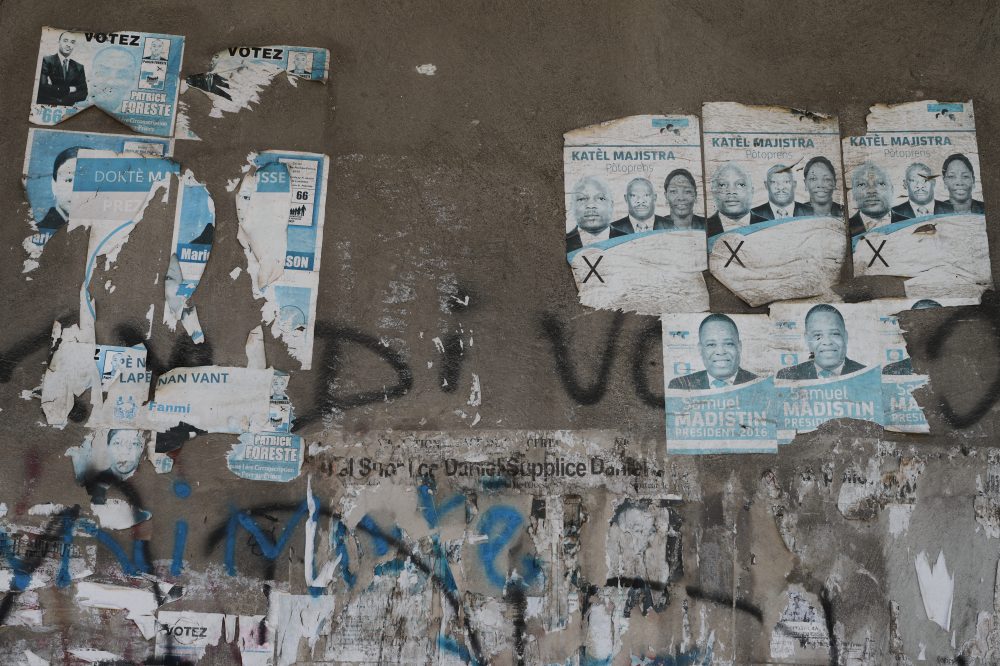

PORT-AU-PRINCE, Haiti — The Haitian government launched a 10-day window Monday allowing political organizations to register for participation in planned general elections, marking a significant milestone for the Caribbean nation that has been without elections for more than ten years amid ongoing deadly criminal violence.
Security forces carrying heavy weapons formed a protective perimeter around the Provisional Electoral Council’s main building as representatives from established political organizations collected required registration documents.
Among those present was Pierre Dieu-Donné Delice, a mental health professional leading a newly formed political organization called Tools for Another Haiti. Speaking with The Associated Press, Delice expressed frustration with the temporary administration that has governed since President Jovenel Moïse’s assassination at his home in July 2021.
“They love transition because there’s no control. They can do whatever they want,” Delice stated regarding Haiti’s current leadership.
The nation’s current interim leader is Prime Minister Alix Didier Fils-Aimé, who governs a troubled nation where criminal organizations maintain control over approximately 90% of Port-au-Prince and significant territory in central regions.
Fils-Aimé enjoys support from the United States government and previously shared authority with a temporary presidential council created in 2024, almost three years following Moïse’s death. The council concluded its mandate on February 7 as legally required, making Fils-Aimé the country’s sole executive authority.
Officials have committed to conducting general elections by late August with potential runoff voting scheduled for early December, though the feasibility remains questionable.
“The conditions are not ready yet for an election,” Delice observed, pointing to continuing criminal violence across multiple regions. “There is no way for candidates to campaign there. … If the situation stays the way it is now, it will be impossible to have an election.”
United Nations data indicates more than 5,900 deaths and over 2,700 injuries occurred throughout Haiti last year.
The criminal violence has forced a historic 1.4 million people from their homes in the nation of approximately 12 million residents.
Delice personally experienced displacement when heavily armed criminal groups attacked his family’s residence in the central coastal community of Arcahaie.
He relocated his political organization’s operations from his hometown to Port-au-Prince and now relies on watercraft or aircraft to connect with regional party supporters because criminal groups maintain control over major transportation corridors leading to and from the capital, sometimes firing on passing vehicles.
Joseph André Gracien Jean, the cabinet official overseeing electoral affairs, welcomed Monday’s launch of political party registration.
“Today, we take a big step,” he informed the AP. “People should be elected to return to a democratic order.”
He indicated the council would not delay party registration until security improves nationwide.
“It’s a long process; step by step, we are moving forward,” Gracien Jean explained. “What’s important is that the executive branch is making an effort.”
The registration window closes March 12, with officials anticipating increased activity before the deadline.
André Jonas Vladimir Paraison, who leads Haiti’s National Police, recently informed the AP that law enforcement continues developing plans for conducting elections safely.
A new criminal suppression unit is anticipated to replace the current U.N.-supported mission headed by Kenyan officers that remains both understaffed and inadequately funded in the coming months.