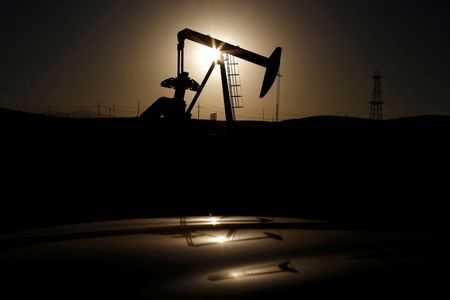
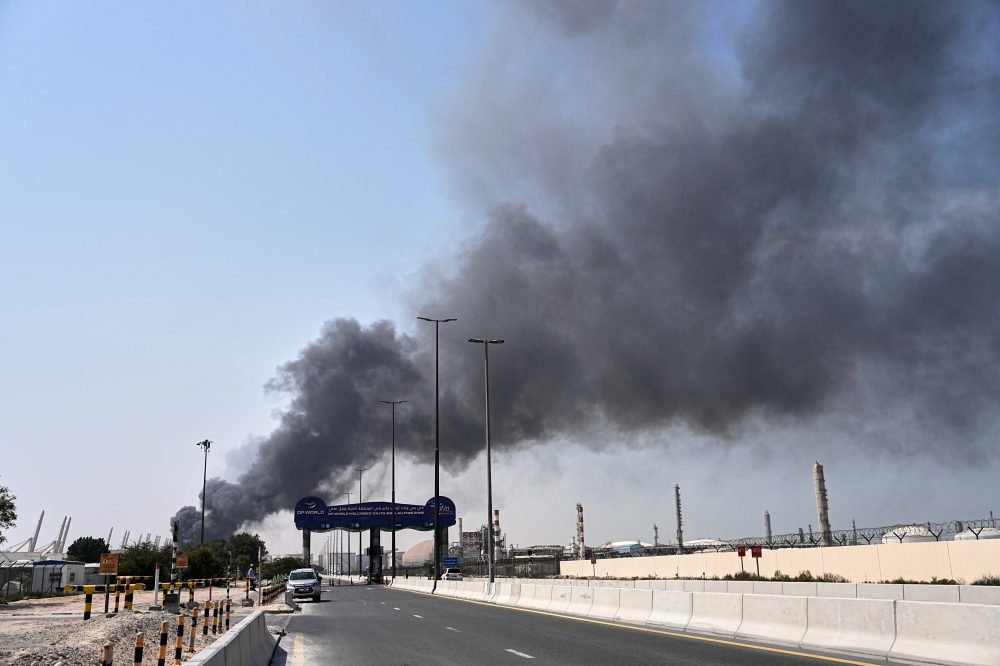
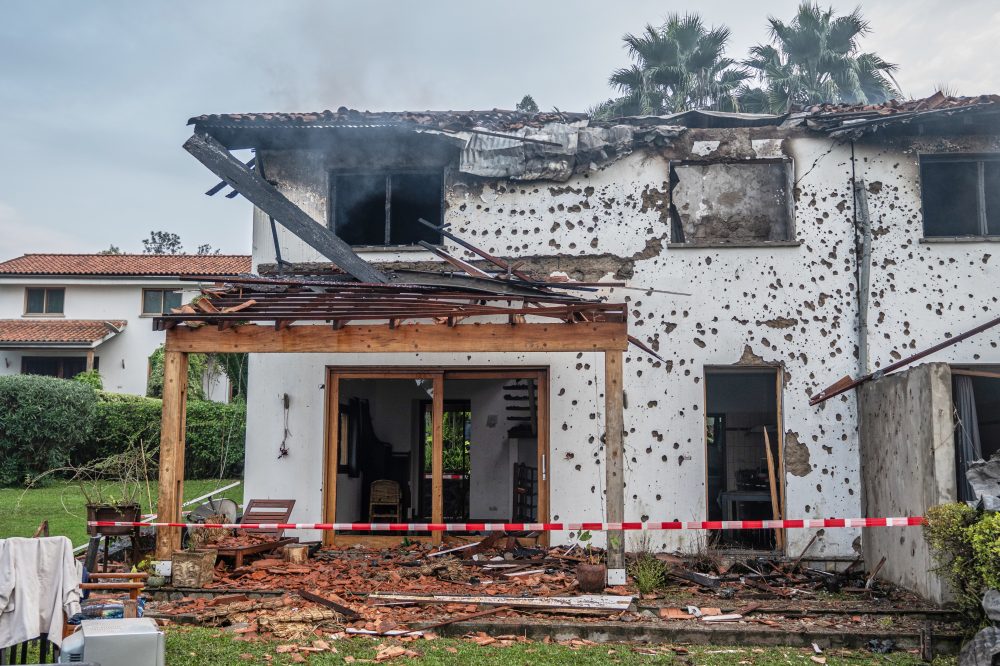
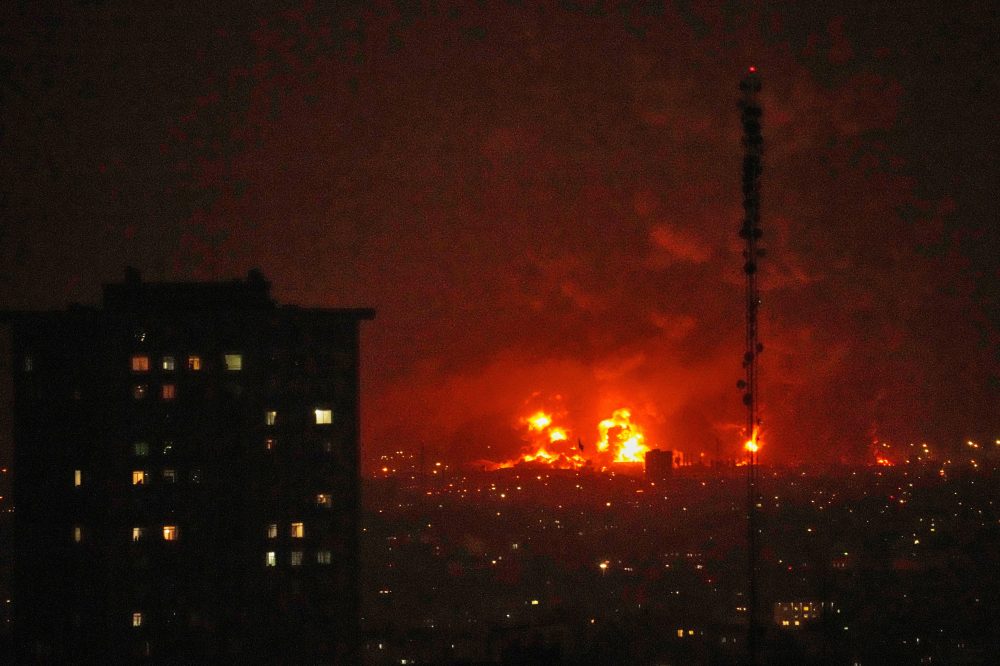
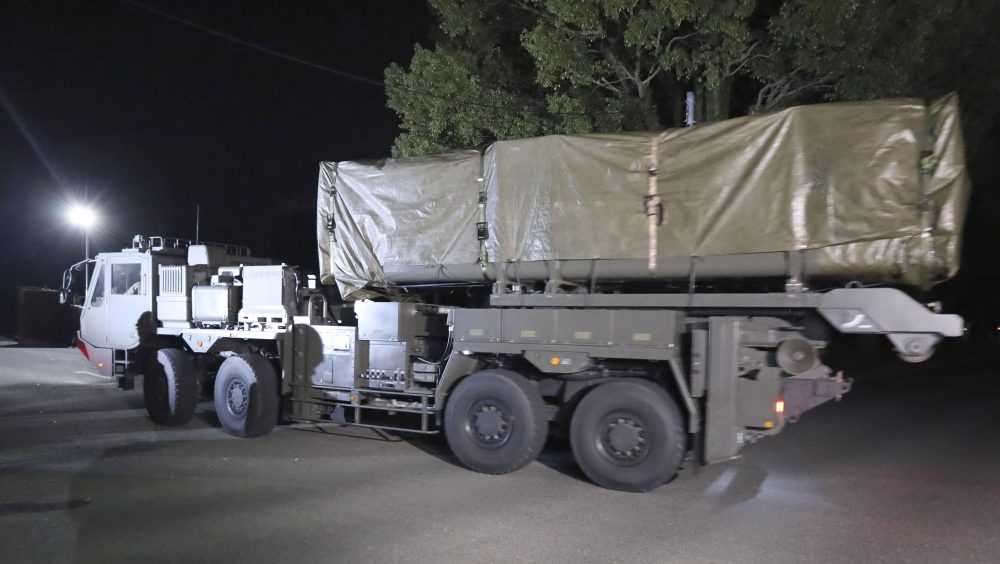
Regional tensions escalated as Iran launched missile and drone strikes targeting Gulf nations’ oil infrastructure and maritime assets, prompting Saudi Arabia and other countries to activate their air defense systems to intercept the attacks.
Meanwhile, Australia’s Home Affairs Minister Tony Burke announced Wednesday that six Iranian women’s soccer players will stay in the country after receiving humanitarian visas, though one team member who initially sought asylum has decided to return to Iran instead.
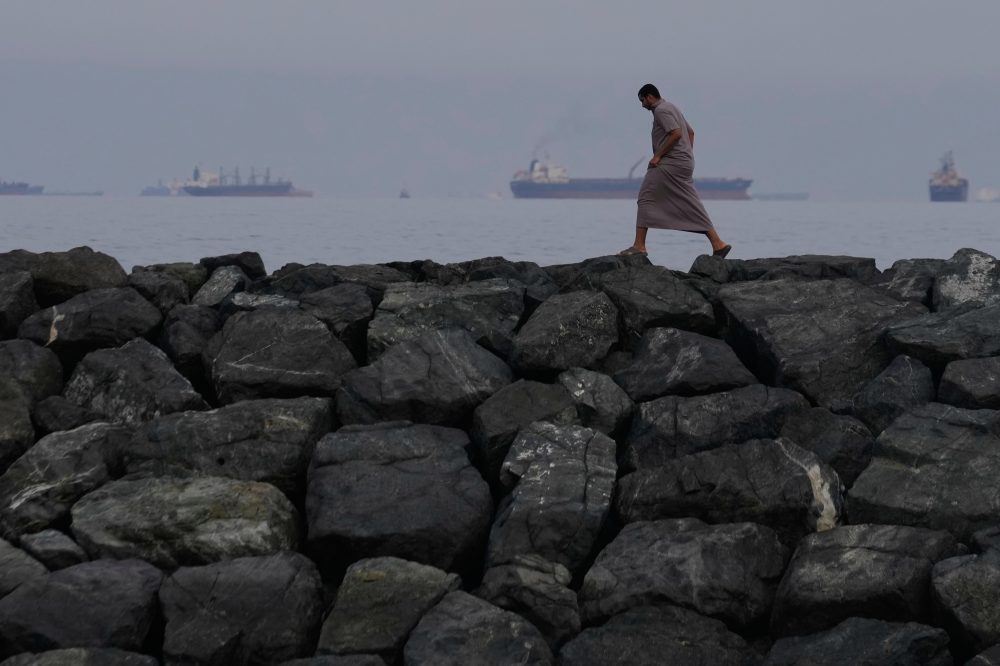
President Trump posted on social media that no evidence exists of Iran placing explosives in the Strait of Hormuz, the critical waterway that handles one-fifth of global oil shipments. The U.S. military reportedly destroyed over a dozen Iranian mine-laying boats Tuesday to prevent attempts at blocking the strategic passage.
Tehran’s threats to shut down the vital shipping route have triggered oil market instability and supply concerns, particularly affecting Asian nations that rely heavily on petroleum from the region.
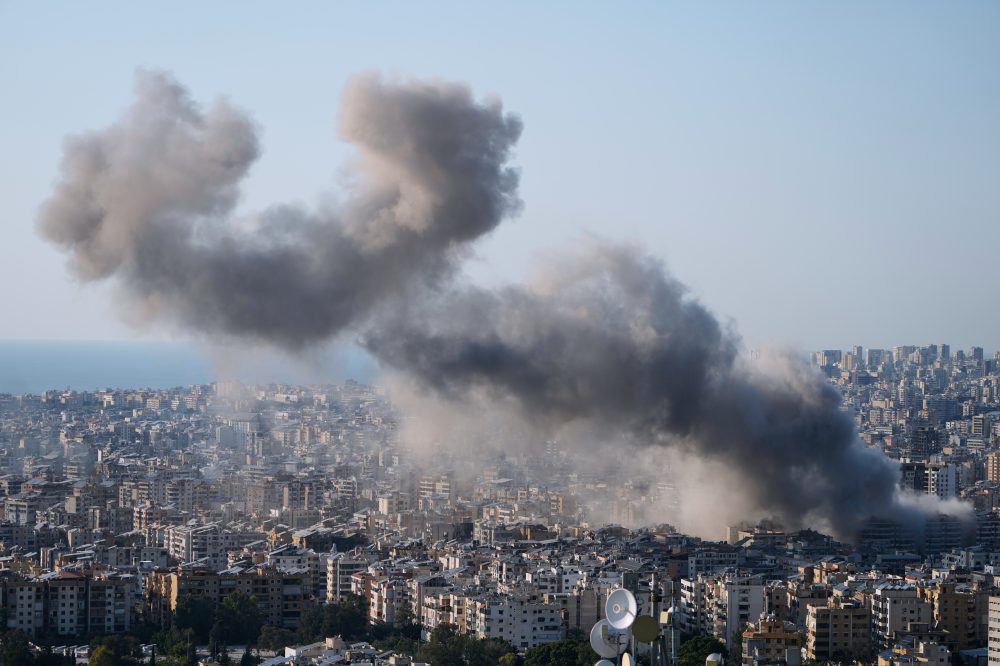
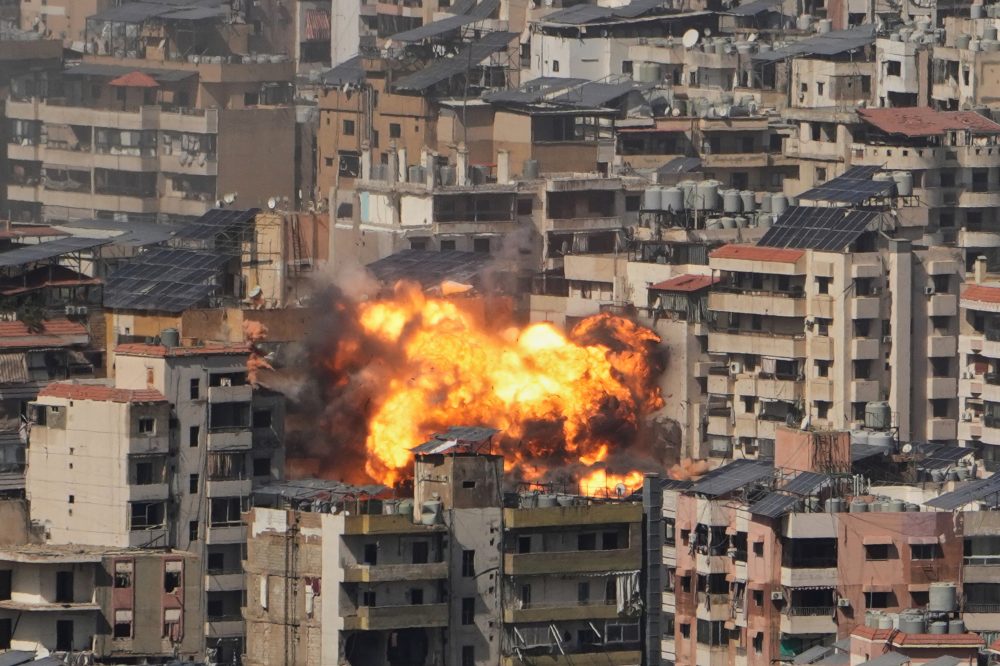
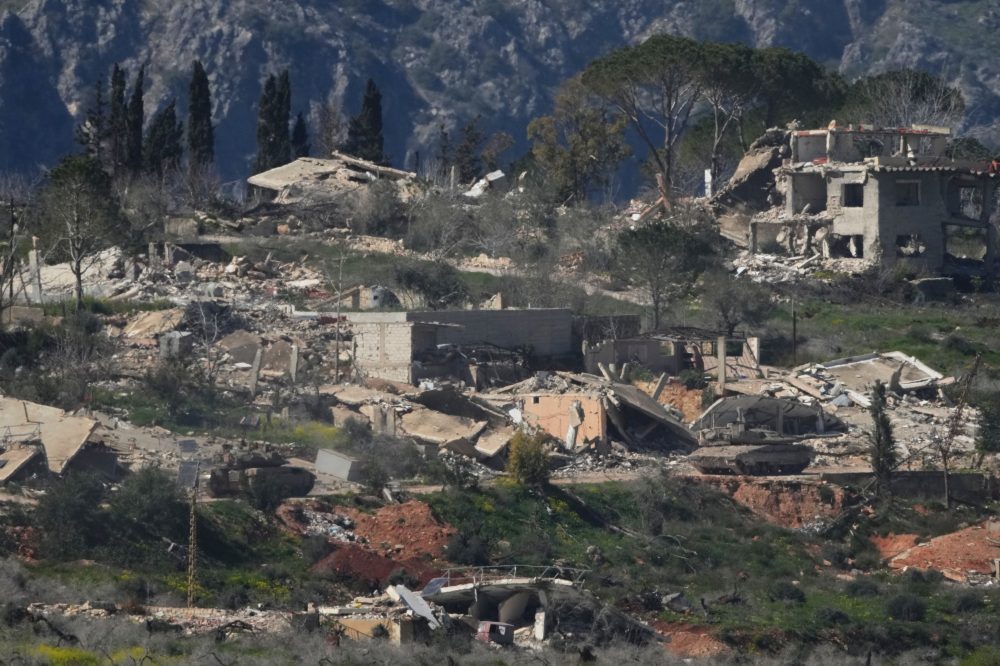
Israeli forces targeted a structure in central Beirut as part of ongoing operations against Hezbollah, the Iranian-backed group that has been launching attacks on Israel in solidarity with Tehran.
Qatar’s foreign affairs minister Mohammed bin Abdulaziz al-Khulaifi told Al Jazeera in a Wednesday interview that his nation will no longer mediate between Iran and Western countries while under attack from Iranian forces.
Al-Khulaifi pointed out that both Qatar and Oman have faced attacks despite their efforts to “build bridges between Iran and the West.”
“We will not be able to fulfill that role under attack, and that’s something the Iranians need to understand,” al-Khulaifi stated. “The regional countries are not an enemy of Iran, and the Iranians are not understanding that idea.”
Russian officials reported damage to their consulate in Isfahan from airstrikes that hit the central Iranian city. Foreign Ministry Spokeswoman Maria Zakharova said the Sunday attack on the nearby governor’s building caused “no casualties or serious injuries.”
“Windows were shattered in the office building and residential apartments, and several employees were thrown back by the blast wave. Fortunately, there were no casualties or serious injuries,” Zakharova explained.
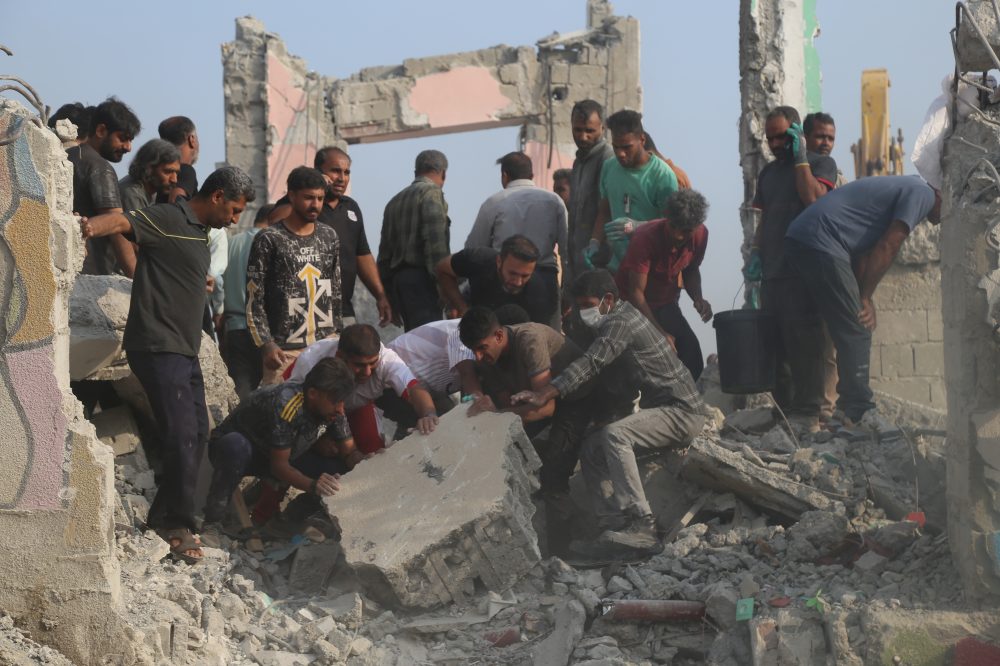
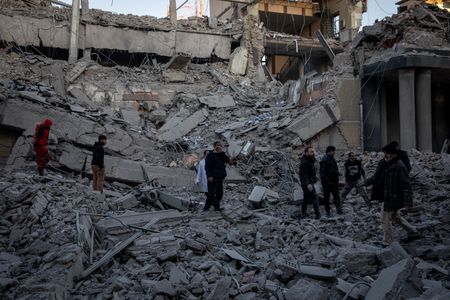
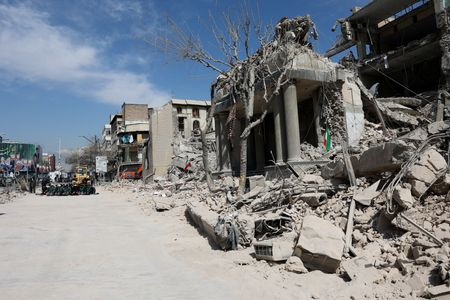
Video footage from Beirut shows flames consuming two floors of a multi-story building in the densely populated Aicha Bakkar neighborhood following an unannounced strike. The targeted structure sits several buildings from Dar al-Fatwa, Lebanon’s top Sunni Muslim religious institution.
Saudi defense officials reported early Wednesday that they eliminated five drones approaching the kingdom’s major Shaybah oil facility in the Empty Quarter desert, plus two additional drones in the Eastern Province. Kuwait announced it shot down eight drones over its territory.
The Iranian women’s soccer team situation unfolded amid dramatic scenes at their Sydney hotel and airport, where Iranian-Australian protesters tried to prevent the athletes from returning home due to safety concerns. Burke confirmed that six players accepted asylum offers and received humanitarian visas, while one reversed her decision to stay.
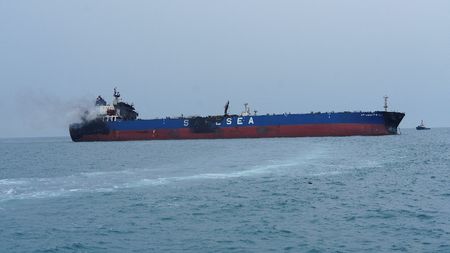
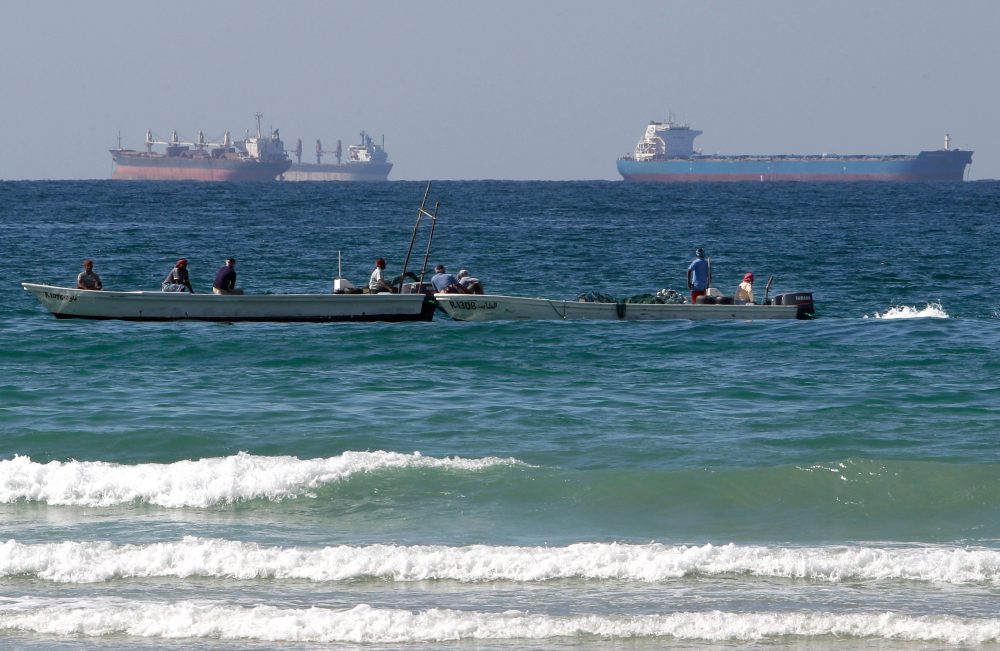
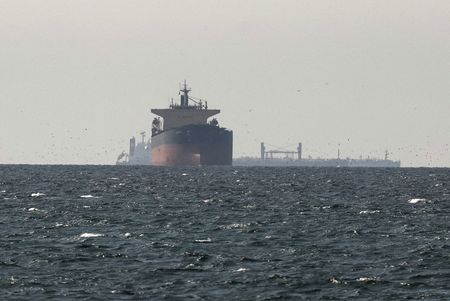
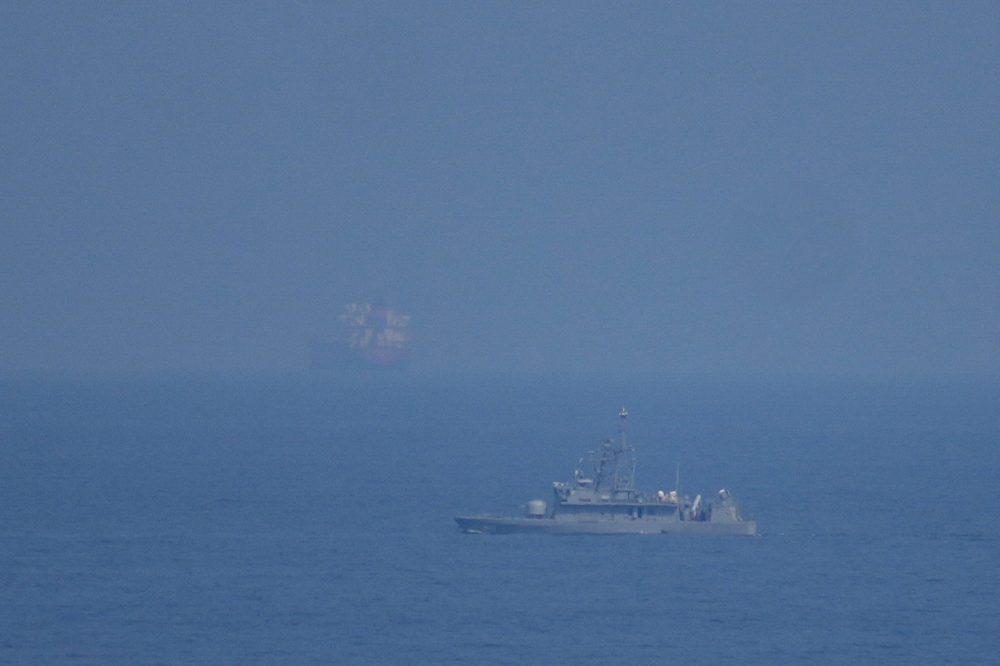
A container vessel was struck by a projectile early Wednesday near the UAE coast in the Strait of Hormuz, according to British maritime authorities. The UK Maritime Trade Operations center said the incident occurred off Ras al-Khaimah, the UAE’s northernmost region bordering the strait.
Officials noted the “extent of the damage is currently unknown but under investigation by the crew.” Ship traffic through the narrow Persian Gulf entrance, which handles twenty percent of global oil and gas trade, has essentially stopped.
MOSCOW, March 12 – The Russian government issued a public appeal Thursday urging Israel and the United States to halt their military operations against Iran and pursue diplomatic negotiations instead.
Maria Zakharova, spokesperson for Russia’s Foreign Ministry, addressed reporters saying her country “will continue to take steps to end the escalation in the Middle East as soon as possible and resolve any contradictions by peaceful means.”
The Russian official also made serious allegations about civilian casualties, stating: “The number of victims of the illegal military action of Washington and Tel Aviv among the civilian population of Iran, according to the authorities, is in the thousands.”
Canadian officials have formed a special committee to examine whether medically-assisted death should be extended to individuals suffering from mental illness. The current law restricts such procedures to patients facing terminal physical conditions.
Opponents of the potential expansion raise concerns about the committee’s composition, claiming it consists primarily of advocates who favor broadening access to assisted dying. These critics predict the panel will recommend moving forward with the controversial proposal.
If no legislative action is taken to block the change, the expanded policy will automatically become law in 2027. The timeline puts pressure on lawmakers to either accept the committee’s eventual recommendations or take steps to halt the implementation.
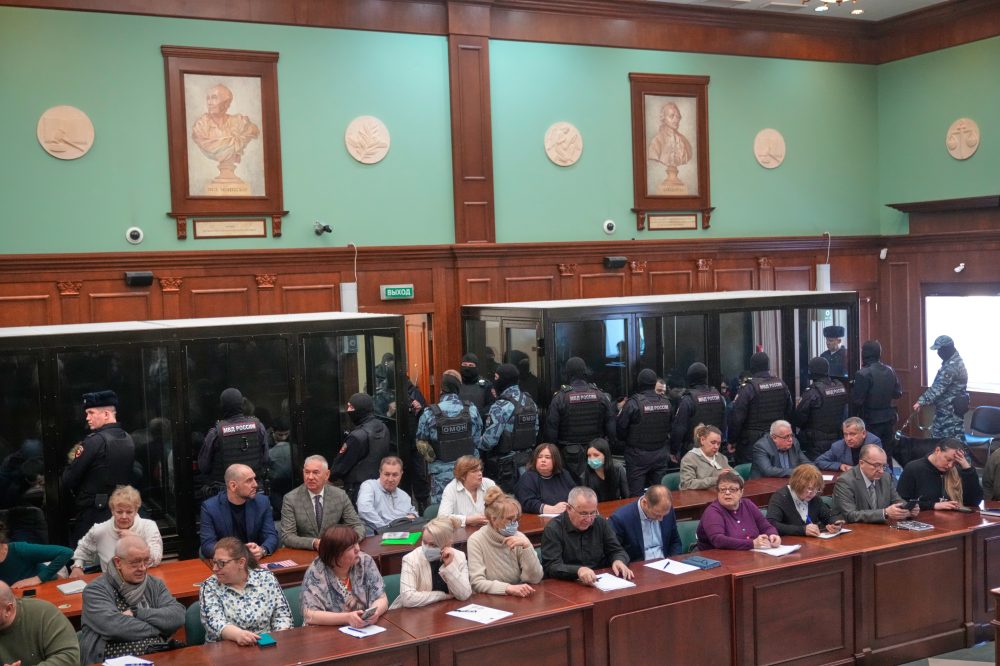
MOSCOW — Nineteen individuals received lengthy prison sentences Thursday after a Moscow court found them guilty of participating in a horrific terror attack that claimed 149 lives and injured more than 600 people at a concert venue last year.
The devastating assault occurred on March 22, 2024, at the Crocus City Hall, where four armed attackers opened fire on audience members who had gathered to watch a popular rock band perform. After the shooting, the perpetrators ignited the building, creating additional chaos and casualties in what became one of Moscow’s most deadly attacks in recent memory.
An affiliate of the Islamic State organization took credit for the brutal incident.
The court imposed harsh penalties on all defendants: fifteen received life imprisonment, while one was sentenced to 22 and a half years behind bars. The remaining three individuals each received sentences of 19 years and 11 months.
Proceedings commenced in August 2025 within a military tribunal, which is standard procedure for terrorism-related cases. Authorities conducted the trial without public access, citing safety and security reasons.
Russian President Vladimir Putin, along with other government officials, has alleged Ukrainian involvement in the attack, though they have not provided supporting evidence. Ukrainian leadership has categorically rejected these accusations.
Russia’s Investigative Committee, the nation’s primary criminal investigation body, stated that the assault was “planned and carried out in the interests of the current leadership of Ukraine in order to destabilize the political situation in our country.” The agency also pointed out that the four main suspects attempted to escape toward Ukraine following the attack.
Law enforcement apprehended the four primary suspects, all citizens of Tajikistan, within hours of the incident. When they later appeared before a Moscow court, they showed visible signs of having been severely beaten during their detention.
Among the other defendants were three individuals who provided a vehicle to the suspected gunmen, a landlord who rented them an apartment, and ten additional people facing terrorism-related charges, according to the independent Russian news outlet Mediazona.
UNITED NATIONS (AP) — Recent military operations by American and Israeli forces have caused harm to no fewer than four Iranian cultural landmarks, including historic palaces and a centuries-old mosque, sparking widespread concern about how expanding conflicts threaten protected heritage sites crucial to Iranian culture and global history.
The rapid pace and scope of destruction has prompted Iran and Lebanon to urgently petition UNESCO, the United Nations’ cultural organization, this week for expanded protection of additional heritage locations.
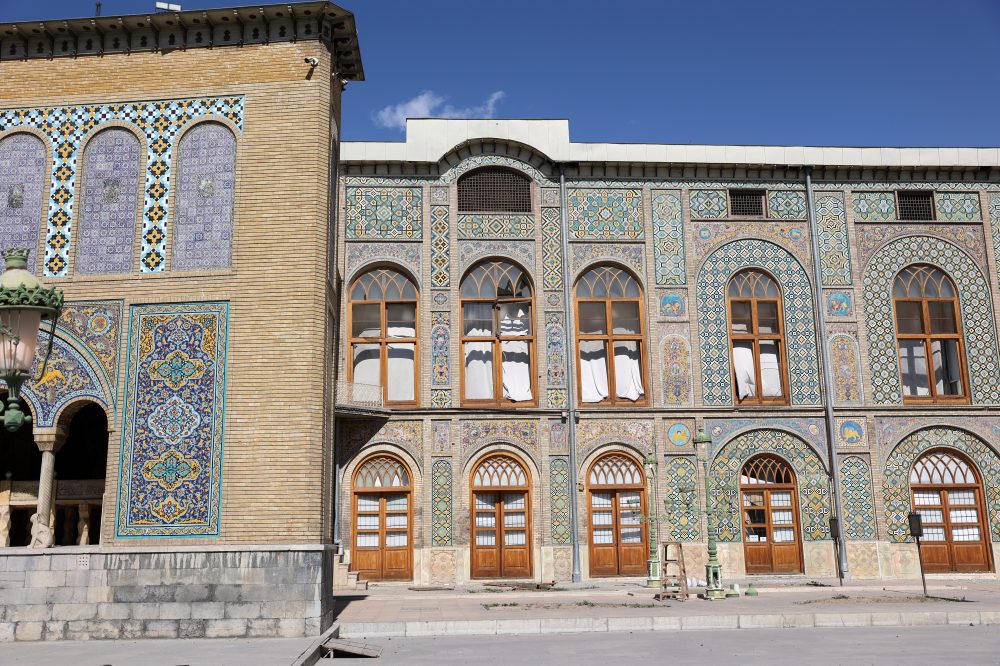
UNESCO has confirmed verified harm to Tehran’s ornate Golestan Palace from the Qajar period, along with Isfahan’s 17th-century Chehel Sotoun palace and the Masjed-e Jāme, Iran’s most ancient Friday mosque. Additional confirmed destruction occurred near structures in the Khorramabad Valley, home to five ancient caves and a rock shelter containing evidence of human settlement from 63,000 B.C.
Video footage from March 3 obtained by the Associated Press showed Golestan Palace with broken glass from mirrored ceilings covering floors, alongside damaged archways, destroyed windows and scattered decorative elements beneath glass-mosaic walls.
UNESCO reported it had previously shared exact geographical locations of these heritage locations with all conflict participants “to take all feasible precautions to avoid damage.”
Cultural site destruction has extended beyond Iran throughout the Middle East and other regions, with UNESCO documenting harm to Israel’s White City, Lebanon’s Tyre, and additional locations.
Such collateral destruction of heritage sites has become commonplace in modern warfare for years, including battles between Russia and Ukraine and Israel and Hamas, where numerous locations have suffered damage or complete destruction.
“What is happening is clear to all: In these increasingly modern conflicts, it’s civilians who pay the price, it’s civilian infrastructure that pays the price, and we’ve all seen the destruction of priceless historical heritage,” U.N. spokesperson Stephane Dujarric said this week.
Human rights organizations share similar concerns, cautioning that Iran’s conflict has not only claimed over 1,000 lives but disrupted institutions and historic locations that communities depend upon.
“It causes harm to civilians because it damages or destroys a piece of their history that can be significant both to the world and also to a specific region or community,” said Bonnie Docherty, senior researcher in the arms division at Human Rights Watch. “It undermines the sort of shared identity of a local community, which can often be important for bringing people together.”
Arash Azizi, who spent his childhood in Iran before relocating to America as an adult, explained that his family’s limited travel budget meant exploring domestic historical locations. This experience, he says, shaped his understanding of cultural identity and heritage.
“At times where school kids are killed, when human life is at stake, when the stakes are very high, people might think, ‘What are a couple of broken tiles or broken glasses?’” the 38-year-old New York resident said.
“I think this is the wrong attitude,” he added. “We need a cultural context. We need to know who we are, and where we come from, and what does it all mean?”
For Shabnam Emdadi, a 35-year-old Iranian American also in New York, the destruction at Isfahan’s Safavid-era Chehel Sotoun Palace holds deep personal significance. She visited there with her father several years before his death.
“Those Iran trips with him were my most fond memories of him at his happiest, where he felt most at home and alive, and I’ll never forget them,” Emdadi said. “Which is why every day when I see the damage of these sites that are the core of my memories, I feel like I am also losing a piece of him.”
Responsibility for the destruction remains uncertain between U.S. or Israeli military actions. Pentagon officials declined to comment. Israeli Defense Forces stated they were “unfamiliar” with allegations of UNESCO site damage.
One advocacy organization highlighted U.S. Defense Secretary Pete Hegseth’s recent statement that America’s military approach would avoid “stupid rules of engagement.”
“That’s an extremely important statement because it’s those rules of engagement that embody international humanitarian law, which is not just the protection of cultural heritage, but the protection of all civilian populations and structures, including your hospitals, your schools, etc.,” said Patty Gerstenblith, president of the U.S. Committee of the Blue Shield, an international organization dedicated to protecting heritage in conflict, disaster and crisis.
The damaged locations represent part of nearly 30 Iranian sites receiving special protection through UNESCO’s World Heritage designation.
Additional famous landmarks receiving similar protection include China’s Great Wall, Egypt’s pyramids, India’s Taj Mahal and America’s Statue of Liberty.
UNESCO’s World Heritage Committee makes annual designations for sites deemed “of outstanding value to humanity” and intervenes when locations face destruction or damage threats. The program offers countries technical support and professional training for site preservation.
The Trump administration announced last July its intention to withdraw from UNESCO again as it reduces American participation in certain international organizations.
The White House referenced similar reasoning from 2018, claiming U.S. participation doesn’t serve national interests and accusing the organization of supporting anti-Israel rhetoric. The withdrawal becomes effective in December.
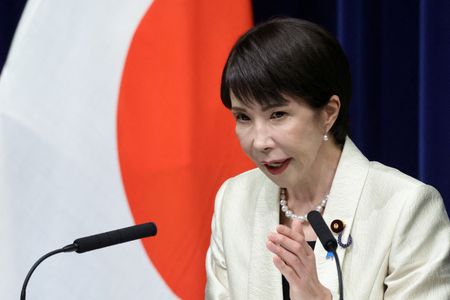
TOKYO, March 12 – Japanese Prime Minister Sanae Takaichi has suspended her scheduled government activities and withdrawn to her official residence after developing what appear to be cold-like symptoms, according to a Thursday report from Japan’s Jiji news agency.
The Prime Minister’s decision to halt her official engagements comes as a precautionary measure following the onset of the illness symptoms.
The ongoing Middle East conflict has triggered the most severe oil supply crisis in global history, according to the International Energy Agency’s announcement Thursday. This declaration came just one day after the agency authorized an unprecedented release from emergency oil reserves to counter shortages and surging fuel costs.
March has seen worldwide oil production plummet by 8 million barrels daily, the IEA reported in its monthly market analysis. The dramatic reduction stems from the closure of the Strait of Hormuz, a critical waterway near Iran’s coastline, following the commencement of U.S. and Israeli aerial bombardments against Iran on February 28.
Oil-producing nations throughout the Persian Gulf region, including Iraq, Qatar, Kuwait, the United Arab Emirates, and Saudi Arabia, have slashed their combined output by no less than 10 million barrels per day. This reduction represents nearly 10 percent of global oil consumption, the IEA noted.
The organization warned that these production losses could escalate further without swift restoration of maritime shipping routes.
“Shut-in upstream production will take weeks and, in some cases, months to return to pre-crisis levels depending on the degree of field complexity and the timing for workers, equipment and resources to return to the region,” the agency said.
On Wednesday, the IEA, which provides guidance to developed nations, authorized the release of an unprecedented 400 million barrels from member countries’ strategic petroleum reserves. This action aims to counter the dramatic increase in worldwide crude oil prices that began with the U.S.-Israeli military operations against Iran, with American stockpiles providing the majority of the released supply.
Thursday saw continued upward pressure on oil prices as Iran intensified its strikes against energy infrastructure and transportation networks throughout the Middle East. These escalating attacks have heightened concerns about an extended conflict and ongoing disruptions to oil shipments through the Strait of Hormuz.
Brent crude oil, which reached $119.50 per barrel on Monday marking its peak since mid-2022, climbed more than 6 percent on Thursday to approach $98 per barrel.
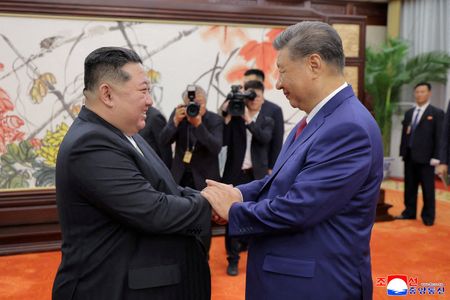
BEIJING, March 12 – Railway service connecting China and North Korea’s capital cities resumed Thursday for the first time since the COVID-19 pandemic forced a suspension six years ago, marking China’s push to strengthen border infrastructure and diplomatic relations with its neighbor.
The K27 train departed Beijing Railway Station Thursday morning and is scheduled to reach Pyongyang at 6:07 p.m. Friday after traveling 24 hours and 41 minutes along a route that curves around the northern edge of the Bohai Sea, including a stop in the Chinese border town of Dandong, according to China’s railway officials.
A Chinese foreign ministry representative described the two nations as “friendly neighbours” during Thursday’s press briefing, explaining that cross-border rail service promotes people-to-people exchanges. The spokesperson emphasized China’s support for enhanced communication between the countries to encourage such interactions.
The pandemic outbreak in 2020 led to the service interruption.
North Korea maintains strict limits on foreign visitors, with tourism largely restricted to Russian groups operating under special arrangements, according to travel companies that organize visits to the isolated nation.
The capital-to-capital rail service will run four times weekly in each direction – on Mondays, Wednesdays, Thursdays and Saturdays – China’s railway authority announced. Ticket sales are limited to business visa holders, and Thursday’s inaugural journey sold out completely, though seats remained available for the March 18 departure, a Beijing travel company reported.
A shorter rail route connecting Dandong to Pyongyang will provide daily service in both directions. The first train departed the northeastern Chinese city of Dandong at 10 a.m. Thursday, arriving in North Korea’s capital at 6:07 p.m., state news agency Xinhua reported.
Air travel between the countries also ceased during the pandemic. North Korea’s national airline Air Koryo reestablished flights to China in 2023 and currently provides twice-weekly service between the capitals on Tuesdays and Saturdays, according to the carrier’s online booking system.
BRUSSELS, March 12 – A leading European Union trade official warned Thursday that any new American tariffs must align with the trade agreement negotiated between the two economic powers at a Scottish resort last year.
Bernd Lange, who leads the European Parliament’s trade committee, stated that while Washington’s decision to launch fresh ‘Section 301’ trade practice investigations was anticipated, the move lacks clear assurance that the U.S. will honor the previously negotiated terms.
“We will see where the investigations lead to, but anything that departs in substance from the Turnberry Deal will not be acceptable,” Lange posted on social media platform X. The agreement was reached at President Donald Trump’s Turnberry golf course.
The European Parliament continues to debate whether to approve the trade deal through an official vote.
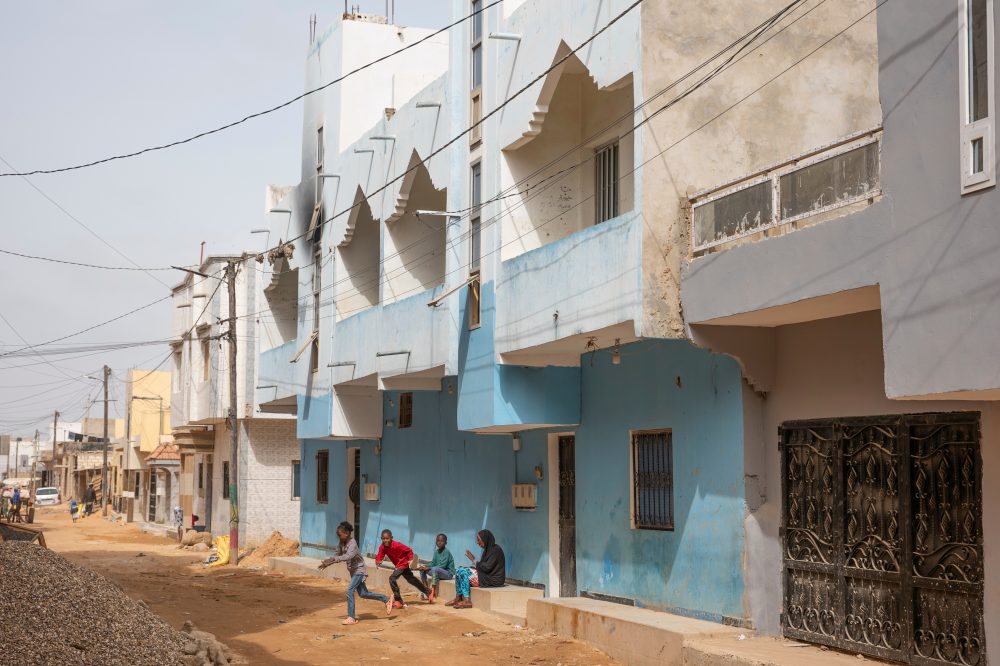
DAKAR, Senegal — Senegalese authorities are investigating serious abuse allegations at the American Dara Academy, a boarding school that promoted itself to U.S. families as an economical option for combining Quran studies with American-style education. The institution attracted parents, particularly those with West African heritage, who sought quality religious schooling for their children at reasonable costs.
However, the academy now faces scrutiny over claims of severe physical mistreatment, leading to mass student withdrawals and the shutdown of one facility where most alleged incidents occurred, sources close to the investigation report.
Students who spoke with The Associated Press described disturbing treatment by school supervisors, including repeated beatings of rule-breaking students in what was termed a “magic room.” According to these accounts, children were forced to remove clothing down to underwear or completely, then made to crouch while holding heavy stones with outstretched arms. When stones dropped, the beatings intensified.
Senegalese officials have confirmed an active investigation involving the national police force (gendarmerie), child welfare services, and the Justice Ministry, according to sources familiar with the case.
In late January, law enforcement detained the school’s director along with three staff members, parents and knowledgeable sources reported. The director was subsequently released to home confinement.
AEMO, Senegal’s child protection agency, has not responded to media inquiries. Gendarmerie spokesman Ibrahima Ndiaye acknowledged receiving abuse reports but stated the Justice Ministry now handles the case.
School officials who were detained declined to comment, citing the ongoing legal proceedings. Specific criminal charges remain undisclosed.
“Authorities are caring for the children, and anyone found culpable will face charges,” stated Aminata Diagne, Justice Ministry spokesperson, regarding the abuse investigations.
The academy served 311 students across two locations in Senegal, with 120 holding U.S. citizenship. The student body primarily consisted of American-born children of West African descent, along with some from European nations including France, Britain, and Belgium. Few students originated from West Africa itself.
A January 12 formal complaint from the U.S. Embassy in Dakar to Senegalese officials detailed severe physical punishment reports from multiple American students. The document named the school director, who holds dual American-Guinean citizenship, plus three administrators as perpetrators.
The Associated Press confirmed the complaint’s legitimacy through interviews with numerous parents and case officials. These sources requested anonymity to safeguard their children and due to authorization restrictions.
Student testimonies described staff members striking them with wooden implements on legs, backs, and private areas while forcing them into painful positions.
Some reported metal rods being used on body areas that wouldn’t show visible damage. Occasionally, blows targeted their heads, students said.
While hospitalization requirements remain unclear, some students sustained scarring across multiple body parts.
According to the embassy complaint and informed sources, administrators threatened students against speaking with U.S. officials or police, claiming their American parents could face immigration arrest and deportation.
Government agencies have disclosed minimal case details or potential charges.
Parents told the AP they selected the American Dara Academy for its religious-academic combination at approximately $300 monthly, covering tuition, housing, and food.
Operations included two sites: one in Dakar, the capital, and another in Toubab Dialaw, a coastal community 34 miles away.
The now-closed Toubab Dialaw high school campus, where most alleged abuse occurred, resembled an active construction zone with temporary trailers, no plumbing, irregular electricity, and improvised metal latrines. Despite conditions, classes continued there, investigation sources confirmed.
Following embassy family notifications, approximately two-thirds of students—roughly 250 children including about 100 Americans—left the school and returned home, parents and investigation sources reported. Remaining students relocated to the better-equipped Dakar campus.
The AP interviewed dozens of parents, many contacted by the U.S. embassy regarding alleged mistreatment. None reported their children disclosing abuse.
One anonymous parent protecting their child’s identity said they withdrew their children and await their U.S. return. Their children weren’t among those allegedly abused.
“During my week-long initial school visit, I genuinely believed I was placing them somewhere secure,” the parent said.
Senegalese family law permits home corporal punishment through “correction rights” for parental figures, though criminal law prohibits violence causing serious harm.
While banned in schools for children under 14, the law doesn’t explicitly cover older students, private institutions, or religious schools, where “correction rights” may still apply.
UN and children’s advocacy reports indicate continued corporal punishment practices.
Prosecution decisions and additional actions remain uncertain.
The investigation proceeds while former dormitory residents are dispersed—some returned home, others remaining at school awaiting resolution.
Police maintain tight security around the Dakar school building.
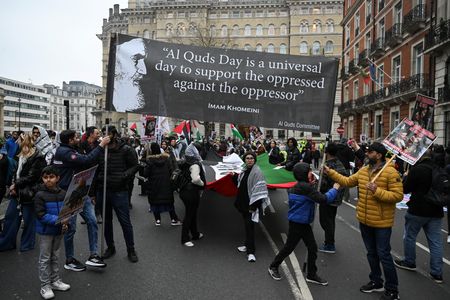
Authorities in London have taken the rare step of prohibiting a pro-Iranian demonstration planned for this Sunday, marking the first time British police have used such powers in over a decade.
Law enforcement officials announced the decision to block the Al Quds march, an annual event organized by the Islamic Human Rights Commission in central London. Police described the group as supportive of Iran’s government.
The decision represents an extraordinary measure, as British authorities maintain a high threshold for blocking demonstrations. Officials stated the potential for public disorder was severe enough to warrant the unprecedented action, which also extends to any opposing rallies.
According to the Islamic Human Rights Commission’s previous social media posts, the demonstration was intended to show solidarity with Palestinian liberation efforts.
Law enforcement noted that past Al Quds events have led to criminal charges for supporting terrorist organizations and committing anti-Semitic hate crimes. Despite the prohibition, officials warned they anticipate a “challenging, potentially violent weekend.”
“We have taken into consideration the likely impact on protests of the volatile situation in the Middle East, with the Iranian regime attacking British allies and military bases overseas,” authorities stated in their Tuesday announcement.
“We must also consider that the security services have been publicly clear about the threats we are facing on UK soil from the Iranian regime,” the statement continued.
London police have faced intense scrutiny regarding their management of recurring large-scale pro-Palestinian demonstrations since Hamas attacked Israel on October 7, 2023. Critics and supporters remain divided over free speech rights, support for banned organizations, and effects on Jewish communities.
Just last week, British authorities detained four individuals suspected of assisting Iranian intelligence operations, including surveillance activities targeting Jewish community members and locations in London.
While officials cannot legally prevent a stationary gathering, they indicated any such assembly by the Islamic Human Rights Commission would face stringent restrictions.
SEOUL, March 11 – A senior aide to South Korea’s president indicated Wednesday that the nation’s artificial intelligence partnership with the United Arab Emirates could expand significantly once Middle Eastern tensions diminish, as the UAE seeks to bolster its military defense systems.
Ha Jung-woo, who serves as the senior presidential secretary for AI, told reporters that enhanced collaboration appears likely. “We expect that cooperation (with the UAE) could accelerate further. Through this process, we believe there will be many opportunities for us to create together,” Ha stated during a media briefing.
The official noted that ongoing regional instability has created additional security concerns for the UAE. “Given the very complex situation currently unfolding in the Middle East, there is also a growing need for the UAE to significantly strengthen its defence capabilities,” Ha explained, while emphasizing that discussions with UAE officials have persisted despite the “very difficult environment.”
The foundation for this partnership was established last year when South Korea committed to participating in the United States-supported Stargate initiative, which aims to construct an enormous artificial intelligence data facility in the Gulf nation.
Following a high-level meeting between South Korean President Lee Jae Myung and UAE President Mohammed bin Zayed Al Nahyan, South Korea pledged assistance in developing computational infrastructure and energy systems for what would become the globe’s most extensive AI data center complex outside American borders.
The Korean commitment encompasses building an electrical grid for the UAE’s Stargate facility utilizing nuclear energy, natural gas, and sustainable power sources, while simultaneously expanding AI sector collaboration across investment, infrastructure development, supply networks, and scientific research.
As the headquarters for major semiconductor manufacturers Samsung Electronics and SK Hynix, South Korea is positioning itself as a regional artificial intelligence center, with President Lee making AI investment a priority to stimulate economic growth amid concerns over potential U.S. trade restrictions affecting the broader economic landscape.
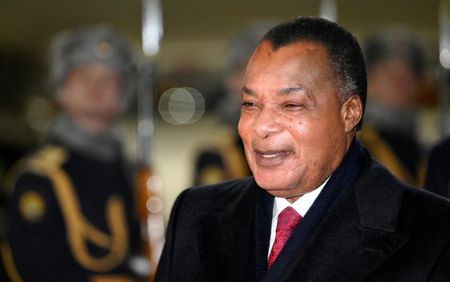
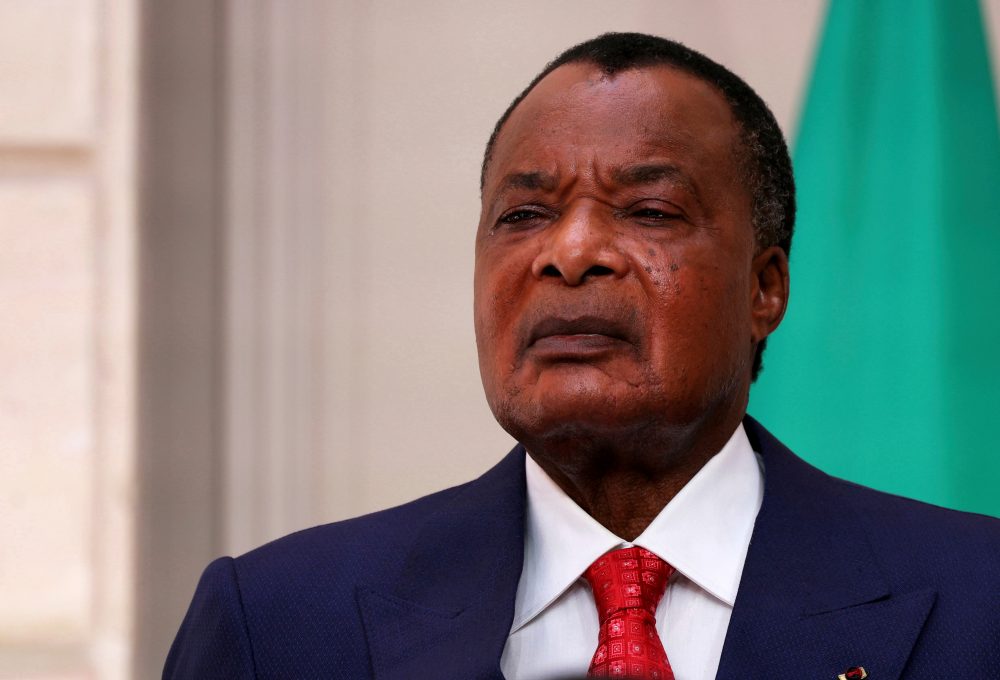
Republic of Congo’s longtime President Denis Sassou Nguesso will face six opposition challengers when voters head to the polls on March 15, as the 82-year-old leader seeks to extend his grip on power for another five years in the oil-rich Central African nation.
The former paratrooper first took control in 1979 and has ruled for more than 40 years with only a brief interruption during the 1990s. Political analysts expect Sassou Nguesso to easily win reelection, as the opposition remains divided and several major parties are boycotting the contest while key potential rivals are either imprisoned or living in exile.
Here’s a look at the six candidates challenging the incumbent president:
JOSEPH KIGNOUMBI KIA MBOUNGOU
The 73-year-old veteran legislator from the Lekoumou department in southwestern Congo leads the political organization La Chaîne and is mounting his fifth presidential campaign since 2002. Kignoumbi Kia Mboungou received just 0.62% of votes in the previous 2021 contest. His current campaign emphasizes the importance of political transformation and economic diversification, with particular focus on decreasing the country’s dependence on oil revenues while addressing widespread poverty.
UPHREM DAVE MAFOULA
At 43 years old, economist Mafoula is attempting his second straight presidential run after competing in 2021 as the youngest candidate in that race, earning 0.52% of the vote. His policy agenda prioritizes governmental reform initiatives, employment opportunities, and addressing regional disparities across the country.
MELAINE DESTIN GAVET ELENGO
The youngest presidential hopeful at 35, Elengo works as an engineer in the petroleum industry and is running for the first time. He positions himself as representing a younger generation ready to bring political transformation to Congo. His campaign highlights government transparency, judicial independence, and development that benefits all citizens.
MABIO MAVOUNGOU ZINGA
The 69-year-old former customs official and ex-parliamentarian is running his first presidential race representing the Alliance party, which brings together multiple opposition organizations. Zinga has promised to combat government corruption and secure the release of imprisoned opposition figures Jean-Marie Michel Mokoko and André Okombi Salissa, who were detained following the controversial 2016 election and subsequently received 20-year sentences for allegedly threatening state security.
VIVIEN ROMAIN MANANGOU
University professor Manangou, 43, teaches public law and is making his inaugural presidential attempt as an independent candidate. His policy platform emphasizes reforming government institutions, strengthening public financial management, and fostering national cohesion.
ANGUIOS NGANGUIA ENGAMBE
Approximately 60 years old, Engambe leads the Party for Action of the Republic and is pursuing the presidency for the fourth time after previous attempts in 2009, 2016, and 2021, when he captured only 0.18% of votes. His campaign messaging focuses on healing political rifts and encouraging broader citizen engagement in the democratic process.
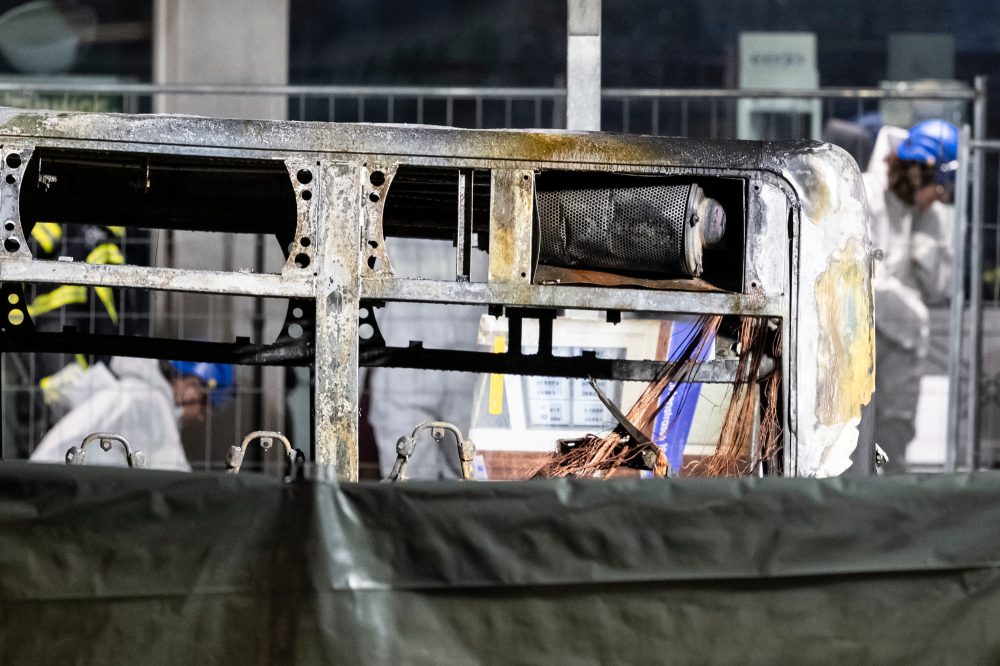
Swiss authorities are examining whether an intentional act sparked a deadly bus fire that claimed at least six lives in a town near the country’s capital.
Frédéric Papaux, a police spokesperson for the Fribourg region, confirmed that investigators are looking into whether a “voluntary act” triggered Tuesday evening’s blaze in Kerzers, located approximately 15 miles west of Bern.
The incident also left five people wounded and brought back memories for residents of a devastating New Year’s Eve fire at the Swiss ski destination of Crans-Montana that claimed 41 young lives.
Christa Bielmann, a Fribourg police representative, explained to Swiss broadcaster SRF: “There is information circulating that a person poured flammable liquid over themselves on the bus and that this caused the fire. But this is part of the ongoing investigation and is being clarified.”
Swiss President Guy Parmelin expressed his grief on X Tuesday evening, writing: “It shocks and saddens me that once again people have lost their lives in a serious fire in Switzerland. The circumstances are being investigated. I offer my condolences to the families of those who died in Kerzers. And my thoughts are with the injured and the rescue workers.”
Martial Pugin, communications chief for Fribourg cantonal police, ruled out terrorism as a motive when speaking to broadcaster RTS Wednesday morning.
The transit vehicle belongs to PostBus, which operates under the national postal service. Swiss media footage captured flames consuming the entire bus.
PostBus released a statement expressing their sorrow: “We are deeply moved by this tragic news. Our thoughts are with the victims, the injured, and all their families.”
Regional officials reported that emergency responders discovered the vehicle completely consumed by fire upon arrival at the scene.
Medical teams transported three critically injured individuals to area hospitals via ambulance and helicopter, while two others received treatment at the location, according to police reports.
Papaux confirmed the death toll of at least six people, noting that victim identification may require several days to complete.
Crews removed the destroyed bus overnight, and normal traffic flow resumed by Wednesday morning.
BUCHAREST – Romania’s President Nicusor Dan has scheduled a meeting of the nation’s highest defense council for Wednesday to evaluate an American request for military base access related to operations involving Iran, according to political sources.
The defense council will convene for its first session of the year to examine security consequences stemming from Middle Eastern conflicts, effects on Romania’s energy sector, and “the temporary deployment of military capability on Romanian territory.”
Political sources indicated that this deployment reference relates to an American request for access to the Mihail Kogalniceanu air base, though they provided no additional details.
Several European Union nations have responded differently to regional tensions – countries like France, Greece and Italy have deployed naval vessels to Cyprus following attacks by Iranian-manufactured drones on a British installation there, while other nations permit military base usage.
Approximately 1,000 American service members continue to be stationed in Romania. Last year, the United States pulled roughly 1,000 troops from Romania’s Mihail Kogalniceanu air base as America shifted focus toward its domestic borders and Indo-Pacific operations.
NATO maintains a permanent allied force of about 3,500 troops in Romania, which includes American soldiers.
Most European Union leadership has denounced Iranian attacks throughout the region and called for cessation of hostilities along with diplomatic resolution to the ongoing conflict.
Romania maintains a 650-kilometer border with Ukraine, and Russian drones have crossed this boundary while targeting Kyiv. Additionally, naval mines from the conflict in the Black Sea continue to disrupt crucial commercial and energy shipping lanes.
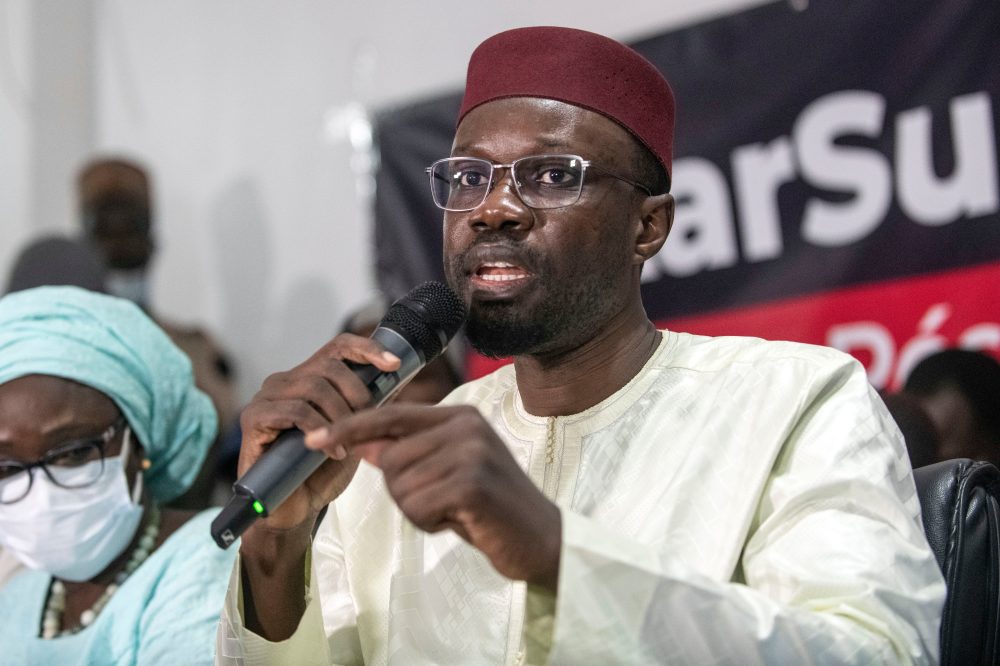
DAKAR, Senegal — Parliament members in Senegal have given final approval to legislation that significantly increases penalties for homosexual conduct in this predominantly Muslim West African country.
Prime Minister Ousmane Sonko introduced the legislation to parliament last month, with the new law characterizing homosexual conduct as “against nature.” The measure increases prison terms for those found guilty from the current range of one to five years to a new range of five to 10 years behind bars.
The parliamentary vote was decisive, with 135 legislators supporting the measure while none opposed it. Only three members chose to abstain from voting.
The updated legislation also establishes penalties for what it terms the “promotion” or “financing” of homosexuality, targeting organizations that advocate for sexual and gender minority rights.
Financial penalties have been increased substantially, with maximum fines now reaching 10 million CFA francs (equivalent to $17,609). However, lawmakers maintained the classification of these offenses as misdemeanors rather than upgrading them to felonies. Government ministers defended the changes during parliamentary debate, claiming the existing 1966 legislation was insufficiently strict.
The revised law includes provisions that penalize individuals who make accusations of homosexual conduct “without proof” against others.
Islamic advocacy organizations have staged public demonstrations supporting the legislation in recent weeks, while law enforcement has intensified enforcement actions against suspected gay individuals, resulting in at least twelve arrests.
The legislation represents the fulfillment of a campaign pledge made by the prime minister, who had previously attempted unsuccessfully to advance similar measures while serving in opposition.
LONDON, March 12 – The ongoing Middle East conflict has triggered the most severe oil supply shortage in global history, according to the International Energy Agency, which made the announcement Thursday following their decision to authorize a record release from emergency oil reserves.
Gulf nations in the Middle East have slashed their combined oil output by no less than 10 million barrels daily – representing nearly 10% of global oil consumption – due to the ongoing warfare, the agency reported in their most recent monthly market analysis. The IEA warned that unless maritime transport operations resume quickly, these production cuts will likely expand further.
Political leaders in Taiwan reached a breakthrough Thursday, giving their government the green light to move forward with signing agreements for four major U.S. weapons packages after defense officials warned of serious consequences for delays.
The disagreement over Taiwan’s military spending has created tension with the United States, which serves as the island nation’s primary supporter and weapons provider, even without official diplomatic relations, as Taiwan faces ongoing territorial claims from China.
While President Lai Ching-te’s administration has pushed for parliamentary approval of $40 billion in additional military spending, opposition parties controlling the majority of legislative seats have raised concerns about the proposals’ clarity, stating they won’t approve “blank cheques” despite their support for national defense.
Opposition groups have put forward alternative, lower-cost proposals, but defense officials emphasized that the formal letters of offer and acceptance for the weapons systems must be signed with the United States or Taiwan risks losing its position in the manufacturing and delivery schedule.
During Thursday’s session of parliament’s foreign affairs and defense committee, legislators from both sides reached consensus that the government should proceed with signing the agreements ahead of schedule, even if spending proposal reviews remain incomplete.
The military equipment covered by these agreements includes TOW anti-tank missiles, M109A7 self-propelled howitzers, Javelin missiles manufactured by Lockheed Martin, and the HIMARS multiple launch rocket system.
Defense Minister Wellington Koo informed reporters Tuesday that the HIMARS agreement expires March 26, covering 82 systems included in an $11-billion U.S. arms package designated for Taiwan.
According to ministry officials, this Sunday marks the deadline for signing agreements covering the remaining weapons systems.
A bipartisan coalition of 37 U.S. legislators expressed their concerns about the delayed plans to senior Taiwan lawmakers last month.
The Trump administration’s push for allies to boost their defense spending has found strong support from Lai and his government officials.
South Korean President Lee Jae Myung has demanded strict disciplinary measures against government officials who failed to properly recover victims’ remains from a devastating 2024 airline disaster, according to his office on Thursday.
The president expressed remorse and extended sympathies to families after a follow-up investigation revealed that body parts from seven victims had remained unrecovered for more than a year following the Jeju Air tragedy that claimed 179 lives, a presidential spokesperson announced during a briefing.
Lee has directed government agencies to investigate why these remains, alongside 648 personal belongings and 155 aircraft fragments, were neglected for such an extended period, according to the official.
Authorities have yet to release their complete investigation findings to the public, missing their initial one-year target date.
While the transportation department issued an apology Monday regarding the recovery delays, grieving families have condemned officials for abandoning remains and personal effects in outdoor storage facilities and are demanding accountability.
“We are appalled by the transport ministry’s late and inadequate apology, which the families say is like killing the victims a second time,” a family spokesperson stated Monday.
A different family representative praised Lee’s Thursday announcement, calling it “due time” for officials to demonstrate accountability.
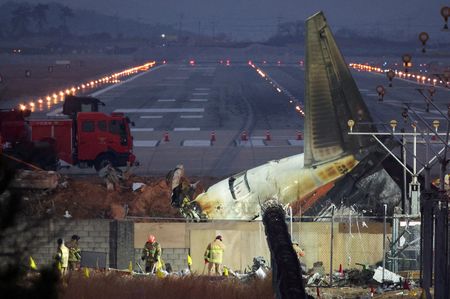
The fatal December 2024 incident occurred when a Boeing 737-800 aircraft encountered bird strikes, performed an emergency belly landing, and slid beyond the runway at Muan International Airport. The plane collided with a concrete barrier supporting navigation equipment, killing nearly all passengers and crew. Only two cabin crew members seated in the aircraft’s rear section survived.
Thursday’s presidential directive follows a government audit published this week that revealed the transportation ministry had permitted defective airport safety infrastructure for over twenty years, contributing to the crash’s severity.
The audit determined that a solid concrete structure beneath navigation equipment at Muan airport – instead of the breakaway design mandated by international aviation standards – worsened the death toll.
Investigators also uncovered decades of inadequate certifications and overlooked safety inspections at similar installations across multiple airports nationwide.
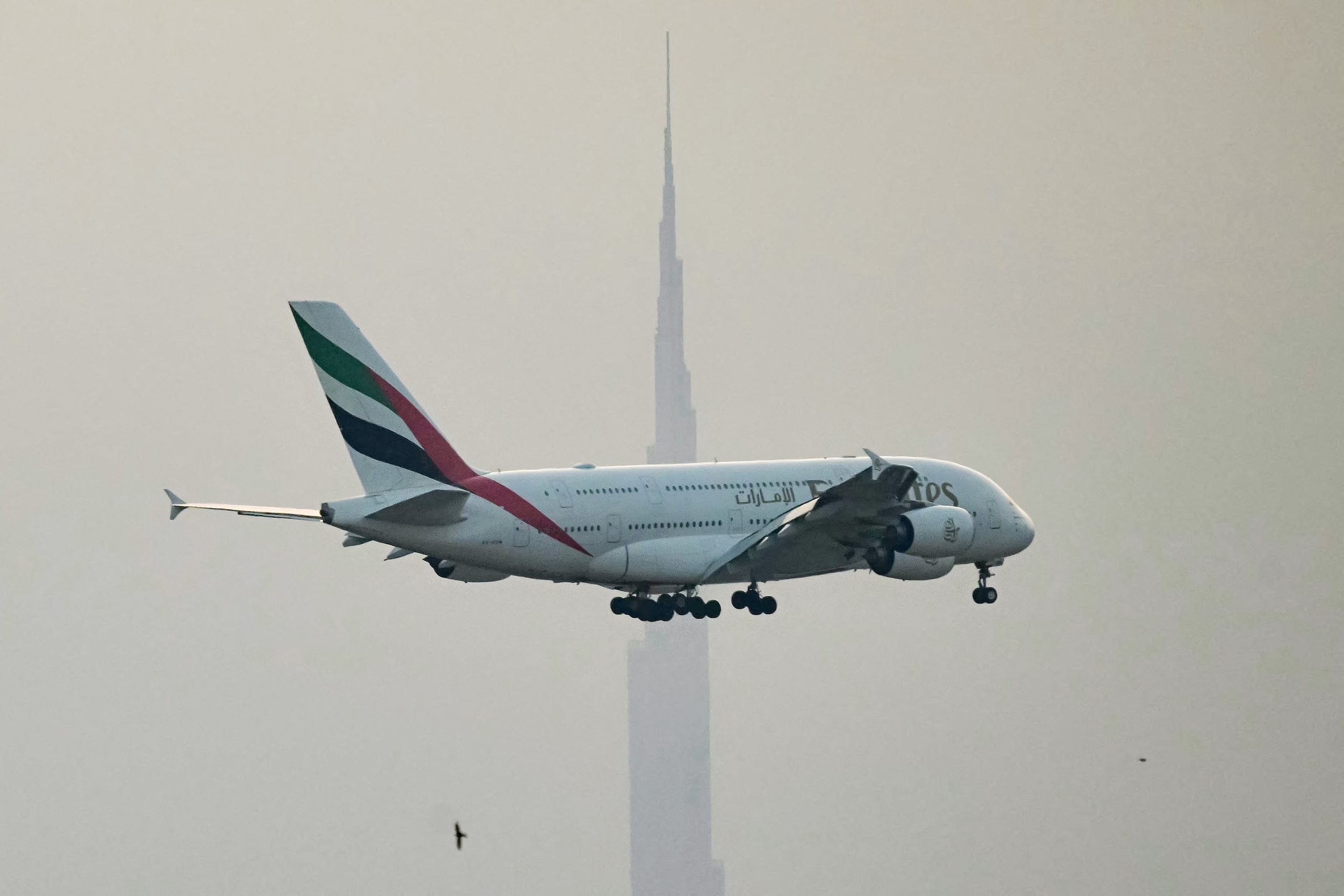
DUBAI, March 11 – Four people sustained injuries Wednesday when two unmanned aircraft crashed near Dubai International Airport, according to officials from Dubai’s media office, marking another incident in an ongoing regional conflict that has severely impacted worldwide aviation operations for nearly two weeks.
“Authorities confirm that two drones fell in the vicinity of Dubai International Airport (DXB) a short while ago,” officials announced on social media platform X, noting that flight operations continue without disruption.
Among those hurt in the incident were nationals from Ghana, Bangladesh, and India. Two Ghanaian citizens and one Bangladeshi citizen received treatment for minor wounds, while an Indian national suffered more serious injuries requiring additional medical attention.
The regional warfare involving the United States, Israel, and Iran that began February 28 has created massive disruptions for international aviation, forcing carriers worldwide to cancel flights, adjust schedules, and find alternate routes. Middle Eastern airspace, including Qatar’s, remains largely closed due to ongoing missile and drone threats. The conflict has simultaneously triggered an energy shortage, driving fuel costs significantly higher.
While major UAE carriers including Emirates from Dubai and Etihad from Abu Dhabi have partially restored service since the crisis began, both airlines continue operating well below normal capacity. Wednesday’s drone incident represents another setback for DXB, recognized globally as the busiest international passenger hub, which processed close to 100 million travelers in the previous year.
BEIJING (AP) — Despite global focus on conflicts in Iran, China has continued advancing its domestic agenda with worldwide implications during its most significant annual political gathering.
While Beijing acknowledges the war’s effects on energy markets and international relations, the world’s second-largest economy remains focused on its technological competition with America rather than military conflicts elsewhere.
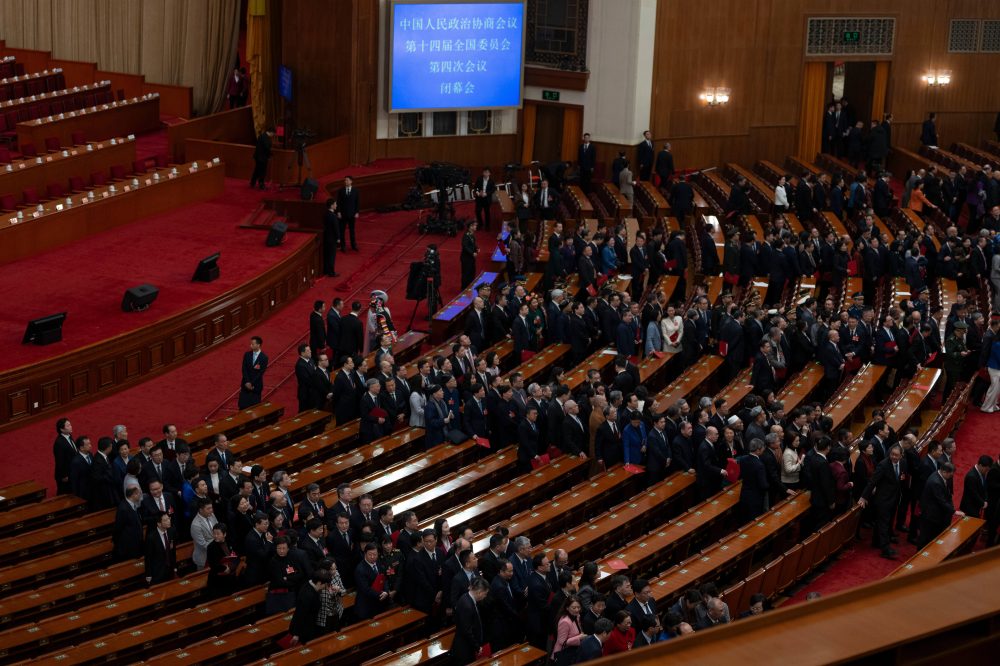
This priority became clear Thursday when the National People’s Congress approved a comprehensive five-year development plan during the conclusion of its yearly session, China’s most important political gathering. The plan reinforces China’s commitment to economic transformation and technological leadership. Government-controlled media portrayed China’s unwavering focus on economic progress as providing global stability during uncertain times.
“A stable and developing China injects more stability and certainty into a world fraught with change and turbulence,” the official People’s Daily newspaper said in a front-page column on Wednesday. Additional state-controlled outlets repeated similar themes.
These official statements avoided mentioning U.S. President Donald Trump, whose trade policies and military interventions from Venezuela to Iran are disrupting the international framework established after World War II. China openly supports this existing system while advocating for modifications to better serve developing nations alongside wealthy countries.
Trump plans to travel to Beijing in three weeks for discussions with Chinese President Xi Jinping.
During its final session, the National People’s Congress also approved three pieces of legislation, including measures affecting ethnic minorities. These votes follow ceremonial procedures with near-universal approval, demonstrating support for the Communist Party’s national vision. The five-year plan received approval with 2,758 supporting votes, one opposition vote, and two abstentions.
“We are forging ahead at full speed in building a great country,” Foreign Minister Wang Yi said at an annual news conference during the Congress.
Economic experts argue China should prioritize putting more money in consumers’ pockets to increase domestic spending and decrease reliance on export-driven growth.
While Chinese leadership agrees conceptually, the approved five-year plan emphasizes technology as the central focus, confirming it remains the government’s top priority. Experts anticipate consumer spending improvements will occur slowly through expanded social services and healthcare benefits, while government investment flows into artificial intelligence, robotics and related fields.
Chinese Premier Li Qiang revealed an economic growth target of 4.5% to 5% for 2026 when Congress began, providing officials flexibility to pursue long-term objectives rather than achieving higher short-term targets.
The development plan avoids promising overall carbon emission reductions, instead committing to lower “emissions intensity” — measuring pollution relative to economic output. This approach allows total emissions to increase alongside economic expansion.
Officials set the intensity reduction goal at 17%, which analysts say could permit emissions to rise 3% or higher. “International good practice is to move away from intensity targets towards absolute emission reduction targets,” said Niklas Hohne of the NewClimate Institute in Germany.
China typically establishes modest targets, and its rapid solar energy expansion plus other clean technologies may reduce emissions regardless. As the world’s largest greenhouse gas producer, Chinese officials have consistently argued that population size and economic scale must factor into pollution assessments.
A comprehensive ethnic minorities law approved by Congress strengthens what opponents describe as government assimilation policies, emphasizing development of “a common consciousness of the Chinese nation.”
Officials claim the legislation aims to build stronger community bonds and shared economic development among ethnic populations. The law reflects Xi’s approach promoting unity over distinct ethnic cultures and languages.
“It puts a death nail in the party’s original promise of meaningful autonomy,” said James Leibold, a professor at Australia’s LaTrobe University who has studied China’s changing policies towards its ethnic minorities.
Official proposals and suggestions for reducing working hours in various ways attracted significant social media attention during this year’s Congress.
Many focused on establishing a “right to rest,” including proposals allowing employees to ignore work communications outside business hours. Most Chinese workers receive just five paid vacation days annually. Yu Miaojie, an economist and Congress representative, suggested increasing minimum statutory leave from five to 10 days.
These proposals’ popularity demonstrates concerns about China’s demanding workplace environment. Providing workers additional leisure time also represents a strategy for boosting consumer spending by creating more opportunities to spend money.
Officials in Taiwan are raising concerns that Beijing’s recently enacted ethnic unity legislation may provide Chinese authorities with expanded legal authority to pursue Taiwanese individuals they classify as separatists, according to warnings issued Thursday.
The legislation, which China’s parliament approved this week, is designed to foster a unified national identity among the nation’s 55 minority ethnic communities, including Tibetans and Uyghurs. While Taiwan isn’t specifically referenced in most of the law’s text, it does include a provision encouraging residents on both sides of the Taiwan Strait to embrace Chinese identity.
Beijing already maintains existing statutes targeting supporters of Taiwanese independence, including 2024 guidelines that impose severe penalties on what it terms “diehard” activists – potentially including capital punishment – despite having no legal authority over the island.
The new statute mandates that Chinese citizens “shall protect the country’s sovereignty” and references President Xi Jinping’s declaration that all citizens must “consciously uphold national unity, national security, and social stability.”
Deputy Minister Shen Yu-chung of Taiwan’s Mainland Affairs Council addressed reporters in Taipei before the law’s passage, warning that such provisions could “spill over into becoming a legal basis for handling cross-Strait issues.”
When questioned about whether Beijing might use the legislation to target independence advocates, Shen responded: “It is highly possible.”
“How exactly one is supposed to promote unification or promote unity is left vague and hollow, but the punishments are concrete,” Shen added.
China’s Taiwan Affairs Office declined to provide comment on the matter.
Taiwan has consistently criticized what its government describes as Chinese “lawfare” – Beijing’s practice of enacting legislation to justify targeting perceived separatists, including those living abroad.
The new statute contains provisions stating that individuals and organizations outside China’s borders may face legal consequences for undermining “ethnic unity and progress or inciting ethnic separatism.”
“Many of the Chinese communists’ actions are nominally presented as measures for maintaining domestic stability, but in reality they could also be transformed into long-arm jurisdiction,” Shen explained, referencing Beijing’s attempts to enforce its laws internationally.
According to Taiwanese officials, this legislation represents a tactical evolution from Beijing’s previous approach. Rather than simply opposing specific ideologies like Taiwan independence, the new law threatens punishment for those who fail to actively promote Chinese unity.
“In the past, you’d be punished for supporting Taiwan independence. Now, you also have to actively support unification, or you’ll get into trouble as well,” explained a senior Taiwanese official who requested anonymity due to the matter’s sensitivity.
Escalating tensions between the United States, Israel, and Iran have led to a series of attacks on commercial vessels in the Persian Gulf, creating significant disruptions to international shipping routes that handle approximately 20% of global oil and liquefied natural gas traffic.
Since hostilities began on February 28, Iran’s Revolutionary Guards have issued threats targeting any vessel attempting passage through the strategically vital Strait of Hormuz.
The attacks began on March 1 when three separate incidents occurred. The Marshall Islands-flagged crude carrier MKD VYOM suffered a fatal casualty when a crew member was killed after the ship was struck by a projectile while traveling 50 nautical miles north of Muscat, Oman, according to vessel manager V.Ships.
That same day, the Gibraltar-flagged fuel supply vessel Hercules Star was hit by projectiles 17 nautical miles northwest of the UAE’s Mina Saqr port in Ras Al Khaimah, causing a fire that was later extinguished, the UK Maritime Trade Operations (UKMTO) reported. Additionally, the Palau-flagged tanker Skylight, which faces U.S. sanctions, was attacked near Oman’s Kumzar, forcing crew evacuation according to Oman’s maritime security center.
March 2 saw the U.S.-flagged products tanker Stena Imperative struck twice while in Bahrain’s port, resulting in fire and crew evacuation, UKMTO stated.
The following day brought damage to two more vessels near the UAE’s Fujairah port – the Marshall Islands crude carrier Libra Trader and Panama-flagged bulk vessel Gold Oak both sustained minor damage approximately 7-10 nautical miles offshore, UKMTO confirmed.
March 4 witnessed the Maltese-flagged container vessel Safeen Prestige suffering projectile damage while navigating toward the strait’s northern section, two nautical miles from Oman. The strike ignited an engine room fire, forcing the crew to abandon the vessel, shipping sources reported.
On March 5, the crude tanker Sonangol Namibe was damaged by an explosion while anchored near Iraq’s Khor al Zubair port, according to U.S. representative company Sonangol Marine Services. Iraqi port security officials indicated preliminary findings suggest an Iranian remote-controlled explosive boat was responsible for the attack on the Bahamas-flagged vessel.
March 6 brought another incident when a tugboat operating with the previously damaged Safeen Prestige was hit by projectiles six nautical miles north of Oman in the Strait of Hormuz, UKMTO reported.
The next day, UKMTO cited an unnamed third party reporting a suspected drone strike 10 nautical miles north of Saudi Arabia’s Jubail, which resulted in most crew members being evacuated.
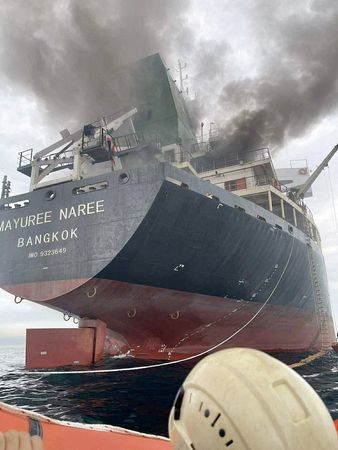
March 11 proved particularly devastating with multiple attacks. The Thailand-flagged bulk carrier Mayuree Naree was struck by a projectile 11 nautical miles north of Oman, causing a fire that forced crew evacuation, according to Bangkok-based owner Precious Shipping’s statement.
The Japan-flagged container ship One Majesty received minor damage from a projectile strike 25 nautical miles northwest of the UAE’s Ras Al Khaimah. Meanwhile, the Marshall Islands-flagged bulk carrier Star Gwyneth sustained hull damage from a projectile hit 50 nautical miles northwest of Dubai, though no environmental impact occurred and crew members remained safe, maritime risk management firm Vanguard and UKMTO reported.
The same day concluded with attacks on two fuel tankers near Iraq – the Marshall Islands-flagged Safesea Vishnu and Maltese-flagged Zefyros. These incidents prompted Iraqi authorities to halt all oil port operations completely, according to port officials and state media. One port security official confirmed recovering the body of a foreign crew member from the water.
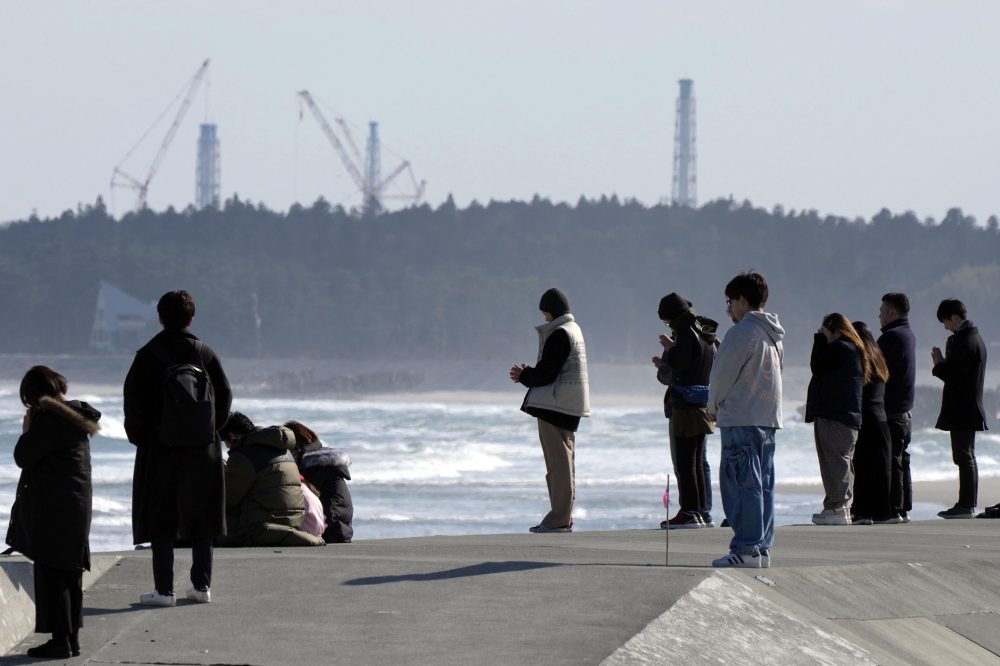
Japan commemorated Wednesday the 15th anniversary of one of its most catastrophic natural disasters, as the nation’s leadership advocates for expanded atomic energy programs.
On March 11, 2011, a devastating 9.0-magnitude earthquake triggered massive tsunamis that decimated northeastern coastal communities, claiming over 22,000 lives and displacing nearly 500,000 residents, with most evacuations stemming from tsunami destruction.
The disaster’s impact was particularly severe in Fukushima, where approximately 160,000 people evacuated their communities following radioactive contamination from the tsunami-damaged Fukushima Daiichi nuclear facility. Today, roughly 26,000 former residents have not returned, either because they’ve established new lives elsewhere, their original communities remain restricted, or they harbor ongoing radiation fears.
At precisely 2:46 p.m. Wednesday — the exact time the earthquake struck 15 years ago — the nation paused for a commemorative moment of silence.
Speaking at a Fukushima memorial service, Prime Minister Sanae Takaichi committed to maximizing regional reconstruction efforts over the coming five years while continuing to share “the valuable lessons we learned from the huge sacrifice of the disaster.”
Takaichi has championed accelerated nuclear reactor reopenings and promoted atomic energy as a reliable power source, following Japan’s significant 2022 policy shift that abandoned a decade-long plan to eliminate nuclear power.
In tsunami-affected coastal areas, survivors made early morning pilgrimages to shorelines, offering prayers for deceased family members and others whose bodies were never recovered.
The earthquake and tsunami damaged or demolished over one million residential, commercial, and educational structures throughout Iwate, Miyagi, Fukushima, and neighboring coastal regions. While essential infrastructure has been reconstructed, population exodus has slowed community and economic revitalization efforts.
The Fukushima Daiichi facility lost electrical power and cooling capabilities, resulting in meltdowns across three of its six reactors. These reactors contain a minimum of 880 tons of melted nuclear fuel debris, though radiation levels remain too hazardous to fully assess internal conditions.
Comprehensive melted fuel debris extraction has been postponed until 2037 or beyond.
Decontamination operations have generated enormous quantities of mildly radioactive soil — sufficient to fill 11 baseball stadiums — throughout the affected region.
Officials have committed to relocating this contaminated soil and have proposed incorporating some material into highway construction and other infrastructure projects, though public opposition has emerged.
LONDON (AP) — Britain’s government announced Wednesday it will release documentation concerning the selection of Peter Mandelson for the U.S. ambassadorship, amid an ongoing police probe into possible wrongdoing connected to his relationship with deceased sex offender Jeffrey Epstein.
Parliamentary pressure has compelled Prime Minister Keir Starmer’s administration to make public thousands of records regarding the choice to appoint Mandelson to this crucial diplomatic role as Donald Trump begins his second presidential term, notwithstanding Mandelson’s previous association with the disgraced financier.
Officials indicate the released materials will demonstrate that Mandelson provided misleading information about how close his relationship with Epstein actually was.
The 72-year-old Mandelson, a veteran Cabinet official, former diplomat and prominent Labour Party figure, was taken into custody at his London residence on February 23 on charges of suspected public office misconduct. He remains free while the police continue their inquiry, with no bail restrictions imposed.
Mandelson has consistently maintained his innocence and faces no formal charges. No allegations of sexual impropriety have been made against him.
According to Cabinet minister Darren Jones, the “first tranche of documents” will become available Wednesday afternoon.
The materials are being made public in stages following examination by Parliament’s Intelligence and Security Committee. Law enforcement has requested that certain files remain sealed to protect their ongoing criminal probe of Mandelson.
Starmer dismissed Mandelson from his position in September following initial disclosures about his Epstein connections, yet continues to face political backlash for originally selecting him for the Washington assignment.
Records from an extensive collection of Epstein-related files released by the U.S. Department of Justice in late January indicated that Mandelson shared confidential market information with the convicted criminal during his tenure as the U.K.’s business secretary following the 2008 economic downturn.
This information included a classified government analysis exploring methods for Britain to generate revenue, such as divesting government properties. Evidence also suggests Mandelson promised to influence fellow government officials to lower taxes on banking executive bonuses.
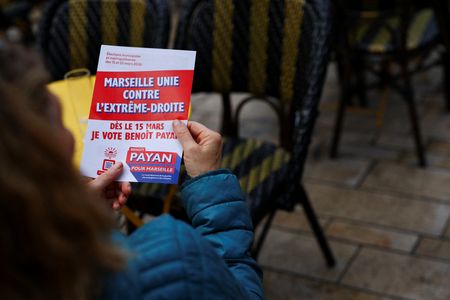
MARSEILLE, France – Campaign advertisements focusing on public safety by a far-right National Rally contender have energized supporters in Marseille’s mayoral contest, with one backer saying the messaging has swayed previously hesitant family members.
Franck Allisio’s promotional materials, set to stirring background music, pledge to expand the municipal police force threefold, install twice as many surveillance cameras, and establish law enforcement stations throughout every neighborhood to “restore joy” to Marseille residents.
Current polling data shows Allisio running neck-and-neck with sitting Socialist Mayor Benoit Payan before Sunday’s initial voting round, giving the RN party an unprecedented opportunity to control France’s second-most populous city.
The Mediterranean port city, renowned for its ancient harbor and coastal scenery, has emerged as ground zero in officials’ fight against a national cocaine epidemic, as documented in a 2024 senate study.
Public safety ranks as voters’ primary concern before France’s dual-stage municipal elections scheduled for March 15 and March 22, according to polling data, potentially favoring the RN’s hardline crime policies.
Allisio’s competitive position in Marseille mirrors nationwide patterns, with surveys indicating the RN – an anti-immigration organization historically associated with racial prejudice and antisemitism – might capture the presidency in 2027.
“We must secure victory in the municipal contests, and afterward our objective is the presidential race,” stated RN supporter Marie-Helene Martin, who works as an educator.
An Ifop survey from March revealed that Allisio’s chances depend on the number of opponents advancing to the runoff. Should leftist groups unite behind one nominee, Payan would likely prevail by ten percentage points. However, a four-way split could create a closer contest.
Municipal leaders in France possess restricted authority over local safety matters, overseeing city police departments that have fewer capabilities and resources than federal law enforcement.
Despite these limitations, both Allisio and Payan have positioned crime prevention as their campaign centerpieces.
“Clearly we have become the narcotics capital,” Allisio stated to Reuters. “We are experiencing an explosion in drug trafficking, and confronting this situation, for years… nothing has been accomplished.”
Payan rejected claims of negligence, highlighting improvements to the local police department.
“The far right is exploiting anxieties,” he explained to Reuters. “In the end, it’s not tackling the security problem, since what it suggests is essentially nothing or entirely impractical.”
Government statistics indicated a 4.1% drop in total criminal activity in Marseille during the previous year compared to 2024, and law enforcement records show drug-connected homicides decreased following a 2023 spike, though narcotics-related murders have alarmed citizens.
Claire Duport, a researcher with the French Monitoring Centre for Drugs and Addictive Trends, noted that while drug-associated violence wasn’t increasing in Marseille relative to earlier decades, killings had evolved from targeted revenge to more random attacks.
“The sense of danger is understandable – it simply doesn’t reflect broader patterns,” she explained.
To strengthen his public safety credentials, Payan has recruited Amine Kessaci, a prominent 22-year-old anti-narcotics advocate who lost two siblings in drug-connected killings, to join his campaign team.
Speaking from the left-wing alliance offices, Kessaci told Reuters that the RN’s proposals would not address the underlying social factors driving drug-related violence that the Socialists intended to tackle.
“We’re going to counter drug trafficking through healthcare, through education, through transportation, through housing,” he said.
In La Busserine, among the northern areas most impacted by narcotics violence, some locals also criticized the RN’s messaging. Fadella Ouidef, who does volunteer work at the community social center, expressed annoyance that security dominated campaign discussions.
“The far right always controls the conversation… All they can articulate is security, security, security,” said the mother of four, who worried the implicit message suggested Arab and Black residents were “the troublemakers.”
A quarter-hour stroll away, four young people were distributing drugs to sporadic customers near a towering, rundown apartment complex called “Le Mail.” Ouidef mentioned she stays away from Le Mail, but feels comfortable in the multicultural La Busserine neighborhood, where she has resided for 17 years.
“If the National Rally gains control… it will be catastrophic,” Ouidef said, expressing concerns about potential RN reductions to social programs and describing drug addiction as an urgent public health crisis.
“They believe that by generating more social difficulties, they’ll produce more security, but they’ll quickly discover it will generate more hardship and more crime,” she said. “People like them have no interest in people like us.”
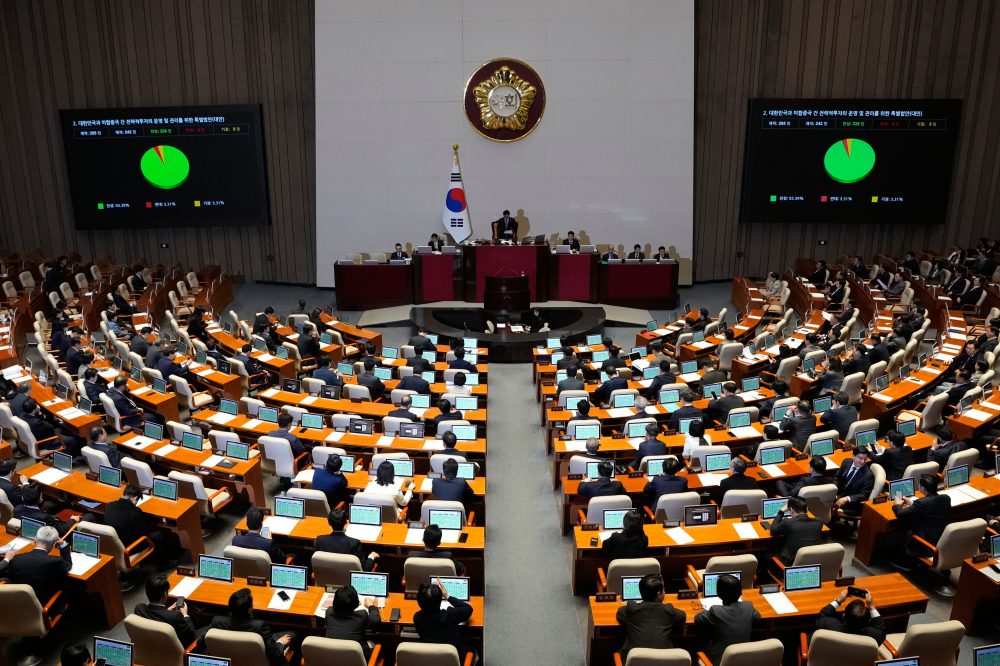
SEOUL, South Korea (AP) — Legislators in South Korea approved new legislation Thursday designed to oversee the nation’s commitment to invest $350 billion in American projects, a deal struck last year to prevent the highest tariffs threatened by the Trump administration.
Government leaders had pushed for swift approval of the controversial legislation, first introduced in November, as concerns grow over the country’s export-reliant economy. Officials worry about President Donald Trump’s protectionist policies and potential economic consequences from his conflict with Iran.
The legislative vote occurred just hours after Trump’s administration escalated trade tensions by launching a fresh probe into manufacturing practices in several nations, including China and key allies South Korea and Japan. This investigation could lead to additional import duties if American officials determine these practices are unfair.
Trump and his advisors have indicated they plan to implement new tariffs to recover revenue losses following the U.S. Supreme Court’s decision to strike down his broad emergency tariffs.
The Korean legislation, which received approval by a vote of 226 to 8, establishes a government-controlled entity to oversee the promised American investments. This organization will evaluate and choose projects using guidance from both Korean and American trade officials.
Several legislators voiced opposition before the vote, citing concerns about Trump’s latest trade investigations and potential effects from Middle Eastern conflicts. These issues have highlighted South Korea’s economic vulnerability due to its dependence on exports and imported energy.
“We cannot be the money machine Trump wants us to be,” said Son Sol, a member of the minor opposition Progressive Party. She argued the legislation fails to provide lawmakers adequate authority to examine and block investments that might harm Korean business or public welfare.
After months of difficult negotiations, South Korea reached a final agreement with the United States in November. The deal commits Seoul to investing $200 billion in American semiconductor and other advanced technology sectors, plus an additional $150 billion in shipbuilding. In return, Washington agreed to reduce reciprocal tariffs on Seoul from 25% to 15%.
The arrangement, which emerged from a breakthrough during an October meeting between Trump and South Korean President Lee Jae Myung, also limits Korean investments to $20 billion annually to safeguard the nation’s foreign currency reserves.
Lee’s liberal Democratic Party introduced the bill in November but encountered opposition from lawmakers concerned about economic consequences. The legislative delay angered Trump, who threatened in January to restore tariffs on Korean automobiles, pharmaceuticals and other products to 25%, putting additional pressure on opposition members to advance the legislation.
ROME – Italy’s defense ministry confirmed Thursday that one of its military installations in northern Iraq came under missile attack during overnight hours, though all personnel escaped without harm.
The strike occurred at the Italian facility located in Erbil, within Iraq’s Kurdish region. Ministry officials posted on social media platform X just after midnight Thursday, stating: “A missile hit our base in Erbil. There are no casualties or injuries among the Italian personnel. They are all fine.”
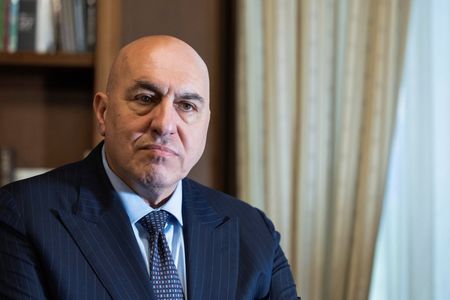
Italian Defense Minister Guido Crosetto maintained ongoing communication with top military leadership throughout the incident, according to ministry statements.
Foreign Minister Antonio Tajani confirmed through his own social media post that Italian service members had successfully moved to protective bunker facilities and remained “well and safe” following the attack.
The targeted facility houses approximately 300 Italian military personnel whose mission involves providing training assistance to Kurdish regional security forces, the defense ministry’s website indicates.
WASHINGTON — American military forces are rapidly adapting their defensive strategies after facing unprecedented swarms of low-cost Iranian drones that have challenged traditional air defense systems.
Iran’s massive drone offensive put U.S. capabilities to the test, with the Islamic Republic deploying so many unmanned aircraft simultaneously that several penetrated American defenses. The attacks resulted in the deaths of six U.S. service members at a military operations facility in Kuwait.
While military officials and defense analysts emphasize that American forces have successfully intercepted most Iranian drones and significantly degraded Iran’s drone production capacity, concerns remain about the cost-effectiveness of current defense methods. Critics have pointed out the economic inefficiency of using multi-million-dollar missiles to destroy drones worth only tens of thousands of dollars.
U.S. troops now face the challenge of rapidly implementing more economical defense solutions against Iran’s Shahed drones, which operate at low altitudes and produce a distinctive buzzing sound similar to motorcycles before striking their intended targets.
“We are crushing them — there’s no doubt about it — but if even one drone gets through our defenses and hurts an American, for me, that is enough to warrant fixing the problem,” explained drone warfare specialist Brett Velicovich, a former U.S. Army Predator drone operator who now co-owns a drone manufacturing business.
Joint Chiefs of Staff Chairman Gen. Dan Caine reported Tuesday that Iranian drone launches have decreased by 83% since the conflict began on February 28. Military leaders revealed that Iran deployed over 2,000 drones in the initial days following the first U.S. and Israeli strikes.
Caine informed journalists that American forces have been targeting Iran’s military and industrial facilities “to deny them the ability to continue to generate those one-way attack drones.”
“We also have struck several one-way drone factories to get at the heart of their autonomous capability,” he stated.
The U.S. and allied nations have deployed hundreds, possibly thousands, of Patriot missiles throughout the Middle East to counter Iranian missiles and drones. However, military experts note a shift toward using attack helicopters and machine gun systems as more economical alternatives for drone interception, a strategy President Donald Trump has acknowledged.
“Now we have low-cost interceptors effectively combating Iranian drones,” the Republican president announced Monday.
The military is also deploying an anti-drone system called Merops, which has proven effective against similar Russian drones in Ukraine. This system uses drones to combat other drones, can be transported in a pickup truck, and employs artificial intelligence for navigation when electronic communications are disrupted.
Defense experts suggest that while the U.S. military has monitored the Ukraine-Russia conflict, it has been sluggish in updating its weapons and strategies to address the emerging drone threat.
“This is going to be a big wake-up call for how the U.S. military defends its citizens and fights wars forever,” Velicovich observed. “Because it’s sort of like we’re the best military on the planet, but stuff’s still getting by us.”
Pentagon officials have acknowledged in classified congressional briefings their difficulties in stopping Iranian drone waves, leaving American personnel and Persian Gulf allies exposed. Notable targets including a Dubai skyscraper and regional airports have suffered strikes.
Defense Secretary Pete Hegseth stated last week that “thousands of Iranian missiles and drones have been intercepted and vaporized.” However, he admitted, “this does not mean we can stop everything.”
The Shahed drones, available in large quantities, have demonstrated their ability to overwhelm air defense systems and cause significant damage. Despite their relatively slow speed of 180 kph (110 mph), these drones can travel up to 2,000 kilometers (1,240 miles) and carry 40 kilograms (88 pounds) of explosives.
Traditional U.S. military drone operations have focused on sophisticated reusable aircraft like the Predator, which launch missiles and return to base. Ukraine’s experience has shown that deploying numerous inexpensive drones that carry explosives directly to targets can be highly effective.
“There is going to be a learning curve, but the more that the Ukrainians can provide us in terms of guidance and expertise I think the better off we all are,” said Brandon Blackburn, a former CIA targeting officer with Middle East counterterrorism experience.
Ryan Brobst, a defense strategy researcher at the Foundation for Defense of Democracies think tank, noted that social media posts from U.S. military and allied forces show increased use of less expensive weapons like aircraft machine guns and laser-guided rockets against Iranian drones.
He referenced a United Arab Emirates military video showing an Apache helicopter destroying a Shahed drone with a large-caliber machine gun.
“The United States has made significant strides in counter-UAS warfare over the past few years,” Brobst commented, referring to unmanned aerial systems. “But it’s also true that we can still learn more from Ukraine.”
Northwestern University professor William Reno, who conducts Ukraine military training research for the Pentagon and regularly visits the country, observed that Ukraine has developed inexpensive drone defense methods using .50-caliber machine guns mounted on pickup trucks or fast-moving interceptor drones.
“The long-run effect will probably be that it’s going to focus minds wonderfully on thinking more seriously about cheap stuff that comes through the air,” Reno explained.
For decades, American military doctrine has emphasized air superiority in any conflict, but the focus was primarily on higher altitudes where fighter jets and bombers operate. Drone warfare now requires military planners to consider low-altitude airspace control.
“Ukraine was the wake-up call,” Reno stated.
According to Jerry McGinn, a former Defense Department official who specialized in manufacturing and industrial policy and currently works at the Center for Strategic and International Studies, the U.S. military already operates several low-cost drone programs.
One such program is the Low-cost Uncrewed Combat Attack System, or LUCAS, which American forces are deploying in Iran. The U.S. military described these American-made, single-use attack drones on social media as being “modeled after Iran’s Shahed drones.”
“It’s not public on how effective they’ve been or how they were used,” McGinn noted. “But there’s very much a focus in the U.S. of learning from the experience in Ukraine.”
GOMA, Congo — Multiple drone explosions devastated the center of Goma in the Democratic Republic of Congo on Wednesday, resulting in at least one confirmed death, according to M23 rebel representatives and local witnesses.
The aerial assault targeted Lake Kivu and struck a private home situated approximately 50 meters (164 feet) away from where former Congolese President Joseph Kabila Kabange resides.
The M23 rebel organization accused the Congolese government of orchestrating the deadly bombardment. Government officials have not yet issued a statement regarding the allegations.
While M23 representatives claim three individuals perished in the strike, this casualty count remains unverified. Local witnesses report observing only one fatality.
Among the victims was Karine Buisset, a French citizen working for UNICEF, who died when the drone hit her residence, according to both M23 officials and area residents.
French President Emmanuel Macron offered his sympathies to the deceased woman’s relatives.
“I call for respect for humanitarian law and for the personnel on the ground who are committed to saving lives,” he posted on X.
Fighting has intensified throughout January 2025 between Congo’s military forces and the Rwanda-supported M23 movement, following the rebel group’s rapid territorial gains across eastern regions and capture of strategic urban centers. In February, another drone attack claimed the life of a high-ranking M23 spokesman and operations leader.
The ongoing violence continues despite peace efforts led by the United States and Qatar, creating a massive humanitarian emergency that has forced over 7 million people from their homes.
DUBAI, United Arab Emirates (AP) — Persistent Iranian strikes targeting maritime traffic and energy facilities drove crude oil beyond $100 per barrel Thursday, while U.S. and Israeli forces continued bombardments against the Islamic Republic amid an ongoing conflict with no resolution in view.
Tehran struck a cargo vessel near Dubai’s coastline, ignited fires close to Bahrain’s main airport, launched drone strikes at a significant Saudi petroleum facility, and compelled Iraq to suspend all operations at the nation’s oil export terminals following an assault on Basra port along the Persian Gulf.
The Islamic Republic disregarded a United Nations Security Council measure passed the day before calling for cessation of strikes against neighboring Gulf states, with fresh assaults also documented in Kuwait and the United Arab Emirates.
Warning alarms sounded in the pre-dawn hours across Jerusalem after Israeli officials reported efforts to intercept incoming missiles fired from Iran. The nation simultaneously declared it had initiated a “wide-scale wave of strikes” targeting Tehran. In Lebanon, where Israeli forces claim to be engaging Iran-affiliated Hezbollah fighters, 11 individuals perished in two early morning bombardments.
Following the February 28 assault on Iran by the United States and Israel that triggered the current war, Tehran has launched a strategy designed to create sufficient worldwide economic pressure to force them to cease their military operations.
Beyond striking energy installations throughout the region, Iran maintains control over the Strait of Hormuz, the crucial maritime passage connecting the Persian Gulf to the Indian Ocean that handles approximately one-fifth of global oil transportation.
With shipping through the Strait essentially halted, Brent crude oil prices, the global benchmark, climbed an additional 9% Thursday to exceed $100 per barrel, representing a 38% increase since hostilities began.
The U.N. Security Council approved a resolution Wednesday calling for an end to Iran’s “egregious attacks” on Gulf neighbors, though Tehran displayed no indication of altering its approach.
Thursday morning brought news of a container vessel struck by projectile fire off Dubai’s coast, causing minor fire damage, according to the British military’s United Kingdom Maritime Trade Operations Center. Officials confirmed the ship’s crew remained unharmed.
In Bahrain, an early Iranian assault triggered extensive fires on Muharraq Island, location of the nation’s primary airport. Officials advised residents to remain inside and seal windows to avoid smoke exposure. The airport houses aviation fuel storage, while additional tanks in the vicinity support the kingdom’s petroleum sector.
Kuwait’s Defense Ministry reported an Iranian drone crashed into a residential structure, injuring two civilians, while the UAE announced activating air defenses twice to shield Dubai from incoming attacks, and emergency crews extinguished flames at a Dubai Creek Harbor tower following a drone impact.
Saudi Arabia confirmed intercepting a drone aimed at Riyadh’s diplomatic district and reported downing additional drones in the kingdom’s eastern regions, including at least one attempting to strike the Shaybah oil field in the Empty Quarter desert.
After an attack on Iraq’s Basra port that claimed at least one life, officials announced Thursday they were compelled to cease operations at all national oil terminals.
Farhan al-Fartousi, director-general of the General Company for Ports of Iraq, explained the assault targeted a vessel in the Persian Gulf port’s ship-to-ship transfer zone.
Air raid sirens and powerful explosions echoed through Jerusalem and surrounding Israeli areas shortly after midnight. Israeli military officials announced they were responding with another “wide-scale wave of strikes” in Tehran.
Nighttime rocket launches from Iran and Hezbollah forced Israelis into shelters across multiple regions, including Tel Aviv and the northern Lebanese border area.
An Israeli strike Thursday hit a vehicle in Ramlet al-Bayda, a prominent beachfront tourist district of Beirut where numerous displaced individuals have sought refuge. Eight people died and 31 sustained injuries, according to the Lebanese Health Ministry. Israeli military representatives told The Associated Press they were “not aware” of conducting strikes at that location.
In Aramoun, located approximately 10 kilometers south of Beirut, three additional fatalities and one injured child resulted from another early Israeli attack.
Lebanese Health Ministry figures from Wednesday indicate at least 634 people have died in Lebanon since the current fighting commenced.
The U.N. refugee agency reported at least 759,000 people have been internally displaced within Lebanon.
Iranian officials state more than 1,300 people have been killed in their country, while Israel has confirmed 12 deaths. The United States has lost seven service members with another eight suffering serious injuries.
Global markets are reeling as Iran escalates maritime attacks in Gulf waters, sending oil prices soaring and prompting warnings of $200-per-barrel crude from Tehran officials.
Two fuel tankers caught fire in Iraqi waters following strikes by Iranian explosive-laden vessels, forcing the nation’s oil ports to shut down operations. Oman has evacuated all ships from its primary oil export facility as a precautionary measure.
The attacks pushed Brent crude futures up nearly 9% to $100.07, after reaching $119.50 earlier this week. U.S. crude prices climbed 8% to $94.25.
When questioned about the escalating conflict, President Trump stated the United States was “going to look very strongly at the straits.”
The International Energy Agency’s announcement of a record 400 million barrel release has done little to calm markets, as analysts note this represents only about 20 days’ worth of lost supply, suggesting investors fear prolonged disruptions rather than short-term fixes.
Global stock markets tumbled on the news. The MSCI Asia-Pacific index outside Japan dropped 1.6%, ending two consecutive days of gains. Japan’s Nikkei fell 1.7%, while S&P 500 and Nasdaq futures each declined 1%. European markets also retreated, with EUROSTOXX 50 futures sliding 1.1%.
The crisis is expected to fuel inflation concerns, pushing bond markets to increase borrowing costs worldwide. Market analysts are now abandoning expectations of interest rate cuts, with traders predicting none of the five central banks meeting next week in the United States, Europe, Britain, Australia and Canada will lower rates. Australia is expected to raise rates instead.
U.S. Treasury yields reflect the uncertainty, with two-year rates hitting their highest levels since August. The 10-year bond continues struggling after a weak auction, placing focus on today’s 30-year bond sale as investors question locking in current yields amid rising inflation threats.
Thursday’s key market events include the 30-year U.S. bond auction, January trade data release, initial jobless claims figures, and remarks from Federal Reserve Vice Chair for Supervision Michelle Bowman.
LONDON — A centuries-old tradition in British politics will come to an end in the coming weeks after lawmakers voted to eliminate hereditary aristocrats from the House of Lords.
Members of Britain’s upper legislative chamber withdrew their opposition Tuesday evening to a measure previously approved by the House of Commons that will force out dozens of dukes, earls and viscounts who received their parliamentary positions through inheritance alongside their noble titles.
Government minister Nick Thomas-Symonds described the reform as ending “an archaic and undemocratic principle.”
“Our parliament should always be a place where talents are recognized and merit counts,” he stated. “It should never be a gallery of old boys’ networks, nor a place where titles, many of which were handed out centuries ago, hold power over the will of the people.”
While the House of Lords serves a crucial function in Britain’s democratic system by reviewing laws approved by the elected House of Commons, opponents have consistently criticized it as unwieldy and lacking democratic legitimacy.
Recent scrutiny of the upper chamber intensified following the Peter Mandelson situation, who stepped down from the Lords in February following revelations about his connections to deceased sex offender Jeffrey Epstein, highlighting ongoing concerns about misconduct among members.
With more than 800 current members, the chamber ranks as the world’s second-largest legislative body, trailing only China’s National People’s Congress.
Throughout most of its seven-century existence, the chamber consisted primarily of noblemen — rarely women — who inherited their positions, along with some bishops. The 1950s brought the addition of “life peers” — former politicians, community leaders and other distinguished individuals chosen by the government, who now constitute the chamber’s majority. Hereditary peers currently represent about one-tenth of the membership.
Tony Blair’s Labour administration removed most of the 750 hereditary peers in 1999, though 92 remained temporarily to prevent an aristocratic uprising.
Another 25 years passed before current Prime Minister Keir Starmer’s Labour government introduced measures to eliminate the remaining hereditary members.
The nobles resisted the change, forcing a deal that will allow an unspecified number of hereditary members to remain by converting them into life peers.
The legislation will take effect once King Charles III provides royal assent — a ceremonial requirement — and the hereditary peers will depart when the current parliamentary session concludes this spring, finishing a political transformation started 25 years ago. By House of Lords standards, this represents rapid change.
Labour maintains its commitment to eventually replacing the House of Lords with an alternative second chamber that better “represents the U.K.” Based on historical precedent, such changes will likely occur gradually.
“So, here we are at the end of well over seven centuries of service by hereditary peers in this Parliament,” stated Nicholas True, the Conservative Party’s leader in the Lords.
“Many thousands of peers served their nation here and thousands of improvements to law were made,” he continued. “It wasn’t all a stereotypical history of reaction in ermine. Many of those people, no doubt, were flawed but for the most part, they served their nation faithfully and well.”
Military personnel took to the streets of Johannesburg Wednesday as South Africa’s government launched a major offensive against organized criminal activity, deploying army units to assist law enforcement in the nation’s largest metropolitan area.
The deployment marks the first significant military action since President Cyril Ramaphosa declared during his recent state address that armed forces would be utilized to combat organized crime networks, which he described as the most serious threat facing the country’s democratic institutions and economic progress.
An Associated Press correspondent witnessed more than a dozen military vehicles moving through Johannesburg’s Riverlea neighborhood, where soldiers exited their transports to search residential buildings. This particular area has experienced significant problems with both criminal gang activity and unauthorized mining operations.
Neither the South African Police Service nor the Defense Department offered immediate details regarding the scope of the military operation.
Officials had initially scheduled the nationwide military intervention to begin March 1, but the timeline was pushed back to provide soldiers with additional instruction on civilian law enforcement procedures. During these operations, military units will function under police supervision and authority.
According to parliamentary notification from Ramaphosa, the initial phase will involve 550 military personnel operating throughout Gauteng province, which encompasses Johannesburg, with their mission extending through the end of April to support crime reduction and public safety efforts.
The broader military strategy encompasses operations across five of the country’s nine provinces, based on documentation provided to Parliament by police leadership. These expanded operations will target unauthorized mining activities in Gauteng, North West, and Free State provinces, while addressing gang-related violence in Western Cape and Eastern Cape regions.
Law enforcement officials indicated that certain aspects of the national deployment could continue for more than twelve months.
The nation struggles with exceptionally high violent crime statistics. Official police data shows 6,351 murders occurred between October and December 2025, averaging nearly 70 homicides daily in a population of approximately 62 million, alongside elevated rates of attempted murder and violent assault incidents.
Ramaphosa has specifically highlighted gang violence and illegal mining as particularly serious concerns, linking both issues to broader organized criminal enterprises. Several targeted areas include neighborhoods surrounding Cape Town, South Africa’s premier tourist destination, which has faced persistent gang violence problems for many years.
Wednesday’s initial deployment did not immediately clarify whether operations had commenced in other regions identified by the president.
The country has previously utilized military assistance during periods of criminal activity and civil unrest, including 2021 deployments when rioting and widespread looting across two provinces—triggered by former President Jacob Zuma’s imprisonment and public frustration over COVID-19 restrictions—resulted in over 350 deaths.
Ramaphosa acknowledged the sensitive nature of deploying military forces, given the army’s historical role in suppressing pro-democracy movements during the apartheid era of racial segregation that concluded in 1994.
“The deployment had become necessary due to a surge in violent organized crime that threatens the safety of our people and the authority of the state,” he stated.
While the military deployment has received broad public support, some political opposition groups have characterized it as evidence that police forces have been ineffective in controlling criminal activity.
Two major European nations announced they will tap their emergency petroleum stockpiles following a coordinated international request aimed at stabilizing energy markets disrupted by escalating Middle East tensions.
Germany and Austria confirmed their participation in the International Energy Agency’s call for member countries to collectively release 400 million barrels from strategic reserves. Japan has also committed to beginning releases starting Monday.
This coordinated action represents the most significant emergency oil release in history, surpassing the 182.7 million barrels released by IEA nations following Russia’s comprehensive military assault on Ukraine two years ago.
The IEA reports its member countries maintain more than 1.2 billion barrels in public emergency petroleum reserves, supplemented by an additional 600 million barrels in industry stockpiles held under government requirements.
The current energy crisis stems from Iran’s retaliatory actions following strikes by the United States and Israel. Iranian forces have launched attacks against commercial vessels throughout the Persian Gulf, intensifying their strategy of disrupting the oil-rich region as worldwide energy anxieties escalate.
Iran has successfully halted most cargo movement through the strategic Hormuz Strait, a critical waterway that handles approximately 20 percent of global oil shipments traveling from the Persian Gulf to the Indian Ocean.
Iranian operations have also struck petroleum facilities and processing plants across Gulf Arab states, designed to create sufficient worldwide economic pressure to force the United States and Israel to cease their military operations.
Energy officials from the Group of Seven nations stated Tuesday their support “in principle” for “the implementation of proactive measures to address the situation, including the use of strategic reserves.”
Current export levels of crude oil and refined petroleum products have plummeted to less than 10 percent of pre-conflict volumes, according to IEA data.
JAKARTA, March 12 – Following discussions with his Australian counterpart, Indonesia’s Defense Minister revealed plans Thursday to broaden bilateral security cooperation into multiple trilateral partnerships involving Japan and Papua New Guinea.
Defense Minister Sjafrie Sjamsoeddin announced the formation of two separate three-nation security frameworks – one linking Indonesia, Australia and Japan, and another connecting Indonesia, Australia and Papua New Guinea. The announcement came after meetings with Australian Defense Minister Richard Marles.
This expansion builds upon a security agreement signed by Indonesian and Australian leaders last month, which established a commitment for both nations to engage in consultations when either faces security threats.
According to Sjamsoeddin, the two countries will collaborate on intelligence operations, though he declined to elaborate on specific details of this cooperation.
The ministers also explored the potential development of a military training center on Morotai island in North Maluku, with proposals to enhance current defense infrastructure there. “We will work together to improve and utilise it,” Sjamsoeddin stated.
The planned Morotai facility would accommodate military personnel from multiple nations including the Philippines, Australia and Singapore, alongside another training center under development in North Kalimantan in partnership with Singapore.
Regarding international peacekeeping efforts, Sjamsoeddin indicated Indonesia’s willingness to contribute forces to an international security mission in Gaza, contingent upon developments involving U.S. President Donald Trump’s Board of Peace and the evolving Middle East situation.
While Indonesia initially prepared to deploy 20,000 troops, the country has adjusted its commitment to 8,000 personnel to be deployed in stages, responding to commitments from other participating nations to contribute smaller contingents numbering in the hundreds.
“The president has instructed us to prepare our troops, and we are ready to act, but we are awaiting developments from the BOP. I cannot confirm anything yet because the situation is very dynamic,” Sjamsoeddin explained.
Air New Zealand revealed Thursday it will eliminate approximately 1,100 flights, representing 5% of its scheduled services, extending through early May as ongoing Middle East warfare drives jet fuel costs to unprecedented levels.
The announcement from New Zealand’s flagship carrier follows similar moves by international airlines including Qantas Airways of Australia, Scandinavian airline SAS, and Thai Airways, all implementing fare increases this week due to dramatic fuel cost spikes affecting the worldwide aviation industry.
Ongoing Middle Eastern warfare has compelled numerous airlines to suspend regional flights or adopt longer alternative flight paths to avoid drone and missile attacks that have severely restricted airspace access, creating the aviation sector’s most significant disruption since the COVID-19 pandemic.
Oil markets rose Thursday following reports from Iraqi security sources that Iranian vessels loaded with explosives struck two fuel tankers, while Iranian officials warned global markets should prepare for oil reaching $200 per barrel amid widespread supply chain interruptions.
Air New Zealand’s chief executive Nikhil Ravishankar informed state radio that approximately 44,000 passengers out of 1.9 million expected travelers through early May will require rebooking due to domestic and international service reductions.
Regional destinations including New Zealand’s renowned Marlborough wine country and the western coastal city of New Plymouth will experience decreased flight availability in coming weeks.
However, the airline plans fewer reductions to long-distance routes, Ravishankar explained, as United States connections have gained popularity as European gateway options following extensive Middle Eastern airspace restrictions.
“People want to get to Europe still, and over the U.S. airspace we can get them into Europe, and that’s what we’re focused on doing,” he said.
Air New Zealand stock declined 1% Thursday, mirroring decreases seen in Hong Kong’s Cathay Pacific, Australia’s Qantas Airways, and Japan Airlines.
Wednesday brought additional disruption when two unmanned aircraft crashed near Dubai’s primary airport—the planet’s busiest international passenger hub—while Bahrain relocated aircraft as infrastructure attacks throughout the Gulf region continued disrupting air traffic.
The warfare has additionally interrupted shipping through the globe’s most critical oil export corridor, driving petroleum prices higher and destabilizing international travel, causing ticket costs on certain routes to skyrocket while raising concerns about significant travel industry decline.
Passengers are rapidly switching to airlines avoiding Middle Eastern airspace, with Thai Airways reporting increased European passenger bookings.
Cathay Pacific suspended Dubai and Riyadh flights through March’s end while expanding London and Zurich services, capitalizing on increased demand for Asia-Europe routes bypassing the Middle East.
Demonstrating the conflict’s far-reaching impact beyond the Middle East, Vietnam’s government cautioned Wednesday that domestic airlines could face fuel shortages as early as next month.
Today marks the 15th anniversary of one of the most catastrophic natural disasters in modern history, when a massive earthquake off Japan’s northeastern coast unleashed devastating tsunami waves that claimed more than 18,000 lives.
On March 11, 2011, a magnitude 9.0 earthquake struck beneath the Pacific Ocean, approximately 70 kilometers east of Japan’s Tohoku region. The powerful seismic event generated towering tsunami waves that reached heights of up to 40 meters in some areas, devastating Japan’s northeastern coastline.
The disaster, officially known as ‘The Great East Japan earthquake and tsunami,’ left thousands of people missing and never recovered. Entire coastal communities were swept away as the massive waves surged inland, destroying buildings, homes, and infrastructure across hundreds of miles of coastline.
The coastal city of Miyako was among the hardest hit areas, where dramatic footage captured enormous waves crashing into buildings and sweeping away everything in their path. The disaster also triggered a nuclear emergency at the Fukushima Daiichi Nuclear Power Plant, adding to the catastrophe’s long-lasting impact.
The 2011 tsunami stands as a stark reminder of nature’s devastating power and the importance of disaster preparedness and early warning systems for coastal communities worldwide.
Military conflict in Iran is causing significant turbulence in the aviation industry as jet fuel costs climb and carriers begin raising ticket prices, creating concerns for passengers worldwide who are planning upcoming trips.
The ongoing warfare is sending shockwaves through fuel markets, with airlines responding by adjusting their pricing structures to offset the increased operational expenses. This development is creating uncertainty for travelers booking flights, even those with destinations far removed from the conflict zone.
While the United States and allied nations have announced plans to release oil from strategic reserves, aviation industry analysts suggest this measure may not provide immediate relief for jet fuel pricing. The ripple effects of Middle Eastern violence continue to demonstrate how regional conflicts can impact global air transportation networks.
For passengers considering flight bookings in the near future, travel experts recommend monitoring price fluctuations closely and being prepared for potential fare increases as the situation develops.
At a psychiatric facility in Havana, dozens of individuals joined hands in a circle, reciting promises together to eliminate “the toxins that enslave” their bodies. This collective commitment to stay clean for the next 24 hours marked the beginning of their three-month detox program before entering rehabilitation.
Until this decade began, substance abuse was virtually nonexistent in Cuba. But a worsening economic situation, scarcity of essential items, and the arrival of affordable synthetic narcotics have dramatically altered the situation.
Throughout Havana and other Cuban cities, witnessing young individuals collapsed in public spaces, struggling to walk, or found unconscious has become commonplace.
Officials identify the main danger as “químico” (chemical) — a dangerous mixture of synthetic cannabinoids combined with toxic substances. Street dealers also call it “papelitos” or “little papers,” since the substance soaks into paper sheets that get cut into small portions for smoking. Each dose sells for approximately 250 Cuban pesos (50 cents), making it cheaper than basic bread or soft drinks.
“It’s very cheap…and it’s everywhere,” said David Morales, 25, who is in recovery after receiving help at government-funded health centers and is now in rehabilitation therapy at the Alcance Victoria Cuba evangelical Baptist church.
Recognizing the growing consumption problem, Cuba’s Ministry of Health and multiple government departments created a National Drug Observatory in July, designed to study, track, and reduce illegal drug effects across the nation.
While officials don’t maintain user statistics, Dr. Tania Adriana Peón, who leads mental health and addiction services at the General Directorate of Health, referenced emergency department records as an indicator of the growing problem. During 2024, 467 individuals requested assistance or were documented in Havana emergency facilities. In 2025, this number almost doubled to 886.
The island maintains strict anti-drug laws, with trafficking penalties reaching life sentences. Though Cuba doesn’t manufacture or store drugs domestically, officials recognize the country faces addiction challenges.
Occasionally, authorities report finding cocaine packages discarded by smugglers during pursuits that wash onto beaches, called “recalos” or washups. Narcotics also enter through imported merchandise, and authorities have discovered small-scale domestic marijuana growing operations.
“The primary challenge Cuba faces today is related to new psychoactive drugs or synthetic cannabinoids, which originate mainly from the United States,” said Col. Juan Carlos Poey Guerra of Cuba’s Interior Ministry.
Police laboratories identified 46 different synthetic compounds during the past year, he noted. Substances combined with cannabinoids included the seizure medication carbamazepine, formaldehyde, and fentanyl, among other chemicals. During 2024 and 2025, authorities prevented 72 drug smuggling attempts from 11 different countries.
According to Poey Guerra, the United States supplies the primary chemical components used in químico production.
Cuba operates free, government-controlled healthcare, making local family medical centers the initial detection points for substance abuse signs. Medical officials refer patients with serious or complicated cases for extended hospital treatment programs.
The Associated Press recently visited a 40-bed male unit at Havana Psychiatric Hospital, housing patients between 20 and 30 years old completing 90-day detoxification before starting rehabilitation.
The facility contained two-person rooms decorated with family photographs, plus a small library area, meal space, and recreational zone. Daily, patients wearing white shirts displaying “We win against drugs” messages take charge of maintaining their living areas.
“I was incredibly depressed…living on the streets; I just couldn’t take it anymore,” said 23-year-old Daniel Fulleda, who was admitted in January. His tone was enthusiastic as he shared his plans of getting married before the year end and start a family. “Next year, I’ll start my own business.”
For many years, the centralized government handled drug and alcohol treatment — particularly alcohol cases — but the current crisis magnitude has allowed other organizations to participate.
“There are neighborhoods that are infested… I’ve seen young people using drugs right in front of me,” said Pastor Abel Pérez of the Alcance Victoria Cuba church. “As a pastor, I’m not called to sit idly by.”
During the previous year, the congregation offered counseling to roughly 50 youth and their families, with more than twelve people currently attending regular sessions.
“In my youth, talking about drugs was extraordinary… The problem has grown so rapidly and in such a short time that, to some extent, it has overwhelmed the country’s capacity to address it,” said Alejandro Morales, a 57-year-old oceanographic engineer who accompanies his son David to meetings at the Alcance Victoria Cuba church.
In the same space, 64-year-old Vilma Arias sought assistance alongside her 36-year-old daughter. Her other son, 26, also battles substance abuse but won’t accept treatment.
“We have to pray a lot,” she said. “My daughter is a wonderful teacher and my son is a graduate in automotive mechanics. I don’t even know how they fell into this,” she added.
Global energy markets are reeling as Brent crude oil prices climbed back above $100 per barrel Thursday following Iranian strikes against commercial vessels in critical Middle Eastern shipping corridors.
The surge comes as Iran intensified attacks on merchant ships operating near the Strait of Hormuz and Iraq’s Basra port facility, part of an escalating conflict that has now entered its second week. American airstrikes against Iranian targets are continuing for the 13th consecutive day, while Israeli forces maintain operations against Iran and its Lebanese ally Hezbollah, creating a humanitarian crisis that has forced over 800,000 Lebanese residents from their homes.
Energy markets responded sharply to the latest developments, with oil prices jumping more than 9 percent as supply disruption fears intensified. U.S. benchmark crude also spiked, reaching approximately $95 per barrel amid the uncertainty.
In Kuwait, defense officials reported that an Iranian drone crashed into a residential structure Thursday, injuring two civilians in the small Gulf nation.
Maritime authorities documented another incident involving a container vessel operating near Dubai in the Persian Gulf. The British military’s United Kingdom Maritime Trade Operations center reported the ship came under fire just before sunrise Thursday.
“An ‘unknown projectile’ hit the vessel as it was some 65 kilometers (40 miles) off the coast of Dubai’s Jebel Ali port,” officials stated, adding that crew members remained unharmed despite a small fire breaking out.
The most significant disruption occurred at Iraq’s Basra port, where an early morning assault claimed at least one life and prompted authorities to suspend all oil terminal operations nationwide. Farhan al-Fartousi, who heads Iraq’s General Company for Ports, announced the shutdown following the deadly incident.
“The attack targeted ships in the ship-to-ship transfer area of the Basra port on the Persian Gulf,” al-Fartousi explained in a statement released through Iraq’s state news agency. “It remained unclear if the ship was targeted by a flying or seaborne drone or a missile.”
Emergency responders retrieved one fatality and assisted 38 other individuals following the attack. While commercial port operations continue, all oil terminals remain closed as a precautionary measure.
Iraqi officials have identified the affected tankers as the Marshall Islands-flagged Safesea Vishnu and the Malta-flagged vessel Zefyros.
WASHINGTON, March 11 – Intelligence sources confirm that Iran has positioned approximately twelve naval mines throughout the Strait of Hormuz, a development that could significantly complicate efforts to reopen the vital shipping corridor used for transporting oil and natural gas globally.
The strategic waterway along Iran’s coastline has seen energy shipments come to a virtual standstill following military operations initiated by the United States and Israel nearly two weeks ago, contributing to a dramatic spike in international energy costs.
Iranian military leadership warned Wednesday that global markets should brace for oil prices reaching $200 per barrel.
While one intelligence source confirmed that authorities have identified the positions of most explosive devices, they refused to detail how American forces intend to address the threat.
The mining operation was initially disclosed by CNN on Tuesday.
Tehran has consistently warned it would respond to military aggression by placing mines throughout the strait. The waterway typically handles roughly twenty percent of the world’s oil and liquefied natural gas traffic, giving Iran significant influence over the United States and allied nations through its capacity to block maritime commerce.
American military officials report successfully targeting Iranian vessels used for mine deployment, destroying sixteen such boats on Tuesday. However, the U.S. Navy has not yet committed to providing security escorts for civilian vessels navigating the strait.
President Donald Trump issued an ultimatum Tuesday, demanding Iran’s immediate removal of any deployed mines and warning of unspecified military action should Tehran fail to comply.
KHOR FAKKAN, United Arab Emirates (AP) — Families enjoying recreational activities along the United Arab Emirates shoreline are witnessing an extraordinary sight as numerous oil tankers and commercial vessels form lengthy queues in the Strait of Hormuz, visible from beaches near Khor Fakkan where visitors swing on playground equipment, take horseback rides, and set up camping sites.
The maritime congestion serves as a stark visual reminder of how regional conflicts in Iran are creating disruptions to international energy transportation networks.
The images were compiled by Associated Press photography staff as part of a curated collection.
LONDON – The United Kingdom’s government made public Wednesday its initial batch of records concerning Peter Mandelson’s appointment as US ambassador, revealing what officials knew about his connections to convicted sex offender Jeffrey Epstein.
Additional documents are anticipated in upcoming weeks, as Prime Minister Keir Starmer’s administration seeks to avoid interfering with an active police inquiry.
The released papers show several significant revelations from the appointment process.
RISK ASSESSMENT WARNINGS
A document marked “Advice to the prime minister” contained a background check that identified Mandelson’s connection to Epstein as presenting a “reputational risk.”
The record, based on investigations completed December 4, 2024, stated: “After Epstein was first convicted of procuring an underage girl in 2008, their relationship continued across 2009-2011, beginning when Lord Mandelson was Business Minister and continuing after the end of the Labour government.”
The assessment also noted: “Mandelson reportedly stayed in Epstein’s house while he was in jail in June 2009.”
Along with the background check, another briefing document indicated that Starmer’s former Chief of Staff Morgan McSweeney had conversations about Mandelson’s Epstein relationship, but Director of Communications Matthew Doyle was satisfied with how Mandelson answered inquiries about the contact.
Additional communications and follow-up inquiries to Mandelson regarding this relationship were not included in Wednesday’s document release.
STAFF WARNINGS
Government staff warned Starmer he would face greater scrutiny if problems arose from choosing a political appointee like Mandelson.
“If anything goes wrong, you could be more exposed as the individual is more connected to you personally,” officials cautioned before the appointment was made.
After allegations surfaced about Mandelson’s Epstein connections, which resulted in his termination last September, Downing Street launched a “fact-finding” investigation to determine what occurred during his selection process.
A summary of a fact-finding conversation between Starmer’s general counsel and National Security Adviser Jonathan Powell in September revealed that Powell characterized the appointment process as “unusual” and “weirdly rushed.”
Powell expressed concerns about Mandelson’s “reputation” during discussions with McSweeney.
The notes also show that Philip Barton, who was the top government official at the Foreign Office at the time, “also had reservations around the appointment.”
TERMINATION PAYMENT
Released records detail negotiations over Mandelson’s termination compensation following his dismissal. Officials reported these discussions started when Mandelson requested payment for the remaining “4-year salary costs of the fixed term appointment,” totaling 547,201 pounds ($733,523).
The government ultimately authorized 34,670 pounds in discretionary payments along with 40,330 pounds he was legally owed, for a combined total of 75,000 pounds.
BEIJING – Chinese lawmakers are poised to approve sweeping legislation Thursday that would establish a “unified” national identity for the nation’s 55 ethnic minority communities, according to a draft of the proposed law. Opponents argue the measure will further diminish the cultural heritage of non-Han Chinese populations and could criminalize anyone who opposes this forced “unity.”
The legislation, titled “Promoting Ethnic Unity and Progress,” seeks to build national cohesion and support the revival of the Chinese nation under Chinese Communist Party leadership, according to the draft document.
The National People’s Congress, China’s legislative body, plans to vote on the measure during the final session of its annual gathering.
China officially recognizes 56 distinct ethnic communities, with Han Chinese representing the overwhelming majority at more than 91% of the nation’s 1.4 billion residents.
The country’s minority populations—which include Tibetans, Mongols, Hui, Manchus, and Uyghurs—live primarily in territories covering approximately half of China’s landmass, areas often abundant in natural resources.
According to the proposed legislation, integration among ethnic communities would be encouraged through educational programs, housing policies, population movement, community activities, cultural initiatives, tourism development, and economic planning.
The law would require Mandarin as the primary instructional language in educational institutions and for governmental and official functions.
In situations where both Mandarin and minority languages appear together in public spaces, Mandarin must receive “prominence in placement, order, and similar respects,” the draft specified.
“The state respects and protects the learning and use of minority languages and scripts,” the document stated.
Religious organizations, faith-based educational institutions, and worship facilities must comply “to the direction of the Sinicization of religion in China,” the draft indicated.
The proposed law would also prohibit interference with marital decisions based on ethnic background, traditions, or religious beliefs, encouraging cross-ethnic marriages.
Allen Carlson, who serves as an associate professor of government at Cornell University and specializes in Chinese foreign policy, described the legislation as emphasizing assimilation.
“The law makes it clearer than ever that in President Xi Jinping’s PRC non-Han peoples must do more to integrate themselves with the Han majority, and above all else be loyal to Beijing,” Carlson explained, using the acronym for China’s official designation.
Minority affairs would become part of China’s broader social control framework, incorporating provisions for anti-separatist measures, frontier security, threat mitigation, and societal stability.
Foreign organizations and individuals who engage in activities against China “that undermine ethnic unity and progress or create ethnic separatism shall be pursued for legal liability in accordance with the law,” according to the draft.
A commentary in the government-controlled China Daily newspaper claimed the legislation underwent thorough legislative review, including multiple examinations and consultations with legislators and minority community representatives.
“The law stresses the protection of cultural traditions and lifestyles of all ethnic groups… it is misleading to claim that ethnic minorities in China must choose between economic development and cultural preservation,” the editorial stated.
Authorities in Australia have discovered two bodies in a vehicle while conducting a search operation for Chinese backpackers who vanished in Queensland’s flood-ravaged areas, according to reports from Thursday.
The Australian Broadcasting Corporation stated that police sources confirmed the bodies found in the car are believed to be the missing tourists.
Emergency responders and police diving teams were dispatched to the Gympie region in Queensland on Thursday to verify the identities of the deceased, ABC News reported.
According to an official police statement, the missing travelers – a man aged 26 and a woman aged 23 – had been journeying toward North Burnett in Queensland, located approximately 380 kilometers (236 miles) northwest of state capital Brisbane.
Gympie’s mayor Glen Hartwig called the situation an “absolute tragedy.”
“These people have come to Australia to see our beautiful country … and tragically they’ve ended up losing their lives,” Hartwig stated to ABC News.
Severe flood alerts continue across sections of Queensland and the Northern Territory following relentless rainfall that caused waterways to overflow, isolating rural communities and prompting the evacuation of hundreds of people.
Television coverage from Wednesday showed a helicopter rescuing two individuals from a vehicle trapped in crocodile-infested waters at a creek crossing close to Katherine in Northern Territory.
Officials have advised residents against attempting to drive through flood zones, noting that multiple crocodiles have been spotted in flooded neighborhoods surrounding Katherine.
OSLO – Authorities in Norway announced Wednesday that three individuals have been taken into custody following the weekend bombing incident at the United States embassy in the capital city.
The explosion occurred during the early morning hours on Sunday when an improvised explosive device detonated near the embassy’s consular entrance, according to Norwegian officials. While the blast caused significant damage to the building’s entrance area, no one was hurt in the incident.
Police Attorney Christian Hatlo addressed the media about the arrests, stating: “They are suspected of a terror bombing.”
Earlier this week, law enforcement officials released surveillance footage showing one person of interest – an individual dressed in dark clothing with their face concealed by a hood, carrying what appeared to be a backpack or bag.
Global oil markets experienced sharp increases Thursday following reports that two fuel tankers were struck by attackers in Iraqi territorial waters, leading both vessels to catch fire.
Brent crude futures jumped $5.69 per barrel, reaching $97.67 – a 6.19% increase as of early Thursday morning. Meanwhile, U.S. West Texas Intermediate crude climbed $5.11 to $92.36 per barrel, marking a 5.86% gain.
According to Farhan al-Fartousi, director general of Iraq’s General Company for Ports, the two international tankers transporting Iraqi fuel oil were targeted by unknown assailants Wednesday. Iraqi security investigators determined that explosive-equipped vessels from Iran were responsible for striking both tankers.
Market analyst Tony Sycamore from IG suggested the attacks represent Iran’s direct retaliation against recent international efforts to stabilize oil markets. “This appears to mark a direct and forceful Iranian response to the IEA’s overnight announcement of a massive strategic reserve release aimed at cooling runaway prices,” Sycamore explained.
The International Energy Agency recently approved releasing an unprecedented 400 million barrels from strategic oil reserves to combat price spikes caused by supply disruptions from the ongoing U.S.-Israeli conflict with Iran. The United States plans to contribute 172 million barrels from its Strategic Petroleum Reserve as part of this coordinated effort.
However, market experts question whether reserve releases can provide lasting relief. “The IEA’s release of oil reserves may be only a temporary solution, as disruptions to oil shipments through the Strait of Hormuz and a major production halt in some Middle Eastern countries could cause a long-term supply crunch,” warned Tina Teng, a market strategist with Moomoo ANZ.
President Donald Trump addressed the situation Wednesday, stating that the United States was in “very good shape” regarding its military operations against Iran. Trump added that America would “look very strongly at the straits,” referencing the critical Strait of Hormuz shipping route.
Despite ongoing military pressure, intelligence sources indicate Iran’s government structure remains stable and faces no immediate threat of collapse.
“Oil prices continued to face upside pressure as there were no signs of war de-escalation in the Middle East,” Teng noted, highlighting concerns about prolonged regional instability affecting global energy markets.
The military conflict between the United States and Iran appears far from over, as both nations indicate the fighting will continue despite mounting casualties and global economic disruption.
Speaking at a Kentucky rally on Wednesday ahead of November’s midterm elections, President Donald Trump declared that America had achieved victory in the nearly two-week conflict but emphasized the importance of completing their mission. “We don’t want to leave early do we?” Trump told the crowd. “We got to finish the job.”
The conflict, which began with coordinated American and Israeli airstrikes, has claimed approximately 2,000 lives, predominantly Iranian and Lebanese casualties, according to reports. The violence has expanded into Lebanon and created widespread disruption to global energy supplies and shipping routes.
UNICEF reported that over 1,100 children have been either killed or wounded in the fighting.
Iran has responded with aggressive moves targeting global oil supplies, including attacks on shipping vessels. Iranian forces using explosive-laden boats struck two fuel tankers in Iraqi territorial waters, igniting massive fires and killing one crew member. Additional projectiles hit three other ships in Gulf waters, according to maritime security firms and port authorities.
The attacks have severely impacted the Strait of Hormuz, a critical waterway that typically handles about one-fifth of global oil transport. An Iranian military official confirmed Wednesday that the strait remains “undoubtedly” under Iranian control, effectively blocking safe passage for commercial vessels.
Energy markets have reacted dramatically to the supply disruptions. Oil prices, which peaked near $120 per barrel earlier this week before dropping to around $90, jumped nearly 5% on Wednesday and continued climbing in Asian markets Thursday. Wall Street’s major indices declined amid the uncertainty.
In response to the crisis, the International Energy Agency announced an unprecedented intervention, recommending the release of 400 million barrels from global strategic reserves to combat what officials called one of the worst oil shocks since the 1970s. Energy Secretary Chris Wright confirmed Trump had authorized releasing 172 million barrels from America’s Strategic Petroleum Reserve beginning next week.
Iran has made clear its intention to use oil prices as a weapon in the conflict. A spokesperson for Iran’s military command issued a stark warning to the United States: “Get ready for oil to be $200 a barrel, because the oil price depends on regional security, which you have destabilised.”
Trump claimed American forces had destroyed 58 Iranian naval vessels and asserted that Iran was “pretty much at the end of the line.” He said the U.S. would focus heavily on the Strait of Hormuz situation, stating: “The straits are in great shape. We’ve knocked out all of their boats. They have some missiles, but not very many.”
However, intelligence sources indicate Iran has placed approximately a dozen mines in the shipping channel, further complicating efforts to restore safe passage.
The G7 nations – including the United States, Canada, Japan, Italy, Britain, Germany, and France – agreed Wednesday to explore providing military escorts for commercial ships attempting to navigate Gulf waters.
Despite intensive Pentagon airstrikes described as the most severe since the conflict began, Iran demonstrated its continued fighting capability by striking targets in Israel and across the Middle East on Wednesday.
American officials have stated their objectives include eliminating Iran’s ability to project military power beyond its borders and dismantling its nuclear program. An Israeli military source revealed an extensive target list remains, including ballistic missile facilities and nuclear-related installations.
The conflict has expanded beyond military targets. After overnight strikes hit banking offices in Tehran, Iran threatened to attack financial institutions conducting business with the U.S. or Israel, warning civilians to stay 1,000 meters away from banks throughout the Middle East.
Security concerns have reached American shores, with ABC News reporting that the FBI has issued warnings about potential Iranian drone strikes on the West Coast. However, Trump dismissed concerns about attacks on U.S. territory.
The State Department has issued alerts regarding possible Iranian militia attacks on American-owned oil and energy infrastructure in Iraq, noting that such groups have previously targeted hotels frequented by Americans.
Analyst Tony Sycamore from IG described the tanker attacks as “a direct and forceful Iranian response to the IEA’s overnight announcement of a massive strategic reserve release aimed at cooling runaway prices.”
As pump prices continue rising nationwide, oil costs have become an increasingly critical factor in military and political decision-making surrounding the conflict.
North Korean dictator Kim Jong Un brought his teenage daughter along for a weapons factory tour where both fired newly-manufactured pistols, according to state media reports released Thursday from Seoul, South Korea.
The Korean Central News Agency reported that Kim inspected a facility producing handguns and small arms weapons on Wednesday, where he examined a recently-developed pistol model that has entered manufacturing.
Following his test firing session at the facility’s shooting range, Kim declared the new weapon “excellent,” according to the state news agency. While the official text report didn’t reference his daughter’s participation, accompanying photographs depicted her shooting a pistol alongside high-ranking military personnel.
Kim emphasized the manufacturing plant’s vital role in providing handguns and small arms to military and security personnel, calling for increased production capacity and updated manufacturing equipment, KCNA reported.
The young woman, identified as approximately 13-year-old Kim Ju Ae, made her initial public debut during a long-range missile demonstration in November 2022. Since then, she has joined her father at numerous public events, including military exhibitions, factory visits, and a September journey to Beijing for Kim Jong Un’s first meeting with Chinese President Xi Jinping in six years.
Her growing visibility in public settings has led South Korean intelligence analysts and regional experts to conclude that Kim Jong Un is preparing her for eventual leadership to continue the family’s control into a fourth generation.
State media recently showed the teenager handling a sniper rifle when Kim distributed weapons to high-ranking officials after a ruling party assembly where he outlined his primary political and military objectives for the coming five years.
This weapons facility visit occurred after Tuesday’s inspection where Kim and his daughter observed the test firing of what state media characterized as nuclear-capable cruise missiles launched from a naval vessel, as Kim emphasized accelerating his navy’s nuclear capabilities.
Stock markets across Asia tumbled Thursday while crude oil prices soared following fresh reports of Iranian attacks on vessels in critical Gulf shipping lanes, raising concerns about inflation and higher interest rates globally.
Oil futures climbed dramatically, with U.S. crude jumping 7.5% to reach $93.80 per barrel and Brent crude surging 7.7% to $99.03 per barrel, building on overnight gains of more than 4%.
The price spike occurred even as the International Energy Agency announced plans to release 400 million barrels from strategic reserves – the organization’s largest such action ever. The United States committed to releasing 172 million barrels starting next week as part of this coordinated effort.
Iraqi security sources reported early Thursday that Iranian boats carrying explosives had targeted two fuel tankers in Iraqi territorial waters. An Iraqi government official told state media that oil ports “have completely stopped operations.”
IG analyst Tony Sycamore described the escalating situation: “Multiple tankers loaded with Iraqi crude are now reported burning in the Persian Gulf off the coast of Basra, engulfed in flames and leaking burning oil into the water.”
Sycamore added: “This appears to mark a direct and forceful Iranian response to the IEA’s overnight announcement of a massive strategic reserve release aimed at cooling runaway prices.”
Iran had previously intensified its assault on commercial vessels passing through the Strait of Hormuz, warning the international community to prepare for oil prices reaching $200 per barrel. Wednesday saw three ships reportedly damaged in Gulf waters after Iran’s Revolutionary Guards stated their forces had opened fire on vessels that ignored their commands.
Adding to market uncertainty, President Donald Trump declared Wednesday that the conflict with Iran had been won but indicated he would continue military operations to complete the mission.
These developments hammered equity markets across the region. MSCI’s broad Asia-Pacific index excluding Japan declined 0.8%, while Japan’s Nikkei index fell 1.6% as the country relies heavily on energy imports.
U.S. market futures also pointed lower, with both S&P 500 and Nasdaq futures dropping 0.8%. European markets showed similar weakness, with EUROSTOXX 50 futures down 0.6% and DAX futures falling 0.8%.
The crisis has heightened inflation concerns, overshadowing recent U.S. economic data showing consumer prices rose 0.3% in February, matching expectations and exceeding January’s 0.2% increase.
Bond markets reflected growing inflation worries as yields climbed worldwide. Ten-year Treasury yields increased 4 basis points to 4.2472% Thursday, following a 6 basis point jump overnight.
Federal Reserve rate cut expectations continued to diminish as investors worry that rising inflation will limit the central bank’s ability to lower interest rates. Markets now anticipate just one additional rate reduction this year.
The threat of energy-driven price increases has led traders to speculate that the European Central Bank might actually raise rates, potentially as soon as June.
Currency markets saw investors flock to the dollar while avoiding currencies from energy-importing nations like Japan and much of Europe. The euro dropped 0.3% to $1.1536, reaching its weakest level since November. The dollar gained 0.1% against the yen to 159.12, its strongest position since January.
The Australian dollar, sensitive to risk sentiment, fell 0.4% to $0.7127 after hitting a three-year high of $0.7188 Wednesday amid expectations for potential rate increases from Australia’s central bank.
U.S. military forces have eliminated 16 Iranian vessels that were attempting to place naval mines in the strategically vital Strait of Hormuz, according to an announcement Tuesday from the U.S. Central Command (CENTCOM).
The military action came after intelligence reports indicated Tehran was trying to position explosive devices in the critical waterway that handles a major portion of the world’s oil transportation.
CENTCOM confirmed that American forces eliminated multiple Iranian vessels in the region, including the mine-laying ships, following concerns that Iran was preparing to weaponize the passage through which substantial amounts of global petroleum shipments travel.
Before the military strike, President Donald Trump had issued a stern warning to Iran regarding any mining activities in the strait. Through a Truth Social message, he demanded immediate action, stating that if Iran had positioned mines in the waterway, “we want them removed, IMMEDIATELY!”
Trump’s warning continued with explicit consequences: “If for any reason mines were placed, and they are not removed forthwith, the Military consequences to Iran will be at a level never seen before. If, on the other hand, they remove what may have been placed, it will be a giant step in the right direction!”
Following the military operation, Trump posted that 10 non-operational mine-laying vessels had been eliminated, indicating that “more to come.” He later clarified in additional posts that no evidence suggested Iran had successfully positioned explosive devices in the Strait of Hormuz.
However, a Tuesday CNN report indicated that Iranian military units had initiated limited mining operations in the waterway. Network sources reported that only a “few dozen” explosive devices had been positioned in recent days.
Iran responded with threats of retaliation against energy transportation in the area, vowing it would not allow “even a single liter” of oil to reach its adversaries.
Although suffering these naval losses, Iran maintains the majority of its smaller vessels capable of mine deployment. Intelligence reports indicate the nation still controls over 80% of its small watercraft and mine-laying capabilities, potentially allowing deployment of hundreds of explosive devices should tensions escalate further.
The Strait of Hormuz, positioned between Oman and Iran, serves as one of the planet’s most critical petroleum transit passages. Energy consulting company Kpler reports that approximately 13 million barrels of crude oil pass through this waterway daily in 2025, accounting for roughly 31% of all ocean-transported crude oil globally.
Iran’s recently appointed Supreme Leader Mojtaba Khamenei suffered injuries during Israeli airstrikes and has remained out of public view since the attacks, according to a senior Israeli intelligence official speaking to Reuters.
According to three Iranian sources who spoke with the New York Times, high-ranking officials reported that Khamenei received a leg wound on February 28 during the initial day of Israeli military operations. The same sources indicated that during these attacks, his parents – including former Supreme Leader Ali Khamenei – and his wife were killed.
However, Khamenei’s son has stated that the new leader remains “safe and sound.”
The Assembly of Experts, Iran’s religious council tasked with selecting the nation’s highest authority, officially chose Mojtaba Khamenei as Iran’s supreme leader on Sunday following his father Ayatollah Ali Khamenei’s death.
Supporters organized massive rallies throughout Iran on Monday, demonstrating loyalty to their newly appointed leader just one day after his selection was made public. Multiple cities hosted simultaneous ceremonies.
In the capital city of Tehran, demonstrators assembled at Enghelab Square, displaying Iranian flags and holding photographs of both Mojtaba Khamenei and his deceased father, the former Supreme Leader Ali Khamenei. Protesters voiced support for their new leader while denouncing both the United States and Israel.
Following Ayatollah Ali Khamenei’s death last week, Israeli forces issued a warning.
The Israel Defense Forces published a message in Farsi on the social media platform X, cautioning that those participating in the successor selection process could become targets.
“We warn all those who intend to participate in the successor selection meeting that we will not hesitate to target you. This is a warning!” the IDF declared in their post.
This warning came as Iran’s religious leadership body was reportedly preparing to finalize their choice for the country’s next supreme leader.
Syrian military officials are pointing fingers at Hezbollah following an early Tuesday morning artillery bombardment that struck Syrian soil near the town of Serghaya, located west of Damascus. The Syrian Arab Army issued an official statement confirming the projectiles originated from Lebanese territory.
An unnamed military source speaking to The Media Line revealed that Hezbollah militants operating from Lebanon targeted Syrian army positions close to the border. The same source disclosed that Syrian forces have detected Hezbollah reinforcements moving into the border region between the two nations and are keeping close watch on developments.
Speaking under anonymity, the military source indicated that Syrian officials are communicating with Lebanon’s army to explore potential responses to the bombardment, stressing that Syria’s military will not accept any breach of the nation’s territorial integrity.
In recent hours, Syrian President Ahmed Al-Sharaa conducted telephone discussions with multiple high-ranking Lebanese political leaders, including Kataeb Party head MP Samy Gemayel. These conversations extended beyond an hour.
During his discussion with Gemayel, Al-Sharaa dismissed claims suggesting Syrian forces plan to enter Lebanon as “completely false,” explaining that Syrian military positioning along the border serves exclusively to protect Syria’s security and keep the conflict from expanding into Syrian territory.
After their conversation, Gemayel characterized the exchange as reflecting “a desire to open a new chapter in Lebanese-Syrian relations” following years of strained ties under Syria’s former government. He highlighted the need to reassure Lebanese people regarding conditions along their northern and eastern borders.
This phone call represents part of ongoing communications Al-Sharaa has maintained with Lebanese officials and international leaders during regional tensions that erupted in late February between Iran and combined Israeli-US forces. The fighting has expanded into Lebanon and Syria, prompting Damascus to express support for Lebanese and Iraqi initiatives to disarm Hezbollah and contain the violence while minimizing risks of further spread into Syrian and other Arab regions.
Lebanese responses to Syria’s allegations have been varied. The administration under President Nawaf Salam communicated through diplomatic means its dedication to preserving stability and emphasized Lebanon’s non-involvement in the escalation, a stance echoed in official Lebanese statements released Tuesday.
At the same time, Lebanese political factions opposing Hezbollah expressed worries about how this incident might affect internal stability. Some advocated for expanded Lebanese army involvement in border monitoring to prevent armed activities beyond government control, while others cautioned that continued escalation might trigger confrontations extending past both nations’ territorial boundaries.
Within this context, the relationship between Syria’s current administration and Hezbollah contrasts sharply with ties under the former government, which viewed the organization as a partner during earlier conflict phases, especially throughout Syria’s prolonged civil war. The previous Assad regime supported Hezbollah in multiple military operations within Syria and enabled the group’s operational movements.
In contrast, Syria’s present leadership has openly endorsed Lebanese initiatives to disarm Hezbollah and establish complete governmental control over Lebanese territory, characterizing this stance as part of new policies designed to resolve military complications that have complicated Damascus-Beirut relations for decades.
These events unfold against broader regional disputes over Iranian influence and Tehran-supported militia activities. The competition for influence across Lebanon and Syria is commonly interpreted as part of the larger confrontation between Iran and its supporters versus regional and international powers.
In both Beirut and Damascus, the charges against Hezbollah are understood within this framework, as components of efforts to reestablish balance in relationships among neighboring Arab nations and restrict the power of non-governmental armed organizations.
Damascus’ allegation that Hezbollah launched shells near Serghaya, following an extended period of warfare and border tensions, represents a fresh escalation. This development indicates a transformation in the Syrian government’s approach toward non-state armed groups operating along the frontier and demonstrates the new leadership’s determination to maintain sovereignty and prevent incidents that could further intensify regional conflicts during a period of complex, interconnected tensions.
Ultimately, these developments underscore the delicate nature of the Lebanese-Syrian border and demonstrate how regional dynamics shape relations between both countries, particularly concerning non-governmental armed groups’ roles. The incident also shows how a single border event can influence political and strategic arrangements in an increasingly volatile region.
The southern Lebanese city of Sidon is experiencing an overwhelming surge of displaced residents following Israeli military orders for civilians to evacuate areas south of the Litani River, sparking concerns that this historic waterway may once again become a central battleground in the ongoing Israel-Lebanon conflict. The humanitarian crisis is becoming increasingly visible throughout the city’s streets and waterfront areas as thousands seek shelter with limited options.
“It breaks my heart to see all the people sleeping on the Corniche,” Malik, a Sidon native who owns a trucking company, told The Media Line while standing in front of one of the bombed buildings in the city.
The 59-year-old businessman stands beside a structure reduced to a single remaining wall, its twisted metal and scattered staircase debris telling the story of recent shelling. Malik had parked his trucks adjacent to this former Muslim Brotherhood building and managed to leave just three minutes before the initial strike occurred.
“They hit it twice,” he said.
This time, he managed to preserve all his vehicles.
“Each one is worth $100,000, and during the Beirut port explosion [in 2020], I already lost two,” he said.
“This will be the last war; Hezbollah will keep fighting until the end, they won’t give up, but we can’t take it anymore. We’re tired,” says Malik, his hands blackened from removing debris that landed on his vehicles.
However, not all Sidon residents share his optimism about the conflict’s conclusion.
“This won’t be the last war, because Israel can’t achieve its goal,” the 21-year-old Palestinian-Lebanese student from Sidon tells The Media Line.
Sara believes Israel’s mission extends beyond simply disarming Hezbollah to include capturing significant portions of Lebanese land.
“It’s a very, very important geographical position; that’s why Lebanon has suffered so many wars,” she said.
The Litani River has maintained its position as a crucial element in Israel-Lebanon tensions, serving both as a geographical boundary and strategic military position. Historically known as the Leontes and thought to originate from ancient Semitic terminology, this waterway flows approximately 30 kilometers north of the two nations’ border and extends 140 kilometers from its Bekaa Valley origins to where it meets the Mediterranean Sea above Tyre.
The region surrounding the Litani River houses substantial Shia populations, while Sunni communities primarily inhabit coastal areas like Sidon. Christian settlements dot the landscape throughout the nation, especially along northern Beirut’s coastline, and the Druze minority resides in Lebanon’s mountainous regions. This river traverses one of Lebanon’s most population-dense and politically volatile areas.
Israel’s initial significant Lebanese operation in 1978, designed to force Palestinian militants away from border areas during Lebanon’s Civil War, bore the name Operation Litani. Four years later, Israel initiated a second incursion to drive Palestinian forces an additional 40 kilometers northward. During that 1982 campaign, which included the Sabra and Shatila massacre, Israeli military units crossed the Litani River, proceeded to Beirut, and ultimately forced Palestinian fighters to depart Lebanon by sea.
While Israel eventually retreated from Beirut, it continued controlling much territory south of the river through 2000. Following Hezbollah’s capture of three Israeli soldiers in 2006, Israel commenced another 33-day military operation. This conflict concluded with a ceasefire under UN Security Council Resolution 1701, which demanded “the establishment between the Blue Line and the Litani River of a zone free of armed personnel, property and weapons, except those of the Government of Lebanon and the United Nations Interim Force in Lebanon.”
During Israel’s autumn 2024 military campaign, Israeli forces penetrated six kilometers into southern Lebanon. This operation proved less extensive than the 2006 conflict, when Israeli troops again reached the Litani River and displaced tens of thousands of Lebanese northward. Since that time, Hezbollah has maintained its position as the primary armed force in southern Lebanon. The 2024 ceasefire, structured around Resolution 1701’s provisions, demanded armed group withdrawal from the region, though complete compliance remained elusive for both parties.
Following two days of renewed military activity, Israeli forces have now demanded complete population evacuation from all areas south of the Litani River, intensifying concerns about potential deeper Israeli ground operations.
“We could find ourselves maneuvering in that area [south of the Litani River] one way or another, and we don’t want any civilians there,” a senior military officer told the BBC last week, on condition of anonymity.
“We have plans to go as deep as necessary, even to the Litani River and beyond, if ordered,” he stated, adding that forces were on site and ready to move immediately if ordered.
Israeli political figures are also expressing support for expanded buffer zone concepts.
Israeli Opposition Leader Yair Lapid has publicly advocated creating “a barren zone without Lebanese villages,” arguing on a local television channel that Israel “would have no choice.”
“Perhaps it’s unsightly, or unpleasant, to eliminate two or three Lebanese villages, but they brought it on themselves,” he declared.
An Israeli-controlled permanent zone reaching the Litani River would encompass approximately 8% of Lebanon’s total territory.
Beyond its strategic military importance, the Litani River serves as a critical water resource. It provides irrigation for the Bekaa Valley and supplies much of southern Lebanon, particularly Tyre, the nation’s third-largest city. Prior to the 2024 military offensive, this river system irrigated roughly 6,000 hectares of southern Lebanese agricultural land.
Human rights organizations are expressing mounting concerns alongside the military escalation.
“Calling on everyone who lives south of the Litani to evacuate immediately raises serious legal and humanitarian red flags and fears for the safety of civilians,” said Ramzi Kaiss, Lebanon researcher at Human Rights Watch, who is monitoring the situation and alleged violations of human rights and the laws of war.
United Nations reports indicate that over 100 villages across southern and eastern Lebanon received evacuation orders within just two days. This week’s Israeli evacuation directives have impacted 300,000 individuals.
Sara expressed her position directly: “The Litani River belongs to the Lebanese, just as southern Lebanon belongs to us.”
WASHINGTON — America’s diplomatic outpost in Peshawar, Pakistan will be shuttered permanently, the State Department announced this week in a notification to Congress obtained by news outlets.
The facility, which sits closer to the Afghanistan border than any other U.S. diplomatic mission, played a crucial role as an operational hub during America’s 2001 military intervention in Afghanistan and throughout the years that followed.
Congressional leaders received word of the planned shutdown this week, with officials citing annual savings of $7.5 million as a primary factor. The department maintains the closure won’t harm America’s ability to pursue strategic objectives in Pakistan.
The decision stems from broader federal downsizing efforts that began during the Trump presidency more than a year ago, rather than recent tensions over the Iran conflict that have triggered demonstrations in Pakistani cities like Karachi, where U.S. consular operations have been temporarily halted.
According to Tuesday’s official notice, the Peshawar facility currently houses 18 American diplomatic staff and government workers, along with 89 locally hired employees. Shutting down operations will require a $3 million investment, with $1.8 million allocated specifically for relocating armored trailers that currently function as temporary workspace.
The remaining closure costs will cover transferring the consulate’s vehicle fleet, communications technology, and office furnishings to other U.S. facilities including the main embassy in Islamabad and consular offices in Karachi and Lahore.
Due to its strategic location near the Afghan frontier and Kabul, the Peshawar consulate served as a vital departure point for overland journeys into Afghanistan. It also provided essential services to American nationals in northwestern Pakistan and Afghan citizens seeking U.S. support.
Future consular assistance for Americans and other nationals will be transferred to the embassy in Islamabad, located approximately 114 miles from Peshawar.
“The closure would not adversely affect the mission’s ability to advance core U.S. national interests, assist U.S. citizens, or to conduct adequate oversight of foreign assistance programs because all of those functions would continue to be performed by U.S. Embassy Islamabad,” the notification stated.
BEIJING — Chinese lawmakers are preparing to pass comprehensive legislation promoting what officials describe as ethnic unity, though human rights advocates warn the measure will strip away protections for minority communities and accelerate forced cultural integration.
The National People’s Congress is anticipated to ratify the legislation Thursday, with the goal of building “a stronger sense of community among all ethnic groups in the Chinese nation,” according to Lou Qinjian, the congressional delegate who presented the bill to lawmakers.
The legislation requires all levels of government and private businesses to actively promote ethnic cohesion, extending to local administrations and state-connected organizations such as the All-China Women’s Federation.
“The people of each ethnic group, all organizations and groups of the country, armed forces, every Party and social organization, every company, must forge a common consciousness of the Chinese nation according to law and the constitution, and take the responsibility of building this consciousness,” the proposed law states.
Researchers and policy experts view this new legislation as damaging to minority group identities, particularly because it requires Mandarin Chinese instruction throughout mandatory schooling, along with other assimilation measures.
Han Chinese constitute the vast majority of China’s population, with Mandarin serving as the nation’s official language. The remaining 55 ethnic minorities are distributed nationwide and represent 8.9% of the total population.
China’s constitution guarantees that “each ethnicity has the right to use and develop their own language” and “have the right to self-rule,” while the Law on Regional Ethnic Autonomy provides limited self-governance to these communities, including flexibility in economic development strategies.
Policy analysts believe the new legislation will override these existing protections in actual implementation.
“It puts a death nail in the party’s original promise of meaningful autonomy,” stated James Leibold, a professor at Australia’s LaTrobe University specializing in China’s evolving minority policies. Leibold described the law as the culmination of Chinese President Xi Jinping’s “major rethink” of ethnic policies.
China’s United Front, the agency responsible for minority affairs, declined to provide comment when contacted.
The law’s Article 15 requires Mandarin Chinese education for all children from pre-kindergarten through the completion of high school.
While Mandarin already serves as the main instructional language in Inner Mongolia, Tibet and Xinjiang — regions with substantial minority populations — this new law effectively prohibits minority languages from serving as primary educational languages anywhere in the country.
Previously, ethnic minorities maintained some control over educational language choices in their schools.
Students in Inner Mongolia, the autonomous region adjacent to Mongolia, formerly could complete most of their education using Mongolian language materials.
This practice ended in 2020 when incoming students discovered their Mongolian textbooks were banned and replaced with Chinese materials. The policy shift triggered widespread demonstrations and immediate government suppression, followed by re-education programs, according to research co-authored by Leibold and a former Mongolian journalist.
Currently, students in the region can only take Mongolian as a foreign language course, limited to one hour daily.
Academic experts also highlight the law’s emphasis on creating “mutually embedded community environments,” which they believe could lead to the dissolution of minority-concentrated neighborhoods.
“The intention is to encourage Han and other minorities to migrate into each other’s communities,” explained Minglang Zhou, a University of Maryland professor who researches China’s bilingual education policies.
While numerous nations, including the United States, implement comparable assimilation strategies, China frames its approach as bringing development to minority regions. However, Maya Wang, deputy Asia director at Human Rights Watch, argues the law doesn’t genuinely promote equality.
“The question was never so much about ensuring their participation in the economy in an equitable manner, more inclusive manner,” Wang said, noting the policies are imposed on Tibetans. “And a truly inclusive model does not preclude the ability of children to speak two languages.”
The legislation also establishes legal grounds for Chinese authorities to pursue individuals or organizations outside China if their activities are deemed harmful to ethnic unity progress.
These international prosecution provisions mirror language in the National Security Law that China implemented in Hong Kong during 2020, enabling authorities to charge people living abroad for actions Beijing considers seditious or separatist. Hong Kong officials subsequently placed bounties on 34 overseas activists suspected of security law violations.
Rayhan Asat, a legal researcher at Harvard University, said “the law serves as a strategic tool and gives the pretext to government to commit all sorts of human rights violations.”
Asat’s younger brother, Ekpar Asat, is currently serving a 15-year prison term in Xinjiang for allegedly promoting ethnic discrimination and hatred. Asat said her family never received official notification of his arrest or trial proceedings.
Her brother operated as an entrepreneur who developed a social media platform for Uyghurs. She said authorities detained him shortly after his 2016 visit to the United States through the State Department’s International Visitor Leadership Program.
The Uyghur Muslim minority has faced an extensive campaign of detention and imprisonment by Chinese authorities. Although short-term internment facilities were reportedly closed in 2019, thousands were subsequently transferred to prisons, where analysts say they were prosecuted for their ethnic identity rather than actual criminal conduct.
Asat expressed hope that President Donald Trump will discuss her brother’s case during his planned meeting with Xi.
She voiced concerns about how future generations will understand Uyghur identity.
“I think preserving any sort of Uyghur identity would be impossible,” she said.
LONDON, March 12 – British regulatory authorities issued stern warnings Thursday to leading social media companies, insisting they strengthen efforts to prevent underage users from accessing their platforms and criticizing current enforcement of age restrictions.
The United Kingdom has been exploring stricter limitations on youth social media access, with officials contemplating a ban on platform use for those under 16 years old, following Australia’s lead on similar restrictions.
Both Ofcom and the Information Commissioner’s Office expressed mounting worries about algorithm-driven content feeds that subject young users to dangerous or dependency-forming material.
“These online services are household names, but they’re failing to put children’s safety at the heart of their products,” stated Melanie Dawes, who serves as Ofcom’s chief executive.
“That must now change quickly, or Ofcom will act.”
As part of implementing Britain’s Online Safety Act, Ofcom issued directives to Meta’s Facebook and Instagram platforms, along with Roblox, Snapchat, ByteDance’s TikTok, and Alphabet’s YouTube, requiring them to demonstrate improved age verification systems by April 30. The companies must also show progress in preventing unknown adults from reaching children, creating safer content feeds, and ending the practice of testing new features on underage users.
The ICO issued its own public statement to these same platforms, urging adoption of “modern, viable” age-verification technology to block users under 13 from accessing inappropriate services.
“There’s now modern technology at your fingertips, so there is no excuse,” declared Paul Arnold, the ICO’s chief executive.
Ofcom holds authority to impose penalties reaching 10% of companies’ worldwide qualifying revenue, while the ICO can levy fines up to 4% of global annual earnings.
Last month, the privacy regulator imposed a nearly 14.5 million pound fine on Reddit for inadequate age verification procedures and improper handling of children’s personal information.
GENEVA — An international committee of experts has formally condemned the United States for what it describes as serious human rights violations stemming from inflammatory political rhetoric and aggressive immigration enforcement policies.
The Committee on the Elimination of Racial Discrimination, operating under United Nations oversight, released its findings Wednesday from Geneva, specifically calling out President Donald Trump’s language regarding immigrants and minorities as contributing to widespread discrimination.
The 18-member international panel issued recommendations for the U.S. to halt immigration enforcement activities near educational institutions, medical facilities, and houses of worship under what’s known as an early warning protocol.
While the committee’s recommendations carry no legal enforcement power, they represent an attempt to hold the United States accountable to international agreements it has previously signed.
The experts expressed particular alarm over what they characterized as dehumanizing rhetoric directed at migrants, refugees, and asylum seekers. They connected reported increases in racial discrimination to inflammatory language from high-ranking officials, though they did not provide specific statistical evidence.
“Portraying them as criminals or as a burden, by politicians and influential public figures at the highest level, particularly the President,” the committee stated in its official release, “may incite racial discrimination and hate crimes.”
While previous administrations under Joe Biden and Barack Obama have also faced UN criticism regarding systemic racism, this particular assessment specifically highlighted Trump’s public statements as problematic. Neither Biden nor Obama received similar direct criticism for their rhetoric in this report.
The committee also targeted U.S. Immigration and Customs Enforcement and U.S. Customs and Border Protection for what it described as racial profiling practices and seemingly random identity verification procedures targeting people of color.
White House spokesperson Olivia Wales dismissed the international assessment, saying: “This United Nations assessment is just as useless as their broken escalator, and their extreme bias continues to prove why no one takes them seriously.” Wales emphasized Trump’s efforts to reduce crime and strengthen border security.
“No one cares what the biased United Nations’ so-called ‘experts’ think, because Americans are living in a safer, stronger country than ever before,” she continued.
The committee’s report alleges the United States is failing to meet its commitments under the International Convention on the Elimination of All Forms of Racial Discrimination, which was established by the UN in 1965. The document highlighted recent incidents involving what it termed “discriminatory, dangerous and violent methods” that resulted in eight fatalities over the past three months.
Among those deaths were Alex Pretti and Renee Good, both American citizens who were killed during separate shooting incidents involving federal agents during Operation Metro Surge while protesting in Minnesota.
The panel characterized the use of deadly force in these cases as equivalent to “arbitrary deprivation of life and other gross violations of international human rights law.”
The report also addressed conditions for detained migrants, refugees, and asylum seekers, arguing they have been systematically denied fundamental services including medical care, educational opportunities, and social assistance, in violation of international conventions.
The committee’s recommendations include a comprehensive review of U.S. immigration policies to ensure compliance with international human rights standards. Specific suggestions include ending enforcement operations near sensitive locations, eliminating what they term “discriminatory measures” in asylum processes, and establishing protections to prevent immigration agencies from accessing personal information in government databases.
The enforceability of these recommendations remains questionable, as the UN lacks mechanisms to compel compliance.
This marks the third time in recent years the panel has criticized American policies regarding racism and discrimination. Previous condemnations came in 2014 following widespread Black Lives Matter demonstrations after Michael Brown’s shooting death and other incidents, and again in 2020 after George Floyd’s murder.
A separate UN human rights body also heard comparable arguments in 2020 from a special investigator focused on modern racism, discrimination, and xenophobia.
The current Trump administration has prioritized mass deportation efforts as a central component of its second-term policy agenda, implementing extensive immigration restrictions and enhanced enforcement operations across numerous American cities. This intensified approach has resulted in increased immigrant arrests while generating significant criticism regarding detention and enforcement methods.
Administration officials have justified these measures by citing national security and economic considerations.
The Committee on the Elimination of Racial Discrimination consists of 18 independent experts from various countries worldwide who oversee compliance with the Convention on the Elimination of All Forms of Racial Discrimination. The United States officially ratified this convention in 1994.
WASHINGTON — More than 45 Democratic senators pressed the Trump administration for explanations Wednesday amid mounting evidence indicating American forces may have been behind a deadly attack on an Iranian elementary school that claimed over 165 lives, with children making up a significant portion of the victims.
The lawmakers directed their letter to Defense Secretary Pete Hegseth, questioning whether the United States bore responsibility for the February 28th strike and demanding details about any prior assessment of the targeted building. The senators also expressed alarm over the administration’s reduction of a Pentagon office specifically created by Congress to minimize civilian deaths.
This school bombing has emerged as a central controversy in the conflict, and if American responsibility is confirmed, it would rank among the most devastating civilian casualty incidents resulting from U.S. military actions over the past twenty years.
President Trump’s response to the incident has evolved over time – first attributing blame to Iran, then expressing uncertainty about responsibility, and finally stating he would accept the Pentagon investigation’s findings. The situation gained additional urgency Wednesday following a New York Times report indicating that preliminary findings pointed to U.S. culpability.
The senators highlighted how administrative budget and staffing reductions have stripped military commands of essential resources needed to prevent and address civilian casualties. Their concerns specifically mentioned cuts affecting U.S. Central Command, which oversees military operations against Iran, and the Civilian Protection Center of Excellence – a facility established through 2022 legislation aimed at reducing strike-related deaths.
Should American responsibility be established, this development could significantly undermine domestic support for the Iran campaign. This comes as Trump, who campaigned against what he termed “stupid” foreign wars, continues facing scrutiny about the conflict’s objectives and potential resolution.
A former Pentagon official noted that the strike on Shajareh Tayyebeh Elementary School, situated adjacent to an Iranian Revolutionary Guard facility, resulted naturally from Trump administration changes that reduced civilian protection personnel while Hegseth emphasized combat effectiveness over legal considerations.
Multiple factors suggest the school attack could have been prevented. The incident occurred on a Saturday morning – the beginning of Iran’s school week – when the facility was filled with young students. Associated Press satellite analysis reveals that the school and other targets struck that day displayed characteristics visible from above that should have identified them as civilian locations.
Last week, the AP reported that satellite imagery, expert analysis, U.S. official statements, and publicly released military information all suggested American involvement. This evidence strengthened Monday when new video footage emerged showing what specialists identified as a U.S.-manufactured Tomahawk cruise missile striking the military compound while smoke was already visible from the school’s location.
Satellite imagery available to the public shows the school building was originally part of the military complex until approximately 2017, when construction of a new barrier separated the two areas. A watchtower on the property was simultaneously removed. During this same period, the imagery reveals that building walls were decorated with bright murals in blue and pink colors so vivid they can be seen from space.
The educational facility was clearly identified as a school on internet mapping services and maintained an easily accessible website containing information about its students, faculty, and administration.
International warfare law prohibits attacks on structures, vehicles, and individuals that are not military targets or combatants. Civilian residences, educational institutions, medical facilities, and cultural sites are typically protected from military strikes. The proximity of a school to a legitimate military target does not alter its classification as a civilian site, explained Elise Baker, a senior staff attorney at the Atlantic Council, a Washington-based nonprofit organization.
Senator Tim Kaine addressed the implications during a Wednesday media briefing, stating: “It’s either we’ve changed our traditional targeting rules or we made a mistake.”
Kaine continued: “If we’ve changed our traditional targeting rules and we no longer provide the same level of protection for civilians, that would be tragic.”
Republican lawmakers are also expressing concerns about the incident.
North Dakota Senator Kevin Cramer told reporters that an investigation must “get to the bottom of it,” and then “admit if you know whose fault it is.”
If American involvement is confirmed, Cramer said, the military must “do everything you can to eliminate those mistakes going forward.”
He concluded: “But you also can’t undo it.”
Congressional legislation in late 2022 mandated Pentagon creation of the Civilian Protection Center of Excellence as part of the comprehensive annual defense authorization bill, which received broad bipartisan approval. The legislation stated the center would “institutionalize and advance knowledge, practices, and tools for preventing, mitigating, and responding to civilian harm.”
This measure formalized an initiative previously launched by Defense Secretary Lloyd Austin earlier that year. Austin described the 36-step action plan as “ambitious and necessary.”
By April 2023, the office employed a full-time Army-hired director and an initial core team of 30 civilian personnel, according to a 2024 Pentagon report indicating expected workforce expansion.
Wes Bryant joined the office in 2024 as Branch Chief of Civil Harm Assessments. Among the office’s priorities was updating the “no strike list” – Pentagon records of civilian targets in foreign countries that should be avoided. During his Pentagon tenure, Bryant said it was widely understood that these lists were outdated. However, under Hegseth’s leadership, the office’s staff was dramatically reduced and work on updating no-strike lists ceased.
“They have no budget. They’re just sitting there trying to maintain any semblance of the mission,” Bryant explained.
Captain Tim Hawkins, spokesman for U.S. Central Command, disputed reports claiming the military command assigned only one person to this mission but declined to provide additional details, citing the ongoing investigation.
LISBON – Portugal’s national intelligence agency has issued an unusual public alert about an international cyber offensive targeting secure messaging applications used by government personnel and military members worldwide.
The intelligence service (SIS) revealed Wednesday that hackers backed by a foreign government are conducting a widespread digital assault aimed at infiltrating WhatsApp and Signal communications of high-level officials.
According to the SIS warning, these cyber criminals are attempting to deceive platform users “into sharing sensitive data, such as passwords” to compromise both private conversations and group communications, including access to shared documents.
The intelligence agency specified that the cyber offensive is focused on “government officials, diplomats, military personnel, and civil society members with access to privileged information from Portugal and allied countries.”
Portuguese intelligence officials declined to name which nation is orchestrating the hacking operation, noting that the attackers are “exploiting potential careless use by individuals relying on the end-to-end encryption of the two applications,” both of which are commonly utilized by government workers, defense personnel, and business executives.
The agency clarified that these intrusion attempts “do not mean that WhatsApp or Signal have been compromised,” though they did not completely dismiss that possibility.
This Portuguese warning comes just days after Dutch intelligence authorities reported Monday that Russian-supported hackers had similarly launched a worldwide cyber operation targeting the same messaging platforms.
The SIS stated it released this public advisory to assist citizens in defending against potential cyber threats.
PRAGUE — The Czech Parliament voted Wednesday to approve a defense budget for 2026 that doesn’t satisfy NATO spending requirements, ignoring appeals from both American officials and the nation’s president.
In a 104-87 vote in the lower chamber’s 200-member assembly, lawmakers — many supporting the new administration led by populist Prime Minister Andrej Babiš — authorized nearly 155 billion koruna ($7.4 billion) for the Defense Ministry. This represents slightly more than 1.7% of the country’s gross domestic product.
NATO requires member nations to dedicate 2% of GDP to defense spending. Czech expenditures would barely exceed the 2% threshold only when including defense-related funding distributed across other government departments. Whether this accounting method would satisfy alliance standards remains uncertain.
Defending his position, Babiš contended his administration faced competing priorities, including “the health of our citizens,” and described the allocation as “the maximum possible” given the deteriorated public financial situation left by the former government.
Alliance members pledged in 2014 to reach the minimum 2% GDP defense spending level, with NATO anticipating all countries, including the Czech Republic, would achieve this benchmark by the previous year.
During the 2025 Hague summit, responding to Trump administration demands, the alliance established more ambitious goals: investing 3.5% of GDP on essential defense needs and an additional 1.5% on defense and security-related expenditures by 2035.
President Petr Pavel, a former military general, pressed legislators to boost the budget allocation, referencing Russia’s continuing assault on Ukraine. “Today, there is not a single justifiable reason for defense and security spending to stagnate,” Pavel stated.
While the president must approve the budget, he has indicated he will sign it, acknowledging that budgetary decisions belong to the government’s authority rather than his own.
Babiš regained leadership following his ANO (YES) movement’s decisive victory in October elections, establishing a coalition government with two smaller parties: the Freedom and Direct Democracy party and the Motorists. Their platform includes reducing support for Ukraine and opposing certain European Union initiatives.
U.S. Ambassador Nicholas Merrick has emphasized Czech NATO responsibilities to the nation’s leadership.
“If Czechia fails to fulfill its commitments, it impacts the entire alliance,” Merrick addressed a Prague security conference last week. “And I don’t need to remind you, and the Czech people, how essential it is that allies honor commitments.”
The ambassador warned that with the proposed defense spending plan, “Czechia would risk being among the lowest spenders in the alliance, and would be demonstrating negative momentum compared to peer NATO partners.”
QUITO, Ecuador — Ecuador’s government announced plans Wednesday for a large-scale military campaign targeting criminal organizations across three western provinces, with logistical assistance from United States forces.
Interior Minister John Reimberg announced during a radio interview that authorities will implement a nighttime curfew running from 11 p.m. to 5 a.m. between March 15-30 across Guayas, Los Ríos and Santo Domingo de los Tsáchilas provinces — regions experiencing the highest violence rates in the South American nation.
Reimberg emphasized that residents must remain indoors during curfew hours and keep streets clear to allow military personnel and equipment to move freely through the areas.
“We do not want collateral victims from the attacks we are about to launch,” Reimberg said. “We have significant support from U.S. forces for the operations we are about to carry out.”
The U.S. Embassy in Ecuador did not provide immediate response to requests for comment from news organizations.
When contacted Wednesday afternoon, U.S. Southern Command referenced earlier statements from Marine Gen. Francis L. Donovan following March 3 military strikes: “We commend the men and women of the Ecuadorian armed forces for their unwavering commitment to this fight, demonstrating courage and resolve through continued actions against narco-terrorists in their country.”
The announcement follows recent joint military operations between Ecuador and the United States targeting organized crime networks, though neither nation previously disclosed specific locations or operational scope.
Reimberg described the upcoming strikes as efforts to “destroy what they have built in various parts of the country,” but refused to elaborate on tactical details for security reasons.
Beginning in early 2021, Ecuador has confronted persistent attacks from organized crime networks that law enforcement officials say maintain strong connections to drug trafficking organizations operating in Colombia and Mexico.
Authorities identify Ecuador as a critical logistics center for international drug smuggling operations, functioning as a transit and distribution point for narcotics — primarily originating from Colombia, with additional shipments from Peru. Officials report these illegal substances move through Ecuadorian ports toward destinations including Central America, the United States and Europe.
JOHANNESBURG — Diplomatic tensions between the United States and South Africa have escalated after the country’s foreign minister called in America’s new ambassador to account for his controversial public statements, officials announced Wednesday.
Ambassador Leo Brent Bozell III faced official scrutiny following his Tuesday address to a gathering of business executives, where he questioned South Africa’s relationship with Iran and criticized domestic policies promoting opportunities for Black citizens over other racial groups.
The diplomatic relationship between these former allies has deteriorated significantly since Donald Trump resumed the presidency. Current relations have reached their most strained level since apartheid — the system of white minority governance — concluded in 1994. Trump has consistently criticized South Africa’s Black-majority leadership.
Bozell, a conservative political figure selected by Trump, began his duties in Pretoria just last month.
During his initial comprehensive public statements regarding US-South Africa relations since his arrival, Bozell argued that South Africa should modify certain affirmative action policies created to address inequalities stemming from decades of racial separation under apartheid. He drew parallels between these current laws and the discriminatory legislation that oppressed Black South Africans during apartheid.
The ambassador additionally advocated for changes to property legislation that permits the South African government to seize land without providing compensation under specific conditions.
“While South Africa welcomes active public diplomacy and the strengthening of bilateral ties, we emphasize that such engagements must remain consistent with established diplomatic etiquette and international protocols,” Foreign Minister Ronald Lamola stated during a news briefing. “In this regard, we have called in the ambassador of the United States, Ambassador Bozell, to explain his undiplomatic remarks.”
Zane Dangor, the foreign ministry’s director-general, revealed that Bozell held discussions with South African representatives on Tuesday, during which the ambassador “apologized and expressed regret.”
The US government has not yet provided any official response.
Trump’s primary accusation against South Africa’s government centers on his unsubstantiated assertion that white farmers from minority communities face targeted violence and murders. Even certain conservative white Afrikaner organizations have disputed the Trump administration’s allegations.
These claims became the focus of a tense White House encounter between Trump and South African President Cyril Ramaphosa last year, highlighting the deteriorating diplomatic relationship.
Bozell did modify one of his earlier statements on Wednesday. During Tuesday’s business leader gathering, he had criticized a South African judicial decision that determined an apartheid-era slogan used by an extreme-left political organization did not constitute hate speech, despite containing the words “kill the Boer.” The term Boer describes white farmers in South Africa.
The Trump administration has labeled this slogan as anti-white hate speech. Bozell reinforced this position Tuesday, stating: “I am sorry, I don’t care what your courts say, it’s hate speech.” However, he clarified on social media Wednesday that his remarks represented his personal opinion and “the U.S. government respects the independence and findings of South Africa’s judiciary.”
The Trump administration has implemented additional unprecedented measures against South Africa — America’s largest African trading partner — including removing its ambassador from Washington last year and excluding South Africa from Group of 20 meetings held in the United States this year.
PHNOM PENH, Cambodia — Officials in Cambodia announced Wednesday their goal to eliminate every remaining online fraud operation within the country’s borders before May arrives, according to the leader of the nation’s anti-cybercrime initiative.
Senior Minister Chhay Sinarith, who oversees the Commission for Combating Online Scams, revealed during an Associated Press interview that authorities have identified 250 suspected fraud locations since beginning operations in July. Of those sites, approximately 200 have been successfully dismantled, representing an 80% closure rate.
Following the April deadline, Sinarith indicated that law enforcement will continue enforcement operations to prevent these criminal enterprises from reestablishing themselves.
This marks another attempt by Cambodia to address the scam center problem, though previous efforts have yielded limited success.
Online fraud has become a massive problem across Southeast Asia, with Cambodia and Myanmar serving as major hubs for these operations. International experts and United Nations officials estimate that victims worldwide lose tens of billions of dollars each year to these schemes.
These criminal operations are deeply connected to human trafficking networks, as foreign workers are recruited through deceptive job advertisements and then forced into near-slavery conditions to operate romance and cryptocurrency fraud schemes.
According to Sinarith, the current enforcement campaign has resulted in 79 criminal cases targeting 697 suspected operation leaders and their accomplices.
During the same period, nearly 10,000 scam center employees from 23 different nations have been sent back to their home countries, with fewer than 1,000 still waiting for official repatriation. Additional workers have independently returned home after escaping or being freed from raided facilities.
Sinarith emphasized that Cambodia maintains strong cooperation with multiple nations, particularly China and the United States, in addressing this criminal activity.
On Tuesday, Cambodian authorities conducted a raid on a suspected fraud center located in a Phnom Penh high-rise, resulting in the arrest of approximately 60 individuals of Cambodian and Chinese nationality who were caught working at their stations.
“They did chat to convince people in Europe to invest the money with them, but their investment is fake and fraudulent. It is not real,” explained Bun Sosekha, a deputy commissioner with Phnom Penh Municipal Police.
Media representatives were shown seized materials on Wednesday, including costumes and counterfeit identification documents that fraudsters used to impersonate Japanese law enforcement officers online as a method to deceive and intimidate their targets.
The illegal activity has troubled Cambodia since its modest beginnings in 2012, when operators primarily used voice-over-internet-protocol technology to hide their true locations and identities, Sinarith noted.
These fraudulent schemes expanded dramatically during the COVID-19 pandemic, as casinos that had previously focused on questionable online gambling activities lost their walk-in clientele and shifted to large-scale internet fraud operations.
Since then, similar scam operations have established themselves globally, reaching as far as Africa and Latin America.
The painful spike in gas prices hitting drivers’ wallets stems largely from an ongoing conflict that has shut down the Strait of Hormuz, a critical shipping channel for Persian Gulf oil and natural gas. This narrow waterway along Iran’s coastline has become impassable due to warfare, prompting international governments to develop emergency plans for restoring commercial traffic once hostilities end.
French President Emmanuel Macron is spearheading a multinational initiative to restore access to this energy bottleneck, enabling oil, gas and commercial goods to resume flowing freely “when circumstances permit.” His strategy involves deploying naval warships to provide protection for oil tankers and cargo ships navigating the strait after the intense combat subsides.
However, retired naval commanders with extensive experience in Hormuz waters warn that any vessels attempting passage would face extreme vulnerability in the strait’s confined shipping channels if foreign military forces tried reopening the route before fighting ceased.
“In today’s context, sending warships or civilian vessels into the Strait of Hormuz would be suicidal,” retired French navy Vice Admiral Pascal Ausseur told The Associated Press.
A ceasefire with Iran “would make the situation shift from suicidal to dangerous. At that point, military ships could be deployed. And then escort operations could begin,” he explained.
Naval forces from France, America, Britain and other nations possess crucial hands-on experience defending against missile and drone attacks in the region. These crews have successfully protected cargo ships during Red Sea operations against strikes launched by Iran-supported Houthi fighters from Yemen.
French warships deployed machine guns, artillery and advanced air-defense systems to repel Houthi assaults. The French frigate Alsace destroyed three ballistic missiles in Red Sea waters during 2024 while protecting a container vessel. Captain Jérôme Henry, who commanded the ship during that period, described the potentially fatal attacks as nerve-wracking and exhausting for his crew. American Navy vessels and sailors also endured significant stress from these maritime confrontations.
“There were repeated attacks, either by drones or missiles,” Henry recalled. “The crew didn’t get much sleep.”
Retired French Vice Admiral Michel Olhagaray, formerly leading France’s advanced military studies center, noted that “all navies learned a great deal” about collaborative operations and ship protection from Red Sea missions, while also incorporating lessons from Ukraine’s defense against Russian missile and drone bombardments during Moscow’s invasion.
“It would allow us to deploy to that region with fairly refined know-how and a high level of cooperation — and that is extremely important,” stated Olhagaray, who previously commanded a French frigate patrolling the Strait of Hormuz during the 1980s Iran-Iraq conflict.
Iran possesses significantly more advanced military capabilities than its Houthi allies in Yemen, who caused extensive damage and disruption in Red Sea shipping. Equipped with Iranian weapons, these rebels attacked over 100 commercial vessels using missiles and drones between November 2023 and January 2025, destroying two ships, killing four crew members, and severely reducing trade volumes.
According to U.S. Defense Intelligence Agency analysis, Iran can strike throughout the entire Strait of Hormuz and surrounding areas using anti-ship cruise missiles developed from Chinese-designed weapons. The country can also attack vessels with extended-range missiles, unmanned aircraft, high-speed assault boats and underwater mines, which were deployed during the Iran-Iraq war. Recent American strikes against Iranian mine-laying ships highlight the seriousness of this threat.
With active warfare continuing, the Hormuz corridor remains “very, very dangerous” with shipping risks “much greater” than Red Sea operations against the Houthis, Olhagaray warned.
“The means to counter this threat must be far more substantial and far more effective,” he emphasized. “Before the heat can decrease… most of the offensive installations on land in Iran would have to be eliminated. There would need to be constant monitoring, patrols, extremely close surveillance, and a very high level of intelligence to be able to say that it would be possible to allow tankers to transit, even with military escorts.”
“That will not happen at all — not at all — in the near future.”
Maritime specialists identify another major obstacle: convincing shipping insurance companies and vessel operators that Hormuz navigation has become safe again. Insurance costs for strait transit have skyrocketed to levels France’s transportation minister called “insane,” creating “a big problem” for shipping firms.
“Maritime traffic is a business. That business has to make money. If insurance costs are so high that you can’t make a profit by sailing through a given area, then you don’t sail through that area. Shipowners are not going to operate at a loss,” explained Ausseur, currently serving as director of the Mediterranean Foundation for Strategic Studies think tank.
Insurance premiums for oil tankers seeking Hormuz passage have increased dramatically compared to pre-war rates and are nearing costs charged for grain ships departing Ukraine during the ongoing Russian conflict, according to Marcus Baker, global marine, cargo and logistics director for insurance broker Marsh Risk.
Potential military escort services for commercial vessels “would be helpful,” Baker noted.
“That’s been done before in conflicts past, so that’s not something unusual and that will obviously give a degree of confidence to the insurers that the vessels are going to have a greater degree of safety,” he said.
Israel’s Ambassador to the United States is raising alarms about Iran’s potential to disrupt global energy supplies, warning that the conflict extends far beyond Middle Eastern borders.
Ambassador Yechiel Leiter spoke out Tuesday as concerns grew over the security of the Strait of Hormuz, a vital waterway for international oil transport. The ambassador posed a stark question about the implications of Iranian control over this strategic passage.
“If a Nuclear Iran Took the Strait of Hormuz, Who Would Control the World’s Oil?” Leiter asked, emphasizing the global stakes involved in the current tensions.
The strait serves as a crucial bottleneck for energy markets, with approximately 20 percent of the world’s petroleum liquids flowing through this narrow waterway. Even potential threats to disrupt or block this passage are enough to cause significant concern among oil markets and international governments.
According to Leiter, the joint efforts between the United States and Israel focus on preventing Tehran from developing nuclear capabilities, stopping the spread of terrorism, and blocking Iran from gaining control over critical global energy transportation routes.
The ambassador’s comments highlight how regional conflicts in the Middle East can have far-reaching consequences for global energy security and economic stability worldwide.
BRAZZAVILLE, Republic of Congo (AP) — Citizens of the Republic of Congo will cast ballots in a presidential election this weekend, though the results appear predetermined as the nation’s long-serving president encounters minimal opposition from political rivals.
Numerous young citizens indicate they have no intention of taking part in an election that current President Dennis Sassou N’Guesso is virtually guaranteed to win. The half-dozen opposition contenders have failed to present any meaningful challenge to the leader who has governed this oil-wealthy Central African nation of 5.61 million residents for 42 years combined.
The 82-year-old Sassou N’Guesso initially assumed power in 1979 and remained in control until the 1992 election where he placed third. He regained authority as a militia commander following a four-month civil conflict in 1997 and has maintained leadership ever since, securing victory in four elections against divided opposition forces.
He ranks as Africa’s third longest-serving leader, trailing only Cameroon’s Paul Biya and Equatorial Guinea’s Teodoro Obiang Nguema Mbasogo. A 2015 constitutional referendum eliminated both age restrictions and term limits for the presidency, ensuring Sassou N’Guesso could continue seeking office.
Throughout the nation’s youth population, optimism for transformation appears minimal, with many planning to skip Sunday’s voting.
This includes Macaire Epoha, a 38-year-old mathematician who performs various temporary jobs to make ends meet in the capital city of Brazzaville.
“N’Guesso will be re-elected with his usual scores, which are close to 80%,” Epoha said. “The elections have no bearing on young people.”
Cyprien Massamba earned a university degree in geography but has worked as a taxi driver for a decade. He plans to abstain from voting and wishes enough citizens would boycott the election to draw international attention to the nation’s severe economic struggles.
“The people are languishing in poverty,” Massamba said.
Remadji Hoinathy, a senior researcher on central Africa at the Institute of Security Studies, describes the elections as serving only to “legitimize power without competition.”
N’Guesso, representing his Congolese Party of Labor, confronts six challengers, including Mabio Mavoungou Zinga, a former parliament member leading an opposition alliance.
Political experts believe the opposition stands no chance following the ruling party’s power consolidation, frequently employing intimidation methods to undermine rivals. Two prominent opposition candidates are skipping the election due to claims of biased electoral procedures.
Grappling with substantial debt levels and persistent economic decline, unemployment among youth aged 15 to 24 reaches 41% — almost twice the 22% rate for the entire workforce, based on World Bank data.
Dependent on petroleum resources, the nation’s economy remains vulnerable to global oil market fluctuations and confronts a soaring debt-to-GDP ratio of 95.4%, according to World Bank figures.
“If you look at the level of the debt and youth unemployment, then it clearly appears the oil revenues have been ill-managed in terms of being unable to diversify the economy, respond to people’s daily needs and create jobs for the youth,” said Hoinathy, the senior Central Africa researcher.
Political observers identify another emerging concern — the question of presidential succession. Given the nearly inevitable electoral victory and considering his advanced age, this may represent N’Guesso’s final term, analysts suggest.
Denis-Christel Sassou Nguesso — the president’s 51-year-old son who has held the position of minister of international cooperation and promotion of public-private partnership since 2021 — appears to be prepared for leadership, they indicate.
The president’s campaign message to young citizens has emphasized a pledge to “accelerate the march toward development,” vowing to expedite infrastructure projects and agricultural mechanization.
However, in a country where 47% of residents are under 18, youth voters seem unmoved by this appeal.
“The system is locked down by the old guard,” said Coretta Imongui, a 28-year mother of three seeking employment.
“However, they will not live forever,” she said. “I still have hope for my children and grandchildren.”
A prominent Bedouin human rights attorney says her years of community work have convinced her that female leadership and cooperation between different ethnic groups are vital for creating lasting peace and fairness in Israeli society.
Hanan Alsanah, a feminist lawyer who has dedicated decades to activism, spoke about her experiences during an International Women’s Day conversation on the program “Facing the Middle East” with host Felice Friedson. Her work has ranged from educational initiatives in the Negev region to providing emergency assistance following the October 7 terrorist attacks.
During the interview, Alsanah discussed her transformation from growing up in a traditional Bedouin household to establishing herself as a respected legal advocate and peacebuilder who is now considering entering the political arena.
The attorney emphasized that increasing women’s involvement in politics and building cooperation at the community level can help strengthen social justice efforts and create more stable, long-term solutions across Israeli society.
While the broader Middle East conflict between Israel, the United States, and Iran dominates headlines, Palestinian communities find themselves caught in the crossfire with their governing authority increasingly pushed aside from key decisions affecting their future.
The West Bank continues to experience intense security pressures, Gaza’s political direction remains unclear, and the Palestinian Authority appears to have little influence over the developments that will shape both territories.
Two regional experts provide contrasting perspectives on the current situation. Hiba Husseini, an attorney who previously served as legal counsel to Palestinian negotiators during peace talks, and Kobi Michael, a political researcher at the Institute for National Security Studies and the Misgav Institute, disagree on the implications but both acknowledge that Palestinian issues are being swept along by a broader regional conflict controlled by outside powers.
According to Husseini, the most pressing concern is the daily insecurity facing Palestinians, particularly in the West Bank, where civilian protections are minimal and freedom of movement remains severely limited.
“This is not an Israeli–American retaliation against Iran. It’s an attack on Iran, and the retaliation was made by Iran, which is affecting not only our lives but also those of the entire region,” she told The Media Line.
Husseini emphasized that the threat encompasses both physical and mental health impacts. The West Bank lacks protective shelters, leaving residents vulnerable to debris from missile defense systems while also subjecting them to the psychological stress of witnessing warfare in their vicinity.
“The situation in the West Bank is very difficult because we don’t have shelters in Palestine,” she said. “If you have parts falling on the West Bank and on any part of the West Bank, it will cause damage, of course, and may even cause a death. We are not very safe. Also, the situation is very difficult because we hear everything, we feel everything, and we see everything.”
The Palestinian Authority has implemented crisis measures including school and university closures, online learning transitions, and advisories for residents to remain indoors. However, these actions highlight the constraints on Palestinian self-governance, as Israeli military checkpoints continue controlling inter-area travel and West Bank operations persist despite the Iranian conflict.
“You still have daily incursions in the West Bank by the Israeli military,” she said. “Even though they’re busy fighting Iran, the troops that usually are present in the West Bank have remained in the West Bank; they’re still going into incursions in the northern West Bank—Nablus, Jenin—regularly.”
Husseini argued that for most Palestinians, immediate concerns stem from local circumstances rather than the wider regional military confrontation.
“There is fear, more fear, ironically and sadly, more fear from the settlers and from the protection they receive from the army, more so than from missiles or parts of missiles falling on the West Bank on our heads,” she said.
The Palestinian Authority’s budget crisis compounds this sense of insecurity. While the authority continues managing aspects of daily governance, it operates with diminished resources. Since much of its funding relies on tax collection by Israel under Oslo Accords arrangements, recurring delays or withholding of these funds has created difficulties in paying employee wages and maintaining public services.
Husseini noted that the broader crisis has intensified economic hardships for Palestinians already struggling financially.
“It has already affected our economics, this situation. We’re not earning, so revenues are not coming in,” she said. “There is no welfare system in Palestine. … There is no unemployment support. So it’s a very difficult situation financially for people to sustain themselves for a long time.”
She also contended that the Palestinian Authority has been politically marginalized, excluded from regional diplomatic efforts and discussions about Gaza’s future governance.
“They have been sidelined,” she said. “The US and Israel don’t want them to participate in the technocratic committee or anything related to Gaza. … They don’t seek their input. … They don’t even have a role to play in the West Bank at the moment.”
This marginalization is particularly evident in Gaza, where the proposed technocratic government intended to assume control following the ceasefire has not yet been established. Hamas maintains its military presence, while local armed factions reportedly receiving Israeli support have emerged in portions of the territory. Without consolidated governance, issues of reconstruction, public services, and security remain unaddressed.
Michael views the current situation through a different lens. He believes Iran serves as the central player in the regional conflict system, and the confrontation with Tehran could fundamentally transform the region beyond Palestinian territories.
“I think that Israel perceives the event as a very historical opportunity to reshape the regional architecture in its entirety,” Michael told The Media Line.
He noted that Gulf nations remain cautious about openly supporting Israel and the United States due to concerns about potential abandonment if Washington fails to see the conflict through to completion.
“The Gulf countries are very hesitant when it comes to Iran because they don’t rely on the Americans,” he said. “They are afraid that if they join the American-Israeli coalition now … the Americans will not finish the job, and then they will remain there with Iran, which is the wounded lion.”
Michael characterized the military operation as carefully coordinated and potentially transformative in its impact on Iran.
“It’s a very well-planned campaign, a very clear division of war between both sides,” he said. “The accumulation of the damages that are caused to Iran is very significant. … Iran after the war … will not be Iran that we used to know.”
However, he emphasized that the crucial question concerns what happens after the military phase transitions to political decision-making.
“The big question … is what is going to be on the day after,” he said. “On the day that President Trump reaches the conclusion that he won the war … what will remain here in the region?”
This uncertainty also applies to the Palestinian Authority, whose diminished role Michael attributes less to deliberate exclusion than to being overshadowed by larger developments.
“They became very marginal,” he said. “Nobody now has the patience to deal with the Palestinians because everybody understands that we are facing a tectonic event that will change the entire world.”
Nevertheless, Michael acknowledged that the West Bank situation is becoming increasingly problematic within Israel, particularly due to violence perpetrated by Israeli settlers.
“When it comes to the West Bank and to the brutal, violent, and the terrorist behavior of some of the Israeli settlers—we are talking about a marginal group—but unfortunately this marginal group is very vocal, very violent, and very damaging,” he said.
He suggested there is growing awareness in Israel that this issue requires attention.
“I think that there is an understanding among the Israeli leadership that enough is enough in this regard, and measures will be taken,” he noted.
Recent violence in communities like Abu Falah, where three Palestinians were reportedly killed in settler-related incidents within recent days, continues escalating West Bank tensions even as regional focus shifts toward Iran.
For Husseini, this convergence of pressures has created a situation where Palestinians face multiple simultaneous crises: weakened institutions, economic difficulties, settler violence, movement limitations, and uncertainty about Gaza’s future.
“It’s a disastrous formula for the Palestinians,” Husseini said. “A bankrupt and sidelined PA, an uncertain future for Gaza, and restrictions also in East Jerusalem. It’s a grim situation for us.”
The difference between these two assessments is striking. Michael envisions a regional realignment underway that could shift Middle Eastern power dynamics. Husseini sees Palestinian challenges deepening as attention turns elsewhere. Currently, both viewpoints align on one aspect: the Iranian conflict has not settled Palestinian questions but has instead embedded them more deeply within a broader regional struggle while leaving fundamental issues unresolved.
Officials at Thailand’s Phuket airport temporarily shut down their main runway Wednesday following a landing gear failure involving an Air India Express aircraft arriving from India.
Flight AXB938, which had departed from Hyderabad, encountered problems with its nose wheel during the landing process, causing damage to the aircraft’s landing gear system as it touched down on the runway surface.
According to an Air India Express representative, the aircraft “experienced an issue with the nose wheel at Phuket Airport.” The spokesperson continued, “The crew followed all standard protocols, and guests were deplaned.”
Airport officials confirmed that no injuries occurred during the incident and announced the runway would resume operations at 6 p.m. local time (1100 GMT).
Photos shared on social media by Thai state broadcaster MCOT revealed the aircraft’s damaged landing gear making direct contact with the runway pavement, with one wheel completely detached. The images also showed extensive skid marks zigzagging across the tarmac surface.
The budget airline, which operates as Air India’s low-cost division, maintains a fleet exceeding 100 aircraft from both Boeing and Airbus manufacturers.
This incident adds to a series of safety concerns surrounding the airline. India’s aviation regulatory body issued a reprimand to Air India Express in March of last year for failing to replace engine components on an Airbus A320 as mandated by the European Union’s aviation safety authority, Reuters previously reported. Officials also criticized the airline for creating false documentation to appear compliant with safety requirements.
Between January and November of last year, Air India Express documented 95 technical problems, ranking second among Indian carriers for reported defects during that timeframe, according to India’s civil aviation ministry in December. Ministry officials did not elaborate on the specific types of mechanical issues encountered.
The parent company, Air India, has faced heightened regulatory attention in recent months following multiple safety violations and a fatal crash in Ahmedabad last June that claimed 260 lives.
Phuket serves as a major transportation hub for Thailand, handling hundreds of daily flights connecting passengers from Middle Eastern, European, and Asian destinations, along with domestic travel routes.
Two people died and five others were wounded when a Russian drone struck a civilian business in Kharkiv, Ukraine’s second-largest city, according to local authorities.
Kharkiv Mayor Ihor Terekhov confirmed the casualties on the Telegram messaging platform, stating, “Unfortunately, there is preliminary information about two people killed.”
Regional Governor Oleh Syniehubov reported that all five injured individuals sustained serious injuries and are receiving medical treatment. The drone attack also sparked a fire at the targeted business, Syniehubov added.
The city of Kharkiv sits approximately 18 miles from Ukraine’s border with Russia. The city successfully defended against Russian ground forces during the initial stages of the full-scale invasion that began in February 2022, but has remained under constant threat from aerial bombardments throughout the ongoing conflict.
TORONTO (AP) — Prime Minister Mark Carney’s Liberal Party has gained another step toward majority control of Canada’s Parliament following the latest opposition member to switch allegiances.
New Democratic Party interim leader Don Davies expressed strong disappointment Tuesday evening over Member of Parliament Lori Idlout’s decision to join the Liberal ranks, according to his official statement.
The move brings the Liberals significantly closer to achieving majority status, which would enable them to advance legislation without requiring support from opposition parties.
Liberal Cabinet minister Sean Fraser posted a welcome message for Idlout on social media platforms.
This marks the fourth recent defection to Carney’s party, following three Conservative members who switched sides in previous months.
Following Idlout’s departure from the left-leaning New Democratic party, the Liberals now hold 170 seats in the House of Commons. A majority requires 172 Members of Parliament, which would grant them unilateral authority to enact any legislation.
Neither Carney’s spokesperson nor Idlout’s office provided immediate responses to requests for comment.
The prime minister has scheduled special elections in three constituencies that could deliver the majority if Liberals capture two of the three seats.
Carney announced March 8 that voting will take place April 13 across three districts: Scarborough Southwest and University-Rosedale in the Toronto region, both viewed as Liberal strongholds, plus Terrebonne near Montreal, where the outcome remains uncertain.
The three Conservative legislators who recently joined the Liberal caucus include Chris d’Entremont, Michael Ma and Matt Jeneroux.
Jeneroux cited Carney’s World Economic Forum address in Davos as influential in his decision. During that speech, Carney criticized economic pressure tactics used by major powers against smaller nations, earning widespread acclaim and overshadowing U.S. President Donald Trump at the international gathering.
Since taking over from Justin Trudeau as prime minister in 2025 and securing electoral victory, Carney has positioned the Liberals toward the political center.
“One year into his tenure as PM, Carney maintains strong domestic popularity and, particularly following his notable January 20 Davos address, has emerged as a more visible figure internationally,” observed Daniel Béland, a political science professor at McGill University in Montreal.
“Mark Carney’s Liberals have successfully drawn both Conservative and NDP Members of Parliament into their ranks, demonstrating the current political success of the Prime Minister’s moderate positioning amid ongoing domestic concerns about economic issues and trade relationships, particularly regarding Canada-US relations,” Béland explained in an email.
SEOUL, South Korea (AP) — North Korean dictator Kim Jong Un monitored strategic cruise missile launches alongside his teenage daughter via video feed from a naval vessel, according to state media reports released Wednesday, amid rising tensions over U.S.-South Korean joint military exercises.
Photos distributed by the Korean Central News Agency depicted the pair inside a conference room viewing a display screen that showed weapons being launched from the naval destroyer Choe Hyon, which entered service one year ago.
The North Korean leader monitored the missile launches through video transmission on Tuesday and emphasized the importance of maintaining “a powerful and reliable nuclear war deterrent,” according to KCNA’s report, which made no reference to his daughter’s presence.
The young woman, identified by sources as Kim Ju Ae and believed to be approximately 13 years old, has been present at multiple high-profile occasions alongside her father, including military ceremonies and weapons demonstrations, beginning in late 2022. Intelligence officials from South Korea concluded last month that Kim Jong Un appears poised to name her as his successor.
According to KCNA, the missiles successfully struck target islands located off North Korea’s western coastline. The news agency quoted Kim Jong Un as explaining that the launches were designed to showcase the naval force’s strategic attack capabilities and provide troops with weapons training experience.
The North Korean leader personally witnessed comparable cruise missile tests from the same destroyer just one week earlier, though his daughter did not attend that demonstration.
The missile testing on Tuesday followed the commencement of annual spring military exercises between the United States and South Korea, which North Korea characterizes as preparation for an attack.
Kim Yo Jong, the dictator’s sister and a high-ranking government official, issued a warning on Tuesday that the military drills once again expose the United States and South Korea’s “inveterate repugnancy toward” North Korea. She declared that North Korea would “convince the enemies of our war deterrence.”
The Freedom Shield exercise, scheduled to run for 11 days starting Monday, consists primarily of computer-based command center simulations paired with practical field exercises. North Korea typically responds to these training operations by conducting its own weapons testing.
International legal experts filed a formal complaint Tuesday with the Inter-American Commission on Human Rights, charging that El Salvador’s government has engaged in crimes against humanity.
The legal filing details allegations of widespread torture, killings, and forced disappearances occurring during the nation’s state of emergency, which President Nayib Bukele’s administration put into effect four years ago this month.
According to the complaint, there exist “reasonable grounds” to conclude that crimes against humanity, as outlined in Article 7 of the Rome Statute of the International Criminal Court, are taking place in the Central American nation.
The document further contends that these human rights violations stem from government policy “known and even promoted by the highest levels of President Nayib Bukele’s government.”
Bukele’s administration first enacted the emergency measures on March 27, 2022, responding to an outbreak of gang-related violence that claimed 87 lives during a single weekend period.
Since implementing the emergency powers, government forces have imprisoned more than 90,000 individuals, with approximately 500 of those held in custody dying while in state facilities.
Government statistics indicate that murders have dropped by over 90% during Bukele’s presidency.
However, Salvadoran Public Defender General Rene Escobar pushed back against the accusations, stating that the administration rejects any policy involving “forced disappearance, torture, sexual violence, or arbitrary executions.”
KABUL, Afghanistan — Taliban officials on Tuesday pushed back against American accusations that they hold foreign citizens captive to gain political advantages, insisting that Afghan law enforcement arrests individuals solely for breaking the country’s laws, not for negotiating purposes.
The State Department made the announcement Monday, officially classifying Afghanistan as a nation that sponsors wrongful detention and claiming it practices “hostage diplomacy.” This designation places Afghanistan alongside Iran, which received similar criticism from the U.S. within the last two weeks for holding Americans to secure policy changes.
Afghanistan’s Foreign Affairs Ministry in Kabul described the U.S. designation as “regrettable” in their Tuesday response.
During a United Nations-facilitated conference in Doha this past July, Taliban representatives suggested trading Afghans imprisoned at Guantanamo Bay for Americans currently held in Afghanistan. The ministry characterized their ongoing diplomatic conversations with the United States about this matter as productive on Tuesday. However, they emphasized that any foreign nationals in Afghan custody had broken the nation’s laws.
“The government of Afghanistan underscores that no foreign nationals have been detained for purposes of a deal,” the ministry said. “Certain individuals have been detained on charges of violating established laws, and in many instances, they have been released in the normal course following the completion of legal procedures.”
Secretary of State Marco Rubio issued a travel warning for Americans on Monday, advising against trips to Afghanistan because the Taliban “continues to unjustly detain our fellow Americans and other foreign nationals.”
“The Taliban continues to use terrorist tactics, kidnapping individuals for ransom or to seek policy concessions. These despicable tactics need to end,” Rubio said.
Rubio demanded freedom for two Americans reportedly in Taliban hands: Dennis Coyle, a university researcher held since January 2025, and Mahmood Habibi, an Afghan American business owner who worked as a contractor for a telecommunications firm based in Kabul and disappeared in 2022.
Both the FBI and Habibi’s relatives believe Taliban forces captured him, though Taliban officials deny having him in custody.
Last September, Afghan Taliban authorities released American citizen Amir Amiri from prison as part of efforts to improve diplomatic ties with Washington.
TORONTO — Authorities in Toronto are examining reports that shots were fired at the United States consulate building in the city’s downtown area during the early hours of Tuesday.
Officials confirm that no one was injured in the incident.
Law enforcement officers with Toronto police responded to calls around 5:30 a.m. regarding someone discharging a weapon at the American diplomatic facility.
Authorities posted on social media that officers were dispatched to the location in the vicinity of University Avenue and Queen Street West.
“Evidence of a firearm discharge has been located,” authorities stated in their social media update.
Police have not yet provided any details about potential suspects.
This incident follows recent attacks on two synagogues in the Toronto metropolitan area that were targeted by gunfire over the past weekend.
SALLA, Finland — Nearly 1,000 spectators braved bone-chilling temperatures in northern Finland this weekend to witness the annual Salla Reindeer Cup, a traditional competition that has captivated audiences for generations.
The remote town of Salla, located approximately 164 miles northeast of Oulu and close to the Russian frontier, hosted visitors from across the globe, including travelers from Italy, Norway, Germany, and France, all eager to experience this unique cultural event.
Fans gathered to watch as reindeer thundered across snow-packed courses, dragging their ski-equipped handlers behind them in a test of speed and endurance. Victory goes to whichever team crosses the finish line first.
According to Lasse Aatsinki, who leads the Salla Reindeer Cup organization, this sporting tradition has deep historical roots in the region. “Salla has a long history in reindeer racing — it’s been going on here since the 1950s,” Aatsinki explained. “Back then, men spent winters in the forest, there were no snowmobiles. In late winter, the reindeer were in great shape, so they started racing them.”
The modern version has evolved into a structured competitive sport featuring specially trained male reindeer, with reindeer herding remaining a cornerstone of Scandinavian heritage, particularly among the Sami Indigenous communities of the far north.
The weekend’s highlight was the elite “hot series” competition, where only reindeer capable of completing the kilometer-long course in under 1 minute and 19 seconds earn qualification.
“It’s a science. A lot depends on the reindeer’s character — it has to tolerate a lot: the audience, other reindeer, noise, movement,” Aatsinki noted. “Everyone has their tricks — and they’re usually kept under the fur hat. Every owner has their own way.”
Enthusiastic spectators shouted encouragement in Finnish, calling out “hyvä, hyvä” and “mene, mene” — meaning “good, good” and “go, go” — as the animals charged toward the finish line.
Between competitions, attendees warmed themselves with hearty reindeer soup and kampanisu, a beloved local pastry that’s a Salla specialty.
Sunday’s championship round concluded with victory going to a reindeer called Pompom, whose owner Hannu Krupula praised the animal’s exceptional abilities.
“Pompom is exceptionally fast and smart, and you rarely find one like that,” Krupula said of his winning reindeer.
“If there’s any weakness, it’s that it’s not very good-looking — which can be misleading,” he continued. “When you look at that reindeer, you might quickly think it’s poorly fed or something. But it eats well. It’s a rare individual.”
Following the competition’s conclusion, Pompom and all participating reindeer received their preferred reward — lichen, considered a delicacy among the animals.
NEW YORK (AP) — An escalating conflict in Iran has brought oil tanker traffic to a virtual standstill, targeted petroleum refineries, and created anxiety among investors concerned about rising energy costs.
Despite what appears to be an appropriate moment to access global emergency petroleum stockpiles, international leaders have demonstrated hesitation in taking such action.
Here’s an examination of the energy reserves nations maintain and the circumstances under which they utilize them:
Following the outbreak of Middle Eastern hostilities on February 28, initiated by American and Israeli strikes against Iran, petroleum tanker movement through the Strait of Hormuz has essentially ceased, blocking a critical route for substantial global oil transportation.
This disruption has caused petroleum prices to climb dramatically.
Brent crude, the global benchmark, jumped to approximately $120 per barrel on Monday—roughly 65% above pre-conflict levels—before declining toward $90.
Nations worldwide maintain substantial petroleum quantities available for emergency situations, including America’s massive Strategic Petroleum Reserve stored in underground salt formations across Texas and Louisiana.
Since oil functions as an international commodity, and releasing large quantities onto the market carries worldwide consequences, nations frequently consult with each other before accessing reserves. This includes coordination through the International Energy Agency, established following the 1973 oil shortage.
However, deciding to utilize oil reserves involves complex considerations, especially during warfare with constantly changing conditions and uncertain duration.
“The key question on drawing down these reserves remains one of, ‘How long will this conflict last?’” says Tom Seng, an energy finance professor at Texas Christian University. “And, more importantly, ‘How long with the Strait of Hormuz remain blocked?’”
Emergency oil supplies have been accessed during previous market disruptions, including conflicts in Iraq, Libya, and most recently Ukraine.
Kenneth Medlock, senior director of the Center for Energy Studies at Rice University, explains the issue isn’t whether the current situation warrants intervention, but rather determining the optimal timing.
“The price is up but it could get worse,” Medlock says. “What happens if this drags on for two, three months? Then you run into a situation where you lose your buffer.”
All 32 International Energy Agency member nations commit to maintaining reserves equivalent to at least 90 days of imports. While the United States exports more than it imports and maintains reserves without obligation, other countries must eventually replenish any reserves they use.
“Because of that, countries tend to keep reserves for a last-resort scenario, should the disruption be prolonged,” says Maksim Sonin, an energy executive who works with Stanford University’s Hydrogen Initiative.
To date, leadership has shown reluctance to access reserves.
During the weekend, President Donald Trump minimized suggestions of utilizing the Strategic Petroleum Reserve, stating supplies remained adequate and prices would decline soon.
Group of Seven industrialized nations representatives discussed the matter Monday but similarly chose against using strategic reserves.
“We’re not there yet,” French Finance Minister Roland Lescure said after chairing the G7 meeting. Still, he told reporters in Brussels that the group was “ready to take necessary and coordinated steps in order to stabilize markets, such as strategic stockpiling.”
Fatih Birol, the executive director of the IEA, participated in the meeting, subsequently noting the “significant and growing risks for the market.” The organization reports that IEA member countries possess over 1.2 billion barrels of emergency petroleum.
Although leaders have avoided using their reserves thus far, energy expert Brenda Shaffer suggests that merely discussing the option could calm markets.
“As long as the market keeps hearing about these possibilities,” says Shaffer, a professor at the Naval Postgraduate School, “I think that will have a smoothing effect on the global oil market.”
JAKARTA – Major social media companies are working with Indonesian officials to address upcoming restrictions that would prohibit children under 16 from accessing their platforms, representatives confirmed Monday.
The Southeast Asian nation plans to shut down “high risk” social media accounts belonging to minors beginning March 28, according to new ministerial guidelines released this week.
Indonesia’s Communications and Digital Ministry identified several popular platforms as potentially dangerous for young users, including TikTok (owned by China’s ByteDance), Google’s YouTube, Instagram, and gaming platform Roblox.
A YouTube representative stated the company is examining the new rules to make sure they support parental control while maintaining educational opportunities for millions of Indonesian users. “We will continue to engage constructively with the government and remain committed to protecting youth in the digital world, not from it,” the spokesperson explained.
TikTok officials said they are “engaging with the ministry to better understand the provisions” outlined in the regulation. The company noted that teenage user accounts include more than 50 built-in safety, privacy, and security protections.
Communications and Digital Minister Meutya Hafid announced the account deactivations will begin on March 28.
Meta, which operates Instagram and Facebook, responded to the proposed restrictions on Friday before the official regulation was published. The company warned that “governments considering bans should be careful not to push teens toward less safe, unregulated sites, or logged out experiences that bypass important protections.” Meta emphasized that both Instagram and Facebook Teen Accounts include automatic safety measures.
Indonesia joins several other nations, including Australia, that have implemented restrictions on children’s social media use due to growing worries about safety risks and mental health impacts on young users.
BERLIN — German Chancellor Friedrich Merz’s Christian Democratic Union has begun what promises to be a pivotal election year with an unexpected setback, losing a closely contested state race in a major industrial stronghold after the Green Party mounted a successful comeback campaign.
The center-right CDU had long anticipated reclaiming the governor’s position in Baden-Württemberg, a southwestern German state housing over 11 million residents and serving as headquarters for automotive giants like Mercedes-Benz and Porsche. The region had been governed for 15 years by Winfried Kretschmann, Germany’s first and only Green Party state leader, who decided to step down from his role in this traditionally conservative area.
Despite Merz’s federal administration facing criticism over Germany’s sluggish economic recovery during his 10 months in office, a CDU win initially seemed probable. However, the party watched its polling advantage erode as election day approached, largely due to an effective Green Party campaign centered around Cem Özdemir, a veteran federal legislator and former agriculture minister.
Monday’s official tally revealed the Green Party captured 30.2% of votes, narrowly edging out the CDU’s 29.7% — representing improvement for the conservatives compared to five years prior, though insufficient for victory. The far-right Alternative for Germany saw its support nearly double to 18.8%, mirroring gains from last year’s national contest. Meanwhile, the Social Democrats, who partner with Merz federally, experienced a dramatic collapse, losing half their previous support to finish with just 5.5%.
The 60-year-old Özdemir emphasized his governmental experience while highlighting the Green Party’s more moderate stance in Baden-Württemberg — a marked difference from the party’s leftward positioning at the national level, where it operates in opposition.
His CDU challenger, 37-year-old Manuel Hagel, lacked comparable name recognition and may have been damaged by a recently surfaced 2018 video where he discussed a school visit and commented on a female student’s “fawn-brown eyes.”
The two parties are anticipated to continue their decade-long coalition arrangement in governing Baden-Württemberg, with Özdemir poised to become Germany’s first state governor of Turkish heritage.
This weekend’s contest kicks off a series of five state elections scheduled for 2024. The next battle occurs March 22 in neighboring Rhineland-Palatinate, where the current national coalition partners will compete directly against each other. Social Democrats have controlled that state since 1991, though they now face a competitive race with Merz’s CDU for the top spot.
September will bring elections in Berlin and two eastern regions formerly part of communist East Germany, where the Alternative for Germany maintains particular strength and hopes to secure its first state governorship.
Jens Spahn, the conservative party’s parliamentary leader in Berlin, acknowledged Sunday’s outcome was “bitter” while highlighting his party’s vote gains and claiming Özdemir succeeded by downplaying his Green Party affiliation. Spahn credited the federal government’s recent performance, including “the chancellor’s strong foreign policy performance.”
Merz has faced occasional criticism for prioritizing foreign policy after recent trips to Washington and Beijing within the past two weeks.
“His foreign policy presence may be really good, but he can only gain popularity and the federal CDU can only gain in polls if things go better domestically,” said Uwe Jun, a political science professor at the University of Trier, speaking to Phoenix television.
“He needs significant improvements in the area of social and economic policy,” Jun added.
New video evidence is challenging President Donald Trump’s statements about a devastating explosion at an Iranian school that claimed more than 165 lives during the ongoing Middle East conflict.
The research organization Bellingcat has analyzed recently released footage that they say contradicts Trump’s assertion that Iran caused the deadly February 28 blast at a school located next to a Revolutionary Guard facility in Minab, Iran’s southern Hormozgan Province.
The three-second video clip, originally distributed by Iran’s semi-official Mehr news agency, captures the moment a weapon strikes a building, creating a dark cloud of smoke that mixes with existing smoke from what appear to be previous attacks on the compound. Bellingcat researcher Trevor Ball determined the footage was filmed at a location near the targeted school, a finding confirmed independently by The Associated Press.
Ball’s analysis identified the weapon as a Tomahawk cruise missile, a munition exclusively used by the United States in this conflict. This marks the first concrete evidence regarding the type of weapon involved in the strike.
The investigation faces obstacles due to the absence of bomb fragment images from the explosion site, and no independent organization has been able to access the location during the ongoing war.
When a reporter questioned Trump on Saturday about potential U.S. responsibility for the attack that primarily killed children, the president denied involvement, stating: “No, in my opinion, based on what I’ve seen, that was done by Iran.” Trump also claimed Iran has poor accuracy with their weapons, offering no supporting evidence. Defense Secretary Pete Hegseth immediately announced that the U.S. was conducting an investigation.
Multiple indicators suggest American involvement in the strike.
The U.S. military has initiated a formal assessment of the incident, which according to Pentagon protocols for reducing civilian casualties, only occurs when investigators initially determine possible U.S. military responsibility. An unnamed U.S. official, speaking confidentially due to the sensitive nature of the matter, told the AP that American forces likely carried out the strike.
The school’s proximity to the Revolutionary Guard base and nearby naval barracks also raises questions. U.S. forces have concentrated on naval installations and have confirmed conducting operations in the province, including strikes near the school’s location.
Israel has rejected any involvement in the attack and has typically targeted Iranian sites closer to Israeli territory, with no reported strikes south of Isfahan, located 800 kilometers away. Meanwhile, U.S. naval vessels, including the USS Abraham Lincoln aircraft carrier, are positioned in the Arabian Sea within striking distance of the school.
Both U.S. Central Command and Israeli military officials did not immediately respond to AP requests for comment regarding Bellingcat’s findings on Monday.
SINGAPORE – World leaders are taking urgent action to shield their economies and citizens from the expanding conflict in Iran, which triggered a historic spike in oil costs Monday following production cuts by major suppliers and signals that hardline leadership will continue in Tehran.
Demonstrating growing international alarm over supply chain disruptions, the Group of Seven finance ministers plan to evaluate a coordinated release from emergency oil stockpiles during Monday’s session, according to a French government official.
South Korean President Lee Jae Myung announced his nation would impose fuel price limits for the first time in almost three decades, as the country relies on the Middle East for 70% of its petroleum needs. Lee also cautioned citizens against hoarding fuel.
During an urgent cabinet session, Lee described the situation as “a significant burden on our economy, which is highly dependent on global trade and energy imports from the Middle East.”
A high-ranking Japanese lawmaker revealed Sunday that officials had directed a national petroleum storage facility to ready for potential crude oil distribution, though the country’s top cabinet official later clarified that no final decision had been reached regarding stockpile releases.
Japan relies on Middle Eastern sources for approximately 95% of its oil supply and maintains reserves sufficient for 354 days of national consumption.
Additional nations have implemented their own protective measures: Vietnam eliminated import duties on fuels, Bangladesh closed universities to preserve electricity and fuel supplies, while China recently directed refineries to suspend fuel exports and attempt to cancel existing shipment agreements.
TRUMP MINIMIZES DOMESTIC PRICE INCREASES
President Donald Trump attempted to ease worries about climbing American gasoline costs, which rose 11% during the previous week ending Friday, as Senate Minority Leader Chuck Schumer urged him to tap the Strategic Petroleum Reserve.
“Short term oil prices, which will drop rapidly when the destruction of the Iran nuclear threat is over, is a very small price to pay for U.S.A., and World, Safety and Peace,” Trump wrote on Truth Social Sunday evening. “ONLY FOOLS WOULD THINK DIFFERENTLY!”
Petroleum costs surged 25%, with Brent crude positioned for a record single-day increase, as OPEC members Kuwait and Iraq reduced production over the weekend while the vital Strait of Hormuz remained essentially blocked.
BRENT CRUDE SOARS 25% ON SUPPLY CONCERNS
Throughout Asia, where nations obtain 60% of their oil from Middle Eastern sources, stock markets declined and the dollar strengthened amid growing concerns that energy supply interruptions could extend indefinitely.
Iran announced Monday that Mojtaba Khamenei would replace his father Ali Khamenei as supreme leader, a decision likely to provoke Trump’s anger. Weekend strikes on Iranian petroleum storage sites intensified fears of revenge attacks on energy infrastructure.
Bapco Energies in Bahrain announced force majeure Monday after an assault on its refinery facilities, the company reported.
“Oil prices have now gathered all the ingredients for a perfect storm – Middle East Gulf producers cutting output, the prolonged closure of the Strait of Hormuz … all compounded by a growing pessimism about a quick turnaround in the current situation,” stated Kpler senior oil analyst Muyu Xu.
Iraq reduced petroleum production at its primary southern oil fields by 70% to 1.3 million barrels daily, according to three industry insiders Sunday, while Kuwait Petroleum Corp initiated output cuts Saturday and announced force majeure.
Qatar, the world’s second-largest liquefied natural gas exporter, has already suspended shipments of the supercooled fuel, and experts anticipate the United Arab Emirates and Saudi Arabia will soon be forced to reduce production as storage capacity reaches limits due to the Strait of Hormuz blockade.
An early morning blast damaged a Jewish house of worship in Liege, Belgium on Monday, according to reports from Belgian media outlet VRT.
The incident occurred around 4 a.m. local time, with authorities confirming no one was injured in the explosion. Officials have not determined what caused the blast, VRT reported.
The force of the explosion shattered windows at the religious building and also broke glass in a structure across the street, according to the Belgian broadcaster.
Authorities blocked off the area while a specialized counter-terrorism unit began examining the scene. Local law enforcement officials were not available to provide immediate comment on the investigation.
ANKARA – NATO air defense systems successfully intercepted a ballistic missile launched from Iran that was traveling toward Turkish territory, according to Turkish Defense Ministry officials who announced the incident Wednesday.
The missile had crossed through both Syria and Iraq before NATO forces destroyed it over the eastern Mediterranean Sea, preventing it from reaching Turkish airspace.
Turkish Defense Ministry officials confirmed no one was hurt in the incident. They issued a statement declaring that Turkey maintains its right to retaliate against any aggressive actions directed at the country, while also calling on all involved parties to avoid actions that might further escalate regional tensions.
Constitutional law scholars and international legal experts are scrutinizing the legal foundation for major U.S. military operations against Iran that have targeted more than 1,000 locations and resulted in numerous high-ranking casualties, including Supreme Leader Ayatollah Ali Khamenei, in joint operations with Israeli forces.
Critics argue these military actions surpass presidential constitutional powers and breach international legal standards.
TRUMP’S RATIONALE
President Donald Trump has offered multiple explanations and justifications for the military campaign. The president stated he believed Iran was preparing to attack first, describing the operations as necessary to neutralize immediate threats facing America, overseas military installations, and allied nations. However, Trump has not released specific evidence, and some assertions lack support from U.S. intelligence assessments. The president also claimed Iran was one month away from nuclear weapon capability, though he offered no proof and this statement conflicts with his June assertions that American forces had “obliterated” Iran’s nuclear capabilities.
EXECUTIVE AUTHORITY OVER MILITARY FORCES
Legal scholars suggest the Iranian operations are stretching the limits of Trump’s constitutional powers as commander-in-chief.
The Constitution grants the president command over military forces and foreign policy leadership, but reserves war declaration authority exclusively to Congress.
Previous presidents from both political parties have authorized military strikes without congressional consent when deemed in national interest, but these were typically limited in scale and duration compared to full-scale warfare — boundaries that Trump may be challenging.
Both Trump and Defense Secretary Pete Hegseth have characterized the current situation as warfare, with Hegseth describing it as “the most lethal, most complex and most-precision aerial operation in history.” Trump indicated the campaign could continue for five weeks or longer and warned of additional American casualties ahead.
Historical precedent shows Congress has authorized major military campaigns, including President George W. Bush’s Afghanistan invasion in 2001 and Iraq invasion in 2003.
1973 WAR POWERS RESOLUTION
The 1973 War Powers Resolution serves as a constitutional check on executive military authority.
This legislation permits presidential military engagement only when Congress has declared war, granted specific authorization, or when responding to attacks on American territory or forces. The law mandates regular congressional briefings, which the current administration began providing Monday.
The resolution also establishes a 60-day limit on unauthorized military operations unless extended by Congress.
The law includes mechanisms for Congress to force military withdrawal from conflicts, and bipartisan lawmakers have announced plans to vote on such measures this week.
While such a vote would likely fall short of the two-thirds majority needed to override a presidential veto, some legislators believe it would create an important electoral record. Legal experts suggest public opposition may represent the primary constraint on Trump’s ability to continue the military campaign.
INTERNATIONAL LEGAL STANDARDS
International law experts indicate many nations will likely view these attacks as unjustified under United Nations Charter provisions requiring member states to avoid using force or threatening force against other nations. Exceptions exist for U.N. Security Council-authorized force or self-defense following armed attack, neither of which applies here.
The concept of preemptive self-defense could potentially justify American action against Iran if clear evidence existed of an imminent, overwhelming attack.
America’s Security Council veto power provides protection from U.N. action against Washington.
Legal experts note that international law violations still carry consequences, with both the United Kingdom and Spain restricting use of their military bases for these operations due to insufficient conflict justification.
KHAMENEI KILLING’S LEGAL STATUS
Legal experts describe the Supreme Leader’s killing as legally ambiguous.
Reports indicate Israel conducted the actual strike eliminating Khamenei, while America provided intelligence and operational assistance.
Republican President Ronald Reagan’s 1981 Executive Order 12333 banned anyone working for or representing the U.S. government from participating in assassinations, including intelligence community involvement.
However, actions that might constitute assassination during peacetime could represent legitimate warfare during armed conflict, according to legal scholars.
Regarding Khamenei, legality would partially depend on whether America was at war when he was killed and whether he qualified as a military commander.
Intelligence agents from Iran’s Ministry of Intelligence have reportedly reached out to the U.S. Central Intelligence Agency expressing interest in peace negotiations, according to a Wednesday report from the New York Times citing government sources familiar with the communications.
According to the Times, the diplomatic overture came through intelligence services of a third country that was not identified. The report cited anonymous Middle Eastern and Western officials who provided the information.
Neither the White House nor the CIA provided immediate responses when asked for comment on the reported contact.
Washington officials remain doubtful about whether Iran or the Trump administration is genuinely prepared for what sources called an “off-ramp” from current hostilities, at least in the immediate future, according to the Times report.
The reported diplomatic feelers come as Iran’s United Nations ambassador in Geneva rejected any immediate negotiations with the United States on Tuesday, just days following coordinated military strikes by U.S. and Israeli forces against Iranian targets.
President Donald Trump stated Tuesday that while Tehran expressed interest in dialogue, the window for talks had closed as American military operations against Iran continue.
JAKARTA, Indonesia — Heavy rainfall overnight caused a catastrophic debris avalanche at Indonesia’s biggest waste facility, claiming the lives of at least five individuals while several others remain unaccounted for, authorities reported Monday.
Over 300 rescue workers, equipped with heavy equipment and search dogs, were sent to the extensive Bantargebang Integrated Waste Treatment Facility in Bekasi, located just outside Jakarta, following the late Sunday disaster. Teams are proceeding carefully through dangerous piles of unstable debris, according to Desiana Kartika Bahari, director of Jakarta’s Search and Rescue Office.
The fatalities consisted of two drivers operating waste collection vehicles and two vendors from nearby food stands who were either working or taking breaks close to the facility when the collapse occurred, Bahari explained. While four individuals successfully fled the catastrophe, rescue teams including police officers, military personnel, and volunteers continue hunting for at least three people still reported as missing.
“We had not ruled out the possibility of more victims,” she said, “We are still gathering data to confirm how many vehicles and workers were caught beneath the debris.”
Documentation and footage from the National Search and Rescue Agency revealed excavation equipment working through the fallen waste mountain, where multiple collection trucks and small food vendors became trapped underneath.
Abdul Muhari, spokesman for the National Disaster Management Agency, called for rigorous safety measures during the continuing rescue operation, pointing out that weather predictions for the coming days suggest possible rainfall throughout Jakarta and surrounding metropolitan areas.
Muhari cautioned that the precarious collapsed debris might cause further ground shifts, creating additional dangers for rescue personnel.
The fatal Sunday incident has brought renewed attention to Bantargebang, an essential yet overburdened disposal site that handles the majority of Greater Jakarta’s daily residential waste. The location has repeatedly received warnings regarding its capacity limits, spurring nationwide efforts to reform Indonesia’s waste handling infrastructure.
A comparable incident occurred in January when garbage and debris collapsed at a Philippine landfill, burying workers in low structures and killing at least four people, injuring twelve, and leaving over 30 individuals missing.
Back in 2005, 31 individuals died and dozens disappeared when a 7-meter (23-foot) refuse pile gave way after intense rainfall, causing a landslide that buried or damaged 60 homes across two West Java communities near Bandung.
The government announced late last year a two-year timeline to clear Bantargebang using an expedited waste-to-energy program designed to reduce the chronic dependence on open disposal methods. This effort, supported by new presidential regulations meant to simplify permits and attract investment, focuses on transforming waste materials into electrical or thermal power.
ANKARA, March 9 – Turkish officials have announced plans to station six F-16 fighter aircraft in northern Cyprus beginning Monday as part of efforts to strengthen security for Turkish communities in the region, according to reports from broadcaster NTV citing aviation authorities from the Turkish Republic of Northern Cyprus.
The aircraft deployment follows Saturday’s announcement from a Turkish defense ministry source who indicated that Turkey was evaluating the possibility of sending F-16s to Cyprus as part of broader security initiatives. These measures are being implemented to protect the Turkish Cypriot territory as regional conflicts continue to expand throughout the area.
The move represents Turkey’s latest effort to enhance military presence and defensive capabilities in the contested region.
Officials in Kenya announced Sunday that fatalities from devastating floods have climbed to 42 people, representing an alarming increase from the earlier reported count of 23 deaths.
Friday’s torrential downpours triggered catastrophic flooding throughout Nairobi, the nation’s capital, and surrounding regions. The deluge claimed lives through drowning, swept numerous vehicles away, and severely hampered operations at Kenya’s primary airport.
Geoffrey Kiringa Ruku, who serves as minister for public service and human capital development, confirmed that emergency response teams including military personnel continue their urgent search and rescue missions nationwide.
“Search mission is still in progress by the multi agency emergency response teams with the aim of ensuring that bodies of all the flood victims are found and retrieved,” Ruku stated in an official announcement.
The flooding has caused widespread destruction to critical infrastructure and disrupted countless livelihoods across affected areas. However, rescue teams have successfully recovered 172 vehicles that were carried away by the rushing floodwaters.
President William Ruto responded to the crisis Saturday by directing the immediate distribution of emergency food supplies from national reserves to families impacted by the disaster.
Climate researchers indicate that rising global temperatures are intensifying both flooding and drought conditions throughout East Africa by creating more concentrated and severe rainfall patterns. Research conducted in 2024 by the World Weather Attribution group determined that climate change has doubled the likelihood of such destructive storms occurring in the region.
BEIRUT (AP) — A Monday report from Human Rights Watch alleges that Israeli forces illegally deployed white phosphorus shells against a Lebanese village, using a disputed incendiary weapon in civilian areas.
The organization analyzed and confirmed the location of seven photographs showing Israeli artillery firing white phosphorus into residential sections of Yohmor, a village in southern Lebanon. The bombardment occurred just hours following Israeli military evacuation warnings issued to Yohmor residents and dozens of neighboring southern Lebanese communities.
The rights organization stated it could not verify independently whether any civilians remained in the targeted zone or sustained injuries from the attack.
International law prohibits the deployment of white phosphorus in areas where civilians are present, according to human rights advocates. The white-hot chemical compound can ignite structures and cause severe burns that reach bone level. Those who survive face potential infection risks and possible organ or breathing complications, regardless of burn severity.
“The Israeli military’s unlawful use of white phosphorus over residential areas is extremely alarming and will have dire consequences for civilians,” said Ramzi Kaiss, Lebanon researcher at Human Rights Watch.
Israeli military officials had not provided a response to requests for comment at the time of publication. Previously, military representatives have stated that white phosphorus serves as screening smoke rather than for targeting civilian populations.
Both Human Rights Watch and Amnesty International reported multiple instances of this munition being deployed during Israel’s previous conflict with Hezbollah more than a year ago, with civilian populations still present in southern Lebanese areas at the time.
WELLINGTON, New Zealand — A pair of teenagers in New Zealand found themselves in serious trouble after accidentally leaving behind a backpack stuffed with marijuana and thousands of dollars at a charity shop’s donation site, authorities announced Monday.
The incident unfolded on February 18th in New Zealand’s Southland region when a charity shop volunteer detected a strong smell coming from a donated backpack. Inside, the volunteer discovered plastic bags holding 43.2 grams of marijuana along with 3,700 New Zealand dollars (equivalent to about $2,200 US) in cash, according to New Zealand Police.
The teenage boy and girl had placed the backpack at the donation site while waiting for their vehicle to be repaired at a nearby auto shop. When they realized their mistake and rushed back to retrieve the bag, police were already on their way.
Recreational marijuana use and sales remain illegal throughout New Zealand, though some medical applications are permitted with proper prescriptions from doctors.
During their investigation, officers also searched the teenagers’ vehicle and found additional concerning items: an unlicensed air pistol, a police scanner, and more cash. While owning a police scanner isn’t against the law in New Zealand, using information obtained from it for illegal purposes is prohibited. Additionally, anyone under 18 cannot legally possess an air pistol without proper licensing and adult supervision.
Police have not released specific details about what charges the arrested teenagers may face or whether they have appeared in court. New Zealand maintains strict reporting restrictions regarding Youth Court cases, which typically handle matters involving suspects under age 17.
To protect the charity shop staff, police declined to provide the exact location of the store beyond confirming it was in the Southland region of New Zealand’s South Island.
Bahrain’s national petroleum corporation suspended its oil shipments Monday following an Iranian assault that sparked fires at its refinery facilities.
According to Bahrain’s official news service, the company invoked force majeure – a legal provision allowing businesses to suspend contractual duties during exceptional situations beyond their control.
The petroleum company stated its operations “have been affected by the ongoing regional conflict in the Middle East and the recent attack on its refinery complex.”
Company officials maintained that domestic fuel requirements would continue to be fulfilled despite the shipping suspension.
The development comes as Iran’s new supreme leader, Mojtaba Khamenei, son of the late Ayatollah Ali Khamenei, assumed power Monday amid escalating Middle Eastern warfare that has sent global oil markets soaring.
The 56-year-old hardline religious leader was selected by Iran’s Assembly of Experts after his father died February 28 in the conflict’s initial phase. The younger Khamenei, who maintains strong connections to Iran’s Revolutionary Guard, now controls the country’s military forces and nuclear program decisions.
Iran’s control over the Strait of Hormuz has virtually halted tanker traffic through the waterway that handles one-fifth of global oil transport. International Brent crude prices jumped above $114 per barrel Monday, representing a 60% increase since U.S. and Israeli operations against Iran began.
President Donald Trump minimized the price surge as temporary, writing on social media: “Short term oil prices, which will drop rapidly when the destruction of the Iran nuclear threat is over, is a very small price to pay for U.S.A., and World, Safety and Peace.”
Iranian forces have targeted energy and water infrastructure across the region. Monday’s attacks included an oil facility fire in Fujairah, UAE, while Saudi Arabia reported intercepting multiple drones targeting the Shaybah oil field.
Israel announced fresh airstrikes on central Iran as the conflict intensified.
The new Iranian leader’s selection faced internal opposition, with political figures condemning hereditary succession as resembling the monarchy overthrown in 1979’s Islamic Revolution. However, senior clerics likely supported Khamenei to continue prosecuting the war.
Khamenei, considered more extreme than his predecessor, now oversees Iran’s remaining highly enriched uranium stockpiles – technically one step from weapons-grade material. Unlike his father, he could authorize nuclear weapons development.
Israel has identified him as a potential target, while Trump called him “unacceptable,” stating: “We want someone that will bring harmony and peace to Iran.”
Iran’s Revolutionary Guard and Lebanese Hezbollah expressed support for the new leadership.
Senior Iranian security official Ali Larijani told state television the Assembly of Experts acted “courageously” despite ongoing airstrikes in Tehran, saying the younger Khamenei was prepared by his father and “can handle this situation.”
Saudi Arabia condemned Iran following the thwarted Shaybah attack, warning Tehran would be the “biggest loser” if regional strikes continue. The Foreign Ministry stated Iranian attacks mean “further escalation which will have grave impact on the relations, currently and in the future.”
Iranian forces also struck Kuwait, Qatar, and Bahrain Monday, with the Bahraini attack injuring 32 civilians, including children, in a residential area.
Bahrain additionally accused Iran of damaging a desalination facility, though water and electricity officials reported continued service. These plants serve millions of regional residents and stranded travelers, raising concerns about water security in desert nations.
In Iraq, air defenses downed a drone attacking a U.S. military installation at Baghdad International Airport, according to an anonymous security source. No casualties or damage occurred, though pro-Iranian Iraqi militias have previously targeted the base.
The U.S. military reported a service member died from injuries sustained in a March 1 Iranian attack on forces in Saudi Arabia, bringing American military deaths to seven.
The State Department ordered non-essential personnel and staff families to evacuate Saudi Arabia Monday due to escalating attacks. Eight other U.S. diplomatic missions have evacuated all but essential staff: Bahrain, Iraq, Jordan, Kuwait, Lebanon, Qatar, UAE, and the Karachi, Pakistan consulate.
The conflict has claimed at least 1,230 Iranian lives, 397 in Lebanon, and 11 in Israel, according to officials. Israel reported its first military casualties Sunday – two soldiers killed in southern Lebanon during Hezbollah fighting.
Energy markets experienced dramatic volatility Monday as Iran escalated military operations against Israel and Gulf nations, just hours after Iranian television announced that Mojtaba Khamenei, son of the deceased supreme leader, would take over the country’s top position.
The appointment of the younger Khamenei gives him direct control over Iran’s Revolutionary Guard paramilitary forces and positions him as a key decision-maker in the nation’s military strategy.
Global financial markets reacted sharply to the developments, with crude oil costs jumping significantly on Monday. The price surge has raised fresh concerns about potential inflationary pressures and reduced consumer spending in the United States, which drives much of the nation’s economic activity. Japan’s Nikkei 225 stock index dropped as much as 7% during early trading, with other Asian financial markets following suit.
Saudi Arabia escalated its rhetoric against Tehran on Monday, warning Iran it would become the “biggest loser” if attacks on Arab nations continue. The Saudi warning followed what appeared to be a drone strike targeting the kingdom’s major Shaybah oil production facility.
Bahrain’s national oil company announced force majeure on Monday regarding its petroleum shipments following an Iranian strike that ignited fires at its refinery facility.
The Bahrain News Agency reported the force majeure declaration, a legal action that allows companies to suspend contractual duties due to exceptional circumstances.
The company stated its operations “have been affected by the ongoing regional conflict in the Middle East and the recent attack on its refinery complex.”
Officials maintained that domestic energy needs would continue to be satisfied.
The United Arab Emirates reported Monday that its defensive systems were actively intercepting incoming drones and missiles from Iran, marking the second such attack the country faced that day.
Monday’s Iranian assault on Bahrain ignited what appeared to be a blaze at the island nation’s primary oil refinery, creating massive smoke clouds visible across the area.
Internet footage allegedly captures the flames at the Sitra refinery complex.
Bahrain’s official news service later reported that “a fire broke out due to the Iranian aggression targeting a facility in Maameer, with material damage but no loss of life.”
Maameer is a Bahraini community located next to the refinery.
Bahraini officials did not immediately confirm the refinery itself was directly struck, although it has been targeted in multiple Iranian attacks since hostilities commenced.
Israeli forces announced Monday strikes against targets in Iran’s Isfahan city, focusing on security installations.
The Israeli military described hitting command facilities belonging to Iran’s Revolutionary Guard and its volunteer Basij militia in that area.
Military officials also reported striking a rocket engine manufacturing plant and missile launching positions.
Iran has not yet confirmed the Israeli attacks. Tehran has provided no information about equipment losses since fighting began February 28.
A Chinese diplomatic representative in the Middle East urged all parties to cease military operations and condemned attacks targeting civilian areas and non-combatants.
Special Envoy Zhai Jun, during meetings in Saudi Arabia with Foreign Minister Prince Faisal bin Farhan, stated Sunday that the independence, safety and territorial boundaries of all Gulf nations must remain protected, according to a Chinese Foreign Ministry announcement.
China imports substantial quantities of oil and natural gas from the region.
Zhai also conducted meetings with Jassim Mohammed al-Budaiwi, who leads the Gulf Cooperation Council, the Foreign Ministry confirmed.
South Korean President Lee Jae Myung warned Monday that dramatic fuel price increases could destabilize his nation’s economy and directed officials to accelerate efforts to establish alternative fuel supply routes beyond the Strait of Hormuz.
Lee addressed a Cabinet session after the country’s financial markets opened with an 8% decline, as worries mounted about how the expanding Middle Eastern conflict might impact an economy heavily reliant on international trade and imported energy.
Lee instructed officials to actively deploy a 100 trillion won ($67 billion) market stabilization fund launched last week to minimize stock market fluctuations and enhance oversight of disruptive market behaviors, including fuel price manipulation or stockpiling.
Foreign Minister Cho Hyun reported Seoul was in discussions with Gulf nations to establish alternate shipping routes to decrease dependence on the Strait of Hormuz, potentially utilizing different UAE ports.
GENEVA – A United Nations investigation into human rights violations in Iran has criticized military operations conducted by Israel and the United States against Iranian territory, as well as Iran’s subsequent counterattacks throughout the region, declaring all actions breach international law.
The U.N. Independent International Fact-Finding Mission on Iran released a statement Wednesday denouncing the military exchanges, noting that the UN Charter prohibits using force against any nation’s territorial boundaries or sovereign independence.
“These attacks, which were followed by Iran’s retaliatory strikes across the region, run counter to the UN Charter,” the investigative mission stated.
The UN panel expressed particular alarm regarding a bombing that struck the Shajareh Tayyebeh girls school in Minab, located in southern Iran, during Saturday’s initial wave of U.S. and Israeli operations.
According to the investigation, the majority of casualties were female students between seven and twelve years old.
A separate UN expert committee reported Wednesday that more than 160 children died in the attack, based on preliminary findings.
The fact-finding mission warned that Iranian civilians now face danger from both an extended military offensive that could continue for weeks and their own government’s documented history of human rights violations.
Following a harsh government response to demonstrations that started December 28, 2025, over economic hardships, the UN investigation reported that tens of thousands of people have been arrested and now face potential torture and execution.
The panel raised concerns that protesters currently imprisoned could face additional dangers from ongoing U.S.-Israeli airstrikes. On Tuesday, a British couple detained in Iran reported explosions rocking Evin prison where they are held, with visible damage to their section as fighting escalates.
The UN statement criticized the deaths of numerous Iranian government officials – including Supreme Leader Ayatollah Ali Khamenei – during the airstrikes, saying such killings do not constitute legitimate justice under international legal standards.
Defense attorneys for a suspect charged in a fatal December shooting in Sydney, Australia are asking a court to prevent news outlets from identifying his family members, citing safety concerns.
Authorities have charged 24-year-old Naveed Akram in connection with the December 14 attack on a Jewish Hanukkah gathering at Bondi Beach that left 15 people dead, marking one of Australia’s most devastating mass shootings in recent history.
The suspect’s father, Sajid Akram, whom police also believe participated in the shooting, was killed by law enforcement officers during the incident.
According to investigators, both men drew inspiration from the Islamic State terrorist organization and used multiple high-powered firearms that the older suspect had obtained through legal channels.
During Monday’s court proceedings in Sydney, Naveed Akram’s legal team asked for restrictions preventing media outlets from publishing the identities of his mother, brother, and sister, along with details about their residence and employment or educational locations. Magistrate Greg Grogan agreed to continue a temporary suppression order through next month, noting the worldwide media attention surrounding the case.
The defendant is facing a total of 59 criminal charges related to the attack, which include 15 murder charges, 40 charges of attempted murder, and terrorism-related offenses. He has not yet entered any plea.
Court proceedings are scheduled to resume briefly next week, with a more comprehensive hearing planned for April 8, when prosecutors will present their evidence summary.
The Bondi incident sent shockwaves through Australia, a nation known for its stringent firearm regulations, and sparked demands for enhanced gun control measures and stronger responses to antisemitic violence.
Australian officials initiated a government-sponsored investigation into antisemitism and social unity last month, with findings expected by the end of this year.
In response to the tragedy, the government has already implemented stricter gun control policies and passed new hate speech legislation.
A cargo vessel flying under Malta’s flag was forced to evacuate its crew Wednesday after being struck by an unidentified projectile while navigating through the Strait of Hormuz, according to maritime industry sources.
The container ship Safeen Prestige was traveling eastbound through the strategic waterway when it was hit approximately two nautical miles north of Oman at 11:09 GMT, according to Vanguard, a British company that monitors maritime security risks.
“The vessel was struck by an unknown projectile just above the waterline, resulting in a fire in the engine room. No environmental impact has been reported at this time,” Vanguard reported.
The British navy’s maritime trade operations office, known as UKMTO, confirmed receiving notification about an unnamed container vessel being struck by an unidentified projectile, leading to the crew’s evacuation. Officials reported no crew members sustained injuries during the incident.
French President Emmanuel Macron is heading to Cyprus on Monday following last week’s drone attack on a British military installation, as European allies rally to support the Mediterranean island nation amid escalating Middle East tensions.
The French leader has deployed the frigate Languedoc to Cyprus waters and ordered ground-based defense systems to the island after a Shahed drone struck RAF Akrotiri air base on the southern coast. This marked the first such attack on European soil during the current Iran conflict.
France’s flagship aircraft carrier Charles de Gaulle is also en route to the Eastern Mediterranean region.
During his visit, Macron will join Cypriot President Nikos Christodoulides and Greek Prime Minister Kyriakos Mitsotakis at Cyprus’ primary air facility on the southwest coast, where Greece has stationed four F-16 fighter jets.
“Together with our European partners, the aim will be to strengthen security around Cyprus and in the Eastern Mediterranean,” Macron’s office announced.
The French president has been actively engaged in diplomatic efforts to prevent further regional escalation, including Sunday discussions with Iranian President Massoud Pezechkian, whom he pressed to halt attacks.
Cyprus government spokesperson Constantinos Letymbiotis stated Sunday that the three leaders would evaluate regional developments and coordinate preventive measures. Letymbiotis expressed the island’s appreciation for the swift response to its request for help.
Macron previously ordered France’s nuclear-powered carrier to relocate from the Baltic Sea to the Mediterranean following the Cyprus incident, emphasizing the island’s EU membership and recent strategic partnership with France.
Greece’s advanced Kimon and Psara frigates are already conducting patrols off Cyprus’ southern waters. Additional naval vessels from Italy, the Netherlands and Spain are expected shortly, with Britain’s destroyer Dragon scheduled to arrive next week.
Despite the military presence, all three leaders have called for preventing conflict expansion. Christodoulides has consistently emphasized that Cyprus will not participate in any military operations.
The Shahed drone inflicted minimal damage to a hangar at RAF Akrotiri just after midnight on March 2, with no casualties reported. British Typhoon and F-35 aircraft launched from the base later intercepted two additional drones that afternoon.
Cypriot authorities confirmed the attacking drone originated from Lebanon, with speculation pointing to Iran’s proxy Hezbollah, known for its explosive drone capabilities similar to Iranian models.
Lebanon’s Foreign Minister Youssef Rajji condemned the attack on Sunday, stating: “I called on our Cypriot friends not to confuse the Lebanese state with those acting outside its authority and legal framework.” Rajji, a vocal Hezbollah critic, represents the Lebanese government’s position.
Lebanese officials have directed security forces to take action against non-governmental groups conducting such operations.
Military vehicles carrying Japan’s first domestically-manufactured long-range missiles arrived at a southwestern army base early Monday morning, marking a major milestone in the nation’s expanding defense strategy amid growing regional security concerns.
The enhanced Type-12 land-to-ship missiles reached Camp Kengun in Kumamoto prefecture after midnight in a secretive operation that drew sharp criticism from local residents. Chief Cabinet Secretary Minoru Kihara confirmed the weapons system would be fully operational at the facility by the end of March, though he declined to provide additional specifics.
Protesters gathered outside the military installation, displaying banners and chanting “Stop long-range missile deployment!” as the convoy entered the base. Critics have voiced concerns about the secretive nature of the operation and argued that positioning these weapons could heighten regional tensions while making the area a potential target for enemy strikes.
“The prefecture has never been notified,” Kumamoto Gov. Takashi Kimura told reporters later Monday. “It is extremely disappointing that we learned this from media reports.”
The Defense Ministry accelerated the missile deployment timeline by a full year as Japan strengthens its military presence in southwestern regions while China increases pressure around Taiwan, the democratically-governed island that Beijing considers part of its territory.
Manufactured by Mitsubishi Heavy Industries, the enhanced Type-12 missile system can strike targets approximately 1,000 kilometers (620 miles) away, enabling it to reach mainland China. This represents a dramatic improvement over the original version’s 200-kilometer (125-mile) striking distance.
Plans call for installing the next missile battery at Camp Fuji in Shizuoka, located west of Tokyo, before the end of this year.
Japanese officials view China as an escalating security challenge and have prioritized military expansion across southwestern islands near the East China Sea. The country has already positioned PAC-3 interceptors and medium-range surface-to-air missiles throughout the island chain, including installations on Okinawa, Ishigaki and Miyako.
Defense Minister Shinjiro Koizumi announced last month that Japan would install medium-range surface-to-air missiles on Yonaguni, the nation’s westernmost island located just east of Taiwan, with completion scheduled for March 2031.
Regional tensions have intensified following Prime Minister Sanae Takaichi’s recent statement that Chinese military action against Taiwan could justify a Japanese military response, made shortly after she assumed office.
Takaichi has committed to updating security and defense policies before year’s end and aims to strengthen Japan’s military capabilities with unmanned combat systems and extended-range missiles.
Her administration is also preparing to eliminate restrictions on lethal weapons exports in the coming weeks, designed to boost Japan’s defense industry development and enhance cooperation with allied nations, following recommendations from her party and coalition partners.
NAIROBI, Kenya (AP) — The ongoing conflict involving Iran has caused oil prices to spike, creating economic turbulence throughout Africa as nations face the prospect of increased fuel expenses, mounting inflation, and additional stress on their monetary systems.
Most African nations rely on petroleum imports to meet their energy needs, making their economies particularly susceptible to supply chain interruptions stemming from Middle Eastern conflicts in this crucial oil-producing region.
“Africa is a net importer of oil products, meaning it is heavily exposed to shocks like these,” stated Nick Hedley, who analyzes energy transition research at Zero Carbon Analytics.
According to Hedley, when worldwide oil availability becomes constrained, costs increase while African monetary units typically lose value as financial backers shift investments toward safer options like U.S. currency.
This dual effect intensifies the consequences of price jumps in nations dependent on imports, including Kenya and Ghana.
A comparable situation occurred following Russia’s comprehensive attack on Ukraine in 2022, when climbing crude costs combined with currency devaluation caused South African transportation fuel prices to increase by over 25% in half a year, Hedley noted.
“The near-term risks come from mainly the rising oil prices and weakening exchange rates as investors move to safe-haven assets,” explained Oxford Economics senior economist Brendon Verster.
Energy markets continue to react strongly to the conflict due to the critical role of the Strait of Hormuz, a confined maritime passage that handles approximately one-fifth of global crude transportation.
The consequences of elevated oil costs will vary across African nations.
Nations such as Kenya and Uganda report their supplies remain steady while they focus on maintaining consistent access. Nigeria and Ghana extract crude oil domestically but must import most processed petroleum products, reducing their ability to benefit from increased global pricing.
“It’s difficult to say at this point whether they will see net gains,” Hedley observed. “Oil producers could benefit from higher crude prices, but ordinary citizens will likely face higher transport and fuel costs, and potentially higher interest rates.”
However, prolonged elevated prices might generate substantial profits for Africa’s primary oil-exporting nations. Verster highlighted that Nigeria ships approximately 1.5 million barrels daily and has structured its medium-range budget planning around oil values between $64 and $66 per barrel until 2028.
The conflict pushed pricing beyond $100 per barrel on Monday, a threshold that could substantially increase income for exporters like Angola, Algeria and Libya if maintained.
For the majority of African families, the immediate consequence will likely be increased living expenses.
“This is a serious concern,” Hedley emphasized, pointing out that most food and merchandise throughout Africa moves via roadways. “Rising fuel costs therefore feed quickly into broader inflation and reduce household purchasing power.”
Peter Attard Montalto, managing director at South African consulting company Kruthan, said the situation is also challenging African economic systems.
“So far the impact has really been muted, for countries like South Africa,” he commented, observing that recent policy changes have helped stabilize the nation’s currency and financial markets.
“Still, higher oil and gas prices are expected to filter into inflation in the coming months,” Montalto added.
Nations already participating in International Monetary Fund programs may experience additional pressure as energy import expenses deplete limited foreign currency reserves. Analysts identify Sudan, The Gambia, Central African Republic, Lesotho and Zimbabwe among the most at-risk countries.
Looking ahead, experts suggest the crisis might strengthen arguments for African countries to broaden their energy portfolios and decrease reliance on imported fuels.
“It makes strategic sense for African countries to ensure long-term energy security and sovereignty,” said Kennedy Mbeva, a research associate at the Centre for the Study of Existential Risk at the University of Cambridge.
Accomplishing this goal, Mbeva explained, will require managing immediate budget constraints while making long-term commitments to renewable energy and environmentally friendly industrial development.