Category: World News

  • India Drug Authority Finds Safety Violations at Most Cough Syrup Plants

    India Drug Authority Finds Safety Violations at Most Cough Syrup Plants

    India’s chief drug regulator announced Monday that comprehensive inspections of the country’s cough syrup manufacturing facilities have revealed widespread safety violations, as the nation works to address international concerns over contaminated medications.

    Speaking at a pharmaceutical summit in Mumbai, Drugs Controller General of India Rajeev Raghuvanshi disclosed that regulatory officials have examined approximately 1,100 facilities representing nearly 90% of all cough syrup producers in the country.

    The extensive inspection campaign was launched following a tragic incident last October when 24 children died after consuming contaminated cough syrup. The deadly product, called Coldrif and manufactured by Tamil Nadu-based Sresan Pharmaceutical, contained dangerous levels of diethylene glycol.

    “We took serious actions on serious non-compliances, and our belief is that the rot of cough syrup manufacturing will be removed,” Raghuvanshi stated during his address at the IPA 11th Global Pharmaceutical Quality Summit.

    The regulatory crackdown comes as India faces mounting international pressure to strengthen oversight of its massive $42 billion pharmaceutical sector, which consists primarily of smaller manufacturing operations. Since 2022, Indian-produced cough syrups have been implicated in the deaths of over 140 children across Africa and Central Asia, damaging the country’s reputation as a global medicine supplier.

    According to Raghuvanshi, the inspections revealed multiple serious violations including poor manufacturing standards, inadequate testing of raw materials, and the use of improper production methods. However, he did not identify which specific companies were found to be non-compliant.

    Beyond the cough syrup facilities, regulators have also conducted preventive inspections at an additional 1,250 drug manufacturing plants since 2022 to assess potential risks. Raghuvanshi declined to specify how many of these facilities had compliance problems or were temporarily shut down.

    The regulatory agency is now working toward achieving standards comparable to the U.S. Food and Drug Administration through various reforms including addressing staff shortages, accelerating approval processes, and increasing available resources.

    Plans are underway to establish 1,500 new positions within the regulatory framework, with approximately 40% designated as flexible contract roles. The agency may also recruit international industry specialists as advisors and is testing artificial intelligence technology to streamline application reviews.

    In a separate development, the regulator has simplified export procedures by eliminating no-objection certificate requirements for medications shipped to the United States, Europe, Australia, Japan, the United Kingdom, and Canada. This change is expected to reduce processing time and administrative costs.

  • Hungary Blocks New EU Sanctions Against Russia Over Oil Pipeline Dispute

    Hungary Blocks New EU Sanctions Against Russia Over Oil Pipeline Dispute

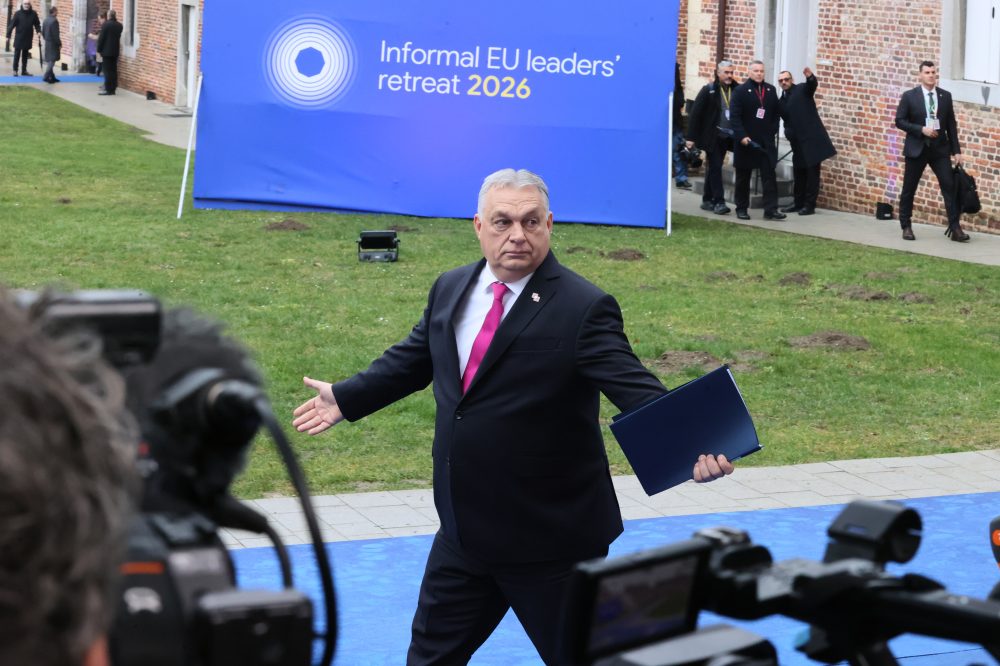
    BRUSSELS – Hungary is standing in the way of the European Union’s newest round of economic penalties against Russia, according to the bloc’s leading foreign policy official who spoke Monday.

    EU foreign policy chief Kaja Kallas told reporters that the union’s 27 foreign ministers meeting in Brussels would probably fail to reach agreement on the 20th sanctions package, which officials had hoped to finalize before Tuesday’s fourth anniversary of Russia’s full-scale attack on Ukraine.

    “I think there is not going to be progress regarding this today,” Kallas stated prior to the regular gathering of EU foreign ministers in Brussels, where the 20th sanctions package was scheduled for discussion.

    The diplomatic session followed Hungary’s weekend announcement threatening to halt both the EU sanctions proposal and a 90 billion euro loan for Ukraine unless Russian oil shipments to Hungary are restored.

    Oil deliveries from Russia to Hungary and Slovakia have been cut off since January 27 following what Ukrainian authorities describe as Russian drone strikes that harmed the Druzhba pipeline, which transports Russian crude oil through Ukrainian land into Central Europe. This disruption has escalated friction between Budapest and Kyiv.

    Hungarian Prime Minister Viktor Orbán reinforced his unsupported claim Monday that Ukraine was intentionally blocking Russian oil shipments, while also charging that Kyiv aims to overthrow his administration.

    Through a social media message, Orbán characterized the oil supply interruptions as a “Ukrainian oil blockade” orchestrated by President Volodymyr Zelenskyy.

    “We have given President Zelenskyy firm and proportionate responses,” Orbán posted. “He, too, must understand: by attacking Hungary, he can only lose.”

    The sanctions require unanimous approval from all 27 member nations to take effect.

    Kallas indicated that work would continue Monday to move forward with the EU’s 90 billion euro loan to Ukraine.

    With a critical election approaching in under two months, Orbán has initiated an aggressive campaign against Ukraine and claimed the opposition Tisza party, which polls show leading, is working with the EU and Ukraine to establish what he termed Monday a “pro-Ukraine government aligned with Brussels and Kyiv.”

    Poland’s Foreign Minister Radosław Sikorski suggested Hungary’s unexpected Sunday declaration might actually relate to Hungarian Prime Minister Victor Orbán’s intense battle to retain power.

    “I would have expected a much greater feeling of solidarity from Hungary for Ukraine,” he stated in Brussels. “The ruling party managed to create a climate of hostility towards the victim of aggression. And then it is now trying to exploit that in the general election. It’s quite shocking.”

    Almost all European nations have substantially reduced or completely stopped Russian energy purchases since Moscow began its comprehensive war against Ukraine on February 24, 2022. However, Hungary and Slovakia, both EU and NATO allies, have continued and even expanded their Russian oil and gas supplies, receiving temporary permission to bypass an EU ban on Russian oil imports.

    “Tomorrow we are entering the fifth year of the war,” stated Latvian foreign minister Baiba Braže before the meeting. “We are fully committed both to the 20th sanctions package including maritime and maritime services ban, but also political commitment, economic commitment, military commitment to support European values.”

    German Foreign Minister Johann Wadephul expressed surprise at Hungary’s stance.

    “I don’t think it is right if Hungary betrays its own fight for freedom and European sovereignty,” Wadephul informed reporters in Brussels, referencing Hungary’s participation in ending European communism in 1989. “So we will once again come to the Hungarians with our arguments, in Budapest but of course also here in Brussels, for them to reconsider their position.”

    “The German position is very clear: we must now show strength, we must support Ukraine sustainably, and we must do exactly what we did last year too: continue to raise the pressure on Russia,” Wadephul added, expressing confidence the EU will ultimately reach agreement on the 20th sanctions package “at the end of the day.”

    Also at stake is a substantial 90-billion-euro ($106-billion) EU loan to Ukraine designed to help Kyiv address its military and economic requirements for the coming two years.

    “We must release that. We must find an agreement between the member states because Ukraine needs this money heavily,” said Margus Tsahkna, Estonia’s foreign minister.

  • Netherlands Installs Record-Young Prime Minister in New Coalition Government

    Netherlands Installs Record-Young Prime Minister in New Coalition Government

    THE HAGUE, Netherlands — King Willem-Alexander of the Netherlands officially installed a new coalition government on Monday, with 38-year-old Rob Jetten taking the helm as the country’s youngest prime minister in history.

    Jetten will lead a three-party minority government comprising his centrist D66 party, the Christian Democrats, and the People’s Party for Freedom and Democracy. The coalition controls just 66 seats in the 150-member parliament, meaning Jetten must build consensus with opposition members to advance any legislative agenda and complete a full four-year term.

    The swearing-in ceremony took place in the elaborate Orange Hall at the royal palace located in a wooded area near The Hague. During the proceedings, King Willem-Alexander offered his best wishes to the new administration for success during these “uncertain times.”

    Environmental activists from Extinction Rebellion gathered outside the palace gates during the ceremony, blowing sirens while the newly appointed ministers posed for their official photograph.

    After completing the customary cabinet photo on the palace steps, the administration planned to hold its inaugural cabinet session that afternoon.

    Taking to social media platform X, Jetten expressed that serving as prime minister represents “an enormous honor to be able to get to work.”

    The government formation process took 117 days following national elections where Jetten’s party secured a slim victory over Geert Wilders’ anti-Islam Party for Freedom. The final outcome wasn’t determined until postal votes were tallied in what marked the Netherlands’ fourth national election since 2017, reflecting the country’s fragmented political landscape.

    The new administration assumes power just one day before the fourth anniversary of Russia’s comprehensive invasion of Ukraine. Jetten has committed to maintaining the Netherlands’ robust support for Ukraine in its conflict against Vladimir Putin’s forces.

    Additionally, Jetten has indicated plans to continue increasing defense spending to strengthen Dutch military capabilities amid current global uncertainties.

  • Veteran AP Photographer Who Documented Mumbai Life Dies at 55

    Veteran AP Photographer Who Documented Mumbai Life Dies at 55

    NEW DELHI — A veteran Associated Press photographer who spent nearly two decades documenting India’s political landscape and the vibrant street life of Mumbai has passed away at age 55.

    Rajanish Kakade passed away Monday at his Mumbai residence after battling an illness, according to his family members.

    Kakade began his career with the Associated Press in 2008, working from Mumbai where he helped create a comprehensive visual documentation of India’s commercial hub. Prior to his AP tenure, he gained experience working for the Sakal Group media company and the Hindustan Times publication.

    The Mumbai Press Club issued a tribute, stating: “Through his work, he captured defining moments with integrity and sensitivity. Through his mentorship, he shaped countless careers, always encouraging young photographers to pursue the truth with courage and compassion.”

    Photography ran in Kakade’s family, as he represented the third generation of photojournalists, continuing a tradition established by both his grandfather and father.

    During his time with the Associated Press, Kakade’s assignments spanned the breadth of Indian society — covering significant political developments, electoral campaigns, and sporting events, as well as tragic incidents like the 2008 Mumbai terrorist attacks and the COVID-19 health crisis. His photography of Mumbai’s daily life revealed the pulse of a city in constant transformation, showing both its enormous scope and personal moments.

    Colleagues at the AP remembered Kakade as a gentle professional who showed unwavering dedication to his photography work.

    Manish Swarup, who serves as the AP’s chief photographer for South Asia, remarked that Kakade “possessed that rare, quiet grace of a true observer.”

    “He didn’t just take pictures; he earned the trust of those in his frame. That is why his photographs always stand out — they carry an intimacy and a truth that only a person of his character could capture,” Swarup explained.

    Swarup, who collaborated closely with Kakade over many years, described him as “more than a talented eye for The Associated Press,” calling him “a steadfast friend and a cherished colleague.”

    “We haven’t just lost a great photojournalist; we have lost a beautiful soul, whose kindness was as luminous as his work,” he added.

    Yirmiyan Arthur, who manages photography and visual storytelling for the AP across the Asia Pacific area, noted that Kakade “helped us understand everyday Mumbai, a city of contradictions, with utter honesty,” through his documentation of economic disparities, the seasonal monsoon experiences, and the bustling commuter rail system.

    “He was a son of Mumbai and made sure he told its story the right way,” Arthur stated.

    Kakade leaves behind surviving family members.

  • Polish Authorities Arrest Belarusian Man Accused of NATO Intelligence Gathering

    Polish Authorities Arrest Belarusian Man Accused of NATO Intelligence Gathering

    Polish prosecutors announced Monday that authorities have arrested a Belarusian citizen accused of gathering classified information for Belarus military intelligence services, amid ongoing concerns about Russian and Belarusian efforts to undermine nations supporting Ukraine.

    Tensions between Poland and Belarus have deteriorated significantly since Russia’s February 24, 2022 invasion of Ukraine, given Belarus’s alliance with Moscow.

    The suspect, identified only as Pavlov T. in accordance with Polish privacy regulations, remains in custody and could face a minimum five-year prison sentence if found guilty, according to prosecutorial statements.

    Authorities have charged him with collecting sensitive information for Belarus across three NATO member countries: Poland, Germany, and Lithuania. His alleged activities involved surveilling vital infrastructure, particularly facilities crucial to Polish and NATO defense operations, prosecutors revealed.

    The Belarusian diplomatic mission in Warsaw has not yet responded to requests for comment regarding the arrest.

  • American Diplomat Pushes Portugal to Purchase F-35 Jets for NATO Compatibility

    American Diplomat Pushes Portugal to Purchase F-35 Jets for NATO Compatibility

    The American diplomatic representative in Portugal is making a strong push for the European nation to modernize its military aircraft with advanced F-35 fighters, arguing the move would strengthen ties with premier European air forces.

    In a recent interview with CNN Portugal, Ambassador John Arrigo advocated for replacing Portugal’s outdated F-16 aircraft with Lockheed Martin’s cutting-edge F-35 jets, emphasizing their stealth technology and compatibility benefits.

    “F-35 is the best fighter – it’s a fifth-generation stealth fighter, it’ll get them (the Portuguese Air Force) into the Champions League when it comes to the EU,” Arrigo stated during the Sunday evening broadcast.

    The ambassador also discussed his goals to leverage his commercial background to assist Portugal in increasing military expenditures to meet NATO’s 5% GDP target by 2035, up from the present 2% allocation.

    Portugal’s Defense Minister Nuno Melo indicated in November that the country has not yet begun the selection process for new fighter aircraft.

    Arrigo highlighted that over 900 F-35 aircraft are currently operational or ordered throughout Europe, stating that for “interoperability, the F-35 is definitely the way to go.” He also noted that European manufacturers contribute 25% of the aircraft’s components.

    Regarding U.S.-China relations, the ambassador clarified that the Trump administration is not forcing Portugal to pick sides between Washington and Beijing or completely separate from Chinese partnerships. Instead, the U.S. is promoting a “de-risking” approach focused on cybersecurity protection and investment oversight.

    Chinese investment in Portugal expanded significantly after the 2011-14 financial rescue package, when reduced asset values attracted international buyers.

    The country received a 78 billion euro bailout in May 2011 from the European Union, International Monetary Fund, and European Central Bank after rising borrowing costs during the eurozone crisis blocked market access, requiring strict austerity measures that triggered a severe economic downturn.

    Currently, China Three Gorges maintains a 21.4% stake in utility company EDP, China State Grid controls 25% of grid operator REN, and Hong Kong-based Fosun owns 20% of Millennium BCP bank and 85% of insurer Fidelidade.

    The ambassador described the United States as Portugal’s “best partner but wants to keep any adversary… at arm’s length.”

    Portugal became part of China’s Belt and Road Initiative in December 2018. Arrigo suggested that Lisbon’s relationship with Washington would “flourish” if Portugal withdrew from the program, following Italy’s example in 2023.

  • Netherlands Swears In Youngest PM Ever, But Minority Government Faces Challenges

    Netherlands Swears In Youngest PM Ever, But Minority Government Faces Challenges

    At age 38, Rob Jetten has made history as the Netherlands’ youngest prime minister after King Willem-Alexander officially installed his minority government on Monday.

    Jetten led his progressive, pro-European Union D66 party to an unexpected electoral win last October through a polished campaign that promised to move away from the divisive policies of the previous administration led by nationalist Geert Wilders.

    However, his optimistic outlook will face immediate challenges, as his center-right coalition government lacks majority control in both chambers of the Dutch parliament, requiring opposition backing for every legislative proposal.

    The partnership between D66, the conservative Christian Democrats, and the right-wing VVD represents an unusual political experiment in Europe’s fifth-largest economy, where majority coalitions with comprehensive governing agreements have been the norm.

    Finding majority support has grown increasingly challenging in the Netherlands’ fragmented political environment, where voter loyalties shift with each election cycle and moderate parties continue losing ground.

    Opposition groups across the political spectrum have already criticized the coalition’s strategy to finance a significant defense spending boost through reductions in social programs and healthcare funding.

    Left-wing opposition leader Jesse Klaver condemned the proposals as “unfair” last Friday, citing independent analysis showing the plans would disproportionately impact lower-income citizens.

    “Working families will face hundreds of euros in additional costs, while the wealthy face no extra burden,” Klaver wrote on social media platform X. “This must be changed.”

    Wilders has vowed to block every initiative from Jetten’s administration, while numerous smaller parties have expressed reservations about the coalition’s announced policies.

    The government has committed to raising defense expenditures to NATO’s new 3.5% of GDP benchmark by 2035, up from the current 2%, through what they call a “freedom tax” – an additional income tax surcharge.

    Additional coalition goals include restricting unemployment benefit duration, increasing individual healthcare contributions, and speeding up retirement age increases to match longer life expectancy.

    The government has also pledged stricter asylum and migration policies, an issue that has divided Dutch politics for years and contributed to the collapse of the two previous administrations.

    Jetten has attempted to minimize concerns about controlling just 66 of 150 lower house seats, framing it as a chance for enhanced parliamentary cooperation following years of political gridlock under Wilders that prevented progress on major policy initiatives.

    Leading up to his government’s installation, he indicated flexibility in adjusting their proposals.

    “We recognize that everyone bears costs, but the distribution isn’t completely balanced,” Jetten acknowledged.

    “We have time over the coming months to refine these plans before finalizing our budget.”

    Defense Minister Dilan Yesilgoz will oversee the military spending increase. She assumed leadership of the VVD party in 2023, succeeding Mark Rutte, who served as the Netherlands’ longest-tenured prime minister and now heads NATO.

    Former European Parliament member Tom Berendsen has been appointed Foreign Minister, while Eelco Heinen continues in his role as Finance Minister.

  • Ukraine War Enters Fifth Year with Staggering Casualties

    Ukraine War Enters Fifth Year with Staggering Casualties

    The war in Ukraine marks its fifth year this Tuesday, representing the largest European military conflict since World War II and causing devastating losses for both military personnel and civilians while fundamentally altering Europe’s security landscape.

    As the conflict continues with no clear end in sight, the Trump administration has facilitated negotiations between Russian and Ukrainian representatives over the past year in pursuit of peace. However, major obstacles remain, including disputes over territories currently under Russian control and ensuring Ukraine’s security in any post-conflict arrangement.

    Combat operations have claimed the lives of thousands of soldiers from both nations, while Ukrainian civilians continue to endure Russian airstrikes that have resulted in prolonged electrical blackouts and water service disruptions.

    According to recent analysis from the Center for Strategic and International Studies, total military casualties on both sides may reach as high as 2 million soldiers killed, wounded, or reported missing since the February 24, 2022 invasion began.

    The research organization calculated that Russian forces have sustained approximately 1.2 million casualties, with troop fatalities potentially reaching 325,000 between February 2022 and December 2025. This would represent the highest military death toll for any major nation in any conflict since World War II.

    Moscow has not provided updated casualty figures since January 2023, when officials reported over 80 soldiers killed in a Ukrainian attack, bringing Russia’s acknowledged military deaths to slightly more than 6,000 total.

    The same analysis suggests Ukraine has experienced between 500,000 and 600,000 military casualties, with fatalities potentially reaching 140,000.

    Ukrainian President Volodymyr Zelenskyy stated earlier this month that 55,000 Ukrainian service members have perished in the fighting, noting that many others remain unaccounted for.

    Both governments rarely provide current information about military losses, making independent confirmation impossible.

    The United Nations Human Rights Monitoring Mission has documented civilian deaths in Ukraine since the large-scale invasion began, though officials acknowledge this figure likely represents an undercount. Their December report also recorded more than 40,600 civilian injuries during the same timeframe.

    At least 763 children have died as a result of the war, according to U.N. data.

    Civilian casualties reached their highest levels since 2022 during the past year. The fighting resulted in 2,514 civilian deaths and 12,142 injuries throughout Ukraine in 2025, marking a 31% rise in civilian casualties compared to the previous year.

    Russian forces currently occupy approximately one-fifth of Ukrainian territory, based on calculations from the Institute for the Study of War.

    During the most recent year of fighting, Russia has captured just 0.79% additional Ukrainian land in what has become a grueling war of attrition, according to the Washington-based research group’s analysis shared with The Associated Press earlier this month. This minimal territorial gain highlights the limited advancement Moscow’s military has achieved despite enormous losses in personnel and equipment.

    Prior to the full-scale invasion, Russian control extended over nearly 7% of Ukraine, encompassing Crimea and portions of the eastern Donetsk and Luhansk regions, where Moscow-supported separatists had been battling Ukrainian forces, according to Ukrainian government sources and Western intelligence assessments.

    International military assistance to Ukraine decreased significantly last year, falling by the percentage indicated compared to the annual average from 2022 through 2024, according to tracking data from Germany’s Kiel Institute.

    Following President Donald Trump’s inauguration just over a year ago, the United States ceased shipments of American-funded weapons to Ukraine. European nations have attempted to compensate for this reduction, boosting their military aid by 67% last year compared to the 2022-2024 timeframe, the institute reported this month.

    International humanitarian and financial support to Ukraine declined by 5% last year when measured against the average provided during the previous three-year period.

    The conflict has displaced millions of Ukrainian civilians, with many seeking safety in other countries.

    European nations have provided sanctuary to approximately 5.3 million of these displaced individuals, according to a recent United Nations office report from Ukraine.

    An additional 3.7 million Ukrainians have been forced to relocate within their own country’s borders, the U.N. reported in December.

    Ukraine’s population before the war exceeded 40 million people.

    Russian military actions have disrupted medical services in Ukraine through numerous attacks, according to World Health Organization documentation covering the period from the invasion’s start through February 11.

    These incidents include 2,347 direct strikes on healthcare facilities, along with attacks that damaged medical transport vehicles and supply storage locations.

  • Fatal Bus Crash in Nepal Kills 19, Including British Tourist

    Fatal Bus Crash in Nepal Kills 19, Including British Tourist

    KATHMANDU, Nepal — Tragedy struck on a mountain highway in Nepal during the early morning hours Monday when a passenger bus carrying dozens of travelers crashed off the roadway, claiming 19 lives and injuring 25 others.

    The fatal accident happened shortly after midnight as the crowded vehicle made its journey from the tourist destination of Pokhara toward Nepal’s capital city of Kathmandu. The bus veered off the Prithvi highway and tumbled down the mountainside, eventually coming to rest along the Trishuli river near Benighat, located approximately 50 miles west of Kathmandu.

    Authorities from the Dhading district police office confirmed that a 24-year-old British citizen was among the fatalities. Officials have only been able to identify nine of the victims so far.

    The wounded passengers included international travelers, with a Chinese national receiving care at Kathmandu’s National Trauma Center and a 27-year-old New Zealand woman being treated for minor injuries at a nearby medical facility. China’s official Xinhua News Agency reported through the Chinese Embassy in Nepal that another Chinese citizen remains unaccounted for.

    Emergency responders quickly arrived at the crash scene and worked to extract the injured from the damaged bus before transporting them to area hospitals, according to government administrator Mohan Prasad Neupane.

    Authorities have launched an investigation to determine what caused the deadly crash.

    Such transportation disasters occur frequently throughout Nepal, primarily attributed to inadequate road maintenance and vehicle upkeep. The mountainous Himalayan nation relies heavily on narrow roadways that wind through challenging terrain.

    The bus came to rest beside the rapidly flowing mountain waterway. In 2024, two separate buses carrying 65 passengers plunged into this same river and disappeared, with most occupants either confirmed dead or never recovered. Debris from one of those vehicles was only discovered this year, buried beneath layers of sand.

  • Deadly Russian Strike Hits Ukraine Port Region, Two Killed in Drone Attack

    Deadly Russian Strike Hits Ukraine Port Region, Two Killed in Drone Attack

    Two civilians lost their lives and three others sustained injuries during an overnight Russian assault on Ukraine’s Odesa region, according to Monday statements from Ukrainian emergency services and government officials.

    The fatalities occurred after a Russian drone crashed into a truck stop facility, sparking a deadly blaze, emergency responders reported via the Telegram messaging platform.

    Infrastructure Minister Oleksiy Kuleba confirmed through Telegram that Russian forces had targeted port facilities within the Odesa region during the strike.

    “This is yet another blow to civilian logistics and port infrastructure. Russia is systematically attacking facilities that have no military purpose, trying to undermine the economy of the region and the country as a whole,” Kuleba said.

    The minister reported that cargo transport storage facilities sustained damage during the bombardment.

    The Odesa region houses a major maritime shipping center featuring terminals at the Black Sea ports of Odesa, Chornomorsk, and Pivdennyi, and has faced repeated attacks throughout Russia’s comprehensive invasion that began in 2022.

    Moscow dramatically escalated its assault frequency against Black Sea port facilities in late 2023 after President Vladimir Putin made threats to “cut Ukraine off from the sea.”

    An anonymous transportation industry source told Reuters last week that recent months of strikes against Odesa’s ports have diminished their export capabilities by as much as 30% compared to levels before the war began.

  • Philippine Officials Receive ‘Welcome to China’ Message on Disputed Island Visit

    Philippine Officials Receive ‘Welcome to China’ Message on Disputed Island Visit

    Philippine government officials experienced a jarring reminder of territorial disputes Saturday when their cell phones displayed an unexpected roaming message upon arriving at a contested South China Sea outpost: “Welcome to CHINA.”

    The message greeted passengers aboard a Philippine Coast Guard aircraft as it approached Thitu Island, including Senator Risa Hontiveros and Coast Guard spokesman Jay Tarriela, both vocal opponents of Beijing’s regional activities.

    Following their Saturday arrival, the officials addressed local inhabitants to emphasize that Thitu Island “is ours,” despite Chinese Coast Guard ships, a People’s Liberation Army Navy vessel, and Chinese fishing boats remaining visible near the coastline.

    Beijing’s continuous maritime presence has forced island dwellers, whose livelihoods depend on surrounding waters, to retreat from seas they previously accessed without restriction.

    Measuring only 37 hectares, the coral-surrounded Thitu – called Pag-asa or “Hope” by Filipinos – represents the largest and most valuable of nine Philippine-controlled territories in the Spratly chain, situated 450 kilometers from the mainland.

    Approximately 400 inhabitants live simply on the island, distant from urban conveniences. However, their steady residence strengthens Philippine sovereignty assertions amid escalating Chinese territorial pressure.

    The officials’ arrival, occurring during a period of heightened bilateral tensions, will likely attract Beijing’s attention and intensify the already strained territorial conflict.

    “We will never give up the Kalayaan Island Group, including Pag-asa,” Hontiveros declared to residents, referencing Manila’s claimed and administered portion of the Spratly Islands that encompasses Thitu.

    Chinese Embassy communications and digital campaigns have repeatedly targeted both officials as part of broader efforts to influence South China Sea narratives.

    Manila’s decision to assign a dedicated foreign ministry maritime spokesperson demonstrates increasing government concern as China escalates both physical and information warfare tactics.

    For Pag-asa residents, Chinese pressure creates tangible daily challenges.

    Fisherman Rando Asiado, 45, explained to Hontiveros how persistent Chinese vessel presence prevents him from reaching productive fishing areas near Subi Reef and adjacent Sandy Cays.

    “There are times when Chinese Coast Guard vessels would chase us away, so we are forced to stay on one side of the island. And when we try to fish on the other side, Chinese drones fly over us,” stated Asiado, a 2012 island arrival.

    Beijing maintains territorial claims over most South China Sea waters, despite a 2016 Permanent Court of Arbitration ruling in The Hague that invalidated these assertions.

    Located merely 14 nautical miles from Thitu, Subi Reef hosts one of seven man-made islands China constructed throughout the Spratlys to support territorial claims. Several artificial installations feature surface-to-air missile systems, aircraft storage facilities, and landing strips.

    Chinese Coast Guard encounters have become so commonplace that Filipino fishermen now work less productive waters to prevent confrontations.

    Beijing’s South China Sea operations, including water cannon attacks and aggressive ship maneuvering, have caused vessel collisions and injured Philippine crew members.

    China defends its actions as lawful and professional while accusing Manila’s vessels of territorial violations.

    “We’re not afraid because we know we’re in the right, but they’re using ships while we only have small boats. We don’t stand a chance, so to avoid trouble, we just steer away,” explained 51-year-old fisherman Ronnie Cojamco.

  • UN Chief: Global Human Rights Under Attack Amid Worldwide Conflicts

    UN Chief: Global Human Rights Under Attack Amid Worldwide Conflicts

    The world’s top United Nations official delivered a stark warning Monday about the deteriorating state of global human rights, pointing to civilian casualties in multiple international conflicts as evidence of widespread violations.

    Speaking at the Human Rights Council’s opening session in Geneva, UN Secretary General Antonio Guterres highlighted the devastating impact on civilians caught in conflicts across Sudan, Gaza, and Ukraine as examples of how international law is being ignored.

    “The rule of law is being outmuscled by the rule of force,” Guterres told the assembled delegates.

    The UN leader emphasized that human rights protections are facing intentional rollbacks worldwide, cautioning member nations against treating international human rights standards as optional choices rather than binding obligations.

    Guterres also mounted a strong defense of the United Nations’ human rights infrastructure, which he described as operating in “survival mode” due to severe financial constraints. The system faces mounting pressure from budget reductions, attacks against its experts, and the United States’ decision to withdraw from a crucial universal rights accountability framework.

    “Humanitarian needs are exploding while funding collapses,” the Secretary General stated.

    The UN’s human rights division is experiencing the same financial difficulties affecting other parts of the organization, stemming largely from reduced contributions by the United States and other donor countries. As the UN’s largest financial contributor, America’s funding decisions significantly impact the organization’s operations.

    According to a UN spokesperson who spoke Thursday, Washington made a payment of approximately $160 million in February toward its outstanding UN obligations, which total more than $4 billion.

  • Hungary Blocks EU Sanctions Deal Against Russia, Says Top Diplomat

    Hungary Blocks EU Sanctions Deal Against Russia, Says Top Diplomat

    BRUSSELS – The European Union’s top diplomat announced Monday that member nations will not reach consensus on a new set of penalties targeting Russia during today’s scheduled meeting.

    Kaja Kallas, the EU’s foreign policy chief, informed journalists that Hungary’s persistent opposition has prevented agreement on the latest sanctions proposal ahead of the foreign ministers’ gathering in Brussels on Monday.

    The announcement came as Kallas spoke with reporters prior to the start of the ministerial meeting, indicating that the diplomatic deadlock would continue despite ongoing discussions among the 27-member bloc.

  • Tourist Bus Plunges Off Mountain Road in Nepal, Killing 19 Including UK Citizen

    Tourist Bus Plunges Off Mountain Road in Nepal, Killing 19 Including UK Citizen

    KATHMANDU – A tragic bus accident in western Nepal claimed 19 lives early Monday morning when the vehicle tumbled off a mountainous roadway, according to local police officials.

    Among the fatalities was a citizen from the United Kingdom, authorities confirmed. Police report that only nine victims have been positively identified at this time.

    The accident occurred before sunrise when the passenger bus, traveling from the popular tourist destination of Pokhara to Nepal’s capital city of Kathmandu, plummeted approximately 650 feet down an embankment near Behighat in Dhading district. The crash site is located roughly 50 miles west of Kathmandu.

    Twenty-five passengers survived the crash with injuries, including citizens from New Zealand and China. All injured victims have been transported to medical facilities in Kathmandu for treatment, police officials stated.

    The bus was transporting a total of 44 passengers at the time of the accident.

    Such transportation disasters occur frequently throughout Nepal’s predominantly mountainous terrain, where roadway infrastructure remains inadequate. The country experiences hundreds of traffic-related fatalities each year due to these challenging conditions.

  • Netherlands Swears in Youngest Prime Minister as New Government Begins

    Netherlands Swears in Youngest Prime Minister as New Government Begins

    THE HAGUE, Netherlands — The Netherlands welcomed its youngest prime minister in history Monday as Dutch King Willem-Alexander administered the oath of office to 38-year-old Rob Jetten and his new minority coalition government.

    Jetten leads a three-party alliance consisting of his centrist D66 party, the center-right Christian Democrats, and the center-right People’s Party for Freedom and Democracy. The coalition controls just 66 seats in the 150-member lower parliamentary chamber, creating significant governing challenges that will require Jetten to secure opposition backing for every legislative proposal.

    The new administration faces immediate resistance from the largest opposition group, the recently combined Green Left and Labor Party, which has voiced strong disapproval of Jetten’s proposed reductions to healthcare and social welfare spending.

    Opposition leader Jesse Klaver criticized the government’s fiscal approach in a Friday post on X, stating that under the new administration’s proposals, “ordinary people will have to pay hundreds of euros more, while the wealthiest are not asked to contribute anything extra.” Klaver continued: “We are taking responsibility to adjust these plans. This must change.”

    The swearing-in ceremony took place at the royal palace located in a wooded area outside The Hague, where Jetten and his ministerial team formally accepted their positions. Following the traditional Cabinet photograph on the palace steps, the new government held its inaugural meeting.

    Jetten secured victory in the October 29th election by the narrowest of margins, earning the same seat count as anti-Islam politician Geert Wilders’ Party for Freedom but receiving slightly more total votes. The final outcome was determined through postal ballot tallying.

    The unexpected election occurred after Wilders, who had won the previous contest, pulled his ministers from the four-party right-wing coalition his party controlled in June of last year. Departing Prime Minister Dick Schoof, whose administration lasted only 11 months and ranks among the briefest in Dutch history, has served in a caretaker capacity since then.

    The new prime minister aims to establish a fresh period of parliamentary cooperation following years of divisive partisan conflicts across the fragmented political landscape.

    Jetten also seeks to restore the Netherlands’ diminished influence within the European Union, which many observers believe weakened under the previous administration.

    Speaking to The Associated Press last month, Jetten, who has previously criticized U.S. President Donald Trump, explained that among his initial priorities will be to “talk to my colleagues in Europe to see what role the Dutch can play again in strengthening the European cooperation.”

    However, he emphasized the continued significance of Dutch-American relations, noting the United States’ importance as a key economic partner.

    Jetten has committed to sustaining robust Dutch assistance for Ukraine in its ongoing conflict against Russia’s four-year military offensive.

    Cabinet positions in the new government are distributed among Jetten’s party and his coalition allies.

    Christian Democrat Tom Berendsen assumes the foreign ministry role and is anticipated to work toward revitalizing the Netherlands’ European standing, drawing on his experience as his party’s European Parliament delegation leader.

    Finance Minister Eelco Heinen continues in his current position from the previous government, where he earned recognition for his prudent fiscal management.

    Dilan Yeşilgöz-Zegerius, formerly justice minister and head of the People’s Party for Freedom and Democracy, transitions to defense minister, where she will manage efforts to strengthen the country’s armed forces.

    Christian Democrat Bart van den Brink takes charge of asylum and immigration policy, with expectations that he will advance the former government’s initiatives to limit migration and expedite asylum application processing.

  • Labour Party Faces Historic Challenge in Manchester By-Election

    Labour Party Faces Historic Challenge in Manchester By-Election

    Prime Minister Keir Starmer’s Labour Party faces a potential historic upset in Manchester, where a constituency that has backed Labour politicians for nearly a century might break tradition in Thursday’s special election.

    The Gorton and Denton constituency in northwest England will choose a new member of parliament after current MP Andrew Gwynne announced his resignation last month. This merged district combines two areas with deep Labour roots – Gorton has elected Labour representatives for almost 100 years, while Denton has done so since World War Two.

    Despite Labour’s commanding victory in July 2024’s general election, when the party captured just over 50% of votes in this seat, current polling suggests a dramatically different outcome this time around.

    The political landscape has shifted dramatically, with Labour hemorrhaging support in opposite directions. Younger, diverse voters in Manchester’s inner western suburbs are gravitating toward the Green Party, while older, white working-class residents in eastern Denton are considering Reform UK.

    Dave Ward, a 59-year-old retired firefighter from Denton, exemplifies this shift. “I’ve always been a staunch Labour voter,” Ward explained. “But now I’m giving Reform a chance. Labour have let us down. They’ve made promises after promises. U-turn after U-turn.”

    The constituency encompasses some of Manchester’s most economically disadvantaged neighborhoods, highlighting the challenges facing Britain’s second-largest city after London.

    Starmer’s difficulties have intensified due to policy reversals, declining approval ratings, and recent controversy surrounding Peter Mandelson, his chosen U.S. ambassador, who faces allegations of sharing government secrets with deceased sex offender Jeffrey Epstein. Mandelson has denied any misconduct.

    A recent Omnisis poll released Friday shows the Green Party holding a slight edge over Reform UK, with Labour trailing closely behind – results that align with betting market predictions.

    Financial markets are monitoring the situation closely, as British government bonds have shown volatility during periods of uncertainty about Starmer’s political stability. Bond investors express concern that a Labour leadership change could push policies leftward and increase government borrowing.

    The Green Party, under new leadership from Zack Polanski, has attracted former Labour supporters disappointed by the party’s moderate approach after 14 years of Conservative governance.

    In Levenshulme, a neighborhood with a substantial Muslim population, Green Party campaign signs are prominently displayed on numerous homes.

    Josie, a 37-year-old educator who preferred not to share her surname, represents this demographic shift. “I’ll be voting Green this time around,” she stated. “I’m a former Labour member, but… I don’t think they can win round here anymore,” citing disagreements with Starmer’s Gaza policy and the Mandelson controversy.

    Labour’s decision to prevent popular Greater Manchester Mayor Andy Burnham from seeking the nomination may have damaged the party’s prospects further. While officials justified this move as avoiding an expensive mayoral election, critics viewed it as blocking a potential leadership rival from entering parliament.

    Sue Ashton, a 75-year-old lifelong Labour supporter from Gorton, criticized Starmer for throwing Labour “under the bus” by excluding Burnham from candidacy consideration.

    “I’ve got to keep Reform out. It’s the only reason I’m voting Labour this time. I would have gone Green, but… it’s too much of a risk,” Ashton explained.

    Green candidate Hannah Spencer, a local councillor and plumber, launched her campaign headquarters to enthusiastic reception from approximately 90 volunteers.

    “I think people now are just ready for change,” the 34-year-old Spencer told reporters. “It is between us and Reform.”

    Spencer believes her party’s message can appeal to working-class Denton voters, noting “we’re not all one group that thinks and acts the same way.”

    Reform UK, the right-wing populist movement led by Brexit advocate Nigel Farage, poses the primary national threat to Labour’s government. Though holding few parliamentary seats, Reform consistently leads in national polling.

    At Reform’s campaign base in a Denton warehouse, volunteers worked at computer stations beneath illuminated displays featuring Farage and candidate Matt Goodwin.

    “It will probably go to the wire but we’ve got overwhelming support in large parts of the seat,” said Goodwin, a 44-year-old former academic turned media commentator.

    When asked about appealing to the constituency’s more diverse western areas, Goodwin, who argues mass migration threatens British cultural identity, insisted the campaign had “nothing to do with race, ethnicity and religion.”

    “If you contribute, if you play by the rules, if you’re part of the hard-working majority, then you should be voting Reform,” Goodwin declared.

    Both Green and Labour candidates have condemned Reform’s approach as divisive, though they disagree on the best strategy to defeat it.

    “This is a choice between Labour and Reform,” Labour candidate Angeliki Stogia said after meeting with pensioners at a community center. “The Greens say a lot but they deliver very, very little.”

    Rob Ford, a politics professor at the University of Manchester, warned that a Labour defeat would constitute a “disaster” for Starmer, who recently weathered a leadership challenge that could resurface after May’s local elections.

    Ford characterized the situation as “not typical mid-term blues, but signs of an existential crisis.”

  • Hong Kong Court Denies Appeals for 12 Democracy Activists in Mass Trial

    Hong Kong Court Denies Appeals for 12 Democracy Activists in Mass Trial

    An appeals court in Hong Kong has denied requests from 12 pro-democracy advocates to overturn their convictions, maintaining their prison sentences in what critics describe as evidence of China’s suppression of political opposition in the territory.

    The ruling on Monday involved defendants from the widely-watched “Hong Kong 47” case, in which numerous prominent democracy supporters and political figures were taken into custody during mass arrests in early 2021 on charges of conspiring to commit subversion. After extensive court proceedings, the majority of these individuals received prison sentences ranging from four to ten years in late 2024, while two defendants were found not guilty.

    International human rights organizations and several nations, including the United States and Britain, have denounced the prosecutions as political persecution targeting Hong Kong’s opposition movement and have demanded the immediate freedom of all detained individuals.

    Australian Foreign Minister Penny Wong expressed being “deeply concerned” about the failed appeal of Australian national Gordon Ng, stating that Canberra has “expressed our strong objections to Chinese and Hong Kong authorities on the continuing broad application of national security legislation.”

    In their written decision, Judges Jeremy Poon, Derek Pang and Anthea Pang determined that the defendants participated in a plot conceived, promoted and carried out by legal academic Benny Tai to create a “constitutional mass destruction weapon” designed to overthrow Hong Kong’s constitutional framework.

    The charges focused on an informal “primary election” that democracy advocates organized in mid-2020 to choose their strongest contenders for legislative council seats.

    Prosecutors claimed the democracy supporters were plotting to secure a legislative majority so they could cripple government operations by systematically blocking the city’s yearly budget in an attempt to compel Hong Kong’s chief executive to step down.

    Among the 11 democracy advocates whose conviction appeals were rejected were former legislators Helena Wong, Lam Cheuk-ting, Raymond Chan and “Long Hair” Leung Kwok-hung; former district council members Clarisse Yeung, Kalvin Ho and Tat Cheng; and political activists Gwyneth Ho, Owen Chow, Winnie Yu, and Gordon Ng.

    The democracy supporters, along with another activist named Prince Wong, were also unsuccessful in challenging their sentences, except for Gwyneth Ho who only contested her conviction.

    Following the announcement, the defendants remained composed and gestured to relatives and supporters in attendance.

    “What crimes have they committed?” questioned Chan Po-ying, wife of activist Leung Kwok-hung, following the decision. Her comment reflected defense arguments that Hong Kong lawmakers had the legal right to oppose legislation and reject budgets as a legitimate “check and balance” mechanism under the city’s basic law.

    Despite widespread international criticism, both Hong Kong and Beijing maintain that the democracy advocates received proper legal proceedings, and argue that a national security law imposed by China in 2020 helped restore stability to Hong Kong following large-scale pro-democracy demonstrations in 2019.

    The court stated that any strategy to block the budget without regard to its substance or value represented “clearly an abuse of the power (of legislators).”

    However, the judges rejected a government appeal challenging the acquittal of attorney Lawrence Lau, determining he had not publicly and explicitly supported budget vetoing like the other defendants.

    Lau informed media representatives he was “happy” with the outcome.

    To date, 18 of the 45 convicted democracy supporters have been freed after completing their prison terms.

    “By failing to overturn these wrongful convictions and sentences today, the court has missed a critical opportunity to correct this mass injustice,” stated Fernando Cheung, a representative for Amnesty International Hong Kong Overseas.

    “Peaceful opposition to a government is not a crime, and all remaining jailed members of the Hong Kong 47 should be released immediately and unconditionally.”

  • South Korea and Brazil Strengthen Partnership in Historic Seoul Summit

    South Korea and Brazil Strengthen Partnership in Historic Seoul Summit

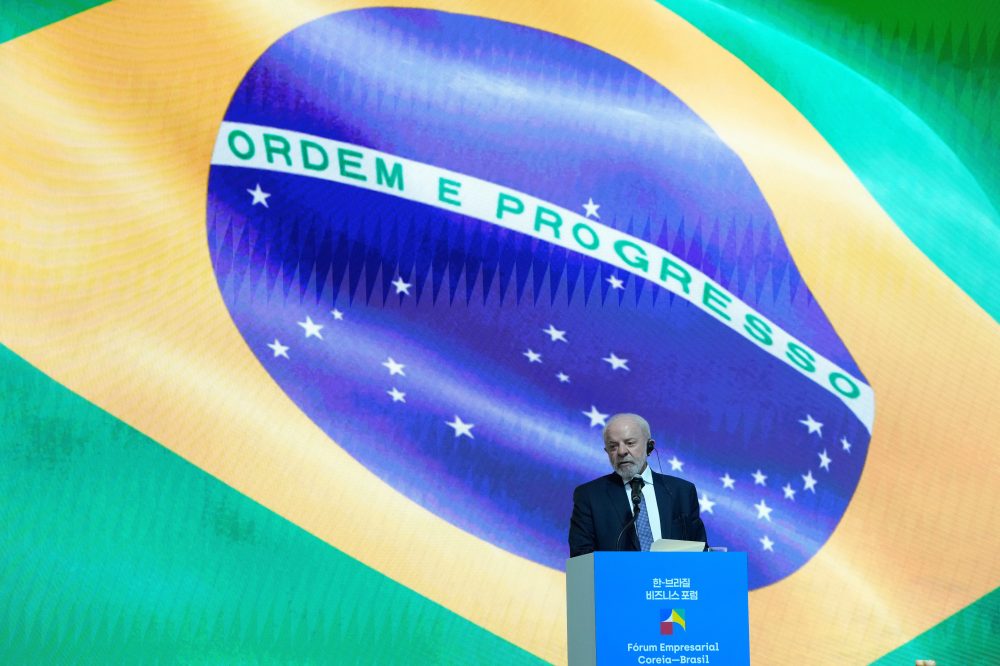
    Two world leaders with remarkably similar backgrounds came together in Seoul Monday to strengthen ties between their nations in what marked Brazil’s first state visit to South Korea in over two decades.

    Brazilian President Luiz Inácio Lula da Silva and South Korean President Lee Jae Myung conducted high-level discussions that resulted in plans to upgrade their countries’ relationship to a strategic partnership level. The meeting produced agreements spanning multiple sectors from commerce to national security.

    During a joint news conference, President Lee emphasized the importance of regional stability, stating: “Peace, built on conditions where conflict isn’t needed, is the strongest form of security.”

    The summit culminated in the signing of 10 formal agreements addressing cooperation in commerce and industrial policy, essential minerals, artificial intelligence and digital technology, farming, healthcare and biotechnology, small business partnerships, and joint law enforcement efforts targeting cybercrime, drug trafficking, and other international criminal activities.

    President Lee revealed that both nations have adopted a comprehensive four-year roadmap designed to outline specific measures for enhanced collaboration across various fields, including strategic mineral resources, defense manufacturing, aerospace industries, and food security initiatives.

    The economic dimension proved particularly significant, as Brazil currently serves as South Korea’s primary trading partner throughout South America. President Lula highlighted Brazil’s abundant rare-earth mineral reserves and significant nickel resources, expressing his administration’s desire to draw investment from South Korean corporations.

    In a social media post earlier that day, President Lee welcomed his Brazilian counterpart by acknowledging their shared personal histories. “As a former child labourer, you proved with your whole life that democracy is the most powerful tool for social and economic progress,” Lee wrote. “I support your life, your struggle and your achievements, which will remain forever in the history of global democracy.”

    The two presidents, who initially connected at last year’s G7 gathering in Canada and later at the G20 meeting in South Africa, have developed a bond based on their common experiences of working in factories as children and suffering workplace injuries.

    The diplomatic meetings occurred at South Korea’s presidential Blue House, representing the first major official reception ceremony since President Lee relocated his administration back to the historic building.

    The day’s events were scheduled to conclude with an evening state dinner featuring barbecue cuisine and Brazilian bossa nova music performed by a Korean jazz ensemble accompanied by a children’s chorus, according to the presidential office.

  • Syrian TV Industry Rebuilds After Assad’s Fall, Tests New Creative Boundaries

    Syrian TV Industry Rebuilds After Assad’s Fall, Tests New Creative Boundaries

    ALEPPO, Syria (AP) — Throughout the Arab world, Ramadan brings not only fasting and prayer, but also the cherished annual tradition of television drama series specially produced for viewing during the holy month.

    Following their evening meal, families across the region settle in to watch their favorite selections from the year’s collection of soap operas and dramatic productions, enjoying sweets, nuts, tea and coffee late into the night.

    Syrian productions have long held the most prestigious position in this tradition. While Egypt dominates cinema and Lebanon leads in music, Syria’s television series have maintained their reputation as the region’s finest for many years.

    Now, as Syria moves forward from 14 years of devastating civil war, more than a year since Islamist-led forces ended the Assad family’s authoritarian rule, the country’s television sector is working to establish itself within the new political landscape.

    During Assad’s reign, when political speech faced severe restrictions, “television became the main sort of platform for freedom of expression and also for employment for artists and intellectuals,” serving as a space where creators could carefully challenge limits, explained Christa Salamandra, an anthropology professor at Lehman College and the City University of New York who studies Syrian drama.

    When widespread anti-government demonstrations began in 2011, they were crushed violently and escalated into civil war.

    Following that turning point, “the industry fractured,” Salamandra noted. “Creatives went into exile — or they stayed, but it split.”

    Now that Assad has fallen, performers and filmmakers previously separated by political divisions are collaborating once more. Productions exploring formerly prohibited subjects, such as torture within Assad’s infamous detention facilities, are being filmed within Syria’s borders.

    However, like all aspects of the new Syria, the post-conflict future of television drama remains complex.

    During a cold day in the week leading up to Ramadan, a film crew had converted an Aleppo street into an enchanting scene.

    Though destroyed buildings in the distance served as stark reminders that the city had been a major battlefield during Syria’s conflict, the cameras had recreated the atmosphere of a bygone era. Vintage automobiles from the 1970s and a horse-drawn cart filled the street while a vendor in traditional headwear offered sahlep, a warm spiced milk beverage.

    The production, “Al-Souriyoun al-Aada” (“The Syrian Enemies”), adapts a novel that authorities banned under Assad due to its examination of troubling periods in Syrian history, including the 1982 “Hama massacre.” During that event, then-President Hafez Assad commanded forces to attack Hama to suppress a Muslim Brotherhood uprising, resulting in 10,000 to 40,000 deaths or disappearances during the month-long offensive that devastated the city.

    The television adaptation features Yara Sabri, a well-known performer who spent years abroad due to her Assad opposition, portraying the mother of a disturbed young man from an Alawite community who becomes influential within the nation’s oppressive security system.

    Wissam Rida, who portrays her son, explained that as an emerging actor in Damascus, working alongside exiled celebrities like Sabri seemed impossible.

    “I used to watch them when I was younger and wish that I could work with them,” he explained. Following Assad’s downfall, Rida observed, “They came back with such beautiful energy you can’t imagine, and you can’t imagine how much we were in need of them.”

    Nevertheless, filming has faced challenges.

    “Al-Souriyoun al-Aada” director Allaith Hajjo has created programs including “Dayaa Dayaa” (“A Lost Village”), a comedy about small mountain town life, and “Intizar” (“Waiting”), a social drama set in an impoverished Damascus neighborhood. He remained in Syria throughout the conflict.

    “In the days of the (Assad) regime’s existence, we were always trying to put forward material that would go over the heads of the censors,” he explained.

    During that period, “I dealt with actors who were a red line in the eyes of the regime,” Hajjo stated. “At the same time, now I am dealing with people who may be rejected” by current leadership.

    Social media criticism has targeted the production due to certain cast members perceived as Assad supporters. Hajjo maintains that political considerations shouldn’t influence casting decisions.

    He noted that current authorities lack experience with artistic projects and the work has encountered “some problems” with review boards.

    “It’s their right to need some time to gain experience, but I hope this time won’t affect the quality and the level” of productions, he said.

    The National Drama Committee, the governmental organization that examines scripts, did not provide responses to inquiries.

    The series, initially scheduled for Ramadan broadcast, has experienced production delays and will likely air following the holy month.

    Director Rasha Sharbatji, who created the Ramadan series “Matbatkh al Medina” (“The City’s Kitchen”), described the new authorities as cooperative.

    She mentioned meeting interim President Ahmad al-Sharaa “and he is personally interested in drama and appreciates how important it is.”

    However, questions remain about whether his administration will allow television dramas to address openly post-Assad issues, including sectarian violence incidents involving government forces.

    Salamandra suggested creators will likely “make serials about the old atrocities with subtle references to the recent ones. Because that’s what they’ve always done.”

    Jihad Abdo represents one of the returning exiled performers. A leading actor during the 1990s and early 2000s, he left Syria in 2011 after criticizing Assad publicly.

    He rebuilt his career in America, where he sought entry-level positions and changed his name from Jihad — a typical name among Muslim and Christian Arabs meaning “striving” — to Jay for Hollywood work, where many connected “jihad” with extremism.

    He eventually secured roles in major projects, including appearing with Nicole Kidman in 2015’s “Queen of the Desert.” Despite his success, he yearned to return home.

    Back in Damascus, he stars in the web series “Al-Meqaad al-Akheer” (“The Last Seat”), a social drama airing during Ramadan, as someone battling Alzheimer’s. He now heads Syria’s General Organization for Cinema, facing the challenging task of rebuilding the Syrian film industry without funding.

    Abdo stated that “the margin of the freedom is bigger” compared to Assad’s era and officials haven’t declared any topics forbidden.

    “We’re not sure yet about how this margin of freedom will be shaped,” he said. “We are trying to make it as big as possible, because we need to address the problems in order to solve them.”

    Abdo sees the television industry as crucial for Syria’s post-conflict healing by sharing human experiences and demonstrating that people with opposing political beliefs can collaborate.

    “The wound is big, it’s bleeding, it is still open,” he said. “But it’s our responsibility, the people in entertainment, the intellectuals, prominent names, to bring everybody together again and to keep talking, no matter how different we are.”

  • Cultural Pride Surges in Ghana After President Faces Online Ridicule

    Cultural Pride Surges in Ghana After President Faces Online Ridicule

    ACCRA, Ghana (AP) — Along a bustling street in downtown Accra, Clement Azaabire displays carefully crafted fugu smocks on clotheslines, their vibrant striped patterns dancing in the wind. Azaabire has spent a decade and a half proudly marketing these garments that represent his northern Ghanaian heritage. Today, they’ve become the center of national conversation.

    A growing number of Ghanaians are embracing these vibrant traditional garments with renewed enthusiasm following a wave of internet criticism.

    When Ghana’s President John Dramani Mahama traveled to Zambia in early February dressed in traditional fugu attire, social media critics responded with mockery. Ghanaians rallied to protect what they viewed as their valuable cultural legacy, leading Tourism Minister Abla Dzifa Gomashie to establish Wednesdays as official “Fugu Day.”

    Following the February 10th “Fugu Day” announcement, increasing numbers of people have adopted the smock for Wednesday workwear and beyond. Merchants like Azaabire report completely depleted inventory.

    “It makes me feel connected to where I come from,” explained businessman Wango Abdul Karim, who dons fugu attire every Wednesday at his workplace.

    Ghana enjoys international recognition for its sophisticated fashion culture and centuries-old textile traditions, with traditional smock production historically centered in northern regions where weaving techniques pass between generations.

    The fugu smock achieved historical significance in March 1957 when Ghana’s founding President Kwame Nkrumah selected it for the nation’s independence celebration. Currently, it appears at cultural festivals, government events, and modern fashion collections.

    Known regionally as batakari, this comfortable fugu garment consists of hand-woven cotton strips assembled into a flowing robe, typically worn over pants with a coordinating hat. Artisans traditionally create the fabric using narrow looms throughout Ghana’s northern grasslands, incorporating distinctive patterns and stitch counts that identify specific regions.

    Academic research traces its origins to commercial and population movements throughout West Africa, incorporating elements from Mossi and Hausa cultures. The term batakari originates from Hausa language meaning “outer gown,” while fugu translates to cloth in Mossi dialect. The garment historically symbolizes status among chiefs, fighters, and community officials, with particular designs designated for ceremonial occasions.

    Inside Accra’s Arts and Crafts Centre, Moses Adibasa carefully feeds woven strips through his sewing machine, stopping to manually position the narrow sections before joining them.

    After nearly twenty years creating traditional smocks professionally, he anticipates positive outcomes from the “Fugu Day” initiative.

    “It will benefit those selling thread, those weaving and those of us sewing,” Adibasa explained.

    At her Accra workspace, fashion designer Perfectual Linnan, who established Roots by Linnan, transforms fugu material into contemporary jackets, pants, and shirts suitable for daily use. She represents an emerging generation of designers integrating traditional fabrics into current styles.

    “We want to show that you can wear the northern fabric in different ways,” she explained. “If you’re not into the traditional smock, you can still carry a piece of culture with you.”

    While traditional looms continue producing the clothing, many artisans now depend on foreign yarn because of insufficient domestic cotton cultivation.

    The “Fugu Day” initiative has created increased demand and additional challenges for smock producers, many struggling to expand output, according to Abigail Naki Gabor, secretary of Ghana’s smock weavers and sellers association.

    Government investment could provide solutions, Gabor suggested. “Using our hands slows the process and limits our ability to be productive. We need industrial machines,” she stated.

    Beyond “Fugu Day,” Ghana is developing an expanded “Wear Ghana” initiative promoting domestic fashion and cultural identity through planned trade shows, according to Ghana Tourism Authority representative Kofi Atta Kakra Kusi.

    Returning to her Accra studio, Linnan emphasizes respectful treatment of the smock despite its labor-intensive production requirements.

    “It is a careful, intentional process,” she states. “If we treat it only as a commodity and not as heritage, we lose something important.”

  • European Leaders to Meet with Trump’s Gaza Peace Board Director Monday

    European Leaders to Meet with Trump’s Gaza Peace Board Director Monday

    BRUSSELS (AP) — High-ranking European Union officials plan to convene Monday with Nikolay Mladenov, who heads President Donald Trump’s Board of Peace initiative, following mixed reactions from EU nations regarding Trump’s Gaza reconstruction and security plans.

    Mladenov, a former Bulgarian political leader and United Nations diplomat selected by Trump to oversee the Board of Peace, is scheduled to meet with EU foreign policy leader Kaja Kallas along with foreign ministers from the 27-member union. The diplomatic gathering will also address ongoing conflict in Ukraine and additional Russian sanctions.

    Given its Mediterranean location near the Middle East, the European Union maintains significant connections with both Israeli and Palestinian communities. The bloc currently oversees operations at the Rafah border crossing and serves as the largest financial contributor to the Palestinian Authority.

    European capitals from Nicosia to Copenhagen remain divided on whether to collaborate with Trump’s peace board initiative. The EU continues backing the United Nations’ Gaza operations.

    Hungary and Bulgaria represent the EU as full board members, while EU candidates Turkey, Kosovo and Albania also hold membership positions.

    A dozen additional EU countries participated as observers during Thursday’s inaugural Washington meeting: Austria, Croatia, Cyprus, Czech Republic, Finland, Germany, Greece, Italy, Netherlands, Poland, Romania and Slovakia. Officials displayed the EU flag at the event alongside flags from observer and member nations.

    Notable European figures including French President Emmanuel Macron and European Commission President Ursula von der Leyen declined participation invitations, as did Pope Leo XIV. However, von der Leyen dispatched European Commissioner for the Mediterranean Dubravka Šuica as an observer to the Washington gathering.

    French Foreign Minister Jean-Noël Barrot criticized Šuica’s attendance, claiming the Commission violated EU protocols by not consulting the European Council leadership group first.

    “The European Commission should never have attended the Board of Peace meeting in Washington,” Barrot wrote on X. “Beyond the legitimate political questions raised by the ‘Board of Peace,’ the Commission must scrupulously respect European law and institutional balance in all circumstances.”

    Von der Leyen spokesperson Paula Pinho responded Friday, stating “It is in the remit of the Commission to accept invitations.”

    While the executive branch won’t join the board officially, it aims to shape Gaza reconstruction and peacekeeping efforts beyond its current role as the Palestinian Authority’s primary financial supporter, Pinho explained.

    Trump’s expanding vision for the board encompasses governing and transforming Gaza into a modern metropolis while potentially challenging the UN Security Council’s conflict resolution authority. However, these ambitious goals may face practical constraints given the limited ceasefire progress achieved so far in Gaza.

  • Beijing Reviews Supreme Court Tariff Decision, Warns Trade Wars Hurt Both Nations

    Beijing Reviews Supreme Court Tariff Decision, Warns Trade Wars Hurt Both Nations

    Beijing officials are conducting a comprehensive review of the recent U.S. Supreme Court decision that overturned numerous tariffs and are calling on Washington to eliminate unilateral trade penalties against its partners, stating that economic conflicts between the nations cause damage to all involved.

    China’s Commerce Ministry issued these statements Monday, following the nation’s highest court delivering a significant blow to President Donald Trump by overturning multiple tariffs he implemented during his global trade conflict, including several targeting China.

    Hours following the court’s decision, Trump announced plans to implement a new 10% levy on imports from all nations beginning Tuesday, then quickly escalated it to 15% in a decision that appeared to catch some administration officials off guard.

    “U.S. unilateral tariffs … violate international trade rules and U.S. domestic law, and are not in the interests of any party,” the Chinese ministry stated.

    “Cooperation between China and the United States is beneficial to both sides, but fighting is harmful,” the ministry added.

    Trade policy and tariff discussions are anticipated to be central topics for both nations leading up to Trump’s expected visit to China in late March and early April, during which he will hold meetings with Chinese President Xi Jinping.

    Trump’s proposed new duties rely on an untested legal provision called Section 122, which permits tariffs up to 15% but requires congressional authorization to continue beyond 150 days. This section has never been used by any previous president, and its implementation may trigger additional legal disputes.

    “China will continue to pay close attention to this and firmly safeguard its interests,” the Commerce Ministry declared.

    Gao Lingyun, a research fellow at the Chinese Academy of Social Sciences, was quoted by state-run Global Times describing the U.S. tariff decisions as “highly arbitrary” and being used as a “political weapon.”

    “Tariff policy should be based on rigorous assessment, not political preference,” he was quoted as saying.

    The Supreme Court’s decision eliminated several tariffs the Trump administration had placed on major Asian exporters including China, South Korea, Japan, and Taiwan, which serves as the world’s leading semiconductor manufacturer and crucial technology supply chain participant.

    South Korea announced it would maintain discussions with the U.S. to preserve a “balance of interests” between the nations, while its industry minister expressed concerns among officials across multiple sectors, including automotive, battery, and semiconductor industries.

    “The public and private sector need to work together to secure Korean companies’ export competitiveness and diversify their markets,” Industry Minister Kim Jung-kwan stated Monday.

    India postponed sending a trade delegation to Washington this week to complete an interim trade agreement, primarily due to new tariff uncertainties from the U.S., according to a trade ministry source.

    Under the proposed deal, U.S. tariffs on Indian products would decrease to 18%, while India committed to purchasing $500 billion worth of American goods over five years, including energy supplies, aircraft and components, precious metals, and technology products.

    In Europe, European Central Bank President Christine Lagarde cautioned about business risks, emphasizing that companies seek predictability rather than legal disputes. She stressed that any new tariff proposals must be clearly outlined to prevent additional challenges and ensure constitutional compliance.

    “To sort of shake it up again is going to bring about disruptions,” Lagarde said on CBS’ “Face the Nation.”

  • Ex-Philippines President Duterte Faces War Crimes Hearing at International Court

    Ex-Philippines President Duterte Faces War Crimes Hearing at International Court

    THE HAGUE, Netherlands — International Criminal Court prosecutors will begin Monday laying out their case against former Philippine President Rodrigo Duterte, presenting evidence of his alleged role in numerous killings during his anti-narcotics campaigns.

    The former president faces three charges of crimes against humanity related to lethal drug enforcement operations he directed both during his tenure as mayor of Davao in southern Philippines and throughout his presidency.

    Advocacy organizations and victims’ families celebrated Duterte’s March arrest as progress toward accountability.

    “We have waited for this for so long, for years we have waited, but we did not relent,” Llore Pasco said during a press briefing before the proceedings. She explained that her two sons departed for work in May 2017 and never came home, with their bullet-riddled bodies discovered later.

    Monday’s proceedings represent a confirmation hearing rather than a full trial, providing prosecutors the opportunity to present their case before the court. Following review of the presented evidence, judges will have 60 days to determine whether to validate the charges.

    Duterte has chosen not to participate in the Hague-based court proceedings. In a written statement to the judges, he declined to attend legal proceedings “that I will forget within minutes. I am old, tired, and frail.”

    The former leader also dismissed the accusations as an “outrageous lie.”

    Court officials determined last month that the elderly defendant was mentally competent for trial proceedings, after an earlier hearing was delayed due to health-related concerns.

    Duterte’s allies have condemned current Philippine President Ferdinand Marcos Jr.’s administration for apprehending and transferring the former leader to a court whose authority they question. Critics include his daughter, current Vice President Sara Duterte, who declared her intention last week to run for president in 2028.

    Sheerah Escudero expressed concern about potential consequences if another Duterte gains power. Her 18-year-old brother’s body was discovered bound with tape in 2017. “We know that the same policy of killings will continue,” she stated to media before the hearing.

    ICC prosecutors announced in February 2018 their decision to launch a preliminary examination of the violent drug enforcement operations. Human rights advocates claim Duterte’s subsequent announcement that the Philippines would withdraw from the court was designed to avoid responsibility.

    The court dismissed arguments from Duterte’s defense team seeking case dismissal based on jurisdictional challenges following Philippine withdrawal. Nations cannot “abuse” their withdrawal rights from the Rome Statute “by shielding persons from justice in relation to alleged crimes that are already under consideration,” according to the September ruling.

    An appeal of that determination remains under review.

    Death toll estimates from Duterte’s presidential period range from over 6,000 according to national police records to as many as 30,000 as claimed by human rights organizations.

  • Visual Timeline: Ukraine Conflict Marks Four Years Since Russian Invasion

    Visual Timeline: Ukraine Conflict Marks Four Years Since Russian Invasion

    When Russian forces launched their full-scale assault on Ukraine on February 24, 2022, it marked the start of the most significant military conflict Europe has witnessed since World War II ended. The invasion has now stretched into its fourth year, fundamentally altering the geopolitical landscape.

    A specially assembled collection of photographs, selected by Associated Press photo editors, captures the defining moments and human impact of this prolonged conflict. The visual documentation spans the entire duration of the war, offering a comprehensive look at how the situation has evolved over these four years.

  • Russian Small Businesses Struggle Under Wartime Tax Hikes as Economy Strains

    Russian Small Businesses Struggle Under Wartime Tax Hikes as Economy Strains

    A Moscow-area bakery owner gained national attention after making a desperate plea to Vladimir Putin during the Russian president’s December call-in program. Denis Maksimov, standing outside his bakery Mashenka — named for his eldest daughter — asked Putin via video to reconsider new tax policies that are crushing small business owners nationwide.

    “We understand very well that it’s not an easy situation for the country. We understand that raising taxes is necessary,” Maksimov said. “We’re looking ahead without optimism, frankly speaking. Many (businesses) will close down.”

    Nearly four years into Putin’s full-scale war against Ukraine, Russia’s economy is showing significant strain. Oil income is falling, the government’s budget shortfall is growing, and military expenditures that previously drove economic expansion have plateaued.

    Moscow is now turning to consumers and small enterprises for additional funding. The government has increased the value-added tax by 2% and dramatically reduced the income thresholds that trigger businesses to pay these taxes.

    Russian citizens are experiencing real hardship, according to business owners who spoke with The Associated Press. They report steadily declining customer demand, sudden cost increases as vendors adapt to the tax changes, and tax obligations that have multiplied by tens of times. Some entrepreneurs have reduced their operations to survive, while others have shut down completely.

    Social media footage recently highlighted the economic damage: empty storefronts lining St. Petersburg’s famous Nevsky Prospekt, where numerous businesses have failed.

    “I’ve never felt so scared as this year, so unprotected, so anxious,” said Darya Demchenko, who operates multiple beauty salons in Russia’s second-largest city.

    Maksimov’s public appeal to Putin did not succeed in stopping the tax overhaul, which reduced the threshold requiring businesses to pay VAT from 60 million rubles ($783,000) in yearly sales to 20 million rubles ($261,000) this year, with further reductions to 10 million rubles ($130,500) planned by 2028.

    Similar reductions affected the “patent taxation system,” where small businesses previously made fixed annual payments — typically only tens of thousands of rubles — rather than percentage-based taxes on income or profits. Now, those earning more than 20 million rubles must pay at least 6% tax on revenues plus 5% VAT.

    During their televised conversation, Maksimov explained he had operated under the patent system for eight years. Putin acknowledged the need for tax reform to address “uncontrolled” illegal imports but promised to examine possible solutions.

    Maksimov’s television appearance brought publicity and new customers to Mashenka, which operates three locations in the Moscow area. The bakery sent baked goods to the Kremlin and advertises on its website that Putin “tried our pies.”

    Russian news outlets reported that Maksimov’s sales increased temporarily, but without tax policy changes, he considered shutting down.

    Putin discussed Mashenka’s situation at a government meeting last month, and Economy Minister Maxim Reshetnikov suggested measures to exempt Maksimov’s business from VAT and reduce other taxes. Following this, the owner said he was no longer planning to close.

    “I think we will grow, maybe slower than before, but no less confidently, I think,” Maksimov told AP this month. However, he acknowledged still waiting for officials to implement the proposed measures, with no clear timeline for when this might occur.

    Maksimov’s case sparked outrage among other small and medium business owners. Through an online movement called “We Are Mashenka,” initiated by the Association of Beauty Industry Enterprises, entrepreneurs nationwide shared similar struggles, noting that unlike Maksimov, who gained Putin’s attention, they had no one to rescue them.

    Demchenko, who participated in the campaign, told AP that she was forced to close one salon and sell another from her four-location chain — three owned and one franchised — to survive the dramatically higher taxes, increased costs, and reduced demand.

    The tax changes disqualified her from the patent system, requiring much higher tax payments and the hiring of a full-time accountant for paperwork, she explained. Her expenses — including rent, supplies, security, and banking — jumped 30%, with suppliers raising prices far beyond the 2% VAT increase.

    Customer demand for beauty services has been declining for months.

    Russia’s restrictions on social media and messaging platforms eliminated her access to affordable advertising and easy client communication, Demchenko noted.

    The beauty industry survived the COVID-19 pandemic with government assistance including tax relief, payment deferrals, and opportunities to negotiate rent waivers with landlords, she said.

    “This year, we haven’t felt any support at all. We feel like they want to shut us down,” she said.

    Lyalya Sadykova, president of the Association of Beauty Industry Enterprises, reported that approximately 10% of St. Petersburg’s beauty businesses closed and another 10% sold their companies in December and January. She expects additional closures this spring.

    “People will do the math. The first deadline for taxes is in April, and people will see that they have nothing to pay with, and that’s when the collapse will begin,” she said. “I think there will be bankruptcies, and mass exodus from the market, because now it seems to me that not everyone has done the math and understood it.”

    When the tax reforms were enacted last year, pastry shop owners Ilsiya Gizatullina and Railya Shayhieva decided to close their Kazan business. Like Demchenko, they cited massive tax increases, rising expenses, and declining demand.

    The decision was extremely difficult, “like cutting off a body part. Because we lived there, it was our life, 24/7,” Gizatullina told AP.

    They launched their business in 2020 and weathered the pandemic, which Gizatullina noted was temporary. The new tax structure is permanent.

    “We understand very well that it won’t be abolished the day after tomorrow, and there will likely be an even higher tax burden in the future,” Gizatullina said.

    Under the reforms, additional businesses will face increased taxes in 2027 and 2028, as changes will impact those with even smaller revenues.

    Small and medium businesses represent just over 20% of Russia’s economy, but remain significant, according to Chris Weafer, CEO of Macro-Advisory Ltd. Consultancy. Expanding VAT application to these businesses will generate “a meaningful amount” of government revenue.

    This represents “a deliberate strategy by the Finance Ministry to create more stable, predictable sources of income” during a period of reduced oil revenues and increased budget deficits, Weafer explained.

    Small and medium enterprises have faced pressure since 2014, when Russia encountered sanctions over its illegal Crimean Peninsula annexation, and the government focused support on large corporations. The new tax regulations intensify this pressure, Weafer said, and while unlikely to destroy the economy, will hinder growth after the war concludes.

    “The one engine of expansion and growth and innovation that you need in an economy is the sector that has suffered most in the last four years and is continuing to suffer today,” he said.

  • Mexican Cartel Boss ‘El Mencho’ Killed in Military Operation, Sparks Nationwide Violence

    Mexican Cartel Boss ‘El Mencho’ Killed in Military Operation, Sparks Nationwide Violence

    Mexican authorities are working to restore order after the death of one of the world’s most notorious drug lords sparked violent retaliation across multiple states, forcing school closures and prompting residents to shelter in place.

    Nemesio Oseguera Cervantes, better known by his alias “El Mencho,” died Sunday during a military operation in Jalisco state. The 57-year-old commanded the Jalisco New Generation Cartel, one of Mexico’s most ruthless criminal organizations responsible for smuggling vast quantities of fentanyl, methamphetamine, and cocaine into the United States.

    The drug lord was fatally wounded during a fierce gunfight when Mexican forces attempted to apprehend him in Tapalpa, located roughly two hours southwest of Guadalajara. He succumbed to his injuries while being transported by air to Mexico City, according to defense officials.

    Cartel members launched immediate revenge attacks nationwide, establishing over 250 roadblocks spanning 20 states and torching vehicles in the streets. Mexican President Claudia Sheinbaum called for citizens to remain calm while announcing that most barriers had been dismantled by late Sunday.

    The operation received intelligence assistance from the United States, with the White House praising Mexico’s military for eliminating one of both nations’ most sought-after fugitives. The State Department had placed a $15 million bounty on El Mencho’s head.

    Guadalajara, Mexico’s second-largest metropolitan area, came to a virtual standstill Sunday as frightened residents remained indoors. The city’s international airport operated with skeleton crews, and most incoming flights were grounded due to security concerns.

    Jacinta Murcia, a 64-year-old vendor, described her anxiety while navigating the airport late Sunday evening. Earlier that day, travelers had scrambled for cover behind seating areas amid fears of violence.

    “My plan today leaving the airport is to see if there are any taxis, but I’m scared of everything. That there are blockades, that there’s a curfew, that something could happen,” she said. “I’m all alone.”

    Regional authorities confirmed at least 14 additional deaths Sunday, including seven National Guard personnel killed during the widespread unrest in Jalisco, Michoacan, and Guanajuato states.

    Social media footage captured tourists on Puerto Vallarta beaches with smoke columns visible in the background. At the airport, elderly Mexican travelers huddled together planning their journey home.

    “We better all go together,” one person was heard saying. “Go with God.”

    International Crisis Group analyst David Mora characterized the events as a pivotal moment for President Sheinbaum’s anti-cartel strategy amid mounting pressure from Washington to combat fentanyl trafficking.

    President Donald Trump has repeatedly demanded stronger Mexican action against drug smuggling, threatening additional tariffs or potential military intervention without visible progress.

    U.S. Ambassador Ron Johnson praised the Mexican armed forces’ achievements and sacrifices in a Sunday statement, noting that “under the leadership of President Trump and President Sheinbaum, bilateral cooperation has reached unprecedented levels.”

    However, Mora cautioned that the cartel leader’s elimination could trigger additional bloodshed as competing criminal organizations attempt to exploit the weakened Jalisco New Generation Cartel.

    “This might be a moment in which those other groups see that the cartel is weakened and want to seize the opportunity for them to expand control and to gain control over Cartel Jalisco in those states,” he explained.

    The analyst noted Sheinbaum’s administration has adopted a more aggressive military approach against criminal networks compared to previous governments.

    “Ever since President Sheinbaum has been in power, the army has been way more confrontational, combative against criminal groups in Mexico,” Mora said. “This is signaling to the U.S. that if we keep cooperating, sharing intelligence, Mexico can do it, we don’t need U.S. troops on Mexican soil.”

    Defense officials reported that troops encountered heavy resistance during the capture attempt, resulting in four immediate fatalities at the scene. Three wounded individuals, including Oseguera Cervantes, later died from their injuries.

    White House Press Secretary Karoline Leavitt confirmed via social media that American intelligence supported the operation, describing El Mencho as “a top target for the Mexican and United States government as one of the top traffickers of fentanyl into our homeland.”

    The Jalisco New Generation Cartel emerged around 2009 and rapidly became one of Mexico’s most powerful criminal enterprises. The Trump administration designated the organization as a foreign terrorist group in February 2025.

    Despite Sheinbaum’s previous criticism of “kingpin” elimination strategies that historically triggered violence when cartels splintered, mounting security concerns and U.S. diplomatic pressure have intensified demands for results against drug trafficking operations.

    The Jalisco organization distinguished itself through particularly aggressive tactics against military forces, including helicopter attacks and pioneering use of drone-delivered explosives and landmines. In 2020, the cartel orchestrated a brazen assassination attempt in central Mexico City using grenades and military-grade weapons against the capital’s police chief, who now serves as federal security secretary.

  • Japanese Emperor Marks 66th Birthday With Thoughts on 2011 Disaster Victims

    Japanese Emperor Marks 66th Birthday With Thoughts on 2011 Disaster Victims

    TOKYO – On his 66th birthday Monday, Japan’s Emperor Naruhito shared his continued worries about those still recovering from the catastrophic 2011 earthquake, tsunami and nuclear crisis, with the disaster’s anniversary approaching next month.

    In birthday statements released last week, the emperor noted that while physical rebuilding efforts have advanced significantly, deeper healing remains incomplete. “While recovery of infrastructure has made progress, I feel that reconstruction of livelihoods and community still needs to be addressed,” Naruhito said in the remarks made last week. “As I think of those who lost their loved ones and had to cope with complete change of their living environment, I feel their scars have not healed yet … they stay despite the passage of time.”

    The emperor appeared alongside Empress Masako, their daughter Princess Aiko, and Crown Prince Akishino’s family on the imperial palace balcony, greeting enthusiastic crowds who gathered with Japanese flags to celebrate the occasion.

    The devastating March 2011 natural disasters and subsequent Fukushima Daiichi nuclear plant meltdowns resulted in almost 20,000 deaths and displaced hundreds of thousands of residents. Although most radiation-affected areas have been declared safe for habitation, relatively few former residents have chosen to return due to limited employment opportunities and fractured community bonds.

    The nation will also commemorate another tragic milestone this April – a decade since the Kumamoto earthquake claimed close to 300 lives.

    During his birthday remarks, Naruhito emphasized the importance of passing disaster preparedness knowledge to future generations while remaining ready for potential future emergencies. The emperor committed to maintaining close connections with citizens, sharing in both their celebrations and hardships, and continuing to hear from those in disaster-impacted regions while hoping for a future free from such tragedies.

    Regarding his daughter’s future role, Naruhito expressed his desire for Princess Aiko to carry forward historical awareness to younger people. “We have raised Aiko hoping she will be a fine person as a human being and a royal member,” he said. “And I have a strong wish for her to continue to exert her strength and be active in international peacekeeping.”

    Princess Aiko, now 24 and the couple’s sole child, faces restrictions under Japan’s succession laws that prevent her from inheriting the throne. Current regulations require her to abandon royal status if she chooses to marry outside the imperial family, rules that Prime Minister Sanae Takaichi continues to support and strengthen.

  • Ethiopia’s Tigray Region Faces Economic Crisis Amid War Fears

    Ethiopia’s Tigray Region Faces Economic Crisis Amid War Fears

    MEKELE, Ethiopia — Tour guide Gebreegziabher Berehe no longer expects visitors to show up in Ethiopia’s northern Tigray region, as concerns mount about a possible return to warfare.

    The 37-year-old says his tourism business has completely collapsed, bank machines in Mekele sit without cash, and he’s thinking about leaving Ethiopia since he can’t make ends meet anymore.

    “If war arises again, I think the situation will be even more severe than before,” Berehe explained. “My colleagues and I are now facing serious economic and moral crises, even before hearing the sound of any gun.”

    An uneasy quiet has settled over Mekele, which serves as the regional capital, though friction continues building between regional leaders and Ethiopia’s federal government based in Addis Ababa.

    The region has been preparing for potential renewed warfare following a peace agreement signed in November 2022 that ended brutal fighting. That conflict claimed thousands of lives as Ethiopian federal forces, supported by troops from neighboring Eritrea, battled against Tigrayan military units.

    Currently, Tigray’s leadership claims Ethiopian federal officials have violated the peace accord through drone attacks. Meanwhile, Ethiopia’s government alleges that Eritrea has shifted course to support and finance armed groups within Tigray, which borders the country.

    The nightmare scenario involves Eritrea joining forces with the Tigray People’s Liberation Front, Tigray’s governing body, in armed conflict against Ethiopian military forces.

    The war that concluded in 2022 was devastating, marked by extensive reports of sexual assault and the deliberate restriction of food supplies as a military tactic.

    Numerous Mekele residents are seeking ways to flee any new violence while possible, remembering the communication shutdown and movement restrictions Ethiopia’s government placed on the region during the previous conflict.

    Some analysts believe a potential trigger for war lies in Prime Minister Abiy Ahmed’s aggressive position regarding efforts to secure Red Sea access for landlocked Ethiopia through Eritrea, which Ethiopia lost when Eritrea became independent in 1993 following decades of guerrilla conflict.

    Abiy declared to parliament earlier this month that the Red Sea and Ethiopia “cannot remain separated forever.” Eritrean government spokesperson Yemane Gebremeskel rejected Abiy’s goal as “delusional malaise” when speaking with The Associated Press.

    Eritrea, concerned about a potential military attack on its Assab port, has begun rebuilding relationships with its former enemies in Tigray’s leadership, despite denying any formal partnership. This development has worried officials in Addis Ababa, prompting the Ethiopian government to mobilize reserve troops.

    Since assuming power in 2018, Abiy has worked to establish Ethiopia’s international reputation as an emerging power. However, multiple conflicts throughout his tenure have hindered these efforts.

    United Nations Secretary-General António Guterres has urged all sides to show restraint, with similar appeals from the European Union and the United Kingdom, which has advised its citizens against visiting the region.

    On January 29, Ethiopian Airlines, the country’s flag carrier, suspended flights to Tigray following violent clashes between federal soldiers and Tigrayan forces in Tselemti district, an area claimed by both Tigray and the adjacent Amhara region. Flight service resumed on February 3.

    The fighting was followed by drone attacks that left one person dead and another wounded. Tigrayan officials blamed Ethiopian forces for the strike. Ethiopia’s military has not publicly addressed the accusation.

    These incidents have damaged travel to Tigray, whose historic stone churches and stunning mountain terrain provide a scarce but crucial source of foreign currency and jobs through tourism.

    As business owners like Berehe fear financial losses, Tigray agricultural workers such as Johannes Tesfay share similar concerns.

    Tesfay farms north of Mekele in Debretsion, where his family cultivates chili peppers, potatoes and onions at the foot of mountains that Eritrean soldiers previously used to enter Ethiopia during the recent conflict, destroying crops and farm machinery.

    Distribution problems linked to the renewed hostilities have left him deeply worried.

    “There’s no fuel for my irrigation pumps, there’s no fertilizer and there’s barely any transportation for buyers to bring the produce to market,” he explained.

    When asked about his plans if violence returns to the area, Tesfay gazed toward the mountains and responded, “What can we do? All we can do is pray. We need help from the global community to make some kind of reconciliation between all the forces.”

  • Hong Kong Appeals Court Rejects Bids by Pro-Democracy Activists

    Hong Kong Appeals Court Rejects Bids by Pro-Democracy Activists

    HONG KONG (AP) — An appeals court in Hong Kong on Monday rejected challenges from pro-democracy activists in the territory’s largest prosecution under Beijing’s national security legislation.

    The democracy supporters were part of a group of 47 activists who faced charges in 2021 for allegedly conspiring to commit subversion through their participation in an unofficial primary vote. This sweeping legal action against some of the city’s most prominent activists effectively dismantled much of Hong Kong’s once-vibrant pro-democracy movement, which had peaked during the massive anti-government demonstrations of 2019.

    In 2024, forty-five defendants received prison sentences ranging from four to ten years, with international governments and human rights organizations condemning the harsh punishments.

    The eleven activists whose conviction appeals were denied included former legislative members Leung Kwok-hung, Lam Cheuk-ting, Raymond Chan and Helena Wong.

    The Court of Appeal also rejected all challenges to the sentences handed down.

    Lawrence Lau, a former pro-democracy district councilor who was among two activists cleared in the case, saw his acquittal maintained after prosecutors appealed the decision.

    Building on momentum from the 2019 demonstrations, the pro-democracy faction had planned to capitalize on the 2020 legislative elections. The unofficial primary was designed to select pro-democracy candidates for the formal election.

    The movement hoped to win a legislative majority that could advance protesters’ goals, including increased police oversight and democratic selection of the city’s leadership.

    Throughout the proceedings, government lawyers argued the activists sought to paralyze Hong Kong’s administration and compel the city’s chief executive to step down. In their 2024 ruling, judges determined that the activists’ strategy to create change through the unofficial primary would have weakened governmental authority and triggered a constitutional crisis.

    Opposition voices argued the activists’ convictions demonstrated how officials suppressed dissent after the 2019 protests. Both Beijing and Hong Kong authorities maintain the national security legislation was essential for maintaining the city’s stability.

    The prosecution encompassed democracy advocates from various backgrounds, including legal academic Benny Tai, who received a 10-year sentence, and former student activist Joshua Wong, who was sentenced to four years and eight months.

    Close to 20 activists from the case have been freed from custody during the past year. This group included former district councilors Jimmy Sham and Lester Shum. Sham and Lee Yue-shun, another cleared activist, spoke with Lau prior to Monday’s court session.

    When imprisoned activists entered the courtroom, several gestured and smiled toward family members and supporters, who responded with waves of their own.

    Some citizens waited in line outside the courthouse since Saturday to obtain courtroom seats. Retiree Margaret Chan came Monday morning, wanting to demonstrate solidarity with those she viewed as innocent.

    Witnessing some activists freed from prison brought her comfort. “They have survived it,” she said.

  • Seoul Demands Russian Embassy Remove ‘Victory’ Banner Before Ukraine War Anniversary

    Seoul Demands Russian Embassy Remove ‘Victory’ Banner Before Ukraine War Anniversary

    SEOUL – South Korean officials are calling on Russia’s diplomatic mission in Seoul to remove a massive banner proclaiming “Victory will be ours” as Tuesday marks four years since Russia’s invasion of Ukraine began.

    The South Korean foreign ministry issued a statement Sunday confirming they had expressed their objections to the embassy regarding the display, though officials did not indicate whether Russian diplomats had responded to their request.

    Measuring approximately 49 feet in length and featuring Russian flag colors with text written in Russian, the banner was mounted on the embassy’s exterior wall in downtown Seoul. As of Monday, the controversial display remained visible.

    In their official statement, ministry officials restated South Korea’s stance that Russia’s military actions against Ukraine violate international law.

    The ministry further emphasized that the military partnership between Russia and North Korea must end, calling it a serious danger to South Korean national security and a breach of both the United Nations Charter and Security Council resolutions.

    This month, Russian Ambassador to South Korea Georgy Zinoviev publicly commended North Korean forces for their combat role in Russia’s Kursk region, according to news reports.

    Following a mutual defense agreement signed in 2024, North Korea deployed approximately 14,000 troops to support Russian forces in their conflict with Ukraine. South Korean, Ukrainian, and Western intelligence sources report that over 6,000 of these North Korean soldiers have been killed in action.

    Attempts to contact the Russian embassy in Seoul for their response were unsuccessful. An automated phone message indicated the embassy was closed Monday due to a public holiday.

  • Hong Kong Appeals Court Denies Pro-Democracy Activists’ Challenge in Major Case

    Hong Kong Appeals Court Denies Pro-Democracy Activists’ Challenge in Major Case

    HONG KONG – An appeals court in Hong Kong on Monday denied requests from a dozen pro-democracy advocates seeking to overturn their convictions in a significant national security prosecution that observers describe as emblematic of Beijing’s tightening grip on the territory.

    The court decision involves the high-profile “Hong Kong 47” prosecution, in which numerous prominent democracy advocates and elected officials were taken into custody during widespread arrests in early 2021. They faced charges of conspiring to undermine state authority. After extensive court proceedings that stretched over years, the vast majority of defendants received prison terms of four to ten years in late 2024, with just two individuals found not guilty.

  • Mexico’s Most Wanted Cartel Boss Killed in Military Operation

    Mexico’s Most Wanted Cartel Boss Killed in Military Operation

    MEXICO CITY — Mexican military forces achieved a significant victory against organized crime on Sunday by killing the nation’s most influential drug cartel boss, who was also among America’s most sought-after criminals. However, the operation triggered widespread violent retaliation throughout Mexico.

    Nemesio Oseguera Cervantes, who led the Jalisco New Generation Cartel, died during a military operation aimed at capturing him in Jalisco state. This represents the most significant success against criminal organizations since authorities recaptured former Sinaloa cartel chief Joaquín “El Chapo” Guzmán ten years ago.

    In response to Oseguera Cervantes’ death, armed groups launched violent attacks nationwide. Criminal members set vehicles ablaze to block highways in approximately twelve Mexican states, sending smoke clouds into the sky. Residents barricaded themselves inside their homes in Guadalajara, the nation’s second-most populous city and Jalisco’s state capital, while Monday classes were suspended in multiple states as security personnel went on high alert across the country. Guatemala even strengthened border security along its Mexican frontier.

    This success could strengthen Mexico’s position in negotiations with the incoming Trump administration, which has threatened economic sanctions or direct military intervention unless Mexico demonstrates progress in combating criminal organizations.

    However, experts remain uncertain about the long-term impact on Mexico’s security situation.

    Oseguera Cervantes, commonly called “El Mencho,” was 59 years old and originally from Michoacan state in western Mexico. His involvement in criminal enterprises spanned at least thirty years.

    In 1994, American courts convicted him of heroin trafficking, resulting in a three-year prison sentence. After returning to Mexico, he rapidly advanced through the country’s drug trafficking hierarchy.

    Approximately in 2009, he established the Jalisco New Generation Cartel, which developed into Mexico’s most rapidly expanding criminal enterprise. The organization trafficked cocaine, methamphetamines, fentanyl and migrants into the United States while pioneering violent tactics including drone warfare and homemade explosive devices.

    The organization gained notoriety for bold assaults on Mexican law enforcement, including shooting down a military helicopter in Jalisco during 2015 and orchestrating a failed but dramatic attempt to assassinate Mexico City Police Chief Omar García Harfuch, who currently serves as Mexico’s federal security secretary.

    The cartel recruited members aggressively and explored innovative online methods to attract potential recruits.

    Oseguera Cervantes died while his supporters battled Mexican troops attempting to arrest him.

    Mexico’s Defense Department released a statement explaining that army units initiated an operation in southern Jalisco state to apprehend Oseguera Cervantes, deploying the Mexican Air Force and elite military units.

    Criminal forces launched a counteroffensive, and during the resulting battle, federal troops killed four criminal organization members, including their leader, while wounding three others who later died during helicopter transport to Mexico City, the statement indicated.

    Three military personnel sustained injuries and two individuals were arrested during the action. Authorities confiscated rocket launchers capable of destroying aircraft and armored vehicles at the location.

    Oseguera Cervantes’ elimination will assist Mexico’s government in demonstrating results to the United States, which is demanding more aggressive action against drug cartels from its southern neighbor. Officials from both nations confirmed that intelligence sharing contributed to Sunday’s successful operation.

    Oseguera Cervantes faced numerous criminal charges in the United States, and the State Department had established a $15 million bounty for information leading to his capture. The Trump administration classified his cartel and similar organizations as foreign terrorist groups one year ago.

    U.S. Deputy Secretary of State Christopher Landau, who previously served as U.S. ambassador to Mexico during Trump’s first presidency, praised the operation on X, stating “The good guys are stronger than the bad guys. Congratulations to the forces of law and order in the great Mexican nation.”

    Mike Vigil, former chief of international operations for the DEA, explained that Mexico had delivered “a strong message to Donald Trump’s administration that they are fighting aggressively and effectively” against the most powerful cartels. He emphasized that “the majority of the information came from the Mexican armed forces and all credit goes to Mexico.”

    The identity of Oseguera Cervantes’ successor remains unknown, and it’s uncertain whether any single individual can fill his role.

    According to the U.S. Drug Enforcement Administration, the Jalisco cartel operates in at least 21 of Mexico’s 32 states and maintains activity throughout nearly all American territory. The organization also functions globally, meaning their leader’s death could impact operations far beyond Mexico.

    “El Mencho controlled everything, he was like a country’s dictator,” Vigil explained.

    His death could decelerate the cartel’s aggressive growth and territorial expansion while initially weakening it against the Sinaloa cartel across multiple conflict zones where they or their allies are engaged. However, the Sinaloa organization faces its own internal leadership conflict between “El Chapo’s” sons and supporters of Ismael “El Mayo” Zambada, who remains in American custody.

    Vigil urged Mexico to capitalize on this opportunity by launching “an effective frontal assault based on intelligence.”

    “This is a big opportunity for Mexico and the United States if they work together,” he stated.

    Security expert David Saucedo warned that if Oseguera Cervantes’ family members assume cartel leadership, the violence witnessed Sunday could persist. If other individuals seize control, they might be more inclined to move forward and maintain operations.

    The most concerning scenario would involve the cartel adopting indiscriminate violence tactics. They could choose to “launch narcoterrorism attacks … and generate a scenario similar to what Colombia lived in the 1990s,” launching comprehensive attacks against the government including “car bombs, assassinations and attacks on aircraft.”

  • Former Bank of Japan Official: Interest Rates Could Rise in March Over Currency Concerns

    Former Bank of Japan Official: Interest Rates Could Rise in March Over Currency Concerns

    Japan’s central bank could move to increase interest rates as soon as next month if the nation’s currency continues its downward trend before an anticipated meeting between Japanese and American leaders, according to a former monetary policy official.

    Makoto Sakurai, who previously served on the Bank of Japan’s board, told Reuters that the timing could coincide with Prime Minister Sanae Takaichi’s expected trip to Washington to meet with President Donald Trump around the central bank’s upcoming policy session scheduled for March 18-19.

    According to Sakurai, Takaichi might request assistance from the Bank of Japan to prevent further currency depreciation, especially since Washington’s recent actions to support the yen suggest American officials prefer a stronger Japanese currency relative to the dollar.

    “Currency intervention has only a temporary effect in combating yen-selling pressure. The best way to counter a weak yen is for the BOJ to raise interest rates,” Sakurai explained during a Friday interview, noting he maintains connections with current policymakers.

    The former official explained that additional currency weakness would drive up inflation through increased import expenses, which would counteract some downward price pressure from government fuel subsidies.

    Should the need arise to address significant currency declines, the Bank of Japan could justify a March rate increase by highlighting expectations for robust wage increases in the country’s annual spring labor negotiations, Sakurai noted.

    “It would make better sense to wait until April but depending on yen moves, there’s a chance the BOJ could raise rates in March,” he stated.

    Sakurai held his position on the central bank’s board from 2016 through 2021, during a period when the institution transitioned from massive asset purchasing programs toward managing long-term rates through bond yield controls.

    Looking ahead, he suggested the Bank of Japan might need to implement two rate increases each in 2026 and 2027 to bring its benchmark rate from the current 0.75% to 1.75%, which he believes represents a neutral level that neither restricts nor stimulates economic growth.

    Moving too quickly with rate increases could damage Japan’s banking sector by causing more small business failures and weakening regional bank balance sheets, Sakurai cautioned.

    The central bank concluded its decade-long massive stimulus program in 2024 and has implemented several rate increases, including a December move that brought the short-term policy rate to 0.75%, its highest level in three decades.

    With inflation running above the Bank of Japan’s 2% goal for almost four years, Governor Kazuo Ueda has indicated the institution’s willingness to continue raising rates if economic conditions develop as projected.

    Most economists surveyed by Reuters anticipate the Bank of Japan will increase rates to 1% by the end of June, while financial markets indicate approximately 70% odds of a rate hike by April.

    The central bank’s next policy meeting is set for March 18-19, followed by an April 27-28 session that will include updated quarterly economic growth and inflation projections.

    Currency weakness has created political challenges for Japanese officials as it increases costs for households and businesses by making imported fuel and food more expensive.

    Since Takaichi, known for favoring loose fiscal and monetary policies, assumed the prime minister role in October, the yen has declined roughly 8% against the dollar, reaching an 18-month low of 159.45 in January.

    While the currency has recovered somewhat from those lows, it currently trades around 155 per dollar, significantly weaker than the 147 level seen before Takaichi took office.

  • Violence Erupts Across Mexico After Drug Cartel Leader ‘El Mencho’ Killed

    Violence Erupts Across Mexico After Drug Cartel Leader ‘El Mencho’ Killed

    The death of one of Mexico’s most wanted drug kingpins has unleashed a wave of retaliatory violence that spread across multiple states on Sunday, forcing tourists to shelter indoors and airlines to cancel flights.

    Nemesio Oseguera, the notorious leader of the Jalisco New Generation Cartel known by his alias ‘El Mencho,’ was killed during a military operation in the town of Tapalpa. Within hours, suspected cartel supporters began setting fire to vehicles and businesses while establishing roadblocks on major highways throughout the region.

    The chaos reached the popular beach resort of Puerto Vallarta, where visitors watched in shock as smoke clouds filled the sky above the normally peaceful destination. Major carriers including Air Canada, United Airlines, and Aeromexico scrapped their scheduled flights to the tourist hotspot as the situation deteriorated.

    Local authorities in several towns issued warnings for residents and visitors to remain inside their homes and hotels, while transportation companies advised truck drivers to seek safe routes or return to their facilities until the unrest subsided.

    A member of Oseguera’s criminal organization, speaking anonymously to Reuters, confirmed the attacks were launched as payback for their leader’s death. The source also issued an ominous warning about additional violence to come.

    “The attacks were carried out in revenge for the leader’s death, at first against the government and out of discontent,” the cartel member explained. “But later the internal killings are coming, by the groups moving in to take over.”

    The widespread disorder represents a troubling but familiar pattern for Mexico, where decades of government campaigns against drug trafficking organizations have repeatedly resulted in devastating cycles of violence across large portions of the country.

    In Puerto Vallarta, located about five hours from where the military strike occurred, beachgoers used their mobile phones to record the disturbing scenes of thick smoke obscuring their ocean views.

    Daniel Drolet, a Canadian visitor who has spent multiple winters in Puerto Vallarta, expressed alarm about what this could mean for the traditionally peaceful resort area. “I have never seen anything like this before,” he stated during a telephone conversation.

    The state of Jalisco saw gunmen launch an assault on a National Guard facility, prompting officials to advise hotel guests to stay inside and halt public transportation services.

    Government security officials shared additional footage showing the scope of the crisis: military tanks rolling through residential areas in Aguascalientes state, roadblocks shutting down the heavily traveled Mexico-Puebla highway, and armed cartel members in pickup trucks blocking roads in Colima state.

    A trucking industry organization released a statement expressing deep concern about the highway violence and urged drivers to stick to secure areas or head back to their home bases until conditions stabilized.

    Guanajuato state, considered a stronghold of the Jalisco cartel, documented 55 separate incidents spanning 23 municipalities, resulting in 18 arrests. Officials reported that all situations were brought under control by evening.

    Carlo Gutierrez, a resident of Guadalajara, the capital of Jalisco state, described how people were using WhatsApp messaging groups to encourage others to stay home. “There is fear and a lot of caution,” he said about the city, which is scheduled to host World Cup soccer matches this summer.

    Beyond the cartel members and officials killed during the initial military operation, authorities have not reported additional casualties from the subsequent violence.

    This pattern of retaliation following major cartel arrests or killings has become a recurring concern for Mexican officials, often causing them to reconsider launching significant operations against criminal organizations.

    Similar incidents occurred in 2019 when Ovidio Guzman, son of imprisoned Sinaloa Cartel leader Joaquin ‘El Chapo’ Guzman, was captured but quickly released after widespread gun battles erupted. His eventual arrest in 2023 also triggered more violence.

    The 2024 capture of Sinaloa Cartel chief Ismael ‘El Mayo’ Zambada sparked an ongoing power struggle within that criminal organization that has continued for more than a year.

    U.S. Deputy Secretary of State Christopher Landau, who previously served as ambassador to Mexico, shared his reaction on social media. “I’m watching the scenes of violence from Mexico with great sadness and concern,” he wrote. “It’s not surprising that the bad guys are responding with terror. But we must never lose our nerve.”

    Mexican President Claudia Sheinbaum addressed the violence through her own social media post, attempting to project calm amid the chaos. “In most of the national territory activities are happening with absolute normalcy,” she stated.

  • North Korea’s Kim Jong Un Wins Party Leadership Again Amid Nuclear Expansion

    North Korea’s Kim Jong Un Wins Party Leadership Again Amid Nuclear Expansion

    SEOUL, South Korea — Kim Jong Un has secured another term leading North Korea’s ruling Workers’ Party, with party officials praising his expansion of the nation’s nuclear weapons program and enhanced international influence, according to state media reports released Monday.

    The party congress proceedings, where Kim is anticipated to reveal his primary political and defense objectives for the coming five years, indicate he plans to accelerate his nuclear weapons program that already possesses missiles threatening U.S. partners in Asia and America itself.

    The gathering, which commenced last Thursday, occurs as Kim becomes more aggressive in regional affairs, after dramatically expanding his nuclear capabilities and developing stronger relationships with Russia through collaborative involvement in Ukraine’s conflict, intensifying tensions with both Washington and Seoul.

    Political observers believe Kim will likely announce fresh military objectives during this meeting, including enhancing traditional military forces and combining them with nuclear weapons, while reinforcing his push for economic independence through mass citizen participation, building on steady post-COVID recovery driven by renewed Chinese trade and Russian arms sales.

    North Korea’s state-run Korean Central News Agency reported Kim’s reelection as party general secretary occurred with the “unshakable will and unanimous desire” of thousands of party representatives during Sunday’s fourth day of proceedings.

    According to party regulations, this congress, which Kim has convened every five years beginning in 2016, selects the general secretary to lead the organization. The 42-year-old Kim has maintained the party’s highest position throughout his leadership, although his official title evolved from first secretary to chairman during 2016’s congress, then to general secretary at 2021’s gathering.

    Party officials stated in their announcement that through nuclear force development, Kim has established military capabilities to counter “any threat of aggression” and “any form of war,” while praising his guidance for “reliably guaranteeing” the nation’s prospects and “boosting the pride and self-esteem” of North Korean citizens.

    KCNA reported the congress approved changes to party regulations during Sunday’s session but provided no immediate specifics. Political experts had expected Kim might use this congress to solidify his aggressive position toward South Korea and potentially modify party guidelines to formalize his description of inter-Korean relations as between two “hostile” nations.

    Official media reports have not yet revealed any remarks from Kim or other top officials at the congress directly discussing relationships with Washington and Seoul.

    North Korea has halted all significant diplomatic engagement with both the United States and South Korea following the breakdown of 2019 negotiations between Kim and then-U.S. President Donald Trump over disagreements regarding sanctions relief in exchange for nuclear program reductions.

    Kim’s administration has declined diplomatic overtures from Trump following the American leader’s return to office, pressing Washington to abandon its requirement for North Korean denuclearization before resuming discussions. Relations between the two Koreas worsened further in 2024 when Kim rejected the North’s historical objective of peaceful reunification and labeled the divided South a perpetual adversary.

  • Young Pakistani Cricket Star Safe After Viral Video Leads to Cameraman’s Kidnapping

    Young Pakistani Cricket Star Safe After Viral Video Leads to Cameraman’s Kidnapping

    A young Pakistani girl’s incredible cricket talents have captured global attention, but the viral fame came with dangerous consequences for those who helped share her story.

    Aina Wazir, just eight years old, has become an international sensation after footage of her remarkable bowling abilities spread across social media platforms. The young athlete comes from Shiga Zalwal Khel, an isolated village in North Waziristan near the Pakistan-Afghanistan border.

    The girl’s background adds another layer to her inspiring story – she lost her father, Omar Wazir, who worked as a respected educator before being murdered by militants. Despite facing such tragedy at a young age, Aina has found solace and skill in the sport of cricket.

    However, the viral success brought unexpected danger. The cameraman responsible for recording Aina’s impressive cricket demonstration was later taken captive by the Pakistani Taliban (TTP). The militant group eventually freed him, but only after forcing him to issue a public apology.

    The incident highlights the complex security challenges faced in the volatile border region, even as young Aina’s story continues to inspire cricket fans and supporters around the world. The talented youngster is now seeking opportunities for formal education alongside her athletic pursuits.

  • Mexican Military Takes Down Top Cartel Leader, Violence Erupts Across Nation

    Mexican Military Takes Down Top Cartel Leader, Violence Erupts Across Nation

    Mexican military forces eliminated the head of the nation’s most dominant criminal organization on Sunday, taking down Nemesio Rubén Oseguera Cervantes, widely known by his alias ‘El Mencho.’ His death marks the end of leadership for the Jalisco New Generation Cartel, which had risen to become the country’s most influential drug trafficking network.

    The operation’s aftermath sparked widespread disorder across multiple Mexican states, with reports of automobiles set ablaze in various locations. Military personnel took defensive positions around the General Prosecutor’s offices in the nation’s capital as authorities braced for potential retaliation from cartel members.

  • Major Ukrainian Strike Hits Russian Border Region, Knocks Out Power and Water

    Major Ukrainian Strike Hits Russian Border Region, Knocks Out Power and Water

    Ukrainian forces conducted a large-scale missile strike early Monday morning that severely damaged power systems and left residents without basic utilities in Russia’s Belgorod region, according to local officials.

    Regional Governor Vyacheslav Gladkov reported on Telegram that the strike caused “serious damage to energy infrastructure” and resulted in widespread outages. “In residences, there are interruptions in supplies of electricity, water and heat,” Gladkov stated.

    The governor characterized the Monday morning assault as “massive,” impacting both Belgorod city, located 25 miles from the Ukrainian border, and surrounding communities. Officials planned to conduct a full damage assessment once daylight arrived.

    The border region has repeatedly been targeted by Ukrainian military operations throughout the ongoing war, which will reach its fourth anniversary later this week.

  • Kim Jong Un Retains Leadership Role in North Korea’s Ruling Party

    Kim Jong Un Retains Leadership Role in North Korea’s Ruling Party

    Kim Jong Un will continue leading North Korea’s Workers’ Party after being confirmed for another term as general secretary, according to an announcement from the country’s state-controlled news agency KCNA on Monday.

    The decision came during the fourth day of the party’s congress meetings, which took place on Sunday. Along with confirming Kim’s leadership position, party members also selected new Central Committee members and approved changes to party regulations, though KCNA did not reveal specific details about what modifications were made.

    The congress meetings represent significant political events in North Korea, where the Workers’ Party maintains complete control over the isolated nation’s government and policy decisions.

  • US Military Task Force Helped Track Down Major Mexican Cartel Leader

    US Military Task Force Helped Track Down Major Mexican Cartel Leader

    A recently established American military intelligence operation assisted Mexican forces in tracking down one of the world’s most wanted drug kingpins during a deadly weekend raid, according to a US defense official speaking with Reuters.

    The operation targeted Nemesio Oseguera, better known by his alias ‘El Mencho,’ who led one of Mexico’s most powerful criminal organizations. The Joint Interagency Task Force-Counter Cartel, a multi-agency American unit focused on gathering intelligence about drug trafficking organizations, contributed to the successful Mexican military mission.

    This specialized task force began operations quietly in late 2023, with its primary mission being to chart the complex networks of cartel operatives operating on both sides of the border between the United States and Mexico, according to US government sources.

    The American defense official, who requested anonymity when discussing the matter, declined to specify what type of intelligence assistance the US task force provided to Mexican authorities. The source emphasized that Mexican forces conducted the actual raid independently.

    According to Mexico’s defense ministry, the confrontation occurred in Jalisco state in western Mexico, where gunfire erupted during the operation. Oseguera sustained severe injuries during the firefight and succumbed to his wounds while being transported by air to Mexico City for medical treatment. Mexican officials acknowledged that American authorities had supplied “complementary information” for the mission.

    The successful operation triggered widespread retaliation across Mexico, with criminal associates setting vehicles ablaze and establishing roadblocks on major highways in more than six different states throughout the country.

  • Electricity Returns to Most Areas in Russian-Held Ukrainian Territory

    Electricity Returns to Most Areas in Russian-Held Ukrainian Territory

    Repair crews have successfully brought electricity back online for the vast majority of residents affected by blackouts following Ukrainian strikes on power facilities in the Russian-occupied sections of Zaporizhzhia region, according to Moscow-appointed officials.

    The Russia-installed regional administrator, Yevgeny Balitsky, announced on his Telegram channel that electrical service had been restored to all areas except for 12,000 homes located in one district. He stated that repair teams continued working to bring power back to the remaining affected households.

    According to Balitsky’s earlier statements, the southeastern Ukrainian region experienced two separate electrical outages. Repair workers had already managed to restore electricity to half of the territory, while backup generators kept essential infrastructure operating during the blackouts.

    Meanwhile, in the Russian-occupied Luhansk region of northeastern Ukraine, a fuel storage tank ignited following a Ukrainian drone strike on an oil facility, according to Leonid Pasechnik, the Moscow-appointed regional administrator.

  • Rights Group Confirms Only 16 Released Under Venezuela’s New Political Amnesty

    Rights Group Confirms Only 16 Released Under Venezuela’s New Political Amnesty

    CARACAS, Venezuela (AP) — A Venezuelan prisoners’ rights organization announced on social media Sunday that it has confirmed the freedom of 16 individuals following the enactment of new amnesty legislation targeting those imprisoned on political charges earlier this week.

    This confirmed figure stands dramatically lower than numbers announced by National Assembly leader Jorge Rodríguez just one day earlier. Rodríguez stated Saturday that officials were immediately processing 1,557 applications and that hundreds of people imprisoned under political circumstances were already gaining freedom through the new amnesty legislation.

    Acting President Delcy Rodríguez put her signature on the amnesty legislation Thursday, marking a significant policy change after last month’s dramatic U.S. military operation in Caracas that resulted in the capture of former President Nicolás Maduro.

    The legislation is designed to help opposition figures, political activists, human rights advocates, journalists and numerous others who have spent months or years behind bars.

    However, human rights organizations have responded skeptically to the law’s passage, describing it as inadequate since it fails to include imprisoned military officers, among others.

    The legislation also does not cover individuals convicted of murder, narcotics trafficking and severe human rights abuses.

    Following Maduro’s arrest, Rodríguez’s administration promised to free a substantial number of prisoners as a peace-building measure. Since that time, 464 individuals have gained release while over 600 continue to be held, according to Foro Penal.

    These releases have not provided complete freedom but instead represent precautionary measures replacing incarceration. Those freed face restrictions preventing them from media contact, international travel and political participation.

    Opposition groups continue pushing for amnesty legislation that would provide complete freedom for political prisoners.

    The Venezuelan Red Cross announced Sunday in an official statement that it would accept the government’s request to oversee the prisoner release process under the new amnesty law.

  • UAE Blocks Major Cyber Attacks on Critical Infrastructure During Ramadan

    UAE Blocks Major Cyber Attacks on Critical Infrastructure During Ramadan

    Officials in the United Arab Emirates announced Saturday that they successfully stopped a series of coordinated cyber attacks directed at the country’s essential services and digital networks, according to the state news agency.

    The UAE Cybersecurity Council reported that these digital assaults were characterized as terrorist operations aimed at disrupting the nation’s stability and interfering with crucial institutional operations. The country’s cyber defense systems managed to identify and stop these threats before any damage occurred, though officials did not reveal who orchestrated the attacks.

    The Cybersecurity Council detailed that the hostile activity “included attempts to infiltrate networks, deploy ransomware and conduct systematic phishing campaigns targeting national platforms.” The organization noted that the attackers utilized artificial intelligence technologies to create advanced attack tools, marking what the council called a significant advancement in terrorist groups’ methods and capabilities.

    While authorities confirmed that various sectors were targeted in these digital assaults, they declined to specify which particular systems were involved or when exactly these attempts took place. Officials emphasized that the nation’s cybersecurity measures successfully identified and neutralized all threats before any service interruptions could occur.

    As Ramadan begins – a time when charitable donations typically surge throughout the UAE and the broader Muslim community – the council issued warnings for residents to exercise caution while online. They encouraged citizens to follow “safe practices” when using digital services, especially when contributing to charities or providing personal and financial details.

    The council additionally offered advice on data protection and fraud prevention, noting that cybercriminals frequently take advantage of seasonal spikes in internet usage. They urged both individuals and businesses to report any questionable cyber activity or suspicious online behavior through official reporting channels.

    According to the state news agency, this announcement from the council demonstrates the country’s continued commitment to protecting national digital systems as online threats become increasingly sophisticated.

  • Sudanese Paramilitary Forces Claim Border Town Victory Near Chad

    Sudanese Paramilitary Forces Claim Border Town Victory Near Chad

    Sudan’s paramilitary Rapid Support Forces announced Saturday they have successfully seized Al-Tina, a strategic border town adjacent to Chad, representing yet another territorial advancement in their ongoing conflict against Sudan’s national military.

    Through a social media announcement, the RSF declared their forces had overtaken the town, which was previously understood to be under control of Joint Forces supporting Sudan’s army. The declaration included video evidence displaying armed personnel celebrating under a sign identifying “District of Al-Tina.”

    Sudan’s military has not yet provided an official response to these assertions. Nevertheless, Darfur Governor Minni Minnawi, an army supporter, delivered harsh criticism of the RSF, alleging they deliberately target non-combatants. Minnawi condemned what he characterized as “repeated criminal behavior embodying the worst offenses against the innocent.”

    This alleged seizure of Al-Tina occurs while combat between the RSF and government forces continues throughout Sudan, approaching the two-year mark since hostilities began in April 2023. The ongoing warfare has devastated Sudan’s governmental structures and created massive population displacement, with United Nations officials estimating tens of thousands of deaths and approximately 11 million individuals forced to abandon their residences.

    Darfur has experienced particularly devastating humanitarian consequences as RSF operations have intensified in recent months. This past Thursday, the United Nations’ independent investigation team examining Sudan determined that the RSF’s October assault on El Fasher, a major Darfur center, demonstrated “the hallmarks of genocide.” El Fasher had represented one of the final significant population centers in the area not completely dominated by RSF before its collapse.

    Following that development, the paramilitary organization has escalated activities near Chad’s border, raising alarm about potential regional consequences of the conflict. Late last year, two Chadian military personnel died in border violence incidents, highlighting the expanding regional dangers associated with the warfare.

    While opposing forces persist in competing for control over municipalities and supply corridors, extensive areas of Sudan continue experiencing violence, trapping civilians between changing battle zones amid an increasingly catastrophic humanitarian emergency.

  • Syria and Iraq Team Up to Bust Major Drug Ring, Seize 400,000 Pills

    Syria and Iraq Team Up to Bust Major Drug Ring, Seize 400,000 Pills

    Syrian officials have revealed they successfully disrupted a significant narcotics smuggling scheme through collaborative efforts with Iraqi security forces, highlighting enhanced intelligence sharing between both nations as they battle international drug trafficking organizations amid mounting regional alarm over Captagon distribution.

    An official from Syria’s Interior Ministry spoke with The Media Line, explaining that drug enforcement teams conducted what he called a “high-quality” security operation in Homs province, working alongside Iraq’s General Directorate of Narcotics and Psychotropic Substances. The mission successfully prevented a substantial drug shipment from leaving the country.

    The official verified that accurate intelligence shared through joint cooperation channels between both nations made the operation possible.

    Law enforcement officials revealed the mission led to capturing two people who operated an international network involved in cross-border drug smuggling. They noted the suspects were trying to transport a shipment of narcotic pills for overseas smuggling when authorities intercepted them and seized the drugs.

    An unnamed security official informed The Media Line that law enforcement confiscated roughly 400,000 Captagon pills, weighing approximately 65 kilograms, that were being prepared for distribution beyond Syria’s borders. The arrested individuals have been turned over to judicial authorities for continued investigation and appropriate legal action.

    This mission is part of ongoing security efforts Syrian authorities have launched in recent months, targeting domestic and international smuggling operations to stop the drug trade that has emerged as a regional security and economic concern.

    Iraq’s Interior Ministry confirmed the operation demonstrates an advanced form of direct security collaboration, stating that a specialized team from the General Directorate for Narcotics Affairs traveled to Syrian territory after high-level coordination with Damascus officials.

    This advancement shows a change in security cooperation between both nations, moving from intelligence exchange to conducting joint field missions, indicating an evolution in security partnership levels to address international organized crime.

    The border between Syria and Iraq serves as a primary pathway for smuggling operations due to extensive desert landscape and challenges in maintaining complete control, leading both countries to improve intelligence coordination and security presence in border regions.

    Security and regional assessments show Captagon has emerged as a major security challenge across the Middle East, being manufactured and transported in massive amounts through various pathways, including Iraq, Jordan, and Gulf nations.

    Throughout the past year, Syrian-Iraqi security collaboration has included multiple joint missions resulting in confiscating substantial amounts of hashish and Captagon, along with apprehending internationally sought suspects, as part of efforts to eliminate trafficking sources and boost regional security.

    Iraqi intelligence services also previously reported breaking up an international network operating within Syrian territory that planned to smuggle significant drug quantities into Iraq in multiple shipments, showing the scope of challenges these networks present.

    Specialists suggest the expanding cooperation between Damascus and Baghdad shows growing awareness that fighting narcotics has become part of regional national security, especially considering connections between these networks and other criminal activities like weapons trafficking, money laundering, and funding armed groups.

    Border management and stopping narcotics distribution have also become central to relationships among regional nations, with international pressure mounting to strengthen collaborative efforts in this area.

    Following political changes in Syria during late 2024, authorities have worked to rebuild security institutions and strengthen border presence to regain complete control and prevent Syrian territory from serving as a smuggling corridor.

    Despite ongoing security campaigns, analysts believe eliminating drug networks demands long-term commitment, including economic development in border areas, improved technological surveillance, and expanded regional and international cooperation.

    Leaders in both countries stress the importance of additional joint operations, intelligence sharing, and developing monitoring systems to restrict criminal networks’ ability to exploit shared borders.

    With continuing security challenges throughout the region, combating drugs appears to be among the most urgent issues that will influence security cooperation among Middle Eastern nations in upcoming years, particularly with growing concerns this trade could become a steady funding source for organized crime.

  • Former Police Officer Turned Drug Lord ‘El Mencho’ Killed in Military Operation

    Former Police Officer Turned Drug Lord ‘El Mencho’ Killed in Military Operation

    A former law enforcement officer who became one of Mexico’s most notorious drug kingpins met his end during a military operation on Sunday. Nemesio Oseguera, better known by his alias ‘El Mencho,’ was killed at age 60 after years of evading capture despite carrying a $15 million U.S. bounty.

    The deceased crime boss had commanded the Jalisco New Generation Cartel (CJNG), a criminal organization that security experts consider among Mexico’s most formidable drug trafficking networks. His organization gained infamy for flooding American streets with deadly substances, particularly fentanyl, contributing to countless overdose fatalities across the United States.

    Vanda Felbab-Brown, who studies security issues at the Brookings Institution, emphasized Oseguera’s significance in the criminal underworld. “Apart from the heads of the Sinaloa cartel, ‘El Mencho’ has been the biggest prize for many, many years,” she stated. “And it’s really stunning, just like the heads of the Sinaloa cartel, how long he managed to evade U.S. and Mexican law enforcement gunning for him.”

    Following the imprisonment of Joaquin ‘El Chapo’ Guzman, many viewed Oseguera as Mexico’s most powerful crime figure. However, unlike Guzman’s media-friendly persona, El Mencho maintained a low profile, becoming known primarily through profanity-filled audio messages where he issued threats against rivals and government officials.

    His criminal enterprise extended far beyond drug trafficking, encompassing fuel theft, human trafficking, and forced labor operations. The cartel’s brutal enforcement methods included beheadings and other violent intimidation tactics designed to terrorize opponents.

    One particularly audacious escape attempt occurred in May 2015, when his associates used rocket-propelled grenades to down a military helicopter, allowing their leader to flee advancing Mexican forces. His victims were rarely afforded such dramatic rescues.

    The cartel’s violence reached staggering levels during a six-week span in 2015, when they executed 24 police officers in western Mexico as a message to authorities. In 2020, they attempted to assassinate Omar Garcia Harfuch, then Mexico City’s police chief and now the nation’s security minister who helped coordinate Sunday’s fatal operation. Two bodyguards died in that attack, though Harfuch survived.

    Oseguera’s journey from poverty to criminal prominence began in 1966 in an impoverished mountain village in Michoacan state, a region where illegal drug cultivation has long competed with legitimate avocado farming. After working in agricultural fields as a youth, he migrated to the United States seeking better opportunities but instead entered the heroin trade.

    Following his arrest and imprisonment in America, he was sent back to Mexico, where he initially joined law enforcement before transitioning to the Milenio Cartel, which operated under the Sinaloa Cartel’s umbrella. He climbed the criminal hierarchy, serving as an assassin and enforcer before attempting unsuccessfully to seize control of the Milenio organization.

    After that failed takeover, he established his own criminal empire, declaring war against his former Sinaloa allies and creating the CJNG through partnerships with local money laundering networks. The organization took its name from Jalisco state, which includes the major city of Guadalajara.

    His cartel combined traditional Sinaloa trafficking methods and community engagement with the extreme violence characteristic of the Zetas Cartel, a group known for military-style operations and diversification into kidnapping and extortion.

    Corruption played a crucial role in Oseguera’s success, as he systematically bribed law enforcement and sought political protection throughout Jalisco state. Columbia University organized crime researcher Edgardo Buscaglia noted the cartel’s political influence, explaining that “El Mencho’s Jalisco New Generation Cartel was one of the biggest buyers of politicians and political campaigns, which has given it an enormous social base.”

    Buscaglia highlighted how the organization cultivated public support, particularly during the 2020 coronavirus pandemic when cartel members distributed food packages bearing CJNG logos to struggling families during lockdowns. “Compared to the Mexican government,” Buscaglia observed, “he was the least bad option.”

  • Air Canada Halts Flights to Puerto Vallarta Amid Security Concerns

    Air Canada Halts Flights to Puerto Vallarta Amid Security Concerns

    Canada’s flagship airline announced Sunday it has temporarily halted all flights to the popular Mexican resort city of Puerto Vallarta due to continuing security concerns in the region.

    The decision by Air Canada comes amid reports that Mexican military forces conducted an operation that reportedly resulted in the death of notorious cartel leader Nemesio Oseguera, who goes by the alias “El Mencho.”

    The airline has not specified how long the flight suspension will remain in effect, citing the fluid nature of the security situation in the coastal tourist destination.

  • Major Mexican Cartel Leader ‘El Mencho’ Reportedly Killed in Military Raid

    Major Mexican Cartel Leader ‘El Mencho’ Reportedly Killed in Military Raid

    A high-ranking Mexican government source has confirmed that notorious drug cartel leader Nemesio Oseguera, better known by his alias ‘El Mencho,’ was fatally shot during a military raid, according to Reuters reports from Sunday.

    Oseguera, who previously worked in law enforcement, commanded the influential Jalisco New Generation Cartel (CJNG), a criminal organization that derives its name from the western Mexican state where the country’s second-largest city, Guadalajara, is located.

    Within a relatively brief timespan, the CJNG expanded into a massive international criminal network that competed directly with the Sinaloa Cartel, previously led by infamous drug trafficker Joaquin ‘El Chapo’ Guzman, who is currently serving time in an American federal prison.

    Reports of Oseguera’s death emerged after federal security forces conducted an operation in Tapalpa, a municipality within Jalisco state, as confirmed by Governor Pablo Lemus Navarro in a social media post.

    Following the military action, numerous vehicles were torched across Jalisco and neighboring states, according to news reports and government officials.

    Michoacan state Governor Alfredo Ramirez Bedolla posted on social media that his office had been notified of highway blockades occurring as a consequence of the Jalisco operation.

  • Oman’s Foreign Minister Verifies US-Iran Diplomatic Meeting Set for Thursday

    Oman’s Foreign Minister Verifies US-Iran Diplomatic Meeting Set for Thursday

    The foreign minister of Oman has verified that diplomatic discussions between the United States and Iran are scheduled to take place in Geneva this Thursday, according to reports from Cairo on February 22nd.

    The Omani foreign minister, representing a nation that has served as an intermediary in negotiations between Washington and Tehran, indicated the discussions will proceed “with a positive push to go the extra mile towards finalising the deal.”

    Oman has previously played a crucial role in facilitating dialogue between the two countries during diplomatic efforts.

  • Syrian Camp Housing Islamic State Families Completely Evacuated

    Syrian Camp Housing Islamic State Families Completely Evacuated

    Syrian authorities announced Sunday that a sprawling detention facility once holding tens of thousands of women and children connected to the Islamic State has been completely evacuated.

    The last group of residents departed the al-Hol camp Sunday morning, according to Fadi al-Qassem, who represents Syria’s Foreign Ministry in overseeing the facility’s operations.

    Over recent weeks, hundreds of people from the isolated northeastern Syrian facility have been relocated to the Akhtarin detention center in Aleppo province, while others have been sent back to Iraq.

    Authorities explained their decision to close al-Hol stemmed from its isolated desert position, which placed it far from essential services and dangerously close to regions where government control remains incomplete.

    The United Nations refugee agency confirmed it facilitated the return of 191 Iraqi nationals from al-Hol to Iraq this past Thursday.

    The Syrian Observatory for Human Rights, a monitoring organization based in the United Kingdom, also documented that some residents “left the camp individually, without waiting for the organized convoys.”

    Following ISIS’s collapse in 2019, approximately 73,000 people resided at al-Hol, primarily Syrian and Iraqi nationals, though thousands came from other nations. The population consisted mainly of women, including current and former wives of ISIS fighters, along with their children.

    The population gradually decreased as various nations retrieved their citizens, dropping to roughly 24,000 people by last month.

    While residents weren’t officially classified as inmates and most faced no criminal charges, they remained in effective imprisonment at the heavily secured compound for years.

    Syrian government troops seized control of al-Hol last month during a weeks-long military campaign against the Kurdish-led Syrian Democratic Forces, which had operated the border facility for ten years. The conflict ended with a ceasefire agreement.

    Many families reportedly fled the camp during and after the military operations.

    Questions remain about the future of the smaller Roj camp in northeastern Syria, which stays under SDF administration. That facility primarily houses foreign nationals whose home countries have generally declined repatriation requests.

    Syrian officials rejected a group of 34 Australian women and children on February 16 after they departed Roj camp and traveled toward Damascus to catch a flight to Australia. Australian officials subsequently stated they would not accept the families’ return.

    A Syrian government representative, speaking anonymously due to lack of authorization for public statements, explained Sunday that the situation resulted from “the lack of prior coordination with the Syrian government” by the SDF and the families before attempting their Damascus journey.

    The official noted that “whether they will be allowed (to return) will depend on the Australian government.”

  • Mexican Military Kills Notorious Cartel Boss ‘El Mencho’ in Weekend Operation

    Mexican Military Kills Notorious Cartel Boss ‘El Mencho’ in Weekend Operation

    MEXICO CITY — Mexican military forces have eliminated the head of one of the country’s most dangerous criminal organizations during a weekend operation, according to a federal government source.

    Nemesio Rubén Oseguera Cervantes, widely known by his alias ‘El Mencho,’ was killed Sunday during military action in Jalisco state in western Mexico, confirmed an official who spoke on condition of anonymity due to lack of authorization for public statements.

    The operation triggered violent responses across multiple Mexican states, with cartel members establishing burning vehicle barricades on roadways for several hours. These disruptive tactics represent standard cartel strategy for impeding government military actions.

    Social media footage captured thick smoke clouds rising above Puerto Vallarta, a prominent Jalisco city, while other videos showed people running in fear through the state capital’s airport terminal.

    United States authorities had placed a bounty of up to $15 million on El Mencho’s capture. His criminal organization ranks among Mexico’s most influential and rapidly expanding illegal enterprises.

    The Trump administration classified the group as a foreign terrorist organization this past February.

    This particular cartel has distinguished itself through exceptionally violent military confrontations, including helicopter attacks, and has pioneered the use of drone-delivered explosives and landmine installations. The organization executed a brazen 2020 assassination attempt in central Mexico City, using grenades and high-caliber weapons against the capital’s police chief, who currently serves as federal security director.

    Drug enforcement officials consider this criminal network equivalent in strength to the notorious Sinaloa cartel, maintaining operations throughout all American states where it moves massive drug quantities. The organization serves as a primary cocaine supplier to American markets and generates billions through fentanyl and methamphetamine manufacturing, similar to the Sinaloa organization.

  • Notorious Mexican Cartel Leader ‘El Mencho’ Reportedly Killed by Military

    Notorious Mexican Cartel Leader ‘El Mencho’ Reportedly Killed by Military

    A notorious Mexican cartel leader known as ‘El Mencho’ has reportedly been killed during a federal military operation, according to a government official with knowledge of the mission who spoke to Reuters on Sunday.

    The deadly confrontation took place during a federal security mission in Tapalpa, a city located in Jalisco state, based on information shared by Governor Pablo Lemus Navarro through his social media account.

    Following the military action, numerous vehicles were torched across Jalisco and neighboring states, as reported by local media and government officials.

    The operation’s aftermath also triggered highway blockades in the adjacent state of Michoacan, according to Governor Alfredo Ramirez Bedolla, who posted on social media that his office had been notified of the road closures stemming from the Jalisco operation.

  • Military Forces Target Notorious Cartel Leader ‘El Mencho’ in Mexico Operation

    Military Forces Target Notorious Cartel Leader ‘El Mencho’ in Mexico Operation

    Mexican military forces launched a federal security operation Sunday targeting one of the country’s most wanted drug kingpins, Nemesio Oseguera, better known by his alias ‘El Mencho,’ according to reports from Mexican media outlets Reforma and Milenio.

    The operation took place in Tapalpa, a city located in Jalisco state, as confirmed by Governor Pablo Lemus Navarro in a social media post on X.

    The military action triggered a violent response across the region, with numerous vehicles being torched throughout Jalisco and neighboring states, according to reports from media organizations and government officials.

  • University Protests Continue for Second Day Across Iran Amid Nuclear Talks

    University Protests Continue for Second Day Across Iran Amid Nuclear Talks

    Student demonstrations continued across Iranian universities for the second straight day on Sunday, with violent confrontations breaking out between protesters and security forces, according to reports from local media outlets and social media platforms.

    The ongoing campus unrest occurs as Iran works toward finalizing a nuclear agreement with the United States, even as American military forces increase their presence in the region.

    These latest campus disturbances come on the heels of widespread anti-government protests that swept the country last month, resulting in thousands of deaths in what became Iran’s most severe domestic crisis since the Islamic Revolution of 1979.

    Iranian state television broadcast footage showing what officials described as individuals “pretending to be students” who allegedly attacked government supporters on Tehran campuses. These pro-government students had been participating in counter-demonstrations to denounce January’s unrest. The footage showed the alleged attackers hurling stones and injuring students.

    Additional protests occurred at educational institutions in Mashhad, located in Iran’s northeastern region, based on video evidence released by HRANA, a human rights organization based in the United States. The group reported that security force intervention during these demonstrations resulted in student injuries.

    Video footage from Saturday allegedly captured large groups of demonstrators at Tehran’s Sharif University of Technology chanting against Supreme Leader Ayatollah Ali Khamenei, whom they labeled a “murderous leader.” The protesters also voiced support for Reza Pahlavi, the exiled heir to Iran’s former monarchy, calling for his return as ruler.

    The current wave of protests began in December, initially focusing on economic difficulties before evolving into broader political opposition. Authorities responded with the harshest crackdown on dissent witnessed since the 1979 Islamic Revolution.

  • Multiple Cars Set Ablaze Across Mexican State After Federal Security Raid

    Multiple Cars Set Ablaze Across Mexican State After Federal Security Raid

    Cars were set ablaze across Mexico’s Jalisco state on Sunday after federal authorities carried out a security operation, according to Governor Pablo Lemus Navarro.

    The governor announced the incidents on social media Sunday afternoon, stating that the federal operation took place in Tapalpa, a city within Jalisco, and resulted in confrontations in the region.

    Navarro did not identify which organizations were part of the conflicts and offered no additional details about the nature of the federal operation.

    News organizations in the area reported that cars were seen burning in Guadalajara, the state’s largest city.

  • Secret $589M Missile Deal Between Iran and Russia Revealed in Leaked Documents

    Secret $589M Missile Deal Between Iran and Russia Revealed in Leaked Documents

    A classified weapons agreement valued at 500 million euros ($589 million) between Iran and Russia has come to light, according to a Financial Times investigation published Sunday.

    The confidential contract, finalized in Moscow this past December, outlines Russia’s commitment to supply 500 portable “Verba” launching systems along with 2,500 “9M336” missiles spanning three years, the Financial Times reported. The publication cited confidential Russian documentation and multiple sources with knowledge of the arrangement.

    Reuters has not been able to independently confirm these details.

    The weapons shipments are planned to occur in three separate deliveries between 2027 and 2029, according to the Financial Times report.

    Negotiations took place between Rosoboronexport, Russia’s government-owned arms export company, and Iran’s Ministry of Defense and Armed Forces Logistics representative stationed in Moscow, the Financial Times stated.

    Iran initially submitted a formal request for these weapon systems in July of last year, based on contractual documents reviewed by the Financial Times. This request came after U.S. military forces targeted Iran’s three primary nuclear installations in June, during Iran’s involvement in Israel’s military operations against the country.

    President Donald Trump announced that the strikes successfully eliminated Iran’s major nuclear infrastructure. A preliminary U.S. intelligence evaluation, however, indicated that while the attacks caused damage, they did not completely eliminate Iran’s nuclear program and only delayed it by several months.

    Tehran officials have consistently maintained that Iran has bounced back from the wartime damage and claims its military capabilities have reached unprecedented levels.

    Iran and Russia maintain a strategic alliance agreement, though it lacks provisions for mutual military defense. This month, a Russian naval vessel participated in joint exercises with Iran’s navy in the Gulf of Oman, Russia’s Defense Ministry reported.

  • Iranian Students Stage Fresh Protests During Memorial Services for Killed Demonstrators

    Iranian Students Stage Fresh Protests During Memorial Services for Killed Demonstrators

    Fresh waves of anti-government demonstrations have erupted across Iranian universities as students gather to honor those who died in previous nationwide protests, according to witness accounts emerging Sunday from the Middle East.

    State media in Iran confirmed that students demonstrated at six universities total – five in the capital city of Tehran and one in Mashhad – during weekend protests that began Saturday. These demonstrations coincided with traditional 40-day mourning ceremonies for victims killed during anti-government rallies in January.

    Iranian officials have remained silent regarding these latest campus demonstrations.

    The memorial services have been taking place throughout the past week, following Iranian customs that mark a 40-day period of mourning. Activist groups monitoring the situation believe most of the deaths occurred around January 8th and 9th.

    Citizens throughout Iran continue to grapple with trauma, sorrow and anxiety following the brutal suppression of earlier demonstrations – marking the most lethal government response during 86-year-old Supreme Leader Ali Khamenei’s tenure. Death tolls reached into the thousands while tens of thousands faced detention.

    While the harsh crackdown succeeded in quelling major demonstrations, smaller acts of resistance persist, as evidenced by protester accounts and social media footage.

    This pattern of memorial-turned-protest echoes events from Iran’s 1979 Islamic Revolution, when 40-day commemorations for killed demonstrators frequently transformed into new rallies that authorities attempted to suppress, creating cycles of violence and remembrance.

    Social media reports from the weekend suggest security personnel worked to prevent citizens from attending certain memorial gatherings.

    These developments unfold as Iran prepares for possible American military strikes, with the Trump administration demanding Iranian concessions on nuclear matters and other disputes. U.S. military buildup in the Middle East has reached levels not seen in decades.

    The U.S.-based Human Rights Activists News Agency reports that at least 7,015 people died during the previous protest wave and subsequent crackdown, including 214 government personnel. This organization has demonstrated accuracy in previous casualty counts and maintains connections with Iranian activists to verify deaths.

    Their death count continues climbing as the organization cross-references information despite communication difficulties within Iran.

    Iranian authorities provided their sole official casualty figure on January 21st, claiming 3,117 deaths. The country’s theocratic government has historically minimized or omitted fatality reports from civil unrest.

    Independent verification of death tolls remains impossible for news organizations due to Iranian restrictions on internet access and international communications.

    President Donald Trump indicated Friday that targeted military action against Iran remains possible, even as Iranian Foreign Minister Abbas Araghchi stated Tehran anticipates presenting a proposed agreement within days following indirect nuclear negotiations with Washington.

    The positioning of additional American naval vessels and aircraft, including the USS Gerald R. Ford carrier near the Mediterranean entrance, doesn’t ensure military action but strengthens Trump’s capacity to authorize strikes if desired.

  • British Film Stars Gather in London for BAFTA Awards Ceremony

    British Film Stars Gather in London for BAFTA Awards Ceremony

    LONDON (AP) — Celebrity attendees gathered in London on Sunday evening for the prestigious British Academy Film Awards ceremony, an important precursor to the Academy Awards scheduled for next month.

    The ceremony, formally known as the EE BAFTA Film Awards, features winners selected by thousands of British academy members comprised of film industry professionals. However, one category stands apart from the rest — the Rising Star Award — which allows the general public to vote from a predetermined list of candidates.

    Those honored during the ceremony will receive the distinctive bronze mask trophy that has become synonymous with BAFTA recognition.

    The event showcased numerous photo opportunities as celebrities walked the red carpet before the awards presentation.

  • British Police Ordered to Secure Epstein Party Attended by Prince Andrew

    British Police Ordered to Secure Epstein Party Attended by Prince Andrew

    British security officers assigned to protect Prince Andrew received orders to work security at a dinner party hosted by Jeffrey Epstein at his New York residence in December 2010, according to new media reports published Sunday.

    The Sunday Times broke the story after reviewing email communications from the Epstein document files, which appear to show detailed plans for Prince Andrew’s visit to stay with the disgraced financier, accompanied by two Metropolitan Police protection officers from London.

    An email sent one day prior to the gathering, titled “Security for party,” revealed that a staff member notified Epstein that both officers had received “instructions on the door.”

    These revelations surface just days after authorities announced Friday they were reaching out to former security personnel who previously worked for Prince Andrew, encouraging anyone with information about sexual offense allegations connected to Epstein to contact police.

    Law enforcement officials stated they have not discovered any misconduct by the protection officers during their current investigation. When asked about Sunday’s news reports, the Metropolitan Police declined to provide additional statements.

    Prince Andrew faced arrest Thursday on charges of suspected misconduct in public office as part of a different investigation, spending over 10 hours in custody with Thames Valley Police before being released pending further investigation.

    The arrest stems from accusations that he transmitted classified government materials to Epstein during his tenure as a trade representative. Thames Valley Police officers continued searching his previous Windsor estate on Sunday as part of their ongoing probe.

    Prince Andrew has consistently maintained his innocence regarding any improper conduct involving Epstein, though he has expressed regret about their association.

    The royal reached a civil settlement in 2022 with Virginia Giuffre, who had filed a lawsuit in American courts alleging he sexually assaulted her as a minor at locations belonging to Epstein and his associates. Prince Andrew has maintained he never encountered Giuffre.

  • Diplomatic Fallout Grows After US Ambassador’s Middle East Land Rights Comments

    Diplomatic Fallout Grows After US Ambassador’s Middle East Land Rights Comments

    Diplomatic tensions escalated Sunday following controversial statements by US Ambassador to Israel Mike Huckabee regarding Israeli territorial rights across the Middle East, prompting condemnation from numerous Arab and Muslim nations while American officials insist the remarks were misinterpreted.

    During a Friday interview with conservative host Tucker Carlson, Huckabee addressed biblical references to land promised to Abraham’s descendants, which Carlson described as encompassing much of today’s Middle East, including portions of Jordan, Syria, Iraq and Lebanon. When Carlson cited Genesis Chapter 15 and questioned whether Israel possessed rights to this territory, Huckabee replied: “It would be fine if they took it all.”

    US Embassy officials responded Sunday, stating that Huckabee’s remarks were mischaracterized and emphasized that American policy toward Israel remains unchanged.

    The ambassador provided additional context during the interview, explaining: “They’re not asking to go back and take all of that, but they are asking to at least take the land that they now occupy, they now live in, they now own legitimately, and it is a safe haven for them.” Huckabee clarified that Israel has no intentions of conquering Jordan, Lebanon, Syria, or Iraq, but seeks to safeguard its citizens.

    Fifteen countries and multiple Arab organizations issued a unified condemnation Sunday, labeling Huckabee’s statements as “dangerous and inflammatory” and warning they threaten regional peace.

    “These statements directly contradict the vision put forward by U.S. President Donald J. Trump … based on containing escalation and creating a political horizon for a comprehensive settlement that ensures the Palestinian people have their own independent state,” the coalition statement declared.

    The signatories included Egypt, Saudi Arabia, Jordan, Bahrain, United Arab Emirates, Qatar, Indonesia, Pakistan, Turkey, Syria, Kuwait, Lebanon, Oman, the Palestinian territories and various Arab governing organizations.

    Israel gained control of the West Bank and eastern Jerusalem from Jordan, along with Gaza and the Sinai Peninsula from Egypt, and the Golan Heights from Syria during the 1967 Six-Day War. Following the 1973 conflict, Israel returned the Sinai to Egypt as part of their peace agreement and later withdrew unilaterally from Gaza in 2005. Since the Hamas ceasefire began in October after two years of conflict, Israeli forces have maintained control over most of Gaza’s eastern regions.

    Recent months have seen Israel strengthen its grip on the occupied West Bank through expanded settlement construction, legitimizing unauthorized outposts, and implementing major administrative policy shifts. President Trump has stated his opposition to Israeli annexation of the West Bank and promised to prevent such actions.

    An evangelical Christian with strong pro-Israel views, Huckabee has consistently supported West Bank settlements and rejected the concept of a two-state solution between Israelis and Palestinians.

    Carlson, who has criticized American support for Israel during the Gaza conflict, has faced scrutiny for promoting far-right ideologies, including white supremacist replacement theory claiming minorities are displacing white Americans.

    Regional anxiety remains elevated as Israel braces for potential Iranian retaliation. Iran has previously threatened to strike both Israeli and American targets throughout the Middle East if attacked by the United States.

    Trump indicated Friday that limited military action against Iran could occur, while Iranian diplomats suggested a proposed agreement might emerge within days from ongoing nuclear negotiations with Washington.

    The deployment of additional American naval vessels and aircraft to the region, including positioning the USS Gerald R. Ford aircraft carrier near the Mediterranean entrance, doesn’t guarantee military action but enhances Trump’s strike capabilities.

    Israeli Prime Minister Netanyahu cautioned last week that Iranian aggression against Israel would provoke “a response that they cannot even imagine.”

    Last year’s Israeli attack on Iran during indirect US-Iranian negotiations triggered a 12-day conflict, during which the United States participated by targeting Iranian nuclear facilities.

  • Greenland Leader Rejects Trump’s Hospital Ship Offer

    Greenland Leader Rejects Trump’s Hospital Ship Offer

    The leader of Greenland has turned down President Donald Trump’s proposal to dispatch a U.S. hospital vessel to the Arctic territory, delivering the rejection through social media on Sunday.

    Prime Minister Jens-Frederik Nielsen dismissed the offer from Trump, who has made numerous public statements about his desire to acquire Greenland from Denmark’s control.

    On Saturday, Trump announced through his social media channels that he was collaborating with Louisiana Governor Jeff Landry, who serves as his special representative to Greenland, to deploy a medical ship to the region.

    Nielsen responded to the proposal on his Facebook page, stating: “President Trump’s idea of ​​sending an American hospital ship here to Greenland has been noted. But we have a public healthcare system where treatment is free for citizens. It is a deliberate choice.”

    While declining the hospital ship offer, Nielsen indicated that Greenland welcomes continued discussions and partnership opportunities, including with the United States.

    However, he criticized Trump’s communication approach, saying: “But talk to us instead of just making more or less random outbursts on social media.”

    The exchange occurs as the United States, Denmark, and Greenland initiated formal diplomatic discussions in late January aimed at addressing the ongoing dispute between the nations. The talks follow several months of rising tensions within the NATO military alliance stemming from Trump’s public threats regarding the Arctic region.

    Trump’s hospital ship announcement came just hours after Denmark’s Joint Arctic Command reported conducting an emergency medical evacuation of a crew member from a U.S. submarine operating in Greenlandic waters, positioned seven nautical miles from Nuuk, Greenland’s capital city. Officials have not confirmed whether Trump’s social media post was related to this medical emergency.

  • Trump Puzzled by Iran’s Refusal to Surrender Nuclear Program Despite Military Pressure

    Trump Puzzled by Iran’s Refusal to Surrender Nuclear Program Despite Military Pressure

    President Donald Trump is questioning Iran’s unwillingness to surrender its nuclear ambitions despite Washington’s expanding military presence in the Middle East, according to his special envoy Steve Witkoff.

    Speaking on Fox News Saturday, Witkoff explained Trump’s mindset regarding the ongoing standoff. “I don’t want to use the word ‘frustrated,’ because he understands he has plenty of alternatives, but he’s curious as to why they haven’t… I don’t want to use the word ‘capitulated,’ but why they haven’t capitulated,” Witkoff stated.

    The envoy questioned Iran’s resistance to diplomatic overtures given the mounting pressure. “Why, under this pressure, with the amount of seapower and naval power over there, why haven’t they come to us and said, ‘We profess we don’t want a weapon, so here’s what we’re prepared to do’? And yet it’s sort of hard to get them to that place,” he said.

    The president has directed a massive deployment of military assets to the Middle East while preparing for possible extended airstrikes against Iran. Iranian officials have warned they will target American bases if attacked.

    Washington is demanding Tehran abandon its stockpile of enriched uranium, which American officials claim could be weaponized, while also ending support for regional militant groups and accepting restrictions on its missile capabilities.

    Iran maintains its nuclear activities serve peaceful purposes but has indicated willingness to accept certain limitations in exchange for sanctions relief. However, Tehran refuses to link nuclear discussions to other issues like missiles or proxy groups.

    Witkoff highlighted the urgency of Iran’s nuclear advancement, noting the country’s uranium enrichment levels. “They’ve been enriching well beyond the number that you need for civil nuclear. It’s up to 60% (fissile purity),” he explained. “They’re probably a week away from having industrial, industrial-grade bomb-making material, and that’s really dangerous.”

    A senior Iranian official confirmed to Reuters Sunday that significant disagreements remain between Tehran and Washington regarding sanctions relief during ongoing negotiations.

    The envoy also disclosed meeting with Iranian opposition leader Reza Pahlavi at Trump’s request. Pahlavi, whose father was overthrown during Iran’s 1979 revolution, currently lives in exile but provided no additional meeting details.

    The opposition figure became a symbol for protesters during last month’s anti-government demonstrations across Iran, which reportedly resulted in thousands of deaths in the worst domestic violence since the revolutionary period.

    Earlier this month, Pahlavi endorsed potential American military action against Iran as a way to preserve lives and urged Washington against prolonged negotiations with Iran’s religious leadership over nuclear agreements.

  • Pope Francis Urges Immediate Peace in Ukraine as War Enters Fourth Year

    Pope Francis Urges Immediate Peace in Ukraine as War Enters Fourth Year

    VATICAN CITY – During his weekly Sunday address, Pope Francis delivered a heartfelt plea for an immediate resolution to the ongoing war in Ukraine, declaring that efforts toward peace “cannot be postponed” while the United States continues working to facilitate negotiations between Russia and Ukraine.

    The conflict, which began when Russia launched its comprehensive military assault on Ukraine on February 24, 2022, continues with fresh overnight strikes involving drones along with ballistic and cruise missiles, according to Ukrainian defense officials and local authorities who reported the attacks on Sunday.

    Speaking to gathered pilgrims at St. Peter’s Square following Sunday prayers, the pontiff expressed his continued concern for the crisis. “My heart goes out again to the dramatic situation that everyone can see,” Pope Francis stated.

    “So many victims, so many broken lives and families, so much destruction, so much unspeakable suffering,” he added.

    American diplomatic efforts to facilitate dialogue between the warring nations have encountered significant obstacles, with Moscow insisting that Ukraine must abandon territories in the eastern Donbas region that remain under Ukrainian control – a condition that Kyiv has firmly rejected.

    “Peace cannot be postponed,” the Pope emphasized. “It is an urgent necessity that must find space in hearts and be translated into responsible decisions.”

    The Holy Father characterized warfare as a “wound inflicted on the entire human family,” noting that conflict creates lasting damage through “death, devastation, and a trail of pain that marks generations.”

  • Russian Capital’s Airports Halt Flights During Drone Assault

    Russian Capital’s Airports Halt Flights During Drone Assault

    MOSCOW – Russian aviation authorities temporarily suspended flight operations at four major airports serving the nation’s capital on Sunday as the city came under assault from unmanned aircraft, according to the country’s aviation regulatory agency Rosaviatsia.

    Moscow’s mayor, Sergei Sobyanin, confirmed that defense systems successfully intercepted no fewer than seven drones that were heading toward the city, as reported by the Interfax news service.

    The flight restrictions were implemented as a precautionary security measure while authorities responded to the aerial threat against Russia’s largest metropolitan area.

  • Hungary Blocks EU Sanctions on Russia Over Disrupted Oil Pipeline

    Hungary Blocks EU Sanctions on Russia Over Disrupted Oil Pipeline

    BUDAPEST, Hungary — Hungary’s government is threatening to derail the European Union’s latest sanctions package targeting Russia, demanding the restoration of oil shipments that have been disrupted for weeks.

    EU foreign ministers plan to gather in Brussels Monday to consider the bloc’s 20th set of penalties against Moscow, hoping to finalize the measures before Tuesday’s fourth anniversary of Russia’s invasion of Ukraine.

    Hungarian Foreign Minister Péter Szijjártó announced his opposition in a social media video Sunday, claiming Ukraine is intentionally blocking Russian oil from reaching Hungary through the Druzhba pipeline.

    “We will not consent to the adoption of the 20th package of sanctions, because we have previously made it clear that until the Ukrainians resume oil shipments to Hungary, we will not allow decisions that are important to them to be approved,” Szijjártó said.

    The EU requires all 27 member nations to agree before implementing sanctions.

    Oil deliveries to Hungary and Slovakia through the pipeline have been halted since January 27, following what Ukrainian authorities describe as Russian drone strikes that damaged the Druzhba system. The pipeline transports Russian crude through Ukrainian territory into Central Europe, creating escalating friction between Budapest and Kyiv.

    While most European nations have drastically cut or eliminated Russian energy purchases since Moscow’s February 24, 2022 invasion, Hungary and Slovakia have continued and even expanded their Russian oil and gas imports. Both countries secured temporary waivers from EU restrictions on Russian petroleum imports.

    Szijjártó announced Saturday that Hungary would also oppose a massive 90-billion-euro ($106-billion) EU loan package designed to support Ukraine’s military and economic requirements over the next two years.

    Both Hungary and Slovakia declared earlier this week they would halt diesel exports to Ukraine due to the oil supply disruptions. Slovak Prime Minister Robert Fico warned Saturday his nation would terminate emergency electricity supplies to Ukraine unless oil flows resume by Monday.

    Russian attacks using missiles and drones have repeatedly targeted Ukraine’s power infrastructure in recent months, leaving citizens without electricity and heat during an exceptionally harsh winter.

    Ukraine’s Foreign Ministry issued a Saturday statement rejecting what it called “ultimatums and blackmail” from Hungary and Slovakia, accusing both nations of “playing into the hands of the aggressor.”

    “Such actions, in the context of massive and targeted Russian strikes on Ukraine’s energy infrastructure and Moscow’s attempts to deprive Ukrainians of electricity, heating, and gas during extreme cold weather, are provocative, irresponsible, and threaten the energy security of the entire region,” the ministry wrote.

    Hungarian Prime Minister Viktor Orbán, who maintains the strongest ties to the Kremlin among EU leaders, has consistently argued that Russian energy supplies are essential for Hungary’s economy. He claims switching to alternative energy sources would trigger immediate economic disaster, though some analysts question this assessment.

    Orbán has repeatedly threatened to undermine EU sanctions efforts against Moscow and has criticized measures targeting Russia’s energy revenues that fund its war effort. He has also blocked EU initiatives to provide military and financial support to Ukraine.

  • French Officials Call in US Ambassador Over Comments on Activist’s Death

    French Officials Call in US Ambassador Over Comments on Activist’s Death

    PARIS — French officials will call in US Ambassador Charles Kushner for a formal meeting to address the Trump administration’s remarks regarding the fatal beating of a far-right activist, according to the country’s foreign minister.

    Foreign Minister Jean-Noel Barrot announced the diplomatic action in response to a social media post from the State Department’s Counterterrorism Bureau on X, which stated that “reports, corroborated by the French Minister of the Interior, that Quentin Deranque was killed by left-wing militants, should concern us all.”

    Deranque, who was involved in far-right political activities, succumbed to brain injuries following a brutal attack in Lyon last week. The assault occurred during clashes on the sidelines of a student gathering where far-left legislator Rima Hassan served as the main speaker.

    The fatal incident has intensified France’s already volatile political atmosphere as the nation approaches next year’s presidential election. On Saturday, French President Emmanuel Macron urged for peace as approximately 3,000 demonstrators participated in a Lyon memorial march organized by far-right organizations honoring Deranque.

    “We reject any instrumentalization of this tragedy, which has plunged a French family into mourning, for political ends,” Barrot said. “We have no lessons to learn, particularly on the issue of violence, from the international reactionary movement.”

    The American State Department’s social media statement declared that “violent radical leftism is on the rise and its role in Quentin Deranque’s death demonstrates the threat it poses to public safety. We will continue to monitor the situation and expect to see the perpetrators of violence brought to justice.”

    Legal proceedings have begun against seven individuals who received preliminary charges. Lyon’s prosecutor requested that each suspect face charges for intentional homicide, aggravated violence and criminal conspiracy. Six defendants were formally charged on all three allegations, while the seventh received charges for complicity in intentional homicide, aggravated violence and criminal conspiracy.

    Barrot indicated he plans to address additional matters with Kushner during their meeting, including American sanctions imposed on Thierry Breton, a former European Union commissioner who oversaw social media regulations, and Nicolas Guillou, a French judge serving on the International Criminal Court.

    The foreign minister characterized both sanctions as “unjustified and unjustifiable.”

  • France Calls in US Ambassador Over Comments on Activist’s Killing

    France Calls in US Ambassador Over Comments on Activist’s Killing

    PARIS – France’s Foreign Minister Jean-Noel Barrot announced Sunday his intention to call in the United States Ambassador to France, Charles Kushner, following official American statements regarding the fatal beating of a French far-right activist that occurred last week.

    The victim, identified as Quentin Deranque, a far-right activist, died after being beaten during an altercation with suspected hard-left activists in an incident that has sent shockwaves throughout France.

    Both the United States Embassy in France and the State Department’s Bureau of Counterterrorism issued statements indicating they were keeping watch over the situation. In a post on X, they cautioned that “violent radical leftism was on the rise” and emphasized it should be considered a threat to public safety.

  • Danish Forces Rescue U.S. Submarine Crew Member Near Greenland

    Danish Forces Rescue U.S. Submarine Crew Member Near Greenland

    Military forces from Denmark conducted an emergency medical evacuation of an American submarine crew member near Greenland waters over the weekend, according to officials.

    Denmark’s Joint Arctic Command reported through social media that the sailor was airlifted on Saturday approximately 7 nautical miles from Nuuk, Greenland’s capital city, and taken to a local medical facility. A Danish Seahawk helicopter from a patrol vessel carried out the rescue operation.

    The medical emergency occurred as diplomatic tensions escalate between the two NATO partners over Greenland’s future. On Saturday evening, President Trump revealed intentions to dispatch a hospital vessel to the Danish territory, claiming residents lack adequate medical care.

    “Working with the fantastic Governor of Louisiana, Jeff Landry, we are going to send a great hospital boat to Greenland to take care of the many people who are sick, and not being taken care of there. It’s on the way!!!” Trump posted on Truth Social, referencing his appointed special representative for Greenland matters.

    The announcement drew a sharp response from Danish Prime Minister Mette Frederiksen, who pushed back against suggestions that Greenland’s healthcare system is inadequate.

    Writing on Facebook Sunday, Frederiksen stated she was “happy to live in a country where there is free and equal access to health for all. Where it’s not insurances and wealth that determine whether you get proper treatment.”

    “You have the same approach in Greenland,” she added, concluding her message with “Happy Sunday to you all” alongside a smiling emoji.

    Relations between Washington and Copenhagen have deteriorated significantly in recent months as Trump has intensified discussions about potentially acquiring the mineral-rich Arctic island, which holds strategic military importance. The two nations have maintained strong cooperative ties since World War II.

  • Middle East Nations Blast US Ambassador’s Biblical Land Claims for Israel

    Middle East Nations Blast US Ambassador’s Biblical Land Claims for Israel

    JERUSALEM – Multiple Middle Eastern nations have sharply criticized recent statements made by US Ambassador to Israel Mike Huckabee regarding Israel’s territorial claims based on biblical references, with regional leaders describing his words as reckless and provocative.

    During a television interview with Tucker Carlson that was recorded Wednesday in Israel and broadcast Friday, Huckabee responded to questions about Israel’s territorial rights rooted in religious scripture. The ambassador, known for his evangelical Christian beliefs and long history of supporting Israel, has consistently backed Israeli settlement activities in the West Bank throughout his political career – territory that Palestinians view as essential for their future nation.

    The international community generally considers Israeli settlements in areas seized during the 1967 conflict to violate international law, though Israel rejects this interpretation and points to religious and historical connections to these regions.

    When Carlson referenced the Book of Genesis and asked about Israel’s potential claim to lands that God allegedly promised Abraham – territory spanning from the Euphrates River to the Nile and encompassing much of the Middle East – Huckabee responded with controversial remarks.

    “It would be fine if they took it all. But I don’t think that’s what we’re talking about here today,” Huckabee stated during the interview.

    The ambassador continued by saying: “We’re talking about this land that the state of Israel now lives in and wants to have peace in, they’re not trying to take over Jordan, they’re not trying to take over Syria, they’re not trying to take over Iraq or anywhere else. They want to protect their people.”

    These statements triggered a coordinated response from Palestinian leadership and numerous countries including Jordan, the United Arab Emirates, Saudi Arabia, Egypt, Turkey, Indonesia and Pakistan, who issued a unified condemnation.

    The joint statement characterized his words as: “Dangerous and inflammatory remarks, which constitute a flagrant violation of the principles of international law and the Charter of the United Nations, and pose a grave threat to the security and stability of the region.”

    A representative from the US Embassy clarified that Huckabee’s statements do not signal any shift in American foreign policy, emphasizing that his complete comments demonstrated Israel’s lack of interest in expanding beyond its existing borders.

    Israeli government officials have not yet provided public responses to either the interview content or the regional backlash from the countries that signed the joint condemnation.

  • Deadly Russian Attack on Ukraine’s Capital Region Kills 1, Injures Child

    Deadly Russian Attack on Ukraine’s Capital Region Kills 1, Injures Child

    KYIV, Ukraine — Ukrainian emergency officials reported Sunday that a large-scale Russian assault using missiles and drones left one person dead in areas surrounding the capital city.

    Emergency responders pulled eight individuals from the wreckage of demolished structures, including one child, according to Ukraine’s Emergency Service.

    The overnight bombardment sparked blazes and caused destruction across five suburban districts around Kyiv. In Putrivka village within the Fastiv district, rescue teams worked to free residents trapped beneath collapsed debris.

    Russian forces also targeted power facilities in Ukraine’s southern Odesa region, igniting major fires that emergency crews later brought under control, officials reported.

    Throughout the four-year conflict since Russia began its full-scale invasion of Ukraine, and even as U.S.-led diplomatic initiatives have intensified over the past year, Ukrainian citizens have faced relentless bombardment from above. Russian military forces have increasingly focused their strikes on Ukraine’s electrical infrastructure, depriving civilians of power and heat during the brutal winter months.

    Ukraine’s Air Force reported Sunday that the nighttime assault involved 297 drones and 50 missiles of different varieties. Ukrainian defenses successfully intercepted or disabled 274 drones and 33 missiles, while 14 missiles and 23 drones found their targets across 14 different locations. Three missiles remain unaccounted for, according to military officials.

    In a separate incident unconnected to the Russian aerial bombardment, an explosion in Ukraine’s western city of Lviv resulted in one fatality and 25 injuries, Ukrainian President Volodymyr Zelenskyy announced via Telegram on Sunday. Authorities have detained one individual in connection with this incident.

    Russian defense officials claimed Sunday that their air defense systems eliminated 86 Ukrainian drones during the overnight period.

    In the Russian-controlled Ukrainian city of Luhansk, two Ukrainian drones struck an oil storage facility, injuring a security guard and igniting a fuel tank, according to Moscow-appointed leader Leonid Pasechnik.

  • Brazilian President Calls for Equal Treatment Ahead of Trump Meeting

    Brazilian President Calls for Equal Treatment Ahead of Trump Meeting

    Brazilian President Luiz Inacio Lula da Silva made a diplomatic appeal Sunday, expressing his nation’s opposition to creating a “new Cold War” as he prepares for an upcoming meeting with President Donald Trump.

    Speaking at a press conference in New Delhi following a three-day visit to India, the Brazilian leader delivered a direct message to the American president.

    “I want to tell U.S. President Donald Trump that we don’t want a new Cold War,” Lula stated. “We don’t want to interfere in any other country, we want all countries to be treated equally.”

    The South American president indicated he anticipates meeting with Trump in Washington during the first week of March. Their discussions are expected to cover several key areas including trade relationships, immigration policies, investment opportunities, and academic partnerships between universities.

    The leftist leader has previously found himself at odds with Trump on various policy matters, including the Republican president’s tariff strategies, Israel’s military actions in Gaza, U.S. actions regarding Venezuelan President Maduro, and Trump’s Board of Peace initiatives.

    When asked about Friday’s Supreme Court ruling that eliminated many of Trump’s tariffs on international goods entering the United States – which Trump indicated would be replaced with 15% duties under different legislation – Lula chose not to provide commentary.

    However, the Brazilian president expressed optimism about future diplomatic relations, stating, “I think relations between the U.S. and Brazil will be in a better position.”

  • Iran, US Clash Over Nuclear Deal Terms as New Talks Set for March

    Iran, US Clash Over Nuclear Deal Terms as New Talks Set for March

    A high-ranking Iranian official revealed Sunday that Tehran and Washington continue to disagree on how sanctions should be removed in return for limitations on Iran’s nuclear activities, with fresh negotiations scheduled for early March.

    Speaking to Reuters, the official indicated that Iran might seriously evaluate a plan involving the export of portions of its highly enriched uranium stockpile, reducing the concentration of its enriched uranium, and establishing a regional uranium enrichment partnership. However, the official emphasized that any agreement must acknowledge Iran’s right to “peaceful nuclear enrichment.”

    “The negotiations continue and the possibility of reaching an interim agreement exists,” the official stated.

    Iran’s Foreign Minister Abbas Araqchi announced Friday his expectation to complete a draft counterproposal within days after this week’s nuclear discussions with the United States, while President Donald Trump indicated he was weighing limited military action.

    The Iranian official clarified that Tehran would retain control over its oil and mineral assets, though noted that American companies could participate as contractors in Iran’s energy sector operations.

  • Deadly Explosions Rock Ukrainian City of Lviv, Officer Killed

    Deadly Explosions Rock Ukrainian City of Lviv, Officer Killed

    KYIV – A deadly bombing attack in western Ukraine has claimed the life of one police officer and left two dozen others wounded, according to Ukrainian National Police reports released Sunday.

    The tragic incident unfolded at midnight in the city of Lviv when multiple homemade bombs went off in what authorities are calling a coordinated attack.

    “It has been preliminarily established that homemade explosive devices detonated,” police officials announced through their Telegram channel.

    According to investigators, the first blast happened when patrol officers responded to reports of a suspected store burglary. A second explosion followed shortly after the initial detonation.

    Lviv Mayor Andriy Sadovyi has denounced the deadly incident as an act of terrorism targeting the western Ukrainian city.

    The attack adds to the ongoing violence affecting Ukraine, bringing deadly consequences to the historic city of Lviv, located in the country’s western region.

  • Seoul Condemns Japanese Ceremony Over Contested Island Territory

    Seoul Condemns Japanese Ceremony Over Contested Island Territory

    South Korea’s government issued a formal condemnation Sunday following Japan’s ceremonial observance of contested islands that remain under Seoul’s control, denouncing the event as an improper territorial claim.

    The foreign ministry released a statement expressing strong opposition to the Takeshima Day ceremony conducted by Japan’s Shimane prefecture, particularly criticizing the participation of a high-ranking Japanese government representative. Officials demanded Japan cease holding the annual commemoration.

    These small islands, called Takeshima by Japan and Dokdo by South Korea, have remained a persistent flashpoint between the neighboring nations. The territorial dispute adds to ongoing tensions stemming from Japan’s occupation of Korea between 1910 and 1945.

    “Dokdo is clearly South Korea’s sovereign territory historically, geographically and under international law,” the ministry declared, urging Japan to abandon what officials characterized as baseless territorial assertions and confront historical realities with humility.

    South Korean officials summoned a senior Japanese diplomatic representative to the foreign ministry headquarters in Seoul to formally register their objection.

    Japan’s foreign ministry had no personnel available for comment Sunday, and calls to the Prime Minister’s Office received no response. Tokyo dispatched a Cabinet Office vice-minister rather than a full cabinet member to attend the ceremony.

    This marks the latest in Seoul’s ongoing opposition to Japanese territorial assertions regarding the islands, following Friday’s protest over remarks made by Japan’s foreign minister during parliamentary proceedings claiming Tokyo’s sovereignty over the territory.

    The disputed area encompasses valuable fishing waters and potentially sits above substantial natural gas hydrate reserves that Seoul estimates could be worth billions of dollars.

  • British Royal Family Faces Crisis as Former Prince Andrew Arrested

    British Royal Family Faces Crisis as Former Prince Andrew Arrested

    LONDON — Britain’s royal family operates without political power but remains highly sensitive to public opinion, a reality now playing out dramatically with Andrew Mountbatten Windsor’s legal troubles.

    The former prince spent nearly 11 hours in police custody Thursday after being arrested on suspicion of misconduct in public office.

    Authorities are examining whether Mountbatten-Windsor leaked confidential trade secrets to deceased sex offender Jeffrey Epstein during his time as Britain’s trade representative. These charges are separate from previous allegations connected to Epstein’s trafficking crimes.

    While Mountbatten-Windsor has repeatedly rejected claims about his Epstein connections, he hasn’t addressed these latest accusations, which emerged from extensive Epstein documents released by U.S. federal prosecutors.

    King Charles III finds his brother’s ongoing legal issues dominating his fourth year on the throne.

    The monarch, who is battling an undisclosed cancer diagnosis, must maintain royal duties as normal. The crown demands nothing short of complete continuity.

    However, the persistent investigations surrounding Mountbatten-Windsor, particularly the image of him appearing stunned in his luxury vehicle, will prove difficult to overcome.

    Charles is working to shield the monarchy from additional Andrew-related controversies stemming from his Epstein ties. Epstein died by suicide in a Manhattan detention facility in August 2019 while facing trafficking charges.

    The king has removed all of Andrew’s royal designations and expelled him from his Windsor estate residence. Charles now states the legal system “must take its course.”

    The ultimate outcome remains uncertain. For Britain’s monarchy, this represents a potential catastrophe rivaling any crisis since the House of Windsor emerged over 100 years ago.

    The Windsor dynasty emerged from wartime turmoil.

    European royal bloodlines are interconnected, with Britain’s heavily influenced by German heritage, particularly after Queen Victoria wed Prince Albert of Saxe-Coburg and Gotha, producing nine offspring.

    During the 1914 conflict between Britain and Germany, some extended British royal relatives found themselves supporting opposite sides.

    King George V transformed the family surname from Saxe-Coburg and Gotha to Windsor in 1917, establishing laws to strip titles from nobility supporting German forces.

    Prince Ernest Augustus, Duke of Cumberland and Teviotdale, lost his British royal status for supporting Germany under the 1917 legislation, implemented in 1919 after the war concluded.

    The House of Commons Library notes “this was the first and only time such a title has been removed in this way.”

    Though no longer prince or Duke of York, Mountbatten-Windsor remains eighth for the throne. The current British administration announced Friday it’s exploring legislation to eliminate Andrew from royal succession.

    The romance between Edward, Prince of Wales, and American socialite Wallis Simpson evolved from a problem into a constitutional emergency. Simpson had divorced twice, while Edward, the throne’s heir, would lead the Church of England, which prohibited divorced individuals from church remarriage.

    Edward assumed the crown as King Edward VIII following his father King George V’s death in early 1936. He maintained his marriage intentions despite government resistance.

    Choosing between royal obligation and personal desires, he abandoned the throne in December 1936, declaring in a radio address: “I have found it impossible … to discharge my duties as king as I would wish to do without the help and support of the woman I love.”

    This revelation surprised many Britons, though international audiences knew more. British media had avoided covering the relationship, while foreign publications had controversial content removed before distribution.

    The abdication redirected the monarchy’s path. Edward’s younger brother became King George VI, followed by his daughter Queen Elizabeth II, then after her seven-decade reign, her son King Charles III. Each emphasized duty as the monarch’s essential quality — something Edward appeared to lack.

    Edward and Wallis, later Duke and Duchess of Windsor and suspected of German sympathies, were relocated to the Bahamas for his gubernatorial service. Post-war, they largely avoided Britain, pursuing a wandering lifestyle of wealth.

    Princess Diana’s fatal car accident in Paris during 1997, at age 36, devastated global audiences and left her family, including sons William and Harry, ages 15 and 12, grieving.

    The intense public response surprised the royal household. Enormous flower displays accumulated outside Buckingham Palace and Diana’s Kensington Palace residence, mourning a princess the royal family had isolated following her 1992 divorce from Charles.

    The queen remained at Scotland’s Balmoral for her annual vacation with Prince Philip, Charles, William and Harry. The family maintained private mourning and regular schedules — bringing the grief-stricken boys to Sunday services — while the queen delayed public statements for days.

    Prime Minister Tony Blair advised public grieving displays, perfectly capturing popular sentiment by calling Diana “the people’s princess.”

    Following newspaper demands reading “Speak to us Ma’am” and “Show us you care,” the queen delivered a live national television address before Diana’s funeral.

    “What I say to you now, as your queen and as a grandmother, I say from my heart,” the queen declared, recognizing national sorrow, honoring Diana and vowing to preserve her legacy.

    Recently, Andrew had attempted family reconciliation, benefiting somewhat from Prince Harry’s difficulties.

    Harry became distant from his father and elder brother Prince William, the throne’s heir, after he and wife Meghan abandoned royal duties for California in 2020. The pair publicly criticized the royal family through an Oprah Winfrey interview and Netflix documentary. Harry intensified conflicts by sharing private conversations in his book “Spare.”

    Harry also violated royal tradition by pursuing legal remedies for his disputes. He became the first senior royal testifying in court for over a century during his successful phone hacking case against Daily Mirror.

    His unsuccessful attempt to restore stripped police protection was perceived as challenging his father’s administration.

    When courts ultimately dismissed the case, it created reunion opportunities between father and son. They met for tea at Charles’ London residence, Clarence House, in September 2024 — their first encounter in more than a year.

    The visit lasted under an hour.

  • Ukraine War Drags On as Peace Talks Stall Despite Trump’s Push for Settlement

    Ukraine War Drags On as Peace Talks Stall Despite Trump’s Push for Settlement

    Russia’s comprehensive assault on Ukraine has now stretched beyond 1,418 days last month, marking a grim milestone that surpasses the duration Moscow needed to defeat Nazi Germany during World War II.

    Yet unlike the Soviet forces that marched to Berlin eight decades earlier in their Great Patriotic War, Russia’s four-year comprehensive offensive against its neighboring country continues to struggle in capturing Ukraine’s eastern industrial regions completely.

    Following Moscow’s unsuccessful attempt to capture Kyiv and establish a proxy government in February 2022, the battle has devolved into static warfare with enormous losses. Estimates suggest close to 2 million troops have been killed, injured, or are unaccounted for across both armies in Europe’s most catastrophic war since the 1940s.

    Moscow has controlled approximately 20% of Ukrainian land since its illegal seizure of Crimea in 2014, though territorial advances following the February 24, 2022 assault have been minimal. NATO Secretary-General Mark Rutte recently compared Moscow’s progress to “the speed of a garden snail.”

    Over the past two years, Russian forces have advanced merely 50 kilometers (roughly 30 miles) into Ukraine’s Donetsk region through brutal combat for control of several key positions.

    Even with the sluggish progress and enormous costs, President Vladimir Putin continues pressing his extreme conditions in American-brokered peace negotiations, demanding that Kyiv withdraw its military from four Ukrainian territories that Moscow illegally claimed but never completely conquered. Putin has consistently threatened nuclear retaliation to discourage Western nations from increasing military aid to Kyiv.

    What began with rapid movements of massive troop formations and armored vehicles during Russia’s initial assault and Ukraine’s fall 2022 counter-attack has transformed into devastating static combat across the 1,200-kilometer (750-mile) battle line.

    The Washington-based Center for Strategic and International Studies calculated Russian military losses at 1.2 million, with 325,000 deaths. Ukrainian military casualties were estimated at 600,000, including 140,000 fatalities.

    “Russia has suffered the highest casualty rate of any major power in any war since World War II, and its military has performed poorly, with historically slow rates of advance and little new territory to show for its efforts over the last two years,” the organization stated, highlighting that Russian forces averaged just 70 meters (76½ yards) daily progress over two years to reach the transportation center of Pokrovsk.

    Unmanned aircraft are playing a pivotal role for the first time in warfare history, making it virtually impossible for either military to secretly concentrate large numbers of soldiers.

    From the conflict’s beginning, Ukraine has deployed drones to counter Moscow’s firepower advantage and halt its advances, though Russia has dramatically expanded drone usage and introduced longer-range fiber-optic connected drones to prevent electronic interference. These have extended the danger zone to 50 kilometers (approximately 30 miles) from the front lines, leaving the landscape covered in fiber strands.

    The combination of advanced drone technology and World War I-era trench combat has forced small infantry units — frequently just two or three soldiers — to attempt infiltrating enemy positions in towns destroyed by Russian heavy artillery and glide bombs. Moving supplies and rescuing wounded personnel presents major difficulties as drones target supply lines.

    Ukrainian leadership described this winter as the war’s most difficult period. Russia dramatically intensified attacks on the nation’s electrical infrastructure, creating power outages in Kyiv where electricity to many residents was limited to several hours daily during freezing temperatures.

    Moscow has also increasingly attacked power transmission lines to stop energy transfers and fragment Ukraine’s electrical grid into separate sections, adding stress to the system.

    Ukraine responded with long-distance drone strikes on petroleum refineries and other energy infrastructure deep within Russia, seeking to reduce Moscow’s export income.

    Ukrainian drones and missiles destroyed multiple Russian naval vessels in the Black Sea, compelling Moscow to relocate its fleet from Russian-controlled Crimea to Novorossiysk. In a bold operation called “Spiderweb,” Ukraine launched truck-based drone attacks on several airbases housing long-range bombers throughout Russia in June, delivering an embarrassing defeat to the Kremlin.

    U.S. President Donald Trump, who previously vowed to resolve the conflict in one day, has worked to halt the violence, but mediation attempts have encountered vastly different requirements from both sides.

    Putin demands Ukraine withdraw its forces from the Donetsk region areas it still holds, abandon NATO membership aspirations, limit its military capabilities, and provide official recognition to Russian language, among other conditions Ukraine has refused.

    Moscow has indicated openness to Kyiv’s potential European Union membership but firmly rejected any European peacekeeping forces in Ukraine as part of any agreement.

    Ukrainian President Volodymyr Zelenskyy seeks a ceasefire along current battle lines, while Putin rejects any temporary truce, insisting on a complete peace settlement.

    “The territorial issue is important to the Kremlin, but the war has a more ambitious goal: to create a Ukraine that would be entirely within Russia’s sphere of influence and not perceived by Moscow as ‘anti-Russia,’” noted Tatiana Stanovaya of Carnegie Russia Eurasia Center.

    Ukraine and its partners claim Putin is prolonging negotiations while capturing additional territory. The Kremlin accuses Kyiv and European allies of attempting to sabotage a preliminary agreement reached between Trump and Putin at their Alaska meeting.

    Despite maintaining their stances, both Putin and Zelenskyy have complimented American mediation efforts and attempted to gain Trump’s support.

    Following a problematic White House meeting last year, Zelenskyy has taken a more pragmatic negotiating approach, highlighting Ukraine’s willingness to compromise.

    When Trump suggested holding presidential elections in Ukraine, Zelenskyy indicated willingness despite elections being prohibited under martial law. He proposed combining elections with a peace agreement referendum, but emphasized voting could only occur after establishing a ceasefire and securing defense guarantees from America and other partners.

    Zelenskyy revealed the White House established a June deadline for ending the war and will likely pressure both nations to comply. However, even with Trump’s apparent eagerness for a peace agreement before U.S. midterm elections, obstacles persist.

    With Putin demanding Ukraine’s withdrawal from Donetsk and Zelenskyy refusing, a rapid agreement seems improbable. Zelenskyy also expressed doubt about a compromise American proposal to transform the eastern region into a special economic zone.

    The Kremlin believes its attacks will eventually compel Kyiv to accept Moscow’s conditions. Ukraine hopes to persist until Trump becomes impatient and increases sanctions against Russia, forcing Putin to end his military campaign. Yet Trump frequently appears to lose patience with Zelenskyy instead.

    The conflict and Western economic restrictions have increasingly pressured Russia’s economy. Economic expansion has nearly stopped due to continuing inflation and worker shortages. Recent U.S. sanctions targeting Russian oil exports have intensified these pressures.

    Despite economic difficulties, Russia’s weapons manufacturing has boosted production while its government has protected crucial groups like military personnel and factory workers from hardship.

    “Its economy is poorer, less efficient and less promising than it might otherwise have been,” wrote Richard Connolly of the Royal United Services Institute. “But it remains capable of sustaining the war. Its elites are more dependent on the regime, not less. Its political system is insulated from the transmission of economic discontent into pressure for regime change.”

  • Australian Naval Ship Passes Through Taiwan Strait Under Chinese Military Watch

    Australian Naval Ship Passes Through Taiwan Strait Under Chinese Military Watch

    A Royal Australian Navy vessel made its way through the contested Taiwan Strait over the weekend, according to government officials, with Chinese military forces closely monitoring the ship’s movement through the strategically important waterway.

    The frigate Toowoomba, part of Australia’s Anzac-class fleet, completed what officials described as a standard passage through the strait on Friday and Saturday. This transit occurred as part of the vessel’s broader mission in the Indo-Pacific region, a government source confirmed on Sunday.

    Beijing considers the narrow waterway between mainland China and Taiwan to be part of its territorial waters, along with asserting control over the democratically-run island of Taiwan itself. Chinese authorities have frequently reacted with hostility when foreign naval vessels navigate through these disputed waters.

    According to the Australian source, “conducted a routine transit through the Taiwan Strait” during its “Regional Presence Deployment in the Indo-Pacific region.” The official added that “All interactions with foreign ships and aircraft were safe and professional.”

    Chinese state media reported that military forces maintained constant surveillance of the Australian vessel throughout its passage. The Global Times, citing a Chinese military official, stated that “the Chinese People’s Liberation Army carried out full-process tracking, monitoring, and alert operations throughout the transit.”

    American naval vessels regularly navigate through the strait several times each year, consistently drawing angry responses from Beijing. Other allied nations including France, Australia, Britain and Canada have also periodically sent ships through the waterway.

    China has significantly increased its military activities in the waters and airspace surrounding Taiwan, most recently conducting military exercises near the island in late December.

    Taiwan’s leadership continues to reject China’s territorial claims, maintaining that only the Taiwanese people have the authority to determine the island’s political future.

  • Pakistan Launches Military Strikes Against Afghanistan-Based Militants

    Pakistan Launches Military Strikes Against Afghanistan-Based Militants

    Pakistani military forces launched cross-border operations against militant positions within Afghanistan, according to officials in Karachi who attributed a wave of recent suicide attacks to fighters based in Afghan territory.

    The military action represents a significant increase in hostilities between Pakistan and Afghanistan’s Taliban government, occurring just days after Kabul freed three Pakistani military personnel through Saudi Arabian mediation designed to reduce friction after months of border confrontations.

    According to a February 21 government statement released Sunday morning, Pakistani officials possess “conclusive evidence” that the attacks were orchestrated by groups they refer to as Khwarij – their designation for the Pakistani Taliban – following orders from “their Afghanistan-based leadership and handlers.”

    Pakistani forces conducted “intelligence-based selective targeting of seven terrorist camps and hideouts” operated by the Pakistani Taliban and Islamic State Khorasan Province near the Afghan border, the statement indicated.

    Afghan Taliban officials were not immediately available for response to Reuters inquiries. Kabul has consistently rejected claims that militants use Afghan soil to launch operations against Pakistan.

    According to government sources, recent attacks included an explosion at a Shiite mosque in Islamabad and violence in the northwestern border regions of Bajaur and Bannu. In Bannu, military officials reported Saturday that a suicide attacker targeted a security convoy, resulting in five militant deaths during fighting and two soldier fatalities when an explosive-filled vehicle struck a military truck.

    The ongoing friction has repeatedly forced major border crossing points to close, hampering commerce and travel along the 2,600-kilometer frontier.

    Violent confrontations in October resulted in dozens of casualties before both nations reached a tenuous ceasefire agreement. However, Pakistan maintains its accusations that Afghanistan’s Taliban leadership provides sanctuary to militants conducting attacks on Pakistani soil – allegations that Kabul continues to reject.

  • Trump, Iranian Officials Dispute Death Toll as University Protests Continue

    Trump, Iranian Officials Dispute Death Toll as University Protests Continue

    Student demonstrations continue across Iran’s universities despite the government’s harsh attempts to silence dissent, according to reports from Iran International and Tousi news outlets. At Tehran’s Amirkabir University of Technology, students organized a demonstration that shut down a nearby street.

    Video footage from the protest captured students scattering while shouting “Don’t be afraid, we are all together,” the news sources reported. At Tehran’s Sharif University of Technology, another demonstration took place where participants reportedly called out “Death to Khamenei” and “Long live the King.” Students at Mashhad’s Medical University also gathered to protest, with demonstrators calling for “Freedom.”

    The ongoing unrest has sparked a public disagreement between President Donald Trump and Iran’s top diplomat regarding the number of people killed during the government’s response. During a Friday press conference, Trump urged Iran to negotiate, stating: “Iran should make a deal. It’s a very sad situation. The Iranian people are better than their leaders. Thirty-two thousand people were killed in a short time.”

    Trump further claimed: “They were going to hang 800, two weeks ago, hang some by a crane. They lift them up with a tall crane, and they play with them around the square.”

    Iran’s Foreign Minister Abbas Araghchi disputed these numbers in a social media post on X, writing: “We are fulfilling our commitment to full transparency with our people. The government has already published the complete list of 3,117 victims in the recent terror operation, including about 200 police officers.”

    The conflicting casualty figures reflect broader uncertainty about the scope of the violence. Iran International previously estimated that up to 36,000 people may have died during the crackdown in late January, with countless others wounded and jailed. A U.S.-based human rights organization informed CBS that arrest numbers exceeded 50,000 people.

  • Military Experts: Massive US Force Buildup Signals Potential Iran Campaign

    Military Experts: Massive US Force Buildup Signals Potential Iran Campaign

    Military experts are warning that the United States has positioned its most substantial force deployment in the Middle East since the 2003 Iraq invasion, indicating potential preparations for an extended military operation against Iran that could span multiple weeks.

    Former British Army commander Col. Richard Kemp spoke with The Media Line about the unprecedented scale of American military assets now concentrated in the region. “As I understand it, this is the biggest military buildup in the Middle East since 2003,” Kemp stated. He emphasized that the current force level exceeds what was deployed during last June’s 12-day conflict in 2025, describing it as “very significant military power.”

    Washington has been using the term “imminent” for weeks regarding potential action, though specific timelines remain undefined. The military positioning could lead to rapid developments or extend over a longer period, according to Kemp, who focused on the strategic implications rather than political rhetoric.

    “I think it’s likely there will be a military strike, but I don’t think you’d say it’s inevitable,” he explained. “I think it’s very likely.”

    The comparison to 2003 reflects more than mere emphasis, as the current military footprint has expanded dramatically in recent weeks. Four American carrier strike groups are now either stationed in or heading toward the broader Middle East region, fundamentally altering the strategic balance. Approximately twelve guided-missile destroyers are positioned throughout surrounding waters, with some near the Strait of Hormuz and others operating closer to the Red Sea.

    The United States maintained a substantial regional presence even before this buildup, with over 40,000 personnel stationed at military installations and aboard naval vessels. The arrival of the latest carrier group adds several thousand additional service members to this total.

    Aviation assets have also been repositioned significantly. Long-range B-52 bombers and B-2 stealth aircraft have been placed on heightened alert status. Additional fighter aircraft, including F-16s, F-22s, and F-35s, have been moved to forward positions. Al Udeid Air Base in Qatar has raised its alert levels, with these adjustments reflecting both offensive capabilities and defensive preparations for potential retaliation.

    The concentration of forces makes it difficult to characterize the deployment as routine military positioning.

    The June 2025 conflict, which commenced on June 13 and lasted 12 days, had clearly defined military objectives. Kemp described that engagement as primarily targeting Iran’s ballistic missile capabilities and nuclear infrastructure. Israel conducted most of that campaign, focusing on air defense systems and missile-related facilities, with American forces joining near the conclusion. While intense, the fighting remained limited in scope and was not designed to topple the Iranian government.

    Kemp suggested that President Donald Trump would prefer achieving concessions from Tehran without engaging in full-scale warfare. “I think he would prefer Iran to buckle under the military pressure that’s been building up around them and make significant concessions, particularly on the nuclear program, but also on ballistic missiles and potentially on sponsoring terrorist proxies in the region as well,” he said. “He would like to be able to stand up and say, ‘I have resolved this through negotiations rather than through military force.’”

    However, Kemp expressed skepticism about Iran’s willingness to offer genuine, lasting concessions. “Nothing that Iran agrees to or says can be trusted,” he stated. “They’ll just use it as a tactic to buy time for themselves.”

    Should diplomatic efforts fail, the currently deployed forces suggest preparation for operations extending beyond limited strikes intended as warnings. Kemp outlined two distinct aspects of the military buildup: offensive capabilities and protection of American personnel and regional allies.

    “One is what you need to actually damage Iran, bring down the regime, destroy the key components in Iran that are used offensively against other countries in the Middle East, of course, Israel particularly,” he explained. “The second element is defensive.”

    American forces positioned throughout the Gulf region, including those in Qatar, would face exposure to Iranian missiles and allied militias during military operations. Saudi Arabia and the United Arab Emirates would need to assess their own vulnerabilities. Israel would almost certainly become a primary target for retaliation. Kemp noted that protecting “such a wide range of targets” demands substantial resources, including aircraft, naval vessels, layered missile defense systems, and regional coordination.

    Kemp also raised the possibility of preemptive or simultaneous action against Iranian proxy forces. While Hezbollah in Lebanon has been significantly weakened since last year, he said, the organization retains missile launch capabilities against Israel. Yemen’s Houthis continue to possess long-range attack capabilities. “They would have to be dealt with either before a US strike in Iran, or at the same time,” he said. “We’re talking about a much more intensive attack.”
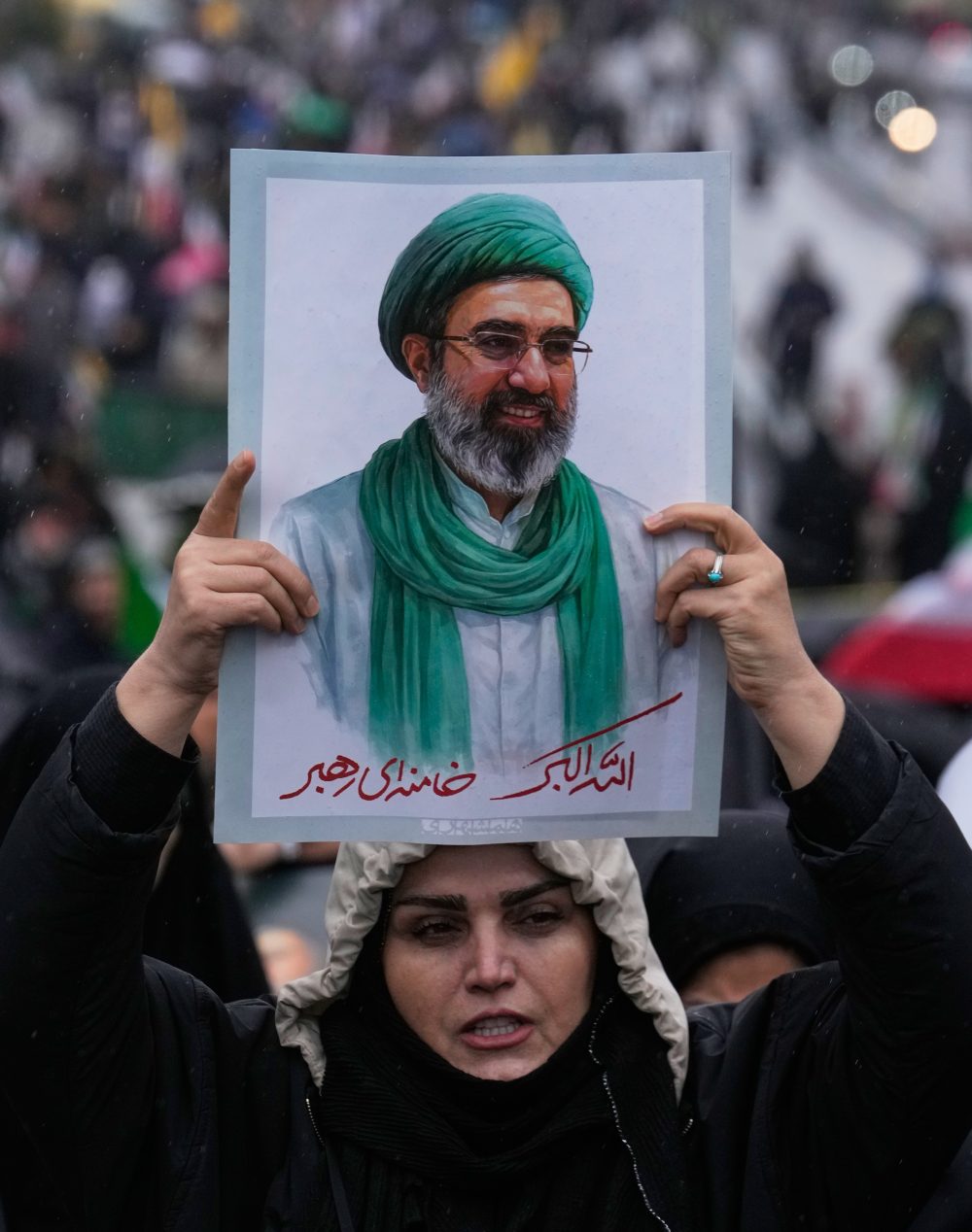
    The question of operational duration remains central to understanding potential scenarios. Would a new confrontation follow the compressed timeline of June 2025, or evolve into something more prolonged?

    “I would say much longer than a couple of days,” Kemp predicted. “It could run into weeks. It could well be a fairly long, sustained bombing campaign against Iran.”

    He stressed that military planners would continuously evaluate results throughout any campaign. While objectives would be established beforehand, the operation’s length would depend on whether those goals were being achieved. “They won’t probably know now how long it’s going to last,” he said. “It depends on the effect.”
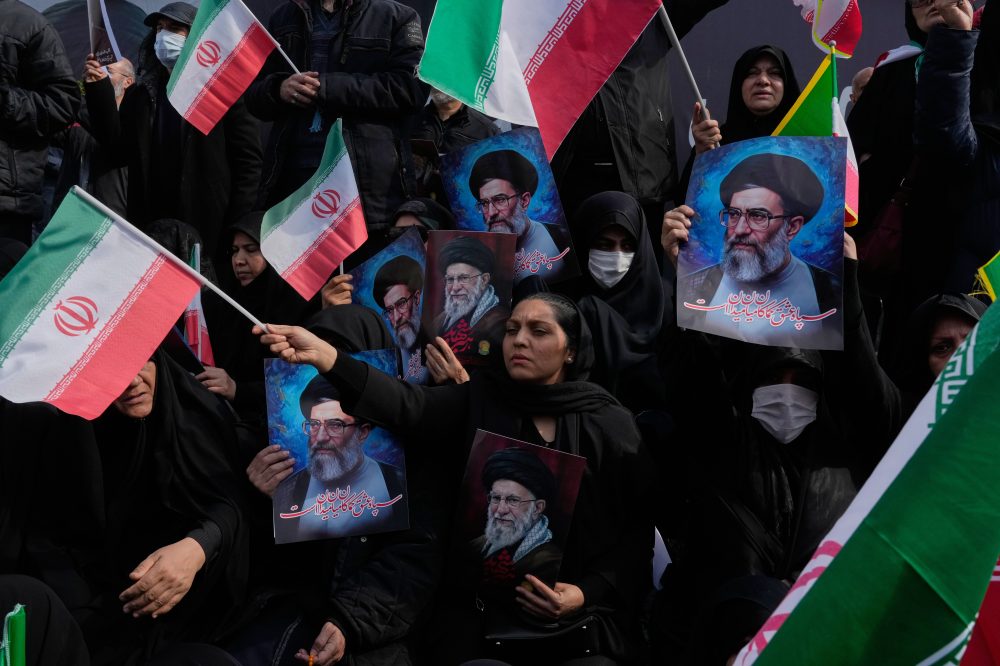
    Brig. Gen. Amir Avivi, founder of the Israel Defense and Security Forum, presented the situation in more dramatic terms when speaking with The Media Line, stating that strategic discussions have moved beyond targeting nuclear facilities.

    “The objective of the 12-day war was to destroy their nuclear capability and stop the rapid buildup with ballistic missiles,” Avivi explained. “Now we are talking about taking down the regime. It is something completely different.”

    According to Avivi, Tehran misinterpreted the aftermath of June 2025. Rather than reducing tensions, he said, Iran continued investing resources in missile development and maintaining its regional proxy network, despite domestic economic difficulties. “There is no way to stop this threat and the instability in the Middle East without dismantling this regime,” he argued.

    Avivi suggested that under optimal conditions, including precise intelligence and rapid targeting of command structures, the regime could be overthrown within weeks. “I think in two weeks it could be done,” he said, while acknowledging that success would heavily depend on internal Iranian dynamics.

    He argued that the crucial variable extends beyond military hardware to include the Iranian population itself. Iran faces economic pressures, he said, and public dissatisfaction persists. Should external military action coincide with renewed domestic unrest, the regime would confront simultaneous internal and external challenges.

    Kemp, while more cautious, also indicated that leadership targets would likely be central if objectives extend to regime change. “If the objective is to topple the regime, then one of the primary targets has to be the IRGC [Islamic Revolutionary Guard Corps],” he said.

    He did not dismiss unconventional approaches. “I wouldn’t be surprised if we see troops on the ground,” Kemp said. “I don’t mean large scale. I’m talking about special forces commandos, maybe, to directly take out the Ayatollah and some of the other leadership. I don’t think we should exclude the possibility of that happening, as well as the air campaign.”

    Avivi dismissed the notion that a regime-focused campaign would necessarily require substantial foreign ground forces. If there are “boots on the ground,” he said, they would not be American or Israeli troops.

    “The boots on the ground are the Iranian people,” he stated.

    In his assessment, sustained external military pressure could combine with growing internal frustration. Economic hardship, infrastructure shortages, and political repression have undermined confidence in the leadership, he argued. If the regime’s military foundation weakens, domestic unrest could complete the process.

    “You need to eliminate the leadership,” he said. “You need to break their military capability completely.”

    When asked about proxy escalation, Avivi said the probability is “very high” if Hezbollah, the Houthis, and other aligned groups view the confrontation as existential. He added that recent conversations with senior Israeli military leadership revealed a sense of preparedness and heightened alertness. “There is no 100%,” he said, acknowledging that ballistic missiles would likely strike Israel and create serious challenges.

    The distinction from June 13, 2025, therefore involves not only the scale of American military equipment now visible in the region, but also the objectives being discussed by those analyzing the situation.

    “The primary target,” Kemp said, “is going to be the leadership and the effort to try and bring the regime down.”

    Whether this objective can be accomplished primarily through air operations, requires limited ground operations, or results in stability or prolonged chaos remains unclear. What appears more certain, in their analysis, is that the current military posture is not intended for symbolic purposes.

    “It’s needed in order to sufficiently damage the regime,” Kemp concluded. “Not a token strike.”

  • US Ambassador’s Comments on Israeli Territory Spark Arab Leaders’ Outrage

    US Ambassador’s Comments on Israeli Territory Spark Arab Leaders’ Outrage

    US Ambassador to Israel Mike Huckabee has found himself at the center of international controversy following statements made during a recent appearance on Tucker Carlson’s podcast program.

    During the discussion, Huckabee addressed questions about biblical references to territory that encompasses portions of Egypt, Syria, and Iraq as belonging to Israel, though he emphasized that Jerusalem has no current plans for such expansion.

    The diplomatic storm erupted when Carlson pressed the ambassador about Israel’s rights to what he described as “basically the entire Middle East.” When asked directly if Israel had legitimate claim to such vast territory, Huckabee initially deflected, saying “Not sure we’d go that far” and noting “It would be a big piece of land.”

    However, when Carlson persisted with his questioning, Huckabee responded, “It would be fine if they took it all,” though he quickly clarified, “I don’t think that’s what we’re talking about here today.”

    When specifically asked about Israel potentially taking control of Jordan, Huckabee defended Israel’s current position, stating “They’re not trying to take over Jordan. They’re not trying to take over Syria. They’re not trying to take over Iraq or anywhere else, but they do want to protect their people.”

    The ambassador further explained, “I think you’re missing something because they’re not asking to go back to take all of that, but they are asking to at least take the land that they now occupy, they now live in, they now own legitimately, and it is a safe haven for them.”

    Regional governments responded with swift condemnation on Saturday, characterizing Huckabee’s statements as violations of established diplomatic protocols and international legal standards.

    Jordan’s Foreign Ministry spokesperson Fuad al-Majali condemned what he termed “absurd and provocative statements,” declaring them “an assault on the sovereignty of the countries of the region and a flagrant breach of international law.”

    Egypt’s Foreign Ministry similarly rejected the ambassador’s remarks, labeling them a “blatant violation” of diplomatic standards and arguing they contradicted President Donald Trump’s expressed goals for resolving the Gaza conflict.

    Arab League Secretary-General Ahmed Aboul Gheit, representing the organization’s 22 member nations, criticized Huckabee’s position as conflicting with established US foreign policy stances. Palestinian leadership also responded, calling on the Trump administration to issue a “clear and explicit stance” addressing the controversial statements.

    Neither the White House nor the State Department provided responses to media inquiries seeking comment on the matter.

  • Ukraine Cookie Factory Hit by Russian Missile for Second Time

    Ukraine Cookie Factory Hit by Russian Missile for Second Time

    A facility manufacturing Oreo cookies in eastern Ukraine sustained damage Saturday after being hit by a Russian missile, according to Ukrainian Foreign Minister Andrii Sybiha in a social media post.

    The attack on the Trostyanets facility resulted in damage to a production building, though no fatalities were reported, Sybiha stated. The plant is operated by Mondelez International, the global snack company.

    Mondelez, headquartered in Chicago and known for producing Ritz crackers, Toblerone chocolate bars, and Trident chewing gum, had not provided a response to requests for comment as of Saturday evening. Russian officials also did not respond to requests for comment overnight.

    “When Russian missiles hit such sites, they are not only targeting Ukraine,” Sybiha stated. “They are targeting American business interests in Europe.”

    This marks the second time the facility has suffered damage since Russia launched its invasion in 2022. Following severe damage two years ago, the plant gradually resumed operations, first producing chocolate in 2023 before returning to Oreo cookie production in 2024.

    The snack manufacturer has drawn scrutiny for maintaining its business presence in Russia throughout the ongoing conflict.

  • Australian Government Denies Plans to Bring Back IS Families from Syria

    Australian Government Denies Plans to Bring Back IS Families from Syria

    Australian government officials are disputing weekend news reports suggesting the country is making arrangements to bring home dozens of citizens currently held at a Syrian detention facility housing relatives of suspected Islamic State fighters.

    The controversy centers around 34 women and children who were briefly freed from the northern Syrian camp on Monday, only to be sent back to the detention facility because of logistical complications. According to reports, the group was expected to travel through Damascus on their way back to Australia, though politicians from both major parties have voiced opposition to their return.

    Home Affairs Minister Tony Burke directly challenged the Sunday Telegraph’s reporting during a television interview, denying that his government is orchestrating any homecoming efforts.

    “In that report, it makes a claim that we are conducting a repatriation. We are not,” Burke stated during his appearance on Australian Broadcasting Corp television.

    “It claims we have been meeting with the states for the purposes of a repatriation. We have not,” Burke continued.

    Earlier in the week, Prime Minister Anthony Albanese, who heads Australia’s Labor Party administration, made clear his government would not assist in bringing the group back to Australian soil.

    The debate over whether to allow family members of suspected IS fighters to return home has become a contentious political topic in Australia, particularly as the right-wing One Nation party, headed by Pauline Hanson, has gained traction with its anti-immigration platform.

    Australian law treats Islamic State as a designated terrorist organization, with membership carrying potential prison sentences of up to 25 years. The country also maintains authority to revoke citizenship from dual nationals who join the Sunni Muslim extremist group.

  • Pakistan Launches Cross-Border Strikes After Wave of Deadly Terror Attacks

    Pakistan Launches Cross-Border Strikes After Wave of Deadly Terror Attacks

    Pakistani military forces launched early morning strikes Sunday against militant strongholds positioned along the Afghanistan border, officials announced, following a deadly wave of terrorist attacks within Pakistan’s borders.

    Government officials in Islamabad withheld specific location details of the military operations and did not elaborate on the scope of the strikes. Afghan authorities in Kabul have not yet responded to the reported attacks, while unverified social media posts indicate the operations took place within Afghan territory.

    Information Minister Attaullah Tarar announced via social media platform X before sunrise Sunday that Pakistani forces executed what he termed “intelligence-based, selective operations” targeting seven facilities operated by the Pakistani Taliban, known as Tehrik-e-Taliban Pakistan or TTP, along with associated groups. Tarar noted that forces also struck a camp belonging to an Islamic State affiliate in the border region.

    This marks the second time Pakistan has conducted such cross-border operations, with similar strikes launched deep into Afghanistan in October to eliminate militant positions.

    “Pakistan has always strived to maintain peace and stability in the region,” Tarar stated, while emphasizing that protecting Pakistani citizens remains the government’s highest priority.

    The military action follows a devastating suicide attack earlier this week when an explosive-laden vehicle, supported by armed militants, crashed into a security facility’s perimeter in Bajaur district within Khyber Pakhtunkhwa province near the Afghan border. The explosion brought down sections of the compound, resulting in the deaths of 11 military personnel and one child. Intelligence sources later identified the attacker as an Afghan citizen.

    Just hours before Sunday’s border operations, another suicide bomber struck a security patrol in the neighboring Bannu district, killing two soldiers, including a lieutenant colonel. Following Saturday’s violence, Pakistan’s military leadership declared they would not “exercise any restraint” and promised continued operations against those responsible “irrespective of their location,” signaling escalating tensions between Pakistan and Afghanistan.

    According to Tarar, Pakistan possesses “conclusive evidence” linking recent terrorist incidents, including a mosque bombing in Islamabad that claimed 31 lives earlier this month, to militants operating under direction from “Afghanistan-based leadership and handlers.”

    Pakistani officials say they have repeatedly called on Afghanistan’s Taliban government to take concrete, verifiable measures preventing militant organizations from using Afghan soil as a launching pad for attacks against Pakistan, but claim no meaningful action has resulted.

    Tarar appealed to the global community to pressure Afghanistan’s Taliban leadership to honor their Doha agreement commitments prohibiting the use of their territory for attacks against neighboring nations.

    Pakistan has experienced an escalation in militant violence over recent years, with much of the bloodshed attributed to the TTP and banned Baloch separatist organizations. The TTP operates independently from but maintains close ties with Afghanistan’s Taliban, who regained control in 2021. Pakistani authorities accuse the TTP of maintaining bases inside Afghanistan, allegations both the militant group and Kabul’s government reject.

    Diplomatic relations between the two neighboring nations have deteriorated since October, when fatal border confrontations resulted in dozens of casualties among soldiers, civilians and suspected militants. The violence erupted following explosions in Kabul that Afghan officials attributed to Pakistani involvement.

    While a Qatar-brokered ceasefire has generally held, diplomatic talks in Istanbul failed to produce a formal resolution, leaving relations between the countries strained.

  • Migrant Bodies Discovered Along Libyan Coast East of Tripoli

    Migrant Bodies Discovered Along Libyan Coast East of Tripoli

    Authorities in Libya discovered the remains of five migrants along a coastal area east of Tripoli on Saturday, according to local police officials.

    The bodies, which included two women, were found on the shoreline at Emhamid Al-Sharif in the coastal community of Qasr al-Akhyar, located approximately 45 miles east of the capital city.

    Hassan Al-Ghawil, who leads investigations at the local police station, reported that residents in the area also spotted a child’s body that had washed ashore, but strong waves carried it back out to sea. Officials have requested the coast guard to conduct a search for the missing child.

    According to Al-Ghawil, local residents discovered the bodies and immediately contacted police. Photos circulating online, which Reuters has verified, show the deceased migrants on the beach, with some still wearing black inflatable life preservers.

    “We reported to the Red Crescent to recover the bodies,” Al-Ghawil stated. “The bodies we found are still intact and we think there are more bodies to wash ashore.”

    The North African nation has served as a major pathway for people fleeing violence and economic hardship, seeking passage to Europe via the Mediterranean Sea. This migration route became heavily trafficked following the 2011 overthrow of longtime ruler Muammar Gaddafi during a NATO-supported rebellion. Political divisions have fractured the country between competing eastern and western governments since 2014.

    This tragedy follows another recent maritime disaster earlier this month when 53 migrants, including two infants, died or went missing after their rubber vessel capsized near Zuwara, a town west of Tripoli, according to the International Organization for Migration.

    A recent United Nations assessment highlighted the severe dangers facing migrants in Libya, including young girls who face threats of murder, torture, sexual assault, and forced domestic servitude. The report recommended halting the return of migrant vessels to Libya until basic human rights protections can be guaranteed.

  • ISIS Declares New Campaign Against Syrian Government After Twin Attacks

    ISIS Declares New Campaign Against Syrian Government After Twin Attacks

    The Islamic State has announced what it calls an escalated campaign against Syrian government forces after claiming responsibility for dual attacks that left military personnel dead on Saturday.

    According to the terror group’s Dabiq media outlet, militants used a handgun to target “an individual of the apostate Syrian regime” in Mayadin, located in Deir al-Zor province, while separately attacking two other government personnel with automatic weapons in the northern city of Raqqa.

    Syria’s Defense Ministry confirmed in an official statement that one army soldier and one civilian lost their lives Saturday in attacks carried out by “unknown assailants.” A military source speaking to Reuters identified the fallen soldier as a member of the army’s 42nd Division.

    These violent incidents occur as ISIS has dramatically increased attacks against Syria’s government led by President Ahmed al-Sharaa, who previously commanded al Qaeda forces before splitting from that organization in 2016 and ultimately spearheading the Islamist coalition that toppled President Bashar al-Assad in late 2024.

    In a recorded message released Saturday evening, ISIS spokesman Abu Hudhayfa al-Ansari declared that Syria had “moved from Iranian occupation to Turkish-American occupation.”

    The terrorist organization proclaimed it had launched a “new phase of operations” within Syria, labeling Sharaa as a “watchdog” of the international coalition and threatening that his destiny would mirror Assad’s downfall.

    During his November visit to the United States, where he met with President Donald Trump, Sharaa formalized Syria’s participation in the global coalition fighting ISIS.

    Saturday’s violence follows another ISIS attack just two days earlier in Deir al-Zor that claimed the life of an Interior Ministry internal security officer and left another wounded.

    Pro-ISIS social media accounts and messaging channels have recently urged supporters to intensify attacks using motorcycles and small arms.

    Since Assad’s government collapsed, ISIS has conducted six separate attacks against Syrian government forces.

    A United Nations Office of Counter-Terrorism report published last week revealed that ISIS has attempted to assassinate Sharaa and two top cabinet officials on five separate occasions, though all plots were unsuccessful.

  • Danish Forces Rescue Sick US Submarine Sailor Near Greenland

    Danish Forces Rescue Sick US Submarine Sailor Near Greenland

    A medical emergency aboard an American submarine in Arctic waters prompted an international rescue mission Saturday, according to Danish military officials.

    The Danish Defence’s Joint Arctic Command coordinated the evacuation of a U.S. Navy crew member who needed immediate medical attention while the submarine operated in waters near Greenland, approximately seven nautical miles from the capital city of Nuuk.

    Military officials used a Danish Defence Seahawk helicopter to transport the sailor from the submarine to medical facilities on shore. The rescued crew member was subsequently handed over to Greenland’s healthcare system and admitted to Nuuk’s hospital for treatment.

    The Joint Arctic Command released details of the rescue operation in an official statement but did not provide information about the nature of the medical emergency or the current condition of the evacuated sailor.

  • Kim Jong Un Presents New Five-Year Plan at North Korea Party Meeting

    Kim Jong Un Presents New Five-Year Plan at North Korea Party Meeting

    SEOUL – Saturday marked the third day of North Korea’s Workers’ Party Ninth Congress, where leader Kim Jong Un delivered an extensive presentation evaluating his party’s performance and setting future directions, according to state media reports released Sunday.

    The Korean Central News Agency (KCNA) reported that Kim’s comprehensive address examined the party’s accomplishments during the previous five-year period while establishing fresh strategic objectives and priorities for upcoming years. The plan encompasses initiatives across multiple areas designed to strengthen socialist development throughout the nation.

    Conference attendees indicated that Kim’s presentation provided both strategic and tactical guidance for what officials characterized as an emerging phase of national progress, while reinforcing optimism about the country’s prospects ahead, state media reported.

  • Iranian Forces Take Control of Hezbollah Operations as Israeli Strikes Kill Commanders

    Iranian Forces Take Control of Hezbollah Operations as Israeli Strikes Kill Commanders

    Iranian Revolutionary Guard Corps officers have assumed direct command of Hezbollah’s military operations in Lebanon, according to intelligence sources cited by Saudi news outlet Al-Arabiya. The development coincides with Israeli military strikes over the weekend that eliminated three high-ranking Hezbollah commanders.

    Al-Arabiya’s sources indicate that IRGC personnel, including officers who recently traveled from Iran to Lebanon, have taken charge of reconstructing Hezbollah’s military infrastructure. These Iranian commanders are conducting personal briefings with fighters across Lebanon and preparing the organization for potential conflicts with Israel and the United States.

    The intelligence report revealed that IRGC officials were conducting meetings with Hezbollah’s missile division at a location in Lebanon’s Beqaa Valley when Israeli forces launched overnight strikes on the facility. These attacks were part of extensive aerial operations that left at least 50 people injured and resulted in 12 fatalities, including a high-ranking Hezbollah official.

    Saudi television network Al-Hadath confirmed that Israeli Defense Forces operations resulted in the deaths of three Hezbollah commanders: Ali Zeid al-Mousawi, Muhammad Ibrahim al-Mousawi, and Hussein Yaghi. Lebanese publication An-Nahar identified Hussein Yaghi as the son of Muhammad Hassan Yaghi, a former Hezbollah parliamentary representative and founding member who previously served as an assistant to Hassan Nasrallah.

    Lebanon’s Health Ministry reported that Israeli bombardments in Baalbek within the Beqaa Valley resulted in 10 deaths and 24 wounded, including three minors. Israeli military officials stated their forces targeted Hezbollah headquarters facilities in the region. Additional reports suggested that six of the casualties were Hezbollah operatives.

    Israeli military spokespersons confirmed additional strikes targeted a Hamas command facility in southern Lebanon’s Ein al-Hilweh region, along with multiple Hezbollah command positions in Baalbek.

    Lebanese President Joseph Aoun criticized the Israeli military actions, stating that “the continuation of Israeli strikes undermines diplomatic efforts to stabilize the country.” He further declared that “the airstrikes reflect contempt for the will of the international community and UN resolutions regarding Resolution 1701.”

    Aoun’s statements represent the first official response from Lebanon’s senior leadership following this latest series of Israeli military operations in Lebanese territory.

  • ISIS Threatens Syria’s New Leader, Calls for Global Attacks

    ISIS Threatens Syria’s New Leader, Calls for Global Attacks

    The Islamic State terrorist organization has launched a verbal assault against Syria’s new interim leader, branding him a Western-controlled “puppet without a soul” and predicting he will meet the same downfall as former dictator Bashar Assad.

    The extremist group’s spokesman, identifying himself as Abu Musab al-Furati, delivered the harsh criticism in an audio recording distributed Saturday evening. During the message, he encouraged ISIS supporters across the globe to launch strikes against Jewish and Western locations, echoing previous calls for violence.

    Al-Furati conveyed messages from the organization’s current leader, Abu Hafs al-Hashemi al-Qurayshi, who assumed control of the group three years ago, to ISIS operatives worldwide.

    This marks the terrorist organization’s first public statement in several months, emerging after ISIS was held responsible for multiple deadly incidents across Syria, Iraq, Pakistan, and other regions that killed and injured dozens of people.

    Last December, the group orchestrated a deadly assault in Syria’s central region that claimed three American lives, prompting extensive U.S. military strikes against suspected ISIS strongholds throughout the nation.

    Although ISIS suffered major defeats in Iraq during 2017 and Syria two years afterward, dormant terrorist cells continue executing fatal attacks in both nations where they previously established their so-called caliphate.

    A United Nations report released this month revealed that Syria’s current president, along with the interior and foreign ministers, were targeted in five unsuccessful assassination plots during the previous year.

    In December 2024, rebel forces under current interim President Ahmad al-Sharaa’s Hayat Tahrir al-Sham organization advanced into Damascus and toppled Assad’s government, significantly weakening Iran’s regional power in the conflict-ravaged nation. Assad represented the minority Alawite community in Syria’s Sunni Muslim-majority population.

    Following these events, al-Sharaa, who previously commanded al-Qaida’s Syrian branch, has strengthened ties with Western nations and made history as the first Syrian leader to travel to Washington since the country gained independence in 1946.

    Al-Furati declared that Iran and Assad’s administration had been “replaced with a regime that is subjected to American influence.”

    “Syria today is ruled by the Crusaders after they placed a leader who is a puppet without a soul,” al-Furati stated. He promised renewed violence in the region, declaring that “Syria has entered a new era of defense and the convoys of jihad will eventually march in Syria.”

    The recording, timed to coincide with the start of Ramadan, made no reference to the recent transfer of 5,704 suspected ISIS prisoners from northeastern Syrian detention facilities to Iraq over recent weeks. Al-Furati only mentioned that authorities fear these detainees, with American, Shiite, and Kurdish forces working to prevent any escapes.

    The spokesman also avoided discussing al-Hol refugee camp, which previously sheltered over 24,000 individuals, primarily women and children connected to ISIS. The facility now sits nearly vacant after government troops seized control from the U.S.-supported, Kurdish-led Syrian Democratic Forces last month.

    Al-Furati admitted that ISIS has lost personnel over the past two years due to strikes by the U.S.-led anti-ISIS coalition. Syria’s government officially became part of this coalition in November.

  • UAE Successfully Stops Major Cyber Attacks on Critical Infrastructure

    UAE Successfully Stops Major Cyber Attacks on Critical Infrastructure

    The United Arab Emirates successfully prevented a series of coordinated cyber attacks aimed at the nation’s digital systems and critical sectors, according to an announcement from the country’s state news agency on Saturday, February 21.

    Officials reported that the cyber offensive “included attempts to infiltrate networks, deploy ransomware and conduct systematic phishing campaigns targeting national platforms.” The attackers reportedly utilized artificial intelligence technology to create sophisticated offensive cyber tools.

    The state news agency did not identify which group or nation was responsible for orchestrating these digital attacks against UAE infrastructure.

  • Brazil, India Strike Partnership Deal on Critical Minerals and Rare Earth Elements

    Brazil, India Strike Partnership Deal on Critical Minerals and Rare Earth Elements

    Two of the world’s largest developing economies have forged a new partnership centered on critical minerals and rare earth elements, as both nations work to expand their global trade relationships beyond traditional powers.

    During a state visit to India on Saturday, Brazilian President Luiz Inácio Lula da Silva and Indian officials finalized a memorandum of understanding that creates a cooperation framework between the nations. The agreement covers mutual investment opportunities, resource exploration, mining operations, and artificial intelligence development.

    Brazil holds the planet’s second-largest deposits of rare earth minerals, which are essential components in smartphones, electric cars, solar energy systems, and aircraft engines.

    “Increasing investments and cooperation in matters of renewable energy and critical minerals is at the core of a pioneering agreement that we have signed today,” Brazilian President Luiz Inácio Lula da Silva told journalists.

    The countries also established legal frameworks covering entrepreneurship, healthcare, scientific research, and educational initiatives.

    Lula’s diplomatic mission to India began Wednesday and continues through Sunday, marking an effort to strengthen relationships with India, which like Brazil belongs to the BRICS+ alliance of developing countries. The Brazilian leader also took part in an artificial intelligence conference during his visit.

    This follows Indian Prime Minister Narendra Modi’s visit to Brazil in July of the previous year, making Lula’s current trip his second state visit to India.

    Eleven Brazilian ministers joined Lula’s delegation, including the heads of foreign affairs, finance, health, and agriculture departments, along with numerous business executives. Lula described it Saturday as potentially his largest overseas delegation to date, demonstrating his dedication to the India relationship.

    According to Oliver Stuenkel, who teaches international relations at the Getulio Vargas Foundation think tank, this rare earths agreement represents part of a larger plan by both India and Brazil to gain strategic independence from China and the United States through partnership diversification.

    Stuenkel noted that Brazil has pursued this approach for several years, enabling Lula to resist pressure from President Donald Trump when the U.S. imposed a 50% tariff on Brazilian goods following legal proceedings against former President Jair Bolsonaro, Trump’s political ally.

    “The reading is that, given how turbulent and unpredictable things have become, the more partners, the better,” Stuenkel said.

    The United States subsequently lifted most Brazilian tariffs and sanctions against the judge handling the case.

    Roberto Goulart Menezes, who teaches international relations at the University of Brasilia, explained that Brazil’s confrontation with the U.S. sparked the concept of leveraging rare earths and critical minerals in diplomatic negotiations.

    “Brazil began to reposition its understanding of the importance of these elements beyond their commercial dimension, recognizing their geopolitical relevance,” said Goulart.

    Lula plans to meet with his American counterpart in Washington D.C. in the coming months. “For Brazil, this agreement represents a kind of pilot before negotiating with a country with which Brazil has an asymmetrical relationship,” Goulart said.

  • Over 1,550 Apply for Amnesty Under Venezuela’s New Law

    Over 1,550 Apply for Amnesty Under Venezuela’s New Law

    More than 1,550 applications have been submitted under Venezuela’s newly enacted amnesty legislation, according to National Assembly President Jorge Rodriguez during a Saturday broadcast on government television.

    Rodriguez announced that hundreds of detainees are currently being freed through this law, which the ruling party-dominated legislature approved on Thursday. However, human rights advocates argue the legislation doesn’t provide adequate assistance for the numerous political detainees held throughout the nation.

    Since assuming office last month following the U.S.-backed removal of President Nicolas Maduro, Interim President Delcy Rodriguez has complied with Trump administration requirements regarding petroleum exports and freed hundreds of individuals whom human rights organizations classify as political detainees. Venezuelan officials reject claims of holding political prisoners, maintaining that incarcerated individuals have been convicted of criminal offenses.

    Juan Pablo Guanipa, an opposition figure and close associate of Nobel Peace Prize recipient Maria Corina Machado, had his home detention order revoked, according to his brother, legislator Tomas Guanipa, who spoke with Reuters on Thursday evening.

  • Italian State TV Apologizes for Anti-Israeli Comment During Olympic Coverage

    Italian State TV Apologizes for Anti-Israeli Comment During Olympic Coverage

    Italy’s national television network RAI found itself issuing public apologies Saturday following an embarrassing broadcast mishap that aired discriminatory remarks about Israel’s Olympic bobsled team during Winter Games coverage.

    The controversy erupted when viewers unexpectedly heard an off-air instruction from a RAI journalist telling production staff to “Let’s avoid crew number 21, which is the Israeli one” followed by “no, because…” before audio was quickly terminated during Four-Man bobsleigh competition coverage.

    This latest blunder comes as RAI’s sports department continues dealing with fallout from previous Olympic coverage problems. The sports division chief had already stepped down earlier this week following heavily criticized commentary during the Milano Cortina 2026 opening ceremonies just two weeks prior.

    Israel’s ambassador Jonathan Peled took to social media to express strong disapproval of the incident, stating: “I firmly condemn the statements made today by a RAI journalist regarding the Israeli bobsleigh delegation at the Milan-Cortina 2026 Winter Olympics.”

    “There should be no room in sport for incitement to hatred, discrimination based on national, cultural, or religious beliefs, and any offensive rhetoric,” Peled continued.

    “We are confident that the RAI management will take all necessary measures to ensure that similar incidents are not repeated,” he said.

    RAI’s chief executive Giampaolo Rossi characterized the broadcast error as a “serious” violation of core broadcasting values including neutrality, dignity and inclusiveness that should define public media operations. Rossi announced the launch of an immediate internal investigation to identify those responsible and determine appropriate disciplinary action.

    The broadcaster’s board of directors issued their own statement calling the aired comment “unacceptable” while extending formal apologies to Jewish communities, affected athletes and any viewers who experienced offense from the broadcast.

    RAI serves as Italy’s primary media company, managing nationwide television programming, radio broadcasts and online news platforms.

    The journalist union representing RAI staff, known as Usigrai, had previously criticized former sports chief Paolo Petrecca’s opening ceremony performance as inflicting “a serious blow” to the organization’s professional reputation.

    Petrecca’s commentary errors included incorrectly naming Olympic venues and prominent figures, plus making widely condemned observations about competing national teams.

  • Former UK PM Johnson Urges Immediate Troop Deployment to Ukraine

    Former UK PM Johnson Urges Immediate Troop Deployment to Ukraine

    Former British Prime Minister Boris Johnson is pushing for Britain and European partners to immediately station non-combat military personnel in Ukraine as a demonstration to Russian President Vladimir Putin that Western countries remain genuinely dedicated to Ukraine’s sovereignty.

    In remarks made before the fourth anniversary of Russia’s comprehensive assault on Ukraine, Johnson spoke with the BBC about positioning troops in stable areas for non-combat duties. Johnson, who served as one of Ukraine’s most vocal advocates during his tenure as Britain’s leader when the conflict began, shared these views in interview segments scheduled to air Sunday.

    Should this recommendation be implemented, it would represent a significant departure from current UK and allied policy. Although the “coalition of the willing” is developing plans for troop deployment to Ukraine, such forces would only be sent following a peace agreement and would serve to monitor any ceasefire.

    “If we are willing to do it in the context of a ceasefire, which of course puts all the initiative, all the power, in Putin’s hands, why not do it now?” Johnson said. “There is no logical reason that I can see why we shouldn’t send peaceful ground forces there to show our support, our constitutional support for a free, independent Ukraine.”

    Western defense strategists have refrained from publicly addressing such deployment options due to fears that Russia would interpret this as conflict escalation.

    Putin dismissed Western peacekeeping proposals for Ukraine in September, declaring that any military personnel sent to the country would become “legitimate targets.”

    However, Johnson maintained that Putin should not be permitted to set conditions for Ukraine and its supporters.

    “It’s about whether Ukraine is a free country or not,” he said. “If it’s a vassal state of Russia, which is what Putin wants, then obviously it’s up to Putin to decide who comes to his country. If it’s not, then it’s up to the Ukrainians.”

    Responding to Johnson’s statements, Britain’s Ministry of Defense confirmed the government continues collaborating with the coalition of willing nations to prepare for post-ceasefire troop deployment to Ukraine.

    “The multinational force Ukraine under UK leadership will secure peace for the long term, with the Prime Minister being clear that we will put British troops on the ground following the end of hostilities,” the ministry said in a statement.

    Johnson attributed the Ukrainian conflict to Western inaction following Russia’s 2014 Crimea invasion, along with the failure to hold Bashar al-Assad accountable for chemical weapon attacks on Syrian civilians and the chaotic US Afghanistan withdrawal.

    “I think Putin was emboldened by a Western failure in Syria to punish Assad for using chemical weapons,” he said.

    “I think Putin was further emboldened in February 2022 by what he’d seen in Afghanistan, and a sort of general sense that the West was on the back foot. He’d seen those appalling pictures of Americans being forced to flee Afghanistan and the UK pulling out as well, and that really did embolden him.”

  • University Students Clash with Government Supporters as New Semester Begins in Iran

    University Students Clash with Government Supporters as New Semester Begins in Iran

    Campus demonstrations erupted at multiple Iranian universities Saturday as students returned for the start of their new academic semester, with some encounters turning violent between protesters and government supporters, according to local media reports and social media documentation.

    The university unrest took place during traditional memorial services held 40 days after deaths, honoring victims killed by government security personnel during January’s widespread anti-regime demonstrations. Those protests represented the most significant domestic upheaval Iran has experienced since the 1979 Islamic Revolution, resulting in thousands of casualties.

    Footage allegedly captured demonstrators at Tehran’s Sharif University of Technology marching in formation while denouncing Supreme Leader Ayatollah Ali Khamenei as a “murderous leader” and advocating for Reza Pahlavi, the former shah’s exiled heir, to assume leadership as monarch.

    Government-aligned news outlets including SNN broadcast footage showing confrontations where demonstrators reportedly injured volunteer student Basij militia members by hurling stones at the prestigious engineering institution. These pro-government Basij forces frequently support security personnel during protest suppression efforts.

    Additional demonstrations occurred at Beheshti and Amir Kabir universities in Tehran, as well as Mashhad University in northeastern Iran, based on footage released by rights organization HAALVSH, though Reuters was unable to independently confirm these reports.

    In Abdanan, a western community that has been a focal point for demonstrations, protesters shouted “Death to Khamenei” and “Death to the dictator” following the detention of an activist educator, as documented by rights group Hengaw and social media accounts.

  • Venezuela Plans Weekend Release of 379 Political Prisoners Under New Amnesty Law

    Venezuela Plans Weekend Release of 379 Political Prisoners Under New Amnesty Law

    CARACAS, Venezuela (AP) — Venezuelan officials announced that 379 individuals imprisoned on political grounds will walk free this weekend following the implementation of a newly passed amnesty law.

    The legislation, which became official on Thursday, is designed to help opposition figures, political activists, human rights advocates, journalists and others who have spent months or years behind bars.

    This development represents a significant policy change for Venezuelan leadership, which has historically rejected claims of detaining political prisoners. The move comes after last month’s dramatic U.S. military operation in Caracas that resulted in the capture of former President Nicolás Maduro.

    Jorge Arreaza, who heads the special committee managing the amnesty process, announced Friday evening on government television that officials had processed 379 applications for release, with prisoners expected to be freed between Friday and Saturday. He indicated additional releases could occur over the next two weeks.

    Gonzalo Himiob from the Venezuelan prisoners’ rights organization Foro Penal confirmed to The Associated Press on Saturday that some individuals had already been freed in Barinas state in the country’s southwest region, though verification of all releases was still underway.

    The amnesty legislation specifically excludes individuals convicted of murder, narcotics trafficking, severe human rights abuses and military insurrection.

    Human rights advocates are pushing for broader application of the law to cover all politically motivated detentions, regardless of current eligibility restrictions.

    “It is discriminatory and unconstitutional to exclude imprisoned military personnel and persecuted political figures,” Foro Penal president Alfredo Romero posted on X Saturday. He argued that without broader inclusion, “there can be no talk of national coexistence.”

    Acting President Delcy Rodríguez, who has led Venezuela since January 5, described the law’s signing as evidence that the nation’s leadership was “letting go of a little intolerance and opening new avenues for politics in Venezuela.”

    The amnesty covers “crimes or offenses committed” during designated time periods beginning in 1999 when Venezuela experienced politically motivated conflicts, including violence related to the disputed 2024 presidential election. Post-election demonstrations resulted in more than 2,000 arrests, including minors.

    Following Maduro’s January 3 arrest, Rodríguez’s administration promised to free substantial numbers of prisoners. However, family members and human rights monitors have expressed frustration with the gradual pace of releases and strict conditions imposed on those who have been freed.

    The Venezuelan nonprofit Justice, Encounter and Forgiveness documented 459 releases of political detainees between January 8 and February 20.

  • Two Pakistani Soldiers Die in Northwest Bombing Attack Near Afghanistan Border

    Two Pakistani Soldiers Die in Northwest Bombing Attack Near Afghanistan Border

    A deadly vehicle bombing in northwest Pakistan claimed the lives of two Pakistani military personnel on Saturday when an attacker drove an explosive-packed car into a security patrol, according to Pakistani military officials.

    The assault occurred in Bannu, located within Khyber Pakhtunkhwa province near the Afghan border, where government forces have engaged in ongoing battles with insurgent groups for many years.

    Military officials stated that Pakistan will not “exercise any restraint” and vowed that military operations targeting those behind such violence will persist “irrespective of their location,” words that suggest growing friction between Pakistan and Afghanistan.

    While no organization has taken credit for the bombing, investigators will likely focus on the Pakistani Taliban, who have been linked to similar previous incidents. Afghan government representatives have not yet issued any response.

    This deadly incident follows Pakistan’s Foreign Ministry calling in a high-ranking Afghan official just two days earlier to formally protest another fatal assault on a security outpost that resulted in the deaths of 11 Pakistani troops and one young girl in the Bajaur area along the Afghan frontier.

    According to local law enforcement, the individual who conducted the Bajaur attack was identified as an Afghan citizen.

    Both Pakistani President Asif Ali Zardari and Prime Minister Shehbaz Sharif issued individual statements denouncing the bombing while honoring the fallen servicemen, Lt. Col. Shehzad Gul and Sepoy Karamat Shah, for their ultimate sacrifice.

    Pakistan has experienced an increase in extremist attacks in recent times, with many incidents attributed to Tehrik-e-Taliban Pakistan (TTP) and banned Baloch organizations. The TTP operates independently from but maintains close ties with Afghanistan’s Taliban rulers, who regained control in 2021. Pakistani officials claim the TTP conducts operations from Afghan territory, an allegation that both the militant group and Kabul reject.

    Diplomatic ties between the two nations have deteriorated since October, when fatal border confrontations resulted in casualties among troops, civilians and alleged militants. These clashes followed bombing incidents in Kabul that Afghan authorities attributed to Pakistan. While a Qatar-brokered truce has mostly prevented further violence, subsequent negotiations in Istanbul have not yielded a formal peace accord, leaving relationships strained.

  • World Leaders React as Supreme Court Strikes Down Trump Tariffs

    World Leaders React as Supreme Court Strikes Down Trump Tariffs

    SEOUL, South Korea (AP) — Trade officials in South Korea held emergency weekend discussions to evaluate how a recent U.S. Supreme Court decision striking down certain Trump-era tariffs will affect their economy, while governments and businesses worldwide analyzed potential consequences from Washington’s latest trade policy shifts.

    The urgent session called by Seoul’s Trade Ministry occurred as representatives from South Korea to South America recognized that duties will continue on particular U.S.-bound exports, including cars and steel products, which remain unaffected by the Supreme Court’s recent ruling.

    The development represents another dramatic shift in America’s tariff approach since President Donald Trump resumed office 13 months ago, disrupting numerous trade partnerships with the world’s largest economy.

    Speaking at an agricultural exhibition in Paris, French President Emmanuel Macron celebrated America’s system of checks and balances, commending the “rule of law” during his appearance. “It’s a good thing to have powers and counter-powers in democracies. We should welcome that.”

    However, Macron warned against celebrating too early.

    Government representatives examined the specific wording of recent bilateral and multilateral agreements with the United States while preparing for additional policy changes. Trump announced Friday his intention to implement new 10% worldwide tariffs under different regulations.

    “I note that President Trump, a few hours ago, said he had reworked some measures to introduce new tariffs, more limited ones, but applying to everyone,” Macron stated. “So we’ll look closely at the exact consequences, what can be done, and we will adapt.”

    Referencing Trump’s latest 10% tariff proposal, Sergio Bermúdez, who leads an industrial parks company in Ciudad Juárez, Mexico, near the Texas border, commented that Trump “says a lot of things, and many of them aren’t true. All of the businesses I know are analyzing, trying to figure out how it’s going to affect them.”

    Ciudad Juárez could face particularly significant consequences since much of its economic activity relies on manufacturing facilities that produce goods for American consumers, built through decades of free trade between the United States and Mexico.

    The repeated policy reversals from the United States over the past year have created widespread caution among international business executives, who find it difficult to make predictions and have seen investments suffer as a result.

    Mexican Economy Secretary Marcelo Ebrard said Friday that his country was monitoring the tariff situation with a “cool head,” pointing out that 85% of Mexican exports remain tariff-free, primarily due to the United States-Mexico-Canada agreement. He has scheduled meetings with U.S. economic officials for next week.

    Alan Russell, CEO of Tecma, which assists American companies in establishing Mexican operations, has watched his responsibilities become increasingly complex over the past year — his organization’s workload has increased up to four times as it handles new import regulations. He fears recent U.S. actions will create additional complications.

    “We wake up every day with new challenges. That word ‘uncertainty’ has been the greatest enemy,” Russell, who is American, explained. “The difficult part has been not being clear what the rules are today or what they’re going to be tomorrow.”

    Some American importers who may have paid excessive tariffs are exploring potential refunds — likely through a very complicated procedure — and some international companies may also seek compensation.

    Bernd Lange, who chairs the European Parliament’s trade committee, stated on Deutschland radio that excessive tariffs “must be refunded.” He calculates that German businesses or their American importers alone overpaid more than 100 billion euros ($118 billion).

    Swissmem, a leading technology industry group in Switzerland, praised the Supreme Court’s “good decision” on X, noting that Swiss exports to America dropped 18% in the fourth quarter alone — during a time when Switzerland faced significantly higher U.S. tariffs than most other European nations.

    “The high tariffs have severely damaged the tech industry,” Swissmem President Martin Hirzel wrote on X, while recognizing the situation remains unsettled. “However, today’s ruling doesn’t win anything yet.”

  • U.S. Ambassador to Israel Sparks Regional Outrage Over Middle East Comments

    U.S. Ambassador to Israel Sparks Regional Outrage Over Middle East Comments

    TEL AVIV, Israel (AP) — Regional tensions escalated Saturday as Arab and Muslim countries strongly criticized remarks made by Mike Huckabee, the United States ambassador to Israel, regarding Israeli territorial claims across much of the Middle East.

    During a Friday broadcast interview with conservative host Tucker Carlson, Huckabee addressed biblical references to land promised to Abraham’s descendants, which Carlson described as encompassing virtually the entire Middle East region. When questioned about Israel’s entitlement to this territory, Huckabee stated: “It would be fine if they took it all.” The ambassador qualified his statement by noting that Israel isn’t seeking territorial expansion and deserves security within its current legitimate boundaries.

    The controversial statements immediately drew fierce opposition from Egypt, Jordan, the Organization of Islamic Cooperation, and the League of Arab States, all issuing separate condemnations describing the remarks as radical, inflammatory, and inconsistent with official U.S. policy.

    Egyptian foreign ministry officials characterized Huckabee’s position as a “blatant violation” of international law, emphasizing that “Israel has no sovereignty over the occupied Palestinian territory or other Arab lands.”

    The League of Arab States declared: “Statements of this nature — extremist and lacking any sound basis — serve only to inflame sentiments and stir religious and national emotions.”

    Neither Israeli nor American officials provided immediate responses to the growing diplomatic backlash.

    Israel’s borders have remained undefined since the nation’s founding in 1948, with boundaries changing through military conflicts, territorial annexations, ceasefire agreements, and peace treaties with neighboring countries.

    The 1967 Six-Day War marked a significant territorial shift when Israeli forces seized the West Bank and eastern Jerusalem from Jordan, captured Gaza and the Sinai Peninsula from Egypt, and took control of Syria’s Golan Heights. Israel later returned the Sinai Peninsula through peace negotiations with Egypt after the 1973 conflict and voluntarily left Gaza in 2005.

    Recent months have seen Israel intensify its control over the occupied West Bank through expanded Jewish settlement construction, legitimizing unauthorized outposts, and implementing major administrative policy changes. President Donald Trump has publicly stated his opposition to Israeli annexation of the West Bank, providing strong guarantees to prevent such actions.

    For generations, Palestinians have advocated for an independent nation encompassing the West Bank and Gaza, with eastern Jerusalem serving as their capital — a position supported by most of the international community.

    Huckabee has consistently rejected the concept of a two-state solution between Israelis and Palestinians. During a previous interview, he expressed disagreement with using the term “Palestinians” to describe Arab descendants of those who lived in British-administered Palestine.

    In the recent discussion, Carlson questioned Huckabee about biblical passages from Genesis, where he claimed God promised Abraham and his offspring territory stretching from the Nile River to the Euphrates.

    “That would be the Levant, so that would be Israel, Jordan, Syria, Lebanon. It would also be big parts of Saudi Arabia and Iraq,” Carlson explained.

    Huckabee responded: “Not sure we’d go that far. I mean, it would be a big piece of land.”

    Israel has expanded its territorial presence since beginning its military campaign against Hamas in Gaza.

    The current ceasefire agreement requires Israeli forces to pull back to a designated buffer zone, though they maintain control over more than half of Gaza’s territory. While the ceasefire mandates further Israeli withdrawal, no specific timeline has been established.

    Following the late 2024 overthrow of Syrian President Bashar Assad, Israeli military forces took control of a demilitarized buffer zone in Syria established under a 1974 ceasefire agreement. Israeli officials described the occupation as temporary and necessary for border security.

    Additionally, Israel continues to occupy five strategic hilltop positions within Lebanese territory following its brief 2024 conflict with Hezbollah.