
JAKARTA, Indonesia — Heavy rainfall overnight caused a catastrophic debris avalanche at Indonesia’s biggest waste facility, claiming the lives of at least five individuals while several others remain unaccounted for, authorities reported Monday.
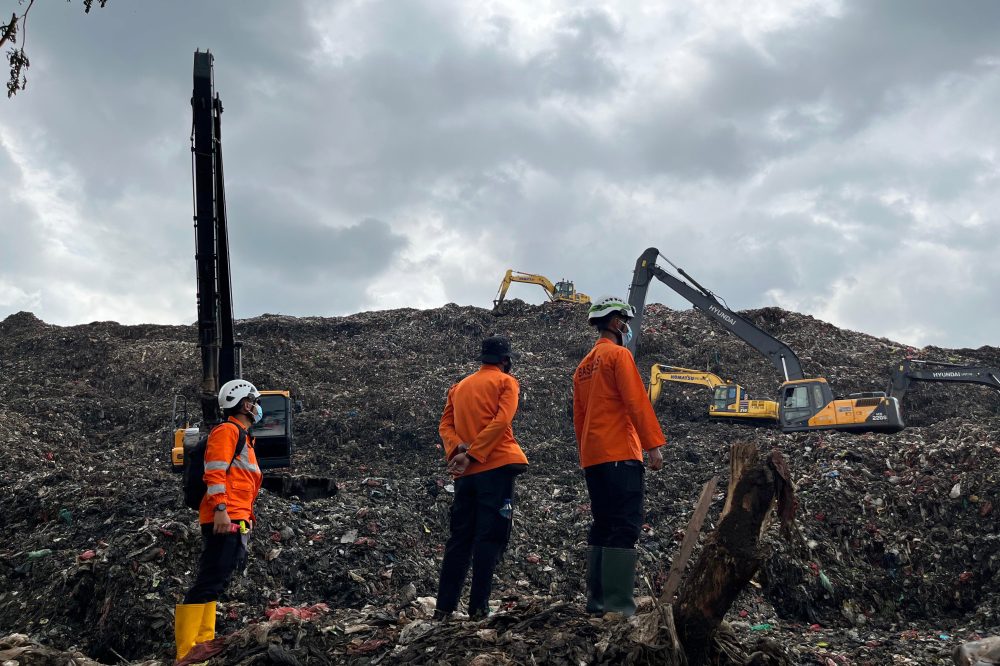
Over 300 rescue workers, equipped with heavy equipment and search dogs, were sent to the extensive Bantargebang Integrated Waste Treatment Facility in Bekasi, located just outside Jakarta, following the late Sunday disaster. Teams are proceeding carefully through dangerous piles of unstable debris, according to Desiana Kartika Bahari, director of Jakarta’s Search and Rescue Office.
The fatalities consisted of two drivers operating waste collection vehicles and two vendors from nearby food stands who were either working or taking breaks close to the facility when the collapse occurred, Bahari explained. While four individuals successfully fled the catastrophe, rescue teams including police officers, military personnel, and volunteers continue hunting for at least three people still reported as missing.
“We had not ruled out the possibility of more victims,” she said, “We are still gathering data to confirm how many vehicles and workers were caught beneath the debris.”
Documentation and footage from the National Search and Rescue Agency revealed excavation equipment working through the fallen waste mountain, where multiple collection trucks and small food vendors became trapped underneath.
Abdul Muhari, spokesman for the National Disaster Management Agency, called for rigorous safety measures during the continuing rescue operation, pointing out that weather predictions for the coming days suggest possible rainfall throughout Jakarta and surrounding metropolitan areas.
Muhari cautioned that the precarious collapsed debris might cause further ground shifts, creating additional dangers for rescue personnel.
The fatal Sunday incident has brought renewed attention to Bantargebang, an essential yet overburdened disposal site that handles the majority of Greater Jakarta’s daily residential waste. The location has repeatedly received warnings regarding its capacity limits, spurring nationwide efforts to reform Indonesia’s waste handling infrastructure.
A comparable incident occurred in January when garbage and debris collapsed at a Philippine landfill, burying workers in low structures and killing at least four people, injuring twelve, and leaving over 30 individuals missing.
Back in 2005, 31 individuals died and dozens disappeared when a 7-meter (23-foot) refuse pile gave way after intense rainfall, causing a landslide that buried or damaged 60 homes across two West Java communities near Bandung.
The government announced late last year a two-year timeline to clear Bantargebang using an expedited waste-to-energy program designed to reduce the chronic dependence on open disposal methods. This effort, supported by new presidential regulations meant to simplify permits and attract investment, focuses on transforming waste materials into electrical or thermal power.