
Bahrain’s national petroleum corporation suspended its oil shipments Monday following an Iranian assault that sparked fires at its refinery facilities.
According to Bahrain’s official news service, the company invoked force majeure – a legal provision allowing businesses to suspend contractual duties during exceptional situations beyond their control.
The petroleum company stated its operations “have been affected by the ongoing regional conflict in the Middle East and the recent attack on its refinery complex.”
Company officials maintained that domestic fuel requirements would continue to be fulfilled despite the shipping suspension.
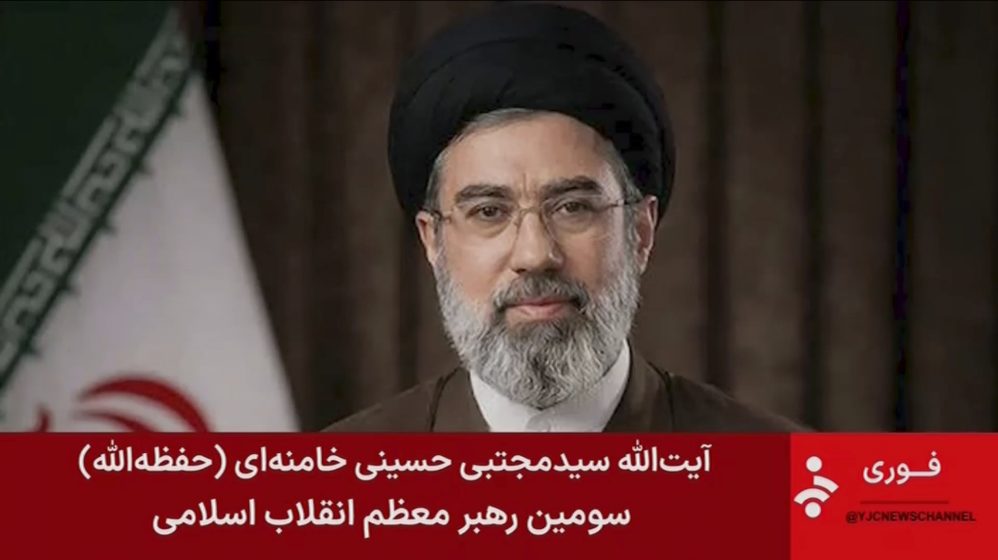
The development comes as Iran’s new supreme leader, Mojtaba Khamenei, son of the late Ayatollah Ali Khamenei, assumed power Monday amid escalating Middle Eastern warfare that has sent global oil markets soaring.
The 56-year-old hardline religious leader was selected by Iran’s Assembly of Experts after his father died February 28 in the conflict’s initial phase. The younger Khamenei, who maintains strong connections to Iran’s Revolutionary Guard, now controls the country’s military forces and nuclear program decisions.
Iran’s control over the Strait of Hormuz has virtually halted tanker traffic through the waterway that handles one-fifth of global oil transport. International Brent crude prices jumped above $114 per barrel Monday, representing a 60% increase since U.S. and Israeli operations against Iran began.
President Donald Trump minimized the price surge as temporary, writing on social media: “Short term oil prices, which will drop rapidly when the destruction of the Iran nuclear threat is over, is a very small price to pay for U.S.A., and World, Safety and Peace.”
Iranian forces have targeted energy and water infrastructure across the region. Monday’s attacks included an oil facility fire in Fujairah, UAE, while Saudi Arabia reported intercepting multiple drones targeting the Shaybah oil field.
Israel announced fresh airstrikes on central Iran as the conflict intensified.
The new Iranian leader’s selection faced internal opposition, with political figures condemning hereditary succession as resembling the monarchy overthrown in 1979’s Islamic Revolution. However, senior clerics likely supported Khamenei to continue prosecuting the war.
Khamenei, considered more extreme than his predecessor, now oversees Iran’s remaining highly enriched uranium stockpiles – technically one step from weapons-grade material. Unlike his father, he could authorize nuclear weapons development.
Israel has identified him as a potential target, while Trump called him “unacceptable,” stating: “We want someone that will bring harmony and peace to Iran.”
Iran’s Revolutionary Guard and Lebanese Hezbollah expressed support for the new leadership.
Senior Iranian security official Ali Larijani told state television the Assembly of Experts acted “courageously” despite ongoing airstrikes in Tehran, saying the younger Khamenei was prepared by his father and “can handle this situation.”
Saudi Arabia condemned Iran following the thwarted Shaybah attack, warning Tehran would be the “biggest loser” if regional strikes continue. The Foreign Ministry stated Iranian attacks mean “further escalation which will have grave impact on the relations, currently and in the future.”
Iranian forces also struck Kuwait, Qatar, and Bahrain Monday, with the Bahraini attack injuring 32 civilians, including children, in a residential area.
Bahrain additionally accused Iran of damaging a desalination facility, though water and electricity officials reported continued service. These plants serve millions of regional residents and stranded travelers, raising concerns about water security in desert nations.
In Iraq, air defenses downed a drone attacking a U.S. military installation at Baghdad International Airport, according to an anonymous security source. No casualties or damage occurred, though pro-Iranian Iraqi militias have previously targeted the base.
The U.S. military reported a service member died from injuries sustained in a March 1 Iranian attack on forces in Saudi Arabia, bringing American military deaths to seven.
The State Department ordered non-essential personnel and staff families to evacuate Saudi Arabia Monday due to escalating attacks. Eight other U.S. diplomatic missions have evacuated all but essential staff: Bahrain, Iraq, Jordan, Kuwait, Lebanon, Qatar, UAE, and the Karachi, Pakistan consulate.
The conflict has claimed at least 1,230 Iranian lives, 397 in Lebanon, and 11 in Israel, according to officials. Israel reported its first military casualties Sunday – two soldiers killed in southern Lebanon during Hezbollah fighting.