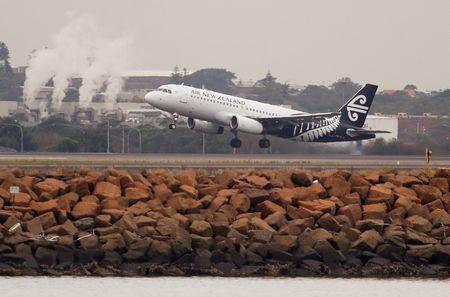

Air New Zealand revealed Thursday it will eliminate approximately 1,100 flights, representing 5% of its scheduled services, extending through early May as ongoing Middle East warfare drives jet fuel costs to unprecedented levels.
The announcement from New Zealand’s flagship carrier follows similar moves by international airlines including Qantas Airways of Australia, Scandinavian airline SAS, and Thai Airways, all implementing fare increases this week due to dramatic fuel cost spikes affecting the worldwide aviation industry.
Ongoing Middle Eastern warfare has compelled numerous airlines to suspend regional flights or adopt longer alternative flight paths to avoid drone and missile attacks that have severely restricted airspace access, creating the aviation sector’s most significant disruption since the COVID-19 pandemic.
Oil markets rose Thursday following reports from Iraqi security sources that Iranian vessels loaded with explosives struck two fuel tankers, while Iranian officials warned global markets should prepare for oil reaching $200 per barrel amid widespread supply chain interruptions.
Air New Zealand’s chief executive Nikhil Ravishankar informed state radio that approximately 44,000 passengers out of 1.9 million expected travelers through early May will require rebooking due to domestic and international service reductions.
Regional destinations including New Zealand’s renowned Marlborough wine country and the western coastal city of New Plymouth will experience decreased flight availability in coming weeks.
However, the airline plans fewer reductions to long-distance routes, Ravishankar explained, as United States connections have gained popularity as European gateway options following extensive Middle Eastern airspace restrictions.
“People want to get to Europe still, and over the U.S. airspace we can get them into Europe, and that’s what we’re focused on doing,” he said.
Air New Zealand stock declined 1% Thursday, mirroring decreases seen in Hong Kong’s Cathay Pacific, Australia’s Qantas Airways, and Japan Airlines.
Wednesday brought additional disruption when two unmanned aircraft crashed near Dubai’s primary airport—the planet’s busiest international passenger hub—while Bahrain relocated aircraft as infrastructure attacks throughout the Gulf region continued disrupting air traffic.
The warfare has additionally interrupted shipping through the globe’s most critical oil export corridor, driving petroleum prices higher and destabilizing international travel, causing ticket costs on certain routes to skyrocket while raising concerns about significant travel industry decline.
Passengers are rapidly switching to airlines avoiding Middle Eastern airspace, with Thai Airways reporting increased European passenger bookings.
Cathay Pacific suspended Dubai and Riyadh flights through March’s end while expanding London and Zurich services, capitalizing on increased demand for Asia-Europe routes bypassing the Middle East.
Demonstrating the conflict’s far-reaching impact beyond the Middle East, Vietnam’s government cautioned Wednesday that domestic airlines could face fuel shortages as early as next month.