
DAKAR, Senegal — Senegalese authorities are investigating serious abuse allegations at the American Dara Academy, a boarding school that promoted itself to U.S. families as an economical option for combining Quran studies with American-style education. The institution attracted parents, particularly those with West African heritage, who sought quality religious schooling for their children at reasonable costs.
However, the academy now faces scrutiny over claims of severe physical mistreatment, leading to mass student withdrawals and the shutdown of one facility where most alleged incidents occurred, sources close to the investigation report.
Students who spoke with The Associated Press described disturbing treatment by school supervisors, including repeated beatings of rule-breaking students in what was termed a “magic room.” According to these accounts, children were forced to remove clothing down to underwear or completely, then made to crouch while holding heavy stones with outstretched arms. When stones dropped, the beatings intensified.
Senegalese officials have confirmed an active investigation involving the national police force (gendarmerie), child welfare services, and the Justice Ministry, according to sources familiar with the case.
In late January, law enforcement detained the school’s director along with three staff members, parents and knowledgeable sources reported. The director was subsequently released to home confinement.
AEMO, Senegal’s child protection agency, has not responded to media inquiries. Gendarmerie spokesman Ibrahima Ndiaye acknowledged receiving abuse reports but stated the Justice Ministry now handles the case.
School officials who were detained declined to comment, citing the ongoing legal proceedings. Specific criminal charges remain undisclosed.
“Authorities are caring for the children, and anyone found culpable will face charges,” stated Aminata Diagne, Justice Ministry spokesperson, regarding the abuse investigations.
The academy served 311 students across two locations in Senegal, with 120 holding U.S. citizenship. The student body primarily consisted of American-born children of West African descent, along with some from European nations including France, Britain, and Belgium. Few students originated from West Africa itself.
A January 12 formal complaint from the U.S. Embassy in Dakar to Senegalese officials detailed severe physical punishment reports from multiple American students. The document named the school director, who holds dual American-Guinean citizenship, plus three administrators as perpetrators.
The Associated Press confirmed the complaint’s legitimacy through interviews with numerous parents and case officials. These sources requested anonymity to safeguard their children and due to authorization restrictions.
Student testimonies described staff members striking them with wooden implements on legs, backs, and private areas while forcing them into painful positions.
Some reported metal rods being used on body areas that wouldn’t show visible damage. Occasionally, blows targeted their heads, students said.
While hospitalization requirements remain unclear, some students sustained scarring across multiple body parts.
According to the embassy complaint and informed sources, administrators threatened students against speaking with U.S. officials or police, claiming their American parents could face immigration arrest and deportation.
Government agencies have disclosed minimal case details or potential charges.
Parents told the AP they selected the American Dara Academy for its religious-academic combination at approximately $300 monthly, covering tuition, housing, and food.
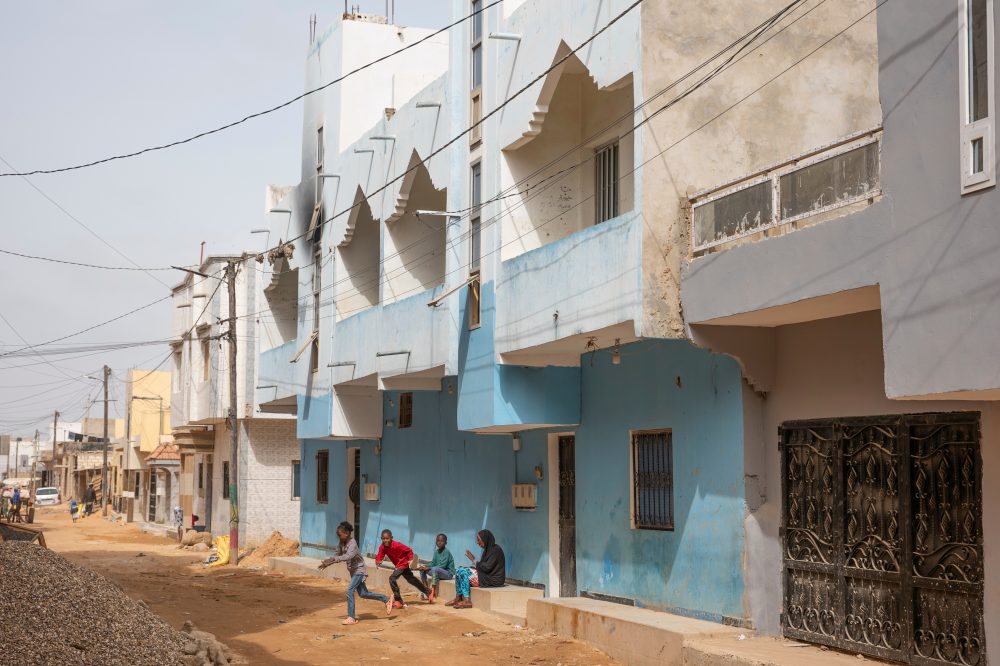
Operations included two sites: one in Dakar, the capital, and another in Toubab Dialaw, a coastal community 34 miles away.
The now-closed Toubab Dialaw high school campus, where most alleged abuse occurred, resembled an active construction zone with temporary trailers, no plumbing, irregular electricity, and improvised metal latrines. Despite conditions, classes continued there, investigation sources confirmed.
Following embassy family notifications, approximately two-thirds of students—roughly 250 children including about 100 Americans—left the school and returned home, parents and investigation sources reported. Remaining students relocated to the better-equipped Dakar campus.
The AP interviewed dozens of parents, many contacted by the U.S. embassy regarding alleged mistreatment. None reported their children disclosing abuse.
One anonymous parent protecting their child’s identity said they withdrew their children and await their U.S. return. Their children weren’t among those allegedly abused.
“During my week-long initial school visit, I genuinely believed I was placing them somewhere secure,” the parent said.
Senegalese family law permits home corporal punishment through “correction rights” for parental figures, though criminal law prohibits violence causing serious harm.
While banned in schools for children under 14, the law doesn’t explicitly cover older students, private institutions, or religious schools, where “correction rights” may still apply.
UN and children’s advocacy reports indicate continued corporal punishment practices.
Prosecution decisions and additional actions remain uncertain.
The investigation proceeds while former dormitory residents are dispersed—some returned home, others remaining at school awaiting resolution.
Police maintain tight security around the Dakar school building.