
The painful spike in gas prices hitting drivers’ wallets stems largely from an ongoing conflict that has shut down the Strait of Hormuz, a critical shipping channel for Persian Gulf oil and natural gas. This narrow waterway along Iran’s coastline has become impassable due to warfare, prompting international governments to develop emergency plans for restoring commercial traffic once hostilities end.
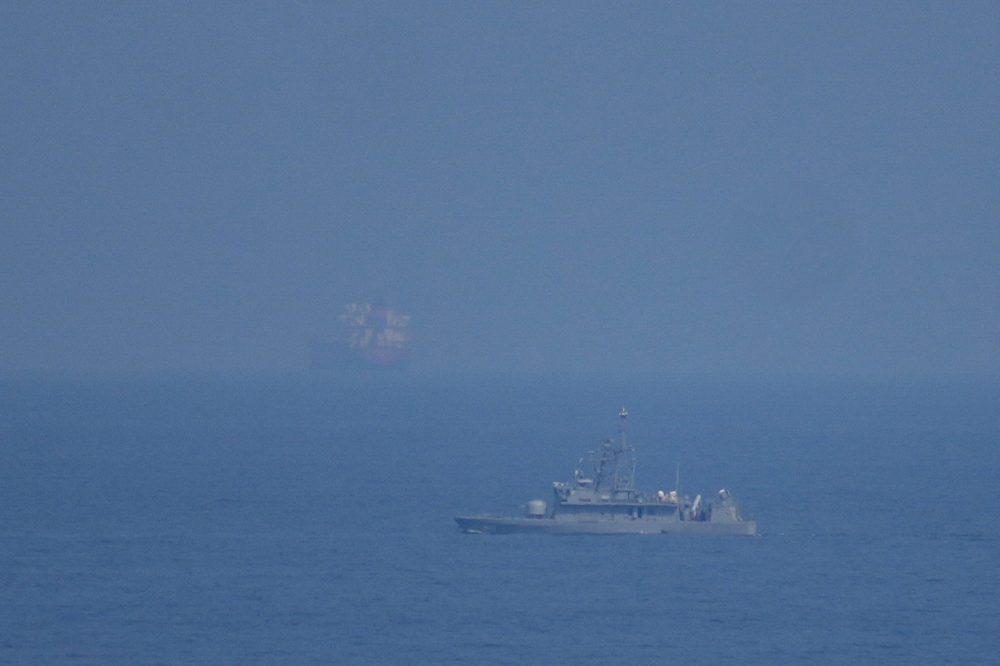
French President Emmanuel Macron is spearheading a multinational initiative to restore access to this energy bottleneck, enabling oil, gas and commercial goods to resume flowing freely “when circumstances permit.” His strategy involves deploying naval warships to provide protection for oil tankers and cargo ships navigating the strait after the intense combat subsides.
However, retired naval commanders with extensive experience in Hormuz waters warn that any vessels attempting passage would face extreme vulnerability in the strait’s confined shipping channels if foreign military forces tried reopening the route before fighting ceased.
“In today’s context, sending warships or civilian vessels into the Strait of Hormuz would be suicidal,” retired French navy Vice Admiral Pascal Ausseur told The Associated Press.
A ceasefire with Iran “would make the situation shift from suicidal to dangerous. At that point, military ships could be deployed. And then escort operations could begin,” he explained.
Naval forces from France, America, Britain and other nations possess crucial hands-on experience defending against missile and drone attacks in the region. These crews have successfully protected cargo ships during Red Sea operations against strikes launched by Iran-supported Houthi fighters from Yemen.
French warships deployed machine guns, artillery and advanced air-defense systems to repel Houthi assaults. The French frigate Alsace destroyed three ballistic missiles in Red Sea waters during 2024 while protecting a container vessel. Captain Jérôme Henry, who commanded the ship during that period, described the potentially fatal attacks as nerve-wracking and exhausting for his crew. American Navy vessels and sailors also endured significant stress from these maritime confrontations.
“There were repeated attacks, either by drones or missiles,” Henry recalled. “The crew didn’t get much sleep.”
Retired French Vice Admiral Michel Olhagaray, formerly leading France’s advanced military studies center, noted that “all navies learned a great deal” about collaborative operations and ship protection from Red Sea missions, while also incorporating lessons from Ukraine’s defense against Russian missile and drone bombardments during Moscow’s invasion.
“It would allow us to deploy to that region with fairly refined know-how and a high level of cooperation — and that is extremely important,” stated Olhagaray, who previously commanded a French frigate patrolling the Strait of Hormuz during the 1980s Iran-Iraq conflict.
Iran possesses significantly more advanced military capabilities than its Houthi allies in Yemen, who caused extensive damage and disruption in Red Sea shipping. Equipped with Iranian weapons, these rebels attacked over 100 commercial vessels using missiles and drones between November 2023 and January 2025, destroying two ships, killing four crew members, and severely reducing trade volumes.
According to U.S. Defense Intelligence Agency analysis, Iran can strike throughout the entire Strait of Hormuz and surrounding areas using anti-ship cruise missiles developed from Chinese-designed weapons. The country can also attack vessels with extended-range missiles, unmanned aircraft, high-speed assault boats and underwater mines, which were deployed during the Iran-Iraq war. Recent American strikes against Iranian mine-laying ships highlight the seriousness of this threat.
With active warfare continuing, the Hormuz corridor remains “very, very dangerous” with shipping risks “much greater” than Red Sea operations against the Houthis, Olhagaray warned.
“The means to counter this threat must be far more substantial and far more effective,” he emphasized. “Before the heat can decrease… most of the offensive installations on land in Iran would have to be eliminated. There would need to be constant monitoring, patrols, extremely close surveillance, and a very high level of intelligence to be able to say that it would be possible to allow tankers to transit, even with military escorts.”
“That will not happen at all — not at all — in the near future.”
Maritime specialists identify another major obstacle: convincing shipping insurance companies and vessel operators that Hormuz navigation has become safe again. Insurance costs for strait transit have skyrocketed to levels France’s transportation minister called “insane,” creating “a big problem” for shipping firms.
“Maritime traffic is a business. That business has to make money. If insurance costs are so high that you can’t make a profit by sailing through a given area, then you don’t sail through that area. Shipowners are not going to operate at a loss,” explained Ausseur, currently serving as director of the Mediterranean Foundation for Strategic Studies think tank.
Insurance premiums for oil tankers seeking Hormuz passage have increased dramatically compared to pre-war rates and are nearing costs charged for grain ships departing Ukraine during the ongoing Russian conflict, according to Marcus Baker, global marine, cargo and logistics director for insurance broker Marsh Risk.
Potential military escort services for commercial vessels “would be helpful,” Baker noted.
“That’s been done before in conflicts past, so that’s not something unusual and that will obviously give a degree of confidence to the insurers that the vessels are going to have a greater degree of safety,” he said.