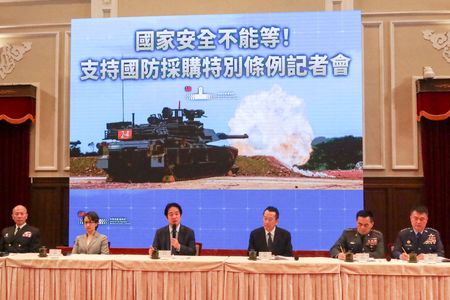

Political leaders in Taiwan reached a breakthrough Thursday, giving their government the green light to move forward with signing agreements for four major U.S. weapons packages after defense officials warned of serious consequences for delays.
The disagreement over Taiwan’s military spending has created tension with the United States, which serves as the island nation’s primary supporter and weapons provider, even without official diplomatic relations, as Taiwan faces ongoing territorial claims from China.
While President Lai Ching-te’s administration has pushed for parliamentary approval of $40 billion in additional military spending, opposition parties controlling the majority of legislative seats have raised concerns about the proposals’ clarity, stating they won’t approve “blank cheques” despite their support for national defense.
Opposition groups have put forward alternative, lower-cost proposals, but defense officials emphasized that the formal letters of offer and acceptance for the weapons systems must be signed with the United States or Taiwan risks losing its position in the manufacturing and delivery schedule.
During Thursday’s session of parliament’s foreign affairs and defense committee, legislators from both sides reached consensus that the government should proceed with signing the agreements ahead of schedule, even if spending proposal reviews remain incomplete.
The military equipment covered by these agreements includes TOW anti-tank missiles, M109A7 self-propelled howitzers, Javelin missiles manufactured by Lockheed Martin, and the HIMARS multiple launch rocket system.
Defense Minister Wellington Koo informed reporters Tuesday that the HIMARS agreement expires March 26, covering 82 systems included in an $11-billion U.S. arms package designated for Taiwan.
According to ministry officials, this Sunday marks the deadline for signing agreements covering the remaining weapons systems.
A bipartisan coalition of 37 U.S. legislators expressed their concerns about the delayed plans to senior Taiwan lawmakers last month.
The Trump administration’s push for allies to boost their defense spending has found strong support from Lai and his government officials.