
President Donald Trump’s latest statements characterizing weapons sales to Taiwan as a bargaining tool with China have sparked growing concern on the self-governing island that Beijing views as its territory.
During a Fox News interview with Bret Baier broadcast following Trump’s recent high-profile trip to China on Friday, the president made these troubling remarks.
Beijing considers Taiwan a rogue territory that must be brought back under Chinese control, using military force if needed. While the United States maintains no official diplomatic recognition of Taiwan as an independent nation—like other countries with formal Beijing relationships—America has served as the island’s primary supporter and weapons provider.
Trump now indicates this support could become part of broader negotiations.
When questioned about approving a stalled $14 billion weapons deal for Taiwan, Trump indicated the decision rests with China.
“I’m holding that in abeyance and it depends on China,” he stated. “It’s a very good negotiating chip for us, frankly. It’s a lot of weapons.”
American law requires the U.S. to supply Taiwan with defensive capabilities, and Washington considers any threats against the island as serious concerns.
William Yang, who analyzes Northeast Asia for International Crisis Group, warned that Trump’s approach of linking Taiwan arms sales to Chinese negotiations could trigger one of the island’s worst fears: becoming a bargaining item rather than a participant in discussions.
While Trump hasn’t specified what he would seek from China in exchange for blocking Taiwan’s weapons access, he has pushed Beijing to increase American product purchases and assist with Iran pressure campaigns.
Trump and Congress had previously authorized an $11 billion Taiwan arms deal in December. China responded with aggressive military exercises around the island.
During Chinese President Xi Jinping’s recent meeting with Trump, China characterized Taiwan as the most critical issue between the two nations. Russian President Vladimir Putin is scheduled to visit Beijing next week.
Xi delivered one of his most forceful warnings Thursday, cautioning Trump about potential “clashes and even conflicts” if Taiwan issues aren’t managed carefully.
Taiwan’s presidential office responded Saturday by emphasizing “that the consistent U.S. policy and position toward Taiwan remain unchanged.”
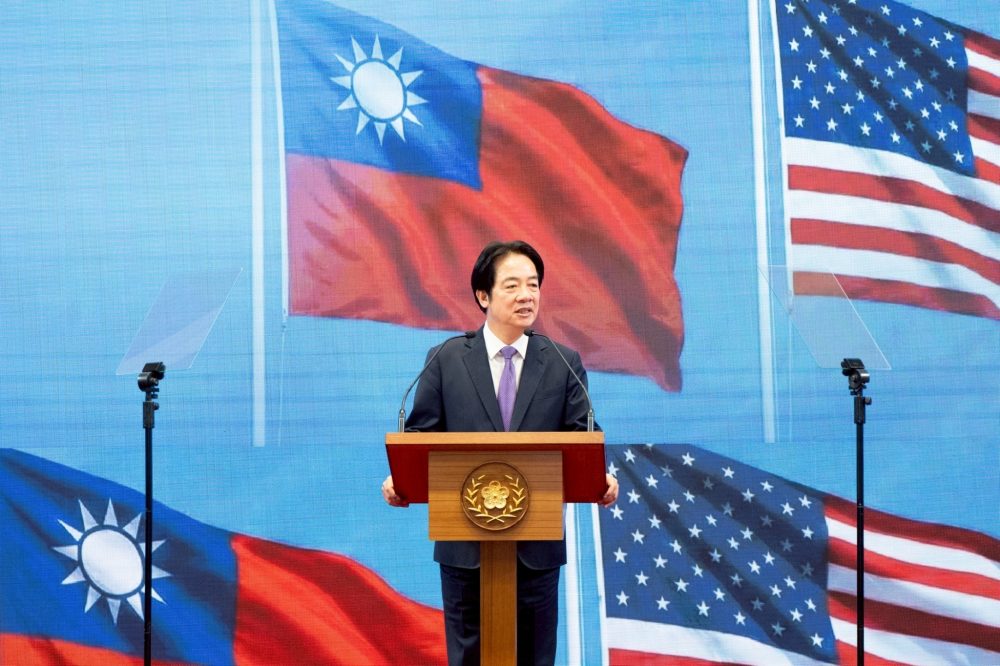
“The Republic of China is a sovereign, independent, democratic country; this is self-evident, and Beijing’s claims are therefore without merit,” stated Presidential Office Spokesperson Karen Kuo, using Taiwan’s formal designation. She expressed continued appreciation for Trump’s backing and noted that U.S. weapons sales to Taiwan are legally mandated.
Island officials also expressed unease about Trump’s demand that Taiwan’s semiconductor industry—the world’s most extensive and sophisticated—relocate to America.
“I’d like to see everybody making chips over in Taiwan come into America,” Trump told Fox News, calling such relocation “the greatest thing you can do.”
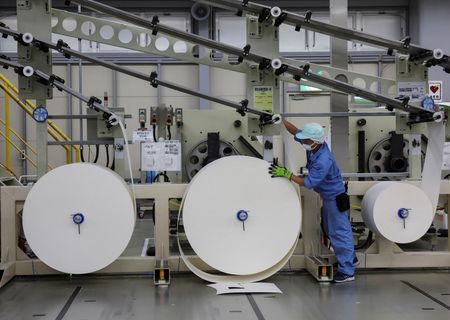
Trump has consistently urged Taiwanese semiconductor companies, which manufacture over 90% of the globe’s most sophisticated chips used in artificial intelligence, mobile devices, and defense systems, to establish American manufacturing operations.
TSMC, Taiwan’s premier chipmaker, has pledged $165 billion for an Arizona facility. Through a comprehensive trade deal with America this year, Taiwan’s administration committed $250 billion toward U.S. semiconductor investments, incorporating TSMC’s earlier pledge.
Trump also repeated previous claims that Taiwan “stole” America’s chipmaking capabilities years ago.
Although Trump didn’t modify official U.S. Taiwan policy language during his Xi summit—something many experts had worried about—he appeared to embrace some of the Chinese leader’s rhetoric about Taiwan’s leadership.
Beijing has labeled Taiwanese President Lai Ching-te a “Taiwan independence diehard” and claimed he would bring conflict and devastation to the island.
Trump and senior American officials typically avoid direct contact with Taiwanese leaders but have demonstrated support previously, such as permitting former Taiwanese President Tsai Ing-wen to stop on American territory while traveling to Latin America. Lai, approaching his presidency’s second anniversary, hasn’t visited the U.S. mainland, which some analysts view as reduced Trump administration support.
In his Fox News discussion, Trump emphasized his preference for maintaining current Taiwan-Beijing arrangements. “But they have somebody there now that wants to go independent,” he remarked, apparently referencing Lai.
“They’re going independent because they want to get into a war and they figure they have the United States behind them.” He added his reluctance to engage in distant military conflicts.
Wen-Ti Sung, an Atlantic Council fellow, suggested Trump’s concerning Taiwan statements might represent “his transactional rhetoric being turned up to the max.” “What matters more is the substance, which Taiwan is holding its collective breath for.”